Yield, Phytochemical Constituents, and Antibacterial Activity of Essential Oils from the Leaves/Twigs, Branches, Branch Wood, and Branch Bark of Sour Orange (Citrus aurantium L.)


 , ,
, ,  and
and
Abstract
1. Introduction
2. Materials and Methods
2.1. Plant Material of C. aurantium
2.2. Extraction of EOs
2.3. Gas Chromatography–Mass Spectrometry (GC–MS) Analysis
2.4. Antibacterial Activity
2.5. Statsitcal Analysis
3. Results
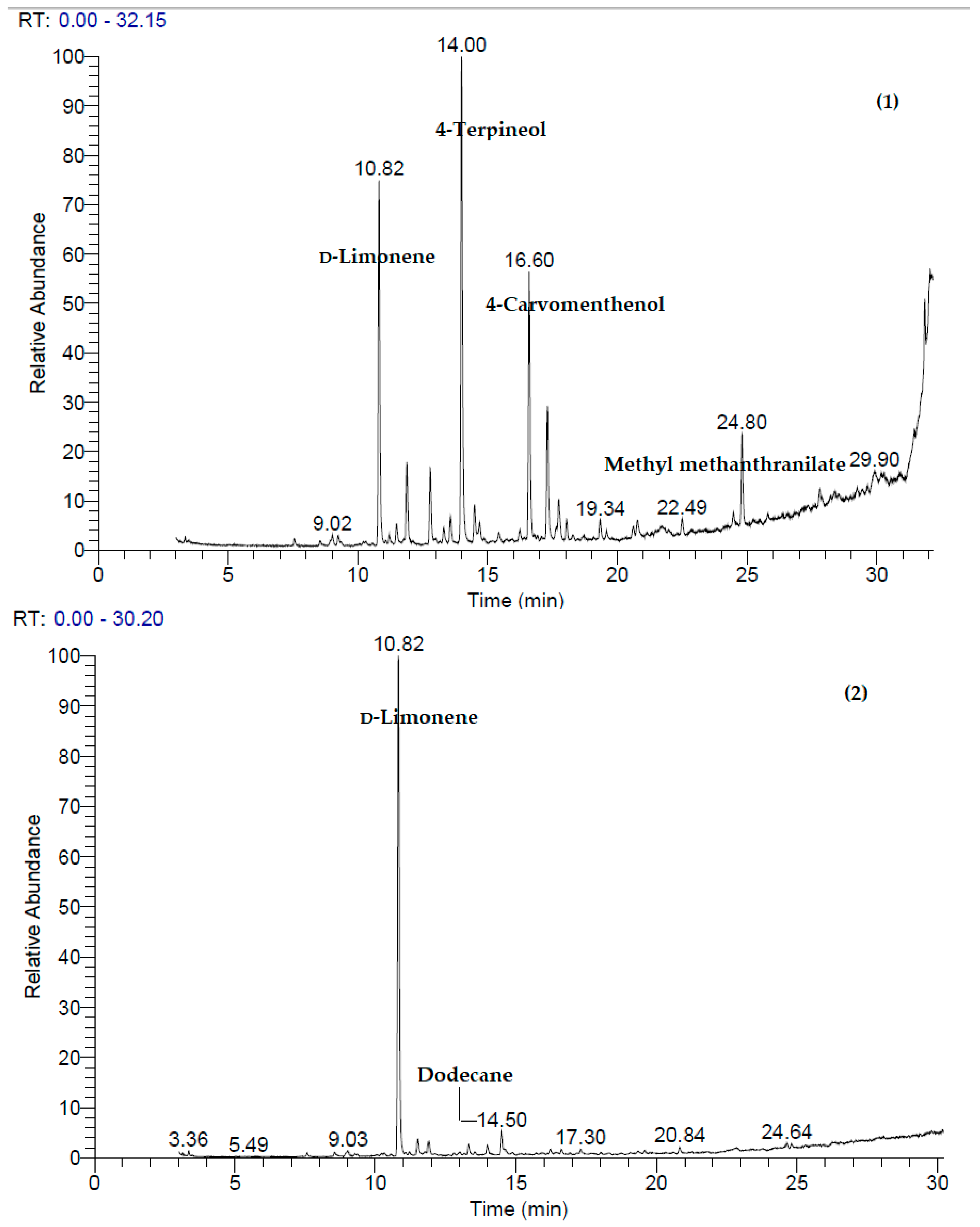
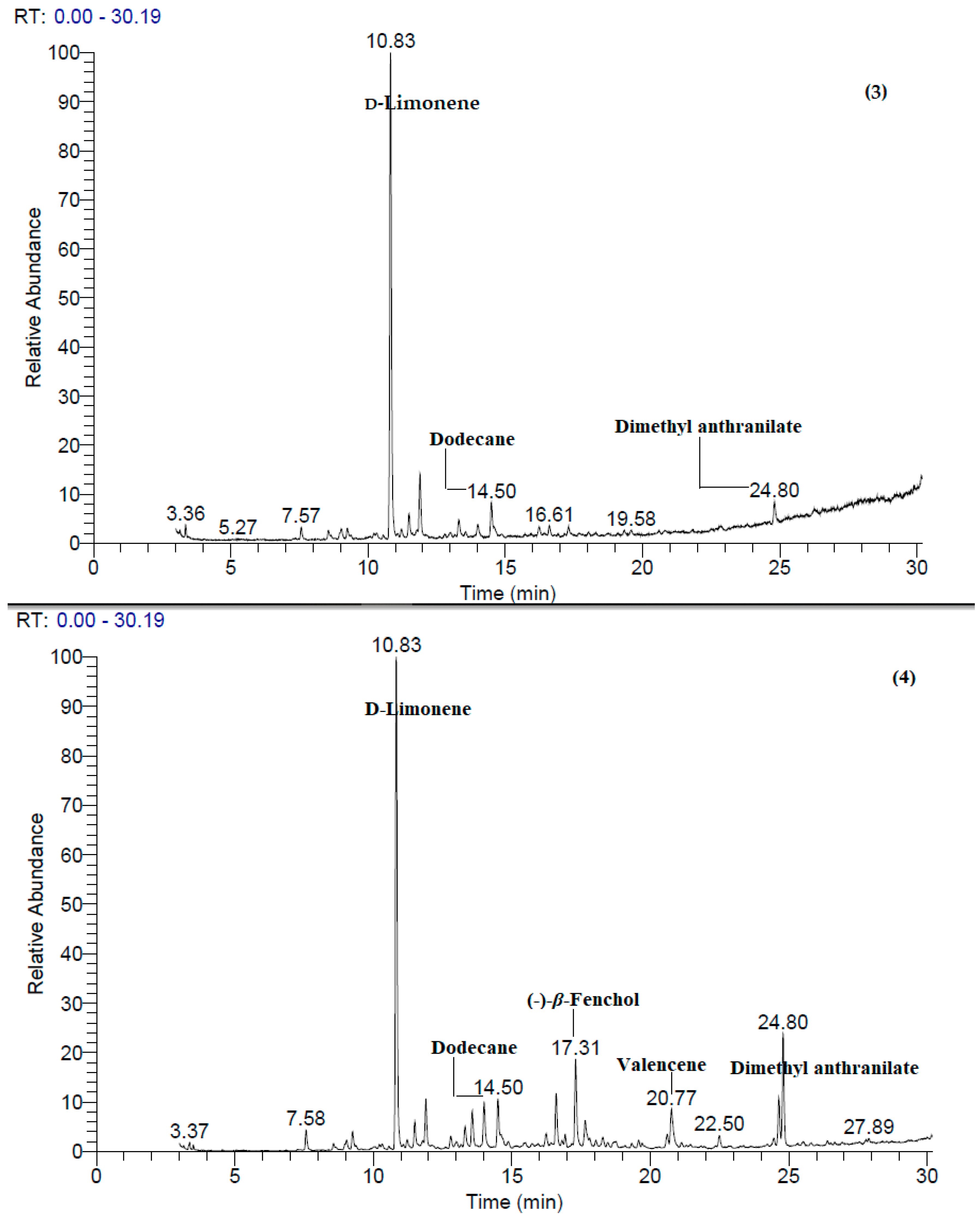
3.1. Chemical Composition of the EOs
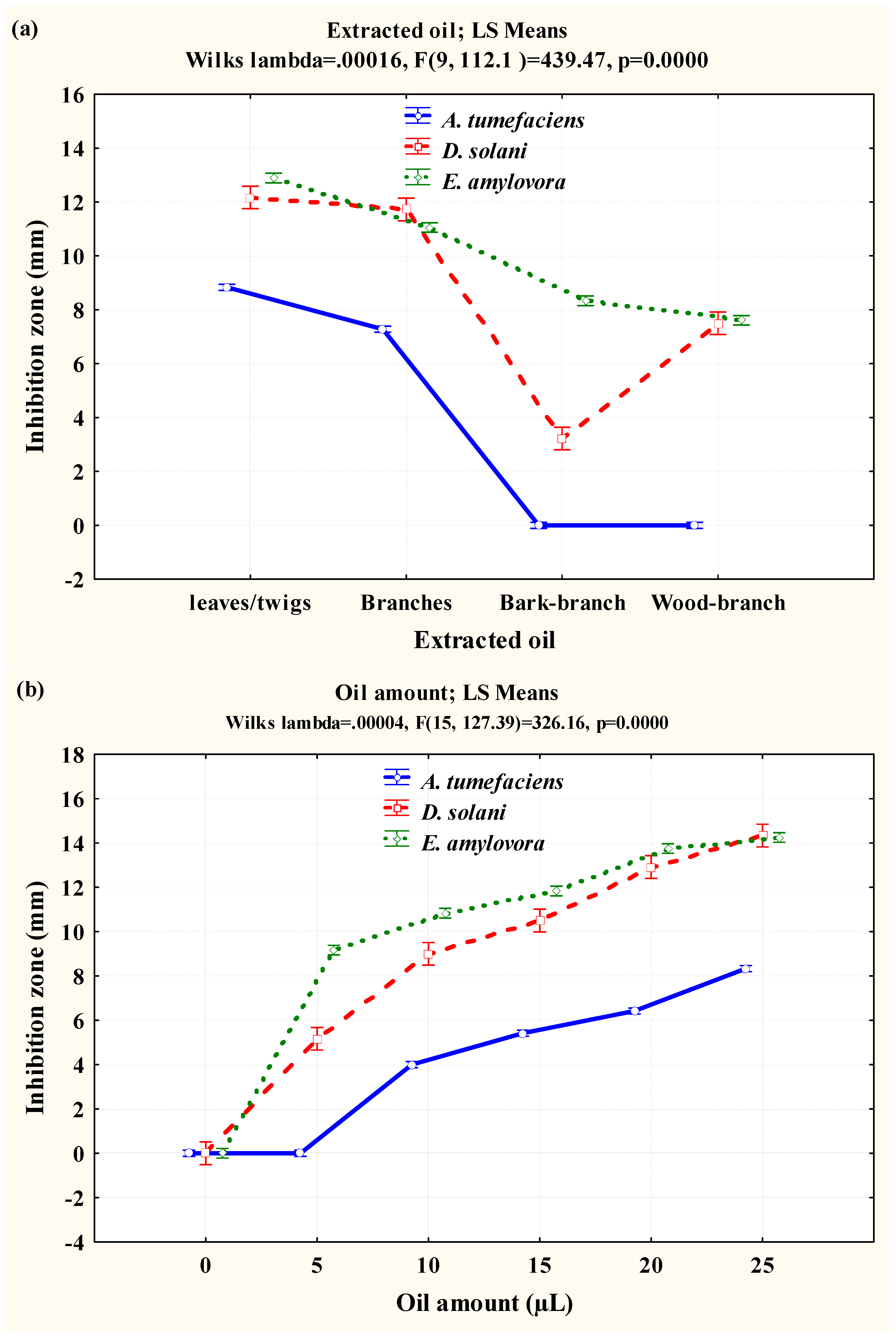
3.2. Antibacterial Activity of the EOs
4. Discussion
5. Conclusions
Author Contributions
Funding
Acknowledgments
Conflicts of Interest
References
- Sanei-Dehkordi, A.; Soleimani-Ahmadi, M.; Akbarzadeh, K.; Abadi, Y.S.; Paksa, A.; Gorouhi, M.A.; Mohammadi-Azni, S. Chemical composition and mosquito larvicidal properties of essential oil from leaves of an Iranian indigenous plant Zhumeria majdae. J. Essen. Oil Bear. Plant 2016, 19, 1454–1461. [Google Scholar] [CrossRef] [Scilit]
- Tayeb, A.H.; Sadeghifara, H.; Hubbe, M.A.; Rojas, O.J. Lipoxygenase-mediated peroxidation of model plant extractives. Ind. Crops Prod. 2017, 104, 253–262. [Google Scholar] [CrossRef] [Scilit]
- EL-Hefny, M.; Mohamed, A.A.; Salem, M.Z.M.; Abd El-Kareem, M.S.M.; Ali, H.M. Chemical composition, antioxidant capacity and antibacterial activity against some potato bacterial pathogens of fruit extracts from Phytolacca dioica and Ziziphus spina-christi grown in Egypt. Sci. Horticul. 2018, 233, 225–232. [Google Scholar] [CrossRef] [Scilit]
- EL-Hefny, M.; Ashmawy, N.A.; Salem, M.Z.M.; Salem, A.Z.M. Antibacterial activity of the phytochemicals-characterized extracts of Callistemon viminalis, Eucalyptus camaldulensis and Conyza dioscoridis against the growth of some phytopathogenic bacteria. Microb. Pathog. 2017, 113, 348–356. [Google Scholar] [CrossRef] [Scilit] [PubMed]
- Elghandour, M.M.Y.; Salem, M.Z.M.; Greiner, R.; Salem, A.Z.M. Effects of natural blends of garlic and eucalypt essential oils on biogas production of four fibrous feeds at short term of incubation in the ruminal anaerobic biosystem. J. Sci. Food Agric. 2018, 98, 5313–5321. [Google Scholar] [CrossRef] [Scilit] [PubMed]
- Salem, M.Z.M.; Behiry, S.I.; EL-Hefny, M. Inhibition of Fusarium culmorum, Penicillium chrysogenum and Rhizoctonia solani by n-hexane extracts of three plant species as a wood-treated oil fungicide. J. Appl. Microbiol. 2019, 126, 1683–1699. [Google Scholar] [CrossRef] [Scilit] [PubMed]
- Medina, M.F.E.; Alaba, P.A.; Estrada-Zuñiga, M.E.; Velázquez-Ordoñez, V.; Barbabosa-Pliego, A.; Salem, M.Z.M.; Alonso-Fresán, M.U.; Camacho-Díaz, L.M.; Salem, A.Z.M. Anti-staphylococcal properties of four plant extracts against sensitive and multi-resistant bacterial strains isolated from Cattle and Rabbits. Microb. Pathog. 2017, 113, 286–294. [Google Scholar] [CrossRef] [Scilit]
- Tavakoli, S.; Vatandoost, H.; Zeidabadinezhad, R.; Hajiaghaee, R.; Hadjiakhoondi, A.; Abai, M.R.; Yassa, N. Gas Chromatography, GC/Mass analysis and bioactivity of essential oil from aerial parts of Ferulago trifida: Antimicrobial, antioxidant, AChE inhibitory, general toxicity, MTT assay and larvicidal activities. J. Arthropod Borne Dis. 2017, 11, 414–426. [Google Scholar]
- Sanei-Dehkordi, A.; Sedaghat, M.M.; Vatandoost, H.; Abai, M.R. Chemical compositions of the peel essential oil of Citrus aurantium and its natural larvicidal activity against the malaria vector Anopheles stephensi (Diptera: Culicidae) in comparison with Citrus paradise. J. Arthropod Borne Dis. 2016, 10, 577–585. [Google Scholar]
- Haj Ammar, A.; Bouajila, J.; Lebrihi, A.; Mathieu, F.; Romdhane, M.; Zagrouba, F. Chemical composition and in vitro antimicrobial and antioxidant activities of Citrus aurantium L. fowers essential oil (Neroli oil). Pak. J. Biol. Sci. 2012, 15, 1034–1040. [Google Scholar] [CrossRef] [Scilit]
- Radan, M.; Parčina, A.; Burčul, F. Chemical composition and antioxidant activity of essential oil obtained from bitter orange peel (Citrus aurantium L.) using two methods. Croat. Chem. Acta 2018, 91, 125–128. [Google Scholar] [CrossRef] [Scilit]
- Gniewosz, M.; Kraśniewska, K.; Kosakowska, O.; Pobiega, K.; Wolska, I. Chemical compounds and antimicrobial activity of petitgrain (Citrus aurantium L. var. amara) essential oil. Herba Pol. 2017, 63, 18–25. [Google Scholar] [CrossRef] [Scilit]
- Teneva, D.; Denkova-Kostova, R.; Goranov, B.; Hristova-Ivanova, Y.; Slavchev, A.; Denkova, Z.; Kostov, G. Chemical composition, antioxidant activity and antimicrobial activity of essential oil from Citrus aurantium L zest against some pathogenic microorganisms. Z Naturforsch C 2019, 74, 105–111. [Google Scholar] [CrossRef] [Scilit] [PubMed]
- Kamal, G.M.; Anwar, F.; Hussain, A.I.; Sarri, N.; Ashraf, M.Y. Yield and chemical composition of Citrus essential oils as affected by drying pretreatment of peels. Int. Food Res. J. 2011, 18, 1275–1282. [Google Scholar]
- Ahmad, M.M.; Rehman, S.; Iqbal, Z.; Anjum, F.M.; Sultan, J.I. Genetic variability to essential oil composition in four Citrus fruit species. Pak. J. Bot. 2006, 38, 319–324. [Google Scholar]
- Choi, H.S.; Sawamura, M. Composition of the essential oil of Citrus tamurana Hort. ex Tanaka (Hyuganatsu). J. Agric. Food Chem. 2000, 48, 4868–4873. [Google Scholar] [CrossRef] [Scilit] [PubMed]
- Vekiari, S.A.; Protopapadakis, E.E.; Parthena, P.; Dimitrios, P.; Panou, C.; Vamvakias, M. Composition and seasonal variation of the essential oil from leaves and peel of a Cretan lemon variety. J. Agric. Food Chem. 2002, 50, 147–153. [Google Scholar] [CrossRef] [Scilit] [PubMed]
- Lota, M.L.; de Rocca Serra, D.; Jacquemond, C.; Tomi, F.; Casanova, J. Chemical variability of peel and leaf essential oils of sour orange. Flavour Frag. J. 2001, 16, 89–96. [Google Scholar] [CrossRef] [Scilit]
- Souza, E.; Stamford, T.; Lima, E.; Trajano, V.; Filho, J. Antimicrobial effectiveness of spices: An approach for use in food conservation systems. Braz. Arch. Biol. Technol. 2005, 48, 549–558. [Google Scholar] [CrossRef] [Scilit]
- De Masi, L.; Castaldo, D.; Pignone, D.; Servillo, L.; Facchiano, A. Experimental evidence and in silico identification of tryptophan decarboxylase in Citrus genus. Molecules 2017, 22, 272. [Google Scholar] [CrossRef] [Scilit] [PubMed]
- Rousef, P.; Perez-Cacho, R. Citrus flavor. In Flavours and Fragrances: Chemistry, Bioprocessing and Sustainability, 1st ed.; Berger, R.G., Ed.; Springer: Berlin, Germany, 2007. [Google Scholar]
- Caccioni, D.R.; Guizzardi, M.; Biondi, D.M.; Renda, A.; Ruberto, G. Relationship between volatile components of citrus fruit essential oils and antimicrobial action on P. digitatum and P. italicum growth. Int. J. Food Microbiol. 1998, 43, 73–79. [Google Scholar] [CrossRef] [Scilit]
- Giamperi, L.; Fraternale, D.; Ricci, D. The in vitro action of essential oils on different organisms. Essent. Oil Res. 2002, 14, 312–318. [Google Scholar] [CrossRef] [Scilit]
- Pultrini Ade, M.; Galindo, L.A.; Costa, M. Effects of the essential oil from Citrus aurantium L. in experimental anxiety models in mice. Life Sci. 2006, 78, 1720–1725. [Google Scholar] [CrossRef] [Scilit] [PubMed]
- Gruenwald, J.; Brendler, T.; Jaenicke, C. PDR for Herbal Medicines, 2nd ed.; Medical Economics Company: Montvale, NJ, USA, 2000; pp. 346–351. [Google Scholar]
- Abdi-Azar, H.; Maleki, S.A. Comparison of the anesthesia with thiopental sodium alone and their combination with Citrus aurantium L. (Rutaseae) essential oil in male rat. Bull. Environ. Pharmacol. Life Sci. 2014, 3, 37–44. [Google Scholar]
- Gölükcü, M.; Toker, R.; Tokgöz, H.; Turgut, D.Y. Bitter orange (Citrus aurantium L.) peel essential oil compositions obtained with different methods. Derim 2015, 32, 161–170. [Google Scholar] [CrossRef] [Scilit]
- Dhifi, W.; Mnif, W.; Jelali, N.; El Beyrouthy, M.; Ben Salem, N. Citrus aurantium (bitter orange) blossoms essential oil and methanolic extract: Composition and free radical scavenging activity. Acta Hortic. 2013, 997, 195–200. [Google Scholar] [CrossRef] [Scilit]
- Wolffenbuttel, A.N.; Zamboni, A.; dos Santos, M.K.; Borille, B.T.; Augustin, O.A.; de Cassia Mariotti, K.; Leal, M.B.; Limberger, R.P. Chemical components of citrus essential oils from Brazil. Nat. Prod. J. 2015, 5, 14–27. [Google Scholar] [CrossRef] [Scilit]
- Vahid, R.; Sharareh, N. Changes of peel essential oil composition of Citrus aurantium L. during fruit maturation in Iran. J. Essent. Oil Bear. Plants 2015, 18, 1006–1012. [Google Scholar] [CrossRef] [Scilit]
- Boelens, M.H.; Jimene, R. The chemical composition of the peel oils from unripe and ripe fruits of bitter orange, Citrus aurantium L. ssp. Amara. Engl. Flavour Fragr. J. 1989, 4, 139–142. [Google Scholar] [CrossRef] [Scilit]
- Shen, C.Y.; Jiang, J.G.; Zhu, W.; Ou-Yang, Q. Anti-inflammatory effect of essential oil from Citrus aurantium L. var. amara. Engl. J. Agric. Food Chem. 2017, 65, 8586–8594. [Google Scholar] [CrossRef] [Scilit]
- Tao, N.; Liu, Y.; Zhang, M. Chemical composition and antimicrobial activities of essential oil from the peel of bingtang sweet orange (Citrus sinensis Osbeck). Int. J. Food Sci. Technol. 2009, 44, 1281–1285. [Google Scholar] [CrossRef] [Scilit]
- Azar, A.P.; Nekoei, M.; Larijani, K.; Bahraminasab, S. Chemical composition of the essential oils of Citrus sinensis cv. Valencia and a quantitative structure-retention relationship study for the prediction of retention indices by multiple linear regression. J. Serb. Chem. Soc. 2011, 76, 1627–1637. [Google Scholar] [CrossRef] [Scilit]
- Njoroge, S.M.; Phi, N.T.; Sawamura, M. Chemical composition of peel essential oils of sweet oranges (Citrus sinensis) from Uganda and Rwanda. J. Essent. Oil Bear Plants 2009, 12, 26–33. [Google Scholar] [CrossRef] [Scilit]
- Ines, E.; Hajer, D.; Rachid, C. Aromatic quality of Tunisian sour orange essential oils: Comparison between traditional and industrial extraction. Nat. Volatiles Essent. Oils 2014, 1, 66–72. [Google Scholar]
- Sadeghimanesh, A.; Khalaji-Pirbalouty, V.; Lorigooini, Z.; Rafieian-Kopaei, M.; Torki, A.; Rabiei, Z. Phytochemical and neuroprotective evaluation of Citrus aurantium essential oil on cerebral ischemia and reperfusion. Bangladesh J. Pharmacol. 2018, 13, 353–361. [Google Scholar] [CrossRef] [Scilit]
- Salem, M.Z.M.; Ali, H.M.; El-Shanhorey, N.A.; Abdel-Megeed, A. Evaluation of extracts and essential oil from Callistemon viminalis leaves: Antibacterial and antioxidant activities, total phenolic and flavonoid contents. Asian Pac. J. Trop. Med. 2013, 6, 785–791. [Google Scholar] [CrossRef] [Scilit]
- NIST/EPA/NIH Mass Spectral Library (NIST 14) and NIST Mass Spectral Search Program, (Version 2.0g); Standard Reference Data Program; U.S. Department of Commerce, National Institute of Standards and Technology: Gaithersburg, MD, USA, May 2014.
- Salem, M.Z.M.; Mansour, M.M.A.; Elansary, H.O. Evaluation of the effect of inner and outer bark extracts of Sugar Maple (Acer saccharum var. saccharum) in combination with citric acid against the growth of three common molds. J. Wood Chem. Technol. 2019, 39, 136–147. [Google Scholar] [CrossRef] [Scilit]
- NCCLS–National Committee for Clinical Laboratory Standards. Performance Standards for Antimicrobial Disk Susceptibility Tests Sixth Edition: Approved Standard M2-A6; NCCLS: Villanova, PA, USA, 1997.
- Behiry, S.I.; Okla, M.K.; Alamri, S.A.; EL-Hefny, M.; Salem, M.Z.M.; Alaraidh, I.A.; Ali, H.M.; Al-Ghtani, S.M.; Monroy, J.C.; Salem, A.Z.M. Antifungal and antibacterial activities of Musa paradisiaca L. peel extract: HPLC analysis of phenolic and flavonoid contents. Processes 2019, 7, 215. [Google Scholar] [CrossRef] [Scilit]
- SAS. User Guide: Statistics (Release 8.02); SAS Institute: Cary, NC, USA, 2001. [Google Scholar]
- Griffin, S.G.; Wyllie, S.G.; Markham, J.L.; Leach, D.N. The role of structure and molecular properties of terpenoids in determining their antimicrobial activity. Flavour Frag. J. 1999, 14, 322–332. [Google Scholar] [CrossRef] [Scilit]
- Hammer, K.A.; Carson, C.F.; Riley, T.V. Antifungal activity of the components of Melaleuca alternifolia (tea tree) oil. J. Appl. Microbiol. 2003, 95, 853–860. [Google Scholar] [CrossRef] [Scilit]
- Ellouze, I.; Abderrabba, M. Kinetics of extraction of Citrus aurantium essential oil by hydrodistillation: Influence on the yield and the chemical composition. J. Mater Environ. Sci. 2014, 5, 841–848. [Google Scholar]
- Li, L.; Shi, C.; Yin, Z.; Ji, R.; Peng, L.; Kang, S.; Li, Z. Antibacterial activity of α-terpineol may induce morphostructural alterations in Escherichia coli. Braz. J. Microbiol. 2014, 45, 1409–1413. [Google Scholar] [CrossRef] [Scilit] [PubMed]
- Lee, C.-J.; Chen, L.-W.; Chen, L.-G.; Chang, T.-L.; Huang, C.-W.; Huang, M.-C.; Wang, C.-C. Correlations of the components of tea tree oil with its antibacterial effects and skin irritation. J. Food Drug Anal. 2013, 21, 169–176. [Google Scholar] [CrossRef] [Scilit]
- Abderrezak, M.K.; Abaza, I.; Aburjai, T.; Kabouche, A.; Kabouche, Z. Comparative compositions of essential oils of Citrus aurantium growing in different soils. J. Mater. Environ. Sci. 2014, 5, 1913–1918. [Google Scholar]
- De Pasquale, F.; Siragusa, M.; Abbate, L.; Tusa, N.; De Pasquale, C.; Alonzo, G. Characterization of five sour orange clones through molecular markers and leaf essential oils analysis. Sci. Hort. 2006, 109, 54–59. [Google Scholar] [CrossRef] [Scilit]
- Kirbaslar, G.; Kirbaslar, S.I. Composition of Turkish bitter orange and lemon leaf oils. J. Essent. Oil Res. 2004, 16, 105–108. [Google Scholar] [CrossRef] [Scilit]
- Sarrou, E.; Chatzopoulou, P.; Dimassi-Theriou, K.; Therios, I. Volatile constituents and antioxidant activity of peel, flowers and leaf oils of Citrus aurantium L. growing in Greece. Molecules 2013, 18, 10639–10647. [Google Scholar] [CrossRef] [Scilit]
- Monsef-Esfahani, H.R.; Amanzade, Y.; Alhani, Z.; Hajimehdipour, H.; Faramarzi, M.A. GC/MS analysis of Citrus aurantium L. hydrolate and its comparison with the commercial samples. Iran J. Pharm. Res. 2004, 3, 177–179. [Google Scholar]
- Sibanda, S.; Chigwada, G.; Poole, M.; Gwebu, E.T.; NolettoJ, A.; Schmidt, J.M.; Rea, A.I.; Setzer, W.N. Composition and bioactivity of the leaf essential oil of Heteropyxis dehniae from Zimbabwe. J. Ethnopharmacol. 2004, 92, 107–111. [Google Scholar] [CrossRef] [Scilit]
- Srisukh, V.; Tribuddharat, C.; Nukoolkarn, V.; Bunyapraphatsara, N.; Chokephaibulkit, K.; Phoomniyom, S.; Chuanphung, S.; Srifuengfung, S. Antibacterial activity of essential oils from Citrus hystrix (makrut lime) against respiratory tract pathogens. ScienceAsia 2012, 38, 212–217. [Google Scholar] [CrossRef] [Scilit]
- Usta, J.; Kreydiyyeh, S.; Knio, K.; Barnabe, P.; Bou-Moughlabay, Y.; Dagher, S. Linalool decreases HepG2 viability by inhibiting mitochondrial complexes I and II, increasing reactive oxygen species and decreasing ATP and GSH levels. Chemico-Biol. Interact. 2009, 180, 39–46. [Google Scholar] [CrossRef] [Scilit] [PubMed]
- Hsouna, A.B.; Hamdi, N.; Halima, N.B.; Abdelkafi, S. Characterization of essential oil from Citrus aurantium L. flowers: Antimicrobial and antioxidant activities. J. Oleo Sci. 2013, 62, 763–772. [Google Scholar] [CrossRef] [Scilit] [PubMed]
- Bacanli, M.; Başaran, A.A.; Başaran, N. The antioxidant and antigenotoxic properties of citrus phenolics limonene and naringin. Food Chem. Toxicol. 2015, 81, 160–170. [Google Scholar] [CrossRef] [Scilit] [PubMed]
- El Asbahani, A.; Miladi, K.; Badri, W.; Sala, M.; Addi, E.H.A.; Casabianca, H.; El Mousadik, A.; Hartmann, D.; Jilale, A.; Renaud, F.N.R.; et al. Essential oils: From extraction to encapsulation. Int. Pharmaceut. 2015, 483, 220–243. [Google Scholar] [CrossRef] [Scilit] [PubMed]
- Marija, M.; Lesjak, I.N. Phytochemical composition and antioxidant, antinflammatory and antimicrobial activities of Juniperus macrocarpa. J. Funct. Foods 2014, 7, 257–268. [Google Scholar]
- Miracle, C.; Galbis, B. Impact assessment of carvacrol and citral effect on Escherichia coli K12 and Listeria innocua growth. Food Control 2013, 33, 536–544. [Google Scholar] [CrossRef] [Scilit]
- Singh, P.; Shukla, R.; Prakash, B.; Kumar, A.; Singh, S.; Mishra, P.K. Chemical profile, antifungal, anti-aflatoxigenic and antioxidant activity of Citrus maxima Burm. and Citrus sinensis L. Osbeck essential oils and their cyclic monoterpene, DL-limonene. Food Chem. Toxicol. 2010, 48, 1734–4170. [Google Scholar] [CrossRef] [Scilit]
- Valente, J.; Zuzarte, M. Antifungal, antioxidant and anti-inflammatory activities of Oenanthe crocata L essential oil. Food Chem. Toxicol. 2013, 62, 349–354. [Google Scholar] [CrossRef] [Scilit]
- Babushok, V.I.; Linstrom, P.J.; Zenkevich, I.G. Retention indices for frequently reported compounds of plant essential oils. J. Phys. Chem. Ref. Data 2011, 40, 1–47. [Google Scholar] [CrossRef] [Scilit]
- Lemes, R.S.; Alves, C.C.F.; Estevam, E.B.B.; Santiago, M.B.; Martins, C.H.G.; Santos, T.C.L.D.; Crotti, A.E.M.; Miranda, M.L.D. Chemical composition and antibacterial activity of essential oils from Citrus aurantifolia leaves and fruit peel against oral pathogenic bacteria. Acad. Bras. Cienc. 2018, 90, 1285–1292. [Google Scholar] [CrossRef] [Scilit]
- Majnooni, M.-B.; Mansouri, K.; Gholivand, M.-B.; Mostafaie, A.; Mohammadi-Motlagh, H.-R.; Afnanzade, N.-S.; Abolghasemi, M.-M.; Piriyaei, M. Chemical composition, cytotoxicity and antioxidant activities of the essential oil from the leaves of Citrus aurantium L. Afr. J. Biotechnol. 2012, 11, 498–503. [Google Scholar] [CrossRef] [Scilit]
- Quintero, A.; Gónzalez, C.N.; Sánchez, F.; Usubillaga, A.; Rojas, L. Constituents and biological activity of Citrus aurantium amara L. essential oil. Acta Hort. 2003, 597, 115–117. [Google Scholar] [CrossRef] [Scilit]
- Mazzanti, G.; Betinelli, L.; Salvatore, G. Antimicrobial properties of the linalool-rich essential oil. Flavour Fragr. J. 1998, 13, 289–294. [Google Scholar] [CrossRef] [Scilit]
- Ellouze, I. Contribution à l’étude de la valorisation du bigaradier Citrus aurantium L. Mémoire de mastère; INAT: Tunis, Tunisie, 2007; 57p. [Google Scholar]
- Rahimi, A.; Hashemi, P.; Talei, G.R.; Borzuei, M.; Ghiasvand, A.R. Comparative analyses of the volatile components of Citrus aurantium L. flowers using ultrasonic- assisted headspace SPME and hydrodistillation combined with GC-MS and evaluation of their antimicrobial activities. Anal. Bioanal. Chem. Res. 2014, 1, 83–89. [Google Scholar] [CrossRef] [Scilit]
- Mohagheghniapour, A.; Saharkhiz, M.J.; Golmakani, M.T. Variations in chemical compositions of essential oil from sour orange (Citrus aurantium L.) blossoms by different isolation methods. Sus. Chem. Pharm. 2018, 10, 118–124. [Google Scholar] [CrossRef] [Scilit]



| Part Used | Oil Yield (mL/100 g Material) |
|---|---|
| Leaves/twigs | 3.45 |
| Branches | 1.55 |
| Wood of branches | 1.15 |
| Branch bark | 1.10 |
| Compound | Relative Quantity (%) | Molecular Formula | Molecular Weight (g/mol) | SI 1 | RSI 2 |
|---|---|---|---|---|---|
| Myrcene | 0.30 | C10H16 | 136 | 803 | 833 |
| β-Pinene | 1.21 | C10H16 | 136 | 804 | 862 |
| d-Limonene | 16.67 | C10H16 | 136 | 934 | 936 |
| 2-Carene epoxide | 0.45 | C10H16O | 152 | 793 | 842 |
| Undecane | 0.92 | C11H24 | 156 | 863 | 920 |
| γ-Terpinene | 3.58 | C10H16 | 136 | 927 | 938 |
| cis-4-Thujanol | 3.72 | C10H18O | 154 | 936 | 947 |
| Octadecyl vinyl ether | 0.76 | C20H40O | 296 | 760 | 766 |
| 4-Terpineol | 22.59 | C10H18O | 154 | 961 | 966 |
| Dodecane | 1.59 | C12H26 | 170 | 883 | 883 |
| cis-para-2-Menthen-1-ol | 0.71 | C10H18O | 154 | 847 | 886 |
| trans,trans-(+)-5-Caranol | 0.52 | C10H18O | 154 | 772 | 841 |
| 2,6,10-Trimethyltetradecane | 0.56 | C17H36 | 240 | 768 | 795 |
| 4-Carvomenthenol | 12.84 | C10H18O | 154 | 932 | 943 |
| Linalool | 7.82 | C10H18O | 154 | 839 | 861 |
| 5,9-Dimethyl-4,8-decadienal | 0.42 | C12H20O | 180 | 770 | 805 |
| Linalyl acetate | 2.28 | C12H20O2 | 196 | 825 | 888 |
| α-Terpineol | 0.96 | C10H18O | 154 | 762 | 790 |
| Vitamin A aldehyde (Retinal) | 0.32 | C20H28O | 284 | 704 | 807 |
| Ascaridol | 0.97 | C10H16O2 | 168 | 765 | 850 |
| 4,7-Octadecadienoic acid methyl ester | 0.48 | C19H30O2 | 290 | 691 | 712 |
| Arachidonic acid methyl ester | 0.54 | C21H34O2 | 318 | 740 | 777 |
| Thymol | 0.90 | C10H14O | 150 | 774 | 864 |
| 6,9,12-Octadecatrienoic acid methyl ester | 0.53 | C19H32O2 | 292 | 719 | 764 |
| 2-(7-Heptadecynyloxy) tetrahydro-2H-pyran | 0.83 | C22H40O2 | 336 | 714 | 749 |
| (Z)-Pseudosolasodine diacetate | 0.94 | C31H49NO4 | 499 | 680 | 717 |
| Methyl methanthranilate | 4.41 | C9H11NO2 | 165 | 819 | 929 |
| 3′,4′,7-Trimethylquercetin | 0.41 | C18H16O7 | 344 | 661 | 690 |
| 2-[4-Methyl-6-(2,6,6-trimethylcyclohex-1-enyl)hexa-1,3,5-trienyl]cyclohex-1-en-1-carboxaldehyde | 1.38 | C23H32O | 324 | 717 | 761 |
| Ethyl iso-allocholate | 0.61 | C26H44O5 | 436 | 717 | 744 |
| Oleic acid | 0.87 | C18H34O2 | 282 | 685 | 754 |
| 6,9,12,15-Docosatetraenoic acid methyl ester | 2.48 | C23H38O2 | 346 | 713 | 797 |
| Tetraneurin-α-diol | 2.61 | C15H20O5 | 280 | 697 | 786 |
| Compound | Relative Quantity (%) | Molecular Formula | Molecular Weight (g/mol) | SI 1 | RSI 2 |
|---|---|---|---|---|---|
| α-Pinene | 0.52 | C10H16 | 136 | 873 | 934 |
| Decane | 0.72 | C10H22 | 142 | 859 | 937 |
| Myrcene | 1.08 | C10H16 | 136 | 819 | 836 |
| 2-Methyldodecan-1-ol | 0.46 | C13H28O | 200 | 788 | 835 |
| d-Limonene | 71.57 | C10H16 | 136 | 940 | 941 |
| (E)- 2,3-Epoxycarane | 0.49 | C10H16O | 152 | 759 | 817 |
| Undecane | 2.28 | C11H24 | 156 | 928 | 950 |
| γ-Terpinene | 1.97 | C10H16 | 136 | 878 | 910 |
| Myristyl alcohol | 0.57 | C14H30O | 214 | 774 | 777 |
| 1-Nonadecanol | 2.11 | C19H40O | 284 | 766 | 775 |
| 4-Terpineol | 2.13 | C10H18O | 154 | 897 | 942 |
| Dodecane | 4.80 | C12H26 | 170 | 919 | 934 |
| Tetradecane | 0.84 | C14H30 | 198 | 780 | 788 |
| α-Terpineol | 1.04 | C10H18O | 154 | 832 | 880 |
| 3,6-Octadecadienoic acid methyl ester | 0.49 | C19H34O2 | 294 | 729 | 777 |
| Octahydro- 1,2,4-metheno-1H-cyclobuta[cd]pentalene-3,5-diol | 0.46 | C10H12O2 | 164 | 712 | 778 |
| cis-Z-α-Bisabolene epoxide | 0.96 | C15H24O | 220 | 735 | 759 |
| Oleic acid | 2.72 | C18H34O2 | 282 | 762 | 781 |
| Arachidonic acid methyl ester | 0.82 | C21H34O2 | 318 | 753 | 815 |
| (E)-Acrylic acid, 3-(3-methoxycarbonyl-1-cyclohexen-4-yl)-methylester | 0.66 | C12H16O4 | 224 | 604 | 688 |
| trans-Palmitoleic acid | 2.62 | C16H30O2 | 254 | 760 | 807 |
| Ethyl iso-allocholate | 0.66 | C26H44O5 | 436 | 743 | 772 |
| Compound | Relative Quantity (%) | Molecular Formula | Molecular Weight (g/mol) | SI 2 | RSI 1 |
|---|---|---|---|---|---|
| α-Pinene | 1.28 | C10H16 | 136 | 884 | 938 |
| Decane | 1.27 | C10H22 | 142 | 817 | 929 |
| Myrcene | 1.53 | C10H16 | 136 | 812 | 841 |
| β-Pinene | 1.38 | C10H16 | 136 | 855 | 899 |
| 2,7-Dimethyl-2,6-octadien-1-ol | 0.45 | C10H18O | 154 | 703 | 740 |
| 1-Decene | 0.52 | C10H20 | 140 | 765 | 786 |
| 1-Tetradecanol | 0.66 | C14H30O | 214 | 770 | 776 |
| d-Limonene | 54.61 | C10H16 | 136 | 938 | 940 |
| (E)- 2,3-Epoxycarane | 0.96 | C10H16O | 152 | 774 | 829 |
| Undecane | 3.00 | C11H24 | 156 | 894 | 930 |
| γ-Terpinene | 6.68 | C10H16 | 136 | 908 | 945 |
| cis-p-2-Menthen-1-ol | 0.41 | C10H18O | 154 | 754 | 822 |
| Hexahydrofarnesol | 1.2 | C15H32O | 228 | 750 | 740 |
| Tetradecyloxirane | 2.08 | C16H32O | 240 | 743 | 809 |
| 4-Terpineol | 1.59 | C10H18O | 154 | 850 | 920 |
| Dodecane | 5.73 | C12H26 | 170 | 893 | 923 |
| 2,6,10-Trimethyltetradecane | 1.17 | C17H36 | 240 | 754 | 782 |
| 4-Carvomenthenol | 1.20 | C10H18O | 154 | 782 | 800 |
| α-Terpineol | 1.15 | C10H18O | 154 | 825 | 884 |
| Methyl hexadecadienoate | 0.41 | C17H30O2 | 266 | 716 | 723 |
| trans-(Z)-α-Bisabolene epoxide | 0.61 | C15H24O | 220 | 729 | 801 |
| 4,7-Octadecadienoic acid, methyl ester | 0.61 | C19H30O2 | 290 | 707 | 730 |
| 2-[4-Methyl-6-(2,6,6-trimethylcyclohex-1-enyl)hexa-1,3,5-trienyl]cyclohex-1-en-1-carboxaldehyde | 0.48 | C23H32O | 324 | 703 | 714 |
| Oleic acid | 1.33 | C18H34O2 | 282 | 780 | 804 |
| 9-Hexadecenoic acid | 1.16 | C16H30O2 | 254 | 776 | 810 |
| Dimethyl anthranilate | 3.13 | C9H11NO2 | 165 | 669 | 893 |
| Methyl hexadecadienoate | 0.92 | C17H30O2 | 266 | 764 | 801 |
| 1,3-Diolein | 1.52 | C39H72O5 | 620 | 753 | 780 |
| Ethyl iso-allocholate | 1.96 | C26H44O5 | 436 | 744 | 767 |
| Compound | Relative Quantity (%) | Molecular Formula | Molecular Weight (g/mol) | SI 1 | RSI 2 |
|---|---|---|---|---|---|
| α-Pinene | 1.50 | C10H16 | 136 | 941 | 948 |
| Decane | 0.65 | C10H22 | 142 | 880 | 939 |
| Myrcene | 0.96 | C10H16 | 136 | 837 | 906 |
| β-Pinene | 1.54 | C10H16 | 136 | 909 | 939 |
| D-Limonene | 38.13 | C10H16 | 136 | 940 | 941 |
| p-Cymene | 0.72 | C10H14 | 134 | 805 | 823 |
| Undecane | 2.13 | C11H24 | 156 | 934 | 951 |
| γ-Terpinene | 3.62 | C10H16 | 136 | 901 | 935 |
| 4-Terpineol | 0.95 | C10H18O | 154 | 866 | 906 |
| 1-Dodecanol | 0.54 | C12H26O | 186 | 769 | 798 |
| 1-Eicosanol | 1.69 | C20H42O | 298 | 769 | 776 |
| Linalool | 2.94 | C10H18O | 154 | 873 | 898 |
| cis-4-Thujanol | 3.49 | C10H18O | 154 | 933 | 945 |
| Dodecane | 5.31 | C12H26 | 170 | 926 | 939 |
| 7-Methyl pentadecane | 1.12 | C16H34 | 226 | 850 | 885 |
| 4-Carvomenthenol | 4.21 | C10H18O | 154 | 898 | 907 |
| Capraldehyde | 0.93 | C10H20O | 156 | 823 | 885 |
| (-)-β-Fenchol | 6.83 | C10H18O | 154 | 932 | 937 |
| 6,7-Dihydrogeraniol | 2.15 | C10H20O | 156 | 886 | 897 |
| β-Citrylideneethanol | 0.45 | C12H20O | 180 | 730 | 742 |
| trans-Carveol | 0.83 | C10H16O | 152 | 820 | 864 |
| (Z)-Citral | 1.42 | C10H16O | 152 | 782 | 830 |
| 6-Methyltetraline | 0.57 | C11H14 | 146 | 777 | 841 |
| Dihydro cuminyl alcohol | 0.91 | C10H16O | 152 | 805 | 854 |
| Thymol | 3.30 | C10H14O | 150 | 904 | 917 |
| Farnesol | 1.05 | C15H26O | 222 | 801 | 813 |
| Nerolidyl acetate | 0.66 | C17H28O2 | 264 | 805 | 825 |
| Valencene | 3.30 | C15H24 | 204 | 931 | 958 |
| Dimethyl anthranilate | 8.13 | C9H11NO2 | 165 | 909 | 940 |
| Extracted Oil | Oil Amount (µL) | Inhibition Zone Values (mm) | ||
|---|---|---|---|---|
| A. tumefaciens | D. solani | E. amylovora | ||
| Leaves/twigs | 0 | 0.00 | 0.00 | 0.00 |
| 5 | 0.00 | 9.33 ± 0.57 | 12.66 ± 0.57 | |
| 10 | 10.00 ± 0.00 | 14.66 ± 0.57 | 15.00 ± 0.00 | |
| 15 | 11.66 ± 0.57 | 15.00 ± 0.00 | 15.00 ± 0.00 | |
| 20 | 15.66 ± 0.57 | 16.66 ± 0.57 | 17.33 ± 0.57 | |
| 25 | 15.66 ± 0.57 | 17.33 ± 0.57 | 17.33 ± 0.57 | |
| Branches | 0 | 0.00 | 0.00 | 0.00 |
| 5 | 0.00 | 11.33 ± 0.57 | 12.00 ± 0.00 | |
| 10 | 6.00 ± 0.00 | 11.33 ± 0.57 | 12.00 ± 0.00 | |
| 15 | 10.00 ± 0.00 | 14.33 ± 0.57 | 12.33 ± 0.57 | |
| 20 | 10.00 ± 0.00 | 16.66 ± 1.52 | 14.66 ± 0.57 | |
| 25 | 17.66 ± 0.57 | 16.66 ± 0.57 | 15.33 ± 0.57 | |
| Branch bark | 0 | 0.00 | 0.00 | 0.00 |
| 5 | 0.00 | 0.00 | 6.00 ± 0.00 | |
| 10 | 0.00 | 0.00 | 10.00 ± 0.00 | |
| 15 | 0.00 | 2.00 ± 3.46 | 10.00 ± 0.00 | |
| 20 | 0.00 | 7.66 ± 0.57 | 11.66 ± 0.57 | |
| 25 | 0.00 | 9.66 ± 0.57 | 12.33 ± 0.57 | |
| Branch wood | 0 | 0.00 | 0.00 | 0.00 |
| 5 | 0.00 | 0.00 | 6.00 ± 0.00 | |
| 10 | 0.00 | 10.00 ± 0.00 | 6.33 ± 0.57 | |
| 15 | 0.00 | 10.66 ± 0.57 | 10.00 ± 0.00 | |
| 20 | 0.00 | 10.66 ± 0.57 | 11.33 ± 0.57 | |
| 25 | 0.00 | 13.66 ± 0.57 | 12.00 ± 0.00 | |
| p-value | < 0.0001 | < 0.0001 | < 0.0001 | |
© 2019 by the authors. Licensee MDPI, Basel, Switzerland. This article is an open access article distributed under the terms and conditions of the Creative Commons Attribution (CC BY) license (http://creativecommons.org/licenses/by/4.0/).
Share and Cite
Okla, M.K.; Alamri, S.A.; Salem, M.Z.M.; Ali, H.M.; Behiry, S.I.; Nasser, R.A.; Alaraidh, I.A.; Al-Ghtani, S.M.; Soufan, W. Yield, Phytochemical Constituents, and Antibacterial Activity of Essential Oils from the Leaves/Twigs, Branches, Branch Wood, and Branch Bark of Sour Orange (Citrus aurantium L.). Processes 2019, 7, 363. https://doi.org/10.3390/pr7060363
Okla MK, Alamri SA, Salem MZM, Ali HM, Behiry SI, Nasser RA, Alaraidh IA, Al-Ghtani SM, Soufan W. Yield, Phytochemical Constituents, and Antibacterial Activity of Essential Oils from the Leaves/Twigs, Branches, Branch Wood, and Branch Bark of Sour Orange (Citrus aurantium L.). Processes. 2019; 7(6):363. https://doi.org/10.3390/pr7060363
Chicago/Turabian StyleOkla, Mohammad K., Saud A. Alamri, Mohamed Z.M. Salem, Hayssam M. Ali, Said I. Behiry, Ramadan A. Nasser, Ibrahim A. Alaraidh, Salem M. Al-Ghtani, and Walid Soufan. 2019. "Yield, Phytochemical Constituents, and Antibacterial Activity of Essential Oils from the Leaves/Twigs, Branches, Branch Wood, and Branch Bark of Sour Orange (Citrus aurantium L.)" Processes 7, no. 6: 363. https://doi.org/10.3390/pr7060363
APA StyleOkla, M. K., Alamri, S. A., Salem, M. Z. M., Ali, H. M., Behiry, S. I., Nasser, R. A., Alaraidh, I. A., Al-Ghtani, S. M., & Soufan, W. (2019). Yield, Phytochemical Constituents, and Antibacterial Activity of Essential Oils from the Leaves/Twigs, Branches, Branch Wood, and Branch Bark of Sour Orange (Citrus aurantium L.). Processes, 7(6), 363. https://doi.org/10.3390/pr7060363