Article

Study on the Preparation and Application of Channel-Type High-Efficiency Filter Paper

1
School of Light Industry and Engineering, South China University of Technology, Guangzhou 510641, China
2
State Key Laboratory of Chemistry for NBC Hazards Protection, Beijing 102205, China
*
Authors to whom correspondence should be addressed.
Processes 2026, 14(9), 1486; https://doi.org/10.3390/pr14091486
Submission received: 11 April 2026 / Revised: 28 April 2026 / Accepted: 1 May 2026 / Published: 5 May 2026
(This article belongs to the Section Materials Processes)

Abstract

Air pollution has drawn increasing attention. The channel-type structure, as an ideal energy-saving and resistance-reducing strategy for air filters, can effectively lower filtration resistance. However, current commercial channel-type filters generally exhibit only medium or low filtration efficiency, and the use of plant fibers as raw material limits their application in high-efficiency filters. In this study, high-efficiency glass fiber filter paper was combined with a channel-type structure, and the formulation and processing techniques suitable for the channel-type design were systematically investigated, leading to the fabrication of channel-type high-efficiency filters. The optimal formulation was determined to be a blend of glass wool fibers and 6 mm Tencel fibers in a 6:4 ratio, coated with a thermosetting resin, which yielded filter paper suitable for wave-pleating. The resulting filter paper demonstrated a filtration efficiency of 99.9624%, a pressure drop of 265.6 Pa, and a pleat aspect ratio of 0.209. Using this formulation, pilot-scale filter paper was produced and wave-pleated under processing conditions including a roller speed of 5 m/min, a roller gap of 0.4 mm, and a roller temperature of 160 °C, which was then used to fabricate channel-type high-efficiency filters. The finished channel-type filters achieved a filtration efficiency of 99.9940% with a pressure drop of 164.0 Pa. Compared to traditional pleated filters of the same volume and efficiency rating, the channel-type filter exhibited a 49.53% larger filtration area, a 33.13% lower face velocity, and a 31.67% reduction in pressure drop. This work offers a novel approach to reducing resistance and enhancing efficiency in air filtration systems.

1. Introduction

With the rapid advancement of industrialization and urbanization in recent years, air pollution has emerged as a growing global concern [1,2]. High-efficiency air filters capable of effectively capturing fine particulate matter are therefore widely employed across various sectors, including the electronics industry, precision machinery, aerospace, and healthcare, to deliver clean air [3,4,5]. In conventional pleated filters, air flows radially through the filter media [6], leading to abrupt changes in flow direction that induce vortex formation and flow separation, thereby generating additional energy losses [7]. During operation, pleat collapse and crowding frequently occur, resulting in a rapid increase in filtration resistance. This, in turn, shortens the filter service life, raises replacement frequency, and elevates operational costs [8,9,10]. In contrast, the channel-type filter features an independent parallel-channel structure in which the gas flow aligns with the channel direction. This design effectively mitigates the issue of rapid resistance rise caused by pleat deformation. Moreover, compared with traditional pleated filters, the channel-type configuration offers a more compact structure and a larger filtration area. Under equivalent filtration performance, the channel-type filter achieves an approximately 50% reduction in size [11], significantly lowering both the filtration resistance and the overall volume and weight of the filter unit [12]. Glass fibers possess a range of favorable properties, such as high aspect ratio, low bulk density, low thermal conductivity, strong corrosion resistance, stable chemical behavior, and excellent electrical insulation [13,14,15,16,17]. Nevertheless, they also exhibit notable drawbacks, including high brittleness and poor wear resistance [13]. Applying glass-fiber filter paper to a channel-type structure requires shaping the paper into wave-like pleats. The processability of such shaping is closely tied to the mechanical properties of the filter paper, which themselves depend on the raw materials and their physical characteristics [18]. Both the fiber formulation and the resin ratio significantly influence the performance of the filter paper [19,20,21]. Extensive studies have shown that fiber content exerts a pronounced effect on the failure strain of composites: as fiber content increases, the failure strain generally declines [22,23]. Investigations into failure mechanisms suggest that the failure strain of composites can be quantitatively correlated with fiber volume fraction, average fiber length, and fiber radius [22,24,25]. R. Velmurugan [26] analyzed the mechanical properties of randomly mixed short-fiber composites and identified optimal fiber length and weight percentages. By varying the weight ratio of palmyra bark fiber to glass fiber, a series of composite panels were fabricated and systematically evaluated for tensile, impact, shear, and flexural properties. The results demonstrated that incorporating glass fiber and palmyra bark fiber effectively enhances the composite’s mechanical performance. Aravinth et al. [27] assessed the mechanical properties of hemp/glass fiber-reinforced epoxy composites through tensile and flexural tests. They found that fiber orientation, length, and volume fraction all significantly affect the composite’s mechanical behavior. Natural fibers were shown to improve energy absorption and toughness, promoting better stress distribution and retarding crack propagation, thereby improving the mechanical performance of glass-fiber composites. Prakash et al. [28] examined variations in thermal and mechanical properties of plant-fiber-reinforced glass-fiber composites. Experiments were conducted with different volume fractions and lengths of natural fibers combined with glass fibers, and an optimal parameter set was determined. The results indicated that increasing the fiber volume fraction up to 40% improved both flexural and thermal properties, whereas a further increase to 50% led to a decline in performance. Cao et al. [29] investigated the effects of curing agents, silane-coupling-agent-treated glass fibers, and nanomaterials on the tensile properties of glass-fiber composites. Their findings revealed that silane coupling agents enhance interfacial bonding between fibers, raising the characteristic load of glass-fiber bundles by 10.64% and reducing the contact angle between treated glass fibers and epoxy resin by 26.69%, thereby markedly improving the tensile performance of the composites. Etcheverry et al. [30] systematically evaluated the effectiveness of several silane coupling agents on epoxy-resin strength. They concluded that the reactive organic functional groups of silanes form covalent bonds with the polymer matrix, creating a transition zone between the resin and the glass-fiber reinforcement. Ying He et al. [31] prepared long-glass-fiber composites using a custom-designed impregnation device and systematically studied the influence of impregnation time on mechanical properties, crystallization behavior, dynamic mechanical performance, and micromorphology. When the impregnation time reached 7.03 s, the PP/LGF composite exhibited optimum overall performance: tensile strength and notched Izod impact strength attained 152.9 MPa and 31.2 kJ/m2, respectively, along with a significant increase in material stiffness. Strong interfacial adhesion between PP and glass fibers was identified as a key factor contributing to the composite’s superior mechanical properties.
Currently, channel-type filters are mainly produced from plant-fiber filter papers, which suffer from low filtration efficiency. Although glass-fiber filter papers commonly used in high-efficiency air filters offer high efficiency, they are prone to cracking and damage when processed into channel-type structures, preventing their direct adoption for such applications.
The objectives of this work are threefold: first, to investigate the effect of Tencel fiber content on the processability of filter paper; second, to examine how fiber length influences its processability by adjusting the length of Tencel fibers; and third, to explore the impact of resin formulation on processability by applying resins with different mixing ratios. The ultimate aim is to develop an efficient filter paper formulation suitable for wave-pleat processing and to facilitate subsequent engineering-scale production. Using pilot-scale filter paper, the effects of wave-forming roller temperature, roller gap, and roller rotation speed on the processing performance of wave pleats will be studied to determine the optimal processing conditions for the pilot paper. Finally, under these optimized conditions, the pilot-scale filter paper will be formed into wave pleats to fabricate channel-type filters. The performance of the resulting filters will be evaluated and compared with that of conventional pleated filters of equivalent efficiency grades.

2. Materials and Methods

2.1. Characterization of Fiber Raw Materials

The morphological characteristics of the fiber materials were examined using a scanning electron microscope (SEM; Gemini SEM 300, ZEISS, Jena, Germany). The average fiber diameter was determined by analyzing SEM images with Image J software (version 2.3). Taking Tencel fibers as an example, multiple SEM images acquired at the same magnification were manually measured using Image J, and the average diameter was subsequently calculated. Although manual measurement may introduce certain operator-dependent variations, it generally provides more reliable fiber diameter data compared to automated software analysis, which is subject to unavoidable algorithmic errors.

2.2. Preparation of Channel-Type High-Efficiency Filter Paper

In this study, glass wool fibers (Yulin Tianshengyuan Glass Fiber Technology Co., Ltd., Yulin, Shaanxi, China) and Tencel fibers (Hangzhou Youbiao Technology Co., Ltd., Hangzhou, Zhejiang, China) were selected for composite blending. The weight fractions of each fiber in the filter paper are presented in Table 1. All samples were designed with a basis weight of 50 g/m2.
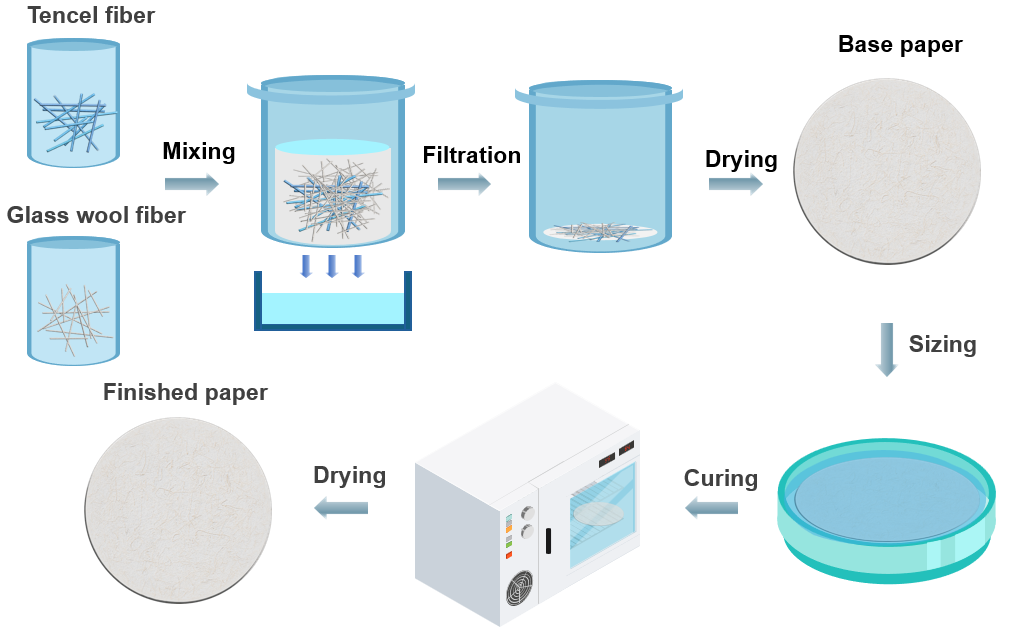
Figure 1 illustrates the preparation process of the filter paper. As shown, glass wool fibers and blended fibers were first weighed according to the specified basis weight and proportion, respectively. Each type of fiber was then mixed with 2 L of water, the pH of which had been adjusted to 3.5 using dilute sulfuric acid. The fibers were subsequently disintegrated using a standard fiber disintegrator (Dongguan Intensen Precision Instrument Co., Ltd., Dongguan, China) at a disintegration speed of 30,000 revolutions. The two disintegrated fiber suspensions were then combined and poured into a sheet former (Dongguan Intensen Precision Instrument Co., Ltd.). Water was added to a total volume of 8 L, followed by filtration to form wet paper sheets. The wet sheets were subsequently transferred to a flat-plate dryer at 105 °C (Model 140, Emerson Apparatus, Gorham, ME, USA) for drying. After drying, the paper sheets were treated with a mixture of thermosetting and thermoplastic acrylic resin adhesives (Jiangsu Aikesite New Materials Co., Ltd., Nanjing, China). The adhesive add-on level was controlled at 5 (±0.5)%, and curing was carried out at 150 °C. This treatment effectively enhanced the physical strength of the filter paper and improved its processability.

2.3. Filtration Test of Channel-Type Filter Media

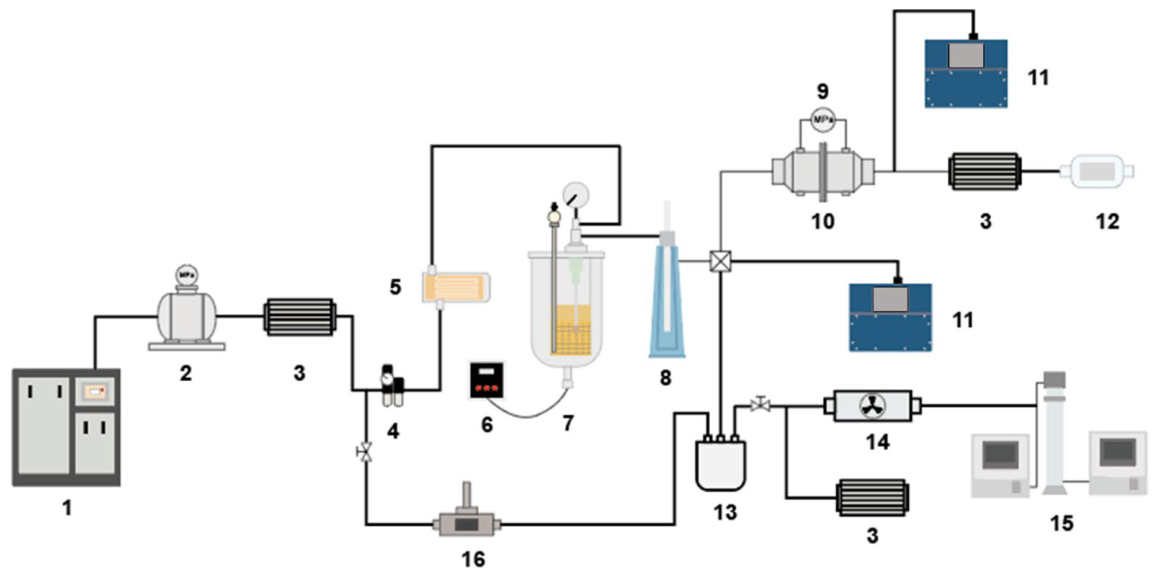
Filtration efficiency and pressure drop represent two critical performance indicators for filter paper evaluation. In the field of nuclear, biological, and chemical (NBC) protection, greater emphasis is placed on aerosol mass concentration, with oil-based aerosols commonly employed to simulate actual toxic agent environments. The oil-mist method, initially proposed in the Soviet Union, is capable of generating high-concentration aerosols and has progressively evolved into one of the standardized test methods for high-efficiency filter paper in China [32]. Therefore, with reference to related domestic and international studies [33,34] and in accordance with the national standard GB/T 6165-2021, “Test Method for Performance of High-Efficiency Air Filters Efficiency and Resistance”, a filtration efficiency test bench based on mass concentration was constructed, as illustrated in Figure 2.
The operating principle of the mass concentration-based test bench is as follows: under the action of dried and purified compressed air, a high-velocity airflow passes through a nozzle. The high-speed air generates a negative pressure, which draws heated oil from an atomizer upward through a suction tube and disperses it into an oil mist at the nozzle. An inertial separator (e.g., a helical cyclone) then separates the aerosol by removing larger particles via inertial and gravitational sedimentation. By adjusting relevant parameters, oil-mist aerosols with varying concentrations and particle size distributions can be generated. During testing, a differential pressure gauge monitors the pressure drop across the filter media in real time. Aerosol sampling is conducted from upstream and downstream sampling ports of the filter material holder. A photometer measures the mass concentration to compute the filtration efficiency of the material.

2.4. Pore Size Measurement of Channel-Type Filter Paper

The pore size of the filter paper was measured using a capillary flow porometer (PMI, Ithaca, NY, USA) with reference to ASTM F316. The capillary flow porometer operates based on the bubble point method. Briefly, the filter paper was first fully wetted with a wetting liquid, commonly Galwick. Clean and dry air was then applied to displace the wetting liquid from the pores of the filter paper. As the applied pressure increased, the liquid in the pore channels was gradually expelled. By measuring the relationship between gas pressure and flow rate, the mean pore size and maximum pore size of the filter paper were obtained.

2.5. Processability Test of Channel-Type Filter Media

2.5.1. Evaluation of Processability for Channel-Type Filter Media

The performance of filter paper after wave-pleating can be evaluated based on two primary aspects. The first is whether the paper exhibits damage or cracking following processing, and the second relates to the geometric characteristics of the formed pleats.
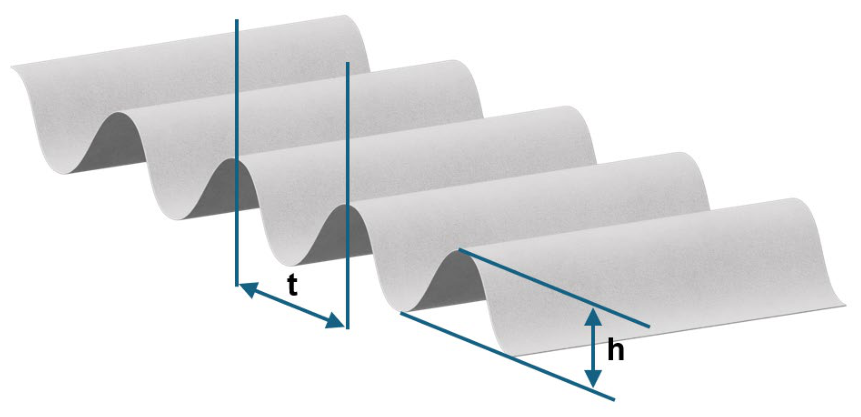
To assess potential damage or cracking, the filtration efficiency and pressure drop of the filter paper can be compared before and after wave-pleating. With respect to pleat geometry, the pleat aspect ratio is used for quantitative evaluation. Figure 3 illustrates the structural parameters of a wave pleat. As shown, pleat height (h) is defined as the vertical distance between a peak and an adjacent valley, while pleat width (t) refers to the horizontal distance between two consecutive peaks or valleys. The pleat aspect ratio (Ar) is given by Equation (1). A higher pleat aspect ratio corresponds to a more pronounced and three-dimensional pleat shape, whereas a lower ratio indicates a flatter pleat profile.
Ar = h t
In the above expression, “Ar” denotes the pleat aspect ratio, “h” represents the pleat height, and “t” indicates the pleat width.

2.5.2. Tensile Property Testing of Channel-Type Filter Paper

The thickness of the filter materials was measured using a microprocessor-based thickness tester (Model: IMT-HK210D, Dongguan Intelligent Precision Instrument Co., Ltd., Dongguan, China).
For post-pleating tensile performance evaluation, as there is currently no established standard for assessing the pleating performance of filter paper, a brittleness fracture method was applied following conventional physical testing. During wave-pleating, the filter paper is subjected to bending, compression, friction, and local tensile stress. These mechanical actions may cause cracking or structural damage, especially for glass-fiber-based filter paper with relatively high brittleness. Therefore, the brittleness fracture method was adopted as a practical comparative method to simulate the folding deformation experienced by the filter paper during pleating. The tensile strength after folding can reflect the ability of the filter paper to resist cracking and maintain structural integrity after deformation, and is therefore suitable for comparing the relative pleating processability of filter papers prepared with different fiber compositions, fiber lengths, and resin formulations.
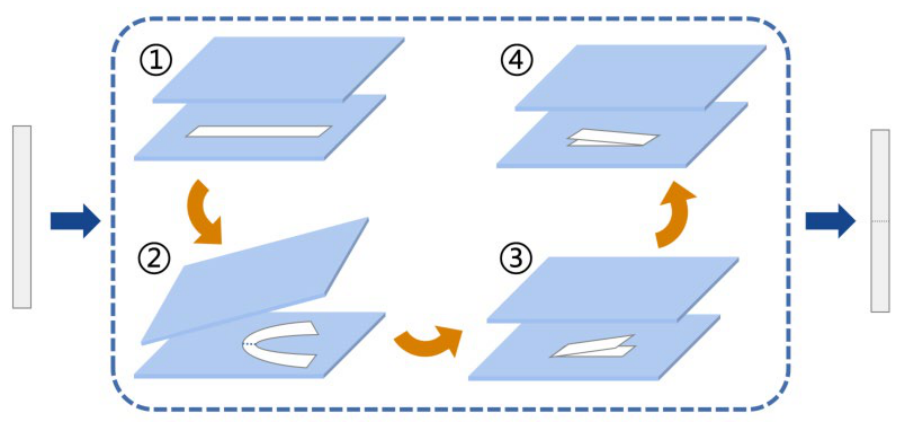
Figure 4 illustrates the sample preparation procedure for this method. A rectangular strip measuring 180 mm × 15 mm was first cut and placed between two 304 stainless steel plates (20 cm × 20 cm × 0.1 cm). The two short edges of the strip were aligned on one plate, and the other plate was pressed onto the folded strip to create a crease. The strip was then folded back along the crease and pressed again to obtain a specimen with a well-defined crease.

2.6. Engineering Preparation of Filter Paper

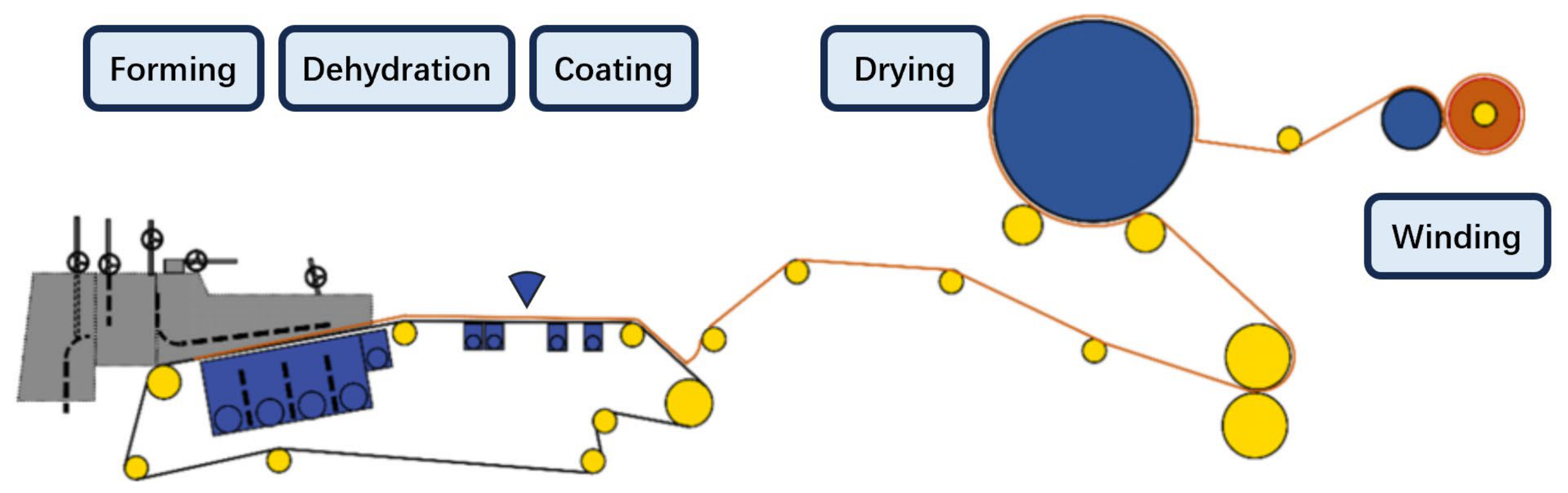
Using the previously obtained filter paper formulation, engineering-scale production of pilot filter paper was carried out using a pilot-scale inclined-wire papermaking machine. The resulting pilot filter paper exhibited the properties listed in Table 2.
The engineering-scale production process primarily consisted of a stock preparation system, a sheet-forming system, a sizing system, a drying system, and a winding system. Figure 5 illustrates the schematic of the inclined-wire pilot paper machine. As shown, a mixing tank was used to disperse and refine the glass wool fibers, while a hydropulper was employed to disperse the Tencel fibers. Once dispersed, the fibers were pumped into the mixing tank for thorough blending. Since raw materials were added in two batches, the dispersed fiber slurry from the first batch was transferred to a holding tank. The second batch was then processed under the same refining conditions as the first. The blended stock was delivered via a headbox onto the forming wire, where most of the water was removed by the forming fabric and suction boxes to shape the wet web. The web was then conveyed by rollers to a coating unit for resin application. Subsequently, the coated wet web was dried using drying cylinders to obtain the final dry sheet. An online quality monitoring system was used to inspect the filter paper in real time. Finally, the sheet was wound into rolls, completing the production of the pilot filter paper roll.

2.7. Fabrication of the Channel-Type High-Efficiency Filter

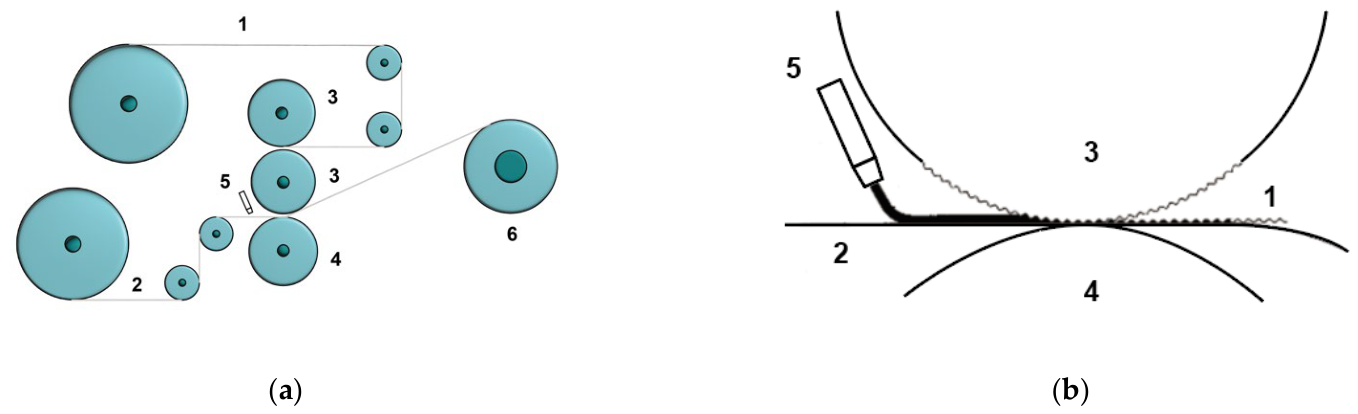
A channel-type structure folding machine(Hejian Xingyuan Machinery Equipment Factory, Hejian, Hebei, China) was used to process the filter paper into wave-shaped pleats and subsequently produce channel-type filter cartridges. Figure 6 illustrates the schematic diagram of the folding machine. As shown, the equipment mainly consists of four components: a filter paper feeding unit, a wave-pleating unit, a sealing adhesive application unit, and a winding unit. The working principle of the channel-type folding machine is as follows: the filter paper is conveyed by a series of traction rollers to the wave-pleating unit. There, it passes through two heated forming rollers to create wave-shaped pleats. Subsequently, sealant is applied along one edge of the pleated filter paper to close the channels, and several adhesive lines are evenly distributed across the middle section to bond the underlying filter paper layer. Driven by the traction rollers, another filter paper roll bypasses the pleating unit and is directly bonded to the pleated paper using the applied sealant, forming a sheet-like structure with alternating open and closed channels. This results in a channel-type sheet structure ready for filter cartridge assembly. The channeled sheet is then wound on the winding unit, while sealant is applied to the remaining open edge of each channel. This serves to both adhere adjacent layers of the sheet together and seal one end of each individual channel, resulting in a structure where each channel is sealed at one end and open at the other. Finally, the wound sheet is formed into a cylindrical shape. The central supporting mandrel is then removed, and an appropriate amount of sealant is applied around the central area. The assembly is placed under a pneumatic pressing platform to seal the central axis and compact the filter into an oval (racetrack) cross-section. The formed cartridge is then inserted into a pre-fabricated housing, and sealant is used to bond and seal the interface between the cartridge and the housing.

2.8. Filtration Performance Test of the Channel-Type Filter

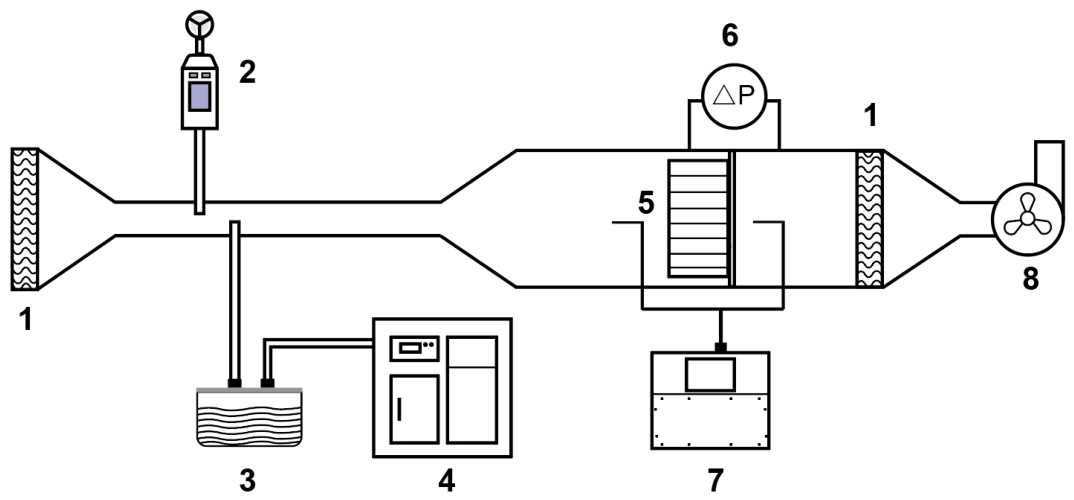
Figure 7 illustrates the schematic diagram of the oil-mist filtration performance testing apparatus. Under standardized testing conditions, turbine oil was employed as the oil-mist aerosol generating agent. The aerosol was generated via an evaporation-condensation-type oil-mist generator, producing oil-mist particles with a mass median diameter ranging from 0.28 μm to 0.34 μm. Aerosol samples were extracted from both upstream and downstream of the filter, and the scattering light intensity was measured using a nephelometer to determine the filtration efficiency. The pressure drop across the filter was measured by a differential pressure sensor installed across the upstream and downstream sides.

3. Results and Discussion

3.1. Characteristics of Fiber Raw Materials

3.1.1. Morphological Characteristics of Fiber Raw Materials

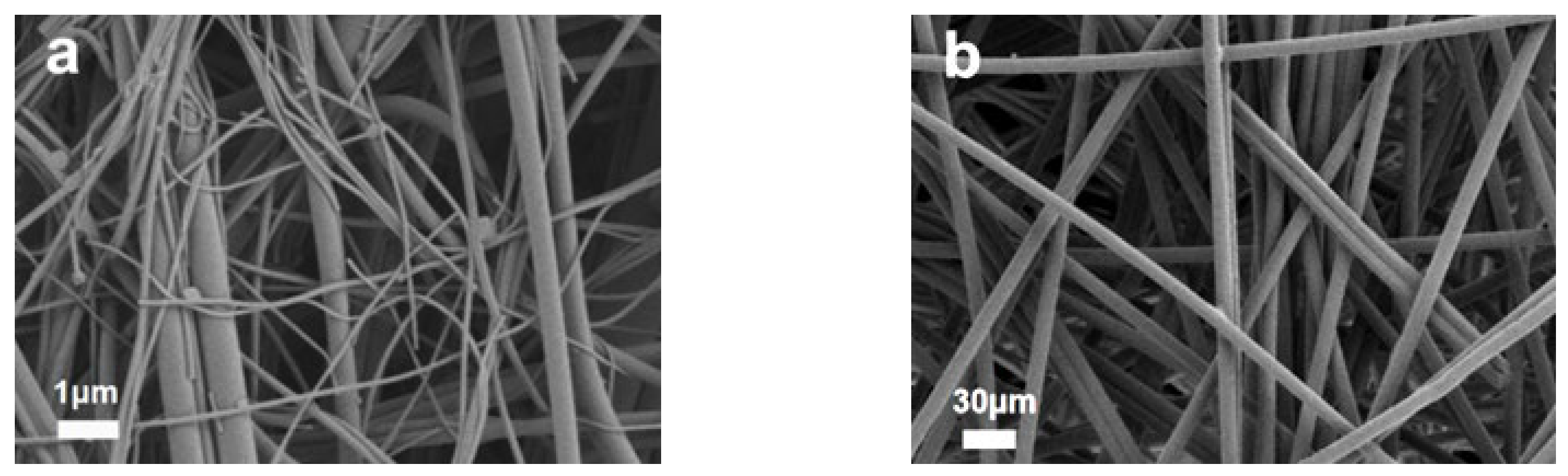
Figure 8 presents the scanning electron microscopy (SEM) images of the two fiber raw materials: glass wool fiber and Tencel fiber. As shown in the figure, glass wool fibers exhibit rounded profiles with variable morphology and a relatively wide diameter distribution. Fibers with smaller diameters display noticeable curvature. In contrast, Tencel fibers appear rounded, smooth-surfaced, and predominantly straight, with a uniform diameter distribution and no significant morphological variation.

3.1.2. Diameter of Fiber Raw Materials

To measure the fiber diameters of the two fiber types, Image J software was first utilized to analyze and process SEM images of the four fibers in order to obtain their average diameters.
Table 3 lists the average diameters of the fiber raw materials obtained through manual measurement using Image J software. For each type of fiber, 150 individual fibers were selected for measurement. As indicated in the table, the average diameters of glass wool fiber and Tencel fiber are 0.36 μm and 8.82 μm, respectively. Notably, glass wool fiber shows a wide diameter distribution with substantial variation, resulting in a high coefficient of variation of 90.15%. Conversely, due to its consistent morphology, Tencel fiber exhibits a much lower coefficient of variation of 12.96%.

3.2. Effect of Tencel Fibers on the Corrugation Processability and Filtration Performance of Filter Paper

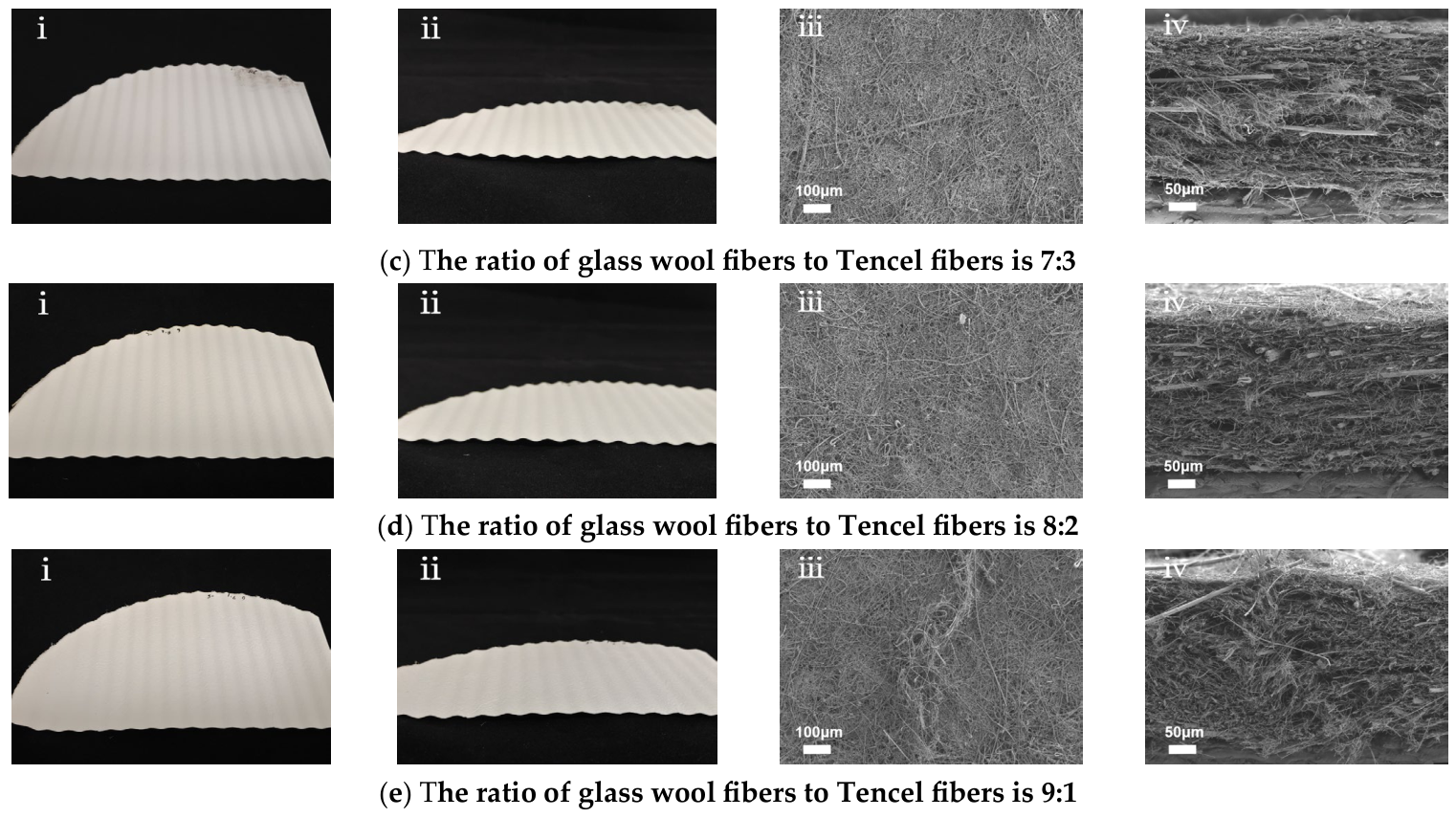
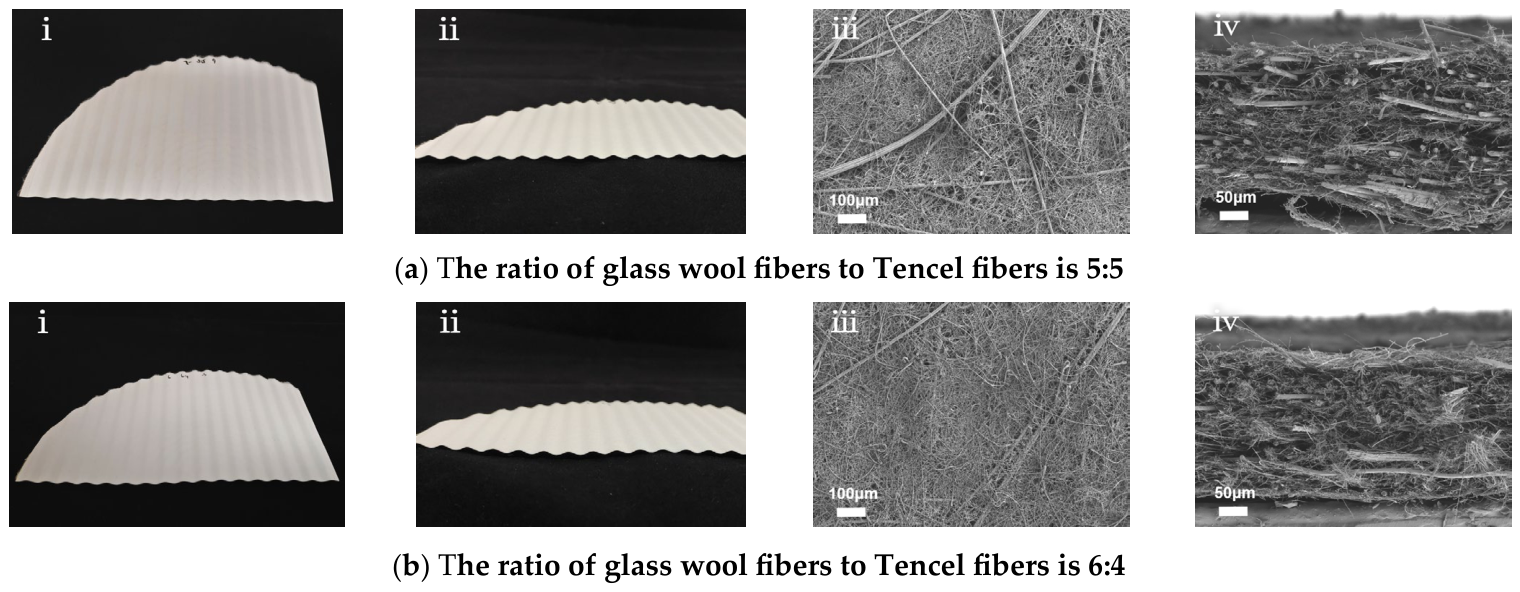
The fundamental properties of filter papers prepared by blending glass wool fibers with varying proportions of Tencel fibers are summarized in Table A1. As the data indicate, with an increasing proportion of glass wool fibers and a corresponding decrease in Tencel fibers, the thickness of the filter paper gradually increases, accompanied by elevated filtration efficiency and higher pressure drop, while the post-folding tensile strength declines. When the glass wool fiber content rises from 50% to 90%, the paper thickness increases by 19.83%. The filtration efficiency of all prepared papers exceeds 99.7981%, reaching 99.9521% at 60% glass fiber content, which meets high-efficiency filtration requirements. After wave-pleating, as the Tencel fiber proportion decreases, the pleat aspect ratio declines accordingly, indicating deteriorated pleat-forming performance. Compared with the unprocessed base sheet, the filtration efficiency initially increases and then decreases after pleating, while the pressure drop is reduced. SEM images of the surface and cross-section of the pleated filter papers prepared with different glass wool/Tencel fiber ratios are provided in Figure A1.
The pore size analysis results of the filter media prepared with different glass wool fiber/Tencel fiber ratios are presented in Table A1. As the glass wool fiber content increased, both the average pore size and the maximum bubble point of the filter media gradually decreased. Specifically, when the ratio of glass wool fibers to Tencel fibers was 5:5, the average pore size was 6.12 μm and the maximum bubble point was 20.51 μm. When the ratio increased to 9:1, the average pore size decreased to 2.04 μm, while the maximum bubble point decreased to 7.03 μm. At the optimized ratio of 6:4, the average pore size and maximum bubble point were 4.39 μm and 15.86 μm, respectively. This trend can be attributed to the much smaller diameter of glass wool fibers compared with Tencel fibers. With increasing glass wool fiber content, more fine fibers are introduced into the fiber network, filling the inter-fiber voids and forming a denser porous structure. The reduction in average pore size is beneficial for improving particle capture efficiency, which is consistent with the observed increase in filtration efficiency.
The improvement in corrugation processability can be mainly attributed to the complementary roles of glass wool fibers and Tencel fibers in the composite filter paper. Glass wool fibers possess fine diameters and high specific surface areas, which are beneficial for particle capture and contribute primarily to the high filtration efficiency of the filter paper. However, due to their intrinsic brittleness, glass wool fibers are prone to fracture under bending, compression, and friction during wave-pleating. In contrast, Tencel fibers have larger diameters, smoother surfaces, and better flexibility. When introduced into the glass wool fiber network, Tencel fibers act as a flexible supporting skeleton, improving the integrity and toughness of the paper sheet. This skeleton-like structure helps distribute the mechanical stress generated during pleating, thereby reducing local stress concentration and suppressing crack formation.
At an appropriate blending ratio, the Tencel fibers provide sufficient mechanical support without excessively decreasing the content of fine glass wool fibers responsible for filtration. Therefore, the glass wool fiber/Tencel fiber ratio of 6:4 represents a balance between filtration performance and forming processability. When the Tencel fiber content is too low, the filter paper becomes brittle and difficult to deform into stable wave pleats. Conversely, excessive Tencel fiber content may reduce the proportion of fine glass wool fibers and weaken the filtration performance. This explains why the optimized composite system can maintain high filtration efficiency while showing improved corrugation processability.
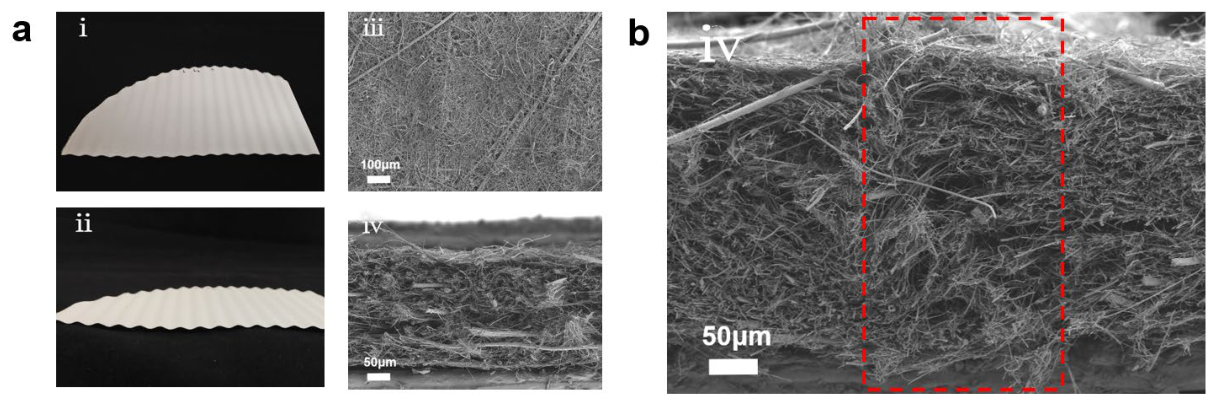
SEM characterization (Figure 9a) reveals that Tencel fibers are uniformly distributed as a skeletal network, while glass wool fibers fill the interstices, forming a hierarchical porous structure. As the Tencel fiber proportion decreases from 50% to 10%, the toughness of the filter paper declines, leading to a 36.36% reduction in pleat aspect ratio, primarily attributed to the increased content of brittle glass wool fibers and the consequent deterioration in bending performance. During the pleating process, friction and compression induce tensile fracture in some glass wool fibers (Figure 9b), and cross-sectional microscopy shows interlocking of broken fibers and interlayer loosening.
Therefore, when blending glass wool fibers with Tencel fibers, to achieve a filtration efficiency exceeding 99.95%, the glass wool fiber content should be higher than 60%. Simultaneously, to obtain the optimal pleat aspect ratio, a blending ratio of glass wool fibers to Tencel fibers of 6:4 is recommended for filter paper preparation.
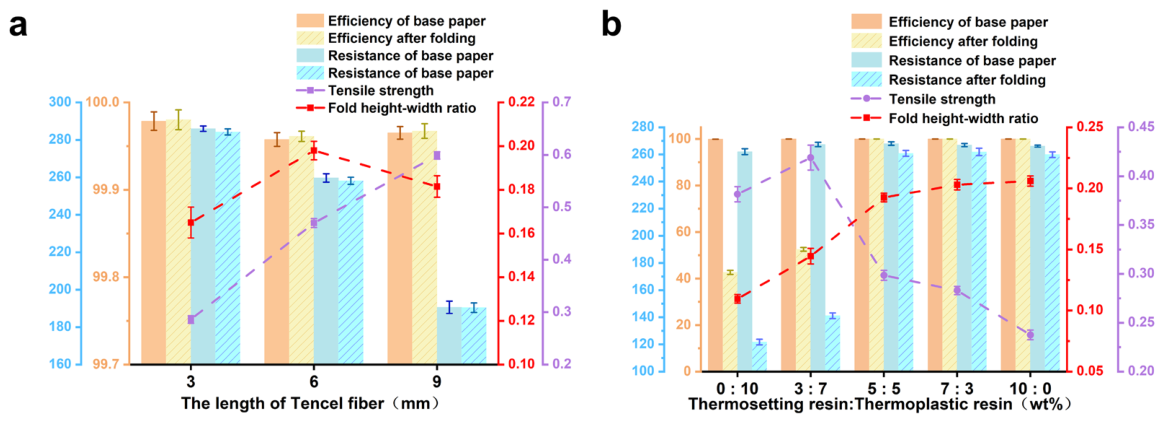
Figure 10a presents the fundamental properties of filter papers prepared from a blend of glass wool fibers and Tencel fibers at a fixed ratio of 6:4, with variations in Tencel fiber length. Within this blended system, changes in Tencel fiber length significantly influenced the filter paper performance. As the Tencel fiber length increased, the paper thickness showed a monotonic upward trend, with increments of 2.54% and 2.07%, respectively. This can be attributed to the enhanced structural bulkiness resulting from the dense interwoven network formed by fibers with higher aspect ratios. Filtration efficiency exhibited a non-monotonic variation, with short-fiber paper achieving a peak efficiency of 99.9712%, while medium-length fiber paper displayed the lowest efficiency (99.9521%). The observed decrease in efficiency may be due to the charged nature of fiber surfaces; as fiber length increases, fibers tend to entangle more easily, making dispersion more challenging and leading to flocculation, which adversely affects filtration performance. Tensile strength showed a parabolic change pattern, with the maximum value reaching 0.604 kN/m, representing a 107.56% increase compared to the initial value. After wave-pleat processing, all filter papers maintained structural integrity (with no significant decline in filtration efficiency or resistance). Notably, the medium-length fiber paper achieved a pleat height-to-width ratio of 0.195, representing improvements of 21.87% and 9.55% over short-fiber and long-fiber papers, respectively.
Figure 10b illustrates the basic properties of filter papers prepared with a 6:4 glass wool to Tencel fiber ratio but different resin formulations. The resin formulation demonstrated a regulatory effect on the mechanical properties of the filter paper. As the proportion of thermosetting acrylic resin increased, paper thickness increased by 13.59%, filtration efficiency improved, and resistance initially increased before decreasing; however, post-folding tensile strength decreased by 37.72%. Paper with pure thermoplastic resin (100% proportion) achieved a peak tensile strength of 0.387 kN/m, indicating that the flexible molecular chains of thermoplastic resin can effectively alleviate interfacial stress concentration in fibers. Following wave-pleat processing, filter papers with less than 50% thermosetting resin experienced structural failure, resulting in significant decreases in filtration efficiency (47.97–56.76%) and resistance (46.43–52.71%). In contrast, papers with thermosetting resin proportions of 50% or higher exhibited enhanced structural stability due to the three-dimensional cross-linked network formed by resin curing. These papers not only showed no apparent decline in post-pleating filtration performance but actually demonstrated improvements. Additionally, as the thermosetting resin proportion increased from 50% to 100%, the pleat height-to-width ratio improved by 7.18% to reach 0.209, indicating that resin addition can effectively enhance the pleat-processing performance of filter paper.
The resin system further regulates the interaction among glass wool fibers, Tencel fibers, and the bonding network. During resin impregnation and curing, the resin is distributed at fiber contact points and acts as an adhesive phase that enhances inter-fiber bonding. For the glass wool/Tencel composite system, the resin improves the connection between brittle glass fibers and flexible Tencel fibers, allowing the two types of fibers to form a more stable integrated network. The thermosetting resin can form a cross-linked structure after curing, which enhances the dimensional stability of the filter paper during thermal wave-pleating. This cross-linked bonding network helps the pleated structure retain its shape after forming.
However, the resin formulation must be carefully controlled. If the proportion of thermosetting resin is insufficient, the bonding strength between fibers is weak, and the paper structure may be damaged during wave-pleating, resulting in decreases in filtration efficiency and pressure drop. If the resin system provides adequate bonding and thermal stability, the filter paper can better withstand compression, bending, and friction during pleating. Therefore, the improvement in processability is not only caused by the addition of Tencel fibers, but also by the synergistic effect of flexible fiber reinforcement and resin-induced inter-fiber bonding.

3.3. Effect of Folding Machine Processing Parameters on Corrugated Pleat Processability

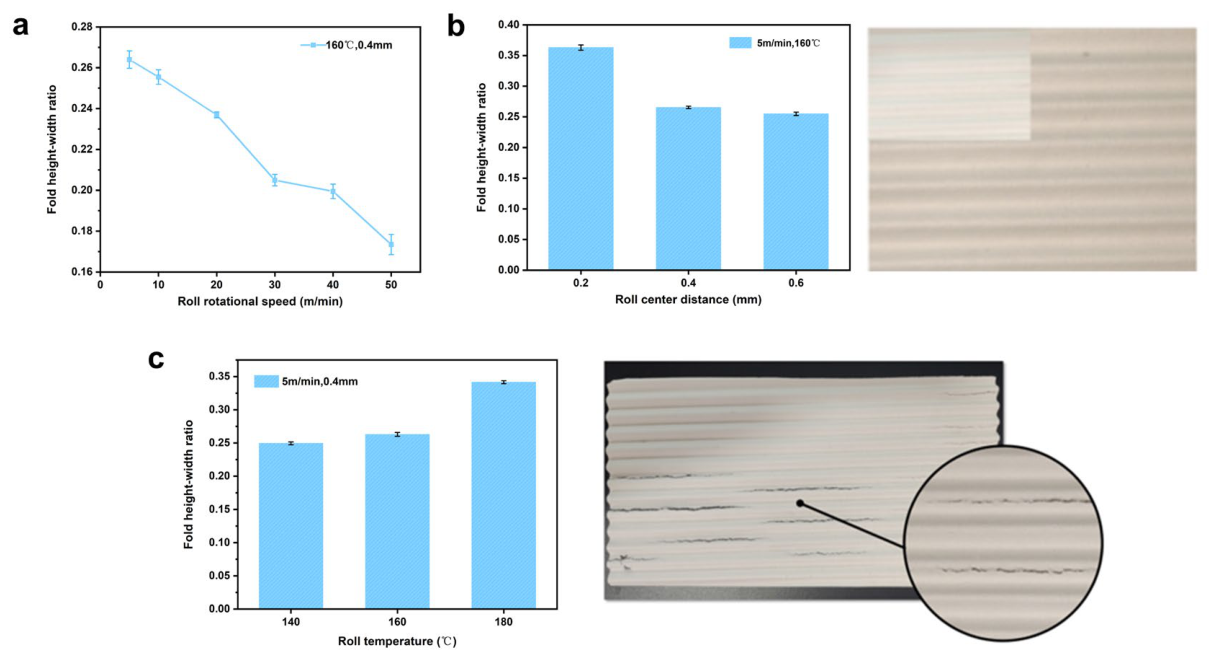
Figure 11a illustrates the relationship between roller rotation speed and pleat aspect ratio under the conditions of a roller temperature of 160 °C and a roller gap of 0.4 mm. As the roller speed increased from 5 m/min to 50 m/min, the pleat aspect ratio decreased from 0.267 to 0.177, representing a substantial reduction of 33.70%. The higher rotation speed shortened the contact time between the filter paper and the forming roller, resulting in insufficient plastic deformation before the paper was conveyed out of the forming zone. To achieve a larger pleat aspect ratio, 5 m/min was selected as the optimal rotation speed, yielding a pleat aspect ratio of 0.267 that meets the design requirements for the channel structure of a channel-type high-efficiency filter.
Figure 11b shows the relationship between roller gap and pleat aspect ratio at a rotation speed of 5 m/min and a roller temperature of 160 °C. Under the same rotation speed and temperature, as the roller gap increased from 0.2 mm to 0.6 mm, the pleat aspect ratio after wave-pleating decreased from 0.366 to 0.257, a reduction of 29.78%, resulting in flatter pleat profiles. An excessively large gap reduces the contact area between the filter paper and the forming roller, leading to insufficient applied stress. Conversely, an overly small gap causes excessive compression during forming, potentially damaging the porous structure and causing material collapse. A roller gap of 0.4 mm was selected, as it provided a higher pleat aspect ratio while maintaining the structural integrity of the filter paper.
Figure 11c depicts the relationship between roller temperature and pleat aspect ratio at a rotation speed of 5 m/min and a roller gap of 0.4 mm. Under the same rotation speed and gap, as the roller temperature increased from 140 °C to 180 °C, the pleat aspect ratio after wave-pleating increased from 0.251 to 0.343, an increase of 36.65%, resulting in more three-dimensional pleat shapes. This is attributed to the thermal softening of fibers and resin at elevated temperatures, which enhances toughness and facilitates deformation during roller engagement. However, filter paper processed at 180 °C exhibited noticeable yellowing, indicating accelerated aging of the fibers and resin due to excessive temperature, which is detrimental to filter service life. On the other hand, temperatures that are too low fail to adequately improve paper toughness, resulting in flatter pleat profiles that are unfavorable for subsequent filter cartridge fabrication. Therefore, a roller temperature of 160 °C was chosen to achieve a higher pleat aspect ratio while preserving the integrity of the filter paper.

3.4. Filtration Performance of the Channel-Type High-Efficiency Filter

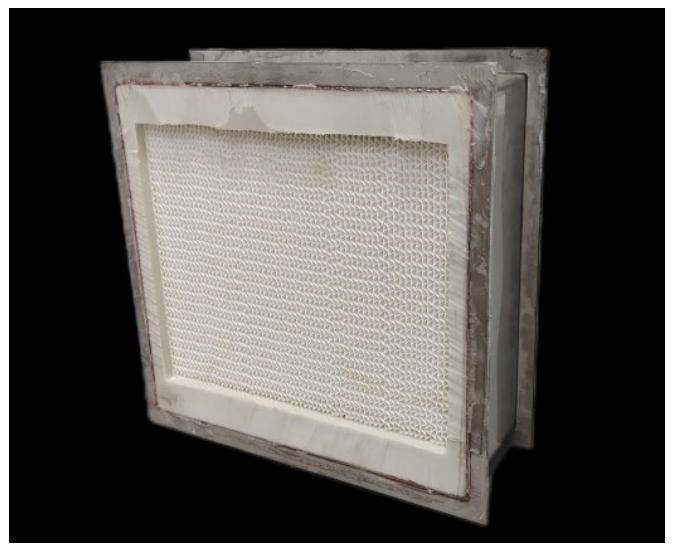
As illustrated in Figure 12, pilot-scale filter paper was processed under optimal conditions into a channel-type sheet structure, which was subsequently assembled into a channel-type high-efficiency filter. The filtration performance of this filter was then evaluated.
Experimental data (Table 4) show that for filter cores of identical dimensions, the filtration area of the channel-type high-efficiency filter is approximately 4.83 m2, while that of a pleated filter is 3.23 m2. It should be noted that the traditional pleated high-efficiency filter used for comparison in this study was a mature commercial product rather than a laboratory-prepared sample. The commercial pleated filter and the developed channel-type filter had the same external dimensions of 284 mm × 284 mm × 100 mm and were evaluated under the same test conditions. In addition, both filters exhibited the same measured filtration efficiency of 99.9940%, which allows a direct comparison of the influence of filter structure on filtration area, face velocity, and pressure drop. Compared with a traditional pleated high-efficiency filter of equal volume and efficiency grade, the channel-type design increases the filtration area by 49.53%. Under a standard airflow rate of 200 m3/h, the face velocity of the channel-type filter is 1.15 cm/s, which is 33.13% lower than that of the pleated filter (1.72 cm/s). The reduced face velocity extends the residence time of aerosol particles within the fibrous medium, enhancing capture mechanisms such as diffusion deposition and inertial impaction. Additionally, the filtration resistance of the channel-type filter is 31.67% lower than that of the traditional pleated filter under identical operating conditions, indicating a positive effect of the channel-type structure on reducing pressure drop.
The reduction in pressure drop of the channel-type filter can be explained by its structural effect on airflow distribution and effective filtration area. In a traditional pleated filter, airflow passes through densely arranged pleats, and local flow acceleration, flow separation, and uneven velocity distribution may occur near the pleat tips and narrow channels. These effects increase local resistance and contribute to the overall pressure drop. In contrast, the channel-type filter forms relatively independent and continuous flow channels, which guide the airflow more regularly through the filter element. This reduces local flow disturbance and helps improve the uniformity of airflow distribution.
In addition, the channel-type structure provides a larger effective filtration area within the same external volume. Under the same airflow rate, the increase in filtration area directly reduces the face velocity of the filter medium. A lower face velocity decreases the resistance generated when air passes through the fibrous porous medium and also increases the residence time of aerosol particles inside the filter medium. Therefore, the channel-type structure can simultaneously maintain high filtration efficiency and reduce pressure drop. The observed decrease in resistance from 240.0 Pa for the traditional pleated filter to 164.0 Pa for the channel-type filter is consistent with this mechanism.

4. Conclusions

In this study, a channel-type high-efficiency filter paper was developed by integrating high-efficiency glass wool fiber media with a wave-pleated channel structure. Although channel-type and low-resistance filter configurations have been previously reported, the main contribution of this work lies not simply in the structural design itself, but in solving the processability limitation of high-efficiency glass fiber filter paper during channel-type forming. Specifically, this study establishes a material–process–structure integrated strategy by optimizing the fiber formulation, resin system, wave-pleating parameters, and pilot-scale preparation process.
To address the poor processability of high-efficiency glass fiber filter paper in wave-pleating, this study introduced Tencel fibers to investigate the influence of fiber composition on processing performance, thereby identifying the optimal fiber blend ratio. Subsequently, by adjusting Tencel fiber length, the effect of fiber length on processability was examined to determine the optimum fiber length. Finally, by applying resins with different formulations, the impact of resin composition on processability was assessed, leading to the selection of an optimal resin formula. Ultimately, a high-efficiency filter paper suitable for wave-pleating was developed by blending glass wool fibers with 6 mm Tencel fibers at a 6:4 ratio and applying a thermosetting resin. The resulting filter paper exhibited a filtration efficiency of 99.9624%, a pressure drop of 265.6 Pa, and a pleat aspect ratio of 0.209.
Using the above formulation, pilot scale filter paper was produced via engineering scale manufacturing. The influence of forming roller temperature, gap, and rotation speed on wave-pleating performance was systematically investigated, and optimal processing conditions for the pilot paper were established. Under these conditions, the pilot paper was processed into wave pleats and fabricated into channel type filters, whose performance was evaluated and compared with that of traditional pleated filters of the same efficiency grade.
The pilot paper was produced using an inclined-wire pilot paper machine, which yielded more uniform and stable sheets with superior properties compared to laboratory made paper. The pilot paper demonstrated a filtration efficiency of 99.9721%, a pressure drop of 265.0 Pa, and a post-folding tensile strength of 0.405 kN/m. Optimal processing parameters—roller speed of 5 m/min, roller gap of 0.4 mm, and roller temperature of 160 °C—were applied to produce wave pleats with a pleat aspect ratio of 0.267, which were then used to fabricate channel type high-efficiency filters. Filters with core dimensions of 284 mm × 284 mm × 100 mm were manufactured under these conditions, achieving a filtration efficiency of 99.9940% and a pressure drop of 164.0 Pa. Compared to a traditional pleated filter of equal volume and efficiency grade, the channel type filter exhibited a 49.53% larger filtration area, a 33.13% lower face velocity, and a 31.67% reduction in pressure drop.
It should be noted that this study mainly focused on the preparation, processability, and initial oil-mist aerosol filtration performance of the channel-type high-efficiency filter. Long-term dust loading capacity, structural stability during extended operation, and service life were not evaluated in the present work. In addition, the filtration performance was tested using a standardized oil-mist aerosol rather than complex real air pollutants or biological aerosols. For applications involving medical protection or bioaerosol control, bacterial filtration efficiency and viral filtration efficiency would be important additional indicators. These aspects will be investigated in future work to further evaluate the applicability of the developed channel-type filter under practical operating conditions.

Author Contributions

Methodology, M.L., Y.L. and H.W.; validation, M.L., J.X. and Y.W.; formal analysis, M.L.; investigation, M.L.; resources, J.K. and D.W.; data curation, M.L.; writing—original draft preparation, M.L.; writing—review and editing, H.W.; supervision, H.W., Y.L. and J.K.; project administration, D.W. and L.W. All authors have read and agreed to the published version of the manuscript.

Funding

This research received no external funding.

Data Availability Statement

The original contributions presented in this study are included in the article. Further inquiries can be directed to the corresponding authors.

Conflicts of Interest

The authors declare no conflict of interest.

Appendix A

Figure A1. Photos and SEM images of the filter medium prepared by glass fiber combined with Tencel fiber in different proportions after waveform pleating ((i): photos of surface; (ii): photos of cross section; (iii): SEM images of surface; (iv): SEM images of cross section).
Processes 14 01486 g0a1aProcesses 14 01486 g0a1b
Table A1. Basic properties of filter medium prepared by glass fiber combined with Tencel fiber in different proportions.
Filter Paper Identification NumberFiber Composition RatioThickness
(μm)
Tensile Strength After Folding
(kN/m)
Base PaperAfter CorrugationFold
Height- Width Ratio
Average Pore Size
(μm)
Maximum Pore Diameter
(μm)
Glass Wool Fibers: Tencel FiberEfficiency
(%)
Resistance
(Pa)
Efficiency
(%)
Resistance
(Pa)
15:52420.61199.7981221.199.7593209.30.2096.1220.51
26:42430.47699.9521261.399.9571259.50.1954.3915.86
37:32460.43799.9889322.299.9896322.00.1593.9713.72
48:22660.28699.9974382.199.9967370.90.1442.569.16
59:12900.17799.9980409.599.9977402.50.1332.047.03

References

  1. Zhang, Q.; Jiang, X.; Tong, D.; Davis, S.J.; Zhao, H.; Geng, G.; Feng, T.; Zheng, B.; Lu, Z.; Streets, D.G.; et al. Transboundary Health Impacts of Transported Global Air Pollution and International Trade. Nature 2017, 543, 705–709. [Google Scholar] [CrossRef]
  2. Fernández De Mera, I.G.; Granda, C.; Villanueva, F.; Sánchez-Sánchez, M.; Moraga-Fernández, A.; Gortázar, C.; De La Fuente, J. HEPA Filters of Portable Air Cleaners as a Tool for the Surveillance of SARS-CoV-2. Indoor Air 2022, 32, e13109. [Google Scholar] [CrossRef]
  3. Zhang, X.; Liu, J.; Liu, X.; Liu, C.; Chen, Q. HEPA Filters for Airliner Cabins: State of the Art and Future Development. Indoor Air 2022, 32, e13103. [Google Scholar] [CrossRef]
  4. Rogak, S.N.; Rysanek, A.; Lee, J.M.; Dhulipala, S.V.; Zimmerman, N.; Wright, M.; Weimer, M. The Effect of Air Purifiers and Curtains on Aerosol Dispersion and Removal in Multi-patient Hospital Rooms. Indoor Air 2022, 32, e13110. [Google Scholar] [CrossRef] [PubMed]
  5. Sabirova, A.; Wang, S.; Falca, G.; Hong, P.-Y.; Nunes, S.P. Flexible Isoporous Air Filters for High-Efficiency Particle Capture. Polymer 2021, 213, 123278. [Google Scholar] [CrossRef]
  6. Sanaei, P.; Richardson, G.W.; Witelski, T.; Cummings, L.J. Flow and Fouling in a Pleated Membrane Filter. J. Fluid Mech. 2016, 795, 36–59. [Google Scholar] [CrossRef]
  7. Lücke, T.; Fissan, H. The Prediction of Filtration Performance of High Efficiency Gas Filter Elements. Chem. Eng. Sci. 1996, 51, 1199–1208. [Google Scholar] [CrossRef]
  8. Dziubak, T.; Karczewski, M. Experimental Study of the Effect of Air Filter Pressure Drop on Internal Combustion Engine Performance. Energies 2022, 15, 3285. [Google Scholar] [CrossRef]
  9. Abdullah, N.R.; Shahruddin, N.S.; Mamat, R.; Ihsan Mamat, A.M.; Zulkifli, A. Effects of Air Intake Pressure on the Engine Performance, Fuel Economy and Exhaust Emissions of A Small Gasoline Engine. J. Mech. Eng. Sci. 2014, 6, 949–958. [Google Scholar] [CrossRef]
  10. Allam, S.; Elsaid, A.M. Parametric Study on Vehicle Fuel Economy and Optimization Criteria of the Pleated Air Filter Designs to Improve the Performance of an I.C Diesel Engine: Experimental and CFD Approaches. Sep. Purif. Technol. 2020, 241, 116680. [Google Scholar] [CrossRef]
  11. Dziubak, T. Experimental Studies of PowerCore Filters and Pleated Filter Baffles. Materials 2022, 15, 7292. [Google Scholar] [CrossRef] [PubMed]
  12. Rothman, J.C.; Gllingham, G.R.; Wagner, W. Slanted Inline Filter. U.S. Patent 5772883, 30 June 1998. [Google Scholar]
  13. Wu, Y.; Song, Y.; Wu, D.; Mao, X.; Yang, X.; Jiang, S.; Zhang, C.; Guo, R. Recent Progress in Modifications, Properties, and Practical Applications of Glass Fiber. Molecules 2023, 28, 2466. [Google Scholar] [CrossRef]
  14. Aberem, M.B.; Feng, W.; Ait-Kadi, A.; Riedl, B.; Brisson, J. Modification of Glass Fiber Surface by Nylon-6,6 Grafting. Compos. Interfaces 2005, 12, 425–443. [Google Scholar] [CrossRef]
  15. Parizi, M.J.G.; Shahverdi, H.; Roa, J.J.; Pipelzadeh, E.; Martinez, M.; Cabot, A.; Guardia, P. Improving Mechanical Properties of Glass Fiber Reinforced Polymers through Silica-Based Surface Nanoengineering. ACS Appl. Polym. Mater. 2020, 2, 2667–2675. [Google Scholar] [CrossRef]
  16. Dehrooyeh, S.; Vaseghi, M.; Sohrabian, M.; Sameezadeh, M. Glass Fiber/Carbon Nanotube/Epoxy Hybrid Composites: Achieving Superior Mechanical Properties. Mech. Mater. 2021, 161, 104025. [Google Scholar] [CrossRef]
  17. Xiang, G.; Yin, J.; Qu, G.; Sun, P.; Hou, P.; Huang, J.; Xu, X. Construction of ZnCo2 S4 @Ni(OH)2 Core–Shell Nanostructures for Asymmetric Supercapacitors with High Energy Densities. Inorg. Chem. Front. 2019, 6, 2135–2141. [Google Scholar] [CrossRef]
  18. Feih, S.; Wei, J.; Kingshott, P.; Sorensen, B. The Influence of Fibre Sizing on the Strength and Fracture Toughness of Glass Fibre Composites. Compos. Part A Appl. Sci. Manuf. 2005, 36, 245–255. [Google Scholar] [CrossRef]
  19. Singh, J.; Kumar, M.; Kumar, S.; Mohapatra, S.K. Properties of Glass-Fiber Hybrid Composites: A Review. Polym.-Plast. Technol. Eng. 2017, 56, 455–469. [Google Scholar] [CrossRef]
  20. Ashok Kumar, M.; Ramachandra Reddy, G.; Siva Bharathi, Y.; Venkata Naidu, S.; Naga Prasad Naidu, V. Frictional Coefficient, Hardness, Impact Strength, and Chemical Resistance of Reinforced Sisal-Glass Fiber Epoxy Hybrid Composites. J. Compos. Mater. 2010, 44, 3195–3202. [Google Scholar] [CrossRef]
  21. Liang, W.; Shao, Q.; Liu, Y.; Wei, R.; Xu, J. The Noteworthy Tensile Plasticity and Strength of CoFeSiB Metallic Glass Fiber Reinforced Epoxy Composites. Polym. Compos. 2024, 45, 14257–14267. [Google Scholar] [CrossRef]
  22. Takahashi, K.; Choi, N.-S. Influence of Fibre Weight Fraction on Failure Mechanisms of Poly(Ethylene Terephthalate) Reinforced by Short-Glass-Fibres. J. Mater. Sci. 1991, 26, 4648–4656. [Google Scholar] [CrossRef]
  23. Denault, J.; Vu-Khanh, T.; Foster, B. Tensile Properties of Injection Molded Long Fiber Thermoplastic Composites. Polym. Compos. 1989, 10, 313–321. [Google Scholar] [CrossRef]
  24. Fu, S.-Y.; Lauke, B.; Mäder, E.; Yue, C.-Y.; Hu, X. Tensile Properties of Short-Glass-Fiber- and Short-Carbon-Fiber-Reinforced Polypropylene Composites. Compos. Part A Appl. Sci. Manuf. 2000, 31, 1117–1125. [Google Scholar] [CrossRef]
  25. Sato, N.; Kurauchi, T.; Sato, S.; Kamigaito, O. Microfailure Behaviour of Randomly Dispersed Short Fibre Reinforced Thermoplastic Composites Obtained by Direct SEM Observation. J. Mater. Sci. 1991, 26, 3891–3898. [Google Scholar] [CrossRef]
  26. Velmurugan, R.; Manikandan, V. Mechanical Properties of Palmyra/Glass Fiber Hybrid Composites. Compos. Part A Appl. Sci. Manuf. 2007, 38, 2216–2226. [Google Scholar] [CrossRef]
  27. Aravinth, K.; Sathish, R.; Ramakrishnan, T.; Balu Mahandiran, S.; Shiyam Sundhar, S. Mechanical Investigation of Agave Fiber Reinforced Composites Based on Fiber Orientation, Fiber Length, and Fiber Volume Fraction. Mater. Today Proc. 2023, in press. [Google Scholar] [CrossRef]
  28. Prakash, K.B.; Fageehi, Y.A.; Saminathan, R.; Manoj Kumar, P.; Saravanakumar, S.; Subbiah, R.; Arulmurugan, B.; Rajkumar, S. Influence of Fiber Volume and Fiber Length on Thermal and Flexural Properties of a Hybrid Natural Polymer Composite Prepared with Banana Stem, Pineapple Leaf, and S-Glass. Adv. Mater. Sci. Eng. 2021, 2021, 6329400. [Google Scholar] [CrossRef]
  29. Cao, Y.; Gao, G.; Zhang, P.; Bao, J.; Feng, P.; Li, R.; Wang, W. Improving Tensile Properties of Glass Fiber-Reinforced Epoxy Resin Composites Based on Enhanced Multiphase Structure: The Modification of Resin Systems and Glass Fibers. Mater. Today Commun. 2024, 40, 110225. [Google Scholar] [CrossRef]
  30. Etcheverry, M.; Barbosa, S.E. Glass Fiber Reinforced Polypropylene Mechanical Properties Enhancement by Adhesion Improvement. Materials 2012, 5, 1084–1113. [Google Scholar] [CrossRef] [PubMed]
  31. He, Y.; Gong, W.; Zhang, D.; Qin, S. Effect of Impregnation Time on Performance of Long Glass Fiber-reinforced Polypropylene Composites. J. Vinyl Addit. Technol. 2018, 24, 174–178. [Google Scholar] [CrossRef]
  32. Feng, Z.; Long, Z.; Chen, Q. Assessment of Various CFD Models for Predicting Airflow and Pressure Drop through Pleated Filter System. Build. Environ. 2014, 75, 132–141. [Google Scholar] [CrossRef]
  33. Japuntich, D.A.; Franklin, L.M.; Pui, D.Y.; Kuehn, T.H.; Kim, S.C.; Viner, A.S. A Comparison of Two Nano-Sized Particle Air Filtration Tests in the Diameter Range of 10 to 400 Nanometers. J. Nanopart. Res. 2006, 9, 93–107. [Google Scholar] [CrossRef]
  34. Wei, F.; Liang, Y.; Wang, H.; Hu, M.; Wang, L.; Wang, D.; Tang, M. Construction and Investigation of a Filtration Efficiency Test System for High-Efficiency Filter Materials Based on Mass Concentration. Processes 2024, 12, 981. [Google Scholar] [CrossRef]
Figure 1. Flow chart for preparing filter medium.
Processes 14 01486 g001
Figure 2. Principle diagram of filtration efficiency test system based on mass concentration. 1—Air compressor; 2—Pressure stabilizing tank; 3—High-efficiency air filter; 4—Pneumatic single unit; 5—Air heating device; 6—Temperature sensor controller; 7—Oil-mist generator; 8—Spiral separator; 9—Differential pressure gauge; 10—Filter holder; 11—Photometer; 12—Flow meter; 13—Mixing tank; 14—Electrostatic neutralizer; 15—Scanning mobility particle sizer; 16—Flow controller.
Processes 14 01486 g002
Figure 3. Structure diagram of waveform pleat.
Processes 14 01486 g003
Figure 4. Schematic diagram of sample treated by brittle fracture method.
Processes 14 01486 g004
Figure 5. Schematic diagram of the pilot paper machine for inclined mesh forming.
Processes 14 01486 g005
Figure 6. Equipment diagram of the folding machine for the fluted filter. (a) schematic diagram of the fluted filter folding machine; (b) detailed view of the pleating position. 1—Filter medium; 2—Filter medium; 3—Pleating roller; 4—Laminating roller; 5—Glue application device; 6—Winding roller.
Processes 14 01486 g006
Figure 7. Schematic diagram of oil-mist filter performance test device. 1—High-efficiency air filter; 2—Flow meter; 3—Oil-mist generator; 4—Air compressor; 5—Filter under test; 6—Differential pressure gauge; 7—Photometer; 8—Vacuum fan.
Processes 14 01486 g007
Figure 8. SEM images of fibers ((a) glass fiber; (b) Tencel fiber).
Processes 14 01486 g008
Figure 9. (a) Filter paper with a ratio of glass fiber to Tencel fiber of 6:4 ((i): Planar photograph; (ii): Cross-sectional photograph; (iii): Planar electron microscopy image; (iv): Cross-sectional electron microscopy image); (b) Fiber cross-sectional diagram. The dashed line indicates the fracture position.
Processes 14 01486 g009
Figure 10. (a) Basic properties of filter paper prepared by compounding glass wool fibers with Tencel fibers of different lengths. (b) Basic properties of filter paper prepared by applying sizing solutions with different ratios.
Processes 14 01486 g010
Figure 11. (a) Relationship between roller speed and fold aspect ratio. (b) Relationship between roller spacing and fold aspect ratio and damage diagram of filter paper under 1 mm roll spacing. (c) Relationship between roller temperature and fold aspect ratio and the color comparison of filter paper at 180 °C.
Processes 14 01486 g011
Figure 12. The actual picture of the fluted HEPA filter.
Processes 14 01486 g012
Table 1. Weight fraction of fibers in filter paper.
SampleGlass Wool FiberTencel Fiber
150%50%
260%40%
370%30%
480%20%
590%10%
Table 2. Performance specifications of filter paper.
DesignationBase Sheet Grammage (g/m2)Finished Sheet Grammage (g/m2)Filtration Efficiency (%)Filtration Resistance (Pa)
Filter Paper for Channel-Type High-Efficiency Filters4850>99.95%<300
Table 3. Average diameter of fiber raw materials.
Fiber NameAverage Diameter (μm)Coefficient of Variation (%)
Glass Wool Fiber0.3690.15
Tencel Fiber8.8212.96
Table 4. Basic performance of the fluted HEPA filter.
DesignationFilter Element Dimensions
(mm)
Filtration Area
(m2)
Filtration Efficiency
(%)
Resistance
(Pa)
Channel-Type High-Efficiency Filter284 × 284 × 1004.8399.9940164.0
Pleated High-Efficiency Filter284 × 284 × 1003.2399.9940240.0
Disclaimer/Publisher’s Note: The statements, opinions and data contained in all publications are solely those of the individual author(s) and contributor(s) and not of MDPI and/or the editor(s). MDPI and/or the editor(s) disclaim responsibility for any injury to people or property resulting from any ideas, methods, instructions or products referred to in the content.