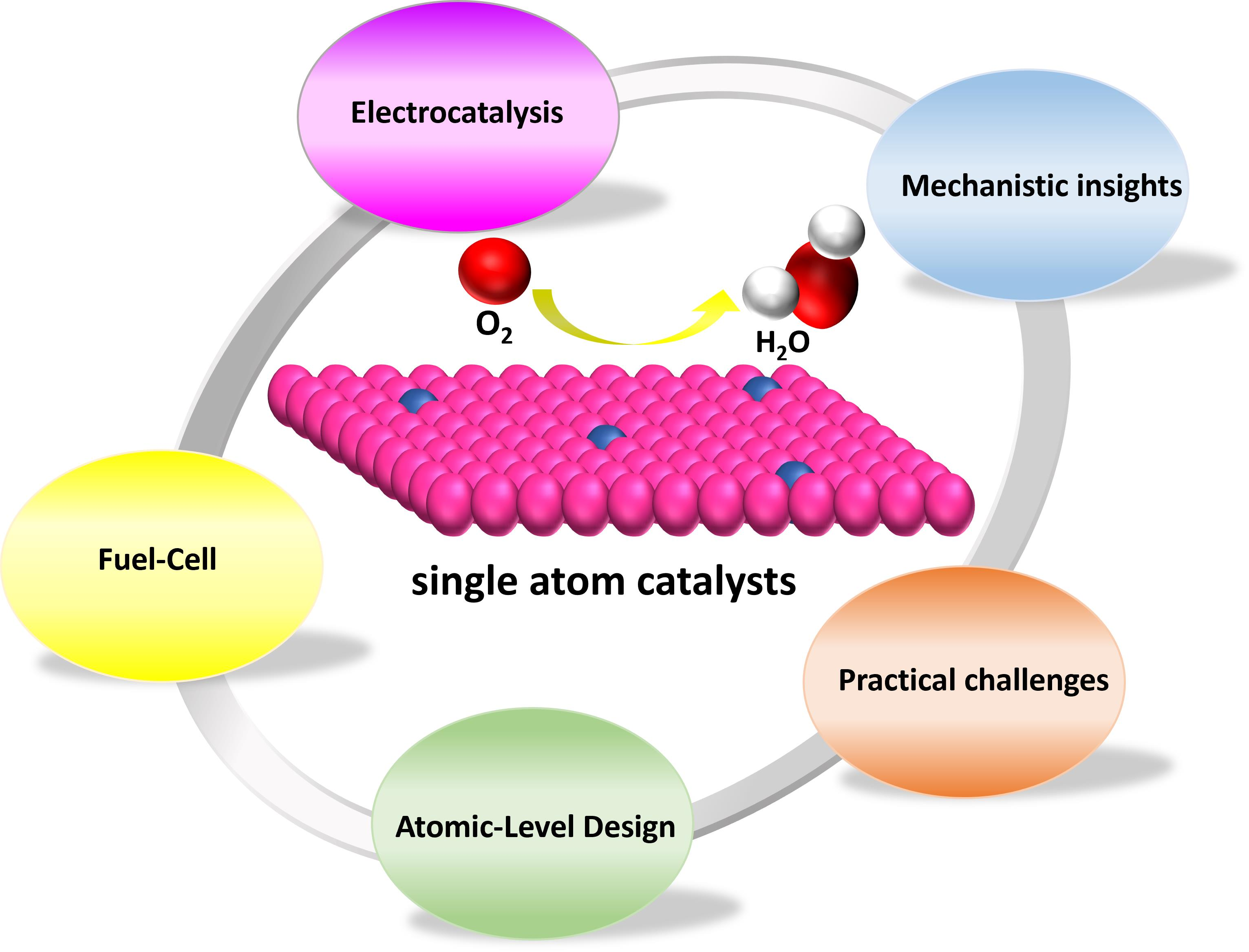
1. Introduction
The increasing demand for cleaner and more efficient energy technologies has increased interest in electrochemical systems that could be used to achieve high energy conversion efficiency with a reduced environmental footprint [
1,
2,
3]. Among the available choices, fuel cells have received a consistent attraction due to the fact that they perform chemical energy conversion to electricity, have a capability to provide high efficiency, and produce less harmful emissions compared to the traditional combustion-based systems [
4,
5]. In particular, proton exchange membrane fuel cells have become promising platforms for sustainable energy conversion applications due to their low operating temperature, fast start-up and suitability for transportation and portable power application [
1,
2,
3]. As the shift to low-carbon energy sources is coming into force, the development of high-performance fuel-cell materials has become an increasingly important research priority [
4,
5].
Despite the attractive characteristics of fuel cells, their application is currently restricted by the low kinetics of the cathodic oxygen reduction reaction (ORR) [
6,
7,
8]. Compared with rather faster anodic processes, ORR is characterized by multistep proton-coupled electron transfer and O-O bond breaking, which causes large overpotentials and low reaction rates at the cathode [
9,
10,
11,
12,
13,
14]. This kinetic limitation reduces the overall efficiency of energy conversion by fuel cells and is one of the key barriers to their broader deployment [
4,
5]. For this reason, the development of highly active cathode electrocatalysts is central to fuel-cell research, especially in the case of the proton exchange membrane system in which cathode losses have a direct impact on the output of the device and its practical viability [
6,
7,
8].
In this context, single-atom catalysts (SACs) have attracted considerable interest as cathode materials because of their maximum metal utilization and well-defined isolated active sites [
15]. Unlike conventional nanoparticle catalysts, in which a significant fraction of the metal atoms is buried beneath the surface, SACs offer greater exposure of metal centers and provide the ability to precisely control the local geometric and electronic environment through coordination engineering and support interactions [
16]. These features are particularly attractive for use as fuel-cell cathodes, where catalytic activity, selectivity and intrinsic site efficiency are closely related to the structure of the active center [
17]. As a result, SACs have become an attractive alternative to traditional noble-metals-based catalysts for oxygen reduction applications, especially in the context of reduced cost and high performance [
18].
Over the past few years, significant advances in enhancing the ORR performance of SACs have been taken by rational control of metal centers, coordination environments, morphology and support structures [
16]. Nevertheless, high activity in half cells has not been enough to guarantee the effective functioning of fuel cells in practice, since many SAC systems still suffer from a lack of durability, in terms of actual working conditions [
19]. Their long-term performance is often affected by carbon corrosion, demetallation, agglomeration of individual metal sites, and chemical attack by H
2O
2 and reactive oxygen species produced during ORR [
20]. These issues make it clear that the future development of SAC-based fuel-cell cathodes cannot rely on intrinsic activity alone. Progress in this area also requires a better understanding of degradation processes and more effective ways to retain active-site integrity during prolonged operation [
21,
22]. As a result, current SAC research is no longer focused only on maximizing activity but is increasingly directed toward improving durability and practical applicability at the same time.
Against this background, the present review discusses SACs for fuel-cell cathodes through three closely connected perspectives: atomic-level design, mechanistic understanding, and practical limitations. Earlier reviews have often focused on synthesis routes, activity trends, and general structure–activity relationships. Here, the discussion is framed more around how those factors relate to durability and to the demands of real fuel-cell operation. In particular, attention is given to the links among metal-center choice, coordination environment, support structure, and ORR pathway/intermediate binding, and to how these together shape catalytic activity, active-site stability, and cathode performance under operating conditions. Because this review is focused on PEMFC cathodes, results obtained in acidic media are treated as the most directly relevant to practical discussion, whereas alkaline results are included only where they help illustrate broader mechanistic or comparative trends. In addition to summarizing recent progress in catalyst design, this review discusses the degradation routes that continue to hinder practical application, such as carbon corrosion, demetalization, agglomeration, and peroxide-derived chemical attack. By organizing the discussion around the connection between atomic-scale design, reaction behavior, and device-level constraints, this article aims to clarify the factors that govern ORR activity and the practical viability of SAC-based fuel-cell cathodes.
2. Fundamentals of ORR and Scaling Relations
At fuel-cell cathodes, the ORR is the core electrochemical process largely determining the overall device efficiency and performance of the device. Unlike a simple one-step surface reaction, ORR consists of multiple proton-coupled electron-transfer steps between adsorbed oxygenated intermediates and is strongly sensitive to the interaction between these intermediates and the catalytic active site [
13,
14]. For this reason, some basic aspects during reaction, like reaction pathway, intermediate binding strength and Sabatier-type activity relations, are inevitable for the comprehension of the origins of why some catalysts perform high ORR activity and others suffer from sluggish kinetics or poor selectivity [
23]. In the case of SACs, such fundamentals are particularly significant because even small modifications of the metal center, coordination environment and support can lead to a change in the adsorption energetics and, as a consequence, the catalytic response [
17,
24].
2.1. ORR Pathways and Intermediates
At fuel-cell cathodes, ORR can proceed through either a four-electron pathway or a two-electron pathway, and the preference between these routes strongly influences both efficiency and product selectivity [
14,
23]. In the preferred four-electron route, O
2 is reduced to water through a multistep sequence involving oxygen adsorption, proton/electron transfer, and the formation and conversion of adsorbed oxygenated intermediates such as *OOH, *O, and *OH [
9,
10,
11]. By contrast, the two-electron pathway leads to the formation of H
2O
2 or peroxide-related species, which are generally undesirable in fuel-cell cathodes because they lower energy efficiency and can accelerate chemical degradation of catalytic sites and surrounding components [
20,
25]. Since the ORR does not occur as a single elementary step, the adsorption strength and transformation of these intermediates largely determine reaction kinetics, selectivity, and the overall cathodic performance of the catalyst [
16,
26].
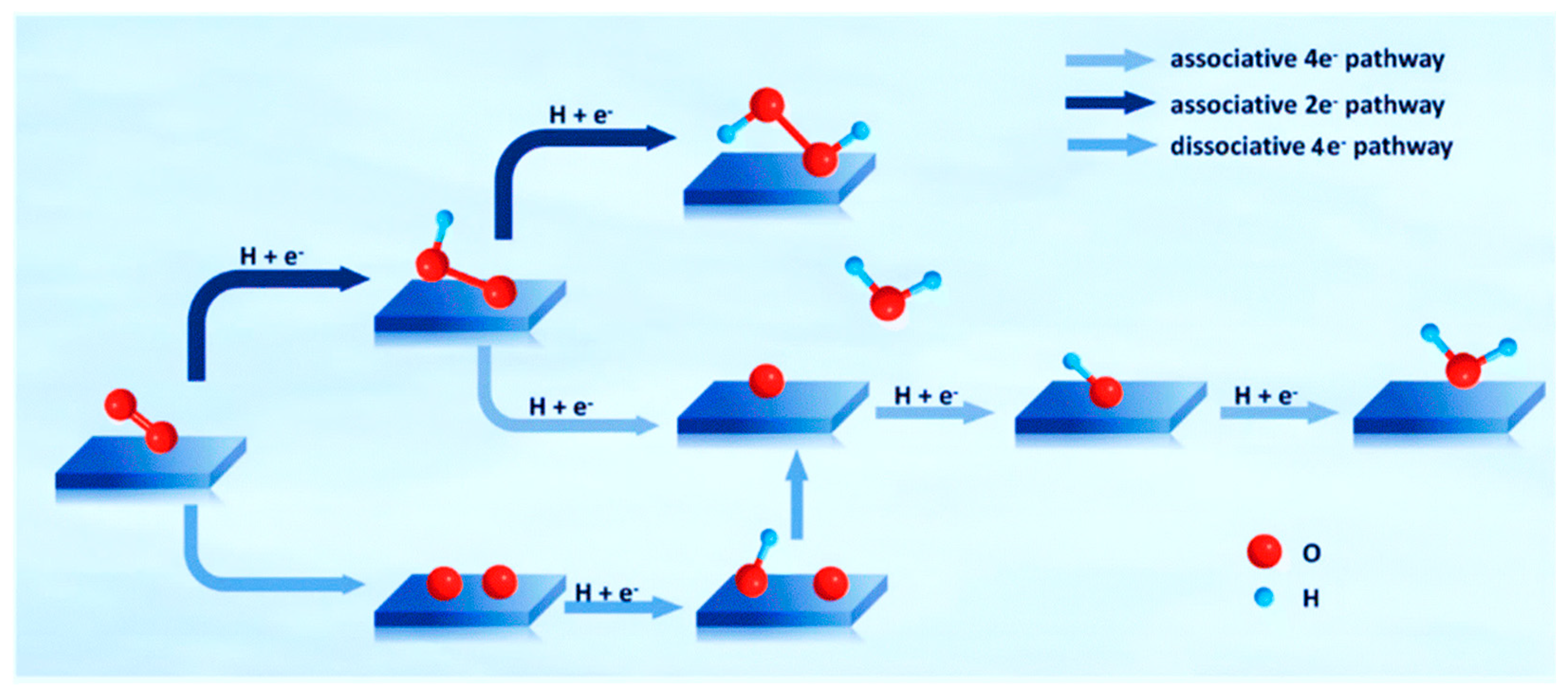
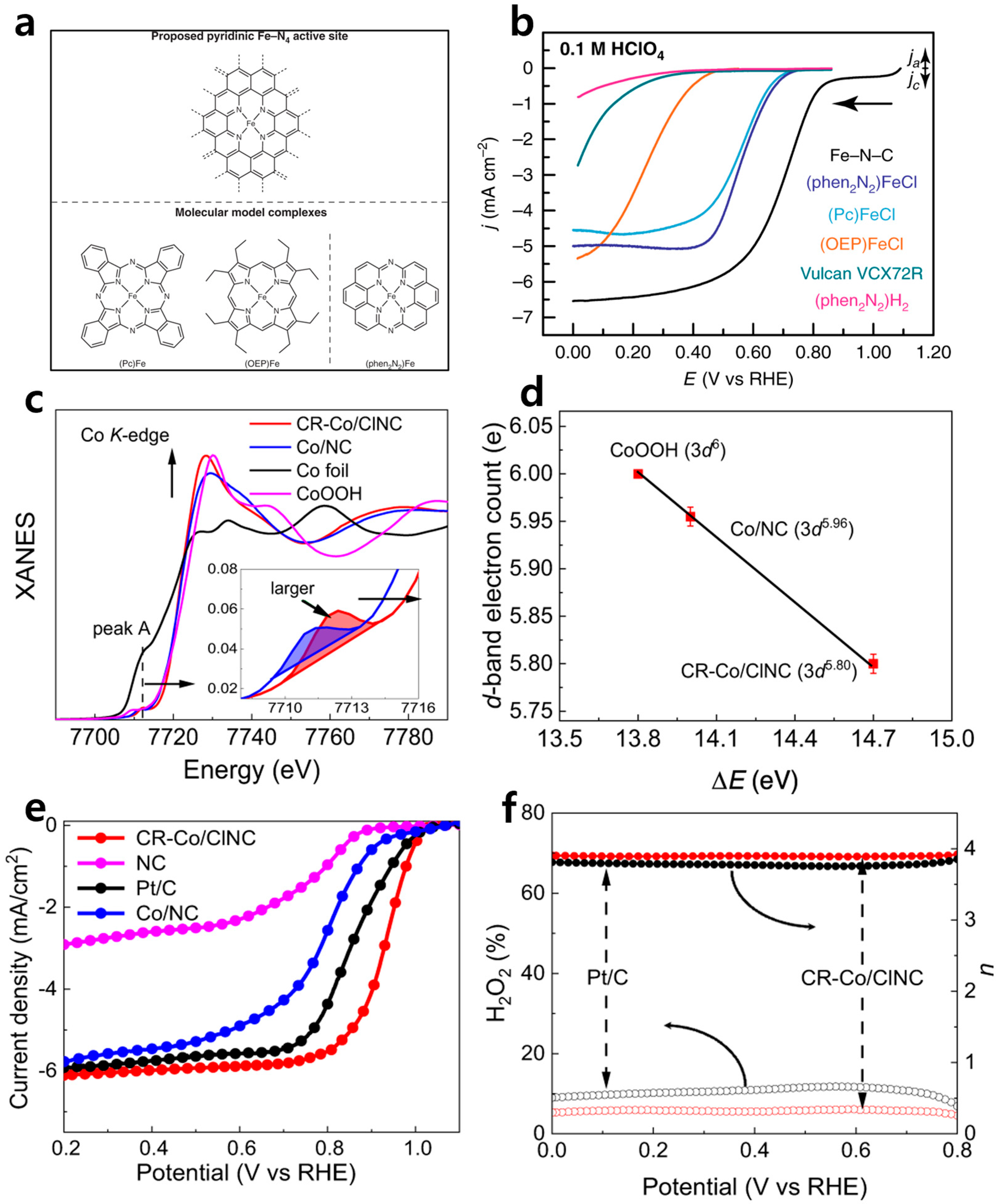
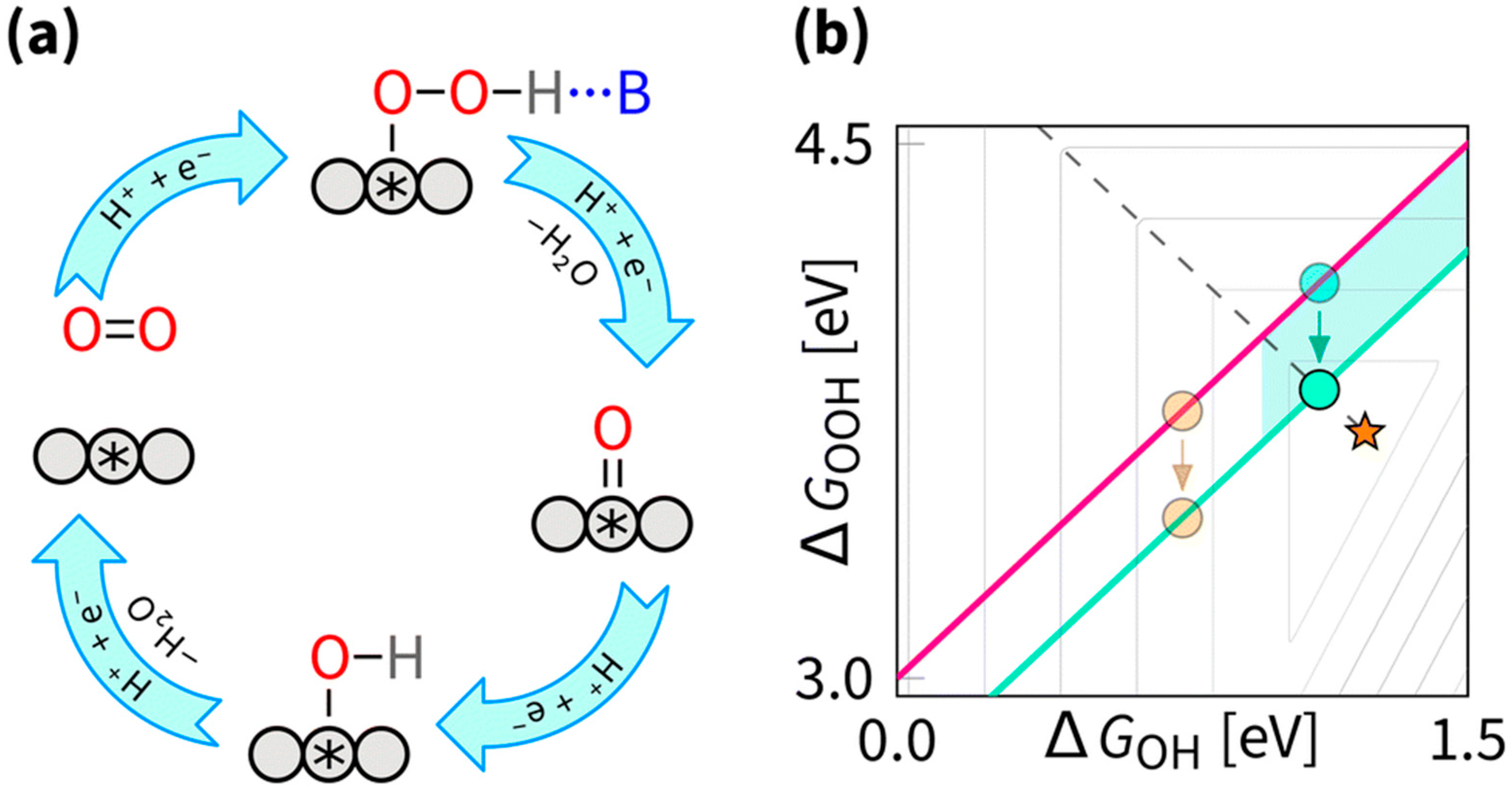
As shown in
Figure 1, the ORR can occur via two competing pathways, i.e., the two-electron pathway for H
2O
2 formation and the four-electron pathway for H
2O formation. In both pathways, the reaction sequence is controlled by the formation and transformation of adsorbed oxygenated intermediates, in particular OOH, whereas the four-electron pathway additionally includes O and OH as key species. This distinction is important as the desired reaction route greatly depends on the catalyst surface and its capability to stabilize certain intermediates with an appropriate binding strength. From the point of view of fuel cell cathodes, however, the four-electron route is generally more desirable, because it allows for greater energy efficiency as well as the avoidance of peroxide-related side reactions that can impair catalyst durability. These pathway differences thus provide the mechanistic basis for designing strategies of catalysts that are aimed at controlling ORR selectivity and activity [
23]. In practical PEMFC cathodes, selective promotion of the four-electron pathway is generally preferred because it enables direct H
2O formation and minimizes H
2O
2 generation, which is closely associated with chemical degradation and durability loss. Accordingly, catalyst design should aim for high activity while regulating the local electronic and coordination environment in a way that promotes O–O bond cleavage and suppresses peroxide release. In SAC systems, this control can be achieved through the choice of metal center, coordination structure, heteroatom environment, and second-sphere effects, all of which can shift ORR selectivity as well as activity [
23,
27].
2.2. Sabatier Principle and Volcano Relationships
The catalytic activity of ORR electrocatalysts is strongly controlled by the interactions of the active site and oxygenated intermediates, and this behavior is commonly interpreted in terms of the Sabatier principle [
14,
28,
29]. According to this concept, the most effective catalyst is one that binds reaction intermediates with a balanced strength. If adsorption is too weak, oxygen activation becomes difficult and the reduction process may remain incomplete. If adsorption is too strong, intermediates are not released or converted readily, and the overall ORR rate decreases. This balance is often represented by volcano-type relationships, in which ORR activity reaches a maximum at an intermediate adsorption strength described by parameters such as the binding free energy of OH [
30]. At the same time, linear scaling relationships among the adsorption energies of OOH, O, and OH impose an intrinsic limitation on catalyst optimization, because improving the binding of one intermediate often causes a correlated and less favorable change in another [
29]. As a result, the rational design of high-performance SACs largely depends on tuning the local atomic environment toward an optimal adsorption regime [
31]. A single fixed boundary between weak and strong adsorption is difficult to define, since it depends on the catalyst system and descriptor used; in ORR volcano analyses, the optimum is often located near OH binding about 0.10 eV weaker than Pt(111) [
32].
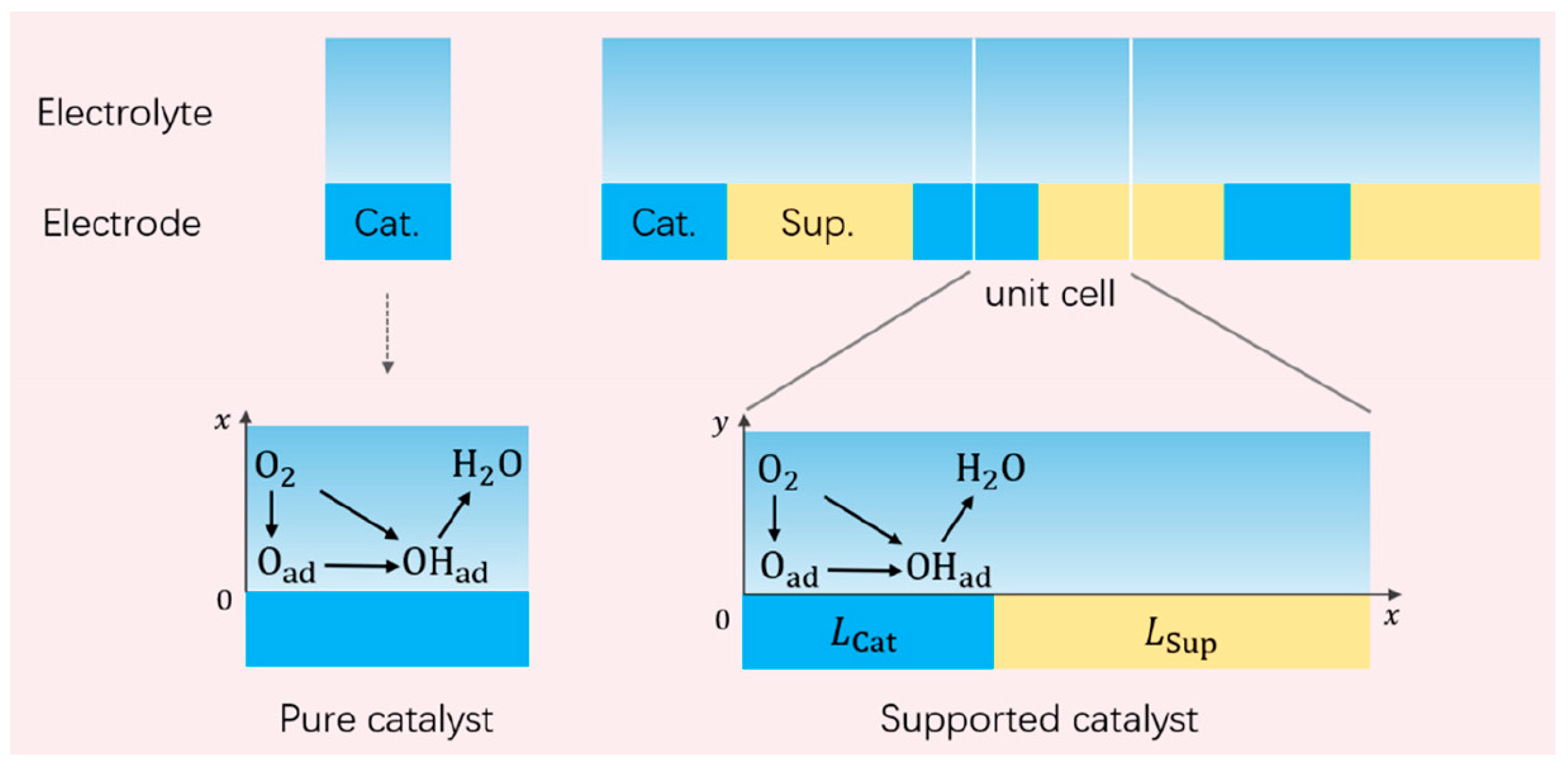
As illustrated in
Figure 2, the ORR occurs at the electrode–electrolyte interface, where the adsorption and transformation of oxygenated intermediates are strongly influenced by the local structure of the catalytic site. The comparison between pure and supported catalyst models highlights that the support is not merely a physical scaffold but can modify the geometric and electronic environment of the active center through catalyst–support interactions. These structural features are important because they affect intermediate adsorption behavior and, consequently, the catalytic response during ORR. In this way, the figure provides a schematic basis for understanding how support effects can regulate the local reaction environment in supported ORR catalysts.
2.3. Implications for SAC Design
The mechanistic features clearly show that ORR activity cannot be understood independently of the local atomic structure of the catalytic site [
33,
34]. Because the adsorption and transformation of *OOH, *O, and *OH are highly sensitive to the electronic and geometric environment of the active center, parameters such as metal identity, coordination number, heteroatom composition, and support defects become critical design variables in SAC systems [
31]. In other words, the value of SACs lies not only in their high atom utilization, but also in the opportunity they provide to tailor intermediate binding and reaction energetics at the single-site level [
17,
24]. This is precisely why rational SAC development has increasingly focused on engineering metal centers and coordination environments to approach optimal ORR energetics while suppressing unwanted pathways and degradation-prone behavior [
17,
24].
From a catalyst-design perspective, these fundamentals of the ORR suggest that high activity cannot be obtained by considering the metal atom alone, but that the entire local microenvironment of the single-atom site must be designed to help control the kinetics of the intermediate’s adsorption and reaction. In SAC systems, system parameters such as coordination number, heteroatom identity, axial nature of the binding and support-induced electronic effects can modulate the binding strengths of OOH, O, and *OH affecting whether the catalyst is operating around the optimum activity window predicted by the Sabatier principle. Recent studies on ORR-active SACs also highlight the vital role of the surrounding environment to the M-N-C sites in relation to the intrinsic activity, which is not specifically dependent on the nominal metal center itself. Therefore, rational SAC design efforts should focus on the development of asymmetric and electronically adapted active sites, which achieve balanced oxygen activation and intermediate conversion with respect to product release as well as an adequate structural stability under fuel-cell conditions.
3. Atomic-Level Design Strategies for SACs
The rational development of SACs for fuel-cell cathodes increasingly depends on atomic-level regulation of the active site rather than simple variation in bulk catalyst composition. In ORR electrocatalysis, catalytic activity and stability are strongly influenced by the identity of the isolated metal center, its coordination environment, the electronic interaction with the support, and the structural features introduced during synthesis. In this review, these design variables are discussed not as isolated material descriptors, but as factors that simultaneously influence ORR energetics, active-site evolution, and long-term cathode durability. Accordingly, the atomic-level design of SACs can be understood through several interconnected strategies, including metal-center optimization, coordination-environment engineering, support regulation, synergistic multi-site construction, and morphology-controlled synthesis aimed at improving both intrinsic activity and long-term durability. This framework is intended to show how design choices made at the atomic level influence catalytic behavior and, ultimately, the practical performance of SAC-based fuel-cell cathodes under realistic operating conditions.
3.1. Metal Center Optimization
Metal-center selection is one of the most direct and influencing design variables in SAC-based ORR catalysis as different isolated metals interact with oxygen species differently and correspondingly display difference in activity and stability balance. Fe-based SACs remain the most reliable high-activity systems for acidic ORR [
35,
36,
37,
38,
39,
40]. Many reports describe favorable onset and half-wave potentials, which are generally linked to the near-optimal interaction of Fe–N4-type sites with key intermediates such as *OOH and *OH. In descriptor-based terms, Fe-centered motifs often lie close to the top of the ORR activity volcano, and the experimental support for their high intrinsic turnover is consistent across different catalyst families. At the same time, the same redox behavior that helps Fe sites activate oxygen can become a drawback in acidic media. In the presence of peroxide species, Fe
2+/Fe
3+ cycling can promote Fenton-type chemistry and accelerate catalyst degradation [
35,
36,
37,
38,
39,
40]. For that reason, the high activity of Fe-based SACs is well established, but their durability under realistic cathode conditions still depends strongly on limiting peroxide formation and reducing radical-driven damage. In practice, Fe-based SACs can be viewed as activity-leading systems whose long-term stability is closely tied to the local site environment and the structure of the electrode. Co- and Mn-based SACs are usually considered from a somewhat different perspective. Their main attraction is not necessarily a higher activity than Fe-based systems, but a lower sensitivity to peroxide-related degradation. Co–Nx sites often bind oxygen species somewhat more weakly than Fe–Nx analogues, which may move them slightly away from the activity maximum, but can also lessen over-adsorption and excessive redox cycling in acidic operation [
41,
42]. As a result, Co-based catalysts often show better chemical robustness, even if their activity is usually somewhat lower. Mn-based sites have also shown reasonable acidic ORR performance in some systems, along with improved tolerance toward reactive oxygen species [
41,
42]. Even so, the Mn literature is still less extensive than that for Fe, and the reported trends appear to depend more strongly on coordination structure and support effects. For now, Mn-based SACs look promising as durability-oriented candidates, but the evidence is still not broad enough to treat them as a generally established alternative to Fe.
These comparisons suggest a clear design guideline. When the primary objective is to obtain the highest intrinsic ORR activity in acidic media, Fe-centered sites remain the most dependable starting point. When the emphasis shifts toward chemical robustness and lower susceptibility to peroxide-related degradation, Co- and Mn-based systems become attractive Fe-free alternatives, although their activity is often confined to a somewhat narrower window. In that sense, metal-center optimization is better understood as balancing activity and stability than as searching for a single best atom. Mixed-metal or neighboring-site designs add another layer to this picture. Systems such as Fe–Mn or Fe–Co have been explored as ways to redistribute electronic density, adjust intermediate adsorption, or accommodate active and stabilizing motifs within the same carbon framework [
16,
26]. Although a few studies report beneficial synergy, the underlying mechanism and its relevance under full PEMFC operation are still less secure than the trends established for single-metal sites. In many cases, better half-cell performance has not yet been matched by equally convincing durability validation in membrane electrode assemblies. For now, mixed-metal designs are best regarded as promising rather than broadly established solutions.
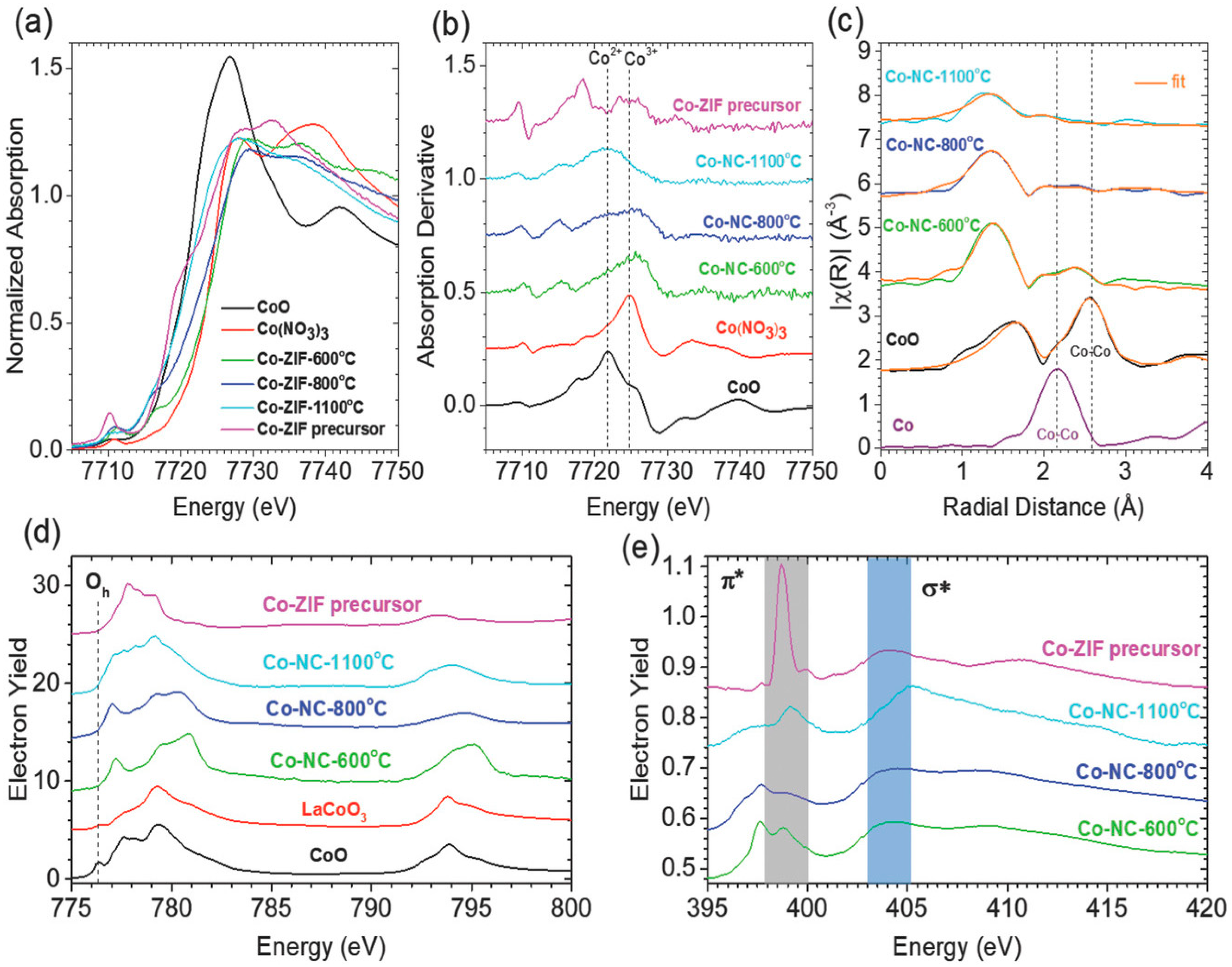
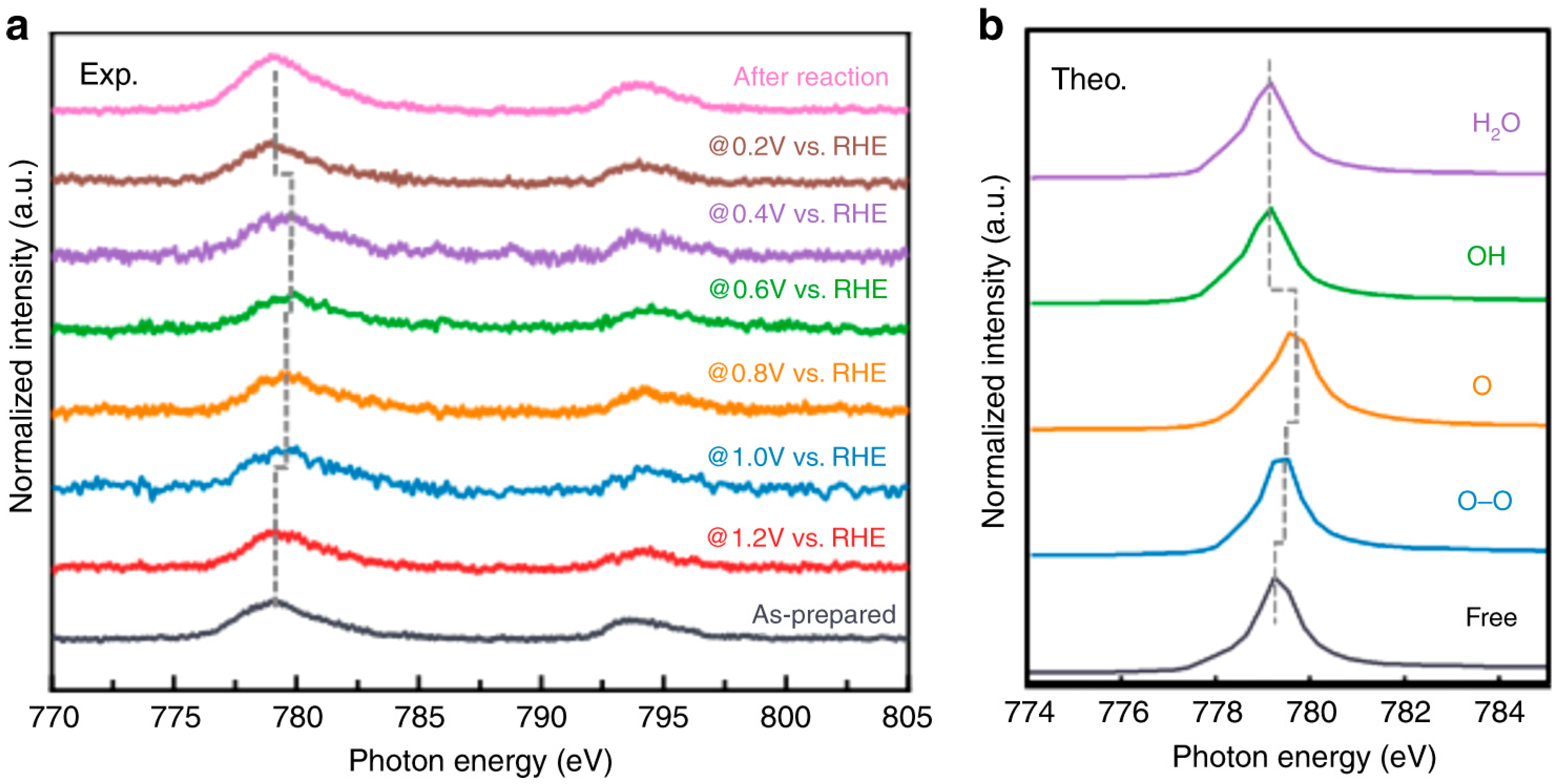
Figure 3 offers a representative structural example of Co-based metal-center optimization [
43]. The Co K-edge XANES in panel (a), along with their derivatives in panel (b), follow the evolution of Co oxidation state and local coordination symmetry during thermal treatment. Panel (c), which presents the EXAFS spectra and fitting results, shows no evident Co–Co scattering contribution in the optimized samples, supporting the formation of atomically dispersed Co–Nx sites instead of metallic aggregates. The Co L-edge XANES in panel (d) and the N K-edge XAS in panel (e) further show how the electronic structure and metal–nitrogen bonding change with annealing temperature. These results show that metal-center identity cannot be considered apart from its local coordination environment. The acidic ORR behavior of the Co site is ultimately governed by the electronic structure created by the surrounding N ligands and carbon framework. This supports the broader point of the section: metal selection sets the basic activity-stability balance, but practical performance depends on how that site is shaped by coordination chemistry and support effects.
3.2. Coordination-Environment Engineering
Metal-center identity alone does not determine acidic ORR behavior. The coordination environment largely decides how an isolated site activates O
2 and its oxygenated intermediates while still allowing the final adsorbates to be released without excessive binding. Factors such as coordination number, ligand identity, local symmetry, axial ligation, and the second coordination sphere are important because each of them can change the electronic state of the metal center and the way protons and oxygen-containing species are accommodated at the site [
33,
34,
44,
45]. At the same time, all coordination changes do not carry the same weight. The clearest mechanistic evidence usually comes from modifications in the first coordination sphere, where the active moiety can be defined more directly and related to measurable changes in ORR energetics.
For Fe-based SACs, the most convincing starting point is still a pyridinic Fe–N4 site rather than a general M–N4 sketch. Molecular model studies showed that a pyridinic Fe–N4 environment reproduces both the spectroscopy and the four-electron ORR selectivity of Fe–N–C much better than pyrrolic analogues, which means that ligand identity is a real mechanistic variable, not just a formal description of coordination [
46]. At the same time, PEMFC comparisons show that lowering the coordination number by itself does not reliably improve catalysis. In those studies, FeN4 performed better than FeN3 and FeN1 in both ORR activity and fuel-cell output, suggesting that increased unsaturation can also drive oxygen binding away from the favorable range [
47]. This is why motifs such as Fe–N5 or asymmetric Fe–N3C–N are better treated as site-specific solutions than as general replacements for Fe–N4. They can be superior when they relieve the *OH bottleneck or rebalance charge and spin density at the Fe center, but that advantage depends strongly on the exact local structure rather than on coordination number alone [
44,
48,
49].
Heteroatom incorporation and axial-ligand design become most convincing when the new environment can be assigned to a defined active moiety. That is the case for phosphorus-modified Fe–N–C systems in which the conventional FeN4 site was transformed into FeN3PO, with mechanistic analysis linking the modified site to easier *OH desorption and improved ORR in both acidic and alkaline media, followed by validation in AEMFC and PEMFC devices [
50]. A similarly persuasive example is the O-doped Fe–N–C catalyst in which axial oxygen and second-shell oxygen were deliberately introduced around Fe–N4-type centers; here, the coordination change was not just correlated with half-cell activity but carried through to membrane-fuel-cell performance [
51]. Recent molecular-model work sharpens this point further by arguing that the catalytically relevant acidic ORR state is not a bare FeN4 center at all, but a high-spin OH–Fe(III)N4 species under operating conditions [
52]. These studies suggest a clear rule: coordination engineering is most persuasive when it identifies a specific active-state geometry and shows how that geometry changes the binding or protonation of *OOH and *OH.
Second-sphere effects need to be interpreted with some care. From a mechanistic standpoint, they are quite plausible because acidic ORR involves coupled proton and electron transfer, and nearby functional groups can influence the local proton-transfer environment without changing the metal center itself. Even so, the catalytic outcome is not always beneficial for PEMFC cathodes. Tang and co-workers showed that modifying the first and second coordination spheres of Co-based SACs can shift acidic ORR selectivity from the four-electron pathway toward the two-electron pathway. Zou and co-workers later demonstrated this even more clearly by placing a pendant amine near Co–N4; in that case, the amine acted as a proton relay, stabilized the *OOH intermediate, and increased H
2O
2 selectivity to about 97% [
53,
54]. These studies make a strong case that second-sphere engineering can alter ORR selectivity. What remains less clear is whether such modifications generally lead to better four-electron acidic ORR cathodes. At present, second-sphere engineering is well supported as a tool for tuning selectivity, but its broader value as a general strategy for high-performance PEMFC cathodes is still not fully established.
Dual-metal-site construction and carbon-skeleton regulation sit in a more mixed category. There are promising acidic ORR results, including sulfur-bridged Fe–Co dual-metal centers that improved PEMFC-relevant performance [
55], and there are now coordination-driven durability gains under realistic conditions, as shown by the monosymmetric FeN2+N′2 configuration that combined active-site reconfiguration with improved graphitization, surviving 200,000 potential cycles and more than 248 h under fuel-cell-relevant operation [
56]. Even so, the picture is more complex than in well-defined first-sphere single-site tuning, because dual-metal and lattice-engineering approaches often alter several factors at the same time. Site density, carbon structure, radical tolerance, and intermediate adsorption may all change together, which makes the origin of the catalytic response harder to isolate. For that reason, the most reliable design guidance at present is still relatively cautious. In acidic four-electron ORR, the clearest strategy is to retain a well-defined Fe-centered site and then introduce asymmetry, axial ligands, and nearby heteroatoms only when they are shown to ease the *OH bottleneck without increasing peroxide formation and compromising durability.
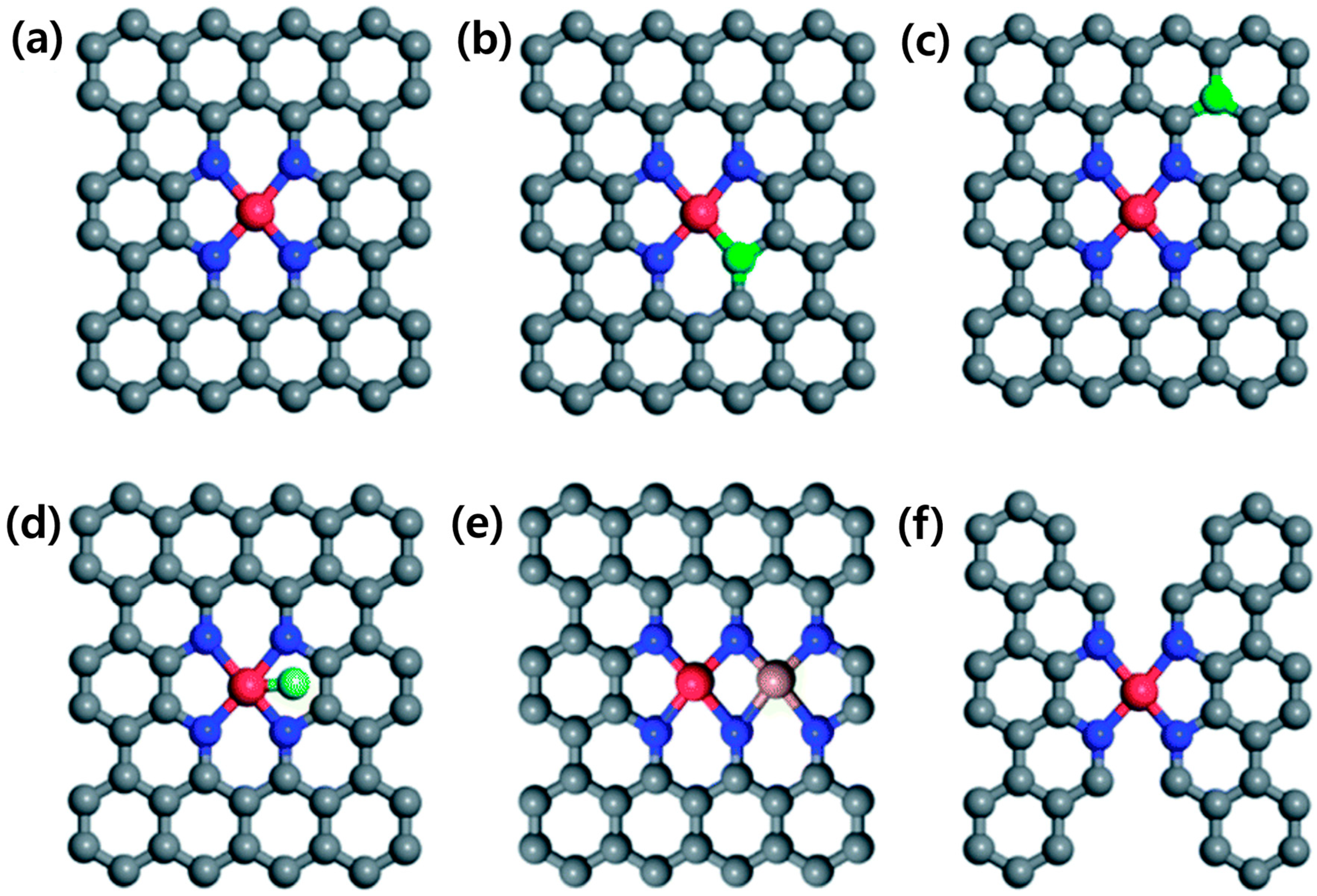
Figure 4 is more usefully interpreted as a hierarchy of intervention levels rather than a list of equivalent options. Changes in coordination number, ligand identity, and axial ligation act directly on the active center and therefore have the strongest mechanistic footing. Heteroatom incorporation and carbon-skeleton regulation can also be effective, but their influence is often entangled with broader support effects. Dual-metal-site construction is promising, yet its generality under realistic PEMFC conditions is still less certain. This is precisely why coordination-environment engineering has become so important in SAC design: it offers a route to tune activity and durability at the scale of the active site itself, but only some of those structural routes have so far been validated with the level of mechanistic and device-level evidence needed to support general design rules.
3.3. Support Engineering
Support engineering is a major control point in SAC-based PEMFC cathodes because the support decides more than site dispersion. In M–N–C systems, it helps set the local coordination environment, mediates charge transfer around the active metal center, and defines the pore network through which O
2, protons, and water move [
45,
46,
47,
48,
49,
50]. For that reason, support effects in acidic ORR are best discussed at the catalyst-layer level rather than as a simple metal–support anchoring problem. The best-supported examples so far are carbon hosts whose microstructure has been adjusted to improve both accessibility and electrode stability. Spatial porosity studies on Fe–N–C show that a mesoporous surface combined with a microporous core performs better than either fully microporous or fully mesoporous particles, because the outer mesopores improve reactant access while the microporous core helps suppress local flooding under PEMFC operation [
57]. Comparable results have also been reported for hierarchically porous Fe–N–C networks, where a high density of Fe–Nx sites is preserved without sacrificing accessibility, allowing efficient mass transport and resulting in strong acidic ORR performance together with measurable fuel-cell durability [
58]. A similar trade-off is seen in graphitization. Some degree of disorder is beneficial because it provides anchoring sites, but excessive disorder leaves the carbon framework more vulnerable to chemical degradation. One recent example is a curved Fe/N–C support with a graphitized outer shell, which improved both activity and durability by moderating oxygenated intermediate binding and reducing hydroxyl-radical formation; in H
2–air PEMFC tests, it reached 0.75 W cm
−2 and retained 86% of its initial activity after more than 300 h [
59]. Another support-design approach that has gained attention is control of the microenvironment near the triple-phase boundary. In Fe–NC treated with NH
4Cl/NH
4Br, the combination of mesopores and surface Br species improved ionomer penetration and O
2 transport through the cathode layer, leading to 54 mA cm
−2 at 0.9 V_iR-free, 1.86 W cm
−2 in H
2–O
2, and 0.88 W cm
−2 in H
2–air PEMFC operation [
60]. Results of this kind are especially meaningful because they show, under working-electrode conditions, that support modification can improve the way gas, ionomer, and active sites interact within the cathode.
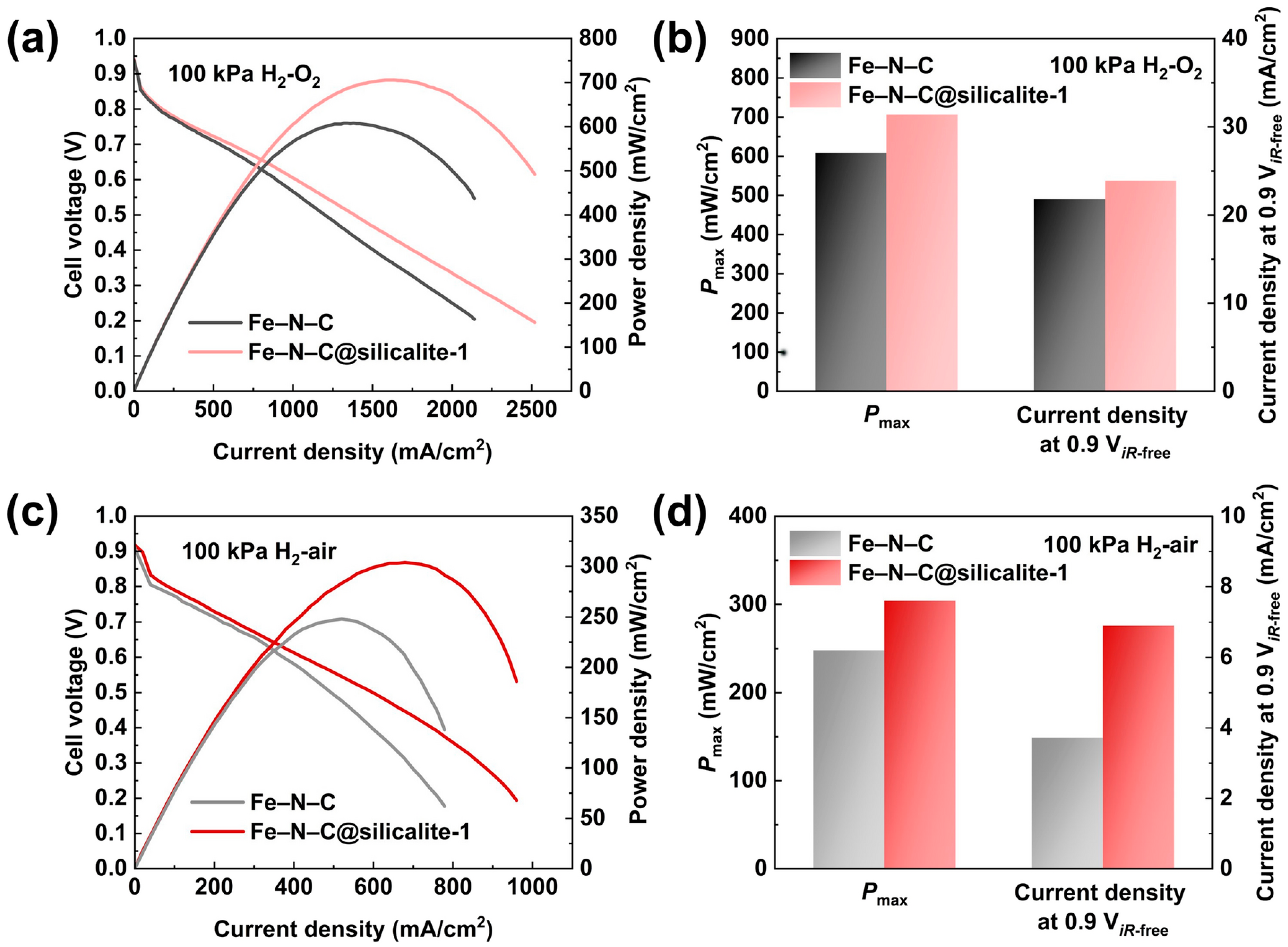
Figure 5 presents a representative example of support engineering with direct PEMFC relevance. In the Fe–N–C@silicalite-1 system, the zeolite does not primarily serve as the electronic support for the Fe center; rather, it functions as a local O
2 reservoir within the thick cathode layer [
61]. This difference is important. In acid half-cell testing, the hybrid catalyst showed a 14.3% increase in limiting current, but the more meaningful result came from device-level evaluation: Pmax increased from 607 to 706 mW cm
−2 in H
2–O
2 mode and from 248 to 304 mW cm
−2 in H
2–air mode, with the larger gain under air pointing to the greater transport limitation under diluted oxidant [
61]. By comparison, the case for many non-carbon supports in acidic PEMFC cathodes is still less mature. These hosts can offer strong anchoring and unusual local chemical environments, but the most convincing evidence under device-relevant conditions still comes from carbon-based and carbon/hybrid architectures [
57,
58,
59,
60,
61]. In practical terms, the most useful supports are those that can hold isolated sites firmly, maintain their accessibility through an effective pore structure, support favorable ionomer distribution, and withstand chemical attack during extended operation. In this sense, support engineering is better viewed as a way to balance anchoring, transport, and durability within the same cathode, rather than as a simple listing of support families. In comparative terms, defect-rich and heteroatom-rich carbons are advantageous for anchoring and active-site density, but their structural disorder may limit durability, whereas more graphitized carbons generally offer better corrosion resistance at the cost of fewer effective anchoring sites. Non-carbon supports provide additional structural and electronic diversity, but their practical value in PEMFC cathodes is still less broadly validated than that of optimized carbon-based supports.
3.4. Synergistic Multi-Site Designs
Although conventional SACs are constructed around isolated single-base metal centers, on the other hand, an increasing number of studies demonstrate that the presence of a second nearby site can yield cooperative effects that are not so easily obtained using a fully isolated mononuclear center [
62]. This concept is also reflected in mixed-SAC systems, in which Mn and Fe single-atom sites have been shown to provide excellent catalytic activity for ORR and enhanced stability in an acidic milieu than single-metal counterparts [
63]. Two different metal sites can occupy different functional roles, i.e., one site may have a major functional role as the catalytic center while another neighboring site is one that stabilizes the structure or modulates the local electronic environment [
62]. This kind of synergistic multi-site design is attractive because it can redistribute charge density, tune intermediate adsorption, and potentially relax some of the intrinsic activity limitations associated with a single-site catalyst [
38]. As a result, neighboring metal and dual-site configurations are increasingly being explored as a bridge between classical SACs and more cooperative atomically precise catalysts for ORR.
The synergistic design can also be extended beyond simple dual-metal combinations to other neighboring heteroatoms or the auxiliary atomic sites for better peroxide tolerance and structural durability in fuel-cell conditions [
64]. The addition of Zr into Fe-based M-N-C structures can create thermodynamically stabilized Fe-Zr-containing active site motifs that can help to suppress chemical demetalization [
65]. Fe,Ce-N-C systems are also a good example of how the introduction of a Ce site may act as a radical scavenging auxiliary site and enhance durability by facilitating decomposition of H
2O
2 and reducing the damage from ROS [
66]. In structural terms, these neighboring atoms do not necessarily create one equivalent dual-active site. In Fe–Zr systems, Zr is better viewed as a stabilizing neighboring atom that strengthens the local Fe-containing motif against demetallation, whereas in Fe,Ce–N–C, the Ce site mainly serves as an auxiliary radical-scavenging center rather than the primary ORR site. These examples suggest that multi-site design in SAC-based cathodes is not only restricted to enhancing activity but can also be used to incorporate a catalytic function and a protective function into the same atomic framework. Therefore, synergistic multi-site construction is a potential pathway to strike a balance of ORR kinetics, peroxide management and site stability for next-generation fuel-cell cathodes.
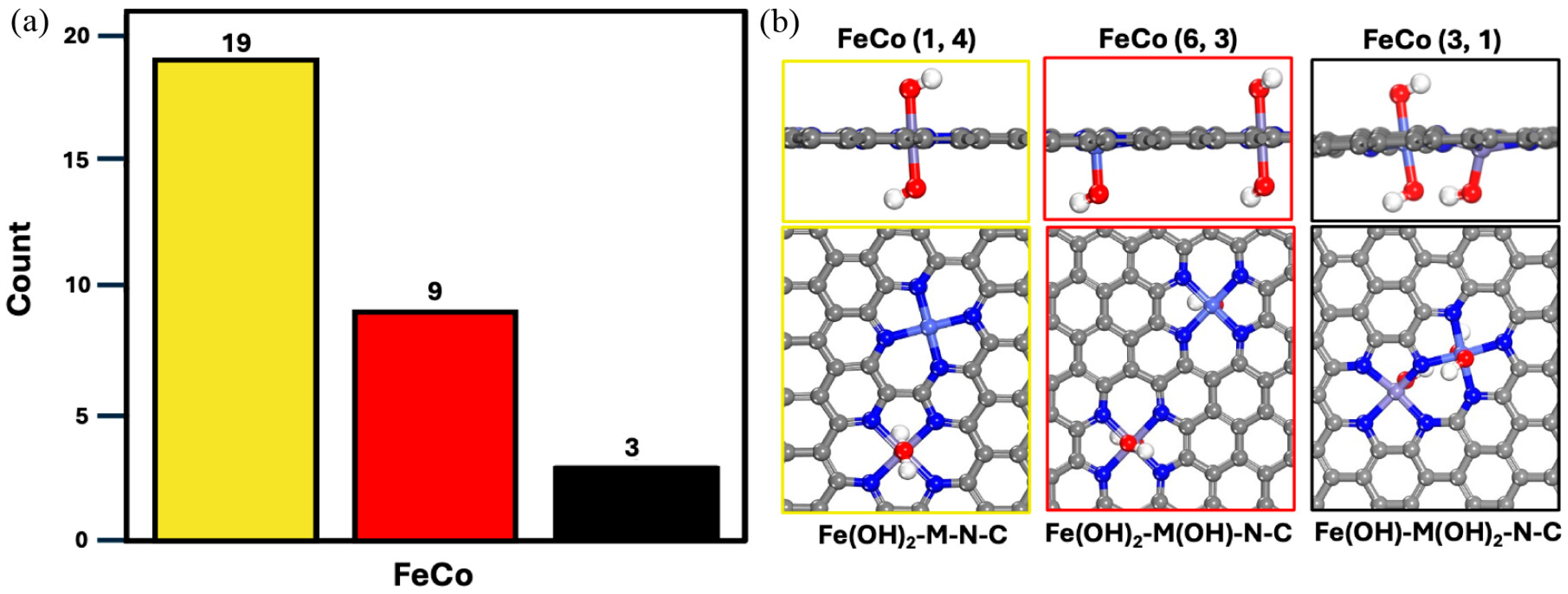
The effect of adjacent dual-metal combinations on ORR behavior is shown further in
Figure 6. As seen, FeCo dual-atom catalysts are not a uniform class, that is, the catalytically relevant site highly depends on the arrangement of the atoms and on the reaction-induced ligand environment. In some configurations, the Co center is still dominant, while in others, the active motif may appear as either an OH-ligated Co-centered site or OH-ligated Fe-centered site. This means that the second metal does not play the same role in every FeCo configuration. In some structures, Co mainly modifies the electronic environment of Fe, whereas in others, the ligated Fe or ligated Co center becomes the catalytically relevant site under ORR conditions. This observation suggests that synergistic multi-site design is not merely the introduction of a second metal atom, but the formation of an atomic organization where the redistribution of charge density, modification of intermediate adsorption and even changes in which site is catalytically operative under ORR conditions. These findings support the view that dual-atom catalysts may offer greater flexibility in balancing activity and stability than fully isolated single-site motifs. At higher applied potentials, OH-ligated structures can be predominant and signify that the structure of the active site under operating conditions can differ from the bare structure as built [
67].
3.5. Synthesis and Morphological Control
In addition to active site composition, the synthetic route to form SACs has a profound effect on the metal dispersion, site density, pore architecture and the final geometric/electronic environment of catalytic center [
68]. Recent improvements of the ORR active SACs have relied on the rational control of geometrical and electronic structures through methods such as morphology control, precursor engineering, and framework-directed synthesis [
16]. Representative examples are an mSiO
2-protected calcination strategy for Co,N-CNF, and synthesis routes for Fe single-atom catalysts based on MOF-5 structures of the porous frameworks, such as NC-MIL101-1000, etc., that illustrate how the degree of dispersion, local coordination and the accessible density of active sites can be controlled by synthesis design [
69]. These examples prove clearly that synthesis in SAC systems is not only a preparative step, but a key design tool for controlling the atomic environment for ORR behavior [
70]. Preparation method is also one of the main factors that determine loading, dispersion, and local structure, and many synthesis methods are currently being investigated to construct high-density and structurally stable SAC platforms.
At the synthetic level, ORR-active SACs still come chiefly from controlled pyrolysis of metal, nitrogen and carbon precursors, often in ZIF- or other MOF-derived architectures, while MOF@polymer composites and SiO
2-protected frameworks are used when higher metal contents must be retained without agglomeration [
71,
72,
73]. In Fe–N–C, the practical Fe loading in many earlier single-site materials remained around 1–3 wt%, although protected MOF-derived designs have reached 3.46 wt% Fe and later gas-phase or metal-exchange strategies pushed this to 7 wt% while retaining iron predominantly as Fe–N4 [
73,
74]. Post-synthetic conversion of pre-formed Zn–N4 cavities into Fe–N4 sites by gas-phase iron transport or chemical vapor deposition is especially notable here: the CVD route of Jiao et al. produced 1.92 × 10
20 accessible Fe–N4 sites g
−1 with full site utilization, showing that site density and accessibility can be raised together [
75,
76]. In practice, claims of high-loading, isolated and largely uniform single centers are persuasive only when aberration-corrected HAADF-STEM, XAS/EXAFS and cryogenic Mössbauer spectroscopy support the same structural picture and when active-site densities from nitrite stripping or CO chemisorption are consistent with that assignment [
72,
73,
74,
77,
78].
Morphological control is also equally important since it controls the degree of exposure of the isolated active sites towards reactants and the ease of passing mass under operating conditions [
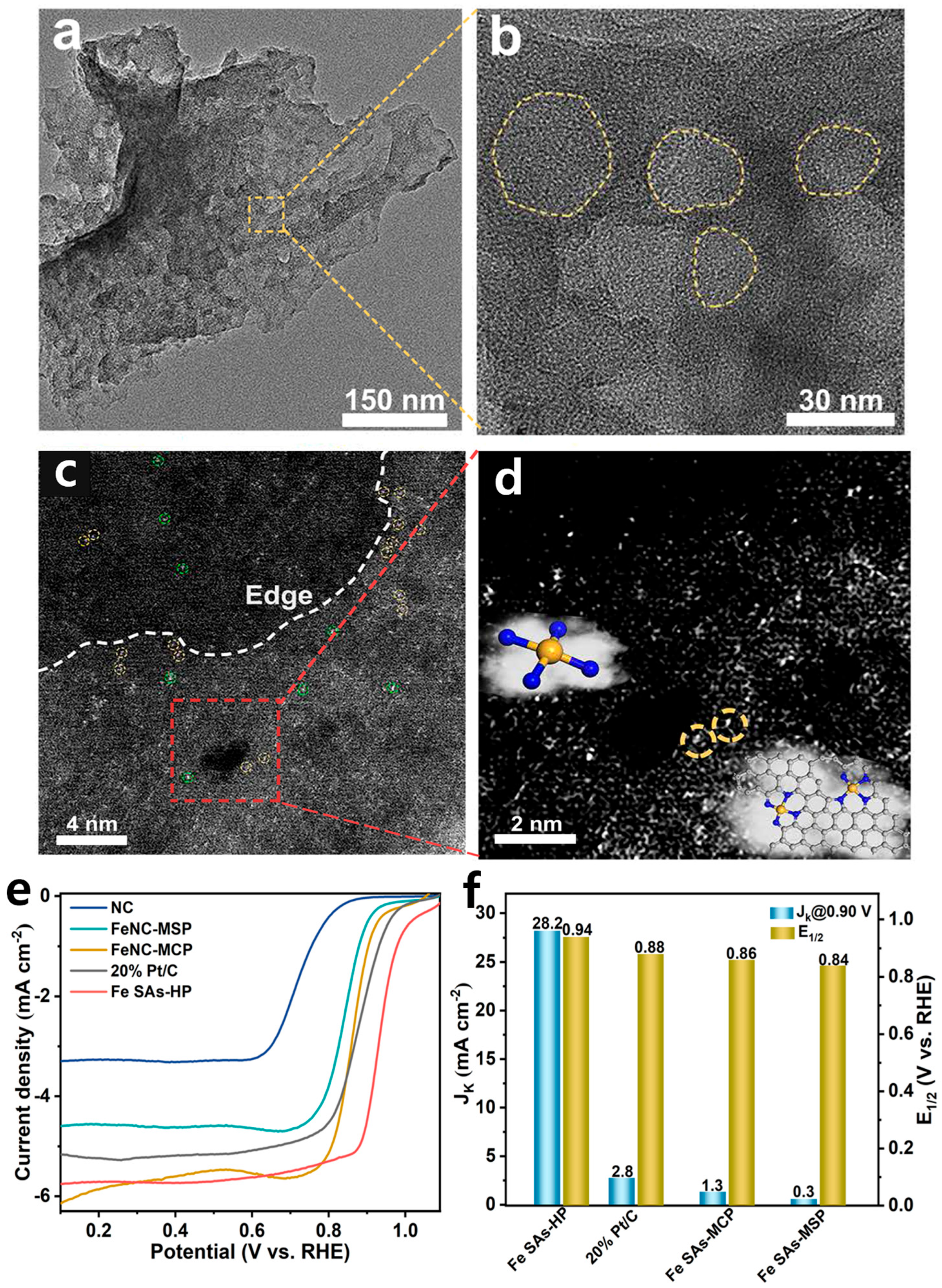
79]. Porous, hierarchical and framework-derived morphologies can increase the accessible surface area, promote reactant diffusion, and provide more stable anchoring environments for single atoms which can improve both the catalytic utilization and the structural robustness. Morphology-sensitive activity comparisons based on E1/2 and Jk among catalysts with different pore architectures likewise confirm the strong relation between structural design and measurable ORR performance [
80]. Thus, synthesis and the control of morphology should be seen as enabling strategies that link between the formation of atomic sites, the type of support and the working cathodes, rather than as a secondary consideration after selection of catalyst composition [
68]. Scalable morphology-directed synthesis of single-atom electrocatalysts has been repeatedly recognized as key to building high-density, stable, and practically useful single-atom electrocatalysts.
Figure 7 highlights the connection between morphology and ORR behavior in Fe single-atom catalysts. Here, the comparison is kept within one catalyst family so that the effect of pore architecture can be seen more clearly. Panels (a) and (b) show the sheet-like morphology of Fe SAs-HP along with its mesoporous character. Panels (c) and (d) show that Fe sites are distributed near micropores and mesoporous edges, indicating that local site arrangement is closely related to the pore environment. Panels (e) and (f) then show the electrochemical consequence of this structural design, with Fe SAs-HP delivering the most favorable half-wave potential and kinetic current density among the compared catalysts. In this way, the figure makes clear that morphology control influences ORR performance by shaping both site accessibility and the local reaction environment [
81].
5. Practical Challenges and Stability Issues
Although substantial progress has been made in developing highly active SACs for fuel-cell cathodes, their practical use is still constrained by limited durability under realistic operating conditions [
89]. Major degradation pathways in ORR-active SACs include carbon or nitrogen loss from the support, demetalization and agglomeration of isolated active sites, and chemical oxidation triggered by H
2O
2 and reactive oxygen species (ROS) generated during operation [
20,
25]. These stability problems are especially important in fuel-cell cathodes because degradation does not simply reduce the number of active sites; it can also alter the local coordination structure, accelerate side reactions, and widen the gap between promising half-cell data and actual membrane-electrode-assembly (MEA) performance. Accordingly, this section discusses four closely connected practical barriers: carbon corrosion and support degradation, demetalization and agglomeration, H
2O
2/ROS-driven chemical oxidation, and the persistent performance gap between half-cell testing and full-cell operation. Insufficient stability in the MEA remains one of the main obstacles to large-scale application of ORR electrocatalysts in PEMFCs. Because no single evaluation method captures all of these practical barriers, meaningful assessment of SAC cathodes requires a stepwise pathway from RDE-based screening to GDE/FE testing and, ultimately, MEA validation.
5.1. Carbon Corrosion and Support Degradation
Carbon corrosion is one of the dominating pathways of degradation in SAC-based fuel cell cathodes since the carbon support is not inert but forms part of the active site environment and directly contributes to the stabilization of atomically dispersed metal centers. Loss of carbon and nitrogen atoms from the support from corrosion is a significant model of degradation under ORR working conditions, especially in the intricate electrochemical and oxidative environment of PEMFC cathodes [
90]. Once the supporting carbon structure is oxidized or structurally damaged, the local coordination geometry around MNx sites can be broken, which obstructs the anchoring force, favors the active site loss, and lowers the electronic conductivity [
22]. This issue is particularly important because carbon corrosion affects more than the support mass alone; it can also destabilize the atomic motifs responsible for ORR activity, which means that support durability is closely connected to catalyst durability.
Improving corrosion resistance of the support (particularly increasing of graphitization) has been correlated to be one of the best solutions to maintain the stability of the SAC in acidic ORR conditions [
91]. Graphitized carbon frameworks also have superior electrochemical oxidation resistance and can better retain the structural integrity of ambient MNx sites over long-term operation [
92]. At the same time, optimization of support must be approached with caution, as too high a degree of graphitization can potentially lower the abundance of defects or dopant sites required to support atomically dispersed metal centers, which can subsequently decrease accessible active-site density at the same time as increased durability [
93]. Thus, there is a key design trade-off in the carbon support of SAC cathodes including structural robustness and site accessibility, and this concept lies at the core of the practical implementation of highly active ORR catalysts in the PEMFC [
94]. In practical evaluation, the impact of this trade-off becomes much clearer under high-current or device-level testing than in conventional RDE measurements alone.
5.2. Demetalization and Agglomeration
Demetalization and agglomeration are two closely related modes of degradation which directly lead to a loss of density and efficiency of ORR-active single-atom sites in fuel cell cathodes. The leaching of isolated metal centers from the sites of MNx coordination under fuel-cell operating conditions is possible, as are the unstable single atoms that could migrate and evolve into clusters of atoms or nanoparticles that reduced the population of active single-site motifs [
95]. This form of degradation is particularly harmful since not only does demetalization remove catalytic metal from the active center, but it also leaves behind defective coordination environments that can hasten further structural decay [
22]. At the same time, agglomeration destroys the signature feature of SACs (i.e., isolated and well-defined sites) by transforming atomically dispersed species into less selective and often less stable aggregates [
96]. Active-site demetalization is a key cause for early loss of ORR activity and atomic-site destabilization is a critical limitation to practical implementation in PEMFC SACs. In practice, the effect of demetalization is not fully captured by initial half-cell activity alone and becomes much more evident when durability is examined under more realistic electrode and device conditions.
These processes are strongly determined by the local coordination environment and the supporting structure in which they are embedded, which dictates how strongly the metal atom is anchored and how easily it can be displaced or rearranged under electrochemical stress [
65]. Some secondary atomic components can be introduced to enhance durability by inhibiting chemical demetalization. For example, the introduction of Zn into Fe-based M-N-C frameworks to stabilize Fe-containing active motifs, such as Fe,Ce-N-C frameworks, to improve the resistance to the oxidative degradation through an auxiliary-site effect [
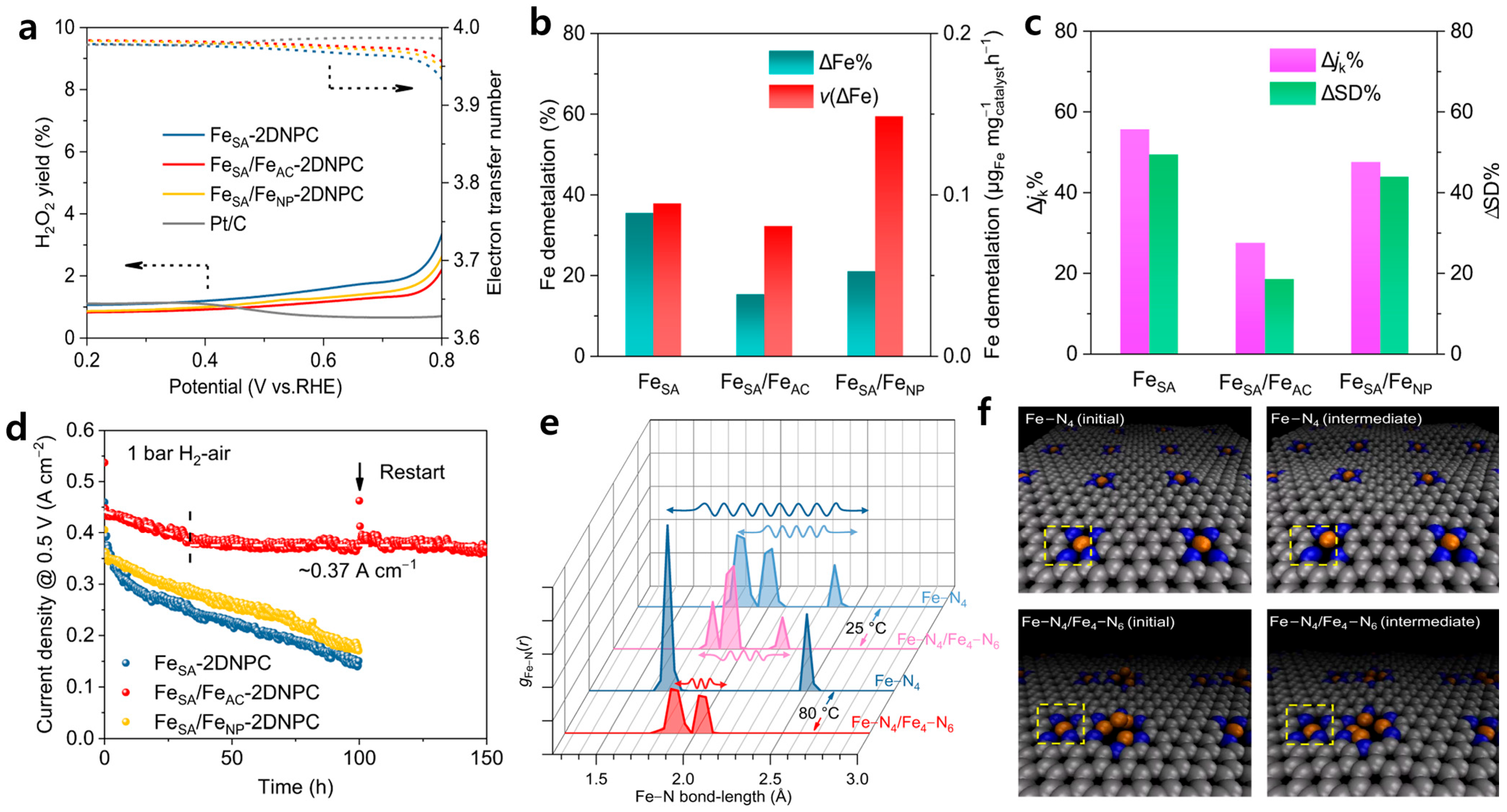
65]. Metal-leaching experiments and long-term MEA comparisons among FeSA-2DNPC, FeSA/FeAC-2DNPC, and FeSA/FeNP-2DNPC clearly show the relationship between relative demetalization, loss of active-site density, and cathode durability [
97]. Accordingly, mitigation of demetalization and agglomeration requires more than an increase in initial metal loading; it depends on stronger anchoring chemistry, more stable coordination structures, and more robust support architectures that can preserve isolated active sites during prolonged ORR operation [
66]. Recent studies on Fe-N-C SAC/cluster systems also reinforce the concept that single atoms can evolve to clustered systems and that the change in structure has a direct influence on ORR behavior and durability.
Figure 11 further shows that demetalization and agglomeration are directly reflected in active-site-density loss, kinetic degradation, and poor long-term MEA stability. It also indicates that nearby Fe-cluster environments can reduce Fe leaching and strengthen structural stability, underscoring the role of local site arrangement in long-term durability. These results suggest that limiting demetalization requires both stronger anchoring of isolated metal sites and durability assessment under realistic fuel-cell conditions [
97].
5.3. Chemical Oxidation by H2O2 and Reactive Oxygen Species (ROS)
Chemical oxidation by H
2O
2 and reactive oxygen species (ROS) is among the most destructive oxidation processes in SAC-based fuel cell cathodes as it attacks the carbon support and the active atomic sites during ORR operation [
25]. H
2O
2 is an unwanted byproduct of the two-electron reduction of oxygen, and at acidic pH or at high operating potentials, it can react with the leached metal ions even further, via Fenton or Fenton-like chemistry to produce highly reactive species like OH, and OOH. These ROS can oxidatively damage the carbon framework, disrupt metal–nitrogen coordination environments, decrease turnover frequency and accelerate the decay of ORR activity [
20]. This mechanism is especially problematic in terms of Fe-based SACs, since Fe leaching may enhance radical generation and, hence, couple chemical oxidation and demetalization and support degradation. Peroxide and radical attack are still the leading cause of chemical instability of PEMFC cathodes under fuel cells’ working condition. In practice, the severity of this pathway is judged more reliably from durability tests under realistic electrode and fuel-cell conditions than from initial half-cell activity alone.
In order to overcome this issue, recent work in the SAC field has also become more focused on methods for the suppression of H
2O
2 formation, the weakening of Fenton-like activity, or the introduction of auxiliary sites capable of decomposing the peroxide and scavenging the radicals, before severe damage occurs. More robust metal centers such as Co or Mn may be more tolerant in this respect because their lower Fenton-like activity, including that of leached ions, can reduce radical generation during ORR [
98]. It goes on to emphasize Fe/Zr-N-C and Fe,Ce-N-C systems, where secondary atomic components enhance durability by inhibiting chemical dementalization, or by the decomposition of H
2O
2 and radical scavenging [
66]. More recent work has pushed this idea further using radical-scavenging additives or neighboring sites to secure Fe-N4 motifs from H
2O
2/ROS attack, supporting the impression that peroxide management is now a key part of durability-oriented SAC design versus a secondary matter. Therefore, controlling the formation, decomposition, and downstream chemistry of H
2O
2 should be regarded as a basic requirement for practical SAC cathodes in acidic PEMFC environments, and its effect must ultimately be verified under realistic durability testing conditions.
5.4. Performance Gap Between Half-Cell Tests and Membrane-Electrode Assemblies (MEAs)
A recurring challenge in the evaluation of SAC-based fuel cell cathodes includes the fact that exhibiting good ORR in rotating disk electrode (RDE) or other half-cell setups does not necessarily indicate high or stable performance in membrane electrode assemblies (MEAs) [
85]. Half-cell tests are very helpful in determining intrinsic trends in the ORR kinetics, the selectivity of the intermediates, and the stability of the catalysts under controlled conditions, but they are not able to capture the full phenomena of coupled transport, ionomer distribution, catalyst layer architecture, water management, gas accessibility, and local potential gradients, which are decisive for the cathode behavior in a working fuel cell. As a result, there are still many SACs which display promising results in terms of E
1/2 or kinetic current in RDE, but when incorporated as an MEA, they suffer from a lack of utilization, durability or poor mass transport. This gap is especially important to study for M-N-C, and related single-atom systems, where the actual accessibility of active sites and ionomer catalyst interaction in the catalyst layer may differ significantly from that concluded from traditional half-cell measurements. To clarify this progression,
Table 1 summarizes the benchmarking pathway from RDE-based screening to GDE/FE testing and, finally, MEA validation.
As shown in
Table 1, each evaluation level provides different information and captures different practical limitations. For this reason, future SAC development for durable PEMFC cathodes must include MEA-level validation in addition to traditional half-cell metrics. Operando tools which can be used to track structural changes and demetalization directly in MEAs are becoming increasingly important for investigating SAC cathodes under realistic conditions [
85]. Likewise, recent reviews on Fe-N-C have emphasized the importance of ionomer–catalyst interface design improvement, catalyst layer structure, and the use of more realistic half-cell methods to reduce the distance between the laboratory value of ORR activity and the capacity of real-world cells. Broader PEMFC literature comes to the same conclusion: the integration of PGM-free catalysts into catalyst layers and MEAs requires special engineering attention to porosity and accessibility of protons, the distribution and transport pathway of the various catalysts, and not just the optimization of intrinsic site activity [
99]. Therefore, practical evaluation of SAC cathodes must go beyond isolated half-cell benchmarks and rely on a staged workflow that includes RDE screening, more realistic GDE/FE testing, and final MEA validation. The main degradation pathways discussed above, together with their representative characterization methods and mitigation approaches, are summarized in
Table 2.
6. Strategies for Enhancing Durability and Practicality
Because the predominant processes that deplete SAC-based fuel-cell cathodes are now relatively well understood, the priority of the scientific community has been gradually moved on from a simple identification of failure mechanisms to a systematic development of specific approaches that may maintain their activity in a real application of PEMFCs [
85]. The major mitigation directions involve more corrosion-resistant graphitized supports, where robust metal centers or stabilizing heteroatoms are used, and the addition of auxiliary radical scavenging sites, expected to suppress H
2O
2/ROS damage, and advanced characterization approaches aim to guide practical improvements in durability [
100]. At the same time, from a larger literature of PEMFs, it is evident that the stabilization of the catalyst level is not sufficient: the long-term practical performance also has to do with the integration of SACs in catalytic layers and MEAs, where ionomer distribution, porosity, water management and mass transport have a strong influence on how effectively they are utilized and how long they persist. Accordingly, focus on four intimately linked solution pathways in this section, namely (i) graphitization/support engineering, (ii) robust-metal and heteroatom introduction, (iii) radical scavengers and protective coatings, and (iv) electrode/MEA optimization, which collectively form the roadmap of the current situation on the improvement of the durability, as well as the application relevance of SAC cathodes [
101]. The current literature broadly interprets durability enhancement in terms of support graphitization, stabilization of metal centers, Fenton chemistry mitigation and better incorporation into practical electrode architectures.
6.1. Graphitization and Support Engineering
Enhancement of the graphitic degree of carbon support has become one of the more fruitful pathways to enhancing the durability of SAC-based fuel cell cathodes, primarily owing to the pronounced resistance of graphitized frameworks to electrochemical oxidation and structural collapse under acidic ORR conditions. Carbon substrate graphitization is explicitly presented as a strategy to enhance corresponding stability, and the following discussion shows that partly graphitic or highly graphitized carbon can maintain the structural integrity of the surrounding MNx sites better during long-term operation [
91]. This benefit stems from the fact that corrosion-resistant graphitic domains inhibit support degradation and stabilize metal/support interactions and reduce the tendency of local coordination environments around isolated atoms to collapse during ORR cycling. Broader durability literature supports the same conclusion: graphitization can enhance electronic conductivity, anticorrosion capability, and water management behavior, all of which allow more stable cathode operation in the PEMFC-like environments.
At the same time, graphitization is not a universally positive modification, because excessive ordering of the carbon matrix can reduce the density of defects, micropores and heteroatom anchoring sites necessary for hosting high densities of atomically dispersed metal centers [
91]. In other words, there is a type of trade-off between support robustness and active-site accessibility: the more graphitized the support may be, the longer it can survive, but an excessively graphitized framework can result in a lower metal loading efficiency or a reduced number of catalytically accessible MNx sites [
92]. Recent work from Fe-N4 SACs refers to this as a “passive shielding” strategy, in which the graphitization of the carbon substrate is increased to improve resistance to H
2O
2-induced damage, but at the expense of Fe-Nx site density, providing further reinforcement that support engineering needs to balance durability with site availability. Therefore, graphitization and support engineering in general should be considered not only as post-synthesis stabilization measures, but as well-defined design variables that at the same time contribute to the corrosion resistance, anchoring strength, conductivity, porosity, and long-term retention of active sites in real-life fuel cell cathodes [
93]. This will improve the resistance of graphitized carbon substrates against H
2O
2 induced damage, while noting the trade off with Fe-Nx site density.
6.2. Introducing Robust Metals and Heteroatoms
Another useful approach to further enhance the durability of SAC is to change highly Fenton-active metal centers to more stable metals or introduce secondary heteroatoms/metallics that stabilize the local coordination environment [
41]. Robust metals including Co, Mn, and Cr are interesting as their leached ions show weaker Fenton or Fenton-like activity than Fe, thereby limiting the production of radicals and reducing the likelihood of quick ROS-based degradation [
42]. Fe-based SACs typically exhibit good ORR activity but are at times limited in their durability, Mn-containing systems can provide better stability, and the (mixed) Fe/Mn systems can provide better activity as well as robustness. Moreover, an increase in durability in PEMFC SACs is increasingly connected to metal-center stabilization and Fenton chemistry mitigation, reinforcing that the choice of metal is not just an activity parameter, but also a key factor determining long-term cathode durability in acidic ORR conditions. Recent PEMFC SAC reviews likewise emphasize stabilizing metal centers and mitigating Fenton effects as key durability strategies.
A related strategy is the introduction of secondary heteroatoms or neighboring atomic species that create thermodynamically more stable active motifs and suppress demetalization [
65]. Fe/Zr–N–C is highlighted as a representative example in which the introduction of atomic Zr leads to a more stable Fe-containing coordination structure and improved durability by inhibiting chemical demetalization [
65]. Independent literature supports the same trend: co-doping of Zr with Fe in ZIF-8-derived mesoporous carbon has been reported to significantly improve ORR durability, and recent works on M–N–C optimization likewise discuss second-shell or neighboring-site modulation as a powerful way to strengthen MN4-type sites beyond the first coordination shell. Therefore, introducing robust metals and stabilizing heteroatoms should be viewed as a dual-purpose design strategy that simultaneously reduces radical susceptibility and strengthens the thermodynamic integrity of the active site during prolonged PEMFC operation [
102].
6.3. Radical Scavengers and Protective Coatings
Because H
2O
2 and ROS attack remain major causes of SAC failure in acidic ORR environments, one important durability strategy is to introduce radical-scavenging components that intercept these species before they damage the support or active site [
103]. Fe,Ce-N-C systems might be representative of those where Ce-related auxiliary sites help to improve the durability of the system promoting decomposition of H
2O
2 and scavenging of radical species, thus reducing oxidative damage during ORRs [
66]. More robust neighboring metals can dampen Fenton-like chemistry, but direct radical-scavenger approaches are particularly appealing due to their targeting of downstream chemistry of peroxide that is independent of the identity of the central metal atom [
42]. Recent primary studies point in the same direction. Dual-site systems containing Ce have been shown to promote H
2O
2 disproportionation and lessen chemical degradation in PEMFC cathodes, whereas implanted SiO
2 nanoparticles can help limit radical- and H
2O
2-related damage in FeN4 SACs. These results indicate that radical scavengers have been changed from their more traditional role as an optional additive to that of a durability engineering tool that helps maintain active-site integrity at realistic fuel-cell conditions [
66,
104].
Protective coatings represent a related but distinct stabilization strategy, because instead of chemically quenching ROS, they physically and electronically shield the active site from leaching, restructuring, and local oxidative attack [
101,
105]. Highly durable Fe–N–C SACs with an N–C coating tailoring the ligation environment, together with the surrounding carbon shell, leads to markedly improved stability under accelerated durability tests and long-term MEA operation [
101,
105]. This concept is also supported by atomically dispersed iron sites with a nitrogen–carbon coating, which have been reported as both highly active and durable oxygen reduction catalysts for fuel cells. More broadly, recent durability reviews on M–N–C catalysts also treat surface coatings and local-shell protection as practical ways to suppress demetalization, reduce agglomeration, and prolong catalyst lifetime under PEMFC-relevant stress. Therefore, radical scavengers and protective coatings should be viewed as complementary strategies: the former mitigates harmful peroxide/radical chemistry, whereas the latter stabilizes the catalytic microenvironment against structural and chemical deterioration [
66,
101,
105].
6.4. Electrode Architecture and MEA Optimization
Even when SAC exhibits excellent intrinsic ORR activity, practical fuel-cell performance still depends strongly on how that catalyst is incorporated into the electrode and MEA [
85]. In real PEMFC cathodes, the utilization of the catalyst is not only governed by active-site chemistry, but also by the thickness of the catalytic layer, the pore structure, the ionomer distribution, the accessibility of the protons, the oxygen transport and the water removal. This is why the difference between promising half-cell activity and disappointing full cell output is in many cases simply a reflection of architectural and interfacial limitations and not necessarily indicative of an inherent weakness of the catalytic site itself. Electrode composition and fabrication parameters directly affect proton conductivity, mass transport, water management and electrode–electrolyte interfaces, which ultimately control practical performance of PGM-free ORR cathodes. Accordingly, MEA optimization should be considered as an integral part of SAC development and not a separate engineering process done post-catalyst discovery [
85]. Proton conductivity, mass transport, water management, and the electrode–electrolyte interface are the important variables for integrating PGM-free catalysts into PEMFC electrodes.
In practical terms, better MEA-level performance from SAC cathodes depends on coordinated optimization of multiple electrode parameters, including catalyst-ink composition, ionomer–catalyst affinity, pore architecture, layer compaction, and gas-diffusion pathways. Among these, tuning the ionomer–catalyst interface, designing a suitable hierarchical catalyst-layer structure, and controlling layer thickness and compaction are especially important for reducing the difference between laboratory ORR activity and performance in an operating fuel cell. It also notes that GDE and floating-electrode methods can provide more application-relevant evaluation than conventional RDE testing, thereby helping connect catalyst-level understanding with MEA behavior. Operando synchrotron-based tools capable of tracking structural evolution and demetalization directly inside MEAs are increasingly important for evaluating SAC cathodes under realistic conditions [
85]. Therefore, electrode architecture and MEA optimization should be viewed as the final translational step in SAC research, where catalyst design, interfacial engineering, and device-level transport management are integrated into a practically durable PEMFC cathode. Ionomer–catalyst interaction tuning and electrode architecture optimization are emerging routes for integrating Fe–N–C catalysts into MEAs and bridging laboratory activity to real-world fuel-cell operation.
8. Future Outlook and Perspectives
Despite the quick pace of research in ORR-active SACs, there are still several practical issues preventing their general use in fuel-cell cathodes and the associated challenges, representing the most important priorities for coming research [
19,
85,
106,
107,
111]. One of the major challenges is the creation of SACs that have high enough metal loading on scale, given that practical applications require not only isolated active sites, but also high densities of sites and reproducibility. At the same time, support cost, structural robustness and long-term durability under the acidic PEMFC conditions are still closely linked together, which means that in the future, the design of SAC platforms should consider catalytic performance and manufacturability simultaneously [
112]. Another unresolved issue is the lack of widely adopted standardized durability and performance benchmarks across RDE-, GDE-, FE- and MEA-based testing, making it very difficult to benchmark catalysts fairly, and assess if good laboratory metrics are good indicators of device-level promise [
108]. Active-site density, scalable synthesis and reproducibility are still major bottlenecks in practical deployment of SAC cathodes.
Looking ahead, the most promising design directions are likely to move beyond conventional isolated M–N4 motifs toward more adaptable and cooperative catalytic environments. In particular, dual-atom catalysts, neighboring-site engineering, and modulation beyond the first coordination shell are attracting growing attention because they offer additional freedom to tune adsorption energetics, reduce Fenton susceptibility, and stabilize active motifs under working conditions. At the same time, many SACs do not remain structurally static during catalysis, indicating that future catalyst design must be guided not only by the nominal as-synthesized structure, but also by the true active state that emerges under ORR conditions [
113]. This is also where machine-learning-guided discovery may become especially valuable: high-throughput screening, descriptor-based modeling, and ML-assisted coordination engineering are now being explored as practical ways to accelerate the identification of stable, high-loading, and mechanistically optimized SAC architectures.
Equally important, future progress will depend on how effectively catalyst discovery is linked to operando characterization and device-level validation [
85,
86,
108]. Operando-guided design should play a much larger role in the coming years, because only real-time structural and spectroscopic measurements can reveal whether a proposed active site remains intact, transforms into a more active motif, or degrades through demetalization and support corrosion during operation [
85]. At the same time, cross-platform testing—moving systematically from conventional half-cell methods to GDE/FE configurations and then to full MEA evaluation—will be essential for identifying catalysts that are not only intrinsically active but also practically deployable [
108]. Ultimately, the field may benefit most from a more integrated research model in which scalable synthesis, atomic-level design, operando verification, and standardized device-level benchmarking are treated as parts of the same workflow. If that integration can be achieved, SACs will move closer to becoming not just scientifically interesting ORR catalysts, but practically viable cathode materials for sustainable PEM fuel-cell technologies [
106,
112].
9. Conclusions
SACs have become among the most promising types of cathode materials for the ORR in fuel cells due to their use of maximum metal utilization coupled with tunable atomic coordination, well-defined active sites, and large potential for replacing or decreasing the use of precious metal catalysts. As discussed throughout this review, their performance is controlled not only by the identity of the central metal atom, but by the coordination environment surrounding it, its support structure, its adsorption energetics, and the dynamic evolution of the active site under working conditions. At the same time, the field has moved well beyond activity-centered catalyst design alone, and it is now clear that practical implementation depends as strongly on durability-related issues such as carbon corrosion, demetalization, agglomeration, peroxide/ROS attack, and the ever-present gap between half-cell evaluation and MEA performance. These insights demonstrate that atomic-level design, mechanistic understanding and practical durability are not distinct topics but intimately linked dimensions to the same catalyst development problem. Progress in this field is now primarily characterized by active-site density, coordination optimization, durability, and ultimately by active-site implementation in practical fuel-cell cathodes.
Overall, future advancement of SAC cathodes will rely on better integration of research strategies that facilitate the links between scalable synthesis, robust site stabilization, operando-verified approaches and device testing in a single development workflow. Advancements toward commercial fuel-cell cathodes will require the development of intrinsically active catalysts that are structurally tough, reproducible, and validated through meaningful cross-platform evaluation ranging from half-cell screening through to long-term MEA operation. If these challenges can be met with concerted efforts in the fields of atomic scale design and mechanistic study and practical engineering, SACs are in a good place to transition from a highly active research theme to a workable catalyst platform for sustainable PEM fuel cell technologies. This integrated outlook is in line with current efforts in advancing active-site density, catalyst translation and device-level PEMFC materials development.