Entropy-Weighted TOPSIS and Grey Relational Analysis Method for Optimizing Lost Circulation Formulations in Stress-Sensitive Fractured Formations


Abstract
1. Introduction
2. Development of the Evaluation Framework and Indicator System
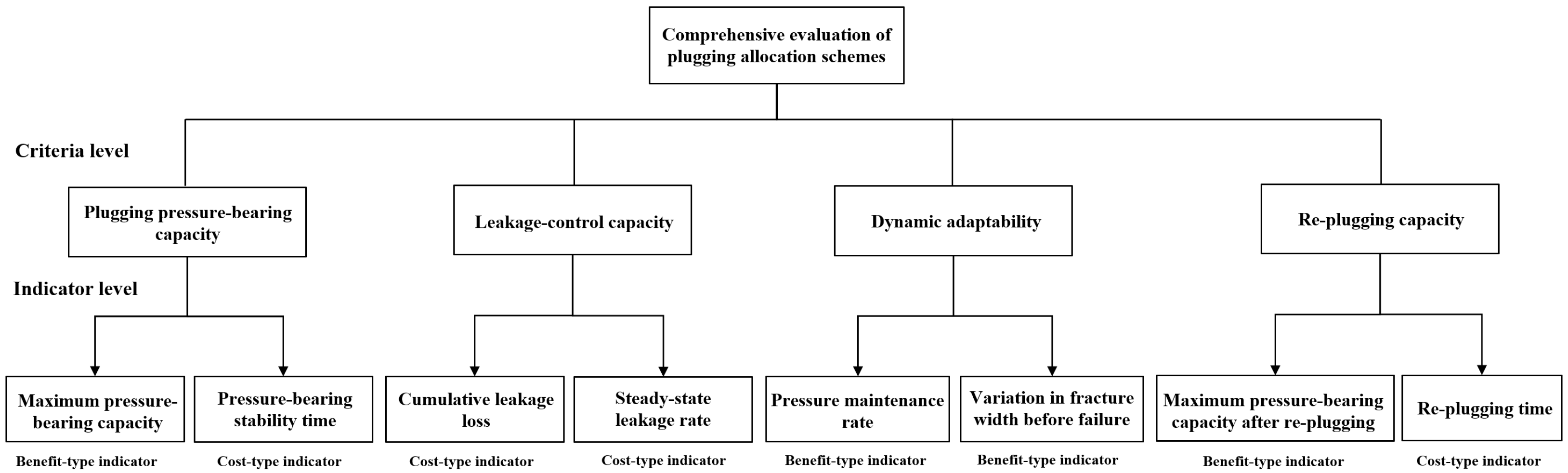
2.1. Evaluation Framework Design
2.2. Definition of the Criteria and Indicators
3. Candidate Scheme Development and Experimental Data Acquisition
3.1. Candidate Formulation Design and Variable-Control Strategy
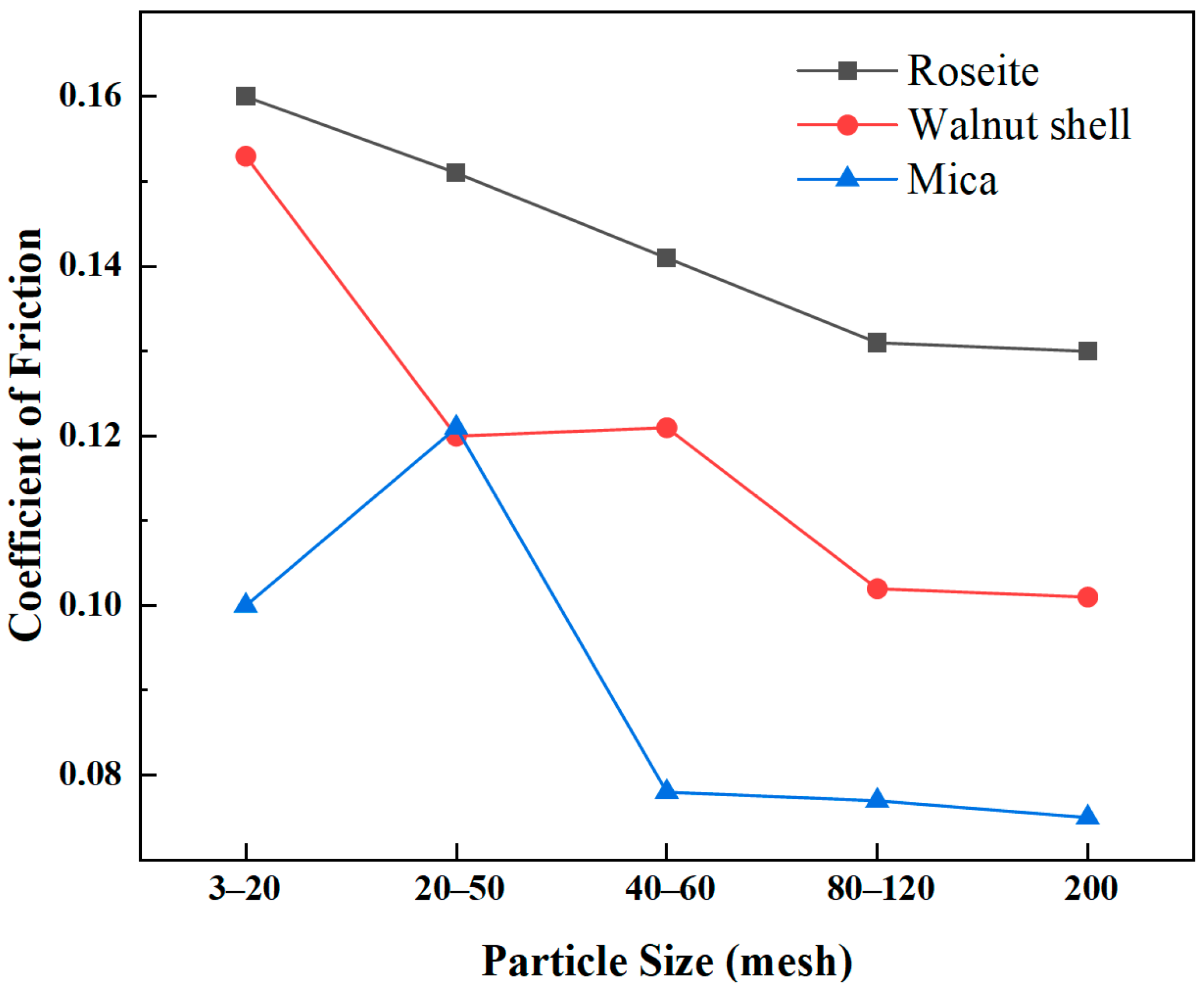
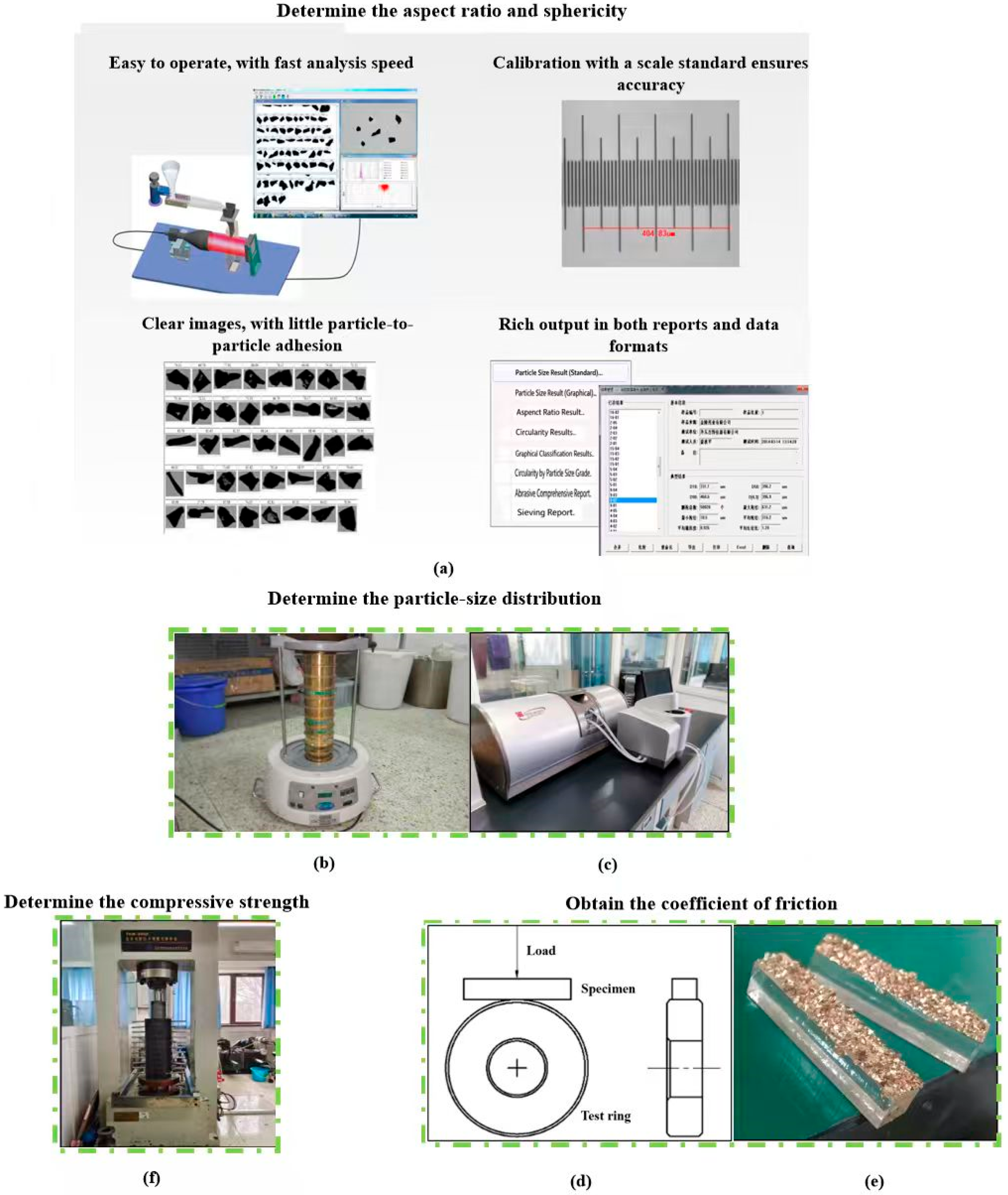
3.2. Key Material Parameter Characterization
3.3. Basic Formulation Scheme Determination
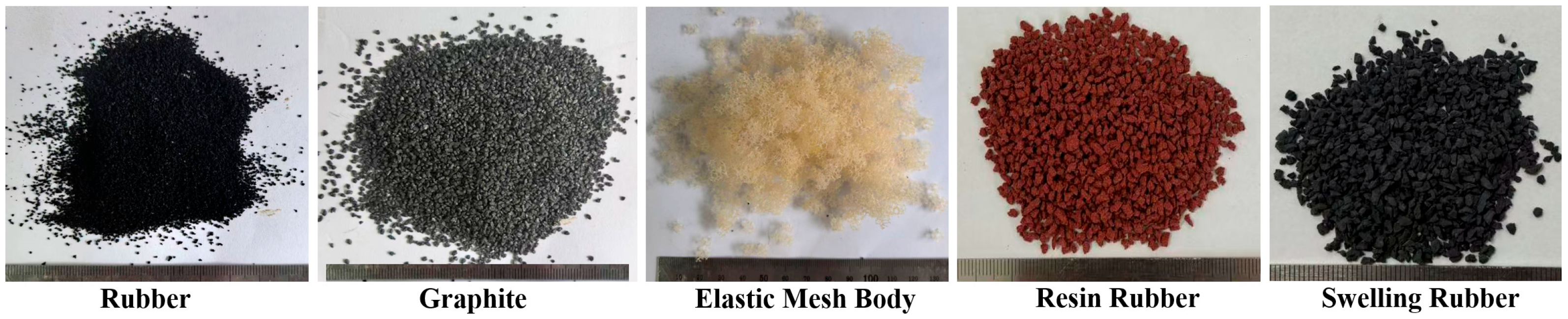
3.4. Elastic-Material System Determination
4. Development of Entropy-Weighted Grey–TOPSIS Model
4.1. Entropy-Weighted Grey–TOPSIS Theory
4.2. Model Implementation and Calculation Steps
5. Results and Discussion
5.1. Indicator Weighting
5.2. Normalized Decision Matrix
5.3. Calculation of the Grey–TOPSIS Relational Closeness
5.4. Sensitivity Analysis
5.5. Comparison Analysis with Classical TOPSIS Method and Entropy-Weighted TOPSIS Method
6. Conclusions
Author Contributions
Funding
Data Availability Statement
Acknowledgments
Conflicts of Interest
Abbreviations
| LCMs | Lost circulation materials |
| MCDM | Multiple-criteria decision-making |
| TOPSIS | Technique for order preference by similarity to an ideal solution |
| List of Variables with Definitions and Units | |
| M | Friction torque |
| r | Ring radius |
| F | Applied load to the ring |
| m | Number of candidate formulation schemes |
| n | Number of evaluation indicators |
| i | Index of candidate scheme, i = 1, 2, …, m |
| j | Index of indicator, j = 1, 2, …, n |
| Original decision matrix constructed from raw indicator data | |
| Raw value of indicator for scheme | |
| Normalized value of indicator for scheme | |
| Proportion matrix of scheme under indicator | |
| Information entropy matrix of indicator | |
| Entropy weight of indicator | |
| Weighted normalized decision matrix | |
| Ideal sample | |
| Worst sample | |
| Distinguishing coefficient in grey relational analysis, | |
| Grey relational coefficient between scheme and the positive ideal under indicator | |
| Grey relational coefficient between scheme and the negative ideal under indicator | |
| Grey relational degree to the positive ideal for scheme | |
| Grey relational degree to the negative ideal for scheme | |
| Grey relational closeness of scheme to the ideal solution, | |
| Positive/negative ideal solution | |
| 10th percentile particle size (μm) | |
| 50th percentile particle size(μm) | |
| 90th percentile particle size (μm) | |
| Rubber particle | |
| Elastic graphite particle | |
| Elastic mesh body | |
| :: | Mass ratio of rubber, graphite, and mesh in a ternary elastic formulation |
References
- Shehab, M.N.; Najm, F.M.A.; Kaabi, M.A. The Impact of Drilling Operation Parameters on the Lost Circulation Problems for Oil and Gas Wells Based on Field Data. Tikrit J. Pure Sci. 2023, 28, 57–74. [Google Scholar] [CrossRef]
- Baldino, S.; Miska, S.Z.; Ozbayoglu, E.M. A Novel Approach to Borehole-Breathing Investigation in Naturally Fractured Formations. SPE Drill. Complet. 2018, 34, 27–45. [Google Scholar] [CrossRef]
- Xu, D.; Yang, J.; Liu, H.; Qu, X.; Yang, F.; Chen, L.; Yu, C.; Zhu, G.; Hao, M.; Wang, N.; et al. Challenges and Practice of Key Technologies for Ultra-Deepwater Drilling with Very Narrow Pressure Window in South China Sea. In Proceedings of the Offshore Technology Conference Asia, Kuala Lumpur, Malaysia, 2–6 November 2020. [Google Scholar]
- Pordel Shahri, M.; Zeyghami, M.; Majidi, R. Investigation of Fracture Ballooning and Breathing in Naturally Fractured Reservoirs: Effect of Fracture Deformation Law. In Proceedings of the Nigeria Annual International Conference and Exhibition, Abuja, Nigeria, 30 July–3 August 2011; OnePetro: Richardson, TX, USA, 2011. [Google Scholar]
- Krekov, S.E.; Herhar, M. Advanced MPD Techniques for Ballooning Control: Effective Management of Wellbore Breathing and Overbalance Optimization Allowed Successful Navigation Through the 12 in. Section to Achieve Target Depth—Case Study. In Proceedings of the Middle East Oil, Gas and Geosciences Show (MEOS GEO), Manama, Bahrain, 16–18 September 2025; OnePetro: Richardson, TX, USA, 2025. [Google Scholar]
- Xu, C.; Yan, X.; Kang, Y.; You, L.; Zhang, J.; Lin, C.; Jing, H. Experimental Study on Surface Frictional Behavior of Materials for Lost Circulation Control in Deep Naturally Fractured Reservoir. In Proceedings of the International Petroleum Technology Conference, Beijing, China, 26–28 March 2019; OnePetro: Richardson, TX, USA, 2019. [Google Scholar]
- Ahmed, H.; Mohamed, S.; Ibnelwaleed, A.H.; Mustafa, N.; Saeed, S. Polymeric Formulations Used for Loss Circulation Materials and Wellbore Strengthening Applications in Oil and Gas Wells: A Review. J. Pet. Sci. Eng. 2019, 180, 197–214. [Google Scholar] [CrossRef]
- He, Z.; Fan, S.; Fang, J.; Yu, Y.; Zhang, J.; Li, S.; Xu, P. Research and Application of Fast Plugging Method for Fault Zone Formation in Tarim Basin, China. Energies 2023, 16, 4330. [Google Scholar] [CrossRef]
- Feng, Y.; Xin, G.; Sun, W.; Li, G.; Li, R.; Liu, H. Visualization Experiment on the Influence of the Lost Circulation Material Injection Method on Fracture Plugging. Processes 2025, 13, 236. [Google Scholar] [CrossRef]
- Guo, J.; Zhao, F.; Ren, J. Experimental Study on Plugging Behavior of Temporary Plugging Particles During Dynamic Increase of Fracture Width. In Proceedings of the International Petroleum Technology Conference, Dhahran, Saudi Arabia, 12–14 February 2024; OnePetro: Richardson, TX, USA, 2024. [Google Scholar]
- Vargas, L.G. An overview of the analytic hierarchy process and its applications. Eur. J. Oper. Res. 1990, 48, 2–8. [Google Scholar] [CrossRef]
- Yagmur, L. Multi-criteria evaluation and priority analysis for localization equipment in a thermal power plant using the AHP (analytic hierarchy process). Energy 2016, 94, 476–482. [Google Scholar] [CrossRef]
- Nagesha, N.; Balachandra, P. Barriers to energy efficiency in small industry clusters: Multi-criteria-based prioritization using the analytic hierarchy process. Energy 2006, 31, 1969–1983. [Google Scholar] [CrossRef]
- Li, Z.; Luo, Z.; Wang, Y.; Fan, G.; Zhang, J. Suitability Evaluation System for the Shallow Geothermal Energy Implementation in Region by Entropy Weight Method and TOPSIS Method. Renew. Energy 2022, 184, 564–576. [Google Scholar] [CrossRef]
- Wang, P.; Zhu, Z.; Wang, Y. A Novel Hybrid MCDM Model Combining the SAW, TOPSIS and GRA Methods Based on Experimental Design. Inf. Sci. 2016, 345, 27–45. [Google Scholar] [CrossRef]
- Liu, S.; Lin, Y. Grey Systems; Understanding Complex Systems; Springer: Berlin/Heidelberg, Germany, 2011; Volume 68. [Google Scholar]
- Xu, C.; Xie, Z.; Kang, Y.; Yu, G.; You, Z. A Novel Material Evaluation Method for Lost Circulation Control and Formation Damage Prevention in Deep Fractured Tight Reservoir. Energy 2020, 210, 118574. [Google Scholar] [CrossRef]
- Sebt, M.V.; Sadati-Keneti, Y.; Rahbari, M.; Gholipour, Z.; Mehri, H. Regression Method in Data Mining: A Systematic Literature Review. Arch. Comput. Methods Eng. 2024, 31, 3515–3534. [Google Scholar] [CrossRef]
- ISO 13500:2008; Petroleum and Natural Gas Industries—Drilling Fluid Materials—Specifications and Tests. International Organization for Standardization (ISO): Geneva, Switzerland, 2008.
- SY/T 5840-2024; Experimental Methods for Laboratory Testing of Bridging Plugging Material Used in Drilling Fluid. National Energy Administration of the People’s Republic of China: Beijing, China; Petroleum Industry Press: Beijing, China, 2024. (In Chinese)
- American Petroleum Institute (API). Field Testing Nonaqueous-Based Drilling Fluids. In API Recommended Practice 13B-2, 6th ed.; API: Washington, DC, USA, 2023. [Google Scholar]
- Yang, M.; Chen, Y. Lost Circulation Material Implementation Strategies on Fluid Loss Remediation and Formation Damage Control. In Proceedings of the SPE International Conference and Exhibition on Formation Damage Control, Lafayette, Louisiana, USA, 19–21 February 2020; OnePetro: Richardson, TX, USA, 2020. [Google Scholar]
- Wagle, V.; Ramasamy, J.; Alanqari, K.; AlYami, A. Expandable Resin for Countering Severe Loss Circulation. In Proceedings of the Middle East Oil, Gas and Geosciences Show, Manama, Bahrain, 19–21 February 2023; OnePetro: Richardson, TX, USA, 2023. [Google Scholar]
- Madi, E.N.; Garibaldi, J.M.; Wagner, C. An Exploration of Issues and Limitations in Current Methods of TOPSIS and Fuzzy TOPSIS. In Proceedings of the 2016 IEEE International Conference on Fuzzy Systems (FUZZ-IEEE), Vancouver, BC, Canada, 24–29 July 2016; pp. 2098–2105. [Google Scholar]
- Dai, J.; Liu, X.; Hu, F. Research and Application for Grey Relational Analysis in Multigranularity Based on Normality Grey Number. Sci. World J. 2014, 2014, 312645. [Google Scholar] [CrossRef] [PubMed]



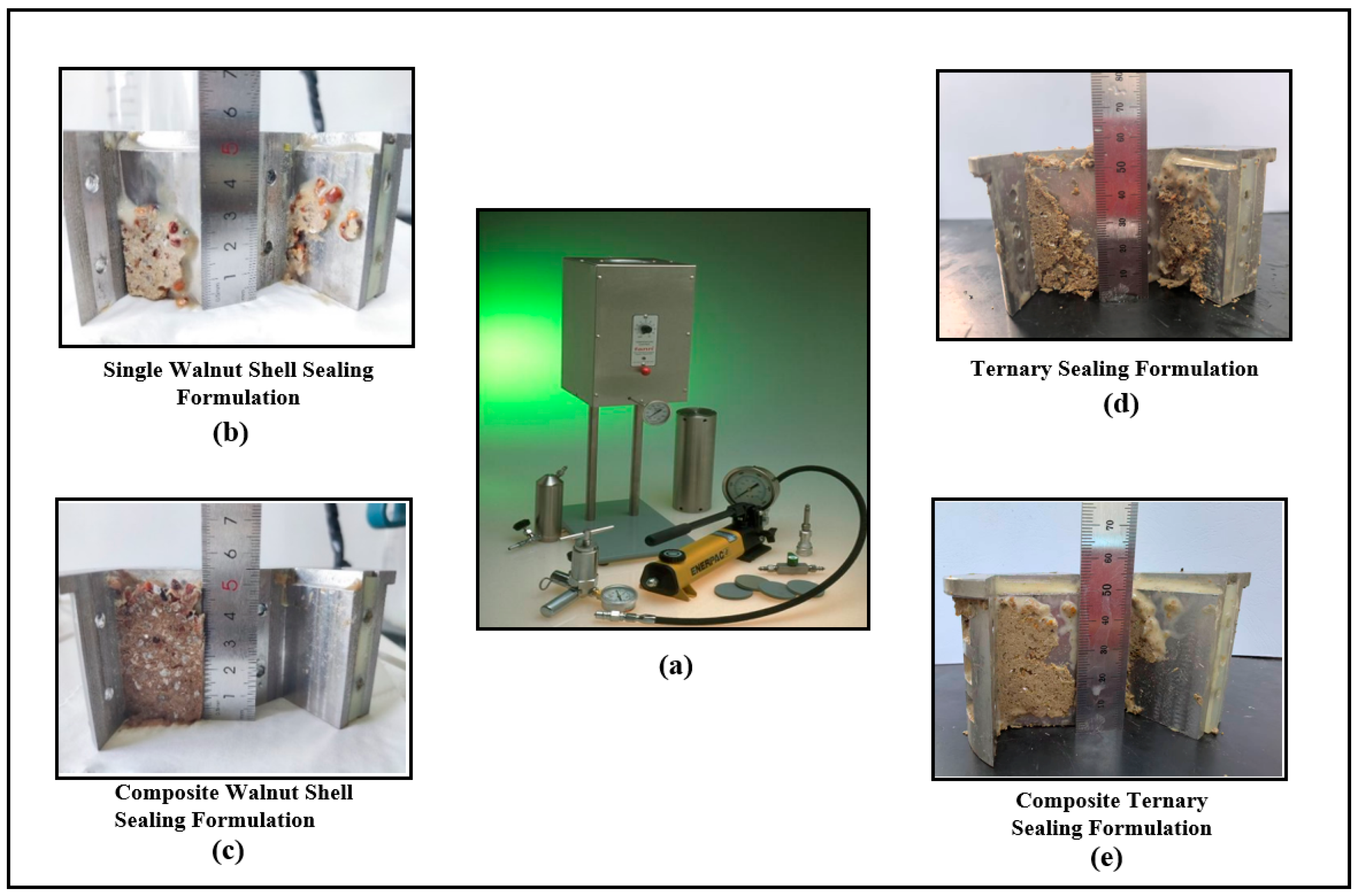
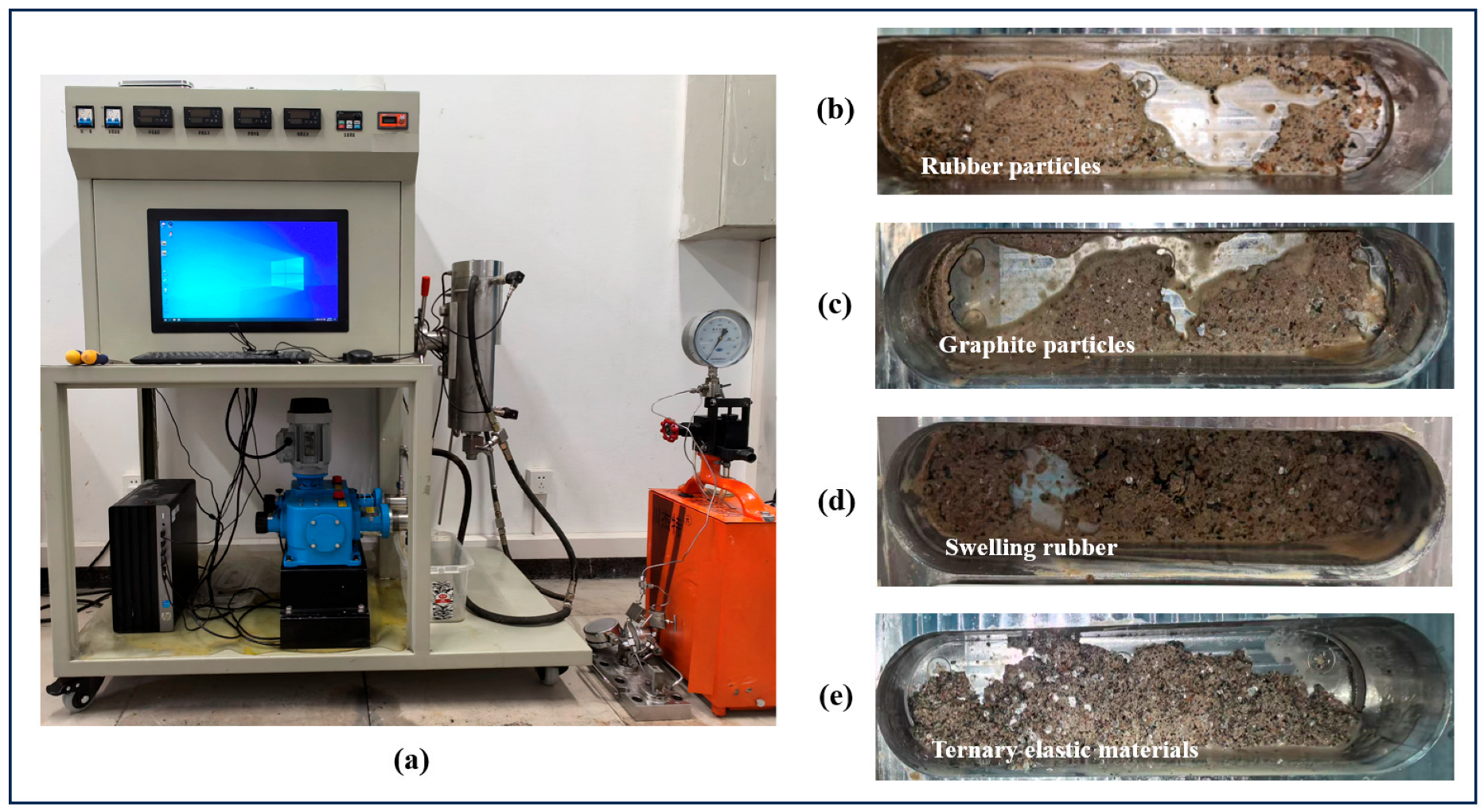
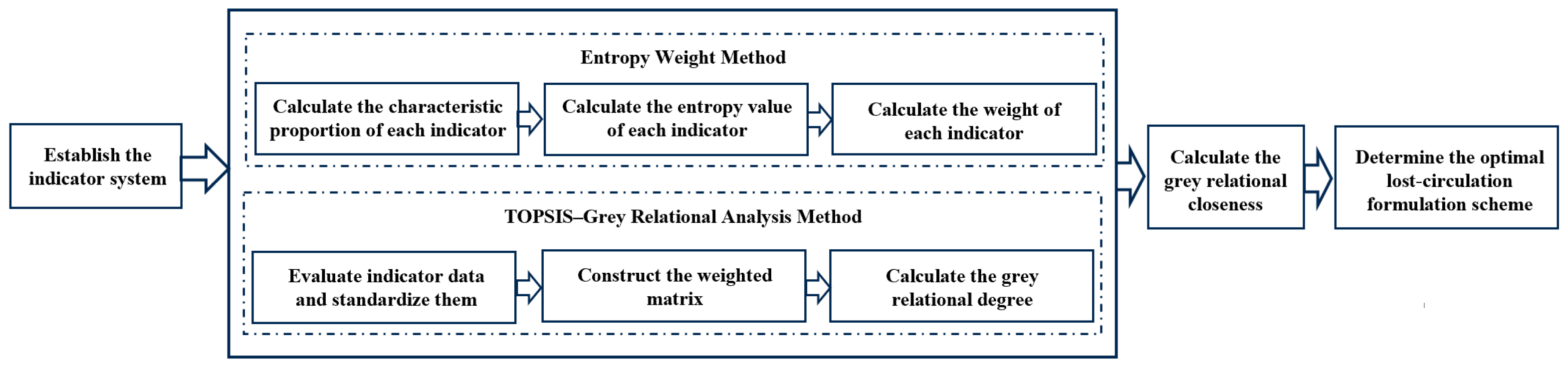
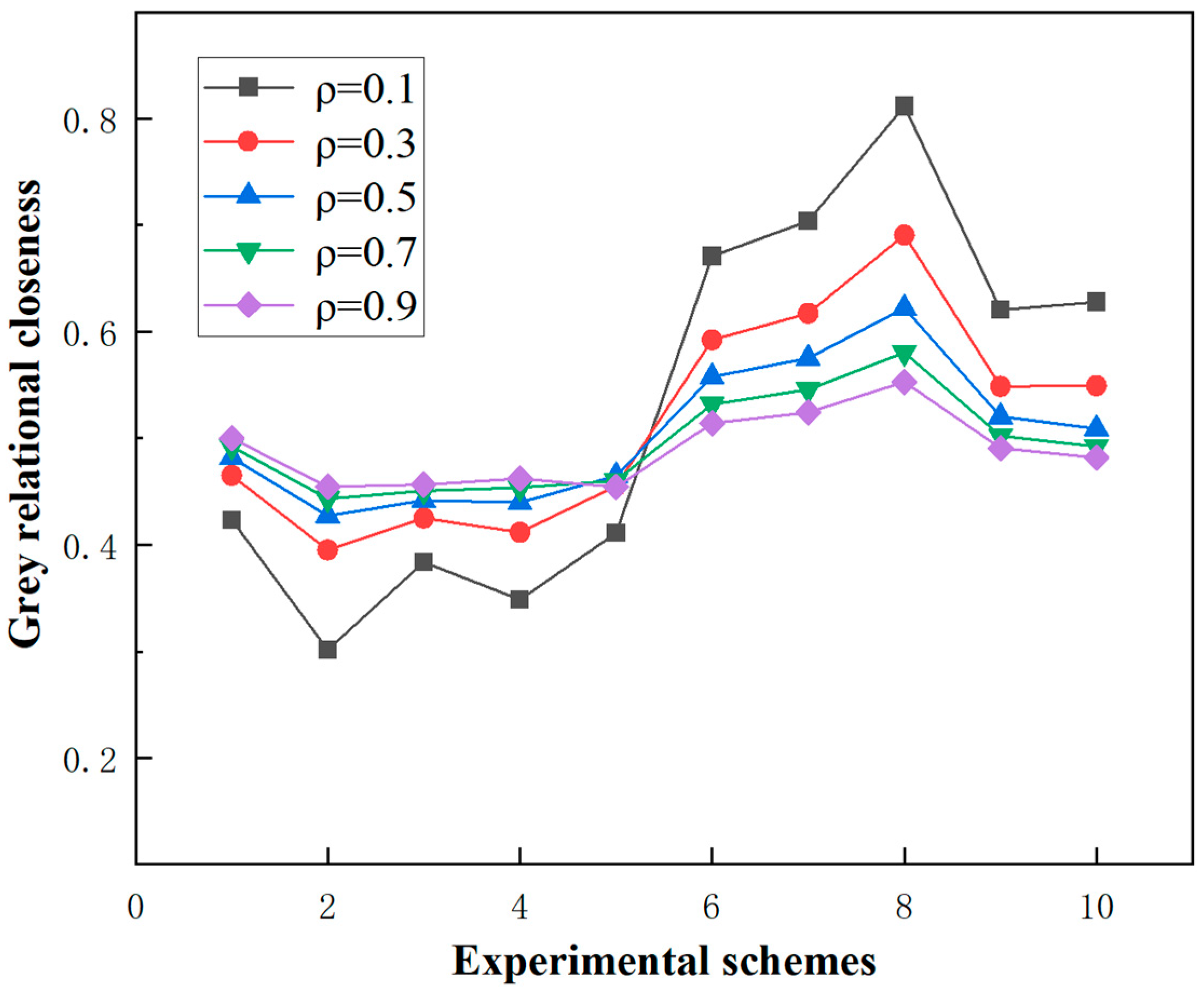

| LCMs | Size Mesh | D10 | D50 | D90 |
|---|---|---|---|---|
| Walnut shell | 6–10 mesh | 1400–1700 | 1700–2360 | 2360–3350 |
| 10–20 mesh | 830–880 | 1180–1400 | 1400–1700 | |
| 20–32 mesh | 600–646 | 646–700 | 646–700 | |
| Mica | 3–20 mesh | 1000–1180 | 1400–1700 | 1700–2360 |
| Roseite | 3–20 mesh | 1400–1700 | 2360–3350 | 3350–4750 |
| Sawdust | — | <250 | <250 | 380–425 |
| Cottonseed hull | — | <250 | 250–450 | 425–680 |
| LCMs | Size Fraction | Evaluated Aspect Ratio | Average Sphericity |
|---|---|---|---|
| Walnut shell | 3–20 mesh | 1.404 | 0.883 |
| 16–30 mesh | 1.461 | 0.867 | |
| Roseite | 3–20 mesh | 2.513 | 0.727 |
| Mica | 3–20 mesh | 2.641 | 0.605 |
| LCMs | Size Mesh | Average Value |
|---|---|---|
| Walnut shell | 8–10 mesh | 16.81 MPa |
| 12–14 mesh | 18.28 MPa | |
| 16–18 mesh | 19.90 MPa | |
| Mica | 8–10 mesh | 19.02 MPa |
| 12–14 mesh | 21.03 MPa | |
| 16–18 mesh | 22.41 MPa |
| Scheme | Sealing Pressure-Bearing Capacity | Leakage-Control Capacity | Dynamic Adaptability | Re-Sealing Capacity | |||||
|---|---|---|---|---|---|---|---|---|---|
| Maximum Pressure-Bearing Capacity (MPa) | Pressure-Bearing Stability Time (min) | Cumulative Leakage Loss (mL) | Steady-State Leakage Rate (mL/min) | Pressure Retention Ratio | Maximum Fracture Width Variation at Failure (mm) | Maximum Pressure-Bearing Capacity After Re-Sealing (MPa) | Re-Sealing Time (min) | ||
| 1 | R | 8.3 | 10.8 | 133 | 3 | 17% | 0.614 | 1.8 | 16.3 |
| 2 | G | 4.5 | 6.7 | 325 | 25 | 64% | 0.206 | 1.2 | 6.7 |
| 3 | R:G = 1:1 | 5.2 | 7.8 | 226 | 16 | 42% | 0.322 | 1.6 | 8.2 |
| 4 | R:G = 1:2 | 4.8 | 7 | 265 | 21 | 55% | 0.244 | 1.4 | 7.4 |
| 5 | R:G = 2:1 | 9 | 8.5 | 188 | 12 | 20% | 0.482 | 1.3 | 11 |
| 6 | R:G:N = 1:1:1 | 7.2 | 4.9 | 206 | 8 | 55% | 0.465 | 6.8 | 2.2 |
| 7 | R:G:N = 2:3:1 | 9 | 4.5 | 143 | 5 | 58% | 0.405 | 6 | 1.4 |
| 8 | R:G:N = 3:2:1 | 10 | 3.5 | 111 | 3 | 70% | 0.786 | 6 | 1.5 |
| 9 | R:N = 3:1 | 10 | 6.2 | 123 | 2 | 37% | 0.604 | 2.6 | 14.6 |
| 10 | G:N = 3:1 | 6 | 5.6 | 118 | 2 | 47% | 0.578 | 2.5 | 5.1 |
| Objective Layer | Criteria Layer | Indicator Layer | ||
|---|---|---|---|---|
| Optimization evaluation model for sealing formulations for stress-sensitive fractures | Sealing pressure-bearing capacity | Maximum pressure-bearing capacity (MPa) | 0.8977 | 0.1197 |
| Pressure-bearing stability time (min) | 0.8862 | 0.1332 | ||
| Leakage-control capacity | Cumulative leakage loss (mL) | 0.8955 | 0.1223 | |
| Steady-state leakage rate (mL/min) | 0.8912 | 0.1273 | ||
| Dynamic adaptability | Pressure retention ratio | 0.8920 | 0.1264 | |
| Maximum fracture width variation at failure | 0.8816 | 0.1386 | ||
| Re-sealing capacity | Maximum pressure-bearing capacity after re-sealing (MPa) | 0.7838 | 0.2843 | |
| Re-sealing time (min) | 0.8855 | 0.1330 |
| Distinguishing Coefficient | Scheme 1 | Scheme 2 | Scheme 3 | Scheme 4 | Scheme 5 | Scheme 6 | Scheme 7 | Scheme 8 | Scheme 9 | Scheme 10 |
|---|---|---|---|---|---|---|---|---|---|---|
| ρ = 0.1 | 0.4235 | 0.3016 | 0.3838 | 0.3486 | 0.411 | 0.6709 | 0.7039 | 0.8117 | 0.6205 | 0.6278 |
| ρ = 0.3 | 0.4651 | 0.3952 | 0.4252 | 0.4117 | 0.4551 | 0.5923 | 0.6172 | 0.6909 | 0.5487 | 0.5494 |
| ρ = 0.5 | 0.4819 | 0.4274 | 0.4416 | 0.4397 | 0.4646 | 0.5577 | 0.5752 | 0.6222 | 0.5203 | 0.509 |
| ρ = 0.7 | 0.4924 | 0.4433 | 0.4507 | 0.4536 | 0.4603 | 0.5319 | 0.5458 | 0.5806 | 0.5022 | 0.4923 |
| ρ = 0.9 | 0.4999 | 0.4545 | 0.4565 | 0.4623 | 0.4543 | 0.514 | 0.5242 | 0.5529 | 0.4907 | 0.4819 |
| Scheme | Formulations | EGT | ET | T |
|---|---|---|---|---|
| 1 | R | 6 | 10 | 10 |
| 2 | G | 10 | 9 | 9 |
| 3 | R:G = 1:1 | 8 | 5 | 5 |
| 4 | R:G = 1:2 | 9 | 6 | 6 |
| 5 | R:G = 2:1 | 7 | 4 | 4 |
| 6 | R:G:N = 1:1:1 | 3 | 3 | 3 |
| 7 | R:G:N = 2:3:1 | 2 | 2 | 2 |
| 8 | R:G:N = 3:2:1 | 1 | 1 | 1 |
| 9 | R:N = 3:1 | 4 | 8 | 7 |
| 10 | G:N = 3:1 | 5 | 7 | 8 |
Disclaimer/Publisher’s Note: The statements, opinions and data contained in all publications are solely those of the individual author(s) and contributor(s) and not of MDPI and/or the editor(s). MDPI and/or the editor(s) disclaim responsibility for any injury to people or property resulting from any ideas, methods, instructions or products referred to in the content. |
© 2026 by the authors. Licensee MDPI, Basel, Switzerland. This article is an open access article distributed under the terms and conditions of the Creative Commons Attribution (CC BY) license.
Share and Cite
Hu, H.; Feng, Y.; Yan, J.; Dai, T.; Li, X.; Wang, G. Entropy-Weighted TOPSIS and Grey Relational Analysis Method for Optimizing Lost Circulation Formulations in Stress-Sensitive Fractured Formations. Processes 2026, 14, 1411. https://doi.org/10.3390/pr14091411
Hu H, Feng Y, Yan J, Dai T, Li X, Wang G. Entropy-Weighted TOPSIS and Grey Relational Analysis Method for Optimizing Lost Circulation Formulations in Stress-Sensitive Fractured Formations. Processes. 2026; 14(9):1411. https://doi.org/10.3390/pr14091411
Chicago/Turabian StyleHu, Han, Yongcun Feng, Jiecheng Yan, Tao Dai, Xiaorong Li, and Guangyu Wang. 2026. "Entropy-Weighted TOPSIS and Grey Relational Analysis Method for Optimizing Lost Circulation Formulations in Stress-Sensitive Fractured Formations" Processes 14, no. 9: 1411. https://doi.org/10.3390/pr14091411
APA StyleHu, H., Feng, Y., Yan, J., Dai, T., Li, X., & Wang, G. (2026). Entropy-Weighted TOPSIS and Grey Relational Analysis Method for Optimizing Lost Circulation Formulations in Stress-Sensitive Fractured Formations. Processes, 14(9), 1411. https://doi.org/10.3390/pr14091411