Article

Study on Cement Carbonation Resistance and Reinforcement in CCUS-EOR
SINOPEC Research Institute of Petroleum Engineering Co., Ltd., 197 Baisha Road, Changping District, Beijing 102206, China
*
Authors to whom correspondence should be addressed.
Processes 2026, 14(9), 1352; https://doi.org/10.3390/pr14091352
Submission received: 10 March 2026 / Revised: 15 April 2026 / Accepted: 21 April 2026 / Published: 23 April 2026

Abstract

To investigate the mitigation of high-pressure CO2-induced degradation of wellbore cement sheath in Carbon Capture, Utilization, and Storage–Enhanced Oil Recovery applications (CCUS-EOR), conventional Class G oil well cement and modified cement systems incorporating graphene, waterborne epoxy resin, and a composite of waterborne epoxy resin with graphene were formulated. This study presents the original comparative investigation on the long-term carbonation resistance of graphene-modified, waterborne-epoxy-modified, and their composite-modified oil well cements under 130 °C and 7 MPa CO2 partial pressure, filling the research gap of unclear synergistic effects of the two modifiers in high-temperature CCUS environments. The specimens were subjected to simulated downhole conditions, and key properties, including compressive strength and permeability, were evaluated. The underlying mechanisms were elucidated through material characterization techniques such as X-ray diffraction, X-ray computed tomography, and scanning electron microscopy. Results indicated that the waterborne epoxy resin–modified cement system exhibited superior long-term carbonation resistance, achieving a 90 d compressive strength retention rate of 84%. The graphene-modified cement showed a 90 d compressive strength retention rate of 65%, while the waterborne epoxy–graphene composite system only retained 39.7% of its compressive strength at 90 d due to negative synergistic effects. The enhanced durability of the waterborne-epoxy-modified cement is attributed to the formation of a continuous polymeric film, which acts as a protective barrier against CO2 penetration. This study provides valuable insights for the design of CO2-resistant cement systems in CCUS-EOR environments.

1. Introduction

Driven by global carbon neutrality strategies, Carbon Capture, Utilization, and Storage–Enhanced Oil Recovery (CCUS-EOR) has become a vital technology for enhancing hydrocarbon production and reducing emissions [1]. However, prolonged exposure to high-concentration CO2 during injection and production compromises wellbore integrity, as the cement sheath undergoes severe degradation, threatening long-term storage security [2,3]. Under high-pressure, high-temperature conditions, CO2 penetrates cement pores in supercritical or aqueous form, reacting with hydration products such as calcium hydroxide (Ca(OH)2) and calcium silicate hydrate (C–S–H) gel to form calcium carbonate (CaCO3) and amorphous SiO2·nH2O. These reactions induce early-stage pore filling and densification but cause long-term pore structure deterioration, compressive strength reduction, permeability increase, and matrix embrittlement [4,5]. Furthermore, CO2-induced corrosion weakens interfacial bonding at the cement-casing and cement-formation interfaces [6], promoting micro-annuli and leakage pathways [7]. Thus, developing advanced cement systems resistant to such harsh acidic environments is imperative.
To address CO2 corrosion under high temperature and pressure, various strategies have been explored. Omosebi et al. [8] investigated how CO2 concentration and pressure influence carbonation in Class G and H cements, noting that increased CO2 levels generally raise compressive strength but reduce porosity and permeability, with pressure significantly accelerating degradation. Fakher et al. [9] developed a cement composite using fly ash and resin, demonstrating improved corrosion resistance under supercritical CO2, though high fly ash content impaired slurry rheology and increased microcracking [10]. Zhang et al. [11] incorporated a soap-free emulsion with sodium styrene sulfonate and nano-SiO2 into cement, reducing contact between hydration products and CO2. The nano-SiO2 consumed Ca(OH)2, lowering its availability for carbonation. However, high-temperature CO2 resistance remains underexplored, especially above 120 °C [12,13,14]. Studies by Yuan et al. [15], Peng et al. [16], and Bai et al. [17] on polymer-modified cement with corrosion-resistant additives (CRA) in H2S-CO2 environments revealed that film-forming polymers enhance acid resistance through sealing and pore-filling effects, informing design of CO2-resistant slurries.
Graphene, known for its high aspect ratio and thermal conductivity, has been incorporated into polymers to improve mechanical properties, corrosion, and heat resistance [18]. Its sheet-like structure and nanoscale dimensions can fill cement voids and inhibit microcrack propagation. Epoxy resin is widely recognized for corrosion protection [19,20]. Waterborne epoxy (WER), which uses water as a dispersion medium, exhibits better handling safety and system compatibility than solvent-based epoxy [21,22], fully complying with green chemistry principles [23]. Compared to solvent-based epoxies, waterborne systems align better with field operations and green chemistry principles.
Existing studies separately verify the enhancement of graphene or waterborne epoxy on cement carbonation resistance, but few focus on their composite modification under high-temperature (≥130 °C) and high-pressure conditions. Graphene and waterborne epoxy are expected to produce synergistic reinforcement, yet their compatibility and synergistic mechanisms in harsh CCUS environments remain unclear. This study fills the gap by comparatively investigating graphene-modified, waterborne-epoxy-modified, and their composite-modified cement systems, revealing the failure mechanism of the composite material and the optimal modification path suitable for 130 °C high-temperature corrosion environments. Specifically, the carbonation resistance of these three cement systems was evaluated under aggressive conditions (130 °C, CO2 partial pressure of 7 MPa, total pressure 25 MPa, salinity 22,863 mg/L). The evolution of cement properties and the underlying mechanism enhancing carbonation stability were systematically investigated, and the failure mechanism of the composite modification system was clearly elucidated. This study provides a reliable design basis for CO2-resistant cement systems applied in high-temperature CCUS-EOR wellbore engineering.

2. Materials and Methods

2.1. Materials

Class G oil well cement, procured from Sichuan Jiahua Special Cement Co., Ltd., Leshan, China, is a widely used cementitious material in well cementing operations; its chemical composition is detailed in Table 1. Silica fume (industrial grade, SiO2 ≥ 95 wt%), defoamer (polyether type), dispersant (sulfonated ketone-formaldehyde polymer), and retarder (organic phosphonate) were supplied by Dezhou Continental Shelf Petroleum Engineering Technology Co., Ltd., Dezhou, China). The silica fume serves to enhance the mechanical stability of the cement under high-temperature conditions and participates in a pozzolanic reaction with cement hydration products, thereby reducing the overall alkalinity of the system. The defoamer eliminates entrained air during slurry mixing. The retarder is employed to delay the hydration process, preventing premature setting. The dispersant, a ketone–formaldehyde polymer, improves the fluidity of the slurry. Graphene nanosheets were synthesized in-house by the liquid-phase exfoliation method [18], exhibiting a carbon content greater than 99.5%, a thickness of less than 3 nm, and a particle size ranging from 1.3~2.3 μm. Waterborne epoxy resin was prepared by the self-emulsification method, referred to in the literature as a white emulsion [21], with particle sizes between 0.2~0.5 μm and an epoxy equivalent weight of 500~2000 g/mol. Waterborne epoxy resin was prepared by the self-emulsification method [21], and it is a white emulsion with particle sizes between 0.2 and 0.5 μm and an epoxy equivalent weight of 500–2000 g/mol.

2.2. Preparation and Corrosion of Cement Samples

2.2.1. Preparation of Cement Slurry

Based on the formulation in Table 2, deionized water, retarder, dispersant, defoamer, and modifying materials were measured and combined into a homogeneous mixture. Graphene was ultrasonically dispersed for 10 min to prevent agglomeration before mixing with other components, then transferred into a mixing cup. Pre-weighed Class G oil well cement and 300-mesh silica fume were then introduced as a blended powder into the cup. All solid materials were added within 15 s. The cup was sealed and mixed at 12,000 rpm for 35 s using a constant-speed mixer (TG-3060 A, Shenyang Taige Petroleum Instrument Equipment Co., Ltd., Shenyang, China) to prepare the cement slurry.
The dosage of 8 wt% waterborne epoxy resin and 0.8 wt% graphene was determined based on preliminary optimization experiments and literature reports [18,21]. Within this dosage range, the cement slurry has good rheological properties and setting stability, avoiding performance deterioration caused by excessive resin agglomeration or graphene agglomeration. This study only investigates the single optimal dosage of each modifier, and the performance laws of other dosage ranges need to be further studied.

2.2.2. Preparation of Cement Samples

The prepared cement slurry was cast into API-standard square molds (50.8 × 50.8 × 50.8 mm3) and transferred to a high-pressure, high-temperature curing chamber (TG-7370D, Shenyang Taige Petroleum Instrument Equipment Co., Ltd., Shenyang, China). The chamber was filled with water and hermetically sealed. Curing proceeded at 130 °C and 25 MPa for 7 d. Owing to the size constraints of standard specimens, cylindrical samples (Ø25 mm × 50 mm) were drilled from the cured blocks for corrosion evaluation studies. The drilling process adopted low-speed water cooling to reduce micro-defects introduced by mechanical damage.

2.2.3. Corrosion of Cement Samples

The drilled cylindrical cement specimens were placed in a high-pressure, high-temperature autoclave (TL-3, Jingzhou Taling Machinery Co., Ltd., Jingzhou, China). Synthetic brine of specified salinity (composition in Table 3) was added to fully submerge the specimens. The salinity of 22,863 mg/L is consistent with the formation water salinity of onshore CCUS-EOR reservoirs in Shengli Oilfield, which is used to reproduce the real downhole mineralization environment. Corrosion testing was conducted at 130 °C and 25 MPa total pressure (7 MPa CO2 partial pressure). Temperature and pressure were continuously monitored and maintained throughout the experiment to ensure consistent test conditions.

2.3. Experimental Methods

2.3.1. Compressive Strength

The compressive strength of cement specimens was determined using a universal testing machine (HY-20080, Shanghai Hengyi Precision Instrument Co., Ltd., Shanghai, China) at a constant displacement rate of 1.2 kN/s. Triplicate specimens were tested for each condition, and the mean value was reported.

2.3.2. Gas Permeability

Specimens were oven-dried at 60 °C for 24 h until constant mass was achieved. The permeability and porosity of the dried cement samples were subsequently determined using a core flow apparatus (LDY 50-180, Nantong Yichuang Experimental Instrument Co., Ltd., Nantong, China). Triplicate measurements were performed, and the mean value was reported.

2.3.3. Corrosion Degree

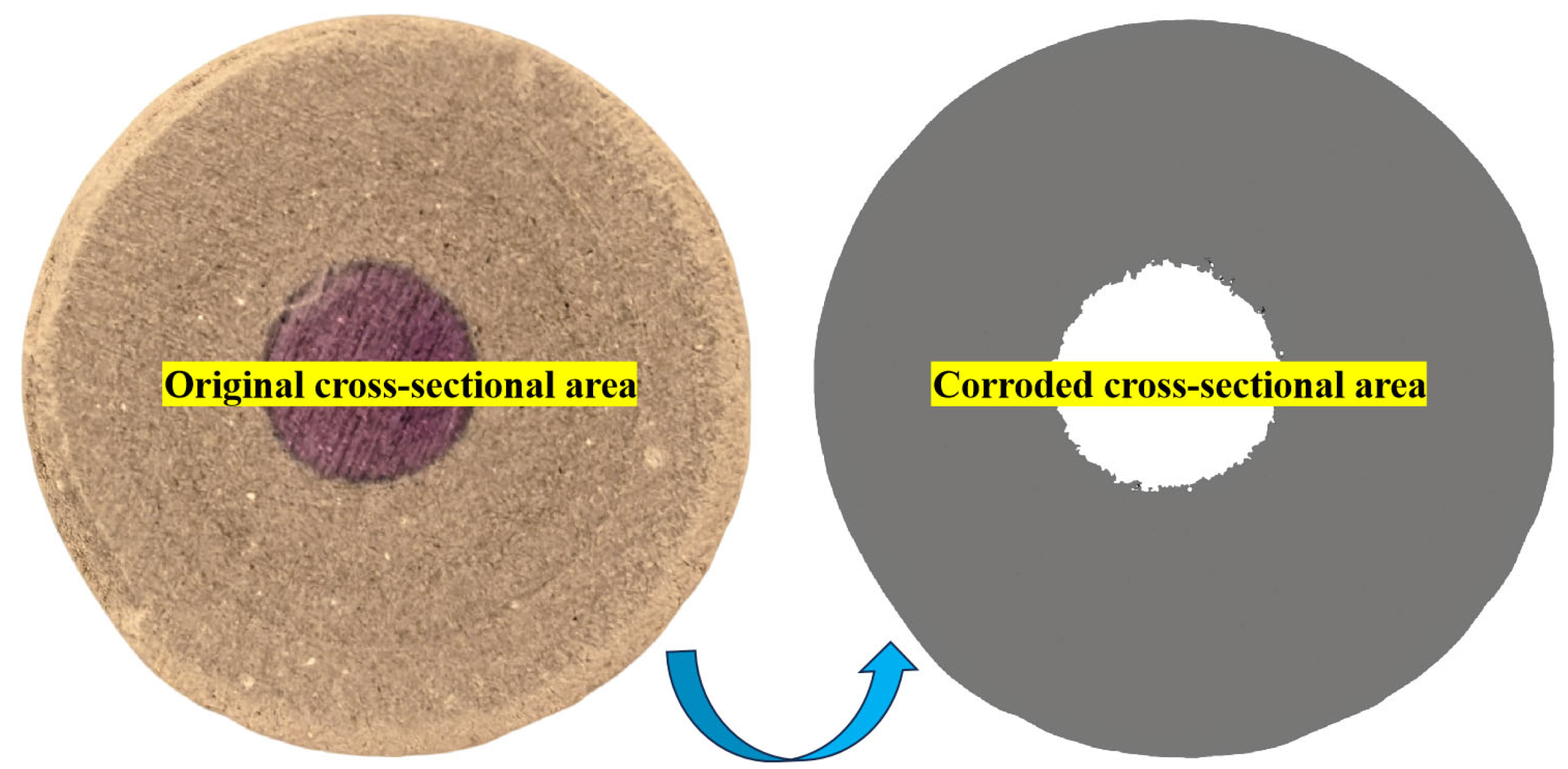
The corrosion degree of cement is quantitatively defined as the ratio of the carbonated area to the total cross-sectional area. Cement hydrates create a highly alkaline environment (pH 12–13). Phenolphthalein solution was uniformly sprayed onto sectioned samples to distinguish the carbonated zone (colorless) from the uncarbonated zone (purple–red). Due to potential corrosion heterogeneity, the carbonated area ratio was quantified using digital image analysis (Equation (1), Figure 1) to evaluate the corrosion extent:
D   =   S 1 S 2 ,
where S1 represents the corroded cross-sectional area, S2 denotes the original cross-sectional area, and D is defined as the corrosion degree, calculated as the ratio of S1 to S2.

2.3.4. Phase Composition Analysis

Corroded samples were cut into small pieces (≈5 mm × 5 mm × 5 mm), oven-dried at 60 °C for 12 h to remove free water, and ground into powder (<50 μm) for XRD and DTG testing. Phase composition changes in cement specimens before and after corrosion were characterized by X-ray diffraction (scanning range 5°~70° 2θ, rate 0.08°·s−1) and quantitatively analyzed using thermal analysis (temperature range 0~900 °C, heating rate 20 °C·min−1).

2.3.5. Microstructure Analysis

X-ray computed tomography (XCT, Phoenix V tome x M300, Baker Hughes, Houston, TX, USA) was utilized to reconstruct 2D and 3D microstructural morphologies and characterize pore defects of cement specimens at various corrosion ages, with scanning parameters detailed in Table 4. Scanning electron microscopy (SEM, SU5000, Hitachi, Japan)) was utilized for microstructural analysis, coupled with energy-dispersive X-ray spectroscopy (EDS) for elemental mapping. The samples need to be dried at 60 °C for 12 h.

3. Results

3.1. Macroscopic Morphology

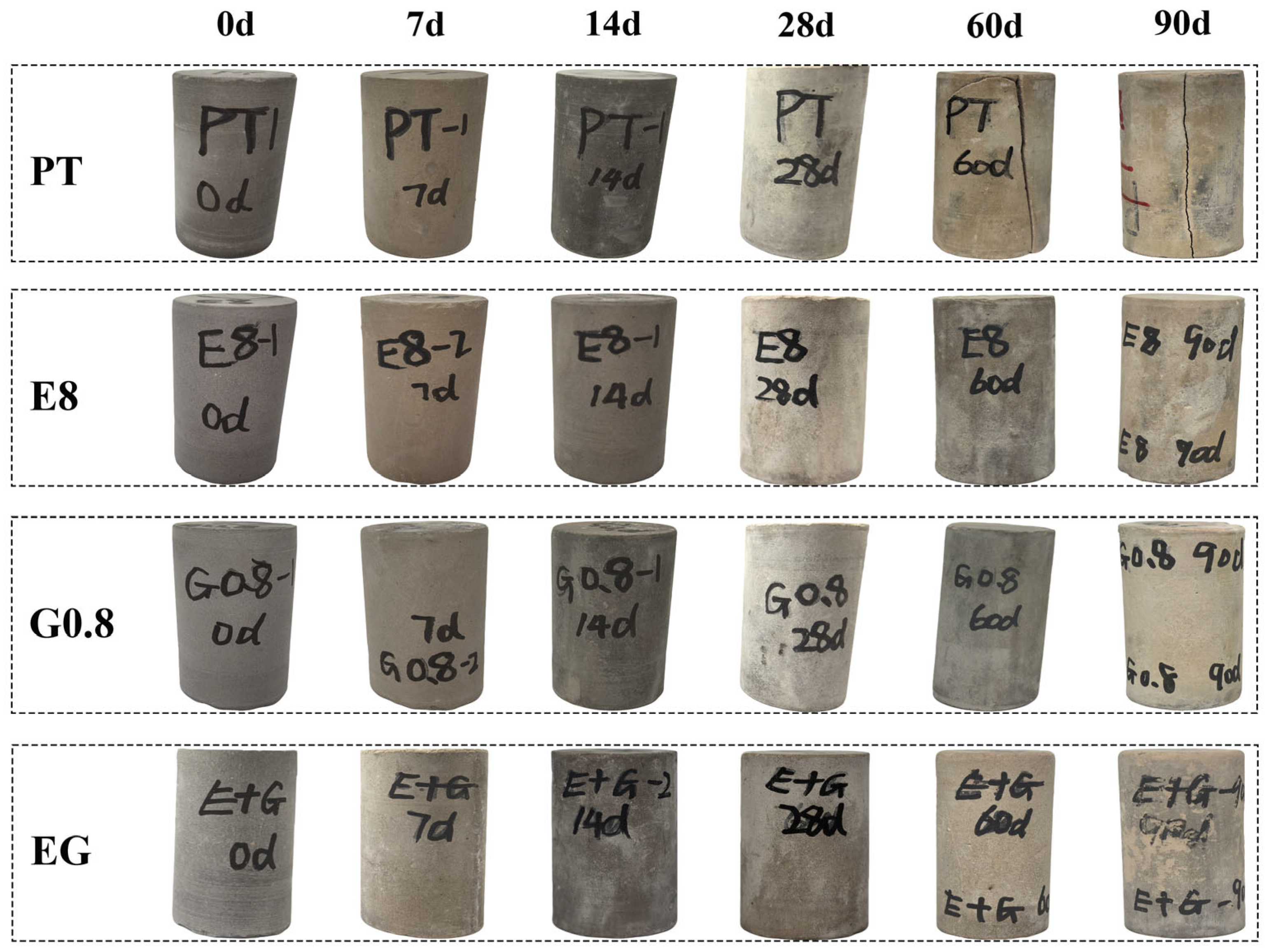
Figure 2 illustrates the macroscopic morphological evolution of four cement formulations under simulated harsh formation conditions. PT specimens demonstrated the most severe degradation. Initially intact (0 d), they exhibited progressive discoloration at 7~28 d, developed macroscopic cracks at 60~90 d, and ultimately lost structural integrity, indicating the poorest corrosion resistance. The E8 group maintained uniform density throughout, showing only mild discoloration without visible damage or cracking over the 90 d period. G0.8 displayed similar morphological stability to E8. The EG formulation developed gradual discoloration during 7~60 d, followed by surface mottling and spalling at 90 d.

3.2. Compressive Strength

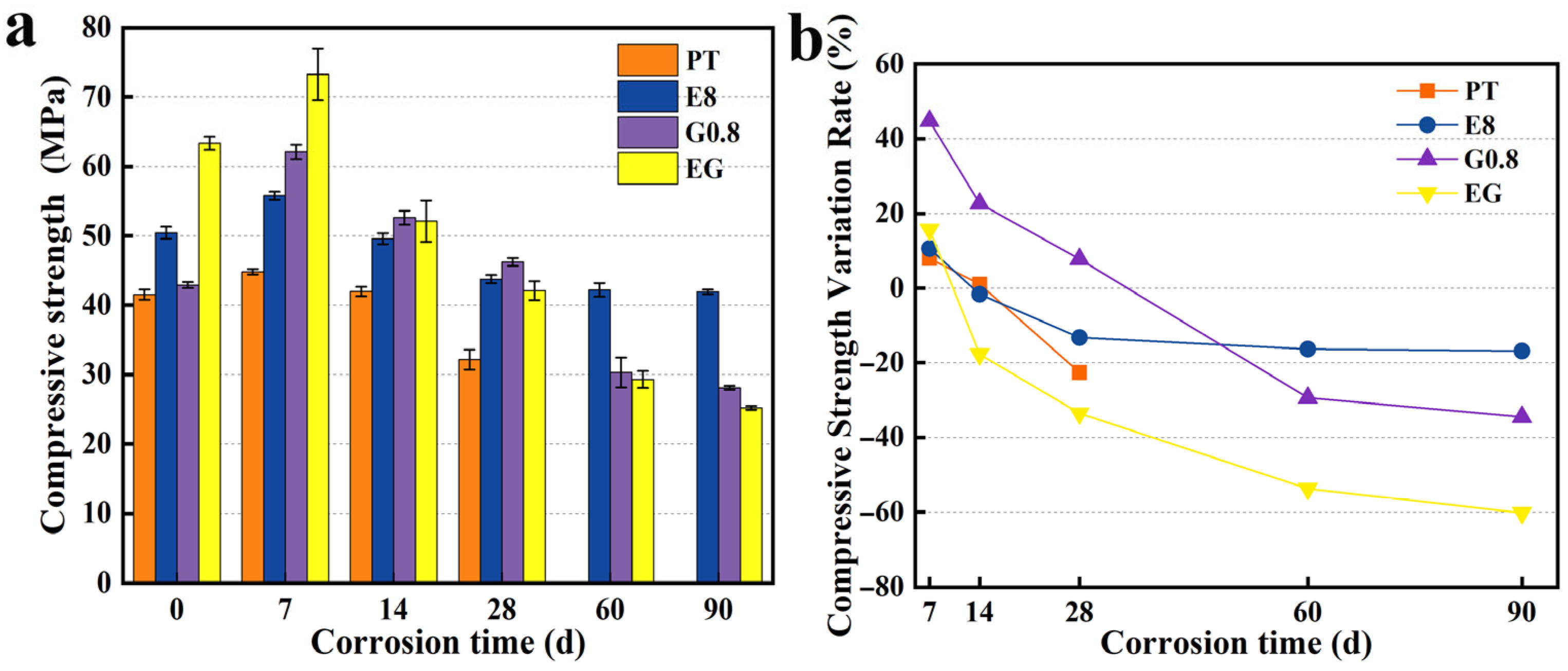
Under simulated harsh formation conditions, the compressive strength of the four cement groups exhibited complex nonlinear evolution over time (Figure 3a). All formulations underwent two dominant stages: short-term enhancement and long-term degradation. During early corrosion (0~7 d), all groups displayed strength increases. The EG group showed the maximum absolute strength gain, rising from 63 MPa to 73 MPa, while G0.8 exhibited the highest relative increase of 47.6% (42 MPa to 62 MPa). With prolonged exposure (7~90 d), distinct performance divergence emerged. The E8 group demonstrated superior long-term stability, stabilizing near 42 MPa after 28 d, with the strength change rate gradually decreasing from +10% (7 d) to −17% (90 d). In contrast, G0.8 showed a sharp decline from its early +45% increase to −35% at 90 d. The EG group experienced the most severe degradation, plummeting from +15% to −60% at 90 d, representing the poorest corrosion resistance among modified groups. The PT reference group failed completely by 60 d, confirming its structural instability. Notably, for all tested samples, the varying strength evolution patterns across different corrosion stages indicate no positive correlation between early-stage high strength and long-term corrosion resistance. Specifically, the EG and G0.8 groups with higher early strength growth rates show more significant strength degradation after 28 d, while the E8 group with moderate early strength growth has the best long-term strength retention.
In summary, the E8 system exhibits the highest compressive strength retention and the smallest degradation amplitude among all modified systems, which is significantly better than the PT blank group and the EG composite system. The G0.8 system is inferior to E8 but still superior to PT and EG in long-term strength stability.

3.3. Permeability

Permeability serves as a critical parameter for cement sheath integrity in CO2 injection–production wells, being directly influenced by internal pore structure and microcrack networks. This property reflects the penetration rate of corrosive media (CO2 and water) into the cement matrix. Typically, denser microstructures correspond to lower permeability and enhanced resistance to fluid ingress [24], thereby prolonging the service life of both cement and protected casing.
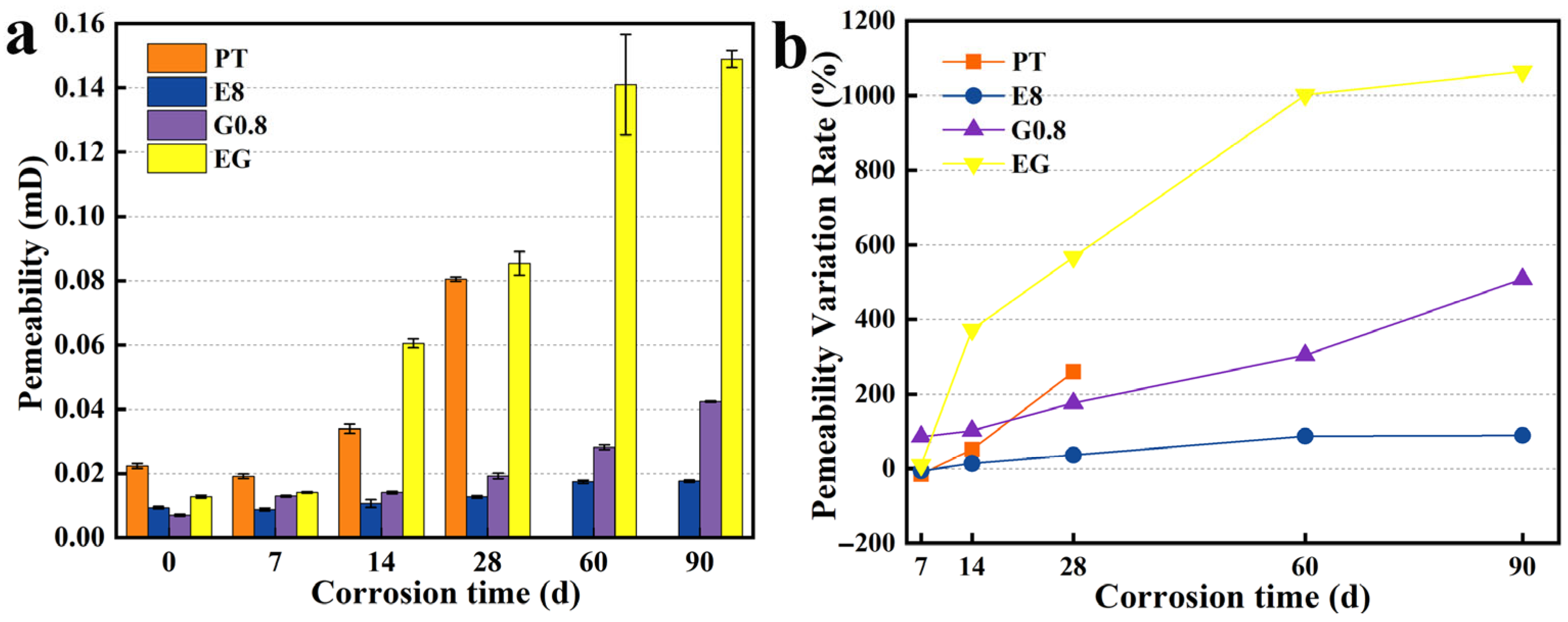
As illustrated in Figure 4a, during initial and short-term exposure (0~7 d), all groups maintained low permeability (≤0.025 mD), with E8 exhibiting optimal compactness (≤0.020 mD). After 7 d corrosion, permeability remained stable (≤0.020 mD), indicating effective pore-filling by early-stage carbonation products. Medium-term exposure (14~28 d) revealed distinct differentiation. EG and PT permeabilities increased markedly to 0.085 mD and 0.080 mD at 28 d, respectively, indicating microstructural deterioration. In contrast, E8 and G0.8 maintained low permeability (≤0.028 mD), demonstrating superior resistance. During long-term corrosion (60~90 d), inter-group differences maximized. EG permeability surged to 0.141 mD (60 d) and 0.149 mD (90 d), indicating severe structural damage. G0.8 permeability increased gradually, while E8 consistently maintained ≈0.020 mD with optimal integrity. PT specimens failed completely.
Permeability change rate analysis (Figure 4b) quantified degradation resistance. EG exhibited the most severe deterioration, rising from 372% (14 d) to 1064% (90 d). G0.8 increased steadily to 508% (90 d), outperforming PT and EG. PT showed rapid medium-term degradation (259% at 28 d), confirming inadequate CO2 resistance. E8 maintained the lowest rate (~89% at 90 d), demonstrating superior permeability resistance and structural stability throughout the corrosion cycle.
Overall, the E8 system shows the lowest permeability and permeability growth rate, presenting a substantial improvement over the PT blank group. Among the three modified systems, E8 performs optimally, followed by G0.8, while EG displays the most severe permeability deterioration.

3.4. Porosity

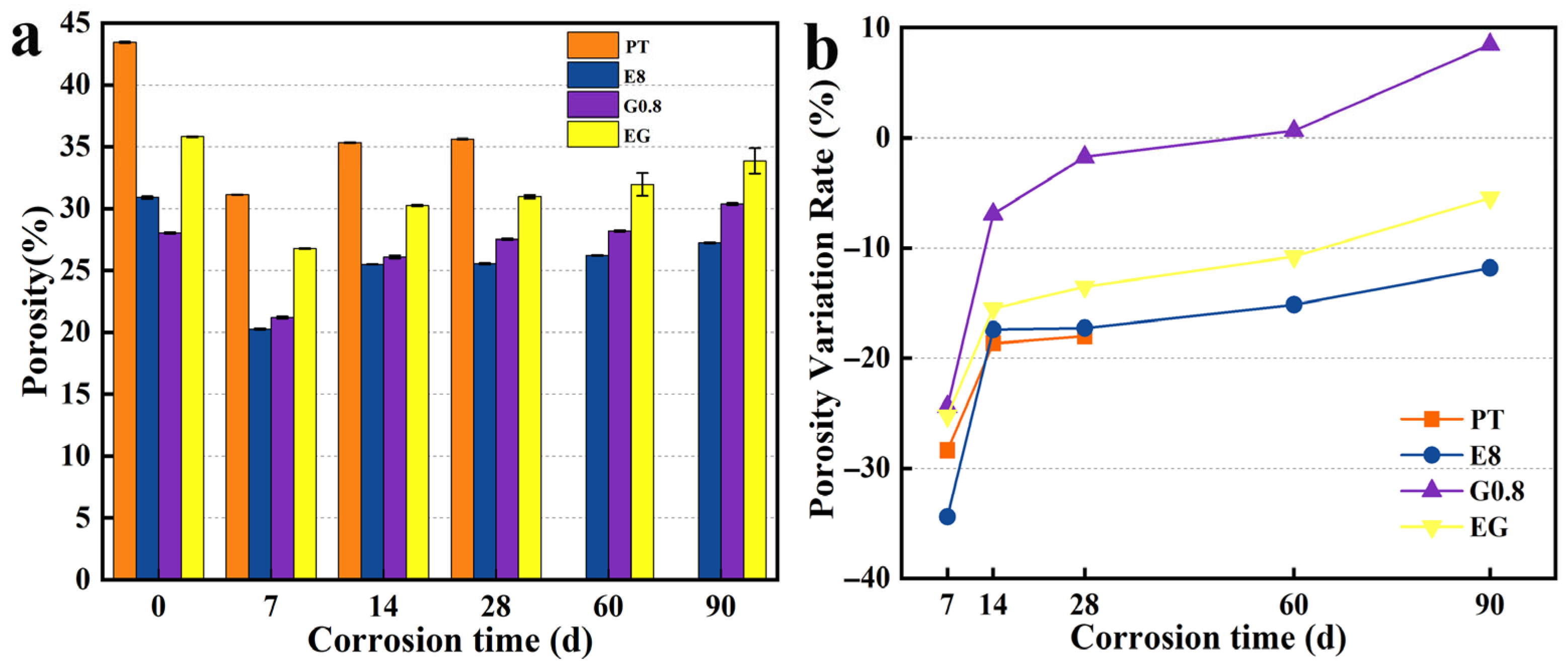
Porosity variation rate serves as a reliable predictor of long-term material durability, demonstrating strong correlation with both strength retention and permeability evolution. Specimens exhibited significant differences in initial pore structure (Figure 5a). PT specimens showed the highest initial porosity (43%), followed by EG (36%), while E8 and G0.8 demonstrated superior initial compactness with 31% and 28% porosity, respectively, reflecting distinct microstructural regulation capabilities of different modifiers.
All groups displayed porosity reduction during early corrosion (0~7 d), with E8 exhibiting the most pronounced decrease (31% to 20%). However, prolonged exposure revealed divergent evolution pathways. E8 maintained optimal stability, with porosity merely recovering to 27% at 90 d. G0.8 demonstrated a clear transition from early densification to later deterioration, while EG showed the most significant rebound to 34% at 90 d. PT specimens recovered to initial porosity by 28 d.
Correlation with Figure 3 reveals an inverse relationship between initial porosity and long-term strength retention. Leveraging stable pore structure, E8 maintained 84% initial strength after 90 d corrosion, whereas EG, exhibiting the most severe pore deterioration among modified groups, retained only 39.7% strength. Notably, absolute porosity alone doesn’t determine permeability; pore connectivity and morphology are equally crucial [22]. Despite EG’s final porosity (34%) being lower than PT’s initial value (43%), its significantly higher permeability indicates formation of interconnected pore networks.
In general, the E8 system maintains the most stable pore structure with the lowest final porosity, which is remarkably better than the PT blank group. The porosity evolution further confirms that E8 has the best densification effect, followed by G0.8, whereas EG shows obvious structural degradation.

3.5. Corrosion Degree

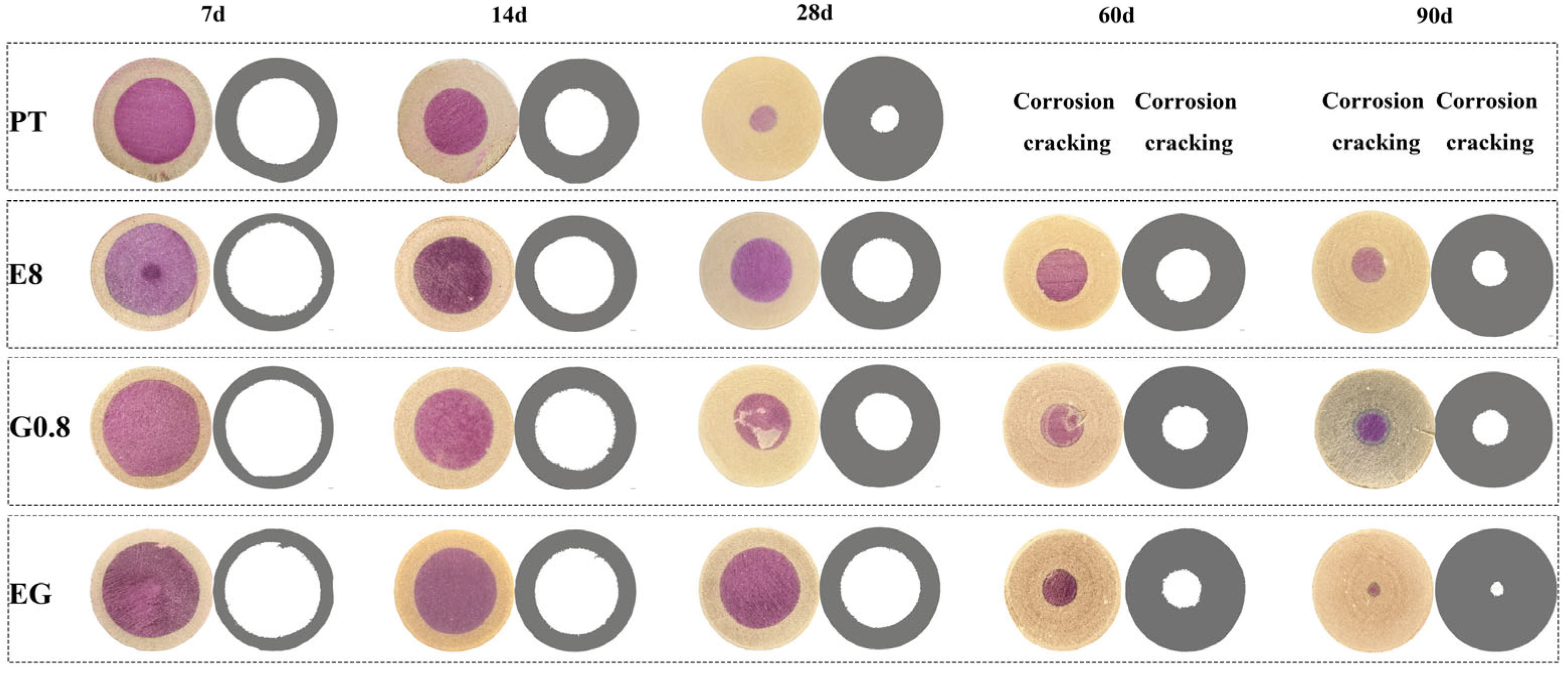
Systematic analysis of cross-sectional corrosion morphology (Figure 6) revealed distinct corrosion gradient characteristics across all specimens. The PT group demonstrated the most rapid corrosion penetration, with substantial reduction of the central uncorroded zone by 28 d and evident corrosion-induced cracking at 60~90 d. The E8 group maintained optimal corrosion resistance throughout exposure, exhibiting slow corrosion layer development, prolonged core zone preservation, and residual spot-like uncorroded areas without cracking at 90 d. The G0.8 group displayed intermediate corrosion progression between EG and E8.
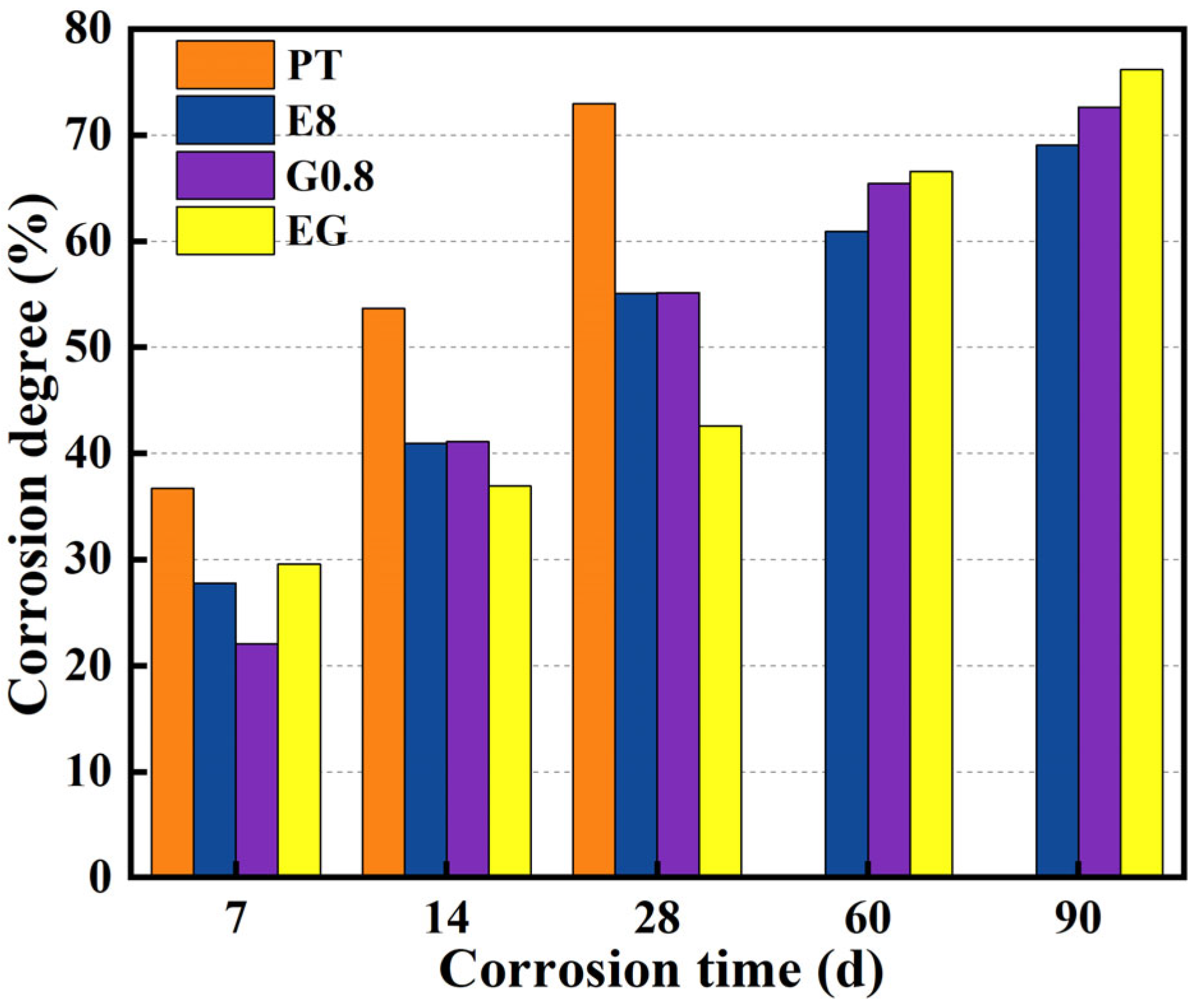
Quantitative corrosion degree data (Figure 7) further validated morphological observations. From 7 d to 28 d, PT specimens showed the most rapid corrosion advancement, reaching 73% at 28 d, significantly exceeding other groups. During this stage, E8 and G0.8 exhibited comparable corrosion degrees (approximately 55% at 28 d), indicating effective early-stage resistance. Notably, during later stages (60~90 d), the EG group experienced accelerated corrosion progression, reaching 76% at 90 d, the highest among modified groups, revealing inherent limitations in long-term durability.
A complex nonlinear relationship was observed between corrosion degree and strength retention. Despite attaining 69% corrosion degree at 90 d, the E8 group maintained 84% strength retention, attributable to its uniform corrosion mechanism that minimizes structural damage. Conversely, the EG group’s localized corrosion characteristics caused strength retention to plummet to 40% despite moderate early-stage corrosion. Similarly, permeability evolution correlated strongly with corrosion mechanism. The EG group’s maximum permeability (0.149 mD) and permeability change rate (1064%) at 90 d directly resulted from interconnected pore networks formed by structural corrosion. The E8 group’s uniform corrosion morphology prevented percolation pathway formation, maintaining minimal permeability despite a high corrosion degree. Thus, long-term performance is governed primarily by the corrosion mechanism rather than the absolute corrosion degree.
To sum up, the E8 system achieves the slowest corrosion propagation and the most uniform corrosion mode, demonstrating a significant advantage over the PT blank group. Among all modified systems, E8 exhibits the best corrosion resistance, while EG shows the worst long-term anti-carbonation performance.

3.6. XRD Analysis

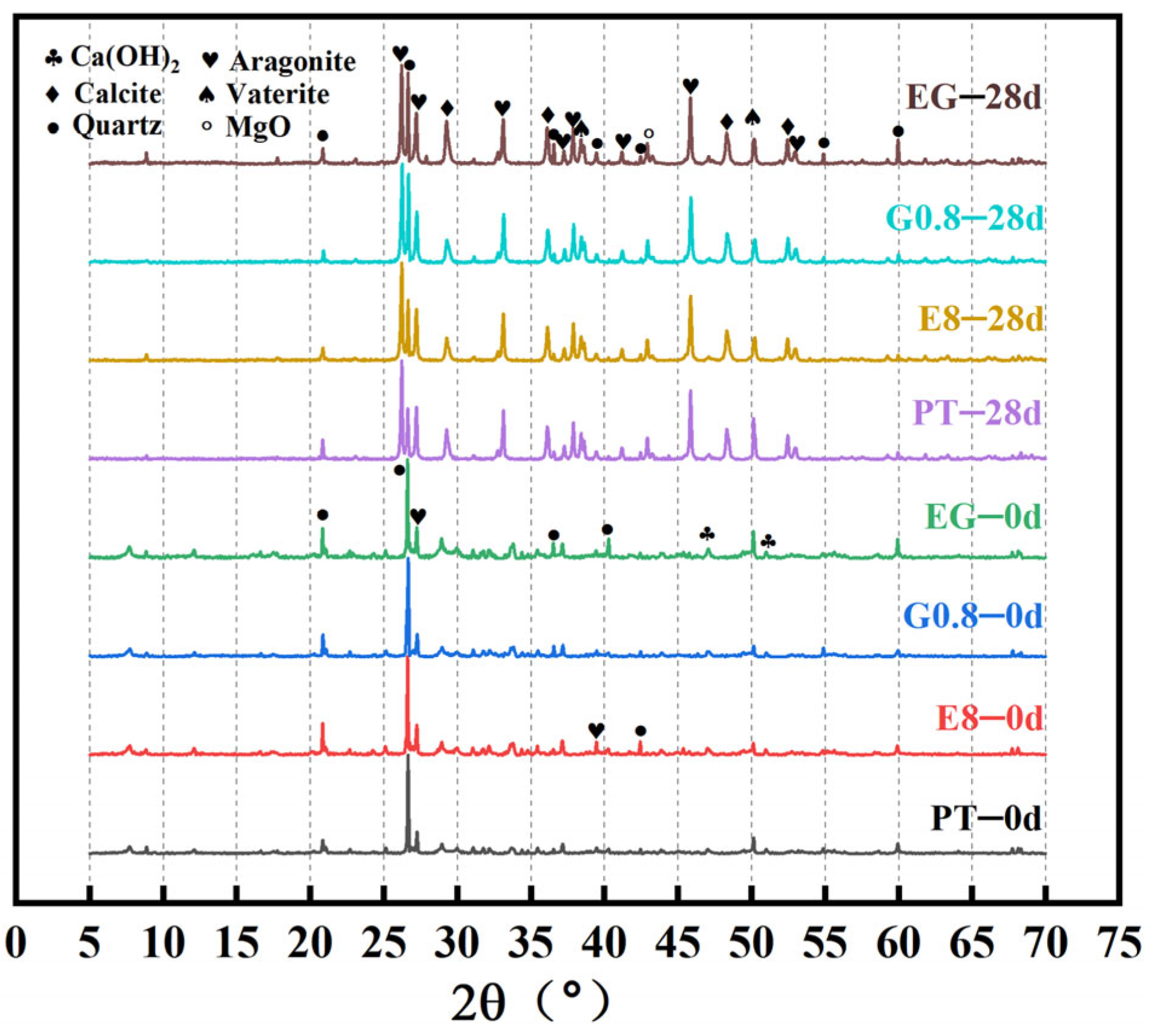
To elucidate the phase evolution law of different modified cement systems during carbonation, X-ray diffraction (XRD) technology was used to systematically characterize and analyze their phase compositions (Figure 8). All diffraction patterns were normalized with the strongest diffraction peak as the reference to ensure the comparability of phase characteristics among different samples. It is worth noting that characteristic peaks of quartz (SiO2, PDF#01-079-1910) were detected in the XRD patterns at all corrosion ages. This phase is silica fume, an additional component of the cement system, which is mainly used to improve the high-temperature resistance of cement paste, reduce the alkali content of the system, and further enhance its corrosion resistance.
In the uncorroded state (0 d), the main crystalline phase in all cement specimens was portlandite (Ca(OH)2, PDF#00-044-1481). After curing at 130 °C, accompanied by the pozzolanic reaction of silica fume, only weak Ca(OH)2 diffraction peaks were detected at 2θ = 47.1° and 50.8° in all modified systems, indicating that the pozzolanic reaction of silica fume effectively consumed Ca(OH)2 in the system. In addition, the diffraction peaks of aragonite (CaCO3, PDF#00-041-1475) appearing in the XRD patterns before corrosion were mainly attributed to the early mild carbonation reaction between trace CO2 in the air and the cement matrix. As the main hydration product of cement, calcium silicate hydrate (C–S–H, PDF#00-034-002) gel exists in an amorphous state, so it does not show sharp diffraction peaks in the XRD patterns but presents a typical diffuse “hump peak” in the range of 2θ = 28°~30°.
After 28 d of CO2 corrosion, distinct characteristic diffraction peaks of calcite (CaCO3, PDF#01-072-1650) appeared at 2θ = 29.4° and 48.5° in all specimens, while the Ca(OH)2 diffraction peak at 2θ = 50.8° disappeared completely, indicating that sufficient carbonation reaction of Ca(OH)2 in the matrix had occurred. Among them, the intensity of the calcite diffraction peak in the EG group was significantly higher than that in the other groups, suggesting a higher degree of Ca(OH)2 carbonation in this group. At the same time, multiple characteristic diffraction peaks of aragonite (CaCO3, PDF#00-041-1475) were observed in the range of 2θ = 26°~53° in all systems, and characteristic diffraction peaks of vaterite (CaCO3, PDF#01-073-1449) were detected at 2θ = 32.7° and 50.0°; the intensities of aragonite and vaterite diffraction peaks in the PT group were higher than those in the other modified groups, indicating that the carbonation decomposition of amorphous C–S–H gel in this group was more intense.
Previous studies have shown [25,26] that calcite is the direct product of the carbonation reaction of Ca(OH)2, while aragonite and vaterite are mainly derived from the carbonation decomposition of amorphous C–S–H gel. The above phase evolution characteristics clearly indicate that during CO2 corrosion, both Ca(OH)2 and C–S–H gel in the cement matrix underwent carbonation reactions, and the cement system in the PT group suffered the most serious carbonation damage.

3.7. Thermogravimetric Analysis

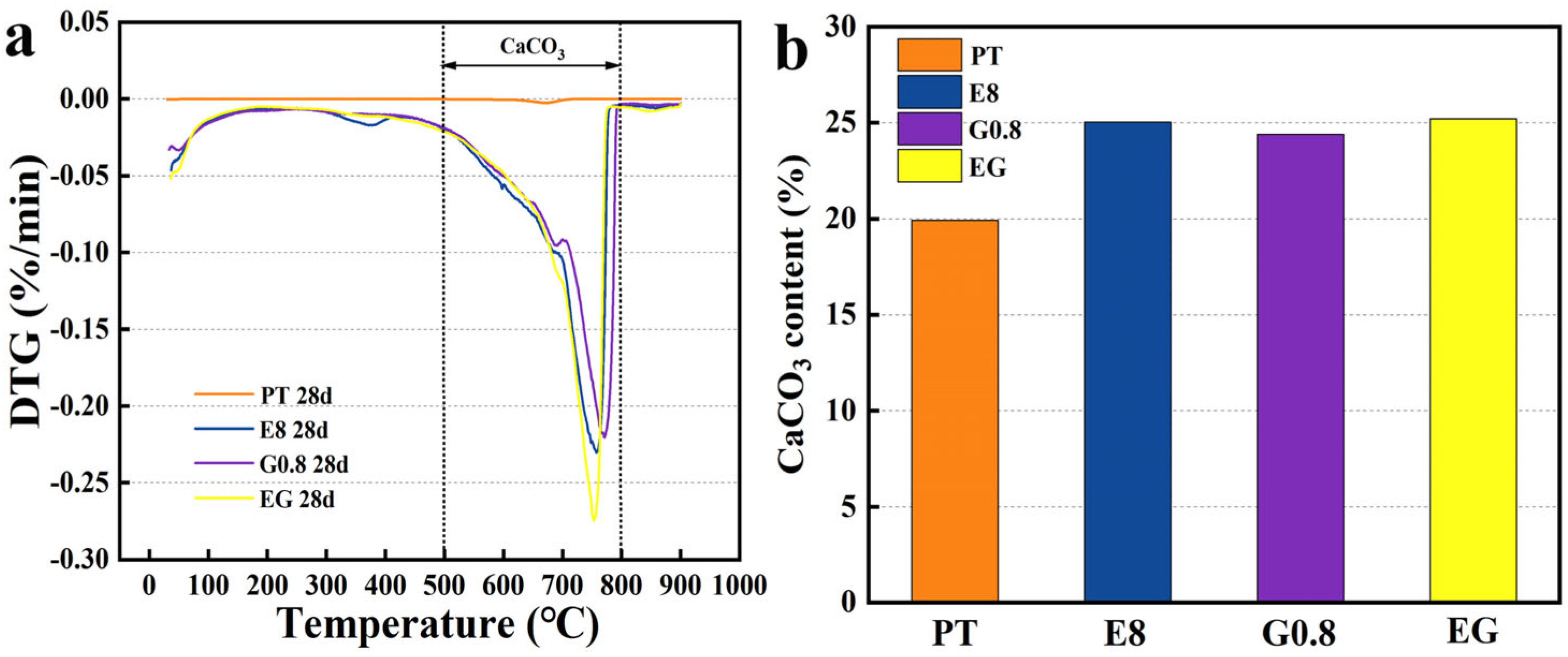
Thermogravimetric analysis of 28 d corroded specimens elucidated modifier-specific regulation of carbonation processes. The EG group exhibited the most intense mass loss peak in the CaCO3 decomposition range per DTG analysis (Figure 9a), indicating maximum decomposition rate, with quantitative verification showing the highest CaCO3 content (25.21%). This correlates with the system’s high pore connectivity facilitating rapid corrosive penetration, yielding severe carbonation and the minimum strength retention (39.7%). The E8 group demonstrated moderately lower CaCO3 content and decomposition rate, reflecting waterborne epoxy’s unique barrier mechanism. Continuous polymer films physically inhibit corrosive transport [21], confining carbonation to localized zones. The resulting CaCO3 products preferentially fill pores rather than form connected networks, preserving structural integrity and maintaining high strength retention after 90-day exposure. G0.8 displayed intermediate carbonation behavior with moderate CaCO3 content, where graphene’s two-dimensional nanostructure provides limited barrier effects by prolonging diffusion paths [27], yet yields suboptimal long-term performance. The PT control group showed minimal CaCO3 content (19.92%), attributable to its rapid structural deterioration: initial high porosity enables unrestricted corrosive access, causing accelerated matrix damage and subsequent leaching of carbonation products.

4. Discussion

4.1. XCT Analysis

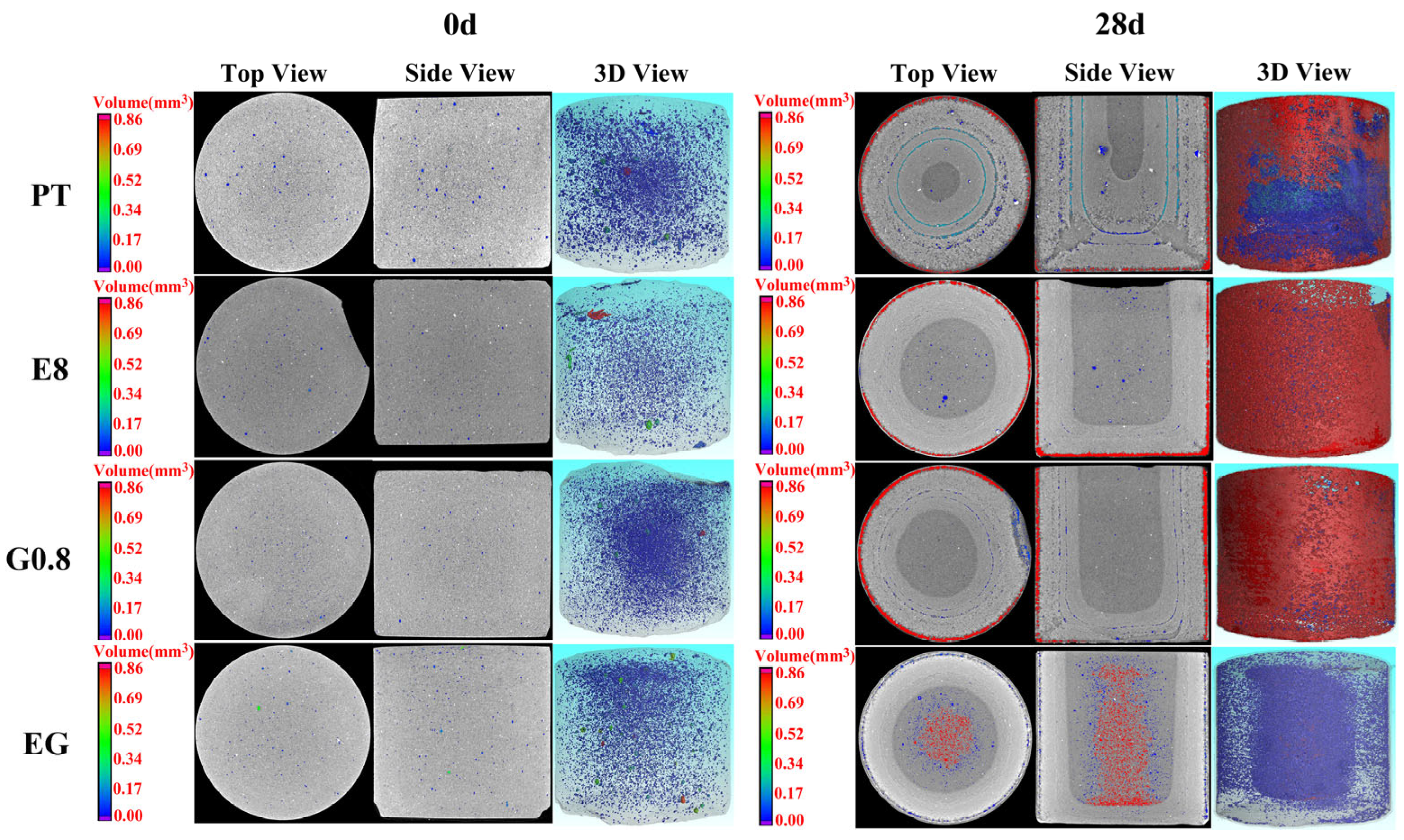
As established in previous studies [4,12,13,28], long-term CO2 reaction with cement produces four characteristic corrosion zones. XCT 2D images (Figure 10) clearly reveal this stratified architecture, comprising from exterior to interior: (1) a CaCO3 leaching zone exhibiting high grayscale values, corresponding to high-porosity regions with dissolved carbonates; (2) a dense CaCO3 filling zone showing reduced grayscale values and substantially decreased porosity; (3) a Ca(OH)2 depletion zone formed through decalcification of hydration products; and (4) an unreacted core zone preserving the initial matrix structure. PT and G0.8 specimens displayed distinct zonal separation, particularly pronounced in PT samples. All groups demonstrated porosity reduction in carbonated dense layers; EG’s uncorroded area developed interconnected pore networks, consistent with porosity measurements.
During early corrosion (0~7 d), CO2 reacts with cement hydration products to form CaCO3 and amorphous silica gel, which fill internal pores and densify the microstructure, leading to increased compressive strength in all groups. With prolonged corrosion (7~90 d), excessive carbonation decomposes C–S–H gel, destroys the cementitious skeleton, and induces microcrack propagation and pore structure deterioration, resulting in continuous compressive strength reduction.
XCT defect quantification (Table 5) revealed modifier-dependent initial matrix density variations. PT specimens exhibited 0.50% defect volume ratio, indicating inherent microstructural porosity. E8 achieved minimal defects (0.24%) through epoxy-mediated formation of dense organic–inorganic composites. G0.8 showed 0.33% defect volume via graphene’s barrier mechanism, while EG’s 0.37% indicated compromised microstructural optimization. Post 28 d corrosion, all groups demonstrated substantially elevated defect ratios with distinct progression patterns. PT’s defect volume surged to 5.21%, confirming rapid structural collapse. E8 increased moderately to 4.20%, demonstrating controlled corrosion inhibition. G0.8 reached 4.64%, indicating barrier failure. Crucially, EG’s lower defect volume (3.42%), coupled with its maximum permeability, suggests defect morphology dominated by interconnected pores/microcracks enabling rapid fluid transmission.

4.2. SEM Analysis

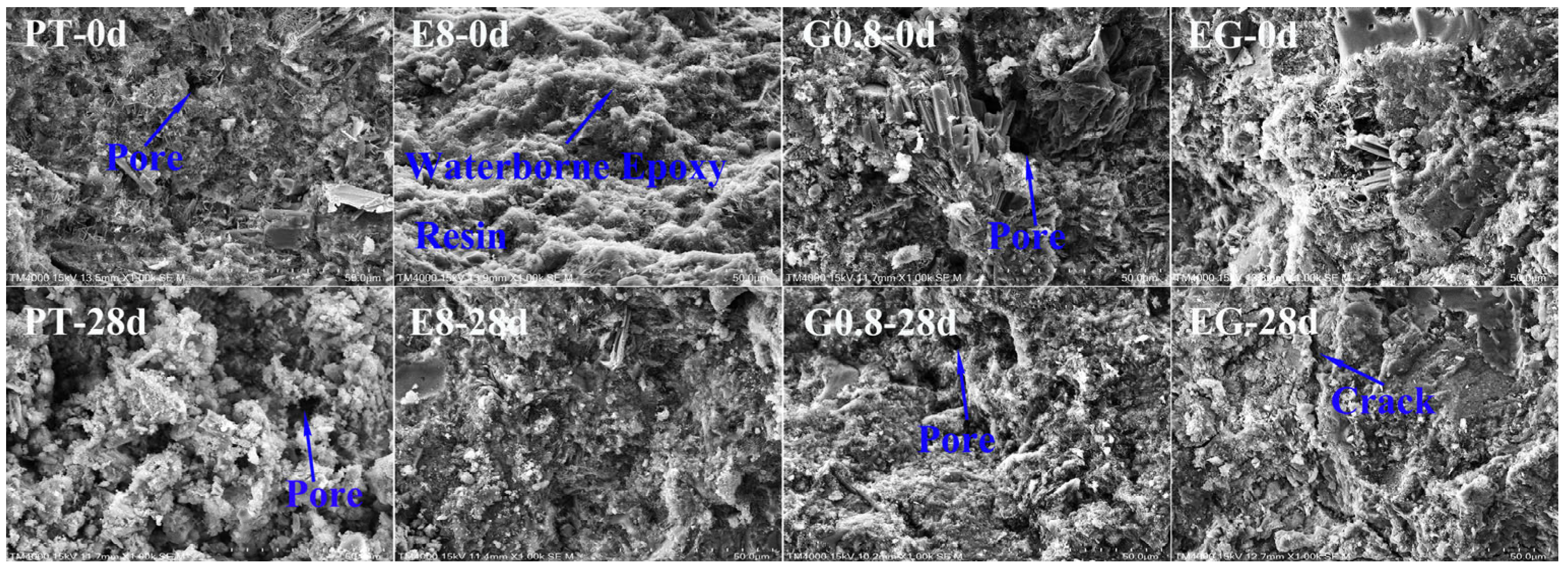
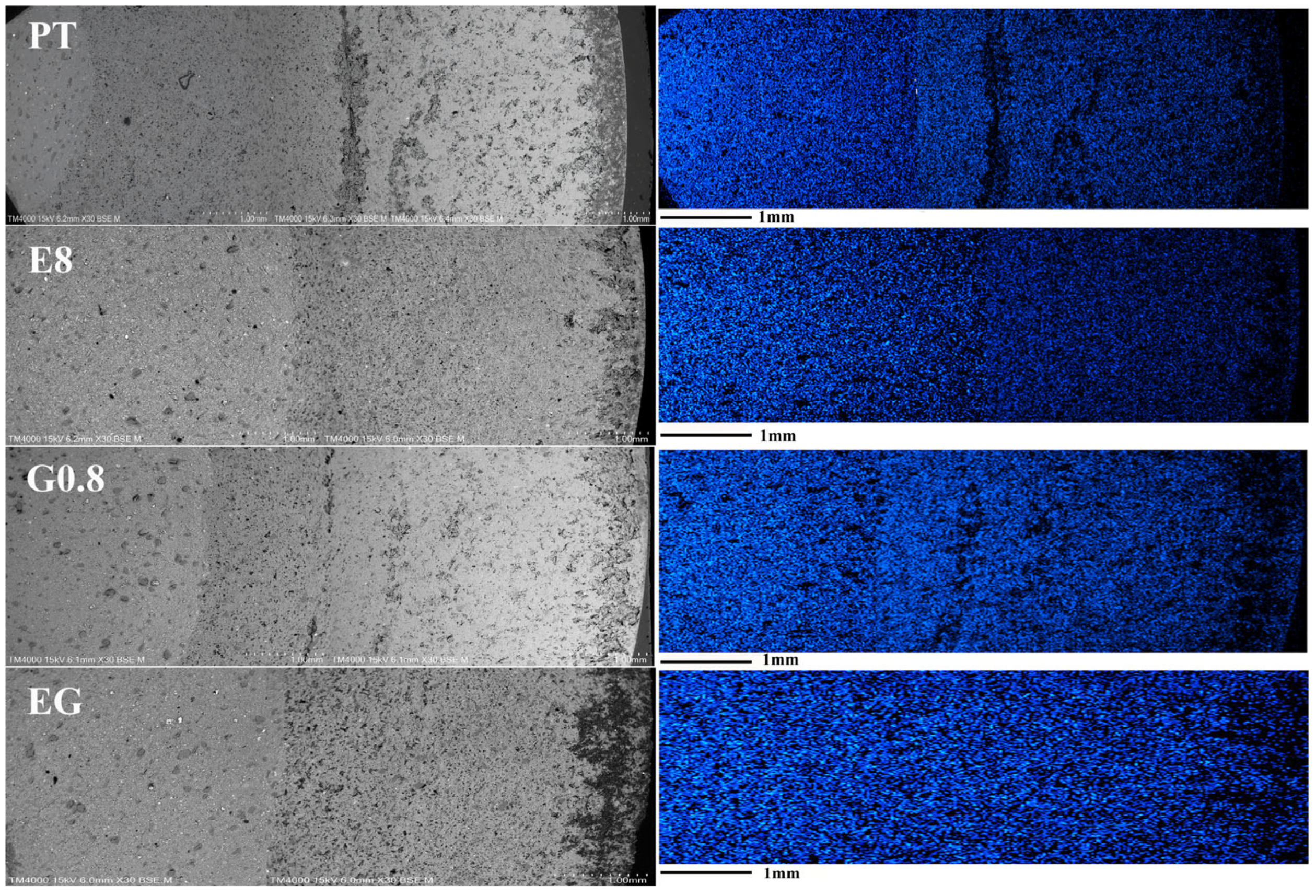
SEM analysis revealed distinct microstructural evolution across cement formulations. PT specimens transitioned from laminated to granular C–S–H morphology, maintaining porous architecture (Figure 11). BSE imaging (Figure 12) demonstrated clear corrosion stratification, with Ca EDS mapping confirming severe leaching and decalcification. These observations validate rapid structural deterioration in unmodified cement, where hydration product decalcification induces porosity escalation, fully consistent with the XCT-documented defect volume increase from 0.50% to 5.21%, reflecting the “structural degradation–macrostructural collapse” corrosion pathway.
The E8 specimens exhibited a dense and homogeneous microstructure characterized by an organic film coating, with no visible pores or cracks observed. Backscattered electron (BSE) images revealed blurred interlayer boundaries, indicating a gradual progression of corrosion. The Ca elemental mapping demonstrated optimal density and uniformity. These results confirm that the continuous organic barrier effectively retards the penetration of corrosive agents, moderates the kinetics of carbonation, and preserves the integrity of the matrix. This microstructural evidence directly corresponds to its superior macroscopic performance.
G0.8 matrices contained numerous micropores, with BSE revealing incipient layer separation and localized Ca depletion. This evidences the eventual failure of graphene’s physical barrier mechanism, where nanosheet–matrix interfaces become preferential corrosion pathways. EG specimens displayed extensive interconnected cracking networks. Though Ca mapping suggested apparent density, these permeable crack networks provide rapid transport channels, explaining the paradoxical combination of moderate defect volume with maximum permeability and minimum strength retention—revealing the microstructural essence of composite system synergistic failure.

4.3. Carbonation Resistance Mechanism of Different Modified Materials

  • The early-effectiveness and late-failure behavior of the graphene-modified system originates from its physically dominated reinforcement mechanism and interfacial instability. Initially, graphene sheets reduce total porosity by filling nano-pores within C–S–H gels [29]. Well-dispersed lamellae create physical barriers, extending penetration paths through tortuous flow, thereby providing effective early-stage impermeability. The eventual failure stems from weak interfacial transition zones between graphene and hydration products [30]. Under prolonged CO2-induced acidic and stress conditions, corrosive media preferentially attack these weak interfaces. Once debonding occurs, the exfoliated graphene sheets transform into interconnected nano-channels, causing rapid permeability increase and complete barrier failure.
  • The inferior performance of the composite system stems not from individual component failure, but from a negative synergistic effect between them. It is hypothesized that the inferior performance of the composite system may be related to the thermodynamic incompatibility between waterborne epoxy resin and graphene. The hydrophobic graphene surface resists stable, uniform integration with the aqueous epoxy system. Within the cement’s porous medium, these incompatible materials undergo competitive distribution and localized phase separation. Graphene lamellae can disrupt continuous epoxy film formation, while epoxy agglomeration promotes graphene accumulation. This behavior induces micro-stresses at phase interfaces and generates inherent interconnected pores and microcracks [31]. These pre-existing connected defects create preferential pathways for corrosive media to penetrate deeply. Consequently, corrosion progresses not gradually from the surface, but directly into the interior through these channels. Rapid fluid penetration along these pathways disintegrates the cementitious skeleton, causing accelerated strength loss. Thus, although the apparent defect volume ratio may be low, defect connectivity proves substantially more detrimental than uniformly distributed closed pores.
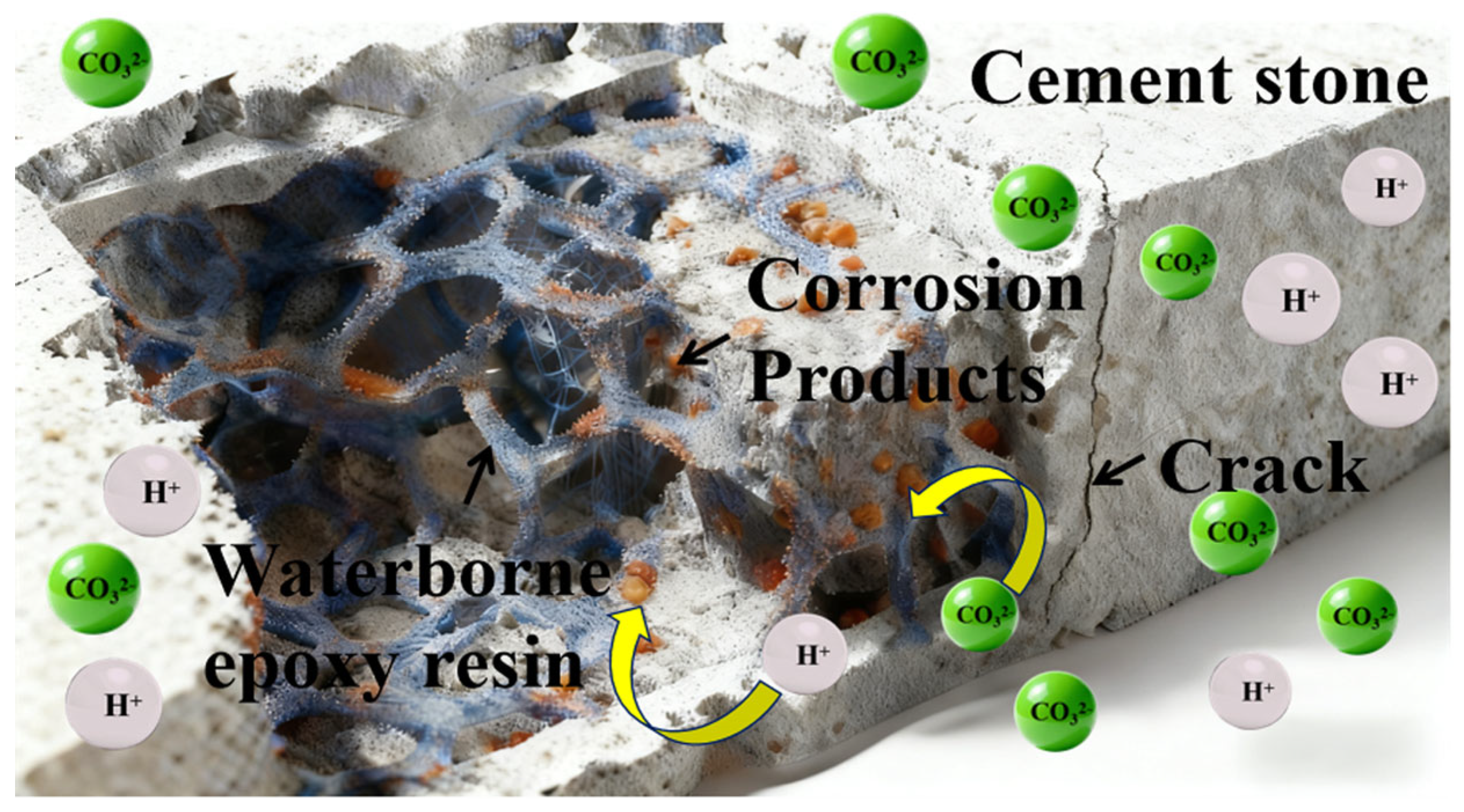
  • The superior long-term performance of waterborne epoxy resin stems from its formation of a continuous, stable, and ductile organic phase within the cement matrix, enabling regulated corrosion progression. During cement hydration, the resin forms a film and three-dimensional network structure, creating a continuous phase [23] rather than dispersed particles (Figure 13). This continuous phase establishes an effective physico-chemical diffusion barrier, significantly retarding the transport kinetics of CO2 and H2O. Unlike the rapid penetration in PT specimens or localized corrosion in EG, the epoxy barrier enables uniform, gradual advancement of the corrosion front. In this mode, even when surface carbonation occurs, the internal unreacted core maintains structural integrity and load-bearing capacity. The polymer confines corrosion products in situ, facilitating pore-filling rather than dissolution loss. This mechanism preserves high residual strength despite mass loss (high corrosion degree). Additionally, the polymeric film enhances cement toughness, suppressing microcrack initiation and propagation, thereby maintaining structural integrity in corrosive environments.

5. Conclusions

This study systematically evaluates the long-term carbonation resistance of four cement formulations under simulated CCUS-EOR conditions.
  • Conventional Class G oil well cement (PT) fails under prolonged CO2 exposure, exhibiting 0.080 mD permeability and 73% corrosion degree at 28 d, with complete structural failure by 60 d.
  • Waterborne-epoxy-modified cement (E8) demonstrates optimal durability, retaining 84% compressive strength after 90 d. The continuous polymeric film forms a dense physico-chemical barrier, retards CO2 penetration, maintains a uniform corrosion mode, stabilizes pore structure, and thus achieves excellent long-term performance.
  • Graphene-modified cement (G0.8) shows transitional behavior. Early-stage strength increases by 47.6% via nanoscale barrier effects, but prolonged exposure induces interfacial debonding between sp2-carbon layers and the cement matrix, forming permeable nano-channels and resulting in a 508% permeability increase at 90 d.
  • Waterborne epoxy–graphene-composite modified system (EG) exhibits negative synergy. It is speculated that thermodynamic incompatibility leads to phase separation and interconnected microcracks, providing fast CO2 penetration channels, leading to serious structural damage despite moderate defect volume. It yields 0.149 mD permeability and merely 39.7% strength retention at 90 d despite moderate defect volume.
  • The long-term performance of modified cement is dominated by microstructural integrity and corrosion mode rather than early strength or single corrosion index. Waterborne epoxy modification effectively balances pore structure, mechanical stability, and corrosion resistance, which is the optimal scheme for high-temperature CCUS-EOR wellbore cementing.
  • In engineering practice, waterborne epoxy-modified cement is recommended for CCUS-EOR wellbore cementing in high-temperature CO2 environments. The composite modification of graphene and waterborne epoxy is not recommended due to negative synergy, and the dosage optimization of single modifiers should be focused on in subsequent research.

Author Contributions

Conceptualization, Y.C. and S.Z.; Methodology, Y.C. and R.L.; Validation, Y.C., R.L., and L.L.; Formal analysis, Q.T.; Investigation, Y.C.; Resources, S.Z. and R.L.; Data curation, Y.C.; Writing—original draft, Y.C.; Writing—review & editing, Y.C. and R.L.; Supervision, S.Z. and Q.T.; Project administration, Y.C., S.Z., and Q.T.; Funding acquisition, S.Z. and R.L. All authors have read and agreed to the published version of the manuscript.

Funding

This research was funded by the Key Research and Development Program of Xinjiang Uygur Autonomous Region scheme (NO. 2024B1012-3), Sinopec Corporate Project (NO. GWHT20220042236).

Data Availability Statement

The original contributions presented in this study are included in the article. Further inquiries can be directed to the corresponding authors.

Conflicts of Interest

All the authors were employed by SINOPEC Research Institute of Petroleum Engineering Co., Ltd. They declare that the research was conducted in the absence of any commercial or financial relationships that could be construed as a potential conflict of interest. The authors declare that this study received funding from Sinopec Corporate Project. The funder was not involved in the study design, collection, analysis, interpretation of data, the writing of this article, or the decision to submit it for publication.

References

  1. Jabbar, M.Y.; McCoy, S.T.; Masnadi, M.S.; Bergerson, J.A. Toward consistent evaluation of CO2-EOR: A meta-analysis of life cycle assessments. Int. J. Greenh. Gas Control 2025, 146, 104430. [Google Scholar] [CrossRef]
  2. Bois, A.-P.; Garnier, A.; Rodot, F.; Saint-Marc, J.; Aimard, N. How To Prevent Loss of Zonal Isolation Through a Comprehensive Analysis of Microannulus Formation. SPE Drill. Complet. 2011, 26, 13–31. [Google Scholar] [CrossRef]
  3. Sminchak, J.R.; Moody, M.; Gupta, N.; Larsen, G. Wellbore integrity factors for CO2 storage in oil and gas producing areas in the Midwest United States. Model. Anal. 2016, 7, 817–827. [Google Scholar] [CrossRef]
  4. Kutchko, B.G.; Strazisar, B.R.; Dzombak, D.A.; Lowry, G.V.; Thaulow, N. Degradation of Well Cement by CO2 under Geologic Sequestration Conditions. Environ. Sci. Technol. 2007, 41, 4787–4792. [Google Scholar] [CrossRef] [PubMed]
  5. Li, Q.; Lim, Y.M.; Flores, K.M.; Kranjc, K.; Jun, Y.-S. Chemical Reactions of Portland Cement with Aqueous CO2 and Their Impacts on Cement’s Mechanical Properties under Geologic CO2 Sequestration Conditions. Environ. Sci. Technol. 2015, 49, 6335–6343. [Google Scholar] [CrossRef]
  6. Wolterbeek, T.K.; Peach, C.J.; Spiers, C.J. Reaction and transport in wellbore interfaces under CO2 storage conditions: Experiments simulating debonded cement–casing interfaces. Int. J. Greenh. Gas Control 2013, 19, 519–529. [Google Scholar] [CrossRef]
  7. Gan, M.; Zhang, L.; Wang, Y.; Mei, K.; Fu, X.; Cheng, X.; Bai, M.; Liu, H.; Li, X. 3D micro-structural changes of an artificial flow channel in wellbore cement under geologic CO2 storage conditions: Combined effect of effective stress and flow. Constr. Build. Mater. 2022, 325, 126761. [Google Scholar] [CrossRef]
  8. Omosebi, O.; Maheshwari, H.; Ahmed, R.; Shah, S.; Osisanya, S.; Hassani, S.; DeBruijn, G.; Cornell, W.; Simon, D. Degradation of well cement in HPHT acidic environment: Effects of CO2 concentration and pressure. Cem. Concr. Compos. 2016, 74, 54–70. [Google Scholar] [CrossRef]
  9. Fakher, S.; El-Sayed, A.; Sameh, L.; Abdeltawab, B. Evaluating a Novel Fly Ash Resin-Reinforced Cement’s Interactions under Acidic, Basic, High-Salinity, and High-Temperature Conditions. Polymers 2023, 15, 3404. [Google Scholar] [CrossRef]
  10. Aminu, M.D.; Nabavi, S.A.; Rochelle, C.A.; Manovic, V. A review of developments in carbon dioxide storage. Appl. Energy 2017, 208, 1389–1419. [Google Scholar] [CrossRef]
  11. Zhang, B.; Zou, C.; Peng, Z.; Zheng, Y.; Zhang, J. Study on the Preparation and Anti-CO2 Corrosion Performance of Soap-Free Latex for Oil Well Cement. ACS Omega 2020, 5, 23028–23038. [Google Scholar] [CrossRef] [PubMed]
  12. Mason, H.E.; Du Frane, W.L.; Walsh, S.D.; Dai, Z.; Charnvanichborikarn, S.; Carroll, S.A. Chemical and Mechanical Properties of Wellbore Cement Altered by CO2-Rich Brine Using a Multianalytical Approach. Environ. Sci. Technol. 2013, 47, 1745–1752. [Google Scholar] [CrossRef] [PubMed]
  13. Deremble, L.; Loizzo, M.; Huet, B.; Lecampion, B.; Quesada, D. Stability of a leakage pathway in a cemented annulus. Energy Procedia 2011, 2, 508. [Google Scholar] [CrossRef]
  14. Mammadov, O.; Mahmoud, A.A.; Al-Yaseri, A.; Al Ramadan, M. A Comprehensive Review of Cement Degradation Analysis under Downhole Conditions: CCS/CCUS/CO2-EOR Applications. ACS Omega 2025, 10, 28515–28533. [Google Scholar] [CrossRef]
  15. Yuan, B.; Wang, Y.; Yang, Y.; Xie, Y.; Li, Y. Wellbore sealing integrity of nanosilica-latex modified cement in natural gas reservoirs with high H2S contents. Constr. Build. Mater. 2018, 192, 621–632. [Google Scholar] [CrossRef]
  16. Zhang, Z.; Zhang, F.; Wu, C.; Chen, Y. Experimental Study on the Performance of Sustainable Epoxy Resin-Modified Concrete Under Coupled Salt Corrosion and Freeze–Thaw Cycles. Sustainability 2025, 17, 6186. [Google Scholar] [CrossRef]
  17. Bai, M.; Zhang, Z.; Fu, X. A review on well integrity issues for CO2 geological storage and enhanced gas recovery. Renew. Sustain. Energy Rev. 2016, 59, 920–926. [Google Scholar] [CrossRef]
  18. Wang, B.; Jiang, R.; Wu, Z. Investigation of the Mechanical Properties and Microstructure of Graphene Nanoplatelet-Cement Composite. Nanomaterials 2016, 6, 200. [Google Scholar] [CrossRef]
  19. Zhang, J.; Huang, H.; Ma, J.; Huang, L.; Huang, L.; Chen, X.; Zeng, H.; Ma, S. Preparation and Properties of Corrosion-Resistant Coatings From Waterborne Polyurethane Modified Epoxy Emulsion. Front. Mater. 2019, 6, 119–123. [Google Scholar] [CrossRef]
  20. David, R.; Raja, V.; Singh, S.; Gore, P. Development of anti-corrosive paint with improved toughness using carboxyl terminated modified epoxy resin. Prog. Org. Coat. 2018, 120, 58–70. [Google Scholar] [CrossRef]
  21. Wang, F.; Zhang, Y.; Song, X.; Liu, L.; Sun, X.; Sun, P. Influence of Self-Emulsifying Waterborne Epoxy Resin with Novel Hardeners on Pore Structure and Permeability of Cement-Based Materials. Buildings 2025, 15, 997. [Google Scholar] [CrossRef]
  22. Zhu, J.; Zhang, R.; Zhang, Y.; He, F. The fractal characteristics of pore size distribution in cement-based materials and its effect on gas permeability. Sci. Rep. 2019, 9, 17197. [Google Scholar] [CrossRef] [PubMed]
  23. Han, X.; Xu, F.; Ge, J.; Qian, W.; He, Y.; Meng, X.; Zhu, P. Modification study of underwater epoxy-cement mortar with polyacrylate latex: Engineering performance optimization and microstructure analysis. Constr. Build. Mater. 2025, 462, 139966. [Google Scholar] [CrossRef]
  24. Qian, R.; Liu, C.; Liu, G.; Liu, Z.; Pang, B.; She, W.; Zhang, Y. Effects of various inlet-gas mediums on apparent permeability of concrete under steady-state flow: Comparison between carbon-dioxide and oxygen. Cem. Concr. Compos. 2021, 119, 103995. [Google Scholar] [CrossRef]
  25. Li, H.; Zhao, G.; Zhang, H. Recent Progress of Cement-Based Materials Modified by Graphene and Its Derivatives. Materials 2023, 16, 3783. [Google Scholar] [CrossRef]
  26. Thiery, M.; Villain, G.; Dangla, P.; Platret, G. Investigation of the carbonation front shape on cementitious materials: Effects of the chemical kinetics. Cem. Concr. Res. 2007, 37, 1047–1058. [Google Scholar] [CrossRef]
  27. Liu, B.; Kang, W.; Lian, W.; Xing, F.; Sun, H.; Ma, H. Multi-Scale Modeling of Transport Properties in Cementitious Materials with GO Admixture. Nanomaterials 2025, 15, 222. [Google Scholar] [CrossRef]
  28. Wilson, J.C.; Benbow, S.J.; Metcalfe, R.; Savage, D.; Walker, C.S.; Chittenden, N. Fully Coupled Modeling of Long Term Cement Well Seal Stability in the Presence of CO2. Energy Procedia 2011, 2, 493. [Google Scholar] [CrossRef]
  29. Miao, X.; Xing, Y.; Zheng, H.; Liu, Q.; Hu, M.; Guo, J. Effects of Hybrid Graphene Oxide-Nanosilica on Calcium Silicate Hydrate in the Simulation Environment and Cement. ACS Omega 2023, 8, 22975–22983. [Google Scholar] [CrossRef]
  30. Chen, Y.; Du, S. Improving the interfacial transition zone of concrete: A targeted approach utilizing graphene oxide. Constr. Build. Mater. 2025, 466, 140323. [Google Scholar] [CrossRef]
  31. Zhao, F.; Zhang, H.; Zhang, D.; Wang, X.; Wang, D.; Zhang, J.; Cheng, J.; Gao, F. Molecular insights into the ‘defects’ network in the thermosets and the influence on the mechanical performance. RSC Adv. 2022, 12, 22342. [Google Scholar] [CrossRef]
Figure 1. Corroded cross-sectional micrograph of corroded samples.
Processes 14 01352 g001
Figure 2. Macroscopic morphology of cement stone under different systems and corrosion ages.
Processes 14 01352 g002
Figure 3. Compressive strength (a) and its rate of change (b) in cement stone in different systems and at various corrosion ages.
Processes 14 01352 g003
Figure 4. Permeability (a) and its rate of change (b) in cement stone in different systems and at various corrosion ages.
Processes 14 01352 g004
Figure 5. Porosity (a) and its rate of change (b) in cement stone in different systems and at various corrosion ages.
Processes 14 01352 g005
Figure 6. Macroscopic cross-sectional morphology of corroded cement stone in different systems.
Processes 14 01352 g006
Figure 7. Corrosion degree of cement stone in different systems.
Processes 14 01352 g007
Figure 8. XRD patterns of cement stone in different systems and at various corrosion ages.
Processes 14 01352 g008
Figure 9. DTG curves (a) and change in CaCO3 content (b) of cement stone in different systems at a corrosion age of 28 d.
Processes 14 01352 g009
Figure 10. 2D and 3D images of cement stone in different systems at various corrosion ages.
Processes 14 01352 g010
Figure 11. SEM micrographs of the fracture surface of cement stone in different systems and at various corrosion ages.
Processes 14 01352 g011
Figure 12. Backscattered images and Ca element distribution of the cross-section of cement stone in different systems at 28 d corrosion age.
Processes 14 01352 g012
Figure 13. Schematic diagram of the carbonation resistance reinforcement mechanism of waterborne epoxy resin–modified cement stone.
Processes 14 01352 g013
Table 1. Chemical Composition of Class G Oil Well Cement (wt%).
CaOSiO2Fe2O3Al2O3MgOSO3Others
64.9122.804.372.821.341.941.80
Table 2. Composition of Cement Slurry (mass ratio relative to cement, %).
SampleCementWaterRetarderDispersantDefoamerSilica FumeGrapheneWaterborne Epoxy Resin
PT100544113500
E8100464113508
G0.810054411350.80
EG10046411350.88
Table 3. Composition of Simulated Saline Water (mg/L).
Ion Content
HCO3−CO32−ClSO42−Ca2+Mg2+Na+K+
3112.0260.0211,166.75119.11372.7467.823523.44441.5
Table 4. XCT Scanning Parameters and Standard Settings.
ParameterStandard Setting
X-ray tube voltage120 kV
X-ray tube current0.12 mA
Detector typeDXR.250
Rotation angle360°
Detector unit2014
Number of projections1000
Number of pixels2014 × 2014
Table 5. Detailed defect information of cement stone in different systems at different corrosion ages.
Sample0 d28 d
Material Volume
(mm3)
Defect Volume
(mm3)
Defect Volume Ratio
(%)
Material Volume
(mm3)
Defect Volume
(mm3)
Defect Volume Ratio
(%)
PT7926.3840.130.5011,023.47605.955.21
E87641.3718.010.2410,496.90459.904.20
G0.87346.9124.300.3310,821.84526.664.64
EG10,448.2838.510.3711,567.46409.153.42
Disclaimer/Publisher’s Note: The statements, opinions and data contained in all publications are solely those of the individual author(s) and contributor(s) and not of MDPI and/or the editor(s). MDPI and/or the editor(s) disclaim responsibility for any injury to people or property resulting from any ideas, methods, instructions or products referred to in the content.