Study on Cement Carbonation Resistance and Reinforcement in CCUS-EOR
Abstract
1. Introduction
2. Materials and Methods
2.1. Materials
2.2. Preparation and Corrosion of Cement Samples
2.2.1. Preparation of Cement Slurry
2.2.2. Preparation of Cement Samples
2.2.3. Corrosion of Cement Samples
2.3. Experimental Methods
2.3.1. Compressive Strength
2.3.2. Gas Permeability
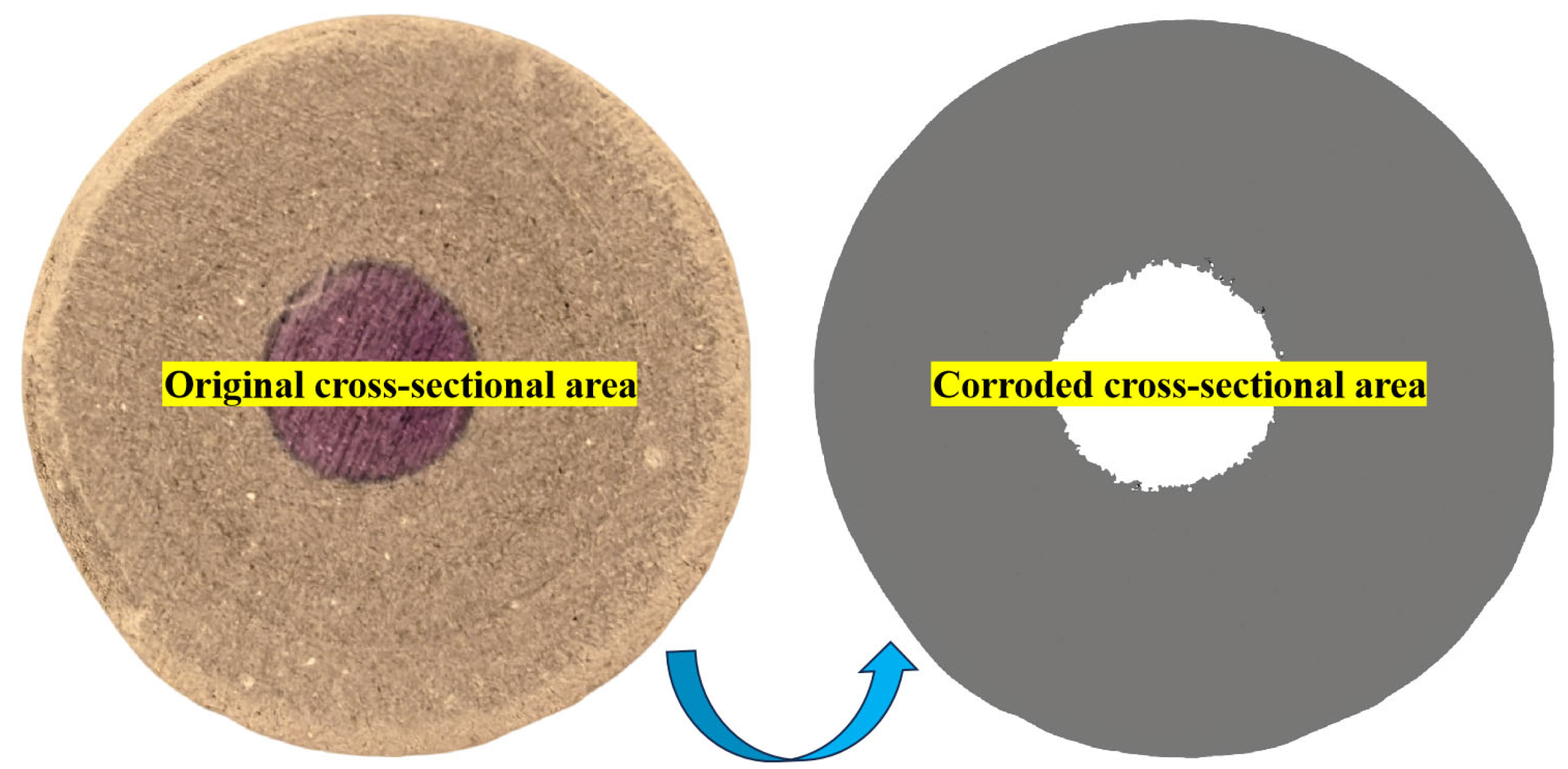
2.3.3. Corrosion Degree
2.3.4. Phase Composition Analysis
2.3.5. Microstructure Analysis
3. Results
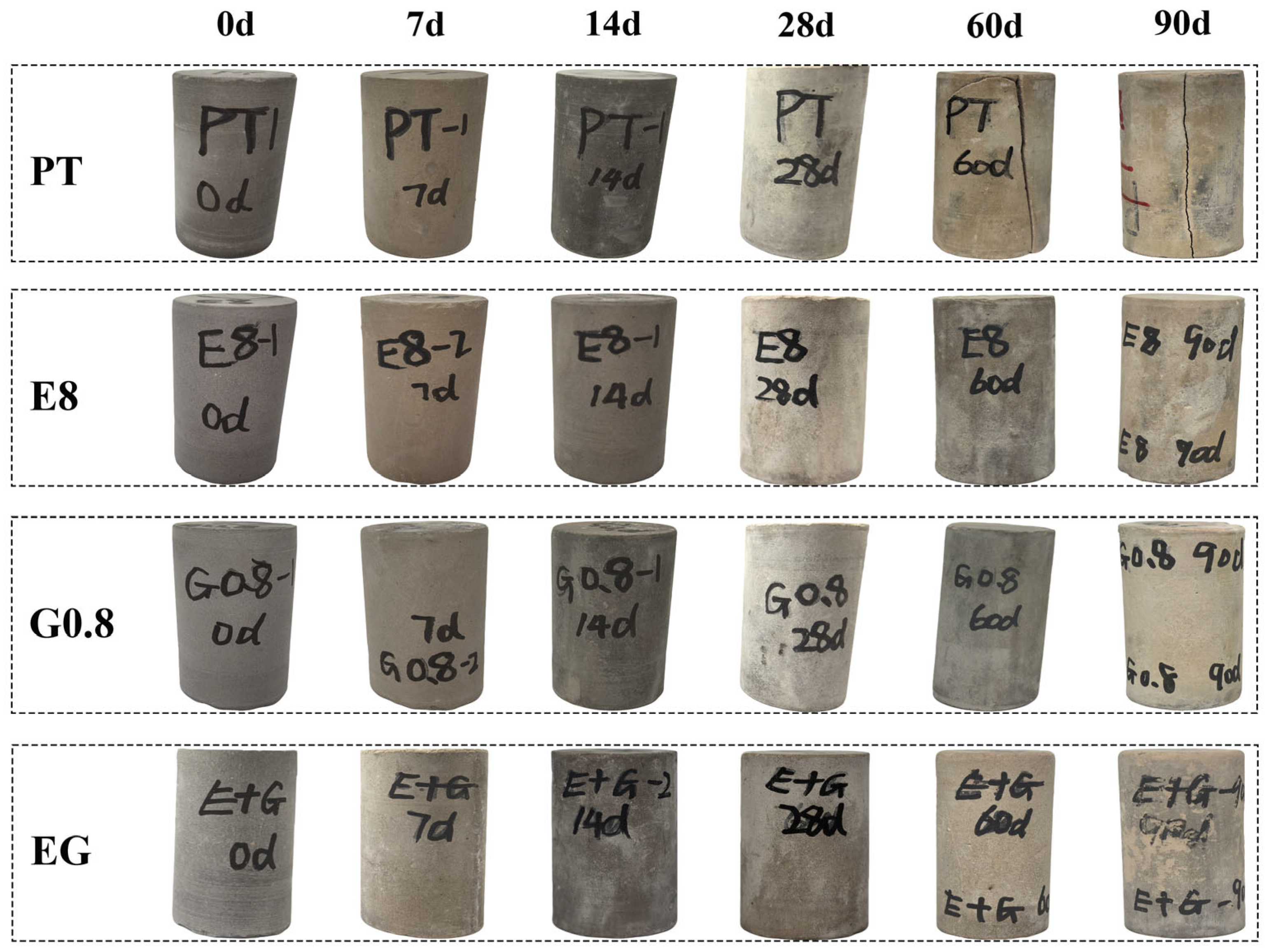
3.1. Macroscopic Morphology
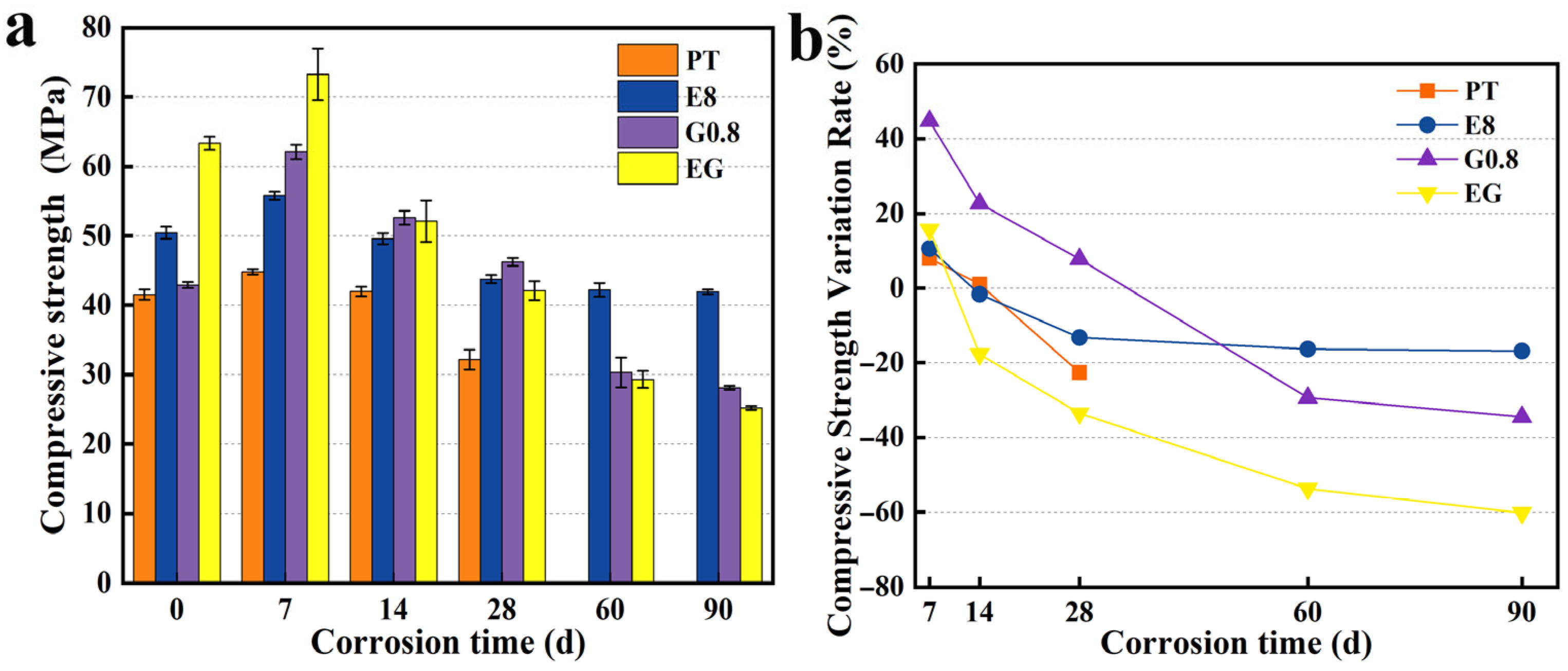
3.2. Compressive Strength
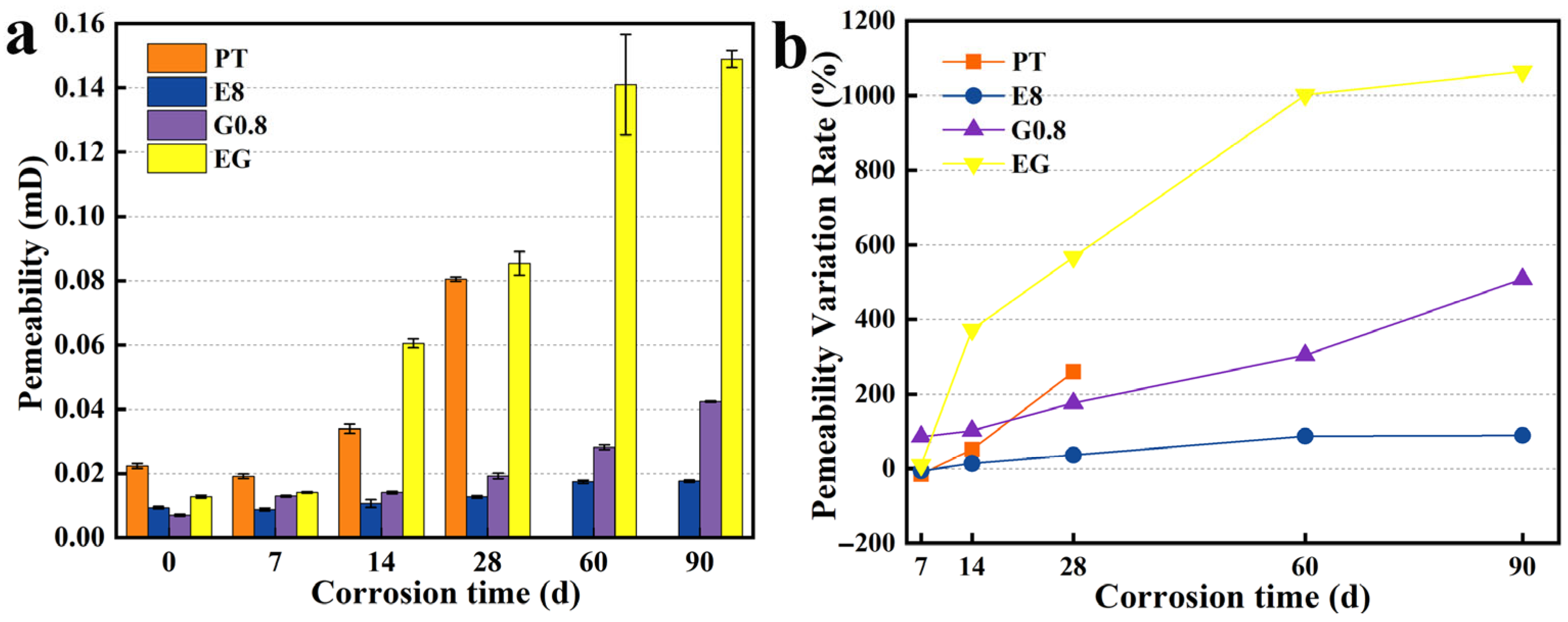
3.3. Permeability
3.4. Porosity
3.5. Corrosion Degree
3.6. XRD Analysis
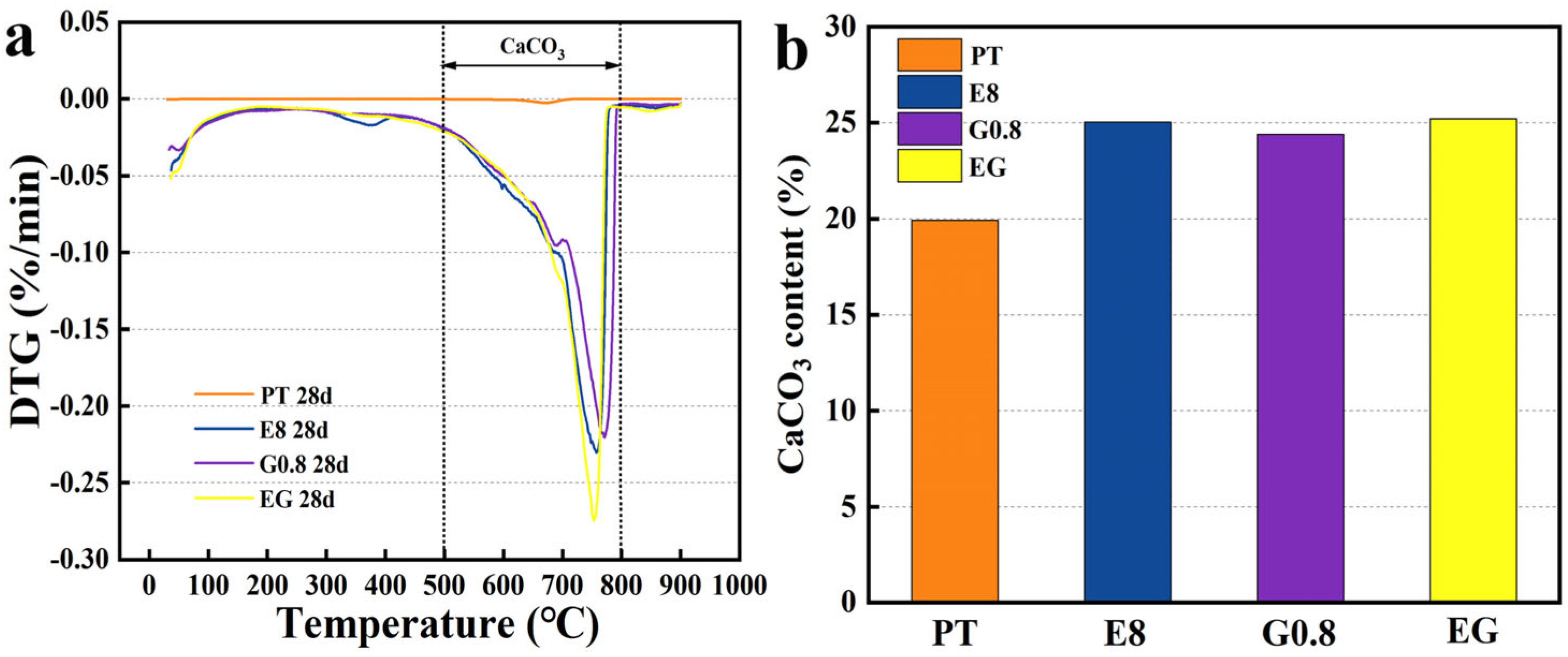
3.7. Thermogravimetric Analysis
4. Discussion
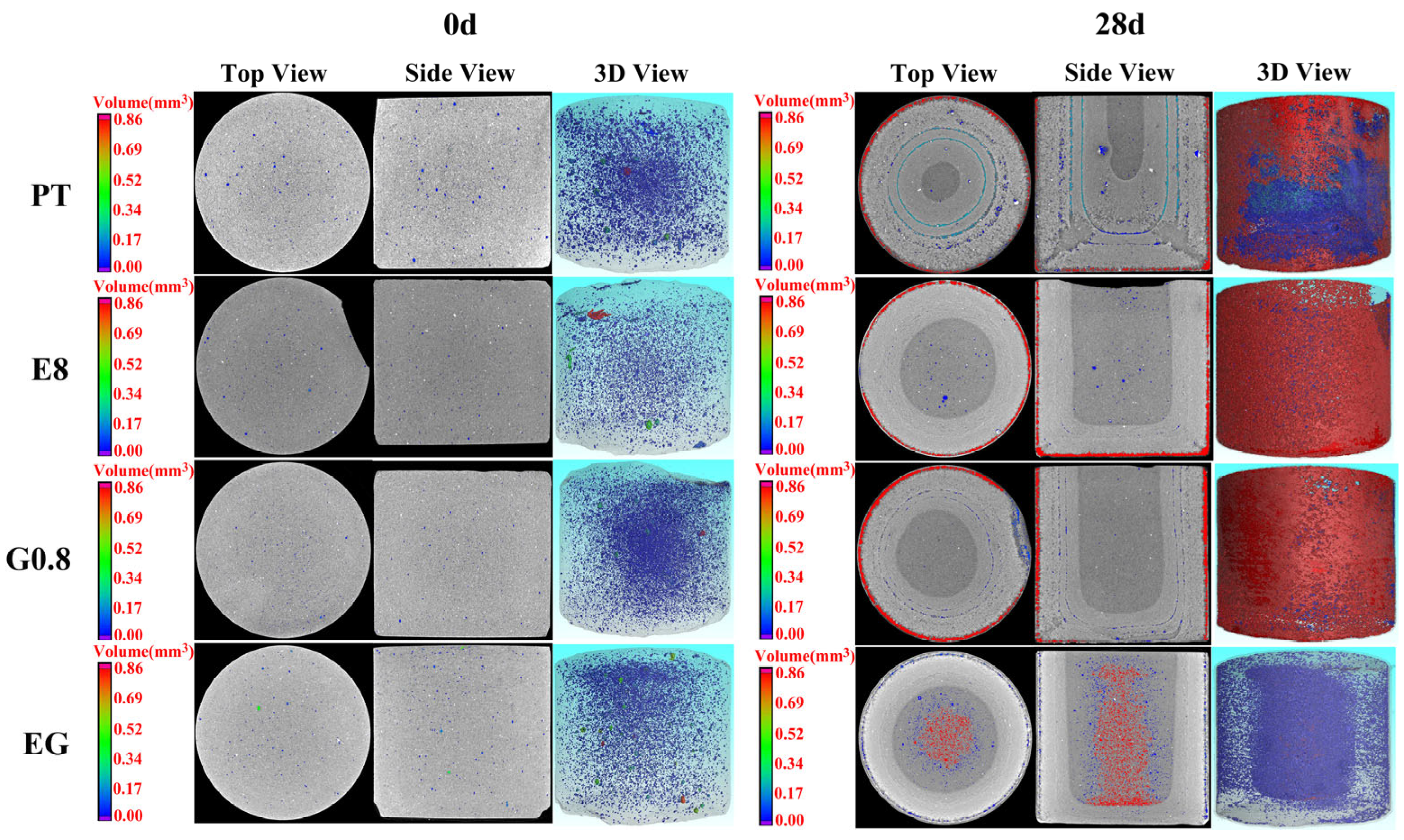
4.1. XCT Analysis
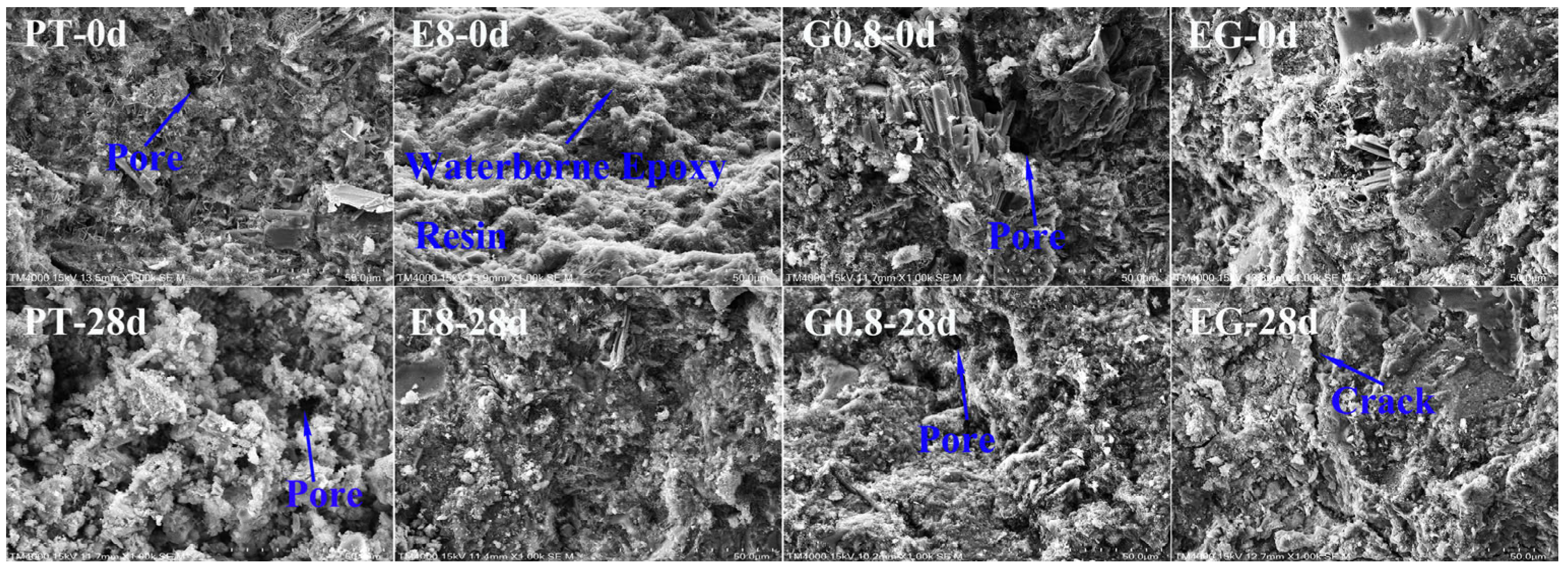
4.2. SEM Analysis
4.3. Carbonation Resistance Mechanism of Different Modified Materials
- The early-effectiveness and late-failure behavior of the graphene-modified system originates from its physically dominated reinforcement mechanism and interfacial instability. Initially, graphene sheets reduce total porosity by filling nano-pores within C–S–H gels [29]. Well-dispersed lamellae create physical barriers, extending penetration paths through tortuous flow, thereby providing effective early-stage impermeability. The eventual failure stems from weak interfacial transition zones between graphene and hydration products [30]. Under prolonged CO2-induced acidic and stress conditions, corrosive media preferentially attack these weak interfaces. Once debonding occurs, the exfoliated graphene sheets transform into interconnected nano-channels, causing rapid permeability increase and complete barrier failure.
- The inferior performance of the composite system stems not from individual component failure, but from a negative synergistic effect between them. It is hypothesized that the inferior performance of the composite system may be related to the thermodynamic incompatibility between waterborne epoxy resin and graphene. The hydrophobic graphene surface resists stable, uniform integration with the aqueous epoxy system. Within the cement’s porous medium, these incompatible materials undergo competitive distribution and localized phase separation. Graphene lamellae can disrupt continuous epoxy film formation, while epoxy agglomeration promotes graphene accumulation. This behavior induces micro-stresses at phase interfaces and generates inherent interconnected pores and microcracks [31]. These pre-existing connected defects create preferential pathways for corrosive media to penetrate deeply. Consequently, corrosion progresses not gradually from the surface, but directly into the interior through these channels. Rapid fluid penetration along these pathways disintegrates the cementitious skeleton, causing accelerated strength loss. Thus, although the apparent defect volume ratio may be low, defect connectivity proves substantially more detrimental than uniformly distributed closed pores.
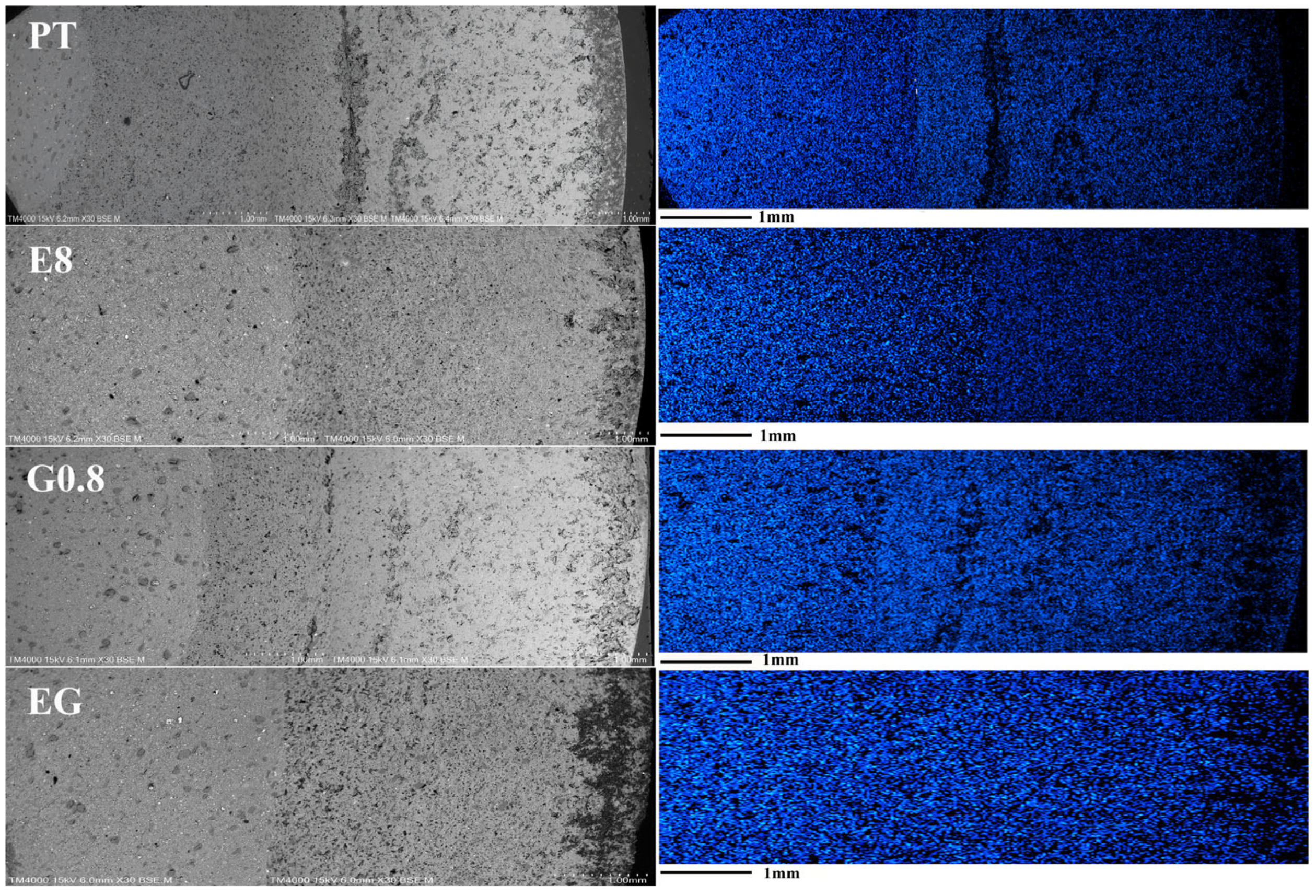
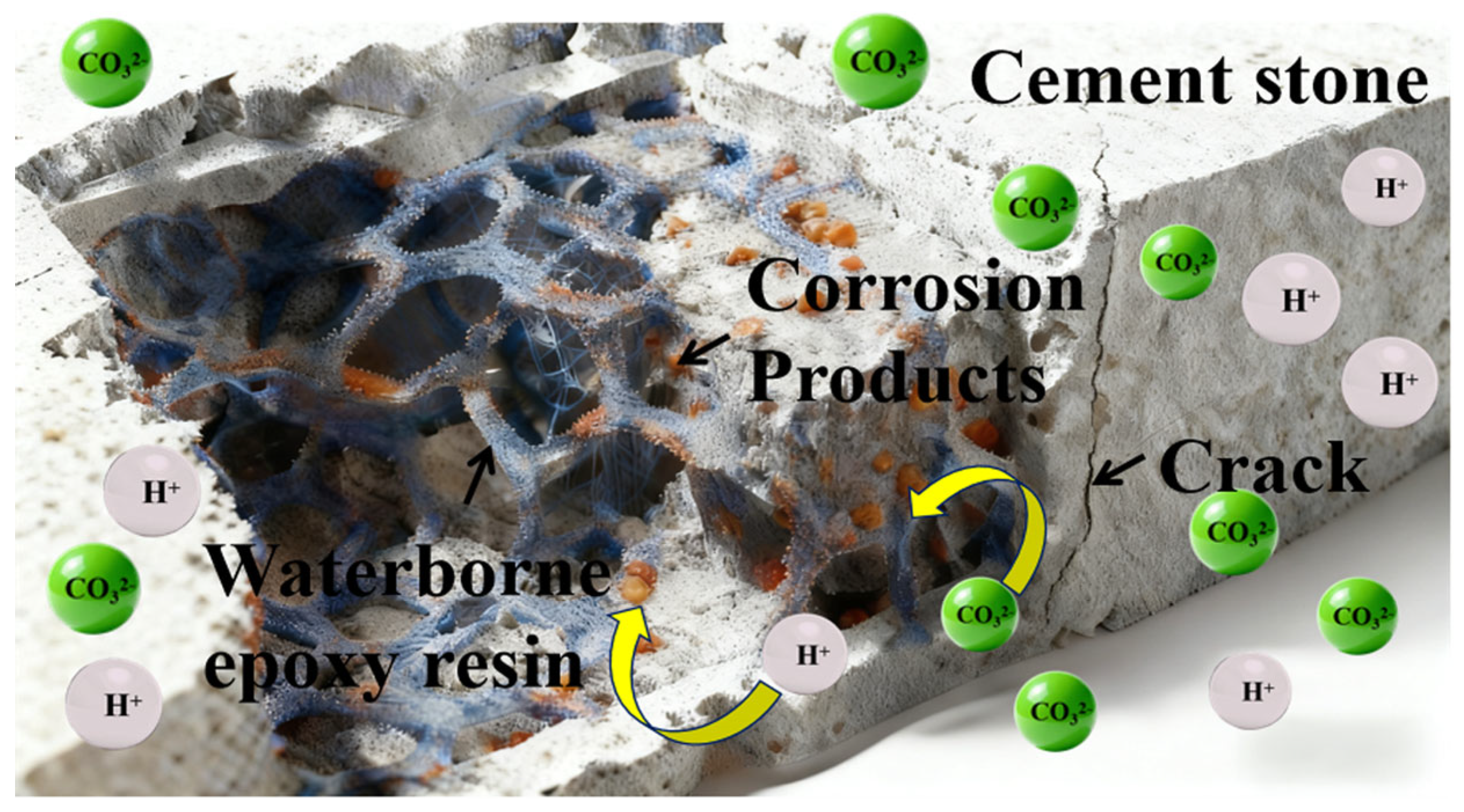
- The superior long-term performance of waterborne epoxy resin stems from its formation of a continuous, stable, and ductile organic phase within the cement matrix, enabling regulated corrosion progression. During cement hydration, the resin forms a film and three-dimensional network structure, creating a continuous phase [23] rather than dispersed particles (Figure 13). This continuous phase establishes an effective physico-chemical diffusion barrier, significantly retarding the transport kinetics of CO2 and H2O. Unlike the rapid penetration in PT specimens or localized corrosion in EG, the epoxy barrier enables uniform, gradual advancement of the corrosion front. In this mode, even when surface carbonation occurs, the internal unreacted core maintains structural integrity and load-bearing capacity. The polymer confines corrosion products in situ, facilitating pore-filling rather than dissolution loss. This mechanism preserves high residual strength despite mass loss (high corrosion degree). Additionally, the polymeric film enhances cement toughness, suppressing microcrack initiation and propagation, thereby maintaining structural integrity in corrosive environments.
5. Conclusions
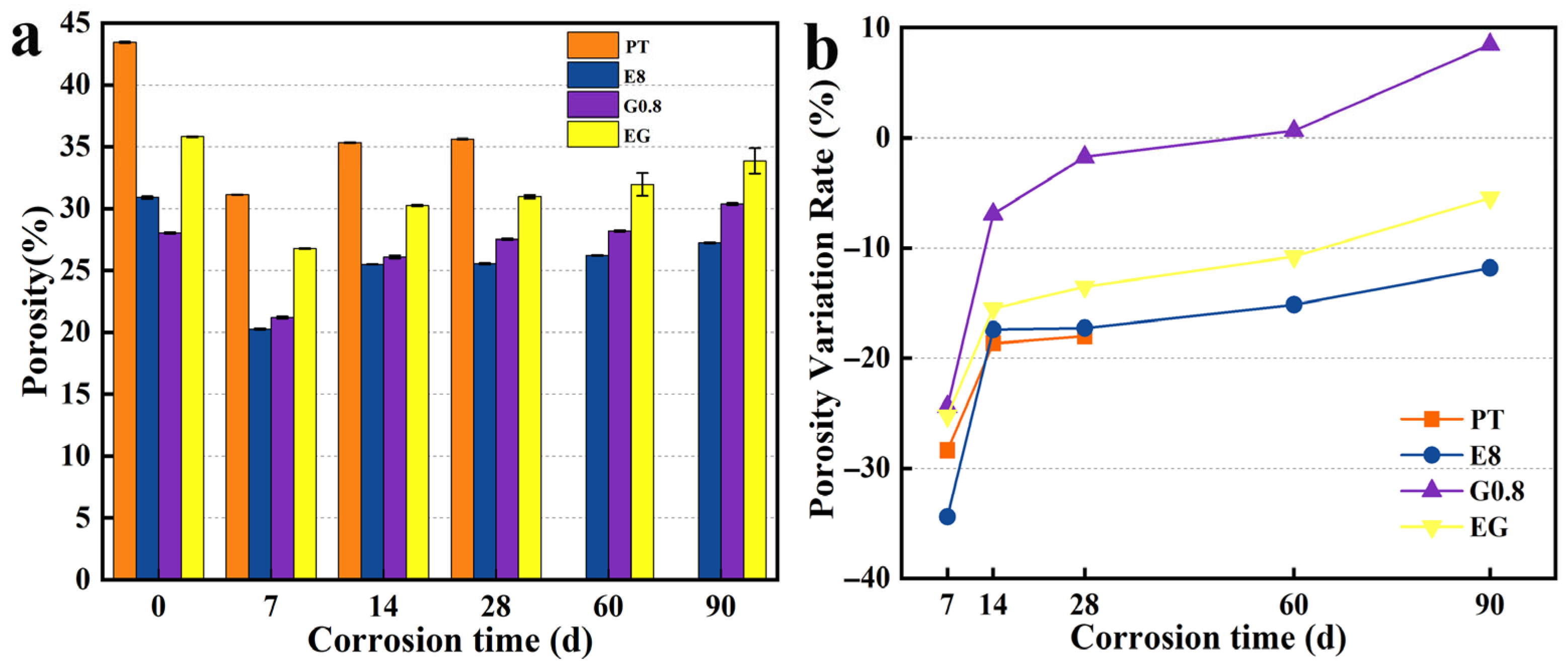
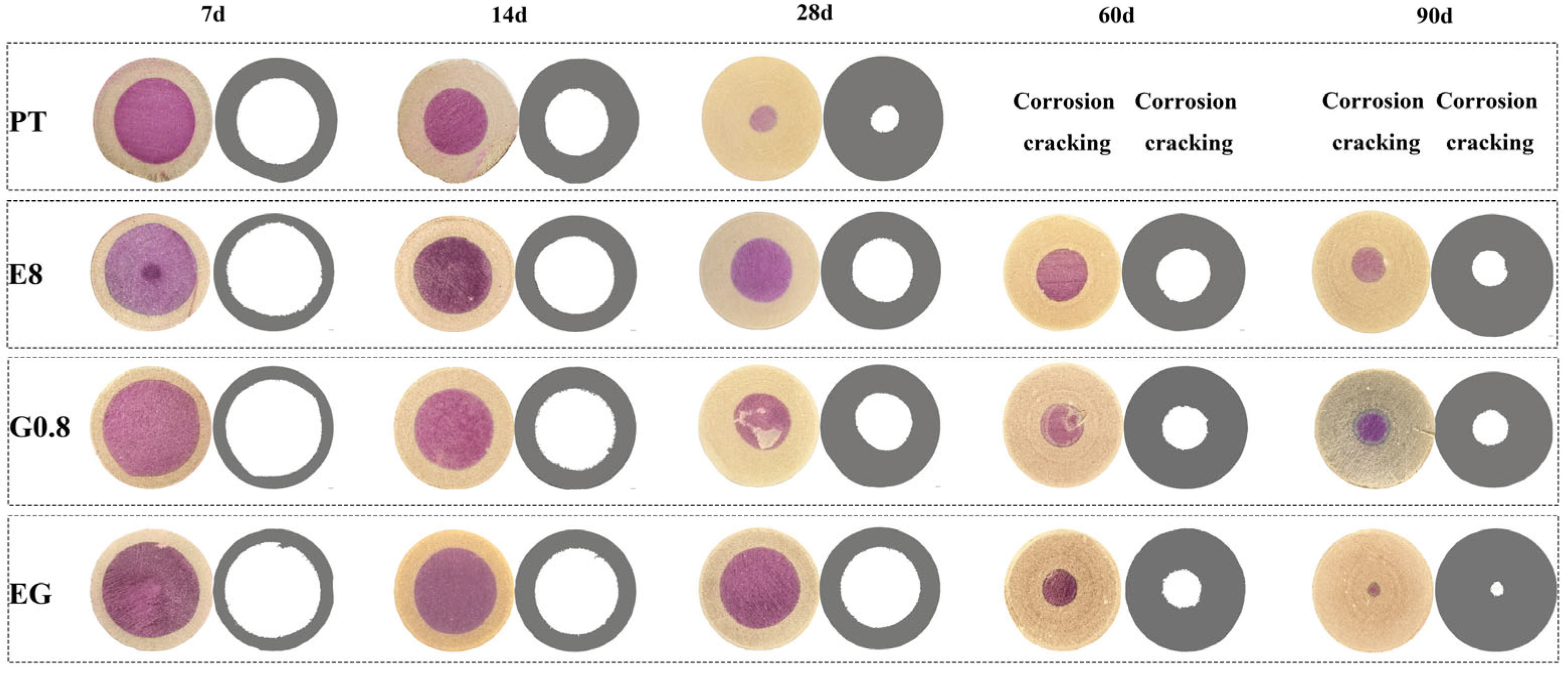
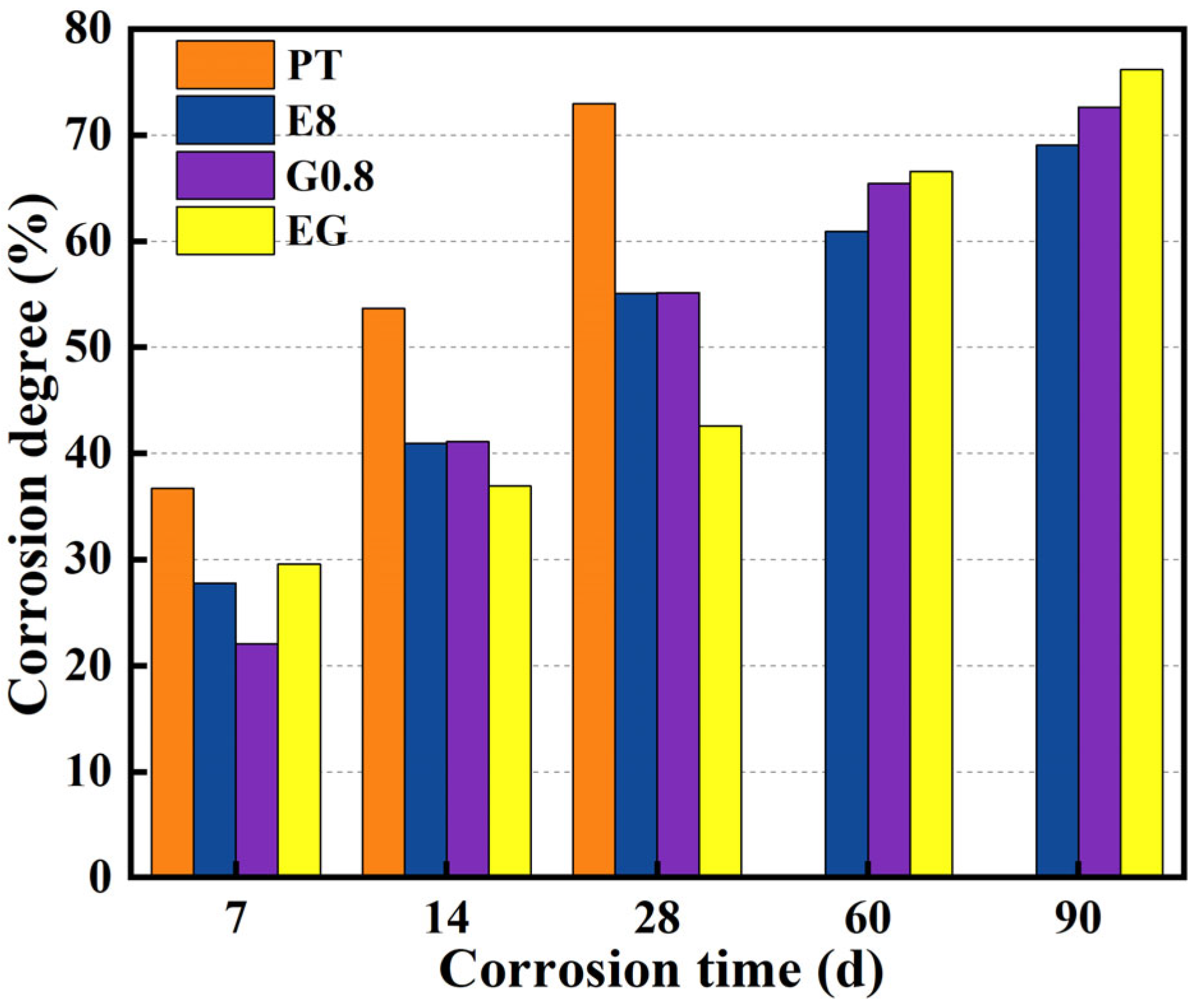
- Conventional Class G oil well cement (PT) fails under prolonged CO2 exposure, exhibiting 0.080 mD permeability and 73% corrosion degree at 28 d, with complete structural failure by 60 d.
- Waterborne-epoxy-modified cement (E8) demonstrates optimal durability, retaining 84% compressive strength after 90 d. The continuous polymeric film forms a dense physico-chemical barrier, retards CO2 penetration, maintains a uniform corrosion mode, stabilizes pore structure, and thus achieves excellent long-term performance.
- Graphene-modified cement (G0.8) shows transitional behavior. Early-stage strength increases by 47.6% via nanoscale barrier effects, but prolonged exposure induces interfacial debonding between sp2-carbon layers and the cement matrix, forming permeable nano-channels and resulting in a 508% permeability increase at 90 d.
- Waterborne epoxy–graphene-composite modified system (EG) exhibits negative synergy. It is speculated that thermodynamic incompatibility leads to phase separation and interconnected microcracks, providing fast CO2 penetration channels, leading to serious structural damage despite moderate defect volume. It yields 0.149 mD permeability and merely 39.7% strength retention at 90 d despite moderate defect volume.
- The long-term performance of modified cement is dominated by microstructural integrity and corrosion mode rather than early strength or single corrosion index. Waterborne epoxy modification effectively balances pore structure, mechanical stability, and corrosion resistance, which is the optimal scheme for high-temperature CCUS-EOR wellbore cementing.
- In engineering practice, waterborne epoxy-modified cement is recommended for CCUS-EOR wellbore cementing in high-temperature CO2 environments. The composite modification of graphene and waterborne epoxy is not recommended due to negative synergy, and the dosage optimization of single modifiers should be focused on in subsequent research.
Author Contributions
Funding
Data Availability Statement
Conflicts of Interest
References
- Jabbar, M.Y.; McCoy, S.T.; Masnadi, M.S.; Bergerson, J.A. Toward consistent evaluation of CO2-EOR: A meta-analysis of life cycle assessments. Int. J. Greenh. Gas Control 2025, 146, 104430. [Google Scholar] [CrossRef]
- Bois, A.-P.; Garnier, A.; Rodot, F.; Saint-Marc, J.; Aimard, N. How To Prevent Loss of Zonal Isolation Through a Comprehensive Analysis of Microannulus Formation. SPE Drill. Complet. 2011, 26, 13–31. [Google Scholar] [CrossRef]
- Sminchak, J.R.; Moody, M.; Gupta, N.; Larsen, G. Wellbore integrity factors for CO2 storage in oil and gas producing areas in the Midwest United States. Model. Anal. 2016, 7, 817–827. [Google Scholar] [CrossRef]
- Kutchko, B.G.; Strazisar, B.R.; Dzombak, D.A.; Lowry, G.V.; Thaulow, N. Degradation of Well Cement by CO2 under Geologic Sequestration Conditions. Environ. Sci. Technol. 2007, 41, 4787–4792. [Google Scholar] [CrossRef] [PubMed]
- Li, Q.; Lim, Y.M.; Flores, K.M.; Kranjc, K.; Jun, Y.-S. Chemical Reactions of Portland Cement with Aqueous CO2 and Their Impacts on Cement’s Mechanical Properties under Geologic CO2 Sequestration Conditions. Environ. Sci. Technol. 2015, 49, 6335–6343. [Google Scholar] [CrossRef]
- Wolterbeek, T.K.; Peach, C.J.; Spiers, C.J. Reaction and transport in wellbore interfaces under CO2 storage conditions: Experiments simulating debonded cement–casing interfaces. Int. J. Greenh. Gas Control 2013, 19, 519–529. [Google Scholar] [CrossRef]
- Gan, M.; Zhang, L.; Wang, Y.; Mei, K.; Fu, X.; Cheng, X.; Bai, M.; Liu, H.; Li, X. 3D micro-structural changes of an artificial flow channel in wellbore cement under geologic CO2 storage conditions: Combined effect of effective stress and flow. Constr. Build. Mater. 2022, 325, 126761. [Google Scholar] [CrossRef]
- Omosebi, O.; Maheshwari, H.; Ahmed, R.; Shah, S.; Osisanya, S.; Hassani, S.; DeBruijn, G.; Cornell, W.; Simon, D. Degradation of well cement in HPHT acidic environment: Effects of CO2 concentration and pressure. Cem. Concr. Compos. 2016, 74, 54–70. [Google Scholar] [CrossRef]
- Fakher, S.; El-Sayed, A.; Sameh, L.; Abdeltawab, B. Evaluating a Novel Fly Ash Resin-Reinforced Cement’s Interactions under Acidic, Basic, High-Salinity, and High-Temperature Conditions. Polymers 2023, 15, 3404. [Google Scholar] [CrossRef]
- Aminu, M.D.; Nabavi, S.A.; Rochelle, C.A.; Manovic, V. A review of developments in carbon dioxide storage. Appl. Energy 2017, 208, 1389–1419. [Google Scholar] [CrossRef]
- Zhang, B.; Zou, C.; Peng, Z.; Zheng, Y.; Zhang, J. Study on the Preparation and Anti-CO2 Corrosion Performance of Soap-Free Latex for Oil Well Cement. ACS Omega 2020, 5, 23028–23038. [Google Scholar] [CrossRef] [PubMed]
- Mason, H.E.; Du Frane, W.L.; Walsh, S.D.; Dai, Z.; Charnvanichborikarn, S.; Carroll, S.A. Chemical and Mechanical Properties of Wellbore Cement Altered by CO2-Rich Brine Using a Multianalytical Approach. Environ. Sci. Technol. 2013, 47, 1745–1752. [Google Scholar] [CrossRef] [PubMed]
- Deremble, L.; Loizzo, M.; Huet, B.; Lecampion, B.; Quesada, D. Stability of a leakage pathway in a cemented annulus. Energy Procedia 2011, 2, 508. [Google Scholar] [CrossRef]
- Mammadov, O.; Mahmoud, A.A.; Al-Yaseri, A.; Al Ramadan, M. A Comprehensive Review of Cement Degradation Analysis under Downhole Conditions: CCS/CCUS/CO2-EOR Applications. ACS Omega 2025, 10, 28515–28533. [Google Scholar] [CrossRef]
- Yuan, B.; Wang, Y.; Yang, Y.; Xie, Y.; Li, Y. Wellbore sealing integrity of nanosilica-latex modified cement in natural gas reservoirs with high H2S contents. Constr. Build. Mater. 2018, 192, 621–632. [Google Scholar] [CrossRef]
- Zhang, Z.; Zhang, F.; Wu, C.; Chen, Y. Experimental Study on the Performance of Sustainable Epoxy Resin-Modified Concrete Under Coupled Salt Corrosion and Freeze–Thaw Cycles. Sustainability 2025, 17, 6186. [Google Scholar] [CrossRef]
- Bai, M.; Zhang, Z.; Fu, X. A review on well integrity issues for CO2 geological storage and enhanced gas recovery. Renew. Sustain. Energy Rev. 2016, 59, 920–926. [Google Scholar] [CrossRef]
- Wang, B.; Jiang, R.; Wu, Z. Investigation of the Mechanical Properties and Microstructure of Graphene Nanoplatelet-Cement Composite. Nanomaterials 2016, 6, 200. [Google Scholar] [CrossRef]
- Zhang, J.; Huang, H.; Ma, J.; Huang, L.; Huang, L.; Chen, X.; Zeng, H.; Ma, S. Preparation and Properties of Corrosion-Resistant Coatings From Waterborne Polyurethane Modified Epoxy Emulsion. Front. Mater. 2019, 6, 119–123. [Google Scholar] [CrossRef]
- David, R.; Raja, V.; Singh, S.; Gore, P. Development of anti-corrosive paint with improved toughness using carboxyl terminated modified epoxy resin. Prog. Org. Coat. 2018, 120, 58–70. [Google Scholar] [CrossRef]
- Wang, F.; Zhang, Y.; Song, X.; Liu, L.; Sun, X.; Sun, P. Influence of Self-Emulsifying Waterborne Epoxy Resin with Novel Hardeners on Pore Structure and Permeability of Cement-Based Materials. Buildings 2025, 15, 997. [Google Scholar] [CrossRef]
- Zhu, J.; Zhang, R.; Zhang, Y.; He, F. The fractal characteristics of pore size distribution in cement-based materials and its effect on gas permeability. Sci. Rep. 2019, 9, 17197. [Google Scholar] [CrossRef] [PubMed]
- Han, X.; Xu, F.; Ge, J.; Qian, W.; He, Y.; Meng, X.; Zhu, P. Modification study of underwater epoxy-cement mortar with polyacrylate latex: Engineering performance optimization and microstructure analysis. Constr. Build. Mater. 2025, 462, 139966. [Google Scholar] [CrossRef]
- Qian, R.; Liu, C.; Liu, G.; Liu, Z.; Pang, B.; She, W.; Zhang, Y. Effects of various inlet-gas mediums on apparent permeability of concrete under steady-state flow: Comparison between carbon-dioxide and oxygen. Cem. Concr. Compos. 2021, 119, 103995. [Google Scholar] [CrossRef]
- Li, H.; Zhao, G.; Zhang, H. Recent Progress of Cement-Based Materials Modified by Graphene and Its Derivatives. Materials 2023, 16, 3783. [Google Scholar] [CrossRef]
- Thiery, M.; Villain, G.; Dangla, P.; Platret, G. Investigation of the carbonation front shape on cementitious materials: Effects of the chemical kinetics. Cem. Concr. Res. 2007, 37, 1047–1058. [Google Scholar] [CrossRef]
- Liu, B.; Kang, W.; Lian, W.; Xing, F.; Sun, H.; Ma, H. Multi-Scale Modeling of Transport Properties in Cementitious Materials with GO Admixture. Nanomaterials 2025, 15, 222. [Google Scholar] [CrossRef]
- Wilson, J.C.; Benbow, S.J.; Metcalfe, R.; Savage, D.; Walker, C.S.; Chittenden, N. Fully Coupled Modeling of Long Term Cement Well Seal Stability in the Presence of CO2. Energy Procedia 2011, 2, 493. [Google Scholar] [CrossRef]
- Miao, X.; Xing, Y.; Zheng, H.; Liu, Q.; Hu, M.; Guo, J. Effects of Hybrid Graphene Oxide-Nanosilica on Calcium Silicate Hydrate in the Simulation Environment and Cement. ACS Omega 2023, 8, 22975–22983. [Google Scholar] [CrossRef]
- Chen, Y.; Du, S. Improving the interfacial transition zone of concrete: A targeted approach utilizing graphene oxide. Constr. Build. Mater. 2025, 466, 140323. [Google Scholar] [CrossRef]
- Zhao, F.; Zhang, H.; Zhang, D.; Wang, X.; Wang, D.; Zhang, J.; Cheng, J.; Gao, F. Molecular insights into the ‘defects’ network in the thermosets and the influence on the mechanical performance. RSC Adv. 2022, 12, 22342. [Google Scholar] [CrossRef]


| CaO | SiO2 | Fe2O3 | Al2O3 | MgO | SO3 | Others |
|---|---|---|---|---|---|---|
| 64.91 | 22.80 | 4.37 | 2.82 | 1.34 | 1.94 | 1.80 |
| Sample | Cement | Water | Retarder | Dispersant | Defoamer | Silica Fume | Graphene | Waterborne Epoxy Resin |
|---|---|---|---|---|---|---|---|---|
| PT | 100 | 54 | 4 | 1 | 1 | 35 | 0 | 0 |
| E8 | 100 | 46 | 4 | 1 | 1 | 35 | 0 | 8 |
| G0.8 | 100 | 54 | 4 | 1 | 1 | 35 | 0.8 | 0 |
| EG | 100 | 46 | 4 | 1 | 1 | 35 | 0.8 | 8 |
| Ion Content | |||||||
|---|---|---|---|---|---|---|---|
| HCO3− | CO32− | Cl− | SO42− | Ca2+ | Mg2+ | Na+ | K+ |
| 3112.02 | 60.02 | 11,166.75 | 119.11 | 372.74 | 67.82 | 3523.4 | 4441.5 |
| Parameter | Standard Setting |
|---|---|
| X-ray tube voltage | 120 kV |
| X-ray tube current | 0.12 mA |
| Detector type | DXR.250 |
| Rotation angle | 360° |
| Detector unit | 2014 |
| Number of projections | 1000 |
| Number of pixels | 2014 × 2014 |
| Sample | 0 d | 28 d | ||||
|---|---|---|---|---|---|---|
| Material Volume (mm3) | Defect Volume (mm3) | Defect Volume Ratio (%) | Material Volume (mm3) | Defect Volume (mm3) | Defect Volume Ratio (%) | |
| PT | 7926.38 | 40.13 | 0.50 | 11,023.47 | 605.95 | 5.21 |
| E8 | 7641.37 | 18.01 | 0.24 | 10,496.90 | 459.90 | 4.20 |
| G0.8 | 7346.91 | 24.30 | 0.33 | 10,821.84 | 526.66 | 4.64 |
| EG | 10,448.28 | 38.51 | 0.37 | 11,567.46 | 409.15 | 3.42 |
Disclaimer/Publisher’s Note: The statements, opinions and data contained in all publications are solely those of the individual author(s) and contributor(s) and not of MDPI and/or the editor(s). MDPI and/or the editor(s) disclaim responsibility for any injury to people or property resulting from any ideas, methods, instructions or products referred to in the content. |
© 2026 by the authors. Licensee MDPI, Basel, Switzerland. This article is an open access article distributed under the terms and conditions of the Creative Commons Attribution (CC BY) license.
Share and Cite
Cao, Y.; Zhou, S.; Liu, R.; Tao, Q.; Liu, L. Study on Cement Carbonation Resistance and Reinforcement in CCUS-EOR. Processes 2026, 14, 1352. https://doi.org/10.3390/pr14091352
Cao Y, Zhou S, Liu R, Tao Q, Liu L. Study on Cement Carbonation Resistance and Reinforcement in CCUS-EOR. Processes. 2026; 14(9):1352. https://doi.org/10.3390/pr14091352
Chicago/Turabian StyleCao, Yaqiong, Shiming Zhou, Rengguang Liu, Qian Tao, and Luo Liu. 2026. "Study on Cement Carbonation Resistance and Reinforcement in CCUS-EOR" Processes 14, no. 9: 1352. https://doi.org/10.3390/pr14091352
APA StyleCao, Y., Zhou, S., Liu, R., Tao, Q., & Liu, L. (2026). Study on Cement Carbonation Resistance and Reinforcement in CCUS-EOR. Processes, 14(9), 1352. https://doi.org/10.3390/pr14091352