1. Introduction
The geologic sequestration of carbon dioxide (
) in deep saline formations is a critical technology for mitigating anthropogenic greenhouse gas emissions and addressing global climate change [
1]. In the United States, the Environmental Protection Agency (EPA) regulates the injection of
for geologic sequestration through the Class VI Underground Injection Control (UIC) program, established under the Safe Drinking Water Act [
2]. The primary mandate of the Class VI program is the protection of Underground Sources of Drinking Water (USDWs) from endangerment caused by injection activities. A central component of this regulatory framework is the delineation of the Area of Review (AoR), which defines the geographic region over which the owner or operator must evaluate potential leakage pathways, such as abandoned wellbores or faults, and perform corrective action if necessary [
3].
Under 40 CFR 146.81(d) and 146.84(a), the AoR is defined as the region surrounding the geologic sequestration project where USDWs may be endangered by the injection activity. The regulations specify that the AoR must be delineated using computational modeling that accounts for the physical and chemical properties of the injected
and the displaced formation fluids. The boundary of the AoR is determined by the maximum extent of the separate-phase
plume and the pressure front. The pressure front is explicitly defined in the regulations as the zone of elevated pressure that is created by the injection of
into the subsurface, where there is a sufficient pressure differential to cause the upward movement of injected fluids or formation fluids into a USDW [
3].
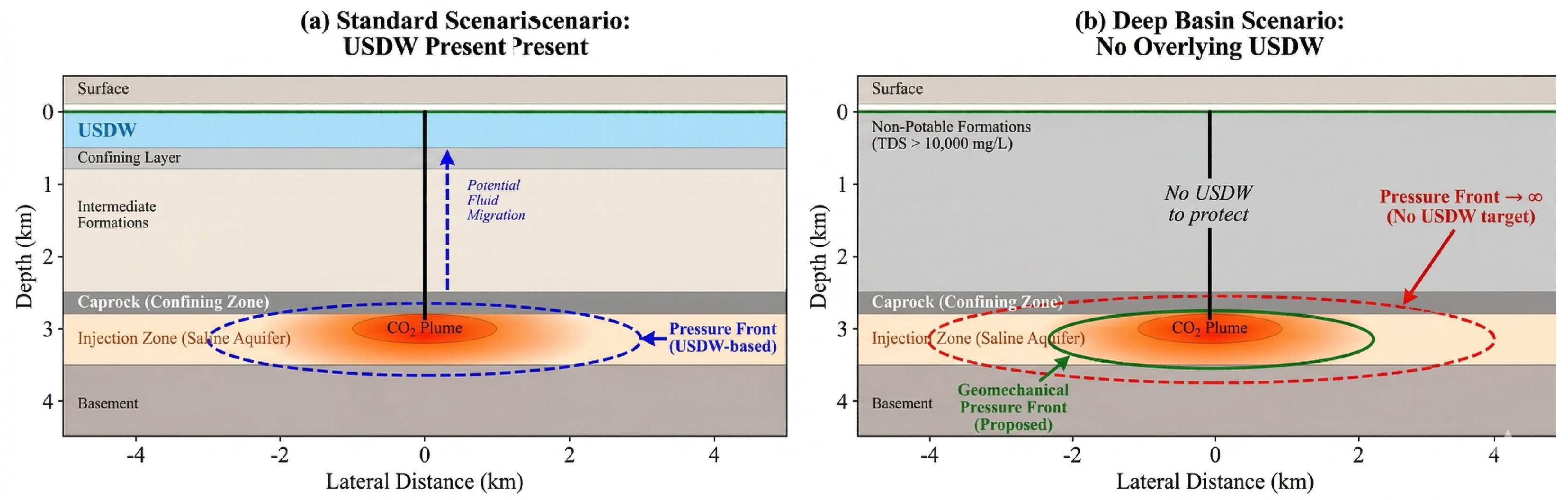
While this regulatory definition provides a clear and protective standard for sites where a USDW overlies the injection zone, it presents a significant methodological challenge in geologic settings where no USDW is present. In many prospective carbon storage basins, such as the deep offshore waters of the Outer Continental Shelf or specific onshore regions like the deep Texas Gulf Coast Basin, the targeted saline formations are situated thousands of meters below the surface, with no overlying aquifers that meet the regulatory criteria of a USDW [
4,
5]. In these scenarios, the standard analytical and numerical methods prescribed by the EPA for calculating the critical pressure threshold become mathematically undefined or yield physically unrealistic, infinite AoR boundaries [
6,
7].
This regulatory gap creates uncertainty for both project developers preparing Class VI permit applications and regulatory agencies tasked with reviewing them [
8]. Without a defensible methodology for defining the pressure front in the absence of a USDW, operators may be forced to rely on arbitrary pressure thresholds or assume hypothetical, non-existent USDWs, leading to either underestimation of risk or the delineation of excessively large AoRs that impose unwarranted monitoring and corrective action burdens [
9,
10].
Understanding the fundamental mechanisms of fracture initiation, propagation, and mechanical degradation in subsurface formations is critical to establishing robust geomechanical thresholds for caprock integrity. Recent research has advanced knowledge of crack propagation behavior under complex loading conditions relevant to subsurface environments. Cai et al. [
11] investigated crack propagation characteristics in shale subjected to cyclic in situ methane detonation impact fracturing, demonstrating that repeated dynamic loading creates cumulative fracture damage that reduces rock strength progressively. Similarly, Li et al. [
12] studied fracture evolution and mechanical deterioration of granite under cyclic thermal and liquid nitrogen cryogenic impact, revealing that thermal cycling induces progressive crack network development and elastic modulus degradation with compressive strength reductions exceeding 20% after multiple cycles. These findings underscore the importance of accounting for potential cyclic and dynamic loading effects when evaluating long-term caprock integrity in
storage settings and support the use of conservative geomechanical thresholds for pressure front delineation.
To address this challenge, this paper proposes a practical, geomechanics-based methodology for defining the pressure front and delineating the AoR in carbon storage projects where no USDW is present. Rather than relying on the potential for fluid migration into a non-existent receptor, the proposed approach shifts the regulatory focus to the mechanical integrity of the primary containment system. This approach is explicitly designed as an alternative, site-specific computational modeling approach that can be approved by the UIC Program Director under 40 CFR 146.84(c) [
3]. The framework leverages existing Class VI operational requirements (40 CFR 146.88), which prohibit injection pressures from exceeding 90 percent of the fracture pressure of the injection zone and strictly forbid the initiation of fractures in the confining zone. Extending this protective concept spatially, this method defines the pressure front boundary based on geomechanical constraints, specifically the minimum horizontal stress and fault reactivation thresholds of the caprock [
13,
14].
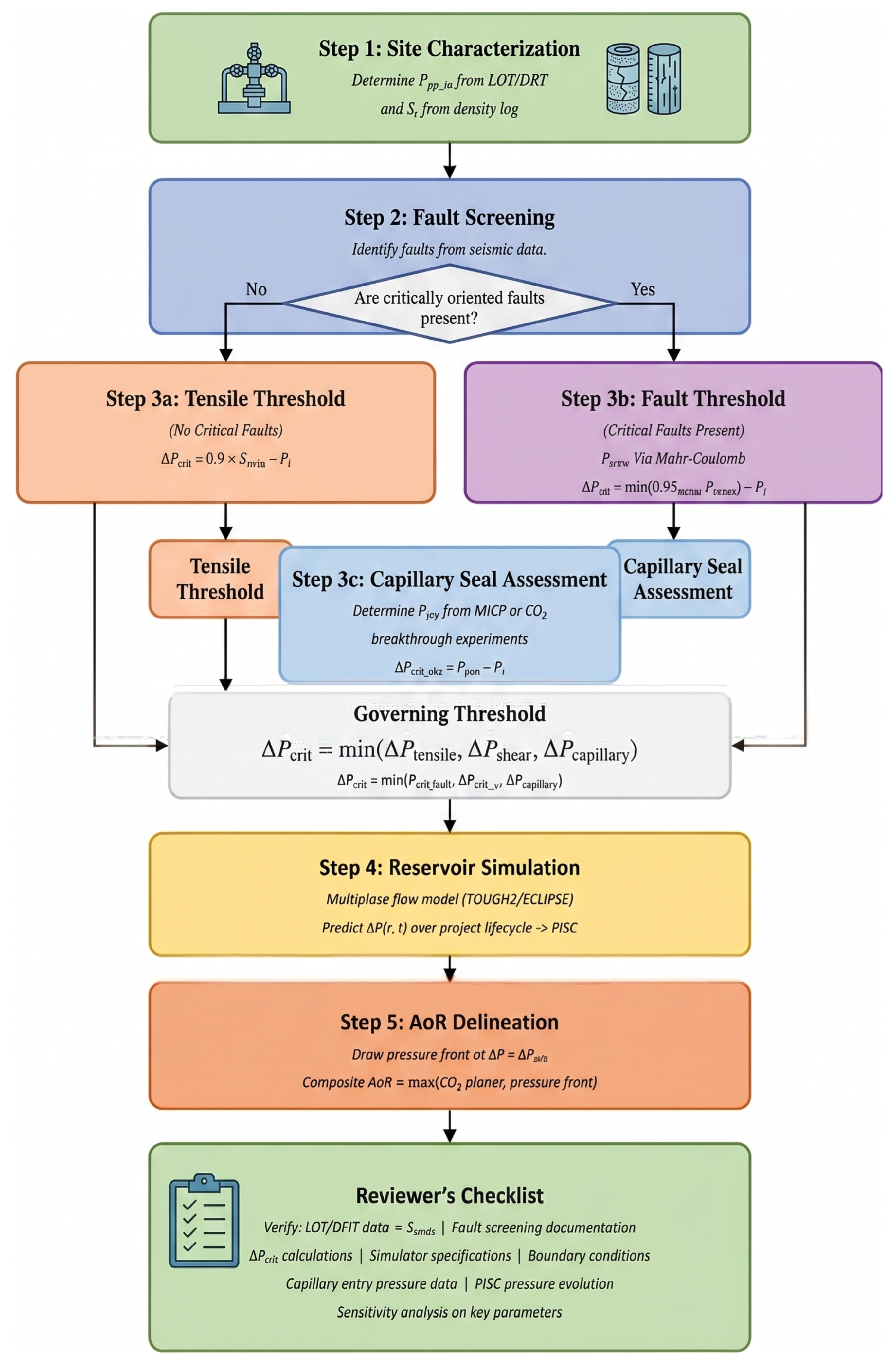
Specifically, this work provides: (1) a formal characterization of the regulatory gap arising from the mathematical failure of EPA Methods 1–3 in no-USDW settings; (2) an integrated, step-by-step framework translating standard geomechanical constraints into a regulatory-compliant AoR delineation methodology under 40 CFR 146.84(c); (3) a tri-criterion containment threshold incorporating tensile fracture, fault reactivation, and capillary breakthrough pressures; and (4) a standardized operator workflow, regulatory reviewer checklist, and example AoR delineation report template to facilitate practical adoption.
This paper first reviews the limitations of current critical pressure calculation methods in no-USDW scenarios. It then details the theoretical foundation and workflow of the proposed geomechanical approach, including a rigorous Mohr–Coulomb fault reactivation analysis, consideration of stress regime variations, quantitative poroelastic analysis, and capillary seal assessment. Finally, a synthetic case study representative of a deep Texas Gulf Coast saline formation is presented to illustrate the application of the method across multiple injection rates, low-permeability scenarios, and during the Post-Injection Site Care (PISC) period.
4. Synthetic Case Study: Texas Gulf Coast Basin
4.1. Site Characterization and Model Setup
To demonstrate the proposed methodology, a synthetic case study was developed based on the petrophysical and geomechanical properties of the deep Frio Formation in the Texas Gulf Coast Basin [
24,
27]. The target injection zone is a laterally extensive saline aquifer located at a depth of 3200 m, with no overlying USDW.
The pressure profiles presented in this study were generated using a semi-analytical modeling approach implemented in Python, ensuring full transparency and reproducibility without requiring specialized software licenses. The model employs a one-dimensional radial domain with logarithmic spacing, extending from the wellbore radius (
m) to a far-field boundary (
km), with a constant-pressure outer boundary condition. Far-field pressure diffusion in the single-phase brine region is governed by the Theis diffusivity equation, while the near-wellbore pressure enhancement due to two-phase flow (CO
2 displacing brine) is captured through an effective mobility correction that accounts for the reduced relative permeability of the CO
2–brine mixture (
), modeled as a transient skin effect. This approach provides a conservative representation of near-wellbore pressure buildup while preserving the analytical tractability needed for rapid sensitivity analysis. Detailed model specifications, including fluid properties, boundary conditions, and the two-phase mobility formulation, are provided in
Appendix A. The primary reservoir and geomechanical parameters are summarized in
Table 3.
4.2. Critical Pressure Determination
Following the workflow in
Figure 3, the critical pressure thresholds are calculated based on the site characterization data.
For the tensile fracture threshold (assuming no critical faults):
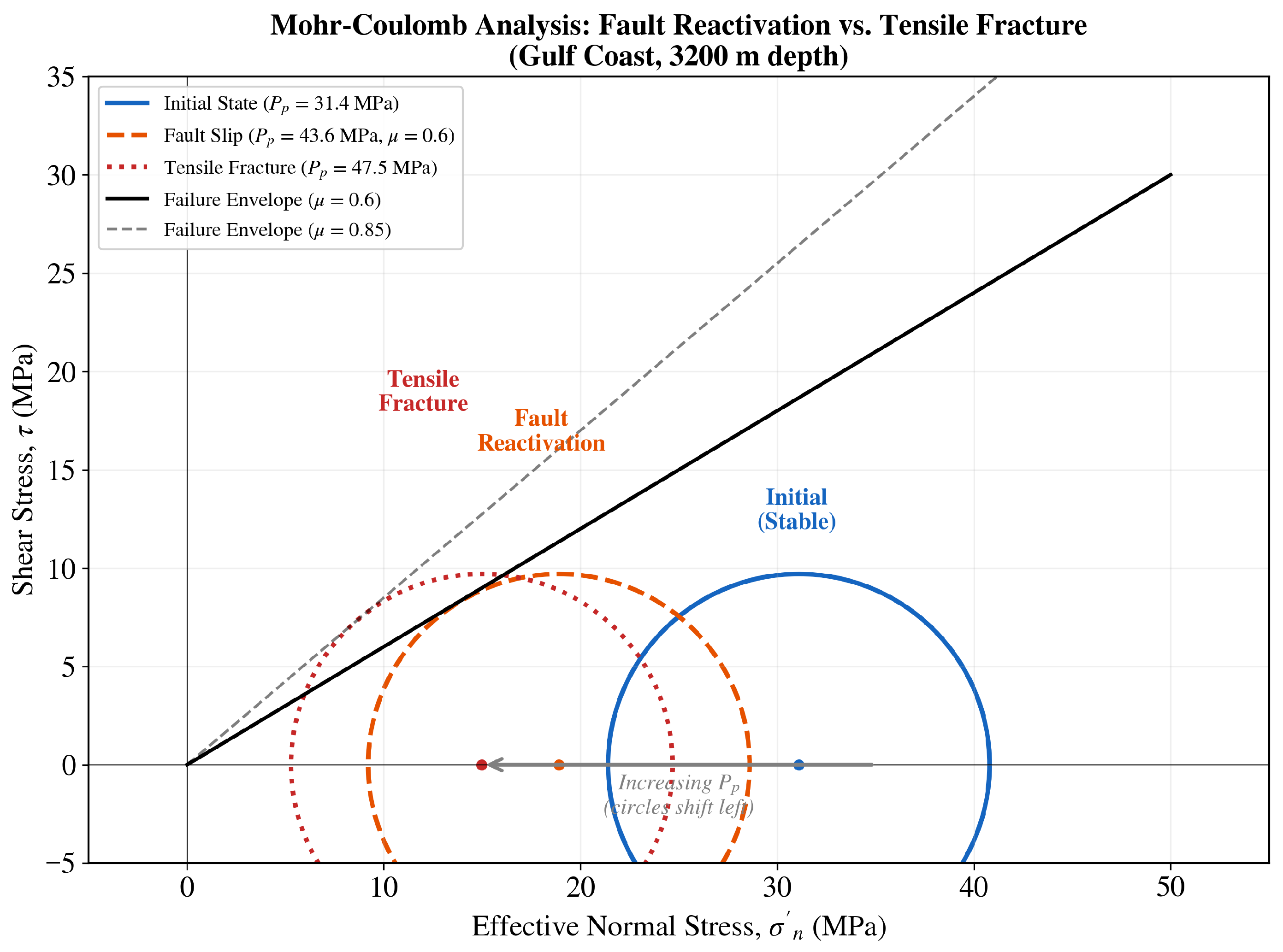
For the fault reactivation threshold (assuming a critically oriented fault with
):
Because
, the governing threshold for the AoR delineation is 12.2 MPa. This highlights the importance of fault screening; relying solely on the 90% fracture pressure rule would overestimate the safe operating envelope if critically oriented faults are present. For this case study with a competent shale caprock, the capillary entry pressure (>20 MPa above
based on typical deep Gulf Coast shale values from Espinoza and Santamarina [
25]) does not govern. Therefore, the final
MPa.
4.3. Pressure Front Delineation
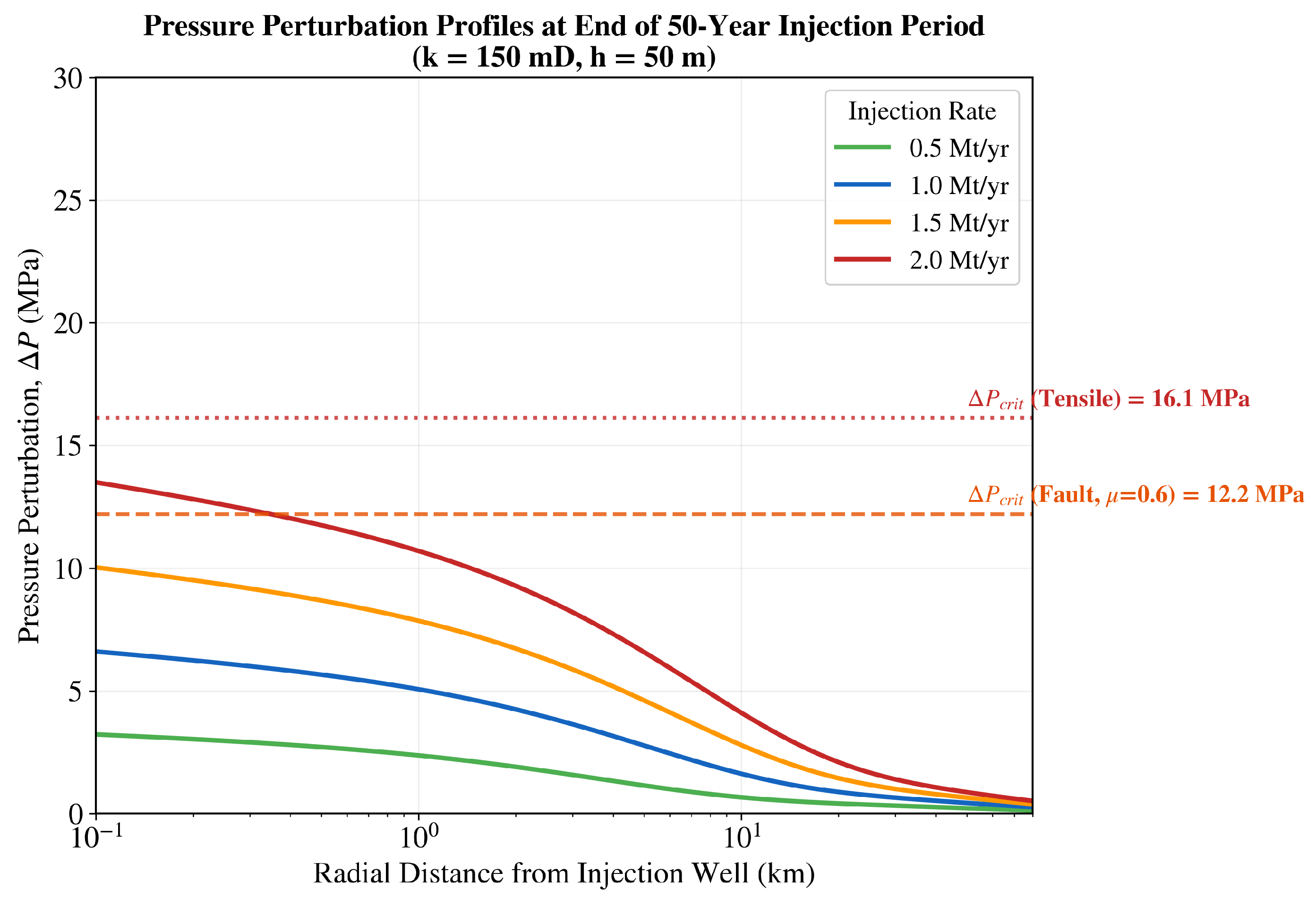
Figure 4 presents the simulated spatial pressure perturbation profiles at the end of a 50-year injection period for multiple injection rates ranging from 0.5 to 2.0 million metric tons per year (Mt/yr). The profiles capture the steep pressure gradient near the wellbore caused by two-phase flow (CO
2 displacing brine) and the logarithmic decay in the far-field single-phase brine region.
For the 1.0 Mt/yr base case, the maximum pressure perturbation at the wellbore remains below both thresholds, indicating that the entire reservoir remains within the safe geomechanical envelope. In this scenario, the AoR would be defined entirely by the extent of the separate-phase CO2 plume, as the geomechanical pressure front radius is zero.
However, at an injection rate of 2.0 Mt/yr, the near-wellbore pressure exceeds the fault reactivation threshold ( MPa). The intersection of the 2.0 Mt/yr pressure profile with the 12.2 MPa threshold occurs at a radial distance of approximately 1.5 km. Therefore, for the 2.0 Mt/yr scenario, the pressure front boundary is defined as a 1.5 km radius around the injection well. If no critically oriented faults were present, the tensile threshold (16.1 MPa) would apply, and the pressure front radius would be reduced to approximately 0.5 km.
4.4. Post-Injection Site Care (PISC) Evolution
A critical aspect of Class VI permitting is understanding pressure behavior during the Post-Injection Site Care (PISC) period. After injection ceases, the near-wellbore pressure drops rapidly, but the pressure pulse continues to propagate outward into the far-field [
17].
The spatiotemporal evolution of the pressure field was evaluated for the 2.0 Mt/yr scenario over a 50-year injection period followed by 50 years of post-injection site care. Results show that near-wellbore pressure ( km) drops immediately upon shut-in, while pressures at greater distances (e.g., km) continue to rise for decades before eventually dissipating, a characteristic behavior of pressure diffusion in confined aquifers. Spatial pressure profiles extracted at 10, 25, and 50 years into the PISC period confirm a progressive redistribution and relaxation of the pressure perturbation. Crucially, the maximum spatial extent of the geomechanical pressure front (the region exceeding 12.2 MPa) occurs precisely at the end of injection and strictly contracts during the PISC period. This confirms that an AoR delineated based on end-of-injection conditions is protective for the entire project lifecycle.
4.5. Sensitivity Analysis
To demonstrate the robustness of the methodology under varying geologic conditions, sensitivity analyses were conducted on reservoir permeability, caprock fracture gradient, and fault friction coefficient.
In deep saline formations, permeability can vary by orders of magnitude [
28].
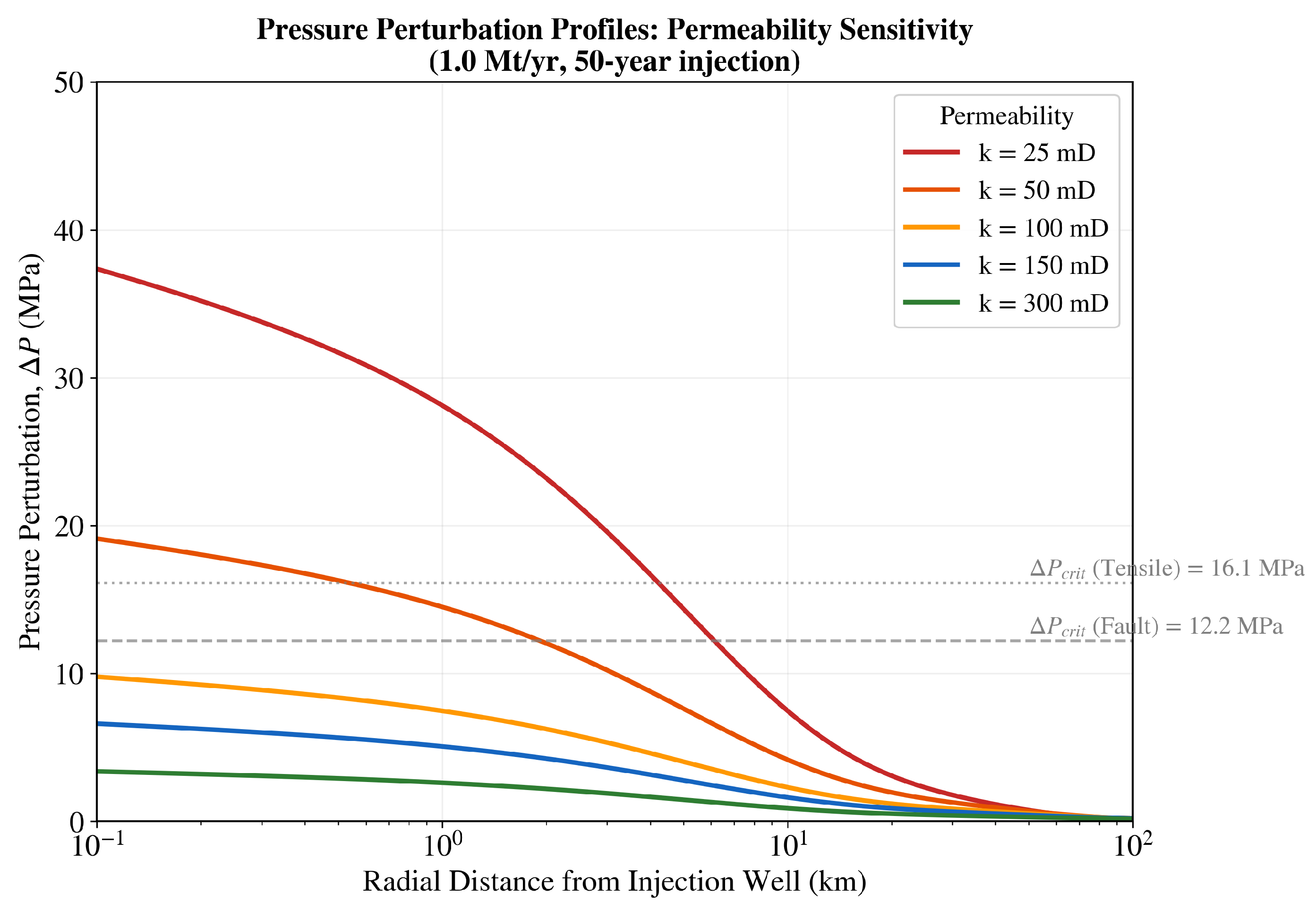
Figure 5 shows the pressure profiles for a 1.0 Mt/yr injection rate across permeabilities ranging from 25 mD to 300 mD. In low-permeability scenarios (25 mD and 50 mD), the pressure buildup significantly exceeds both geomechanical thresholds, resulting in expansive pressure fronts (e.g., >10 km for the 25 mD case). This demonstrates that the proposed method effectively captures the increased operational risk associated with low-injectivity reservoirs, appropriately expanding the AoR to reflect the larger area subjected to geomechanical stress.
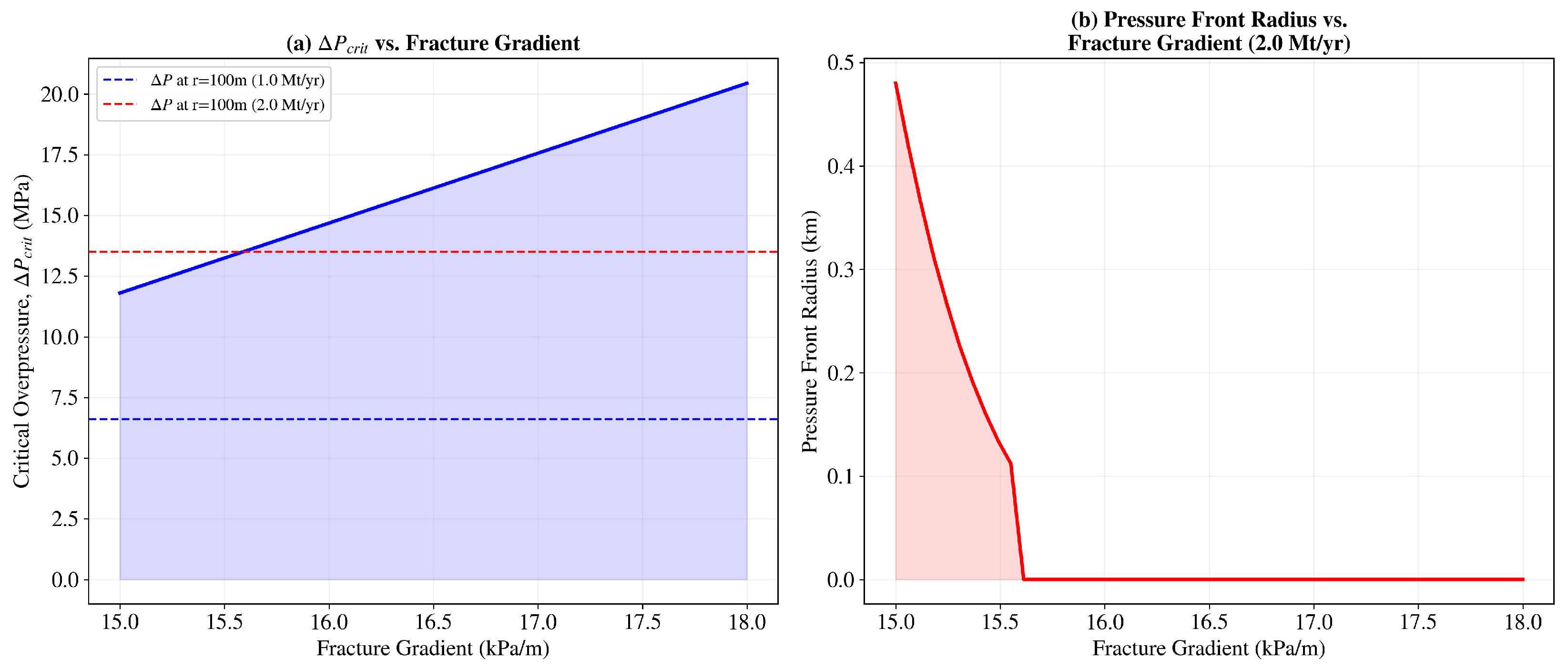
Fracture Gradient and Friction Sensitivity: Figure 6 illustrates the sensitivity of the tensile threshold and resulting AoR radius to variations in the caprock fracture gradient. As the fracture gradient decreases (weaker rock), the allowable overpressure drops linearly, resulting in a non-linear expansion of the AoR radius.
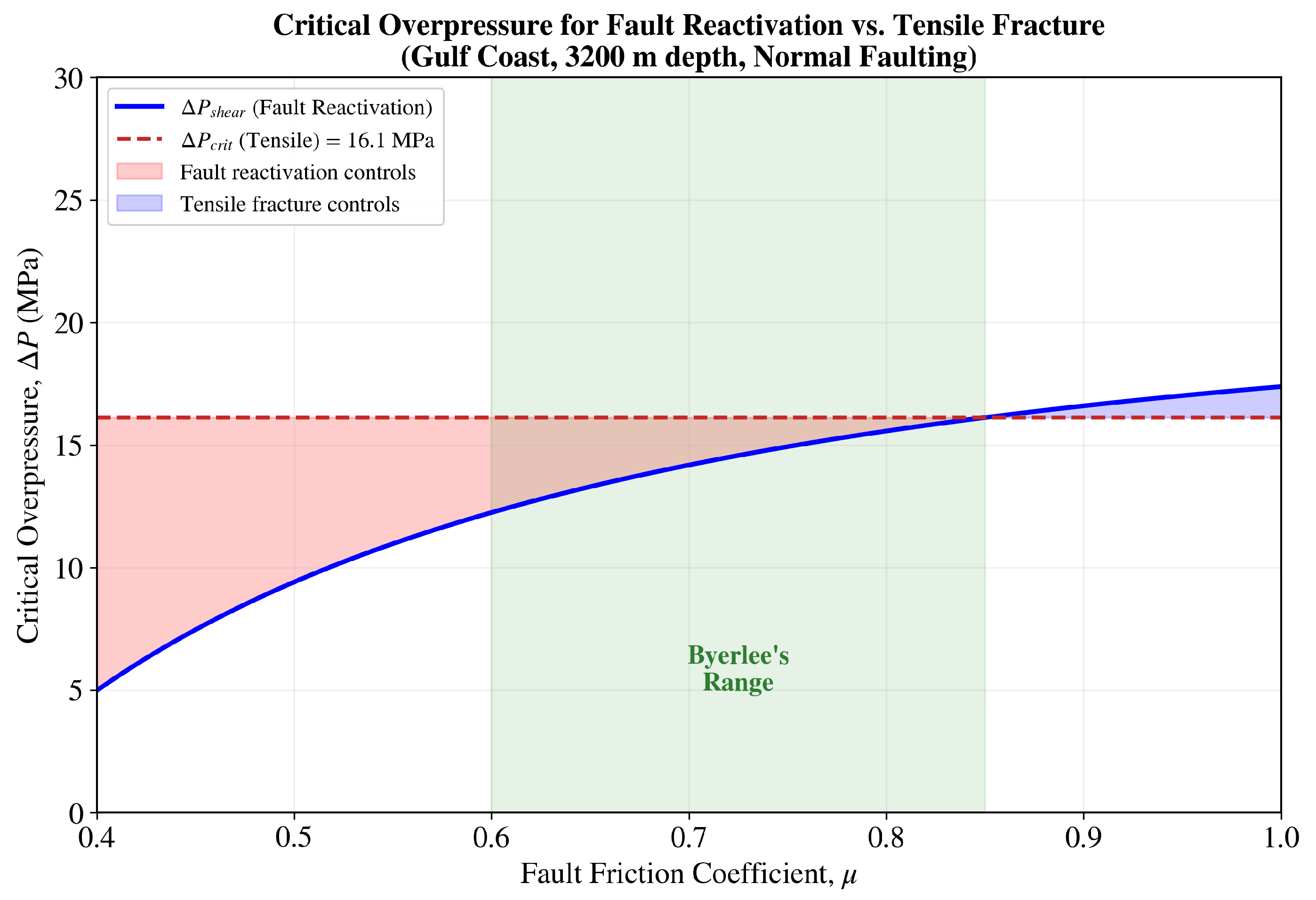
Figure 7 maps the critical overpressure against the fault friction coefficient. Within Byerlee’s expected range for crustal rocks (
to
), fault reactivation consistently occurs at a lower pressure than tensile fracture, reinforcing the necessity of Step 2 (Fault Screening) in the proposed workflow.
6. Conclusions
The delineation of the Area of Review is a cornerstone of carbon storage permitting, yet traditional methods fail in deep sedimentary basins lacking overlying USDWs. This paper presents a robust, geomechanics-based alternative that defines the pressure front based on caprock tensile fracture, fault reactivation thresholds, and capillary breakthrough pressure.
Key conclusions include: 1. In the absence of a USDW, the pressure front should be defined by the physical limits of the containment system, utilizing existing Class VI constraints on injection pressure. This extension to the caprock is supported by international CCS risk management standards (ISO/TR 27918, ISO 27914) and the regulatory intent of 40 CFR 146.88(a). 2. Mohr–Coulomb analysis demonstrates that for typical deep basin stress regimes, the reactivation of optimally oriented faults often occurs at lower overpressures than tensile fracturing, making fault screening a critical step in AoR delineation. The framework is generalizable to normal, strike-slip, and reverse faulting regimes through appropriate stress axis assignments (
Table 1). 3. The proposed methodology, applicable as an alternative site-specific approach under 40 CFR 146.84(c), yields finite, physically meaningful AoR boundaries that scale dynamically with injection rates, reservoir permeability, and geomechanical rock properties. Quantitative poroelastic analysis (
Table 2) confirms that the static-stress-based threshold is conservative during active injection. 4. Maximum spatial extent of the geomechanical pressure front occurs at the cessation of injection; subsequent PISC period dynamics show a relaxation of the front, confirming lifecycle protectiveness. 5. Capillary breakthrough pressure serves as a third threshold (Equation (
9)), ensuring that the most restrictive containment condition governs the AoR boundary, particularly for sites with silty mudstone or poorly compacted caprocks. 6. The AoR delineation report template (
Appendix B) and operator workflow provide a standardized pathway for permit applications and regulatory review, reducing communication barriers between operators and regulatory agencies.
By adopting this framework, operators and regulators can confidently advance geologic sequestration projects in high-capacity, deep sedimentary basins, ensuring rigorous environmental protection while avoiding the regulatory paralysis caused by undefined analytical parameters.