


Study on Corrosion in Wet Gas Pipelines Under the Influence of Gas Composition and Geometric Configuration

 and
and
Abstract
1. Introduction
2. Materials and Methods
2.1. Experimental Materials
2.2. Experimental Device and Method
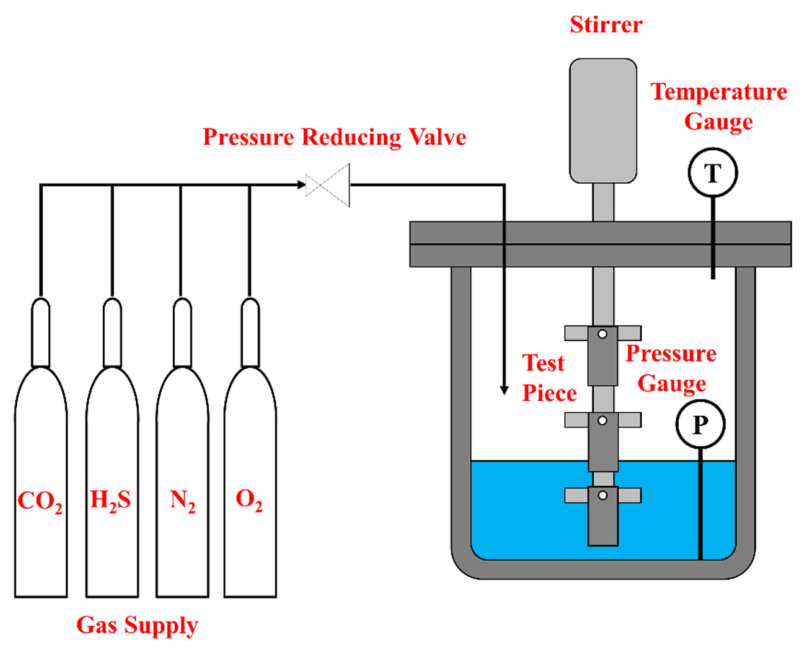
2.2.1. Autoclave
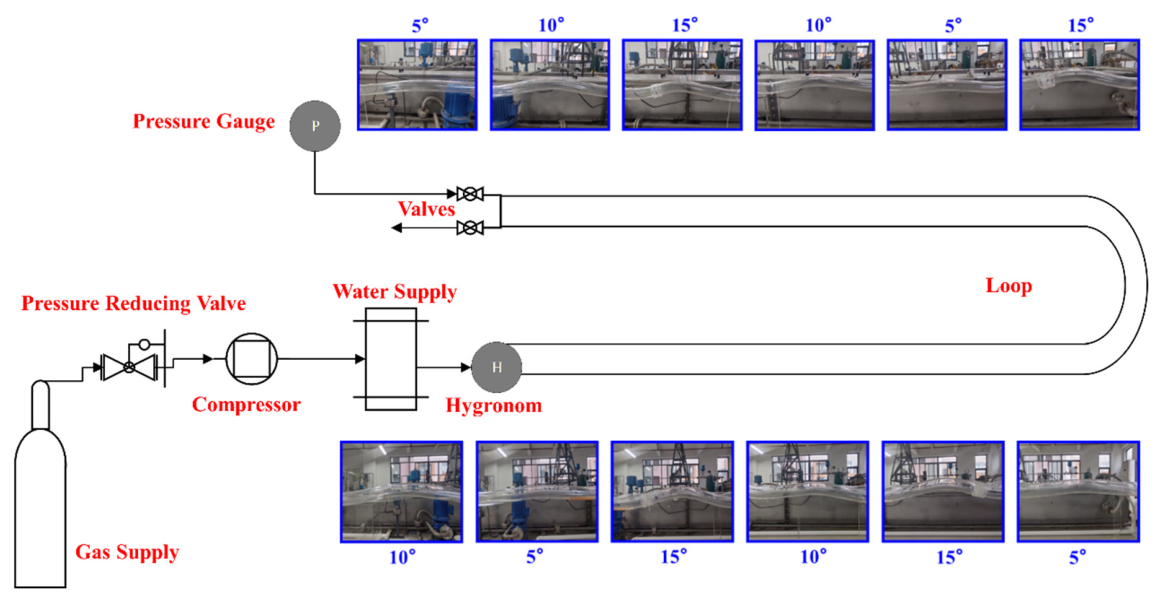
2.2.2. Flow Loop
- (1)
- Prior to the experiment, purge the pipeline to remove debris and impurities, and dry it thoroughly.
- (2)
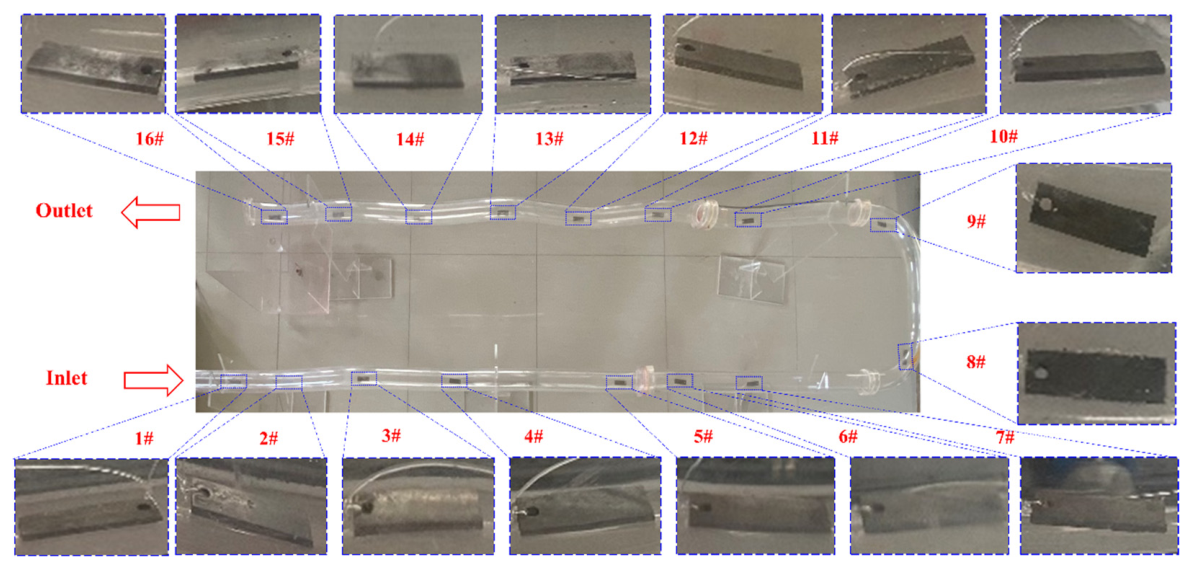
- Before the experiment, determine and mark the locations for corrosion testing. Label the prepared corrosion coupons (corresponding to the pipeline test positions) and string them sequentially with high-strength nylon thread. Fix them according to the marked positions and record the setup.
- (3)
- Purge the pipeline again with dry nitrogen for 30 min.
- (4)
- Prepare gas cylinders according to the field gas composition and prepare water according to the field water quality. Connect the gas cylinder to the prepared water container and then to the pipeline. Allow the gas to pass through the prepared water tank (temperature controlled to the required experimental level) to humidify the gas. Install a gas humidity tester at the gas inlet to determine the moisture content in the gas. Adjust the gas residence time in the water to achieve the required humidity level for the experiment. Use a pressure regulator valve to adjust the pressure to the experimental value.
- (5)
- Direct the exhaust gas from the experiment into a sodium hydroxide solution for absorption.
- (6)
- After the experiment, clean and dry the pipeline section by section for future use. Maintain the order of the corrosion coupons and analyze them promptly (processed in accordance with GB/T 16545 [30]).
3. Result and Discussion
3.1. Discrimination of Locations with High Risk of Corrosion
3.1.1. Single Gas Components
3.1.2. Gas Mixture
- (1)
- Partial pressure of H2S
- (2)
- Partial pressure of CO2
- (3)
- Partial pressure of O2
3.2. Analysis of Fluid Accumulation in Fluctuating Pipeline
3.2.1. Influence of Water Content
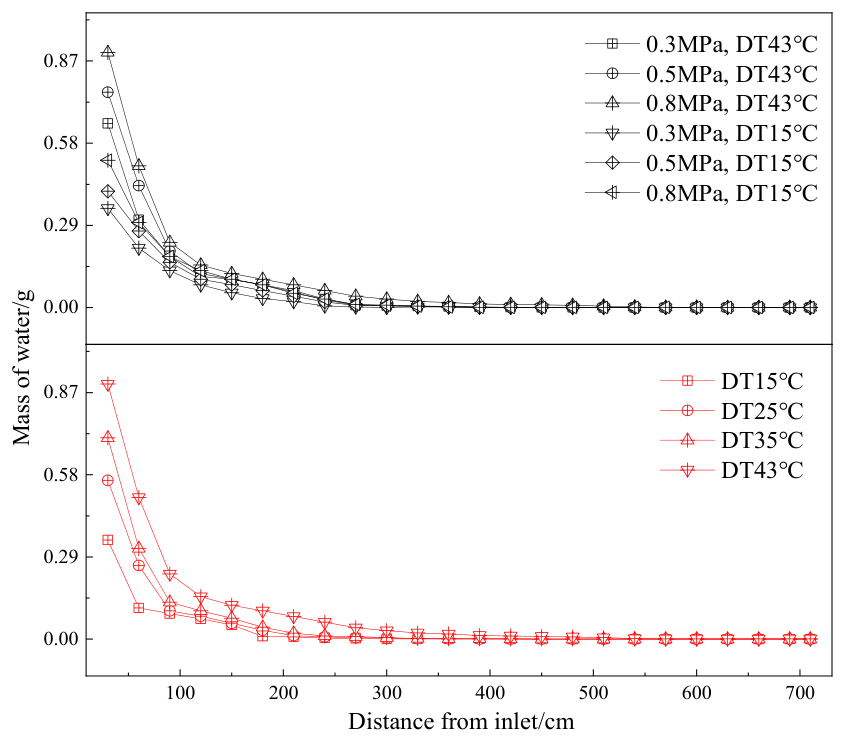
3.2.2. Influence of Temperature Difference and Pressure
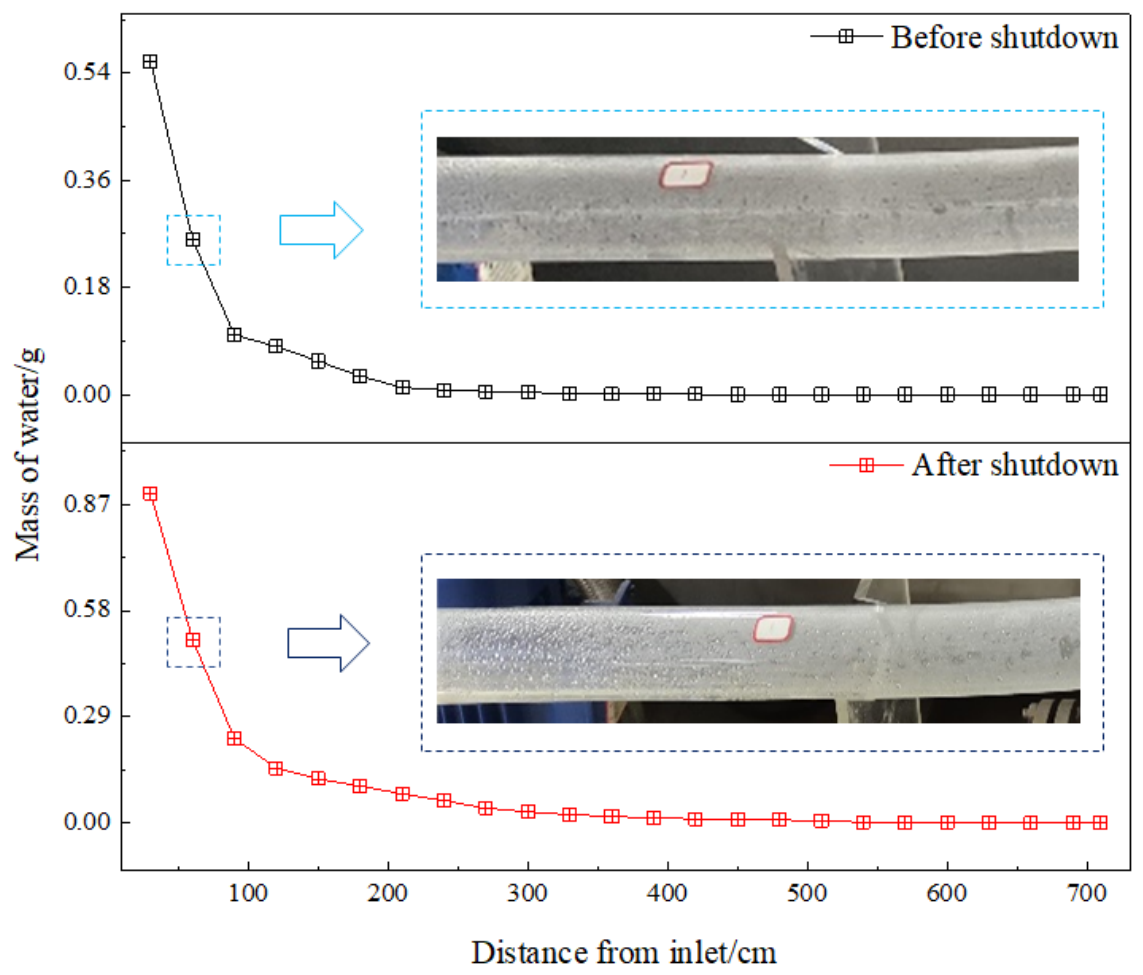
3.2.3. Influence of Pipeline Restart
3.3. Experimental Analysis on Corrosion of Simulated Associated Gas Pipeline
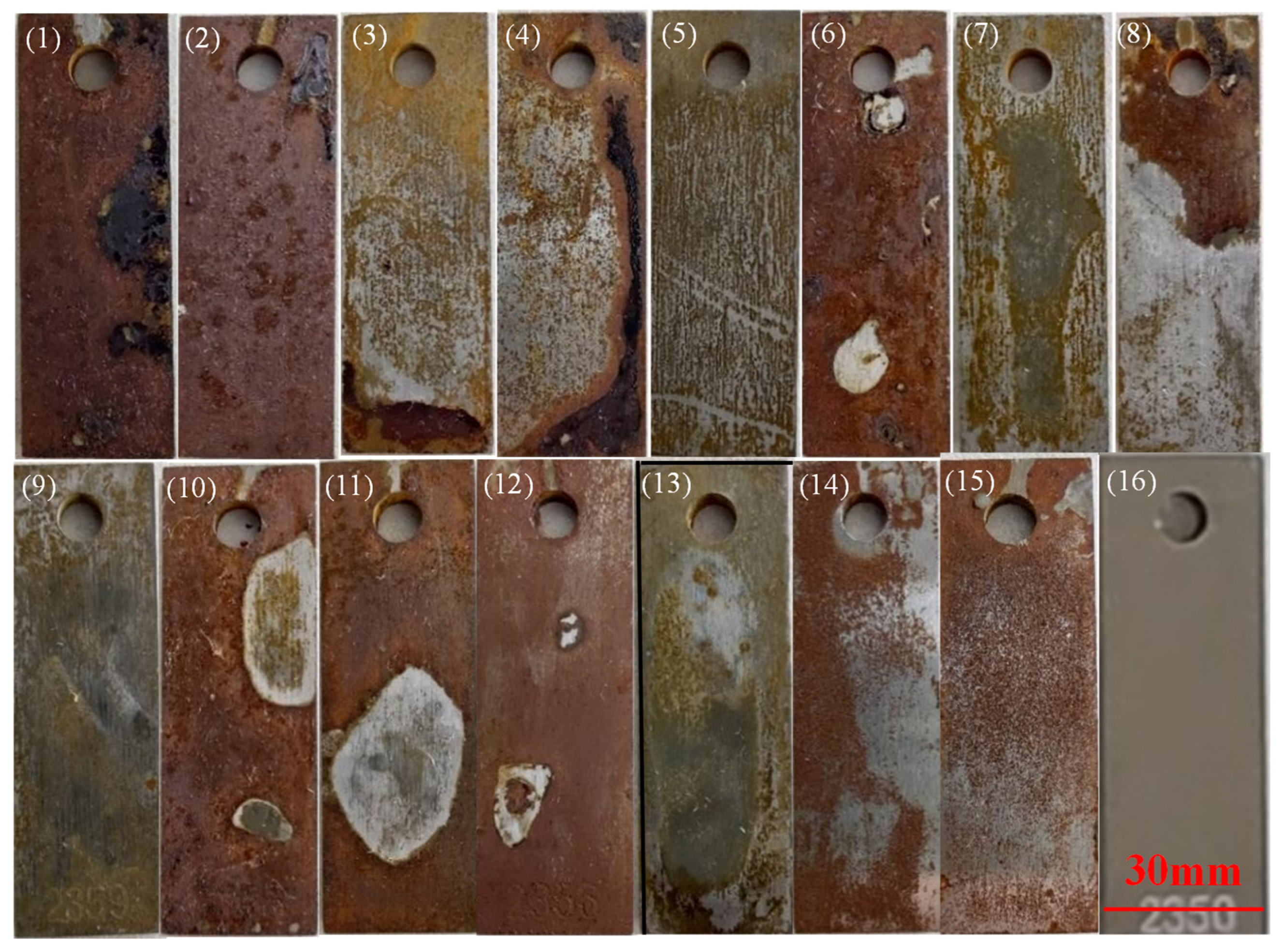
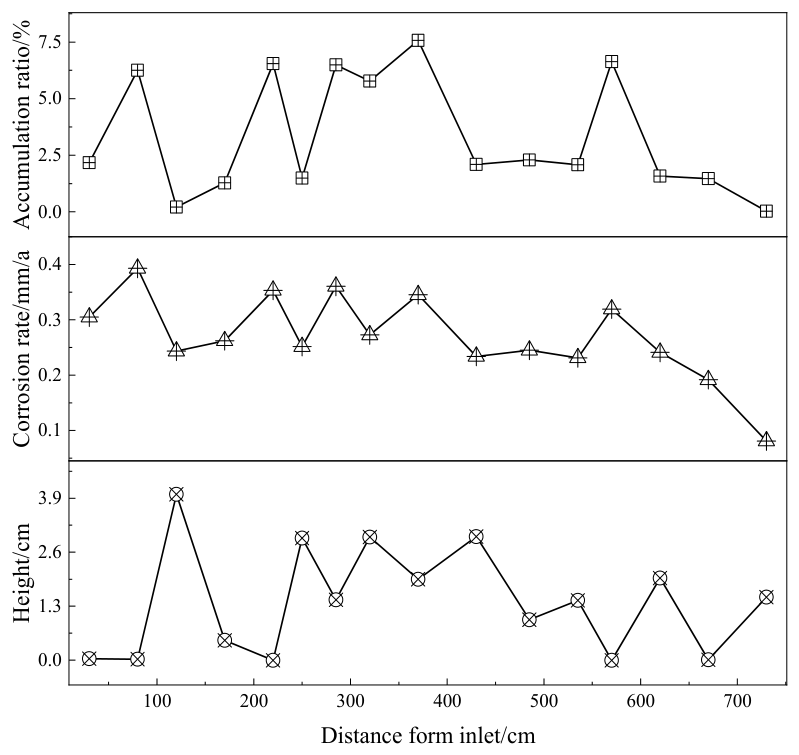
3.3.1. Test Piece Method for Testing Pipeline Corrosion Distribution
3.3.2. Analysis of Corrosion Experiment by Access Pipe Section Method
4. Conclusions
- (1)
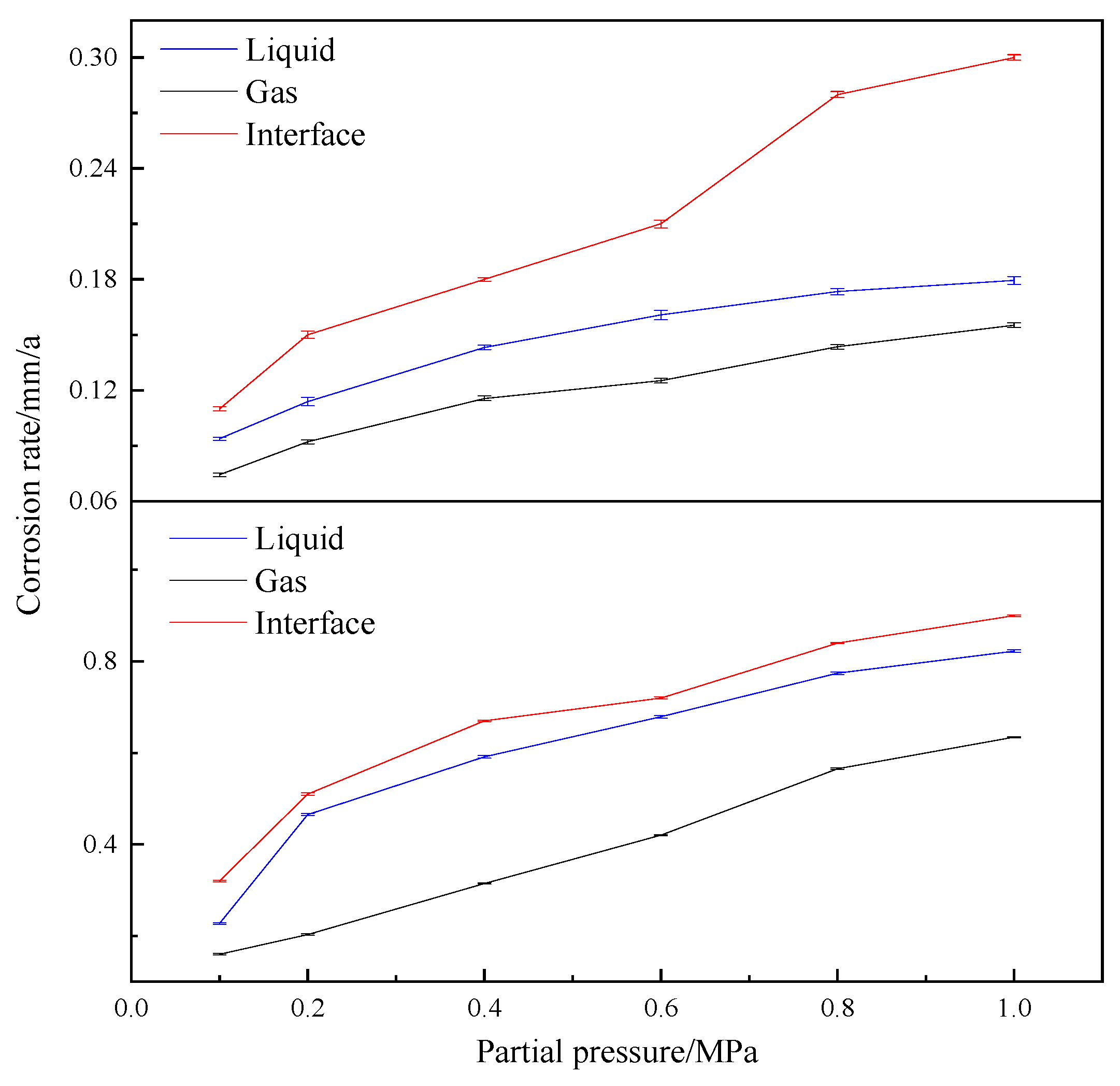
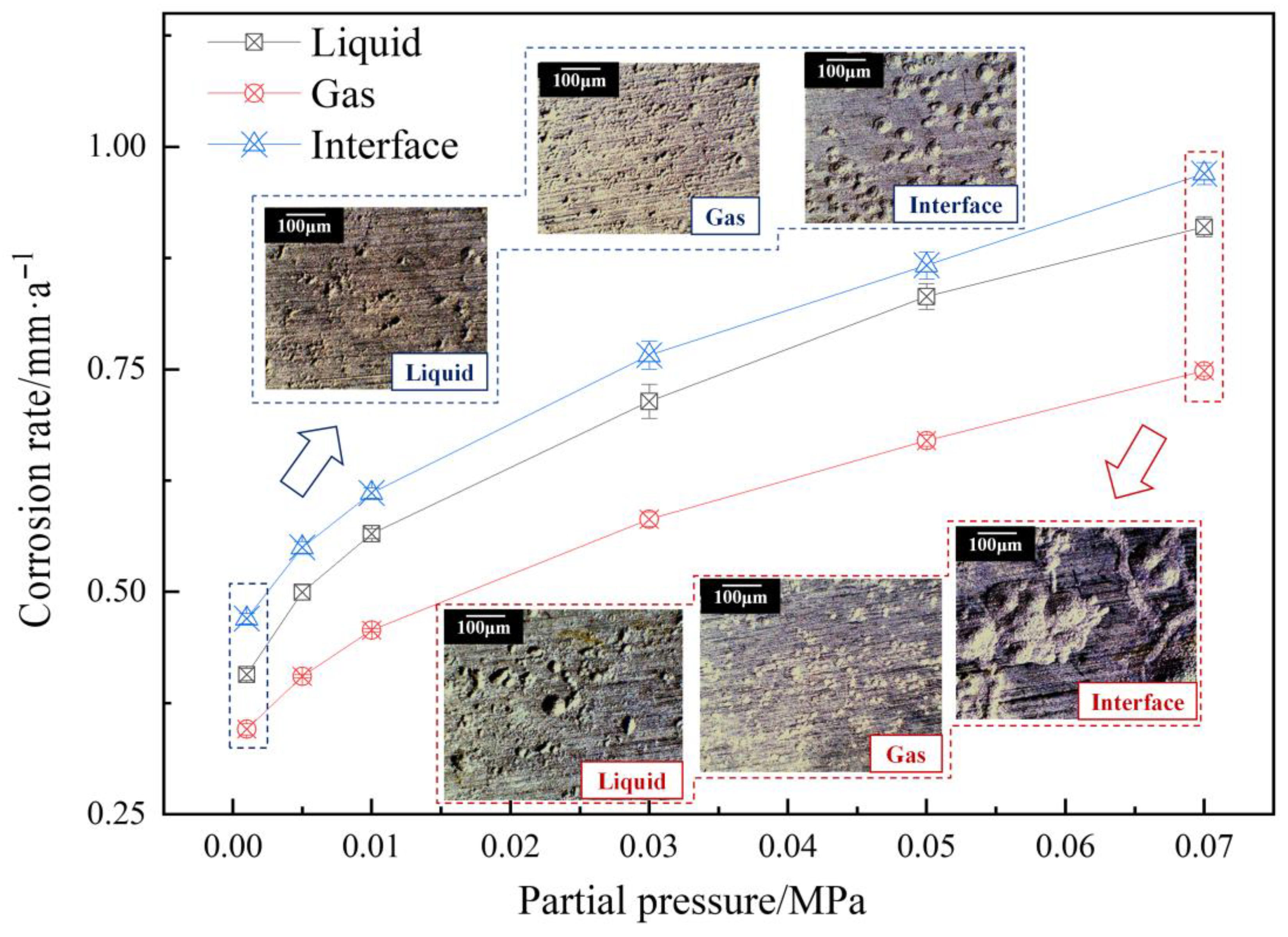
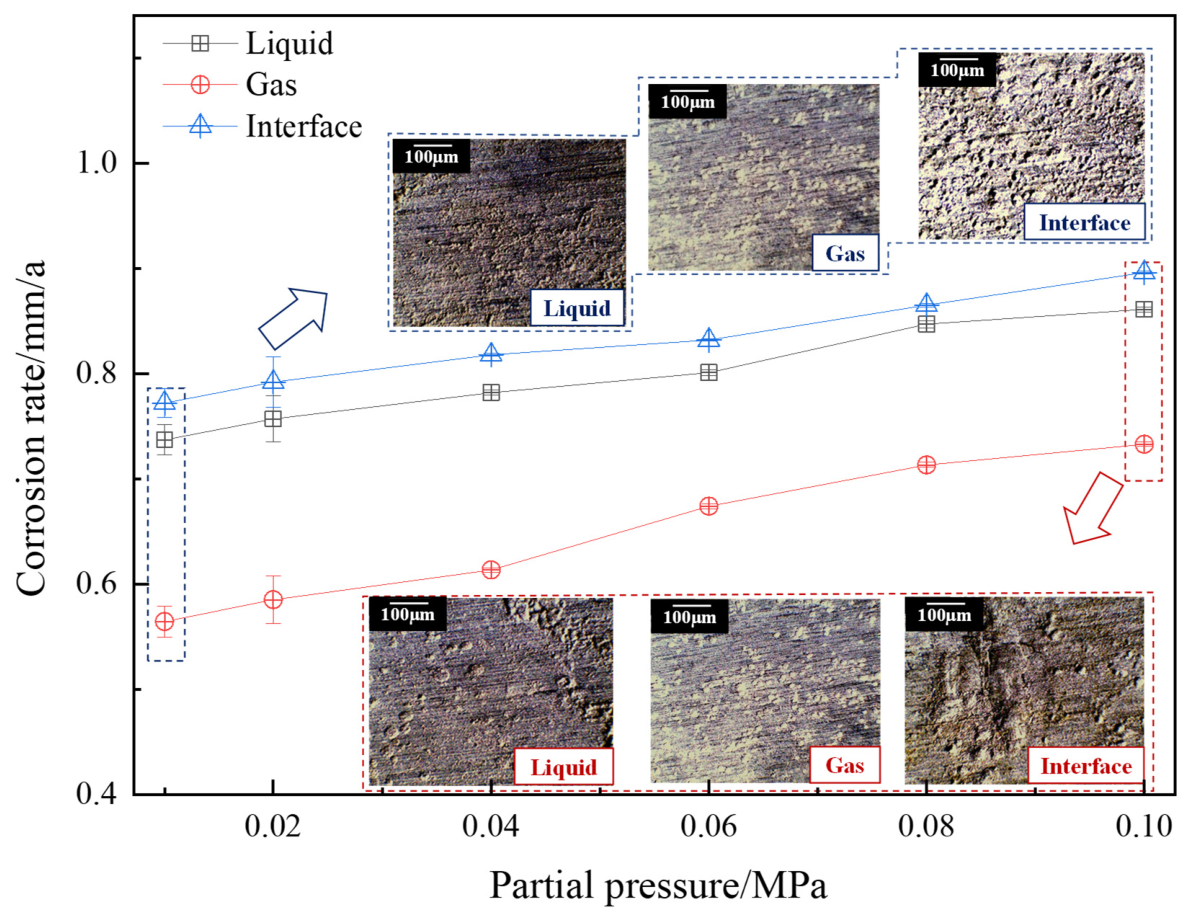
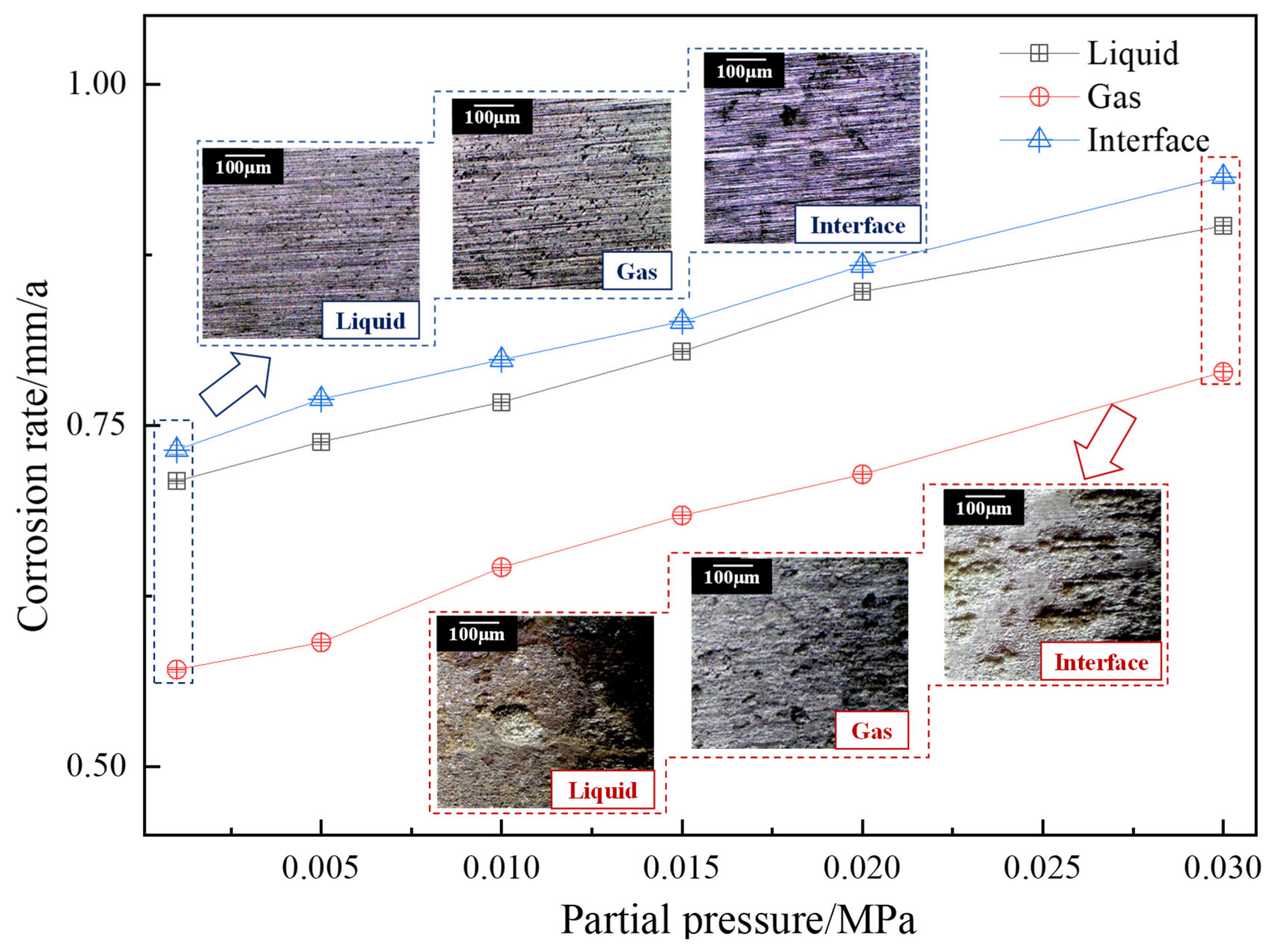
- Corrosion mechanism studies based on autoclave experiments demonstrate that in O2, H2S, and CO2 coexisting systems, regardless of variations in the partial pressures of individual gases, corrosion severity consistently follows the order of gas–liquid interface, which is greater than liquid phase, which is greater than gas phase. Severe localized corrosion at the interface is primarily driven by oxygen concentration cell effects and local enrichment of corrosive species. H2S is identified as the dominant corrosive medium, exerting a significantly greater influence on corrosion rates compared to CO2 or O2, and promoting pitting and localized corrosion, with the most severe pitting observed at the gas–liquid interface.
- (2)
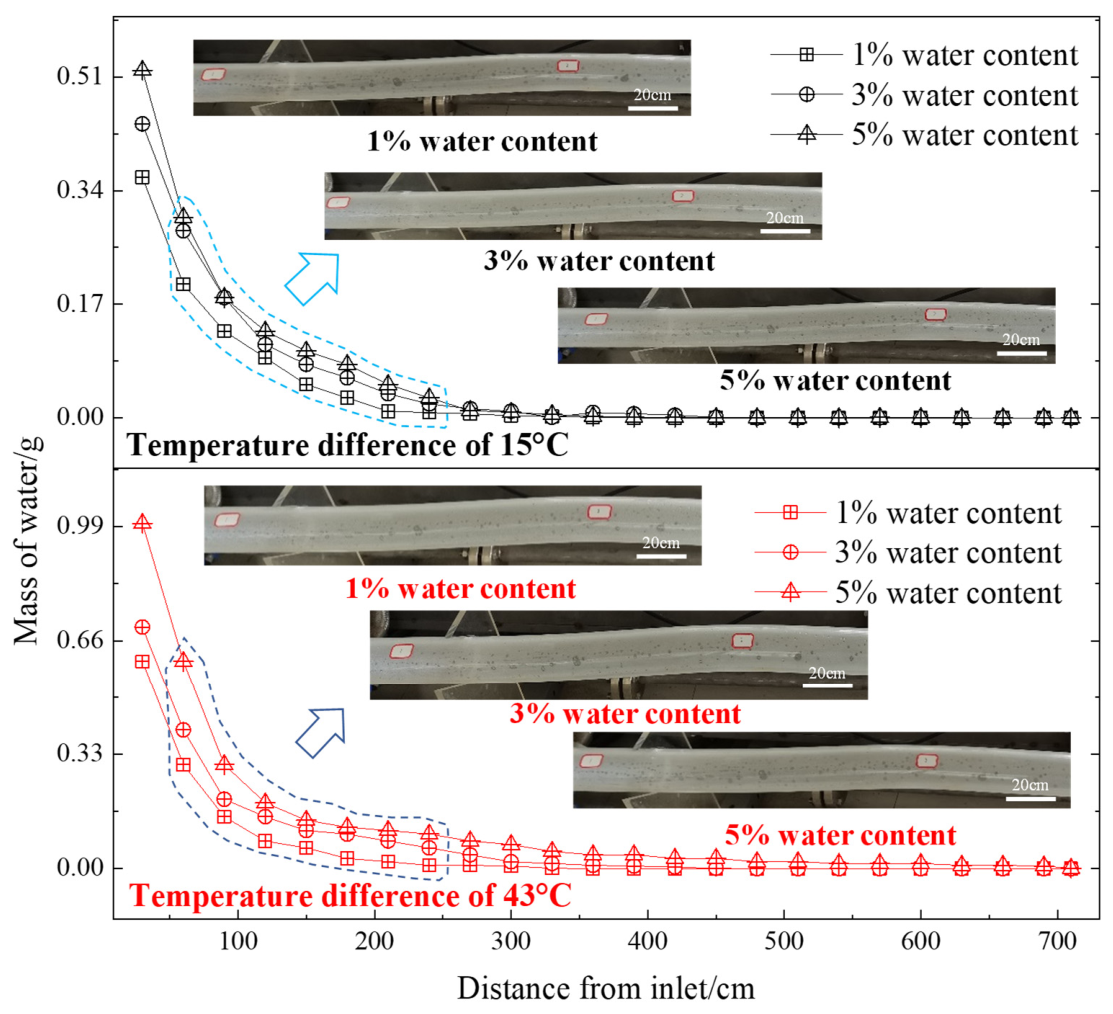
- Analysis of liquid accumulation behavior in the flow loop indicates that condensate formation and distribution are significantly influenced by gas water content, temperature differences between the pipeline and the environment, operating pressure, and shutdown and restart operations. Higher water content, elevated pressure, lower ambient temperature, and frequent shutdowns exacerbate both the quantity and spatial distribution range of liquid accumulation within the pipeline. Condensation initiates near the inlet and propagates downstream over time, with no significant condensate observed near the outlet during the experimental period.
- (3)
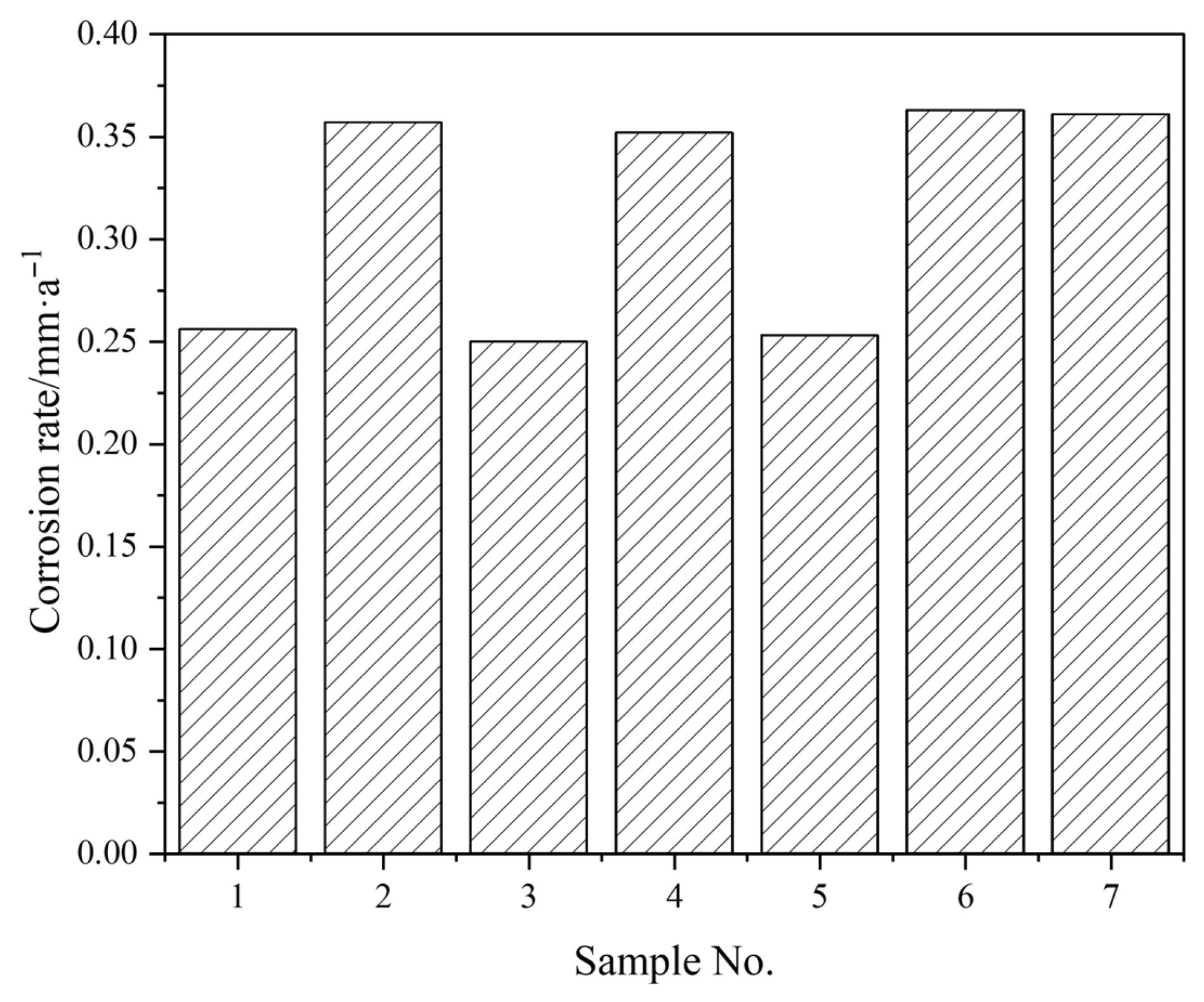
- Corrosion distribution experiments in the simulated pipeline confirm that liquid accumulation serves as the primary factor contributing to non-uniform corrosion distribution. Areas prone to liquid accumulation or frequent wet–dry cycling, including low-lying sections, the bottom of downhill slopes, and the start of uphill sections, experience the most severe corrosion. The corrosion rates at these locations can be up to 61.4% higher than those in areas without accumulation or with stable liquid layers, highlighting these regions as critical zones for localized perforation risk.
Author Contributions
Funding
Data Availability Statement
Conflicts of Interest
References
- Liu, H.; Cheng, Y.F. Mechanistic aspects of microbially influenced corrosion of X52 pipeline steel in a thin layer of soil solution containing sulphate-reducing bacteria under various gassing conditions. Corros. Sci. 2018, 133, 178–189. [Google Scholar] [CrossRef]
- Ding, T.; Chen, Y.; Sun, C.; Zhang, Z.; Sun, J.; Li, G. Corrosion dominant factor and corrosion prediction model for X52 pipeline steel in high-pressure CO2 streams with multiple impurities of H2O, O2, SO2, H2S and NO2. Eng. Fail. Anal. 2025, 179, 109789. [Google Scholar] [CrossRef]
- Zhou, Y.; Xie, F.; Wang, D.; Wang, Y.; Wu, M. Carbon capture, utilization and storage (CCUS) pipeline steel corrosion failure analysis: A review. Eng. Fail. Anal. 2024, 155, 107745. [Google Scholar] [CrossRef]
- Qin, M.; Liao, K.; He, G.; Zou, Q.; Zhao, S.; Zhang, S. Corrosion mechanism of X65 steel exposed to H2S/CO2 brine and H2S/CO2 vapor corrosion environments. J. Nat. Gas Sci. Eng. 2022, 106, 104774. [Google Scholar] [CrossRef]
- De Motte, R.; Basilico, E.; Mingant, R.; Kittel, J.; Ropital, F.; Combrade, P.; Necib, S.; Deydier, V.; Crusset, D.; Marcelin, S. A study by electrochemical impedance spectroscopy and surface analysis of corrosion product layers formed during CO2 corrosion of low alloy steel. Corros. Sci. 2020, 172, 108666. [Google Scholar] [CrossRef]
- Xu, Y.; Tan, M.Y. Probing the initiation and propagation processes of flow accelerated corrosion and erosion corrosion under simulated turbulent flow conditions. Corros. Sci. 2019, 151, 163–174. [Google Scholar] [CrossRef]
- Satoh, T.; Shao, Y.; Cook, W.G.; Lister, D.H.; Uchida, S. Flow-assisted corrosion of carbon steel under neutral water conditions. Corrosion 2007, 63, 770–780. [Google Scholar] [CrossRef]
- Yang, Y.; Cheng, Y.F. Parametric effects on the erosion-corrosion rate and mechanism of carbon steel pipes in oil sands slurry. Wear 2012, 276–277, 141–148. [Google Scholar] [CrossRef]
- Wang, Y.; Wang, B.; Xing, X.; He, S.; Zhang, L.; Lu, M. Effects of flow velocity on the corrosion behaviour of super 13Cr stainless steel in ultra-HTHP CO2-H2S coexistence environment. Corros. Sci. 2022, 200, 110248. [Google Scholar] [CrossRef]
- Meri, Y.; Siddiqui, O.; Toor, I.U.; Shams, A. A detailed review of numerical modeling of flow accelerated corrosion: Challenges and opportunities for the future. Mater. Corros. 2025, 76, 368–385. [Google Scholar] [CrossRef]
- Fujisawa, N. Review: Pipeline Layout Effect on the Wall Thinning of Mihama Nuclear Power Plants. J. Nucl. Eng. 2025, 6, 19. [Google Scholar] [CrossRef]
- Kairy, S.K.; Zhou, S.; Turnbull, A.; Hinds, G. Corrosion of pipeline steel in dense phase CO2 containing impurities: A critical review of test methodologies. Corros. Sci. 2023, 214, 110986. [Google Scholar] [CrossRef]
- Liao, K.; Qin, M.; Wang, M.; Zhang, S.; Wu, L.; Yang, N. Probing pipe flow impact corrosion monitoring effectiveness under corrosion monitor coupons conditions. Fuel 2023, 353, 129288. [Google Scholar] [CrossRef]
- Zhang, G.A.; Zeng, Y.; Guo, X.P.; Jiang, L.; Shi, D.Y.; Chen, Z.Y. Electrochemical corrosion behavior of carbon steel under dynamic high pressure H2S/CO2 environment. Corros. Sci. 2012, 65, 37–47. [Google Scholar] [CrossRef]
- Dong, B.; Liu, W.; Zhang, Y.; Banthukul, W.; Zhao, Y.; Zhang, T.; Fan, Y.; Li, X. Comparison of the characteristics of corrosion scales occurring 5Cr steel and X60 Steel in CO2-H2S coexistence environment. J. Nat. Gas Sci. Eng. 2020, 80, 103394. [Google Scholar] [CrossRef]
- Gualtun, Y.M.; Larrey, D. Correlation of cases of top of line corrosion with calculated water condensation rates. In Proceedings of the CORROSION 2000, Orlando, FL, USA, 26–31 March 2000; pp. 1–15. [Google Scholar]
- Morland, B.H.; Tjelta, M.; Norby, T.; Svenningsen, G. Effect of SO2, O2, NO2, and H2O concentrations on chemical reactions and corrosion of carbon steel in dense phase CO2. Corrosion 2019, 75, 1327–1338. [Google Scholar] [CrossRef]
- Sun, C.; Sun, J.; Liu, S.; Wang, Y. Effect of water content on the corrosion behavior of X65 pipeline steel in supercritical CO2-H2O-O2-H2S-SO2 environment as relevant to CCS application. Corros. Sci. 2018, 137, 151–162. [Google Scholar] [CrossRef]
- Cole, I.S.; Paterson, D.A.; Corrigan, P.; Sim, S.; Birbilis, N. State of the aqueous phase in liquid and supercritical CO2 as relevant to CCS pipelines. Int. J. Greenh. Gas Control 2012, 7, 82–88. [Google Scholar] [CrossRef]
- Yan, Y.; Lyu, W.; Yu, H.; Lv, W.; Wei, K.; Jiang, L. Advances in Synergistic Corrosion Mechanisms of and Management Strategies for Impurity Gases During Supercritical CO2 Pipeline Transportation. Molecules 2025, 30, 4094. [Google Scholar] [CrossRef]
- Liu, Z.; Gao, Q.; Zhou, Y.; Pan, R. Research Progress on Major Influencing Factors of Corrosion Behavior of Pipeline Steel in Supercritical CO2 Environment. Materials 2025, 18, 2424. [Google Scholar] [CrossRef]
- Javidi, M.; Bekhrad, S. Failure analysis of a wet gas pipeline due to localised CO2 corrosion. Eng. Fail. Anal. 2018, 89, 46–56. [Google Scholar] [CrossRef]
- Liao, K.; Qin, M.; Chen, S.; He, G.; Zhang, S. Numerical simulation of gas-liquid flow in inclined shale gas pipelines. Chem. Eng. Res. Des. 2023, 190, 605–618. [Google Scholar] [CrossRef]
- Bissor, E.H.; Ullmann, A.; Brauner, N. Liquid displacement from lower section of hilly-terrain natural gas pipelines. J. Nat. Gas Sci. Eng. 2020, 73, 103046. [Google Scholar] [CrossRef]
- Hao, B.; Bian, Z.; Bu, L.; Yang, X.; Gao, L.; Wang, T. Research on the accumulation law and treatment measures of low-pressure wet gas pipeline network in a certain gas field. J. Phys. Conf. Ser. 2024, 2834, 012008. [Google Scholar] [CrossRef]
- Zhang, C.A.; Zeng, L.; Huang, H.L.; Guo, X.P. A study of flow-accelerated corrosion at elbow of carbon steel pipeline by array electrode and computational fluid dynamics simulation. Corros. Sci. 2013, 77, 334–341. [Google Scholar] [CrossRef]
- Ajmal, T.S.; Arya, S.B.; Udupa, K.R. Effect of hydrodynamics on the flow accelerated corrosion (FAC) and electrochemical impedance behavior of line pipe steel for petroleum industry. Int. J. Press. Vessel. Pip. 2019, 171, 103–111. [Google Scholar] [CrossRef]
- Hua, Y.; Barker, R.; Neville, A. The effect of O2 content on the corrosion behaviour of X65 and 5Cr in water-containing supercritical CO2 environments. Appl. Surf. Sci. 2015, 356, 499–511. [Google Scholar] [CrossRef]
- Qin, M.; Liao, K.; He, G.; Huang, Y.; Wang, M.; Zhang, S. Main Control Factors and Prediction Model of Flow-accelerated CO2/H2S Synergistic Corrosion for X65 Steel. Process Saf. Environ. Prot. 2022, 160, 749–762. [Google Scholar] [CrossRef]
- GB/T 16545-2025; Corrosion of Metals and Alloys—Removal of Corrosion Products from Corrosion Test Specimens. Standards Press of China: Beijing, China, 2025.
- Liao, K.X.; Leng, J.H.; Cheng, Y.F.; Zou, Q.; He, T.; Chen, L.; Qin, M.; Liu, X.; Zhao, S. Investigation into main controlling factors and prediction model of L245NS steel corrosion rate in CO2-O2-SO2-H2S-H2O environment. Mater. Chem. Phys. 2023, 309, 128414. [Google Scholar] [CrossRef]

| Pipe No. | Material | Temperature (°C) | Pressure (MPa) | Velocity (m/s) | Water Content (%) | CO2 (%) | H2S (g/m3) | O2 (%) |
|---|---|---|---|---|---|---|---|---|
| 1~4 | L245NCS | 23~53 | 0.8~1.0 | 2~5 | 1~5 | 3.5~11.1 | 2580~3102 | 0.18~0.27 |
| Exp. No. | Partial Pressure (kPa) | ||
|---|---|---|---|
| H2S | CO2 | O2 | |
| Autoclave-1 | 1 | 0 | 0 |
| Autoclave-2 | 5 | 0 | 0 |
| Autoclave-3 | 10 | 0 | 0 |
| Autoclave-4 | 30 | 0 | 0 |
| Autoclave-5 | 50 | 0 | 0 |
| Autoclave-6 | 70 | 0 | 0 |
| Autoclave-7 | 0 | 10 | 0 |
| Autoclave-8 | 0 | 20 | 0 |
| Autoclave-9 | 0 | 40 | 0 |
| Autoclave-10 | 0 | 60 | 0 |
| Autoclave-11 | 0 | 80 | 0 |
| Autoclave-12 | 0 | 100 | 0 |
| Autoclave-13 | 1 | 80 | 20 |
| Autoclave-14 | 5 | 80 | 20 |
| Autoclave-15 | 10 | 80 | 20 |
| Autoclave-16 | 30 | 80 | 20 |
| Autoclave-17 | 50 | 80 | 20 |
| Autoclave-18 | 70 | 80 | 20 |
| Autoclave-19 | 50 | 10 | 20 |
| Autoclave-20 | 50 | 20 | 20 |
| Autoclave-21 | 50 | 40 | 20 |
| Autoclave-22 | 50 | 60 | 20 |
| Autoclave-23 | 50 | 100 | 20 |
| Autoclave-24 | 60 | 80 | 1 |
| Autoclave-25 | 60 | 80 | 5 |
| Autoclave-26 | 60 | 80 | 10 |
| Autoclave-27 | 60 | 80 | 15 |
| Autoclave-28 | 60 | 80 | 20 |
| Autoclave-29 | 60 | 80 | 25 |
| Exp. No. | Water Content (vol%) | Pressure (MPa) | Temperature Difference (°C) | Conveying Status | Gas Phase Composition |
|---|---|---|---|---|---|
| Accumulation-1 | 1 | 0.8 | 43 | Continuous | N2 |
| Accumulation-2 | 3 | 0.8 | 43 | Continuous | N2 |
| Accumulation-3 | 5 | 0.8 | 43 | Continuous | N2 |
| Accumulation-4 | 1 | 0.8 | 15 | Continuous | N2 |
| Accumulation-5 | 3 | 0.8 | 15 | Continuous | N2 |
| Accumulation-6 | 5 | 0.8 | 15 | Continuous | N2 |
| Accumulation-7 | 5 | 0.3 | 43 | Continuous | N2 |
| Accumulation-8 | 5 | 0.5 | 43 | Continuous | N2 |
| Accumulation-9 | 5 | 0.3 | 15 | Continuous | N2 |
| Accumulation-10 | 5 | 0.5 | 15 | Continuous | N2 |
| Accumulation-11 | 5 | 0.8 | 35 | Continuous | N2 |
| Accumulation-12 | 5 | 0.8 | 25 | Continuous | N2 |
| Accumulation-13 | 5 | 0.8 | 25 | Run for 7 days, shutdown for 8 h and restart 5 h | N2 |
| Exp. No. | Water Content (vol%) | Pressure (MPa) | Temperature Difference (°C) | Conveying Status | Gas Phase Composition |
|---|---|---|---|---|---|
| Corrosion-1 (Test piece) | 5 | 0.8 | 25 | Continuous | 8 vol% CO2 + 2 vol% O2 + 90 vol% N2 |
| Corrosion-2 (Test tube) | 5 | 0.8 | 25 | Continuous | 8 vol% CO2 + 2 vol% O2 + 90 vol% N2 |
| Exp. No. | Water Content (vol%) | Pressure (MPa) | Temperature Difference (°C) | Total Condensate (g) | Maximum Length of Condensate (cm) |
|---|---|---|---|---|---|
| Accumulation-1 | 1 | 0.8 | 43 | 1.8 | 300 |
| Accumulation-2 | 3 | 0.8 | 43 | 2.9 | 450 |
| Accumulation-3 | 5 | 0.8 | 43 | 4.7 | 710 |
| Accumulation-4 | 1 | 0.8 | 15 | 0.91 | 231 |
| Accumulation-5 | 3 | 0.8 | 15 | 1.5 | 387 |
| Accumulation-6 | 5 | 0.8 | 15 | 2.1 | 498 |
| Exp. No. | Water Content (vol%) | Pressure (MPa) | Temperature Difference (°C) | Total Condensate (g) | Maximum Length of Condensate (cm) |
|---|---|---|---|---|---|
| Accumulation-3 | 5 | 0.8 | 43 | 4.7 | 710 |
| Accumulation-6 | 5 | 0.8 | 15 | 2.1 | 498 |
| Accumulation-7 | 5 | 0.3 | 43 | 1.9 | 561 |
| Accumulation-8 | 5 | 0.5 | 43 | 2.6 | 622 |
| Accumulation-9 | 5 | 0.3 | 15 | 1.1 | 481 |
| Accumulation-10 | 5 | 0.5 | 15 | 1.5 | 592 |
| Accumulation-11 | 5 | 0.8 | 35 | 3.6 | 680 |
| Accumulation-12 | 5 | 0.8 | 25 | 2.6 | 501 |
| Test Piece No. | Inclination of Test Piece Position | Test Piece Position | Fluid Accumulation | Corrosion Morphology |
|---|---|---|---|---|
| 1# | 10° | Low lying slope | 2.2% | Local corrosion at the edge of immersed liquid |
| 2# | 15° | Low lying | 6.3% | Uniform corrosion |
| 3# | 15° | Highest | 0.5% | Severe local corrosion at the contact part with effusion |
| 4# | 5° | Middle of downhill | 1.3% | Severe local corrosion at the contact part with effusion |
| 5# | 10° | Low lying | 6.6% | All immersed in liquid, uniform corrosion |
| 6# | 10° | Highest | 1.5% | Uniform corrosion |
| 7# | 5° | Low lying | 6.5% | Uniform corrosion |
| 8# | 0° | 90° elbow | 5.8% | Serious corrosion at the contact part with effusion |
| 9# | 0° | 90° elbow | 7.6% | Uniform corrosion |
| 10# | 10° | Climbing close to low-lying | 1.1% | Equivalent to uniform corrosion |
| 11# | 5° | Climbing | 2.3% | Equivalent to uniform corrosion |
| 12# | 10° | Climbing | 2.1% | Equivalent to uniform corrosion |
| 13# | 10° | Low lying | 6.7% | Uniform corrosion |
| 14# | 15° | Position in climbing | 1.6% | Local corrosion in contact with flowing liquid |
| 15# | 10° | Low lying | 0.4% | Localized corrosion |
| 16# | 10° | Climbing | 0 | Slight corrosion |
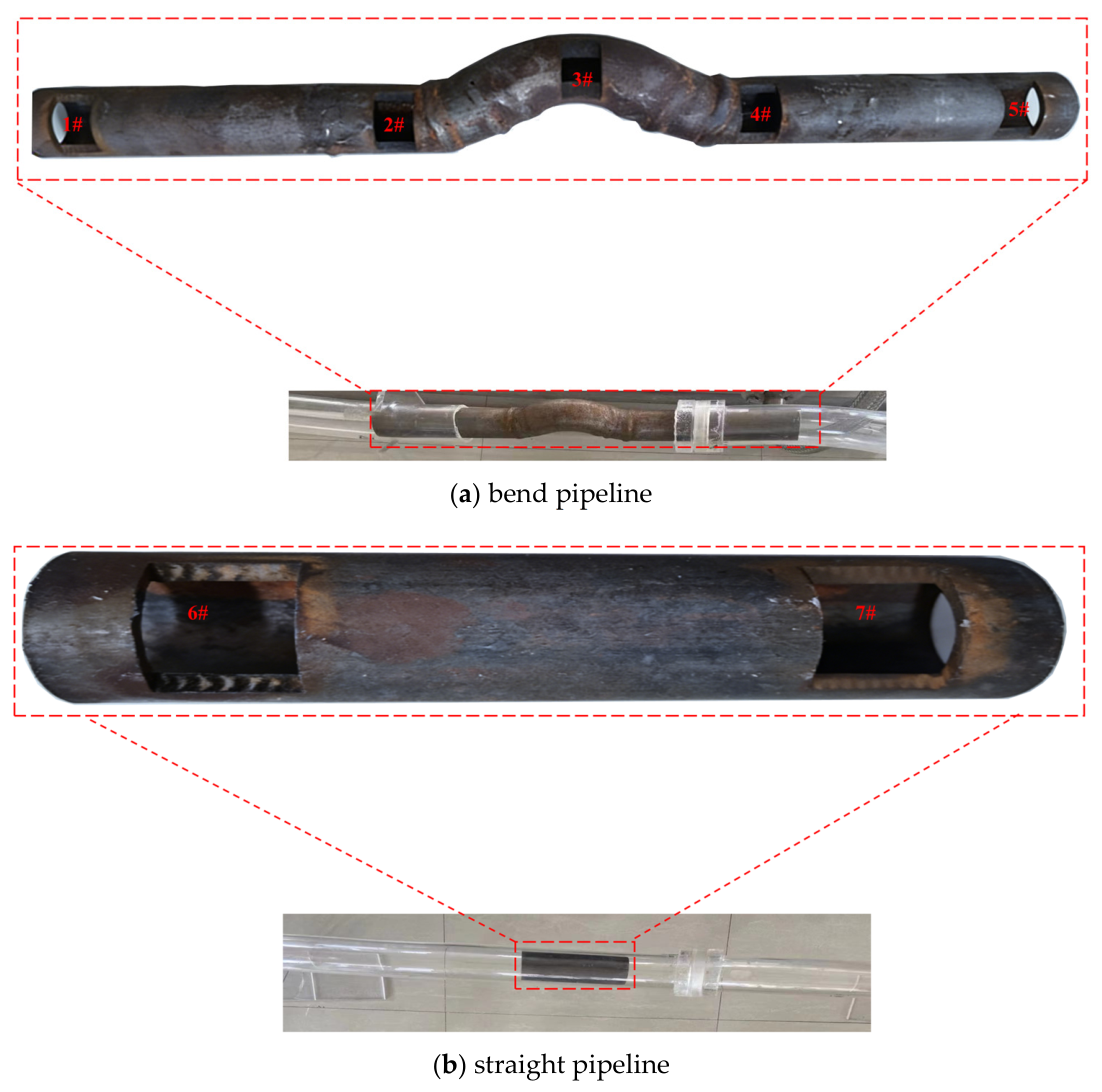
| No. | Sample Position | Fluid Accumulation | Sample Appearance | Corrosion Morphology |
|---|---|---|---|---|
| 1# | 2–5 o’clock direction of straight pipe at inlet of the fluctuating section | None |  | Uniform corrosion |
| 2# | 3.5~6.5 o’clock direction at the starting point of the upslope in the undulating section | With effusion |  | Uniform corrosion |
| 3# | 2–5 o’clock direction of the highest point of the undulating section | None |  | Uniform corrosion |
| 4# | 3.5~6.5 o’clock direction at the lowest downhill point in the undulating section | With effusion |  | Localized corrosion |
| 5# | 2–5 o’clock direction at the horizontal outlet of the fluctuating section | None |  | Uniform corrosion |
| 6# | 3.5~6.5 o’clock direction at the inlet of the straight pipe section | With effusion |  | Localized corrosion |
| 7# | 3.5~6.5 o’clock direction at the outlet of the straight pipe section | With effusion |  | Localized corrosion |
Disclaimer/Publisher’s Note: The statements, opinions and data contained in all publications are solely those of the individual author(s) and contributor(s) and not of MDPI and/or the editor(s). MDPI and/or the editor(s) disclaim responsibility for any injury to people or property resulting from any ideas, methods, instructions or products referred to in the content. |
© 2026 by the authors. Licensee MDPI, Basel, Switzerland. This article is an open access article distributed under the terms and conditions of the Creative Commons Attribution (CC BY) license.
Share and Cite
Huang, X.; Gong, J.; Ren, Y.; Du, D.; Wang, L.; Long, X.; Yang, H.; Huang, Q. Study on Corrosion in Wet Gas Pipelines Under the Influence of Gas Composition and Geometric Configuration. Processes 2026, 14, 1320. https://doi.org/10.3390/pr14081320
Huang X, Gong J, Ren Y, Du D, Wang L, Long X, Yang H, Huang Q. Study on Corrosion in Wet Gas Pipelines Under the Influence of Gas Composition and Geometric Configuration. Processes. 2026; 14(8):1320. https://doi.org/10.3390/pr14081320
Chicago/Turabian StyleHuang, Xuesong, Jianhua Gong, Yanhui Ren, Defei Du, Linling Wang, Xueyuan Long, Hang Yang, and Qian Huang. 2026. "Study on Corrosion in Wet Gas Pipelines Under the Influence of Gas Composition and Geometric Configuration" Processes 14, no. 8: 1320. https://doi.org/10.3390/pr14081320
APA StyleHuang, X., Gong, J., Ren, Y., Du, D., Wang, L., Long, X., Yang, H., & Huang, Q. (2026). Study on Corrosion in Wet Gas Pipelines Under the Influence of Gas Composition and Geometric Configuration. Processes, 14(8), 1320. https://doi.org/10.3390/pr14081320

