Application of Local Dust Removal and Wet String Grid Purification Device in Deep Buried Long Double-Hole Tunnel


Abstract
1. Introduction
- (1)
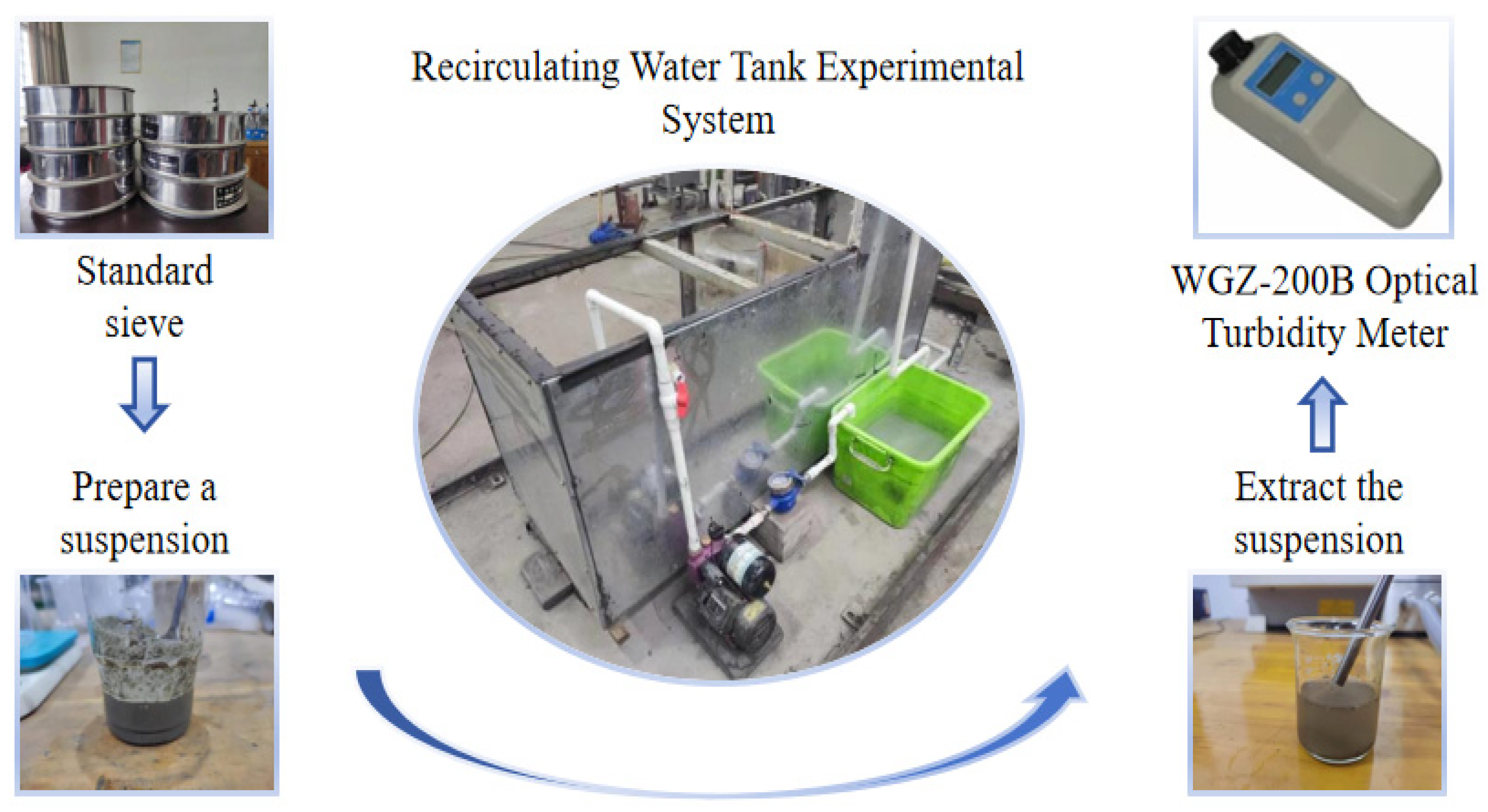
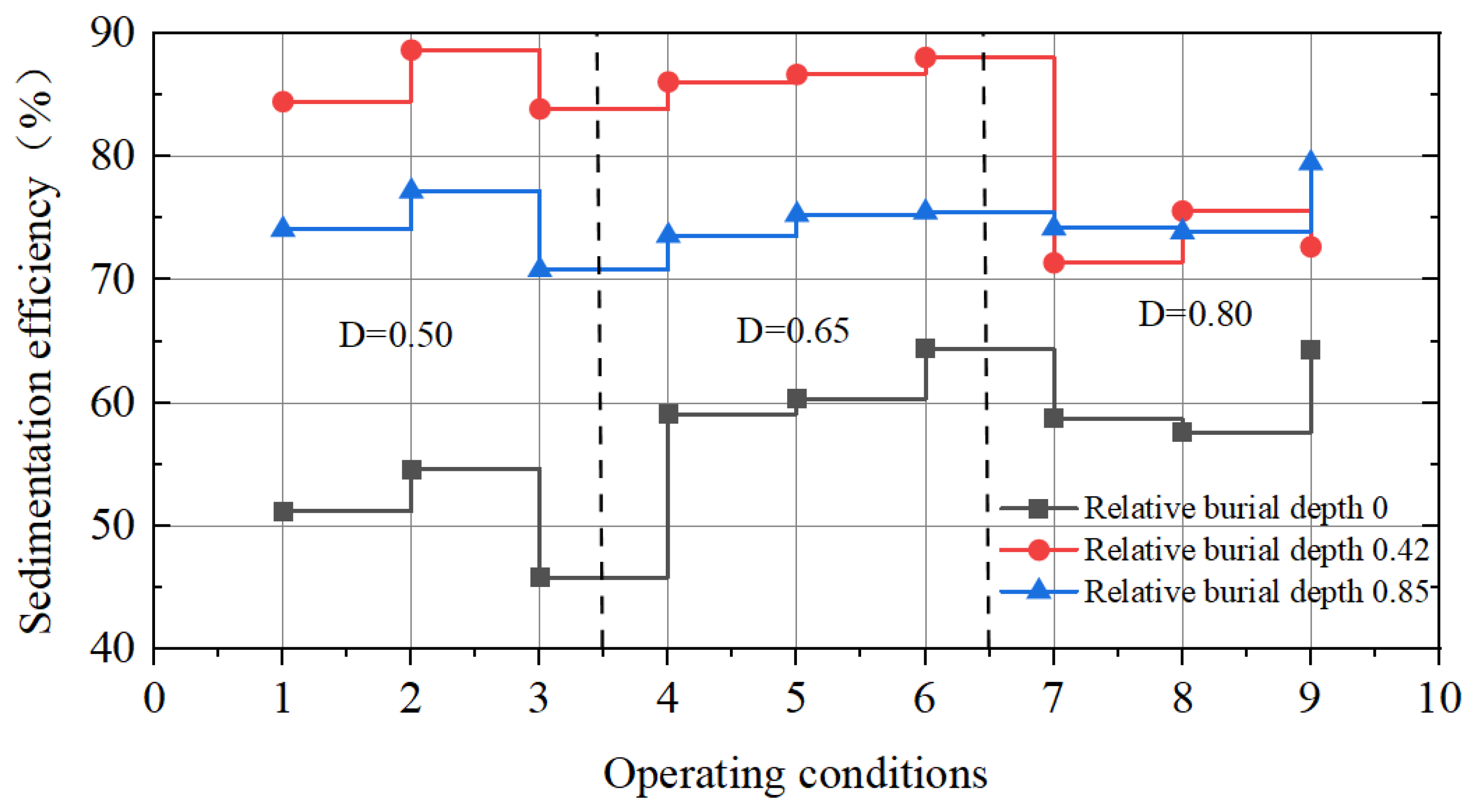
- A systematic optimization experiment of the circulating water tank structure (the core component of the device) is carried out, and the optimal structural parameters are obtained to realize efficient recycling of water resources, which fills the gap in the previous study on the water treatment system of the device.
- (2)
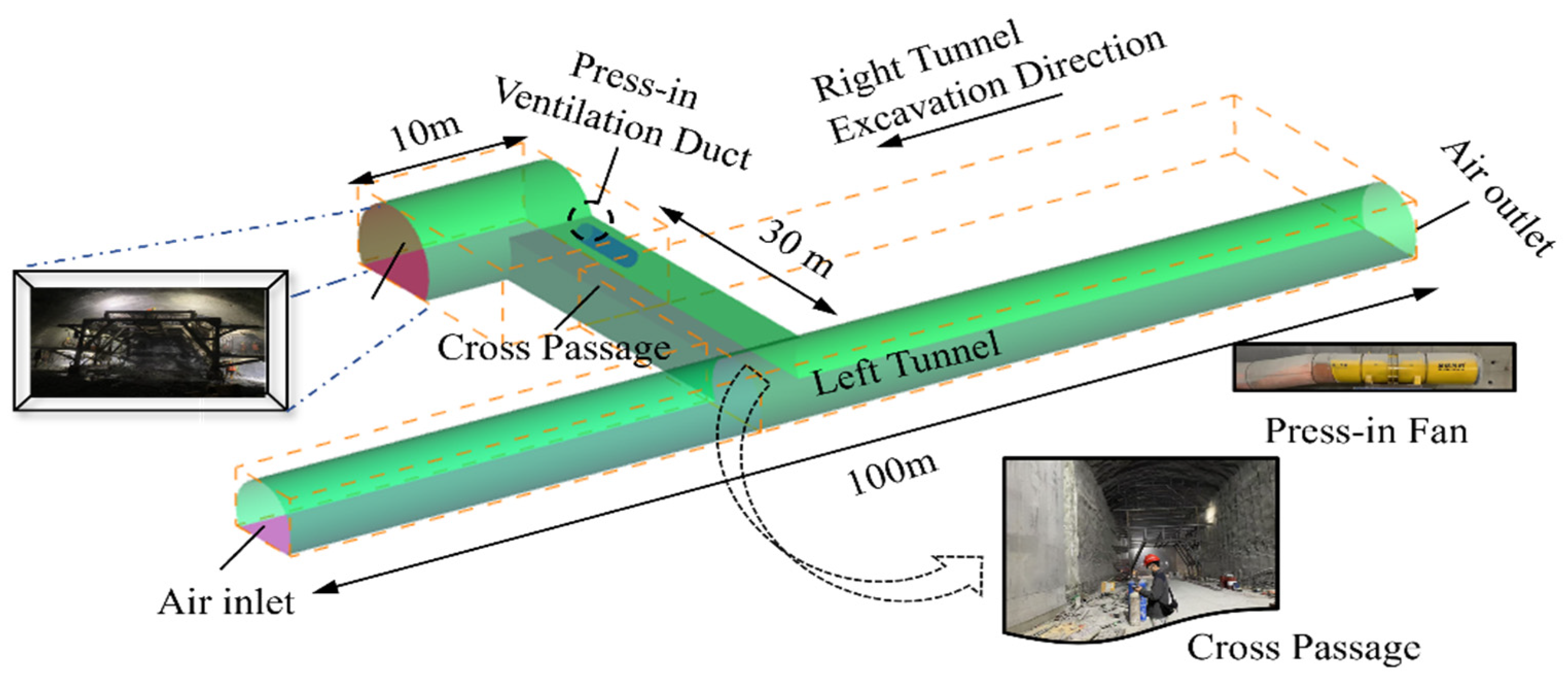
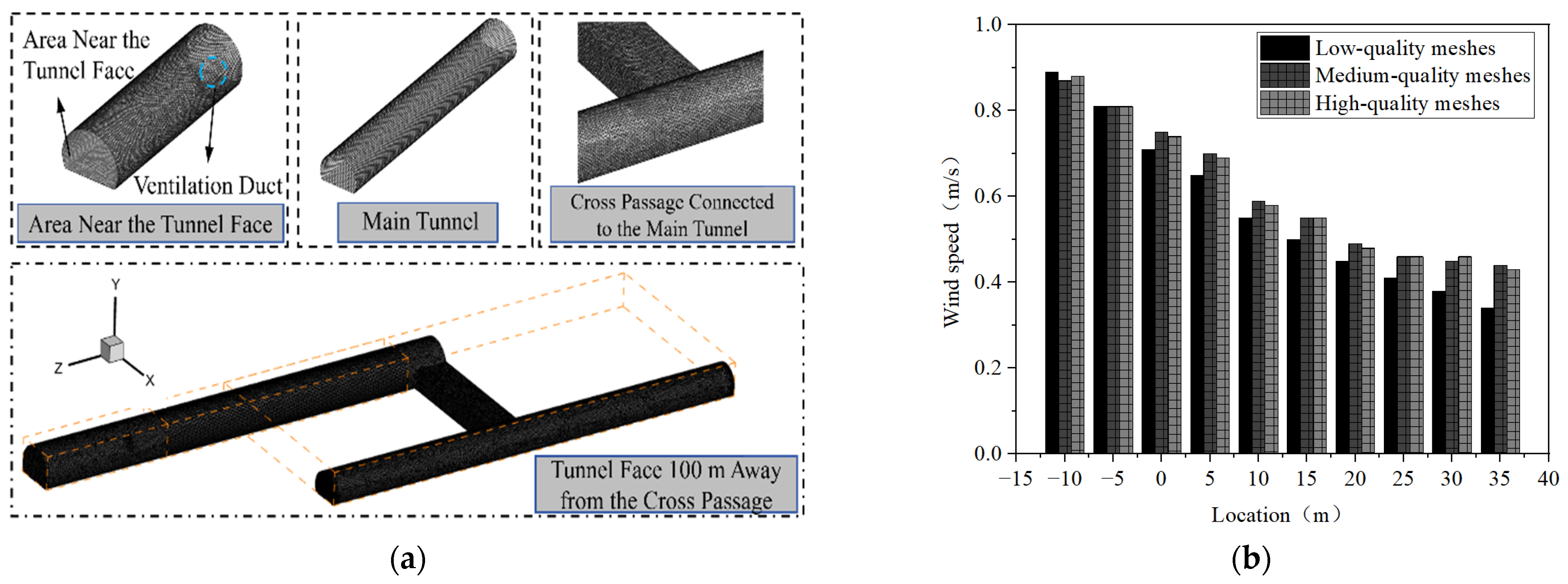
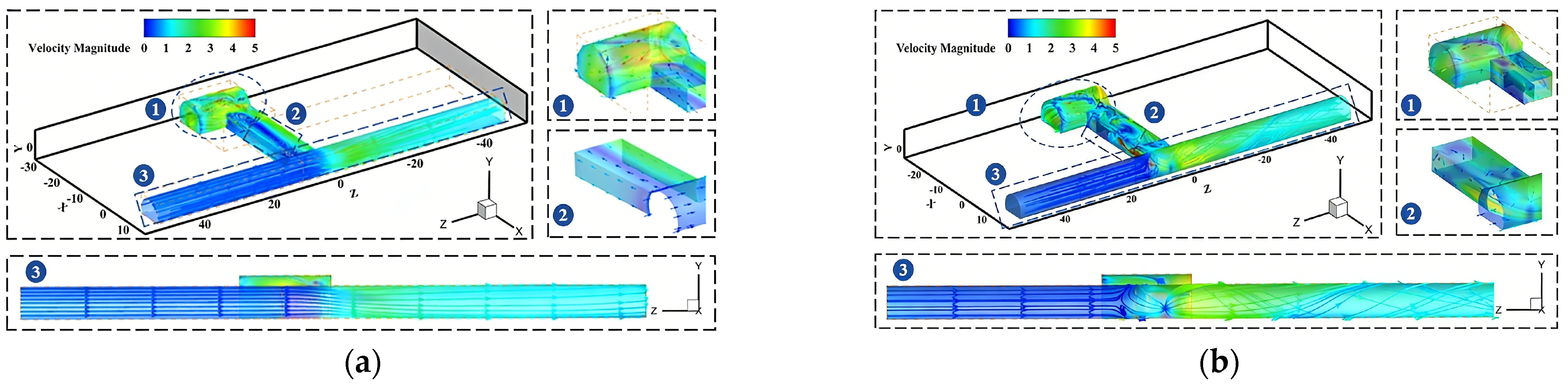
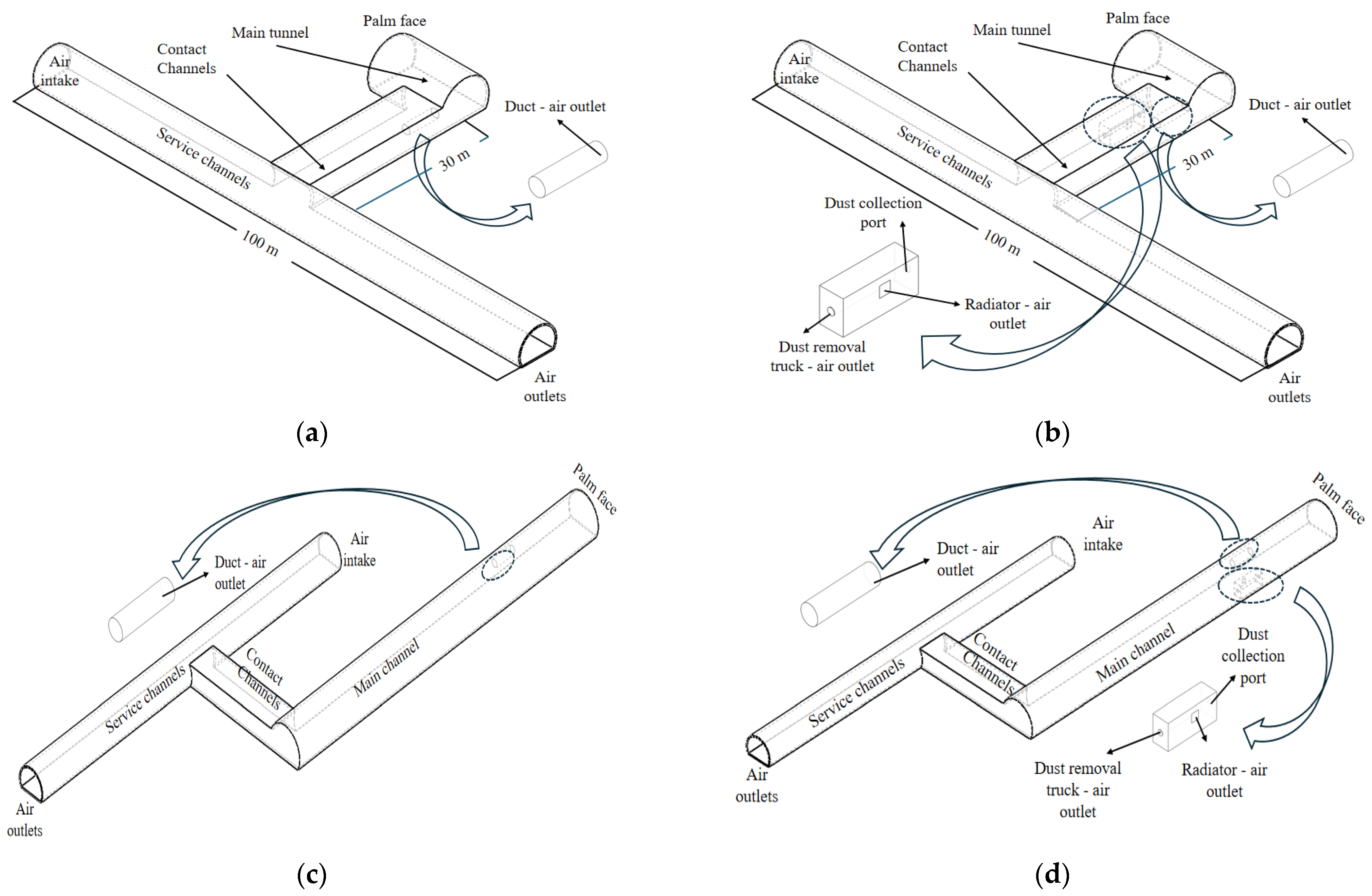
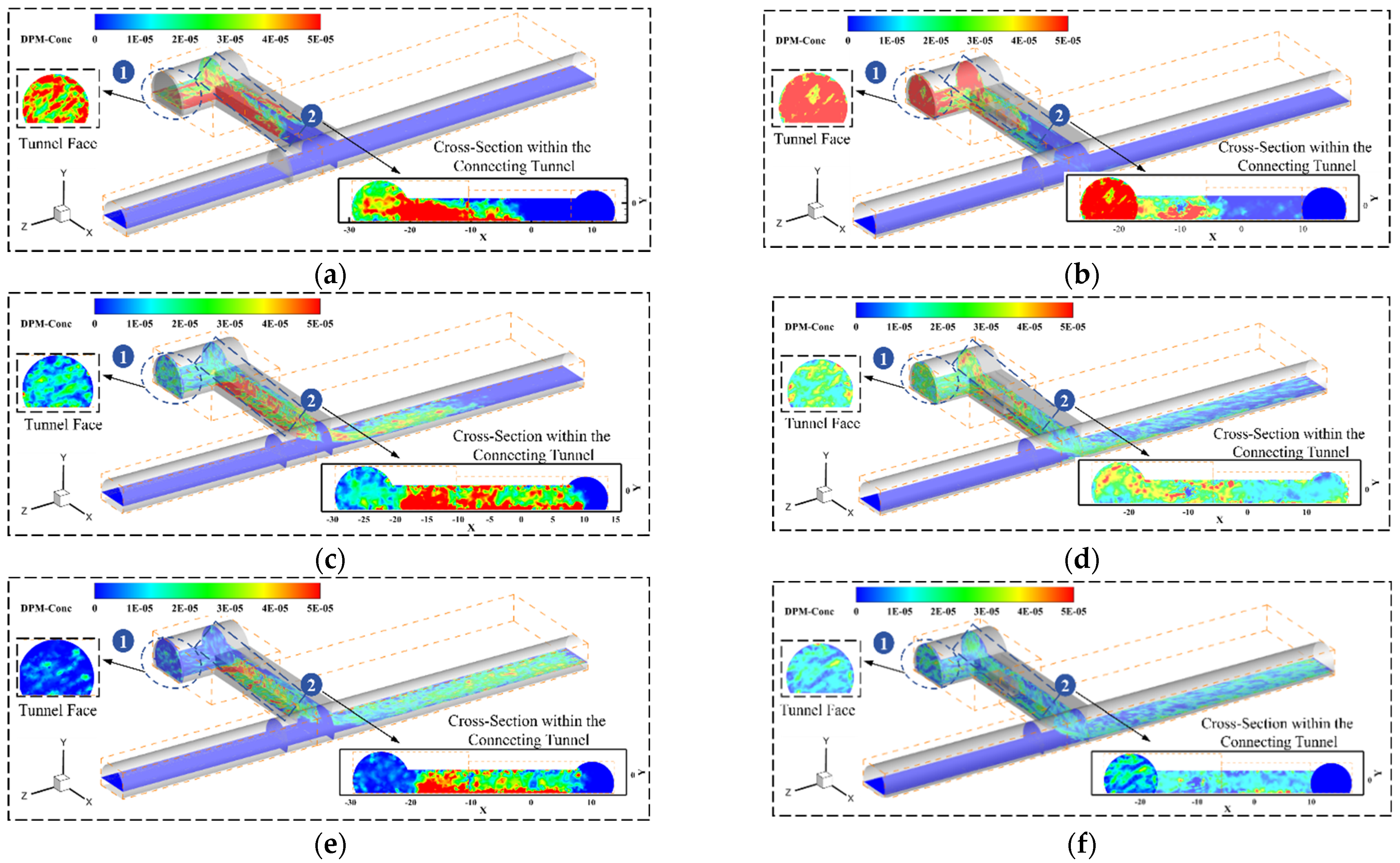
- Full-scale CFD numerical simulation of airflow-dust coupled migration under two typical working conditions (tunnel face 10 m and 100 m away from the connecting passage) is carried out, revealing the dust control and diffusion law of the device in different excavation stages of deep-buried long tunnels.
- (3)
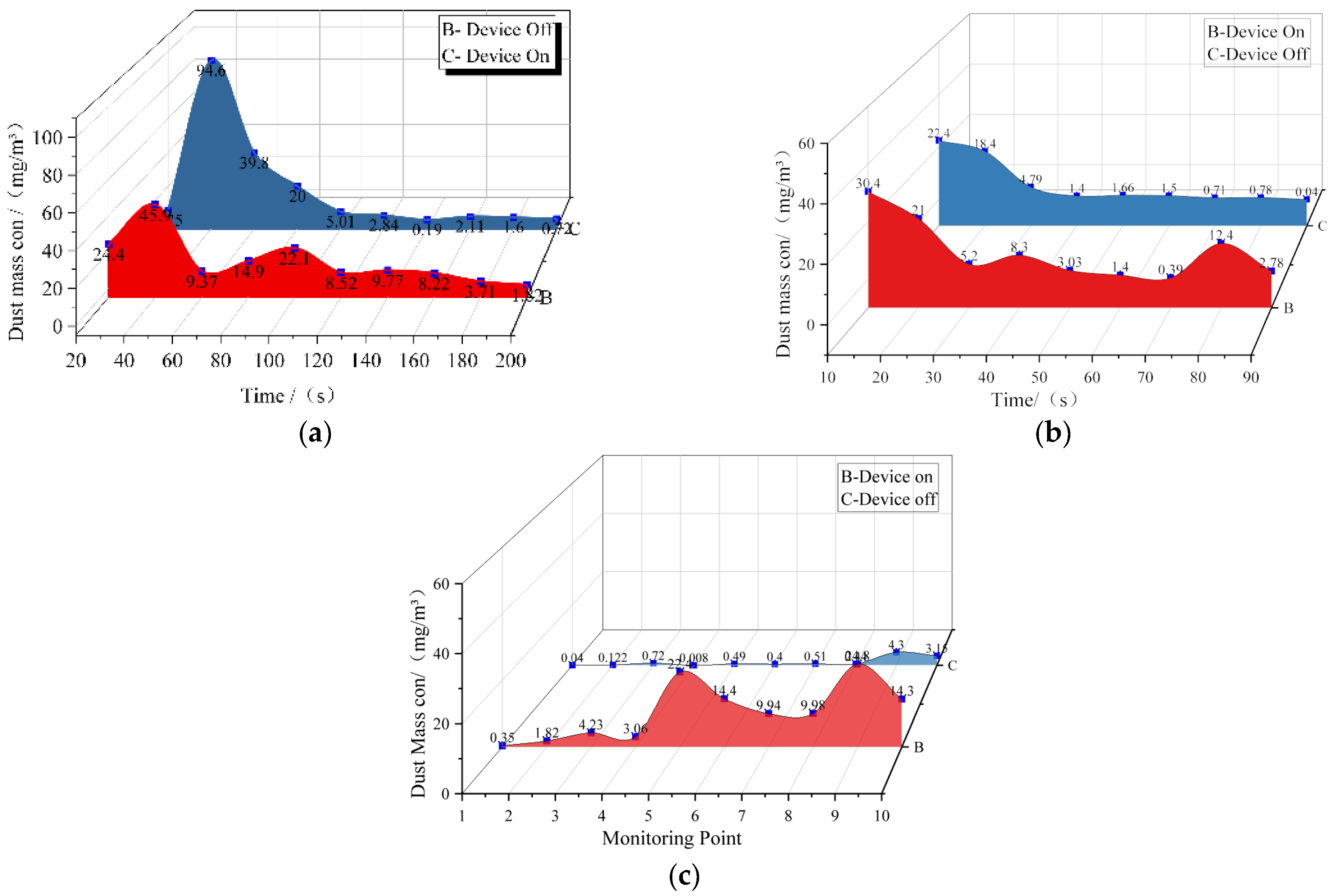
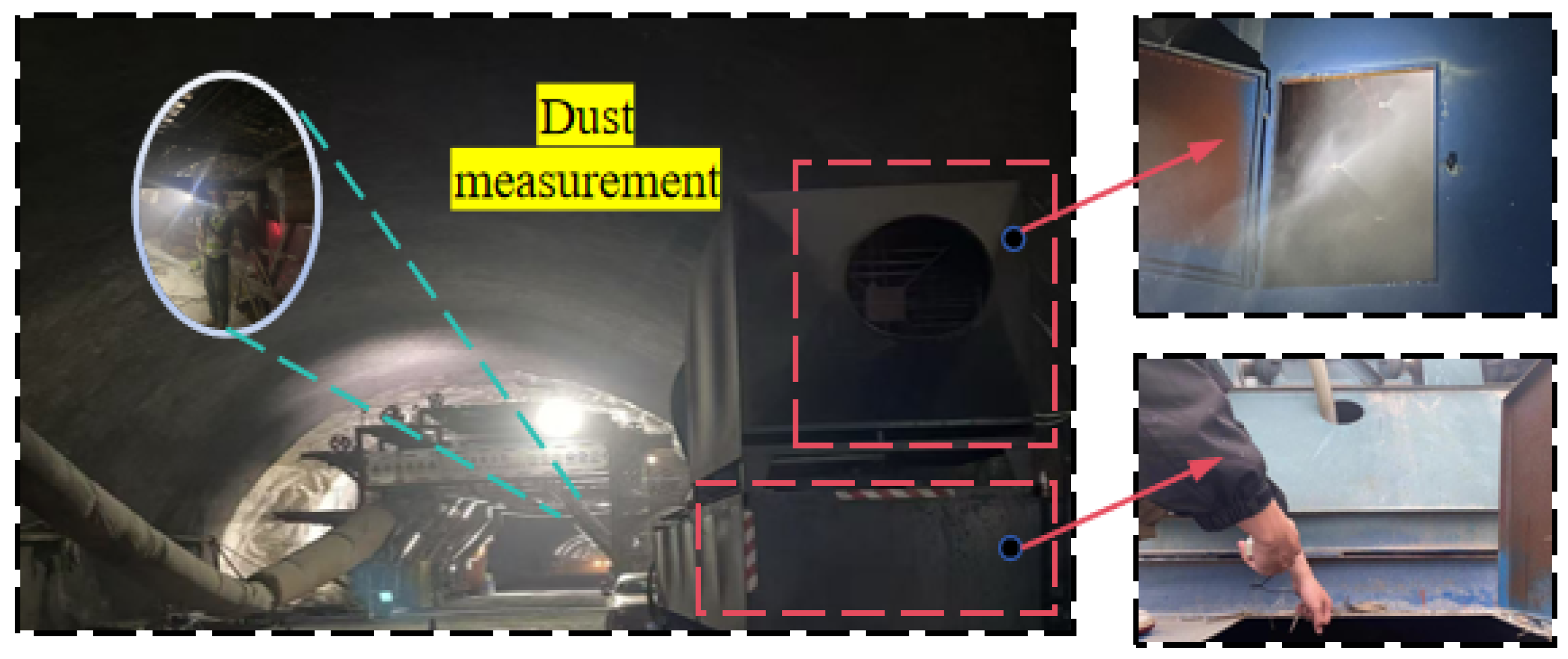
- Systematic on-site engineering application test in the Shierpo Tunnel is completed, the actual dust removal performance of the whole device under complex deep-buried long tunnel construction conditions is verified, and a targeted deployment strategy of the device in different excavation stages is proposed for engineering practice.
2. Project Overview
3. Development of Wet String Grid Purification Device
3.1. Device Structure and Working Principle
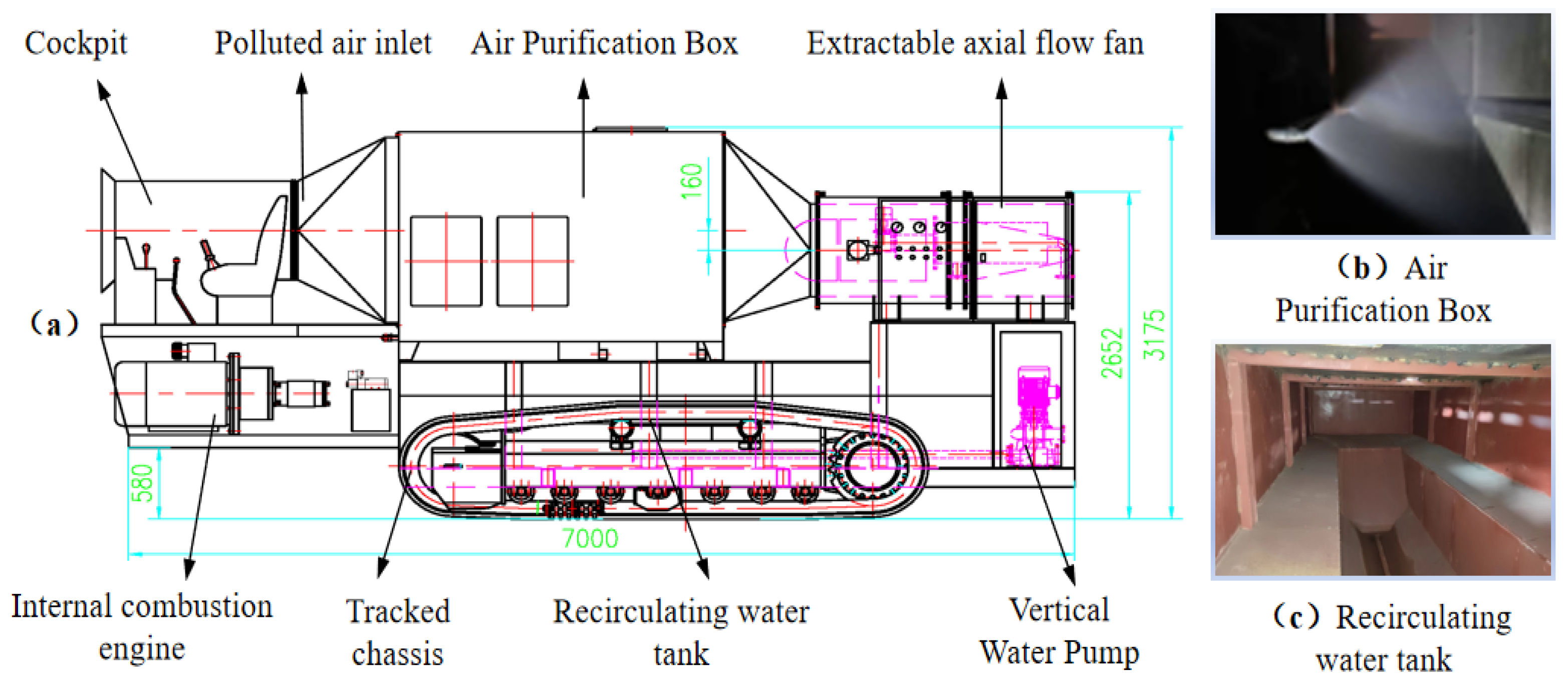
- Dust control zone formation: The air flow emitted from the air outlet of the radiator forms an air curtain layer at a specific flow rate. Through entrainment and induction effects, the air curtain drives and organizes the surrounding air flow, forming a controllable closed dust control zone near the excavation face.
- Dust-laden gas extraction: The extraction axial flow fan provides negative pressure to suck the high-concentration dust-containing gas in the closed dust control zone into the air purification box, ensuring targeted collection of pollutants.
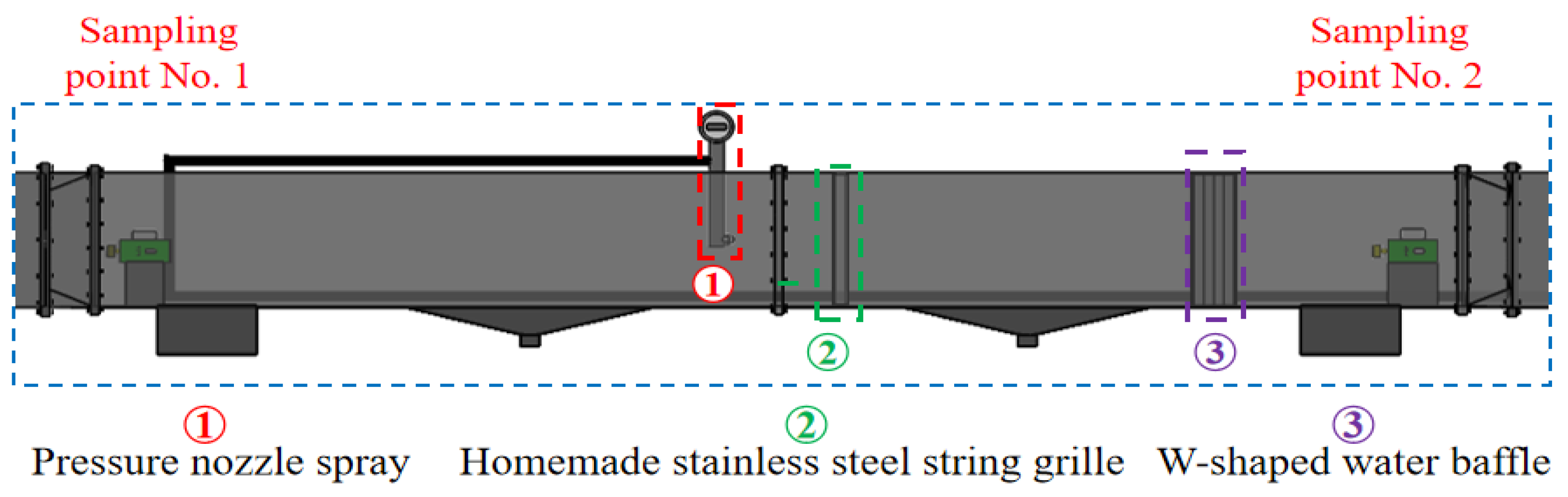
- Wet purification and clean air recycling: Inside the air purification box, fine water mist from spray nozzles and a stable water film on the wet string grid plates jointly capture dust particles. The purified, clean air is discharged back into the tunnel as recycled air, further diluting the dust concentration in the operation area.
- Sewage treatment and water recycling: Dust-laden sludge and sewage generated during purification are drained into the circulating water tank through the bottom sewage pipe. After sedimentation and filtration, the cleaned water is reused by the purification system, realizing high-efficiency recycling of water resources.
3.2. Optimization of Air Purification Box
3.2.1. Dust Removal Mechanism of Wet String Grid Water Film
- (1)
- Inertial collision effect
- (2)
- Direct interception effect
- (3)
- Brownian diffusion effect
3.2.2. Analysis of the Influence of Airflow Disturbance on Dust Removal Efficiency
3.3. Optimization of Circulating Water Tank
3.3.1. Experimental Design and Method
3.3.2. Analysis of the Influence of Geometric Parameters on the Sedimentation Efficiency of Suspended Particles
4. Numerical Simulation of Airflow-Dust Coupled Migration of Wet String Grid Dust Removal and Purification Device
4.1. Physical Model and Working Condition Setting
4.2. Mathematical Model and Control Equations
4.3. Boundary Conditions and Grid Division
4.4. Analysis of Simulation Results
4.4.1. Working Condition of 10 m Excavation
4.4.2. Working Condition of 100 m Excavation
5. Analysis of On-Site Application Effect of Wet String Grid Purification Device
5.1. Field Test Scheme and Results
5.2. Comparative Evaluation with Commercial Dust Removal Systems
5.3. Research Limitations and Applicability
5.3.1. Freezing Risk in Cold Climates
5.3.2. Stability of Water Film at High Wind Speeds
5.3.3. Toxic Sludge Management and Disposal
5.3.4. Water Supply and Scaling Issues
5.3.5. Discussion on the Discrepancy Between Laboratory and On-Site Efficiency
6. Conclusions
- (1)
- A mobile integrated wet string-grid dust removal and purification device with the combined functions of dust control, dust removal and water circulation is successfully developed, which can form a closed dust control zone near the tunnel face to realize efficient capture and purification of dust, and effectively reduce the tunnel dust concentration to improve the construction working environment.
- (2)
- The optimal operating parameters of the device and its core components are determined through systematic experiments: the air purification box achieves a maximum dust removal efficiency of 94.3% at a fan frequency of 30 Hz and a string-grid cross-sectional wind speed of 3.34 m/s; the circulating water tank reaches the optimal sedimentation performance under the conditions of a water inlet relative buried depth of 0.42, a baffle relative height of 0.65 and a sedimentation area-clear water area volume ratio of 1:2, which guarantees the stable operation and water resource recycling of the whole system.
- (3)
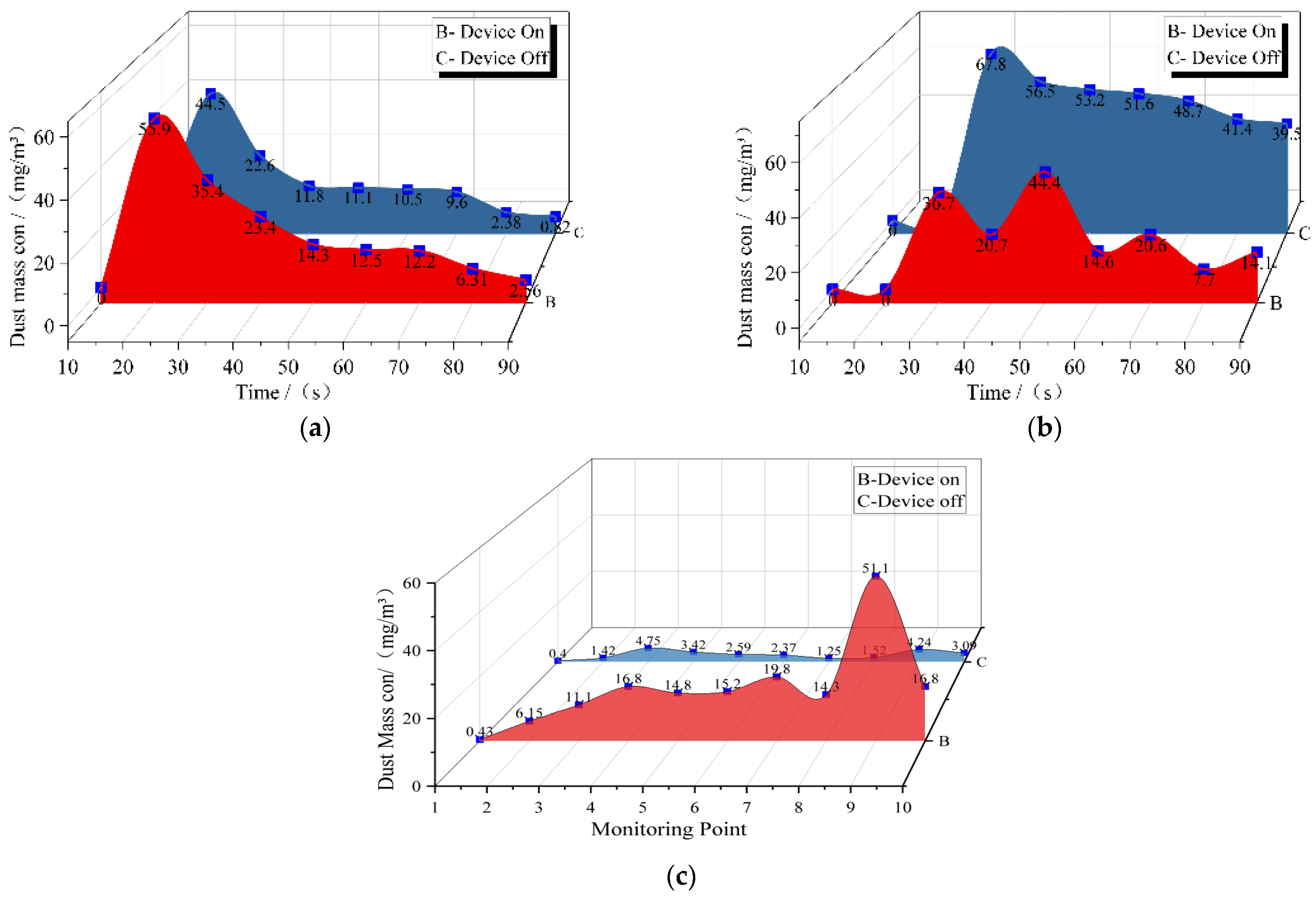
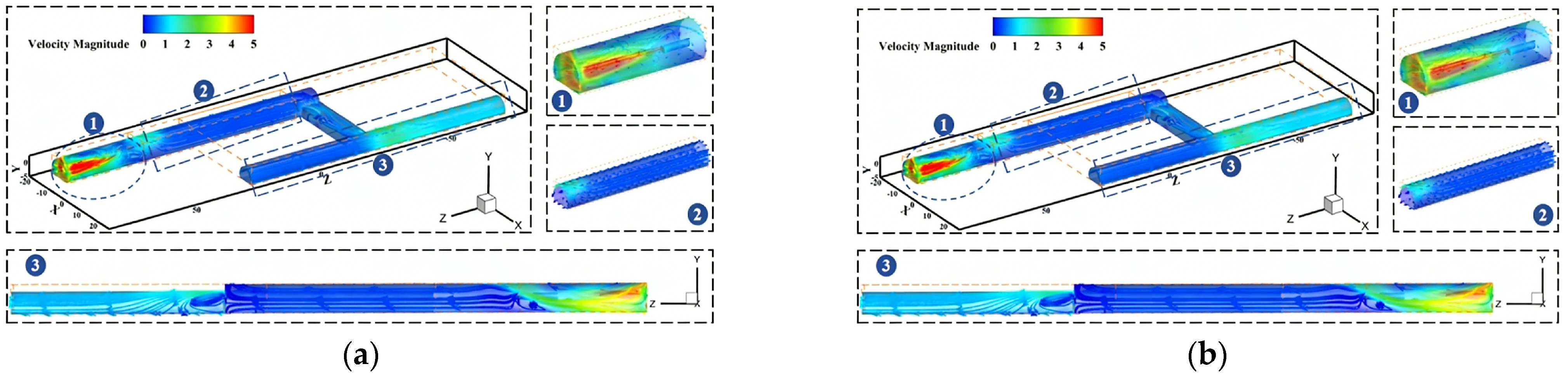
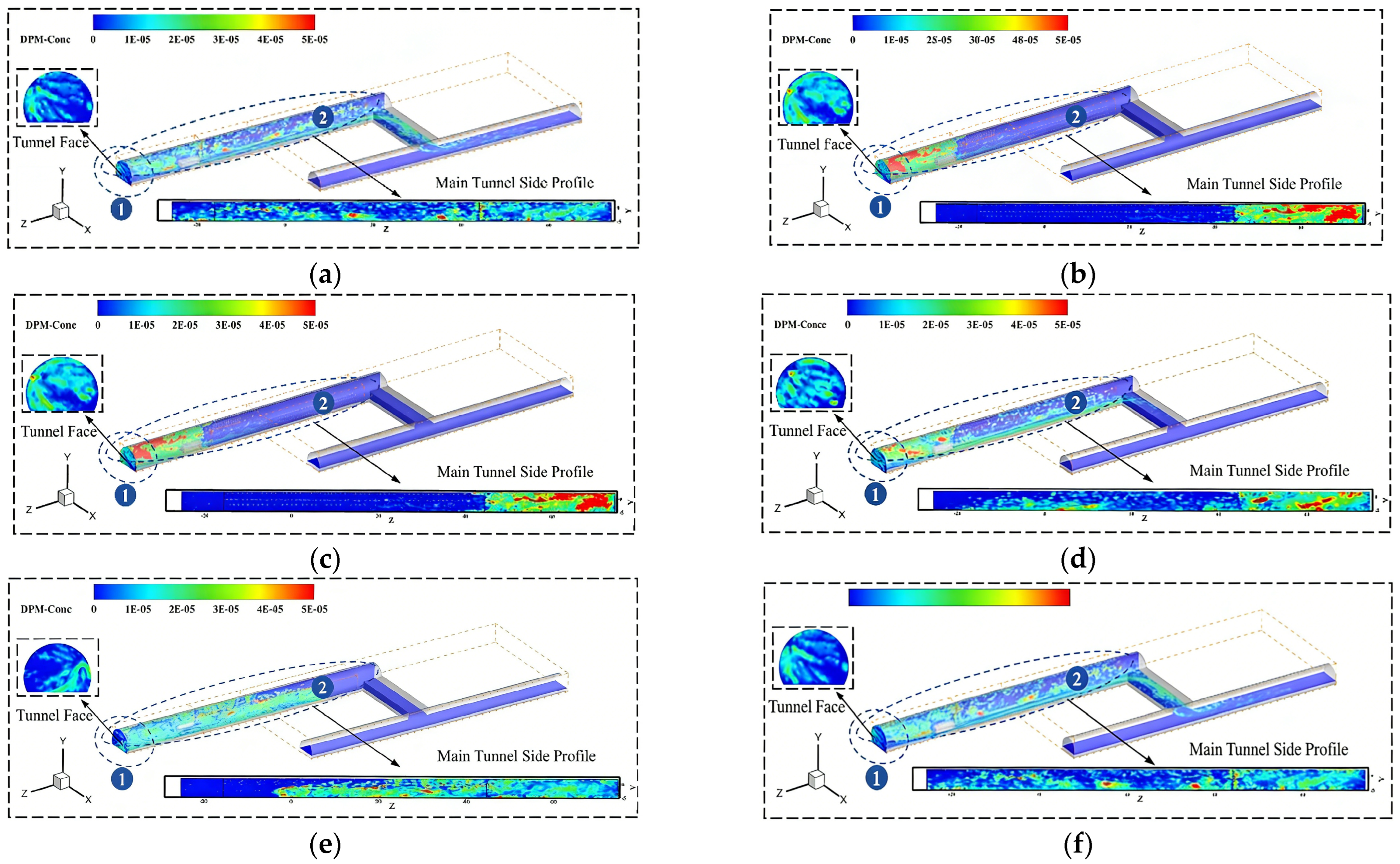
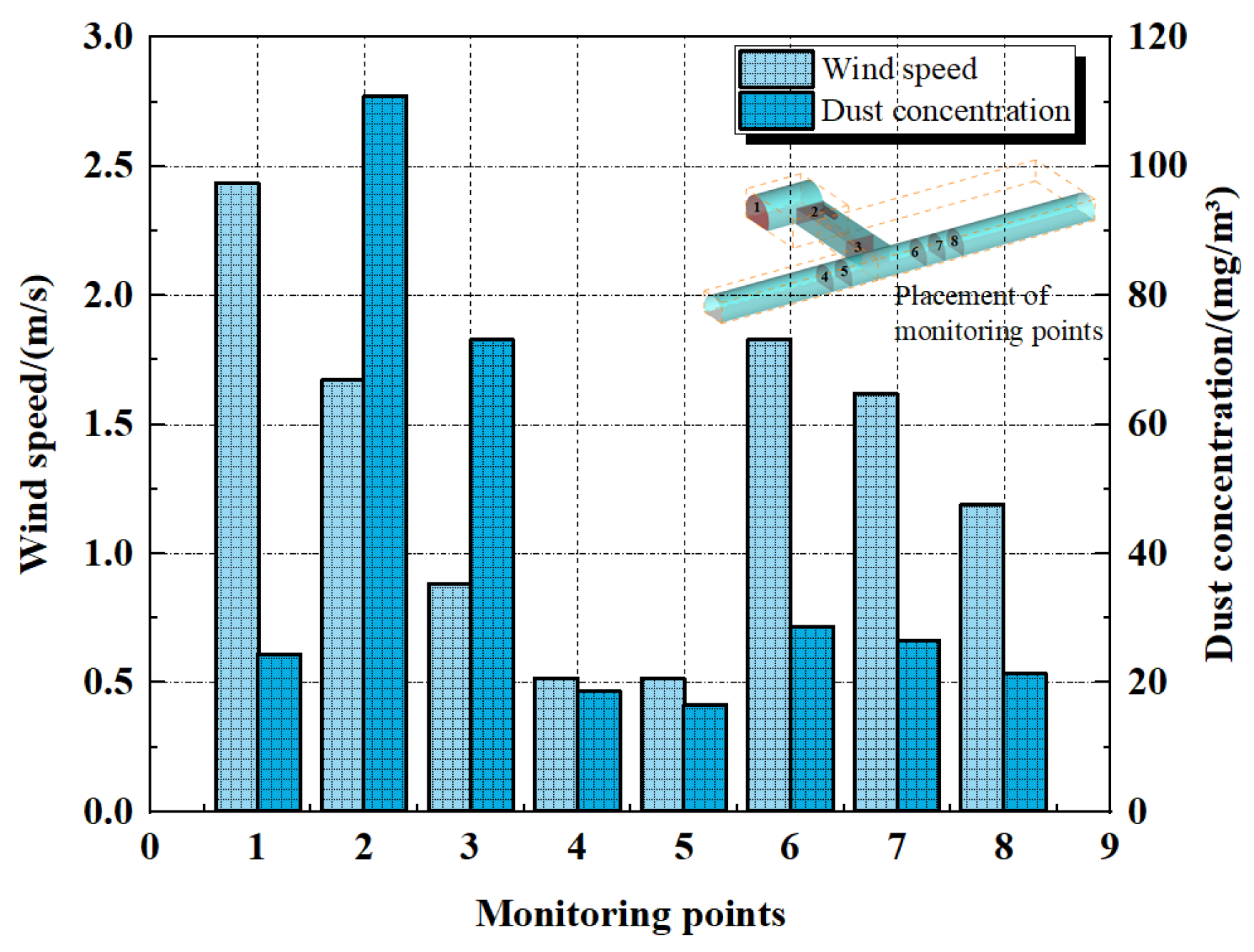
- The device shows strong adaptability to different tunnel excavation depth conditions and excellent engineering practicality: numerical simulation results show its dust removal efficiency reaches 79.86% and 87.9% when the tunnel face is 10 m and 100 m away from the connecting passage, respectively, and the average dust removal efficiency in the on-site application at the Shierpo Tunnel reaches 78.4%, which provides a reliable and efficient technical solution for dust pollution control in similar deep-buried long drill-and-blast tunnel construction projects and has significant environmental and occupational health benefits.
Author Contributions
Funding
Data Availability Statement
Conflicts of Interest
References
- National Health Commission. National Occupational Disease Prevention and Control Situation in 2023. Occup. Health Emerg. Rescue 2024, 42, 619. [Google Scholar]
- Li, Y. Characteristics of Newly Reported Occupational Pneumoconiosis in Baishan City from 2014 to 2023. Chin. J. Health Eng. 2024, 23, 610–612. [Google Scholar] [CrossRef]
- Luo, G.; Song, Z.Y.; You, H.D. Parameter Optimization and Numerical Calculation of Press-In Ventilation System for Expressway Tunnel Construction. Highway 2024, 69, 393–400. [Google Scholar]
- Wang, J.H.; Chen, Q.; Tian, W.L. Research and Application of Ventilation Design for Long Inclined Shaft in Super-Long Tunnel Construction. Highway 2024, 69, 416–424. [Google Scholar]
- Xu, Z.W.; Li, Y.; Chen, X.Y. Optimization Study on Factors Affecting Ventilation Effect in Helical Tunnel Construction. Highway 2023, 68, 358–361. [Google Scholar]
- Li, Q.; Wan, Y.H.; Wang, X. Optimization Study on Fan Arrangement in Small Radius Curved Tunnels under Multi-Factor Coupling. J. Saf. Environ. 2023, 23, 4308–4317. [Google Scholar] [CrossRef]
- Xu, Z.S.; Tao, H.W.; Wang, T.X. Influence of Tunnel Curvature Radius on Air Jet Flow Field Characteristics and Boosting Efficiency. J. Saf. Environ. 2023, 23, 415–423. [Google Scholar] [CrossRef]
- Zhou, F.B.; Li, J.L.; Li, S.H. Experimental Research and Practice of Dry Filtration Dust Removal Technology at Comprehensive Excavation Working Face. J. China Coal Soc. 2017, 42, 639–645. [Google Scholar] [CrossRef]
- Wang, X.G.; Hu, S.Y.; Hu, B. Research and Application of High-Energy Fine Foam Dust Suppression Technology in Comprehensive Excavation Face. Met. Mine 2025, 199–206. [Google Scholar]
- Li, H.Y.; Liu, Y.P.; Li, L. Study on Waterless Dust Removal Method for Photovoltaic Modules Based on Electrostatic Adsorption Mechanism. Acta Energiae Solaris Sin. 2025, 46, 606–613. [Google Scholar] [CrossRef]
- Xu, S.Q.; Wang, M.S.; Li, J. Main Factors Influencing Negative Ion Dust Removal Efficiency in Construction Tunnels. J. Southwest Jiaotong Univ. 2020, 55, 210–217. [Google Scholar]
- Wang, C.; Zheng, L.X.; Wang, B.W. Influence of Structural Parameters on Working Characteristics of a New Shock Wave Soot Blower in Closed Systems. J. Northwest. Polytech. Univ. 2024, 42, 269–277. [Google Scholar] [CrossRef]
- Jia, B.S.; Chen, X.; Wu, J. Study on Dust Removal Performance of Cyclone Filter Bag Dust Collector. J. Saf. Environ. 2024, 24, 3089–3096. [Google Scholar] [CrossRef]
- Zhang, T.; Tao, S.; Ge, S.C. Structural Optimization of Supersonic Spray Device and Coordinated Control Effect of Dust and Noise. J. China Coal Soc. 2025, 50, 2540–2549. [Google Scholar] [CrossRef]
- Wang, C.F.; Lu, S.Q.; Si, S.F. Study on the Influence of Magnetization on Water Properties and Optimization of Spray Dust Removal Performance. China Saf. Sci. J. 2022, 18, 141–146. [Google Scholar]
- Tong, L.Q.; Guo, Y.H.; Jia, X. Influence of Multiple Factors on Atomization and Dust Suppression Characteristics of Internal-Mixing Pneumatic Atomizing Nozzles. J. Saf. Environ. 2024, 24, 4724–4733. [Google Scholar] [CrossRef]
- Zhang, J.S.; Ren, X.F.; Liu, J.H. Study on the Influence of Air Pressure and Water Pressure on Droplet Size of Ultrasonic Atomization Spray. Coal Mine Saf. 2024, 55, 107–113. [Google Scholar] [CrossRef]
- Wang, H.Q.; Wu, Z.R.; Chen, S.Q. Experimental Study and Efficiency Optimization of Wet Louver Water Film Dust Removal. J. China Coal Soc. 2023, 48, 279–289. [Google Scholar] [CrossRef]
- Wang, H.Q.; Chen, S.Q.; Deng, H. Wet chord grid dust removal vehicle and creation of dust control zone for tunnel working face. Sci. Rep. 2024, 14, 57748. [Google Scholar] [CrossRef]
- Deng, H.; Chen, S.Q.; Wu, S.X. Dust Removal and Heat Dissipation for Drill-and-Blast Tunnel and Construction Environment Near Jumbo. Saf. Environ. Eng. 2024, 31, 68–74. [Google Scholar] [CrossRef]
- Chen, W.H.; Li, C.; Wang, D. Thermal Environment Control Near Tunnel Jumbo and Optimization of Exhaust Wind Angle. Metal Mine 2024, 215–219. [Google Scholar] [CrossRef]
- Wang, H.Q.; Shi, S.L.; Liu, R.H. Research and Practice on Dust Isolation Technology for Drivers at Fully Mechanized Mining Face. J. China Coal Soc. 2000, 176–180. [Google Scholar] [CrossRef]
- Han, Z.Z. FLUENT Fluid Engineering Simulation Cases and Analysis; Beijing Institute of Technology Press: Beijing, China, 2009. [Google Scholar]
- Wang, F.J. Computational Fluid Dynamics; Tsinghua University Press: Beijing, China, 2004. [Google Scholar]








| Performance Parameters | Fan Power/kW | Handling Air Volume/m3/min | Internal Combustion Engine Power/kW | Circulating Water Tank Capacity/m3 | Radiator Outlet Air Speed/m/s |
|---|---|---|---|---|---|
| Values | 55 | 800 | 100 | 5 | 8 |
| Fan Frequency/(Hz) | Average Air Velocity at the Grid Section/(m/s) | m1/(g) | m2/(g) | Dust Removal Efficiency | PM10 Removal Efficiency | PM2.5 Removal Efficiency |
|---|---|---|---|---|---|---|
| 20 | 2.850 | 2.000 | 0.236 | 88.2% | 90.5% | 82.7% |
| 30 | 3.340 | 2.000 | 0.114 | 94.3% | 96.1% | 91.8% |
| 40 | 3.830 | 2.000 | 0.194 | 90.3% | 92.4% | 85.6% |
| 50 | 4.340 | 2.000 | 0.210 | 87.5% | 89.2% | 82.1% |
| Velocity Inlet | Press-in Duct Outlet Inlet1/(m/s) | Dust Collection Inlet Inlet2/(m/s) | Radiator Outlet Inlet3/(m/s) | Device Outlet Inlet4/(m/s) | Service Tunnel Entrance Inlet5/(m/s) |
|---|---|---|---|---|---|
| Measured Results | 12 | −15 | 8 | 25 | 0.5 |
| Computational Model Setup | DPM Settings | Injection Parameters | ||||||
|---|---|---|---|---|---|---|---|---|
| Solver Type | Turbulence Model | DPM Model | Injection Frequency | Time Step | Injection Source | Particle Material | Size Distribution | Particle Size Range |
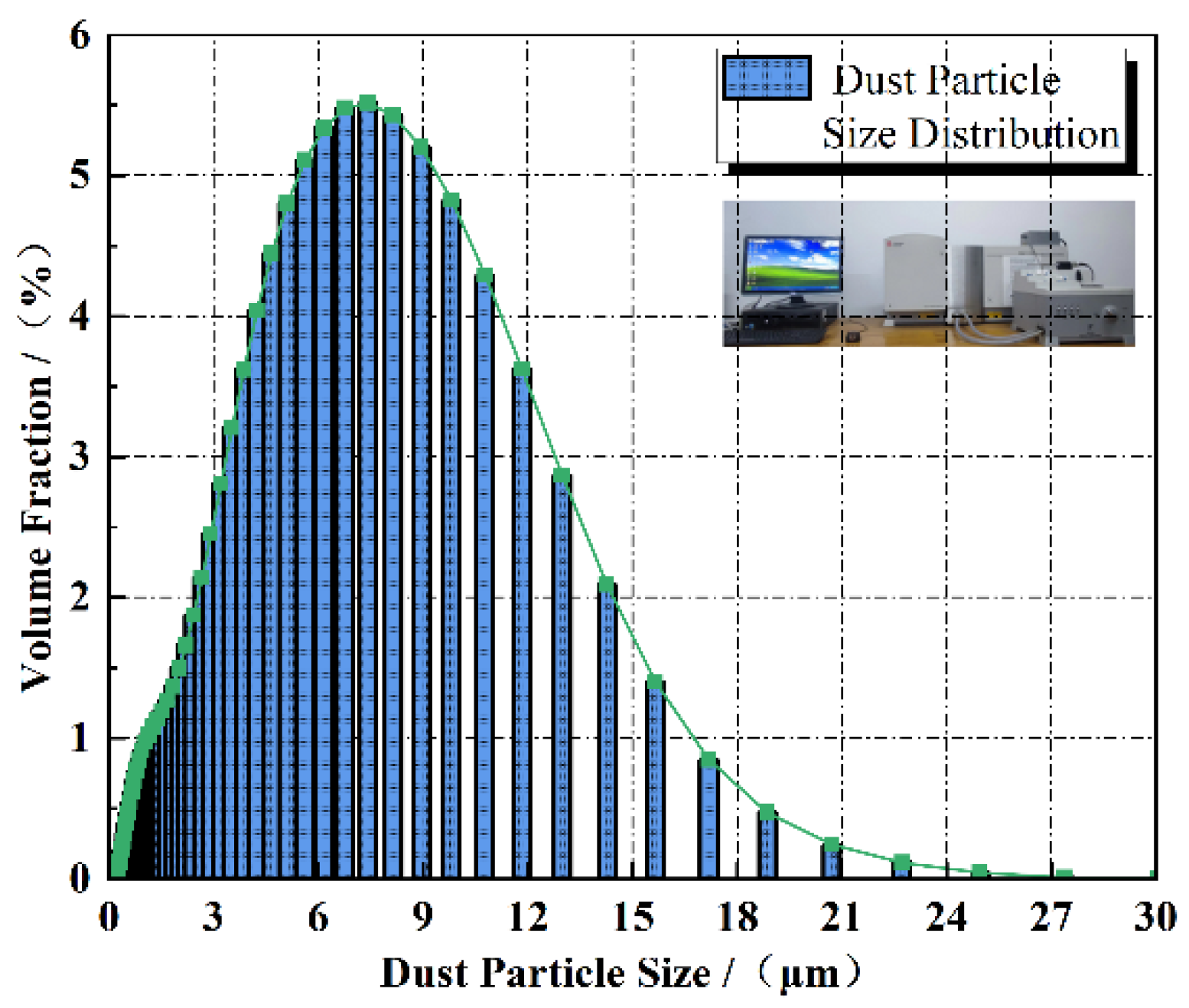
| Pressure-Based | Standardk-Ɛ | On | 20 | 1 | Tunnel Face | SiO2 | R-R | 10−6/10−4 |
| Turbulence Model | Gravity Acceleration | Time Type | Total Number of Steps | Particle Shape | Median Particle Diameter | Mass Flow Rate | Spread Parameter | Tracking Model |
| Off | −9.81 | Transient | 1800 | Spherical | 10−5 | 0.06 | 3.05 | Random Walk Model |
| Performance Indicators | Developed Wet Chord Grid Device | Grydale JMS M-Series (Dry) | Aigner ECCOAIRJET (Wet) | KC Cottrell Electrostatic Precipitator |
|---|---|---|---|---|
| Handling Air Volume | 800 m3/min | 600~1200 m3/min | 500~1000 m3/min | 1000~5000 m3/min |
| Dust Removal Efficiency (Respirable Dust) | Average 78.4% on-site; 94.3% laboratory optimal | 85~90% (dry dust); <60% (high-humidity dust) | 75~85% on-site | 80~90% (dry dust); <70% (high-humidity dust) |
| Rated Power | 55 kW (fan) + 100 kW (engine) | 75~132 kW | 45~90 kW | 150~500 kW |
| Mobility | Tracked mobile, integrated design, adaptable to narrow tunnel face | Wheeled mobile, large turning radius, not suitable for tunnel face | Fixed installation, poor mobility | Fixed large-scale equipment, no mobility |
| Water Recycling Capability | Yes, recycling rate >85% | No water consumption | No recycling, continuous water supply | No water consumption |
| Space Occupation | 3 m × 1.8 m × 3.175 m, compact structure | 4.5 m × 2.2 m × 3.5 m | Large installation space | Large floor area, not suitable for tunnel excavation section |
| Core Applicable Scenario | Deep-buried long tunnel excavation face, mobile dust source control | Open construction sites, fixed dust sources | Tunnel fixed section ventilation | Large-scale fixed space dust removal |
Disclaimer/Publisher’s Note: The statements, opinions and data contained in all publications are solely those of the individual author(s) and contributor(s) and not of MDPI and/or the editor(s). MDPI and/or the editor(s) disclaim responsibility for any injury to people or property resulting from any ideas, methods, instructions or products referred to in the content. |
© 2026 by the authors. Licensee MDPI, Basel, Switzerland. This article is an open access article distributed under the terms and conditions of the Creative Commons Attribution (CC BY) license.
Share and Cite
Chen, W.; Liu, D.; Chen, S.; Deng, H. Application of Local Dust Removal and Wet String Grid Purification Device in Deep Buried Long Double-Hole Tunnel. Processes 2026, 14, 1186. https://doi.org/10.3390/pr14071186
Chen W, Liu D, Chen S, Deng H. Application of Local Dust Removal and Wet String Grid Purification Device in Deep Buried Long Double-Hole Tunnel. Processes. 2026; 14(7):1186. https://doi.org/10.3390/pr14071186
Chicago/Turabian StyleChen, Weihong, Dong Liu, Shiqiang Chen, and Huan Deng. 2026. "Application of Local Dust Removal and Wet String Grid Purification Device in Deep Buried Long Double-Hole Tunnel" Processes 14, no. 7: 1186. https://doi.org/10.3390/pr14071186
APA StyleChen, W., Liu, D., Chen, S., & Deng, H. (2026). Application of Local Dust Removal and Wet String Grid Purification Device in Deep Buried Long Double-Hole Tunnel. Processes, 14(7), 1186. https://doi.org/10.3390/pr14071186