Article

Efficiency of the Macrophyte Azolla filiculoides in Phytoremediation of Wastewater in the Central Region of Peru

by
Victor Adriel Brañes-Landeo
1,
Rosa Haydee Zárate-Quiñones
1,*,
Humberto Dax Bonilla-Mancilla
1 and
Mauro Rafaele-De La Cruz
2
1
Facultad de Ciencias Forestales y del Ambiente, Universidad Nacional del Centro del Perú, Av. Mariscal Castilla N° 3909-4089, Huancayo 12006, Peru
2
Facultad de Sociología, Universidad Nacional del Centro del Perú, Av. Mariscal Castilla N° 3909-4089, Huancayo 12006, Peru
*
Author to whom correspondence should be addressed.
Processes 2026, 14(7), 1133; https://doi.org/10.3390/pr14071133
Submission received: 4 February 2026 / Revised: 3 March 2026 / Accepted: 17 March 2026 / Published: 31 March 2026
(This article belongs to the Special Issue Advances in Water Resource Pollution Mitigation Processes)

Abstract

Wastewater treatment through phytoremediation with plants reduces contaminants to acceptable levels as established by the Environmental Quality Standards (EQS) of Peru. This study evaluated the efficiency of Azolla filiculoides Lam. plants from the Huayllaspanca Colored Wetland (Laguna Coloreado) in the phytoremediation of wastewater from Huamancaca Chico, Chupaca Province, Junín Region, Peru. A pre-test and post-test experimental design was used. Glass aquariums of dimensions 54 × 20 × 21.3 cm were set up, and 28 g of phytoremediation plant samples were planted in 20 L of wastewater over a 28-day period. The main results for contaminant removal efficiency were as follows: clear and odorless water, total dissolved solids (40.27%), electrical conductivity (41.07%), turbidity 98.51%, oils and greases (>90.7%), BOD5 (95.55%), COD (95.04%), and ammonia nitrogen (95.77%). The final removal of fecal coliforms and Escherichia coli from wastewater using A. filiculoides was 99.9%, with post-treatment averages (11.6 MPN/100 mL and 2 MPN/100 mL, respectively) significantly lower than their respective Environmental Quality Standards (EQS) (1000 MPN/100 mL) (p < 0.05). In conclusion, Azolla filiculoides Lam. is an effective macrophyte for improving the physical, chemical, and microbiological parameters of wastewater and removes contaminants.

1. Introduction

According to recent global assessments, while developed nations have significantly higher wastewater treatment rates, a vast disparity remains: middle-income and the least developed countries continue to face critical infrastructure gaps, treating only a small fraction of their total discharge [1]. In Peru, the management of wastewater has shown a progressive evolution; according to the SUNASS benchmark report [2], the national percentage of wastewater treatment (TAR) reached 82.62% in 2024, showing a sustained growth from 77.47% in 2020. However, this national average often masks critical regional disparities where infrastructure remains insufficient. A clear example of this gap is found in the Junín region, where the 2024 Benchmarking Report for EPS SEDAM HUANCAYO S.A. revealed an alarming treatment rate of only 0.76%, with a negative growth trend of −3.93% compared to the previous year [2]. Even public institutions like the National Penitentiary Institute (INPE) in Junín lack adequate wastewater disposal; it is discharged into areas near agricultural fields and homes in the district, causing health problems for the surrounding population. Less developed countries such as Peru are experiencing a constant increase in wastewater generation; therefore, the implementation of green technologies and biotechnologies for water pollutant removal and reuse is necessary [3]. However, we must treat wastewater using physicochemical and biological techniques or processes to produce cleaner water that can be reused for agricultural irrigation, rural recreation, and non-potable domestic use [4].
Excrement and other waste, due to poor hygiene practices, were commonly deposited in or near sources of drinking water during the Middle Ages. This contamination contributed to the spread of diseases and high mortality rates, particularly in urban areas where inadequate sanitation exacerbated epidemics [5]. Over the years, the increase in wastewater has become undeniable due to rapid urbanization, generating more degradation and environmental pollution [1]. The characteristics of wastewater are becoming increasingly complex, causing a decrease in the remediation capacity of treatments in receiving bodies [6]. Wastewater treatment must be adequate before being discharged into the environment, as unconventional methods are inefficient if not managed correctly [7].
Non-conventional wastewater treatment systems generally employ plants or other microorganisms [7]. One of the non-conventional systems is phytoremediation, which consists of using the ability of macrophytes to remove contaminants [8]. Since they have the ability to aerate their roots and provide oxygen to the microorganisms that live there, microbial life is what degrades the organic matter in wastewater, thus eliminating contaminants [9]. One genus of efficient macrophytes is Azolla. In regions such as Asia and Africa, these macrophytes have shown good results, especially in industrial or domestic wastewater, reducing microbiological contaminants by 99% and chemical contaminants by more than 50% [6]. This species also shows promise in removing Chemical Oxygen Demand (COD) in phosphate-rich environments [10]. Phytoremediation in aquaculture waters and related wastewater systems contributes significantly to sustainable water management by enabling efficient contaminant removal while reducing treatment and operational costs [11]. Recent experimental evidence further supports this approach, demonstrating that aquatic macrophytes such as Azolla filiculoides and Lemna minor exhibit high phytoremediation efficiency in wastewater treatment systems [12]. Fortunately, good results of applying phytoremediation have been seen around the world, increasing interest in, and knowledge of, this topic. In phytoremediation, chemical contaminants in textile wastewater and fecal coliforms can also be effectively removed, as demonstrated by Sundararaman et al. [13] and Adabembe et al. [14]. All these investigations demonstrate the phytoremediation potential of Azolla filiculoides, especially its ability to adapt easily to highly polluted environments thanks to its anatomical changes, making it a sustainable and ecological option for bioremediation [15]. In Malaysia, the efficacy and benefits of A. filiculoides for the treatment of aquaculture wastewater for irrigation purposes were verified by Amare et al. [6], Adabembe et al. [14], and Ayu and Hanafiah [16]. Improving water quality for ornamental plants or other plants that adapt to growing in wastewater is very important because these plants remove contaminants from water and are sustainable. One example is the study conducted by Herazo et al. [17], who examined wetlands with ornamental species such as Anthurium spp., Canna hybrids, Typha dominguensis, and Spathiphyllum. The systems showed high removal efficiencies for municipal wastewater contaminants and offer an ecological and feasible solution for resource-limited rural communities. Human activities such as agriculture, industry, and domestic use generate wastewater, which causes environmental problems. Wastewater components have negative effects if the water is not treated, potentially damaging ecosystems and human health. Phytoremediation plants help remove pollutants through their physiological processes, which are related to their anatomical adaptations for growth in humid habitats [9].
The objective of this research was to determine the efficiency of Azolla filiculoides in the phytoremediation of wastewater from the Huamancaca Chico Penitentiary Institute, Peru. This species is readily available locally and has rarely been considered for wastewater phytoremediation in the Junín region. Our obtaining favorable results in a short time makes this research beneficial to the local population, offering an alternative to technologies that are excessively expensive and time-consuming.

2. Materials and Methods

2.1. Description of the Study Site

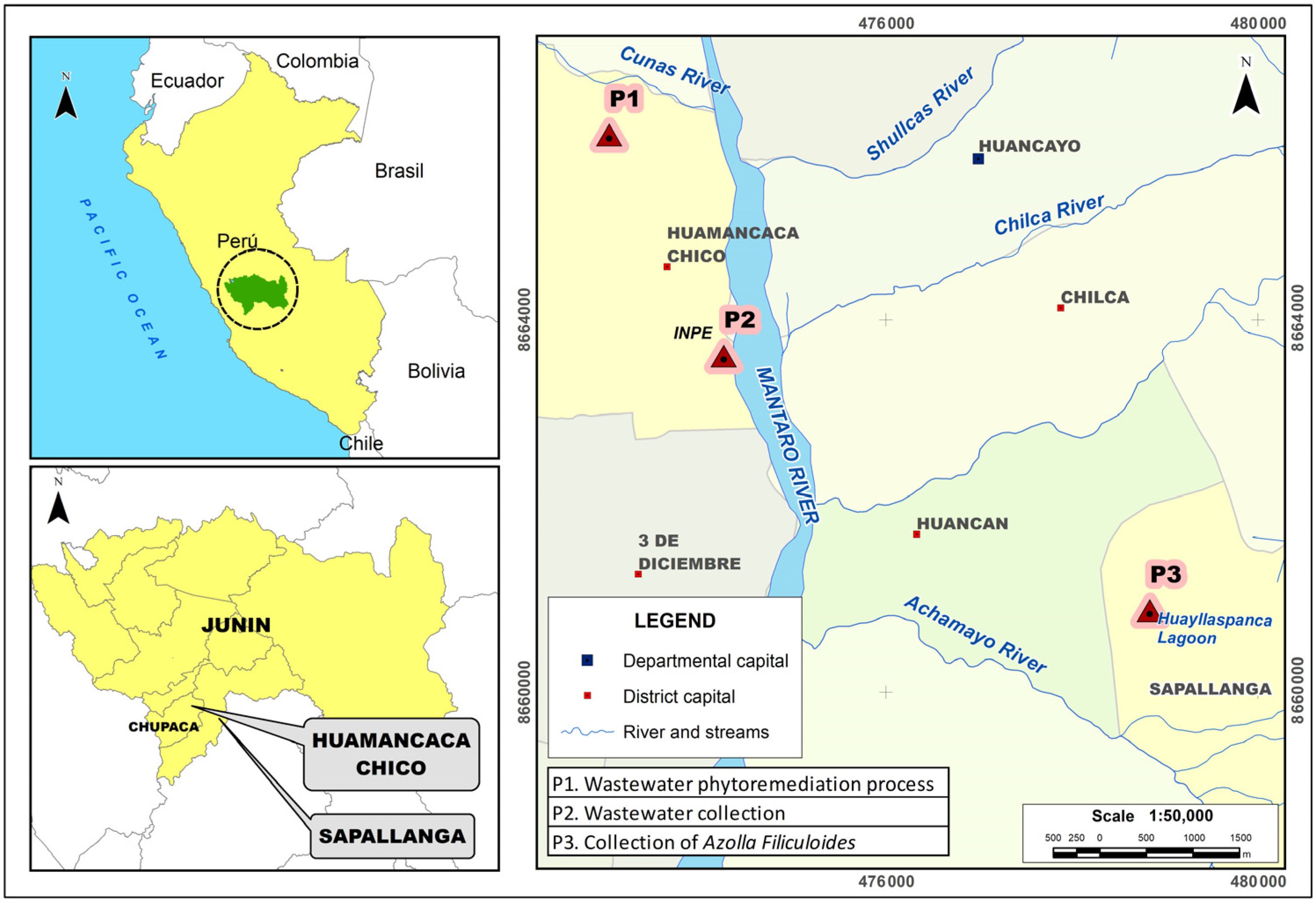
Water sampling and analysis of the physical and field indicators of untreated wastewater, as well as the phytoremediation process, were carried out in the district of Huamancaca Chico, Junín, Peru (Figure 1), geographically located at a latitude of 12°14′34″ S, a longitude of 75°16′28″ W, and an altitude of 3193 m.a.s.l. The average annual temperature varies between 4 and 22 °C, with annual precipitation of 752.4 mm and an average annual relative humidity of 65%. The macrophyte species A. filiculoides was obtained from the Humedal de Colores lagoon located in the town of Huayllaspanca, which is located at an altitude of 3200 m.a.s.l., a longitude of 75°11′23.2″ W, and a latitude of 12°7′47.1″ S. The site experiences a cold highland climate, with maximum temperatures of 19.5 to 20 °C, minimum temperatures of 3.5 to 4 °C during the coldest months (May–September), a relative humidity of 57 to 67%, and annual precipitation of approximately 800 mm [18]. The experiment was carried out during the months of July and August 2023.

2.2. Design and Construction of the Treatment System

The treatment system installation and the research development were located 2 km from the wastewater effluent discharge point, precisely at the coordinates 12°04′2.43″ S, 75°14′52.19″ W. The system was constructed within a rustic enclosed area featuring a removable roof. This design served a dual purpose: it prevented the entry of rainwater that could dilute the effluent while allowing for direct sunlight exposure, which is essential for the growth of the macrophytes. The space used for the phytoremediation process was clean and spacious, as recommended by Amare et al. [6].
In this study, two 5 mm thick glass reactors were used, each with dimensions of 54 cm (length) × 20 cm (width) × 21.3 cm (height). The effective volume for each reactor was approximately 20 L. This experimental setup follows a laboratory-scale approach similar to the design and construction criteria for wetland structures reported by Akinbile [19].
A 1/2″ stopcock was installed at the bottom of one of the wide sides of the primary tank, which was connected to 60 cm long PVC pipes; this connected to the top of one side of the secondary tank, facilitating the flow of wastewater from one tank to the other. A similar hydraulic configuration for wastewater treatment has been reported by Adabembe et al. [14].
To obtain samples of treated wastewater, a 3/4” stopcock was placed at the bottom of the opposite side, parallel to the water entry of the secondary reactor, facilitating the passage of wastewater from one tank to another.

2.3. Phytoremediating Species

The acquisition of A. filiculoides was carried out through a visual biomass selection process, prioritizing healthy individuals at early developmental stages, prioritizing plants with healthy green pigmentation and no visible anomalies in fronds or roots. This criterion was based on general practices commonly employed in phytoremediation studies using species of the genus Azolla [6,20], where healthy plant material is selected to ensure adequate experimental conditions, and was complemented by the authors’ own observations to guarantee the quality and homogeneity of the plant material.
Samples of approximately 232 individuals of the species A. filiculoides, weighing 28 g, were used. The plants were washed with distilled water, especially the root parts, in order to eliminate any foreign substances that could alter the process. They were then transferred to a separate plastic container which was filled with tap water and left to stand until reaching the experimental site. There, the selected macrophytes were placed on 50% of the surface of the secondary reactor, following the operational criteria reported by García et al. [21].
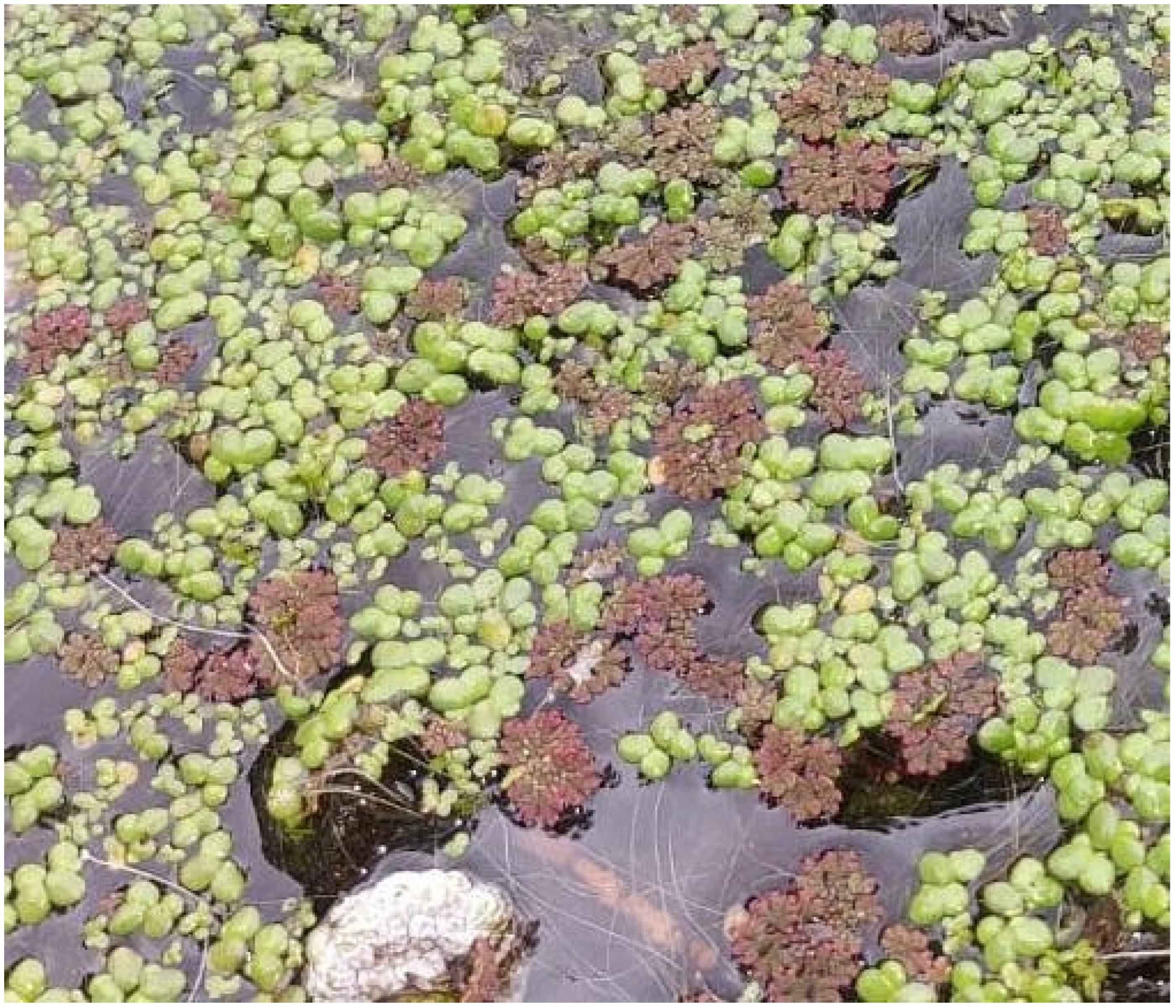
Figure 2 shows the Azolla filiculoides (red color) growing next to the species Lemna minor (green color), located in the “Humedal de Colores” of Huayllaspanca, Junín, Peru.

2.4. Wastewater Collection

The sample consisted of 20 L of wastewater from the Huamancaca Chico National Penitentiary Institute (INPE). The secondary glass tank was filled with this effluent until it reached 87% of its total height, following the operational configuration reported by García [21]. This percentage equates to approximately 20 L for the tank in accordance with the reactor scale and experimental volumes used by Kumar et al. [20]. To begin filling the system, a fine mesh screen was placed above the primary tank to filter the wastewater and prevent stones, soil, and solid debris from passing through. The 20 L were then gradually poured in. Wastewater was fed into the primary reactor with the internal valve open, allowing the water to flow into the secondary reactor, creating a continuous flow system. Once all the water had passed into the secondary reactor, the valve was closed. At the end of this process, the reactor was covered, following the procedure described by Ballón [22].
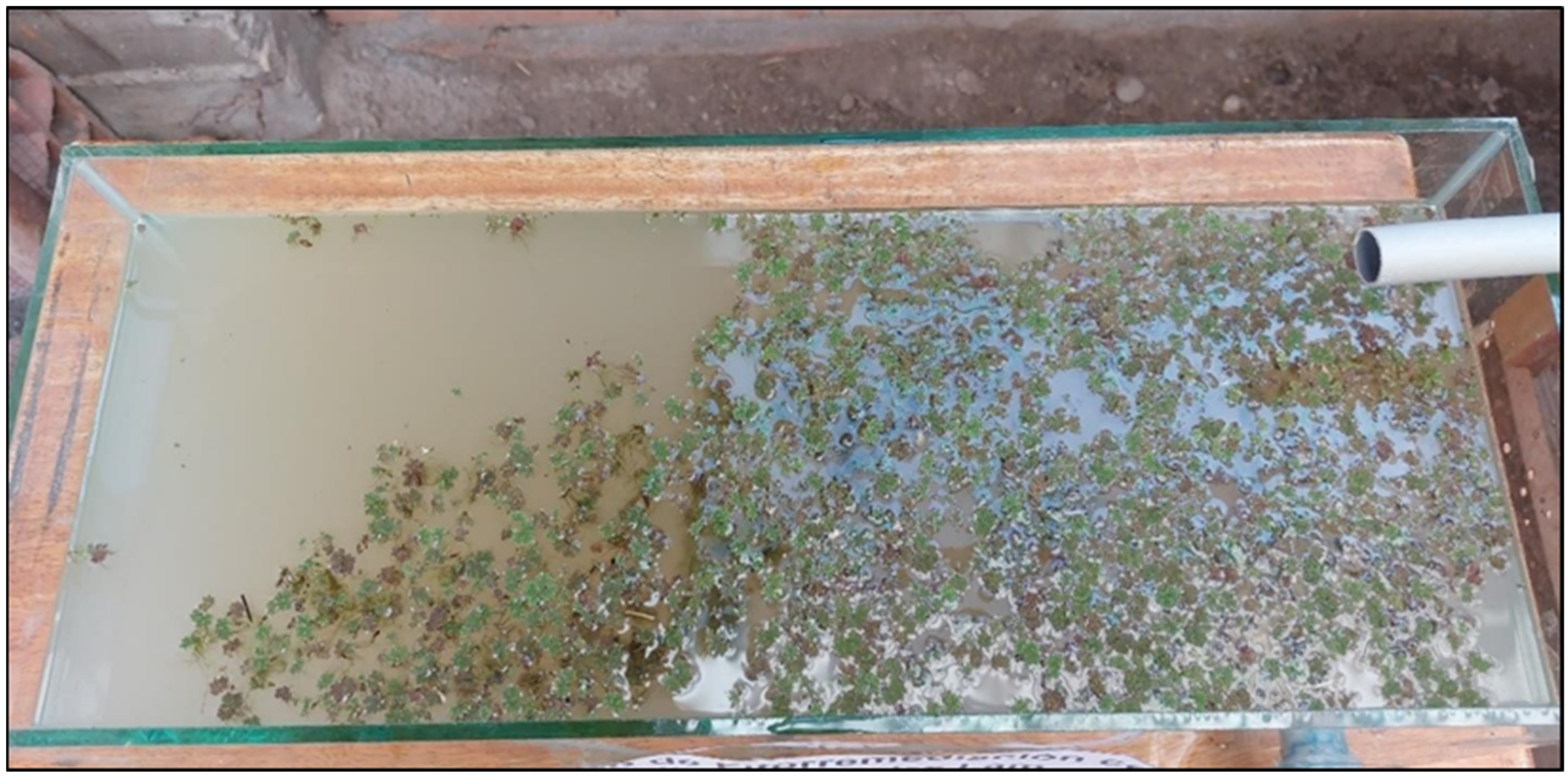
Additionally, 28 g of the macrophyte A. filiculoides from the Huayllaspanca lagoon (Sapallanga) was included (Figure 3). The methodology involved setting up a glass aquarium with dimensions of 54 cm × 20 cm × 21.3 cm, which was filled with the entire wastewater sample and 28 g of the plant species.

2.5. Sampling

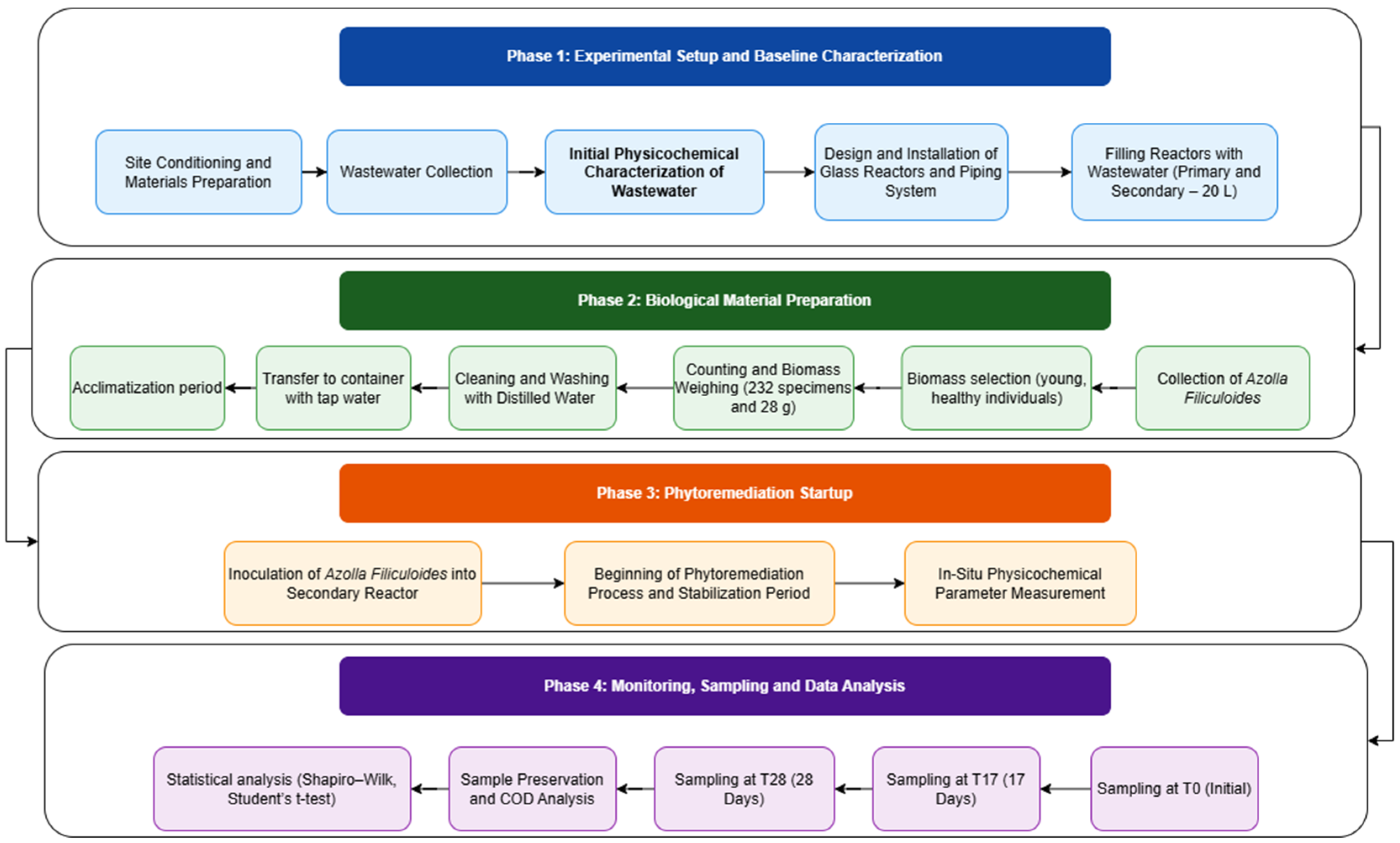
Wastewater samples were collected from the effluent of the Huamancaca Chico National Penitentiary Institute (INPE) to establish baseline conditions and to evaluate the phytoremediation process. To facilitate understanding of the experimental system, a flowchart of the phytoremediation system using Azolla filiculoides was prepared (Figure 4).
For the initial sampling (baseline characterization), a 5 L plastic container was filled with untreated wastewater directly from the effluent discharge point. The sample was homogenized using a disinfected glass rod to ensure representativeness. In situ parameters, including pH, temperature, electrical conductivity, and total dissolved solids (TDS), were measured using a calibrated portable multiparameter instrument.
After field measurements, the wastewater was re-homogenized in the container to ensure uniform composition, and seven additional subsamples (sampling units) were extracted in the corresponding volumes and pre-labeled containers. These subsamples were placed inside a cooler and preserved at an appropriate temperature using two refrigerant ice packs for transport to the laboratory [22], following the procedures established in Head Office Resolution No. 010-2016-ANA, “National Protocols for Monitoring the Quality of Water Resources” [23].
The second and third samplings, conducted after 17 and 28 days, followed the same procedure. In these cases, samples were collected from the wastewater undergoing phytoremediation treatment with Azolla filiculoides in order to evaluate the temporal evolution of the process.

2.6. Physicochemical and Microbiological Analysis

All laboratory analyses, both before and after treatment, were performed in accredited laboratories certified by the National Institute of Quality (INACAL). Physicochemical and microbiological parameters were determined in accordance with the procedures described in Standard Methods for the Examination of Water and Wastewater [24].
Chemical Oxygen Demand (COD) was determined using Method 5220 D (Closed Reflux, Colorimetric Method). COD was selected as the primary indicator to determine the time of highest organic load as it represents the total concentration of oxidizable organic matter and serves as a global pollution indicator in wastewater.
Removal efficiency (%) was calculated based on the initial and final concentrations of each parameter. The results were compared with the Peruvian regulatory framework established in Supreme Decree No. 004-2017-MINAM [25].

2.7. Statistical Analysis

We used inferential statistics, descriptive statistics, and test statistics. The monitoring of wastewater parameters before and after phytoremediation, for which field and laboratory data were recorded for later analysis, first checked the normal distribution of each parameter using the Shapiro–Wilk test (n < 30) with the SPSS Statistics 26 program. Subsequently, using the Minitab program (version 22.1), the one-sample Student’s t-test was used with a significance level of 95% (α < 0.05) [26].

3. Results & Discussion

To analyze the effectiveness of A. filiculoides in treating contaminated water, three samplings were conducted at different times and locations. The results of the physical, chemical, and microbiological analyses obtained throughout the treatment period are presented in this section. Data collected at different times of the day are reported as their respective averages.

3.1. Efficiency of Physical Parameters

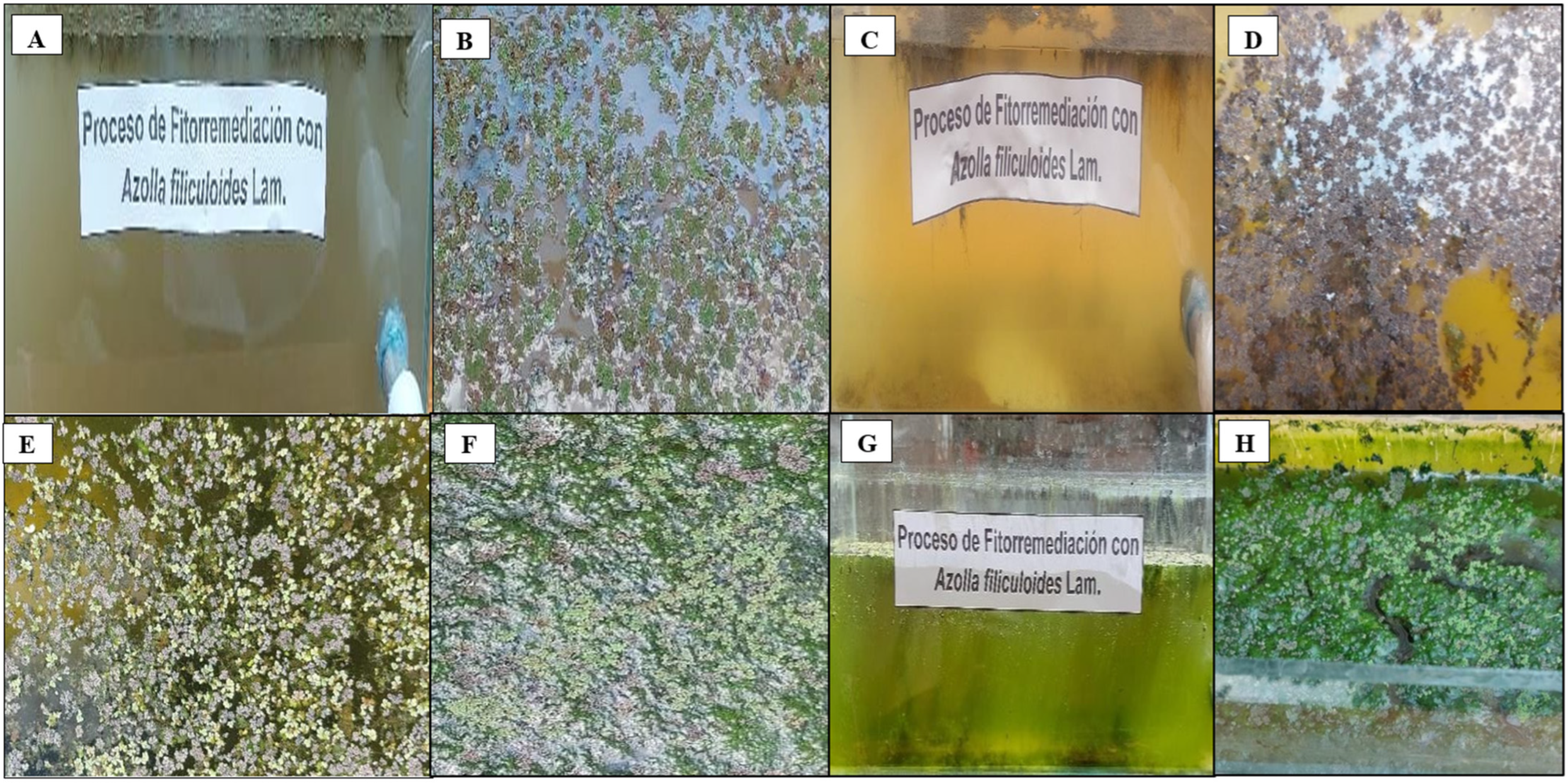
According to Table 1 and Figure 5, the wastewater showed variations in color during phytoremediation; from the beginning of the process until day 9, the color had a light brown appearance. From day 10 to 19, a greenish-yellow color was noted, and from day 20 until the end of the process, the wastewater exhibited a green color.
The efficiency of the species in the phytoremediation of the physical wastewater parameters is illustrated in Table 2 and Table 3, where A. filiculoides can be seen to be efficient in phytoremediation across the parameters of temperature, electrical conductivity, and turbidity.
Among the physical parameters is turbidity. In the analysis of the wastewater before phytoremediation, it presented a light brown color and an unpleasant odor. After the phytoremediation process, the water was a transparent greenish color and odorless, reaching a pH of 8.82. (Table 2). It is important to consider that most studies depend on the type of macrophyte used and the type of wastewater in which the experiment was conducted since turbidity is closely linked to the amount of suspended solid matter, including the presence of colloidal matter [27]. Another indicator analyzed in the study was electrical conductivity (Table 4), which showed a removal efficiency of 41.07%. This value is lower than those reported by Adabembe et al. [14], who obtained removal values of 48% and 50% in their study; the lowest percentage identified in the literature was 22.9%, reported by Kumar et al. [20]. It is crucial to understand that “for electrical conductivity to decrease biological processes during phytoremediation, it must have a significant influence on dissolved inorganic solids” [27]. Regarding pH, this indicator increased from 7.9 to 8.82. These data are similar to those reported by [14,19,21], with pH values increasing slightly in each study. The increase in pH is closely related to high concentrations of nitrogen in the form of nitrates and nitrites. This is generated by the metabolic activity of macrophytes, causing an increase in chemical reactions in the wastewater and making it more alkaline [21]. The obtained removal efficiency for turbidity (98.51%) is similar to the data reported in previous studies, which showed values exceeding 90% [3] and reaching 74.7% [19].

3.2. Efficiency of Chemical Parameters

The final removal result for ammonia nitrogen in this study was 95.77% (Table 4). This data is similar to that reported by [3], whose removal values ranged from 90 to 96%. For ammonia nitrogen to decrease in wastewater, it is important to highlight eutrophication as this process increases the growth of algae or aquatic plants, which feed on nutrients such as nitrogen [21]. Regarding oils and greases, a removal rate greater than 90% was obtained—data higher than that reported by [13]. It is important to understand that the reduction in this parameter is crucial and must be achieved in the initial stages of phytoremediation since excessive presence can cause a decrease in dissolved oxygen in the aquatic environment, which can fatally compromise both microbial activity and plant survival [28]. For total dissolved solids, a removal rate of 40.27% was obtained, a value supported by the research of [14], who obtained 35.6% and 48.7%, and by [20], who obtained a value of 44.7%. All the aforementioned investigations effectively reduced TDS levels, which is particularly important given that wastewater is often discharged into open environments where it may be unintentionally consumed by animals and plants. High TDS concentrations can significantly deteriorate water quality, negatively affecting ecological balance and biological health in receiving ecosystems. Phosphates are another chemical indicator, and their removal in the experiment was 94.65%. These data are consistent with those reported in [6], where a removal efficiency of 98% was obtained. In both that study and the present research, it was observed that the macrophyte growth rate was favorable due to the efficient assimilation of phosphates, leading to high removal levels of this indicator from the wastewater. Another chemical indicator is BOD5, whose removal efficiency reached 95.55%. This result is consistent with previous studies, such as [13], who reported BOD5 reductions of up to 98.2% following phytoremediation treatment. Furthermore, recent systematic reviews have reported that aquatic macrophytes commonly achieve BOD5 removal efficiencies exceeding 90% in wastewater treatment systems [29]. In particular, studies focusing on Azolla species have demonstrated that species such as Azolla microphylla can achieve BOD5 removal efficiencies of up to 89% in wastewater treatment applications [10]. The last chemical parameter analyzed in this research was COD, which reached a final removal efficiency in the experiment of 95.04%. These findings are supported by Ayu and Hanafiah [16], who achieve a value of 94.2%, Amare et al. [6] who reported 96%, while Sundararaman et al. [13] reported a removal rate of 98.2%. Similarly, Marín-Muñiz et al. [4] reported COD and BOD5 removal efficiencies in contaminated water, with values between 50% and 90% and 60% and 90%, respectively. These high COD removal percentages are due to the excellent oxidation of organic compounds by microorganisms [30], as well as the phytoremediation capabilities of aquatic macrophytes such as Azolla, which, in some studies, have achieved COD removal efficiencies of up to 94.9% under semi-controlled conditions [10]. A statistical comparison of the species’ efficiency in the phytoremediation of other chemical parameters in wastewater is shown in Table 4, where it can be seen that A. filiculoides is efficient in the phytoremediation of oils and greases, TDS, and ammonia nitrogen.

3.3. Efficiency of Microbiological Parameters of Azolla filiculoides

The initial concentrations of total coliforms (17,000,000 MPN/100 mL) and Escherichia coli (16,000,000 MPN/100 mL) greatly exceeded the Environmental Quality Standards (EQS) of Peru (1000 MPN/100 mL), indicating severe microbiological contamination prior to treatment.
After treatment, total coliforms and Escherichia coli were significantly reduced, with post-treatment averages of 11.6 MPN/100 mL and 2 MPN/100 mL, respectively—values that are well below the established EQS limits (p < 0.05). The removal of microbiological parameters, as shown in Table 4, was the most efficient, with a 99.9% removal rate for both fecal coliforms and Escherichia coli Similar results have been reported in previous studies, where [14] achieved a 100% reduction in fecal coliforms, and [3] reported removal efficiencies ranging from 97.5% to 99.9%. In addition, recent systematic reviews have confirmed that aquatic macrophyte-based treatment systems are highly effective in reducing microbiological contamination, frequently achieving removal rates above 98% in wastewater treatment processes [29]. Likewise, Amare et al. [6] reported post-treatment coliform concentrations of 267 MPN/100 mL—values that do not significantly compromise treated wastewater quality. Similarly, significant removal of Escherichia coli has been documented in constructed wetland systems with aquatic macrophytes, where planted configurations achieved up to 99.98% Escherichia coli reduction in domestic wastewater treatment [31].
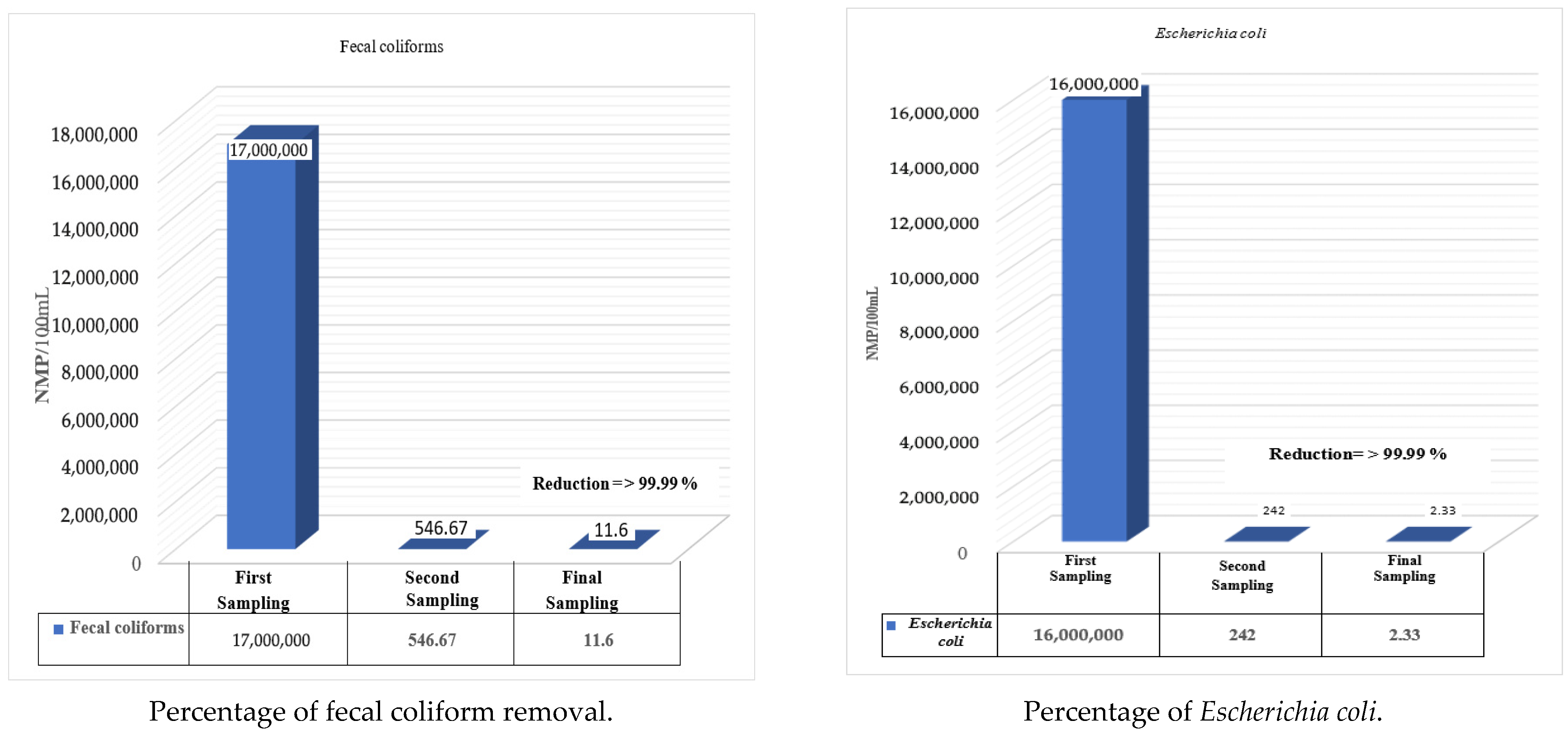
Figure 6 and Table 3 show the conditions before and after applying the ecological technique of phytoremediation, i.e., the removal of fecal coliforms from wastewater using A. filiculoides, evaluated through pre-test and post-test procedures. Before phytoremediation, the value of this parameter was 17,000,000 MPN/100 mL, and after treatment, it was 546.67 MPN/100 mL for the second sampling and 11.6 MPN/100 mL for the third, with a final removal rate of 99.9%.
Regarding the removal of Escherichia coli from INPE wastewater using A. filiculoides, Table 3 indicates that before treatment, a value of 16,000,000 MPN/100 mL was obtained; after treatment, the result was 242 MPN/100 mL in the second sampling and 2.33 MPN/100 mL in the third sampling, achieving a final removal of 99.99% for said parameter. The removal of microbiological parameters, as shown in Table 3, was the most efficient, achieving a 99.9% removal rate for both fecal coliforms and Escherichia coli.
The literature review demonstrated the great capacity of macrophytes to reduce microbiological parameters. For example, research by Adabembe et al. [14] reported a 100% reduction in fecal coliforms. Similarly, Lopez [3] achieved efficiencies of 97.5% to 99.9%, consistent with the findings of the present study.
According to Table 4, temperature showed a minimal increase of 0.07 °C; therefore, the final result was 19.17 °C. These data are similar to those reported by [21], whose values fluctuate between 16 and 20 °C. Temperature is an indicator of great importance, and its variation depends on the amount of vegetation cover in the pond or reactor. The water temperature increases when there are empty spaces; for this reason, in the investigation, the surface of the secondary reactor was covered by 50% [21]. Other authors, such as those of [27,32], consider temperature to be an indicator that does not influence biological removal processes during phytoremediation since they remain within the ranges permitted by established standards.
The fecal coliforms in post-treatment wastewater ranged from 7.8 to 14 MPN/100 mL, with a mean of 11.6 MPN/100 mL, a standard deviation of 3.329 MPN/100 mL, and a skewness coefficient of −1.558 (Table 5), indicating that their average was lower than the pre-treatment measurement (17,000,000 MPN/100 mL), and their distribution was elongated to the left (CA < −0.5). The phytoremediation of the physical parameters was assessed by comparing the post-treatment mean with the Environmental Quality Standard (EQS) using the parametric Student’s t-test due to their normal distributions. Escherichia coli fluctuated from 1 to 3 MPN/100 mL, with a mean of 2 MPN/100 mL, a standard deviation of 1 MPN/100 mL, and a skewness coefficient of 0, showing that its average was lower than the pre-treatment measurement (16 000 000 MPN/100 mL), and its distribution is symmetrical (−0.5 < CA < 0.5).
Substantial reductions were observed in most physicochemical and microbiological parameters. Organic matter indicators showed removal efficiencies above 95% (BOD5: 95.55%; COD: 95.04%), while fecal coliforms achieved a 99.99% reduction. Regarding regulatory compliance, parameters such as turbidity, oils and grease, and ammoniacal nitrogen successfully met the ECA Category 3 standards (Table 6). However, despite the high removal percentages, some parameters (BOD5, COD, and phosphates) remained above the ECA Category 3 limits after treatment, along with a slight deviation in pH levels.
The literature review demonstrated the great capacity of macrophytes to reduce microbiological parameters; for example, the research by [14] reported a 100% reduction in fecal coliforms. Likewise, Lopez [3] achieved efficiencies of 97.5 to 99.9%, similar to the present study, while for [6], the coliform colonies were 267 MPN/100 mL, a minimal amount that does not considerably affect the quality of the treated wastewater. Similarly, significant removal of Escherichia coli has been documented in constructed wetland systems with aquatic macrophytes, where planted configurations achieved up to 99.98% Escherichia coli reduction in domestic wastewater treatment [31], and Amare et al. [6] concluded that phytoremediation with A. filiculoides is effective and beneficial.

4. Conclusions

The phytoremediation process using Azolla filiculoides demonstrated high efficiency in treating wastewater over a 28-day period. The system achieved removal rates above 95% for organic load (BOD5 and COD) and ammonia nitrogen, while phosphates showed a removal efficiency of approximately 94%. Microbiological contaminants (fecal coliforms and E. coli) were reduced by 99.9%, with final concentrations meeting the ECA Category 3 standards for fecal coliforms.
Although the treatment significantly improved the physical, chemical, and microbiological quality of the water, parameters such as BOD5, COD, and phosphates remained above legal limits, suggesting that a longer retention time or additional treatment stages may be required to achieve full regulatory compliance. Nevertheless, Azolla filiculoides proved to be a sustainable and effective technology for substantially reducing high-impact pollutants. These findings are particularly relevant for the Junín region, providing a viable alternative with which to mitigate the environmental and public health risks associated with wastewater discharge in agricultural and livestock areas.

Author Contributions

Conceptualization, V.A.B.-L. and H.D.B.-M.; Methodology, V.A.B.-L.; Investigation, V.A.B.-L. and R.H.Z.-Q.; Writing—original draft preparation, V.A.B.-L. and R.H.Z.-Q.; Writing—Review and Editing, R.H.Z.-Q.; supervision and project administration, R.H.Z.-Q.; funding acquisition, H.D.B.-M.; Visualization and review, M.R.-D.L.C. and H.D.B.-M.; formal analysis, M.R.-D.L.C.; data curation and validation, M.R.-D.L.C. All authors have read and agreed to the published version of the manuscript.

Funding

This research received financial support of the National University of Central Peru, Vice-Rectorate for Research, funded through ordinary resources (RO) and the acquisition of equipment for the execution of the project. The research was funded through the UNCP Thesis Project Competition—2023, approved by Resolution No. 1601 R 2023.

Data Availability Statement

The original contributions presented in this study are included in the article. Further inquiries can be directed to the corresponding author.

Conflicts of Interest

The authors declare no conflicts of interest. The funders had no role in the design of the study; nor in the collection, analyses, or interpretation of data; in the writing of the manuscript; or in the decision to publish the results.

References

  1. UNESCO. The United Nations World Water Development Report 2022, Groundwater Making the Invisible Visible; UNESCO: Paris, France, 2022. [Google Scholar]
  2. SUNASS. Benchmarking Regulatorio 2025 de Empresas Prestadoras; SUNASS: Lima, Peru, 2025. [Google Scholar]
  3. Lopez, J.; Barrera, J. Fitodepuración Con Cuatro Especies de Macrófitas Flotantes Mediante El Sistema de Aireación a Escala Piloto de La Laguna “Mansión” de La Universidad Peruana Unión. 2021. Available online: https://repositorio.upeu.edu.pe/items/fb53009e-5880-4c88-b750-44899ef0200c (accessed on 17 December 2025).
  4. Marín-Muñiz, J.L.; Sandoval Herazo, L.C.; López-Méndez, M.C.; Sandoval-Herazo, M.; Meléndez-Armenta, R.Á.; González-Moreno, H.R.; Zamora, S. Treatment Wetlands in Mexico for Control of Wastewater Contaminants: A Review of Experiences during the Last Twenty-Two Years. Processes 2023, 11, 359. [Google Scholar] [CrossRef]
  5. Angelakis, A.N.; Capodaglio, A.G.; Passchier, C.W.; Valipour, M.; Krasilnikoff, J.; Tzanakakis, V.A.; Sürmelihindi, G.; Baba, A.; Kumar, R.; Haut, B.; et al. Sustainability of Water, Sanitation, and Hygiene: From Prehistoric Times to the Present Times and the Future. Water 2023, 15, 1614. [Google Scholar] [CrossRef]
  6. Amare, E.; Kebede, F.; Mulat, W. Wastewater Treatment by Lemna Minor and Azolla filiculoides in Tropical Semi-Arid Regions of Ethiopia. Ecol. Eng. 2018, 120, 464–473. [Google Scholar] [CrossRef]
  7. Mustafa, H.; Hayder, G. Recent Studies on Applications of Aquatic Weed Plants in Phytoremediation of Wastewater: A Review Article. Ain Shams Eng. J. 2021, 12, 355–365. [Google Scholar] [CrossRef]
  8. Khan, A.U.; Khan, A.N.; Waris, A.; Ilyas, M.; Zamel, D. Phytoremediation of Pollutants from Wastewater: A Concise Review. Open Life Sci. 2022, 17, 488–496. [Google Scholar] [CrossRef]
  9. González-Méndez, L.M.; Martínez-Amador, S.Y.; Ríos-González, L.J.; Pérez-Rodríguez, P.; Perez-Rodríguez, M.A.; Reyes-Acosta, A.V.; Rodríguez-De la Garza, J.A. A Review on Anatomical and Physiological Traits of Aquatic Macrophytes Coupled to a Bioelectrochemical System: Comparative Wastewater Treatment Performance. Processes 2025, 13, 1545. [Google Scholar] [CrossRef]
  10. Benguennouna, N.; Benabdelmoumene, D.; Dahmouni, S.; Bengharbi, Z.; Qadi, W.S.M.; Hamezah, H.S.; Mediani, A. Eco-Phytoremediation Using Azolla microphylla Enhances Heavy Metal Removal, Water Quality, and Biomass Valorization in Semi-Arid Wastewater Treatment. Desalination Water Treat. 2025, 324, 101437. [Google Scholar] [CrossRef]
  11. Rezooqi, A.M.; Mouhamad, R.S.; Jasim, K.A. The Potential of Azolla filiculoides for in Vitro Phytoremediation of Wastewater. J. Phys. Conf. Ser. 2021, 1853, 012014. [Google Scholar] [CrossRef]
  12. Al-Baldawi, I.A.; Yasin, S.R.; Jasim, S.S.; Abdullah, S.R.S.; Almansoory, A.F.; Ismail, N.’I. Removal of Copper by Azolla filiculoides and Lemna Minor: Phytoremediation Potential, Adsorption Kinetics and Isotherms. Heliyon 2022, 8, e11456. [Google Scholar] [CrossRef]
  13. Sundararaman, S.; Kumar, P.S.; Deivasigamani, P.; Jagadeesan, A.K.; Devaerakkam, M.; Al-Hashimi, A.; Choi, D. Assessing the Plant Phytoremediation Efficacy for Azolla filiculoides in the Treatment of Textile Effluent and Redemption of Congo Red Dye onto Azolla Biomass. Sustainability 2021, 13, 9588. [Google Scholar] [CrossRef]
  14. Adabembe, B.A.; Fasinmirin, J.T.; Olanrewaju, O.O.; Dada, A.A.; Faloye, O.T. Phytoremediation of Aquaculture Wastewater Using Azolla pinnata and Evaluation of Its Suitability for Irrigation Purpose. Sustain. Water Resour. Manag. 2022, 8, 166. [Google Scholar] [CrossRef]
  15. Jonoubi, P.; Karimi Limanjoubi, S.L. Impacts of Heavy Metal and Nutrient Accumulation on the Vegetative, Anatomical and Reproductive Characteristics and Phytoremediation Efficiency of Azolla filiculoides L. Biol. Environ. Proc. R. Ir. Acad. 2024, 124, 75–90. [Google Scholar] [CrossRef]
  16. Ayu, N.; Hanafiah, M. Phytoremediation of Livestock Wastewater Using Azolla filiculoides and Lemna Minor. Environ. Ecosyst. Sci. 2018, 2, 13–16. [Google Scholar] [CrossRef]
  17. Herazo, L.C.S.; Marín-Muñiz, J.L.; Alvarado-Lassman, A.; Zurita, F.; Marín-Peña, O.; Sandoval-Herazo, M. Full-Scale Constructed Wetlands Planted with Ornamental Species and PET as a Substitute for Filter Media for Municipal Wastewater Treatment: An Experience in a Mexican Rural Community. Water 2023, 15, 2280. [Google Scholar] [CrossRef]
  18. SENAMHI. Climas Del Perú, Mapa de Clasificación Climática Nacional; Servicio Nacional de Meteorología e Hidrología del Perú: Lima, Peru, 2021. [Google Scholar]
  19. Akinbile, C.; Ogunrinde, T.; Man, H.C.b.; Aziz, H. Phytoremediation of Domestic Wastewaters in Free Water Surface Constructed Wetlands Using Azolla pinnata. Int. J. Phytoremediat. 2015, 18, 54–61. [Google Scholar] [CrossRef]
  20. Kumar, V.; Kumar, P.; Singh, J.; Kumar, P. Potential of Water Fern (Azolla pinnata R.Br.) in Phytoremediation of Integrated Industrial Effluent of SIIDCUL, Haridwar, India: Removal of Physicochemical and Heavy Metal Pollutants. Int. J. Phytoremediat. 2019, 22, 392–403. [Google Scholar] [CrossRef] [PubMed]
  21. Garcia, Z. Comparación y Evaluación de Tres Plantas Acuáticas Para Determinar La Eficiencia de Remoción de Nutrientes En El Tratamiento de Aguas Residuales Domésticas. 2012. Available online: https://repositorio.uni.edu.pe/handle/20.500.14076/1292 (accessed on 31 December 2025).
  22. Ballón, K. Fitorremediación de Aguas Residuales Domésticas Con La Especie Eichhornia Crassipes En El Distrito de Yarabamba, Arequipa—2021. Bachelor’s Thesis, Escuela Académico Profesional de Ingeniería Ambiental, Universidad Continental, Arequipa, Peru, 2021. [Google Scholar]
  23. ANA. Protocolo Nacional Para El Monitoreo de La Calidad de Los Recursos Hídricos Superficiales. 2016. Available online: https://sinia.minam.gob.pe/documentos/protocolo-nacional-monitoreo-calidad-recursos-hidricos-superficiales (accessed on 17 December 2025).
  24. APHA; AWWA; WEF. Standard Methods for the Examination of Water and Wastewater, 24th ed.; APHA: Washington, DC, USA, 2023. [Google Scholar]
  25. Aprueban Estándares de Calidad Ambiental (ECA) Para Agua y Establecen Disposiciones Complementarias. DECRETO SUPREMO N° 004-2017-MINAM. 2017. Available online: https://www.minam.gob.pe/wp-content/uploads/2017/06/DS-004-2017-MINAM.pdf (accessed on 17 December 2025).
  26. Ayuque, J.; Poma, K. Tratamiento de Aguas Residuales Mediante El Método Hidropónico de Mhenta Piperita y Chamaemelum Nobile En El Puesto de Salud de Chacarilla, Yauli–Huancavelica. 2022. Available online: https://repositorio.unh.edu.pe/items/fa0caec1-98e2-4e68-b5a2-dd3fe639bc91 (accessed on 19 December 2025).
  27. Limas, C. Mejoramiento Del Humedal Artificial Del Centro de Producción Agropecuaria de “Yauris”—Piopata Con Plantas Emergentes a Escala Piloto. 2017. Available online: https://repositorio.uncp.edu.pe/handle/20.500.12894/6763 (accessed on 22 December 2025).
  28. Nikolić, I.; Mijić, K.; Mitrović, I. Characteristics of Food Industry Wastewaters and Their Potential Application in Biotechnological Production. Processes 2025, 13, 2401. [Google Scholar] [CrossRef]
  29. Palomino Seguil, Y.; Vilchez Garay, L.; Matencios Cortez, C.; Cornejo Tueros, J.; Camargo Hinostroza, S.; Canales Guerra, V. Systematic Review of the Efficiency of Aquatic Plants in the Wastewater Treatment. IOP Conf. Ser. Earth Environ. Sci. 2022, 1009, 012004. [Google Scholar] [CrossRef]
  30. Sun, Q.; Zhang, X.; Zhang, X. Impact of Natural Microorganisms on the Removal of COD and the Cells Activity of the Chlorella sp. in Wastewater. Water 2023, 15, 3544. [Google Scholar] [CrossRef]
  31. Getu, T.; Angassa, K.; Etana, R.; Abewaa, M. Enhanced Organic and Microbial Contaminant Removal Using Planted Constructed Wetland-Microbial Fuel Cells for University Wastewater Treatment. Clean. Waste Syst. 2026, 13, 100449. [Google Scholar] [CrossRef]
  32. Hernández-Vásquez, L.A.; Romo-Gómez, C.; Alvarado-Lassman, A.; Prieto-García, F.; Camacho-López, C.; Acevedo-Sandoval, O.A. Artificial Floating Islands for the Removal of Nutrients and Improvement of the Quality of Urban Wastewater. Water 2024, 16, 1443. [Google Scholar] [CrossRef]
Figure 1. Sample and location map.
Processes 14 01133 g001
Figure 2. Phytoremediation species Azolla filiculoides in the Huayllaspanca lagoon, Junín, Peru, used in the present experiment.
Processes 14 01133 g002
Figure 3. Azolla filiculoides in the secondary reactor.
Processes 14 01133 g003
Figure 4. Flowchart of the process of the phytoremediation system using Azolla filiculoides.
Processes 14 01133 g004
Figure 5. Observation of the species and wastewater during the phytoremediation process: A. filiculoides in wastewater—day 2 (A); Azolla filiculoides—day 4 (B); wastewater—day 10 (C); Azolla filiculoides—day 11 (D); Azolla filiculoides—day 14 (E); Azolla filiculoides—day 20 (F); wastewater—day 25 (G); Azolla filiculoides—day 28 (H).
Processes 14 01133 g005
Figure 6. Percentage of fecal coliform removal and Escherichia coli.
Processes 14 01133 g006
Table 1. Apparent color of wastewater during the phytoremediation process.
Day
12345678910111213141516171819202122232425262728
Light brown
Yellowish-green
Transparent greenish
Table 2. Averages of sampling data for physical and chemical parameters across different collection dates.
First TakeSecond TakeThird Take
ParameterUnit of Measure12.00 p.m.9.00 a.m.12.00 p.m.16.00 p.m.Average9.00 a.m.12.00 p.m.16.00 p.m.Average
pHpH unit7.98.618.758.88.728.78.898.868.82
Temperature°C19.113.519.119.517.3715.721.82019.17
Total dissolved solidsppm970735824728762.33636538564579.33
Electrical conductivityµS/cm192114611761145215581172106611581132
TurbidityNTU1445.276.156.075.832.122.022.292.14
Phosphatesmg P/L3.481.821.911.861.860.260.170.130.19
Oils and greasesmg/L54.20<5<5<5<5<5<5<5<5
BOD5mg/L99959.163.668.163.642.945.844.644.43
CODmg/L2149.10146.5156.5169.8157.6103.2109.8106.5106.5
Ammoniacal nitrogenmg/L45.3923.5430.8331.3428.572.711.361.691.92
Fecal coliformsMPN/100 mL17,000,000590510540546.6714137.811.60
Escherichia coliMPN/100 mL16,000,0002532332402423222.33
Table 3. Results of sampling of microbiological parameters of wastewater for fecal coliforms and Escherichia coli.
ParameterUnit of MeasurementFirst Sampling
Before
Second Sampling
After
Third Sampling
Final
Fecal coliformsMPN/100 mL17,000,000546.6711.6
Escherichia coliMPN/100 mL16,000,0002422.33
Table 4. Removal efficiency of the different parameters under study in the different sampling events.
First SamplingSecond SamplingThird Sampling
ParameterAverageAverageRemoval Efficiency (%)AverageRemoval Efficiency (%)
pH7.98.72-8.82-
Temperature19.117.37-19.17-
Total dissolved solids970762.3321.41579.3340.27
electrical conductivity1921155818.90113241.07
Turbidity1445.8395.952.1498.51
Phosphates3.4781.8646.460.1994.65
Oils and greases54.2<5>90.7<5>90.7
BOD599963.693.6344.4395.55
COD2149.1157.692.67106.595.04
Ammoniacal Nitrogen45.38528.5737.051.9295.77
Fecal coliforms17,000,000546.679911.6099.99
Escherichia coli16,000,000242992.3399.99
Table 5. Descriptive statistics, Shapiro–Wilk normality test, and efficiency of the microbiological parameters of wastewater.
StatisticalMicrobiological Parameter
Total ColiformsEscherichia coli
Pre-treatment17,000,00016,000,000
Post-treatment
Minimum7.81
Maximum14.03
Mean11.62
Standard Deviation3.331
Skewness−1.5580
Normality test
Shapiro–Wilk0.8671
p-value0.2881
is this normal?YesYes
Efficiency
EQSs10001000
Student’s t-test−514.31−1728.59
p-value00
EfficacyYesYes
Table 6. Efficiency of wastewater treatment: percentage removal and compliance with Environmental Quality Standards (ECA) for Category 3.
ParameterPre-TreatmentPost-Treatment (28 d)% RemovalECA Cat 3ECA Cat 3Condition
Vegetable IrrigationAnimal Watering
Physical
pH7.98.82−11.6% (Inc)6.5–8.56.5–8.4Non-compliant
Temperature19.119.17−0.37%Δ 3Δ 3Compliant
Electric Cond.1921113241.07%25005000Compliant
Turbidity1442.1498.51%100100Compliant
Chemical
Phosphates3.4780.1994.54%0.150.15Non-compliant
Oils and Grease54.2<5>90.77%510Compliant
Total Diss. Solids970579.3340.28%10001000Compliant
BOD599944.4395.55%1515Non-compliant
COD2149.1106.595.04%4040Non-compliant
Ammoniacal Nit.45.3851.9295.77%1010Compliant
Microbiological
Fecal Coliforms1.7 × 10711.699.99%10001000Compliant
Escherichia coli1.6 × 1072.3399.99%1000Not applicableCompliant
Disclaimer/Publisher’s Note: The statements, opinions and data contained in all publications are solely those of the individual author(s) and contributor(s) and not of MDPI and/or the editor(s). MDPI and/or the editor(s) disclaim responsibility for any injury to people or property resulting from any ideas, methods, instructions or products referred to in the content.