Article

Development and Service Performance of Active Anti-Icing Pavement Materials for Energy Efficiency Optimization of Low-Enthalpy Geothermal Deicing Systems

1
College of Civil Aviation, Nanjing University of Aeronautics and Astronautics, Nanjing 211106, China
2
Road and Bridge Engineering College, Xinjiang Communications Polytechnic University, Urumqi 831401, China
3
School of Energy Engineering, Xinjiang Institute of Engineering, Urumqi 830023, China
4
School of Chemical Engineering, Xinjiang University, Urumqi 830017, China
5
Highway Science and Technology Co., Ltd. of Xinjiang Production and Construction Corps, Urumqi 830002, China
6
College of Engineering, San Jose State University, San Jose, CA 95192, USA
*
Authors to whom correspondence should be addressed.
Processes 2026, 14(7), 1124; https://doi.org/10.3390/pr14071124
Submission received: 13 February 2026 / Revised: 22 March 2026 / Accepted: 24 March 2026 / Published: 31 March 2026
(This article belongs to the Special Issue Innovative Technologies and Processes in Geothermal Energy Systems)

Abstract

To address high thermal loads and energy costs in Geothermal Road Snow-Melting Systems (GRSSs) within cold regions, this study optimizes energy efficiency through material-level intervention. We developed a composite anti-icing modifier synergistic with low enthalpy geothermal systems, comprising slow-release agents, anti-corrosive components, reinforcing materials, and active chloride salts. By regulating the thermodynamic boundary of the pavement, the freezing point is suppressed to −21 °C. This eliminates the requirement for positive pavement temperatures, significantly reducing the design thermal power. Chloride ion release patterns were analyzed via dissolution and 20-day soaking tests to evaluate structural durability. Results show optimal performance at a 5% modifier dosage and 5.3% bitumen aggregate ratio. Ion release follows a third-order polynomial law and remains stable at 35 °C, ensuring reliability during seasonal thermal cycles. Validation in Xinjiang showed a variation of only 1.5% over 20 days. This research offers an innovative material energy synergy for cascaded geothermal utilization and infrastructure decarbonization in cold regions.

1. Introduction

In the current global transition toward sustainable and resilient energy systems, geothermal energy, as a stable baseload energy and high-quality direct heat source, plays an increasingly critical role in regional decarbonization and intelligent infrastructure management [1]. In the context of this study, “geothermal energy” specifically refers to shallow geothermal energy (or low-enthalpy geothermal energy). Unlike traditional deep geothermal resources characterized by high-temperature steam or magma, shallow geothermal energy utilizes low-temperature thermal energy stored in the shallow crust, which is maintained by a combination of solar radiation absorbed by the earth’s surface and the natural geothermal gradient. Through technologies such as Ground Source Heat Pumps (GSHPs) or Gravity Geothermal Heat Pipes (GGHPs), this low-enthalpy heat can be continuously extracted and transferred to the pavement surface. Especially in cold regions, Geothermal Road Snow-Melting Systems (GRSSs), as an important branch of geothermal direct use, have become the core technical solution for ensuring winter transportation energy security and traffic efficiency. However, investigations show that traffic accidents induced by road snow and ice in extreme cold weather still account for 15% to 30%, revealing the energy efficiency bottleneck of traditional geothermal melting systems under extreme working conditions [2,3]. To maintain the pavement in a melted state above 0 °C, the system often faces immense thermal load pressure and high operating costs [4]. Wang et al. [5] noted that high energy consumption remains a primary barrier to the large-scale adoption of GRSSs. For a long time, road deicing in cold regions has primarily relied on passive modes such as mechanical removal and chemical deicer spraying [6,7]. Bajic’ et al. [8] systematically evaluated the long term damage of traditional chlorides to highway infrastructure, noting that chloride salt erosion significantly shortens the life cycle of reinforced concrete structures. Gardeshi et al. [9] used high-throughput environmental monitoring to reveal the destructive penetration of traditional chemical deicers into surface runoff and surrounding vegetation, emphasizing the urgency of ecological compatibility during the decarbonization of transportation infrastructure. Recent studies by Hintz et al. [10] and Meng et al. [11] have echoed these concerns, highlighting the need for more sustainable active de-icing solutions. The environmental costs and maintenance expenses of these passive technologies have shifted the global research perspective toward more efficient active geothermal technologies.
Driven by both energy system integration and material process innovation, direct geothermal utilization has become a core pathway for ensuring winter transportation energy security [12]. Park et al. [13] proposed a seasonal thermal storage scheme based on GSHPs aimed at collecting pavement thermal energy in summer and feeding it back to Hydronic Heated Pavement Systems (HHPS) in winter, achieving efficient cross-seasonal energy transfer. Yu et al. [14] developed a composite pavement structure with phase change energy storage characteristics, significantly improving heat exchange efficiency between geothermal fluids and the pavement layer by optimizing the heat transfer interface. Anand et al. [15] established a deep GGHPs extraction model, providing theoretical support for the large-scale acquisition of low-enthalpy geothermal energy in key sections of extreme cold regions. Additionally, Xu et al. [16] introduced intelligent thermal control algorithms to further enhance HHPS efficiency. Furthermore, Çiçek et al. [17] indicated that recent advancements in integrated energy systems for road infrastructure highlight the critical need for coupled material-energy optimization to minimize operational energy consumption and environmental impacts. Although numerous studies have investigated mechanical and thermal models of geothermal pavements, empirical studies quantifying how material-level freezing point depression directly alleviates the thermoeconomic burden of low-enthalpy geothermal systems remain limited.
In recent years, the development of energy-smart snow-melting infrastructure has gained significant momentum globally, particularly in leading economic regions. For instance, the performance of hydronic heated pavement systems utilizing solar and geothermal energy has been rigorously evaluated in the United States [18]. In the European Union, the long-term anti-icing effectiveness of low-temperature hydronic heated pavements has been comprehensively assessed for Northern European climates [19]. Furthermore, the design and energy efficiency of pavement solar collectors have been extensively optimized by Swedish researchers to suit Scandinavian conditions [20]. Additionally, foundational numerical models for heated pavements and snow melting processes have been developed and validated through international collaborations between the US and the UK [21]. Integrating these global practices with our self-developed anti-icing modifier provides a broader context for optimizing the energy efficiency of geothermal pavements.
Meanwhile, active energy control functional materials have entered a phase of deep synergy between materials and energy. Zhao et al. [22] developed a long-term anti-icing seal coat-based on microcapsule encapsulation technology, utilizing environmental stimulus mechanisms to achieve intelligent controlled release of deicing active ingredients. Jin et al. [23] conducted an in-depth study on the impact of porous media structures on ion diffusion kinetics, providing a new pathway to resolve the synergy conflict between deicing performance and the mechanical strength of mixtures. Wang et al. [24] achieved a balanced distribution of the internal thermal field within the pavement by introducing nano-reinforced components, effectively extending the service resilience of active anti-icing systems under extreme temperature gradients.
Although these technologies have significantly enhanced deicing performance, existing active systems still face a synergy conflict between energy consumption and material durability. Sole reliance on geothermal energy to maintain positive pavement temperatures consumes massive amounts of high-quality thermal energy, while the slow-release efficiency of current modifiers is unstable and tends to weaken the pavement structure. To solve this problem, this study proposes an active material scheme that deeply synergizes with low enthalpy geothermal energy systems, aiming to achieve quality and efficiency enhancement of geothermal systems through material freezing point regulation. By introducing a self-developed composite modifier into the pavement system, this scheme significantly suppresses the freezing point to −21 °C. Consequently, geothermal snow melting systems no longer require heating the pavement to 0 °C to prevent ice adhesion, which substantially reduces the thermal power requirements of the system. This energy-saving potential has been supported by the theoretical models of Zheng et al. [25], Rees et al. [26], and Mo et al. [27].
This study adopts an approach combining micro component regulation and macro performance validation. First, functional units covering long-term slow-release components, anti-corrosive ingredients, and active chloride salts were screened, and the coupled effects of different components on chloride ion release kinetics were quantified. Based on monitoring data from samples 1# to 6#, a third-order multivariate polynomial model was established. Thermal stability under complex thermal cycles was verified through static soaking and dynamic washing, ensuring that the modifier would not be lost prematurely due to summer pavement heat collection. Essen et al. [28] and Abbas et al. [29] have validated similar thermal cycling stability in seasonal storage systems. Finally, the optimal dosage for extreme cold regions in Xinjiang was determined through a multi-indicator evaluation system including Marshall stability, high temperature rutting, and freeze–thaw splitting strength. Following the experimental methodologies of Zheng et al. [30], Wang et al. [31], an active anti-icing evaluation framework covering energy efficiency indicators and pavement performance was constructed. This research not only enhances the low-temperature cracking resistance of pavement materials but also provides an innovative technical pathway and theoretical support for the low-load operation and efficient utilization of geothermal energy systems in cold regions.

2. Materials and Methods

2.1. Raw Materials

In this study, the performance testing of aggregates, bitumen, and asphalt mixtures was conducted in accordance with the Chinese transport industry standards JTG E42-2005 [32] and JTG E20-2011 [33]. To ensure global reproducibility and facilitate understanding for international readers, it is important to note that the test principles, operating procedures, and evaluation metrics in these standards are strictly equivalent to widely recognized international standards, such as the corresponding ASTM and ISO series (e.g., ASTM D6927-22 and ISO 12697-34:2021 for Marshall stability). Specific international equivalent standards for each test are declared alongside the respective methodologies below.

2.1.1. Asphalt

Anti-icing asphalt pavements are primarily used in low-temperature regions. Therefore, asphalt with excellent low-temperature stability is required. In this study, Styrene-Butadiene-Styrene Block Copolymer Modified Bitumen (I-D grade), conforming to the international standard ASTM D6114-21, was utilized. It is a petroleum-based road bitumen with a mass fraction w = 4.5% of SBS modifier, which meets the PG 76-22 grading requirements. Its specific surface area is 0.08 m2/g (measured via ASTM D3663-21), with a viscosity of 1.13 Pa · s at 135 °C (ASTM D4402-21), a flash point of 325 °C, and a fire point of 360 °C (ASTM D92-21). This modified asphalt exhibits superior performance at low temperatures due to its unique structure. Consequently, as shown in Table 1, this standardized SBS-modified bitumen was used as the binder for all specimens in this study. It must be emphasized that the scientific novelty of this research does not lie in the asphalt binder itself, but rather in the subsequent integration of a newly self-developed active anti-icing composite modifier (detailed in Section 2.2). This novel modifier acts as a functional plug-in within the standard SBS matrix, specifically designed to achieve deep thermodynamic synergy with low-enthalpy geothermal systems and suppress the freezing point to −21 °C.

2.1.2. Aggregate

With the dissolution of salt and the infiltration of water, the adhesion between the aggregate and the asphalt binder may be compromised, leading to a decline in pavement performance. Therefore, a rigorous evaluation of the physical and mechanical properties of the aggregates used for anti-icing asphalt mixtures was performed in this study. According to ISO 13075:2021, Basalt Coarse Aggregate and Basalt Fine Aggregate were selected for testing. The mineral type is volcanic basalt, primarily composed of pyroxene and plagioclase, which meets the requirements of ASTM C33/C33M-24. The specific particle composition (by mass fraction) for the coarse aggregate is 11 mm to 22 mm (30%), 6 mm to 11 mm (35%), and 4 mm to 6 mm (15%), while the fine aggregate consists of 0 mm to 4 mm (20%). Their specific surface areas are 0.12 m2/g and 0.85 m2/g, respectively, as determined by the Blaine air permeability method (ASTM C204-21). During the evaluation, the apparent relative density and water absorption were determined using the water displacement method (equivalent to ASTM C127-22/ASTM C128-22/ISO 10774:2019), and the crushing value was measured (equivalent to ASTM C131/C131M-22/ISO 13075-1:2021). The Mohs hardness was also verified to range from 6.5 to 7.0. The corresponding technical indicators are presented in Table 2.

2.1.3. Mineral Powder

To improve the adhesion between mineral filler and asphalt, a Limestone Mineral Filler conforming to ISO 12697-3:2021 was selected in this study. It is a sedimentary limestone with a primary mineral composition of calcite (CaCO3 content ≥ 95%), satisfying the mineral requirements of ASTM D242-22. Chemical analysis via X-ray fluorescence spectrometry (ASTM D4926-21) confirmed a composition of 95.2% CaCO3, 3.5% MgCO3, and 1.3% SiO2. Its specific surface area was measured at 385 m2/kg using the Blaine air permeability method (ISO 9277:2010), demonstrating excellent physical and mechanical properties. As determined by the Le Chatelier flask method (equivalent to ASTM C188-22/ISO 787-10:2021), the apparent density of the mineral filler is 2.693 t/m3. Its particle size distribution (by mass fraction) meets the specification requirements, with a 100% content of particles smaller than 0.6 mm, 98.6% smaller than 0.15 mm, and a passing rate of 82.3% through the 0.075 mm sieve, which exceeds the technical indicator requirement of 80%. Furthermore, the hydrophilic coefficient of the mineral filler (tested via ASTM D7123-19) is only 0.75, significantly lower than the standard limit of 1. With a plasticity index of 2.1 (tested via ISO 17892-12:2019) and a water content as low as 0.1%, the filler demonstrates good lipophilicity and water-damage resistance potential. Detailed technical indicators and test results for the mineral filler are presented in Table 3.

2.2. Anti-Icing Modifier

2.2.1. Preparation Process of Anti-Icing Modifiers

The anti-icing modifier employed in this study is a self-developed composite functional particle (internationally standardized as a Sustained-Release Composite Anti-icing Modifier for Bituminous Pavements, referencing ISO 14025:2018 guidelines). To ensure complete transparency and reproducibility, the precise formulation of the composite in terms of mass fraction w consists of commercially available components: chloride-based active substances (Calcium Chloride at 25%, Magnesium Chloride at 15%, and Sodium Chloride at 5%, conforming to ASTM D98-21), long-term slow-release components (Polyethylene Glycol PEG-6000 at 20% per ISO 10927:2011, and Polyvinyl Alcohol PVA at 8% per ISO 9001:2015), protective anti-corrosive ingredients (Sodium Tripolyphosphate at 4% per ASTM D1141-21, and Zinc Borate at 3% per ASTM D4926-21), and strengthening and binding additives (Limestone Powder at 15% per ISO 12697-3:2021, and Hydroxypropyl Methyl Cellulose at 5% per ASTM D2369-21). Specifically, the salinization technology can suppress the pavement freezing point to −21 °C, achieving durable anti-icing performance and reducing road maintenance costs. The long-term regulatory medium ensures a stable release rhythm during the service life of the road by delaying the dissolution process of salt substances. Corrosion inhibitors ensure that the steel reinforcement in bridge structures is protected from erosion while maintaining the balance of the surrounding ecosystem. Strengthening agents are utilized to enhance the compressive strength of the particles, ensuring they maintain their physical integrity during high-temperature asphalt mixture stirring and coating processes. As shown in Table 4, the prepared anti-icing modifier must meet strict technical indicator requirements. The physical parameters of the prepared modifier include a specific surface area of 1.25 m2/g (determined by the Blaine air permeability method, ASTM C204-21), thermal stability up to a melting point of 260 °C (ASTM D3461-21), and a pH value of 8–10 in a 1% aqueous solution (ASTM D1293-21). Its finalized particle size distribution by mass fraction (screened via ISO 3310-1:2016 standard sieves) is strictly controlled to 0.1 mm to 1 mm (25%), 1 mm to 2 mm (45%), and 2 mm to 3 mm (30%).
The manufacturing of modifiers strictly adheres to automated processes to ensure the stability of product quality, and the preparation procedure is illustrated in Figure 1. Various initial raw materials are injected into the system through specific inlets and subsequently undergo thorough mixing via high-efficiency mixing equipment to ensure a homogeneous distribution of all functional components. Following the mixing process, the materials are transported to storage bins by conveying systems and finally undergo precise dosing and finished product packaging by an automated dispensing system according to preset quality standards. This process ensures the consistent performance of the anti-icing and snow-melting asphalt modifier currently under development.

2.2.2. Experimental Methods for Anti-Icing Modifiers

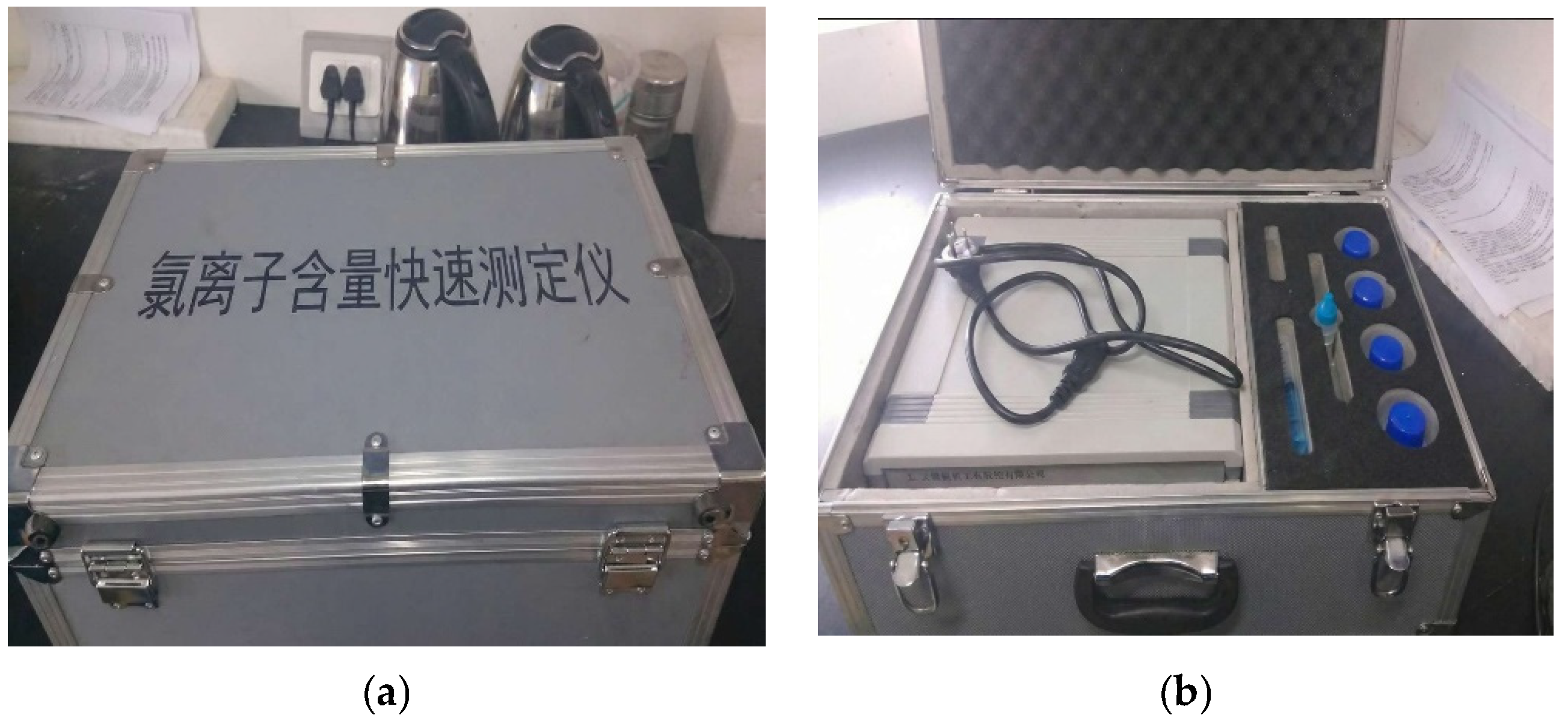
This study utilized a BOEMX chloride ion rapid tester (as shown in Figure 2) to evaluate experimental samples prepared from anti-icing modifiers. Operating on the ion-selective electrode principle, the equipment and detection accuracy (concentration, c = 0.001 mol/L) fully comply with international testing standards ASTM D512-23 and ISO 10390:2021. These samples were fabricated by incorporating two distinct types of Slow-Release Agents (SRAs) into conventional anti-icing modifiers. These samples were fabricated by incorporating two distinct types of Slow-Release Agents (SRAs) into conventional anti-icing modifiers. The formulation ratios were established as follows: when the addition of the slow-release agent was set at 10%, 20%, and 30%, the corresponding proportion of the conventional anti-icing modifier was adjusted to 90%, 80%, and 70%, respectively. Consequently, six groups of experimental samples were synthesized. The numbering convention is as follows: 1# represents the first type of slow-release agent at a 10% dosage, 2# at 20%, and 3# at 30%.
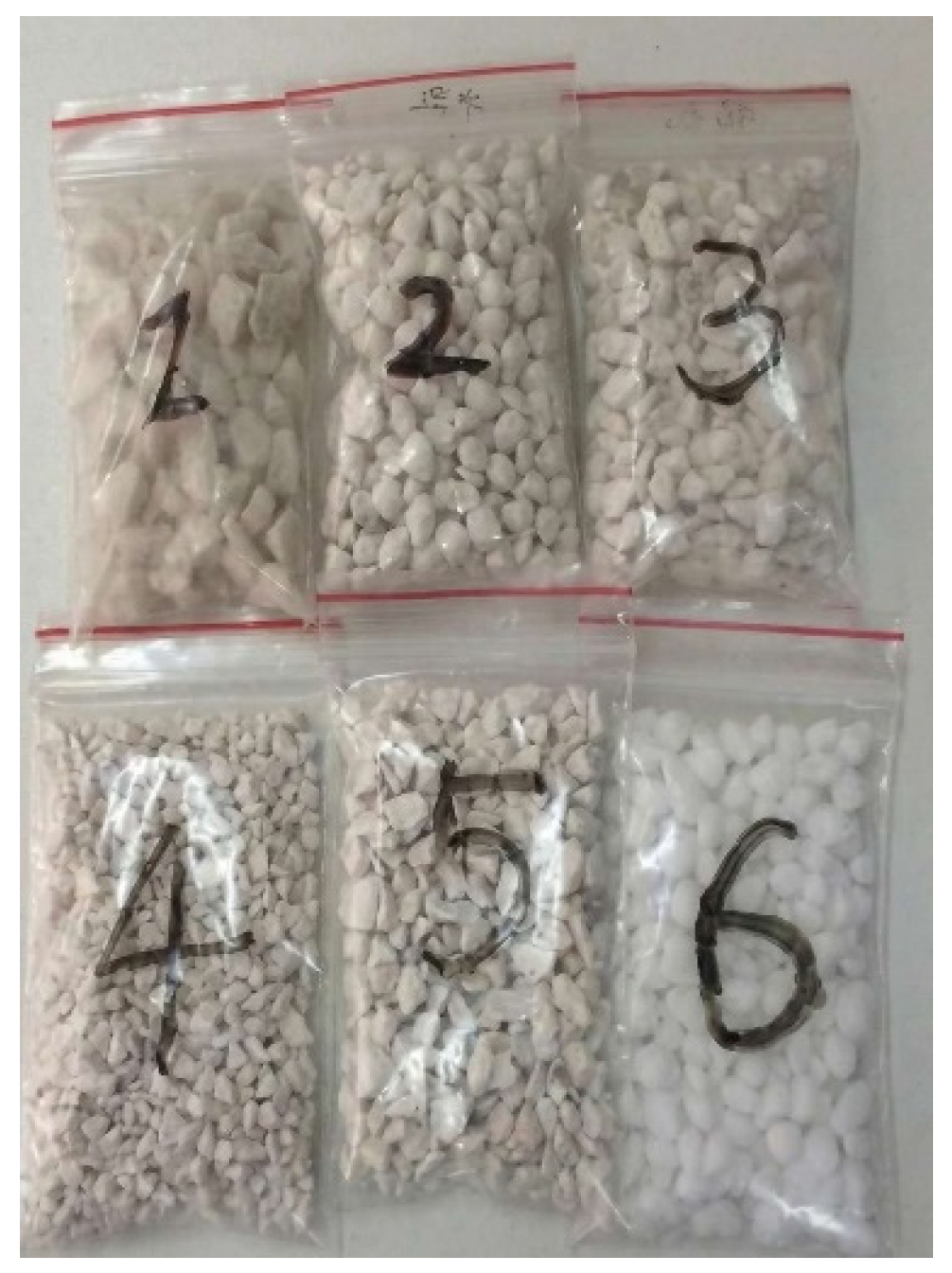
Six groups of specimens with uniform specifications (as shown in Figure 3) were selected for testing. A volume of 100 mL of deionized water was precisely measured, with the temperature maintained at 25 °C ± 2 °C to ensure stable thermodynamic conditions. Timing commenced at the exact moment of specimen immersion and terminated upon complete dissolution in the aqueous medium. The total elapsed time was recorded as the complete dissolution duration. Using a chloride ion analyzer, the release kinetics and concentration levels of chloride ions were investigated to identify the appropriate SRA type and its optimal mixing ratio.
In this study, six types of anti-icing modifier specimens with varying SRA dosages were prepared, numbered 1#–6#. Specifically, the dosages for both the first and second types of SRAs were set at 10%, 20%, and 30%, respectively. To ensure the reliability of chloride ion release data, triple parallel dissolution tests were conducted for each group under conditions of 25 °C ± 2 °C and 100 mL of distilled water. Furthermore, pavement performance tests for the asphalt mixtures—including Marshall, wheel tracking, and freeze–thaw splitting tests—were performed using three sets of parallel specimens per configuration according to relevant standards. A total of 42 Marshall specimens and 15 wheel tracking slabs were fabricated to minimize the impact of random errors from individual samples on the experimental results. Standard deviations and Coefficients of Variation (CV) were calculated for all mechanical and dissolution test datasets to quantify experimental uncertainty and ensure high repeatability.

2.3. Geothermal Heat Exchange Carrier Design and Specimen Preparation

2.3.1. Design of AC-13 Dense-Graded Aggregate Skeleton

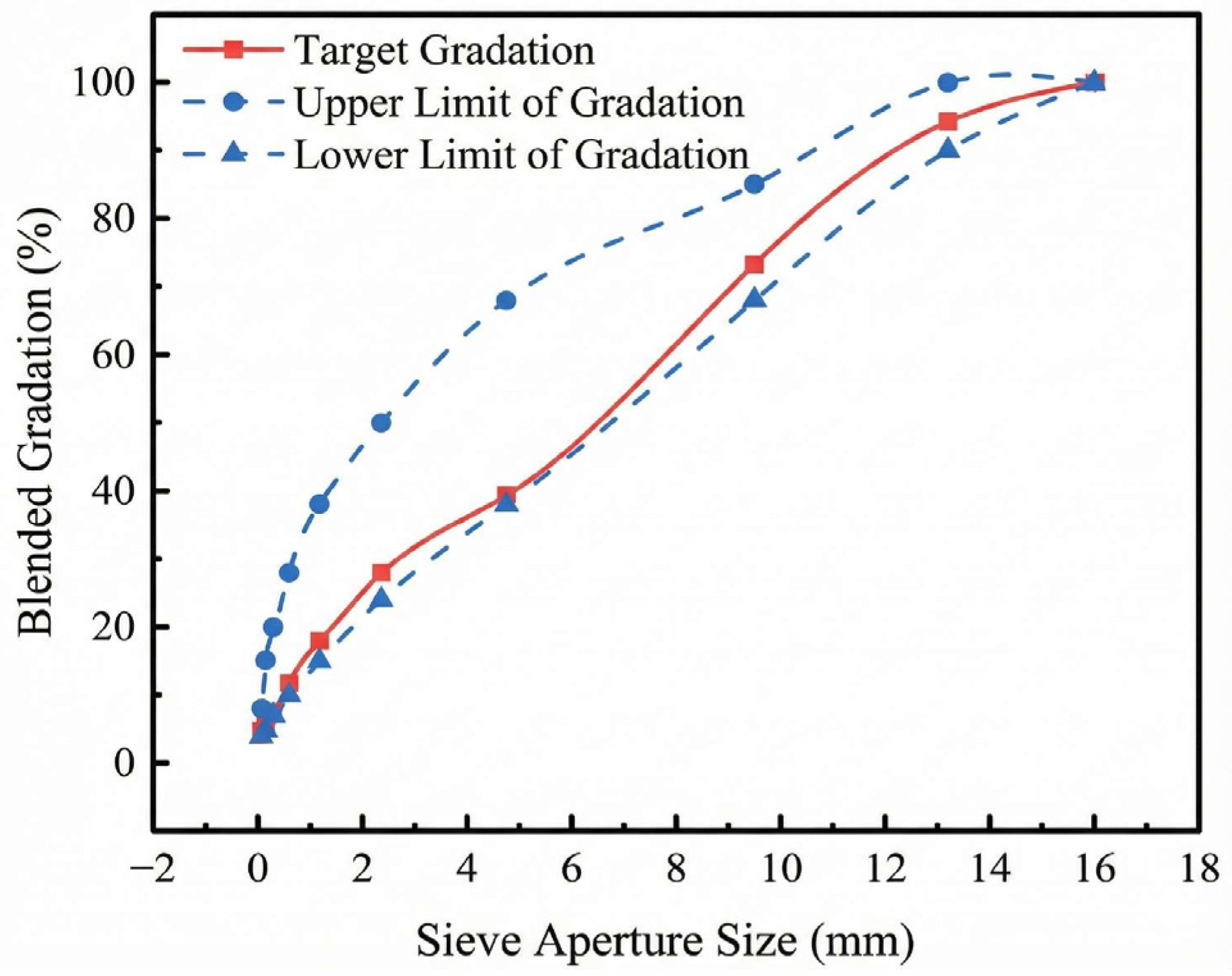
This study utilizes an Asphalt Concrete with a nominal maximum aggregate size of 13 mm (AC-13) dense-graded skeleton. The mineral aggregate gradation design strictly adheres to current specifications to ensure that the mixture possesses excellent mechanical properties and anti-icing/snow-melting functionality. Through repeated adjustment and optimization of various mineral aggregate proportions, the final determined synthetic gradation curve is shown in Figure 4. The synthetic gradation curve can be characterized by linear piecewise regression. The upper limit equation is y = −5.26x + 98.37 (R = 0.9865, s = 1.253), the lower limit is y = −6.14x + 89.25 (R = 0.9823, s = 1.567), and the final target synthetic gradation is approximated by y = −5.72x + 93.81 (R = 0.9897, s = 1.025). While ensuring the structural strength of the pavement, this gradation design provides an ideal spatial structure for the uniform distribution and long-term slow release of the modifier.

2.3.2. Specimen Preparation Simulating Geothermal Service Environment

Specimen preparation followed the Marshall mix design criteria, aiming to construct a functional carrier for geothermal pavement with high thermal conductivity and structural resilience. Through standard compaction tests (75 blows per side), the Optimum Asphalt Content (OAC) was determined to be 5.3%, while the optimal dosage of the anti-icing modifier was established at 5% (utilizing the method of equal mass substitution of mineral filler). To comply with international standards and ensure complete reproducibility, the final mass fractions w of the dense-graded AC-13 mixture components (ISO 12697-1:2021) are explicitly defined as follows: SBS Modified Bitumen (5.3%, evaluated via ASTM D6927-22/ISO 12697-34:2021); Basalt Coarse Aggregate (62.5%, consisting of 11–22 mm, 6–11 mm, and 4–6 mm fractions in a 30:35:15 mass ratio, ISO 13075:2021); Basalt Fine Aggregate (20.0%, 0–4 mm fraction, ISO 13075:2021); Limestone Mineral Filler (7.2%, ISO 12697-3:2021); and the Sustained-Release Composite Anti-icing Modifier (5.0%). The original mineral filler content was 12.2%, which was reduced by equal mass substitution to incorporate the 5% composite modifier. Detailed screening processes and experimental data regarding the OAC and modifier dosage are provided in Section 3.1 of this study.
Regarding the specific process, to ensure the physical integrity and spatial distribution uniformity of the modifier during the energy system’s service life, precise control of the preparation temperature was implemented to simulate the thermal field distribution during geothermal pavement construction. Utilizing a fully automatic forced-action Asphalt Mixture Mixer: Pine Test Equipment Inc., Grove City, PA, USA (e.g., Pine AFGC-10 equivalent, complying with ASTM D1559-21), the mixing temperature was set at 175 °C, and the molding temperature was strictly controlled at 160 °C. During preparation, the aggregates were first thoroughly dry-mixed with the temperature-regulating anti-icing modifier. Once the modifier uniformly coated the aggregate surfaces, asphalt was added for wet-mixing. Based on the requirements for energy system performance evaluation, standard Marshall specimens (compacted using an electric double-sided Marshall Compactor: Matest S.p.A., Bergamo, Italy, e.g., Matest MA-040 equivalent, conforming to ASTM D6927-22/ISO 12697-34:2021), rutting plate specimens (molded using a roller-type Rutting Slab Molder: Controls S.r.l., Milan, Italy, e.g., Controls 50-CV-002 equivalent, ASTM D6274-21/ISO 12697-22:2021), and beam specimens were prepared for subsequent evaluation of pavement performance under thermal cycling conditions and analysis of chloride ion release characteristics in low-grade thermal energy utilization environments.

2.4. Evaluation of Service Performance and Energy Efficiency Stability Testing Methods

2.4.1. Continuous Immersion Test

To evaluate the slow-release patterns of anti-icing asphalt mixtures under static conditions, this study conducted long-term continuous immersion tests. Standard Marshall specimens (labeled A and B) were used and completely submerged in containers filled with deionized water, with the test environment maintained at room temperature. The immersion period was set to 20 days. During this period, the chloride ion concentration in the water was monitored at a fixed time daily using a BOEMX rapid chloride ion content tester: BOEMX Instrument Co., Ltd., Hefei, China to track its release dynamics. The specific test parameter settings are presented in Table 5.

2.4.2. Seasonal Thermal Cycling and Dynamic Water Erosion Simulation Tests

To investigate the dissolution patterns of the modifier in anti-icing asphalt mixtures under humid and hot summer rainfall conditions and reveal the migration characteristics of such functional additives during pavement service, this study conducted dynamic water erosion simulation tests using standard rutting plate specimens and referencing actual meteorological parameters. The experimental design fully accounted for the impact of ambient temperature on the diffusion of chemical components, establishing six representative temperature gradients: −10 °C, 0 °C, 5 °C, 15 °C, 25 °C, and 35 °C. For each temperature condition, three parallel rutting plate specimens containing chloride salts were prepared for observation.
The simulated spraying process was strictly calibrated according to the annual average rainfall (72 L) of the region where the Xinjiang test section is located. During the test, a controlled water delivery device was used to spray water onto the surface of the rutting plates in 10 cycles, maintaining consistent spraying intensity until the cumulative volume reached the regional annual rainfall standard. Upon completion of each cycle, the chloride ion content in the collected water was immediately measured to quantify the dynamic loss rate of the modifier under various service temperatures and rainfall conditions. Detailed test records and data results are presented in Table 6. This dynamic simulation provides critical experimental support for evaluating the stability of anti-icing modifiers in high-temperature/rainy seasons and predicting their long-term service life.

2.4.3. Validation of Pavement Performance for Geothermal Pavements

To comprehensively verify the influence of the anti-icing modifier on the mechanical properties of the asphalt mixture, the following tests were carried out according to the Standard Test Methods of Bitumen and Bituminous Mixtures for Highway Engineering (JTG E20-2011). The specific procedures and their corresponding international standard methods are as follows:
(1)
High-temperature stability: The dynamic stability (DS) was measured via the rutting test [ASTM D6274-21, ISO 12697-22:2021], conducted using a standard rutting tester (e.g., Pine RT-3000 equivalent) under a wheel pressure of 0.7 MPa at 60 °C.
(2)
Moisture stability: The immersion Marshall test (48 h immersion) [ASTM D6927-22, ISO 12697-34:2021] and the freeze–thaw splitting test [ASTM D7557-21, ISO 12697-12:2021], used to determine the Tensile Strength Ratio (TSR), were employed to evaluate the modifier’s impact on the moisture damage resistance of the mixture.
(3)
Low-temperature cracking resistance: Low-temperature bending tests on beams [ASTM D7755-21, ISO 12697-44:2021] were conducted at −10 °C with a loading rate of 50 mm/min. The toughness of the mixture under extreme cold conditions was evaluated through the flexural failure strain indicator.
(4)
Permeability: The water permeability test [ASTM D6390-21, ISO 12697-45:2021] was used to verify the compactness of the mixture, ensuring it meets the fundamental waterproofing requirements for roads in cold regions.

3. Results and Discussion

3.1. Optimization of Mix Design for Geothermal Pavement Mixtures

3.1.1. Determination of the Optimal Dosage of Anti-Icing Modifier

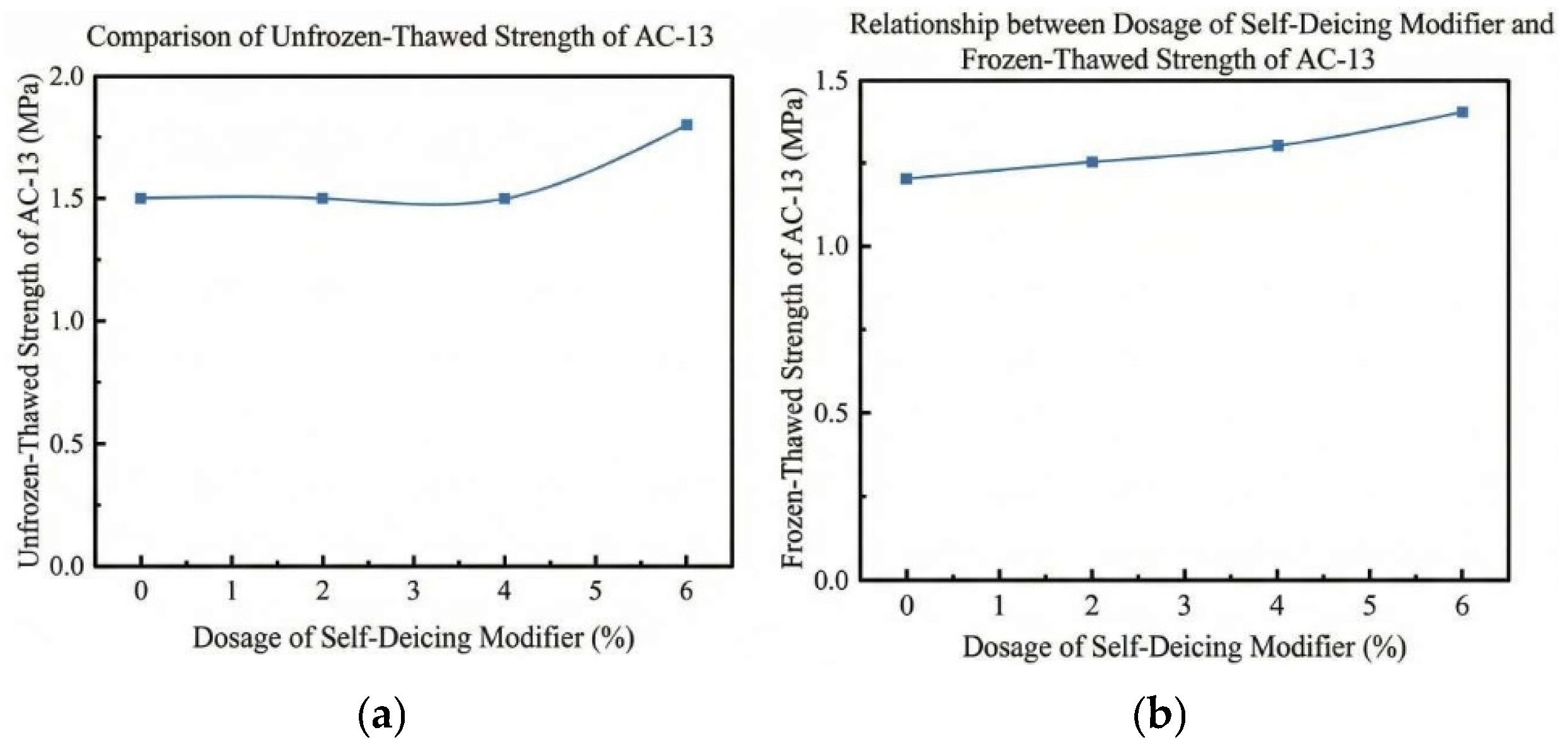
To evaluate the comprehensive impact of the anti-icing modifier, acting as a geothermal enhancement plug-in, on the mechanical performance and stability of the pavement system under frequent geothermal freeze–thaw cycles, freeze–thaw splitting tests were conducted on AC-13 specimens with varying dosage gradients. As illustrated in Figure 5, under constant temperature curing, the cracking resistance of specimens with the modifier is significantly superior to that of the control group. To evaluate the applicability of these trends for approximation, non-linear regression analysis was performed. The correlation between the modifier dosage and mixture strength fits a quadratic polynomial. The regression equation for the post-freeze–thaw strength is y = −0.086x2 + 0.852x + 8.365 (R = 0.9789, s = 0.326), and for the unconditioned strength is y = 0.052x + 9.128 (R = 0.9912, s = 0.158). This indicates that the reinforcing components in the modifier effectively stabilize the microstructure of the geothermal pavement and improve its resistance to thermal stress.
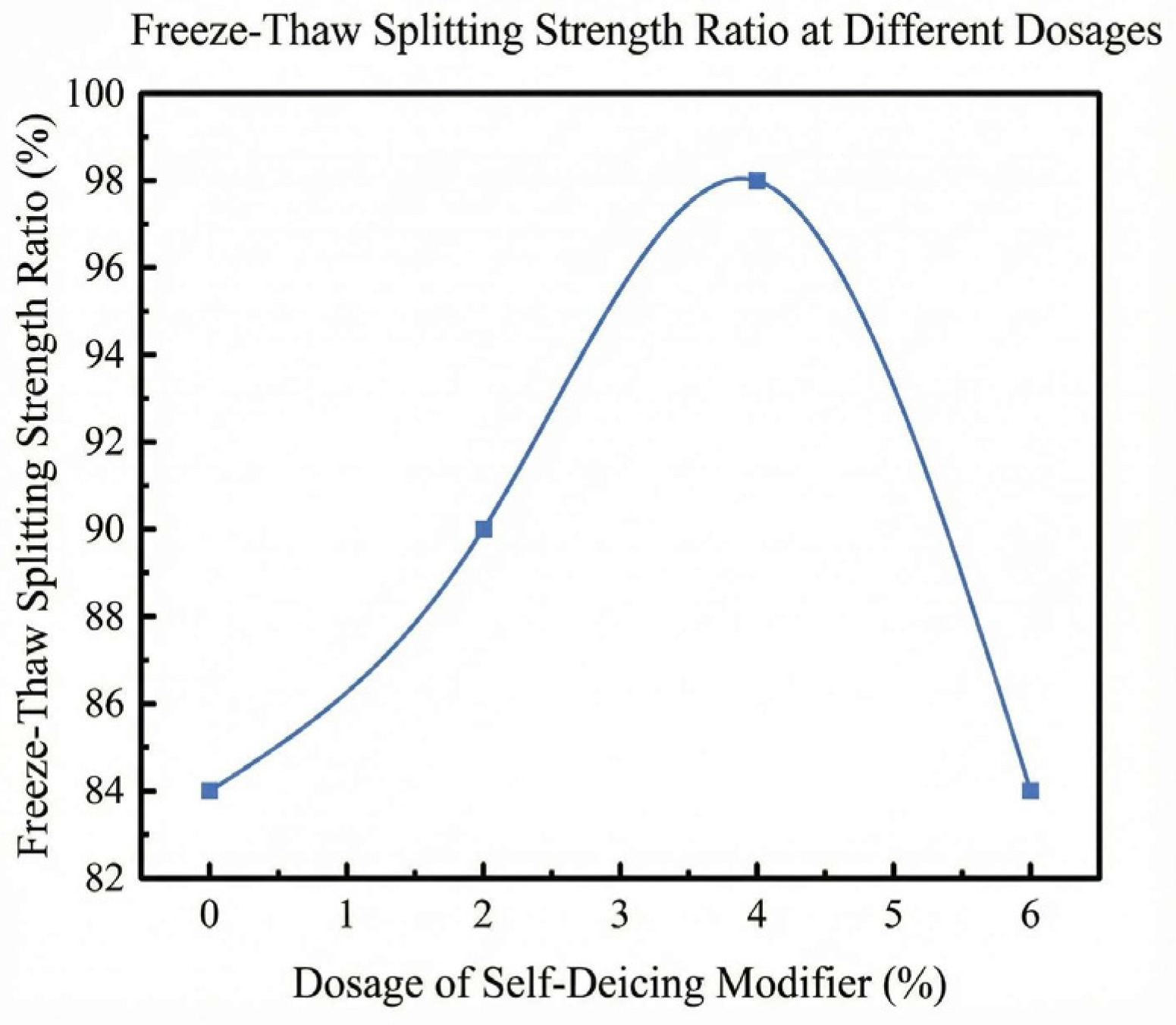
Further analysis of the TSR trends in Figure 6 shows that the TSR index first increases and then decreases with the increase in dosage. This trend can be well approximated by a quadratic polynomial relationship with the modifier dosage: y = −1.25x2 + 12.36x + 83.07. This approximation demonstrates high reliability for engineering applications with a correlation coefficient of R = 0.9845 and an approximate standard error of s = 0.892. Specifically, as the dosage rose from 0% to 4%, the TSR increased significantly from 83.07% to a peak of 98.02%, indicating that an optimal amount of modifier can substantially enhance the moisture stability of the pavement under frequent thermal cycles. However, increasing the dosage to 6% caused the TSR to decline to 82.84%, suggesting that excessive modification might impair the internal adhesion of the pavement structure. By balancing active de-icing efficiency (freezing point depression) with the system durability indicated by the TSR, this study identifies 5% as the optimal modifier dosage. This dosage significantly lowers the design thermal load of the geothermal snow-melting system while satisfying the rigorous standards for structural integrity and moisture damage prevention in cold-region energy infrastructure. To further address the system-level energy efficiency benefits, the relationship between freezing point suppression and thermal design load can be theoretically quantified using fundamental heat transfer principles. In traditional Geothermal Snow Melting Systems (GRSSs), maintaining a positive surface temperature (e.g., > 0 °C) under severe ambient conditions requires a high upward heat flux. By utilizing the 5% modifier to suppress the thermodynamic boundary freezing point to −21 °C, the system bypasses the need for high-enthalpy heating. According to the Fourier law of heat conduction (q = −kT), reducing the target surface temperature from >0 °C to a sub-zero anti-icing state proportionally decreases the required temperature gradient (∆T) between the geothermal fluid and the pavement surface. This theoretical reduction in the required heat flux directly explains the mechanism by which the active modifier significantly lowers the steady-state thermal power demand and operational energy consumption of the geothermal system.

3.1.2. Determination of the Optimum Asphalt Content

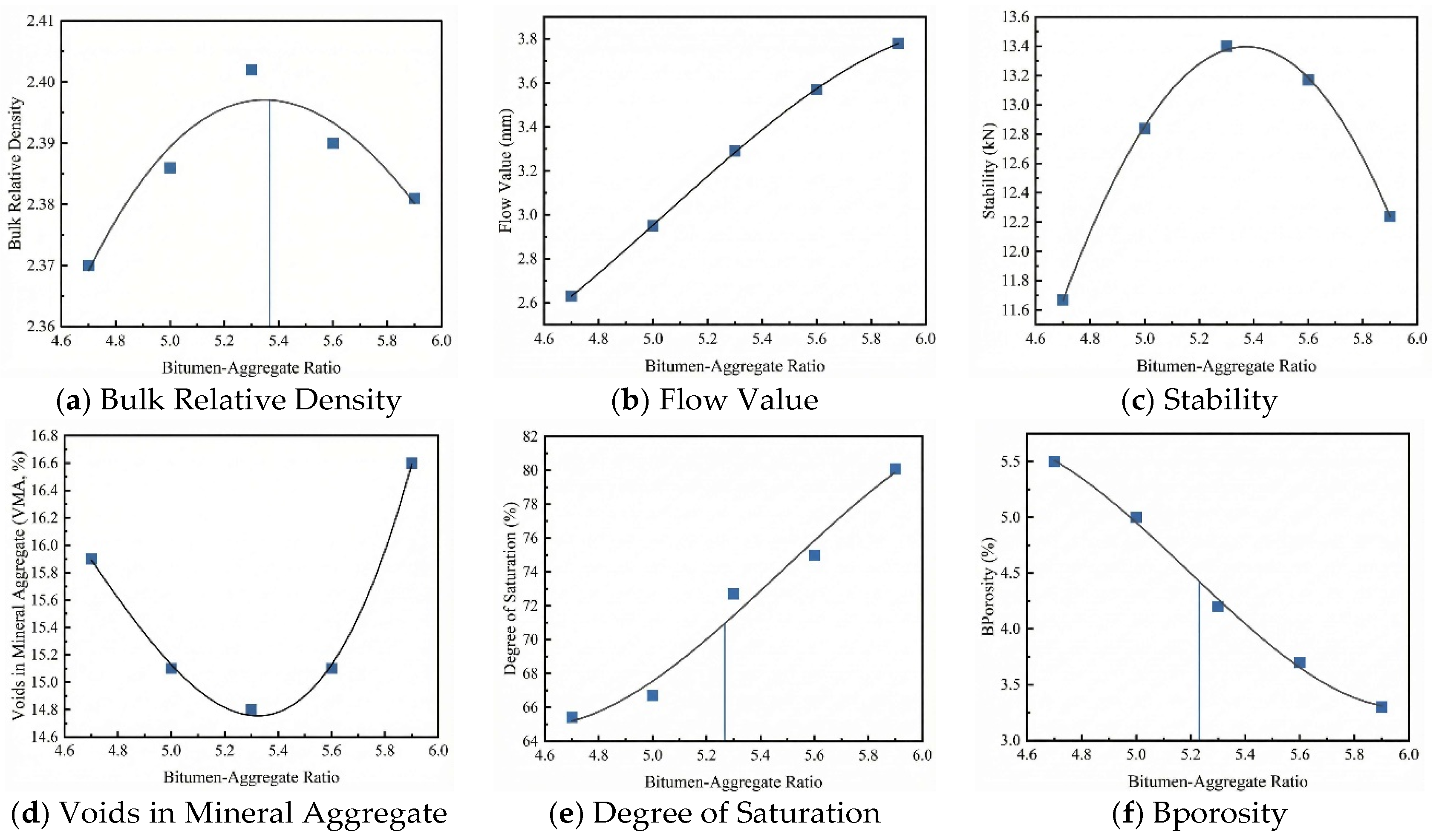
The determination of the OAC was achieved through the Marshall compaction test, which aimed to verify the stability of the geothermal pavement’s load-bearing skeleton under extreme service conditions. Based on the established mineral aggregate gradation, five groups of specimens were prepared with bitumen-aggregate ratios of 4.7%, 5.0%, 5.3%, 5.6%, and 5.9%. The detailed physical and mechanical indicators are presented in Table 7.
As illustrated in Figure 7, the individual performance curves were first evaluated to derive the four primary parameters required for the OAC1 calculation. To assess the applicability of these curves for approximation, the volumetric properties and mechanical indicators corresponding to varying bitumen-aggregate ratios were evaluated using non-linear regression. For instance, the bulk relative density follows y = −0.012x2 + 0.125x + 2.326 (R = 0.9876, s = 0.0085); the Marshall stability follows y = −0.586x2 + 6.125x + 8.369 (R = 0.9798, s = 0.256); and the air voids follow y = 0.365x2 − 3.892x + 12.568 (R = 0.9905, s = 0.189). These high correlation coefficients and low standard errors confirm the reliability of using these functions to approximate the mixture’s volumetric and mechanical behavior. The bitumen contents corresponding to the maximum bulk relative density (a1), maximum stability (a2), target air voids (a3). Based on these values, the initial optimal asphalt content was calculated as OAC1 = (a1 + a2 + a3 + a4)/4 = 5.25%.
Subsequently, the technical standard compliance range was identified based on the intersection of the aforementioned test results. The common interval where all six indicators (including stability, flow value, and volumetric properties) simultaneously meet the regulatory requirements was determined as OACmin = 4.97% to OACmax = 5.63%, yielding a median value of OAC2 = 5.30%.
By synthesizing the results from OAC1 and OAC2, the preliminary recommended asphalt-aggregate ratio was determined to be 5.28%. After a comprehensive evaluation and verification of key parameters such as Marshall stability, flow value, and air voids, the optimum asphalt-aggregate ratio for this geothermal load-bearing skeleton was finally fine-tuned to 5.30%. This ratio ensures that the pavement system, when serving as a geothermal heat exchange carrier, possesses both efficient thermal conduction pathways and maintains structural integrity without loosening or attenuation during long-term thermal cycling service, providing physical support for the reliable utilization of low-enthalpy geothermal energy in cold regions.

3.2. Analysis of Release Kinetics and Slow-Release Performance of the Modifier

3.2.1. Time-Course Characteristics of Release Rate and Concentration

To achieve the low-load operation of geothermal energy dissipation systems under extreme cold conditions, active anti-ice/snow modifiers must possess precisely controllable ion release kinetics to maintain long-term, low-freezing-point boundary conditions on the pavement surface. In this study, dissolution experiments were conducted on samples (1#–6#) with varying ratios of slow-release agents. Raw data of chloride ion concentration over time were quantitatively recorded to identify the optimal slow-release formulation that aligns with geothermal thermal cycle frequencies. The dynamic process of each sample group from initial contact to complete dissolution in an aqueous medium was documented. Detailed evolution data for chloride ion content and molar concentration across different slow-release agent gradients are provided in Table 8 and Table 9.
As a benchmark for energy efficiency comparison, conventional anti-icing modifiers without slow-release agents exhibit extremely high instantaneous precipitation pressure, as detailed in Table 10. In this control group, the chloride ion concentration surged to 0.0158 mol/L within 156 s and reached a peak release of 0.0159 mol/L at 300 s before stagnating. Although this “pulse-like” release can lower the freezing point in a short period, the absence of concentration gradient regulation by a slow-release medium leads to a massive loss of functional components during the early service stage of geothermal pavements. This significantly undermines the long-term operational economy of the energy system.

3.2.2. Kinetic Modeling of Ion Release and Evaluation of Migration Mechanisms

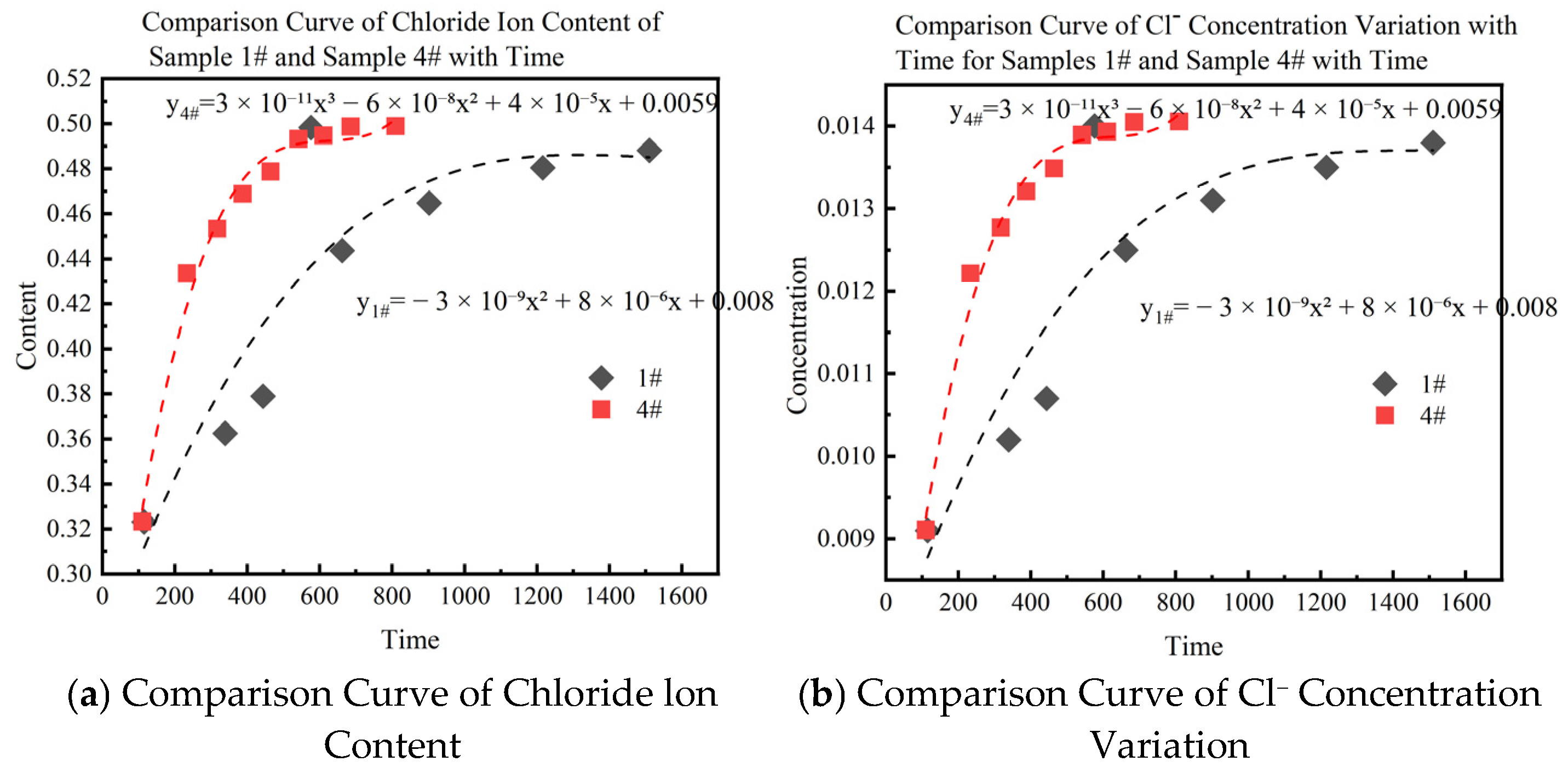
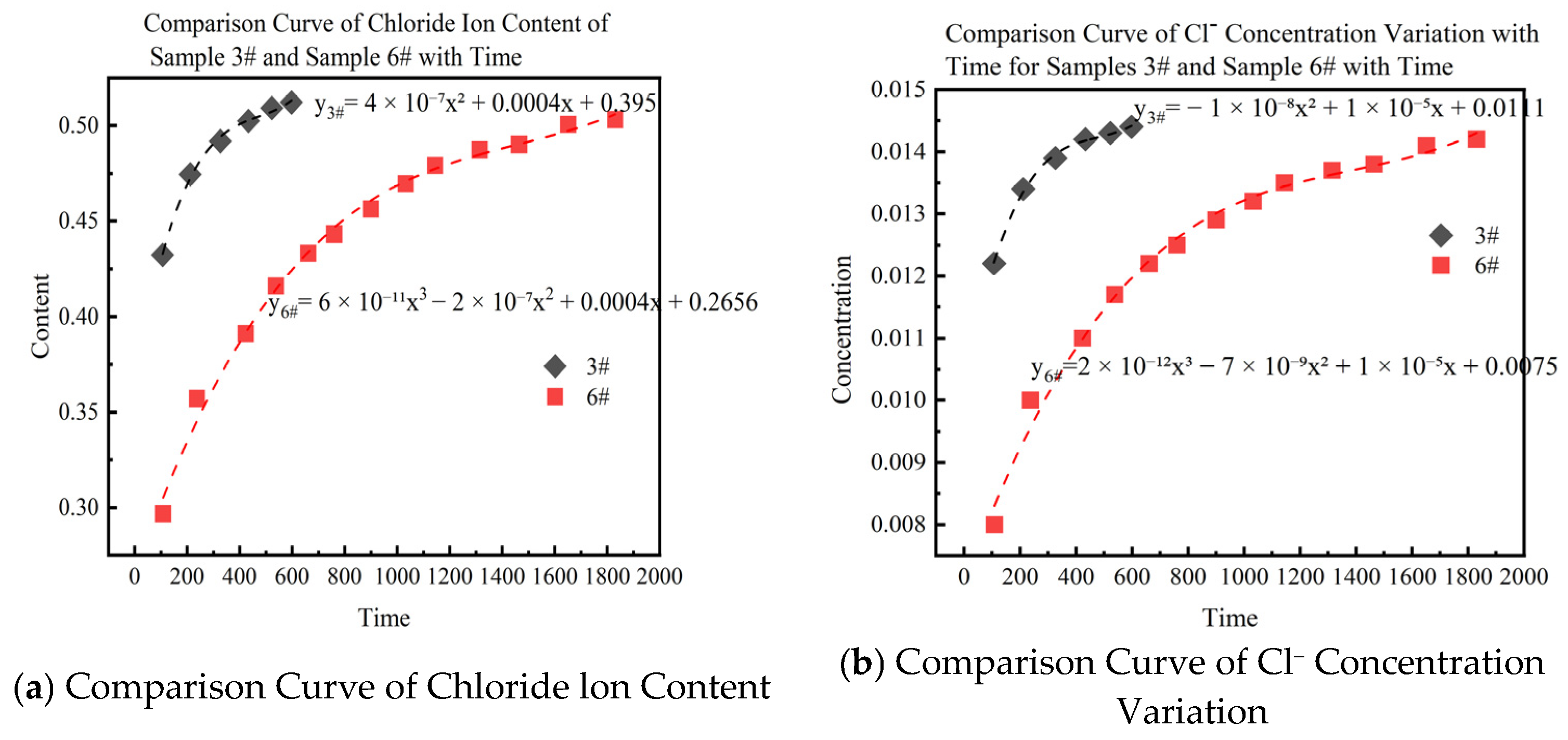
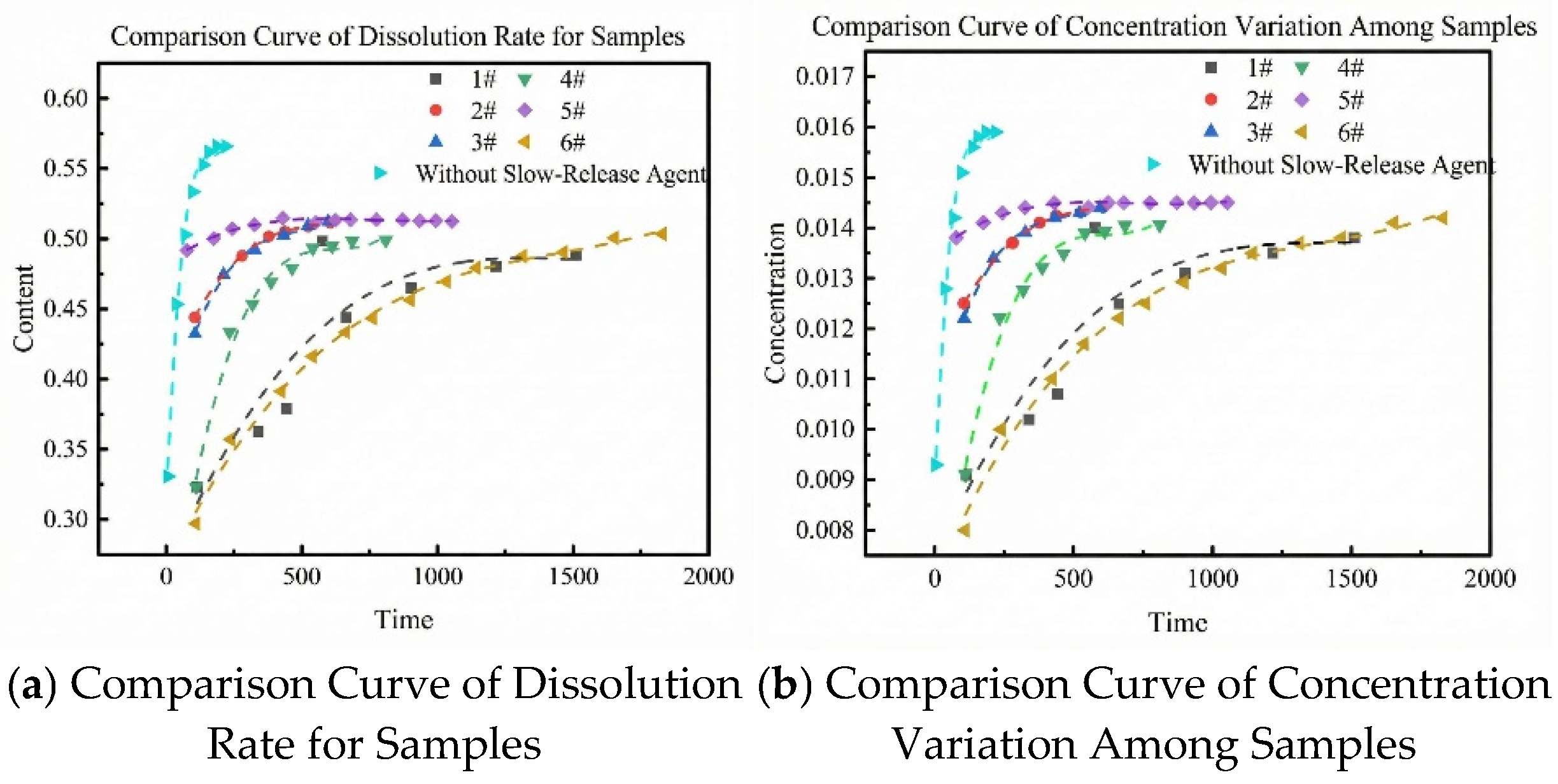
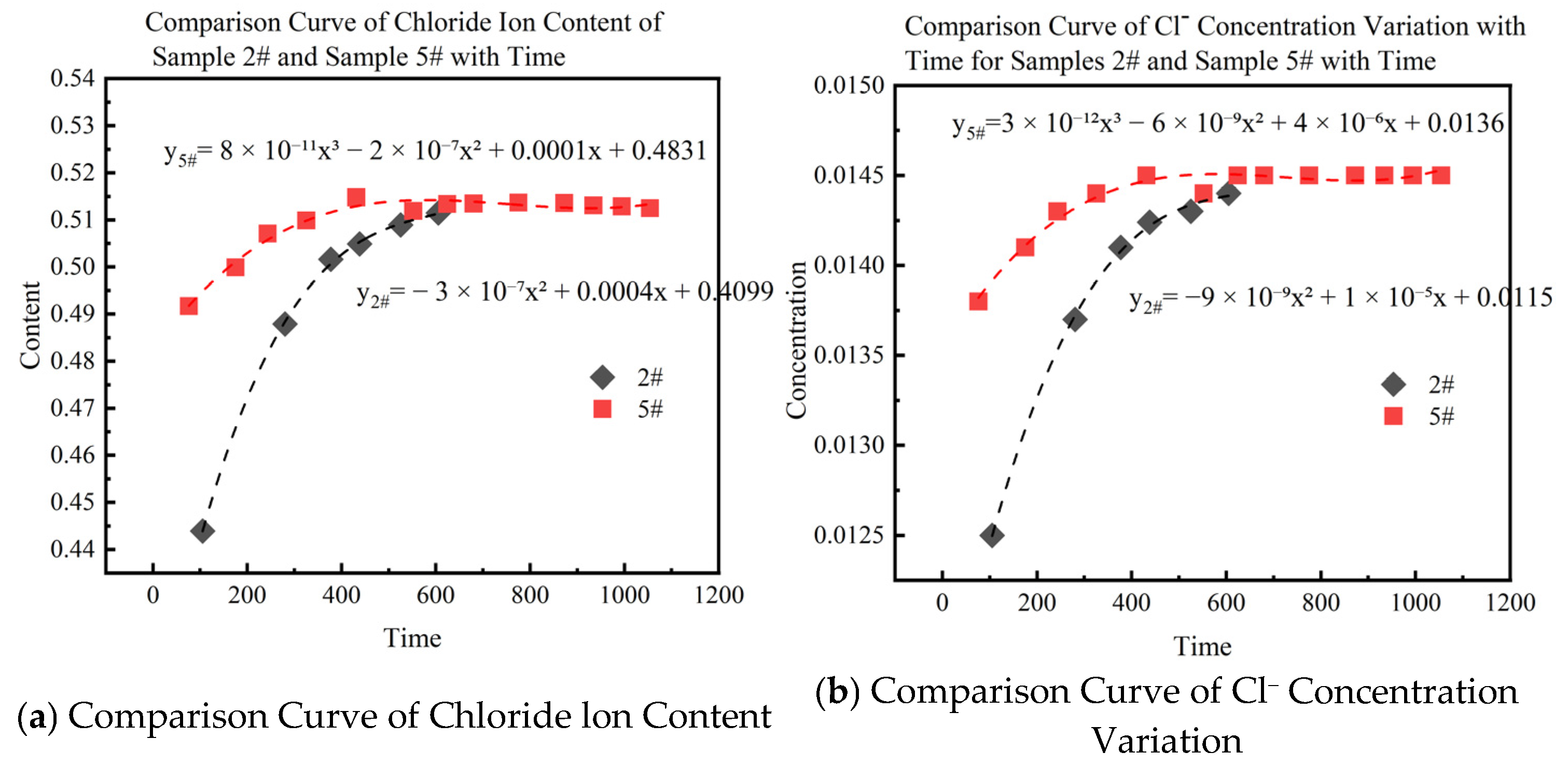
To further reveal the regulation mechanism of slow-release agents on ion migration trajectories, this study performed non-linear regression analysis on the experimental data of samples 1#–6#. To evaluate the suitability of the regression equations for approximation, the experimental data were fitted using the Least Squares Method (LSM) via OriginPro 2024 software. Five types of functions (logarithmic, exponential, power, rational, and modified exponential) were compared. The cubic polynomial (cubic parabola) was selected as the optimal approximation function due to its precise match with the multi-stage dynamic process of chloride release, its highest quantitative goodness-of-fit (maximum correlation coefficient R and minimum approximate standard error s), and its straightforward engineering applicability for predicting concentration variables. The fitting results (see Figure 8, Figure 9 and Figure 10) indicate that the evolution of chloride ion concentration over time for all sample groups highly conforms to a third-order polynomial fitting law. Specifically, the regression parameters for the samples are as follows: for Samples 1# and 4#, the concentration change for 1# is approximated by y = −3 × 10−9 x2 + 8 × 10⁻⁶ x + 0.008 (R = 0.9826, s = 0.00035), while 4# follows y = 3 × 10−11 x3 − 6 × 10−8 x2 + 4 × 10⁻⁵ x + 0.0059 (R = 0.9935, s = 0.00021). For Samples 2# and 5#, the content change for 2# fits y = 8 × 10−11 x3 − 2 × 10−7 x2 + 0.0001x + 0.4831 (R = 0.9918, s = 0.0086), whereas the concentration for 5# fits y = 3 × 10−12 x3 − 6 × 10−9 x2 + 4 × 10⁻⁶ x + 0.0136 (R = 0.9952, s = 0.00018). For Samples 3 and 6#, the content for 3# follows y = 4 × 10−7 x2 + 0.0004x + 0.395 (R = 0.9859, s = 0.0102), and the concentration for 6# follows y = 2 × 10−12 x3 − 7 × 10−9 x2 + 1 × 10⁻⁵ x + 0.0075 (R = 0.9927, s = 0.0002). This kinetic model accurately characterizes the dissolution features of the modifier particles from the surface to the interior in aqueous media. Physically, the third-order polynomial reflects a multi-stage transport mechanism. The initial rapid concentration increase corresponds to Fickian diffusion of the surface-exposed active salts. As dissolution progresses, the slow-release components act as a physical barrier, altering the internal porosity and increasing the tortuosity of the diffusion paths. This successfully transitions the ion release mechanism from a singular concentration-driven diffusion to a controlled, tortuosity-limited permeation.
This kinetic transition carries profound implications for the energy efficiency optimization of geothermal pavement systems. The steady release phase revealed by the third-order polynomial model aligns precisely with the sustained thermal compensation requirements of geothermal systems during extreme weather events. By modulating the dosage of the slow-release agent, a precise intervention in the thermodynamic boundary conditions of the road surface can be achieved. This ensures that the system’s thermal load is maintained at a low level through the continuous supply of chemical energy (freezing point depression), without requiring the additional consumption of high-quality geothermal energy. Regarding scalability to real-world service conditions, while the static indoor model defines the baseline release capability, actual pavement environments introduce dynamic variables such as traffic-induced pumping effects and severe thermal gradients. As demonstrated in our dynamic water erosion tests (Section 3.4), the physical encapsulation effectively limits premature loss under high-temperature rainfall. In winter, vehicle tire loads will induce micro-cracking and advective transport, cyclically refreshing the diffusion pathways. This ensures that the steady release phase predicted by the model continuously supplies chemical energy to the pavement surface, matching the compensation requirements of the geothermal system during extreme weather events.

3.2.3. Comprehensive Performance Evaluation and Screening for Optimal Proportions

Based on the aforementioned kinetic models, this study selects 600 s as the critical time point for evaluating slow-release efficacy, conducting a comprehensive comparative analysis across all specimen groups (summarized in Table 11 and Figure 11). The analysis reveals that although Sample 2# exhibited the highest dissolution intensity at 600 s, its low dosage of slow-release carrier led to a distinct depletion trend before 800 s. Consequently, it fails to meet the requirements for long-term anti-icing performance in cold-region pavement. In contrast, while Samples 1# and 6# demonstrated superior dissolution persistence, they maintained relatively low effective concentration levels, which might lead to a localized loss of anti-icing efficacy due to insufficient functional components during the initial freezing phase, ultimately degrading the system’s energy efficiency metrics.
Comparative data further reveal that Sample 5# exhibits superior synergistic performance in both dissolution rate and final concentration. Its dissolution duration reached 1000 s, with concentration levels significantly outperforming the other groups. To further quantify this optimal performance and evaluate the applicability of the approximation, a comprehensive cubic polynomial regression was applied to the release kinetics of Sample 5#. The regression equation is y = 5 × 10−12 x3 − 8 × 10−9 x2 + 5 × 10⁻⁶ x + 0.0068. This model yields an outstanding goodness-of-fit with a maximum correlation coefficient (R = 0.9968) and a minimum approximate standard error (s = 0.00015). The high R value and low s value confirm that the cubic polynomial perfectly captures the multi-stage transport mechanism of the optimal formulation, making it highly applicable for engineering approximations. This indicates that the formulation of Sample 5# achieves a precise balance between high salt concentration and slow-release efficacy-ensuring high concentration chloride release without negatively impacting the slow-release duration. In contrast, the control group without the slow-release agent exhibited the lowest chloride ion content among all tested samples. Moreover, its release process was extremely rapid, making it difficult to form durable protection. Therefore, Sample 5# is determined to be the optimal formulation, capable of ensuring stable and lasting active anti-icing functionality for energy systems under complex service environments.

3.3. Reliability Evaluation of the Energy System Under Long-Term Service

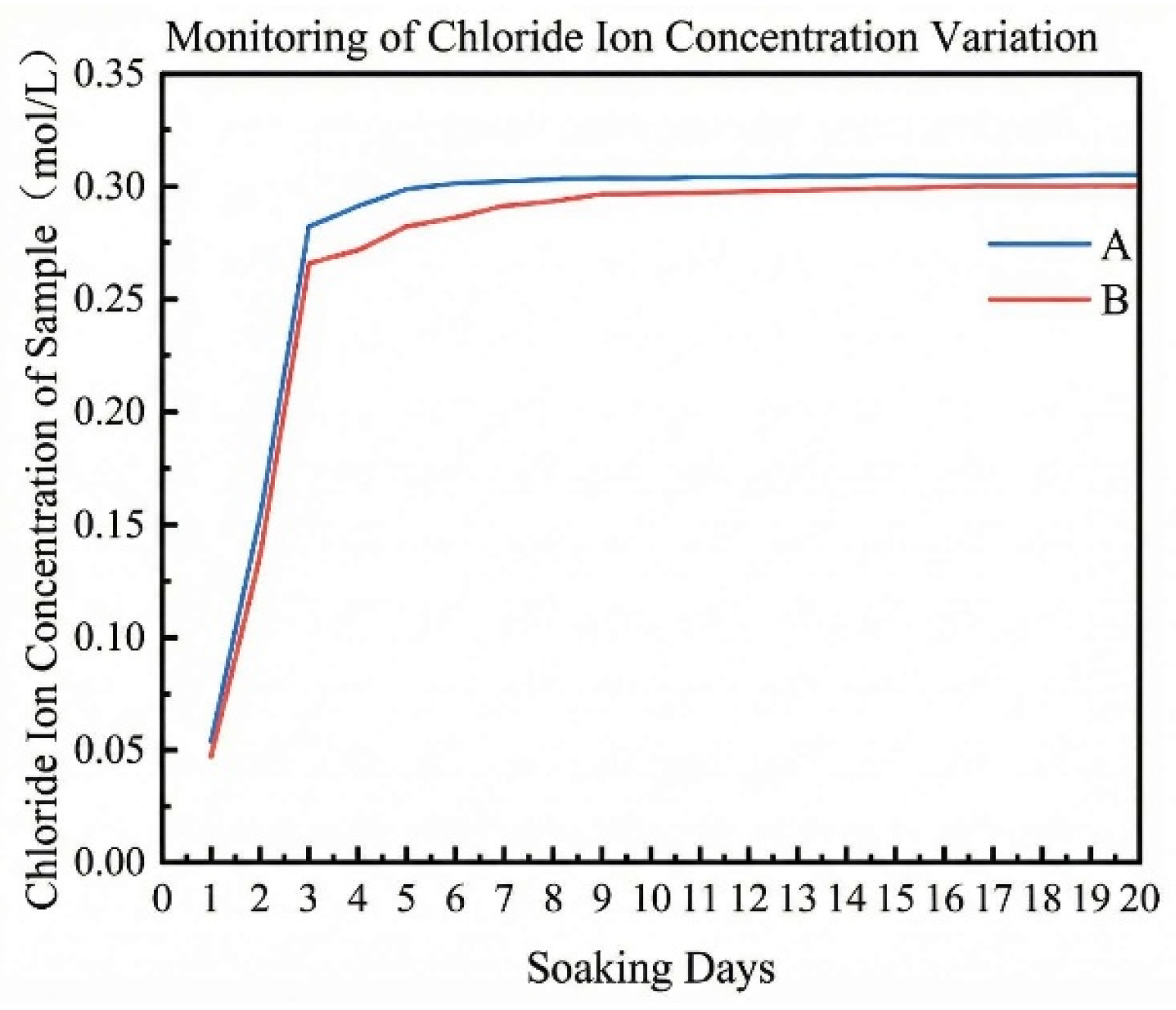
To evaluate the long-term service stability of anti-icing asphalt mixtures, this study conducted a 20-day long-term immersion test to systematically analyze the release kinetics of chloride ions, as detailed in Table 12. As shown in Figure 12, the chloride ion release from Marshall specimens under room-temperature water immersion conditions exhibits distinct progressive characteristics. In the early stage of immersion, the chloride ion concentration rises rapidly, after which the release rate gradually slows down and finally reaches a stable maximum concentration level. Particularly for Sample 5#, both the chloride ion content and concentration remained stable throughout the dissolution period without significant attenuation, demonstrating excellent slow-release efficacy. After 20 consecutive days of testing, monitoring data show that the dissolved chloride ion concentration tends to stabilize. For instance, specimen A finally reached 0.3051 mol/L, while specimen B reached 0.3003 mol/L. In terms of stability evaluation, the modified material exhibits extremely high release uniformity. Experimental data reveal that within the 20-day immersion cycle, the fluctuation of chloride ion content in the anti-icing modifier is minimal, with a variation amplitude of only 1.5%. Given that this value is far below the industry-recognized threshold of 10%, the release process is judged to have exceptionally high reliability and consistency. This fully confirms that the chloride ions within the specimen capable of being released via liquid immersion have achieved controlled detachment as expected, ensuring stable anti-icing protection for the pavement during long-term service.
Further exploration of the actual service state of the road reveals that while most easily soluble chloride ions completed their release within the 20-day under static water immersion, in actual pavement environments, traffic loading becomes the key driving force for the continuous release of residual chloride ions. The study points out that residual chloride ions are mostly encapsulated by the asphalt layer or confined in fine crevices, where pure hydrostatic pressure struggles to cause significant migration. However, the cyclic stress generated by traffic loading triggers micro-crack propagation and adsorption imbalance, creating new transport pathways for chloride ions. Engineering practice data confirm that the chloride ion release level in wheel track areas, which are significantly affected by loading, is 0.005 mol/L higher than in non-compressed areas, and the effective duration of anti-icing performance in these areas is notably longer. This migration effect, accelerated by traffic loading, ensures that the modified asphalt material maintains superior long-term effectiveness during cold seasons.

3.4. Migration Characteristics Under Seasonal Thermal Cycling

Detailed experimental records and data results are presented in Table 6. Through in-depth analysis of the experimental results, it was found that temperature fluctuations have a relatively minor impact on the cumulative loss of chloride ions, and no trend of accelerated loss with increasing temperature was observed. During the spraying process simulating annual rainfall, the cumulative chloride ion concentration under the 35 °C high-temperature condition was 0.00968 mol/L, while at 25 °C, it was 0.00976 mol/L. Both remained at extremely low levels. Notably, these values are even lower than the cumulative loss observed in the −10 °C low-temperature environment (0.01359 mol/L).
From a thermodynamic stability perspective, the low loss rate of the modifier at 35 °C holds significant engineering value. Since geothermal pavement systems are frequently utilized as solar collectors for heat harvesting or as part of summer geothermal energy storage systems, the internal pavement structure often remains in a high-temperature state for extended periods. The data from this study demonstrate that the modifier possesses excellent thermal stability in high-temperature environments, effectively inhibiting the large-scale stripping and dissolution of salt components by water under such conditions. This superior physicochemical stability ensures that the modifier components remain well-encapsulated by the asphalt layer during summer energy storage or heat collection, preventing premature functional degradation due to frequent thermal cycling. The discovery of this migration pattern confirms that the modifier can maintain its composition reserves throughout the pavement’s service life, ensuring sufficient active anti-icing functionality upon entering winter icing conditions. This perfectly aligns with the core requirements of material durability and energy system resilience in geothermal pavement utilization systems for cold regions.

3.5. Validation of Pavement Performance for Asphalt Mixtures

To comprehensively evaluate the impact of the anti-icing modifier on the pavement performance of asphalt mixtures, this research conducted a comparative experimental analysis of the high-temperature stability, moisture stability, low-temperature cracking resistance, and permeability for both the anti-icing asphalt mixture and the ordinary asphalt mixture:
(1)
High-temperature stability: According to the test conditions specified in Table 13, rutting tests were conducted under 60 °C and a wheel pressure of 0.7 MPa. The experimental results (detailed in Table 14) show that the average repetency (σ) of the anti-icing asphalt mixture reached 5258 mm−1, whereas the ordinary asphalt mixture reached 5409 mm−1. Furthermore, the Coefficient of Variation (v) for the anti-icing mixture (17.8%) and the ordinary mixture (5.09%) indicates that the dispersion of the test data remains within the acceptable statistical variance for heterogeneous asphalt mixtures. Although the value for the anti-icing group is slightly lower than that of the ordinary group, both are significantly higher than the minimum requirement of 800 mm−1 stipulated by the standards. This indicates that the anti-icing mixture maintains excellent resistance to permanent deformation in high-temperature environments and can effectively resist rutting damage under traffic loading, verifying its structural stability under high-temperature service conditions.
(2)
Moisture stability: This study evaluated the impact of the anti-icing modifier on the moisture stability and long-term durability of asphalt mixtures under geothermal freeze–thaw cycles using the TSR. Data from Table 15 and Table 16 indicate that the TSR of the anti-icing asphalt mixture reached 85.7%, significantly higher than the 83.07% of the ordinary mixture (t = 2.51, p = 0.02, where t is the test statistic and p is the probability value from Student’s t-test), confirming that the modifier effectively enhances moisture stability. This improvement is attributed to the chemical interaction between anti-icing components and asphalt, alongside the stabilizing effect of the additives, allowing the mixture to maintain high cracking resistance even after freeze–thaw cycles at −18 °C. At the 5.3% OAC, key parameters-including Marshall stability, flow value, and air voids-remained within standard specifications. The synergy between the high-density gradation and the functional modifier effectively mitigates internal stress fluctuations caused by phase changes in the geothermal system, preventing structural loosening or strength attenuation. Ultimately, this system extends the structural lifespan of geothermal pavements in cold regions while maintaining efficient de-icing performance.
(3)
Low-temperature cracking resistance: Low-temperature cracking resistance is a fundamental guarantee for the service life of pavements in cold regions. In this study, low-temperature beam bending tests were conducted at −10 °C; the detailed experimental results are presented in Table 17. Data indicate that the average flexural failure strain of the anti-icing asphalt mixture reached 3562 × 10−6, which is significantly higher than the 3163 × 10−6 of the ordinary asphalt mixture. In low-temperature bending tests, a larger failure strain represents a superior low-temperature deformation capacity of the material. This significant improvement demonstrates that the incorporation of the anti-icing modifier enhances the toughness of the mixture during loading. Consequently, the material can better accommodate thermal shrinkage stresses under extreme cold conditions without developing penetrating cracks, successfully achieving the intended anti-cracking objectives of the material development.
(4)
Permeability: Regarding pavement compactness, this study performed water permeability tests to verify the waterproof performance of the mixtures. According to the measured results in Table 18, the average seepage coefficient of the anti-icing asphalt mixture was 67 mL/min, compared to 82.2 mL/min for the ordinary asphalt mixture. The experimental findings explicitly indicate that the anti-icing mixture specimens are essentially impermeable, with their permeability fully satisfying the technical quality requirements of current specifications. This result not only confirms the scientific validity of the mixture design but also demonstrates that the addition of the anti-icing modifier does not compromise the compact aggregate skeleton. Consequently, the pavement maintains an excellent waterproof barrier, effectively preventing moisture infiltration into the structural layers and the induction of early distress. In summary, while providing active anti-icing functionality, the anti-icing asphalt mixture comprehensively maintains and optimizes all key pavement performance indicators.

4. Conclusions

Addressing the synergistic challenges of active anti-icing and energy efficiency enhancement for pavements in cold regions, this study developed a composite anti-icing modifier compatible with low-enthalpy geothermal energy systems. Its long-term slow-release performance and pavement service stability were systematically verified. The main conclusions are as follows:
(1)
Material synergistic enhancement and low-load operation: An optimal modifier formula was successfully screened, featuring a density of 1.8 g/mL and a melting point of 260 °C, demonstrating excellent thermodynamic stability. For the AC-13 anti-icing asphalt mixture, the OAC was determined to be 5.3% with an optimal modifier dosage of 5%. This configuration maintains an active low-freezing point (as low as −21 °C) while sustaining superior structural strength.
(2)
Kinetic characteristics and thermo-mechanical coupling reliability: Research on chloride ion release kinetics shows that the leaching process follows a third-order polynomial regression model. Long-cycle immersion tests over 20 days revealed a variation amplitude of only 1.5%, far below the industry threshold of 10%, furthermore, statistical evaluations across all parallel sample groups demonstrated consistently low Coefficients of Variation (CV), confirming the high repeatability of the material preparation process and the uniform reliability of the modifier’s slow-release behavior during long-term thermo-mechanical coupled service, confirming high reliability and uniformity during long-term thermo-mechanical coupled service.
(3)
Seasonal thermal storage stability: Under simulated high-temperature summer conditions at 35 °C, the cumulative chloride ion loss was only 0.00968 mol/L, which is lower than the loss level under low-temperature rinsing conditions. This proves the material possesses excellent thermal stability during summer heat collection or seasonal geothermal storage.
(4)
Service quality optimization under thermal cycling: The modifier introduction optimized the geothermal heat exchange medium’s service quality. Both the dynamic stability (5258 mm−1) and seepage coefficient (67 mL/min) exceed standard requirements. The TSR (85.7%) and flexural failure strain (3562 × 10−6) reflect high fatigue life and cracking toughness under extreme temperature gradients.
In summary, the technology system achieves a deep integration of energy conservation and traffic safety, providing a technical framework for the cascaded utilization of lowenthalpy geothermal resources.

4.1. Research Limitations

While this study systematically quantified the leaching kinetics of the anti-icing modifier and its impact on mixture performance, several limitations remain due to experimental constraints:
(1)
Lack of coupling in non-steady-state service environments: The indoor evaluations were primarily conducted in controlled laboratory environments, which do not fully replicate the non-steady-state meteorological conditions, complex traffic loads, and dynamic temperature-humidity fluctuations caused by real-world geothermal pavements.
(2)
Energy efficiency model deviation under extreme temperature differences: The test temperature range covers most typical operating conditions but does not yet include extreme temperatures below −30 °C.
(3)
Long-term ecotoxicity and hydrothermal balance monitoring: Continuous quantitative monitoring across seasons is needed regarding the long-term ecotoxicity of salt accumulation in soils and its potential impact on local underground hydrothermal balances.
Incomplete multi-variable sensitivity analysis: While the repeatability and statistical reliability of the current static and dynamic indoor tests were validated using parallel samples, a comprehensive sensitivity analysis coupling multiple dynamic factors was not fully realized. Real-world geothermal pavements experience highly sensitive, coupled fluctuations-such as sudden traffic load spikes combined with rapid freeze–thaw cycles and variable geothermal fluid temperatures. Future studies must quantify the sensitivity of the modifier’s dynamic release rate to these multi-physics coupled variables to further optimize the system’s resilience.

4.2. Recommendations for Future Research

To address the aforementioned limitations, subsequent research should focus on field validation and multidisciplinary performance optimization of the “geothermal-material” deeply coupled system:
(1)
Development of IoT-based on-demand controlled-release algorithms: Future work should leverage geothermal pavement snow-melting test sections for long-term service monitoring. By incorporating multi-source variables such as solar radiation, geothermal fluid circulation temperature, real-time humidity, and traffic load frequency into snow-melting kinetic models, intelligent controlled-release prediction algorithms can be developed based on real-time pavement states and energy cascading utilization intensity.
(2)
Exploration of synergistic phase-change behavior under extreme frigid conditions: Further investigation is required regarding the synergistic chemical and thermal phase-change behaviors under extreme cold (below −30 °C). The introduction of high-performance phase-change materials could enhance the inhibition of ice crystal recrystallization, particularly when the geothermal compensation energy efficiency of the slow-release anti-icing modifier system is constrained.
(3)
Strengthening long-term ecological evaluation and correlation mapping: It is necessary to define the pollution thresholds of the anti-icing modifiers under variable temperature thermal cycles. Future work should map dosage regulation strategies to the environmental risk indices of geothermal active zones, such as the areas surrounding heat exchange wells, to ensure the long-term sustainability of green energy technologies in asphalt pavements.
(4)
Development of smart targeted-activation materials: Researchers should optimize the microscopic geometry and coating processes of modifier particles to develop environment-sensing smart microcapsules. Utilizing phase-targeted activation technology to reduce the ecological footprint will be a core evolutionary direction for integrating green active anti-icing technology with high-efficiency geothermal energy utilization in cold regions.

Author Contributions

Conceptualization, J.M. and J.J.; Methodology, J.M., J.J., K.W., L.Q. and W.W., J.Z.; Validation, J.M. and K.W.; Formal analysis, J.J. and K.W.; Investigation, J.Z.; Writing—original draft J.M. and J.J.; Writing—review and editing, J.M., K.W., L.Q., W.W. and J.Z.; Visualization, J.J. and J.Z.; Supervision, W.W.; Project administration, L.Q.; Funding acquisition, K.W. and L.Q. All authors have read and agreed to the published version of the manuscript.

Funding

This research was funded by two projects: first, the 2024 Major Science and Technology Project of Xinjiang Uygur Autonomous Region titled “Research on Rapid Load Change of Boilers Under Full Combustion of High-Alkali Coal” (Funder: Xinjiang Uygur Autonomous Region; Grant Number: 2024A01005-1); second, the Key Field Science and Technology Research Project of the Science and Technology Bureau of the Xinjiang Production and Construction Corps (Funder: Science and Technology Bureau of the Xinjiang Production and Construction Corps; Grant Number: 2021AB025).

Data Availability Statement

The data presented in this study are available in this article.

Conflicts of Interest

Author Lei Qu was employed by the Highway Science and Technology Co., Ltd. of Xinjiang Production and Construction Corps. The remaining authors declare that the research was conducted in the absence of any commercial or financial relationships that could be construed as a potential conflict of interest. The Highway Science and Technology Co., Ltd. of Xinjiang Production and Construction Corps had no role in the design of the study; in the collection, analyses, or interpretation of data; in the writing of the manuscript, or in the decision to publish the results.

Abbreviations

AC-13Asphalt Concrete with a nominal maximum aggregate size of 13 mm
CVCoefficients of Variation
DSDynamic Stability
GGHPsGravity Geothermal Heat Pipes
GRSSsGeothermal Road Snow-Melting Systems
GSHPsGround Source Heat Pumps
HHPSHydronic Heated Pavement Systems
LSMLeast Squares Method
OACOptimum Asphalt Content
PEGPolyethylene Glycol
PVAPolyvinyl Alcohol
SBSStyrene-Butadiene-Styrene
SRAsSlow-Release Agents
TSRTensile Strength Ratio
VFAVoids Filled with Asphalt
VMAVoids in Mineral Aggregate

References

  1. Tester, J.; Beckers, K.; Hawkins, A.; Lukawski, M. The Evolving Role of Geothermal Energy for Decarbonizing the United States. Energy Environ. Sci. 2021, 14, 6211–6241. [Google Scholar] [CrossRef]
  2. Tan, Y.; Li, J.; Xu, H.; Li, Z.; Wang, H. The mechanisms, evaluation and estimation of anti-skid performance of snowy and icy pavement: A review. J. Road Eng. 2023, 3, 229–238. [Google Scholar] [CrossRef]
  3. Han, C.; Yu, X.B. An innovative energy pile technology to expand the viability of geothermal bridge deck snow melting for different United States regions: Computational assisted feasibility analyses. Renew. Energy 2018, 123, 417–427. [Google Scholar] [CrossRef]
  4. Mirzanamadi, R.; Hagentoft, C.E.; Johansson, P. Numerical Investigation of Anti-Icing Road Surfaces using Hydronic Heating Pavement-Parametric Study. In Building Simulation 2019: 16th Conference of IBPSA, Rome, Italy, 2–4 September 2019; Corrado, V., Fabrizio, E., Gasparella, A., Patuzzi, F., Eds.; IBPSA Publications: Bozen-Bolzano, Italy, 2019; Volume 16, pp. 524–531. [Google Scholar]
  5. Wang, X.; Zhu, Y.; Zhu, M.; Zhu, Y.; Fan, H.; Wang, Y. Thermal analysis and optimization of an ice and snow melting system using geothermy by super-long flexible heat pipes. Appl. Therm. Eng. 2017, 112, 1353–1363. [Google Scholar] [CrossRef]
  6. Ho, I.H.; Dickson, M. Numerical modeling of heat production using geothermal energy for a snow-melting system. Geomech. Energy Environ. 2017, 10, 42–51. [Google Scholar] [CrossRef]
  7. Equiza, M.; Calvo-Polanco, M.; Cirelli, D.; SeÃs’orans, J.; Wartenbe, M.; Saunders, C.; Zwiazek, J. Long-term impact of road salt (NaCl) on soil and urban trees in Edmonton, Canada. Urban For. Urban Green. 2017, 21, 16–28. [Google Scholar] [CrossRef]
  8. Bajić, P.; Leporace-Guimil, B.; Andrade, C.; Tošić, N.; de la Fuente, A. Chloride-Induced Corrosion Effects on the Structural Performance of Concrete with Rebar and Fibres: A Review. Appl. Sci. 2025, 15, 6457. [Google Scholar] [CrossRef]
  9. Ebrahimi Gardeshi, M.; Arab, H.; Benguit, A.; Drogui, P. Runoff water loaded with road de-icing salts: Occurrence, environmental impact and treatment processes. Water Environ. J. 2024, 38, 20–31. [Google Scholar] [CrossRef]
  10. Hintz, W.; Fay, L.; Relyea, R. Road salts, human safety, and the rising salinity of our fresh waters. Front. Ecol. Environ. 2021, 20, 22–30. [Google Scholar] [CrossRef]
  11. Meng, Y.; Zhang, C.; Chen, J.; Ling, L.; Lai, J.; Yan, T.; Wang, Z. Deicing characteristics and pavement performance of eco-friendly de-icing asphalt mixture. Constr. Build. Mater. 2022, 360, 129565. [Google Scholar] [CrossRef]
  12. Blázquez, C.S.; Maté-González, M.A.; Vargas, S.A.C.; Herranz, D.H. Harnessing Shallow Geothermal Energy for Road Infrastruc-ture: Advances, Challenges, and Future Perspectives. Energies 2025, 18, 6444. [Google Scholar] [CrossRef]
  13. Park, S.; Abbasi, A.F.; Ullah, H.; Ha, W.; Lee, S. Investigation of Roadway Anti-Icing Without Auxiliary Heat Using Hydronic Heated Pavements Coupled with Borehole Thermal Energy Storage. Energies 2025, 18, 5546. [Google Scholar] [CrossRef]
  14. Yu, S.; Chen, Z.; Xiao, H.; Ma, Q.; Du, S.; Liu, L. Research on heat conduction and performance optimization of electric heating ultra-high performance concrete pavement snow melting and ice removal systems in cold regions. Therm. Sci. Eng. Prog. 2025, 65, 103987. [Google Scholar] [CrossRef]
  15. Anand, R.; Li, A.; Huang, W.; Chen, J.; Li, Z.; Ma, Q.; Jiang, F. Super-long gravity heat pipe for geothermal energy exploitation—A comprehensive review. Renew. Sustain. Energy Rev. 2024, 193, 114286. [Google Scholar] [CrossRef]
  16. Xu, H.; Shi, H.; Tan, Y.; Ye, Q.; Liu, X. Modeling and assessment of operation economic benefits for hydronic snow melting pavement system. Appl. Energy 2022, 326, 119977. [Google Scholar] [CrossRef]
  17. Çiçek, A. A novel resilience-oriented energy management strategy for hydrogen-based green buildings. J. Clean. Prod. 2024, 470, 143297. [Google Scholar] [CrossRef]
  18. Daniels, J.W.; Heymsfield, E.; Kuss, M. Hydronic heated pavement system performance using a solar water heating system with heat pipe evacuated tube solar collectors. Sol. Energy 2019, 179, 343–351. [Google Scholar] [CrossRef]
  19. Mirzanamadi, R.; Hagentoft, C.E.; Johansson, P.; Johnsson, J. Anti-icing of road surfaces using Hydronic Heating Pavement with low temperature. Cold Reg. Sci. Technol. 2018, 145, 106–118. [Google Scholar] [CrossRef]
  20. Johnsson, J.; Adl-Zarrabi, B. A numerical and experimental study of a pavement solar collector for the northern hemisphere. Appl. Energy 2020, 260, 114286. [Google Scholar] [CrossRef]
  21. Liu, X.; Rees, S.J.; Spitler, J.D. Modeling snow melting on heated pavement surfaces. Part I: Model development. Appl. Therm. Eng. 2007, 27, 1115–1124. [Google Scholar] [CrossRef]
  22. Zhao, Y.; Peng, Y.; Zhao, Q.; Chen, Y.; Chu, X. Preparation of a Green Sustained-Release Microcapsule-Type Anti-Icing Agent for Asphalt Pavement and Its Application Demonstration Project. ACS Omega 2023, 8, 4906–4920. [Google Scholar] [CrossRef]
  23. Jin, J.; Zhang, M.; Liu, S.; Chen, H.; Xu, H.; Zhang, Y.; Wen, Z.; Liu, M.; Liu, R. Study on rheological properties and de-icing function of core-shell salt storage asphalt mortar. Constr. Build. Mater. 2025, 505, 144804. [Google Scholar] [CrossRef]
  24. Wang, Y.Y.; Tan, Y.Q.; Liu, K.; Xu, H.N. Preparation and electrical properties of conductive asphalt concretes containing graphene and carbon fibers. Constr. Build. Mater. 2022, 318, 125875. [Google Scholar] [CrossRef]
  25. Zheng, M.; Wu, S.; Wang, C.; Li, Y.; Ma, Z.; Peng, L. A Study on Evaluation and Application of Snowmelt Performance of Anti-Icing Asphalt Pavement. Appl. Sci. 2017, 7, 583. [Google Scholar] [CrossRef]
  26. Rees, S.J.; Spitler, J.D.; Xiao, X. Transient Analysis of Snow-Melting System Performance. ASHRAE Trans. 2002, 108, 406–423. [Google Scholar]
  27. Mo, J.; Wu, K.; Jiang, J.; Qu, L.; Wei, W.; Zhu, J. Intelligent Prediction Model for Icing of Asphalt Pavements in Cold Regions Oriented to Geothermal Deicing Systems. Processes 2026, 14, 294. [Google Scholar] [CrossRef]
  28. Van Essen, V.M.; Cot Gores, J.; Bleijendaal, L.P.J.; Zondag, H.A.; Schuitema, R.; Bakker, M.; Van Helden, W.G.J. Characterization of Salt Hydrates for Compact Seasonal Thermochemical Storage. In Proceedings of the ASME 2009 3rd International Conference on Energy Sustainability, San Francisco, CA, USA, 19–23 July 2009; Volume 2. [Google Scholar]
  29. Abbas, Z.; Chen, D.; Li, Y.; Yong, L.; min Wang, R. Experimental investigation of underground seasonal cold energy storage using borehole heat exchangers based on laboratory scale sandbox. Geothermics 2020, 87, 101837. [Google Scholar] [CrossRef]
  30. Zheng, M.; Zhou, J.; Wu, S.; Yuan, H.; Meng, J. Evaluation of long-term performance of anti-icing asphalt pavement. Constr. Build. Mater. 2015, 84, 277–283. [Google Scholar] [CrossRef]
  31. Wang, Z.; Zhang, Z.; Bai, S.; Zhao, Y.; Ji, Y. Road Performance and Multi-Objective Optimization Study of rWTB-Salt-Retaining Asphalt Mixture. Polymers 2025, 17, 1304. [Google Scholar] [CrossRef]
  32. JTG E42-2005; Test Methods of Aggregate for Highway Engineering. Ministry of Transport of the People’s Republic of China: Beijing, China, 2005.
  33. JTG E20-2011; Standard Test Methods of Bitumen and Bituminous Mixtures for Highway Engineering. Ministry of Transport of the People’s Republic of China: Beijing, China, 2011.
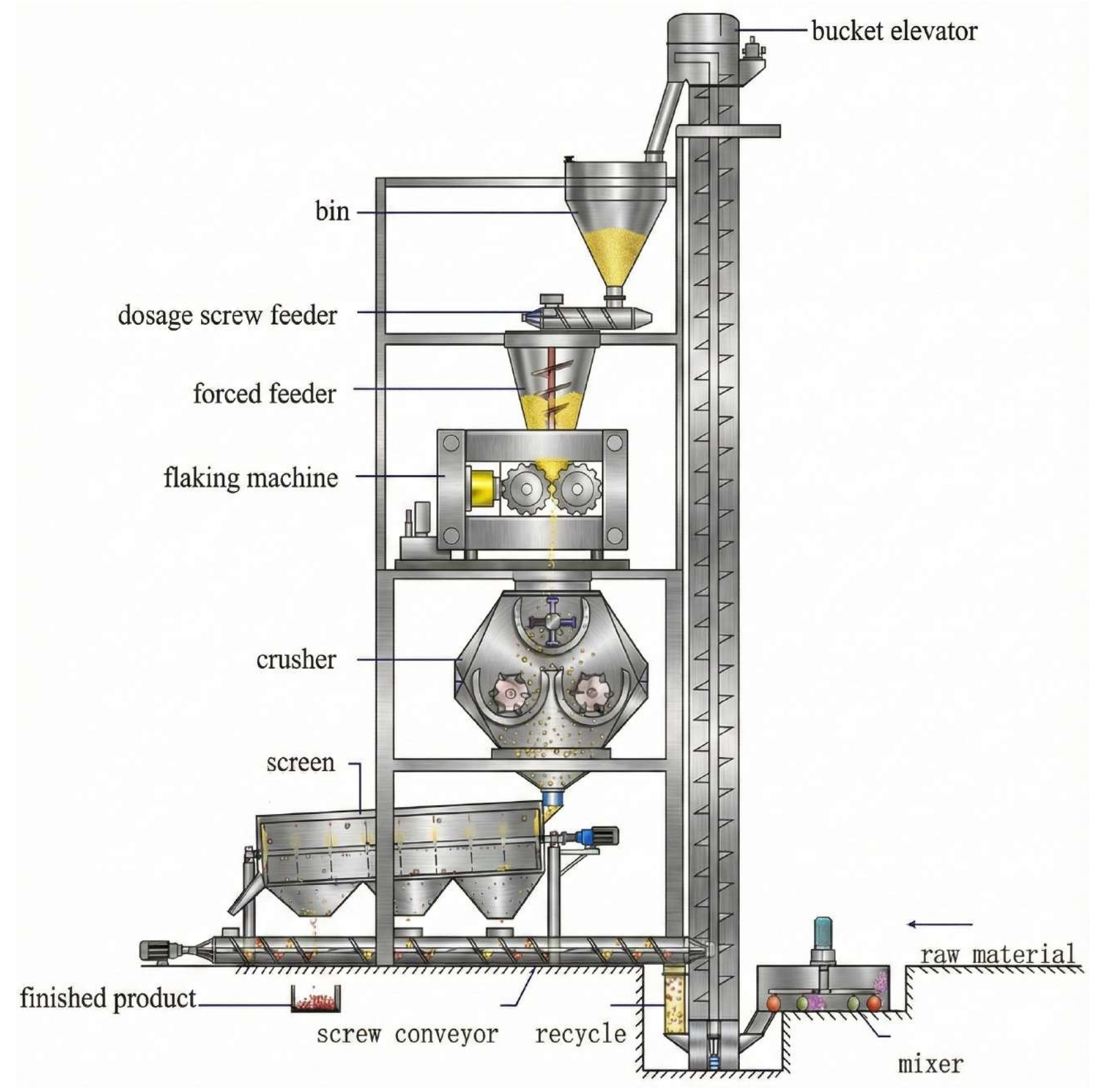
Figure 1. Preparation Process of Anti-icing and Snow-Melting Modifier.
Processes 14 01124 g001
Figure 2. Chloride Ion Analyzer. (a) Bulk Relative Density. (b) Flow Value.
Processes 14 01124 g002
Figure 3. Prepared Specimens 1#–6#.
Processes 14 01124 g003
Figure 4. Aggregate Gradation Curve for the AC-13 Asphalt Mixture.
Processes 14 01124 g004
Figure 5. Strength Comparison of Asphalt Mixtures with Different Dosages of Anti-icing and Snow-Melting Modifiers.
Processes 14 01124 g005
Figure 6. TSR of Asphalt Mixtures with Different Dosages of Anti-icing and Snow-Melting Modifiers.
Processes 14 01124 g006
Figure 7. Marshall Design Volumetric Properties and Mechanical Indicators of AC-13 Asphalt Mixture vs. Bitumen-Aggregate Ratio.
Processes 14 01124 g007
Figure 8. Comparison Curves of Release Rate Variation for Samples 1# and 4#.
Processes 14 01124 g008
Figure 9. Comparison Curves of Release Rate Variation for Samples 2# and 5#.
Processes 14 01124 g009
Figure 10. Comparison Curves of Release Rate Variation for Samples 3# and 6#.
Processes 14 01124 g010
Figure 11. Release Kinetic Characteristics of Anti-icing Modifiers.
Processes 14 01124 g011
Figure 12. Monitoring of Chloride Ion Concentration Variation During the 20-Day Long-Cycle Immersion Test for Samples A and B.
Processes 14 01124 g012
Table 1. I-D SBS Modified Asphalt Technical Indicators.
Technical IndicatorsMeasured ValuesStandard Values
Penetration 25 °C/0.1 mm5840–60
Penetration Index PI0.127≥0
Softening point TR&B/°C84≥60
Ductility (5 °C, 5 cm/min)/cm23.1≥20
Kinematic viscosity 135 °C/(Pa·s)1.13≤3
Flashing point/°C325≥230
Solubility/%99.7≥99
Elastic recovery 25 °C/%89≥75
48 h Thermal storage softening point difference/°C1.9≤2.5
Density/(g·cm−3)1.024Measured
Quality change/%0.05≤1.0
Penetration ratio 25 °C/%75.8≥65
Ductility 5 °C/cm18.5≥15
The testing methodologies and indicators in this table are derived from Chinese standards (JTG). The core protocols and parameter limits are functionally equivalent to international standards (e.g., ASTM C127-22, ASTM D5-21, ISO 10774:2019).
Table 2. Physical and Mechanical Properties of Coarse and Fine Aggregates.
IndicatorUnitTech. Req.11 mm to 22 mm6 mm to 11 mm4 mm to 6 mmMethod
Coarse Aggregate (11 mm to 22 mm, 6 mm to 11 mm, 4 mm to 6 mm)
Apparent rel. density ≥2.602.7042.6882.692T0304
Water absorption%≤2.00.390.930.98T0304
Crushing value%≤269.909.99.9T0316
L.A. abrasion loss%≤2812.812.812.8T0317
Needle & flake%≤1512.112.18.9T0312
Particles > 9.5 mm%≤12 3.50.3T0312
Passing 0.075 mm%≤10.20.3 T0310
Fine Aggregate (0 mm to 4 mm)
IndicatorUnitTech. Req.Measured (0 mm to 4 mm)Method
Apparent rel. density ≥2.502.69T0330
Angularity (flow)s≥3035.00T0345
Sand equivalent%≥6077.78T0334
Methylene blueg/kg≤250.25T0349
Clay content%≤32.40T0345
The testing methodologies and indicators in this table are derived from Chinese standards (JTG). The core protocols and parameter limits are functionally equivalent to international standards (e.g., ASTM C127-22, ASTM D5-21, ISO 10774:2019).
Table 3. Technical Indicators and Test Results of Mineral Filler.
Sample Name: Mineral FillerTest Equipment: Le Chatelier Flask, etc.
Test Basis: JTG E42-2005
IndicatorUnitTech. Req.Test ResultMethod
Apparent densityt/m3≥2.502.693T0352
Particle size range<0.6 mm (%)100100
<0.15 mm (%)90–10098.6T0351
<0.075 mm (%)75–10082.3
Plasticity index%≤42.1T0353
Hydrophilic coefficient ≤10.75T0353
Appearance No lumpsNo lumps
Heating stability Measured recordNo obvious changeT0355
Water content%≤10.1T0103 (Drying)
The testing methodologies and indicators in this table are derived from Chinese standards (JTG). The core protocols and parameter limits are functionally equivalent to international standards (e.g., ASTM C127-22, ASTM D5-21, ISO 10774:2019).
Table 4. Technical Requirements for the Anti-icing Modifier.
Technical IndicatorTechnical Parameter
Density1.8 g/mL
Particle size0.1 mm to 3 mm
Melting point260 °C
Solution pH value8–10
Table 5. Test Methods for Anti-icing Asphalt Mixture Specimens.
Specimen ShapeSoaking TemperatureSoaking DurationSoaking ModeImmersion Method
Marshall specimenRoom temperature24 hContinuousFull immersion
Table 6. Spraying Test Results of Anti-icing Asphalt Mixture Specimens.
Cl− Conc. Temp −10 °C 0 °C 5 °C 15 °C 25 °C 35 °C
Cycle
10.001040.0008010.001140.000890.000790.00090
20.001120.0008690.000920.000890.000880.00086
30.001240.0009010.000970.000910.000920.00088
40.001360.000890.001020.001090.000980.00095
50.001370.000910.001020.001130.001020.00097
60.001460.000950.001000.0011170.000980.00097
70.001450.000990.001030.0011090.001030.00103
80.001460.001030.001040.0011720.001040.00101
90.001510.001010.001050.0012660.001040.00106
100.001560.0010210.001070.0012210.001030.00102
Total0.013590.009400.010310.0107880.009760.00968
Table 7. Marshall Test Results of AC-13 Mixture.
Asphalt-Aggregate Ratio (%)4.75.05.35.65.9Requirements
Bulk relative density2.372.3862.4022.392.381
Air voids (%)5.55.004.23.703.303–5
Voids filled with asphalt (VFA) (%)65.466.7072.775.0080.165–75
Voids in mineral aggregate (VMA) (%)15.915.1014.8015.1016.6
Stability (kN)11.6712.8413.4013.1712.24≥8
Flow value (mm)2.632.953.293.573.781.5–4.0
Table 8. Variations in Chloride Ion Concentration and Release Time for Samples 1#–3#.
Sample 1#Sample 2#Sample 3#
Time
(s)
Mass Fraction,
w
(%)
Concentration,
c
(mol/L)
Time
(s)
Mass Fraction,
w
(%)
Concentration,
c
(mol/L)
Time
(s)
Mass Fraction,
w
(%)
Concentration,
c
(mol/L)
1150.32310.00911050.44390.01251060.43230.0122
3390.36250.01022800.48790.01372110.47450.0134
4430.37890.01073770.50160.01413260.49190.0139
5760.49820.01404380.50490.014244330.50240.0142
6620.44370.01255250.50890.01435220.50920.0143
9020.46470.01316050.51150.01445970.51220.0144
12160.48040.0135
15100.48820.0138
Table 9. Variations in Chloride Ion Concentration and Release Time for Samples 4#–6#.
Sample 4#Sample 5#Sample 6#
Time (s)Mass Fraction, w (%)Concentration, c (mol/L)Time (s)Mass Fraction, w (%)Concentration, c (mol/L)Time (s)Mass Fraction, w (%)Concentration, c (mol/L)
1100.32330.009105760.49170.01381080.29690.008
2330.43360.0122141750.49990.01412370.3570.010
3170.45330.0127712430.50710.01434230.39120.011
3870.46890.0132093250.50990.01445380.41610.0117
4640.47880.0134874310.51480.01456610.43320.0122
5410.49320.0138945520.51190.01447600.44320.0125
6100.49470.0139326240.51340.01459000.45630.0129
6850.49870.0140496800.51350.014510320.46960.0132
8090.49890.0140557750.51370.014511440.47920.0135
8720.51360.014513140.48740.0137
9340.51310.014514640.49020.0138
9940.51290.014516510.50060.0141
10540.51250.014518300.50310.0142
Table 10. Variations in Chloride Ion Concentration and Release Time for Conventional Anti-icing Modifiers without Slow-Release Agents.
Conventional Anti-Icing Modifier (Control Group)
Time (s)Mass Fraction, w (%)Concentration, c (mol/L)
50.33060.0093
360.45330.0128
680.50290.0142
970.53340.0151
1370.55270.0156
1560.56200.0158
1860.56610.0159
2180.56600.0159
2620.56810.0160
3000.56720.0159
Table 11. Comparison of Chloride Ion Content and Concentration for Various Samples at the Same Moment.
Time x = 600 s
Sample No.Mass Fraction, w (%)Concentration, c (mol/L)
1#0.42790.0117
2#0.54190.0142
3#0.49100.0135
4#0.41940.0147
5#0.48860.0362
6#0.44650.0153
Anti-icing modifier0.39120.0211
Table 12. Immersion results of anti-ice/snow asphalt mixture specimens (Chloride ion concentration (10−2 mol/L)).
Serial No.12345
Sample A0.05410.15290.28230.29110.2988
Sample B0.04670.13640.26610.27160.2822
Serial No.678910
Sample A0.30130.30230.30330.30380.3036
Sample B0.286420.29140.29340.29620.2966
Serial No.1112131415
Sample A0.30410.30420.30450.30450.3048
Sample B0.29710.29790.29800.29880.2991
Serial No.1617181920
Sample A0.30460.30460.30460.30510.3051
Sample B0.30010.30020.30020.30030.3003
Table 13. Rutting Test Conditions.
ParameterValueParameterValue
Mixture typeAC-13Compaction methodRoller compaction
Slab size300 mm × 300 mm × 50 mmCompaction speed42 min−1
Mixing temperature175 °C Compaction temperature 160 °C
Travel distance23 cm ± 1 cmTest temperature60 °C
Wheel pressure0.7 Mpa
The testing methodologies and indicators in this table are derived from Chinese standards (JTG). The core protocols and parameter limits are functionally equivalent to international standards (e.g., ASTM C127-22, ASTM D5-21, ISO 10774:2019).
Table 14. Rutting Test Results.
Specimen TypeNo.Temp. (°C)Rut Depth (mm)Repetency, σ
(mm−1)
Avg. σ
(mm−1)
v (%)
45 min60 min
Anti-icing Mixture1601.4121.5624200.0525817.8
21.2091.3146000.0
31.6671.7805575.2
Ordinary Mixture1601.7211.8345727.054095.09
21.7521.8735250.0
31.8001.9215250.0
Table 15. Freeze–Thaw Splitting Test Results.
Cond.No.H1 (mm)H2 (mm)H3 (mm)H4 (mm)Avg H (mm)Load (kN)Str. (MPa)TSR (%)
After F–T164.8064.7264.1464.6664.588.820.8485.7
264.7764.1664.4864.3264.439.48
364.7664.6664.4864.6264.637.98
464.6664.6664.3464.7764.617.23
Before F–T164.8064.7864.2864.2064.5211.980.98
264.5264.6464.7764.6064.6310.51
364.7864.8064.0664.7264.598.25
464.7864.4064.5664.7464.628.65
Ordinary Asphalt Mixture Comparison
Cond.Max DensityBulk DensityStrength (MPa) TSR (%)Cond.
Before F-T2.5742.4481.1386.2
After F-T0.98
F-T: Freeze–Thaw at −18 °C; H: Specimen height; Str.: Splitting tensile strength.
Table 16. Immersion Marshall Test Results.
Mixture TypeTime, tStability, F (kN)Flow, ∆l (mm)Avg., F (kN)Residual (%)
Anti-icing30 min15.393.1615.3688.4
15.513.26
15.412.25
15.142.67
48 h13.8913.76
13.92
13.48
13.76
Ordinary30 min14.1128.614.1088.7
13.8329.1
14.3628.3
48 h12.3832.112.50
12.3232.6
12.8131.5
Table 17. Low-Temperature Bending Test Results.
TypeNo.Load, F (kN)Defl., f (mm)Str., Rm (MPa)Strain, ε (10−6)Mod., E (MPa)
Anti-icing
Mixture
11.035220.7296.773952.461713.50
20.967340.5566.093036.592006.95
31.200870.7277.533960.151902.42
41.136590.6897.533713.882026.76
50.931710.5775.793147.821838.12
Avg.1.054350.65566.743562.181897.55
Res. 3562
Ordinary Mixture11.3230.60310.733165.83388.9
21.3160.61410.593241.93265.3
31.2670.58910.503074.63414.1
41.2740.59110.203112.13279.0
51.3430.62710.773310.63252.4
61.2550.58410.123074.83291.0
Avg.1.2960.60110.483163.33315.1
Res. 3163
Note: Specimen 250 × 30 × 35 mm, span 200 mm, −10 °C, 50 mm/min. Defl.: Deflection; Str.: Flexural Strength; Mod.: Stiffness Modulus; Res.: Final Result.
Table 18. Water Permeability Test Results.
Mixture TypeNo.Time (min)Water Volume, V (mL)Seepage Coeff. (mL/min)
Anti-icing
Mixture
1319665.0
2320468.3
3320668.7
Avg. 20267
Ordinary
Mixture
1324080.0
2322073.3
3328093.3
Avg. 24682.2
Conclusion: The specimens are essentially impermeable, and the results satisfy the technical quality requirements of the current specifications.
Disclaimer/Publisher’s Note: The statements, opinions and data contained in all publications are solely those of the individual author(s) and contributor(s) and not of MDPI and/or the editor(s). MDPI and/or the editor(s) disclaim responsibility for any injury to people or property resulting from any ideas, methods, instructions or products referred to in the content.