


Abstract
This study investigates the antioxidant, enzyme inhibitory, and antimicrobial activities of water (WEHL) and ethanol (EEHL) extracts of hop (Humulus lupulus) cones. Phytochemical analyses revealed higher total phenolic content in EEHL (271.52 ± 0.13 mg GAE/g) than in WEHL (251.84 ± 0.06 mg GAE/g), as well as higher total flavonoid content (182.56 ± 0.45 mg QE/g for EEHL versus 179.39 ± 0.46 mg QE/g for WEHL). Antioxidant activity, determined by DPPH and ABTS assays, showed that EEHL had stronger radical scavenging capacity with IC50 values of 19.13 ± 4.66 μg/mL (DPPH) and 12.66 ± 1.94 μg/mL (ABTS), compared to WEHL (DPPH: 20.90 ± 2.39 μg/mL; ABTS: 32.41 ± 4.29 μg/mL). In reducing assays, EEHL also showed better absorbance values in FRAP (0.77 ± 0.01), CUPRAC (2.09 ± 0.05), and Fe3+ reducing (1.95 ± 0.01) tests. EEHL likely outperformed WEHL due to solvent polarity and extraction efficiency. Moderately polar ethanol extracts a broader range of phenolics and flavonoids, including fewer polar bioactive compounds that contribute to antioxidant capacity and enzyme inhibition. This matches higher TPC/TFC in EEHL and explains stronger radical scavenging, reducing power, and multi-enzyme inhibition. Enzyme inhibition studies revealed that EEHL inhibited acetylcholinesterase (IC50: 26.06 μg/mL), butyrylcholinesterase (IC50: 44.00 μg/mL), α-glycosidase (IC50: 119.31 μg/mL), and carbonic anhydrase isoenzymes hCA I (IC50: 59.78 μg/mL) and hCA II (IC50: 21.19 μg/mL). LC–MS/MS analysis identified major phenolic compounds such as isoquercitrin (3.14 ng/mL), rutin (0.60 ng/mL), and hesperidin (0.43 ng/mL) in EEHL. Antimicrobial screening showed selective activity against Staphylococcus aureus with an inhibition zone of 18.50 ± 0.58 mm, while no inhibition was observed against Escherichia coli and Candida albicans. These findings provide a solvent-dependent in vitro profile that can guide extraction strategies, support antioxidant and multi-enzyme screening (including hCA I and II), and identify candidates for selective antimicrobial evaluation and further preclinical investigation. Despite extensive use of hop extracts, comparative solvent-dependent profiling that links LC–MS/MS phenolic composition with a broad multi-enzyme inhibition panel, including the less frequently evaluated hCA I/II isoenzymes, remains limited. Therefore, the objective of this study was to systematically compare WEHL and EEHL in terms of phytochemical content and in vitro antioxidant, enzyme inhibitory, and antimicrobial activities. Overall, these results provide a solvent-dependent, comparative in vitro profile of WEHL vs. EEHL that can support antioxidant, multi-enzyme screening (including hCA I and II), and selective antimicrobial assays.
1. Introduction
The herb hop (Humulus lupulus) is a member of the family Cannabaceae. The plant occurs naturally in wild regions that have a temperate climate, such as in North America, Western Asia, and Europe. Hop (H. lupulus), a medicinal and commercial plant of high value, is the focus of scientific interest as it is used largely in the pharmaceuticals and food industries, including breweries. These include antioxidant, anti-inflammatory, antimicrobial, sedative, and neuroprotective effects, as well as potential applications in treating conditions such as leprosy, obesity, constipation, menopausal symptoms, and even various types of cancer [1,2].
Bioactive constituents of hop cones, such as flavonoids, phenolic acids, and essential oils, are the underlying compounds in these biological effects [3]. Recent studies have also suggested that hop (H. lupulus)-derived constituents may exhibit inhibitory effect against enzymes commonly used in screening assays including acetylcholinesterase (AChE), butyrylcholinesterase (BChE), α-glycosidase, and carbonic anhydrases [4,5]. However, because the reported activities can vary with plant material, extraction conditions, and assay format, comparative biochemical evaluations of hop extracts remain limited, particularly studies that link solvent-dependent inhibition data with LC–MS/MS-based profiling for some metabolic enzymes including CA I and CA II isoenzymes.
One particular interest is the inhibition of AChE, a key enzyme in the degradation of acetylcholine (ACh), which has normal cholinergic signal transduction related to learning and memory [6]. AChE is a serine hydrolase that rapidly terminates cholinergic signaling by hydrolyzing the neurotransmitter acetylcholine (ACh) into choline and acetate at synapses and neuromuscular junctions [7]. Inhibiting AChE increases synaptic acetylcholine levels and is used clinically to alleviate symptoms in Alzheimer’s disease (AD) [8]. The abnormalities in the cholinergic system regulate and promote changes and promotes changes in amyloid precursor protein metabolism and tau phosphorylation, leading to neurotoxicity, neuroinflammation, and neuronal death [9]. People with AD could develop severe ACh deficiency [10]. At present, there are many drug therapies targeting AChE, which is the most common therapeutic target [11]. Therefore, AChE inhibitors like donepezil, rivastigmine, and galantamine, which were approved over two decades ago, remain the mainstay of AD treatment in clinical management [12].
α-Glycosidase inhibitors (AGIs) are accepted as mild to moderate therapeutic agents in the management of type-2 diabetes mellitus (T2DM) [13], particularly due to their ability to specifically affect postprandial hyperglycemia. Clinically approved and commercially available AGIs, including Acarbose, Miglitol, and Voglibose, function in the intestinal lumen by delaying the enzymatic breakdown of polysaccharides in the small intestine. This, thereby, results in a slower absorption of glucose from the intestines and helps to maintain normal blood glucose levels and minimize glycemic load [14]. However, the presence of undigested disaccharides in the colon often leads to gastrointestinal side effects, including flatulence, abdominal discomfort, and diarrhea, primarily due to fermentation by gut microbiota [15]. As a result, there is ongoing interest in identifying novel AGIs from natural sources that can offer comparable glycemic control with fewer adverse effects and improved patient compliance Consequently, research continues to identify new AGIs that are expected to have fewer side effects [16].
Carbonic anhydrases (CAs) are zinc-containing enzymes that rapidly catalyze the reversible hydration of CO2 to bicarbonate and protons, thereby playing key roles in pH regulation, respiration, ion transport, and fluid secretion in many tissues [17]. Also, they play a pivotal role in a wide range of physiological processes, including gluconeogenesis, ureagenesis, fluid and electrolyte balance, acid–base homeostasis, and gastric acid secretion. Due to their central regulatory functions, CAs are associated with the pathophysiology of several diseases, including hemolytic anemia, glaucoma, renal tubular acidosis, osteoporosis, neuropathic pain, and colorectal cancer. Moreover, abnormal activity of certain CA isoenzymes has been reported to be associated with the progression of chronic disorders, including cancer, obesity, and diabetes [18]. Therefore, CA inhibitors (CAIs) have been developed as therapeutic agents for the treatment of diverse clinical ailments [19]. Some examples of these clinical conditions may include glaucoma, idiopathic intracranial hypertension, acute mountain sickness, and epilepsy. Given the diversity and disease relevance of CAs, there is growing interest in discovering novel and selective CAIs [20]. Natural resources are increasingly explored to enhance therapeutic efficacy and to help reduce side effects that are frequently associated with current synthetic inhibitors [21].
The present study aims to explore the antioxidant potential, enzyme inhibition properties, and antimicrobial activities of hop (H. lupulus) extracts obtained using water and ethanol under identical conditions. Water and ethanol were selected because they differ in polarity and are among the most used, safe, and food-grade solvents in phytochemical extraction. Comparing WEHL and EEHL allows evaluation of how solvent polarity influences phenolic recovery, LC–MS/MS profiles, and biological activities under identical conditions. This solvent-dependent comparison provides practical guidance for bioactivity-oriented extraction and standardization strategies. In addition, the phytochemical composition of the extracts is systematically profiled through LC–MS/MS analysis, to contextualize the observed in vitro responses. Rather than claiming novelty for hop bioactivity in general, this work provides a directly comparable, solvent-dependent analytical screening dataset (WEHL vs. EEHL), and any broader applications will require further cell-based and in vivo validation.
2. Materials and Methods
2.1. Chemicals
1,1-diphenyl-2-picrylhydrazyl (DPPH), 2,2′-azino-bis 3-ethylbenzthiazoline-6-sulfonic acid (ABTS), 2,9-dimethyl-1,10-phenanthroline (neocuproine), ascorbic acid, butylated hydroxytoluene (BHT), butylated hydroxyanisole (BHA), α-tocopherol, Trolox, Folin–Ciocalteu reagent and Ellman’s reagent (5,5′-dithio-bis (2-nitrobenzoic acid) were purchased from Sigma-Aldrich (GmbH, Steinheim, Germany). Standard phenolics used in LC/MS-MS calibration and validation were purchased from Sigma Aldrich GmbH (Steinheim, Germany). Acetylcholinesterase (AChE) from electric eel (Electrophorus electricus), Type VI-S lyophilized powder 200–1000 U/mg protein, Butyrylcholinesterase (BChE) from equine serum, lyophilized powder ≥900 U/mg protein, α-glycosidase Type-I from Bakers Yeast 100 UN were purchased from Sigma Aldrich GmbH. Human carbonic anhydrase I and II isoenzymes (hCA I and hCA II) were isolated from human erythrocytes through hemolysis, purified by affinity column chromatography, and characterized by SDS-PAGE as previously applied [22]. Acetylthiocholine iodide 99.0%, Butyrylthiocholine iodide 98%, 5,5′-dithiobis (2-nitrobenzoic Acid), p-nitrophenyl β-D-glycopyranoside (p-NPG) ≥98% (TLC), 4-Nitrophenyl acetate (p-NFA) ≥99.0% (GC) were purchased from Sigma Aldrich.
2.2. Preparation of Hop (H. lupulus) Extracts
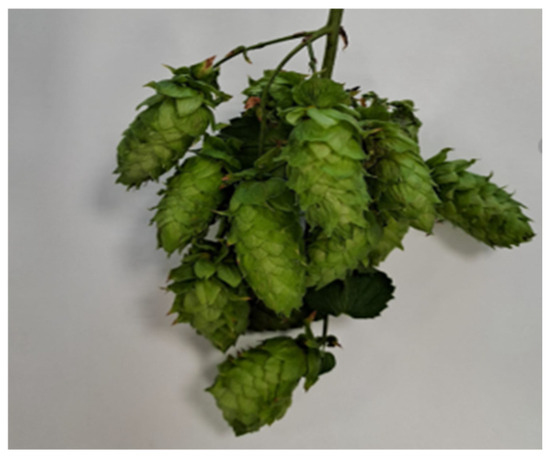
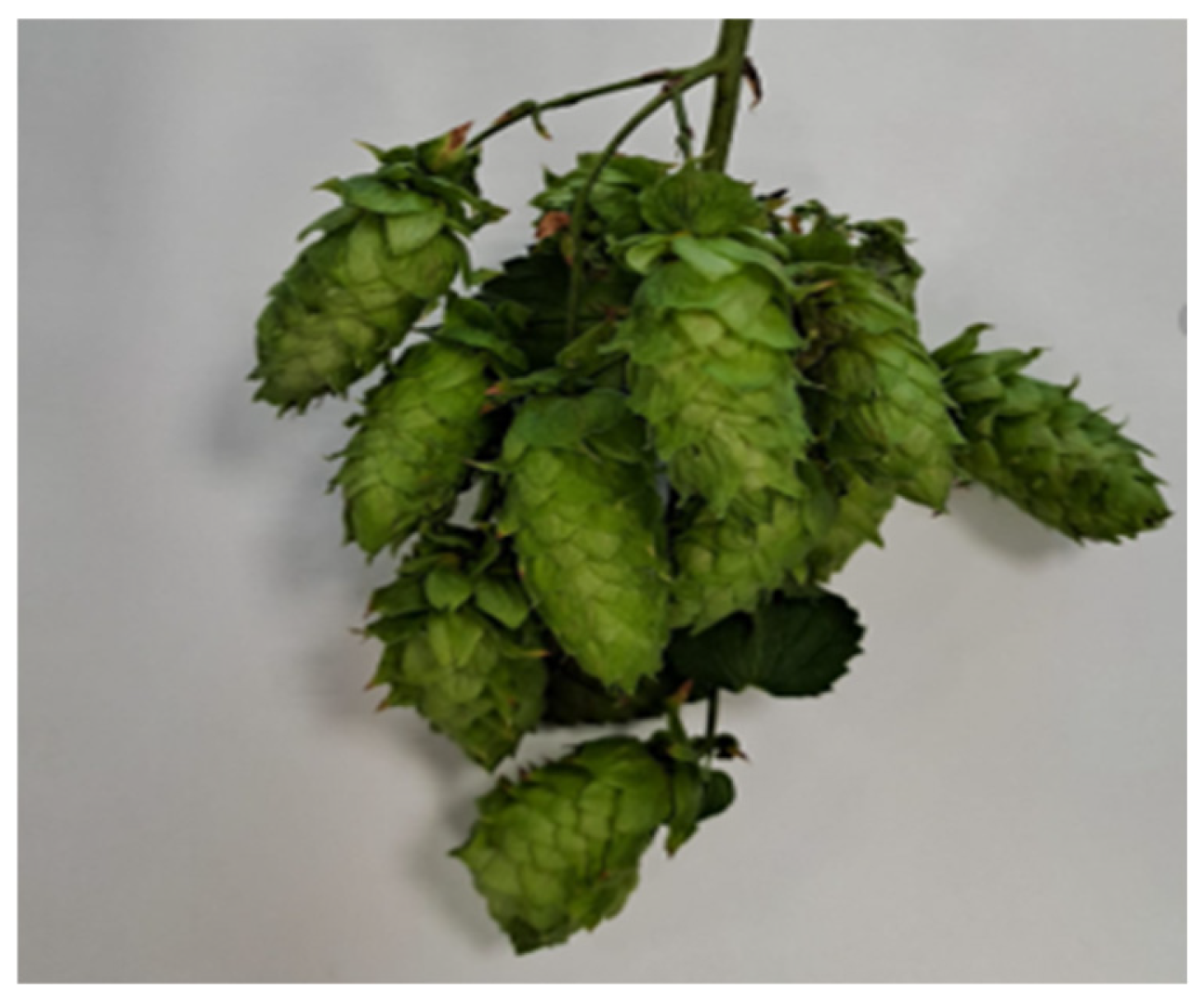
Hop (H. lupulus) cones were collected from Pazaryeri (39.9963° N, 29.9034° E), Bilecik, in August 2024. While collecting the samples, care was taken to collect only the cones. The collected fruit samples were placed in paper bags [23]. The paper bag was labeled to include the coordinates of the area where the samples were taken and brought to the laboratory (Figure 1).
Figure 1.
The cones of hop (H. lupulus).
Water and ethanol extracts of hop (H. lupulus) were prepared by weighing 25 g of dried cones after grinding the pieces up to 0.5–10 mm in size. Then, 200 mL of ethanol and 200 mL of water were added to the milled plant material in a breaker separately, and the samples were mixed for 5 h for the preparation of ethanol extracts and overnight for the preparation of water extracts. Solid particles were decanted from clean cheesecloth until transparent extracts were obtained. Ethanol was removed from the extracts by rotary evaporator, and water was removed by lyophilization [24]. The overall extraction yields were calculated by dividing the remaining extracts by the quantity of the starting dried plant. Dry extracts weighing 100 mg were separated for LC–MS/MS analysis, and an ethanol and dimethyl sulfoxide (DMSO) solution of extracts, concentrated between 15 and 45 µg/mL, was prepared for further antioxidant capacity, enzyme inhibition, and antimicrobial susceptibility tests.
2.3. Determination of Phytochemistry of Hop (H. lupulus)
2.3.1. Total Phenolic Content Determination
The total phenolic content (TPC) in hop (H. lupulus) was determined by the Folin–Ciocalteu method, as described previously. The TPC of the hop (H. lupulus) samples was determined by mixing 0.5 mL (1.0 mg/mL) of the sample in ethanol and 1.0 mL of Folin–Ciocalteu reagent, then the mixture was neutralized with 1 mL of 1% Na2CO3. After vigorous shaking, the mixture was incubated in the dark at room temperature for two hours. Then, the absorbance of the sample was measured at 760 nm against a blank sample containing ethanol instead of the sample. The results were expressed as gallic acid equivalent (GAE) through a standard linear curve between 1 and 200 μg/mL [25].
2.3.2. Total Flavonoid Content Determination
The total flavonoid content (TFC) in hop (H. lupulus) was measured using the aluminum chloride colorimetric assay according to Zhishen et al. [26] as described previously [27]. Content (TPC) was calculated from following Equation (1):
C is concentration obtained from the calibration curve (mg/mL, as gallic acid equivalents), V is total volume of extract (mL) and m is mass of extract (g). Results are expressed as mg GAE/g extract.
Total flavonoid content (TFC) mixture contained (0.5 mL, 1 mg/mL) of the sample in ethanol, 0.5 mL of potassium acetate (1.0 M), 2.3 mL of distilled water, and 1.5 mL of 10% Al(NO3)3. After vortexing, the mixture was incubated at 25 °C for 40 min, and the absorbances were recorded at 415 nm against blank containing ethanol. The results were expressed as quercetin equivalent (QE) through a standard linear curve between 1 and 500 μg/mL [28]. Content (TFC) was calculated from following Equation (2):
C is concentration obtained from the calibration curve (mg/mL, as quercetin equivalents), V is total volume of extract (mL) and m is mass of extract (g). Results are expressed as mg QE/g extract.
2.3.3. Phenolics and Flavonoids Determination by LC-MS/MS
The determination of phenolics and flavonoid by LC-MS/MS has been reported previously [29]. Thirty-five organic acids and phenolics were quantified in total by liquid chromatography (Agilent Technologies 1290 Infinity UHPLC chromatography, Palo Alto, CA, USA), followed by electrospray ionization (ESI) MS-MS (Agilent 6460 mass spectrometer, Palo Alto, CA, USA). UHPLC-ESI-MS/MS data were acquired and processed by MassHunter Qualitative Analysis B07 and MassHunter Quantitative Analysis B07 software (Agilent, Santa Clara, CA, USA). The LC-MS/MS method was previously developed and validated by our research group [30]. Chromatography and MS analysis: UHPLC separation was performed using an Agilent 1290 Infinity system with an autosampler (G4226A), sampler thermostat (G1330B), quad pump (G4204A, 1200 bar), and thermostated column compartment (G1316A). A Zorbax SB-C18 column (4.6 × 100 mm, 3.5 µm, Santa Clara, CA, USA) was used with a mobile phase of water (0.1% formic acid) and acetonitrile (0.1% formic acid) under a controlled column temperature of 30 °C. For MS analysis, the multiple reaction monitoring (MRM) mode was used to quantify organic acids and phenolics, optimizing precursor-to-fragment ion transitions. The scan range was 50–1300 m/z, with optimized collision energies. MS conditions included a drying gas (N2) at 350 °C (12 L/min), nebulizing gas (N2) at 55 psi, sheath gas at 250 °C (5 L/min), and a capillary voltage of 3.5 kV. Data acquisition was performed using the Agilent MassHunter Workstation [29]. Total Phenolic Content (TPC) was calculated from following equation:
2.4. Determination of Antioxidant Activity of Hop (H. lupulus) Extracts
Five different methods with two different principles (radical scavenging and metal-reducing capacity) were employed to determine the antioxidant activity of the hop (H. lupulus) sample [31]. The results were compared with the standard antioxidants, including ascorbic acid, BHA, BHT, α-Tocopherol, and Trolox. Radical scavenging capacities were expressed as the mean IC50 value as the concentration that reduces 50% of the total radical, calculated by the following Formula (3) derived from the trend of the graph:
Y = ax + b, IC50 =(0.5 − b)/a
Reducing capacities were expressed by the mean absorbances± standard deviation obtained at relevant wavelengths in the assays [32]. Each test was performed in triplicate.
2.4.1. Radical Scavenging Assays of Hop (H. lupulus) Extracts
The DPPH radical scavenging activity of hop (H. lupulus) extracts were measured according to the Blois method with slight modifications in incubation time and solvent [33]. Pre-radicalization was performed to prepare 0.1 mM DPPH radicals in ethanol by incubating for 16 h in the dark. The reaction mixture was prepared by the addition of 0.5 mL DPPH and 0.5 mL of varying concentration of the sample (15–45 µg/mL) in ethanol, and incubated in the dark at 30 °C for 30 min. After incubation, the absorbances of the sample were measured at 517 nm. The control reaction consisted of ethanol instead of the sample or standard antioxidants.
ABTS·+ decolorization of hop (H. lupulus) extracts were measured as described by Re et al., with modifications [34]. Pre-radicalization of ABTS was also performed to prepare ABTS radicals by mixing 2 mM ABTS and 2.45 mM potassium persulfate in equal volumes and incubating in the dark for 6 h at room temperature. Before the test, the absorbance of the ABTS radicals at 734 nm was maintained around 1.0 with PBS buffer (0.1 M PBS, pH 7.4). The test was conducted by mixing 1 mL of ABTS radicals and 3 mL of varying concentrations of the samples (15–45 µg/mL), followed by absorbance measurement at 734 nm wavelength. The control reaction consisted of PBS buffer instead of the sample or standard antioxidants. Radical Scavenging Activity (% Inhibition) for DPPH and ABTS scavenging was calculated from following Equation (4):
where is absorbance of the control (blank, without sample), is enzyme activity in the presence of inhibitor or sample.
2.4.2. Reducing Power Assays of Hop (H. lupulus) Extracts
Cupric ions (Cu2+) reducing antioxidant capacity (CUPRAC) was assessed as described by Apak et al. [35] employing neocuprine and acetate buffer at pH 7.0. The test was conducted by mixing equal volumes of 10 mM CuCl2, 7.5 mM neocuproine, and 1.0 M acetate buffer (1.0 M, pH 6.5), varying concentrations of the samples (15–45 µg/mL in acetate buffer) in a total reaction volume of 2 mL. Then, the mixtures were incubated at 25 °C for 30 min, and upon completion of incubation, the absorbances of the samples were recorded at 450 nm. The blank sample consisted of an acetate buffer instead of the samples.
Ferric ions (Fe3+) reducing antioxidant power (FRAP) test was conducted by mixing 0.5 mL of varying concentrations of the samples (15–45 µg/mL) in acetate buffer 0.3 M, pH 3.6), 2.25 mL of FRAP reagent, and 2.25 mL of 20 mM FeCl3 in a total 5 mL of reaction volume. The mixture was incubated at 37 °C for 30 min, and then the absorbances were recorded at 593 nm. FRAP reagent was prepared as previously applied. The blank sample consisted of an acetate buffer instead of the samples.
Ferric ions (Fe3+) reducing power was determined by measuring the conversion of Fe3+ to Fe2+ in the presence of potassium ferricyanide, following the method of Oyaizu [36]. Total reducing power (FRAP) was evaluated following Benzie and Strain [37]. Equal volumes of PBS buffer (0.2 M, pH 6.6), 1% (w/w) potassium ferrocyanide, were mixed with 0.75 mL of varying concentration (15–45 µg/mL) of the samples. After incubation at 50 °C for 30 min, 1.25 mL of 10% trichloroacetic acid (w/w) and 0.25 mL of 0.1% FeCl3 were added to the mixture. The mixtures were vortexed and analyzed at 700 nm. The blank sample consisted of PBS buffer instead of the sample.
2.5. Determination of Enzyme Inhibition Properties of Hop (H. lupulus) Extracts
2.5.1. α-Glycosidase Inhibition of Hop (H. lupulus) Extracts
α-Glycosidase inhibitory activity hop (H. lupulus) extracts were determined using p-nitrophenyl-α-D-glycopyranoside as substrate, following Adera et al. [38]. α-Glycosidase enzyme activity was measured kinetically using 5 mM 4-nitrophenyl β-D-glycopyranoside substrate in the presence of PBS buffer (0.1 M, pH 6.9) for 5 min at 405 nm wavelength. The concentration of the tested sample gradually increased in the reaction mixture until more than half of the activity of the enzyme was inhibited. The reference inhibitor was Acarbose for the α-glycosidase inhibition, and a control reaction was the activity measurement mixture without an inhibitory substance.
2.5.2. Acetylcholinesterase Inhibition of Hop (H. lupulus) Extracts
Acetylcholinesterase (AChE) activity was assayed colorimetrically according to Ellman et al. using DTNB and acetylthiocholine iodide [39]. AChE inhibition was measured kinetically using 50 µL of 10 mM DTNB and 10 mM acetylcholine iodide as substrate in the presence of 100 µL Tris. HCl buffer (1.0 M, pH 8.0) for 5 min at 412 nm [40]. The concentration of the tested sample gradually increased in the reaction mixture until more than half of the activity of the enzyme was inhibited. The reference inhibitor was Donepezil for the AChE inhibition, and a control reaction was the activity measurement mixture without an inhibitory substance.
2.5.3. Butyrylcholinesterase Inhibition of Hop (H. lupulus) Extracts
Butyrylcholinesterase (BChE) activity was determined by a spectrophotometric method based on the Ellman assay [39], employing 5,5′-dithiobis-(2-nitrobenzoic acid) (DTNB) and butyrylthiocholine iodide as the chromogenic reagent and substrate, respectively. The enzymatic reaction was monitored kinetically at 412 nm over a 5 min period in Tris/HCl buffer (1.0 M, pH 8.0), using a reaction mixture containing DTNB (10 mM), butyrylthiocholine iodide (10 mM), and the enzyme solution. To assess the inhibitory effect, increasing concentrations of the test samples were added to the reaction system until at least 50% suppression of enzyme activity was achieved. Donepezil was used as the positive control inhibitor, while the control assay consisted of the complete reaction mixture without any inhibitor.
2.5.4. Human Carbonic Anhydrase I and II Inhibition of Hop (H. lupulus) Extracts
Carbonic anhydrase esterase activity was measured spectrophotometrically using p-nitrophenyl acetate as substrate, following the method of Wilbur and Anderson by monitoring the increase in absorbance at 348 nm [40]. Enzyme inhibition properties of hCA I and hCA II isoenzymes were determined over their kinetic esterase activities at 348 nm. For this, 360 µL of 0.07 mM p-nitrophenyl acetate, 400 μL of Tris-SO4 buffer (0.05 M pH 7.4), and 20 µL of the enzyme solution were mixed in a total volume of 1 mL. The concentration of the tested sample gradually increased in the reaction mixture until more than half of the activity of the enzyme was inhibited. The reference inhibitor was tacrine for the hCA I and II inhibition, and a control reaction was the activity measurement mixture without an inhibitory substance. Enzyme inhibition (%) was calculated from following Equation (5):
where is enzyme activity without inhibitor, is enzyme activity in the presence of inhibitor or sample [41].
2.6. Antimicrobial Activity of Hop (H. lupulus) Extracts
To test the antimicrobial activity of hop (H. lupulus) extracts, the agar-well diffusion method, which is like the disk-diffusion (CLSI, 2015) method, was primarily used [42]. Escherichia coli ATCC 25922 (Gram-negative bacteria), Staphylococcus aureus ATCC 29213 (Gram-positive bacteria), and Candida albicans ATCC 24433 (fungus) were used as test organisms in the experiments. Azithromycin was used for bacteria, and Voriconazole for yeast as controls in antimicrobial activity experiments. Staphylococcus aureus (Gram-positive), Escherichia coli (Gram-negative), and Candida albicans (yeast) were chosen as representative and clinically relevant reference strains that cover different microbial classes and cell wall structures. This selection allows a preliminary evaluation of spectrum selectivity and enables comparison with previous phytochemical antimicrobial studies using standard model organisms. In addition, ethanol used in the preparation of the hops extract was also used as a control. Muller Hinton Agar will be used for bacteria, and Sabouraud Dextrose Agar (SDA) will be used for yeasts. Bacterial strains used in the studies were adjusted according to McFarland 0.5 (1.5 × 10⁸), yeast strains were adjusted according to McFarland 2 (6 × 10⁸) and inoculated into media that was autoclaved at 121 °C for 15 min. 40 µL of extract was added to 6 mm diameter wells opened in Petri dishes. Then, bacteria were incubated at 37 °C for 24 h, and yeasts were incubated at 30 °C for 48 h in an oven. At the end of the incubation period, it was observed whether inhibition zones formed around the disks, and the inhibition zones formed around the disks were measured using a millimeter ruler. The experiments were performed in duplicate under aseptic conditions.
2.7. IC50 Value Determination Hop (H. lupulus) Extracts
The inhibitory potency of hop (H. lupulus) extracts was assessed by calculating the IC50 values. These were derived from enzyme activity measurements showing dose-dependent inhibition with increasing hop (H. lupulus) extracts concentrations. IC50 values were determined by plotting the activity data and identifying the concentration that reduced enzyme activity by 50% [43]. IC50 is typically calculated from a regression of inhibition versus concentration:
where = % inhibition, x = concentration. The IC50 value is obtained by solving for x when y = 50.
2.8. Statistics Analysis
Each experiment was performed in triplicate. The results are given as mean ± SD. In the two-way ANOVA, significant differences were considered to have a value of p < 0.05. All data were processed, and graphs were created using GraphPad Prism 8.0.2. IC50 value refers in this study to the concentration of an inhibitor needed to inhibit an enzyme activity response by 50%. The calculation of the IC50 values was performed using the GraphPad Prism 8.4.0 non-linear regression-[inhibitor]-normalized response (y values 100 down to 0) model.
3. Results
3.1. Antioxidant Properties of Hop (Humulus lupulus) Extracts
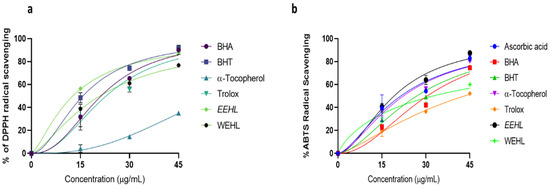
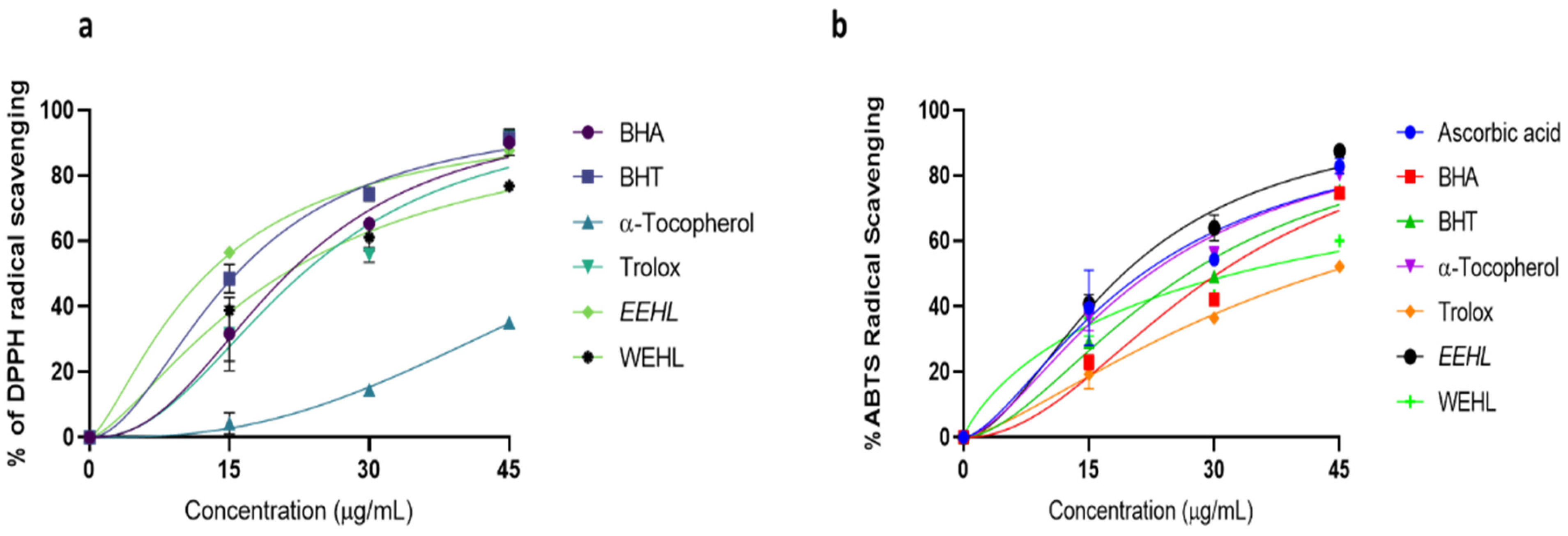
Radical scavenging properties of the water and ethanolic extracts of hop (Humulus lupulus) were investigated through DPPH and ABTS methods [44]. Based on the results obtained from the test, the remarkable radical scavenging property of both ethanolic and water extracts was determined. In DPPH results, 90 and 76% of DPPH radicals and 88 and 60% of ABTS radicals were scavenged by ethanolic and water extracts, respectively. Additionally, IC50 values of DPPH radicals for ethanolic and water extracts were calculated as 19.13 ± 4.66 μg/mL and 20.90 ± 2.39 μg/mL (Figure 2a). As seen in Figure 2b, IC50 values of ABTS radicals for ethanolic and water extracts were calculated as 12.66 ± 1.94 μg/mL and 32.41 ± 4.29 μg/mL (Figure 2b). All results were evaluated as statistically significant (p < 0.05). These values were highly similar to those of both synthetic and natural antioxidants (Table 1). A similar study conducted in Thailand calculated these values as DPPH: IC50 124.3 g/mL; ABTS: IC50 95.4 g/mL for ethanolic extracts [5].
Figure 2.
Radical scavenging activity of hop (H. lupulus) extracts. (a) DPPH radical scavenging results (b) ABTS radical scavenging results. Results represent mean ± SD from replicate measurements.
Table 1.
IC50 values (µg/mL) of radical scavenging assays.
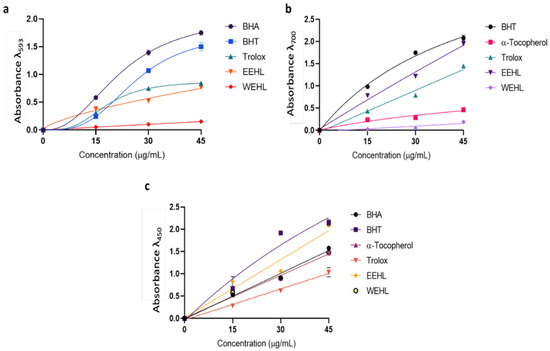
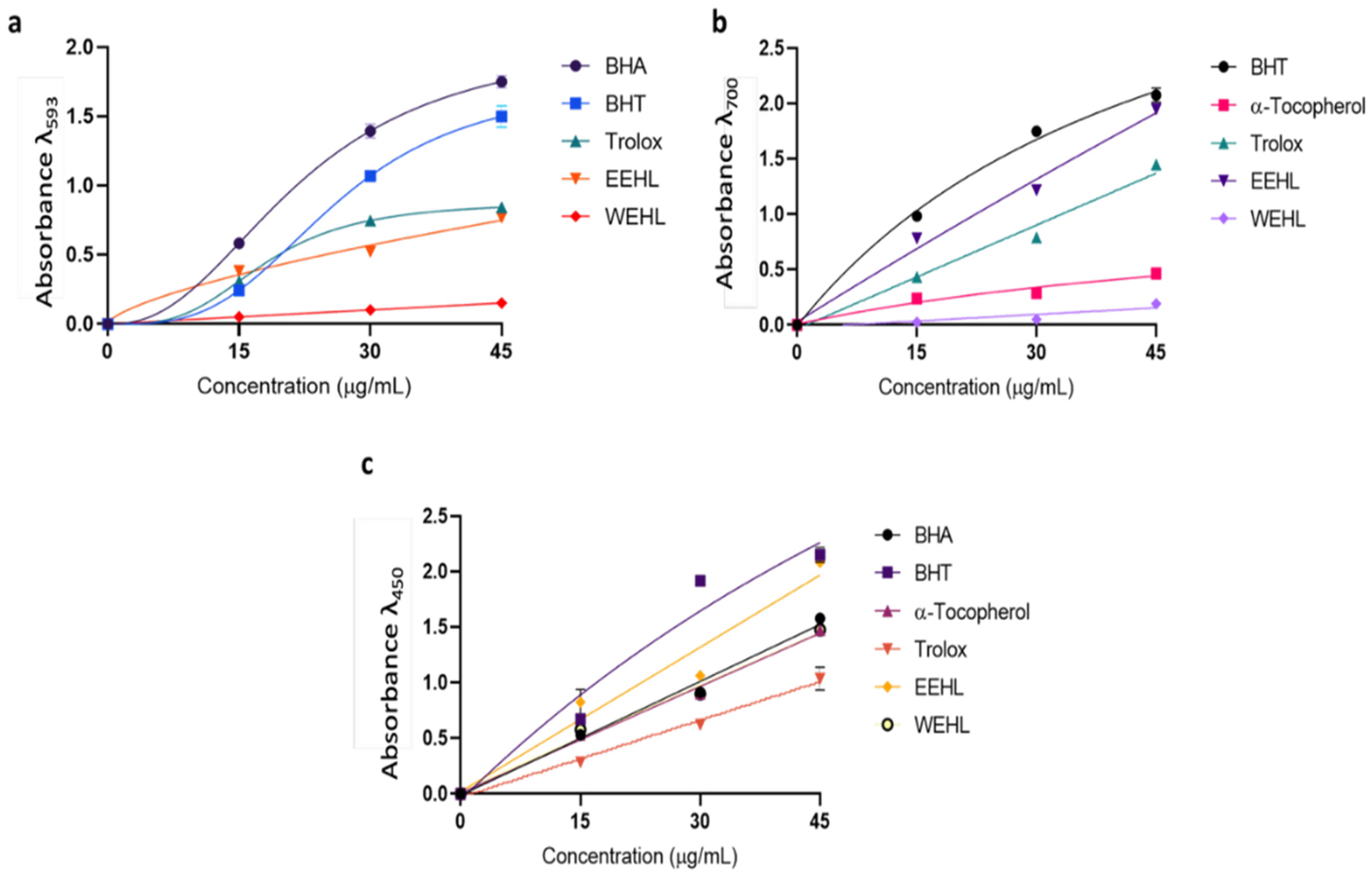
The study performed with hop samples from Saaz, Calypso, Cascade, Cluster, El Dorado, and Magnum cultivars determined the IC50 values of ethanolic extracts between 124.25 ± 3.10 μg/mL and 342.29 ± 9.59 μg/mL and of water extracts between 192.41 ± 9.55 μg/mL and 342.60 ± 6.03 μg/mL for DPPH test. In the same study, the researchers determined the IC50 values of ethanolic extracts between 192.94 ± 4.47 μg/mL and 451.29 ± 2.96 μg/mL, and of water extracts between 239.92 ± 1.06 μg/mL and 374.47 ± 0.37 μg/mL for the ABTS test [45]. The reducing power of WEHL and EEHL extracts was evaluated using FRAP, CUPRAC, and Fe3+-reducing assays, which assess electron-donating capacity through different reaction mechanisms. As shown by the obtained absorbance values, both extracts exhibited concentration-dependent reducing activity across all assays (Table 2, Figure 3a). In the Fe3+-reducing assay, both extracts demonstrated strong reducing effects, with EEHL (1.95 ± 0.01) and WEHL (1.92 ± 0.05) showing comparable absorbance values at 700 nm (Figure 3b). Among the tested samples, EEHL consistently demonstrated stronger reducing power than WEHL. In the FRAP assay, EEHL showed a markedly higher absorbance value (0.77 ± 0.01 at 593 nm) compared to WEHL (0.15 ± 0.01), indicating a greater ability to reduce ferric ions (Figure 3b). Similarly, CUPRAC results revealed that EEHL displayed pronounced cupric ion-reducing capacity with an absorbance of 2.09 ± 0.05 at 450 nm (Figure 3c), whereas WEHL exhibited moderate activity (1.48 ± 0.03). Overall, the reducing power assays indicated that EEHL possesses a broader and more balanced reducing profile than WEHL. The results were reproducible and statistically significant (p < 0.05) and were comparable to those of standard antioxidants used in the study. These findings confirm the substantial electron donating capacity of hop (H. lupulus extracts).
Table 2.
Reducing power assays results for H. lupulus extracts.
Figure 3.
Reducing capacity results of hop (H. lupulus) cones. (a) FRAP results, (b) Fe3+ reducing results, (c) CUPRAC results. Results represent mean ± SD from replicate measurements.
3.2. Estimation of Enzyme Inhibition Property of Hop (Humulus lupulus) Extracts
The ethanolic (EEHL) and water (WEHL) extracts of hop (H. lupulus) were evaluated for their inhibitory effects on five clinically relevant enzymes: α-Glycosidase, AChE, BChE, hCA I, and hCA II (Table 3). The results, expressed as IC50 values (µg/mL), are summarized in Table 3. EEHL showed stronger enzyme inhibition compared to WEHL among all enzymes tested. For α-glycosidase, EEHL showed an IC50 of 119.31 ± 0.01 µg/mL, slightly lower than WEHL (121.20 ± 0.01 µg/mL), though both were considerably less efficient than the standard inhibitor, Acarbose (25.43 ± 0.01 µg/mL). In the AChE inhibition, EEHL demonstrated a stronger effect (IC50: 26.06 ± 0.01 µg/mL) than WEHL (30.75 ± 0.01 µg/mL), but both were less effective than donepezil (12.22 ± 0.01 µg/mL). The extracts also inhibited BChE activity, with EEHL (IC50: 44.00 ± 0.01 µg/mL) showing a remarkably higher potential than WEHL (69.91 ± 0.01 µg/mL), yet still lower than the standard (8.82 ± 0.01 µg/mL). For CA isoenzymes, EEHL was significantly more effective than WEHL. EEHL exhibited an IC50 of 59.78 ± 0.01 µg/mL for hCA I and 21.19 ± 0.01 µg/mL for hCA II, whereas WEHL showed weaker inhibition (IC50: 155.80 ± 0.01 µg/mL for hCA I and 77.22 ± 0.01 µg/mL for hCA II). The standard inhibitor, acetazolamide, showed IC50 values of 55.10 ± 0.01 µg/mL (hCA I) and 49.80 ± 0.01 µg/mL (hCA II).
Table 3.
Enzyme inhibition results of hop (H. lupulus) extracts. * Standards in the table refer to Acarbose for α-Glycosidase, donepezil for AChE and BChE, and acetazolamide for hCA I and hCA II. Ki results represent mean ± SD from replicate measurements.
3.3. Phytochemical Analysis of Hop (H. lupulus) Extract
Phytochemical analysis of the ethanolic and water extracts of hop (H. lupulus) was performed through spectrophotometric TFC/TPC and chromatographic LC-MS/MS methods (Table 4). The TPC of EEHL and WEHL was 271.52 ± 0.13 and 251.84 ± 0.06 mg GAE/g of extracts. The TFC of the EEHL and WEHL were 182.56 ± 0.45 and 179.39 ± 0.46 mg QE/g of sample. The extraction yield was also calculated and found to be 39.5% for EEHL and 27.6% for WEHL. Total phenolics of the six different types of hop (H. lupulus) extracts were tested in a study, and a maximum of 22.47 mg GAE/g was determined among the extracts [46]. Lyu et al. have determined up to 81.90 mg GAE/g in the hop alcoholic extracts and TFC levels around 11.90 mg QE/g [5].
Table 4.
Quantitative LC-MS/MS results of ethanolic hop (H. lupulus) extract. (LOD, Limit of detection).
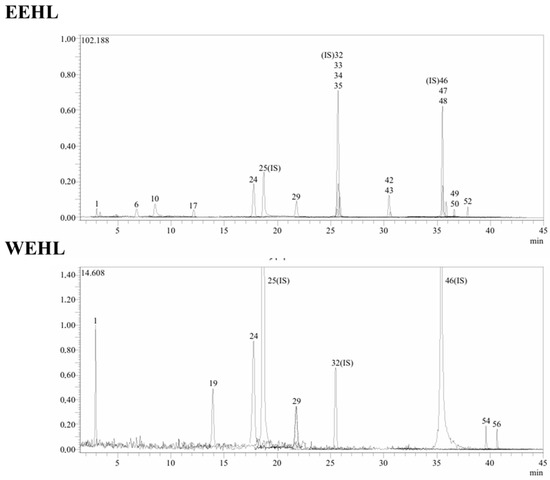
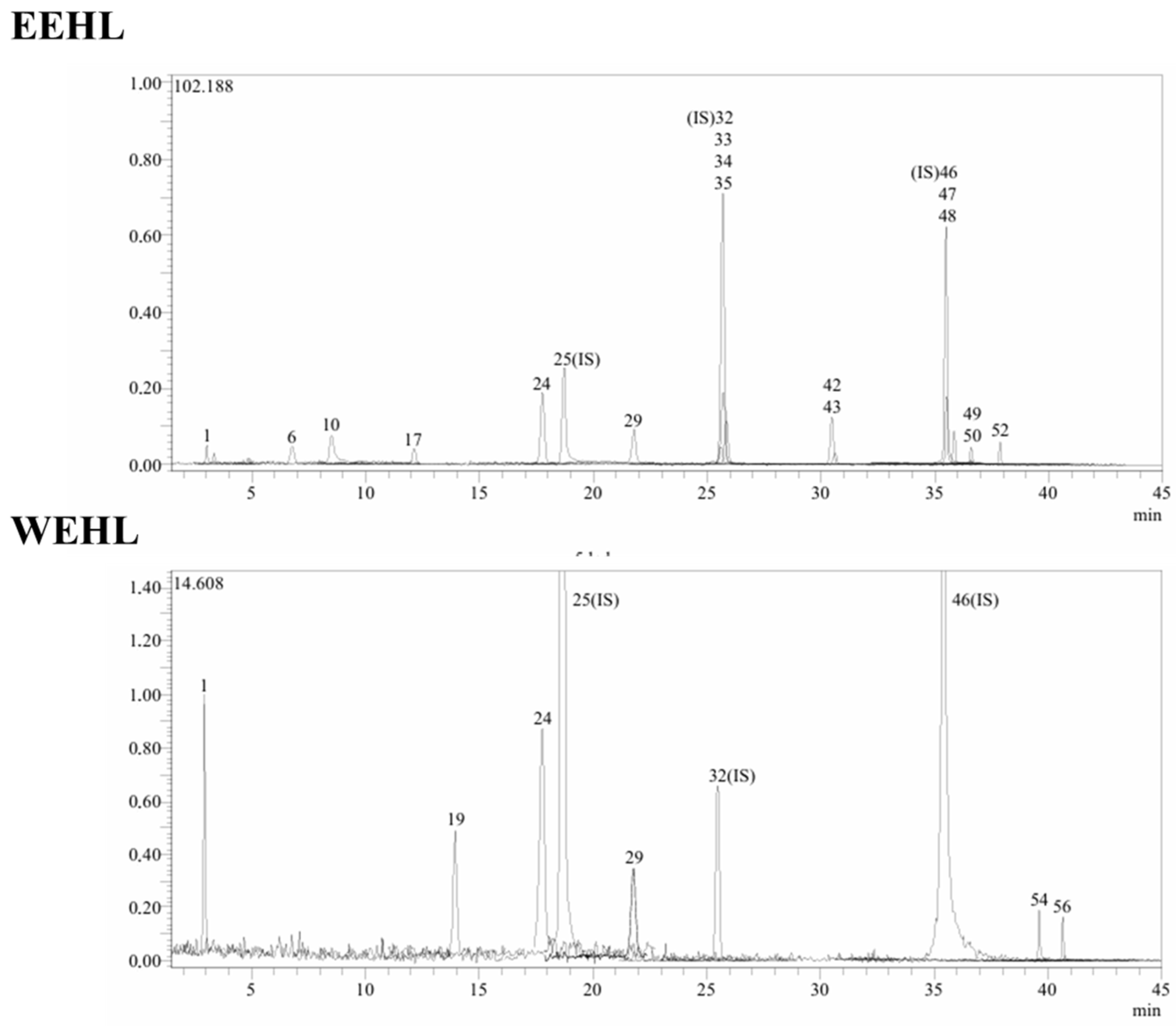
Phenolic content of both EEHL and WEHL was determined by LC-MS/MS against 53 phytochemical standard compounds, and among them, 16 and 6 different compounds were determined in the EEHL and WEHL. Major compound in the EEHL and WEHL was isoquercitrin (3.141 ng/mL) and (0.784 ng/mL) of extract. p-Coumaric acid and salicylic acid were detected in both extracts. Chou et al. analyzed the organic solvent extract of hop (H. lupulus), and they identified the following compounds: luteolin, catechin, epicatechin, apigenin, ferulic acid 5-O-hexoside derivative, neohesperidin, kaempferol 3-O-hexoside, and diosmetin [3]. Also, the following compounds were identified in the hop (H. lupulus) extracts from Thailand, including xanthohumol, cohumulone, lupulone, desmethylxanthohumol, xanthohumol-C, quercitrin, epicatechin, luteolin, resveratrol, humulone, and ferulic acid [2]. Quercetin, luteolin, luteolin rutinoside, luteoside, isoquercetin, quercetin 3,4′-diglucoside, rutin, humulone, cohumulone, colupulone, adhumulone, lupulone E, lupulone C, oxyhumulinone, adhumulinone, cohumulin, lupulone, xanthohumol, isoxanthohumol, xanthohumol D, 8-prenylnaringenin, 6-prenylnaringenin, and 6-geranylnaringenin were also identified in the different hop (H. lupulus) [1]. Depending on the scale of standards, the count of the detected metabolite may vary; regarding this variety, the hop (H. lupulus) extract possesses the general feature of the hop. A detailed LC-MS/MS chromatogram of ethanolic and water extracts of hop (H. lupulus) can be found in Figure 4.
Figure 4.
LC-MS/MS Chromatogram of hop (H. lupulus) extracts; EEHL: ethanolic extract of hop (H. lupulus), WEHL: water extract of hop (H. lupulus).
3.4. Antimicrobial Activity of Hop (H. lupulus) Extracts
In determining antimicrobial activity hop (H. lupulus) extracts, the agar-well technique and three different test organisms were used. Zone diameters were measured for bacteria and yeasts at the end of 24 and 48 h of incubation, respectively. Zone diameters were measured at the end of the incubation period. No zone was observed with E. coli, C. albicans, and the test solution of ethanol. In contrast, the diameter zone was determined as 18.50 ± 0.58 mm for S. aureus and 34.50 ± 4.04 mm for Azithromycin. Antimicrobial activity is present when the diameter is over 12 mm. According to the information in the literature, inhibition zones with a diameter smaller than 12 mm do not have antibacterial activity, diameters between 12 and 16 mm are considered moderately active, and those with diameters > 16 mm are considered highly active. In line with these data, the extract of hop (H. lupulus) collected from Bilecik, Türkiye has an antimicrobial effect against S. aureus, a Gram-positive bacterium. Similarly, Khaliullina et al. shows that hop (H. lupulus) collected from the Republic of Tatarstan exhibits antimicrobial activity against S. aureus [47].
4. Discussion
Specifically, we now discuss how the predominant phenolic and flavonoid constituents identified in our profiling may contribute to the antioxidant responses measured by DPPH and ABTS, considering their known radical-scavenging features (e.g., electron/hydrogen donating capacity and resonance stabilization). In addition, we included a comparative interpretation linking the relative abundance of major compounds across extracts to the differences in activity, while clearly stating that these associations are indicative and do not confirm causality. We also emphasized that synergistic/antagonistic interactions among compounds and matrix effects may influence the overall activity and should be clarified by future bioactivity-guided fractionation studies.
Metal-reducing tests were performed to determine antioxidant potential, together with the radical scavenging properties. The metal-reducing assays (FRAP, CUPRAC, and Fe3+ reducing power) revealed that both EEHL and WEHL possess significant electron-donating capacities, though with distinct profiles. EEHL exhibited strong reducing activity across all methods, with FRAP and CUPRAC values comparable to or even exceeding standard antioxidants such as Trolox, BHA, and α-tocopherol, highlighting its richness in effective redox-active compounds (Figure 3a,c). In contrast, WEHL showed very weak activity in FRAP but demonstrated moderate reducing power in CUPRAC and remarkably strong Fe3+ reducing activity, nearly matching BHT (Figure 3b). These findings suggest that EEHL contains a broader spectrum of phenolic or flavonoid constituents contributing to consistent metal ion reduction, while WEHL may harbor specific compounds that are less effective in FRAP but highly potent in ferric ion reduction. Overall, the results indicate that both extracts have notable reducing potential, with EEHL showing more balanced and versatile antioxidant properties. In a study conducted to measure the antioxidant capacity of different hop (H. lupulus) extracts through the FRAP and CUPRAC tests, it has been reported that antioxidant capacity was determined between 1.64 Trolox equivalent (TE) and 3.15 TE in CUPRAC, between 0.30 TE and 1.56 TE in the FRAP test [48]. Since our study suggested that determined absorbance values are comparable to Trolox, nearly 2-fold more and 4-5-fold more activity was obtained in FRAP and CUPRAC tests, respectively.
Acetylcholinesterase (AChE) inhibition is a well-established therapeutic strategy, particularly in the management of neurodegenerative disorders such as AD. AChE is the enzyme responsible for the rapid hydrolysis of the neurotransmitter acetylcholine (ACh) in synaptic clefts. Its inhibition leads to increased ACh levels, thereby enhancing cholinergic neurotransmission and improving cognitive function. AChE inhibitors depend on their interaction with the enzyme’s active site. In addition to neurological applications, AChE inhibition has also been investigated in relation to oxidative stress, inflammation, and certain metabolic disorders, highlighting its broad biological and pharmacological significance [49]. In a study conducted to investigate the enzyme inhibition property of the different varieties from Poland and IC50 values between 46.56 ± 0.56 µg/mL and 143.82 ± 4.59 µg/mL for AChE and between 20.38 ± 0.61 and 62.09 ± 3.36 µg/mL for BChE [36]. These results were highly comparable to the findings from the present study. Keskin et al. studied the enzyme inhibition potential of methanolic hop extracts over α-amylase enzyme, and they determined the IC50 value as 3.92 ± 0.02 µg/mL [4].
AChE inhibition is an established symptomatic strategy in AD and clinically used cholinesterases inhibitors can provide modest cognitive/functional stabilization without modifying the underlying pathology [50]. However, statements extending AChE inhibition to broader outcomes such as oxidative stress, neuroinflammation, or metabolic dysfunction should be framed as investigational, because supporting evidence is largely mechanistic and preclinical [51]. Accordingly, we describe such effects as potential, hypothesis-generating directions and emphasize that confirmation requires dedicated cellular, in vivo, and clinical studies before any therapeutic conclusions can be drawn [52].
In this study, the inhibition effects of water and ethanol extracts of hop (H. lupulus) on hCA I and II isoenzymes were evaluated using the esterase activity providing solvent-dependent comparative data for these isoenzymes. Inhibition of hCA isoenzymes has become an increasingly important research topic in recent years due to their association with glaucoma, metabolic disorders, and certain neurodegenerative diseases. Under our conditions, EEHL showed stronger inhibition of hCA II (IC50: 21.19 μg/mL) than WEHL, while both extracts displayed measurable inhibition toward hCA I (EEHL IC50: 59.78 μg/mL). Considering that CA inhibition has been discussed for certain hop constituents in prior reports, we present these findings as an additional, method-specific dataset rather than as a definitive first report.
hCA I and hCA II are cytosolic isoenzymes involved in fundamental physiological processes such as pH regulation, CO2 transport, and fluid–electrolyte balance. Among them, hCA II is highly expressed in ocular tissues, making it a critical pharmacological target in the treatment of glaucoma [53]. The differences observed between EEHL and WEHL suggest that solvent polarity and extraction efficiency can influence the recovery of constituents that contribute to CA inhibition. LC–MS/MS analyses showed that EEHL contains several flavonoid and phenolic compounds (e.g., isoquercitrin, rutin, hesperidin), which have been discussed in the literature as potential contributors to CA inhibition. Therefore, the CA inhibition observed here is best interpreted as a combined extract effect and a working hypothesis for future mechanistic studies. Further experiments (e.g., isoenzyme selectivity, additional CA isoforms, and cell-based validation) are needed before any therapeutic relevance can be inferred.
α-Glycosidase inhibition is a key therapeutic strategy in the management of T2DM, particularly for controlling postprandial hyperglycemia [54]. This enzyme is responsible for the hydrolysis of complex carbohydrates into glucose in the small intestine, and its inhibition slows glucose absorption, thereby reducing postprandial blood glucose fluctuations [55]. In the present study, the inhibitory effects of ethanol (EEHL) and water (WEHL) extracts of hop (H. lupulus) extracts on α-glycosidase were evaluated, and both extracts exhibited notable inhibitory activity. The lower IC50 value observed for EEHL compared to WEHL indicates that ethanolic extraction is more effective in recovering α-glycosidase inhibitory constituents.
Although the inhibitory potency of the hop (H. lupulus) extracts was weaker than that of the reference inhibitor Acarbose, their natural origin represents a significant advantage. Synthetic α-glycosidase inhibitors are known to cause gastrointestinal side effects in clinical use, which has increased interest in naturally derived inhibitors with milder yet safer activity profiles [56]. LC–MS/MS analyses revealed the presence of flavonoids and phenolic compounds in EEHL, which are known to interact with the active site of α-glycosidase and suppress its catalytic activity. Moreover, the observed inhibition is likely attributable not to a single compound but to the synergistic effects of multiple phenolic constituents. The α-glycosidase inhibitory effect of hop (H. lupulus) extracts supports the antidiabetic potential of this plant. Nevertheless, further mechanistic investigations and in vivo studies are required to better elucidate the clinical relevance and therapeutic applicability of these findings.
The antimicrobial activity of hop (H. lupulus) extracts demonstrated a selective inhibitory effect against S. aureus, while no activity was observed against E. coli or C. albicans [57]. The pronounced sensitivity of the Gram-positive bacterium may be attributed to structural differences in the cell wall, which facilitates the penetration of phenolic compounds present in the extract [58]. The inhibition zone exceeding 16 mm indicates strong antibacterial activity, supporting previous reports on the susceptibility of S. aureus to hop-derived constituents. The absence of activity against Gram-negative bacteria suggests limited permeability through the outer membrane barrier [59]. Overall, these findings highlight the selective antimicrobial potential of both hop (H. lupulus) extracts. In determining antimicrobial activity, the agar-well technique and three different test organisms were used. Zone diameters were measured for bacteria and yeasts at the end of 24 and 48 h of incubation, respectively. No zone was observed with E. coli, C. albicans, and the test solution of ethanol. In contrast, the diameter zone was determined as 18.50 ± 0.58 mm for S. aureus and 34.50 ± 4.04 mm for Azithromycin. Antimicrobial activity is present when the diameter is over 12 mm. According to the information in the literature, inhibition zones with smaller than 12 mm diameter do not have antibacterial activity. The classification of activity (>16 mm = high) is acceptable but is method- and strain-dependent [34]. In line with these data, the extract of hop (H. lupulus) collected from Bilecik, Türkiye has an antimicrobial effect against S. aureus, a Gram-positive bacterium. Similarly, Khaliullina et al. shows that H. lupulus collected from the Republic of Tatarstan exhibits antimicrobial activity against S. aureus [47].
Hops (H. lupulus) (Cannabaceae) is a plant of major industrial importance with recognized medicinal value. In Türkiye, its cultivation is essentially confined to Pazaryeri, a district of Bilecik Province, which represents the country’s only established hop-growing region. Although hops (H. lupulus) have been studied previously, phytochemical composition and the resulting antioxidant activity or enzyme inhibition profiles are influenced not only by the extraction solvent but also by genotype (cultivar), growing region, climate (temperature–rainfall–radiation), soil characteristics, agronomic practices, and harvest season/year. Therefore, samples collected from different geographies or seasons may show changes in the distribution of key phenolics (including prenylated flavonoids) and total phenolic content and accordingly may yield different responses in the same bioassays.
Also, the present work is limited to the in vitro activity profile of WEHL/EEHL extracts prepared from hop cones collected from a single location (Bilecik, Türkiye) and a single sampling set; thus, broader generalization may be constrained. Future studies should include multi-location and multi-season/year sampling with standardized comparisons to better define variability driven by geography and environmental conditions.
5. Conclusions
The present study comprehensively investigated the phytochemical composition, antioxidant capacity, enzyme inhibition potential, and antimicrobial activity of hop (H. lupulus) extracts obtained through ethanol and water extraction. The ethanolic extract demonstrated outstanding performance across all bioactivity assays, with significantly higher phenolic (271.52 mg GAE/g) and flavonoid (182.56 mg QE/g) contents compared to the water extract. EEHL also demonstrated stronger radical scavenging and metal-reducing capacities in both DPPH and ABTS assays, as well as in FRAP, CUPRAC, and Fe3+-reducing assays. In enzyme inhibition, EEHL showed significant inhibitory activity against AChE (IC50: 26.06 μg/mL), BChE (IC50: 44.00 μg/mL), α-glycosidase (IC50: 119.31 μg/mL), and hCA I (IC50: 59.78 μg/mL) and hCA II (IC50: 21.19 μg/mL), indicating its potential as a multifunctional natural therapeutic agent targeting neurodegenerative, metabolic, and ocular disorders. Additionally, the extract exhibited selective antimicrobial activity against S. aureus, with an inhibition zone of 18.50 ± 0.58 mm, further supporting its potential application in natural preservation or antimicrobial strategies. LC–MS/MS profiling identified key bioactive phenolic constituents in EEHL, including isoquercitrin (3.14 ng/mL), rutin (0.60 ng/mL), and hesperidin (0.43 ng/mL), which are likely contributors to the observed biological activities. These findings collectively highlight hop (H. lupulus) extracts, especially its ethanolic extract, as a valuable source of bioactive compounds with promising pharmacological properties. Future studies should focus on in vivo validations and mechanistic evaluations to further support the development of hop-derived natural products for therapeutic use.
Although hop has been investigated previously, detailed biochemical and enzymatic evaluations that combine comparative solvent extraction (water vs. ethanol) with LC–MS/MS-based profiling within the same workflow remain limited. In addition, to clarify how our hop extracts are different or superior to others, we emphasize the following: (i) we evaluated both aqueous (WEHL) and ethanolic (EEHL) extracts prepared from hop cones collected in Bilecik (Türkiye) under identical conditions, enabling a direct solvent-dependent comparison; and (ii) we present an integrated dataset linking phenolic and flavonoid richness and LC–MS/MS profiling with multi-enzyme inhibition, including carbonic anhydrase isoenzymes relevant to antiglaucoma screening. Moreover, our results indicate that EEHL exhibits notably strong inhibition against hCA II isoform (IC50: 21.19 µg/mL) and measurable inhibition against hCA I isozyme (IC50: 59.78 µg/mL). These values compare favorably with the reference inhibitor (acetazolamide) reported in the same table, particularly for hCA II isoenzyme. In addition, when compared with previously reported hop extracts/cultivars, our extract showed lower radical scavenging IC50 values (DPPH/ABTS) than those reported for many hop samples, supporting that the studied material has comparatively higher antioxidant potency under our experimental conditions.
In terms of future research, bioactivity-guided fractionation and isolation studies are required to more clearly identify the constituents responsible for the observed antioxidant and enzyme inhibitory effects. Detailed kinetic analyses (e.g., determination of inhibition type and Ki values) should be conducted on the obtained fractions and isolated pure compounds to better elucidate the underlying mechanisms. In addition, to support the biological relevance of the in vitro findings, validation experiments should be performed in appropriate cell-based models and, where necessary, in vivo studies should be planned. Finally, comprehensive evaluations of toxicity, stability, and (when applicable) preliminary pharmacokinetic/ADMET properties are recommended to assess the balance between efficacy and safety.
Author Contributions
Conceptualization, K.A., M.A., M.A.Y. and İ.G.; methodology and investigation, K.A.; M.A.Y. and İ.G.; software, validation, and visualization, U.D.G. and O.C.; data curation, writing—original draft preparation, writing—review and editing, supervision, and funding acquisition, İ.G. and M.A. All authors have read and agreed to the published version of the manuscript.
Funding
This research received no external funding.
Data Availability Statement
Data available in a publicly accessible repository.
Acknowledgments
Ilhami Gulcin is a member of the Turkish Academy of Sciences (TÜBA). He would like to extend his sincere appreciation to the TÜBA for their financial support.
Conflicts of Interest
The authors declare no conflicts of interest.
References
- Basilio-Cortes, U.A.; Ramírez-Rodrigues, M.M.; Ramírez-Rodrigues, M.A.; González-Mendoza, D.; Tzintzun-Camacho, O.; Durán-Hernández, D.; González-Salitre, L. Phytochemical, spectroscopic analysis, and antifungal activity on bell peppers of hydrothermal bioactive metabolites of Humulus lupulus L. extracts. Nat. Prod. Res. 2024, 38, 4301–4310. [Google Scholar] [CrossRef] [Scilit]
- Suphiratwanich, P.; Yarangsee, C.; Lomarat, P.; Laosirisathian, N. Phytochemical screening, in vitro antioxidant, and antimicrobial efficacy of Humulus lupulus L. flowers (Newport and Comet varieties) from Thailand. Pharm. Sci. Asia 2024, 51, 391–400. [Google Scholar] [CrossRef] [Scilit]
- Choi, J.Y.; Desta, K.T.; Lee, S.J.; Kim, Y.; Shin, S.C.; Kim, G.; Lee, S.J.; Shim, J.; Hacımüftüoğlu, A.; El-Aty, A.M.A. LC–MS/MS profiling of polyphenol-enriched leaf, stem, and root extracts of Korean Humulus japonicus Siebold & Zucc. and determination of their antioxidant effects. Biomed. Chromatogr. 2018, 32, e4171. [Google Scholar] [CrossRef] [Scilit]
- Keskin, Ş.Y.; Çakir, H.E.; Keskin, M. An investigation of Humulus lupulus L.: Phenolic composition, antioxidant capacity, and inhibition properties of clinically important enzymes. S. Afr. J. Bot. 2019, 120, 170–174. [Google Scholar] [CrossRef] [Scilit]
- Lyu, J.I.; Ryu, J.; Seo, K.-S.; Kang, K.-Y.; Park, S.H.; Ha, T.H.; Ahn, J.-W.; Kang, S.-Y. Comparative study on phenolic compounds and antioxidant activities of hop (Humulus lupulus L.) strobile extracts. Plants 2022, 11, 135. [Google Scholar] [CrossRef] [Scilit]
- Zhang, J.; Zhang, Y.; Wang, J.; Xia, Y.; Zhang, J.; Chen, L. Recent advances in Alzheimer’s disease: Mechanisms, clinical trials and new drug development strategies. Sig. Transduct. Target Ther. 2024, 9, 211. [Google Scholar] [CrossRef] [Scilit]
- Rawat, K.; Tewari, D.; Bisht, A.; Chandra, S.; Tiruneh, Y.K.; Hassan, H.M.; Al-Emam, A.; Sindi, E.R.; Al-Dies, A.-A.M. Identification of AChE targeted therapeutic compounds for Alzheimer’s disease: An in-silico study with DFT integration. Sci. Rep. 2024, 14, 30356. [Google Scholar] [CrossRef] [Scilit]
- Biçer, A.; Taslimi, P.; Yakali, G.; Gülçin, İ.; Gültekin, M.S.; Turgut Cin, G. Synthesis, characterization, crystal structure of novel bis-thiomethylcyclohexanone derivatives and their inhibitory properties against some metabolic enzymes. Bioorg. Chem. 2019, 82, 393–404. [Google Scholar] [CrossRef] [Scilit]
- Chen, Z.R.; Huang, J.B.; Yang, S.L.; Hong, F.F. Role of cholinergic signaling in Alzheimer’s disease. Molecules 2022, 27, 1816. [Google Scholar] [CrossRef] [Scilit] [PubMed]
- Breijyeh, Z.; Karaman, R. Comprehensive review on Alzheimer’s disease: Causes and treatment. Molecules 2020, 25, 5789. [Google Scholar] [CrossRef] [Scilit]
- Nordberg, A.; Svensson, A.L. Cholinesterase inhibitors in the treatment of Alzheimer’s disease: A comparison of tolerability and pharmacology. Drug Saf. 1998, 19, 465–480. [Google Scholar] [CrossRef] [Scilit]
- Karagecili, H.; Yılmaz, M.A.; Ertürk, A.; Kızıltaş, H.; Güven, L.; Alwasel, S.H.; Gulcin, İ. Comprehensive metabolite profiling of Berdav propolis using LC-MS/MS: Determination of antioxidant, anticholinergic, antiglaucoma, and antidiabetic effects. Molecules 2023, 28, 1739. [Google Scholar] [CrossRef] [Scilit]
- Zhang, M.; Feng, R.; Yang, M.; Qian, C.; Wang, Z.; Liu, W.; Ma, J. Effects of metformin, acarbose, and sitagliptin monotherapy on gut microbiota in Zucker diabetic fatty rats. BMJ Open Diabetes Res. Care 2019, 7, e000717. [Google Scholar] [CrossRef] [Scilit]
- Paiva, L.; Binsack, R.; Machado, U.F. Chronic acarbose-feeding increases GLUT1 protein without changing intestinal glucose absorption function. Eur. J. Pharmacol. 2002, 434, 197–204. [Google Scholar] [CrossRef] [Scilit]
- Yuan, Y.; Hou, X.; Cao, X.; Ding, M.; Su, L. Acarbose-induced pneumatosis cystoides intestinalis. JCEM Case Rep. 2025, 3, luaf199. [Google Scholar] [CrossRef] [Scilit]
- Han, X.; Wang, P.; Zhang, J.; Lv, Y.; Zhao, Z.; Zhang, F.; Shang, M.; Liu, G.; Wang, X.; Cai, S.; et al. α-Glucosidase inhibition mechanism and anti-hyperglycemic effects of flavonoids from Astragali radix and their mixture effects. Pharmaceuticals 2025, 18, 744. [Google Scholar] [CrossRef] [Scilit] [PubMed]
- Supuran, C.T. Multi- and polypharmacology of carbonic anhydrase inhibitors. Pharmacol. Rev. 2025, 77, 100004. [Google Scholar] [CrossRef] [Scilit] [PubMed]
- Mallia, A.; Brocca, L.; Papaianni, G.G.; Banfi, C. Carbonic anhydrases inhibition in the management of cardiovascular and cardiometabolic disorders. Biomed. Pharmacother. 2025, 190, 118396. [Google Scholar] [CrossRef] [Scilit] [PubMed]
- Lemon, N.; Canepa, E.; Ilies, M.A.; Fossati, S. Carbonic anhydrases as potential targets against neurovascular unit dysfunction in Alzheimer’s disease and stroke. Front. Aging Neurosci. 2021, 13, 772278. [Google Scholar] [CrossRef] [Scilit]
- D’Ambrosio, K.; Di Fiore, A.; Alterio, V.; Langella, E.; Monti, S.M.; Supuran, C.T.; De Simone, G. Multiple binding modes of inhibitors to human carbonic anhydrases: An update on the design of isoform-specific modulators of activity. Chem. Rev. 2025, 125, 150–222. [Google Scholar] [CrossRef] [Scilit]
- Supuran, C.T. Carbonic anhydrase inhibitors from marine natural products. Mar. Drugs 2022, 20, 721. [Google Scholar] [CrossRef] [Scilit]
- Beydemir, Ş.; Gülcin, İ. Effects of melatonin on carbonic anhydrase from human erythrocytes in vitro and from rat erythrocytes in vivo. J. Enzyme Inhib. Med. Chem. 2004, 19, 193–197. [Google Scholar] [CrossRef] [Scilit]
- Harborne, J.B. Phytochemical Methods: A Guide to Modern Techniques of Plant Analysis, 3rd ed.; Springer: Dordrecht, The Netherlands, 1998. [Google Scholar]
- Ozbey, F.; Taslimi, P.; Gulcin, İ.; Maras, A.; Goksu, S.; Supuran, C.T. Synthesis of diaryl ethers with acetylcholinesterase, butyrylcholinesterase and carbonic anhydrase inhibitory actions. J. Enzym. Inhib. Med. Chem. 2016, 31, 79–85. [Google Scholar] [CrossRef] [Scilit]
- Torres, P.; Osaki, S.; Silveira, E.; dos Santos, D.Y.A.C.; Chow, F. Comprehensive evaluation of Folin-Ciocalteu assay for total phenolic quantification in algae (chlorophyta, phaeophyceae, and rhodophyta). Algal Res. 2024, 80, 103503. [Google Scholar] [CrossRef] [Scilit]
- Zhishen, J.; Mengcheng, T.; Jianming, W. The determination of flavonoid contents in mulberry and their scavenging effects on superoxide radicals. Food Chem. 1999, 64, 555–559. [Google Scholar] [CrossRef] [Scilit]
- Sultana, S.; Lawag, I.L.; Lim, L.Y.; Foster, K.J.; Locher, C. A critical exploration of the total flavonoid content assay for honey. Methods Protoc. 2024, 7, 95. [Google Scholar] [CrossRef] [Scilit] [PubMed]
- Akyuz, M. The determination of antidiabetic, anticholinesterase and antioxidant properties of ethanol and water extracts of blackberry (Rubus fruticosus L.) fruits at different maturity stages. S. Afr. J. Bot. 2022, 151, 1035–1048. [Google Scholar] [CrossRef] [Scilit]
- Güven, L.; Erturk, A.; Miloğlu, F.D.; Alwasel, S.; Gulcin, I. Screening of antiglaucoma, antidiabetic, anti-Alzheimer, and antioxidant activities of Astragalus alopecurus Pall-Analysis of phenolics profiles by LC-MS/MS. Pharmaceuticals 2023, 16, 659. [Google Scholar] [CrossRef] [Scilit] [PubMed]
- Yılmaz, M.A. Simultaneous quantitative screening of 53 phytochemicals in 33 species of medicinal and aromatic plants: A detailed, robust and comprehensive LC–MS/MS method validation. Ind. Crop. Prod. 2020, 149, 112347. [Google Scholar] [CrossRef] [Scilit]
- Yuldasheva, N.; Acikyildiz, N.; Akyuz, M.; Yabo-Dambagi, L.; Aydin, T.; Cakir, A.; Kazaz, C. The synthesis of Schiff bases and new secondary amine derivatives of p-vanillin and evaluation of their neuroprotective, antidiabetic, antidepressant and antioxidant potentials. J. Mol. Struc. 2023, 1270, 133883. [Google Scholar] [CrossRef] [Scilit]
- Altay, A.; Degirmenci, S.; Korkmaz, M.; Cankaya, M.; Koksal, E. In vitro evaluation of antioxidant and anti-proliferative activities of Gypsophila sphaerocephala (Caryophyllaceae) extracts together with their phenolic profiles. J. Food Meas. Charact. 2018, 12, 2936–2945. [Google Scholar] [CrossRef] [Scilit]
- Blois, M.S. Antioxidant determinations by the use of a stable free radical. Nature 1958, 181, 1199–1200. [Google Scholar] [CrossRef] [Scilit]
- Re, R.; Pellegrini, N.; Proteggente, A.; Pannala, A.; Yang, M.; Rice-Evans, C. Antioxidant activity applying an improved ABTS radical cation decolorization assay. Free Radic. Biol. Med. 1999, 26, 1231–1237. [Google Scholar] [CrossRef] [Scilit] [PubMed]
- Apak, R.; Güçlü, K.; Özyürek, M.; Karademir, S.E. Novel total antioxidant capacity index for dietary polyphenols and vitamins C and E, using their cupric ion reducing capability in the presence of neocuproine: CUPRAC method. J. Agric. Food Chem. 2004, 52, 7970–7981. [Google Scholar] [CrossRef] [Scilit]
- Oyaizu, M. Studies on product of browning reaction prepared from glucose amine. Jpn. J. Nutr. 1986, 44, 307. [Google Scholar] [CrossRef] [Scilit]
- Benzie, I.F.; Strain, J.J. The ferric reducing ability of plasma (FRAP) as a measure of “antioxidant power”: The FRAP assay. Anal. Biochem. 1996, 239, 70–76. [Google Scholar] [CrossRef] [Scilit]
- Adera, K.T.; Inami, Y.M.; Akamatsu, K.T.; Atsuoka, T.M. Inhibition of α-glucosidase and α-amylase by flavonoids. J. Nutr. Sci. Vitaminol. 2006, 52, 149–153. [Google Scholar] [CrossRef] [Scilit]
- Ellman, G.L.; Courtney, K.D.; Andres, V.; Featherstone, R.M. A new and rapid colorimetric determination of acetylcholinesterase activity. Biochem. Pharmacol. 1961, 7, 88–95. [Google Scholar] [CrossRef] [Scilit]
- Wilbur, K.M.; Anderson, N.G. Electrometric and colorimetric determination of carbonic anhydrase. J. Biol. Chem. 1948, 176, 147–154. [Google Scholar] [CrossRef] [Scilit]
- Topal, F. Inhibition profiles of voriconazole against acetylcholinesterase, α-glycosidase, and human carbonic anhydrase I and II isoenzymes. J. Biocem. Mol. Toxicol. 1948, 33, e22385. [Google Scholar] [CrossRef] [Scilit]
- Gülçin, İ.; Tel, A.Z.; Kirecci, E. Antioxidant, antimicrobial, antifungal and antiradical activities of Cyclotrichium niveum (Boiss.) Manden and Scheng. Int. J. Food Proper. 2008, 11, 450–471. [Google Scholar] [CrossRef] [Scilit]
- Lolak, N.; Akocak, S.; Topal, M.; Koçyigit, U.M.; Isik, M.; Türkes, C.; Topal, F.; Durgun, M.; Beydemir, S. Sulfonamide-bearing pyrazolone derivatives as multitarget therapeutic agents: Design, synthesis, characterization, biological evaluation, in silico ADME/T profiling and molecular docking study. Pharmacol. Res. Perspect. 2025, 13, e70088. [Google Scholar] [CrossRef] [Scilit]
- Kaya, E.; Aydin, T.; Saglamtas, R. Evaluation of antioxidant activities and inhibition effects of Tribulus terrestris L. extracts on some metabolic enzymes. S. Afr. J. Bot. 2024, 170, 156–162. [Google Scholar] [CrossRef] [Scilit]
- Sagan, B.; Czerny, B.; Stasiłowicz-Krzemień, A.; Szulc, P.; Skomra, U.; Karpiński, T.M.; Lisiecka, J.; Kamiński, A.; Kryszak, A.; Zimak-Krótkopad, O.; et al. Anticholinesterase activity and bioactive compound profiling of six hop (Humulus lupulus L.) varieties. Foods 2024, 13, 4155. [Google Scholar] [CrossRef] [Scilit]
- Indu, M.; Hatha, A.; Abirosh, C.; Harsha, U.; Vivekanandan, G. Antimicrobial activity of some of the South-Indian spices against serotypes of Escherichia coli, Salmonella, Listeria monocytogenes and Aeromonas hydrophila. Braz. J. Microbiol. 2006, 37, 153–158. [Google Scholar] [CrossRef] [Scilit]
- Khaliullina, A.; Kolesnikova, A.; Khairullina, L.; Morgatskaya, O.; Shakirova, D.; Patov, S.; Nekrasova, P.; Bogachev, M.; Kurkin, V.; Trizna, E.; et al. The antimicrobial potential of the hop (Humulus lupulus L.) extract against Staphylococcus aureus and oral streptococci. Pharmaceuticals 2024, 17, 162. [Google Scholar] [CrossRef] [Scilit]
- Onder, F.C.; Ay, M.; Sarker, S.D. Comparative study of antioxidant properties and total phenolic content of the extracts of Humulus lupulus L. and quantification of bioactive components by LC-MS/MS and GC-MS. J. Agric. Food Chem. 2013, 61, 10498–10506. [Google Scholar] [CrossRef] [Scilit]
- Tel, A.Z.; Aslan, K.; Yılmaz, M.A.; Gulcin, İ. A multidimensional study for design of phytochemical profiling, antioxidant potential, and enzyme inhibition effects of ışgın (Rheum telianum) as an edible plant. Food Chem. X 2025, 25, 102125. [Google Scholar] [CrossRef] [Scilit]
- Wu, C.K.; Fuh, J.L. A 2025 update on treatment strategies for the Alzheimer’s disease spectrum. J. Chin. Med. Assoc. 2025, 88, 495–502. [Google Scholar] [CrossRef] [Scilit] [PubMed]
- Walczak-Nowicka, L.J.; Herbet, M. Acetylcholinesterase inhibitors in the treatment of neurodegenerative diseases and the role of acetylcholinesterase in their pathogenesis. Int. J. Mol. Sci. 2021, 22, 9290. [Google Scholar] [CrossRef] [Scilit] [PubMed]
- Gajendra, K.; Pratap, G.K.; Poornima, D.V.; Shantaram, M.; Ranjita, G. Natural acetylcholinesterase inhibitors: A multi-targeted therapeutic potential in Alzheimer’s disease. Eur. J. Med. Chem. Rep. 2024, 11, 100154. [Google Scholar] [CrossRef] [Scilit]
- Supuran, C.T. Carbonic anhydrase versatility: From pH regulation to CO2 sensing and metabolism. Front. Mol. Biosci. 2023, 10, 1326633. [Google Scholar] [CrossRef] [Scilit]
- Aydin, T.; Saglamtas, R.; Dogan, B.; Kostekci, E.; Durmus, R.; Cakir, A. A new specific method for isolation of tomentosin with a high yield from Inula viscosa (L.) and determination of its bioactivities. Phytochem. Anal. 2022, 33, 612–618. [Google Scholar] [CrossRef] [Scilit]
- Gülçin, İ.; Mutlu, M.; Bingöl, Z.; Ozden, E.M.; Mirzaee, Z.; Gören, A.C.; Koksal, E. Antioxidant activity and phytochemical profiling of flaxseed (Linum usitatissimum) oil: Therapeutic targeting against glaucoma, oxidative stress, cholinergic imbalance, and diabetes. Molecules 2025, 30, 3384. [Google Scholar] [CrossRef] [Scilit]
- Yagi, S.; Cetiz, M.V.; Zengin, G.; Llorent-Martínez, E.J.; Yildiztugay, E.; Bingol, Z.; Gulcin, İ.; Dall’Acqua, S. A thorough exploration of the phytochemical profile and biological potential of Epilobium parviflorum extracts using HPLC-ESI-Q-TOF-MS technique along with in vitro and in silico analysis. J. Agric. Food Res. 2025, 24, 102414. [Google Scholar] [CrossRef] [Scilit]
- Dursun, İ.; Sağlamtas, R.; Fettahoğlu, K.; Zor, M.; Sinan, A.; Demirci, A.; Demir, Y.; Gulçin, İ. Antioxidant and antimicrobial activities of different extracts of Tragopogon dubius and Tragopogon porrifolium L. subsp. longirostris: Determination of their phytochemical contents by UHPLC-Orbitrap®-HRMS analysis. Food Biosci. 2025, 63, 105604. [Google Scholar] [CrossRef] [Scilit]
- Aslan, K.; Kelle, K.; Yılmaz, M.A.; Erden Koparır, E.; Gülçin, İ. Investigation of Cuckoo-Pint’s (Arum maculatum) phytochemistry, in vitro antioxidant potential, enzyme inhibition, and antimicrobial activity. ChemistrySelect 2024, 9, e202403588. [Google Scholar] [CrossRef] [Scilit]
- Masi, M.; Réfregiers, M.; Pos, K.M.; Pagès, J.-M. Mechanisms of envelope permeability and antibiotic influx and efflux in Gram-negative bacteria. Nat. Microbiol. 2017, 2, 17001. [Google Scholar] [CrossRef] [Scilit]

Disclaimer/Publisher’s Note: The statements, opinions and data contained in all publications are solely those of the individual author(s) and contributor(s) and not of MDPI and/or the editor(s). MDPI and/or the editor(s) disclaim responsibility for any injury to people or property resulting from any ideas, methods, instructions or products referred to in the content. |
© 2026 by the authors. Licensee MDPI, Basel, Switzerland. This article is an open access article distributed under the terms and conditions of the Creative Commons Attribution (CC BY) license.