Effect of Automated Multi-Pass MAG Welding Parameters on the Fracture Toughness and Hydrogen Embrittlement Susceptibility of API 5L X70 Pipeline Steel



Abstract
1. Introduction
2. Materials and Methods
3. Results and Discussion
3.1. Metallographic Examination
3.2. Hardness Measurements
3.3. Stress Corrosion Susceptibility
- Nitrogen at 100 bar, serving as the inert reference condition.
- Hydrogen at 100 bar, representing the service environment.
3.4. Fracture Toughness Evaluation


4. Conclusions
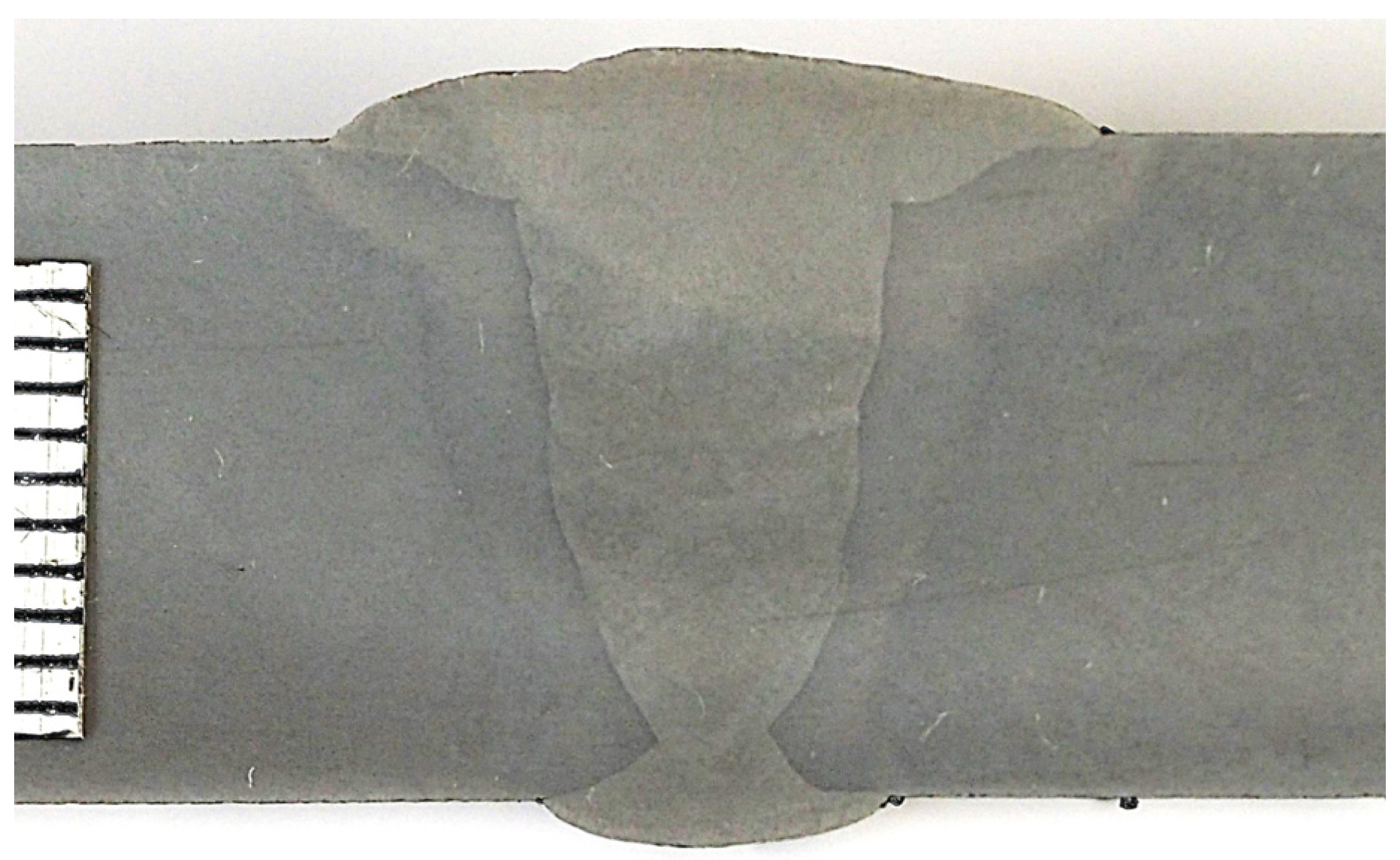
- The applied MAG welding procedure produced a sound circumferential joint without macrodefects, characterized by a stable weld geometry and uniform heat-affected zone width, confirming adequate control of welding parameters.
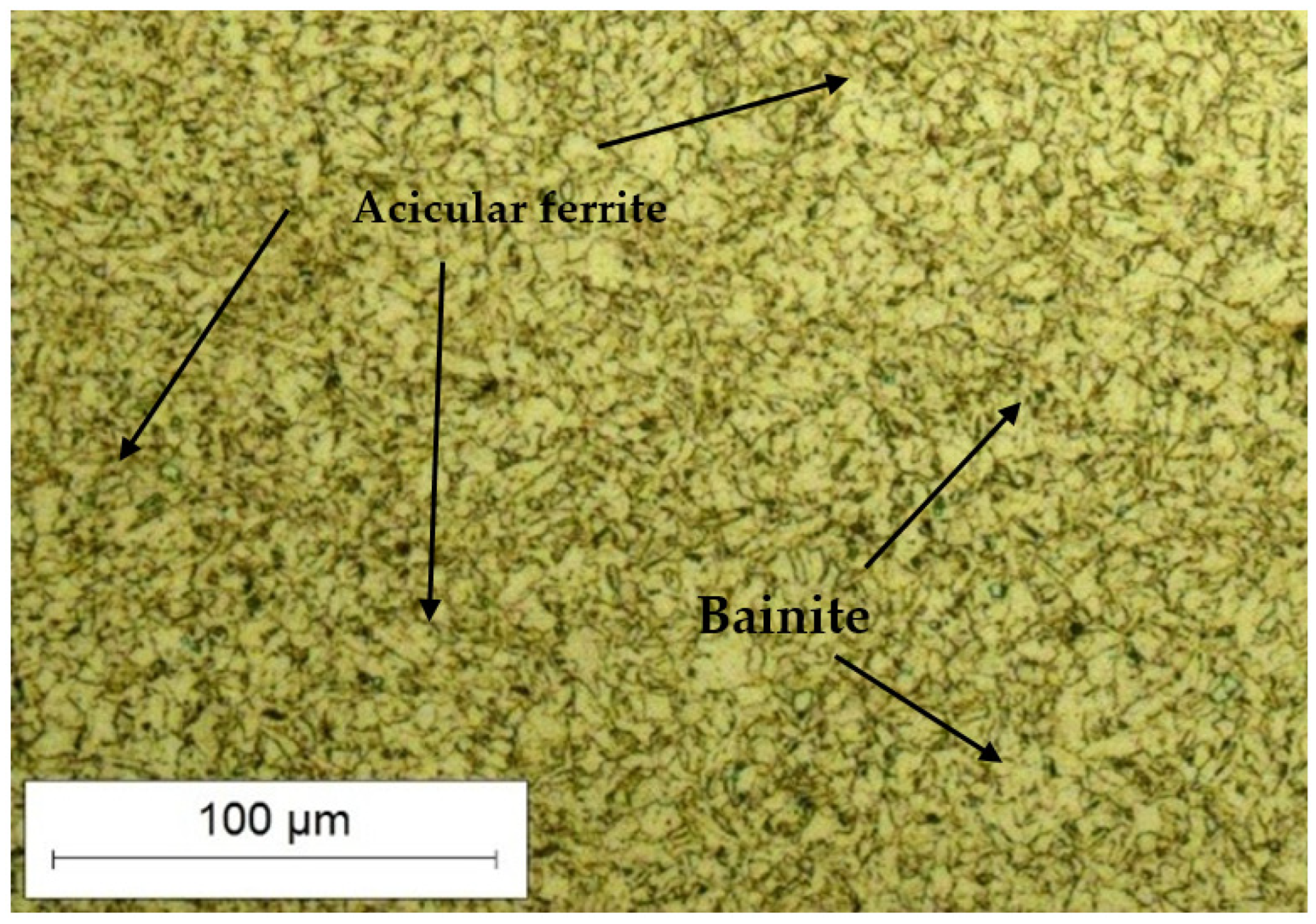
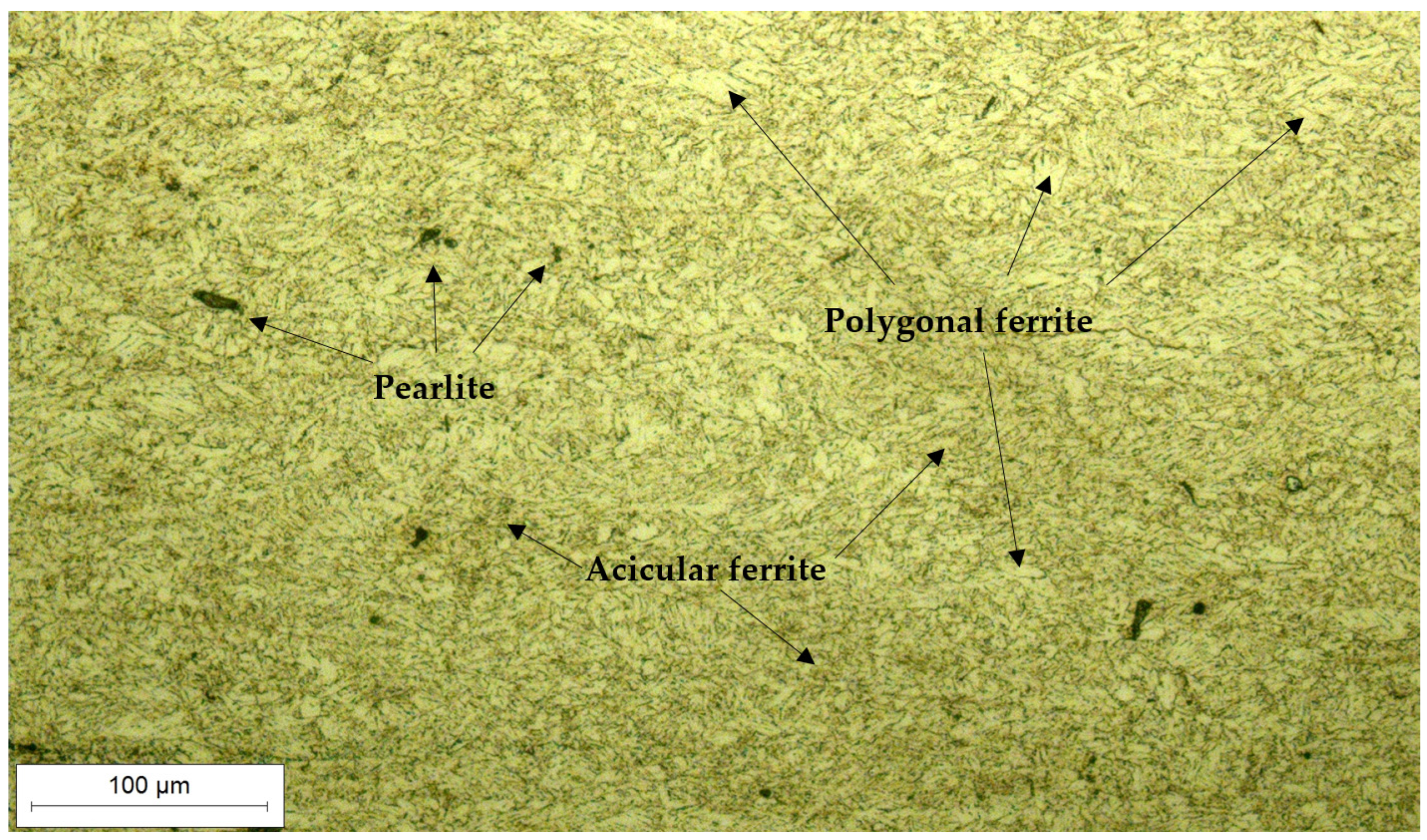
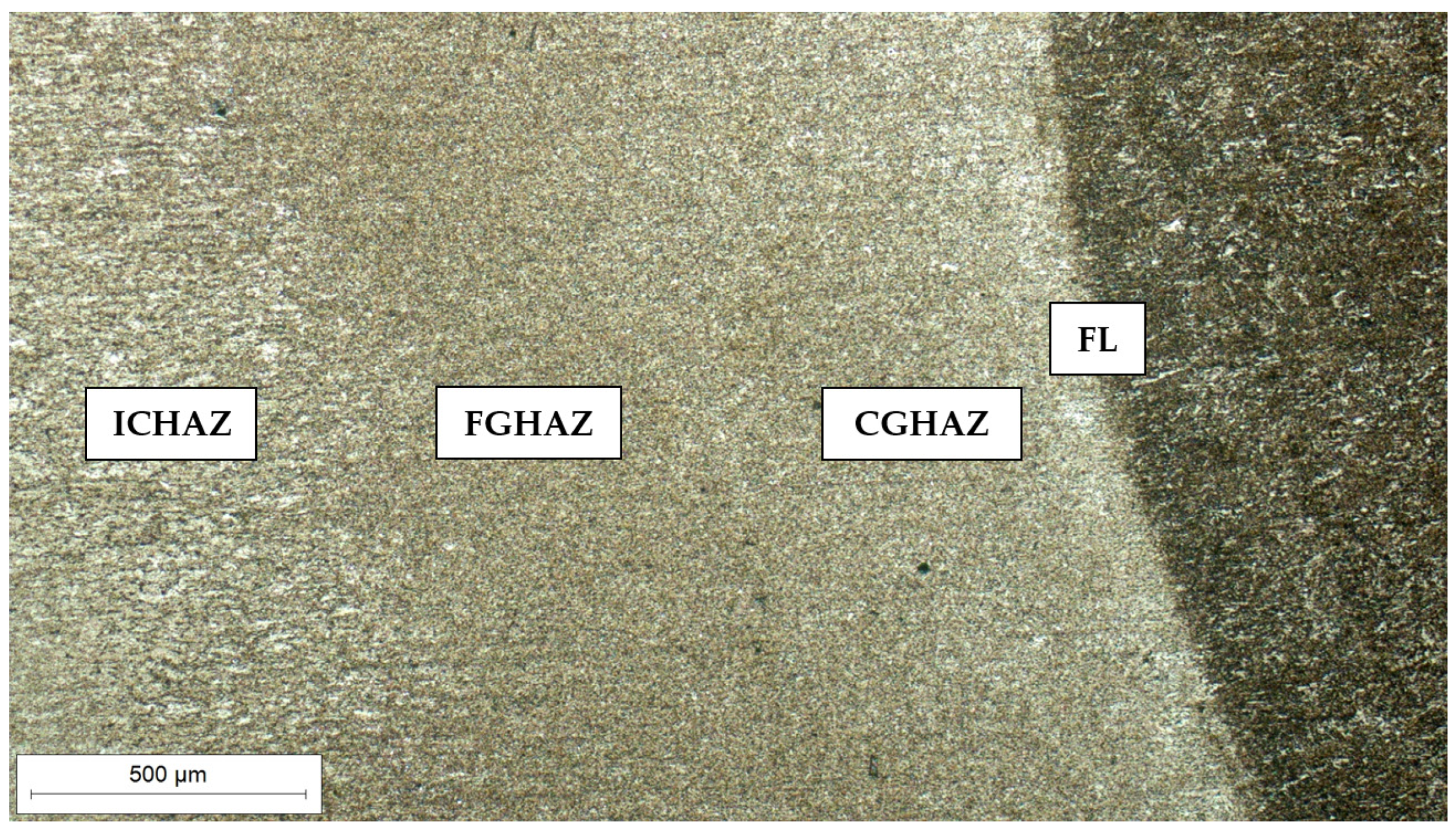
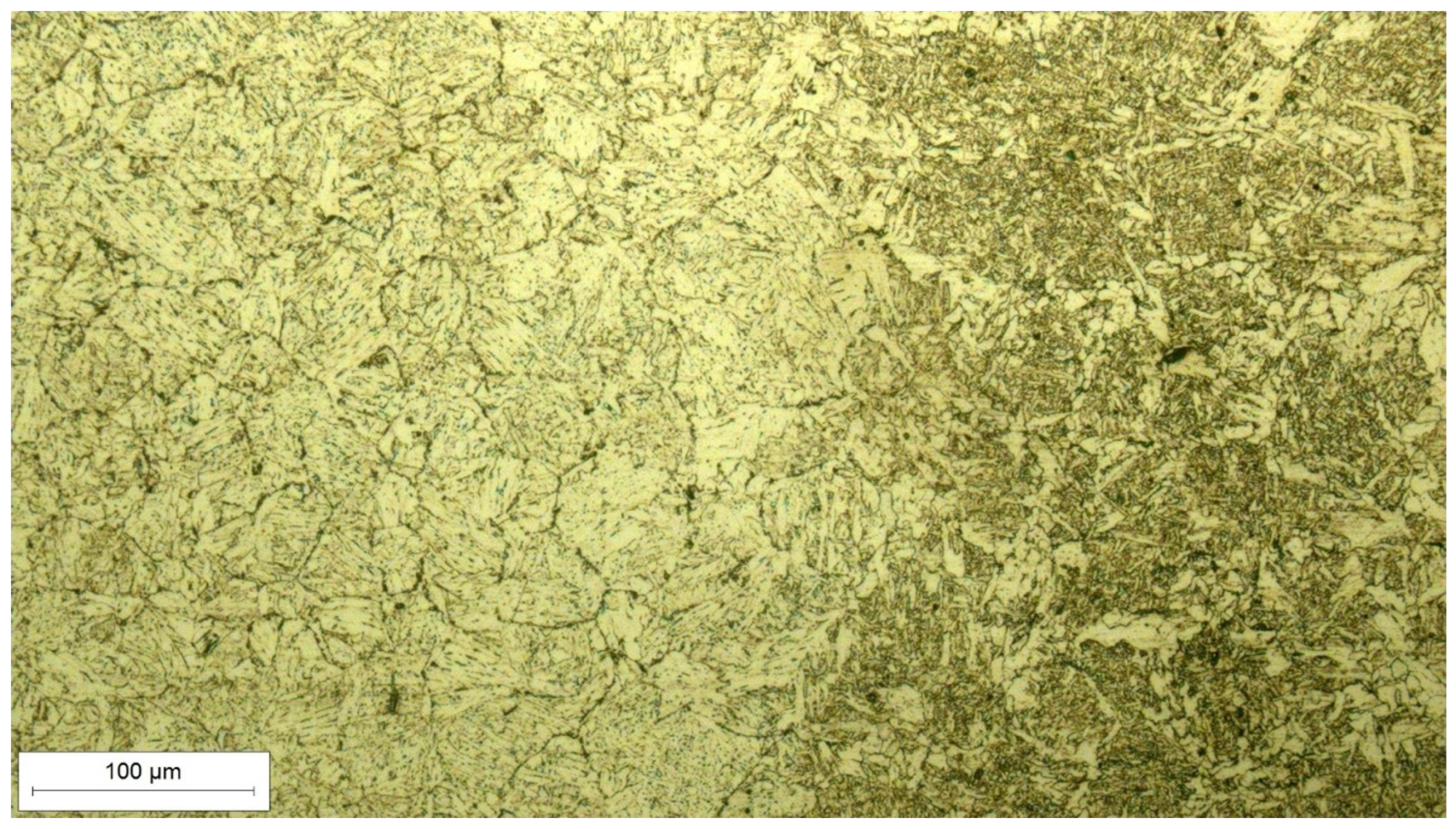
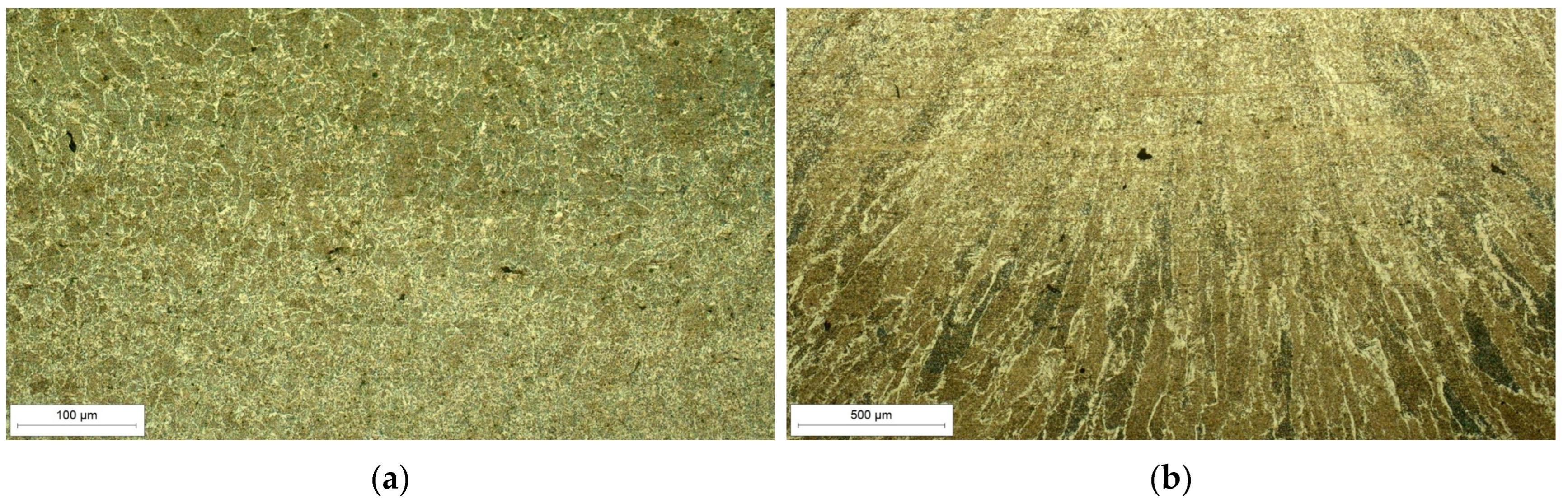
- Microstructural analysis revealed that the weld metal consists mainly of acicular ferrite with portions of polygonal ferrite and bainite, while the HAZ contains a ferritic–bainitic structure with moderate grain coarsening toward the fusion line.
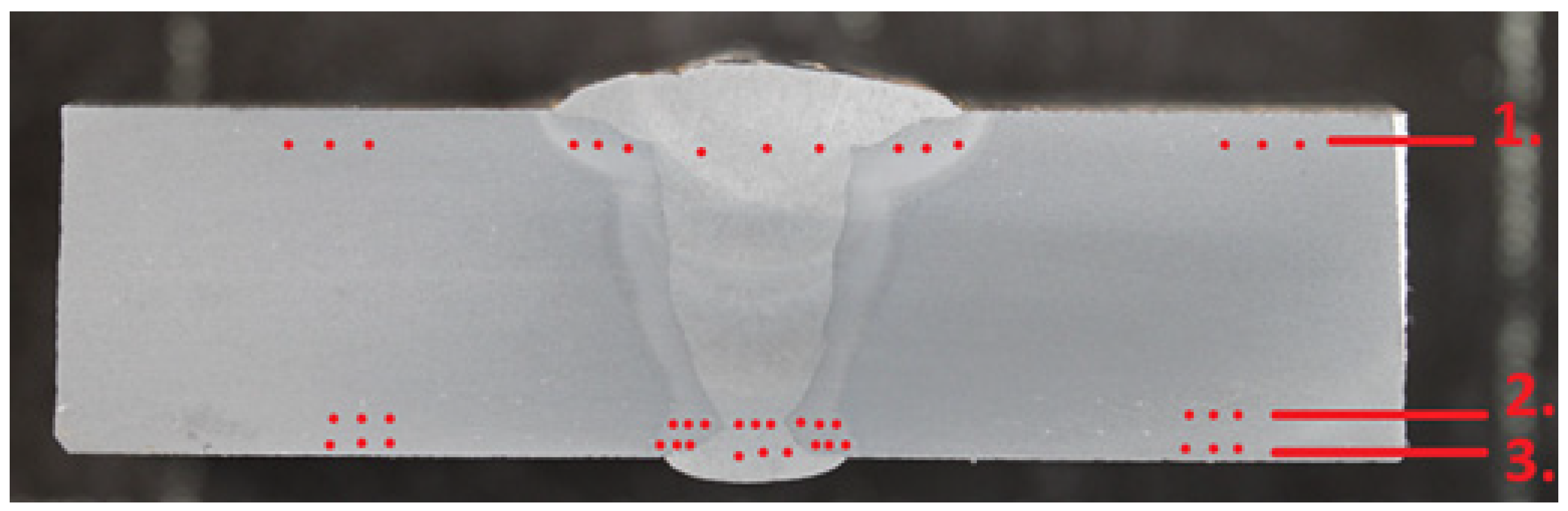
- Hardness measurements showed a uniform distribution across the joint and no significant hardness peaks in different zones of the weld. The consistent hardness profile indicates a homogeneous microstructure and stable heat input during welding, minimizing the risk of brittle microstructural constituents.
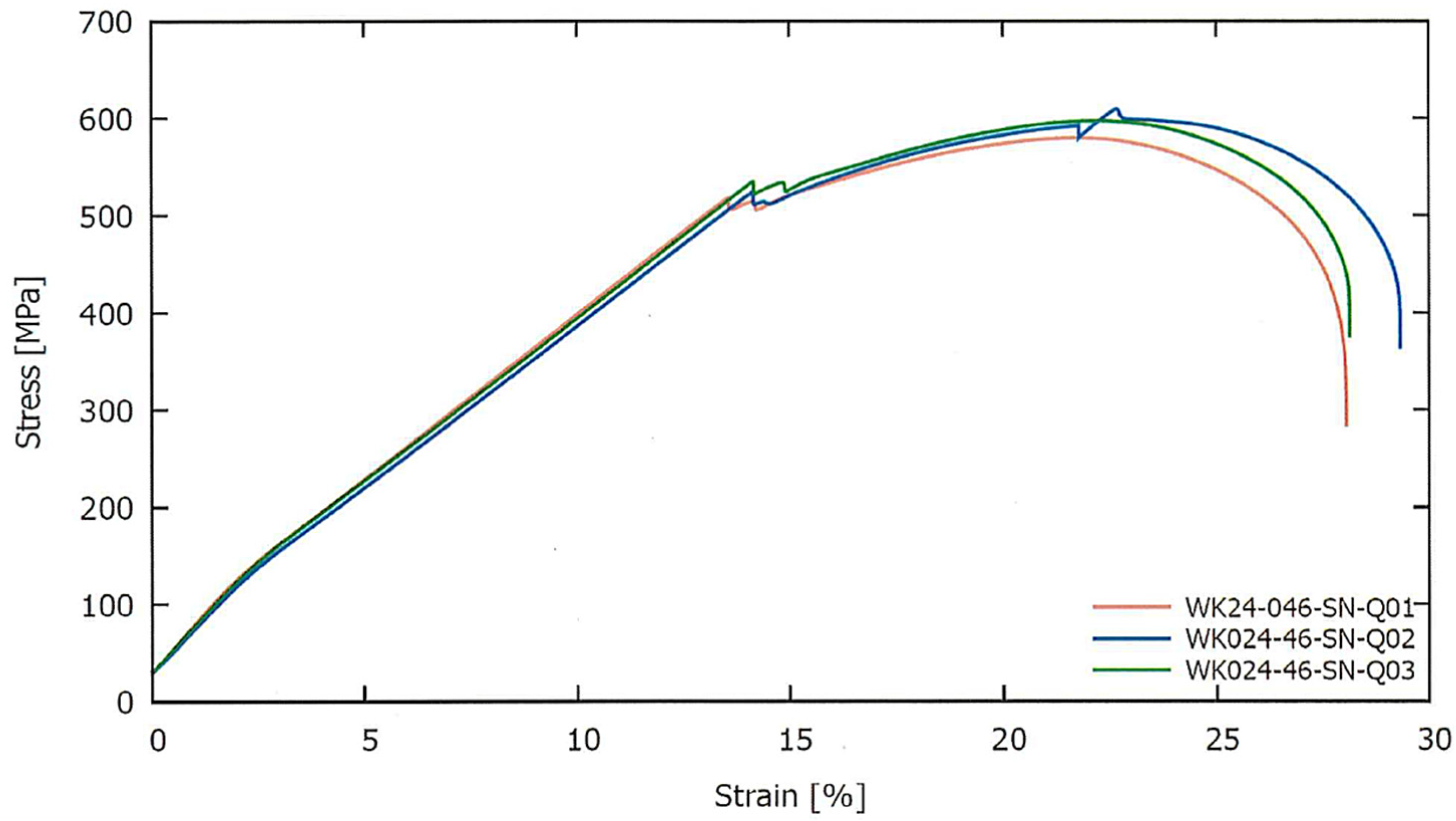
- Slow strain rate testing confirmed limited hydrogen sensitivity of the weld metal. Total elongation remained nearly unchanged in hydrogen compared to nitrogen, whereas the reduction of area decreased moderately, accompanied by isolated secondary cracking. These results suggest that hydrogen primarily influences local fracture processes rather than the overall deformation behavior of the joint.
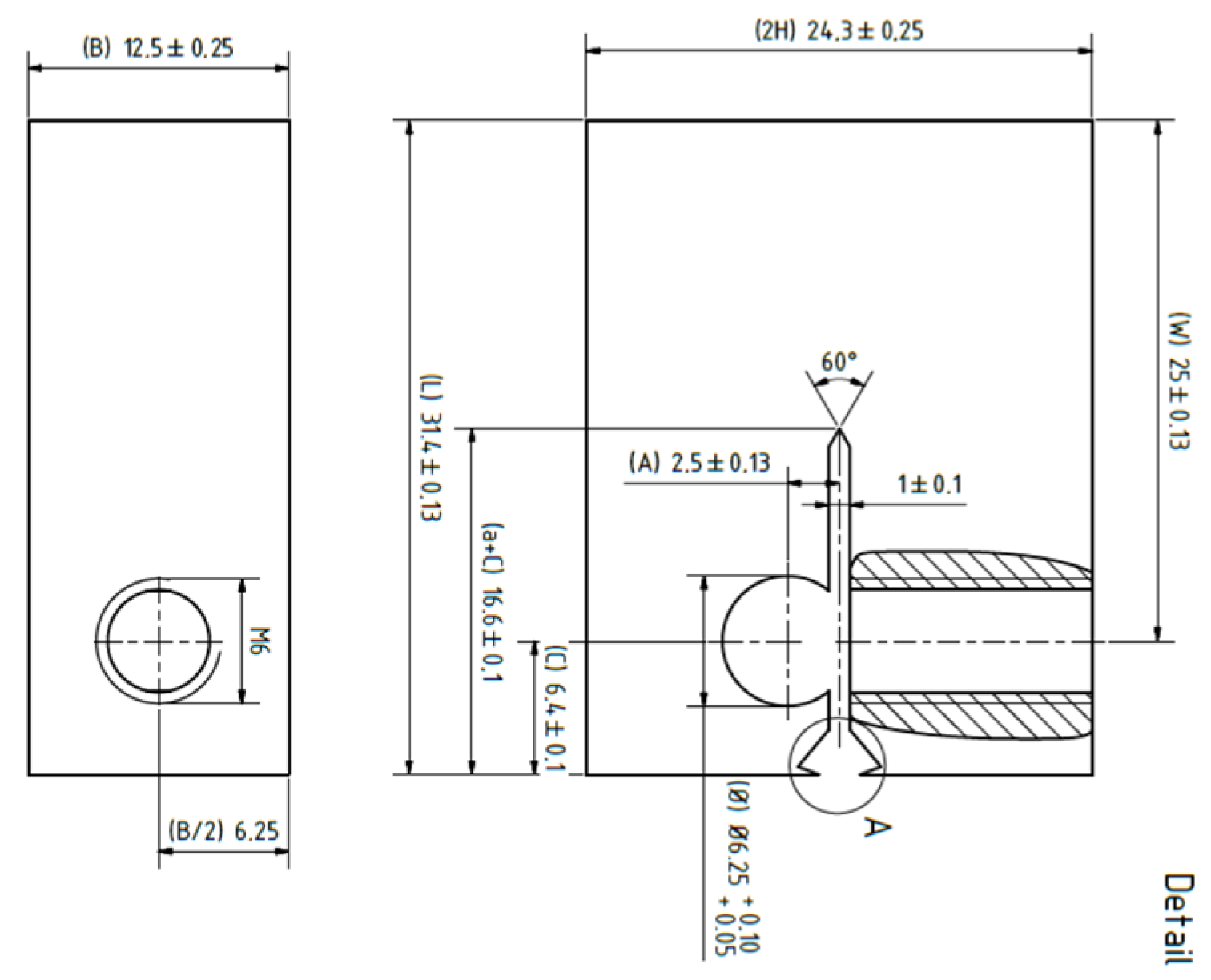
- Fracture toughness testing after exposure to 100 bar H2 demonstrated that both the WM and HAZ maintain threshold stress-intensity factors between 57 and 61 MPa√m, exceeding the 55 MPa√m acceptance limit for steels in hydrogen service. The similar KIH levels for both regions confirm that the applied welding parameters yielded a balanced microstructure with no localized embrittlement.
- Overall, the results show that automated MAG welding of API 5L X70 steel provides welded joints with sufficient structural integrity, uniform microstructure, and fracture resistance under high-pressure hydrogen exposure. These findings confirm the suitability of the applied welding procedure for hydrogen transport and storage components, while emphasizing the need for further studies under long-term cyclic and variable-pressure conditions to evaluate service durability.
Author Contributions
Funding
Data Availability Statement
Conflicts of Interest
Abbreviations
| API | American Petroleum Institute |
| ASME | American Society of Mechanical Engineers |
| ASTM | American Society for Testing and Materials |
| BM | Base Material |
| BPVC | Boiler and Pressure Vessel Code |
| CMOD | Crack-Mouth Opening Displacement |
| DN | Nominal Diameter |
| EN | European Norm |
| EpR | Plastic Elongation Ratio |
| HAZ | Heat-Affected Zone |
| FGHAZ | Fine-Grained Heat-Affected Zone |
| HE | Hydrogen Embrittlement |
| HIC | Hydrogen-Induced Cracking |
| HSLA | High-Strength Low-Alloy |
| H2 | Hydrogen |
| HV | Vickers Hardness |
| ICHAZ | Intercritical Heat-Affected Zone |
| ISO | International Organization for Standardization |
| KIH | Threshold Stress-Intensity Factor for Hydrogen-Assisted Cracking |
| MAG | Metal Active Gas |
| NACE | National Association of Corrosion Engineers |
| N2 | Nitrogen |
| RA | Reduction of Area |
| RAR | Reduction in Area Ratio |
| SCC | Stress Corrosion Cracking |
| SiC | Silicon Carbide |
| SOHIC | Stress-Oriented Hydrogen-Induced Cracking |
| SSRT | Slow Strain Rate Test |
| SWC | Stepwise Cracking |
| TTFR | Time to Failure Ratio |
| UTS | Ultimate Tensile Strength |
| WM | Weld Metal |
| X70 | API 5L Grade X70 Pipeline Steel |
References
- Li, W.; Cao, R.; Xu, L.; Qiao, L. The role of hydrogen in the corrosion and cracking of steels—A review. Corros. Commun. 2021, 4, 23–32. [Google Scholar] [CrossRef]
- Ban, J.; Yan, X.; Song, B.; Deng, S.; Wu, H.; Tang, Y.; Yin, W. Research Progress and Prospects on Hydrogen Damage in Welds of Hydrogen-Blended Natural Gas Pipelines. Processes 2023, 11, 3180. [Google Scholar] [CrossRef]
- Zhang, S.; Fan, E.; Wan, J.; Liu, J.; Huang, Y.; Li, X. Effect of Nb on the hydrogen-induced cracking of high-strength low-alloy steel. Corros. Sci. 2018, 139, 83–96. [Google Scholar] [CrossRef]
- Breen, A.J.; Stephenson, L.T.; Sun, B.; Li, Y.; Kasian, O.; Raabe, D.; Herbig, M.; Gault, B. Solute hydrogen and deuterium observed at the near atomic scale in high-strength steel. Acta Mater. 2020, 188, 108–120. [Google Scholar] [CrossRef]
- Alvaro, A.; Olden, V.; Macadre, A. Hydrogen embrittlement susceptibility of a weld simulated X70 heat affected zone under H2 pressure. Mater. Sci. Eng. A 2014, 597, 29–36. [Google Scholar] [CrossRef]
- Singh, R.; Singh, V.; Arora, A.; Mahajan, D.K. In-situ investigations of hydrogen influenced crack initiation and propagation under tensile and low cycle fatigue loadings in RPV steel. J. Nucl. Mater. 2020, 529, 151912. [Google Scholar] [CrossRef]
- Hoschke, J.; Chowdhury, M.F.W.; Venezuela, J.; Atrens, A. A review of hydrogen embrittlement in gas transmission pipeline steels. Corros. Rev. 2023, 41, 277–317. [Google Scholar] [CrossRef]
- Martin, M.L.; Sofronis, P. Hydrogen-induced cracking and blistering in steels: A review. J. Nat. Gas Sci. Eng. 2022, 101, 104547. [Google Scholar] [CrossRef]
- Li, X.; Ma, X.; Zhang, J.; Akiyama, E.; Wang, Y.; Song, X. Review of Hydrogen Embrittlement in Metals: Hydrogen Diffusion, Hydrogen Characterization, Hydrogen Embrittlement Mechanism and Prevention. Acta Metall. Sin. (Engl. Lett.) 2020, 33, 759–773. [Google Scholar] [CrossRef]
- Zhang, H.; Zhao, J.; Li, J.; Yu, B.; Wang, J.; Lyu, R.; Xi, Q. Research progress on corrosion and hydrogen embrittlement in hydrogen–natural gas pipeline transportation. Nat. Gas Ind. B 2023, 10, 570–582. [Google Scholar] [CrossRef]
- Nanninga, N.; Slifka, A.; Levy, Y.; White, C. A review of fatigue crack growth for pipeline steels exposed to hydrogen. J. Res. Natl. Inst. Stand. Technol. 2010, 115, 437–452. [Google Scholar] [CrossRef]
- Yap, J.; McLellan, B. A Historical Analysis of Hydrogen Economy Research, Development, and Expectations, 1972 to 2020. Environments 2023, 10, 11. [Google Scholar] [CrossRef]
- Rissman, J.; Bataille, C.; Masanet, E.; Aden, N.; Morrow, W.R.; Zhou, N.; Elliott, N.; Dell, R.; Heeren, N.; Huckestein, B.; et al. Technologies and policies to decarbonize global industry: Review and assessment of mitigation drivers through 2070. Appl. Energy 2020, 266, 114848. [Google Scholar] [CrossRef]
- Hren, R.; Vujanović, A.; Van Fan, Y.; Klemeš, J.J.; Krajnc, D.; Čuček, L. Hydrogen production, storage and transport for renewable energy and chemicals: An environmental footprint assessment. Renew. Sustain. Energy Rev. 2023, 173, 113113. [Google Scholar] [CrossRef]
- Zhang, C.; Shao, Y.; Shen, W.; Li, H.; Nan, Z.; Dong, M.; Bian, J.; Cao, X. Key Technologies of Pure Hydrogen and Hydrogen-Mixed Natural Gas Pipeline Transportation. ACS Omega 2023, 8, 19212–19222. [Google Scholar] [CrossRef]
- Sun, Y.; Cheng, Y.F. Hydrogen-induced degradation of high-strength steel pipeline welds: A critical review. Eng. Fail. Anal. 2022, 133, 105985. [Google Scholar] [CrossRef]
- Zhao, W.; Yang, M.; Zhang, T.; Deng, Q.; Jiang, W.; Jiang, W. Study on hydrogen enrichment in X80 steel spiral welded pipe. Corros. Sci. 2018, 133, 251–260. [Google Scholar] [CrossRef]
- Zhuo, J.; Zhang, C.; Zhang, S.; Chen, L.; Yang, H.; Liu, F.; Du, Y.; Lv, L.; Zheng, S. Influence of hydrogen environment on fatigue fracture morphology of X80 pipeline steel. J. Mater. Res. Technol. 2023, 22, 1039–1047. [Google Scholar] [CrossRef]
- Su, Y.; Li, J.; Yu, B.; Zhao, Y.; Han, D.; Sun, D. Modeling of Hydrogen Blending on the Leakage and Diffusion of Urban Buried Hydrogen-Enriched Natural Gas Pipeline. Comput. Model. Eng. Sci. 2023, 136, 1315–1337. [Google Scholar] [CrossRef]
- Chiocca, A.; Frendo, F.; Aiello, F.; Bertini, L. Influence of residual stresses on the fatigue life of welded joints. Numerical simulation and experimental tests. Int. J. Fatigue 2022, 162, 106901. [Google Scholar] [CrossRef]
- Poznyakov, V.D.; Markashova, L.I.; Shelyagin, V.D.; Zhdanov, S.L.; Bernats’kYi, A.V.; Berdnikova, O.M.; Sydorets’, V.M. Cold Cracking Resistance of Butt Joints in High-Strength Steels with Different Welding Techniques. Strength Mater. 2019, 51, 843–851. [Google Scholar] [CrossRef]
- Park, J.H.; Moon, H.S. Advanced Automatic Welding System for Offshore Pipeline System with Seam Tracking Function. Appl. Sci. 2020, 10, 324. [Google Scholar] [CrossRef]
- Tang, L.; Liu, W.; Gao, B.-C.; Sha, J.-T.; Bai, R.-X.; Che, B.-H.; Xu, K.; Qiao, G.-Y.; Xiao, F.-R. Study on Hydrogen Embrittlement Behavior in Heat-Affected Zone of X80 Welded Pipe. Metals 2025, 15, 414. [Google Scholar] [CrossRef]
- Moser, N.; Buck, Z.; Derimow, N.; Martin, M.L.; Lauria, D.; Lucon, E.; Bradley, P.; Connolly, M. Hydrogen embrittlement susceptibility and fracture toughness measurements of welded X65M pipeline steels. In Proceedings of the ASME 2024 Pressure Vessels & Piping Conference, Bellevue, WA, USA, 28 July–2 August 2024; American Society of Mechanical Engineers, Pressure Vessels and Piping Division (Publication) PVP: Anaheim, CA, USA, 2024; Volume 4. [Google Scholar] [CrossRef]
- ISO 4063:2023; Welding, Brazing, Soldering and Cutting—Nomenclature of Processes and Reference Numbers. ISO Switzerland: Geneva, Switzerland, 2023.
- EN ISO 14175:2008; Welding Consumables—Gases and Gas Mixtures for Fusion Welding and Allied Processes. ISO Switzerland: Geneva, Switzerland, 2008.
- EN ISO 14341:2020; Welding Consumables—Wire Electrodes and Weld Deposits for Gas Shielded Metal Arc Welding of Non Alloy and Fine Grain Steels—Classification. ISO Switzerland: Geneva, Switzerland, 2020.
- EN ISO 9015-1:2012; Destructive Tests on Welds in Metallic Materials—Hardness testing—Part 1: Hardness Test on Arc Welded Joints. HZN Croatia: Zagreb, Croatia, 2012.
- Qu, J.; Feng, M.; An, T.; Bi, Z.; Du, J.; Yang, F.; Zheng, S. Hydrogen-Assisted Crack Growth in the Heat-Affected Zone of X80 Steels during in Situ Hydrogen Charging. Materials 2019, 12, 2575. [Google Scholar] [CrossRef]
- Mohtadi-Bonab, M.A.; Ariza-Echeverri, E.A.; Masoumi, M.A. Comparative Investigation of the Effect of Microstructure and Crystallographic Data on Stress-Oriented Hydrogen Induced Cracking Susceptibility of API 5L X70 Pipeline Steel. Metals 2022, 12, 414. [Google Scholar] [CrossRef]
- Zhang, P.; Laleh, M.; Hughes, A.E.; Marceau, R.K.W.; Hilditch, T.; Tan, M.Y. Effect of microstructure on hydrogen embrittlement and hydrogen-induced cracking behaviour of a high-strength pipeline steel weldment. Corros. Sci. 2024, 227, 111764. [Google Scholar] [CrossRef]
- DIN EN ISO 7539-7:2018; Corrosion of metals and alloys—Stress corrosion testing―Part 7: Method for slow strain rate testing. DIN Germany: Berlin, Germany, 2018.
- NACE TM0198-2020; Slow Strain Rate Test Method for Screening Corrosion-Resistant Alloys for Stress Corrosion Cracking in Sour Oilfield Service. NACE USA: New York, NY, USA, 2020.
- Galván-Martínez, R.; Carmona, A.; Baltazar, M.; Contreras, A.; Orozco-Cruz, R. Stress Corrosion Cracking of X70 Pipeline Steel immersed in Synthetic Soil solution. Afinidad 2019, 76, 52–62. [Google Scholar]
- Chen, Y.S.; Huang, C.; Liu, P.-Y.; Yen, H.-W.; Niu, R.; Burr, P.; Moore, K.L.; Martínez-Pañeda, E.; Atrens, A.; Cairney, J.M. Hydrogen trapping and embrittlement in metals—A review. Int. J. Hydrogen Energy 2025, 136, 789–821. [Google Scholar] [CrossRef]
- Barrera, O.; Bombac, D.; Chen, Y.; Daff, T.D.; Galindo-Nava, E.; Gong, P.; Haley, D.; Horton, R.; Katzarov, I.; Kermode, J.R.; et al. Understanding and mitigating hydrogen embrittlement of steels: A review of experimental, modelling and design progress from atomistic to continuum. J. Mater. Sci. 2018, 53, 6251–6290. [Google Scholar] [CrossRef]
- Shuai, K.; Liu, H.; Li, M.; Yin, S.; Li, B.; Wang, B.; Liu, Q.; Jia, S. Hydrogen Embrittlement Sensitivity of X70 Welded Pipe Under a High-Pressure Pure Hydrogen Environment. Materials 2024, 17, 5818. [Google Scholar] [CrossRef] [PubMed]
- ASTM E1681-03:2020; Standard Test Method for Determining Threshold Stress Intensity Factor for Environment-Assisted Cracking of Metallic Materials. ASTM International: West Conshohocken, PA, USA, 2021.
- BPVC.VIII.3; BPVC Section VIII-Rules for Construction of Pressure Vessels Division 3-Alternative Rules for Construction of High Pressure Vessels. ASME USA: New York, NY, USA, 2025.
- Campari, A.; Ustolin, F.; Alvaro, A.; Paltrinieri, N. A review on hydrogen embrittlement and risk-based inspection of hydrogen technologies. Int. J. Hydrogen Energy 2023, 48, 35316–35346. [Google Scholar] [CrossRef]





| Element | C | Si | Mn | P | S | Ni | Cr | Cu | V |
| Weight (%) | 0.054 | 0.266 | 1.53 | 0.011 | 0.0052 | 0.05 | 0.013 | 0.010 | 0.014 |
| Element | Ca | Al | Mo | Ti | Nb | Sn | As | N | |
| Weight (%) | 0.0015 | 0.019 | 0.209 | 0.015 | 0.039 | 0.017 | 0.012 | 0.0085 |
| Steel Grade | Yield Strength Re0.5, MPa, min. | Ultimate Tensile Strength Rm, MPa, min. | Elongation Af, %, min. |
|---|---|---|---|
| X70 | 485 | 570 | Determined according to API 5L |
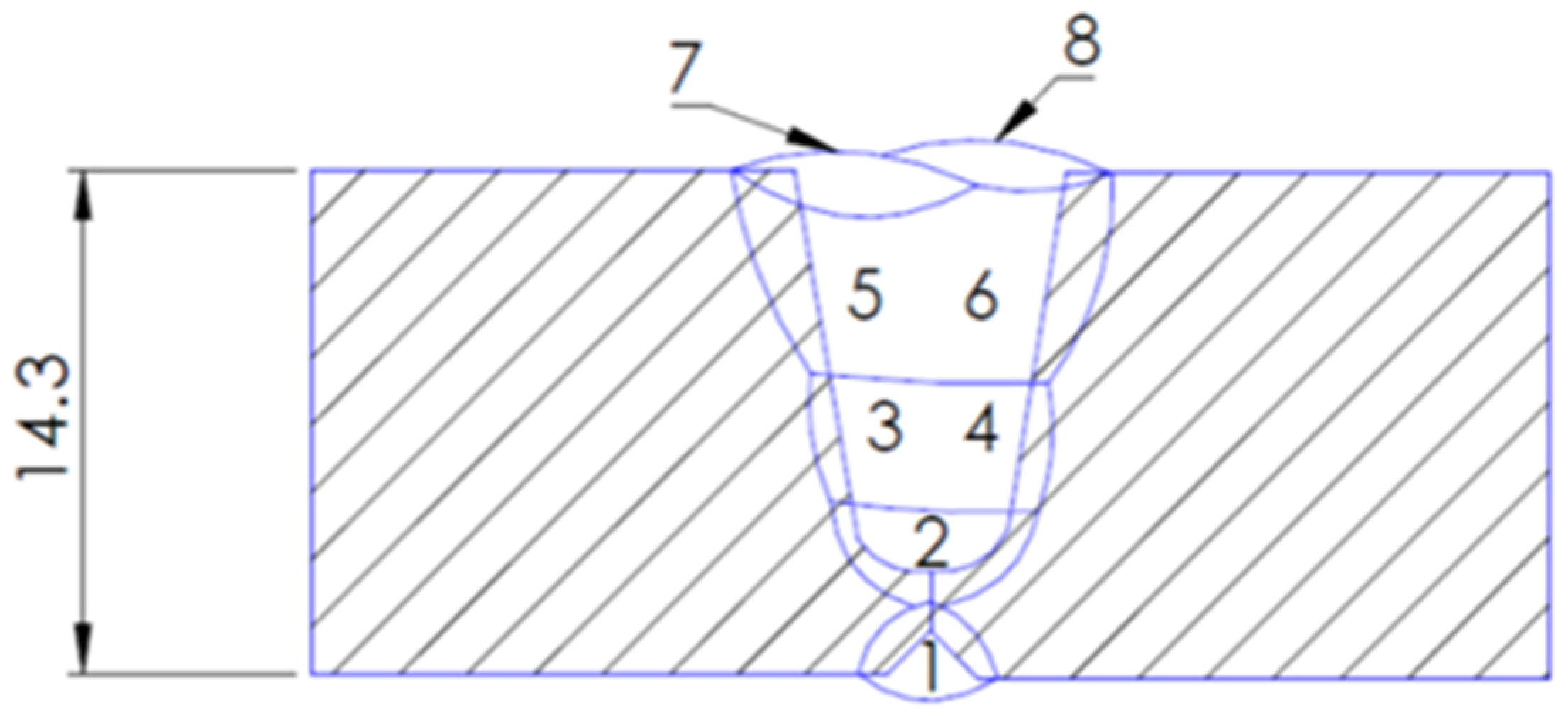
| Pass No. | Welding Current, A | Voltage, V | Welding Speed, cm/min | Heat Input, kJ/mm |
|---|---|---|---|---|
| 1 | 205 | 20.5 | 70.0 | 0.288 |
| 2 | 270 | 25.0 | 115.0 | 0.282 |
| 3–4 | 190 | 23.0 | 48.0 | 0.437 |
| 5–6 | 175 | 20.0 | 48.0 | 0.350 |
| 7–8 | 140 | 23.0 | 51.0 | 0.303 |
| Element | C | Si | Mn | P | S |
|---|---|---|---|---|---|
| Weight (%) | 0.069 | 0.95 | 1.65 | ≤0.02 | ≤0.015 |
| Series/Weld Zone | BM | HAZ | WM | HAZ | BM |
|---|---|---|---|---|---|
| 180 | 169 | 173 | 209 | 165 | |
| 1 | 170 | 175 | 171 | 155 | 162 |
| 171 | 228 | 175 | 164 | 163 | |
| 178 | 163 | 178 | 225 | 213 | |
| 2 | 170 | 160 | 218 | 206 | 221 |
| 162 | 167 | 228 | 212 | 220 | |
| 224 | 162 | 221 | 230 | 224 | |
| 3 | 209 | 178 | 222 | 221 | 230 |
| 209 | 228 | 227 | 215 | 232 |
| Specimen | Environment | RA, % | Etot, % | Ep, % | TTF, min | UTS, MPa | Secondary Cracks |
|---|---|---|---|---|---|---|---|
| 01 | N2 (100 bar) | 81.2 | 28.1 | 20.7 | 475 | 579 | No |
| 02 | H2 (100 bar) | 69.1 | 29.3 | 19.5 | 497 | 609 | Yes |
| 03 | H2 (100 bar) | 71.5 | 28.1 | 18.2 | 476 | 597 | Yes |
| Specimen | Environment | RAR, % | EtotR, % | EpR, % | TTFR, % | UTSR, % |
|---|---|---|---|---|---|---|
| 02 | H2 (100 bar) | 85.1 | 104.3 | 94.2 | 104.6 | 105.2 |
| 03 | H2 (100 bar) | 88.1 | 100.0 | 87.9 | 100.2 | 103.1 |
| Sample Location | Specimen ID | CMODi | Crack Length a | KIH | KIAPP | KIH, Min | KIH, Avg |
|---|---|---|---|---|---|---|---|
| mm | mm | MPa√m | MPa√m | MPa√m | MPa√m | ||
| WM | WM1 | 0.580 | 12.912 | 59 | 117 | 58 | 58 |
| WM | WM2 | 0.564 | 12.598 | 58 | 116 | ||
| WM | WM3 | 0.559 | 12.478 | 58 | 116 | ||
| HAZ | HAZ1 | 0.553 | 12.038 | 59 | 118 | 57 | 59 |
| HAZ | HAZ2 | 0.557 | 12.581 | 57 | 115 | ||
| HAZ | HAZ3 | 0.561 | 11.683 | 61 | 123 |
Disclaimer/Publisher’s Note: The statements, opinions and data contained in all publications are solely those of the individual author(s) and contributor(s) and not of MDPI and/or the editor(s). MDPI and/or the editor(s) disclaim responsibility for any injury to people or property resulting from any ideas, methods, instructions or products referred to in the content. |
© 2026 by the authors. Licensee MDPI, Basel, Switzerland. This article is an open access article distributed under the terms and conditions of the Creative Commons Attribution (CC BY) license.
Share and Cite
Ćorić, D.; Jurgec, K.; Garašić, I.; Remenar, M. Effect of Automated Multi-Pass MAG Welding Parameters on the Fracture Toughness and Hydrogen Embrittlement Susceptibility of API 5L X70 Pipeline Steel. Processes 2026, 14, 1069. https://doi.org/10.3390/pr14071069
Ćorić D, Jurgec K, Garašić I, Remenar M. Effect of Automated Multi-Pass MAG Welding Parameters on the Fracture Toughness and Hydrogen Embrittlement Susceptibility of API 5L X70 Pipeline Steel. Processes. 2026; 14(7):1069. https://doi.org/10.3390/pr14071069
Chicago/Turabian StyleĆorić, Danko, Kristijan Jurgec, Ivica Garašić, and Maja Remenar. 2026. "Effect of Automated Multi-Pass MAG Welding Parameters on the Fracture Toughness and Hydrogen Embrittlement Susceptibility of API 5L X70 Pipeline Steel" Processes 14, no. 7: 1069. https://doi.org/10.3390/pr14071069
APA StyleĆorić, D., Jurgec, K., Garašić, I., & Remenar, M. (2026). Effect of Automated Multi-Pass MAG Welding Parameters on the Fracture Toughness and Hydrogen Embrittlement Susceptibility of API 5L X70 Pipeline Steel. Processes, 14(7), 1069. https://doi.org/10.3390/pr14071069