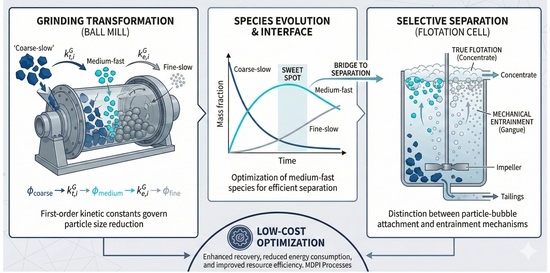
1. Introduction
Flotation and grinding operations are inherently complex to study owing to their multiphase, multicomponent nature. Modeling these systems is essential for understanding their behavior and identifying necessary modifications to improve the process. For example, these models can be used to optimize and design unit operations or concentration plants [
1]. Reliable models are crucial for designing new reagents and equipment and for optimizing operational conditions and achieving a sustainable separation process [
2,
3], thereby reducing reliance on expert judgment and lowering the high costs associated with scaling from laboratory to full-scale production.
There is a wealth of information on the modeling of grinding and flotation operations, each treated separately using empirical and theoretical models that capture their behavior across different mineral types. The modeling of grinding and flotation has evolved through distinct mathematical paradigms, typically treated as independent operations. In comminution, foundational research established rate-process models to describe breakage kinetics in semi-autogenous grinding mills [
4]. Recent advances have transitioned toward dynamic non-linear frameworks suitable for real-time process control [
5]. Furthermore, population balance models (PBM) have been refined to simulate specialized applications, such as the ultrafine grinding of alumina in planetary ball mills [
6]. To address industrial scale-up, pseudo-dynamic simulations now combine PBM with Monte Carlo methods to predict performance in large-scale ball mill circuits [
7]. Parallelly, flotation modeling has advanced from simple first-order approximations to sophisticated phenomenological descriptions. Modern approaches for rougher circuits incorporate residence time distributions and kinetic constants to simulate industrial-scale performance [
8]. Flotation kinetic models aim to estimate the flotation rate constant, whose determination is challenging due to the simultaneous influence of hydrodynamic conditions and the particle size distribution [
9]. Specialized models for units like flash flotation cells now explicitly account for both true flotation and entrainment mechanisms to improve metallurgical accuracy [
10]. Most recently, the field has moved toward hybrid systems, utilizing physics-informed machine learning to enhance grade prediction in froth flotation by combining empirical data with fundamental physical constraints [
11]. Despite these advances, a gap remains for a simplified, integrated framework that synchronizes both stages without the prohibitive costs of detailed mineralogical characterization.
However, these grinding and flotation models do not align, as they operate on different principles. Grinding models are generally based on particle size without distinguishing between hydrophobic and hydrophilic species. On the other hand, flotation models focus on the hydrophobic and hydrophilic properties of particles without explicitly considering particle size. Only a few models, such as those by Sosa-Blanco et al. and Arellano-Piña et al., integrate these two processes [
12,
13]. These combined models account for particle size and mineral liberation, thereby increasing complexity and cost due to the need for detailed characterization and extended experimental work [
14].
While advanced models incorporating mineral liberation or complex population balances provide valuable theoretical insight, their industrial implementation is often constrained by the high costs and time associated with specialized mineralogical characterization. As a result, recent efforts have explored simplified representations of flotation behavior, such as the use of fast- and slow-floating fractions [
15], to bridge the gap between theoretical rigor and operational applicability. However, these approaches did not incorporate a formalized mathematical description of grinding nor account for the presence of non-floating gangue material within the comminution stage. The present study addresses these limitations by proposing a comprehensive kinetic framework that functionally integrates grinding and flotation through flotation kinetic fractions as the fundamental species of the system. By categorizing particles within the mill according to the same fractions governing flotation behavior, the model captures the kinetic evolution of both recoverable and entrained material, enabling a deeper understanding of how particle populations evolve under different grinding conditions while maintaining a cost-effective structure suitable for practical plant optimization.
The objective of this research is to introduce an integrated, high-fidelity, and low-cost modeling strategy for the grinding–flotation interface. The key innovations presented here include modeling of gangue based on mechanical entrainment mechanisms; the development of a formalized set of first-order kinetic grinding equations that track the mass fraction transformation for both true flotation and entrainment species; the introduction of a systematic methodology for experimental and modeling parameter adjustment; a clear operational sequence for industrial application; and an enhanced validation through two distinct case studies, including the analysis of an ore with significant mechanical drag (ore B). Ultimately, this strategy promotes the development of integrated approaches to improve overall recovery rates while avoiding the overgrinding of valuable minerals.
The remainder of this paper is organized as follows:
Section 2 describes the experimental and mathematical methodology, including the development of the grinding and flotation models, the data-fitting strategy, and the two mineral case studies.
Section 3 presents the results obtained from the application of the model.
Section 4 provides a discussion of the findings and potential industrial applications. Finally,
Section 5 summarizes the main conclusions of the work.
2. Materials and Methods
This section describes a comprehensive strategy for modeling grinding kinetics within a flotation system by treating mill particles as functional flotation by treating particles in the mill as fast- and slow-flotation fractions, similar to the approach used in modeling flotation stages.
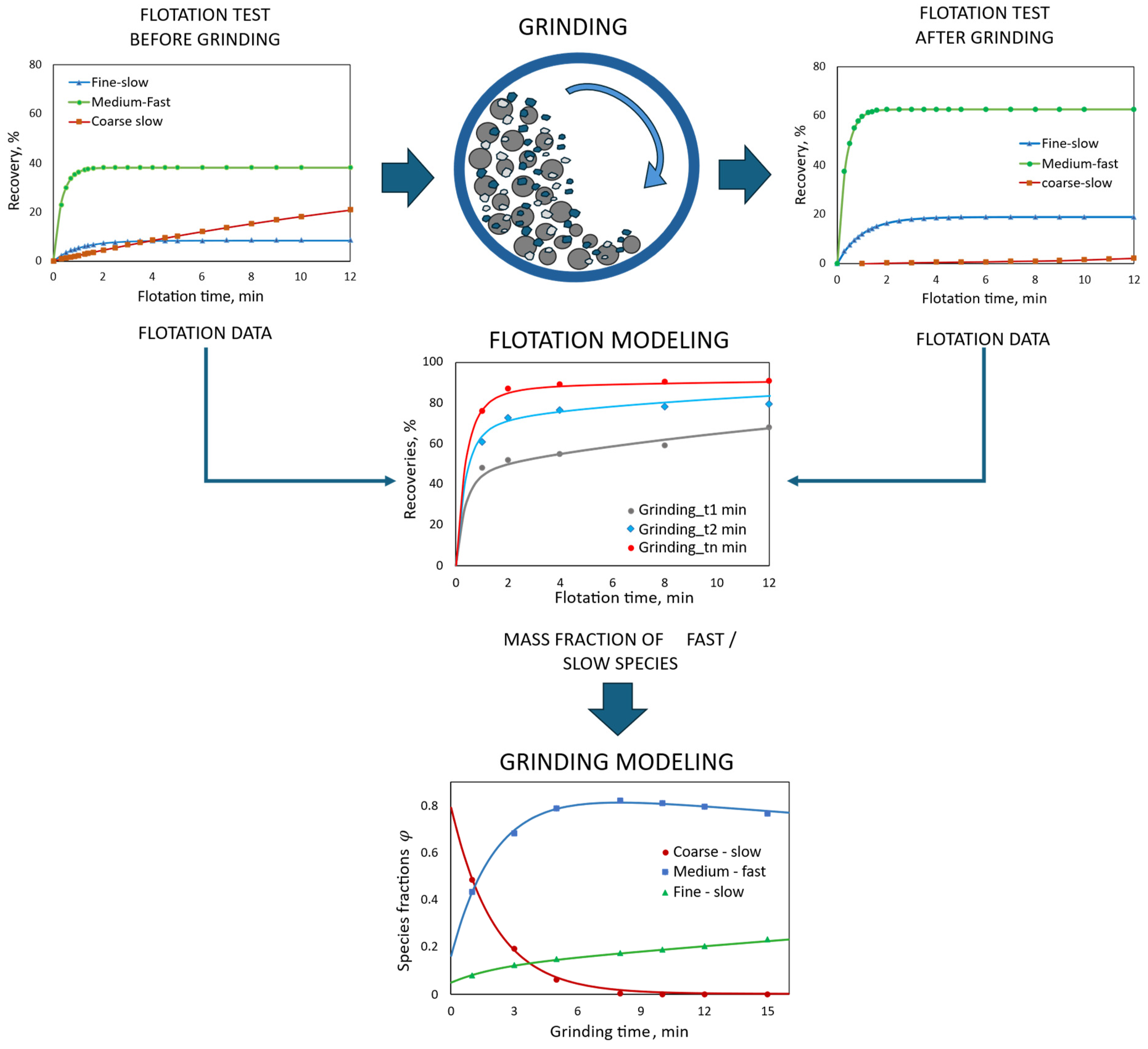
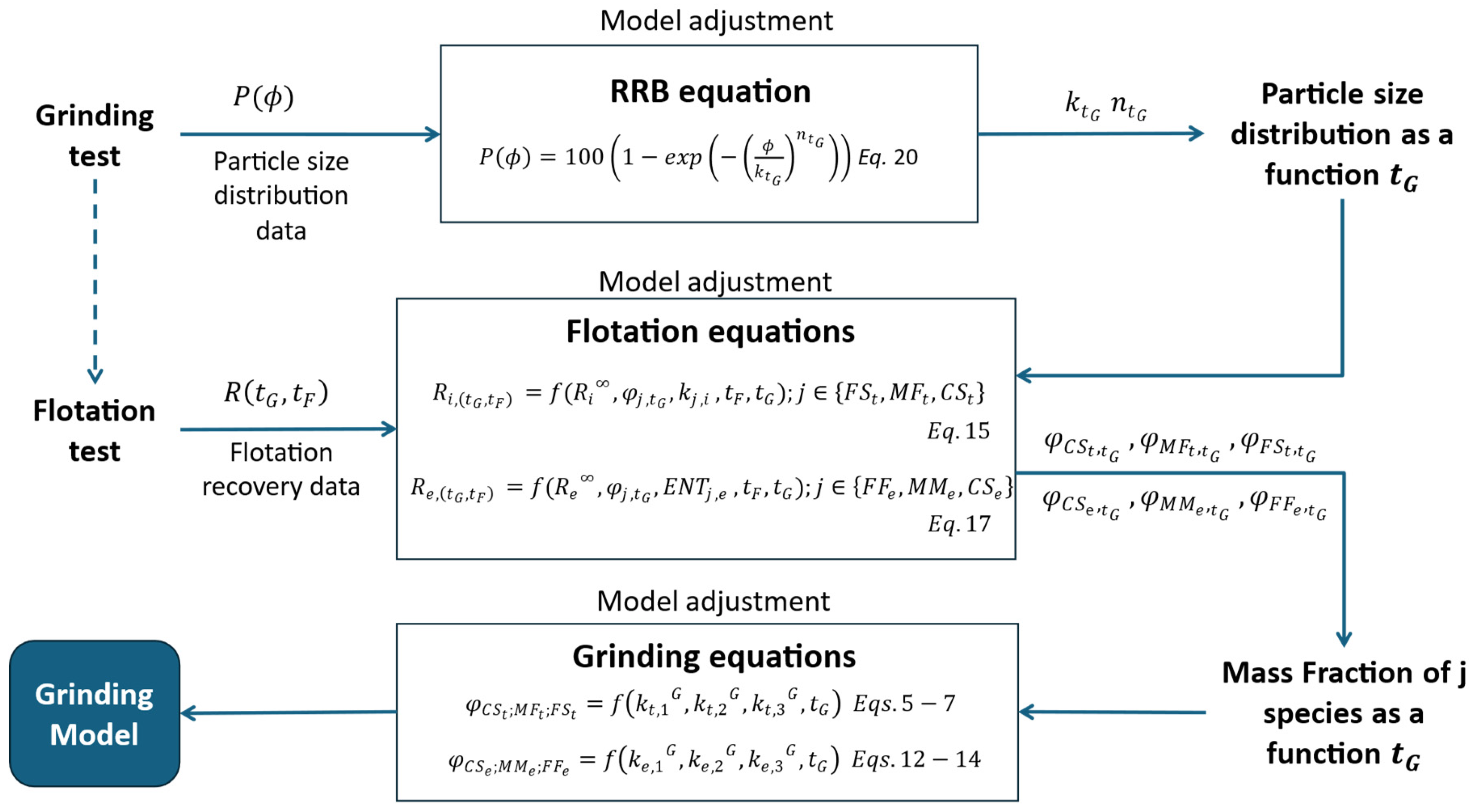
Figure 1 illustrates the strategy employed in this research. Flotation tests are conducted both before and after the grinding process to identify the fast- and slow-flotation fractions. By varying the grinding time, these fractions can be differentiated by the extent of grinding, enabling adjustments to the grinding model. From a grinding perspective, particles are classified as those that undergo true flotation and those that are entrained. The particles that exhibit true flotation are further categorized into three types: fine-slow (
), medium-fast (
), and coarse-slow (
) flotation. These classifications refer to the distinct rates at which different particles separate and rise to the surface during the process. It is well known that the different rates are primarily due to variations in particle size and mineral release. The
fraction consists of liberated particles of the floating mineral, meaning the mineral is free from other materials. These particles, due to their size and surface properties, readily attach to air bubbles and rise to the surface quickly. The
fraction consists of locked particles (also known as middlings), which are particles containing both the floating mineral and other non-floating materials. Their flotation is slower because they must overcome the resistance of the attached gangue (waste material). This fraction represents a portion of the floating mineral that may require further processing or grinding to liberate the mineral and improve recovery. The
fraction includes very fine particles that are difficult to attach to bubbles. Their flotation is slower due to the low probability of collisions with bubbles. It is worth noting that the distinction between
,
, and
depends on reagent dosages, pH, hydrodynamics, and other operational parameters.
Particles with entrainment flotation are categorized into fine-fast (), medium–medium (), and coarse-slow () flotation or entrainment types. Entrainment is a mechanical transfer where particles, regardless of their hydrophobicity, are carried along with the water as it moves into the froth. However, here, entraining refers only to hydrophilic gangue that is not attached to air bubbles but is carried into the froth phase and ultimately to the concentrate, alongside the floating mineral particles. It is well known that this happens because these fine particles are suspended in the water between the bubbles and are carried upwards as the bubbles rise through the pulp and into the froth. Here, particle size is considered the main variable influencing entrainment. More fine particles are more prone to entrainment. In the modeling, water recovery is also considered, as higher recovery leads to a wetter froth, increasing particle entrainment. However, other variables can also influence entrainment, such as froth depth, froth stability, gas flow rate, impeller speed, and reagent dosages.
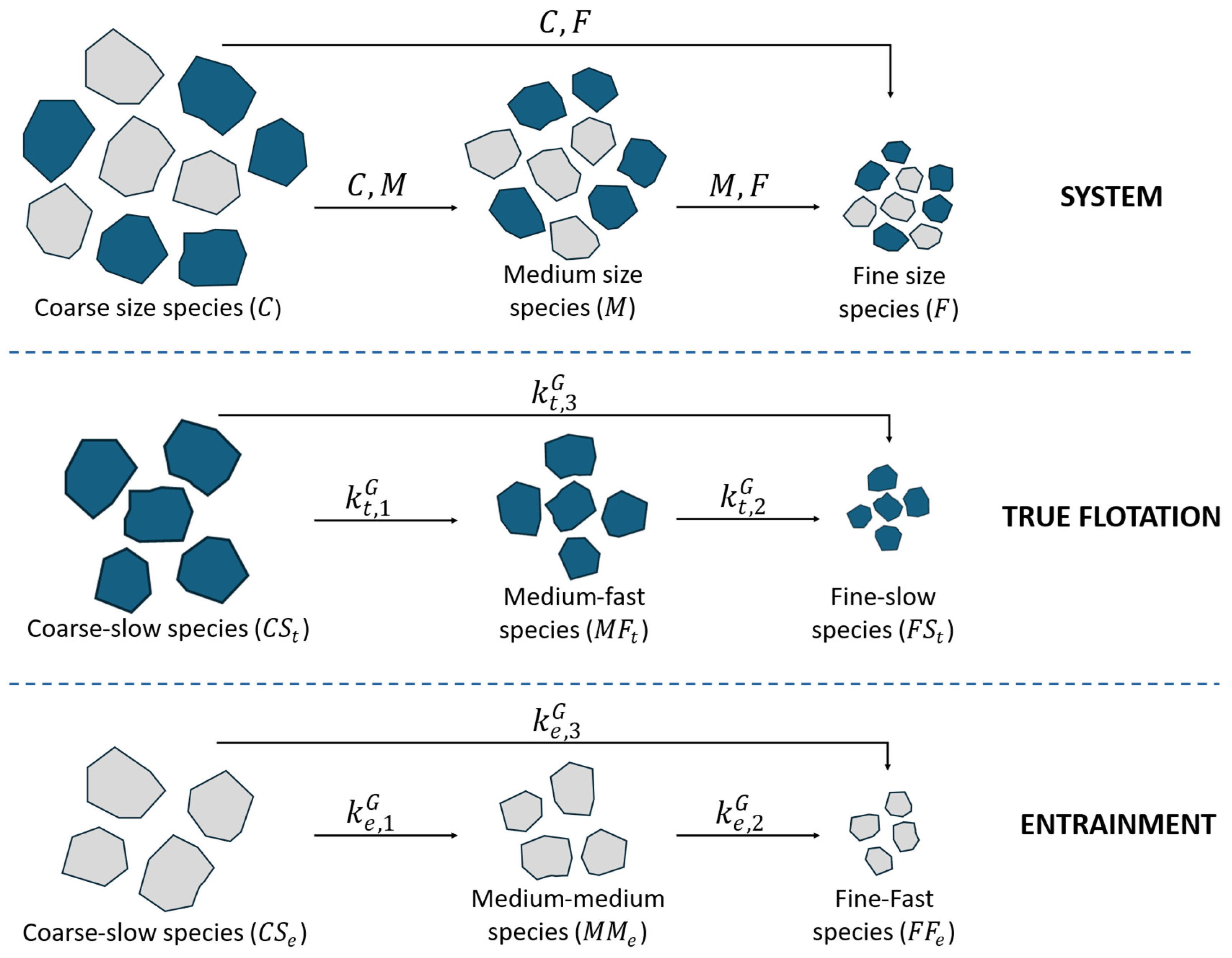
Figure 2 is a representation of the particle transformations occurring within the grinding system. Various particle species coexist, exhibiting distinct size-reduction kinetics depending on whether they are classified under true flotation or entrainment mechanisms. In this system, various particles coexist, as shown in the diagram at the top of the figure, but they exhibit different size-reduction kinetics depending on whether they are classified as true flotation or entrainment flotation. For particles involved in true flotation, the size-reduction process transitions from
to
and
, and from
to
. In contrast, particles associated with entrainment flotation move from
to
and
, and from
to
. It is essential to note that particles undergoing true flotation, if multiple types are present, can exhibit different flotation kinetics. However, they will share the same grinding kinetics.
The methodology is presented in five subsections, including grinding and flotation models, the model-fitting strategy, and relevant case studies for exemplification and validation. First, we develop the mathematical model for grinding. This model relies on the fast and slow flotation fractions derived from the flotation kinetic model, which necessitates performing flotation kinetics at various grinding times. Next, we introduce the flotation model, which accounts for the true flotation of floatable particles and the entrainment of hydrophilic particles (gangue). The third subsection describes the data fitting strategy. This includes fitting a particle size distribution model alongside the flotation and grinding kinetic models. Finally, the last two subsections present two case studies. The first case involves true flotation of two mineralogical species, while the second case examines a scenario that includes both true flotation and entrainment.
2.1. Development of the Mathematical Grinding Model
The grinding model uses the conversion or breakup (fracture rate) of the species used in the flotation model. This means that the model considers the mass fractions,
, of species
, with
. To develop the equations, the conversions described in
Figure 2 are considered, which represent the grinding process based on the generation of species according to their fractionation or breakup rate.
According to
Figure 2, it is assumed that two types of species behavior can occur in the system: true flotation species (
,
,
) and entrained species in the flotation product (
,
,
). Furthermore, the conversion of species mass fractions (fracture velocity) is assumed to follow a first-order model [
16].
where
is the mass fraction of species
,
is the milling time, and
is the specific breakage rate constant.
The selection of the first-order kinetic model proposed by Austin (1971) [
16] is justified by its proven effectiveness and robustness in characterizing breakage kinetics within industrial grinding systems. While more recent modeling approaches, such as complex population balance models or discrete element methods, offer detailed theoretical insights, they often require extensive parameterization and sophisticated characterization data that can be difficult to obtain in routine industrial settings. In contrast, Austin’s foundational rate-process approach provides a high-fidelity mathematical description of size reduction that aligns perfectly with the species-based integration proposed in this work. This choice supports the development of a practical, low-cost tool for processing plant laboratories, maintaining acceptable computational efficiency while accurately capturing the metallurgical performance transformations observed in the experimental data.
For species with true flotation, following
Figure 2, we have the following:
where
and
are the breakage rate constants of the grinding process with which the mass fractions of the species change from
to
, from
to
, and from
to
, respectively.
Solving Equations (2)–(4), the following expressions represent the
as a function of grinding time
(Equations (5)–(7)).
where
are the initial mass fractions of species
with
. The values of
,
,
, and
are constants that are calculated with Equations (8)–(11).
The grinding modeling equations for the entrainment mass fractions as a function of
follow the same procedure described for the species comprising true flotation. Starting from the first-order kinetic model (Equation (1)), differential equations like those described in Equations (2)–(4) are obtained, and solving these equations, the following expressions represent the
as a function of grinding time
:
where
are the initial mass fractions of species
with
; and
and
are the breakage rate constants with which the species fractions change from
to
, from
to
and from
to
, respectively. The values of
are equivalent to those presented in Equations (8)–(11), but considering the initial mass fractions
and the grinding rate constants
and
specific parameters for the species that make up the entrainment.
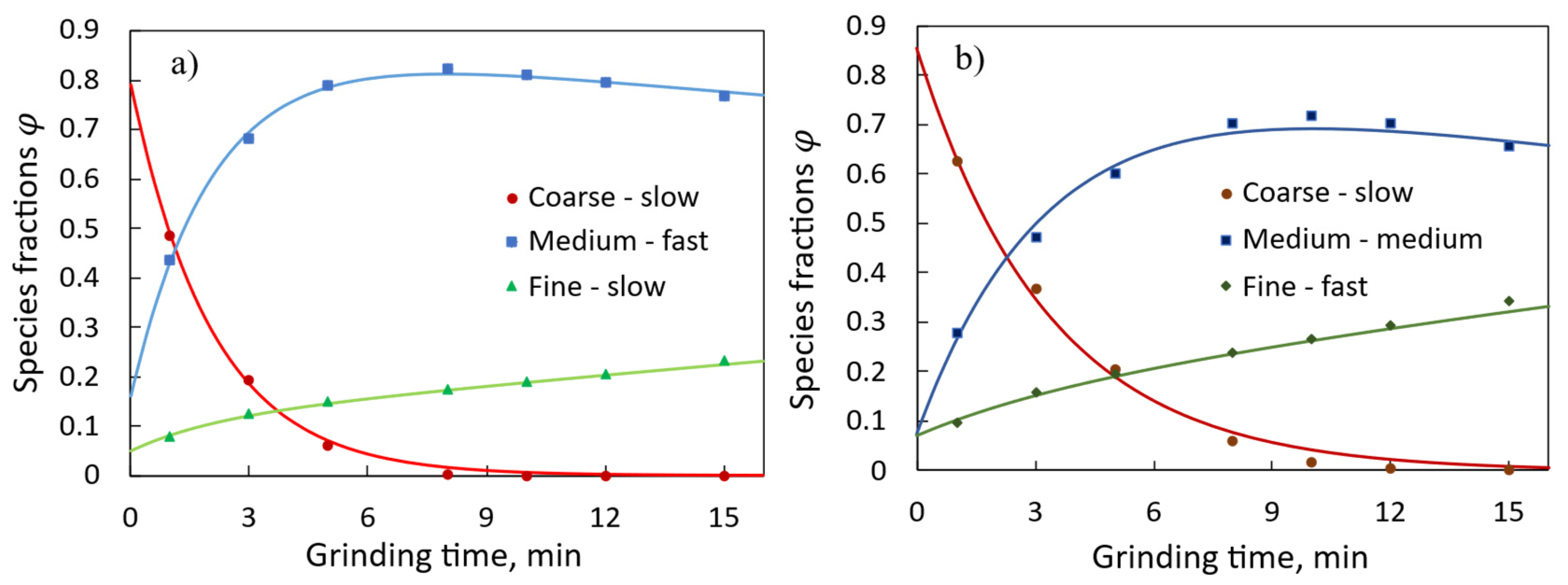
To determine the breakage kinetic constants, the model is fitted using the mass fractions of species , . These fractions are determined from flotation tests and the flotation kinetic model, as detailed in the next section.
2.2. Development of the Flotation Model
The recovery of a mineral (or metal) by true flotation is the sum of the recoveries of the species that float slowly due to a very fine size or a size that is too coarse (
,
), and the species that float quickly because they have the appropriate size for flotation (
), i.e.,
where
is the flotation recovery of mineral or metal
(e.g.,
CuS, CuFeS
2, FeS
2, Cu, Fe) as a function of flotation time (
) and grinding time (
),
is the infinite recovery of mineral or metal
. The values
,
are the mass fractions of the species
,
, and
as a function of
. On the other hand,
are the flotation kinetic constants that depend on the type of mineral or metal
. These equations follow the model developed by Mathe et al. [
15].
Similarly, the entrainment model in the flotation of a mineral or gangue is the sum of entrainment recoveries, which increase in speed as they become finer (
), see Equation (17).
where
is the entrainment of a mineral or gangue as a function of the flotation time (
) and grinding time (
),
the infinite entrainment value. The values
,
, are the
mass fractions in terms of
. The values of
(
) are the entrainment factors for each species. The product of
and
indirectly represents the entrainment term (
), where
is the water flotation constant obtained from the water recovery model [
17] (Equation (19)).
where
is the water recovery as a function of flotation time and
is the infinite water recovery.
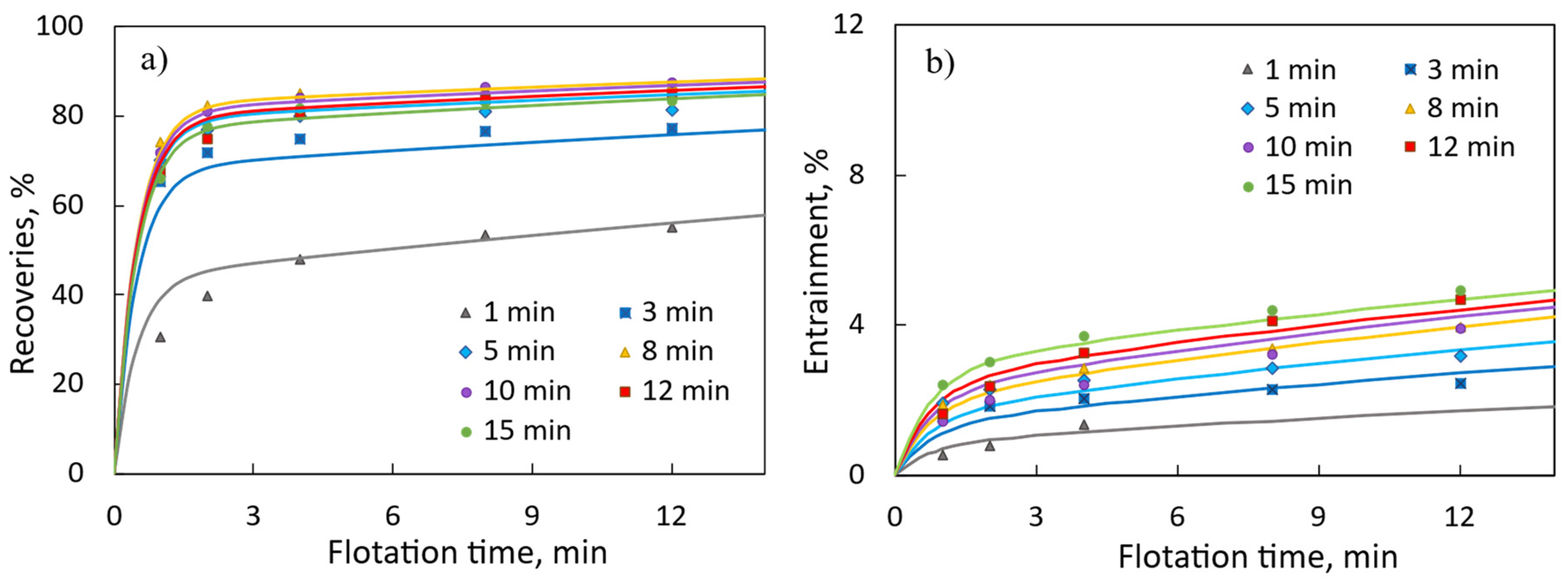
Based on Equations (15)–(19) and with flotation tests at different grinding times, the fractions , , , , , and () are determined, which are necessary to adjust the grinding model. The size at which the species are considered fine or coarse is determined in the model adjustment.
It is worth noting that although the objective is to obtain a model of the grinding system, a flotation kinetic model is also obtained.
2.3. Data Fitting Strategy
This section describes the sequence for obtaining the grinding model, performing tests, and adjusting the experiments using the models described in
Section 2.1 and
Section 2.2.
Figure 3 describes the experimental and modeling methodology for this study. Initially, grinding tests are performed at different grinding times to obtain a size distribution function. This is followed by flotation tests at different grinding times. From this model adjustment, the size at which the species are considered fine or coarse particles is obtained. From this adjustment of the flotation model, the mass fractions of the species,
, are also obtained, and finally, the grinding model is adjusted. The grinding model and the flotation models are obtained as a result.
The experimental and modeling methodology is detailed below, as shown in
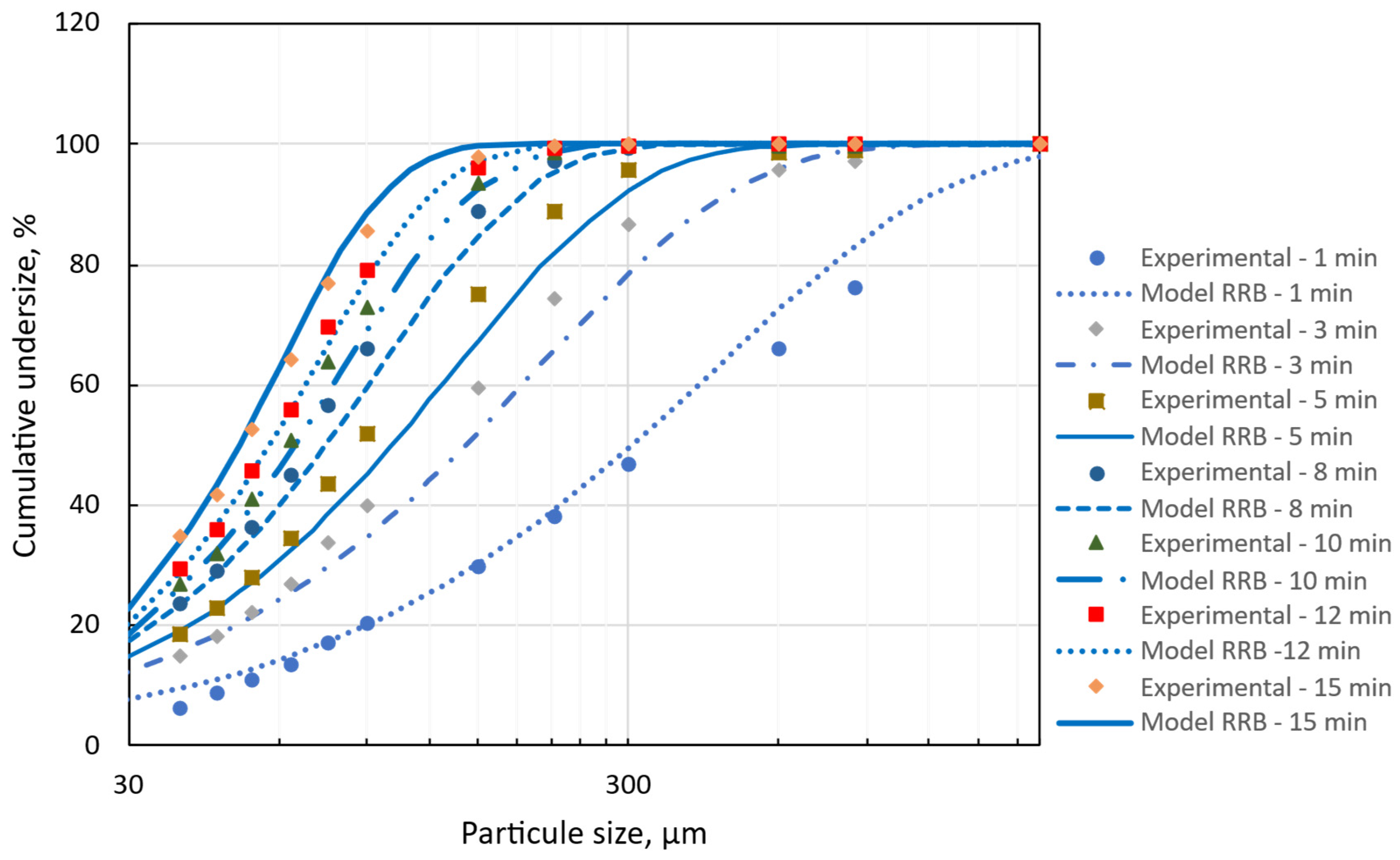
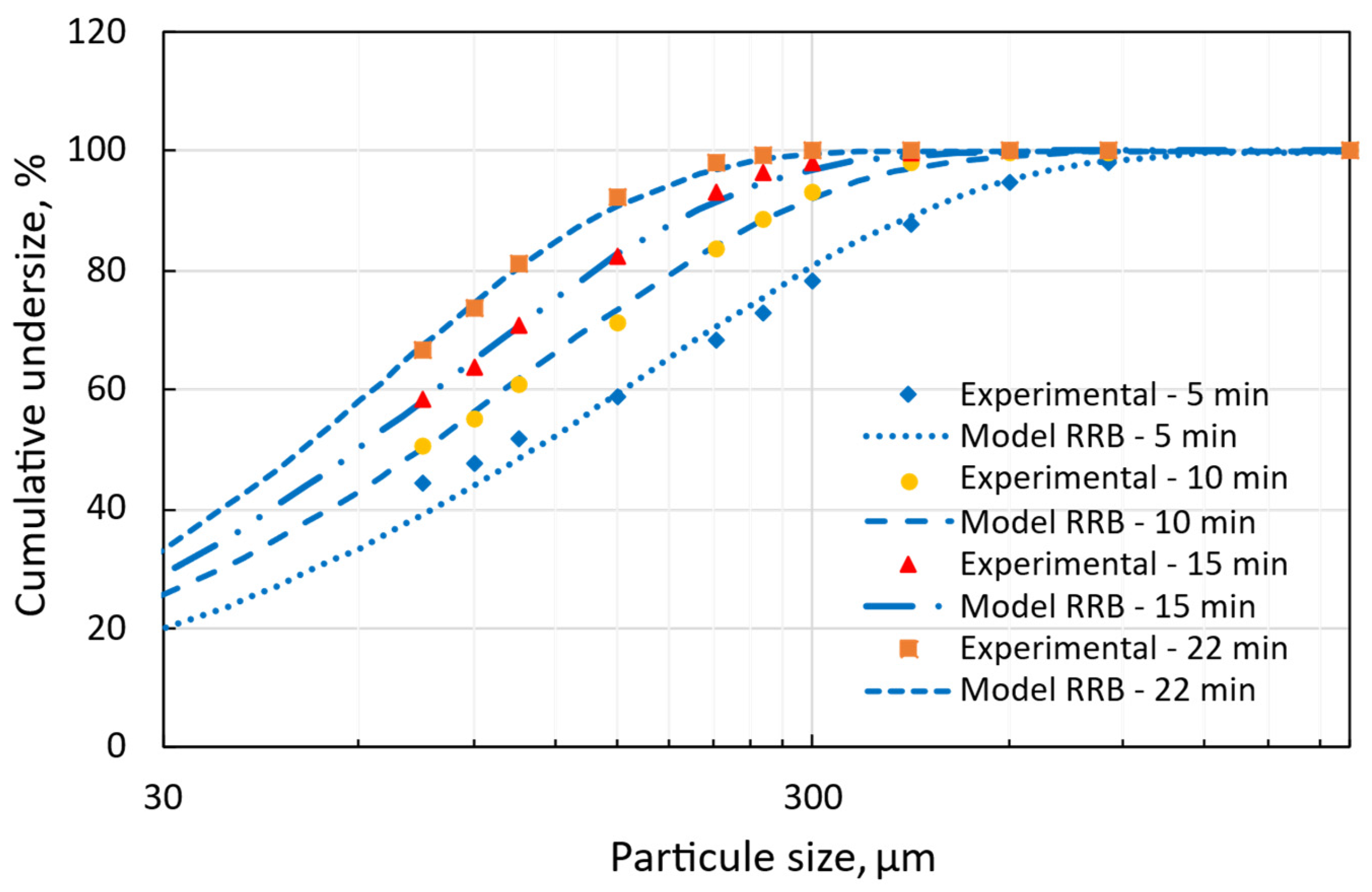
Figure 3. First, the granulometric characterization of the ore samples obtained at different grinding times, which are used in the flotation tests, is performed. These data were fitted and modeled using the Rosin–Rammler–Bennett (RRB) distribution method (see Equation (20)). However, other models can be used. In this work, the RRB model was selected because it represents our data well, has fewer parameters than other models, and has shown better results than other models [
18].
where
is the accumulated weight of particles (in percentage) with a size smaller than
,
is the diameter or particle size for each grinding time,
is the characteristic or reference particle size in relation to the energy consumption or grinding time (
), and
is the distribution parameter, where for a better fit it is considered as a linear function of the grinding time (
). The values of
are obtained experimentally based on and
different
. Replacing the terms
and
in Equation (20) we have the following:
where a, b,
are adjustable parameters in relation to the particle distribution model for each size fraction and as a function of the grinding time.
These parameters of the size distribution model (Equation (21)) are determined by solving the following optimization problem (Equation (22)) using an NLP solver; in this case, the CONOPT 4 solver was used with the GAMS platform (version 32). Of course, these parameters can be adjusted using more accessible tools, such as Excel’s solver:
Subject to the size distribution function calculated with Equation (21), the parameters and take positive values. and are the experimental and calculated particle distribution functions.
Then, for each sample obtained in the grinding tests, flotation tests are performed. Kinetic tests are performed at different flotation times. These data are adjusted to the equations presented in
Section 2.2.
The parameters of the true floating model (Equation (15)) are determined by solving the optimization problem described in Equation (23), using an algorithm that solves an NLP problem; in this case, the CONOPT 4 solver was used with the GAMS platform (version 32).
The optimization is subject to the total flotation recovery calculated with Equation (15) and the balance of the mass fractions of the species (Equation (16)). In addition, to delimit the coarse, medium, and fine size ranges, Equations (24) and (25) are used.
where
and
are the experimental and calculated recoveries. The value of
represents the particle size below which is considered a fine-size species, and
represents the particle size above which it is considered a coarse size species. The three mass fractions of species
(
) are used in the milling process model. To determine the parameters of the flotation entrainment model, a similar procedure to that described in Equation (23) is followed.
Finally, the grinding circuit is modeled, as shown in
Figure 3. The parameters described in the grinding model of the species that make up the true flotation, in Equations (5)–(7), are obtained by solving the optimization problem described in Equation (26), using an algorithm that solves an NLP problem; in this case, the CONOPT 4 solver was used with the GAMS platform (version 32).
The optimization is subject to the mass fractions of species , with , which are calculated with Equations (5)–(7) and with the constants , , , determined with Equations (8)–(11). In addition, with the restrictions that at each and .
Where are the mass fractions of species , and , obtained from the experimental flotation data and calculated, respectively. After data fitting, the breakup rate constants and are determined. The same calculation method as in Equations (23)–(26) is used for the species fractions that make up the flotation entrainment, and finally, the parameters and are determined.
To ensure the statistical significance of the estimated parameters, the fitting procedure included the calculation of the Root Mean Square Error (RMSE) and Absolute Average Error (AAE). Additionally, a sensitivity analysis was performed to assess the robustness of the fracture-rate constants across different grinding times.
2.4. Case Studies A: True Flotation
This section describes case study A, a copper sulfide ore (ore A), from the Radomiro Tomic mine, Codelco Company, Antofagasta region, Chile. The ore was studied to apply the true flotation grinding model with two species, following the sequence of steps described in
Section 2.3. The mineralogical composition of ore A is presented in
Table 1.
The operating conditions used are described in more detail in the work developed by Mathe et al. [
15]. A laboratory ball mill was used to obtain the samples, and a Ro-tap and a series of sieves (600, 425, 300, 212, 150, 106, 90, 75, 53, 45, and 38 μm) were used for the particle size analysis. Flotation tests were carried out in a Denver laboratory flotation cell (Denver Equipment Company, Denver, CO, USA) at an initial solid percentage of 35%. Lime (commercial reagents) was used to raise the pH to 10.5 and depress the pyrite; an MX7020 collector (Solvay, Chile) and a Math-Froth 202 frother (Mathiesen, Chile) were used.
2.5. Case Studies B: True Flotation with Entrainment
This section describes case study B, a copper sulfide ore (ore B) from the Centinela mine—Antofagasta Minerals—Antofagasta region—Chile, which was studied for the application of the mineral grinding model with true flotation and entrainment. The mineralogical composition of ore B is presented in
Table 2.
Ore B has an initial grain size of (100%) 10 # Ty (2 mm) with an average density of 2.76 g/mL. The ore has an average grade of 0.73% Cu, where 68.5% of the Cu contribution comes from chalcopyrite.
Laboratory materials and supplies were used for experimental tests. A laboratory ball mill was used to obtain samples, and a Ro-tap and a series of sieves (850, 600, 300, 212, 150, 90, 75, 53, 45, and 38 μm) were used for particle size analysis. Flotation tests were performed in a Denver laboratory flotation cell (Denver Equipment Company, Denver, CO, USA) at an initial solids content of 35%. Lime (commercial reagents) was used to raise the pH to 10.5 and depress the pyrite; a Matcol TC-123 collector (Mathiesen, Chile) was used; and a Math-Froth 355 frother (Mathiesen, Chile) was used.
The selection of ore B, characterized by its significantly softer anhydrite-rich matrix compared to the hard silicate-dominated ore A, provides a contrasting validation scenario. This allows the framework to be tested under conditions of rapid fines generation and pronounced mechanical entrainment, ensuring the model’s robustness across diverse mineralogical profiles.
4. Discussion
A strategy that integrates milling and flotation processes was presented in this work, considering fast- and slow-flotation components for species that contribute to true flotation and those that contribute via entrainment. The integration of comminution and flotation kinetics enables a holistic assessment of how variations in milling operational parameters affect the efficiency of downstream processes, such as flotation. The model developed is simple and easy to test in processing plant laboratories, avoiding studies that require more sophisticated experimentation and mineralogical analyses.
The first-order grinding kinetic model correlates well with data from flotation tests for the species that comprise the true flotation process, as verified by the two case studies, and for the species that comprise the entrainment in the flotation process, as shown in the second case study. The grinding model equations presented for both case studies show small fit errors. The hierarchy of the determined breakage rate constants (
) aligns with established comminution theory. Specifically, these results are consistent with the work of Petrakis et al. [
21], who demonstrated through population balance modeling that breakage rate constants for coarse particles are consistently higher than those for medium or fine fractions in ball mill environments. This validates that our species-based kinetic approach, despite its lower complexity and cost, successfully captures the fundamental physical breakage mechanisms occurring within the mill.
A critical aspect of the proposed framework is its ability to map mineral liberation onto measurable kinetic parameters without the need for explicit mineralogical data. Phenomenologically, the flotation kinetics of the categorized species ( for true flotation, and for entrainment) act as proxies for the degree of mineral release. For instance, the transition from coarse-slow () to medium-fast () species during grinding reflects the physical liberation of valuable minerals from the gangue matrix. This implicit representation is supported by the high predictive fidelity of the model across different ore types (ores A and B), where the fracture-rate constants () align with expected liberation trends. The Global Sensitivity Analysis (GSA) further reinforces this physical interpretation by showing that mass fraction evolution is predominantly controlled by the primary breakage constants ( and ), which govern the rate at which locked particles are transformed into liberated, fast-floating species. By integrating these functional species, the model provides a robust operational tool that bridges the gap between comminution theory and metallurgical performance at a significantly lower computational and experimental cost than traditional liberation-based models.
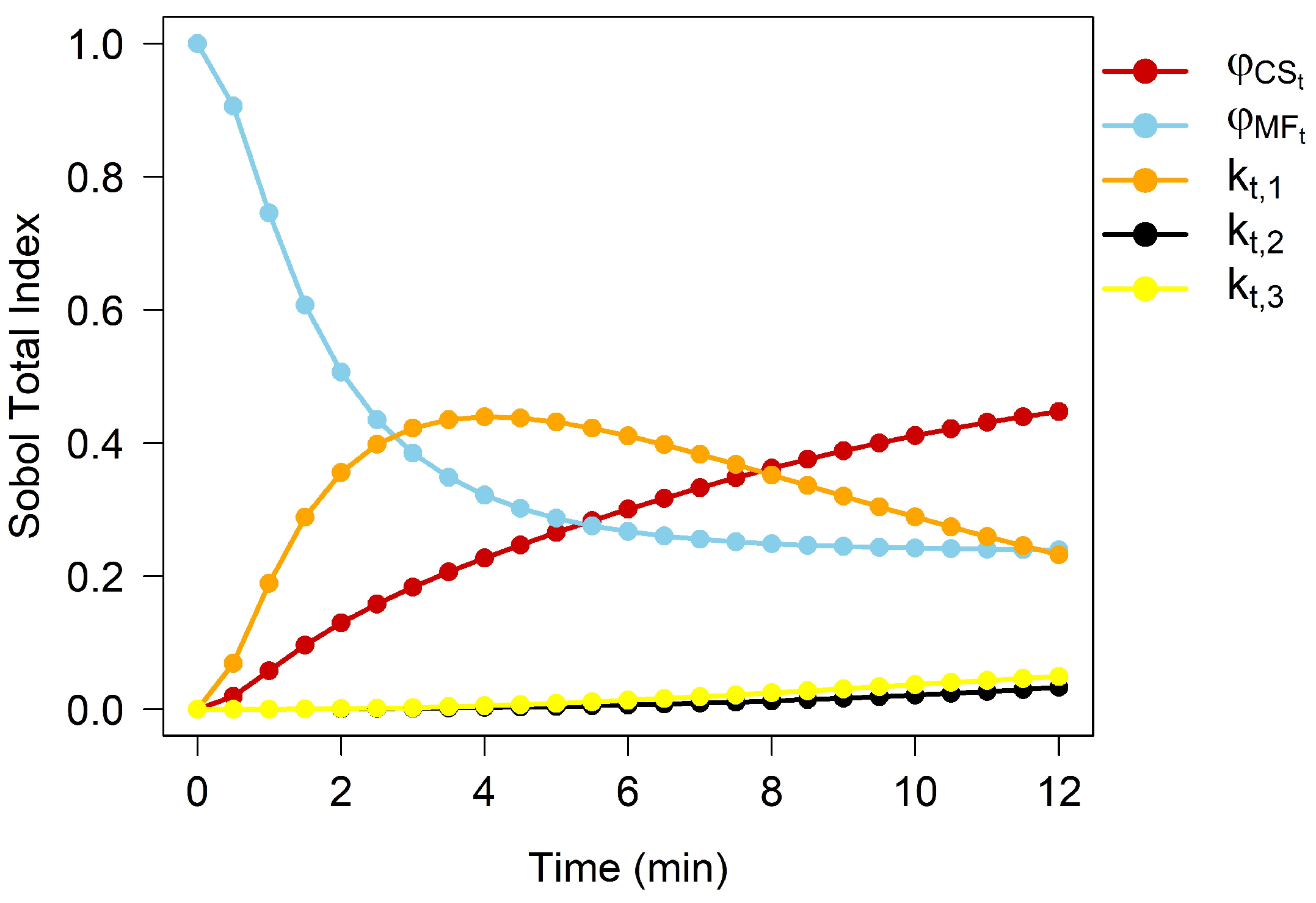
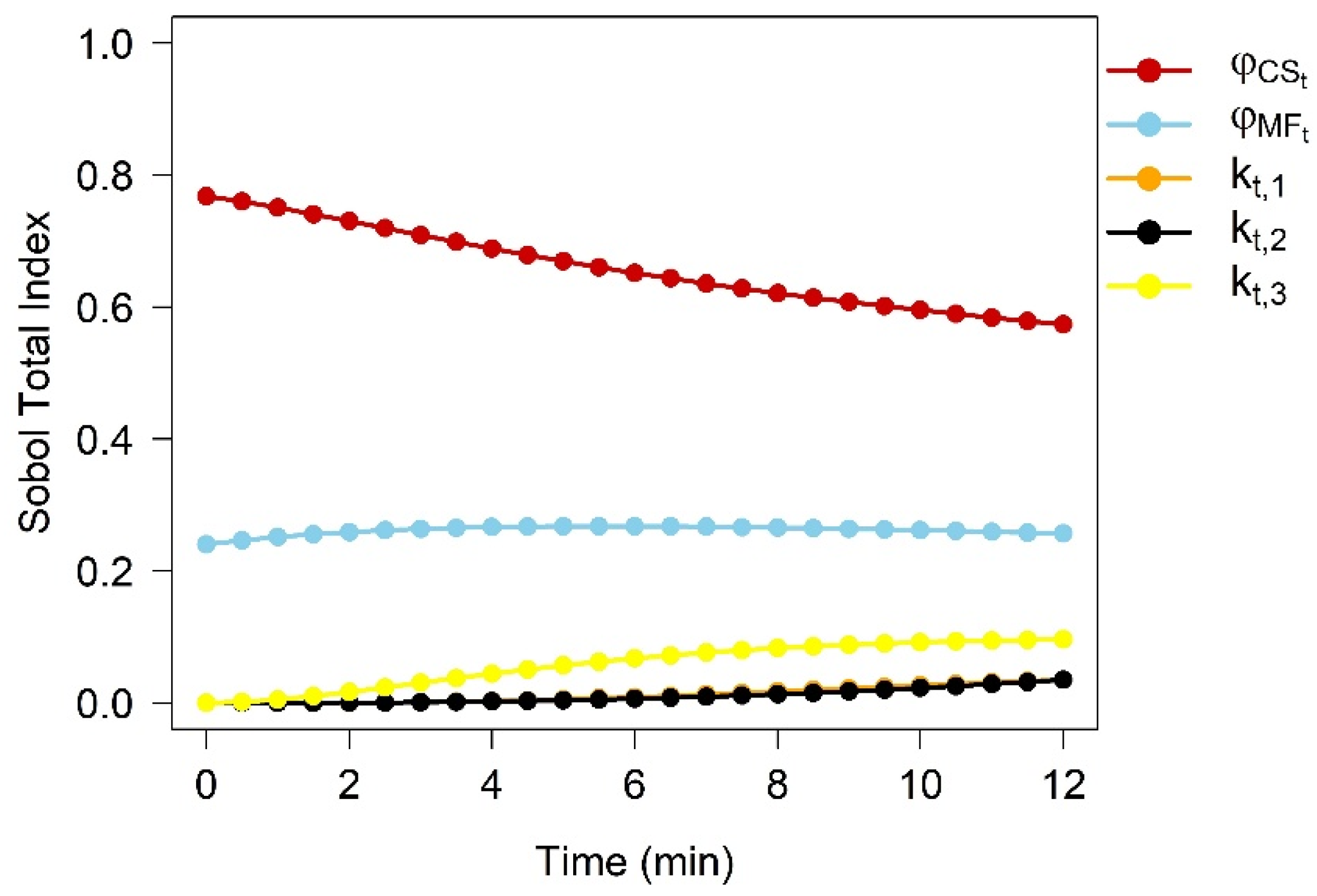
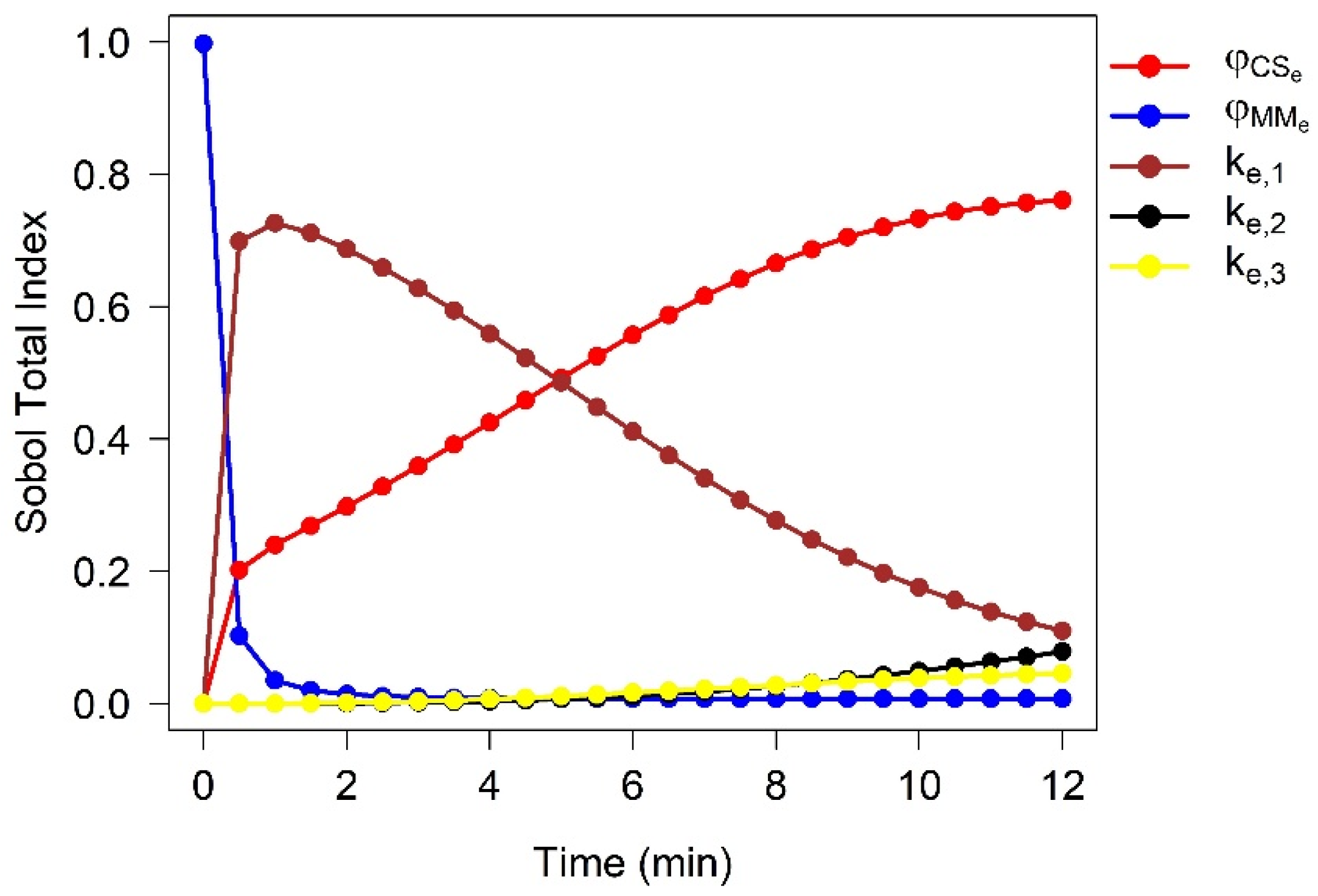
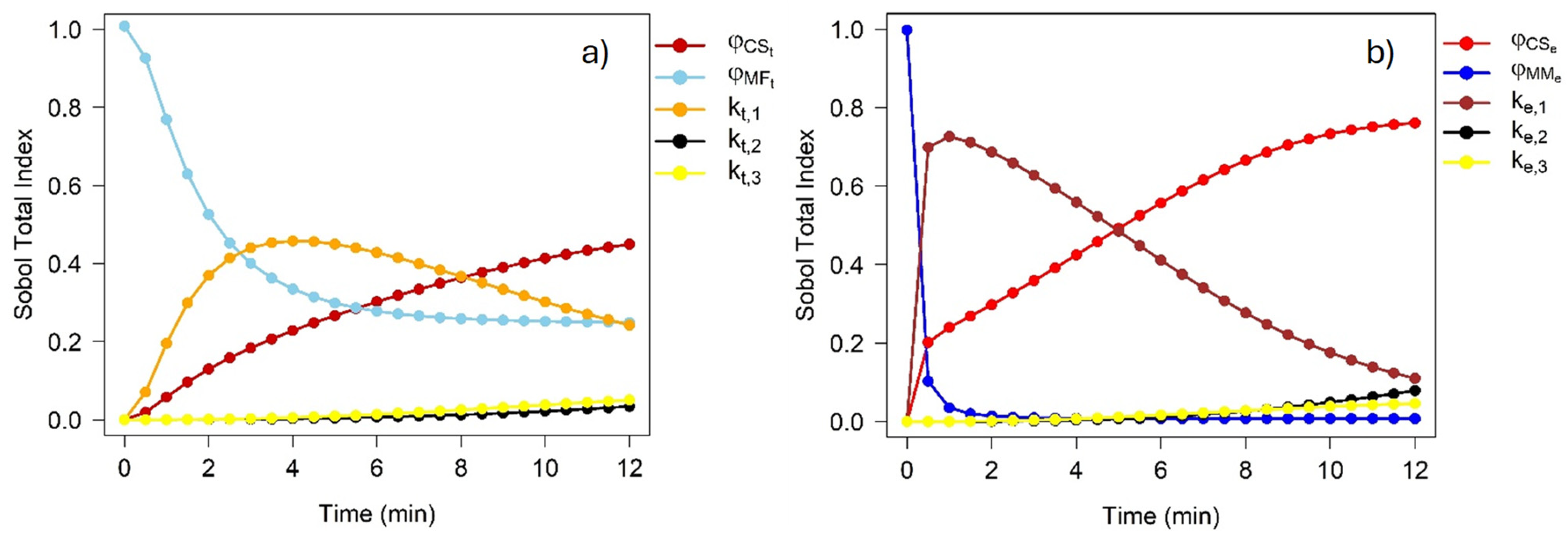
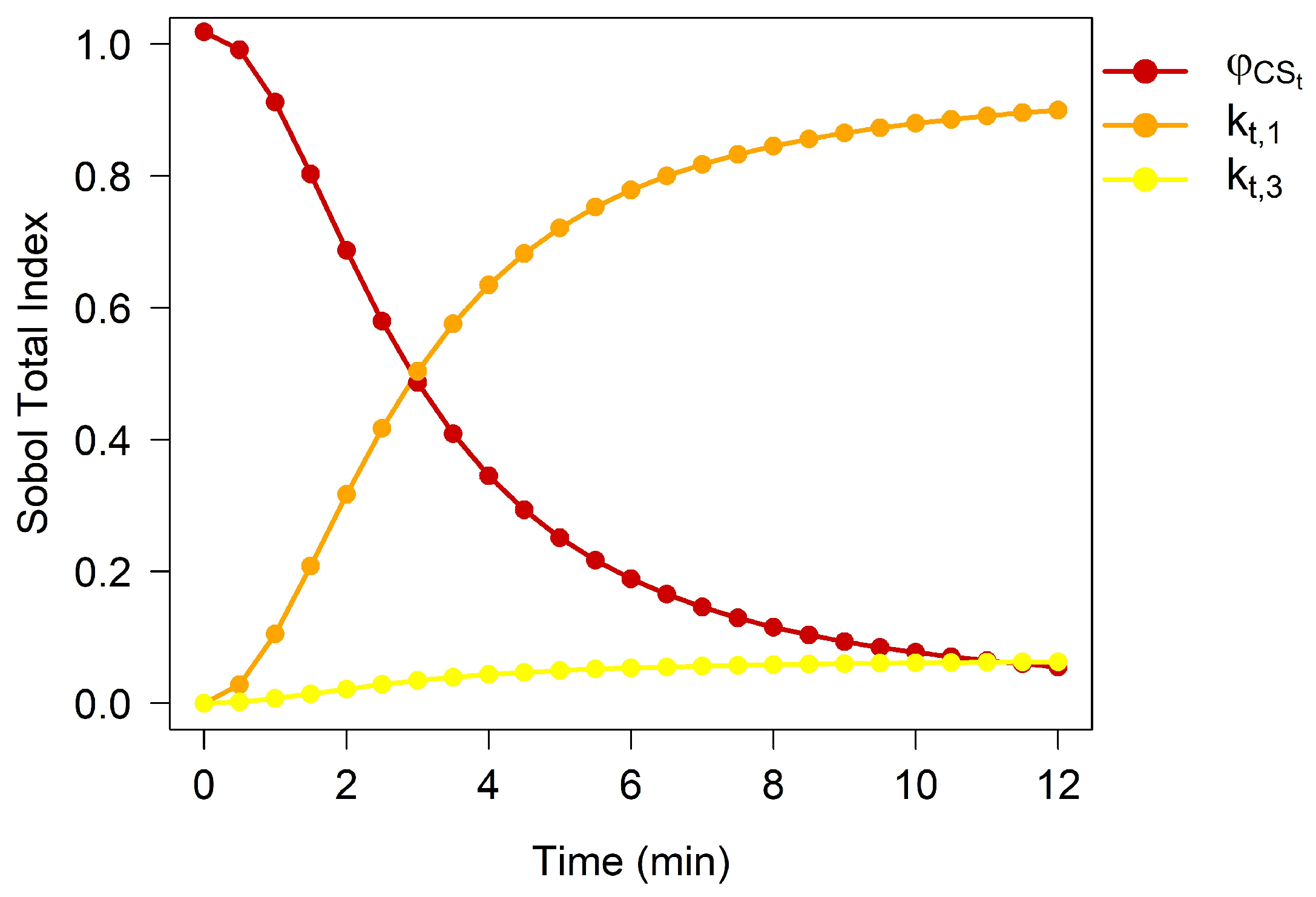
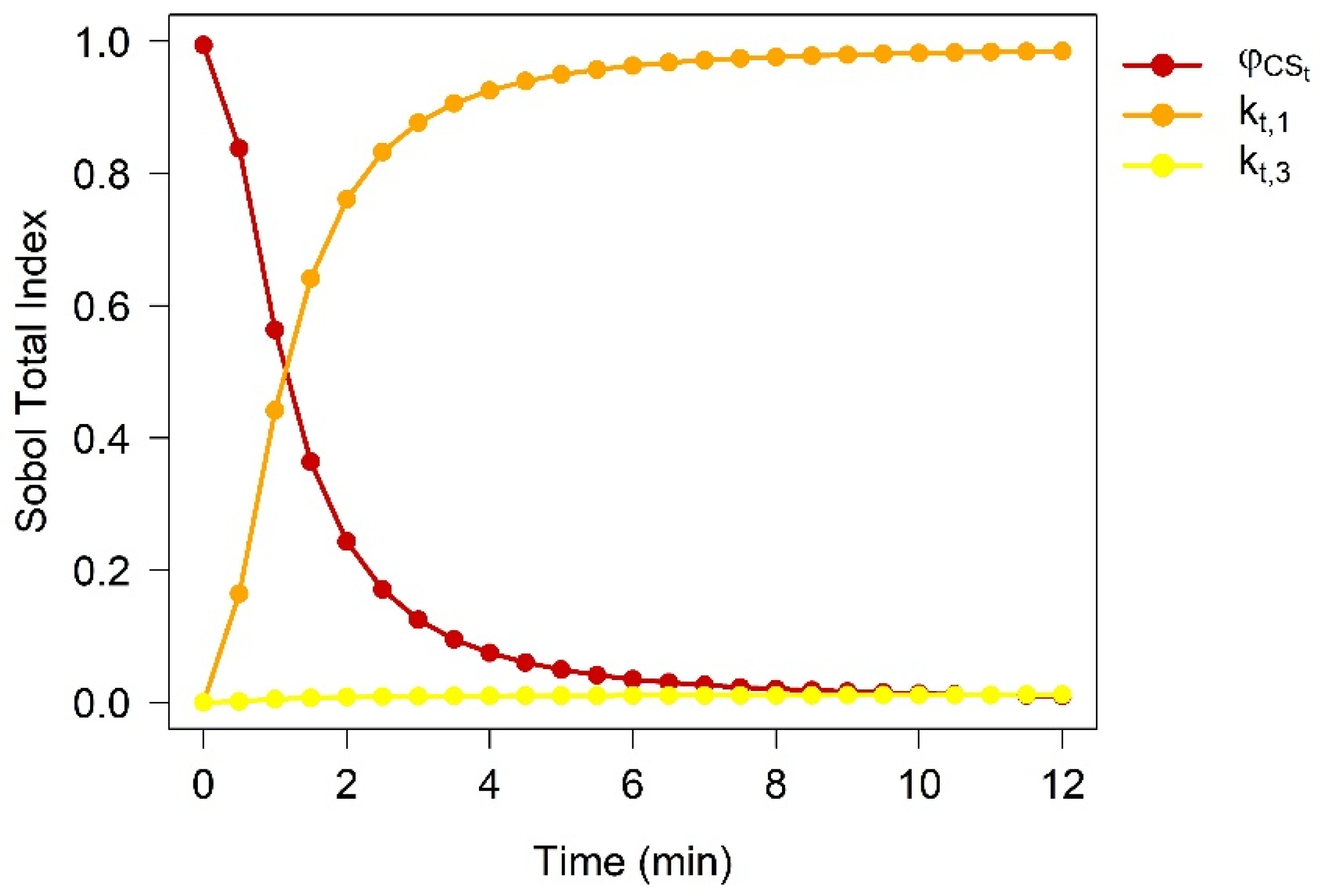
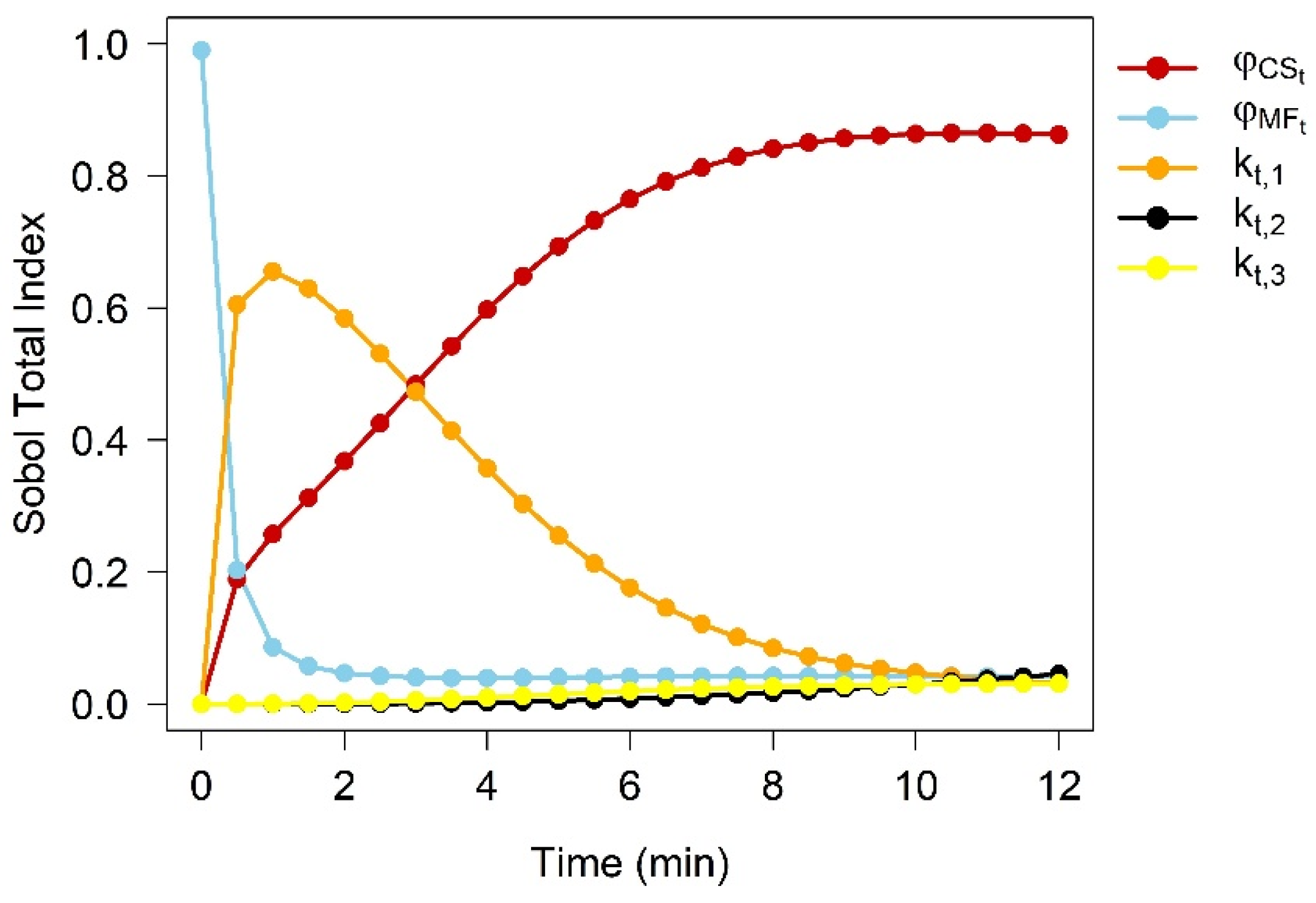
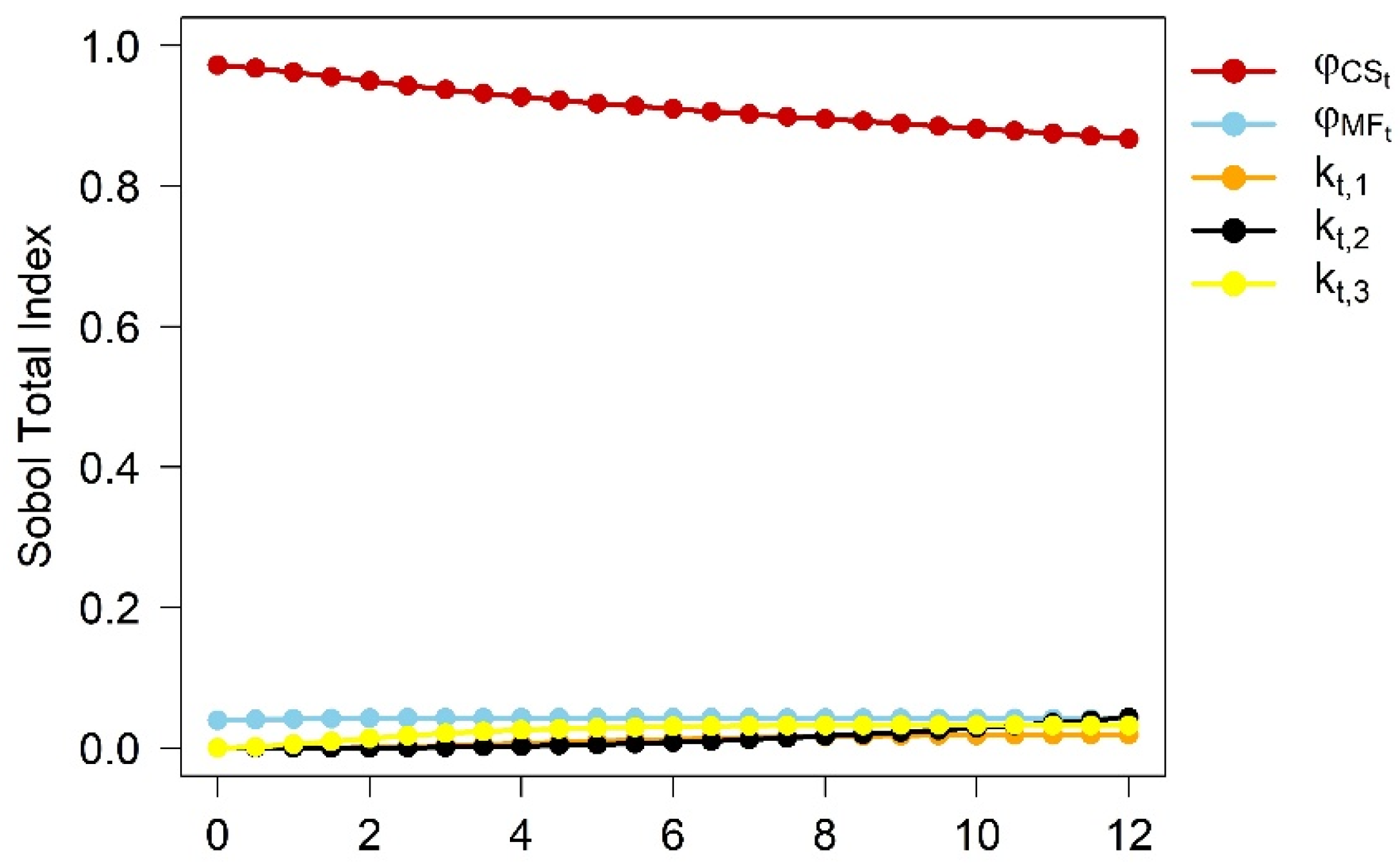
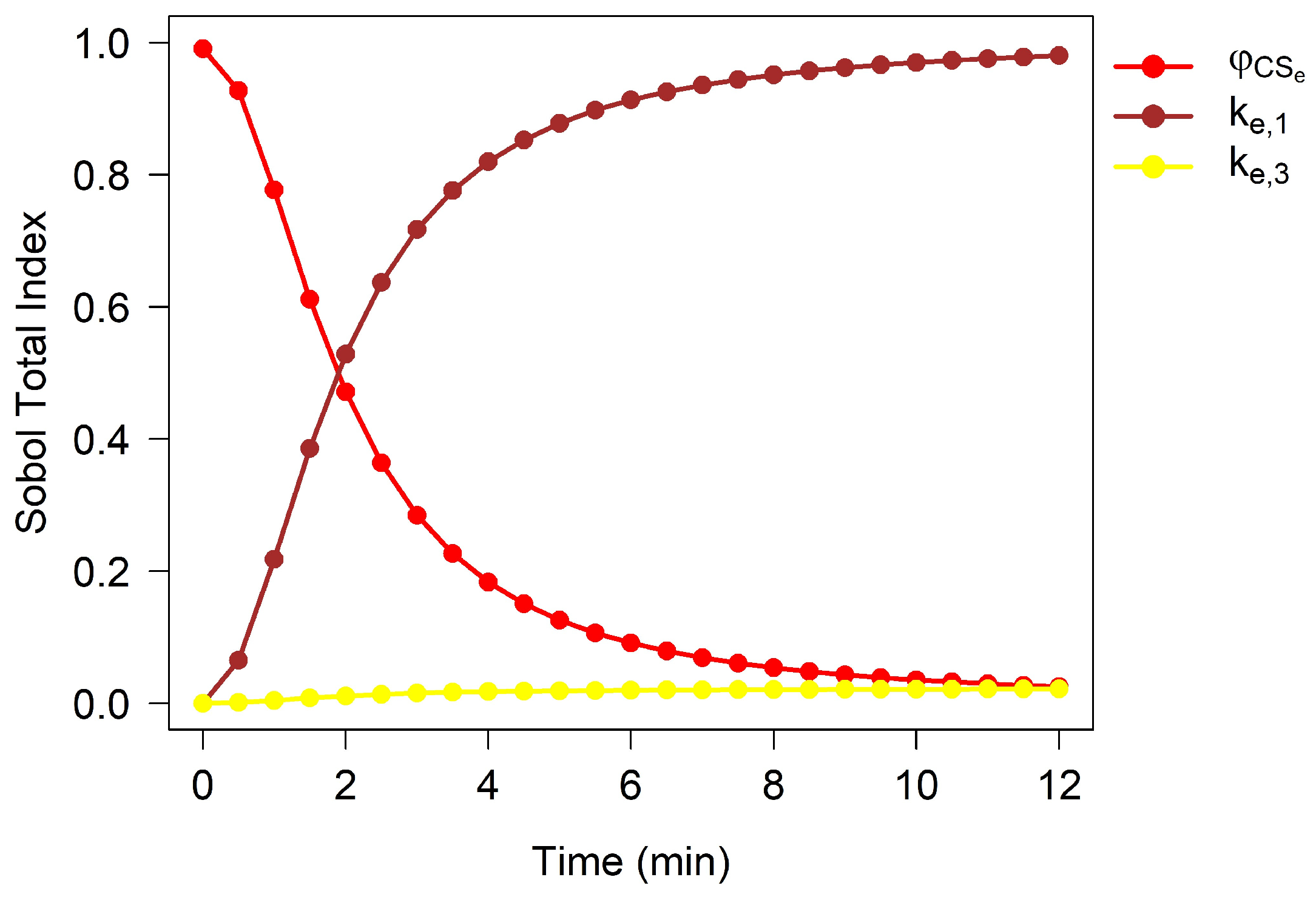
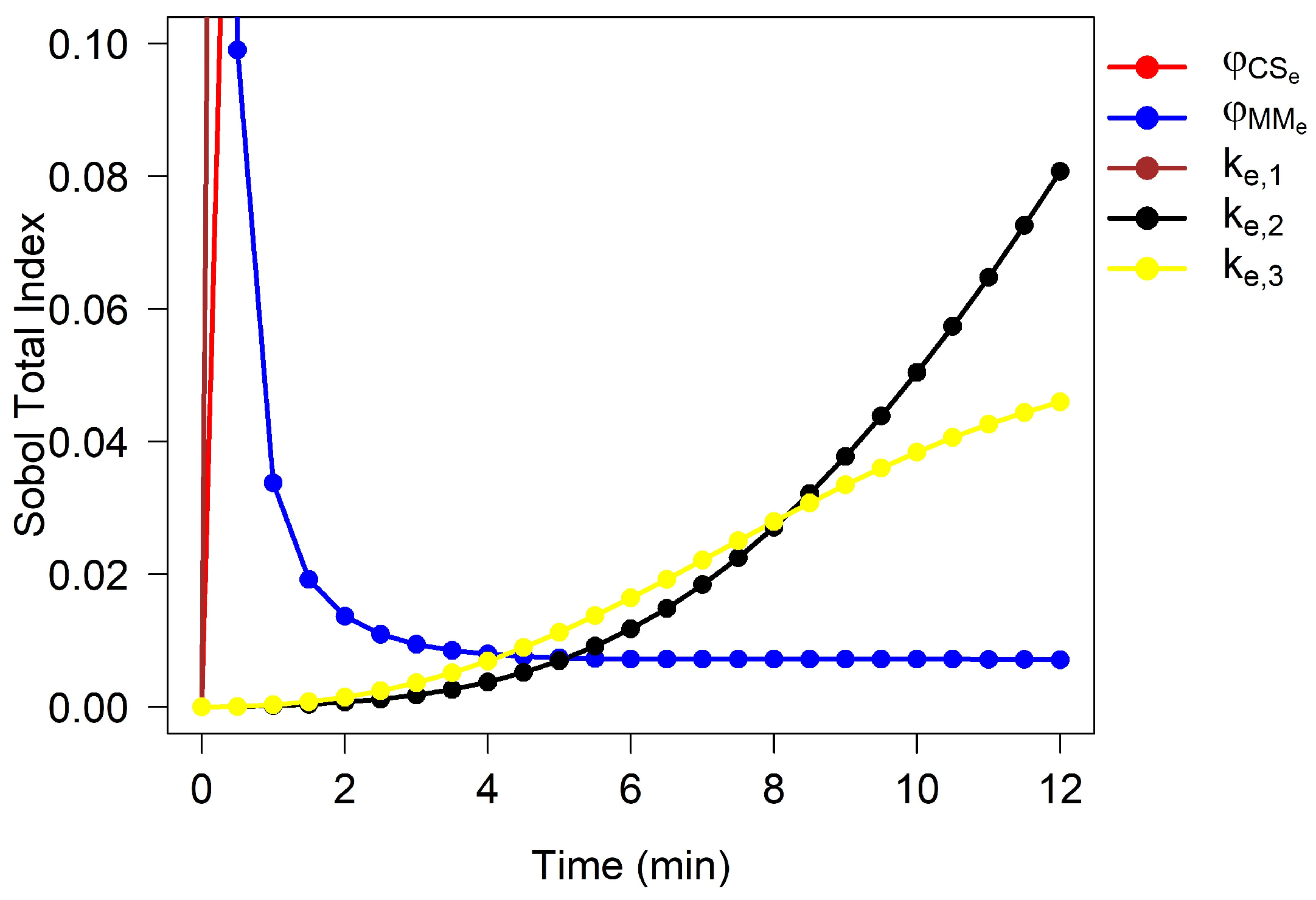
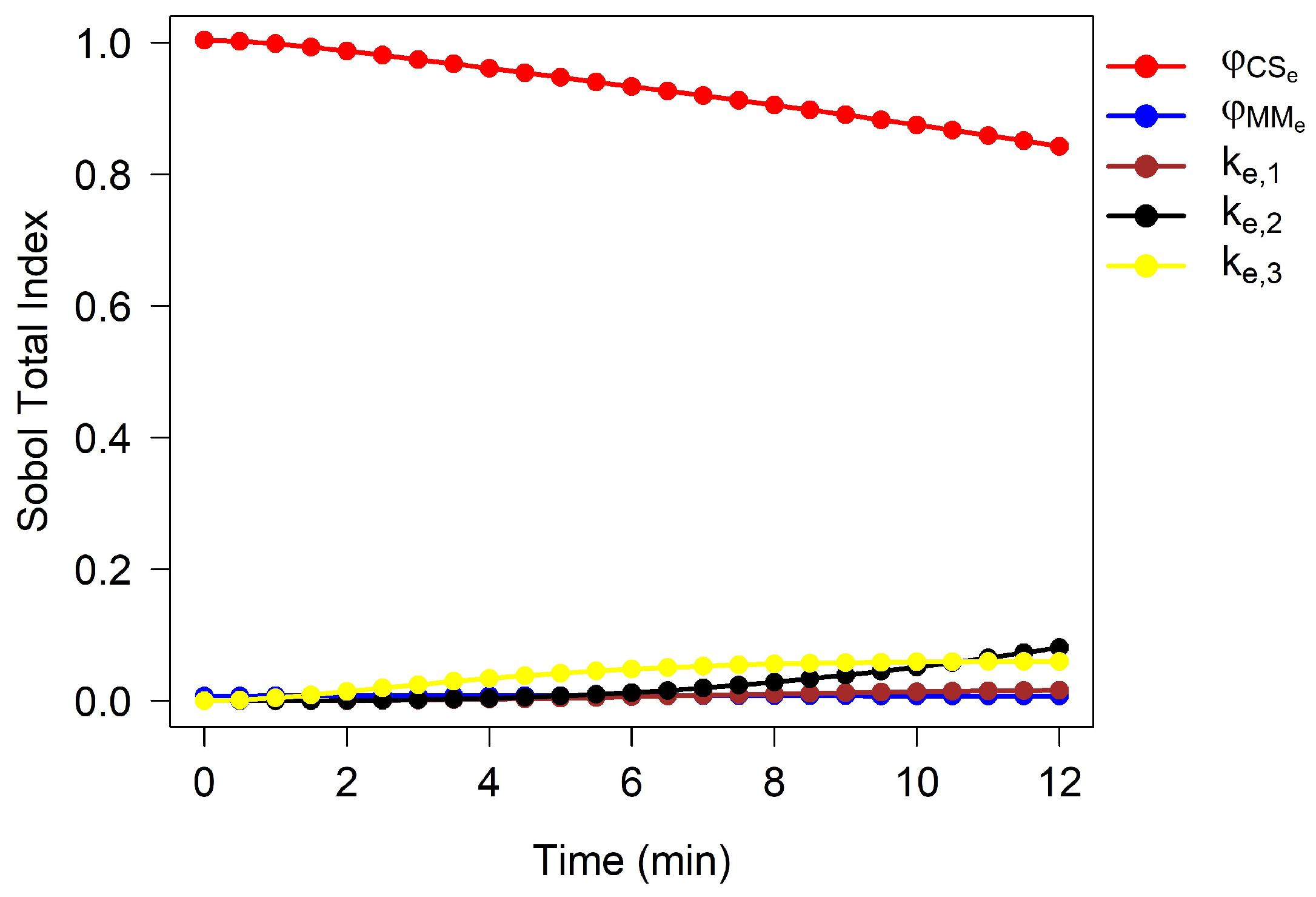
To rigorously assess the structural robustness and parameter identifiability of the proposed framework, a GSA based on Sobol–Jansen indices was performed. The results reveal a clear hierarchy of control (
Figure 8): in the early stages of grinding (
min), the variance of the mass fractions is predominantly governed by the initial feeding conditions (
), whereas for
min, the primary breakage (
or
) accounts for over 90% of the total sensitivity. This transition evidences a temporal decoupling of parametric control, whereby each parameter dominates a distinct stage of the grinding trajectory, strengthening parameter identifiability and preventing redundant parameterization during the simultaneous fitting procedure. Notably, the negligible sensitivity associated with the direct coarse-to-fine breakage constant (
) provides mathematical justification for the sequential breakage mechanism (
) adopted in this study, confirming that the model captures the phenomenological essence of comminution without redundant parameterization. Furthermore, the GSA for ore case study B highlights that entrainment species exhibit a more accelerated sensitivity to breakage rates than true flotation species. This suggests that for ores with significant gangue content, such as anhydrite, the precise estimation of
is the most critical factor for predicting and mitigating mechanical entrainment, thereby reinforcing the framework’s utility as a strategic decision-support tool for concentrate selectivity. The complete set of GSA results, including the Sobol–Jansen indices for all species and case studies, is provided in the
Appendix A,
Figure A3,
Figure A4,
Figure A5,
Figure A6,
Figure A7,
Figure A8,
Figure A9,
Figure A10,
Figure A11 and
Figure A12 (
Appendix A.2).
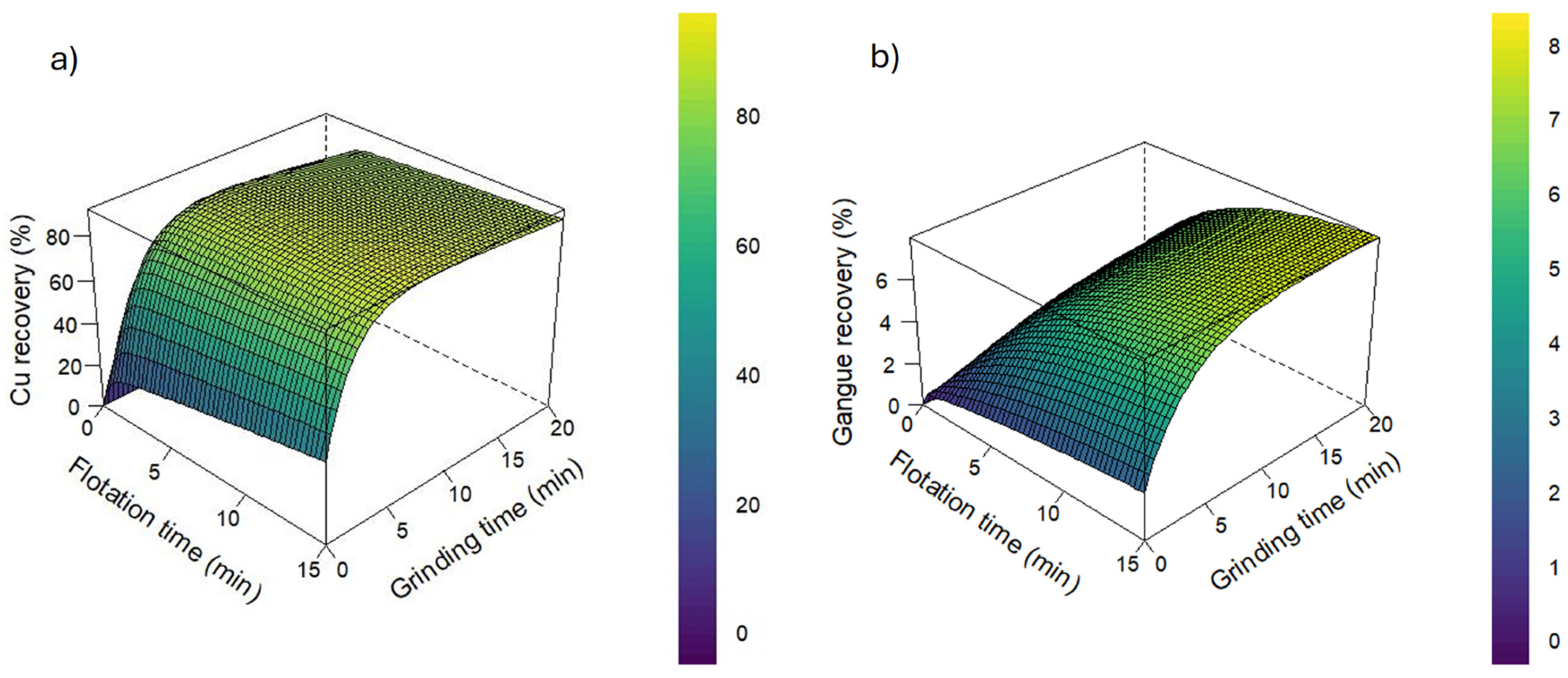
To visualize the operational interplay between comminution and separation, response surfaces were generated simulating the integrated recovery as a function of both grinding time (
) and flotation time (
) for ore case study B (
Figure 9). The contrast between the two surfaces highlights the critical trade-off in circuit tuning. While copper recovery (
Figure 9a) reaches a plateau where additional grinding yields diminishing returns due to the depletion of coarse composites, the entrainment recovery (
Figure 9b) exhibits a continuous increase driven by the generation of ultrafine gangue particles (
). This graphical analysis demonstrates that extending grinding time beyond the optimal range (e.g.,
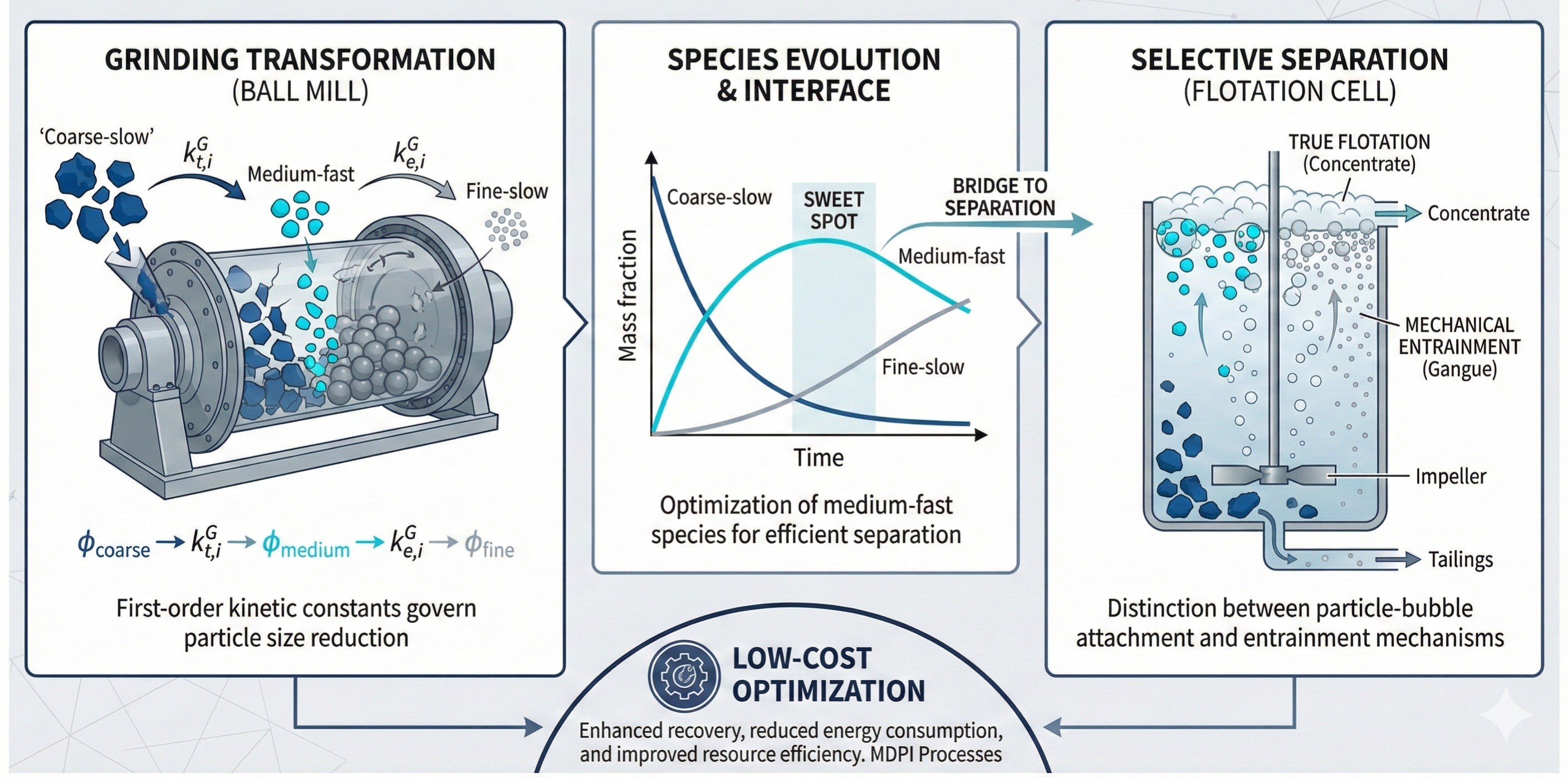
min) imposes a dual penalty: it creates an unnecessary energy expenditure and significantly degrades concentrate quality through non-selective mechanical transport. Therefore, the proposed kinetic model identifies the operational ‘sweet spot’ at which true flotation is maximized before entrainment mechanisms become dominant.
The applicability of the response surface analysis (
Figure 9) extends to complex ores containing hard-to-float minerals. In these scenarios, the model parameters serve as diagnostic indicators for process optimization. Specifically, a low
typically points toward physical constraints such as poor mineral liberation or unfavorable cell hydrodynamics, suggesting that adjustments in
or mechanical settings are required. On the other hand, low kinetic constants (like
) suggest a deficiency in the physicochemical attachment process, indicating a need for optimized reagent dosages or longer flotation times
. When dealing with hard-to-float ores, choosing the optimal grinding and flotation times involves a delicate trade-off. Increasing
may enhance
through improved liberation, but simultaneously risks the generation of
and a significant increase in gangue recovery via mechanical entrainment (
). The proposed integrated model allows operators to visualize these competing mechanisms and identify the ‘sweet spot’ where the recovery of difficult species is maximized before the detrimental effects of overgrinding and non-selective transport dominate the concentrate quality.
Interpretation of the results from kinetic grinding modeling of flotation kinetics enables adjustments to grinding process conditions to achieve an optimal product size distribution that favors the desired flotation of the ore, thereby optimizing the separation process. In other words, operating the circuits to obtain medium-fast species and avoid the characteristic overgrinding in the ball mill [
22,
23], generating the loss of valuable fine-slow (
) species or unwanted fine-fast (
) species in the concentrate by entrainment. By identifying the operational window that maximizes medium-fast (
) species while suppressing the generation of
species, this model serves as a decision-support tool for sustainable mineral processing. Avoiding overgrinding is not only a matter of metallurgical recovery but also a critical factor in reducing the carbon footprint of concentration plants, as comminution accounts for the largest share of energy consumption in mining operations. The ability to tune the grinding circuit to minimize unwanted fine-fast (
) entrainment species directly improves concentrate grade and reduces the chemical reagent load required for downstream processing, aligning with modern ‘Green Mining’ objectives.
The main purpose of grinding models is to obtain a mathematical relationship between feed size and product size [
24], with an efficient energy consumption [
25]. However, a model integrated with the flotation process also allows the milling operation to be linked to good metallurgical results. Therefore, further study is needed to understand how to adjust operating parameters to maximize overall process efficiency, integrating grinding (mill speed, ball addition) [
26] and flotation (reagent dosing, system hydrodynamics) [
27,
28].
A possible application of these simple models that integrate grinding and flotation is in the identification and evaluation of flotation circuit structures for systems where regrinding is considered [
29,
30]. Currently, these studies are complex since there are no simple milling and flotation models that consider the same type of species in their modeling. Also, the development of flotation circuit simulation software, such as the JKSimFloat (version 6) simulation program [
31], can benefit from the use of simple yet efficient models that minimize the number of parameters while maintaining acceptable computational cost.
In relation to the two case studies, the integrated kinetic models of milling kinetics fit very well to the species fractions of each true flotation and entrainment system obtained from the kinetic flotation models. However, improvements can be made when considering ore mineralogy for species that are present in minerals with different buoyancy. For example, in ore A, iron is present in species that exhibit true flotation (pyrite) and entrainment (oxides). To model these cases, it is advisable to distinguish between these two types of minerals, in order to take actions both to depress the pyrite and to avoid the mechanical dragging of hydrophilic gangue particles [
32]. Of course, this requires mineralogical analysis, not only chemical analysis, as applied in case study 1. Clearly, the same is possible for distinguishing between two or more gangue species that exhibit very different hardness and therefore undergo different transformations in the mill. For example,
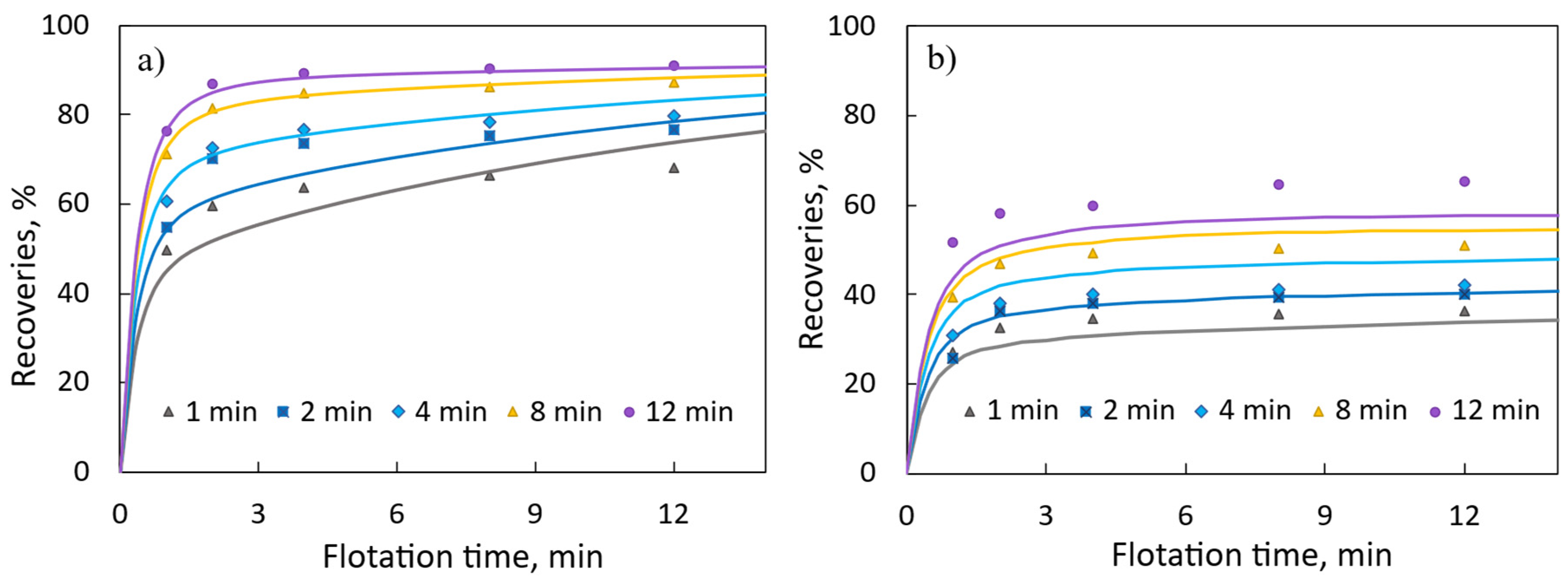
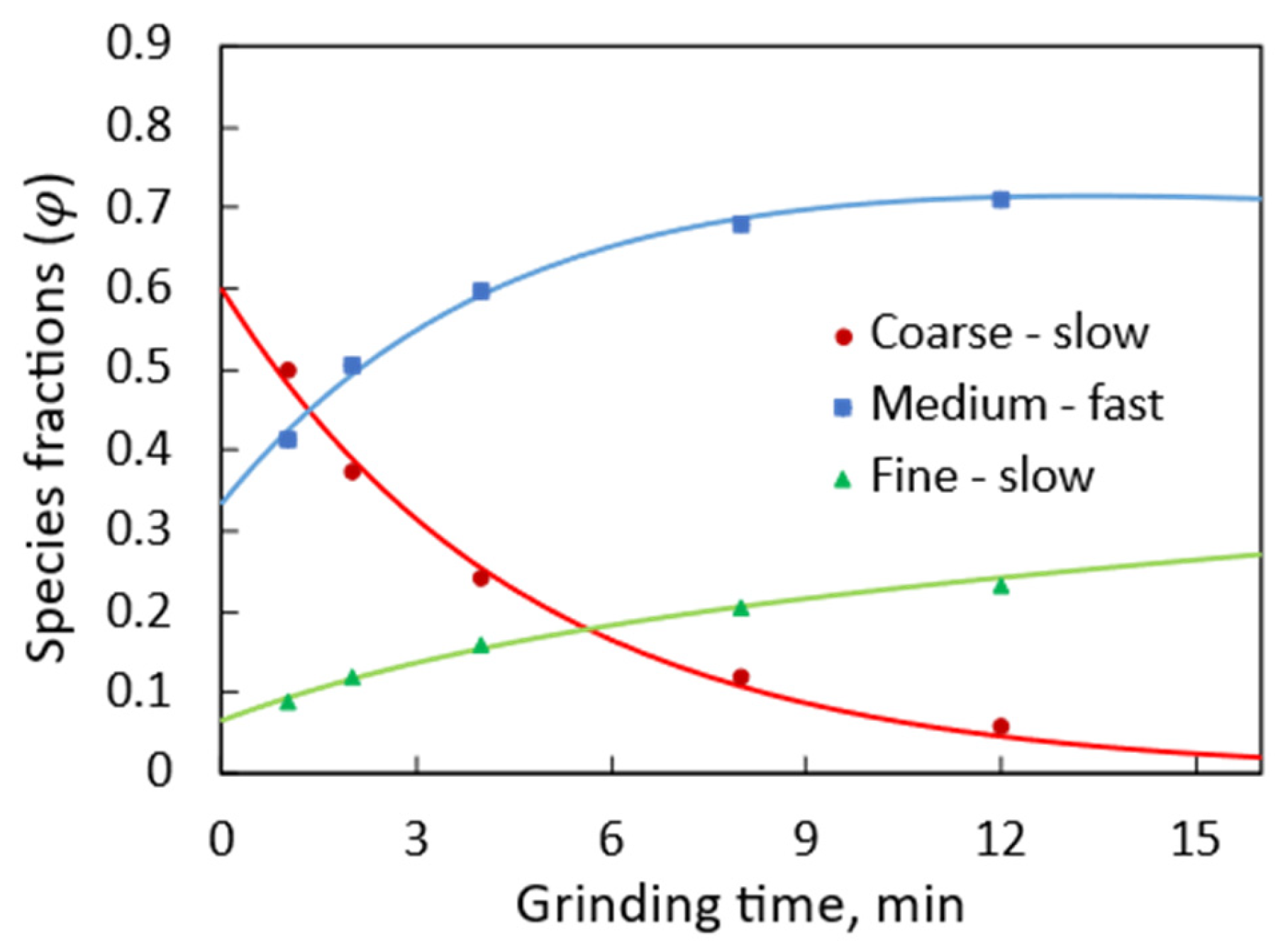
Figure 5 and
Figure 7 illustrate the characteristics and differences in both copper sulfide minerals and their accompanying minerals. The lower
values found for ore A compared to ore B are quantitatively consistent with the mineralogical characterization presented in
Table 1 and
Table 2. Ore A exhibits a higher proportion of hard silicates (quartz and feldspar totaling > 80%), which imposes a greater resistance to fracture than the anhydrite-rich matrix of ore B (47%). This correlation demonstrates that the species-based kinetic constants are not merely fitting parameters but are sensitive indicators of the ore’s inherent grindability. Another possibility for improvement, but which will increase the number of parameters and variables, is to consider that the values
(Equation (23)) are different for each ore. For example, in case study A, these values were considered to be the same for copper and iron. Incorporating this differentiation can be important in the study of polymetallic ores.
5. Conclusions
This research successfully developed and validated an integrated kinetic framework for modeling grinding processes based on the functional evolution of flotation species. Unlike traditional models that treat comminution and separation as independent units, this approach synchronizes the two processes by tracking how breakage rates directly influence the availability of fast- and slow-floating components. The key scientific contributions and findings of this study are as follows. Integration of Mechanical Entrainment: For the first time within this species-based framework, the model incorporates mechanical entrainment mechanisms, allowing for the simultaneous prediction of valuable mineral recovery and hydrophilic gangue contamination. Formalized Kinetic Equations: We developed a robust set of first-order kinetic grinding equations to describe the mass fraction transformation of both true flotation and entrainment species. This mathematical rigor provides a high-fidelity representation of particle evolution within the mill. Systematic Methodology: The introduction of a clear, three-stage parameter adjustment sequence (
Figure 3) transforms the theoretical model into a practical tool for industrial tuning, facilitating operational decision-making without the need for expensive mineralogical characterization. Validation of Theoretical Trends: Case studies demonstrated that the model accurately captures the metallurgical “sweet spot”—the optimal grinding time that maximizes medium-fast (
) species while suppressing the generation of fine-slow (
) particles and gangue entrainment. Industrial and Environmental Impact: The proposed model offers a low-cost strategy for processing plant laboratories to optimize recovery and energy efficiency. By preventing overgrinding, this framework supports the reduction in the energy footprint in mining operations, aligning with the objectives of modern sustainable mineral processing.
Furthermore, the GSA conducted using Sobol–Jansen indices provides a definitive mathematical validation of the model’s architecture. The results confirm that the kinetic evolution of mass fractions is primarily driven by the primary breakage rate constants ( and ), while the negligible influence of the direct coarse-to-fine pathway () justifies the parsimonious and sequential nature of the proposed framework. Notably, the higher sensitivity of entrainment parameters relative to true flotation highlights the strategic importance of grinding control in managing concentrate selectivity, particularly for complex ores. These findings solidify the framework as a robust, scientifically grounded tool for identifying the operational ‘sweet spot’ in sustainable mineral processing operations.
Future research will explore immediate and straightforward extensions of the proposed framework, such as the differentiation of upper and lower cutoff sizes ( and ) for each specific mineralogical species. This relatively simple modification would significantly enhance the model’s predictive accuracy in polymetallic systems where breakage and flotation properties vary across components. Additionally, further studies are needed to understand how operational variables—including pH, reagent dosage, and system hydrodynamics—directly influence the kinetic constants of grinding and flotation. Furthermore, this integrated framework provides a foundation for assessing the environmental and energy impacts of concentration plants. Future work will utilize this model to quantify the energy savings achieved by avoiding overgrinding, thereby supporting ‘Green Mining’ objectives. The model will also be applied to identify optimal circuit structures for systems involving regrinding stages, ensuring that the recovery of middling species is maximized while minimizing the mechanical entrainment of hydrophilic gangue with varying hardness profiles.




 ,
,