Review

Hierarchical Model Predictive Control with Inferential Soft Sensing for Stabilizing Thermal Gradients in Agricultural Biomass Gasification

by
Tudor Octavian Pocola
1,
Florin Ioan Bode
1,* and
Otto Lorand Rencsik
2,3
1
AtFlow Research Center, Mechanical Engineering Department, Technical University of Cluj-Napoca, B-dul Muncii 103-105, 400641 Cluj-Napoca, Romania
2
Climarol Prest Oradea, Str. Grigore Ureche Nr. 15, Bihor County, 410485 Oradea, Romania
3
Research Center for the Management of Energy Processes, Oradea University, Strada Universității 1, 410087 Oradea, Romania
*
Author to whom correspondence should be addressed.
Processes 2026, 14(7), 1053; https://doi.org/10.3390/pr14071053 (registering DOI)
Submission received: 13 February 2026 / Revised: 22 March 2026 / Accepted: 23 March 2026 / Published: 25 March 2026
(This article belongs to the Special Issue Progress on Solid Fuel Combustion, Pyrolysis and Gasification)

Abstract

Decentralized agricultural gasification remains constrained by the thermochemical instability of high-alkali residues, such as straw and stalks. This operational bottleneck is defined by a narrow thermal window: oxidation core temperatures are typically targeted above 1000 °C for effective tar cracking, yet grate temperatures are constrained, often below 850 °C, depending on the specific ash fusion characteristics of the feedstock, to prevent viscous sintering and bed clinkering. This work proposes a conceptual framework for a control strategy designed to address these conflicting requirements through a unified framework integrating inferential soft-sensing, hierarchical Model Predictive Control (MPC), and sensor health monitoring. Machine learning architectures capture temporal dependencies and cumulative thermochemical transformations to reconstruct unobservable internal states. This enables real-time state estimation with reported accuracy levels (average test R2 of 0.91–0.97) and 100% physical consistency through monotonicity constraints, effectively managing the critical thermal lag of densified pellets (400–600 s response time). High-fidelity CFD simulations anchor the soft-sensing layer, ensuring model robustness across the inherent variability of agricultural feedstocks. The architecture shifts control logic from reactive adjustments to anticipatory intervention through adaptive multi-mode operation that decouples high-intensity oxidation from grate integrity limits, while dynamic biochar management serves as a multifunctional control variable for tar cracking enhancement and alkali sequestration. Future work will focus on pilot-scale validation under transient feedstock conditions.

1. Introduction

Global availability of agricultural residues has expanded significantly, with annual production from major crop species now measured in billions of metric tons across different continental regions. Recent estimates focusing on the primary six crops: barley, maize, rice, soybean, sugar cane, and wheat, indicate a global generation of approximately 3.7 Petagrams (3.7 billion tons) of dry matter per year, representing a theoretical energy reservoir of 65 EJ, which could cover roughly 15% of total primary energy consumption [1]. The authors emphasize that through agricultural intensification and high-input management, this residue production could increase by an additional 1.3 Pg annually, pushing the total availability toward 5 billion tons, demonstrating the resource’s substantial growth potential. Despite this quantifiable energetic reservoir, Lackner et al. [2] note that between 10% and 50% of agricultural products are discarded as waste before reaching the consumer due to systemic inefficiencies in harvesting and storage.
While global managed solid waste is projected to reach 3.4 billion tons by 2050 [2,3], the volume of primary agricultural residues remains significantly larger, though often unaccounted for in formal waste management systems, because it is frequently disposed of through open-field burning, leading to substantial energy loss and environmental pollution. These agricultural residues, ranging from cereal straws and corn stover to orchard prunings, constitute a significant portion of the unused organic matter available for valorization. According to [4], the sheer volume of these residues represents a major logistical and environmental challenge for many nations. Proper management of this massive biomass stream can become a critical necessity for developing a sustainable bioeconomy.
This practice effectively largely limits the potential for resource recovery, reinforcing a linear waste-to-emission trajectory rather than supporting the transition toward a circular bioeconomy. The research carried out in [5] emphasizes that this disposal method wastes a renewable resource and contributes to severe air quality degradation. The conversion of these wastes into a refined energy carrier is therefore a priority for modern engineering.
In current energy research, thermochemical gasification is experiencing a re-emergence as a versatile method for converting heterogeneous agricultural residues into a clean gaseous fuel known as syngas [6]. This renewed interest is driven by the urgent need for rural energy security and the decarbonization of local power grids [7]. The evolution of these systems is characterized by a transition from basic thermal units to integrated micro-cogeneration (micro-CHP) plants, which can achieve overall efficiencies of up to 90% through waste heat recovery [8]. This resurgence is further supported by analyses indicating that fixed-bed downdraft architectures are the most suitable for small-scale applications between 20 and 100 kWt [9]. This selection is further validated by a recent review [10], which identifies fixed-bed reactors as the most robust choice for processing diverse feedstocks with particle sizes up to 5 cm and moisture levels reaching 60%, while emphasizing AI-driven optimization as a critical frontier for sustainable operation.
However, the transition to widespread agricultural biomass gasification is hindered by high concentrations of alkali metals and silica in these residues. These elements react during high-temperature phases to form low-melting-point eutectic mixtures, leading to bed agglomeration and slagging on the reactor grates [11]. Managing this balance between chemical conversion and ash stability remains a persistent hurdle, as potassium-rich ashes can start to deform at temperatures as low as 750 °C [12].
This chemical behavior leads to a fundamental operational conflict: the thermal window of agricultural biomass gasification. To achieve high-quality syngas, the oxidation is generally maintained above 1000 °C to facilitate the thermal cracking of heavy tar molecules [13]. However, these temperatures are well above the initial deformation threshold (IDT) of the mineral matter present in straw and husks, which often ranges between 730 °C and 850 °C. Exceeding this limit triggers the vitrification process, essentially freezing the mechanical flow of biomass [14]. Therefore, the engineer must balance the necessity of >1000 °C for tar elimination against the requirement of <850 °C at the grate level to avoid clinkering.
Conventional control architectures, predominantly based on Proportional-Integral-Derivative (PID) loops, operate in a reactive manner by responding to deviations after they have already occurred in measurable parameters. However, the high thermal inertia and significant feedstock variability characteristics of agricultural residues often render these reactive adjustments insufficient for preventing failures like bed vitrification or excessive tar production. Allesina et al. [15] highlights that the inability to anticipate thermochemical instabilities is a primary reason for the low reliability of small-scale gasifiers in rural settings. This operational bottleneck necessitates a paradigm shift towards management systems capable of real-time prediction and preventive action.
To address the existing technical bottlenecks in agricultural biomass gasification, this study evaluates the following research questions:
  • What are the fundamental control challenges in agricultural biomass gasification, and why do conventional approaches fail?
  • How can machine learning architectures address the inferential sensing and predictive control requirements for stabilizing the thermal window in high-alkali agricultural gasification?
  • What integrated framework architecture is required to bridge high-fidelity simulation, real-time control, and fault-tolerant operation for industrial deployment?
The current operational bottleneck in agricultural gasification resides in the high stochasticity of the feedstock and the resulting Viscous Sintering Kinetics. Standard control architectures fail because they treat the reactor as a scalar system, ignoring the three-dimensional heterogeneity and the significant Thermal Lag of densified pellets. This work moves beyond traditional descriptive reviews by proposing a Unified Soft-Sensing and MPC Framework. We argue that moving toward autonomous, industrial reliability requires an inferential digital layer capable of reconstructing the internal oxidation front propagation and clinkering through pattern recognition of thermal and pneumatic signatures, thereby aiming to reconcile the conflict between gas purity and mechanical longevity.

2. Methodology

The literature selection for this review and the development of the proposed framework followed the PRISMA 2020 (Preferred Reporting Items for Systematic Reviews and Meta-Analyses) guidelines (https://www.prisma-statement.org/prisma-2020, accessed on 12 February 2026). A hybrid identification strategy was used, combining systematic database queries with an expert-driven selection of seminal works and technology transfer studies.

2.1. Identification and Search Strategy

The systematic identification of records was performed in Web of Science (Core Collection) and Scopus. These databases were selected because they provide the most comprehensive coverage of thermal engineering, chemical processes, and automation. To ensure a 360-degree view of the problem, we employed two distinct search strings:
  • String 1 (Process & Phenomenology): Focused on the intersection of agricultural residues and thermochemical instability. Used string: (“agricultural biomass” OR straw OR stalks OR “crop residue”) AND gasification AND (“ash fusion” OR slagging OR sintering OR agglomeration OR “initial deformation temperature” OR “IDT”).
  • String 2 (Control & Modeling): Focused on the integration of predictive algorithms in gasification. Used string: (“biomass gasification”) AND (“model predictive control” OR “MPC” OR “soft-sensing” OR “soft sensor” OR “inferential”) AND (“machine learning” OR “neural network” OR “deep learning” OR “LSTM” OR “physics-informed” OR “state estimation” OR “thermal lag”).
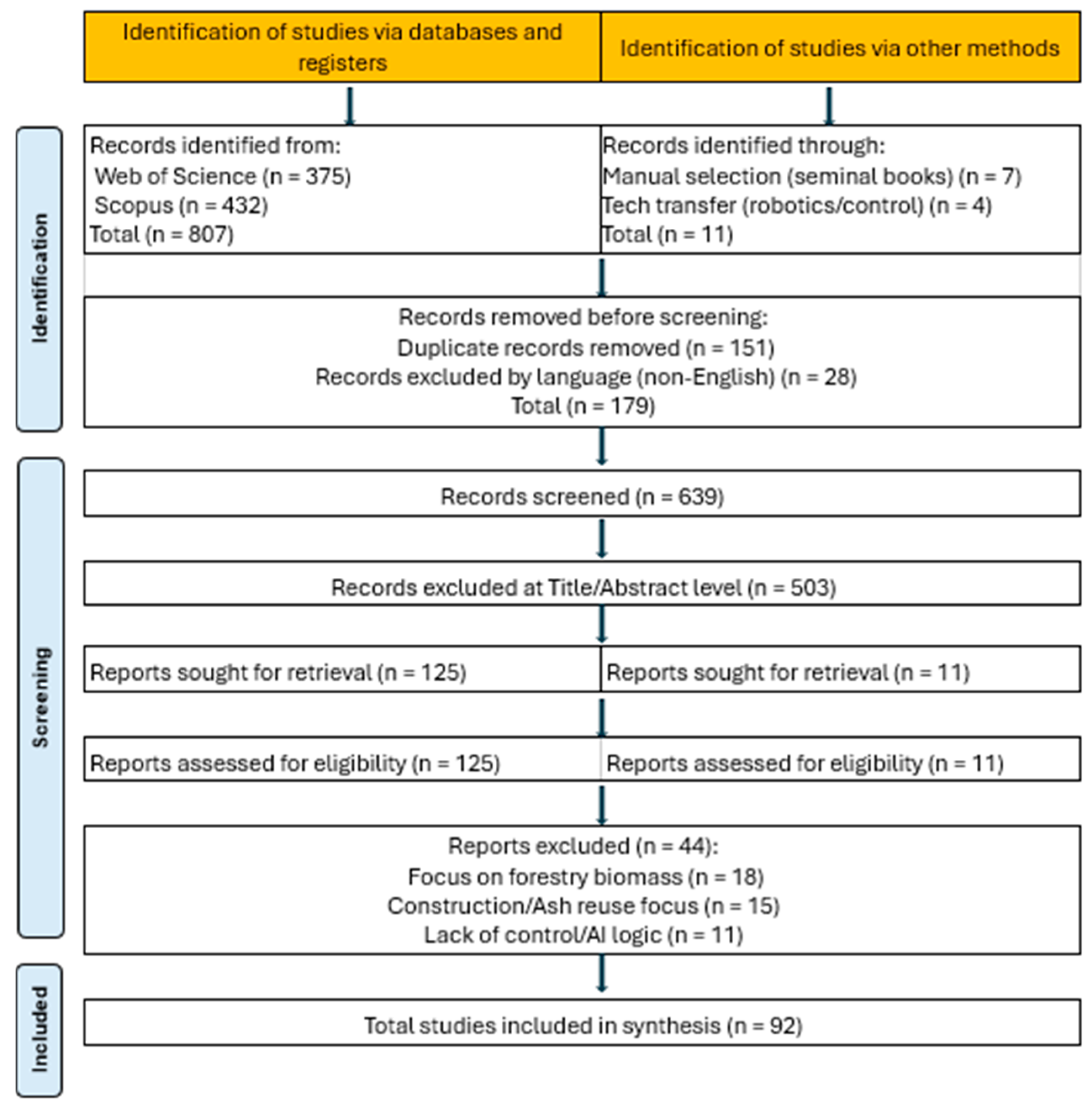
The systematic search yielded 807 records (375 from Web of Science and 432 from Scopus) (see Figure 1).

2.2. Screening and Eligibility

Following the identification phase, 151 duplicates and 28 non-English records were removed, leaving 628 unique systematic records. During the initial screening of titles and abstracts, 503 records were excluded for not being directly relevant to the specific orientation of this study like thermal window or control strategies of agricultural residues (Figure 1).
The remaining 136 reports (125 from the systematic search and 11 from manual identification) underwent full-text assessment. At this stage, 44 reports were excluded based on specific technical criteria:
  • Focus on forestry biomass (n = 18): Studies using wood or sawdust were removed because they lack the high-alkali (K-Si) dynamics specific to cereal straws and stalks.
  • Non-thermal ash applications (n = 15): Research regarding the use of ash in concrete or fertilizers was excluded as it does not inform real-time reactor control.
  • Lack of predictive control logic (n = 11): Statistical or descriptive studies were removed if they did not propose a transient control or estimation architecture.

2.3. Manual Selection and Technology Transfer

To ensure the framework is grounded in both kinetic fundamentals and the mathematical frontier of automation, 11 additional sources were manually integrated. These consist of 7 seminal monographs on gasification theory and 4 cross-domain papers from the robotics and aerospace literature (Figure 1).
The final selection consists of 92 references, as detailed in Figure 1. This corpus represents a synthesis of state-of-the-art experimental data and robust control theory (Figure 1).

3. Feedstock-Driven Operational Boundaries

3.1. Chemical Composition of Agricultural Biomass and Its Impact on Ash Fusion Temperatures

The chemical composition of agricultural residues represents a multifaceted matrix that significantly differs from woody biomass, particularly regarding the distribution of its inorganic fraction. While the organic fraction, composed of carbon, hydrogen, and oxygen, provides the energy potential, the inorganic fraction dictates the operational stability of the gasification process. Herbaceous residues, such as cereal straws and corn stalks, are characterized by high concentrations of potassium and silica, often exceeding the thresholds found in forestry biomass by an order of magnitude. The ash content in these materials can reach up to 12% on a dry basis, leading to a direct correlation between mineral load and thermochemical instability in the reactor bed [16].
The impact of this chemical makeup is most profound on the Ash Fusion Temperatures (AFT), which serve as the definitive operational boundaries for high-temperature reactors. The interaction between alkali metals (K, Na) and silica (SiO2) leads to the formation of low-melting-point silicates through complex thermochemical pathways. According to [11], the presence of potassium acts as a fluxing agent that drastically reduces the melting point of the ash matrix, often resulting in an initial deformation temperature (IDT) below 850 °C. This threshold is dominant, as it marks the transition from solid, manageable ash to a sticky, viscous phase that initiates bed agglomeration.
Recent research focuses on the development of predictive indices, such as the Slagging Index [17] and the Fouling Index [18], to estimate reactor longevity based on the feedstock’s ash chemistry. These indices are derived from the ratios of basic oxides to acidic oxides within the inorganic fraction. While basic oxides like calcium (CaO) and magnesium (MgO) can potentially increase the melting point by forming stable crystalline structures, their effect is often overshadowed by the high reactivity of silica in herbaceous crops. For example, in residues like rice husks and wheat straw, the silica-potassium ratio is the primary driver for the formation of eutectic mixtures that can become fluid at temperatures as low as 750 °C [19]. Furthermore, the presence of minor elements such as chlorine and phosphorus further complicates the ash chemistry by lowering the viscosity of the molten phase, facilitating its spread across the fuel bed. Luan et al. [20] underscore that these chemical interactions occur prematurely in the oxidation zone, where temperatures typically exceed 1000 °C for gas quality purposes. This discrepancy between the required thermal profile for tar cracking and the chemical limits of the mineral matter creates a constrained operational environment.
The experimental data in Table 1 highlights an operational constraint: the Initial Deformation Temperature (IDT) for high-alkali residues like wheat straw can be as low as 750 °C, whereas orchard prunings allow for a significantly higher safety margin, exceeding 1050 °C. This wide disparity confirms that fixed thermal setpoints are insufficient for agricultural gasification, as the safety threshold must be fundamentally linked to the specific mineral profile of the feedstock.

3.2. Mechanisms of Slagging and Fouling: The Role of Potassium Silicates and Eutectic Formations

The thermochemical transformation of mineral matter from discrete inclusions within the lignocellulosic matrix to a continuous molten phase is a multi-stage process governed by the mobility of alkali species. During the devolatilization phase, organically bound potassium is released into the gas phase or migrates toward the surface of char particles. According to [14], this liberated potassium reacts with the inherent amorphous silica to form potassium-silicate (K2O-nSiO2) layers. These layers possess significantly lower melting points than the original oxides, creating a “sticky” surface that initiates the sintering process through viscous flow. This phenomenon is particularly aggressive in residues with a high K/Si ratio, where the formation of liquid bridges or “necks” between particles leads to a rapid reduction in the fuel bed’s effective porosity [11].
This physical obstruction is further corroborated by recent high-temperature visual investigations [33], which demonstrate that as the temperature reaches the flowing point, molten ash not only blocks internal pores but also creates an endothermic thermal barrier that resists heat penetration, effectively decoupling the surface reaction from the pellet core.
The progression of bed agglomeration is further influenced by the local gas environment. Reducing conditions, typical of the gasification core, can further lower the viscosity of these silicates, allowing the melt to penetrate deeper into the porous structure of the bed [19]. This results in the formation of rigid clinkers that physically obstruct the movement of the discharge system. As these eutectic mixtures coalesce, they encapsulate unreacted carbon, leading to “tar-rich pockets” and localized hotspots that exceed the theoretical oxidation temperature, thereby creating a self-propagating failure cycle [34].
Furthermore, the presence of minor elements like chlorine and phosphorus significantly alters the kinetics of these surface reactions. New research found that chlorine facilitates the volatilization of potassium at temperatures as low as 700 °C, while phosphorus acts as a fluxing agent that lowers the overall eutectic temperature of the ash matrix [20]. This complex interplay transforms fouling from a simple surface deposition issue into a dynamic thermochemical failure that compromises the hydraulic stability of the entire reactor [12].
The correlation between these incremental thermal thresholds and the progressive loss of bed permeability, as detailed in Table 2, establishes the mechanical constraints that define the safe operational envelope of the reactor.
The stages in Table 2 define the mechanical limits of the reactor. The overlap between silicate layering (700–850 °C) and sintering (800–950 °C) identifies where the char bed transitions into a solid, impermeable mass. Maintaining the grate below 850 °C prevents liquid bridges between ash particles, ensuring the discharge system remains functional.

3.3. Critical Review of Empirical Indices (Slagging Index, Fouling Index) and Their Limitations in Dynamic Gasification Environments

To mitigate the operational risks described above, researchers have traditionally relied on a variety of empirical indices inherited from coal combustion engineering. These include the base-to-acid ratio (Rb/a), the Slag Viscosity Index (Si), and the Bed Agglomeration Index (BAI). While these tools provide a preliminary assessment, they frequently overestimate the stability of agricultural residues [36]. The primary research gap lies in the static nature of these indices, which assume chemical equilibrium at a single temperature point, failing to account for the steep thermal gradients (200 to 1200 °C) found in downdraft architectures.
The inadequacy of traditional indices is particularly pronounced when processing residues like rice husk or wheat straw. Indices like BAI, which focus primarily on iron and alkali ratios, completely neglect the critical role of silica in herbaceous crops [37]. Furthermore, the study [38] argues that the interaction between blended residues in “engineered feedstocks” creates synergistic mineral effects that a simple elemental ratio cannot capture. For instance, a feedstock with a “low-risk” Rb/a can still undergo catastrophic sintering if the concentration of chlorine or phosphorus is high enough to trigger premature eutectic formation.
Modern analysis reveals that the Standard Ash Fusion Temperature (AFT) test is also insufficient for predicting gasification performance. In the study carried out in [39], AFT tests were conducted in static oxidizing or mildly reducing environments, which do not replicate the high-velocity gas flows and the catalytic role of the char bed. This gap between static tests and dynamic reality was recently demonstrated at pilot scale [40], where, despite a high nominal IDT, gasification of torrefied rice husk triggered violent temperature oscillations between 600 °C and 1000 °C and led to mechanical blockages at the cyclone inlet due to rapid bed agglomeration. This predictive uncertainty identifies a major research need for transition towards dynamic, model-based monitoring. Relying on fixed indices is no longer sufficient for industrial-scale applications; instead, the integration of real-time sensing of pressure fluctuations and temperature gradients is required to detect the onset of slagging before it manifests as a mechanical shutdown [41].
The assessment of ash-related risks relies on the quantitative balance between acidic and basic oxides within the mineral fraction. These indices represent standardized numerical thresholds used to categorize the propensity of a feedstock to cause operational disruptions through slagging or fouling. By reducing complex chemical interactions to a single value, they provide a preliminary screening method; however, as summarized in Table 3, their origin in coal combustion science introduces significant predictive gaps when applied to the specialized thermal environment of agricultural biomass gasifiers.
The risk thresholds presented in Table 3 define the mathematical boundaries beyond which mineral transformations typically compromise reactor stability. In these models, the numbers represent specific concentration ratios of fluxing agents versus stabilizing agents. For the Base-to-Acid Ratio, a value exceeding the 1.0 threshold indicates a surplus of basic oxides (K, Na, Ca, Mg) that act as fluxes, lowering the global melting point. In the case of the Slag Viscosity Index, a decrease below the number 65 signals a reduction in the internal resistance of the molten ash, facilitating the rapid formation of dense, flowing slag. Similarly, for indices like BAI and the Fouling Index, the numerical limits represent the saturation points of alkali metals relative to iron or aluminum. While these thresholds remain a baseline in woody biomass applications, the high reactivity of phosphorus and chlorine in herbaceous residues often triggers catastrophic sintering even when these calculated values suggest a nominally low-risk scenario.
Data from Table 1, Table 2 and Table 3 define the operating thermal window. A 1000 °C core is necessary to crack heavy tars, while the 850 °C grate limit protects the reactor’s integrity. For feedstocks with high slagging risk (e.g., BAI < 0.15), the controller must adjust this threshold to maintain bed porosity and prevent clinkering.

4. The Thermochemical Control Problem

4.1. Governing Equations and Phenomenological Basis

The stabilization of the thermal window in agricultural gasification is governed by the tight coupling of heterogeneous chemical reactions and transport phenomena within a porous medium. To provide a rigorous foundation for the MPC framework and the soft-sensing layer, the process is described using the volume-averaged conservation equations for a non-isothermal reacting flow.
The stabilization of the thermal window in agricultural gasification is governed by the tight coupling of heterogeneous chemical reactions and transport phenomena within a porous medium. To provide a rigorous foundation for the Model Predictive Control (MPC) and the inferential soft-sensing layer, the process is described using volume-averaged conservation equations for non-isothermal reacting flows.

4.1.1. Mass and Species Conservation

The evolution of the gas phase is governed by the continuity and species transport equations. For a chemical species α (e.g., CO, H2, CH4, or tars), the mass fraction is described as:
ϵ ρ g Y α t + ρ g u s u p Y α = ϵ ρ g D e f f , α Y α + ω α ˙ + S m , α
where ϵ is the bed porosity, ω α ˙ is the net production rate from homogeneous gas-phase reactions, and S m , α is the source term accounting for mass transfer from the solid biomass during devolatilization and char gasification [30].
The solid phase consumption, which directly influences the “thermal lag” and char bed height, follows the shrinkage model:
1 ϵ ρ s t = r s , i ˙

4.1.2. Energy Conservation and Inter-Phase Heat Transfer

Agricultural gasification exhibits significant temperature gradients between the gas and solid phases (Tg ≠ Ts). The energy balance is decoupled to capture the thermal inertia of densified pellets [30]:
Gas phase energy balance:
ϵ ρ g c p , g T g t + ρ g c p , g u s u p T g = k e f f , g T g + h v a v T s T g + Δ H j ω j ˙
Solid phase energy balance:
1 ϵ ρ s c p , s T s t = k e f f , s T s h v a v T s T g + Δ H i r s , i ˙
The volumetric heat transfer coefficient h v a v is the physical determinant of the soft-sensing architecture’s temporal requirements. Its magnitude governs the solid-phase thermal time constant τ s = ρ s c p , s / ( h v a v ) , which for densified agricultural pellets of 10 mm diameter yields values in the range of 400–600 s. This time constant defines the minimum prediction horizon that the LSTM surrogate must maintain to provide the MPC optimizer with actionable lead-time before the oxidation core breaches the ash sintering threshold, a requirement that static ANN architectures, by construction, cannot satisfy. In high-alkali residues, the formation of molten silicate layers on the pellet surface alters the effective thermal conductivity k e f f , g and the available reaction surface area a v .

4.1.3. Chemical Kinetics and the Ergun Constraint

Reaction rates ω ˙ and r ˙ are modeled via the Arrhenius law, where pre-exponential factors are adjusted for the catalytic or inhibitory effects of the alkali content [30]:
r ˙ = A exp E a R T P n
Targeting Tcore > 1000 °C ensures that the kinetic rate kcrack for heavy tars favors thermal decomposition, while the control framework enforces Tgrate < 850 °C to avoid ash fusion.
For high-alkali agricultural residues, the pre-exponential factor A is a function of the local potassium concentration (K) at the char surface, reflecting the well-documented catalytic role of alkali metals in heterogeneous gasification reactions [30,42]. As potassium-silicate layers accumulate on the char surface, the sintering mechanism detailed in Section 3.2, the effective reaction surface area a v decreases progressively, introducing a time-dependent coupling between the chemical kinetics term r ˙ and the energy balance source term Δ H i r ˙ i . This feedback loop, wherein alkali accumulation simultaneously suppresses reaction rates and elevates local temperatures through reduced heat dissipation, represents the physical mechanism underlying the cumulative thermochemical memory that the LSTM cell state is designed to approximate, a dynamic that zero-dimensional equilibrium models are structurally incapable of encoding.
The hydraulic resistance of the bed serves as the definitive indicator for grate integrity. The soft-sensor monitors the residual between the measured pressure drop ( Δ P ) and the theoretical value derived from the Ergun equation [30]:
Δ P L = 150 μ g 1 ϵ 2 u s u p ϕ 2 D p 2 ϵ 3 + 1.75 ρ g 1 ϵ u s u p 2 ϕ D p ϵ 3
where ϕ is the particle sphericity and U s u p is the superficial velocity. A growing residual indicates a reduction in ϵ due to viscous sintering, triggering the MPC’s fault mitigation mode to prevent terminal clinkering. This diagnostic logic addresses the documented failure of continuous straw gasification, where the formation of low-melting eutectic mixtures leads to sudden pressure drops and forced shutdowns, which is a persistent “big problem” for which autonomous sensing and hierarchical control provide a needed “answer” [43].
Beyond its role as a momentum equation, the Ergun relation serves as the primary diagnostic observable for incipient bed agglomeration within the proposed fault-tolerant framework. A growing residual between the soft-sensor’s predicted pressure drop, computed from ML-inferred porosity ε and char bed height, and the physically measured Δ P / L constitutes a model-based agglomeration precursor that is quantitatively superior to threshold-based thermocouple alarms. Specifically, a systematic negative residual indicates a reduction in ε consistent with viscous sintering kinetics described in Table 2, triggering the MPC’s fault mitigation mode and preemptively shifting the cost function weights toward grate protection ( w 2 w 1 ) before terminal clinkering manifests as a mechanical shutdown. This closed-loop integration of the Ergun constraint transforms a classical fluid mechanics equation into an active safety enforcement mechanism within the hierarchical control architecture.
The governing equations presented above collectively reveal that effective stabilization of the thermal window cannot be achieved through scalar, single-point feedback: thermal lag, alkali-driven kinetic degradation, and pressure-drop evolution are physically coupled phenomena that demand simultaneous reconstruction across both time and space. However, the one-dimensional formulation adopted here implicitly assumes a degree of spatial homogeneity in porosity and gas distribution that rarely holds for heterogeneous agricultural residue beds. The spatial manifestation of this assumption’s failure (channeling, thermally isolated zones, and the cold heart phenomenon) and its critical implications for control architecture design are examined in the following section.

4.2. Kinetic-Thermal Lag and Process Oscillations

The fundamental difficulty in stabilizing agricultural gasification processes arises from the significant discrepancy between the time constants of chemical reactions and the thermal response of the fuel bed. While oxidation reactions occur in milliseconds, the high thermal inertia of densified agricultural pellets creates a localized heat reservoir that exhibits high thermal damping, resulting in a prolonged transient response to oxidative adjustments.
According to Ajorloo et al. [44], even though zero-dimensional (0D) thermodynamic equilibrium models provide a baseline for theoretical efficiency, they are inherently static and fail to account for the spatio-temporal thermal lag that triggers process oscillations. This inertia makes it nearly impossible for reactive systems to maintain the narrow thermal window required for straw-based feedstocks, leading to a perpetual lag between control action and temperature stabilization.
This damping mechanism effectively masks core dynamics, imposing a “thermal blind spot” that renders surface thermocouples insufficient for instantaneous feedback. By the time a measurable deviation reaches the sensors, the reactor has often exceeded the safe thermal window, allowing ash sintering to initiate before the control logic can modulate the Equivalence Ratio (ER). Such physical constraints necessitate an inferential soft-sensing layer capable of reconstructing the core’s transient state, providing the MPC with the lead-time required to maintain reactor stability through the pellet’s inertia.
Operational management of downdraft reactors is constrained by a mutually exclusive relationship between gas purity and mechanical integrity. To achieve sufficient tar cracking, the oxidation zone must reach temperatures exceeding 1000 °C, yet these conditions directly threaten the stability of the grate. Kuttin et al. [45] demonstrates that the spatial distribution of these gradients is highly sensitive to the V-throat geometry. If the high-temperature core is not precisely localized, the ash sintering threshold (typically below 850 °C for high-alkali residues) is breached, causing irreversible clinkering. This multivariable conflict requires a control strategy that can decouple the severe heat required for tar destruction from the moderate temperatures necessary for continuous ash discharge.
Numerical investigations [44] demonstrate that for 10 mm diameter pellets, the transient response to a temperature step change at the surface can take between 400 and 600 s to stabilize at the core. This significant dead-time confirms that reactive PID loops are physically incapable of preventing core overheating once a boundary deviation is detected.

4.3. Spatial Heterogeneity and the “Cold Heart” Phenomenon

The limitation of conventional sensing in agricultural gasification is the reliance on single-point feedback, which cannot account for the three-dimensional heterogeneity of the fuel bed. Numerical simulations carried out in [46] have identified the frequent formation of “cold hearts” regions where the gasification agent fails to penetrate the center of the bed. These zones act as bypasses for uncracked tars, significantly reducing the global purity of the syngas. Furthermore, the irregular shape of agricultural residues often induces “channeling”, where the air follows paths of least resistance, leading to localized hotspots that bypass the control logic. These spatial anomalies identify a critical research gap: the need to move beyond scalar feedback towards pattern recognition in the thermal profile.
The transition from laboratory prototypes to 100 kWt industrial units is hindered by the computational cost of accurate thermochemical models. While 3D CFD provides the necessary spatial resolution for design, it is too slow for real-time integration into Programmable Logic Controller (PLC) or Supervisory Control And Data Acquisition (SCADA) systems. The study [47] highlights that industrial-scale stability requires the development of Reduced Order Models (ROM). These simplified mathematical frameworks must retain the non-linear essence of the gasification kinetics while operating at speeds compatible with predictive control loops. For agricultural residues, the bottleneck remains the accurate representation of the fluctuating moisture content within these reduced models, which remains a primary obstacle for achieving autonomous, long-term operation in rural energy grids.
The summary provided in the table encapsulates the multidimensional nature of the thermochemical control problem, illustrating why traditional automation is insufficient for agricultural biomass. Each row highlights a specific failure point where physical reality conflicts with standard sensing and control logic.

4.4. Toward Advanced Control Strategies: Challenges and Requirements

The control challenges synthesized in Table 4 reveal a fundamental complexity: effective management of agricultural gasification requires simultaneously addressing thermal lag, spatial heterogeneity, channeling dynamics, and kinetic non-linearities, each operating on different time scales and spatial domains. Balancing these competing constraints while maintaining the narrow thermal window represents a multivariable coordination problem that exceeds the capabilities of conventional single-loop controllers.
Addressing the spatial decoupling between required thermal zones necessitates moving beyond scalar point measurements toward comprehensive state reconstruction. While a physical thermocouple at the grate level may report a safe 820 °C, this single value offers no insight into the peak temperature of the oxidation front, which could simultaneously exceed 1100 °C or drop below the tar cracking threshold. Resolving this blind spot requires inferential techniques capable of virtualizing the internal three-dimensional temperature profile from limited boundary measurements, correlating equivalence ratio, pressure fluctuations, and sparse sensor arrays to reconstruct unobservable core kinetics.
Similarly, early detection of bed agglomeration before terminal mechanical failure demands pattern recognition capabilities beyond conventional threshold alarms. Laboratory investigations by [48] demonstrated that the onset of ash sintering can be accurately identified by monitoring the pressure drop across an ash sample as a function of temperature, where macroscopic particle shrinkage and coalescence produce a pronounced peak that serves as a potential physical indicator of the initial sintering temperature. This method provides a more objective measure than standard ash fusion tests, which exhibit errors up to 100 °C due to subjective visual determination. When detected sufficiently early, control architectures could trigger proactive mitigation strategies, including automated grate agitation or localized steam injection for thermal damping, preventing the consolidation of ash into rigid clinkers and thereby extending the operational longevity of decentralized units without relying solely on delayed thermal feedback. However, translating these laboratory findings into robust online monitoring requires algorithms capable of distinguishing genuine failure precursors from the complex noise background inherent to harsh reactor conditions with extreme temperatures, corrosive alkali vapors, and particulate entrainment, a classification task poorly suited to rule-based logic.
Complementing these pneumatic indicators, recent in situ image analysis [49] has successfully characterized the sintering process into three distinct morphological stages (initial sintering stage (S1), crystallization holding (S2), and primary melting (S3)). Their findings demonstrate that the initial sintering temperature (e.g., 968 °C for corn straw blends) represents a more reliable operational threshold for grate protection than standard AFTs, providing a robust physical basis for the pattern recognition algorithms required in inferential soft-sensing.
The quantitative benefit of advanced sensing is evident when comparing error margins; while manual visual AFT tests exhibit errors up to ±100 °C, pressure-drop monitoring identifies initial sintering at thresholds 50–80 °C lower than visual IDT, providing a significantly safer operational buffer [48].
Furthermore, optimal management of the biochar bed represents a multivariable optimization problem that extends beyond simple residue evacuation schedules. Dynamic adjustment of grate discharge frequency based on estimated char bed height and density could simultaneously optimize tar-cracking contact time (utilizing char as an in situ catalyst), provide thermal buffering against radiation-induced grate overheating, and ensure resulting biochar retains stable mineral content for agronomic valorization. Yet implementing such coordinated control requires real-time inference of variables that cannot be directly measured, including char bed porosity, potassium-silicate accumulation rates, and syngas-char residence time distributions.
The obstacle to uniting these solution concepts is the requirement for high-fidelity process models capable of real-time execution. While computational fluid dynamics provides the spatial resolution necessary to capture cold heart formation, channeling patterns, and ash transformation, simulation times measured in hours render CFD unsuitable for control loop integration. Reduced-order models (ROMs) offer computational efficiency but struggle to maintain accuracy across the wide operating envelope imposed by feedstock. The development of model-based predictive control strategies that enforce simultaneous constraints demands mathematical representations that balance fidelity with computational tractability, a requirement that traditional mechanistic modeling approaches find difficult to satisfy within real-time constraints.
Recent advances in machine learning have created new opportunities for bridging this modeling–control gap. These architectures offer surrogate models trained on comprehensive CFD simulation datasets that retain predictive accuracy while operating at speeds compatible with real-time control requirements, effectively positioning themselves between the computationally prohibitive high-fidelity simulations and the oversimplified PID or the simple MPC controllers that fail to encode the full thermochemical complexity of agricultural gasification. Machine learning offers a possible solution for inferring unobservable internal states from sparse sensor measurements, recognizing incipient failure patterns within noisy reactor signals, capturing cumulative thermochemical transformations through temporal memory mechanisms, and ultimately enabling the transition from reactive correction to anticipatory intervention in agricultural gasification systems.

5. Machine Learning Architectures: From Soft-Sensing to Autonomous Control

5.1. From Static Prediction to Dynamic Control Architectures

Artificial Neural Networks (ANNs) serve as universal function approximators capable of learning arbitrary non-linear mappings between inputs and outputs, and have consequently become the most widely applied ML architecture in gasification and pyrolysis modeling [50], provided sufficient training data is available. In gasification research, ANNs are predominantly trained to predict syngas composition, LHV, char yield, tar content, and net power output from feedstock characteristics (elemental composition, particle size) and operating conditions (temperature, equivalence ratio, steam-to-biomass ratio) across diverse experimental datasets [51,52,53,54,55,56]. Among these outputs, tar concentration is the most difficult to model reliably, as data are sparse and produced by incomparable sampling protocols. Serrano and Castelló [57] addressed this by incorporating the sampling method as a categorical input to unify gravimetric, gas chromatography, and solid phase adsorption data into a single feed-forward ANN, achieving R2 above 0.97 and outperforming all published kinetic and equilibrium alternatives. Another solution to experimental data scarcity is to rely entirely on simulation-generated datasets: Kartal and Özveren [58] produced over one million training instances from an Aspen Plus circulating fluidized bed model spanning 56 biomass feedstocks, training a feedforward ANN to predict syngas LHV from elemental composition and operating conditions, achieving R2 above 0.99 across training, validation, and test splits, with generalization confirmed on seven fully held-out biomasses not seen during training (R2 > 0.994), showing that thermodynamic simulators can substitute for experimental breadth when physical trials are unavailable.
More advanced applications employ ANNs for inverse prediction, determining the optimal operating conditions (temperature, air-fuel ratio) required to achieve target power outputs, effectively reversing the traditional forward modeling approach [59]. ANNs also enable soft-sensing applications where unmeasured internal states are inferred from available measurements: predicting oxygen concentration and detecting air leakage anomalies [60], forecasting temperature changes between consecutive timesteps (2 s intervals) [61], and using camera images of the luminous reaction zone to estimate equivalence ratio and major species concentrations (H2, CO, CO2, CH4) [62].
Regression-based methods offer a simpler, more interpretable alternative to ANNs and have seen use in this field, though they have consistently underperformed more flexible architectures on the non-linear relationships characteristic of thermochemical processes [50]. Direct benchmarking studies confirm this pattern across a range of biomass types and reactor configurations. Wen et al. [63] compared ANN and GBR for five-component syngas prediction (CO, CO2, H2, CH4, N2) from rice husk gasification in a fixed-bed updraft reactor, using only three operationally measurable inputs: equivalence ratio, bed temperature, and steam flow rate. GBR (R2 = 0.81–0.93) consistently outperformed ANN (R2 = 0.80–0.89) across 74 experimental samples, demonstrating that even lean input sets can yield useful steady-state composition estimates for agricultural residues. A similar four-method comparison by Ozbas et al. [64] targeted H2 concentration specifically, applying LR, KNN, SVMR, and DTR to time-resolved measurements from olive pit gasification in a fixed-bed updraft reactor. All four models achieved r2 above 0.99, with LR reaching the highest accuracy (r2 = 0.999, MSE = 0.008). On a 10 kW downdraft fixed-bed platform operating on woody biomass and pinecone, Elmaz et al. [65] benchmarked polynomial regression(PR), SVR, decision tree regression (DTR), and MLP for the simultaneous prediction of all five syngas outputs (CO, CO2, CH4, H2, and HHV), condensing 16 input features to three principal components via PCA and applying 10-fold cross-validation for unbiased evaluation. MLP and DTR consistently outperformed the other methods, achieving R2 above 0.9 for CH4, H2, and HHV, and surpassing both stoichiometric and non-stoichiometric equilibrium models in RMSE across all five outputs.
Tree-based ensemble methods have demonstrated broad predictive scope across pyrolysis and the thermochemically related context of gasification. While less frequently employed than ANNs, tree-based approaches offer the practical advantage of natively handling missing predictor values and categorical variables, making them well-suited for literature-compiled datasets [50]. Tang et al. [66] compared RF and SVM for predicting pyrolytic gas yield and four gas compositions (CO2, CO, CH4, H2) across a literature-compiled dataset of diverse biomass types including agricultural waste, applying a two-stage feature reduction that reduced inputs from 11 to as few as three per target without significant accuracy loss (R2 above 0.85), with partial dependence analysis confirming that pyrolysis temperature dominates yield, CO2, and H2 prediction while feedstock composition governs CO and CH4. A comparable ensemble approach was applied to co-gasification by Qi et al. [67], who trained XGBR, GBR, RFR, and HGBR models on 255 literature samples covering biomass and municipal solid waste blends, achieving R2 above 0.9 with RMSE values as low as 1.2 for CO and 1.6 for H2 across 18 feedstock and process inputs. SHAP analysis identified equivalence ratio and steam-to-fuel ratio as the dominant drivers of CO and H2 concentration, respectively.
However, critical limitations undermine their broader utility. Standard machine learning methods do not directly enforce fundamental physical principles such as energy conservation, mass conservation, and governing equations, meaning the underlying learned model may violate basic physical laws and consequently produce inferior predictive performance [68]. Empirical assessments reveal that only approximately 50% of standard ANN predictions follow correct monotonicity relationships, and these models fail to guarantee reliable performance when predicting unknown samples, exhibiting significant accuracy degradation when extrapolating beyond their training distribution. Furthermore, static ANNs process inputs independently, ignoring temporal dependencies (thermal lag, residence time) essential for dynamic control. This accuracy gap between methods is apparent even in static kinetic sub-process modeling, where Xing et al. [69] showed that predicting devolatilization kinetic parameters from biomass chemical composition and heating rate for integration in CFD single-step models, random forest substantially outperformed both standard ANNs and empirical correlations across all three parameters, achieving validation R2 above 0.92 and RMSE as low as 0.015, while empirical correlations remained below R2 of 0.80 with RMSE reaching 0.706 for the frequency factor.
Physics-Informed Neural Networks (PINNs) address these physical consistency deficiencies by incorporating known physical relationships directly into the training process through synthetic samples that enforce monotonic relationships between process variables. Applied to biomass gasification with only 200 experimental samples, PINNs reportedly demonstrated substantial advantages over conventional ANNs with dramatically improved generalization ability (5–10 times lower prediction variance), showing significantly higher physical consistency (approaching full monotonicity compliance in the reported case, versus approximately 50% for standard ANNs), and superior performance across all syngas components [68]. PINNs have also demonstrated superior generalization to unseen biomass feedstocks not present in the training data, maintaining strict adherence to physical monotonicity constraints and achieving higher prediction accuracy than state-of-the-art machine learning methods [70]. However, all identified PINN applications in gasification have focused exclusively on steady-state syngas composition prediction under normal operating conditions [68,70,71], with no reported work addressing failure mode detection, dynamic state estimation, or process control applications.
To substantiate the comparative advantages of physics-informed approaches, Table 5 summarizes the reproducible metrics achieved by Ren et al. [68] using a dataset of 200 samples. The results demonstrate that while maintaining high regression accuracy (R2 > 0.90), the PINN architecture achieves a Physical Consistency Degree (PCD) of 100%, effectively eliminating the non-physical predictions common in standard black-box models.
The temporal limitations of static architectures motivate recurrent neural networks (RNNs) that incorporate memory mechanisms. An et al. [72] demonstrated that RNNs can predict internal reactor temperature every 2 min from oxygen–coal ratio, methane content, and CO2 concentration, achieving substantially more stable predictions than backpropagation neural networks with a standard deviation of 3.88 °C versus 13.65 °C and using only one-third of the parameters (721 versus 2369). The authors proposed this soft sensor as a software replacement for hardware temperature measurement in harsh gasification environments, though no control implementation was demonstrated.
Nonlinear Autoregressive with Exogenous Inputs (NARX) networks extend this temporal capability by explicitly incorporating delayed feedback from previous time steps to compensate for system inertia and capture process accumulation effects. Mikulandrić et al. [73] demonstrated that NARX architectures achieve strong predictive performance for temperature and syngas composition (CO, H2, CH4) when predicting from biomass mass flow rate and air volume flow rate alone, with no requirement for prior process knowledge. However, when disconnected from real-time measurements, the model rapidly accumulates prediction errors as each new forecast attempts to correct the previously mispredicted state, creating oscillating overcorrections that drive prediction error to 1% within approximately 5 min. The authors concluded that the model structure was suitable for short-term predictions [73].
Complementing this, Yucel et al. [74] conducted a systematic comparison of five network architectures (feed-forward backpropagation, cascade-forward, time-delay, Elman, and NARX) on a 10 kWth fixed-bed downdraft gasifier, confirming NARX as the best-performing topology (R > 0.998) and demonstrating via Garson’s equation that the internal temperature profile (T0–T5) alone constitutes a sufficient input feature set, eliminating the need for fuel proximate and ultimate analysis data.
Extending this framework from prediction to dynamic optimization, Wang and Ricardez-Sandoval [75] developed a NARX-based RNN to describe the transient behavior of a pilot-scale entrained-flow IGCC gasifier, training 12 sub-networks on 40,000 data points generated across load-following and co-firing scenarios using a physics-validated ROM. The model predicted 12 output variables, including carbon conversion, syngas composition, internal temperature profiles, and slag properties, with mean errors below 5% and a computational speedup of several orders of magnitude relative to the ROM. Used within an offline nonlinear optimization routine, the RNN identified optimal time-dependent input profiles that improved gasifier efficiency under operational constraints, though no real-time or closed-loop control implementation was demonstrated.
This offline trajectory planning approach highlights both the strength and the boundary of NARX-based surrogates. They are computationally effective for optimization when the problem can be solved ahead of time, but real-time closed-loop deployment introduces a distinct set of requirements. Elmaz and Yücel [76] identified that NARX models cannot be embedded directly within MPC frameworks because the recursively defined layer structures with nonlinear activation functions impose enormous computational expense when solving the optimization problem in real-time. To circumvent this limitation, they employed a high-fidelity NARX model as a surrogate plant simulator predicting syngas yield, Higher Heating Value (HHV), and temperature from both biomass properties and equivalence ratio history to validate controller performance. Using this NARX surrogate to evaluate polynomial formulations of varying complexity, they selected quadratic models that predict individual output variables from only the previous output state and current equivalence ratio for implementation within the actual MPC framework, reporting that these simplified models successfully captured process dynamics and trends with satisfactory performance. However, the approach employed by Elmaz and Yücel has been critically assessed by subsequent researchers who identified fundamental validation inadequacies. Faridi et al. [77] argue that verifying the real-plant applicability of any neural network-based or data-driven MPC requires testing against a physics-based model rather than using another data-driven method (NARX) to assess controller performance. Additional limitations include the use of polynomial regression models that are insufficiently sophisticated for highly dynamic gasification processes and a controller design restricted to updating only a single input parameter, limiting operational flexibility, whereas high-resolution model predictive control has recently demonstrated the ability to stabilize syngas production and temperature during complex transients at the 10 MWth scale [78].
As a step toward such integration, Faridi and Tsotsas [79] demonstrated that a long short-term memory (LSTM) based recurrent neural network (RNN) can accurately predict multi-step ahead temperatures across all spatial zones of a pilot-scale fluidized bed gasifier, covering the fluidized bed, freeboard, and outlet gas regions, achieving MAE below 6 °C at a 1 min horizon and below 20 °C up to 5 min ahead, while outperforming both standard RNN and GRU variants in prediction accuracy. Building on this predictive capability, Faridi et al. (2024) [77] developed an LSTM-based neural network model predictive controller (NN-MPC) for real-time temperature regulation in fluidized bed biomass gasification, achieving prediction accuracy with a mean absolute error below 5 °C, response time under 5 s, and steady-state error below 1.5%. To address validation concerns regarding Elmaz and Yücel’s use of data-driven methods (NARX) for controller assessment, Faridi et al. developed a computational fluid dynamics (CFD) model validated against experimental data and used this physics-based simulator to test their LSTM-based controller in closed-loop operation, arguing this approach was necessary to thoroughly assess controller performance under real-plant conditions. However, significant limitations persist: the system relies on pre-trained LSTM models without online learning capability, performance may be affected by unaccounted variables such as biomass composition changes, and control adaptability is limited to operational ranges in the training data, specifically normal operating conditions rather than critical failure modes like agglomeration or tar breakthrough.
The broader control optimization literature confirms that embedding neural networks within MPC optimization problems can yield dramatic computational speedups: Wang et al. [80] achieved 200× faster computation on embedded hardware, Salzmann et al. [81] demonstrated real-time control with models of 4000× larger parametric capacity, and Celestini et al. [82] reported 7× MPC runtime improvements with 45% fewer solver iterations. However, these gains introduce trade-offs relevant to safety-critical deployments. More critically, Hose et al. [83] demonstrated that naive neural network implementations fail to maintain safety constraints, requiring safety-augmented approaches with deterministic feasibility verification, and Wu et al. [84] highlighted closed-loop instability risks without proper constraint checking. Complementing these concerns, Everett et al. [85] demonstrated that, in the related setting of neural feedback loops, formally bounding closed-loop reachable sets via linear relaxations enables rigorous safety verification with tractable, near-real-time computation, suggesting that analogous formal guarantees are achievable for neural MPC architectures. For agricultural gasification, where a single constraint violation can trigger irreversible bed agglomeration, these findings argue for architectures that explicitly enforce the thermal window rather than relying on statistical prediction accuracy alone.
The practical feasibility for MPC integration is supported by reported inference times for these neural surrogates in the range of 0.1–0.5 ms [80]. This allows the control framework to perform thousands of optimization iterations within a single 1 s control step.
The selection of an LSTM architecture is specifically is motivated by the cumulative nature of the process. Unlike woody biomass, agricultural residues undergo a time-dependent mineral transformation where potassium mobilization and silicate layering (as detailed in Section 3.2) act as a thermochemical memory within the bed. A standard static ANN fails to capture this because the incipient deformation of ash depends on the current temperature but also on the integral of the thermal exposure and alkali concentration over time. The LSTM’s cell state acts therefore as a digital proxy for this physical accumulation, allowing the soft-sensor to infer the progression toward the viscous sintering threshold. Tracking historical temperature and pressure gradients allows the LSTM to identify the potassium-silicate eutectic transition and the resulting decline in bed porosity. This enables the detection of the pre-sintering phase before a critical thermal deviation is registered at the grate level.
Table 6 evaluates the operational demands and temporal capabilities of these architectures, which is needed for determining their feasibility in managing the significant thermal lag characteristic of densified agricultural residues.
Table 7 provides a concise summary of the most relevant studies discussed in this section, allowing for quick cross-comparison of architectures, inputs, and key limitations.

5.2. Deployment Limitations and Research Frontiers

The fundamental limitation of current machine learning applications in gasification research is the systematic exclusion of failure modes from training datasets. Most ML architectures reviewed in Section 5.1 are trained exclusively on normal operating conditions, where reactors maintain stable temperatures and consistent syngas output [51,68,73]. This methodological bias arises from data scarcity: experimental datasets emphasize successful runs, while computational resources must prioritize the nominal operational envelope. Critical failure modes such as cold heart formation, incipient bed agglomeration, and tar breakthrough remain absent from the training distribution. To achieve industrial reliability, simulation-based exploration of these failure regimes is required to create models capable of maintaining consistency across the entire operational envelope.
However, synthetic training data introduces a secondary obstacle: the sim-to-real distribution shift. CFD simulations produce deterministic outputs free from sensor noise, calibration drift, and physical variance, while deployed models encounter real sensor readings with ±5–15 °C thermocouple variance, pressure transducer drift from ash deposition, and gas analyzer aging. This distribution mismatch degrades performance precisely where reliability is critical. Transfer learning emerges as necessary to bridge this gap through a two-stage approach: initial training on comprehensive CFD datasets establishes fundamental thermochemical relationships [52], followed by fine-tuning on plant-specific data to adapt models to sensor characteristics and feedstock variability [54]. Yet this framework remains absent from gasification literature.
The challenge extends beyond initial deployment through temporal sensor degradation. Thermocouple junction oxidation, pressure sensor particulate accumulation, and gas chromatograph column contamination continuously shift measurement distributions, causing static models to accumulate prediction error over months of operation. Online learning architectures that incrementally update parameters in response to observed residuals offer a solution to this non-stationarity, maintaining calibration without costly system shutdowns.
A parallel gap exists in temporal physics-informed architectures. While Physics-Informed Neural Networks (PINNs) improved steady-state predictions [68], Physics-Informed LSTM (PI-LSTM) networks that integrate conservation laws into recurrent architectures remain unexplored for gasification despite success in heat exchanger modeling [88] and chemical reactor control [89]. By embedding thermodynamic constraints directly into the temporal memory structure, PI-LSTM architectures offer two critical advantages: enhanced generalization to feedstocks outside the training distribution (addressing the feedstock variability challenge identified in Section 3), and mitigation of accuracy degradation over extended prediction horizons. Conventional LSTM-based soft sensors suffer from rapid error accumulation as the prediction window extends, limiting their operational utility for processes with significant thermal inertia. Physics-informed constraints can theoretically stabilize this degradation by anchoring recursive forecasts to conservation principles rather than purely data-driven extrapolation, thereby extending the prediction horizon necessary to capture the 10 min thermal inertia of densified pellets and provide MPC frameworks with sufficient lead time to preemptively modulate air intake before the reactor exceeds recoverable ash sintering thresholds.
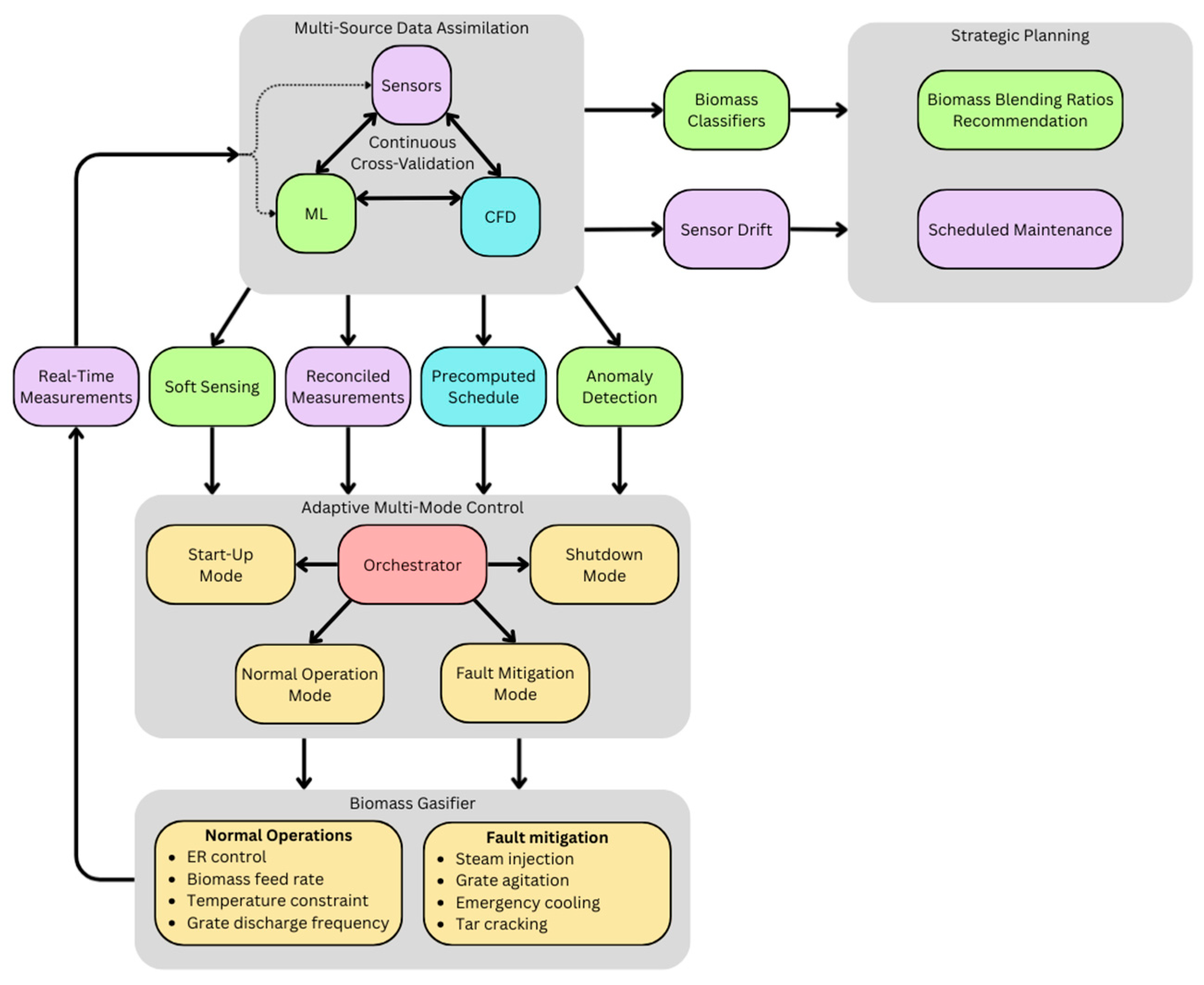
However, the more fundamental barrier to industrial deployment lies not in individual model architectures, but in the fragmented nature of current soft-sensing capabilities. Existing implementations remain narrowly focused on isolated variables (temperature prediction, oxygen concentration, or composition estimation) without integration into holistic fault-detection frameworks. True industrial maturity demands a paradigm shift: from reactive soft-sensing that merely infers unmeasured states, toward holistic frameworks capable of simultaneously predicting internal reactor states, controlling thermal gradients through model predictive optimization, and identifying failure precursors such as pressure oscillation patterns preceding agglomeration or thermal gradient asymmetries indicating cold heart formation before they manifest as measurable anomalies or mechanical failures. This transition requires synergistic architectures where soft-sensing, model predictive control, and digital validation operate as an integrated fault-tolerant system rather than disconnected analytical tools (see Figure 2).

6. Proposed Architecture for Industrial Maturity

6.1. Multi-Source Data Assimilation and Intelligent State Estimation

The foundation of reliable control resides in establishing trustworthy state estimates despite the inherent limitations of physical sensors in corrosive, high-temperature gasification environments. We adopt a three-source validation triangle where high-fidelity physics models, fast machine learning surrogates, and actual reactor measurements continuously cross-validate to detect anomalies, sensor drift, and model degradation.
The comprehensive architecture of this integrated framework is illustrated in Figure 2, depicting the synergy between physical instrumentation and digital layers.
High-fidelity computational fluid dynamics simulations are generally regarded as providing a high-resolution representation of reactor thermochemistry, capturing spatial temperature distributions, species transport, and ash transformation kinetics described in Section 3.2. While their computational expense (hours per simulation) prohibits real-time deployment, CFD models serve two critical offline functions: generating synthetic training datasets spanning failure modes absent from experimental data (incipient agglomeration at 800–850 °C, cold heart formation, tar breakthrough during moisture transients) to address the training distribution gap identified in Section 6.2, and providing on-demand validation when unexplained discrepancies arise between ML predictions and sensor readings.
ML-based soft sensors, trained on CFD-generated datasets and fine-tuned with plant-specific measurements, reconstruct unobservable internal states by virtualizing the three-dimensional thermal field from sparse thermocouple arrays. This spatial awareness is essential because the 10 min thermal inertia (Section 4.1) means surface sensors register grate-level deviations only after the oxidation core has breached safe thresholds. By correlating pressure transients, equivalence ratio history, and boundary temperatures, ML architectures could infer the position and intensity of the >1000 °C tar-cracking zone while estimating char bed height and potassium-silicate accumulation (Table 2).
Physical sensors in agricultural gasification face accelerated degradation from corrosive alkali vapors, particulate deposition, and thermal cycling, causing systematic measurement drift that compromises control accuracy over time. Sensor health monitoring addresses this limitation through continuous statistical analysis of residual patterns between physical measurements and soft-sensor predictions, utilizing fault-tolerant LSTM architectures to compensate for both abrupt offsets and slow sensor drift by leveraging historical batch quality data [90]. When thermocouple readings diverge from ML-inferred temperatures by margins exceeding expected noise variance, or when pressure transducer signals exhibit drift inconsistent with validated CFD benchmarks, the system flags potential sensor degradation. This meta-layer enables proactive maintenance scheduling, replacing sensors before failures compromise safety, while dynamically re-weighting trust in different information sources. The system prioritizes soft-sensor estimates when physical instrumentation exhibits anomalous behavior. The integration of sensor health monitoring elevates the proposed framework from a diagnostic tool to an active data validation system, enabling long-term autonomous operation in decentralized installations.
The three-source architecture’s self-diagnostic capability continuously compares ML predictions against physical sensor readings and periodic CFD benchmarks to detect sensor drift, model degradation, or unmodeled failure modes. This meta-sensing layer enables dynamic re-weighting of information sources, prioritizing soft-sensor estimates when sensor drift exceeds predefined thresholds. Consistent with established practices in process monitoring [91], the system employs mass and energy balance reconciliation for overdetermined sensor networks to ensure physically plausible state estimates.
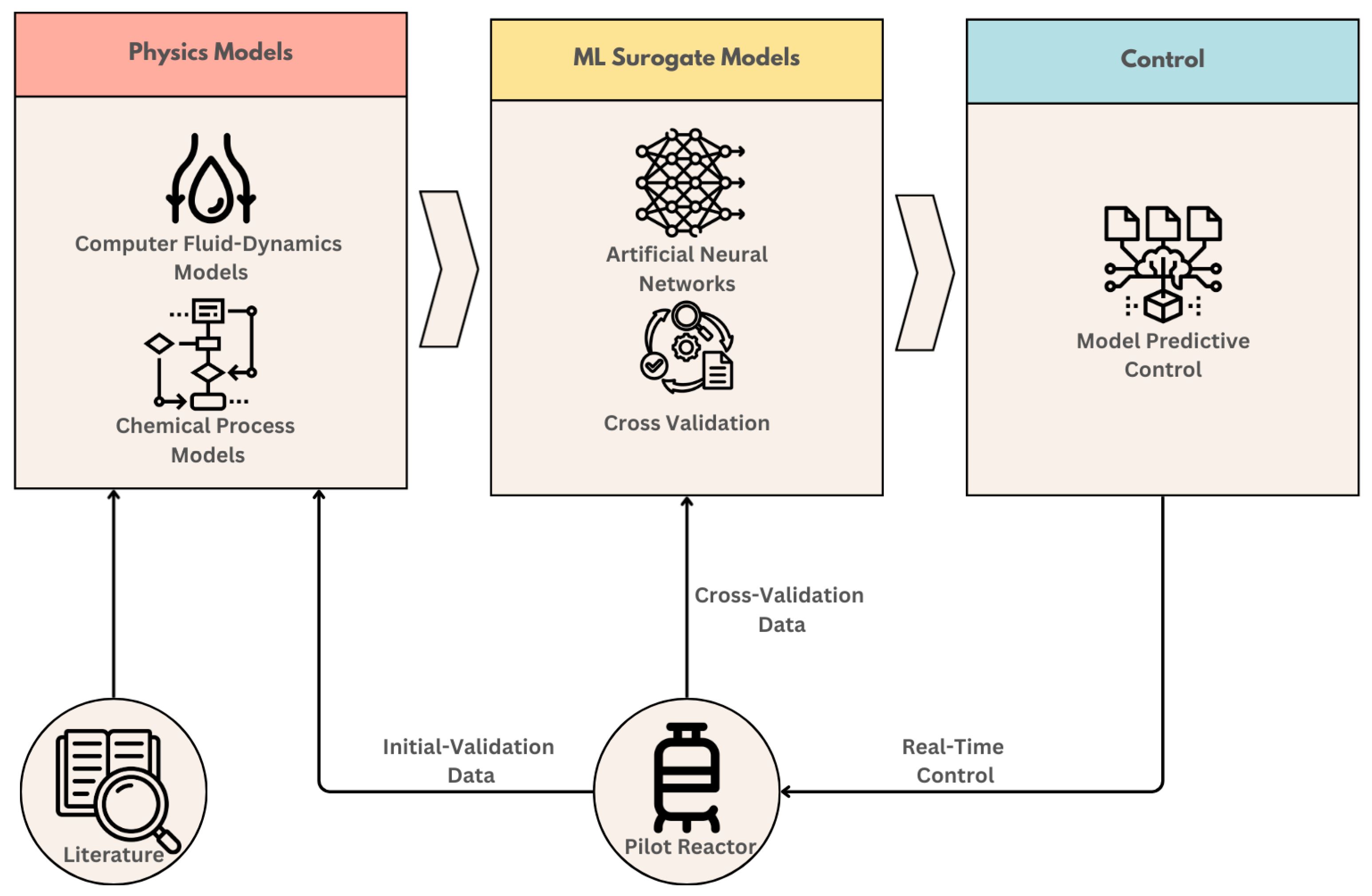
While the specific parameters of the CFD model (mesh resolution, boundary conditions) are reactor-dependent, the framework mandates that the high-fidelity simulation environment must be validated against direct experimental measurements from the pilot reactor, as well as established benchmarks found in the literature [45,48], as seen in Figure 3.
By integrating these quantitative benchmarks, the framework aims to reduce the state estimation uncertainty from the ±100 °C characteristic of manual systems to a predicted variance of ±5–15 °C. This improvement aligns the system’s precision with high-end physical thermocouples while providing the 3D spatial awareness necessary to reconcile the conflicting thermal requirements of the oxidation core and the reactor grate.
A critical methodological risk in simulation-driven frameworks is circular validation: if the reactor measurements used to calibrate the CFD models are the same ones used to assess the ML surrogates trained on those models, any observed agreement reflects shared data lineage rather than genuine predictive capability. As illustrated in Figure 3, the proposed framework explicitly prevents this by separating experimental evidence into two independent sets. An initial validation dataset, collected from dedicated pilot reactor campaigns, is used solely to benchmark the CFD and chemical process models. A statistically independent cross-validation dataset, gathered under distinct operating conditions and feedstock batches, is reserved exclusively for evaluating the ML surrogate accuracy. Controller performance is then assessed against the real reactor’s dynamic response through the real-time control loop, anchoring the final evaluation to physical measurements rather than model-to-model agreement.

6.2. Adaptive Multi-Mode Control and Fault-Tolerant Operation

Translating validated state estimates into effective control requires recognition that agricultural gasification operates across fundamentally distinct regimes, each demanding specialized strategies. The proposed architecture employs a hierarchical ensemble of mode-specific controllers coordinated by a supervisory classification system. The controller ensemble comprises four operational modes.
Start-up mode encourages progressive thermal establishment by gradually increasing the equivalence ratio to promote stable combustion initiation.
Normal operation mode maintains a thermal profile adapted to the feedstock, aiming for Tcore > 1000 °C while respecting safety limits such as Tgrate < 850 °C through coordinated air staging, equivalence ratio, and char bed discharge rate modulation. Dynamic biochar management serves as a multifunctional control variable: optimizing syngas–char contact time to exploit the catalytic tar-cracking properties described in Section 4.3, providing thermal buffering that shields the grate from radiation-induced overheating, and regulating alkali sequestration rates to maintain favorable K/Si ratios within the discharged biochar for agronomic valorization. The feasibility of integrating such mineral management into the control objective is further supported by the development of dual-functional slag-based catalysts [92], which have demonstrated the ability to achieve high tar cracking efficiency (87.1%) while simultaneously providing in situ CO2 fixation (120 mg/g cat). Incorporating these catalytic pathways into the hierarchical MPC framework allows the system to transition from purely operational stabilization to an integrated carbon-negative energy process. By treating char bed height and discharge frequency as continuously adjustable parameters rather than fixed operational constants, the control architecture converts a waste stream into an active process asset that simultaneously addresses gas purity, mechanical longevity, and circular economy objectives.
Shutdown mode suppresses thermal gradients by transitioning to oxidation-dominant flow patterns while progressively reducing feed rates to ensure complete burnout.
Fault mitigation modes respond automatically to detected precursors: agglomeration response increases steam injection while reducing equivalence ratio to lower bed temperature below sintering thresholds, cold heart correction redirects air toward under-gasified zones, and tar breakthrough recovery elevates oxidation intensity to restore cracking efficiency.
To formalize the competing priorities described above, the proposed MPC framework adopts a general cost function structure following the formulation proposed by Curcio et al. [78], adapted here to the thermal-window constraints of agricultural gasification. At each sampling period t s , the optimizer minimizes:
min u t t = t 0 + t s t 0 + H t s w 1 T c o r e t T c o r e o b j 2 + w 2 T g r a t e t T g r a t e m a x + 2 + w 3 τ t a r t ,
where u t = E R t , m c h a r ˙ t , f d i s c h a r g e t , is the control input vector being optimized at each time step. The first term penalizes deviation of the oxidation core temperature T c o r e from its tar-cracking target T c o r e o b j . The second term applies a one-sided penalty, activated only when the grate temperature T g r a t e exceeds T g r a t e m a x , the feedstock-specific maximum allowable grate temperature set equal to the IDT from Table 1 and updated by the supervisory layer upon feedstock changes. The third term penalizes the estimated tar residence time τ t a r as a proxy for cracking efficiency. The weights w 1 , w 2 , w 3 are not fixed parameters but are dynamically scheduled by the supervisory orchestrator according to the active operational mode, as described below. The exact numerical values of the weights and the horizon H will be determined through pilot-scale experiments in future work, and the formulation above defines the structural basis for that tuning process.
A supervisory orchestrator selects the appropriate operating mode based on the current system state and continuously adjusts the cost function weights w 1 , w 2 , w 3 in real time to reflect shifting process priorities, as summarized in Table 8. Machine learning classifiers trained on validated datasets from Section 6.1 perform the analytical work, continuously evaluating thermal stability indices, pressure oscillation signatures, and syngas composition trends to identify the current operating regime and detect emerging anomalies.
These classifiers operate either as unified diagnostic networks or as specialized ensemble architectures where individual models focus on specific failure modes: agglomeration precursors via pressure-drop patterns, cold heart formation through thermal asymmetry detection, and tar breakthrough via syngas quality degradation. The classifier output directly triggers the orchestrator’s weight reassignment, translating a detected regime shift into an immediate update of the cost function priorities without interrupting the active control loop. Pattern recognition algorithms are intended to facilitate anticipatory responses by detecting failure precursors seconds to minutes before terminal symptoms manifest, triggering preemptive interventions while the reactor state remains mechanically reversible. The selected mode determines system priorities: real-time control actions during active operation, anomaly-driven fault mitigation when failure signatures exceed thresholds, and strategic optimization during quasi-steady periods, ensuring that urgent thermal management supersedes long-horizon planning objectives.

6.3. Strategic Planning for Feedstock and Maintenance Optimization

While Section 6.1 and Section 6.2 address real-time state estimation and control, industrial maturity requires coordination across longer time horizons to address feedstock variability and maintenance logistics.
Feedstock blend optimization addresses the seasonal and regional variability inherent to agricultural residues. Determining optimal utilization strategies from available inventory requires systematic evaluation of numerous combinations. Specifically, the system determines the ratios in which different residues (wheat straw, corn stalks, orchard prunings) should be blended. ML surrogate models trained on the datasets described in Section 5.1 predict syngas composition, LHV, and ash behavior from proximate analysis (moisture, volatiles, ash content) and ultimate analysis (C, H, O, N, S elemental composition). These computationally efficient surrogate functions enable rapid virtual evaluation of thousands of potential blending scenarios without executing resource-intensive CFD simulations or experimental trials, identifying combinations that elevate effective ash fusion thresholds above the 850 °C sintering limit while maintaining adequate energy density and minimizing the slagging risks quantified in Table 1. Pre-computed blend recommendations guide operators in feedstock preparation, transforming variability from an operational constraint into a manageable planning problem.
Predictive maintenance scheduling leverages the sensor health metrics computed in Section 6.1 to forecast component end-of-life and schedule interventions proactively. By tracking thermocouple drift rates, pressure transducer noise variance, and gas analyzer calibration offsets, the system triggers maintenance alerts before sensor failures compromise control performance or safety margins. This condition-based approach replaces fixed-interval servicing with need-based interventions, reducing unnecessary downtime while preventing catastrophic failures. For decentralized installations in rural settings, where technical expertise is limited and spare parts logistics are constrained, such predictive capabilities are essential for maintaining operational continuity.
This integrated framework combines validated state estimation (Section 6.1), adaptive multi-mode control with intelligent orchestration (Section 6.2), and strategic planning (Section 6.3). The framework is designed to transition agricultural gasification from a manually-intensive, failure-prone technology into an autonomous system capable of maintaining the narrow thermal window through continuous validation, adaptive control, and strategic foresight, establishing the foundation for reliable decentralized energy production from high-alkali residues.

7. Conclusions and Future Perspectives

This investigation highlights the fundamental limitations preventing conventional control systems from stabilizing high-alkali agricultural residues. The core issue (RQ1) lies in the multiscale nature of the problem. The 1000 °C versus 850 °C thermal conflict cannot be solved through hardware modifications alone, as it involves three-dimensional spatial heterogeneity, thermal lag from densified pellets, and cumulative alkali-silicate transformations that evolve over minutes to hours. Conventional PID architecture treats the reactor as a scalar system with instantaneous response, fundamentally mismatching the physical reality of agricultural gasification, where “cold hearts” bypass tar cracking while thermal inertia delays detection until safety margins are breached.
Machine learning offers partial solutions but reveals critical research frontiers (RQ2). Static neural networks predict steady-state behavior but violate physical laws under extrapolation. Physics-informed architectures restore thermodynamic consistency and improve generalization to unseen feedstocks, yet remain limited to equilibrium conditions. Temporal architectures with memory mechanisms prove essential for tracking cumulative phenomena such as potassium mobilization, silicate layering, and viscous sintering that define failure progression in agricultural systems. However, substantial gaps persist: training data lacks failure modes, simulation-to-reality transfer fails under sensor degradation, and no physics-informed temporal architectures exist to stabilize long-horizon predictions through embedded conservation laws.
The primary contribution of this work (RQ3) lies in unifying these elements into a unified framework that bridges high-fidelity simulation, real-time inferential sensing, and fault-tolerant control. By coordinating CFD benchmarks, ML soft-sensors, and sensor health monitoring within a hierarchical architecture, the system reconstructs unobservable internal states and enables anticipatory intervention. Mode-specific control strategies governed by ML classifiers detect pressure-drop signatures, thermal asymmetry, and composition drift shift operations from reactive correction to preemptive stabilization. Dynamic biochar management extends this logic beyond conventional process variables, transforming a waste stream into a multifunctional asset for tar cracking, thermal buffering, and alkali sequestration.
Future work must address the simulation-to-deployment gap. Validating this architecture under pilot-scale conditions with dynamic load-following will test soft-sensor accuracy during transient operation. Physics-informed temporal networks should be developed to extend prediction horizons while maintaining thermodynamic consistency. The detailed mathematical formulation and closed-loop validation of the proposed MPC controller constitute the immediate next steps of this research program. Transfer learning strategies can adapt models trained on CFD data to real sensor distributions, while online learning mechanisms address long-term sensor drift. Feedstock blend optimization can elevate ash fusion thresholds above sintering limits, and agronomic validation of catalytic biochar will clarify how alkali sequestration affects soil amendment stability. These developments are needed for establishing agricultural residues as a reliable, predictable component of the decentralized bioeconomy.

Author Contributions

Conceptualization, T.O.P. and F.I.B.; methodology, F.I.B.; investigation, T.O.P. and O.L.R.; writing—original draft preparation, T.O.P. and F.I.B.; writing—review and editing T.O.P. and F.I.B.; supervision, F.I.B.; project administration, O.L.R. All authors have read and agreed to the published version of the manuscript.

Funding

This work was supported by a grant of the Northwest Regional Program 2021–2027, Priority 1—“A competitive region through innovation, digitalization and dynamic enterprises”, Project: SIGBAR—“Innovative System for the Gasification of Residual Agricultural Biomass”, MySMIS code 326879, co-financed by the European Union from the European Regional Development Fund.

Data Availability Statement

No new data were created or analyzed in this study. Data sharing is not applicable to this article.

Acknowledgments

During the preparation of this manuscript, the authors used Gemini 3 AI for the purposes of grammar refinement and language editing. The authors have reviewed and edited the output and take full responsibility for the content of this publication.

Conflicts of Interest

Author Otto Lorand Rencsik was employed by Climarol Prest Oradea. The remaining authors declare that the research was conducted in the absence of any commercial or financial relationships that could be construed as a potential conflict of interest.

Abbreviations

The following abbreviations are used in this manuscript:
AcronymDefinition
0DZero-dimensional
AFRAir Feed Rate
AFTAsh Fusion Temperature
ANNArtificial Neural Network
BAIBed Agglomeration Index
BFRBiomass Feed Rate
CFDComputational Fluid Dynamics
CCECarbon Conversion Efficiency
CVCross Validation
dbDry basis
DTRDecision Tree Regressor
EREquivalence Ratio
FSFeature Selection
GBRGradient Boosting Regressor
GPRGaussian Process Regression
HHVHigher Heating Value
IDTInitial Deformation Temperature
KNNK-Nearest Neighbors
LHVLower Heating Value
LRLinear Regression
LS-SVMLeast Squares Support Vector Machine
LSTMLong Short-Term Memory
MAEMean Absolute Error
MLPMulti-Layer Perceptron
MPCModel Predictive Control
MSWMunicipal Solid Waste
NARXNonlinear Autoregressive with Exogenous Inputs
PAProximate Analysis
PAHPolycyclic Aromatic Hydrocarbon
PCAPrincipal Component Analysis
PCDPhysical Consistency Degree
PDPPartial Dependence Plot
PIDProportional-Integral-Derivative
PINNPhysics-Informed Neural Network
PLCProgrammable Logic Controller
RFRandom Forest
ROMReduced Order Model
RNNRecurrent Neural Network
S/BSteam-to-Biomass Ratio
SSSewage Sludge
SCADASupervisory Control and Data Acquisition
SVRSupport Vector Regressor
SHAPSHapley Additive exPlanations
UAUltimate Analysis
XGBReXtreme Gradient Boosting Regressor

References

  1. Bentsen, N.S.; Felby, C.; Thorsen, B.J. Agricultural residue production and potentials for energy and materials services. Prog. Energy Combust. Sci. 2014, 40, 59–73. [Google Scholar] [CrossRef]
  2. Lackner, M.; Besharati, M. Agricultural Waste: Challenges and Solutions, a Review. Waste 2025, 3, 18. [Google Scholar] [CrossRef]
  3. Saadatlu, E.A.; Barzinpour, F.; Yaghoubi, S. A sustainable model for municipal solid waste system considering global warming potential impact: A case study. Comput. Ind. Eng. 2022, 169, 108127. [Google Scholar] [CrossRef]
  4. Rahimi, Z.; Anand, A.; Gautam, S. An overview on thermochemical conversion and potential evaluation of biofuels derived from agricultural wastes. Energy Nexus 2022, 7, 100125. [Google Scholar] [CrossRef]
  5. Rashidi, N.A.; Mohd Yusoff, M.H.; Ahmad Termezi, M.F.; Azmi, N. Sustainable valorization of agricultural biomass: Progress in thermochemical conversion for bioenergy production. Biofuels Bioprod. Biorefining 2025, 19, 2662–2679. [Google Scholar] [CrossRef]
  6. Gao, Y.; Wang, M.; Raheem, A.; Wang, F.; Wei, J.; Xu, D.; Song, X.; Bao, W.; Huang, A.; Zhang, S.; et al. Syngas Production from Biomass Gasification: Influences of Feedstock Properties, Reactor Type, and Reaction Parameters. ACS Omega 2023, 8, 31620–31631. [Google Scholar] [CrossRef]
  7. Aguado, R.; Vera, D.; Lopez-Garcia, D.A.; Torreglosa, J.P.; Jurado, F. Techno-economic assessment of a gasification plant for distributed cogeneration in the agrifood sector. Appl. Sci. 2021, 11, 660. [Google Scholar] [CrossRef]
  8. Abouemara, K.; Shahbaz, M.; Mckay, G.; Al-Ansari, T. The review of power generation from integrated biomass gasification and solid oxide fuel cells: Current status and future directions. Fuel 2024, 360, 130511. [Google Scholar] [CrossRef]
  9. Shahbeig, H.; Shafizadeh, A.; Rosen, M.A.; Sels, B.F. Exergy sustainability analysis of biomass gasification: A critical review. Biofuel Res. J. 2022, 9, 1592–1607. [Google Scholar] [CrossRef]
  10. Ayub, Y.; Ren, J.; Shi, T. Exploring gasification process and technology for biomass-waste utilization: A comprehensive review on the path to sustainable energy. Process Saf. Environ. Prot. 2024, 188, 1489–1501. [Google Scholar] [CrossRef]
  11. Abioye, K.J.; Harun, N.Y.; Sufian, S.; Yusuf, M.; Jagaba, A.H.; Ekeoma, B.C.; Kamyab, H.; Sikiru, S.; Waqas, S.; Ibrahim, H. A review of biomass ash related problems: Mechanism, solution, and outlook. J. Energy Inst. 2024, 112, 101490. [Google Scholar] [CrossRef]
  12. Arvelakis, S.; Koukios, E.G. Critical factors for high temperature processing of biomass from agriculture and energy crops to biofuels and bioenergy. In Advances in Bioenergy: The Sustainability Challenge; Wiley: Hoboken, NJ, USA, 2016; pp. 149–162. [Google Scholar]
  13. Santana, H.E.; Jesus, M.; Santos, J.; Rodrigues, A.C.; Pires, P.; Ruzene, D.S.; Silva, I.P.; Silva, D.P. Lignocellulosic biomass gasification: Perspectives, challenges, and methods for tar elimination. Sustainability 2025, 17, 1888. [Google Scholar] [CrossRef]
  14. Zhu, Y.; Niu, Y.; Tan, H.; Wang, X. Short review on the origin and countermeasure of biomass slagging in grate furnace. Front. Energy Res. 2014, 2, 7. [Google Scholar] [CrossRef]
  15. Allesina, G.; Pedrazzi, S. Barriers to success: A technical review on the limits and possible future roles of small scale gasifiers. Energies 2021, 14, 6711. [Google Scholar] [CrossRef]
  16. Olupot, P.W.; Mibulo, T.; Nayebare, J.G. Characterization of Uganda’s Main Agri-Food Value Chain Wastes for Gasification. Energies 2023, 17, 164. [Google Scholar] [CrossRef]
  17. Yang, Q.; Wang, T.; Wang, J.; Sui, Z.; Wang, L.; Zhang, Y.; Pan, W.-P. Combustion, emission and slagging characteristics for typical agricultural crop straw usage in heating plants. Thermochim. Acta 2021, 702, 178979. [Google Scholar] [CrossRef]
  18. Kalisz, S.; Ciukaj, S.; Tymoszuk, M.; Kubiczek, H. Fouling and its mitigation in PC boilers co-firing forestry and agricultural biomass. Heat Transf. Eng. 2015, 36, 763–770. [Google Scholar] [CrossRef]
  19. Ferreiro, A.; Ferreira, A.; Fernandes, E.; Coelho, P. Influence of process parameters on biomass gasification: A review of experimental studies in entrained flow reactors and droptube furnaces. Biomass Bioenergy 2024, 185, 107217. [Google Scholar] [CrossRef]
  20. Luan, J.; Wang, Q.; Shao, D.; Cui, B.; Han, P.; He, Q. Research progress on influencing factors and control methods of slagging in biomass combustion. Front. Energy Res. 2025, 13, 1634354. [Google Scholar] [CrossRef]
  21. Đurić, S.N.; Kaluđerović, Ž.L.; Kosanić, T.R.; Ćeranić, M.B.; Milotić, M.M.; Brankov, S.D. Experimental investigation of pyrolysis process of agricultural biomass mixture. Period. Polytech. Chem. Eng. 2014, 58, 141–147. [Google Scholar] [CrossRef]
  22. Mu, L.; Wang, R.; Xie, P.; Li, Y.; Huang, X.; Yin, H.; Dong, M. Comparative investigation on the pyrolysis of crop, woody, and herbaceous biomass: Pyrolytic products, structural characteristics, and CO2 gasification. Fuel 2023, 335, 126940. [Google Scholar] [CrossRef]
  23. Mishra, R.K.; Naik, S.U.; Chistie, S.M.; Kumar, V.; Narula, A. Pyrolysis of agricultural waste in a thermogravimetric analyzer: Studies of physicochemical properties, kinetics behaviour, and gas compositions. Mater. Sci. Energy Technol. 2022, 5, 399–410. [Google Scholar] [CrossRef]
  24. Paudel, P.P.; Kafle, S.; Park, S.; Kim, S.J.; Cho, L.; Kim, D.H. Advancements in sustainable thermochemical conversion of agricultural crop residues: A systematic review of technical progress, applications, perspectives, and challenges. Renew. Sustain. Energy Rev. 2024, 202, 114723. [Google Scholar] [CrossRef]
  25. Biagini, E.; Barontini, F.; Tognotti, L. Gasification of agricultural residues in a demonstrative plant: Corn cobs. Bioresour. Technol. 2014, 173, 110–116. [Google Scholar] [CrossRef]
  26. Xie, H.; Yu, Q.; Qin, Q.; Zhang, H.; Fu, X. Bio-oil production by fast pyrolysis from agriculture residue in northeastern China. J. Renew. Sustain. Energy 2013, 5, 013103. [Google Scholar] [CrossRef]
  27. Sikarwar, V.S.; Zhao, M.; Clough, P.; Yao, J.; Zhong, X.; Memon, M.Z.; Shah, N.; Anthony, E.J.; Fennell, P.S. An overview of advances in biomass gasification. Energy Environ. Sci. 2016, 9, 2939–2977. [Google Scholar] [CrossRef]
  28. Cusenza, M.A.; Longo, S.; Cellura, M.; Guarino, F.; Messineo, A.; Mistretta, M.; Volpe, M. Environmental assessment of a waste-to-energy practice: The pyrolysis of agro-industrial biomass residues. Sustain. Prod. Consum. 2021, 28, 866–876. [Google Scholar] [CrossRef]
  29. Manyà, J.J.; Alvira, D.; Videgain, M.; Duman, G.; Yanik, J. Assessing the importance of pyrolysis process conditions and feedstock type on the combustion performance of agricultural-residue-derived chars. Energy Fuels 2021, 35, 3174–3185. [Google Scholar] [CrossRef] [PubMed]
  30. Basu, P. Biomass Gasification and Pyrolysis: Practical Design and Theory; Academic Press: Cambridge, MA, USA, 2010. [Google Scholar]
  31. Khan, M.J.; Al-attab, K.A. Steam gasification of biomass for hydrogen production—A review and outlook. J. Adv. Res. Fluid Mech. Therm. Sci. 2022, 98, 175–204. [Google Scholar] [CrossRef]
  32. Titiloye, J.O.; Bakar, M.S.A.; Odetoye, T.E. Thermochemical characterisation of agricultural wastes from West Africa. Ind. Crops Prod. 2013, 47, 199–203. [Google Scholar] [CrossRef]
  33. Xu, Y.; Wang, K.; Qian, Y.; Yang, W.; Li, Z.; Li, Q.; Ma, P. Effect of the ash melting on heat and mass characteristics and reaction rate during corn stalk pellet gasification. J. Energy Inst. 2025, 118, 101883. [Google Scholar] [CrossRef]
  34. Mettanant, V.; Basu, P.; Butler, J. Agglomeration of biomass fired fluidized bed gasifier and combustor. Can. J. Chem. Eng. 2009, 87, 656–684. [Google Scholar] [CrossRef]
  35. Ge, Y.; Ding, S.; Kong, X.; Kantarelis, E.; Engvall, K.; Pettersson, J.B. Online monitoring of alkali release during co-pyrolysis/gasification of forest and agricultural waste: Element migration and synergistic effects. Biomass Bioenergy 2023, 172, 106745. [Google Scholar] [CrossRef]
  36. Ghazidin, H.; Prayoga, M.Z.E.; Putra, H.P.; Priyanto, U.; Prismantoko, A.; Darmawan, A. A comprehensive evaluation of slagging and fouling indicators for solid fuel combustion. Therm. Sci. Eng. Prog. 2023, 40, 101769. [Google Scholar] [CrossRef]
  37. Maitlo, G.; Ali, I.; Mangi, K.H.; Ali, S.; Maitlo, H.A.; Unar, I.N.; Pirzada, A.M. Thermochemical conversion of biomass for syngas production: Current status and future trends. Sustainability 2022, 14, 2596. [Google Scholar] [CrossRef]
  38. Anand, A.; Gautam, S.; Ram, L.C. A characteristic-based decision tree approach for sustainable energy applications of biomass residues from two major classes. Fuel 2023, 339, 127483. [Google Scholar] [CrossRef]
  39. Havilah, P.R.; Sharma, A.K.; Govindasamy, G.; Matsakas, L.; Patel, A. Biomass gasification in downdraft gasifiers: A technical review on production, up-gradation and application of synthesis gas. Energies 2022, 15, 3938. [Google Scholar] [CrossRef]
  40. Thakkar, M.; Singh, V. Air-steam gasification of raw and torrefied lignocellulosic crop residues in the circulating fluidized bed gasifier with calcined dolomite and raw olivine as bed additives. Biomass Bioenergy 2026, 205, 108517. [Google Scholar] [CrossRef]
  41. Senthilkumar, V.; Prabhu, C. Optimization of design and development of a biomass gasifier—A review. Biofuels 2024, 15, 1079–1097. [Google Scholar] [CrossRef]
  42. Di Blasi, C. Modeling chemical and physical processes of wood and biomass pyrolysis. Prog. Energy Combust. Sci. 2008, 34, 47–90. [Google Scholar] [CrossRef]
  43. Alabdrabalameer, H.A.; Taylor, M.J.; Kauppinen, J.; Soini, T.; Pikkarainen, T.; Skoulou, V. Big problem, little answer: Overcoming bed agglomeration and reactor slagging during the gasification of barley straw under continuous operation. Sustain. Energy Fuels 2020, 4, 3764–3772. [Google Scholar] [CrossRef]
  44. Ajorloo, M.; Ghodrat, M.; Scott, J.; Strezov, V. Recent advances in thermodynamic analysis of biomass gasification: A review on numerical modelling and simulation. J. Energy Inst. 2022, 102, 395–419. [Google Scholar] [CrossRef]
  45. Kuttin, K.W.; Kuttin, A.W.; Salem, A.M.; Wang, Y.; Ding, L. Spatial comprehensive comparative analysis of updraft and downdraft fixed bed gasification reactors by computational fluid dynamics approach with industrial data validation. Appl. Energy 2025, 400, 126612. [Google Scholar] [CrossRef]
  46. Yu, Z.; Wang, Z.; Zhong, H.; Cheng, K. Essential aspects of the CFD software modelling of biomass gasification processes in downdraft reactors. RSC Adv. 2024, 14, 28724–28739. [Google Scholar] [CrossRef]
  47. Lee, W.; Jang, K.; Han, W.; Huh, K.Y. Model order reduction by proper orthogonal decomposition for a 500 MWe tangentially fired pulverized coal boiler. Case Stud. Therm. Eng. 2021, 28, 101414. [Google Scholar] [CrossRef]
  48. Król, K.; Nowak-Woźny, D. Application of the Mechanical and Pressure Drop Tests to Determine the Sintering Temperature of Coal and Biomass Ash. Energies 2021, 14, 1126. [Google Scholar] [CrossRef]
  49. Lei, T.; Zhao, J.; Zhang, Z. In-situ ash sintering process analysis during the co-combustion of the coal gasification fine slag and corn straw. Energy 2024, 310, 133311. [Google Scholar] [CrossRef]
  50. Ascher, S.; Watson, I.; You, S. Machine learning methods for modelling the gasification and pyrolysis of biomass and waste. Renew. Sustain. Energy Rev. 2022, 155, 111902. [Google Scholar] [CrossRef]
  51. Ascher, S.; Sloan, W.; Watson, I.; You, S. A comprehensive artificial neural network model for gasification process prediction. Appl. Energy 2022, 320, 119289. [Google Scholar] [CrossRef]
  52. Sedej, O.; Mbonimpa, E.; Sleight, T.; Slagley, J. Artificial neural networks and gradient boosted machines used for regression to evaluate gasification processes: A review. J. Energy Power Technol. 2022, 4, 027. [Google Scholar] [CrossRef]
  53. da Silva Pimentel, F.; Ferreira dos Santos, B.; Pradelle, F. Investigation of artificial neural network topologies to predict biomass gasification and comparison with a thermodynamic equilibrium model. Energy 2024, 308, 132762. [Google Scholar] [CrossRef]
  54. Yan, M.; Bi, H.; Wang, H.; Xu, C.; Chen, L.; Zhang, L.; Chen, S.; Xu, X.; Li, Z.; Hou, Y. Advanced Temperature-Integrated Backpropagation Neural Network for Enhanced Prediction of Syngas Composition in Complex Organic Waste Gasification. Chem Bio Eng. 2024, 2, 110–122. [Google Scholar] [CrossRef] [PubMed]
  55. Safarian, S.; Saryazdi, S.M.E.; Unnthorsson, R.; Richter, C. Artificial neural network integrated with thermodynamic equilibrium modeling of downdraft biomass gasification-power production plant. Energy 2020, 213, 118800. [Google Scholar] [CrossRef]
  56. Li, J.; Li, L.; Tong, Y.W.; Wang, X. Understanding and optimizing the gasification of biomass waste with machine learning. Green. Chem. Eng. 2023, 4, 123–133. [Google Scholar] [CrossRef]
  57. Serrano, D.; Castelló, D. Tar prediction in bubbling fluidized bed gasification through artificial neural networks. Chem. Eng. J. 2020, 402, 126229. [Google Scholar] [CrossRef]
  58. Kartal, F.; Özveren, U. A deep learning approach for prediction of syngas lower heating value from CFB gasifier in Aspen plus®. Energy 2020, 209, 118457. [Google Scholar] [CrossRef]
  59. Ayub, H.M.U.; Rafiq, M.; Qyyum, M.A.; Rafiq, G.; Choi, G.S.; Lee, M. Prediction of process parameters for the integrated biomass gasification power plant using artificial neural network. Front. Energy Res. 2022, 10, 894875. [Google Scholar] [CrossRef]
  60. Escámez, A.; Aguado, R.; Sánchez-Lozano, D.; Jurado, F.; Vera, D. An ensemble multi-ANN approach for virtual oxygen sensing and air leakage prediction in biomass gasification plants. Renew. Energy 2025, 242, 122376. [Google Scholar] [CrossRef]
  61. Hidayat, H.F.; Setiawan, R.; Dhelika, R.; Surjosatyo, A.; Dafiqurrohman, H. Investigation of relative influence of process variables in a 10-kw downdraft fixed-bed gasifier with ann models. J. Appl. Eng. Sci. 2022, 20, 971–977. [Google Scholar]
  62. Ögren, Y.; Tóth, P.; Garami, A.; Sepman, A.; Wiinikka, H. Development of a vision-based soft sensor for estimating equivalence ratio and major species concentration in entrained flow biomass gasification reactors. Appl. Energy 2018, 226, 450–460. [Google Scholar] [CrossRef]
  63. Wen, H.-T.; Lu, J.-H.; Phuc, M.-X. Applying artificial intelligence to predict the composition of syngas using rice husks: A comparison of artificial neural networks and gradient boosting regression. Energies 2021, 14, 2932. [Google Scholar] [CrossRef]
  64. Ozbas, E.E.; Aksu, D.; Ongen, A.; Aydin, M.A.; Ozcan, H.K. Hydrogen production via biomass gasification, and modeling by supervised machine learning algorithms. Int. J. Hydrogen Energy 2019, 44, 17260–17268. [Google Scholar] [CrossRef]
  65. Elmaz, F.; Yücel, Ö.; Mutlu, A.Y. Predictive modeling of biomass gasification with machine learning-based regression methods. Energy 2020, 191, 116541. [Google Scholar] [CrossRef]
  66. Tang, Q.; Chen, Y.; Yang, H.; Liu, M.; Xiao, H.; Wang, S.; Chen, H.; Naqvi, S.R. Machine learning prediction of pyrolytic gas yield and compositions with feature reduction methods: Effects of pyrolysis conditions and biomass characteristics. Bioresour. Technol. 2021, 339, 125581. [Google Scholar] [CrossRef] [PubMed]
  67. Qi, J.; Wang, Y.; Xu, P.; Hu, M.; Huhe, T.; Ling, X.; Yuan, H.; Chen, Y. Study on the Co-gasification characteristics of biomass and municipal solid waste based on machine learning. Energy 2024, 290, 130178. [Google Scholar] [CrossRef]
  68. Ren, S.; Wu, S.; Weng, Q. Physics-informed machine learning methods for biomass gasification modeling by considering monotonic relationships. Bioresour. Technol. 2023, 369, 128472. [Google Scholar] [CrossRef]
  69. Xing, J.; Wang, H.; Luo, K.; Wang, S.; Bai, Y.; Fan, J. Predictive single-step kinetic model of biomass devolatilization for CFD applications: A comparison study of empirical correlations (EC), artificial neural networks (ANN) and random forest (RF). Renew. Energy 2019, 136, 104–114. [Google Scholar] [CrossRef]
  70. Weng, Q.; Ren, S.; Zhu, B.; Si, F. Biomass gasification modeling based on physics-informed neural network with constrained particle swarm optimization. Energy 2025, 320, 135392. [Google Scholar] [CrossRef]
  71. Ren, S.; Wu, S.; Weng, Q.; Zhu, B.; Deng, Z. Disentangled Representation Aided Physics-Informed Neural Network for Predicting Syngas Compositions of Biomass Gasification. Energy Fuels 2024, 38, 2033–2045. [Google Scholar] [CrossRef]
  72. An, H.; Fang, X.; Liu, Z.; Li, Y. Research on a soft-measurement model of gasification temperature based on recurrent neural network. Clean. Energy 2022, 6, 97–104. [Google Scholar] [CrossRef]
  73. Mikulandrić, R.; Böhning, D.; Lončar, D. Modelling of temperature and syngas composition in a fixed bed biomass gasifier using nonlinear autoregressive networks. J. Sustain. Dev. Energy Water Environ. Syst. 2020, 8, 145–161. [Google Scholar] [CrossRef]
  74. Yucel, O.; Aydin, E.S.; Sadikoglu, H. Comparison of the different artificial neural networks in prediction of biomass gasification products. Int. J. Energy Res. 2019, 43, 5992–6003. [Google Scholar] [CrossRef]
  75. Wang, H.; Ricardez-Sandoval, L.A. Dynamic optimization of a pilot-scale entrained-flow gasifier using artificial recurrent neural networks. Fuel 2020, 272, 117731. [Google Scholar] [CrossRef]
  76. Elmaz, F.; Yücel, Ö. Data-driven identification and model predictive control of biomass gasification process for maximum energy production. Energy 2020, 195, 117037. [Google Scholar] [CrossRef]
  77. Faridi, I.K.; Tsotsas, E.; Heineken, W.; Koegler, M.; Kharaghani, A. Development of a neural network model predictive controller for the fluidized bed biomass gasification process. Chem. Eng. Sci. 2024, 293, 120000. [Google Scholar] [CrossRef]
  78. Curcio, A.; Rodat, S.; Vuillerme, V.; Abanades, S. Dynamic modeling, control, and upscaling of solar-hybridized biomass gasification for continuous and stabilized syngas fuel production. Processes 2025, 13, 3109. [Google Scholar] [CrossRef]
  79. Faridi, I.K.; Tsotsas, E.; Heineken, W.; Koegler, M.; Kharaghani, A. Spatio-temporal prediction of temperature in fluidized bed biomass gasifier using dynamic recurrent neural network method. Appl. Therm. Eng. 2023, 219, 119334. [Google Scholar] [CrossRef]
  80. Wang, K.; Li, T.; Xu, L.; Hu, Q.; You, K. Safety meets speed: Accelerated neural MPC with safety guarantees and no retraining. IEEE Robot. Autom. Lett. 2025, 10, 11411–11418. [Google Scholar] [CrossRef]
  81. Salzmann, T.; Kaufmann, E.; Arrizabalaga, J.; Pavone, M.; Scaramuzza, D.; Ryll, M. Real-time neural MPC: Deep learning model predictive control for quadrotors and agile robotic platforms. IEEE Robot. Autom. Lett. 2023, 8, 2397–2404. [Google Scholar] [CrossRef]
  82. Celestini, D.; Gammelli, D.; Guffanti, T.; D’Amico, S.; Capello, E.; Pavone, M. Transformer-based model predictive control: Trajectory optimization via sequence modeling. IEEE Robot. Autom. Lett. 2024, 9, 9820–9827. [Google Scholar] [CrossRef]
  83. Hose, H.; Köhler, J.; Zeilinger, M.N.; Trimpe, S. Approximate nonlinear model predictive control with safety-augmented neural networks. IEEE Trans. Control Syst. Technol. 2025, 33, 2490–2497. [Google Scholar] [CrossRef]
  84. Wu, F.; Wang, G.; Zhuang, S.; Wang, K.; Keimer, A.; Stoica, I.; Bayen, A. Composing MPC with LQR and neural network for amortized efficiency and stable control. IEEE Trans. Autom. Sci. Eng. 2023, 21, 2088–2101. [Google Scholar] [CrossRef]
  85. Everett, M.; Habibi, G.; Sun, C.; How, J.P. Reachability analysis of neural feedback loops. IEEE Access 2021, 9, 163938–163953. [Google Scholar] [CrossRef]
  86. Ascher, S.; Wang, X.; Watson, I.; Sloan, W.; You, S. Interpretable machine learning to model biomass and waste gasification. Bioresour. Technol. 2022, 364, 128062. [Google Scholar] [CrossRef]
  87. Mutlu, A.Y.; Yucel, O. An artificial intelligence based approach to predicting syngas composition for downdraft biomass gasification. Energy 2018, 165, 895–901. [Google Scholar] [CrossRef]
  88. Tang, X.-B.; Hong, Q.-B.; Liu, Y.; Wang, B.-C.; Cui, Z.; Shao, W. Physics-Informed LSTM based dynamic model of heat exchanger and application on the thermal management system considering time delay. Int. J. Heat Mass Transf. 2025, 250, 127322. [Google Scholar] [CrossRef]
  89. Zarzycki, K.; Ławryńczuk, M. Long short-term memory neural networks for modeling dynamical processes and predictive control: A hybrid physics-informed approach. Sensors 2023, 23, 8898. [Google Scholar] [CrossRef]
  90. Liu, Y.; Ni, D.; Wang, Z. A Fault-Tolerant Soft Sensor Algorithm Based on Long Short-Term Memory Network for Uneven Batch Process. Processes 2024, 12, 495. [Google Scholar] [CrossRef]
  91. Jankovic, S.; Stanger, L.; Bartik, A.; Hammerschmid, M.; Benedikt, F.; Mittermayr, M.; Binder, M.; Kozek, M.; Müller, S. Design and implementation of a digital twin for a biomass-to-gas plant. Appl. Energy 2025, 402, 126861. [Google Scholar] [CrossRef]
  92. Ma, H.; Zhang, G.; Di, H.; Zhang, T.; Li, Y.; Yang, J.; Zhao, R.; Han, J.; Li, K. Catalytic cracking of biomass gasification tar integrated with carbon fixation over steel slag-based catalyst. J. Energy Inst. 2026, 125, 102455. [Google Scholar] [CrossRef]
Figure 1. Summary of the literature search and selection process based on PRISMA 2020 guidelines.
Processes 14 01053 g001
Figure 2. Integrated control architecture for agricultural gasification: CFD-validated ML soft-sensing with hierarchical MPC managing the conflicting thermal requirements of tar cracking and ash stability.
Processes 14 01053 g002
Figure 3. Schematic representation of the strategy proposed in this study.
Processes 14 01053 g003
Table 1. Comparative analysis of physical-chemical properties and thermal boundaries for selected biomass feedstocks (reported on a dry basis, db).
Feedstock TypeCarbon (%)Hydrogen (%)Ash Content (%)LHV (MJ/kg)IDT (°C)Slagging RiskRef.
Wheat straw41.7–48.63.6–8.33.7–9.416.0–18.5750–850High[14,16,21,22,23,24]
Corn cobs44.8–47.65.2–6.12.1–5.117.4–18.2820–900Moderate[24,25,26]
Orchard prunings47.1–50.05.3–6.51.1–5.518.0–21.2950–1050Low[24,27,28,29]
Wood pellets48.5–50.25.9–6.3<1.018.5–19.5>1200Negligible[30]
Sugarcane bagasse41.5–44.35.1–5.73.9–7.015.8–17.2850–950Moderate[24,31,32]
LHV: Lower Heating Value; IDT: Initial Deformation Temperature.
Table 2. Thermochemical stages of ash transformation and mechanical impact in agricultural gasification.
Stage of TransformationChemical/Physical MechanismImpact on Bed PorosityCritical Temperature
Range (°C)
Ref.
Alkali MobilizationVolatilization of K and Na from plant fibersInitiation of surface-level chemical reactivity500–700[35]
Silicate LayeringInteraction of K2O with amorphous SiO2Formation of sticky surface layers on char700–850[14]
Viscous SinteringCoalescence through liquid bridge formationDrastic reduction in gas permeability800–950[11]
Clinker ConsolidationGrowth of clusters into rigid mechanical blocksComplete mechanical blockage of the grate>950[20]
Table 3. Critical evaluation of traditional slagging/fouling indices for agricultural residues.
Index NameChemical BasisCommon Risk ThresholdsSpecific Failure Points for Agri-BiomassRef.
Base-to-Acid Ratio (Rb/a)(Fe2O3 + CaO + MgO + K2O + Na2O)/(SiO2 + TiO2 + Al2O3)High risk > 1.0Neglects the synergistic fluxing effect of P and Cl in straw[36]
Slag Viscosity Index (Si)(SiO2 × 100)/(SiO2 + Fe2O3 + CaO + MgO)High risk < 65Derived from coal; ignores the high reactivity of amorphous silica in husks[11]
Bed Agglomeration Index (BAI)Fe2O3/(K2O+ Na2O)High risk < 0.15Fails in high-silica residues where iron content is negligible[36]
Fouling Index (Fu)(Rb/a) × (Na2O + K2O)High risk > 0.6Underestimates fouling due to the high volatility of potassium salts[39]
Table 4. Synthesis of thermochemical instabilities and the associated limitations of conventional sensing architectures in agricultural biomass gasification.
Control ChallengePhysical CauseImpact on OperationDetection LimitationRef.
Thermal LagHigh bed inertia (pellets)Overshooting/SlaggingDelayed thermocouple response[44]
Tar Slip“Cold heart” formationEngine valve foulingSingle-point sensing failure[46]
ChannelingResidue heterogeneityLocalized grate meltingSpatial temperature masking[45]
Dead-TimeKinetic non-linearityControl loop oscillationsReactive PID limitations[47]
Table 5. Quantitative performance benchmarks of PINN architectures for syngas prediction (Data adapted from Ren et al. [68]).
Gas ProductR2 (Mean)RMSE (Mean)PCD (Physical Consistency Degree)
N20.9673.7461.0 (100%)
H20.9172.3251.0 (100%)
CO0.9212.3551.0 (100%)
CO20.9181.8241.0 (100%)
CH40.9060.8431.0 (100%)
Table 6. Technical performance metrics and implementation parameters of machine learning architectures in gasification systems.
ArchitectureTypical Inputs/OutputsPrediction HorizonComputational CostUncertainty/Ablation Role
ANNBiomass properties, ER/Syngas yield, LHVStatic (None)Very LowSensitivity analysis of fuel variability
PINNOperational setpoints/Species concentrationsStatic (None)Low to ModerateConstraints validation via physical laws
RNNPast sensor data (T, flow)/Future temperatureShort-term (seconds)ModerateDetection of transient instabilities
NARXInput history, previous states/Process variablesMedium-term (minutes)ModerateError accumulation tracking
LSTMMulti-sensor time series/Unobservable statesLong-term (10+ min)High (Training)/Low (Inference)Pattern recognition of failure precursors
Table 7. Summary of key gasification ML studies reviewed in Section 5.1.
ArchitectureInputsOutputsHorizonReactorFeedstockLimitationsAblation/CV/FSRef
LSTM + NN-MPCBFR, AFR, prior T (×3)
(3-step lag; 12 features)
T (×3) (3 outputs)Dynamic
(5–120 s)
Fluidized bedWood chipsNo online learning; single feedstockno CV; no FS[77]
LSTM vs. GRU vs. S-RNNBFR, AFR, prior T
(3-step lag; 12 features)
T (×3) (3 outputs)Dynamic
(60–300 s)
Fluidized bedWood chipsno MPC integration; single feedstock;no CV; no FS[79]
NARXBFR, AFR
(2 features)
T, H2, CO, CH4 (4 outputs)Dynamic
(60–300 s)
Fixed-bed DowndraftWood chipsError accumulates ~1%/step; no MPC integrationTraining size ablation; delay sensitivity analysis; no CV[73]
NARX surrogate + polynomial MPCPA, UA, ER
(9 features)
CO, CO2, CH4, H2, HHV,
T (6 outputs)
Dynamic
(1–10 s)
Fixed-bed DowndraftWood chipsPolynomial MPC too simplistic, cannot extrapolate beyond training dataNode count ablation; Delay sensitivity analysis; Rolling-window validation[76]
RNN vs. ANNO/C, CH4, CO2,
(3 features)
T (1 output)Dynamic (120 s)Entrained-flowCoalSingle feedstock; no MPC integrationNode count ablation; no CV; no FS[72]
NARX
(Offline Optimization)
Fuel, O2, N2, steam & CaO flowrates; ash, volatiles & moisture fractions (8 features)Carbon conversion, CO & H2 fractions, T (×7), slag viscosity & thickness (12 outputs)Dynamic
(10–900 s)
Entrained-flowCoal/Petroleum cokeSingle feedstock; ROM-dependent training dataNode count ablation; no CV; no FS;[75]
PINN (monotonicity constraints)Feed composition, gasification conditions (14 features)N2, H2, CO, CO2, CH4
(5 outputs)
StaticVariousVarious biomassLiterature-only dataset; no MPC integrationLoss component ablation; no CV; no FS[68]
HC-PINN (PSO constrained)Feed composition, gasification conditions (19 features)N2, H2, CO, CO2, CH4
(5 outputs)
StaticVariousVarious biomassLiterature-only dataset; no MPC integrationArchitecture comparison; PCD tracking; no CV; no FS[70]
Disentangled PINNFeed composition, operational parametersN2, H2, CO, CO2, CH4
(5 outputs)
StaticVariousVarious biomassLiterature-only dataset; no MPC integrationno CV; no FS[71]
MLPPA, UA, part. size, T, ER, S/B, op. mode, catalyst, scale, gas. agent, reactor type, bed material (15 feat.)N2, H2, CO, CO2, CH4, C2Hn, LHV, tar, gas yield, char yield
(10 outputs)
StaticFixed-bed, Fluidized bed, OtherWoody/herb. biomass, plastics, MSW, SSSmall literature-only dataset; no MPC integrationArchitecture & predictor-set ablation; categorical importance demonstrated; 5-fold CV[51]
MLPPA, UA, required power
(10 features)
Optimal T, optimal AFR
(2 outputs)
StaticFixed-bed DowndraftBiomass
(86 feedstocks)
Simulation-only dataset; no MPC integrationNode count ablation; no CV; no FS[59]
MLP (topology comparison)PA, UA, T, ER, S/B
(10 features)
H2, CO, CO2, CH4
(4 outputs)
StaticFixed-bed, Fluidized bed, OtherAg. biom., woody, herb., MSW, SSLiterature-only dataset; no MPC integrationTopology screening; distance-based reliability region; no CV[53]
NARX vs. BPNN vs. CFNN vs. TDNN vs. ENNPA, UA, T (×6), ER, AFR
(8 vs. 11 features)
H2, CO2, CO, CH4, LHV
(5 outputs)
StaticFixed-bed DowndraftPinecone, wood pelletsWoody feedstock only; no MPC integrationArchitecture ablation; Garson’s equation for input importance; Wilcoxon signed-rank; no CV[74]
ANN vs. GBRER, bottom temperature, steam flow rate (3 features)CO, CO2, H2, CH4, N2
(5 outputs)
StaticFixed-bed UpdraftRice husksSingle feedstock; lab-scale onlyre-randomization sensitivity check; no CV; no FS[63]
ANN on PLCBFR, AFR, discharge rate, combustion T
(4 features)
ΔT combustion
(between n and n + 2 s)
(1 output)
Dynamic
(2 s step)
Fixed-bed DowndraftRice huskConstant feed rate; only 2 experimental runs; no MPC integrationPermutation importance (feature ranking); no CV[61]
MLP + thermodynamic equilibrium surrogatePA, UA, AFR
(11 features)
Net output power
(1 output)
StaticFixed-bed DowndraftWood, herbaceous, agricultural, animal, mixed and contaminatedSimulation-only dataset; no MPC integrationNode count ablation; Garson’s equation for input importance; Sensitivity contour plots; no CV; no FS[55]
GBR vs. RF vs. XGBoost vs. AdaBoost vs. SVM vs. ANN vs. SL PA, UA, part. size, T, ER, op. mode, scale, catalyst, gas. agent, reactor type, bed material (14 features)N2, H2, CO, CO2, CH4, C2Hn, LHV, tar, gas yield, char yield
(10 outputs)
StaticFixed-bed, Fluidized bed, OtherWoody biomass, herbaceous biomass, plastics, MSW, SSSmall literature-only dataset; no MPC integrationGini, permutation & SHAP cross-compared for interpretability; preprocessing ablation; 5-fold CV; Pearson’s & Spearman’s used for FS[86]
GBR vs. RF vs. NN vs. SVR + PDP-guided grid search optimizationUA, T, S/B, ER
(9 features)
H2, CH4, CO2, CO, syngas yield, tar yield, char yield (7 outputs)StaticFluidized bed, fixed bedFood waste, sludge, manureLiterature-only dataset; no MPC integration; offline optimization only10-fold CV; feature importance + PDP; no FS[56]
RF vs. SVMPA, UA, pyrolysis conditions (reduced to 3–7 per target)CO2, CO, CH4, H2, gas yield (5 outputs)StaticFixed-bedAg. waste, forest waste, algaeLiterature-only dataset; no MPC integration5-fold CV; 3-way PDA; Pearson & RF impurity used for FS[66]
LR vs. KNN vs. SVMR vs. DTRTime, T, CO, CO2, CH4, O2, HHV (7 features)H2
(1 output)
StaticFixed-bed UpdraftOlive pitsSingle feedstock; no MPC integrationno CV; no FS[64]
RF vs. ANN vs. ECCellulose, hemicellulose, lignin fractions; heating rate (4 features)log(K), log(E), log(n) for CFD single-step model (3 outputs)StaticCFD-genericSawdust, crop straw, shell, manureLiterature-only dataset; Kinetic-parameters focus, not direct operational outputsOOB error for RF tree-count selection; VIM for all 4 inputs; no CV; no FS[69]
PR vs. SVR vs. DTR vs. MLPPA, UA, T (×6) ER, AR
(16 reduced to 3 features)
CO, CO2, CH4, H2, HHV
(5 outputs)
StaticFixed-bed DowndraftWoody biomass, pineconeDowndraft topology only; no MPC integration10-fold CV; PCA[65]
LS-SVM vs. RFT (×6), ER, FR
(11 reduced to 8 features)
CO, CO2, CH4, H2, HHV
(5 outputs)
StaticFixed-bed DowndraftWoody biomassSingle feedstock; no MPC integration10-fold CV; FS performed[87]
GPR vs. ANNFlame images (mean intensity, std dev, max gradient) (3 features)ER, H2, CO, CO2, CH4
(5 outputs)
Real-time
(52 FPS)
Entrained-flowBiomass powdersingle feedstock, no MPC integration; requires optical accessStatistical moments vs. pixel binning; no CV[62]
Multi-ANN ensembleO, CO2, CH4, CnHm
(4 features)
Virtual O2
(1 output)
StaticFixed-bed DowndraftOlive pomace pelletsSingle feedstock; no MPC integration10-fold CV; SHAP feature importance;[60]
MLPPA, UA, T, ER, sampling method (8 features)Tar concentration
(1 output)
StaticFluidized bedWoody, peat, SSLiterature-only dataset; no MPC integrationInput importance via Garson’s equation; no CV; no FS[57]
ANNUA, T, FFR, SFR
(6 features)
LHV
(1 output)
StaticFluidized bedAg. waste, woody biomass, fruit/nut shells, MSW, SS, OtherSimulation-trained only; no MPC integrationNode count ablation; no CV; no FS[58]
XGBR vs. GBR vs. RFR vs. HGBRPA, UA, T, bleding ratios, ER, S/F
(18 features)
H2, CO, CO2, CH4, CnHm, H2/CO ratio, LHV, tar yield, CCE (9 outputs)StaticFixed-bed, Fluidized bedForestry & ag. biomass blended with MSWLiterature-only dataset; no MPC integration5-fold CV; SHAP feature attribution; PCA & Spearman correlation; no FS[67]
Table 8. Mode-dependent weight scheduling for the hierarchical MPC cost function.
Operational Mode T c o r e o b j w 1 w 2 w 3 Primary Goal
Start-upProgressive rampLowLowLowControlled bed ignition
Normal operation>1000 °CHighModerateModerateTar cracking & grate integrity
Fault mitigation (agglomeration)ReducedLowVery highLowGrate protection
Fault mitigation (tar breakthrough)ElevatedVery highModerateHighCracking recovery
ShutdownSuppressedLowLowLowComplete burnout
Disclaimer/Publisher’s Note: The statements, opinions and data contained in all publications are solely those of the individual author(s) and contributor(s) and not of MDPI and/or the editor(s). MDPI and/or the editor(s) disclaim responsibility for any injury to people or property resulting from any ideas, methods, instructions or products referred to in the content.