


Abstract
To address the critical challenge of drilling fluid invasion in deep coalbed methane (CBM) reservoirs, this study provides novel insight into the micro-scale sealing mechanism and pore structure evolution by leveraging Low-Field Nuclear Magnetic Resonance (LF-NMR) as a quantitative probe. Unlike traditional macroscopic evaluations, we utilized dynamic NMR T2 spectral analysis to decipher the synergistic behavior of a proposed “Bridging–Filling–Densifying” ternary sealing system, which integrates a nano-plugging agent, micro-fillers, and size-matched skeletal agents. The results demonstrate a significant improvement in sealing efficiency. The optimized hierarchical architecture reduced the NMR signal intensity of the invaded cores by over 99.8% under a differential pressure of 10 MPa, effectively eliminating fluid invasion channels. Crucially, the study reveals that while multi-scale particle size matching is the precondition for sealing, the mechanical rigidity of the skeletal particles is the determinant for maintaining filter cake integrity against high-pressure deformation. These findings elucidate the transition from a “macropore-dominated” structure to a “zero-detectable” sealed state, establishing a robust theoretical framework for designing non-damaging drilling fluids tailored to the complex geomechanics of deep CBM exploration.
1. Introduction
As a clean energy source, deep coalbed methane (CBM) holds broad development prospects. However, during deep CBM drilling, wellbore stability is a prominent issue, often leading to incidents such as reaming and stuck pipe, which adversely affect drilling efficiency and success rates [1,2,3]. Studies have shown that coal formations are characterized by well-developed pores and fractures and strong water sensitivity, making them susceptible to hydration, swelling, and stress concentration, which in turn can cause wellbore instability [1,4,5]. Consequently, constructing a high-strength, low-permeability sealing layer in the near-wellbore zone to achieve “zero invasion” is critical for safe and efficient deep CBM drilling.
To overcome the aforementioned problems, research has shown that the sealing performance of drilling fluids is a core technology for balancing wellbore stability and reservoir protection [6,7,8]. Moreover, the multiscale pore structure and weak cementation of coal rock require drilling fluids to possess multi-level plugging capabilities [9,10,11]. The “rigid–flexible–nano synergistic sealing” concept has evolved from conventional single-size bridging and filtration-control approaches into a multiscale, composite plugging strategy for fractured and highly permeable formations. In this framework, rigid components (e.g., graded mineral particles, fibers, or other high-modulus solids) primarily provide fracture bridging and a load-bearing skeleton; flexible components (e.g., polymers, gels, elastomeric particles) deform to match irregular apertures, enhance ductility and adhesion, and improve tolerance to pressure fluctuations; and nanoscale constituents (e.g., nanosilica, nanoclays, and nanocellulose) densify the microstructure by filling micropores and microfractures and by reinforcing the particle–polymer network [12,13,14]. Recent advances emphasize (i) tighter particle-size design across macro/micro/nano scales to form “bridge–fill–compact” architectures [8], (ii) mechanically tougher and more resilient plugging layers via polymer–particle coupling and interfacial reinforcement [15,16], and (iii) adaptive/self-strengthening or self-healing sealing enabled by gelation/crosslinking and responsive polymer chemistries, thereby improving pressure-bearing capacity and long-term sealing stability under dynamic downhole conditions [17,18]. Additionally, surfactant modification (e.g., composite cationic/non-ionic types) can adjust the wettability of drilling fluid, reduce the rate of filtrate invasion, and inhibit the hydration and swelling of clay minerals [19,20,21].
Although numerous studies have optimized drilling fluid formulations to reduce filtration loss (FL), most evaluations rely on macroscopic parameters such as API filtration volume and permeability recovery rate [22,23,24]. These macroscopic indicators, however, fail to reveal the microscopic accumulation state and spatial distribution of plugging agents within the complex pore network. Questions remain regarding how different particle sizes synergistically occupy pore throats, how the rigidity or flexibility of the “skeleton” particles affects the pressure-bearing capacity of the filter cake, and the quantitative contribution of micro-filling versus nano-sealing agents [25,26]. Low-field nuclear magnetic resonance (LF-NMR) has become a widely adopted, non-destructive tool for quantifying pore/fracture fluid distribution and pore structure evolution in rock mechanics and drilling fluid research [27,28,29]. In rock mechanics, LF-NMR is routinely used to obtain T2 relaxation distributions as proxies for pore-size population, to track microcrack initiation and propagation under mechanical loading/thermal cycling, and to evaluate stress–seepage coupling by linking relaxation signatures to permeability/transport changes [27]. In drilling fluid studies, LF-NMR is increasingly applied to characterize filtrate invasion and retained water in cores, to compare plugging/anti-invasion performance among formulations by monitoring changes in fluid saturation and relaxation spectra before and after treatment, and to assess the compactness and effectiveness of sealing layers formed in pores/fractures [30,31,32]. Because it directly captures fluid-state and pore-scale changes in opaque porous media, LF-NMR provides mechanistic evidence for multiscale plugging and complements conventional filtration and pressure-bearing tests in evaluating sealing performance. Kai Ren et al. optimized an amino organic salt drilling fluid system through NMR technology, significantly improving its inhibitory and sealing properties for consolidating the wellbore, effectively preventing wellbore instability and lost circulation issues [33]. Jun Xie used NMR technology to study the sealing effects of different sealing materials in coal seams and found that nanomaterials have good sealing performance, effectively reducing drilling fluid invasion [30]. However, the application of NMR technology in quantitatively evaluating the dynamic plugging mechanism of multi-component drilling fluids in deep coal rocks remains limited.
To bridge these gaps, this study proposes a novel “Bridging–Filling–Densifying” ternary synergistic sealing strategy tailored to deep coal reservoirs. Using deep coal rock samples from the Ordos Basin, Shaanxi Province, China, we constructed a water-based drilling fluid (WBDF) system incorporating multiscale plugging agents. By combining low-field nuclear magnetic resonance (LF-NMR) with high-pressure displacement experiments, we quantitatively characterized the T2 spectrum and the evolution of pore-throat size distributions before and after fluid invasion. This paper systematically analyzes the microscopic plugging mechanisms of binary and ternary composite systems, elucidates the role of particle rigidity in high-pressure sealing, and validates the “zero-invasion” capability of the optimized formulation. These findings provide a theoretical basis and technical support for designing drilling fluids for deep CBM exploration.
2. Experimental Section
2.1. Materials
The coal samples used in this study were obtained from the Ordos Basin in Shannxi Province, China. The mineralogical composition was analyzed using X-ray Diffraction (Bruker AXS GmbH, Karlsruhe, Germany). The coal is characterized by high brittleness and well-developed micro-fractures, making it prone to instability during drilling. Standard cylindrical plugs (2.5 cm in diameter and 5.0 cm in length) were prepared for the core flooding and NMR experiments. The plugging agents used in this study are MF-1, MF-2, MF-3, and MF-4. Among them, MF-1, MF-2, and MF-3 are multi-component polymers polymerized from alkyl sulfonates, alkyl esters, etc. MF-1 is a nano-plugging agent, while MF-2 and MF-3 are micron-plugging agents with different particle sizes. MF-4 is ultrafine calcium carbonate. The particle size distribution (PSD) of these sealing materials was measured using a Laser Particle Size Analyzer (Malvern Panalytical, Malvern, UK). The water-based drilling fluid (WBDF) formulation was 1% sodium bentonite plus the plugging agent.
2.2. Drilling Fluid Preparation and Aging
To simulate the high-temperature environment of deep wells, the drilling fluid formulations were subjected to thermal aging. Additives were added sequentially to a prehydrated bentonite slurry under high-speed stirring (10,000 r/min) for 20 min to ensure homogeneity. The prepared fluids were then placed in a roller oven and hot-rolled at 100 °C for 16 h [34]. This step is critical for evaluating rheological stability and sealing performance under simulated bottom-hole temperatures.
2.3. Plugging Performance Evaluation
The sealing performance of the plugging agents was evaluated through a sequential workflow comprising pore structure characterization and dynamic core displacement. First, coal core samples were fully saturated with water under vacuum to determine the initial pore-throat size distribution [35]. Subsequently, the characterized cores were dried in a thermostatic oven at 105 °C for 24 h to remove moisture prior to displacement testing. Core displacement experiments were then performed using thermally aged drilling fluid systems. The fluid was injected into the core at a constant volumetric flow rate of 0.1 mL/min, while the inlet pressure was continuously monitored and recorded as a function of time to assess the pressure-bearing capacity of the sealing layer.
2.4. Micro-Structure and Sealing Mechanism Analysis Based on NMR
This section describes the core innovation of this study. A low-field NMR system was used to quantitatively characterize pore structure evolution and fluid distribution before and after drilling fluid interaction.
The transverse relaxation time measured by NMR is directly proportional to the pore size, as described by the following equation:
where 1/T2 is the surface relaxivity and S/V is the surface-to-volume ratio of the pore. Therefore, a shorter T2 corresponds to smaller micropores, while a longer T2 indicates larger meso- or macropores (fractures). The amplitude of the T2 signal is directly proportional to the amount of fluid present in the pore space.
A low-field NMR system was employed to monitor changes in pore structure and fluid saturation in coal samples. The experimental procedure was designed to simulate the dynamic invasion of drilling fluid into the coal formation. The low-field NMR experiments were conducted with an echo spacing of 0.2 ms, a number of echoes set to 4096, a magnetic field strength of 0.5 T, and a repetition waiting time of 4 s. The 90° pulse width (P1) was 7 μs, and the 180° pulse width (P2) was 15.04 μs. Regarding temperature control, all NMR measurements were performed at ambient laboratory temperature, which was consistently maintained at 25 °C throughout the experimental period. Initially, coal plugs (standard cylindrical plugs, 2.5 cm in diameter and 5.0 cm in length) were oven-dried at 105 °C for 24 h to remove all free water and then vacuum-saturated with simulated formation water for 48 h to ensure complete saturation. The initial T2 spectrum of the fully saturated coal plug was subsequently measured to establish the baseline pore structure and fluid distribution. After measuring the pore-throat distribution of the coal rock core, it was subjected to drying and water removal treatment. The optimized drilling fluid (prepared as described in Section 2.3) was dynamically displaced into the coal rock core under controlled conditions. After the displacement, the coal plug was carefully removed from the core holder, and any residual drilling fluid adhering to its surface was gently wiped off before the T2 spectrum of the treated coal plug was measured again. The changes in the amplitude and distribution of the T2 signal before and after drilling fluid displacement were critically analyzed to quantitatively evaluate the Sealing Efficiency. This was determined based on the reduction in the total pore-volume signal, representing the amount of fluid effectively displaced or prevented from re-entering the coal pores by the drilling fluid’s sealing action, calculated as follows:
where Ainitial represents the integral area of the T2 spectrum from the initial saturated state, and Atreated represents the integral area of the T2 spectrum after drilling fluid displacement. A higher Es value indicates more effective sealing and pore blocking by the drilling fluid.
3. Results and Discussion
3.1. Characterization of the Deep Coal Samples
The mineralogical composition of the deep coal rock sample, as determined by X-ray Diffraction (XRD) and presented in Table 1, reveals several critical characteristics influencing wellbore stability during drilling in deep coalbed methane (CBM) reservoirs. The deep coal sample exhibits an exceptionally high total clay mineral content, accounting for 63.1 wt% of the whole rock. Within this clay fraction, Illite is overwhelmingly dominant, comprising 96% of the total clay minerals. Illite is a non-swelling clay mineral, meaning it does not experience significant lattice expansion upon water contact. However, its fine particle size and large specific surface area make it highly susceptible to hydration dispersion and subsequent sloughing or crumbling when exposed to aqueous drilling fluids. This high susceptibility to hydration-induced mechanical weakening is a primary contributor to wellbore instability, leading to hole enlargement and potential borehole collapse. The presence of minor amounts of Kaolinite (3%) and Chlorite (1%) also contributes to the overall hydration sensitivity and dispersion potential of the formation. Beyond the clay minerals, a notable feature of the deep coal Sample is the substantial presence of Analcime, reaching 29.8 wt%. Analcime, a tectosilicate mineral (zeolite), is generally characterized by its brittle nature. Combined with the relatively low quartz content (3.0 wt%), the high proportion of Analcime indicates that the coal matrix itself possesses a significant degree of brittleness. In deep CBM reservoirs, which are typically subjected to high in situ stresses and often feature natural micro-fractures (cleats), a brittle rock matrix is highly prone to stress-induced failure and the propagation of existing micro-fractures when subjected to drilling-induced stresses and pore pressure variations. This mechanical instability often manifests as spalling or cavings. Therefore, for coal–rock formations, the plugging performance of the drilling fluid is crucial; the ability to effectively seal the formation determines the stability of the entire wellbore.
Table 1.
Mineralogical composition and relative content of clay minerals of the deep coal rock samples.
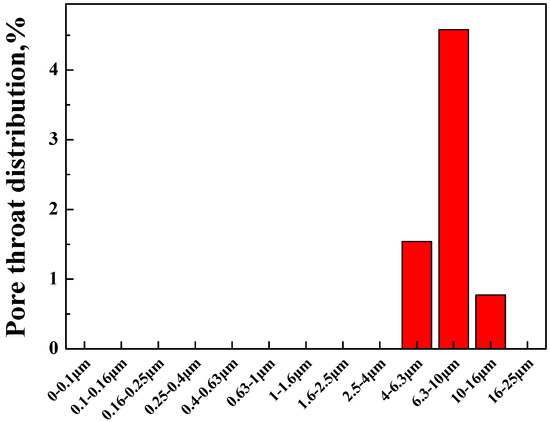
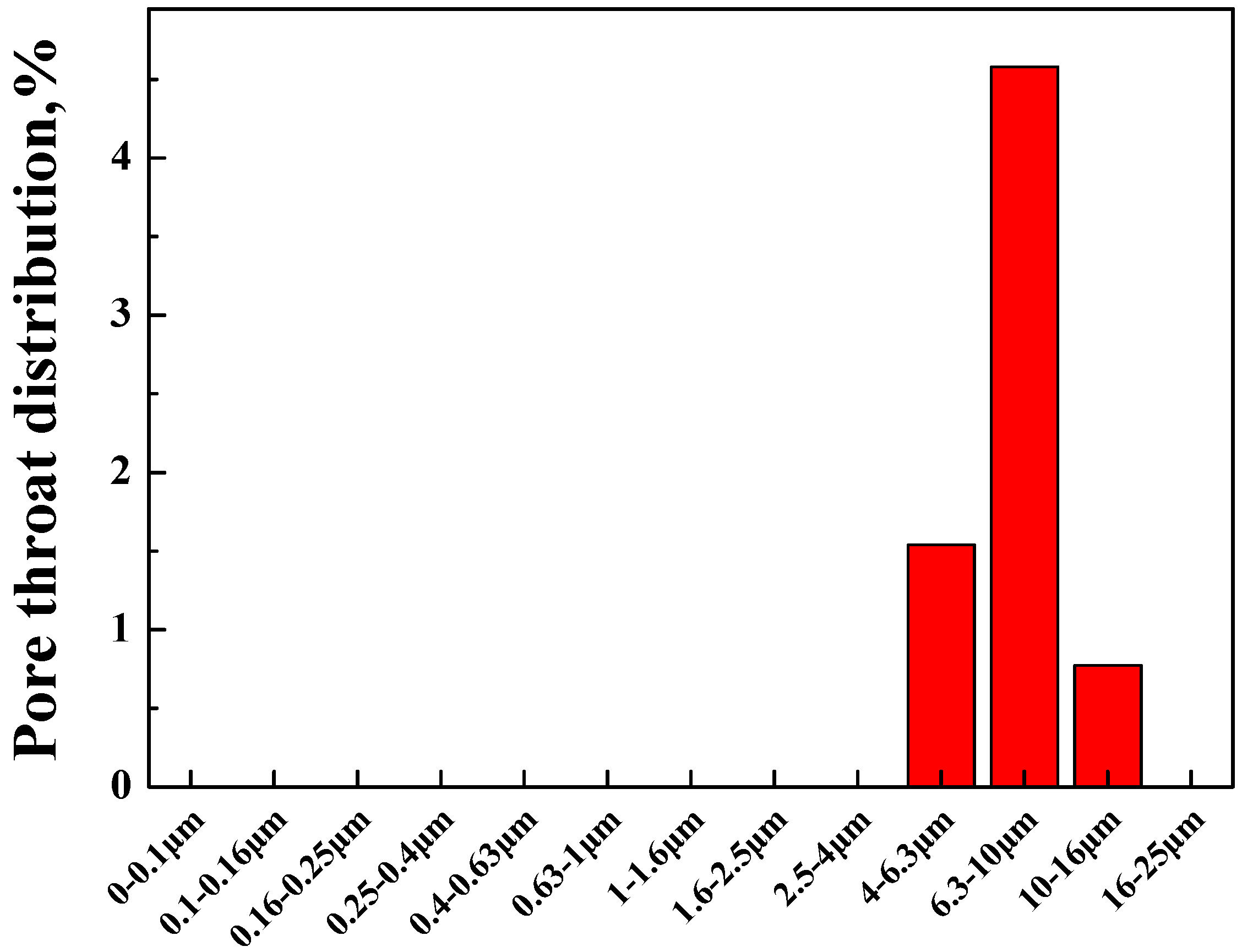
The pore-throat distribution characteristics of the native deep coal rock exhibit distinct “discrete” and “macropore-dominated” features, which constitute the microscopic geological basis for severe drilling fluid loss. As illustrated in the Figure 1, the pore throats are primarily distributed within the range of 4–16 μm, presenting a typical unimodal distribution. The dominant peak is located in the 6.3–10 μm interval (accounting for the highest percentage, >4.5%), with secondary distributions in the 4–6.3 μm and 10–16 μm ranges. This pore throat structure indicates that the seepage capacity of the coal sample is predominantly controlled by developed micro-fractures and macropores rather than matrix micropores.
Figure 1.
Pore-throat distribution of the coal sample.
3.2. Particle Size Analysis
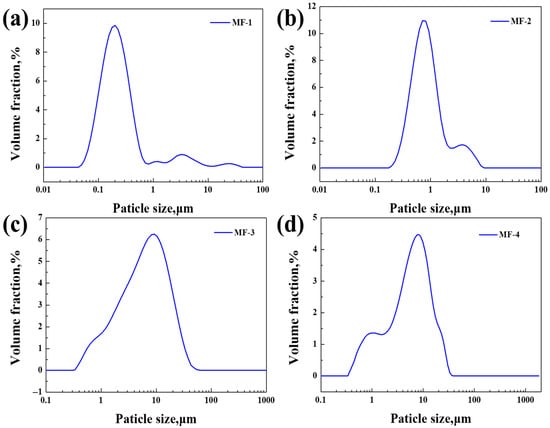
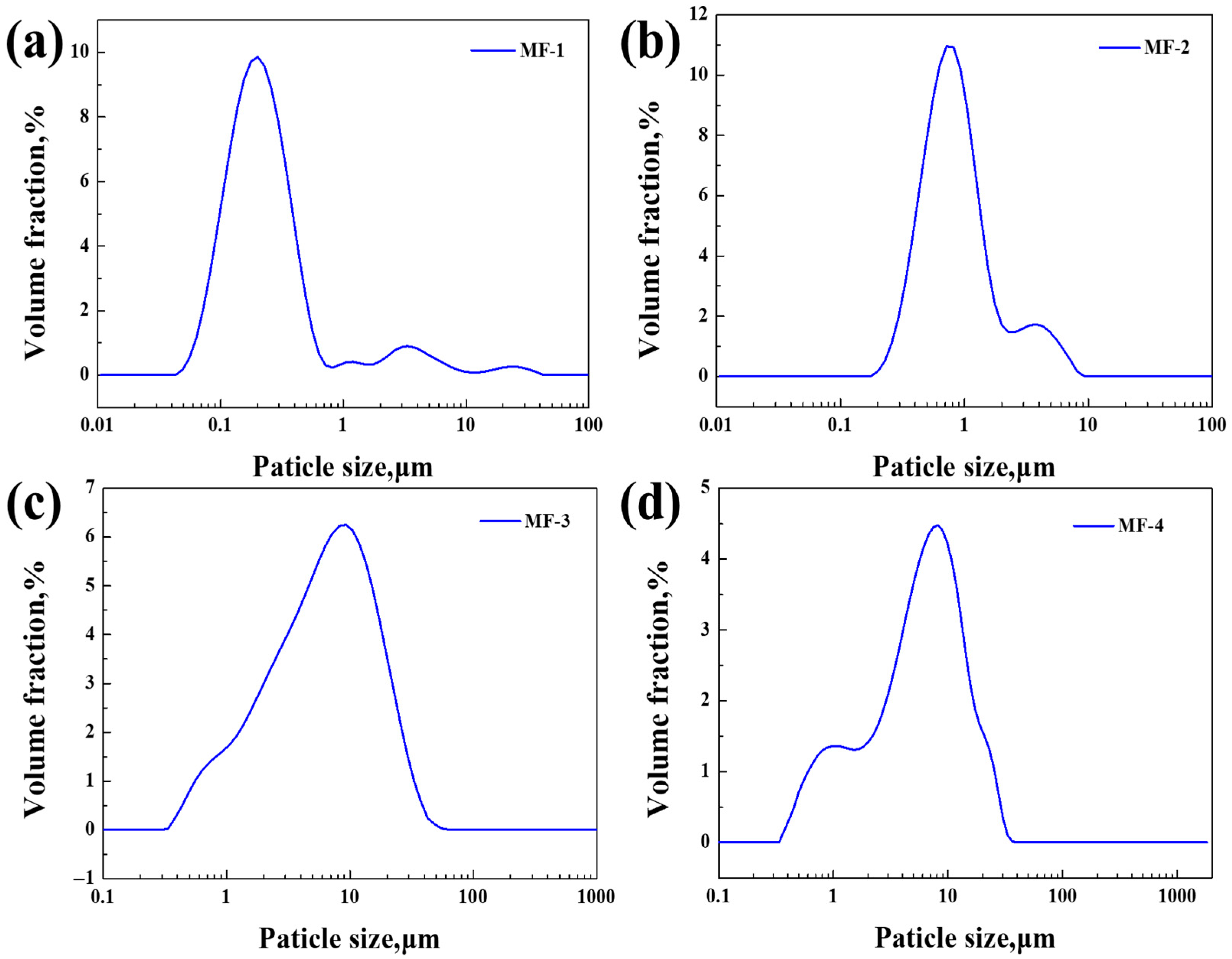
The efficacy of plugging agents in controlling fluid loss and enhancing wellbore stability in complex deep coalbed methane (CBM) reservoirs is critically dependent on their particle size distribution. An optimized particle size allows for effective penetration into micro-fractures and pore throats, as well as the formation of a stable, low-permeability filter cake. Table 1 presents the key statistical parameters (D10, D50, D90) describing the particle size distribution for four different plugging agents. Complementary to the statistical data, Figure 2 provides the complete volumetric particle size distribution curves, offering a visual representation of their distinct characteristics.
Figure 2.
Particle size distribution curves for (a) MF-1, (b) MF-2, (c) MF-3, and (d) MF-4, illustrating their characteristic particle size ranges.
As indicated in Table 2, MF-1 and MF-2 are characterized by significantly finer particle sizes, consistent with their classification as polymer nano-plugging agents. MF-1 exhibits a remarkably small median particle size (D50) of 0.210 μm and a D90 of 0.665 μm. Its particle size distribution curve, shown in Figure 2a, is sharply peaked, with the vast majority of particles falling below 1 μm, underscoring its nano-scale nature. Moving towards larger particle sizes, MF-2, MF-3 and MF-4 represent micron-sized plugging agents designed for different sealing functions. MF-2 (Figure 2b) possesses a D50 of 2.033 μm and a D90 of 9.522 μm, indicating a distribution primarily within the lower micron range. MF-3 (Figure 2c) exhibits a broader micron-scale distribution, with a D50 of 6.330 μm and a D90 of 18.700 μm. The distribution curve for MF-3 shows a significant volume fraction of particles in the 5–20 μm range. Finally, MF-4, identified as ultrafine calcium carbonate, is the coarsest among the tested agents, with a D50 of 8.333 μm and a D90 of 33.800 μm. Its distribution curve (Figure 2d) displays a prominent peak shifted towards larger particle sizes, reflecting its role in sealing larger pores and fractures.
Table 2.
Particle size distribution parameters for various plugging agents.
3.3. Sealing Performance Analysis
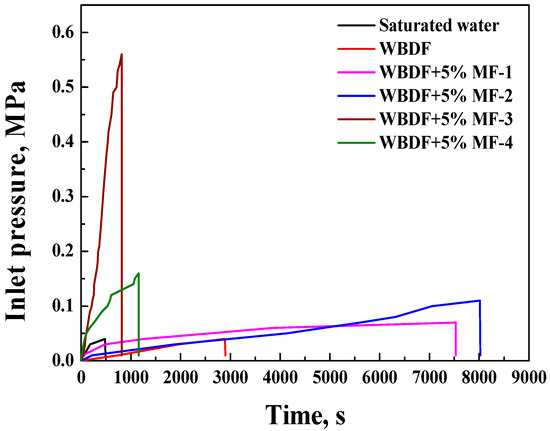
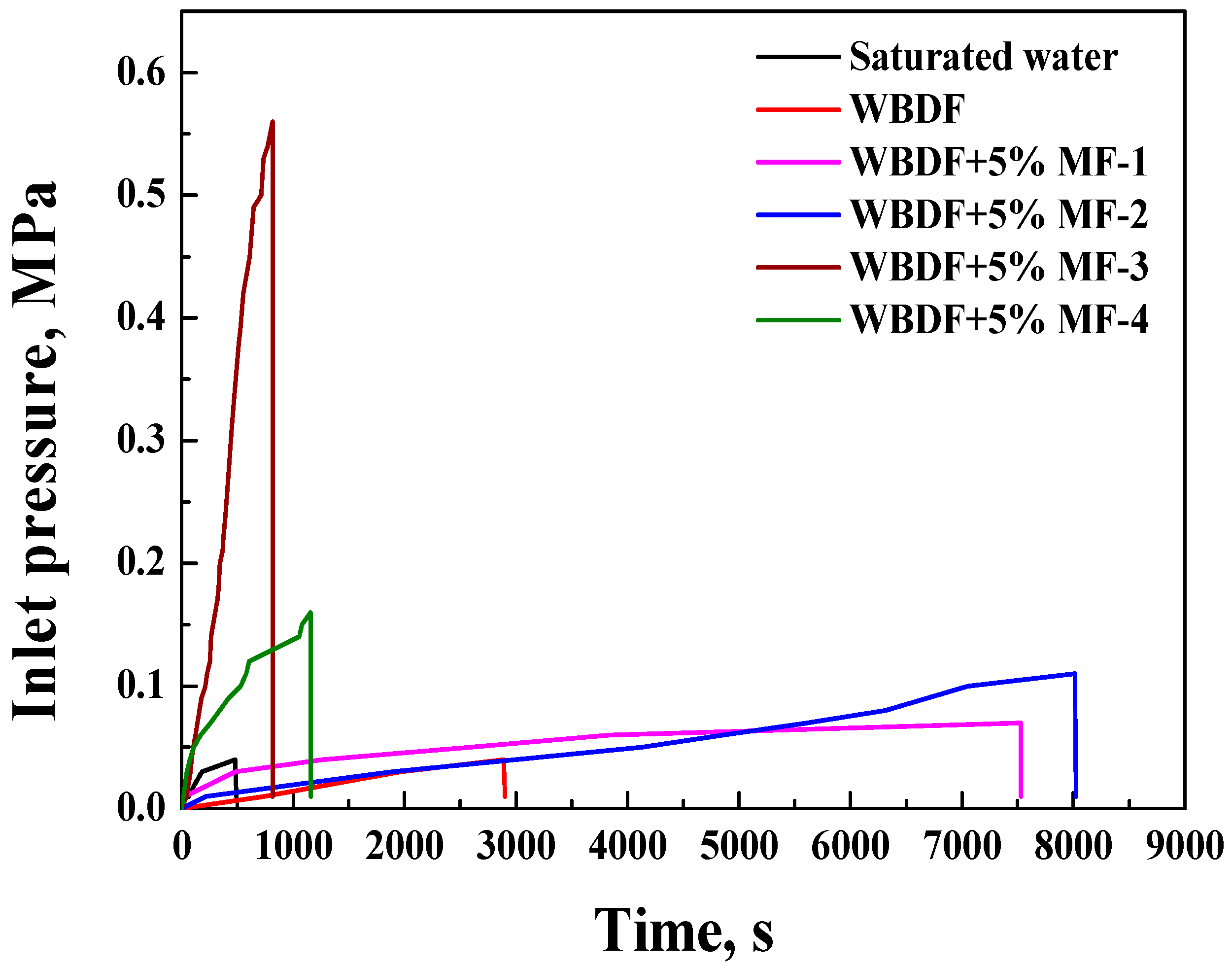
Dynamic displacement experiments provide crucial insights into the real-time sealing performance of drilling fluids under simulated downhole conditions. The inlet pressure profiles, as a function of time, directly reflect the resistance to fluid invasion offered by the drilling fluid, with the breakthrough point indicating the duration and pressure-holding capacity of the created seal. Figure 3 illustrates the inlet pressure variations over time for the base water-based drilling fluid (WBDF) and various WBDF formulations augmented with 5 wt% of different plugging agents. The analysis of these curves, combined with the coal core’s pore size distribution (Figure 1) and the plugging agents’ particle size characteristics (Figure 2), allows for a comprehensive understanding of their sealing mechanisms.
Figure 3.
Variation in inlet pressure with time during dynamic displacement experiments using water-based drilling fluid (WBDF) and WBDF containing 5 wt% of various plugging agents (MF-1, MF-2, MF-3, MF-4) in a coal core.
The saturated water curve serves as the negative control, representing the inherent flow resistance of the coal core. The pressure increased marginally to a peak of 0.04 MPa at 480 s, followed by a precipitous drop to 0.01 MPa at 490 s. This rapid pressure collapse signifies a complete fluid breakthrough, confirming the presence of open, connected macropores and fractures within the core. The low breakthrough pressure illustrates that, without any solid phase to bridge the throats, the fluid flows through the porous medium with minimal resistance.
The WBDF, which contains basic rheological modifiers but lacks specific bridging particles, exhibited a delayed breakthrough compared to water. It reached a similar peak pressure of 0.04 MPa at 2890 s before sharply declining to 0.01 MPa at 2900 s, indicating breakthrough. The significantly extended time to breakthrough (2890 s vs. 480 s) suggests that the viscosity and hydration capacity of the base fluid polymers provide some resistance to flow and may cause minor internal clogging. However, the fact that the peak pressure did not exceed that of water (0.04 MPa) and eventually failed demonstrates that viscosity alone is insufficient to form a pressure-bearing seal. The fluid ultimately traversed the pore network, proving the necessity of adding discrete plugging agents to establish a physical barrier.
The experimental results demonstrate a distinct correlation between the particle size of the plugging agents and their sealing behavior. The formulation containing MF-3 exhibited the most rapid and substantial pressure buildup, reaching a peak pressure of 0.56 MPa within a short duration (815 s) before breakthrough. According to the “1/3–2/3 bridging rule”, effective bridging occurs when particle size is comparable to the pore-throat size. Given that the dominant pore-throat diameter of the coal core is approximately 6–8 μm, MF-3 (D50 = 6.330 μm) offers the ideal geometric match. This allows it to quickly form a “primary bridge” at the pore throats, leading to a steep pressure rise. However, the subsequent sharp drop indicates that while these bridges are formed quickly, they are susceptible to failure under increasing differential pressure without the reinforcement of finer particles. MF-4, a rigid ultrafine calcium carbonate with a slightly larger size (D50 = 8.333 μm), also showed a relatively fast pressure increase (0.16 MPa). However, its performance was inferior to the flexible polymer MF-3. This suggests that while size matching is critical, the material deformability of polymeric agents like MF-3 allows for better adaptation to irregular pore shapes, creating a tighter seal than rigid particles, which may leave micro-gaps. In contrast, the finer agents MF-1 (nano-sized, D50 = 0.210 μm) and MF-2 (micro-sized, D50 = 2.033 μm) exhibited very slow pressure accumulation, remaining below 0.11 MPa even after extended periods (up to 8000 s). Their D50 values are significantly smaller than the dominant pore throats. Consequently, these particles largely pass through the pore network rather than bridging them. The gradual pressure rise observed for MF-2 likely results from deep-bed filtration and gradual internal cake buildup rather than surface sealing. The data clearly indicate that single plugging agents are insufficient for establishing a high-pressure seal. Ideally sized particles (MF-3) provide rapid bridging but lack the stability to sustain high pressures (breakthrough occurs). Under-sized particles (MF-1, MF-2) fail to initiate effective bridging. Rigid particles (MF-4) provide moderate bridging but lack the sealing tightness of deformable polymers. Therefore, this baseline analysis confirms the necessity of a multi-modal particle size distribution strategy.
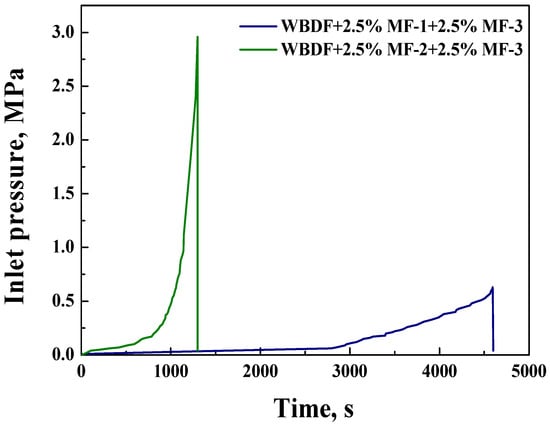
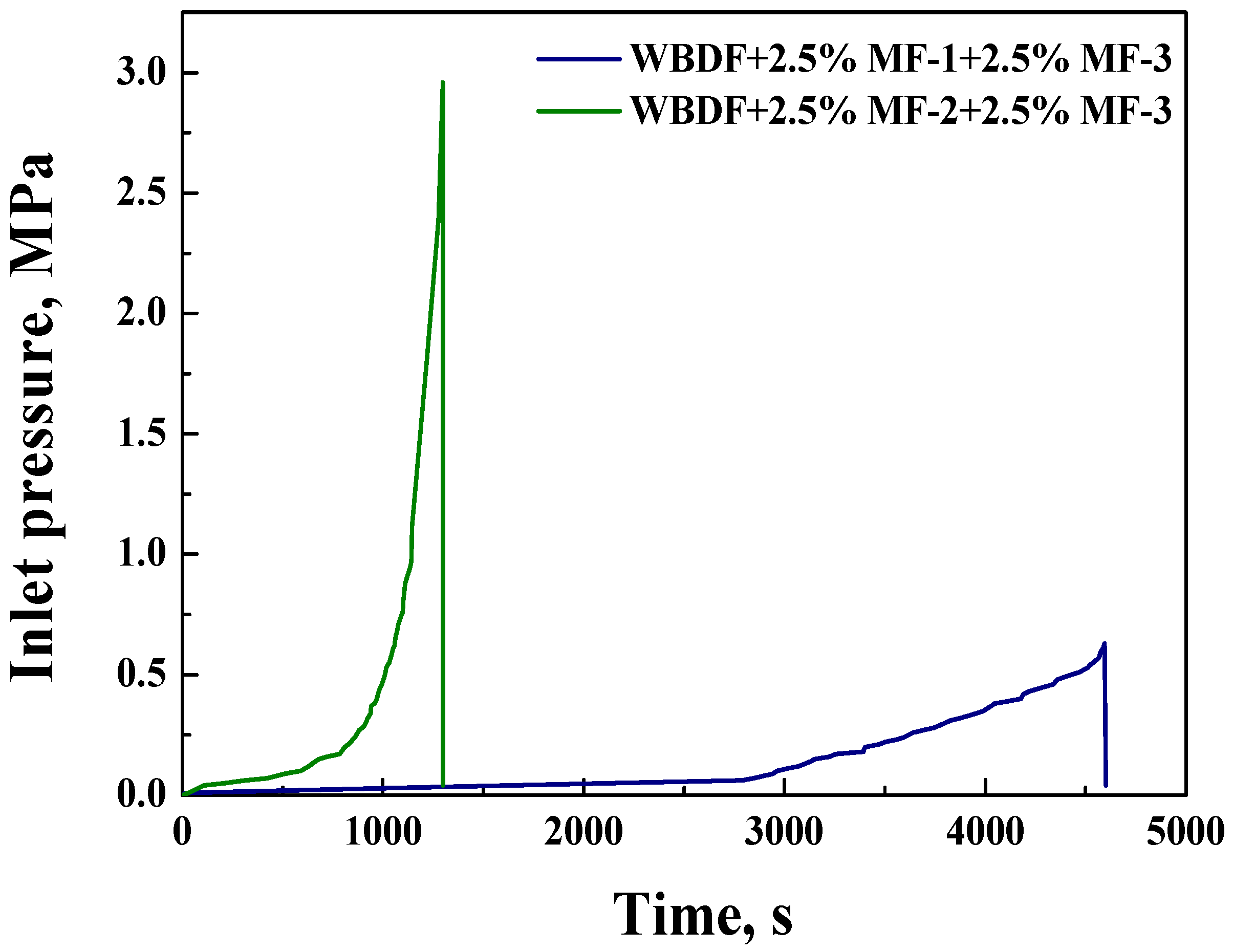
To investigate the particle size matching effect in multi-modal sealing systems, the dynamic pressure responses of two dual-component formulations were evaluated (Figure 4). Both systems utilized MF-3 (D50 = 6.330 μm) as the primary bridging agent, targeting the dominant pore throats (6–8 μm). The secondary agents varied in size: MF-2 (micro-sized, D50 = 2.033 μm) and MF-1 (nano-sized, D50 = 0.210 μm). The formulation containing WBDF + 2.5% MF-2 + 2.5% MF-3 exhibited superior sealing performance, achieving a peak inlet pressure of 3.0 MPa within approximately 1300 s. This remarkable pressure buildup—significantly higher than any single-agent test—can be attributed to the “ideal packing” synergy between MF-3 and MF-2. According to shielding theories, effective filling particles should be approximately 1/3 to 1/4 the size of the bridging particles to optimally occupy the interstitial voids. The size ratio of MF-2 to MF-3 is approximately 1:3. Once MF-3 establishes the primary structural skeleton across the pore throats, the MF-2 particles are geometrically perfectly sized to jam into the voids between the MF-3 particles. This rapid “bridge-and-fill” process creates a dense, low-permeability filter cake almost immediately, leading to the sharp pressure rise observed.
Figure 4.
Dynamic sealing pressure curves of drilling fluids with dual-component plugging agent combinations.
In contrast, the WBDF + 2.5% MF-1 + 2.5% MF-3 system demonstrated poor sealing kinetics and strength, with a delayed pressure rise starting only after 3000 s and reaching a maximum of only 0.6 MPa. Although MF-1 is a nano-material expected to fill tiny pores, its size is over 30 times smaller than the primary bridging agent MF-3. This extreme size disparity creates a “packing gap”. The nano-particles are too small to be effectively retained by the relatively large voids left by the MF-3 bridge. Instead of filling the gaps, MF-1 particles likely pass through the filter cake or require an excessive amount of time to accumulate via adsorption/aggregation, resulting in the observed sluggish pressure response and a “leaky” seal. The comparative analysis confirms that particle size continuity is critical for filter cake integrity. A stepwise reduction in particle size is more effective than a discontinuous jump. The superior performance of the MF-2/MF-3 combination validates that maximizing packing density requires filler particles that geometrically match the interstitial spaces of the bridging skeleton.
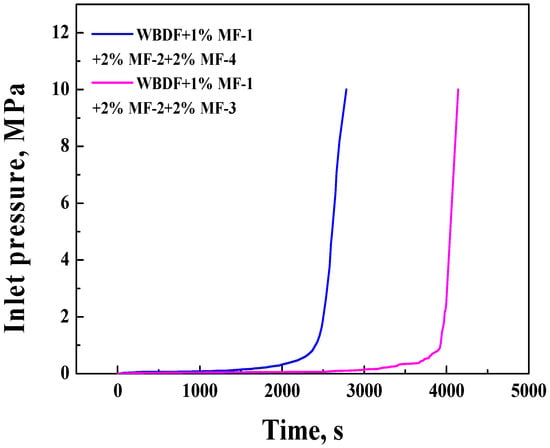
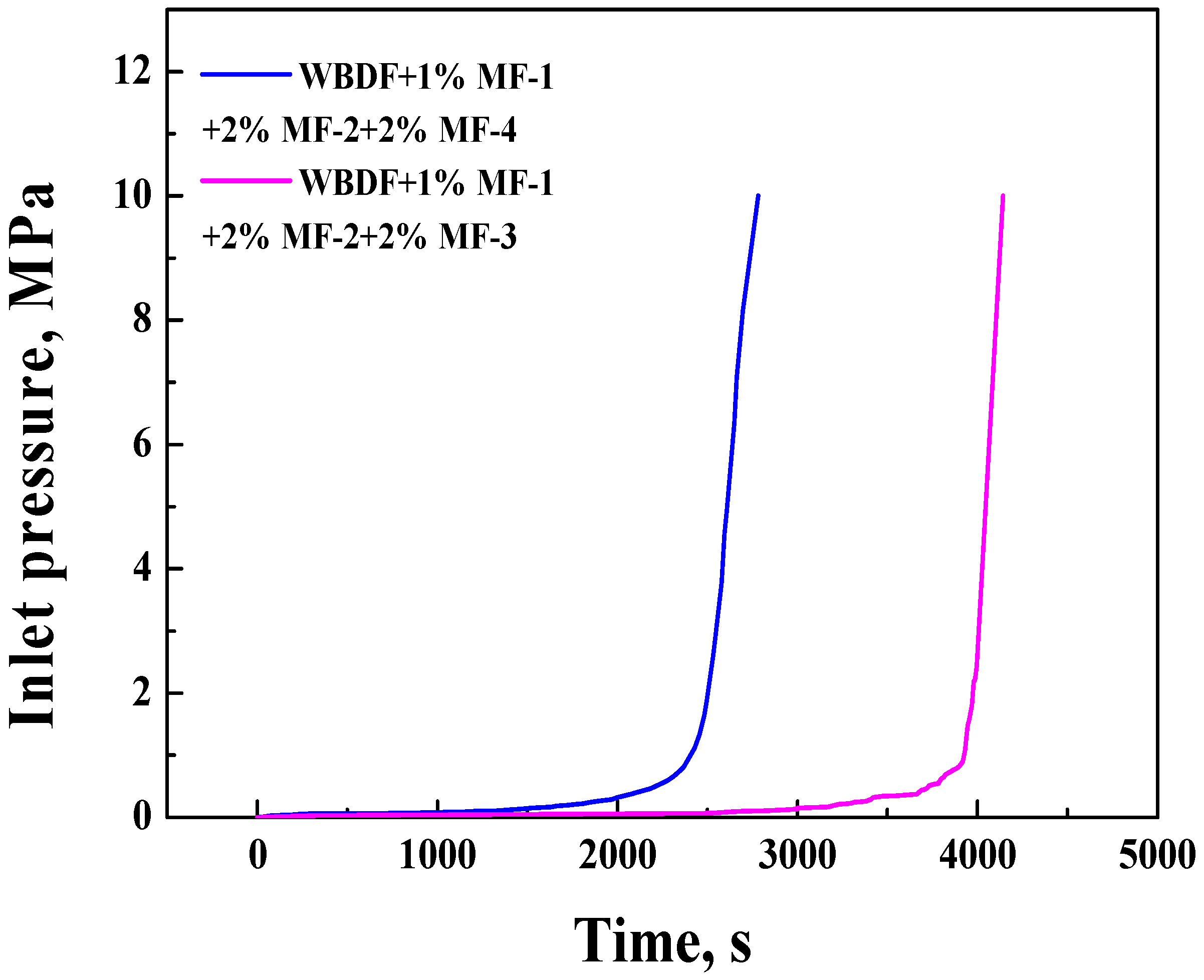
To elucidate the distinct roles of rigid and flexible bridging agents in multi-scale sealing, two ternary formulations were subjected to dynamic pressure testing (Figure 5). The experimental design compared a rigid bridging system (WBDF + 1% MF-1 + 2% MF-2 + 2% MF-4) against a flexible bridging system (WBDF + 1% MF-1 + 2% MF-2 + 2% MF-3). Both formulations successfully formed a high-strength pressure seal, withstanding inlet pressures up to 10 MPa. This confirms that regardless of the bridging agent’s mechanical modulus (rigid calcium carbonate vs. flexible polymer), the ternary particle size distribution—incorporating nano (0.210 μm), micro-filling (2.033 μm), and bridging (6–8 μm) particles—effectively shuts off the dominant pore throats. The system containing 2% rigid MF-4 demonstrated significantly faster sealing kinetics, reaching maximum pressure at approximately 2800 s. The D50 of MF-4 is 8.333 μm, which is slightly larger than the upper limit of the coal core’s dominant pore throats (6–8 μm). Unlike flexible particles, the rigid nature of calcium carbonate prevents deformation. Consequently, MF-4 particles physically jam the pore throats immediately upon contact, creating an instantaneous structural skeleton without penetrating deep into the formation. The system containing 2% flexible MF-3 exhibited a prolonged induction period, reaching 10 MPa later at 4100 s. MF-3 has a smaller size (D50 = 6.330 μm) and possesses viscoelastic properties. Under differential pressure, these flexible microspheres can deform and squeeze through pore throats that are slightly larger or irregularly shaped. This “pass-through” phenomenon delays the establishment of a stable bridge, as the particles migrate deeper into the core before accumulation leads to blockage. The comparison highlights a trade-off between sealing speed and mechanism. The rigid system (MF-4) favors rapid wellbore strengthening through immediate physical jamming due to size exclusion. Conversely, the flexible system (MF-3) seals more slowly due to particle deformation and migration, likely forming a deeper, albeit delayed, internal seal. For rapid leak-off control, the rigid, slightly oversized formulation appears more advantageous in this specific pore-throat configuration.
Figure 5.
Dynamic sealing pressure curves of drilling fluids with triple-component plugging agent combinations.
3.4. NMR Analysis
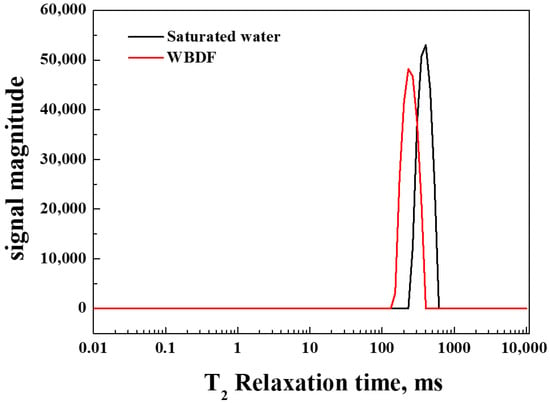
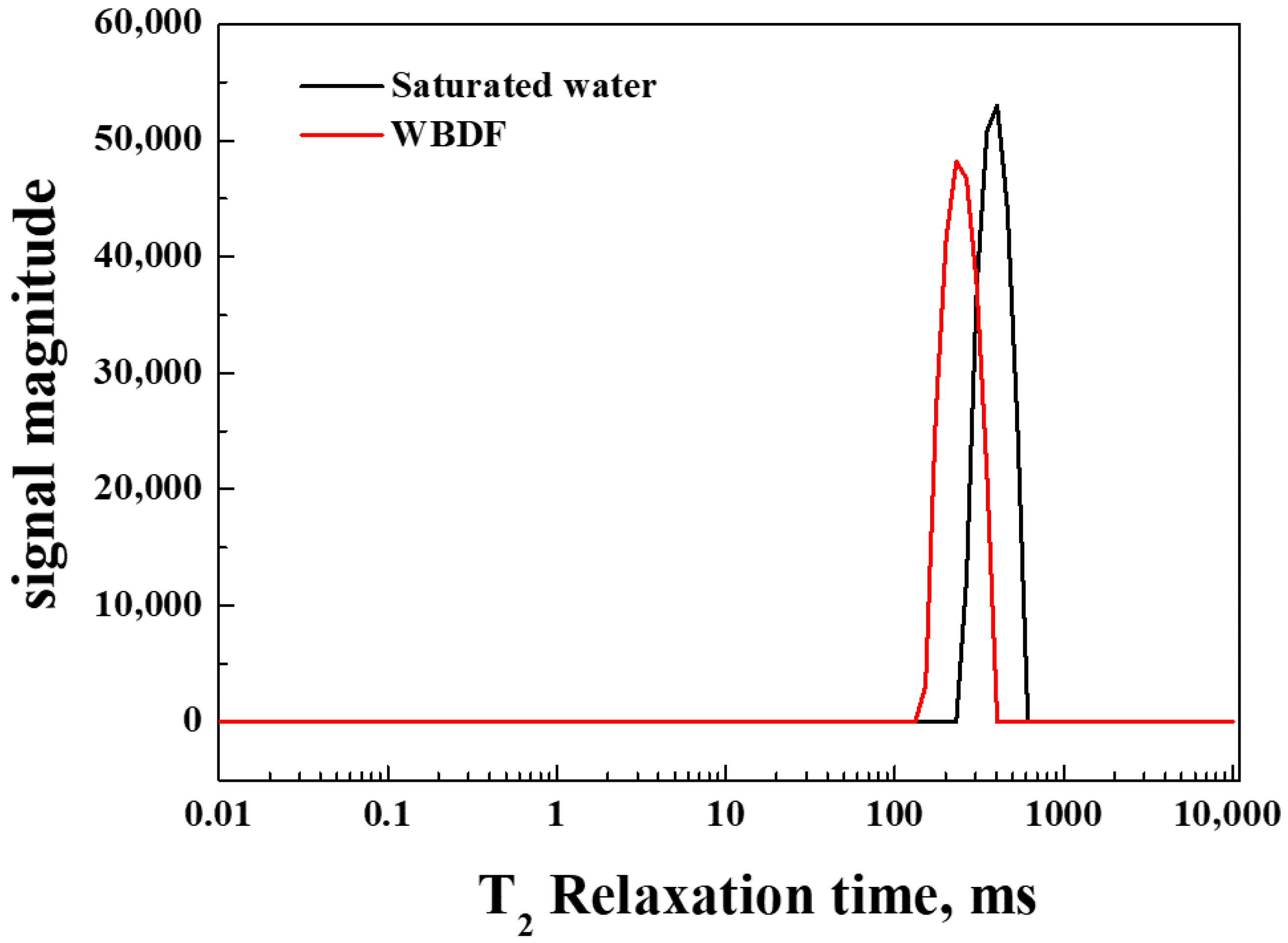
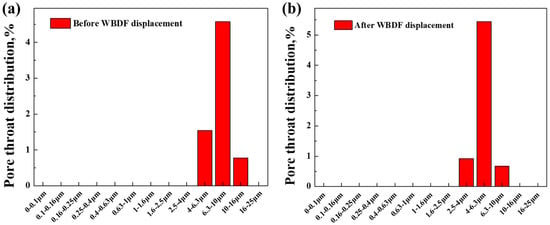
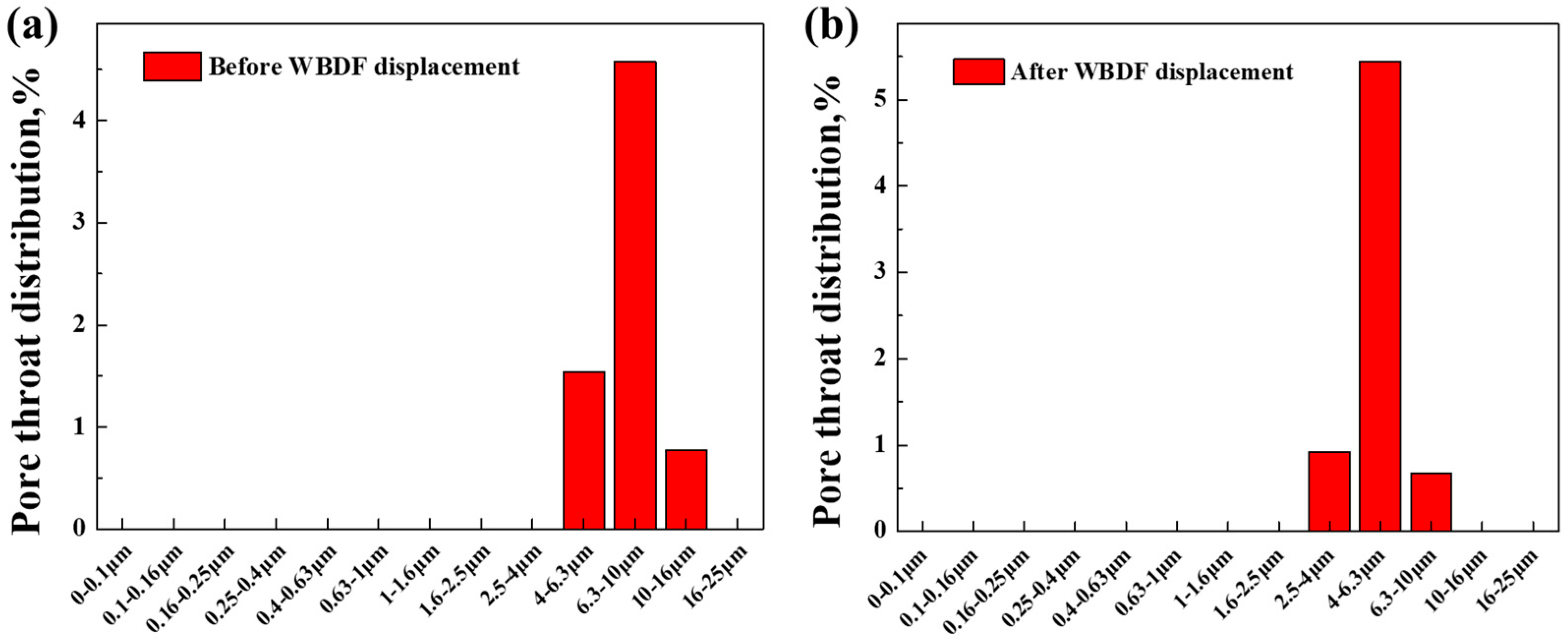
Figure 6 displays the NMR T2 relaxation time distribution curves for the coal sample initially saturated with simulated formation water and after dynamic displacement by the WBDF. The T2 spectrum of the saturated coal sample shows a dominant peak located between 300 ms and 500 ms, indicating a significant presence of larger pores and fractures filled with water. The integral area of this initial T2 spectrum, which is proportional to the total fluid volume, is 12,275,962.66 arbitrary units. After displacement by the WBDF, the T2 spectrum undergoes a significant change: the peak’s amplitude substantially decreases, and its position shifts slightly towards shorter T2 relaxation times. The integral area of the T2 spectrum after WBDF displacement is reduced to 7,825,523.21 arbitrary units. This reduction in the total signal magnitude signifies that a considerable portion of the original fluid-filled pore volume has been either displaced by the drilling fluid’s components or effectively blocked, preventing further fluid exchange. An Es value of approximately 36.25% indicates that the WBDF has achieved a substantial reduction in the effective pore volume accessible to the simulated formation water, demonstrating its capability to mitigate filtrate invasion. Further insights into this sealing mechanism are provided by the pore-throat distribution analyses presented in Figure 7. Figure 7a reveals that the initial coal sample possesses a broad distribution of pore throats, with a dominant proportion residing in the 4–6.3 μm, 6.3–10 μm, and 10–16 μm ranges. This characteristic distribution, particularly the presence of larger pore throats, makes the coal formation susceptible to fluid invasion. Upon comparing Figure 7a with Figure 7b, a distinct alteration in the pore-throat distribution is observed after WBDF displacement. The most pronounced effect is the significant reduction in the percentage of larger pore throats, especially those in the 6.3–10 μm and 10–16 μm ranges. While the 4–6.3 μm range still contributes, its relative proportion might appear larger due to the decrease in the larger pore fractions, or its absolute percentage might also be slightly reduced. This indicates that the WBDF components, likely including solid particles and polymers, have successfully entered and physically blocked or partially filled these larger pore throats and micro-fractures. By doing so, the drilling fluid effectively reduces the permeability of the coal formation to filtrate invasion, consolidating the wellbore stability. The shift towards smaller effective pore sizes in the T2 spectrum is a direct consequence of this physical plugging of the larger pore throats.
Figure 6.
NMR T2 relaxation time distribution curves for a coal sample saturated with simulated formation water and after displacement by water-based drilling fluid (WBDF).
Figure 7.
Pore-throat distribution of the coal sample before WBDF displacement (a) and after displacement by WBDF (b).
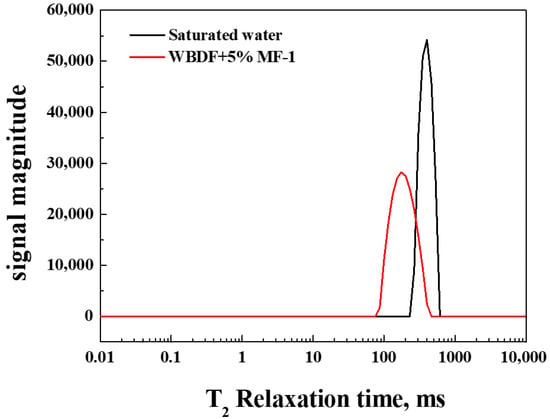
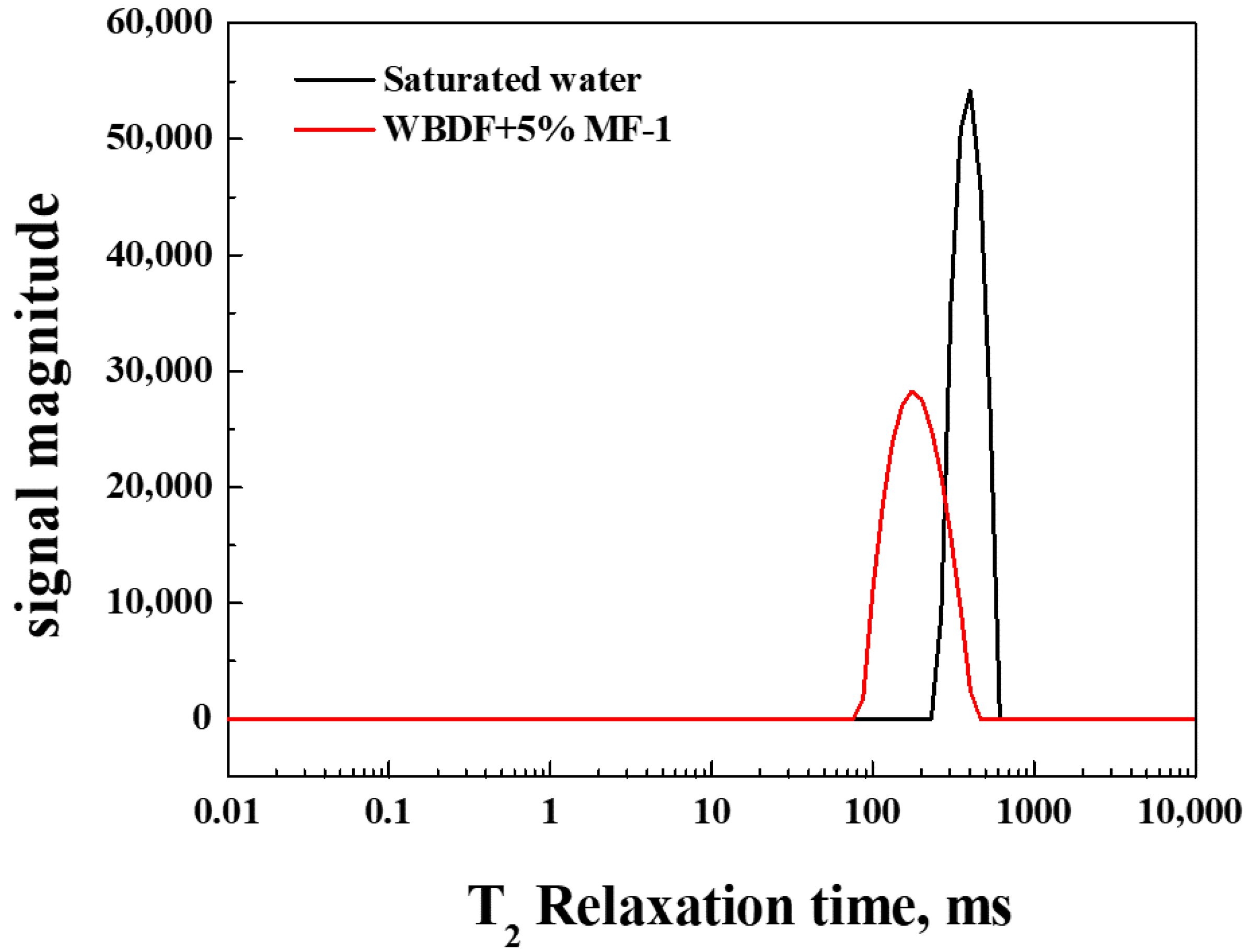
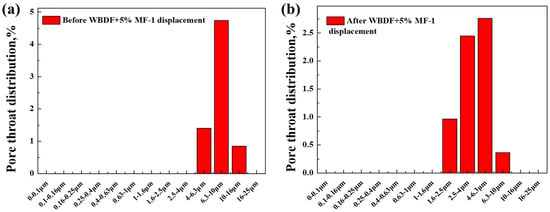
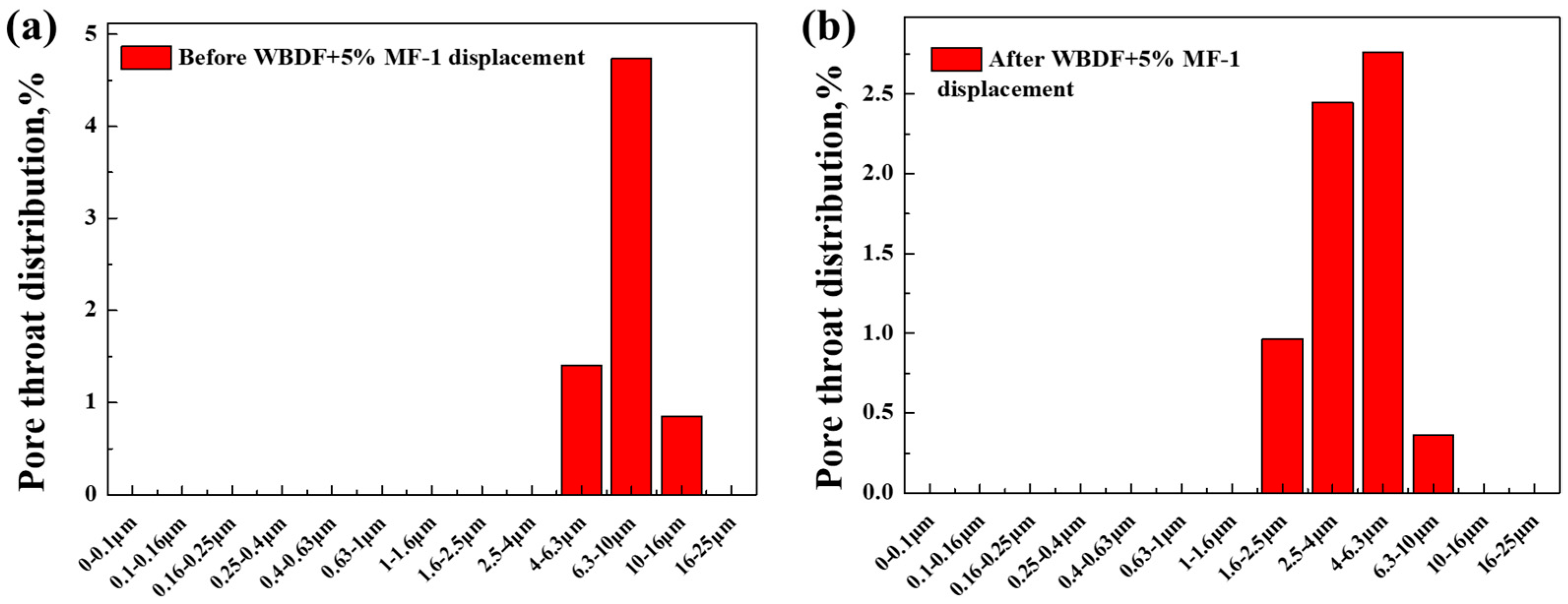
To further elucidate the sealing mechanism of nano-sized agents at the pore scale, Nuclear Magnetic Resonance (NMR) T2 relaxometry and pore-throat size analysis were conducted before and after displacement with WBDF + 5% MF-1. As shown in Figure 8, the T2 spectrum of the saturated water exhibits a dominant peak at high relaxation times (300–600 ms), representing fluid residing in macropores and primary fractures. After treatment with WBDF + 5% MF-1, two significant changes occur. The total peak area decreased from 12,440,629.13 to 5,808,034.98, representing a 53.3% reduction in detectable fluid signal. The peak maximum shifted significantly to the left (from 450 ms to 180 ms). A shorter T2 value signifies that the remaining fluid is confined in smaller effective pore spaces or that the specific surface area of the pores has increased due to particle deposition.
Figure 8.
NMR T2 relaxation time distribution curves for a coal sample saturated with simulated formation water and after displacement by WBDF + 5% MF-1.
The transformation of the pore-throat distribution (Figure 9) provides direct evidence of the “Nano-Coating and Pore-Refining” mechanism. The core is characterized by a “macropore-dominant” structure before displacement, with the largest fraction of throats concentrated in the 6.3–10 μm range. The 6.3–10 μm peak nearly disappears, while new peaks emerge in the 1.6–2.5 μm and 2.5–4 μm ranges. This indicates that MF-1 did not simply “plug” the large throats but rather subdivided or lined them.
Figure 9.
Pore-throat distribution of the coal sample before WBDF displacement (a) and after displacement by WBDF + 5% MF-1 (b).
Correlating these microscopic findings with the previously discussed pressure curves reveals a distinct sealing mechanism. Given that the particle size of MF-1 (0.210 μm) is significantly smaller than the primary throats (6–10 μm), it cannot form a stable “bridge” according to the 1/3 rule. Instead, the 53.3% reduction in NMR signal and the shift toward smaller throat sizes suggest that MF-1 particles form a thick adsorption layer on the pore walls. This adsorption layer reduces the effective hydraulic diameter of the macropores. While this “pore refining” increases flow resistance and delays fluid breakthrough, the resulting structure is mechanically unstable under high pressure. Without the structural “skeleton” provided by larger bridging agents, the nano-particles only offer a “soft seal” via surface adsorption and deep-bed filtration. This explains why, despite a significant reduction in microscopic porosity, the MF-1 system alone cannot achieve the “zero-invasion” 10 MPa seal observed in the ternary hierarchical systems.
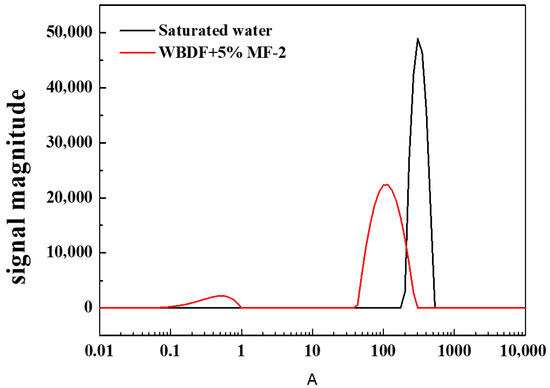
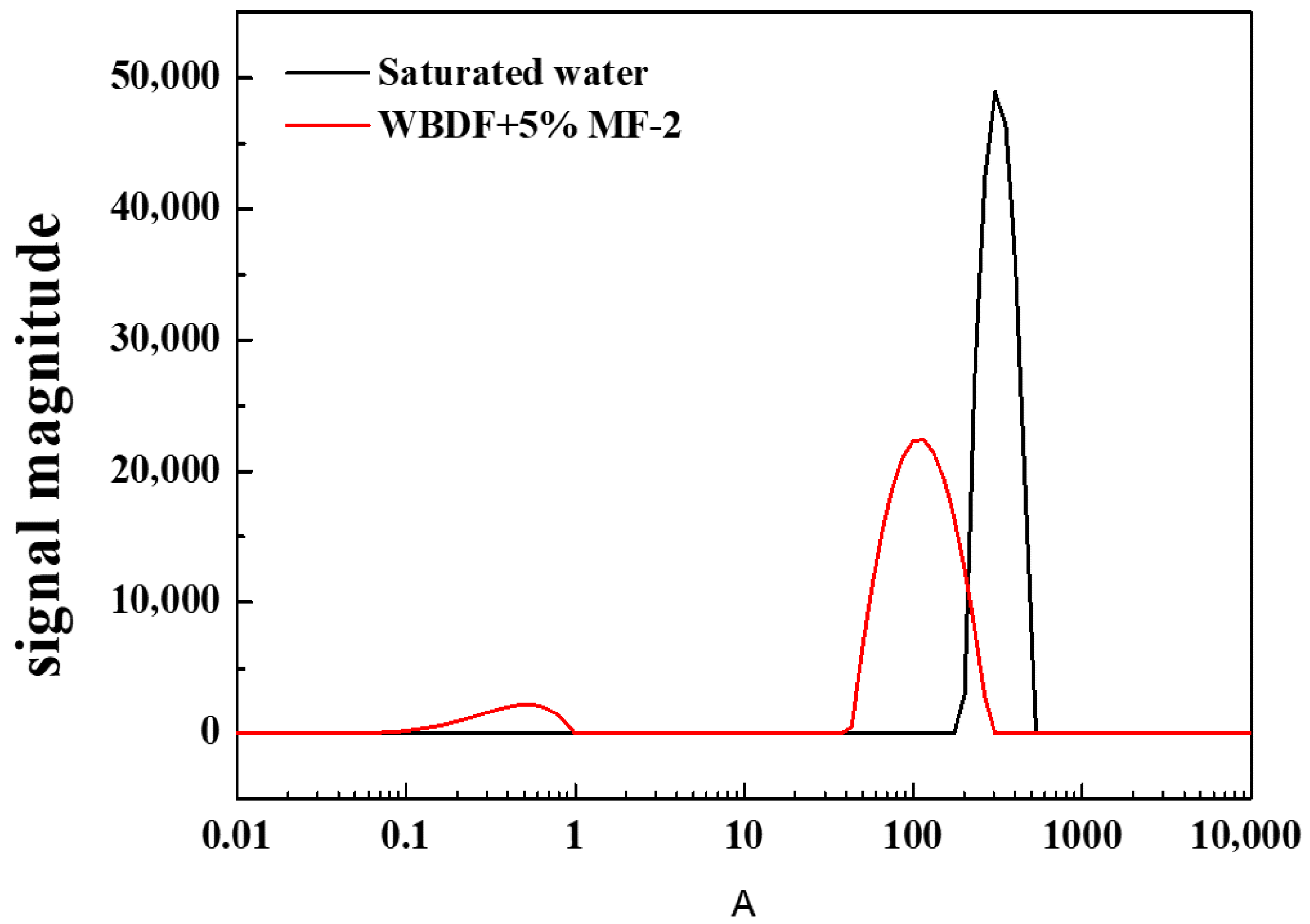
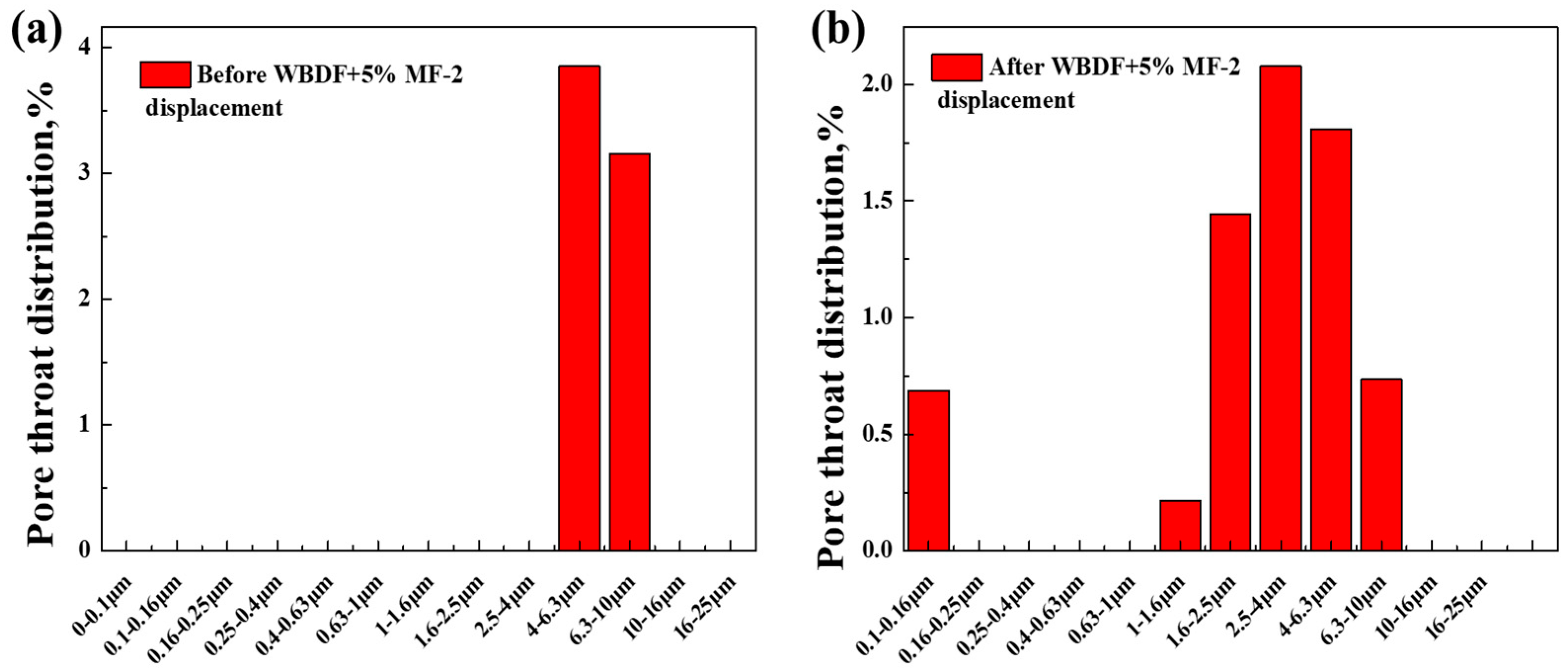
The microscopic evaluation via NMR and pore-throat distribution analysis further elucidates the differentiated roles of nano- and micro-sized agents in the hierarchical sealing process. As shown in Figure 10, compared to the 53.3% signal reduction observed with MF-1, the treatment with WBDF + 5% MF-2 resulted in a more pronounced 72.3% reduction in the T2 integral area (from 12,440,629.13 to 3,447,819.14), indicating superior volumetric occupancy of the movable fluid space. The shift in the T2 peak from 450 ms to approximately 100 ms, coupled with the emergence of sub-micron pore throats (0.1–0.16 μm) in Figure 11b, demonstrates a significant “pore-refining” effect. While MF-1 primarily forms a surface adsorption layer, the micro-sized MF-2 acts through deep-bed filtration and physical jamming, subdividing the original 4–10 μm dominant throats into high-tortuosity micro-channels. However, a critical synthesis of these microscopic findings with the dynamic pressure curves reveals that high volumetric plugging does not inherently translate to high-pressure seal integrity. Despite the 72.3% reduction in porosity, the MF-2 system alone remains unable to sustain differential pressures above 1 MPa. This suggests that the refined pore network, while effective at restricting fluid flow at low pressures, lacks the mechanical skeleton necessary to resist erosive breakthrough.
Figure 10.
NMR T2 relaxation time distribution curves for a coal sample saturated with simulated formation water and after displacement by WBDF + 5% MF-2.
Figure 11.
Pore-throat distribution of the coal sample before WBDF displacement (a) and after displacement by WBDF + 5% MF-2 (b).
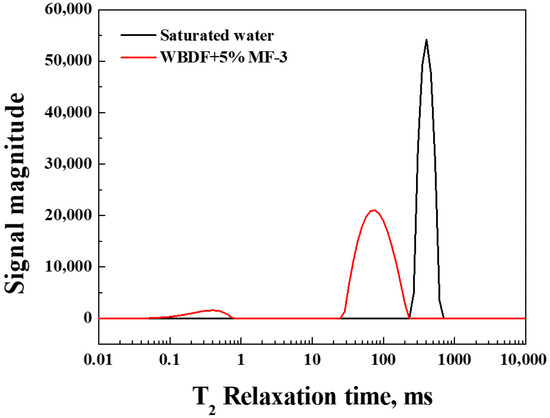
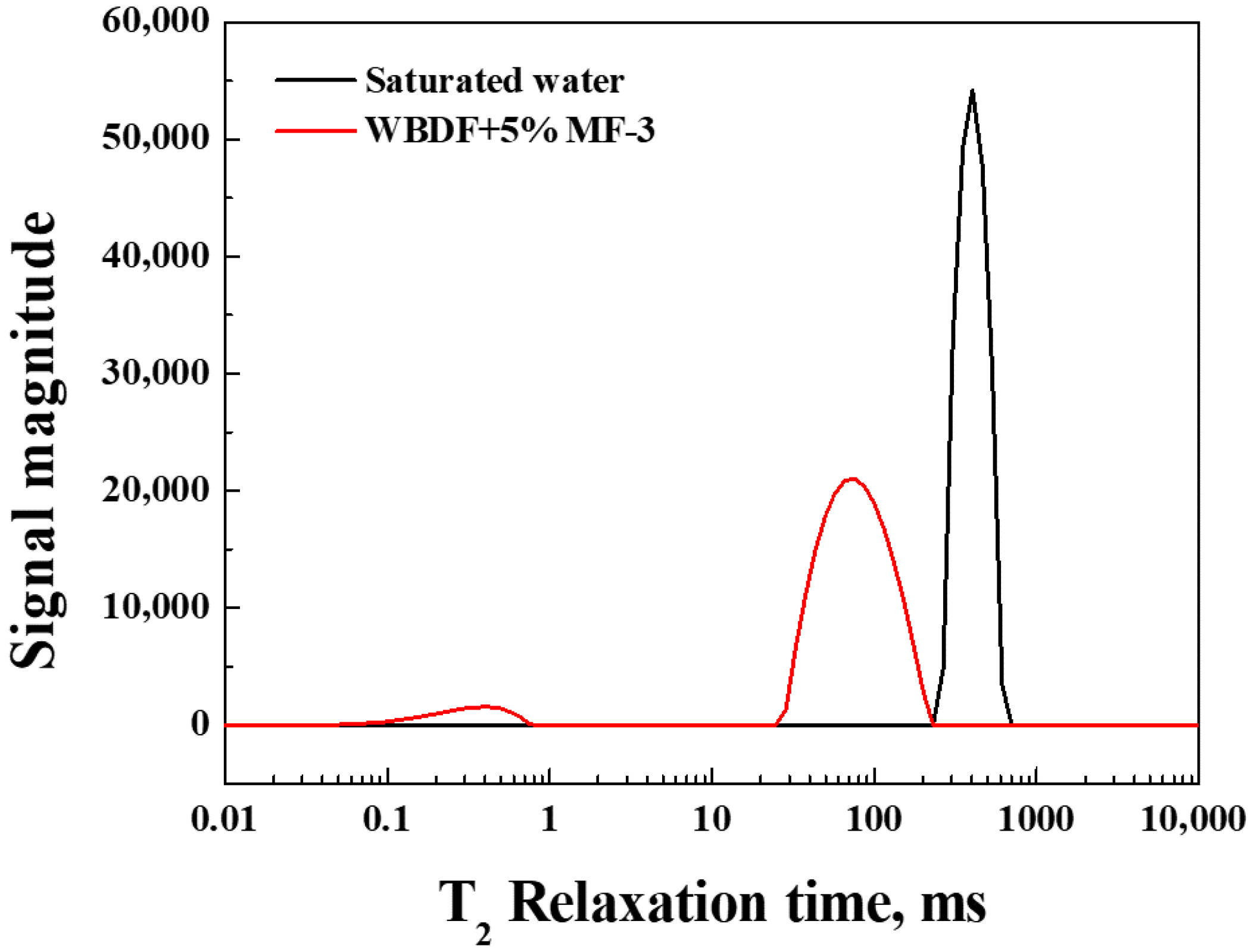
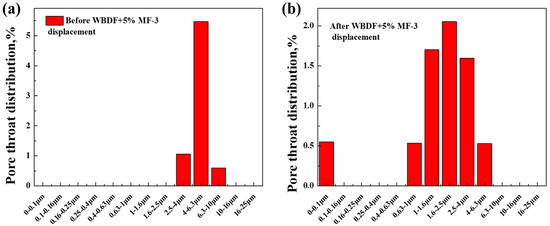
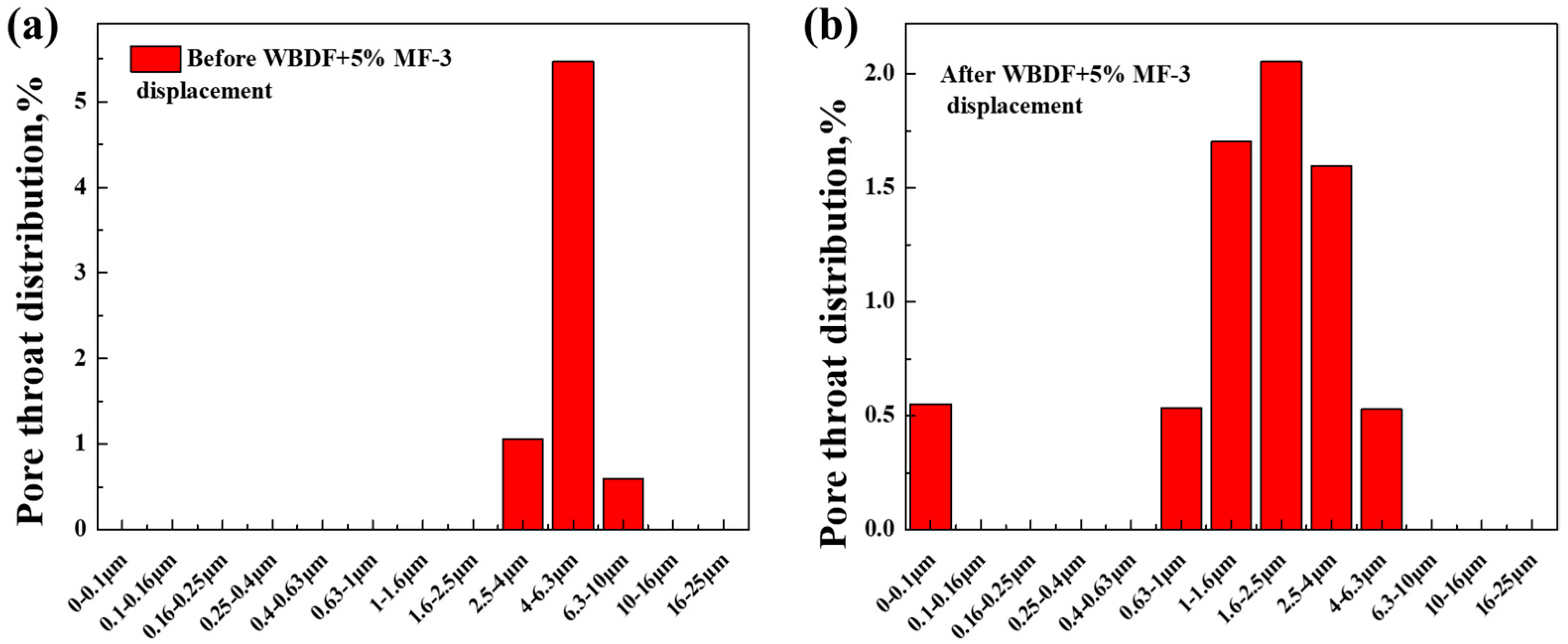
As shown in Figure 12, the microscopic analysis of the WBDF + 5% MF-3 system reveals the highest volumetric plugging efficiency among the single-component agents, with the NMR T2 integral area decreasing by 80.5% (from 12,440,629.13 to 2,426,825.96). This superior reduction, compared to MF-1 (53.3%) and MF-2 (72.3%), stems from the ideal size match between the flexible polymer microspheres and the dominant pore throats of the coal core. As shown in the pore-throat distribution (Figure 13b), MF-3 effectively “shuts off” the primary flow channels, shifting the dominant throat size from 8 μm down to 1.6–2.5 μm. Unlike the rigid jamming of MF-4 or the simple filling of MF-2, the viscoelastic nature of MF-3 allows it to deform and tightly wedge into the pore throats, creating a robust structural “bridge.” However, when synthesized with the dynamic pressure results, even this 80.5% reduction in detectable porosity is insufficient for high-pressure integrity when used in isolation. The remaining 1.6–2.5 μm micro-channels act as high-permeability pathways that lead to seal failure under multi-MPa differentials. This confirms that while MF-3 provides the indispensable structural skeleton of the seal, the achievement of the 10 MPa “zero-invasion” state observed in ternary systems requires the synergistic addition of MF-2 and MF-1, collectively transforming a bridged pore network into a truly impermeable composite filter cake.
Figure 12.
NMR T2 relaxation time distribution curves for a coal sample saturated with simulated formation water and after displacement by WBDF + 5% MF-3.
Figure 13.
Pore-throat distribution of the coal sample before WBDF displacement (a) and after displacement by WBDF + 5% MF-3 (b).
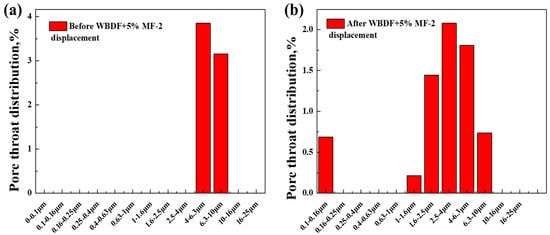
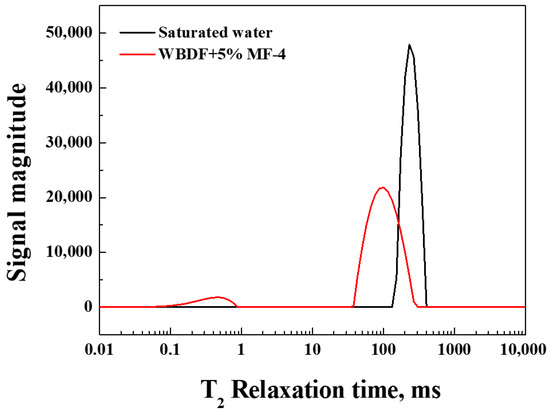
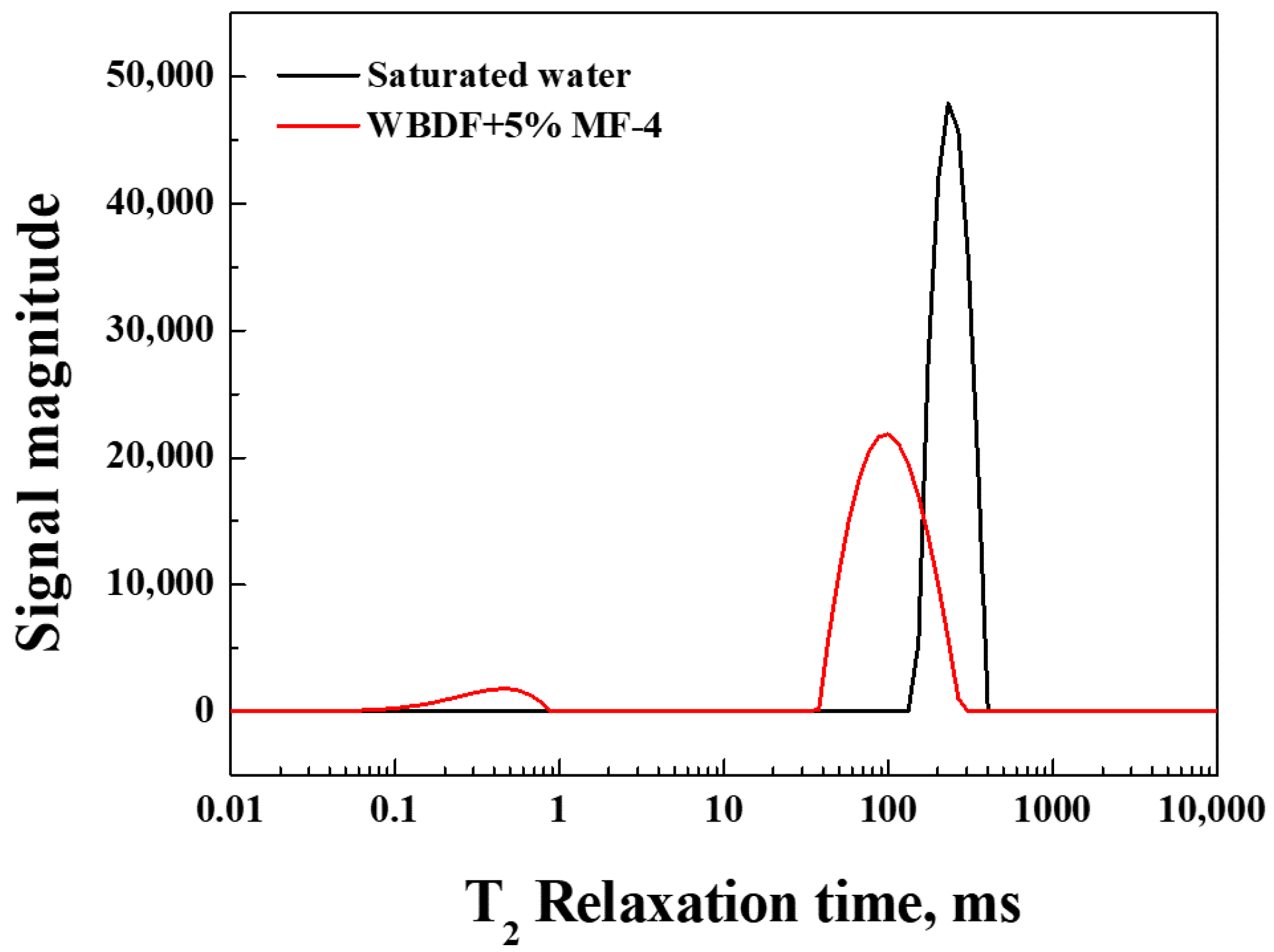
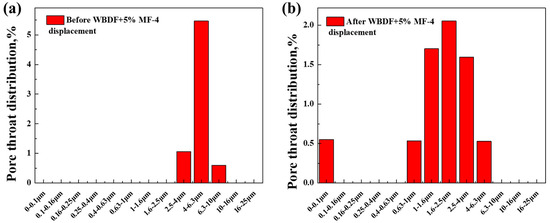
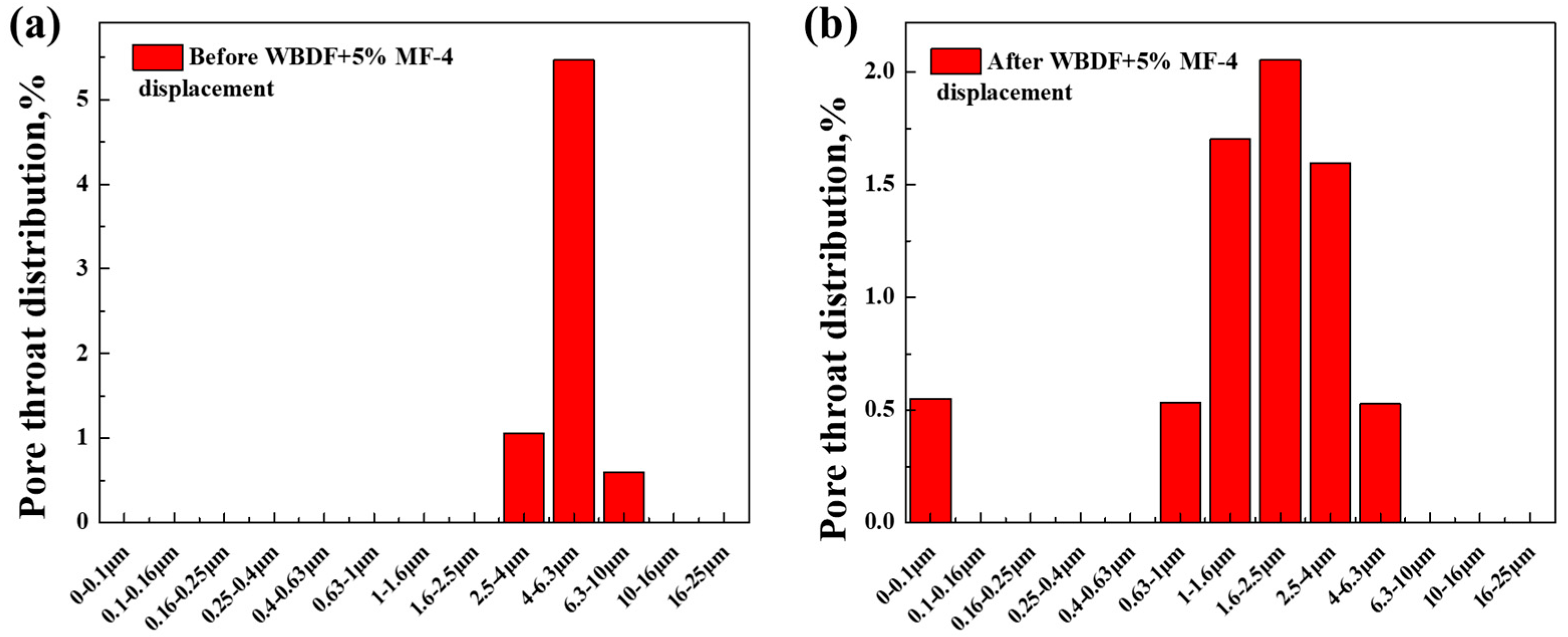
As shown in Figure 14, the microscopic evaluation of the WBDF + 5% MF-4 system reveals a substantial volumetric plugging efficiency, characterized by a 75.2% reduction in the NMR $T_2$ integral area (from 12,440,629.13 to 3,085,490.56). While this performance is markedly superior to the nano-adsorption of MF-1 (53.3%) and the micro-filling of MF-2 (72.3%), it falls short of the 80.5% reduction achieved by the flexible MF-3, illustrating the inherent limitations of rigid bridging agents. As shown in the pore-throat distribution (Figure 15b), the rigid calcium carbonate particles effectively target the coal core’s dominant throats through size exclusion and physical jamming, successfully refining the network into micro-channels below 2.5 μm. However, the inability of MF-4 to deform means it cannot perfectly conform to the irregular coal pore geometries, leaving microscopic “point-to-surface” contact gaps that act as high-permeability bypasses. This explains why, despite achieving over 75% volumetric plugging, the MF-4 system alone cannot sustain high differential pressures in dynamic tests.
Figure 14.
NMR T2 relaxation time distribution curves for a coal sample saturated with simulated formation water and after displacement by WBDF + 5% MF-4.
Figure 15.
Pore-throat distribution of the coal sample before WBDF displacement (a) and after displacement by WBDF + 5% MF-4 (b).
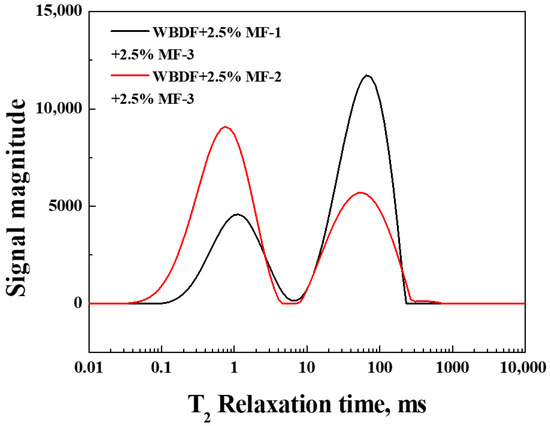
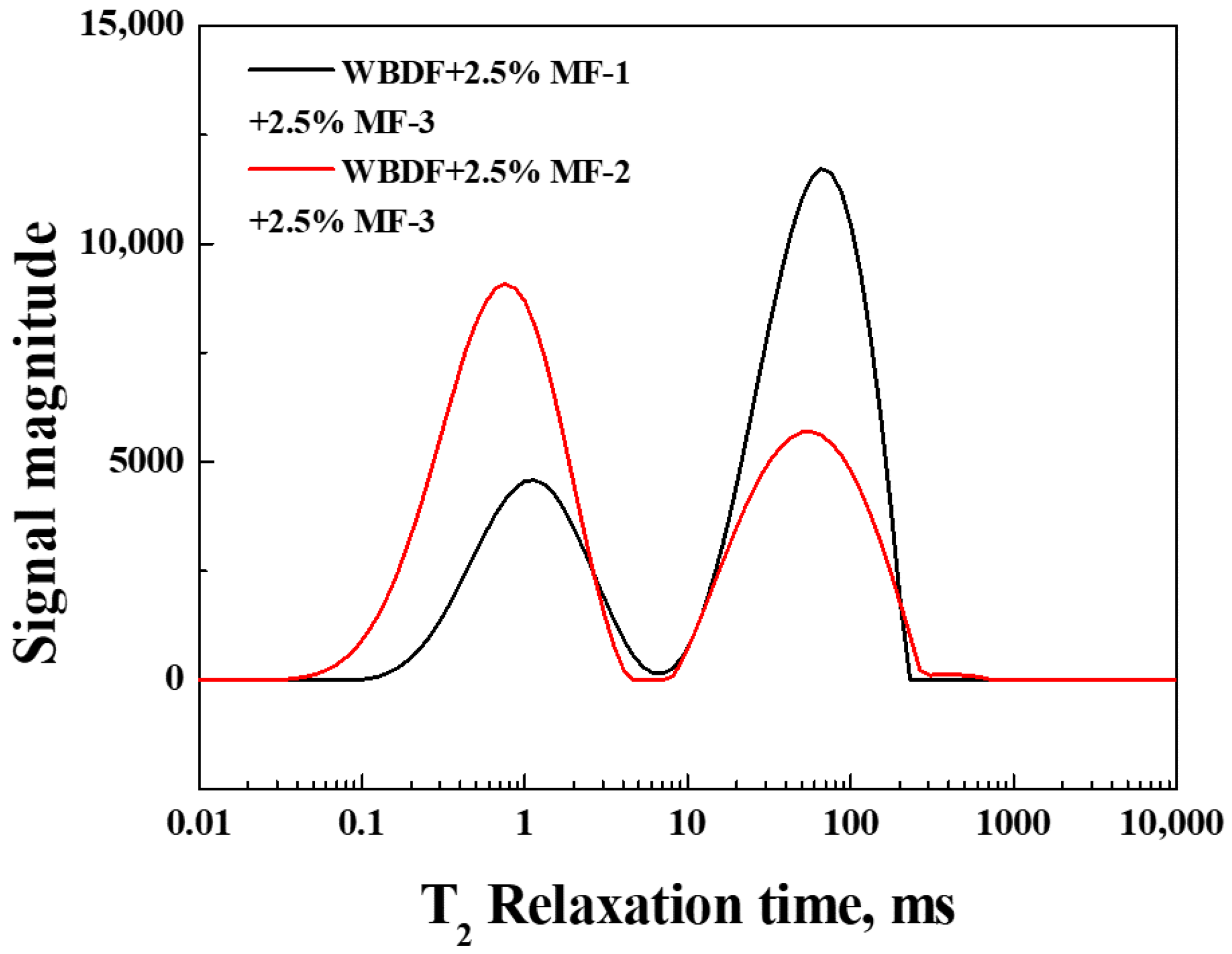
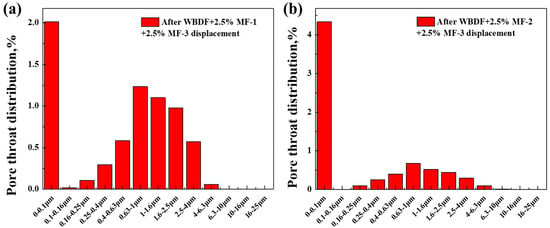
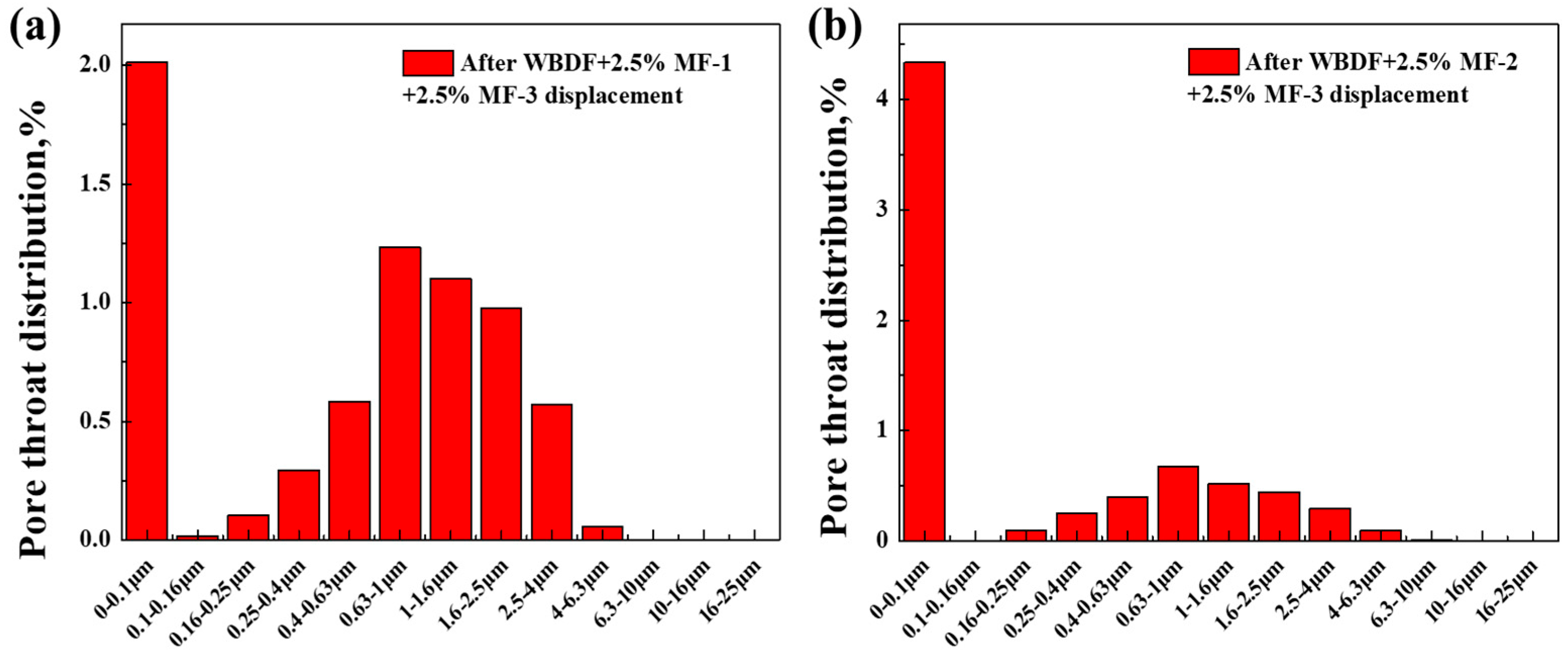
Microscopic characterization based on Nuclear Magnetic Resonance and pore-throat distribution confirms that the introduction of binary composite systems significantly enhances the compactness and spatial occupancy of the sealing layer. As shown in Figure 16, the T2 spectrum integral areas for the WBDF + 2.5% MF-1 + 2.5% MF-3 and WBDF + 2.5% MF-2 + 2.5% MF-3 systems decreased to 1,516,034.57 and 894,764.08, respectively. The corresponding pore space plugging rates reached 87.82% and 92.81%, both of which are significantly superior to the maximum value achieved by single-agent systems. Comparative analysis indicates that the synergistic effect of MF-2 and MF-3 is superior to that of MF-1 and MF-3, a result primarily attributed to the “size matching” between particle dimensions and the pore structure. Specifically, after MF-3 forms a primary bridge at the dominant pore throats, micron-scale inter-particle interstices are generated. The micro-sized filling agent MF-2 effectively fills these interstices, substantially reducing filter cake permeability. Conversely, the nano-sized MF-1, due to its insufficient size, fails to form effective packing within these micron-scale voids, allowing partial interconnected channels to persist. However, synthesizing these findings with macroscopic pressure-bearing test results reveals that although the MF-2 + MF-3 system achieves a volumetric plugging rate of 92.81%, it fails to attain a complete “zero-invasion” state under a differential pressure of 10 MPa. This indicates that binary systems still possess structural defects: the MF-2 + MF-3 combination lacks nano-particles for the further sealing of sub-micron pores, while the MF-1 + MF-3 combination lacks intermediate-sized particles for dense filling (Figure 17). Consequently, the microscopic experimental data fully demonstrate the necessity of constructing a “bridging–filling–densifying” ternary multi-level sealing architecture. It is essential to simultaneously introduce intermediate-sized particles and nano-particles to eliminate residual hydraulic conductive pathways within the multi-scale pore space, thereby achieving absolute sealing under high-pressure conditions.
Figure 16.
NMR T2 relaxation time distribution curves for a coal sample after displacement by WBDF + 2.5% MF-1 + 2.5% MF-3 and WBDF + 2.5% MF-2 + 2.5% MF-3.
Figure 17.
Pore-throat distribution of the coal sample after displacement by WBDF + 2.5% MF-1 + 2.5% MF-3 (a) and WBDF + 2.5% MF-2 + 2.5% MF-3 (b).
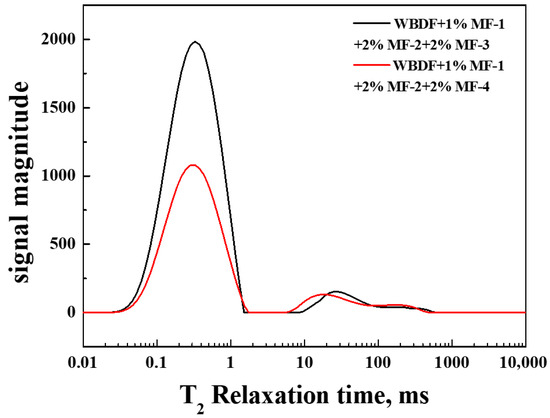
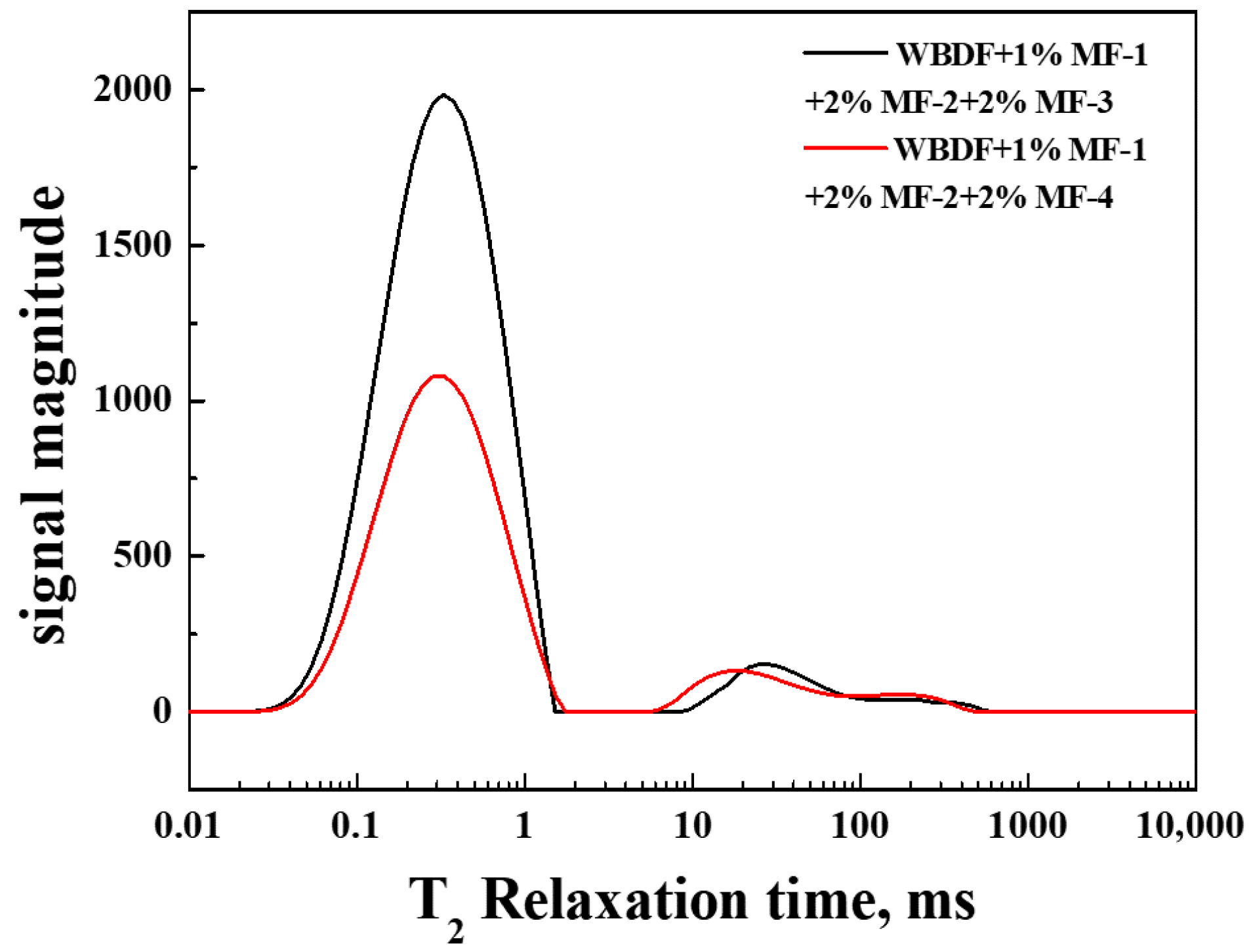
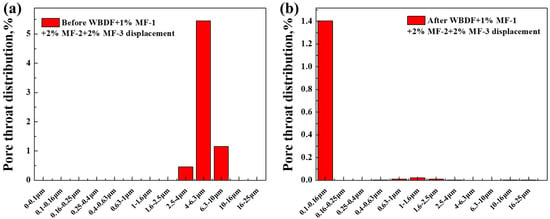
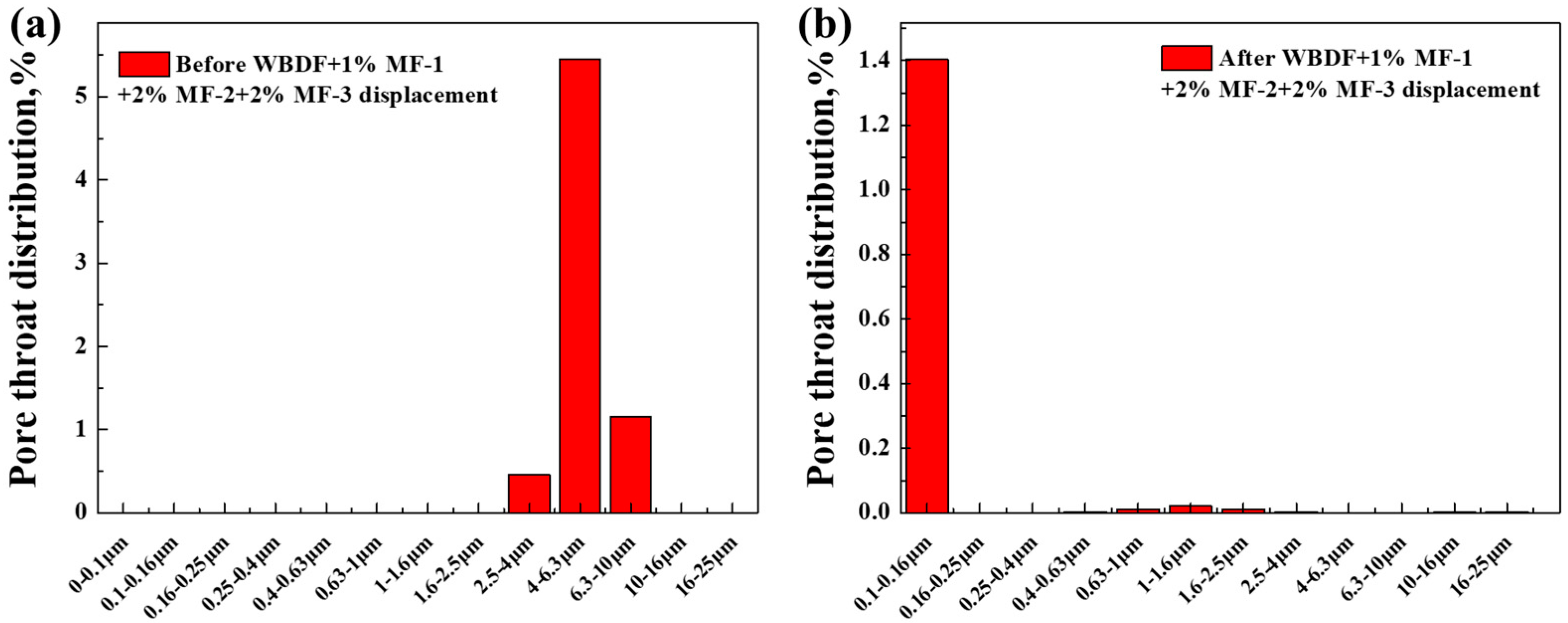
Quantitative characterization based on Nuclear Magnetic Resonance T2 spectra and pore-throat distribution confirms that the ternary composite systems achieve ultimate sealing of the deep coal pore network by constructing a “full-scale multi-level dense packing” architecture. As shown in Figure 18, the T2 spectrum peak areas for the WBDF + 1% MF-1 + 2% MF-2 + 2% MF-3 and WBDF + 1% MF-1 + 2% MF-2 + 2% MF-4 systems plummeted to 22,273.52 and 21,204.81, respectively. Compared to the saturated water baseline (12,440,629.13), the plugging efficiency for both systems exceeded 99.8%. Notably, the pore-throat distribution signal for the ternary system containing rigid MF-4 particles dropped below the instrument’s detection limit after displacement, indicating that the system completely blocked fluid invasion channels. Mechanism analysis attributes this superior performance to the precise matching between particle sizes and pore structures: large skeletal particles (MF-3/MF-4) form primary pressure-bearing bridges at the dominant pore throats, medium-sized MF-2 tightly fills the geometric voids between the skeletal particles, and nano-sized MF-1 further seals sub-micron defects and modifies the filter cake surface, creating a synergistic “bridging–filling–sealing” mechanism (Figure 19). It is noteworthy that the rigid MF-4 system exhibits comparable ultimate sealing efficiency, with MF-4 showing a marginally lower residual low-T2 signal than the flexible MF-3 system. This suggests that once the voids are completely filled by micro/nano particles, the high-modulus of the rigid skeleton is more effective in resisting filter cake creep and compressive deformation under a 10 MPa differential pressure, thereby maintaining the structural integrity and zero permeability of the sealing layer, ultimately achieving the “zero-invasion” objective for deep coalbed methane drilling fluids.
Figure 18.
NMR T2 relaxation time distribution curves for a coal sample after displacement by WBDF + 1% MF-1 + 2% MF-2 + 2% MF-3 and WBDF + 1% MF-1 + 2% MF-2 + 2% MF-4.
Figure 19.
Pore-throat distribution of the coal sample before WBDF + 1% MF-1 + 2% MF-2 + 2% MF-3 (a) and after displacement by WBDF + 1% MF-1 + 2% MF-2 + 2% MF-3 (b).
4. Conclusions
Deep coal rocks show a macropore-dominated unimodal pore-throat distribution, with dominant seepage channels mainly in the 6.3–10 μm range; therefore, these pore throats are the primary targets for bridging to prevent severe drilling fluid losses. Compared with single- or binary-additive formulations, the ternary composite systems (MF-1 + MF-2 + MF-3/4) deliver a step-change in sealing efficiency, achieving >99.8% reduction in NMR signal intensity and effectively “zero invasion” under 10 MPa differential pressure. The enhanced sealing results from a hierarchical packing mechanism: coarse particles (MF-3/MF-4) form the load-bearing bridge, medium particles (MF-2) fill inter-skeletal voids, and nanoparticles (MF-1) seal sub-micron defects, producing a compact, low-permeability sealing layer. Under extreme pressure, skeleton mechanical strength becomes critical; the rigid MF-4 system shows slightly higher sealing stability and lower residual NMR signals than the flexible MF-3 system, indicating improved resistance to creep and structural deformation. Finally, LF-NMR is validated as an effective non-destructive and quantitative tool to evaluate drilling fluid invasion and sealing performance by directly tracking T2 spectral evolution and pore-throat changes beyond conventional filtration metrics.
Author Contributions
Conceptualization, Z.Q. and J.H.; methodology, Q.M.; software, Y.G.; validation, Z.R., J.L. and S.Z.; formal analysis, X.L.; investigation, J.H.; resources, W.W.; data curation, Z.W.; writing—original draft preparation, Z.W.; writing—review and editing, W.W.; visualization, W.W.; supervision, W.W.; project administration, Z.W.; funding acquisition, J.H. All authors have read and agreed to the published version of the manuscript.
Funding
This work was financially supported by the Group Company’s Key Applied Science and Technology Major Special Project (2023ZZ18YJ05) and the CNPC (China National Petroleum Corporation) Key Applied Technology Science and Technology Special Project (2023ZZ18YJ05).
Data Availability Statement
The original contributions presented in this study are included in the article. Further inquiries can be directed to the corresponding author.
Conflicts of Interest
Authors Wei Wang, Zongkai Qi, Jinliang Han, Qiang Miao, Xinwei Liu, Youhui Guang were employed by the company China United Coalbed Methane National Engineering Research Center Co., Ltd. and PetroChina Coalbed Methane Co., Ltd. The remaining authors declare that the research was conducted in the absence of any commercial or financial relationships that could be construed as a potential conflict of interest.
References
- Zheng, L.; Su, G.; Li, Z.; Peng, R.; Wang, L.; Wei, P.; Han, S. The wellbore instability control mechanism of fuzzy ball drilling fluids for coal bed methane wells via bonding formation. J. Nat. Gas Sci. Eng. 2018, 56, 107–120. [Google Scholar] [CrossRef] [Scilit]
- Liu, X.; Dang, B.; Li, L.; Bai, S.; Tan, Q.; Sun, Q. Research on Wellbore Stability Prediction of Deep Coalbed Methane Under Multifactor Influences. Appl. Sci. 2025, 16, 221. [Google Scholar] [CrossRef] [Scilit]
- Jape, N.; Ghosh, S.J.P.; Journal, P.E. A Brief Review of Wellbore Stability in Coal Beds: Technological Improvements and Challenges. Pet. Petro Chem. Eng. J. 2025, 9, 000406. [Google Scholar]
- Li, H.; Lau, H.C.; Huang, S. China’s coalbed methane development: A review of the challenges and opportunities in subsurface and surface engineering. J. Pet. Sci. Eng. 2018, 166, 621–635. [Google Scholar] [CrossRef] [Scilit]
- Lau, H.C.; Li, H.; Huang, S. Challenges and opportunities of coalbed methane development in China. Energy Fuels 2017, 31, 4588–4602. [Google Scholar] [CrossRef] [Scilit]
- Li, G.; Zhang, J.; Zhao, H.; Hou, Y. Nanotechnology to improve sealing ability of drilling fluids for shale with micro-cracks during drilling. In Proceedings of the SPE International Oilfield Nanotechnology Conference and Exhibition; Society of Petroleum Engineers: Richardson, TX, USA, 2012; p. SPE–156997-MS. [Google Scholar]
- Han, Z.; Yang, X.; Ren, N.; Song, J.; Zhao, M.; Xue, M.; Liang, M.; Yan, X.; Jin, C.; Jiang, G.; et al. Dynamic sealing mechanisms of drilling fluid in fractured coalbed methane formations: A coupled CFD-DEM numerical study. Comput. Geotech. 2025, 188, 107560. [Google Scholar] [CrossRef] [Scilit]
- Kai, D.; Guanhua, N.; Yuhang, X.; Meng, X.; Hui, W.; Shang, L.; Qian, S. Effect of optimized pore structure on sealing performance of drilling sealing materials in coal mine. Constr. Build. Mater. 2021, 274, 121765. [Google Scholar] [CrossRef] [Scilit]
- Mou, P.; Pan, J.; Niu, Q.; Wang, Z.; Li, Y.; Song, D. Coal pores: Methods, types, and characteristics. Energy Fuels 2021, 35, 7467–7484. [Google Scholar] [CrossRef] [Scilit]
- Zuo, J.; Wang, Z.; Zhou, H.; Pei, J.; Liu, J. Failure behavior of a rock-coal-rock combined body with a weak coal interlayer. Int. J. Min. Sci. Technol. 2013, 23, 907–912. [Google Scholar] [CrossRef] [Scilit]
- Yu, W.; Li, K.; Liu, Z.; An, B.; Wang, P.; Wu, H. Mechanical characteristics and deformation control of surrounding rock in weakly cemented siltstone. Environ. Earth Sci. 2021, 80, 337. [Google Scholar] [CrossRef] [Scilit]
- Wang, W.; Jin, J.; Xin, J.; Lv, K.; Ren, K.; Xu, J.; Cao, Z.; Zhuo, R. Damage Mechanism of Deep Coalbed Methane Reservoir and Novel Anti-Waterblocking Protection Technology. Processes 2024, 12, 2735. [Google Scholar] [CrossRef] [Scilit]
- Lyu, S.; Wang, S.; Chen, X.; Shah, S.; Li, R.; Xiao, Y.; Dong, Q.; Gu, Y. Experimental study of a degradable polymer drilling fluid system for coalbed methane well. J. Pet. Sci. Eng. 2019, 178, 678–690. [Google Scholar] [CrossRef] [Scilit]
- Tao, X.; Zheng, Z.; Yu, H.; Liu, H.; Li, Y.; Zhang, J.; Liu, J.; Zheng, L. Internal blocking and bonding to strengthen the mechanical properties and prevent collapse and leakage of fragmented coalbed methane (CBM) reservoirs by cohesive drilling fluids. Geoenergy Sci. Eng. 2024, 241, 213136. [Google Scholar] [CrossRef] [Scilit]
- Bai, Y.; Liu, Y.; Sun, J.; Lv, K. Plugging mechanism of rigid and flexible composite plugging materials for millimeter-scale fractures. SPE J. 2024, 29, 1786–1801. [Google Scholar] [CrossRef] [Scilit]
- Xu, Z.; Sun, J.; Li, L.; Lv, K.; Liu, J.; Dai, Z.; Zhang, X.; Wang, Z. Development and performance evaluation of a high temperature resistant, internal rigid, and external flexible plugging agent for water-based drilling fluids. Petroleum 2023, 9, 33–40. [Google Scholar] [CrossRef] [Scilit]
- Yang, L.; Ou, Z.; Jiang, G. Research progress of elastomer materials and application of elastomers in drilling fluid. Polymers 2023, 15, 918. [Google Scholar] [CrossRef] [Scilit]
- Wang, W.; Tian, Y. Study on Self-Healing and Sealing Technology of Fractured Geothermal Reservoir. Processes 2025, 13, 3817. [Google Scholar] [CrossRef] [Scilit]
- Cai, J.; Yue, Y.; Cao, W.; Yang, X.; Wu, X. Experimental study on the effect of drilling fluid wettability on shale wellbore stability. J. China Coal Soc. 2016, 41, 228–233. [Google Scholar]
- Bi, R.; Guo, M.; Wang, S.; Zhang, Y.; Si, X.; Chen, X.; Zhang, L. Theories, Techniques and Materials for Sealing Coalbed Methane Extraction Boreholes in Underground Mines: A Review. Processes 2024, 12, 2022. [Google Scholar] [CrossRef] [Scilit]
- Lu, Y.Y.; Zhang, H.D.; Zhou, Z.; Ge, Z.L.; Chen, C.J.; Hou, Y.D.; Ye, M.L. Current status and effective suggestions for efficient exploitation of coalbed methane in China: A review. Energy Fuels 2021, 35, 9102–9123. [Google Scholar] [CrossRef] [Scilit]
- Wang, K.; Lou, Z.; Guan, L.; Zhang, X.; Qin, B.; Huang, Y. Experimental study on the performance of drilling fluid for coal seam methane drainage boreholes. Process. Saf. Environ. Prot. 2020, 138, 246–255. [Google Scholar] [CrossRef] [Scilit]
- Kong, L.; Tang, J.; Luo, Y.; Yuan, F.; Lin, Y.; Tao, R. Construction and evaluation of a degradable drilling fluid for underground coalbed methane extraction boreholes. ACS Omega 2024, 9, 10426–10439. [Google Scholar] [CrossRef] [Scilit]
- Zuo, Y.; Tan, B.; Jia, Z.; Lu, H.; Du, F.; Han, C.; Wang, Y.; Tang, Q. Experimental Investigation of Borehole Sealing Efficiency in Coalbed Methane Extraction Using Controllable Slow-Release Materials. Langmuir 2025, 41, 26639–26653. [Google Scholar] [CrossRef] [Scilit]
- Huang, X.; Meng, X.; Lv, K.; Zhang, Z.; Cao, L.; Wang, R.; Feng, J.; Wu, Y.; Sheng, W. Development of a high temperature resistant nano-plugging agent and the plugging performance of multi-scale micropores. Colloids Surf. A Physicochem. Eng. Asp. 2022, 639, 128275. [Google Scholar] [CrossRef] [Scilit]
- Yang, F.; Qian, Q.; Lu, M.; He, W.; Zhong, A.; Zhang, Z.; Zhu, D.; Zou, Y. Experimental study of plugging agent particle size and concentration on temporary plugging fracturing in shale formation. Processes 2024, 12, 1049. [Google Scholar] [CrossRef] [Scilit]
- Wang, T.; Sun, Q.; Jia, H.; Ren, J.; Luo, T. Linking the mechanical properties of frozen sandstone to phase composition of pore water measured by LF-NMR at subzero temperatures. Bull. Eng. Geol. Environ. 2021, 80, 4501–4513. [Google Scholar] [CrossRef] [Scilit]
- Xie, H.; Zhao, Y.; Qin, D.; Liu, H.; Xing, Y.; Cao, Z.; Zhang, Y.; Yu, L.; Zhang, Z. Pore Structure and Fractal Characteristics of Coal Rocks Under Variable Moisture Content Increment Cycles Using LF-NMR Techniques. Water 2025, 17, 1884. [Google Scholar] [CrossRef] [Scilit]
- Wang, H.; Zhou, S.; Li, S.; Zhao, M.; Zhu, T. Comprehensive characterization and evaluation of deep shales from Wufeng-Longmaxi Formation by LF-NMR technology. Unconv. Resour. 2022, 2, 1–11. [Google Scholar] [CrossRef] [Scilit]
- Yu, D.; Xie, J. Study on the mechanics and pore characteristics of coal seam drilling sealing materials based on nanomaterial optimization. ACS Omega 2022, 7, 27991–28002. [Google Scholar] [CrossRef] [Scilit]
- Wang, Z.; Cui, H.; Wei, G.; Jia, T.; Guo, J.; He, X. Study on the quantitative characterization and seepage evolution characteristics of pores of loaded coal based on NMR. ACS Omega 2021, 6, 28983–28991. [Google Scholar] [CrossRef] [Scilit]
- Di, W.; Zhao, C.; Geng, T.; Sun, Q.; Xu, Z.; Sun, D. Probing the state of water in oil-based drilling fluids. Colloids Surf. A Physicochem. Eng. Asp. 2022, 651, 129770. [Google Scholar] [CrossRef] [Scilit]
- Feng, Y.; Ren, K.; Liu, J.; Li, S.; Guo, Y.; Qu, Y.; Yang, L. Safe drilling technology for deep CBM horizontal wells. Drill. Prod. Technol. 2024, 47, 33–41. [Google Scholar]
- Wang, Z.-L.; Sun, J.-S.; Liu, J.-P.; Lv, K.-H.; Shao, Z.-H.; Zhang, X.-F.; Xu, Z.; Dai, Z.-W.; Huang, N. Synthesis and mechanism of environmentally friendly high temperature and high salt resistant lubricants. Pet. Sci. 2023, 20, 3110–3118. [Google Scholar] [CrossRef] [Scilit]
- Yang, Z.; Peng, H.; Zhang, Z.; Ju, W.; Li, G.; Li, C. Atmospheric-variational pressure-saturated water characteristics of medium-high rank coal reservoir based on NMR technology. Fuel 2019, 256, 115976. [Google Scholar] [CrossRef] [Scilit]

Disclaimer/Publisher’s Note: The statements, opinions and data contained in all publications are solely those of the individual author(s) and contributor(s) and not of MDPI and/or the editor(s). MDPI and/or the editor(s) disclaim responsibility for any injury to people or property resulting from any ideas, methods, instructions or products referred to in the content. |
© 2026 by the authors. Licensee MDPI, Basel, Switzerland. This article is an open access article distributed under the terms and conditions of the Creative Commons Attribution (CC BY) license.