1. Introduction
Prestressed anchoring technology has been widely employed in infrastructure construction owing to its ability to effectively mobilize the inherent strength of rock masses and enhance the stability of rock and soil structures [
1,
2,
3,
4,
5]. However, conventional steel bars and steel strands used in anchor systems are susceptible to electrochemical corrosion, stress corrosion, and hydrogen embrittlement during long-term service, which can significantly reduce structural durability and reliability [
6,
7,
8].
Compared with traditional steel reinforcement, basalt fiber-reinforced polymer (BFRP) bars exhibit a superior corrosion resistance, high tensile strength, low density, and cost-effectiveness, making them promising alternatives to metallic materials for prestressed anchoring applications [
9,
10,
11]. Nevertheless, BFRP bars are characterized by a relatively low transverse shear strength, typically accounting for only about one-sixth of their tensile strength. As a result, they are prone to shear failure when conventional steel wedge anchorage systems are adopted [
12,
13,
14]. Therefore, the development of anchorage systems capable of fully mobilizing the tensile capacity of BFRP bars while mitigating shear damage is of considerable engineering significance. The existing anchor improvement research has not yet conducted on-site comparative studies for TCAC/PDAC.
Previous studies have explored various aspects of the mechanical behavior and durability of BFRP bars. Shi et al. [
15] investigated the relaxation behavior of BFRP bars by designing a device capable of eliminating the influence of slippage. In their experiments, different initial stress levels were applied, and it was found that the relaxation rate of BFRP bars decreased by 2.6% after 1000 h under a stress level equal to 0.5 times the ultimate strength of the BFRP bars. This result is comparable to the relaxation rate of prestressed steel rods under 0.7 times their ultimate strength. Dong et al. [
16,
17] conducted tests on the chemical corrosion resistance of BFRP bars, finding that the elastic modulus of the bars was basically unaffected by the chemical solutions. At the same time, the protective effect of the concrete significantly enhanced the corrosion resistance of the BFRP bars. Sim et al. [
18] conducted a study and found that CFRP, GFRP, and BFRP bars all exhibited similar deterioration patterns under alkaline solutions. However, the deterioration rates of different FRP bars varied, and the alkali resistance showed a pattern consistent with CFRP > BFRP > GFRP. Overall, these studies confirm that BFRP bars possess favorable mechanical properties and corrosion resistance compared with conventional steel reinforcement.
To ensure that FRP bars can fully develop their strength, many researchers have designed suitable anchorage devices based on the material characteristics of FRP bars. Yasir [
19] used expansive cement as the filling medium for bonded anchors and studied the effect of curing time on the bonding performance. The results demonstrated that the bond strength increases with the extension of curing time. Zhang and Benmokrane [
20,
21] conducted studies on resin-bonded anchorages and found that the minimum bond length should be 0.5 m. Filling materials with low elastic modulus resins can reduce the peak shear stress on the FRP surface, while high-elastic-modulus resins can more effectively control the creep of the anchorage system, leading to better long-term stability. Experimental results also showed that adding an expanding agent can significantly improve the anchorage performance of cement-based bonded anchors.
Despite the growing body of research on the mechanical performance, durability and types of anchorage devices of BFRP bars, comparative investigations on the anchoring mechanisms of different types of BFRP anchor cables, particularly TCAC and PDAC systems, remain limited, especially under field conditions. In this study, TCAC and PDAC were developed and applied in a fractured rock slope reinforcement project. Field monitoring and numerical analysis were conducted to investigate their axial force distribution characteristics, interfacial shear stress evolution, and load transfer mechanisms. Furthermore, the effectiveness of the BFRP anchor systems in improving slope stability was evaluated, providing a technical reference for the engineering application of BFRP prestressed anchors.
2. Materials and Methods
The study area is located in the low-mountain hilly region of western Henan Province. The slope consists primarily of colluvial deposits with highly fragmented rock masses. The new G310 highway tunnel crosses Qinglong Mountain, where slope deformation and instability risks are significant. The physical and mechanical parameters of soil and rock materials are summarized in
Table 1.
Fully threaded BFRP bars with diameters of 8 mm, 10 mm, and 12.6 mm produced by Shanxi Jintou Basalt Development Co., Ltd. (Datong, China) were selected. Their mechanical properties, obtained through laboratory testing, are presented in
Table 2.
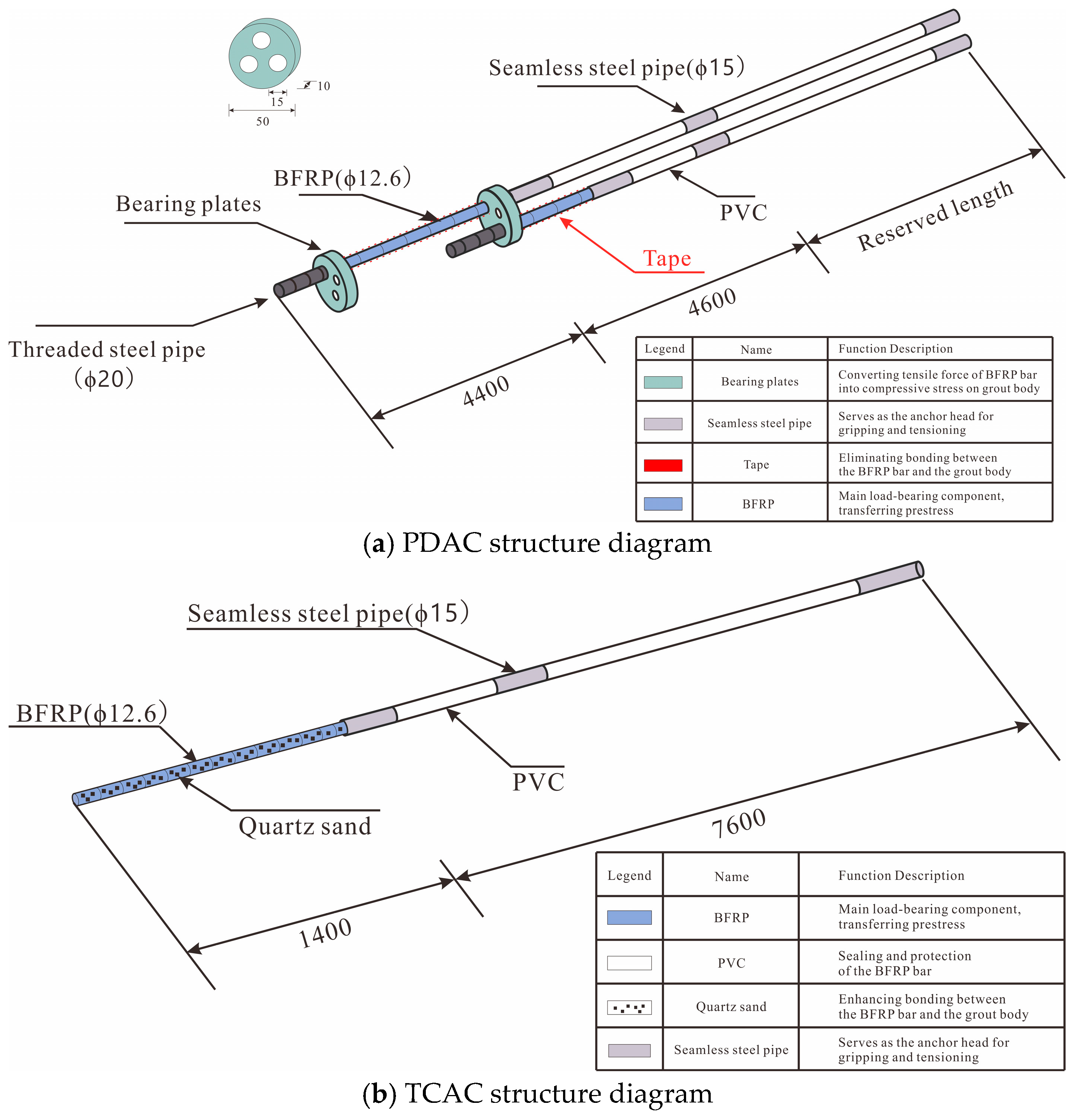
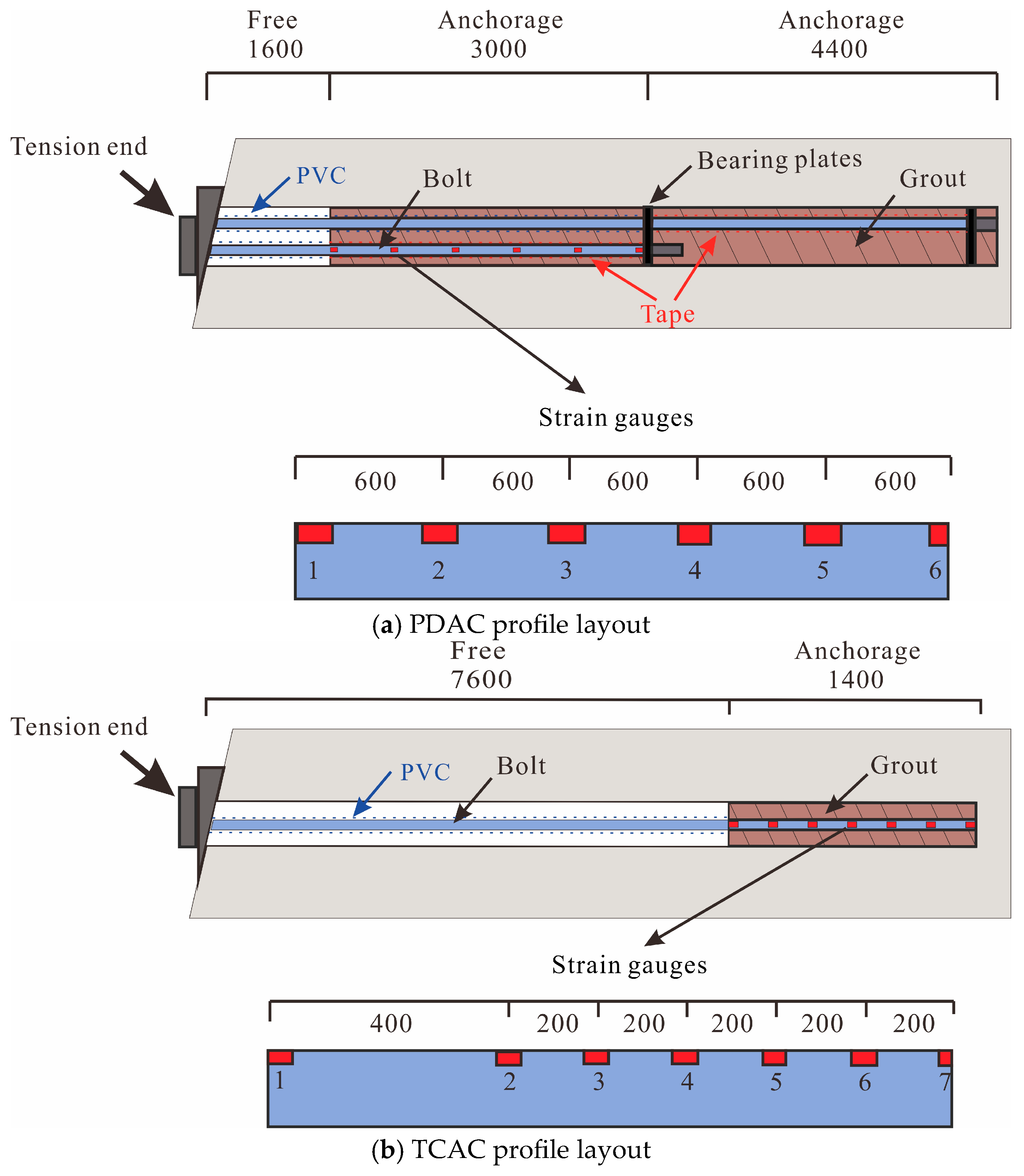
The working mechanism of a PDAC mainly involves transferring the tensile force through the rod body to the bearing plate at the bottom of the anchorage section. The bearing plate then converts the tensile force into compressive stress, which is transmitted to the grouting body and subsequently to the surrounding soil. In contrast, when a TCAC is subjected to force, the anchorage section bears the tension, which is transmitted to the surrounding soil through the grouting body. In the research and development of basalt prestressed anchor cable, a metal casing is used to bond the two ends of the reinforcement for protection. The specific design is as follows.
The pressure-dispersed prestressed anchor cable is mainly composed of two basalt fiber tendons and two bearing plates. Considering the brittleness and low shear strength of the BFRP bars, the anchoring end is bonded with epoxy resin inside a steel tube to protect the tendons. The outer surface of the anchor bar is lubricated with butter and wrapped with tape to ensure that there is no bonding force between the anchor bar and the grouting body. In the free section of the anchor cable, two separate steel pipes are sleeved outside the anchor bar, and the steel pipes are connected by PVC pipes for later sealing treatment, as shown in
Figure 1a.
The tension-concentrated prestressed anchor cable is designed with a single basalt fiber bar. The free section is protected by two steel pipes connected with a PVC tube, allowing for easy removal of the excess part after anchoring. The anchorage section of the bar is sandblasted to enhance the bonding strength, as shown in
Figure 1b.
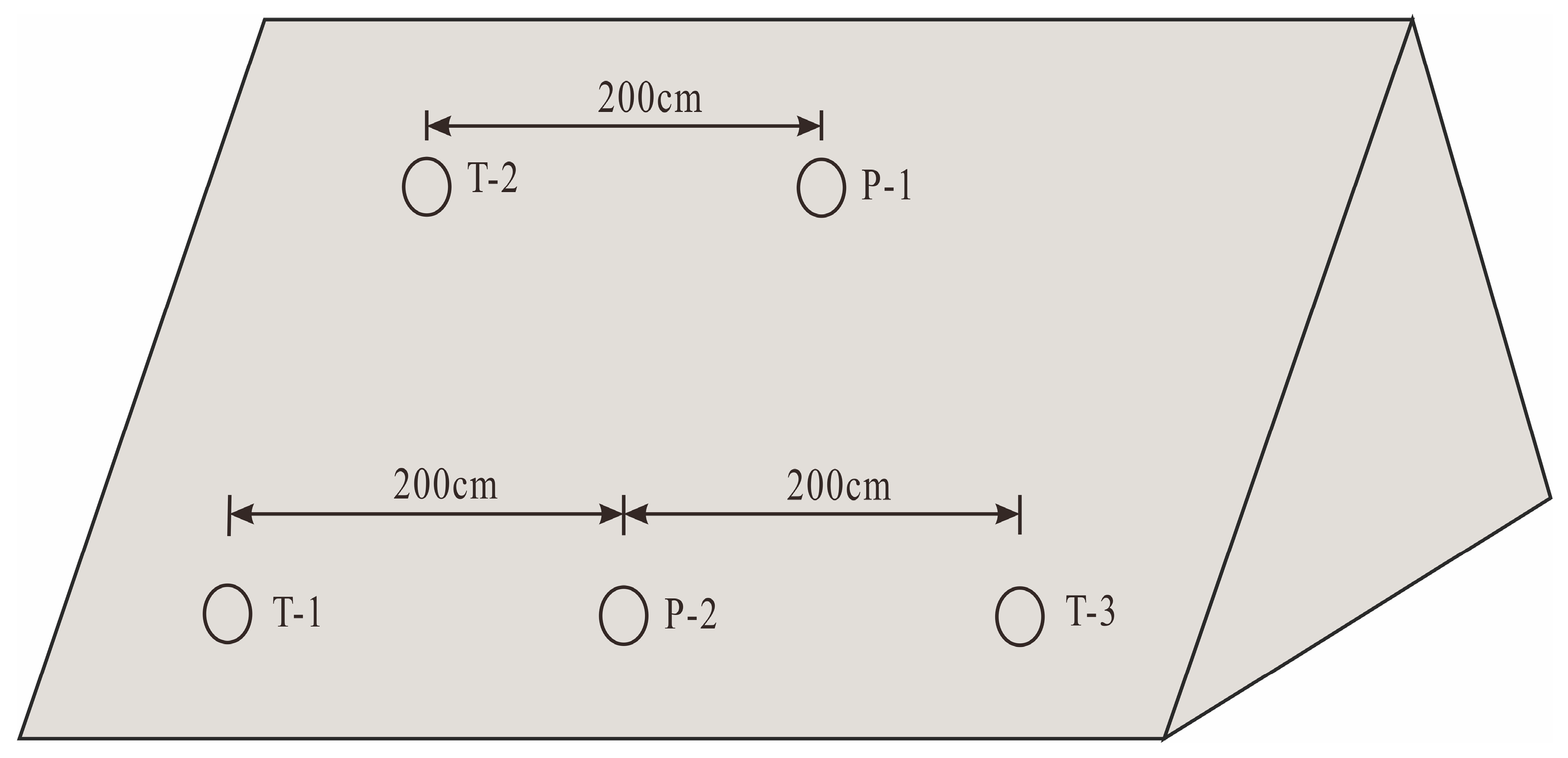
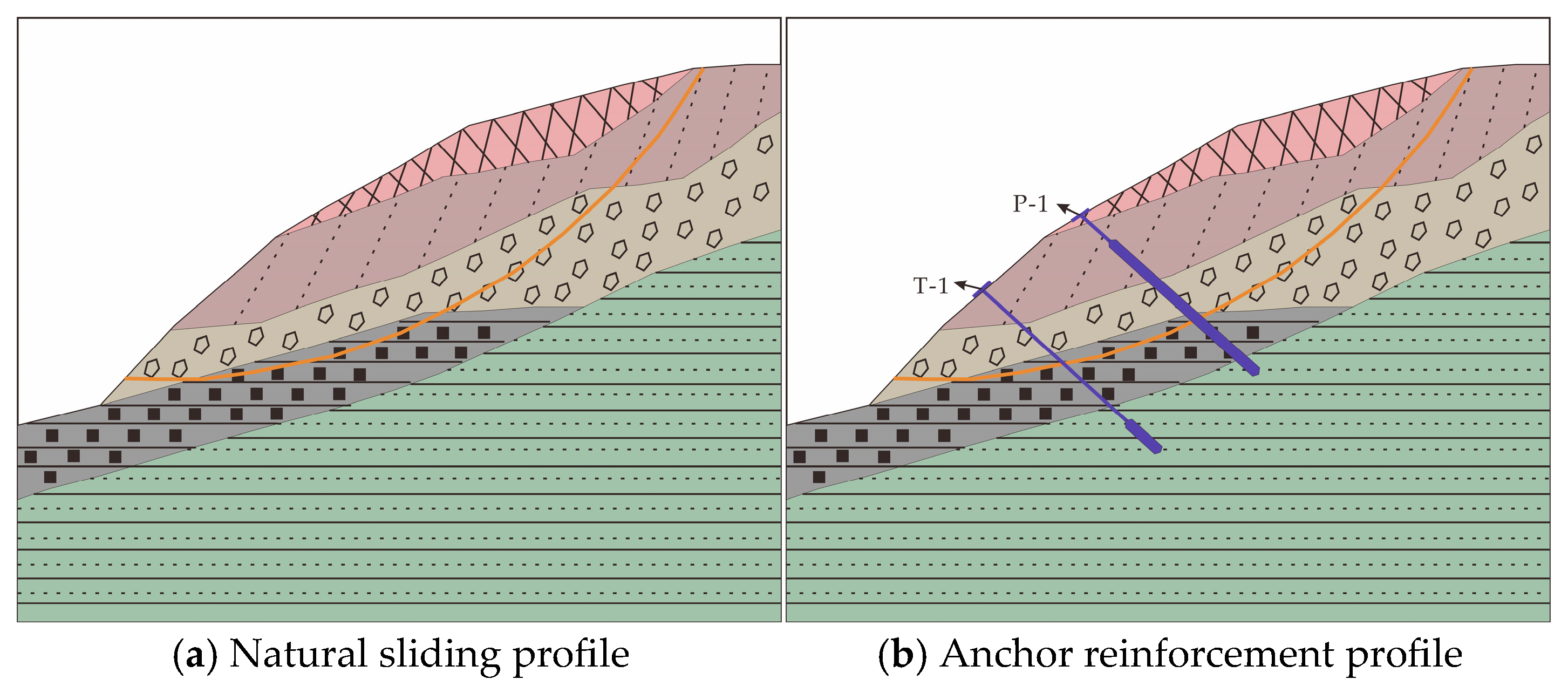
The arrangement of the anchor cables on the slope is shown in
Figure 2, where the P-type anchor cable represents the PDAC, and the T-type anchor cable represents the TCAC. Anchor cables T-1 and P-1 were selected for data analysis. The structural cross-sectional diagrams of the two anchor cables and the distribution of strain gauges along the anchorage section are shown in detail in
Figure 3.
Drilling and grouting: Down-the-hole drilling was adopted due to fractured bedrock and high risks of collapse and jamming. Wall stabilization grouting was performed when necessary. Two-stage grouting was applied: initial normal-pressure grouting followed by high-pressure secondary grouting (2.5–5 MPa). Tensioning: Tensioning was conducted after the grout achieved ≥15 MPa compressive strength. The load was progressively applied at 25%, 50%, 75%, 100%, and 110% of the design tension, with monitoring and final locking. At this stage, the anchor cable has not yet reached its ultimate limit state. Data acquisition: Axial strain was measured using a DH3816N static strain acquisition system, and the frequency is times/1S.
3. Results and Discussion
3.1. Axial Force Distribution
Assuming that the axial stress distribution of the cross section of the BFRP bar is uniform, the axial force of the BFRP bar in the anchorage section can be calculated by the strain of the bar and the cross-section area of the bar according to the Formula (1):
In the formula, P is the axial load of the BFRP bar; ε is the strain of the BFRP material; E is the elastic modulus of the BFRP material; A is the cross-sectional area of the BFRP bar, and the diameter of the BFRP bar is 12.6 mm.
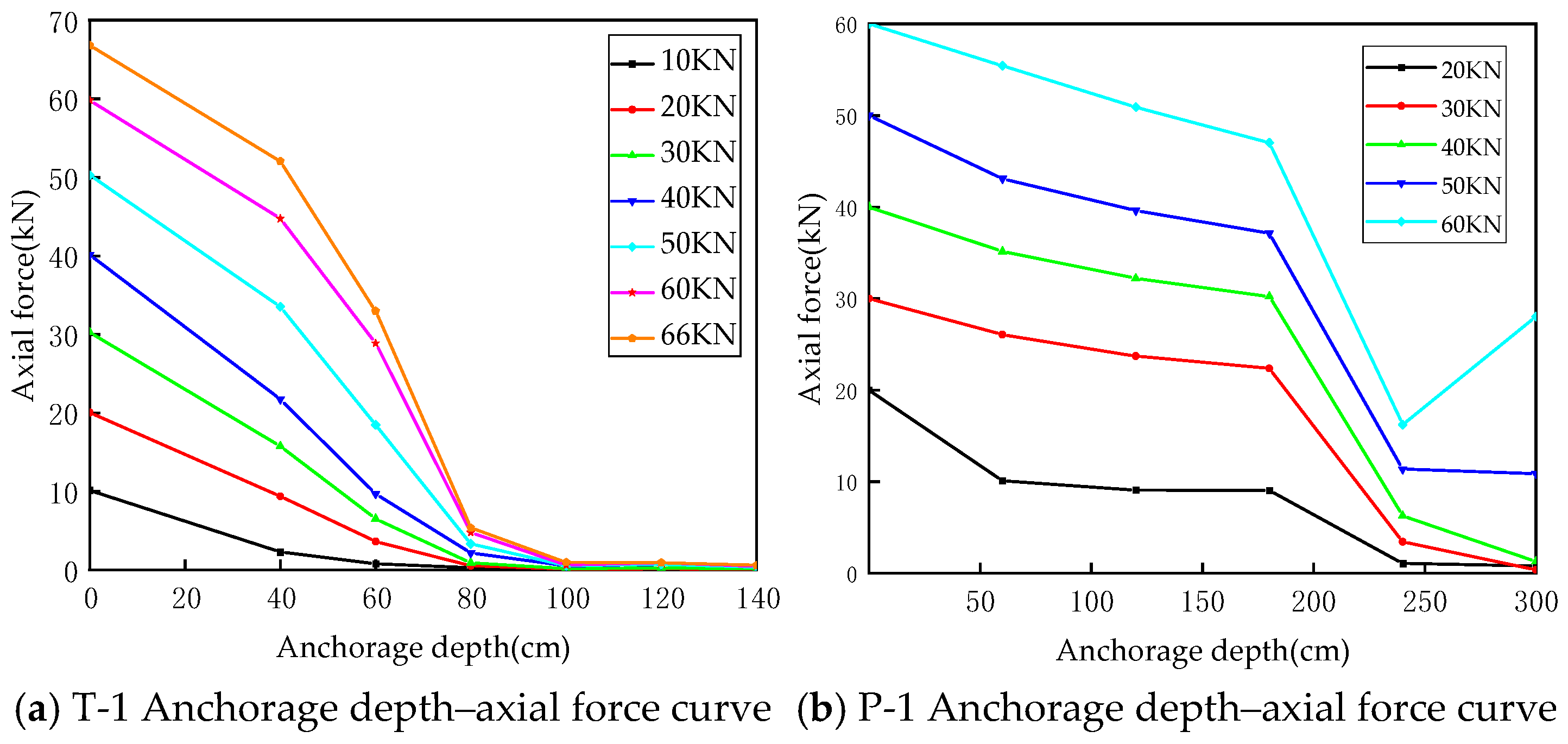
Figure 4a presents the axial force distribution along the anchorage section of the TCAC. The axial force generally decreases with increasing anchorage depth. At relatively low prestress levels, the axial force in the front portion of the anchorage section (≤60 cm) exhibits a concave downward trend, and the axial force approaches 0 kN at a depth of approximately 80 cm. With increasing prestress, the axial force distribution gradually transitions to a convex downward pattern, and a slight increase in axial force is observed at the same depth. This concave-to-convex evolution is essentially determined by the bonding-slip behavior between the BFRP bar and the cement mortar grouting body. At low prestress, the interface remains in an elastic bonding state without obvious slip; The continuous interfacial shear action leads to a gradual attenuation of axial force with depth, resulting in a concave distribution. With increasing prestress, the shear stress in the front anchorage section (0~60 cm) exceeds the ultimate bond strength of the BFRP–grouting interface, causing interfacial slip and partial bonding failure. The elastic bonding state then shifts to the deeper anchorage section where the grouting body still provides effective shear restraint. Frontal slip slows down the axial force attenuation in the shallow part, while the deeper part undertakes more load transfer, thus turning the axial force distribution curve convex. This behavior suggests a gradual reduction in the bonding effectiveness between the BFRP bar and the cement mortar near the anchorage front under higher prestress levels, which weakens the restraining effect of the grout and allows limited load transfer to deeper regions. Nevertheless, this effect remains localized, and when the anchorage depth exceeds approximately 100 cm, the axial force remains nearly constant and close to zero. The BFRP–grouting interface in this deep region is not activated due to the complete consumption of axial force by the front and middle anchorage sections, and no obvious bonding or slip behavior occurs between the bar and the grouting body.
The axial force distribution of the PDAC is shown in
Figure 4b. Over an anchorage depth range of 0–180 cm, the axial force curve is relatively smooth, indicating minor axial force attenuation. This behavior is primarily attributed to the construction measures adopted, in which the BFRP bar was wrapped with tape and coated with grease, effectively minimizing bonding between the bar and the grout body. As a result, the axial force distribution remains relatively uniform along the front and middle sections of the anchorage. At depths of approximately 200–250 cm, the axial force decreases sharply due to the combined effects of bonding resistance and mechanical interlocking. The axial force drop value Δ
P is defined as the difference between the axial force at 180 cm within the anchorage section and the minimum axial force measured between 200 and 250 cm. The results show that Δ
P increases significantly and linearly with the applied prestress: when the prestress is 20 kN, Δ
P is 7.96 kN; at 30 kN, it is 18.94 kN; at 40 kN, it is 23.96 kN; at 50 kN, it is 25.75 kN; and under the design prestress of 60 kN, Δ
P reaches 30.79 kN. Linear regression analysis yields a correlation coefficient of R
2 = 0.9168, indicating a strong linear relationship between the two variables. This linear relationship also indicates that, within the design prestress range of the BFRP PDAC, load transfer in the anchorage section remains in the elastic working stage, with no bond failure occurring at the grout–rock/soil interface, demonstrating good linear controllability in the mechanical response of the anchorage system. In addition, when the applied prestress exceeds 50 kN, a localized increase in axial force is observed near the anchorage end. This phenomenon becomes more pronounced at 60 kN and can be attributed to stress concentration induced by compression of the grout body by the bearing plate under higher loading conditions.
3.2. Interfacial Shear Stress
The strain data are collected by the strain gauge, and the interfacial shear strength at different anchorage depths is calculated according to the formula
In the formula, τi is the interface shear stress of the BFRP bar micro-element, d is the diameter of the BFRP bar, which in this study is 12.6 mm, Pi is the axial force of the BFRP bar at point i, Pi+1 is the axial force at point i + 1, and ΔL is the axial length of the bar between the points i and i + 1. When calculating the interfacial shear stress, the rod between the two strain gauges is regarded as a micro-element. According to the law of reciprocal shear stress, the interface shear stress of the anchor bar at the boundary between the anchorage section and the free section is 0.
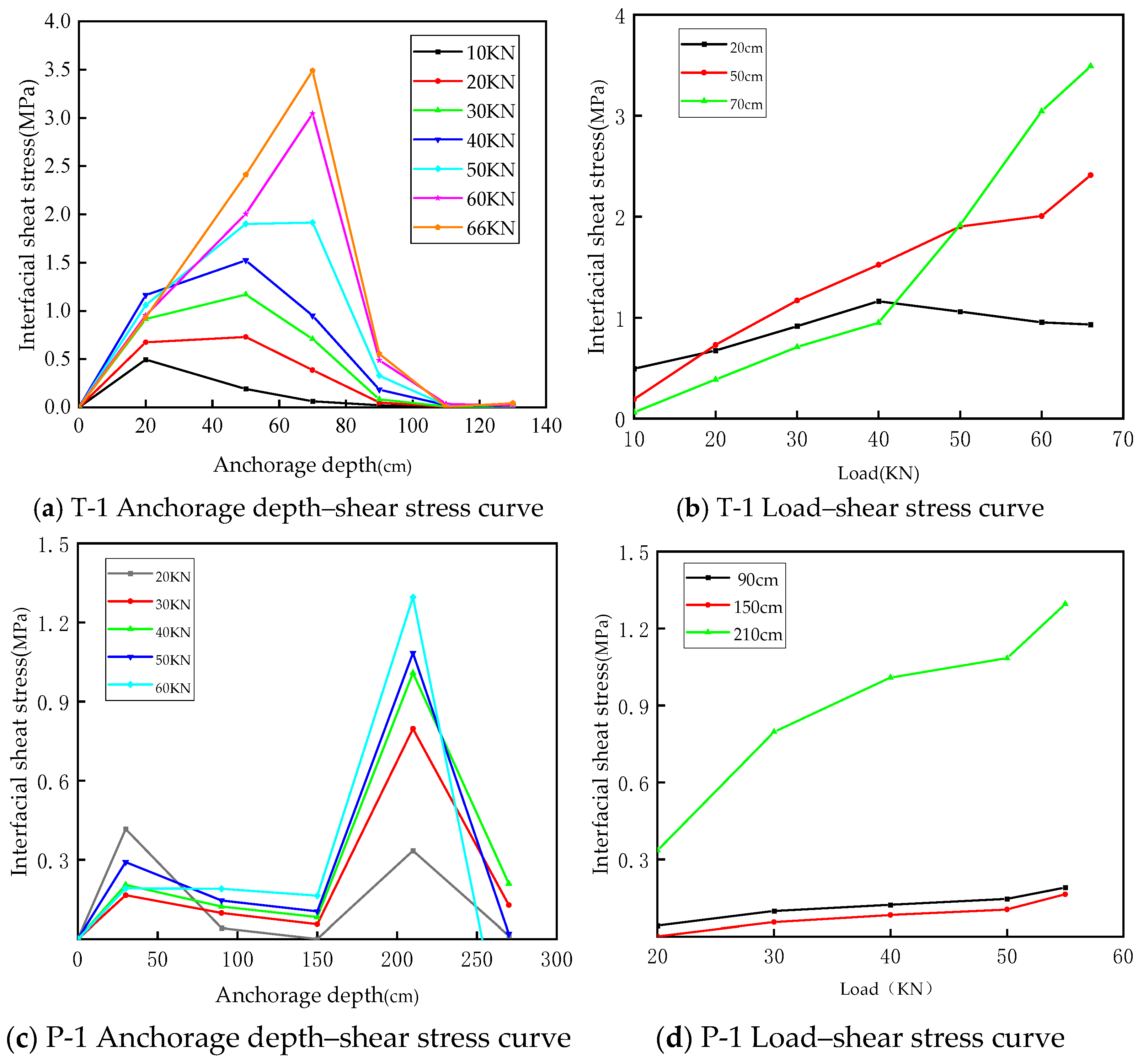
As shown in
Figure 5a, the interfacial shear stress of the TCAC initially increases and then decreases with increasing anchorage depth, forming an overall single-peak distribution. With increasing prestress, both the magnitude and the position of the peak shear stress change. When the prestress is 10–20 kN, the peak shear stress occurs at approximately 20 cm. As the prestress increases to 30–50 kN, the peak shifts about 30 cm deeper and stabilizes at around 50 cm. When the prestress further increases to 60–66 kN, the peak moves an additional 20 cm to approximately 70 cm. Overall, the peak position shows a stepwise backward migration with increasing prestress, indicating that the load transfer zone progressively moves from the shallow anchorage region toward deeper sections.
In contrast, the PDAC exhibits a markedly different shear stress distribution, as shown in
Figure 5c. The shear stress along the front portion of the anchorage section remains relatively low and evenly distributed. Near the bearing plate, however, the shear stress increases sharply to a pronounced peak and subsequently decreases rapidly. Notably, the peak consistently occurs at a depth of approximately 210 cm for all prestress levels, while its magnitude increases with increasing applied load.
Figure 5b,d further illustrate the relationship between interfacial shear stress and applied prestress at selected anchorage depths. For the TCAC, the shear stress distribution is relatively dispersed. At a shallow depth of 20 cm, the shear stress initially increases and then decreases with prestress, reaching a maximum at approximately 40 kN. At greater depths of 50 cm and 70 cm, the shear stress exhibits a sustained increasing trend, with a pronounced increase observed at 70 cm under a prestress of 40 kN. In comparison, for the PDAC, the shear stress at depths of 90 cm and 150 cm increases gradually with prestress, whereas, near the bearing plate (approximately 210 cm), the shear stress increases much more rapidly, indicating strong load concentration in this region.
The observed differences in shear stress distribution between the two anchor types reflect their distinct load transfer mechanisms. For the TCAC, deformation of the grout and surrounding rock near the anchorage front occurs first at lower prestress levels, leading to the early mobilization of shear resistance in shallow regions. As the prestress increases, the shear resistance of these regions becomes saturated, and additional load is progressively transferred to deeper parts of the anchorage section, resulting in the backward migration of the shear stress peak. For PDAC, the tensile force is transmitted through the elastic deformation of the tendon to the bearing plate at the bottom end. The bearing plate converts the tensile force into compressive stress on the grouting body, which in turn induces shear forces through the interaction between the grouting body in front of the bearing plate and the surrounding soil. Compared with TCAC, the shear force in PDAC develops from the rear end to the front end of the anchorage section, allowing the overall shear resistance of the grouted section to be more effectively mobilized. This reduces premature local bonding failure or damage to the surrounding soil or rock mass and improves the efficiency of length utilization in the anchorage section.
3.3. Evaluation of Slope Stability
Slope stability was evaluated using GEO5 2024 software (Nanjing Kulun, Nanjing, China). The equivalent anchor rod model was adopted to numerically simulate the BFRP anchor cables. The mechanical parameters of the anchor rods were directly input to represent their reinforcing effect on the slope. Based on the design requirements, the slope geometry was established by inputting the coordinates and thicknesses of each soil layer to construct the stratigraphic profile. The mechanical parameters of the soil and rock layers were assigned according to site investigation data. Anchor cables were subsequently incorporated into the model to evaluate their reinforcing effect. The material parameters adopted in the analysis are listed in
Table 3 and
Table 4.
As illustrated in
Figure 6, slope stability analyses were conducted for both unsupported and anchor-reinforced conditions. A circular slip surface was assumed, and the Swedish method was employed for stability evaluation. The software automatically searched for the most critical slip surface. The calculated results are summarized in
Table 5. In the absence of anchor reinforcement, the slope safety factor was 1.32, which is slightly lower than the recommended allowable value of 1.35. After installing the BFRP anchor cables, the safety factor increased to 1.36, meeting the design requirements. These results indicate that the proposed BFRP anchor system can effectively improve slope stability under the studied conditions.
4. Conclusions
Based on field monitoring and numerical analysis, the mechanical behavior and anchoring mechanisms of tension-concentrated and pressure-dispersed BFRP anchor cables were comparatively investigated. The following conclusions can be drawn:
Distinct axial force transfer characteristics were observed for the two anchor types. The TCAC exhibited a progressive decrease in axial force with anchorage depth, with the force distribution evolving from a concave to a convex pattern as the applied prestress increased. In contrast, the PDAC showed a relatively uniform axial force distribution along most of the anchorage section, followed by a pronounced reduction near the bearing plate, where localized axial force amplification was observed under higher prestress levels.
The interface shear stress distributions of the two anchorage systems differ significantly. For TCAC, as prestress increases, the peak shear stress rises and shifts deeper into the anchorage zone. The bonding effect within the anchorage segment influences the peak position; with higher prestress, bond failure occurs near the front section, causing the peak to move backward. For PDAC, increasing prestress also raises the peak shear stress. The use of plastic films and lubricating grease effectively suppresses bonding along most of the anchorage length, concentrating the load transfer near the bearing plate through the compression between the grout body and the plate.
Slope stability analysis confirmed the reinforcing effectiveness of the BFRP anchor system. Numerical results showed that the installation of BFRP anchor cables increased the slope safety factor from 1.32 to 1.36 under the studied conditions, meeting design requirements and demonstrating the practical applicability of BFRP anchors for slope reinforcement in fractured rock masses.
Overall, this study demonstrates that BFRP bars can be effectively employed as load-bearing elements in prestressed anchoring systems. The findings provide insight into the different anchoring mechanisms of tension-concentrated and pressure-dispersed BFRP anchor cables and offer practical guidance for their selection and application in slope stabilization engineering.




 ,
,