1. Introduction
The additive manufacturing (AM) sector has experienced exponential growth in recent years, transforming traditional design and production methods. This evolution has enabled the creation of components with complex, customized geometries, but has also exposed challenges related to human interaction during design and production. Errors made by designers and operators can lead to material waste, financial losses, and reduced product quality, underscoring the need for systemic approaches to mitigate these issues [
1]. Moreover, design students and professionals often underuse rapid prototyping technologies, limiting their understanding of cost, time, quality, and technological potential [
2].
Product development in AM involves multiple stakeholders, and effective interaction among engineers, designers, and operators is essential. However, communication failures and unclear procedures frequently disrupt teamwork, leading to omissions and misinterpretations of customer requirements [
3]. Consequently, analyzing human error becomes a key strategy for optimizing performance in the design process and ensuring customer satisfaction.
Although AM has revolutionized production, its implementation is constrained by technological, organizational, and human limitations. The digital infrastructure connecting CAD, simulation, and AM remains insufficient due to limited interoperability and standardization, creating gaps between the design, prototyping, and manufacturing stages [
4]. Operationally, the absence of real-time monitoring systems, such as sensors, can lead to issues, including vibrations and thermal variations, going unnoticed, resulting in structural defects and costly rework [
5].
From a human factors perspective, digitalization does not eliminate the operator’s role but transforms it, requiring continuous reskilling and ergonomic adaptation aligned with Industry 4.0 [
6]. The persistent gap between theory and practical expertise further reinforces the need for training programs grounded in real manufacturing contexts [
7]. Additionally, the increasing digitalization of AM introduces cybersecurity risks.
Integrating AM into large-scale industrial processes poses significant challenges, particularly in minimizing human intervention and errors [
8]. Among these challenges is the process’s susceptibility to operating parameters, and the variability introduced by human actions directly affects the quality and reliability of final products [
9]. While AM allows for the fabrication of highly complex geometries, variations arising from parameter control or material selection remain a significant concern [
10]. Also, dimensional accuracy on complex surfaces is particularly sensitive, with deviations linked to factors such as laser power, scan spacing, scanning speed, bed temperature, and pulse frequency [
11]. It has been observed that incorrect parameter settings can lead to low accuracy, poor surface quality, and reduced mechanical resistance, ultimately resulting in defective or unusable parts [
12]. Fused deposition modeling (FDM), also known as fused filament fabrication (FFF), is a polymer extrusion technique. It is a widely used AM technology that can experience print failures due to human or configuration errors, resulting in wasted material and energy. These errors, such as equipment calibration problems or inadequate printing parameters, can increase actual material waste beyond what would be expected under ideal conditions, highlighting the importance of applying process optimization methods to reduce failures [
13]. Parameters such as layer height, printing speed, and nozzle size affect geometric and dimensional deviations, which are concrete forms of error in FDM parts and can be linked to both human configuration and process parameters [
14]. Additionally, the authors affirm that repetitive work conditions often lead operators to assume that processes are correct without adhering to standardized methodologies [
15].
Given these challenges, the authors emphasize the importance of integrating cognitive ergonomics into AM practices to improve design processes and communication among stakeholders [
16]. This research aims to develop a framework for evaluating mental workload and identifying human errors in AM technology applications. Thus, this article presents an approach to improve additive manufacturing (AM) and modeling processes by examining mental workload and human error during the fabrication of components using fused deposition modeling (FDM).
FFF is one of the most widely adopted and commercially implemented additive manufacturing (AM) technologies worldwide. As a material extrusion-based process, FFF operates through the layer-by-layer deposition of thermoplastic filaments, enabling the fabrication of complex geometries with relatively low equipment costs and operational accessibility [
17,
18,
19]. The economic viability of FFF is largely driven by the wide variety of compatible materials and the relatively low investment required for equipment when compared to other additive manufacturing (AM) technologies [
20,
21]. This versatility has enabled FFF to serve numerous industrial sectors, supported by a range of machines from affordable desktop systems to advanced industrial-scale printers.
Although AM is a highly automated technology, it requires manual material loading and unloading, hardware configuration, operation of the printing software, and interaction with on-board interfaces. Therefore, it is essential to study the inherent interaction with the systems and the potential impact on current processes. Some reviewed articles related to the improvement in 3D printing, additive manufacturing, and modeling present case studies of real products currently on the market that were designed for additive manufacturing in production (including design and production steps) [
17,
18]; however, cognitive ergonomics analyses are not considered. They are focused on industrial applications, not just prototypes. Additionally, recent studies in industrial administration and management highlight the importance of integrating analytical and strategic approaches in emerging production systems, underscoring the need to apply task analysis methodologies and human performance evaluation in advanced manufacturing environments [
22].
1.1. Hierarchical Task Analysis (HTA)
Hierarchical Task Analysis (HTA) is a structured method for decomposing complex tasks into elements or subgoals until operations that can be analyzed individually are reached [
23]. It provides a goal-based representation of a system, in which each goal is decomposed into subgoals that must be achieved in a specific order to satisfy the overall objective. This hierarchical organization provides a clear understanding of the logical relationships and dependencies among the different levels of a task.
HTA is widely applied in ergonomics, human–computer interaction, and systems engineering to represent both human- and system-driven processes [
24]. Using a top-down approach, the main task is broken into subtasks that describe the physical actions and cognitive processes involved in its execution [
25]. Each node in the hierarchical structure represents a specific objective, thereby identifying the operational sequences necessary to achieve the overall goal [
26].
The outcome of an HTA is typically a task tree or oriented graph that visually represents tasks and their subdivisions with rational numbering [
27]. Tools such as HAMSTERS-XL enable modeling of HTA’s hierarchies, with the participant’s primary objective at the top and detailed actions below [
28]. HTA supports the design of training programs by identifying key operations and procedural requirements for effective performance. Moreover, it serves as a foundation for human error analysis methods such as SHERPA (Systematic Human Error Reduction and Prediction), in which potential error modes are associated with the subtasks identified in HTA [
27,
29].
Beyond error detection, HTA supports modeling of human–robot interactions and collaborative systems by mapping dependencies between human and autonomous agents through Cooperative Task Analysis (CoTA) [
30]. This integration enables the identification of error-propagation paths, thereby improving both system safety and efficiency [
31]. Furthermore, HTA supports quantitative assessments within reliability methodologies such as CREAM (Cognitive Reliability and Error Analysis Method) and THERP (Technique for Human Error Rate Prediction), thereby facilitating the estimation of human error probability for specific operational phases [
30]
In this study, HTA was applied to analyze human–human and human–machine interactions in calibration tasks. The analysis was based on video observation and expert consultation. A structured activity plan was developed to guide evaluators and is presented as a flowchart that depicts the logical sequence of actions and the hierarchy of subtasks to improve additive manufacturing.
1.2. Mental Workload Evaluation Using NASA TLX
In user-centered design, cognitive ergonomics, and interface evaluation, understanding the mental load users experience during task execution is essential for improving performance, safety, and user experience. In this context, the NASA-TLX (Task Load Index), developed at NASA’s Ames Research Center, is among the most widely used instruments for measuring subjective task load [
32]. The NASA Workload Index is a multidimensional tool designed to assess the subjective workload experienced by operators during or immediately after task performance [
33]. This tool is widely used to evaluate tasks, systems, or team effectiveness and comprises six subjective subscales: mental demand, physical demand, time demand, performance, effort, and frustration [
34]. Each subscale is scored on a 0–100 scale, enabling a detailed assessment of cognitive load [
35]. These six dimensions contribute to an overall workload score, calculated as a weighted average, capturing the multifaceted nature of workload and individual variations in its perception. This multidimensional approach aims to reduce inter-subject variability and pinpoint the precise source of workload, which is crucial in complex environments such as additive manufacturing [
36]. Applying NASA-TLX to additive manufacturing provides a robust methodology for quantifying the cognitive demands placed on professionals during interaction with equipment design, simulation, and operation processes [
37]. The multidimensional nature of the NASA-TLX makes it a valuable tool for identifying the workload facets that require optimization in these contexts [
38]. Specifically, the NASA-TLX helps discern which aspects, such as mental demand during complex parameter adjustments or temporal pressure in rapid prototyping scenarios, contribute most to the overall perceived workload, thereby guiding targeted interventions [
39]. Furthermore, its ability to differentiate across workload dimensions enables a nuanced understanding of the cognitive demands in additive manufacturing, moving beyond a simplistic aggregate measure to pinpoint specific areas for ergonomic improvement [
39,
40].
NASA-TLX quantifies users’ mental load across six dimensions of cognitive experience: mental demand, physical demand, temporal demand, effort, perceived performance, and frustration level. These categories are rated on a continuous scale from 0 to 100, enabling a detailed visualization of the factors that influence the execution of a specific task. Unlike other one-dimensional methods, NASA-TLX offers a multifactorial perspective that helps to identify sources of cognitive overload more accurately.
One of the main advantages of this scale is its applicability across diverse domains, including aviation and air traffic control, human–computer interaction, medicine, education, and software systems analysis [
41]. Its versatility has been demonstrated in numerous studies that have validated its reliability and practical usefulness, particularly in environments where interface and procedure design impose high cognitive demands on users.
1.3. The Systematic Human Error Reduction and Prediction Approach (SHERPA)
The Systematic Human Error Reduction and Prediction Approach (SHERPA) method captures key decisions in a standardized, accessible format. It deploys the tool uniformly across the organization to monitor and guide implementation. This systematic approach seeks to mitigate the complexity inherent in decisions that span economic, technical, social, and human dimensions, often grounded in incomplete or ambiguous information [
42]. This complexity is exacerbated by the inherent subjectivity of decision-makers’ preferences, experiences, and knowledge, which often reside in unstructured data [
43]. This SHERPA methodological framework, comprising five stages and twelve steps, has been empirically validated in a decision-making scenario to determine the strategic approach for future analytics initiatives, thereby catalyzing value generation from data [
43]. This methodological approach is fundamental, as multi-criteria decision-making is well-suited to addressing complex problems characterized by high uncertainty, conflicting objectives, and diverse data types, both qualitative and quantitative [
44]. This approach is beneficial for addressing the inherently ambiguous and contradictory nature of organizational strategists’ preferences and perspectives, which are often expressed in unstructured data [
43]. Furthermore, it recognizes that strategic decision-making, despite analytical advances, still relies heavily on decision-makers’ judgment, intuition, and experience, elements that often contain cognitive and motivational biases [
45].
Therefore, incorporating an informed decision-support framework is crucial for leveraging data-driven insights while considering internal and external factors, including political and economic influences and customer preferences [
46]. This decision-making process, often influenced by the complexity, heterogeneity, and dynamics of preferences, requires an approach that balances quantitative analysis with qualitative wisdom [
44]. In this context, defining the decision objective is the essential starting point, guiding all subsequent steps and ensuring consistency in information collection and analysis [
47]. For this purpose, the Sherpa methodology is beneficial, as it integrates objective and subjective criteria that capture the multiple dimensions of organizational strategy [
43]. Thus, the Sherpa method, by facilitating the systematic integration of business intelligence and strategic management, supports more robust decision-making and improved organizational performance [
48].
The aim of the SHERPA model is not to add another Human Reliability Assessment (HRA) method to the long list of existing ones, but rather to provide a theoretical framework that addresses human reliability in a different way to most HRA methods. Human reliability is estimated here based on the task performed, the factors that determine performance, and the time worked, to consider how reliability depends on the task and work context, as well as the time operators have already spent on the job [
49]. The SHERPA method can be used to assess how the probability of human error varies with activity type, contextual conditions, working time, and breaks allocated during the shift. The model’s main advantage is its generality: it is suitable for any environment and operating conditions, with no sector- or activity-specific limitations. Many scenarios can be simulated without requiring significant time or resources [
49]. Evidence that human actions are a source of vulnerability for industrial systems gave rise to Human Reliability Analysis (HRA), which aims to examine the human factor more closely by predicting when an operator is most likely to fail.
Within the project, we aim to identify issues related to the operator’s interaction with the software interface and the machine’s process. Based on this, the phases to be followed for their corresponding assessment will be determined.
SHERPA defines the probability and criticality levels at which these problems occur within the additive area. That is, the HTA is revisited and based on process analysis, predictive techniques are applied to identify potential issues and develop structured solutions.
The next step is to classify the tasks. In the flowchart, this is achieved by applying the SHERPA (Systematic Human Error Reduction and Prediction) technique. In this case, the functions of Action (e.g., pressing a button, pulling), Checking, Retrieval, Communication, and Selection must be evaluated, as the operator was exposed to these tasks in the additive manufacturing area.
After evaluating the operator’s tasks, action errors are identified and categorized into different types. The acronyms and their various meanings are explained in
Appendix A.
In addition, we use a guide to integrate the criticality of an error and its frequency of occurrence, as proposed [
50], which defines the risk level based on the error’s criticality to the operator’s safety. However, within the current project, the risk levels are defined for the design and printing of the final product, that is, the risk of damage to the product, in terms of frequency and criticality of the error with respect to the printed part or final product, as shown in
Appendix B.
In terms of criticality, the scales represent the following:
Very Severe: Total loss of the product, percentage of total loss, with a risk of serious injury to the operator.
Severe: Partial loss of the product; a certain percentage can be achieved through rework, although the product is not salable (considerable part is damaged, low probability of recovery).
Minimal: Recovery with treatments (burrs) relative to the part.
Insignificant: The part can be polished or reworked.
2. Materials and Methods
A professional-grade 3D printer (Fortus 380 MC, Stratasys, Ltd., Eden Prairie, MN, USA) and software (Insight 15.4, Stratasys Inc., is headquartered in Eden Prairie, MN, USA) were utilized. Acrylonitrile–Styrene–Acrylate (ASA) filament, contained in a canister, was used in the experiment. Polymer extrusion printing is derived from the original fused deposition modeling (FDM™) technology developed by Stratasys, and it has become one of the most widely adopted additive manufacturing (AM) processes today [
51].
In the FDM system used in this study, operating parameters are automatically adjusted based on the selected material. Variables such as extrusion temperature, bed temperature, printing speed, and other settings associated with the material profile are managed by the system itself or by preset configurations in the software. Consequently, no significant differences in participant activities are observed by material type, as human intervention remains focused on file preparation, initial condition verification, and general process monitoring. This automation reduces operational variability and limits the material’s impact on participants’ workloads, keeping the sequence of tasks performed relatively consistent.
The study was conducted in a rapid prototyping laboratory using an additive manufacturing production system that produces everything from functional prototypes with exact tolerances to manufacturing aids that withstand pressure, heat, or impact, with a maximum build area of 14 × 14 × 12 inches (356 × 305 × 305 mm). It has two compartments for material containers: one for the model and one for the support.
Furthermore, to conduct the study, all participant tasks were video-recorded using a Samsung S9 Plus smartphone at 1080p and 60 frames per second to capture dynamic motion without interrupting the operation manufactured by Samsung Electronics, headquartered in Suwon, Gyeonggi-do, Republic of Korea. The data were processed on an Acer Predator VX laptop with a 1080p full-HD display to enhance immersion in the video and support information-gathering and analysis of the recordings.
With a video outlining the process, novice participants received quick instruction on the program, cartridges, and nozzle changes. The novices were motivated because they could implement these processes in future jobs within the additive manufacturing area.
The present study focused on the design and fabrication of a component and on evaluating its interaction with the machine interface. This includes the machine setup and material feed performed by the participants. A task evaluation was conducted by decomposing the task into subprocesses.
Two participants were classified as novices. The first participant is a 31-year-old woman with four years of work experience in the manufacturing industry. She has basic knowledge of additive manufacturing and holds a master’s degree in industrial engineering. The second participant is a 28-year-old male with 3 years of experience in the manufacturing industry, specifically in quality control. He has a background in Industrial Design. The project seeks to identify problems in participants’ interactions with the software interface and the machine process, comparing novice and expert participants.
Novice participants have limited experience with additive manufacturing technologies, possess basic or theoretical knowledge of the software and equipment, and typically rely on guided instructions to perform tasks. They often show slower task execution, higher cognitive load, and greater susceptibility to operational errors due to unfamiliarity with interface functions and machine parameters. On the other hand, expert participants have extensive hands-on experience, a deep understanding of the AM workflow, and the ability to make informed adjustments to process parameters based on prior knowledge and situational judgment. These participants demonstrate fluid interaction with the interface, anticipate potential errors, and maintain consistent performance across tasks. In addition, one of the expert participants is a 35-year-old with a master’s degree in product engineering, with experience in additive manufacturing, working in Research & Development, and the other expert works in the additive area in a university laboratory.
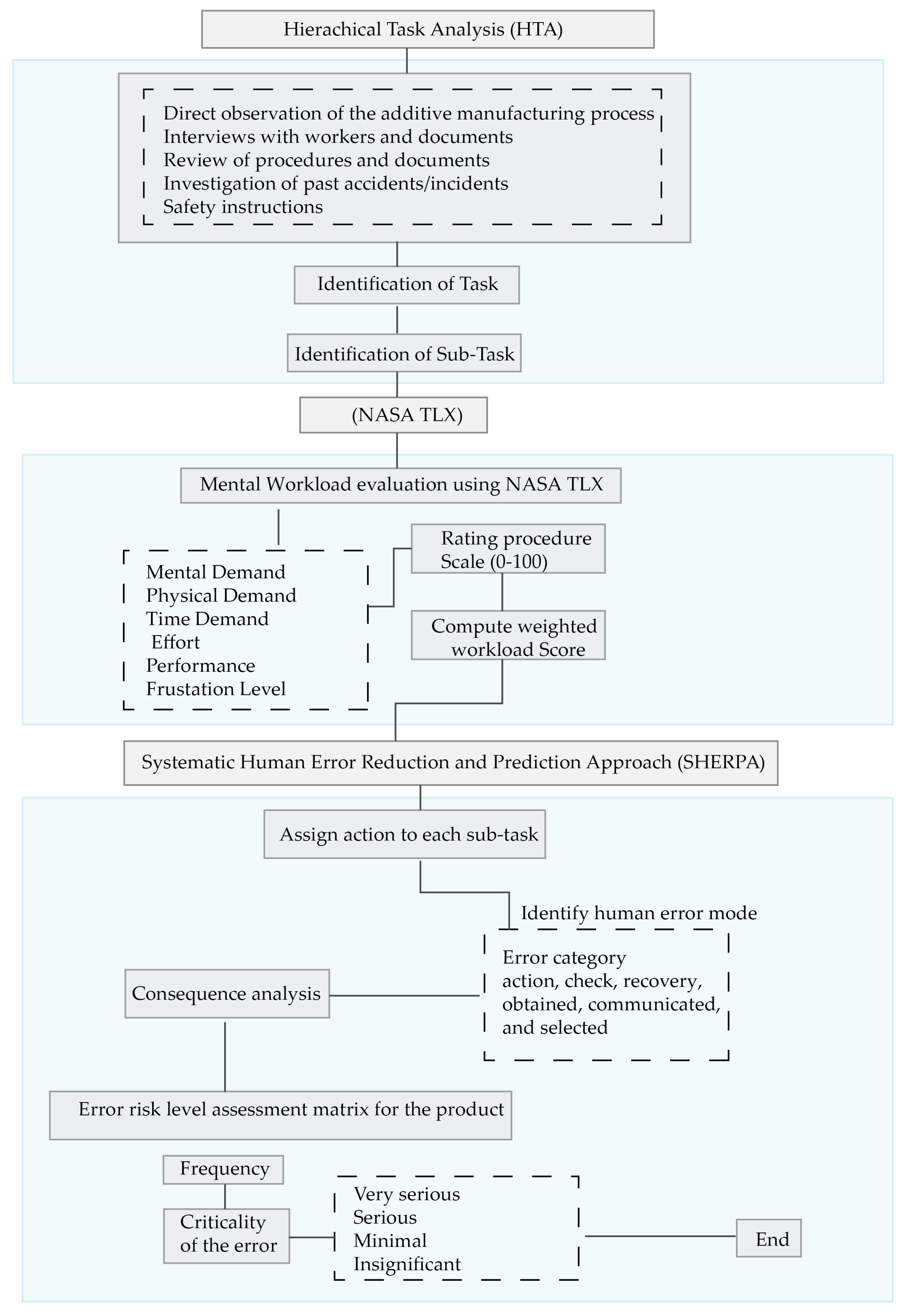
Figure 1 shows the methodological flow used to analyze human–machine interaction processes. First, the three main tasks were analyzed using hierarchical task analysis (HTA) to provide an understanding of human–human and human–machine interactions. The following method uses NASA-TLX to assess the mental workload (mental demand, physical demand, temporal demand, effort, performance, and frustration level) of expert and novice participants during the task. Finally, SHERPA (Systematic Human Error Reduction and Prediction Approach) was applied.
3. Results
To ensure clear interpretation of the results, sections explaining each method’s outcomes have been established. Subsequently, all analyzed tasks are presented.
3.1. HTA for Canister Disk Replacement
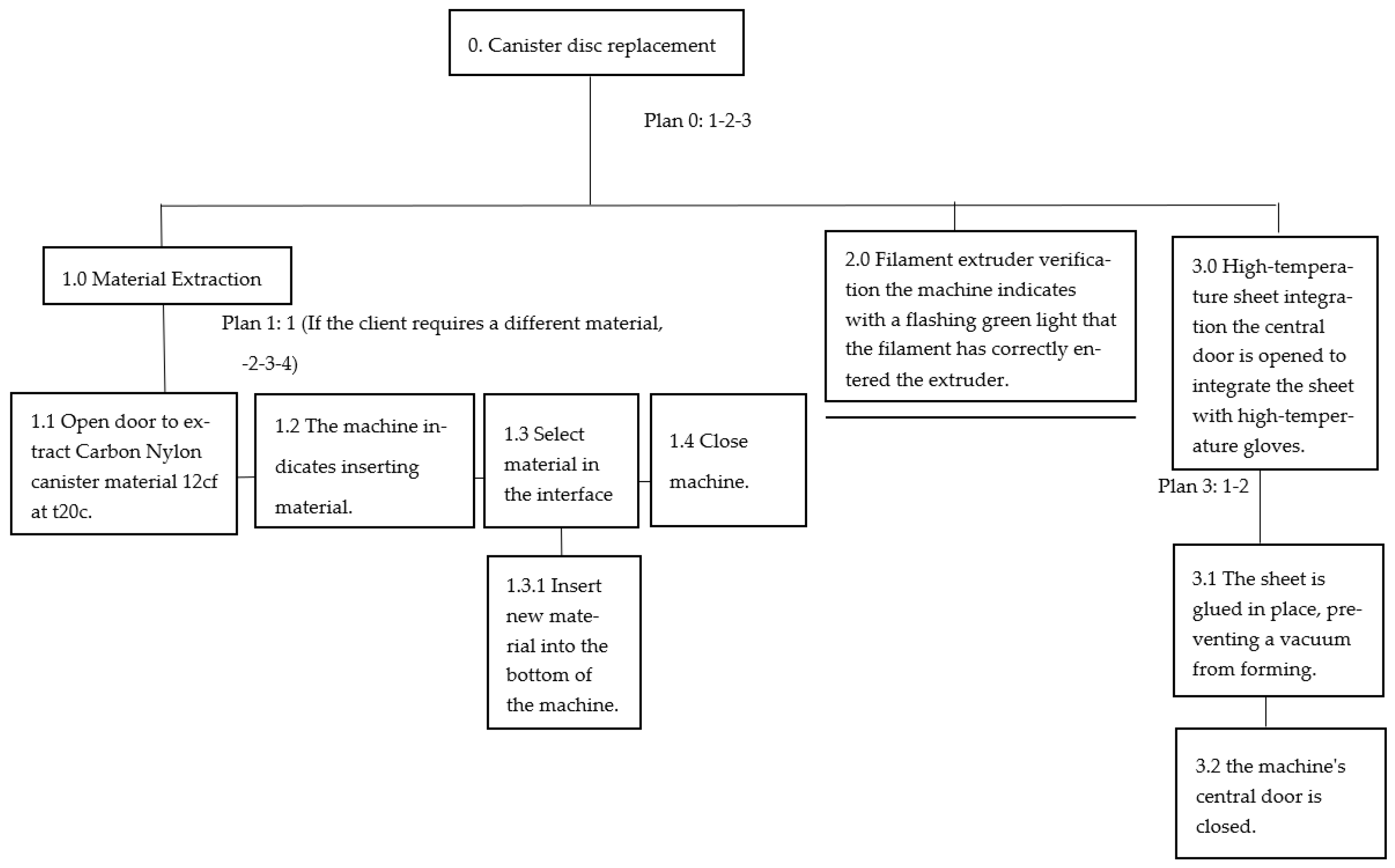
The Hierarchical Task Analysis (HTA) shown in
Figure 2 enabled the precise decomposition and identification of the actions involved in the canister disk replacement process, facilitating a structured understanding of the interactions between the participant and the machine. Through the hierarchical organization of plans and subplans, a logical sequence of operations was observed, from opening the material compartment door to verifying the insertion of the new filament and closing the components. This analysis demonstrates a systematic procedure that includes both removing the old material (in this case, the carbon fiber nylon canister) and selecting and inserting the new material into the system. Furthermore, critical steps related to the participant interface, automated material recognition, and safety measures for handling high-temperature components were identified.
The HTA (Hierarchical Task Analysis) visually represented the hierarchical dependencies and decisions that guide the participant during material replacement, facilitating the detection of potential points of error or inefficiency in the sequence. In this way, the method provides a solid foundation for subsequent analysis using the SHERPA (Systematic Human Error Reduction and Prediction Approach) technique, which will allow for a detailed examination of the types of human errors that can occur at each sublevel of the process, as well as their consequences and corresponding mitigation strategies. This integration of HTA and SHERPA provides a robust analytical framework that combines structured task descriptions with human error prediction, thereby strengthening the system’s ergonomic and usability evaluation.
A novice participant can take 12 to 20 min to complete the canister disk replacement task, as they typically proceed sequentially and cautiously, constantly checking the interface instructions and confirming each step before continuing. Identifying indicators such as the extruder’s green light, correct material insertion, and proper system shutdown can lead to additional pauses due to uncertainty or unfamiliarity with the workflow. Furthermore, handling thermal components increases caution and, consequently, the overall execution time, reflecting a greater cognitive and operational load.
In contrast, an expert participant can complete the same task for 4 to 8 min thanks to the procedural automation acquired through experience. The immediate recognition of visual signals and system messages, along with anticipation of critical steps, significantly reduces verification and decision times. Seamless interaction with the interface and safe material handling enables more efficient execution, with less cognitive load and a lower probability of error.
3.2. HTA in Insight Software® Interface
We conducted a separate Hierarchical Task Analysis (HTA) of the Insight software interface shown in
Table 1. This analysis provided a more detailed examination of the procedure for submitting a print file to the Stratasys machine. Understanding this process will help us determine whether the software contributes to mental load during the task. The file preparation was performed using Insight software, where the manufacturing parameters were configured. The material selected for the model was ASA (Acrylonitrile Styrene Acrylate) in Ivory, an engineering thermoplastic widely used in industrial applications due to its mechanical strength, UV resistance, and good performance under harsh environmental conditions. SR30, a soluble polymer compatible with ASA, was used as the support material. It is designed to facilitate subsequent removal via a chemical process without affecting the geometric integrity of the model.
The layer height (slice height) was set to 0.254 mm (0.010 inches), an intermediate resolution aimed at balancing surface quality and manufacturing time. This selection is suitable for functional parts where surface finish is not the primary requirement, but structural strength and process efficiency are. Regarding the support strategy, the “Sparse” mode was used, reducing the internal density of the support material to optimize material consumption and shorten printing time. For the model’s visible surfaces, the “Enhanced” option was selected to improve the external finish in exposed areas.
An industrial component (bracket) measuring 300 × 80 × 70 mm was used to support electronic devices in the experiment. The component was oriented horizontally on the build platform, minimizing thermal deformation and reducing the need for additional support. The configuration observed in the build chamber shows adequate adhesion to the base and proper layer deposition, with no visible evidence of warping or delamination. The geometry corresponds to a structural frame with uniform thicknesses and circular ends, which required temporary support during construction. The file transfer was not performed via a USB drive or a wireless (Wi-Fi) connection. In this case, the transmission was carried out via a direct wired Ethernet network connection, using an RJ45 cable.
Specifically, a direct RJ45 cable was used to establish communication between the computer running the Insight software and the Stratasys Fortus 480 printer. This connection allows for the transfer of the manufacturing file (toolpath) directly to the machine via a local area network (LAN), ensuring greater stability, speed, and reliability compared to wireless methods.
A novice participant can take approximately 18 to 30 min to complete the task described in the Insight Software® HTA; each stage involves verification processes, parameter interpretation, and decision-making that increase cognitive load. The most time-consuming activities are typically the orientation of the part on the X and Z axes, material configuration, and support assignment, as these require an understanding of how they impact the final print result. Furthermore, sending the file to the machine and checking the toolpath can generate additional pauses due to uncertainty or the need to confirm that there are no configuration errors.
In contrast, a skilled participant can complete the same sequence in approximately 7 to 12 min, thanks to procedural automation and the immediate recognition of standard system configurations. Experience reduces decision-making time during orientation, material selection, and infill adjustments, as well as the smooth execution of print path checks and file transfers. This efficiency is linked to a lower cognitive load and a more optimized interaction with the human–machine interface.
Table 1 presents the process for operating the Insight software
®, a critical stage in the additive manufacturing workflow. A tabular format is used, including the functional human–machine allocation of subtasks.
3.3. HTA for Changing ASA to NYLON Nozzles
The subprocess corresponding to Plan 4: Changing Nylon and ASA Nozzles outlines a meticulous sequence of actions that require precision and attention to participant safety, shown in
Table 2. This plan is part of the HTA applied to the machine’s component replacement system and demonstrates the structured logic of a procedure that combines both manual skills and sequential decisions based on material conditions. The plan unfolds in nine steps, with the initial actions (1.4.1 to 1.4.5) focused on opening the machine, removing the main module, and controlling nozzle and holder manipulation. These initial operations are classified as high human load (H) because they involve the use of tools, thermal gloves, and fine motor coordination to prevent injury or accidents.
If a material change is required, the task continues with the insertion of the new nylon nozzle (1.4.6) and its adjustment using hand tools (1.4.7). This introduces a combination of control and precision actions that increase the participants’ cognitive and physical demands. Subsequently, the final stages (1.4.8 and 1.4.9) involve reassembling the system and automatically verifying its closure, with both human action and mechanical monitoring (H-M) involved. The sensor that confirms the machine’s proper closure serves as a critical feedback point, ensuring the procedure is completed correctly and reducing the likelihood of operational errors.
In the FDM system used in this study, operating parameters are automatically adjusted based on the selected material. Variables such as extrusion temperature, bed temperature, printing speed, and other settings associated with the material profile are managed by the system itself or by preset configurations in the software. The activities are observed based on the type of material used, as human intervention remains focused on file preparation, initial condition verification, and general process monitoring. This automation reduces operational variability and limits the material’s influence on the participant’s workload, keeping the sequence of tasks performed relatively constant.
3.4. NASA TLX Model Results
The mental workload assessment corresponds to the task of changing only ASA to NYLON nozzles. Participants identified this task as the most difficult to perform.
The results reveal a marked difference between novice and expert participants in terms of perceived mental workload.
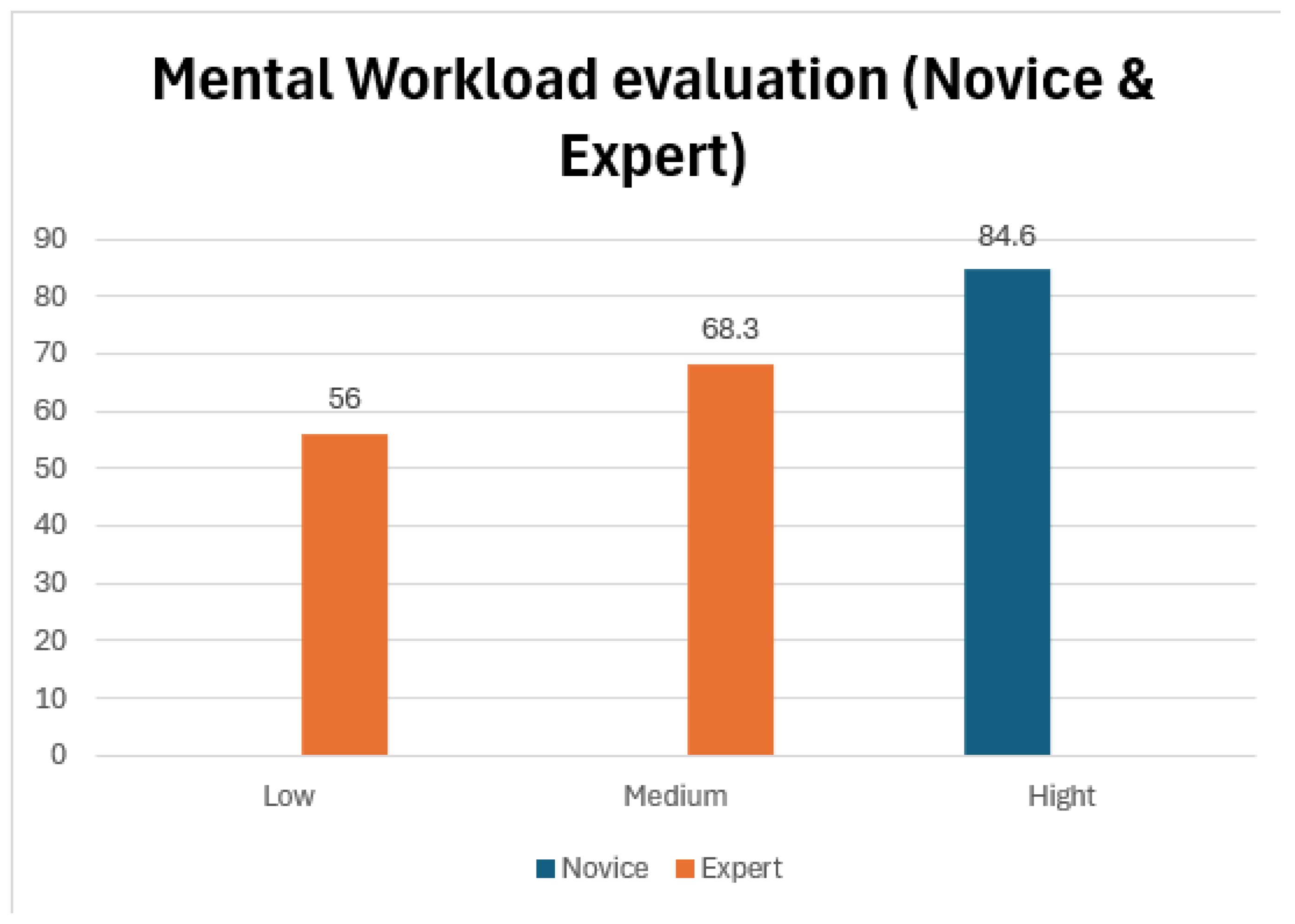
Figure 3 shows the distribution of the global weighted average mental workload for novice and expert participants. The two novice-level participants reported a high workload, with an average score of 84.66, which may be associated with their greater susceptibility to stress and limited experience executing tasks. In contrast, expert-level participants exhibited a lower workload, with individual scores of around 56 (low) and 68.3 (medium), indicating more efficient, controlled interaction with the tasks.
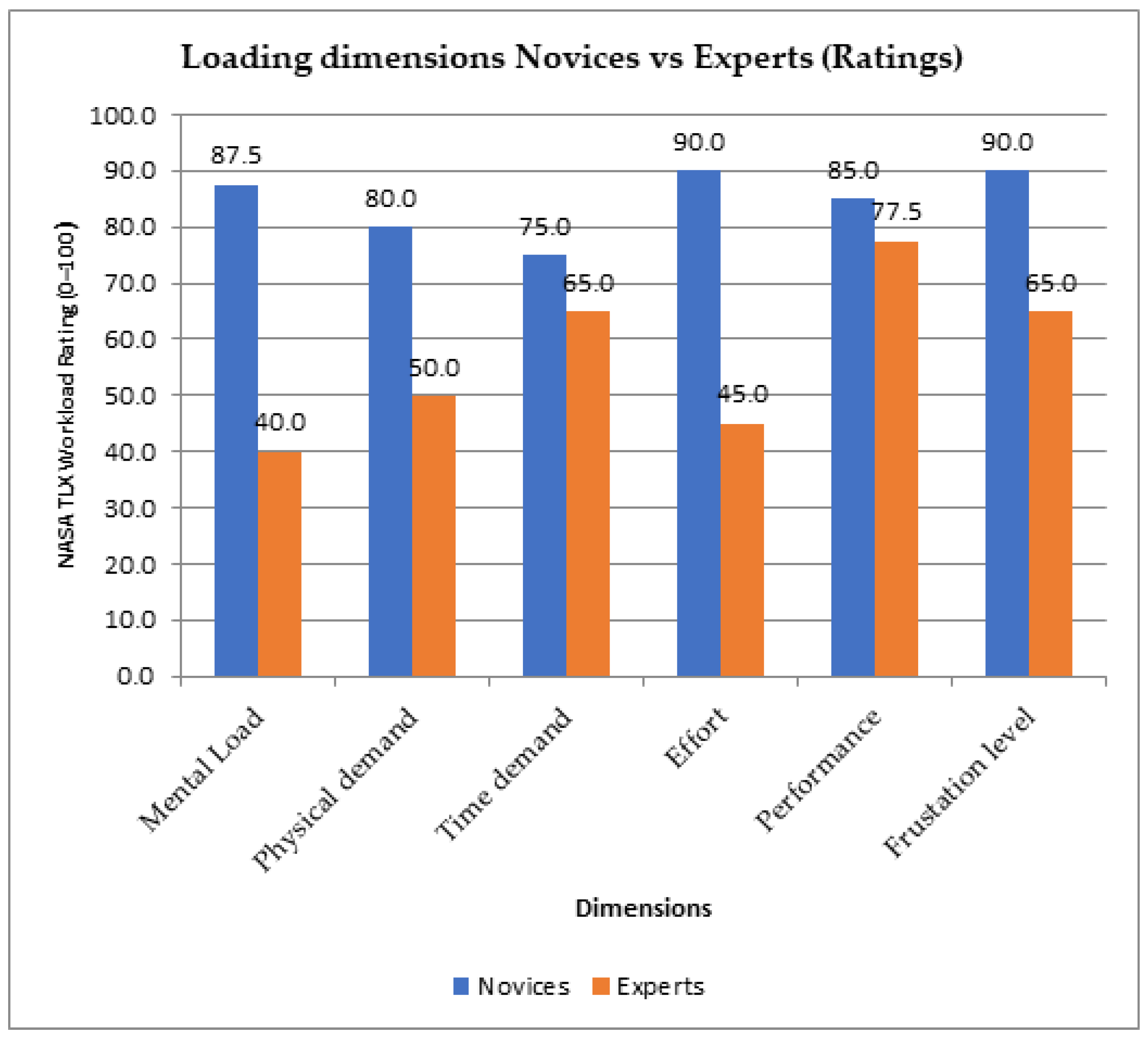
Overall, in
Figure 4, the average weighted NASA-TLX scores across dimensions for the four participants fall within a moderate range; however, this apparent balance conceals significant disparities between novices and experts, highlighting the role of experience in reducing cognitive demand and improving task performance.
In addition, the average weighted NASA-TLX mental workload by dimension differs significantly between novices and experts.
Now, when comparing novice and expert participants, the results also shown in
Figure 4 indicate that, among novice participants, the dimensions with the highest NASA TLX mental load scores, as measured by weighted averages across the sample, are effort (90), frustration (90), and mental demand (87.5). Likewise, they report high levels for performance (85), physical demand (80), and time demand (75), indicating that novices perceive a higher load across practically all dimensions than expert participants. Among expert-level participants, the dimensions with the highest NASA TLX mental load, expressed as weighted means in the sample, are performance (77.5), time demand (65), and frustration (65). Novice-level participants are reported to have effort and frustration scores of 90 and mental demand (87.5). These are the dimensions most frequently encountered by participants.
From these results, several improvement strategies were implemented.
Improvement strategies:
To combat mental workload, a strategic plan is developed to improve activities in the MA area.
E1. Teach participants relaxation techniques to relieve tension and clear their minds in their surroundings, such as 10 min of stretching to reduce mental workload.
E2. Develop skills in study planning and learning strategies.
E3. Create a priority list of upcoming tasks to address this week.
E4. Provide pre-training for participants and students on the Stratasys machine’s usability before the activity begins.
E5. Provide visual support methods to prevent human error within the MA area.
3.5. Results of the Human Error Study Using SHERPA (Systematic Human Error Reduction and Prediction Approach)
From the perspective of the SHERPA (Systematic Human Error Reduction and Prediction Approach) methodology, the HTA structure facilitates the identification of potential human errors, such as omissions in glove use, insufficient torque during nut tightening, or failures in the reintegration of the central module. Analyzing this plan with SHERPA would enable anticipation of potential consequences—such as component damage or thermal hazards—and the design of mitigation strategies based on interface redesign or visual reminders. Taken together, this hierarchical, error-predictive analysis strengthens process reliability and optimizes the participant–machine interaction during nozzle changes.
3.6. Evaluation in Canister Disk Replacement with SHERPA
Table 3 presents an error-level assessment matrix for classifying and prioritizing the risks associated with a process or product, based on the product of the probability of occurrence and the severity of the error’s consequences. The vertical axis represents the frequency of errors, which range from frequent to improbable. In contrast, the horizontal axis indicates the severity of the impact, ranging from very serious to insignificant. Each cell in the matrix integrates both dimensions using an alphanumeric key, enabling the rapid identification of errors that require greater attention. The darkest-shaded areas represent critical errors, characterized by a high probability of occurrence and serious consequences, whereas the lighter areas correspond to minor risks. This matrix facilitates decision-making by allowing for the prioritization of corrective and preventive actions. This is particularly useful for analyzing human error and participant–system interaction in contexts such as additive manufacturing and specialized software use.
The severity of the results shown in
Table 3 is as follows:
Very serious (dark-gray zone): Total product loss, percentage of total loss, and risk of serious injury to the participant.
Severe (medium-dark gray zone): Partial product loss; a certain percentage of the product can be salvaged through rework, but it is not saleable. (Considerable damage to the part, low probability of recovery.)
Minimum (light-gray zone): Recovery with treatments (burr) with respect to the piece.
Insignificant (white): The part can be polished and reworked.
Table 4 presents a risk map of human error in machine interaction (in this case, Stratasys 3D printers). Using Sherpa, errors were classified using codes. (A8, C4, etc.), which provides standardized numbering to identify product error types and facilitates the proposal of preventive solutions.
The table breaks down the task into sequential steps and identifies potential human errors for each step, such as action, verification, or selection errors. The cause of the error is then described, which is usually related to a lack of experience, distraction, unfamiliarity with the procedure, or non-compliance with safety regulations. Subsequently, the potential consequences of this error for the process, equipment, or participant safety are analyzed, enabling the anticipation of failures before they occur.
The results show that several of the identified errors can have immediate consequences, including material damage, equipment malfunctions, and physical risks to participants. For this reason, the analysis assigns an immediate response in many cases, indicating that the error must be corrected immediately to prevent more serious impacts. The risk level associated with each step indicates that certain actions are critical and require greater control, supervision, or standardization.
Finally, the table outlines preventive actions, including following instructions, verifying materials before use, using personal protective equipment, and maintaining appropriate working conditions. Overall, the SHERPA analysis results demonstrate that system performance depends heavily on human factors, and that by identifying errors early and implementing preventive measures, safety can be improved, the probability of failure reduced, and task execution optimized.
3.7. Evaluation of the Insight Software© with SHERPA
Table 5 presents a detailed analysis of the process for preparing and submitting a file to a Stratasys 3D printer. It identifies each step the participant performs within the Insight software and detects potential errors during model preparation. For each activity, the document describes the type of error, its cause, the consequences if it is not corrected, the associated risk level, and the immediate action required to prevent recurrence. The process begins by opening the file and connecting the cable correctly; failure to do so can result in the job being lost. Next, the document analyzes actions related to model programming, such as modifying the X and Z axes, because an incorrect orientation change can alter the cost or affect the quote. The material selection process is also reviewed to prevent the participant from selecting materials other than those required, thereby avoiding waste or undesirable outcomes. In subsequent steps, the importance of adding support, adjusting nozzle quality, and selecting an appropriate infill type is evaluated, as omitting or misconfiguring any of these elements can damage, deform, or render the part unusable.
The analysis continues with a review of additional software options, such as file simulation or print time estimation. Failure to enter this information may delay part delivery or affect production planning. Finally, the file transfer to the Stratasys machine is verified; connecting the Ethernet cable is essential, as the printer cannot receive the data without it.
Overall, this sheet serves as a preventive tool for identifying human or procedural errors, evaluating their impact, and defining strategies to correct them immediately. This ensures that the 3D printing process is safer, more efficient, and more reliable, reducing errors, downtime, and unnecessary costs.
3.8. Evaluation of the Change in ASA to NYLON Nozzles with the SHERPA Method
Overall, the analysis shows that integrating risk levels at each stage of the process in Sherpa not only anticipates technical and human errors but also prioritizes corrective actions by severity. This ensures the safe and efficient operation of the Stratasys machine, protecting both the participant and the quality of the printed product.
Table 6 identifies different types of human errors, primarily associated with incorrect actions, omissions, or improper use of tools and personal protective equipment. The error descriptions indicate that many of these failures stem from carelessness, excessive force, improper component placement, or non-compliance with basic safety rules. These situations are common in contexts where the participant has limited experience or does not strictly adhere to established procedures.
The described consequences highlight risks to both the process and the participant’s safety, including equipment damage, assembly failures, material contamination, or physical injuries. For this reason, most errors require immediate correction, indicating that their impact can be critical if not addressed promptly. The assigned risk levels, ranging from low to medium to high, enable identification of which process steps are more sensitive and require greater attention or control.
Table 6 shows that a substantial portion of the risks can be mitigated through clear preventive strategies, such as mandatory glove use, appropriate tools, visual aids, verification of proper component fit, and controlled force application. Overall, this SHERPA analysis shows that the system’s safe and efficient performance depends heavily on human factors, and that anticipating errors, along with well-defined preventive measures, helps reduce failures, improve safety, and standardize task execution.
3.9. SHERPA and the Level of Risk of Product Damage and Improvement Actions
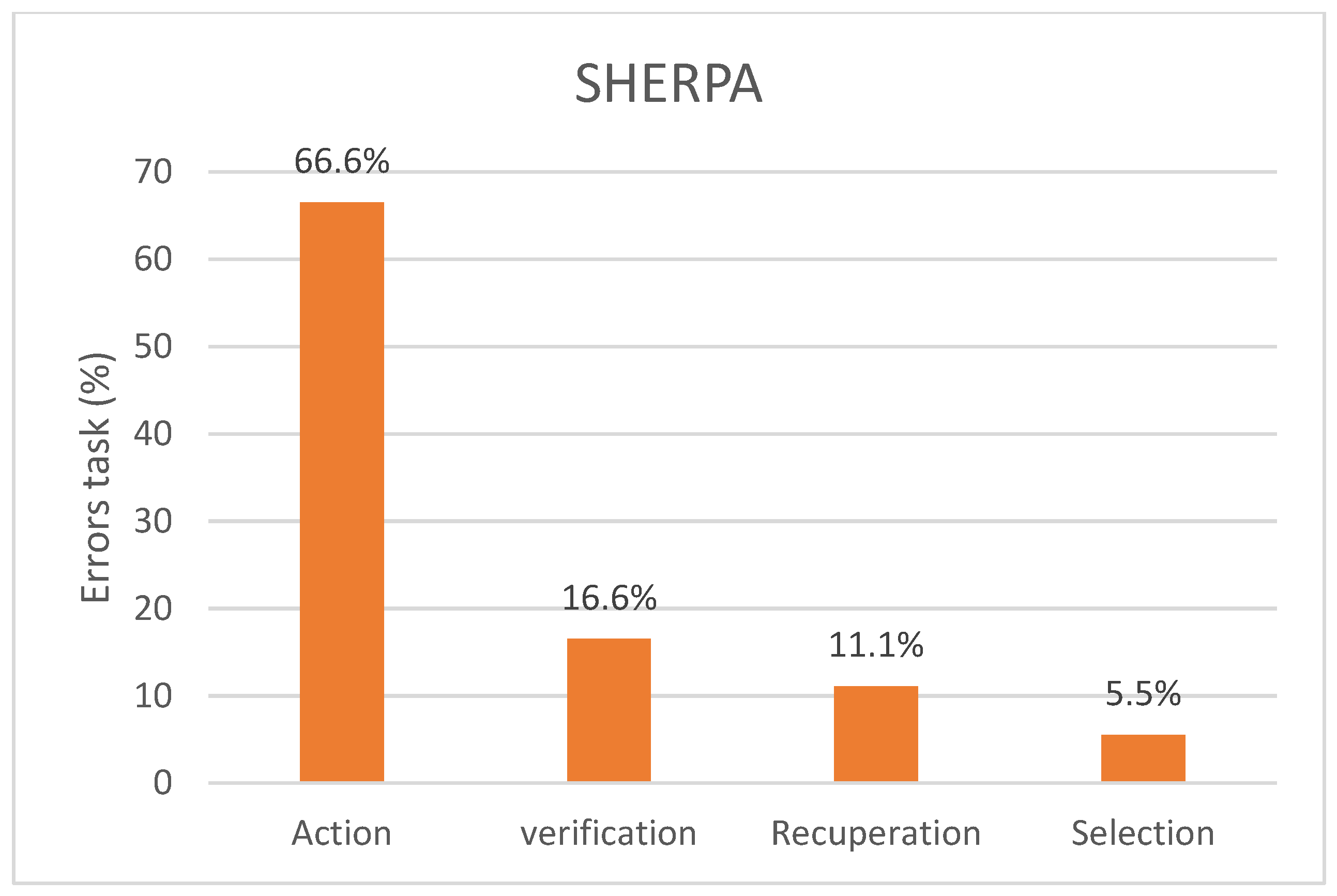
In this study, 19 human errors identified in occupational tasks were investigated using SHERPA, namely in the Insight program, changing Nylon and ASA material nozzles, and finally, changing the Canister support disk and material. The errors were documented on SHERPA worksheets. Of these, 13 errors were action errors (68.4%), three errors were verification errors (15.7%), two errors were recovery errors (10.5%), and one error was a selection error (5.2%).
Figure 5 presents the results for each error that has a high probability of occurrence in accidents. They are especially critical in emergencies.
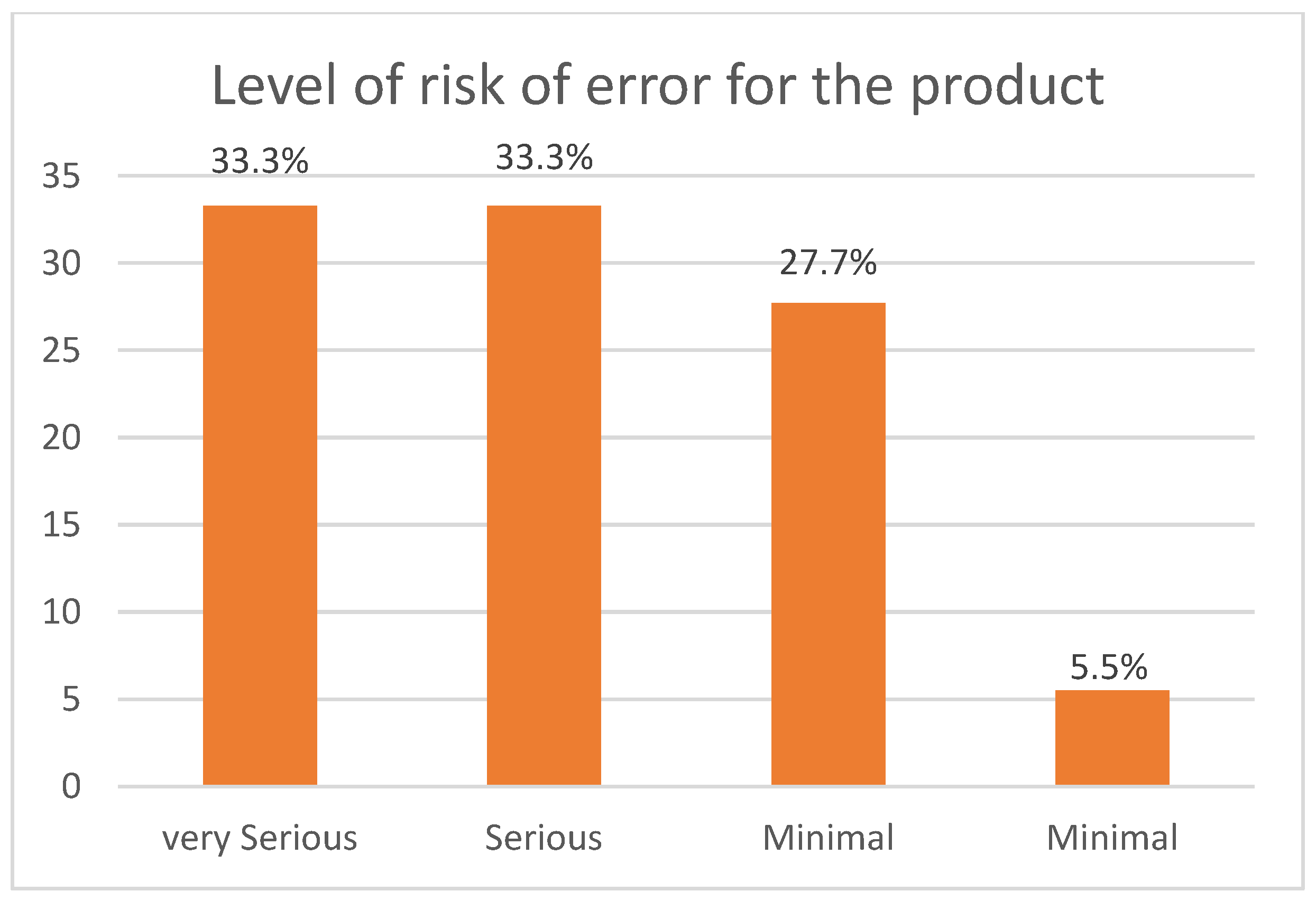
Figure 6 presents the predicted risk level obtained from three worksheets in this research.
The action errors were 66.6% of the total, comprising omitted actions (A8) and incomplete actions (A9); 16.6% of errors found in the study were verification errors, comprising omitted comparison (C1) and incorrect checking of the correct object (C4); 11.1% of reported errors were recovery (R2) errors relating to incorrect information, and finally 5.5% of errors were incorrect selection made (S2).
Regarding the levels of error risk for the product show in
Figure 6, it is reported that within the tasks that were identified in the different processes of nozzle change, canister disk change and insight interface, very serious problems occur at a rate of 33.3%, that is, six problems were found in the part, two very serious problems in the nozzle change, one within the canister disk change and two very serious problems within the insight interface. When analyzing the product at a serious level, 33.3% of partial loss of the product was found where errors were identified in the disk change, with two serious problems, while in the nozzle change task, three problems were identified in the part as serious and finally, in the interface process, one product problem was found. Regarding the minimal part problems, that is, those where recovery of the part is possible, five problems were found: 27.7% minimal problems with the part were found. In the disk change, two minimal problems were reported; in the nozzle change, two minimal problems were found; and only one minor problem was found in the part in the insight program. Of the 5.5% of problems identified as insignificant (i.e., the part is polished and can be processed), only one was identified in the insight interface process.
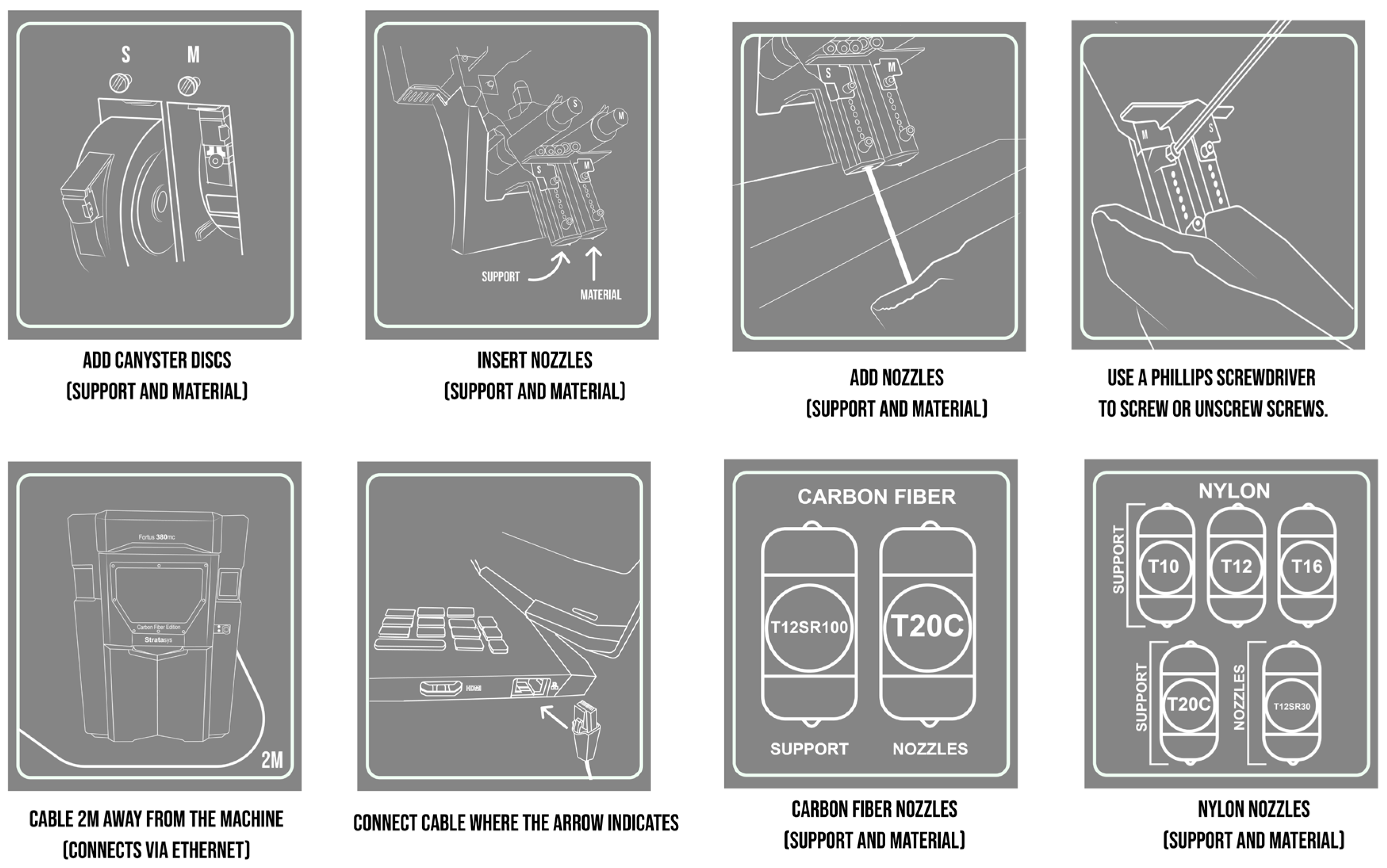
After observing human errors in additive manufacturing (AM) processes on the Stratasys 380MC system, it was decided to contribute to the laboratory by implementing visual aids. These aids would enable participants and students to accurately identify processes and avoid errors in the area. Therefore, eight illustrative posters produced with cut vinyl were integrated as visual aids.
Note that these illustrations were developed based on the errors identified in the Sherpa table. The most common problems in additive manufacturing were selected based on the product risk level table. Furthermore, these visual aids needed to be easily identifiable to anyone operating the Stratasys machine.
To reduce human error in the most common omissions, the nozzle change process is illustrated, highlighting the key actions for review.
Figure 7 illustrates the locations for inserting the canister disks for both media and paper. The second image shows the location of the media and paper nozzles. The third image demonstrates how to insert the media and paper nozzles. The fourth image illustrates the use of a Phillips screwdriver and the appropriate screw location and reminds participants to wear gloves to avoid burns. The fifth box indicates the cable length required to load the document from the machine. The sixth box shows where to connect the cable to the laptop. The seventh and eighth boxes describe the location of the handle and nylon nozzles.
4. Discussion
This study focused on human error in the additive manufacturing and modeling processes. Its findings can inform the prevention of human error in similar industries and processes. Unlike other studies on human error in manufacturing, this project investigates and evaluates human errors by focusing on participants’ failures in machine interaction during additive manufacturing. These errors can lead to additional costs in the area, and various types of errors related to action, verification, recovery, and selection have been reported. Most authors applied the process in different contexts, which is why Ghasemi’s project results are highlighted. This project emphasizes the critical importance of participant risks to human health in the petrochemical industry and aims to prevent human error. The current project aims to assess the criticality of risk levels in part design and to develop a new study to inform similar approaches to developing processes that address human error in machine tool (MA) practices.
These findings align with the classic approach of [
52], who argues that human error should not be understood solely as an individual failure, but rather as the result of the interaction between the participant, the technology, and the organizational context. In particular, the action, verification, and selection errors identified in your study align with his model of slips, lapses, and mistakes, especially in highly technological environments where the human–machine interface plays a critical role.
Likewise, the results are consistent with the work of Grier et al. [
53]. Regarding mental workload and human performance, some maintain that increased system complexity and cognitive demands increase the likelihood of operational errors. This is consistent with your analysis of tasks such as nozzle changes or interpreting the Insight
® software, in which cognitive workload and decision-making directly influence error occurrence.
In the specific field of additive manufacturing, the results partially coincide with studies such as those by [
50], who analyze human error from an industrial risk perspective, particularly in the petrochemical industry. Although the contexts differ, there is clear convergence in identifying the participant as a critical risk factor and in the need for preventive strategies focused on human–machine interaction. However, your research stands out by applying this approach to part design and additive manufacturing processes, a field that is less explored from a cognitive ergonomics perspective.
On the other hand, this study departs from more traditional manufacturing research, such as that of [
54,
55], which addresses human error from a broader perspective in industrial engineering and human reliability, without delving into specific tasks involving interaction with advanced machinery or the digital processes inherent to additive manufacturing. In contrast, your approach, centered on operational failures during direct interaction with AM systems, offers a more situated, contextualized contribution.
5. Conclusions
The study found that assessment involving the manufacturer’s tasks with additive manufacturing technology appears to be mentally demanding across all conditions. To obtain valid subjective measures of participants’ mental workload, it is advisable to inform participants about the system failures that will be implemented in the scenario. These are interpreted as mental demands based on the degree of mental, physical, and emotional frustration the subject must experience to achieve their performance level, as well as the implications of their actions for system performance.
Participant rating results were interpreted using the same issues for workload, situational awareness, and performance. However, subjective workload ratings distinguished between the mental demand and effort of novices and experts, i.e., the effort required by the participant to remove nozzles from the machine and the perceived mental workload of the task of adding and removing nozzles, for example, unscrewing and screwing without applying excessive force to avoid breaking them. Evidence of NASA-TLX’s multidimensionality is provided by its application to the cognitive work involved in machine calibration. Participant ratings were separated into mental effort, physical activity, subjective performance, and frustration in the present study.
However, the SHERPA analysis results indicate distinct processes associated with the manufacturer’s machine failure. This allows us to determine which errors are concentrated in the MA area, whether in terms of action, verification, recovery, or solution. This includes changing the orientation to avoid higher costs, using ladders to remove the nozzles, unscrewing the nozzles from the machine, wearing gloves to prevent burns from high temperatures, and correctly adding cartridges, i.e., picking up the filament thread and attaching it to the extruder.
A table validated by a highly qualified expert in product design engineering is integrated into the SHERPA analysis, which reports potential causes of erroneous activity during part printing.
The scope of this work is to develop methodological approaches for integrating cognitive ergonomics principles into additive manufacturing processes, particularly Fused Deposition Modeling (FDM) technologies. This research is not limited to a technical analysis of the printing process. Still, it extends its focus to human–machine interaction, considering factors such as mental workload, decision-making, interface comprehension, and error management during process preparation and execution.
In this regard, the work addresses both the digital design phase (modeling, parameter configuration, and file preparation) and the operational phase of printing and modeling, proposing guidelines and tools to reduce participants’ cognitive load, improve system usability, and minimize errors arising from interactions with the equipment and software. This involves task evaluation, the identification of critical points of mental overload, and the formulation of improvement strategies based on cognitive ergonomics criteria.
Finally, future research could investigate whether the study’s findings can be replicated in related domains and whether the findings extend to less dynamic work. It is also recommended to include additional case studies to broaden the analysis, validate it, and reduce experimental error. Using a larger sample may increase human error in the task, but it can also stabilize mental workload outcomes and perceptions of frustration.




 and
and