Article

Study on the Top Coal Recovery Behavior and Parameter Optimization Under Different Caving Ratios in Thick Coal Seam Mining


1
College of Energy and Mining Engineering, Xi’an University of Science and Technology, Xi’an 710054, China
2
Key Laboratory of Western Mine Exploitation and Hazard Prevention, Ministry of Education, Xi’an University of Science and Technology, Xi’an 710054, China
*
Author to whom correspondence should be addressed.
Processes 2026, 14(5), 776; https://doi.org/10.3390/pr14050776
Submission received: 21 August 2025 / Revised: 11 September 2025 / Accepted: 15 September 2025 / Published: 27 February 2026
(This article belongs to the Special Issue Safety Monitoring and Intelligent Diagnosis of Mining Processes)

Abstract

Longwall top coal caving is one of the most effective methods for extracting steeply inclined and ultra-thick coal seams. To investigate the influence of caving ratio (the proportion between mining height and top coal thickness) on top coal recovery behavior and ground pressure characteristics, this study employs both the Particle Flow Code (PFC) discrete element method and a coupled FLAC3D–PFC3D numerical simulation approach. The effects of different caving ratios (1:3, 1:3.2, and 1:3.4) on the top coal recovery ratio, stress distribution, and gangue accumulation characteristics were analyzed. The results show that the caving ratio has a significant impact on top coal recovery. At a caving ratio of 1:3.2, adopting a two-cut-one-cave interval resulted in a top coal recovery ratio as high as 94.8%. A stress-relief zone with an arch-like distribution formed above the goaf, while a stress concentration zone developed ahead of the coal wall, where the coal–rock mass underwent compression and failure. The roof displacement exhibited an arch-shaped distribution, while the floor displacement was asymmetrical, with greater heaving observed at the lower end. As the working face advanced, the horizontal development of the plastic zone expanded rapidly, while the vertical extent changed only slightly. Throughout the caving process, the top coal demonstrated favorable caving behavior with good flowability and accumulation characteristics. These findings provide theoretical support for achieving high mining recovery in thick coal seam operations and offer practical guidance for optimizing caving process parameters in practice.

1. Introduction

China is the world’s largest coal producer and consumer [1,2,3]. To meet the diverse resource extraction requirements arising from varying geological conditions, multiple coal mining methods have been developed [4]. Currently, techniques such as fully mechanized mining [5], one-pass full-height extraction with large mining height [6], top coal caving [7], and large mining-height top coal caving [8] have been widely promoted and applied in Chinese coal mines. In particular, top coal caving [9] has emerged as one of the most important approaches to improving coal extraction efficiency in thick coal seams and complex geological conditions, due to its advantages of higher resource recovery rates and strong adaptability [10]. This technique enables efficient recovery of coal resources by releasing the top coal and allowing it to naturally cave and flow downward [11].
At present, research into and applications of intelligent coal caving have been implemented in longwall top coal caving faces with production capacities reaching tens of millions of tons annually, indicating the maturity of China’s fully mechanized mining technology. Tian Duo [12] investigated the relationship between caving interval and caving ratio, and proposed an optimal adjustment scheme for caving interval based on top coal thickness, which effectively improved the top coal recovery. Wang Jiachen [1,2,3] utilized three-dimensional physical similarity simulations and PFC3D numerical simulations to examine the morphology and influencing factors of top coal recovery in longwall top coal caving. Wang further proposed an improved B–R model [13] to precisely describe the theoretical geometry of the recovered top coal mass [14]. Sun Lihui [15] studied coal caving processes and top coal flow characteristics in steeply inclined working faces by constructing 15 caving models, concluding that the highest recovery rate was achieved by combining a bottom-up caving sequence with a one-cut-one-cave strategy. However, the recovery rate gradually decreased as seam inclination increased [16]. Wang Chao [17] examined the impacts of mining height, caving interval, and caving methods on top coal recovery rates, concluding that an optimal combination of mining height and caving strategy significantly increased the top coal recovery rate while reducing gangue content [18]. Additionally, the effectiveness of dispersed coal caving varied considerably under different seam inclination conditions [19].
However, the efficiency and safety of top coal caving are closely related not only to the geological characteristics of the coal seam but also to mining methods, especially the caving ratio. The caving ratio serves as a critical parameter controlling top coal recovery and ground pressure stability, playing a significant role in optimizing the caving process and ensuring mining safety [20].
Shahani N.M [21] modeled a 12 m thick coal seam under caving ratios of 1:2 and 1:3, and employed UDEC simulations to investigate the mechanism of longwall top coal caving and vertical stress distribution at the working face. The results indicated that a caving ratio of 1:3 generated a maximum vertical stress distribution favorable for face advancement, suggesting the optimal caving ratio for the Thar coalfield to be 1:3. Lu Heng [22] analyzed influencing factors of top coal caving behavior in fully mechanized longwall top coal caving for extra-thick seams. By using FLAC3D numerical simulation, he focused on the distribution characteristics of advanced abutment pressure and top coal failure patterns. His research identified that at a mining height of 3.9 m, the advanced abutment pressure reached its peak, enabling complete top coal failure, and determined that the corresponding optimal caving ratio was 1:3.514.
Meng Xiangjun [23] employed theoretical analysis and numerical simulations to explore the impacts of varying cutting heights on top coal recovery rate and coal wall stability. He proposed a technology of ultra-large mining height with a small caving ratio (1:1), providing effective solutions for high-recovery, high-production, and high-efficiency mining of extra-thick hard coal seams, successfully addressing issues such as rock burst impacts due to ultra-large mining heights, coal wall spalling, and arching of hard coal.
Liang Dongyu [24] studied the mining parameters of fully mechanized longwall top coal caving in double-inclined, steeply dipping, extra-thick coal seams. Based on ellipsoid theory, he proposed a model describing variations in the caving coal mass shape. His research demonstrated that the top coal recovery rate decreased with increasing double-incline angles, particularly influenced by the dip angle along the strike. With a caving ratio of 1:3, caving step of 1.6 m, and multiple rounds of downward interval caving, the recovery rate significantly improved compared to previous methods.
Current studies mainly focus on caving ratios less than or equal to 1:3, lacking systematic understanding under conditions of larger caving ratios (greater than 1:3). Therefore, in this paper, the Particle Flow Code (PFC) discrete element simulation combined with FLAC-PFC coupled analysis is adopted to systematically investigate resource recovery trends in lower-layer working faces, ground pressure characteristics, and the flow and caving behaviors of top coal in goafs under caving ratios greater than 1:3.

2. Research Method

2.1. Engineering Geological Overview

The No. 5–2 seam designated for extraction in District 2 of the First Mining Area at Chicheng Colliery, Huating Coal Industry Group, has a dip angle ranging from 32° to 44° and an average coal thickness of 10.5 m, classifying it as a steeply inclined, thick coal seam. The seam structure is complex, containing 3 to 12 interbedded gangue layers with thicknesses between 0.05 m and 1.5 m. The immediate roof of the No. 5–2 seam consists of mudstone and sandstone, with an average thickness of 12.18 m, while the floor is also composed of mudstone and sandstone and averages about 9.2 m in thickness. When both the immediate roof and floor are mudstone, the rock mass quality falls into Class IV (poor rock); if they are sandstone, the rock mass quality is classified as Class III (moderate rock quality).
The designed mining height for the 1502-2 working face is 2.5 m, with a top coal thickness of 10.5 m, yielding a caving ratio greater than 1:3. A fully mechanized, longwall, steeply inclined, and stratified top coal caving method is employed, using a “two-cuts–one-cave” production sequence. The shearer penetration depth is set at 0.6 m, and the caving interval (caving step) is 1.2 m.

2.2. Numerical Model and Methodology

2.2.1. PFC Numerical Model Development

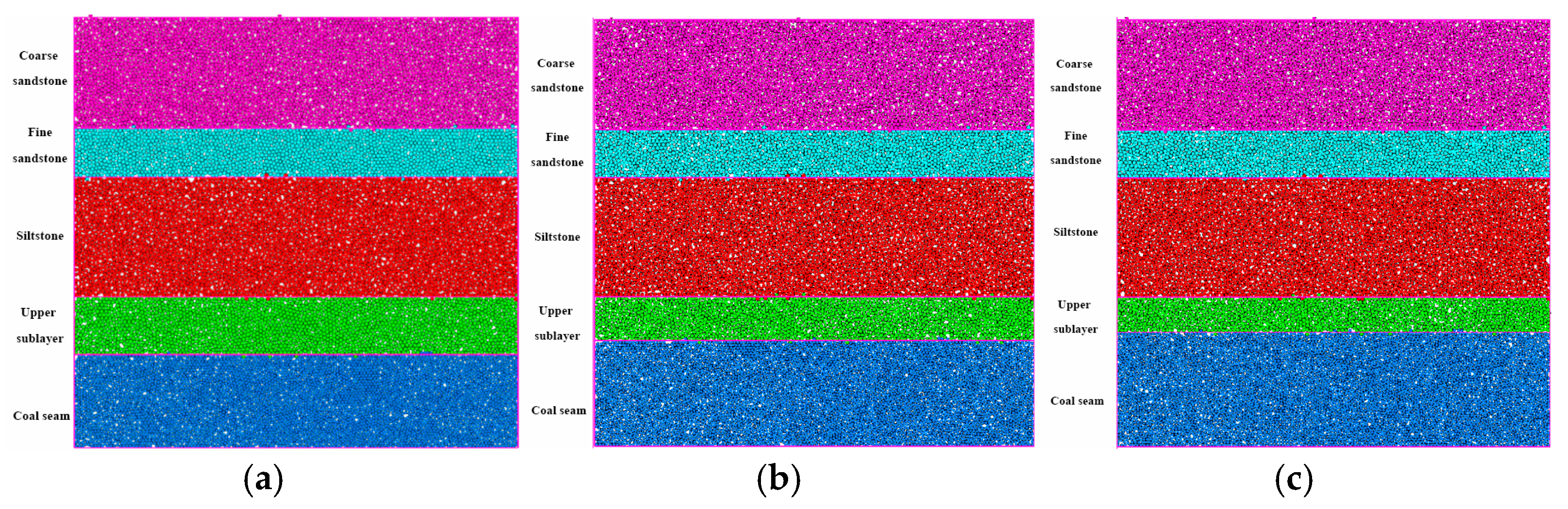
Based on data provided by the mine, the working face measures 104 m in length, with 20 m-wide coal pillars retained at each end for support. A PFC 2D caving model was constructed (Figure 1) with dimensions of 50 m × 48.2 m. In previous studies on caving ratios exceeding 1:3, the ratio typically does not exceed 1:3.5 [25]. The selected caving ratios of 1:3, 1:3.2, and 1:3.4 reflect both the practical operational range at the 1502-2 working face and the interval highlighted in previous studies. This range ensures relevance to on-site conditions while maintaining engineering feasibility. Although the numerical model allows for exploration of a broader spectrum of ratios, values outside this interval are not considered practical for current mining operations. Considering the coal seam thickness at the 1502–2 working face of Chicheng Colliery, this study sets the mechanized mining height to 2.5 m and selects caving heights of 7.5 m (caving ratio 1:3), 8.0 m (1:3.2) and 8.5 m (1:3.4). The overlying strata comprise 13.2 m of siltstone, 5.5 m of fine-grained sandstone, and 12.5 m of coarse-grained sandstone.
Mechanized mining and top coal caving supports were simulated by deleting particles in designated regions and generating corresponding wall boundaries [26]. A “listening zone” was established at the discharge opening using FISH scripting to monitor particle types in real time. When the proportion of gangue particles in the coal–gangue mixture entering the floor-level discharge window exceeded 15% (by particle count), the window was automatically “closed,” and the cumulative number of discharged coal particles was recorded to calculate the top coal recovery rate (“window closing upon gangue detection”) [27].
Simulations were carried out for caving ratios of 1:3 (7.5 m coal seam thickness), 1:3.2 (8.0 m thickness), and 1:3.4 (8.5 m thickness), modeling both one-cut–one-cave sequences (caving interval 0.6 m) and two-cuts–one-cave sequences (interval 1.2 m). To ensure consistency of the total simulated caving distance, five cycles at 1.2 m intervals correspond to ten cycles at 0.6 m intervals, resulting in ten caving intervals for the one-cut–one-cave cases and five for the two-cuts–one-cave cases. The detailed scheme is listed in Table 1.
The top coal recovery rate in the numerical experiments was determined by back-analysis of the released ellipsoidal clusters using the software [28]. The movement and release patterns of top coal and dispersed gangue during the simulation were observed. The flow direction of the top coal during continuous face advancement, its fall through the discharge window, and the flow boundaries during discharge and shield advance after support installation were analyzed to characterize the discharge flow field under different process parameters. Detailed mesoscopic physical and mechanical parameters of the coal and rock layers are shown in Table 2.
The numerical model employed in this study is a 2D PFC representation of the working face, which inherently simplifies the complex three-dimensional behavior of coal caving. Assumptions include homogeneous material properties within each stratum and idealized boundary conditions, which may not fully reflect local heterogeneity or operational disturbances. To reduce computational cost, particle scaling and coarsening are applied, which may slightly influence stress distribution and caving behavior. Despite these simplifications, the model captures the main trends of top coal movement and recovery, and can provide guidance for caving ratio optimization and mining practice.

2.2.2. FLAC3D–PFC Coupled Model Development

In this study, the upper-layer seam of the 1502–2 working face at Chicheng Colliery, Huating Coal Industry Group, has been completely mined. In the overlying goaf, the initially caved strata are typically in a loose, disordered state. As the working face advances, these broken rock blocks are gradually compacted under their self-weight and the pressure exerted by the overlying strata, while simultaneously providing a certain degree of support to the overburden. During this compaction process, both the stress level and elastic modulus of the caved zone rock mass progressively increase, although they seldom return to their original intact state. This gradual compaction behavior can be simulated numerically in FLAC3D using the Double-Yield model. Previous studies have demonstrated that parameters such as density, elastic modulus, and Poisson’s ratio of the broken rock mass exhibit exponential growth over time, and empirical evolution formulas have been proposed. However, accurately correlating the model’s time dimension with actual geological time during practical modeling remains challenging. Therefore, based on existing experimental research [29], Salamon’s fractured rock compaction theory is introduced to define the stress–volumetric strain (σ-εv) relationship of the caved zone rock mass.
σ = E 0 ε ν 1 ε ν / ε ν m
where E0 is the initial tangent modulus of the rock mass, and the maximum volumetric strain after fragmentation ε ν m is determined by Equation (2):
ε ν m = b f 1 b f
The bulking coefficient bf of the caved rock mass is determined from the uniaxial compressive strength of the immediate roof, σi according to Equation (3), or alternatively from the mining height hm and caving zone height hc, as given by Equation (4).
b f = 1 + α σ i
b f = h c + h m h c
In Equation (5), the initial tangent modulus of the rock mass, E0 can be obtained from laboratory tests or calculated using the following expression:
E 0 = 10.39 σ c 1.042 b f 7.7
E 0 = 0.31 × 10 3 × σ c
In the Equation, σc denotes the uniaxial compressive strength of the rock.
In the “three-zone” structure of a goaf, the height of the caving zone plays a critical role in controlling stress distribution, deformation characteristics, and surface subsidence patterns. However, conventional methods that estimate caving-zone height solely from the bulking coefficient of the immediate roof often incur large errors. To more accurately delineate the extent of the caving zone, extensive field measurements are conducted to collect large datasets, which are then analyzed using statistical regression. Empirical models or regression formulas derived from this analysis enable reliable prediction of caving-zone height with higher accuracy and broader applicability.
h c = 100 h m c 1 h m + c 2
In the Equation, c1 and c2 are the strength coefficients of the respective strata.
The influence of the caving zone on overburden subsidence and stress redistribution is most pronounced, whereas the effect of the fractured-zone strata above the caving zone is comparatively minor. Therefore, in the present numerical model, the fractured zone strata are neglected.
Express σ in FLAC3D using the bulk modulus K and shear modulus G, and represent Equation (1) as:
σ = K + 4 G 3 × ε ν
Assuming a Poisson’s ratio of ν = 0.2 [29], hence G = 3K/4, Equations (1)–(8) can be further expressed:
σ ν = K + 4 3 × 3 4 × K × ε ν = 2 K ε ν
Thus, K, G and σv can be expressed as functions of the vertical strain εv
K = 4 G 3 = σ ν 2 ε = E 0 2 1 ε ν / ε ν m
After establishing that the working face caving ratio exceeds 1:3, and in order to clarify the patterns of ground pressure manifestation as well as to characterize the flow and accumulation behavior of top coal caving in steeply dipping seams, a FLAC3D–PFC coupled numerical model was employed [30]. Based on the geological conditions of the 1502–2 working face at Chicheng Colliery, the model simulates the interaction between the overlying strata and the collapsed rock mass in the upper-layer goaf acting upon the lower-layer seam.
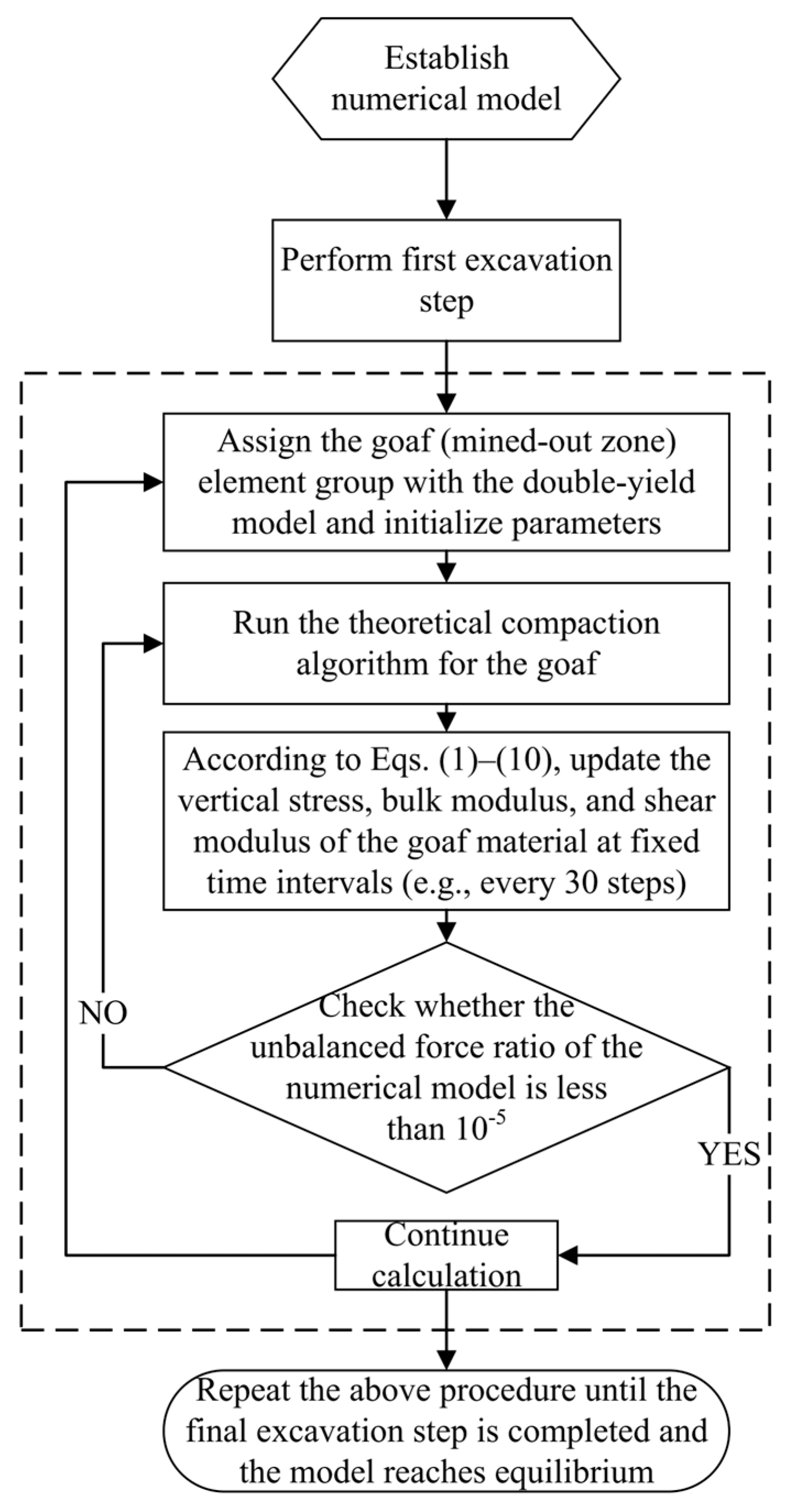
The FLAC3D built-in Double-Yield model was used to represent the collapsed rock in the upper goaf, while the deformation and failure characteristics of all other strata were described using the Mohr–Coulomb criterion [31]. During the simulation, FISH scripting within FLAC3D was employed to modify the mechanical parameters of the caving-zone rock mass according to Equations (1) and (10), thereby enabling a secondary development of the Double-Yield model. On this basis, the progressive compaction of the caved rock mass and its supporting effect on the overlying strata were simulated. Vertical strain ε in the goaf was monitored at fixed time intervals, with data recorded after each interval. The detailed finite-difference procedure is illustrated in Figure 2.
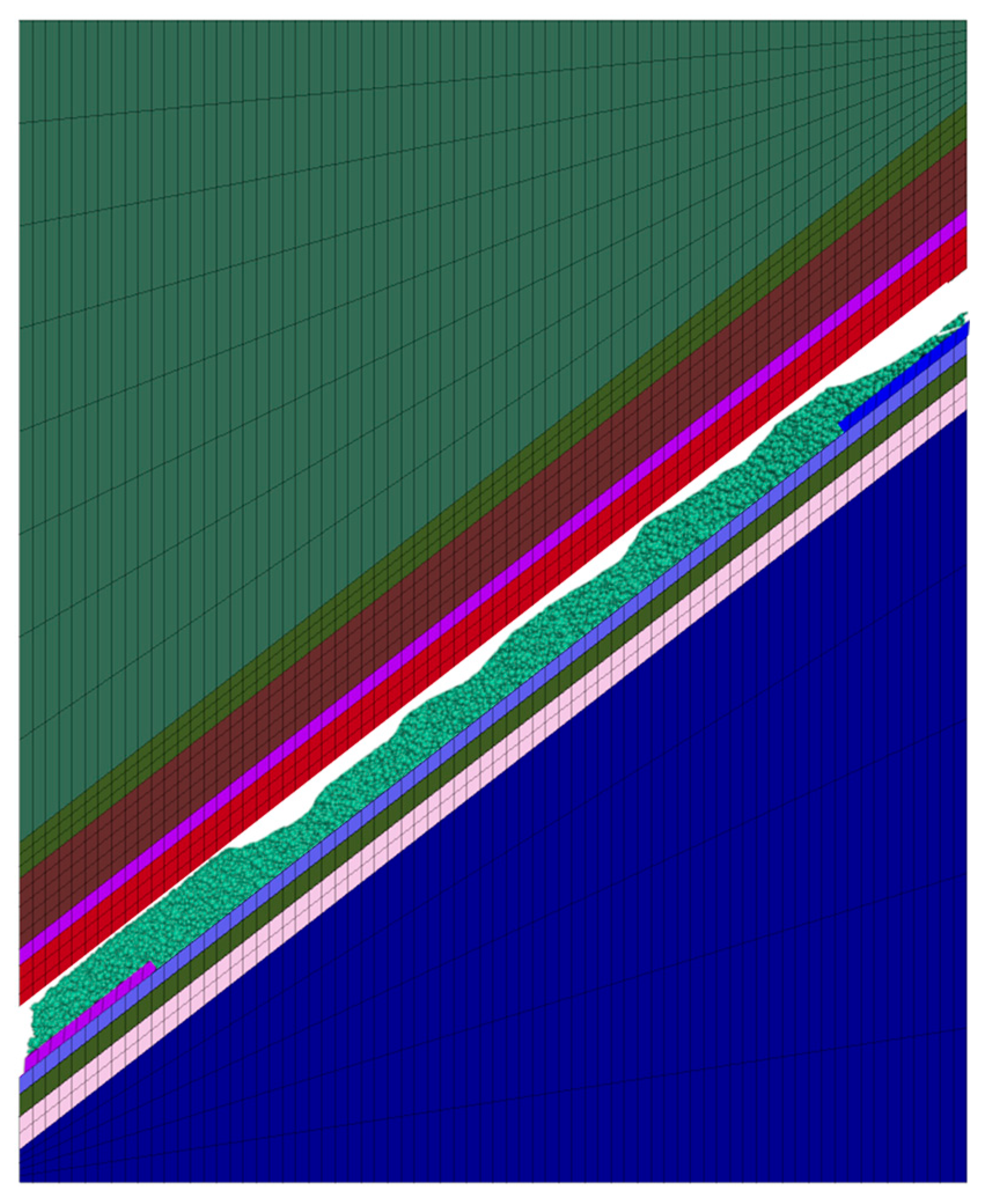
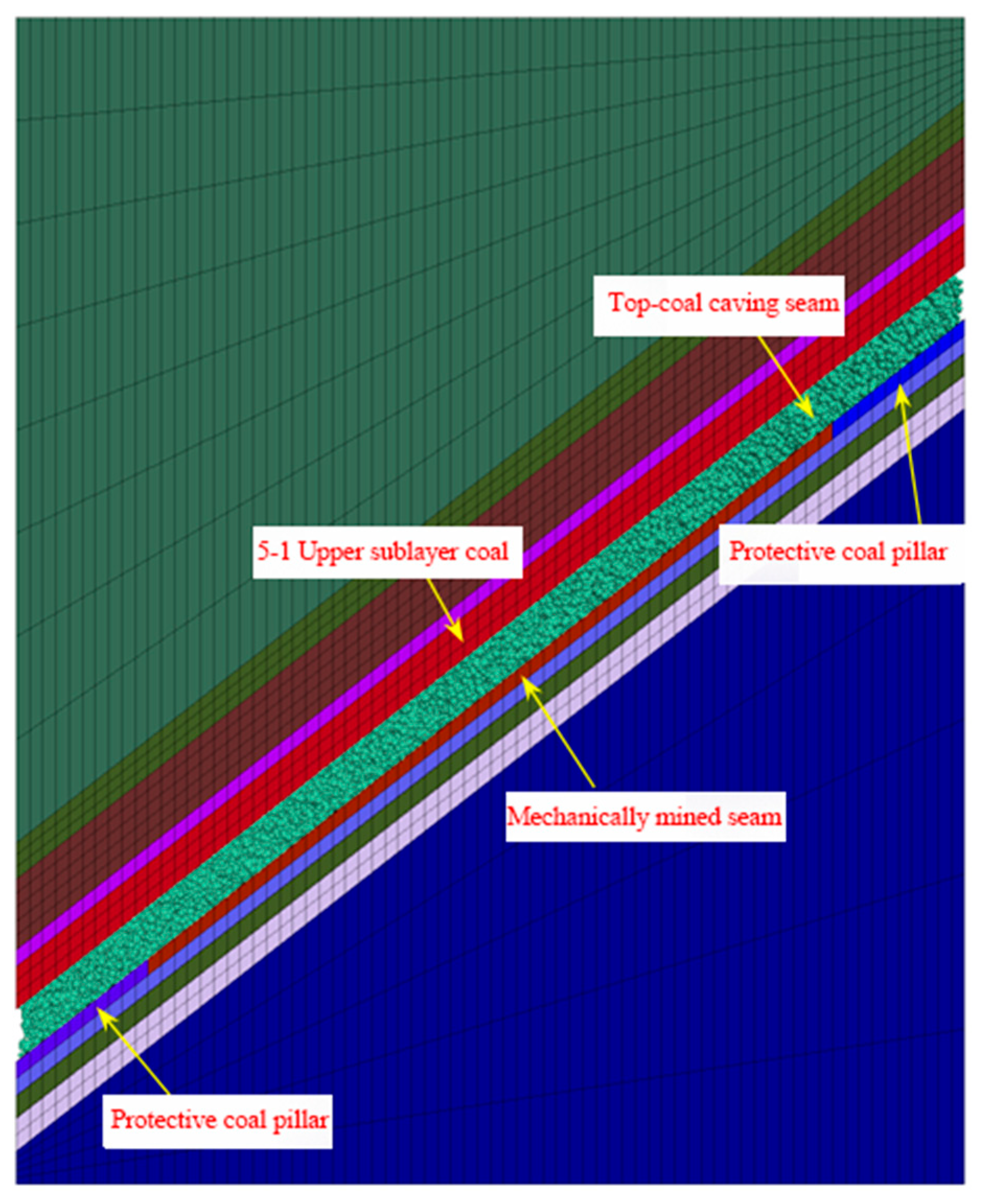
In the FLAC3D-PFC coupled numerical model the coal seam within the top-caving range is represented by balls in PFC3D, while the other strata are modeled as zones in FLAC3D; a wall-zone interface is used to bridge and couple FLAC3D with PFC. Protective coal pillars are left at both ends of the mechanized seam in the Y-direction to investigate ground pressure manifestation and top-coal caving behavior during face advance.
According to the above modeling scheme and the mine’s data, the working face length is 104 m, with 20 m-wide protective coal pillars left at each end—giving a model length of 144 m in the X direction. The advance direction (Y direction) length is 400 m, and, based on a seam dip of 38° and the integrated stratigraphic column, the Z direction height is 176.7 m. Thus, the model measures 144 m long, 400 m wide, and 176.7 m high. The caving height and caving interval were determined based on the values corresponding to the optimal extraction-to-caving ratio obtained from the previous experiments. To improve computational efficiency, the strata immediately surrounding the coal seam are densified. Displacement constraints are applied on all four sidewalls and the floor, while a vertical stress of 11.158 MPa—simulating the overburden pressure—is applied at the roof, with a lateral pressure coefficient of 0.8 on the sidewalls. The numerical model is shown in Figure 3.

3. Numerical Simulation Analysis

3.1. Effect of Different Caving Ratios on Top Coal Recovery Rate

The process of top coal caving can be regarded as the flow of a loose mass. Field practice indicates that both the top coal and portions of the fractured immediate roof, situated above or behind the goaf roof beam and acting solely under self-weight, exhibit loose-medium behavior and thus cannot effectively transmit overlying strata or frontal ground pressure. Accordingly, employing the PFC particle-flow code to investigate top coal caving recovery ratio is appropriate. It should be noted that, due to boundary condition effects, this simulation does not include the recovery rate of the initially released coal.
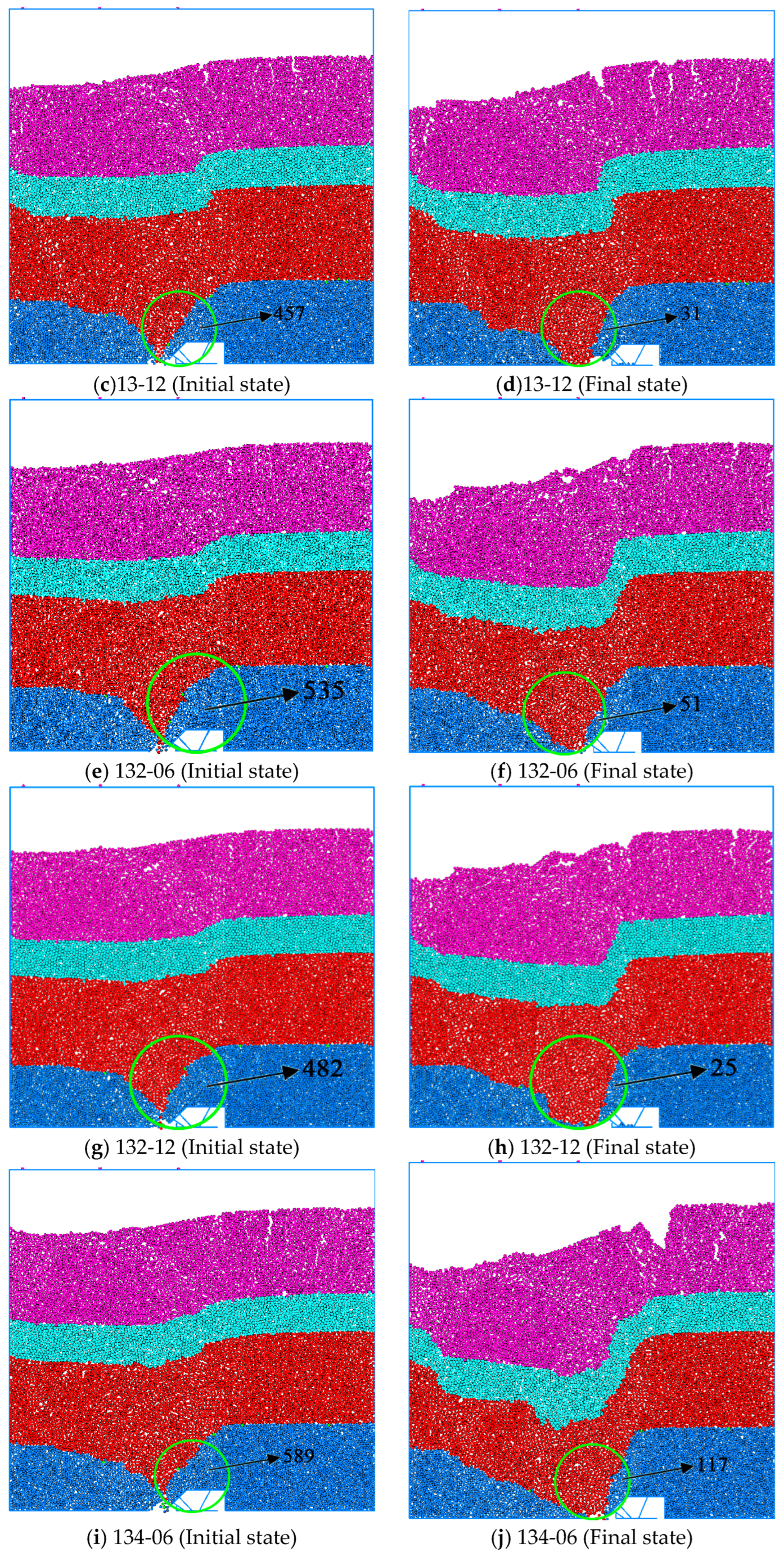
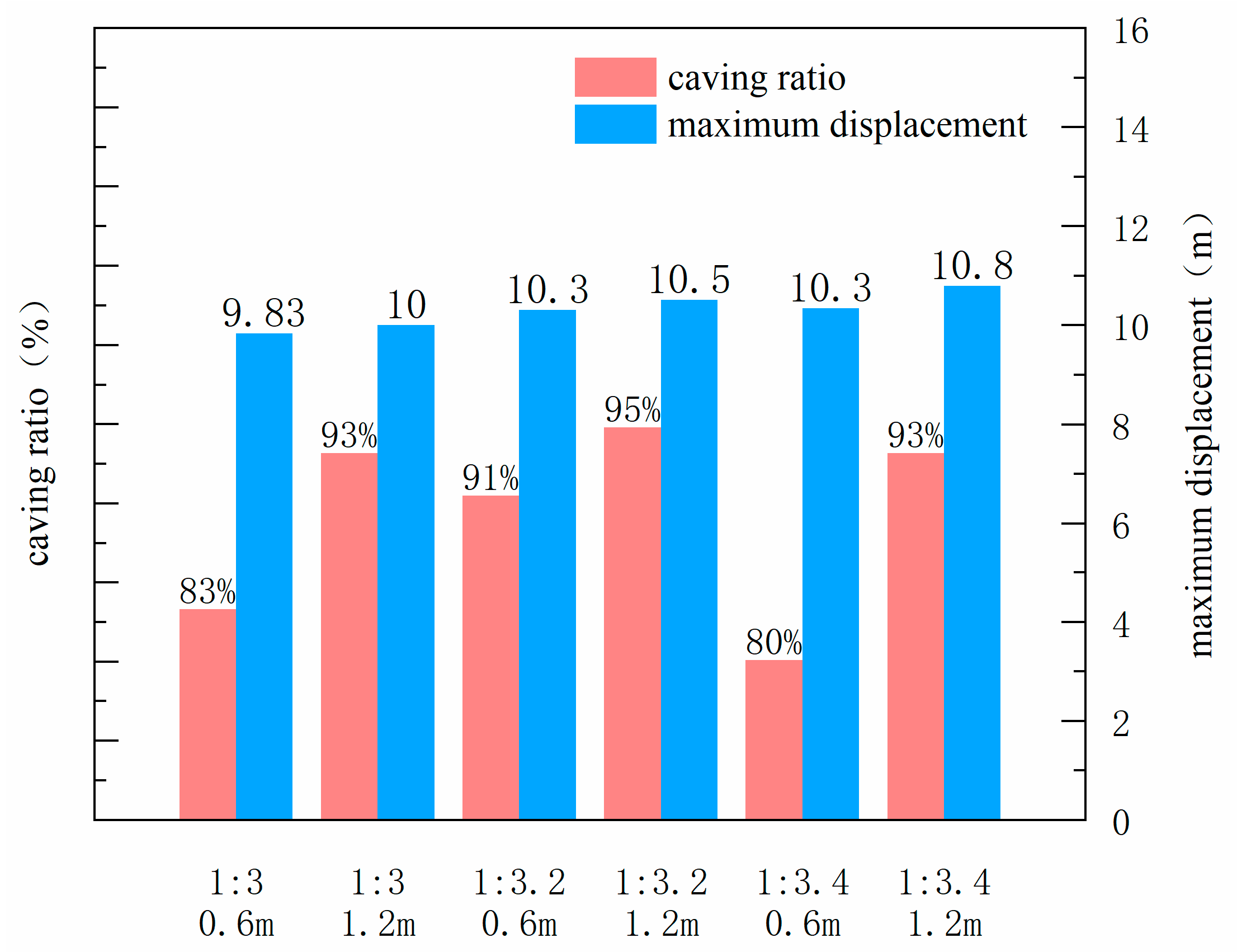
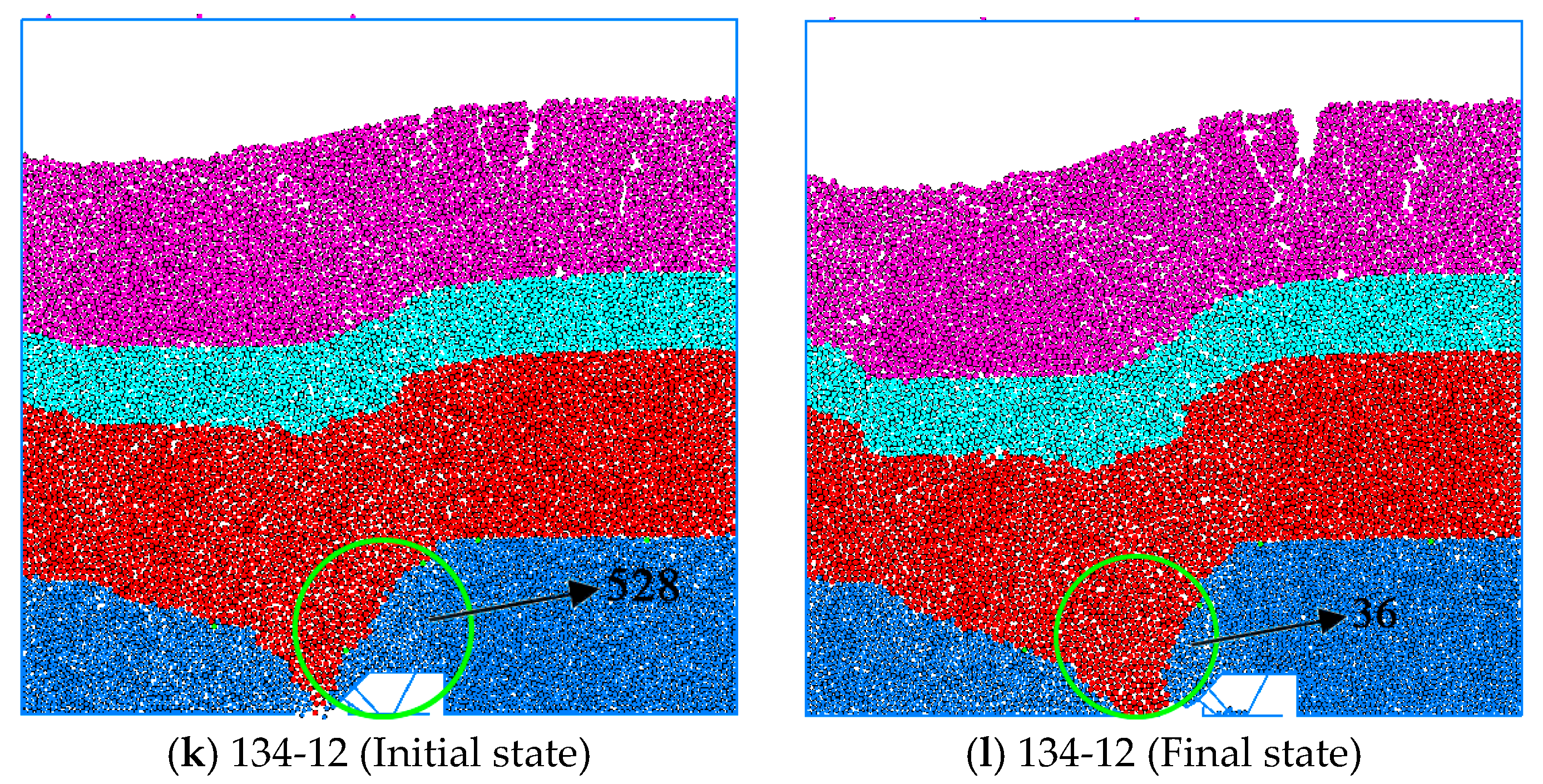
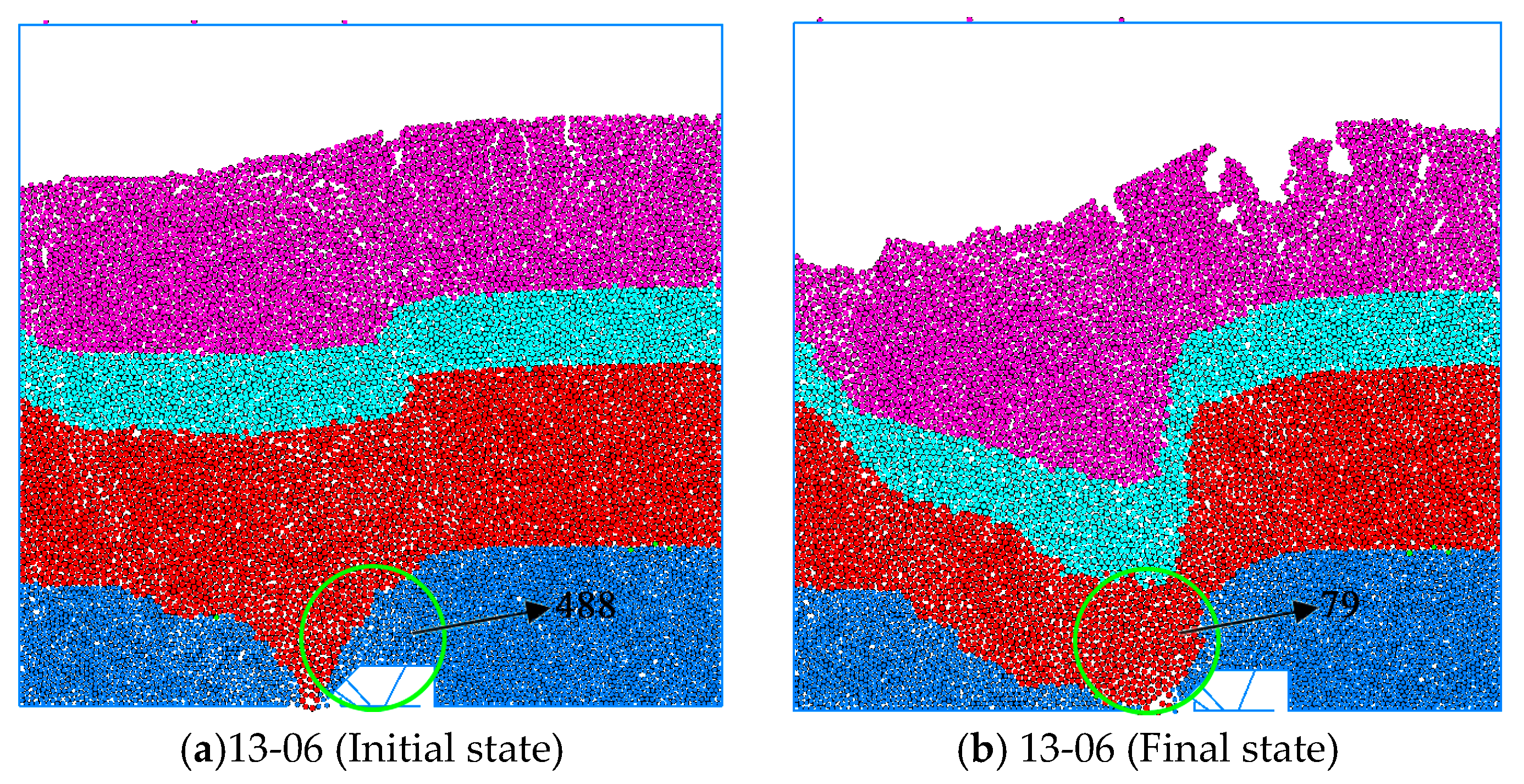
The simulation results shown in Figure 4 indicate that for caving ratios greater than 1:3, after 6 m of caving both the one-cut–one-cave and two-cuts–one-cave methods effectively transport the top coal to the discharge opening, demonstrating good caving behavior. As illustrated in Figure 5 and Figure 6, the maximum top coal displacement across all six simulation schemes shows no significant differences, further confirming that caving ratios above 1:3 exhibit the fundamental caving performance required by the top coal caving process.
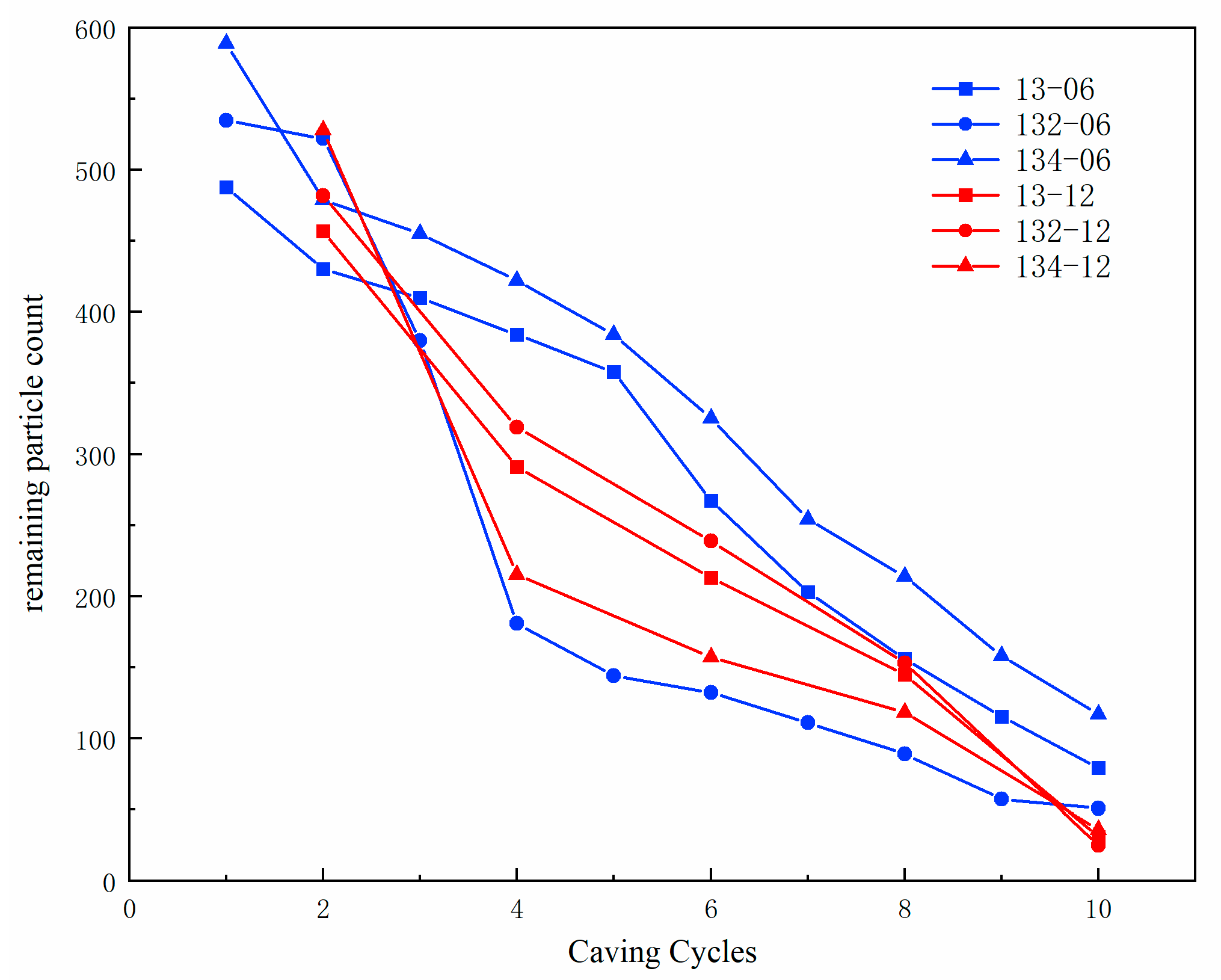
As shown in Figure 5, under the same caving ratio, the two cuts–one cave sequence (red) achieves a markedly higher discharge efficiency and leaves fewer unreleased coal particles compared to the one cut–one cave sequence, a finding also confirmed by the recovery rate bar chart in Figure 6. When comparing scenarios with identical caving intervals, the 1:3.2 ratio stands out: under the one cut–one cave condition, 535 particles were initially modeled in the study area, of which 51 remained after cyclic caving—yielding a cyclic recovery rate of 90.5%. Under the two cuts–one cave condition, 482 particles entered the discharge zone and only 25 remained after cyclic caving, corresponding to a 94.8% recovery rate. These results indicate that, for the 1502-2 working face at a caving ratio of 1:3.2, the two cuts–one cave method delivers the best top coal release performance.

3.2. Flow and Accumulation Characteristics of Top Coal

As shown in Figure 7, under the selected caving ratio of 1:3.2, combined with the “two-cut, one-cave” method and a top-down sequential multi-cycle caving process, the top coal collapses and subsequently moves downward as the hydraulic supports advance along the working face. This phenomenon is primarily driven by the self-weight of the coal mass, which exerts a downward movement or sliding force on the coal body. Consequently, it can be observed that, upon completion of the caving operation, the upper coal mass has shifted downward toward the lower section, gradually becoming compacted in the lower part.
Simulation results indicate that throughout the caving process, the top coal exhibits good caving behavior, with favorable flow and accumulation characteristics. The sliding path of the coal mass gradually changes from a primarily vertical fall-and-accumulation mode to an inclined sliding mode, forming a “compound sliding–accumulation” structure in which downward sliding along the coal wall interacts with central accumulation. During movement, this structure demonstrates excellent particle mobility and self-stability in accumulation. The top coal collapses rapidly, forming a loose filling zone, and the recovery rate increases significantly to 94.8%. The simulation results further reveal that moderately increasing the caving ratio within a certain range can improve the coal mass movement structure and optimize caving efficiency. These findings verify that at a caving ratio of 1:3.2, the top coal can be fully recovered, with overall good caving behavior during the caving process, thus meeting the conditions for achieving high-recovery, safe, and efficient mining of thick coal seams.

3.3. Manifestation Characteristics of Ground Pressure in the Working Face

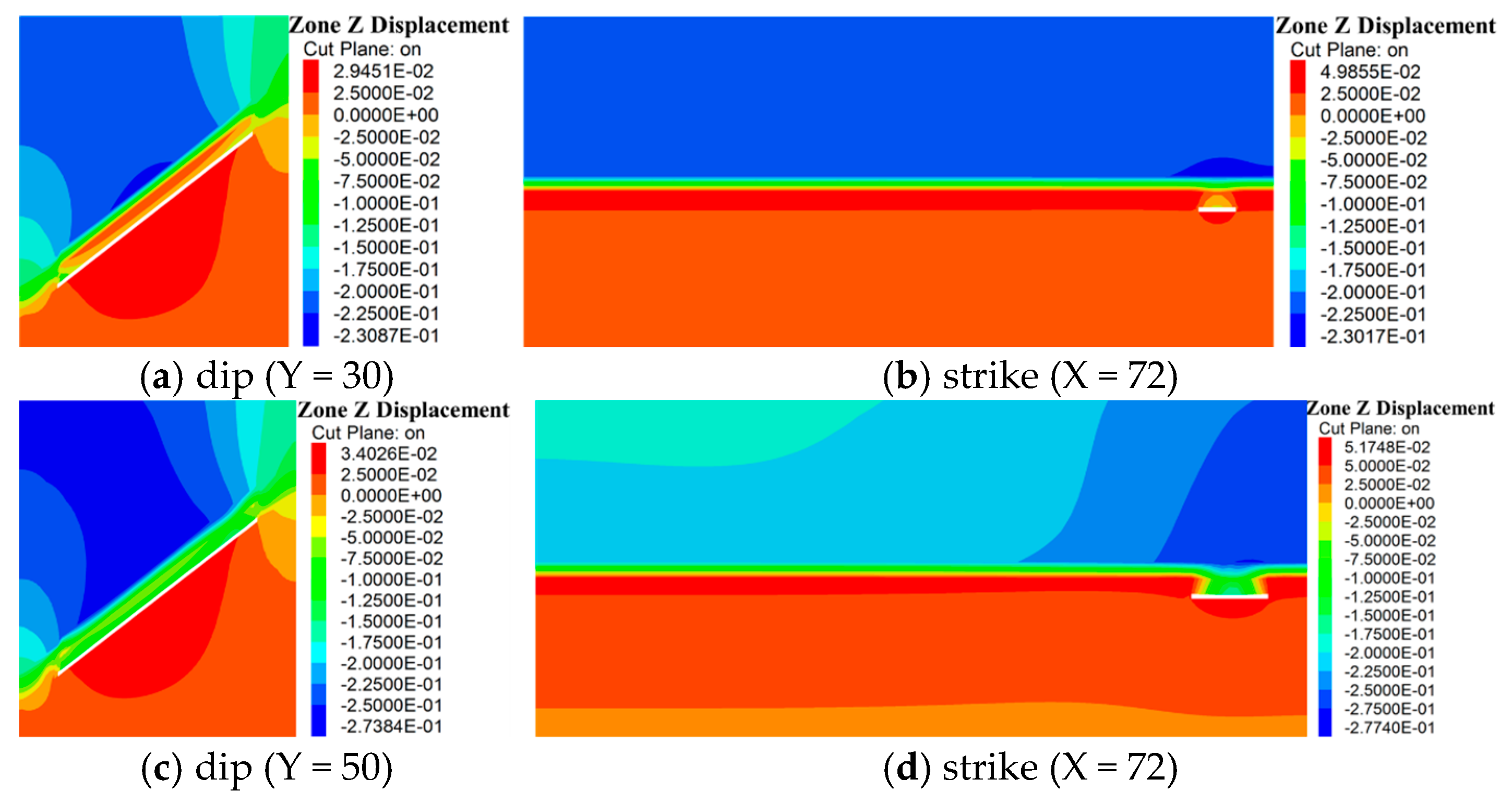
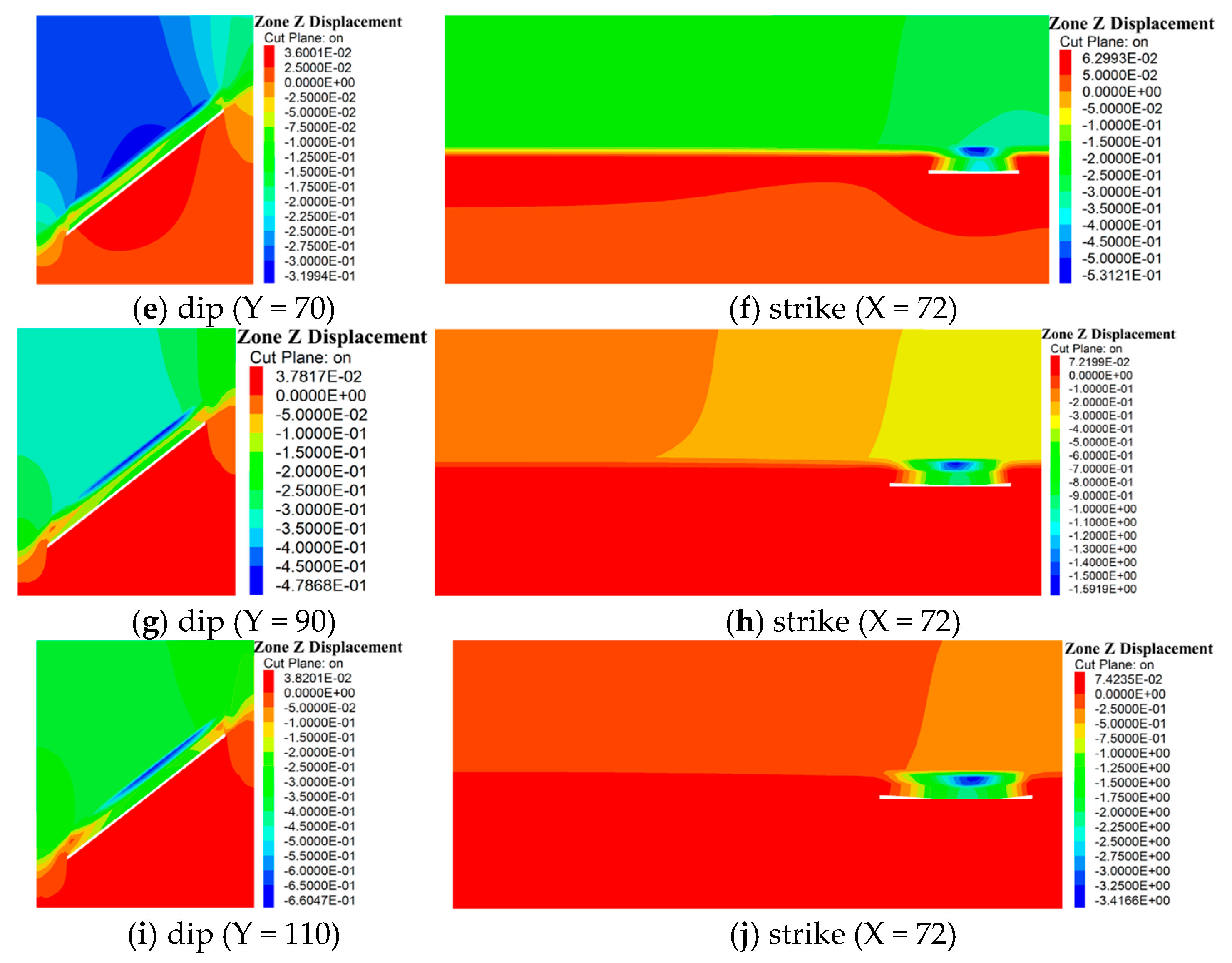
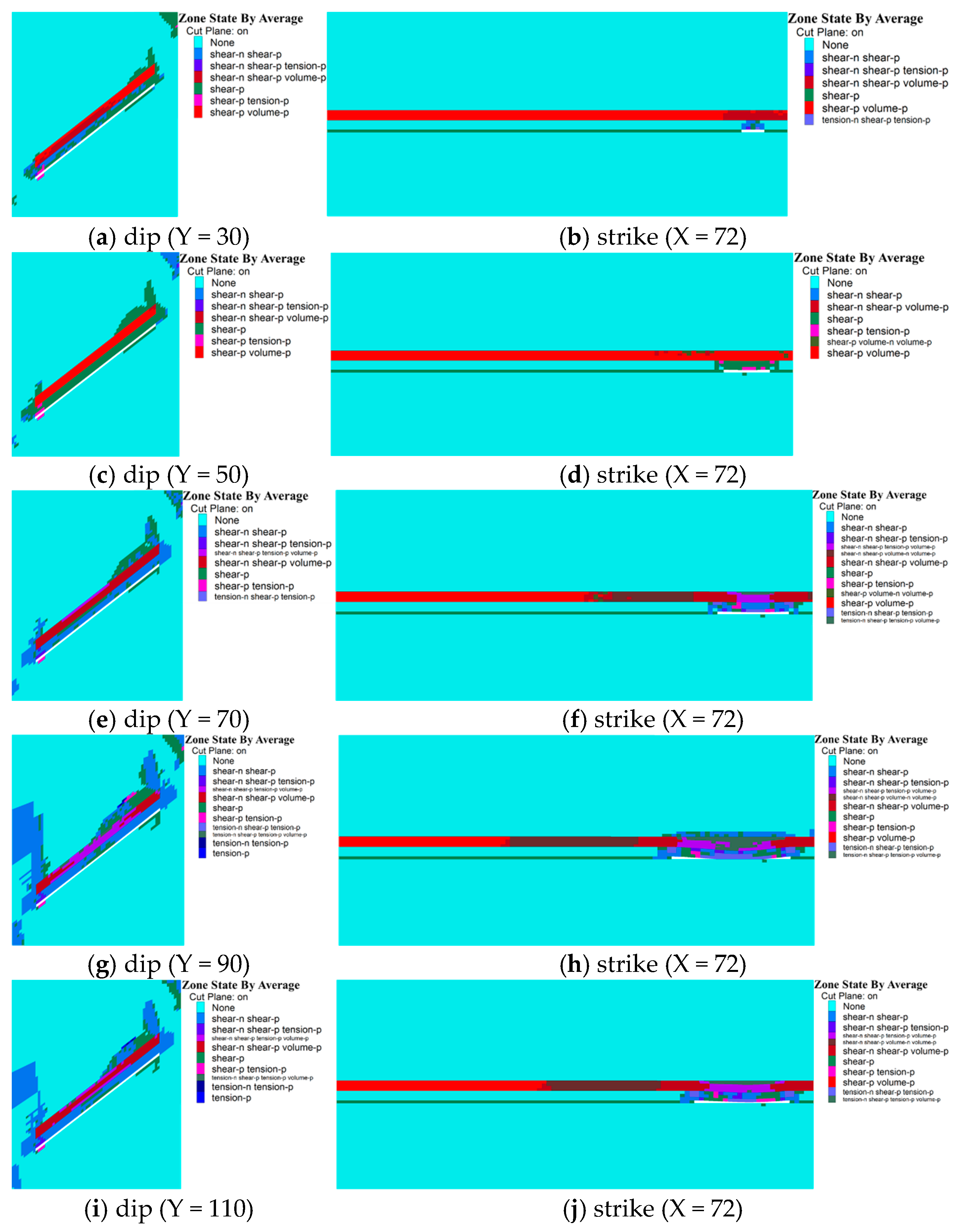
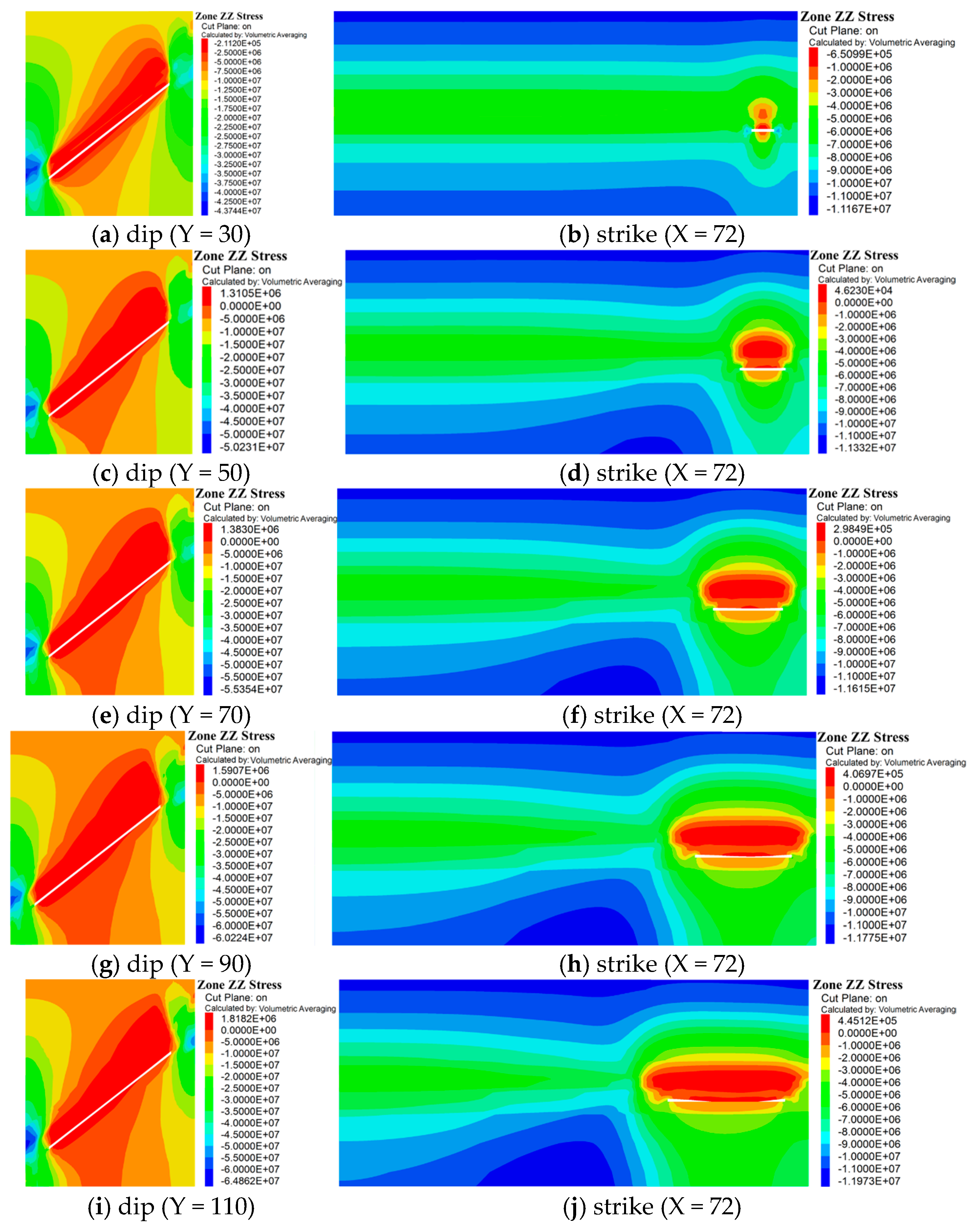
A mining simulation was conducted for the selected Scheme 132-12, with a coal discharge height of 8.5 m and a drawing step of 1.2 m. Under these conditions, 100 m of mining advancement was simulated, and the strata behavior patterns within this range were analyzed. The cross-sections along the face inclination were taken at the midplane of the mining range; for example, when the face advanced 20 m, the mining range in the Y-direction was 20–40 m, and the cross-section was taken at Y = 30 m. During face advancement, the vertical stress distribution along the face strike and inclination is shown in Figure 8, displacement characteristics in Figure 9, and plastic zone characteristics in Figure 10.
As shown in Figure 8, when the working face advances to 20 m, a pronounced stress concentration is observed in the coal wall front, with a concentration factor reaching 1.44. Meanwhile, in the upper and lower zones of the goaf, stress shows a decreasing trend, forming an “arched” distribution of the pressure relief zone, with localized areas accompanied by tensile stress. The formation of new mining space and the caving failure of the immediate roof result in localized tensile stress. Along the dip direction of the working face, due to the relatively large coal seam dip angle, the pressure relief ranges at the upper and lower ends of the face are asymmetrically distributed. The upper end has a larger pressure relief range, with a significant zone of 50 m, while the lower end shows a significant zone of 18 m. The stress concentration area in front of the coal wall at the lower end is located above the lower section of the working face. The distribution range of the pressure relief zone is larger at both ends of the face, and the stress concentration zone in front of the coal wall at the lower end is deeper, with a wider affected range and higher stress magnitude. The concentrated loading region at the upper end of the face is also biased toward the lower section.
When the working face advances to 40 m, the range of mining-induced disturbance continues to expand, and the “arched” low-stress zone above the goaf gradually extends. At 100 m of face advancement, roof caving in the goaf further enlarges the pressure relief zone. Along the dip of the working face, the stress concentration in front of the coal wall reaches 64.82 MPa, with a concentration factor as high as 4.4. Although the abutment pressure increases, the growth rate slows significantly. With increasing distance along the strike, the tensile stress zone above the goaf continues to expand, forming—from bottom to top—a tensile stress zone, a tensile–compressive mixed stress zone, and a compressive stress zone.
Overall, a persistent “arched” low-stress belt develops above the goaf, which diverts the overlying strata stress to both sides, forming a central pressure relief zone. This reduces the vertical confinement on the caved coal, allowing it to slide more easily and accumulate rapidly. Such a stress pattern also demonstrates that the accumulation body formed after top coal caving provides effective cushioning and support to the roof, mitigating the direct impact of the overlying strata on the supports. The arched structure channels the overlying strata stress to the sides, forming a central unloading zone, which facilitates vertical coal collapse and rapid accumulation. The stress concentration in front of the coal wall remains within the designed load-bearing capacity of the supports, and both the peak vertical stress and stress concentration factor stay below the safety limit, indicating that the supports can reliably carry the load under this caving ratio. As the working face advances, the stress reduction zones expand evenly in both the strike and dip directions, and their asymmetric distribution characteristics are consistent with the typical laws of top coal caving mining, confirming the predictability and consistency of stress release under the current process parameters.
As shown in Figure 9, when the initial 20 m of mining is completed, the overburden vertical displacement along the strike of the working face presents an arched subsidence pattern. Along the dip direction, the floor displacement is asymmetrically distributed, with a larger floor heave occurring at the lower end of the inclined working face, consistent with the characteristics of uneven stress distribution in inclined faces. When the working face advances to 40 m, roof displacement in the rear of the goaf increases significantly, indicating that the roof has undergone its initial caving and that the first weighting of the main roof has been completed. The affected area of the roof continues to expand with the increase in mining distance.
At an advancement of 60 m, the magnitude of roof subsidence increases markedly, and the displacement zone of the overburden extends over a larger area ahead of the working face. When the face advances to 100 m, the subsidence rate of the top coal begins to slow, reflecting that in the early stages of extraction, the subsidence rate is strongly affected by the advancement distance. After the substantial roof caving caused by the initial disturbance is completed, this influence gradually diminishes with further mining, although the initial movement point of the top coal continues to shift farther ahead of the coal wall.
In summary, as the working face advances, the influence range of overburden displacement in the stope gradually increases, and the displacements of the roof and floor within the goaf become more pronounced. The subsidence zone exhibits a typical “arched” distribution, and the variation amplitude of overburden displacement in the goaf is significant. Both the arched distribution pattern and the displacement rate are consistent with the typical behavior of top coal caving mining. Furthermore, the maximum displacement value remains within the design tolerance of the supports, confirming that under a caving ratio of 1:3.2 and the specified caving step and method, the support system can fully ensure roof stability and working face safety.
As shown in Figure 10, during the advancement of the working face, the plastic zone expands along both the dip and strike directions, progressing synchronously with the face. The lower part of the overlying strata above the goaf first undergoes tensile–shear failure, which gradually develops upward. The upper part is primarily dominated by tensile failure. Under the action of supports, the overlying strata after mining can be generally divided from top to bottom into five failure modes: intact zone, plastic deformation zone, tensile fracture zone, tensile failure zone, and localized tensile zones. Overall, shear failure is dominant, and most plastic zones remain in a reversible deformation stage without large-scale instability.
Along the dip direction of the working face, the development range of the plastic zone gradually expands with face advancement. When the face advances from 20 m to 60 m, the plastic zone near the upper end of the inclined working face is larger than that near the lower section. Subsequently, as the face continues to advance, the plastic zone near the lower section rapidly expands, and the overburden damage range increases sharply. Along the strike direction, the horizontal development range of the plastic zone increases with face advancement, while the vertical range changes little. Only when the face advances to 100 m does the plastic zone continue to extend upward. This trend is consistent with the distribution characteristics of shear stress and vertical stress, indicating that the supports and the accumulation body still effectively control the damage to the surrounding rock.

4. Field Application Results

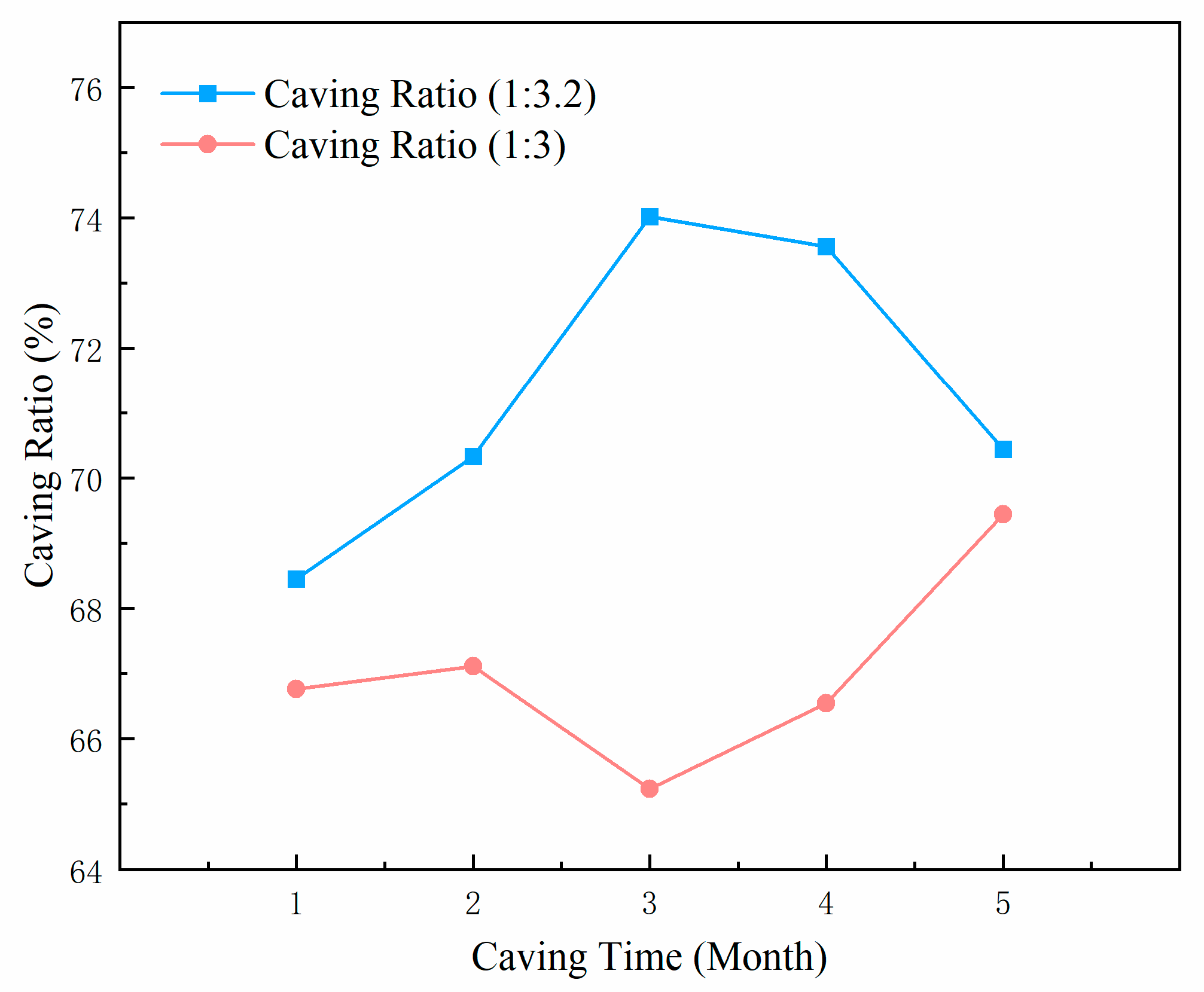
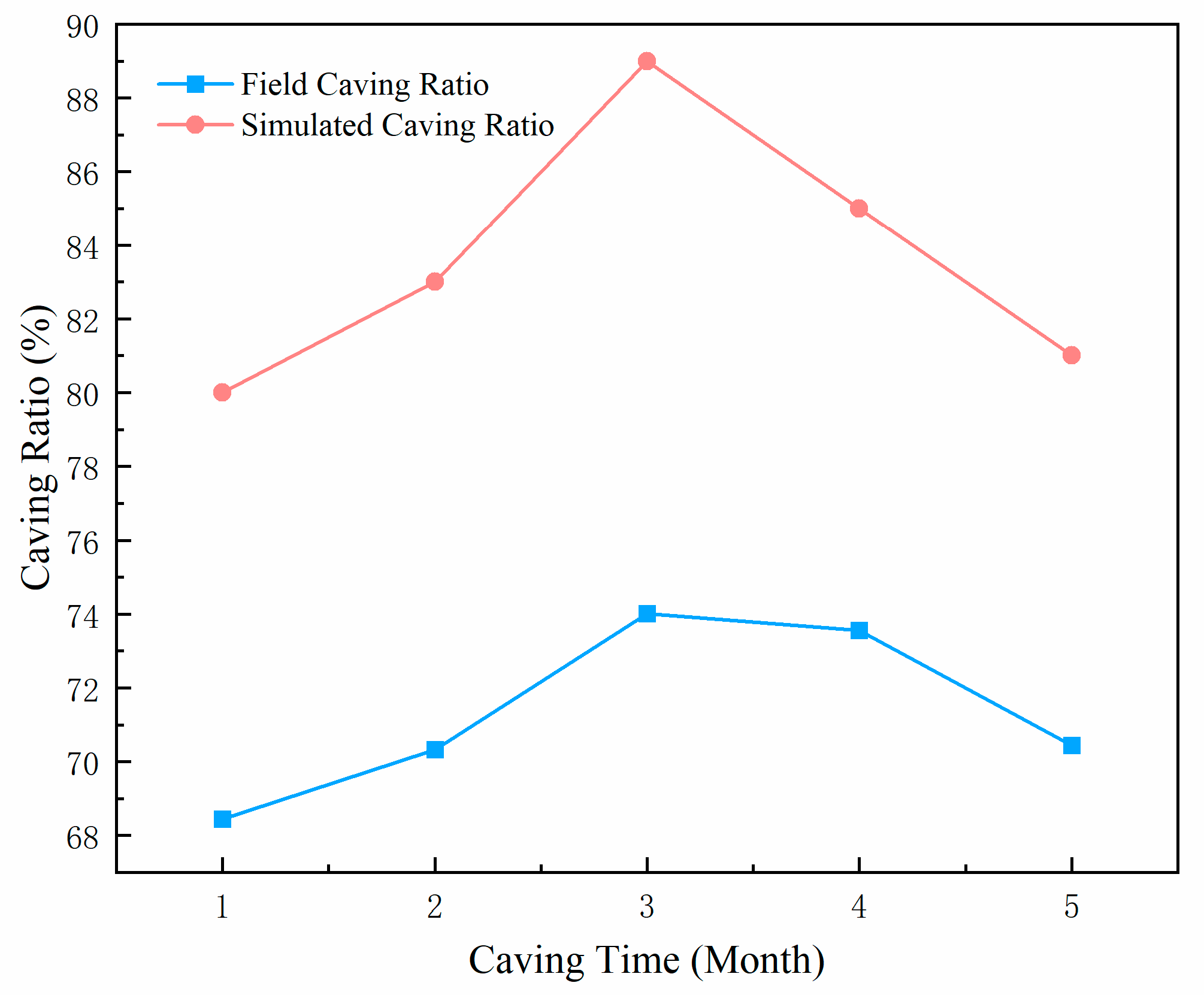
Based on the simulation results, Scheme 132-12 was selected as the improved on-site caving method. From October 2023 to February 2024, the original Scheme 13-12 with a caving ratio of 1:3 was applied for extraction on-site; from March to July 2024, the operation switched to Scheme 132-12 with a caving ratio of 1:3.2. Monthly advancement distances were recorded to calculate the original top coal reserves within the corresponding section, and based on this, the volume of caved top coal was determined. The caving rate was defined as (volume of recovered coal and rock/total top coal volume within the advancement distance during the period) × 100%. The adjustment of the caving ratio during different periods was mainly due to variations in geological conditions, strata pressure behavior, and production scheduling. In the initial stage, the enterprise continued with the original scheme to ensure safe and stable mining, and once the conditions allowed, the optimized scheme (132-12) recommended by the numerical results was gradually implemented to improve recovery efficiency.
As shown in Figure 11, under the same caving scheme, the actual working face caving rates are generally lower than the simulation values due to factors such as operational differences on-site, geological heterogeneity, residual coal left unmined, and incomplete extraction of top coal at the face ends and above roadways. Additionally, the simulation assumes an ideal gangue content based on the “gangue cutoff” criterion, whereas in production, excessive gangue is often generated. Despite these discrepancies, the temporal trends of caving rates for both schemes show a high degree of consistency, demonstrating the reliability and accuracy of the simulation results.
To further assess the validity of the model, the simulated caving heights, recovered top coal volumes, and advance distances were systematically compared with the field measurements. Potential uncertainties in the validation include local variations in coal seam thickness, changes in surrounding rock properties, equipment operational differences, and simplifications in the PFC model and boundary conditions. Nevertheless, the overall agreement in trends and relative differences between schemes indicates that the model can effectively capture the key behaviors of top coal caving and provide guidance for optimizing on-site mining operations.
Figure 12 illustrates that compared with the original Scheme 132-06, the optimized Scheme 132-12 obtained through simulation significantly improves the working face caving rate.

5. Discussion

The established model is directly calibrated for the 1502-2 working face, and the results are representative for cases with similar geological and mining conditions. For markedly different settings, parameter re-calibration or further adjustment would be required to ensure applicability. Nevertheless, the adopted methodology and caving ratio classification provide a clear framework for analyzing top coal caving behavior under controlled conditions. This discussion clarifies the factors that may limit direct transferability and highlights how the modeling approach can be adapted to different working faces, seam thicknesses, and mining conditions.
The findings of this study also provide practical guidance for optimizing caving ratios in thick coal seam mining, which can help improve top coal recovery and operational efficiency under field conditions. In practice, the proposed FLAC3D–PFC3D coupled modeling framework can inform on-site decision-making, support mining design adjustments, and anticipate potential strata behaviors. For future research, the methodology can be extended to three-dimensional or finer-scaled simulations to capture more detailed coal–rock interactions and local heterogeneities. Furthermore, it could be applied to other mining scenarios, including different seam geometries, mechanized mining methods, or other resource extraction processes, enabling broader applicability and the integration of intelligent optimization techniques.

6. Conclusions

(1) Under the two-cut, one-cave caving step, a caving ratio of 1:3.2 yields the highest top coal recovery rate, reaching up to 94.8%. Therefore, it is recommended to adopt a caving ratio of 1:3.2 with the two-cut, one-cave method in production for coal extraction.
(2) It is confirmed that throughout the entire caving process, the top coal exhibits good caving behavior with favorable flow and accumulation characteristics. This indicates that the current caving technique is feasible, and a caving ratio of 1:3.2 can achieve safe and efficient mining of thick coal seams while ensuring a high recovery rate.
(3) The simulation studied the ground pressure manifestation characteristics of working face 1502-2. Within a specific range ahead of the face, a stress concentration zone forms where the rock mass undergoes failure due to compression, and the plastic zone distribution shows similar characteristics. Above the goaf, a stress reduction phenomenon with an approximately “arched” distribution pattern is observed. As the working face advances, the subsidence rate of the top coal gradually decreases, while the distance between the initial movement point of the top coal and the coal wall ahead of the face increases. The overlying strata also exhibit subsidence, and the range of subsidence gradually expands with increasing advancement distance.

Author Contributions

J.C.: conceptualization, methodology, formal analysis, investigation, writing—original draft, data curation, software, validation, visualization; W.Z.: methodology, formal analysis, investigation, writing—original draft, visualization; X.L.: investigation, data curation, software, validation; S.Z.: investigation, writing—review and editing, validation; C.X.: resources, supervision of experimental work; F.X.: resources, data collection, validation; L.X.: supervision, project administration, funding acquisition, writing—review and editing. All authors have read and agreed to the published version of the manuscript.

Funding

This work was supported by the Shaanxi Postdoctoral Science Foundation (Grant No. 2023BSHEDZZ313), the Shaanxi Provincial Department of Education Special Scientific Research Program (Grant No. 24JK0545), the “Sanqin Bochuang” Talent Support Program of Shaanxi Province, and the Excellent Doctoral Dissertation Cultivation Program of Xi’an University of Science and Technology.

Data Availability Statement

The datasets and models that support the findings of this study are available from the corresponding author upon reasonable request.

Conflicts of Interest

The authors declare no conflicts of interest.

References

  1. Kang, H.-P.; Xu, G.; Wang, B.-M.; Wu, Y.-Z. Forty years development and prospects of underground coal mining and strata control technologies in China. J. Min. Strat. Control Eng. 2019, 1, 7–39. [Google Scholar] [CrossRef]
  2. Kang, H.-P. Seventy years development and prospects of strata control technologies for coalmine roadways in China. J. Min. Strat. Control Eng. 2021, 40, 1–30. [Google Scholar] [CrossRef]
  3. Hu, T.; Han, K.Q.; Song, C.H.; Che, J.C.; Li, B.; Huo, T.H.; Hu, T.X. Development Law of Water-Conducting Fracture Zones in Overburden above Fully Mechanized Top-Coal Caving Face: A Comprehensive Study. Processes 2024, 12, 2076. [Google Scholar] [CrossRef]
  4. Yang, L.; Wang, J.C.; Yang, S.L.; Li, L.H.; Wu, S.X. Improving the top coal recovery ratio in longwall top coal caving mining using drawing balance analysis. Int. J. Min. Reclam. Environ. 2023, 37, 319–337. [Google Scholar] [CrossRef]
  5. Wang, P.F.; Zhao, P.; Cao, Y. A Comparative Case Study on Stress Redistribution due to Extraction of Conventional and Split-Level Longwall Panels in Deep Inclined Coal Seams. Processes 2023, 11, 3201. [Google Scholar] [CrossRef]
  6. Wang, J.-C.; Song, Z.-Y.; Zhang, J.-W.; Chen, Y. Theoretical model of drawing body in LTCC mining. J. China Coal Soc. 2016, 41, 352–358. [Google Scholar] [CrossRef]
  7. Wei, W.J.; Cheng, D.L.; Zhang, J.W.; Fu, G.H.; Xie, H.S.; Zhang, Y.P.; Li, X.J.; Wang, Y.C. Dynamic caving interval technology and its mechanisms for improving top coal recovery at the upward-downward transition of longwall top coal caving panel. Comput. Part. Mech. 2025, 12, 1701–1715. [Google Scholar] [CrossRef]
  8. Wang, J.C.; Yang, S.L.; Li, Y.; Wei, L.K.; Liu, H.H. Caving mechanisms of loose top-coal in longwall top-coal caving mining method. Int. J. Rock Mech. Min. Sci. 2014, 71, 160–170. [Google Scholar] [CrossRef]
  9. Zhang, N.B.; Liu, C.Y.; Yang, P.J. Flow of top coal and roof rock and loss of top coal in fully mechanized top coal caving mining of extra thick coal seams. Arab. J. Geosci. 2016, 9, 465. [Google Scholar] [CrossRef]
  10. Ding, P.C.; Wang, H.; Zhao, J.J.; Yan, S.H.; Chang, L.W.; Li, Z.; Zhou, C.T.; Han, D.; Yang, J. Effect on Top-Coal Mass Failure under Load-Unload Induced by Shield Support. Processes 2024, 12, 1872. [Google Scholar] [CrossRef]
  11. Wang, Y.C.; Chen, P.K.; Wang, S. Study of Overlying Rock Structure and Intensive Pressure Control Technology of Island Longwall Panel in Extra-Thick Coal Seams. Processes 2023, 11, 3083. [Google Scholar] [CrossRef]
  12. Tian, D.; Shi, H.-Y.; Fu, E.-J.; Niu, G.-X. Study on relationship between coal caving step distance andtop coal caving recovery rate based on ellipsoid theory. Coal Sci. Technol. 2015, 43, 51–53+143. [Google Scholar] [CrossRef]
  13. Tao, G.-Q.; Yang, S.-J.; Liu, Z.-D.; Ren, Q.-Y. Research of ore drawing method of broken ore and rock based on Bergmark-Roos equation. J. China Coal Soc. 2010, 35, 750–754. [Google Scholar] [CrossRef]
  14. Li, L.; Zhang, X.; Luo, J.Q.; Hu, B. Theoretical Analysis of the Movement Law of Top Coal and Overburden in a Fully Mechanized Top-Coal Caving Face with a Large Mining Height. Processes 2022, 10, 2596. [Google Scholar] [CrossRef]
  15. Sun, L.-H.; Ji, H.-G.; Cai, Z.-Y.; Zhang, B.; Yang, B.-S. Top-coal caving process and movement characters of fully mechanized caving face in steeply dipping thick seam. J. Min. Saf. Eng. 2016, 33, 208–213. [Google Scholar] [CrossRef]
  16. Zhang, S.; Sun, Y.; Cao, J.T.; Lai, X.P.; Wu, L.Q. Research and optimization on the strength recovery mechanism of post peak fragmentation grouting reinforcement in mining rock mass. Front. Mater. 2025, 12, 1612050. [Google Scholar] [CrossRef]
  17. Wang, C.; Wang, K.; Zhang, X.-Q.; Li, F.-F. Study on Parameters of Fully Mechanized Top Coal Caving Mining in Large-inclined and Extra-thick Coal Seam. Min. Res. Dev. 2018, 38, 11–14. [Google Scholar] [CrossRef]
  18. Dai, L.; Zhao, X.; Pan, Y.; Luo, H.; Gao, Y.; Wang, A.; Ding, L.; Li, P. Microseismic criterion for dynamic risk assessment and warning of roadway rockburst induced by coal mine seismicit risk assessment and warning of roadway rockburst induced by coal mine seismicity. Eng. Geol. 2025, 375, 108324. [Google Scholar] [CrossRef]
  19. Li, D.X.; Wang, E.Y.; Jin, D.Q.; Wang, D.M.; Liang, W. Response Characteristics of Weak Current Stimulated from Coal under an Impact Load and Its Generation Mechanism. Sustainability 2023, 15, 2605. [Google Scholar] [CrossRef]
  20. Yang, S.L.; Wei, W.J.; Zhang, J.W. Top Coal Movement Law of Dynamic Group Caving Method in LTCC with an Inclined Seam. Min. Metall. Explor. 2020, 37, 1545–1555. [Google Scholar] [CrossRef]
  21. Shahani, N.M.; Wan, Z.; Zheng, X.; Guichen, L.; Liu, C.; Siddiqui, F.I.; Bin, G. Numerical modeling of longwall top coal caving method at thar coalfield. J. Met. Mater. Miner. 2020, 30. [Google Scholar] [CrossRef]
  22. Lu, H.; Wu, Z.-H.; Wang, Y.-C. Influential factors and reasonable mining-caving ratio of top coal with extra thick seam in fully mechanized top coal caving. Shaanxi Coal 2023, 42, 55–58. [Google Scholar]
  23. Meng, X.-J.; Zhang, J.-H.; Li, M.-Z. Mining technology and support optimization design of super high fully mechanized caving and small mining ratio in hard and extra thick coal seam. Saf. Coal Mines 2021, 52, 211–216. [Google Scholar] [CrossRef]
  24. Liang, D.-Y.; Zhang, R.-X.; Wang, L.; Zhang, B.-L. Study on Technological Parameters for Full Mechanized Caving Mining in Double Inclined and Large Dip Thick Coal Seams. J. Taiyuan Univ. Technol. 2025, 1–15. [Google Scholar] [CrossRef]
  25. Lai, X.P.; Zhang, S.; Cao, J.T.; Sun, Y.; Xin, F. Difference of “whole-process and stages” response law of energy evolution regulated by high energy storage rock modification. Geohazard Mechanics. 2025, 3, 99–108. [Google Scholar] [CrossRef]
  26. Li, D.X.; Wang, E.Y.; Feng, X.J.; Wang, D.M.; Zhang, X.; Ju, Y.Q. Weak current induced by coal deformation and fracture and its response to mine seismicity in a deep underground coal mine. Eng. Geol. 2023, 315, 107018. [Google Scholar] [CrossRef]
  27. Guo, G.Q.; Li, H. Finite-Discrete Element Method Prediction of Advanced Fractures in Extra-Thick Coal Seams Based on a Constitutive Model of Rock Deformation-Fragmentation Failure Process. Processes 2023, 11, 675. [Google Scholar] [CrossRef]
  28. Celik, A. Investigation of LTCC Efficiency in Horizontal and Near-Horizontal Thick Coal Seams with a 2D Physical Model. Rock Mech. Rock Eng. 2024, 57, 8381–8404. [Google Scholar] [CrossRef]
  29. Liu, J.; Chen, S.L.; Wang, H.J.; Li, Y.C.; Geng, X.W. The migration law of overlay rock and coal in deeply inclined coal seam with fully mechanized top coal caving. J. Environ. Biol. 2015, 36, 821–827. [Google Scholar]
  30. Zhang, J.W.; Zhao, J.; He, G.; Wan, X.; Geniş, M.; Zhang, H.; Wei, W.; Li, L.; Özarslan, A.; Cheng, D.; et al. Cumulative gangue mixing ratio prediction model for image-based in situ coal/gangue identification. Comput. Part. Mech. 2025, 12, 1913–1932. [Google Scholar] [CrossRef]
  31. Liu, J.Y.; Xiao, F.K.; Shan, L. Research on “Playing Football” Type Roof Control in Fully-Mechanized Mining Face with a Super-Large Mining Height under the Background of 5G+Big Data. Appl. Sci. 2024, 14, 9100. [Google Scholar] [CrossRef]
Figure 1. Numerical model for simulation: (a) caving ratio 1:3; (b) caving ratio 1:3.2; (c) caving ratio 1:3.4.
Processes 14 00776 g001
Figure 2. Flowchart of the Finite Difference Algorithm.
Processes 14 00776 g002
Figure 3. FLAC3D-PFC coupled numerical model.
Processes 14 00776 g003
Figure 4. Top-coal movement characteristics.
Processes 14 00776 g004aProcesses 14 00776 g004bProcesses 14 00776 g004c
Figure 5. Remaining top-coal particle count versus number of coal release operations.
Processes 14 00776 g005
Figure 6. Release rates and maximum displacements under different schemes.
Processes 14 00776 g006
Figure 7. Collapse Pattern of Roof Coal in the Working Face.
Processes 14 00776 g007
Figure 8. Distribution characteristics of vertical stress during working face advancement.
Processes 14 00776 g008
Figure 9. Distribution characteristics of vertical displacement during working face advancement.
Processes 14 00776 g009aProcesses 14 00776 g009b
Figure 10. Distribution characteristics of plastic zones during working face advancement.
Processes 14 00776 g010
Figure 11. Comparison of simulated and field-measured coal release rates under a mining-to-caving ratio of 1:3.2.
Processes 14 00776 g011
Figure 12. Field-measured coal release rates for different mining-to-caving ratio schemes.
Processes 14 00776 g012
Table 1. Scheme Number.
Caving Ratio1:31:3.2
Caving Step
0.6 m13-06132-06
1.2 m13-12132-12
Table 2. Microscopic Physico-Mechanical Parameters of Coal and Rock Layers.
StratumThickness/mRadius/mNormal Stiffness/MPaShear Stiffness/MPaFriction CoefficientDensity (kg/m3)
Coal seam 0.18~0.202002000.31500
Fine sandstone1.70.20~0.252002000.42500
Siltstone2.10.20~0.252002000.42400
Coarse sandstone14.20.20~0.252002000.42500
Disclaimer/Publisher’s Note: The statements, opinions and data contained in all publications are solely those of the individual author(s) and contributor(s) and not of MDPI and/or the editor(s). MDPI and/or the editor(s) disclaim responsibility for any injury to people or property resulting from any ideas, methods, instructions or products referred to in the content.