Article

Evaluation of the Antifungal and Cytotoxic Potential of Crude Extracts from Sterculia foetida L. Seeds—Bulbostylis capillaris (L.) Kunth ex CB Clarke and Pouteria caimito (Ruiz and Pav.) Radlk in Candida spp.


by
Renata de Almeida
1,2,
Luis Fernando Quejada
1,2,
Lusinalva Leonardo da Silva
2,
Vitor Vidal
1,3,
Mauricio Afonso Vericimo
2 and
Robson Xavier Faria
1,*
1
Laboratory for Evaluation and Promotion of Evaluation and Promotion of Environmental Health (LAPSA), Oswaldo Cruz Institute, Oswaldo Cruz Foundation, Rio de Janeiro 21040-900, RJ, Brazil
2
Postgraduate Program in Science and Biotechnology, Fluminense Federal University, Niteroi 24210-240, RJ, Brazil
3
Postgraduate Program in Plant Biotechnology and Biology, Federal University of Rio de Janeiro, Rio de Janeiro 21941-599, RJ, Brazil
*
Author to whom correspondence should be addressed.
Processes 2026, 14(5), 773; https://doi.org/10.3390/pr14050773
Submission received: 26 September 2025 / Revised: 3 December 2025 / Accepted: 5 December 2025 / Published: 27 February 2026

Abstract

Brazil is home to one of the greatest biodiversities on the planet, with numerous plant species with unexplored pharmacological potential. In this study, the antifungal activity and cytotoxicity of crude extracts obtained from the seeds of Sterculia foetida L., Bulbostylis capillaris (L.) Kunth ex CB Clarke, and Pouteria caimito (Ruiz & Pav.) Radlk were investigated. The previously dehydrated seeds were subjected to extraction with physiological saline (saline extract), hexane (hexane extract) and sequential extraction with hexane followed by saline (hexane-saline extract). To determine antifungal activity via disk diffusion assays, broth microdilution based on the CLSI and evaluation of cellular specificity (EC50) by redox metabolism with resazurin were performed on C. albicans ATCC 14053, C. albicans ATCC 24433 and non-albicans species Candida krusei ATCC 6258 and C. glabrata ATCC 22019. Cytotoxicity was evaluated in mouse bone marrow cells by determining the cytotoxic concentration (CC50/24 h). The selectivity index (SI) was calculated as the ratio between CC50 and EC50. Statistical analysis of the data was performed via ANOVA, with the significance level set at p < 0.05. Saline, hexane, and hexane—saline extracts of S. foetida, as well as the saline extract of B. capillaris, showed selectivity indices higher than those of ketoconazole against C. albicans and C. krusei. With respect to C. glabrata, only the saline extract of B. capillaris demonstrated greater selectivity than the reference drug. All P. caimito extracts presented lower EC50/24 h values than did ketoconazole but presented a low selectivity index, suggesting high cellular toxicity. The results obtained demonstrate that the crude extracts of S. foetida and B. capillaris seeds have significant antifungal activity and represent promising sources of bioactive compounds. Future studies should focus on the purification, isolation, and characterization of the active principles responsible for the observed activity.

1. Introduction

For centuries, medicinal plants have been sought as alternatives for the treatment of various diseases. Medicinal plants are important both for providing raw materials for drug synthesis and for their use as therapeutic agents [1,2]. Plants are considered raw materials for the development of new molecules and new drugs, as they are unlimited sources of potentially active substances, and many of them are used to help promote the treatment of numerous diseases [3,4]. Some plant species contain a protein called a lectin that can act in various biological ways and is distributed in different parts of the plant tissue, with a predominance in reserve organs [5,6].
Sterculia foetida L., popularly known in Brazil as “chichá-fedorento”, horse chestnut, or Java olive, is a tropical plant native to India and Malaysia and was introduced in Brazil as an ornamental and shade tree, being one of the most common exotic trees. Seed oil is rich in fatty acids and has several biological properties, including antifungal [7,8], antibiotic, antiviral, antitumor and anti-insect [9,10]. Studies carried out by Braga and collaborators [11], through in vitro assays, demonstrated the existence of a lectin-like substance in S. foetida almonds with antibacterial and hemolytic activities only for human red blood cells. In recent years, studies have shown that factors often considered toxic have potential in the development of drugs or even present functional properties with regard to the prevention and treatment of diseases [12,13].
Bulbostylis capillaris (L.) Kunth ex CB Clarke belongs to the family Cyperaceae and is widely distributed from southeastern Canada to Tropical America (including Brazil). Species of the genus Cyperus, such as Cyperus odoratus, Cyperus alternifolius and Cyperus papyrus, also constitute this botanical group, all of which share morphological and ecological characteristics typical of sedges [14]. Previous studies have indicated that the extract of Bulbostylis capillaris (L.) CB Clarke is active in an in vitro ACE (angiotensin-converting enzyme) inhibition assay at a concentration of 100 µg/mL and contains a large number of flavonoid compounds, suggesting a method of biomonitoring medicinal plants with antihypertensive properties [15].
Pouteria caimito (Ruiz & Pav.) Radlk, which belongs to the Sapotaceae family and is popularly known as abiu, is a monoecious tree species ranging in height from 4–10 m. It is widely cultivated in various regions of Brazil, especially in orchards, farms, and backyards in the Amazon region, and is also found in areas of northern South America. In addition to its fruit importance, it also stands out for its ornamental value. Under appropriate growing conditions, the plant can produce 300 to 500 fruits per year from the fifth year of development, with an average weight of between 200 and 250 g per fruit. Productivity tends to increase significantly after the eighth year [16,17]. Previous work demonstrated that P. caimito extracts exhibit inhibitory effects on the enzymes α-amylase and α-glucosidase, suggesting their potential as sources of bioactive compounds for the development of antidiabetic therapies [18]. Considering the global increase in the incidence of diabetes mellitus and its complications, scientific research on plant species with hypoglycemic properties, especially those with traditional uses and wide geographic distributions, such as P. caimito, should be encouraged.
Candidiasis and candidaemia are infections caused by Candida spp. and are among the most important concerns in public health around the world. This genus is composed of approximately 200 species, four of which are responsible for approximately 96% of infection cases: Candida albicans (42.5%), which is considered the main etiological agent, followed by Candida tropicalis (27.3%), Candida parapsilosis (21.9%) and Candida glabrata (4.4%) [19,20].
C. albicans is the most frequently isolated species in invasive and superficial infections in clinical microbiology laboratories and is described as naturally sensitive to a wide range of systemic antifungals. On the other hand, non-albicans species exhibit characteristics associated with greater pathogenicity and virulence, such as high adhesion capacity and hydrophobic properties. Among them, C. krusei and C. glabrata stand out for exhibiting greater intrinsic resistance, which often requires the use of higher doses of azole antifungals [19,21,22].
Invasive mycoses, particularly those etiologically related to Candida spp., have gained significant interest in the field of public health because of their high mortality rate, which is estimated to be approximately 40% [23]; for this reason, this study investigated the antifungal potential of Candida spp.
Botanical drugs have emerged as relevant alternatives to synthetic drugs in the treatment of infectious agents because of their lower toxicity and minimal adverse effects at effective concentrations [24]. Botanical drugs are complex mixtures with a broad range of bioactive compounds that are able to reduce the growth of opportunistic pathogens such as Candida spp. [24,25]. Bioactive compounds present in plants, such as terpenoids, phenols, and flavonoids, exert fungicidal and fungistatic effects, including the inhibition of biofilm formation, cell membrane damage and oxidative bursts [25,26].
Plants or herbal preparations are used in traditional folk medicine and are recognized as complementary therapies. In pharmacology, plants represent essential sources for the purification of novel bioactive compounds, which can be used directly or serve as precursors for the synthesis of new therapeutic [27,28]. It is estimated that by 2019, 4% of medicines approved by the FDA were botanical drugs. The FDA introduced this category in 2012 [29]. Although approximately 80% of the world’s population resort to plants to treat diseases, only a small portion of these plants have been characterized properly from pharmacological and phytochemical perspectives [30,31]. In Brazil, this field is still largely unexplored [32]. Therefore, we investigated the potential antifungal activity of crude extracts obtained from the seeds of three native plants, P. caimito, S. foetida and B. capillaris. This approach is fundamental to expanding scientific knowledge, promoting bioprospecting, and supporting the development of alternatives in the treatment of infectious diseases such as candidiasis.

2. Materials and Methods

2.1. Plant Material and Crude Extract Preparation

The almonds of S. foetida and the seeds of Pouteria caimito and B. capillaris were ground into flour via a 100 mL mortar and pestle, and then the flour obtained from the almonds was weighed and divided to prepare for extraction. Vegetative material from the species S. foetida, B. capillaris and Pouteria caimito was collected, and a voucher for the individual used in the study was deposited in the Niterói Herbarium (NIT), registered under catalog numbers NIT 17804 and 12905. The activity of accessing genetic heritage was registered in SISGEN under numbers AE03DD4, AB16745 and A7DCBF9.
The seeds of S. foetida L., B. capillaris (L.) CB Clarke and Pouteria caimito were dried in an oven at 35 °C (MA033/1—FANEM–SP/Brazil—Sterilization and Drying Oven) and, after stabilization, were ground into flour in a 100 mL mortar and pestle, after which the flour obtained from the kernels was weighed into different volumes ranging from 100 mg to 1 g to perform the extraction. Soluble proteins were extracted from the seeds in a 0.1 M Tris(hydroxymethyl)-aminomethane—Tris-HCl buffer solution at pH 7.4 containing 0.15 M NaCl (Sigma-Aldrich–USA/Canada) at a 1:10 (g/mL) ratio. For each gram of flour, 9 mL of solvent was added under constant stirring on a magnetic stirrer for 24 h at 25 °C. The suspension was subsequently centrifuged at 2500 rpm for 30 min at 4 °C, after which the precipitate was discarded. The resulting supernatant, approximately 9 mL, termed saline extract (SE), was used in hemagglutination assays and for the determination of soluble proteins, with some aliquots stored at −20 °C. For lipid extraction, hexane (Sigma-Aldrich) (1:10, g/mL) was used; 9 mL of solvent was added to each gram of flour under stirring at 25 °C for 24 h. After centrifugation (2500 rpm, 30 min, 4 °C), approximately 9 mL of the supernatant was collected, evaporated in an oven at 37 °C for 48–72 h, resuspended in phosphate-buffered saline solution (PBS, pH 7.4; Sigma-Aldrich) and adjusted to a concentration of 5 µg/mL, and the hexane extract (HE) was obtained. The precipitate was subjected to a new extraction with 0.1 M Tris-HCl (pH 7.4) containing 0.15 M NaCl (1:10 g/mL) under the same conditions described above. The supernatant, approximately 9 mL, was collected, dried in an oven at 37 °C for 48–72 h, resuspended in PBS and adjusted to a concentration of 5 µg/mL, resulting in hexane saline extract (HSE).

2.2. Antifungal Activity Assay

C. albicans ATCC 14053 and ATCC 24433, C. krusei ATCC 625) and C. glabrata ATCC 22019 were obtained from Fiocruz in Rio de Janeiro, Brazil. All the yeast were cultured on Sabouraud dextrose agar (Fluka analytical-now part of the Sigma-Aldrich/Merck, USA/Canada, family of brands) (40 g/L dextrose, 10 g/L Peptone, 15 g/L agar) and incubated at 35 °C for 24–72 h until growth was observed. The cultures were stored at −80 °C.

2.3. Candida Inoculation Preparation

The inoculum was prepared by choosing approximately five colonies approximately 1 mm in diameter from each 24 h culture. The colonies were suspended in 5 mL of sterile saline (8.5 g/L NaCl). After the colonies were suspended, the mixture was vortexed for 15 s, and the cell density was adjusted according to the 0.5 McFarland scale standard solution. The incubation temperature was 35 °C, with a variation of ±2 °C.

2.4. Agar Disk Diffusion Tests with Crude Extracts of Sterculia foetida, Bulbostylis capillaris and Pouteria caimito

Fungal suspensions were prepared from a 24 h subculture in Sabouraud dextrose medium and adjusted to the 0.5 McFarland scale. A 0.1 mL aliquot was pipetted into a Sabouraud agar Petri dish and spread with a swab, forming a fungal mat. The plates were incubated at 37 °C for 30 min, divided, and identified according to the plant extracts tested. Sterile filter paper discs impregnated with 20 µL of the extracts (5 mg/mL) were applied according to the CLSI protocol (USA, 2008). The plates were then incubated at 35 °C (±2 °C) for 24 h. Antifungal activity was assessed by the diameter of the inhibition zones using dimethyl sulfoxide (DMSO) as a negative control and ketoconazole as a positive control.

2.5. Determination of the Minimum Inhibitory Concentration (MIC) of Candida spp.

The inoculum of the test strain was prepared and adjusted by counting in a Neubauer chamber. The minimum inhibitory concentration (MIC) was determined via the microplate dilution method in triplicate. The crude extracts were tested in serial dilutions (500 to 3.9 µg/mL) in Sabouraud medium, with the addition of the inoculum (~5.0 × 10⁶ CFU/mL). Negative controls (pure medium, inoculum without extract and inoculum with DMSO) and a positive control (ketoconazole) were included. The plates were incubated at 35 ± 2 °C for 24 h, and the MIC was defined as the lowest concentration capable of inhibiting visible growth, which was visually assessed by the turbidity of the medium.

2.6. Determination of the Effective Concentration Capable of Killing Half of Candida spp.

Cell viability was assessed via the Alamar Blue® (resazurin) (Thermo Fisher Scientific, Waltham, MA, EUA) assay. In 96-well microplates, crude extracts were tested in serial dilutions (500 to 3.9 µg/mL) in Sabouraud medium, with the addition of inoculum (~5.0 × 10⁶ CFU/mL). Negative controls (pure medium, inoculum without extracts, and inoculum with DMSO) and a positive control (ketoconazole) were included. The plates were incubated at 35 ± 2 °C for 24 h, after which resazurin (125 µg/mL) was added. After incubation at 37 ± 2 °C for 4 h, the reading was performed in a spectrophotometer at wavelengths of 530, 570 and 585 nm. The EC50/24 h value was calculated via linear regression on a sigmoid curve (GraphPad Prism 6.0).

2.7. Determination of the Selectivity Index (SI)

The selectivity index (SI) was determined from the ratio between the CC50/24 h values and the MIC or EC50/24 h values. This calculation indicates the relationship between the toxicity of the analogs against yeasts of Candida spp. and mammalian cells.

2.8. Evaluation of the Effects of Crude Extracts from the Seeds of S. foetida, B. capillaris and P. caimito on Bone Marrow Cells (In Vitro) of Mice

2.8.1. Animals

Isogenic male BALB/c (H-2d) mice supplied by the Laboratory Animal Center (NAL) of Federal Fluminense University were used. The experimental procedures used in this work were submitted to and approved by the Ethics Committee on the Use of Animals of the Federal Fluminense University (CEUA) under number 2358041024, with identification code 002240 in February 2025.

2.8.2. Experimental Session

The animals were previously euthanized with an overdose of xylazine hydrochloride (Xilazin, Syntec SP/Brazil) and ketamine hydrochloride (Cetamin, Syntec SP/Brazil). Subsequently, whole bone marrow cells were obtained by washing the femoral cavity of the mice. This technique involves expelling the cells from the bone cavity via a needle and syringe (1 mL) containing approximately 5 mL of phosphate-buffered saline (PBS), pH 7.4 (Sigma-Aldrich). The resulting cell suspensions were centrifuged at 1500 rpm, resuspended in 1 mL of RPMI-1640 culture medium and used to determine the total number of cells recovered by counting in a Neubauer chamber, and the cell count was defined in the unit “cells/mL”. All the assays were conducted under sterile conditions, and the cells were maintained in RPMI-1640 medium supplemented with 5% fetal bovine serum (FBS).

2.8.3. Assays to Determine the Concentration of Crude Extracts That Determine the Cytotoxicity That Results in 50% (CC50/24 h) Viability of Mammalian Cells

A cytotoxicity test was performed to determine the median lethal concentration (CC50). Four male BALB/c (H-2d) mice, supplied by the Bioterium of the Federal Fluminense University under the CEUA, were used. The contents of each mouse were combined with those of the other mice, added to RPMI-1640 culture medium, centrifuged, and analyzed, forming a cell pool. The cells were maintained in RPMI-1640 medium supplemented with 10% fetal bovine serum, 2-mercaptoethanol, L-glutamine, penicillin (100 U/mL), and streptomycin (100 µg/mL) in an incubator at 37 °C with 5% CO2. The cells (5 × 10 cel/mL) were seeded in 96-well microplates (100 µL/well) and incubated for 24 h for adhesion. Different concentrations of extracts were subsequently added, and the culture medium was used as a control. The cultures were incubated for 24 or 48 h under the same conditions.
After incubation at 37 °C for 4 h, cell viability was assessed via a resazurin assay (125 µg/mL). The reading was performed in a SpectraMax M4 spectrophotometer (Molecular Devices, CA/EUA) at wavelengths of 530, 570 and 585 nm to determine the CC50/24 h.

2.9. Statistical Analysis

The results were analyzed via analysis of variance (ANOVA) via GraphPad Prisma 6 software, followed by parametric analysis of multiple comparisons via the Tukey method, with p < 0.05 used as the significance parameter.

3. Results

3.1. Agar Disc Diffusion Test

In the disk diffusion assays, sensitivity to the plant extract was assessed by measuring the diameter (mm) of the growth inhibition zone, complemented by graphical analyses (Figure 1, Figure 2, Figure 3 and Figure 4). All experiments were conducted in triplicate, and positive results were obtained when the arithmetic mean of the inhibition zones was equal to or greater than 1 mm in at least 50% of the strains tested. Twenty-five microliters of the diluted extracts, standardized to a concentration of 5 mg/mL, were applied to each filter paper disk.
Figure 1 shows the mean area of inhibition of Candida albicans ATCC 24433 against extracts of Pouteria caimito, Bulbostylis capillaris and Sterculia foetida. The saline, hexane, and hexane-saline extracts of B. capillaris (Figure 1A) revealed that, compared with the DMSO control, BCHS exhibited significant activity (p < 0.0051). Compared with the DMSO extract, the saline (PCS) and hexane-saline (PCHS) extracts significantly affected P. caimito (Figure 1B) (p < 0.0001); however, the activity of the PCS and hexane-saline (PCHS) extracts was lower than that of the reference drug ketoconazole (p < 0.001). With respect to S. foetida (Figure 1C), only the hexane extract (SFH) demonstrated significant activity (p < 0.0001) compared with that of DMSO.
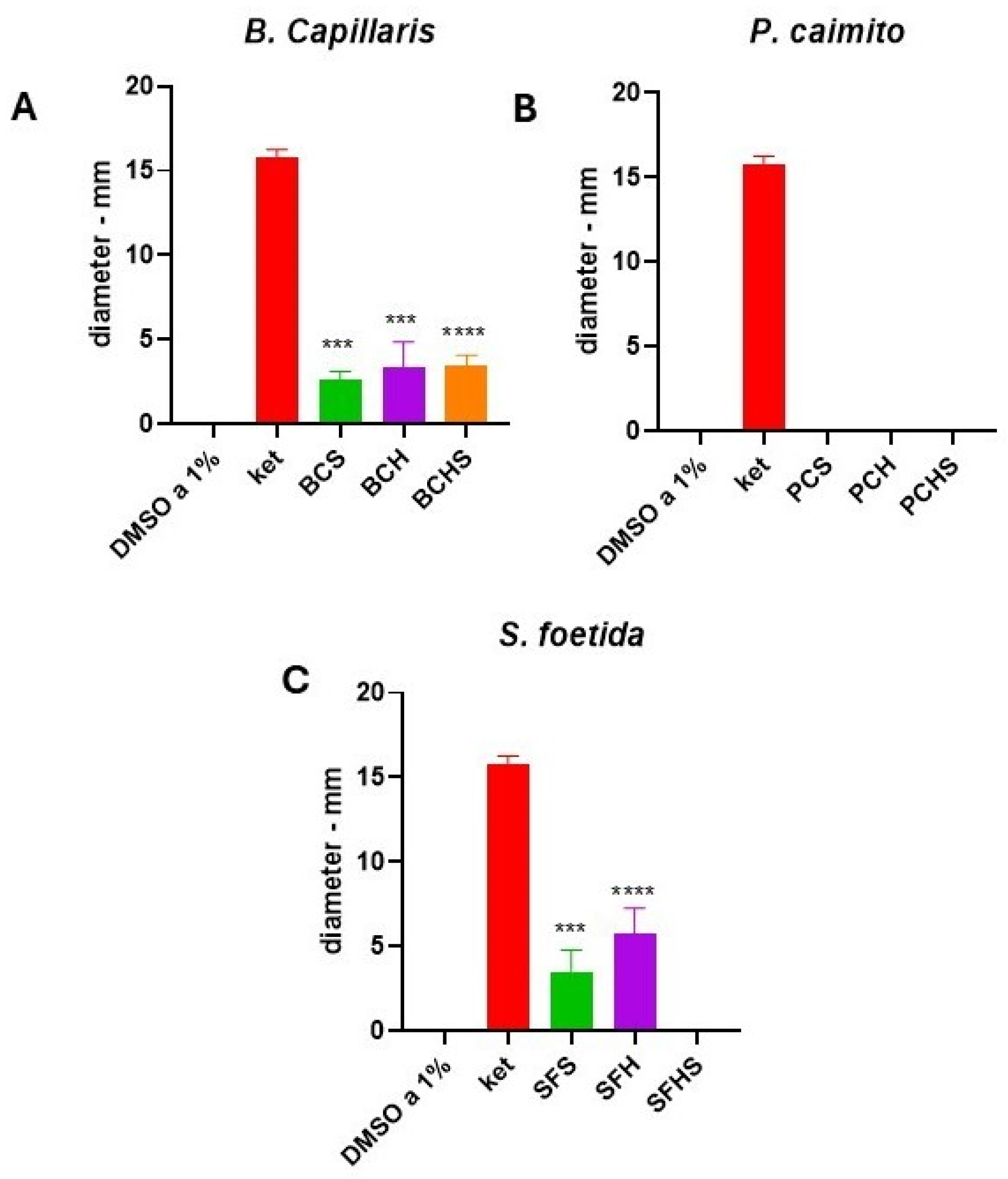
Figure 2 shows the mean area of inhibition of Candida albicans ATCC 14053 against extracts of Pouteria caimito, Bulbostylis capillaris and Sterculia foetida. For B. capillaris (Figure 2A), saline (BCS), hexane (BCH), and hexane saline (BCHS) exhibited significantly greater activity (p ≤ 0.0005; p ≤ 0.0001 and p < 0.0000) than did the DMSO control (p < 0.01), although the activity was lower than that of the reference drug ketoconazole (p < 0.001). With respect to P. caimito (Figure 2B), none of the extracts (saline, hexane, or hexane saline) showed activity against the strain evaluated. For S. foetida (Figure 2C), saline (SFS) and hexane (SFH) extracts showed significantly greater activity (p ≤ 0.0003 and p < 0.0001) than did DMSO (p < 0.001) but were still lower than that of ketoconazole (p < 0.001).
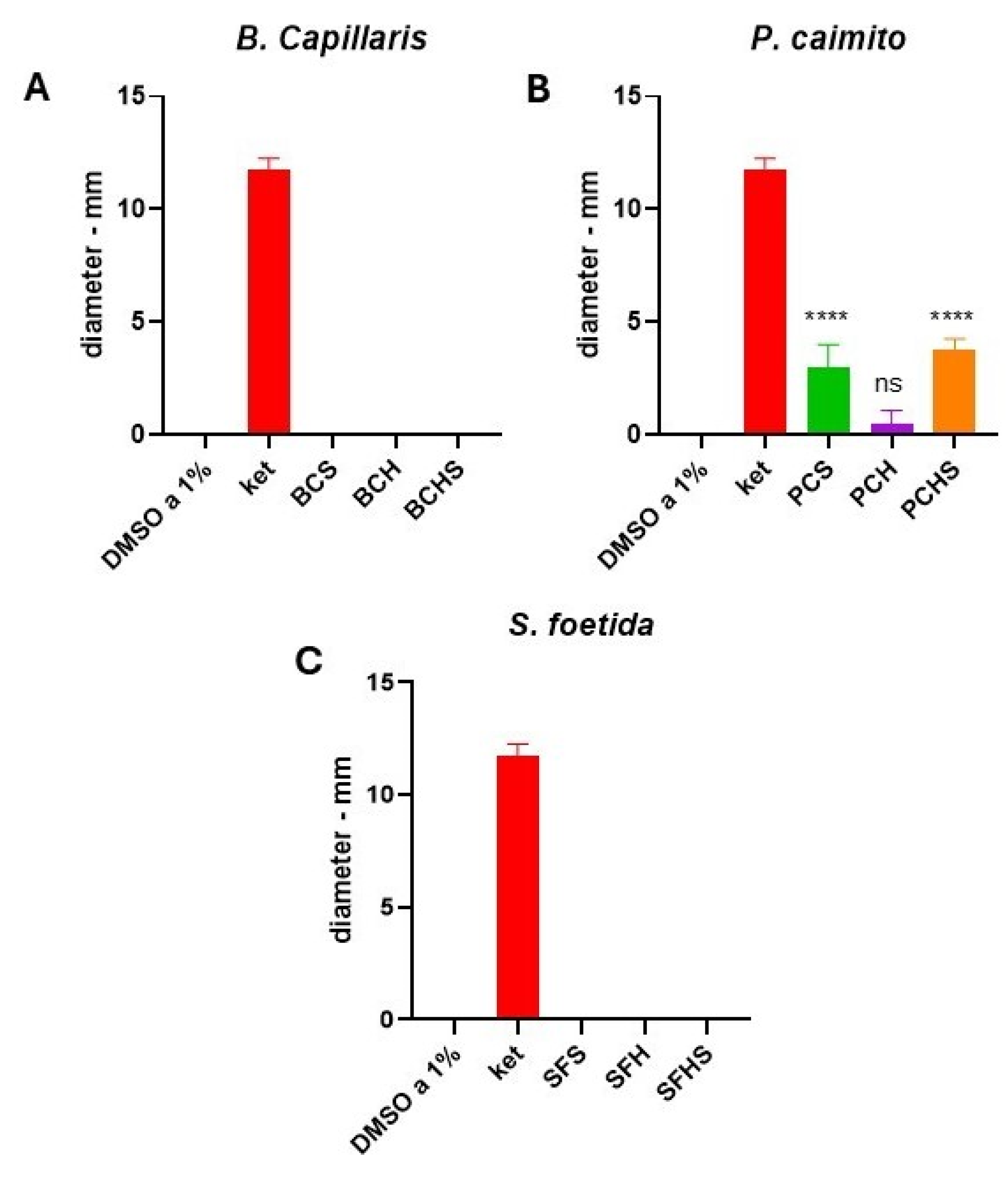
Figure 3 shows the mean area of inhibition of Candida krusei ATCC 6258 against extracts of P. caimito, B. capillaris and S. foetida. Among the extracts tested, only those of P. caimito salina (PCS) and hexane salina (PCHS) (Figure 3B) exhibited significant activity compared with the DMSO control, with p < 0.0001 for both. No inhibitory effect was observed for the saline, hexane, or hexane saline extracts of B. capillaris (Figure 3A) or S. foetida (Figure 3C).
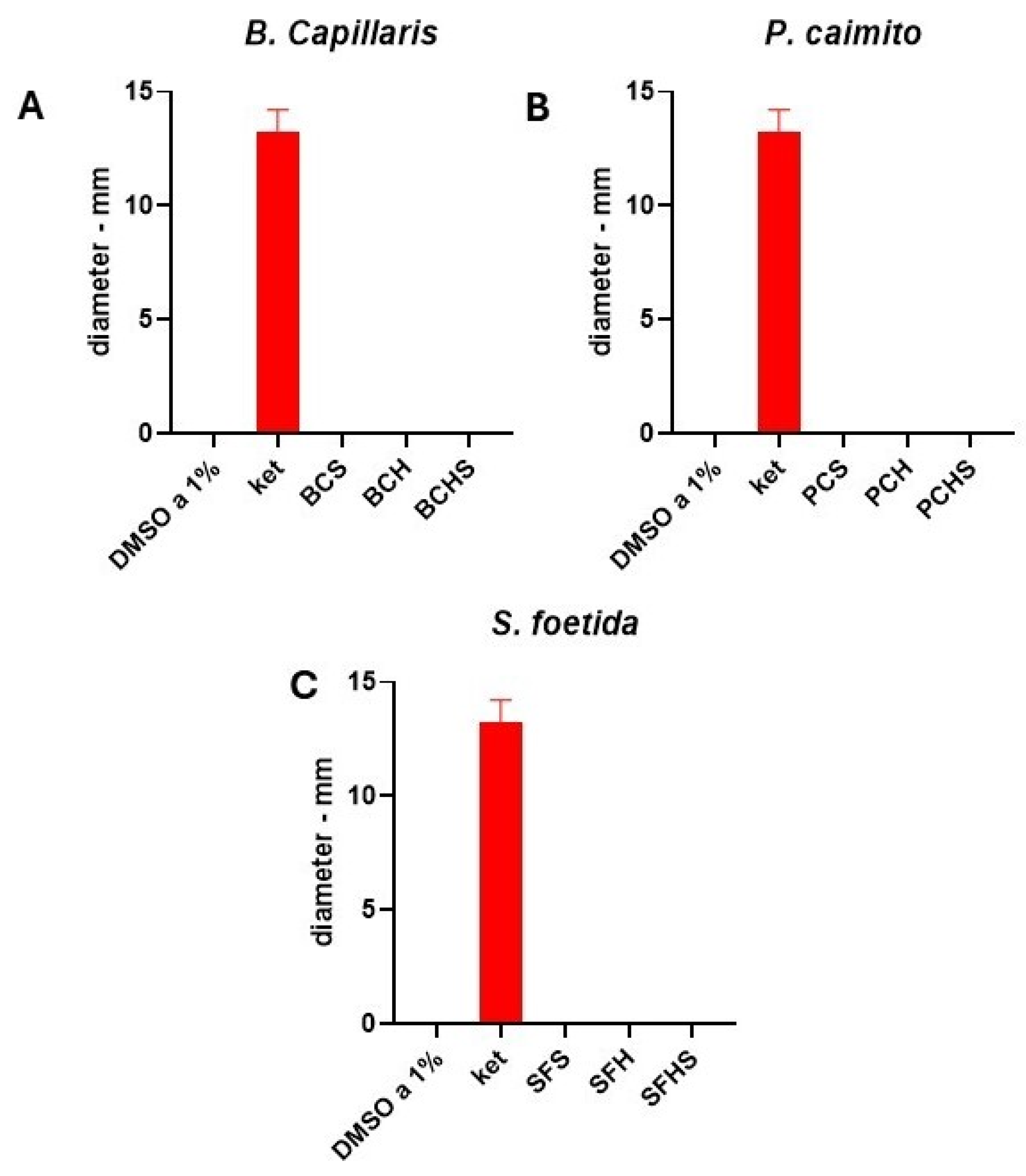
Figure 4 shows the average inhibition area of Candida glabrata against extracts of Bulbostylis capillaris, Pouteria caimito and Sterculia foetida. In all the cases evaluated, no inhibitory activity of the extracts tested against the strain under study was detected.

3.2. Minimum Inhibitory Concentration (MIC) Assay for Candida spp.

Antifungal activity was evaluated by determining the MIC in Sabouraud broth against C. albicans (ATCC 14053 and ATCC 24433), C. krusei (ATCC 6258) and C. glabrata (ATCC 22019) through visual observation of yeast growth. As shown in Table 1, the saline hexane extract of Sterculia foetida showed activity at 500 µg/mL against C. albicans ATCC 14053 and ATCC 24433, whereas the hexane extract of Bulbostylis capillaris showed activity at the same concentration against C. glabrata. Furthermore, the hexane saline extract of Pouteria caimito demonstrated activity against C. krusei at a concentration of 3.9 µg/mL, which was lower than that of the reference drug ketoconazole, whose MIC was 15.65 µg/mL.
The analysis of the selectivity index (SI), which is based on the visual MIC (Table 2), revealed that the hexane saline extract of S. foetida presented an SI of 0.3 against C. albicans ATCC 14053 and ATCC 24433, which is approximately four times greater than that of ketoconazole (SI = 0.07). For the hexane saline extract of P. caimito, no significant differences were observed in relation to the reference drug, although the MIC obtained (3.9 µg/mL) was lower than that of ketoconazole (15.6 µg/mL) (Table 1).
On the basis of the results obtained, the EC50 value was determined by evaluating the metabolic activity of the yeasts via the resazurin method to compare the antifungal profiles of the extracts. For C. albicans ATCC 14053 (Table 2), the saline (SI = 361.35), hexane (SI = 567.29) and hexane saline (SI = 409.04) extracts of S. foetida, in addition to the saline extract of B. capillaris (SI = 177.47), presented selectivity indices (ISs) higher than that of ketoconazole (SI = 88.20). A similar result was observed for C. albicans ATCC 24433 (Table 3), in which the saline (SI = 51.42), hexane (SI = 95.40) and hexane saline (SI = 71.58) extracts of S. foetida, as well as the saline extract of B. capillaris (SI = 18.89), also surpassed the reference drug (SI = 6.11).
Hexane and hexane saline extracts of B. capillaris and all extracts of P. caimito (saline, hexane and hexane saline) did not present higher SI values than did ketoconazole in any of the strains analyzed.
In the evaluation of C. krusei, a behavior similar to that observed for C. albicans strains was observed. The selectivity indices of the extracts of S. foetida (saline: SI = 50.64; hexane: SI = 122.03; hexane: saline: SI = 78.80) and the saline extract of B. capillaris (SI = 13.27) were greater than those of ketoconazole (SI = 1.90). In contrast, the hexane and hexane saline extracts of B. capillaris, as well as all the extracts of P. caimito (saline, hexane and hexane saline), did not outperform the reference drug (Table 4).
In the assays with C. glabrata (Table 5), in contrast to the results obtained for the other species, the extracts of B. capillaris saline (SI = 33.18), hexane (SI = 12.96) and hexane saline (SI = 19.04) presented selectivity indices greater than that of ketoconazole (SI = 1.38). On the other hand, the SI values of the extracts of S. foetida (saline, hexane and hexane saline) and P. caimito (saline, hexane and hexane saline) were not greater than those of the reference drug.

4. Discussion

In the first phase of this study, disk diffusion based on the Kirby–Bauer method was used with 5 mg/mL extracts. Although different levels of sensitivity among strains were detected, the results did not always correlate with those of microdilution, indicating limitations of the disk diffusion method. Indeed, recent studies have shown that agar diffusion can underestimate or overestimate activity depending on the compound solubility, inoculum density, growth medium, and disk force used. For example, the agar diffusion method was less sensitive than the broth microdilution method in detecting colistin resistance in Gram-negative isolates [33,34], and its effectiveness can be compromised by factors such as solubility, molecular weight, substance stability, inoculum density, and incubation conditions [35,36]. More recent studies have confirmed these limitations: hydrophobic or high-molecular-weight compounds tend to present smaller inhibition zones in disk diffusion tests than the microdilution method does; moreover, changes in inoculum density and incubation time significantly affect the agreement between the methods [37,38].
Microdilution assays revealed relevant antifungal activity in some extracts, such as S. foetida hexane saline against C. albicans and B. capillaris hexane saline against C. glabrata and P. caimito hexane saline against C. krusei. Considering the criteria of relevance for therapeutic research [39,40,41], these results indicate moderate to strong potential for pharmacological investigation. The application of the resazurin assay, which is based on mitochondrial redox potential, reinforced the importance of this study, as it is a low-cost, reproducible methodology that is adaptable to large-scale screenings. The best selectivity indices against C. albicans were obtained with hexane extracts, suggesting greater activity of lipophilic compounds, possibly related to essential oils. Recent studies have confirmed that hexane extracts of plants such as Syzygium aromaticum and Alpinia purpurata exhibit significant antifungal activity against C. albicans and C. krusei, reinforcing the relevance of lipophilic compounds in antifungal activity [42]. Furthermore, the resazurin assay has been widely recommended for antifungal screening because of its sensitivity, reproducibility, and affordability [43]. This profile may be associated with lipid solubility, which favors interactions with the fungal cell wall. The chemical composition of the plants investigated also influences the observed activity. In the case of P. caimito, the seeds presented lower selectivity for ketoconazole, which was associated with significant toxicity, despite having lower MICs in some assays. This discrepancy reinforces the importance of a joint assessment of efficacy and toxicity. The genus Pouteria, although widely used in folk medicine, still lacks systematic studies demonstrating the antifungal potential of its species. Recent research has indicated that Pouteria caimito extracts exhibit antimicrobial activity, including action against Candida spp., although with variable efficacy depending on the species and type of extract used. For example, the methanolic extract of P. caimito bark has demonstrated activity against several bacterial strains but has limited efficacy against fungi [44].
Furthermore, studies on Pouteria torta revealed the presence of proteins with antifungal activity, such as “pouterin”, which has been shown to act against fungi, although with limited specificity [45]. These findings suggest that the antifungal potential of the genus Pouteria may be related to specific bioactive compounds, such as proteins with antimicrobial properties. Therefore, despite the traditional use of plants of the genus Pouteria in the treatment of fungal diseases, further studies are needed to evaluate the efficacy and safety of these extracts, aiming at their possible therapeutic application.
Similarly, B. capillaris, which is used in traditional medicine, showed promising results in our study, especially against C. glabrata, with selectivity rates superior to those of ketoconazole, highlighting it as a relevant candidate for future investigations. Taken together, our findings demonstrate that different plant species contain compounds with variable antifungal activities and that solvent polarity plays a decisive role in the extraction of active ingredients.
Detailed phytochemical characterization of these extracts is essential for identifying the compounds responsible for the observed effects and guiding the development of new antifungal agents. Furthermore, small structural modifications in natural derivatives can favor increased biological activity, expanding the prospects for the development of new phytopharmaceuticals.

5. Conclusions

Disk diffusion assays revealed that the Candida spp. tested were sensitive to crude seed extracts of S. foetida, B. capillaris and P. caimito. For C. albicans ATCC 14053 and ATCC 24433, the saline, hexane, and hexane saline extracts of S. foetida, as well as the saline extract of B. capillaris, exhibited selectivity indices superior to those of ketoconazole. In contrast, for C. glabrata, only the B. capillaris extracts showed selectivity superior to that of the reference drug. Furthermore, the resazurin-based assays provided more consistent results regarding MIC determination, reinforcing their applicability as a comparative method.

Author Contributions

Conceptualization: M.A.V.; methodology: R.d.A., L.F.Q. and L.L.d.S.; software: L.F.Q.; validation: M.A.V. and R.X.F.; formal analysis: R.d.A. and L.F.Q.; investigation: R.d.A., L.L.d.S. and V.V.; resources: R.X.F.; curation: M.A.V.; writing—preparation of the original draft: R.d.A., L.F.Q., L.L.d.S. and V.V.; writing—revision and editing: M.A.V. and R.X.F.; visualization: M.A.V.; supervision: M.A.V.; project administration: M.A.V.; securing funding: M.A.V. and R.X.F. All authors have read and agreed to the published version of the manuscript.

Funding

This research received no external funding.

Institutional Review Board Statement

The experimental procedures used in this work were submitted to and approved by the Ethics Committee on the Use of Animals of Federal Fluminense University (CEUA) under number 2358041024, with identification code 002240 in February 2025.

Data Availability Statement

The original contributions presented in this study are included in the article. Further inquiries can be directed to the corresponding author.

Conflicts of Interest

The authors declare no conflict of interest.

Abbreviations

ANOVAOne-way analysis of variance
ATCCAmerican Type Culture Collection
BCSBulbostylis capillaris saline
BCHBulbostylis capillaris hexane
BCHSBulbostylis capillaris hexane saline
CC50concentrations capable of killing 50% of yeasts
CC50/24 hconcentration capable of killing 50% of the cell population in 24 h
CEUAEthics Committee on the Use of Animals
CFUColony-forming unit
MICMinimum inhibitory concentration
CLSIClinical Laboratory Standards Institute
DMSODimethyl sulfoxide
EBcrude extract
EC 50% The concentration of the drug that induces half the maximum effect
ELISAEnzyme-Linked Immunosorbent Assay
FDAFood and Drug Administration
IC50% average inhibitory concentration
MMolar
MinMinutes
NaClSodium Chloride
NALAnimal Nucleus Laboratory
WHOWorld Health Organization
PBSPhosphate-buffered saline
PCSPouteria caimito saline
PCHPouteria caimito hexane
PCHSPouteria caimito hexane saline
RPMRotations per minute
RPMI-1640 culture mediumRoswell Park Memorial Institute
SDASabouraud Dextrose Agar
SDSSodium dodecyl sulfate
SFBFetal bovine serum
SFSSterculia foetida saline
SFHSterculia foetida hexane
SFHSSterculia foetida hexane saline
TSAantimicrobial susceptibility test
UFFFluminense Federal University

References

  1. El-Saadony, M.T.; Saad, A.M.; Mohammed, D.M.; Korma, S.A.; Alshahrani, M.Y.; Ahmed, A.E.; Ibrahim, E.H.; Salem, H.M.; Alkafaas, S.S.; Saif, A.M.; et al. Medicinal plants: Bioactive compounds, biological activities, combating multidrug-resistant microorganisms, and human health benefits—A comprehensive review. Front. Immunol. 2025, 16, 1491777. [Google Scholar] [CrossRef]
  2. Ansari, P.; Reberio, A.D.; Ansari, N.J.; Kumar, S.; Khan, J.T.; Chowdhury, S.; El-Mordy, F.M.A.; Hannan, J.M.A.; Flatt, P.R.; Abdel-Wahab, Y.H.A.; et al. Therapeutic Potential of Medicinal Plants and Their Phytoconstituents in Diabetes, Cancer, Infections, Cardiovascular Diseases, Inflammation and Gastrointestinal Disorders. Biomedicines 2025, 13, 454. [Google Scholar] [CrossRef] [PubMed]
  3. Chaachouay, N.; Zidane, L. Plant-Derived Natural Products: A Source for Drug Discovery and Development. Drugs Drug Candidates 2024, 3, 184–207. [Google Scholar] [CrossRef]
  4. Ahmad, M.; Tahir, M.; Hong, Z.; Anjum Zia, M.; Rafeeq, H.; Shaheez Ahmad, M.; Rehman, S.U.; Sun, J. Plant- and marine-derived natural products: Sustainable pathways for future drug discovery and therapeutic development. Front. Pharmacol. 2025, 15, 1497668. [Google Scholar] [CrossRef] [PubMed]
  5. Tsaneva, M.; Van Damme, E.J.M. 130 years of Plant Lectin Research. Glycoconj. J. 2020, 37, 533–551. [Google Scholar] [CrossRef]
  6. Marothia, D.; Kaur, N.; Jhamat, C.; Sharma, I.; Pati, P.K. Plant lectins: Classical molecules with emerging roles in stress tolerance. Int. J. Biol. Macromol. 2023, 244, 125272. [Google Scholar] [CrossRef]
  7. Farsana, S.; Ansil, P.N.; Sumalekshmy, S.; Soumya, S. Biogenic synthesis of silver nanoparticles using Sterculia foetida seed extract and evaluation of its therapeutic potential. Mater. Today Proc. 2023. [Google Scholar] [CrossRef]
  8. Bao, X.I.; Katz, S.; Pollard, M.; Ohlrogge, J. Carbocyclic fatty acids in plants: Biochemical and molecular genetic characterization of cyclopropane fatty acid synthesis of Sterculia foetida. Proc. Natl. Acad. Sci. USA 2002, 99, 7172–7177. [Google Scholar] [CrossRef]
  9. Kale, S.S.; Darade, V.; Thakur, H.A. Analysis of fixed oil from Sterculia foetida linn. Int. J. Pharm. Sci. Res. 2011, 2, 2908–2914. [Google Scholar]
  10. Vipunngeun, N.; Palanuvej, C. Fatty acids of Sterculia foetida seed oil. J. Health Res. 2009, 23, 157. [Google Scholar]
  11. Braga, A.A.; Rodrigues e Lacerda, R.; Medeiros, G.K.; Gonçalves, G.F.; Pessoa, H.L.; Cardoso, J.D.; Gadelha, C.A.; da Silva, B.A.; Santi-Gadelha, T. Antibacterial and hemolytic activity of a new lectin purified from the seeds of Sterculia foetida L. Appl. Biochem. Biotechnol. 2015, 175, 1689–1699. [Google Scholar] [CrossRef]
  12. Diniz-Sousa, R.; Caldeira, C.A.D.S.; Pereira, S.S.; Da Silva, S.L.; Fernandes, P.A.; Teixeira, L.M.; Zuliani, J.P.; Soares, A.M. Therapeutic applications of snake venoms: An invaluable potential of new drug candidates. Int. J. Biol. Macromol. 2023, 238, 124357. [Google Scholar] [CrossRef] [PubMed]
  13. Efremenko, E.; Aslanli, A.; Lyagin, I. Advanced Situation with Recombinant Toxins: Diversity, Production and Application Purposes. Int. J. Mol. Sci. 2023, 24, 4630. [Google Scholar] [CrossRef] [PubMed]
  14. Souza, V.C.; Lorenzi, H. Systematic Botany: Illustrated Guide for the Identification of Native and Exotic Phanerogam Families in Brazil, Based on APG II, 2nd ed.; Instituto Plantarum: Nova Odessa, Brazil, 2008; Volume 2, p. 193. ISBN 85-86714-29-0. [Google Scholar]
  15. Martins, M.L.L.; Pacheco, H.P.; Perini, I.G.; Lenz, D.; Andrade, T.U.D.; Endringer, D.C. In vivo hypotensive effect and in vitro inhibitory activity of some Cyperaceae species. Braz. J. Pharm. Sci. 2013, 49, 803–809. [Google Scholar] [CrossRef]
  16. Soares Marques, C.; da Silva, L.C.; Flores, A.S.; Guimarães, P.V.P.; Chagas, E.A. Physical and Chemical Characterization of Abiu (Pouteria caimito) Fruits Collected in Agroforestry Backyards of Roraima. Braz. J. Agroecol. 2023, 18, 42–61. [Google Scholar] [CrossRef]
  17. Falcão, M.A.; Clement, C.R. Phenogely and Productivity of Abiu (Pouteria caimito) in Central Amazonia. Acta Amaz. 1999, 29, 3–11. [Google Scholar] [CrossRef][Green Version]
  18. Souza, P.M.; Sales, P.M.; Simeoni, L.A.; Silva, E.C.; Silveira, D.; Magalh ã es Pde, O. Inhibitory activity of α -amylase and α -glucosidase by plant extracts from the Brazilian cerrado. Planta Med. 2012, 78, 393–399. [Google Scholar] [CrossRef] [PubMed]
  19. Czechowicz, P.; Nowicka, J.; Gościniak, G. Virulence Factors of Candida spp. and Host Immune Response Important in the Pathogenesis of Vulvovaginal Candidiasis. Int. J. Mol. Sci. 2022, 23, 5895. [Google Scholar] [CrossRef]
  20. Ramos, T.M. Clinical-Epidemiological Profile of Candidemia in a University Hospital in the Extreme South of Brazil. Master’s Dissertation, Federal University of Rio Grande (FURG), Carreiros, Brazil, 2023. [Google Scholar]
  21. Meng, L.; Li, J.; Wang, D.; Han, M.; Gao, S.; Zhang, Y.; Zhu, W.; Liu, C. Epidemiology, risk factors, and antifungal susceptibility analysis of Candida tropicalis and non-C.tropicalis candidemia. BMC Infect. Dis. 2025, 25, 1089. [Google Scholar] [CrossRef]
  22. El-Mahallawy, H.A.; Abdelfattah, N.E.; Wassef, M.A.; Abdel-Hamid, R.M. Alarming Increase of Azole-Resistant Candida Causing Blood Stream Infections in Oncology Patients in Egypt. Curr. Microbiol. 2023, 80, 362. [Google Scholar] [CrossRef]
  23. Quejada, L.F.; de Almeida, R.; Vegi, P.F.; Santos, M.S.D.; Bernardino, A.M.R.; Vericimo, R.X.F.M.A. Rotenone enhances antifungal activity of novel pyrazoles against Candida spp. Eur. J. Med. Chem. Rep. 2022, 5, 1000456. [Google Scholar] [CrossRef]
  24. Newman, D.J.; Cragg, G.M. Natural Products as Sources of New Drugs from 1981 to 2014. J. Nat. Prod. 2016, 79, 629–661. [Google Scholar] [CrossRef] [PubMed]
  25. Quejada, L.F.; Hernandez, A.X.; Chitiva, L.C.; Bravo-Chaucanés, C.P.; Vargas-Casanova, Y.; Faria, R.X.; Costa, G.M.; Parra-Giraldo, C.M. Unmasking the Antifungal Activity of Anacardium occidentale Leaf Extract against Candida albicans. J. Fungi. 2024, 10, 464. [Google Scholar] [CrossRef] [PubMed] [PubMed Central]
  26. Cushnie, T.P.; Lamb, A.J. Antimicrobial activity of flavonoids. Int. J. Antimicrob. Agents 2005, 26, 343–356, Erratum in Int. J. Antimicrob. Agents 2006, 27, 181. [Google Scholar] [CrossRef] [PubMed] [PubMed Central]
  27. Balbinot, S.; Velasquez, P.G.; Durman, E. Recognition and use of medicinal plants by the elderly in the municipality of Marmeleiro—Paraná. Rev. Bras. Plantas Med. 2013, 4, 15. [Google Scholar]
  28. Ulriksen, E.S.; Butt, H.S.; Ohrvik, A.; Blakeney, R.A.; Kool, A.; Wangensteen, H.; Inngjerdingen, M.; Inngjerdingen, K.T. The discovery of novel immunomodulatory medicinal plants by combination of historical text reviews and immunological screening assays. J. Ethnopharmacol. 2022, 296, 115402. [Google Scholar] [CrossRef]
  29. Newman, D.J.; Cragg, G.M. Natural Products as Sources of New Drugs over the Nearly Four Decades from 01/1981 to 09/2019. J. Nat. Prod. 2020, 83, 770–803. [Google Scholar] [CrossRef] [PubMed]
  30. Zeni, A.L.B.; Parisotto, A.V.; Mattos, G.; De Santa Helena, E.T. Use of medicinal plants as home remedies in Primary Care in Blumenau, Santa Catarina, Brazil. Ciência Saúde Coletiva 2017, 22, 2703–2712. [Google Scholar] [CrossRef]
  31. Cragg, G.M.; Newman, D.J. Natural products: A continuing source of novel drug leads. Biochim. Biophys. Acta 2013, 1830, 3670–3695. [Google Scholar] [CrossRef]
  32. De Souza, P.; Mariano, L.; Cechinel-Zanchett, C.C.; Cechinel-Filho, V. Promising Medicinal Plants with Diuretic Potential Used in Brazil: State of the Art, Challenges, and Prospects. Planta Med. 2021, 87, 24–37. [Google Scholar] [CrossRef]
  33. Wiederhold, N.P. Antifungal Susceptibility Testing: A Primer for Clinicians. Open Forum Infect. Dis. 2021, 8, ofab444. [Google Scholar] [CrossRef] [PubMed]
  34. Kolesnik-Goldmann, N.; Seth-Smith, H.M.B.; Haldimann, K.; Imkamp, F.; Roloff, T.; Zbinden, R.; Hobbie, S.N.; Egli, A.; Mancini, S. Comparison of Disk Diffusion, E-Test, and Broth Microdilution Methods for Testing In Vitro Activity of Cefiderocol in Acinetobacter baumannii. Antibiotics 2023, 12, 1212. [Google Scholar] [CrossRef] [PubMed]
  35. Estrela, C.R.A. Antimicrobial Efficacy of Root Canal Irrigating Solutions. Master’s Thesis, Institute of Tropical Pathology and Public Health of Goiás, Goiás, Brazil, 2000. [Google Scholar]
  36. Ribeiro, M.C.; Soares, M.M.S.R. Practical Microbiology: Guide and Manual; Atheneu: Sao Paulo, Brazil, 2000. [Google Scholar]
  37. Bubonja-Šonje, M.; Knežević, S.; Abram, M. Challenges to antimicrobial susceptibility testing of plant-derived polyphenolic compounds. Arh. Hig. Rada. Toksikol. 2020, 71, 300–311. [Google Scholar] [CrossRef] [PubMed]
  38. Puxeddu, S.; Canton, S.; Scano, A.; Delogu, I.; Pibiri, A.; Cabriolu, C.; Vascellari, S.; Pettinau, F.; Pivetta, T.; Ennas, G.; et al. Beyond One-Size-Fits-All: Addressing Methodological Constraints in Novel Antimicrobials Discovery. Antibiotics 2025, 14, 848. [Google Scholar] [CrossRef] [PubMed] [PubMed Central]
  39. Scorzoni, L.; Benaducci, T.; Fusco-almeida, A.M.; Silva, D.H.S.; Bolzani, V.S.; Mendes Giannini, M.J.S. The use of standard methodology for determination of antifungal activity of natural products against medical yeasts Candida sp. and Cryptococcus sp. Braz. J. Microbiol. 2007, 38, 391–397. [Google Scholar] [CrossRef]
  40. Borges-Argáez, R.; Canche-Chay, C.I.; Peña-Rodríguez, L.M.; Said-Fernández, S.; Molina-Salinas, G.M. Antimicrobial activity of Diospyros anisandra. Fitoterapia 2007, 78, 370–372. [Google Scholar] [CrossRef] [PubMed]
  41. Aligiannis, N.; Kalpoutzakis, E.; Mitaku, S.; Chinou, J.B. Composition and Antimicrobial Activity of the Essential Oils of Two Origanum Species. J. Agric. Food. Chem. 2001, 49, 4168–4170. [Google Scholar] [CrossRef]
  42. Aisy, D.U.R.; Adawiyah, R.; Rozaliyani, A.; Estuningtyas, A.; Fadilah, F. The Antifungal Activities of Syzygium aromaticum and Alpinia purpurata Extracts Against Candida krusei: Bioactivity Tests, Molecular Modeling, and Toxicity Tests. Asian Pac. J. Cancer Prev. 2023, 24, 3403–3409. [Google Scholar] [CrossRef] [PubMed] [PubMed Central]
  43. Herman, T.S.; da Silva Goersch, C.; Bocca, A.L.; Fernandes, L. Resazurin to determine the minimum inhibitory concentration on antifungal susceptibility assays for Fonsecaea sp. using a modified EUCAST protocol. Braz. J. Microbiol. 2024, 55, 1349–1357. [Google Scholar] [CrossRef] [PubMed] [PubMed Central]
  44. Abreu, M.M.; Nóbrega, P.A.; Sales, P.F.; Oliveira, F.R.; Nascimento, A.A. Antimicrobial and Antidiarrheal Activities of Methanolic Fruit Peel Extract of Pouteria caimito. Pharmacogn. J. 2019, 11, 944–950. [Google Scholar] [CrossRef]
  45. Boleti, A.A.; Freire, M.G.M.; Coelho, M.B.; Silva, W.; Baldasso, P.A.; Gomes, V.M.; Marangoni, S.; Novello, J.; Macedo, M.L. Insecticidal and Antifungal Activity of a Proteinfrom Pouteria pie Seeds with Lectin-like Properties. J. Agric. Food Chem. 2007, 55, 2653–2658. [Google Scholar] [CrossRef]
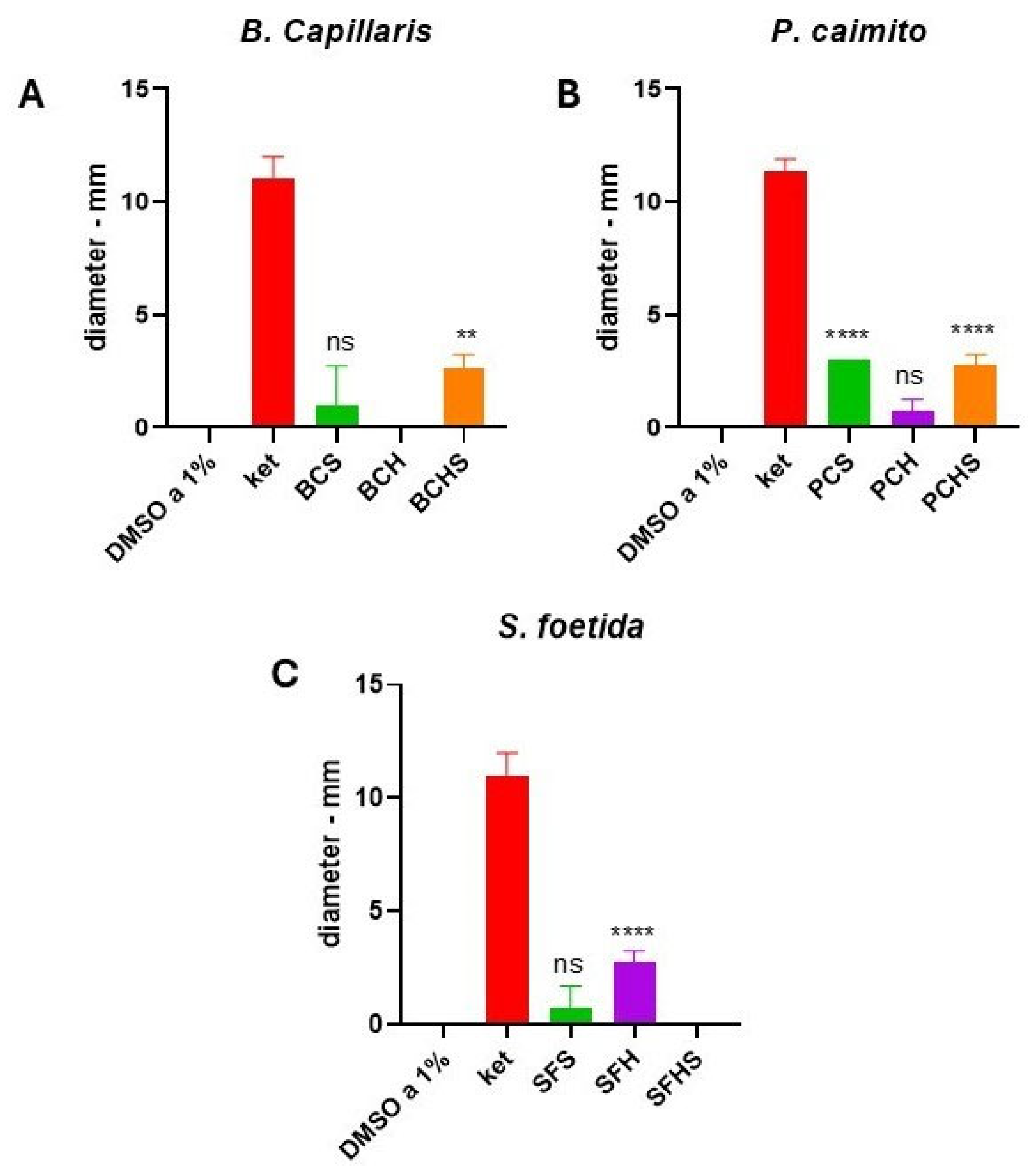
Figure 1. Mean area inhibited by the disk diffusion test with C. albicans ATCC 24433, in mm, at a concentration of 5 mg/mL. The test was performed in triplicate, and the samples were incubated for 24 h. (A) DMSO—dimethyl sulfoxide; Ket—ketoconazole; BCS—Bulbostylis capillaris saline; BCH—Bulbostylis capillaris hexanic; BCHS—Bulbostylis capillaris hexanic saline. (B) DMSO—Dimethyl sulfoxide; Ket—ketoconazole; PCS—Pouteria caimito saline; PCH—Pouteria caimito hexanic; PCHS—Pouteria caimito hexanic saline; (C) DMSO—Dimethyl sulfoxide; Ket—ketoconazole; SFS—Sterculia foetida saline; SFH—Sterculia foetida hexanic; SFHS—Sterculia foetida hexanic saline. ** p < 0.051; **** p < 0.0001 and ns—Not significant.
Processes 14 00773 g001
Figure 2. Mean area inhibited by the disk diffusion test with C. albicans ATCC 14053, in mm, at a concentration of 5 mg/mL. The test was performed in triplicate, and the samples were incubated for 24 h. (A) DMSO—dimethyl sulfoxide; Ket—ketoconazole; BCS—Bulbostylis capillaris saline; BCH—Bulbostylis capillaris hexanic; BCHS—Bulbostylis capillaris hexanic saline. (B) DMSO—Dimethyl sulfoxide; Ket—ketoconazole; PCS—Pouteria caimito saline; PCH—Pouteria caimito hexanic; PCHS—Pouteria caimito hexanic saline; (C) DMSO—Dimethyl sulfoxide; Ket—ketoconazole; SFS—Sterculia foetida saline; SFH—Sterculia foetida hexanic; SFHS—Sterculia foetida hexanic saline. *** p ≤ 0.0005; **** p < 0.0001.
Processes 14 00773 g002
Figure 3. Mean area inhibited by the disk diffusion test with C. krusei ATCC 6258, in mm, at a concentration of 5 mg/mL. The test was performed in triplicate, and the samples were incubated for 24 h. (A) DMSO—dimethyl sulfoxide; Ket—ketoconazole; BCS—Bulbostylis capillaris saline; BCH—Bulbostylis capillaris hexanic; BCHS—Bulbostylis capillaris hexanic saline. (B) DMSO—dimethyl sulfoxide; Ket—ketoconazole; PCS—Pouteria caimito saline; PCH—Pouteria caimito hexanic; PCHS—Pouteria caimito hexanic saline; (C) DMSO—dimethyl sulfoxide; Ket—ketoconazole. SFS—Sterculia foetida saline; SFH—Sterculia foetida hexanic; SFHS—Sterculia foetida hexanic saline. **** p < 0.0001 and ns—Not significant.
Processes 14 00773 g003
Figure 4. Mean inhibition area determined by the disk diffusion test with C. glabrata ATCC 22019, in mm, at a concentration of 5 mg/mL. The test was performed in triplicate, and the samples were incubated for 24 h. (A) DMSO—dimethyl sulfoxide; Ket—ketoconazole; BCS—Bulbostylis capillaris saline; BCH—Bulbostylis capillaris hexanic; BCHS—Bulbostylis capillaris hexanic saline. (B) DMSO—Dimethyl sulfoxide; Ket—ketoconazole; PCS—Pouteria caimito saline; PCH—Pouteria caimito hexanic; PCHS—Pouteria caimito hexanic saline; (C) DMSO—Dimethyl sulfoxide; Ket—ketoconazole; SFS—Sterculia foetida saline; SFH—Sterculia foetida hexanic; SFHS—Sterculia foetida hexanic saline.
Processes 14 00773 g004
Table 1. MIC test values for Candida spp. against extracts at a concentration of 500 µg/mL. Assays were performed in triplicate.
EXTRACTSC. albicans ATCC 14053C. albicans ATCC
24433
C. glabrata ATCC
22019
C. krusei ATCC
6258
SFS>500>500>500>500
SFH>500>500>500>500
SFHS500500>500>500
BCS>500500500>500
BCH>500>500500>500
BCHS>500>500>500>500
PCS>500>500>500>500
PCH>500>500>500>500
PCHS>500>500>5003.9
Ketoconazole62.562.512515.65
Table 2. Comparison of the antifungal profiles of C. albicans ATCC 14053.
ExtractsZone of Inhibition (mm)MIC (µg/mL)CC50/24 hISEC50 (µg/mL)CC50/EC50 (SI)
SFS3.5 ± 1.3>500133.70-0.37361.35
SFH5.8 ± 1.5>500209.90-0.37567.29
SFHS0 ± 0500171.800.300.42409.04
BCS2.7 ± 0.5>50081.64-0.46177.47
BCH2.8 ± 1.7>50074.03-4.6415.95
BCHS3.5 ± 0.6>50077.71-2.5530.47
PCS0 ± 0>50014.87-5.902.52
PCH0 ± 0>50031.76-3.0010.58
PCHS0 ± 0>5001.32-0.334.00
Ketoconazole15.8 ± 0.562.54.400.070.0588.20
Table 3. Comparison of the antifungal profiles of C. albicans ATCC 24433.
ExtractsZone of Inhibition (mm)MIC (µg/mL)CC50/24 hSIEC50 (µg/mL)CC50/EC50 (SI)
SFS0.8 ± 0.9>500133.70-2.6051.42
SFH2.8 ± 0.5>500209.90-2.2095.40
SFHS0 ± 0500171.800.3432.4071.58
BCS2.8 ± 3.7>50081.64-4.3218.89
BCH0 ± 0>50074.03-125.600.58
BCHS3.3 ± 1.3>50077.71-14.525.35
PCS3.0 ± 0>50014.87-13.711.08
PCH0.8 ± 0.5>50031.76-53.230.59
PCHS2.8 ± 0.5>5001.32-328.900.01
Ketoconazole10.3 ± 2.262.54.400.0700.726.11
Table 4. Comparison of the antifungal profiles of the extracts of C. krusei ATCC 6258.
ExtractsZone of Inhibition (mm)MIC (µg/mL)CC50/24 hISEC50 (µg/mL)CC50/EC50 (IS)
SFS0 ± 0>500133.70-2.6450.64
SFH0 ± 0>500209.90-1.72122.03
SFHS0 ± 0>500171.80-2.1878.80
BCS0 ± 0>50081.64-6.1513.27
BCH0 ± 0>50074.03-270.800.27
BCHS0 ± 0>50077.71-138.470.56
PCS2.3 ± 1.7>50014.87-13.851.07
PCH0.5 ± 0.6>50031.76-20160.01
PCHS3.8 ± 0.53.91.320.33966.210.01
Ketoconazole11.8 ± 0.515.654.400.2812.311.90
Table 5. Comparison of the antifungal profiles of C. glabrata ATCC 22019.
ExtractsZone of Inhibition (mm)MIC (µg/mL)CC50/24 hSIEC50 (µg/mL)CC50/EC50 (SI)
SFS0 ± 0>500133.70-84.781.57
SFH0 ± 0>500209.90-44.234.74
SFHS0 ± 0>500171.80-133.011.29
BCS0 ± 0>50081.64-2.4633.18
BCH0 ± 050074.030.1485.7112.96
BCHS0 ± 0>50077.71-4.0819.04
PCS0 ± 0>50014.87-308.300.04
PCH0 ± 0>50031.76-123.100.25
PCHS0 ± 0>5001.32-1210.01
Ketoconazole13.3 ± 0.91254.400.0353.181.38
Disclaimer/Publisher’s Note: The statements, opinions and data contained in all publications are solely those of the individual author(s) and contributor(s) and not of MDPI and/or the editor(s). MDPI and/or the editor(s) disclaim responsibility for any injury to people or property resulting from any ideas, methods, instructions or products referred to in the content.