Article

Clinoptilolite-Supported ZnO and TiO2 Composites for High-Efficiency Adsorption of Methylene Blue


1
Pamukova Vocational School, Sakarya Applied of Sciences University, 54900 Sakarya, Turkey
2
Department of Chemistry, Institute of Natural Sciences, Sakarya University, 54050 Sakarya, Turkey
*
Author to whom correspondence should be addressed.
Processes 2026, 14(3), 575; https://doi.org/10.3390/pr14030575
Submission received: 27 December 2025 / Revised: 31 January 2026 / Accepted: 1 February 2026 / Published: 6 February 2026
(This article belongs to the Section Chemical Processes and Systems)

Abstract

This study aims to evaluate the adsorption performance of ZnO- and TiO2-coated clinoptilolite composites for the removal of methylene blue (MB) from aqueous solutions and to clarify the governing adsorption mechanisms. Batch adsorption experiments were systematically conducted to investigate the effects of initial pH (3–10), MB concentration (50–200 mg/L), adsorbent dosage (0.05–1.00 g/100 mL), contact time (5–300 min), and temperature (298–313 K). Equilibrium, kinetic, and thermodynamic analyses were employed to comprehensively describe the adsorption behavior. The results demonstrated that MB adsorption onto both composites followed the Langmuir isotherm model, indicating monolayer adsorption on homogeneous surfaces. The maximum adsorption capacities were determined as 56 mg/g for ZnO-coated clinoptilolite and 106 mg/g for TiO2-coated clinoptilolite, confirming the superior adsorption affinity of the TiO2-modified composite. Thermodynamic parameters further indicated that the adsorption process was spontaneous, feasible, and thermodynamically favorable within the investigated temperature range. Physicochemical characterization by FTIR, SEM, BET, and XRD confirmed the successful surface modification of clinoptilolite and the enhancement of its structural and textural properties. Overall, the findings suggest that ZnO- and TiO2-coated clinoptilolite composites are efficient and sustainable adsorbents with strong potential for wastewater treatment applications.

1. Introduction

In recent years, environmental pollution has become a critical global issue [1]. Among the major contributors, organic dyes, widely used as colorants across industrial sectors, constitute a significant source of contamination, with their number exceeding 105 and generating approximately 105 tons of pollutant discharge annually [2]. Methylene blue (MB) is widely used in the textile industry for dyeing leather, wood, and cotton, and it is also employed in pharmaceutical manufacturing [3]. In addition to its industrial applications, methylene blue exhibits antiparasitic, antioxidant, neuroprotective, and anti-inflammatory properties and is recognized as one of the first synthetic drugs used in clinical practice [4]. MB is a multifunctional agent applied in preventive, therapeutic, and postoperative care, with its primary clinical indications including the treatment of malaria and methemoglobinemia [5]. Despite its broad range of applications, the uncontrolled release of MB into the environment poses serious risks to human health, including increased heart rate, nausea, eye and skin irritation, and vomiting [6]. Consequently, the proper treatment of wastewater containing MB and other organic pollutants has long been a global concern [2]. Consequently, the effective removal of methylene blue and related organic dyes from wastewater remains a major environmental challenge [2]. Numerous treatment strategies have been reported in the literature for the efficient elimination of methylene blue from aqueous media. There are three main methods for removing organic dyes from wastewater: physical, chemical, and biological approaches. Among these, physical approaches such as adsorption [6], coagulation/flocculation [7], and filtration [8] have been widely applied, while chemical methods include electro-Fenton [9], photocatalysis [10], and ozonation [11]. Biological methods include the use of enzymes [12], microbes [13], biosorption [14], and biodegradation [15]. Among these treatment strategies, adsorption has attracted significant attention owing to its operational simplicity, low energy consumption, and high removal efficiency [12]. In addition, adsorption enables the use of a wide variety of adsorbents, including carbon-based materials [16], metal oxides [17], bio-adsorbents [14], and polymer-based materials [18]. Conventional water treatment technologies are generally ineffective at removing MB from aqueous environments [19]. In contrast, adsorption is widely regarded as one of the most promising water treatment techniques owing to its simple design, reusability, high removal efficiency, and cost-effectiveness [19,20,21,22,23].
In the search for adsorbent materials that combine high efficiency with low cost, zeolites have attracted considerable attention due to their unique structural properties. Zeolites are an important class of aluminosilicates characterized by a complex three-dimensional framework composed of interconnected tetrahedra that form open channels and cavities suitable for adsorption [24]. H2O molecules and extra-framework cations typically occupy these open spaces. Each tetrahedron contains a tetrahedral atom (T), usually composed of silicon (Si) and aluminum (Al), surrounded by four oxygen atoms [25]. The unique structure of zeolites confers excellent properties, such as ion exchange, adsorption, and catalysis, making them widely used across various applications [8]. Natural clinoptilolite, a type of zeolite, is abundant, inexpensive, and environmentally friendly, making it a suitable base material for wastewater treatment applications. However, the adsorption capacity of natural zeolites for cationic dyes such as MB is often limited by surface charge density and the availability of active binding sites [8,24,25].
To overcome these limitations and improve surface properties, modifying zeolites with metal oxides has emerged as an effective strategy. TiO2 and ZnO are widely used due to their physicochemical stability and non-toxicity [26,27]. Titanium dioxide (TiO2), the most stable oxide form of the abundant element Titanium (Ti), is widely used in applications ranging from medicine to energy due to its high chemical stability, superior optical properties, non-toxicity, and economic feasibility [26,28,29]. Its intrinsic photocatalytic properties, biocompatibility, and high dielectric constant render it a promising photocatalyst [29,30]. The morphology of TiO2 nanoparticles ranges from 1 to 100 nm and includes spherical, planar, and elongated forms [31]. Similarly, Zinc oxide (ZnO), an insoluble white powder, is widely used in diverse industries, including rubber, ceramics, and pharmaceuticals [32,33]. Due to their bioactivity, physicochemical stability, and non-toxic nature, ZnO and TiO2 are the preferred metal oxides for incorporation into zeolites [27,34,35]. Zeolite acts as a highly porous supporting matrix that enhances catalytic activity by providing a stable, uniform surface for nanoparticle deposition. This integration maximizes the usable surface area for contaminant interaction and facilitates the separation of the adsorbent after use [36,37]. Recent studies have reported that the incorporation of TiO2 or ZnO into clay- and zeolite-based supports significantly enhances photocatalytic degradation efficiency, with adsorption playing a crucial preliminary role in governing overall contaminant removal performance [27,38,39]. These studies have demonstrated that adsorption is a crucial preliminary step governing the overall removal efficiency during photocatalysis.
Unlike most previous studies that primarily focus on the photocatalytic degradation of dyes, this work deliberately isolates adsorption as the dominant removal mechanism by conducting all experiments under dark conditions. To the best of our knowledge, systematic investigations that exclusively evaluate adsorption-driven methylene blue (MB) removal and directly compare ZnO–zeolite and TiO2–zeolite composites under identical experimental conditions remain scarce in the literature. Therefore, the present study aims to comprehensively assess the adsorption behavior of MB onto ZnO–zeolite and TiO2–zeolite composites through batch adsorption experiments performed in the absence of light irradiation. The originality of this work lies in the unified and direct comparison of adsorption capacity, kinetic behavior, isotherm models, thermodynamic parameters, and reusability of both composites. By emphasizing adsorption as the primary removal mechanism, this study provides valuable insights into the role of metal-oxide-modified zeolites in dye removal and supports the development of efficient, reusable adsorbents for wastewater treatment.
This study used ZnO–zeolite and TiO2–zeolite composite adsorbents to effectively remove MB from aqueous solutions. The morphological features and structural properties of the prepared adsorbents were systematically investigated using advanced characterization techniques, including Fourier transform infrared (FTIR) spectroscopy, scanning electron microscopy (SEM), Brunauer–Emmett–Teller (BET) surface-area analysis, and X-ray diffraction (XRD). The adsorption performance of these materials was investigated under various experimental conditions, such as initial pH (3–10), initial dye concentration (50–200 mg/L), adsorbent dosage (0.05–1.00 g/100 mL), temperature (298–313 K), and contact time (5–300 min). Furthermore, adsorption isotherms, kinetics, and thermodynamic properties were systematically examined to gain insights into the adsorption mechanism. In addition to adsorption performance, the reusability of the adsorbents under optimal conditions was evaluated to assess their practical applicability. The findings highlight the potential of ZnO–zeolite and TiO2–zeolite composites as effective, sustainable materials for dye removal in wastewater treatment.

2. Materials and Methods

2.1. Chemicals

The dye used in the study was Methylene Blue (molecular weight: 319.85 g/mol; molecular formula: C16H18(ClN3S), purchased from Merck (Darmstadt, Germany). All chemicals used in the study were of analytical grade. Among the substances used, zinc acetate dihydrate (Zn(CH3COO)2·2H2O), (Darmstadt, Germany), titanium (IV) isopropoxide (TTIP, 97%, Sigma-Aldrich), NaOH, HCl, and ethanol were obtained from Merck (Darmstadt, Germany). The clinoptilolite used in the study was sourced from Gördes, Manisa, Turkey. The distilled water used in the experiments (resistivity: 18 MΩ·cm) was obtained using a Nüve device (model no: NS112, Ankara, Turkey).

2.2. Instruments and Equipment Used

The leading equipment used in the study included: a Shimadzu UV-Vis spectrophotometer (model no: 240, Kyoto, Japan), a Thermo pH meter (model no: Orion 3 Star, Mettler Toledo, Greifensee, Switzerland), an IKA magnetic stirrer (model no: KS 501, Staufen, Germany), a Blulab oven (model no: BKHS, Thermo Fisher Scientific, Waltham, MA, USA), a Precisa analytical balance (model no: XB220A, Agilent Technologies, Santa Clara, CA, USA), a MICROMERITICS BET surface area analyzer (model no: ASAP 2020, PerkinElmer, Waltham, MA, USA), a Micromeritics surface area analyzer (model: Tristar2), a JEOL JSM scanning electron microscope (SEM) (model no: 6060LV, JEOL Ltd., Tokyo, Japan), a RIGAKU X-ray diffractometer (XRD) (model no: D/Max 2200 PC, Rigaku Corporation, Tokyo, Japan), a Panalytical X-ray diffractometer (used in Hungary), and a Perkin Elmer FT-IR spectrophotometer (model no: Spectrum Two, PerkinElmer, Waltham, MA, USA).

2.3. Preparation and Characterization of the Adsorbent

ZnO nanoparticles were synthesized via a precipitation method. Zinc acetate dihydrate [Zn(CH3COO)2 2H2O] was dissolved in 75 mL of distilled water and stirred at 60 °C for 15 min to obtain a clear solution. Subsequently, a 0.3 M NaOH solution was added dropwise under continuous stirring until the mixture reached pH 8, yielding a white precipitate. The suspension was aged at room temperature for 24 h, followed by centrifugation to separate the solid phase. The precipitate was repeatedly washed with deionized water, filtered, and dried at 80 °C. Finally, the dried product was calcined at 300 °C to obtain ZnO nanoparticles. For the preparation of ZnO-coated clinoptilolite, 1 g of the synthesized ZnO nanoparticles was dispersed in 25 mL of ethanol and mixed with 5 g of ground clinoptilolite. The suspension was subjected to ultrasonic treatment at 50 °C for 1 h to achieve uniform coating. The resulting composite was filtered, dried at 80 °C, and stored in airtight containers [40]. TiO2-coated clinoptilolite was prepared using a similar ultrasonic deposition approach. Briefly, 5 g of ground clinoptilolite was mixed with 1 g of TiO2 dispersed in 25 mL of ethanol, and the mixture was sonicated at 50 °C for 1 h. The obtained TiO2-coated clinoptilolite was then filtered, dried at 80 °C, and stored in airtight containers for further use [41].

2.4. Adsorption Experiments

Adsorption studies were performed using a batch experimental setup. A methylene blue (MB) stock solution at 1000 mg/L was initially prepared. This stock solution was diluted with deionized water to prepare calibration standards (1–5 mg/L) and working solutions in the 50–200 mg/L range (resistivity: 18 MΩ·cm−1). The pH of the MB solutions was adjusted using 0.1 M NaOH or 0.1 M HCl. Following the adsorption experiments, the residual MB concentration in the supernatant was determined at 665 nm using a UV–Vis spectrophotometer (Shimadzu UV-Vis 1240, Shimadzu Corporation, Kyoto, Japan). All experiments were performed in triplicate. Results are presented as mean ± SD. In the experimental studies, the effects of various parameters such as contact time (5–300 min), initial MB concentration (50–200 mg/L), adsorbent dosage (0.05–0.5 g/L), initial pH values (2–9), and temperature (298–318 K) were investigated, and the optimum conditions were determined. The adsorption efficiency of the ZnO- and TiO2-coated zeolite composites for MB was calculated using Equations (1) and (2) [42].
qe = ( C 0 C e w ) · V
%   Removal = ( C 0 C e C 0 ) · 100
  • qe: amount of MB adsorbed per unit mass of adsorbent (mg/g).
  • C0: initial concentration of MB (mg/L).
  • Ce: equilibrium concentration of MB remaining in the solution after adsorption (mg/L).
  • w: amount of ZnO- and TiO2-coated zeolite used as the adsorbent (g).
  • V: denotes the volume of the MB solution used in each experiment.

2.5. Desorption Studies

To recover the MB adsorbed on the surface of the ZnO- and TiO2-coated zeolites and to gain insight into the adsorption mechanism, desorption studies were carried out using 100 mL NaOH solutions at concentrations of 0.05, 0.1, and 0.2 M. During this process, 0.1 g of the ZnO- and TiO2-coated zeolite composites were added to the NaOH solutions, the pH was adjusted to 7–8, and the mixtures were shaken at 150 rpm and 298 K for 60 min. The contents of the numbered Erlenmeyer flasks were filtered into 100 mL volumetric flasks, and the results were analyzed using a UV-Vis spectrophotometer. Subsequently, the adsorbents were separated from the MB solution, washed with distilled water, and dried at room temperature (298 K) for 1 day. The dried absorbents were subjected to seven desorption cycles using the same procedure. The MB concentration in the solutions was measured after each cycle using a UV-Vis spectrophotometer, and the adsorption and desorption values were compared. The percentage of MB desorbed from the adsorbent surface was calculated using Equation (3) [43].
%   D = ( C d C a ) · 100
  • Cd: The equilibrium concentration in the desorption process of MB (mg/L).
  • Ca: The equilibrium concentration in the adsorption process of MB (mg/L).

2.6. Adsorption Isotherms

The Langmuir isotherm is one of the simplest theoretical models in chemistry. At equilibrium, adsorption is treated as dynamic, with no interactions among adsorbed molecules. At 298 K, equilibrium concentration studies for MB adsorption were performed using 0.1 g of Clinoptilolite, ZnO-C, and TiO2-C. The linear form of the Langmuir isotherm is expressed by Equation (4).
C e q e = 1 q m K L + C e q m
Ce (mg/L) represents the equilibrium concentration of the solute in the solution with the adsorbent. At the same time, qe (mg/g) refers to the amount of solute adsorbed per unit weight of adsorbent at equilibrium (mg/g). qm (mg/g) denotes the maximum amount of solute that can be adsorbed per unit weight of adsorbent for complete monolayer coverage of the surface, and KL is the Langmuir adsorption constant (L/mg) [44]. The Freundlich isotherm is generally effective for adsorption processes at medium and low concentrations. The equation describes the Freundlich isotherm (5).
l n   q e = l n   K F + 1 n l n   C e
The Freundlich constants, KF and n, reflect the adsorption capacity and the surface heterogeneity factor, respectively, and are determined from the linear regression of ln Ce versus ln qe. The magnitude of 1/n provides valuable insight into the thermodynamic feasibility and the preferential nature of adsorption. A value of 1/n = 0 denotes an irreversible process, while 0 < 1/n < 1 suggests a favorable adsorption driven by strong adsorbate–adsorbent interactions and significant surface affinity. Conversely, values of 1/n > 1 indicate an unfavorable process, which may be attributed to weak surface-binding sites or steric hindrance.

2.7. Characterization Studies

Fourier Transform Infrared Spectroscopy (FTIR) was performed on a Shimadzu IR Prestige 21 to identify the functional groups in the samples. The analysis examined the absorption spectra of the practical group vibrations within the molecular structure over the wavelength range 400–4000 cm−1. The Attenuated Total Reflectance (ATR) method was used for this analysis. The surface morphologies were investigated using a Scanning Electron Microscope (SEM), JEOL JSM-6060LV. A gold coating was applied to the powdered samples before imaging to ensure electrical conductivity. SEM images were obtained using the JEOL JSM-6060LV instrument. Energy-dispersive X-ray Spectroscopy (EDS) analysis was performed by scanning specific points on the samples. To determine the samples’ crystalline structure, X-ray diffraction (XRD) analysis was performed using a Panalytical Empyrean Series 2 (NL) X-ray diffractometer over a 2θ range of 10–80°. As a distinguishing feature, the specific surface area of the adsorbent was measured at 77 K using the Brunauer–Emmett–Teller (BET) equation applied to N2 adsorption–desorption isotherms.

3. Results and Discussion

3.1. Characterization

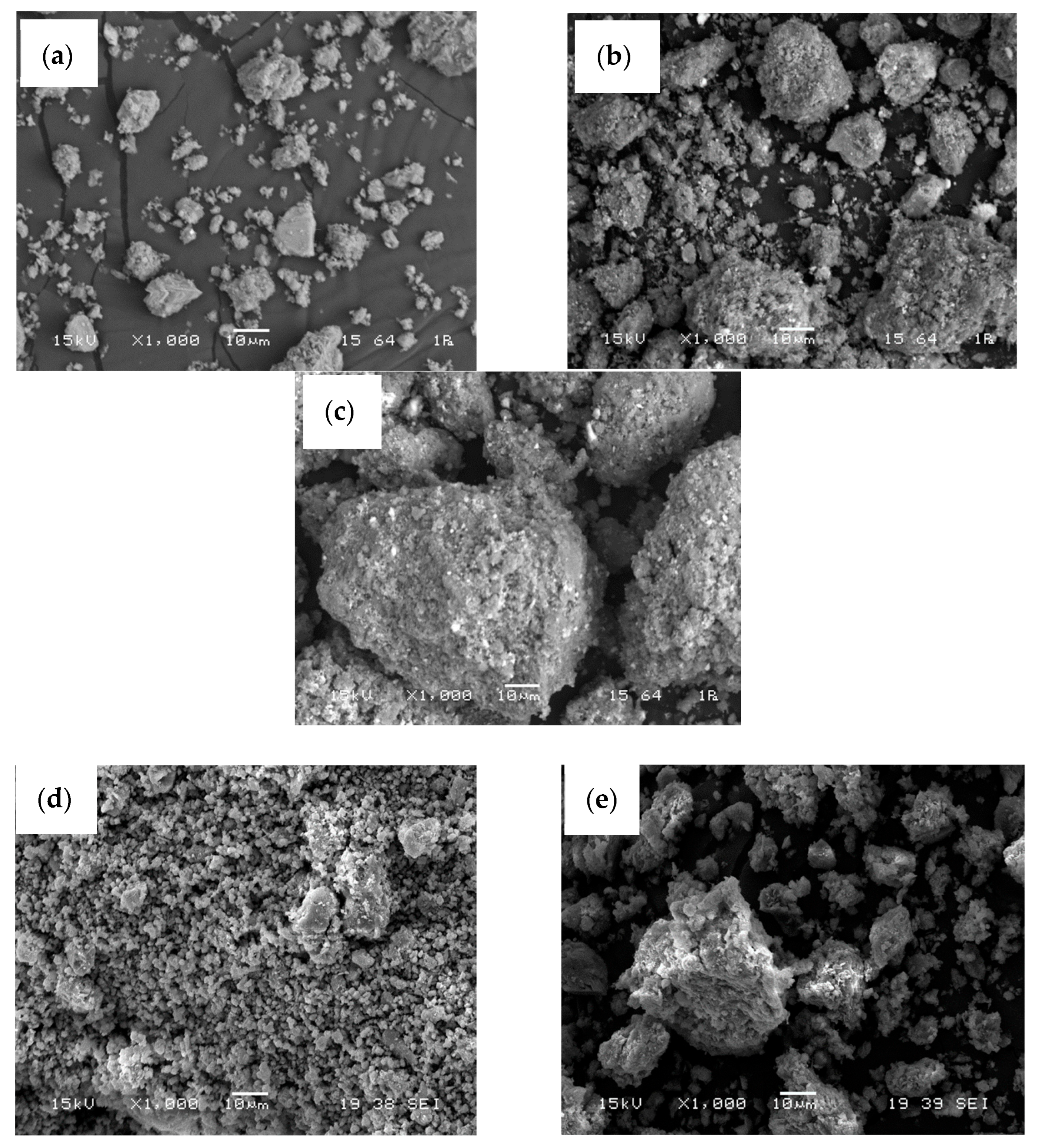
The SEM images of ZnO-C and TiO2-C samples before and after adsorption are shown in Figure 1.
Figure 1a shows the SEM image of Turkish clinoptilolite (C). The image reveals irregular, layered (sheet-like) crystal structures characteristic of clinoptilolite. The average crystal width ranges from 2 to 10 µm. Similar results have been reported in the literature [44]. Figure 1b presents the SEM images of ZnO-C. After ZnO stabilization, a change in the surface morphology of the zeolites is observed. The resulting composites exhibit a flat, irregular surface morphology and a porous structure, indicating the formation of ZnO-C [45,46]. Figure 1c shows the SEM images of ZnO-C after adsorption. The images reveal that, following MB adsorption, MB molecules are adsorbed onto the porous surface and within the inner ZnO-C particles. This indicates that the adsorption process was successfully achieved. In Figure 1d, the SEM image of TiO2-C shows cubic structures with larger particle sizes. This is attributed to the zeolite’s encapsulation of TiO2 particles. The literature supports this observation [47,48]. Additionally, the SEM image of TiO2-C after adsorption (Figure 1d) shows that MB molecules have adhered to the porous surface and the inner parts of TiO2-C particles. These results demonstrate successful adsorption.
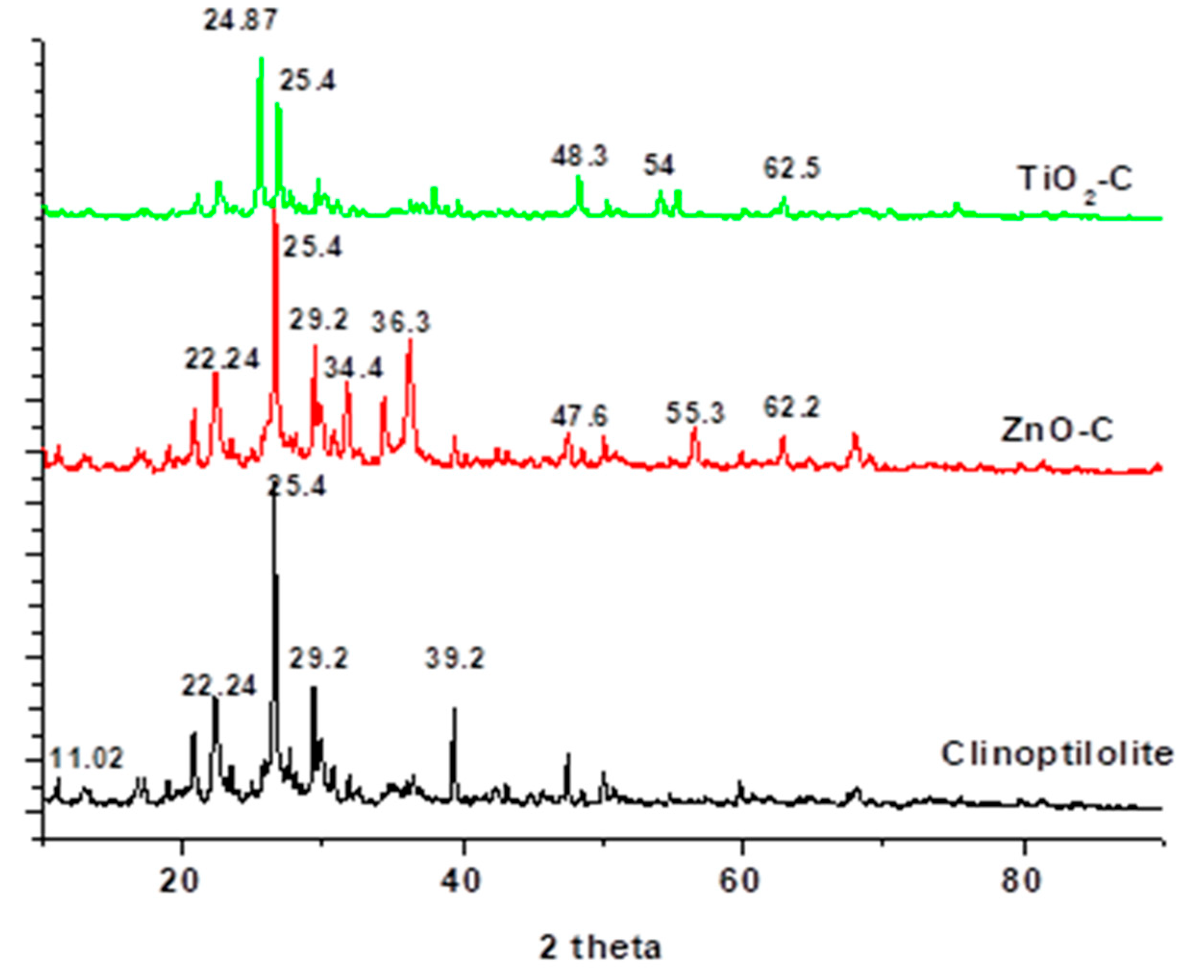
XRD analysis was employed to identify the crystal phases and determine the structural properties of the adsorbents. The XRD patterns for zeolite, ZnO-C, and TiO2-C are presented in Figure 2.
In Figure 2, the characteristic peaks observed at 2θ values of 11.02°, 22.24°, 26.54°, 29.54°, and 39.32° are attributed to the main features of clinoptilolite. These peaks indicate the presence of sodium, aluminum, and silicate components [49,50]. In the XRD patterns of ZnO-C, numerous minor noise signals were observed in the 10–30° 2θ range, which overlap with the support material (they overlap with the silicon of the zeolite at 25°). The peaks at 34.4°, 36.3°, 47.6°, 55.6°, and 62.9° correspond to the main peaks of zinc oxide and were also observed in the composite [51,52]. Similar findings have been reported in the literature [52,53]. Furthermore, the peak intensity increases after ZnO is loaded onto the support, indicating its presence on the zeolite [54]. The patterns indicate that ZnO maintains a well-defined crystalline structure after deposition on the support [52]. The intensity of the XRD pattern of ZnO-C was found to be higher than that of pure ZnO. This difference could be related to changes in particle size following loading onto the zeolite and to varying degrees of impregnation of both nanoparticles (NPs) and the zeolite [51]. However, the shifts in peak intensities in the composite XRD patterns relative to the pure NPs are likely due to the zeolite [55,56]. Some characteristic peaks of zeolite were not observed in the XRD patterns of ZnO-C and TiO2-C [56,57]. This could be explained by the entrapment of catalyst nanoparticles within the zeolite structure or their overlap with zeolite peaks [52]. The results suggest that NPs loaded onto the support surface prevent the detection of specific peaks in the XRD patterns [52,57]. These findings are consistent with previous studies on the synthesis and characterization of zeolite-supported nanoparticles, indicating that changes in XRD patterns are associated with nanoparticle deposition on the zeolite surface and with resulting modifications to the nanoparticles’ crystalline structure. In the TiO2-C composite (Figure 2), significant noise is observed in the 15°–35 ° range. Since the diffraction peak at 31.2° 2θ is absent from the XRD pattern of pure TiO2 powder, these peaks can be attributed to the support. The peak at 25.3° is characteristic of the anatase phase of titanium dioxide. Additionally, the peaks at 38°, 48.3°, 54°, and 62.5° correspond to other characteristic features of TiO2. Similar studies have been reported in the literature [55,57,58,59]. In contrast, the peak intensity for TiO2-C was less pronounced than that for zeolite, which may be associated with a slight broadening of the diffraction peaks. This could be due to minor changes in crystallite size after catalyst loading onto the support.
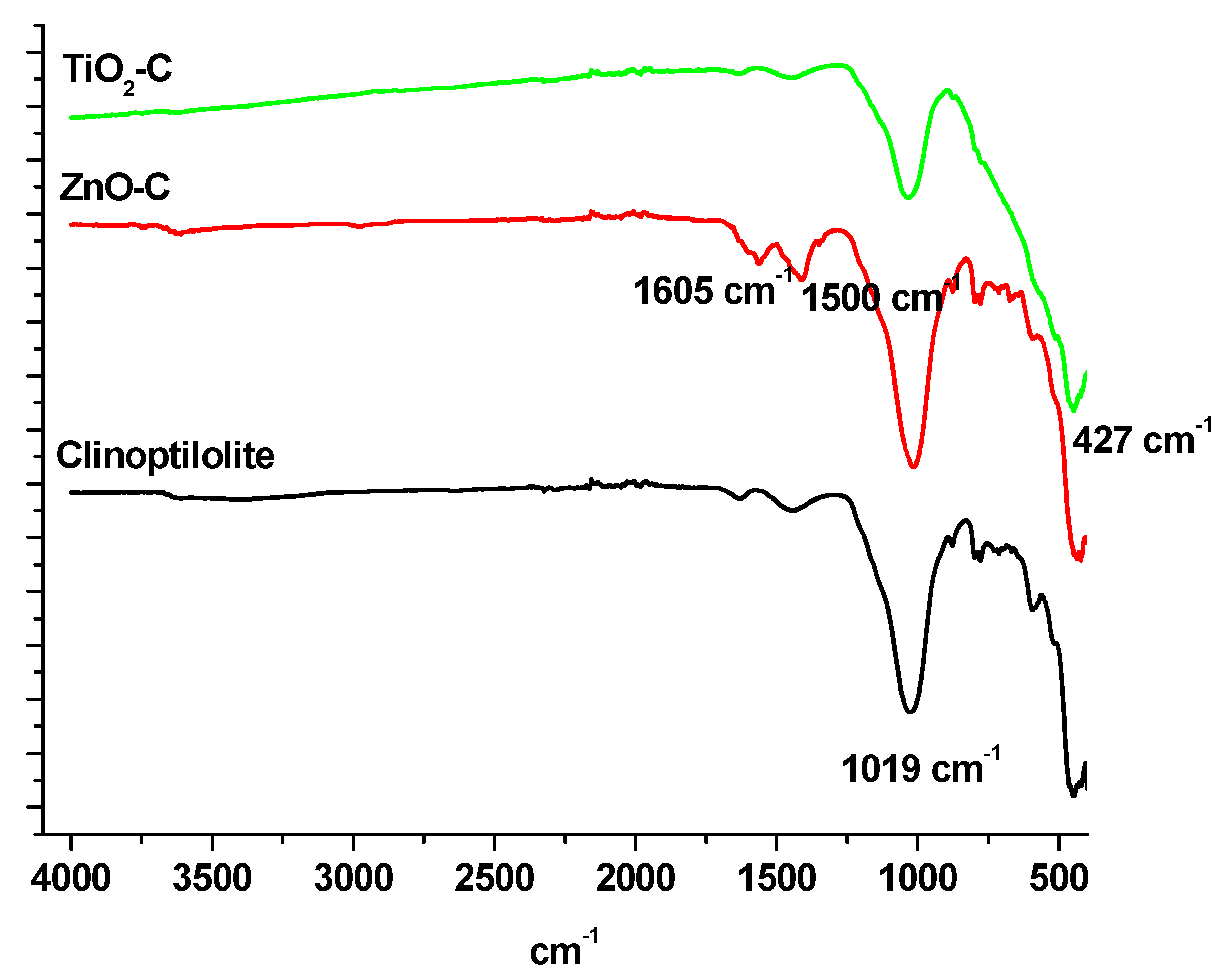
Figure 3 presents the FTIR spectra of the powdered clinoptilolite, ZnO-C, and TiO2-C samples.
Figure 3 examines the FTIR spectra of clinoptilolite, ZnO-C, and TiO2-C. In the spectrum of clinoptilolite, the intense band observed at 1019–1021 cm−1 is attributed to the asymmetric stretching vibrations of Si-O-Si and Si-O-Al bonds, which are characteristic of the aluminosilicate framework. The bands in the 420–500 cm−1 region originate from the bending vibrations of tetrahedral Al–O and Si–O bonds within the zeolite structure [60]. For the ZnO-C composite, bands at 427–433 cm−1 are assigned to Zn-O stretching vibrations, confirming the successful deposition of ZnO nanoparticles on the clinoptilolite surface. The preservation of the Si-O-Si framework bands indicates that the zeolite structure remains intact after coating. The peaks observed in the 1400–1600 cm−1 range are associated with the symmetric and asymmetric stretching vibrations of the (-COOH) group. The presence of these identified peaks confirms the formation of a new group and verifies the composite nature of the material. The similarity in FTIR spectra between zeolite, zinc oxide nanoparticles, and zinc oxide nanoparticle-coated zeolite supports the formation of the composite structure [61,62]. In the TiO2-C spectrum, the broad and unresolved absorption features observed in the 400–900 cm−1 region are associated with Ti-O-Ti stretching vibrations, which are consistent with the presence of TiO2 species. The band at 1000–1100 cm−1 is again attributed to Si–O–Si vibrations of the clinoptilolite lattice, suggesting that the aluminosilicate framework is preserved after TiO2 coating. Overall, the presence of characteristic Zn-O and Ti-O-Ti vibrations, together with the retention of the zeolite framework bands, confirms the successful formation of ZnO-C and TiO2-C composite structures [63,64,65].
The surface area results for clinoptilolite, ZnO-C, and TiO2-C, as summarized in Table 1, provide additional evidence supporting the adsorption performance observed in this study.
According to the BET analysis results presented in Table 1, distinct differences in the surface characteristics and the pore structures of the prepared adsorbents were observed. The BET-specific surface area (SBET), which reflects the total accessible surface area of the adsorbents [66,67], was measured at 10.21 m2/g for the C sample and increased to 11.41 m2/g after ZnO coating. This increase indicates that the ZnO nanoparticles enhance surface accessibility without causing significant pore blockage. In contrast, the TiO2-C sample exhibited a moderate SBET of 10.79 m2/g, indicating a relatively dense coating. A similar trend was observed for the micropore area, with ZnO-C showing the highest value (10.698 m2/g), followed by TiO2-C (10.28 m2/g) and C (9.08 m2/g). These results demonstrate that the coating process does not eliminate microporosity but rather creates additional active adsorption sites. The Langmuir surface areas followed a similar trend, with values of 12.65, 12.22, and 11.73 m2/g for C, ZnO-C, and TiO2-C, respectively, indicating that metal oxide modification enhanced surface interactions. The average pore width obtained from BJH analysis revealed a pronounced increase for the ZnO-C sample (864.215 nm), which can be attributed primarily to the enlargement of interparticle voids rather than intrinsic framework porosity. In comparison, the C and TiO2-C samples exhibited smaller average pore widths of 420.65 nm and 467.54 nm, respectively. Furthermore, the external surface area determined by the t-plot method decreased after coating, from 1.1267 m2/g for C to 0.72 m2/g for ZnO-C and 0.516 m2/g for TiO2-C, suggesting partial coverage of external surfaces by the deposited metal oxides. Overall, the ZnO coating effectively increased both surface area and pore accessibility, whereas the TiO2 coating produced a more compact surface modification. These findings indicate that ZnO and TiO2 coatings influence the porous structure and adsorption behavior of clinoptilolite via distinct surface-modification mechanisms [68]. It should be noted that the large BJH pore widths mainly reflect the presence of interparticle voids rather than intrinsic microporosity. Therefore, in these supported nanocomposite systems, the BET surface area is primarily determined by pore accessibility and nanoparticle dispersion on the zeolite surface, rather than by particle size alone.
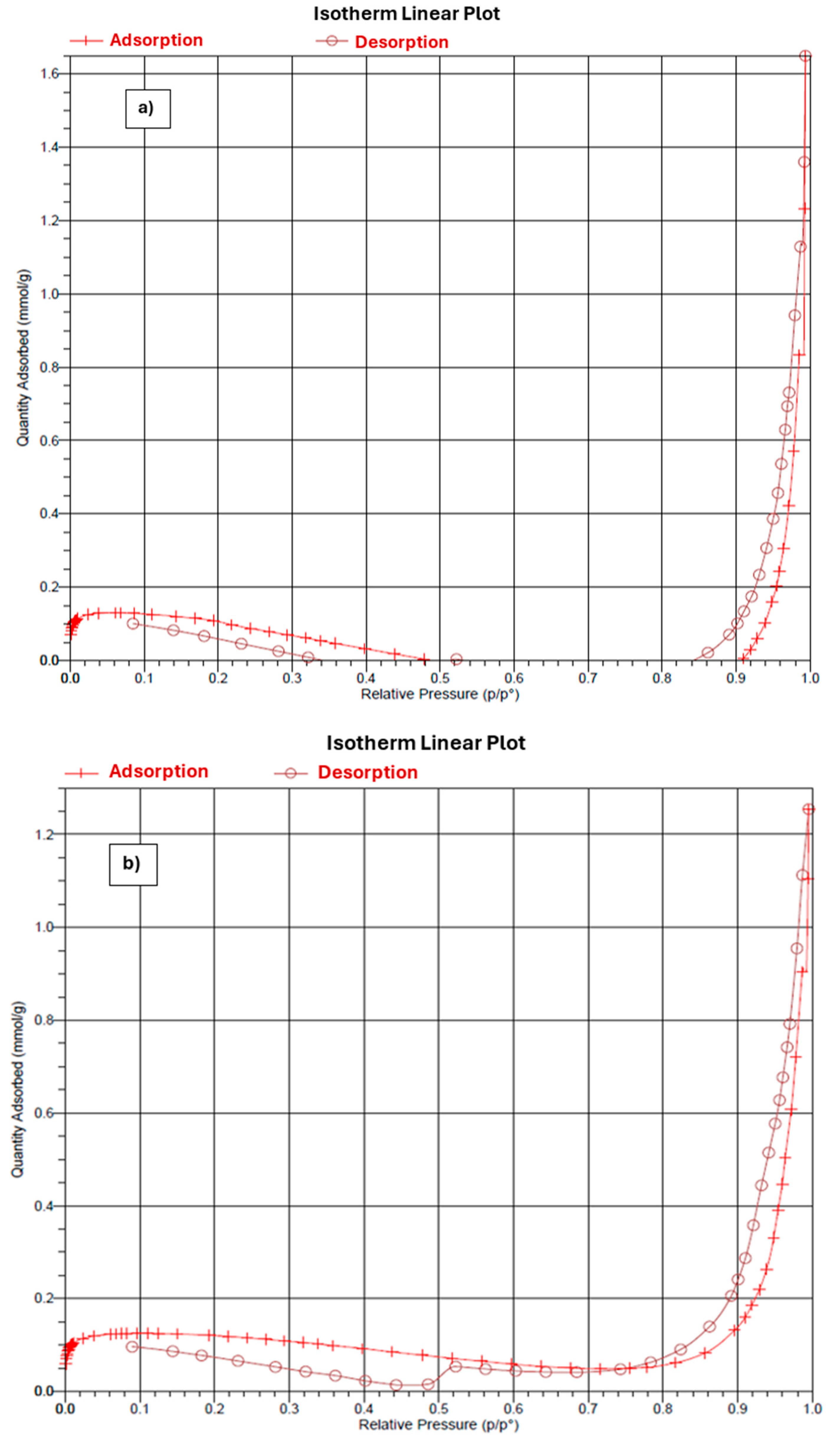
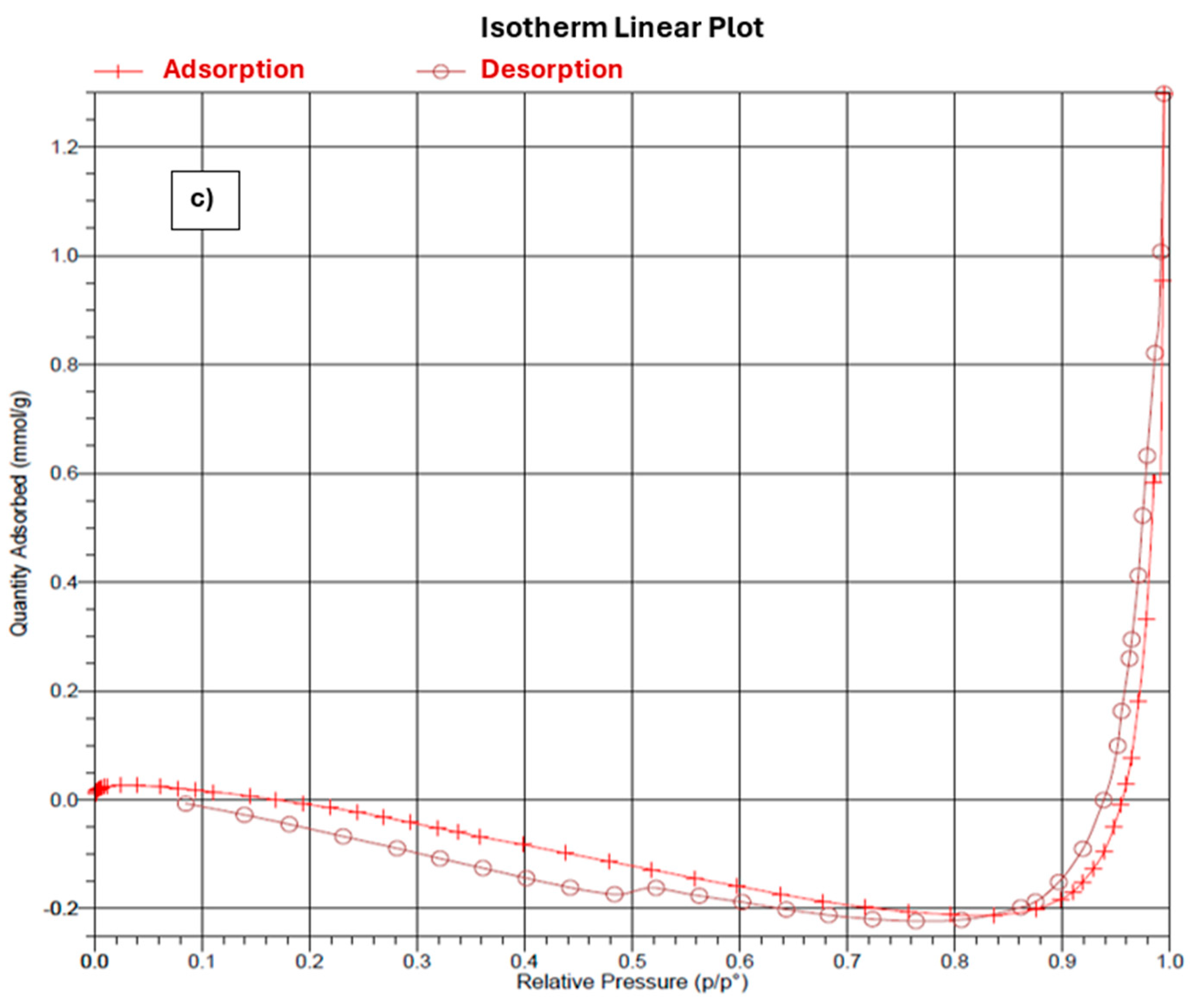
The nitrogen adsorption–desorption isotherms of the C, ZnO-C, and TiO2-C samples are presented in Figure 4.
Figure 4 presents the nitrogen adsorption–desorption isotherms of C, ZnO-C, and TiO2-C. The BET analysis results for all samples are consistent with type IV isotherms and H3 hysteresis loops, indicating that the pore structures are predominantly composed of mesopores and macropores and are primarily governed by interparticle voids. This pore architecture is characteristic of aggregated or plate-like structures forming slit-shaped pores rather than well-defined cylindrical pores. Furthermore, the t-plot and BJH analyses clearly demonstrate that metal oxide coating deposition results in pronounced modifications to the pore architecture. These changes reflect a redistribution of pore contributions, arising from partial pore blockages and the restructuring of interparticle spaces. This collectively alters the accessibility and hierarchy of the porous network after coating. The small negative adsorption values observed at low relative pressure (P/P0 < 0.05) in Figure 4a,c do not represent physically meaningful negative adsorption. These deviations arise from instrumental artifacts associated with baseline correction, signal noise, and hysteresis effects during the desorption branch of the BET measurement. Such negative deviations at very low relative pressures are commonly observed in nitrogen adsorption–desorption analyses and arise from data processing rather than from actual adsorption behavior. Therefore, these values do not affect the interpretation of the pore structure or the calculated surface area parameters.

3.2. Effects of pH on the Adsorption of MB

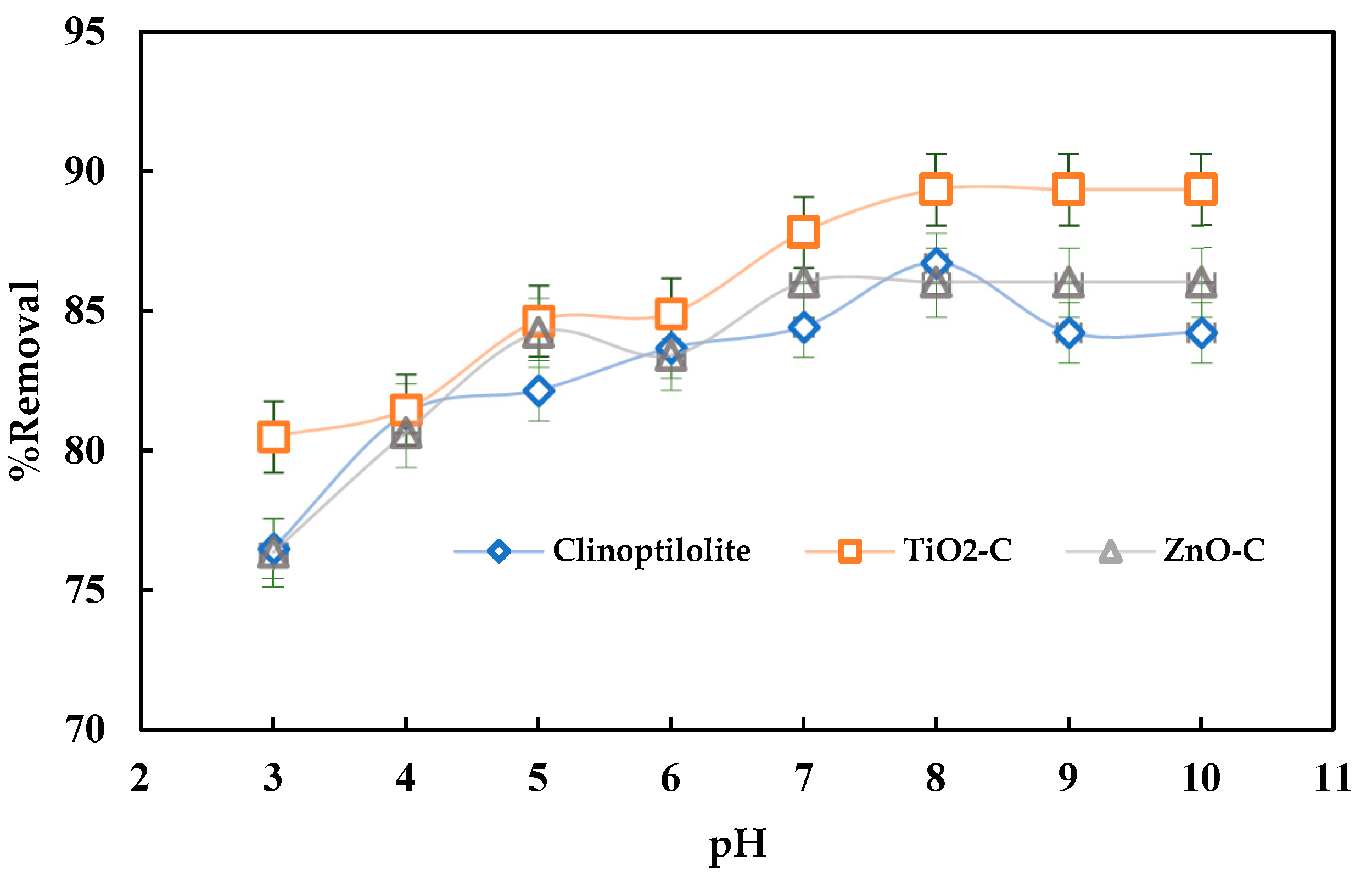
Another influential factor determining the degree of adsorption is pH. To investigate the effect of pH on MB adsorption using clinoptilolite, ZnO-C, and TiO2-C, experiments were conducted over a pH range of 3–10, with an adsorbent dose of 0.1 g and an MB concentration of 100 mg/L. The results obtained for the effect of pH on MB adsorption are presented in Figure 5.
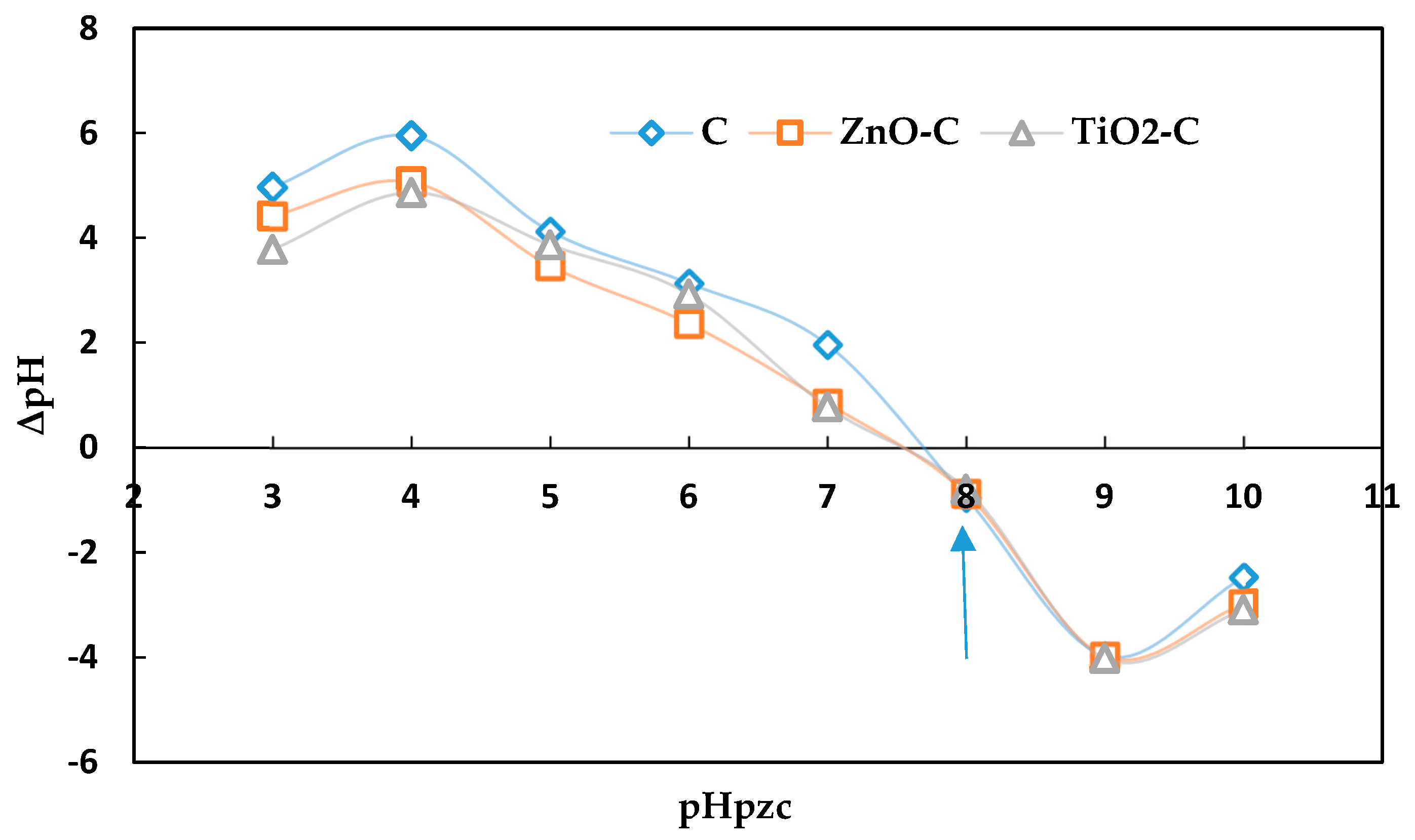
The pH of the solution is a key parameter governing MB adsorption behavior because it directly influences the adsorbent surface charge and the ionization state of the dye molecules [69]. The effect of pH on MB adsorption was systematically investigated for clinoptilolite, ZnO-C, and TiO2-C over a pH range of 3–10. The results are presented in Figure 5. As shown here, the MB removal efficiency for all adsorbents increased with increasing pH from 3 to 7, then plateaued at higher pH values. The optimal pH range for MB adsorption was determined to be 7–8 across all samples. At low pH values, the adsorbent surface is predominantly positively charged due to the protonation of surface hydroxyl groups, leading to electrostatic repulsion between the positively charged MB molecules and the adsorbent surface and lower adsorption efficiency [70]. The point of zero charge (pHpzc) of ZnO is reported to be approximately 9. Since ZnO nanoparticles are immobilized on the clinoptilolite surface, the pHpzc of the ZnO-C composite is also expected to be close to this value. Below the pHpzc, the surface carries a net positive charge, whereas at neutral and slightly alkaline pH values, partial deprotonation occurs, enhancing electrostatic attraction between MB cations and negatively charged surface sites. This electrostatic interaction is the dominant mechanism responsible for the increased adsorption observed at pH 7–8. At higher pH values (pH ≥ 9), no significant improvement in MB removal was observed, indicating that adsorption equilibrium had been reached [69]. The absence of a sharp decline in the removal efficiency at alkaline pH suggests that hydroxide ions do not strongly compete with MB molecules for adsorption sites under the conditions studied. It is important to emphasize that the results presented in Figure 4 reflect only adsorption behavior. No light source was used during these experiments; therefore, photocatalytic activity or dye degradation was not involved. The removal of MB is attributed solely to adsorption onto the composites’ surfaces via electrostatic interactions, surface complexation, and pore diffusion. Figure 6 presents the ΔpH–pH relationship for the C, ZnO-C, and TiO2-C samples.
The pHpzc values for C, ZnO-C, and TiO2-C were approximately 7.8, indicating that the surface charge becomes negative at pH values above this value (As indicated by the arrow). Although the pHpzc of pristine ZnO is reported to be around 9, the ΔpH–pH curves (Figure 6) indicate that the effective pHpzc of the ZnO-C and TiO2-C composites shifts to approximately 7.8–8.0 due to interactions between metal oxide nanoparticles and the clinoptilolite surface. A strong correlation between surface charge behavior and adsorption efficiency was observed, with maximum MB removal occurring at pH values near or slightly above the pHpzc [69]. This clearly demonstrates that electrostatic attraction plays a dominant role in the adsorption of cationic MB molecules, particularly for the TiO2-C composite, which exhibited the highest removal efficiency over the entire pH range. Similarly, clinoptilolite exhibited a pHpzc close to 7.8, indicating that its surface becomes negatively charged at neutral and alkaline pH values, which favors the adsorption of cationic MB molecules.

3.3. Adsorption Isotherms

Adsorption isotherms are used to calculate the adsorption capacity. They are crucial for characterizing adsorbents, understanding adsorbent interactions, and optimizing adsorbate molecules. An adsorption isotherm equation describes the distribution of an adsorbate between the liquid phase and the solid surface. As the adsorption process reaches equilibrium, distinct phases are formed [71,72]. In this study, adsorption isotherms were evaluated using the Langmuir and the Freundlich models to gain a deeper understanding of the adsorption mechanism. In the present study, the Freundlich and Langmuir isotherm parameters obtained at 298 K for clinoptilolite, ZnO-C, and TiO2-C provide further insight into the adsorption mechanism. The relatively higher KF values observed for ZnO-C and TiO2-C indicate enhanced adsorption capacities, most likely due to their modified surface chemistries and the greater availability of active sites compared to natural clinoptilolite. Furthermore, the n values indicate that ZnO-C and TiO2-C exhibit more heterogeneous surface characteristics, which could enhance multilayer adsorption. These findings are consistent with previous reports showing that surface modification of zeolites and carbon-based composites improves both adsorption affinity and capacity [73,74,75,76]. Overall, the comparative analysis of Freundlich and Langmuir parameters indicates that, while clinoptilolite is a cost-effective, naturally abundant adsorbent, the incorporation of ZnO and TiO2 significantly enhances surface reactivity and adsorption performance. The corresponding isotherm profiles (Figure 7, Figure 8 and Figure 9) further corroborate these trends, demonstrating that surface modification strategies can play a crucial role in tailoring adsorbent efficiency for practical wastewater treatment applications.
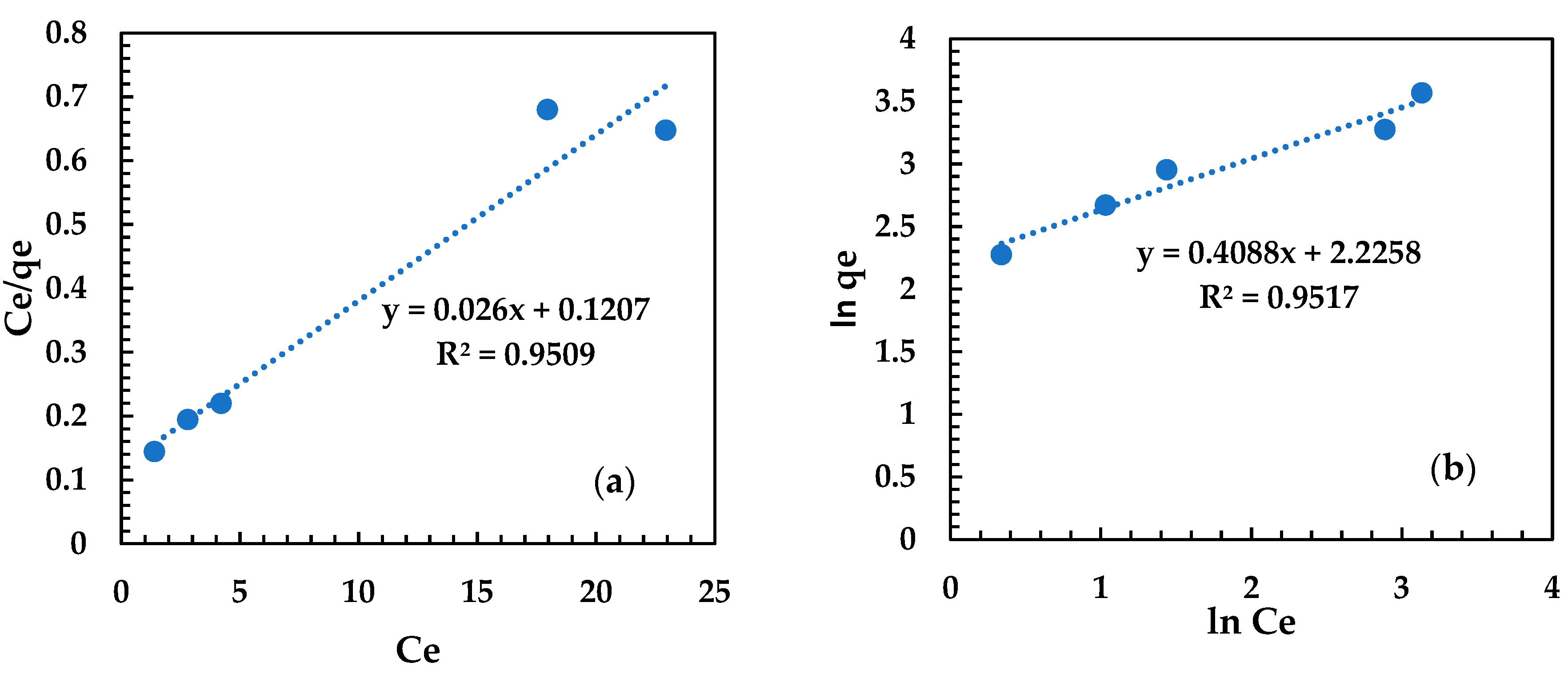
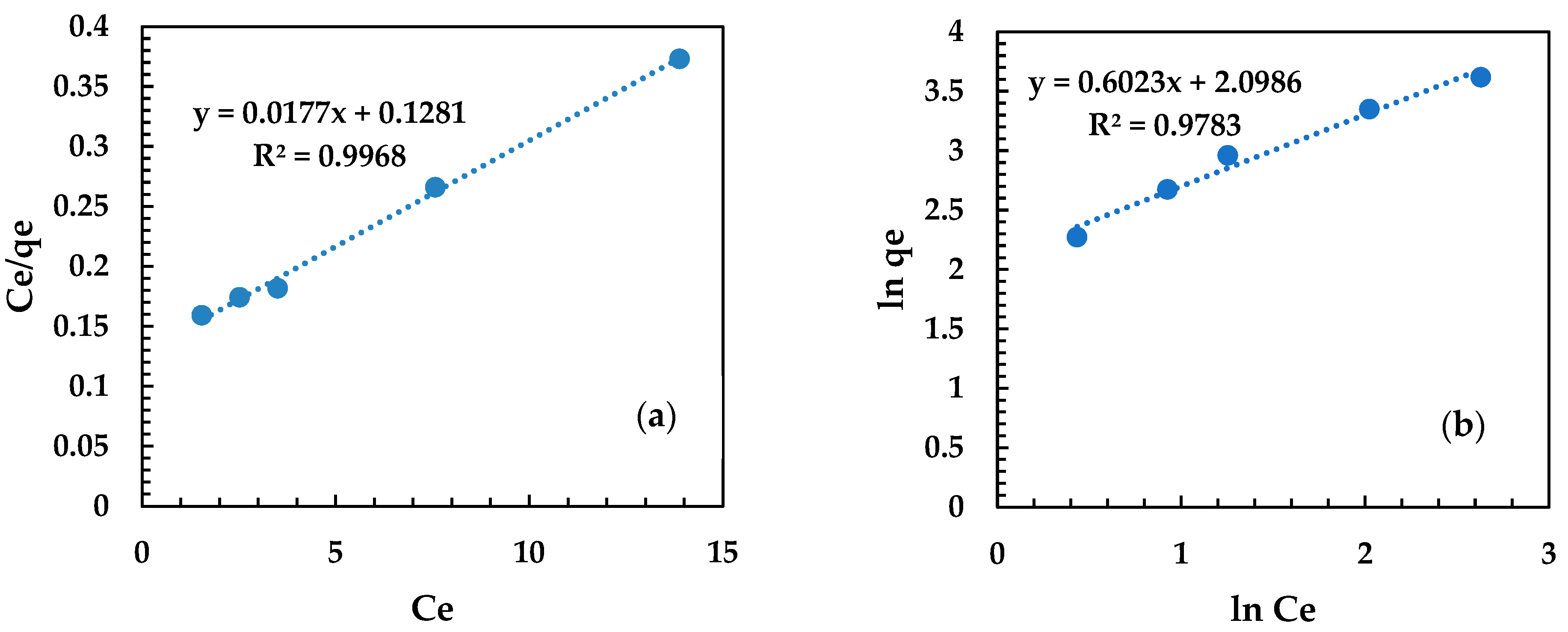
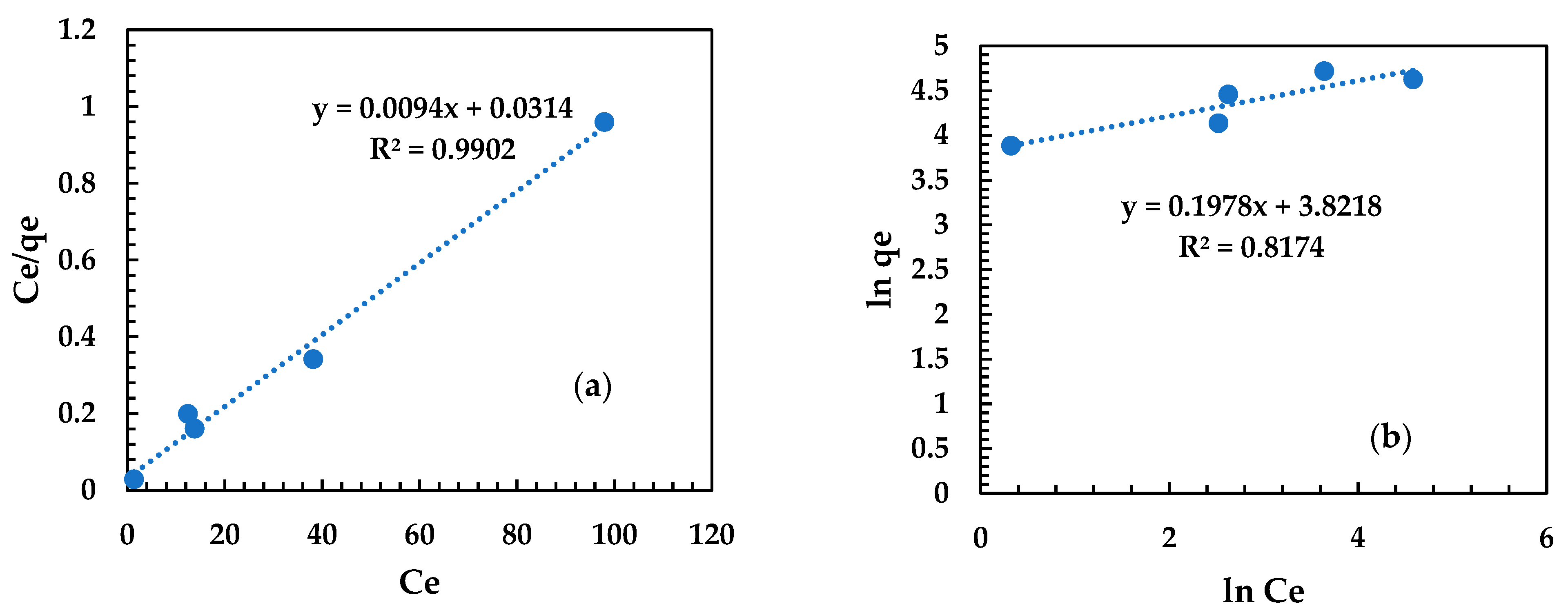
The experimental adsorption data at 298 K for all adsorbents were fitted to both isotherm models, and the corresponding parameters are summarized in Table 2. In contrast, the isotherm plots are presented in Figure 6, Figure 7 and Figure 8. As observed, the Langmuir model provided an excellent fit for MB adsorption onto clinoptilolite (R2 = 0.951), ZnO-C (R2 = 0.997), and TiO2-C (R2 = 0.9902), indicating that monolayer adsorption on relatively homogeneous surfaces is the dominant mechanism. The Langmuir monolayer maximum adsorption capacities (qmax) were determined as 38.46 mg/g for clinoptilolite, 56.00 mg/g for ZnO-C, and 106.0 mg/g for TiO2-C. According to the Freundlich isotherm model, the n values were calculated as 2.45 (R2 = 0.952) for clinoptilolite, 1.66 (R2 = 0.978) for ZnO-C, and 5.05 (R2 = 0.817) for TiO2-C, all of which confirm the suitability of the adsorption process. Although both models adequately describe the adsorption behavior, the higher correlation coefficients obtained from the Langmuir model demonstrate that monolayer adsorption predominates in this system. Overall, these results confirm that surface modification with ZnO and TiO2 significantly enhances the adsorption performance of clinoptilolite. Among the investigated adsorbents, TiO2-C exhibited the highest MB removal efficiency, underscoring the importance of surface-engineering strategies in developing advanced adsorbents for wastewater treatment. From a mechanistic perspective, the markedly higher qmax value of TiO2-C suggests the presence of a larger number of active binding sites and enhanced surface reactivity, which may result from the synergistic effect of TiO2 nanoparticles and the carbon matrix. In contrast, clinoptilolite, a natural aluminosilicate with limited surface functionalization, exhibited lower adsorption capacity despite favorable adsorption affinity (n > 1). The intermediate performance of ZnO-C further highlights the role of surface modification in improving adsorption efficiency, as the introduction of ZnO enhances surface heterogeneity and potential electrostatic interactions with the cationic dye molecules. Overall, these results confirm that all three adsorbents are effective for MB removal, and that the Langmuir model provides the best fit, reflecting uniform adsorption sites and monolayer coverage. Moreover, the superior performance of TiO2-C underscores the importance of surface-engineering strategies for tailoring adsorbent properties in advanced wastewater treatment applications [77,78,79]. Although the coefficient of determination (R2) is widely used to evaluate the goodness of fit of adsorption isotherm models, it should not be considered the sole criterion for model validity. Therefore, in addition to R2 values, the consistency of model assumptions with experimental behavior and the physical significance of the calculated parameters were carefully evaluated. The Langmuir model not only yielded higher R2 values for all adsorbents but also provided physically meaningful monolayer adsorption capacities (qmax) that were consistent with trends observed in characterization analyses. Furthermore, the Freundlich parameters (n > 1) confirmed favorable adsorption behavior, supporting the thermodynamic feasibility of the process. Taken together, these results demonstrate that the Langmuir model provides both statistically reliable and mechanistically meaningful representation of MB adsorption in this system, rather than relying solely on correlation coefficients.

3.4. Adsorption Kinetics

To better understand the adsorption behavior of MB onto Clinoptilolite, ZnO–C, and TiO2–C, adsorption kinetics were examined, and the experimental data were fitted using two models. These are the pseudo-first-order (PFO) and pseudo-second-order (PSO) kinetic models. The PFO equation is given in Equation (6).
l o g ( q e q t ) = l o g ( q e ) k 1 2303 t
Here, qe is the adsorption capacity at equilibrium (mg/g), qt is the adsorption capacity at time t (mg/g), t is the contact time (min), and k1 is the pseudo-first-order adsorption rate constant (1/min).
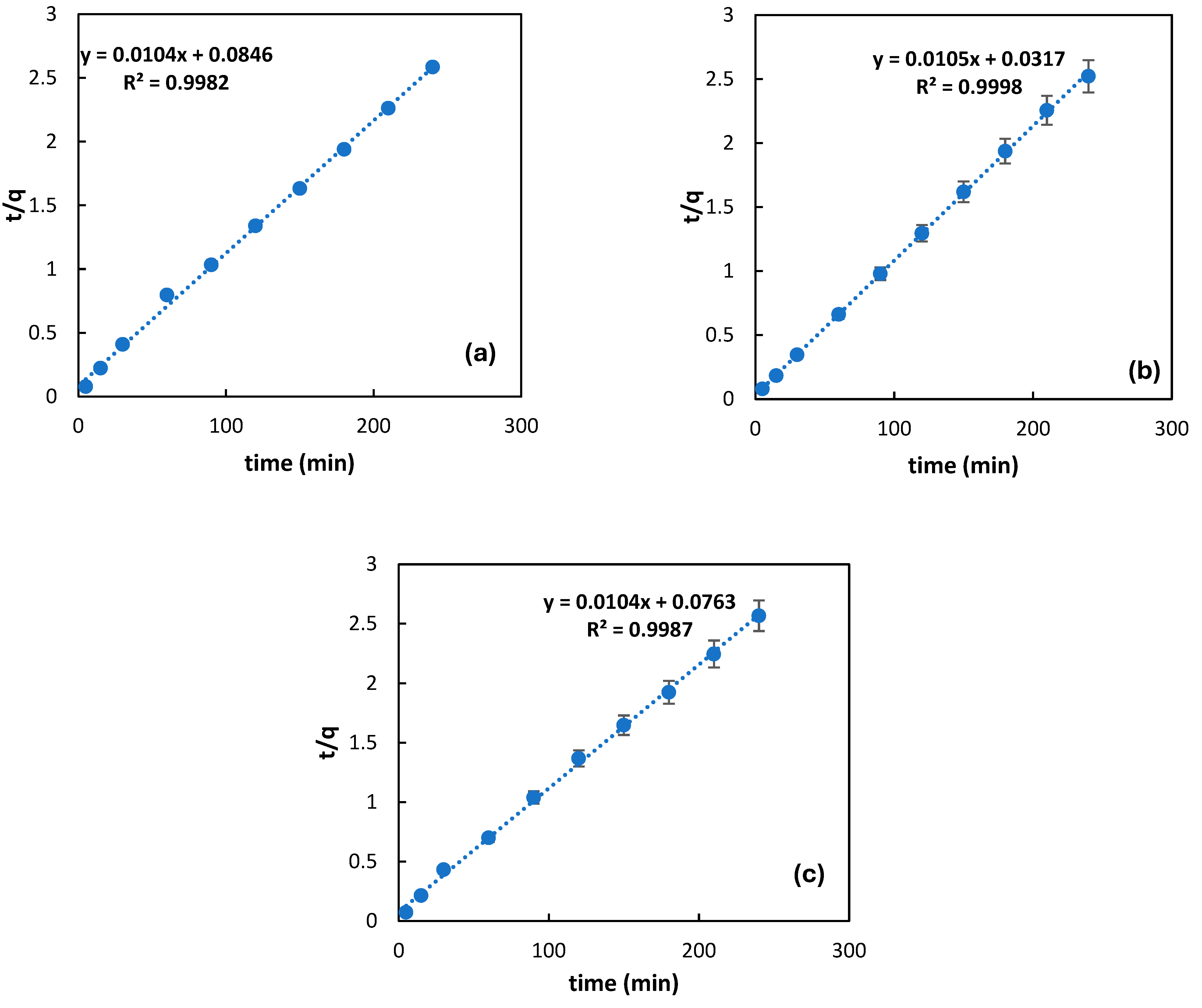
The kinetic mechanism of MB adsorption onto Clinoptilolite, ZnO–C, and TiO2–C was examined using the pseudo-second-order model (Equation (7)). The PSO equation is presented in Equation (7).
t q t = [ 1 k 2 q e 2 ] + 1 q e t
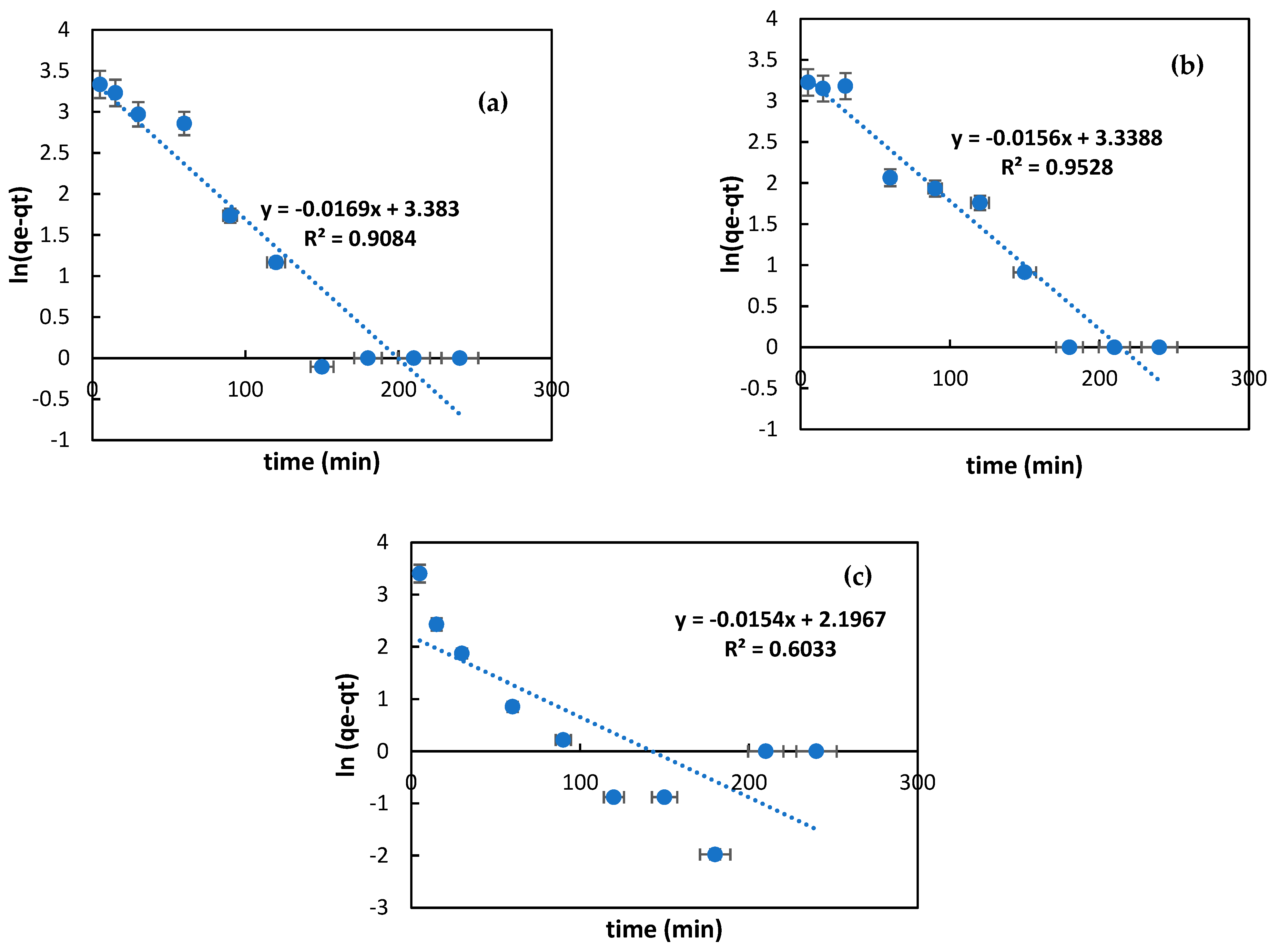
In Equation (7), qe is the adsorption capacity at equilibrium (mg/g), qt is the adsorption capacity at time t (mg/g), k2 is the pseudo-second-order adsorption rate constant (g/(mg·min)), and t is the contact time (min). The PFO and PSO data obtained for Clinoptilolite, ZnO–C, and TiO2–C at 298 K are presented in Table 3, and the corresponding plots are shown in Figure 10 and Figure 11.
The adsorption kinetics of Clinoptilolite (C), ZnO-coated zeolite (ZnO-C), and TiO2-coated zeolite (TiO2-C) samples were investigated, and the results are summarized in Table 3.
Table 3’s results indicate that the kinetic data of the C, ZnO–C, and TiO2–C adsorbents were evaluated using the pseudo-first-order and pseudo-second-order models. The experimentally determined adsorption capacities (qe,exp) ranged from 92.8 to 93.49 mg/g. The qe values calculated using the pseudo-first-order model (8.99–29.45 mg/g) were considerably lower than the experimental results, particularly for ZnO–C (R2 = 0.601), indicating that this model is inadequate. This finding suggests that the pseudo-first-order kinetic equation is insufficient to describe the system’s adsorption behavior.
Similar observations have been reported in previous studies, in which the pseudo-first-order model failed to accurately represent dye adsorption on modified zeolites and metal-oxide-based composites because it cannot account for chemisorption mechanisms [21,27].
In contrast, the pseudo-second-order kinetic model yielded qe values (95.24–96.15 mg/g) that closely matched the experimental data and provided an excellent fit for all samples, with a high correlation coefficient (R2 = 0.998). Additionally, the k2 rate constants (0.14–0.33 g/mg·h) varied with the adsorbent type. In contrast, the pseudo-second-order kinetic model yielded calculated qe values (95.24–96.15 mg/g) in excellent agreement with the experimental data and exhibited very high correlation coefficients (R2 = 0.998) for all adsorbents. This close correlation indicates that the adsorption mechanism is mainly chemisorption, characterized by valence forces arising from electron sharing or exchange between the adsorbent surface and the dye molecules. Comparable results have been reported for MB adsorption onto TiO2-modified zeolites, ZnO-based composites, and carbonaceous materials, in which the pseudo-second-order model consistently provided a superior fit [38,55].

3.5. Thermodynamic Investigation of Adsorption

Thermodynamic parameters such as Gibbs free energy change (ΔG°), enthalpy change (ΔH°), and entropy change (ΔS°) are commonly used to understand the effect of temperature and to determine whether the adsorption process is spontaneous [80,81]. These factors are presented in Equations (8)–(10) below.
ΔG° = −R × T × ln KD
K D = q e C e
ln   K d = Δ S ° R Δ H ° RT
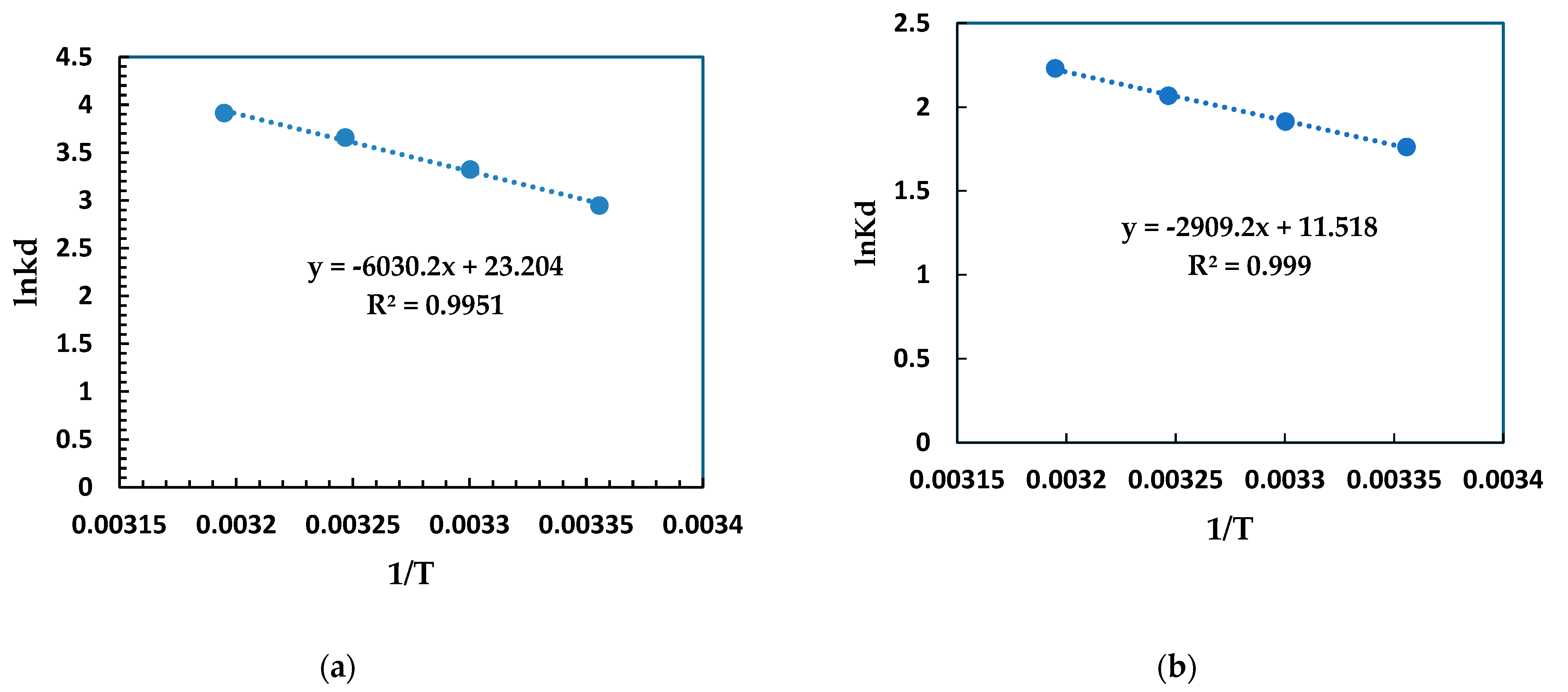
In the equation, KD (L/g) is the thermodynamic equilibrium constant. The values of ΔH° (kJ/mol) and ΔS° (J/mol·K) were calculated from the slope and intercept of the van’t Hoff plots obtained by plotting ln KD against 1/T (Reference), and this relationship is illustrated in Figure 12. The parameters calculated based on the thermodynamic values are presented in Table 4.
Table 4 presents the constants and thermodynamic parameters for MB adsorption on Clinoptilolite, ZnO-C, and TiO2-C composites.
As shown in Table 4, the calculated enthalpy (ΔH°) values for the ZnO-C and TiO2-C adsorbents are essential indicators of the adsorption mechanism. The positive ΔH° value of 50.16 kJ/mol for the ZnO-C system indicates that the adsorption process is distinctly endothermic and involves high-energy interactions [82]. On the other hand, the ΔH° value calculated for the TiO2-C adsorbent, 23.95 kJ/mol, is lower than that of the ZnO-C system, indicating that, although the adsorption remains endothermic, it requires a milder energy input. This value suggests that the adsorption mechanism involves chemical interactions, but the binding forces are weaker than those in ZnO-C. The observed thermodynamic behavior of TiO2-C is consistent with a mixed mechanism in which both physical and chemical adsorption can occur. Overall, the magnitude of the ΔH° values indicates that the ZnO-C surface possesses a higher binding energy toward MB molecules compared to the TiO2-C surface. This implies that ZnO-C may provide a more effective adsorbent surface, with higher adsorption capacity and stronger adsorption. In thermodynamic evaluation, the entropy change (ΔS°) is an essential parameter for understanding the level of disorder at the solid–liquid interface and the organization of adsorbent–adsorbate interactions during adsorption. The ΔS° values for the ZnO-C and TiO2-C adsorbents are 0.193 J/mol·K and 0.095 J/mol·K, respectively, indicating significant differences in their adsorption behaviors. The higher ΔS° value of the ZnO-C system (0.193 J/mol·K) suggests a greater increase in disorder at the solid–liquid interface during the binding of MB molecules [83]. This indicates that the ZnO-C surface induces more structural reorganization while adsorbing MB molecules, meaning the system’s degrees of freedom increase more prominently during adsorption. This rise in entropy also indicates that the surface properties of ZnO-C offer more opportunities for adsorbate placement and that the adsorption process is more dynamic at the molecular level. In contrast, the lower ΔS° value of the TiO2-C system (0.095 J/mol·K) suggests a more limited increase in disorder at the interface compared to ZnO-C. This result indicates that the TiO2-C surface maintains a more ordered structure during adsorption or undergoes a more restricted molecular rearrangement at the solid–liquid interface. Therefore, TiO2-C exhibits a more controlled adsorption mechanism, requiring lower entropy changes than ZnO-C.
The positive enthalpy change (ΔH° > 0) indicates that the adsorption of MB is an endothermic process, suggesting that increasing temperature enhances the adsorption capacity. Although endothermic adsorption accompanied by an increase in entropy is relatively uncommon, this behavior can be reasonably explained by changes occurring at the solid–solution interface [82]. The positive entropy change (ΔS° > 0) reflects an increase in system disorder, which is mainly attributed to the desolvation of MB molecules and surface functional groups during adsorption. In this process, structured water molecules initially associated with MB and the adsorbent surface are released into the bulk solution, resulting in a net entropy gain [80]. Moreover, the moderate magnitude of ΔH° suggests that the adsorption mechanism is not dominated by strong chemisorption but is more likely governed by electrostatic interactions and physical adsorption forces [84]. Similar thermodynamic behavior, characterized by positive ΔH° and ΔS° values, has been reported in dye adsorption systems in which electrostatic interactions and surface heterogeneity predominate over the formation of strong chemical bonds [80,82,84].

3.6. Desorption and Reusability

Based on preliminary desorption experiments at different NaOH concentrations (0.05–0.2 M), 0.1 M NaOH was identified as the optimum desorption agent and was therefore used in all subsequent reusability experiments.
The stability and reusability of adsorbents are prerequisites for economically viable commercialization and are critical to their design and large-scale practical applications. In this study, the regeneration of C, ZnO-C, and TiO2-C adsorbents was repeated over seven consecutive cycles. For this purpose, the saturated C, ZnO-C, and TiO2-C adsorbents were collected by centrifugation. The separated adsorbents were redispersed, sequentially washed several times with ethanol and deionized water, and then dried in an oven at 60 °C before being reused in the subsequent adsorption cycle [85].
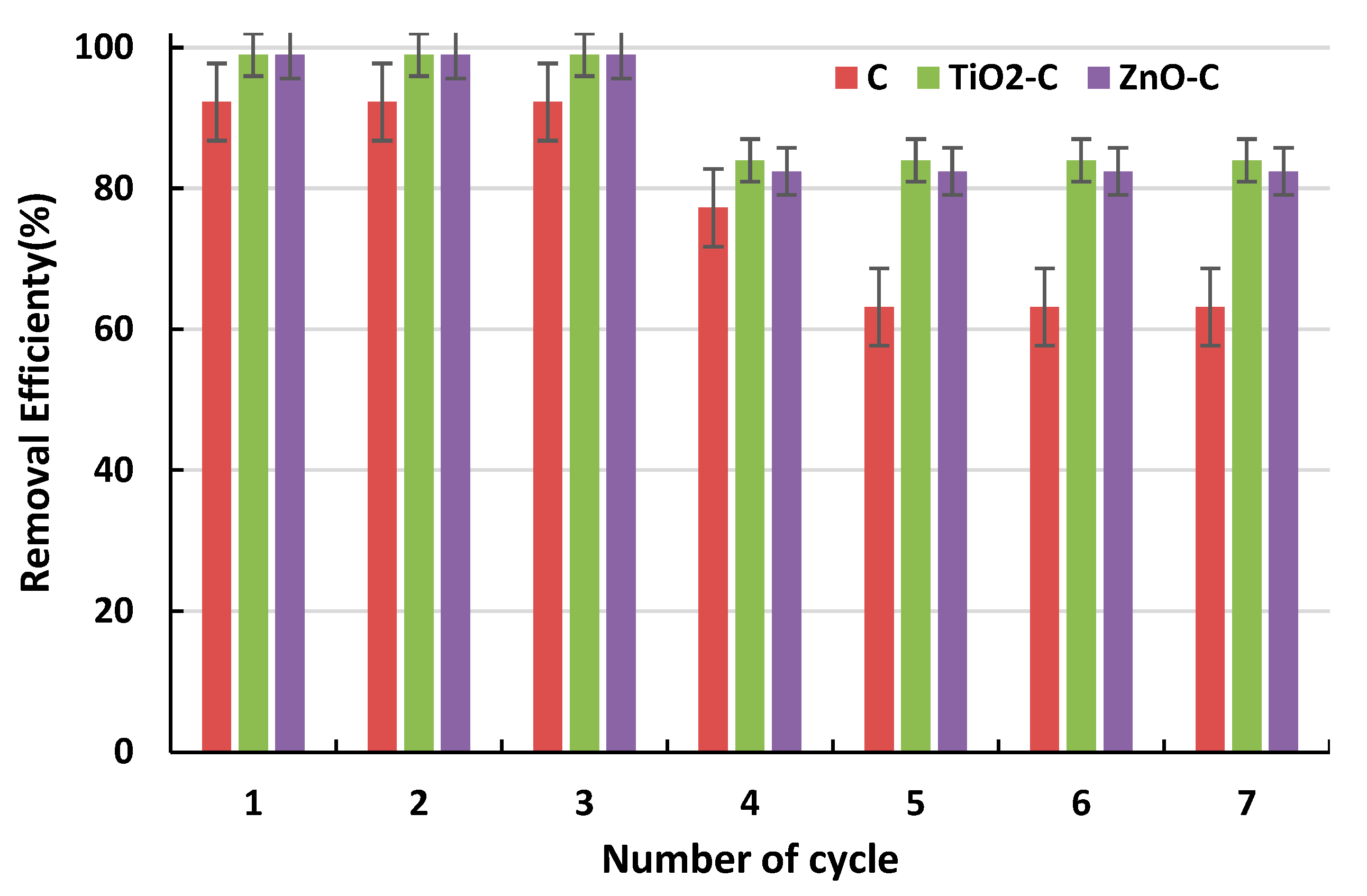
As shown in Figure 13, although a slight decrease in adsorption efficiency was observed for all adsorbents with increasing reuse cycles, they largely retained their adsorption capacities. The observed reduction in removal efficiency is reasonable. It can be attributed to adsorbent loss during each regeneration step, as well as to portions within the pores and active sites that could not be fully recovered and thoroughly cleaned by desorption. It was found that the modified ZnO-C and TiO2-C exhibited better reusability compared to pristine C. After the fifth adsorption–desorption cycle, the decrease in removal efficiency was determined to be 16.1% for C–ZnO, 17.57% for TiO2–C, and 36.8% for C. Overall, the findings indicate that the incorporation of ZnO and TiO2 into the adsorbent structure effectively minimizes adsorbent loss, significantly enhances the stability and reusability of the adsorbents, and does not cause secondary environmental pollution.
Table 5 presents a comparative overview of the adsorption capacities of various adsorbents for MB removal, as reported in previous studies.
An examination of Table 5 clearly demonstrates that adsorption capacity varies widely with adsorbent type, surface modification, and experimental conditions. For instance, adsorption capacities of 86.2 mg/g for magnetic Na-bentonite, 70.4 mg/g for CuO/Ag nanocomposite/zeolite, and 45.66 mg/g for clinoptilolite/Fe3O4 have been reported. In contrast, relatively lower adsorption capacities have been observed for specific metal-oxide-based adsorbents, such as ZnTiO3/TiO [78,85,86,87,88].
In the present study, the adsorption capacity of raw clinoptilolite (C) was determined to be 38.46 mg/g, consistent with the performance of several zeolite-based adsorbents reported in the literature. This result confirms that clinoptilolite serves as an effective baseline adsorbent for MB removal and indicates that its adsorption performance can be significantly enhanced through surface modification. The ZnO-modified clinoptilolite (ZnO-C) exhibited an increased adsorption capacity of 56 mg/g, representing a substantial improvement compared to raw clinoptilolite. This enhancement can be attributed to the ZnO coating, which increases the number of surface-active sites and strengthens electrostatic interactions between the negatively charged adsorbent surface and cationic MB molecules. Notably, the adsorption performance of ZnO-C exceeded that of several previously reported metal-oxide and composite adsorbents. The highest adsorption capacity was achieved by TiO2-modified clinoptilolite (TiO2-C), reaching 106 mg/g, which exceeds the capacities of many zeolite- and metal-oxide-based adsorbents reported to date. This superior performance is primarily attributed to the TiO2 coating, which increases the density of surface hydroxyl groups and promotes stronger interactions with MB molecules. Overall, the results demonstrate that the ZnO-C and the TiO2-C adsorbents exhibit competitive, and in some cases superior, adsorption capacities under moderate initial MB concentrations and practical experimental conditions. These findings highlight the strong potential of metal-oxide-coated clinoptilolite as an efficient, low-cost, and environmentally friendly adsorbent for dye-contaminated wastewater treatment.

4. Conclusions

This study clearly demonstrates that clinoptilolite-based composites coated with ZnO and TiO2 can be used as highly efficient adsorbents for the removal of methylene blue. The experimental results revealed that the adsorption process is susceptible to key parameters, including pH, initial dye concentration, adsorbent dosage, temperature, and contact time. Isotherm analyses confirmed that the adsorption behavior of both composites followed the Langmuir model. The maximum adsorption capacities of 106 mg/g for TiO2-C and 56 mg/g for ZnO-C clearly indicate that TiO2 coating significantly enhances surface activity and adsorption efficiency. Kinetic modeling indicated that the adsorption process followed the pseudo-second-order model, suggesting that chemical interactions play a significant role in the adsorption mechanism. Furthermore, FTIR, SEM, BET, and XRD analyses confirmed that the coating processes positively modified the surface properties and structural characteristics of the adsorbents. Moreover, the high recovery efficiencies obtained from desorption experiments confirmed that these composites are reusable, cost-effective, and environmentally friendly adsorbents. Overall, ZnO-C and TiO2-C composites offer strong and sustainable alternatives for treating dye-contaminated wastewater due to their high adsorption capacities, favorable kinetic behavior, and excellent reusability. These findings highlight the developed composites as promising candidates for large-scale industrial and environmental applications. Although the present study provides a comprehensive evaluation of the adsorption performance of ZnO- and TiO2-coated clinoptilolite using synthetic dye solutions under controlled laboratory conditions, further research is required to assess their practical applicability. Future studies will evaluate the adsorption efficiency and stability of the developed composites in real wastewater matrices contaminated with dyes, where competing ions, organic matter, and variable pH conditions may influence adsorption behavior. Such investigations will provide valuable insights into the scalability and real-world performance of the proposed adsorbents.

Author Contributions

E.A.: experimental design and writing of results; article writing and checking procedures; O.K.: experimental studies. All authors have read and agreed to the published version of the manuscript.

Funding

This research received no external funding.

Data Availability Statement

The original contributions presented in this study are included in the article. Further inquiries can be directed to the corresponding author.

Conflicts of Interest

The authors declare no conflicts of interest.

References

  1. Kishor, R.; Saratale, G.D.; Saratale, R.G.; Fernando, L.; Ferreira, R.; Bilal, M.; Iqbal, H.M.N.; Bharagava, R.N. Efficient degradation and detoxification of methylene blue dye by a newly isolated ligninolytic enzyme producing bacterium Bacillus albus MW407057. Colloids Surf. B Biointerfaces 2021, 206, 111947. [Google Scholar] [CrossRef]
  2. Pinheiro, M.F.; Rodrigues, G.S.; Junior, J.A.; de Sousa, R.d.C.; da Costa, A.R. Analysis of the adsorptive capacity of arabic coffee straw using blue methylene dye. Braz. J. Dev. 2020, 6, 2861–2868. [Google Scholar] [CrossRef]
  3. Galvan, J.; Borsoi, M.X.; Julek, L.; Bordin, D.; Cabral, L.P.A.; Pomini, M.C.; Alves, F.B.T. Methylene Blue for the treatment of health conditions: A scoping review. Braz. Arch. Biol. Technol. 2021, 64, e21200266. [Google Scholar] [CrossRef]
  4. El-Kady, M.; El-Aassar, M.R.; El Batrawy, O.; Salem, M.; Hassan, H.S.; Fakhry, H. Equilibrium and Kinetic Behaviors of Cationic Dye Decolorization Using Poly (AN-co-Py)/ZrO2 Novel Nanopolymeric Composites. Adv. Polym. Technol. 2018, 37, 740–752. [Google Scholar] [CrossRef]
  5. Gureev, A.P.; Shaforostova, E.A.; Popov, V.N.; Starkov, A.A. Methylene blue does not bypass complex k in mouse brain mitochondria. FEBS Lett. 2019, 593, 499–503. [Google Scholar] [CrossRef] [PubMed]
  6. Altintig, E.; Ozcelik, O.T.; Aydemeir, Z.; Bozdag, D.; Kılıc, E.; Yalcıner, Y.A. Modeling of methylene blue removal on Fe3O4 modified activated carbon with artificial neural network (ANN). Int. J. Phytoremed. 2023, 25, 1714–1732. [Google Scholar] [CrossRef]
  7. Lou, T.; Cui, G.P.; Xun, J.J.; Wang, X.J.; Feng, N.Y.; Zhang, J. Synthesis of a terpolymer based on chitosan and lignin as an effective flocculant for dye removal. Colloids Surf. A 2018, 537, 149–154. [Google Scholar] [CrossRef]
  8. Zhang, J.; Jiang, F.; Lu, Y.; Wei, S.; Xu, H.; Zhang, J.; Ge, Y.; Li, Z. Lignin microparticles-reinforced cellulose filter paper for simultaneous removal of emulsified oils and dyes. Int. J. Biol. Macromol. 2023, 230, 123120. [Google Scholar] [CrossRef]
  9. Khan, H.; Hussain, S.; Din, M.A.U.; Arshad, M.; Wahab, F.; Hassan, U.; Khan, A. Multiple design and modelling approaches for the optimisation of carbon felt electro-Fenton treatment of dye laden wastewater. Chemosphere 2023, 338, 139510. [Google Scholar] [CrossRef]
  10. Busarello, P.; de Quadros, S.; Zimmermann, L.M.; Neiva, E.G.C. Graphene oxide/ZnO nanocomposites applied in photocatalysis of dyes: Tailoring aqueous stability of quantum dots. Colloids Surf. A Physicochem. Eng. Asp. 2023, 675, 132026. [Google Scholar] [CrossRef]
  11. Epelle, E.I.; Macfarlane, A.; Cusack, M.; Burns, A.; Okolie, J.A.; Mackay, W.; Rateb, M.; Yaseen, M. Ozone application in different industries: A review of recent developments. Chem. Eng. J. 2023, 454, 140188. [Google Scholar] [CrossRef] [PubMed]
  12. Aziz, G.M.; Hussein, S.I.; M-Ridha, M.J.; Mohammed, S.J.; Abed, K.M.; Muhamad, M.H.; Hasan, H.A. Activity of laccase enzyme extracted from Malva parviflora and its potential for degradation of reactive dyes in aqueous solution. Biocatal. Agric. Biotechnol. 2023, 50, 102671. [Google Scholar] [CrossRef]
  13. Das, S.; Cherwoo, L.; Singh, R. Decoding dye degradation: Microbial remediation of textile industry effluents. Biotechnol. Notes 2023, 4, 64–76. [Google Scholar] [CrossRef]
  14. Sukmana, H.; Ballai, G.; Gyulavári, T.; Illés, E.; Kozma, G.; Kónya, Z.; Hodúr, C. Hungarian and Indonesian rice husk as bioadsorbents for binary biosorption of cationic dyes from aqueous solutions: A factorial design analysis. Heliyon 2023, 9, e17154. [Google Scholar] [CrossRef] [PubMed]
  15. Weber, A.C.; da Silva, B.E.; Cordeiro, S.G.; Henn, G.S.; Costa, B.; dos Santos, J.S.H.; Corbellini, V.A.; Ethur, E.M.; Hoehne, L. Immobilization of commercial horseradish peroxidase in calcium alginate-starch hybrid support and its application in the biodegradation of phenol red dye. Int. J. Biol. Macromol. 2023, 15, 125723. [Google Scholar] [CrossRef]
  16. Li, H.; Budarin, V.L.; Clark, J.H.; North, M.; Wu, X. Rapid and efficient adsorption of methylene blue dye from aqueous solution by hierarchically porous, activated starbons®: Mechanism and porosity dependence. J. Hazard. Mater. 2022, 436, 129174. [Google Scholar] [CrossRef]
  17. Naseem, T.; Durrani, T. The role of some important metal oxide nanoparticles for wastewater and antibacterial applications: A review. Environ. Chem. Ecotoxicol. 2021, 3, 59–75. [Google Scholar] [CrossRef]
  18. Canpolat, G.; Dolak, I.; Keçili, R.; Hussain, C.G.; Amiri, A.; Hussain, C.M. Conductive polymer-based nanocomposites as powerful sorbents: Design, preparation and extraction applications. Crit. Rev. Anal. Chem. 2023, 53, 1419–1432. [Google Scholar] [CrossRef]
  19. Saleh, A.K.; El-Gendi, H.; Ray, J.B.; Taha, T.H. A low-cost effective media from starch kitchen waste for bacterial cellulose production and its application as simultaneous absorbance for methylene blue dye removal. Biomass Convers. Biorefinery 2023, 13, 12437–12449. [Google Scholar] [CrossRef]
  20. Thillainayagam, B.P.; Nagalingam, R.; Saravanan, P. Batch and column studies on removal of methylene blue dye by microalgae biochar. Biomass Convers. Biorefinery 2023, 13, 10327–10342. [Google Scholar] [CrossRef]
  21. Jawad, A.H.; Abdulhameed, A.S. A Mesoporous Iraqi red kaolin clay as an efficient adsorbent for methylene blue dye: Adsorption kinetics, isotherm, and mechanism study. Surf. Interfaces 2020, 18, 100422. [Google Scholar] [CrossRef]
  22. Jawad, A.H.; Saud, A.; Mohd, A. Acid-factionalized biomass material for methylene blue dye removal: A comprehensive adsorption and mechanism study. J. Taibah Univ. Sci. 2020, 14, 305–313. [Google Scholar] [CrossRef]
  23. Ahmad, R.; Ejaz, M.O. Synthesis of new alginate-silver nanoparticles/mica (Alg-AgNPs/MC) bionanocomposite for enhanced adsorption of dyes from aqueous solution. Chem. Eng. Res. Des. 2023, 197, 355–371. [Google Scholar] [CrossRef]
  24. Indira, V.; Abhitha, K. A review on recent developments in Zeolite A synthesis for improved carbon dioxide capture: Implications for the water-energy nexus. Energy Nexus 2022, 7, 100095. [Google Scholar] [CrossRef]
  25. Algieri, C.; Drioli, E. Zeolite Membranes: Synthesis and Applications. Sep. Purif. Technol. 2021, 278, 119295. [Google Scholar] [CrossRef]
  26. Zhang, Y.; Yan, J. Recent advances in the synthesis of defective TiO2 nanofibers and their applications in energy and catalysis. Chem. Eng. J. 2023, 472, 144831. [Google Scholar] [CrossRef]
  27. Agustina, T.E.; Anakotta, A.R.; Widhaningtyas, H.; Gayatri, R. The effect of weight ratio of ZnO and natural zeolite on the performance of ZnO-natural zeolite nanocomposites for synthetic dyes degradation. Mater. Today 2022, 63, 66–72. [Google Scholar] [CrossRef]
  28. Li, N.; Xu, Z.; Zheng, S.; Dai, H.; Wang, L.; Tian, Y.; Dong, Z.; Jiang, L. Superamphiphilic TiO2 composite surface for protein antifouling. Adv. Mater. 2021, 33, 2003559. [Google Scholar] [CrossRef]
  29. Rousseau, R.; Glezakou, V.A.; Selloni, A. Theoretical insights into the surface physics and chemistry of redox-active oxides. Nat. Rev. Mater. 2020, 5, 460–475. [Google Scholar] [CrossRef]
  30. Wang, J.; Yuan, L.; Zhang, C.; Li, S.; Wang, G.; Wan, J.; Liu, C.; Yu, C. Metal-Organic Frameworks Derived Titanium Oxides via Soft Interface Adaptive Transformation. Adv. Funct. Mater. 2021, 31, 2107260. [Google Scholar] [CrossRef]
  31. Wang, Y.; Wang, C.; Wang, L.; Wang, L.; Xiao, F.S. Zeolite fixed metal nanoparticles: New perspective in catalysis. Acc. Chem. Res. 2021, 54, 2579–2590. [Google Scholar] [CrossRef]
  32. Isa, E.D.M.; Shameli, K.; Jusoh, N.W.C.; Sukri, S.N.A.M. Photocatalytic Degradation with Green Synthesized Metal Oxide Nanoparticles—A Mini Review. J. Res. Nanosci. Nanotechnol. 2021, 2, 70–81. [Google Scholar] [CrossRef]
  33. Chopra, L. Photo-degradation of dyes and drugs using aloe vera synthesized zinc oxide nanoparticles—A review. Mater. Today Proc. 2023, 72, 1613–1617. [Google Scholar] [CrossRef]
  34. Mahamud, M.; Taddesse, A.M.; Bogale, Y.; Bezu, Z. Zeolite supported CdS/TiO2/CeO2 composite: Synthesis, characterization and photocatalytic activity for methylene blue dye degradation. Mater. Res. Bull. 2023, 161, 112176. [Google Scholar] [CrossRef]
  35. AlMohamadi, H.; Awad, S.A.; Sharma, A.K.; Fayzullaev, N.; Távara-Aponte, A.; Chiguala-Contreras, L.; Amari, A.; Rodriguez-Benites, C.; Tahoon, M.A.; Esmaeili, H. Photocatalytic Activity of Metal- and Non-Metal-Anchored ZnO and TiO2 Nanocatalysts for Advanced Photocatalysis: Comparative Study. Catalysts 2024, 14, 420. [Google Scholar] [CrossRef]
  36. Sun, Q.; Wang, N.; Yu, J. Advances in catalytic applications of zeolite-supported metal catalysts. Adv. Mater. 2021, 33, 2104442. [Google Scholar] [CrossRef]
  37. Lanjwani, M.F.; Tuzen, M.; Khuhawar, M.Y.; Saleh, T.A. Trends in photocatalytic degradation of organic dye pollutants using nanoparticles: A review. Inor. Chem. Commun. 2024, 159, 111613. [Google Scholar] [CrossRef]
  38. Hassani, A.; Khataeec, A.; Fathinia, M.; Karaca, S. Photocatalytic ozonation of ciprofloxacin from aqueous solution using TiO2/MMT nanocomposite: Nonlinear modeling and optimization of the process via artificial neural network integrated genetic algorithm. Process Saf. Environ. Prot. 2018, 116, 365–376. [Google Scholar] [CrossRef]
  39. Tunç, I.D.; Erol, M.; Güneş, F.; Sütçü, M. Growth of ZnO nanowires on carbon fibers for photocatalytic degradation of methylene blue aqueous solutions: An investigation on the optimization of processing parameters through response surface methodology/central composite design. Ceram. Int. 2020, 46, 7459–7474. [Google Scholar] [CrossRef]
  40. Parra, M.R.; Haque, F.Z. Aqueous chemical route synthesis and the effect of calcination temperature on the structural and optical properties of ZnO nanoparticles. J. Mater. Res. Technol. 2014, 3, 363–369. [Google Scholar] [CrossRef]
  41. Torkian, N.; Bahrami, A.; Hosseini-Abari, A.; Momeni, M.M.; Abdolkarimi-Mahabadi, M.; Bayat, A.; Hajipour, P.; Rourani, H.A.; Abbasi, M.S.; Torkian, S.; et al. Synthesis and characterization of Ag-ion-exchanged zeolite/TiO2 nanocomposites for antibacterial applications and photocatalytic degradation of antibiotics. Environ. Res. 2022, 207, 112157. [Google Scholar] [CrossRef] [PubMed]
  42. Huang, Z.; Li, Y.; Chen, W.; Shi, J.; Zhang, N.; Wang, X.; Li, Z.; Gao, L.; Zhang, Y. Modified bentonite adsorption of organic pollutants of dye wastewater. Mater. Chem. Phys. 2017, 202, 266–276. [Google Scholar] [CrossRef]
  43. Rashid, J.; Tehreem, F.; Rehman, A.; Kumar, R. Synthesis using natural functionalization of activated carbon from pumpkin peels for decolourization of aqueous methylene blue. Sci. Total Environ. 2019, 671, 369–376. [Google Scholar] [CrossRef] [PubMed]
  44. Unaldı, T.; Mızrak, I.; Kadir, S. Physicochemical characterisation of natural K-clinoptilolite and heavy-metal forms from Gördes (Manisa, western Turkey). J. Mol. Struct. 2023, 1054–1055, 349–358. [Google Scholar] [CrossRef]
  45. Wang, L.; Han, C.; Nadagouda, M.N.; Dionysiou, D.D. An innovative zinc oxide-coated zeolite adsorbent for removal of humic acid. J. Hazard. Mater. 2016, 313, 283–290. [Google Scholar] [CrossRef]
  46. Gayatri, R.; Agustina, T.E.; Bahrin, D.; Moeksin, R.; Gustini, G. Preparation and characterization of ZnO-zeolite nanocomposite for photocatalytic degradation by ultraviolet light. J. Ecol. Eng. 2021, 22, 178–186. [Google Scholar] [CrossRef]
  47. Ahmadi, Y.; Mansouri, M.; Pourafshary, P. Application of ZnO–TiO2/zeolite nanocomposites to enhance oil recovery from sandstone formations. Pet. Sci. Technol. 2024, 42, 4932–4945. [Google Scholar] [CrossRef]
  48. Al-Taweel, S.S.; Saud, H.R. New route for synthesis of pure anatase TiO2 nanoparticles via utrasound-assisted sol-gel method. J. Chem. Pharm. Res. 2016, 8, 620–626. [Google Scholar]
  49. Adam, M.R.; Othman, M.H.D.; Hubadillah, S.K.; Abd Aziz, M.H.; Jamalludin, M.R. Application of natural zeolite clinoptilolite for the removal of ammonia in wastewater. Mater. Today Proc. 2023, 1–6. [Google Scholar] [CrossRef]
  50. Moradi, M.; Karimzadeh, R.; Moosavi, E.S. Modified and ion exchanged clinoptilolite for the adsorptive removal of sulfur compounds in a model fuel: New adsorbents for desulfurization. Fuel 2018, 217, 467–477. [Google Scholar] [CrossRef]
  51. Nazarkovsky, M.; Czech, B.; Żmudka, A.; Bogatyrov, V.M.; Artiushenko, O.; Zaitsev, V.; Saint-Pierre, T.D.; Rocha, R.C.; Kai, J.; Xing, Y.; et al. Structural, optical and catalytic properties of ZnO-SiO2 colored powders with the visible light-driven activity. J. Photochem. Photobiol. A 2021, 421, 113532. [Google Scholar] [CrossRef]
  52. Elghniji, K.; Elaloui, E.; Moussaoui, Y. Coating of anatase titania on clinoptilolite by metal organic chemical vapor deposition method: Enhanced mesoporosity and photocatalytic activity. Chem. Pap. 2018, 72, 1159–1168. [Google Scholar] [CrossRef]
  53. Charoensri, K.; Rodwihok, C.; Ko, S.H.; Wongratanaphisan, D.; Park, H.J. Enhanced antimicrobial and physical properties of poly (butylene adipate-co-terephthalate)/zinc oxide/reduced graphene oxide ternary nanocomposite films. Mater. Today Commun. 2021, 28, 102586. [Google Scholar] [CrossRef]
  54. Cao, J.; Wang, P.; Shen, J.; Sun, Q. Core-shell Fe3O4 @zeolite NaA as an adsorbent for Cu2+. Materials 2020, 13, 5047. [Google Scholar] [CrossRef]
  55. Znad, H.; Abbas, K.; Hena, S.; Awual, M.R. Synthesis a novel multilamellar mesoporous TiO2/ZSM-5 for photo-catalytic degradation of methyl orange dye in aqueous media. J. Environ. Chem. Eng. 2018, 6, 218–227. [Google Scholar] [CrossRef]
  56. Arunkumar, M.; Samson Nesaraj, A. Photocatalytic degradation of malachite green dye using NiAl2O4 and Co doped NiAl2O4 nanophotocatalysts prepared by simple one pot wet chemical synthetic route. Iran. J. Catal. 2020, 10, 235–245. Available online: https://oiccpress.com/ijc/article/view/3566 (accessed on 31 August 2025).
  57. Ullah, R.; Sun, J.; Gul, A.; Munir, T.; Wu, X. Evaluations of physico-chemical properties of TiO2/clinoptilolite synthesized via three methods on photocatalytic degradation of crystal violet. Chin. J. Chem. Eng. 2021, 33, 181–189. [Google Scholar] [CrossRef]
  58. Javier, F.; Miriam, M.; Sanchez, R.; Navlani, G.; Angel, B.; Diego, C. Synthesis of TiO2/nanozeolite composites for highly efficient photocatalytic oxidation of propene in the gas phase. ACS Omega 2020, 5, 31323–31331. [Google Scholar] [CrossRef]
  59. Sonmez, B.; Baser, E.; Gel, O.Y. Photodecolourization of methylene blue by Fe- and Cd-incorporated titania-supported zeolite clinoptilolite. Microporous Mesoporous Mater. 2022, 340, 112001. [Google Scholar] [CrossRef]
  60. Saberian, M.; Nezamzadeh-Ejhieh, A. Synergistic photocatalytic degraded tetracycline upon supported CuO clinoptilolite nanoparticles. Solid State Sci. 2024, 147, 107381. [Google Scholar] [CrossRef]
  61. Akhter, S.M.H.; Siddiqui, V.U.; Ahmad, S.; Husain, D.; Naeem, S.; Alam, M.T. Sustainable synthesis of zinc oxide nanoparticles using Terminalia chebula extract: Effect of concentration and temperature on properties and antibacterial efficacy. Nano-Struct. Nano-Objects 2024, 38, 101158. [Google Scholar] [CrossRef]
  62. Ori, K.J.; Okocha, B.I. Biosynthesis and antimicrobial studies of zinc oxide nanoparticles of Vernonia amygdalina Leaf with varying concentration of zinc oxide. Inor. Chem. Commun. 2024, 162, 112178. [Google Scholar] [CrossRef]
  63. Chen, J.; Shu, C.; Wang, N.; Feng, J.; Ma, H.; Yan, W. Adsorbent synthesis of polypyrrole/TiO2 for effective fluoride removal from aqueous solution for drinking water purification: Adsorbent characterization and adsorption mechanism. J. Colloid Interface Sci. 2017, 495, 44–52. [Google Scholar] [CrossRef] [PubMed]
  64. Bayram, O.; Moral, E.; Göde, F. Removal of Crystal Violet Dye from Aqueous Solution Using Biochar Obtained from Oleaster Seeds. J. Inst. Sci. Technol. 2023, 13, 448–457. [Google Scholar]
  65. Naghipour, D.; Taghavi, K.; Hasanzadeh, D.; Ashrafi, S.D.; Moslemzadeh, M. Remove safranin dye from the aqueous solution using ZnO stabilized on zeolite in the presence of ultraviolet light. Des. Water Treat. 2023, 304, 238–246. [Google Scholar] [CrossRef]
  66. Mirzaei, N.; Ghaffari, H.R.; Sharafi, K.; Velayati, A.; HoseinDost, G.; Rezaei, S.; Mahvi, A.H.; Azari, A.; Dindarloo, K. Modified natural zeolite using ammonium quaternary-based material for Acid red 18 removal from aqueous solution. J. Environ. Chem. 2017, 5, 3151–3160. [Google Scholar] [CrossRef]
  67. Song, H.; Yuan, H.; Chen, H.; Tang, A.; Xu, G.; Liu, L.; Zhang, Z.; Kuang, Q. Synthesis of TiO2/S@PPy composite for chemisorption of polysulfides in high performance Li-S batteries. J. Solid State Electrochem. 2020, 24, 997–1006. [Google Scholar] [CrossRef]
  68. Setthaya, N.; Chindaprasirt, P.; Yin, S.; Pimraks, K. TiO2-zeolite photocatalysts made of metakaolin and rice husk ash for removal of methylene blue dye. Powder Technol. 2017, 313, 417–426. [Google Scholar] [CrossRef]
  69. Kakhki, R.M.; Karimian, A.; Hasan-nejad, H.; Ahsani, F. Zinc Oxide–Nanoclinoptilolite as a Superior Catalyst for Visible Photo-Oxidation of Dyes and Green Synthesis of Pyrazole Derivatives. J. Inorg. Organomet. Polym. Mater. 2019, 29, 1358–1367. [Google Scholar] [CrossRef]
  70. Gowthaman, K.; Gowthaman, P.; Venkatachalam, M.; Saroja, M.; Kutraleeswaran, M.; Dhinesh, S. Design and synthesis of TiO2/ZnO nanocomposite with enhanced oxygen vacancy: Better photocatalytic removal of MB dye under visible light-driven condition. Inorg. Chem. Commun. 2022, 146, 110197. [Google Scholar] [CrossRef]
  71. Boushehrian, M.M.; Esmaeili, H.; Foroutan, R. Ultrasonic assisted synthesis of Kaolin/CuFe2O4 nanocomposite for removing cationic dyes from aqueous media. J. Environ. Chem. Eng. 2020, 8, 103869. [Google Scholar] [CrossRef]
  72. Langmuir, I. The constitution and fundamental properties of solids and liquids. Part I. Solids. J. Am. Chem. Soc. 1916, 38, 2221–2295. [Google Scholar] [CrossRef]
  73. Tonk, S.; Aradi, L.E.; Kovacs, G.; Turza, A.; Rapo, E. Effectiveness and characterization of novel mineral clay in Cd2+ adsorption process: Linear and nonlinear isotherm regression analysis. Water 2020, 14, 279. [Google Scholar] [CrossRef]
  74. Freundlich, H.M.F. Over the adsorption in solution. J. Phys. Chem. 1906, 57, 385–471. [Google Scholar]
  75. Vigdorowitsch, M.; Pchelintsev, A.; Tsygankova, L.; Tanygina, E. Freundlich isotherm: An adsorption model complete framework. Appl. Sci. 2021, 11, 8078. [Google Scholar] [CrossRef]
  76. Kalam, S.; Abu-Khamsin, S.A.; Kamal, M.S.; Patil, S. Surfactant adsorption isotherms: A review. ACS Omega 2021, 6, 32342–32348. [Google Scholar] [CrossRef]
  77. Nassar, M.Y.; Abdelrahman, E.A.; Aly, A.A.; Mohamed, T.Y. A facile synthesis of mordenite zeolite nanostructures for efficient bleaching of crude soybean oil and removal of methylene blue dye from aqueous media. J. Mol. Liq. 2017, 248, 302–313. [Google Scholar] [CrossRef]
  78. Chaabna, I.; Delimi, R.; Testas, R. Removal of methylene blue using magnetic Na-bentonite composite in aqueous Solutions. Desalin. Water Treat. 2024, 318, 100353. [Google Scholar] [CrossRef]
  79. Daneshgar, H.; Sojdeh, S.; Salehi, G.; Edrisi, M.; Bagherzadeh, M.; Rabiee, N. Comparative study of synthesis methods and pH-dependent adsorption of methylene blue dye on UiO-66 and NH2-UiO-66. Chemosphere 2024, 353, 141543. [Google Scholar] [CrossRef]
  80. Wu, K.H.; Huang, W.C.; Hung, W.C.; Tsai, C.W. Modified expanded graphite/Fe3O4 composite as an adsorbent of methylene blue: Adsorption kinetics and isotherms. Mater. Sci. Eng. B 2021, 266, 115068. [Google Scholar] [CrossRef]
  81. Barakat, K. Thermodynamic study of (pantothenic acid) in different solvents and temperatures: Treatment by theoretical study. NTU J. Pure Sci. 2025, 4, 9–21. [Google Scholar] [CrossRef]
  82. Shi, T.; Xie, Z.; Zhu, Z.; Shi, W.; Liu, Y.; Liu, M. Highly efficient and selective adsorption of heavy metal ions by hydrazide-modified sodium alginate. Carbohydr. Polym. 2022, 276, 118797. [Google Scholar] [CrossRef]
  83. Yang, X.; Chen, L.; He, G.; Yang, M.; Geng, S.; Sun, Y.; Feng, X.; Ma, C.; Wei, Q.; Zhao, H.; et al. Chitosan-loaded coconut fiber for highly enhanced heavy metal adsorption from wastewater. Sep. Pur. Technol. 2025, 368, 133105. [Google Scholar] [CrossRef]
  84. Muedas-Taipe, G.; Maza Mejía, I.M.; Santillan, F.A.; Vel’asquez, C.J.; Asencios, Y.J.O. Removal of azo dyes in aqueous solutions using magnetized and chemically modified chitosan beads. Mater. Chem. Phys. 2020, 256, 123595. [Google Scholar] [CrossRef]
  85. Yahya, N.A.A.; Samir, O.M.; Al-Ariki, S.; Ahmed, A.A.M.; Swillam, M.A. Synthesis of novel antibacterial nanocomposite CuO/Ag-modified zeolite for removal of MB dye. Sci. Rep. 2023, 13, 14948. [Google Scholar] [CrossRef] [PubMed]
  86. Majid, Z.; AbdulRazak, A.A.; Noori, W.A.H. Modification of Zeolite by Magnetic Nanoparticles for Organic Dye Removal. Arabian J. Sci. Eng. 2019, 44, 5457–5474. [Google Scholar] [CrossRef]
  87. Noori, M.; Tahmasebpoor, M.; Foroutan, R. Enhanced adsorption capacity of low-cost magnetic clinoptilolite powders/beads for the effective removal of methylene blue: Adsorption and desorption studies. Mater. Chem. Phys. 2022, 278, 125655. [Google Scholar] [CrossRef]
  88. Jaramillo-Fierro, X.; González, S.; Montesdeoca-Mendoza, F.; Medina, F. Structuring of ZnTiO3/TiO2 Adsorbents for the Removal of Methylene Blue, Using Zeolite Precursor Clays as Natural Additives. Nanomaterials 2021, 11, 898. [Google Scholar] [CrossRef]
Figure 1. SEM images of (a) Turkish clinoptilolite, (b) ZnO-C before adsorption, (c) ZnO-C after adsorption, (d) TiO2-C before adsorption, and (e) TiO2-C after adsorption.
Processes 14 00575 g001
Figure 2. XRD spectra of clinoptilolite, ZnO-C, and TiO2-C.
Processes 14 00575 g002
Figure 3. Comparative FTIR spectra of clinoptilolite, ZnO-C, and TiO2-C.
Processes 14 00575 g003
Figure 4. Nitrogen adsorption–desorption isotherms of (a) C, (b) ZnO-C, and (c) TiO2-C samples.
Processes 14 00575 g004aProcesses 14 00575 g004b
Figure 5. Effect of pH on the adsorption of methylene blue (%) by clinoptilolite, ZnO-C, and TiO2-C.
Processes 14 00575 g005
Figure 6. The plots used for the estimation of pHpzc of C, ZnO-C, and TiO2-C samples.
Processes 14 00575 g006
Figure 7. (a) Langmuir and (b) Freundlich model isotherms for the MB adsorption by Clinoptilolite.
Processes 14 00575 g007
Figure 8. (a) Langmuir and (b) Freundlich model isotherms for the MB adsorption by ZnO-C.
Processes 14 00575 g008
Figure 9. (a) Langmuir and (b) Freundlich model isotherms for the MB adsorption by TiO2-C.
Processes 14 00575 g009
Figure 10. Pseudo 1st-order kinetic modeling results obtained for MB adsorption onto (a) C, (b) ZnO-C, (c) TiO2-C (Initial MB concentration: 100 mg/L, adsorbent dose: 0.1 g/L, temperature: 298 K).
Processes 14 00575 g010
Figure 11. Pseudo 2nd-order kinetic modeling results obtained for MB adsorption onto (a) C, (b) ZnO-C, (c) TiO2-C (Initial MB concentration: 100 mg/L, adsorbent dose: 0.1 g/L, temperature: 298 K).
Processes 14 00575 g011
Figure 12. (a) Van’t Hoff plot for the adsorption of MB dye onto ZnO-C, (b) Van’t Hoff plot for the adsorption of MB dye onto TiO2-C (adsorbent dosage: 0.1 g/L, pH: 7, solution volume: 100 mL, and shaking speed: 250 rpm).
Processes 14 00575 g012
Figure 13. Reusability test for C, TiO2–C, and ZnO–C (pH: 7, adsorbent dose: 0.1 g/L, contact time: 60 min, MB concentration: 100 mg/L).
Processes 14 00575 g013
Table 1. BET analysis results.
Structural ParametersCZnO-CTiO2-C
BET surface area (SBET) (m2/g)10.2111.4110.80
Micropore area (m2/g)9.0810.7010.28
Langmuir surface area (m2/g)12.6512.2211.74
BJH average pore width (4 V/A), nm420.65864.22467.54
t-plot external surface area (m2/g)1.130.720.52
Table 2. Langmuir and Freundlich isotherm constants for MB adsorption on 0.1 g Clinoptilolite, ZnO-C, and TiO2-C.
298 KLangmuir IsothermsFreundlich Isotherms
qmax
(mg/g)
KL × 10
(L/mg)
R2KF
(mg/g)
nR2
C38.5 ± 1.90.215 ± 0.0900.9519.25 ± 0.422.45 ± 0.120.952
ZnO-C56.0 ± 2.40.130 ± 0.0060.9978.08 ± 0.361.66 ± 0.090.978
TiO2-C106.0 ± 4.80.290 ± 0.0140.99045.6 ± 2.15.05 ± 0.270.817
Table 3. Kinetic parameters of MB adsorption onto C, ZnO-C, and TiO2-C.
C0 100 (mg/L)qe expPseudo-First-Order Pseudo-Second-Order
k1 × 10 (h−1)qe cal (mg/g)R2k2 × 103
(g/mg·h)
qe cal
(mg/g)
R2
C92.8 ± 1.40.017 ± 0.00129.5 ± 1.80.9080.140 ± 0.01096.2 ± 2.30.998
ZnO-C93.08 ± 1.60.015 ± 0.0019.0 ± 0.70.6010.120 ± 0.01096.2 ± 2.10.998
TiO2-C93.49 ± 1.60.015 ± 0.00128.2 ± 1.50.9520.330 ± 0.02095.2 ± 2.60.998
Table 4. Thermodynamic parameters for the adsorption of MB onto ZnO–C and TiO2–C.
SampleT (K)G° (kJ/mol)S° (kJ/mol K)H° (kJ/mol)
298−7.3 ± 0.50.193 ± 0.01450.2 ± 3.2
ZnO-C303−8.36 ± 0.51
308−9.37 ± 0.84
313−10.17 ± 0.97
298−4.36 ± 0.380.095 ± 0.01024.0 ± 2.1
TiO2-C303−4.81 ± 0.41
308−5.29 ± 0.48
313−5.80 ± 0.51
Table 5. Comparison of adsorption capacities for MB removal by different adsorbents.
AdsorbentpHTemperature (K)Time (min)MB Concentration mg/LAdsorption Capacity (mg g−1)Reference
Magnetic Na-bentonite72986010086.2[78]
Clinoptilolite/Fe3O4--305070.4[85]
Zeolite HY modified by magnetic nanoparticles
(powder)
9326.91310.2328.41[86]
CuO/Ag nanocomposite/zeolite10298601045.662[87]
ZnTiO3/TiO27303180546.36[88]
C 2986010038.46This Study
ZnO-C 2986010056This Study
TiO2-C 29860100106This Study
Disclaimer/Publisher’s Note: The statements, opinions and data contained in all publications are solely those of the individual author(s) and contributor(s) and not of MDPI and/or the editor(s). MDPI and/or the editor(s) disclaim responsibility for any injury to people or property resulting from any ideas, methods, instructions or products referred to in the content.