


Abstract
Numerical simulation has become a powerful and versatile toolkit for investigating gas–solid flow behavior in metallurgical fluidization processes. This review summarizes recent advances in the application of computational fluid dynamics (CFD)-based approaches, particularly the Eulerian–Eulerian and Eulerian–Lagrangian methods, within the field of metallurgical fluidization. It covers model development, particle and bubble dynamics, reactor flow field analysis, and structural optimization. The study demonstrates that numerical simulation plays a crucial role in elucidating fluidization mechanisms, optimizing process parameters, and guiding reactor design. For example, numerical simulation provides key quantitative insights, such as the enhancement of iron ore reduction rates by up to 40% with increased gas velocity and the optimization of reactor cone angles to 5–10° for improved stability, in the design of hydrogen-based iron oxide reduction reactors. However, this review identifies that current research is predominantly focused on iron ore reduction, while numerical studies on fluidized-bed smelting of non-ferrous metals, such as zinc, copper, and aluminum, remain relatively limited. Future efforts should aim to broaden the application of numerical simulation in non-ferrous metallurgy, develop efficient multi-scale coupled computational methods, and integrate artificial intelligence technologies to advance metallurgical fluidization toward greater efficiency, energy savings, and intelligent operation.
1. Introduction
Fluidization is defined as the phenomenon in which solid particles exhibit fluid-like behavior under the action of a fluid. Based on the uniformity of the two-phase distribution after fluidization, it can be classified into two types: particulate and aggregative [1], as shown in Figure 1. In contrast, within the context of aggregative fluidization, the system undergoes a series of transitions through four discrete regimes as the flow velocity and bed voidage increase. These regimes include the bubbling regime, slug flow, turbulent regime, and fast fluidization. In the fluidized state, the efficiency of heat transfer, mass transfer, and chemical reactions between the fluid and solid particles is significantly enhanced. Consequently, the technology of fluidization, developed on this basis, has been extensively adopted across various fields since its first industrial application in the 1920s. These fields include metallurgy [2,3], chemical engineering [4,5], energy [6,7], environmental protection [8,9], and materials science [10,11]. In the metallurgical industry, grounded in the fundamental principles of “momentum, heat and mass transfer, and reaction kinetics,” fluidization is widely applied in the roasting process of ores. This is attributed to fluidization’s balanced temperature distribution and exceptional controllability of reactions. Typical applications include the oxidative roasting of pyrite [12], the calcination of aluminum hydroxide [13], and the roasting of zinc sulfide concentrates [14]. Owing to its advantages of high efficiency, energy conservation, and precise control, fluidized-bed roasting technology is progressively replacing more traditional smelting roasting equipment [15,16,17].
Figure 1.
Schematic diagram of fluidization. (a) Particulate fluidization, (b) bubbling regime, (c) slug flow, (d) turbulent regime, (e) fast fluidization.
Despite its widespread application, fluidization technology continues to face numerous challenges in industrial practice. From a reaction engineering perspective, these include particle agglomeration [18,19], unfavorable particle size distribution [20,21]—both of which can cause fluidized-bed instability and reduced reactor efficiency—and the erosion of internal components by high-velocity gas–solid flows [22,23]. With regard to the environmental impact and energy consumption, it has been demonstrated that emissions of sulfur and nitrogen oxides from roasting processes [24,25,26], along with inadequate recovery of sensible heat from high-temperature flue gas [27,28], also contribute to pollution and low energy efficiency. Therefore, fundamental research on fluidized reactor systems tailored to specific fluidized materials is essential, whether for optimization, existing processes or extending the technology to new reaction systems. Identifying optimal particle properties and process parameters has become a critical prerequisite for process optimization, successful reactor scale-up, and enhanced economic performance.
However, as a complex multiphase, multi-scale, and dynamic system, fluidized reactors present significant challenges in experimental measurement, mechanistic studies, and industrial scale-up [29,30,31]. In recent years, with the rapid advancement of numerical simulation techniques based on computational fluid dynamics (CFD), this approach has emerged as a vital tool for investigating internal flow and reaction behaviors within reactors [32], for instance, studying the hydrodynamic behavior of gas–solid flow in a fluidized bed [33]; operating parameters for novel methane decomposition fluidized beds [34]; fluid dynamics and chemical properties of rapid biomass pyrolysis in fluidized beds [35]; and the fluidized-bed process for carbon capture and storage/utilization [36], among others. By solving discretized governing equations across the reactor domain, numerical simulation can non-invasively provide complete flow field and reaction data at any time and location, avoiding measurement interference and ensuring result reliability. Furthermore, this method allows for low-cost, high-efficiency adjustments to models and parameters, eliminating the time and expense associated with constructing complex experimental setups. It also enables the safe simulation of extreme operating conditions, thereby effectively extending the investigable range.
Given that metallurgical fluidization technology still faces numerous challenges in industrial applications, and numerical simulation has become a critical means to investigate its complex mechanisms, a systematic review of research progress in this field is of considerable value. The purpose of this paper is to systematically summarize the application status and research progress of CFD in the field of metallurgical fluidization. It addresses key challenges in the field. Although CFD has developed a mature theoretical and methodological framework, its efficient application to the complex and demanding fluidization conditions in metallurgical processes remains a significant challenge. Building on traditional phenomenological approaches and empirical laws (compiled in foundational works like “Blast Furnace Phenomenon and Modeling” [37]), modern CFD technology enables high-resolution analysis of multiphase flow dynamics across spatial and temporal dimensions. However, a universal model is still lacking in this area, often necessitating a trade-off between computational accuracy and efficiency, and requiring the selection of different research frameworks and methods tailored to specific problems.
Therefore, this review seeks to systematically categorize the characteristics of various CFD research methods, clarify their trade-offs in relation to specific research objectives, and summarize how researchers adapt and refine these methods to suit the unique conditions of metallurgical fluidization. It is hoped that this review will serve as a reference for methodological selection and content design in future CFD studies on metallurgical fluidization, thereby advancing high-fidelity numerical simulation of internal processes in metallurgical fluidized beds and supporting the development and application of related technologies.
2. The Numerical Simulation Method of Fluidization
Metallurgical fluidization systems exhibit multi-scale characteristics, spanning from microscopic particle interactions to macroscopic reactor performance. Under current computational capabilities, no single numerical simulation model can simultaneously achieve both high accuracy and efficiency. To address research needs across different scales, various modeling frameworks have been developed based on distinct approaches to handling the solid phase. Therefore, selecting and adapting an appropriate model according to specific research objectives is crucial, as this decision depends on the model’s inherent capabilities, underlying assumptions, and its alignment with the particular problem at hand. The following section will introduce mainstream model classifications and their application guidelines.
2.1. Classification of Fluid–Solid Two-Phase Simulation Models
In accordance with the treatment approach of the solid phase, fluid–solid-coupling numerical simulation methods are principally classified into two major categories (Table 1): the Eulerian–Eulerian approach and the Eulerian–Lagrangian approach [38]. In the Eulerian–Eulerian approach, both the gas and solid phases are treated as interpenetrating continua, with separate mass and momentum conservation equations established for each phase. The coupling between phases is achieved through interaction forces such as drag force [39]. Of these, the Two-Fluid Model (TFM) is a typical Eulerian–Eulerian method. In contrast, the Eulerian–Lagrangian approach adopts an alternative perspective. In this approach, the gas phase is treated as a continuum with the Navier–Stokes equations solved on a fixed Eulerian grid, while the solid phase is handled as a discrete system, with its behavior described by tracking the motion trajectories of individual particles or representative particles [40]. This method has the capacity to simultaneously capture complex fluid motion and detailed particle phase behaviour. Depending on the resolution of the discrete phase representation, this approach can be further subdivided into two categories: direct tracking of each individual particle and tracking of a representative particle.
Table 1.
Classification of fluid–solid numerical model.
In the first category (direct particle tracking), the CFD-DPM (Discrete Phase Model) method treats the discrete phase as a large number of volumeless point particles, with the primary objective of tracking their trajectories within the fluid. This approach primarily considers long-range forces such as fluid drag, pressure gradient force, and gravity. However, it typically eschews the modeling of instantaneous particle–particle collisions. Alternatively, such collisions may be addressed via simplified models, such as stochastic collision models. The calculation of drag force is typically performed using empirical correlations, such as the Schiller–Naumann model. All forces exerted on the particles are incorporated into equations of motion based on Newton’s second law, which are solved in a Lagrangian framework to resolve their trajectories individually. In conventional CFD-DPM applications, a one-way coupling assumption is frequently adopted. This signifies that solely the dominant influence of the fluid on the particle motion is considered, while the feedback from particles to the flow field is either neglected or incorporated as simplified momentum source terms in a basic two-way coupling scheme [41,42].
In contrast, the CFD-DEM, which couples CFD with the discrete element method, treats each real particle as an individual entity with finite volume and precisely calculates the forces acting upon it. These include gas drag, pressure gradient force, gravity, and most critically, the contact forces from particle–particle and particle–wall collisions. Specifically, the drag force is computed using established formulas such as Ergun/Wen-Yu, while the contact forces are accurately described by contact mechanics models like Hertz-Mindlin. The incorporation of these forces into the equations governing particle translation and rotation ensures a comprehensive reproduction of the complex motion behavior of real particles. Currently, the fluid phase is resolved using the continuity and momentum equations. These equations are explicitly modified to accommodate the presence of particles, thereby achieving strong two-way coupling [43,44,45].
In the second category (tracking representative particle), the Multiphase Particle-in-Cell (MP-PIC) method introduces the concept of “numerical parcels.” In this approach, each tracked Lagrangian unit represents a large collection of physical particles that share identical properties. This approach circumvents the computational burden associated with directly tracking individual real particles, and also takes into account the collisions between particles. For describing inter-particle interactions, MP-PIC employs a macroscopic and empirical particle stress model, the purpose of which is to establish a constitutive relationship between the particle phase stress and local particle concentration. The stress gradient exerts a direct influence on the particle phase motion equations as a volume force, thereby effectively suppressing the occurrence of unphysical particle over-packing that may occur during simulations. All acting forces, including fluid drag, gravity, and the aforementioned particle stress gradient force, are integrated into a single particle motion equation for solution [46,47,48].
In comparison with the standard MP-PIC method, the CFD-DDPM approach, which couples the Dense Discrete Phase Model with CFD, maintains the Lagrangian framework for tracking particle parcels while introducing a fundamentally different treatment of particle–particle interactions. This approach eschews purely empirical stress models in favor of a continuum modeling approach based on the kinetic theory of granular flow. Specifically, by solving the transport equation for “granular temperature,” which characterizes the kinetic energy of particle fluctuating motion, it statistically averages the collective behavior of numerous transient, inelastic collisions into a continuous quasi-fluid stress for the particle phase. The gradient of this stress acts as a volume force feedback on the particle phase, thereby efficiently reproducing collision-dominated collective phenomena such as particle diffusion and energy dissipation at the macroscopic scale [49,50,51].
2.2. Comparison of Simulation Models
The five aforementioned typical fluid–solid coupling methods each possess distinct advantages in terms of physical accuracy, computational cost, applicable scale, and primary application scenarios, owing to their different approaches to handling solid particles. The salient points of comparison are summarized in Table 2. The following section will analyze the comparative content presented in the table with reference to the existing literature.
Table 2.
Comparison of fluid–solid numerical models.
As a representative method within the Eulerian–Eulerian framework, the TFM is widely used in gas–solid multiphase flow simulations. This model treats both the fluid phase and the particle phase as interpenetrating continua, establishing separate sets of conservation equations for each. The primary advantage of this approach is the implementation of interphase coupling through the introduction of momentum exchange terms (e.g., drag force), thereby obviating the necessity to track individual particles or to resolve contact forces. Consequently, the computational efficiency is significantly enhanced, rendering it suitable for industrial-scale reactor simulation [52].
However, the continuum assumption also introduces inherent limitations. Firstly, the model cannot resolve the microscopic motion of particles (such as trajectories, rotation, and collisions), leading to an inadequate capture of phenomena with distinct discrete characteristics. This also makes it mainly applicable in studies where the focus is on the collective behavior of particles rather than the individual behavior of particles, and where high particle concentrations are involved. Secondly, the predictive accuracy heavily relies on the soundness of the constitutive relations (e.g., drag models and the kinetic theory of granular flow). As Schneiderbauer et al. [53] have observed, the selection of inappropriate closure models can readily lead to significant deviations. In order to address this dependency and enhance accuracy, studies based on the TFM enhance simulation accuracy by integrating more precise models. For instance, Li et al. [54] introduced the PBE method and combined it with chemical reaction equations to simulate FCC risers incorporating complex chemical reactions. The model predicted internal temperature, velocity, and composition distributions. Through correlation with actual data, it was revealed that particle breakage caused a reduction in particle size. Gao et al. [55] utilized an enhanced filter resistance model to predict four distinct fluidization regimes in a Geldart A particle system. Their results were compared against seven alternative drag models, demonstrating superior predictive capability for the enhanced model.
In the context of the Eulerian–Lagrangian framework, the CFD-DPM method treats particles as volumeless mass points and directly solves their trajectories based on Newton’s second law of motion. This Lagrangian tracking-based approach grants it superiority over the fully continuum-based TFM in resolving particle-scale motion details. Furthermore, by neglecting details such as particle volume and complex collisions, the model maintains high computational efficiency while preserving satisfactory predictive capability when simulating dilute fluid–solid systems. As summarized in a recent review [56], CFD-DPM is primarily suited to investigating the motion patterns and final state of the discrete phase within the continuous phase. For instance, Xiao et al. [57] employed this methodology to investigate droplet trajectories and evaporation processes within a spray dryer, systematically quantifying the effects of feed operating conditions on droplet distribution, residence time, and particle size. Elsayed et al. [58] investigated the influence of cyclone separator cone tip diameter on flow field distribution and separator performance, finding that while reducing the cone tip diameter slightly increased tangential velocity and pressure drop, it largely preserved flow field morphology and equipment performance. However, the limitations of this model also stem directly from its simplifications of particles: it cannot accurately capture inter-particle collision forces or rotational evolution, and the computational cost increases drastically with the number of particles [59].
Unlike the CFD-DPM approach, the CFD-DEM treats each real particle as a discrete entity with finite volume. This model not only considers fluid-particle interactions, such as drag force and pressure gradient force, but also explicitly resolves contact forces and moments via a soft-sphere model. Consequently, it provides a comprehensive description of both the translational and rotational motion of particles. This detailed modeling capability enables CFD-DEM to accurately capture complex meso- and micro-scale phenomena in dense granular flows. These phenomena include the formation and evolution of force chains and particle segregation behavior. Compared to the standard DPM, CFD-DEM thus offers significantly superior physical fidelity [60]. Moreover, the momentum exchange from the particle phase to the fluid is fed back as source terms into the fluid momentum equations, achieving profound two-way fluid–solid coupling.
However, the computational cost of this method is prohibitively high. Zhao et al. [61] emphasized that CFD-DEM simulations are computationally demanding, as the required number of equations scales with the particle count, and sufficiently small time steps are necessary to resolve particle collisions accurately. Consequently, CFD-DEM is primarily employed to reveal the dynamic mechanisms of particulate systems at the micro- to meso-scales. It serves as a key numerical tool for investigating the dynamic behavior of particle aggregation in fluidized beds. For example, Zhao et al. [62] and Zhang et al. [63] employed CFD-DEM to elucidate two distinct agglomerate types—wall-near low-velocity and central high-velocity—formed by particle collisions and fluid drag forces within risers and downcomers.
Further studies have applied the method to short-range interactions. Girardi et al. [64] introduced a liquid bridge force model to investigate the effects of parameters like the Bond number and liquid load on agglomerate size, and developed a filtration drag coefficient model for wet particle systems. Similarly, Wang et al. [65] incorporated electrostatic force calculations, accounting for triboelectric charging, to model the transition of charged particles from chain-like formations to agglomerates. Their work demonstrated how particle size and gas velocity influence the macroscopic fluidization state by modulating these electrostatic forces.
Also based on the Eulerian–Lagrangian framework, both the CFD-DDPM and the MP-PIC methods introduce the “parcel” concept, thereby significantly reducing computational demands while retaining the capability to describe the macroscopic behavior of the particle phase. When the goal is accurate prediction of macroscopic flow structure and phase distribution, their computational efficiency is substantially higher than that of the CFD-DEM. However, both methods employ macroscopic constitutive models to approximate inter-particle interactions; they do not directly resolve instantaneous contact forces. Consequently, they cannot accurately capture microscopic mechanical behaviors, such as violent collision processes or the formation and evolution of force chains. Precisely for this reason, CFD-DDPM and MPPIC methods are primarily suited for simulating the overall gas–solid flow structure, phase distribution characteristics, and system-scale macro-scale dynamics in industrial-scale apparatus. Zhu et al. [66] used MP-PIC to identify an optimal CO2 proportion (60 wt%) for biomass gasification. Shao et al. [67] applied it to show that higher preheating temperatures improve syngas quality and cold-gas efficiency in coal gasification. And, DDPM has been used to clarify complex reaction pathways in coal gasification [68] and to reveal how sludge blending shifts the combustion zone upward in co-combustion processes [69].
In summary, during numerical simulation, a trade-off between accuracy and efficiency must be made based on the specific research content and objectives in order to select an appropriate simulation method. The TFM is suitable for simulation studies of industrial-scale equipment with high particle concentrations. The CFD-DDPM accommodates particle collisions at medium-to-high particle densities, making it suitable for industrial equipment modeling; The MP-PIC serves as an effective approach for addressing industrial equipment problems involving massive particle systems. While these methods exhibit high computational efficiency, they all come at the cost of sacrificing analytical precision for certain physical phenomena at the microscopic scale. Conversely, CFD-DEM, despite its substantial computational resource demands, provides precise guidance for investigating mechanisms at the particle scale; CFD-DPM is mainly used to simulate the behavior of dilute-phase pneumatic conveying. Presently, no universal model exists that simultaneously achieves both accuracy and efficiency. This inherent trade-off implies that model selection cannot be a mechanical procedure. Instead, it must be a targeted and adaptive process, tailored to the specific metallurgical problem at hand. The following application cases demonstrate this principle.
3. Application of Numerical Simulation in Metallurgical Fluidization
The advancement of science and technology typically follows a developmental path from theoretical foundations to practical applications, and fluidized-bed metallurgy technology is no exception to this. In this process, numerical simulation has served as a powerful research tool, effectively facilitating the translation of fluidized-bed technology in metallurgy from theoretical innovations to engineering applications. Depending on the research methodology and objectives, current numerical simulation applications in the field of metallurgical fluidization can be broadly categorized into the following aspects, as shown in Figure 2.
Figure 2.
Classification of numerical simulation methods applied to metallurgical fluidization.
3.1. Simulation Model Research
In numerical simulation, the formulation and solution of the governing equations constitute the core process, and the model accuracy directly determines the reliability of the results. Advancements in numerical simulation technology have enabled the incorporation of high-fidelity models, derived from theoretical deduction or empirical data, into computations to describe various motion phenomena. This has resulted in a substantial increase in computational load. The endeavor to balance the conflict between accuracy and efficiency has driven contemporary model research along two complementary trajectories. Firstly, the simplification and modification of existing governing equations to enhance the computational feasibility of high-fidelity models within complex systems. Secondly, the introduction of more precise physical models to improve the accuracy of simulation outcomes [70,71].
Taking the numerical simulation of the FINEX® fluidized-bed reduction process as an example (Figure 3), the reactor’s large scale and complex geometry, coupled with the intense chemical reactions and transport phenomena involved, make high-fidelity, full-scale simulations computationally prohibitive. To address this challenge, Schneiderbauer et al. [72] proposed an improved strategy. They applied a spatial filtering operation to the governing equations, which reduces the need to resolve micro-scale structures, thereby significantly decreasing the computational load. Concurrently, correction factors are introduced to compensate for the effects of the filtered sub-grid structures on the drag model, and the Unreacted Shrinking Core Model (USCM) is incorporated to accurately describe the reduction behavior of iron ore. The coupled SA-DDPM+USCM they developed successfully predicts key parameters, such as bed expansion and pressure gradient, while markedly enhancing the simulation efficiency for industrial-scale fluidized-bed reduction processes.
Figure 3.
Simplified FINEX® process flowsheet.
To improve simulation accuracy, Niu et al. [73] focused on the impact of particle clustering behavior. They introduced a piecewise modification to the conventional homogeneous drag model based on experimental data. This modification enabled the application of the model in numerical studies of the copper concentrate fluidized roasting process. This process is characterized by complex solid holdup distributions. Simulations using the TFM demonstrated that the modified model more accurately predicts the bed expansion ratio. Furthermore, the study successfully revealed key mechanisms, namely that copper concentrate with a smaller particle size and higher density is more difficult to fluidize, and that increasing the gas velocity improves fluidization quality. These findings provide validation for the model’s applicability in simulating industrial copper concentrate roasting processes.
Sahoo et al. [74] worked to enhance the practical applicability of a novel heterogeneous drag model, specifically the Energy Minimization Multi-Scale (EMMS) model that accounts for aggregation effects. Through a mathematical derivation, they transformed the originally nonlinear and implicitly coupled EMMS governing equations into an explicit quadratic equation, enabling the direct solution for the bubble drag coefficient. This simplification maintained accuracy comparable to the original model while significantly improving computational efficiency. TFM simulations incorporating this optimized model clearly delineated the flow structure in a conical fluidized bed for iron ore reduction and identified an optimal design range for the cone angle between 5 and 10 degrees, thereby effectively validating the improvements.
As demonstrated by the preceding research, current numerical simulation of metallurgical fluidization exhibits a dualistic tendency in model development: model refinement and computational efficiency. This dual-driven approach aims to resolve the core dilemma faced in industrial applications. The objective of these studies, whether it pertains to the spatial filtering and parameter compensation strategy employed by Schneiderbauer et al. [72], the experimental data-based piecewise empirical modification by Niu et al. [73], or the mathematical derivation of the EMMS model by Sahoo et al. [74], the shared objective remains to maximize the predictive accuracy of the models and their value in guiding engineering practice, all within an acceptable computational budget.
3.2. Mechanisms Research
The gas–solid interaction is the core determinant of a fluidized bed’s operational state. Consequently, uncovering the underlying mechanisms of this interaction from a microscopic perspective provides a critical theoretical foundation for optimizing fluidization quality.
- (1)
- Particle Behavior Research
Agglomeration is defined as a particle clustering phenomenon in fluidization processes. Its formation is primarily attributed to physical interactions, including van der Waals forces, electrostatic attraction, liquid bridging, and solid bridging, as shown in Figure 4. Among these, the total van der Waals force between molecules has three components: the orientation (Keesom) force between permanent dipoles, the induction (Debye) force between a permanent dipole and an induced dipole, and the dispersion (London) force arising from correlated charge fluctuations (instantaneous dipole-induced dipole interactions) [75]. Electrostatic forces arise from electron transfer during particle contact or friction, with particles possessing opposite charges thereby generating electrostatic attraction [76]. Meanwhile, the liquid bridge force is the result of the combined effect of surface tension and capillary pressure, which are generated by the meniscus of liquid between particles. The particle aggregation resulting from the aforementioned three factors exhibits low mechanical strength and can be readily separated by external forces [77]. In contrast, solid bridging forces, which result from the precipitation of newly formed solid phases and are described as solid bridging, significantly enhance agglomerate strength, making them resistant to conventional breakdown methods. Agglomeration impedes chemical reactions and mass transfer within the particle bed. Moreover, it severely deteriorates fluidization quality. This deterioration occurs because agglomerates have an increased effective particle size, which leads to a corresponding reduction in drag force. In severe cases, this can lead to defluidization [78].
Figure 4.
Schematic of four agglomeration mechanisms. (a) Van der Waals force, (b) electrostatic force, (c) liquid bridge force, (d) solid bridging force.
In smelting processes, agglomeration may directly cause loss of control over product morphology and composition, and even result in production interruption. Traditional experimental methods are often inadequate for capturing the dynamic evolution of agglomeration throughout the entire fluidization process. In this context, numerical simulation serves as a powerful tool, enabling both efficient insight into particle agglomeration behavior within the bed and the targeted optimization [79,80].
For instance, numerous researchers have employed numerical simulation methods to investigate the mechanism of iron powder agglomeration in fluidized-bed reduction technology. In early work, Kuwagi et al. [81] developed a metallic-solid bridging model based on the CFD-DEM approach to study the solid bridging effects between particles. The model utilized the number of microscopic contact points to quantify particle surface roughness. The simulation results demonstrated that particle roughness significantly influences both agglomerate morphology and bed fluidization characteristics by modulating the solid-bridge force. Specifically, particles with nine contact points and smoother surfaces exhibited stronger cohesion and tended to form larger agglomerates, whereas those with only three contact points formed looser, filamentous agglomerates due to weaker cohesive forces. Furthermore, the authors proposed a method to assess agglomerate stability by comparing the cohesive force with the maximum collisional repulsive force. This establishes an important theoretical foundation for understanding the microscopic mechanical mechanisms of agglomeration.
With advancements in computational models, research on solid-bridge forces has become more comprehensive. For instance, Lu et al. [82] established a CFD-DEM model that integrated heat transfer, mass transfer, and chemical reaction processes. They employed an empirical formula based on particle surface viscosity to describe the solid bridge force. The study accurately predicted the relationship between hydrogen concentration and metal conversion rate, elucidated the mechanism by which pure CO reduction gas exacerbates agglomeration leading to defluidization, and identified the optimal molar fraction range for H2 in a CO/H2 mixed reducing gas to be 0.6–0.8 for achieving high metallization and stable fluidization.
Another representative study by Dang et al. [83] adopted a time-dependent model derived from experimental data to describe the evolution of the solid bridge force. The methodology, which determines agglomeration by analyzing the relative magnitude of the solid-bridge force against collisional forces, follows the same line of inquiry as the earlier work by Kuwagi et al. Simulations using the CFD-DEM revealed that the solid-bridge force dominates near the reactor wall, making this region prone to agglomeration, and that this force intensifies with both time and temperature. The study further demonstrated that incorporating 15% non-sticky additives effectively reduces the minimum fluidization velocity in the low-temperature section (948 K) and increases the maximum tolerable temperature at a fixed gas velocity (0.45 m/s), thereby significantly improving overall fluidization quality.
In contrast to the aforementioned studies based on two-dimensional reactor models, Liu et al. [84] developed a three-dimensional reactor model for iron oxide reduction by coupling CFD with the coarse-grained discrete element method (cgDEM). This approach significantly reduced computational costs while maintaining accuracy. Their work adapted and refined Kuwagi’s solid-bridge model, employing a smooth surface and nine-contact-point model that aligned more closely with experimental results, thereby clearly revealing the agglomeration formation process. The results demonstrate that a temperature increase is the key factor triggering agglomeration and defluidization, as it enhances solid-bridge forces. In contrast, moderately increasing the gas velocity can only mitigate, but not completely suppress, this phenomenon.
To extend the agglomeration research strategy to industrial scale, Fernando [85] employed the more computationally efficient method TFM for a comparative study under identical conditions. The results showed that, although TFM-based simulations provided less particle-scale detail than CFD-DEM, they qualitatively reproduced key macroscopic trends. These trends included intensified agglomeration and defluidization at high temperatures (Figure 5a,b). The TFM simulations also confirmed the limited effectiveness of increasing gas velocity (Figure 5c,d). This supports the feasibility of using TFM for predicting industrial-scale defluidization issues.
Figure 5.
Effects of temperature and gas velocity on agglomeration and defluidization [85]: (a) Pressure drop variation with time. (b) Solid fraction variation. (c) Pressure drop variation for increased velocity V = 0.12 m/s. (d) Solid fraction variation for V = 0.12 m/s. (C: model for different intensities of sintering force, STD: standard deviation).
- (2)
- Bubble Dynamics Research
Bubble behavior represents a core hydrodynamic characteristic of fluidized-bed systems, with its dynamic evolution directly determining the efficiency and stability of smelting processes. The wake effect generated during bubble ascent effectively promotes particle circulation and mixing within the bed. However, it simultaneously creates gas short-circuiting channels, impairing effective contact between reactant gases and solid particles while reducing mass transfer efficiency, as shown in Figure 6. When bubble size becomes excessively large or coalescence occurs too intensively, significant gas bypassing emerges. This phenomenon not only diminishes reaction conversion rates but also induces severe bed pressure fluctuations, potentially leading to slugging that substantially compromises fluidization quality [86,87]. Consequently, accurately characterizing and regulating key bubble characteristics—such as size, distribution, and rise velocity—has become crucial. It is a key pathway to optimizing smelting fluidized-bed reactor design, enhancing gas–solid reaction processes, and achieving stable, efficient operation [88,89].
Figure 6.
Ideal and abnormal fluidized-bed operation state.
In investigating the heterogeneous bed structure during iron ore fluidized reduction, Zhu et al. [90] established a two-dimensional, cold-state, and bubbling fluidized-bed model based on the CFD-DEM. Their simulations clearly captured the periodic evolution of bubble formation, growth, coalescence, and breakup (Figure 7a), and replicated the characteristic heterogeneous distribution pattern showing stronger intensity in upper regions than lower sections of the bed (Figure 7b). The study explicitly identified periodic bubble motion as the fundamental mechanism governing heterogeneous bed structure formation. Furthermore, it demonstrated that both increased superficial gas velocity and broader particle size distribution intensify bubble velocity fluctuations and amplify heterogeneity in upper bed regions. This research offers a theoretical basis for fluidized-bed dynamic regulation, though its conclusions remain constrained in practical applications due to model assumptions based on cold-state conditions and two-dimensional simplification.
Figure 7.
Bubble evolution and heterogeneous bed structure characteristics [90]: (a) Bubble motion period for 400~500 µm:700~800 µm glass beads as 2:8, v = 0.347 m/s. (b) v = 0.486 m/s, t = 3.93 s, X = 0, YZ cross-section of bubbling bed fluidization within the volume occupancy cloud and vector plots.
In contrast to the aforementioned two-dimensional cold-state models, Bai et al. [91] developed a three-dimensional numerical model of a zinc smelting fluidized bed by coupling chemical reactions and heat transfer using the MP-PIC method. Their study identified regions including the gas inlet zone, bubble peripheries, and the upper section of the bed as exhibiting significantly higher particle slip velocities and heat transfer coefficients, which are recognized as core areas for mass transfer and reactions. The distribution pattern and rise velocity of bubbles play a dominant role in governing the gas–solid flow and reaction environment within the bed. Increasing the superficial gas velocity effectively enhances gas–solid mixing and heat transfer efficiency, thereby improving the overall reaction intensity.
- (3)
- Gas–Solid Mixing and Separation
In fluidization, the intense gas–solid mixing and separation dynamics, coupled with concomitant heat and mass transfer, collectively determine the macroscopic reaction environment within the reactor. Consequently, the efficiency of gas–solid mixing and separation fundamentally governs the rate and pathway of chemical reactions, directly influencing the final product quality and yield.
Taking the study of the raceway zone in blast furnace ironmaking as an example, as a critical region for heat supply and reduction reactions, the operational stability of the raceway decisively influences the overall smooth operation and energy utilization efficiency of the blast furnace. To elucidate this dynamic process that is challenging to observe directly, Feng et al. [92] employed a CFD-DEM approach to develop a two-dimensional cold model. They systematically investigated the formation mechanism of the blast furnace raceway and analyzed the effects of gas velocity, solid bed load, and particle consumption on raceway behavior. The study revealed distinct particle dynamics in different regions: a “particle circulation” phenomenon in the lower raceway, and periodic cycles of particle “adhesion and detachment” in the upper region. Additionally, it was found that excessively low gas velocity or excessive bed load leads to raceway disappearance, while increased particle consumption promotes raceway expansion.
Building upon the work of Feng et al., YUU et al. [93] extended the simulation scale to an industrial scale and incorporated the influence of the softening and melting zone on the raceway. The study indicated that raceway formation relies on particle combustion consumption, and the motion within the raceway and gas flow zones in the blast furnace exhibits dynamic instability. The presence of the cohesive zone significantly alters the gas flow distribution pattern. By employing DEM to handle large coke particles, combining the hard-sphere model and the DSMC method to handle fine powder particles, and coupling CFD for the fluid phase, the research established a feasible numerical framework for simulating raceway dynamics at industrial scale.
In contrast to macroscopic flow structure studies, Taya et al. [94] utilized a CFD-DEM to investigate the formation mechanism and stability conditions of the raceway, with particular focus on the often-overlooked factor of initial packing structure. The study captured the complete dynamic evolution process of the raceway from inception and explained its formation mechanism from a micromechanical perspective. The results demonstrate that a loose initial packing structure facilitates raceway formation and development (Figure 8), although different initial structures ultimately evolve into raceways with similar dimensions (Figure 9).
Figure 8.
Effect of initial packing on raceway formation in fixed bed. Snapshots of particle motion and displacement at 2.0 s after gas injection [94]. (α denotes the rotational friction coefficient).
Figure 9.
Variations in raceway size from different initial packing under moving-bed conditions [94].
In summary, computational simulation of metallurgical fluidization demonstrates a clear evolutionary trajectory in the study of key processes such as particle clustering, bubble dynamics, and gas–solid mixing and separation. This development has progressed from early simplified discrete element models that revealed fundamental micromechanical mechanisms toward increasingly sophisticated multiphysics simulations that couple heat transfer, mass transfer, and chemical reactions. In terms of spatial scale, research has expanded from two-dimensional idealized conditions to three-dimensional complex geometries, and further to industrial-scale reactor systems. Methodologically, the field has evolved from phenomenological description to mechanistic analysis, and further toward process optimization and control strategy development.
3.3. Reactor Internal Flow Field Analysis and Optimization Research
The fundamental objective of numerical simulation in metallurgical fluidization research is to establish a multi-scale connection framework connecting microscopic gas–solid motion and chemical reaction mechanisms with macroscopic process performance, thereby providing theoretical support for precise control and optimization of industrial processes. Current research in this field primarily focuses on three directions: investigating gas–solid flow characteristics to reveal flow structures and interphase interactions; exploring optimization methods for process parameters and reactor structures; and examining chemical reactions to elucidate reaction kinetics and pathway regulation mechanisms.
- (1)
- Investigation of Gas–Solid Flow Characteristics
Yang et al. [95] aimed to evaluate the waste heat recovery performance of a novel fluidized bed for blast furnace slag and explore its structural optimization potential. To achieve this, they employed the TFM method to simulate a two-dimensional bed. The simulation modeled particles of three sizes (0.002 m, 0.003 m, and 0.004 m) under specified conditions: an initial packed height of 0.15 m, a gas inlet velocity of 3 m/s, and an initial particle temperature of 1200 K. Their results demonstrated that smaller particles (e.g., 0.002 m) achieved a fluidized state earlier and, owing to their larger specific surface area, significantly enhanced the heat transfer efficiency. This contribution consequently led to improved waste heat recovery efficiency and higher heat quality.
To further promote the resource utilization of red mud, Sahoo et al. [96] likewise developed a numerical model for a two-dimensional red mud fluidized bed based on the TFM method. The study analyzed contours of solid volume fraction distribution, and the research clearly revealed bubble evolution dynamics and the typical “core–annulus” flow structure during the fluidization process. The study also systematically quantified the specific influences of gas velocity on both the bed pressure drop and the bed expansion height. The results showed that the bed pressure drop and expansion ratio increase with superficial velocity, and the simulated values agreed reasonably well with experimental data, with deviations of approximately 4.09% for pressure drop and 9.76% for bed expansion ratio.
Regarding the investigation of flow characteristics through simulations, Shahrbabaki et al. [97] conducted a systematic numerical study using the TFM to determine the minimum fluidization velocity in the fluidized-bed roasting process of molybdenum ore. The simulated minimum fluidization velocity (approximately 2 cm/s for spherical molybdenum particles of 100 μm diameter and 4600 kg/m3 density at 300 K) closely agreed with theoretical values calculated from the Ergun equation and the Wen and Yu correlation, thereby validating the reliability of the numerical method. The study further revealed two key factors that reduce the minimum fluidization velocity. First, an increase in temperature lowers it significantly (e.g., the velocity at 870 K is about half of that at 300 K). Second, a decrease in particle sphericity also reduces it (e.g., for particles with a sphericity of 0.8, the velocity is 85% of that for perfect spheres). These findings provide a theoretical basis for optimizing the molybdenum ore roasting process.
It must be emphasized that most of the aforementioned studies are based on two-dimensional geometrical models and employ various simplifications and assumptions. As a result, they struggle to fully reconstruct the complex gas–solid flow structures present in real three-dimensional fluidized beds, particularly the radial mixing and motion characteristics. This limitation somewhat compromises the accuracy and engineering applicability of the findings. To enhance the accuracy of simulation predictions, some researchers favor employing models at the experimental or even industrial scale as simulation subjects. Figure 10 illustrates the distribution of model dimensions across the literature reviewed in this study. It is evident that the selected research models span from highly simplified two-dimensional planar models to actual industrial-scale calciners, exhibiting a relatively uniform size distribution.
Figure 10.
Model size distribution in numerical simulation studies of metallurgical fluidization [72,73,74,81,82,83,84,85,90,91,92,93,94,95,96,97,98,99,100,101,102,103,104,105,106,107,108,109,110,111,112,113].
For instance, to validate the applicability of the TFM in complex industrial-scale fluidized-bed roasters, Dash et al. [98] adopted a stepwise modeling strategy to systematically perform three-dimensional numerical simulations under conditions ranging from single-phase to five-phase flow for a large-scale continuous roaster (height 24.5 m, freeboard diameter 16.85 m, bed diameter 12.5 m) equipped with 12,300 nozzles (6 mm diameter) on the distributor. The results yielded two key findings. First, they indicated that the coarse particle phase significantly hinders the motion of fine particles. Specifically, 16 and 57 μm particles tended to leave from the top outlet, whereas 280 and 878 μm particles circulated back to the bed. Second, the results revealed that particle size distribution and interphase interactions are critical factors governing the internal flow structure and particle residence time. This study preliminarily confirmed the feasibility of applying the TFM method to simulate complex industrial fluidization units.
Also focusing on industrial-scale simulation, Zhao et al. [99] employed a coupled CFD and cgDEM approach to model a three-dimensional industrial fluidized-bed furnace for waste hydrodesulfurization catalysts. The study recommended optimal operating conditions of initial bed height H0 = 0.45 m and gas velocity ug = 1.45 m/s, under which gas consumption was 0.34 m3/kg and net energy savings reached 2.29 × 10¹⁰ J. It found that a higher initial bed height combined with a moderate gas velocity effectively improves bed stability and fluidization quality. Innovatively, the authors proposed a theoretical framework based on “the competition between particle collision and bubble breakup,” offering new insights into the regulation of fluidization quality. This research further demonstrates the potential of numerical simulation for the design and optimization of industrial-scale fluidized beds.
Using a model based on the MP-PIC method combined with experimental validation, Sun et al. [100] systematically investigated the gas–solid flow and reaction characteristics in an industrial-scale 123 m2 zinc concentrate fluidized-bed roaster under 65,000 Nm3/h gas flow and 1203 K operating conditions. The study revealed several distinctive phenomena: a pronounced left–high–right–low asymmetric distribution of gas velocity and oxygen concentration; significantly lower flow velocities in the near-wall region than in the center due to particle backmixing; and noticeably lower particle temperatures above the small tuyeres at the furnace bottom, resulting from their specific arrangement.
Whether addressing fluidized-bed performance in blast furnace slag waste heat recovery, systematic analysis of red mud fluidization behavior, or three-dimensional numerical simulation of industrial fluidized-bed furnaces for spent hydrodesulfurization catalysts, the central aim of these studies has been to meet the growing industrial demand for making the internal states of reactors “visible” rather than “unobservable.” These investigations have not only uncovered fundamental principles governing gas–solid two-phase flow in reactors but have also provided deeper insights into how key parameters such as particle size and gas velocity influence flow behavior, thereby establishing a theoretical foundation for further research on fluidized-bed reactors in this field.
- (2)
- Research on Process Parameters and Structural Optimization
With the rapid advancement of computational capabilities, the focus of some research has shifted from merely revealing gas–solid flow characteristics toward utilizing these insights for more practical production control and structural optimization.
In the area of process parameter optimization, to optimize the thermal field distribution in an alumina circulating fluidized-bed calciner, Kumar et al. [101] employed a CFD-DPM method to simulate an industrial-scale unit, focusing specifically on the effects of primary air distribution and the primary-to-secondary air ratio on the temperature field within the furnace. The simulation results revealed a phenomenon of high-temperature gas and particle deflection caused by secondary air injection and the opposite-side feeding configuration. The study clearly identified the primary-to-secondary air flow ratio as a key operational parameter for controlling the uniformity of the thermal field. The research demonstrated that maintaining this ratio within the range of 0.280 to 0.285 can effectively improve temperature distribution homogeneity, while the average particle residence time in the furnace was approximately 10 s, which facilitated sufficient heat transfer.
Also conducting research on CFB in the aluminum industry, Xie et al. [102] employed the MP-PIC method to perform a cold-state numerical simulation of an industrial-scale bauxite circulating fluidized-bed (CFB) roaster. Their study specifically focused on the influence of secondary air on the gas–solid flow characteristics. The results demonstrated that the introduction of secondary air effectively optimizes the flow field structure by promoting the formation of a typical core–annulus flow pattern among the particles. The research further revealed that secondary air parameters require precise control. Excessively low values (e.g., 0.5 m injection height or 4% ratio) fail to improve particle mixing. Conversely, excessively high values (e.g., 1.0 m height or 10% ratio) disrupt the stable flow of the primary combustion air. For the specific furnace type investigated, the optimal flow state was achieved with a secondary air injection height of 0.75 m and a ratio of 6%.
Dash et al. [103] utilized the TFM method to conduct a three-dimensional simulation of an industrial-scale zinc concentrate fluidized bed. They systematically investigated the effects of feed rate and inlet oxygen concentration on particle flow behavior and zinc sulfide conversion rate. The study found that at the design feed rate of 39.75 DMT/h, increasing the inlet oxygen concentration to 25% effectively reduced the residual sulfur content in the calcine to below 0.4%, meeting product quality requirements. Simultaneously, particle size was confirmed to be a critical parameter determining particle trajectory and reaction path, with smaller particles (e.g., 26 μm) being easily entrained by the gas flow, while larger particles primarily circulated or settled within the bed.
To address the issue of particle agglomeration in the hydrogen-based fluidized-bed reduction of iron ore fines, Geleta et al. [104] conducted a simulation and systematic analysis using the CFD-DEM. Their research demonstrated that appropriately increasing the reaction temperature, gas viscosity, and operating gas velocity can effectively suppress particle agglomeration, although the risk of entrainment must be taken into account. For instance, at 873.15 K, the viscosity of CO was 3.17 times higher than that of H2, contributing to better fluidization. Increasing the gas velocity from 1 m/s to 2.5 m/s enhanced the fluid drag force but also raised the elutriation risk. The study emphasized the need to consider the physical properties of the reducing gases and iron ore fines as well as optimizing relevant process parameters, rather than adjusting individual variables in isolation. The simulation was performed using a laboratory-scale model.
In the area of structural optimization, Tang et al. [105] employed an Eulerian–Eulerian approach by integrating FLUENT 6.3 and PHOENICS V3.3 software, combined with cold-state experimental validation, to systematically investigate the performance of a Z-path moving fluidized bed for the gaseous reduction of iron ore powder (Figure 11a). The study revealed a significant dependence of reactor performance on the reducing-gas composition. Specifically, when using reformed Coke Oven Gas (COG), the total utilization of the gas reduction potential was 28%. In contrast, with purified export gas from the COREX smelting reduction process, the utilization rates reached 62% for CO and 50% for H2. The bottom perforated plate was identified as the primary site for the reduction reaction, accounting for 66% of the total reduction in the COG case and 70% in the COREX case, whereas the top plate primarily served a preheating function, where solid temperature rose from 300 K to 750 K with less than 8% of the total reduction. The research also found that the pressure drop across the perforated plates exhibited a progressively decreasing trend from the bottom to the top. Through structural optimization, the implementation of a three-layer inclined perforated plate configuration enabled the graded utilization of gas sensible heat and reduction potential, leading to a final solid temperature of 930 K and a reduction fraction of 0.63 with COG (Figure 11b), and nearly complete reduction (≈1.0) with COREX gas while simultaneously enhancing system operational controllability.
Figure 11.
Integrated schematic of Z-path moving-fluidized bed reactor and its reduction performance with purified COREX Gas [105]. (a) 1. Exhaust outlet; 2. Iron ore fines inlet; 3. Screw feeder; 4. Solid flowing-down channel (Solid flow only); 5. Perforated plate; 6. Solid layer (iron ore fines layer); 7. Reducing-gas inlet; 8. Screw discharger; 9. Reduced-fines outlet. I–V denote the numbering of the five perforated plates, arranged from the top (I) to the bottom (V). (b) Solid behavior of the hot case using purified COREX export gas: variations in solid temperature and reduction fraction along the solid flowing path.
Based on the TFM method combined with cold-state experiments, Li et al. [106,107] systematically analyzed the influence of aspect ratio on gas–solid characteristics in a fluidized bed equipped with an inclined agitator. The study revealed that beds with aspect ratios of 2:1 and 3:1 both exhibited minimal pressure fluctuations and high operational stability. However, the 3:1 aspect ratio demonstrated superior fluidization performance. This was characterized by smaller bubble size, enhanced fluidization efficiency, and significantly reduced particle accumulation. In a separate investigation, the effects of reducing gas composition and agitation speed on fluidization quality were examined. Results indicated that particles tended to aggregate under pure hydrogen atmosphere, resulting in poor fluidization, whereas a 1:1 H2-to-CO volume ratio achieved the most uniform and stable fluidization state. Increasing the agitation speed to 160 rpm notably diminished bed pressure fluctuations and stabilized the fluidization, with further increases providing diminishing returns on fluidization quality improvement.
Ma et al. [108] conducted a systematic investigation into the gas–solid flow characteristics and structural optimization of a light-burned magnesia fluidized-bed roaster using the CFD–DPM method, validated by cold-state experiments. The study revealed that the original dual 90° bend configuration in the furnace top transition section led to asymmetric gas flow distribution and significant velocity gradients, thereby inducing local particle accumulation and vortex formation. Through structural optimization, an “inverted U-shaped” furnace top design was proposed, which effectively enhanced the uniformity of gas–solid flow, eliminated asymmetric flow patterns, and resulted in a particle residence time distribution characterized by a typical “early peak with a long tail” profile.
- (3)
- Investigation of Chemical Reactions
In studying the hydrogen-based direct reduction ironmaking process, Kinaci et al. [109] used a CFD-DEM integrated with the USCM to systematically investigate the influence of kinetic parameters on iron ore reduction. The results demonstrated that the initial stage of reduction is predominantly controlled by chemical reaction kinetics, while the controlling mechanism gradually shifts to diffusion control as the process proceeds. Furthermore, the study indicated that particle porosity promotes the reduction process.
Building upon this foundation, Lan et al. [110] introduced advanced numerical techniques, including coarse-graining methods, the immersed-boundary method (IBM), and GPU-accelerated computing, which significantly enhanced computational efficiency without compromising model accuracy. They also developed a multi-reaction pathway model and calibrated key kinetic parameters using experimental data, enabling accurate simulation of reduction behaviors for different iron ores in laboratory-scale reactors. The simulated overall reduction degrees agreed well with experimental data at various temperatures. For example, agreement was seen for magnetite at 943 K, 923 K, and 903 K, and for hematite at 1073 K, 1023 K, and 973 K. Additionally, the final particle porosity reached approximately 0.66 for magnetite and 0.69 for hematite. This research has deepened the understanding of the multiphase reaction kinetics of hydrogen reduction of iron in fluidized beds and established a numerical simulation framework suitable for industrial-scale hydrogen direct reduction ironmaking processes.
Zhou et al. [111] employed the CFD-DDPM method to systematically investigate the effects of gas velocity and hydrogen concentration on the fluidization characteristics and reduction degree of iron ore particles. Their research found that within a gas velocity range of 0.35 to 0.65 m/s, increasing the inlet gas velocity effectively enhanced particle motion and improved the reduction rate. Concurrently, hydrogen concentration is confirmed to be a key parameter determining the reduction rate and final reduction degree. Complete reduction of iron ore was achieved when the hydrogen concentration exceeded 65%, during the reduction process, the intermediate products Fe3O4 and FeO exhibited peak mass fractions in the ranges of 0.29–0.34 and 0.21–0.24, respectively.
Ding et al. [112], using the multiphase MP-PIC method combined with experimental validation, systematically studied the enhancement effect of carbon coating on the iron ore reduction process. The research revealed that carbon coating improves the metallization rate through a dual mechanism of inhibiting particle agglomeration and generating reducing gases. The optimal process parameters were identified as a gas velocity of 0.6 m/s, a system pressure of 0.2 MPa, and a carbon coating proportion of 16%. The study also demonstrated that the model exhibited good agreement with experimental data, validating its reliability for predicting gas composition, temperature distribution, and pressure drop dynamics in a fluidized-bed reactor.
Furthermore, Zou et al. [113] conducted two-dimensional numerical simulations of the magnetizing reduction process of hematite in a fluidized bed using the TFM integrated with stochastic nucleation kinetics. They systematically examined the influence of reaction temperature and bubble-emulsion phase mass transfer on the reduction pathway and conversion. The study demonstrated that within the temperature range of 773 K to 873 K, increasing the reaction temperature significantly accelerated the nucleation process and shortened the time required for complete reduction.
In summary, it can be concluded that numerical simulation research in metallurgical fluidization has demonstrated systematic progress across three primary domains: gas–solid flow characteristics, process parameter and structural optimization, and chemical reaction mechanisms. Investigations into gas–solid flow characteristics have evolved from simplified two-dimensional models to refined simulations of industrial-scale three-dimensional systems, successfully elucidating the complex mechanisms governing particle motion, bubble dynamics, and interphase interactions. The focus of process optimization research has shifted from fundamental flow analysis to practical optimization of operational parameters and the enhancement of reactor designs. In chemical reaction research, the field has advanced from single-reaction models to integrated multi-reaction pathways and multi-scale coupling approaches, substantially improving predictive accuracy for critical processes including reduction and roasting.
As indicated in the preceding discussion and Table 3, the application of numerical simulation in metallurgical fluidization has gradually increased since 2020, with research spanning from microscopic particle-scale investigations to macroscopic process parameter optimization, covering a relatively broad scope. However, approximately two-thirds of the studies focus on metallic iron, resulting in a more systematic and in-depth understanding of this system compared to non-ferrous metal smelting. It should be noted that model validation, as a critical step in numerical simulation, directly affects the credibility of the results. Based on the literature reviewed, existing validation efforts still exhibit certain limitations: some studies rely solely on a single indicator (such as pressure drop or bed expansion height) for validation, failing to adequately examine the model’s performance in other details, while others employ multiple metrics for validation, but the quantitative data used mostly come from laboratory-scale simulations and measurements. In industrial-scale simulations, model validation is constrained by the parameters measurable on-site, often limited to comparisons based on macroscopic data such as product composition, pressure drop, and limited point temperature measurements. Although such data can effectively support research aimed at macroscopic process parameters, they are insufficient to meet the need for detailed validation of relatively microscopic mechanisms, such as internal flow and transport within the reactor.
Table 3.
Summary of numerical simulation research on metallurgical fluidization.
However, it is undeniable that the developments in numerical simulation techniques have facilitated a fundamental transition in metallurgical fluidization modeling, progressing from phenomenological description to mechanistic analysis and from the laboratory scale to industrial application. This comprehensive advancement has not only deepened the systematic understanding of metallurgical fluidization processes but has also established a robust theoretical foundation and reliable numerical methodology for process parameter optimization and industrial reactor design.
4. Current Challenges and Future Outlook
Although simulation methodologies have been extensively applied across various scales and processes in metallurgy, current research still faces significant challenges in prediction accuracy at industrial scales, implementation of fully coupled multiphysics fields, and comprehensive model validation. Overcoming these bottlenecks will be crucial for advancing the digital and intelligent transformation of metallurgical processes.
4.1. Current Challenges
Firstly, a significant trade-off exists between computational efficiency and simulation accuracy. Metallurgical fluidized-bed reactors are typically large-scale and structurally complex, involving tightly coupled multiphysics processes such as gas–solid flow, heat transfer, and chemical reactions. Although high-fidelity methods like CFD-DEM can reveal microscopic flow and reaction mechanisms at the particle scale, they demand prohibitively large computational resources for full reactor-scale simulations. This is especially true when coupling multiple physicochemical processes, which renders such high-fidelity approaches practically infeasible for industrial applications. While simplified methods such as coarse-grained models, MP-PIC, and CFD-DDPM have been developed to improve computational efficiency, they often sacrifice the ability to capture microscopic mechanisms like particle collisions and force chain formation. Given that these microscopic behaviors critically influence the macroscopic performance of reactors, practitioners must still make compromises between model resolution and computational cost based on specific research objectives. A universal simulation framework capable of simultaneously achieving both high computational accuracy and high efficiency remains elusive.
Secondly, the complexity of coupling multiple physicochemical processes presents another major challenge. Actual metallurgical processes involve strong nonlinear interactions between flow, heat transfer, mass transfer, and chemical reactions. Existing models still exhibit deficiencies in fully integrating these complex phenomena. The predictive capability of current simulation methods remains limited for key aspects such as the dynamic evolution of particle properties under high-temperature conditions (including formation, growth, sintering, and fragmentation), the specific reaction pathways of pollutants (such as the mechanisms governing nitrogen oxide and sulfide formation), and particle–wall interactions (including particle rebound and wall wear). These limitations consequently restrict the model’s fidelity and predictive reliability for real industrial processes.
Finally, the reliability of parameter determination and model validation remains insufficient. The predictive accuracy of numerical models is highly dependent on precise constitutive relations and model parameters, such as drag models and kinetic parameters. However, obtaining universally reliable empirical correlations for different metal smelting conditions is challenging. Parameters under extreme conditions, such as high temperatures and pressures, are often difficult to measure directly through experiments. Furthermore, data obtained at the laboratory scale frequently fail to fully represent the actual industrial environment, which undermines prediction accuracy. Additionally, the experimental validation of existing models under industrial conditions is still inadequate. Relying only on limited operational data (e.g., total pressure drop, outlet gas composition) may be insufficient to fully confirm the accuracy of predicted internal flow field dynamics and local phenomena, resulting in a confidence gap between model calibration and reliable prediction.
4.2. Outlook
Future research in metallurgical fluidization simulation will focus on several critical directions. First, it is necessary to develop refined models capable of accurately describing gas–solid two-phase flow, chemical reactions, and their complex coupling mechanisms for specific metallurgical processes. Second, in research on industrial-scale equipment, comprehensive data measurement methods should be employed to provide multi-angle data for accurate model validation. Furthermore, a hierarchical simulation framework spanning the laboratory scale, pilot scale, and industrial scale can be established. Reliable parameters are obtained through progressive experimentation at each stage, ultimately enabling effective extrapolation to industrial applications. Third, new computational approaches must be created that minimize predictive-accuracy loss at the microscopic scale while achieving higher computational efficiency, thereby enabling full-process simulation of industrial-scale equipment.
Furthermore, the deep integration of numerical simulation and artificial intelligence technologies can effectively expand the application boundaries and practical utility of numerical simulation research. In the pre-processing stage, Miao et al. [114] proposed an intelligent mesh refinement method based on a U-Net neural network, which achieves high-fidelity simulation accuracy with fewer mesh elements, thereby enhancing the overall modeling efficiency. In the model construction phase, data-driven approaches can be employed to derive or optimize complex constitutive relationships that are difficult to accurately describe through conventional methods, thus improving the physical fidelity of models. For example, Xiao et al. [115] proposed the MH-DCNet framework. This framework integrates a multi-head convolutional neural network with a physics solver to achieve fast and accurate flow field prediction. Building on these simulation advancements, digital twin models for metallurgical fluidization equipment can be developed. These twins enable rapid prediction of operational conditions using limited simulation data, significantly enhancing computational efficiency and expanding the industrial applicability of simulation methodologies.
5. Conclusions
A review of the literature indicates that numerical simulation has established itself as a viable and effective methodology for analyzing mechanisms in metallurgical fluidization processes and for optimizing reactor design and operational parameters. However, systematic examination of numerical models applied to gas–solid two-phase flow reveals that the current body of research remains relatively limited in scope and demonstrates a distinct imbalance in its focus. Most existing studies concentrate specifically on ironmaking processes, including iron ore reduction and blast furnace raceway zones, where a comprehensive research framework spanning from microscopic particle behavior to macroscopic system optimization has been progressively developed. In contrast, numerical simulation research on fluidized-bed smelting processes for other major non-ferrous metals such as zinc, copper, and aluminum remains substantially underdeveloped, presenting extensive research gaps that warrant further investigation.
The critical direction for future research involves systematically extending these numerical simulation approaches from ironmaking to fluidized-bed smelting processes for other metals, while simultaneously advancing the integration of numerical modeling with artificial intelligence technologies. This development will facilitate the advancement of fluidized-bed smelting technologies for multiple metals and promote the evolution of metallurgical fluidization technology toward greater efficiency, energy conservation, and intelligent operation.
Author Contributions
Conceptualization, L.F., M.X., H.Z., R.L. and F.L.; methodology, L.F., H.Z. and R.L.; validation, L.F., H.Z. and Z.Z.; formal analysis, L.F., M.X., H.Z., R.L. and F.L.; investigation, L.F., H.Z. and Z.Z.; resources, M.X., H.Z., R.L. and F.L.; data curation, L.F., H.Z. and Z.Z.; writing—original draft preparation, L.F.; writing—review and editing, L.F., M.X., H.Z., R.L., Z.Z. and F.L.; visualization, L.F. and H.Z.; supervision, M.X., H.Z., R.L., Z.Z. and F.L.; project administration, M.X., H.Z., R.L., Z.Z. and F.L.; funding acquisition, H.Z. and F.L. All authors have read and agreed to the published version of the manuscript.
Funding
This research was funded by the Guangxi Science and Technology Major Program, grant number GuiKe AA23023033.
Data Availability Statement
Data sharing is not applicable to this article as no new data were created or analyzed in this study.
Acknowledgments
The authors would like to acknowledge the financial support for this research work from the Guangxi Science and Technology Major Program (GuiKe AA23023033).
Conflicts of Interest
Authors Mingzhuang Xie and Hongliang Zhao were employed by the Xinjiang Nonferrous Metal Industry (Group) Co., Ltd. Author Zhenglin Zhang employed by the Guangxi Branch of Aluminum Corporation of China Limited. The remaining author declares that the research was conducted in the absence of any commercial or financial relationships that could be construed as a potential conflict of interest.
References
- Zhou, Y.; Wang, T.; Zhu, J. Development of gas-solid fluidization: Particulate and aggregative. Powder Technol. 2023, 421, 118420. [Google Scholar] [CrossRef] [Scilit]
- Sun, Y.; Zhu, X.; Han, Y.; Li, Y. Green magnetization roasting technology for refractory iron ore using siderite as a reductant. J. Clean. Prod. 2019, 206, 40–50. [Google Scholar] [CrossRef] [Scilit]
- Doheim, M.A. Particle attrition and heat transfer problems in fluidized processing of ferrous industry with design implications. Powder Technol. 2022, 404, 117512. [Google Scholar] [CrossRef] [Scilit]
- Gauthier, T.A. Current R&D Challenges for Fluidized Bed Processes in the Refining Industry. Int. J. Chem. React. Eng. 2009, 7, A22. [Google Scholar] [CrossRef] [Scilit]
- McKendry, P. Energy production from biomass (part 3): Gasification technologies. Bioresour. Technol. 2002, 83, 55–63. [Google Scholar] [CrossRef] [Scilit]
- Lee, S.H.; Lee, T.H.; Jeong, S.M.; Lee, J.M. Economic analysis of a 600 mwe ultra supercritical circulating fluidized bed power plant based on coal tax and biomass co-combustion plans. Renew. Energy 2019, 138, 121–127. [Google Scholar] [CrossRef] [Scilit]
- Flamant, G.; Grange, B.; Wheeldon, J.; Siros, F.; Valentin, B.; Bataille, F.; Zhang, H.; Deng, Y.; Baeyens, J. Opportunities and challenges in using particle circulation loops for concentrated solar power applications. Prog. Energy Combust. Sci. 2023, 94, 101056. [Google Scholar] [CrossRef] [Scilit]
- Li, H.; Wei, Z.; Wan, J.; Wei, G.; Zhang, B.; Guan, X.; Wei, C.; Zhu, S.; Wu, H. A novel fluidized-bed reactor with multi-stage oxygen distribution: Application to toxic and recalcitrant wastewater. Environ. Pollut. 2025, 369, 125869. [Google Scholar] [CrossRef] [Scilit]
- Chou, Y.-C.; Ha, T.-H.; Lu, M.-C. Optimum operation condition of fluidized-bed homogeneous crystallization technology for the recovery of carbon dioxide captured in flue gas. J. Environ. Chem. Eng. 2024, 12, 112943. [Google Scholar] [CrossRef] [Scilit]
- Wu, Y.Z.; Sun, Z.F.; Liu, N.N.; Wang, Z.; Hu, Y.M.; Bai, T.Q.; Wang, T.; Chen, J.Y.; Qiu, X.P.; Zhang, X.D.; et al. Controlled Growth of Graphene-Skinned Al2O3 Powders by Fluidized Bed-Chemical Vapor Deposition for Heat Dissipation. Adv. Sci. 2025, 12, e03388. [Google Scholar] [CrossRef] [Scilit]
- Li, B.W.; Xu, Z.T.; Duan, G.H.; Yang, X.; Liu, B.; Shao, Y.L.; Liu, M.L.; Liu, R.Z. The Fluidized Bed-Chemical Vapor Deposition Coating Technology of Micro-Nano Particles: Status and Prospective. Coatings 2025, 15, 322. [Google Scholar] [CrossRef] [Scilit]
- Hester, A.; Johannsen, A.; Danz, W. STAFF-INDUSTRY COLLABORATIVE REPORT Fluidized Bed Roasting Ovens. Ind. Eng. Chem. 1958, 50, 1500–1506. [Google Scholar] [CrossRef] [Scilit]
- Klett, C.; Perander, L. Alumina Calcination: A Mature Technology Under Review from Supplier Perspective. In Light Metals 2015; Hyland, M., Ed.; Springer International Publishing: Cham, Switzerland, 2016; pp. 79–84. [Google Scholar] [CrossRef] [Scilit]
- Constantineau, J.P.; Bouffard, S.C.; Grace, J.R.; Richards, G.G.; Lim, C.J. Demonstration of the conditions conducive to agglomeration of zinc calcine in fluidized bed roasters. Miner. Eng. 2011, 24, 1409–1420. [Google Scholar] [CrossRef] [Scilit]
- Zeng, X.; Wang, F.; Zhang, H.; Cui, L.; Yu, J.; Xu, G. Extraction of vanadium from stone coal by roasting in a fluidized bed reactor. Fuel 2015, 142, 180–188. [Google Scholar] [CrossRef] [Scilit]
- Hammerschmidt, J.; Güntner, J.; Kerstiens, B. Roasting of gold ore in the circulating fluidized-bed technology. In Developments in Mineral Processing; Adams, M.D., Wills, B.A., Eds.; Elsevier: Amsterdam, The Netherlands, 2005; Volume 15, pp. 433–453. [Google Scholar] [CrossRef] [Scilit]
- Li, J.; Kong, J.; Zhu, Q.; Li, H. In-situ capturing of fluorine with CaO for accelerated defluorination roasting of lepidolite in a fluidized bed reactor. Powder Technol. 2019, 353, 498–504. [Google Scholar] [CrossRef] [Scilit]
- Bartels, M.; Lin, W.; Nijenhuis, J.; Kapteijn, F.; van Ommen, J.R. Agglomeration in fluidized beds at high temperatures: Mechanisms, detection and prevention. Prog. Energy Combust. Sci. 2008, 34, 633–666. [Google Scholar] [CrossRef] [Scilit]
- Fan, H.J.; Chen, B.; Yang, R.D.; Guo, D.C. Experimental simulation of particle agglomeration in an internally circulating fluidized bed. Exp. Therm. Fluid Sci. 2018, 91, 277–282. [Google Scholar] [CrossRef] [Scilit]
- Yu, H.S.; Sun, H.R.; Yang, S.L.; Bao, G.R.; Hu, J.H.; Wang, H. Numerical Investigation of Wide Continuous Particle Size Distribution Effect on the Liquid-Solid Fluidized System. Ind. Eng. Chem. Res. 2024, 63, 2031–2043. [Google Scholar] [CrossRef] [Scilit]
- Goshima, T.; Nishida, Y.; Mizuta, K.; Nii, S. Effects of Particle Size Distribution of Low-Density Particles on Gas-Solid Behavior in Fluidized Beds. Chem. Eng. Technol. 2022, 45, 2273–2283. [Google Scholar] [CrossRef] [Scilit]
- Wu, W.; Wei, B.; Li, G.; Chen, L.; Wang, J.; Ma, J. Study on ammonia gas high temperature corrosion coupled erosion wear characteristics of circulating fluidized bed boiler. Eng. Fail. Anal. 2022, 132, 105896. [Google Scholar] [CrossRef] [Scilit]
- Xu, L.; Wu, F.; Ren, H.; Zhou, W.; Yan, Y. Experimental and numerical investigation on erosion of circular and elliptical immersed tubes in fluidized bed. Powder Technol. 2022, 409, 117820. [Google Scholar] [CrossRef] [Scilit]
- Wan, G.; Sun, L.; Xu, L.; Lin, L. Emission of nitrogen/sulfur pollutants and migration of heavy metals during combustion of oily sludge from the oil refining process in fluidized bed. J. Energy Inst. 2024, 112, 101476. [Google Scholar] [CrossRef] [Scilit]
- Baek, G.-U.; Nguyen, H.K.; Yoon, S.H.; Moon, J.H.; Jo, S.H.; Park, S.J.; Kim, J.Y.; Kim, S.J.; Yoon, S.J.; Ra, H.W.; et al. Simultaneous reduction of nitrogen oxides and sulfur dioxide in circulating fluidized bed combustor during oxy-coal combustion. J. Clean. Prod. 2022, 370, 133484. [Google Scholar] [CrossRef] [Scilit]
- Tritippayanon, R.; Piemjaiswang, R.; Piumsomboon, P.; Chalermsinsuwan, B. Computational fluid dynamics of sulfur dioxide and carbon dioxide capture using mixed feeding of calcium carbonate/calcium oxide in an industrial scale circulating fluidized bed boiler. Appl. Energy 2019, 250, 493–502. [Google Scholar] [CrossRef] [Scilit]
- Chen, W.-L.; Sirisha, V.; Yu, C.-Y.; Wang, Y.-R.; Dai, M.-W.; Lasek, J.; Li, Y.-H. Design and optimization of a combined heat and power system with a fluidized-bed combustor and stirling engine. Energy 2024, 293, 130709. [Google Scholar] [CrossRef] [Scilit]
- Myöhänen, K.; Bordbar, H.; Błaszczuk, A.; Hyppänen, T.; Ritvanen, J. Assessing the impact of wet and dry flue gas recycling on heat transfer in oxygen-fired circulating fluidized bed furnaces. Int. J. Greenh. Gas Control 2024, 131, 104033. [Google Scholar] [CrossRef] [Scilit]
- Li, S.; Ma, Y.; Guo, H.; Liu, M. A meso-scale flow model of gas-liquid-solid mini-fluidized beds with improved macro-scale interaction of wall effects. Particuology 2025, 97, 117–129. [Google Scholar] [CrossRef] [Scilit]
- Lu, B.; Zhang, J.; Luo, H.; Wang, W.; Li, H.; Ye, M.; Liu, Z.; Li, J. Numerical simulation of scale-up effects of methanol-to-olefins fluidized bed reactors. Chem. Eng. Sci. 2017, 171, 244–255. [Google Scholar] [CrossRef] [Scilit]
- Rüdisüli, M.; Schildhauer, T.J.; Biollaz, S.M.A.; van Ommen, J.R. Scale-up of bubbling fluidized bed reactors—A review. Powder Technol. 2012, 217, 21–38. [Google Scholar] [CrossRef] [Scilit]
- Pan, H.; Chen, X.-Z.; Liang, X.-F.; Zhu, L.-T.; Luo, Z.-H. CFD simulations of gas–liquid–solid flow in fluidized bed reactors—A review. Powder Technol. 2016, 299, 235–258. [Google Scholar] [CrossRef] [Scilit]
- El Ajouri, O.; Lahlaouti, M.L.; Kharbouch, B. CFD-simulation of gas-solid flow in bubbling fluidized bed reactor. In E3S Web of Conferences; EDP Sciences: Les Ulis, France, 2022; Volume 336. [Google Scholar] [CrossRef] [Scilit]
- Tong, S.; Miao, B.; Zhang, W.; Zhang, L.; Chan, S.H. Optimization of methane catalytic decomposition in a fluidized bed reactor: A computational approach. Energy Convers. Manag. 2023, 297, 117719. [Google Scholar] [CrossRef] [Scilit]
- Sia, S.Q.; Wang, W.-C. Numerical simulations of fluidized bed fast pyrolysis of biomass through computational fluid dynamics. Renew. Energy 2020, 155, 248–256. [Google Scholar] [CrossRef] [Scilit]
- Alobaid, F.; Almohammed, N.; Massoudi Farid, M.; May, J.; Rößger, P.; Richter, A.; Epple, B. Progress in CFD Simulations of Fluidized Beds for Chemical and Energy Process Engineering. Prog. Energy Combust. Sci. 2022, 91, 100930. [Google Scholar] [CrossRef] [Scilit]
- Committee on Reaction within Blast Furnace. The Raceway. In Blast Furnace Phenomena and Modelling; Springer: Dordrecht, The Netherlands, 1987; pp. 498–545. [CrossRef] [Scilit]
- Ostermeier, P.; DeYoung, S.; Vandersickel, A.; Gleis, S.; Spliethoff, H. Comprehensive investigation and comparison of TFM, DenseDPM and CFD-DEM for dense fluidized beds. Chem. Eng. Sci. 2019, 196, 291–309. [Google Scholar] [CrossRef] [Scilit]
- Mathiesen, V.; Solberg, T.; Hjertager, B.H. Predictions of gas/particle flow with an Eulerian model including a realistic particle size distribution. Powder Technol. 2000, 112, 34–45. [Google Scholar] [CrossRef] [Scilit]
- van der Hoef, M.A.; Ye, M.; van Sint Annaland, M.; Andrews, A.T.; Sundaresan, S.; Kuipers, J.A.M. Multiscale Modeling of Gas-Fluidized Beds. Adv. Chem. Eng. 2006, 31, 65–149. [Google Scholar] [CrossRef] [Scilit]
- Kloss, C.; Goniva, C.; Aichinger, G.; Pirker, S. Comprehensive DEM-DPM-CFD Simulations-Model Synthesis, Experimental Validation and Scalability. In Proceedings of the Seventh International Conference on CFD in the Minerals and Process Industries, Melbourne, Australia, 9–11 December 2009. [Google Scholar]
- Zahari, N.M.; Zawawi, M.H.; Sidek, L.M.; Mohamad, D.; Rashid, M. Introduction of discrete phase model (DPM) in fluid flow: A review. In Proceedings of the Green Design and Manufacture: Advanced and Emerging Applications: Proceedings of the 4th International Conference on Green Design and Manufacture 2018; AIP Publishing: Melville, NY, USA, 2018. [Google Scholar] [CrossRef] [Scilit]
- Bertrand, F.; Leclaire, L.A.; Levecque, G. DEM-based models for the mixing of granular materials. Chem. Eng. Sci. 2005, 60, 2517–2531. [Google Scholar] [CrossRef] [Scilit]
- Xiong, H.; Wu, H.; Bao, X.; Fei, J. Investigating effect of particle shape on suffusion by CFD-DEM modeling. Constr. Build. Mater. 2021, 289, 123043. [Google Scholar] [CrossRef] [Scilit]
- Mema, I.; Mahajan, V.V.; Fitzgerald, B.W.; Padding, J.T. Effect of lift force and hydrodynamic torque on fluidisation of non-spherical particles. Chem. Eng. Sci. 2019, 195, 642–656. [Google Scholar] [CrossRef] [Scilit]
- O’Rourke, P.J.; Snider, D.M. Inclusion of collisional return-to-isotropy in the MP-PIC method. Chem. Eng. Sci. 2012, 80, 39–54. [Google Scholar] [CrossRef] [Scilit]
- O’Rourke, P.J.; Snider, D.M. An improved collision damping time for MP-PIC calculations of dense particle flows with applications to polydisperse sedimenting beds and colliding particle jets. Chem. Eng. Sci. 2010, 65, 6014–6028. [Google Scholar] [CrossRef] [Scilit]
- Snider, D.M. An Incompressible Three-Dimensional Multiphase Particle-in-Cell Model for Dense Particle Flows. J. Comput. Phys. 2001, 170, 523–549. [Google Scholar] [CrossRef] [Scilit]
- Adnan, M.; Zhang, N.; Sun, F.; Wang, W. Numerical simulation of a semi-industrial scale CFB riser using coarse-grained DDPM-EMMS modelling. Can. J. Chem. Eng. 2018, 96, 1403–1416. [Google Scholar] [CrossRef] [Scilit]
- Mirzaei, M.; Jensen, P.A.; Nakhaei, M.; Wu, H.; Zakrzewski, S.; Zhou, H.; Lin, W. CFD-DDPM coupled with an agglomeration model for simulation of highly loaded large-scale cyclones: Sensitivity analysis of sub-models and model parameters. Powder Technol. 2023, 413, 118036. [Google Scholar] [CrossRef] [Scilit]
- Hwang, I.S.; Jeong, H.J.; Hwang, J. Numerical simulation of a dense flow cyclone using the kinetic theory of granular flow in a dense discrete phase model. Powder Technol. 2019, 356, 129–138. [Google Scholar] [CrossRef] [Scilit]
- Wang, S.; Hu, C.; Luo, K.; Yu, J.; Fan, J. Multi-scale numerical simulation of fluidized beds: Model applicability assessment. Particuology 2023, 80, 11–41. [Google Scholar] [CrossRef] [Scilit]
- Schneiderbauer, S. A spatially-averaged two-fluid model for dense large-scale gas-solid flows. AlChE J. 2017, 63, 3544–3562. [Google Scholar] [CrossRef] [Scilit]
- Jiang, Y.D.; Kolehmainen, J.; Gu, Y.L.; Kevrekidis, Y.G.; Ozel, A.; Sundaresan, S. Neural-network-based filtered drag model for gas-particle flows. Powder Technol. 2019, 346, 403–413. [Google Scholar] [CrossRef] [Scilit]
- Gao, X.; Li, T.; Sarkar, A.; Lu, L.; Rogers, W.A. Development and validation of an enhanced filtered drag model for simulating gas-solid fluidization of Geldart A particles in all flow regimes. Chem. Eng. Sci. 2018, 184, 33–51. [Google Scholar] [CrossRef] [Scilit]
- Yang, X.L.; Xi, T.; Qin, Y.B.; Zhang, H.; Wang, Y.W. Computational Fluid Dynamics-Discrete Phase Method Simulations in Process Engineering: A Review of Recent Progress. Appl. Sci. 2024, 14, 3856. [Google Scholar] [CrossRef] [Scilit]
- Xiao, J.; Li, Y.; George, O.A.; Li, Z.H.; Yang, S.J.; Woo, M.W.; Wu, W.D.; Chen, X.D. Numerical investigation of droplet pre-dispersion in a monodisperse droplet spray dryer. Particuology 2018, 38, 44–60. [Google Scholar] [CrossRef] [Scilit]
- Elsayed, K.; Lacor, C. Numerical modeling of the flow field and performance in cyclones of different cone-tip diameters. Comput. Fluids 2011, 51, 48–59. [Google Scholar] [CrossRef] [Scilit]
- Tang, R.; Zou, Z.; Xu, J.; Wang, J.; Zhu, Q.; Li, H. Simulation of the L-valve in the circulating fluidized bed with a coarse-grained discrete particle method. Particuology 2024, 90, 266–280. [Google Scholar] [CrossRef] [Scilit]
- Di, Y.; Zhao, L.; Mao, J. A resolved CFD-DEM method based on the IBM for sedimentation of dense fluid-particle flows. Comput. Fluids 2021, 226, 104968. [Google Scholar] [CrossRef] [Scilit]
- Zhao, Z.; Zhou, L.; Bai, L.; Wang, B.; Agarwal, R. Recent Advances and Perspectives of CFD–DEM Simulation in Fluidized Bed. Arch. Comput. Methods Eng. 2024, 31, 871–918. [Google Scholar] [CrossRef] [Scilit]
- Zhao, Y.; Cheng, Y.; Wu, C.; Ding, Y.; Jin, Y. Eulerian–Lagrangian simulation of distinct clustering phenomena and RTDs in riser and downer. Particuology 2010, 8, 44–50. [Google Scholar] [CrossRef] [Scilit]
- Zhang, M.H.; Chu, K.W.; Wei, F.; Yu, A.B. A CFD–DEM study of the cluster behavior in riser and downer reactors. Powder Technol. 2008, 184, 151–165. [Google Scholar] [CrossRef] [Scilit]
- Girardi, M.; Radl, S.; Sundaresan, S. Simulating wet gas-solid fluidized beds using coarse-grid CFD-DEM. Chem. Eng. Sci. 2016, 144, 224–238. [Google Scholar] [CrossRef] [Scilit]
- Wang, C.; Liu, G.; Zhai, Z.; Guo, X.; Wu, Y. CFD-DEM study on the interaction between triboelectric charging and fluidization of particles in gas-solid fluidized beds. Powder Technol. 2023, 419, 118340. [Google Scholar] [CrossRef] [Scilit]
- Zhu, X.; Wang, Z.; Ocone, R.; Wang, H. MP-PIC simulation on CO2 gasification of biomass in a pilot plant circulating fluidized bed gasifier. Fuel 2023, 332, 125992. [Google Scholar] [CrossRef] [Scilit]
- Shao, R.; Wu, K.; Wei, X.; Shao, Y.; Zhu, J. Numerical simulations of coal gasification in 15MWth KEDA® circulating fluidized bed: Influences of high-temperature preheating. Appl. Therm. Eng. 2025, 266, 125671. [Google Scholar] [CrossRef] [Scilit]
- Klimanek, A.; Adamczyk, W.; Katelbach-Wozniak, A.; Wecel, G.; Szlek, A. Towards a hybrid Eulerian-Lagrangian CFD modeling of coal gasification in a circulating fluidized bed reactor. Fuel 2015, 152, 131–137. [Google Scholar] [CrossRef] [Scilit]
- Wu, W.Q.; Duan, L.B.; Duan, Y.Q.; Li, L.; Liu, D.Y.; Pallarès, D. Three-dimensional full-loop numerical simulation of coal and sludge co-combustion in a circulating fluidized bed. Fuel 2023, 337, 127235. [Google Scholar] [CrossRef] [Scilit]
- Rabeh, A.; Herron, E.; Balu, A.; Sarkar, S.; Hegde, C.; Krishnamurthy, A.; Ganapathysubramanian, B. Benchmarking scientific machine-learning approaches for flow prediction around complex geometries. Commun. Eng. 2025, 4, 182. [Google Scholar] [CrossRef] [Scilit]
- Zhou, L.; Li, Z.; Luo, Z.-H.; Zhu, L.-T. Mapping strategies for unresolved CFD-DEM modeling of fluid-solid flows: Latest developments and perspectives. Particuology 2025, 108, 41–53. [Google Scholar] [CrossRef] [Scilit]
- Schneiderbauer, S.; Kinaci, M.E.; Hauzenberger, F. Computational Fluid Dynamics Simulation of Iron Ore Reduction in Industrial-Scale Fluidized Beds. Steel Res. Int. 2020, 91, 2000232. [Google Scholar] [CrossRef] [Scilit]
- Niu, L.; Cai, M.; Wang, H.B.; Liu, M.X.; Sun, L.G. Industrial Scale CFD Simulation of Gas-Solid Flow in a Fluidized Bed Roaster of Copper Concentrate. JOM 2023, 75, 2569–2577. [Google Scholar] [CrossRef] [Scilit]
- Sahoo, L.K.; Sarkar, S. A Simplified Bubble Size Relation Compatible with the Energy Minimization Multiscale Drag Model for Studying Hydrodynamics in a 2D Gas-Solid Tapered Fluidized Bed. Steel Res. Int. 2025, 96, 2300703. [Google Scholar] [CrossRef] [Scilit]
- Israelachvili, J.N. Intermolecular and Surface Forces; Academic Press: Cambridge, MA, USA, 1985. [Google Scholar] [CrossRef] [Scilit]
- Hu, J.; Pei, C.; Zhang, L.; Liang, C.; Wu, C.-Y. Numerical analysis of frictional charging and electrostatic interaction of particles. AlChE J. 2022, 68, e17444. [Google Scholar] [CrossRef] [Scilit]
- Yang, L.; Sega, M.; Harting, J. Capillary-bridge forces between solid particles: Insights from lattice Boltzmann simulations. AlChE J. 2021, 67, e17350. [Google Scholar] [CrossRef] [Scilit]
- Qi, H.; Wang, J.; Gu, X.; Feng, L. Research progress on agglomeration mechanisms and fluidization behavior of cohesive particles. Chin. J. Process Eng. 2019, 19, 55–63. [Google Scholar] [CrossRef]
- Kuwagi, K.; Horio, M. A numerical study on agglomerate formation in a fluidized bed of fine cohesive particles. Chem. Eng. Sci. 2002, 57, 4737–4744. [Google Scholar] [CrossRef] [Scilit]
- Tatemoto, Y.; Mawatari, Y.; Noda, K. Numerical simulation of cohesive particle motion in vibrated fluidized bed. Chem. Eng. Sci. 2005, 60, 5010–5021. [Google Scholar] [CrossRef] [Scilit]
- Kuwagi, K.; Mikami, T.; Horio, M. Numerical simulation of metallic solid bridging particles in a fluidized bed at high temperature. Powder Technol. 2000, 109, 27–40. [Google Scholar] [CrossRef] [Scilit]
- Lu, F.; Zhong, H.; Liu, B.; Xu, J.; Zhang, S.-F.; Wen, L.-Y. Particle agglomeration behavior in fluidized bed during direct reduction of iron oxide by CO/H2 mixtures. J. Iron. Steel Res. Int. 2023, 30, 626–634. [Google Scholar] [CrossRef] [Scilit]
- Dang, R.N.; Liu, X.J. Numerical investigation on agglomeration of reduced iron ore powders in a fluidized bed and the inhibiting effects of non-adhesive additives. Powder Technol. 2025, 466, 121482. [Google Scholar] [CrossRef] [Scilit]
- Liu, X.; Hessels, C.J.M.; Deen, N.G.; Tang, Y. CFD-DEM investigation on the agglomeration behavior of micron-sized combusted iron fines. Fuel 2023, 346, 128219. [Google Scholar] [CrossRef] [Scilit]
- Fernando, W.D.S.; Naser, J. Eularian-Eularian Model for Agglomeration Behavior of Combusted Iron Particles. Appl. Sci. 2024, 14, 7829. [Google Scholar] [CrossRef] [Scilit]
- Cocco, R.A.; Issangya, A.; Karri, S.B.R.; Knowlton, T. Computational Fluid Dynamics of Gas Bypassing in Fluidized Beds with Imposed Solids Flux. In Proceedings of the 2008 AIChE Annual Meeting, Philadelphia, PA, USA, 16–21 November 2008. [Google Scholar]
- Jia, Z.; Shen, X.; Lan, X.; Wang, T. Hydrodynamics of pressurized cohesive fluidized beds: A CFD-DEM study. Particuology 2025, 108, 113–124. [Google Scholar] [CrossRef] [Scilit]
- Yang, S.L.; Wang, H.; Wei, Y.G.; Hu, J.H.; Chew, J.W. Numerical Investigation of Bubble Dynamics during Biomass Gasification in a Bubbling Fluidized Bed. ACS Sustain. Chem. Eng. 2019, 7, 12288–12303. [Google Scholar] [CrossRef] [Scilit]
- Chen, L.M.; Yang, X.G.; Li, G.; Yang, J.; Wen, C.H.; Li, X.; Snape, C. Dynamic modelling of fluidisation in gas-solid bubbling fluidised beds. Powder Technol. 2017, 322, 461–470. [Google Scholar] [CrossRef] [Scilit]
- Zhu, M.; Zheng, Z.; Hao, W.; Yang, Z.; Guo, Z. Experimental Simulation Studies on Non-Uniform Fluidization Characteristics of Two-Component Particles in a Bubbling Fluidized Bed. Minerals 2024, 14, 1113. [Google Scholar] [CrossRef] [Scilit]
- Bai, Y.; Yang, S.; Yang, S.; Wang, H. CFD Study of Roasting Hydrodynamics in Fluidized Bed Roaster of Zinc Sulfide Concentrate. Ind. Eng. Chem. Res. 2024, 63, 21078–21088. [Google Scholar] [CrossRef] [Scilit]
- Feng, Y.Q.; Pinson, D.; Yu, A.B.; Chew, S.J.; Zulli, P. Numerical Study of Gas-Solid Flow in the Raceway of a Blast Furnace. Steel Res. Int. 2003, 74, 523–530. [Google Scholar] [CrossRef] [Scilit]
- YUU, S.; Umekage, T.; Miyahara, T. Predicition of stable and unstable flows in blast furnace raceway using numerical simulation methods for gas and particles. ISIJ Int. 2005, 45, 1406–1415. [Google Scholar] [CrossRef] [Scilit]
- Taya, S.; Natsui, S.; Castro, J.A.d.; Nogami, H. Numerical Analysis of Raceway Formation in Isothermal and Non-reactive Packed Bed. ISIJ Int. 2020, 60, 2669–2677. [Google Scholar] [CrossRef] [Scilit]
- Yang, B.; Guo, J.; Liu, F.; Du, Y. Numerical simulation of furnace slag waste heat recovery in fluidized bed. In Proceedings of the 2010 Asia-Pacific Power and Energy Engineering Conference, Chengdu, China, 28–31 March 2010; pp. 1–5. [Google Scholar] [CrossRef] [Scilit]
- Sahoo, P.; Sahoo, A. Hydrodynamic studies on fluidization of Red mud: CFD simulation. Adv. Powder Technol. 2014, 25, 1699–1708. [Google Scholar] [CrossRef] [Scilit]
- Shahrbabaki, A.S.; Kalantar, V.; Mansouri, S.H. Analytical and numerical considerations of the minimum fluidization velocity of the molybdenite particles. Comput. Part. Mech. 2023, 10, 769–776. [Google Scholar] [CrossRef] [Scilit]
- Dash, S.; Soni, R.; Mohanty, S.; Mishra, B.K. Preliminary CFD Studies of a Continuous Industrial Scale Fluidized Bed Roaster. In Proceedings of the Eleventh International Conference on CFD in the Minerals and Process Industrie, Melbourne, Australia, 7–9 December 2015. [Google Scholar] [CrossRef]
- Zhao, L.; Tan, Z.; Zhang, X.; Jiang, G.; Tao, R.; Chen, Y.; Xu, H.; Pan, D.A. Study on fluidized roasting of spent hydrodesulphurisation catalysts in large-scale industrial boiling furnace by CFD simulation. Energy 2024, 302, 131818. [Google Scholar] [CrossRef] [Scilit]
- Sun, F.; Wang, G.; Yang, S.; Yang, S. Computational investigation of roasting characteristics of zinc sulfide concentrate in an industrial-scale 123 m2 fluidizing furnace. Powder Technol. 2025, 461, 121091. [Google Scholar] [CrossRef] [Scilit]
- Kumar, B.; Seth, A.; Kari, C.; Tathavadkar, V.; Mishra, A.; Bose, P. Numerical Simulations for Performance Optimization of Circulating Fluidized Bed Calciner. In Light Metals 2024; Springer: Berlin/Heidelberg, Germany, 2024; pp. 46–53. [Google Scholar] [CrossRef] [Scilit]
- Xie, C.; Li, R.; Wei, Q.; Liu, F.; Zhao, H.; Zhang, Y.; Sohn, H.Y. Numerical simulation on gas-solid flow during circulating fluidized roasting of bauxite by a computational particle fluid dynamics method. Particuology 2024, 90, 179–188. [Google Scholar] [CrossRef] [Scilit]
- Dash, S.; Mohanty, S.; Mishra, B.K. CFD modelling and simulation of an industrial scale continuous fluidized bed roaster. Adv. Powder Technol. 2020, 31, 658–669. [Google Scholar] [CrossRef] [Scilit]
- Geleta, D.D.; Suh, I.-K.; Lee, J. Effect of process parameters on fluidization and agglomeration behavior of iron ore fines. Powder Technol. 2026, 467, 121500. [Google Scholar] [CrossRef] [Scilit]
- Tang, H.; Guo, Z.; Kitagawa, K. Simulation study on performance of z-path moving-fluidized bed for gaseous reduction of iron ore fines. ISIJ Int. 2012, 52, 1241–1249. [Google Scholar] [CrossRef] [Scilit]
- Li, C.; Liu, Y.; Zhang, T.A.; Li, N.; Zhang, S. Numerical Simulation of the Effect of Bed Height Diameter Ratio on Gas–Solid Flow Characteristics in a Side Stirred Fluidized Bed. In Proceedings of the 12th International Symposium on High-Temperature Metallurgical Processing; Springer: Berlin/Heidelberg, Germany, 2022; pp. 27–38. [Google Scholar] [CrossRef] [Scilit]
- Li, C.; Liu, Y.; Wu, Y.; Li, X.; Zhang, T. Simulation of Fluidization Quality for Various Reduced−Gas Composition and Agitation Speed Circumstances in a Gas-Solid Fluidized Bed with an Inclined Agitator. Metals 2023, 13, 376. [Google Scholar] [CrossRef] [Scilit]
- Ma, X.Y.; Wang, D.X.; Liu, B.; Dong, H.; Zhao, L. Numerical simulations and validation of gas–solid flows in a fluidized-bed roaster based on the CFD-DPM model. Can. J. Chem. Eng. 2023, 101, 6577–6590. [Google Scholar] [CrossRef] [Scilit]
- Kinaci, M.E.; Lichtenegger, T.; Schneiderbauer, S. A CFD-DEM model for the simulation of direct reduction of iron-ore in fluidized beds. Chem. Eng. Sci. 2020, 227, 115858. [Google Scholar] [CrossRef] [Scilit]
- Lan, B.; Xu, J.; Lu, S.; Liu, Y.; Xu, F.; Zhao, B.; Zou, Z.; Zhai, M.; Wang, J. Direct reduction of iron-ore with hydrogen in fluidized beds: A coarse-grained CFD-DEM-IBM study. Powder Technol. 2024, 438, 119624. [Google Scholar] [CrossRef] [Scilit]
- Zhou, W.; Su, F.; Yang, L.; Zhang, S.; Huo, H. DDPM Simulation for Fluidization Behavior and Reduction of Iron Ore Fines with Hydrogen in the Fluidized Bed. Metall. Mater. Trans. B 2024, 55, 3561–3572. [Google Scholar] [CrossRef] [Scilit]
- Ding, J.; Huang, J.; Hu, M.; Zhu, G.; Dou, A.; Xu, Q. Numerical study on the reduction characteristics of iron ore powder coated with carbon in a fluidized bed. Metall. Res. Technol. 2025, 122, 504. [Google Scholar] [CrossRef] [Scilit]
- Zou, Z.; Zhu, J.; Yan, D.; Wang, Y.; Zhu, Q.; Li, H. CFD simulation of fluidized magnetic roasting coupled with random nucleation model. Chem. Eng. Sci. 2021, 229, 116148. [Google Scholar] [CrossRef] [Scilit]
- Miao, X.; Wang, Z.; Ren, S.; Zhang, L.; Li, H.; Dong, L.; Chen, D.; Hu, C. Intelligent mesh refinement based on U-NET for high-fidelity CFD simulation in numerical reactor. Nucl. Eng. Des. 2023, 411, 112411. [Google Scholar] [CrossRef] [Scilit]
- Xiao, Q.; Chen, X.; Liu, J.; Gong, C.; Sun, Y. MH-DCNet: An improved flow field prediction framework coupling neural network with physics solver. Comput. Fluids 2024, 284, 106440. [Google Scholar] [CrossRef] [Scilit]
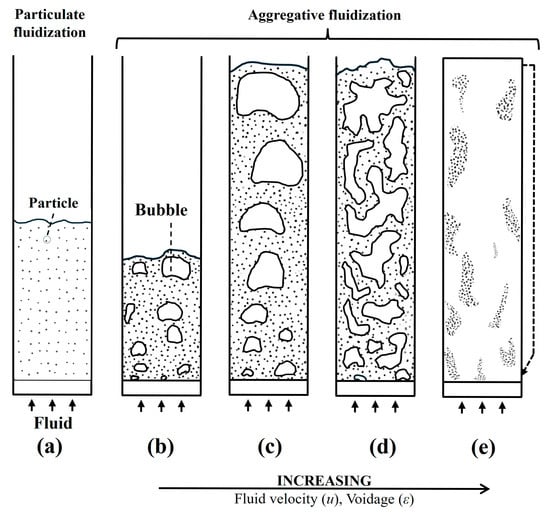
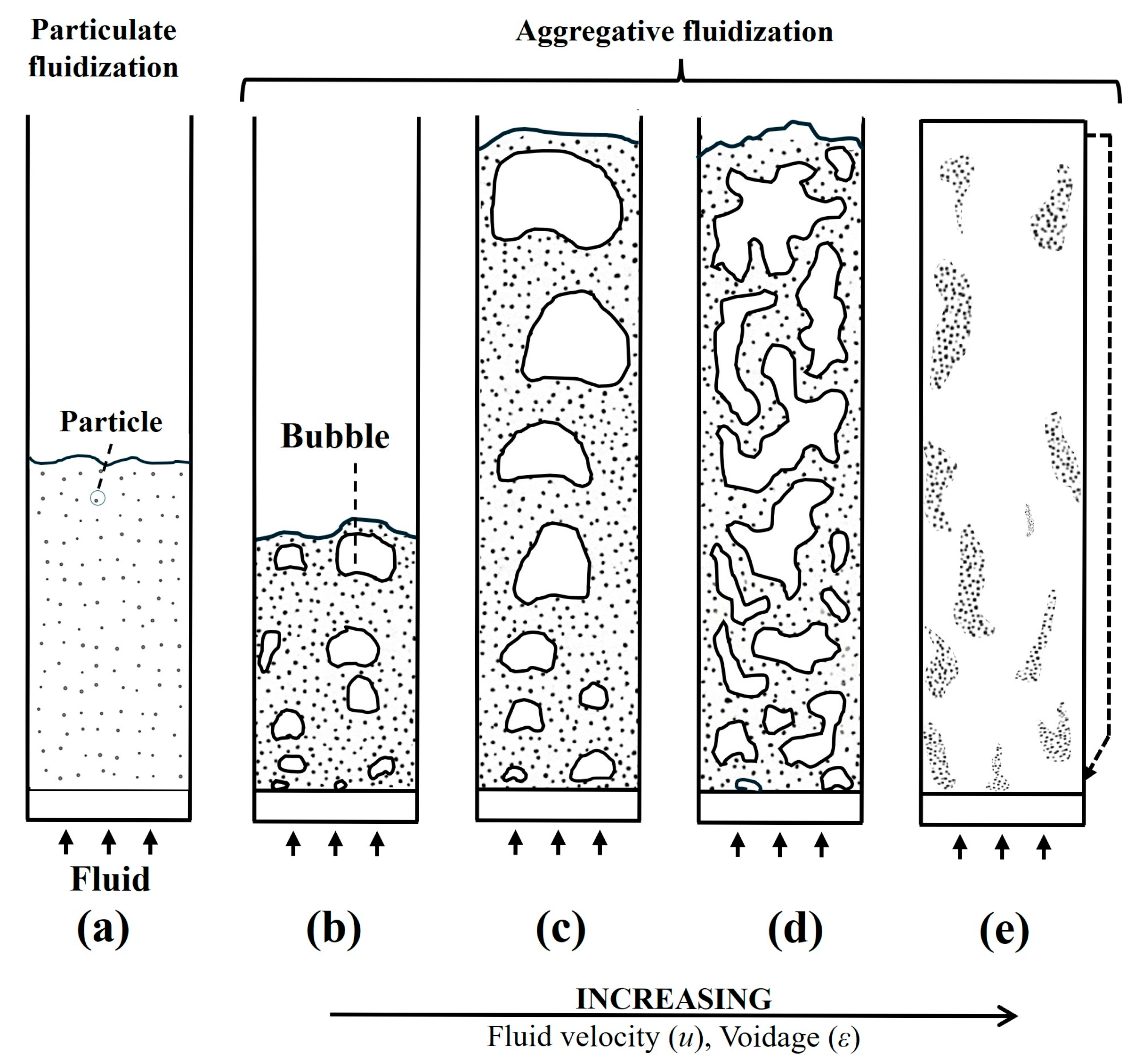
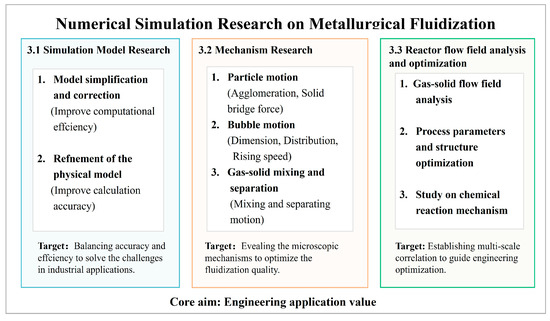
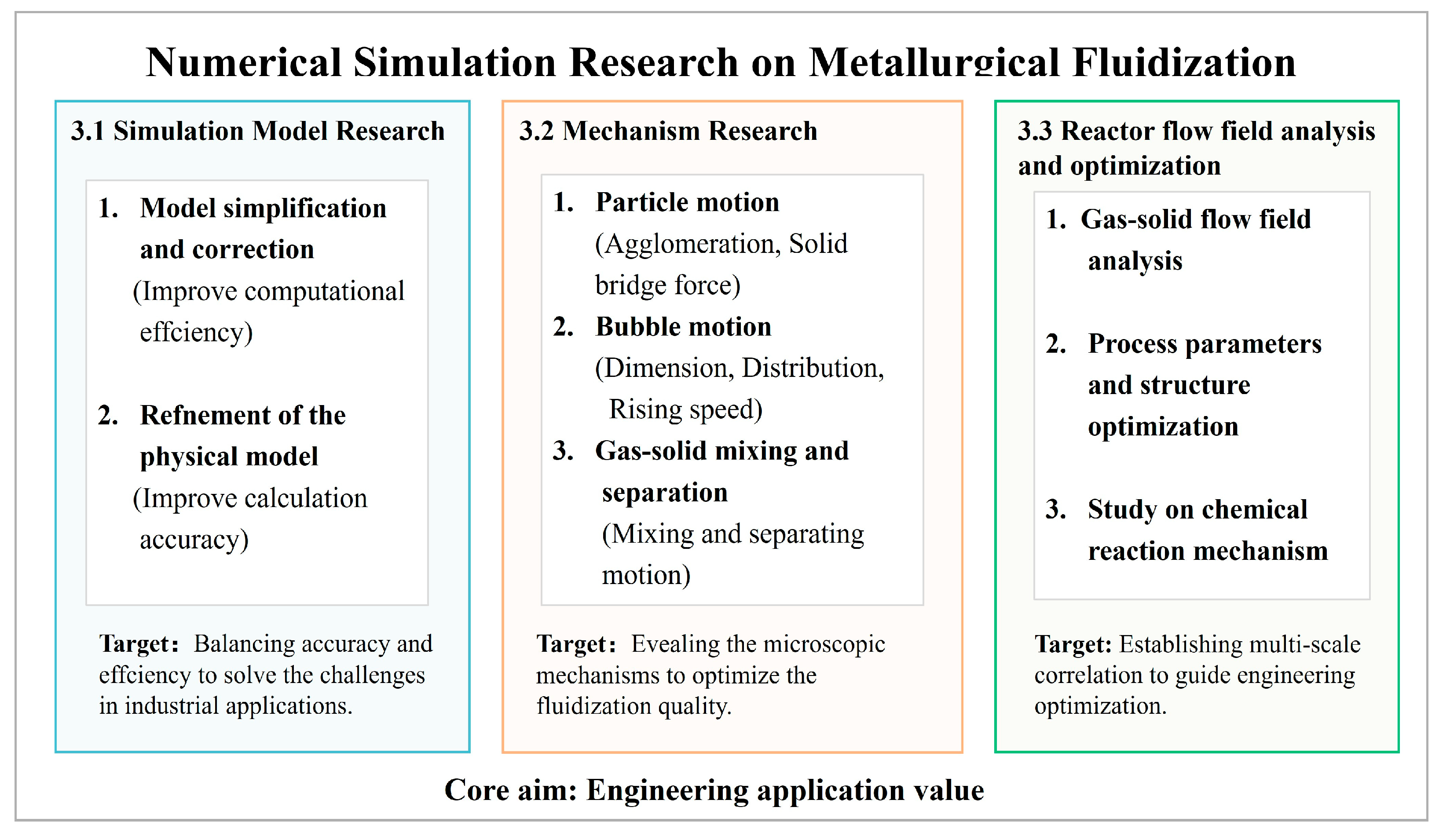
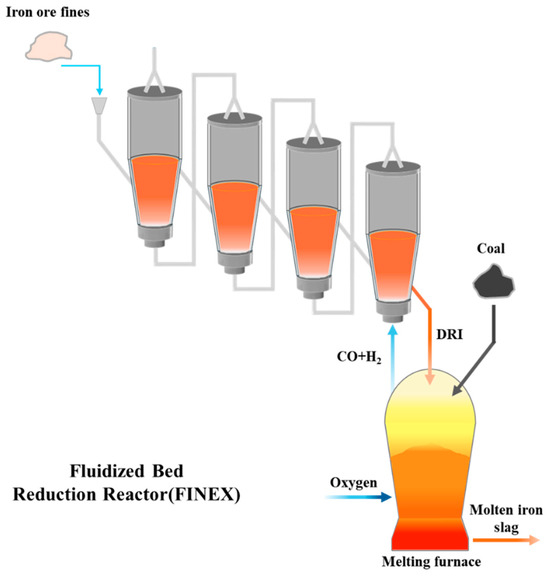
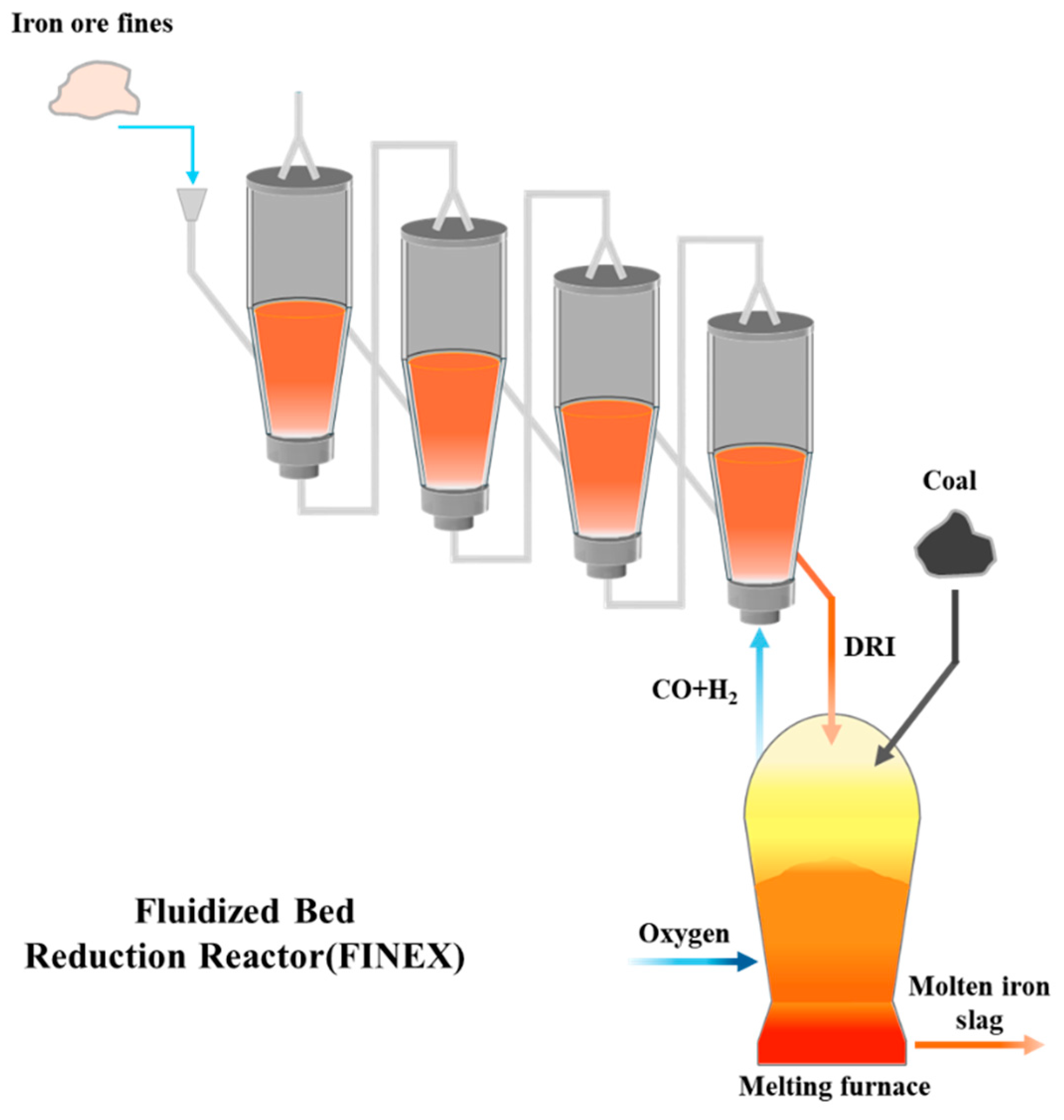
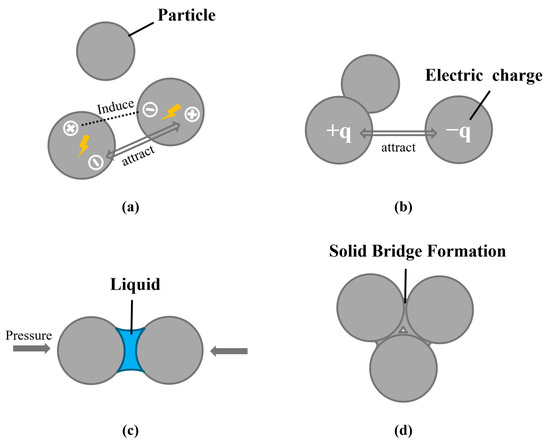
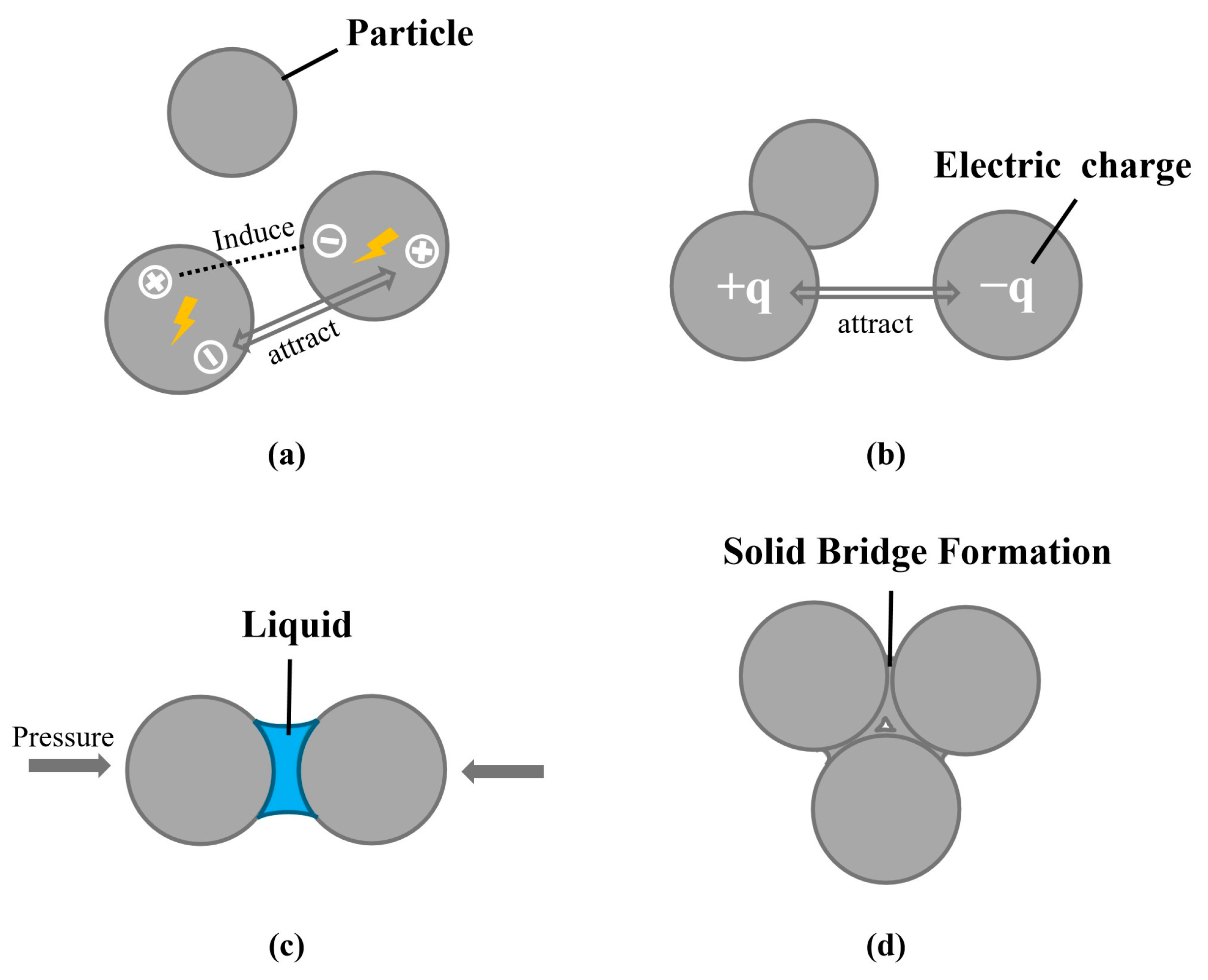
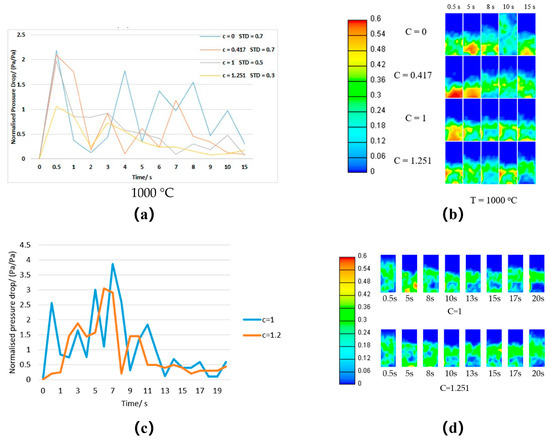
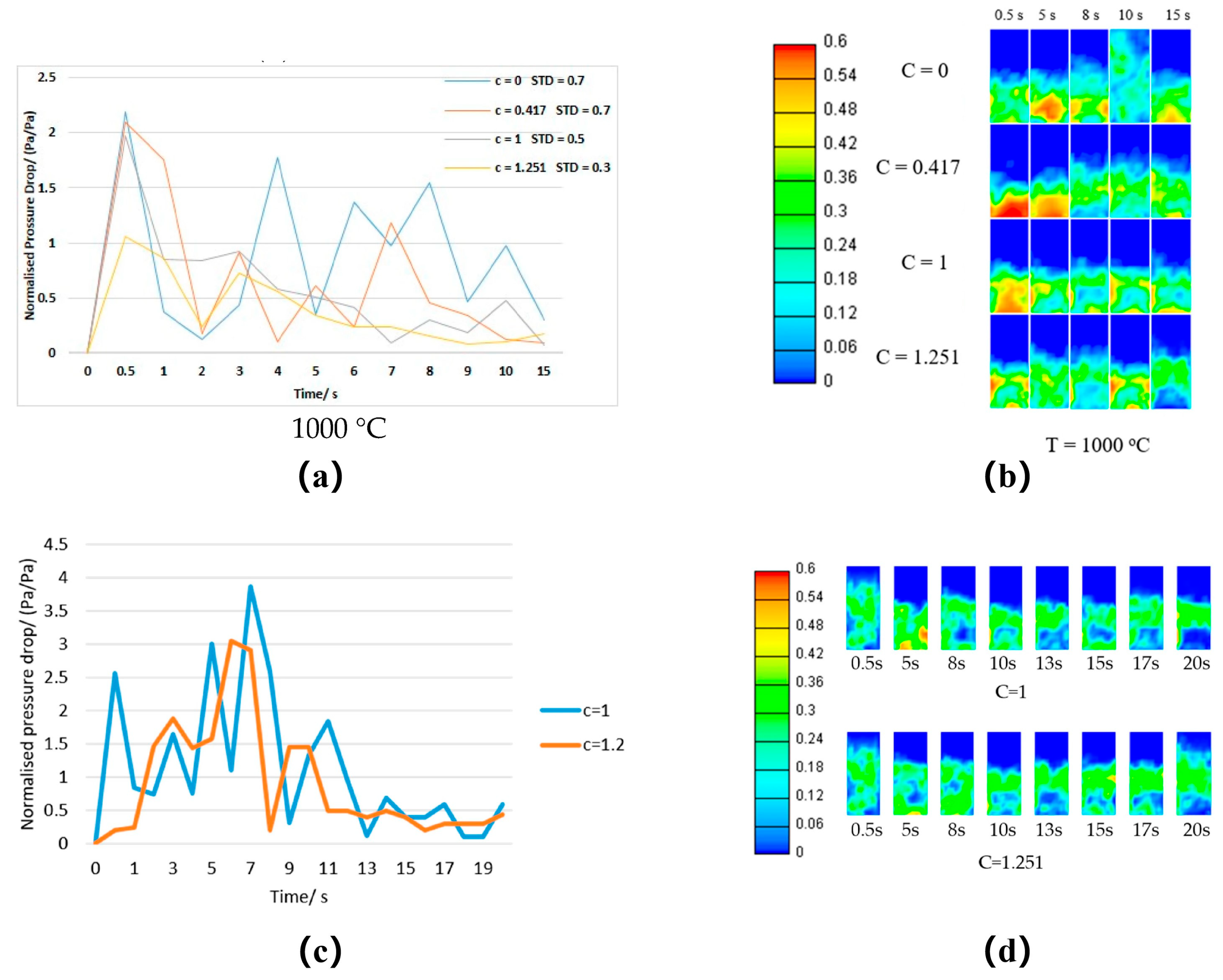
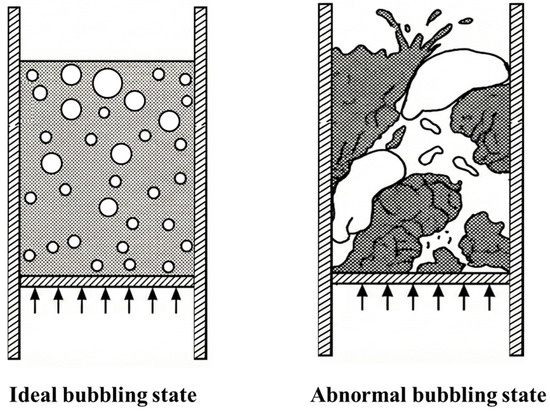
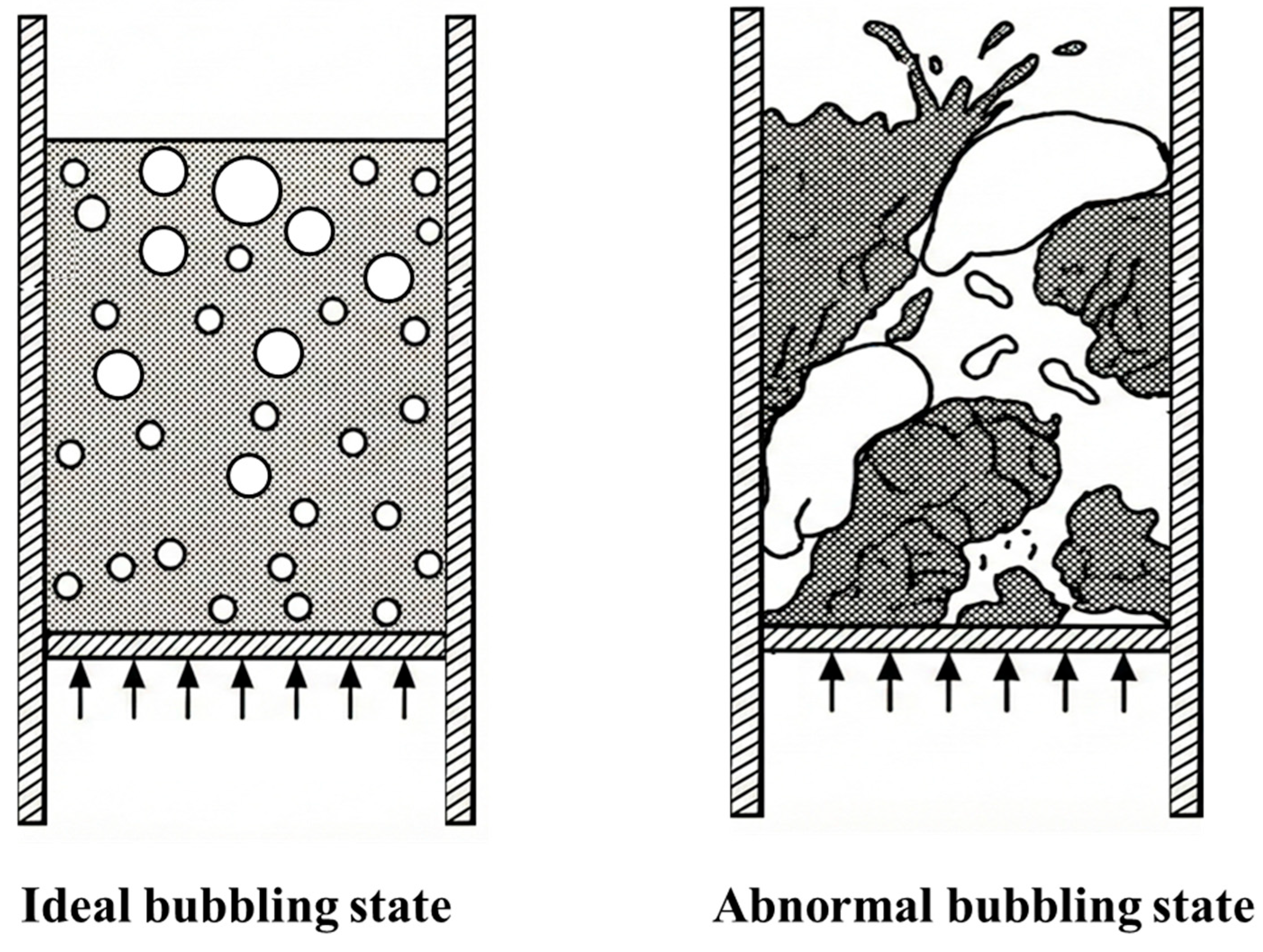
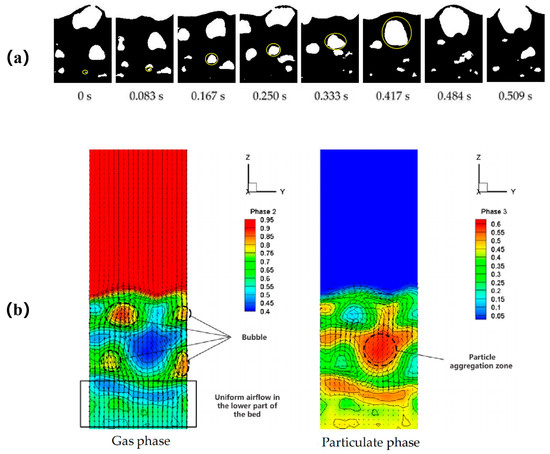
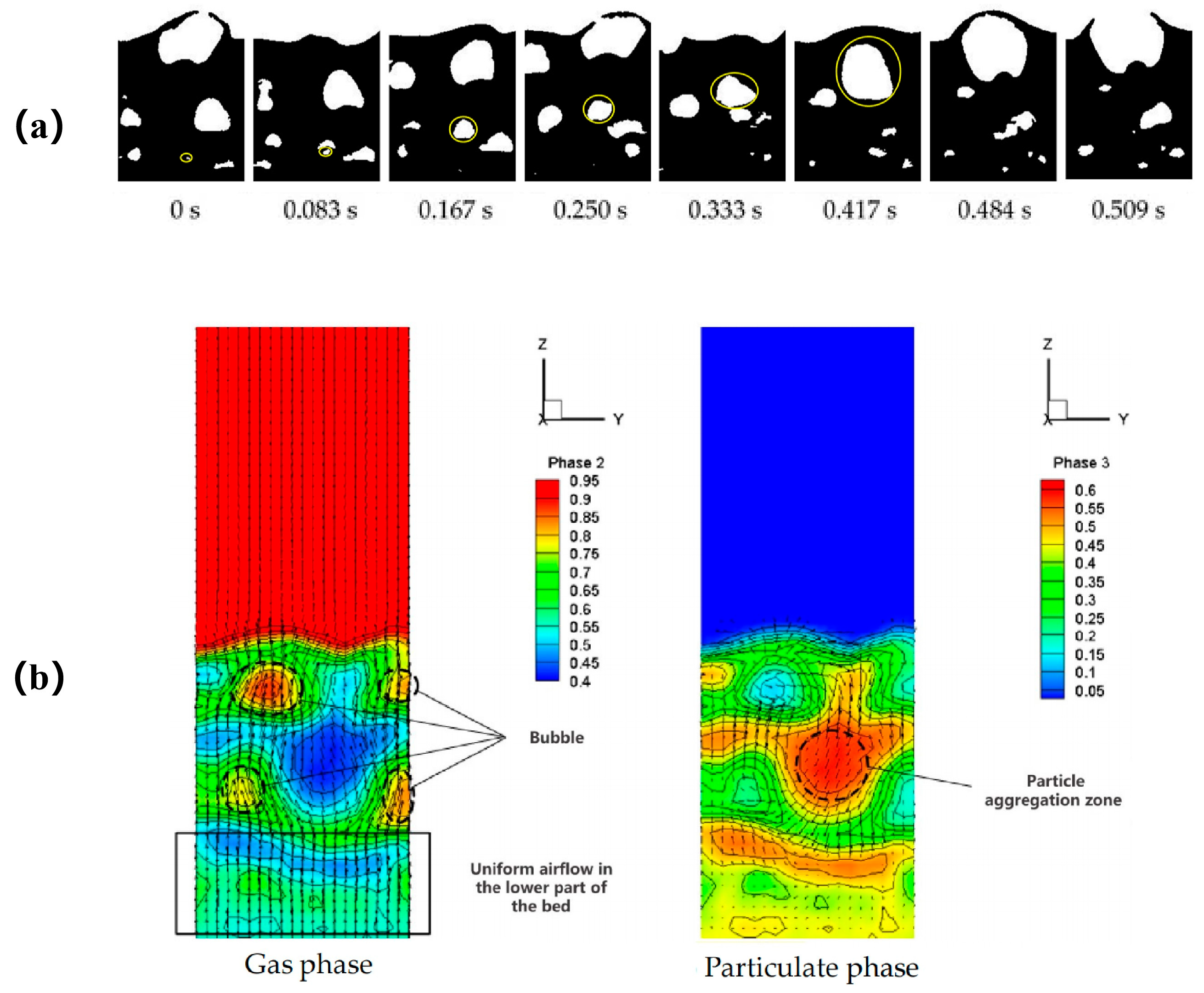
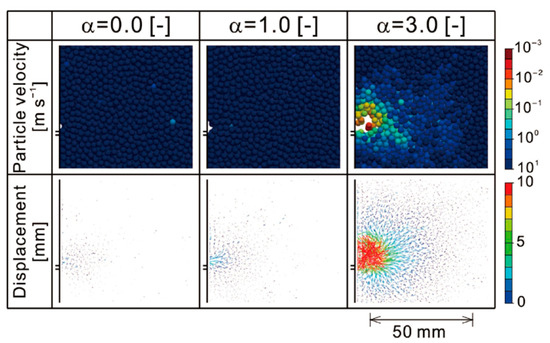
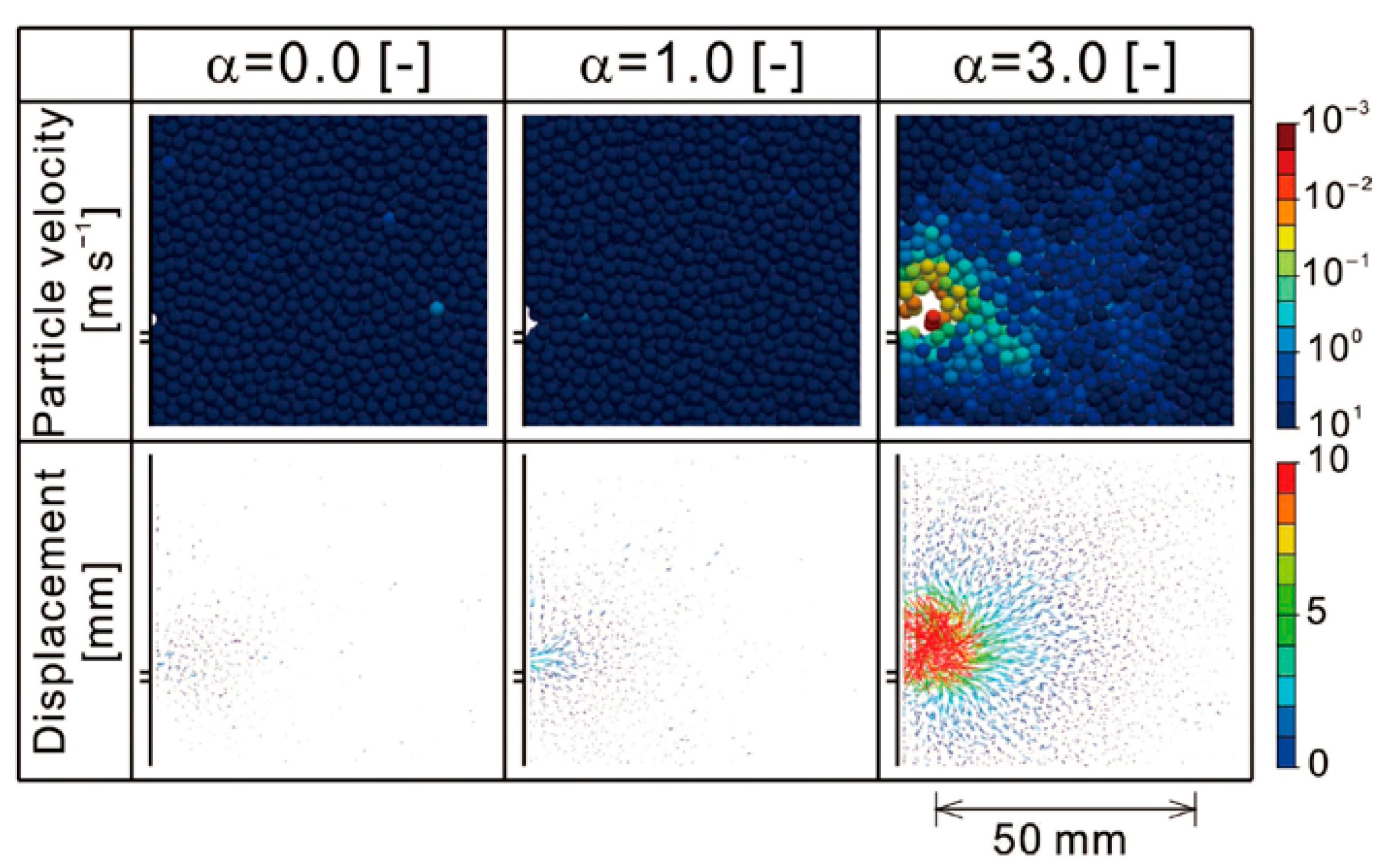
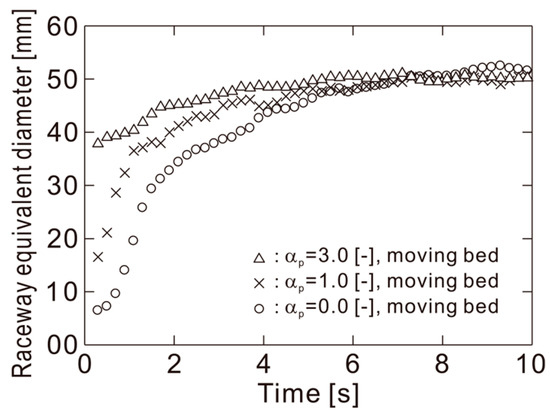
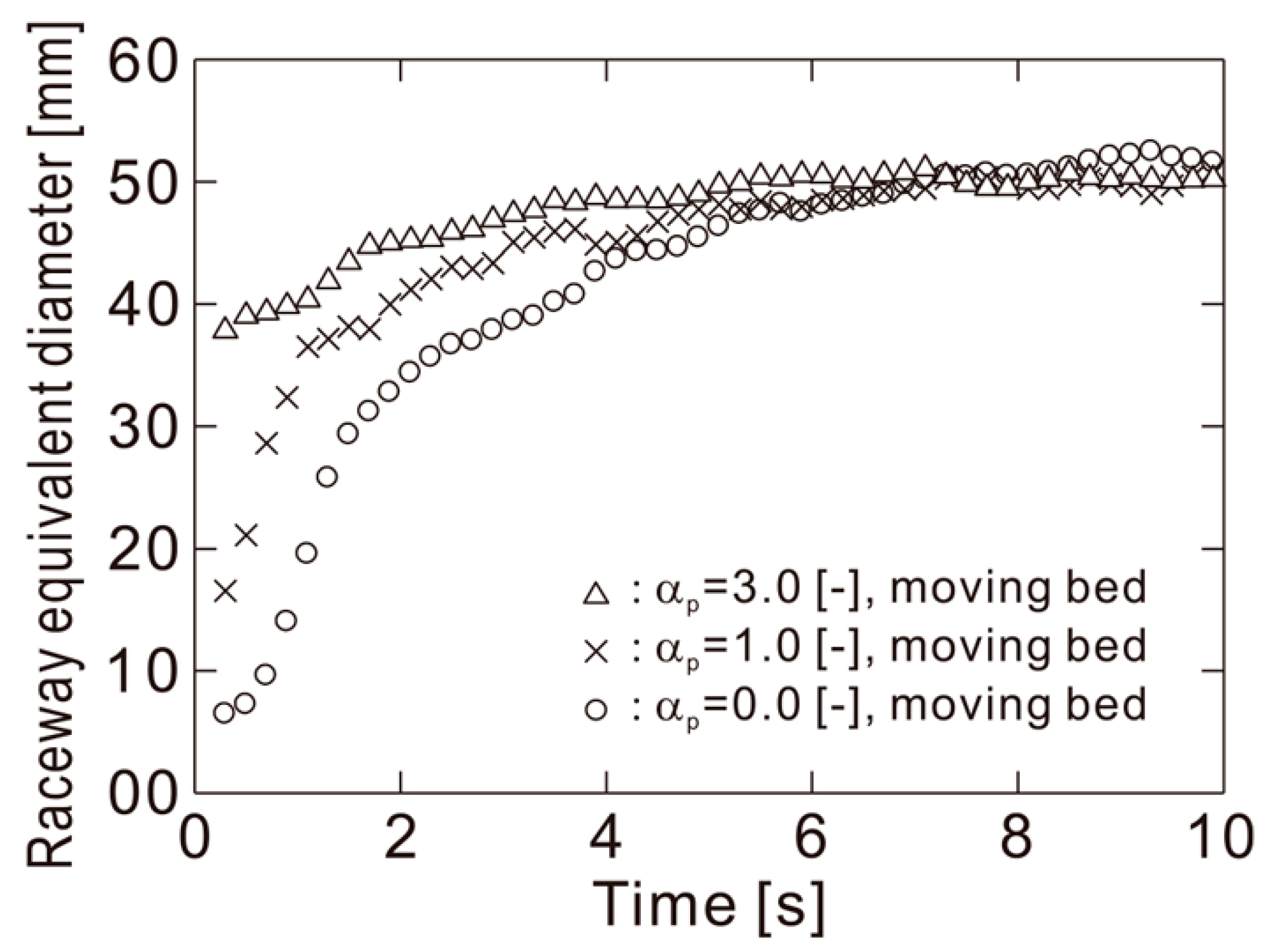
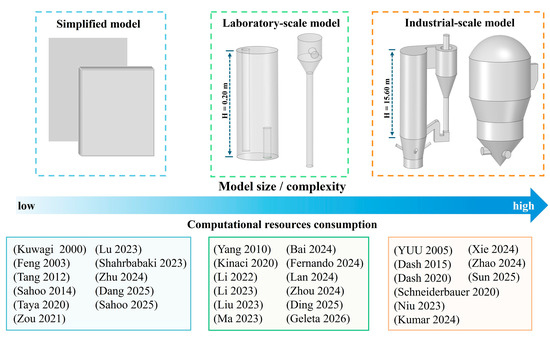
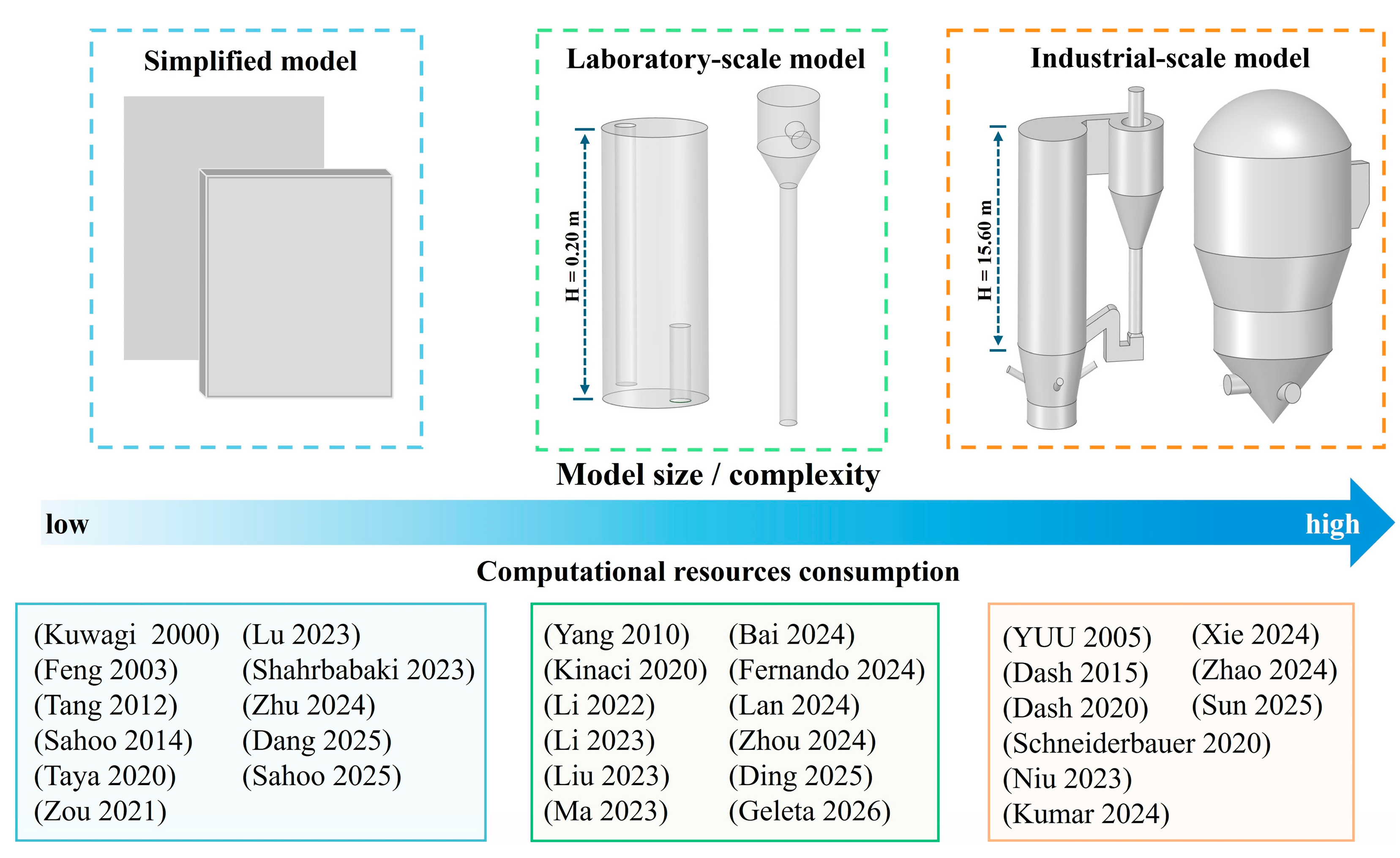
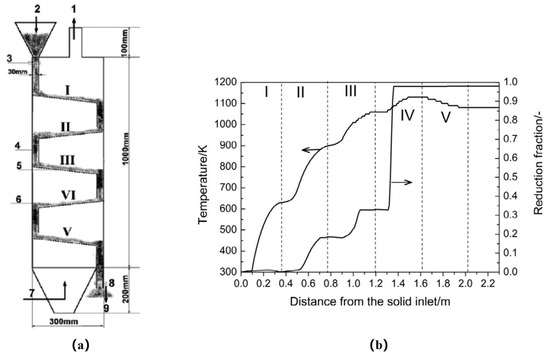
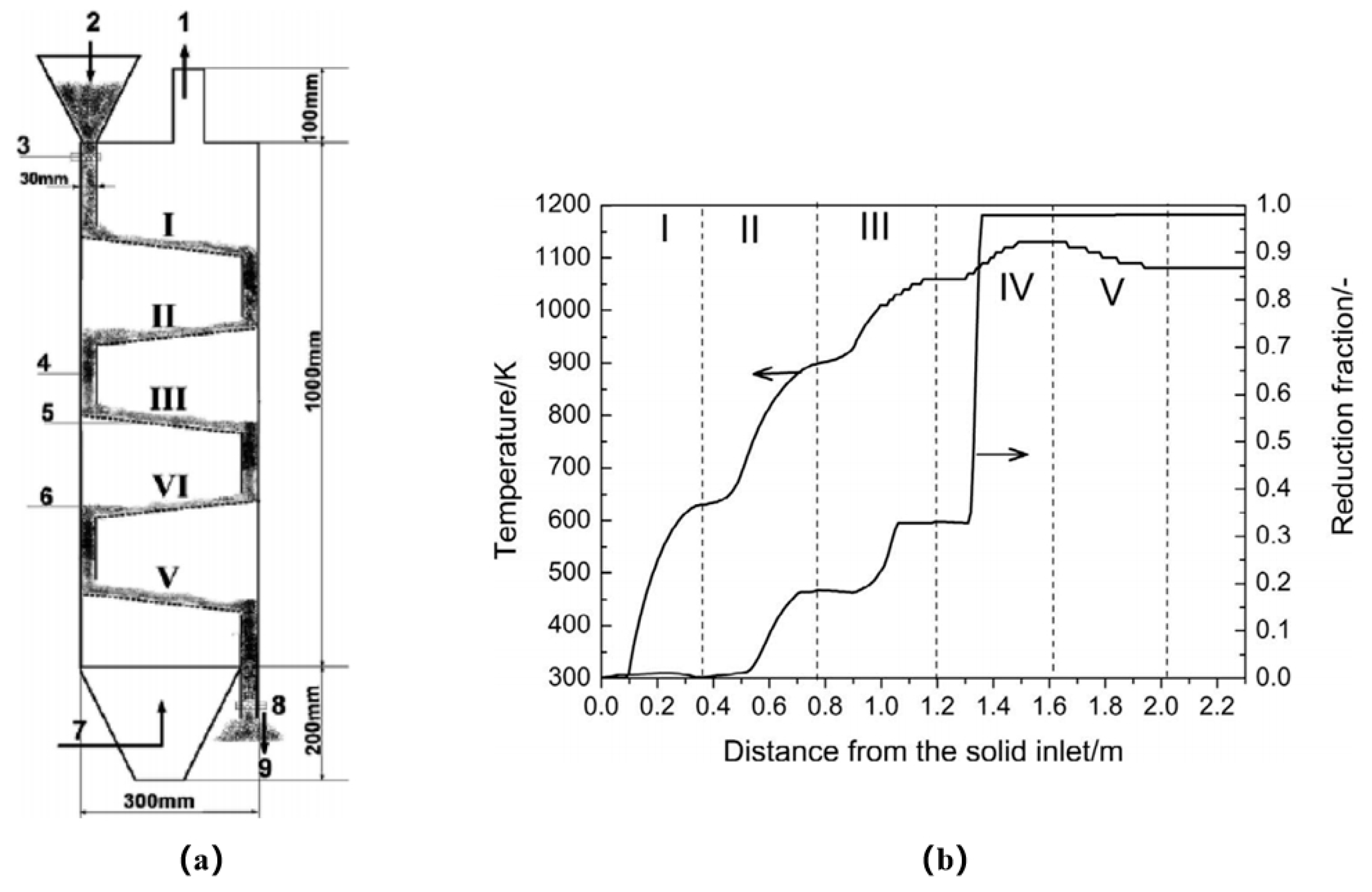

Disclaimer/Publisher’s Note: The statements, opinions and data contained in all publications are solely those of the individual author(s) and contributor(s) and not of MDPI and/or the editor(s). MDPI and/or the editor(s) disclaim responsibility for any injury to people or property resulting from any ideas, methods, instructions or products referred to in the content. |
© 2026 by the authors. Licensee MDPI, Basel, Switzerland. This article is an open access article distributed under the terms and conditions of the Creative Commons Attribution (CC BY) license.