Kerr-Based Interrogation of Lightning-Impulse Field Transients in Oil–Cellulose Composites and Their Interfacial Charging Effect

 and
and
Abstract
1. Introduction
2. Measurement Principle and Apparatus for Spatial Electric Field in Oil–Paper Insulation Under Impulse Voltage
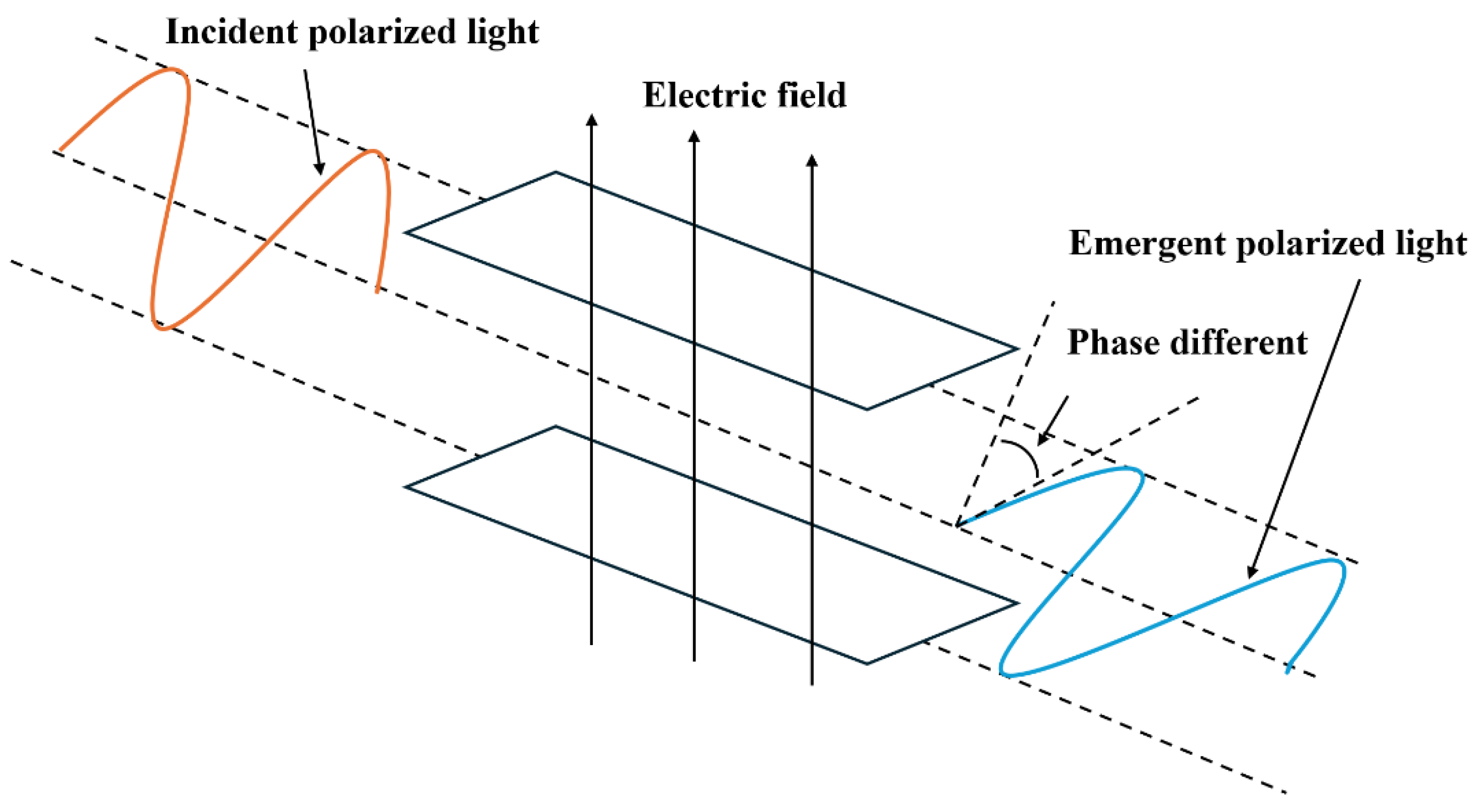
2.1. Kerr Effect
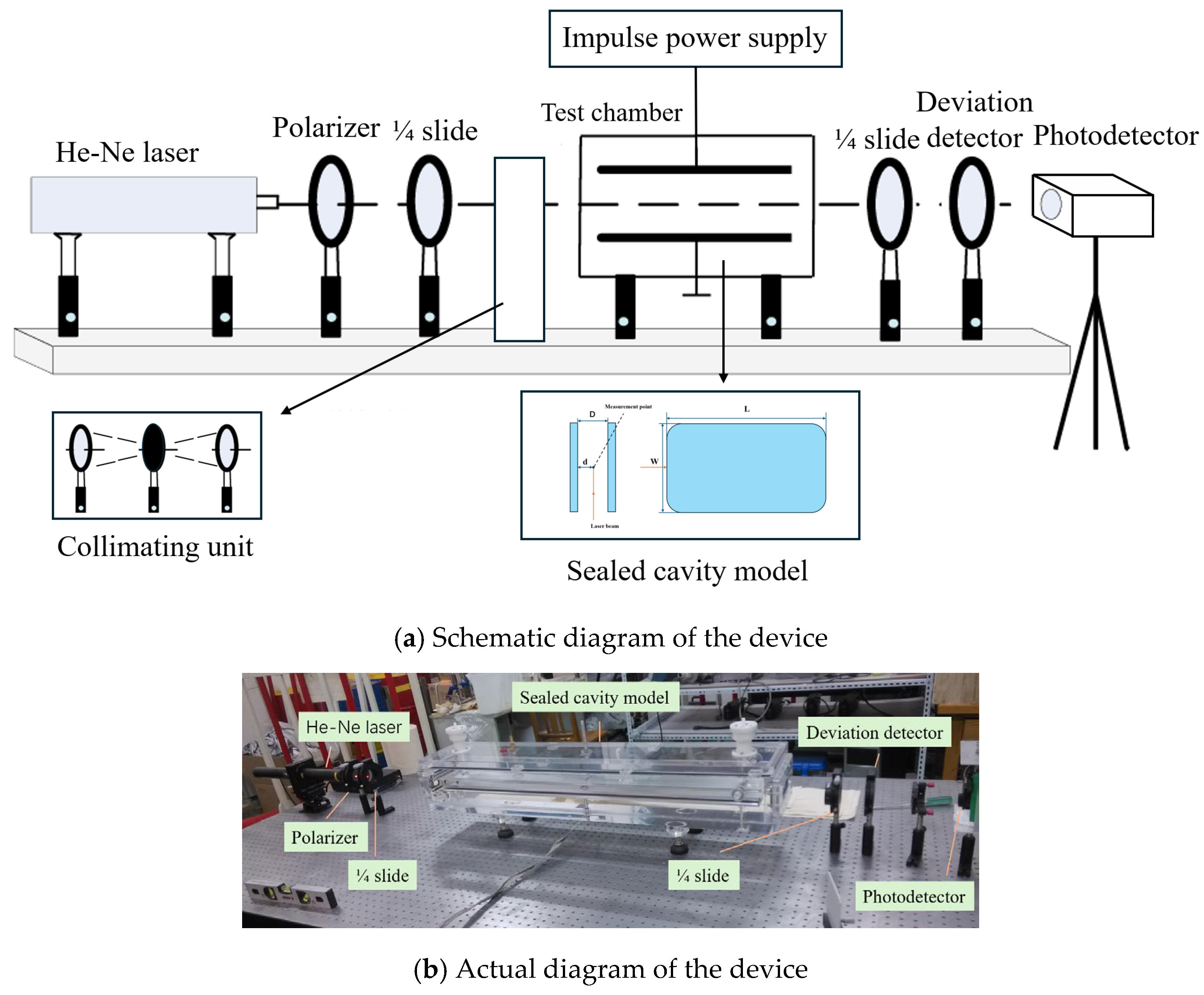
2.2. Measurement Platform
2.3. Experimental Methods
3. Space Charge Characteristics in Transformer Oil Under Impulse Voltage
3.1. Electric Field Characteristics Within the Oil Gap Under Impulse Voltage
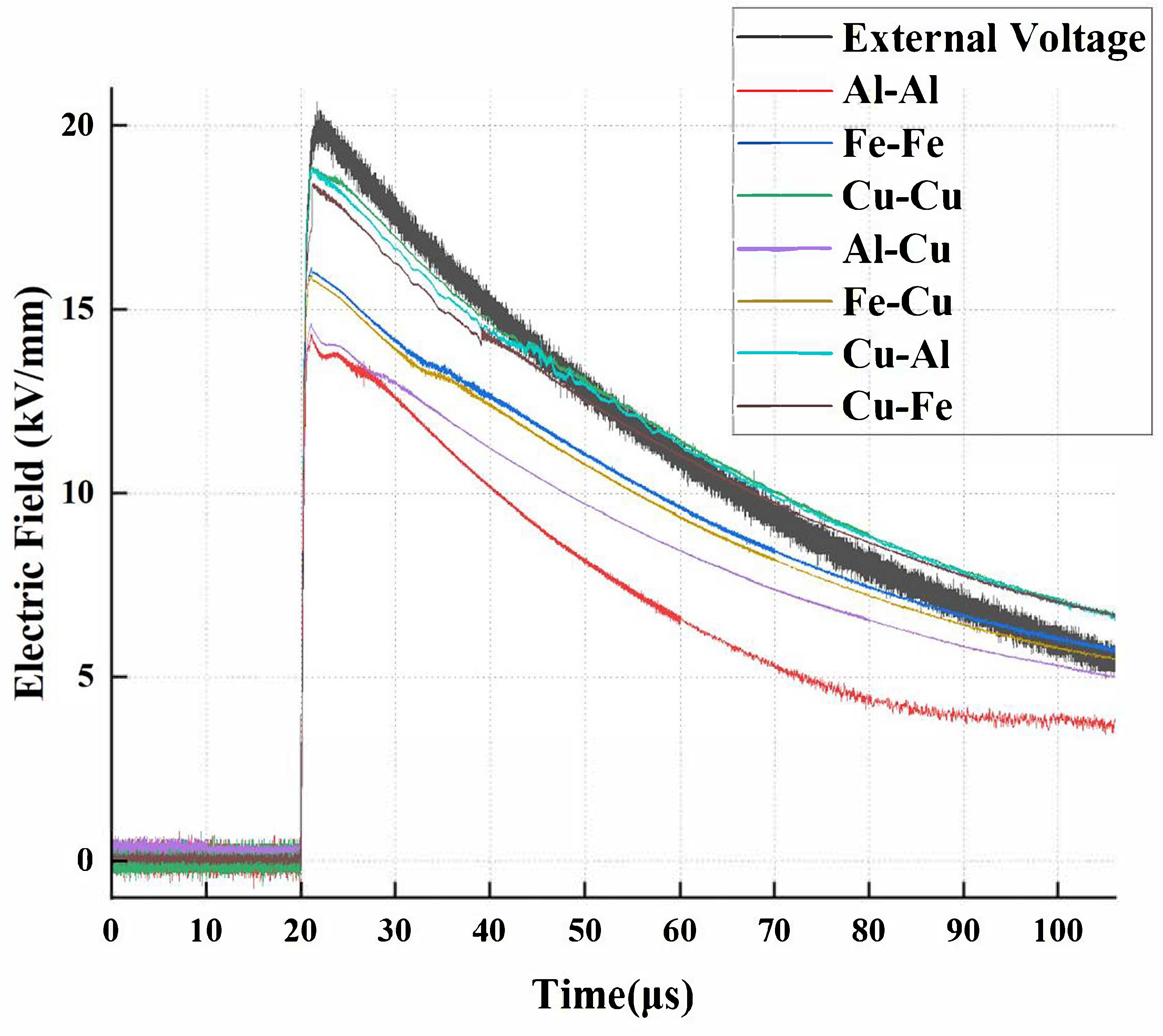
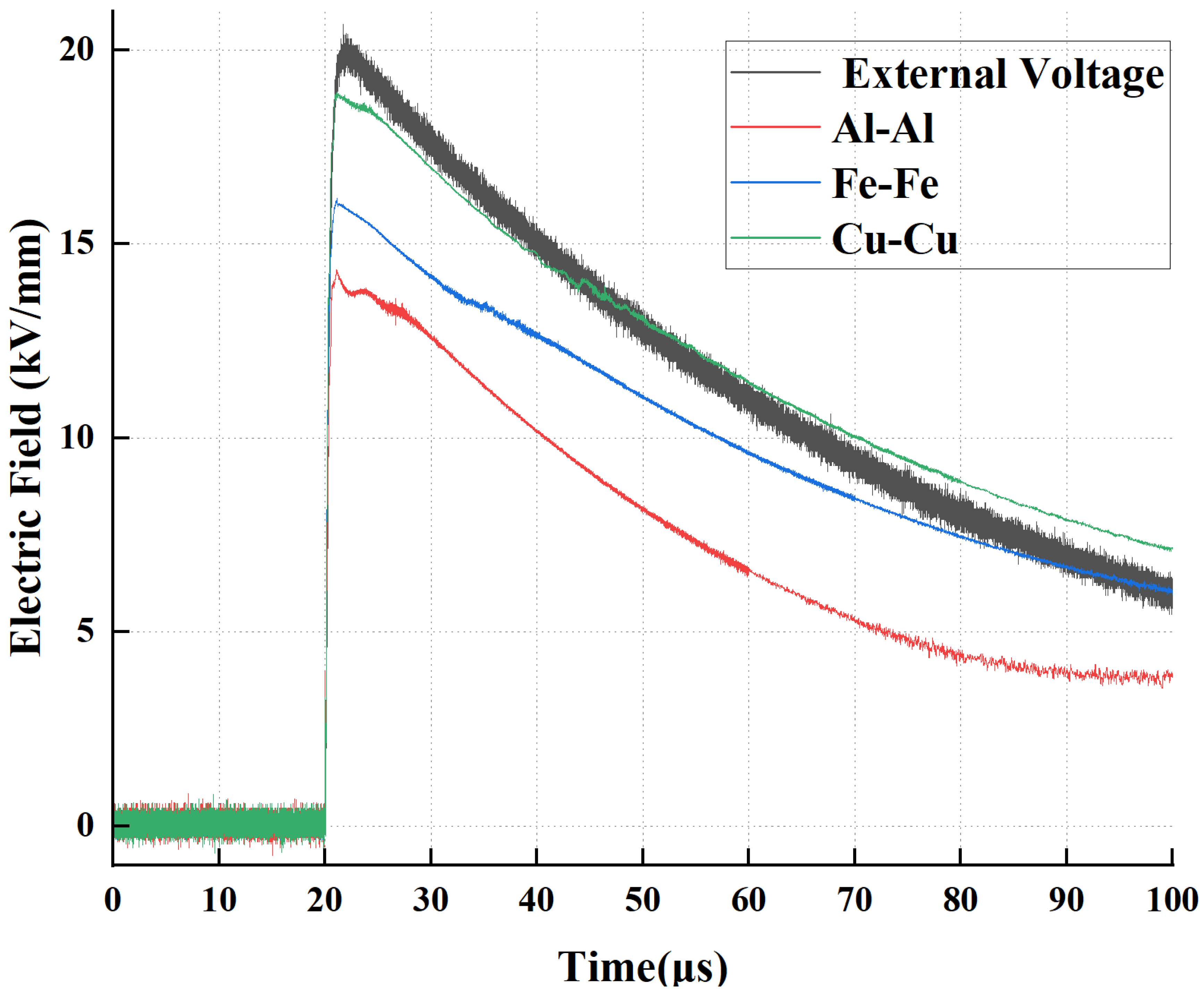
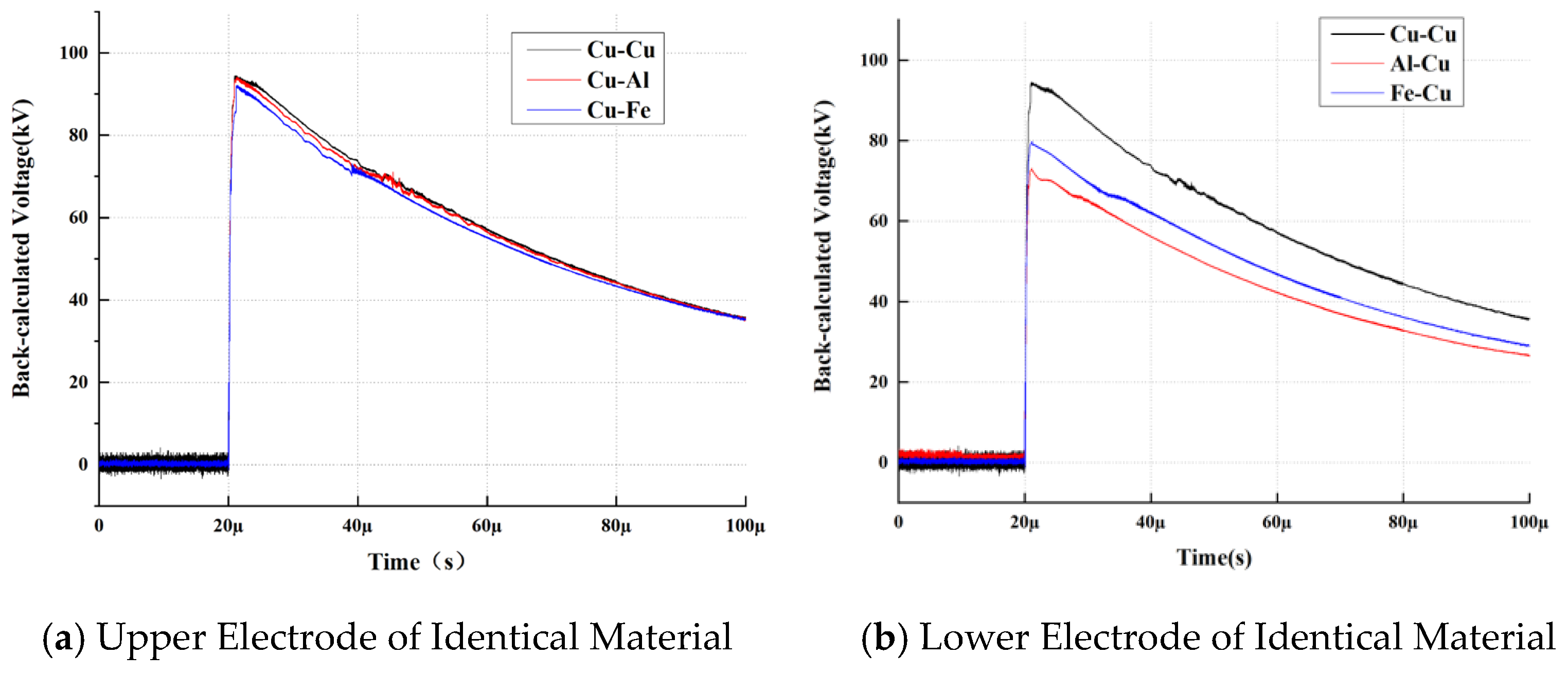
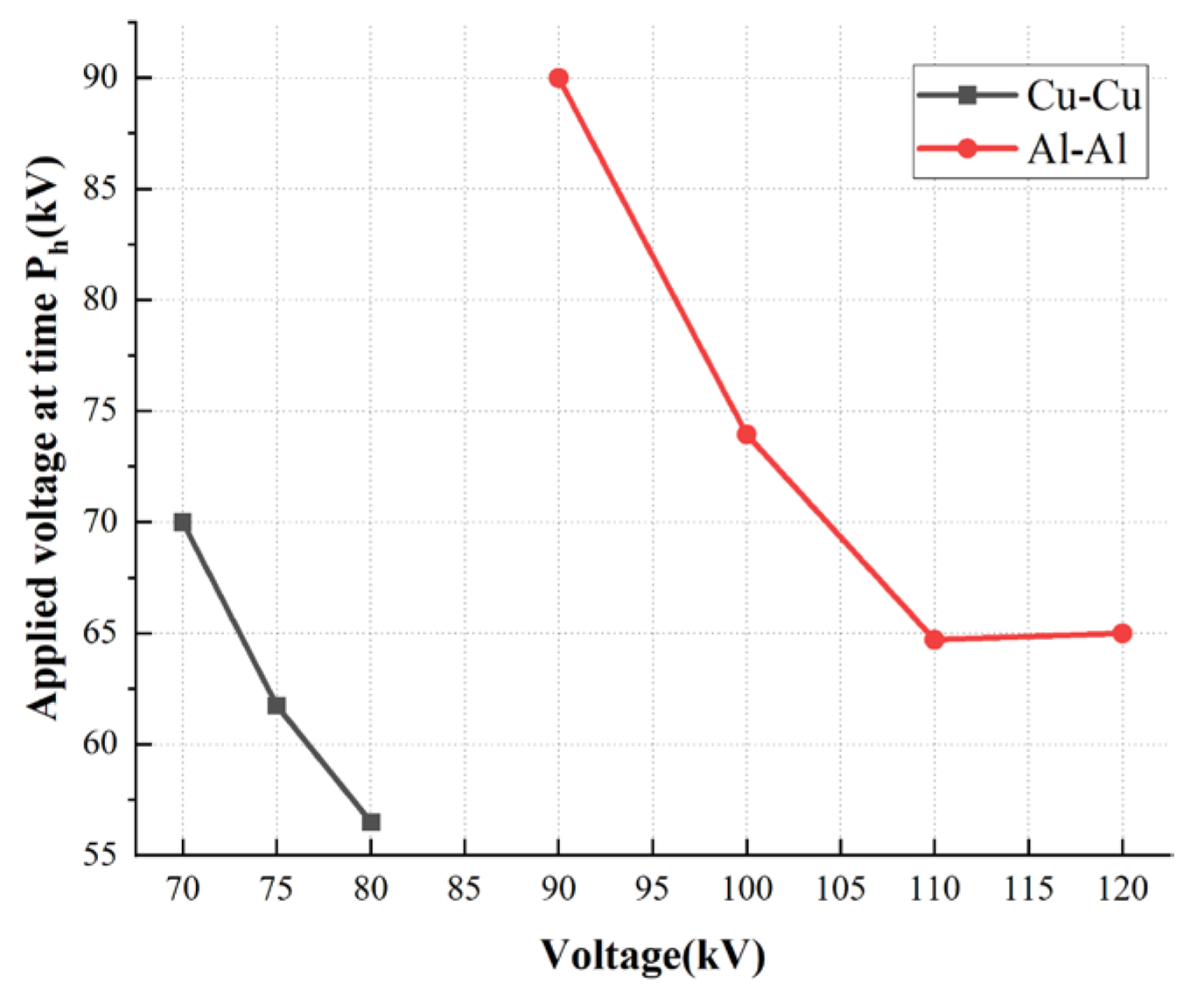
3.1.1. Comparative Analysis of Electric Field Characteristics Within the Oil Gap Under Identical Voltage for Different Metal Electrode Combinations
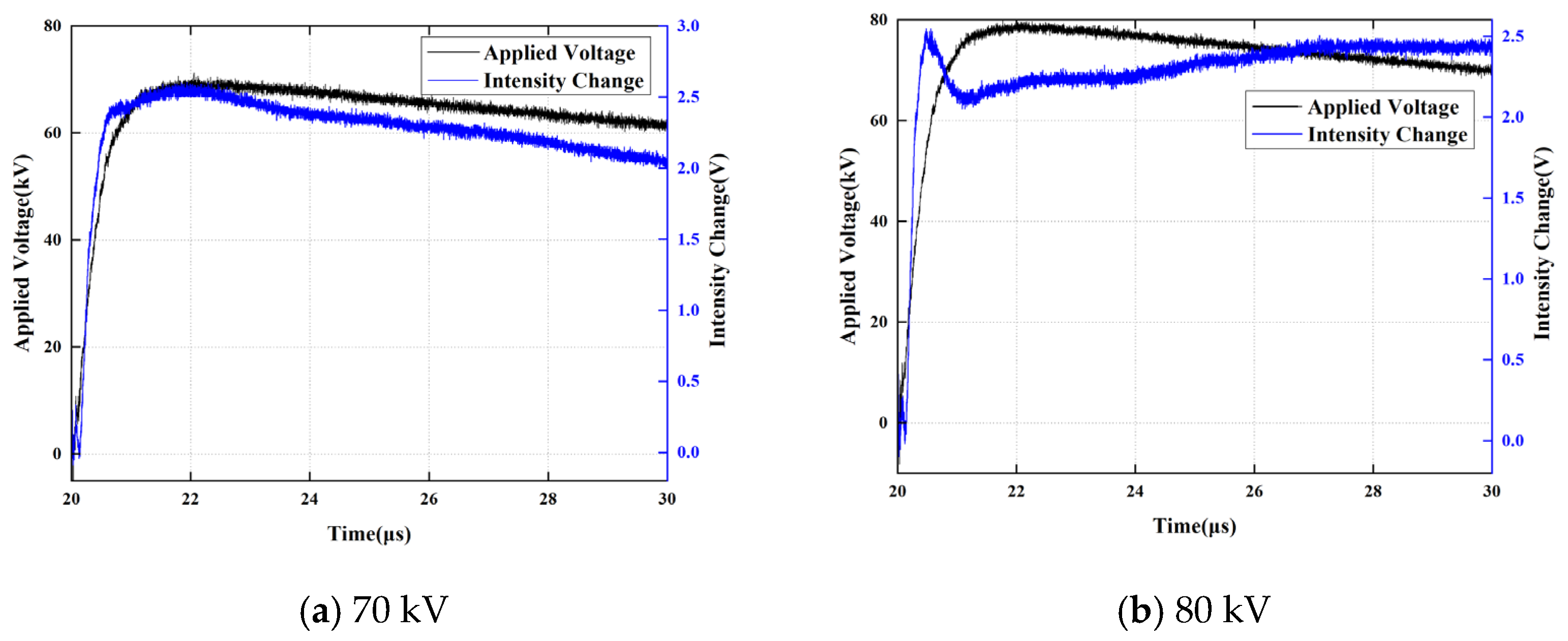
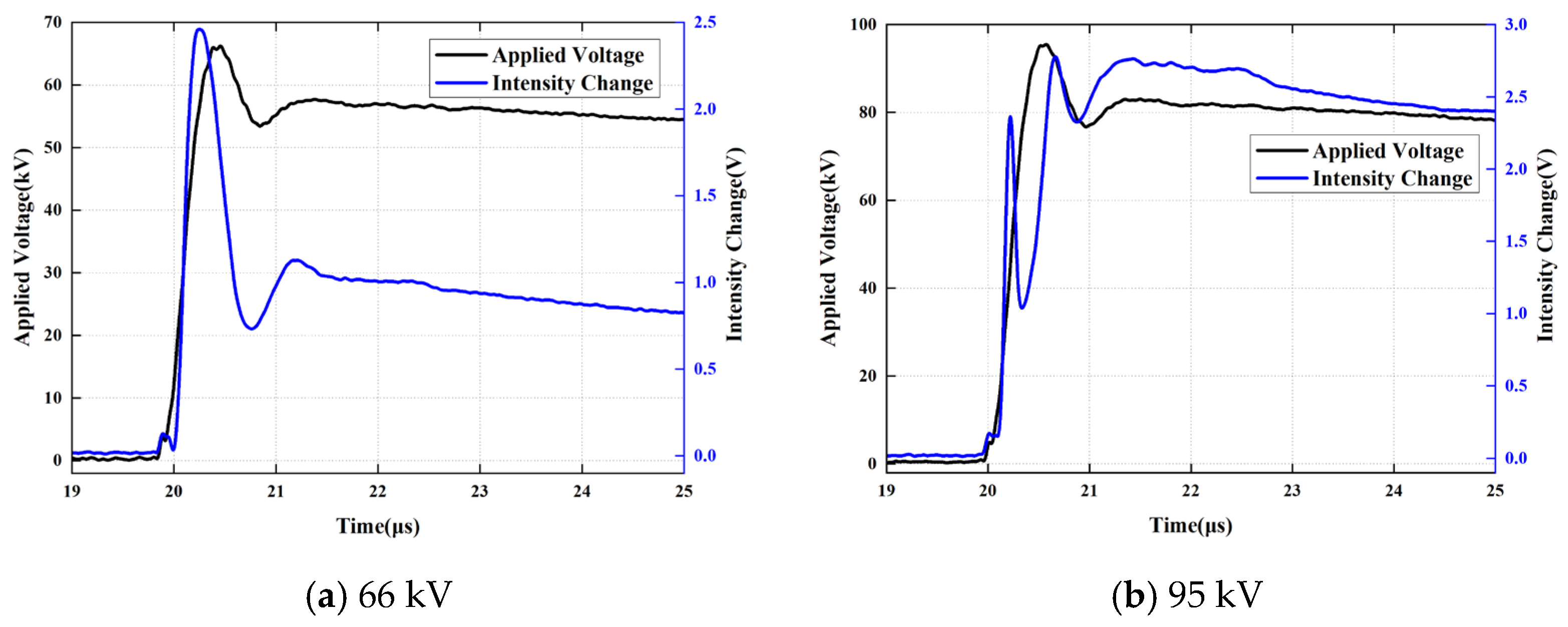
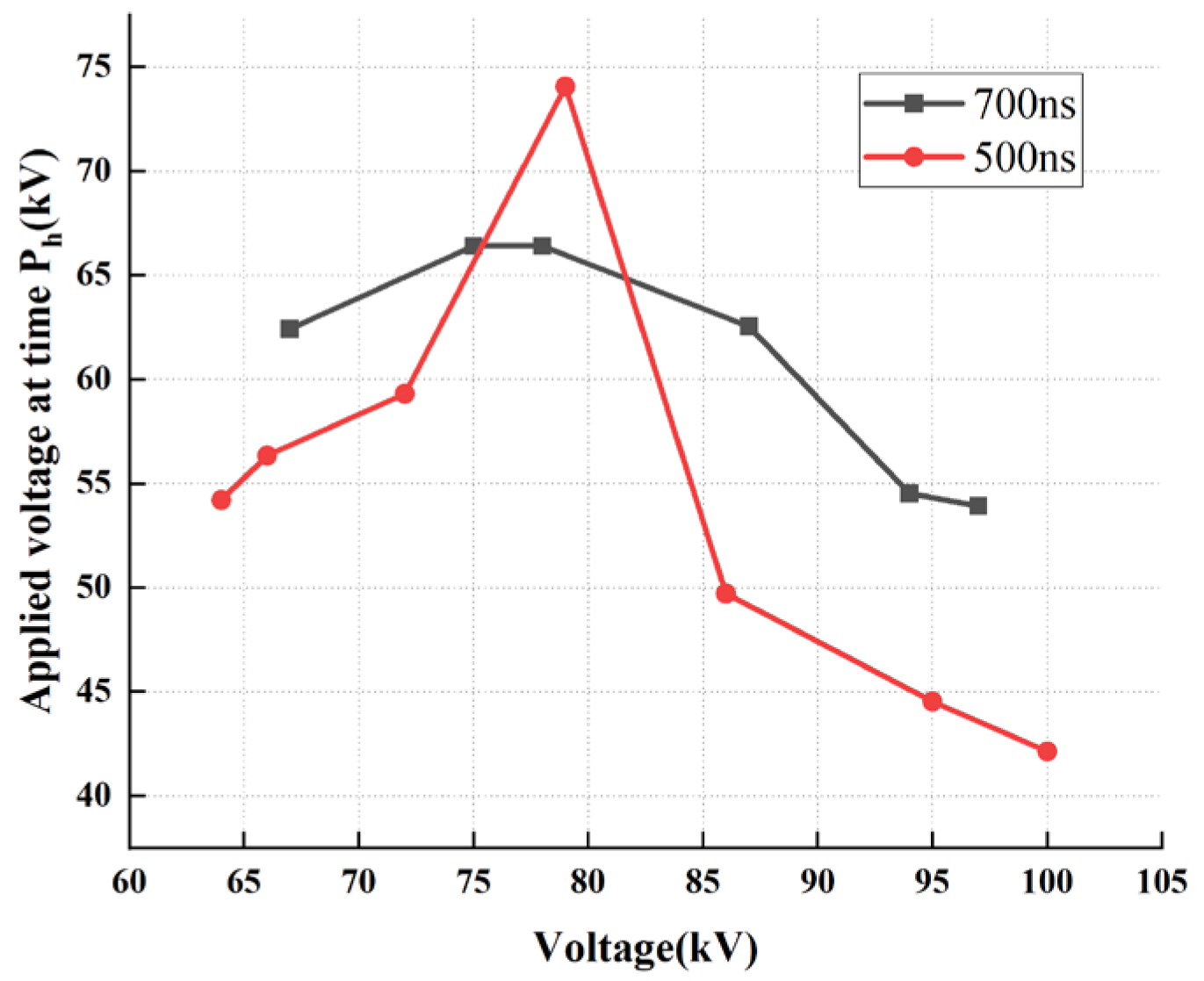
3.1.2. Comparative Analysis of Electric Field Characteristics Within the Oil Gap Under Varying Voltage Amplitudes for Identical Metal Electrode Combinations
3.2. Dynamic Characteristics of Space Charge in Transformer Oil Under Impulse Voltage
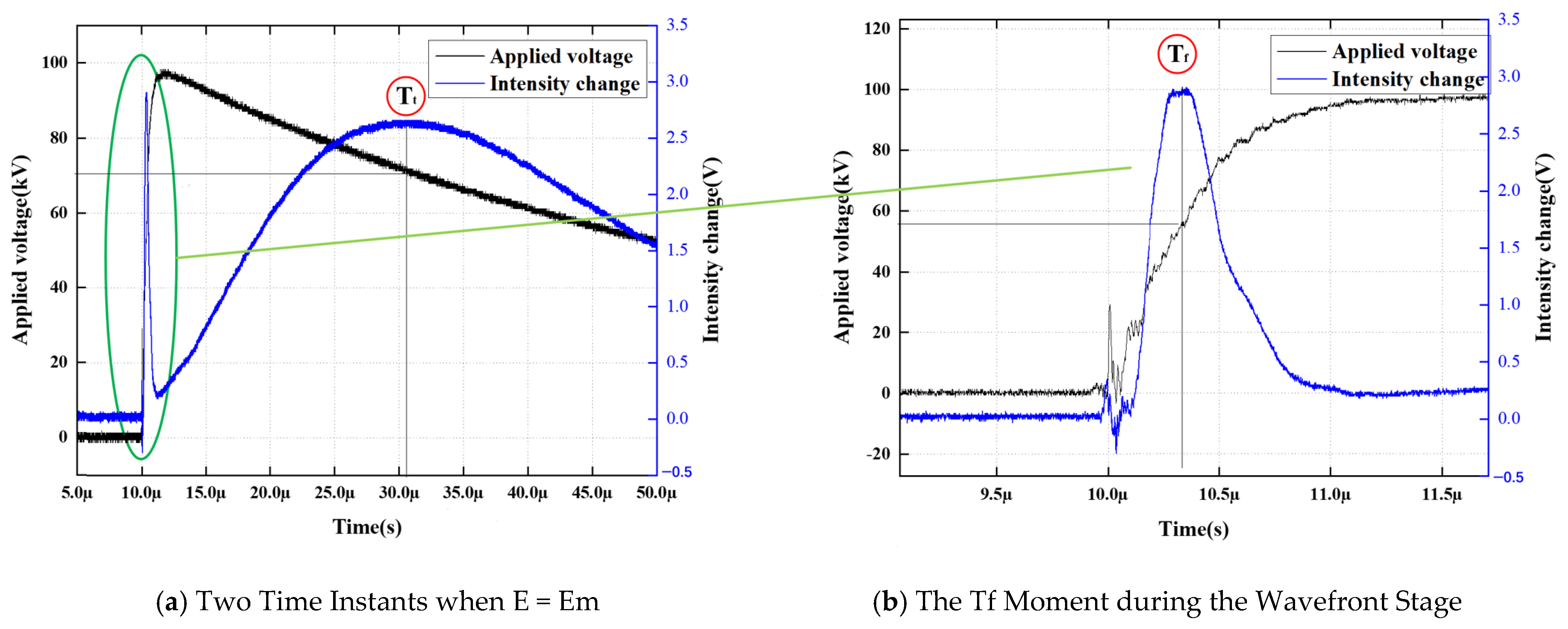
3.2.1. Analysis of Back-Calculated Voltage During the Wavefront Phase for Different Metal Electrode Combinations
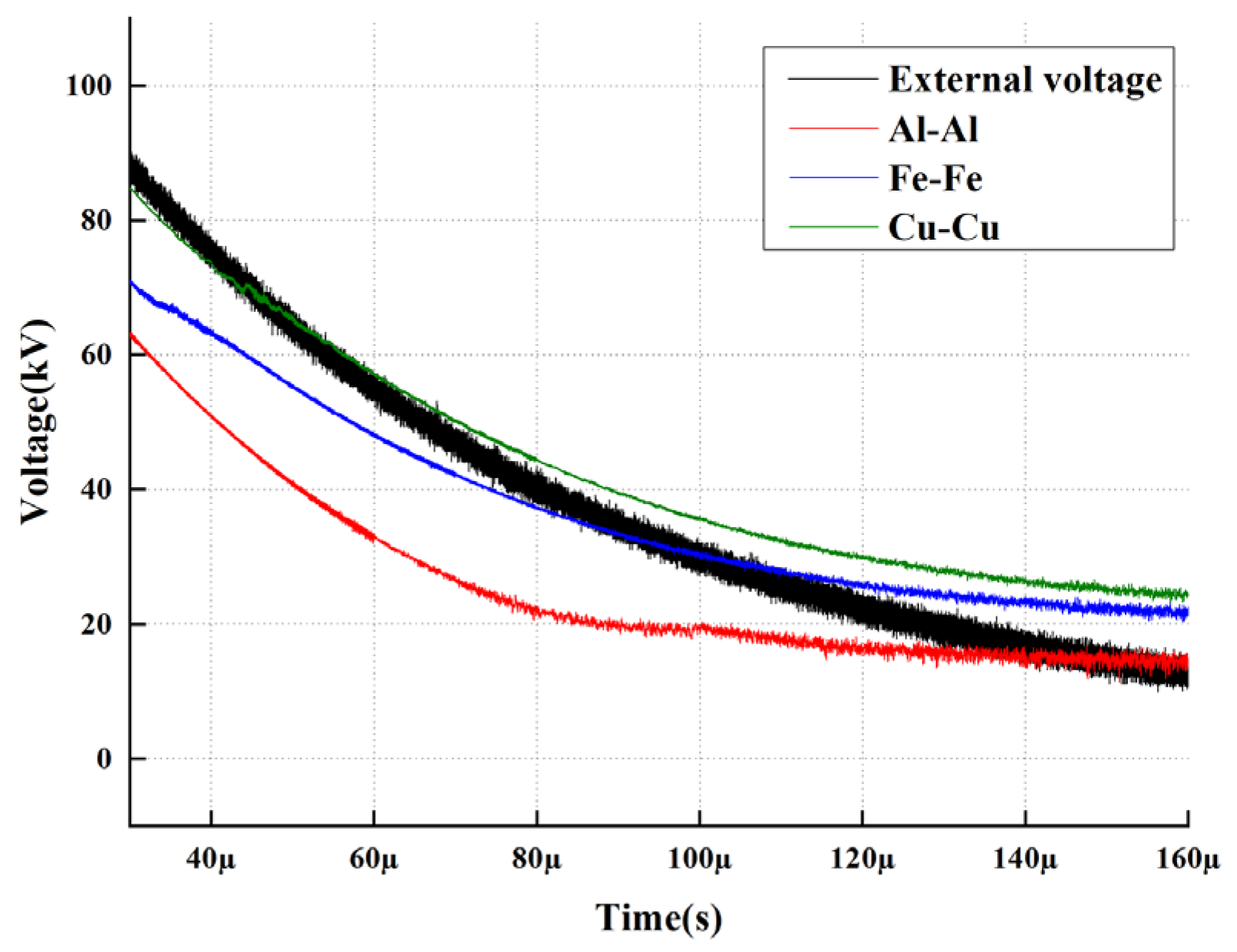
3.2.2. Analysis of Back-Calculated Voltage During the Wavetail Phase for Different Metal Electrode Combinations
4. Spatial Electric Field Characteristics and Charge Injection Mechanisms
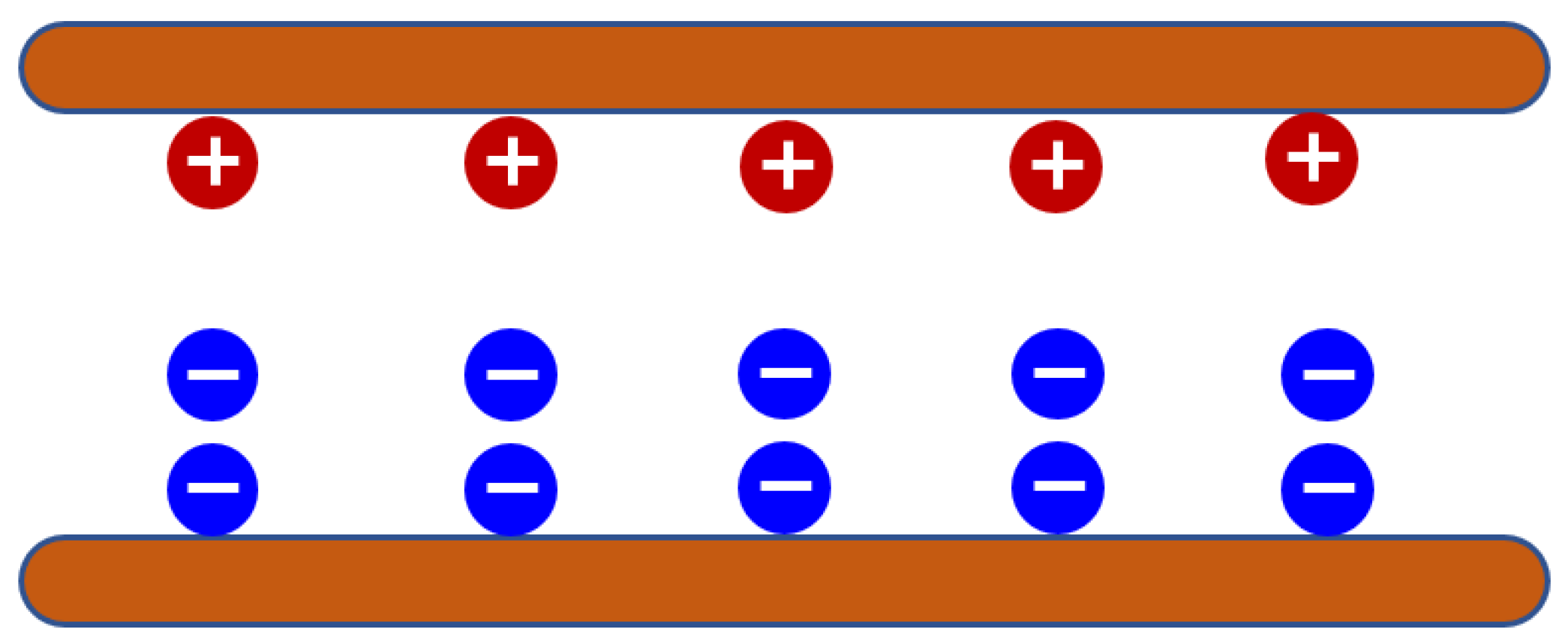
4.1. Spatial Electric Field Characteristics and Static/Dynamic Charge Distributions
- (1)
- The Transient Static Regime:
- (2)
- The Quasi-Steady Dynamic Regime:
4.2. Charge Transport Processes
4.2.1. Analysis of Positive Charge Transport Processes
4.2.2. Analysis of Negative Charge Transport Processes
- (1)
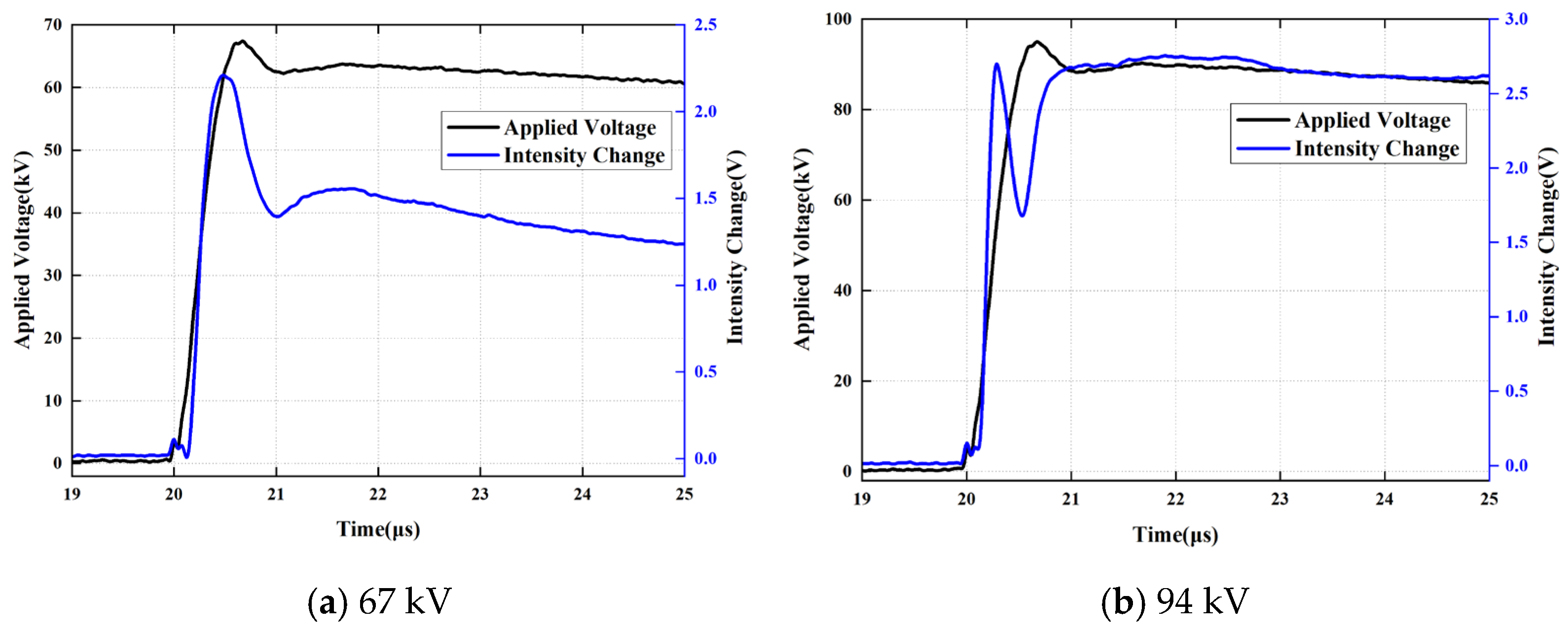
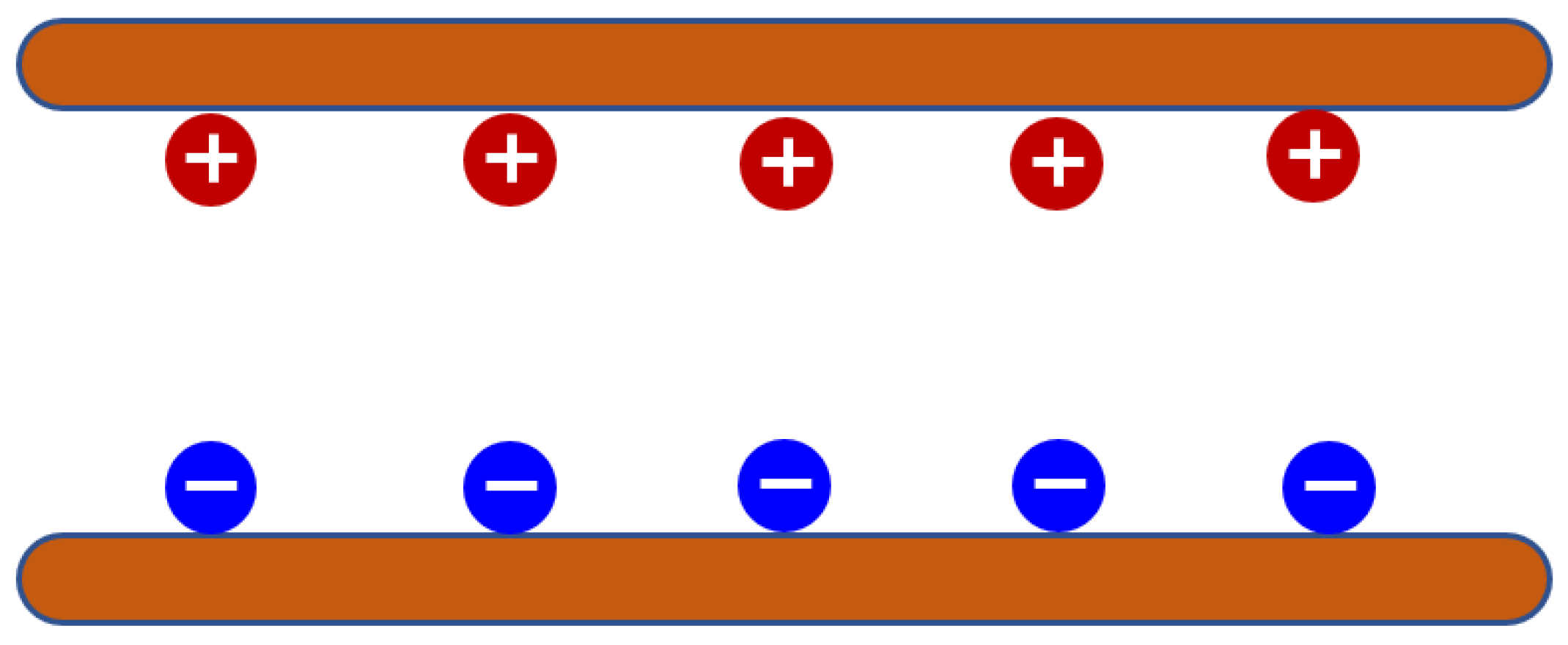
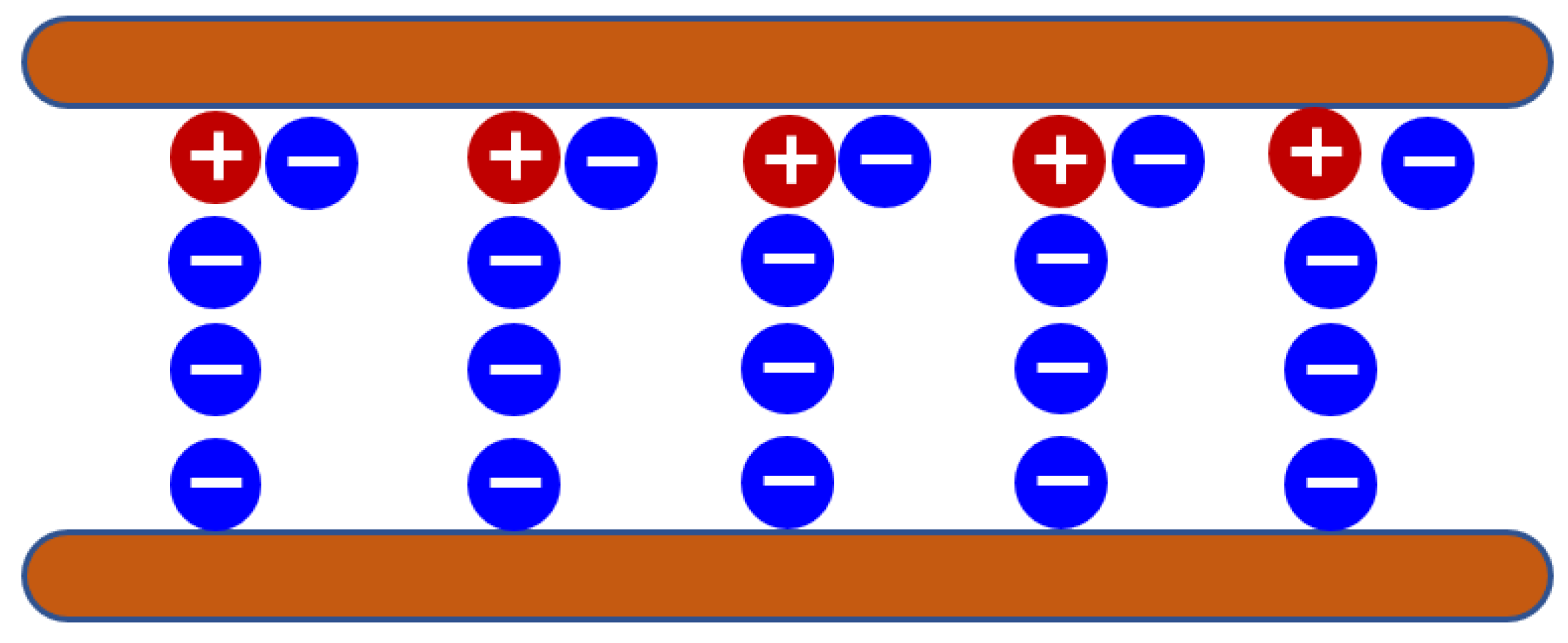
- The rate of increase of the applied electric field E1, generated by the high peak voltage (Figure 16), exceeds the migration speed of the negative charges. Consequently, by the time the resultant electric field E reaches the magnitude Em, the negative charges have not yet migrated to the specific region of the oil gap traversed by the optical path. In this scenario, both the positive space charge field E2+ and the negative space charge field E2− act to enhance the field within the measurement volume. Specifically, relative to the optical path, the vectors of E2+ and E2− are aligned in the same direction as E1.
- (2)
- Under conditions of medium peak voltage (Figure 17), the rate of increase of the generated electric field E1 is comparable to the migration speed of the negative charges. Consequently, at the moment when the resultant electric field E reaches the magnitude Em, the negative charges have just arrived at the spatial region of the oil gap traversed by the optical path. In this scenario, the positive space charge field E2+ acts to enhance the field within the measurement space, whereas the negative space charge field E2− acts to attenuate it. Specifically, relative to the optical path, the vector of E2+ is aligned in the same direction as E1, while the vector of E2− is oriented in the opposite direction.
- (3)
- Under conditions of low peak voltage (Figure 18), the rate of increase of the generated electric field E1 is lower than the migration speed of the negative charges. Consequently, by the time the resultant electric field E reaches Em, the negative charges have already migrated to the upper electrode and have been neutralized by the positive charges residing there. In this scenario, the positive space charge field E2+ acts to enhance the field within the measurement space, whereas the negative space charge field E2− acts to attenuate it. Relative to the optical path, the vector of E2+ remains aligned with E1, while the vector of E2− is oriented in the opposite direction; however, the absolute magnitude of E2− is notably reduced.
4.2.3. Comprehensive Analysis of Positive and Negative Charge Transport Processes
- (1)
- The “step phase,” characterized by a significant rate of space charge growth and the complete filling of the oil gap by positive charges, has a duration of 2 μs.
- (2)
- During the wavetail phase of high-voltage impulses, the space charge within the oil gap attains an “equilibrium state.” Notably, this equilibrium state is independent of both the applied voltage amplitude (provided the magnitude is sufficiently high) and the wavefront time.
- (3)
- The total duration required for the charges to establish this equilibrium state is approximately 10 μs.
5. Conclusions
- (1)
- Mechanism of Mode Transition: A “Static–Dynamic” transition mechanism is confirmed. The electric field initially follows a capacitive distribution (Static Mode) before shifting to a space-charge-dominated distribution (Dynamic Mode), driven by the synergy between electrode injection and interface trapping.
- (2)
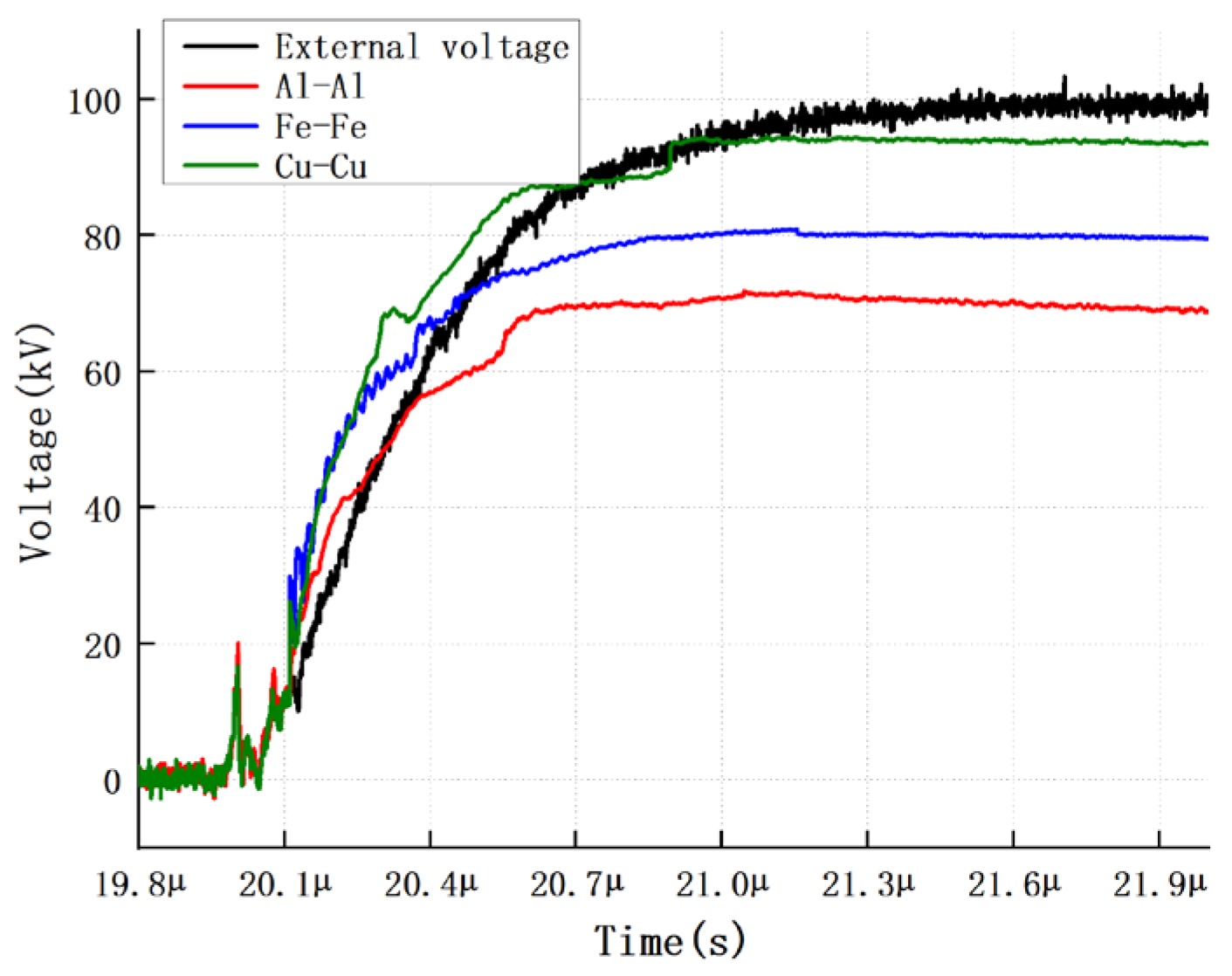
- Dominance of Charge-to-Mass Ratio: The injection intensity is governed by the ion charge-to-mass ratio (α). Aluminum electrodes (α≈0.11) exhibit severe field distortion (shielding factor ~71.9%), whereas Copper electrodes (α ≈ 0.03) maintain high field fidelity (>96%).
- (3)
- Quantified Time Constants: The negative charge transport across a 5 mm gap completes within ~200 ns, while positive charge accumulation requires ~10 μs to reach equilibrium.
- (4)
- Engineering Implications: To mitigate transient field distortion, it is recommended to avoid bare aluminum alloys in high-stress regions (using copper or shielding instead) and ensure the insulation spacing design accounts for the transit-time threshold (d > v × trise) to prevent dynamic injection during the wavefront.
Author Contributions
Funding
Data Availability Statement
Conflicts of Interest
References
- He, D.; Guo, H.; Gong, W.; Xu, Z.; Li, Q.; Xie, S. Dynamic behavior and residence characteristics of space charge in oil-paper insulation under polarity–reversal electric field. IEEE Trans. Dielectr. Electr. Insul. 2023, 30, 1021–1031. [Google Scholar] [CrossRef]
- Qi, B.; Gao, C.; Han, H.; Zhao, X.; Yuan, Q.; Zhang, S.; Li, C. Electric field distribution characteristics and space charge motion process in transformer oil under impulse voltage. IEEE Access 2019, 7, 103781–103793. [Google Scholar] [CrossRef]
- Shan, B.; Wu, Y.; Song, H.; Xing, Z.; Huang, M.; Liu, B.; Lv, Y.; Li, C. Research on DC Breakdown Performance of Nanofluid-impregnated Pressboard Based on TiO2 Nanoparticles. In Proceedings of the 2020 IEEE 3rd International Conference on Dielectrics (ICD), Valencia, Spain, 5–31 July 2020. [Google Scholar] [CrossRef]
- Liu, Z.; Guo, X. Insulation structure of UHV power transformer. High Volt. Eng. 2010, 36, 7–12. [Google Scholar]
- Qi, B.; Chen, Y.; Li, C.; Gao, C.; Zhao, L.; Sun, X. Oil-pressboard interface charges under combined AC/DC electric field: Their characteristics and influence on surface flashover voltage. In Proceedings of the 2015 IEEE Electrical Insulation Conference (EIC), Seattle, WA, USA, 7–10 June 2015. [Google Scholar] [CrossRef]
- Gao, L.; Wu, Y.; Chen, J.; Lv, Z.; Wu, K. Comparison of charge mobility in insulating oil and oil-immersed paper. In Proceedings of the 2022 IEEE Conference on Electrical Insulation and Dielectric Phenomena (CEIDP), Denver, CO, USA, 30 October–2 November 2022. [Google Scholar] [CrossRef]
- Imburgia, A.; Romano, P.; Ala, G.; Albertini, M.; De Rai, L.; Bononi, S.F.; Sanseverino, E.R.; Rizzo, G.; Siripurapu, S.; Viola, F. Effect of polarity reversal on the partial discharge phenomena. In Proceedings of the 2020 IEEE Conference on Electrical Insulation and Dielectric Phenomena (CEIDP), Virtual, 18–30 October 2020. [Google Scholar] [CrossRef]
- Zahn, M.; Takada, T. High voltage electric field and space-charge distributions in highly purified water. J. Appl. Phys. 1983, 54, 4762–4775. [Google Scholar] [CrossRef]
- Tang, C. Studies on the DC Space Charge Characteristics of Oil-Paper Insulation Materials. Ph.D. Thesis, Department of Electrical Engineering, Chongqing University, Chongqing, China, 2010. [Google Scholar]
- Faruque, H.S.; Lacabanne, C. Study of multiple relaxations in PEBAX, polyether block amide (PA12 2135 block PTMG 2032), copolymer using the thermally stimulated current method. Polymer 1986, 27, 527–531. [Google Scholar] [CrossRef]
- Li, Y.; Takada, T. Progress in space charge measurement of solid insulating materials in Japan. IEEE Electr. Insul. Mag. 1994, 10, 16–28. [Google Scholar] [CrossRef]
- Croitoru, Z. Space charges in dielectrics. Prog. Dielectr. 1965, 6, 103–146. [Google Scholar]
- Cassidy, E.C.; Hebner, R.E.; Zahn, M.; Sojka, R.J. Kerr-effect studies of an insulating liquid under varied high-voltage conditions. IEEE Trans. Electr. Insul. 1974, EI-9, 43–56. [Google Scholar] [CrossRef]
- Helgeson, A.; Zahn, M. Kerr electro-optic measurements of space charge effects in HV pulsed propylene carbonate. IEEE Trans. Dielectr. Electr. Insul. 2002, 9, 838–844. [Google Scholar] [CrossRef][Green Version]
- Hao, W.; Bo, Q.; Chengrong, L. Methods to Decrease the Measuring Errors of DC Electric Field Measurement. High Volt. Eng. 2013, 39, 1149–1155. [Google Scholar]
- Wu, H.; Qi, B.; Li, C.; Zhao, X.; Zhao, L.; Lu, J.; Sun, X.; Zhao, Y. The measurement of AC-DC composite field for oil-paper insulation system based on the Kerr electro-optic effect. Diangong Jishu Xuebao 2013, 28, 28–34. [Google Scholar]
- Sima, W. Space charge injection and transport in propylene carbonate under switching impulse voltage. Proc. CSEE 2014, 34, 6568–6577. [Google Scholar]
- Sima, W.; Guo, H.; Yang, Q.; Song, H.; Yang, M.; Yu, F. Electric field and space charge distribution measurement in transformer oil struck by impulsive high voltage. Appl. Phys. Lett. 2015, 107, 082905. [Google Scholar] [CrossRef]
- Sima, W.; Song, H.; Yang, Q.; Guo, H.; Zahn, M.; Yang, M. Time-continuous Kerr electro-optic field mapping measurement under impulse voltage using array photodetector. Appl. Phys. Lett. 2015, 107, 082901. [Google Scholar] [CrossRef]
- Yang, Q.; Yu, F.; Sima, W.; Zahn, M. Space charge inhibition effect of nano-Fe3O4 on improvement of impulse breakdown voltage of transformer oil based on improved Kerr optic measurements. AIP Adv. 2015, 5, 097207. [Google Scholar] [CrossRef]
- Yang, Q.; Yu, F.; Sima, W.; Yuan, T.; Jin, Y.; Song, H. Inhibition effect of space charge transportation on impulse breakdown performance of propylene carbonate with Al2O3 nanoparticles. Appl. Phys. Lett. 2015, 106, 063104. [Google Scholar] [CrossRef]
- Kuffel, J.; Kuffel, P. High Voltage Engineering Fundamentals; Elsevier: Amsterdam, The Netherlands, 2000. [Google Scholar]
- Deng, J.; Gao, C.; Xie, Z.; Ge, H.; Zhou, H.; Zhao, X.; Pan, Z.; Qi, B. Electric Field Features and Charge Behavior in Oil-Pressboard Composite Insulation Under Impulse Voltage. Energies 2024, 17, 4903. [Google Scholar] [CrossRef]
- Lundgaard, L.; Linhjell, D.; Berg, G.; Sigmond, S. Positive and negative streamers in oil gaps with and without pressboard interfaces. In Proceedings of the ICDL’96—12th International Conference on Conduction and Breakdown in Dielectric Liquids, Rome, Italy, 15–19 July 1996. [Google Scholar] [CrossRef]
- Linhjell, D.; Lundgaard, L.; Berg, G. Streamer propagation under impulse voltage in long point-plane oil gaps. IEEE Trans. Dielectr. Electr. Insul. 1994, 1, 447–458. [Google Scholar] [CrossRef]










| Electrode Material | Enhancement Duration (ns) | Shielding Retention Ratio | Recovery Time Point (μs) |
|---|---|---|---|
| Aluminum (Al) | ~300 | 71.9% | ~150 |
| Stainless Steel (Fe) | ~500 | 80.2% | ~100 |
| Copper (Cu) | ~700 | 96.2% | ~50 |
| Cu-X | Voltage | X-Cu | Voltage |
|---|---|---|---|
| Cu | 73.7603 | Cu | 73.7602 |
| Al | 71.8963 | Al | 56.1438 |
| Fe | 70.9449 | Fe | 62.1195 |
| Wavefront Time (μs) | Tf Moment | Tt Moment |
|---|---|---|
| 0.5 | 44.5347 | |
| 0.7 | 54.5272 | |
| 2 | 78.1459 | 86.9095 |
| 7 | 84.0165 | 86.7641 |
| 10 | 85.0629 | 87.1114 |
| 25 | 86.9226 | 86.6732 |
| Wavefront Time (μs) | Tf Moment | Tt Moment |
|---|---|---|
| 0.5 | −0.15717 | |
| 0.7 | −0.07854 | |
| 2 | 0.11220 | 0.17649 |
| 7 | 0.15371 | 0.17535 |
| 10 | 0.16195 | 0.17808 |
| 25 | 0.17660 | 0.17463 |
Disclaimer/Publisher’s Note: The statements, opinions and data contained in all publications are solely those of the individual author(s) and contributor(s) and not of MDPI and/or the editor(s). MDPI and/or the editor(s) disclaim responsibility for any injury to people or property resulting from any ideas, methods, instructions or products referred to in the content. |
© 2026 by the authors. Licensee MDPI, Basel, Switzerland. This article is an open access article distributed under the terms and conditions of the Creative Commons Attribution (CC BY) license.
Share and Cite
Zhao, X.; Zhang, H.; Gao, C.; Zhong, Y.; Zhao, X.; Qi, B.; Zhang, S. Kerr-Based Interrogation of Lightning-Impulse Field Transients in Oil–Cellulose Composites and Their Interfacial Charging Effect. Processes 2026, 14, 551. https://doi.org/10.3390/pr14030551
Zhao X, Zhang H, Gao C, Zhong Y, Zhao X, Qi B, Zhang S. Kerr-Based Interrogation of Lightning-Impulse Field Transients in Oil–Cellulose Composites and Their Interfacial Charging Effect. Processes. 2026; 14(3):551. https://doi.org/10.3390/pr14030551
Chicago/Turabian StyleZhao, Xiaolin, Haoxuan Zhang, Chunjia Gao, Yuwei Zhong, Xiang Zhao, Bo Qi, and Shuqi Zhang. 2026. "Kerr-Based Interrogation of Lightning-Impulse Field Transients in Oil–Cellulose Composites and Their Interfacial Charging Effect" Processes 14, no. 3: 551. https://doi.org/10.3390/pr14030551
APA StyleZhao, X., Zhang, H., Gao, C., Zhong, Y., Zhao, X., Qi, B., & Zhang, S. (2026). Kerr-Based Interrogation of Lightning-Impulse Field Transients in Oil–Cellulose Composites and Their Interfacial Charging Effect. Processes, 14(3), 551. https://doi.org/10.3390/pr14030551