Article

Photoprotective Archaeosomes Made of Lipids Extracted with Bio-Solvents

by
Yamila Roxana Simioni
,
Victoria Rebeca Dana González Epelboim
,
Gustavo Apezteguia
,
Leticia Herminia Higa
,
Eder Lilia Romero
and
Maria Jose Morilla
*
Centro de Investigación y Desarrollo en Nanomedicinas (CIDeN), Departamento de Ciencia y Tecnología, Universidad Nacional de Quilmes, Roque Sáenz Peña 352, Bernal B1876, Buenos Aires, Argentina
*
Author to whom correspondence should be addressed.
Processes 2026, 14(3), 499; https://doi.org/10.3390/pr14030499 (registering DOI)
Submission received: 8 January 2026 / Revised: 23 January 2026 / Accepted: 26 January 2026 / Published: 31 January 2026

Abstract

Archaeal lipids are a source of new biomaterials for pharmaceutical and nanomedical applications; however, their classical extraction method relies on chloroform and methanol, toxic solvents that conflict with green chemistry principles. In this paper, we explore the performance of an eco-friendly method for the extraction of total lipids from the haloarchaea Halorubrum tebenquichense. Using the bio-solvents ethyl acetate and ethanol in a two-step procedure, a fraction of total lipids (135 ± 41 mg phospholipids and 1.1 ± 0.4 mg bacterioruberin (BR)/100 g cell paste) was obtained containing the same composition as that resulting from extraction with the classical solvents, as confirmed by electrospray ionization mass spectrometry, although with lower phospholipid (PL) content, thus with a higher proportion of bacterioruberin (BR/PL ratio 9.0 vs. 6.8 µg/mg). The extracted lipids were subsequently utilized for the preparation of archaeosomes, which were characterized by uniform size distribution (406 ± 137 nm, 0.63 ± 0.13 polydispersity index), colloidal stability, and negative ζ potential (−38.2 ± 5.4 mV). The photoprotective potential of these archaeosomes was determined for the first time in human keratinocyte (HaCaT) cells exposed to UVB irradiation (270 mJ/cm2). Treatment with archaeosomes significantly (p < 0.05) enhanced cell viability (from ~43 to ~80%), reduced intracellular ROS generation and proinflammatory cytokine release (TNF-α), and mitigated UVB-induced apoptosis compared to untreated controls, indicating effective cytoprotection. This study demonstrates that ethyl acetate–ethanol-based extraction offers an alternative for archaeal lipid recovery and highlights the potential of archaeosomes as natural photoprotective agents for skincare applications.

1. Introduction

Haloarchaea thrive in hypersaline environments (20–30% w/v NaCl) and are exposed to intense solar radiation, relying on a suite of molecular and physiological adaptations that maintain osmotic balance, stabilize proteins, and protect cellular structures. Their membranes are composed of both polar polyisoprenoid diethers (polar archaeolipids, PA) and neutral archaeolipids (NA) [1]. PA constitute unique biomaterials that are clearly distinguished from bacterial and eukaryotic lipids by their glycerol-1-phosphate backbone and ether-linked isoprenoid chains [2,3]. Their stereoisomerism, ether linkages, and saturated isoprenoid chains endow them with exceptional resistance to chemical degradation (including ester bond hydrolysis and oxidation of unsaturated fatty acids), physical destabilization (aggregation and fusion), and environmental stresses such as pH, temperature, and enzymatic attack [4,5,6]. On the other hand, bacterioruberin (BR), a C50 xanthophyll containing 13 conjugated double bonds and 4 terminal hydroxyl groups, represents between 51 and 81% (and up to 95% in highly pigmented strains) of NA [7]. BR fulfils multiple biological roles, notably providing protection against UV radiation and enhancing membrane hydrophobicity, thereby reducing intracellular water loss while promoting the passive diffusion of oxygen molecules across the cell membrane [8,9]. In addition, BR production is typically induced under stress conditions such as high salinity, intense light, and oxidative stress [10,11,12,13].
Archaeosomes (ARC), nanovesicles made of PA from the halophilic archaea Halorubrum tebenquichense, are recognized for their colloidal and chemical resistance to heat sterilization, storage under cold-free conditions [14], nebulization [15], and gastrointestinal digestion [16,17]. In addition, archaeosomes of different composition have shown to be bioactive; for instance, ARC made with PA and cholesterol show endothelial anti-inflammatory properties [18]. In addition, ARC made by mixing different amounts of PA and NA shows anti-inflammatory activity on lipopolysaccharide or H2O2-stimulated macrophages [19].
Classically, total archaeolipids (TA), consisting of the mixture of PA and NA, are isolated from halophilic archaea by sequential extraction steps based on a modified Bligh–Dyer method specifically adapted for extreme halophiles [16,20,21,22]. This method employs chloroform and methanol, which are well-documented toxicological and environmental hazards [23,24], and are regulated as hazardous waste, resulting in high disposal costs [25,26,27]. Methanol is additionally classified as a highly volatile and flammable solvent [24].
The bio-solvents (green solvents produced from natural resources), ethanol (EtOH, as a substitute for methanol), and ethyl acetate (EtOAc, as a substitute for chloroform), have been used as effective alternatives to classical solvents for extracting total lipids from yeast biomass in terms of yield and selectivity [28,29]. Both solvents are approved for use in the manufacture of food ingredients and cosmetic products; for example, EtOAc is commonly found in nail polish removers, while EtOH is widely used in perfumes, lotions, and hair- and skincare formulations [30]. Both solvents also exhibit low environmental impact and are relatively easy to recycle [31,32,33]. However, their efficacy in extracting TA from halophilic archaea remains underexplored.
On the other hand, the excessive exposure to UVB (280–320 nm) radiation induces the generation of reactive oxygen species (ROS), lipid peroxidation, DNA damage, and inflammation, ultimately leading to premature skin ageing and photocarcinogenesis [34,35]. The search for natural active ingredients with photoprotective activity capable of increasing the antioxidant activity of the skin, reducing levels of inflammation and cellular damage, is an area of growing interest in dermatology and cosmetics [36,37]. Carotenoids, including β-carotene, and xanthophylls such as astaxanthin and fucoxanthin, are well known for their photoprotective activity [38,39,40]. However, their intrinsic instability (fast degradation induced by heat, light, oxygen, and catalytic agents), high lipophilicity, poor aqueous solubility, and requirement for organic solvents (e.g., dimethyl sulfoxide, DMSO) for dissolution restrict their application in conventional pharmaceutical formulations, thereby limiting their topical bioavailability [41].
Enhancing the stability, solubility, and bioavailability of carotenoids requires appropriate formulation strategies, such as incorporation into nanoparticles. Once internalized by cells, these nanoparticles also enable efficient intracellular delivery [42,43], a critical factor for maximizing the activity of molecules like astaxanthin and BR, whose effects depend on their proper localization within cellular lipid bilayers [44,45].
Remarkably, instead of ARC prepared by mixing PA and NA, ARC prepared with TA allows saving extraction steps, minimizing the use of solvents and processing time. ARC prepared with TA (rich in BR and small amounts of astaxanthin and squalene) has recently shown antitumoral activity on A549 cells [22]. In this study, we investigate the photoprotective potential of ARC prepared with TA extracted by green solvents on HaCaT cells exposed to UVB irradiation. We evaluated their effects on cell viability, intracellular ROS generation, and inflammation. This work aims to elucidate the role of archaeolipid-based systems as natural, stable, and effective agents for protecting skin cells against UV-induced damage.

2. Materials and Methods

2.1. Materials

Methylthiazolyltetrazolium bromide (MTT), 2,2-diphenyl-1-picrylhydrazyl (DPPH), 6-Hydroxy-2,5,7,8-tetramethylchroman-2-carboxylic acid (Trolox), and 6-lauroyl-2-dimethylaminonaphthalene (Laurdan) were from Sigma-Aldrich (St. Louis, MO, USA). L-glutamine, trypsin, penicillin, streptomycin sulfate, amphotericin B, and Minimal Essential Medium (MEM) were supplied by Gibco (Buenos Aires, Argentina). Hoechst 33342 (Hoechst), CM-H2DCFDA, Lactate Dehydrogenase kit (LDH), Rhodamine, propidium iodide, and YO-PRO were purchased from Thermo Fisher Scientific (Waltham, MA, USA). Fetal bovine serum (FBS) was obtained from Internegocios (Córdoba, Argentina). Tween 80 was provided by Biopack (Buenos Aires, Argentina). All other reagents were of analytical grade and were acquired from Anedra (Buenos Aires, Argentina).

2.2. Archaea Growth

Halophilic archaea H. tebenquichense was grown in a halophile-specific culture medium [46] in a custom-built 25 L stainless-steel bioreactor operated at 40 °C under continuous agitation (600 rpm). Following 96 h of cultivation, biomass was recovered by centrifugation and stored as cell paste at 4 °C until further use.

2.3. Lipid Extraction by Classical Bligh and Dyer Method

Extraction of total archaeolipids (TA) from the cell paste was performed using a modified Bligh and Dyer protocol adapted for extreme halophilic archaea (BD-TA) [20]. Briefly, 100 g of cell paste was suspended with saline solution (20% NaCl, 0.4% KCl, and 2% MgSO4, w/v, 160 mL final volume) and mixed with 600 mL of chloroform–methanol (1:2 v/v). After 2 h of stirring at room temperature, the mixture was centrifuged (600× g, 10 min) to remove debris. The supernatant (~640 mL) was subjected to successive extractions with (~400 mL) chloroform–water (1:1 v/v) [final chloroform–methanol–water (1:1:0.9 v/v)] until colourless, and the organic phase containing TA was collected. Solvents were evaporated under reduced pressure at 37 °C, and the lipid residue was vacuum-dried to constant weight and stored at −20 °C.

2.4. Lipid Extraction with Bio-Solvents

Extraction of TA from the cell paste was performed using ethanol (EtOH) and ethyl acetate (EtOAc) as bio-solvents (BS) (BS-TA). Briefly, 100 g of cell paste suspended in 160 mL of saline solution was mixed with 600 mL of EtOAc/EtOH (2:1 v/v). After 2 h of stirring at room temperature, the mixture was centrifuged (600× g, 10 min) to remove debris. The supernatant (~640 mL) was subjected to successive extractions with 960 mL EtOAc/water (2:1 v/v) [EtOAc/EtOH/water (1:0.18:0.46 v/v)]. Solvents were evaporated under reduced pressure at 37 °C, and the lipid residue was vacuum-dried to constant weight and stored at −20 °C.

2.5. Phospholipids, Proteins, and Sugar Quantification

PL were quantified using a colorimetric phosphate microassay [47]. Proteins were quantified by the BCA assay using a commercial kit (Micro BCA™ Protein Assay Kit, Thermo Scientific, MA, USA) after complete disruption of ARC with 5% v/v sodium dodecyl sulfate (SDS) (30 min incubation at room temperature). Sugars were quantified by colorimetric titration of carbohydrates by the phenol/sulfuric acid method using a glucose solution as a standard [48].

2.6. BR Quantification

UV/visible spectra of TA extracts dissolved in methanol were taken between 300 and 700 nm. Absorbance at 490 nm was used to determine BR concentration using a mass extinction coefficient of 2660 mL·mg−1·cm−1 [49].

2.7. Electrospray Ionization Mass Spectrometry (ESI-MS)

High-resolution mass spectra of TA extracts were acquired by electrospray ionization on a Bruker micrOTOF-QII mass spectrometer (Bruker Daltonics, Bremen, Germany). with analyses performed in both positive and negative ionization regimes. Aliquots of each sample (5 µL) were introduced via a loop injector at a flow rate of 10 µL min−1 following dissolution in CHCl3:CH3OH (1:1, v/v) for negative-ion mode or CH3OH:HCOOH (1:1, v/v) for positive-ion mode.
The electrospray source was operated using air as the nebulizing gas (4 L min−1) and nitrogen as the drying gas (4 L min−1), with a capillary voltage set to 4 kV. Mass spectra were recorded over an m/z range of 50–2000 in both ionization polarities.

2.8. Antioxidant Activity

The antioxidant activity of TA extracts was determined by a DPPH•+ radical scavenging assay following a previously reported protocol [50]. TA extracts in methanol (20 µL) were mixed with a methanolic DPPH•+ solution (160 µL) in 96-well microplates and incubated for 30 min at 37 °C in the dark under continuous agitation (200 rpm). Absorbance was measured at 580 nm using a Cytation™ 5 Cell Imaging Multi-Mode Reader (BioTek Instruments, Agilent Technologies, VT, USA). A DPPH•+ solution without extract served as the control, and Trolox (2.6–23 µg mL−1) was used for calibration. Experiments were performed in triplicate in three independent assays.

2.9. Preparation of Archaeosomes

Archaeosomes were generated from BD-derived total archaeolipids (BD-TA-ARC) or BS-derived total archaeolipids (BS-TA-ARC) using a film hydration-based approach. In brief, 10 mg of BD-TA or BS-TA were solubilized in a CHCl3:CH3OH mixture (1:1, v/v) and placed in U-shaped round-bottom microcentrifuge tubes. The solvent was removed under a gentle nitrogen flow to yield a uniform lipid film, which was subsequently hydrated with 1 mL of Tris-HCl buffer (10 mM Tris, pH 7.4, 0.9% w/v NaCl) under mechanical agitation. Vesicle size and lamellarity were reduced by continuous bath sonication at room temperature (20 °C) for 60 min, applying an ultrasonic power of 80 W at a frequency of 40 kHz.

2.10. Characterization of Archaeosomes

Particle size distribution and ζ potential were evaluated by dynamic light scattering (DLS) and phase analysis light scattering (PALS), respectively, with a NanoZsizer analyzer (Malvern Instruments Ltd., Malvern, UK), following dilution of the samples 1:20 (v/v) in Tris-HCl buffer.
PL and BR were determined as stated before (Section 2.5 and Section 2.6).
Raman measurements were performed using i-Raman spectrometers (BWS415-532 and BWS465-785S; BWTEK, Plainsboro, NJ, USA) fitted with a video microscope (BAC151B) at the Instituto de Investigaciones Fisicoquímicas Teóricas y Aplicadas (INIFTA), Buenos Aires, Argentina. Spectra were obtained using 532 nm laser excitation, with acquisition times between 500 and 1000 ms, applying two or five signal accumulations and laser power levels set between 25 and 80%. The recorded spectral window spanned from 182 to 3200 cm−1.
Membrane order and fluidity of BD-TA-ARC and BS-TA-ARC were assessed using Laurdan fluorescence by determining generalized polarization (GP) and fluorescence anisotropy (FA), respectively. Laurdan was incorporated into archaeosome membranes by incubation in Tris-HCl buffer at Laurdan: PL molar ratios of 1:500 (GP) or 1:20 (FA) for 30 min at room temperature in the dark.
GP was calculated as G P   =   ( I 440     I 490 ) / ( I 440   +   I 490 ) , where fluorescence intensities at 440 and 490 nm were obtained from emission spectra recorded between 400 and 520 nm upon excitation at 364 nm (excitation slit 5.0 nm; emission slit 10.0 nm; scan speed 100 nm min−1). FA was determined using spectrofluorometer software (LS55 Fluorescence Spectrometer (Waltham, MA, USA), FL WinLab 2007 (Perkin Elmer, UK)) according to F A   =   ( I 0     G I 90 ) / ( I 0   +   2 G I 90 ) , where I 0 and I 90 represent fluorescence intensities measured at 440 nm with excitation at 364 nm and excitation polarizer orientations of 0° and 90°, respectively. The correction factor G was calculated from emission intensity ratios measured with the excitation polarizer set at 90°, after subtraction of scattered light.
The colloidal stability of BS-TA-ARC and BD-TA-ARC was determined after 90 days of storage at 4 °C, protected from light in amber vials under atmospheric air. Particle size, Pdi, and ζ-potential were determined as previously described. All measurements were performed in three independent replicates.

2.11. Cells Line

HaCaT keratinocytes, kindly provided by Dr. Leandro Guttlein (Fundación Instituto Leloir), were maintained in minimum essential medium (MEM) supplemented with 10% fetal bovine serum, 1% antibiotic–antimycotic solution (10,000 U mL−1 penicillin, 10 mg mL−1 streptomycin sulfate, and 25 µg mL−1 amphotericin B), and 2 mM L-glutamine. Cells were cultured at 37 °C in a humidified atmosphere containing 5% CO2.

2.12. Cytotoxicity of BS-TA-ARC

The cytotoxicity of BS-TA-ARC was determined by the MTT assay. Briefly, cells were plated in 96-well microplates at a density of 2 × 10⁴ cells per well and incubated for 24 h at 37 °C. The culture medium was then replaced with 100 µL fresh MEM supplemented with 5% FBS containing BS-TA-ARC at 250, 500, 750, and 1000 μg/mL of PL, and cells were incubated for 24 h. The supernatant was then removed, and 100 µL of a 0.5 mg/mL MTT solution in MEM without phenol red was added. After the 3 h incubation, the MTT solution was carefully removed. Insoluble formazan crystals were dissolved in 100 µL of dimethyl sulfoxide, and absorbance was measured at 570 nm using a Cytation 5 microplate reader. Cell viability was expressed as a percentage of cells incubated in MEM containing 10% FBS.

2.13. Uptake of BS-TA-ARC

The uptake of Rhodamine PE-labelled BS-TA-ARC (RhPE at 0.4 μg per mg of PL was added to the mixture of lipids) was determined by fluorescence microscopy. Cells were plated in 24-well culture plates at a density of 7.5 × 10⁴ cells per well and allowed to attach for 24 h at 37 °C in a humidified atmosphere containing 5% CO2. Then, cells were incubated with BS-TA-ARC at 500 µg/mL for 1, 3, and 24 h at 37 °C and at 4 °C (to assess surface adsorption). After incubation, cells were washed with phosphate-buffered saline (PBS), stained with 20 µL of 160 µM Hoechst for 15 min at room temperature, and washed again with PBS. Cells were maintained in PBS and analyzed by fluorescence microscopy in Cytation 5 plate reader using the YFP filter cube for Rhodamine (561/580) and the DAPI filter cube (358/461) for Hoescht. Fluorescence measured at 4 °C was subtracted from that measured at 37 °C.

2.14. UVB Irradiation and Cell Viability Assay

Radiation-induced cytotoxicity was determined by the MTT assay. For this purpose, cells were plated in 96-well microplates at a density of 2 × 10⁴ cells per well and allowed to attach for 24 h at 37 °C. Then, the culture medium was replaced with 100 ul of PBS to minimize UV absorption. Cells were then exposed to UVB light from a 25 W Exo Terra Repti GLO 5.0 lamp (peak emission at 311 nm) placed at a fixed distance of 10 cm (irradiance of 170 µW/cm2) from the cultures for 0, 15, 20, 45, 60, 75, and 90 min. The total dose (D) in mJ/cm2 was calculated as: D = E × t, where E is irradiance and t is exposure time. After irradiation, PBS was replaced with complete medium, and cells were incubated for 24 h before evaluating metabolic activity using the MTT assay as stated before (Section 2.12). Cell viability was expressed as a percentage relative to non-irradiated controls.

2.15. Photoprotection of BS-TA-ARC

The photoprotective activity of BS-TA-ARC was determined by pre-treatment of HaCaT cells with 500 μg/mL of BS-TA-ARC for 24 h, as stated in Section 2.12. Then, the culture medium was replaced by 100 µL of PBS, and cells were exposed to UVB light for 20 min. After irradiation, PBS was replaced with complete medium, and cells were incubated for an additional 24 h. Cytotoxicity was subsequently evaluated in adherent cells using the MTT assay, as described above, together with quantification of lactate dehydrogenase (LDH) release into the culture medium using a commercial LDH activity assay kit. Briefly, cell supernatants were taken and centrifuged at 250× g for 4 min to eliminate cell debris. Then, 50 μL of the supernatant was transferred to a 96-well microplate, and 50 μL of Substrate Mix was added and incubated for 30 min at room temperature, protected from light. After this time, 50 μL of the Stop solution from the kit was added. Absorbance at 490 nm was measured in a Cytation 5 plate reader. As a positive control for LDH release, 10 µL of the lysis solution (10×) per 100 µL of medium was added one hour before the end of the assay.

2.16. Determination of TNF-α

TNF-α release in supernatants was measured by an ELISA kit (BD Biosciences, San Diego, CA, USA) according to the manufacturer’s instructions.

2.17. Reactive Oxygen Species (ROS) Assay

ROS levels were determined using the fluorescent probe, carboxy-H2DCFDA. Briefly, cells were plated in 24-well culture plates at a density of 7.5 × 10⁴ cells per well and allowed to attach for 24 h at 37 °C. Then, cells were incubated with BS-TA-ARC and irradiated as stated in Section 2.15. Subsequently, the medium was removed, and cells were incubated with 13 μM H2DCFDA for 30 min at 37 °C. After incubation, H2DCFDA was removed, and 300 µL of PBS was added per well. Fluorescence was determined at Ex/Em: ~492–495/517–527 nm (excitation wavelength 485 nm ± 20 nm and emission wavelength 530 ± 30) using a Cytation 5 plate reader. A ~2.5 µM H2O2 solution incubated for 3 h before adding H2DCFDA was used as a positive control.

2.18. Apoptosis and Necrosis

Apoptotic and necrotic cell death was assessed by fluorescence microscopy using YO-PRO-1 and propidium iodide (PI) as indicators of apoptosis and necrosis, respectively, while Hoechst staining was used to visualize cell nuclei. HaCaT cells were seeded and treated as described in Section 2.17. At the end of the incubation period, the culture medium was removed, the cells were washed once with PBS, and 1 mL of cold PBS was added. Cells were then incubated with 1 µL of 100 µM YO-PRO-1 and 20 µL of 160 µM Hoechst for 15 min, followed by the addition of 1 µL of PI (0.1 mg/mL) and further incubation for 5 min on ice. After staining, cells were washed with PBS and maintained in 1 mL of PBS for analysis.
Quantification of apoptotic and necrotic cells was performed using a Cytation™ 5 Cell Imaging Multi-Mode Reader (BioTek Instruments) by measuring fluorescence intensity associated with YO-PRO-1 and PI staining (YFP, RFP, and DAPI filter cubes were used for YO-PRO-1, PI, and Hoechst, respectively). Images were acquired at 20× magnification, and fluorescence intensity was quantified on a per-well basis. Apoptosis was induced as a positive control by UV irradiation (254 nm, 30 min) applied 24 h prior to staining, while necrosis was induced by treating cells with 2.5 mM H2O2 in PBS for 3 h before staining. Data analysis was performed with the FlowJo 10.8.0 software (Flowjo, LLC, Ashland, OR, USA).

2.19. Statistics

Statistical analyses were performed using one-way ANOVA followed by Dunnett’s test, employing Prism 8.0 software (GraphPad, San Diego, CA, USA). A p-value < 0.05 was considered statistically significant. The significance levels were defined as follows: p < 0.05 (*), p < 0.01 (**), p < 0.001 (***), and p < 0.0001 (****); “n.s.” denotes non-significant results (p > 0.05). Additionally, a Student’s t-test was conducted, using the same p-value thresholds.

3. Results and Discussion

3.1. Total Archaeolipid Extraction and Analysis

In this study, we employed a binary mixture of EtOAc (aprotic solvent more polar than chloroform) and EtOH (polar protic solvent) to obtain a mixture of TA (NA and PA) from haloarchaeal biomass employing a two-step extraction procedure. The first step was the solid–liquid extraction of the concentrated biomass that was disrupted and whose components were solubilized in an EtOAc/EtOH/water mixture (2:1:0.8, v/v/v). In the second step, a liquid–liquid extraction of the centrifugation supernatant from the extracted biomass was performed, extracting with an ethyl acetate and water mixture (2:1, v/v). In Table 1, the solvent volumes required by the classical BD extraction and extraction with bio-solvents are shown for direct comparison.
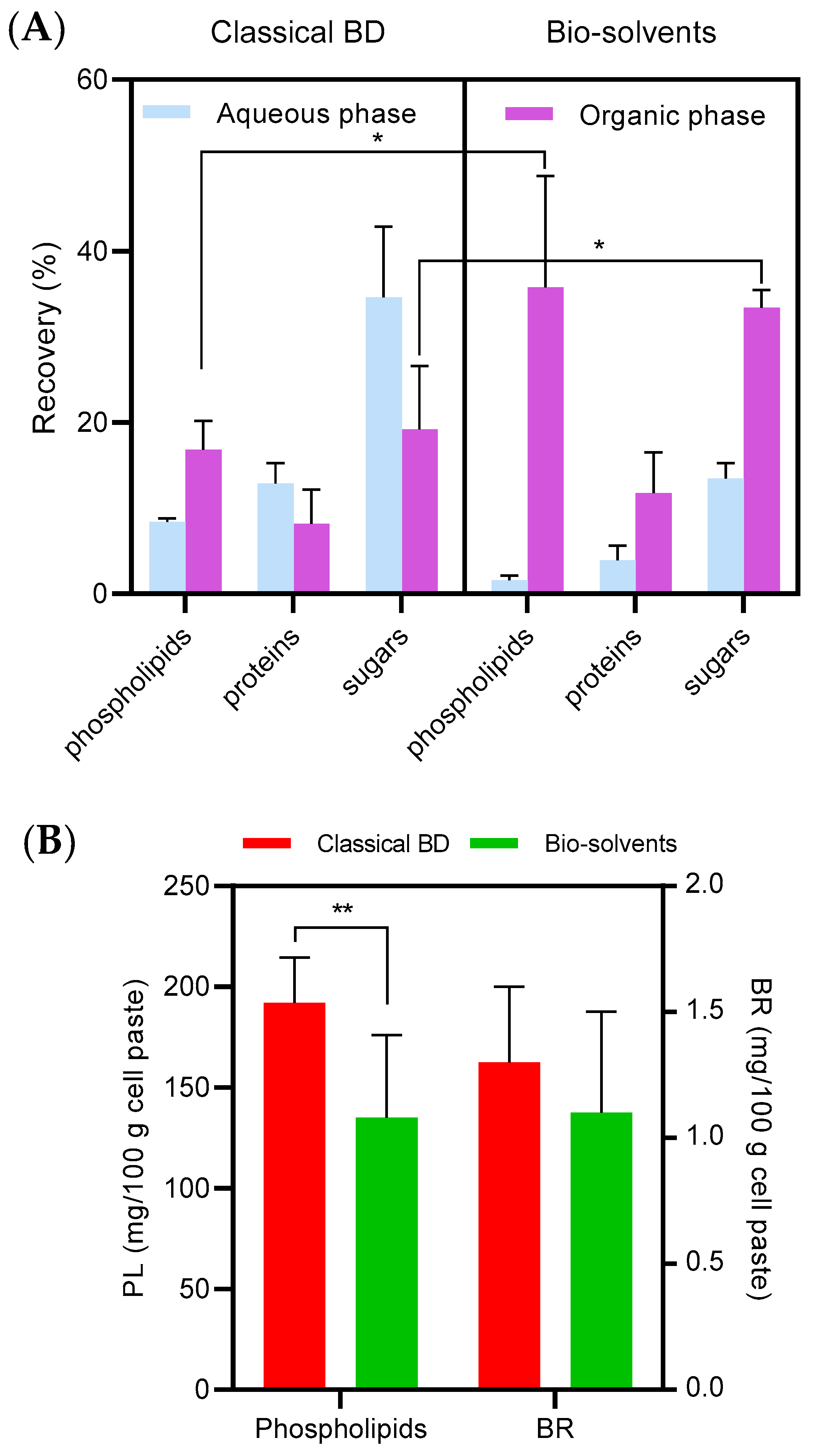
Phospholipids, proteins, and sugar were measured in the organic and aqueous phases of the final biphasic system of both the classical BD method and the extraction method with BS (Figure 1A). The organic phase from the BS method contained significantly higher proportions of phospholipids (p < 0.05) and sugars (p < 0.05) compared to the classical BD method; however, protein proportions were similar.
The BS method also rendered a significantly lower phospholipid (PL) yield (135 ± 41.0 mg vs. 192 ± 22.6 mg per 100 g cell paste; p < 0.001; n = 12), while the two methods yielded comparable amounts of BR (1.1 ± 0.4 mg vs. 1.3 ± 0.3 mg per 100 g cell paste; p > 0.05) (Figure 1B). Consequently, the TA extracted by the BS method exhibited a slightly higher BR/PL ratio (9.0 vs. 6.8 µg/mg), although this difference did not reach statistical significance. Accordingly, recently it has been reported that EtOAc extracts a higher proportion of neutral lipids than polar lipids from biomass from several marine fish species [51].
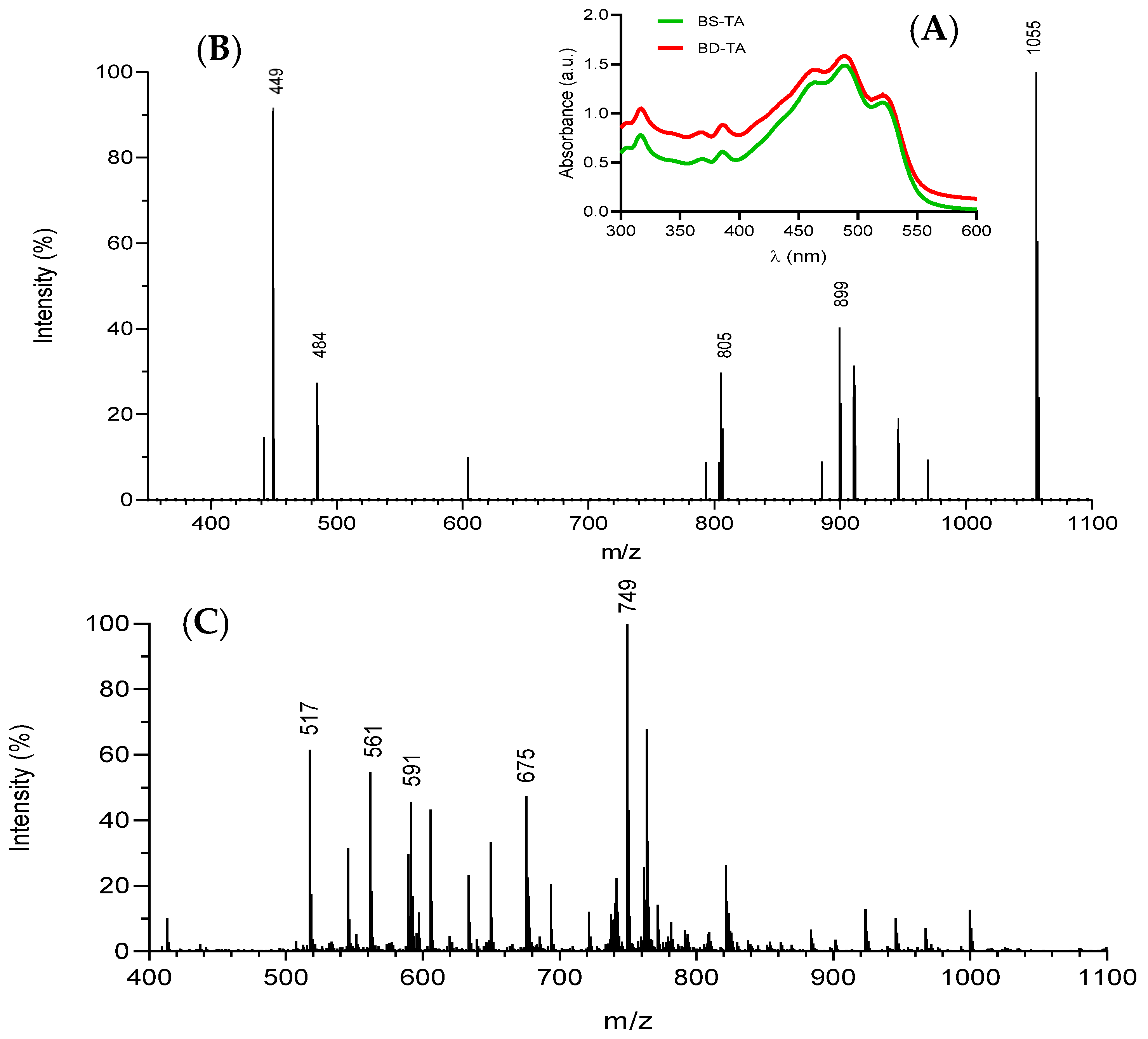
The UV–visible spectrum of BS-TA exhibited the characteristic absorption features of BR, with maxima at 455, 490, and 525 nm, as well as two additional peaks associated with cis isomer configurations, observed at 365 and 380 nm [52] (Figure 2A).
The ESI-MS spectrum of BS-TA in negative mode showed five strong peaks at m/z 449 (phosphatidylglycerophosphate methyl ester, PGP-Me, as a bicharged ion), m/z 484 (loss of a phytanyl chain (280 Da) from cardiolipin bisphosphatidyl glycerol, BPG), m/z 805 (phosphatidylglycerol, PG), m/z 899 (phosphatidylglycerophosphate methyl ester, PGP-Me), and m/z 1055 m/z (sulfated mannosyl glucosyl diether (S-DGD) as recently reported for BD-TA [22] (Figure 2B). In contrast, the peak at m/z 884, corresponding to phosphatidylglycerosulfate (PGS), was not detected. Notably, this peak was also absent in PA extracted from H. tebenquichense [53]. The signal corresponding to archaeal cardiolipin (bisphosphatidylglycerol, BPG), expected at m/z 760 as a doubly charged ion, was also not detected.
The ESI-MS spectrum of BS-TA in positive mode showed five strong protonated peaks at m/z 517 ([M + H]+ a C37-apocarotenone/apocarotenol derivative produced by oxidative cleavage of a C40 carotenoid), m/z 561 (representing the glycerol-ether core after losing a portion of a larger polar headgroup), m/z 591 (a C40 carotenoid (e.g., apocarotenoid or oxygenated C40) with 3 oxygens), m/z 675 ([tetra anhydro BR-H]+) and m/z 749 (could be an oxidized/oxygenated or esterified derivative of BR (m/z 741) since MS/MS analysis confirmed that the peak corresponded to BR) (Figure 2C). These last two reported for BD-TA [22]. Peaks of lower intensity in BS-TA were also observed at m/z 413 ([dihydrosqualene-H]+) and m/z 597 ([astaxanthin-H]+) as recently reported [22].
The IC50 of BS-TA was 2.4 ± 0.2 μg/mL, reflecting its higher BR content and subsequent higher antioxidant activity, in comparison to the IC50 of 5.7 ± 1.3 μg/mL from BD-TA, which was slightly lower than the reference antioxidant Trolox (IC50 7.1 ± 0.9 μg/mL).
Importantly, to optimize solvent reuse and protein recovery, the two-phase system can be further processed as proposed by Mussagy et al. (2020) [29]. The organic top phase can undergo evaporation to recover EtOAc. The aqueous bottom phase can be either recycled for further extraction or treated to extract proteins; the latter involves adding fresh EtOH (70–90% v/v) and incubating at 4 °C to −20 °C to induce precipitation.
The practicality of this method at a large scale is primarily supported using EtOH and EtOAc, which are green solvents produced and handled at multi-ton scale in the food, cosmetic, and pharmaceutical industries. Their low toxicity and favourable safety profiles reduce health, safety, and environmental constraints compared to conventional halogenated solvent systems.
From a process perspective, the extraction operates under mild conditions (ambient pressure and temperature), resulting in lower energy demand than high-pressure or high-temperature alternatives. Both solvents are readily recovered by conventional distillation, with typical industrial recovery efficiencies exceeding 90–95%, enabling solvent recycling and significantly reducing solvent consumption, waste generation, and overall Environmental factor (E-factor)/Process Mass Intensity (PMI). Traditional lipid extractions using chlorinated solvents often have high E-factors due to poor solvent recyclability and hazardous waste disposal. Using EtOH/EtOAc with ≥90–95% recovery significantly reduces waste per kg of product.
Importantly, the extraction yields and lipid integrity achieved with the EtOH/EtOAc system are comparable to those obtained with traditional methods, ensuring that improved sustainability does not compromise process performance. Moreover, the protocol is compatible with standard industrial solid–liquid extraction and solvent recovery equipment, facilitating straightforward scale-up from laboratory to production scale.

3.2. Structural Characterization of BS-TA-ARC

The structural features of BS-TA-ARC and BD-TA-ARC are shown in Table 2. BS-TA-ARC were larger and showed a higher polydispersity index (Pdi) than BD-TA-ARC but exhibited negative and comparable ζ potential. The BS-TA-ARC bilayers were more ordered, tightly packed, less hydrated (higher GP), and slightly less fluid (inversely correlated to FA) than the BD-TA-ARC bilayers. This means that the ARC membrane prepared with BS-TA has become stiffer and its internal environment has become less polar due to a decrease in water content with higher microviscosity compared with ARC prepared with BD-TA. All these changes could be ascribed to the higher BR content of BS-TA-ARC, as already reported [19].
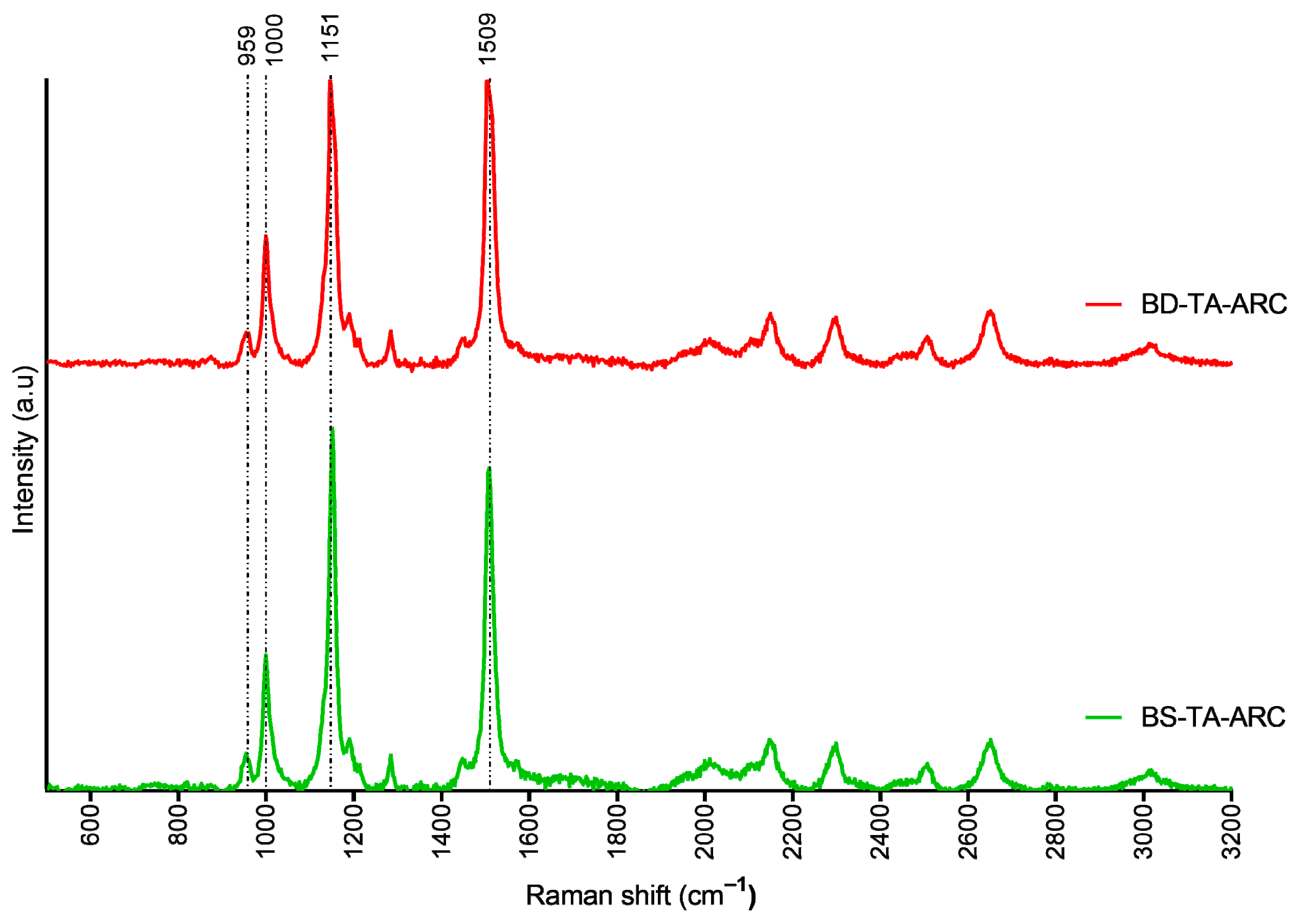
Characteristic peaks of BR were observed in Raman spectra of both BS-TA-ARC and BD-TA-ARC at 868 cm−1 (COC ring mode of the sugar), 956 cm−1 (CH3 rocking in-plane), and 1002 cm−1 (C–CH deformation), 1000 (C═CH deformation), 1151 (C―C stretching mode) and 1509-5 cm−1 (C═C stretching mode) (Figure 3).
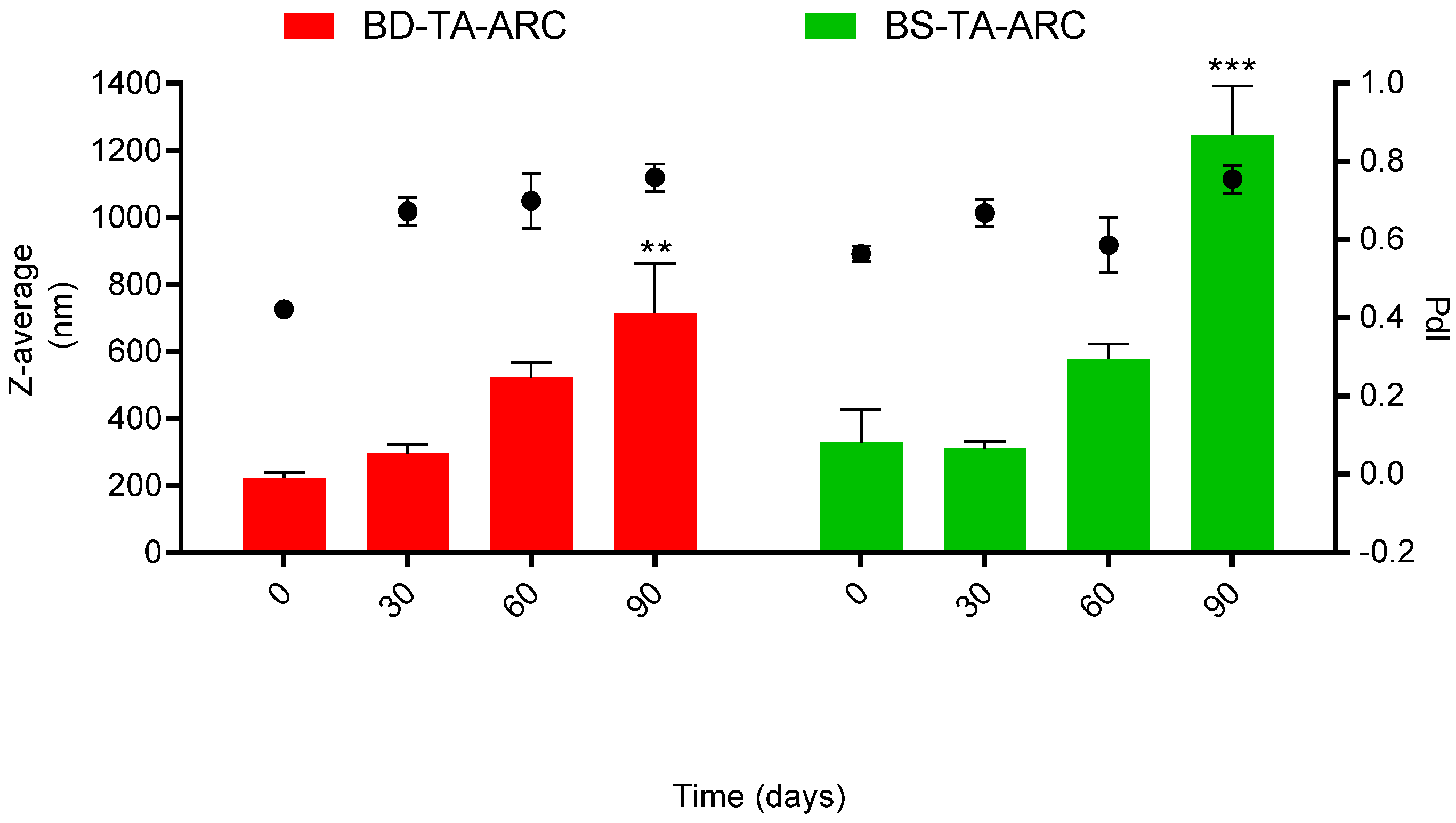
After 2 months of storage at 4 °C in dark conditions, BS-TA-ARC and BD-TA-ARC maintained stable colloidal parameters, including size, Pdi, and ζ potential (Figure 4).

3.3. Cellular Toxicity and Uptake of BS-TA-ARC

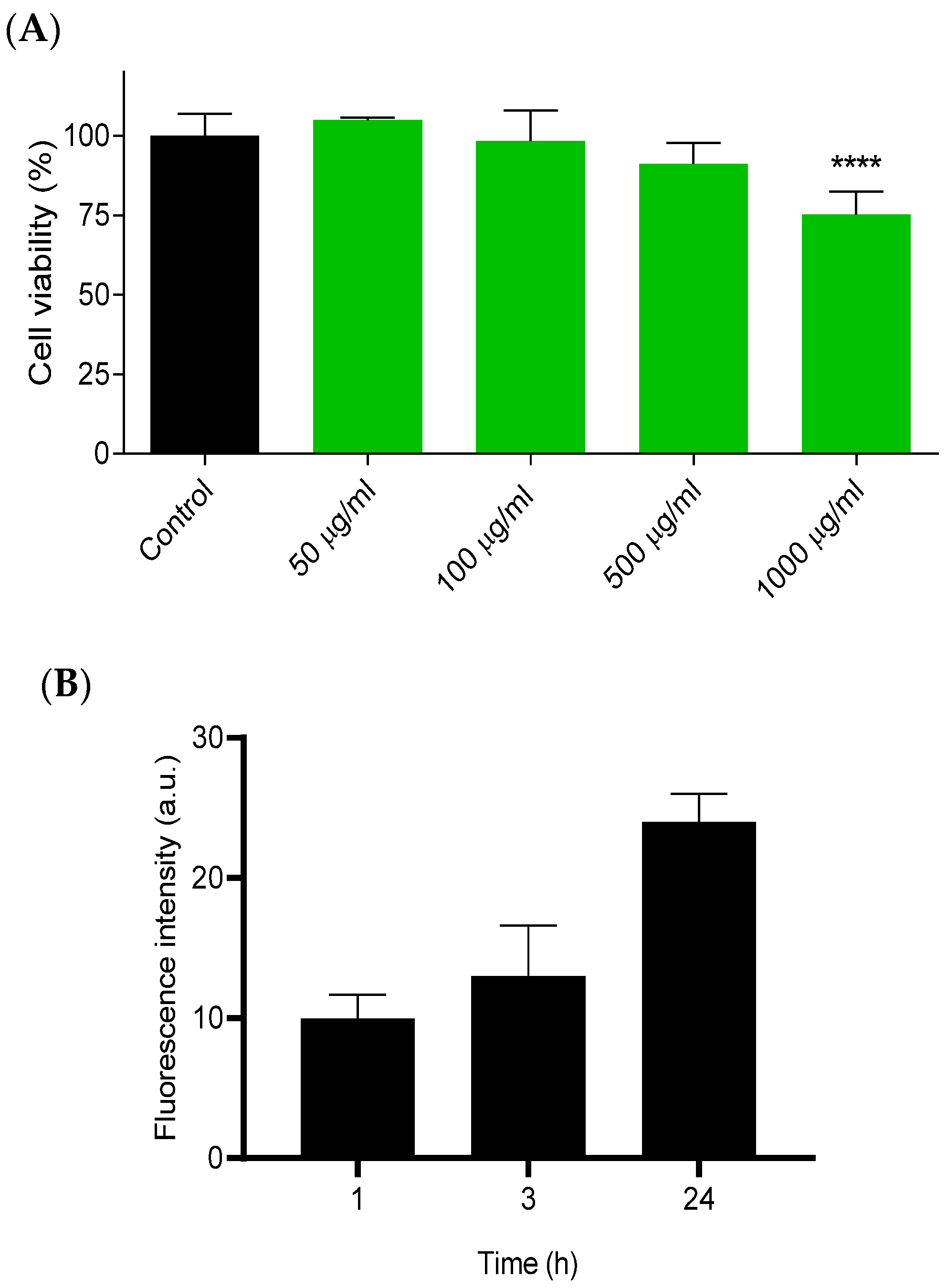
The effect of BS-TA-ARC on HaCaT cell viability was first determined after 24 h. Because viability remained high at 1 mg/mL (75%, Figure 5A), a concentration of 500 µg/mL was utilized for further experiments as a non-cytotoxic dose. Subsequent fluorescence microscopy revealed that Rh-PE-labelled BS-TA-ARC was internalized by the cells in a time-dependent manner (Figure 5B).

3.4. Impact of UVB Irradiation on Cell Viability

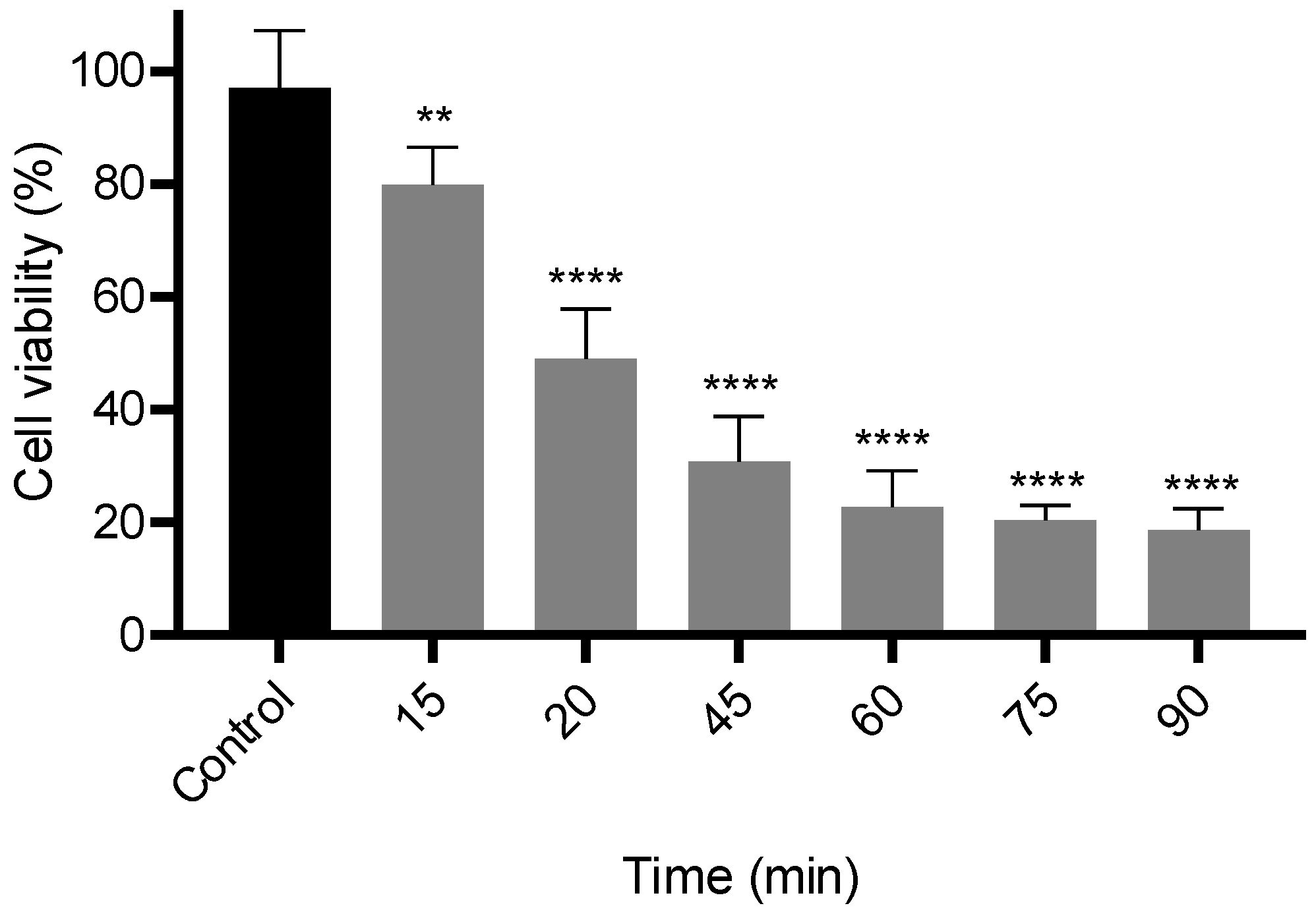
UVB irradiation significantly decreased HaCaT cell viability in a time-dependent manner (Figure 6). An LD50 of 270 mJ/cm2 was achieved after 20 min of exposure (10 cm distance). While standard genotoxicity models often utilize lower doses (10–30 mJ/cm2) for sublethal damage, the higher dose observed here is consistent with acute irradiation protocols known to induce programmed cell death [54]. Differences between studies likely reflect lamp spectrum, irradiance, dosimetry, and culture conditions.

3.5. Photoprotective Activity of BS-TA-ARC

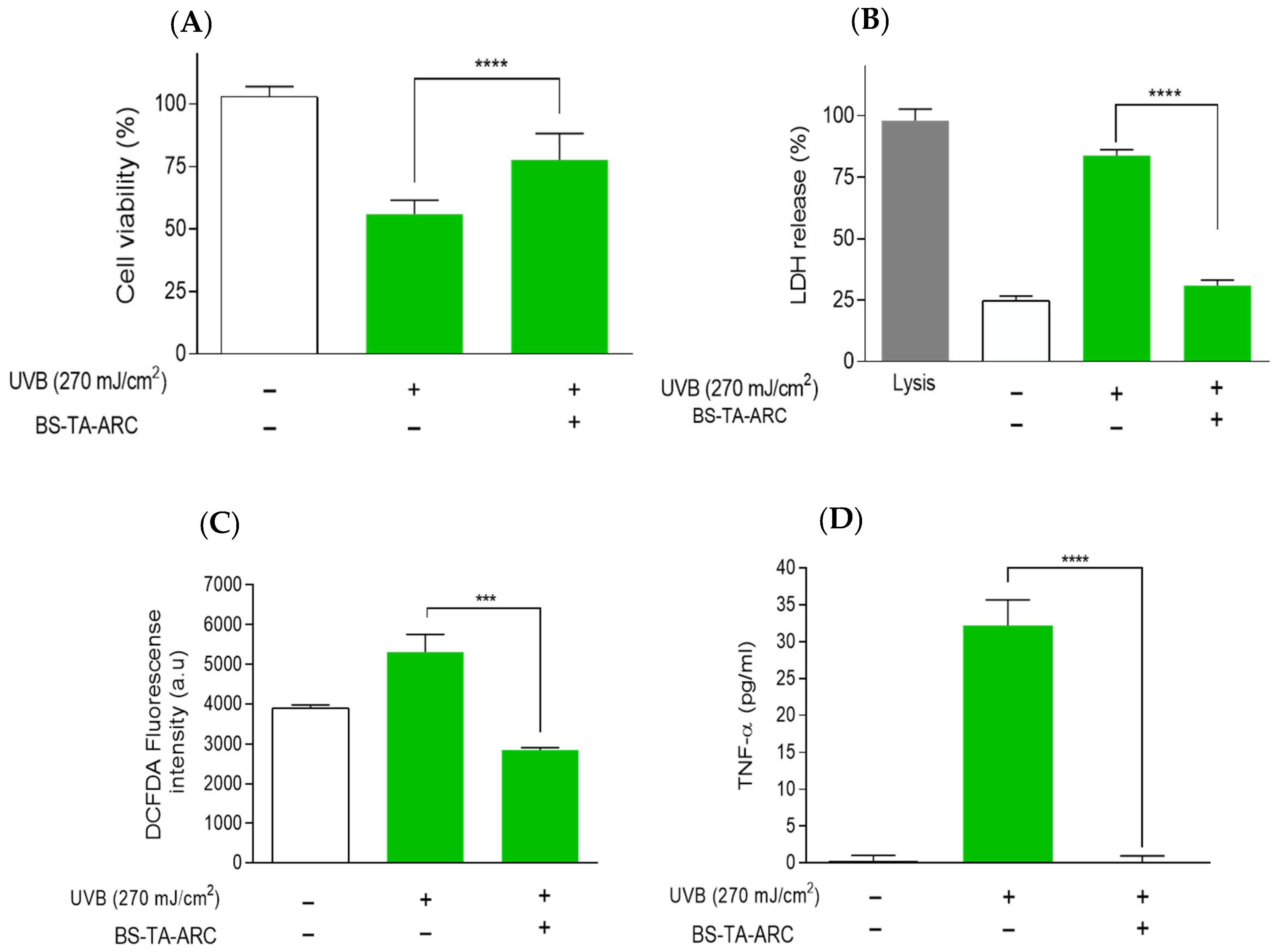
The photoprotective effect of BS-TA-ARC pretreatment against UVB-induced damage is illustrated in Figure 7. Pretreatment significantly mitigated cytotoxicity, as evidenced by improved metabolic activity (MTT assay; Figure 7A) and reduced membrane damage (LDH release; Figure 7B). Furthermore, BS-TA-ARC significantly attenuated the intracellular ROS production (Figure 7C) and TNF-α secretion (Figure 7D), which are typically elicited by UVB exposure.
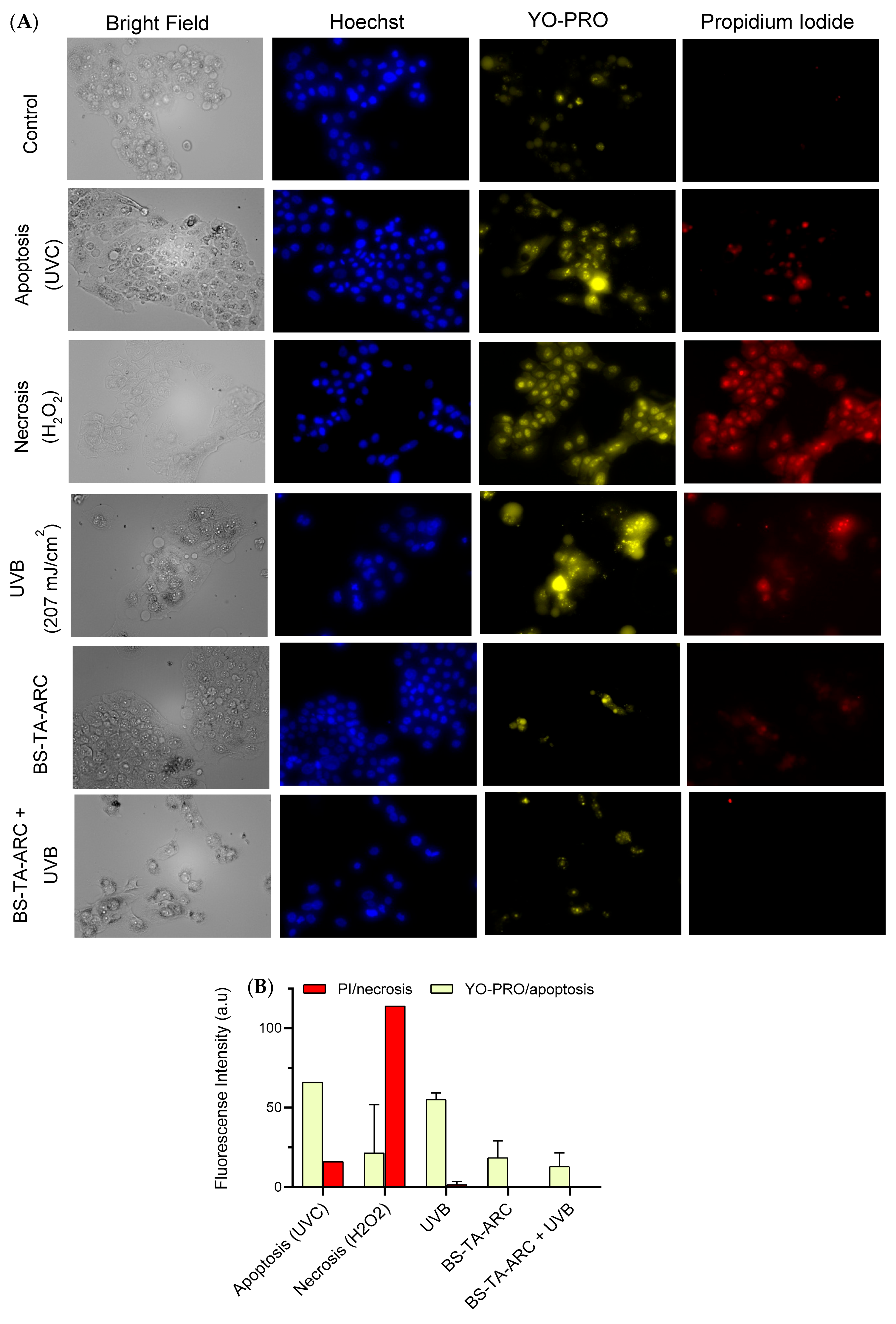
UVB irradiation significantly increased the percentage of apoptotic cells (Figure 8A,B). However, pretreatment with BS-TA-ARC markedly attenuated UVB-induced apoptosis, as shown by a significant reduction in the apoptotic cell population.
Carotenoids such as β-carotene, lycopene, and astaxanthin provide protection against UV radiation by scavenging ROS and modulating oxidative stress-responsive signalling pathways, including MAPK (mitogen-activated protein kinase, culminating in expression of matrix metalloproteinases and upregulation of expression of inflammatory factors), Nrf2 (nuclear factor erythroid 2-related factor 2, a master regulatory system for cellular redox homeostasis), and NF-κB (nuclear factor kappa-B) [40]. Previous studies have demonstrated that BR dissolved in DMSO can modulate the Nrf2 pathway [55]. After 24 h of internalization by HaCaT keratinocytes, BS-TA-ARC significantly reduced UVB-induced cytotoxicity and markedly reduced levels of intracellular ROS compared with non-treated controls. Both facts suggested that BS-TA-ARC stabilized mitochondrial function, probably preventing lipid peroxidation, two major pathways involved in UVB-induced cell death [56]. Accordingly, Gonzalez Epelboim et al. 2025 [22] showed that ARC prepared with BD-TA protects mitochondria of human lung adenocarcinoma epithelial cell line A549. The reduction in UVB-induced release of pro-inflammatory cytokines and apoptosis suggests that BS-TA-ARC inhibited key signalling cascades involved in photo-inflammation and intrinsic apoptotic pathways, contributing to preserving mitochondrial function. The dual reduction in ROS and TNF-α suggests activation of cytoprotective pathways such as Nrf2 and inhibition of NF-κB signalling, mechanisms consistent with previously reported antioxidant carotenoid activity [57]. This protective effect aligns with reports that antioxidants, including astaxanthin, can stabilize mitochondrial membrane potential and suppress the activation of caspase-dependent apoptosis following UV exposure [58,59]. Together, these facts indicate a comprehensive cytoprotective mechanism mediated by BS-TA-ARC.

4. Conclusions

This work demonstrates that archaeosomes prepared from total archaeolipids extracted with an ethyl acetate–ethanol mixture are efficient carriers for bacterioruberin, enabling its effective internalization by HaCaT keratinocytes. The bacterioruberin-loaded archaeosomes provided significant protection against UVB-induced cytotoxicity, oxidative stress, inflammation, and apoptosis. These effects likely result from a combination of direct radical-scavenging activity, stabilization of mitochondrial function, and modulation of redox-sensitive signalling pathways. The use of archaeal lipids as a natural, stable matrix offers a sustainable and biocompatible strategy for developing next-generation topical formulations aimed at photoprotection and skin health. Together, these findings highlight the potential of bacterioruberin-loaded archaeosomes as multifunctional bioinspired nanocarriers for dermatological and cosmetic applications.

Author Contributions

Conceptualization, M.J.M.; Methodology, Y.R.S., V.R.D.G.E., G.A. and L.H.H.; Software, M.J.M.; Validation and Formal analysis, M.J.M.; Investigation, Y.R.S., V.R.D.G.E. and L.H.H.; Resources, M.J.M. and E.L.R.; Data Curation, L.H.H., E.L.R. and M.J.M.; Writing—Original Draft Preparation, Y.R.S. and M.J.M.; Writing—Review and Editing, M.J.M. and E.L.R.; Visualization and Supervision, M.J.M.; Project Administration, M.J.M.; Funding Acquisition, M.J.M. and E.L.R. All authors have read and agreed to the published version of the manuscript.

Funding

This research was funded by Agencia Nacional de Promoción Científica y Tecnológica (ANPCYT, PICT Start up 2016-0019), the National Council for Scientific and Technological Research (CONICET, PIP 2021–2023 N° 11220200102694CO), and the Secretaría de Investigaciones, Universidad Nacional de Quilmes (Programa de Nanomedicinas-2).

Data Availability Statement

The data presented in this study are available upon request from the corresponding author.

Acknowledgments

YRS and VRDGE are doctoral fellows of CONICET LHH, ELR, and MJM are members of the Research Career Program from CONICET. During the preparation of this manuscript, the authors used ChatGPT (GPT-5.2) to assist in rephrasing certain sentences. The authors have reviewed and edited the output and take full responsibility for the content of this publication.

Conflicts of Interest

The authors declare no conflicts of interest.

References

  1. Morilla, M.J.; Romero, E.L. Ether lipids from archaea in nano-drug delivery. Int. J. Pharm. 2023, 634, 122632. [Google Scholar] [CrossRef] [PubMed]
  2. Jain, S.; Caforio, A.; Driessen, A.J. Biosynthesis of archaeal membrane ether lipids. Front. Microbiol. 2014, 5, 641. [Google Scholar] [CrossRef] [PubMed]
  3. Villanueva, L.; Schouten, S.; Damsté, J.S.S. Phylogenomic analysis of lipid biosynthetic genes of Archaea shed light on the lipid divide. Environ. Microbiol. 2017, 19, 54–69. [Google Scholar] [CrossRef]
  4. Caforio, A.; Driessen, A.J.M. Archaeal phospholipids: Structural properties and biosynthesis. Biochim. Biophys. Acta Mol. Cell Biol. Lipids 2017, 1862, 1325–1339. [Google Scholar] [CrossRef] [PubMed]
  5. Matsumi, R.; Atomi, H.; Driessen, A.J.; van der Oost, J. Isoprenoid biosynthesis in Archaea--biochemical and evolutionary implications. Res. Microbiol. 2011, 162, 39–52. [Google Scholar] [CrossRef]
  6. Chong, P.L.G.; Chang, A.; Yu, A.; Mammedova, A. Vesicular and planar membranes of archaeal lipids: Unusual physical properties and biomedical applications. Int. J. Mol. Sci. 2022, 23, 7616. [Google Scholar] [CrossRef]
  7. Lizama, C.; Romero-Parra, J.; Andrade, D.; Riveros, F.; Bórquez, J.; Ahmed, S.; Venegas-Salas, L.; Cabalín, C.; Simirgiotis, M.J. Analysis of Carotenoids in Haloarchaea Species from Atacama Saline Lakes by High Resolution UHPLC-Q-Orbitrap-Mass Spectrometry: Antioxidant Potential and Biological Effect on Cell Viability. Antioxidants 2021, 10, 1230. [Google Scholar] [CrossRef]
  8. Mandelli, F.; Miranda, V.S.; Rodrigues, E.; Mercadante, A.Z. Identification of carotenoids with high antioxidant capacity produced by extremophile microorganisms. World J. Microbiol. Biotechnol. 2012, 28, 1781–1790. [Google Scholar] [CrossRef]
  9. Shahmohammadi, H.R.; Asgarani, E.; Terato, H.; Saito, T.; Ohyama, Y.; Gekko, K.; Yamamoto, O.; Ide, H. Protective Roles of Bacterioruberin and Intracellular KCl in the Resistance of Halobacterium Salinarium against DNA-Damaging Agents. J. Radiat. Res. 1998, 39, 251–262. [Google Scholar] [CrossRef]
  10. Fong, N.J.; Burgess, M.L.; Barrow, K.D.; Glenn, D.R. Carotenoid accumulation in the psychrotrophic bacterium Arthrobacter agilis in response to thermal and salt stress. Appl. Microbiol. Biotechnol. 2001, 56, 750–756. [Google Scholar] [CrossRef]
  11. Martínez-Espinosa, R.M. Bacterioruberin (C50 carotenoid): Nutritional and biomedical potential. Nutrients 2025, 17, 3899. [Google Scholar] [CrossRef] [PubMed]
  12. Ma, Y.; Sun, Z.; Yang, H.; Xie, W.; Song, M.; Zhang, B.; Sui, L. The biosynthesis mechanism of bacterioruberin in halophilic archaea revealed by genome and transcriptome analysis. Appl. Environ. Microbiol. 2024, 90, e0054024. [Google Scholar] [CrossRef] [PubMed]
  13. Giani, M.; Martínez-Espinosa, R.M. Carotenoids as a protection mechanism against oxidative stress in Haloferax mediterranei. Antioxidants 2020, 9, 1060. [Google Scholar] [CrossRef] [PubMed]
  14. Caimi, A.T.; Parra, F.; de Farias, M.A.; Portugal, R.V.; Perez, A.P.; Romero, E.L.; Morilla, M.J. Topical vaccination with super-stable ready to use nanovesicles. Colloids Surf. B Biointerfaces 2016, 152, 114–123. [Google Scholar] [CrossRef]
  15. Altube, M.J.; Selzer, S.M.; de Farias, M.A.; Portugal, R.V.; Morilla, M.J.; Romero, E.L. Surviving nebulization-induced stress: Dexamethasone in pH-sensitive archaeosomes. Nanomedicine 2016, 11, 2103–2117. [Google Scholar] [CrossRef]
  16. Higa, L.H.; Schilrreff, P.; Briski, A.M.; Jerez, H.E.; de Farias, M.A.; Villares Portugal, R.; Romero, E.L.; Morilla, M.J. Bacterioruberin from Haloarchaea plus dexamethasone in ultra-small macrophage-targeted nanoparticles as potential intestinal repairing agent. Colloids Surf. B Biointerfaces 2020, 191, 110961. [Google Scholar] [CrossRef]
  17. Schilrreff, P.; Simioni, Y.R.; Jerez, H.E.; Caimi, A.T.; de Farias, M.A.; Villares Portugal, R.; Romero, E.L.; Morilla, M.J. Superoxide dismutase in nanoarchaeosomes for targeted delivery to inflammatory macrophages. Colloids Surf. B Biointerfaces 2019, 179, 479–487. [Google Scholar] [CrossRef]
  18. Charó, N.; Jerez, H.; Tatti, S.; Romero, E.L.; Schattner, M. The Anti-Inflammatory Effect of Nanoarchaeosomes on Human Endothelial Cells. Pharmaceutics 2022, 14, 736. [Google Scholar] [CrossRef]
  19. Caimi, A.T.; Yasynska, O.; Rivas Rojas, P.C.; Romero, E.L.; Morilla, M.J. Improved stability and biological activity of bacterioruberin in nanovesicles. J. Drug Deliv. Sci. Technol. 2022, 77, 103896. [Google Scholar] [CrossRef]
  20. Kates, M. Membrane lipids of archaea. Biochem. Soc. Trans. 1993, 21, 100–104. [Google Scholar]
  21. Angelini, R.; Corral, P.; Mavridou, D.A.I.; Texeira, M.; Ventosa, A. Lipidomics of haloarchaea. Appl. Environ. Microbiol. 2012, 78, 5353–5363. [Google Scholar]
  22. Gonzalez Epelboim, V.R.D.; Lamas, D.G.; Huck-Iriart, C.; Caputo, E.N.; Altube, M.J.; Jerez, H.E.; Simioni, Y.R.; Ghosal, K.; Morilla, M.J.; Higa, L.H.; et al. Nebulized Bacterioruberin/Astaxanthin-Loaded Nanovesicles: Antitumoral Activity and Beyond. Int. J. Mol. Sci. 2025, 26, 8607. [Google Scholar] [CrossRef]
  23. Available online: https://www.epa.gov/sites/default/files/2016-09/documents/methanol.pdf (accessed on 20 December 2025).
  24. National Institute for Occupational Safety and Health. NIOSH Pocket Guide to Chemical Hazards: Methanol. Centers for Disease Control and Prevention, 2023. Available online: https://www.cdc.gov/niosh/npg (accessed on 20 December 2025).
  25. EPA. Managing Hazardous Waste Solvents. U.S. Environmental Protection Agency, 2024. Available online: https://www.epa.gov/hw (accessed on 20 December 2025).
  26. Prat, D.; Wells, A.; Hayler, J.; Sneddon; McElroy, C.R.; Abou-Shehada, S.; Dunn, P.J. CHEM21 solvent selection guide. Green Chem. 2016, 18, 288–296. [Google Scholar] [CrossRef]
  27. Anastas, P.T.; Warner, J.C. Green Chemistry: Theory and Practice; Oxford University Press: Oxford, UK, 1998. [Google Scholar]
  28. Breil, C.; Abert Vian, M.; Zemb, T.; Kunz, W.; Chemat, F. “Bligh and Dyer” and Folch methods for solid-liquid-liquid extraction of lipids from microorganisms. Comprehension of Solvatation mechanisms and towards substitution with alternative solvents. Int. J. Mol. Sci. 2017, 18, 708. [Google Scholar] [CrossRef]
  29. Mussagy, C.; Santos-Ebinuma, V.C.; Kurnia, K.A.; Dias, A.C.R.V.; Carvalho, P.; Coutinho, J.A.P.; Pereira, J.F.B. Integrative platform for the selective recovery of intracellular carotenoids and lipids from Rhodotorula glutinis CCT-2186 yeast using mixtures of bio-based solvents. Green Chem. 2020, 22, 8478–8494. [Google Scholar] [CrossRef]
  30. Marques, F.; Pinho, M.; Guerra, I.M.S.; Conde, T.A.; Silva, J.; Cardoso, H.; Martins, M.; Abreu, M.H.; Cerqueira, M.A.; Domingues, M.R. Unlocking functional lipid ingredients from algae by foodgrade biosolvents and ultrasound-assisted extraction for nutritional applications. LWT 2024, 200, 116136. [Google Scholar] [CrossRef]
  31. Popescu, M.; Iancu, P.; Plesu, V.; Todasca, M.C.; Isopencu, G.O.; Bildea, C.S. Valuable Natural Antioxidant Products Recovered from Tomatoes by Green Extraction. Molecules 2022, 27, 4191. [Google Scholar] [CrossRef] [PubMed]
  32. Prasad, W.; Wani, A.D.; Khamrui, K.; Hussain, S.A.; Khetra, Y. Green solvents, potential alternatives for petroleum based products in food processing industries. Clean. Chem. Eng. 2022, 3, 100052. [Google Scholar] [CrossRef]
  33. Viñas-Ospino, A.; López-Malo, D.; Esteve, M.J.; Frígola, A.; Blesa, J. Green Solvents: Emerging Alternatives for Carotenoid Extraction from Fruit and Vegetable By-Products. Foods 2023, 12, 863. [Google Scholar] [CrossRef]
  34. Tang, X.; Yang, T.; Yu, D.; Xiong, H.; Zhang, S. Current insights and future perspectives of ultraviolet radiation (UV) exposure: Friends and foes to the skin and beyond the skin. Environ. Int. 2024, 185, 108535. [Google Scholar] [CrossRef]
  35. Gromkowska-Kępka, K.J.; Puścion-Jakubik, A.; Markiewicz-Żukowska, R.; Socha, K. The impact of ultraviolet radiation on skin photoaging—Review of in vitro studies. J. Cosmet. Dermatol. 2021, 20, 3427–3431. [Google Scholar] [CrossRef]
  36. Tanveer, M.A.; Rashid, H.; Tasduq, S.A. Molecular basis of skin photoaging and therapeutic interventions by plant-derived natural product ingredients: A comprehensive review. Heliyon 2023, 9, e13580. [Google Scholar] [CrossRef]
  37. Budzianowska, A.; Banaś, K.; Budzianowski, J.; Kikowska, M. Antioxidants to Defend Healthy and Youthful Skin—Current Trends and Future Directions in Cosmetology. Appl. Sci. 2025, 15, 2571. [Google Scholar] [CrossRef]
  38. Raszewska-Famielec, M.; Radzikowska-Büchner, E.; Flieger, W. Skin Protection by Carotenoid Pigments. Int. J. Mol. Sci. 2024, 25, 1431. [Google Scholar] [CrossRef] [PubMed]
  39. Catanzaro, E.; Bishayee, A.; Fimognari, C. On a Beam of Light: Photoprotective Activities of the Marine Carotenoids Astaxanthin and Fucoxanthin in Suppression of Inflammation and Cancer. Mar. Drugs 2020, 18, 544. [Google Scholar] [CrossRef]
  40. Ma, Y.; Li, C.; Su, W.; Sun, Z.; Gao, S.; Xie, W.; Zhang, B.; Sui, L. Carotenoids in Skin Photoaging: Unveiling Protective Effects, Molecular Insights, and Safety and Bioavailability Frontiers. Antioxidants 2025, 14, 577. [Google Scholar] [CrossRef] [PubMed]
  41. Semitsoglou-Tsiapou, S.; Meador, T.B.; Peng, B.; Aluwihare, L. Photochemical (UV–Vis/H2O2) Degradation of Carotenoids: Kinetics and Molecular End Products. Chemosphere 2022, 286, 131697. [Google Scholar] [CrossRef] [PubMed]
  42. Behzadi, S.; Serpooshan, V.; Tao, W.; Hamaly, M.A.; Alkawareek, M.Y.; Dreaden, E.C.; Brown, D.; Alkilany, A.M.; Farokhzad, O.C.; Mahmoudi, M. Cellular uptake of nanoparticles: Journey inside the cell. Chem. Soc. Rev. 2017, 46, 4218–4244. [Google Scholar] [CrossRef]
  43. Lima, S.G.M.; Freire, M.C.L.C.; Oliveira, V.d.S.; Solisio, C.; Converti, A.; de Lima, Á.A.N. Astaxanthin Delivery Systems for Skin Application: A Review. Mar. Drugs 2021, 19, 511. [Google Scholar] [CrossRef]
  44. Villalaín, J. Location and dynamics of astaxanthin in the membrane. Biochim. Biophys. Acta (BBA)-Biomembr. 2025, 270, 105512. [Google Scholar] [CrossRef]
  45. Flegler, A.; Lipski, A. The C50 carotenoid bacterioruberin regulates membrane fluidity in pink-pigmented Arthrobacter species. Arch Microbiol. 2021, 204, 70. [Google Scholar] [CrossRef]
  46. Ihara, K.; Watanabe, S.; Tamura, T. Haloarcula argentinensis sp. nov. and Haloarcula mukohataei sp. nov., two new extremely halophilic archaea collected in Argentina. Int. J. Syst. Bacteriol. 1997, 47, 73–77. [Google Scholar] [CrossRef]
  47. Bottcher, C.J.F.; Van Gent, C.M.; Pries, C.A. Rapid and Sensitive Sub-Micro Phosphorus Determination. Anal. Chim. Acta 1961, 24, 203–204. [Google Scholar] [CrossRef]
  48. Dubois, M.; Gilles, K.A.; Hamilton, J.K.; Rebers, P.A.; Smith, F. Colorimetric method for determination of sugars and related substances. Anal. Chem. 1956, 28, 350–356. [Google Scholar] [CrossRef]
  49. Britton, G.; Liaaen-Jensen, S.; Pfander, H. Carotenoids; Birkhäuser: Basel, Switzerland, 2004. [Google Scholar]
  50. Jimenez-Escrig, A.; Jimenez-Jimenez, I.; Sanchez-Moreno, C.; Saura-Calixto, F. Evaluation of Free Radical Scavenging of Dietary Carotenoids by the Stable Radical 2,2-Diphenyl-1-Picrylhydrazyl. J. Sci. Food Agric. 2000, 80, 1686–1690. [Google Scholar] [CrossRef]
  51. Wang, Y.; Eilertsen, K.E.; Elvevoll, E.O.; Walquist, M.J. Assessing the efficiency of ethyl acetate for lipid extraction as an alternative to the Folch method. J. Am. Oil Chem. Soc. 2025, 102, 871–883. [Google Scholar] [CrossRef]
  52. Naziri, D.; Hamidi, M.; Hassanzadeh, S.; Tarhriz, V.; Zanjani, B.M.; Nazemyieh, H.; Hejazi, M.A.; Hejazi, M.S. Analysis of Carotenoid Production by Halorubrum Sp. TBZ126; an Extremely Halophilic Archeon from Urmia Lake. Adv. Pharm. Bull. 2013, 4, 61. [Google Scholar] [CrossRef] [PubMed]
  53. Gonzalez, R.O.; Higa, L.H.; Cutrullis, R.A.; Bilen, M.; Morelli, I.; Roncaglia, D.I.; Corral, R.S.; Morilla, M.J.; Petray, P.B.; Romero, E.L. Archaeosomes made of Halorubrum tebenquichense total polar lipids: A new source of adjuvancy. BMC Biotechnol. 2009, 9, 71. [Google Scholar] [CrossRef]
  54. Gag, O.; Dinu, Ș.; Manea, H.; Marcovici, I.; Pînzaru, I.; Popovici, R.; Crăiniceanu, Z.; Gyori, Z.; Iovănescu, G.; Chiriac, S. UVA/UVB Irradiation Exerts a Distinct Phototoxic Effect on Human Keratinocytes Compared to Human Malignant Melanoma Cells. Life 2023, 13, 1144. [Google Scholar] [CrossRef]
  55. Ávila-Román, J.; Gómez-Villegas, P.; de Carvalho, C.C.C.R.; Vigara, J.; Motilva, V.; León, R.; Talero, E. Up-Regulation of the Nrf2/HO-1 Antioxidant Pathway in Macrophages by an Extract from a New Halophilic Archaea Isolated in Odiel Saltworks. Antioxidants 2023, 12, 1080. [Google Scholar] [CrossRef]
  56. Yuan, X.; Li, H.; Lee, J.S.; Lee, D.H. Role of Mitochondrial Dysfunction in UV-Induced Photoaging and Skin Cancers. Exp. Dermatol. 2025, 34, e70114. [Google Scholar] [CrossRef] [PubMed]
  57. Garcia-Mouronte, E.; Pérez-González, L.A.; Naharro-Rodriguez, J.; Fernández Guarino, M. Understanding Active Photoprotection: DNA-Repair Enzymes and Antioxidants. Life 2024, 4, 822. [Google Scholar] [CrossRef]
  58. Mohan, M.; Taneja, T.K.; Sahdev, S.; Mohareer, K.; Begum, R.; Athar, M.; Sah, N.K.; Hasnain, S.E. Antioxidants prevent UV-induced apoptosis by inhibiting mitochondrial cytochrome c release and caspase activation in Spodoptera frugiperda (Sf9) cells. Cell Biol. Int. 2003, 27, 483–490. [Google Scholar] [CrossRef] [PubMed]
  59. Baburina, Y.; Lomovsky, A.; Lomovskaya, Y.; Sotnikov, R.; Sotnikova, L.; Krestinina, O. Mitochondrial Protection by Astaxanthin Reduces Toxicity Caused by H2O2 and Doxorubicin in Human Cardiomyocytes. Cells 2025, 14, 1772. [Google Scholar] [CrossRef] [PubMed]
Figure 1. (A) Phospholipids, proteins, and sugar quantification into the aqueous and organic phases extracted by the classical Bligh and Dyer (BD) and the bio-solvents methods. Data are expressed as mean ± SD (n = 4). (B) Phospholipids and BR yields obtained from 100 g of cell paste. * p < 0.05, ** p < 0.01.
Processes 14 00499 g001
Figure 2. Characterization of total archaeolipids (TA) from H. tebenquichense extracted by bio-solvents. (A) UV-vis spectra (spectrum of BD-TA is same as shown in [22]); (B,C) Electrospray ionization-mass spectrometry (ESI-MS) analysis in (B) negative ion mode and (C) positive ion mode.
Processes 14 00499 g002
Figure 3. Raman spectra of BD-TA and BS-TA of H. tebenquichense (spectrum of BD-TA-ARC is same as shown in [22]).
Processes 14 00499 g003
Figure 4. Colloidal stability under storage of BD-TA-ARC and BS-TA-ARC. Data are expressed as mean ± SD (n = 3). ** p < 0.01, *** p < 0.001. The columns (bars) correspond to the left y-axis, while the spheres (symbols) correspond to the right y-axis.
Processes 14 00499 g004
Figure 5. (A) Cytotoxicity of HaCaT cells upon 24 h incubation with BS-TA-ARC. Data are expressed as mean ± SD (n = 3) (2 × 10⁴ cells per well). (B) Uptake of BS-TA-ARC by HaCaT cells. Data are expressed as mean ± SD (n = 3) (7.5 × 10⁴ cells per well). **** p < 0.0001.
Processes 14 00499 g005
Figure 6. Effects of UVB radiation time on the viability of HaCaT cells. The control group consisted of cells cultured in medium only. Data are expressed as mean ± SD (n = 3) (2 × 10⁴ cells per well). ** p < 0.01, **** p < 0.0001.
Processes 14 00499 g006
Figure 7. Photoprotective effects of BS-TA-ARC on UVB-irradiated HaCaT cells. (A) Cytotoxicity measured by MTT (2 × 10⁴ cells per well); (B) LDH release (2 × 10⁴ cells per well); (C) Intracellular ROS generation (7.5 × 10⁴ per well) and (D) TNF-α release (2 × 10⁴ cells per well). Data are expressed as mean ± SD (n = 3). *** p < 0.001, **** p < 0.0001.
Processes 14 00499 g007
Figure 8. (A) Representative HaCaT cell microscopy images after incubation with BS-TA-ARC and UVB irradiation (7.5 × 10⁴ per well). Bright field, Hoechst staining (blue nuclei), YO-PRO staining (green, for apoptotic cells), PI staining (red, for necrotic cells). Magnification 20 ×. (B) Fluorescence intensity of PI and YO-PRO.
Processes 14 00499 g008
Table 1. Solvent volumes required for extraction of 100 g of cell paste.
Classical BD ExtractionExtraction with Bio-Solvents
Cl3CHCH3OHH2O
(cell paste)
EtOAcEtOHH2O
(cell paste)
1st step200 mL400 mL160 mL400 mL200 mL160 mL
2nd step200 mL 200 mL640 mL 320 mL
Sum400 mL400 mL360 mL1040 mL200 mL480 mL
%34.534.531601128
Volume ratio110.910.180.46
Table 2. Structural features of TA-ARC. Values of Z- average, polydispersity index (Pdi), bacterioruberin/phospholipid (BR/PL), fluorescence anisotropy (FA), and generalized polarization (GP) are expressed as mean ± standard deviation (SD) (n = 3). Statistical significance of FA and GP compared to BD-TA-ARC was determined using a one-way ANOVA followed by Dunnett’s test, * p < 0.05; ** p < 0.01.
FormulationPL (mg/mL)Z-Average
(nm ± SD)
Pdi ± SDBR/PL
(µg/mg ± SD)
ζ Potential
(mV ± SD)
FAGP
BD-TA-ARC18.3 ± 1.6297 ± 74.20.57 ± 0.136.7 ± 0.9−41.6 ± 50.27 ± 0.04−0.29 ± 0.07
BS-TA-ARC18.9 ± 3.2406 ± 1370.63 ± 0.138.2 ± 1.0−38.2 ± 5.40.29 ± 0.05 *−0.12 ± 0.02 **
Disclaimer/Publisher’s Note: The statements, opinions and data contained in all publications are solely those of the individual author(s) and contributor(s) and not of MDPI and/or the editor(s). MDPI and/or the editor(s) disclaim responsibility for any injury to people or property resulting from any ideas, methods, instructions or products referred to in the content.