1. Introduction
Buried steel pipelines are among the most critical components of modern lifeline infrastructure, ensuring the reliable transport of oil, gas, and water across vast, often geotechnically complex regions. As global seismic activity continues to threaten the integrity of underground facilities, understanding the behavior of buried pipelines under earthquake loading has become increasingly essential. Past seismic events have demonstrated that even minor ground movements can induce significant deformation, rupture, or buckling in pipelines, particularly where soil–pipe interaction mechanisms are not adequately captured in design models. Consequently, the development of robust analytical and numerical frameworks to assess the seismic response of buried pipelines remains a priority in geotechnical and structural engineering [
1,
2,
3,
4].
In practical engineering applications, buried pipelines are rarely installed as isolated single lines. Instead, multiple parallel pipelines are commonly placed within shared trenches or designated utility corridors to optimize land use, minimize right-of-way requirements, and facilitate construction, inspection, and maintenance activities. Such multi-line configurations are widely adopted in oil and gas transmission systems, water distribution networks, and urban lifeline infrastructure, and are explicitly recognized in engineering guidelines and standards [
5,
6]. In densely developed areas, the close spacing between adjacent pipelines becomes unavoidable, leading to strong soil-mediated interactions between neighboring lines. During seismic events, these interactions can significantly modify inertial force transfer, deformation patterns, and confinement effects in the surrounding soil mass, producing seismic responses that may differ substantially from those of single-pipeline systems. Post-earthquake reconnaissance and analytical investigations have further indicated that damage in lifeline corridors is often governed by collective system behavior rather than by the response of individual pipelines alone. Despite this practical importance, the seismic performance of closely spaced parallel pipeline systems remains insufficiently explored, underscoring the need for dedicated investigation of multi-line buried pipelines under seismic loading.
A substantial body of research has investigated the impact of geometric, geotechnical, and loading parameters on the structural performance of buried pipelines during earthquakes. Geometric factors, such as burial depth and pipeline diameter, have consistently been shown to significantly influence seismic behavior. Dutta et al. (2015) used a Coupled Eulerian–Lagrangian (CEL) finite element approach to demonstrate that both burial depth and diameter significantly impact shear forces and soil resistance for pipelines embedded in clay seabeds [
7]. Similarly, Roy et al. (2015) [
8] reported that lateral soil–pipeline interaction in dense sand is highly sensitive to pipeline diameter and embedment, emphasizing the need to incorporate realistic geometric constraints in numerical models. These findings collectively suggest that geometric configuration is a governing factor in determining the level of seismic demand imposed on buried steel pipelines [
8].
Geotechnical conditions, particularly soil stiffness, failure characteristics, and spatial variability, play an equally pivotal role. Shakib and Jahangiri (2016) found that intensity measures used to assess seismic response differ markedly depending on whether pipelines are embedded in sandy or clayey soils, with softer cohesive soils tending to amplify deformations [
9]. Supporting this, Uckan et al. (2015) [
10] developed a simplified analysis model that illustrates how strike-slip faulting induces distinct deformation patterns in pipelines, depending on the soil type. In regions with specific soil conditions, such as loess, additional challenges arise [
10]. Qiu et al. (2018) demonstrated that seismic subsidence of collapsible loess in Northwest China can cause severe vertical and horizontal deformation, posing heightened risks to buried infrastructure [
11]. Together, these studies underscore that soil type, layering, and local geomechanics must be rigorously considered in any seismic pipeline analysis.
Groundwater table and topographic effects further complicate the interaction between soil and pipelines during seismic events. Shakib and Jahangiri (2016) demonstrated through fragility analysis that pipelines situated in high groundwater environments experience larger horizontal displacements, reduced soil support, and increased failure probability due to buoyancy and pore pressure effects [
9].
Among external loading factors, peak ground acceleration (PGA) has been widely recognized as a dominant driver of pipeline deformation and failure. Tsinidis et al. (2020) emphasized that seismically induced axial compression becomes especially critical under large PGAs, with local buckling or tensile rupture likely at geotechnical discontinuities [
12]. Complementary work by Moradi and Alam (2015), though focused on cyclic loading in steel connections, reinforces the broader structural pattern: increased cyclic demand leads to stiffness degradation and plastic deformation, mechanisms also relevant to buried steel pipelines subjected to repeated ground motions [
13]. Collectively, these studies underscore the importance of integrating realistic seismic loading spectra into numerical analyses.
Despite significant advances in numerical modeling, several research gaps remain. Most existing studies investigate individual influences—such as burial depth, soil type, groundwater level, or PGA—rather than capturing the combined, interacting effects of multiple parameters on pipeline behavior. Similarly, many investigations focus on single-pipeline systems, even though real pipeline corridors frequently contain multiple parallel lines whose proximity alters soil–pipeline interaction patterns. While studies such as Trifonov (2014), Rofooei et al. (2015), and Moradi et al. (2013) provide valuable insights on fault-crossing deformation mechanisms, comprehensive multi-parameter, multi-line system analyses remain limited [
14,
15,
16]. Another gap concerns long-term performance and degradation mechanisms: Xu and Cheng (2017) and Sun and Cheng (2018) demonstrated that corrosion defects alter stress distribution and failure pressure [
17,
18], while Mohtadi-Bonab et al. (2020) highlighted hydrogen-induced cracking propagation in steels—suggesting that coupled mechanical–corrosive effects under seismic loading require further investigation [
19]. Recent advancements in distributed fiber optic sensing [
20] present promising opportunities for monitoring but have yet to be fully integrated into predictive seismic models.
To address these gaps, the present study advances the seismic assessment of buried pipeline systems through two key contributions. First, it explicitly identifies and quantifies symmetry-breaking behavior in double- and triple-pipeline configurations, showing how initially symmetric geometries evolve into asymmetric seismic responses due to directional loading and nonlinear soil–pipeline interaction. Second, the study introduces an integrated multi-parameter coupling framework that simultaneously evaluates the combined effects of burial depth, pipeline diameter, groundwater level, soil type, and peak ground acceleration within a unified finite-element model. Unlike prior studies that isolate individual variables or focus on single-pipeline systems, this approach captures the coupled mechanisms governing force transfer, deformation, and interaction in realistic multi-line pipeline corridors. The resulting insights provide a more comprehensive basis for seismic design and risk assessment of buried pipeline infrastructure.
Following this introductory section, the paper is structured as follows.
Section 2 outlines the numerical modelling framework, including the pipeline geometry, material properties, soil characteristics, boundary conditions, and seismic loading assumptions.
Section 3 details the parametric study and investigates scenarios, examining the effects of burial depth, pipe diameter, groundwater table depth, peak ground acceleration, and soil conditions.
Section 4 presents and analyzes the numerical results, with emphasis on shear force, horizontal displacement, spacing variations, and interaction mechanisms in double- and triple-pipeline systems.
Section 5 discusses the broader implications of the findings, addresses the limitations of the modelling approach, and considers their relevance to seismic design. Finally,
Section 6 summarizes the main conclusions and suggests directions for future research and engineering practice.
2. Materials and Methods
2.1. Pipeline Geometry and Material Properties
The analysis considered double- and triple-welded continuous steel pipelines commonly used in oil and gas transmission systems. A range of pipeline diameters was examined to capture the influence of geometric stiffness on soil–pipe interaction. The selected diameters varied from 8 in. (203.2 mm) to 56 in. (1878 mm), with wall thicknesses corresponding to each diameter
. All pipelines were assumed to be fabricated from API 5L X60 steel and were modeled using standard beam liner elements in RS2. The elastic properties were defined with a Young’s modulus of 2.06 × 10
8 kPa, Poisson’s ratio of 0.28, and a unit weight of 78.5 kN/m
3, corresponding to a steel density of approximately 7850 kg/m
3. The pipe wall thickness was defined explicitly according to the selected diameter, with a representative thickness depending on the table listed in
Appendix A (e.g., 9.525 mm for the 24-inch pipeline). The pipeline material was modeled as linear elastic, and material nonlinearity (plastic yielding of the steel) was not considered in the present analyses. The pipelines were modeled as continuous, fully welded systems to eliminate joint flexibility and emphasize global deformation patterns during earthquake excitation.
2.2. Burial Conditions and Groundwater Levels
The pipelines were embedded in soils representing a broad range of geological conditions. Burial depths varied between 1 m and 5 m below the ground surface, enabling evaluation of the effect of confining pressure and overburden stress on seismic response. To account for the influence of hydrostatic pressure, multiple groundwater table (GWT) conditions were simulated, ranging from shallow water levels at 1.4 m (just above the pipelines) to deep water tables extending to 20 m. This range reflects realistic field variability and its impact on pore-water pressure development, effective stress reduction, and soil stiffness degradation during seismic shaking.
2.3. Seismic Loading and Ground Conditions
Pseudo-static seismic loading was selected in this study to facilitate a systematic parametric investigation of soil–pipeline interaction and symmetry-breaking behavior across multiple pipeline configurations and ground conditions. In Rocscience RS2 (version 11.027; Rocscience Inc., Toronto, ON, Canada), pseudo-static seismic loading is introduced through a seismic coefficient, which represents the peak ground acceleration (PGA) expressed as a dimensionless ratio of gravitational acceleration. Once this coefficient is specified, RS2 automatically imposes an equivalent horizontal body force on all finite elements in the model. The magnitude of this seismic body force is calculated as:
where
is the seismic coefficient (equal to the PGA),
represents the unit weight of the soil or material, and
is the area of the finite element. The resulting horizontal force represents the inertial effects generated by earthquake excitation, whereas the gravitational body force corresponds to the self-weight of the element. In the numerical formulation, RS2 incorporates seismic loading by vectorially superimposing the horizontal seismic body force onto the vertical gravitational force, thereby defining the total body force acting on each element. This pseudo-static approach allows the simulation of permanent ground deformation-type seismic effects without the need to perform a full dynamic time-history analysis [
21,
22]. Additional details are provided in
Appendix B.
However, it should be noted that the pseudo-static method does not capture dynamic characteristics of earthquake loading, including wave propagation effects, frequency content of ground motion, phase differences along the pipeline alignment, or time-dependent inertial amplification. Consequently, the analyses focus on relative response trends and upper-bound deformation demand rather than detailed dynamic response. Fully coupled dynamic time-history analyses incorporating these effects are therefore recommended for future studies.
The range of peak ground acceleration (PGA) values considered in this study (0.1–0.6 g) was selected to cover moderate to very strong seismic conditions, including extreme near-fault scenarios. While PGA values above 0.5 g are relatively rare, they may occur locally in proximity to active faults and are useful for identifying upper-bound pipeline response and critical deformation thresholds. The inclusion of PGA = 0.6 g is therefore intended for sensitivity analysis and assessment of potential worst-case behavior, rather than representing typical design-level earthquakes.
Each combination of PGA, soil type, burial depth, pipe diameter, and groundwater condition was evaluated to provide a comprehensive understanding of the factors governing pipeline performance under seismic loading.
The pseudo-static seismic approach adopted in this study is intended to capture permanent ground deformation-type effects and relative response trends in soil–pipeline interaction rather than detailed dynamic behavior. As such, the computed shear forces and horizontal displacements should be interpreted as upper-bound deformation demands under equivalent inertial loading, particularly for scenarios involving large displacements at high PGA levels. Dynamic phenomena such as wave propagation, frequency-dependent soil response, phase differences along the pipeline alignment, cyclic degradation, and time-dependent inertia effects are not represented in the present formulation. Consequently, the results do not constitute precise dynamic predictions of pipeline response, but rather conservative estimates that identify critical loading combinations and deformation-prone conditions requiring further investigation through fully coupled dynamic analyses.
2.4. Pipeline Installation Configuration and Soil Characterization
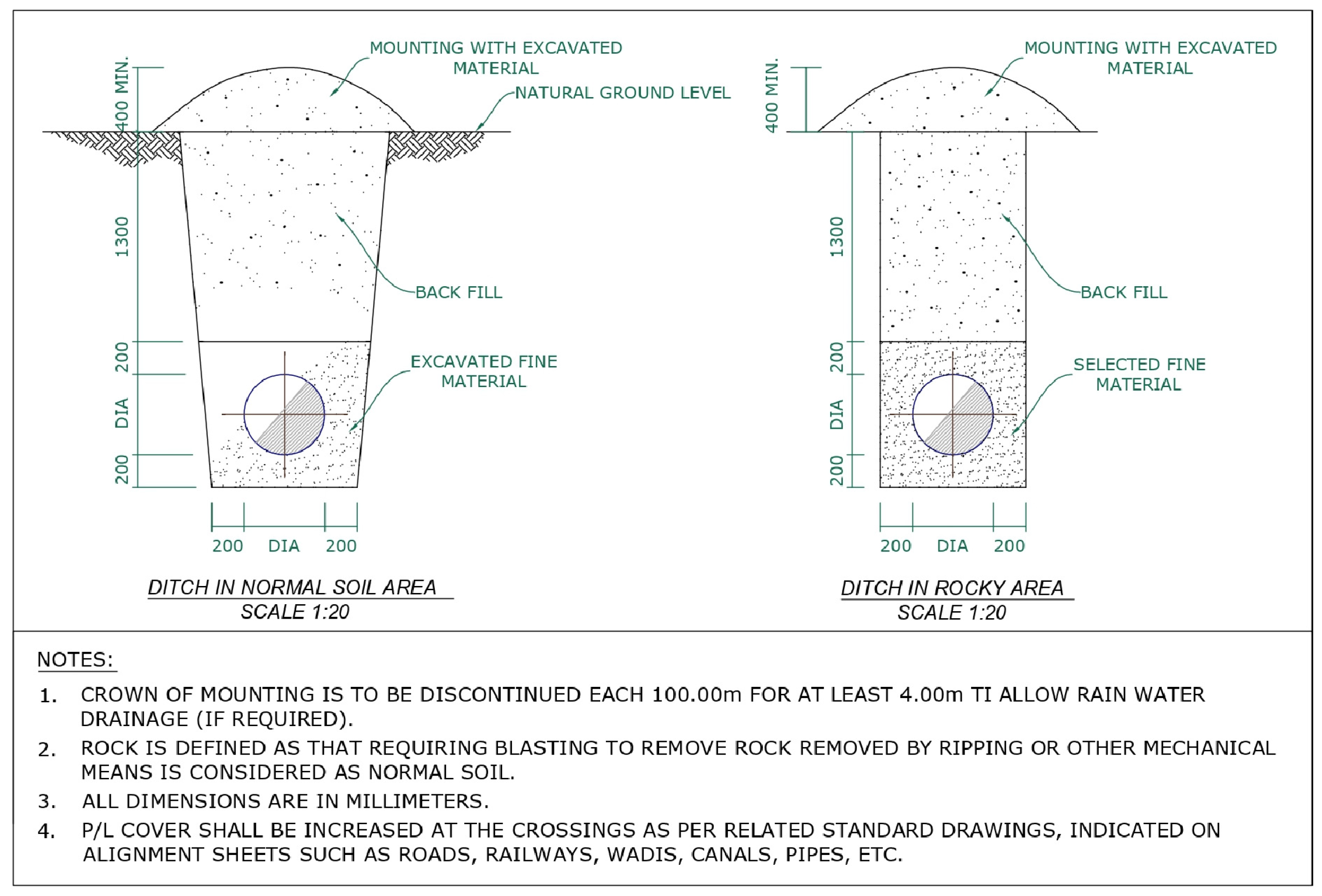
The pipelines were placed within a ditch designed according to the Typical Ditch Standard of the Iraqi State Company for Oil Projects (STD-CS-02), as illustrated in
Figure 1. This standardized ditch geometry reflects common installation practices for transmission pipelines in Iraq and ensures realistic boundary conditions for soil–pipe interaction modelling.
The geotechnical properties of the surrounding soil were derived from the site investigation for the Al-Kut Gas Factory Project. This location was selected due to its exposure to relatively high seismic activity compared to other regions in Iraq, as well as its strategic position between the Tigris and Al-Gharraf rivers, where groundwater levels are typically shallow. The soil profile obtained from this investigation was used to represent actual field conditions, providing a reliable basis for evaluating pipeline performance under seismic loading.
The horizontal spacing between adjacent pipelines was selected based on commonly adopted engineering practice and applicable design guidelines for buried pipeline corridors. In this study, the clear spacing between pipelines corresponds to the minimum recommended separation specified in relevant oil and gas pipeline standards, including ASME and API guidance, as well as the clearance requirements adopted by the Iraqi State Company for Oil Projects (SCOP) for pipeline right-of-way design. These provisions aim to ensure constructability, safe installation, accessibility for maintenance, and avoidance of mechanical interference between adjacent lines under both static and seismic conditions. The adopted spacing therefore represents a realistic and conservative design scenario frequently encountered in practice, particularly in congested utility corridors where right-of-way constraints limit pipeline separation. By selecting code-consistent minimum spacing, the numerical analysis intentionally captures potential interaction effects under unfavorable yet realistic conditions, allowing assessment of whether standard clearance provisions remain adequate during seismic loading.
2.5. Definition of Symmetry in the Numerical Model
In this study, symmetry refers to the initial equivalence of geometric configuration, material properties, soil conditions, and boundary constraints in the numerical model prior to the application of seismic loading. For both double- and triple-pipeline systems, the pipelines were arranged with equal spacing and identical diameters, wall thicknesses, and material properties. The surrounding soil was defined symmetrically with respect to the pipeline centerline, using uniform stratigraphy, constitutive parameters, and groundwater conditions on both sides of the system.
Boundary conditions were applied symmetrically, with vertical model boundaries restrained equally in the horizontal direction and the base fixed in the vertical direction. Identical constraints were imposed at the lower corners to prevent rigid-body motion. Prior to seismic excitation, gravitational loading and the initial stress state were uniform across the model domain, resulting in a symmetric stress and deformation field.
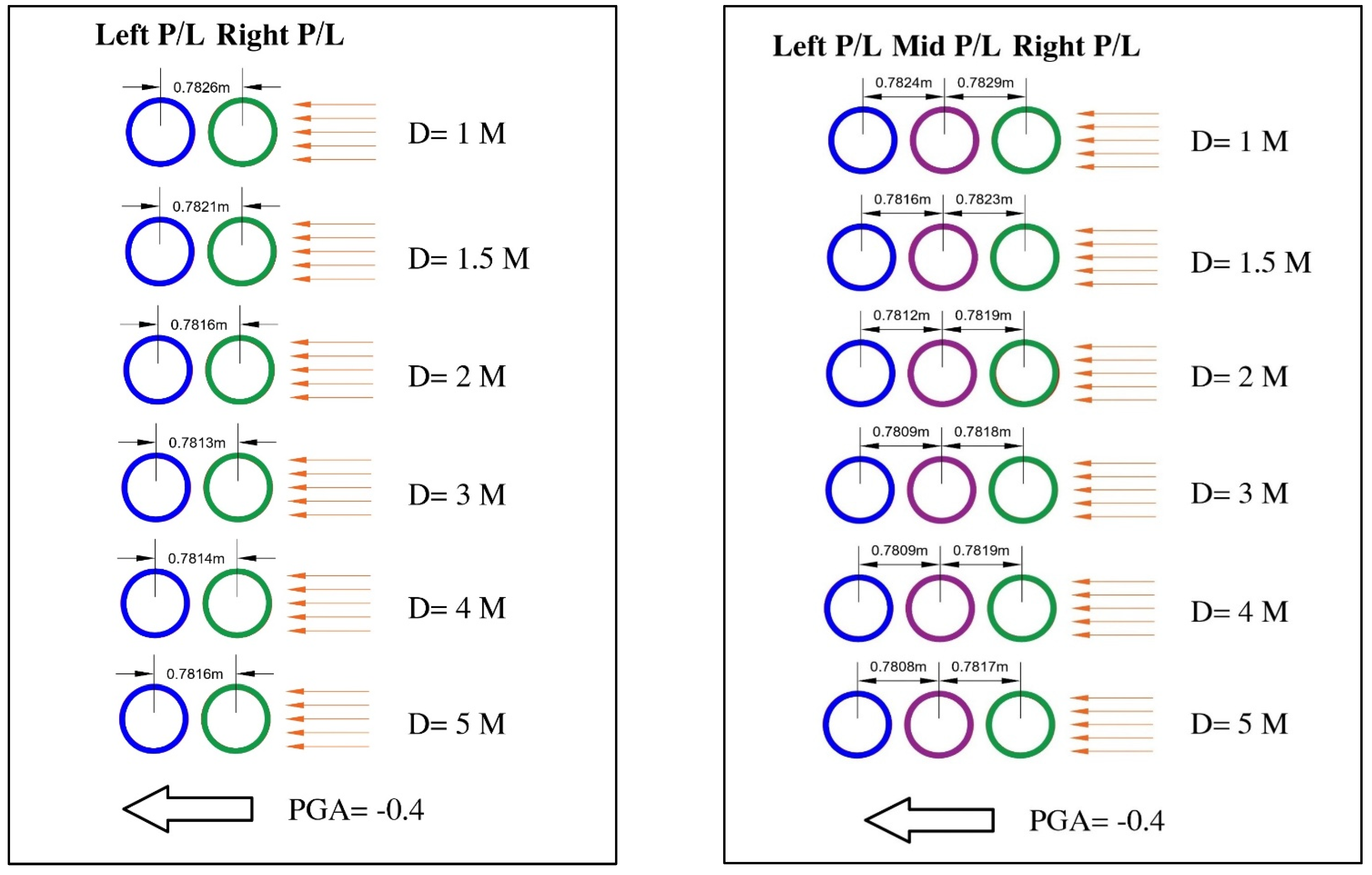
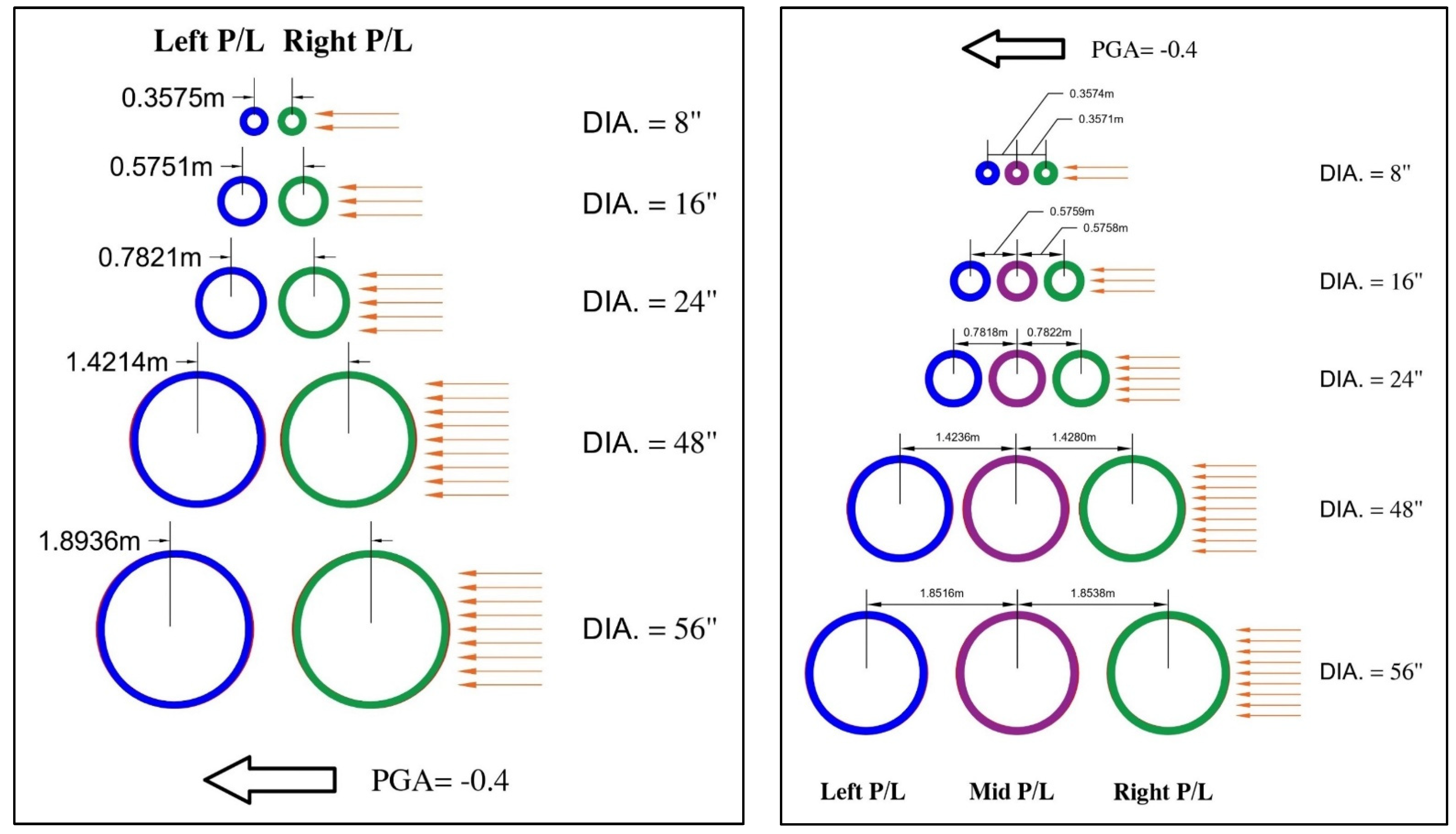
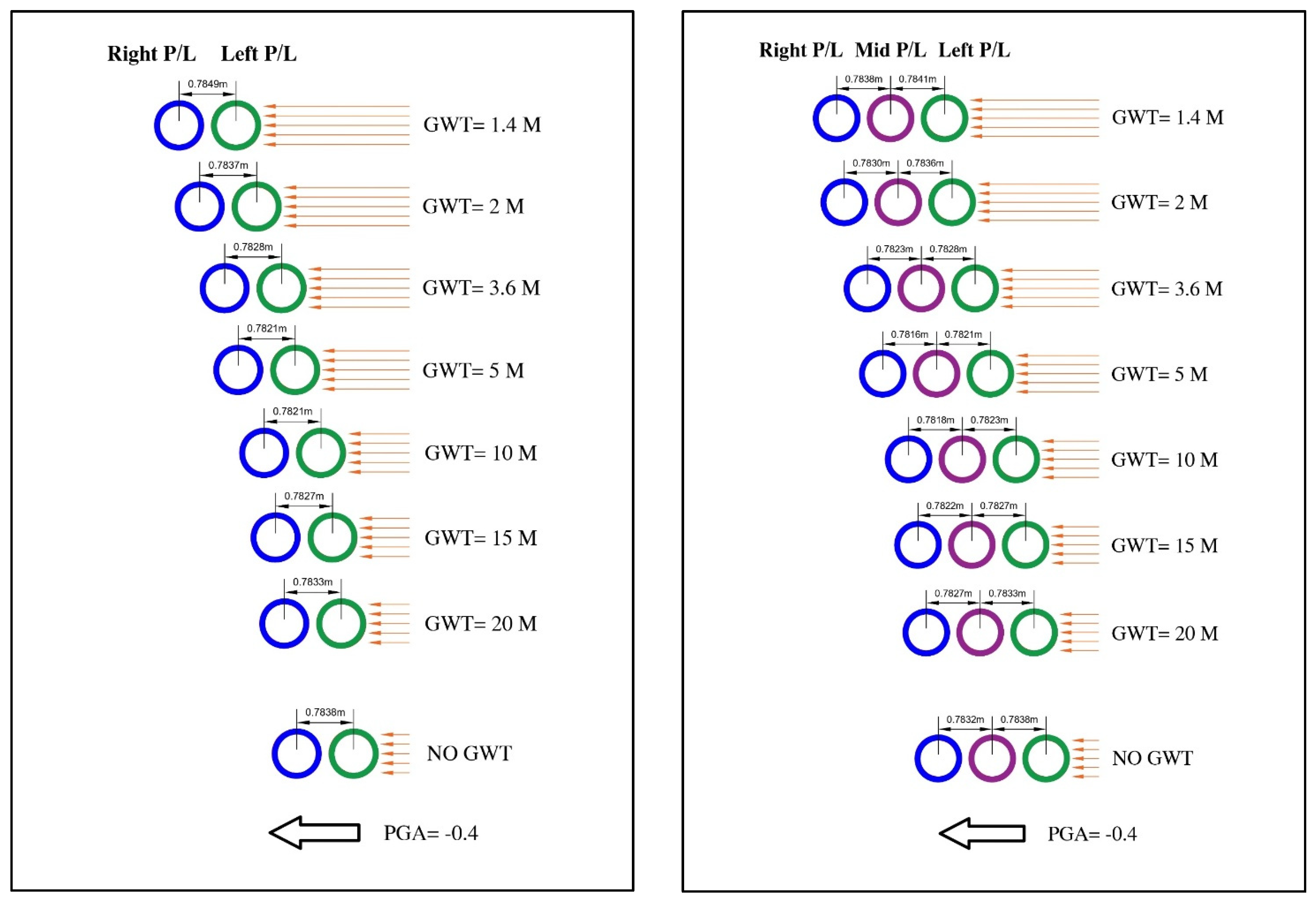
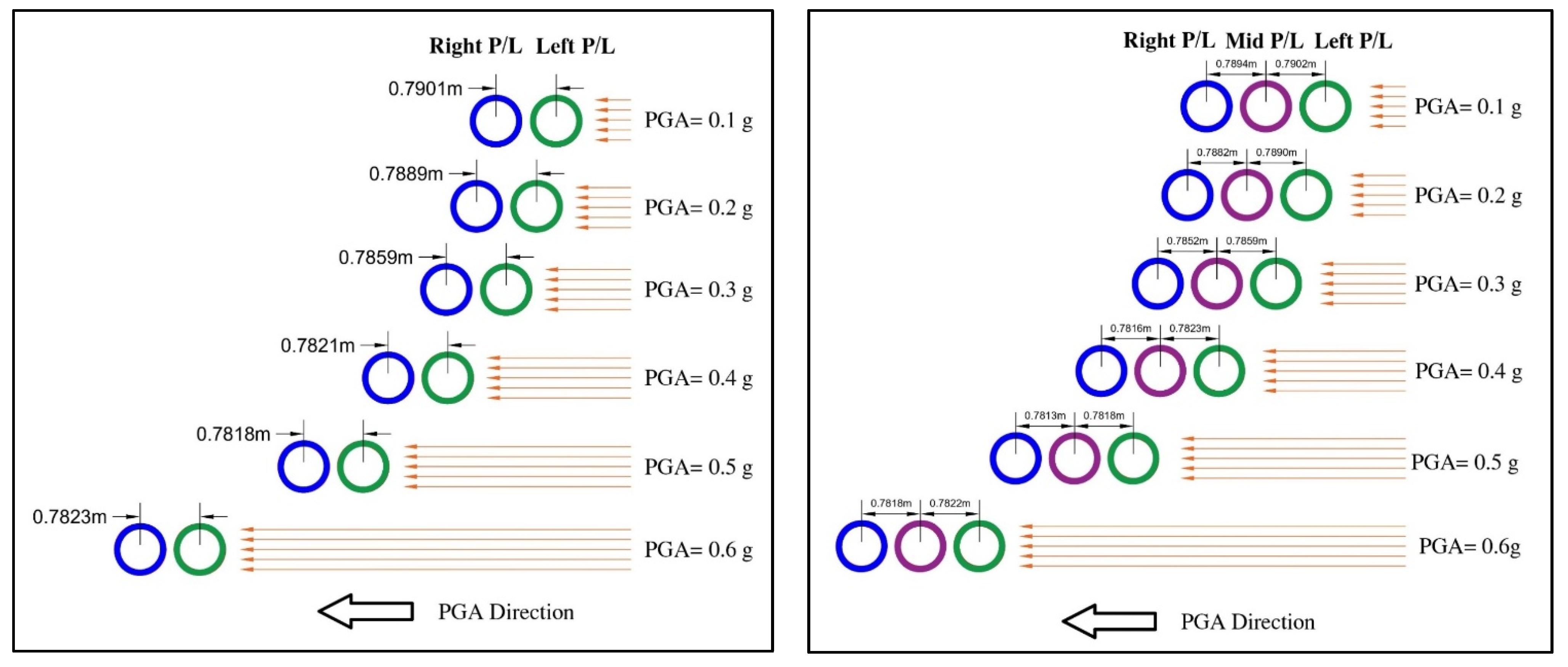
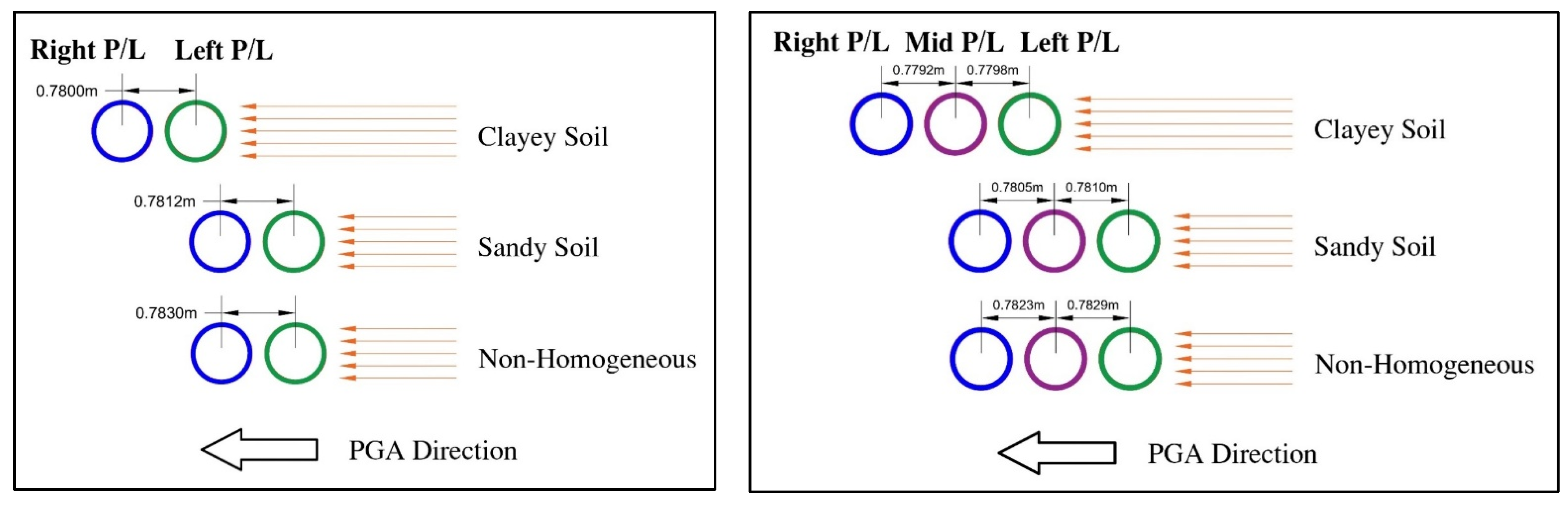
Symmetry in the model is intentionally broken only through the application of directional pseudo-static seismic loading. The horizontal seismic acceleration is applied in a specified direction, producing unequal inertial forces and soil pressures on opposite sides of the pipelines. As a result, initially symmetric pipeline configurations develop asymmetric shear forces, horizontal displacements, and variations in spacing. In this study, such asymmetric responses are referred to as symmetry-breaking behavior.
2.6. Numerical Modelling Approach and Boundary Conditions
The numerical analyses were conducted using a two-dimensional plane-strain formulation, which is appropriate for modeling long, continuous buried pipelines where the geometry, material properties, and loading conditions are assumed uniform along the pipeline axis. Under this assumption, out-of-plane deformation and axial strain gradients are negligible, and the seismic response is governed primarily by transverse soil–pipeline interaction. This approach is widely used in the seismic assessment of buried pipelines to investigate force-transfer mechanisms, deformation trends, and interaction effects away from localized features such as bends, joints, valves, or terminations. In the present study, the plane strain model enables a systematic parametric investigation of double- and triple-pipeline systems with reasonable computational efficiency. However, the two-dimensional formulation does not capture three-dimensional effects such as longitudinal wave propagation, spatial variability of ground motion, or local bending and buckling. Therefore, the results are interpreted as representative of cross-sectional response and comparative seismic demand, while fully three-dimensional dynamic analyses are recommended for detailed design-level evaluation.
Five numerical scenarios were established using a parametric framework, where a single variable was modified in each case while the remaining parameters were held constant. The investigated variables included burial depth, pipe diameter, groundwater table depth, peak ground acceleration (PGA), and soil type. This approach enabled the independent assessment of the influence of each parameter on the seismic response of the buried pipeline.
The model domain dimensions (50 m × 109.655 m) were kept constant across all parametric cases to ensure consistency and avoid introducing artificial changes in boundary condition effects when varying burial depth, diameter, groundwater level, PGA, or soil type. The selected boundaries were positioned sufficiently far from the pipeline group to approximate far-field conditions and minimize boundary reflections or stiffness artifacts in the zone of interest. This domain size was chosen to remain conservative with respect to the
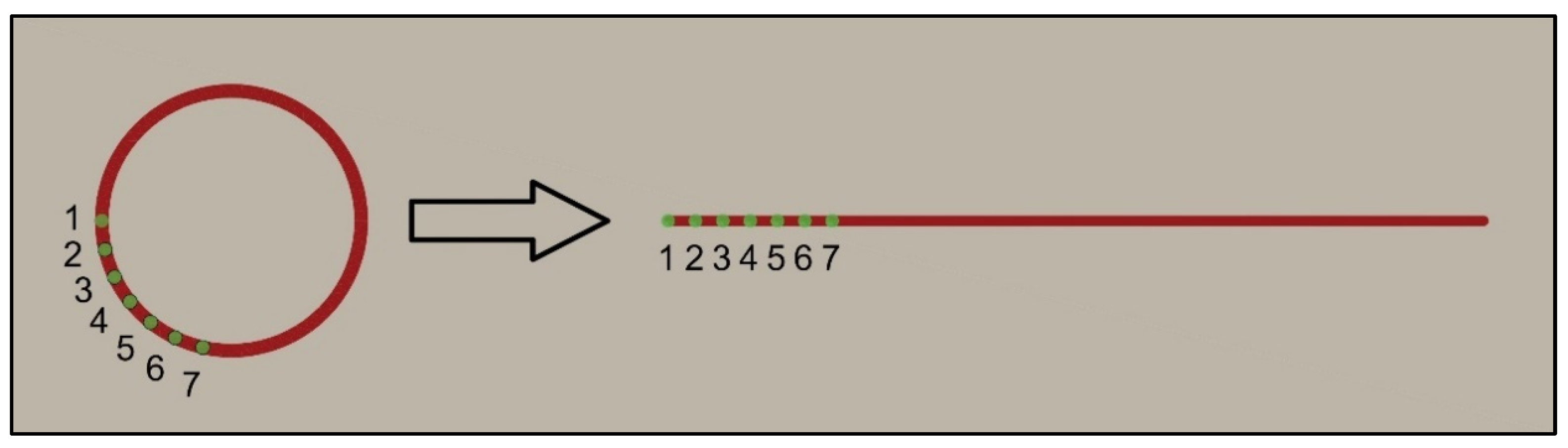
largest geometric case considered (maximum diameter and burial depth), so that all smaller cases are contained within the same far-field boundary envelope. Consequently, any observed differences in response among scenarios are attributable to the investigated parameters rather than changes in model extent or boundary proximity. The specific locations along the pipeline from which shear forces and horizontal displacements were extracted are illustrated in
Figure 2. In this study, the maximum horizontal displacement is defined as the absolute lateral movement of the pipeline nodes relative to their initial, undeformed positions and is obtained directly from the finite element output.
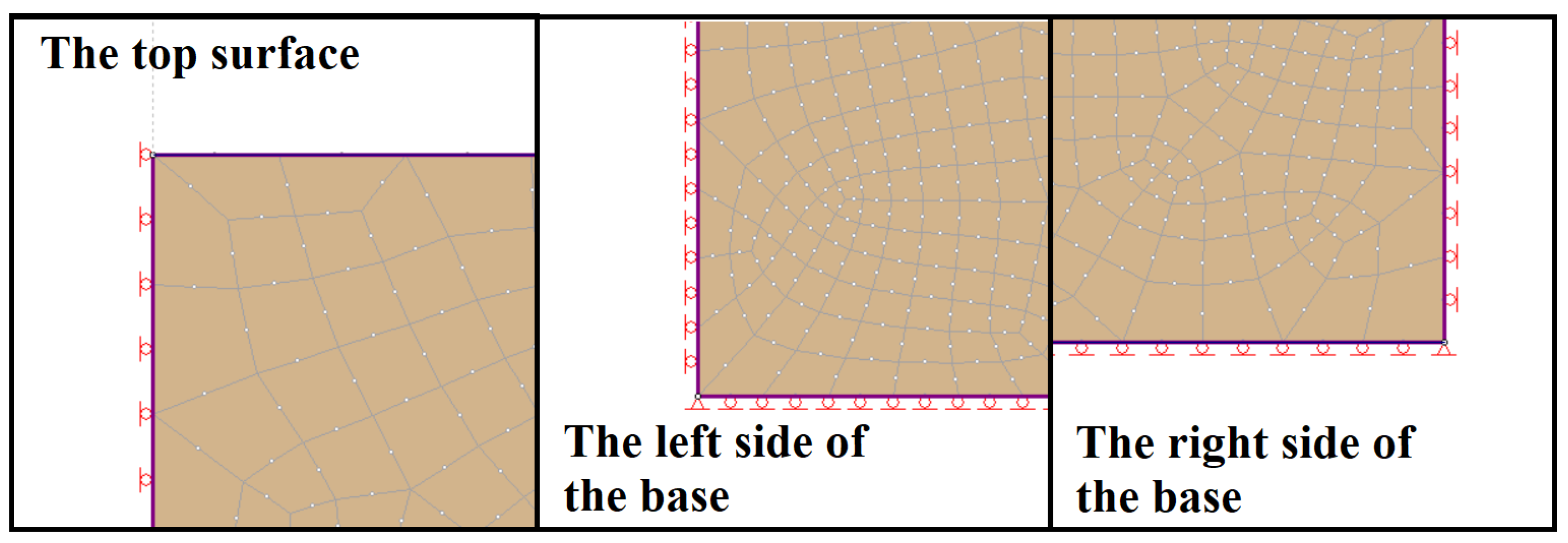
During the design stage, boundary conditions were applied as illustrated in
Figure 3. The two vertical boundaries were restrained in the X-direction to prevent lateral movement, while the bottom boundary was fixed in the Y-direction. Additionally, two corner nodes at the base were constrained in both X and Y directions to eliminate any rigid-body translation or rotation of the model. The ground surface was left unrestrained to allow natural deformation under seismic loading.
The pipeline was modeled using linear elements, with mechanical properties calibrated to accurately represent the behavior of API 5L X60 steel. To improve numerical accuracy, the stress analysis tolerance was set to 0.001, and convergence was controlled using absolute force and energy criteria. These settings ensured stable and reliable performance of the nonlinear finite element simulations across all scenarios.
The ground surrounding the pipeline was represented using three typical soil categories—clay, sand, and heterogeneous soil—to account for the range of subsurface conditions across the study area. The required geotechnical properties, including unit weight, cohesion, internal friction angle, Young’s modulus, and Poisson’s ratio, were taken from the soil investigation report of the Al-Kut Gas Factory Project and implemented directly in the RS2 model. The Mohr–Coulomb constitutive model was selected for all soil types because it is commonly employed in pseudo-static seismic analyses of buried pipelines and can effectively describe elastic–plastic behavior using parameters that are readily available from site investigation data.
Since seismic effects were simulated using a pseudo-static method, the analysis focused on soil strength mobilization and soil–pipeline interaction rather than on dynamic phenomena such as wave propagation or cyclic degradation of stiffness. While more advanced constitutive models (e.g., Drucker–Prager or hardening models) could potentially provide a more detailed representation of stress-path-dependent behavior, their use requires additional material parameters that were not available for the investigated site.
For the soil properties applied in the first four scenarios, the initial element loading was defined using the Field Stress and Body Force options, and the influence of moisture conditions was incorporated through the assigned unit weight values. The dry, moist, and saturated unit weights were taken as 16.2 kN/m3, 19.44 kN/m3, and 19.8 kN/m3, respectively, with a porosity of 0.5.
Soil stiffness was assumed to be isotropic, characterized by a Young’s modulus of 10,390 kPa and a Poisson’s ratio of 0.35. The shear strength behavior was defined using the Mohr–Coulomb criterion, with a cohesion of 6.34 kPa, a friction angle of 31.25°, and a tensile strength of 153.64 kPa. A dilation angle of 0° was adopted, and the residual strength parameters were set equal to the peak values to ensure consistent post-yield behavior throughout the analysis.
Hydraulic conditions were modeled as drained, with a fluid bulk modulus of 2.2 × 10⁶ kPa, piezometric water mode, and Hu = 1. To maintain consistent hydraulic and mechanical boundary conditions across all simulation stages, the Datum Dependency and Stage Factors options were deliberately left unselected.
The interaction between the buried pipelines and the surrounding soil was modeled using fully bonded contact conditions within the RS2 finite-element framework, whereby displacement compatibility is enforced between the pipeline liner elements and the adjacent soil elements. In this approach, no explicit interface or contact elements were defined, and separation or sliding at the soil–pipeline interface was not permitted. This assumption represents full mobilization of soil–pipeline interaction and is commonly adopted in pseudo-static seismic analyses of buried pipelines to capture upper-bound force transfer and deformation demand. Interface friction was therefore implicitly governed by the shear strength parameters of the surrounding soil, as defined by the Mohr–Coulomb constitutive model. The adopted approach is appropriate for welded steel pipelines installed in compacted trench backfill, where relative slip at the soil–pipe interface is limited under seismic loading. The implications of this assumption are acknowledged, and more advanced interface formulations allowing separation and sliding may be considered in future studies to capture localized debonding or partial mobilization effects.
A uniform finite-element mesh consisting of 8-noded quadrilateral elements was employed to ensure adequate resolution of stresses and deformations within the soil–pipeline system. Approximately 750 elements were generated across the model domain, providing a balance between computational efficiency and numerical accuracy.
Seismic loading was applied using the pseudo-static approach, where horizontal inertial forces simulate earthquake-induced ground shaking. The seismic load was applied from right to left for all Scenarios, reflecting unidirectional ground motion.
Following each model run, the nodal coordinate data were exported from Rocscience RS2 to Microsoft Excel. The coordinates were then transferred to AutoCAD 2023 using the auxiliary software SW-DTM version 3.0, where they were imported as discrete spatial points. To visualize the pipeline’s deformation profile under seismic loading, the points were connected using the CPT command, which had been previously integrated into AutoCAD. This workflow provided a clear, accurate representation of the pipeline’s displacement pattern for comparative analysis across scenarios.
The five scenarios of the study and their corresponding variable and constant parameters are summarized in
Table 1.
5. Discussion
In this study, symmetry-breaking refers to the emergence of asymmetric shear forces, horizontal displacements, and spacing variations in initially symmetric multi-pipeline configurations as a result of directional seismic loading and nonlinear soil–pipeline interaction. Although the pipeline layouts are symmetric in geometry, material properties, and boundary conditions prior to seismic excitation, this symmetry is progressively lost once directional inertial forces are applied.
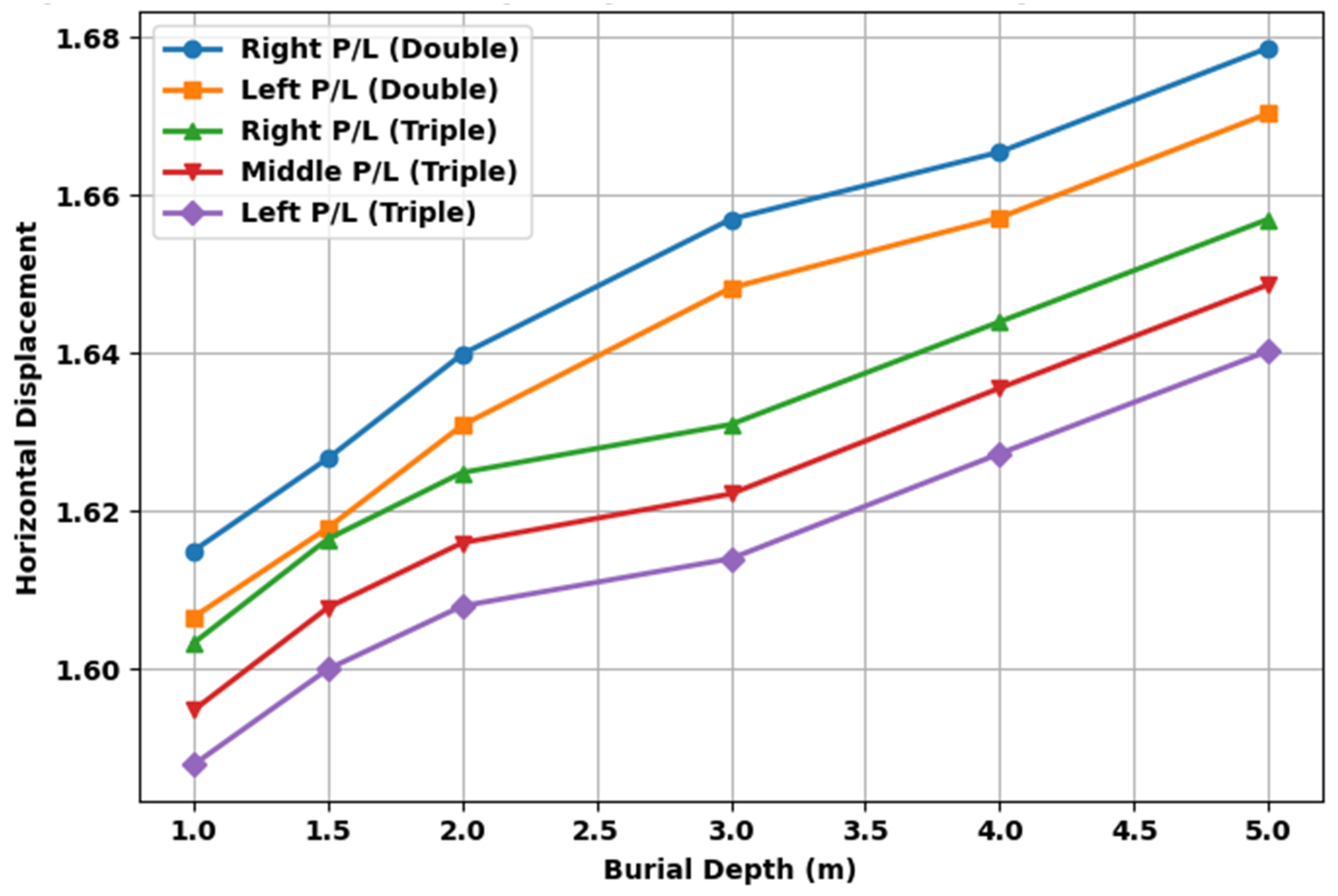
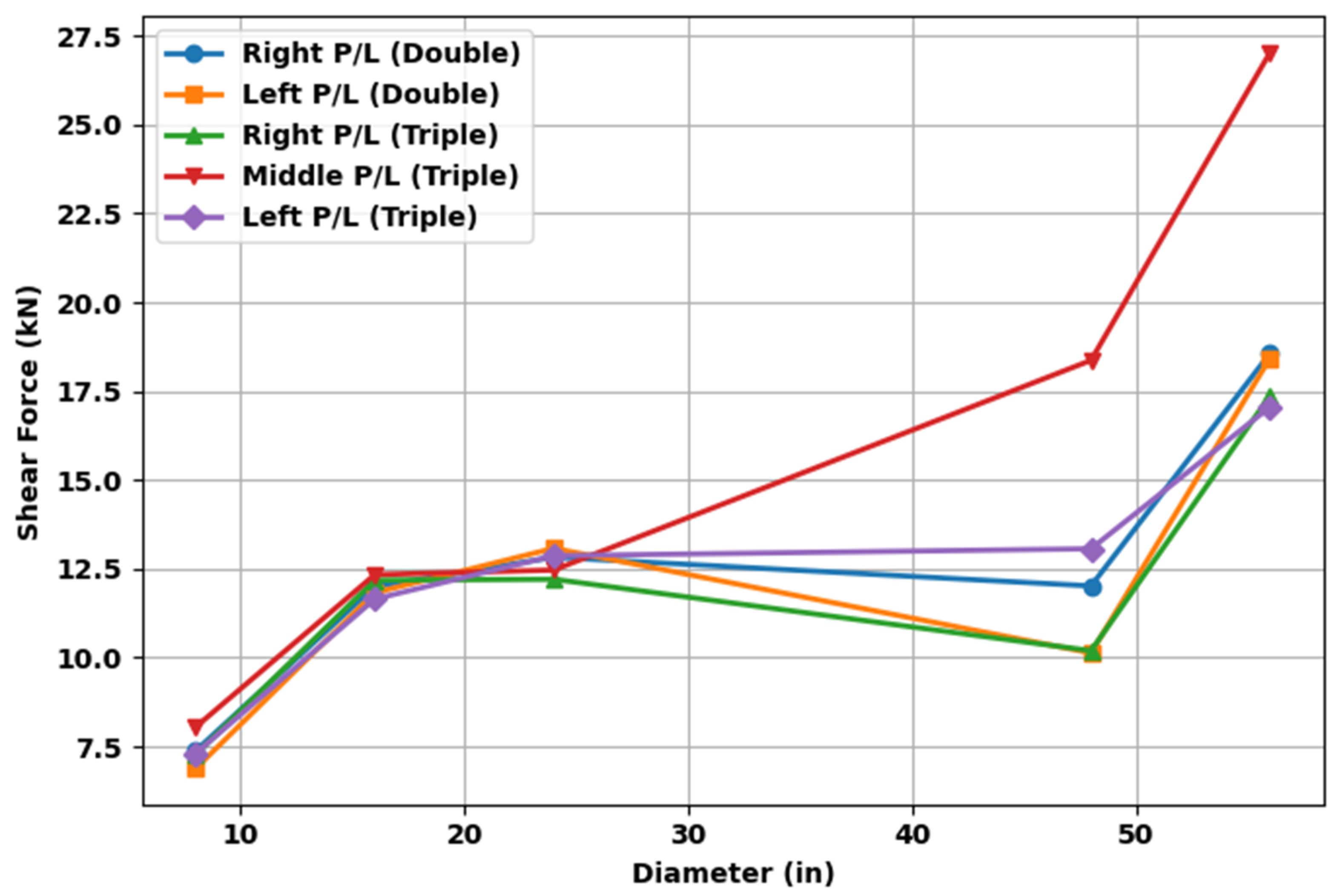
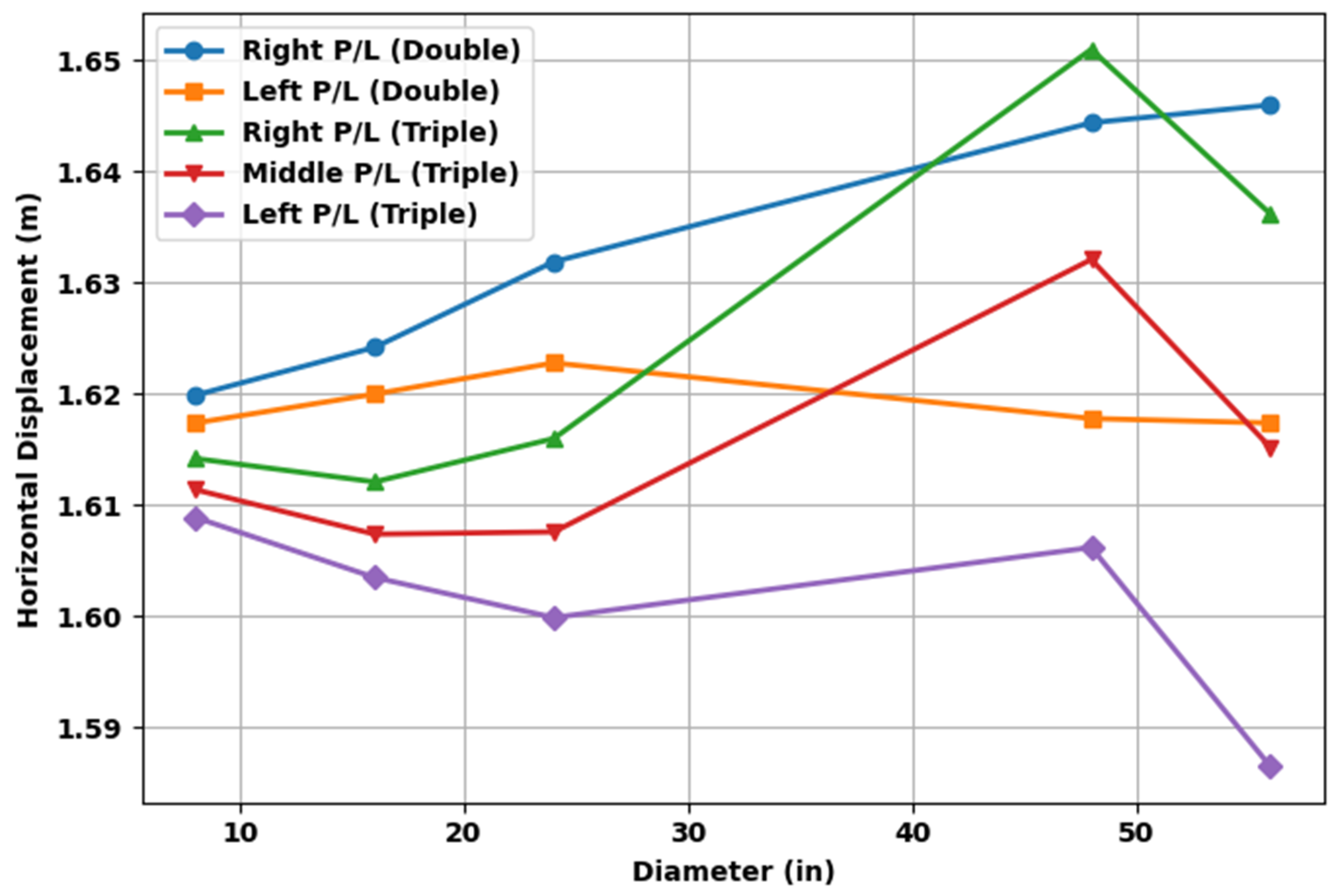
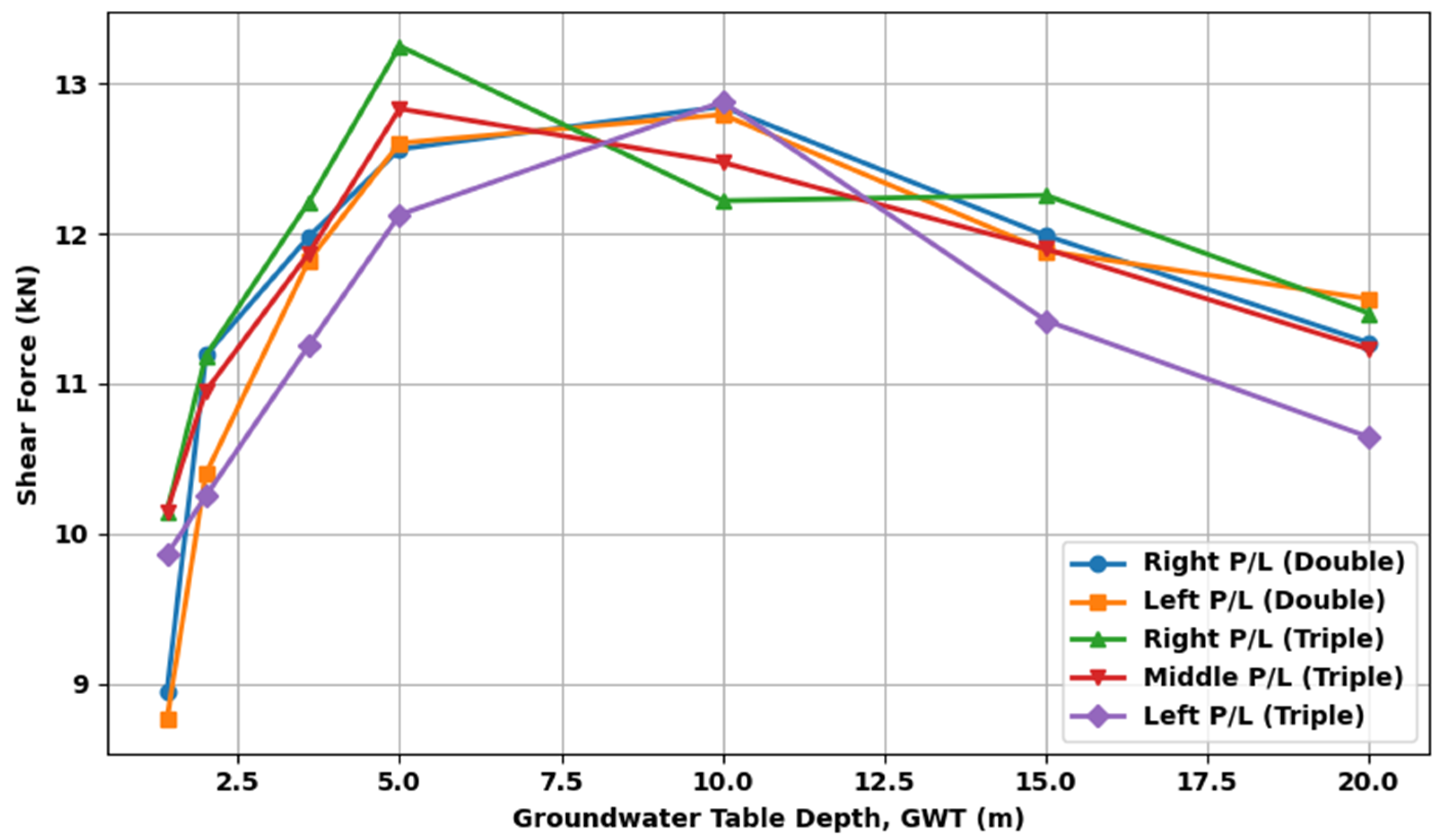
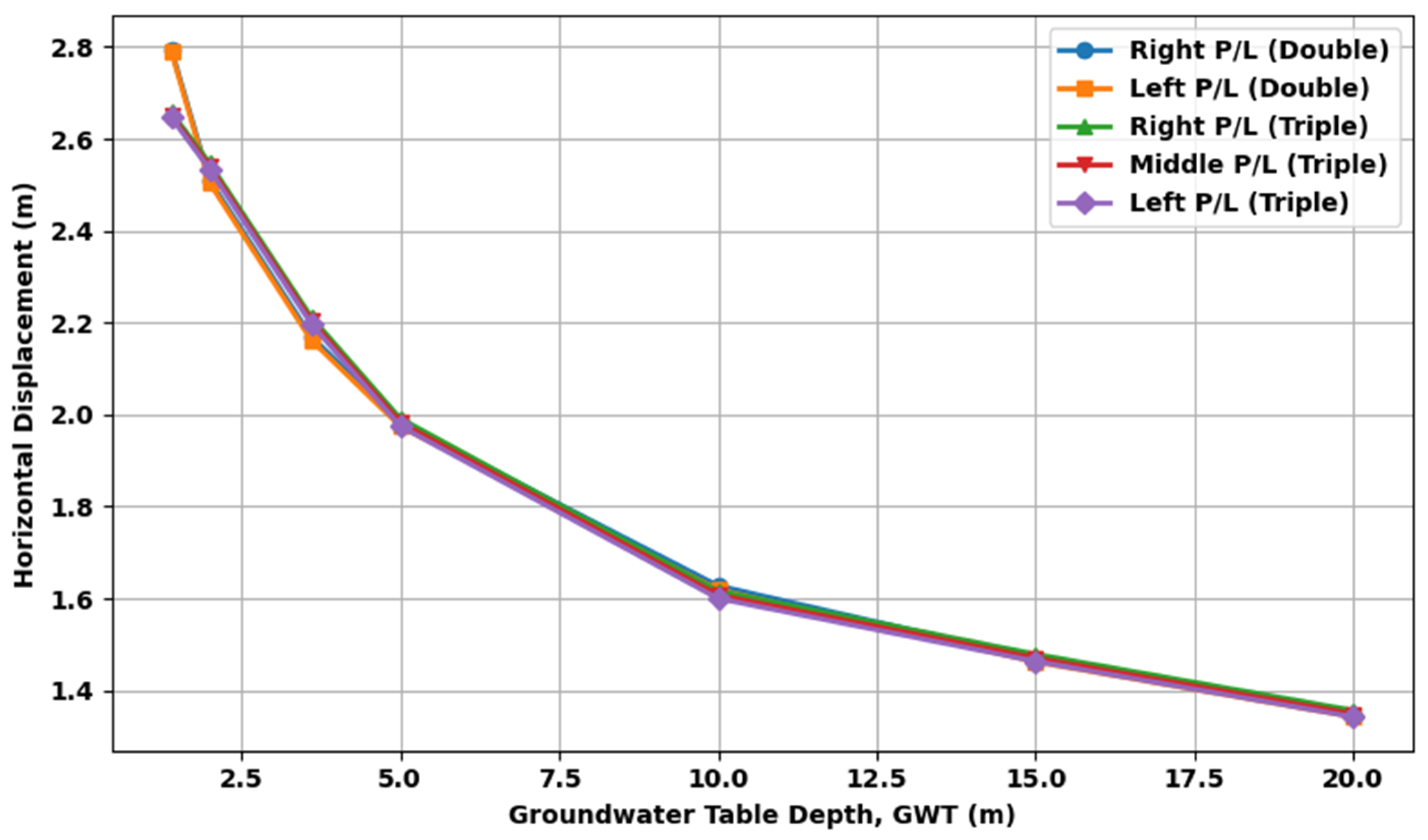
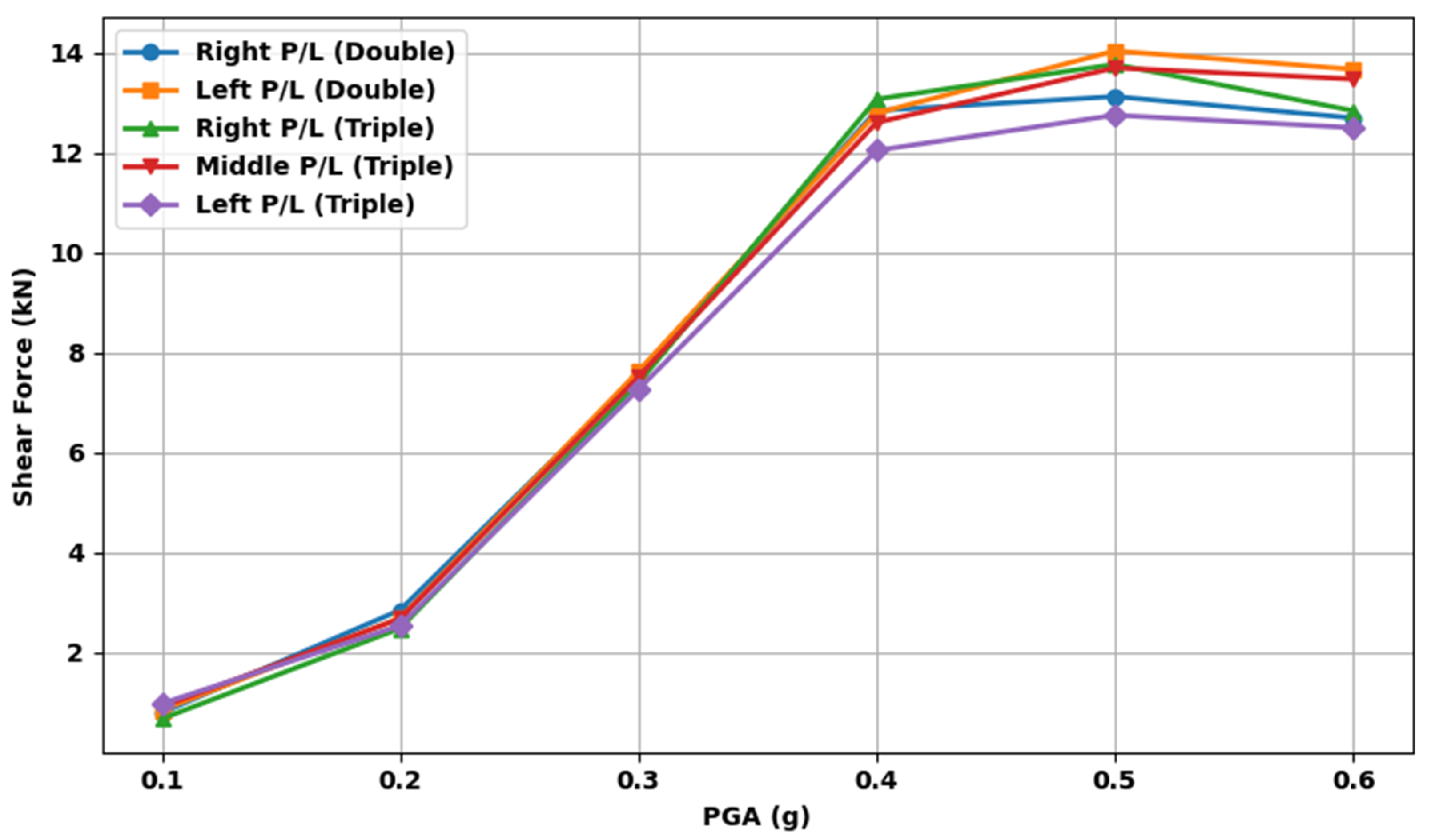
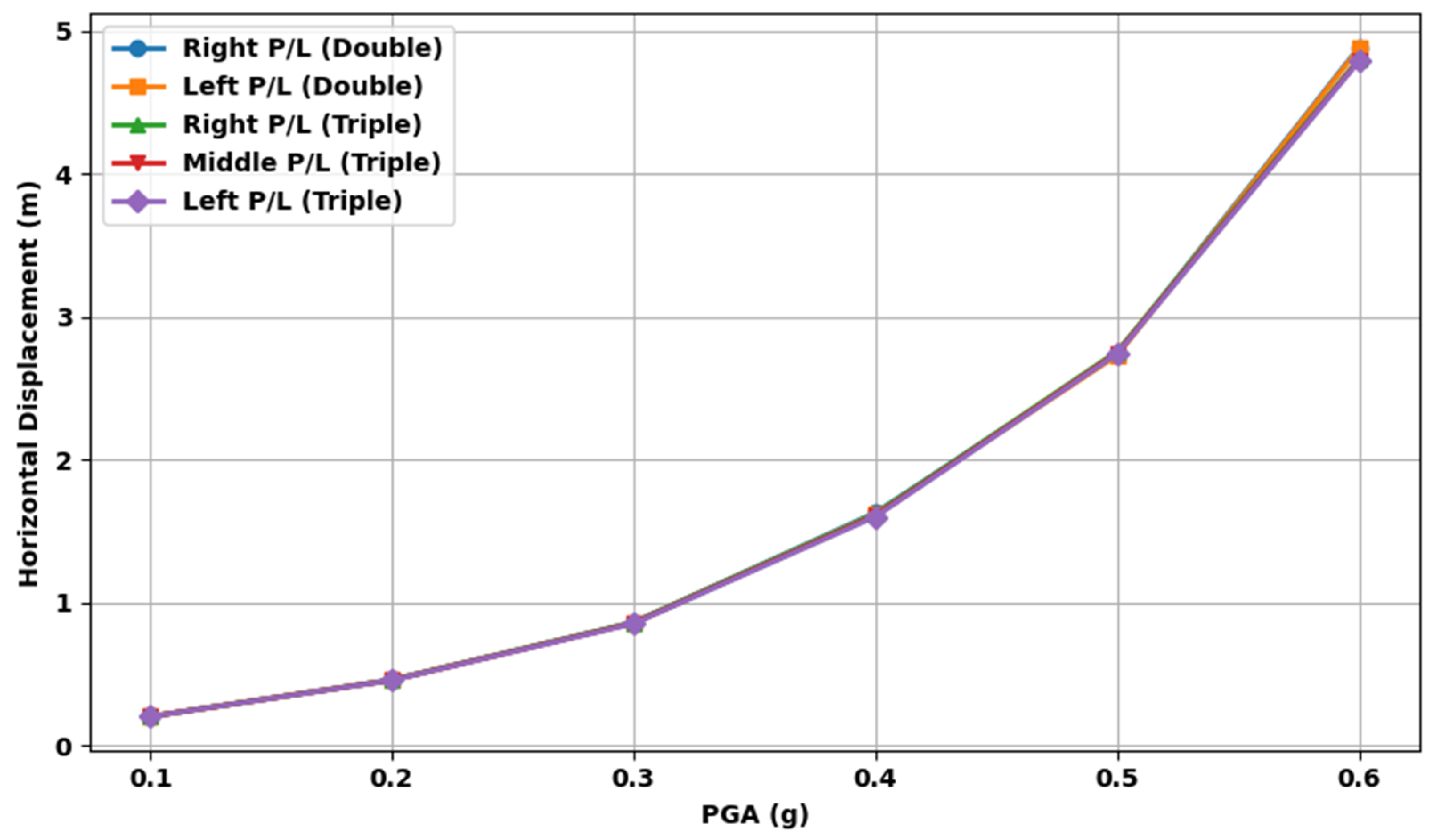
Symmetry-breaking in the present study is identified and supported through both qualitative observation and quantitative comparison of numerical results. Quantitatively, asymmetric behavior is evidenced by systematic differences in maximum shear force and horizontal displacement between pipelines that are initially equivalent. In double-pipeline systems, the pipeline facing the direction of seismic loading consistently develops larger horizontal displacements and higher mobilized demand than the trailing pipeline. In triple-pipeline systems, the middle pipeline exhibits higher shear forces due to confinement and soil arching effects, while the outer pipelines experience different displacement levels depending on their position relative to the seismic excitation. These differences are consistently reflected in measurable ratios of shear force and displacement between pipelines across the investigated scenarios, confirming that symmetry-breaking is not merely qualitative or observational, but is quantitatively supported by the numerical results.
The elevated shear demand observed in the middle pipeline of the triple-line configuration can be explained by its mechanical role as a load-transfer hub subjected to dual-side confinement. Under directional seismic excitation, the surrounding soil attempts to translate laterally; the two outer pipelines impose geometric constraints on this motion and create a confined “soil cell” between the pipes. Because the middle pipeline is bounded by soil on both sides that is simultaneously constrained by the outer pipes, it experiences higher normal stress and stiffness in the adjacent soil zones, which increases the mobilized interface reaction on both sides of the pipe. In effect, lateral resistance is mobilized from two confined sides rather than predominantly from one side as in an outer pipeline, producing a larger net shear transfer into the middle pipeline for the same imposed ground deformation. In addition, soil arching within the inter-pipe zones redistributes stresses toward the central corridor, so the middle pipe receives amplified shear demand even when its lateral displacement is relatively restrained. This dual-side confinement mechanism is most pronounced at greater burial depths and in stiffer or more plastic soils, where confinement and arching are stronger, explaining why the middle pipeline consistently develops higher shear forces than the outer pipelines across the investigated scenarios.
To quantify the degree of symmetry-breaking observed in the numerical results, an asymmetry coefficient is introduced based on the relative difference in response between pipelines that are initially symmetric. For double-pipeline systems, the asymmetry coefficient for a given response quantity
(shear force or horizontal displacement) is defined as
For triple-pipeline systems, asymmetry is evaluated by comparing the outer pipelines and by assessing the deviation of the middle pipeline response from the mean response of the two outer pipelines. Application of this coefficient to the numerical results indicates that asymmetry increases systematically with peak ground acceleration and burial depth, while remaining sensitive to soil stiffness and groundwater conditions. Although the absolute magnitudes of asymmetry are moderate, their persistence across all scenarios confirms that the observed symmetry-breaking is systematic and mechanically driven rather than a numerical artifact.
The emergence of symmetry-breaking behavior in initially symmetric multi-pipeline systems is governed by redistribution of soil pressures under directional seismic loading. When horizontal inertial forces are applied, the pipeline facing the direction of seismic excitation mobilizes higher passive earth pressures, while the trailing pipeline experiences reduced confinement associated with active soil response. This asymmetric mobilization of soil resistance alters the stress field within the surrounding soil mass, leading to unequal force transfer and displacement even in geometrically symmetric configurations. In triple-pipeline systems, this mechanism is further amplified by confinement and soil arching between adjacent pipelines, where the trapped soil zone redistributes stresses toward the middle pipeline, increasing its shear demand while limiting its lateral displacement. The coupled effects of passive–active pressure imbalance and soil arching explain why symmetry-breaking intensifies with increasing seismic intensity and burial depth, and why pipeline position within a multi-line corridor plays a critical role in governing seismic response.
The findings of this study provide a comprehensive understanding of how buried steel pipelines respond to seismic loading when multiple lines are placed within the same trench. By integrating variations in burial depth, pipeline diameter, soil type, groundwater level, and peak ground acceleration (PGA), the numerical results highlight the complex interactions that govern soil–pipeline behavior during earthquakes.
One of the central outcomes is that multi-line pipeline systems do not behave as independent entities; instead, they exhibit coupled responses influenced by their spacing, stiffness, and the load-transfer mechanisms occurring within the surrounding soil. This represents a meaningful extension to previous research, which has largely focused on single-line pipeline systems [
1,
27,
28,
29].
Although the double- and triple-pipeline systems are geometrically symmetric at the outset, the results demonstrate that seismic loading consistently breaks this symmetry. Directional pseudo-static excitation causes unequal soil pressures to develop on opposite sides of the pipelines, leading to asymmetric shear forces, displacements, and spacing changes. In double-pipeline systems, the pipeline facing the seismic load typically experiences larger displacement, while the trailing pipeline mobilizes lower resistance. In triple-pipeline systems, symmetry-breaking is further influenced by confinement effects, whereby the middle pipeline develops higher shear forces due to soil arching and constrained deformation, even though it may not experience the largest displacement. These findings confirm that symmetric geometry does not imply symmetric seismic response.
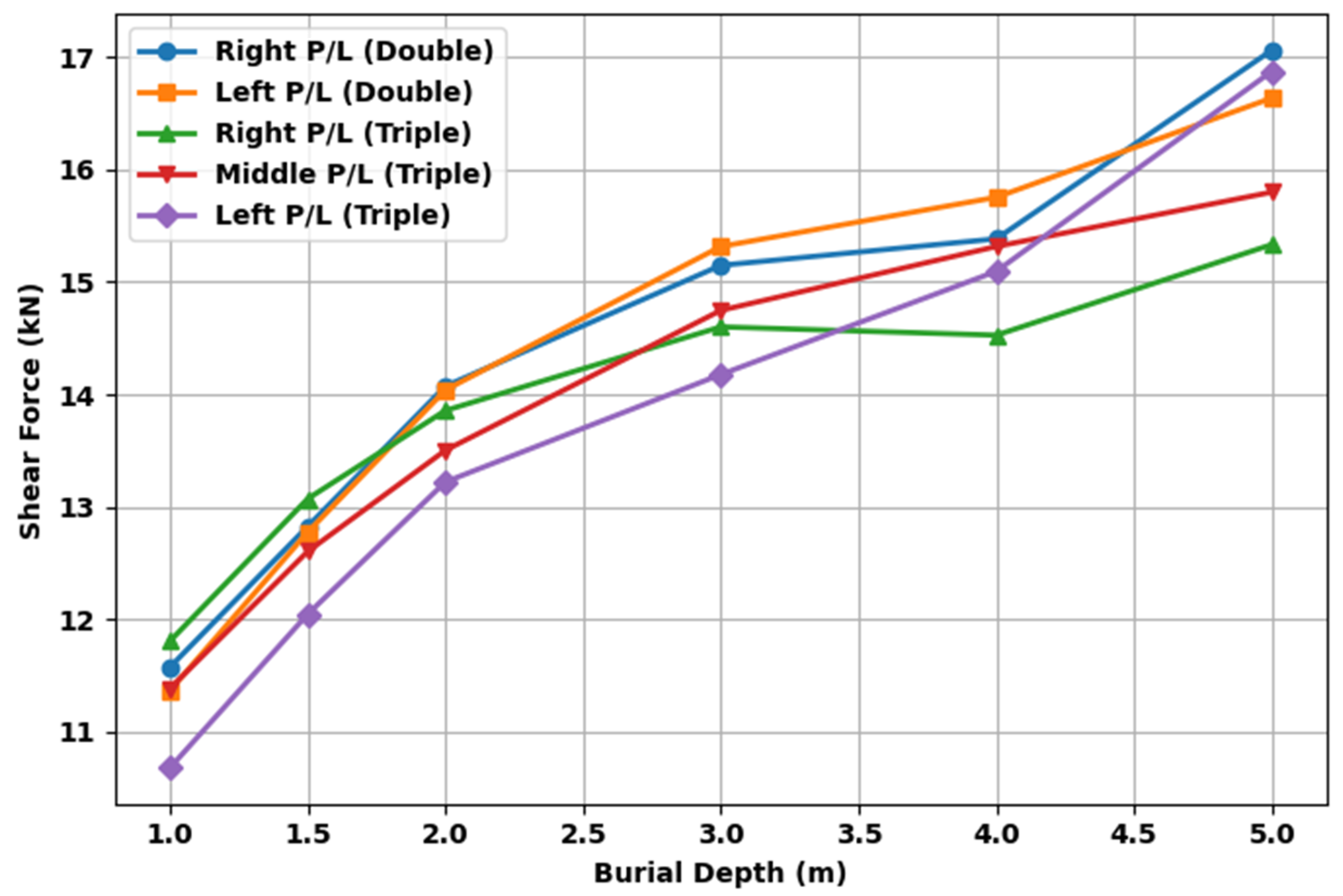
Across all analyses, geometric parameters such as burial depth and diameter were found to strongly influence seismic demand. Increasing burial depth increased both horizontal displacement and shear force, confirming previous pseudo-static soil–pipe interaction studies: Badv and Daryani (2010) found that larger burial depth ratios lead to higher transverse interaction forces and require greater pipe displacement to mobilize peak resistance in sand [
30], while Sabet and Nayyeri (2016) and other fault-crossing analyses reported that deeper pipelines develop higher axial strains and soil–pipe interaction forces under imposed seismic ground deformations [
31]. Larger pipeline diameters, while inherently stiffer, tended to attract greater bending demands due to increased contact area with deforming soil. When these effects were examined in the multi-line configurations, interaction between adjacent pipelines became evident. Pipelines placed closer together exhibited elevated stress concentrations within the soil mass, resulting in amplified forces on individual lines. This observation demonstrates that the assumption of independent pipeline behavior—common in simplified analyses—may underestimate seismic risk in dense pipeline trenches.
Soil type and groundwater conditions played equally significant roles in shaping the overall seismic response. Pipelines embedded in dense sand experienced lower displacement and resistance compared to those in soft or medium clay, consistent with previous seismic studies, which have shown that buried pipelines experience significantly higher strains and kinematic distress in soft clay than in dense sand [
32,
33,
34,
35]. The presence of groundwater notably increased displacement and reduced lateral resistance due to reductions in effective stress and soil stiffness. These behaviors align with the fragility assessments of Shakib and Jahangiri (2016), who found pipelines in high-groundwater environments to be more vulnerable during seismic events [
9]. The results also reflect the findings of Qiu et al. (2018), who demonstrated that collapsible or moisture-sensitive soils, such as loess, can experience substantial vertical and horizontal deformations that exacerbate pipeline movement [
11].
Loading conditions, particularly increases in PGA, led to pronounced growth in both shear forces and horizontal displacements. As ground motion intensity increased, the transition from elastic to inelastic soil behavior occurred earlier, resulting in non-linear deformation patterns around the pipelines. These patterns mirrored the axial compression and local instability mechanisms described by Tsinidis et al. (2020) [
12] and aligned with the general structural degradation behaviors under cyclic loading reported by Moradi and Alam (2015) [
13].
From an engineering design perspective, meter-scale horizontal displacements substantially exceed commonly accepted serviceability and strain-based performance limits for buried steel pipelines. Design guidelines and post-earthquake observations indicate that buried pipelines typically tolerate only limited ground-induced deformation before experiencing excessive bending strain, local buckling, joint distress, or coating damage. While allowable deformation limits depend on pipeline geometry, material properties, and operating conditions, displacement demands on the order of meters would correspond to strain levels far beyond those associated with repairable or acceptable performance states. Accordingly, the large deformation magnitudes identified in this study under high seismic intensities should be interpreted as indicative of severe deformation-controlled failure potential rather than acceptable engineering performance.
A key contribution of this study is the demonstration that multi-line pipeline systems exhibit nonlinear interaction effects that are absent in single-line configurations. Adjacent pipelines influenced each other’s deformation patterns through shared soil zones, which acted as coupled mediating layers. When subjected to seismic loading, the soil arching mechanism between pipelines became an important factor: in some cases, it redistributed loads beneficially, while in others, it intensified stress concentrations depending on spacing, depth, and ground condition. In triple-pipeline systems, the presence of the middle pipeline fundamentally alters the soil stress field compared to double-pipeline configurations. During seismic loading, lateral soil movement is constrained by the two outer pipelines, causing the soil mass trapped between the pipelines to behave as a confined zone. This confinement promotes soil arching, whereby a portion of the seismic-induced stresses is redirected toward the pipelines rather than dissipating freely into the surrounding ground. As a result, the middle pipeline experiences increased normal stress and enhanced shear transfer along its interface, leading to higher mobilized shear forces despite relatively smaller horizontal displacements. In contrast, the outer pipelines interact with free-field soil on one side, allowing partial stress relief through lateral soil movement, which limits shear accumulation even when displacements are larger. This mechanistic difference explains why triple-pipeline systems exhibit higher shear demand than double-pipeline systems and demonstrates that pipeline position within a multi-line corridor plays a critical role in governing seismic soil–pipeline interaction. These insights show that multi-line arrangements cannot be reliably captured through single-pipeline analysis, reinforcing the need for models that explicitly incorporate pipeline-to-pipeline interaction.
Another important implication relates to seismic design and risk mitigation. The combined effects of adverse geotechnical conditions (e.g., soft soil, high groundwater), unfavorable geometry (e.g., shallow burial), and strong ground motion produced significantly greater seismic demands than any single parameter acting alone. This observation aligns with the broader understanding highlighted by prior works (e.g., [
14,
15,
16]) that realistic seismic assessment requires simultaneous consideration of faulting, soil behavior, and pipeline properties. The results presented here support this conclusion and provide quantitative evidence that, when multiple parameters are considered in an integrated manner, seismic risk may be higher than predicted by traditional simplified methods.
Overall, the numerical findings confirm several trends reported in the literature while providing new insights into the behavior of multi-line systems under seismic loading [
1,
27,
28]. The strong influence of soil conditions, the amplifying effect of groundwater, the interaction between adjacent lines, and the sensitivity to PGA collectively emphasize the need for more refined analysis methods in pipeline engineering. Furthermore, the study highlights the importance of site-specific modeling, given that even small changes in geotechnical or geometric conditions can lead to meaningful differences in seismic performance. These results contribute to the growing body of evidence that advanced numerical frameworks—such as the one developed in this study—are essential for ensuring the resilience and safety of buried pipeline networks in seismically active regions.
6. Limitations of the Study and Future Research Directions
The findings of this study should be interpreted in light of several modeling assumptions and limitations. First, the seismic response of the pipeline systems was evaluated using a pseudo-static approach, in which earthquake effects are represented by equivalent inertial forces rather than full dynamic ground motion. While this approach is well-suited for identifying dominant trends in soil–pipeline interaction and assessing the relative influence of key parameters such as peak ground acceleration (PGA) and groundwater level, it does not capture dynamic phenomena including wave propagation, inertial amplification, phase lag, cyclic stiffness degradation, or pore-pressure accumulation. These limitations become increasingly relevant at high seismic intensities (PGA ≥ 0.5 g). Accordingly, the large deformation levels observed at high seismic intensities (PGA ≥ 0.5 g) should be interpreted as conservative upper-bound estimates of deformation demand rather than precise predictions of dynamic pipeline response.
Second, the analyses were conducted using a two-dimensional plane-strain formulation. Although this approach is appropriate for long, continuous pipelines and provides valuable insight into soil–pipeline interaction mechanisms, it cannot fully represent three-dimensional effects such as out-of-plane deformation, localized bending, or spatial variability along the pipeline alignment.
The pipeline was modeled as a linear–elastic liner element, and material nonlinearity, local buckling, and cross-sectional ovalization were not considered in the present analyses. Consequently, the reported horizontal displacements represent global deformation demand of the pipeline–soil system rather than direct indicators of local strain capacity or structural failure. At high PGA levels, where large displacements are observed, neglecting these mechanisms may lead to overestimation of deformation compatibility without capturing potential instability modes such as local buckling or ovalization. Moreover, the study does not explicitly evaluate strain-based acceptance limits for API 5L X60 steel, and no assertion is made that the computed displacements correspond to allowable strain levels. Instead, the results identify loading and ground conditions under which strain-controlled response, buckling susceptibility, and cross-sectional distortion would be expected to govern performance, indicating the need for detailed strain-based and three-dimensional analyses in future design-level studies.
Furthermore, all soils were represented using the Mohr–Coulomb constitutive model, which does not account for cyclic degradation of stiffness, stress-path dependency, hysteretic damping, or time-dependent pore-pressure evolution under repeated seismic loading. While this model is suitable for pseudo-static analysis and large parametric investigations using site-available geotechnical data, more advanced constitutive formulations may provide improved representation of cyclic seismic behavior when sufficient calibration parameters are available.
Future research should therefore focus on extending the present framework to include fully coupled dynamic time-history analyses using real earthquake records, three-dimensional finite-element modeling, and advanced soil constitutive models capable of capturing cyclic degradation and pore-pressure evolution. Additional factors such as internal pipeline pressure, corrosion defects, and long-term material degradation may also be incorporated to enable more comprehensive performance-based assessment of buried pipeline systems in seismic regions.