


Abstract
In Colombia, two main palm varieties, Elaeis guineensis and Elaeis oleifera, are cultivated for the production of crude palm oil (CPO). During the CPO extraction process, several residues are generated, including empty fruit bunches (EFB), nut fiber, palm kernel cake, and Palm Oil Mill Effluent (POME), among others. These residues are commonly used for biochar and compost production to improve soil quality, for biogas generation, and for energy production through biomass combustion. Because the rachis is rich in lignocellulosic material and exhibits physicochemical properties suitable for thermochemical processes, it is proposed as a feedstock for hydrogen synthesis through gasification. In this study, a techno-economic analysis and an FP2O resilience assessment were conducted for a hydrogen production process based on the utilization of palm rachis generated in María la Baja, northern Colombia. The economic evaluation results indicate that the capital investment required for plant installation is USD 10,111,255.23. The economic indicators show favorable performance with a Return on Investment (ROI) of 58.83%, a Net Present Value (NPV) of USD 25.01 million, a B/C ratio of 3.29, and a Discounted Payback Period (DPBP) of 4.54 years. Regarding techno-economic resilience, critical values for processing capacity, selling price, and feedstock cost were identified through parameter variation. The findings suggest that the process has opportunities for improvement, since small changes in these variables could significantly reduce its resilience. Finally, an On-Stream efficiency of 39.65% at the break-even point was obtained, indicating that the process can operate at less than 50% of its maximum capacity while still generating significant profits.
1. Introduction
Oil palm cultivation is highly relevant to the economy of tropical regions. Indonesia and Malaysia are the leading global producers, accounting for approximately 85% of the world’s palm oil production. Colombia ranks fourth globally and first in Latin America [1,2]. Palm oil extraction industries generate various residues, including the rachis, kernels, sludge, and liquid effluents known as Palm Oil Mill Effluent (POME). These residues are characterized by acidic pH, high oil content, and elevated concentrations of biochemical oxygen demand (BOD), chemical oxygen demand (COD), and suspended solids, so improper disposal can lead to soil and water pollution [3].
Valorization of these residues represents a viable alternative to mitigate environ-mental impacts while simultaneously producing value-added products from different raw materials. In this context, palm industry by-products can be converted into biogas, fertilizers, hydrogen, and other energy and chemical products [3]. Specifically, palm rachis can be converted into hydrogen through thermochemical processes such as gasification, which is considered a promising route for sustainable fuel production [4]. Lignocellulosic biomass derived from agro-industrial residues constitutes an abundant and renewable source for energy generation and the production of value-added products [5]. Utilizing these residues not only contributes to reducing environmental impacts associated with their final disposal [6] but also diversifies the energy matrix and promotes the development of bioeconomy-based value chains. Accordingly, agricultural and industrial residues have been widely studied as potential feedstocks for clean fuel production, including hydrogen [7,8].
Hydrogen is the lightest and most abundant element in the universe; however, it is rarely found in a free state on Earth, and thus cannot be obtained through mining or extraction processes as fossil fuels are [8,9]. Its production requires the transformation of feedstocks such as water, biomass, steam, and fossil resources through processes like steam electrolysis, thermochemical water splitting, methane reforming, photocatalysis, or gasification [10,11]. Hydrogen is considered one of the most important energy vectors for the energy transition because it can be produced with low greenhouse gas emissions and has a high calorific value [12]. It is used as a raw material in several industrial sectors, including transportation, metal refining, food production, and ammonia synthesis, among others [11]. In this context, gasification of palm rachis emerges as one of the most promising thermochemical routes for hydrogen production, as it enables the conversion of solid biomass into a synthesis gas rich in hydrogen and carbon monoxide. This process offers advantages such as flexibility in the type of biomass used and improved energy utilization of the resource. Nevertheless, its industrial-scale implementation requires a detailed analysis of its technical performance and economic feasibility [13,14].
The literature reports studies that employ different hydrogen production methods combined with techno-economic assessments of the process, using various feedstocks. Dave et al. [7] conducted a techno-economic evaluation of hydrogen production from agricultural residues as a sustainable alternative to grey hydrogen, highlighting its potential to significantly reduce greenhouse gas emissions and support the transition to a cleaner economy. Similarly, Baral and Šebo [15] carried out a techno-economic and sensitivity analysis of different scenarios for green hydrogen production, evaluating economic feasibility through indicators such as net present value (NPV), internal rate of return (IRR), production costs, and payback period (PBP). Their results indicate that a hybrid system based on photovoltaic solar energy with storage and onshore wind energy represents the most promising alternative. Additionally, Pinheiro et al. [16] estimated the production costs of green hydrogen in a 100 MW electrolyzer plant in Brazil supplied with solar and wind energy. The authors found that the alkaline electrolyzer (AEL) is the most economically viable option, presenting a lower levelized cost of hydrogen (LCOH) compared to the proton exchange membrane electrolyzer (PEMEL), as well as better financial indicators. Ozden [11] evaluated feasible pathways for hydrogen production via alkaline electrolysis to identify conditions under which process costs and performance could be competitive with the U.S. Department of Energy cost targets. This study determined critical ranges for electricity, water, and electrolyzer costs that would allow for reduced hydrogen production expenses. Furthermore, Her-dem and Adams [17] conducted a techno-economic and environmental analysis of green hydrogen production systems, enabling comparisons of costs associated with hydrogen and green ammonia production and identifying parameters influencing the levelized cost of hydrogen, defined as the cost to produce one kilogram of hydrogen over the plant’s lifetime. Finally, Feng et al. [18] studied solar thermochemical hydrogen production, demonstrating that this methodology can achieve production costs lower than water electrolysis, while also producing fewer carbon dioxide emissions.
In this context, techno-economic evaluation is a fundamental tool for determining the feasibility of hydrogen production from palm rachis, as it allows the integration of design, operational, and cost parameters through indicators such as capital investment, operating costs, hydrogen production cost, and system profitability. This study presents the techno-economic and techno-economic resilience (FP2O) assessment of hydrogen production via gasification of palm rachis cultivated in northern Colombia. The analysis considers the plant’s processing and production capacity, as well as raw material, equipment, and main product costs, allowing determination of total capital investment and annualized operating costs. Furthermore, the resilience of the process was evaluated by varying raw material costs, processing capacity, hydrogen price, and operating costs, identifying critical values that must be avoided to ensure the plant’s economic viability. This type of analysis allows the assessment of process resilience against potential cost fluctuations and highlights the novelty of this research, as no similar studies on palm rachis utilization have been reported for the Bolívar department.
2. Materials and Methods
2.1. Process Description
For hydrogen production via gasification, palm rachis produced in María la Baja, Bolívar (Colombia) was selected as the feedstock. This biomass was characterized, revealing a composition of 49.77% carbon, 40.80% oxygen, and 6.58% hydrogen. The elemental analysis confirmed that palm rachis has a suitable composition for hydrogen production.
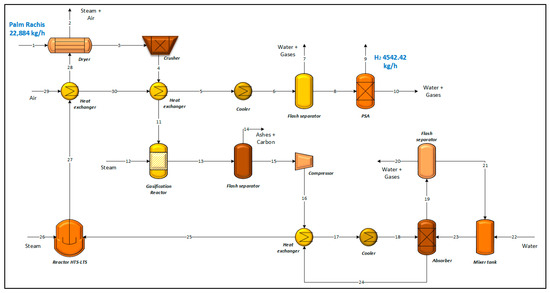
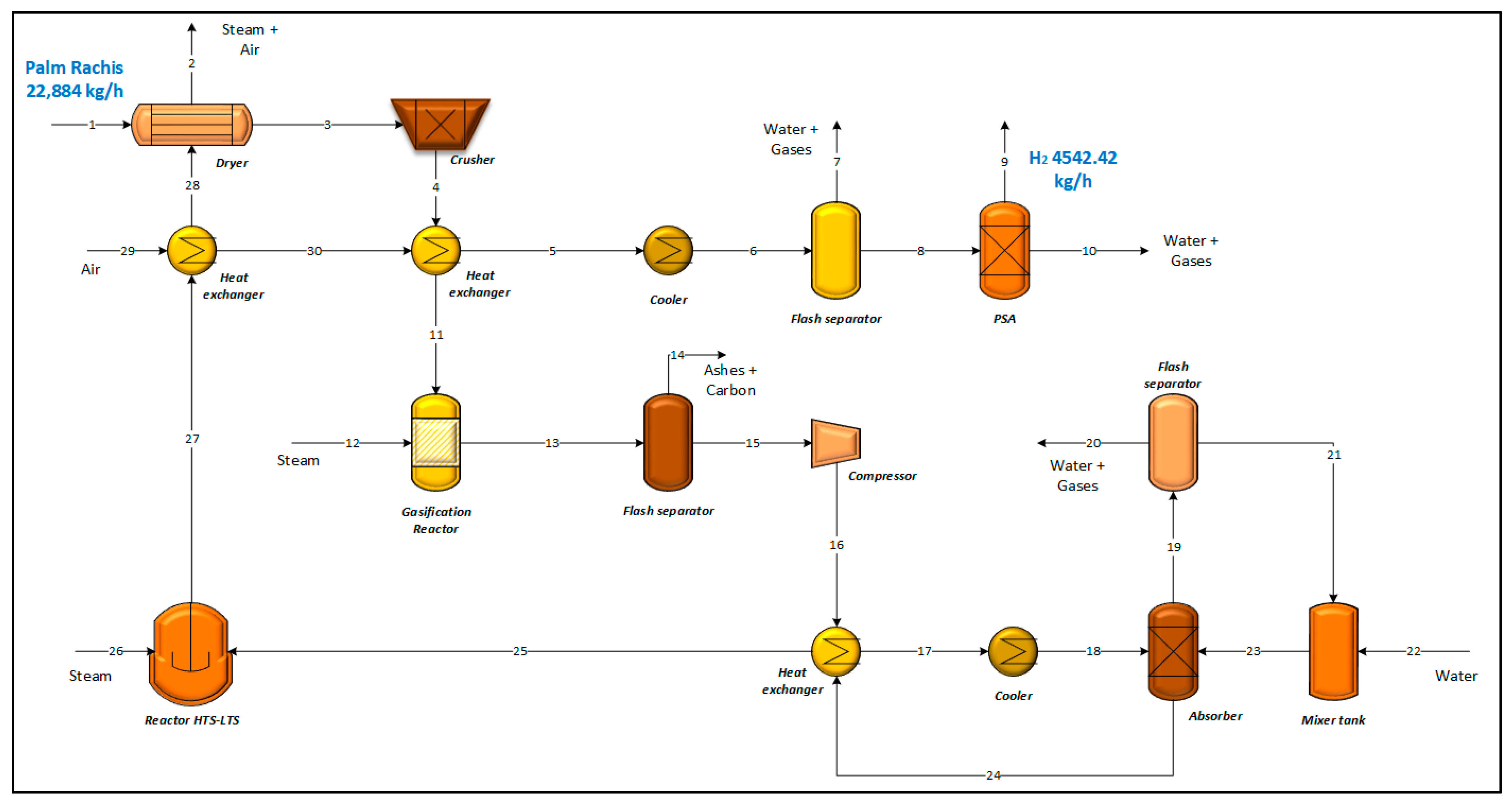
The process begins with drying the biomass at 75 °C to remove part of the moisture content present in the palm rachis. Subsequently, the material is sent to a mill to reduce particle size, facilitating decomposition in the following stages. The milled biomass is then fed into the steam gasification stage, producing a mixture primarily composed of carbon, carbon monoxide, hydrogen, methane, carbon dioxide, water, and sulfur, among other components. In this stage, superheated steam at 1173.15 K and a flow rate of 4600 kg/h is supplied [19,20]. Table 1 presents the pressure and temperature operating conditions as well as the mass flow rates for each inlet and outlet process stream.
Table 1.
Mass flow rates and operating conditions of the hydrogen production process from palm rachis.
The gas stream is sent to a separator, producing two streams: a residue stream composed of water with traces of carbon, and a product stream, which is directed to a compressor to increase its pressure. The compressed stream is then passed through a series of heat exchangers to reduce its temperature before entering the absorption tower. In this equipment, the stream, mainly containing sulfur oxide, carbon monoxide, and methane, is washed. Water is supplied during the washing stage to capture condensable gases, while the non-condensable gases are sent to the high temperature (HTS) and low temperature (LTS) reactors. In the reactors, the incoming gas stream contacts steam. In the HTS (first reaction stage), the carbon monoxide-rich gas reacts with steam to promote the conversion of CO into CO2 and H2, while the LTS reactor completes the conversion of the remaining CO [21,22]. The gas exiting the reaction stage is heated before entering a second separator, which generates two streams: one consisting of a mixture of water, carbon dioxide, and sulfur dioxide, and the other directed to the PSA unit to purify hydrogen by separating it from CH4, CO, CO2, and other components. The plant in María la Baja processes 183,072 t/year of palm rachis to produce 36,339 t/year of hydrogen. Figure 1 shows the process flow diagram.
Figure 1.
Process Flow Diagram for Hydrogen Production in Maria la Baja, Bolivar.
2.2. Economic Analysis
An essential component of any process design is the economic aspect, as many technical, energy-related, safety, and environmental decisions are strongly influenced by financial factors. This evaluation requires information on equipment costs, raw materials, industrial services, taxes, labor, control systems, wiring, insurance, and maintenance, among others; in summary, all direct and indirect fixed expenses associated with the construction of a chemical plant.
Techno-economic evaluation allows for the identification of the financial conditions under which a process can generate profits and determines the necessary investment for its implementation. Equation (1) is used to calculate the Total Capital Investment (TCI), considering the Fixed Capital Investment (FCI), which includes payments for equipment, site preparation, civil structures, control systems, and installations; the Working Capital Investment (WCI); and the Start-Up Costs (SUCs). Equation (2) is used to calculate the Operating Costs (OCs), which correspond to the recurring expenses required to keep the plant in operation [23,24]. To complement the analysis, tools for cost normalization and annualization are employed, such as Equation (3) to normalize the Variable Operating Costs (NVAOCs), and Equations (4) and (5) to calculate the Annualized Fixed Costs (AFCs) and the Total Annualized Costs (TACs), respectively [24].
Additionally, it is possible to determine various economic and profitability indicators, which allow for the analysis of process changes and the consideration of the time value of money. These indicators include the Return on Investment (ROI), calculated using Equation (6); the Net Present Value (NPV), determined with Equation (7), where “n” represents the project’s useful life in years; and the Payback Period (PBP), obtained from Equation (8), which reflects the approximate time required to recover the investment [25].
The Cost/Benefit Ratio is also evaluated using Equation (9), which must be greater than 1 for the process to be considered economically attractive [24]; Gross Profit including Depreciation (GPD) is calculated using Equation (10); and the Cumulative Cash Flow (CCF) is determined with Equation (11), which must be less than 1 to consider the process profitable. Profit After Taxes (PAT) is calculated using Equation (12), reflecting the actual profit of the process, while the Internal Rate of Return (IRR) is obtained through Equation (13), indicating the interest rate that makes the NPV zero. Finally, EBITDA, calculated using Equation (14), allows the evaluation of profitability by excluding non-monetary expenses such as depreciation and amortization [26]. Collectively, these tools provide a comprehensive assessment of economic feasibility, facilitating the identification of financial risks, process optimization, and decision-making to maximize the profitability of a chemical process.
3. Results and Discussion
The results of the techno-economic and techno-economic resilience evaluation are presented below, considering factors such as raw material cost, product price, and plant lifetime, among others. The methodology applied for this type of analysis was developed by Romero et al. [24].
3.1. Results of Techno-Economic Analysis
For the techno-economic evaluation of the installation of a hydrogen production plant located in María la Baja (Bolívar), several assumptions were made to assess the economic feasibility of the process. The process is considered novel, the soil type is assumed to be soft clay, and digital process control is employed. Additionally, it was assumed that the process uses only four utilities: water, steam, electricity, and compressed air. Table 2 summarizes other parameters considered in this evaluation. A plant lifetime of 15 years is assumed, during which full investment recovery is expected. Regarding raw material costs, a value of 50 USD/t was considered for palm rachis, while the product price (hydrogen) was assumed to be 3100 USD/t [27], based on supplier catalogs. Furthermore, a contingency factor of 36% was included to account for unforeseen events such as strikes, floods, pandemics, and price fluctuations. Finally, an interest rate of 10% [28] and a tax rate of 35% [29] were assumed for the year 2025.
Table 2.
Techno-Economic Assumptions for Hydrogen Production from Palm Rachis Gasification.
Table 3 presents the Total Capital Investment (TCI), which was calculated considering the Direct Fixed Capital Investment (DFCI), including equipment installation (sourced from www.alibaba.com), electrical systems, control systems, piping, and service facilities, among others, as well as the Indirect Fixed Capital Investment (IFCI), which comprises land preparation, engineering and supervision, research and development equipment, legal expenses, contingencies, and construction costs, among others. A total capital investment of USD 10,111,255.23 was obtained for the installation of the hydrogen production plant via gasification of palm rachis located in María la Baja, Bolívar. In contrast, Okolie et al. [30] conducted a techno-economic evaluation and sensitivity analysis of the supercritical water gasification of soybean straw for hydrogen production and reported a required Total Capital Investment (TCI) of USD 6,690,000. The difference between both values can be mainly attributed to variations in the technology employed, the type and conditioning of the biomass, and the processing capacity, as well as the pressure requirements and materials associated with each process.
Table 3.
Total Capital Investment for Hydrogen Production from Palm Rachis Gasification.
The operating expenses associated with production capacity, as well as those independent of it, such as taxes, security services, general engineering, internal transportation, and healthcare services, are presented in Table 4. To determine the Annual Operating Costs (AOCs), variable operating costs (VAOCs) are considered, including raw material costs and utilities. Fixed charges (FCHs) are also included, comprising local taxes, insurance, and the interest or rent component. Regarding Direct Production Costs (DPCs), these encompass expenses related to maintenance and repairs, operating supplies, labor, supervisory activities, and administrative work, as well as laboratory charges and patents. Finally, overhead and general expenses are incorporated. The sum of all these components corresponds to the annualized operating costs of the hydrogen production plant, amounting to USD 103,033,253.22.
Table 4.
Annual Operating Costs for Hydrogen Production from Palm Rachis Gasification.
Table 5 presents the breakdown of industrial services considered in the techno-economic evaluation of the hydrogen production process, including the specific consumption and unit cost of water, electricity, steam, and compressed air. The results indicate that electricity constitutes the main component of utility costs, with a consumption of 1152.63 kWh/t-RM and an associated cost of 472.58 USD/t-RM, which is attributed to the high energy intensity of the process. Steam exhibits a consumption of 541.92 kg/t-RM, with a significantly lower economic contribution, while process water consumption reaches 2.11 m3/t-RM, representing a secondary impact on operating costs. Additionally, compressed air is included as an auxiliary service with a low economic impact. Overall, industrial services account for 85.35% of the annual operating costs (AOCs), confirming that utilities dominate the cost structure of the process.
Table 5.
Consumption and Costs of Industrial Services in the Hydrogen Production Process from Palm Rachis.
Table 6 presents the main economic and profitability indicators evaluated for the hydrogen production plant. The results show a Discounted Payback Period (DPBP) of 4.54 years and a Return on Investment (ROI) of 58.83%. In addition, a Net Present Value (NPV) of USD 25.01 million and a Cost/Benefit ratio (C/B) of 3.29 were obtained. The latter is one of the key criteria for determining project feasibility, as it must be greater than one. Furthermore, the DPBP allows for a more accurate estimation of the investment recovery time compared to the conventional Payback Period (PBP). Uregenn and Yumurtaci [4] conducted a techno-economic evaluation of hydrogen production through four different routes. In their study, the biomass steam gasification route without carbon capture and storage (CCS) achieved an ROI of 68.2% and a PBP of 1.28 years. These values are relatively close to those obtained in the present work. However, it is important to note that the authors did not specify the type of biomass used for hydrogen production; therefore, raw material costs cannot be adequately compared. Rosha et al. [31] analyzed the economic and technological aspects of blue hydrogen production via ethanol steam reforming with carbon capture, achieving an NPV of USD 13 million and an internal rate of return (IRR) of 16.6%, which is lower than the value obtained in the present study (38.13%). The IRR is an indicator that measures the annual profitability of a project and corresponds to the discount rate at which the NPV equals zero [32]. The comparative results indicate that both projects are economically viable; however, an IRR of 38.13% represents higher profitability, making hydrogen production from palm rachis a more attractive alternative.
Table 6.
Economic and Profitability Indicators for Hydrogen Production from Palm Rachis Gasification.
3.2. Results FP2O Resilience Analysis
Techno-economic resilience evaluates the behavior of the process under variations in feedstock cost, main product price, processing capacity, and operating costs (FP2O: feedstock–product–processing–operating). The resilience of the system with respect to each of the variables is analyzed below. The methodology applied for this type of analysis was developed by Herrera et al. [26].
3.2.1. Hydrogen Price Resilience
The techno-economic resilience methodology employed considers the influence of variations in feedstock cost. In this study, the feedstock used is palm rachis, which, as an agricultural residue, exhibits a low likelihood of significant cost fluctuations.
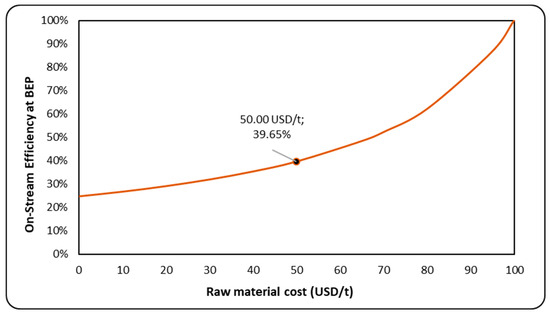
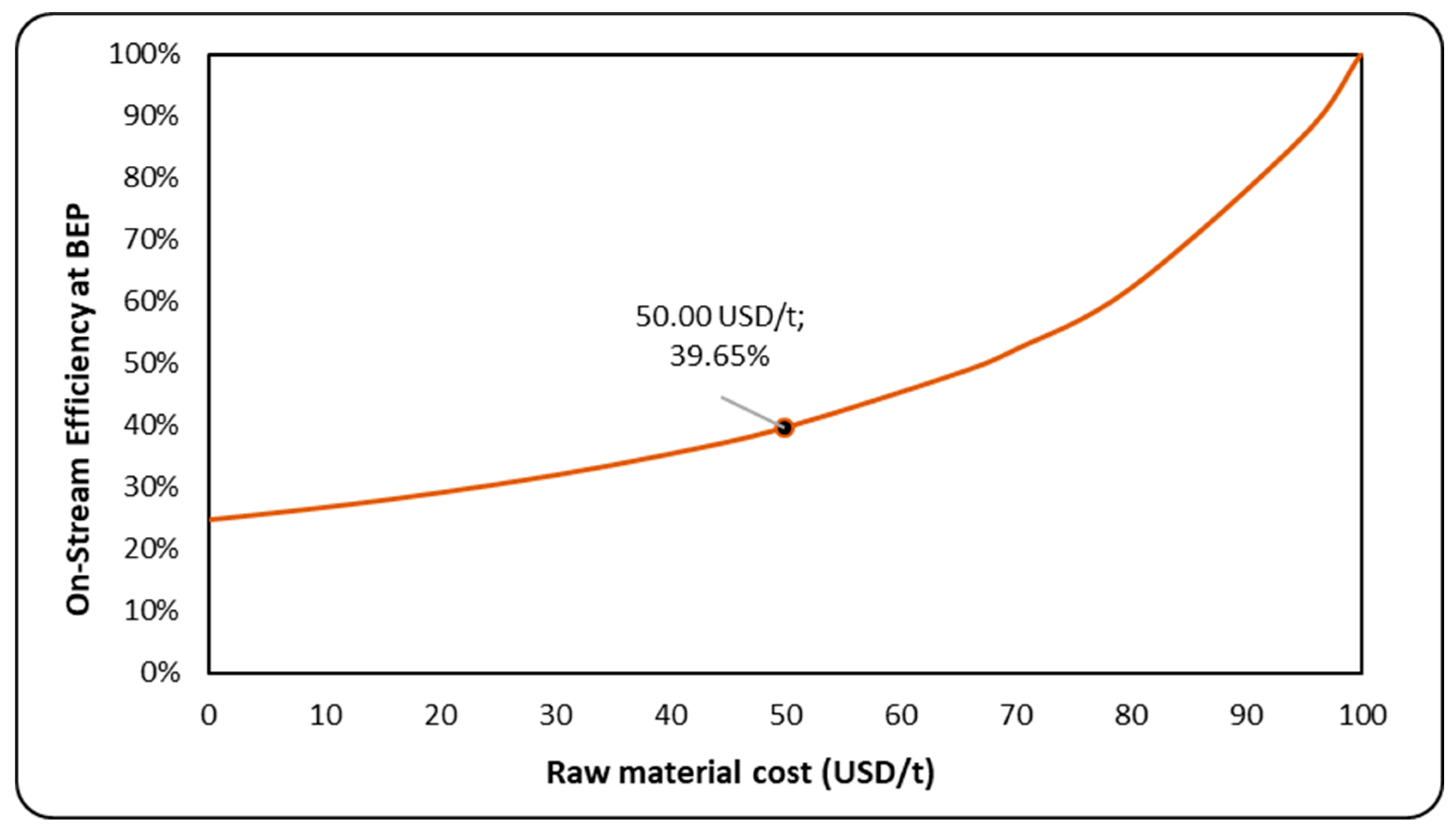
Figure 2 shows the on-stream efficiency at the break-even point, considering increases and reductions in the cost of palm rachis relative to the base value. The process exhibits an efficiency of 39.65%, indicating that the hydrogen production plant can operate below 50% of its installed capacity when a feedstock cost of 50 USD/t is considered, while still maintaining profitable operating conditions. Three operational zones are identified in the figure. The first zone corresponds to palm rachis costs between 0 and 30 USD/t, where the on-stream efficiency remains below 30%. The second zone, considered a transitional region and ranging from 30 to 70 USD/t, shows a progressive increase in efficiency, reaching values of up to 60%. Finally, in the third zone, associated with costs between 70 and 100 USD/t, the process requires operation above 60% of its capacity to ensure profitability. Overall, the behavior of the on-stream efficiency at the break-even point as a function of feedstock cost is directly proportional, since an increase in palm rachis cost demands a higher plant operating level to maintain the economic viability of the process.
Figure 2.
On-stream efficiency at the break-even point for hydrogen production from palm rachis gasification.
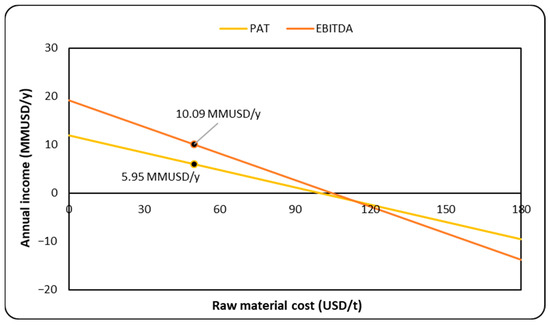
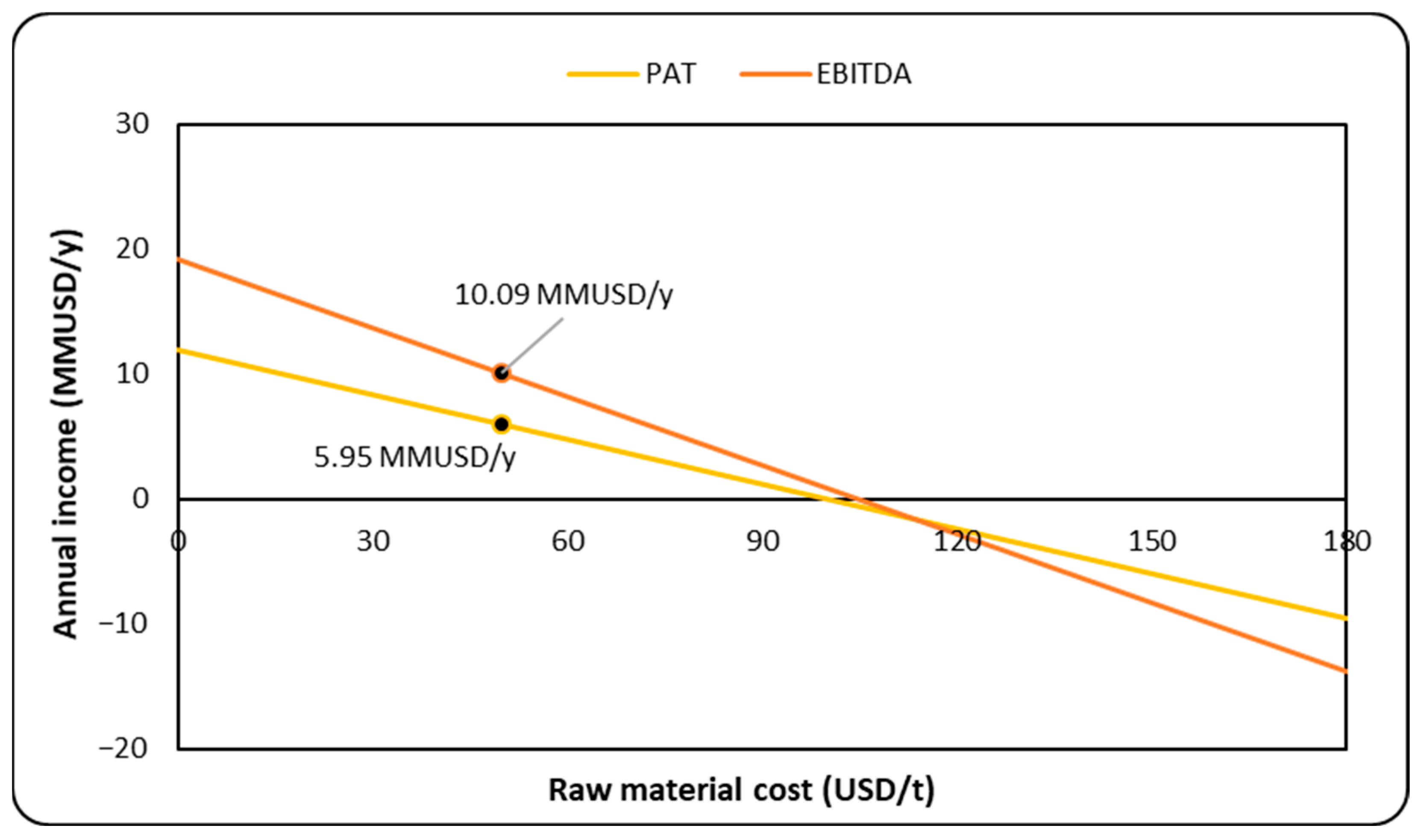
Figure 3 shows the feedstock cost at the break-even point, which is located at approximately 120 USD/t. Above this value, the process begins to incur losses, as negative values are obtained for the Profit After Taxes (PAT), EBITDA, and annual income indicators. In contrast, feedstock costs below the critical point represent profitable scenarios for the hydrogen production process from palm rachis.
Figure 3.
Resilience of EBITDA and Profit After Taxes (PAT) to variations in palm rachis costs.
For the feedstock cost considered in this study (50 USD/t), a PAT of 5.59 million USD per year and an EBITDA of 10.09 million USD per year are obtained. Since the palm rachis cost is well below the break-even point, it could increase moderately without compromising process profitability, indicating that the project exhibits moderate resilience to variations in feedstock cost. Ideally, the feedstock cost should remain constant or decrease, which is consistent with the fact that the process uses a residual biomass that is traditionally burned for energy generation and is, in this case, valorized through its conversion into a higher value-added product such as hydrogen.
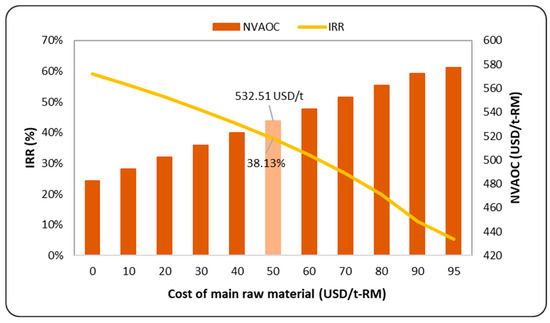
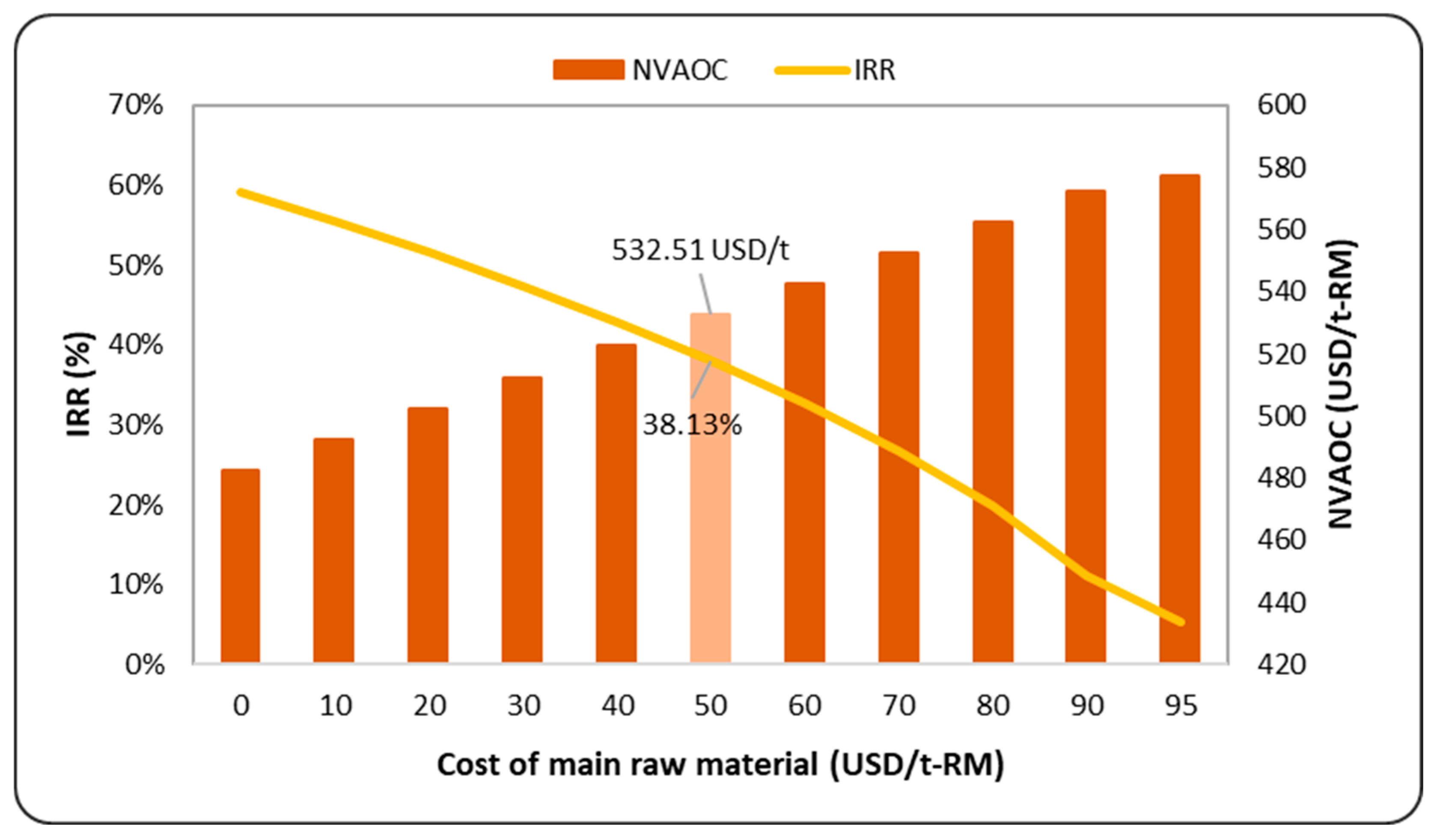
Resilience analysis allows the identification of the behaviors of profitability metrics that support decision-making for process improvement, as it enables the evaluation of process efficiency [33]. Figure 4 illustrates the internal rate of return (IRR) obtained from the techno-economic assessment and its response to variations in feedstock cost. An inversely proportional relationship can be identified, as an increase in biomass cost to 95 USD/t causes the IRR to decrease to approximately 10%. The figure also shows the variation in normalized variable operating costs (NVAOCs) as the cost of palm rachis increases or decreases. In this case, a directly proportional relationship is observed, since higher palm rachis costs lead to higher operating costs. For a hydrogen selling price of 3100 USD/t, an IRR of 38.13% and NVAOC of 532.51 USD/t are obtained. Baral and Šebo [15] conducted a techno-economic evaluation of green hydrogen production considering a product cost of 3010 USD/t, obtaining an IRR of 5.04% and recovering the investment at approximately half of the project’s useful lifetime.
Figure 4.
Resilience of Operating Costs and Internal Rate of Return to variations in palm rachis costs. Note: The differently colored bar indicates the range in which the process operates.
3.2.2. Product Price Resilience
The assumed selling price of 3100 USD/t was adopted as the baseline value for the techno-economic assessment and does not correspond to a fixed contractual price. This value was selected as a reference scenario based on publicly available catalog and literature data, given the absence of a mature local market under Colombian conditions. To address the uncertainty associated with this parameter, a resilience analysis was conducted by evaluating selling price variations above and below the baseline, allowing the identification of profitability thresholds and assessing their impact on the main economic indicators [34,35].
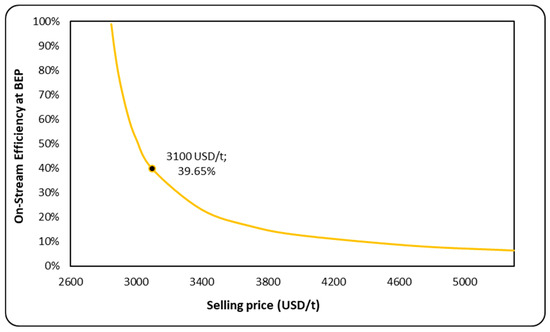
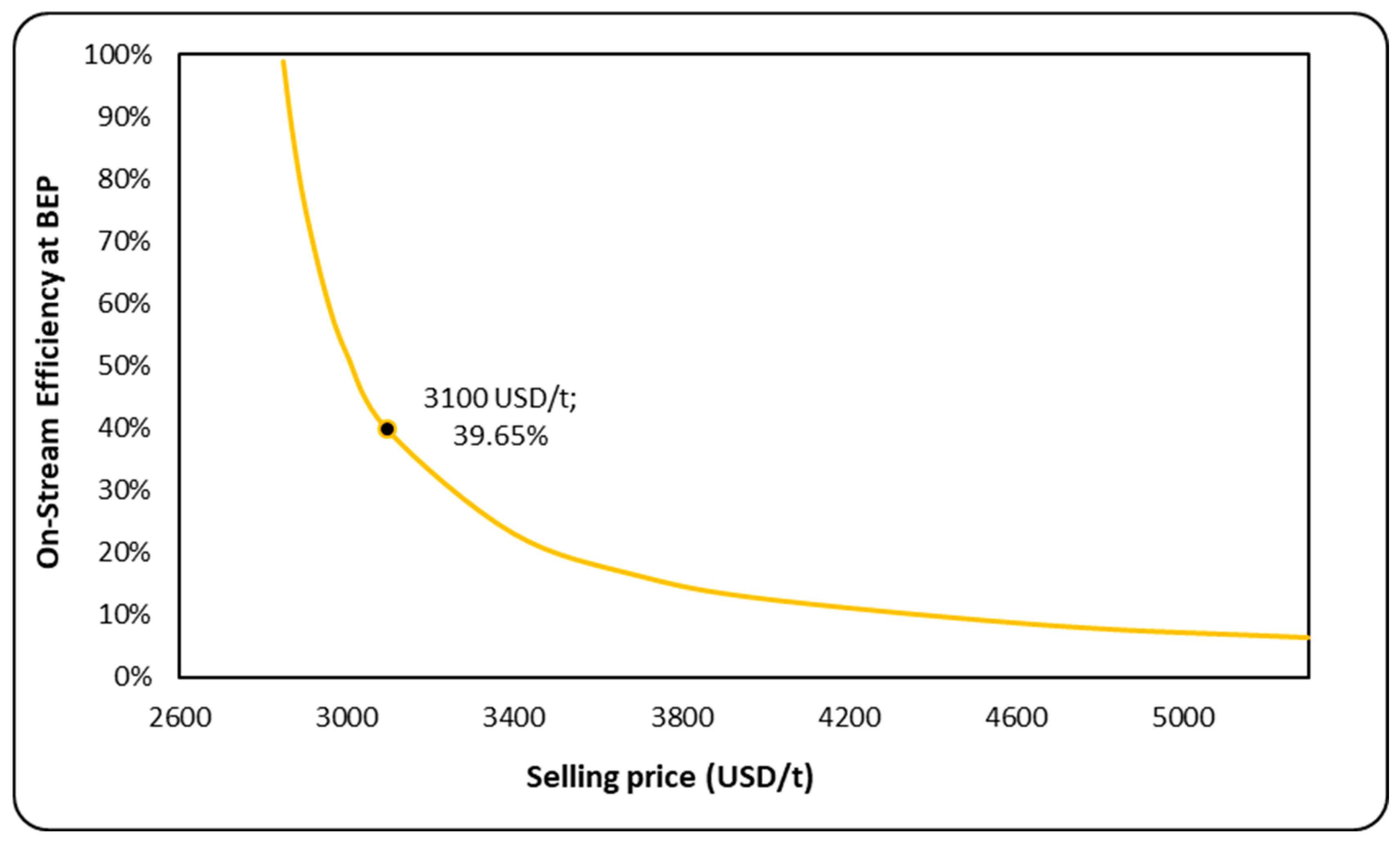
Figure 5 shows the On-stream efficiency at the break-even point, with a value of 39.65% for the hydrogen price considered. This efficiency indicates that the hydrogen production plant can operate below 50% of its installed capacity when a hydrogen selling price of 3100 USD/t is assumed, while still maintaining profitable conditions. Three operational regions can be identified in the figure. The first region corresponds to hydrogen prices between 0 and 3000 USD/t, where a slight decrease in the product price would require the plant to operate at On-stream efficiencies close to 100%.
Figure 5.
On-stream efficiency at the break-even point considering the hydrogen selling price.
The second region, considered a transition zone and ranging from 3000 to 3700 USD/t, shows a progressive decline in efficiency, reaching values between 39% and 16%. Finally, the third region, associated with hydrogen prices between 3700 and 5000 USD/t, indicates that the process can remain profitable while operating at efficiencies below 10% of the installed capacity. Overall, the behavior of the On-stream efficiency at the break-even point with respect to hydrogen price is inversely proportional, since an increase in product price allows the plant to operate at a lower capacity level while maintaining the economic viability of the process.
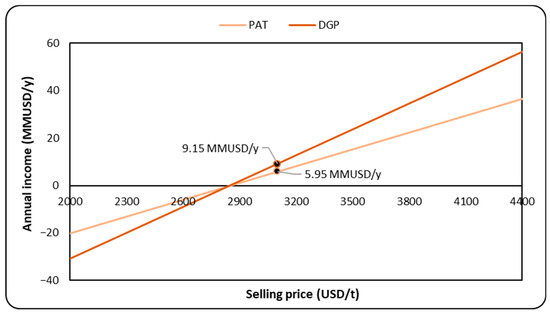
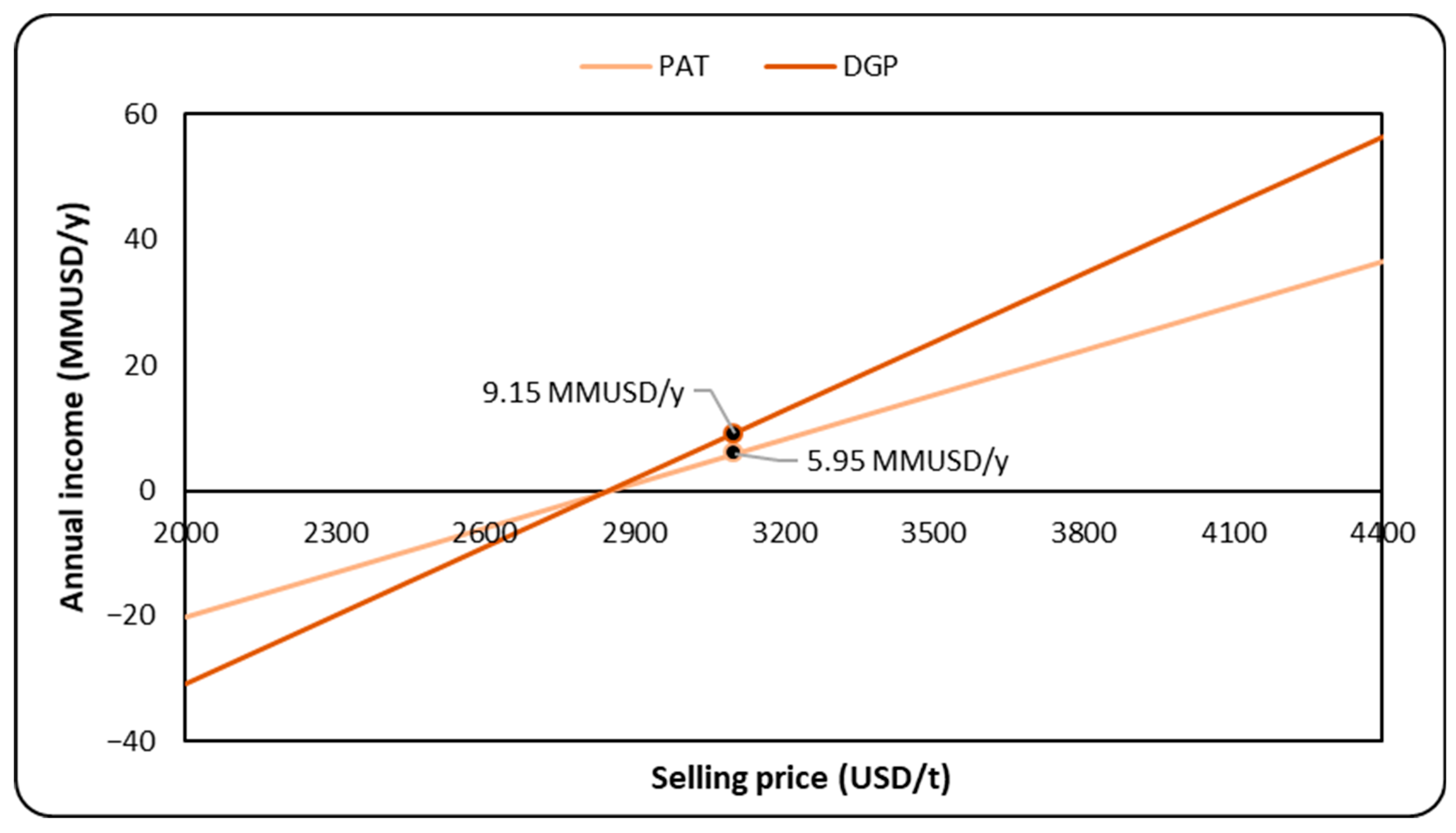
Figure 6 illustrates the response of the process to changes in the product price. The analysis shows that the process is highly sensitive to the hydrogen price, reaching a critical threshold of approximately 2900 USD/t, above which the process begins to generate profits. Given that the current hydrogen price is 3100 USD/t, it can be concluded that the process operates with high sensitivity, such that a reduction in the product price could lead to economic losses.
Figure 6.
Resilience of DGP and Profit After Taxes (PAT) to hydrogen selling price.
The hydrogen selling price directly affects the profitability of the process. The calculation of the safety margin, defined as the difference between the current price and the critical price, provides a measure of the process’s tolerance to potential price fluctuations without incurring losses. In addition, it is observed that gross profit, including depreciation, is more strongly affected by variations in raw material costs than Profit After Taxes. Considering the techno-economic resilience analysis, the hydrogen price appears to be one of the most influential factors, suggesting that an increase in this parameter could be considered.
3.2.3. Processing Capacity Resilience
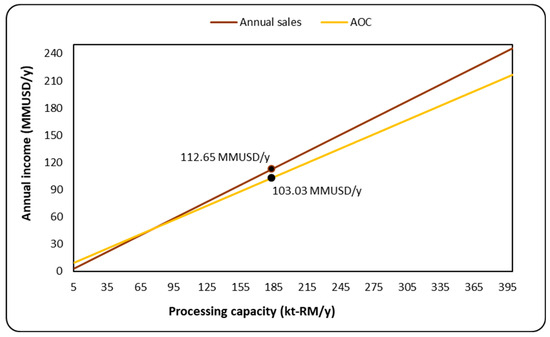
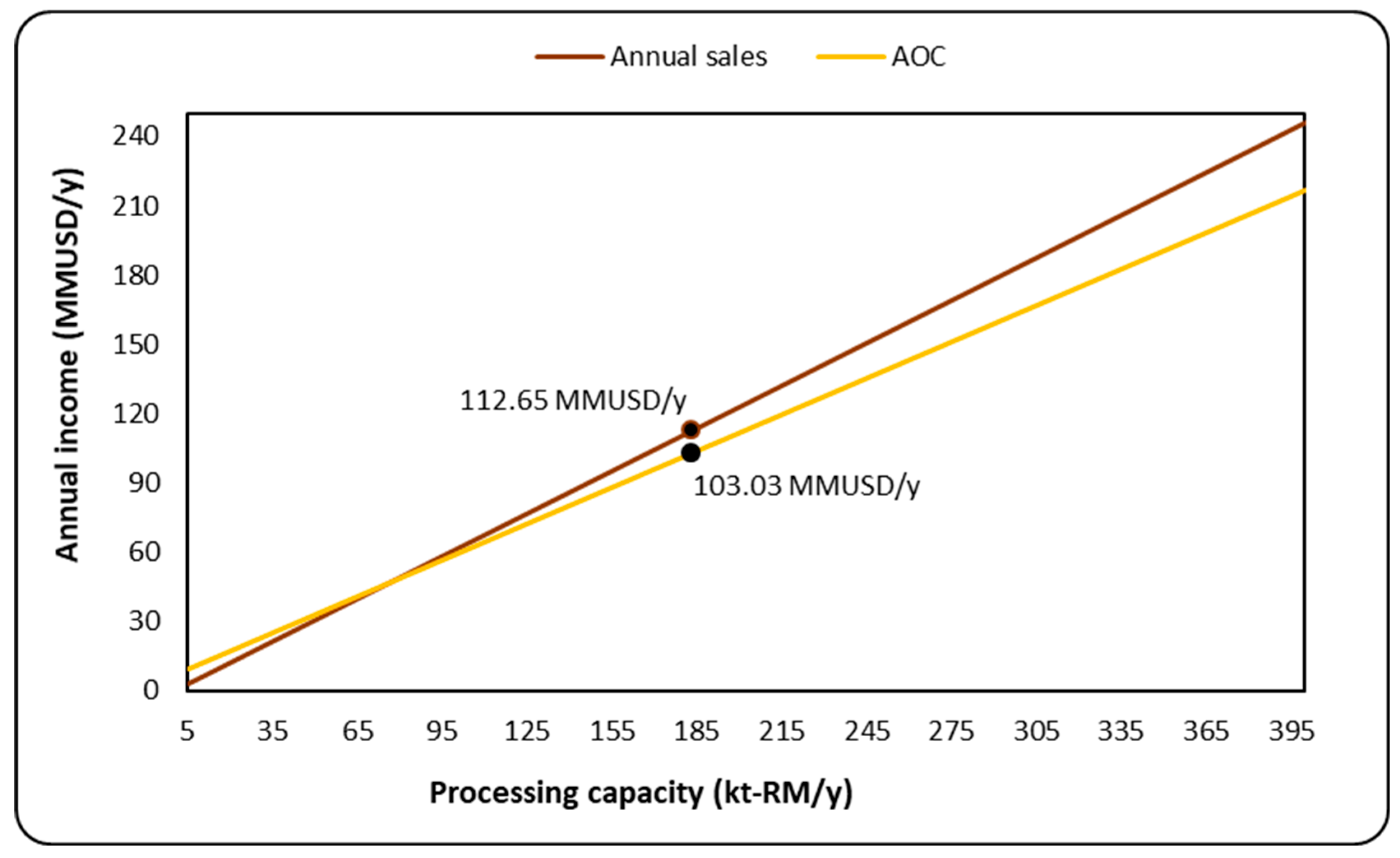
Figure 7 presents the equilibrium production capacity of the hydrogen production process, considering an installed capacity of 183,072 tons per year. The obtained equilibrium production capacity is approximately 70,000 tons per year, represented by the intersection of the curves. By comparing this value with the installed capacity, the sensitivity of the process to a reduction in hydrogen production can be assessed. When the installed capacity deviates from the intersection point, it indicates that the process may exhibit a certain degree of resilience to production changes caused by factors such as increases in industrial utility costs, raw material costs, or modifications in production technology.
Figure 7.
Resilience of annual sales and annual operating costs for hydrogen production.
In this case, the results show that the process exhibits high sensitivity to a reduction in installed capacity, such that a decrease in palm rachis processing capacity would result in annual sales falling below operating costs.
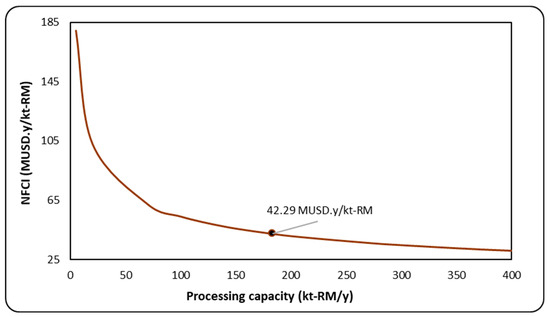
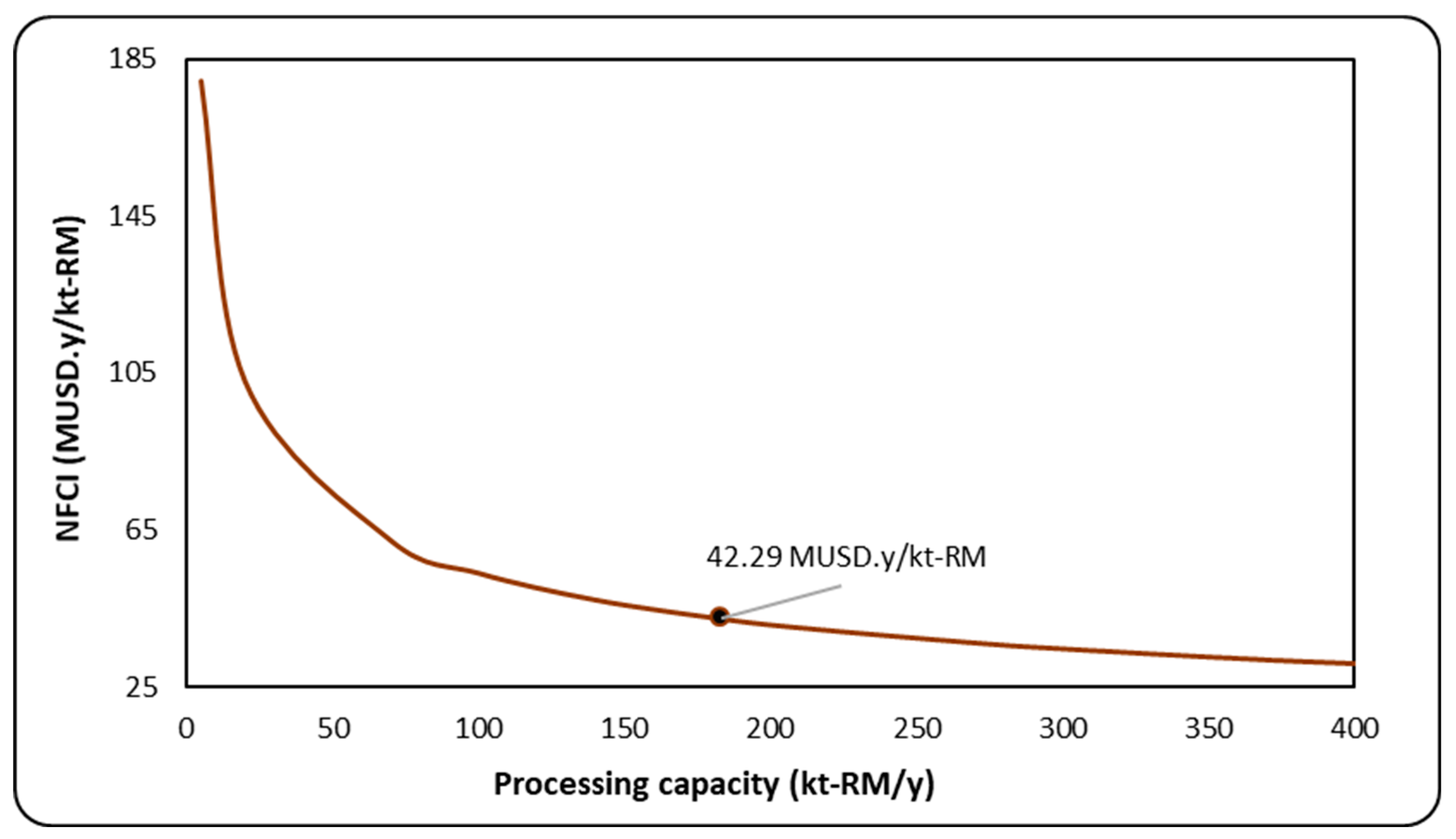
Figure 8 shows the relationship between normalized fixed costs and processing capacity in a hydrogen production plant based on palm rachis gasification. The process was assumed to have an installed capacity of 183,072 tons per year, with a normalized fixed capital investment (NFCI) of USD 42.49 thousand per year per kiloton of feedstock. Fixed costs remain constant regardless of the volume of product obtained. The figure reveals an inversely proportional relationship, as an increase in installed capacity leads to a decrease in NFCI.
Figure 8.
Resilience of Normalized Fixed Capital Investment (NFCI) for hydrogen production.
3.2.4. Operating Cost Resilience
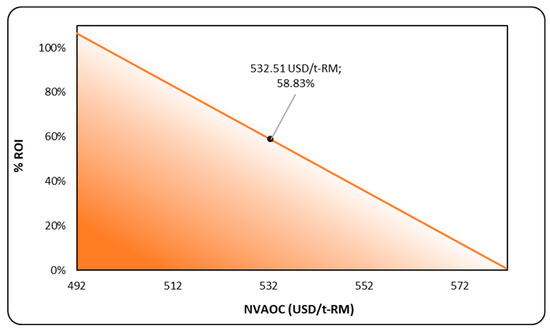
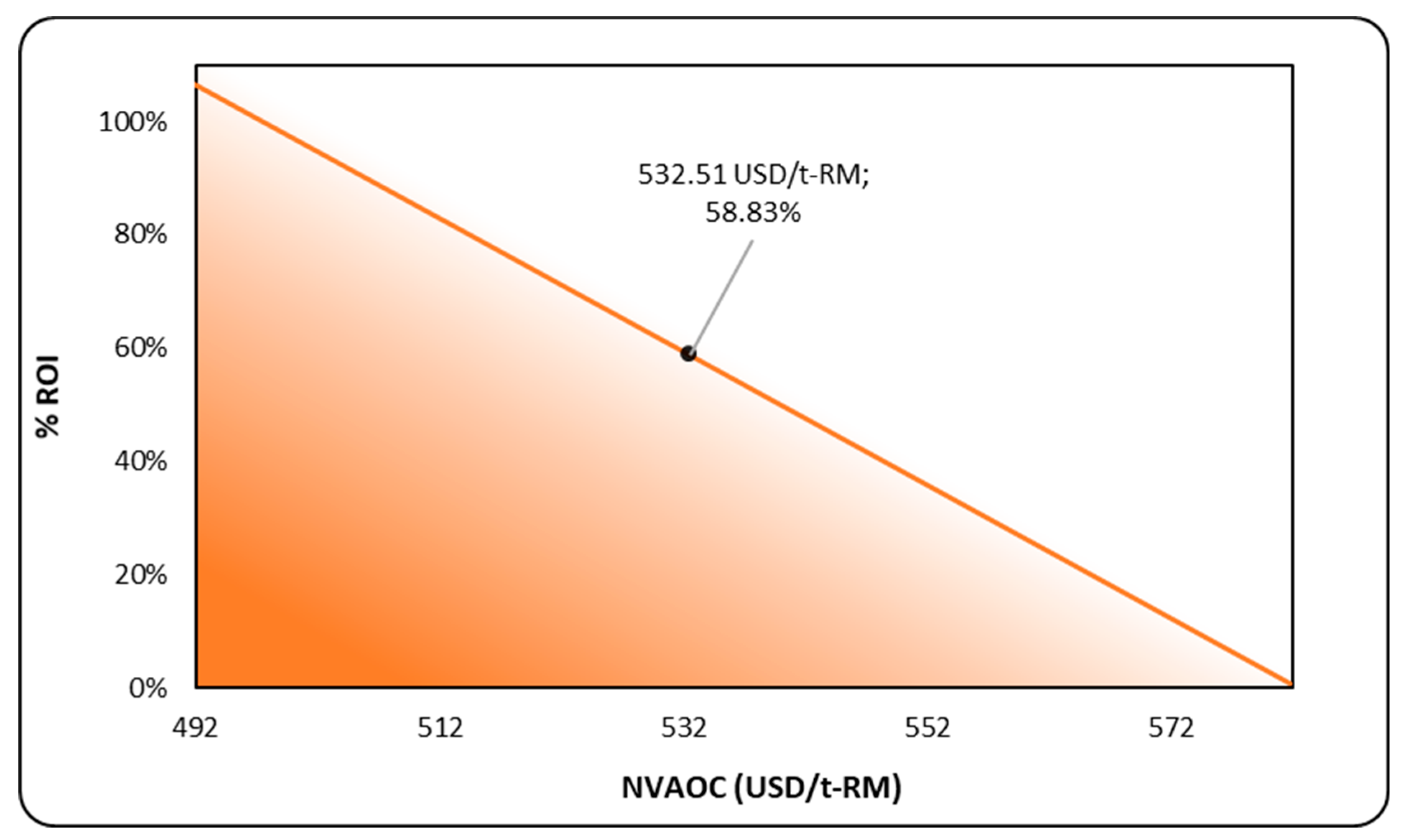
Figure 9 shows the relationship between the Return on Investment (%ROI) and the Normalized Variable Operating Costs (NVAOCs) of the hydrogen production process. A strong dependence between these parameters is observed, revealing a critical NVAOC value of USD 581/t, at which the ROI becomes zero. Conversely, when NVAOCs are assumed to be zero, the ROI reaches its maximum value of 100%.
Figure 9.
Resilience of ROI under Normalized Operating Cost Variations in Hydrogen Production. Note: The shaded region represents the feasible combinations of NVAOC and ROI.
The normalized variable operating costs of the plant are USD 532.51/t; therefore, the identified critical point is relatively distant from this value, allowing an ROI of 58.83% to be achieved. Consequently, it is evident that an increase in NVAOC leads to a decrease in ROI, making the determination of this relationship essential for analyzing process profitability and supporting decision-making aimed at maximizing revenues.
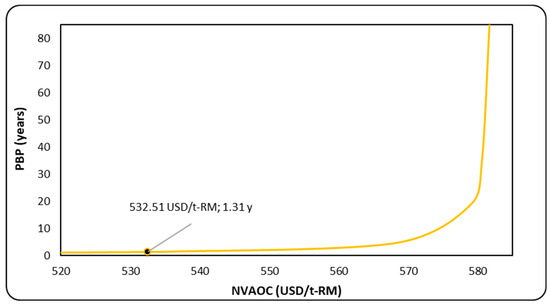
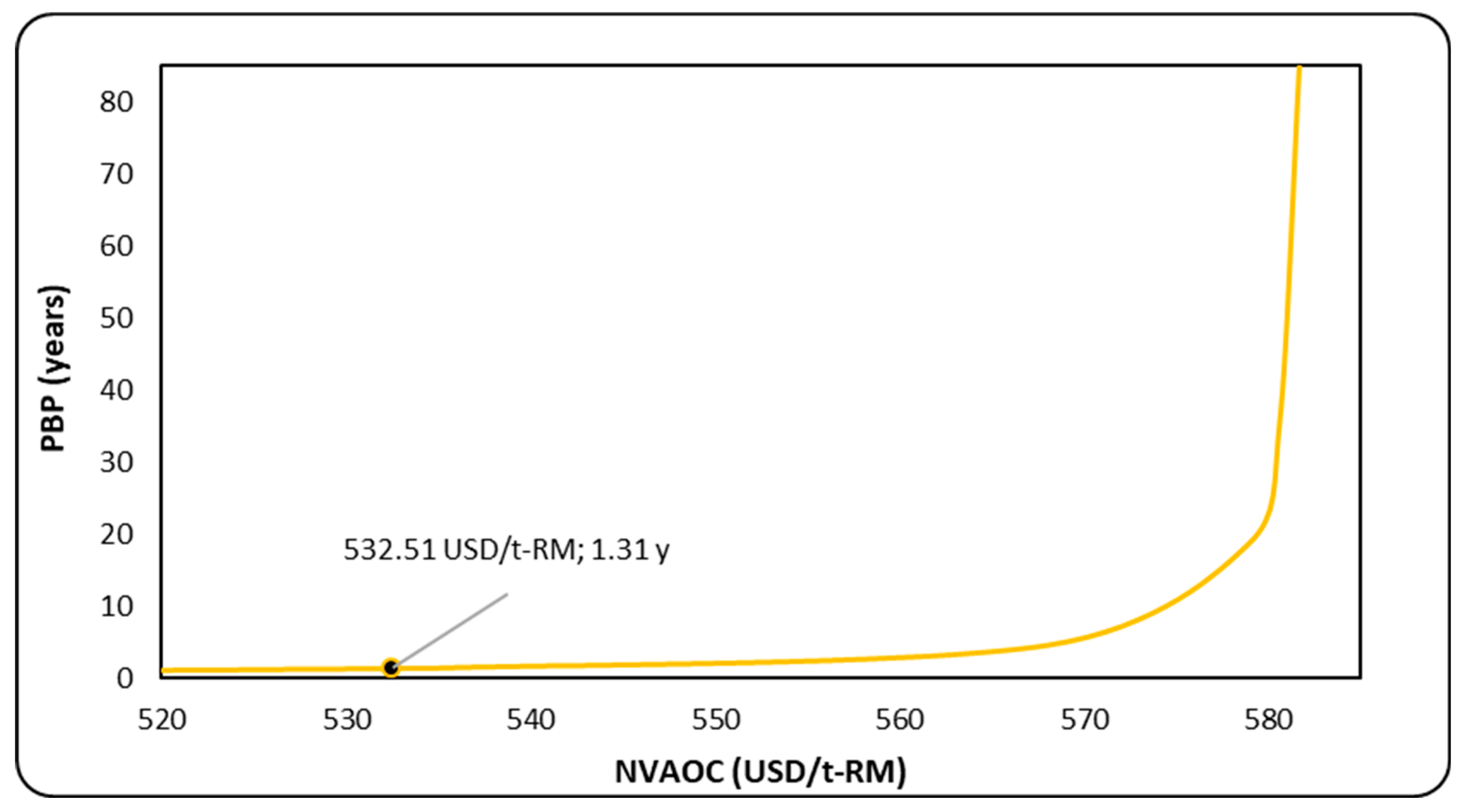
Finally, Figure 10 illustrates the effect of normalized variable operating costs (NVAOC) on the payback period (PBP). A stable region is observed for values up to 560 USD/t of palm rachis, followed by a transition zone with a critical point between 560 and 575 USD/t. Additionally, when NVAOC reach 580 USD/t, the PBP becomes infinite. This figure highlights the influence of normalized variable operating costs on the revenues generated by the investment and, consequently, on the time required for capital recovery. The evaluated hydrogen production process exhibits moderate resilience to changes in operating costs; therefore, it is necessary to analyze other economic parameters that could enhance the overall resilience of the process.
Figure 10.
Resilience of the Payback Period under Normalized Operating Cost Variations in Hydrogen Production.
3.2.5. Possible Technological Risks
In this study, several technological risks associated with the hydrogen production process from palm rachis were identified, which may affect the viability of the system and its economic indicators. One of these risks is related to the variability and availability of the feedstock, since changes in its composition, moisture content, and particle size may increase process requirements [36,37], particularly in the biomass conditioning stages, such as drying and milling. These conditions may result in an increase in the plant’s operating costs. Additionally, another technological risk is associated with the potential operational instability of certain equipment, arising from the formation of undesired compounds, which may increase the maintenance costs required to preserve process efficiency [38,39].
From an implementation perspective, the large-scale processing of 183,072 t/y of palm rachis represents a significant challenge in logistics and supply chain coordination that should be considered as a potential implementation risk. Ensuring a continuous and reliable feedstock supply requires effective coordination with local producers, adequate storage capacity to manage availability and potential climatic variability in the region, as well as a robust transportation infrastructure [40].
In addition to operational and economic risks, the environmental performance of the process may constitute an indirect technological risk, as it is closely linked to the overall system efficiency, the consumption of utilities, and compliance with current and future regulatory requirements. The estimated global warming potential for the most favorable configuration is 2.47 kg CO2 eq/kg H2, which is significantly lower than the value reported for fossil-based hydrogen in the reference database used. These results suggest that, although environmental performance is not the main focus of this study, it should be considered a complementary technological risk, as it may directly influence the economic viability of the process in the medium and long term [41,42]. Finally, safety requirements and regulatory compliance associated with hydrogen handling may entail additional investments, increasing the project’s total capital investment (TCI).
4. Conclusions
Currently, hydrogen is considered one of the most important energy carriers due to its wide range of applications across various industrial sectors. It can be produced from different feedstocks and through multiple production methods, which gives it great flexibility and strong potential for implementation. In this research, hydrogen production from the valorization of palm rachis was proposed, with the aim of providing an additional use for a biomass that is generally wasted, thereby contributing to process sustainability.
Initially, the economic performance of the hydrogen plant located in María la Baja, Bolívar, was determined. It was observed that the process requires a total capital investment (TCI) of USD 10,111,255.23, with an annual profit after taxes of USD 5,948,696.95, a net present value of USD 25.01 million, and a discounted payback period of 4.54 years.
The techno-economic and techno-economic resilience analyses carried out for the hydrogen production process from palm rachis made it possible to identify the operating ranges within which the process can be designed to be economically viable. In addition, it should be noted that the feedstock price is a sensitive variable in this case, since doubling its value could lead to losses. However, because a residual biomass from the crude palm oil extraction process is used, it is expected that the feedstock cost will not increase significantly. In addition to the techno-economic and techno-economic resilience assessments, a complementary environmental analysis was conducted to support a more comprehensive evaluation of the process. The results indicate that the hydrogen plant located in María la Baja exhibits a significantly lower carbon intensity than fossil-based hydrogen, with a Global Warming Potential of 2.47 kg CO2 eq/kg H2. Although the primary focus of this study is economic, this environmental perspective strengthens the assessment of process feasibility and allows for comparison with conventional hydrogen production routes.
Finally, the integration of economic, resilience, and sustainability criteria demonstrates that the process is not only profitable, but also promotes the efficient use of agricultural residues, reducing environmental impact and increasing its potential for implementation within the regional bioeconomy.
Author Contributions
Conceptualization, P.A.A.P. and Á.D.G.-D.; methodology, P.A.A.P. and T.C.H.-R.; software, P.A.A.P. and T.C.H.-R.; validation, T.C.H.-R.; formal analysis, T.C.H.-R.; investigation, P.A.A.P. and T.C.H.-R.; resources, Á.D.G.-D.; data curation, T.C.H.-R.; writing—original draft preparation, T.C.H.-R.; writing—review and editing, P.A.A.P., T.C.H.-R. and Á.D.G.-D.; visualization, T.C.H.-R. and Á.D.G.-D.; supervision, Á.D.G.-D.; project administration, Á.D.G.-D.; funding acquisition, Á.D.G.-D. All authors have read and agreed to the published version of the manuscript.
Funding
This research was funded by the Colombian Ministry of Science, Technology and Innovation MINCIENCIAS through the projects “Desarrollo e implementación de una metodología para evaluar aspectos sociales, técnicos, económicos y ambientales de la producción de hidrógeno a partir de raquis de palma en Sabana de Torres y María la Baja”, Codes SIGP 100459, Contract number: 352–2023.
Data Availability Statement
The data that support the findings of this study are available from the corresponding author, Á.D.G.-D., upon reasonable request.
Acknowledgments
The authors thank the Universidad de Cartagena, and the Colombian Ministry of Science, Technology, and Innovation for their technical support.
Conflicts of Interest
The authors declare no conflicts of interest.
References
- González-Cárdenas, A. La agroindustria de la palma de aceite en América. Palmas 2016, 37, 215–228. [Google Scholar]
- Hasan, F. Estado actual de la agroindustria del aceite de palma en Indonesia. Palmas 2016, 37, 197–202. [Google Scholar]
- Conil, P. La valorización de los subproductos de la planta de tratamiento de los efluentes de la extractora de aceite de palma Palmar Santa Elena en Tumaco, Colombia. Palmas 2000, 21, 250–255. Available online: https://publicaciones.fedepalma.org/index.php/palmas/article/view/792 (accessed on 21 March 2025).
- Uregen Guler, N.; Yumurtaci, Z. Techno-economic evaluation of hydrogen production via biomass gasification: The role of carbon capture and storage in steam and oxygen gasification routes. Int. J. Hydrogen Energy 2025, 188, 152134. [Google Scholar] [CrossRef] [Scilit]
- Wang, J.; Yin, Y. Clostridium species for fermentative hydrogen production: An overview. Int. J. Hydrogen Energy 2021, 46, 34599–34625. [Google Scholar] [CrossRef] [Scilit]
- Saleh, Y.; Ali, L.; Altarawneh, M. Recent advances in biomass valorization through thermochemical processes, bio-oil production and AI strategies: A concise review. RSC Adv. 2025, 15, 45943–45978. [Google Scholar] [CrossRef] [Scilit]
- Dave, N.; Pathan, S.; Prabhu, A. Biological production of sustainable hydrogen using a renewable substrate: A systematic review. Int. J. Hydrogen Energy 2026, 201, 152809. [Google Scholar] [CrossRef] [Scilit]
- Gupta, A.; Kumar, M.; Kumar, V.; Thakur, I.S. Hydrogen production and carbon sequestration for biofuels and biomaterials. In Climate Change Mitigation: Sequestration of Greenhouse Gases; Biomass, Biofuels, Biochemicals Series; Elsevier: Amsterdam, The Netherlands, 2022; pp. 231–252. [Google Scholar] [CrossRef] [Scilit]
- Ratnakar, R.R.; Gupta, N.; Zhang, K.; van Doorne, C.; Fesmire, J.; Dindoruk, B.; Balakotaiah, V. Hydrogen supply chain and challenges in large-scale LH2 storage and transportation. Int. J. Hydrogen Energy 2021, 46, 24149–24168. [Google Scholar] [CrossRef] [Scilit]
- Linares Hurtado, J.I.; Moratilla Soria, B.Y. El hidrógeno y la energía: Análisis de situación y prospectiva de nuevas tecnologías energéticas. In Asociación Nacional de Ingenieros del ICAI; Universidad Pontificia Comillas: Madrid, España, 2007; ISBN 978-84-932772-9-1. [Google Scholar]
- Ozden, A. Pathways to feasible hydrogen production in alkaline water electrolyzers. Energy Nexus 2026, 21, 100620. [Google Scholar] [CrossRef] [Scilit]
- Griffiths, S.; Sovacool, B.K.; Kim, J.; Bazilian, M.; Uratani, J.M. Industrial decarbonization via hydrogen: A critical and systematic review of developments, socio-technical systems and policy options. Energy Res. Soc. Sci. 2021, 80, 102208. [Google Scholar] [CrossRef] [Scilit]
- Aristizábal Marulanda, V.; Botero Gutierrez, C.D.; Cardona Alzate, C.A. Thermochemical, Biological, Biochemical, and Hybrid Conversion Methods of Bio-derived Molecules into Renewable Fuels. In Advanced Bioprocessing for Alternative Fuels, Biobased Chemicals, and Bioproducts: Technologies and Approaches for Scale-Up and Commercialization; Woodhead Publishing Series in Energy; Elsevier: Cambridge, UK, 2019; pp. 59–81. [Google Scholar] [CrossRef] [Scilit]
- Wang, Z. Energy and Air Pollution. In Comprehensive Energy Systems; Elsevier: Oxford, UK, 2018; Volume 1, pp. 909–949. [Google Scholar] [CrossRef] [Scilit]
- Baral, S.; Šebo, J. Techno-economic assessment of green hydrogen production integrated with hybrid and organic Rankine cycle (ORC) systems. Heliyon 2024, 10, e25742. [Google Scholar] [CrossRef] [Scilit]
- Pinheiro, F.P.; Gomes, D.M.; Tofoli, F.L.; Sampaio, R.F.; Melo, L.S.; Gregory, R.C.F.; Sgrò, D.; Leão, R.P.S. Techno-economic analysis of green hydrogen generation from combined wind and photovoltaic systems based on hourly temporal correlation. Int. J. Hydrogen Energy 2025, 97, 690–707. [Google Scholar] [CrossRef] [Scilit]
- Herdem, M.S.; Adams, T.A., II. Green hydrogen production systems with insights from green ammonia: A review and data-driven techno-economic and environmental meta-analysis. Energy Convers. Manag. 2026, 349, 120859. [Google Scholar] [CrossRef] [Scilit]
- Feng, Z.; Huang, Z.; Zhang, R.; Yu, S.; Feng, G.; Zhou, D.; Liu, G.; Liu, J.; Zhang, Y.; Zhu, J.; et al. Recent advances in cerium oxide redox cycle for solar thermochemical hydrogen production. Fuel 2026, 407, 137499. [Google Scholar] [CrossRef] [Scilit]
- Langè, S.; Pellegrini, L.A. Economic Analysis of a Combined Production of Hydrogen-Energy from Empty Fruit Bunches. Biomass Bioenergy 2013, 59, 520–531. [Google Scholar] [CrossRef] [Scilit]
- López Muñoz, F.; Meramo, S.; Ricardez-Sandoval, L.; Gonzalez, A.D.; Crissien Castillo, B.; Gonzalez Quiroga, A.; Baptiste, B.L.G.; León-Pulido, J. Insights from an exergy analysis of a green chemistry chitosan biorefinery. Chem. Eng. Res. Des. 2023, 194, 666–677. [Google Scholar] [CrossRef] [Scilit]
- Bae, J.; Lee, S.; Kim, S.; Oh, J.; Choi, S.; Bae, M.; Kang, I.; Katikaneni, S.P. Liquid fuel processing for hydrogen production: A review. Int. J. Hydrogen Energy 2016, 41, 19990–20022. [Google Scholar] [CrossRef] [Scilit]
- Zhu, Y.; Frey, H.C. Integrated gasification combined cycle (IGCC) power plant design and technology. In Advanced Power Plant Materials, Design and Technology; Woodhead Publishing Series in Energy; Woodhead Publishing: Cambridge, UK, 2010; pp. 54–88. [Google Scholar] [CrossRef] [Scilit]
- Herrera, T.; Parejo, V.; Gonzalez, A. Technoeconomic Sensibility Analysis of Industrial Agar Production from Red Algae. Chem. Eng. Trans. 2018, 70, 2029–2034. [Google Scholar] [CrossRef] [Scilit]
- Romero, J.; Vergara, L.; Peralta, Y.; González, A. A Techno-Economic Sensitivity Approach for Development of Palm-Based Biorefineries in Colombia. Chem. Eng. Trans. 2017, 57, 13–18. [Google Scholar] [CrossRef] [Scilit]
- El-Halwagi, M. Sustainable Design Through Process Integration: Fundamentals and Applications to Industrial Pollution Prevention, Resource Conservation, and Profitability Enhancement; Elsevier: Amsterdam, The Netherlands, 2011. [Google Scholar]
- Herrera-Rodríguez, T.C.; Ramos-Olmos, M.; González-Delgado, Á.D. A joint economic evaluation and FP2O techno-economic resilience approach for evaluation of suspension PVC production. Results Eng. 2024, 24, 103069. [Google Scholar] [CrossRef] [Scilit]
- Alibaba. Pure Hydrogen—Gases CAS 1601346006195. 2025. Available online: https://www.alibaba.com/product-detail/China-Makes-Special-Specialty-Gases-CAS_1601346006195.html (accessed on 20 November 2025).
- World Bank. Interest Rate (%). 2025. Available online: https://data.worldbank.org/indicator/FR.INR.RINR (accessed on 6 November 2025).
- Actualícese. General Income Tax Rate 2025 for Legal Entities. 2024. Available online: https://actualicese.com/tarifa-general-del-impuesto-de-renta-2025-para-personas-juridicas/ (accessed on 20 November 2025).
- Okolie, J.A.; Nanda, S.; Dalai, A.K.; Kozinski, J.A. Techno-economic evaluation and sensitivity analysis of a conceptual design for supercritical water gasification of soybean straw to produce hydrogen. Bioresour. Technol. 2021, 331, 125005. [Google Scholar] [CrossRef] [Scilit]
- Rosha, P.; Ali, F.M.; Yusuf, M.; Ibrahim, H. Evaluation of the economic and technological aspects of producing blue hydrogen via ethanol-steam reforming with carbon capture. Sustain. Chem. Clim. Action 2025, 7, 100155. [Google Scholar] [CrossRef] [Scilit]
- Yang, M.; Liu, C. The calculation of fluorine plastic economizer in economy by using the equivalent heat drop. Energy 2017, 135, 674–684. [Google Scholar] [CrossRef] [Scilit]
- Toker, T. The operating profit flow method as a profitability analysis tool for hospitality enterprises. Int. J. Hosp. Manag. 2025, 125, 103997. [Google Scholar] [CrossRef] [Scilit]
- Alibaba. Hydrogen Price Per Ton—Specifications, Grades, and How They Are Applied in Industry. Available online: https://www.alibaba.com/product-insights/hydrogen-price-per-ton.html?utm (accessed on 5 September 2025).
- IRENA Green Hydrogen Cost Reduction. Scaling Up Electrolysers to Meet the 1.5 °C Climate Goal; International Renewable Energy Agency: Abu Dhabi, United Arab Emirates, 2020; ISBN 978-92-9260-295-6. [Google Scholar]
- Basu, P. Biomass Gasification and Pyrolysis: Practical Design and Theory; Elsevier: Oxford, UK, 2010. [Google Scholar]
- Bridgwater, A.V. Review of fast pyrolysis of biomass and product upgrading. Biomass Bioenergy 2012, 38, 68–94. [Google Scholar] [CrossRef] [Scilit]
- Han, J.; Kim, H. The reduction and control technology of tar during biomass gasification/pyrolysis: An overview. Renew. Sustain. Energy Rev. 2008, 12, 397–416. [Google Scholar] [CrossRef] [Scilit]
- Milne, T.A.; Evans, R.J.; Abatzoglou, N. Biomass Gasifier “Tars”: Their Nature, Formation, and Conversion; NREL: Golden, CO, USA, 1998.
- Sokhansanj, S.; Kumar, A.; Turhollow, A.F. Development and implementation of integrated biomass supply analysis and logistics model (IBSAL). Biomass Bioenergy 2006, 30, 838–847. [Google Scholar] [CrossRef] [Scilit]
- Khojasteh Salkuyeh, Y.; Saville, B.A.; MacLean, H.L. Techno-economic analysis and life cycle assessment of hydrogen production from different biomass gasification processes. Int. J. Hydrogen Energy 2018, 43, 9514–9528. [Google Scholar] [CrossRef] [Scilit]
- Abawalo, M.; Pikoń, K.; Landrat, M. Comparative Life Cycle Assessment of Hydrogen Production via Biogas Reforming and Agricultural Residue Gasification. Appl. Sci. 2025, 15, 5029. [Google Scholar] [CrossRef] [Scilit]

Disclaimer/Publisher’s Note: The statements, opinions and data contained in all publications are solely those of the individual author(s) and contributor(s) and not of MDPI and/or the editor(s). MDPI and/or the editor(s) disclaim responsibility for any injury to people or property resulting from any ideas, methods, instructions or products referred to in the content. |
© 2026 by the authors. Licensee MDPI, Basel, Switzerland. This article is an open access article distributed under the terms and conditions of the Creative Commons Attribution (CC BY) license.