Review

A Comparative Review of Biomass Conversion to Biodiesel with a Focus on Sunflower Oil: Production Pathways, Sustainability, and Challenges


1
Department of Chemical Engineering, Faculty of Engineering, University of Balamand, P.O. Box 100, Tripoli 1300, Lebanon
2
Center of Sustainability in Engineering, Faculty of Engineering, University of Balamand, Koura Campus, Kelhat P.O. Box 100, Lebanon
3
FoAP—Formation et Apprentissage Professionnels, InstitutAgro Dijon, CNAM Paris, ENSTA-Institut Polytechnique de Paris, 29806 Brest, Cedex 9, France
*
Authors to whom correspondence should be addressed.
These authors contributed equally to this work.
Processes 2026, 14(3), 441; https://doi.org/10.3390/pr14030441
Submission received: 31 December 2025 / Revised: 16 January 2026 / Accepted: 19 January 2026 / Published: 27 January 2026
(This article belongs to the Section Chemical Processes and Systems)

Abstract

Fossil fuels have been the main source of energy for decades. However, they are non-renewable resources that take millions of years to replenish from decomposed organic matter. As they are depleting at an alarming rate, a shift towards more sustainable fuels is gaining popularity. Biodiesel is emerging as a biodegradable and renewable energy source that serves as a promising alternative to conventional fuels. It addresses the challenges of greenhouse gas emissions while ensuring energy security. Among potential feedstocks, sunflower oil demonstrates unique advantages due to its high oil yield, favorable fatty acid composition, and availability. Despite extensive research on biodiesel, no comparative study has yet synthesized the four generations of biodiesel feedstocks while integrating optimization strategies with a particular focus on sunflower oil and sustainability trade-offs. This review aims to fill that gap by providing a comprehensive analysis of biodiesel production pathways, highlighting sunflower oil within a broader sustainability framework. The four generations are assessed based on feedstock potential, efficiency, and yield, while optimization processes for sunflower oil-based biodiesel are examined in terms of economic feasibility, limitations, and environmental impacts. The principal findings highlight the low free fatty acid composition of sunflower oil compared to other feedstocks, which makes it efficient for transesterification. Challenges such as production costs, land consumption, and food chain disruption are also discussed. Finally, innovative insights are presented for improving the viability of biodiesel through advanced technologies and supportive policies.

1. Introduction

Biodiesel is a clean and biodegradable fuel produced by the transesterification reaction of triglyceride-rich feedstocks such as vegetable oils and animal fats [1,2,3]. Thus, it is regarded as a renewable fuel source, and it plays a huge role in several sectors such as industrial lubrication, agriculture, and heat generation, particularly in rural and off-grid settings [4,5]. The term “biofuel” refers to liquid and gaseous fuels such as biodiesel, bioethanol, and biogas which are derived from biomass materials [4,6]. Specifically, biodiesel offers numerous advantages as it includes a wide variety of feedstock, mitigates air pollution by reducing the dependence on fossil fuels, and boosts agriculture and rural economies [7,8,9].
Globally, biodiesel production has increased to about 36 billion liters/year in recent years and is expected to dramatically increase by 2030 [7]. According to the International Energy Agency (IEA), biodiesel output reached approximately 39 billion liters in 2023, representing nearly 0.7% of total global transport fuels, while its use avoided an estimated 120 million tonnes of CO2 equivalent compared to fossil diesel [7]. Policy frameworks such as the European Union’s Renewable Energy Directive II (RED II) and the U.S. Renewable Fuel Standard (RFS2) have established binding targets, requiring at least 14% renewable energy in transport by 2030 in the EU, further reinforcing biodiesel’s role in decarbonization strategies [7]. From a lifecycle perspective, fatty acid methyl ester (FAME) biodiesel achieves 50–70% greenhouse gas (GHG) reduction relative to petro-diesel, depending on feedstock and process configuration [2,3]. This is driven by global concerns for energy security and the determination to achieve the 17 Sustainable Development Goals set by the United Nations in 2015 as part of the 2030 Agenda for Sustainable Development [8]. Thus, numerous studies have been conducted to improve feedstock selection, optimize biodiesel production methods, and increase economic and environmental sustainability [1,5,7]. However, most existing reviews either focus on individual feedstock groups or on process technologies, without integrating a comprehensive comparative analysis across all four generations of biodiesel feedstocks [9]. The gap therefore lies in the absence of a unified assessment that couples optimization techniques with sustainability trade-offs under consistent metrics. This review addresses these gaps by (i) systematically comparing feedstocks across four generations, (ii) emphasizing optimization processes and sustainability trade-offs with a focus on sunflower oil, and (iii) aligning biodiesel development with the United Nations Sustainable Development Goals. By doing so, it provides a novel synthesis that combines technical performance with sustainability frameworks, highlighting both opportunities and limitations for advancing biodiesel as a scalable and sustainable energy pathway.

2. Biodiesel Feedstock Classification by Generation

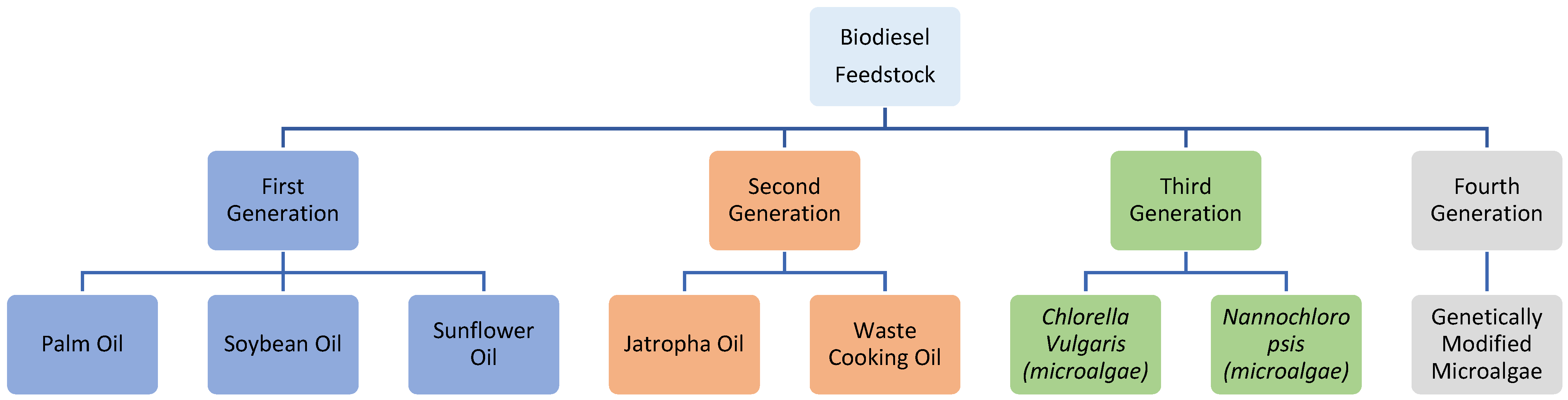
Biodiesel production relies on diverse feedstocks classified across four generations [10]. As shown in Figure 1, first-generation oils include edible crops such as sunflower, soybean, and palm, while second-generation feedstocks consist of non-edible oils like Jatropha and waste cooking oil. More advanced options include third-generation feedstocks, which are primarily based on microalgae and other aquatic biomass, offering high lipid productivity and reduced land use pressure [10]. Additionally, the fourth generation encompasses genetically modified microorganisms and advanced algal systems designed to enhance lipid productivity and enable integrated carbon capture, further improving the sustainability of biodiesel production [10]. Choosing a suitable feedstock for biodiesel and method of production is crucial to guarantee high fuel yield, cost-effectiveness, and environmental sustainability.

2.1. First Generation

First-generation feedstocks offer highly scalable production potential for biodiesel at a significantly lower cost compared to traditional fossil fuels [11]. However, their use creates food-versus-fuel conflicts, raises edible oil prices, and drives deforestation due to increased agricultural land demand [11]. The major feedstocks are sunflower oil, soybean oil, and palm oil.

2.1.1. Sunflower Oil

Sunflower oil, derived from the seeds of the sunflower plant (Helianthus annuus), is one of the most widely produced vegetable oils globally [12]. Thus, it ranks fourth in terms of production volume after soybean, peanut, and rapeseed oils, with an annual production of approximately 18 million tons cultivated over more than 47 million hectares [12]. Additionally, sunflowers are commonly cultivated in arid and semi-arid regions because they are relatively drought-resistant and efficiently utilize soil nutrients due to their well-developed, deep root system [12]. The production of sunflower oil is highly affected by climate conditions, where abundant sunlight is necessary for growth [13]. This enhances photosynthesis and thus oil yield. Land use for sunflower cultivation is also shaped by market dynamics and price responsiveness [14]. Research indicates that fluctuations in the prices of vegetable oils can lead to shifts in land allocation among competing crops [14]. For instance, an increase in sunflower oil prices can result in a decrease in land dedicated to rapeseed cultivation, as farmers respond to market signals to optimize their crop yields and profits [15]. Moreover, the sunflower oil supply chain is heavily influenced by geopolitical factors, as seen in the context of the Russia–Ukraine conflict, where both countries are major exporters of sunflower oil [16]. However, sunflower oil in biodiesel production leads to a product having a greater oxygen content compared to palm oil, which facilitates complete combustion in engines [17]. Its oil yield can reach 27,937 kg/ha, outperforming soybean and rapeseed [18]. From a sustainability perspective, sunflower oil strikes a balance between yield and environmental impact: while land-intensive, it avoids the severe deforestation concerns of palm oil and contributes less to biodiversity loss than soybean [14,15,16].

2.1.2. Soybean Oil

Soybean has been one of the most flourishing industries since the seventies, with global consumption rising by 200 million tons [19,20]. Soybean can typically yield more than 3.7 metric tons per hectare with 18–20% oil content [21,22]. Hence, the global demand for soybeans has surged, particularly due to their use in animal feed and cooking oil [19,20]. This has led to significant changes in land use practices especially in countries like Brazil and Argentina, which are among the largest producers [19]. In recent years, the cultivation of soybean has expanded into previously untouched ecosystems, leading to deforestation and the loss of forests [19]. Thus, countries are increasingly recognizing the need for sustainable land use practices that balance agricultural productivity with environmental effect, ensuring that soybean cultivation can continue to meet global food demands without compromising ecological impact [19].

2.1.3. Palm Oil

Various vegetable oils, such as rapeseed and soybean oil, serve as feedstocks for biodiesel production. However, palm oil offers significantly greater advantages and potential compared to these alternatives [22]. Palm oil provides a steady, year-round supply as a perennial crop, unlike seasonal soybean or rapeseed [23]. With an oil yield of 4.2 MT/ha, it is nearly an order of magnitude more efficient than soybean (0.4 MT/ha), sunflower (0.5 MT/ha), or rapeseed (0.7 MT/ha) [22].
However, sustainability trade-offs outweigh these advantages. For example, palm expansion is linked to large-scale deforestation, peatland degradation, biodiversity loss, and significant CO2 emissions [24]. While its high yield suggests land use efficiency, the environmental cost of clearing tropical forests undermines its overall sustainability [24]. Sustainable certification schemes such as RSPO (Roundtable on Sustainable Palm Oil) have been introduced, but adoption remains uneven [24].
As summarized in Table 1, the comparative performance of first-generation feedstocks demonstrates the trade-off between yield and sustainability. Palm oil clearly leads in land use efficiency but poses the most severe ecological threats [22,23,24]. Sunflower oil, although lower-yielding, offers a more balanced profile with moderate environmental concerns [12,13,25], while soybean’s low yield and deforestation footprint place it at the bottom in terms of sustainability [19,20,21]. Rapeseed, peanut, and cottonseed contribute marginally, but their limited yields constrain their potential for large-scale biodiesel production [25,26].

2.2. Second Generation

The use of edible oils such as sunflower, soybean, and palm raises food security concerns and drives environmental and social conflicts [25,26,27]. Second-generation feedstocks address these issues by using non-edible oils and waste materials, reducing competition with food supply and promoting circular economy pathways. Key examples include Jatropha Curcas and waste cooking oil (WCO) [27].

2.2.1. Jatropha Curcas

Jatropha Curcas provides great benefits as a non-edible oil feedstock for producing biodiesel [28]. Jatropha contains a high oil content reaching up to 40% oil weight per seed [29]. In addition, it is biodegradable, contains low sulfur amounts, and does not require modification for the engine [30]. The oil is poisonous for humans and thus does not contribute to food insecurity, offering a sustainable solution compared to other available feedstocks [31]. However, as for the composition of the oil, the presence of free fatty acids (FFAs) complicates biodiesel production [30]. Moreover, this oil has high viscosity and a high percentage of carbon residue, which makes the purification step more complicated [30]. Thus, while Jatropha is promoted for its low environmental impact, the reality of large-scale farming can lead to biodiversity loss and soil degradation if not managed well [32].

2.2.2. Waste Cooking Oil

Biodiesel derived from waste cooking oil (WCO) provides economic benefits such as contributing to a circular economy [33]. The cost of WCO is significantly lower than that of other oils as it is a waste material and may cause environmental pollution if disposed improperly [31,32]. The production of biodiesel from renewable biomass sources such as plants, vegetable oils, and animal fats results in a nearly closed carbon dioxide cycle (around 78%) [34]. Nevertheless, the FAME yield of WCO is significantly higher, reaching up to 97% [35]. Despite these advantages, several constraints limit the scalability of biodiesel production from WCO. WCO may not always be available because it is created by a number of unstable and unreliable sources, such as restaurants and the food processing industry [36]. This can lead to supply chain challenges, making it difficult to establish a steady production line [36].

2.3. Third Generation

The latest developments incorporate sources like algae and microalgae as potential feedstocks for biodiesel production. Known for their high lipid content and rapid growth, both can thrive in aquatic environments and wastewater [4]. Microalgae (phytoplankton) or microphytes are considered sustainable and versatile feedstocks as they can be grown photo-autotrophically [37,38]. This means that they are able to produce their own energy using sunlight and CO2 capture. Additionally, algae systems can grow in unfertile and non-productive landscapes, which helps decrease their competition with first-generation food crops [37,39]. They also minimize the usage of freshwater and significant amounts of fertilizers, ensuring their long-term sustainability and cost-effectiveness in producing biodiesel [40,41]. Moreover, biodiesel production from third-generation feedstocks is not as widespread as other generations due to their relative complexity and limited availability. Furthermore, there is insufficient research and development in this area, making it challenging to scale up production and fully assess its feasibility for large-scale biodiesel cultivation [42].

2.4. Fourth Generation

There has been significant progress in biodiesel production, especially with the third and fourth generations using algae-based technologies [43]. The third generation mainly focuses on harvesting algal biomass to produce biodiesel [43]. However, the fourth generation goes a step further by genetically modifying algae through oxygenic photosynthesis. This modification increases the algae’s ability to absorb CO2, thus creating an artificial carbon sink and increasing the production of biofuels [44,45]. Moreover, several algae species have been genetically modified to grow faster in nutrient-limited environments [44]. Examples include Chlamydomonas reinhardtii, Phaeodactylum tricornutum, and Thalassiosira pseudonana. These developments do not only lead to increased biofuel yields, but also offer ecological benefits, such as carbon dioxide sequestration, wastewater treatment, and a decrease in greenhouse gas emissions [46]. Although research regarding this generation is still in its early stages, the fourth generation of algae-based biofuel technology seeks to significantly reduce environmental issues [47]. Therefore, evaluating the environmental effects of genetically modifying algae currently occupies a large portion of scholarly research [44,48].

2.5. Comparative Summary

Several oils can be considered biodiesel feedstocks, each with distinct properties and environmental impacts. As shown in Table 2, soybean oil has a relatively low yield (20%) and requires a significant amount of water, contributing to biodiversity loss [19]. Palm oil demonstrates a higher cetane number (41) and viscosity (40.65 mm2/s), yet its large-scale cultivation is directly linked to deforestation and severe land use change [47,49]. Jatropha Curcas offers a moderate oil yield (35–40%) and avoids the food-versus-fuel debate; however, it requires substantial water inputs, particularly in dry climates, limiting its scalability [50]. Waste cooking oil is one of the most sustainable options since it valorizes waste streams, though its poor viscosity (4.63 mm2/s) and irregular availability constrain its long-term reliability [45]. Microalgae oil has promising characteristics, with a high cetane number (47) and favorable pour point (−10 °C), but faces high energy and water demands during cultivation and harvesting [6,42]. Sunflower oil provides a strong balance between performance and sustainability, with relatively high yield (25–55%), competitive viscosity (34.01 mm2/s), and a cetane number of 38.1 [47,49,50].
The comparative assessment in Table 2 underscores that biodiesel feedstocks present distinct trade-offs between yield, cost, land use, and environmental performance.

2.6. Applications of Biodiesel

Biodiesel can be a good alternative to fossil fuels in many applications, especially in transportation, power generation, and heating [40]. Thus, these sectors directly benefit from biodiesel’s clean properties compared to traditional fossil fuels.

2.6.1. Transportation

Nowadays, the world depends on traditional fossil fuels like petroleum, coal, and oil to satisfy the ongoing demands for transportation fuels [40]. The U.S. department of energy states that the transportation sector is one of the largest contributors to greenhouse gas (GHG) emissions, where vehicles use approximately 54.4 million gallons of diesel fuel yearly [52]. Hence, an effective transition to a greener transportation future necessitates the shift from finite conventional fuels [53]. Among all liquid biofuels, biodiesel offers unique advantages due to its environmental benefits and burning qualities [2]. Thus, it can often be used as a substitute for or blended with petroleum diesel [53]. Biodiesel’s application in diesel motors significantly diminishes pollutants like particulate matter (PM), volatile organic compounds (VOCs), and nitrogen oxides (NOx) [3]. Moreover, biodiesel enhances the lubricating properties of compression ignition engines, thus expanding their lifespan and reducing engine wear and gradual damage [53]. Additionally, it offers higher combustion efficiency and minor amounts of sulfur and aromatic concentrations in comparison to regular diesel [54]. Biodiesel’s utilization in aircraft is still under research [54]. Challenges like its freezing point, cold-flow properties, and energy density are still being addressed to ensure its compatibility with aviation engines [54].

2.6.2. Power Generation

Biodiesel is gaining a lot of interest as a renewable, biodegradable, and non-toxic fuel that can assist in solving energy-related problems due to its potential in reducing climate change [55]. Using biodiesel helps reduce emissions and pollutants, but improving its technical and non-technical efficiency requires certain techniques [5]. It is a sustainable and feasible energy source that can be used for power generation and in the automobile sector [53]. During power generation, as the biodiesel proportion in the blend rises, a loss of power occurs [56]. Nietiedt et al. [57] claim that the biodiesel’s calorific value is the cause of this power decrease. Moreover, Mofijur et al. [58] suggest that the high viscosity of palm (B10) and moringa (B10) biodiesel may be the cause of power loss. Therefore, further research and testing is required to resolve power generation issues when using biodiesel.

2.6.3. Heating

Biodiesel can also serve as an industrial and residential renewable heating fuel [58]. Hence, it can be combined with petroleum-based heating oil to heat both household and business boilers [58]. These mixes are standardized for certain heating uses [59]. An example of a blend is Bioheat, a registered trademark in the United States and Canada, used as a cleaner and more sustainable heating source [59]. Thus, ASTM 396 classifies mixes of up to 5% biodiesel and petroleum-based heating oil as comparable to pure petroleum-based heating oil [59]. Therefore, several countries have established legislation requiring at least 2% biodiesel in heating oils. However, biodiesel mixes can often harm rubber components in furnaces, requiring regular inspections and replacements [59].

2.7. Global Biodiesel Demand

The overconsumption of finite fossil fuels and the associated environmental consequences have led researchers to find more sustainable alternatives [40,53]. Biodiesel, a fuel made from natural sources like sunflower oil, has gained attention due to its ability to reduce reliance on traditional fuels while supporting climate action [60]. The Energy Information Administration (EIA) states that energy consumption between the years 2000 and 2030 will majorly increase by 71% worldwide [61]. This is due to the increasing demand driven by population growth and industrialization [62]. Thus, it is also estimated that CO2 emissions will rise by up to 35% by 2030 [5]. The global demand for biodiesel is expected to increase significantly, with worldwide production reaching approximately 36 billion barrels annually [59,61,63]. Therefore, the need for alternative energy sources has become critical. In 2021, the global biodiesel market was valued at USD 32.09 billion and is projected to expand at a compound annual growth rate (CAGR) of 10.0% between 2022 and 2030 [64]. Furthermore, research indicates that biofuel demand, including biodiesel, is set to expand by 38 billion liters over 2023–2028 [65]. This marks a nearly 30% increase from the previous five-year period and is expected to reach 200 billion liters by 2028 [64]. The global proliferation of renewable fuels is driven by the growing awareness of sustainable solutions to control climate change [8,66]. Governments are implementing supportive policies as well as renewable energy mandates and tax credits to encourage biodiesel’s adoption among consumers [66]. Several developing countries like the USA and the EU are adopting these policies to expand their biodiesel production and utilization [62]. Together, the EU, USA, Argentina, and Indonesia produce almost 70% of global biodiesel [65]. The need for energy independence and security further drives interest in renewable energy markets, catalyzing their growth and acceptance.
To better contextualize this growth, Table 3 summarizes the major biodiesel-producing regions worldwide and highlights the primary policy, economic, and energy-security drivers underpinning biodiesel demand in each region.
Given the rising demand for biodiesel around the world, it is critical to evaluate how its fuel qualities compare to those of traditional petro-diesel to confirm its effectiveness and viability as a widely used substitute. Table 4 shows the fuel attributes of biodiesel derived from sunflower oil and those of standard petro-diesel to assess the practicality of this fuel. Thus, biodiesel contributes to increased engine lifetime and safety because of its greater lubricity, cetane rating, and flash point [67,68]. However, its lower calorific value and higher NOx emissions can be reduced by blending techniques or engine tuning [69,70]. These results demonstrate that sunflower biodiesel is a practical, cleaner-burning substitute for petro-diesel that supports environmental and emission-lowering objectives.

3. Sunflower Oil as a Suitable Biodiesel Feedstock

Sunflower oil is a high-quality, vegetable-based oil derived from the seeds of sunflowers (Helianthus annuus) [60,71]. Known for its light, mild flavor, it is widely used in cooking and food production [60]. In addition to its traditional uses, sunflower oil has gained prominence in the field of biodiesel production due to a convergence of benefits and properties [72]. The process of selecting the most suitable oil requires evaluating multiple critical parameters. These include oil yield, fatty acid composition, low FFA, and availability [60]. Sunflower oil demonstrates unique advantages among first-generation oils, making it a promising feedstock for producing high-quality biodiesel [60]. However, despite being a first-generation feedstock, sunflower oil has historically been less dominant in biodiesel production compared to oils such as soybean and palm [60]. Thus, this divergence is mainly due to regional feedstock availability and agricultural economics, as soybean oil is abundantly produced in the United States and palm oil in Southeast Asia, making them more cost-effective and readily accessible for large-scale biodiesel industries [60,65]. The major vegetable-based oils involved in creating biodiesel are palm, soybean, rapeseed, tallow, and recycled oils [71]. The main goal of the current study is to focus on sunflower oil and its benefits as the leading natural feedstock for producing biodiesel [60,71,72].
From a production performance perspective, multiple studies have shown that sunflower oil can achieve biodiesel yields comparable to, and in some cases exceeding, those of other first-generation feedstocks under optimized transesterification conditions [60,72,73]. Its relatively low free fatty acid content reduces soap formation during alkaline catalysis, facilitating higher conversion efficiencies and simpler downstream separation compared to high-FFA oils [53,60]. Moreover, the high proportion of unsaturated fatty acids contributes to favorable cold-flow behavior, which is particularly advantageous for biodiesel use in temperate climates [71,72,74].
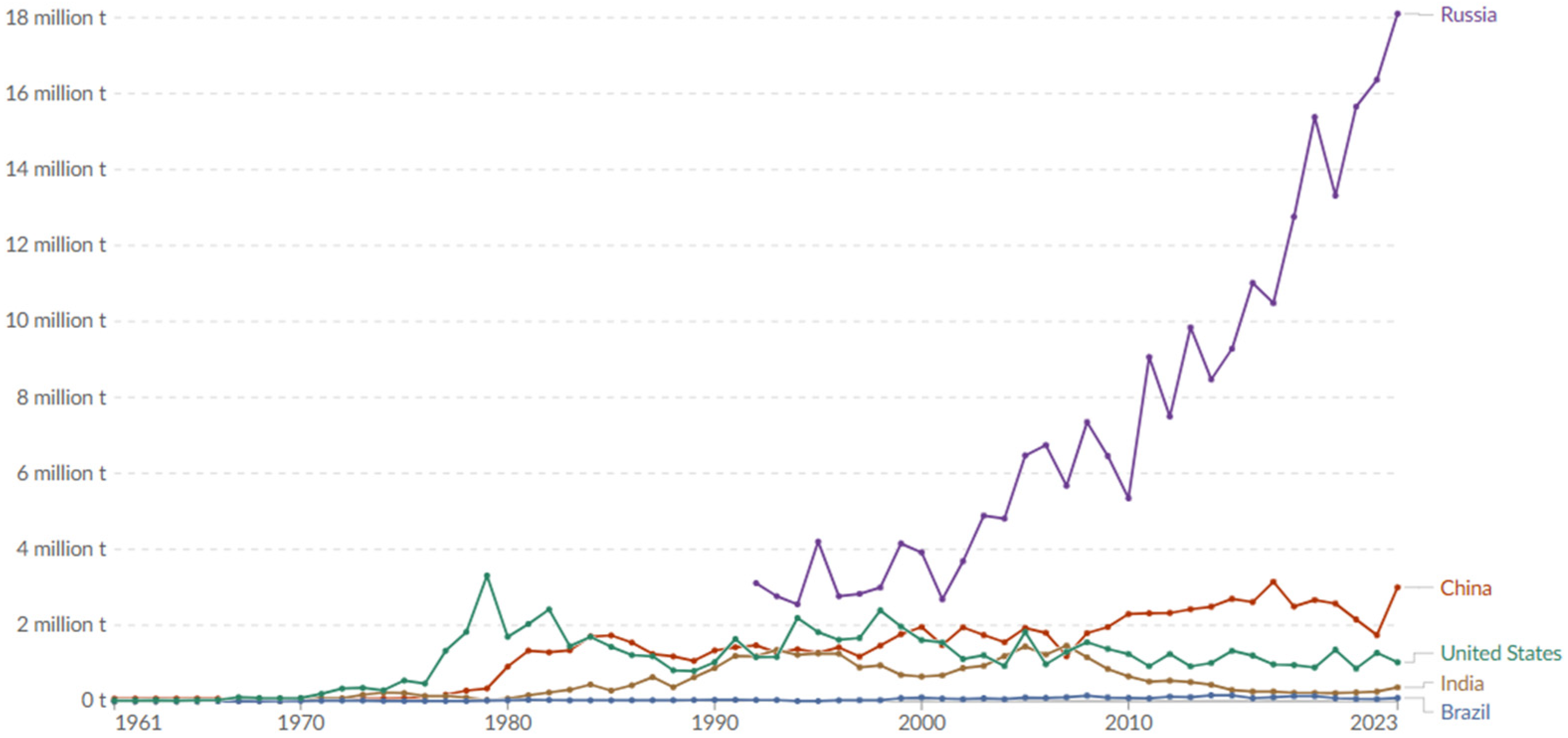
From a chemical perspective, sunflower oil stands out among other raw materials due to its favorable composition. To start with, sunflower seeds contain a high oil content, ranging between 39 and 49%, with some high-oleic varieties reaching up to 52% [58]. Moreover, it has a favorable fatty acid profile, particularly a high content of unsaturated fatty acids (UFAs) like linoleic acid [74]. This improves oxidative stability and enhances the cold-flow properties of biodiesel, making it suitable for various climates [71,72]. Additionally, sunflower’s cultivation has increased globally since it can grow in different climates, making it a readily available source for biodiesel creation [60]. Thus, at a global level, sunflower seed production has shown a clear increasing trend over recent decades, reflecting the growing relevance of sunflower oil in global markets [75]. As illustrated in Figure 2, major producers such as Russia, China, and the United States have experienced sustained growth in sunflower seed production, highlighting the scalability and long-term availability of sunflower oil as a biodiesel feedstock [75].

4. Biodiesel Production Pathways

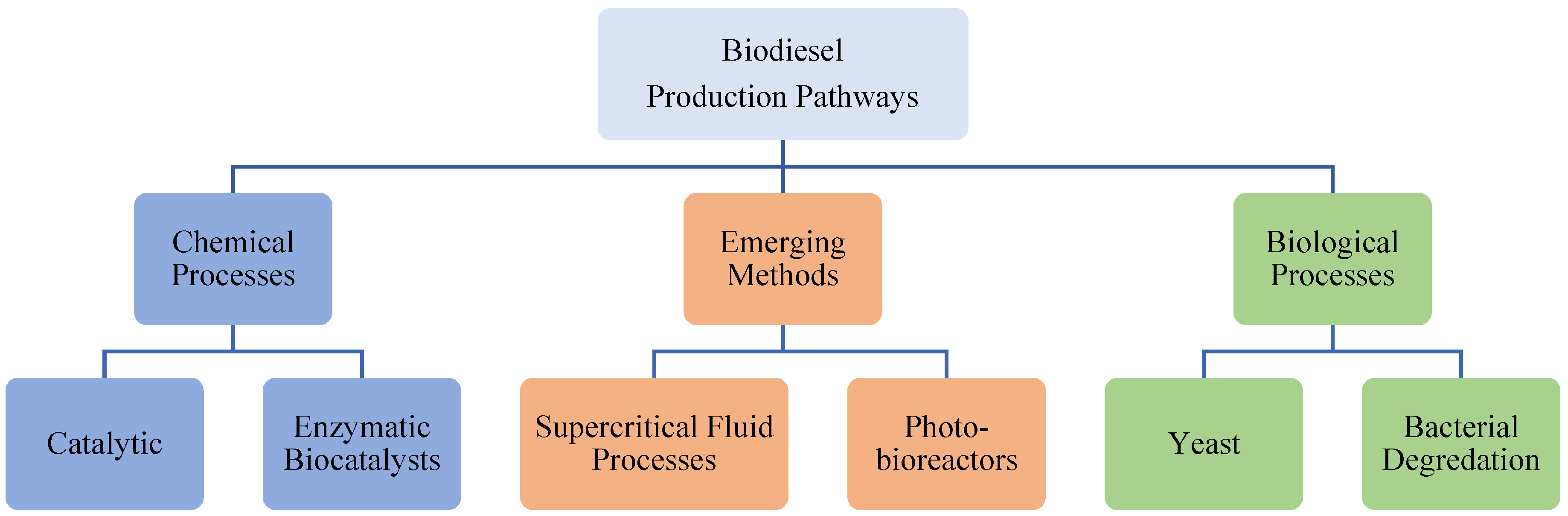
Figure 3 illustrates the three primary routes for producing biodiesel, which are primarily categorized by chemical processes, emerging techniques, and biological processes. It presents a generalized process framework for biodiesel production from sunflower oil. Each production route follows the same upstream sunflower oil processing steps, including seed cleaning, mechanical pressing or solvent extraction, oil clarification, and pretreatment, before diverging into distinct conversion pathways [73]. Chemical processes represent the most established conversion routes and include conventional catalytic and enzymatic transesterification [73]. Moreover, emerging methods encompass advanced chemical technologies that remain under active research and limited industrial deployment, such as supercritical fluid processes and photobioreactor-assisted systems [73]. Although supercritical transesterification is fundamentally a chemical process, it is frequently classified as an emerging pathway in the literature due to its operation under extreme temperature and pressure conditions, absence of catalysts, high energy demand, and limited commercial adoption [73]. In addition, biological processes involve lipid conversion or production using microorganisms, including yeast- and bacteria-based pathways, which are primarily explored for their sustainability potential rather than current industrial maturity [73]. The following subsections describe each production method separately, highlighting the specific process flow, operating conditions, and distinguishing features associated with each route.

4.1. Chemical Processes

One popular method for producing biodiesel is through a chemical process, which includes enzyme biocatalysts or conventional catalysts to speed up the transesterification reaction [61,73,76].

4.1.1. Transesterification Reaction

Following the upstream sunflower oil extraction and pretreatment steps, biodiesel can be produced via the transesterification pathway [73]. The transesterification reaction is a process that transforms triglycerides to fatty acid alkyl esters, usually fatty acid methyl esters (FAMEs) [73]. This process requires both triglycerides and alcohol, typically methanol, usually in the presence of a catalyst [76]. The role of the catalyst is to increase the rate of reaction. It can be homogeneous, heterogeneous, or biocatalytic [77]. Thus, this reaction yields biodiesel (alkylester) and glycerol as products [73]. Glycerol is considered a by-product, which can be used in other industries.
As shown in (R1), part of the triglyceride is replaced with the alkyl group of the alcohol (R) in the presence of a catalyst, resulting in the production of three alkyl esters, including biodiesel and glycerol [76].
Processes 14 00441 i001

4.1.2. Supercritical Methanol

Supercritical methanol is used in biodiesel production as a catalyst-free method to transfer oils and fats into biodiesel at high temperature and pressure [76,77,78,79]. The process includes alcohol and high temperatures and pressures, known as supercritical conditions, to convert triglycerides into biodiesel [76]. Thus, for the supercritical methanol route, sunflower oil undergoes the same initial extraction and pretreatment steps, after which the transesterification reaction is carried out under high temperature and pressure conditions without the use of a catalyst [76].
(R2) is the reaction of the triglyceride with methanol [76].
Triglyceride + 3   CH 3 OH Catalyst   3   FAME + Glycerol
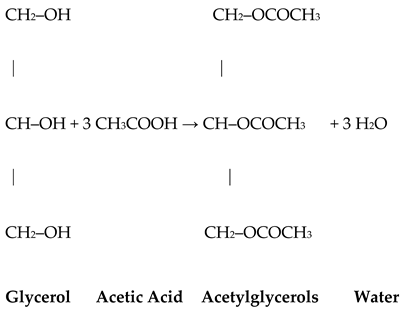
When the reaction ends, the glycerol generated is subjected to a transesterification reaction with acetic acid to yield triacetylglycerol, also referred to as triacetin (R3) [80]. Triacetin acts as an antiknock additive [80].
Processes 14 00441 i002
Moreover, methanol and acetic acid can react and produce methyl acetate which enhances the flash point, oxidative stability, and viscosity of the biodiesel (R4) [80].
CH 3 OH + CH 3 COOH CH 3 COOCH 3 + H 3 O
Methanol       Acetic acid       Methyl acetate     Water
Due to the absence of a catalyst, product separation is simpler than other methods and no side reactions takes place [79]. Also, the presence of water and FFAs does not affect this reaction so it is suitable for high-FFA oils [79]. This means that no pretreatment step is required where higher levels of biodiesel are produced in supercritical alcohols because the FFAs are esterified simultaneously with oil transesterification [78].
As a result, the technique can use inexpensive feedstock which typically contains large amounts of FFAs/oil without the need for pretreatment [81]. Moreover, the hydrolysis of the corresponding esters is promoted in the presence of water, making transesterification reactions carried out under acidic or alkaline conditions highly sensitive to water content [81]. On the other hand, even with large water contents, the non-catalytic supercritical process can be carried out [78]. Saka and Kusdiana were the first to produce biodiesel under supercritical conditions [82]. They achieved a 95% yield within 2 min at 350 °C, 450 bar, and a methanol-to-oil molar ratio of 42:1 [68]. However, it was observed that the extreme conditions during production could lead to thermal decomposition of fatty acid methyl esters (FAMEs), resulting in lower-quality biodiesel [81]. Consequently, reducing reaction severity is crucial for producing high-quality biodiesel [83].
As for the reaction parameters, temperature plays a critical role in supercritical biodiesel production, directly influencing the stability of the FAMEs produced [81].

4.2. Parameters Affecting Transesterification Reaction

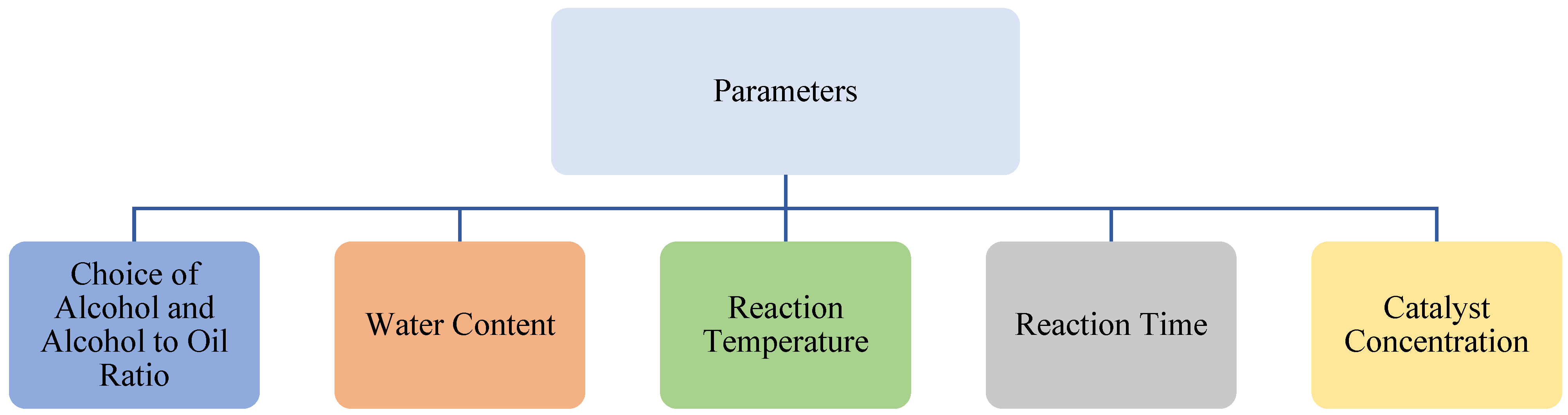
The production of biodiesel is influenced by several key parameters that collectively determine the efficiency, quality, and yield of the finished product [84]. Figure 4 shows the primary factors which include the type and amount of catalyst, selection of alcohol and molar ratio of alcohol to oil, amount of water, reaction time, and reaction temperature [85]. Additionally, variables such as the choice of feedstock and its purity, the presence of free fatty acids, mixing intensity, and agitation speed impact the overall process [84,85]. Understanding and controlling these parameters is essential for obtaining the highest possible yield of biodiesel [84,85].

4.2.1. Choice of Alcohol and Alcohol-to-Oil Ratio

The nature of the alcohol used in the transesterification reaction plays an important role in the biodiesel production process [86,87]. Methanol and ethanol are the most frequently used short-chain alcohols in this chemical reaction [86]. However, methanol is highly preferred due to a variety of physical and chemical advantages like its lower cost, abundance, and faster reaction rate [86]. Moreover, alcohols like propanol and butanol are less often used in biodiesel production primarily due to their higher costs [87]. In general, the transesterification reaction requires three moles of alcohol and one mole of triglyceride to yield three moles of fatty acid alkyl esters and one mole of glycerol [88]. The MOMR commonly reported in the literature for sunflower oil-based biodiesel production is 6:1, indicating a high methanol-to-oil ratio (excess methanol) [88]. As transesterification is a reversible reaction, a relatively high alcohol-to-oil ratio is generally desired [89]. A relatively high alcohol-to-oil ratio is commonly used to shift the transesterification equilibrium toward biodiesel formation and increase yield [88]. Soap formation, however, mainly results from the reaction of free fatty acids with base catalysts and is not reduced or affected by using excess methanol [88]. However, additional amounts of alcohol do not necessarily enhance biodiesel yield but may increase the cost of alcohol recovery [88,89].

4.2.2. Water Content

The presence of water in transesterification may alter the reaction mechanism and yield undesirable products [85]. A high water content in the reaction mix hydrolyzes triglycerides and thus produces a high content of FFAs [90]. In fact, minimal amounts of water like 0.5 wt.% can adversely affect ester production [88]. Factors affecting biodiesel production include catalyst type, alcohol-to-oil ratio, temperature, and water content, where even a 5 wt.% amount of water can significantly inhibit the transesterification reaction by promoting hydrolysis and soap formation [90,91]. The generated FFAs react with the alkali catalyst, producing unfavorable soap instead of biodiesel [90]. Thus, this makes the separation and purification of biodiesel and glycerol more complicated and difficult [90]. After transesterification, biodiesel will be loaded with high concentrations of water [90]. The presence of water significantly degrades biodiesel quality, as it can cause severe operational problems such as corrosion in pipelines and fuel system components [85,90]. Therefore, additional treatment and drying steps are required to remove water contaminants and ensure fuel stability [90].

4.2.3. Reaction Temperature

Reaction temperature is a critical parameter in the transesterification reaction as it influences the reaction rate and the yield of biodiesel [91]. In fact, selection of the temperature of the reaction is directly connected to the choice of alcohol [86,88]. The reaction temperature must be lower than the boiling point of the alcohol consumed [88]. This ensures that the alcohol will not evaporate, which could disrupt the reaction equilibrium [85]. Increasing the temperature improves the reaction rate and causes greater intermolecular movement between reactants [86,89]. On the contrary, excessively high temperatures trigger the formation of soap in the presence of water [88,90]. The optimum temperature range may vary between 50 and 60 °C, indicating a particular ideal temperature for each catalyst and enzyme [86,89]. For instance, utilizing methanol in the transesterification reaction demands an approximate temperature of 60 °C not surpassing its BP [85].

4.2.4. Reaction Time

The factor of time is very critical in the production of biodiesel via transesterification [87]. The reversible reaction of transesterification results in a loss of esters if the reaction time is long, leading to a decrease in the yield of the end product (biodiesel), as well as soap formation [88]. The type of catalyst also affects the overall duration of the reaction [92]. Homogeneous catalysts require a duration that ranges from 30 min up to 1 h under ideal reaction conditions due to the high solubility of the catalysts in the reaction mixture [83,86]. On the contrary, reactions with heterogeneous catalysts generally demand more time [92,93]. This stems from the fact that the reaction occurs at the surface of the catalyst, and mass transfer limitations slow down the process [93].

4.2.5. Catalyst Concentration

A catalyst is a chemical substance capable of speeding up a reaction without being consumed or permanently altered in the process [94]. In a reversible reaction, the catalyst fastens both the forward and reverse reactions equally by lowering their activation energies [85]. Therefore, it does not affect the equilibrium position, yet it helps the system reach equilibrium faster [85]. In principle, the catalyst must boost the amount of the wanted product compared to the undesired one [85]. The conversion of triglycerides into biodiesel increases as the concentration of the catalyst increases [88]. However, a specific CTOR should be used to ensure sufficient activation of the reactants and complete conversion into fatty acid esters [86,88].

4.3. Types of Catalysts

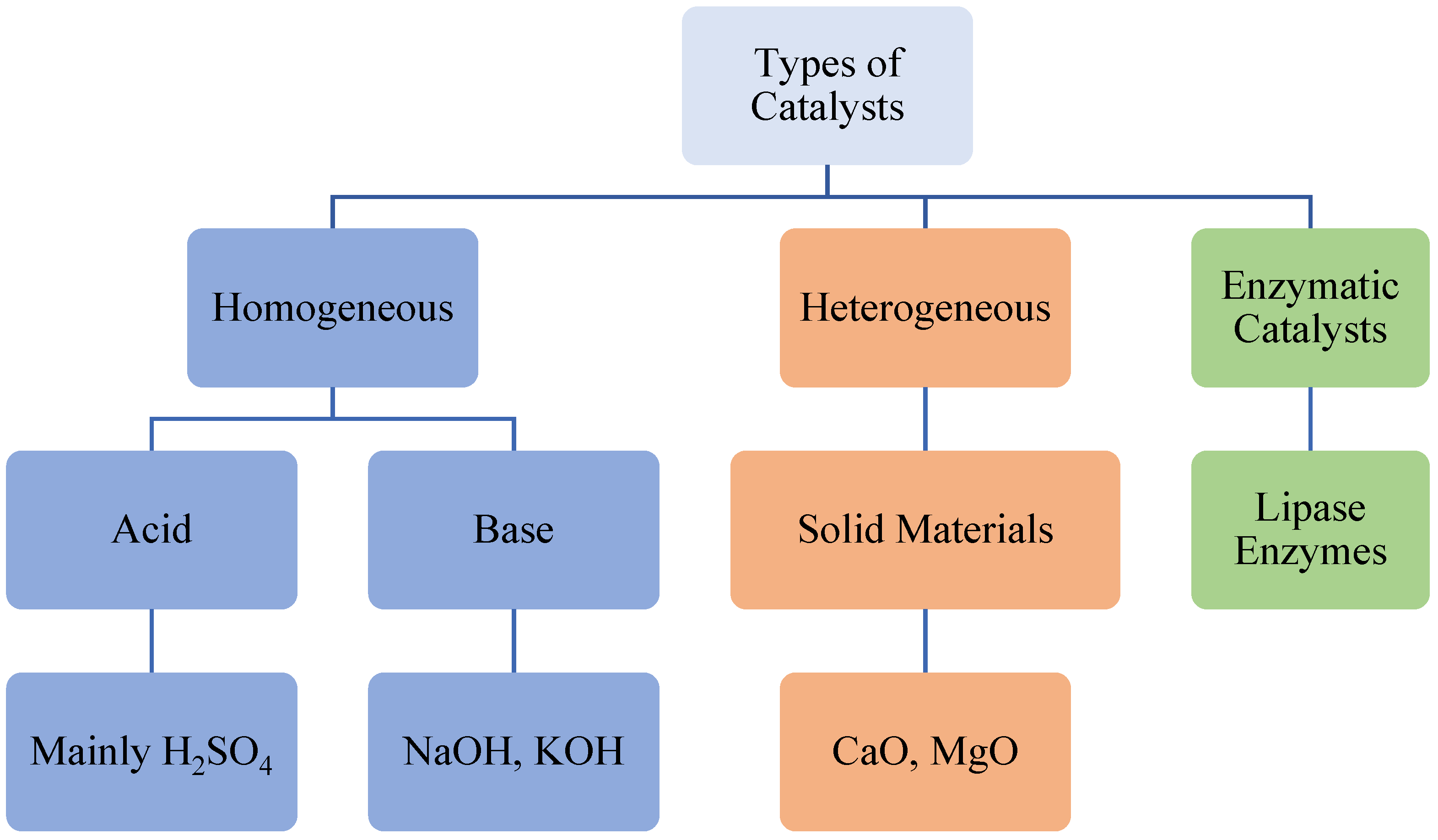
As shown in Figure 5, three primary catalyst types, homogeneous, heterogeneous, and enzymatic, can be used to speed up the transesterification reaction. Each type has unique benefits, mechanisms, and characteristics that vary based on the feedstock and process parameters.

4.3.1. Homogeneous Basic Catalysts

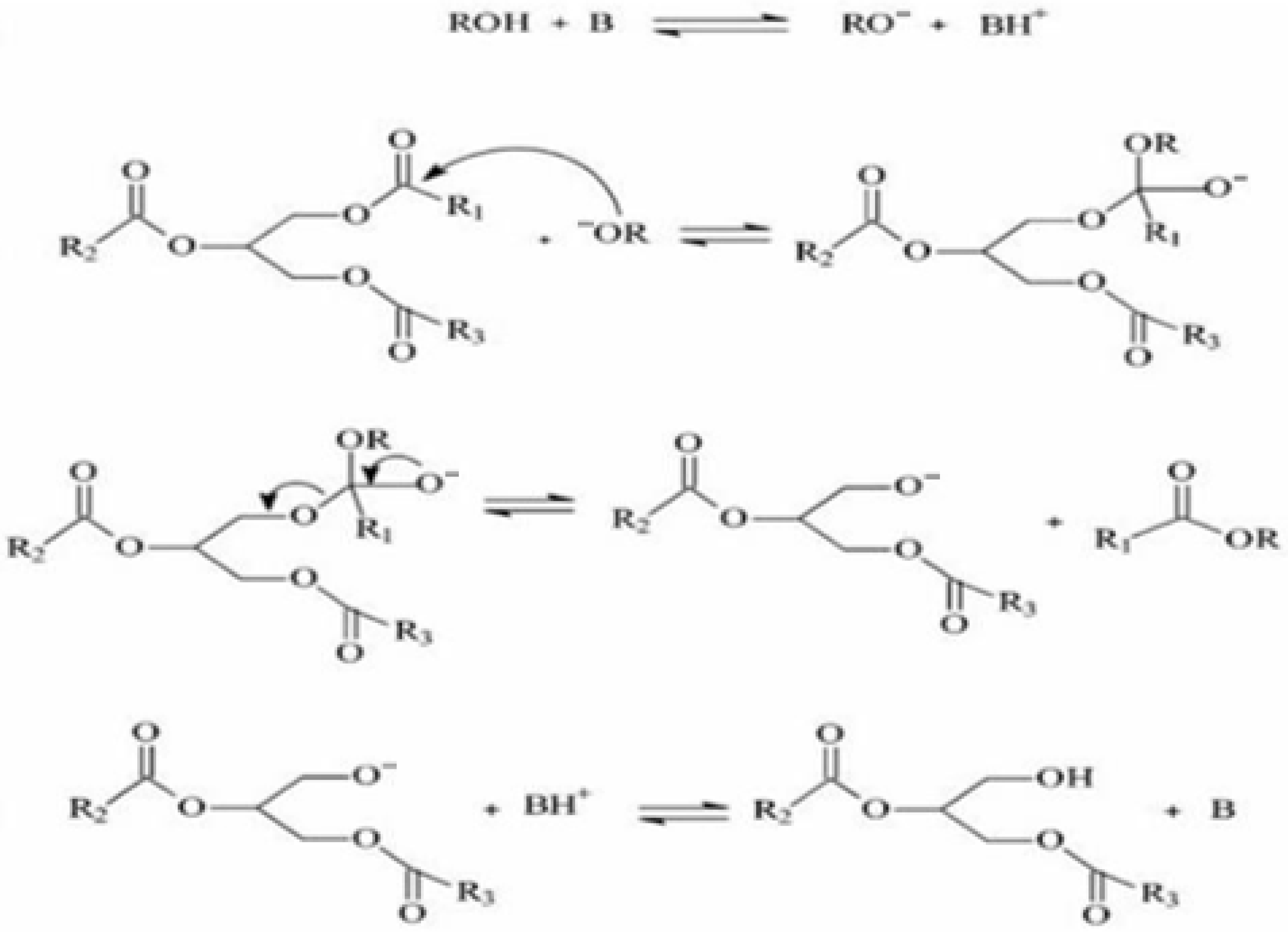
Sodium hydroxide (NaOH) and potassium hydroxide (KOH) are the two primary homogenous alkaline catalysts used in biodiesel production processes [95]. They are mainly used in the transesterification reaction of the first-generation feedstock like vegetable oils. However, sodium methoxide (CH3ONa) was found to be more effective than NaOH [88]. This is because mixing NaOH with methanol produces insignificant amounts of water, which may inhibit the formation of biodiesel due to the hydrolysis reaction [88]. Consequently, it is favorable to mix the catalysts with methanol before adding them to oils or fats [88,95]. These catalysts offer several advantages such as their high reaction rates, moderate reaction conditions, and prominent yield over brief durations due to their high activity [83,94]. The main disadvantage of these catalysts is their high sensitivity to free FAAs [96]. In oils with a high FFA content, FFAs react with the base catalyst to form soaps, which may reduce biodiesel yield and create significant phase separation challenges, rather than preventing FAME formation [96]. A side reaction known as saponification occurs, leading to the incomplete conversion of biodiesel [77,90]. As a result, a vast quantity remains as soap, which causes additional separation problems and increases costs as catalytic impurities must be eradicated [85]. Research shows that these catalysts require a high alcohol-to-oil ratio (6:1 methanol-to-oil ratio is considered optimal) [96]. The mechanism of the transesterification reaction using a homogeneous base catalyst is shown in Figure 6, where B is the basic catalyst, and has four major steps [94]:
(1)
The creation of the active species RO-.
(2)
A tetrahedral intermediate is formed due to the nucleophilic attack RO- on a carbonyl group of TG.
(3)
The breakdown of the intermediate.
(4)
The regeneration of the base.
These four steps are repeated twice to form the methyl ester [94].

4.3.2. Homogeneous Acidic Catalysts

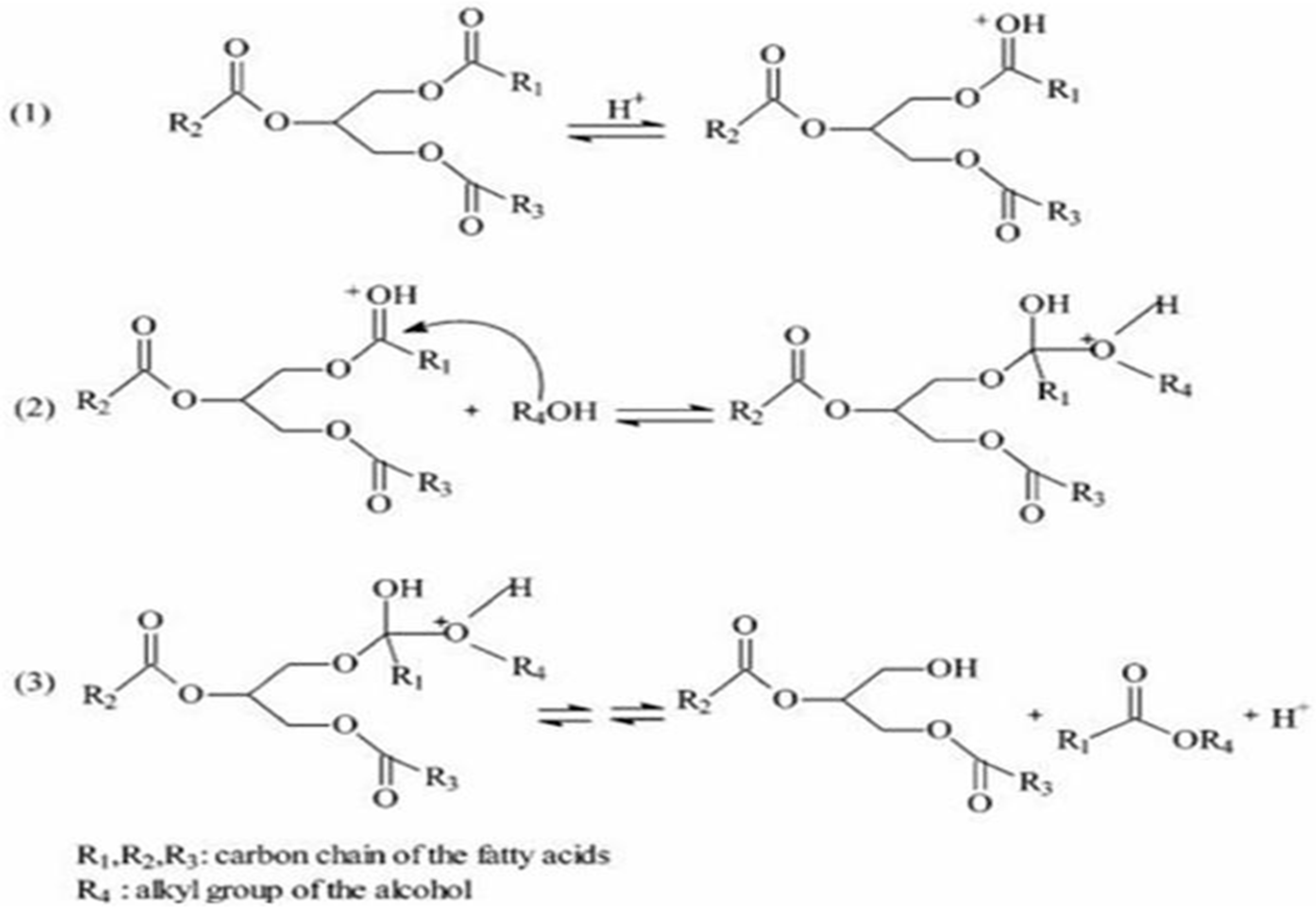
The most common type of homogeneous acid catalyst used for biodiesel production is sulfuric acid (H2SO4) [85]. Other types like sulfonic acid (HSO3R) and hydrochloric acid (HCl) are now widely used. One of the main advantages of these catalysts is their insensitivity to FFA content [96]. They are capable of catalyzing both esterification and transesterification reactions of low-value feedstock with high levels of FFAs [85,96]. However, their reaction rates are 4000 times lower than those of alkali catalysts, making the process economically unfeasible [92,93]. They also require higher reaction temperatures and alcohol-to-oil ratios. Figure 7 shows the detailed mechanism of the transesterification reaction using homogeneous acidic catalysts [94]. This mechanism consists of three fundamental steps:
(1)
The acid catalyst protonates the carbonyl group of the triglyceride.
(2)
A tetrahedral intermediate is formed by the nucleophilic attack of alcohol.
(3)
The intermediate is broken down due to proton migration.
This sequence of steps occurs twice to ensure the creation of methyl esters.

4.3.3. Heterogeneous Catalysts

Heterogeneous catalysts used in biodiesel production are typically solid materials [94]. These catalysts include metal oxides such as CaO and MgO, zeolites, or other solid acids and bases [94,96]. Unlike homogeneous catalysts, heterogeneous catalysts are non-corrosive and can be recycled for use in various continuous processes [94]. Additionally, the reactants and catalysts constitute two separate phases, and the reaction is carried out at the surface of the catalyst [85]. These catalysts simplify both the separation and purification of the obtained biodiesel [94]. Moreover, they reduce the possibility of catalyst contamination in the final product [94]. Generally, they require fewer unit operations and can operate in continuous processes in fluidized bed systems [96]. However, disadvantages include significantly slower reaction rates, extreme temperatures, and higher alcohol to oil ratios [92,93,96]. Furthermore, they are associated with catalyst deactivation issues over time due to impurities in the feedstock or the complexity of regeneration [96].

4.3.4. Enzymatic Catalysts

Enzymatic transesterification involves the use of lipase enzymes as a catalyst to produce biodiesel from triglycerides and FFAs [97]. Thus, it has emerged as a sustainable and eco-friendly substitute for traditional chemical catalysts [97]. The transesterification reaction via enzymatic catalysts is deemed as clean process, producing no glycerol as a by-product [97]. Enzymatic transesterification is characterized by high biodiesel yield, operating under mild temperatures (30–45 °C), and the recovery of the catalyst once used [96,97,98,99]. In addition, enzymatic catalysts are insensitive to high FFA levels and water in feedstocks, simplifying the separation and purification process of biodiesel production [98,100,101]. Therefore, lipase enzymes are compatible for resources like waste cooking oil (WCO), which contain an FFA content above 10% [38]. Hence, enzymatic transesterification reduces the presence of soap under the saponification reaction, making it a unique and advantageous option compared to using chemical catalysts [98,101]. However, these catalysts are relatively expensive and have slower reaction rates in comparison to chemical catalysts [101]. This poses a significant strain on the broad commercialization of enzymatic transesterification, where lipases can be 10 to 20 times more costly than chemical catalysts [97]. Moreover, enzymatic catalysts are rarely used since the alcohol (methanol) deactivates the catalyst, hence decreasing the yield of FAMEs [76]. Addressing these issues is essential to ensure the widespread adoption of enzymatic catalysts for transesterification [97,99,101]. Consequently, researchers are exploring advanced immobilization techniques to enhance the durability and sustainability of these catalysts [102,103,104]. Immobilizing lipase enzymes on solid supports improves the catalysts’ stability, thus enabling their reclaim across multiple reaction cycles and increasing the cost-effectiveness of the overall process [36,103].

4.4. Biological Processes

Research on lipid-accumulating bacteria has grown exponentially over the last ten years [105]. Bacteria, yeasts, fungi, and microalgae are the primary producers of microbial lipids, with oleaginous yeasts demonstrating the capability to utilize various carbon sources to produce fatty acids similar to those found in vegetable oil [105]. Studies have been conducted on the synthesis of microbial lipids as they have high lipid production and growth rates [105,106]. In biological production routes, sunflower oil or alternative lipid sources derived from biomass are produced through microbial cultivation, followed by lipid extraction and subsequent conversion to biodiesel using transesterification [105,107].

4.4.1. Yeasts

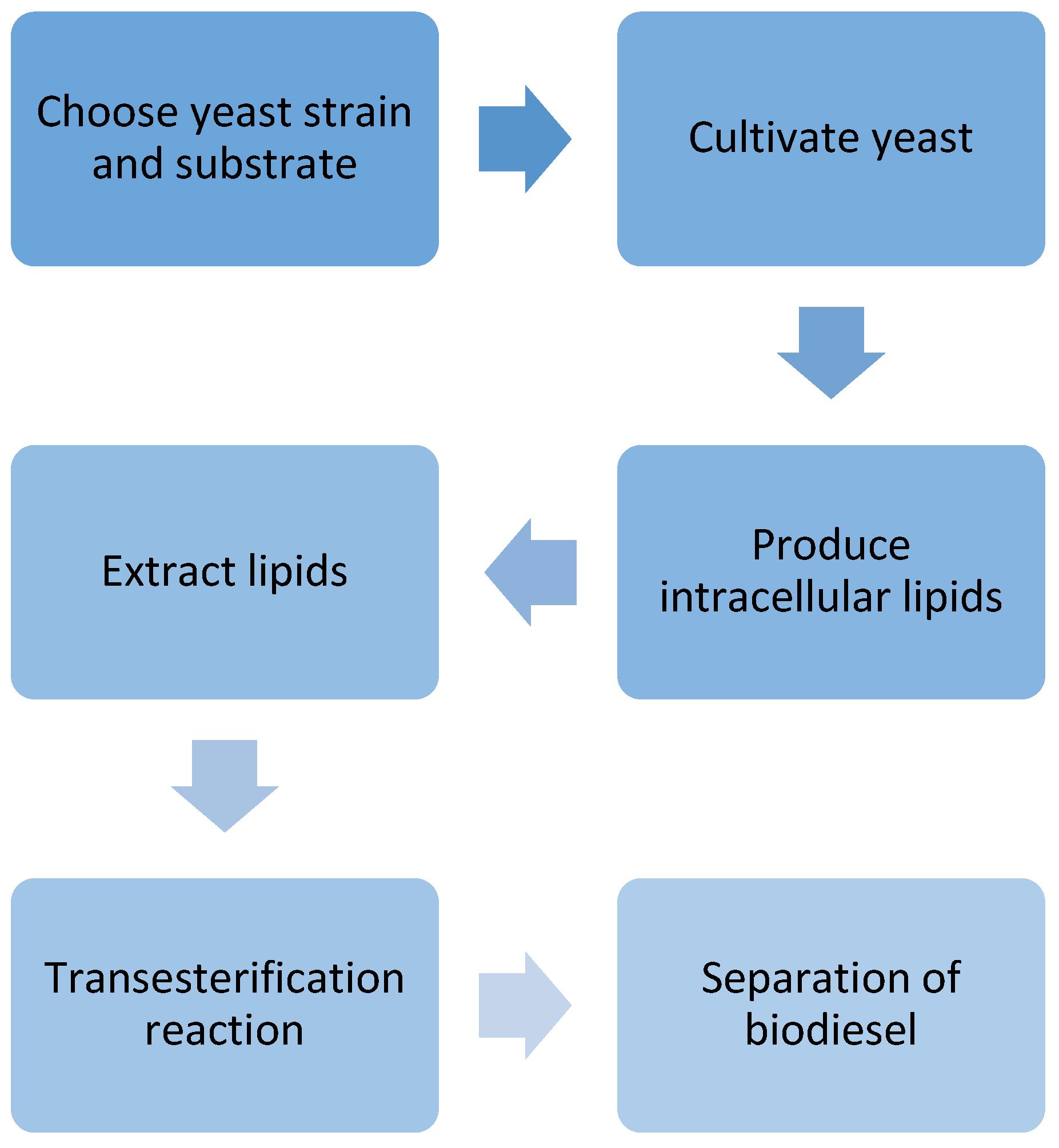
As shown in Figure 8, the first step in the production process is choosing a yeast strain that can accumulate at least 20% lipids in its dry biomass and an inexpensive and easily available substrate [108]. Examples of substrates include food waste, lignocellulosic wastes, or industrial effluents. These carbon compounds can be converted to lipids using yeast [108]. While using lignocellulosic wastes, pretreatment is necessary to break down lignin and release cellulose and hemicellulose, which hydrolyze to produce simple sugars [109]. These wastes contribute to the circular economy, where they are valorized and lipids are produced by yeast [108]. The next step is cultivating yeast under optimal conditions to maximize its growth and lipid production [110]. These conditions include the temperature, the pH, the rate of aeration, and the C/N ratio (carbon and nitrogen) that the culture medium must provide [108]. During growth, the yeast uses carbon for energy and nitrogen for building proteins and nucleic acids [111]. Moving on to the third stage, intracellular lipids are produced in the yeast via two metabolic processes [112]. Furthermore, these lipids are extracted through chemical, thermal, mechanical, or biological steps, during which the microbial cell wall is breached to release them [108]. In the fifth step, the transesterification reaction takes place where the extracted lipids react in the form of triglycerides [113]. Finally, the biodiesel is obtained and is separated from glycerol using a solvent [113]. Solvents include n-hexane and toluene which can contribute to sustainability as they can be reused later on. Although yeast fermentation has advantages for producing biodiesel, it has several limitations [114]. The presence of lignin can inhibit the activity of enzymes required for hydrolysis, leading to lower yields of fermentable sugars and consequently reducing lipid production by yeasts [114]. Moreover, scalability faces challenges [106,114]. The transition from lab scale to industrial scale reveals issues related to nutrient supply and culture conditions that can affect yeast performance [106].

4.4.2. Bacteria

Oleaginous bacteria can accumulate glycolipids and phospholipids rather than triglycerides [115]. However, some bacterial species are capable of accumulating triglycerides, such as Rhodococcus opacus [115,116]. Although these bacteria do not accumulate triglycerides, they can be modified to produce more lipids through genetical modification [115,117]. Oleaginous bacteria can be considered a feedstock due to their rapid rate of growth, ease of cultivation, and ability to use a variety of growth substrates [107]. Similar to the process of producing biodiesel from yeasts, the first step is selecting the bacterial strain [118]. Oleaginous bacteria with more than 20% lipids are considered a good feedstock [107]. The next step is cultivating these bacteria in a high-carbon and -nitrogen medium to accumulate high amounts of lipids and then removing the lipids through solvent extraction [119].
Moreover, transesterification takes place using the removed lipid [120]. The final step involves separating the biodiesel produced from the mixture using gravity, where the upper layer is biodiesel mixed with methanol and water [107]. The biodiesel is washed with water and the methanol is removed using a rotary evaporator [121].
Hu et al. [122] looked into the lipid accumulation of Trichosporon cutaneum using xylose and glucose as a substrate with a ratio of 2:1. They found that the Trichosporon cutaneum contained lipids up to 59% of its total DCW. Moreover, it was shown that the cultivation of Cryptococcus sp. SM5S05 on corncob hydrolysates with 60 g/L of glucose resulted in a lipid content of 60.2%, a lipid yield of 7.6 g/L, and a dry biomass of 12.6 g/L [123]. The study reported that the fatty acid composition of the extracted oil was comparable to that of traditional vegetable oils, revealing its potential for biodiesel production [124]. On the other hand, Lipomyces starkeyi is capable of accumulating over 70% of its biomass as intracellular lipids when grown under controlled conditions using a mixture of hexose and pentose sugars [123]. This highlights Lipomyces starkeyi as a promising oleaginous yeast for biodiesel production. Bacterial lipids have been studied less extensively compared to those of fungi, yeast, plants, and animals [123]. However, certain bacterial genera, including Nocardia, Streptomyces, Mycobacterium, and Rhodococcus, have been investigated for their ability to biosynthesize triacylglycerols (TAGs) [125]. Many agro-industrial waste materials have been utilized as carbon sources for cultivating Gordonia sp. and Rhodococcus opacus PD630 [123]. Both bacterial strains demonstrated the ability to accumulate over 50% of their biomass as lipids for most of the tested substrates [126]. The maximum lipid content was shown for R. opacus (93%) and Gordonia sp.(96%) when cultivated on sugarcane [123].
Moreover, culture with both Streptomyces coelicolor and Ralstonia eutropha has been investigated, yielding 114 mg/L of fatty acids [123]. These bacteria produced medium-, long-, and very long-chain fatty acids, with the resulting biodiesel exhibiting favorable fuel properties, with a cetane number of 65 and oxidative stability lasting 76 h [123].

4.5. Comparative Analysis of the Production Pathways

To summarize, there are several technological routes to produce biodiesel, each requiring unique conditions. It is crucial to compare the mentioned techniques side by side, as shown in Table 5, in terms of important performance indicators, to effectively analyze and choose the most suitable method for biodiesel production.
Beyond technical performance, the inclusion of reported production costs in Table 4 enables a comparative economic assessment of sunflower oil-based biodiesel pathways. The data indicate that conventional alkaline transesterification remains the most cost-competitive option due to its moderate operating conditions and high yields, whereas advanced routes such as enzymatic and supercritical methanol processes incur higher costs primarily driven by catalyst price and energy demand. This comparison highlights that economic feasibility currently favors mature technologies, despite the environmental advantages offered by emerging pathways.
Despite being well established and reasonably priced, the traditional alkaline transesterification process has limitations due to its intolerance to high FFA levels, which can result in soap production and make product separation challenging [3,51]. By directly converting FFAs to esters, acid-catalyzed methods solve this problem. Nevertheless, they have longer reaction times and increase the danger of equipment corrosion [30]. Although it necessitates higher operating temperatures and can result in slower kinetics, heterogeneous catalysis offers a compromise by facilitating catalyst reusability and simpler separation [48,125]. Moreover, although lipase-based enzymatic catalysis provides a low-temperature, clean, and selective substitute that is perfect for feedstocks with a high FFA content, it is still expensive and susceptible to alcohol inhibition [34,36]. Supercritical methanol techniques are extremely effective and catalyst-free, but they require a lot of energy and harsh conditions, which makes them less practical without heat recovery systems [80,126]. However, the cost and present level of technological maturity still pose major obstacles to industrial-scale deployment, even if biological lipid production from microalgae or oleaginous microorganisms offers a long-term solution with integrated CO2 collection [37,127,128].
Table 5. Comparison of major biodiesel production methods in terms of operational and sustainability metrics.
Production MethodCatalyst TypeReaction Temp (°C)Reaction Time (h)FFA ToleranceYield (%)Separation EaseProduction CostScalabilityEnvironmental Impact
Chemical Processes
Alkaline TransesterificationHomogeneous base50–65 [1]0.5–1.0 [2]Low (<2%) [53]90–98 [11]Difficult [53]0.80–1.10 USD/L [129,130]High [3]Soap formation, water-sensitive [53]
Acid-Catalyzed TransesterificationHomogeneous acid55–80 [1]5–10 [2]High [30]80–95 [11]Difficult [30]1.00–1.30 USD/L [30,130]Medium [30]Corrosive, slower reaction [30]
Emerging Methods
Heterogeneous CatalysisSolid catalyst60–200 [49]2–5 [131]Medium [49]75–95 [11]Easy [127]0.90–1.20 USD/L [96,131]High [132]Low waste, recyclable catalysts [127]
Supercritical MethanolNo catalyst240–400 [82]<0.5 [82]High [82]90–98 [133]Easy [133]1.30–2.00 USD/L [82,128]Low–Moderate [133]High energy input, no waste [128]
Enzymatic TransesterificationLipase enzymes30–45 [38]8–72 [38]High [35]80–95 [36]Easy [36]1.20–1.80 USD/L [97,101]Low–Moderate [36]Biodegradable, green process [134]
Biological Processes
Biological Lipid ProductionYeast/bacteria/algae20–37 [134]Days to weeks [134]High [134]30–70 [134]Moderate [135]2.00–3.50 USD/L [6,134]Emerging [39]Circular economy, CO2 use [39]

4.6. Sustainable Farming Practices

There are several aspects to consider for the overall sustainability of the production of sunflower oil biodiesel. Implementing sustainable farming practices is an important aspect to reflect on. During the farming of sunflower, crop rotation is a useful technique that improves soil health [136]. Crop rotation involves different types of crops planted in the same field in a specific order for a specific period of time [117]. It lowers the chance of soil erosion, limiting nutrient depletion and enhancing insect management [137]. It also contributes to producing higher yields of oil outputs for biodiesel production [25,136]. Moreover, it is crucial to reduce pesticide use since chemicals can contaminate water supplies and kill healthy and beneficial organisms, such as good insects and pollinators, which maintain the agricultural ecosystem [138]. In addition, optimizing land use through precision farming techniques, such as efficient nutrient management and controlled irrigation, can further enhance sustainability by increasing land productivity while reducing resource waste and environmental impacts [136,137]. By implementing these practices, the production of sunflower biodiesel can contribute to a more sustainable biofuel sector and align with the SDGs, especially SDG 12 (Responsible Consumption and Production) and SDG 13 (Climate Action) [8].

4.7. Land Use and Energy Use

Sunflower is one of the most popular oilseed crops grown for food consumption and used for the production of biodiesel [139]. Ukraine, Argentina, and Russia are among the top global producers of sunflower seeds and oil. These countries collectively account for an average of 47.8% of global seed production and 53.6% of oil production [140]. Around 28.5 million tons of sunflower seed were produced annually on average worldwide between 2003 and 2007 from a cultivated area of around 22.6 million hectares [141]. The sunflower plant can be cultivated on both irrigated and non-irrigated lands with varying consequences [139]. Studies show that sunflower cultivated on non-irrigated lands has low productivity (650 kg/ha/year) compared to irrigated lands (3000 kg/ha/year) due to a lack of water and fertilizers [139]. Also, the ongoing war in Ukraine has an effect on the supply chain of sunflower oil [142]. The disparity between Ukraine’s sunflower oil output and Europe’s olive oil production has caused price volatility and rising costs for both oils [143]. This shows that the war affects the sustainability of the sunflower oil supply chain and global prices [143]. As for the environmental impact, sunflower oil has a carbon footprint of approximately 2.3 kg CO2 equivalent per kilogram, representing a 32% reduction in greenhouse gas emissions [144]. Additionally, the energy demand for producing this biodiesel is about 19.9 megajoules per kilogram, which translates to energy savings of 56% compared to fossil diesel [144]. Moreover, in the biodiesel production chain, the cultivation of sunflowers is the most significant contributor to greenhouse gas emissions and energy consumption.

5. Challenges

Biodiesel production faces several key challenges, including technical issues related to feedstock quality and processing methods, economic factors such as high production costs and market price fluctuations, and environmental concerns involving land use, resource consumption, and emissions [61,98,144]. Overcoming these challenges is essential to ensure that biodiesel is both economically viable and environmentally sustainable.

5.1. Technical Challenges

Sunflower oil is a widely used edible oil, making its availability for biodiesel production limited and subject to market competition [145]. This competition increases feedstock costs, which directly impacts the economic viability of biodiesel production [145]. In several developing regions, inefficient sunflower oil production systems can result in lower outputs, as small-scale producers often face technical constraints related to limited capital, inadequate processing technology, and labor availability [145]. A significant technical challenge in utilizing sunflower oil for biodiesel production is the optimization of the transesterification process [146]. Santana et al. [147] conducted a transesterification reaction in a microtube reactor (0.8 mm inner diameter, 300 mm length) using sunflower oil and methanol with potassium hydroxide as a catalyst. Under optimized conditions of 60 °C, 4.5% KOH, a 23.9:1 molar ratio, and a 100 s residence time, they achieved 99% conversion [147]. Their study is representative of a broader body of research reporting high biodiesel yields from sunflower oil under optimized reaction conditions [147]. Sunflower oil often contains impurities such as free fatty acids (FFAs), water, and solid particles that need to be removed before transesterification, as a high FFA content can lead to soap formation, reducing biodiesel yield [148]. Therefore, pretreatment methods such as degumming and deacidification are necessary but add complexity and cost to the biodiesel production chain [149]. These findings align with numerous reports in the literature that highlight both the high conversion potential of sunflower oil and the importance of pretreatment to mitigate FFA-related challenges [147,148,149].

5.2. Environmental Challenges

One environmental challenge for biodiesel production is land shortage and limited access to farming resources [150]. These difficulties make crop production harder, forcing farmers to expand into grazing areas to compensate for losses caused by land degradation [150]. This expansion can lead to deforestation and further environmental impact [150]. The use of fertilizers and pesticides in large-scale farming can lead to run-off into nearby water bodies, causing contamination, which in turn disrupts aquatic ecosystems and affects water availability for other uses [138].
While biodiesel itself emits fewer greenhouse gases during combustion compared to fossil fuels, the cultivation of feedstocks can result in significant emissions from deforestation, soil disturbance, and fertilizer application [151]. Water consumption is another significant concern in biodiesel production from sunflower oil, particularly due to the high water demands of irrigated sunflower crops [146]. Hence, this issue is especially critical in regions already facing water scarcity [150]. Studies suggest that biodiesel production can intensify existing water resource challenges, as the agricultural phase competes for essential water supplies needed for human consumption and natural ecosystems [139,144,152].

5.3. Policy and Regulatory Barriers

One of the major problems in the biodiesel field is navigating legislative and regulatory obstacles, especially the lack of incentives and diverse regional regulations [151]. The lack of strong legislative frameworks in many nations hinders the broad use of biodiesel and reduces its ability to compete with traditional fossil fuels [153]. Regionally different rules might cause producers and investors to feel unsure, which can result in a fragmented market [153]. For instance, some areas provide significant tax benefits or subsidies for the production of biodiesel, while others do not, resulting in less encouragement for production [153]. SDG 7 (Affordable and Clean Energy) is undermined by this contradiction, which not only makes it difficult to invest in biodiesel infrastructure but also has an impact on long-term sustainability because producers are hesitant to make investments in technologies without steady government support [154]. Therefore, the biodiesel industry faces challenges in boosting its production and breaking into new markets, which limits its ability to support renewable energy targets and the fight against climate change [66].

5.4. Economic Challenges

Despite the convergence of the environmental benefits of biodiesel production, it still faces several economic challenges that hinder its commercialization and large-scale adoption [155]. The economic viability of sunflower-based biodiesel highly depends on the feedstock and production costs, market competition, and regulatory considerations [154]. The major issue, repeatedly cited by many scholars, is its higher cost of production in comparison to conventional fuels [129]. The literature has proved that biodiesel costs approximately 1.5–3 times as much as petroleum diesel [130]. The main reason is the costly feedstocks used in this process [61], which typically account for 70–80% of the overall production expenditure [156]. Research indicates that waste oils and non-edible crops, although they can minimize feedstock costs, often involve further processing, hence compensating the total expenses [157]. On the other hand, the implementation of first-generation feedstocks like sunflower oil raises an ethical dilemma relating to the use of edible oils for fuel generation purposes [153,158]. However, high-yield oils like sunflower oil are considered more desirable in this industry as they can offset costs associated with biodiesel creation [159]. Moreover, low-quality feedstocks often require additional processing like pretreatment, the use of catalysts, and waste management [96,157]. In addition, biofuels are less competitive than traditional fuels as they involve high capital investments in dedicated equipment and refining processes [61]. Without subsidies or incentives from governments, biodiesel suffers greatly as inconsistent policies create doubt and hesitation for investors, hence restraining economic growth in the long term [155]. Furthermore, fluctuations and drops in petroleum prices make it more difficult for biodiesel to compete as an alternative fuel, rendering it less attractive for consumers [129]. Therefore, addressing these economic barriers is crucial to ensuring that biodiesel remains a viable alternative to petroleum-based fuels.

6. Sustainability Assessment and SDG Alignment

Assessing the sustainability of biodiesel production is essential due to its interconnected environmental, economic, and social implications [8,47,152]. This section evaluates the sustainability performance of biodiesel in comparison to conventional fossil diesel, with a particular emphasis on sunflower oil-based biodiesel. Key aspects examined include environmental impacts across the production chain, sustainable feedstock cultivation and processing practices, lifecycle considerations, and the socioeconomic and policy dimensions influencing biodiesel deployment [144,152,153]. Furthermore, sustainability metrics and certification frameworks relevant to biodiesel development are discussed to provide a holistic evaluation of its long-term viability [8,153].

6.1. Environmental Impact of Conventional Diesel vs. Biodiesel

From an environmental perspective, the production and use of conventional fossil diesel are associated with significant greenhouse gas emissions, air pollution, and resource depletion [53,69]. Petroleum-derived fuels contribute substantially to carbon dioxide emissions, particulate matter formation, and nitrogen oxide release, which exacerbate climate change and pose risks to human health and ecosystems [69,144]. In contrast, biodiesel derived from renewable feedstocks such as sunflower oil offers environmental advantages in terms of biodegradability and reduced lifecycle emissions [53,144]. Lifecycle assessments indicate that sunflower biodiesel can achieve substantial greenhouse gas emission reductions relative to petro-diesel, depending on agricultural practices and processing conditions [144,152]. Additionally, biodiesel combustion produces lower levels of sulfur oxides, particulate matter, and unburned hydrocarbons, contributing to improved air quality [69,70]. However, environmental trade-offs remain, particularly related to land use change, fertilizer application, and water consumption during sunflower cultivation [136,138].
The environmental sustainability of biodiesel production is also influenced by cumulative energy demand across cultivation and processing stages [152]. While transesterification is less energy-intensive than petroleum refining, upstream agricultural inputs can increase the overall energy footprint [144,152]. Consequently, adopting low-impact farming practices and optimizing processing efficiency are critical to maximizing the environmental benefits of sunflower biodiesel [136,144].

6.2. Sustainable Feedstock Production and Processing

The sustainability of biodiesel is highly dependent on feedstock selection and cultivation methods [47,60]. Sunflower oil represents a favorable first-generation feedstock due to its adaptability to diverse climates, moderate water requirements, and relatively high oil yield [71,136]. Sustainable agricultural practices such as crop rotation, precision fertilization, and optimized irrigation improve soil health, reduce nutrient run-off, and enhance long-term productivity [136,137]. From a processing perspective, improving transesterification efficiency through optimized catalyst selection, alcohol-to-oil ratios, and reaction conditions can reduce material waste and energy consumption [85,88]. Waste valorization strategies such as glycerol upgrading and solvent recovery support circular economy principles and improve process sustainability [160,161]. Moreover, the use of waste-derived catalysts and alternative processing pathways is also being explored to reduce environmental impacts and production costs [38,131].

6.3. Lifecycle Considerations and Resource Efficiency

Lifecycle sustainability assessment of biodiesel extends beyond combustion to include feedstock cultivation, oil extraction, processing, and distribution [144,152]. Water consumption represents a major concern, particularly in irrigated sunflower systems and water-scarce regions [146,152]. Efficient irrigation techniques and rain-fed cultivation can significantly reduce water footprints and improve overall sustainability [136,152]. Furthermore, material efficiency is another critical consideration in biodiesel production [161]. Biodiesel production generates co-products such as glycerol, which can be converted into value-added chemicals to enhance environmental and economic performance [161,162]. Thus, optimizing logistics and reducing transportation distances can lower associated emissions and energy use [144].

6.4. Social and Economic Sustainability

The socioeconomic sustainability of biodiesel production involves balancing economic viability, social equity, and food security considerations [65,153]. Biodiesel production can stimulate rural development, create employment opportunities, and enhance energy security [40,65]. However, reliance on edible feedstocks such as sunflower oil raises concerns related to the food-versus-fuel debate [65,153]. Increasing biodiesel demand can influence vegetable oil prices and land allocation, potentially affecting food affordability and access [14,65]. Economically, biodiesel production faces challenges related to higher production costs compared to fossil diesel, largely driven by feedstock prices and capital investment requirements [129,156]. Government incentives play a crucial role in improving market competitiveness and encouraging industry growth [153,154]. In addition, social acceptance and transparent supply chains are equally important, as consumers increasingly demand sustainable and ethically produced fuels [153].

6.5. Sustainability Metrics and Certification Frameworks

Evaluating biodiesel sustainability relies on standardized metrics and certification schemes that assess environmental, social, and economic performance [144,152]. Lifecycle assessment methodologies are widely used to quantify greenhouse gas emissions, energy balance, and resource consumption across the biodiesel supply chain [144,152]. Sustainability certification frameworks such as renewable energy directives and biomass sustainability criteria ensure responsible feedstock sourcing and production practices [153].
Alignment with the United Nations Sustainable Development Goals, particularly SDG 7 (Affordable and Clean Energy), SDG 12 (Responsible Consumption and Production), and SDG 13 (Climate Action), provides a broader sustainability benchmark for biodiesel development [8]. The integration of transparent reporting, policy support, and continuous technological innovation is essential to advancing biodiesel as a sustainable alternative within the global energy transition [66,153].

7. Technological Innovations for Sustainable Biodiesel Production

Advancing biodiesel production requires integrated innovations that improve efficiency, reduce costs, and minimize environmental trade-offs [61,130]. Emerging technologies span catalytic improvements, feedstock diversification, carbon management, process intensification, and digital optimization [130,156].
Catalyst innovations are central to enhancing transesterification efficiency. Enzyme-based catalysts achieve biodiesel yields of 85–95% under mild conditions (30–40 °C, atmospheric pressure), significantly lowering energy use and reducing greenhouse gas emissions compared to conventional alkali catalysts [130,156]. Their recyclability also decreases chemical waste generation [101,103]. Moreover, biowaste-derived catalysts from agricultural residues such as orange and banana peels exhibit catalytic activity comparable to commercial catalysts, producing yields above 90% while valorizing low-cost waste streams [163]. Thus, they support both cost reduction and circular bioeconomy objectives [161].
Expanding the feedstock base enhances sustainability by reducing dependence on edible oils. While sunflower remains an efficient source, diversification to non-food oils (e.g., Jatropha, castor), waste cooking oil, and high-lipid microalgae reduces food–fuel conflicts and improves resilience against supply shocks [27,28,33]. Microalgae, for instance, can achieve lipid contents of 20–50% of dry biomass and theoretical oil yields exceeding 50,000 L/ha·year, far higher than terrestrial crops [33,37]. Such diversification directly supports SDG 2 (Zero Hunger) by reducing pressure on edible oils and strengthens SDG 12 (Responsible Production and Consumption) [8].
Emerging production methods further optimize process sustainability. Carbon capture, utilization, and storage (CCUS) can reduce net CO2 emissions by 30–60%, with biological capture integrating algal cultivation to transform waste CO2 into lipid feedstock for biodiesel [164]. Ultrasound-assisted (UA) transesterification shortens reaction times from 2–4 h to less than 30 min and increases conversion efficiency by up to 20% by enhancing immiscible phase mixing and exposing new active catalytic sites [164,165,166]. Waste valorization strategies, particularly glycerol upgrading, close material loops; crude glycerol can be converted into bioethanol, hydrogen, or biogas with yields of up to 0.3 Nm3 H2 per kg glycerol, creating additional revenue streams and aligning biodiesel with circular economy principles [160,167,168].
Digitalization and AI-driven optimization are rapidly transforming biodiesel process control [169,170]. Machine learning tools such as Artificial Neural Networks (ANNs), Response Surface Methodology (RSM), and Adaptive Neuro-Fuzzy Inference Systems (ANFISs) can predict optimal transesterification parameters, alcohol-to-oil ratio, catalyst concentration, and reaction time, with prediction accuracies above 95%, enabling consistent yields above 90% while reducing experimental costs [161,162].
Taken together, these technological advancements demonstrate that sustainable biodiesel production depends on integrating high-efficiency catalysts, diversified feedstocks, carbon mitigation strategies, process intensification, and AI-enabled optimization [130]. Beyond incremental improvements, they collectively advance biodiesel toward industrial scalability, cost parity with fossil diesel, and alignment with global climate and resource efficiency goals [8,66,152].

8. Limitations and Future Directions

Despite the comprehensive scope of this review, several scientific and methodological limitations must be acknowledged. First, data heterogeneity remains a critical constraint, as reported conversion efficiencies, operating conditions, and performance indicators across the literature exhibit significant variability due to differences in catalyst type, alcohol-to-oil ratio, reaction temperature, feedstock quality, and analytical methods used to assess biodiesel yield and purity [1,5,6]. Such inconsistencies hinder direct cross-comparison and introduce uncertainty when synthesizing and benchmarking reported biodiesel production outcomes across different studies. Second, the available body of evidence is regionally skewed toward mature biodiesel markets, including the European Union, Southeast Asia, and North America, whereas data from emerging economies with distinct climatic and agronomic conditions remain sparse [22,23]. This geographical bias may lead to underestimation of regional variability in feedstock productivity, lifecycle emissions, and supply chain logistics [144,152]. Third, this analysis intentionally excluded Hydrotreated Vegetable Oil (HVO), also commonly referred to as renewable diesel or green diesel, focusing solely on fatty acid methyl ester (FAME) biodiesel systems [53,70]. While these routes share overlapping sustainability and policy dimensions, their catalytic mechanisms, hydrogen demand, and thermochemical profiles differ substantially, warranting dedicated treatment in subsequent reviews [2,24].
Future research should prioritize the integration of carbon-neutral reagents, particularly “green methanol” derived from biogenic or captured CO2, into transesterification networks to enable fully circular carbon cycles and reduce cradle-to-grave GHG footprints, as supported by emerging LCA studies [5,6]. Moreover, field-scale validation of FAME biodiesel under real-world operational loads and variable climatic regimes is required to assess long-term engine durability, oxidative stability, and cold-flow behavior relative to ASTM D6751 and EN 14214 specifications [3,17]. At the process level, the technoeconomic feasibility of enzymatic catalysis hinges on improving lipase immobilization and reusability [97,100,103]. Therefore, advanced support materials and reaction intensification strategies should be developed to reduce enzyme deactivation and unit cost per conversion cycle [97,103]. In addition, machine learning and data-driven approaches offer significant potential for future biodiesel research by enabling the prediction and optimization of reaction conditions, catalyst performance, and feedstock variability, thereby reducing experimental time and improving process efficiency, building on existing process optimization and sustainability assessment frameworks [5,6]. Finally, quality assurance of waste-derived feedstocks, especially WCO, must be strengthened through standardized pretreatment, compositional fingerprinting, and contaminant monitoring to minimize the impact of high free fatty acid and water contents on reaction kinetics and downstream purification [31,32].
By addressing these limitations through harmonized experimental reporting, improved process comparability, and geographically diversified datasets, future work can enhance the predictive reliability, economic competitiveness, and environmental integrity of biodiesel technologies within global decarbonization frameworks.

9. Conclusions

In conclusion, this review examined biodiesel production from a range of biomass feedstocks, with a particular emphasis on sunflower oil as a first-generation option. Thus, it showed that sunflower oil is a technically viable feedstock due to its favorable oil yield, suitable fatty acid composition, and adaptability to different growing conditions. Although sunflower oil has been used less extensively than soybean or palm oil in global biodiesel markets, this difference was largely driven by regional agricultural and economic factors rather than technical limitations. The findings revealed that biodiesel derived from sunflower oil can meet key fuel quality requirements and can serve as a cleaner alternative to conventional petro-diesel. The review further showed that alkaline transesterification remains the most established and efficient pathway for converting sunflower oil into biodiesel, while alternative production routes offer potential benefits but are currently limited by cost and scalability. Process conditions and feedstock quality played a central role in determining conversion efficiency and downstream processing performance. From a sustainability perspective, sunflower-based biodiesel can reduce greenhouse gas emissions compared to fossil fuels, but its overall performance depends strongly on agricultural practices and feedstock cost. Finally, continued improvements in feedstock management, process optimization, and emerging data-driven approaches are still needed to enhance the long-term technical and economic viability of sunflower oil-based biodiesel within future energy systems.

Author Contributions

All authors contributed to this work. All authors have read and agreed to the published version of the manuscript.

Funding

This research received no external funding.

Data Availability Statement

No new data were created or analyzed in this study.

Acknowledgments

This work was supported by the University of Balamand (UOB).

Conflicts of Interest

The authors declare no conflicts of interest.

References

  1. Singh, D.; Sharma, D.; Soni, S.L.; Sharma, S.; Sharma, P.K.; Jhalani, A. A review on feedstocks, production processes, and yield for different generations of biodiesel. Fuel 2020, 262, 116553. [Google Scholar] [CrossRef]
  2. Gebremariam, S.N. Biodiesel as a transport fuel, advantages and disadvantages: Review. Biofuels Bioprod. Biorefining 2023, 17, 1445–1456. [Google Scholar] [CrossRef]
  3. Alves, C.T.; Hocevar, L.S.; Guarieiro, L.L.N. Biodiesel Technologies: Recent Advances, New Perspectives, and Applications. In Biodiesel Plants—Fueling the Sustainable Outlooks; Zepka, L.Q., Deprá, M.C., Jacob-Lopes, E., Eds.; IntechOpen: London, UK, 2024. [Google Scholar] [CrossRef]
  4. Assaf, J.C.; Mortada, Z.; Rezzoug, S.-A.; Maache-Rezzoug, Z.; Debs, E.; Louka, N. Comparative Review on the Production and Purification of Bioethanol from Biomass: A Focus on Corn. Processes 2024, 12, 1001. [Google Scholar] [CrossRef]
  5. Sentanuhady, J.; Hasan, W.H.; Muflikhun, M.A. Recent Progress on the Implementation of Renewable Biodiesel Fuel for Automotive and Power Plants: Raw Materials Perspective. Adv. Mater. Sci. Eng. 2022, 2022, 5452942. [Google Scholar] [CrossRef]
  6. Goh, B.H.H.; Ong, H.C.; Cheah, M.Y.; Chen, W.-H.; Yu, K.L.; Mahlia, T.M.I. Sustainability of direct biodiesel synthesis from microalgae biomass: A critical review. Renew. Sustain. Energy Rev. 2019, 107, 59–74. [Google Scholar] [CrossRef]
  7. Renewables 2023. Available online: https://www.iea.org/reports/renewables-2023 (accessed on 1 January 2026).
  8. THE 17 GOALS. Available online: https://sdgs.un.org/goals (accessed on 1 January 2026).
  9. Kibasa, E.; Vicent, V.; Rweyemamu, L. Valorisation of sunflower press cake with moringa leaves: A novel approach to sustainable food ingredient development. Appl. Food Res. 2025, 5, 101300. [Google Scholar] [CrossRef]
  10. Prajapati, A.K.; Mahajan, A.; Jadhav, S.M.; Kumar, K. Fourth-generation (4G) biodiesel: Paving the way for a greener and sustainable energy future in emerging economies. Renew. Sustain. Energy Rev. 2026, 225, 116103. [Google Scholar] [CrossRef]
  11. Monika; Banga, S.; Pathak, V.V. Biodiesel production from waste cooking oil: A comprehensive review on the application of heterogenous catalysts. Energy Nexus 2023, 10, 100209. [Google Scholar] [CrossRef]
  12. Nasiyev, B.; Dukeyeva, A. Influence of Mineral Fertilizers and Methods of Basic Tillage on the Yield and Oil Content of Sunflower. Online J. Biol. Sci. 2023, 23, 296–306. [Google Scholar] [CrossRef]
  13. Wahyuni, A.S. Community effects associated with sunflower oil production: Systematic review. IOP Conf. Ser. Earth Environ. Sci. 2024, 1379, 012010. [Google Scholar] [CrossRef]
  14. Declerck, F.; Hikouatcha, P.; Tchoffo, G.; Tédongap, R. Biofuel policies and their ripple effects: An analysis of vegetable oil price dynamics and global consumer responses. Energy Econ. 2023, 128, 107127. [Google Scholar] [CrossRef]
  15. Santeramo, F.G.; Di Gioia, L.; Lamonaca, E. Price responsiveness of supply and acreage in the EU vegetable oil markets: Policy implications. Land Use Policy 2021, 101, 105102. [Google Scholar] [CrossRef]
  16. Jagtap, S.; Trollman, H.; Trollman, F.; Garcia-Garcia, G.; Parra-López, C.; Duong, L.; Martindale, W.; Munekata, P.E.S.; Lorenzo, J.M.; Hdaifeh, A.; et al. The Russia-Ukraine Conflict: Its Implications for the Global Food Supply Chains. Foods 2022, 11, 2098. [Google Scholar] [CrossRef] [PubMed]
  17. Ochoa, G.V.; Peñaloza, C.A.; Forero, J.D. Combustion and Performance Study of Low-Displacement Compression Ignition Engines Operating with Diesel–Biodiesel Blends. Appl. Sci. 2020, 10, 907. [Google Scholar] [CrossRef]
  18. Karabaş, H. Determination of Biodiesel Production Volume of Sunflower as the Major Oilseed Crop in Turkey. Black Sea J. Eng. Sci. 2022, 5, 26–29. [Google Scholar] [CrossRef]
  19. Boerema, A.; Peeters, A.; Swolfs, S.; Vandevenne, F.; Jacobs, S.; Staes, J.; Meire, P. Soybean Trade: Balancing Environmental and Socio-Economic Impacts of an Intercontinental Market. PLoS ONE 2016, 11, e0155222. [Google Scholar] [CrossRef]
  20. Langemeier, M.; Zhou, L. International Benchmarks for Soybean Production (2022). Available online: https://ag.purdue.edu/commercialag/home/resource/2022/03/international-benchmarks-for-soybean-production-2022/ (accessed on 1 January 2026).
  21. Clemente, T.E.; Cahoon, E.B. Soybean Oil: Genetic Approaches for Modification of Functionality and Total Content. Plant Physiol. 2009, 151, 1030–1040. [Google Scholar] [CrossRef]
  22. Lam, M.K.; Tan, K.T.; Lee, K.T.; Mohamed, A.R. Malaysian palm oil: Surviving the food versus fuel dispute for a sustainable future. Renew. Sustain. Energy Rev. 2009, 13, 1456–1464. [Google Scholar] [CrossRef]
  23. Mekhilef, S.; Siga, S.; Saidur, R. A review on palm oil biodiesel as a source of renewable fuel. Renew. Sustain. Energy Rev. 2011, 15, 1937–1949. [Google Scholar] [CrossRef]
  24. Bentil, J.; Abubakar, S.S.; Obidieh, Y.P.M.; Osei, J.T.; Amuah, E.E.Y.; Fei-Baffoe, B.; Kazapoe, R.W. Sustainable biodiesel production from palm oil mill effluent: Assessing feasibility and environmental impacts. Total. Environ. Eng. 2025, 4, 100024. [Google Scholar] [CrossRef]
  25. Pereyra-Irujo, G.A.; Aguirrezábal, L.A.N. Sunflower yield and oil quality interactions and variability: Analysis through a simple simulation model. Agric. For. Meteorol. 2007, 143, 252–265. [Google Scholar] [CrossRef]
  26. Woittiez, L.S.; Van Wijk, M.T.; Slingerland, M.; Van Noordwijk, M.; Giller, K.E. Yield gaps in oil palm: A quantitative review of contributing factors. Eur. J. Agron. 2017, 83, 57–77. [Google Scholar] [CrossRef]
  27. Bhuiya, M.M.K.; Rasul, M.G.; Khan, M.M.K.; Ashwath, N.; Azad, A.K.; Hazrat, M.A. Second Generation Biodiesel: Potential Alternative to-edible Oil-derived Biodiesel. Energy Procedia 2014, 61, 1969–1972. [Google Scholar] [CrossRef]
  28. Banković-Ilić, I.B.; Stamenković, O.S.; Veljković, V.B. Biodiesel production from non-edible plant oils. Renew. Sustain. Energy Rev. 2012, 16, 3621–3647. [Google Scholar] [CrossRef]
  29. Milano, J.; Silitonga, A.S.; Tiong, S.K.; Ong, M.Y.; Masudi, A.; Hassan, M.H.; Bin Nur, T.; Nurulita, B.; Sebayang, A.H.; Sebayang, A.R. A Comprehensive exploration of jatropha curcas biodiesel production as a viable alternative feedstock in the fuel industry—Performance evaluation and feasibility analysis. Mech. Eng. Soc. Ind. 2024, 4, 17–37. [Google Scholar] [CrossRef]
  30. Suthar, K.; Dwivedi, A.; Joshipura, M. A review on separation and purification techniques for biodiesel production with special emphasis on Jatropha oil as a feedstock. Asia-Pac. J. Chem. Eng. 2019, 14, e2361. [Google Scholar] [CrossRef]
  31. Hamzah, N.H.C.; Khairuddin, N.; Siddique, B.M.; Hassan, M.A. Potential of Jatropha curcas L. as Biodiesel Feedstock in Malaysia: A Concise Review. Processes 2020, 8, 786. [Google Scholar] [CrossRef]
  32. Li, Z.; Lin, B.-L.; Zhao, X.; Sagisaka, M.; Shibazaki, R. System Approach for Evaluating the Potential Yield and Plantation of Jatropha curcas L. on a Global Scale. Environ. Sci. Technol. 2010, 44, 2204–2209. [Google Scholar] [CrossRef]
  33. Okpo, S.O.; Edafiadhe, E.D. Unlocking the Power of Waste Cooking Oils for Sustainable Energy Production and Circular Economy: A Review. Abuad J. Eng. Res. Dev. (AJERD) 2024, 7, 41–55. [Google Scholar] [CrossRef]
  34. Khalid, A.; Mudin, A.; Jaat, M.; Mustaffa, N.; Manshoor, B.; Fawzi, M.; Razali, M.A.; Ngali, M.Z. Effects of Biodiesel Derived by Waste Cooking Oil on Fuel Consumption and Performance of Diesel Engine. Appl. Mech. Mater. 2014, 554, 520–525. [Google Scholar] [CrossRef]
  35. Sulaiman, S.; Amin, M.H.M. Fish Bone-Catalyzed Methanolysis of Waste Cooking Oil. Bull. Chem. React. Eng. Catal. 2016, 11, 245–249. [Google Scholar] [CrossRef]
  36. Lopes, M.; Miranda, S.M.; Belo, I. Microbial valorization of waste cooking oils for valuable compounds production—A review. Crit. Rev. Environ. Sci. Technol. 2020, 50, 2583–2616. [Google Scholar] [CrossRef]
  37. Lackner, M. 3rd-Generation Biofuels: Bacteria and Algae as Sustainable Producers and Converters. In Handbook of Climate Change Mitigation and Adaptation; Chen, W.-Y., Suzuki, T., Lackner, M., Eds.; Springer International Publishing: Cham, Switzerland, 2017; pp. 3173–3210. [Google Scholar] [CrossRef]
  38. Anil, N.; Rao, P.K.; Sarkar, A.; Kubavat, J.; Vadivel, S.; Manwar, N.R.; Paul, B. Advancements in sustainable biodiesel production: A comprehensive review of bio-waste derived catalysts. Energy Convers. Manag. 2024, 318, 118884. [Google Scholar] [CrossRef]
  39. Demirbas, M.F. Biofuels from Algae for Sustainable Development. Appl. Energy 2011, 88, 3473–3480. [Google Scholar] [CrossRef]
  40. Singh, R. Biofuels in Transport Sector, in Low Carbon Energy Supply. In Green Energy and Technology; Sharma, A., Shukla, A., Aye, L., Eds.; Springer: Singapore, 2018; pp. 113–122. [Google Scholar] [CrossRef]
  41. Farouk, S.M.; Tayeb, A.M.; Abdel-Hamid, S.M.S.; Osman, R.M. Recent advances in transesterification for sustainable biodiesel production, challenges, and prospects: A comprehensive review. Environ. Sci. Pollut. Res. 2024, 31, 12722–12747. [Google Scholar] [CrossRef] [PubMed]
  42. Di Visconte, G.S.; Spicer, A.; Chuck, C.J.; Allen, M.J. The Microalgae Biorefinery: A Perspective on the Current Status and Future Opportunities Using Genetic Modification. Appl. Sci. 2019, 9, 4793. [Google Scholar] [CrossRef]
  43. Markel, K.; Belcher, M.S.; Shih, P.M. Defining and engineering bioenergy plant feedstock ideotypes. Curr. Opin. Biotechnol. 2020, 62, 196–201. [Google Scholar] [CrossRef] [PubMed]
  44. Abdullah, B.; Muhammad, S.A.F.S.; Shokravi, Z.; Ismail, S.; Kassim, K.A.; Mahmood, A.N.; Aziz, M.A. Fourth generation biofuel: A review on risks and mitigation strategies. Renew. Sustain. Energy Rev. 2019, 107, 37–50. [Google Scholar] [CrossRef]
  45. Leong, W.H.; Zaine, S.N.A.; Ho, Y.C.; Uemura, Y.; Lam, M.K.; Khoo, K.S.; Kiatkittipong, W.; Cheng, C.K.; Show, P.L.; Lim, J.W. Impact of various microalgal-bacterial populations on municipal wastewater bioremediation and its energy feasibility for lipid-based biofuel production. J. Environ. Manag. 2019, 249, 109384. [Google Scholar] [CrossRef]
  46. Zhu, B.; Chen, G.; Cao, X.; Wei, D. Molecular characterization of CO2 sequestration and assimilation in microalgae and its biotechnological applications. Bioresour. Technol. 2017, 244, 1207–1215. [Google Scholar] [CrossRef]
  47. Aron, N.S.M.; Khoo, K.S.; Chew, K.W.; Show, P.L.; Chen, W.; Nguyen, T.H.P. Sustainability of the four generations of biofuels —A review. Int. J. Energy Res. 2020, 44, 9266–9282. [Google Scholar] [CrossRef]
  48. Zeraatkar, A.K.; Ahmadzadeh, H.; Talebi, A.F.; Moheimani, N.R.; McHenry, M.P. Potential use of algae for heavy metal bioremediation, a critical review. J. Environ. Manag. 2016, 181, 817–831. [Google Scholar] [CrossRef]
  49. Garg, R.; Sabouni, R.; Ahmadipour, M. From waste to fuel: Challenging aspects in sustainable biodiesel production from lignocellulosic biomass feedstocks and role of metal organic framework as innovative heterogeneous catalysts. Ind. Crop. Prod. 2023, 206, 117554. [Google Scholar] [CrossRef]
  50. Nigerian Jatropha Curcas Oil Seeds: Prospect for Biodiesel Production in Nigeria. Available online: https://www.researchgate.net/publication/236160581_Nigerian_Jatropha_Curcas_Oil_Seeds_Prospect_for_Biodiesel_Production_in_Nigeria (accessed on 1 January 2026).
  51. Artificial Seawater Biodesalination and Biodiesel Production Using Some Microalgal Species. Available online: https://ejabf.journals.ekb.eg/article_315215_5c48489e4d6acd00b1d0dc0fcb94e383.pdf (accessed on 1 January 2026).
  52. Moriarty, K.; Lewis, J.; Milbrandt, A.; Schwab, A. 2017 Bioenergy Industry Status Report, 2020. Available online: https://www.nrel.gov/docs/fy20osti/75776.pdf (accessed on 1 January 2026).
  53. Demirbas, A. Importance of biodiesel as transportation fuel. Energy Policy 2007, 35, 4661–4670. [Google Scholar] [CrossRef]
  54. Das, S.; Chowdhury, A. An exploration of biodiesel for application in aviation and automobile sector. Energy Nexus 2023, 10, 100204. [Google Scholar] [CrossRef]
  55. Carvalho, M.; Da Silva, E.S.; Andersen, S.L.F.; Abrahão, R. Life cycle assessment of the transesterification double step process for biodiesel production from refined soybean oil in Brazil. Environ. Sci. Pollut. Res. 2016, 23, 11025–11033. [Google Scholar] [CrossRef]
  56. Werncke, I.; Souza, S.N.M.D.; Bassegio, D.; Secco, D. Comparison of emissions and engine performance of crambe biodiesel and biogas. Eng. Agric. 2023, 43, e20220104. [Google Scholar] [CrossRef]
  57. Nietiedt, G.H.; Schlosser, J.F.; Ribas, R.L.; Frantz, U.G.; Russini, A. Desempenho de motor de injeção direta sob misturas de biodiesel metílico de soja. Cienc. Rural. 2011, 41, 1177–1182. [Google Scholar] [CrossRef]
  58. Mofijur, M.; Masjuki, H.H.; Kalam, M.A.; Atabani, A.E.; Fattah, I.M.R.; Mobarak, H.M. Comparative evaluation of performance and emission characteristics of Moringa oleifera and Palm oil based biodiesel in a diesel engine. Ind. Crop. Prod. 2014, 53, 78–84. [Google Scholar] [CrossRef]
  59. Metal, K. Biodiesel: Applications. Kumar Metal Industries. Available online: https://kumarmetal.com/biodiesel-applications-replace-petroleum-based-diesel/ (accessed on 1 January 2026).
  60. Ebrahimian, E.; Denayer, J.F.M.; Aghbashlo, M.; Tabatabaei, M.; Karimi, K. Biomethane and biodiesel production from sunflower crop: A biorefinery perspective. Renew. Energy 2022, 200, 1352–1361. [Google Scholar] [CrossRef]
  61. Mathew, G.M.; Raina, D.; Narisetty, V.; Kumar, V.; Saran, S.; Pugazhendi, A.; Sindhu, R.; Pandey, A.; Binod, P. Recent advances in biodiesel production: Challenges and solutions. Sci. Total Environ. 2021, 794, 148751. [Google Scholar] [CrossRef]
  62. Ogunkunle, O.; Ahmed, N.A. A review of global current scenario of biodiesel adoption and combustion in vehicular diesel engines. Energy Rep. 2019, 5, 1560–1579. [Google Scholar] [CrossRef]
  63. Akpan, I.O.; Edeh, I.; Uyigue, L. A Review on Biodiesel Production. Pet. Chem. Ind. Int. 2023, 6, 131–141. [Google Scholar] [CrossRef]
  64. Biodiesel Market Size, Share & Trends Analysis Report, 2030. Available online: https://www.grandviewresearch.com/industry-analysis/biodiesel-market# (accessed on 1 January 2026).
  65. Naylor, R.L.; Higgins, M.M. The rise in global biodiesel production: Implications for food security. Glob. Food Secur. 2018, 16, 75–84. [Google Scholar] [CrossRef]
  66. Dirma, V.; Neverauskienė, L.O.; Tvaronavičienė, M.; Danilevičienė, I.; Tamošiūnienė, R. The Impact of Renewable Energy Development on Economic Growth. Energies 2024, 17, 6328. [Google Scholar] [CrossRef]
  67. De La Hoz, J.; Martín, H.; Ballart, J.; Córcoles, F.; Graells, M. Evaluating the new control structure for the promotion of grid connected photovoltaic systems in Spain: Performance analysis of the period 2008–2010. Renew. Sustain. Energy Rev. 2013, 19, 541–554. [Google Scholar] [CrossRef]
  68. Knothe, G. Dependence of biodiesel fuel properties on the structure of fatty acid alkyl esters. Fuel Process. Technol. 2005, 86, 1059–1070. [Google Scholar] [CrossRef]
  69. Lapuerta, M.; Armas, O.; Rodriguezfernandez, J. Effect of biodiesel fuels on diesel engine emissions. Prog. Energy Combust. Sci. 2008, 34, 198–223. [Google Scholar] [CrossRef]
  70. Hoekman, S.K.; Broch, A.; Robbins, C.; Ceniceros, E.; Natarajan, M. Review of biodiesel composition, properties, and specifications. Renew. Sustain. Energy Rev. 2012, 16, 143–169. [Google Scholar] [CrossRef]
  71. Pilorgé, E. Sunflower in the global vegetable oil system: Situation, specificities and perspectives. OCL 2020, 27, 34. [Google Scholar] [CrossRef]
  72. Ni, J.; Meunier, F.C. Esterification of free fatty acids in sunflower oil over solid acid catalysts using batch and fixed bed-reactors. Appl. Catal. A Gen. 2007, 333, 122–130. [Google Scholar] [CrossRef]
  73. Arunyanart, P.; Simasatitkul, L.; Juyploy, P.; Kotluklan, P.; Chanbumrung, J.; Seeyangnok, S. The prediction of biodiesel production yield from transesterification of vegetable oils with machine learning. Results Eng. 2024, 24, 103236. [Google Scholar] [CrossRef]
  74. Kurre, S.K.; Yadav, J. A review on bio-based feedstock, synthesis, and chemical modification to enhance tribological properties of biolubricants. Ind. Crop. Prod. 2023, 193, 116122. [Google Scholar] [CrossRef]
  75. Sunflower Seed Production, 1961 to 2023. Available online: https://ourworldindata.org/grapher/sunflower-seed-production?tab=line&time=earliest..2023#sources-and-processing (accessed on 13 January 2026).
  76. Elgharbawy, A.S.; Sadik, W.A.; Sadek, O.M.; Kasaby, M.A. A Review on Biodiesel Feedstocks and Production Technologies. J. Chil. Chem. Soc. 2021, 66, 5098–5109. [Google Scholar] [CrossRef]
  77. Chanakaewsomboon, I.; Moollakorn, A. Soap formation in biodiesel production: Effect of water content on saponification reaction. Int. J. Chem. Environ. Sci. 2021, 2, 28–36. [Google Scholar] [CrossRef]
  78. Lin, C.-Y.; Lin, Y.-W. Engine Performance of High-Acid Oil-Biodiesel through Supercritical Transesterification. ACS Omega 2024, 9, 3445–3453. [Google Scholar] [CrossRef]
  79. Tan, K.T. Supercritical and Superheated Technologies: Future of Biodiesel Production. J. Adv. Chem. Eng. 2015, 5, e106. [Google Scholar] [CrossRef]
  80. Wei, C.-Y.; Huang, T.-C.; Chen, H.-H. Biodiesel Production Using Supercritical Methanol with Carbon Dioxide and Acetic Acid. J. Chem. 2013, 2013, 789594. [Google Scholar] [CrossRef]
  81. Aboelazayem, O.; Gadalla, M.; Saha, B. Biodiesel production from waste cooking oil via supercritical methanol: Optimisation and reactor simulation. Renew. Energy 2018, 124, 144–154. [Google Scholar] [CrossRef]
  82. Saka, S.; Kusdiana, D. Biodiesel fuel from rapeseed oil as prepared in supercritical methanol. Fuel 2001, 80, 225–231. [Google Scholar] [CrossRef]
  83. Kusdiana, D.; Saka, S. Effects of water on biodiesel fuel production by supercritical methanol treatment. Bioresour. Technol. 2004, 91, 289–295. [Google Scholar] [CrossRef]
  84. Ahmadbeigi, A.; Mahmoudi, M.; Fereidooni, L.; Akbari, M.; Kasaeian, A. Biodiesel production from waste cooking oil: A review on production methods, recycling models, materials and catalysts. J. Therm. Eng. 2024, 10, 1362–1389. [Google Scholar] [CrossRef]
  85. Chozhavendhan, S.; Singh, M.V.P.; Fransila, B.; Kumar, R.P.; Devi, G.K. A review on influencing parameters of biodiesel production and purification processes. Curr. Res. Green Sustain. Chem. 2020, 1–2, 1–6. [Google Scholar] [CrossRef]
  86. Musa, I.A. The effects of alcohol to oil molar ratios and the type of alcohol on biodiesel production using transesterification process. Egypt. J. Pet. 2016, 25, 21–31. [Google Scholar] [CrossRef]
  87. Verma, P.; Sharma, M.P. Review of process parameters for biodiesel production from different feedstocks. Renew. Sustain. Energy Rev. 2016, 62, 1063–1071. [Google Scholar] [CrossRef]
  88. Mathiyazhagan, M.; Ganapathi, A. Factors Affecting Biodiesel Production. Res. Plant Biol. 2011, 1, 1–5. Available online: https://updatepublishing.com/journal/index.php/ripb/article/view/2566 (accessed on 1 January 2026).
  89. Verma, P.; Sharma, M.P.; Dwivedi, G. Impact of alcohol on biodiesel production and properties. Renew. Sustain. Energy Rev. 2016, 56, 319–333. [Google Scholar] [CrossRef]
  90. Atadashi, I.M.; Aroua, M.K.; Aziz, A.R.A.; Sulaiman, N.M.N. The effects of water on biodiesel production and refining technologies: A review. Renew. Sustain. Energy Rev. 2012, 16, 3456–3470. [Google Scholar] [CrossRef]
  91. Istiningrum, R.B.; Aprianto, T.; Pamungkas, F.L.U. Effect of reaction temperature on biodiesel production from waste cooking oil using lipase as biocatalyst. In Proceedings of the International Conference and Workshop on Mathematical Analysis and Its Applications (ICWOMAA 2017), Malang, Indonesia, 2–3 August 2017; p. 020031. [Google Scholar] [CrossRef]
  92. Kodua, S.T.; Boadi, N.O.; Badu, M. Optimization of the Reaction Conditions in Biodiesel Production: The Case of Baobab Seed Oil as Alternative Feedstock. J. Chem. 2024, 2024, 1498240. [Google Scholar] [CrossRef]
  93. Burmana, A.D.; Tambun, R.; Haryanto, B.; Alexander, V. Effect of Reaction Time on Biodiesel Production from Palm Fatty Acid Distillate by Using PTSA as a Catalyst. IOP Conf. Ser. Mater. Sci. Eng. 2020, 1003, 012134. [Google Scholar] [CrossRef]
  94. Bohlouli, A.; Mahdavian, L. Catalysts used in biodiesel production: A review. Biofuels 2021, 12, 885–898. [Google Scholar] [CrossRef]
  95. Agarwal, M.; Chauhan, G.; Chaurasia, S.P.; Singh, K. Study of catalytic behavior of KOH as homogeneous and heterogeneous catalyst for biodiesel production. J. Taiwan Inst. Chem. Eng. 2012, 43, 89–94. [Google Scholar] [CrossRef]
  96. Fattah, I.M.R.; Ong, H.C.; Mahlia, T.M.I.; Mofijur, M.; Silitonga, A.S.; Rahman, S.M.A.; Ahmad, A. State of the Art of Catalysts for Biodiesel Production. Front. Energy Res. 2020, 8, 101. [Google Scholar] [CrossRef]
  97. Jayabal, R. Advancements in catalysts; process intensification, and feedstock utilization for sustainable biodiesel production. Results Eng. 2024, 24, 103668. [Google Scholar] [CrossRef]
  98. Murphy, F.; Devlin, G.; Deverell, R.; McDonnell, K. Potential to increase indigenous biodiesel production to help meet 2020 targets—An EU perspective with a focus on Ireland. Renew. Sustain. Energy Rev. 2014, 35, 154–170. [Google Scholar] [CrossRef]
  99. Spanou, A.; Liakouli, N.C.; Fiotaki, C.; Pavlidis, I.V. Comparative Study of Immobilized Biolipasa-R for Second Generation Biodiesel Production from an Acid Oil. ChemBioChem 2024, 25, e202400514. [Google Scholar] [CrossRef]
  100. Bajaj, A.; Lohan, P.; Jha, P.N.; Mehrotra, R. Biodiesel production through lipase catalyzed transesterification: An overview. J. Mol. Catal. B Enzym. 2010, 62, 9–14. [Google Scholar] [CrossRef]
  101. Onyinyechukwu, J.C.; Christiana, N.O.; Chukwudi, O.; James, C.O. Lipase in biodiesel production. Afr. J. Biochem. Res. 2018, 12, 73–85. [Google Scholar] [CrossRef]
  102. Komintarachat, C.; Chuepeng, S. Methanol-Based Transesterification Optimization of Waste Used Cooking Oil over Potassium Hydroxide Catalyst. Am. J. Appl. Sci. 2010, 7, 1073–1078. [Google Scholar] [CrossRef]
  103. Mohidem, N.A.; Mohamad, M.; Rashid, M.U.; Norizan, M.N.; Hamzah, F.; Mat, H.B. Recent Advances in Enzyme Immobilisation Strategies: An Overview of Techniques and Composite Carriers. J. Compos. Sci. 2023, 7, 488. [Google Scholar] [CrossRef]
  104. Bharati, A.; Chi, K.B.; Trunov, D.; Sedlářová, I.; Belluati, A.; Šoóš, M. Effective lipase immobilization on crosslinked functional porous polypyrrole aggregates. Colloids Surf. Physicochem. Eng. Asp. 2023, 667, 131362. [Google Scholar] [CrossRef]
  105. Béligon, V.; Poughon, L.; Christophe, G.; Lebert, A.; Larroche, C.; Fontanille, P. Validation of a predictive model for fed-batch and continuous lipids production processes from acetic acid using the oleaginous yeast Cryptococcus curvatus. Biochem. Eng. J. 2016, 111, 117–128. [Google Scholar] [CrossRef]
  106. Lei, Y.; Wang, X.; Sun, S.; He, B.; Sun, W.; Wang, K.; Chen, Z.; Guo, Z.; Li, Z. A review of lipid accumulation by oleaginous yeasts: Culture mode. Sci. Total Environ. 2024, 919, 170385. [Google Scholar] [CrossRef]
  107. Koreti, D.; Kosre, A.; Jadhav, S.K.; Chandrawanshi, N.K. A comprehensive review on oleaginous bacteria: An alternative source for biodiesel production. Bioresour. Bioprocess. 2022, 9, 47. [Google Scholar] [CrossRef]
  108. Sánchez-Solís, A.; Lobato-Calleros, O.; Moreno-Terrazas, R.; Lappe-Oliveras, P.; Neri-Torres, E. Biodiesel Production Processes with Yeast: A Sustainable Approach. Energies 2024, 17, 302. [Google Scholar] [CrossRef]
  109. Patel, A.; Arora, N.; Sartaj, K.; Pruthi, V.; Pruthi, P.A. Sustainable biodiesel production from oleaginous yeasts utilizing hydrolysates of various non-edible lignocellulosic biomasses. Renew. Sustain. Energy Rev. 2016, 62, 836–855. [Google Scholar] [CrossRef]
  110. Okafor, N.; Okeke, B.C. Modern Industrial Microbiology and Biotechnology, 2nd ed.; CRC Press: Boca Raton, FL, USA, 2017. [Google Scholar] [CrossRef]
  111. Leiva-Candia, D.E.; Pinzi, S.; Redel-Macías, M.D.; Koutinas, A.; Webb, C.; Dorado, M.P. The potential for agro-industrial waste utilization using oleaginous yeast for the production of biodiesel. Fuel 2014, 123, 33–42. [Google Scholar] [CrossRef]
  112. Donot, F.; Fontana, A.; Baccou, J.C.; Strub, C.; Schorr-Galindo, S. Single cell oils (SCOs) from oleaginous yeasts and moulds: Production and genetics. Biomass-Bioenergy 2014, 68, 135–150. [Google Scholar] [CrossRef]
  113. Demuez, M.; Mahdy, A.; Tomás-Pejó, E.; González-Fernández, C.; Ballesteros, M. Enzymatic cell disruption of microalgae biomass in biorefinery processes. Biotechnol. Bioeng. 2015, 112, 1955–1966. [Google Scholar] [CrossRef]
  114. Gil, M.E.; Loera-Corral, O.; Cañizares-Villanueva, R.O.; Aguilar-López, R.; Montes-Horcasitas, M.D.C. A critical review of challenges and advances to produce 2G biodiesel with oleaginous microorganisms and lignocellulose. ChemRxiv, 2023; in press. [Google Scholar] [CrossRef]
  115. Ma, Y.; Gao, Z.; Wang, Q.; Liu, Y. Biodiesels from microbial oils: Opportunity and challenges. Bioresour. Technol. 2018, 263, 631–641. [Google Scholar] [CrossRef]
  116. Hetzler, S.; Steinbüchel, A. Establishment of Cellobiose Utilization for Lipid Production in Rhodococcus opacus PD630. Appl. Environ. Microbiol. 2013, 79, 3122–3125. [Google Scholar] [CrossRef]
  117. Alvarez, H.M.; Souto, M.F.; Viale, A.; Pucci, O.H. Biosynthesis of fatty acids and triacylglycerols by 2,6,10,14-tetramethyl pentadecane-grown cells of Nocardia globerula 432. FEMS Microbiol. Lett. 2001, 200, 195–200. [Google Scholar] [CrossRef]
  118. Arous, F.; Jaouani, A.; Mechichi, T. Oleaginous Microorganisms for Simultaneous Biodiesel Production and Wastewater Treatment. In Microbial Wastewater Treatment; Elsevier: Amsterdam, The Netherlands, 2019; pp. 153–174. [Google Scholar] [CrossRef]
  119. Qadeer, S.; Khalid, A.; Mahmood, S.; Anjum, M.; Ahmad, Z. Utilizing oleaginous bacteria and fungi for cleaner energy production. J. Clean. Prod. 2017, 168, 917–928. [Google Scholar] [CrossRef]
  120. Ferrero, G.O.; Faba, E.M.S.; Rickert, A.A.; Eimer, G.A. Alternatives to rethink tomorrow: Biodiesel production from residual and non-edible oils using biocatalyst technology. Renew. Energy 2020, 150, 128–135. [Google Scholar] [CrossRef]
  121. Bharti, R.K.; Srivastava, S.; Thakur, I.S. Extraction of extracellular lipids from chemoautotrophic bacteria Serratia sp. ISTD04 for production of biodiesel. Bioresour. Technol. 2014, 165, 201–204. [Google Scholar] [CrossRef]
  122. Simultaneous Utilization of Glucose and Xylose for Lipid Production by Trichosporon cutaneum. Available online: https://link.springer.com/article/10.1186/1754-6834-4-25 (accessed on 1 January 2026).
  123. Kumar, D.; Singh, B.; Korstad, J. Utilization of lignocellulosic biomass by oleaginous yeast and bacteria for production of biodiesel and renewable diesel. Renew. Sustain. Energy Rev. 2017, 73, 654–671. [Google Scholar] [CrossRef]
  124. Tsigie, Y.A.; Wang, C.-Y.; Kasim, N.S.; Diem, Q.-D.; Huynh, L.-H.; Ho, Q.-P.; Truong, C.-T.; Ju, Y.-H. Oil Production from Yarrowia lipolytica Po1g Using Rice Bran Hydrolysate. J. Biomed. Biotechnol. 2012, 2012, 378384. [Google Scholar] [CrossRef] [PubMed]
  125. Triacylglycerols in Prokaryotic Microorganisms. Available online: https://link.springer.com/article/10.1007/s00253-002-1135-0 (accessed on 1 January 2026).
  126. Single Cell Oil Production by Gordonia sp. DG Using Agro-Industrial Wastes. Available online: https://link.springer.com/article/10.1007/s11274-008-9664-z (accessed on 1 January 2026).
  127. Shafie, S.M.; Mahlia, T.M.I.; Masjuki, H.H.; Andriyana, A. Current energy usage and sustainable energy in Malaysia: A review. Renew. Sustain. Energy Rev. 2011, 15, 4370–4377. [Google Scholar] [CrossRef]
  128. Lee, J.-Y.; Yoo, C.; Jun, S.-Y.; Ahn, C.-Y.; Oh, H.-M. Comparison of several methods for effective lipid extraction from microalgae. Bioresour. Technol. 2010, 101, S75–S77. [Google Scholar] [CrossRef] [PubMed]
  129. Gebremariam, S.N.; Marchetti, J.M. Economics of biodiesel production: Review. Energy Convers. Manag. 2018, 168, 74–84. [Google Scholar] [CrossRef]
  130. Babadi, A.A.; Rahmati, S.; Fakhlaei, R.; Barati, B.; Wang, S.; Doherty, W.; Ostrikov, K. Emerging technologies for biodiesel production: Processes, challenges, and opportunities. Biomass-Bioenergy 2022, 163, 106521. [Google Scholar] [CrossRef]
  131. Baskar, G.; Aiswarya, R. Trends in catalytic production of biodiesel from various feedstocks. Renew. Sustain. Energy Rev. 2016, 57, 496–504. [Google Scholar] [CrossRef]
  132. Rodriguez, R.; Trovão, J.P.F.; Solano, J. Fuzzy logic-model predictive control energy management strategy for a dual-mode locomotive. Energy Convers. Manag. 2022, 253, 115111. [Google Scholar] [CrossRef]
  133. Marulanda, V.F. Biodiesel production by supercritical methanol transesterification: Process simulation and potential environmental impact assessment. J. Clean. Prod. 2012, 33, 109–116. [Google Scholar] [CrossRef]
  134. Carmona-Cabello, M.; García, I.L.; Papadaki, A.; Tsouko, E.; Koutinas, A.; Dorado, M.P. Biodiesel production using microbial lipids derived from food waste discarded by catering services. Bioresour. Technol. 2021, 323, 124597. [Google Scholar] [CrossRef] [PubMed]
  135. Li, Q.; Du, W.; Liu, D. Perspectives of microbial oils for biodiesel production. Appl. Microbiol. Biotechnol. 2008, 80, 749–756. [Google Scholar] [CrossRef]
  136. Kussul, N.; Deininger, K.; Shumilo, L.; Lavreniuk, M.; Ali, D.A.; Nivievskyi, O. Biophysical Impact of Sunflower Crop Rotation on Agricultural Fields. Sustainability 2022, 14, 3965. [Google Scholar] [CrossRef]
  137. Al-Shammary, A.A.G.; Al-Shihmani, L.S.S.; Fernández-Gálvez, J.; Caballero-Calvo, A. Optimizing sustainable agriculture: A comprehensive review of agronomic practices and their impacts on soil attributes. J. Environ. Manag. 2024, 364, 121487. [Google Scholar] [CrossRef]
  138. Impact of Fertilizers on Aquatic Ecosystems and Protection of Water Bodies from Mineral Nutrients. Available online: https://www.researchgate.net/publication/240641590_Impact_of_fertilizers_on_aquatic_ecosystems_and_protection_of_water_bodies_from_mineral_nutrients (accessed on 1 January 2026).
  139. SanzRequena, J.F.; Guimaraes, A.C.; Quirós Alpera, S.; Relea Gangas, E.; Hernandez-Navarro, S.; Navas Gracia, L.M.; Martin-Gil, J.; Fresneda Cuesta, H. Life Cycle Assessment (LCA) of the biofuel production process from sunflower oil, rapeseed oil and soybean oil. Fuel Process. Technol. 2011, 92, 190–199. [Google Scholar] [CrossRef]
  140. War Influence on Sunflower Seed and Oil Production in Ukraine. Available online: https://www.iitf.lbtu.lv/conference/proceedings2024/Papers/TF084.pdf (accessed on 1 January 2026).
  141. Flagella, Z.; Monteleone, M. Perspectives on Sunflower as an Energy Crop. In Energy Crops; Halford, N.G., Karp, A., Eds.; The Royal Society of Chemistry: Cambridge, UK, 2010; pp. 165–186. [Google Scholar] [CrossRef]
  142. Qadir, A.; Skakun, S.; Becker-Reshef, I.; Kussul, N.; Shelestov, A. Estimation of sunflower planted areas in Ukraine during full-scale Russian invasion: Insights from Sentinel-1 SAR data. Sci. Remote Sens. 2024, 10, 100139. [Google Scholar] [CrossRef]
  143. Monge, M. A Time Trend and Persistence Analysis of Sunflower Oil and Olive Oil Prices in the Context of the Russia-Ukraine War. Res. World Agric. Econ. 2024, 5, 24–36. [Google Scholar] [CrossRef]
  144. Iriarte, A.; Villalobos, P. Greenhouse gas emissions and energy balance of sunflower biodiesel: Identification of its key factors in the supply chain. Resour. Conserv. Recycl. 2013, 73, 46–52. [Google Scholar] [CrossRef]
  145. Erasmus, M.; Kaungal, J. The Role of Economic and Social Factors Affecting the Efficiency of Small-Scale Sunflower Oil Production Companies in Tanzania. South Asian J. Soc. Stud. Econ. 2024, 21, 40–51. [Google Scholar] [CrossRef]
  146. Demirbas, A. Biodiesel from sunflower oil in supercritical methanol with calcium oxide. Energy Convers. Manag. 2007, 48, 937–941. [Google Scholar] [CrossRef]
  147. Santana, H.S.; Tortola, D.S.; Reis, É.M.; Silva, J.L.; Taranto, O.P. Transesterification reaction of sunflower oil and ethanol for biodiesel synthesis in microchannel reactor: Experimental and simulation studies. Chem. Eng. J. 2016, 302, 752–762. [Google Scholar] [CrossRef]
  148. Lamas, D.L.; Constenla, D.T.; Raab, D. Effect of degumming process on physicochemical properties of sunflower oil. Biocatal. Agric. Biotechnol. 2016, 6, 138–143. [Google Scholar] [CrossRef]
  149. Degumming of Rapeseed and Sunflower Oils. Available online: https://www.researchgate.net/publication/237723818_Degumming_of_rapeseed_and_sunflower_oils (accessed on 1 January 2026).
  150. Dakeso, T. The Status of Land Degradation Induced by Soil Erosion and Management Options in Duna District, Hadiya Zone, Central Ethiopia. Hydrology 2024, 12, 85–91. [Google Scholar] [CrossRef]
  151. Esteves, E.M.M.; Esteves, V.P.P.; Bungenstab, D.J.; Araújo, O.D.Q.F.; Morgado, C.D.R.V. Greenhouse gas emissions related to biodiesel from traditional soybean farming compared to integrated crop-livestock systems. J. Clean. Prod. 2018, 179, 81–92. [Google Scholar] [CrossRef]
  152. Motevali, A.; Hooshmandzadeh, N.; Fayyazi, E.; Valipour, M.; Yue, J. Environmental Impacts of Biodiesel Production Cycle from Farm to Manufactory: An Application of Sustainable Systems Engineering. Atmosphere 2023, 14, 399. [Google Scholar] [CrossRef]
  153. Mukonza, C.; Nhamo, G. Institutional and regulatory framework for biodiesel production: International perspectives and lessons for South Africa. Afr. J. Sci. Technol. Innov. Dev. 2016, 8, 1–11. [Google Scholar] [CrossRef]
  154. Shabbir, M.; Anwar, M.N.; Saif, H.; Tahir, E.; Tahir, A.; Rehan, M.; Tanveer, R.; Aghbashlo, M.; Tabatabaei, M.; Nizami, A.-S. Policy and regulatory constraints in the biodiesel production and commercialization. In Sustainable Biodiesel; Elsevier: Amsterdam, The Netherlands, 2023; pp. 357–372. [Google Scholar] [CrossRef]
  155. Biodiesel Production: An Overview and Prospects for Sustainable Energy Generation. Available online: https://www.researchgate.net/publication/372338426_Biodiesel_Production_An_Overview_and_Prospects_for_Sustainable_Energy_Generation (accessed on 1 January 2026).
  156. Mizik, T.; Gyarmati, G. Economic and Sustainability of Biodiesel Production—A Systematic Literature Review. Clean Technol. 2021, 3, 19–36. [Google Scholar] [CrossRef]
  157. Issues in Biodiesel Production: A Review and an Approach for Design of Manufacturing Plant with Cost and Capacity Perspective. Available online: https://www.researchgate.net/publication/309913053_Issues_in_Biodiesel_Production_A_Review_and_an_Approach_for_Design_of_Manufacturing_Plant_with_Cost_and_Capacity_Perspective (accessed on 1 January 2026).
  158. Malik, M.A.I.; Zeeshan, S.; Khubaib, M.; Ikram, A.; Hussain, F.; Yassin, H.; Qazi, A. A review of major trends, opportunities, and technical challenges in biodiesel production from waste sources. Energy Convers. Manag. X 2024, 23, 100675. [Google Scholar] [CrossRef]
  159. Meira, M.; Quintella, C.M.; Ribeiro, E.M.O.; Silva, H.R.G.; Guimarães, A.K. Overview of the challenges in the production of biodiesel. Biomass Convers. Biorefinery 2015, 5, 321–329. [Google Scholar] [CrossRef]
  160. Aroua, M.K.; Cognet, P. Editorial: From Glycerol to Value-Added Products. Front. Chem. 2020, 8, 69. [Google Scholar] [CrossRef] [PubMed]
  161. Chilakamarry, C.R.; Khilji, I.A.; Sirohi, R.; Pandey, A.; Baskar, G.; Satyavolu, J. Maximizing the value of biodiesel industry waste: Exploring recover, recycle, and reuse for sustainable environment. Environ. Technol. Innov. 2023, 32, 103447. [Google Scholar] [CrossRef]
  162. Quispe, C.A.G.; Coronado, C.J.R.; Carvalho, J.A., Jr. Glycerol: Production, consumption, prices, characterization and new trends in combustion. Renew. Sustain. Energy Rev. 2013, 27, 475–493. [Google Scholar] [CrossRef]
  163. Rajak, A.K.; Harikrishna, M.; Mahato, D.L.; Anandamma, U.; Pothu, R.; Sarangi, P.K.; Sahoo, U.K.; Vennu, V.; Boddula, R.; Karuna, M.S. Valorising orange and banana peels: Green catalysts for transesterification and biodiesel production in a circular bioeconomy. J. Taiwan Inst. Chem. Eng. 2024, 177, 105804. [Google Scholar] [CrossRef]
  164. Davoodi, S.; Al-Shargabi, M.; Wood, D.A.; Rukavishnikov, V.S.; Minaev, K.M. Review of technological progress in carbon dioxide capture, storage, and utilization. Gas Sci. Eng. 2023, 117, 205070. [Google Scholar] [CrossRef]
  165. Veljković, V.B.; Avramović, J.M.; Stamenković, O.S. Biodiesel production by ultrasound-assisted transesterification: State of the art and the perspectives. Renew. Sustain. Energy Rev. 2012, 16, 1193–1209. [Google Scholar] [CrossRef]
  166. Kumar, M.; Sundaram, S.; Gnansounou, E.; Larroche, C.; Thakur, I.S. Carbon dioxide capture, storage and production of biofuel and biomaterials by bacteria: A review. Bioresour. Technol. 2018, 247, 1059–1068. [Google Scholar] [CrossRef] [PubMed]
  167. Ho, W.W.S.; Ng, H.K.; Gan, S. Advances in ultrasound-assisted transesterification for biodiesel production. Appl. Therm. Eng. 2016, 100, 553–563. [Google Scholar] [CrossRef]
  168. Wang, X.; Chrzanowski, M.; Liu, Y. Ultrasonic-Assisted Transesterification: A Green Miniscale Organic Laboratory Experiment. J. Chem. Educ. 2020, 97, 1123–1127. [Google Scholar] [CrossRef]
  169. Awogbemi, O.; Kallon, D.V.V. Application of machine learning technologies in biodiesel production process—A review. Front. Energy Res. 2023, 11, 1122638. [Google Scholar] [CrossRef]
  170. Corral-Bobadilla, M.; Lostado-Lorza, R.; Sabando-Fraile, C.; Íñiguez-Macedo, S. An artificial intelligence approach to model and optimize biodiesel production from waste cooking oil using life cycle assessment and market dynamics analysis. Energy 2024, 307, 132712. [Google Scholar] [CrossRef]
Figure 1. Generational classification of biodiesel feedstocks.
Processes 14 00441 g001
Figure 2. Sunflower seed production of major producing countries from 1961 to 2023 [75].
Processes 14 00441 g002
Figure 3. Biodiesel production pathways.
Processes 14 00441 g003
Figure 4. Primary factors affecting biodiesel production.
Processes 14 00441 g004
Figure 5. Types of catalysts.
Processes 14 00441 g005
Figure 6. Homogeneous alkali-catalyzed transesterification reaction mechanism.
Processes 14 00441 g006
Figure 7. Homogenous acid-catalyzed reaction mechanism [84].
Processes 14 00441 g007
Figure 8. Scheme showing steps for biodiesel production from yeast.
Processes 14 00441 g008
Table 1. Comparative oil yield per hectare and sustainability aspects of selected first-generation feedstocks.
FeedstockYield (MT/ha)Crop TypeSustainability AdvantagesSustainability Challenges
Palm oil3.3PerennialHighest yield per hectare; efficient land productivity [22,23,26]Deforestation, peatland CO2 release, biodiversity loss [22,23,26]
Sunflower1–3AnnualAdaptable to arid climates; balanced sustainability profile [12,13,25]Land-intensive; moderate GHG footprint [13,25]
Soybean3.63AnnualLarge-scale global availability; established industry [19,20,21]High deforestation rates in Brazil/Argentina; high water footprint [19,21]
Rapeseed3AnnualModerate yield; widely cultivated in temperate zones [24,26]Seasonal variability; limited scalability [24,26]
Peanut1.8AnnualBy-product use (dual food and& oil markets) [12,19]Low yield; not scalable for biodiesel [12,19]
Table 2. Physical parameters of different types of oils and their environmental impact.
Type of OilOil Yield (%)Density
(kg/m3)
Viscosity
(mm2/s)
Cetane NumberPour PointEnvironmental Impact
Sunflower oil25–5591834.0138.1−10.8Concerns over food supply [47,50].
Soybean oil2091631.8338−10.5Loss of biodiversity and high water demand [47,49].
Palm oil2089740.654114.3Alterations in land use [47,49].
Jatropha Curcas35–4091637.2821−4Increased water demand, especially in dry areas [49,50].
Waste Cooking oil-8874.63594Reduces waste and widely available [47].
Microalgae30–408824.8247−10Require intensive energy to be cultivated and large amounts of water [47,49,51].
Table 3. Major biodiesel-producing regions and key drivers of global biodiesel demand.
RegionShare of Global Biodiesel ProductionMajor Oils Used for Biodiesel ProductionKey Demand DriversReference
European Union~30–32%Rapeseed oil, sunflower oilRenewable Energy Directive (RED II), decarbonization targets[7,65]
United States~18–20%Soybean oilRenewable Fuel Standard (RFS), tax incentives[7,65]
Indonesia~15%Palm oilB30 blending mandate, energy security[65]
Brazil~10–12%Soybean oilNational biodiesel blending mandates (B10–B15)[65]
Argentina~8–10%Soybean oilExport-driven biodiesel market, blending policies[65]
Table 4. Comparison of sunflower biodiesel and petro-diesel based on fuel properties and emissions.
PropertySunflower Biodiesel (B100)Petro-DieselReference
Cetane Number49–5545–50[65,66]
Kinematic Viscosity (mm2/s)4.0–5.51.9–4.1[67]
Density @ 15 °C (kg/m3)870–890820–845[3,65]
Flash Point (°C)170–19060–80[52,66]
Calorific Value (MJ/kg)37–3942–45[65,66]
CO Emissions↓ 30–50%Baseline[69]
HC Emissions↓ 40–70%Baseline[69]
NOx Emissions↑ 5–15%Baseline[67,68]
BiodegradabilityHigh (~95%)Low (~30%)[52,65]
Disclaimer/Publisher’s Note: The statements, opinions and data contained in all publications are solely those of the individual author(s) and contributor(s) and not of MDPI and/or the editor(s). MDPI and/or the editor(s) disclaim responsibility for any injury to people or property resulting from any ideas, methods, instructions or products referred to in the content.