


Abstract
Friction Stir Processing (FSP) has emerged as an advanced solid-state surface engineering technique for tailoring high-performance surface architectures in metal matrix composites (MMCs). By combining localized thermo-mechanical deformation with controlled material flow, FSP enables grain refinement, homogeneous dispersion of reinforcement, and strong interfacial bonding without melting or altering bulk properties. This review critically examines the role of FSP in enhancing the mechanical, tribological, and corrosion performance of composites, with emphasis on process–structure–property relationships. Key strengthening mechanisms, including grain boundary strengthening, load transfer, particle pinning, and defect elimination, are systematically discussed, along with their implications for wear resistance, fatigue life, and durability. Special attention is given to corrosion and tribo-corrosion behavior, highlighting electrochemical mechanisms such as micro-galvanic interactions, passive film stability, and interfacial chemistry. Furthermore, the eco-efficiency, industrial viability, and sustainability advantages of FSP are evaluated in comparison with conventional surface modification techniques. The review concludes by identifying critical challenges and outlining future research directions for the scalable, multifunctional, and sustainable design of composite surfaces.
1. Introduction
Metal matrix composites (MMCs) have gained substantial importance in advanced engineering applications due to their ability to combine the ductility and toughness of metallic matrices with the strength, hardness, and thermal stability of reinforcements. These materials are increasingly employed in aerospace, automotive, marine, biomedical, and energy sectors, where lightweight design and multifunctional performance are critical [1]. Despite advances in bulk composite fabrication, the service life of components is often governed by surface-related degradation mechanisms such as wear, corrosion, erosion, and fatigue crack initiation [2]. Conventional surface modification techniques, including thermal spraying, laser cladding, physical and chemical vapor deposition, anodization, and sol–gel coatings, have been extensively explored to address these challenges [3,4,5]. Although these methods can enhance surface hardness or corrosion resistance, they are often associated with high energy consumption, material melting or vaporization, extensive use of consumables, and complex post-processing. Furthermore, coating-based approaches frequently suffer from issues such as weak interfacial bonding, porosity, residual stresses, delamination, and limited load-bearing capability, particularly under cyclic or tribological loading conditions [6]. From a sustainability standpoint, these drawbacks raise concerns regarding environmental impact, material waste, and economic feasibility, motivating the search for alternative surface engineering routes [7].
In this context, friction stir processing (FSP) has emerged as a promising solid-state technique for localized surface modification of metallic materials and composites. Originally derived from friction stir welding (FSW), FSP utilizes a rotating non-consumable tool to generate frictional heat and severe plastic deformation within a confined surface region, while maintaining the material below its melting temperature [8]. This thermo-mechanical environment promotes dynamic recrystallization, grain refinement, defect elimination, and microstructural homogenization, thereby enhancing surface properties without altering bulk composition or geometry [9]. A key advantage of FSP over fusion-based techniques lies in its solid-state nature, which avoids solidification-related defects such as shrinkage porosity, segregation, and hot cracking. The process also enables strong metallurgical bonding between the processed surface layer and the substrate, leading to superior load transfer and structural integrity [10]. In addition, FSP allows the in situ incorporation of reinforcement particles into the surface layer, facilitating the fabrication of a composite surface with tailored compositions and graded architectures [11]. This capability has opened new avenues for designing high-performance surface layers with enhanced hardness, wear resistance, corrosion stability, and fatigue life.
Over the past two decades, extensive experimental research has demonstrated the effectiveness of FSP in modifying aluminum-, magnesium, titanium, and steel-based alloys. Studies have shown that controlled grain refinement through severe plastic deformation leads to improved strength and hardness via Hall–Petch strengthening, while simultaneously maintaining or even enhancing ductility [12]. Moreover, the elimination of casting defects and homogenization of microstructure contribute to improved fatigue resistance and damage tolerance. These benefits make FSP particularly attractive for safety-critical components operating under harsh mechanical and environmental conditions [13]. Despite these advantages, existing review articles on composites prepared using FSP emphasize microstructural evolution and mechanical property enhancement, often presenting the literature as a sequential compilation of experimental results. While such descriptions are valuable, they frequently lack synthesis and fail to identify overarching patterns linking processing parameters, reinforcement behavior, and surface performance [14]. Furthermore, the eco-efficient aspects of FSP, such as reduced energy input, absence of consumables, lower material wastage, and compatibility with repair and refurbishment, are rarely discussed in depth, despite being highly relevant to modern sustainable manufacturing paradigms [15].
Another notable gap in the existing literature is the limited mechanistic discussion of reinforcement behavior during FSP. Phenomena such as particle fragmentation, transport, redistribution, interfacial bonding, and potential interfacial reactions play a decisive role in determining the final surface properties of FSP-modified composites. However, these mechanisms are often mentioned only briefly, without systematic analysis or comparison across material systems [16]. Similarly, corrosion and tribo-corrosion behavior, critical for marine, biomedical, and energy applications, are frequently reported in terms of electrochemical parameters, while the underlying mechanisms involving grain boundary density, micro-galvanic coupling, and passive film stability remain insufficiently explored [17]. The motivation for the present review arises from the need to reposition friction stir processing as more than a microstructural refinement technique. Instead, FSP is examined here as an eco-efficient route for engineering high-performance surface architectures in composites, integrating sustainability, performance, and manufacturability considerations. By critically analyzing the relationships between processing parameters, material flow, reinforcement characteristics, and functional surface properties, the review aims to provide a clearer framework for both academic research and industrial implementation.
The current work offers a mechanism-driven and sustainability-focused analysis of friction stir processing (FSP) for engineering composite surface architectures, with a clear emphasis on surface-specific modification. Unlike earlier reviews, it distinctly differentiates FSP from other friction stir techniques by highlighting its role in near-surface microstructural tailoring rather than bulk joining or casting remediation. Sustainability aspects, including energy efficiency, optimal material utilization, elimination of consumables, and favorable lifecycle performance, are critically addressed. The review synthesizes processing parameter–microstructure–property relationships to identify mechanistic trends instead of listing isolated studies. Reinforcement behavior is examined in depth, covering particle fragmentation, transport, interfacial bonding, and stability within the processed layer. Mechanistic insights into corrosion and tribo-corrosion performance are provided by discussing electrochemical interactions and surface chemistry evolution. Industrial relevance is further explored through discussions on scalability, hybrid manufacturing integration, and process robustness, alongside structured future research directions emphasizing scale-up, modeling, and digital manufacturing integration. Alongside, Table 1 shows the comparison assessment of the present review with existing reviews on the friction stir processing of composites.
Table 1.
Comparison of the present review with existing major reviews on friction stir processing composites.
2. Fundamentals of Friction Stir Processing for Surface Architectures
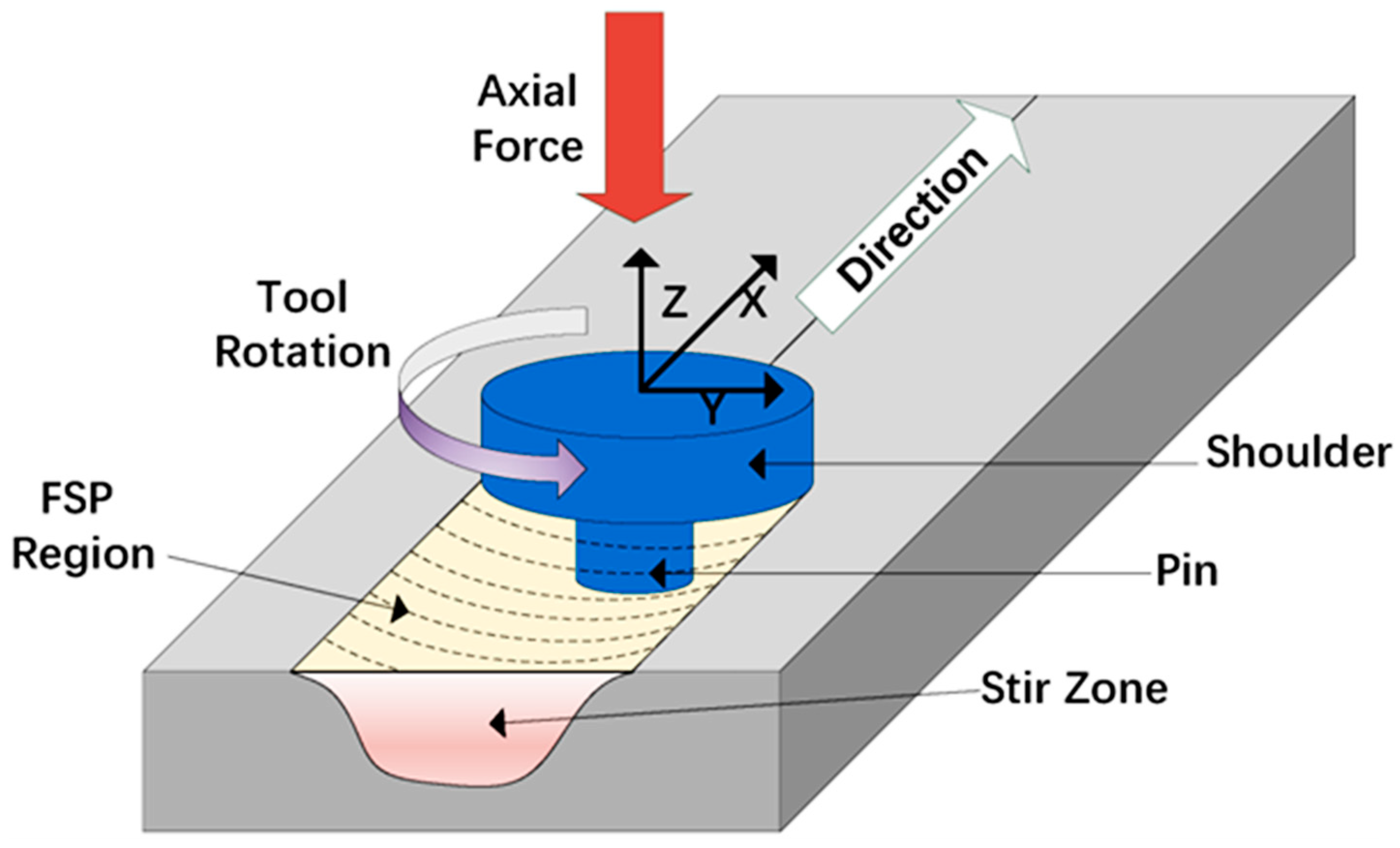
Friction stir processing (FSP) is a solid-state thermo-mechanical surface modification technique derived from friction stir welding but fundamentally distinct in objective and implementation. While friction stir welding aims to join materials, FSP is designed to locally alter the microstructure and composition of a material surface without affecting its bulk integrity. This distinction is crucial, as FSP enables the creation of engineered surface architectures—such as refined grain layers, particle-reinforced zones, and functional gradients tailored to specific service requirements [18,19,20]. The absence of melting during FSP eliminates solidification defects and preserves chemical stability, making it particularly suitable for surface modification of composites [21]. The FSP mechanism is governed by the combined effects of frictional heat generation and severe plastic deformation induced by a rotating non-consumable tool. As the tool traverses along the material surface, friction between the tool shoulder and the substrate generates localized heating, while the tool pin imposes intense shear deformation (Figure 1) [22]. The temperature typically reaches 0.6–0.8 of the melting temperature of the base material, sufficient to activate dynamic recovery and recrystallization without entering the liquid phase [23]. This thermo-mechanical coupling is central to the ability of FSP to refine grains, homogenize microstructures, and eliminate casting- or processing-induced defects [24].
Unlike conventional surface treatments that rely on external energy sources such as lasers or plasmas, FSP generates heat internally through plastic work. This localized and controlled heat input allows precise tailoring of surface layers with minimal thermal impact on the surrounding material [25]. The intense plastic deformation promotes dynamic recrystallization (DRX), leading to the formation of ultrafine or fine equiaxed grains with a high fraction of high-angle grain boundaries. These microstructural features are responsible for the enhanced mechanical and functional performance of FSP-modified surfaces [26]. A defining feature of FSP is its ability to induce complex material flow patterns within the processed zone [27]. Material is transported around the rotating pin in a highly non-linear manner, resulting in effective mixing, redistribution of second-phase particles, and breakup of agglomerates. This flow behavior distinguishes FSP from conventional severe plastic deformation techniques such as equal-channel angular pressing or high-pressure torsion, which primarily affect bulk material and offer limited control over localized surface modification [28]. In FSP, the interaction between tool geometry, rotational speed, and traverse speed dictates the extent of material flow, strain accumulation, and thermal exposure, ultimately controlling surface architecture formation [29].
From a surface engineering perspective, the processed region can be understood as a functionally modified layer rather than a simple deformation zone. Although classical terminology refers to regions such as the stir zone, thermomechanically affected zone, and heat-affected zone, their detailed description is of limited relevance in a surface-focused review [30]. Instead, the emphasis lies on how the processed surface layer exhibits refined grains, redistributed reinforcements, and modified residual stress states, all of which directly influence surface performance [31]. The depth and width of this functional layer can be controlled by tool design, plunge depth, and processing parameters, enabling customization for specific applications [32]. One of the most significant advantages of FSP in surface engineering is its ability to incorporate reinforcement particles directly into the surface layer in a solid state. Ceramic particles, intermetallics, carbon-based nanostructures, and bio-ceramics have been successfully introduced into aluminum, magnesium, titanium, and steel matrices using FSP [33]. During processing, reinforcement particles undergo fragmentation, redistribution, and alignment due to intense shear forces and material flow. The resulting particle–matrix interfaces are typically clean and metallurgically bonded, enhancing load transfer and minimizing interfacial debonding [34].
The interaction between reinforcement particles and the dynamically recrystallizing matrix plays a crucial role in defining the final microstructure. Fine particles can act as pinning agents, restricting grain boundary migration and stabilizing ultrafine grain structures through Zener pinning effects [35]. At the same time, excessive particle clustering or insufficient mixing can lead to local stress concentrations and property degradation. Therefore, understanding reinforcement behavior during FSP is essential for designing high-performance composite surfaces [36]. Thermal management during FSP is another fundamental aspect influencing surface architecture development. The balance between heat generation and dissipation determines whether grain refinement or grain coarsening dominates [37]. Excessive heat input may lead to abnormal grain growth or undesirable interfacial reactions, while insufficient heat can result in poor plastic flow and incomplete reinforcement dispersion [38]. Unlike fusion-based techniques, FSP offers a narrow but highly controllable thermal window, allowing optimization of surface microstructures with reduced energy consumption.
Residual stress evolution during FSP also contributes to surface performance. The severe plastic deformation and thermal gradients generated during processing lead to the development of complex residual stress states within the modified layer. Properly optimized FSP conditions can introduce beneficial compressive residual stresses near the surface, improving fatigue resistance and crack initiation behavior [39]. In contrast, poorly controlled parameters may induce tensile stresses that compromise long-term durability [40]. From an eco-efficiency standpoint, the fundamental characteristics of FSP provide several advantages over conventional surface modification routes. The process operates without consumables, filler materials, or shielding gases, significantly reducing material waste and environmental emissions [41]. Its solid-state nature minimizes energy consumption compared to melting-based techniques, while the ability to selectively modify only the surface layer enhances material utilization efficiency [42]. Furthermore, FSP is inherently compatible with repair and refurbishment applications, enabling restoration of worn or damaged surfaces without component replacement [43]. In summary, the fundamentals of friction stir processing for surface architectures are rooted in its unique combination of solid-state thermo-mechanical deformation, controlled material flow, and in situ reinforcement incorporation. These characteristics distinguish FSP from traditional surface engineering techniques and position it as a versatile, eco-efficient, and scalable approach for enhancing the surface performance of composites. A mechanistic understanding of these fundamentals is essential for interpreting experimental results, identifying process–structure–property relationships, and guiding future developments in advanced surface engineering.
Figure 1.
Schematic illustration of the friction stir processing (FSP) mechanism showing the rotating non-consumable tool with shoulder and pin, applied axial force, tool rotation and traverse direction, and the resulting stir zone formed within the processed surface region [44].
3. Eco-Efficiency and Sustainability Aspects of Friction Stir Processing
The growing emphasis on sustainable manufacturing has significantly influenced the selection and development of advanced surface engineering techniques. In this context, friction stir processing (FSP) has attracted increasing attention not only for its ability to enhance surface performance but also for its inherent eco-efficient characteristics. Unlike conventional surface modification routes that rely on melting, vaporization, or chemical reactions, FSP operates entirely in the solid state, offering a pathway toward energy-efficient and environmentally responsible surface engineering of composites [45]. One of the primary contributors to the eco-efficiency of FSP is its solid-state processing nature, which fundamentally reduces energy consumption. Fusion-based techniques such as laser cladding, plasma spraying, and thermal spraying require high energy densities to melt feedstock materials and substrates, leading to substantial energy losses through radiation and convection [46]. In contrast, FSP generates heat internally through friction and plastic deformation, confining the thermal input to a localized surface region [47]. This localized heat generation minimizes unnecessary thermal exposure of the bulk material and reduces overall power demand, making FSP comparatively energy efficient. A key sustainability advantage of FSP is the elimination of consumables and auxiliary materials [48]. Many conventional surface treatments require filler powders, binders, fluxes, shielding gases, or chemical precursors, all of which contribute to material waste and environmental burden [49]. FSP employs a non-consumable tool and does not require shielding atmospheres or externally supplied coating materials when modifying monolithic surfaces [50]. Even in the fabrication of composite surfaces, the reinforcement particles are incorporated directly into the substrate with minimal waste, improving material utilization efficiency [51].
From a lifecycle perspective, FSP aligns well with principles of resource efficiency and circular manufacturing. The ability of FSP to modify or restore surface properties enables the repair and refurbishment of high-value components, rather than their replacement. Worn surfaces suffering from abrasion, corrosion, or fatigue damage can be reprocessed to restore or even enhance functional performance, thereby extending service life and reducing material consumption [52]. This repair-oriented capability is particularly relevant for aerospace, marine, and tooling applications, where component replacement is both costly and resource-intensive. The absence of melting and solidification during FSP also contributes to sustainability by reducing defect formation and rework requirements. Fusion-based surface modification techniques often introduce porosity, cracking, and segregation due to solidification phenomena, necessitating post-processing or rejection of defective parts [53]. In FSP, the solid-state nature eliminates such defects, leading to higher process reliability and reduced scrap rates. The refinement and homogenization of microstructures further enhance consistency in surface properties, which is critical for industrial scalability [54]. Environmental considerations extend beyond energy and material consumption to include emissions and workplace safety. Processes involving thermal spraying or laser cladding may generate fumes, particulates, and hazardous by-products, requiring extensive ventilation and protective measures [55]. FSP, by contrast, produces negligible emissions, as no material is vaporized or chemically decomposed during processing. This cleaner processing environment reduces environmental impact while improving occupational safety and regulatory compliance [56].
The eco-efficient nature of FSP is further reinforced by its compatibility with lightweight materials, such as aluminum and magnesium alloys, which play a crucial role in reducing energy consumption during service. By enhancing the surface performance of lightweight composites, FSP enables their use in more demanding applications without resorting to heavier materials or thick protective coatings [57]. This indirect contribution to sustainability through reduced fuel consumption and emissions during operation is particularly significant in transportation and aerospace sectors. From an economic sustainability standpoint, FSP offers advantages related to process simplicity and integration. The process can often be implemented on modified CNC milling machines or dedicated friction stir platforms, reducing capital investment compared to specialized laser or plasma systems [58]. The relatively low tool cost, combined with long tool life when properly designed, further enhances economic viability. Additionally, the ability to tailor surface properties in a single processing step reduces manufacturing complexity and associated costs [59]. Despite these advantages, it is important to acknowledge that eco-efficiency in FSP is parameter dependent. Excessive heat input, inefficient tool designs, or multiple unnecessary passes can negate energy savings and reduce sustainability benefits [60]. Therefore, optimization of processing parameters is essential to fully realize the eco-efficient potential of FSP. Recent studies have emphasized the need for balancing heat generation, material flow, and reinforcement dispersion to minimize energy input while achieving desired surface properties [61].
The integration of FSP with hybrid manufacturing approaches further strengthens its sustainability profile. For instance, combining FSP with additive manufacturing or casting processes enables defect correction, microstructural refinement, and surface enhancement in a single manufacturing chain [62]. Such hybrid approaches reduce the need for multiple standalone processing steps and improve overall manufacturing efficiency. Additionally, advances in digital process monitoring and control are expected to further reduce energy consumption and variability in FSP operations [63]. Another emerging sustainability aspect of FSP is its potential role in green materials development. Surface modification of biodegradable magnesium alloys for biomedical applications, for instance, allows tuning of corrosion rates and biocompatibility without introducing toxic coatings or chemicals [64]. Similarly, FSP-modified surfaces in marine environments can reduce reliance on environmentally harmful anti-corrosion coatings [65]. These applications highlight the broader societal and environmental benefits of adopting FSP as a surface engineering tool. In summary, friction stir processing represents an eco-efficient and sustainable alternative to conventional surface modification techniques. Its solid-state operation, low energy consumption, elimination of consumables, minimal emissions, and compatibility with repair and refurbishment align strongly with modern sustainability goals (Figure 2). When combined with optimized processing parameters and integrated manufacturing strategies, FSP offers a viable pathway for developing high-performance surface architectures in composites while minimizing environmental impact. These eco-efficient characteristics justify the growing interest in FSP not only as a scientific research topic but also as a practical solution for sustainable industrial surface engineering.
Figure 2.
Schematic comparison of friction stir processing (FSP) with conventional surface engineering techniques in terms of processing state, energy requirement, consumables, emissions, and repairability.
4. Processing Parameters–Microstructure–Property Relationships
The performance of composites prepared by friction stir processing (FSP) is governed by the interplay between processing parameters, material flow, thermal history, and microstructural evolution. Unlike fusion-based surface modification techniques, FSP offers a highly localized and controllable thermo-mechanical environment, enabling precise tuning of surface architecture [66]. However, the benefits of FSP can only be realized when processing parameters are carefully optimized, as inappropriate parameter selection may lead to inadequate plastic deformation, non-uniform reinforcement distribution, or excessive grain growth [67]. Therefore, understanding parameter–microstructure–property relationships is central to the rational design of high-performance composites. Among all parameters, tool rotational speed and traverse speed primarily determine the heat input and strain rate experienced by the material [68]. Rotational speed controls frictional heating and shear deformation, while traverse speed governs the interaction time between the tool and the substrate [69]. A higher rotational speed increases heat generation and enhances material plasticity, promoting dynamic recrystallization and effective particle redistribution. However, excessive rotational speeds can lead to overheating, grain coarsening, and degradation of mechanical properties due to prolonged exposure to elevated temperatures [70]. Conversely, insufficient rotational speed results in inadequate softening, poor material flow, and incomplete consolidation of the processed layer [71].
Traverse speed plays an equally critical role by regulating the duration of thermal exposure. Lower traverse speeds increase heat accumulation, facilitating grain refinement and reinforcement dispersion, but may also increase the risk of abnormal grain growth [72]. Higher traverse speeds reduce heat input per unit length, which can suppress grain growth but may lead to insufficient stirring and heterogeneous microstructures if plastic deformation is inadequate [73]. Optimal combinations of rotational and traverse speeds create a balanced thermal–mechanical interface that enables uniform grain refinement and stable surface architecture formation [74]. The ratio of rotational speed to traverse speed has emerged as a more meaningful descriptor of heat input than either parameter alone. Studies consistently demonstrate that composites processed within an optimal heat input window exhibit refined equiaxed grains, homogeneous reinforcement dispersion, and enhanced mechanical properties [75]. Beyond this, either excessive softening or insufficient deformation dominates, leading to inferior surface performance [76]. This observation highlights the necessity of parameter mapping rather than isolated parameter optimization. Tool geometry exerts a decisive influence on material flow behavior, strain distribution, and reinforcement transport. The tool shoulder primarily contributes to heat generation and surface consolidation, whereas the pin geometry controls subsurface material flow and mixing efficiency [77]. Tools with non-cylindrical pin profiles such as threaded, square, or tapered designs induce complex flow patterns that enhance reinforcement fragmentation and redistribution. These profiles increase shear strain and promote multi-directional material transport, resulting in improved homogeneity of the processed surface layer [78]. In contrast, simple cylindrical pins may generate insufficient stirring action, particularly when processing high-strength matrices or nano-scale reinforcements. Plunge depth and axial force further influence surface architecture by determining the degree of contact between the tool shoulder and the substrate [79]. Adequate plunge depth ensures effective surface forging and defect-free consolidation, whereas insufficient depth can result in surface voids or incomplete bonding. Excessive plunge depth, however, may cause excessive thinning, surface flash formation, or undesirable residual stress. Thus, plunge depth must be optimized in conjunction with tool geometry and process parameters to maintain structural integrity.
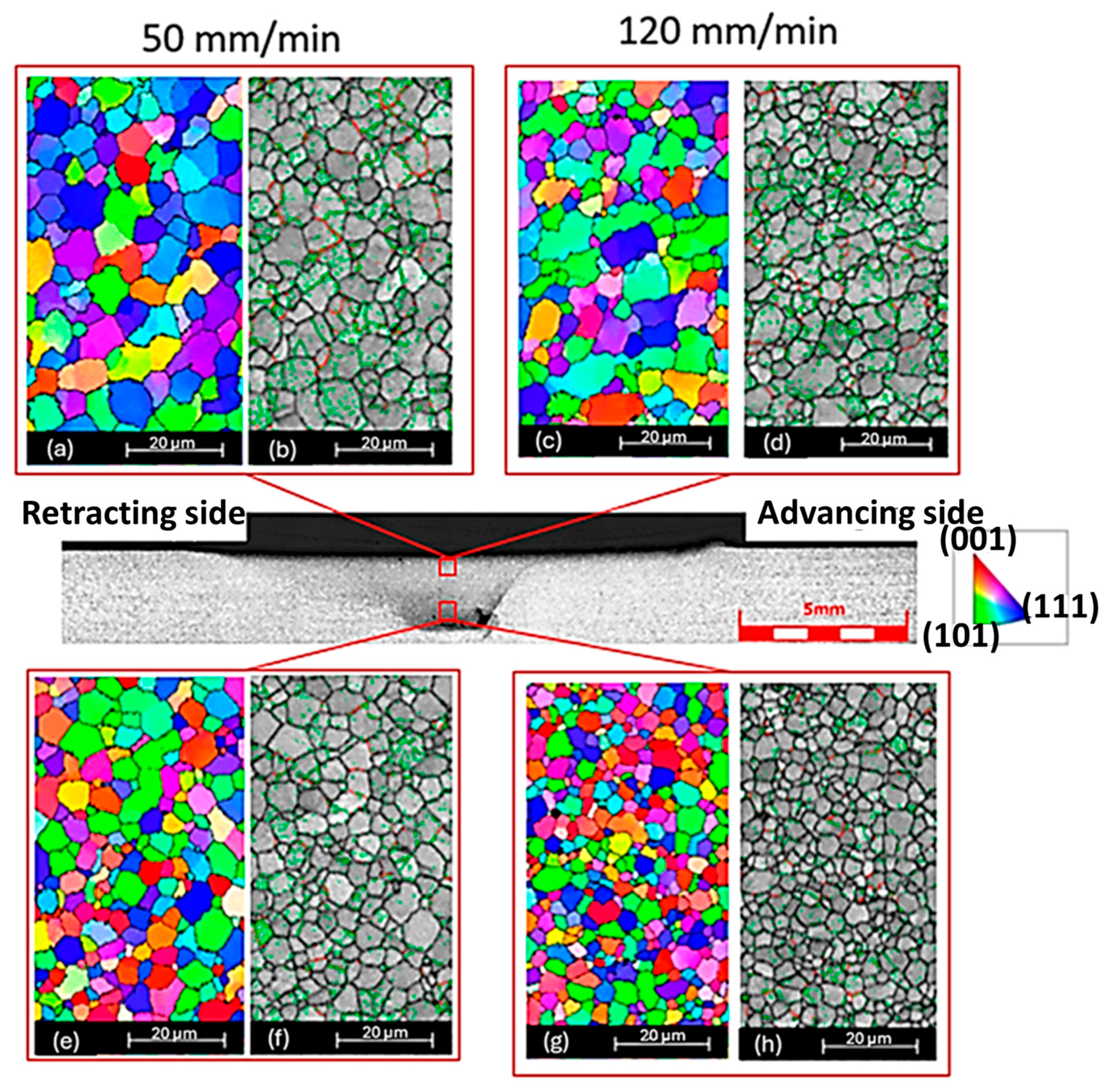
Multi-pass FSP has been widely adopted as an effective strategy to improve microstructural homogeneity and reinforcement distribution. Each additional pass subjects the material to repeated deformation and thermal cycling, breaking up particle agglomerates and further refining grains [80]. Multi-pass processing is particularly beneficial for nano-reinforced composites, where single-pass FSP may be insufficient to achieve uniform dispersion. However, excessive passes can increase cumulative heat input, leading to grain coarsening or interfacial reactions between reinforcement and matrix [81]. Therefore, the number of passes must be carefully selected based on reinforcement type, size, and thermal stability. From a microstructural standpoint, optimized FSP parameters promote dynamic recrystallization-dominated grain refinement, characterized by ultrafine equiaxed grains and a high fraction of high-angle grain boundaries [82]. These features enhance mechanical strength through grain boundary strengthening while maintaining adequate ductility. The effect of traverse speed on grain refinement and boundary character distribution in the FSP zone is clearly evidenced from EBSD IPF and grain boundary maps (Figure 3a–h) [82]. Figure 3 presents EBSD IPF maps and corresponding grain boundary distributions in the stir zone at traverse speeds of 50 and 120 mm/min for both the retreating (RS) and advancing (AS) sides. At 50 mm/min, comparatively coarser equiaxed recrystallized grains are observed (Figure 3a,e), attributed to longer tool–material interaction time, higher cumulative heat input, and subsequent grain growth. Increasing traverse speed to 120 mm/min produces finer and more uniform equiaxed grains on both RS and AS (Figure 3c,g) due to reduced thermal exposure and suppressed coarsening [82]. The boundary maps (Figure 3b,d,f,h) show an increased fraction of high-angle grain boundaries (HAGBs), confirming continuous dynamic recrystallization through progressive transformation of low-angle grain boundaries (LAGBs) into HAGBs. Heidarzadeh et al. [83] reported that friction stir processing refined the grain structure of a Monel alloy stir zone and increased the fraction of high-angle grain boundaries, which correlated with significant improvements in local hardness and yield strength. This mechanistic evidence supports the role of microstructural refinement in controlling surface mechanical performance. Reinforcing particles further contributes to strengthening via load transfer, Orowan looping, and grain boundary pinning mechanisms [83]. The synergy between grain refinement and reinforcement strengthening under optimized processing conditions leads to significant improvements in surface hardness, wear resistance, and fatigue performance [84]. In contrast, suboptimal processing parameters disrupt these mechanisms. Excessive heat input reduces dislocation density and weakens grain boundary strengthening, while insufficient deformation limits reinforcement–matrix bonding and particle dispersion. These effects underscore the sensitivity of FSP outcomes to parameter selection and highlight the importance of process–structure–property integration [85].
Residual stress evolution is another critical outcome of processing parameter selection. Properly optimized parameters can introduce beneficial compressive residual stresses in the surface layer, enhancing resistance to fatigue crack initiation and propagation [86]. However, high thermal gradients or uneven material flow may induce tensile residual stresses, which compromise long-term durability. Parameter optimization thus plays a dual role in microstructural refinement and stress state control [87]. Overall, the processing parameters in friction stir processing cannot be treated as independent variables. Instead, these parameters collectively define the thermo-mechanical history of the surface layer, governing grain evolution, reinforcement behavior, and functional performance. A mechanistic understanding of these relationships enables the development of parameter windows tailored to specific material systems and application requirements. Table 2 provides a summary of friction stir processing parameters and their influence on surface microstructure and properties of composites. Future research should focus on quantitative process maps, real-time thermal monitoring, and predictive modeling to further strengthen the link between processing parameters and performance of prepared composites.
Table 2.
Summary of friction stir processing parameters and their influence on surface microstructure and properties of composites.
Figure 3.
EBSD inverse pole figure (IPF) orientation maps and corresponding grain boundary distribution maps of the friction-stir-processed region at different traverse speeds: (a,b) retreating side at 50 mm/min, (c,d) retreating side at 120 mm/min, (e,f) advancing side at 50 mm/min, and (g,h) advancing side at 120 mm/min. The central macrograph indicates the analyzed stir zone locations [82]. (Adapted from MDPI open-access source under CC BY license).
5. Reinforcement Incorporation Mechanisms in Friction Stir Processing
The incorporation of reinforcement particles into a metallic surface using friction stir processing (FSP) is one of the most distinctive features that differentiate FSP from conventional surface engineering techniques. Unlike coating-based or fusion-assisted routes, FSP enables solid-state embedding of reinforcements directly into the plastically deformed surface layer, resulting in a metallurgically bonded surface composite with superior structural integrity [94]. The effectiveness of this approach depends not only on the type of reinforcement used but also on the mechanisms governing particle transport, fragmentation, interfacial bonding, and spatial redistribution during processing. During FSP, reinforcement incorporation occurs under conditions of intense shear deformation, elevated temperature, and complex material flow. As the rotating tool traverses the surface, the surrounding matrix material softens and flows in a viscoelastic manner, entraining reinforcement particles into the stirred zone [95]. This mechanism fundamentally differs from liquid-state composite fabrication, where particle transport is governed by buoyancy and sedimentation [96]. Consequently, the final distribution of reinforcements is highly sensitive to tool design, processing parameters, and particle characteristics.
One of the primary challenges in reinforcement incorporation is achieving uniform particle dispersion throughout the processed surface layer. Inadequate dispersion can lead to particle agglomeration, localized stress concentrations, and premature failure under mechanical or corrosive loading [97]. To address this, various particle introduction strategies such as pre-machined grooves, drilled holes, surface compaction, and layered feeding have been developed (Figure 4a–d). These approaches aim to constrain particle movement prior to tool engagement, ensuring that reinforcements are effectively captured and redistributed by the material flow generated during FSP [98]. Among these methods, groove-based introduction has shown promise due to its simplicity and compatibility with large-scale processing [99]. Once incorporated, reinforcement particles are subjected to fragmentation and morphological evolution due to severe plastic deformation and inter-particle collisions. Brittle ceramic reinforcements such as SiC, Al2O3, and B4C frequently undergo size reduction during FSP, producing finer particles that are more uniformly distributed within the matrix [100]. This fragmentation enhances grain boundary pinning and load transfer efficiency but must be carefully controlled, as excessive particle breakage may reduce reinforcement effectiveness or introduce sharp edges that act as crack initiators. Ceramic reinforcements further enhances surface hardness, wear resistance, and load-bearing capability. In addition to conventional friction stir processing, FSP-derived solid-state techniques such as friction stir deposition have also been explored for incorporating ceramic reinforcements into aluminum matrices. The nano-Al2O3 particles were introduced into aluminum using friction stir deposition, resulting in well-bonded composite layers with refined microstructures and improved hardness, compressive strength, and wear resistance compared to the unreinforced material [101]. Although the processing configuration differs from surface-localized FSP, the underlying mechanisms of severe plastic deformation, particle redistribution, and solid-state interfacial bonding remain comparable, thereby providing complementary evidence for the role of nano-ceramic reinforcement in enhancing the performance of FSP-based composite architectures. The effectiveness of ceramic particle reinforcement is strongly influenced by particle size, volume fraction, and the extent of plastic flow generated during processing as these factors govern particle fragmentation, distribution uniformity, interfacial bonding, and the resulting balance between strengthening efficiency and defect formation in the processed surface layer [102].
Figure 4.
Schematic illustration of reinforcement incorporation methods in friction stir processing: (a) groove method, (b) drilled holes beneath the surface, (c) filled holes, and (d) sandwich method [98].
The interaction between reinforcement particles and the dynamically recrystallizing matrix plays a critical role in defining the final surface microstructure. Fine, well-dispersed particles can inhibit grain boundary migration through Zener pinning, stabilizing ultrafine-grained structures even under elevated thermal exposure. This mechanism is particularly beneficial for maintaining surface hardness and wear resistance during service [101]. In contrast, coarse or clustered particles may disrupt material flow, leading to microstructural heterogeneity and reduced mechanical performance [102]. Interfacial bonding between reinforcement particles and the matrix is another key factor influencing surface composite performance. Because FSP operates in a solid state, interfacial reactions are generally limited compared to fusion-based techniques. This reduces the likelihood of forming brittle intermetallic phases that degrade mechanical properties. Instead, clean and mechanically interlocked interfaces are typically formed due to intimate contact under high pressure and shear [103]. In some systems, limited diffusion-assisted bonding may occur, enhancing interfacial strength without compromising ductility [104].
For nanoscale reinforcements, additional mechanisms govern incorporation and stability. Nanoparticles exhibit a strong tendency to agglomerate due to high surface energy, making uniform dispersion particularly challenging [105]. During FSP, repeated shear deformation and multi-pass processing can break down agglomerates and promote a more homogeneous distribution. However, excessive heat input may lead to nanoparticle coarsening or dissolution, negating their strengthening effect [106]. Therefore, nanoparticle-reinforced composites require carefully optimized processing windows to balance dispersion and thermal stability. In addition to conventional reinforcement incorporation approaches, experimental studies have shown that the use of nano-scale ceramic additions within FSP can significantly influence processed surface properties. For instance, silica fume nanoparticles incorporated into an AA1050 matrix via bobbin tool friction stir processing resulted in a refined microstructure, reduced crystallite size, and noticeable enhancements in mechanical performance compared with the unprocessed base material. Specifically, the nano-reinforced surface composite exhibited increases in hardness, ultimate tensile strength, and compressive strength, indicating that fine-scale ceramic reinforcement can effectively modify surface architecture and mechanical responses during FSP [107]. The density and mechanical contrast between reinforcement particles and the matrix also influence particle transport during FSP. High-density reinforcements may exhibit limited mobility, resulting in stratified distributions, whereas low-density particles are more readily entrained into the flowing matrix. This behavior underscores the importance of matching reinforcement properties with processing conditions to achieve targeted surface architecture.
Carbon-based reinforcements such as graphene, graphene nanoplatelets, and carbon nanotubes have attracted considerable attention in friction-stir-processed composites due to their exceptional mechanical properties and high specific surface area. Experimental studies on graphene nano-platelet reinforced aluminum composites processed by friction stir processing provide additional insight into the influence of nano-scale reinforcements on surface microstructure and property evolution [108]. The reported results indicate that incorporation of graphene nano-platelets through FSP is associated with microstructural refinement and measurable changes in hardness and thermal conductivity relative to the unprocessed alloy. These observations suggest that effective dispersion of nano-reinforcements during FSP can contribute to modifications in both mechanical and functional surface properties, depending on processing conditions. However, achieving uniform dispersion of carbon-based nanostructures remains challenging due to their tendency to agglomerate and their sensitivity to excessive heat input which can degrade reinforcement integrity, reduce interfacial effectiveness, and limit the consistency of surface property enhancement if processing parameters are not carefully optimized.
Beyond mechanical performance, reinforcement incorporation significantly affects functional properties such as corrosion and tribo-corrosion resistance. Uniformly distributed inert ceramic particles can act as physical barriers to corrosion propagation, while excessive particle clustering may promote micro-galvanic coupling between the reinforcement and matrix [109]. Thus, the electrochemical compatibility of reinforcement materials must be considered alongside mechanical strengthening mechanisms. Recent studies have highlighted the potential of hybrid reinforcement systems, where multiple particle types are incorporated to achieve synergistic effects [110,111,112]. For instance, combining hard ceramic particles with solid lubricants or bioactive phases can simultaneously enhance wear resistance, reduce friction, and improve corrosion or biocompatibility [113]. FSP provides a unique platform for creating multifunctional surface architectures due to its flexibility in reinforcement selection and spatial control [114]. In summary, reinforcement incorporation in friction stir processing is governed by a complex interplay of material flow, particle fragmentation, interfacial bonding, and dynamic recrystallization. Achieving optimal surface performance requires careful control over reinforcement type, size, introduction strategy, and processing parameters. A mechanistic understanding of these interactions is essential for designing next-generation FSP-modified composites that combine high mechanical performance with functional durability and sustainability.
6. Single-Phase Reinforced Composites Produced by Friction Stir Processing
The incorporation of a single reinforcement phase into metallic surfaces using friction stir processing (FSP) represents the most extensively studied and industrially relevant route. Single-phase reinforced systems provide a controlled platform for understanding the fundamental interactions between the matrix, reinforcement particles, and thermo-mechanical conditions generated during FSP [115]. These systems also serve as a benchmark for evaluating the advantages of hybrid or multi-phase reinforcements discussed in later sections. The primary objective of single-reinforcement FSP is to enhance surface-specific properties—such as hardness, wear resistance, and corrosion stability—while maintaining microstructural continuity with the base material [116]. Ceramic reinforcements such as silicon carbide (SiC), aluminum oxide (Al2O3), titanium carbide (TiC), boron carbide (B4C), titanium dioxide (TiO2), and silicon nitride (Si3N4) are most employed in single-phase FSP surface composites [117]. These materials are favored due to their high hardness, thermal stability, chemical inertness, and compatibility with lightweight metallic matrices such as aluminum, magnesium, and titanium alloys. During FSP, ceramic particles are introduced into the surface layer through pre-machined grooves or holes and are subsequently redistributed by intense material flow around the rotating tool [118]. The solid-state nature of the process ensures strong metallurgical bonding between the reinforcement and matrix without the formation of brittle reaction products typically associated with fusion-based techniques.
A defining mechanism governing property enhancement in single-phase reinforced FSP composites is grain refinement of the matrix combined with load transfer to the hard reinforcement particles. Severe plastic deformation and frictional heating promote dynamic recrystallization, producing ultrafine equiaxed grains in the processed zone [119]. Simultaneously, uniformly distributed reinforcement particles restrict grain boundary migration through Zener pinning, stabilizing the refined microstructure even under elevated processing temperatures. This synergistic interaction results in significant improvements in surface hardness and strength compared to both the base material and unreinforced FSP surfaces [120]. Particle size plays a critical role in determining reinforcement effectiveness. Micron-sized particles primarily contribute through load-bearing and abrasion resistance mechanisms, while nano-sized reinforcements additionally influence dislocation density, grain boundary characteristics, and diffusion pathways [121]. However, nanoscale reinforcements are more susceptible to agglomeration during processing due to high surface energy. FSP mitigates this issue by imposing extreme shear deformation, which fragments particle clusters and promotes uniform dispersion when processing parameters are properly optimized [122]. Nevertheless, excessive heat input may lead to particle coarsening or uneven distribution, underscoring the importance of parameter control.
The interfacial integrity between the reinforcement and matrix is another critical factor influencing the performance of single-phase reinforced composites. Unlike coating techniques where interfaces are often mechanically bonded, FSP produces intimate metallurgical contact with minimal interfacial defects [123]. Clean interfaces facilitate efficient load transfer and reduce the likelihood of particle pull-out during wear or fatigue loading. In systems such as Al–SiC and Mg–Al2O3, studies have consistently reported strong interfacial bonding with no evidence of deleterious intermetallic formation, contributing to superior tribological performance [124]. Tribological enhancement is one of the most pronounced benefits of single-phase reinforced FSP surfaces. The presence of hard ceramic particles reduces direct metal-to-metal contact, lowers the coefficient of friction, and inhibits plastic deformation during sliding [125]. Additionally, refined grain structures increase surface hardness and resistance to adhesive wear. Under abrasive conditions, reinforcement particles act as load-bearing elements that protect the softer matrix, significantly reducing material loss. These improvements are particularly valuable in automotive and aerospace components subjected to repetitive sliding or erosive environments [126].
Corrosion behavior of single-reinforcement FSP composites is more complex and depends strongly on reinforcement type, distribution, and matrix chemistry. Grain refinement generally enhances corrosion resistance by promoting the formation of dense and stable passive films [127]. However, ceramic reinforcements can introduce micro-galvanic couples at the particle–matrix interface, especially when there is a significant difference in electrochemical potential. Uniform particle distribution achieved through optimized FSP conditions minimizes localized galvanic effects and reduces the likelihood of pitting corrosion [128]. Study on Al–SiC and Mg–TiO2 systems demonstrate that well-dispersed reinforcements combined with refined grains can result in corrosion resistance equal to or better than that of the base alloy [129]. Thermal stability and wear–corrosion synergy are additional advantages of a single-phase reinforced composite fabricated via FSP. The solid-state processing route limits residual stress accumulation and preserves matrix ductility, allowing the surface layer to withstand combined mechanical and chemical loading [130]. In marine and biomedical environments, such stability is essential for maintaining long-term functionality without premature surface degradation [131].
Despite their advantages, single-phase reinforced systems are not without limitations. The enhancement is often restricted to a narrow range of properties, such as hardness or wear resistance, while other characteristics, such as toughness or corrosion resistance, may require trade-offs [131,132]. Furthermore, excessive reinforcement volume fraction can impede material flow during FSP, leading to defects such as tunnel voids or particle clustering. These limitations have motivated the exploration of hybrid reinforcement strategies, where complementary particles are combined to achieve multifunctional surface performance [132]. In summary, single-phase reinforced composites produced by friction stir processing represent a robust and industrially viable approach for targeted surface enhancement. Their performance is governed by a balance between matrix grain refinement, reinforcement dispersion, and interfacial integrity. Understanding these mechanisms provides a foundational framework for the design of more complex hybrid systems and for tailoring surface architectures to specific engineering applications. The microhardness variation across the friction-stir-processed region indicates clear differentiation between the base material, HAZ, TMAZ, and stir zone, confirming the localized nature of surface modification. A pronounced hardness increase is observed in the stir zone due to grain refinement induced by severe plastic deformation and dynamic recrystallization. The unreinforced FSPed AA6061 shows only moderate improvement, whereas the incorporation of TiB2 and graphene markedly increases hardness through grain-boundary strengthening, particle strengthening, and load transfer, enabling effective surface hardening without altering bulk properties. The engineering stress–strain curves [133] confirm that FSP enhances tensile strength over the base alloy due to grain refinement and defect removal, while TiB2 and graphene further improve yield and ultimate strength, with hybrid TiB2–graphene composites exhibiting the maximum strengthening due to synergistic effects. Further, the tensile response of the FSPed Al-based hybrid surface composites with different reinforcement contents is presented in Figure 5a–d, involving T1, T2, and T3 corresponding to 5 wt.%, 10 wt.%, and 15 wt.% hybrid reinforcement, respectively. The load–displacement curves (Figure 5a) and UTS (Figure 5b) show a progressive strength improvement from T1 to T3, confirming enhanced load-bearing capacity with increasing reinforcement content [134]. In contrast, elongation decreases with reinforcement (Figure 5c), indicating reduced ductility, while Young’s modulus increases slightly (Figure 5d), confirming higher stiffness at higher wt.%. However, increasing reinforcement content leads to a gradual reduction in ductility, indicating a typical strength–ductility trade-off associated with reinforced surface composites.
Figure 5.
Effect of hybrid reinforcement content on tensile properties of friction-stir-processed Al-based surface composites: (a) load–displacement response, (b) ultimate tensile strength (UTS), (c) elongation (%), and (d) Young’s modulus for samples T1–T3 [134]. T1, T2, and T3 corresponding to 5 wt.%, 10 wt.%, and 15 wt.% hybrid reinforcement, respectively. Adapted from MDPI open-access source under CC BY license.
7. Hybrid and Multi-Phase Reinforced Composites Produced by FSP
The development of hybrid and multi-phase reinforced surface architectures using FSP represents a significant advancement beyond single-reinforcement M. While single-phase reinforcements can enhance specific properties such as hardness or wear resistance, they often fail to simultaneously optimize multiple performance requirements. Hybrid reinforcement strategies where two or more dissimilar reinforcement phases are incorporated into the surface layer enable synergistic property enhancement by combining complementary strengthening mechanisms [134]. This capability positions FSP as a powerful platform for designing multifunctional surface layers tailored to complex service environments. Hybrid composites fabricated through FSP typically combine ceramic–ceramic, ceramic–metal, or ceramic–carbon-based reinforcements within a metallic matrix [135]. Each reinforcement phase contributes a distinct role: hard ceramic particles such as SiC, Al2O3, or B4C provide load-bearing capacity and wear resistance, while secondary phases such as graphite, graphene, carbon nanotubes, or metallic particles improve lubrication, toughness, or thermal stability [136]. The solid-state nature of FSP facilitates intimate mixing of these phases without the interfacial reactions or segregation commonly observed in liquid-phase processing routes.
A key advantage of FSP in hybrid reinforcement systems lies in its ability to control particle dispersion and spatial distribution within the surface layer. During processing, severe plastic deformation and complex material flow patterns promote fragmentation of agglomerates and redistribution of reinforcements, leading to a more homogeneous microstructure compared to conventional surface coating techniques [137]. When properly optimized, multi-pass FSP further enhances dispersion uniformity and minimizes clustering, which is critical for avoiding local stress concentrations and premature failure [138]. From a mechanistic standpoint, hybrid reinforcement systems benefit from the simultaneous operation of multiple strengthening mechanisms. Grain refinement induced by dynamic recrystallization contributes to Hall–Petch strengthening, while hard ceramic particles act as obstacles to dislocation motion and contribute to load transfer strengthening [139]. At the same time, softer or lubricating phases reduce interfacial friction and mitigate crack initiation at particle–matrix interfaces [140]. The combined effect often results in superior wear resistance and improved damage tolerance compared to single-reinforcement systems.
Interfacial stability plays a crucial role in determining the effectiveness of hybrid composite. Unlike fusion-based processes, FSP minimizes excessive thermal exposure, reducing the chances of undesirable interfacial reactions between reinforcement phases and the matrix [141]. Clean and well-bonded interfaces are commonly observed, enabling efficient stress transfer and improved mechanical integrity. However, in systems involving reactive reinforcements or nanoscale additives, careful control of processing temperature and strain is necessary to prevent phase degradation or excessive particle fragmentation [142]. Hybrid reinforcement strategies have shown promise in tribological applications. For instance, combinations of hard ceramics with solid lubricants have demonstrated reduced friction coefficients alongside enhanced wear resistance [143]. The hard phase supports applied loads, while the lubricating phase forms a mechanically mixed layer during sliding, reducing adhesive wear and surface damage [144]. Such synergistic behavior is difficult to achieve using single-phase reinforcement or conventional coatings, highlighting the unique capability of FSP for advanced surface design.
In corrosion-prone environments, hybrid reinforcements can also offer improved performance when appropriately designed. Ceramic particles contribute to barrier effects by refining grain structure and stabilizing passive films, while secondary reinforcements can mitigate micro-galvanic coupling by homogenizing electrochemical potential across the surface [145]. However, poorly distributed multi-phase systems may exacerbate localized corrosion if galvanic mismatches are not carefully managed. This underscores the importance of reinforcement selection and dispersion control in hybrid FSP architectures [146]. Another emerging concept enabled by hybrid FSP is the creation of functionally graded surface layers, where reinforcement concentration or type varies gradually with depth [147]. Such architectures allow the surface to be optimized for wear or corrosion resistance, while the underlying material retains toughness and load-bearing capacity. FSP’s flexibility in controlling plunge depth, tool geometry, and multi-pass strategies make it particularly suitable for fabricating such gradients without additional processing steps [148]. Despite these advantages, challenges remain in the large-scale implementation of hybrid reinforced composites. Achieving reproducible dispersion of multiple reinforcements, especially when nanoscale particles are involved, remains technically demanding. Differences in particle density, size, and morphology can lead to segregation during processing if parameters are not carefully optimized [149]. Furthermore, systematic design guidelines linking reinforcement combinations to target properties are still lacking, indicating a clear need for mechanism-based optimization frameworks. Table 3 shows the comparative analysis of single, multi, and hybrid reinforcement strategies in friction stir-processed composites. In summary, hybrid and multi-phase reinforced surface architectures fabricated via friction stir processing represent a highly promising direction for next-generation composites. By enabling synergistic strengthening, improved tribological behavior, and multifunctional performance within a single solid-state process, FSP offers capabilities that extend well beyond traditional surface modification routes. Continued research focusing on reinforcement interaction mechanisms, dispersion control, and functionally graded designs will be critical for translating these advanced architectures into industrial applications.
Table 3.
Comparative analysis of single, multi, and hybrid reinforcement strategies in friction-stir-processed composites.
8. Mechanical Performance of Composites Prepared by FSP
The mechanical performance of composites produced by friction stir processing (FSP) is a direct outcome of the unique solid-state thermo-mechanical environment generated during processing. Unlike conventional surface coating or fusion-based techniques, FSP modifies the surface through intense plastic deformation and controlled heat input, resulting in refined microstructures, improved interfacial bonding, and homogenized reinforcement distribution. These microstructural changes collectively enhance key mechanical properties such as hardness, strength, wear resistance, fatigue behavior, and damage tolerance, while preserving or minimally affecting the bulk properties of the substrate [157]. One of the most consistently reported mechanical improvements in FSP-modified surfaces is the significant increase in hardness. Grain refinement within the processed surface layer plays a dominant role in this enhancement [158]. The severe plastic deformation imposed by the rotating tool promotes dynamic recrystallization, producing ultrafine or fine equiaxed grains with a high fraction of high-angle grain boundaries. These grain boundaries act as effective barriers to dislocation motion, leading to increased resistance against localized plastic deformation [159]. The microstructural evolution before and after friction stir processing (FSP) post-treatment is further confirmed by SEM observations as shown in Figure 6a–f. The as-deposited (AD) sample exhibits relatively coarse and non-uniform microstructure with evident deposition-induced heterogeneity (Figure 6a,b). After FSP post-treatment, the processed region shows clear microstructural refinement and homogenization, with distinct stir-dominated and thermally affected zones (Figure 6c–f). The formation of finer equiaxed grains in the stir-dominated zone confirms dynamic recrystallization during FSP, while the gradual transition across PDZ/TMAZ/HAZ demonstrates the combined effects of plastic deformation and thermal exposure. Numerous studies on aluminum, magnesium, and titanium-based systems have demonstrated hardness increments ranging from 30% to over 100% compared to the base material, depending on processing parameters and reinforcement type [158,159,160]. The effect is particularly pronounced when ceramic reinforcements such as silicon carbide, alumina, titanium carbide, or boron carbide are incorporated into the surface layer, as these particles further impede dislocation motion and stabilize the refined grain structure [161].
Figure 6.
Microstructural evolution of aluminum alloy before and after friction stir processing (FSP) post-treatment: (a,b) microstructure of the as-deposited (AD) condition (before FSP), and microstructures of the FSPed sample showing different regions (c) stir-dominated zone (SDZ), (d) partially deformed zone (PDZ), (e) thermo-mechanically affected zone (TMAZ), and (f) heat-affected zone (HAZ) [159]. Adapted from MDPI open-access source under CC BY license.
Beyond grain refinement, the presence of reinforcement particles introduces additional strengthening mechanisms. Load transfer from the softer metallic matrix to the stiffer reinforcement phase enhances surface strength, especially under contact or sliding conditions [162]. The effectiveness of this mechanism depends strongly on the quality of the particle–matrix interface. FSP facilitates clean, metallurgically bonded interfaces due to its solid-state nature, minimizing interfacial defects commonly observed in cast or coated composites [163]. Well-bonded interfaces ensure efficient stress transfer and prevent premature particle pull-out, which is critical for sustaining mechanical performance under cyclic or abrasive loading [164]. Wear resistance is another mechanical attribute that shows marked improvement following FSP. The refined microstructure reduces material removal by suppressing severe plastic flow at the surface, while hard reinforcement particles act as load-bearing constituents during sliding or abrasive contact [165]. Experimental tribological studies consistently report reduced wear rates and lower friction coefficients for FSP-modified composites compared to untreated substrates [166]. The dominant wear mechanisms often shift from adhesive or severe abrasive wear to mild abrasive or oxidative wear, indicating a more stable tribological response. These improvements are particularly relevant for components subjected to repeated sliding or contact loading, such as automotive engine parts, marine shafts, and aerospace actuators [167].
Fatigue performance is a critical consideration for structural applications, and FSP has shown notable benefits in this regard. The elimination of surface defects such as porosity, micro-cracks, and casting voids reduces crack initiation sites, which are often responsible for early fatigue failure [168]. Additionally, the refined grain structure and homogenized reinforcement distribution contribute to a more uniform stress field during cyclic loading. Several studies have reported enhanced fatigue life and delayed crack initiation in FSP-treated surfaces, especially when compressive residual stresses are introduced near the surface. These compressive stresses counteract applied tensile loads, slowing crack propagation and improving overall fatigue resistance [169,170,171]. Tensile and flexural properties of surface-modified composites are influenced not only by the strengthened surface layer but also by the gradient between the modified zone and the bulk material [172]. FSP typically produces a gradual transition in microstructure and properties, reducing stress concentration at the interface between treated and untreated regions. This gradient architecture is advantageous for maintaining structural integrity, as it avoids the abrupt property mismatch often associated with thick coatings or hard overlays. In many cases, surface strengthening through FSP does not compromise ductility; instead, it can improve the strength–ductility balance by combining a hard surface with a tough core [173]. The mechanical response of FSP-modified surfaces is highly sensitive to processing parameters such as tool rotational speed, traverse speed, plunge depth, tool geometry, and number of passes [174]. Optimized parameter combinations promote sufficient heat generation for plastic flow and recrystallization without inducing excessive grain growth or interfacial reactions. Multi-pass FSP is frequently employed to enhance reinforcement dispersion and microstructural homogeneity, leading to more consistent mechanical performance across the processed surface [175]. However, excessive passes or heat input can degrade properties by causing particle agglomeration or grain coarsening, underscoring the importance of process optimization.
From an application perspective, the enhanced mechanical performance of FSP-processed composites has significant implications across multiple industries. In the automotive sector, improved wear and fatigue resistance can extend the service life of engine components, brake systems, and suspension parts [176]. In aerospace applications, surface-hardened lightweight alloys contribute to weight reduction while meeting stringent reliability and safety requirements [177]. Marine and offshore components benefit from the combined improvements in wear resistance and mechanical stability under corrosive environments [178]. Additionally, in biomedical applications, such as orthopedic implants, FSP-modified surfaces offer the potential for improved wear resistance and mechanical compatibility without introducing brittle coating layers [179]. Table 4 showed the studies on Mechanical Properties of composites prepared by FSP. In summary, the mechanical performance of composites prepared by friction stir processing is governed by a synergistic interplay of grain refinement, reinforcement strengthening, defect elimination, and interfacial integrity. FSP enables the design of functionally graded surfaces that combine high hardness and wear resistance with adequate toughness and fatigue strength. These attributes, coupled with the eco-efficient and solid-state nature of the process, position FSP as a powerful surface engineering strategy for next-generation composite components across demanding engineering applications.
Table 4.
Studies on Mechanical Properties of composites prepared by FSP.
9. Corrosion and Tribo-Corrosion Behavior of Friction-Stir-Processed Composites
The corrosion and tribo-corrosion performance of composites is a critical factor governing their long-term reliability in aggressive environments such as marine, biomedical, chemical processing, and aerospace applications. Surface degradation in such environments is often accelerated by microstructural heterogeneities, galvanic coupling between phases, residual stresses, and mechanically assisted breakdown of passive films [186]. FSP, owing to its solid-state nature and ability to engineer refined and homogeneous surface architectures, offers a powerful route to mitigate these degradation mechanisms and improve corrosion resistance in composites. One of the primary mechanisms through which FSP enhances corrosion resistance is grain refinement induced by dynamic recrystallization [187]. The formation of ultrafine equiaxed grains significantly increases grain boundary density, which plays a dual role in corrosion behavior. On one hand, grain boundaries act as high-energy sites that promote the rapid formation and repair of passive oxide films [188]. On the other hand, excessive boundary density may increase anodic dissolution if microstructural uniformity is not achieved. In FSP-modified surfaces, the homogeneous distribution of refined grains generally favors the former effect, resulting in more compact, adherent, and stable passive layers compared to the coarse-grained base material [189].
Another key factor influencing corrosion behavior is the elimination of casting defects and micro-segregation during FSP. Porosity, shrinkage cavities, and intermetallic clusters present in as-cast composites often serve as preferential sites for localized corrosion initiation [190]. The intense plastic deformation and material flow during FSP break down these heterogeneities, leading to a dense and chemically uniform surface layer. This homogenization reduces localized electrochemical potential differences, thereby suppressing pitting and crevice corrosion, particularly in aluminum- and magnesium-based composites [191]. The presence and nature of reinforcement particles significantly affect electrochemical behavior. Ceramic reinforcements such as SiC, Al2O3, TiC, and B4C are typically electrochemically inert; however, they can indirectly influence corrosion through micro-galvanic effects at the particle–matrix interface [192]. In poorly processed composites, particle clustering creates local cathodic sites that accelerate anodic dissolution of the surrounding matrix. FSP mitigates this issue by promoting uniform particle dispersion and strong interfacial bonding, thereby reducing localized galvanic coupling [193]. Additionally, refined particle distributions act as physical barriers to corrosion propagation paths.
In magnesium-based composites, corrosion behavior is particularly sensitive to microstructural refinement and secondary phase distribution. FSP has been shown to break up continuous cathodic intermetallic networks and redistribute them uniformly within the matrix. This redistribution weakens long-range galvanic coupling and results in a more uniform corrosion mode rather than catastrophic localized attack [194]. However, studies also indicate that excessive grain refinement without proper control of intermetallic chemistry can increase corrosion current density due to higher surface energy, highlighting the importance of optimized processing [195]. Titanium-based composites processed by FSP exhibit enhanced corrosion resistance primarily due to the formation of stable and defect-free TiO2 passive films [196]. Grain refinement accelerates passivation kinetics, while the absence of fusion-related defects ensures uniform oxide coverage [197]. Multiple-pass FSP has been reported to further improve corrosion resistance by reducing passive film defects and stabilizing the electrochemical response, as evidenced by increased charge transfer resistance in electrochemical impedance spectroscopy (EIS) measurements [198].
Tribo-corrosion, which involves the synergistic interaction between mechanical wear and electrochemical degradation, represents a more severe degradation mode than corrosion alone. In tribo-corrosive environments, repeated mechanical action removes protective passive films, exposing fresh metal to the electrolyte and accelerating material loss [199]. FSP-modified composites demonstrate superior tribo-corrosion resistance due to their high surface hardness, refined grain structure, and stable reinforcement networks. These features reduce mechanical damage, delay passive film rupture, and enhance repassivation kinetics [200]. Furthermore, the introduction of hard ceramic reinforcements through FSP significantly reduces wear-induced plastic deformation, thereby limiting the extent of mechanically assisted corrosion. In hybrid composites, synergistic effects between reinforcements (e.g., hard ceramics for wear resistance and bio-ceramics for passivation stability) have been shown to further enhance tribo-corrosion performance [201]. Such surface architectures are particularly attractive for biomedical implants and marine components, where simultaneous mechanical and electrochemical degradation is unavoidable [200,201]. From an application perspective, the improved corrosion and tribo-corrosion behavior of FSP-engineered composites directly translates to extended service life, reduced maintenance costs, and improved reliability. The solid-state nature of FSP also makes it suitable for surface repair and refurbishment of corroded components, offering a sustainable alternative to component replacement [202]. However, achieving optimal corrosion performance requires careful control of processing parameters, reinforcement chemistry, and surface architecture design. Table 5 shows the key studies on corrosion and tribo-corrosion behavior of FSP-modified composites. Overall, FSP provides a versatile platform for tailoring corrosion and tribo-corrosion behavior through microstructural refinement, defect elimination, and controlled reinforcement dispersion. Future research must focus on establishing quantitative structure–electrochemistry relationships and developing predictive models to guide the design of corrosion-resistant composites for service environments. Complementary post-exposure surface analyses further substantiate these tribo-corrosion trends by revealing distinct differences in damage morphology (Figure 7a–c). The as-cast surface shows severe material removal with deep grooves, pits, and micro-cutting marks (Figure 7a,b), indicating dominant erosion-assisted corrosion damage. In contrast, the FSPed composite exhibits a comparatively smoother surface with reduced pit density and shallower wear tracks (Figure 7c), confirming improved resistance due to grain refinement and reinforcement-assisted strengthening [203]. Such morphological evidence reinforces the mechanistic understanding of improved tribo-corrosion resistance in FSP-engineered surface architectures.
Figure 7.
SEM surface morphology after slurry erosion–corrosion exposure: (a,b) as-cast base alloy showing severe grooving, pitting, and micro-cutting, and (c) friction-stir-processed (FSP) composite exhibiting reduced surface damage [203]. Adapted from MDPI open access source under CC BY license.
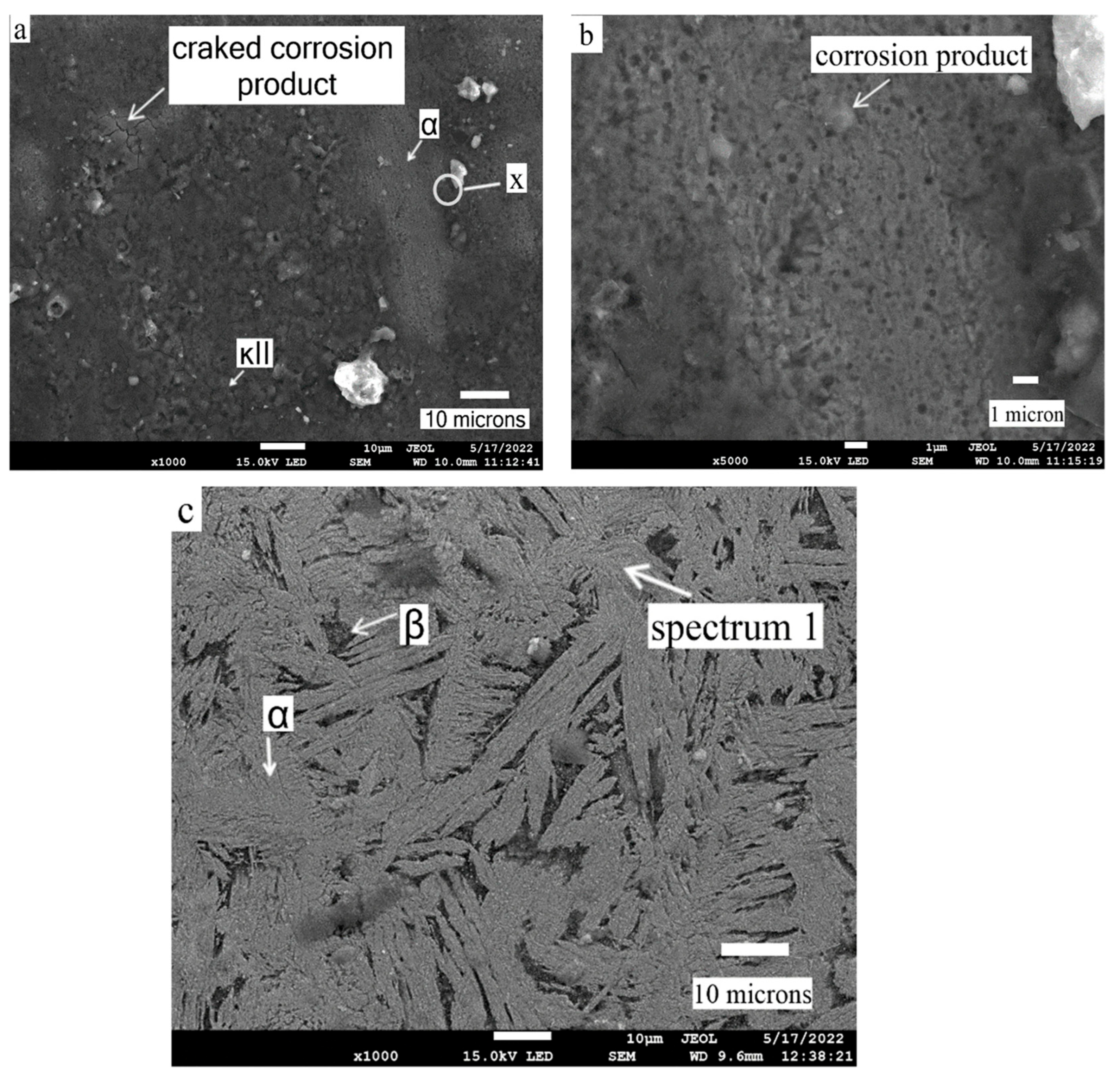
Table 5.
Key studies on corrosion and tribo-corrosion behavior of FSP-modified composites.
10. Industrial Viability, Scale-Up Potential, and Manufacturing Integration of FSP-Based Composites
For FSP to transition from laboratory-scale research to widespread industrial application, its technical advantages must be evaluated alongside considerations of scalability, economic feasibility, process robustness, and compatibility with existing manufacturing infrastructures. In recent years, increasing attention has been directed toward assessing FSP not only as a materials processing technique but also as a viable industrial surface engineering solution, particularly for composites. One of the most significant advantages of FSP from an industrial perspective is its solid-state nature, which inherently simplifies process control during scale-up. Unlike fusion-based surface modification techniques such as laser cladding or thermal spraying, FSP does not involve melting, solidification, or vaporization of material. This eliminates solidification-related defects and reduces sensitivity to process fluctuations, making the technique more robust and reproducible across large components and long processing lengths [212,213]. As a result, FSP has demonstrated good scalability from small laboratory coupons to large plates, panels, and structural components, particularly in aluminum- and magnesium-based systems used in aerospace and automotive industries [214].
Tool design and durability play a critical role in determining industrial feasibility. For large-scale deployment, FSP tools must withstand high axial forces, elevated temperatures, and prolonged processing times without excessive wear or degradation [215]. Advances in tool materials, such as polycrystalline cubic boron nitride (PCBN), tungsten-based alloys, and coated tool steels, have significantly extended tool life, enabling continuous or multi-pass processing of large surface areas. Although tool cost remains higher than conventional cutting tools, the extended service life and absence of consumable filler materials offset this expense in high-value applications [216]. From a production standpoint, process automation and integration represent key enablers for industrial adoption. Modern FSP systems can be mounted on CNC milling machines, robotic platforms, or dedicated friction stir processing units, allowing precise control of tool rotation speed, traverse speed, plunge depth, and axial force. This compatibility with existing CNC infrastructure reduces capital investment and facilitates seamless integration into current manufacturing lines [217]. Furthermore, closed-loop control systems based on force, torque, and temperature feedback are increasingly being explored to ensure consistent surface quality during large-scale processing.
Cost-effectiveness is another crucial factor influencing industrial acceptance. Although FSP equipment and tooling may involve a higher initial investment compared to some conventional surface treatments, the overall lifecycle cost is often lower. The absence of consumables, shielding gases, and post-processing steps such as heat treatment or coating adhesion layers reduces operating costs [218]. Additionally, the ability of FSP to selectively modify only the surface layer minimizes material usage while achieving substantial performance enhancement, which is particularly attractive for lightweight structural components. A notable industrial advantage of FSP lies in its repair and refurbishment capability [219]. Many high-value components, such as aerospace panels, marine structures, and automotive dies, fail due to surface degradation rather than bulk damage. FSP enables the restoration of worn or damaged surfaces by refining microstructure, eliminating defects, and reintroducing reinforcement particles if required. This capability aligns strongly with circular economic principles, extending component lifespan and reducing material waste, replacement costs, and environmental impact [220].
The integration of FSP with hybrid manufacturing routes further enhances its industrial relevance. FSP can be combined with casting, additive manufacturing, rolling, or extrusion to locally tailor surface properties after primary shaping [221]. For instance, additively manufactured metallic components often suffer from porosity and anisotropic microstructures; post-process FSP has been shown to homogenize microstructure and significantly improve mechanical and corrosion performance [222]. Similarly, FSP can be applied after casting to eliminate surface porosity and incorporate reinforcements, producing functionally graded composites without altering the bulk casting process. Despite these advantages, certain challenges must be addressed to achieve widespread industrial adoption. Processing of high-melting-point materials such as steels and titanium alloys require higher tool loads and more advanced tool materials, increasing operational complexity [223]. Achieving uniform reinforcement dispersion over large surface areas also remains challenging, particularly for nanoscale reinforcements. Moreover, the lack of standardized processing guidelines and design codes for FSP-modified surfaces limits its immediate adoption in safety-critical industries.
From a sustainability perspective, FSP aligns with green manufacturing objectives. Its lower energy consumption compared to fusion-based techniques, elimination of hazardous consumables, and potential for component life extension make it an environmentally favorable option. As industries increasingly prioritize low-carbon and resource-efficient manufacturing, these attributes position FSP as a competitive surface engineering solution for future production systems. In summary, friction stir processing demonstrates strong industrial potential as a scalable, cost-effective, and sustainable technique for producing high-performance composites [224]. Its compatibility with existing manufacturing infrastructure, suitability for automation, and ability to integrate hybrid processes make it particularly attractive for aerospace, automotive, marine, and energy applications. Continued advances in tool technology, process monitoring, and standardization are expected to further accelerate the industrial adoption of FSP-based surface engineering solutions.
11. Comparison with Competing Surface Engineering Technologies
Surface engineering technologies have evolved significantly to meet the growing demand for enhanced wear resistance, corrosion protection, and functional performance of metallic components. Among the available techniques, laser-based surface processing, thermal spray coatings, and vapor deposition methods have been widely adopted in both research and industrial practice. However, friction stir processing (FSP) offers a fundamentally different approach, operating in a solid state and enabling the development of metallurgically bonded surface architectures. A comparative assessment of these techniques is essential to clarify the unique advantages and limitations of FSP and to justify its growing relevance for composites. Laser surface processing techniques, including laser cladding, laser alloying, and laser surface melting, rely on high-energy laser beams to locally melt the substrate and added materials. These processes enable rapid heating and cooling, producing refined microstructures and hard surface layers [225]. However, the melting–solidification cycle inherently introduces challenges such as solidification cracking, segregation, porosity, and high residual tensile stresses [226]. In composites, laser processing may also cause undesirable interfacial reactions between reinforcement particles and the molten matrix, leading to brittle phase formation and degradation of mechanical properties. Furthermore, laser systems involve high capital costs, significant energy consumption, and strict safety requirements, which limit their economic and environmental sustainability for large-scale or repair-oriented applications [227].
Thermal spray technologies, such as plasma spraying, high-velocity oxy-fuel (HVOF), and cold spraying, are widely used to deposit protective coatings on metallic substrates. These methods offer flexibility in material selection and can produce relatively thick coatings [228]. However, the deposited layers are typically mechanically bonded rather than metallurgically integrated with the substrate. As a result, coating delamination, porosity, and weak interfacial adhesion remain persistent concerns, particularly under cyclic mechanical loading or severe tribological conditions [229]. In addition, thermal spray processes often require extensive surface preparation, multiple processing steps, and post-treatment, increasing both cost and environmental footprint [230]. From a sustainability perspective, material overspray and consumable usage further reduce process efficiency. Physical vapor deposition (PVD) and chemical vapor deposition (CVD) techniques provide high-quality, dense, and uniform coatings with excellent control over composition and thickness. These methods are particularly effective for producing thin, hard, and corrosion-resistant films [231]. However, their applicability is largely limited to thin coatings, which restricts load-bearing capability and long-term durability in abrasive or high-contact-stress environments. Additionally, vacuum requirements, elevated processing temperatures (in CVD), and the use of precursor gases raise concerns related to energy consumption, scalability, and environmental impact. For large components or localized surface repair, these techniques are often impractical [232].
In contrast, friction stir processing offers a distinct set of advantages arising from its solid-state nature. Since FSP operates below the melting temperature, it avoids solidification-related defects and minimizes residual stresses. The processed surface layer is not a discrete coating but an integral part of the substrate, characterized by refined grains, homogeneous reinforcement distribution, and strong metallurgical bonding. This structural continuity enables superior load transfer, improved fatigue resistance, and enhanced damage tolerance compared to coated systems [233]. Moreover, FSP allows precise control over the depth and width of the modified layer, making it suitable for localized surface enhancement without altering the bulk properties of the component. From an eco-efficiency standpoint, FSP is particularly attractive. The process does not require filler materials, shielding gases, or consumables, significantly reducing material waste and emissions. Heat is generated internally through friction and plastic deformation, leading to lower overall energy consumption compared to laser or thermal spray techniques [234]. Additionally, FSP can be performed using conventional CNC machines or modified milling systems, reducing capital investment and facilitating industrial adoption. These characteristics align well with sustainable manufacturing principles and circular economy strategies, especially in applications involving surface repair, refurbishment, and life extension of high-value components [235].
Despite its advantages, FSP is not without limitations. The process is inherently contact based, which may restrict its application on complex geometries or internal surfaces. Tool wear, particularly when processing hard reinforcements or high-melting-point alloys, remains a technical challenge. However, ongoing developments in tool materials, tool design, and hybrid processing strategies are progressively addressing these issues. Compared to competing technologies, FSP occupies a unique position as a bridge between bulk severe plastic deformation techniques and conventional surface coatings, offering a balance between performance enhancement, process simplicity, and sustainability [236]. Table 6 showed the comparative assessment of surface engineering techniques for composites with emphasis on suitability, sustainability, and functional performance. Overall, while laser processing, thermal spraying, and vapor deposition techniques continue to play important roles in surface engineering, friction stir processing distinguishes itself through its solid-state operation, eco-efficient nature, and ability to produce integrated, load-bearing composite surfaces. Rather than replacing existing technologies, FSP complements them by providing a robust alternative for applications where interfacial integrity, sustainability, and localized surface modification are of paramount importance. This comparative perspective highlights why FSP is increasingly viewed as a next-generation surface engineering tool for advanced composite surfaces.
Table 6.
Comparative assessment of surface engineering techniques for composites with emphasis on suitability, sustainability, and functional performance.
12. Challenges, and Research Needs
Despite the significant progress achieved in composites prepared by FSP, several scientific and technological challenges continue to limit the full exploitation of this technique in both academic research and industrial practice. One of the most persistent challenges is achieving uniform and reproducible reinforcement dispersion within the stir zone, particularly when nano-sized or low-density particles are employed. Although severe plastic deformation and material flow during FSP promote particle redistribution, issues such as particle agglomeration, sedimentation, and non-uniform spatial distribution remain prevalent, especially in single-pass processing [242]. These inhomogeneities can lead to localized stress concentrations, premature failure, and inconsistent surface performance, undermining the reliability of FSP-modified surfaces.
Another critical knowledge gap lies in the quantitative understanding of particle fragmentation and transport mechanisms. While it is well established that reinforcement particles undergo size reduction and morphological evolution during FSP, the governing relationships between tool geometry, shear strain, thermal exposure, and particle breakage are not yet well defined [243]. Most existing studies rely on post-processing microstructural observations, offering limited predictive capability. There is a clear need for systematic investigations that correlate particle size evolution with local strain rates, temperature histories, and material flow trajectories to enable rational design of composite surfaces. The interfacial stability between reinforcement particles and metallic matrices represents another unresolved challenge [244]. In many FSP systems, particularly those involving ceramic reinforcements or reactive metallic particles, interfacial reactions may occur due to localized high temperatures and prolonged stirring. While moderate interfacial bonding is beneficial for load transfer, excessive interfacial reaction layers can become brittle, degrading mechanical performance and corrosion resistance [245]. Current literature provides fragmented insights into these interfacial phenomena, highlighting the need for advanced characterization techniques such as high-resolution transmission electron microscopy and atom probe tomography to elucidate interfacial chemistry and phase evolution at the nanoscale [246].
From a process design perspective, parameter optimization remains largely empirical. Although trends relating to rotational speed, traverse speed, tool geometry, and number of passes to microstructural refinement have been identified, universally applicable processing windows do not yet exist. This limitation is exacerbated by strong material dependency, where optimal parameters for aluminum-based composites may be unsuitable for magnesium- or titanium-based systems. The lack of unified processing maps hinders scalability and reproducibility, particularly for industrial adoption. Future research should prioritize the development of process–structure–property maps supported by statistically robust datasets [247]. Another major gap is the limited integration of modeling and simulation frameworks in FSP research. While computational fluid dynamics and finite element models have been applied to predict temperature fields and material flow, their coupling with microstructural evolution, particle behavior, and residual stress development remains rudimentary [248]. Multiscale modeling approaches that link macroscopic process parameters to mesoscopic flow behavior and microscopic microstructural changes are essential for advancing predictive process design and reducing experimental trial-and-error.
The long-term performance and durability of FSP-modified composites under realistic service conditions also remain insufficiently explored. Most studies focus on short-term mechanical testing or laboratory-scale corrosion experiments, often under simplified environments. However, real-world applications expose components to complex combinations of cyclic loading, corrosive media, temperature fluctuations, and wear mechanisms [249]. There is a clear need for long-duration tribo-corrosion studies, fatigue-corrosion coupling investigations, and environment-specific testing to establish reliable performance envelopes for FSP-engineered surfaces. From an application standpoint, industrial-scale implementation presents additional challenges. Tool wear, especially when processing hard reinforcements or high-melting-point alloys, can significantly affect process economics and surface quality [250]. Moreover, maintaining consistent surface modification over large areas or complex geometries requires robust process control and adaptive tooling solutions. Research efforts addressing tool material development, real-time monitoring, and closed-loop control systems are essential to bridge the gap between laboratory demonstrations and industrial deployment [251]. Finally, while FSP is frequently described as an eco-efficient and sustainable process, quantitative sustainability assessments are scarce. Comprehensive life-cycle analyses comparing FSP with competing surface engineering technologies are needed to substantiate claims related to energy efficiency, carbon footprint reduction, and material utilization. Incorporating sustainability metrics alongside performance indicators will be crucial for positioning FSP as a viable green manufacturing solution in future production systems [252]. In summary, advancing friction-stir-processed composite surfaces requires coordinated efforts to address reinforcement dispersion control, interfacial stability, process modeling, long-term durability, and industrial scalability. By shifting future research from descriptive studies toward predictive, mechanism-driven, and application-oriented investigations, FSP can evolve from a promising laboratory technique into a mature, industrially relevant surface engineering technology.
13. Conclusions
The key conclusions drawn from the critically reviewed literature on friction-stir-processed composite surfaces are summarized as follows:
- Friction stir processing (FSP) has been established as a robust solid-state surface engineering technique capable of producing refined, defect-free surface architectures in metal matrix composites without altering bulk properties.
- The unique combination of severe plastic deformation and localized frictional heating enables significant grain refinement through dynamic recrystallization, resulting in enhanced surface hardness, strength, and wear resistance across aluminum, magnesium, titanium, and steel-based systems.
- In situ incorporation of micro- and nano-scale reinforcements via FSP leads to homogeneous particle dispersion, strong metallurgical bonding, and stable reinforcement–matrix interfaces, which are difficult to achieve using fusion-based or coating techniques.
- Strengthening mechanisms in FSP-modified surfaces arise from a synergistic interaction of grain boundary strengthening, load transfer, particle pinning, and defect elimination, rather than from any single dominant effect.
- FSP-engineered surfaces demonstrate improved corrosion and tribo-corrosion performance, primarily due to microstructural homogenization, elimination of casting defects, and stabilization of passive surface films.
- Hybrid and multi-phase reinforcement strategies enabled by FSP provide a pathway toward multifunctional surface architectures, combining mechanical durability, tribological stability, and corrosion resistance within a single processing route.
- Compared to conventional surface modification technologies, FSP offers superior interfacial integrity, load-bearing capability, and resistance to delamination, owing to its solid-state and metallurgical nature.
- From a sustainability perspective, FSP represents an eco-efficient manufacturing approach, characterized by low energy consumption, absence of consumables, minimal emissions, and strong compatibility with surface repair and refurbishment applications.
- Overall, the reviewed literature confirms that FSP is not merely a microstructural refinement tool but a versatile platform for designing high-performance, durable, and sustainable composite surface architectures.
14. Future Research Outlooks
Based on the identified knowledge gaps and emerging trends, the key future research directions in friction-stir-processed composite surface engineering are outlined as follows:
- Development of quantitative process–structure–property frameworks that integrate thermal history, strain rate, material flow, and reinforcement behavior to enable predictive surface design.
- Advanced in situ monitoring techniques (force, torque, temperature, acoustic emission) combined with data-driven modeling and digital twins for real-time process optimization.
- Systematic investigation of particle fragmentation, transport, and interfacial stability, particularly for nano-reinforced and hybrid composite systems.
- Design and fabrication of functionally graded and architectured surface layers, where reinforcement type and volume fraction vary with depth to optimize surface–core property balance.
- Long-term evaluation of fatigue–corrosion and tribo-corrosion interactions under realistic service environments relevant to marine, biomedical, and aerospace applications.
- Expansion of FSP research toward high-melting-point alloys and complex geometries, supported by advances in tool materials and adaptive process control.
- Integration of FSP with additive manufacturing, casting, and thermomechanical processing to enable hybrid manufacturing routes for defect mitigation and surface enhancement.
- Establishment of standardized processing guidelines and qualification protocols to facilitate industrial adoption in safety-critical sectors.
- Life-cycle and techno-economic assessments to quantitatively evaluate the sustainability benefits of FSP compared to competing surface engineering technologies.
Author Contributions
Conceptualization, S.K.S., S.G., M.S., S.M. and L.K.S.; methodology, S.K.S., L.K.S., S.M., S.Č. and Y.S.; writing—original draft preparation, S.K.S.; writing—review and editing, S.K.S., S.G., S.M., Y.S., M.S. and B.S. All authors have read and agreed to the published version of the manuscript.
Funding
This research received no external funding.
Data Availability Statement
The original contributions presented in this study are included in the article. Further inquiries can be directed to the corresponding authors.
Conflicts of Interest
The authors declare no conflicts of interest.
References
- Najafizadeh, M.; Sarir, P.; Yazdi, S.; Shirkharkolaei, E.M.; Bozorg, M.; Hosseinzadeh, M.; Cavaliere, P. Surface Modification Technologies and Methods of Biomaterials. In Surface Engineering of Biomaterials; CRC Press: Boca Raton, FL, USA, 2024; pp. 362–393. [Google Scholar]
- Mishra, R.S.; Ma, Z.Y.; Charit, I. Friction stir processing: A novel technique for fabrication of surface composite. Mater. Sci. Eng. A 2003, 341, 307–310. [Google Scholar] [CrossRef] [Scilit]
- Ni, D.R.; Wang, J.J.; Zhou, Z.N.; Ma, Z.Y. Fabrication and mechanical properties of bulk NiTip/Al composites prepared by friction stir processing. J. Alloys Compd. 2014, 586, 368–374. [Google Scholar] [CrossRef] [Scilit]
- Mishra, R.S.; Mahoney, M.W.; McFadden, S.X.; Mara, N.A.; Mukherjee, A.K. High strain rate superplasticity in a friction stir processed 7075 Al alloy. Scr. Mater. 1999, 42, 163–168. [Google Scholar] [CrossRef] [Scilit]
- Ma, Z.Y. Friction stir processing technology: A review. Metall. Mater. Trans. A 2008, 39, 642–658. [Google Scholar] [CrossRef] [Scilit]
- Valiev, R.Z.; Korznikov, A.V.; Mulyukov, R.R. Structure and properties of ultrafine-grained materials produced by severe plastic deformation. Mater. Sci. Eng. A 1993, 168, 141–148. [Google Scholar] [CrossRef] [Scilit]
- Sabirov, I.; Murashkin, M.Y.; Valiev, R.Z. Nanostructured aluminium alloys produced by severe plastic deformation: New horizons in development. Mater. Sci. Eng. A 2013, 560, 1–24. [Google Scholar] [CrossRef] [Scilit]
- Valiev, R.Z.; Langdon, T.G. Principles of equal-channel angular pressing as a processing tool for grain refinement. Prog. Mater. Sci. 2006, 51, 881–981. [Google Scholar] [CrossRef] [Scilit]
- Sakai, G.; Horita, Z.; Langdon, T.G. Grain refinement and superplasticity in an aluminum alloy processed by high-pressure torsion. Mater. Sci. Eng. A 2005, 393, 344–351. [Google Scholar] [CrossRef] [Scilit]
- Sakai, T.; Belyakov, A.; Miura, H. Ultrafine grain formation in ferritic stainless steel during severe plastic deformation. Metall. Mater. Trans. A 2008, 39, 2206–2214. [Google Scholar] [CrossRef] [Scilit]
- Saito, Y.; Utsunomiya, H.; Tsuji, N.; Sakai, T.J.A.M. Novel ultra-high straining process for bulk materials—Development of the accumulative roll-bonding (ARB) process. Acta Mater. 1999, 47, 579–583. [Google Scholar] [CrossRef] [Scilit]
- Kwon, Y.J.; Saito, N.; Shigematsu, I. Friction stir process as a new manufacturing technique of ultrafine grained aluminum alloy. J. Mater. Sci. Lett. 2002, 21, 1473–1476. [Google Scholar] [CrossRef] [Scilit]
- Kapoor, R.; Kumar, N.; Mishra, R.S.; Huskamp, C.S.; Sankaran, K.K. Influence of fraction of high angle boundaries on the mechanical behavior of an ultrafine grained Al–Mg alloy. Mater. Sci. Eng. A 2010, 527, 5246–5254. [Google Scholar] [CrossRef] [Scilit]
- Ghinous, R.; Malki, M.; Essadiqi, E.; Faqir, M. Versatile Applications of Friction Stir Techniques in Composite Hybridization Across Industries. In Utilizing Friction Stir Techniques for Composite Hybridization; IGI Global: Palmdale, PA, USA, 2024; pp. 200–220. [Google Scholar]
- Yoo, S.C.; Lee, D.; Ryu, S.W.; Kang, B.; Ryu, H.J.; Hong, S.H. Recent progress in low-dimensional nanomaterials filled multifunctional metal matrix nanocomposites. Prog. Mater. Sci. 2023, 132, 101034. [Google Scholar] [CrossRef] [Scilit]
- Radhika, N.; Sam, M.; Sathishkumar, M.; Kavimani, V.; Pramanik, A. Periodic advancement of aluminium metal matrix composites: Tribo-mechanical performance, corrosion properties, challenges and future. Adv. Mater. Process. Technol. 2024, 10, 2397–2420. [Google Scholar] [CrossRef] [Scilit]
- Dinaharan, I.; Zhang, S.; Chen, G.; Shi, Q. Development of titanium particulate reinforced AZ31 magnesium matrix composites via friction stir processing. J. Alloys Compd. 2020, 820, 153071. [Google Scholar] [CrossRef] [Scilit]
- Sabari, K.; Muniappan, A. Thermal and mechanical investigation of friction stir welding with disparate materials AA6061 and AA7075. Recent Pat. Mech. Eng. 2024, 17, 181–195. [Google Scholar]
- Leszczyńska-Madej, B.; Madej, M.; Wąsik, A.; Węglowska, A. Microstructural homogenization and mechanical enhancement of aluminum matrix composites via multi-pass friction stir processing with SiC reinforcements. Int. J. Adv. Manuf. Technol. 2024, 134, 2035–2050. [Google Scholar] [CrossRef] [Scilit]
- Kumar, H.; Prasad, R.; Kumar, P.; Bhanuprakash, L. Nano Particles Reinforcements Via Friction Stir Processing (FSP). In Friction Stir Spot Welding; CRC Press: Boca Raton, FL, USA, 2024; pp. 278–294. [Google Scholar]
- Kumar, T.S.; Raghu, R.; Priyadharshini, G.S.; Čep, R.; Kalita, K. A study on microstructural, mechanical properties, and optimization of wear behaviour of friction stir processed AZ31/TiC composites using response surface methodology. Sci. Rep. 2024, 14, 18729. [Google Scholar] [CrossRef] [Scilit]
- Abbass, M.K.; Sharhan, N.B. Characteristics of Al6061-SiC-Al2O3 surface hybrid composites fabricated by friction stir processing. J. Mater. Eng. 2023, 1, 147–158. [Google Scholar] [CrossRef] [Scilit]
- Baral, S.K.; Thawre, M.M.; Sunil, B.R.; Dumpala, R. A review on developing high-performance ZE41 magnesium alloy by using bulk deformation and surface modification methods. J. Magnes. Alloys 2023, 11, 776–800. [Google Scholar] [CrossRef] [Scilit]
- Findik, F. Laser cladding and applications. Sustain. Eng. Innov. 2023, 5, 1–14. [Google Scholar] [CrossRef] [Scilit]
- Ding, F.; Wang, C.; Zhang, T.; Deng, Y.; Zhu, X. Adhesive wear mechanism of coated tools and its influence on cutting performance during machining of Zr-based bulk metallic glass. J. Mater. Res. Technol. 2023, 27, 5489–5506. [Google Scholar] [CrossRef] [Scilit]
- Mohanty, S.; Basak, S.; Saran, D.; Chatterjee, K.; Datta, T.; Kumar, A.; Prakash, C.; Chun, D.M.; Hong, S.T.; Sahu, K.K. Advanced surface engineering approaches for exotic applications. Int. J. Precis. Eng. Manuf. 2024, 25, 453–485. [Google Scholar] [CrossRef] [Scilit]
- Sharma, S.K.; Saxena, K.K.; Salem, K.H.; Mohammed, K.A.; Singh, R.; Prakash, C. Effects of various fabrication techniques on the mechanical characteristics of metal matrix composites: A review. Adv. Mater. Process. Technol. 2024, 10, 277–294. [Google Scholar] [CrossRef] [Scilit]
- Gurmesa, F.D.; Lemu, H.G.; Adugna, Y.W.; Harsibo, M.D. Residual stresses in wire arc additive manufacturing products and their measurement techniques: A systematic review. Appl. Mech. 2024, 5, 420–449. [Google Scholar] [CrossRef] [Scilit]
- Khan, M.A.; Butola, R.; Gupta, N. A review of nanoparticle reinforced surface composites processed by friction stir processing. J. Adhes. Sci. Technol. 2023, 37, 565–601. [Google Scholar] [CrossRef] [Scilit]
- Hashmi, A.W.; Mali, H.S.; Meena, A. A comprehensive review on surface quality improvement methods for additively manufactured parts. Rapid Prototyp. J. 2023, 29, 504–557. [Google Scholar] [CrossRef] [Scilit]
- Jain, V.K.; Yadav, M.K.; Siddiquee, A.N.; Khan, Z.A. Fabrication of surface composites on different aluminium alloys via friction stir process—A review report. Aust. J. Mech. Eng. 2023, 21, 1489–1512. [Google Scholar] [CrossRef] [Scilit]
- Thoufiq Mohammed, K.; Manisekar, K. Mechanical and dry sliding wear behaviour of AZ31-TiO2 and AZ31-TiO2-Sn metal matrix composites. Int. J. Met. 2023, 17, 1883–1898. [Google Scholar] [CrossRef] [Scilit]
- Li, P.; Luo, G.; Zhang, X.; Wang, X.; Wu, Z.; Sun, Y.; Shen, Q. Microstructure evolution and multi-reinforcement mechanisms in Al-Cu-Ag alloys. J. Alloys Compd. 2024, 997, 174852. [Google Scholar] [CrossRef] [Scilit]
- Almutairi, S.S.; Mosleh, A.O.; Mohamed, S.S.; Mahmoud, T.S.; Moustafa, E.B. Max-phase Ti3SiC2 and diverse nanoparticle reinforcements for enhancement of the mechanical, dynamic, and microstructural properties of AA5083 aluminum alloy via FSP. Nanotechnol. Rev. 2024, 13, 20240130. [Google Scholar] [CrossRef] [Scilit]
- Akbari, M.; Asadi, P.; Sadowski, T. A review on friction stir welding/processing: Numerical modeling. Materials 2023, 16, 5890. [Google Scholar] [CrossRef] [Scilit]
- Saravanakumar, S.; Prakash, K.B.; Dinesh, D.; Kumar, P.M.; Fouad, Y.; Soudagar, M.E.M.; Ali, M.M.; Bashir, M.N. Optimizing friction stir processing parameters for aluminium alloy 2024 reinforced with SiC particles: A taguchi approach of investigation. J. Mater. Res. Technol. 2024, 30, 4847–4855. [Google Scholar] [CrossRef] [Scilit]
- Oketola, A.; Jamiru, T.; Adegbola, A.T.; Ogunbiyi, O.; Rominiyi, A.L.; Smith, S. Spark plasma sintering of ceramic-reinforced binary/ternary nickel and titanium metal matrix composites: Mechanical properties, microstructure, and densification—A review. J. Alloys Metall. Syst. 2023, 3, 100031. [Google Scholar] [CrossRef] [Scilit]
- Jadot, M.; Li, J.; Gautier, R.; Xie, J.; Lezaack, M.B.; Sapanathan, T.; Rachik, M.; Simar, A. Analysis of grain structure, precipitation and hardness heterogeneities, supported by a thermal model, for an aluminium alloy 7075 deposited by solid-state multi-layer friction surfacing. J. Mater. Process. Technol. 2025, 335, 118661. [Google Scholar] [CrossRef] [Scilit]
- Dada, M.; Popoola, P. Recent advances in joining technologies of aluminum alloys: A review. Discov. Mater. 2024, 4, 86. [Google Scholar] [CrossRef] [Scilit]
- Bhojak, V.; Jain, J.K.; Singhal, T.S.; Saxena, K.K.; Prakash, C.; Agrawal, M.K.; Malik, V. Friction stir processing and cladding: An innovative surface engineering technique to tailor magnesium-based alloys for biomedical implants. Surf. Rev. Lett. 2023, 32, 2340007. [Google Scholar] [CrossRef] [Scilit]
- Kayode, O.; Akinlabi, E.T. An overview on joining of aluminium and magnesium alloys using friction stir welding (FSW) for automotive lightweight applications. Mater. Res. Express 2019, 6, 112005. [Google Scholar] [CrossRef] [Scilit]
- Morshed-Behbahani, K.; Hadadzadeh, A.; Gerlich, A.; Nasiri, A. Influence of friction stir processing (FSP) on arc directed energy deposited 316 L stainless steel: A corrosion science study. Corros. Commun. 2025, 17, 24–27. [Google Scholar] [CrossRef] [Scilit]
- Kanishka, K.; Acherjee, B. Revolutionizing manufacturing: A comprehensive overview of additive manufacturing processes, materials, developments, and challenges. J. Manuf. Process. 2023, 107, 574–619. [Google Scholar] [CrossRef] [Scilit]
- Li, K.; Liu, X.; Zhao, Y. Research status and prospect of friction stir processing technology. Coatings 2019, 9, 129. [Google Scholar] [CrossRef] [Scilit]
- Muribwathoho, O.; Msomi, V.; Mabuwa, S. Metal Matrix Composite Fabricated with 5000 Series Marine Grades of Aluminium Using FSP Technique: State of the Art Review. Appl. Sci. 2022, 12, 12832. [Google Scholar] [CrossRef] [Scilit]
- Li, K.; Zhang, M.; Zhang, Z.; Jin, P.; Wang, Y.; Yan, W.; Zhu, L.; Zhang, D.Z.; Murr, L.E. High performance realization of functionally graded materials based on integrated optimal design and additive manufacturing: A review. Int. Mater. Rev. 2025, 70, 497–547. [Google Scholar] [CrossRef] [Scilit]
- Naumov, A.A.; Safi, S.V.; Safi, S.M. Advances in friction stir processing of aluminum 2024: A review of nanoparticle-reinforced surface composites. Int. J. Adv. Manuf. Technol. 2025, 137, 3141–3164. [Google Scholar] [CrossRef] [Scilit]
- Beghdadi, L.; Aissani, M.; Boukraa, M.; Zitouni, A.H. A review of recent advances in friction stir welding technologies. Int. J. Adv. Manuf. Technol. 2025, 1–33. [Google Scholar] [CrossRef] [Scilit]
- Marques, A.C.; Mocanu, A.; Tomić, N.Z.; Balos, S.; Stammen, E.; Lundevall, A.; Abrahami, S.T.; Günther, R.; de Kok, J.M.; Teixeira de Freitas, S. Review on adhesives and surface treatments for structural applications: Recent developments on sustainability and implementation for metal and composite substrates. Materials 2020, 13, 5590. [Google Scholar] [CrossRef] [Scilit]
- Kar, A.; Sharma, A.; Kumar, S. A critical review on recent advancements in aluminium-based metal matrix composites. Crystals 2024, 14, 412. [Google Scholar] [CrossRef] [Scilit]
- Sharma, D.K.; Mahant, D.; Upadhyay, G. Manufacturing of metal matrix composites: A state of review. Mater. Today: Proc. 2020, 26, 506–519. [Google Scholar] [CrossRef] [Scilit]
- Cheng, Y.; Wang, Y.; Lin, J.; Xu, S.; Zhang, P. Research status of the influence of machining processes and surface modification technology on the surface integrity of bearing steel materials. Int. J. Adv. Manuf. Technol. 2023, 125, 2897–2923. [Google Scholar] [CrossRef] [Scilit]
- Sharma, S.K.; Gajević, S.; Sharma, L.K.; Pradhan, R.; Sharma, Y.; Miletić, I.; Stojanović, B. Progress in aluminum-based composites prepared by stir casting: Mechanical and tribological properties for automotive, aerospace, and military applications. Lubricants 2024, 12, 421. [Google Scholar] [CrossRef] [Scilit]
- Liu, Q.; Ma, Q.X.; Chen, G.Q.; Cao, X.; Zhang, S.; Pan, J.L.; Zhang, G.; Shi, Q.Y. Enhanced corrosion resistance of AZ91 magnesium alloy through refinement and homogenization of surface microstructure by friction stir processing. Corros. Sci. 2018, 138, 284–296. [Google Scholar] [CrossRef] [Scilit]
- Verma, P.K.; Vasudev, H.; Singh, B. Environmental and Economic Considerations in the Fabrication of Coatings and Claddings. In Microwave Processing of Metallic Materials; CRC Press: Boca Raton, FL, USA, 2025; pp. 216–236. [Google Scholar]
- Shah, K.J.; Singh, A.V.; Tripathi, S.; Hussain, T.; You, Z. Environmental management system as sustainable tools in water environmental management: A review. Curr. Chin. Sci. 2022, 2, 48–56. [Google Scholar] [CrossRef] [Scilit]
- Phiri, R.; Rangappa, S.M.; Siengchin, S.; Oladijo, O.P.; Ozbakkaloglu, T. Advances in lightweight composite structures and manufacturing technologies: A comprehensive review. Heliyon 2024, 10, e39661. [Google Scholar] [CrossRef] [Scilit]
- Adi, S.S.; Malik, V.R. Friction stir processing of aluminum machining waste: Carbon nanostructure reinforcements for enhanced composite performance-a comprehensive review. Mater. Manuf. Process. 2025, 40, 285–334. [Google Scholar] [CrossRef] [Scilit]
- Coblas, D.G.; Fatu, A.; Maoui, A.; Hajjam, M. Manufacturing textured surfaces: State of art and recent developments. Proc. Inst. Mech. Eng. Part J J. Eng. Tribol. 2015, 229, 3–29. [Google Scholar] [CrossRef] [Scilit]
- Feddal, I.; Chairi, M.; Di Bella, G. Analysis of Friction Stir Welding of Aluminum Alloys. Metals 2025, 15, 532. [Google Scholar] [CrossRef] [Scilit]
- Bahru, R.; Zamri, M.F.M.A.; Shamsuddin, A.H.; Shaari, N.; Mohamed, M.A. A review of thermal interface material fabrication method toward enhancing heat dissipation. Int. J. Energy Res. 2021, 45, 3548–3568. [Google Scholar] [CrossRef] [Scilit]
- Khodabakhshi, F.; Gerlich, A.P. Potentials and strategies of solid-state additive friction-stir manufacturing technology: A critical review. J. Manuf. Process. 2018, 36, 77–92. [Google Scholar] [CrossRef] [Scilit]
- Alemede, V.O. Innovative process technologies: Advancing efficiency and sustainability through optimization and control. Int. J. Res. Publ. Rev. 2025, 6, 1941–1955. [Google Scholar] [CrossRef] [Scilit]
- Tian, P.; Liu, X. Surface modification of biodegradable magnesium and its alloys for biomedical applications. Regen. Biomater. 2015, 2, 135–151. [Google Scholar] [CrossRef] [Scilit]
- Liang, H.; Shi, X.; Li, Y. Technologies in marine antifouling and anti-corrosion coatings: A comprehensive review. Coatings 2024, 14, 1487. [Google Scholar] [CrossRef] [Scilit]
- Siengchin, S. A review on lightweight materials for defence applications: Present and future developments. Def. Technol. 2023, 24, 1–17. [Google Scholar] [CrossRef] [Scilit]
- Yaghoubi, A.; Mirsalehi, S.E.; Jamali, A. Investigation on microstructure, mechanical properties and tribological behavior of AlZnMgCu1. 5-T6/zirconia surface nanocomposites developed by FSP. J. Mater. Res. Technol. 2022, 20, 397–414. [Google Scholar] [CrossRef] [Scilit]
- Adiga, K.; Herbert, M.A.; Rao, S.S.; Shettigar, A. Applications of reinforcement particles in the fabrication of aluminium metal matrix composites by friction stir processing—A review. Manuf. Rev. 2022, 9, 26. [Google Scholar] [CrossRef] [Scilit]
- Liao, D.; Zhu, S.P.; Correia, J.A.; De Jesus, A.M.; Veljkovic, M.; Berto, F. Fatigue reliability of wind turbines: Historical perspectives, recent developments and future prospects. Renew. Energy 2022, 200, 724–742. [Google Scholar] [CrossRef] [Scilit]
- Ebenezer, D.; Koteswara Rao, S.R.; Harikrishna, K.L. Impression creep behavior of different zones in friction stir welded Mg–Zn–Mn wrought alloy. J. Mater. Sci. 2022, 57, 15059–15077. [Google Scholar] [CrossRef] [Scilit]
- Edalati, K.; Bachmaier, A.; Beloshenko, V.A.; Beygelzimer, Y.; Blank, V.D.; Botta, W.J.; Bryła, K.; Čížek, J.; Divinski, S.; Enikeev, N.A.; et al. Nanomaterials by severe plastic deformation: Review of historical developments and recent advances. Mater. Res. Lett. 2022, 10, 163–256. [Google Scholar] [CrossRef] [Scilit]
- Havenith, G.; Fiala, D. Thermal indices and thermophysiological modeling for heat stress. Compr. Physiol. 2011, 6, 255–302. [Google Scholar] [CrossRef] [Scilit]
- Prasad, Y.V.R.K.; Seshacharyulu, T.J.M.R. Modelling of hot deformation for microstructural control. Int. Mater. Rev. 1998, 43, 243–258. [Google Scholar] [CrossRef]
- Upadhyay, S.D.; Singh, P.P.; Thakur, V.; Ranganathan, R. Recent advances in modeling structure–property relations in biomimetic materials at the molecular and continuum scales. J. Am. Ceram. Soc. 2025, 109, e70241. [Google Scholar] [CrossRef] [Scilit]
- Chithra, N.V.; Karuppasamy, R.; Manickaraj, K.; Ramakrishnan, T. Effect of reinforcement addition on mechanical behavior of Al MMC-a critical review. J. Environ. Nanotechnol. 2024, 13, 65–79. [Google Scholar] [CrossRef] [Scilit]
- Kecskes, L.J.; Hall, I.W. High-strain-rate response of hot-explosively consolidated W–Ti alloys. J. Mater. Res. 1999, 14, 2838–2848. [Google Scholar] [CrossRef] [Scilit]
- Malik, V.; Kailas, S.V. Understanding the effect of tool geometrical aspects on intensity of mixing and void formation in friction stir process. Proc. Inst. Mech. Eng. Part C J. Mech. Eng. Sci. 2021, 235, 744–757. [Google Scholar] [CrossRef] [Scilit]
- Arab, S.M.; Jahromi, S.A.J.; Zebarjad, S.M. The effect of friction stir processing by stepped tools on the microstructure, mechanical properties and wear behavior of a Mg-Al-Zn alloy. J. Mater. Eng. Perform. 2016, 25, 4587–4597. [Google Scholar] [CrossRef] [Scilit]
- Feng, H.; Cai, Y.; Shangguan, W.B.; Guo, Z. Analysis and optimization for plunging forces of a drive-shaft system considering rough surface characteristics under hybrid uncertainty. Struct. Multidiscip. Optim. 2024, 67, 212. [Google Scholar] [CrossRef] [Scilit]
- Lv, X.; Wu, C.; Sun, Z. Effects of ultrasonic vibration on material flow and thermal cycles in friction stir welding of dissimilar Al/Mg alloys. Metall. Mater. Trans. A 2022, 53, 1572–1584. [Google Scholar] [CrossRef] [Scilit]
- Saravanakumar, R.; Rajasekaran, T.; Pandey, C.; Menaka, M. Influence of tool probe profiles on the microstructure and mechanical properties of underwater friction stir welded AA5083 material. J. Mater. Eng. Perform. 2022, 31, 8433–8450. [Google Scholar] [CrossRef] [Scilit]
- Chentouf, S.M.; Grandmont, P.; Saadati, M.; Amimer, N.; Jahazi, M. Influence of Friction-Stir-Processing Parameters on the Microstructure and Local Mechanical Properties of an Aluminium-6% Magnesium-H18 Alloy. Metals 2025, 15, 709. [Google Scholar] [CrossRef] [Scilit]
- Heidarzadeh, A.; Mohammadzadeh, R.; Ahmed, M.; Pei, Y. Correlation between local mechanical properties and corresponding microstructures in a friction stir processed Monel alloy. J. Mater. Res. Technol. 2023, 24, 5139–5146. [Google Scholar] [CrossRef] [Scilit]
- Bhanu, V.; Pandey, C.; Gupta, A. Dissimilar joining of the martensitic grade P91 and Incoloy 800HT alloy for AUSC boiler application: Microstructure, mechanical properties and residual stresses. CIRP J. Manuf. Sci. Technol. 2022, 38, 560–580. [Google Scholar] [CrossRef] [Scilit]
- Alam, M.A.; Ya, H.B.; Azeem, M.; Mustapha, M.; Yusuf, M.; Masood, F.; Marode, R.V.; Sapuan, S.M.; Ansari, A.H. Advancements in aluminum matrix composites reinforced with carbides and graphene: A comprehensive review. Nanotechnol. Rev. 2023, 12, 20230111. [Google Scholar] [CrossRef] [Scilit]
- Hensel, J.; Nitschke-Pagel, T.; Ngoula, D.T.; Beier, H.T.; Tchuindjang, D.; Zerbst, U. Welding residual stresses as needed for the prediction of fatigue crack propagation and fatigue strength. Eng. Fract. Mech. 2018, 198, 123–141. [Google Scholar] [CrossRef] [Scilit]
- Delincé, M.; Bréchet, Y.; Embury, J.D.; Geers, M.G.D.; Jacques, P.J.; Pardoen, T. Structure–property optimization of ultrafine-grained dual-phase steels using a microstructure-based strain hardening model. Acta Mater. 2007, 55, 2337–2350. [Google Scholar] [CrossRef] [Scilit]
- Panwariya, C.; Dwivedi, D.K. Mechanistic insights into abnormal grain growth suppression in friction stir welded 7075-T651 aluminum alloys through variation in tool rotational speed. Mater. Today Commun. 2024, 40, 110133. [Google Scholar] [CrossRef] [Scilit]
- Jamali, A.; Mirsalehi, S.E. Investigation on effects of traverse speed and number of passes on mechanical and abrasive properties of AA7075-T6/ZrO2 surface nanocomposite produced using friction stir processing. Weld. World 2022, 66, 2297–2313. [Google Scholar] [CrossRef] [Scilit]
- Garg, A.; Raturi, M.; Bhattacharya, A. Strength, failure and microstructure development for friction stir welded AA6061-T6 joints with different tool pin profiles. CIRP J. Manuf. Sci. Technol. 2020, 29, 99–114. [Google Scholar] [CrossRef] [Scilit]
- Abioye, T.E.; Zuhailawati, H.; Anasyida, A.S.; Yahaya, S.A.; Hilmy, M.N.F. Enhancing the surface quality and tribomechanical properties of AA 6061-T6 friction stir welded joints reinforced with varying SiC contents. J. Mater. Eng. Perform. 2021, 30, 4356–4369. [Google Scholar] [CrossRef] [Scilit]
- Sadeghi, B.; Cavaliere, P.D. Reviewing the integrated design approach for augmenting strength and toughness at macro-and micro-scale in high-performance advanced composites. Materials 2023, 16, 5745. [Google Scholar] [CrossRef] [Scilit]
- Llorca, J. An analysis of the influence of reinforcement fracture on the strength of discontinuously-reinforced metal-matrix composites. Acta Metall. Mater. 1995, 43, 181–192. [Google Scholar] [CrossRef]
- Hong, S.Y.; Zhao, Z. Thermal aspects, material considerations and cooling strategies in cryogenic machining. Clean Prod. Process. 1999, 1, 107–116. [Google Scholar] [CrossRef] [Scilit]
- Fang, Y.; Wang, Q.; Yang, Z.; Yang, W.; Wang, L.; Ma, J.; Fu, Y. An efficient approach to endow TiNbTaZr implant with osteogenic differentiation and antibacterial activity in vitro. Mater. Des. 2022, 221, 110987. [Google Scholar] [CrossRef] [Scilit]
- Sun, X.; Zhang, Y.; Li, Y.; Ma, Y.; Zhang, Q.; Lu, H.; Li, F.; Yue, Y. Research Progress in Ceramic–Metal Composites: Designing Interface Structures for High Mechanical Performance. Small Methods 2025, 9, 2402100. [Google Scholar] [CrossRef] [Scilit]
- Kumar, L.; Goyal, A.; Garg, S.; Phanden, R.K. Predictive modeling of drilling machine performance for jute fiber-reinforced polymer composites using GA, TLBO, and GRA-based RSM approaches. Int. J. Interact. Des. Manuf. 2025, 19, 2265–2281. [Google Scholar] [CrossRef] [Scilit]
- Iwaszko, J.; Sajed, M. Technological aspects of producing surface composites by friction stir processing—A review. J. Compos. Sci. 2021, 5, 323. [Google Scholar] [CrossRef] [Scilit]
- Wu, H.; Huang, H.; Zhang, Z.; Yan, J. Micro-amplitude vibration-assisted scratching: A new method for one step and controllable fabrication of the microscale V-groove and nanoscale ripples. Int. J. Extrem. Manuf. 2025, 7, 035102. [Google Scholar] [CrossRef] [Scilit]
- Nabi, S.; Rathee, S.; Wani, M.F. Friction Stir Processing of Aluminium 5052 Surface Composites Reinforced with Micro and Nano SiC Particles: A Comparative Analysis. Silicon 2025, 17, 2849–2870. [Google Scholar] [CrossRef] [Scilit]
- El-Sayed Seleman, M.M.; Ataya, S.; Ahmed, M.M.; Hassan, A.M.; Latief, F.H.; Hajlaoui, K.; El-Nikhaily, A.E.; Habba, M.I. The additive manufacturing of aluminum matrix nano Al2O3 composites produced via friction stir deposition using different initial material conditions. Materials 2022, 15, 2926. [Google Scholar] [CrossRef] [Scilit]
- Keshavarz, H.; Kokabi, A.H. Influence of pass number on microstructure, mechanical, and tribological properties of cold-rolled Al1050 during friction stir processing. J. Mater. Res. Technol. 2023, 27, 932–943. [Google Scholar] [CrossRef] [Scilit]
- Elyasi, M.; Razaghian, A.; Moharami, A.; Emamy, M. Effects of multi-pass friction stir processing on mechanical and tribological properties of Mg–Zn–Zr alloys. J. Mater. Res. Technol. 2023, 24, 4730–4742. [Google Scholar] [CrossRef] [Scilit]
- Mehta, K.P.; Vilaça, P. A review on friction stir-based channeling. Crit. Rev. Solid State Mater. Sci. 2022, 47, 1–45. [Google Scholar] [CrossRef] [Scilit]
- Singh, M.K.; Rangappa, S.M.; Siengchin, S. Nano Filler-Based Composites: Insights into Manufacturing and Mechanical Performance. In Novel Applications of Functionally Graded Materials; CRC Press: Boca Raton, FL, USA, 2026; pp. 30–55. [Google Scholar]
- Xu, L.; Liang, H.W.; Yang, Y.; Yu, S.H. Stability and reactivity: Positive and negative aspects for nanoparticle processing. Chem. Rev. 2018, 118, 3209–3250. [Google Scholar] [CrossRef] [Scilit] [PubMed]
- Ahmed, M.M.; Seleman, M.M.E.S.; Eid, R.G.; Zawrah, M.F. Production of AA1050/silica fume composite by bobbin tool-friction stir processing: Microstructure, composition and mechanical properties. CIRP J. Manuf. Sci. Technol. 2022, 38, 801–812. [Google Scholar] [CrossRef] [Scilit]
- Gamil, M.; Ahmed, M.M. Investigating the thermo-mechanical properties of aluminum/graphene nano-platelets composites developed by friction stir processing. Int. J. Precis. Eng. Manuf. 2020, 21, 1539–1546. [Google Scholar] [CrossRef] [Scilit]
- Bhattacharjee, R.; Datta, S.; Medhi, T.; Biswas, P. Friction Stir Welding and its Advancement. In Sustainable Smart Manufacturing Processes in Industry 4.0; CRC Press: Boca Raton, FL, USA, 2023; pp. 183–220. [Google Scholar]
- Wu, B.; Ibrahim, M.Z.; Raja, S.; Yusof, F.; Muhamad, M.R.B.; Huang, R.; Zhang, Y.; Badruddin, I.A.; Hussien, M.; Kamangar, S. The influence of reinforcement particles friction stir processing on microstructure, mechanical properties, tribological and corrosion behaviors: A review. J. Mater. Res. Technol. 2022, 20, 1940–1975. [Google Scholar] [CrossRef] [Scilit]
- Pei, J.; Chen, W.; Zhang, W.; Hou, H.; Zhao, Y. Phase field simulation for grain refinement in dendrite growth of A356 aluminum alloy. J. Mater. Res. Technol. 2023, 27, 5615–5628. [Google Scholar] [CrossRef] [Scilit]
- Majeed, T.; Siddiquee, A.N.; Mehta, Y. Effect of friction stir welding parameters on microstructure-based defect formation and mechanical properties of Tailor Welded Blanks. Mater. Today Commun. 2022, 33, 104505. [Google Scholar] [CrossRef] [Scilit]
- Butola, R.; Pandit, D.; Pratap, C.; Chandra, P. Two decades of friction stir processing—A review of advancements in composite fabrication. J. Adhes. Sci. Technol. 2022, 36, 795–832. [Google Scholar] [CrossRef] [Scilit]
- Luqman, M.; Ali, Y.; Zaghloul, M.M.Y.; Sheikh, F.A.; Chan, V.; Abdal-hay, A. Grain refinement mechanism and its effect on mechanical properties and biodegradation behaviors of Zn alloys—A review. J. Mater. Res. Technol. 2023, 24, 7338–7365. [Google Scholar] [CrossRef] [Scilit]
- Salehi, M.; Saadatmand, M.; Mohandesi, J.A. Optimization of process parameters for producing AA6061/SiC nanocomposites by friction stir processing. Trans. Nonferrous Met. Soc. China 2012, 22, 1055–1063. [Google Scholar] [CrossRef] [Scilit]
- Cioffi, F.; Fernández, R.; Gesto, D.; Rey, P.; Verdera, D.; González-Doncel, G. Friction stir welding of thick plates of aluminum alloy matrix composite with a high volume fraction of ceramic reinforcement. Compos. Part A Appl. Sci. Manuf. 2013, 54, 117–123. [Google Scholar] [CrossRef] [Scilit]
- Sabban, R.; Dash, K.; Suwas, S.; Murty, B.S. Strength–Ductility synergy in high entropy alloys by tuning the thermo-mechanical process parameters: A comprehensive review. J. Indian Inst. Sci. 2022, 102, 91–116. [Google Scholar] [CrossRef] [Scilit]
- Asadi, P.; Faraji, G.; Masoumi, A.; Besharati Givi, M.K. Experimental Investigation of Magnesium-Base Nanocomposite Produced by Friction Stir Processing: Effects of Particle Types and Number of Friction Stir Processing Passes. Metall. Mater. Trans. A 2011, 42, 2820–2832. [Google Scholar] [CrossRef] [Scilit]
- Bagheri, B.; Alizadeh, M.; Mirsalehi, S.E.; Shamsipur, A.; Abdollahzadeh, A. Nanoparticles addition in AA2024 aluminum/pure copper plate: FSSW approach, microstructure evolution, texture study, and mechanical properties. JOM 2022, 74, 4420–4433. [Google Scholar] [CrossRef] [Scilit]
- Jung, W.C.; Park, J.H.; Yoon, S.M.; Kim, Y.K. Effect of Microstructure and Mechanical Properties of Al 3003 alloy Weld by stationary shoulder friction stir Welding Process. Arch. Metall. Mater. 2023, 68, 113–118. [Google Scholar] [CrossRef] [Scilit]
- Raman, K.; Kumar, V.S. Evaluation of process parameter of friction stir processing of AA2024-T351 alloy using RSM and GRA. J. Adhes. Sci. Technol. 2023, 38, 1675–1701. [Google Scholar] [CrossRef] [Scilit]
- Bassini, E.; Galech, U.; Soria, T.; Aristizabal, M.; Iturriza, I.; Biamino, S.; Ugues, D. Effect of the particle size distribution on physical properties, composition, and quality of gas atomized Astroloy powders for HIP application. J. Alloys Compd. 2022, 890, 161631. [Google Scholar] [CrossRef] [Scilit]
- Yaknesh, S.; Sampathkumar, K.; Sevvel, P. Effect of tool pin geometry and process parameters during FSW of dissimilar alloys of Mg. Mater. Res. 2022, 25, e20210508. [Google Scholar] [CrossRef] [Scilit]
- Çam, G.; Javaheri, V.; Heidarzadeh, A. Advances in FSW and FSSW of dissimilar Al-alloy plates. J. Adhes. Sci. Technol. 2023, 37, 162–194. [Google Scholar] [CrossRef] [Scilit]
- Vahabli, E.; Mann, J.; Heidari, B.S.; Lawrence-Brown, M.; Norman, P.; Jansen, S.; De-Juan-Pardo, E.; Doyle, B. The Technological Advancement to Engineer Next-Generation Stent-Grafts: Design, Material, and Fabrication Techniques. Adv. Healthc. Mater. 2022, 11, 2200271. [Google Scholar] [CrossRef] [Scilit]
- Omotehinse, I.S.; Abioye, T.E.; Anasyida, A.S.; Omiyale, B.O. Review of Parametric Strategies for Enhancing the Mechanical and Wear Properties of Friction Stir Processed Aluminium Alloys Composites. Trans. Indian Inst. Met. 2023, 76, 2009–2031. [Google Scholar] [CrossRef] [Scilit]
- Acharya, U.; Kumar, U.; Ghosh, M.; Choudhury, S.; Srivastava, A.K.; Roy, B.S. An experimental approach for achieving high strength dissimilar aluminium-magnesium joints: Application of tool pin profiles on different joint configurations. CIRP J. Manuf. Sci. Technol. 2023, 45, 49–60. [Google Scholar] [CrossRef] [Scilit]
- Marode, R.V.; Pedapati, S.R.; Lemma, T.A.; Awang, M. A review on numerical modelling techniques in friction stir processing: Current and future perspective. Arch. Civ. Mech. Eng. 2023, 23, 154. [Google Scholar] [CrossRef] [Scilit]
- Asadi, P.; Mirzaei, M.; Akbari, M. Modeling of pin shape effects in bobbin tool FSW. Int. J. Lightweight Mater. Manuf. 2022, 5, 162–177. [Google Scholar] [CrossRef] [Scilit]
- Alkhafaji, A.; Camas, D.; Lopez-Crespo, P.; Al-Asadi, H. The Influence of Tool Geometry on the Mechanical Properties and the Microstructure of AA6061-T6 Aluminum Alloy Friction Stir Spot Welding. Materials 2023, 16, 4135. [Google Scholar] [CrossRef] [Scilit]
- Sharma, S.K.; Saxena, K.K.; Dixit, A.K.; Singh, R.; Mohammed, K.A. Role of additive manufacturing and various reinforcements in MMCs related to biomedical applications. Adv. Mater. Process. Technol. 2024, 10, 231–248. [Google Scholar] [CrossRef] [Scilit]
- Desai, D.; Shah, P.; Badheka, V. Micro Friction Stir Welding Tools: A Comprehensive Review with Recent Developments in the Field. J. Mater. Eng. Perform. 2025, 34, 21353–21368. [Google Scholar] [CrossRef] [Scilit]
- Nazari, M.; Eskandari, H.; Khodabakhshi, F. Production and characterization of an advanced AA6061-Graphene-TiB2 hybrid surface nanocomposite by multi-pass friction stir processing. Surf. Coat. Technol. 2019, 377, 124914. [Google Scholar] [CrossRef] [Scilit]
- Raja, R.; Shanmugam, R.; Jannet, S.; Kumar, G.V.; Venkateshwaran, N.; Naresh, K.; Ramoni, M. Development of Al-Mg2Si alloy hybrid surface composites by friction stir processing: Mechanical, wear, and microstructure evaluation. Materials 2023, 16, 4131. [Google Scholar] [CrossRef] [Scilit]
- Nur-A-Tomal, M.S.; Pahlevani, F.; Bhattacharyya, S.; Joe, B.; Wesley, C.; Sahajwalla, V. Sustainable Transformation of Waste Soft Plastics into High-Quality Flexible Sheets. Sustainability 2023, 15, 16462. [Google Scholar] [CrossRef] [Scilit]
- Ganeshkumar, S.; Kumar, A.; Maniraj, J.; Babu, Y.S.; Ansu, A.K.; Goyal, A.; Kadhim, I.K.; Saxena, K.K.; Prakash, C.; Altuijri, R.; et al. Exploring the potential of nano technology: A assessment of nano-scale multi-layered-composite coatings for cutting tool performance. Arab. J. Chem. 2023, 16, 105173. [Google Scholar] [CrossRef] [Scilit]
- Geier, N.; Xu, J.; Poór, D.I.; Dege, J.H.; Davim, J.P. A review on advanced cutting tools and technologies for edge trimming of carbon fibre reinforced polymer (CFRP) composites. Compos. Part B Eng. 2023, 266, 111037. [Google Scholar] [CrossRef] [Scilit]
- Azizieh, M.; Kokabi, A.H.; Abachi, P. Effect of rotational speed and probe profile on microstructure and hardness of AZ31/Al2O3 nanocomposites fabricated by friction stir processing. Mater. Des. 2011, 32, 2034–2041. [Google Scholar] [CrossRef] [Scilit]
- Elangovan, K.; Balasubramanian, V. Influences of tool pin profile and tool shoulder diameter on the formation of friction stir processing zone in AA6061 aluminium alloy. Mater. Des. 2008, 29, 362–373. [Google Scholar] [CrossRef] [Scilit]
- Mohapatra, S.K.; Ranjan, V.; Tripathy, S. Study of severe plastic deformations of metallic materials—A move towards Amorphization. Mater. Today Proc. 2022, 56, 735–741. [Google Scholar] [CrossRef] [Scilit]
- Zass, K.; Mabuwa, S.; Msomi, V. A review on reinforced particles used on the production of FSP composites. Mater. Today Proc. 2022, 56, 2392–2397. [Google Scholar] [CrossRef] [Scilit]
- Mallick, R.; Kumar, R.; Panda, A.; Sahoo, A.K. Current status of hard turning in manufacturing: Aspects of cooling strategy and sustainability. Lubricants 2023, 11, 108. [Google Scholar] [CrossRef] [Scilit]
- Ranjan, R.; Das, A.K. Enhancement of mechanical and corrosion protection properties of different substrates after friction surfacing: A concise review. Mater. Today Proc. 2022, 57, 2111–2115. [Google Scholar] [CrossRef] [Scilit]
- Li, N.; Wu, L.H.; Li, Z.K.; Fu, H.M.; Zhu, Z.W.; Xue, P.; Liu, F.C.; Ni, D.R.; Xiao, B.L.; Ma, Z.Y. Achieving superior superplasticity in CoCrFeNiCu high entropy alloy via friction stir processing with an improved convex tool. Mater. Sci. Eng. A 2023, 873, 145034. [Google Scholar] [CrossRef] [Scilit]
- Cai, J.; Wang, H.; Qiu, C.; Cao, G.; Zhang, D. Excellent High-Strain-Rate Superplasticity of Fine-Grained ZK60 Magnesium Alloy Produced by Submerged Friction Stir Processing. Adv. Eng. Mater. 2023, 25, 2101268. [Google Scholar] [CrossRef] [Scilit]
- Masood Chaudry, U.; Tekumalla, S.; Gupta, M.; Jun, T.S.; Hamad, K. Designing highly ductile magnesium alloys: Current status and future challenges. Crit. Rev. Solid State Mater. Sci. 2022, 47, 194–281. [Google Scholar] [CrossRef] [Scilit]
- Mishra, R.S.; Haridas, R.S.; Agrawal, P. High entropy alloys–Tunability of deformation mechanisms through integration of compositional and microstructural domains. Mater. Sci. Eng. A 2021, 812, 141085. [Google Scholar] [CrossRef] [Scilit]
- Tao, N.R.; Wang, Z.B.; Tong, W.P.; Sui, M.L.; Lu, J.; Lu, K. An investigation of surface nanocrystallization mechanism in Fe induced by surface mechanical attrition treatment. Acta Mater. 2002, 50, 4603–4616. [Google Scholar] [CrossRef] [Scilit]
- Kuhlmann-Wilsdorf, D. Theory of plastic deformation—Properties of low energy dislocation structures. Mater. Sci. Eng. A 1989, 113, 1–41. [Google Scholar] [CrossRef] [Scilit]
- Gouda, S.; Kumar, G.V.; Pramod, R.; Prasanna, N.D.; Balasubramanya, H.S.; Aradhya, S.M. Fabrication, mechanical and wear properties of Aluminum (Al6061)-silicon carbide-graphite Hybrid Metal Matrix Composites. Fract. Struct. Integr. 2022, 16, 134–149. [Google Scholar] [CrossRef] [Scilit]
- Zinn, W.; Scholtes, B. Mechanical surface treatments of lightweight materials—Effects on fatigue strength and near-surface microstructures. J. Mater. Eng. Perform. 1999, 8, 145–151. [Google Scholar] [CrossRef] [Scilit]
- Song, F.; Yao, S.; Liu, L.; Chi, Y.; Shao, Z.; Wang, G.; Jia, Y.; Zhang, X.; Tu, S. Submerged deflecting abrasive waterjet peening for improving the surface integrity and solid particle erosion resistance of Ti-6Al-4V alloy. Surf. Coat. Technol. 2023, 470, 129780. [Google Scholar] [CrossRef] [Scilit]
- Moustafa, E.B.; Melaibari, A.; Alsoruji, G.; Khalil, A.M.; Mosleh, A.O. Tribological and mechanical characteristics of AA5083 alloy reinforced by hybridising heavy ceramic particles Ta2C & VC with light GNP and Al2O3 nanoparticles. Ceram. Int. 2022, 48, 4710–4721. [Google Scholar]
- Goodarzi, M.; Malekan, M.; Emamy, M. Effect of CNTs on microstructure, mechanical and wear properties of the AZ91–3B4C–3SiC–x CNTs composites. Mater. Sci. Technol. 2024, 40, 1058–1068. [Google Scholar] [CrossRef] [Scilit]
- Wu, B.; Yusof, F.; Li, F.; Miao, H.; Bushroa, A.R.; Muhamad, M.R.B.; Badruddin, I.A.; Ibrahim, M.Z. Effects of friction stir processing and nano-hydroxyapatite on the microstructure, hardness, degradation rate and in-vitro bioactivity of WE43 alloy for biomedical applications. J. Magnes. Alloys 2024, 12, 209–224. [Google Scholar] [CrossRef] [Scilit]
- Abdulhasan, A.A.; Sheng, E.L.; Mustafa, A.M.; Isa, M.R.B. Recent advancements in biocompatible coatings for metallic and non-metallic biomaterials: A review. Corros. Sci. Technol. 2024, 23, 449–469. [Google Scholar]
- Sharma, A.; Morisada, Y.; Nagaoka, T.; Fujii, H. Enhanced strength-ductility combination in the cold-rolled spark plasma sintered pure aluminium by FSP. Mater. Charact. 2022, 188, 111914. [Google Scholar] [CrossRef] [Scilit]
- Pande, C.S.; Cooper, K.P. Nanomechanics of Hall–Petch relationship in nanocrystalline materials. Prog. Mater. Sci. 2009, 54, 689–706. [Google Scholar] [CrossRef] [Scilit]
- Ma, J.; Fan, S.; Gong, Y.; Jiang, Q.; Li, F. Influence of Friction Stir Processing Post-Treatment on the Microstructure and Mechanical Properties of 205A Aluminum Alloy Produced by Wire Arc-Directed Energy Deposition. Metals 2025, 15, 331. [Google Scholar] [CrossRef] [Scilit]
- Bhattacharya, A.; Ankit, K.; Nestler, B. Phase-field simulations of curvature-induced cascading of Widmanstätten-ferrite plates. Acta Mater. 2017, 123, 317–328. [Google Scholar] [CrossRef] [Scilit]
- Wang, L.; Xie, L.; Lv, Y.; Zhang, L.C.; Chen, L.; Meng, Q.; Qu, J.; Zhang, D.; Lu, W. Microstructure evolution and superelastic behavior in Ti-35Nb-2Ta-3Zr alloy processed by friction stir processing. Acta Mater. 2017, 131, 499–510. [Google Scholar] [CrossRef] [Scilit]
- Iwaszko, J.; Kudła, K. Microstructure, hardness, and wear resistance of AZ91 magnesium alloy produced by friction stir processing with air-cooling. Int. J. Adv. Manuf. Technol. 2021, 116, 1309–1323. [Google Scholar] [CrossRef] [Scilit]
- Li, B.; Shen, Y.; Hu, W.; Luo, L. Surface modification of Ti–6Al–4V alloy via friction-stir processing: Microstructure evolution and dry sliding wear performance. Surf. Coat. Technol. 2014, 239, 160–170. [Google Scholar] [CrossRef] [Scilit]
- Mirzadeh, H. High strain rate superplasticity via friction stir processing (FSP): A review. Mater. Sci. Eng. A 2021, 819, 141499. [Google Scholar] [CrossRef] [Scilit]
- Chen, S.; Tseng, K.K.; Tong, Y.; Li, W.; Tsai, C.W.; Yeh, J.W.; Liaw, P.K. Grain growth and Hall-Petch relationship in a refractory HfNbTaZrTi high-entropy alloy. J. Alloys Compd. 2019, 795, 19–26. [Google Scholar] [CrossRef] [Scilit]
- Chong, Y.; Bhattacharjee, T.; Yi, J.; Shibata, A.; Tsuji, N. Mechanical properties of fully martensite microstructure in Ti-6Al-4V alloy transformed from refined beta grains obtained by rapid heat treatment (RHT). Scr. Mater. 2017, 138, 66–70. [Google Scholar] [CrossRef] [Scilit]
- Bhattacharjee, R.; Biswas, P. Review on thermo-mechanical and material flow analysis of dissimilar friction stir welding. Weld. Int. 2021, 35, 295–332. [Google Scholar] [CrossRef] [Scilit]
- Sunnapu, C.; Kolli, M. Tool shoulder and pin geometry’s effect on friction stir welding: A study of literature. Mater. Today Proc. 2021, 39, 1565–1569. [Google Scholar] [CrossRef] [Scilit]
- Abdel-Aziz, A.I.; AbouTaleb, A.S.; Farahat, A.I.; El-Baradie, Z.M. Effect of Friction Stir Processing Parameters on Mechanical Properties and Microstructural Evolution for Al-11.4 Si-4Cu-0.5 Fe. World Metall. ERZMETALL 2018, 5, 11. [Google Scholar]
- Najafkhani, F.; Kheiri, S.; Pourbahari, B.; Mirzadeh, H. Recent advances in the kinetics of normal/abnormal grain growth: A review. Arch. Civ. Mech. Eng. 2021, 21, 29. [Google Scholar] [CrossRef] [Scilit]
- Jiang, L.; Huang, W.; Liu, C.; Chai, L.; Yang, X.; Xu, Q. Microstructure, texture evolution and mechanical properties of pure Ti by friction stir processing with slow rotation speed. Mater. Charact. 2019, 148, 1–8. [Google Scholar] [CrossRef] [Scilit]
- Overman, N.R.; Li, X.; Olszta, M.J.; Nickerson, E.K.; Overman, C.T.; Mathaudhu, S.N.; Grant, G.J.; Whalen, S.A. Microstructural progression of shear-induced mixing in a CuNi alloy. Mater. Charact. 2021, 171, 110759. [Google Scholar] [CrossRef] [Scilit]
- Nene, S.S.; Liu, K.; Frank, M.; Mishra, R.S.; Brennan, R.E.; Cho, K.C.; Li, Z.; Raabe, D. Enhanced strength and ductility in a friction stir processing engineered dual phase high entropy alloy. Sci. Rep. 2017, 7, 16167. [Google Scholar] [CrossRef] [Scilit]
- Zhou, L.; Yu, M.; Chen, W.; Zhang, Z.; Du, S.; Liu, H.; Yu, Y.; Gao, F. Microstructure and mechanical properties of friction stir processed TA5 alloy. Trans. Nonferrous Met. Soc. China 2021, 31, 404–415. [Google Scholar] [CrossRef] [Scilit]
- Harsha, N.; Ramana, V.S.N.; Bhavani, K.; Vikas, K.; Rahul, R. Microstructural Evolution, Precipitation Behaviour, and Corrosion Behaviour of AZ31 Magnesium Alloy Processed by Friction Stir Processing at Varying Tool Rotational Speeds. J. Inst. Eng. Ser. D 2025, 1–12. [Google Scholar] [CrossRef] [Scilit]
- Zhang, H.; Xue, P.; Wang, D.; Wu, L.H.; Ni, D.R.; Xiao, B.L.; Ma, Z.Y. A novel approach to achieve high yield strength high nitrogen stainless steel with superior ductility and corrosion resistance. Mater. Lett. 2019, 242, 91–94. [Google Scholar] [CrossRef] [Scilit]
- Ekeocha, J.; Ellingford, C.; Pan, M.; Wemyss, A.M.; Bowen, C.; Wan, C. Challenges and opportunities of self-healing polymers and devices for extreme and hostile environments. Adv. Mater. 2021, 33, 2008052. [Google Scholar] [CrossRef] [Scilit]
- Su, J.Q.; Nelson, T.W.; Sterling, C.J. Grain refinement of aluminum alloys by friction stir processing. Philos. Mag. 2006, 86, 1–24. [Google Scholar] [CrossRef] [Scilit]
- Orłowska, M.; Ura-Bińczyk, E.; Olejnik, L.; Lewandowska, M. The effect of grain size and grain boundary misorientation on the corrosion resistance of commercially pure aluminium. Corros. Sci. 2019, 148, 57–70. [Google Scholar] [CrossRef] [Scilit]
- Mantha, S.R.V.; Veeresh Kumar, G.B.; Pramod, R.; Rao, C.S.P. Studies of sic-filled al6061 metal matrix composite optical, mechanical, tribological, and corrosion behavior with strengthening mechanisms. Adv. Eng. Mater. 2024, 26, 2401997. [Google Scholar] [CrossRef] [Scilit]
- Paramsothy, M.; Hassan, S.F.; Srikanth, N.; Gupta, M. Enhancing tensile/compressive response of magnesium alloy AZ31 by integrating with Al2O3 nanoparticles. Mater. Sci. Eng. A 2009, 527, 162–168. [Google Scholar] [CrossRef] [Scilit]
- Lal, B.; Dey, A. Effect of TiC nano-particle on microstructure evolution and tribological behaviour of Ti6Al4V composites fabricated via spark plasma sintering. Tribol. Int. 2024, 197, 109775. [Google Scholar] [CrossRef] [Scilit]
- Alpas, A.T.; Zhang, J. Effect of SiC particulate reinforcement on the dry sliding wear of aluminium-silicon alloys (A356). Wear 1992, 155, 83–104. [Google Scholar] [CrossRef] [Scilit]
- Mishra, T.N.; Kumar, A.; Prasad, S.B. Magnesium based implants: Alloying and coating strategies for improvement in its biomechanical and biocorrosion properties. Proc. Inst. Mech. Eng. Part L J. Mater. Des. Appl. 2025, 239, 428–458. [Google Scholar] [CrossRef] [Scilit]
- Pejaković, V.; Berger, L.M.; Thiele, S.; Rojacz, H.; Ripoll, M.R. Fine grained titanium carbonitride reinforcements for laser deposition processes of 316L boost tribocorrosion resistance in marine environments. Mater. Des. 2021, 207, 109847. [Google Scholar] [CrossRef] [Scilit]
- Mahesh, B.V.; Raman, R.S. Role of nanostructure in electrochemical corrosion and high temperature oxidation: A review. Metall. Mater. Trans. A 2014, 45, 5799–5822. [Google Scholar] [CrossRef] [Scilit]
- Dewan, M.A.; Rhamdhani, M.A.; Mitchell, J.B.; Davidson, C.J.; Brooks, G.A.; Easton, M.; Grandfield, J.F. Control and removal of impurities from Al melts: A review. Mater. Sci. Forum 2011, 693, 149–160. [Google Scholar] [CrossRef] [Scilit]
- Ahmad, A.; Nairan, A.; Feng, Z.; Zheng, R.; Bai, Y.; Khan, U.; Gao, J. Unlocking the potential of high entropy alloys in electrochemical water splitting: A review. Small 2024, 20, 2311929. [Google Scholar] [CrossRef] [Scilit]
- Meena, N.; Gunasekaran, G.; Veereiah, P.; Rao, A.G.; Prabhu, N. Corrosion behaviour of friction stir processed, metastable, dual-phase, Fe49. 5Mn30Co10Cr10C0. 5, multi-principal element alloy. J. Alloys Compd. 2023, 952, 169967. [Google Scholar] [CrossRef] [Scilit]
- Fattah-Alhosseini, A.; Vakili-Azghandi, M.; Sheikhi, M.; Keshavarz, M.K. Passive and electrochemical response of friction stir processed pure Titanium. J. Alloys Compd. 2017, 704, 499–508. [Google Scholar] [CrossRef] [Scilit]
- Vasu, C.; Venkateswarlu, B.; Venkateswara Rao, R.; Chanti, B.; Saikrishna, M.; Ratna Sunil, B. Microstructure, mechanical and corrosion properties of friction stir processed ZE41 Mg alloy. Mater. Today Proc. 2019, 15, 50–56. [Google Scholar] [CrossRef] [Scilit]
- Amin, M.A.; Ahmed, M.A.; Arida, H.A.; Arslan, T.; Saracoglu, M.; Kandemirli, F. Monitoring corrosion and corrosion control of iron in HCl by non-ionic surfactants of the TRITON-X series–Part II. Temperature effect, activation energies and thermodynamics of adsorption. Corros. Sci. 2011, 53, 540–548. [Google Scholar] [CrossRef] [Scilit]
- Ataya, S.; Alsaleh, N.A.; El-Sayed Seleman, M.M. Strength and wear behavior of Mg alloy AE42 reinforced with carbon short fibers. Acta Metall. Sin. Engl. Lett. 2019, 32, 31–40. [Google Scholar] [CrossRef] [Scilit]
- Lv, Y.; Ding, Z.; Xue, J.; Sha, G.; Lu, E.; Wang, L.; Lu, W.; Su, C.; Zhang, L.-C. Deformation mechanisms in surface nano-crystallization of low elastic modulus Ti6Al4V/Zn composite during severe plastic deformation. Scr. Mater. 2018, 157, 142–147. [Google Scholar] [CrossRef] [Scilit]
- Mathur, V.; B, S.R.P.; Patel, G.C.M.; Shettigar, A.K. Reinforcement of titanium dioxide nanoparticles in aluminium alloy AA 5052 through friction stir process. Adv. Mater. Process. Technol. 2019, 5, 329–337. [Google Scholar] [CrossRef] [Scilit]
- Keshavarz, H.; Moosavi, S.E.; Eslamian, H.; Kokabi, A. Corrosion behavior and tribological-microstructural characterization of Al/ZrO2-Gr hybrid composite fabricated via Friction Stir Processing. J. Alloys Compd. 2023, 960, 170770. [Google Scholar] [CrossRef] [Scilit]
- Qin, D.; Shen, H.; Shen, Z.; Chen, H.; Fu, L. Manufacture of biodegradable magnesium alloy by high speed friction stir processing. J. Manuf. Process. 2018, 36, 22–32. [Google Scholar] [CrossRef] [Scilit]
- Chittoriya, B.S.; Jayant, A.; Kumar, R. Effect of Multipass FSP and (SiC + TiB2) nanoparticles on the mechanical and metallurgical characteristic of the hybrid metal matrix composite. Silicon 2023, 15, 7927–7941. [Google Scholar] [CrossRef] [Scilit]
- Singh, A.; Sharma, S.K.; Batish, A. Maximizing Joint Integrity of Aerospace-Grade AA7075 through Optimized Friction Stir Welding Parameters. J. Mater. Eng. Perform. 2025, 34, 24759–24774. [Google Scholar] [CrossRef] [Scilit]
- Gençer, G.M.; Kahraman, F.; Yolcu, C. Role of enhanced surface grain refinement and hardness improvement induced by the combined effect of friction stir processing and ultrasonic impact treatment on slurry abrasive wear performance of silicon carbide particle reinforced A356 composites. Mater. Res. Express 2021, 8, 126513. [Google Scholar] [CrossRef] [Scilit]
- Yu, X.; Wu, H.; Guo, L.; Duan, L.; Xiu, W. Investigating on microstructural and mechanical properties of Al6061/nano–SiC composites fabricated via friction stir processing. Mater. Res. Express 2020, 7, 026554. [Google Scholar] [CrossRef] [Scilit]
- Maqbool, A.; Khan, N.Z. Fabrication and characterization of hybrid WE43 Mg alloy-based composite by friction stir processing with improved ductility. Vacuum 2023, 215, 112273. [Google Scholar] [CrossRef] [Scilit]
- Dutta, V.; Thakur, L.; Singh, B.; Vasudev, H. A study of erosion–corrosion behaviour of friction stir-processed chromium-reinforced NiAl bronze composite. Materials 2022, 15, 5401. [Google Scholar] [CrossRef] [Scilit]
- Fattah-alhosseini, A.; Vakili-Azghandi, M.; Haghshenas, M. On the passive and electrochemical behavior of severely deformed pure Ti through friction stir processing. Int. J. Adv. Manuf. Technol. 2017, 90, 991–1002. [Google Scholar] [CrossRef] [Scilit]
- Gajanan, M.N.; Narendranath, S.; Kumar, S.S. Effect of grain refinement on mechanical and corrosion behavior of AZ91 magnesium alloy processed by ECAE. IOP Conf. Ser. Mater. Sci. Eng. 2019, 591, 012015. [Google Scholar] [CrossRef] [Scilit]
- Bhat, M.S.N.; Surappa, M.K.; Nayak, H.S. Corrosion behaviour of silicon carbide particle reinforced 6061/Al alloy composites. J. Mater. Sci. 1991, 26, 4991–4996. [Google Scholar] [CrossRef] [Scilit]
- Imani, A.; Clifford, A.M.; Raman, R.S.; Asselin, E. Insight into synergetic effects of serum albumin and glucose on the biodegradation behavior of WE43 alloy in simulated body fluid. Biomed. Mater. 2022, 18, 015011. [Google Scholar] [CrossRef] [Scilit]
- Wood, R.J.; Lu, P. Coatings and surface modification of alloys for tribo-corrosion applications. Coatings 2024, 14, 99. [Google Scholar] [CrossRef] [Scilit]
- Gnanavelbabu, A.; Amul, X.J.; Surendran, K.S. Investigation on the tribocorrosion and electrochemical corrosion behaviour of AA2014/Al2O3 nanocomposites fabricated through ultrasonication coupled stir-squeeze casting method. J. Appl. Electrochem. 2022, 52, 765–791. [Google Scholar] [CrossRef] [Scilit]
- Shuai, C.; Chen, C.; Zhao, Z.; Yang, Y. Corrosion Behavior and Biological Properties of ZK60/HA Composites Prepared by Laser Powder Bed Fusion. Micromachines 2024, 15, 1156. [Google Scholar] [CrossRef] [Scilit]
- Du, J.; Hu, L.; Chen, M.; Sun, J.; Song, Q.; Xiao, J. Tribocorrosion behavior of aluminum alloys in 3.5 wt% NaCl solution. J. Mater. Res. Technol. 2025, 36, 985–997. [Google Scholar] [CrossRef] [Scilit]
- Miranda, R.M.; Gandra, J.; Vilaça, P. Surface Modification by Friction Based Processes. In Modern Surface Engineering Treatments; InTechOpen: Rijeka, Croatia, 2013; pp. 1–20. [Google Scholar]
- Lv, J.; Lu, H.; Zhang, H.; Sun, Z.; Luo, K.; Lu, J. Achieving exceptional strength-ductility synergy of laser direct energy deposited AA7075 alloy by subsequent friction stir processing. Mater. Sci. Eng. A 2025, 923, 147705. [Google Scholar] [CrossRef] [Scilit]
- Badkoobeh, F.; Mostaan, H.; Rafiei, M.; Bakhsheshi-Rad, H.R.; Berto, F. Friction stir welding/processing of Mg-based alloys: A critical review on advancements and challenges. Materials 2021, 14, 6726. [Google Scholar] [CrossRef] [Scilit] [PubMed]
- Phillips, N.; Beardsley, M.B. Agreement 15055—Tailored Materials for High Efficiency CIDI Engines; Propulsion Materials, PNNL—21262; Pacific Northwest National Laboratory (PNNL): Richland, WA, USA, 2012; p. 117. [Google Scholar]
- Kishawy, H.A.; Hosseini, A. Machining difficult-to-cut materials. Mater. Form. Mach. Tribol 2019, 10, 973–978. [Google Scholar]
- Suganeswaran, K.; Nithyavathy, N.; Muthukumar, P.; Arunkumar, S.; Gobinath, V.K. Equipment Used During FSP. In Friction Stir Welding and Processing: Fundamentals to Advancements; Wiley: Hoboken, NJ, USA, 2024; pp. 259–274. [Google Scholar] [CrossRef] [Scilit]
- Bhojak, V.; Jain, J.K.; Singhal, T.S. Energy efficiency of sustainable manufacturing processes. In Sustainability in Smart Manufacturing; CRC Press: Boca Raton, FL, USA, 2024; pp. 166–184. [Google Scholar]
- NM, S.K.; Chethan, S.; Nikhil, T. A review on friction stir processing over other surface modification processing techniques of magnesium alloys. Funct. Compos. Struct. 2022, 4, 015006. [Google Scholar] [CrossRef] [Scilit]
- Suman, S.; Sabiruddin, K. Role of FSP in Surface Engineering. In Friction Stir Welding and Processing: Fundamentals to Advancements; John Wiley & Sons: Hoboken, NJ, USA, 2024; pp. 55–66. [Google Scholar]
- Popov, V.V.; Grilli, M.L.; Koptyug, A.; Jaworska, L.; Katz-Demyanetz, A.; Klobčar, D.; Balos, S.; Postolnyi, B.O.; Goel, S. Powder Bed Fusion Additive Manufacturing Using. CRM Materials: A Review. Materials 2021, 14, 909. [Google Scholar] [CrossRef] [Scilit]
- Moeini, G.; Sajadifar, S.V.; Engler, T.; Heider, B.; Niendorf, T.; Oechsner, M.; Böhm, S. Effect of friction stir processing on microstructural, mechanical, and corrosion properties of Al-Si12 additive manufactured components. Metals 2020, 10, 85. [Google Scholar] [CrossRef] [Scilit]
- Rizzo, A.; Goel, S.; Luisa Grilli, M.; Iglesias, R.; Jaworska, L.; Lapkovskis, V.; Novak, P.; Postolnyi, B.O.; Valerini, D. The critical raw materials in cutting tools for machining applications: A review. Materials 2020, 13, 1377. [Google Scholar] [CrossRef] [Scilit] [PubMed]
- Sarmah, P.; Gupta, K. Recent advancements in fabrication of metal matrix composites: A systematic review. Materials 2024, 17, 4635. [Google Scholar] [CrossRef] [Scilit]
- Barati, M.; Abbasi, M.; Abedini, M. The effects of friction stir processing and friction stir vibration processing on mechanical, wear and corrosion characteristics of Al6061/SiO2 surface composite. J. Manuf. Process. 2019, 45, 491–497. [Google Scholar] [CrossRef] [Scilit]
- Srivastava, A.K.; Maurya, N.K.; Dixit, A.R.; Dwivedi, S.P.; Saxena, A.; Maurya, M. Experimental investigations of A359/Si3N4 surface composite produced by multi-pass friction stir processing. Mater. Chem. Phys. 2021, 257, 123717. [Google Scholar] [CrossRef] [Scilit]
- Bakhtiyari, A.N.; Wang, Z.; Wang, L.; Zheng, H. A review on applications of artificial intelligence in modeling and optimization of laser beam machining. Opt. Laser Technol. 2021, 135, 106721. [Google Scholar] [CrossRef] [Scilit]
- Yang, S.; Dammer, S.M.; Bremond, N.; Zandvliet, H.J.; Kooij, E.S.; Lohse, D. Characterization of nanobubbles on hydrophobic surfaces in water. Langmuir 2007, 23, 7072–7077. [Google Scholar] [CrossRef] [Scilit]
- Brunette, D.M. Spreading and orientation of epithelial cells on grooved substrata. Exp. Cell Res. 1986, 167, 203–217. [Google Scholar] [CrossRef] [Scilit] [PubMed]
- Stroock, A.D.; Dertinger, S.K.; Whitesides, G.M.; Ajdari, A. Patterning flows using grooved surfaces. Anal. Chem. 2002, 74, 5306–5312. [Google Scholar] [CrossRef] [Scilit]
- Smith, C.L.; Stenger, N.; Kristensen, A.; Mortensen, N.A.; Bozhevolnyi, S.I. Gap and channeled plasmons in tapered grooves: A review. Nanoscale 2015, 7, 9355–9386. [Google Scholar] [CrossRef] [Scilit]
- Oakley, C.; Jaeger, N.A.; Brunette, D.M. Sensitivity of fibroblasts and their cytoskeletons to substratum topographies: Topographic guidance and topographic compensation by micromachined grooves of different dimensions. Exp. Cell Res. 1997, 234, 413–424. [Google Scholar] [CrossRef] [Scilit]
- Teo, C.J.; Khoo, B.C. Flow past superhydrophobic surfaces containing longitudinal grooves: Effects of interface curvature. Microfluid. Nanofluidics 2010, 9, 499–511. [Google Scholar] [CrossRef] [Scilit]
- Yuan, S.; Huang, W.; Wang, X. Orientation effects of micro-grooves on sliding surfaces. Tribol. Int. 2011, 44, 1047–1054. [Google Scholar] [CrossRef] [Scilit]
- Ratna Sunil, B. Different strategies of secondary phase incorporation into metallic sheets by friction stir processing in developing surface composites. Int. J. Mech. Mater. Eng. 2016, 11, 12. [Google Scholar] [CrossRef] [Scilit]
- Akbari, M.; Shojaeefard, M.H.; Asadi, P.; Khalkhali, A. Wear and mechanical properties of surface hybrid metal matrix composites on Al–Si aluminum alloys fabricated by friction stir processing. Proc. Inst. Mech. Eng. Part L J. Mater. Des. Appl. 2017, 233, 790–799. [Google Scholar] [CrossRef] [Scilit]
- Ben Difallah, B.; Mebdoua, Y.; Serdani, C.; Kharrat, M.; Dammak, M. Advanced HVOF-Sprayed Carbide Cermet Coatings as Environmentally Friendly Solutions for Tribological Applications: Research Progress and Current Limitations. Technologies 2025, 13, 281. [Google Scholar] [CrossRef] [Scilit]
- Lu, H.; Yan, H.; Lv, J.; Deng, W.; Liang, Y.; Xu, X.; Cai, J.; Luo, K.; Lu, J. Laser Cladding Remanufacturing of Metallic Components in High-End Agricultural Machinery and Equipment: Material Design, Processing, and Properties. Metals 2025, 15, 1166. [Google Scholar] [CrossRef] [Scilit]
- Wang, X.; Zhang, B.; Xiao, B.; Sun, R.; Zhao, W.; Cui, L.; Liaw, P.K. Review on Tribological and Corrosion Properties of Amorphous Silicon-Based Coatings Fabricated by Chemical Vapor Deposition. Coatings 2025, 15, 1016. [Google Scholar] [CrossRef] [Scilit]
- Nagaraj, M.; Ravisankar, B. Enhancing the strength of structural steel through severe plastic deformation based thermomechanical treatment. Mater. Sci. Eng. A 2018, 738, 420–429. [Google Scholar] [CrossRef] [Scilit]
- Malik, V.R.; Bajakke, P.A.; Saxena, K.K.; Lakshmikanthan, A.; Deshpande, A.S.; Mabuwa, S.; Masomi, V. Energy-efficient method for developing in-situ Al-Cu metal matrix composites using microwave sintering and friction stir processing. Mater. Res. Express 2022, 9, 066507. [Google Scholar] [CrossRef] [Scilit]
- Mehdi, H.; Mishra, R.S. Effect of friction stir processing on mechanical properties and heat transfer of TIG welded joint of AA6061 and AA7075. Def. Technol. 2021, 17, 715–772. [Google Scholar] [CrossRef] [Scilit]
- Bajakke, P.A.; Malik, V.R.; Deshpande, A.S. Particulate metal matrix composites and their fabrication via friction stir processing—A review. Mater. Manuf. Process. 2019, 34, 833–881. [Google Scholar] [CrossRef] [Scilit]
- Mazaheri, Y.; Jalilvand, M.M.; Heidarpour, A.; Jahani, A.R. Tribological behavior of AZ31/ZrO2 surface nanocomposites developed by friction stir processing. Tribol. Int. 2020, 143, 106062. [Google Scholar] [CrossRef] [Scilit]
- El-Sayed, M.M.; Shash, A.Y.; Abd-Rabou, M.; ElSherbiny, M.G. Welding and processing of metallic materials by using friction stir technique: A review. J. Adv. Join. Process. 2021, 3, 100059. [Google Scholar] [CrossRef] [Scilit]
- Prasad, S.V.; Rohatgi, P.K. Tribological properties of Al alloy particle composites. JOM 1987, 39, 22–26. [Google Scholar] [CrossRef] [Scilit]
- Anderson, P.M.; Carpenter, J.S.; Gram, M.D.; Li, L. Mechanical Properties of Nanostructured Metals. In Handbook of Nanomaterials Properties; Springer: Berlin/Heidelberg, Germany, 2014; pp. 495–553. [Google Scholar]
- Hashmi, A.W.; Mehdi, H.; Mishra, R.S.; Mohapatra, P.; Kant, N.; Kumar, R. Mechanical properties and microstructure evolution of AA6082/sic nanocomposite processed by multi-pass FSP. Trans. Indian Inst. Met. 2022, 75, 2077–2090. [Google Scholar] [CrossRef] [Scilit]
- Hashim, J.; Looney, L.; Hashmi, M.S.J. Particle distribution in cast metal matrix composites—Part I. J. Mater. Process. Technol. 2002, 123, 251–257. [Google Scholar] [CrossRef] [Scilit]
- Vishwakarma, R.K.; Pal, S.K.; Chakladar, N.D. Effect of Carbon Fibre Reinforcement on an Aluminium Metal Matrix Composite Joint Through Upward Friction Stir Processing. Met. Mater. Int. 2024, 30, 3107–3126. [Google Scholar] [CrossRef] [Scilit]
- Abushanab, W.S.; Moustafa, E.B.; Melaibari, A.A.; Kotov, A.D.; Mosleh, A.O. A Novel Comparative Study Based on the Economic Feasibility of the Ceramic Nanoparticles Role’s in Improving the Properties of the AA5250 Nanocomposites. Coatings 2021, 11, 977. [Google Scholar] [CrossRef] [Scilit]
- Shafiei-Zarghani, A.; Kashani-Bozorg, S.F.; Gerlich, A.P. Strengthening analyses and mechanical assessment of Ti/Al2O3 nano-composites produced by friction stir processing. Mater. Sci. Eng. A 2015, 631, 75–85. [Google Scholar] [CrossRef] [Scilit]
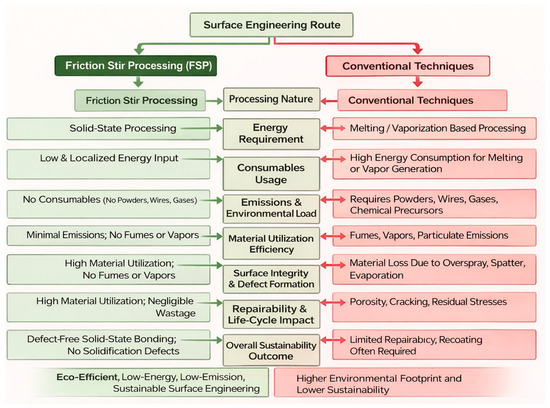
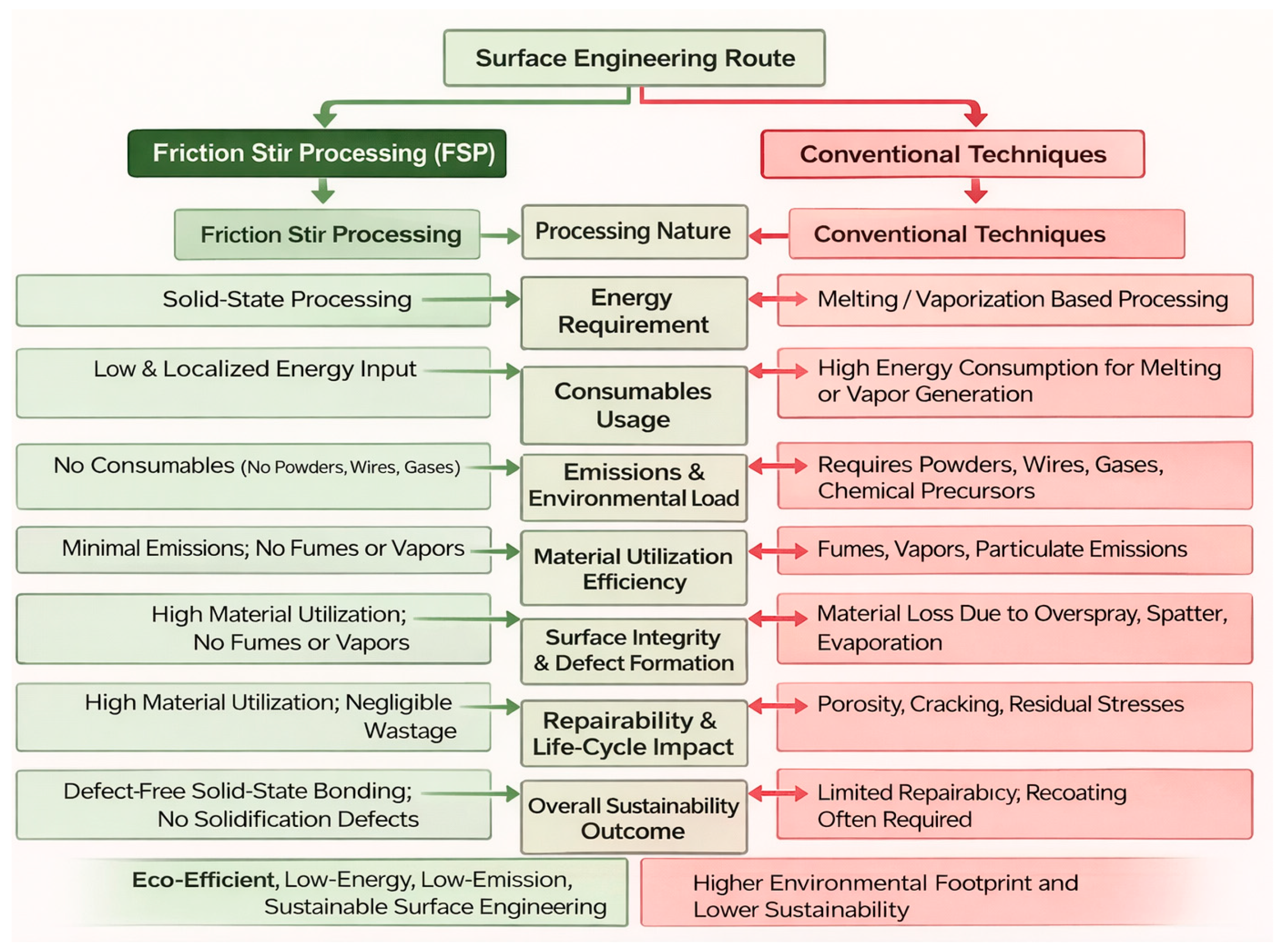
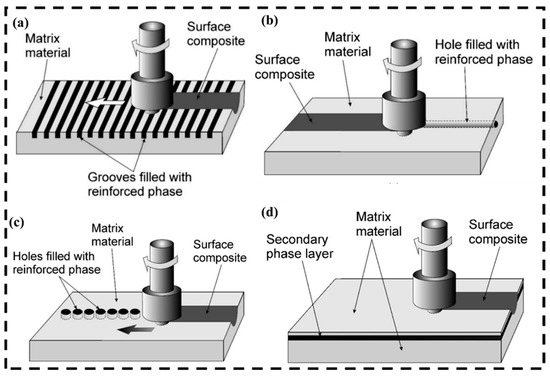
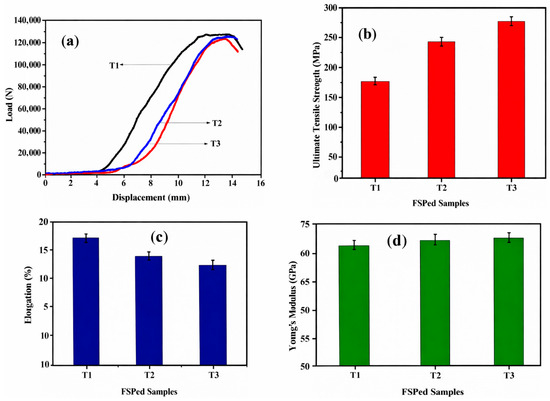
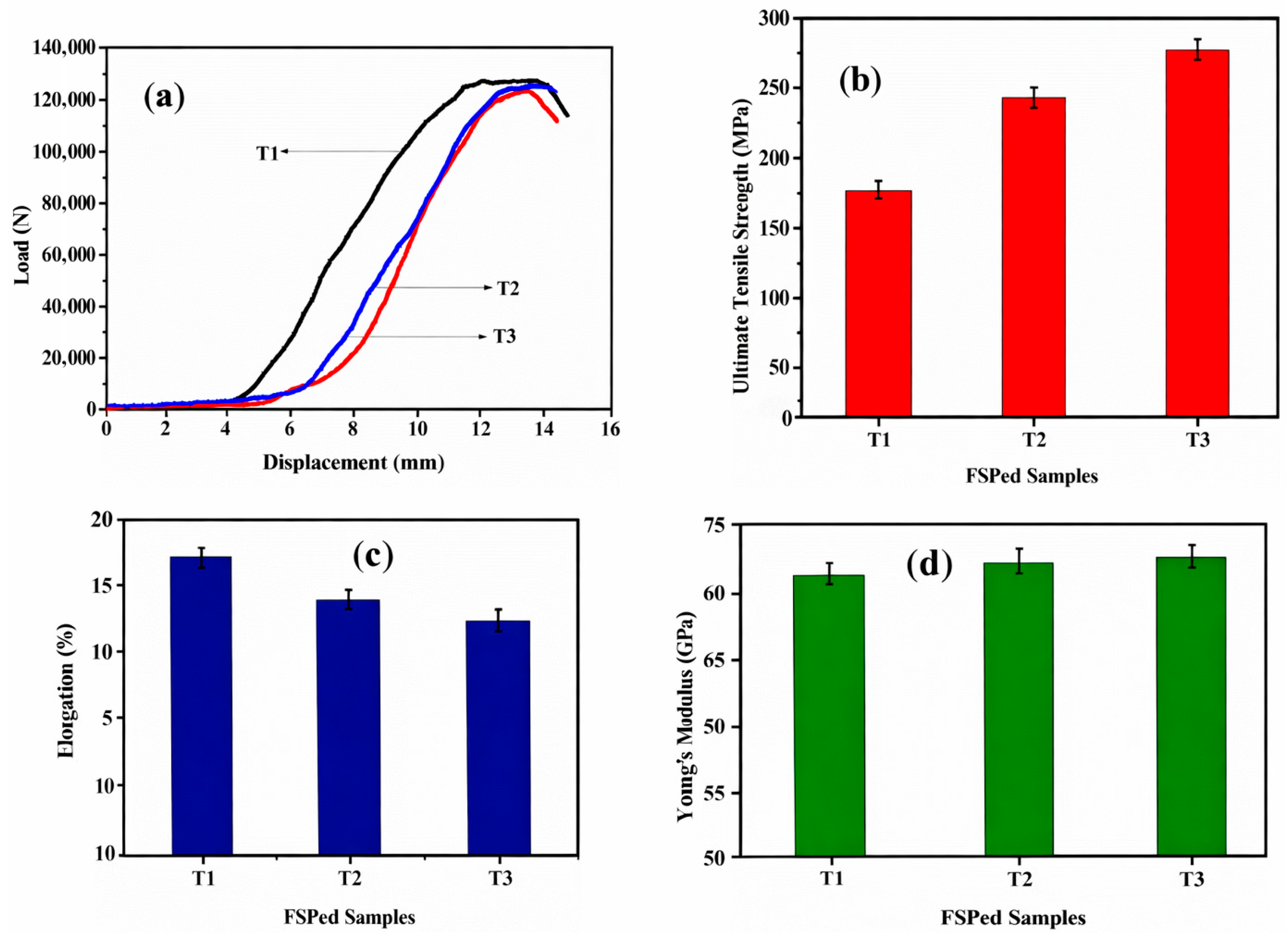
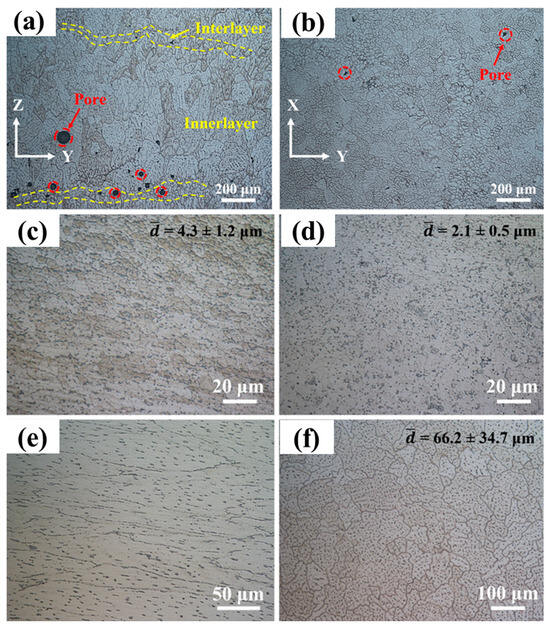
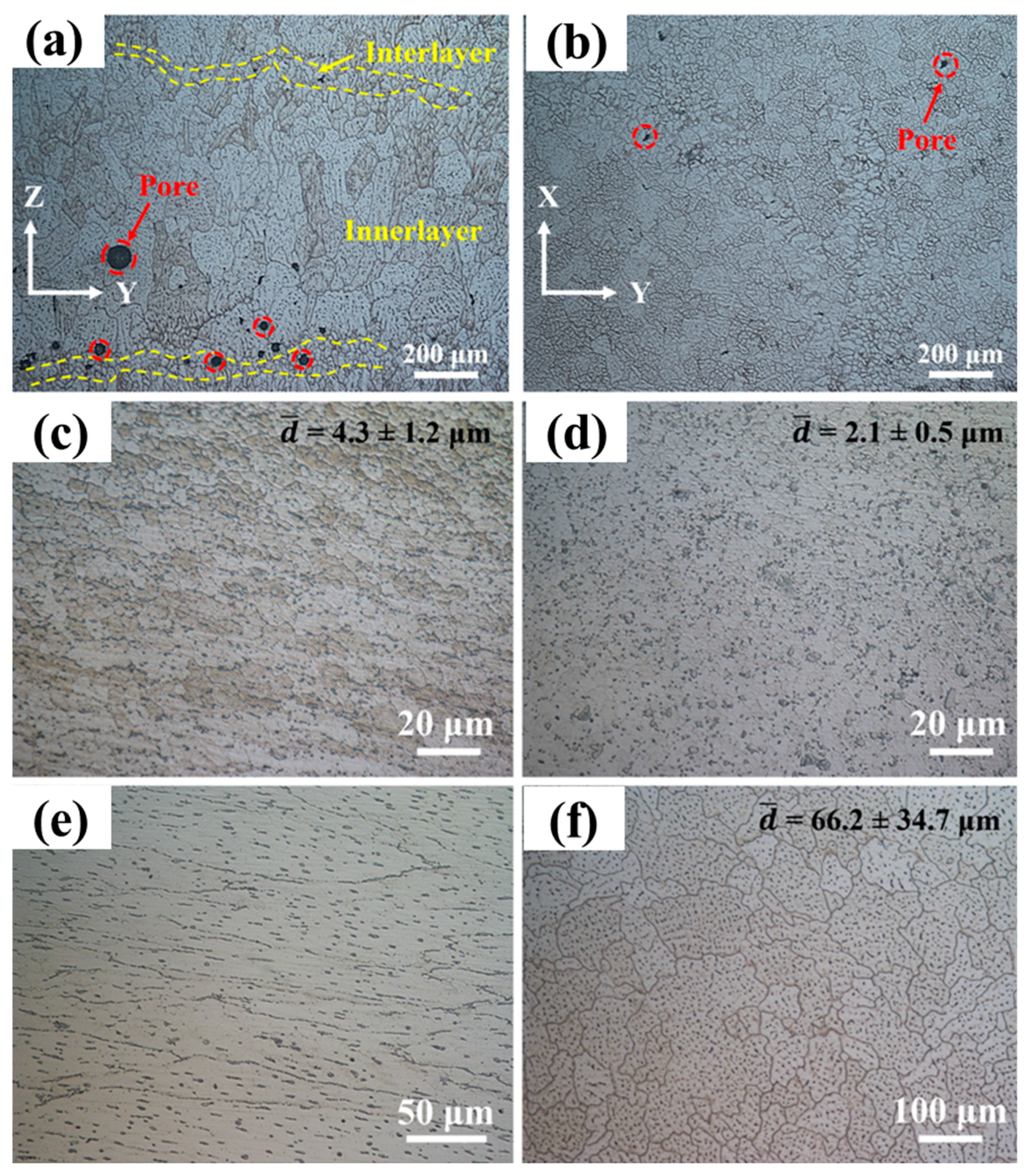

Disclaimer/Publisher’s Note: The statements, opinions and data contained in all publications are solely those of the individual author(s) and contributor(s) and not of MDPI and/or the editor(s). MDPI and/or the editor(s) disclaim responsibility for any injury to people or property resulting from any ideas, methods, instructions or products referred to in the content. |
© 2026 by the authors. Licensee MDPI, Basel, Switzerland. This article is an open access article distributed under the terms and conditions of the Creative Commons Attribution (CC BY) license.