Article

Effect of BPPA/GGBFS Ratio on the Mechanical Performance, Reaction Evolution and Microstructural Development of Alkali-Activated Binders


1
School of Safety Science and Engineering, Anhui University of Science and Technology, Huainan 232001, China
2
School of Environmental and Chemical Engineering, Jiangsu Ocean University, Lianyungang 222005, China
3
School of Resources and Safety Engineering, Chongqing University, Chongqing 400044, China
*
Author to whom correspondence should be addressed.
Processes 2026, 14(17), 2827; https://doi.org/10.3390/pr14172827
Submission received: 12 August 2026 / Revised: 28 August 2026 / Accepted: 1 September 2026 / Published: 2 September 2026
(This article belongs to the Section Materials Processes)

Abstract

This study developed alkali-activated binders based on biomass power plant ash (BPPA) and ground granulated blast furnace slag (GGBFS) for potential application in coal-mine goaf backfilling. Five precursor proportions, ranging from 100% BPPA to 100% GGBFS, were investigated to clarify the influence of precursor composition on fresh properties, mechanical performance, reaction-product evolution and microstructural development. Increasing the GGBFS content reduced slump and shortened both initial and final setting times, indicating accelerated precursor dissolution and early structural build-up. Compressive strength increased nonlinearly with GGBFS incorporation. Multiscale characterization consistently demonstrated that GGBFS promoted the transformation of the initially quartz-rich and weakly reactive BPPA system into a calcium-rich aluminosilicate binding matrix. This transformation was accompanied by changes in the Si-O-T bonding environment, increased formation of hydrated reaction products and progressive filling and bridging of the spaces between residual precursor particles. Consequently, the hardened matrix evolved from a porous particle-supported structure containing isolated reaction regions into a compact gel-supported network that contributed to more effective stress transfer within hardened matrix. Among the investigated mixtures, the formulation containing 25% BPPA and 75% GGBFS exhibited a favorable combination of BPPA utilization, processability, and mechanical performance, indicating its potential for further evaluation in coal-mine goaf backfilling applications.

1. Introduction

Underground coal extraction inevitably creates extensive goafs, which may induce overburden movement, surrounding-rock instability, groundwater disturbance and surface subsidence if the mined-out voids are not properly treated [1]. Backfill mining has therefore become an important approach for controlling strata movement, maintaining underground stability and reducing the environmental consequences of coal extraction [2,3]. Portland cement is currently one of the most widely used binders in cemented backfill because it can provide reliable setting and strength developments. However, the large-scale application of cement-based backfill is constrained by the relatively high cost of cementitious materials and the considerable energy consumption and carbon emissions associated with cement production [4]. Consequently, the development of low-cost alternative binders capable of satisfying the transport, placement and load-bearing requirements of mine backfill has received increasing attention [5,6,7].
Alkali-activated binders are produced through the chemical activation of natural aluminosilicates or industrial solid wastes and are generally considered potential low-carbon substitutes for Portland cement [8,9,10]. Their reaction mechanisms and engineering properties are strongly governed by the calcium content, amorphous-phase fraction and dissolution behavior of the precursor. Low-calcium precursors, represented by metakaolin and low-calcium fly ash, mainly release silicate and aluminate species under alkaline conditions and form sodium aluminosilicate hydrate, commonly described as N-A-S-H gel. These products may develop highly cross-linked aluminosilicate frameworks, but low-calcium systems frequently exhibit relatively slow reactivity, prolonged setting and limited early strength when the precursor contains a large crystalline fraction. In contrast, high-calcium precursors such as ground granulated blast furnace slag (GGBFS) rapidly dissolve and predominantly form calcium aluminosilicate hydrate, denoted as C-(A)-S-H gel. Slag-rich binders therefore generally exhibit rapid structural build-up, short setting times and high early strength.
The rapid expansion of biomass-fired power generation has produced increasing quantities of biomass power plant ash (BPPA). Conventional landfilling or open storage of BPPA occupies land and may result in dust emissions, alkaline leachate and the release of potentially harmful constituents [11,12]. Because BPPA generally contains appreciable amounts of Si- and Al-bearing phases, it has potential as an aluminosilicate precursor for alkali-activated binders. However, depending on biomass feedstock and combustion conditions, a substantial fraction of these elements, i.e., Si and Al, may be retained in crystalline quartz and other thermally stable phases, which dissolve slowly under moderate alkaline activation [13,14]. Therefore, the limited intrinsic reactivity of BPPA restricts the development of matrix properties.
A number of approaches have been explored to overcome the low reactivity of biomass-derived ashes (e.g., BPPA). Mechanical grinding can increase the specific surface area and expose additional reactive sites, while calcination and alkali-fusion treatments may modify crystalline phases and enhance the availability of soluble Si and Al [15,16,17,18]. Zafar et al. employed a combined thermo-chemico-mechanical treatment for sugarcane bagasse ash and used the activated ash to produce geopolymer-based cold-pressed blocks. The treatment promoted the breakdown of coarse and poorly reactive ash particles and improved the physicomechanical performance of the resulting products [19]. Lei et al. found that the alkali-fusion treatment substantially enhanced the dissolution of Si retained in inert crystalline phases, and increased the compressive strength of matrix by 55.78%, reaching 46.47 MPa under the selected conditions [20]. Hao et al. similarly reported that, for a geopolymer containing 100% crop biomass ash, alkali-fused ash achieved a compressive strength of 39.35 MPa, whereas the corresponding raw-ash system reached only 7.46 MPa [21]. However, these methods generally require additional equipment, energy input and processing stages. In particular, high-temperature calcination or alkaline thermal processing introduces additional energy consumption and processing complexity, which may weaken the economic and environmental advantages of waste-derived backfill binders.
In recent years, numerous studies have demonstrated that the incorporation of calcium-rich constituents (e.g., GGBFS) into low-calcium aluminosilicate systems (e.g., coal gangue, low-calcium fly ash) can substantially improve ambient-temperature reaction, setting behavior, microstructural development and mechanical performance. Dai et al. investigated alkali-activated fly ash-slag binders and showed that slag addition accelerated early-age reaction and structural build-up, while promoting the formation of a denser reaction-product network [22]. Kondepudi and Subramaniam further demonstrated that adjusting the fly ash-to-slag ratio enabled the simultaneous regulation of fresh-state buildability and hardened performance in alkali-activated binders [23]. Zhang et al. found that incorporating GGBFS into an alkali-activated coal-gangue matrix increased compressive strength and refined the microstructure through the formation of additional calcium aluminosilicate hydrates [24]. Zhao et al. showed that varying the proportions of slag and calcined coal gangue effectively regulated setting, strength development and shrinkage behaviour, indicating that the high-calcium component played an important role in controlling both reaction kinetics and phase assemblage [25]. These findings suggest that GGBFS addition may be an effective strategy for overcoming the low reactivity of untreated BPPA without resorting to energy-intensive thermal pretreatment. Nevertheless, previous investigations have largely focused on fly ash, coal gangue or other low-calcium precursors, whereas the applicability of this high-calcium blending strategy to untreated BPPA remains insufficiently established. In particular, the interaction between relatively inert BPPA particles and highly reactive GGBFS, and its influence on reaction-product evolution, microstructural reconstruction and mechanical development remain unclear.
This study systematically investigated alkali-activated binders prepared from untreated BPPA and GGBFS with different precursor proportions. The effect of BPPA/GGBFS ratio on fresh-state behavior, setting characteristics, compressive strength development and reaction evolution were evaluated through slump testing, setting-time measurements, mechanical testing and multiscale characterization, including X-ray diffraction (XRD), Fourier-transform infrared spectroscopy (FTIR), simultaneous thermogravimetry-differential scanning calorimetry (TG-DSC) and scanning electron microscopy (SEM).

2. Materials and Methods

2.1. Materials

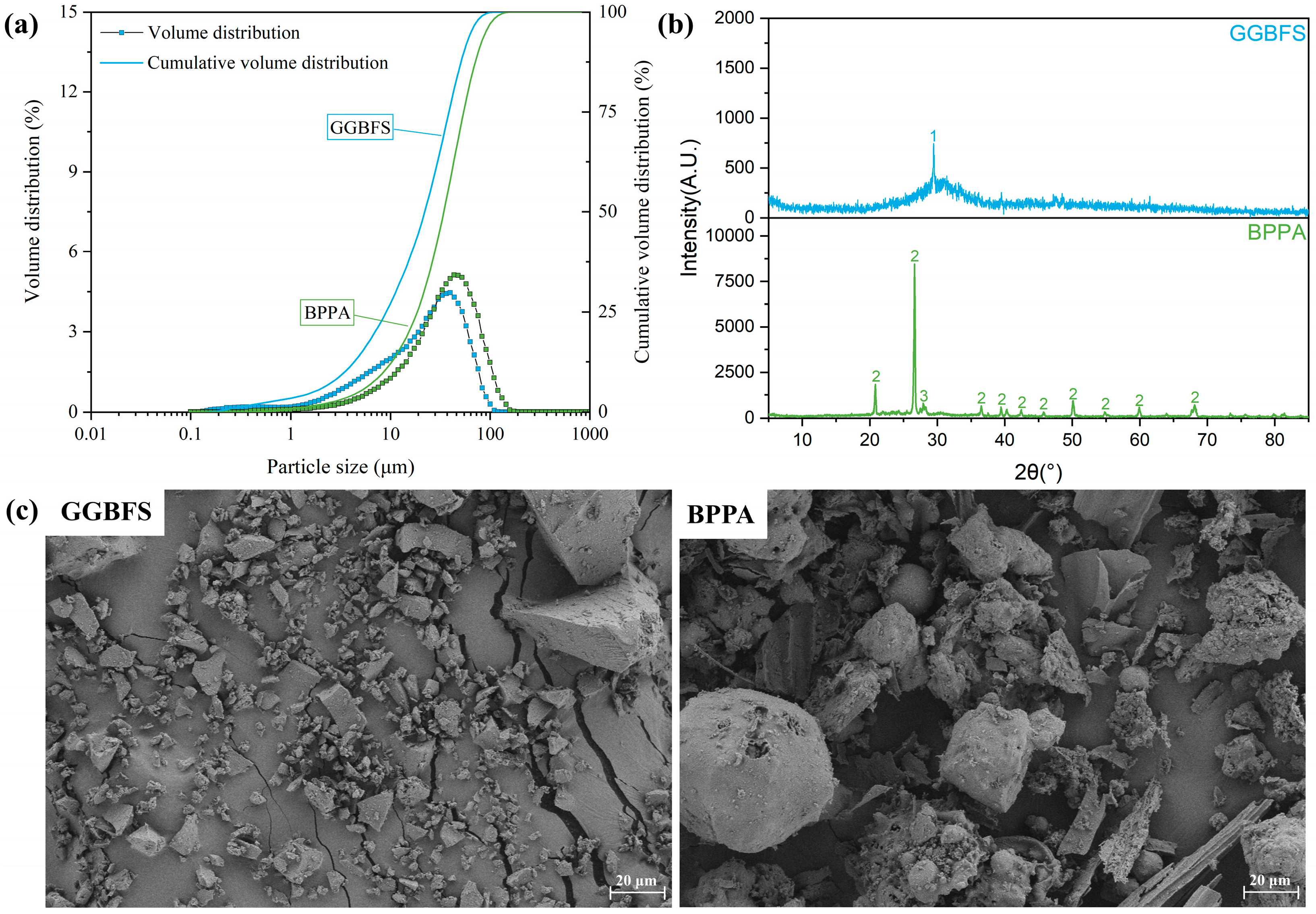
BPPA was collected from a biomass-fired power plant located in Huainan, Anhui Province, China. GGBFS was supplied by a steel plant in Chongqing, China. The chemical compositions of BPPA and GGBFS are presented in Table 1. BPPA is mainly composed of SiO2 (69.46 wt.%) and Al2O3 (13.07 wt.%), with relatively low CaO content (1.95 wt.%). Such a chemical composition indicates that BPPA behaves as a low-calcium aluminosilicate precursor. In contrast, GGBFS contains a significantly higher CaO content (36.31 wt.%) together with appreciable amounts of SiO2 (35.62 wt.%) and Al2O3 (14.93 wt.%), providing abundant reactive calcium species that are favorable for the formation of calcium-rich alkali-activated reaction products. The particle size distributions of BPPA and GGBFS are illustrated in Figure 1a. GGBFS exhibits a finer particle size than BPPA, with median particle sizes (D50) of 22.1 μm and 34.3 μm, respectively. The finer particles of GGBFS provide a larger specific surface area, thereby facilitating dissolution under alkaline conditions and accelerating alkali activation kinetics. Conversely, the relatively coarser BPPA particles are expected to act both as reactive precursors and micro-fillers within the hardened matrix.
The mineralogical compositions are shown in Figure 1b. The diffraction pattern of BPPA is dominated by sharp crystalline quartz peaks, indicating that quartz is the principal mineral phase, accompanied by a small amount of oligoclase. The predominance of crystalline silica suggests that only part of the silicon-bearing phases in BPPA can participate in alkali activation, while the remaining quartz mainly acts as an inert filler. In comparison, GGBFS exhibits a broad diffuse hump centered at approximately 30°, together with a weak gehlenite diffraction peak, demonstrating its predominantly amorphous structure. The high amorphous content of GGBFS is advantageous for rapid dissolution and subsequent formation of calcium-rich alkali-activated reaction products under alkaline conditions. The morphologies of the raw materials observed are presented in Figure 1c. GGBFS particles possess relatively smooth surfaces with angular and irregular geometries, characteristic of water-quenched vitreous slag. In contrast, BPPA consists of irregularly shaped particles with rough surfaces and heterogeneous particle sizes. Numerous fragmented particles and porous textures can be observed, reflecting the complex combustion history of biomass residues. Such morphological characteristics are expected to influence the dissolution behavior of BPPA and the packing density of the alkali-activated binder matrix.

2.2. Methods

2.2.1. Mix Design

In this study, five mixtures were designed to investigate the influence of the BPPA-to-GGBFS ratio on the fresh properties, mechanical performance, and reaction characteristics of the alkali-activated composites. The total mass of BPPA and GGBFS was defined as the solid precursor mass. The BPPA/GGBFS mass ratios were set at 100/0, 75/25, 50/50, 25/75, and 0/100, respectively. The corresponding mixtures were designated as B100S0, B75S25, B50S50, B25S75, and B0S100, where the numbers represent the mass percentages of BPPA and GGBFS in the binary precursor.
To isolate the effect of precursor composition, the liquid-to-solid ratio was maintained at 0.45 for all mixtures. The liquid phase consisted of the water contained in the commercial sodium silicate solution and the externally added deionized water. Accordingly, the amount of additional deionized water was adjusted for each mixture to ensure a constant total liquid content. The alkaline activator dosage was fixed at 10% of the total precursor mass for all mixtures. The activator was prepared using analytical-grade NaOH pellets and commercial sodium silicate solution. The sodium silicate solution had an initial modulus of 3.3 and consisted of 8.3 wt.% Na2O, 26.5 wt.% SiO2, and 65.2 wt.% H2O. The modulus of the final alkaline activator, expressed as the molar ratio of SiO2 to Na2O, was adjusted to 1.2 by adding the calculated amount of NaOH. For each mixture, the alkaline activator was prepared using 18.68 g of sodium silicate solution and 3.50 g of NaOH pellets per 100 g of precursor. Additional deionized water was added according to the designed liquid-to-solid ratio. The normalized mixture proportions are summarized in Table 2. The precursor mass was normalized to 100 parts by mass. The constant activator dosage and liquid-to-solid ratio ensured that variations in the measured properties primarily resulted from changes in the BPPA/GGBFS ratio.

2.2.2. Preparation and Curing of Specimens

Before specimen preparation, BPPA and GGBFS were dried in an oven at 105 °C to remove physically adsorbed moisture and minimize variations in the effective liquid-to-solid ratio. The dried materials were subsequently passed through a 200-mesh sieve to remove agglomerates and relatively coarse impurities. BPPA and GGBFS were then weighed according to the proportions listed in Table 2 and dry-blended to improve the initial homogeneity of the binary precursor.
The alkaline activator was prepared by combining analytical-grade NaOH pellets, commercial sodium silicate solution, and deionized water. The freshly prepared activator was then sealed and cooled to room temperature before use. The pre-blended BPPA-GGBFS precursor was placed in the mixing bowl, after which the alkaline activator was gradually introduced. The mixture was mechanically stirred until a homogeneous slurry without visible dry powder agglomerates was obtained. The same mixing sequence was used for all formulations to minimize the influence of preparation-related variations on workability, setting time, and mechanical properties. After mixing, the fresh slurry was poured into stainless-steel moulds with a diameter of 50 mm and a height of 100 mm. The filled moulds were subsequently placed on a vibration table and vibrated for 5 min. The vibration treatment facilitated the release of entrapped air. Subsequently, the moulded specimens were initially cured at 25 °C for 24 h. After the initial curing period, the specimens were carefully removed from the moulds. Following demoulding, all specimens were transferred to a constant-temperature and constant-humidity curing chamber. The curing temperature was maintained at 25 °C, with a relative humidity of not less than 95%. The specimens were cured until the predetermined testing ages.

2.2.3. Testing Methods

The chemical compositions of BPPA and GGBFS were determined by X-ray fluorescence (XRF) using an XRF-1800 spectrometer (Shimadzu, Japan). The particle size distributions of the precursors were measured using a Mastersizer 3000 laser diffraction particle size analyzer (Malvern Panalytical, UK), and the median particle size (D50) was adopted to characterize the fineness of the raw materials. The workability of the fresh alkali-activated mixtures was evaluated by slump tests in accordance with the Chinese standard GB/T 50080-2016 [26]. The slump value was determined immediately after mixing to assess the flowability of the fresh slurry. The initial and final setting times were measured using a Vicat apparatus following GB/T 1346-2024 [27]. The compressive strength was determined using an AGN-250 universal testing machine (Shimadzu, Japan) under displacement-controlled loading at a constant stress rate of 0.5 MPa/s. Three specimens were tested for each mixture at each curing age, and the reported compressive strength was calculated as the arithmetic mean of the three measurements. The mineralogical evolution of the reaction products was investigated by XRD using an Empyrean diffractometer (Malvern Panalytical, The Netherlands). FTIR was employed to characterize the chemical bonding environments of the reaction products using an IRAffinity-1S spectrometer (Shimadzu, Japan). TG–DSC analyses were carried out using a TGA/DSC 1 simultaneous thermal analyzer (Mettler Toledo, Switzerland). The powdered sample was heated from ambient temperature to 1200 °C at a heating rate of 20 °C/min under a nitrogen atmosphere. The microstructures of both the raw materials and the hardened alkali-activated specimens were observed using a Sigma 300 scanning electron microscope (Zeiss, Germany).

3. Results and Discussion

3.1. Fresh-State Workability

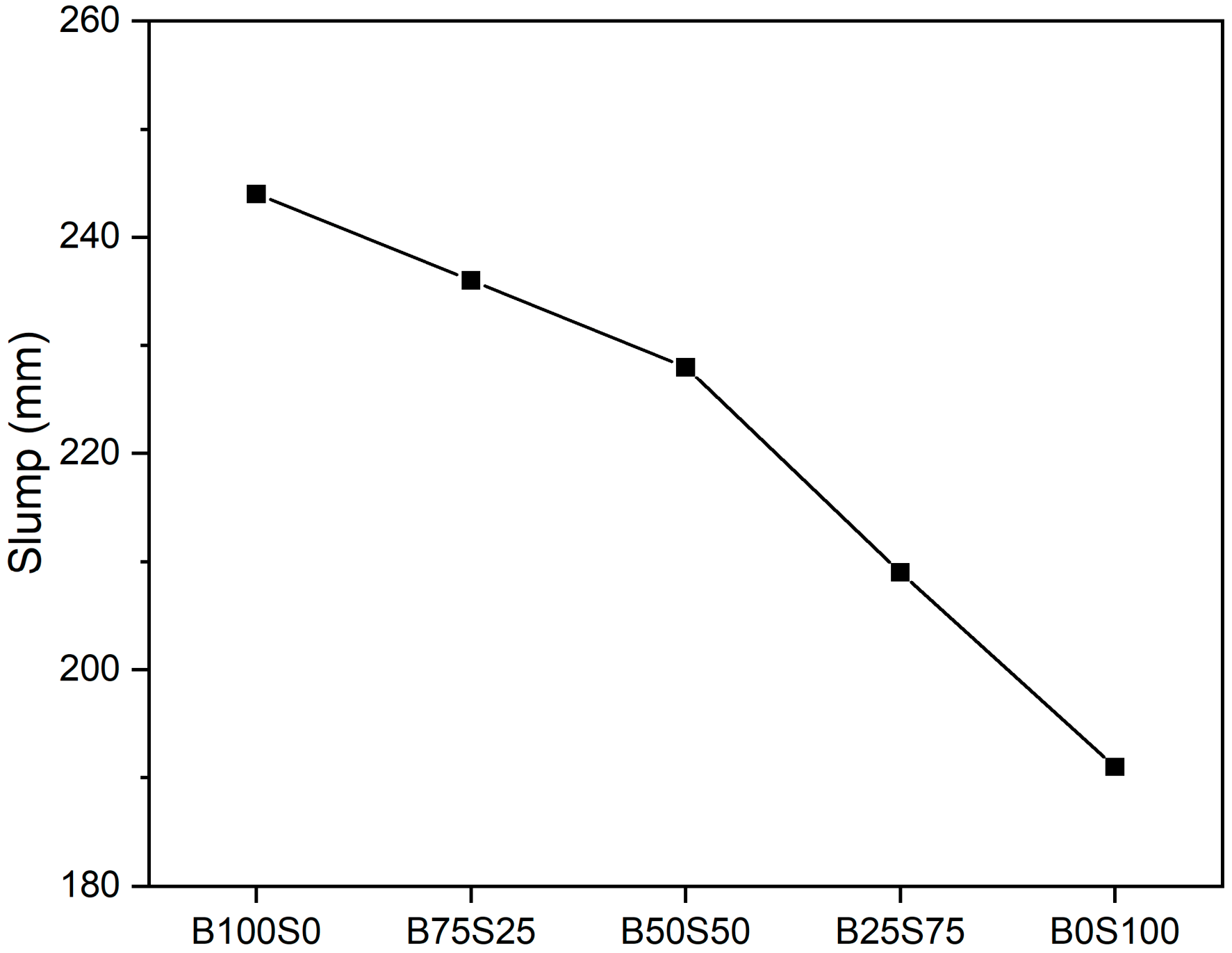
Figure 2 presents the slump values of the BPPA-GGBFS alkali-activated mixtures. All formulations exhibited relatively high slump values, demonstrating that the adopted liquid-to-solid ratio of 0.45 provided sufficient initial mobility for slurry mixing, casting, and potential pipeline transport. Nevertheless, the workability decreased continuously as BPPA was replaced by GGBFS. The influence of GGBFS was not strictly linear; the reduction became more pronounced when its proportion exceeded approximately 50%. B0S100 showed the lowest slump, approximately 191 mm, corresponding to a reduction of about 22% relative to B100S0.
The lower workability of the GGBFS-rich mixtures can first be associated with the difference in particle fineness. GGBFS had a median particle size of 22.1 μm, considerably smaller than the 34.3 μm size measured for BPPA. Increasing the GGBFS fraction therefore increased the total particle surface area that required wetting. At a constant liquid-to-solid ratio, a greater proportion of the liquid phase was immobilized in particle surface layers, leaving less free liquid available to promote relative particle movement. Particle size distribution, surface area, activator viscosity, interparticle interactions, and early reaction products are widely recognized as coupled controls on the rheology of alkali-activated mixtures [28]. Chemical structural build-up likely provided an additional contribution. The raw GGBFS was predominantly amorphous and contained 36.31 wt.% CaO, whereas BPPA was dominated by crystalline quartz and contained only 1.95 wt.% CaO. The GGBFS phase was therefore more readily dissolved in the alkaline activator. Early release of Ca, Si, and Al species promoted the precipitation of calcium aluminosilicate hydrate products and increased particle flocculation and interparticle bridging. Such reaction-induced structural build-up can reduce flowability well. Previous work on sodium silicate-activated slag similarly demonstrated that rheological evolution, setting, reaction kinetics, and early microstructural development are strongly interdependent [29]. The relatively gentle slump reduction between B100S0 and B50S50 suggests that, at low-to-moderate slag contents, the physical and chemical effects of GGBFS remained spatially localized. Once the GGBFS fraction increased to 75%, the quantity of fine reactive particles and early precipitated products became sufficient to establish a more extensive flocculated network, resulting in the sharper decrease observed for B25S75 and B0S100. From an engineering perspective, increasing BPPA content improved slurry mobility and may extend pumping distance and placement time.

3.2. Setting Behavior

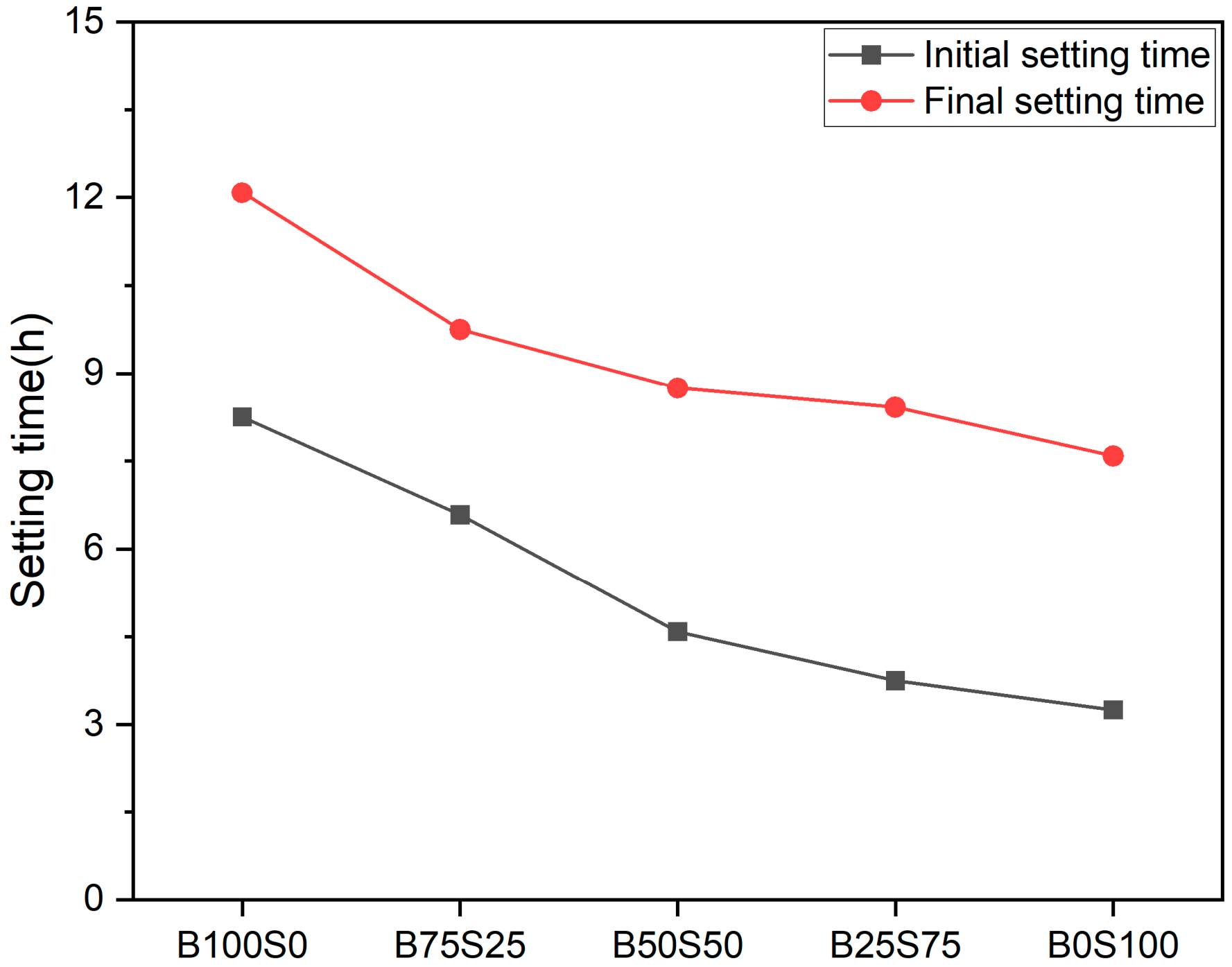
The initial and final setting times are shown in Figure 3. Both decreased substantially as the GGBFS proportion increased. B100S0 exhibited the longest initial and final setting times. Complete replacement of BPPA by GGBFS reduced the initial and final setting times by approximately 61% and 37%, respectively. Therefore, GGBFS accelerated the transition from a suspended particulate slurry to a rigid, interconnected solid network.
In B100S0, the prolonged dormant period can be attributed to the limited dissolution of crystalline BPPA. Although BPPA contained 69.46 wt.% SiO2 and 13.07 wt.% Al2O3, much of the silica was present as quartz. Bulk oxide content therefore overestimated the effective concentration of alkali-reactive aluminosilicate species. The low CaO concentration further restricted rapid precipitation of calcium-bearing products. In contrast, dissolution of the amorphous GGBFS phase supplied reactive Ca, Si, and Al, enabling rapid nucleation and growth of C-(A)-S-H-type gels. The formation of these products progressively linked precursor particles, increased penetration resistance, and shortened the initial setting time. Current understanding of alkali-activated slag indicates that its reaction path comprises precursor dissolution, initial formation of Al-rich products, and progressive evolution toward calcium aluminosilicate hydrate phases whose chemistry depends strongly on the pore solution and activator composition [30]. A slag-rich mixture may lose workability rapidly while continuing to undergo gel precipitation and structural reorganization for several hours before reaching final set. The setting-time trend was consistent with the slump response. Mixtures with lower slump generally set more rapidly, suggesting that both properties were governed by the increasing reactivity of the GGBFS-containing system rather than by particle packing alone. A higher GGBFS fraction promoted faster dissolution of reactive calcium, silicon, and aluminum species and accelerated the precipitation of binding gels. The resulting rapid structural build-up restricted particle mobility, thereby reducing the slump and shortening the setting time.

3.3. Compressive Strength Development

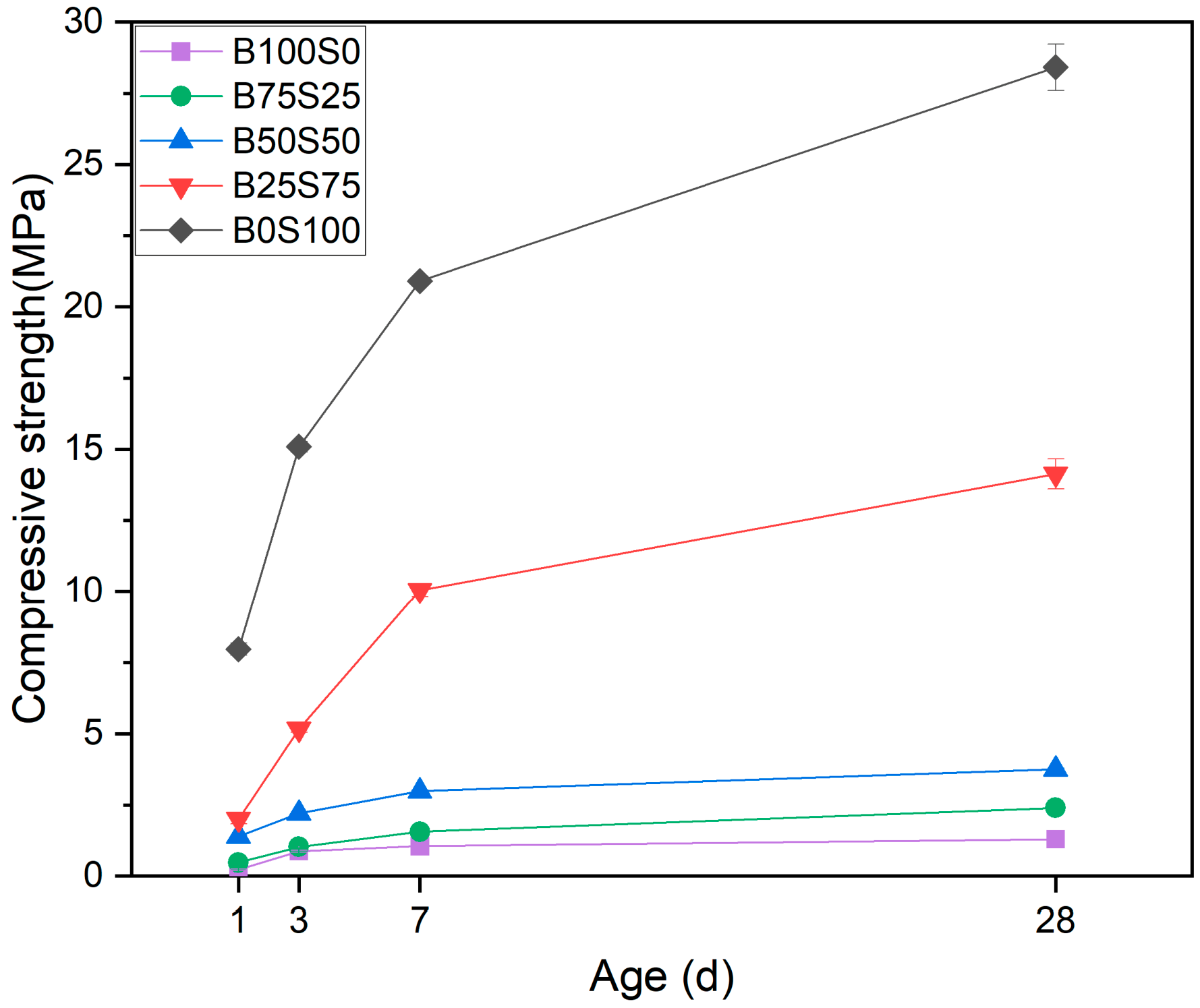
Figure 4 shows the compressive strengths of specimens at 1, 3, 7, and 28 d. Strength increased with both curing age and GGBFS content. B100S0 developed negligible early strength and reached only approximately 1.3 MPa at 28 d. The slow increase with age confirms that BPPA alone had insufficient ambient-temperature reactivity under the selected activation conditions. The high crystalline quartz content limited precursor dissolution, and the small amount of newly formed aluminosilicate product was unable to bind the residual particles into a dense load-bearing skeleton. B75S25 showed only a modest improvement, reaching approximately 2.4 MPa at 28 d. The introduction of 25% GGBFS initiated local formation of calcium-rich gels, but their quantity and spatial distribution remained insufficient to establish a continuous matrix throughout the BPPA-dominated structure. B50S50 exhibited strengths of approximately 1.4, 2.1, 3.0, and 3.8 MPa at 1, 3, 7, and 28 d, respectively. The improvement relative to the BPPA-rich formulations confirms that a larger quantity of slag-derived reaction products had formed. Nevertheless, the relatively limited later-age strength indicates that unreacted BPPA particles and connected defects still interrupted the load-transmission network. A pronounced transition occurred for B25S75. Its compressive strength increased from approximately 2.0 MPa at 1 d to 5.2 MPa at 3 d, 10.0 MPa at 7 d, and 14.1 MPa at 28 d. This sustained development indicates that rapid GGBFS activation established an initial calcium-rich skeleton, followed by continued gel growth, incorporation of Al and Si species, and progressive pore refinement.
B0S100 achieved the highest strengths at all ages, reaching approximately 8.0, 15.1, 20.9, and 28.4 MPa. Its high 1 d strength demonstrates the rapid response of sodium silicate-activated GGBFS at ambient temperature. Continued strength gain up to 28 d indicates ongoing dissolution and precipitation rather than complete reaction during the first few days. At low GGBFS contents, activated regions developed primarily around individual slag particles. These localized products improved particle contacts but remained isolated within a weak BPPA-rich skeleton. Once the GGBFS fraction became sufficiently high, neighbouring reaction zones overlapped and formed a continuous calcium aluminosilicate hydrate network. At that point, the system changed from a particle-supported structure containing isolated gels to a gel-supported matrix containing isolated residual particles. Mechanical performance depends not only on reaction-product quantity, but also on its spatial continuity, local chemistry, pore-network connectivity, and bonding to unreacted particles. Recent studies of blended alkali-activated systems similarly show that precursor proportions strongly influence both phase assemblage and microstructural continuity [31]. For mine-backfill design, B0S100 provided the highest strength but did not contribute to BPPA valorization. B25S75 achieved approximately 14.1 MPa at 28 d while retaining 25% BPPA and a slump of about 209 mm. It therefore represents a more balanced formulation from the perspectives of waste utilization, workability, and load-bearing performance. B50S50 enabled greater BPPA incorporation but may only be suitable where relatively low backfill strength is required.

3.4. Phase Evolution Revealed by XRD

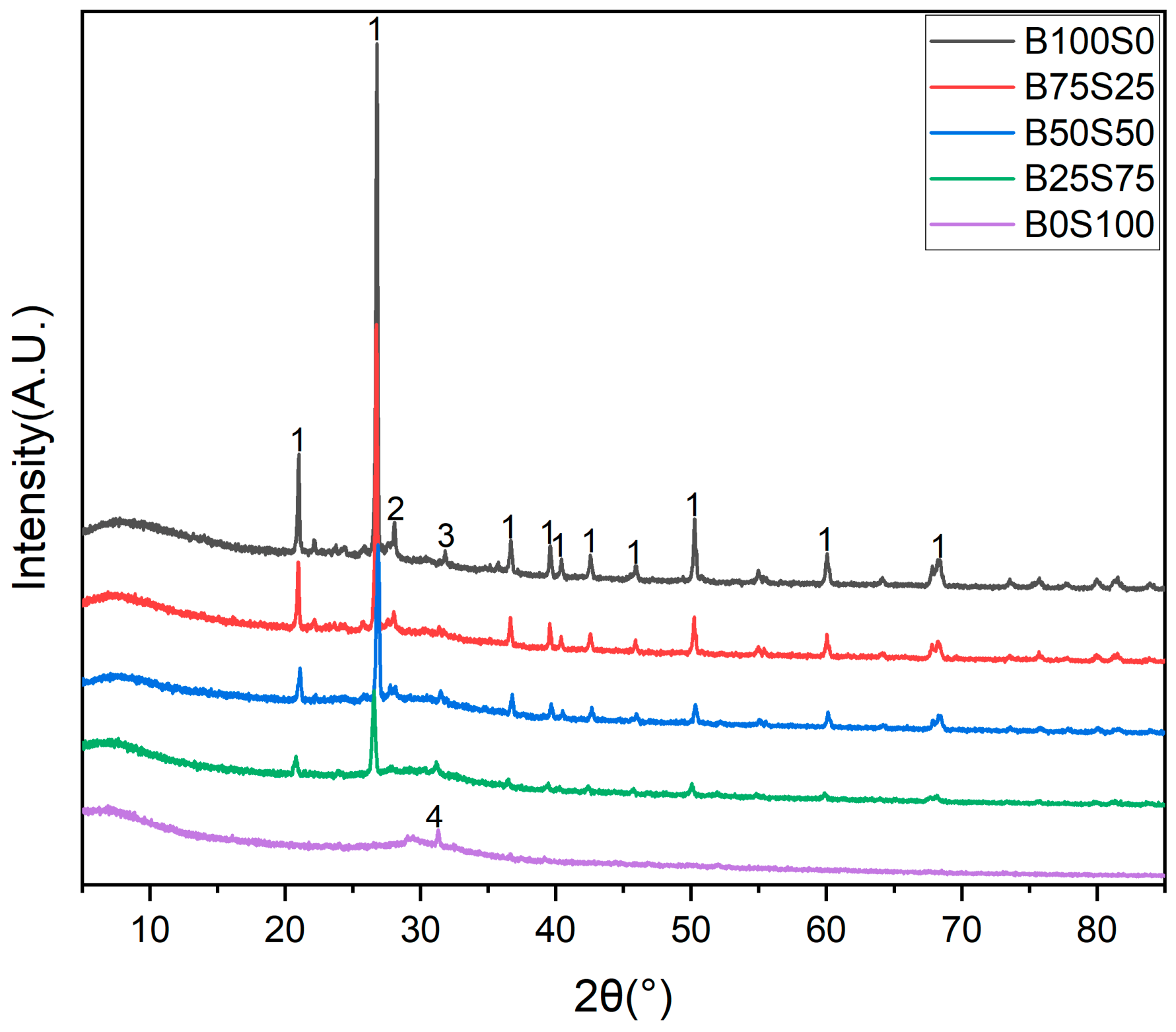
The XRD patterns are shown in Figure 5. The B100S0 pattern was dominated by intense quartz (SiO2, PDF#97-003-9830) reflections, particularly the principal peak near 26.6° 2θ. The persistence of these peaks after curing indicates that a substantial proportion of BPPA remained unreacted. Quartz contributed primarily as a filler or internal skeleton rather than as an effective precursor under the ambient curing condition. Weak albite ((Na0.98Ca0.02)(Al1.02Si2.98O8), PDF#01-070-3752) reflections were also retained in the BPPA-rich mixtures. Albite may originate predominantly from the feldspathic mineral fraction of BPPA. Because its diffraction peaks persisted after activation, it was likely only weakly involved in the reaction. The existence of Chabazite-Ca (Ca(Al2Si4O12)(H2O)5.8, PDF#97-003-1241), a minor hydrated crystalline aluminosilicate phase, suggests that localized Na-Ca-Al-Si-rich environments developed during activation. However, its weak peak intensity indicates that it was not the principal binding product. With increasing GGBFS content, the quartz peaks decreased progressively. This reduction resulted partly from the dilution of BPPA, but the simultaneous increase in the amorphous background and substantial strength enhancement indicate that chemical transformation also occurred. The disordered Ca-Si-Al glass in GGBFS dissolved and subsequently precipitated as poorly crystalline calcium aluminosilicate hydrate products. These products represented as diffuse scattering rather than sharp reflections. Total-scattering and reaction-path studies of activated slag similarly emphasize the dominance of structurally disordered phases [30].
B50S50 and B25S75 contained both residual quartz and an increasingly prominent amorphous matrix, indicating the coexistence of unreacted BPPA and GGBFS-derived binding products. The phase assemblage was therefore heterogeneous, consisting of residual precursor phases and various alkali-activated reaction products. Such coexistence is expected in high- and low-calcium blended precursors because reaction takes place at different rates around particles of different mineralogy. B0S100 was dominated by a broad diffuse feature and contained essentially no quartz reflections. A weak thomsonite (NaCa2(Al5Si5O20)(H2O)6, PDF#97-002-0007) peak was identified, indicating minor crystallization of a hydrated N-(C)-A-S-H-type gel. Nevertheless, the primary binder is more appropriately assigned to poorly crystalline C-(A)-S-H gel, potentially containing Na in interlayer or charge-balancing positions. The XRD results agree closely with strength development. BPPA-rich specimens retained a crystalline and weakly reactive skeleton, whereas increasing GGBFS promoted the replacement of this particulate structure by a continuous, poorly crystalline binder. Thus, the decisive phase-level change was not the complete consumption of quartz, but the increasing volume and continuity of the amorphous calcium aluminosilicate matrix surrounding the residual BPPA particles.

3.5. Chemical-Bonding Evolution Revealed by FTIR

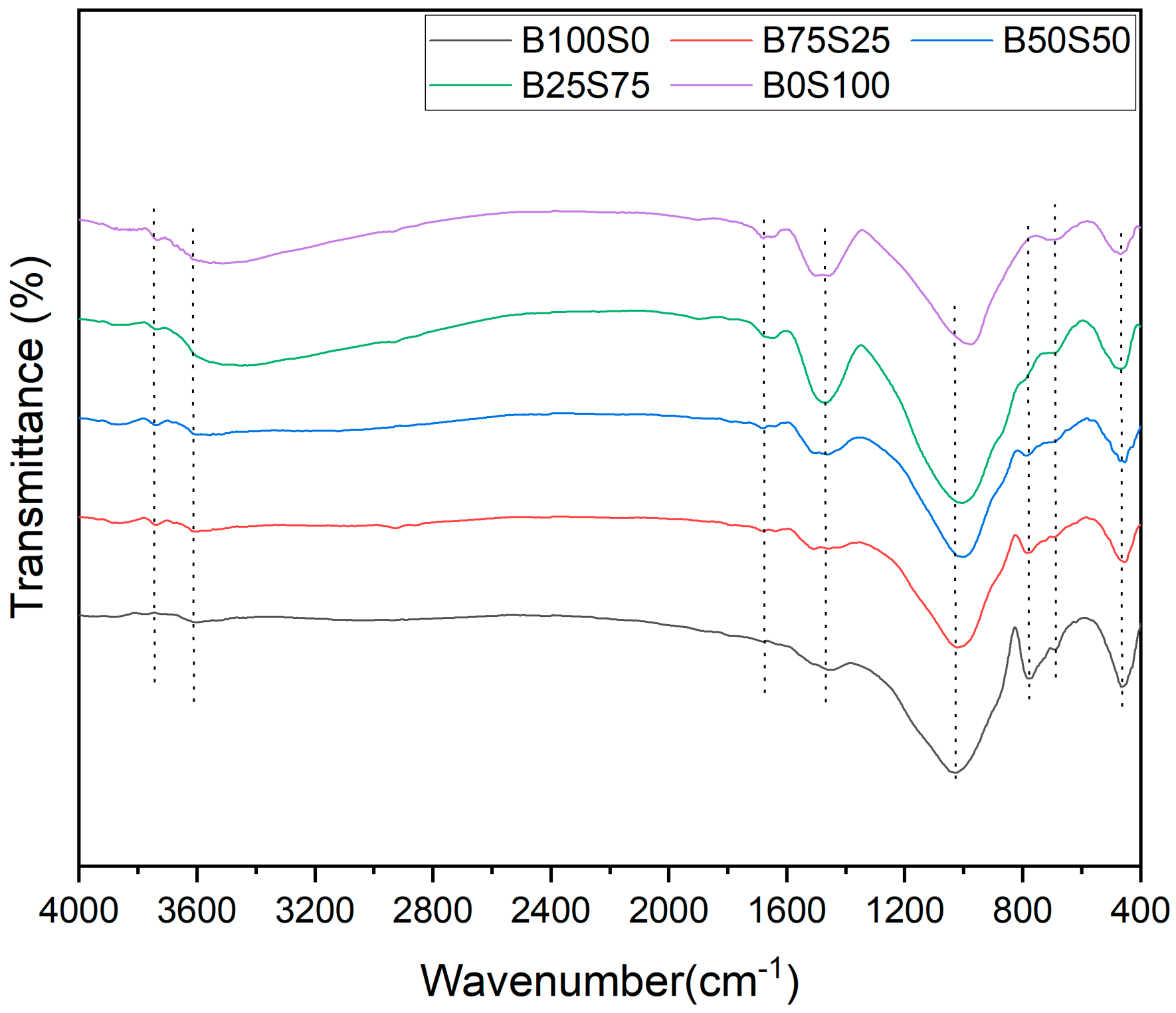
Figure 6 shows the FTIR spectra. The dominant absorption band occurred between approximately 975 and 1026 cm−1 and was assigned to asymmetric stretching of Si-O-T bonds, where T denotes tetrahedrally coordinated Si or Al. The principal band was located at 1026.3 cm−1 for B100S0, 1020.8 cm−1 for B75S25, 1000.3 cm−1 for B50S50, 1005.4 cm−1 for B25S75, and 975.4 cm−1 for B0S100. The overall shift from 1026.3 to 975.4 cm−1 provides direct evidence that the local silicate and aluminate bonding environment changed systematically as the mixture evolved from BPPA-rich to GGBFS-rich. Increasing the GGBFS fraction shifted the band toward lower wavenumbers as C-(A)-S-H products became increasingly dominant. Incorporation of Al into silicate chains, together with the charge-balancing roles of Ca and Na, modified the Si-O bond environment and generated the lower-frequency envelope. Low-calcium Na-A-S-H networks and high-calcium C-(A)-S-H gels possess different network topologies. A three-dimensionally cross-linked aluminosilicate network may exhibit a higher characteristic frequency than a calcium-rich chain-like silicate hydrate [32,33]. The observed shift therefore mainly reflects a change in product chemistry and tetrahedral coordination. The absorption band at approximately 776–787 cm−1, mainly associated with quartz-related Si-O vibrations, was more pronounced in the BPPA-rich specimens and progressively weakened with increasing GGBFS content, consistent with the reduction in crystalline quartz identified by XRD. Absorption features at approximately 1451–1506 cm−1 were attributed primarily to carbonate groups. Broad O-H stretching features were observed in the region of approximately 3450–3600 cm−1, together with H-O-H bending bands near 1635–1678 cm−1. These bands were relatively weak in B100S0 but became more evident in GGBFS-containing specimens, indicating an increased contribution from physically retained and structurally associated water in hydrated reaction products.

3.6. Thermal Evolution of Reaction Products Revealed by TG-DSC

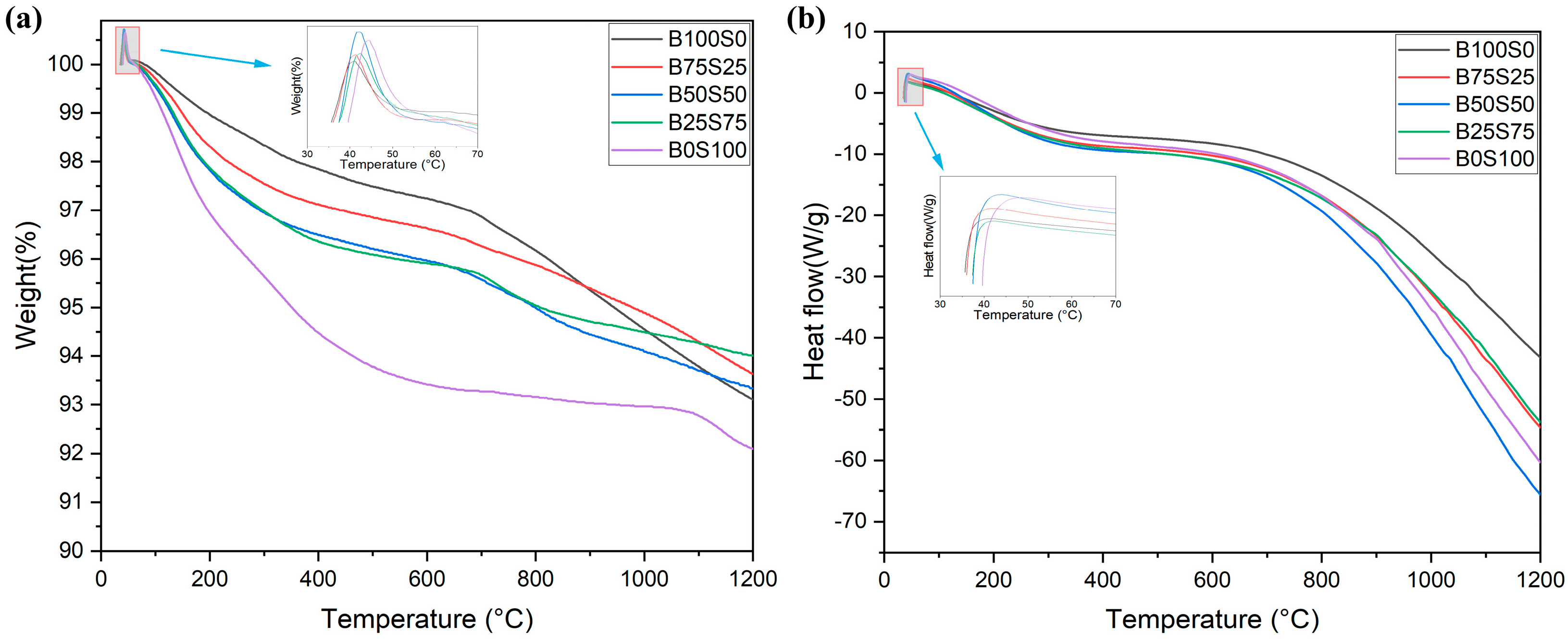
The TG-DSC curves of the alkali-activated BPPA-GGBFS specimens are presented in Figure 7, and the calculated mass losses are summarized in Table 3. All specimens exhibited a pronounced thermal event below approximately 200 °C, accompanied by a corresponding mass loss on the TG curves. The broad endothermic response observed by DSC within this temperature range was predominantly associated with the evaporation of free and capillary water and the release of physically adsorbed and weakly bound water retained within the pores and hydrated reaction products [34,35,36]. The TG results further showed that the mass loss in this region increased from 1.06% for B100S0 to 3.11% for B0S100. This nearly threefold increase demonstrates that increasing the GGBFS content promoted the formation of substantially larger quantities of hydrated reaction products capable of retaining physically and chemically associated water. This interpretation is consistent with the progressively stronger O-H stretching and H-O-H bending bands observed in the FTIR spectra (Figure 6) as well as the increasingly dense microstructure revealed by SEM (Figure 8). Between 200 and 600 °C, further loss was mainly attributed to dehydration and dehydroxylation of more strongly bound water and progressive structural rearrangement of aluminosilicate hydrate products [37,38]. B0S100 showed a markedly higher mass loss of 3.47%, compared with 1.67–1.95% for the blended and BPPA-rich specimens. The cumulative 30–600 °C mass loss increased from 2.78% for B100S0 to 3.39%, 4.06%, 4.11%, and 6.59% for B75S25, B50S50, B25S75, and B0S100, respectively. This trend closely paralleled compressive strength and provides quantitative evidence that increasing GGBFS promoted the formation of hydrated binding products. The stronger endothermic response simultaneously observed in the DSC curves for the GGBFS-rich specimens further supports this conclusion. Similar thermal characteristics have been widely reported for sodium silicate-activated aluminosilicate-slag systems, in which increasing slag content promotes the formation of C-(A)-S-H-rich products and consequently increases both low-temperature mass loss and endothermic heat flow [39,40].

3.7. Microstructural Evolution

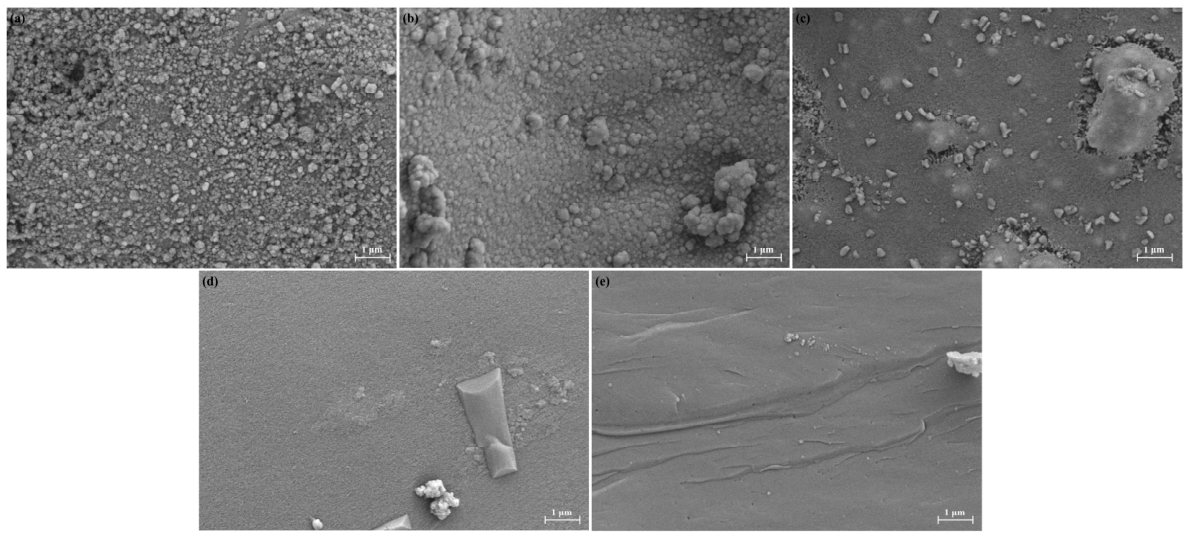
Figure 8 shows the SEM images of B100S0, B75S25, B50S50, B25S75, and B0S100. A progressive transition from a loosely packed particulate structure to a continuous and compact binding matrix was observed with increasing BFS content.
B100S0 contained numerous distinguishable particles and agglomerates, together with interconnected voids and poorly bonded interparticle regions. Only a limited amount of reaction product was distributed on the particle surfaces, indicating insufficient dissolution of the quartz-rich BPPA and explaining the low compressive strength of this mixture. After incorporating 25% GGBFS, B75S25 exhibited more reaction products around the precursor particles. Nevertheless, the matrix remained heterogeneous, and discontinuities between adjacent particles were still apparent. In B50S50, the reaction products increasingly covered and connected the original particles, producing a smoother matrix. However, residual grains, local pores, and particle–matrix interfaces remained visible, indicating that the binding phase had not yet formed a fully continuous load-bearing network. A marked microstructural refinement occurred in B25S75. Most precursor particles were embedded within a relatively dense and continuous gel matrix. This structural change explains the pronounced increase in compressive strength from B50S50 to B25S75, despite their similar TG mass losses below 600 °C. The result indicates that mechanical performance depended not only on the amount of reaction products but also on their spatial continuity and interfacial bonding. B0S100 exhibited the most homogeneous and compact microstructure, with few identifiable unreacted particles. The continuous matrix was attributed to extensive formation of C-(A)-S-H-rich products from the highly reactive amorphous GGBFS, consistent with the XRD, FTIR, and TG-DSC results. Therefore, increasing the GGBFS content promoted the evolution of the initially particle-supported BPPA-rich structure into a more continuous gel-supported matrix, thereby improving matrix connectivity and stress transfer and ultimately increasing compressive strength [41,42].

3.8. Reaction Mechanism and Performance Development

The combined macroscopic and microstructural results demonstrate that the BPPA/GGBFS ratio governed not only the reaction degree but also the dominant load-bearing mechanism of the hardened matrix. In BPPA-rich mixtures, most Si and Al products were retained in crystalline quartz and feldspathic phases, resulting in limited dissolution under the adopted alkaline conditions. Consequently, only small quantities of discontinuous aluminosilicate products formed around the precursor particles. This particle-supported structure retained extensive interparticle defects, which accounted for the high slump, prolonged setting time, and low compressive strength of B100S0 and B75S25.
Increasing the GGBFS content introduced a larger fraction of reactive amorphous Ca-Si-Al. Its rapid dissolution increased the concentrations of soluble Ca, Si, and Al species and promoted the precipitation of C-(A)-S-H-rich products. This interpretation is supported by the weakened crystalline reflections, the shift of the main Si-O-T band toward lower wavenumbers, the increased TG-DSC mass loss below 600 °C, and the progressive densification observed by SEM. The newly formed gels restricted particle mobility during the fresh stage and subsequently filled voids and strengthened particle–matrix interfaces during curing. The nonlinear strength increase between B50S50 and B25S75 indicates the establishment of a composition-dependent connectivity threshold. Below this threshold, reaction products remained localized and were unable to form an effective stress-transfer pathway. At 75% GGBFS, adjacent gel-rich regions overlapped to produce a continuous load-bearing skeleton. The matrix therefore changed from a particle-supported structure containing isolated gels to a gel-supported structure containing isolated residual particles. This structural inversion, rather than gel quantity alone, explains the substantial strength enhancement of B25S75. B0S100 achieved the highest strength due to the extensive formation of a continuous calcium aluminosilicate matrix, whereas B25S75 exhibited a relatively balanced combination of BPPA utilization, workability, setting behavior, and mechanical performance among the investigated mixtures.

4. Conclusions

This study investigated the effects of BPPA/GGBFS ratio on the fresh-state behavior, mechanical performance, phase assemblage, thermal response, and microstructural evolution of alkali-activated BPPA-GGBFS binders. The following conclusions can be drawn.
(1)
Increasing the GGBFS content reduced the slump and shortened both the initial and final setting times. These changes were mainly attributed to the finer particle characteristics and, more importantly, the higher chemical reactivity of GGBFS, which accelerated precursor dissolution, gel precipitation, and early structural build-up. The consistent evolution of slump and setting time suggests that reaction kinetics played an important role in governing fresh-state behavior, in addition to particle characteristics.
(2)
The compressive strength increased nonlinearly with increasing GGBFS content. The relatively limited strength development of BPPA-rich mixtures resulted from the low reactivity of the quartz-rich BPPA and the discontinuous distribution of reaction products. A pronounced strength increase occurred when the GGBFS content increased from 50% to 75%, indicating a pronounced composition-dependent transition in matrix development. The higher GGBFS incorporation promoted the formation of interconnected gel-rich regions, which contributed to improved stress transfer within the hardened binder.
(3)
The XRD, FTIR, and TG-DSC results consistently demonstrated that increasing the GGBFS fraction promoted the transformation of silica-rich, weakly connected aluminosilicate environments toward calcium-rich C-(A)-S-H-type binding phases. SEM observations revealed a progressive evolution from a porous particle-supported structure to a compact gel-supported matrix. The mechanical performance was governed not only by the quantity of reaction products but by their continuity, spatial distribution, and interfacial bonding. Although B0S100 achieved the highest strength, B25S75 exhibited a favorable combination of BPPA utilization, fresh-state properties, setting behavior, and mechanical performance among the mixtures investigated, suggesting its potential as a candidate binder for future backfilling applications.

Author Contributions

Software, T.M.; Resources, Y.C., M.X. and D.L.; Writing—original draft and funding acquisition, S.Z. All authors have read and agreed to the published version of the manuscript.

Funding

This research was funded by the Scientific Research Foundation for High-level Talents of Anhui University of Science and Technology (2022yjrc113) and the Natural Science Research Project of Anhui Educational Committee (2023AH051223).

Data Availability Statement

The original contributions presented in this study are included in the article. Further inquiries can be directed to the corresponding author.

Conflicts of Interest

The authors declare no conflicts of interest.

Abbreviations

The following abbreviations are used in this manuscript:
BPPABiomass power plant ash
GGBFSGround granulated blast furnace slag
XRDX-ray diffraction
FTIRFourier-transform infrared spectroscopy
TG-DSCSimultaneous thermogravimetry–differential scanning calorimetry
SEMScanning electron microscopy

References

  1. Sun, K.; Zhang, J.; He, M.; Li, M.; Wang, C.; Feng, W.; Li, F. Mechanical properties and damage evolution characteristics based on the acoustic emission of gangue and high-water-content materials based cemented paste backfill. Constr. Build. Mater. 2023, 395, 132324. [Google Scholar] [CrossRef] [Scilit]
  2. Wang, C.; Zhang, B.; Lu, Y.; Liao, C.; Lu, W. Failure law of floor during strip mining backfill with paste-tailings over confined aquifer: A case study in China mine. Case Stud. Constr. Mater. 2024, 20, e02806. [Google Scholar] [CrossRef] [Scilit]
  3. Li, M.; Peng, Y.; Zhang, J.; Zhao, Y.; Wang, Z.; Guo, Q.; Guo, S. Properties of a backfill material prepared by cementing coal gangue and fly ash through microbial-induced calcite precipitation. Constr. Build. Mater. 2023, 384, 131329. [Google Scholar] [CrossRef] [Scilit]
  4. Fang, K.; Zhang, J.; Cui, L.; Haruna, S.; Li, M. Cost optimization of cemented paste backfill: State-of-the-art review and future perspectives. Miner. Eng. 2023, 204, 108414. [Google Scholar] [CrossRef] [Scilit]
  5. Lang, L.; Zhang, L.; Zhang, X.; Ge, Z.; Wu, Z.; Li, J. Mechanical, interfacial bonding, and microstructural properties of GGBS-lithium slag-based geopolymer mortar for repairing. Constr. Build. Mater. 2026, 539, 147504. [Google Scholar] [CrossRef] [Scilit]
  6. Wang, H.; Ding, Y.; Dong, L.; Wang, D.; Sun, D.; Yan, F. Solidified high moisture and high organic content sediment as liquefied backfill material for urban underground space. ACTA Geotech. 2026, 1–25. [Google Scholar] [CrossRef] [Scilit]
  7. Wang, H.; Zhang, J.; Sun, D.; Li, Y.; Shi, Y. Sustainable solidification/stabilization of high-moisture dredged sediment using solid waste-based cementitious materials blended with OPC: Strength, environmental impact, and micro-mechanism. J. Environ. Chem. Eng. 2026, 14, 122347. [Google Scholar] [CrossRef] [Scilit]
  8. Pang, H.; Qi, W.; Zhao, Q.; Huang, Y.; Zhao, D.; Song, H.; Liu, X.; Pang, H.; Yu, Y. A novel alkali-slag cemented tailings backfill: Recycling of soda residue and calcium carbide slag. Constr. Build. Mater. 2024, 445, 137875. [Google Scholar] [CrossRef] [Scilit]
  9. Jin, J.; Li, M.; Liu, T.; Chen, Y.; Qin, Z.; Liu, Q.; Liang, B.; Zhao, J.; Zuo, S. Insights into factors influencing coal gangue-filled backfill cemented by self-consolidating alkali-activated slag grouts. Constr. Build. Mater. 2024, 411, 134422. [Google Scholar] [CrossRef] [Scilit]
  10. Zhao, Y.; Zhou, X.; Zhou, Q.; Zhu, H.; Cheng, F.; Chen, H. Development of full-solid waste environmentally binder for cemented paste backfill. Constr. Build. Mater. 2024, 443, 137689. [Google Scholar] [CrossRef] [Scilit]
  11. Xu, S.; Zhou, C.; Fang, H.; Zhu, W.; Shi, J.; Liu, G. Characteristics of trace elements and potential environmental risks of the ash from agricultural straw direct combustion biomass power plant. Chemosphere 2023, 333, 138989. [Google Scholar] [CrossRef] [Scilit] [PubMed]
  12. Liang, X.; Li, Z.; Dong, H.; Ye, G. A review on the characteristics of wood biomass fly ash and their influences on the valorization in cementitious materials. J. Build. Eng. 2024, 97, 110927. [Google Scholar] [CrossRef] [Scilit]
  13. Feng, H.; Xia, S.; Guo, A.; Huang, H.; Dai, K.; Feng, Z.; Yu, Z. Mechanical properties of alkali-activated biomass power plant ash recycled concrete. Constr. Build. Mater. 2025, 481, 141549. [Google Scholar] [CrossRef] [Scilit]
  14. Lei, Z.; Pavia, S.; Wang, X. Biomass ash waste from agricultural residues: Characterisation, reactivity and potential to develop one-part geopolymer cement. Constr. Build. Mater. 2024, 431, 136544. [Google Scholar] [CrossRef] [Scilit]
  15. Ates, F.; Park, K.T.; Kim, K.W.; Woo, B.-H.; Kim, H.G. Effects of treated biomass wood fly ash as a partial substitute for fly ash in a geopolymer mortar system. Constr. Build. Mater. 2023, 376, 131063. [Google Scholar] [CrossRef] [Scilit]
  16. Narani, S.; Siddiqua, S. Biomass electrostatic precipitator fly ash treatment methodologies to maximize cement replacement in mortar and concrete. Constr. Build. Mater. 2026, 506, 144879. [Google Scholar] [CrossRef] [Scilit]
  17. Hossain, S.S.; Roy, P.K.; Bae, C.-J. Utilization of waste rice husk ash for sustainable geopolymer: A review. Constr. Build. Mater. 2021, 310, 125218. [Google Scholar] [CrossRef] [Scilit]
  18. Ogwang, G.; Olupot, P.W.; Kasedde, H.; Menya, E.; Storz, H.; Kiros, Y. Experimental evaluation of rice husk ash for applications in geopolymer mortars. J. Bioresour. Bioprod. 2021, 6, 160–167. [Google Scholar] [CrossRef] [Scilit]
  19. Zafar, I.; Rashid, K.; Ahmad, M.; Ltifi, M. Thermo-chemico-mechanical activation of bagasse ash to develop geopolymer based cold-pressed block. Constr. Build. Mater. 2022, 352, 129053. [Google Scholar] [CrossRef] [Scilit]
  20. Lei, Z.; Pavia, S. Geopolymer based on biomass ash from agricultural residues. Constr. Build. Mater. 2024, 441, 137471. [Google Scholar] [CrossRef] [Scilit]
  21. Hao, Q.; Liu, S.; Liu, Z.; Takasu, K.; Paine, K.; Ke, X.; Suyama, H. Factors influencing the performance of biomass fly ash-based geopolymers. Constr. Build. Mater. 2025, 489, 142415. [Google Scholar] [CrossRef] [Scilit]
  22. Dai, X.; Aydin, S.; Yardimci, M.Y.; Qiang, R.; Lesage, K.; De Schutter, G. Rheology, early-age hydration and microstructure of alkali-activated GGBFS-Fly ash-limestone mixtures. Cem. Concr. Compos. 2021, 124, 104244. [Google Scholar] [CrossRef] [Scilit]
  23. Kondepudi, K.; Subramaniam, K.V.L. Formulation of alkali-activated fly ash-slag binders for 3D concrete printing. Cem. Concr. Compos. 2021, 119, 103983. [Google Scholar] [CrossRef] [Scilit]
  24. Zhang, B.; Yan, B.; Li, Y. Study on mechanical properties, freeze–thaw and chlorides penetration resistance of alkali activated granulated blast furnace slag-coal gangue concrete and its mechanism. Constr. Build. Mater. 2023, 366, 130218. [Google Scholar] [CrossRef] [Scilit]
  25. Zhao, J.; Wang, A.; Zhang, Z.; Xu, Q.; Zhu, Y.; Liu, K.; Wang, X.; Sun, D. Design and evaluation of alkali-activated slag-calcined coal gangue cement and the shrinkage control by calcium carbonate whisker. Constr. Build. Mater. 2024, 443, 137753. [Google Scholar] [CrossRef] [Scilit]
  26. GB/T 50080-2016; Standard for Test Method of Performance on Ordinary Fresh Concrete. China Architecture & Building Press: Beijing, China, 2016.
  27. GB/T 1346-2024; Test Methods for Water Requirement of Standard Consistency, Setting Time and Soundness of the Portland Cement. Standards Press of China: Beijing, China, 2024.
  28. Lu, C.; Zhang, Z.; Shi, C.; Li, N.; Jiao, D.; Yuan, Q. Rheology of alkali-activated materials: A review. Cem. Concr. Compos. 2021, 121, 104061. [Google Scholar] [CrossRef] [Scilit]
  29. Dai, X.; Aydin, S.; Yardimci, M.Y.; De Schutter, G. Early structural build-up, setting behavior, reaction kinetics and microstructure of sodium silicate-activated slag mixtures with different retarder chemicals. Cem. Concr. Res. 2022, 159, 106872. [Google Scholar] [CrossRef] [Scilit]
  30. Paillard, C.; Sanson, N.; d’Espinose de Lacaillerie, J.B.; Palacios, M.; Boustingorry, P.; Jachiet, M.; Giraudeau, C.; Kocaba, V. An experimental review of the reaction paths followed by alkali-activated slag pastes. Cem. Concr. Res. 2025, 189, 107765. [Google Scholar] [CrossRef] [Scilit]
  31. Ling, X.; Chen, W.; Schollbach, K.; Brouwers, H.J.H. Valorization of biomass bottom ash in alkali-activated GGBFS-fly ash: Impact of biomass bottom ash characteristic, silicate modulus and aluminum-anodizing waste. Constr. Build. Mater. 2024, 428, 136408. [Google Scholar] [CrossRef] [Scilit]
  32. Zhang, L.; Chen, Y.; Wu, W.; Liu, Z.; Yu, Q. Composition-driven microstructure refinement in geopolymers enabled by copper slag-based core-shell structure. Cem. Concr. Compos. 2026, 166, 106414. [Google Scholar] [CrossRef] [Scilit]
  33. García-Díaz, A.; Delgado-Plana, P.; Bueno-Rodríguez, S.; Eliche-Quesada, D. Investigation of waste clay brick (chamotte) addition and activator modulus in the properties of alkaline activation cements based on construction and demolition waste. J. Build. Eng. 2024, 84, 108568. [Google Scholar] [CrossRef] [Scilit]
  34. Xie, J.; Li, C.; Li, B.; Tang, J.; Gu, F. Thermal-alkaline activation enhances the mechanical properties of low-activity recycled concrete powder-derived geopolymers. Constr. Build. Mater. 2025, 463, 140020. [Google Scholar] [CrossRef] [Scilit]
  35. Zhou, Z.; Zeng, C.; Wei, H.; Ding, Y. Preparation and property study of geopolymer composite fireproof coating with PVA fiber and manganese slag. Clean. Mater. 2025, 15, 100289. [Google Scholar] [CrossRef] [Scilit]
  36. Madej, D.; Cherkes, P.; Silarski, M. Effect of temperature on gamma radiation shielding capabilities of bauxite-based refractory concrete. Cem. Concr. Compos. 2024, 152, 105608. [Google Scholar] [CrossRef] [Scilit]
  37. Pulidori, E.; Pelosi, C.; Fugazzotto, M.; Pizzimenti, S.; Carosi, M.R.; Bernazzani, L.; Stroscio, A.; Tiné, M.R.; Mazzoleni, P.; Barone, G.; et al. Thermal behavior of Sicilian clay-based geopolymers. J. Therm. Anal. Calorim. 2025, 150, 6663–6675. [Google Scholar] [CrossRef] [Scilit]
  38. Ma, H.; Fu, C.; Dai, E.; Huang, K.; Zhang, S.; Feng, J. Research on the effect of 60 °C thermal cycling on the properties of alkali-activated fly ash-slag materials: A new perspective. Constr. Build. Mater. 2024, 416, 135192. [Google Scholar] [CrossRef] [Scilit]
  39. Zhang, S.; Li, Z.; Ghiassi, B.; Yin, S.; Ye, G. Fracture properties and microstructure formation of hardened alkali-activated slag/fly ash pastes. Cem. Concr. Res. 2021, 144, 106447. [Google Scholar] [CrossRef] [Scilit]
  40. Tu, W.; Fang, G.; Dong, B.; Hu, Y.; Zhang, M. Behaviour of alkali-activated fly ash-slag paste at elevated temperatures: An experimental study. Cem. Concr. Compos. 2024, 147, 105438. [Google Scholar] [CrossRef] [Scilit]
  41. Tu, W.; Zhang, M. Multiscale microstructure and micromechanical properties of alkali-activated concrete: A critical review. Cem. Concr. Compos. 2024, 152, 105664. [Google Scholar] [CrossRef] [Scilit]
  42. Pradhan, S.S.; Mishra, U.; Biswal, S.K.; Parveen. Mechanical and microstructural study of slag based alkali activated concrete incorporating RHA. Constr. Build. Mater. 2023, 400, 132685. [Google Scholar] [CrossRef] [Scilit]
Figure 1. Characterization of the raw BPPA and GGBFS: (a) particle-size distributions; (b) mineralogical compositions determined by XRD, 1-Gehlenite, 2-Quartz, 3- Oligoclase, and (c) particle morphologies observed by SEM.
Processes 14 02827 g001
Figure 2. Slump of alkali-activated BPPA-GGBFS mixtures with different precursor proportions.
Processes 14 02827 g002
Figure 3. Setting times of alkali-activated BPPA-GGBFS mixtures with different precursor proportions.
Processes 14 02827 g003
Figure 4. Compressive strengths of alkali-activated BPPA-GGBFS specimens with different curing ages.
Processes 14 02827 g004
Figure 5. XRD patterns of alkali-activated BPPA-GGBFS specimens with different precursor proportions: 1—quartz, 2—albite, 3—Chabazite-Ca, and 4—thomsonite.
Processes 14 02827 g005
Figure 6. FTIR spectra of alkali-activated BPPA-GGBFS specimens with different precursor proportions.
Processes 14 02827 g006
Figure 7. (a) TG and (b) DSC curves of alkali-activated BPPA-GGBFS specimens.
Processes 14 02827 g007
Figure 8. SEM micrographs of alkali-activated BPPA-GGBFS specimens: (a) B100S0, (b) B75S25, (c) B50S50, (d) B25S75, and (e) B0S100.
Processes 14 02827 g008
Table 1. Chemical compositions of BPPA and GGBFS (%).
SiO2CaOMgOAl2O3K2ONa2OFe2O3TiO2SO3
BPPA69.461.952.0213.075.291.192.990.590.67
GGBFS35.6236.317.5014.930.390.220.601.282.29
Table 2. Mix proportions of the alkali-activated BPPA-GGBFS specimens.
Mixture IDBPPA
(%)
GGBFS
(%)
Activator Dosage (% of Precursor)Activator ModulusLiquid-To-Solid Ratio
B100S01000101.20.45
B75S257525
B50S505050
B25S752575
B0S1000100
Table 3. Mass loss (%) of alkali-activated BPPA-GGBFS specimens determined by TG analysis.
Mixture ID30–200 °C
(%)
200–600 °C
(%)
600–900 °C
(%)
900–1200 °C
(%)
30–600 °C
(%)
Total Loss
(%)
B100S01.061.721.912.272.786.96
B75S251.721.671.251.773.396.41
B50S502.221.841.511.134.066.70
B25S752.161.951.190.714.116.01
B0S1003.113.470.380.966.597.92
Disclaimer/Publisher’s Note: The statements, opinions and data contained in all publications are solely those of the individual author(s) and contributor(s) and not of MDPI and/or the editor(s). MDPI and/or the editor(s) disclaim responsibility for any injury to people or property resulting from any ideas, methods, instructions or products referred to in the content.