1. Introduction
The CO
2+O
2 in situ leaching (ISL) of uranium is the dominant mining technology for ensuring natural uranium production capacity in China [
1,
2]. As mining operations progress, CO
2 and O
2 are injected into underground ore layers, where they undergo a series of chemical reactions with reservoir minerals. The dissolved species produced during these reactions migrate through porous media. Due to changes in pressure, flow velocity, and chemical conditions, these species readily precipitate. Over time, ore-layer blockage has become increasingly prominent, not only affecting the migration efficiency of underground leaching solutions but also interfering with normal hydrometallurgical operations, severely constraining the stability of production, and similar situations also exist in other industries [
3,
4,
5,
6].
At a uranium mine in Xinjiang employing CO
2+O
2 leaching technology, with ore layers at approximately 600 m depth, severe borehole blockage occurred in 2019, reducing the total extraction/injection flow rate from the design value of 1170 m
3/h to 645 m
3/h. The blockage material primarily contained Ca, Mg, Si, Fe, Al, and organic matter. At Tongliao Uranium Industry in Inner Mongolia, which also uses CO
2+O
2 leaching with ore layers at 300–400 m depth, the leaching solution exhibited complex composition and markedly deteriorated permeability, requiring high-pressure injection (1.4 MPa). The bag filter experienced frequent clogging, and precipitates accumulated in the upper layer of the resin tower, severely affecting production operations. At the Nalingou uranium mine, also using CO
2+O
2 leaching with ore layers at approximately 400 m depth, borehole blockage material mainly consisted of Ca, Mg, Al, Fe, Si, and organic matter. Although air-compressor borehole washing was employed for maintenance, the extraction/injection flow rate continued to decline, and the increased external drainage volume led to insufficient evaporation pond capacity [
7,
8].
Since the application of ISL technology to uranium production, researchers have conducted extensive and fruitful studies on sandstone ore-layer permeability improvement and borehole washing techniques, mainly including mineralogical characteristics and permeability of sandstone uranium deposits [
9], hydrogeochemistry and groundwater colloid research and modification of low-permeability sandstone uranium ore layers [
10]. Additionally, research results from the petroleum industry on permeability enhancement of low-permeability oil-bearing sandstone have provided important references for ISL ore-layer modification. However, studies on the dissolution behavior of clay minerals, which are abundantly present in sandstone, remain scarce.
Previous studies have shown that uranium minerals in the Ordos Basin mainly exist as uraninite microparticles (UO
2), with sandstone being primarily composed of plagioclase, quartz, muscovite, chlorite, and epidote. The cementing materials consist of clay minerals, carbonates, and minor limonite [
11]. The relatively high clay content results in numerous dead volumes in pores, smaller average pore throat diameters, and poor seepage capacity, with montmorillonite and chlorite having particularly significant effects on permeability [
12]. Related studies have indicated that uranium deposits in northern China are severely cemented, with cementing materials blocking intergranular pores and resulting in low ore permeability. Currently, most research has focused on uranium mineral leaching performance and ore-layer permeability [
13], while systematic studies on the dissolution behavior of clay minerals under CO
2+O
2 conditions are limited, lacking relevant laboratory experimental characterization and field verification.
In typical sandstone uranium deposits, framework grains are mainly quartz, K-feldspar, and albite, with cementing materials primarily consisting of calcite and clay minerals. Taking a sandstone uranium deposit in northern China as an example, X-ray diffraction analysis results show that the ore contains relatively high clay-mineral content, mainly montmorillonite (59%, relative content), followed by chlorite (20%) and kaolinite (17%), with minor illite (2%) (
Table 1). Clay minerals and calcite coexist with uranium minerals as cementing materials, directly affecting uranium-leaching operations. While calcite has been extensively reported in previous studies, the behavior of chlorite, montmorillonite, and kaolinite during leaching and their mechanisms of influence on ore-layer blockage remain insufficiently understood [
14,
15].
Clay minerals readily form bridging cementation in pore throats or attach to clastic grain surfaces as thin films. Kaolinite can be dispersed by rapid leaching solution flow, with fragments easily blocking pore throats; montmorillonite exhibits high cation exchange capacity and strong hydrophilicity, showing significant water sensitivity; chlorite is iron-rich and can be dissolved during acid washing operations to release Fe
3+, generating gel-like precipitates that affect ore-layer permeability; illite commonly occurs as pore linings, with filamentous structures easily displaced by water flow to block pore throats. Therefore, under CO
2+O
2 ISL conditions, it is urgently necessary to investigate the dissolution behavior mechanisms of clay minerals in sandstone uranium deposits, analyze the sources of ore-layer blockage, and provide fundamental support for blockage removal and permeability enhancement in CO
2+O
2 ISL sandstone ore layers [
16].
In view of this, this study systematically investigates the dissolution behavior of major clay minerals (montmorillonite, chlorite, kaolinite, and illite) during the CO2+O2 ISL of uranium. Through laboratory dissolution experiments, micro-characterization, CT scanning, and field verification, the dissolution mechanisms of clay minerals and their contribution to ore-layer blockage are revealed, providing experimental data support for identifying the sources of ore-layer blockage and theoretical foundations for blockage removal and permeability enhancement in CO2+O2 ISL sandstone ore layers.
2. Materials and Methods
2.1. Research Design
This study employed an integrated experimental design combining laboratory simulation tests with field verification to systematically investigate the dissolution behavior of major clay minerals and their contribution to ore-layer blockage under CO2+O2 ISL conditions for uranium recovery. This research study was structured into three hierarchical levels: single-mineral dissolution tests, sandstone uranium ore sample leaching tests, and field validation.
The single-mineral dissolution tests were designed as single-factor time-series experiments to compare the dissolution characteristics of four primary clay minerals (montmorillonite, chlorite, kaolinite, and illite) under CO2+O2 leaching conditions. Five sampling time points were established at 12 h, 24 h, 48 h, 72 h, and 96 h. Original minerals before leaching served as blank controls, and the dissolution degree was evaluated by comparing elemental content changes before and after leaching.
The sandstone uranium ore sample leaching tests comprised two components: (1) agitated leaching tests to investigate the effects of leaching solution chemical conditions (HCO3− concentration, pH value, silicon content, and cation concentration) on scale formation behavior; (2) column leaching tests to simulate the actual ISL process and study the dynamic variation patterns of ion concentrations and structural changes in ore samples. Prior to column leaching, the leaching column was treated with deionized water for 16 h to obtain baseline data.
Field validation involved the collection of solid blockage materials from filter bags, paste-like blockage materials from the upper layer of resin, and scale deposits from the underground ore layer at a uranium deposit water metallurgy plant. These field samples were analyzed and compared with the laboratory test results to verify the consistency of the findings.
2.2. Materials
2.2.1. Test Samples
Natural single-mineral specimens (montmorillonite, chlorite, kaolinite, and illite) were purchased from Hangzhou Yuhang Education Geological Specimen Factory (Hangzhou, China). The specimens were crushed and sieved to obtain the 0.25–0.50 mm grain size fraction for laboratory dissolution experiments. Sandstone uranium ore samples were collected from a typical sandstone-hosted uranium deposit in northern China. The ore samples were also crushed and sieved to the 0.25–0.50 mm grain size for agitated leaching tests. Intact core samples (diameter: 25.4 mm; length: 50 mm) were obtained from the field for structural change analysis.
2.2.2. Chemical Reagents
The leaching agent consisted of CO2 and O2 gases (both at 1.5 MPa injection pressure) and HCO3− solution. To intensify the experimental leaching conditions and accelerate the dissolution process for pure single-mineral samples, the HCO3− concentration was set to 3.0 g/L. For ore-sample leaching tests, 1.15 g/L HCO3− was used to approximate the actual hydrochemical environment of field in situ leaching. H2O2 (388 mg/L) was used as an oxidant in the structural change tests. Sodium silicate was used to prepare solutions with varying silicon concentrations for scale formation studies. Deionized water was used for baseline treatment of the leaching column. The autoclave test was performed under ambient-temperature conditions.
2.2.3. Equipment
The main methods, instruments and equipment used in this study included: three-phase high-pressure autoclave (single-mineral dissolution tests), leaching column (loading height: 40 cm; fixed bed volume: 450 mL), scanning electron microscopy (SEM; surface morphology observation), energy-dispersive spectrometry (EDS; elemental composition analysis coupled with SEM), X-ray diffractometry (XRD; mineral phase analysis), computed tomography (CT) scanner (the micro-focus CT scanning system model was Phoenix v|tome|xL300; three-dimensional imaging of rock sample structure), triaxial servo testing machine (simulating formation pressure of 0.8 MPa), constant-temperature oscillator, X-ray fluorescence spectrometry (XRF; blockage material composition analysis), chemical analyzer (ion concentration determination), and pH meter.
2.3. Experimental Methods
2.3.1. Single-Mineral Dissolution Tests
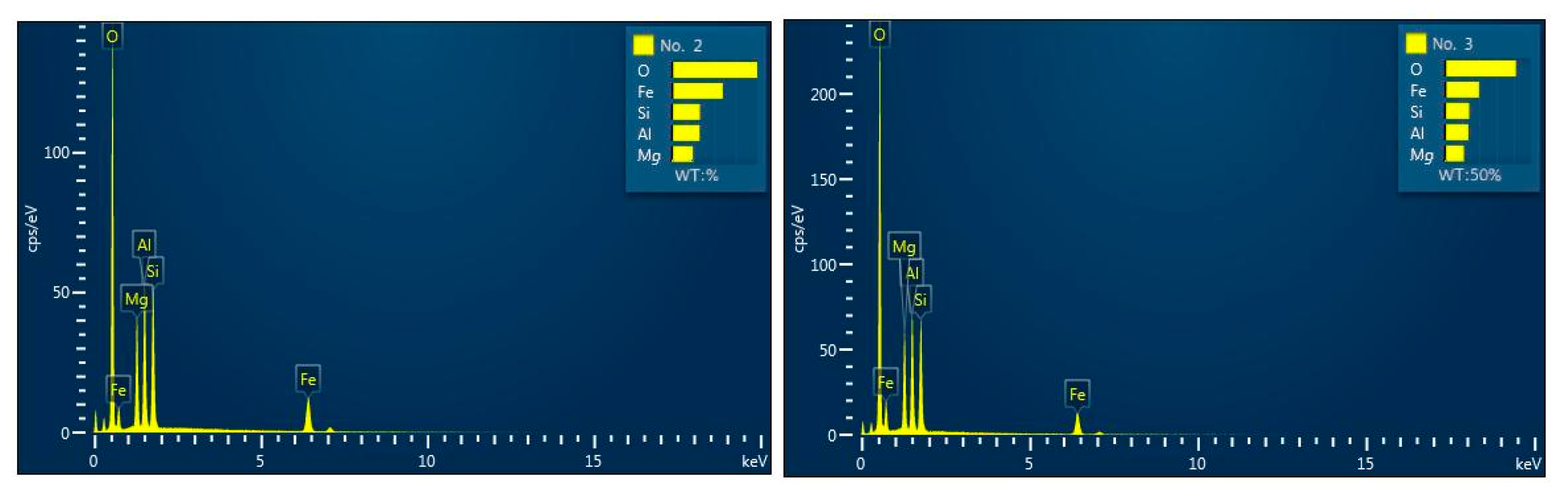
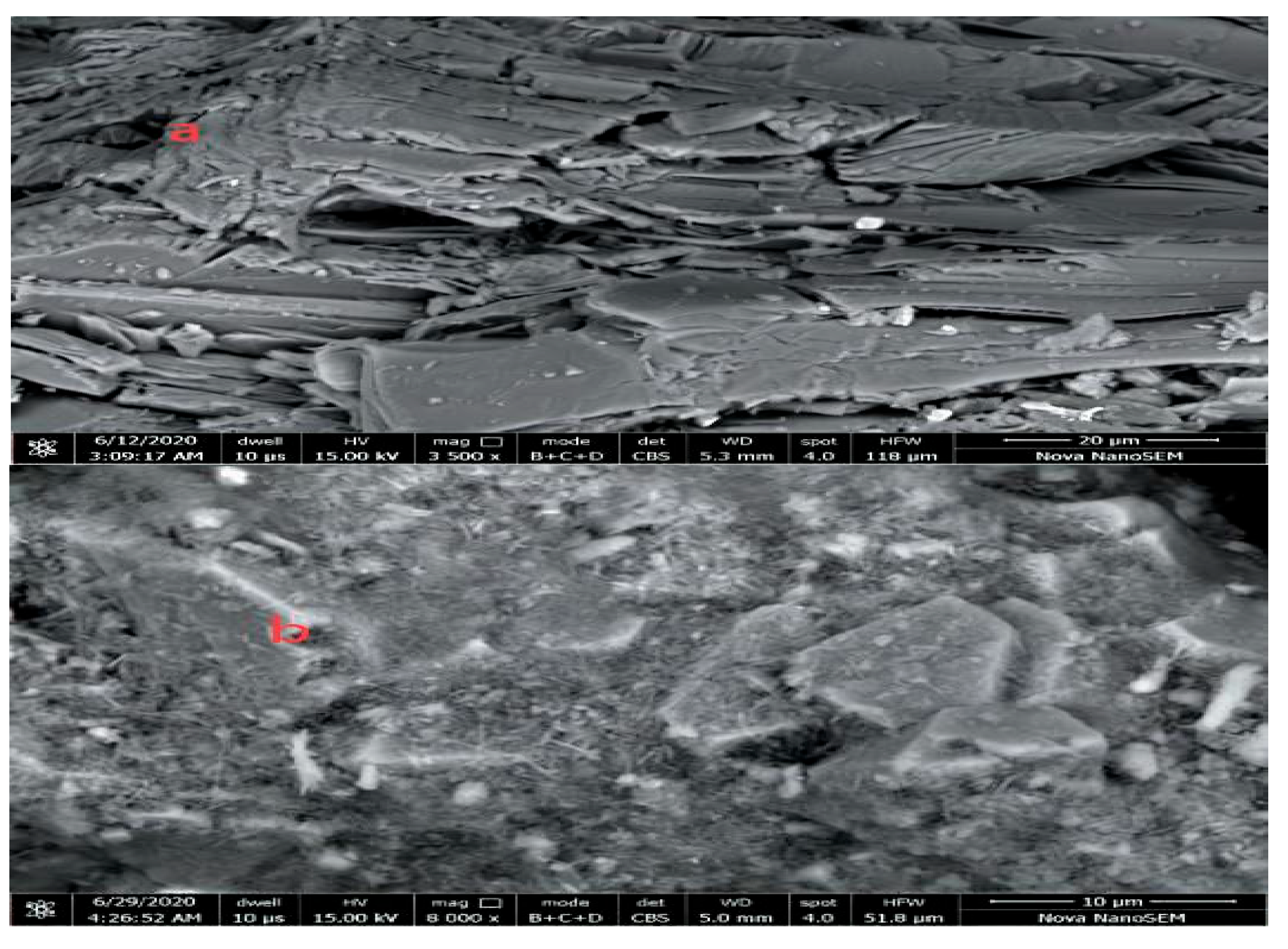
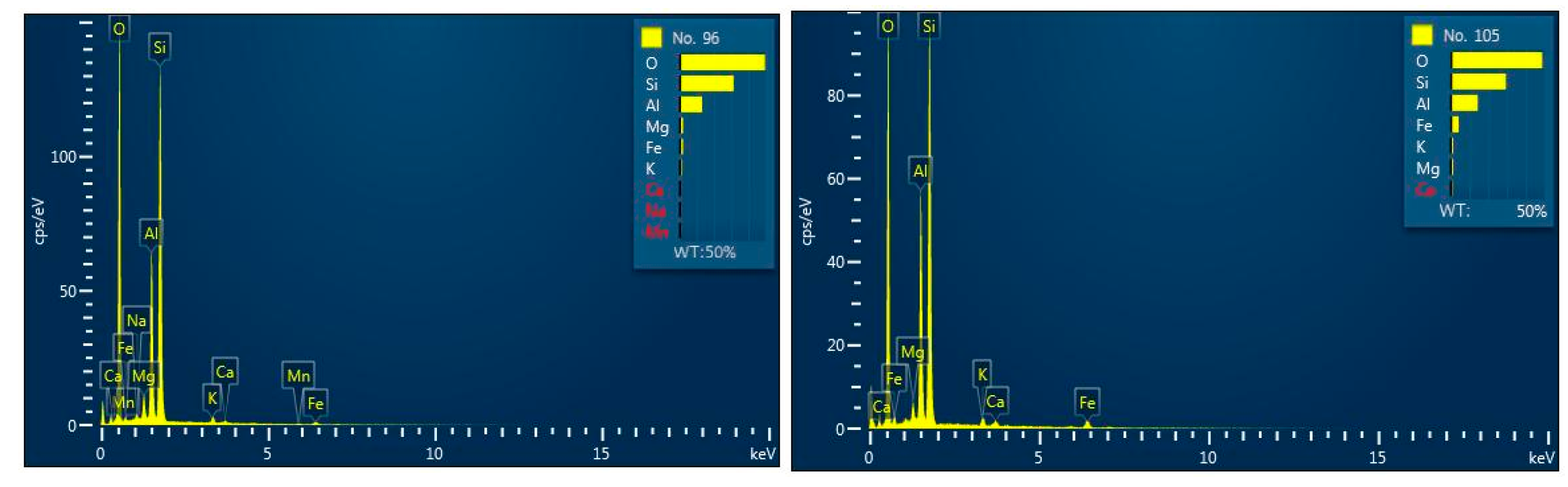
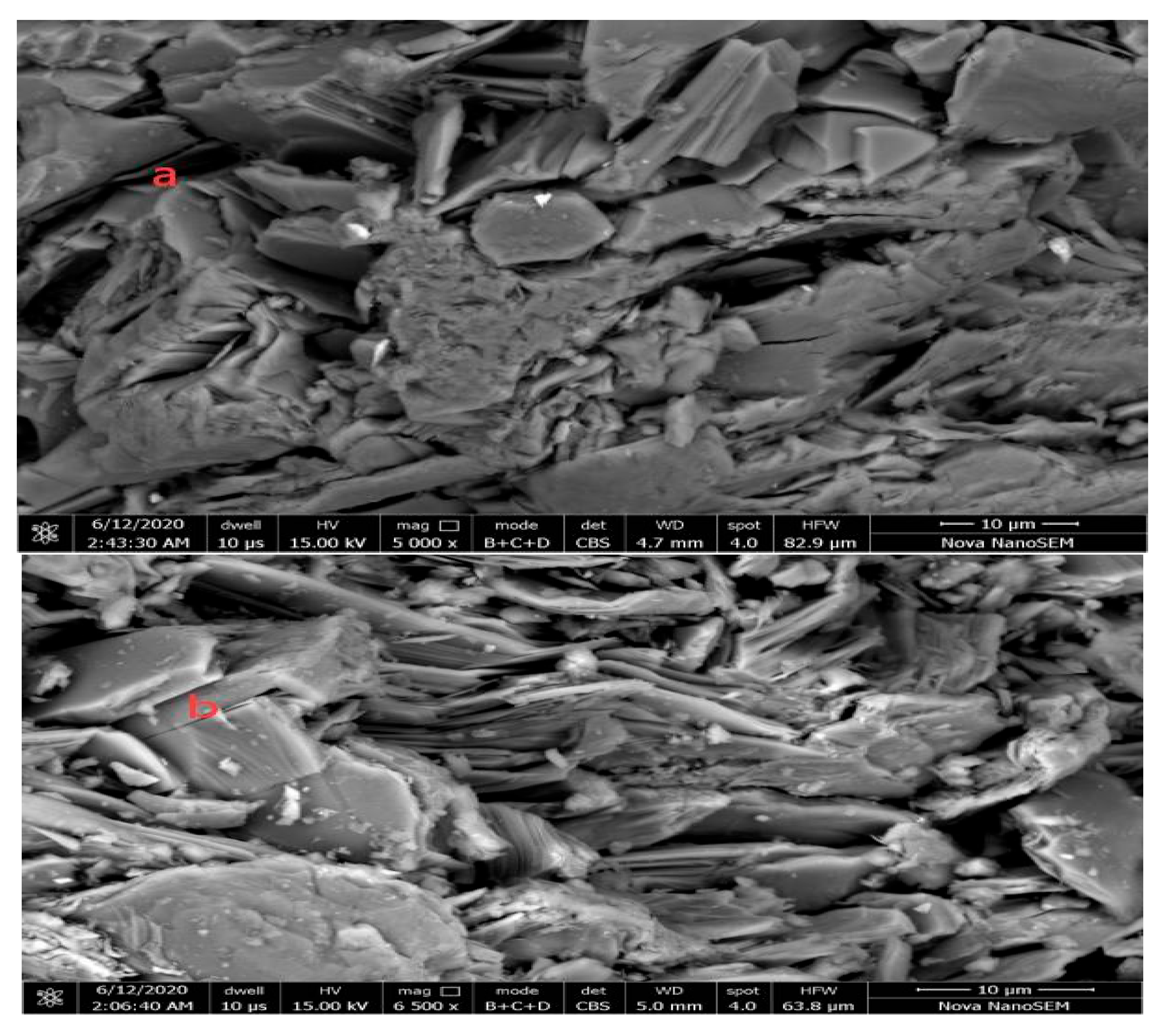
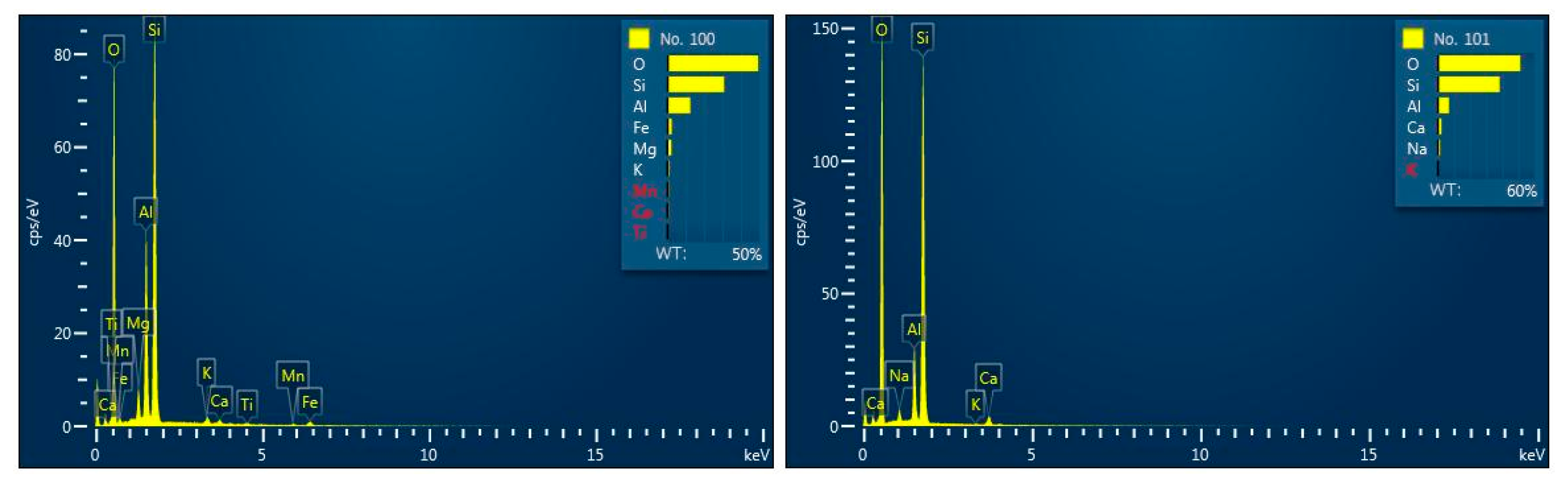
The single-mineral dissolution tests were conducted in a three-phase high-pressure autoclave. The natural single-mineral specimens were crushed and sieved to obtain the 0.25–0.50 mm grain size fraction. The experimental conditions were as follows: HCO3− concentration of 3 g/L, CO2 injection pressure of 1.5 MPa, O2 injection pressure of 1.5 MPa, liquid-to-solid ratio of 3:1, and shaking duration of 90–100 h. Samples were collected at 12 h, 24 h, 48 h, 72 h, and 96 h for chemical analysis. The concentrations of SiO2, Mg2+, Al3+, Ca2+, and Fe in the leaching solution were determined. Additionally, SEM-EDS analysis was performed on the mineral surfaces before and after dissolution to compare morphological changes and elemental composition variations.
2.3.2. Single-Mineral Agitated Leaching Tests
The agitated leaching tests were conducted under the following baseline conditions: ore sample grain size of 0.25–0.50 mm, liquid-to-solid ratio of 3:1, shaking duration of 72 h, and sampling time points of 12 h, 24 h, 48 h, and 72 h. Four sub-experiments were designed to investigate the effects of different chemical parameters on scale formation: (1) effect of bicarbonate concentration; (2) effect of pH on silica scale formation; (3) effect of silicon content on scale formation; and (4) effect of cations on scale formation.
2.3.3. Uranium Ore Column Leaching Tests
Uranium ore was compacted and loaded into a leaching column with a loading height of 40 cm and a fixed bed volume of 450 mL. The leaching agent entered from the bottom of the column and exited from the top (upflow configuration). Prior to the leaching test, the column was preconditioned with deionized water for 16 h, and the treated solution was chemically analyzed to obtain baseline data. The leaching test duration was 150 h. A sampler was used to collect samples at regular intervals, and the following parameters were analyzed: leachate volume, U concentration, pH value, and mass concentrations of Mg, Fe, Ca, Al, and Si ions.
2.3.4. Structural Change Tests of Sandstone Uranium Ore Samples
Intact core samples (diameter: 25.4 mm; length: 50 mm) were collected from the field. The leaching solution was prepared with a HCO3− concentration of 1.15 g/L and a H2O2 concentration of 388 mg/L. A simulated pressure of 0.8 MPa was applied using a triaxial servo testing machine to simulate formation pressure. Comparative structural analyses were conducted on the samples before and after the experiments. Representative elementary volumes were extracted to analyze structural changes, including matrix, mineral, and connectivity pore comparisons.
2.3.5. Field Blockage Material Collection and Analysis
Field blockage materials were collected from three sources at a uranium deposit water metallurgy plant: (1) solid blockage materials from raw solution filter bags; (2) paste-like blockage materials from the upper layer of resin; and (3) scale deposits from the near-ore-layer surface. X-ray fluorescence (XRF) spectroscopy was employed to determine the contents of SiO2, Al2O3, TFe2O3, SO3, CaO, MgO, TiO2, and loss on ignition. Chemical analysis was performed to measure the contents of U, Ca, Mg, Si, Al, and Fe and water content.
2.4. Data Collection and Analysis
Data collection in this study encompassed multiple types of measurements obtained through various analytical techniques. Leaching solution chemical composition was obtained through timed sampling and chemical analysis; mineral surface morphology was observed by SEM; mineral elemental composition was analyzed by EDS spectroscopy; ore sample structural parameters were obtained via CT scanning; and field blockage composition was determined by XRF and chemical analysis.
Data analysis methods included: (1) dissolution degree assessment—evaluated by calculating the change in elemental content (wt.%) before and after leaching; (2) structural change rate calculation—change rate (%) = [(Value_after − Value_before)/Value_before] × 100%; (3) solubility product calculation—Ksp values of various precipitates were calculated based on actual ion concentrations and compared with standard values; and (4) scale formation trend analysis—precipitation behavior was observed by varying a single variable.
2.5. Statistical Methods
This study primarily employed descriptive statistical analysis, including mean calculation (average values of mineral contents from six samples in XRD analysis), change rate calculation (structural parameter comparison before and after), comparative analysis (elemental content before and after dissolution), and trend analysis (ion concentration variation over time).
2.6. Quality Control
To ensure the reliability and reproducibility of the experimental results, the following quality control measures were implemented: (1) standardized sample processing—all ore samples were uniformly crushed and sieved to the 0.25–0.50 mm grain size fraction; (2) baseline data acquisition—the leaching column was treated with deionized water for 16 h prior to column leaching tests; (3) replicate verification—XRD analysis was performed on six ore samples, and average values were calculated; and (4) multi-method cross-validation—laboratory test results were corroborated through CT scanning and field sampling.
Arithmetic mean values were calculated for instrumental replicate measurements of liquid-phase samples. Standard deviation (SD) was computed for datasets with valid replicates. Linear regression was performed using Origin 2024, and the coefficient of determination R2 was applied to assess fitting quality. Owing to the lack of independent parallel leaching runs for time-series autoclave experiments, statistical significance tests were not carried out.
4. Discussion
4.1. Dissolution Mechanism Analysis of Clay Minerals
After contact between the leaching agent and reservoir minerals, the dissolution reaction follows a progressive process from surface to interior. First, M-O bonds (M = Ca, Mg, Al, Fe, etc.) and Si-O bonds on the mineral surface break, causing surface dissolution of the rock; subsequently, O-Si-O, O-Ca-O, and O-Mg-O bonds inside the rock are gradually destroyed, leading to rock structure disintegration; simultaneously, divalent metal-ion exchange reactions with Na
+ and K
+ occur on mineral microparticle surfaces, with divalent metal ions entering the solution system [
18].
The following reactions are schematic representations for qualitative illustration of mineral dissolution processes; only selected reactions are strictly mass- and charge-balanced for thermodynamic calculation.
The specific dissolution reactions of each clay mineral are as follows:
Clay-mineral dissolution plays an important role in pore-throat evolution during leaching. First, regarding the dissolution reaction of kaolinite:
Al4[SiO4](OH)8·nH2O + H+ → Al3+ + SiO32− + H2O
After kaolinite dissolution, silicon enters the aqueous solution and exists in multiple dissolved silicate species, such as Si(OH)4, HSiO3− and SiO32−, during migration, according to aqueous-silicon chemistry theory. Next comes the dissolution reaction of illite:
(K,H3O+)(Al,Mg,Fe)2[(Si,Al)4O10](OH)2 + H+ → K+ + Al3+ + Fe3+ + Mg2+ + SiO32−
For montmorillonite, its dissolution reaction is expressed as:
(Na,Ca)m(Al,Mg,Fe)2[(Si,Al)4O10](OH)2·nH2O + H+→Al3+ + SiO32− + H2O + Na+ + K+ + Ca2+ + Fe3+ + Mg2+
Finally, the dissolution reaction of chlorite can be written as:
(Mg,Al,Fe)3(Si,Al)4O10(OH)2 + H+ → Al(OH)3 + Fe2+ + Fe3+ + Mg2+ + SiO32− + K+
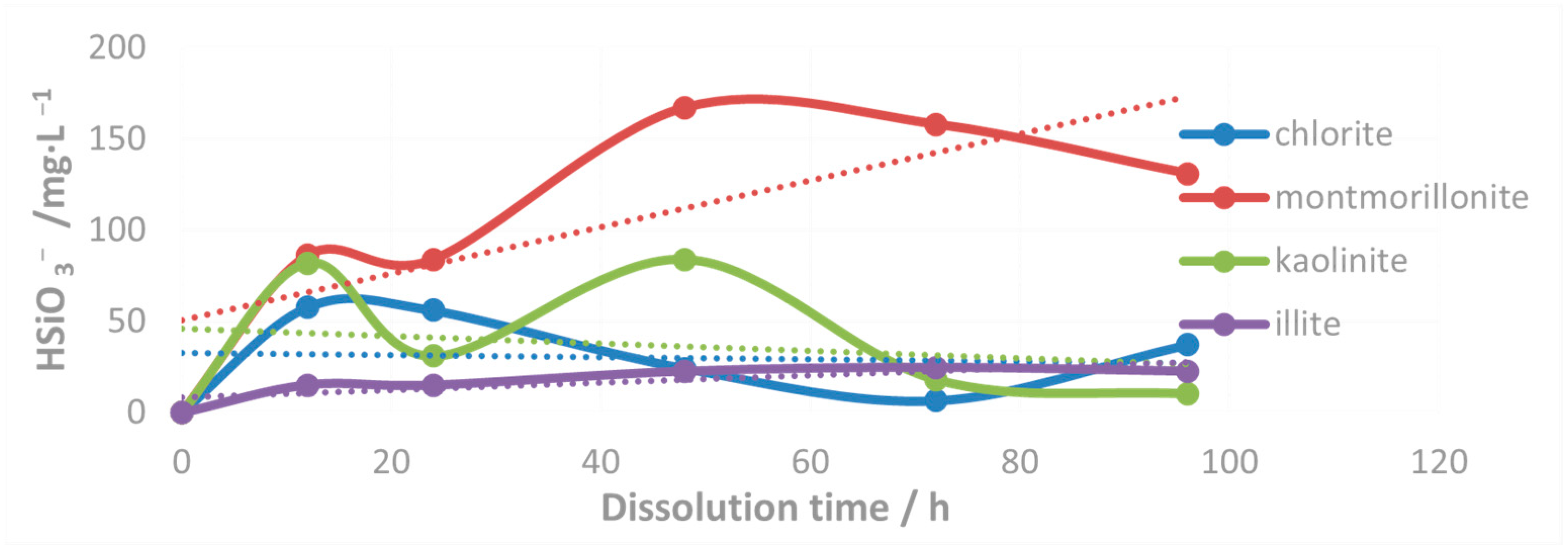
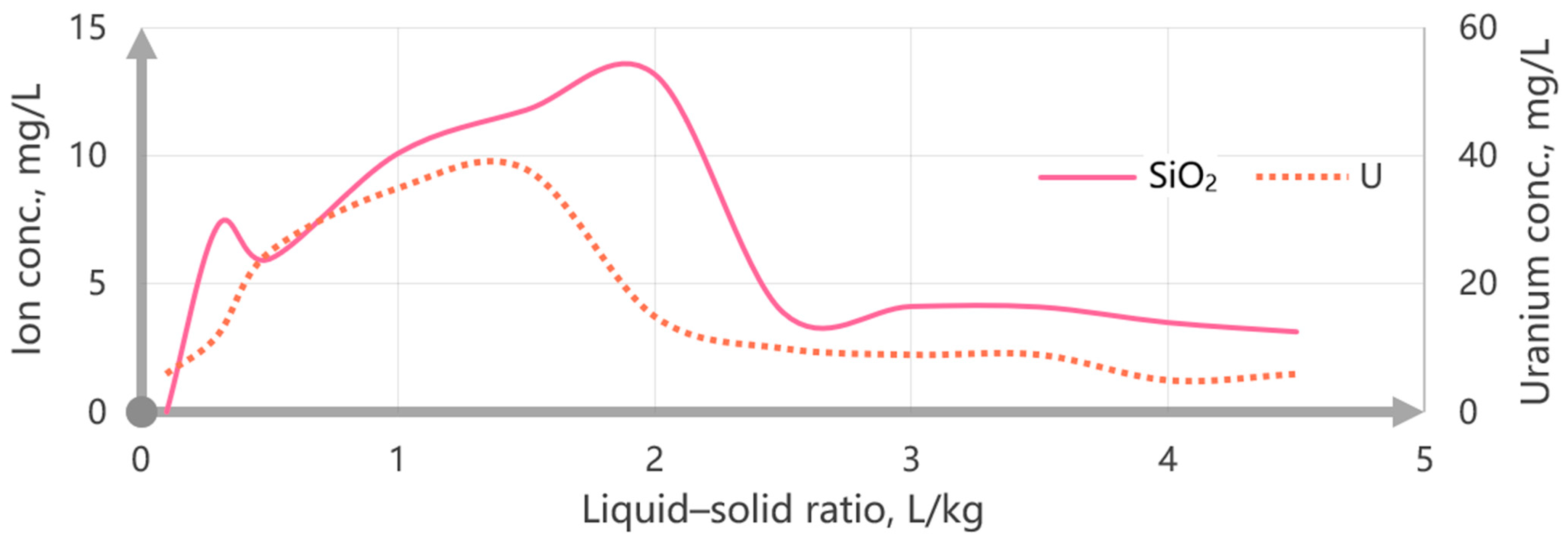
From the above reactions, after contact between the leaching agent and reservoir minerals, M-O bonds and O-Si-O bonds on the mineral surface first break, followed by destruction of internal M-O bonds and O-Si-O bonds, accompanied by divalent metal-ion exchange reactions with K+ and Na+, ultimately transforming minerals into soluble species or microparticles entering the formation fluid. Mineral soluble species mainly exist in the formation fluid as HSiO3−, Si(OH)4, Na+, K+, Ca2+, Fe2+, Mg2+, Al(OH)3, and AlO33− ions or migrate in suspension as hydroxides and mineral microparticles. Therefore, with extended injection time and increased leaching agent injection volume, silicon in the reservoir is continuously dissolved, with silicon concentration showing an increasing trend.
4.2. Comparison of Dissolution Degree Among Four Clay Minerals
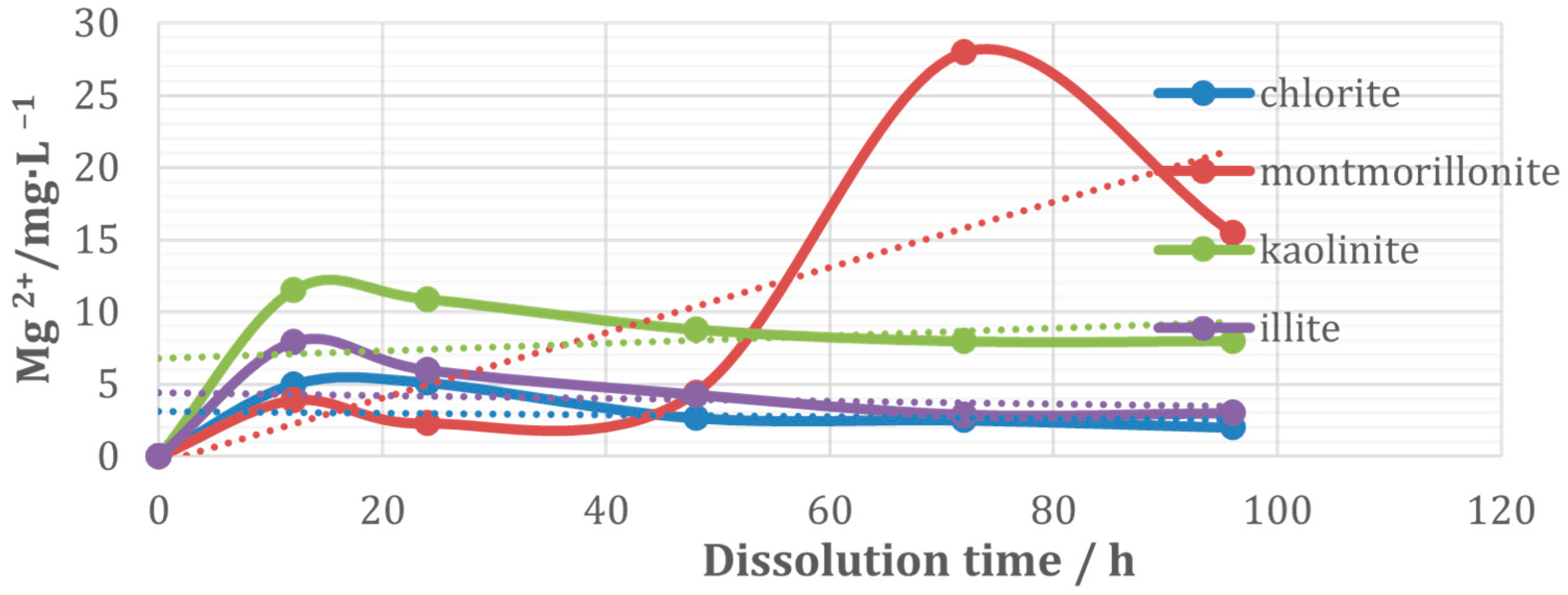
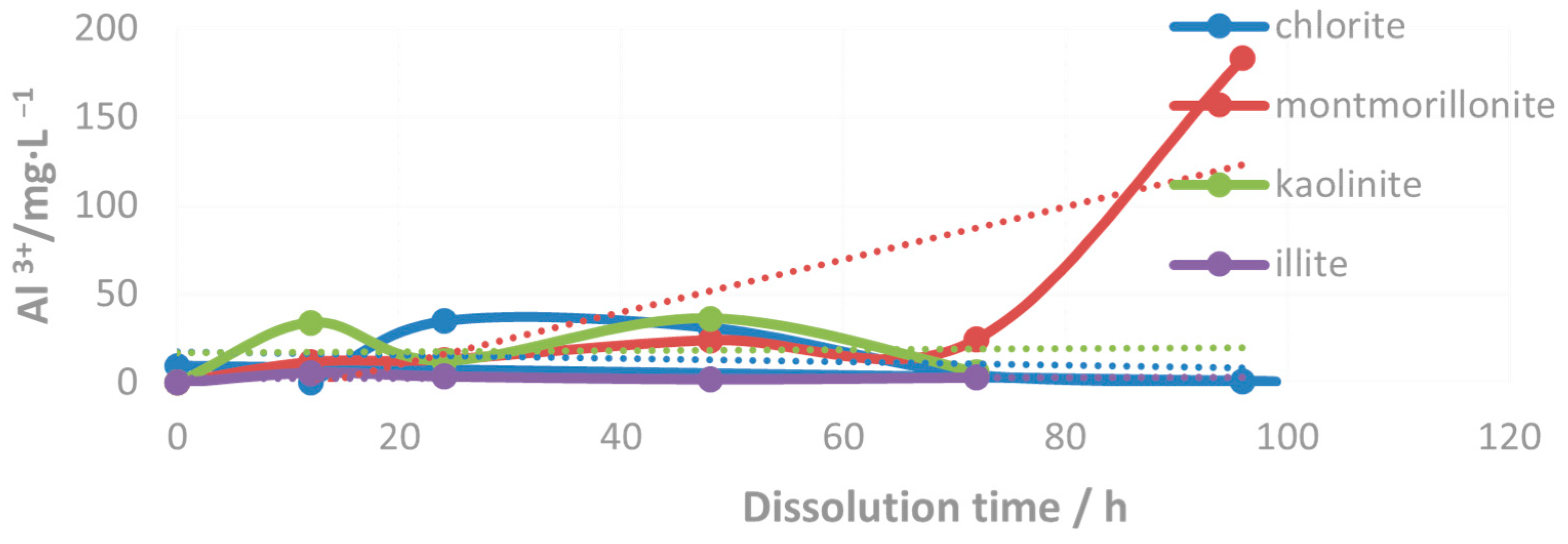
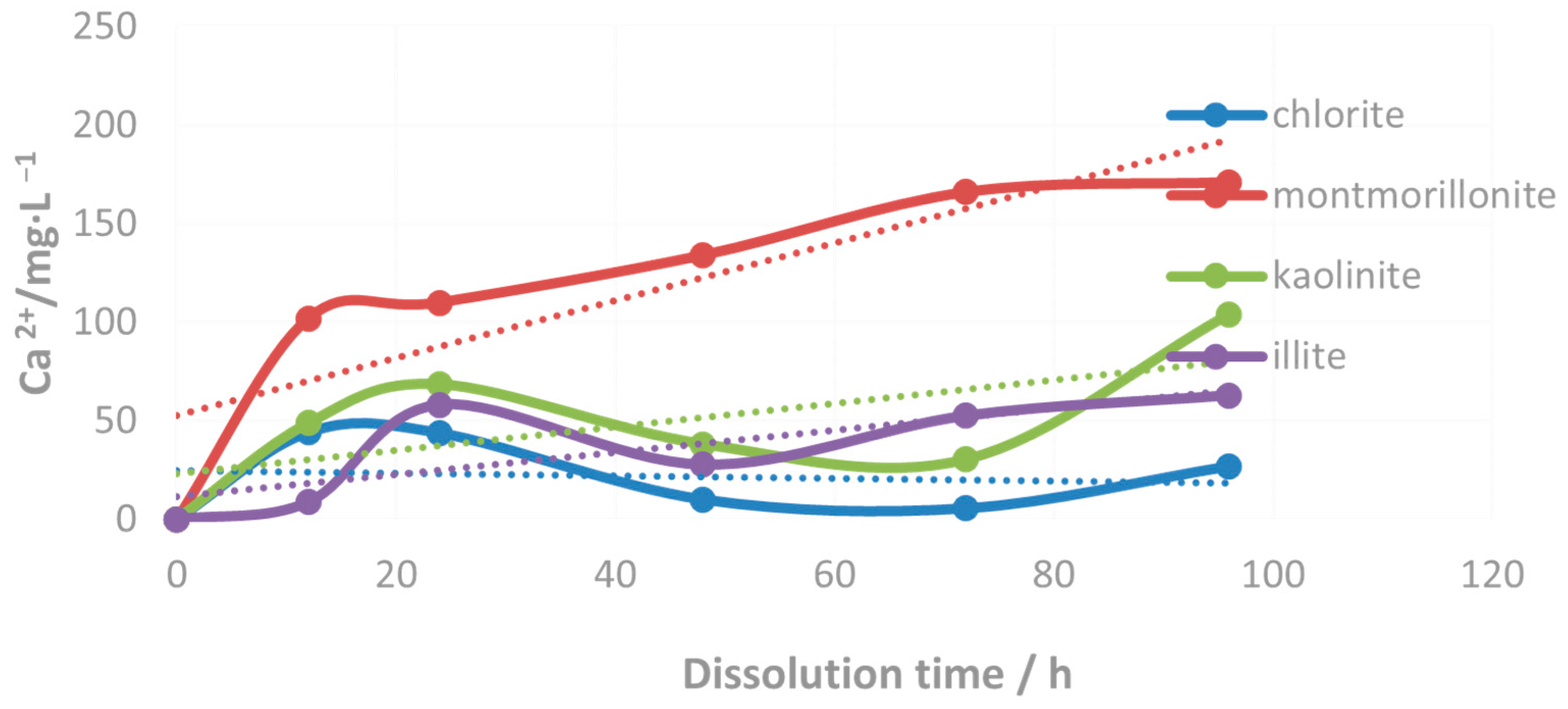
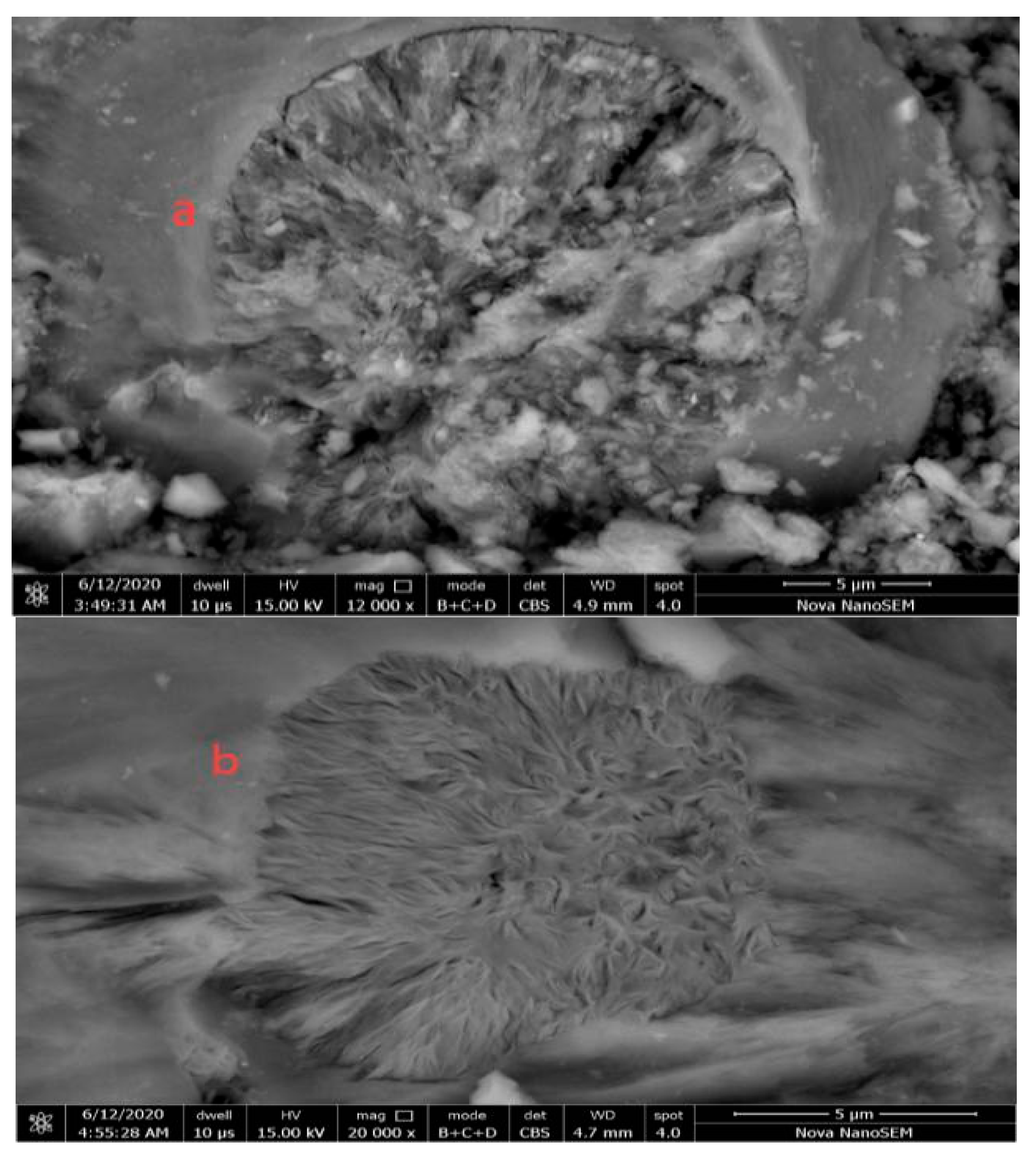
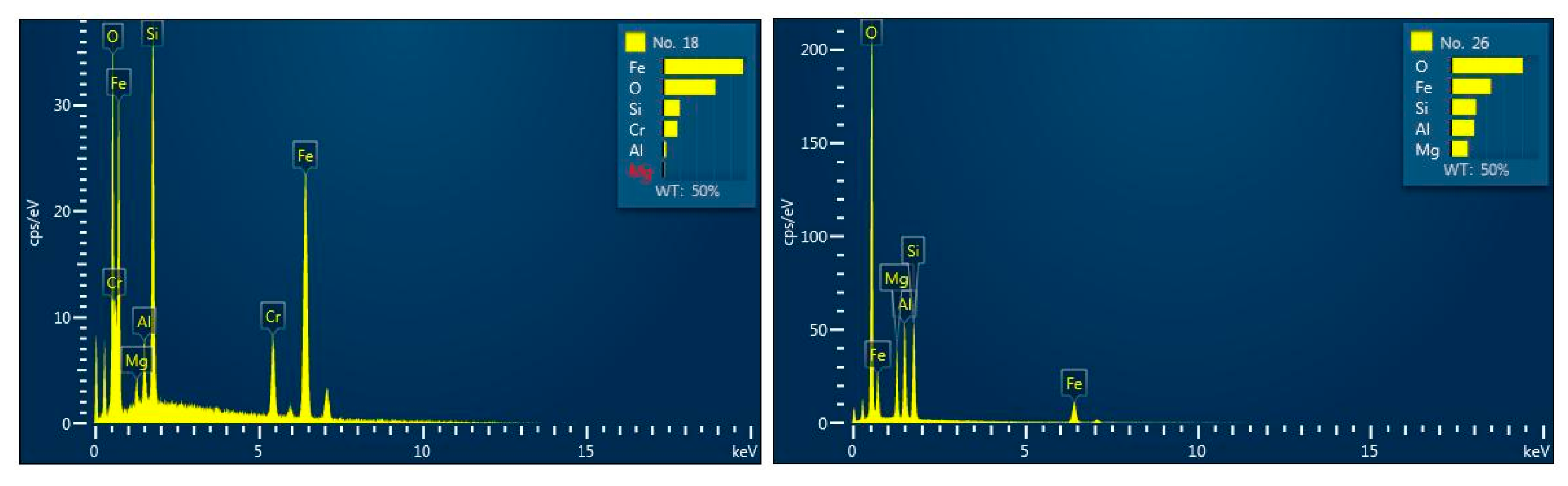
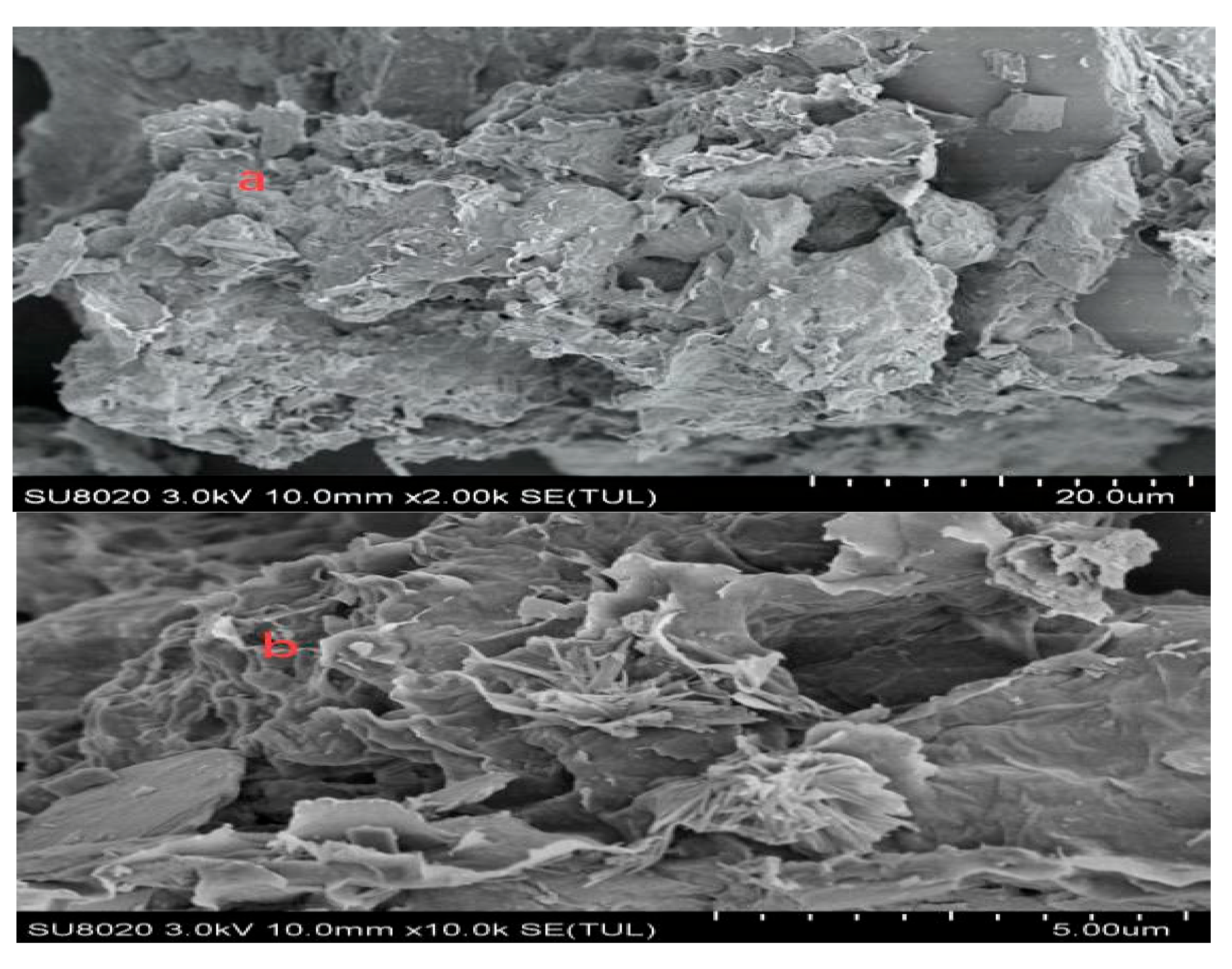
From the total dissolved ion release and elemental content changes, the dissolution activity of the four clay minerals shows significant differences. Montmorillonite exhibits the most significant dissolution, with granular deposits rich in Ca and Si formed on its surface, inferred to be Ca-Si-rich precipitates, potentially associated with calcium silicate phases. Montmorillonite is a 2:1-type layered silicate mineral with lattice substitution phenomena; interlayer attraction is mainly represented by van der Waals forces, which are relatively weak, allowing water molecules to easily enter the interlayers, with numerous exchangeable cations. These structural characteristics give it the highest dissolution activity under CO2+O2 leaching conditions.
Although illite showed the largest decrease in SiO2 content after dissolution (−11.4%), its absolute content change was still smaller than that of montmorillonite. Illite is a 2:1-type layered silicate mineral with electrostatic forces between crystal layers, relatively strong attraction, and water molecules not easily entering the interlayers, which to some extent limits its dissolution degree. Kaolinite is a 1:1-type layered silicate mineral with strong hydrogen bonding between layers, tightly connected crystal layers, no lattice substitution, and extremely few exchangeable cations, resulting in the lowest dissolution degree. Chlorite is rich in iron–magnesium components, with Fe2O3 and MgO contents decreasing by 2.9% and 2.08% respectively during dissolution. Its acid-sensitive characteristics make it prone to releasing Fe3+ under acidic leaching conditions, subsequently forming iron hydroxide precipitates.
4.3. Analysis of Ore-Layer Blockage Mechanism
This study confirms that montmorillonite is the main source of clogging substances. Long-term closed circulation of injection and extraction leads to precipitate accumulation, exerting a significant impact on the uranium-leaching system. The formation mechanism of ore-layer blockage can be understood from three levels:
First, at the underground ore-layer level, Si, Al, Ca, Fe, Mg, and other ions released by clay-mineral dissolution migrate through porous media. Due to changes in pressure, flow velocity, and chemical conditions, these species precipitate. The calculated solubility product of CaCO3 is markedly higher than the standard value, indicating that it is in a supersaturated state and highly prone to precipitation at pore throats, causing pore blockage.
Second, at the surface treatment system level, silica gel and metal hydroxide/carbonate precipitates carried in the leaching solution accumulate on filter cloths and resin surfaces, forming caked deposits. Field verification showed that filter bag scale and backwash tower flocculent precipitates contained relatively high contents of Si, Al, Ca, and Fe, with water contents of 91.13% and 75.37% respectively, indicating that these materials have colloidal characteristics and are prone to adhesion and accumulation.
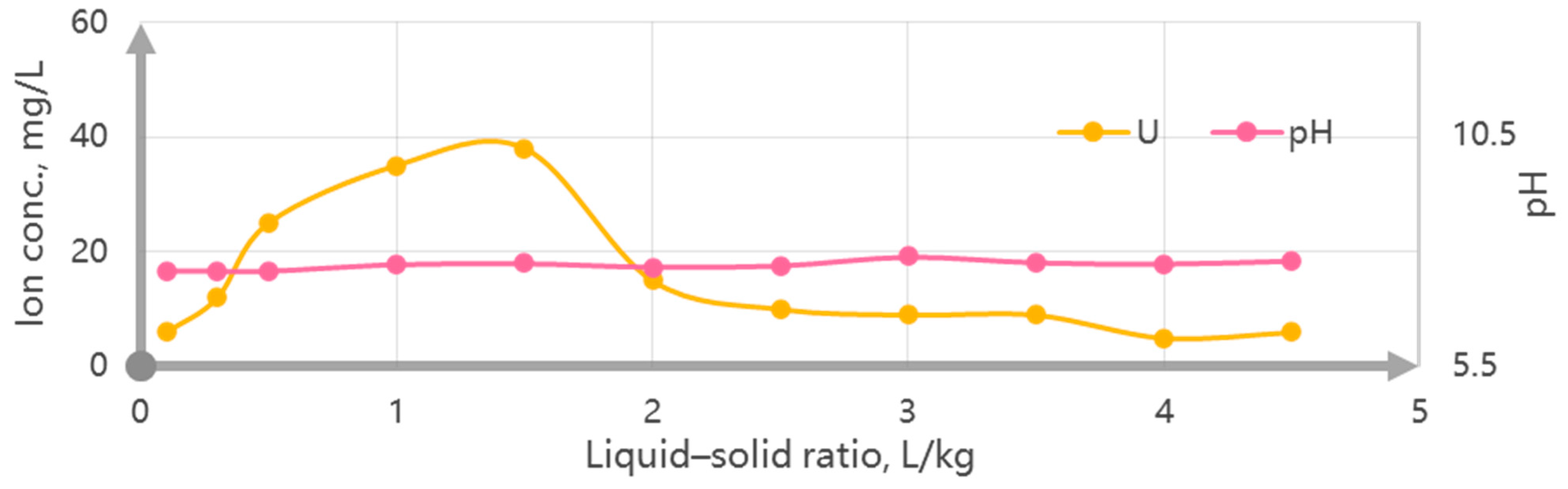
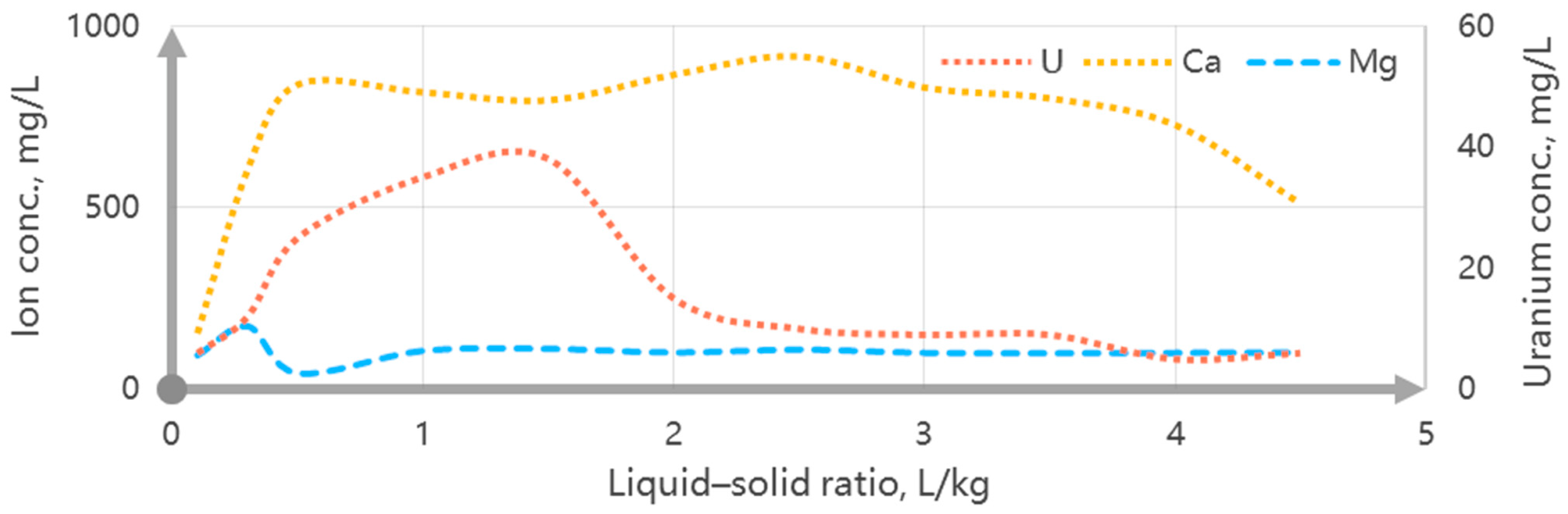
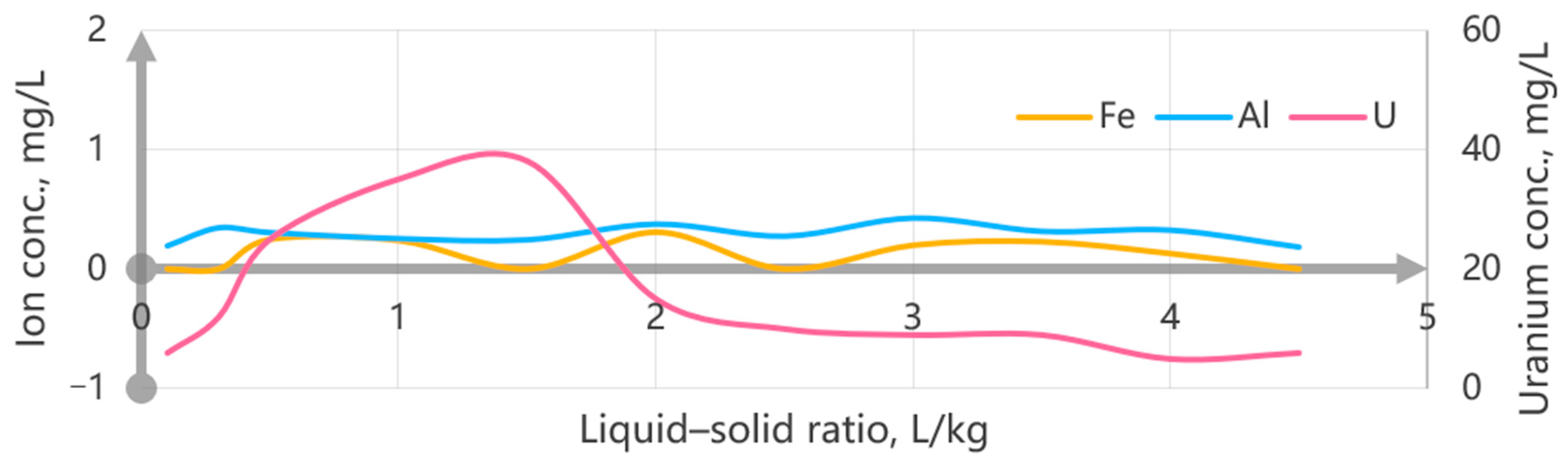
Third, temporal asynchrony exists between the rapid release of Si, Ca, and Mg in the early stage and their slow release in the later stage, suggesting that dissolution follows two-stage kinetics. A two-stage dissolution kinetic model for clay minerals under CO2+O2 conditions is proposed: Stage 1 (before liquid-to-solid ratio reaches 1.5): surface-controlled rapid dissolution, where Si-O-M bonds (M = Si, Al, Fe, Mg) break rapidly and the dissolution rate is controlled by surface reaction kinetics; Stage 2 (after liquid-to-solid ratio has surpassed 1.5): diffusion-controlled slow dissolution, where reaction products (e.g., silica gel and Al/Fe hydroxides) accumulate on the mineral surface, forming a diffusion boundary layer, and solute transport shifts to diffusion control, markedly reducing the dissolution rate.
This model provides a theoretical framework for understanding the spatiotemporal evolution of ore-layer blockage during long-term operation.
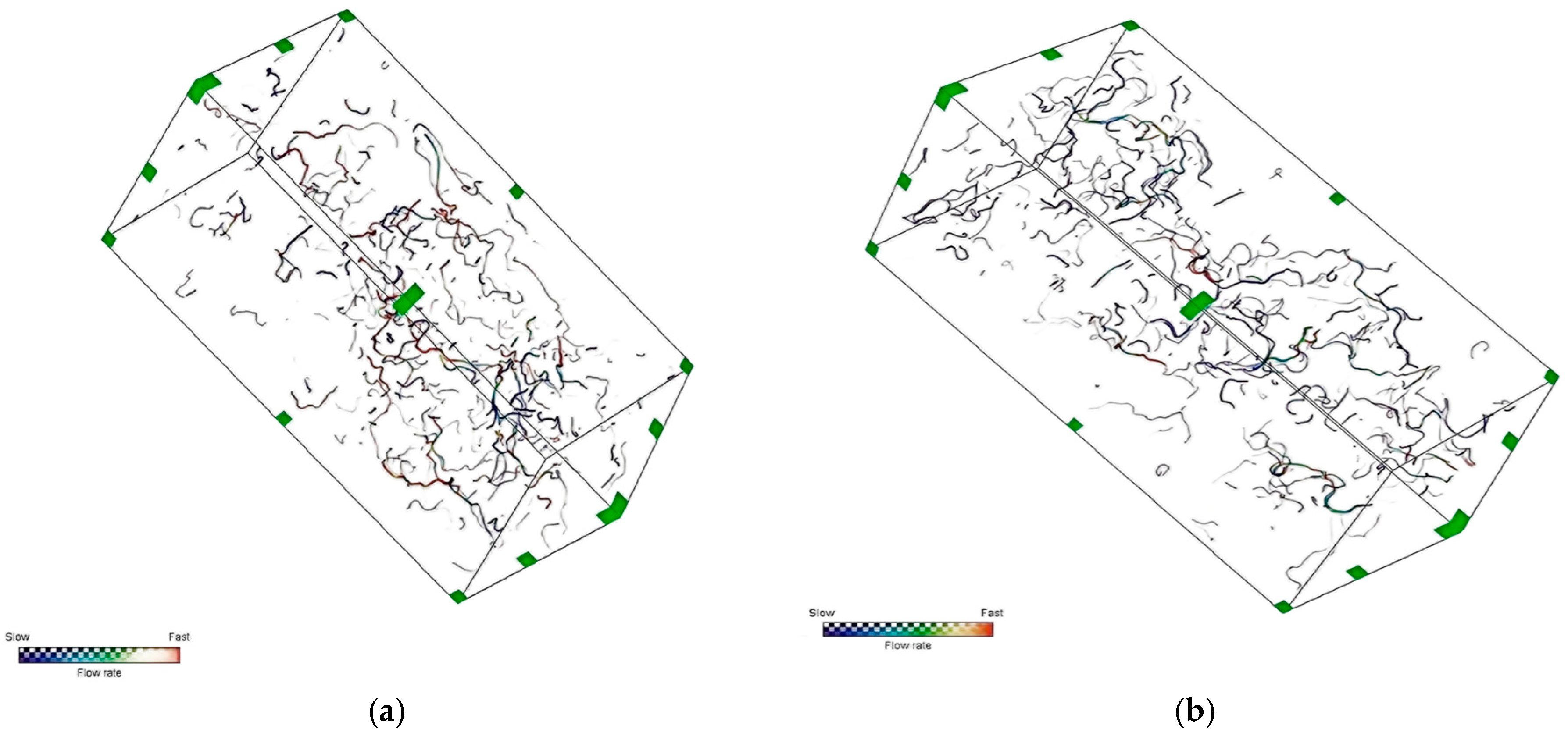
The proportion of larger pore throats and pore diameters decreased, while the proportion of small pore throats and pore diameters increased, indicating that chemical precipitates preferentially blocked well-connected large pores, making fluid migration paths more tortuous.
4.4. Comparison with Existing Studies
Mineral alteration and secondary mineral precipitation are widely accepted as primary triggers for ore-bearing-formation permeability impairment during uranium in situ leaching, threatening production efficiency of sandstone-type uranium deposits. A large number of experimental and field observations have demonstrated that water–rock interactions can generate multiple pore-clogging products under different leaching media. Under acid-leaching conditions, feldspar dissolution–alteration into clay-rich assemblages and gypsum crystallization are two well-documented clogging pathways, which can significantly reduce reservoir porosity and seepage capacity. Secondary gypsum precipitates are regarded as some of the most intractable chemical clogging products for acid-ISL operations worldwide [
19].
For neutral CO2+O2 in situ leaching systems, hydrochemical variables including bicarbonate concentration, pH, and Eh jointly govern uranium dissolution, migration, and secondary-mineral-precipitation risks. Existing experimental and case investigations mainly focus on pyrite geochemical responses and coffinite-uranium mineral dissolution, as well as permeability damage induced by carbonate precipitation in sandstone uranium aquifers. Most published interpretations attribute pore clogging predominantly to carbonate precipitates, gypsum, or feldspar-derived alteration assemblages.
Clay-mineral-related reservoir-damage mechanisms have been emphasized in petroleum and hydrogeology research, where particle migration, swelling and re-deposition deteriorate porous-media conductivity. Nevertheless, within the field of neutral-condition uranium CO2+O2 in situ leaching, far less attention has been paid to the contribution of clay-mineral dissolution–migration to permeability deterioration. Few published works systematically distinguish the clogging risks originating from different clay phases, especially smectite-group montmorillonite, in neutral CO2-rich groundwater environments.
Through systematic laboratory experiments combined with field-scale verification evidence, the present study identifies montmorillonite as the dominant dissolved and clogging-causing substance under CO2+O2 neutral-leaching conditions. This finding supplements current understandings of reservoir-blockage mechanisms for sandstone-hosted uranium deposits and fills the specific research gap regarding clay-driven permeability evolution during neutral in situ leaching exploitation.
4.5. Research Limitations
This study is mainly based on laboratory simulation experiments. Although corroborated through field verification, the complexity of actual field geological conditions (such as temperature gradients, pressure fluctuations, and microbial effects) has not been fully simulated. Furthermore, monitoring data for long-term dynamic dissolution processes still need to be accumulated. Future research could consider conducting long-term field monitoring experiments to obtain more comprehensive dynamic dissolution data.
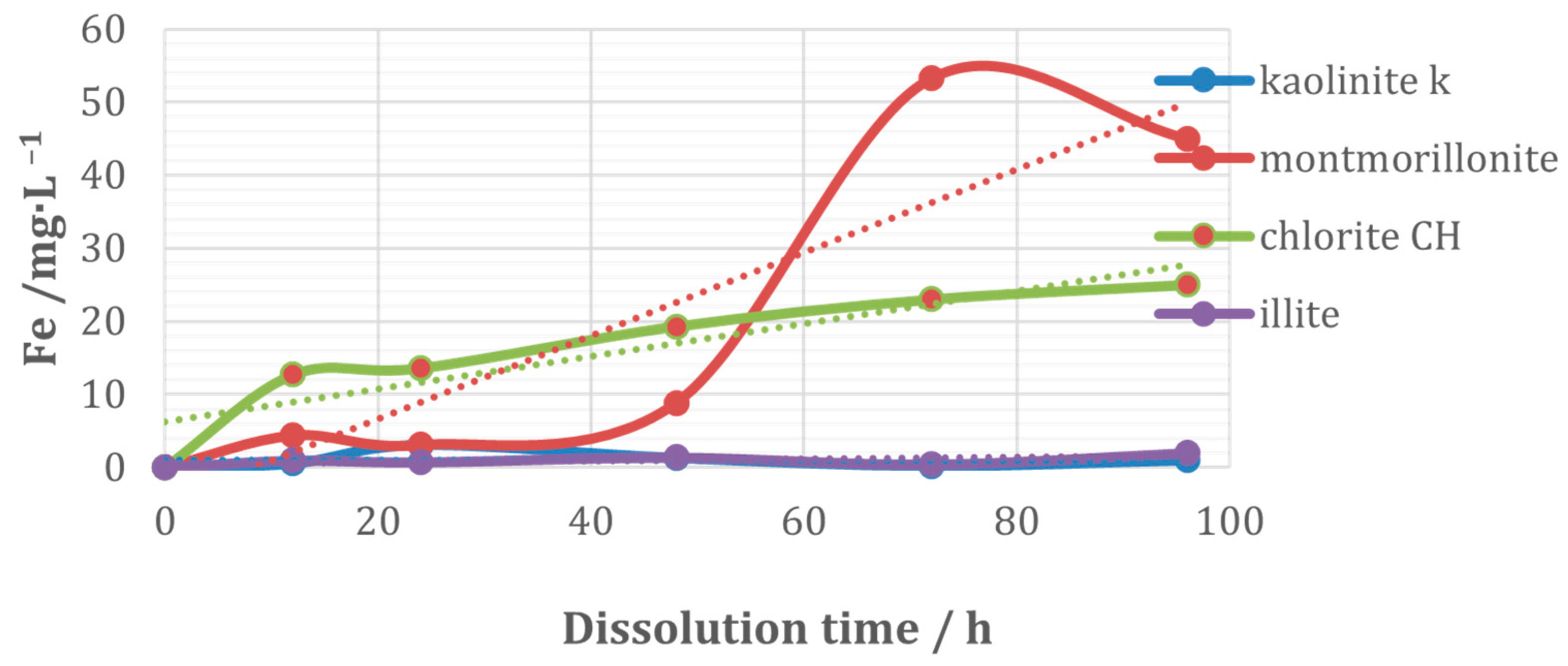
In terms of leaching experiments, the time-series autoclave leaching tests (
Figure 1,
Figure 2,
Figure 3,
Figure 4 and
Figure 5) were performed as single experimental runs without independent parallel leaching replicates. Although each liquid sample was measured two–three times for elemental analysis to ensure instrumental analytical precision, error bars representing overall experimental variability cannot be provided. The silicon-peak-and-subsequent-decline trend is supported by auxiliary SEM-EDS observations of solid leaching residues. Future work will implement multiple independent parallel leaching experiments to further verify this temporal variation trend.
5. Conclusions
(1) Sandstone uranium deposits in China belong to high clay-content deposits, with four main clay minerals: montmorillonite, chlorite, kaolinite, and illite. Under CO2+O2 leaching conditions, all cementing clay minerals can undergo dissolution reactions, with montmorillonite producing the most clogging substances after dissolution.
(2) During leaching, montmorillonite dissolved the cementing materials between sand grains. Granular deposits were found on the mineral surface, with high Ca and Si elemental contents determined by EDS, inferred to be Ca-Si-rich precipitates, potentially associated with calcium silicate phases. The concentrations of Si, Mg, Al, and Ca ions released by montmorillonite dissolution were all markedly higher than those of the other three minerals, making it the primary source of dissolved species.
(3) When the liquid-to-solid ratio exceeded 1 during leaching experiments, some components exceeded the solubility product constant, and calcium carbonate precipitates readily formed in the solution. The calculated solubility product of CaCO3 (3.34 × 10⁻⁷) was markedly higher than the standard Ksp (3.36 × 10⁻⁹), indicating that it was in a supersaturated state and was the main cause of ore-layer blockage. The CT scanning of ore samples showed that the structure and physical properties of clay minerals in the ore changed markedly before and after leaching, with porosity decreasing by approximately 12.96%, permeability decreasing by approximately 10.16%, and tortuosity increasing by approximately 1.58%.
(4) Field verification showed that scale on the near-ore-layer surface, filter cloth blockage materials, and caked deposits on the upper resin layer surface had relatively high contents of Ca, Si, and Fe. After long-term closed operation and accumulation, these materials have negatively affected ISL site operations. The blockage materials were mainly CaCO3, H4SiO4 and Fe(OH)3 precipitates, and the test results showed that their sources were closely related to clay dissolution and leaching.
(5) The research findings provide a theoretical basis for anti-clogging and permeability enhancement in CO2+O2 ISL operations. It is recommended that in actual production, the monitoring of ore layers with high montmorillonite content be strengthened and leaching agent formulation and injection–extraction circulation systems be optimized to reduce the accumulation of clogging substances and ensure the stability of production operations.