Municipal Sludge Resource Recovery: Technologies, Challenges, and Future Directions



Abstract
1. Introduction
2. Physicochemical Characteristics and Environmental Risks
2.1. Physical Properties

| Parameter | Primary Sludge | Waste Activated Sludge | Digested Sludge | Dewatered Sludge (80% Moisture) |
|---|---|---|---|---|
| Moisture content (%) | 95–97 | 98–99.5 | 94–96 | 70–85 |
| Particle size (μm) | 50–200 | 10–50 | 10–100 | — |
| Density (g/cm3) | 1.01–1.03 | 1.02–1.05 | 1.03–1.06 | 1.2–1.6 |
| Apparent viscosity (mPa·s) | 10–100 | 50–1000 | 20–200 | — |
2.2. Chemical Composition

2.3. Emerging Contaminants
2.4. Pathogenic Microorganisms
3. Current State of Research on Sludge Treatment Technologies
3.1. Classification and Overview
3.2. Anaerobic Digestion
3.3. Pyrolysis-Carbonization and Thermal Activation Technology

3.3.1. Thermal Activation for Sludge-Based Activated Carbon Production
3.3.2. Effect of Pyrolysis Parameters on Biochar Properties
3.3.3. Co-Pyrolysis with Biomass
3.3.4. Pyrolysis for Emerging Contaminant Removal
3.4. Ozonation for Sludge Reduction and Dewatering Enhancement
3.4.1. Microbubble and Ultrafine Bubble Ozonation
3.4.2. Synergistic Ozone-Based Processes
3.4.3. Full-Scale Applications and Economics
| Application | Ozone Dosage | Sludge Reduction | Net Cost Saving |
|---|---|---|---|
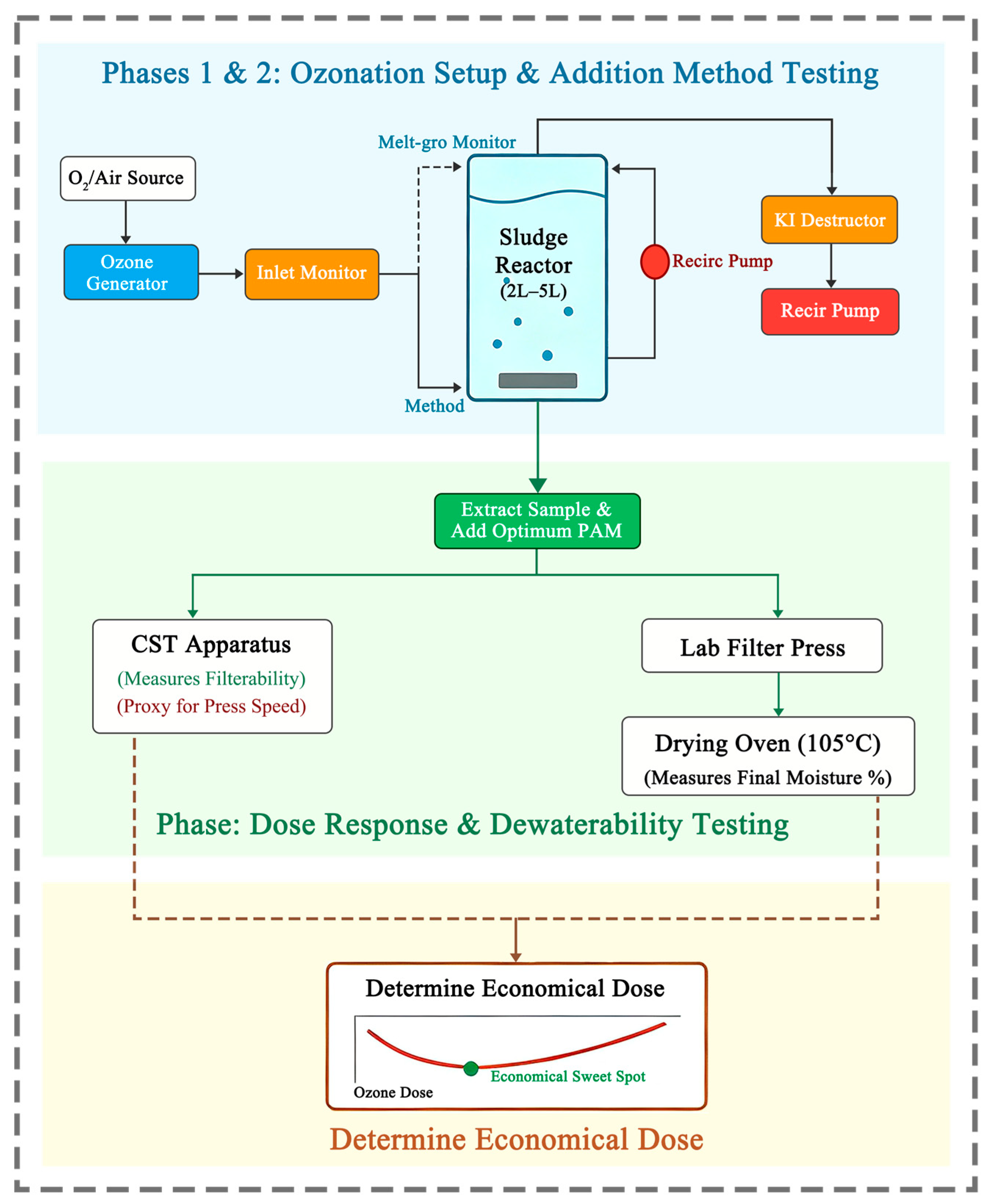
| RAS ozonation (30%) | 0.55 kg O3/h | 50% | 66.6 €/d |
| RAS ozonation (30%) | 0.80 kg O3/h | 75% | 109.9 €/d |
| Full-scale WWTP | Low dose | 10% annual | 2.3 €/t DS |
| Technology | Ozone Dosage | Key Performance | Advantages |
|---|---|---|---|
| Conventional ozonation | 11–90 mg O3/g MLSS | Up to 90% reduction | Mature, proven |
| Microbubble ozonation | −25 mg O3/g MLSS | 95.1% MLSS removal; D50: 150 → 17 µm | High efficiency, floc disruption |
| Ultrafine bubble ozonation | 15 mg O3/g MLSS | 80% bacteria death; 75% COD reduction | Lowest O3 dose |
| O3/PMS advanced oxidation | 30 mg O3/g TS + 0.4 mmol/g TS PMS | CST: 70.5 → 26.7 s; Moisture: 81.93% → 65.65% (19.9% relative reduction) | Synergistic, dual radicals |
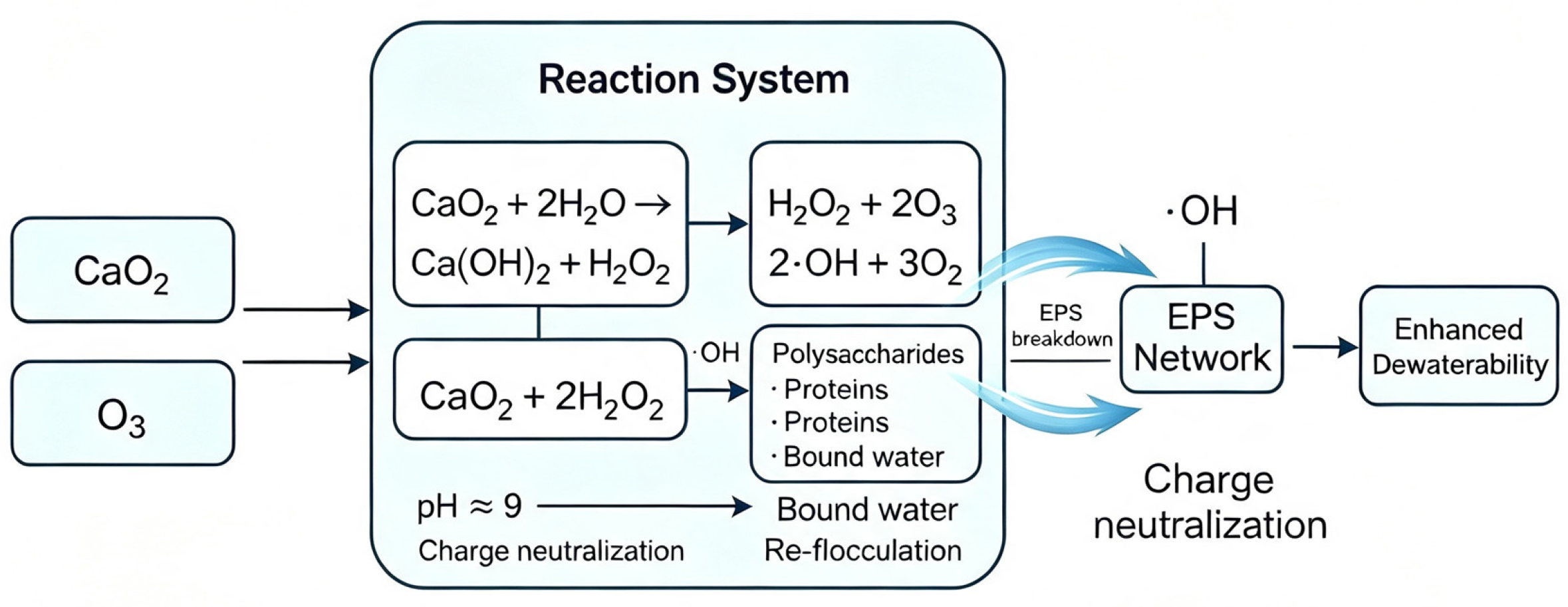
| CaO2/O3 catalytic oxidation | 2 g/h O3 + 1 g/L CaO2 | Wc: 85.7 → 46.5% | High dewatering |
| O3 + chitosan | 60 mg O3/g TS + 20 mg/g TS chitosan | Wc < 60%; Calorific value +14% | Improved fuel value |
3.5. Hydrothermal Carbonization
4. Pathways for Resource Utilization
4.1. Energy Utilization
4.2. Material Application
4.2.1. Building Materials
4.2.2. Adsorption Materials and Soil Amendment

4.3. Metal and Element Recycling
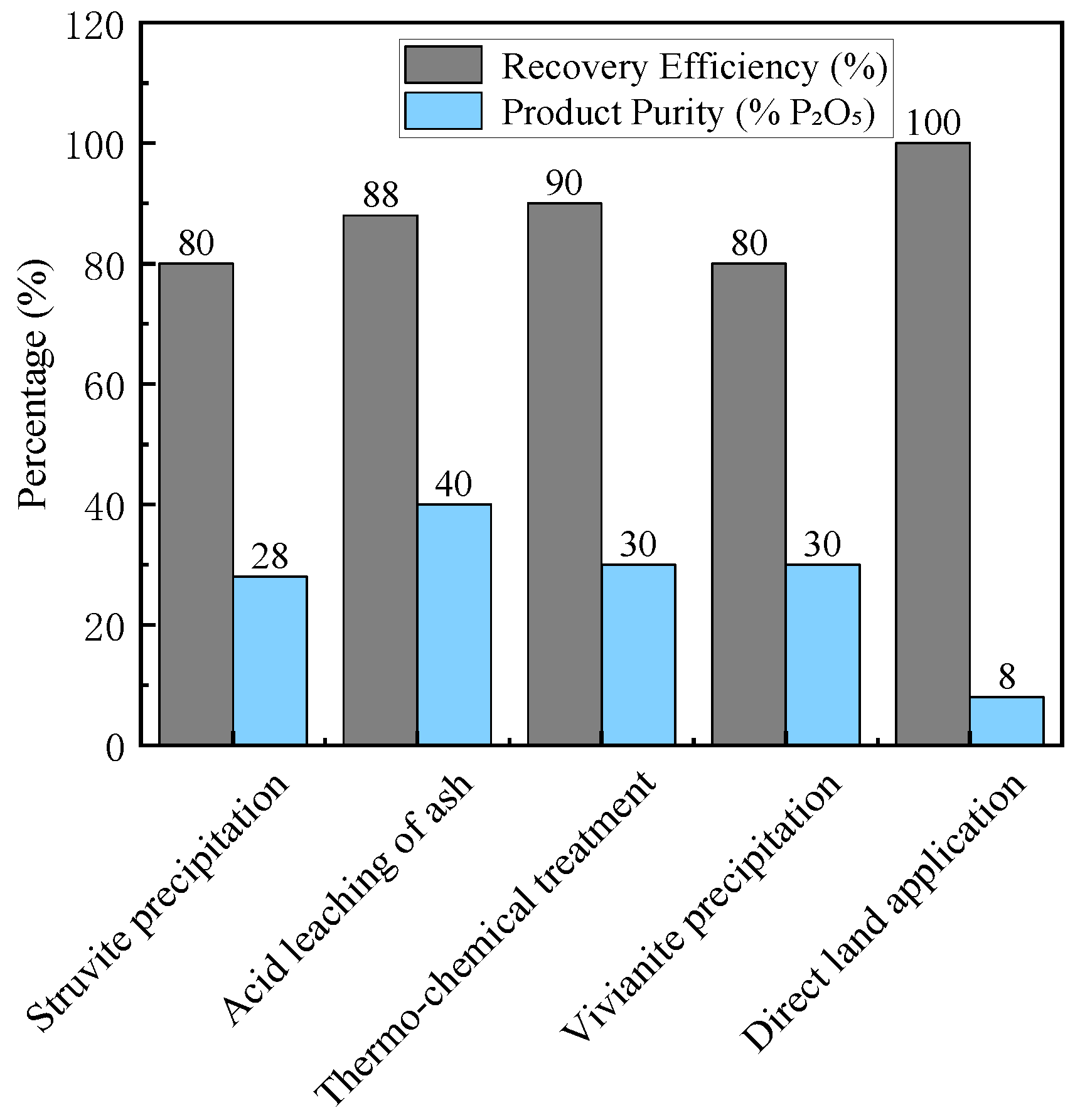
Phosphorus Recovery
5. Challenges and Future Perspectives
5.1. Technical and Economic Challenges
| Challenge Category | Specific Issue | Potential Solution |
|---|---|---|
| Energy intensity | High energy for drying | Solar drying, waste heat recovery, UFB ozonation |
| Heavy metal risk | Residual metals limit land application | Co-pyrolysis with biomass, chemical stabilization |
| Emerging contaminants | PFAS, microplastics, antibiotics | Advanced analytical methods, treatment train integration |
| Product standardization | No unified biochar quality standards | Develop ISO-type standards |
| Economic viability | High CAPEX/OPEX of advanced technologies | Carbon credits, product sales, gate fees |
| Technology Route | CAPEX (Million USD) | OPEX (USD/t Wet Sludge) | Annual Net Revenue (Million USD) | Payback Period (Years) | Main Revenue Sources |
|---|---|---|---|---|---|
| Anaerobic digestion (CHP only) | 25–40 | 30–50 | 1.2–2.5 | 12–18 | Power generation, emission reduction |
| AD + CHP + P recovery | 35–55 | 40–65 | 2.5–4.0 | 10–15 | Power, heat, P fertilizer |
| Incineration (disposal only) | 50–80 | 60–100 | −1.0 to −0.5 | Heat (subsidy-dependent) | |
| Incineration + Ash P recovery | 55–90 | 70–110 | 0.2–1.0 | >50 | P recovery, heat |
| Pyrolysis (slow, biochar) | 40–60 | 50–80 | 1.0–2.2 | 12–20 | Biochar sales, carbon credits |
| Pyrolysis + Thermal activation | 45–70 | 55–85 | 1.8–3.5 | 10–16 | Activated carbon, biochar, carbon credits |
| Hydrothermal carbonization | 30–50 | 35–60 | 0.8–1.8 | 14–22 | Hydrochar (solid fuel) |
| Technology Route | GWP Range (kg CO2-eq/t DS) | System Boundary | Main Contributors |
|---|---|---|---|
| Anaerobic digestion + Land application | −200 to −50 | Gate to land use | Fertilizer substitution, biomethane |
| Anaerobic digestion + CHP | −100 to +50 | Gate-to-gate | Energy substitution, fugitive emissions |
| Incineration | +500 to +900 | Gate to ash disposal | Fossil fuel consumption, N2O |
| Incineration + P recovery | +400 to +750 | Gate to P product | Offsets phosphate mining |
| Pyrolysis (slow) | −50 to +100 | Gate to biochar use | Biochar carbon sequestration, energy output |
| Pyrolysis + Thermal activation | −100 to +50 | Gate to activated carbon use | Carbon sequestration, product value |
| Hydrothermal carbonization | +50 to +150 | Gate to hydrochar use | Low energy consumption, carbon sequestration |
| Co-pyrolysis (sludge + biomass) | −150 to −20 | Gate to biochar use | Biomass carbon negativity, synergy effects |
5.2. Future Perspectives and Research Priorities
6. Conclusions
- (1)
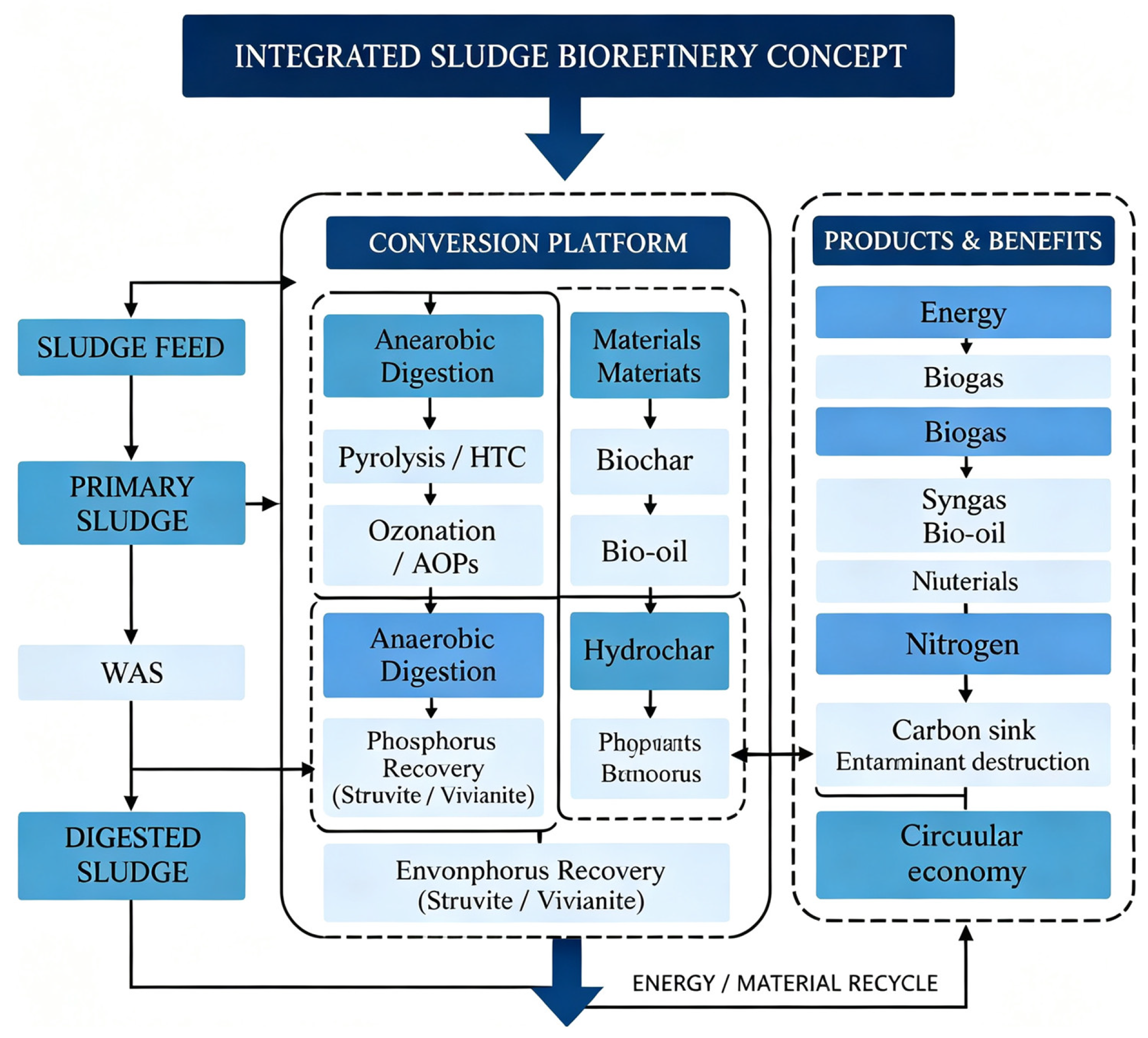
- Sustainable sludge management requires integrated treatment strategies rather than standalone technologies. Anaerobic digestion provides economical energy recovery but transfers contaminants into digestate, while pyrolysis enables contaminant destruction and heavy metal immobilization at the cost of higher energy demand. A combined AD–pyrolysis pathway can maximize resource recovery by producing biogas and biochar and recovering phosphorus. However, technology selection remains context-dependent, governed by economic factors, regulatory pressures, and desired end products.
- (2)
- The gap between reported “removal” and actual risk reduction is substantial. A 99% PFAS removal from biochar says nothing about fluorine partitioning into syngas or bio-oil. Heavy metals immobilized under ideal laboratory conditions may remobilize under field pH/redox fluctuations. Future research must prioritize full mass balances tracking all pollutant fractions across solid, liquid, and gas phases, combined with realistic aging and weathering studies.
- (3)
- Economic viability is inseparable from regulatory drivers. The high CAPEX of pyrolysis cannot be justified by biochar sales alone; it requires carbon credits, avoided disposal costs, or regulatory mandates. Policymakers must recognize that the transition from “sludge disposal” to “resource recovery” requires explicit policy support.
Author Contributions
Funding
Data Availability Statement
Conflicts of Interest
References
- Pasalari, H.; Farzadkia, M.; Khosravani, F.; Ganachari, S.; Aminabhavi, T.M. Phosphorous recovery from sewage sludge via chemical and thermal technologies. Chem. Eng. J. 2024, 496, 153869. [Google Scholar] [CrossRef] [Scilit]
- Yang, G.; Zhang, G.M.; Wang, H.C. Current state of sludge production, management, treatment and disposal in China. Water Sci. Technol. 2015, 71, 469–478. [Google Scholar] [CrossRef] [Scilit] [PubMed]
- Ismail, U.M.; Tizaoui, C. A critical review of per- and polyfluoroalkyl substances (PFAS) in wastewater biosolids and sludge. J. Environ. Chem. Eng. 2025, 13, 120422. [Google Scholar] [CrossRef] [Scilit]
- Kelessidis, A.; Stasinakis, A.S. Comparative study of the methods used for treatment and final disposal of sewage sludge in European countries. Waste Manag. 2012, 32, 1186–1195. [Google Scholar] [CrossRef] [Scilit] [PubMed]
- Tyagi, V.K.; Lo, S.L. A waste or renewable source for energy and resources recovery? Renew. Sustain. Energy Rev. 2013, 25, 708–728. [Google Scholar] [CrossRef] [Scilit]
- National Development and Reform Commission. Implementation Plan for Harmless Treatment and Resource Utilization of Sludge; National Development and Reform Commission: Beijing, China, 2022. [Google Scholar]
- European Commission. Council Directive 1999/31/EC on the landfill of waste. Off. J. Eur. Communities 1999, L182, 1–19. [Google Scholar]
- Gusiatin, M.Z.; Kulikowska, D.; Bernat, K. Municipal sewage sludge as a resource in the circular economy. Energies 2024, 17, 2474. [Google Scholar] [CrossRef] [Scilit]
- Romano, P.; Zuffranieri, A.; Di Giacomo, G. Energy valorization and resource recovery from municipal sewage sludge: Evolution, recent advances, and future prospects. Energies 2025, 18, 3442. [Google Scholar] [CrossRef] [Scilit]
- Jellali, S.; Khiari, B.; Usman, M.; Hamdi, H.; Charabi, Y.; Jeguirim, M. Sludge-derived biochars: A review on the influence of synthesis conditions on pollutants removal efficiency from wastewaters. Renew. Sustain. Energy Rev. 2021, 144, 111068. [Google Scholar] [CrossRef] [Scilit]
- Bai, L.; Wu, B.; Cao, J.; Dai, X. Advancements in sludge pyrolysis: Integrated resource recovery and process-derived pollutant mitigation. J. Anal. Appl. Pyrolysis 2025, 190, 107137. [Google Scholar] [CrossRef] [Scilit]
- Fang, L.; Li, J.S.; Guo, M.Z.; Cheeseman, C.R.; Tsang, D.C.W.; Donatello, S.; Poon, C.S. Phosphorus recovery and leaching of trace elements from incinerated sewage sludge ash (ISSA). Chemosphere 2017, 193, 278–287. [Google Scholar] [CrossRef] [Scilit]
- Aguilar-Pozo, V.B.; Tamayo, P.; Casallas-Ojeda, M.; Siscar, E.; Fonoll, X.; Chimenos Ribera, J.M.; Astals Garcia, S. Phosphorus recovery via vivianite precipitation in anaerobic digestion and fermentation processes: A comprehensive review. Sustain. Chem. Pharm. 2025, 48, 102237. [Google Scholar]
- Chen, P.; Wei, Q.; Li, W.; Zheng, Y.; Wang, E.; Wu, X.; Dong, R.; Guo, J. Dynamic control of thermal hydrolysis to maximize net energy recovery from sewage sludge based on machine learning. Bioresour. Technol. 2025, 438, 133263. [Google Scholar] [CrossRef] [Scilit] [PubMed]
- Takdastan, A.; Rahmani, A.R.; Almasi, H. A review of the effects of ozonation process on biological sludge reduction. Desalin. Water Treat. 2019, 162, 125–133. [Google Scholar] [CrossRef] [Scilit]
- Turovskiy, I.S.; Mathai, P.K. Wastewater Sludge Processing; John Wiley and Sons: Hoboken, NJ, USA, 2006. [Google Scholar]
- Li, J.; Campos, L.C.; Hu, Y. The role of sludge microstructure in enhancing anaerobic digestion: A comprehensive review combining bibliometric and experimental insights. Environ. Dev. Sustain. 2025, 1–35. [Google Scholar] [CrossRef] [Scilit]
- Chen, J.; Liu, J.Y.; He, Y.; Huang, L.; Sun, S.Y.; Li, X.; Wang, Z.; Zhang, Q.; Wu, F.; Zhao, M. Investigation of co-combustion characteristics of sewage sludge and coffee grounds mixtures using TGA and ANN modeling. Bioresour. Technol. 2017, 225, 234–245. [Google Scholar] [CrossRef] [Scilit] [PubMed]
- Mata-Alvarez, J.; Dosta, J.; Romero-Güiza, M.S.; Fonoll, X.; Peces, M.; Astals, S. A critical review on anaerobic co-digestion achievements between 2010 and 2013. Renew. Sustain. Energy Rev. 2014, 36, 412–427. [Google Scholar] [CrossRef] [Scilit]
- Zhi, Y.; Xu, D.; Jiang, G.; Yang, W.; Chen, Z.; Duan, P.; Zhang, J. A review of hydrothermal carbonization of municipal sludge: Process conditions, physicochemical properties, methods coupling, energy balances and life cycle analyses. Fuel Process. Technol. 2024, 254, 107943. [Google Scholar] [CrossRef] [Scilit]
- Yuan, Z.W.; Pratt, S.; Batstone, D.J. Phosphorus recovery from wastewater through microbial processes. Curr. Opin. Biotechnol. 2012, 23, 878–883. [Google Scholar] [CrossRef] [Scilit] [PubMed]
- Cheng, X.; Wei, C.; Ke, X.; Pan, J.; Wei, G.; Chen, Y.; Wei, C.; Li, S.; Preis, S. Nationwide review of heavy metals in municipal sludge wastewater treatment plants in China: Sources, composition, accumulation and risk assessment. J. Hazard. Mater. 2022, 437, 129267. [Google Scholar] [CrossRef] [Scilit] [PubMed]
- Makowska, D.; Pandiyan, M.; Kapusta, K.; Kolarz, K.; Stypka, Z.; Boehman, A.L.; Wooldridge, M.S. Effects of pyrolysis parameters on biochar derived from sewage sludge including environmental risk assessment of heavy metals. J. Environ. Manag. 2025, 395, 127888. [Google Scholar] [CrossRef] [Scilit] [PubMed]
- Yue, P.; Chen, R. Microplastic behavior in sludge pretreatment and anaerobic digestion: Impacts, mechanistic insights, and mitigation strategies. Sustainability 2025, 17, 10471. [Google Scholar] [CrossRef] [Scilit]
- Yokoyama, H.; Yamashita, T.; Kojima, Y.; Nakamura, K. Deep learning-based flocculation sensor for automatic control of flocculant dose in sludge dewatering processes during wastewater treatment. Water Res. 2024, 260, 121890. [Google Scholar] [CrossRef] [Scilit] [PubMed]
- Yli-Rantala, E.; Sarlin, E.; Kokko, M. Fate of microplastics in a centralized biogas plant treating mainly sewage sludge. J. Environ. Manag. 2025, 395, 127892. [Google Scholar] [CrossRef] [Scilit]
- Mortezaei, Y.; Gaballah, M.S.; Demirer, G.N.; Lammers, R.W.; Williams, M.R. From wastewater to sludge: The role of microplastics in shaping anaerobic digestion performance and antibiotic resistance gene dynamics. J. Hazard. Mater. 2025, 489, 137413. [Google Scholar] [CrossRef] [Scilit]
- Guo, Y.; Hua, Y.; Chen, X.; Li, Y.; Chen, C.; Dai, X. Per- and polyfluoroalkyl substances in sewage sludge: A global synthesis of persistence mechanisms, analytical complexities, and sustainable remediation strategies. J. Hazard. Mater. 2025, 498, 139989. [Google Scholar] [CrossRef] [Scilit] [PubMed]
- Ma, H.; Yu, T.; Chen, W.; Qi, B.; Feng, D.; Qian, D.; Yang, J. Fate and Impacts of Microplastics in Sludge Anaerobic Digestion: Effects on Methanogenic and Acidogenic Pathways. ChemistrySelect 2025, 10, e03290. [Google Scholar] [CrossRef] [Scilit] [PubMed]
- Sørmo, E.; Castro, G.; Hubert, M.; Hale, S.E.; Breedveld, G.D.; Cornelissen, G. The decomposition and emission factors of a wide range of PFAS in diverse, contaminated organic waste fractions undergoing dry pyrolysis. J. Hazard. Mater. 2023, 454, 131447. [Google Scholar] [CrossRef] [Scilit] [PubMed]
- Rahman, A.; Grieco, S.; Bahman, B.; Friedenthal, A.; White, A.; Williams, T. Understanding dynamics of PFAS in biosolids processed through composting, thermal drying and high temperature pyrolysis. J. Water Process Eng. 2025, 72, 107508. [Google Scholar] [CrossRef] [Scilit]
- Altiparmaki, G.; Gatidou, G.; Knight, E.; Allan, I.; Liakos, D.; Thomaidis, N.S.; Stasinakis, A.S. Study on the removal of PFAS during hydrothermal carbonization of sewage sludge. Environ. Technol. Innov. 2025, 41, 104727. [Google Scholar]
- Nguyen, L.G.; Vu, M.T.; Johir, M.A.H.; Pernice, M.; Zdarta, J.; Jesionowski, T.; Nghiem, L.D. Promotion of direct interspecies electron transfer and potential impact of conductive materials in anaerobic digestion and its downstream processing-a critical review. Bioresour. Technol. 2021, 341, 125847. [Google Scholar]
- Sahlström, L. A review of survival of pathogenic bacteria in organic waste used in biogas plants. Bioresour. Technol. 2003, 87, 161–166. [Google Scholar] [CrossRef] [Scilit] [PubMed]
- Bendixen, H.J. Safeguards against pathogens in Danish biogas plants. Water Sci. Technol. 1994, 30, 171–180. [Google Scholar] [CrossRef] [Scilit]
- Clarke, B.O.; Smith, S.R. Review of “emerging” organic contaminants in biosolids and assessment of international research priorities for the agricultural use of biosolids. Environ. Int. 2011, 37, 226–247. [Google Scholar] [CrossRef] [Scilit] [PubMed]
- Gan, M.; Xing, J.; Sun, Z.; Ji, Z.; Fan, X. Optimization of Cl and heavy metal removal during heat treatment of municipal solid waste incineration fly ash and municipal sludge after co-washing. Environ. Monit. Assess. 2025, 197, 56. [Google Scholar] [CrossRef] [Scilit]
- Pulgarín-Muoz, C.E.; Saldarriaga-Molina, J.C.; Castro-Valencia, J.C.; Correa-Ochoa, M.A.; Echeverry-Ruiz, J.D. Effect of the co-substrate ratio on the anaerobic co-digestion of sewage sludge and the organic fraction of municipal solid waste at pilot scale. Int. Biodeterior. Biodegrad. 2025, 198, 106008. [Google Scholar] [CrossRef] [Scilit]
- Zhou, P.; Li, D.; Zhang, C.; Ping, Q.; Wang, L.; Li, Y. Comparison of different sewage sludge pretreatment technologies for improving sludge solubilization and anaerobic digestion efficiency: A comprehensive review. Sci. Total Environ. 2024, 921, 171175. [Google Scholar] [CrossRef] [Scilit] [PubMed]
- Barber, W.P. Thermal hydrolysis for sewage treatment: A critical review. Water Res. 2016, 104, 53–71. [Google Scholar] [CrossRef] [Scilit] [PubMed]
- Waseem, M.; Khan, M.U.; Bokhary, A.; Ahring, B.K. Emerging trends in sewage sludge pretreatment: Enhancing treatment efficiency and sustainable waste management. Clean. Water 2025, 3, 100080. [Google Scholar] [CrossRef] [Scilit] [PubMed]
- Meng, Q.B.; He, Z.W.; Li, Z.H.; Tang, C.C.; Zhou, A.J.; Liang, B.; Liu, W.; Ren, Y.X.; Wang, A. Iron redox cycling drives enhanced methanogenesis in magnetic biochar-mediated anaerobic digestion of waste-activated sludge. Environ. Sci. Ecotechnology 2026, 29, 100660. [Google Scholar] [CrossRef] [Scilit] [PubMed]
- Chen, Q.; Zhan, X.; Zhang, J.; Zhang, Y.; Zhang, L.; Zhuang, H. Enhanced aerobic biodegradation of phenol-containing wastewater by selfiron-enriched magnetic biochar. J. Water Process Eng. 2025, 72, 107576. [Google Scholar] [CrossRef] [Scilit]
- Ramesh, G.; Logan, M. Unlocking the potential of conductive materials for advancing the frontiers in anaerobic digestion. Fuel 2025, 406, 136755. [Google Scholar] [CrossRef] [Scilit] [PubMed]
- Zhang, J.; Long, Z.; Ren, Z.; Xu, W.; Sun, Z.; Zhao, H.; Zhang, G.; Gao, W. Application of machine learning in ultrasonic pretreatment of sewage sludge: Prediction and optimization. Environ. Res. 2024, 263, 120108. [Google Scholar] [CrossRef] [Scilit] [PubMed]
- Yalcinkaya, S.; Yucel, O. Enhancing biogas production from municipal wastewater sludge and grease trap waste: Explainable machine learning models for prediction and parameter identification. Fuel 2025, 391, 134787. [Google Scholar] [CrossRef] [Scilit] [PubMed]
- Li, Y.; Lu, M.; Campos, L.C.; Cheng, S.; Li, Z.; Hu, Y. A synergistic framework integrating statistical design and machine learning for enhancing biogas yield. Energy Nexus 2025, 20, 100583. [Google Scholar]
- Zhong, Y.; He, J.; Duan, S.; Pan, X.; Zou, X.; Zhang, J.; Su, Q.; Ng, H.Y. Nitrogen-doped biochar supported magnetite enhances hydrolysis and methanogenesis during anaerobic digestion of waste activated sludge in continuously operated reactors: Metagenomic approach. Bioresour. Technol. 2025, 437, 133174. [Google Scholar] [CrossRef] [Scilit] [PubMed]
- Haroun, B.; El-Qelish, M.; Abdulazeez, M.; Khalil, A.; Kim, M.; Nakhla, G. Overcoming ammonia inhibition via biochar-assisted anaerobic co-digestion of thermally-treated thickened waste activated sludge and food waste. J. Environ. Manag. 2025, 373, 123909. [Google Scholar] [CrossRef] [Scilit]
- Karami, A.; Karimi-Jashni, A.; Nikoo, M.R.; Zare, B. Simulation of anaerobic digestion process under variable feeding sludge using a hybrid machine learning model. Chemosphere 2025, 387, 144672. [Google Scholar] [CrossRef] [Scilit] [PubMed]
- Li, B.; Liu, L.; Xu, Z.; Li, K. Optimizing carbon source addition to control surplus sludge yield via machine learning-based interpretable ensemble model. Environ. Res. 2025, 267, 120653. [Google Scholar] [CrossRef] [Scilit] [PubMed]
- Ghazizade-Fard, M.; Koupaie, E.H. Anaerobic co-digestion of wastewater sludge and food waste: A machine learning approach to process modeling and optimization. J. Environ. Manag. 2025, 393, 126985. [Google Scholar] [CrossRef] [Scilit]
- Bridgwater, A.V. Review of fast pyrolysis of biomass and product upgrading. Biomass Bioenergy 2012, 38, 68–94. [Google Scholar] [CrossRef] [Scilit]
- Cao, J.; Jiang, Y.; Tan, X.; Li, L.; Cao, S.; Dou, J.; Chen, R.; Hu, X.; Qiu, Z.; Li, M.; et al. Sludge-based biochar preparation: Pyrolysis and co-pyrolysis methods, improvements, and environmental applications. Fuel 2024, 373, 132265. [Google Scholar] [CrossRef] [Scilit]
- Khan, M.; Chuenchart, W.; Surendra, K.C.; Khanal, S.K. Applications of artificial intelligence in anaerobic co-digestion: Recent advances and prospects. Bioresour. Technol. 2023, 370, 128501. [Google Scholar] [CrossRef] [Scilit]
- Erofili-Vagia, G.; Alkistis, K.; Aikaterini, I.E.; Eleni, G.; Manariotis, I.D.; Ioannis, K.; Petros, K. A Comprehensive Review on Sewage Sludge Biochar: Characterization Methods and Practical Applications. Environments 2026, 13, 45. [Google Scholar] [CrossRef] [Scilit]
- Al-Dawery, S.K.; Reddy, S.S.; Al Sabari, M.S.; Al Fazari, S.; Al Riyami, H.A.S.; Hayder Ahmed Salih, G. Sewage sludge-derived activated carbon: Influence of chemical activation and pyrolysis conditions on morphology and crystallinity. Pollution 2025, 11, 1042–1056. [Google Scholar] [CrossRef]
- Pereira, D.; Gil, M.V.; Esteves, V.I.; Silva, N.J.O.; Otero, M.; Calisto, V. One-step microwave conversion of paper mill sludge into magnetic activated carbon for the removal of pharmaceuticals from water. J. Water Process Eng. 2025, 69, 106766. [Google Scholar] [CrossRef] [Scilit]
- Liu, J.; Li, S.; Ma, Q.; Chen, S.; Jiang, Y.; Wang, Z. Design and structuring of activated sludge-based adsorbents for the direct air capture of carbon dioxide. Environ. Technol. 2026, 47, 641–654. [Google Scholar] [CrossRef] [Scilit]
- Lu, H.; Zhang, W.; Wang, S.; Zhuang, L.; Yang, Y.; Qiu, R. Characterization of sewage sludge-derived biochars from different feedstocks and pyrolysis temperatures. J. Anal. Appl. Pyrolysis 2013, 102, 137–143. [Google Scholar] [CrossRef] [Scilit]
- Fan, Z.; Lu, Q.; Zhou, X.; Han, W.; Yang, Q.; Gao, Z.F.; Peng, Z.; Chen, X. Pyrolysis of sewage sludge in molten salt environment: Effects on heavy metals distribution and environmental risks in biochar. J. Clean. Prod. 2026, 538, 147303. [Google Scholar] [CrossRef] [Scilit]
- Hu, Y.; Chen, Z. Thermochemical Conversion of Sewage Sludge: Progress in Pyrolysis and Gasification. Water 2025, 17, 1833. [Google Scholar] [CrossRef] [Scilit]
- Li, X.; Sun, Y.; Li, W.; Zhang, Y.; Nie, D.; Liu, W.; Xu, X.; Fu, R.; Bian, H.; Wang, Y.; et al. Leaching behavior and mechanisms of PCDD/Fs from solidified/stabilized fly ash under landfill leachate and alkali washing conditions: Inspired by co-landfilling with MSW. Waste Manag. 2026, 211, 115290. [Google Scholar] [CrossRef] [Scilit]
- Lee, G.B.; Ahn, C.E.; Jeong, W.G.; Tsang, Y.F.; Baek, K. Environmental impact assessment of pyrolysis and incineration including end-of-life of sewage sludge by-products. Bioresour. Technol. 2025, 445, 132929. [Google Scholar] [CrossRef] [Scilit] [PubMed]
- Lin, X.; Zhuansun, X.; Tang, B.; Sun, Z.; Li, H.; Mohamed, B.A. Synergistic co-pyrolysis of sewage sludge and corn stover using self-sourced biochar catalyst for product valorization without heavy metal risk. J. Anal. Appl. Pyrolysis 2025, 194, 107560. [Google Scholar] [CrossRef] [Scilit]
- Yu, J.; Efomah, A.N.; Chen, Q.; Ma, W. Efficient recovery of phosphorus from co-pyrolysis of sewage sludge and gypsum: The behavior of phosphorus speciation and heavy metal stabilization. J. Anal. Appl. Pyrolysis 2025, 192, 107254. [Google Scholar] [CrossRef] [Scilit]
- Lin, K.L.; Huang, W.J.; Chen, K.C.; Chow, J.D.; Chen, H.J. Behaviour of heavy metals immobilized by co-melting treatment of sewage sludge ash and municipal solid waste incinerator fly ash. Waste Manag. Res. 2009, 27, 660. [Google Scholar] [CrossRef] [Scilit]
- Portillo, E.; Flores, S.; Carrizosa, R.; Álvarez-Torrellas, S.; Carbajo, J.; Águeda, V.I.; García, J.; Zhang, Y.; Wang, H.; Li, X. Sustainable adsorbents from sewage sludge: Efficient removal of cytostatic compounds in single and complex aqueous matrices. J. Environ. Chem. Eng. 2025, 13, 116927. [Google Scholar] [CrossRef] [Scilit]
- Leino, O.; Aysto, L.; Fjader, P.; Perkola, N.; Lehtoranta, S. Contaminants of environmental concern in sewage sludge in the Nordic countries. Environ. Pollut. 2025, 381, 126604. [Google Scholar] [CrossRef] [Scilit]
- Sun, Z.; Wang, Y.; Chen, X.; Zhu, X.; Yuan, H.; Lou, Z. Variation of dissolved organic matter during excess sludge reduction in microbubble ozonation system. Environ. Sci. Pollut. Res. 2021, 28, 6090–6098. [Google Scholar] [CrossRef] [Scilit]
- Schlederer, F.; Martin-Hernandez, E.; Vaneeckhaute, C. Micropollutants in biochar produced from sewage sludge: A systematic review on the impact of pyrolysis operating conditions. Waste Manag. 2024, 174, 618–629. [Google Scholar] [CrossRef] [Scilit]
- Kamesh, M.R.; Mahendran, G.; Murthy, V.S.S.; Palaniappan, M.; Sundar, L.S.; Seshu Kumar, G.S.V.; Kumar, R.; Dwivedi, P.; Prabhakar, S. Synergistic effects on biofuel yields and heating value during co-pyrolysis of sewage sludge and sugarcane residue under different blend ratios. Sci. Rep. 2025, 15, 34220. [Google Scholar] [CrossRef] [Scilit]
- Cornelissen, G.; Briels, N.; Bucheli, T.D.; Estoppey, N.; Gredelj, A.; Hagemann, N.; Lerch, S.; Lotz, S.; Rasse, D.; Schmidt, H.P.; et al. A virtuous cycle of phytoremediation, pyrolysis, and biochar applications toward safe PFAS levels in soil, feed, and food. J. Agric. Food Chem. 2025, 73, 3283–3285. [Google Scholar] [CrossRef] [Scilit]
- Hong, J.S.; Lim, B.R.; Ahn, K.H.; Maeng, S.K. Change of microbial community on ozonation of sewage sludge to reduce excess sludge production. J. Korean Soc. Water Wastewater 2004, 18, 59–65. [Google Scholar]
- Hashimoto, K.; Kubota, N.; Okuda, T.; Nakai, S.; Nishijima, W.; Motoshige, H. Reduction of ozone dosage by using ozone in ultrafine bubbles to reduce sludge volume. Chemosphere 2021, 274, 129922. [Google Scholar] [CrossRef] [Scilit] [PubMed]
- Agarwal, A.; Ng, W.J.; Liu, Y. Principle and applications of microbubble and nanobubble technology for water treatment. Chemosphere 2011, 84, 1175–1180. [Google Scholar] [CrossRef] [Scilit]
- Seid-Mohammadi, A.; Asgari, G.; Shokoohi, R.; Rahmani, A.; Sahraei, F.; Shabanloo, A. Efficient digestion and improvement of dewaterability of municipal wastewater treatment sludge through catalytic calcium peroxide/ozonation advanced oxidation process. Clean. Eng. Technol. 2025, 27, 101034. [Google Scholar] [CrossRef] [Scilit]
- Bai, L.; Wang, G.; Ge, D.; Dong, Y.; Wang, H.; Zhang, Y.; Li, X.; Chen, S.; Zhao, L.; Zhou, W.; et al. Enhanced waste activated sludge dewaterability by the ozone-peroxymonosulfate oxidation process: Performance, sludge characteristics, and implication. Sci. Total Environ. 2021, 807, 151035. [Google Scholar] [CrossRef] [Scilit] [PubMed]
- Takdastan, A.; Talepour, N.; Taherian, M. A review of the oxic-settling-anaerobic (OSA) process for sustainable sludge minimisation from biological treatment of wastewater. Environ. Technol. Rev. 2025, 14, 1–16. [Google Scholar] [CrossRef] [Scilit]
- Chiavola, A.; Salvati, C.; Bongirolami, S.; Di Marcantonio, C.; Boni, M.R. Techno-economic evaluation of ozone-oxidation for sludge reduction at the full-scale. Comparison between the application to the return activated sludge (RAS) and the sludge digestion unit. J. Water Process Eng. 2021, 42, 102114. [Google Scholar] [CrossRef] [Scilit]
- Wang, L.; Chang, Y.; Li, A. Hydrothermal carbonization for energy-efficient processing of sewage sludge: A review. Renew. Sustain. Energy Rev. 2019, 108, 423–440. [Google Scholar] [CrossRef] [Scilit]
- Kambo, H.S.; Dutta, A. A comparative review of biochar and hydrochar in terms of production, physico-chemical properties and applications. Renew. Sustain. Energy Rev. 2015, 45, 359–378. [Google Scholar] [CrossRef] [Scilit]
- Paredes Canencio, K.N.; Acua Montao, M.E.; Giona, R.M.; Bail, A. Impact of key parameters on the hydrothermal carbonization process of sewage sludge: A systematic review. Environ. Eng. Res. 2025, 30, 240247. [Google Scholar] [CrossRef] [Scilit]
- Cavali, M.; Hennig, T.B.; Libardi Junior, N.; Kim, B.; Garnier, V.; Benbelkacem, H.; Bayard, R.; Woiciechowski, A.L.; Matias, W.G.; de Castilhos Junior, A.B. Co-Hydrothermal Carbonization of Sawdust and Sewage Sludge: Assessing the Potential of the Hydrochar as an Adsorbent and the Ecotoxicity of the Process Water. Appl. Sci. 2025, 15, 1052. [Google Scholar] [CrossRef] [Scilit]
- Li, X.; Wang, X.; Chen, L.; Huang, X.; Pan, F.; Liu, L.; Dong, B.; Liu, H.; Li, H.; Dai, X.; et al. Changes in physicochemical and leachate characteristics of microplastics during hydrothermal treatment of sewage sludge. Water Res. 2025, 222, 118876. [Google Scholar] [CrossRef] [Scilit]
- Langbehn, F.M.; Müller, R.K.; Schneider, E.E.; Senna, C.P.; Sanches-Simões, E.; Gutkoski, J.P.; Kelbert, M.; Michels, C.; Soares, H.M. Treatment approaches for emerging contaminants in sludge and wastewater. Detect. Treat. Emerg. Contam. Wastewater 2024, 113–134. [Google Scholar] [CrossRef] [Scilit]
- Rezeki, T.N.; Ridwan, A.; Meka, W.; Fitri, Y.; Mahendra, R.A.; Hamzah, M.; Widara, L.S.; Athala, A.P. Analysis of Pyrolytic Product Distribution for B3 and Non-B3 Medical Waste Pyrolysis. CHEESA Chem. Eng. Res. Artic. 2022, 5, 101. [Google Scholar] [CrossRef] [Scilit]
- Liang, Z.; Zhang, J.; Sun, Y.; Nie, X.; Zhu, C.; Shih, K.; Wen, B.; Li, X.; Lin, L. Chemical–Biological Process Based on H2O2/O3 Lysis and Cryptic Growth for the In Situ Reduction of Waste Activated Sludge. ACS ES&T Eng. 2025, 5, 1279–1288. [Google Scholar] [CrossRef] [Scilit]
- Lu, X.; Ma, X.; Yu, Z.; Tian, Y.; Chen, X.; Hong, F.; Gao, Z. Conversion of sewage sludge and corncob into clean solid fuel: Hydrochar properties and heavy metal chemical speciation. Energy 2025, 327, 136424. [Google Scholar] [CrossRef] [Scilit]
- Gong, M.; Liu, P.; Xu, F.; Xu, Q.; Feng, J.; Su, Y.; Fan, Y. A critical review on preparation, property prediction and application of sludge co-hydrothermal carbonization hydrochar as solid fuel. J. Environ. Chem. Eng. 2025, 13, 116458. [Google Scholar] [CrossRef] [Scilit]
- Oliveira, A.S.; Sarrion, A.; Baeza, J.A.; Diaz, E.; Calvo, L.; Mohedano, A.F.; Gilarranz, M.A. Integration of hydrothermal carbonization and aqueous phase reforming for energy recovery from sewage sludge. Chem. Eng. J. 2022, 268, 136301. [Google Scholar] [CrossRef] [Scilit]
- Ming, L.; Zhou, X.; Shi, Y.; Yang, Z.; Lin, Y.; Zhang, D. Effect of ASPAL SLUAGE on the activated sludge settleability in municipal wastewater treatment and its application evaluation from the angle of microorganisms. Water Wastewater Eng. 2018. [Google Scholar]
- Akkurt, E. A review of new technological applications in the use of sewage sludge for sustainable agriculture. Int. J. Agric. Environ. Food Sci. 2025, 9, 307–320. [Google Scholar] [CrossRef] [Scilit]
- Al-Hamzawi, H.A.H.; Al Sailawi, A.S.A.; Alhraishawi, A.; Hussein, R.A.; Mijwil, M.M. Machine learning-optimized solar thermal pretreatment and low-energy ultrasonic disintegration for enhanced biogas production: Efficiency, carbon footprint, and comparative analysis. Next Energy 2025, 9, 100435. [Google Scholar] [CrossRef] [Scilit]
- Luo, L.; Pradhan, N. Anaerobic mono-digestion and co-digestion of food waste and mixed sewage sludge: A comparative analysis of metabolic patterns and taxonomic profiles. Chem. Eng. J. 2024, 489, 151397. [Google Scholar] [CrossRef] [Scilit]
- Srivastava, S.; Mahata, S.; Matli, C.S. Catalytic Co-hydrothermal Carbonization of Sewage Sludge and Lignocellulosic Biomass for Enhanced Energy Recovery. In Powering Future: Clean Energy Solutions for a Sustainable Planet; Springer: Singapore, 2025. [Google Scholar]
- Fini, E.H.; Kazemi, M.; Poulikakos, L.; Lazorenko, G.; Akbarzade, V.; Lamanna, A.; Lammers, P. Perspectives on innovative non-fertilizer applications of sewage sludge for mitigating environmental and health hazards. Commun. Eng. 2024, 3, 178. [Google Scholar] [CrossRef] [Scilit] [PubMed]
- Gu, C.-H.; Yu, H.-Q. Turning sewage sludge into valuable catalysts through atomic-level circularity. Nat. Rev. Mater. 2025, 10, 456–468. [Google Scholar] [CrossRef] [Scilit]
- Li, K.; Zhang, D.; Niu, X.; Guo, H.; Yu, Y.; Tang, Z.; Lin, Z.; Fu, M. Insights into CO2 adsorption on KOH-activated biochars derived from the mixed sewage sludge and pine sawdust. Sci. Total Environ. 2022, 826, 154133. [Google Scholar] [CrossRef] [Scilit] [PubMed]
- Soni, N.K.; Yadav, K.; Prabhansu; Bhale, P.V. Synthesis and characterization of sewage sludge biochar toward adsorptive removal of pollutants for sustainability: A review. J. Therm. Anal. Calorim. 2025, 150, 3967–3989. [Google Scholar] [CrossRef] [Scilit]
- Ahmad, M.; Rajapaksha, A.U.; Lim, J.E.; Zhang, M.; Bolan, N.; Mohan, D.; Vithanage, M.; Lee, S.S.; Ok, Y.S. Biochar as a sorbent for contaminant management in soil and water: A review. Chemosphere 2014, 99, 19–33. [Google Scholar] [CrossRef] [Scilit] [PubMed]
- Lehmann, J.; Joseph, S. Biochar for Environmental Management: Science, Technology and Implementation; Routledge: London, UK, 2015. [Google Scholar]
- Chen, K.; Zeng, B.; Li, Z.; Chen, L.; Yang, L.; Zhu, H. Toward green and efficient pretreatment for waste activated sludge resourcization and valorization: A review. Environ. Res. 2025, 284, 122227. [Google Scholar] [CrossRef] [Scilit]
- Bwimba, R. Remediation of heavy metal-contaminated soils using phosphate-enriched sewage sludge biochar. Sustainability 2025, 17, 7345. [Google Scholar] [CrossRef] [Scilit]
- Zhao, M.; Li, X.; Liu, Z.; Liu, W.; Wang, J.; Liu, J.; Wang, Y.; Fan, W. Synergistic remediation of Cd-contaminated soil with biochar-sulfate reducing bacteria: Differential roles of straw- and sludge-derived biochars. J. Hazard. Mater. 2025, 500, 140533. [Google Scholar] [CrossRef] [Scilit]
- Federal Ministry for the Environment. German Sewage Sludge Ordinance (AbfKlärV); Federal Ministry for the Environment: Berlin, Germany, 2017. [Google Scholar]
- Cordell, D. Creating an Alternative Governance for Phosphorus Circularity Through Framings That Strengthen Intersectoral Policy Coherence in the EU: Constraints and Implementation Possibilities. Sustainability 2025, 17, 1478. [Google Scholar] [CrossRef] [Scilit]
- Vali, N.; Zabihi, S.; Shamim, S.; Mohsenzadeh, A.; Pettersson, A. Slow-pyrolysis of municipal sewage sludge: Biochar characteristics and advanced thermodynamics. Biomass Convers. Biorefinery 2025, 15, 21045–21065. [Google Scholar] [CrossRef] [Scilit]
- Krüger, O.; Adam, C. Recovery potential of German sewage sludge ash. Waste Manag. 2015, 45, 400–406. [Google Scholar] [CrossRef] [Scilit] [PubMed]
- Fu, Z.; Zheng, X.; Feng, Y.; Ying, Z.; Wang, B. Enhanced phosphorus recovery from incinerated sewage sludge ash as vivianite through calcination with sodium-based additives. Sep. Purif. Technol. 2025, 371, 133377. [Google Scholar] [CrossRef] [Scilit]
- Fan, Z.; Wang, B.; Liu, Y.; Li, J. The zero-valent iron mediated anaerobic phosphate reduction system drives the recovery of dual products from phosphorus-enriched sludge. Process Biochem. 2025, 156, 104–117. [Google Scholar] [CrossRef] [Scilit]
- Yuan, Z.; Yin, H.; Cui, J.; Yang, C.; Zhen, Z.; Cui, X.; Yin, Y.; Lin, L.; Kong, L.; Zhang, R.; et al. Near-full-component sewage sludge valorization via integrated alkali-mediated pyrolysis and sub-boiling temperature crystallization of hierarchical carbon-zeolite composites from carbonaceous and inorganic constituents. Water Res. 2026, 288, 124755. [Google Scholar] [CrossRef] [Scilit] [PubMed]
- Liu, H.; Hu, G.; Basar, I.A.; Li, J.; Lyczko, N.; Nzihou, A.; Eskicioglu, C. Phosphorus recovery from municipal sludge-derived ash and hydrochar through wet-chemical technology: A review towards sustainable waste management. Chem. Eng. J. 2021, 417, 129300. [Google Scholar] [CrossRef] [Scilit]
- Wang, Z. Electrochemical Phosphorus Recovery from the Anaerobically Digested Sludge: Mechanism, Performance, Application, and Solids Disposal. Doctoral Dissertation, Washington University in St. Louis, St. Louis, MO, USA, 2024. [Google Scholar] [PubMed]
- Zhang, J.; Chen, Z.; Liu, Y.; Wei, W.; Ni, B. Phosphorus recovery from wastewater and sewage sludge as vivianite. J. Clean. Prod. 2022, 370, 133439. [Google Scholar] [CrossRef] [Scilit]
- Gao, X.; Jiang, L.; Mao, Y.; Yao, B.; Jiang, P. Progress, challenges, and perspectives of bioleaching for recovering heavy metals from mine tailings. Adsorpt. Sci. Technol. 2021, 2021, 9941979. [Google Scholar] [CrossRef] [Scilit]
- Basri, S.; Oruganti, R.K.; Panda, T.K.; Bhattacharyya, D. Beyond conventional approaches: Sustainable valorization of sewage sludge—Challenges and opportunities. Sustain. Mater. Technol. 2025, 45, e01496. [Google Scholar] [CrossRef] [Scilit]
- Pradel, M.; Aissani, L. Environmental impacts of phosphorus recovery from a “product” life cycle assessment perspective: Allocating burdens of wastewater treatment in the production of sludge-based phosphate fertilizers. Sci. Total Environ. 2019, 656, 55–69. [Google Scholar] [CrossRef] [Scilit] [PubMed]
- Dou, Y.; Du, Y.; Xu, Y.; Li, Y.; Wu, X.; Wang, D. Phosphorus recovery from sewage sludge: Progress, challenges, policies, and future directions. Chem. Eng. J. 2025, 520, 165735. [Google Scholar] [CrossRef] [Scilit]
- Chang, H.; Yuan, J.; Zhao, Y.; Bisinella, V.; Damgaard, A.; Christensen, T.H. Carbon footprints of incineration, pyrolysis, and gasification for sewage sludge treatment. Resour. Conserv. Recycl. 2024, 212, 107939. [Google Scholar] [CrossRef] [Scilit]
- Tarin, F.; Voronova, V.; Szczygielska, A. Co-digestion of Sewage Sludge and Biowaste for Biogas Production, GHG Avoided Emissions, and Profitable Carbon Credit Development. J. Civ. Eng. Res. Technol. 2024, 6, 1–10. [Google Scholar] [CrossRef] [Scilit]
- Dyagelev, M. Thermal Treatment of Sewage Sludge. In Springer Proceedings in Earth and Environmental Sciences; Springer: Cham, Switzerland, 2024; pp. 255–265. [Google Scholar] [CrossRef] [Scilit]
- Devos, P.; Haddad, M.; Hélène, C. Thermal Hydrolysis of Municipal sludge: Finding the Temperature Sweet Spot: A Review. Waste Biomass Valorization 2020, 12, 2187–2205. [Google Scholar]
- Aparna, K.G.; Swarnalatha, R. Advanced control strategies for water and sludge lines in wastewater treatment plants using machine learning and computational intelligence. Process Saf. Environ. Prot. 2025, 203, 107875. [Google Scholar] [CrossRef] [Scilit]
- Mihalache, S.F. Application of Machine Learning Models in Optimizing Wastewater Treatment Processes: A Review. Appl. Sci. 2025, 15, 8360. [Google Scholar] [CrossRef] [Scilit]
- Wu, F.; Xie, J.; Xin, X.; He, J. Effect of activated carbon/graphite on enhancing anaerobic digestion of waste activated sludge. Front. Microbiol. 2022, 13, 999647. [Google Scholar] [CrossRef] [Scilit]
- Zhang, P.; Wu, W.; Ying, J.; Zhang, J. Carbon emission reduction technologies for municipal sewage sludge treatment and disposal. Environ. Eng. 2025, 43, 86–94. [Google Scholar] [CrossRef]
- Taron, A.; Singh, S.; Drechsel, P.; Ravishankar, C.; Ulrich, A. Sewage Sludge: A Review of Business Models for Resource Recovery and Reuse; International Water Management Institute: Colombo, Sri Lanka, 2023. [Google Scholar] [CrossRef] [Scilit]
- Hu, H.; Ke, B.; Li, W. Biochar-graphene hybrid adsorbents for organic pollutant removal: Mechanisms and perspectives. J. Environ. Manag. 2026, 54, 103631. [Google Scholar] [CrossRef] [Scilit] [PubMed]


| Region | Organic Matter (g·kg−1) | Total N (g·kg−1) | Total P (g·kg−1) | Total K (g·kg−1) | SiO2 (%) | CaO (%) |
|---|---|---|---|---|---|---|
| China (national average) | 350–550 | 15–45 | 8–18 | 5–15 | 25–35 | 10–20 |
| Europe (average) | 450–650 | 25–60 | 10–20 | 4–8 | 20–40 | 12–22 |
| USA (average) | 400–600 | 20–50 | 8–16 | 3–6 | 22–38 | 10–18 |
| Poland | 380–730 | 13.3–78 | 11.1 | 7.9 | — | — |
| Project Location | Feedstock | Processing Capacity | Iodine Value (mg/g) | Product Application |
|---|---|---|---|---|
| Wuxi, China | Municipal sludge (80% moisture) | 35 t/d | −320 | Flue gas adsorption, soil/water treatment |
| Wuxi, China (Blue algae) | Blue algae (97% moisture) | 50 t/d | −800 | Adsorption materials |
| Xuancheng, China | Municipal sludge (65% moisture) | 70 t/d | −500 | Adsorption materials |
| Yidu, China | Municipal sludge + food waste | 43,000 t/a | 320–420 | Multi-purpose adsorption |
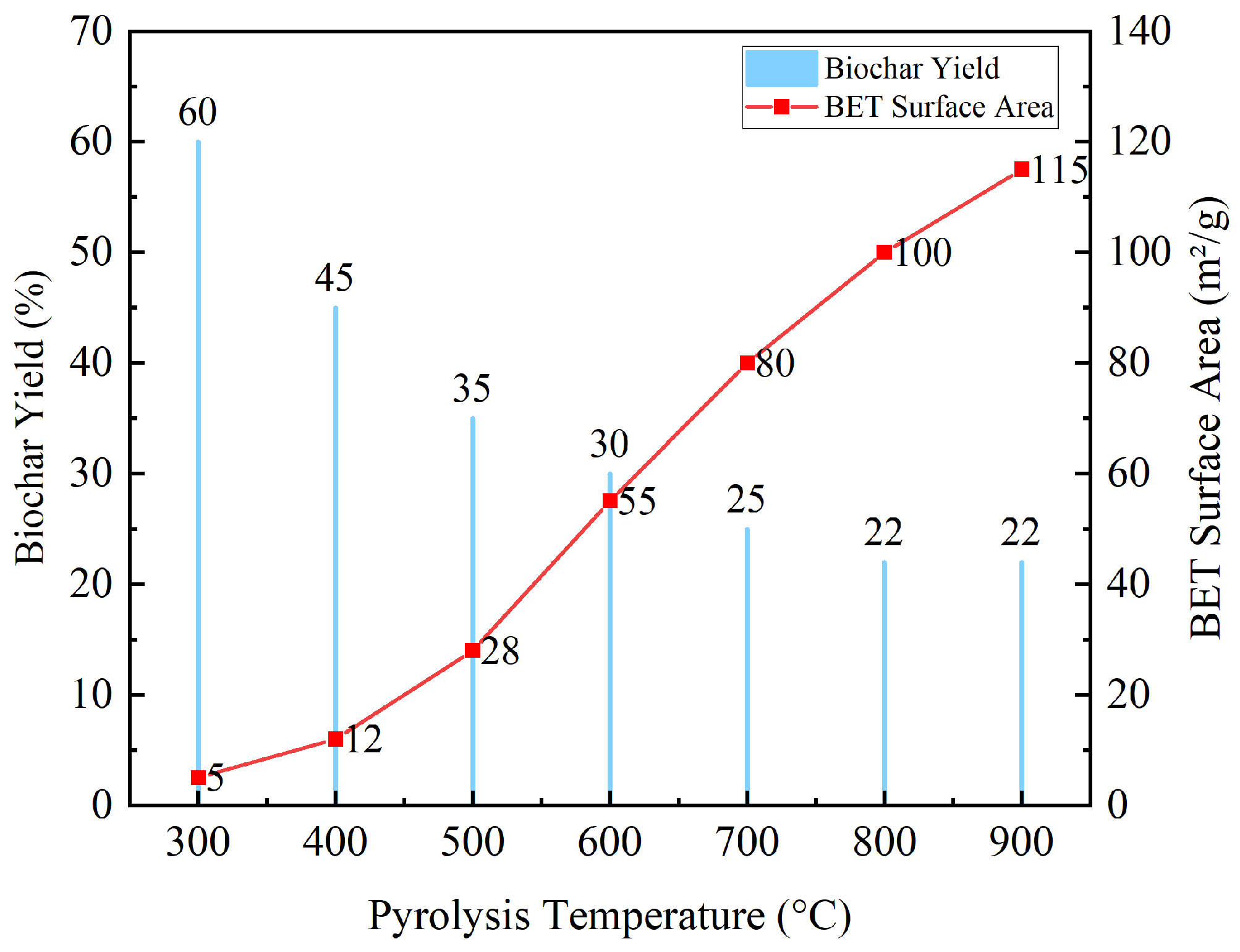
| Feedstock | Temp. (°C) | Residence Time | Biochar Yield (%) | BET Surface Area (m2/g) | Heavy Metal Immobilization | Reference |
|---|---|---|---|---|---|---|
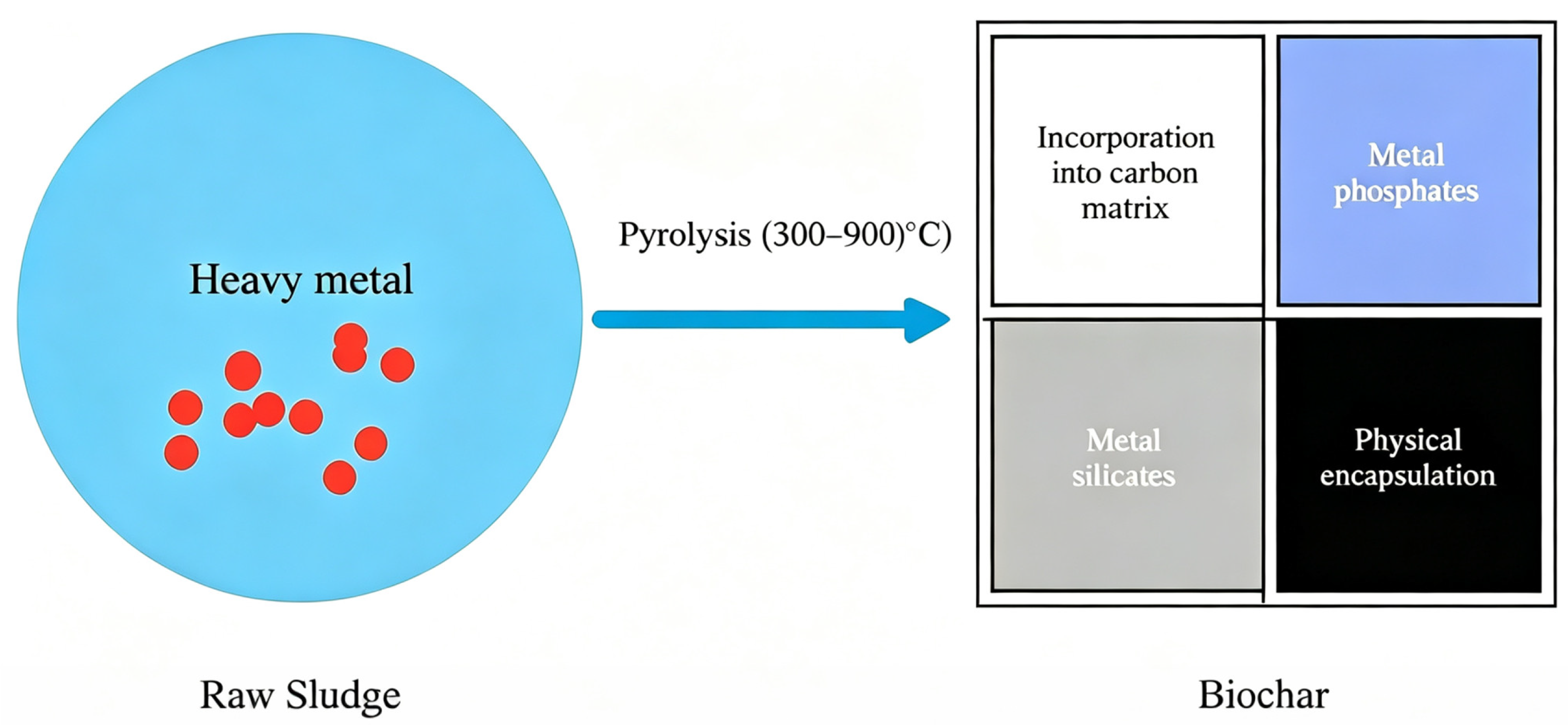
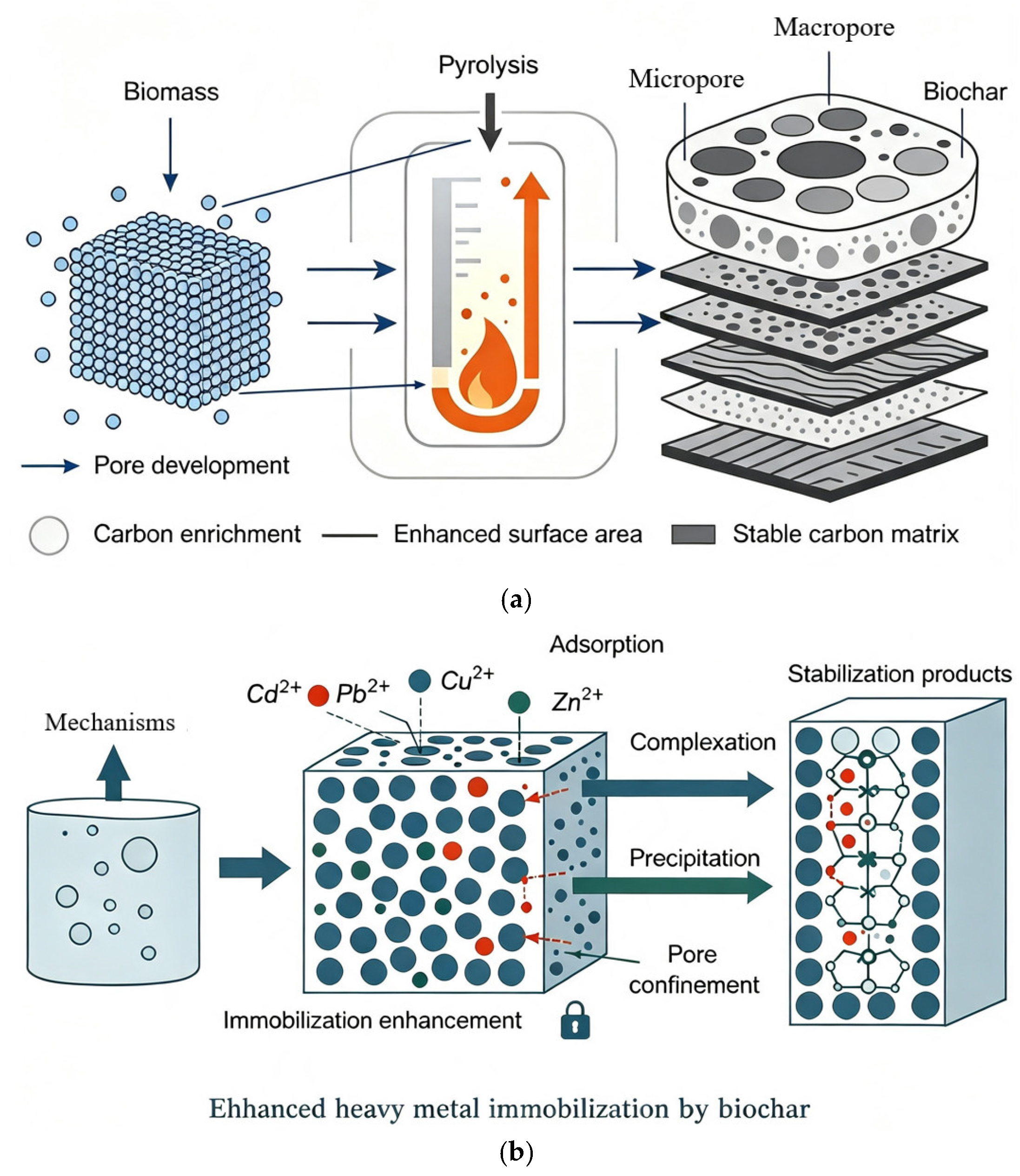
| Municipal sludge | 300 | 60 min | −58 | −5 | Cu residual: −15%; PERI: >1000 | [23] |
| Municipal sludge | 500 | N/A | −42 | −25 | Cd removal: −70%; Pb residual: −45% | [56] |
| Municipal sludge | 600 | 60 min | −32 | −68 | Cu residual: −75%; PERI: <50 | [60] |
| Municipal sludge | 700 | N/A | −26 | −95 | Cd removal: >90%; Pb residual: −55% | [66] |
| Municipal sludge | 900 | 60 min | −22 | −115 | Cu residual: −95%; PERI: <50 | [23] |
| Sewage sludge | 300 | N/A | −55 | −5 | F1+F2 fraction: >40% | [63] |
| Sewage sludge | 500 | N/A | −40 | −50 | F1+F2 fraction: <15% | [69] |
| Sewage sludge | 700 | N/A | −25 | −100 | F1+F2 fraction: <5% | [63] |
| Municipal sludge + wheat straw | 600 | 30 min | −38 | −95 | Zn/Cu/Pb residual: >75% | [65] |
| Municipal sludge + sawdust | 600 | 30 min | −36 | −100 | Zn/Cu/Pb residual: >78% | [65] |
| Municipal sludge + oak bark | 600 | 60 min | −35 | −80 | Metal leaching reduced >80% | [67] |
| Municipal sludge + hemp hurd | 600 | 60 min | −33 | −85 | Metal leaching reduced >75% | [67] |
| Municipal sludge + corn stover | 600 | 60 min | −30 | −90 | Zn/Cu/Pb residual >80% | [70] |
| Municipal sludge (biosolids) | 600 | N/A | −30 | −70 | PFAS removal >99%; organic pollutants eliminated | [71] |
| Municipal sludge + sugarcane residue | 600 | N/A | −32 | −88 | Heavy metal risk significantly reduced | [72] |
| Sewage sludge (molten salt) | 600 | 60 min | −30 | −70 | RI: 33.6 (vs. >1000 for raw) | [67] |
| Paper mill sludge (microwave) | 500 | N/A | −45 | −180 | Magnetic AC; pharmaceuticals removal | [58] |
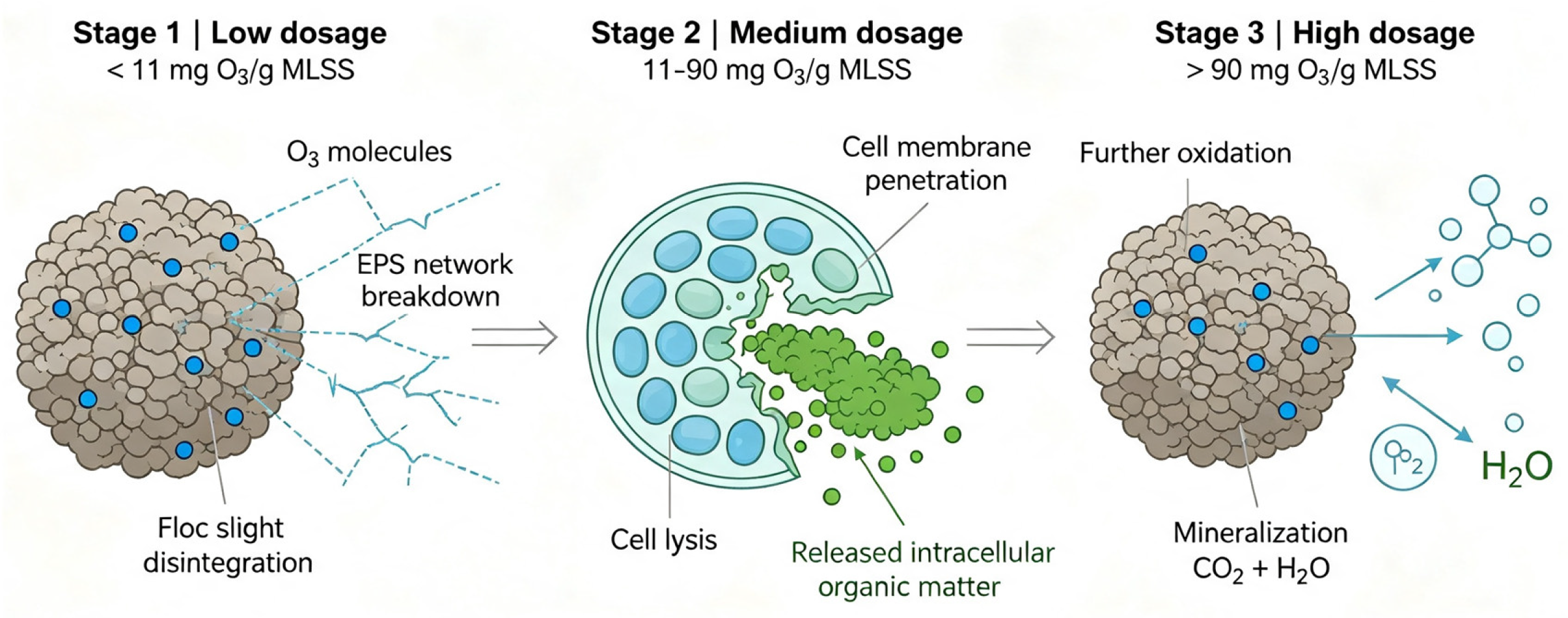
| Stage | Ozone Dosage (mg O3/g MLSS) | Primary Effects | Key Observations |
|---|---|---|---|
| Low dosage | <11 | EPS disruption, floc disintegration | Limited cell destruction |
| Medium dosage | 11–90 | Cell lysis, organic matter solubilization | Most effective for sludge reduction |
| High dosage | >90 | Mineralization of released organics | Diminishing returns, over-oxidation |
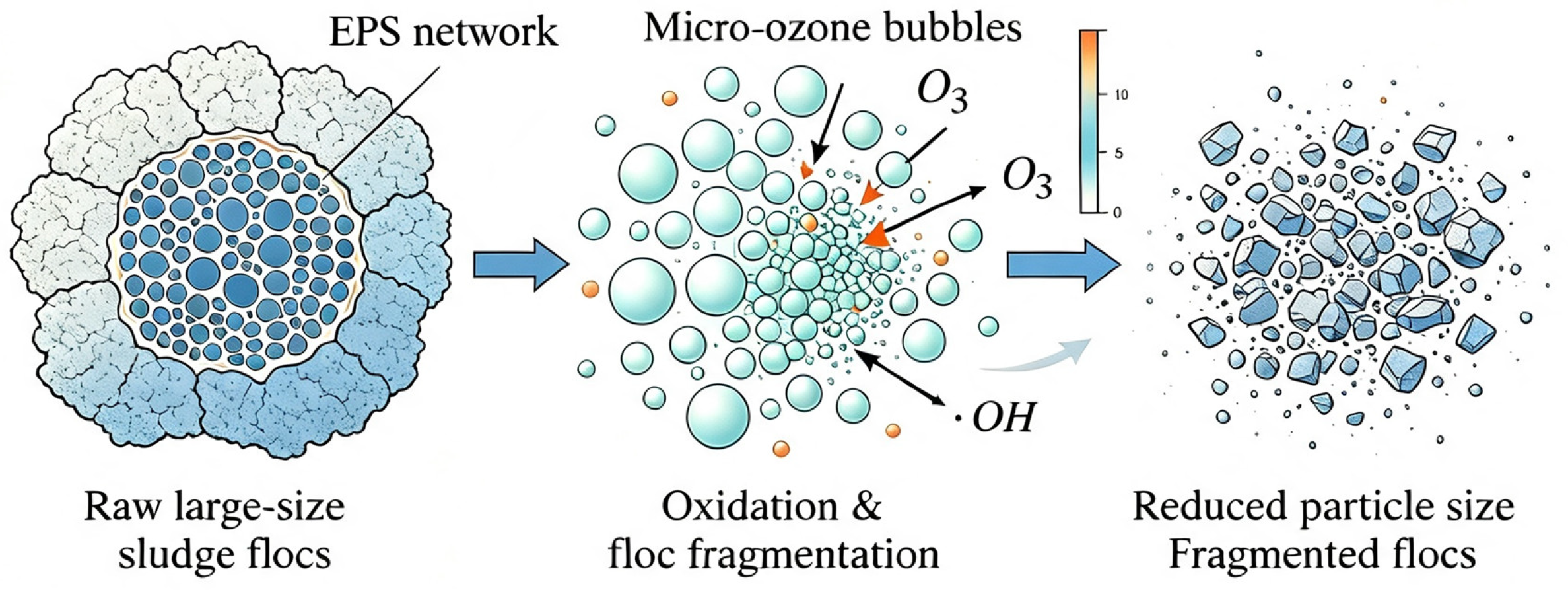
| Bubble Generation Method | Bubble Diameter | Ozone Dosage for 80% Bacterial Death (mg O3/g MLSS) | Relative Ozone Requirement |
|---|---|---|---|
| Conventional diffuser | −2.0 mm | 45 | 100% (baseline) |
| Microbubble generator (jet) | −35 μm | 25 | 56% |
| Ultrafine bubble generator | −120 nm | 15 | 33% |
Disclaimer/Publisher’s Note: The statements, opinions and data contained in all publications are solely those of the individual author(s) and contributor(s) and not of MDPI and/or the editor(s). MDPI and/or the editor(s) disclaim responsibility for any injury to people or property resulting from any ideas, methods, instructions or products referred to in the content. |
© 2026 by the authors. Licensee MDPI, Basel, Switzerland. This article is an open access article distributed under the terms and conditions of the Creative Commons Attribution (CC BY) license.
Share and Cite
Chu, J.; Xu, H.; Li, H.; Wang, K. Municipal Sludge Resource Recovery: Technologies, Challenges, and Future Directions. Processes 2026, 14, 2737. https://doi.org/10.3390/pr14172737
Chu J, Xu H, Li H, Wang K. Municipal Sludge Resource Recovery: Technologies, Challenges, and Future Directions. Processes. 2026; 14(17):2737. https://doi.org/10.3390/pr14172737
Chicago/Turabian StyleChu, Jinpeng, Hongxiang Xu, Hongying Li, and Kunlei Wang. 2026. "Municipal Sludge Resource Recovery: Technologies, Challenges, and Future Directions" Processes 14, no. 17: 2737. https://doi.org/10.3390/pr14172737
APA StyleChu, J., Xu, H., Li, H., & Wang, K. (2026). Municipal Sludge Resource Recovery: Technologies, Challenges, and Future Directions. Processes, 14(17), 2737. https://doi.org/10.3390/pr14172737