Article

Study on the Viscosity Reduction Effects of Heat, Gas, and Viscosity Reducers in Multicomponent Thermal Fluids on Heavy Oil: Experiments and Molecular Dynamics Simulation

1
National Key Laboratory for Efficient Development of Offshore Oil and Gas, Tianjin 300459, China
2
Key Laboratory of Offshore Heavy Oil Thermal Recovery, China National Offshore Oil Corporation Limited, Tianjin 300459, China
3
China Oilfield Services Limited, Tianjin 300459, China
4
School of Petroleum Engineering, China University of Petroleum (East China), Qingdao 266580, China
*
Author to whom correspondence should be addressed.
Processes 2026, 14(17), 2705; https://doi.org/10.3390/pr14172705
Submission received: 16 June 2026 / Revised: 11 August 2026 / Accepted: 18 August 2026 / Published: 24 August 2026
(This article belongs to the Special Issue Advances in Heavy Oil Reservoir Development)

Abstract

The efficient development of heavy oil reservoirs is challenged by the high viscosity and poor mobility of heavy oil. Although multicomponent thermal fluid technologies involving heat, gas, and chemical agents have demonstrated potential advantages over conventional steam-based recovery methods, the microscopic synergistic mechanisms responsible for viscosity reduction remain insufficiently understood. Therefore, this study investigates the synergistic mechanisms by which heat, an alkane solvent (C11H24), and CO2 reduce heavy-oil viscosity. Heavy oil from the Shengli Oilfield was selected as the research object, and rheological experiments were combined with molecular dynamics simulations to systematically analyze viscosity variations and their underlying microscopic mechanisms under different conditions. The experimental results demonstrate that increasing temperature significantly reduces heavy oil viscosity, and a characteristic transition in viscosity reduction behavior occurs at approximately 100 °C. At 90 °C, the addition 5 wt% oil-soluble viscosity reducer C11H24 decreases the heavy oil viscosity to 442.2 mPa·s, corresponding to a reduction rate of 83%. The solubility of CO2 increases markedly with pressure, and at 30 MPa, the viscosity reduction exceeds 99%. The combined effects of these three factors exhibit superior viscosity-reduction performance. Molecular dynamics simulation results indicate that CO2 and the viscosity reducer synergistically weaken the π-π stacking interactions of asphaltenes and resins in heavy oil, transforming heavy components from locally aggregated states into more uniformly dispersed configurations. Meanwhile, the intermolecular interaction energy and cohesive energy density decrease, indicating weakened molecular interactions and enhanced diffusion behavior. These results demonstrate that the synergistic viscosity-reduction mechanism of heat–gas–agent systems is mainly associated with structural disaggregation, interaction weakening, and diffusion enhancement. This study provides molecular-level insights into multicomponent thermal fluid-assisted heavy oil recovery and offers theoretical support for improving heavy oil development efficiency.

1. Introduction

Heavy oil resources account for more than 50% of the global petroleum resources [1]. In China, the proven geological reserves of heavy oil are approximately 6.86 billion tons, representing over 20% of the national total and indicating substantial development potential and promising prospects [2,3]. Owing to its high viscosity and poor mobility, traditional heavy oil development methods primarily rely on thermal recovery techniques, such as steam huff and puff, steam flooding, and in situ combustion [4]. In China, heavy oil produced by steam huff and puff accounts for approximately 85% of total thermal recovery production, highlighting its significant advantages. Thermal energy can markedly improve the mobility of crude oil in reservoirs and enhance recovery efficiency. However, as the number of huff-and-puff cycles increases, the oil–steam ratio declines and production performance deteriorates. Approximately 50% of heavy oil reserves exhibit a recovery factor of less than 20% under cyclic steam stimulation, necessitating the transition to alternative development methods to improve recovery [5,6]. As a result, single steam injection technology has become insufficient for the economical and efficient development of unconventional reservoirs, such as deep and extra-heavy oil reservoirs. To overcome these limitations, extensive studies have focused on steam-assisted composite flooding technologies by incorporating chemical agents and non-condensable gases into steam injection systems [7,8,9,10,11,12,13,14], produces synergistic effects, including viscosity reduction, enhanced heat transfer, energy supplementation, improved production performance, reduced interfacial tension, and expanded sweep efficiency [15,16,17,18]. These advantages effectively address several limitations associated with conventional steam recovery, such as short production cycles, low recovery efficiency, and restricted heat propagation. Among various additives, CO2 has attracted considerable attention due to its ability to dissolve into crude oil, induce oil swelling, and reduce viscosity. Previous studies have demonstrated that CO2 dissolution at 200 °C can reduce crude-oil viscosity and relative density by 71.2% and 10.1%, respectively [19,20,21,22,23,24]. When surfactants are used in combination with CO2 to assist steam-based thermal recovery, the recovery factor of heavy oil increases by 13%, while surfactants effectively mitigate CO2 channeling in high-permeability zones [25,26,27]. Field experiments on viscosity reducer- and gas-assisted horizontal well steam huff-and-puff technologies (HDCS, HDNS), conducted in the Zheng 411 block of the Wangzhuang Oilfield in the Shengli Oilfield, have successfully enabled the efficient production of extra-heavy oil reservoirs, demonstrating significant advantages in supplementing reservoir energy and improving heavy oil mobility [28,29]. Meanwhile, molecular dynamics (MD) simulation, as an important tool for predicting system behavior and validating theoretical models, plays a crucial role in elucidating the properties of heavy oil components. It provides a unique perspective for understanding both microscopic behavior and macroscopic properties. In the field of chemical flooding for heavy oil, researchers such as Ji Bingyu have employed MD methods to investigate intermolecular interactions between surfactants and resin–asphaltene molecules, the association-induced viscosity mechanisms of heavy oil, and the molecular-level mechanisms of viscosity reduction by surfactants [30,31,32]. At present, composite flooding technologies involving viscosity reducers, gases, and steam remain largely at the stage of laboratory research and field trials. Therefore, in this study, a heavy oil block in the Shengli Oilfield was selected as the research object to investigate the effects of thermal action, alkane solvents, and CO2 on heavy oil viscosity under reservoir conditions. Rheological experiments were first conducted to quantitatively evaluate the macroscopic viscosity-reduction performance of heat, gas, and viscosity reducer. Subsequently, molecular dynamics simulations were employed to elucidate the microscopic mechanisms responsible for the experimental observations by analyzing molecular configurations, intermolecular interactions, cohesive energy density, and molecular diffusion behavior. Through the combination of experimental measurements and molecular simulations, this study aims to clarify the synergistic mechanism of heat–gas–agent-enhanced viscosity reduction and address the current lack of molecular-level understanding of multicomponent thermal fluid-assisted heavy oil recovery.

2. Materials and Methods

2.1. Experimental Materials and Instruments

Undecane (C11H24, ≥99.0%) was purchased from Guangdong Puhui Chemical Reagent Co., Ltd., (Shaoguan, China) and CO2 gas (purity ≥ 99.9%) was supplied by Qingdao Tianyuan Gas Co., Ltd. (Qingdao, China). The experimental oil sample consisted of dehydrated and degassed heavy oil obtained from the Shengli Oilfield (Dongying, China). At 25 °C, the density and viscosity of the heavy oil were 1.0145 g/cm3 and 1.13 × 10⁷ mPa·s, respectively. The SARA (four-component) analysis results are presented in Table 1.
The experimental apparatus included an MCR302 Anton Paar rheometer (Anton Paar GmbH, Graz, Austria) and a high-temperature, high-pressure PVT testing apparatus. Schematic of the equipment are shown in Figure 1.

2.2. Experimental Methods and Procedures

Considering that the reservoir temperature of the investigated heavy oil reservoir is approximately 90 °C, subsequent experiments involving viscosity reducer and CO2 were conducted at 90 °C to simulate reservoir conditions and evaluate the synergistic viscosity-reduction effects of thermal action, gas dissolution, and chemical agents.

2.2.1. Study on the Viscosity Reduction Effect of Thermal Action

The dehydrated heavy oil was kept in a constant-temperature water bath at 90 °C for 1 h, with stirring applied to remove entrained gas bubbles. The viscosity temperature curve was then measured using an Anton Paar rheometer. The shear rate was set at 10 s−1, and the temperature range was 50–200 °C.

2.2.2. Study on the Viscosity Reduction Effect of Alkane Solvent

C11 is a typical linear-chain alkane belonging to the medium-chain saturated hydrocarbon fraction of crude oil. Although it possesses relatively limited economic value compared with premium light hydrocarbon fractions, its favorable oil solubility and dilution capability make it a promising diluent for heavy oil upgrading. C11 can effectively reduce heavy oil viscosity by diluting crude oil, weakening intermolecular interactions, disrupting asphaltene–resin association structures, and enhancing the dispersion of heavy components, thereby improving crude oil mobility. Therefore, C11 was selected as the viscosity-reducing agent for heavy oil in this study.
A certain amount of dehydrated heavy oil was placed in a beaker, and an oil-soluble viscosity reducer, C11H24, was added at specified proportions (1%, 3%, 5%, and 10%). The mixture was stirred thoroughly to ensure uniform mixing, then kept in a constant-temperature water bath at 90 °C for 1 h. The viscosity of the heavy oil was measured using an Anton Paar rheometer, and the viscosity reduction rate was calculated.
The viscosity reduction rate is defined as: η = (μ0μ)/μ0 × 100%.
Where μ0 is the viscosity of the crude oil (mPa·s), and μ is the viscosity of the crude oil after adding a certain concentration of C11H24 (mPa·s).

2.2.3. Study on the Viscosity Reduction Effect of CO2

Dehydrated crude oil and CO2 were injected into a PVT cell at a specified ratio. The pressure was increased to the desired level by moving the piston inside the cell. The oil–gas mixture was then maintained under specific temperature and pressure conditions for 4 h to ensure uniform mixing. A falling-ball viscometer was heated to 90 °C, the sample was transferred to the high-pressure falling-ball viscometer through a sealed high-pressure pipeline while maintaining the system pressure. During the transfer process, pressure was continuously controlled using the piston and the pressure regulation system of the PVT apparatus, thereby minimizing CO2 exsolution before viscosity measurement. The viscosity of the heavy oil under different pressures was measured, and the viscosity reduction rate was calculated accordingly.

2.2.4. Molecular Simulation Study of Thermal–Gas–Agent Systems

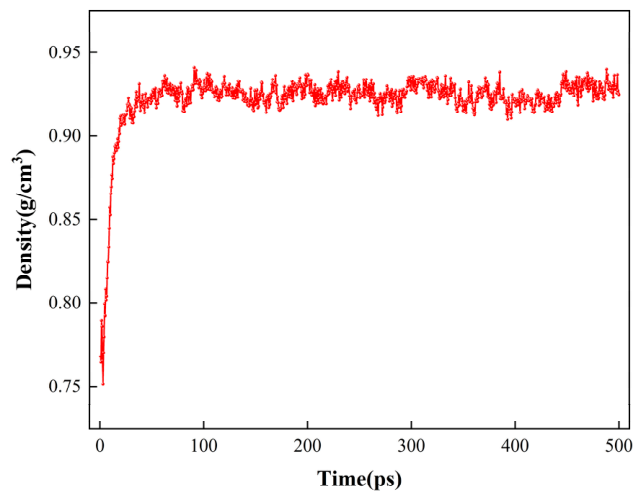
In this study, Material Studio 2020 was employed for molecular simulations, and the COMPASS III force field was applied to accurately predict the structures and thermodynamic properties of both organic and inorganic substances, including N2, CO2, H2O, and alkanes. Representative molecules were selected to construct the heavy oil model: saturated hydrocarbon C10H22, aromatic component C22H26, resin C26H32S, and asphaltene C42H54O. Based on the SARA composition data in Table 1, a three-dimensional cubic simulation box with dimensions of 40 Å × 40 Å × 40 Å was constructed. Molecular dynamics simulations were subsequently performed using the Forcite module. Temperature was controlled using a velocity-rescaling algorithm, while pressure was regulated using the Berendsen algorithm. Electrostatic and van der Waals interactions were calculated using the Ewald summation method and the atom-based summation method, respectively, with a cutoff radius of 12.5 Å. The heavy oil model was subjected to an NPT ensemble molecular dynamics simulation for 1000 ps at 90 °C and 30 MPa. The simulated viscosity of heavy oil was calculated to be 11,344.6 mPa·s. As shown in Figure 2, the simulated density gradually reached equilibrium and stabilized at approximately 0.93 g/cm3 after 100 ps. The deviation from the experimental value was less than 10%, demonstrating the reliability of the constructed molecular model and providing confidence in the subsequent molecular simulation results.
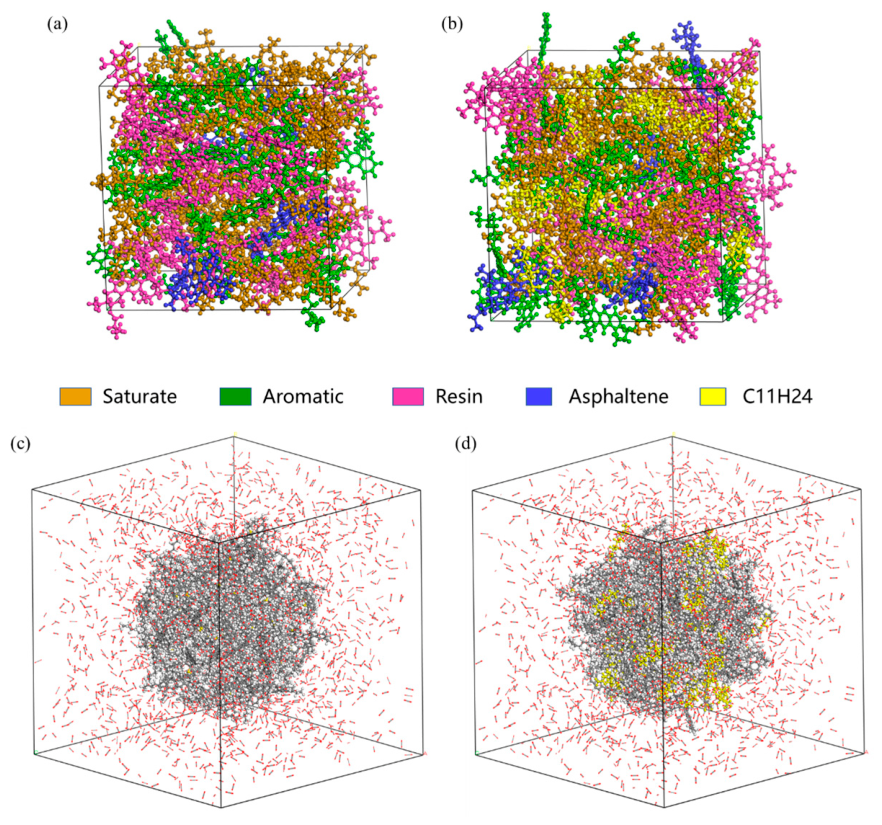
A cubic CO2 simulation box with dimensions of 80 Å × 80 Å × 80 Å and a density of 0.3 g/cm3 was constructed. A heavy oil droplet with a diameter of 40 Å was subsequently extracted from the heavy oil model using the Build Nanostructure tool and positioned at the center of the gas box. The molecular model of the alkane solvent-CO2-heavy oil system is presented in Figure 3. Based on the NPT ensemble, molecular dynamics simulations of the initial gas/heavy oil model were performed at 250 °C and 30 MPa for 1000 ps, with the calculation accuracy set to the Fine level. These simulations generated molecular trajectories describing the dissolution behavior of the heavy oil droplet under different gas environments. The equilibrium data from the final 500 ps were selected for the analysis of structural and dynamic parameters, including component concentration, cohesive energy density, interaction energy, as well as the radial distribution function (RDF) and mean square displacement (MSD) [33,34].

3. Experimental Results and Discussion

3.1. Effect of Thermal Action on Heavy Oil Viscosity

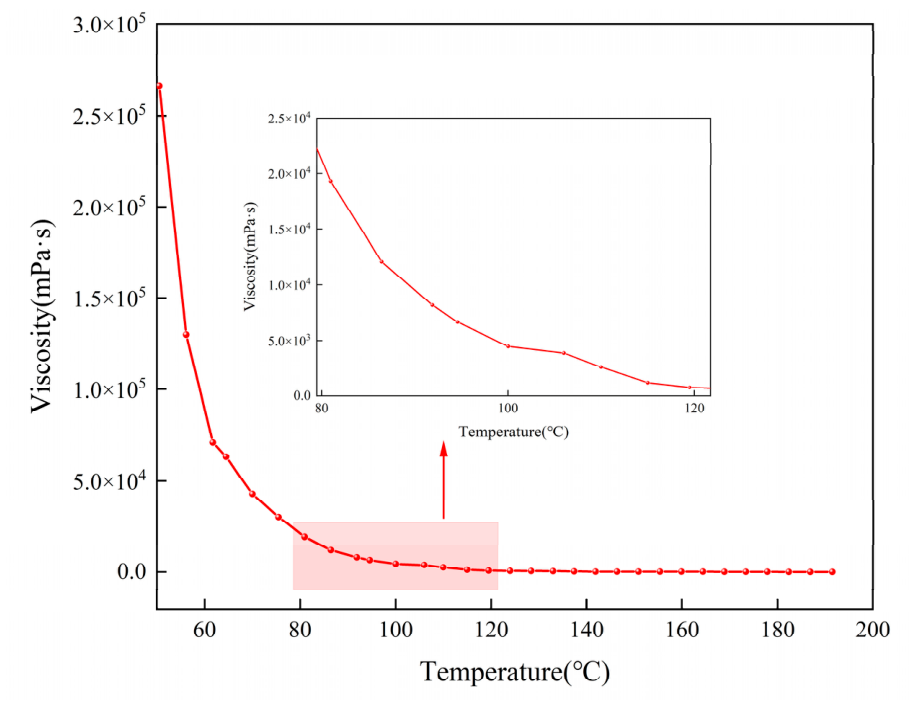
As shown in Figure 4, crude oil viscosity decreases with increasing temperature. Below 100 °C, the viscosity declines sharply as temperature rises, whereas above 100 °C, the rate of decrease becomes more gradual. This behavior is attributed to the fact that crude oil viscosity is primarily governed by intermolecular interactions among its components. At lower temperatures, stronger intermolecular forces result in higher viscosity. As the temperature increases, these interactions weaken, leading to a reduction in viscosity. However, once the temperature exceeds a certain threshold, the weakening of intermolecular forces becomes less pronounced; consequently, further temperature increases result in only marginal reductions in viscosity. Relative to the viscosity at 80 °C, the viscosity decreases by more than 80% when the temperature exceeds 100 °C. At 160 °C, the crude oil viscosity is reduced to 135.7 mPa·s.

3.2. Effect of Alkane Solvent on Heavy Oil Viscosity

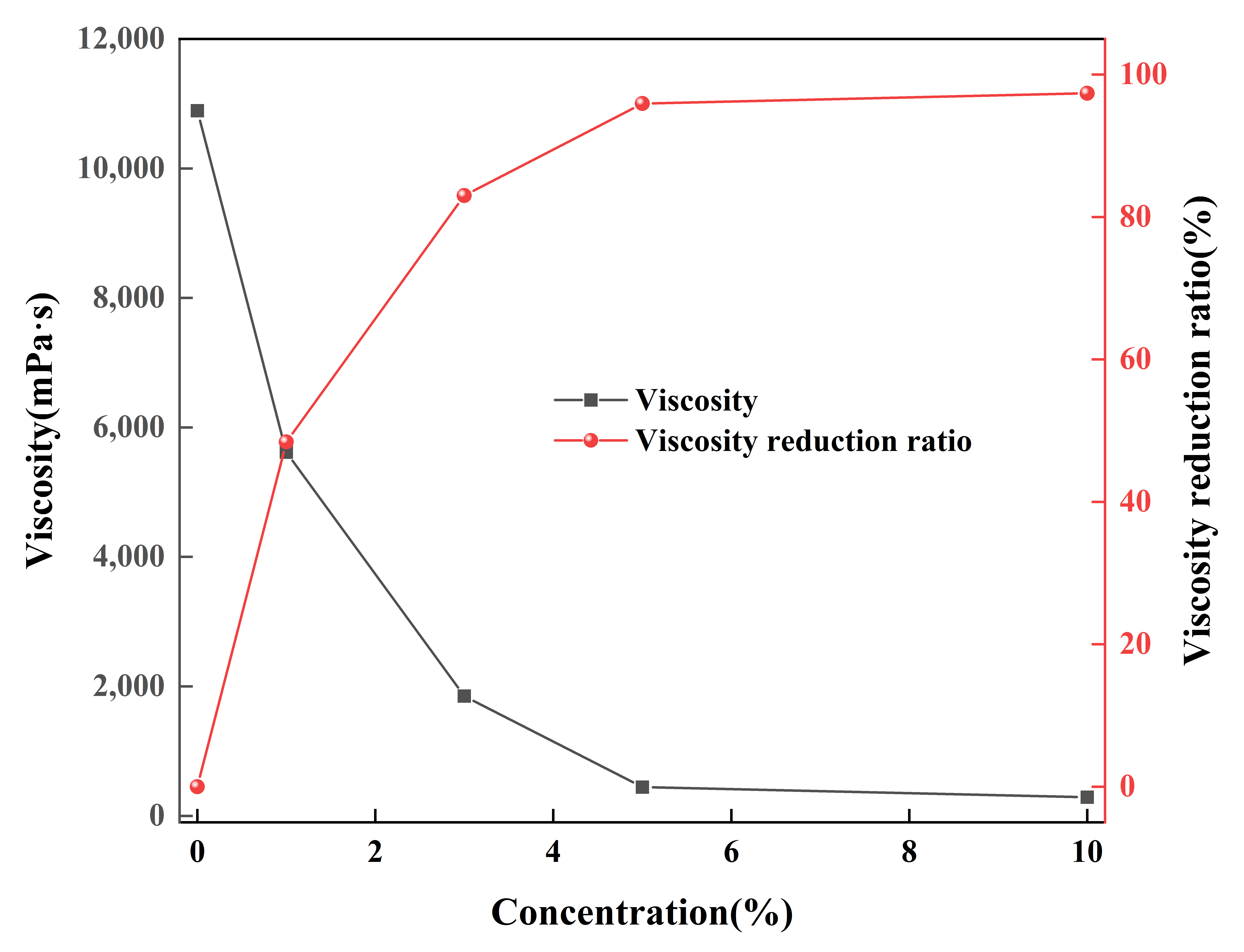
As shown in Figure 5, the viscosity of heavy oil decreases significantly with increasing concentrations of the viscosity reducer. When the concentration reaches 5 wt%, the crude oil viscosity decreases to 442.2 mPa·s, corresponding to a viscosity reduction rate of 83%. As the concentration continues to increase, the rate of viscosity reduction gradually diminishes until no significant change is observed. The high viscosity of heavy oil is primarily attributed to internal friction arising from associated structures formed through π-π stacking interactions among resins and asphaltenes with sheet-like molecular configurations. The addition of an oil-soluble viscosity reducer effectively lowers viscosity by reducing the proportion of heavy components and weakening cohesive forces within the crude oil. Specifically, it disrupts the complex stacked and overlapping sheet-like molecular structures, increases the intermolecular distance between resin and asphaltene dispersed phases, and weakens interactions among asphaltene micelles, thereby partially breaking the colloidal structure. At low concentrations of the viscosity reducer, aromatic components enhance the dispersion of asphaltenes, leading to partial disaggregation of asphaltene aggregates and a significant decrease in viscosity. However, as the concentration increases, the intermolecular distance between asphaltene molecules approaches a limiting value, and the dispersion capability of aromatic components becomes constrained. Consequently, further increases in viscosity reducer concentration exert a negligible effect on viscosity reduction [35].

3.3. Effect of CO2 on the Viscosity of Heavy Oil

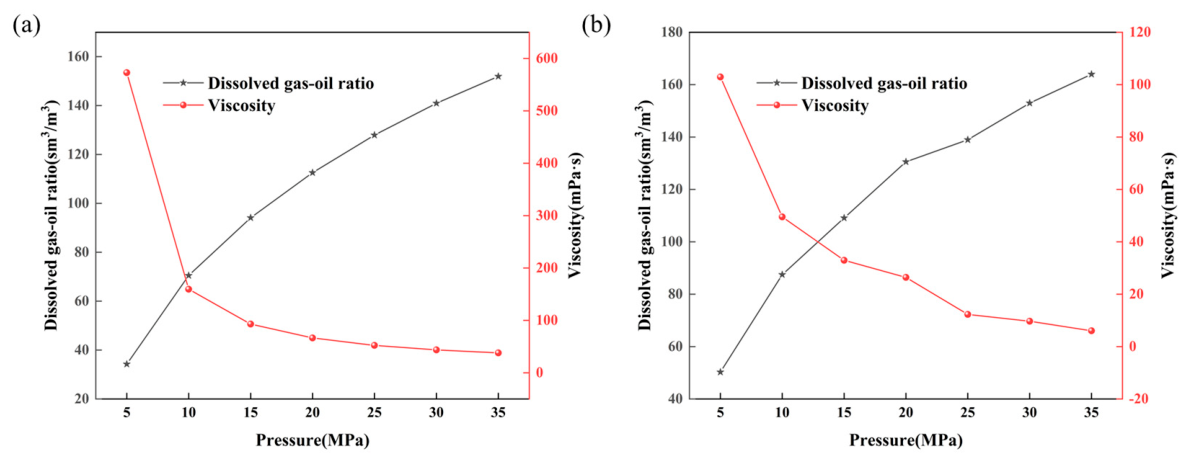
As shown in Figure 6, increasing pressure from 5 to 35 MPa continuously enhances CO2 dissolution in both the pure heavy oil system (Figure 6a) and the heavy oil system containing 5% viscosity reducer (Figure 6b), accompanied by a significant reduction in system viscosity. These results indicate that pressure promotes the transfer of CO2 molecules into the oil phase, and the dissolved CO2 improves heavy oil mobility through swelling and dilution effects. However, the addition of a viscosity reducer modifies both the CO2 dissolution behavior and the viscosity response of the heavy oil–CO2 system. For the pure heavy oil system (Figure 6a), the dissolved gas-oil ratio of CO2 increases from approximately 34.2 sm3/m3 at 5 MPa to 152 sm3/m3 at 35 MPa. The increase in dissolved gas-oil ratio is more pronounced at relatively low pressures, while the growth rate gradually decreases with further pressure elevation. This behavior suggests that CO2 dissolution is mainly controlled by the concentration gradient and chemical potential difference between the CO2-rich phase and the oil phase during the initial pressurization stage. As the pressure increases, the oil phase becomes progressively enriched with dissolved CO2, approaching the dissolution equilibrium, thereby reducing the driving force for further CO2 dissolution. Correspondingly, the viscosity of pure heavy oil decreases dramatically from 573 mPa·s to approximately 38 mPa·s. Particularly, when pressure increases from 5 to 10 MPa, the viscosity decreases by 72.2%, indicating that the initial dissolution of CO2 contributes predominantly to viscosity reduction. The dissolved CO2 molecules act as a light component within the heavy oil matrix, increasing the intermolecular distance among heavy hydrocarbon molecules, weakening the association between asphaltene and resin fractions, and reducing oil density and internal friction. Consequently, the mobility of heavy oil is significantly enhanced. After adding 5% viscosity reducer (Figure 6b), the CO2 dissolution capacity is further improved. The dissolved gas-oil ratio increases from approximately 50 sm3/m3 at 5 MPa to 163 sm3/m3 at 35 MPa, which is consistently higher than that of the pure heavy oil system under identical pressure conditions. This indicates that the viscosity reducer facilitates CO2 dissolution in the oil phase, possibly by altering the intermolecular arrangement of heavy oil components and reducing the resistance to CO2 diffusion and mass transfer. As a result, more CO2 molecules can penetrate into the oil phase and participate in viscosity reduction. Meanwhile, the viscosity of the viscosity-reducer-containing system decreases from approximately 105 mPa·s at 5 MPa to about 5 mPa·s at 35 MPa. Although the absolute viscosity reduction is smaller than that of the pure heavy oil system due to its much lower initial viscosity, the final viscosity is substantially lower. This demonstrates that the viscosity reducer and dissolved CO2 exhibit a synergistic effect in improving heavy oil mobility. The viscosity reducer initially disrupts the aggregation structure of heavy oil components, while CO2 dissolution further promotes swelling, dilution, and weakening of intermolecular interactions. Overall, increasing pressure enhances CO2 dissolution and reduces heavy oil viscosity in both systems. Compared with pure heavy oil, the addition of 5% viscosity reducer increases CO2 solubility and strengthens the viscosity reduction efficiency of the CO2-assisted process. The synergistic interaction between viscosity reducer and dissolved CO2 provides a more effective approach for improving heavy oil fluidity by simultaneously reducing the intrinsic viscosity of heavy oil and enhancing CO2-induced molecular expansion and structural disruption [36,37].

3.4. Molecular Simulation of the Alkane Solvent-CO2-Heavy Oil System

3.4.1. Distribution Patterns of the Alkane Solvent-CO2-Heavy Oil System

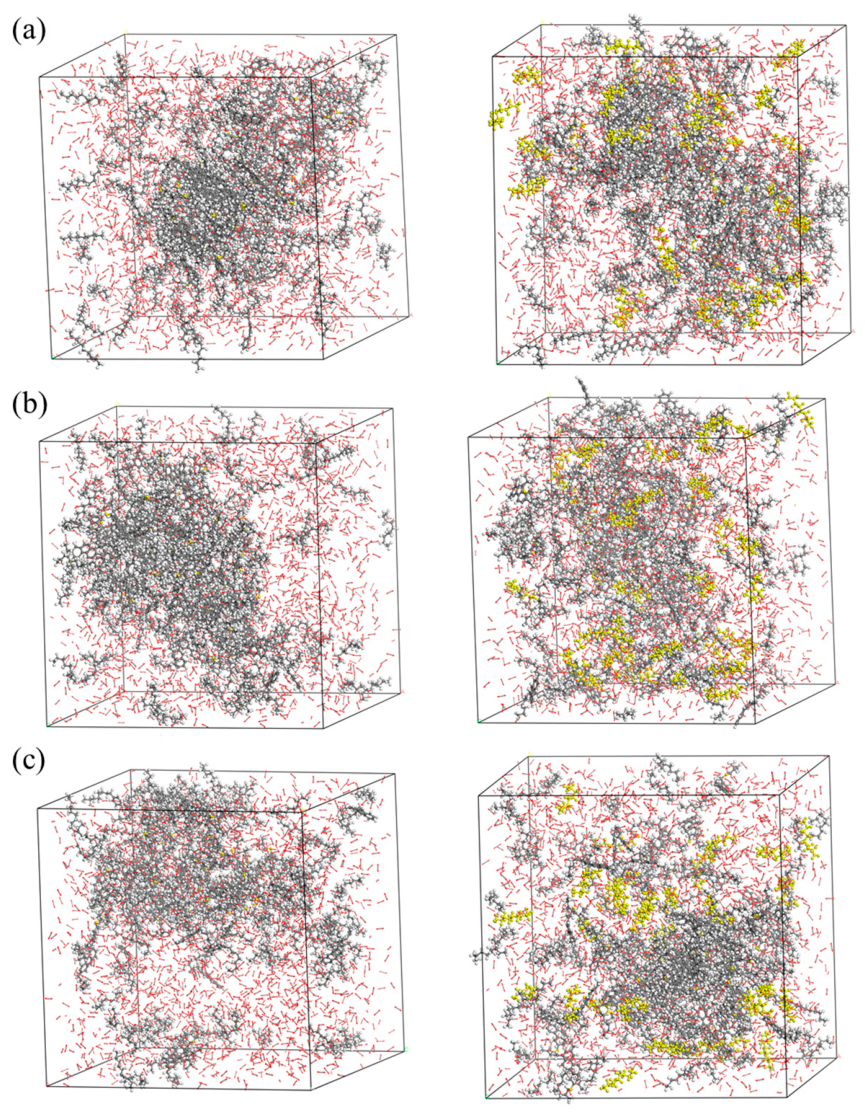
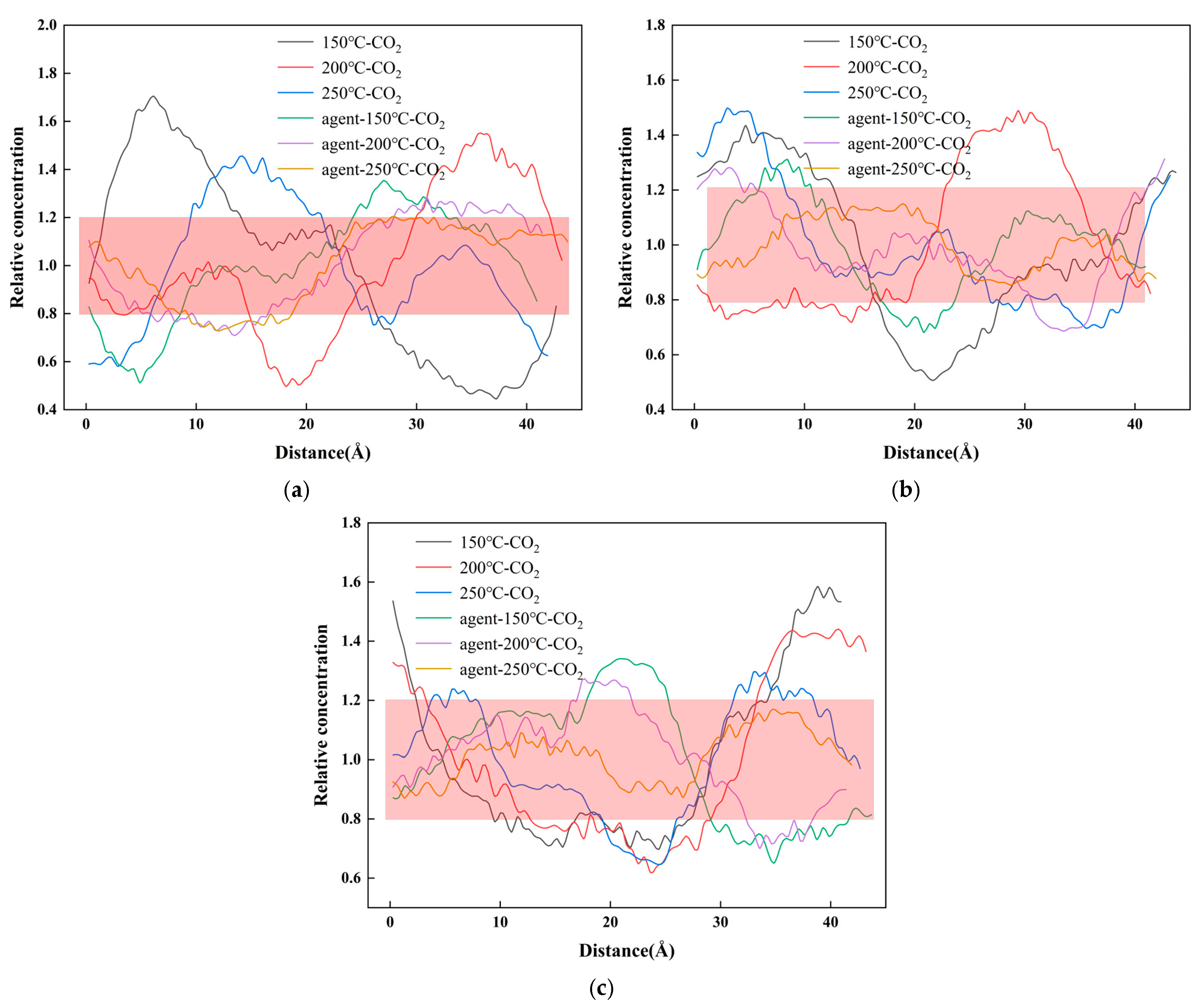
Molecular dynamics simulations were conducted to investigate the interfacial interactions in the CO2-heavy oil system and the alkane solvent-CO2-heavy oil system at different temperatures under 30 MPa. As shown in Figure 7, equilibrium configuration snapshots of both systems were obtained to compare the effects of viscosity reducers, CO2, and thermal conditions on the heavy oil system. The initial model dimensions for both systems were 80.3 Å × 80.3 Å × 80.3 Å. At 150 °C, the equilibrium configuration dimensions were 75.4 Å × 75.4 Å × 75.4 Å and 76.5 Å × 76.5 Å × 76.5 Å for the two systems, respectively (Figure 7a). At 200 °C, the corresponding dimensions were 79.5 Å × 79.5 Å × 79.5 Å and 79.6 Å × 79.6 Å × 79.6 Å (Figure 7b). At 250 °C, the dimensions increased to 83.0 Å × 83.0 Å × 83.0 Å and 83.4 Å ×83.4 Å × 83.4 Å, respectively (Figure 7c). Figure 8 presents the concentration distributions of heavy oil components in both systems along the X, Y, and Z directions at different temperatures.
The interfacial configurations and concentration distribution results reveal, from a spatial structural perspective, the mechanisms by which CO2 and viscosity reducers regulate the microscopic aggregation behavior of heavy oil systems. As shown in Figure 7, even at relatively high temperatures, the CO2-heavy oil system still exhibits noticeable local enrichment characteristics. This indicates that although CO2 can penetrate between heavy oil molecules and partially weaken the asphaltene association structures, CO2 alone is insufficient to completely disrupt the strong interaction network formed by resins and asphaltenes. In contrast, the interfacial configuration of the CO2-viscosity reducer–heavy oil system undergoes more significant changes. Under the same temperature conditions, after the addition of viscosity reducers, the reducer molecules can effectively penetrate between heavy oil molecules, distribute prominently around the asphaltene association structures, and even partially embed within them. Through “intercalation” and “spatial isolation” effects on the resin–asphaltene association structures, the system transitions from large-scale asphaltene aggregates into smaller, more uniform, and loosely packed units.
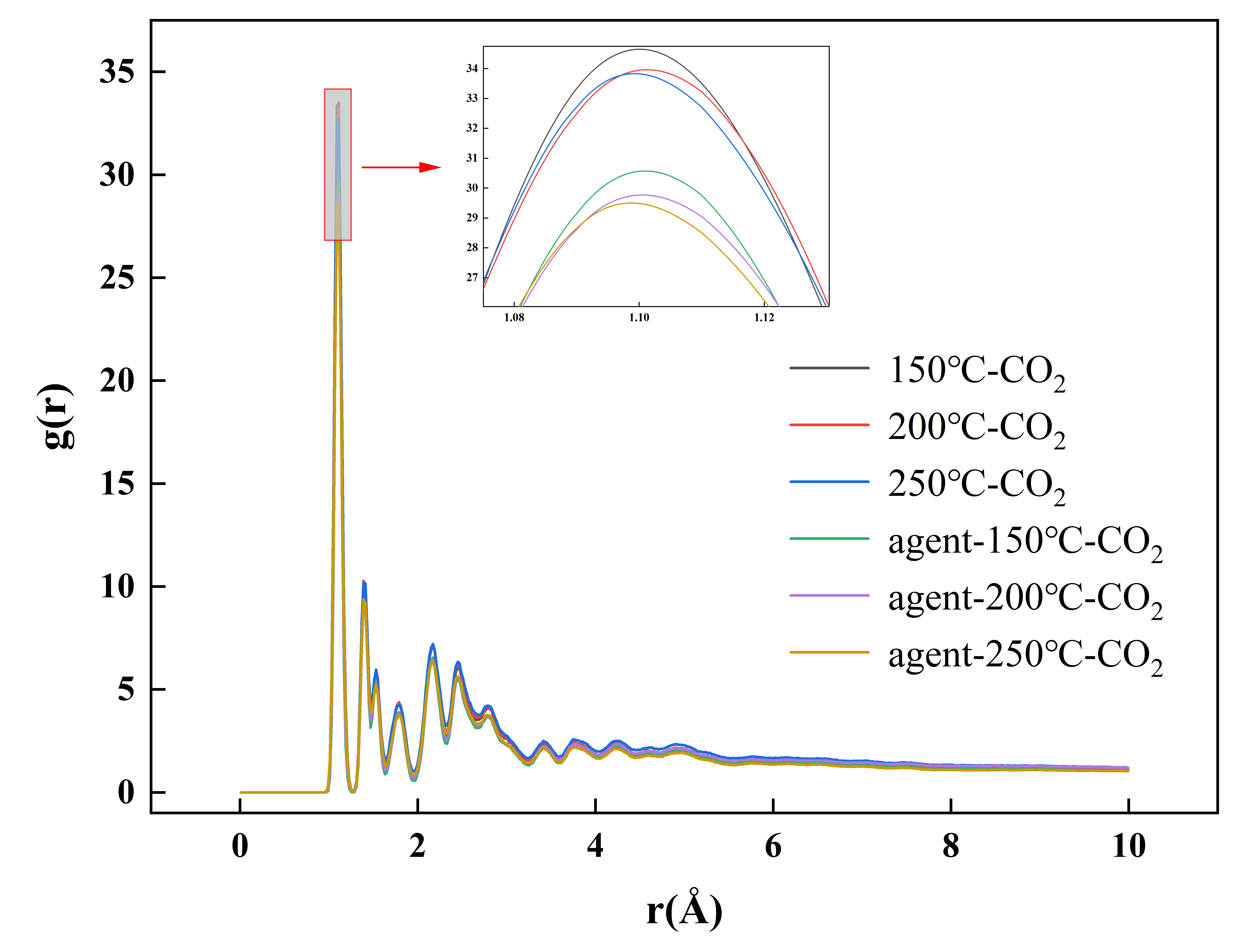
The concentration distribution profiles of heavy components along the X, Y, and Z directions in Figure 8 provide further quantitative validation of the interfacial phenomena described above. In the CO2-heavy oil system, the concentration distribution curves in all directions exhibit pronounced multi-peak characteristics, with relatively high local maxima and low minima, as well as significant fluctuations. Certain regions display local enrichment of heavy components, whereas others exhibit relatively sparse distributions, indicating a highly non-uniform spatial distribution of these components. Following the introduction of viscosity reducers, the concentration distribution curves along the X, Y, and Z directions become markedly smoother, with reduced peak values, elevated minimum values, and an overall decrease in fluctuation amplitude. This indicates that the addition of viscosity reducers effectively weakens the tendency of heavy components to aggregate excessively in localized regions, resulting in a more uniform spatial distribution throughout the simulation system and transforming the system from “localized high-concentration aggregation” to “overall uniform dispersion.” The radial distribution functions (RDF) between heavy components in heavy oil are shown in Figure 9. As the temperature increased, the RDF peak intensity gradually decreased, indicating weakened aggregation among heavy oil components. The increased intermolecular spacing facilitated molecular diffusion and enhanced molecular mobility. After introducing the viscosity-reducing agent C11, the RDF peaks were further weakened, demonstrating that the combined effects of thermal activation and C11 addition effectively disrupted asphaltene association structures. Consequently, the dispersion of heavy components was improved, resulting in enhanced heavy oil mobility and reduced viscosity.

3.4.2. Energy Variation in the Alkane Solvent-CO2-Heavy Oil System

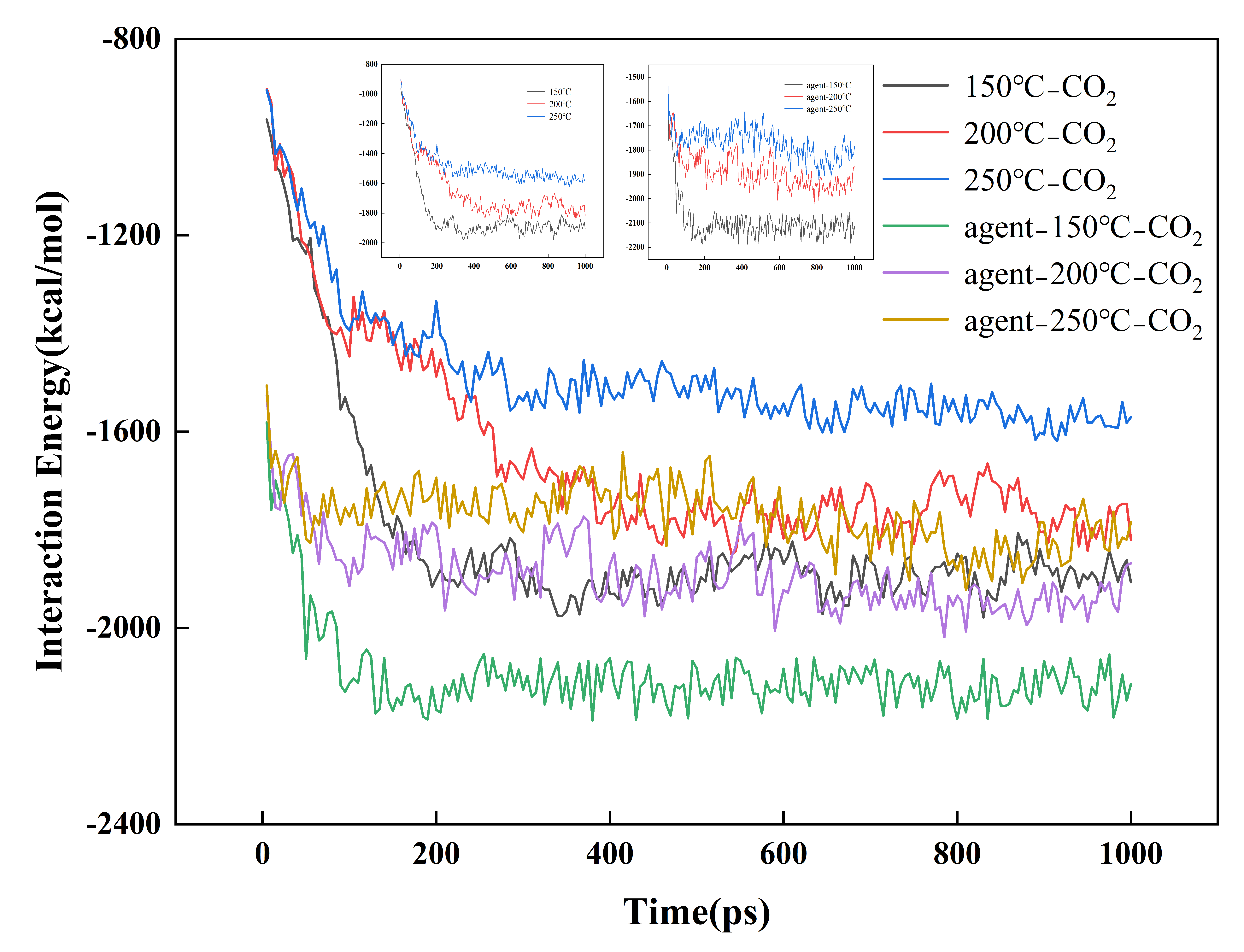
Figure 10 illustrates the variation in interaction energy between gas and heavy oil in the CO2-heavy oil system and the alkane solvent-CO2-heavy oil system under different temperature conditions. As shown in Figure 8a, the interaction energy in all systems decreases rapidly during the initial stage of the simulation and then gradually stabilizes, indicating that CO2 and the viscosity reducer progressively approach and penetrate the heavy oil molecules, ultimately reaching a stable equilibrium state. With increasing temperature, the interaction energy between CO2 and heavy oil gradually decreases, suggesting that elevated temperatures enhance molecular thermal motion and weaken adsorption stability. In contrast, following the addition of the viscosity reducer, the interaction energy between CO2 and heavy oil is significantly increased at all temperatures. This indicates that the viscosity reducer can modify the local enrichment characteristics of asphaltene aggregates, reduce intermolecular attractions among heavy components, and improve the accessibility of CO2, thereby enhancing the adsorption and penetration of gas into heavy oil.
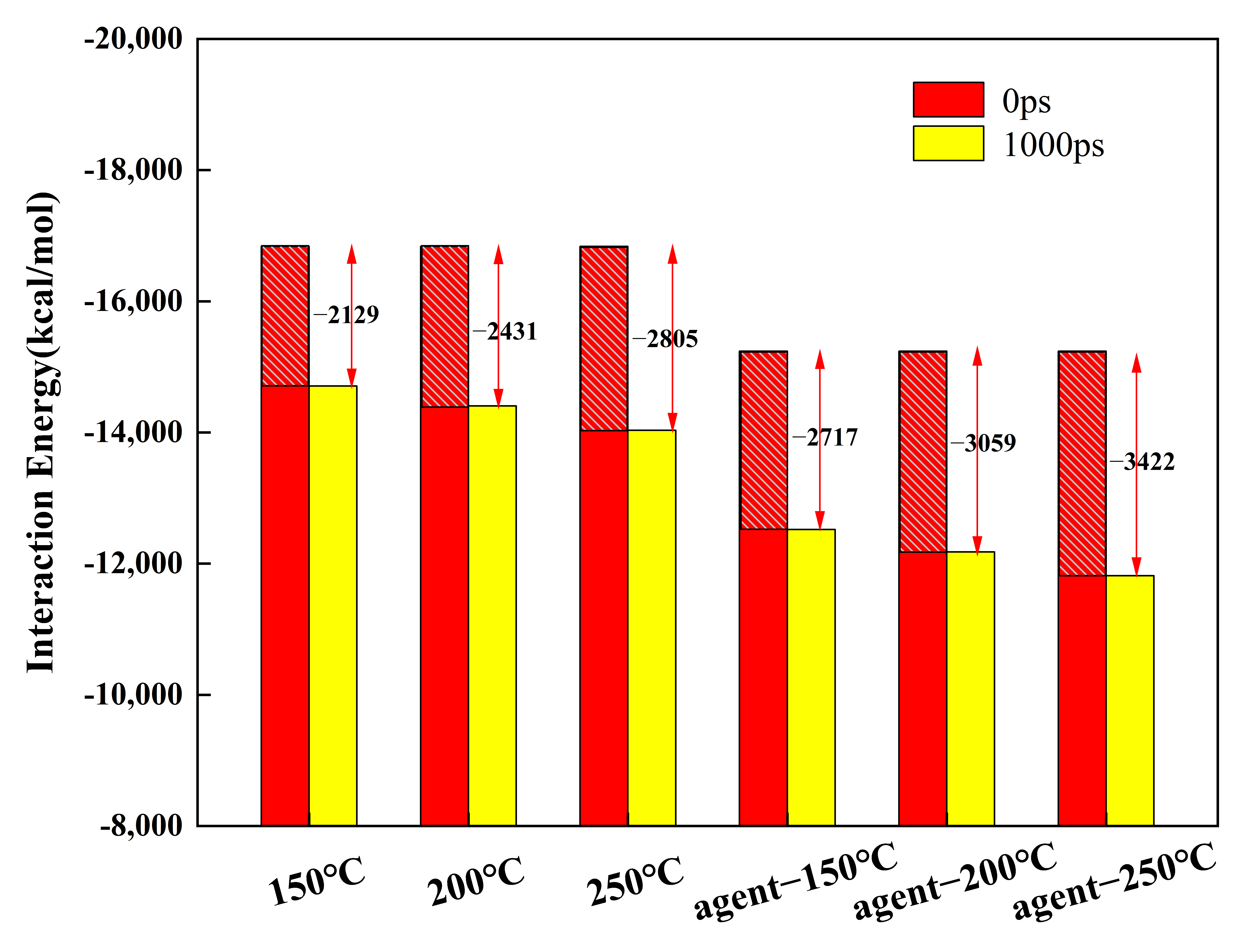
A further analysis was conducted to examine the variation in intermolecular interaction energy among heavy oil molecules in the CO2-heavy oil system and the alkane solvent-CO2-heavy oil system under different temperature conditions, as shown in Figure 11. The results indicate that, compared with the initial state, the intermolecular interaction energy among heavy oil molecules in all systems decreases upon reaching equilibrium. During the dynamic process, intermolecular interactions within the heavy oil system are progressively weakened under the combined effects of CO2 and temperature. As the temperature increases, the reduction in intermolecular interaction energy becomes more pronounced, indicating that elevated temperatures weaken the attractive forces between heavy oil molecules, although the extent of this effect remains limited. In contrast, following the addition of a viscosity reducer, the intermolecular interaction energy decreases significantly, and this reduction is further amplified with increasing temperature. By distinguishing the individual and synergistic effects of thermal action, CO2, and the viscosity reducer, the results demonstrate that CO2 disrupts asphaltene associations through penetration and encapsulation (shielding), whereas the viscosity reducer acts via molecular intercalation and spatial isolation. Together, these mechanisms disrupt π-π stacking interactions between asphaltenes and reduce effective molecular contact, thereby significantly weakening asphaltene aggregation structures and playing a dominant role. Meanwhile, temperature enhances molecular thermal motion and increases the spacing between asphaltene layers, further contributing to this effect. Overall, thermal effects, CO2 action, and viscosity reducer action exhibit a clear synergistic effect. Under their combined influence, the reduction in intermolecular interaction energy among heavy oil molecules is maximized. The weakening of these intermolecular interactions constitutes the fundamental driving force for viscosity reduction in heavy oil [38,39,40].
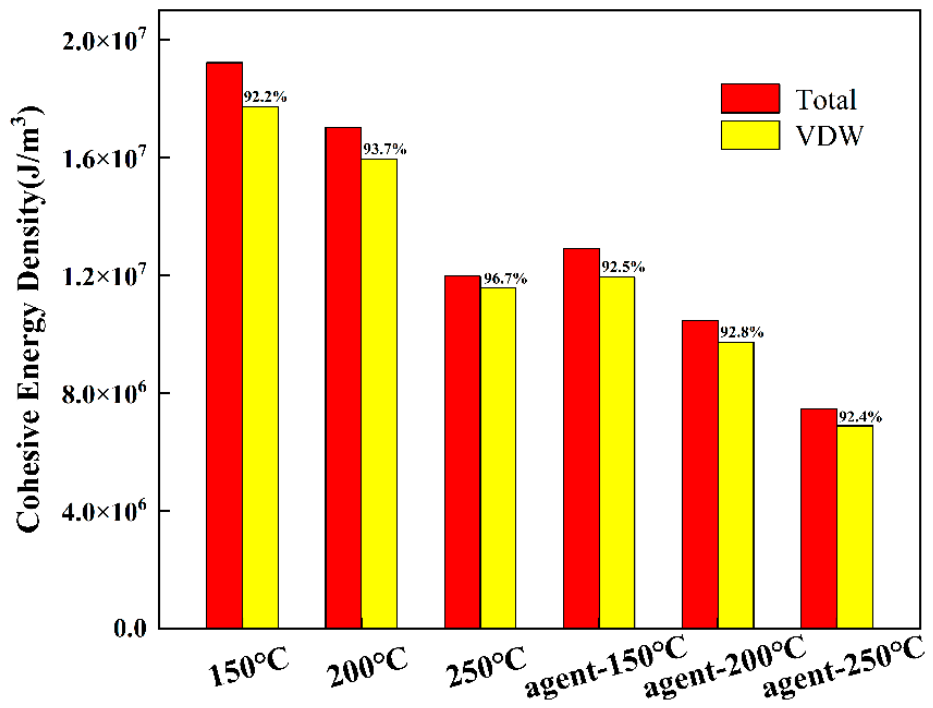
Figure 12 illustrates the variation in cohesive energy density for the CO2-heavy oil system and the alkane solvent-CO2-heavy oil system under different temperature conditions. As the temperature increases, the cohesive energy density of the heavy oil system decreases continuously, indicating that enhanced molecular thermal motion weakens intermolecular attractive forces and reduces interactions per unit volume. At a given temperature, the addition of a viscosity reducer results in a significant decrease in cohesive energy density, demonstrating that the viscosity reducer effectively disrupts the asphaltene association structures within the heavy oil system. Furthermore, van der Waals(VDW) forces account for approximately 92–97% of the intermolecular interactions, indicating that interactions among heavy oil molecules are predominantly governed by non-bonded forces.

3.4.3. Molecular Diffusion Capacity of the Alkane Solvent-CO2-Heavy Oil System

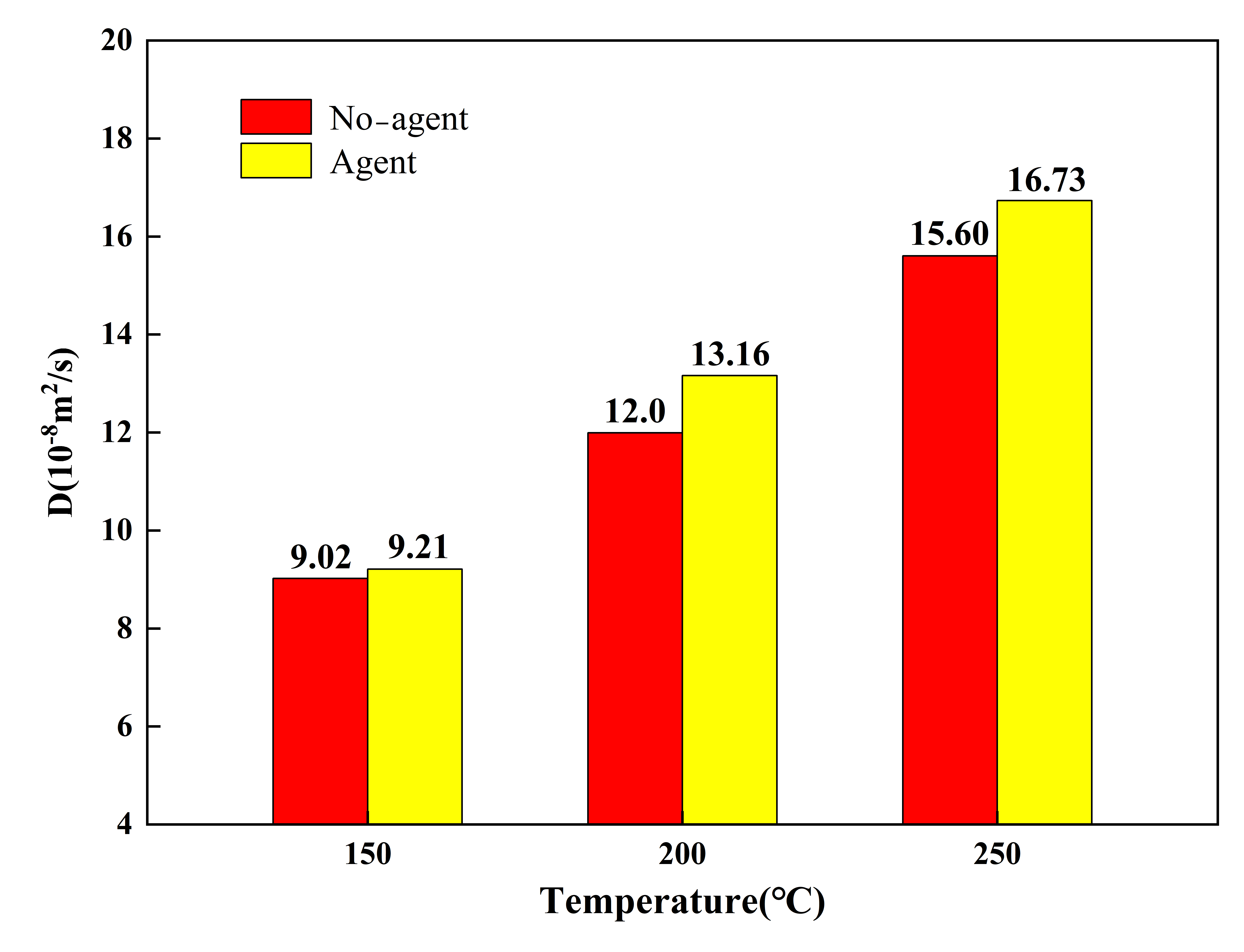
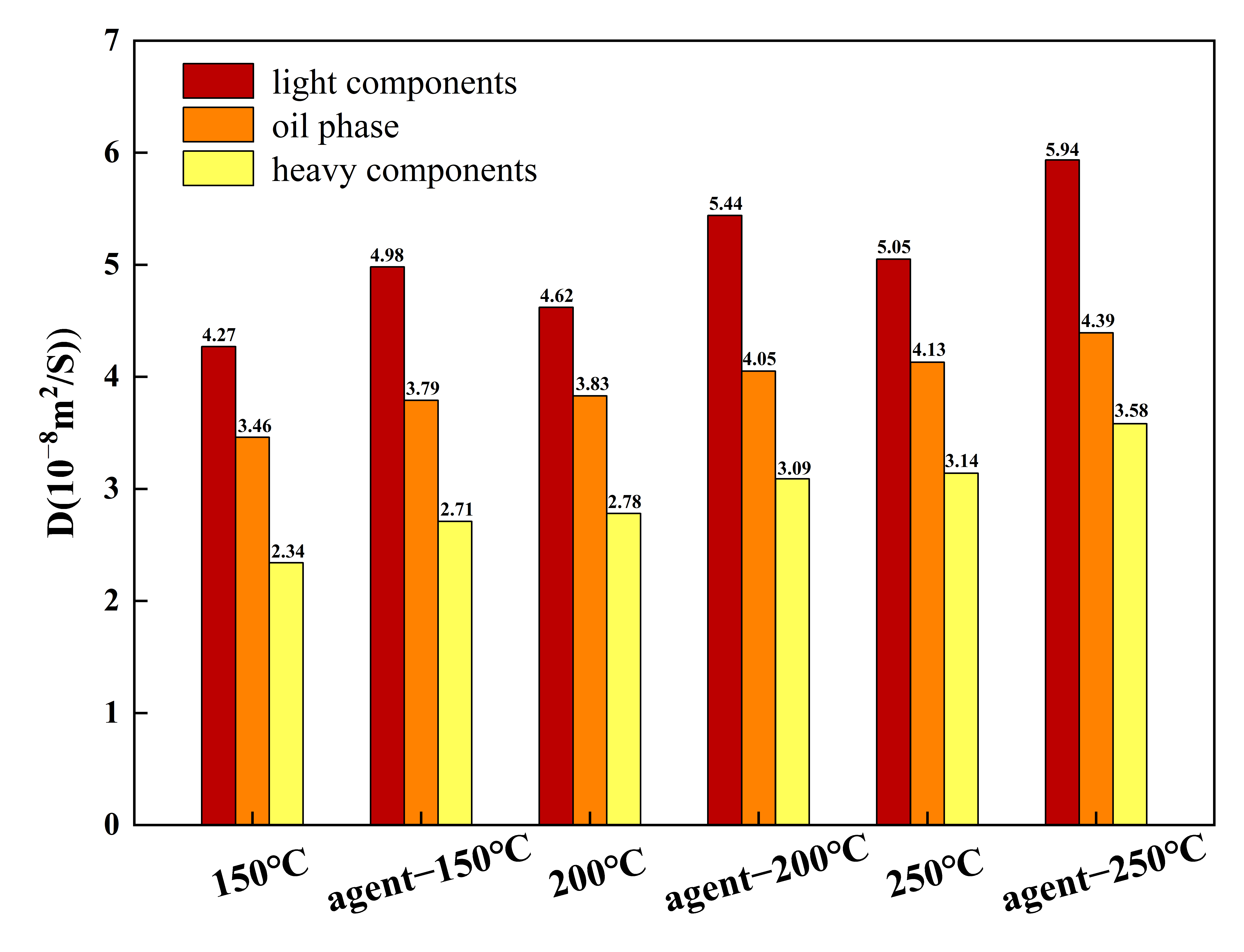
Figure 13 and Figure 14 show the variation in diffusion coefficients of each component in the CO2-heavy oil system and the alkane solvent-CO2-heavy oil system under different temperature conditions. As shown in Figure 13, the diffusion coefficient of CO2 increases significantly with rising temperature, indicating that enhanced molecular thermal motion and reduced system viscosity facilitate the migration of gas molecules. After the addition of a viscosity reducer, the diffusion coefficient of CO2 is further increased at all temperatures. This suggests that the viscosity reducer modifies the π-π stacking structure of asphaltenes, weakens the aggregation network of heavy oil molecules, and reduces intermolecular interactions, thereby providing a more open space and migration pathways for CO2. Figure 14 shows that with increasing temperature and the addition of a viscosity reducer, the diffusion coefficients of all components increase, with the most significant improvement observed for heavy components. This indicates that temperature elevation and viscosity reducers effectively weaken the π-π stacking structures among asphaltenes, transforming their motion from restricted diffusion to relatively free diffusion, and significantly enhancing the mobility of heavy oil molecules, especially resins and asphaltenes.

4. Conclusions

Thermal effects, oil-soluble alkane solvents, and CO2 dissolution collectively reduce the viscosity of heavy oil through synergistic physical and molecular-scale mechanisms. Increasing temperature significantly decreases heavy oil viscosity, with an overall viscosity reduction exceeding 80%, although the reduction rate gradually declines above 100 °C. The addition of the oil-soluble alkane solvent C11H24 further enhances viscosity reduction, achieving approximately 83% reduction at an optimal concentration of 5 wt%, mainly due to the disruption of resin–asphaltene association structures, weakening of π-π stacking interactions, and improved dispersion of heavy components; however, the effect gradually approaches saturation at higher concentrations. Meanwhile, CO2 dissolution effectively reduces heavy oil viscosity, particularly within the pressure range of 5–10 MPa, where rapid CO2 dissolution dilutes the oil phase, increases intermolecular distances, decreases oil density, and weakens intermolecular interactions. Molecular dynamics simulations further reveal that the combined action of CO2 and alkane solvents induces significant microstructural rearrangement of heavy oil, transforming asphaltenes from locally aggregated structures into more dispersed configurations. This synergistic effect reduces cohesive energy density and enhances molecular diffusion, with the most pronounced improvement observed in the mobility of heavy components, thereby providing molecular-level insights into the viscosity-reduction mechanism of CO2–alkane solvent systems.

Author Contributions

Conceptualization, T.L., B.L. and Q.C.; methodology, Q.C.; software, X.Z. and B.L.; validation, R.H., Q.G. and X.Z.; formal analysis, N.F.; investigation, S.L.; resources, T.L. and B.L.; data curation, R.H.; writing—original draft preparation, Q.C. and R.H.; writing—review and editing, B.L.; visualization, X.Z.; supervision, T.L.; project administration, Q.G.; funding acquisition, T.L. and B.L. All authors have read and agreed to the published version of the manuscript.

Funding

This work was financially supported by Science Project of COSL (E-23257011) and Tianjin International Cooperation Project (25YFGKHZ00220).

Data Availability Statement

The original contributions presented in this study are included in the article. Further inquiries can be directed to the corresponding author.

Acknowledgments

We are grateful to the Shandong Engineering Research Center for CO2 Utilization and Storage for their kind help in this study. The valuable comments made by the anonymous reviewers are also sincerely appreciated.

Conflicts of Interest

Authors Tao Lin and Qilin Gu were employed by the company China National Offshore Oil Corporation Limited. Authors Rui Han, Na Fang, Xinru Zhao and Shanshan Lin were employed by the company China Oilfield Services Limited. The remaining authors declare that the research was conducted in the absence of any commercial or financial relationships that could be construed as a potential conflict of interest. The China National Offshore Oil Corporation Limited and China Oilfield Services Limited had no role in the design of the study; in the collection, analyses, or interpretation of data; in the writing of the manuscript, or in the decision to publish the results.

References

  1. Liu, Z.; Wang, H.; Blackbourn, G.; Ma, F.; He, Z.; Wen, Z.; Wang, Z.; Yang, Z.; Luan, T.; Wu, Z. Heavy Oils and Oil Sands: Global Distribution and Resource Assessment. Acta Geol. Sin. (Engl. Ed.) 2019, 93, 199–212. [Google Scholar] [CrossRef] [Scilit]
  2. Sun, H.; Liu, H.; Wang, H.; Shu, Q.; Wu, G.; Yang, Y. Development Technology and Direction of Thermal Recovery of Heavy Oil in China. Acta Pet. Sin. 2022, 43, 1664–1674. [Google Scholar]
  3. Wang, L.; Guo, J.; Li, C.; Xiong, R.; Chen, X.; Zhang, X. Advancements and future prospects in in-situ catalytic technology for heavy oil reservoirs in China: A review. Fuel 2024, 374, 132376. [Google Scholar] [CrossRef] [Scilit]
  4. Zhou, L.; Qin, B.; Li, W.; Wang, Z. Development and Application of Heavy Oil Viscosity Reduction Technology at Home and Abroad. Oilfield Chem. 2020, 37, 557–563. [Google Scholar]
  5. Ji, B. Progress and prospects of enhanced oil recovery technologies athome and abroad. Oil Gas. Geol. 2012, 33, 111–117. [Google Scholar]
  6. Wang, X. Heavy oil recovery techniques in Liaohe Oilfield andkey technical research in next step. Pet. Explor. Dev. 2006, 33, 484–490. [Google Scholar]
  7. Dong, X.; Liu, H.; Chen, Z.; Wu, K.; Lu, N.; Zhang, Q. Enhanced Oil Recovery Techniques for Heavy Oil and Oilsands Reservoirs after Steam Injection. Appl. Energy 2019, 239, 1190–1211. [Google Scholar] [CrossRef] [Scilit]
  8. Li, Z.; Lu, T.; Tao, L.; Li, B.; Zhang, J.; Li, J. CO2 and viscosity breaker assisted steam huff and puff technology forhorizontal wells in a super-heavy oil reservoir. Pet. Explor. Dev. 2011, 38, 600–605. [Google Scholar] [CrossRef] [Scilit]
  9. Zhao, X.; Bai, Y.; Han, S.; Wang, X. Advances in improving heavy oil recovery by thermochemical techniques. Spec. Oil Gas. Reserv. 2012, 19, 8–13. [Google Scholar]
  10. Wu, Z.; Liu, H.; Wang, X. Adaptability Research of Thermal-Chemical Assisted Steam Injection in Heavy Oil Reservoirs. J. Energy Resour. Technol. 2018, 140, 052901. [Google Scholar] [CrossRef] [Scilit]
  11. Sun, J. Adaptability Evaluation of Surfactant Assisted Steam Flooding for Heavy Oil Reservoir. Oilfield Chem. 2012, 29, 60–64. [Google Scholar]
  12. Zeidani, K.; Gupta, S.C. Surfactant-Steam Process: An Innovative Enhanced Heavy Oil Recovery Method for Thermal Applications. In Proceedings of the SPE Heavy Oil Conference Canada 2013, Calgary, AB, Canada, 11–13 June 2013. SPE 165545. [Google Scholar]
  13. Sun, H.; Wang, J.; Liu, H.; Zhang, Y.; Li, G. Laboratory experiments of high-temperature steam and nitrogen foam compound flooding. Oil Drill. Prod. Technol. 2011, 33, 83–87. [Google Scholar]
  14. Fortenberry, R. Experimental Demonstration and Improvement of Chemical EOR Techniques in Heavy Oils; University of Texas at Austin: Austin, TX, USA, 2013. [Google Scholar]
  15. Wei, H.; Wang, J.; Xu, T.; Lu, Y.; Zhou, Y.; Wang, J. Regulation of CO2 on physical properties of heavy oil reservoir and EOR of CO2-as-sisted steam flooding. Xinjiang Pet. Geol. 2024, 45, 221–227. [Google Scholar]
  16. Fan, X.; Huang, S.; Zhao, F.; Li, Q.; Cheng, L.; Zhu, G.; Zhang, M. Microscopic experiments on the couplign mechanisms of different meida in multi-component thermal fluids. China Offshore Oil Gas. 2024, 36, 119–128. [Google Scholar]
  17. Lun, Z.; Wang, H.; Zhang, C.; Li, B.; Liu, Y.; Li, Z. Mechanisms of symergistic enhancement of steam flooding by CO2 and chemical agents in heavy oil reservoirs. J. China Univ. Pet. 2023, 47, 73–79. [Google Scholar]
  18. Liu, Y.; Peng, M.; Li, Q.; Liu, C.; Li, Z. Microscopic and macroscopic analysis on steam heat transfer due to dual-interface resistance from non-condensable gases. Energy 2025, 334, 137729. [Google Scholar] [CrossRef] [Scilit]
  19. Cai, B.; Li, Q.; Zhang, X.; Cao, C.; Cao, L.; Chen, W. Annual Report Oncarbon Capture, Utilization, and Storage (CCUS) in China (2021)-Study on the CCUS Pathway in China; Chinese Academy of Environmental Planning: Beijing, China, 2021. [Google Scholar]
  20. Mahzari, P.; Tsolis, P.; Sohrabi, M.; Enezi, S.; Yousef, A.A.; Eidan, A.A. Carbonatedwater injection under reservoir conditions; in-situ WAG-type EOR. Fuel 2018, 217, 285–296. [Google Scholar] [CrossRef] [Scilit]
  21. Wang, X.; Yan, L. Driving factors and decoupling analysis of fossil fuel related-carbon dioxide emissionsin China. Fuel 2022, 314, 122869. [Google Scholar] [CrossRef] [Scilit]
  22. Wang, Z.; Yuan, P.; Yu, H.; Ma, Q.; Xu, B.; Zhao, D. Carbon Capture, Utilization and Storage: Technology, Application, and Policy. Processes 2025, 13, 3414. [Google Scholar] [CrossRef] [Scilit]
  23. Zhang, C.; Liu, Y.; Gu, Z.; Li, P.; Zhao, D.; Zhang, K. Chemicals-CO2 mechanisms of inhibiting steam heat transfer and enhancingoil film strip: Steam flow through the wall-adhering oil filmsurface in porous medium. Fuel 2024, 356, 129572. [Google Scholar] [CrossRef] [Scilit]
  24. Qin, J.; Han, H.; Liu, X. Application andenlightenment of carbon dioxide flooding in the United States of America. Pet. Explor. Dev. 2015, 42, 209–216. [Google Scholar] [CrossRef] [Scilit]
  25. Shi, X.; Sun, L.; Zhan, J.; Li, B.; Han, X.; Lu, H.; Jiang, C. Carbondioxide huff-puff technology and application in tight oil horizontal wells in the northern Songliao Basin. Acta Pet. 2022, 43, 998–1006. [Google Scholar]
  26. Liu, Z.; Li, Z. An experimental study on anti-channeling technology with foam in CO2 flooding. J. Southwest Pet. Univ. (Sci. Technol. Ed.) 2015, 37, 117–122. [Google Scholar]
  27. Liu, Y.; Zhang, C.; Li, S.; Gu, Z.; Zhao, D.; Zhang, K. Study of steam heat transfer enhanced by CO2 and chemical agents: In heavy oil production. Pet. Sci. 2023, 20, 1030–1043. [Google Scholar] [CrossRef] [Scilit]
  28. Liu, W.; Li, Z.; Sun, X.; Liu, Y.; Zhang, L. The effect of the elements in HDCS technology on the properties of super heavy oil. Spec. Oil Gas. Resorvoirs 2013, 20, 127–130. [Google Scholar]
  29. Liu, W.; Du, L.; Zou, X.; Liu, T.; Wu, X.; Wang, Y.; Dong, J. Experimental study on the enhanced ultra-heavy oil recovery using an oil-soluble viscosity reducer and CO2 assisted steam flooding. Geoenergy Sci. Eng. 2023, 222, 211409. [Google Scholar] [CrossRef] [Scilit]
  30. Feng, Y. Molecular Simulation and its Application in the Oilfield Chemistry and Related Fields. Oilfield Chem. 1998, 15, 71–76. [Google Scholar]
  31. Ji, B.; Fang, J.; Yang, S.; Hu, Y. Concept, method and prospect of molecular oil recovery. Oil Gas. Geol. 2023, 44, 195–202. [Google Scholar]
  32. Zhang, H.; Yuan, S. Application of molecular dynamics simulation in enhanced oil recovery. Sci. Sin. Chim. 2021, 51, 761–771. [Google Scholar] [CrossRef] [Scilit]
  33. Zhao, Q.; Zheng, L.; Dong, Y.; Jin, H.; Wang, Y.; Guo, L. Molecular dynamics simulation of heavy oil dissolution in supercritical water and multicomponent thermal fluid. Sustain. Energy Fuels 2023, 7, 4094. [Google Scholar] [CrossRef] [Scilit]
  34. Lu, N.; Dong, X.; Wang, H.; Liu, Y.; Li, Z. Hybrid CO2 thermal system for post-steam heavy oil recovery: Insights from microscopic visualization experiments and molecular dynamics simulations. Energy Geosci. 2025, 6, 100394. [Google Scholar] [CrossRef] [Scilit]
  35. Liu, Z.; Xiang, J.; Zhang, P.; Wang, H.; Sun, Y. Effect Factors Summarization of Curde oil Viscosity Change. Technol. Dev. Chem. Ind. 2014, 43, 36–39. [Google Scholar]
  36. Cheng, H.; Chen, J.; Sun, R.; Liu, Y. Effecet of Dissolved Carbon Dioxide on the Viscosity of Crude Oil. J. China Univ. Pet. 2004, 28, 78–80. [Google Scholar]
  37. Ma, T.; Lun, Z.; Zhang, S.; Li, B.; Liu, Y. Effect of heat, viscosity redsucer and gas o viscosity of crude oil in thermal composite flooding. Appl. Chem. Ind. 2024, 53, 1298–1300. [Google Scholar]
  38. Li, X.; Zhou, W.; Zhou, Y.; Zhang, C.; Liu, Y. Review on Molecular Dynamics Simulations for Understanding Mechanisms of Enhanced Heavy Oil Recovery: Recent Progress, Challenges, and Prospects. Energy Fuels 2025, 39, 16628–16651. [Google Scholar] [CrossRef] [Scilit]
  39. Lu, N.; Dong, X.; Liu, H.; Wang, H.; Li, Z. Molecular insights into the synergistic mechanisms of hybrid CO2-surfactant thermal systems at heavy oil-water interfaces. Energy 2024, 286, 129476. [Google Scholar] [CrossRef] [Scilit]
  40. Duan, T.; Yang, L.; Jing, G.; Zhang, C.; Liu, Y. All-atom simulation studies on viscosity reduction mechanism in heavy oil: Role of solvent and surfactant. Chem. Eng. Sci. 2026, 321, 122845. [Google Scholar] [CrossRef] [Scilit]
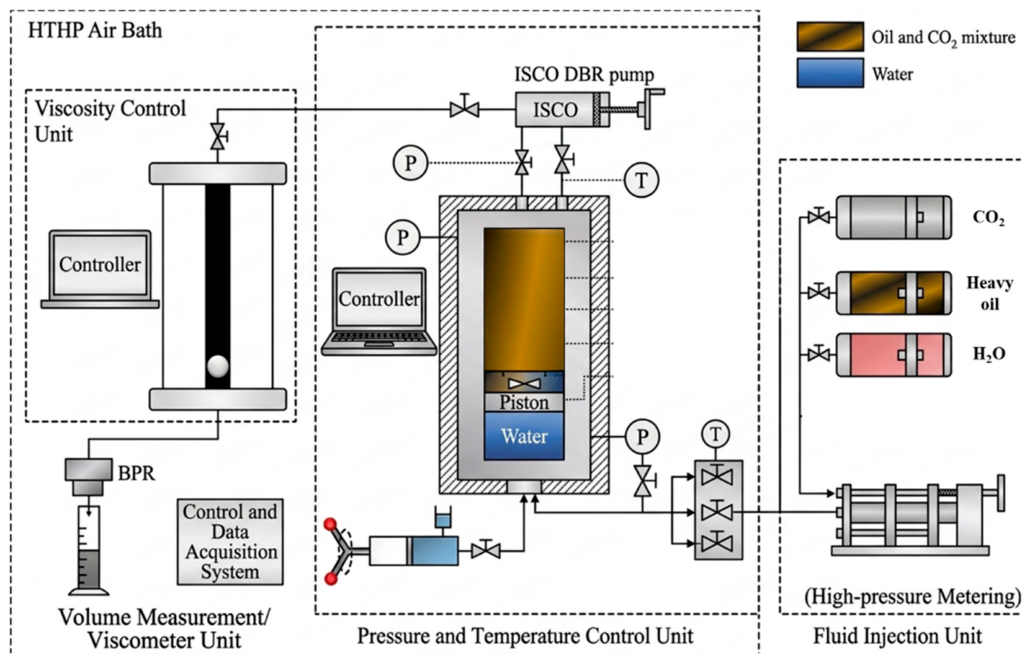
Figure 1. Schematic of high-temperature and high-pressure PVT testing apparatus.
Processes 14 02705 g001
Figure 2. The simulated density of Shengli heavy oil.
Processes 14 02705 g002
Figure 3. Molecular models of the alkane solvent-CO2-heavy oil system: (a) Heavy oil model; (b) Alkane solvent-heavy oil model; (c) CO2-heavy oil model; (d) Alkane solvent-CO2-heavy oil model.
Processes 14 02705 g003
Figure 4. Viscosity-Temperature Curve of Heavy Oil.
Processes 14 02705 g004
Figure 5. The effect of viscosity reducers at different concentrations on heavy oil viscosity and the curve of heavy oil viscosity reduction rate at 90 °C.
Processes 14 02705 g005
Figure 6. Dissolved gas-oil ratio of CO2 and the viscosity curve of the CO2-heavy oil system at 90 °C: (a) heavy oil; (b) heavy oil with 5% viscosity reducer.
Processes 14 02705 g006
Figure 7. Interfacial configurations of the CO2-heavy oil system and the alkane solvent-CO2-heavy oil system at equilibrium under different temperatures: (a) 150 °C, (b) 200 °C, and (c) 250 °C (molecules marked in yellow represent viscosity reducer molecules).
Processes 14 02705 g007
Figure 8. Concentration distribution of heavy components in the CO2-heavy oil system and the alkane solvent-CO2-heavy oil system at different temperatures: (a) along the X-axis, (b) along the Y-axis, and (c) along the Z-axis.
Processes 14 02705 g008
Figure 9. The RDF between heavy components in heavy oil.
Processes 14 02705 g009
Figure 10. Time-dependent variation in the interaction energy between gas and heavy oil in the CO2-heavy oil system and the alkane solvent-CO2-heavy oil system under different temperature conditions.
Processes 14 02705 g010
Figure 11. Intermolecular interaction energy among heavy oil molecules in the CO2-heavy oil system and the alkane solvent-CO2-heavy oil system under different temperature conditions.
Processes 14 02705 g011
Figure 12. Cohesive energy density of the CO2-heavy oil system and the alkane solvent-CO2-heavy oil system under different temperature conditions.
Processes 14 02705 g012
Figure 13. Diffusion coefficient of CO2 in the CO2-heavy oil system and the alkane solvent-CO2-heavy oil system under different temperature conditions.
Processes 14 02705 g013
Figure 14. Diffusion coefficients of the heavy oil phase, as well as the light and heavy components in heavy oil, in the CO2-heavy oil system and the alkane solvent-CO2-heavy oil system under different temperature conditions.
Processes 14 02705 g014
Table 1. The four-component analysis was conducted on heavy oil obtained from the Shengli Oilfield.
SARA TypesSaturateAromaticResinAsphaltene
Percentage(%)36.724.732.186.42
Disclaimer/Publisher’s Note: The statements, opinions and data contained in all publications are solely those of the individual author(s) and contributor(s) and not of MDPI and/or the editor(s). MDPI and/or the editor(s) disclaim responsibility for any injury to people or property resulting from any ideas, methods, instructions or products referred to in the content.