3.1. Effects of Heat Transfer in Powders
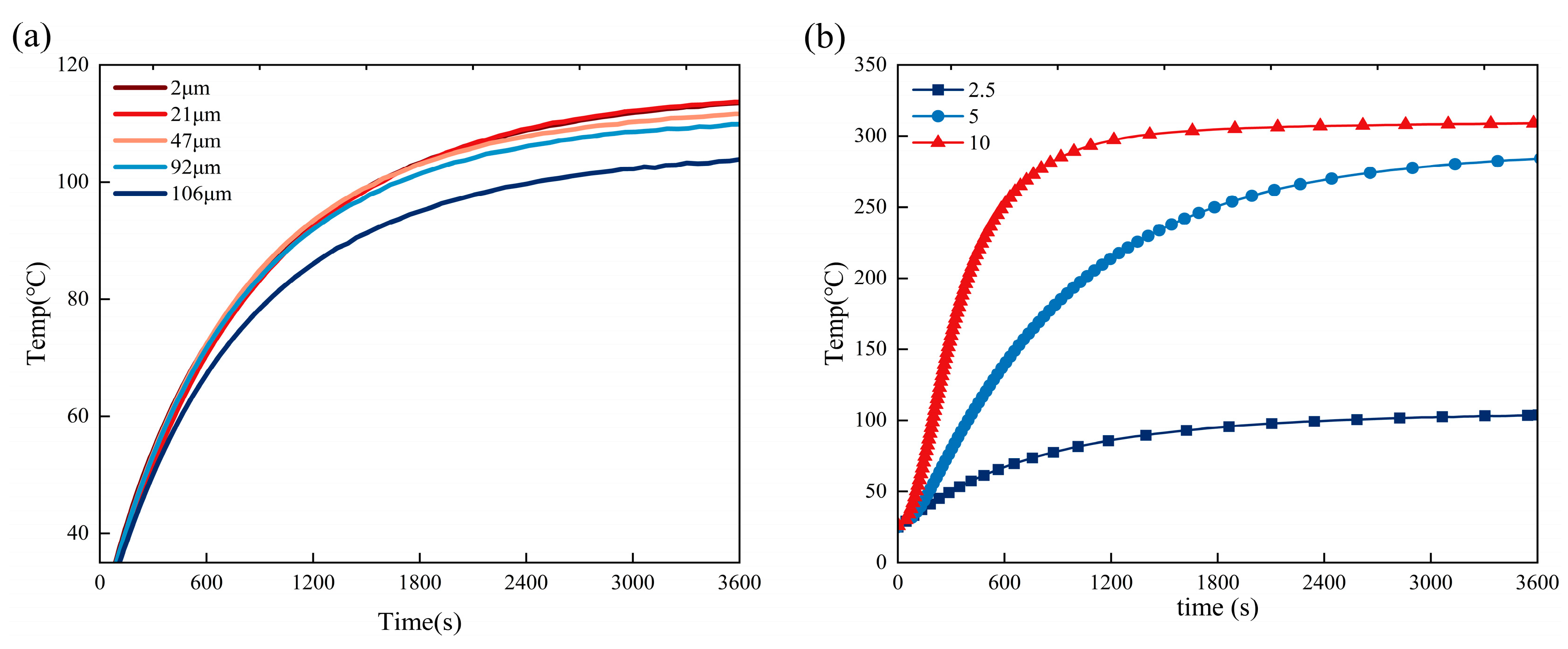
The heat transfer behaviour of piled aluminium powder under the influence of a local heat source forms the physical basis for understanding the mechanisms underlying the evolution of thermal runaway hazards. To eliminate the interference of chemical reactions and establish a baseline reference involving heat transfer processes alone, a systematic study was conducted on the temperature rise characteristics of dry aluminium powder under a constant bottom heat source power of 2.5 W. As shown in
Figure 3a, under the influence of a constant local heat source, piled aluminium powder of different particle sizes exhibits distinct temperature rise characteristics. This difference primarily stems from the mechanism by which the particle size effect regulates the effective thermal conductivity of the powder bed. The spacing between particles decreases as particle size decreases. Consequently, the effective thermal conductivity increases as powder particle size decreases [
27], thereby enhancing the efficiency of axial heat conduction and resulting in a faster rate of temperature rise and a higher steady-state temperature. Furthermore, the improved heat transfer efficiency in fine-particle powders promotes a more uniform temperature distribution within the bed, thereby exerting a critical influence on the induction time of the aluminium–water reaction system and its subsequent exothermic behaviour.
Figure 3b illustrates the temperature rise characteristics of 106 μm aluminium powder under three different local heat source powers. Both the initial rate of the temperature rise and the steady-state temperature show a significant positive correlation with the heat source power. When the power is increased from 2.5 W to 10 W, the steady-state temperature of the system rises sharply from 100 °C to 308 °C, whilst the time required to reach thermal equilibrium decreases correspondingly with increasing power. This thermal behaviour can be explained by the transient energy balance equation. As shown in Equation (5), during the initial heating phase, the heat dissipation term is negligible and the heating rate is approximately proportional to the power. Consequently, as the heat source power increases, the initial heating rate of the aluminium powder increases significantly. Under high-power conditions, the bottom heat flux density increases significantly, leading to an intensified axial temperature gradient. Heat accumulates rapidly at the bottom of the powder bed, resulting in a pronounced thermal inertia effect [
28,
29]. As the temperature difference increases, the heat dissipation rate follows an exponential growth curve in accordance with Newton’s law of cooling, until it reaches a steady state when it equals the heat source power. At this point, the steady-state temperature
Tss satisfies Equation (7). These power-dependent heat transfer characteristics indicate that compacted aluminium powder exhibits a faster temperature rise response and a higher risk of thermal accumulation under the influence of localised high heat flux densities.
3.2. Effects of Water Content
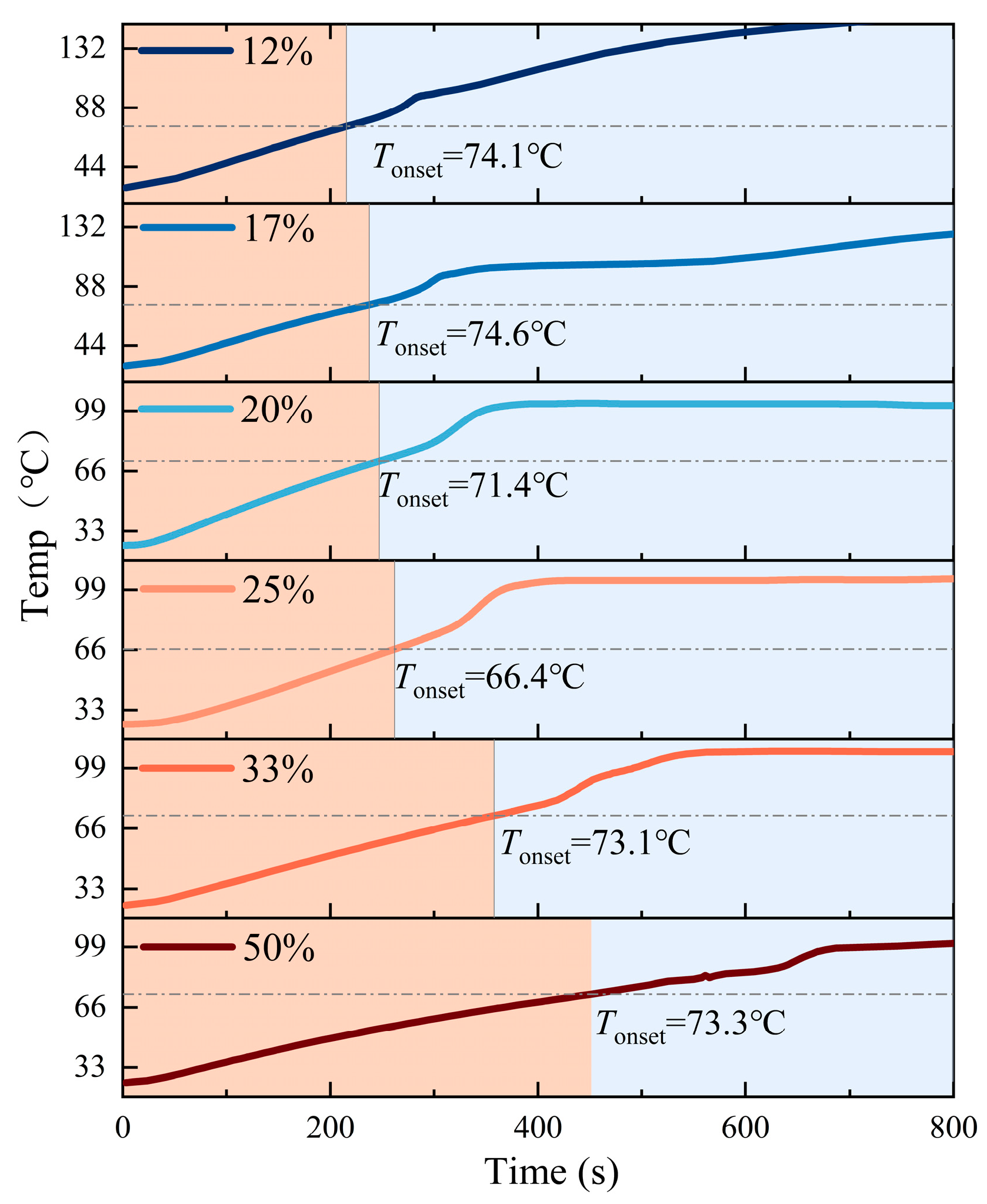
Water content refers to the mass fraction of deionised water used in the reaction within the aluminium powder–water system. To investigate the effect of water content, experiments were conducted on aluminium powder–water systems with water contents of 12%, 17%, 20%, 25%, 33% and 50% under a 5 W local heat source. In this study, 12% and 17% were classified as low water content, 20% and 25% as medium water content, and 33% and 50% as high water content. As shown in
Figure 4, the temperature curve of the reaction between aluminium powder and water exhibits phased characteristics. The induction phase involves a slow temperature rise, followed by a rapid reaction phase. After the reaction is complete, water evaporates under the influence of local heat sources, and the temperature rises again after the evaporation is complete. Water content influences the
Tonset of the aluminium powder’s reaction with water. When the water content varies within the range of 12% to 50%,
Tonset exhibits a trend of first decreasing and then increasing. At a water content of 25%,
Tonset is lowest, reaching 66.4 °C. At the same time,
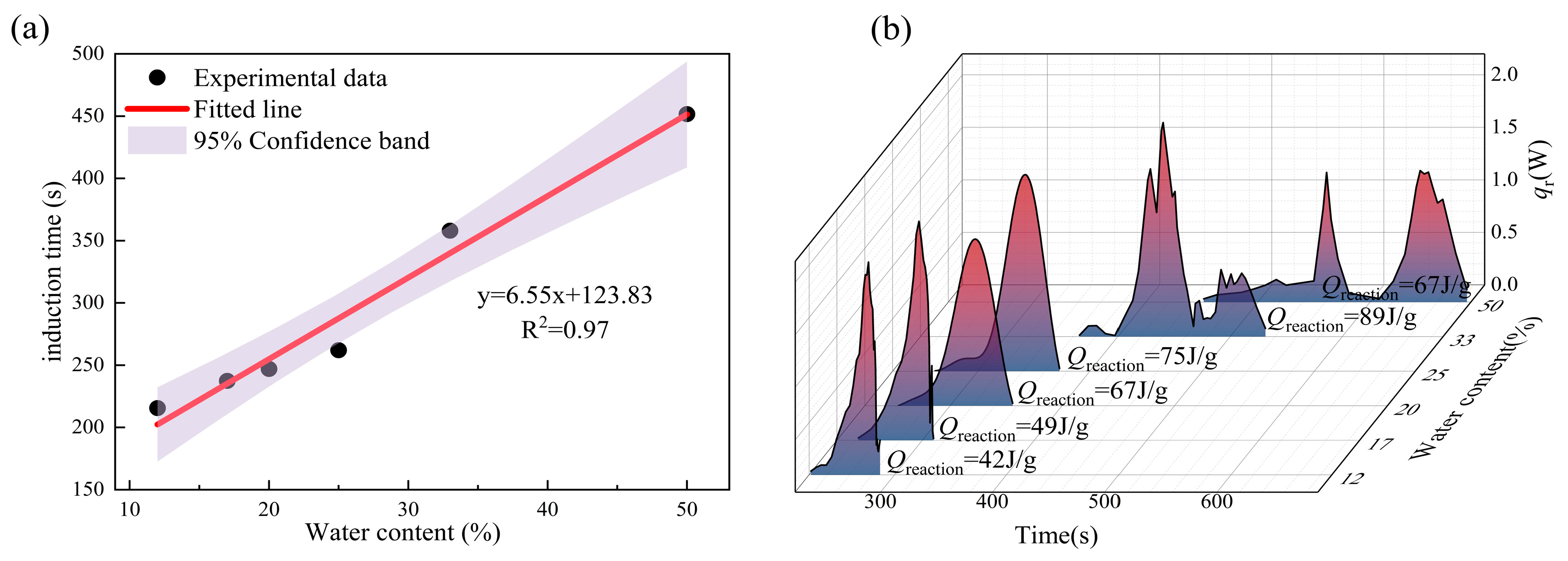
tin shows a significant linear increase with increasing water content, and the fitting equation is given by Equation (8).
the coefficient of determination for the fitted equation is R
2 = 0.97, as shown in
Figure 5a. Based on the analysis in the preceding section, this linear relationship stems from the significant increase in the heat capacity of the mixed system. According to Equation (3), when the water content increases from 12% to 50%, the specific heat capacity of the system rises from approximately 1.18 kJ/(kg·K) to 2.53 kJ/(kg·K), and the mass of the system increases accordingly. The high heat capacity significantly delays the time required for the system to reach the critical temperature for oxide layer rupture, thereby linearly extending the reaction induction period [
30,
31].
The exothermic characteristics of the reaction exhibit a non-monotonic relationship with water content. As shown in
Figure 5b,
qr_max peaks at 2.1 W/g at a water content of 17%, but drops to 1.3 W/g at a high water content of 50%. More crucially,
Qreaction exhibits an inverted U-shaped distribution, rising initially and then decreasing. Specifically, as the water content increases from 12% to 33%, the heat release increases significantly from 42 J/g to 89 J/g, representing a 110% increase. However, upon further increase to 50%, the heat release actually decreases. This non-linear characteristic reflects the competing mechanisms of water playing dual roles as both a heat transfer medium and a reactant within the reaction system [
32].
In the low to medium water content range, an appropriate amount of water ensures that exposed aluminium nuclei come into sufficient contact with water molecules, thereby enhancing the reaction conversion rate. However, when the water content is too high, excess liquid water may lead to an excessively large heat capacity of the system and the formation of a thick liquid film, increasing the diffusion resistance of water molecules towards the aluminium nucleus surface [
33]. At the same time, the intense endothermic effect of evaporation enhances convective heat transfer losses, limiting the temperature rise in the system [
34]. More importantly, under high water content conditions, the layer of aluminium hydroxide produced by the reaction rapidly densifies, hindering the continued diffusion of water molecules towards unreacted aluminium nuclei and causing the reaction to terminate prematurely, as evidenced by a significant reduction in heat release [
35,
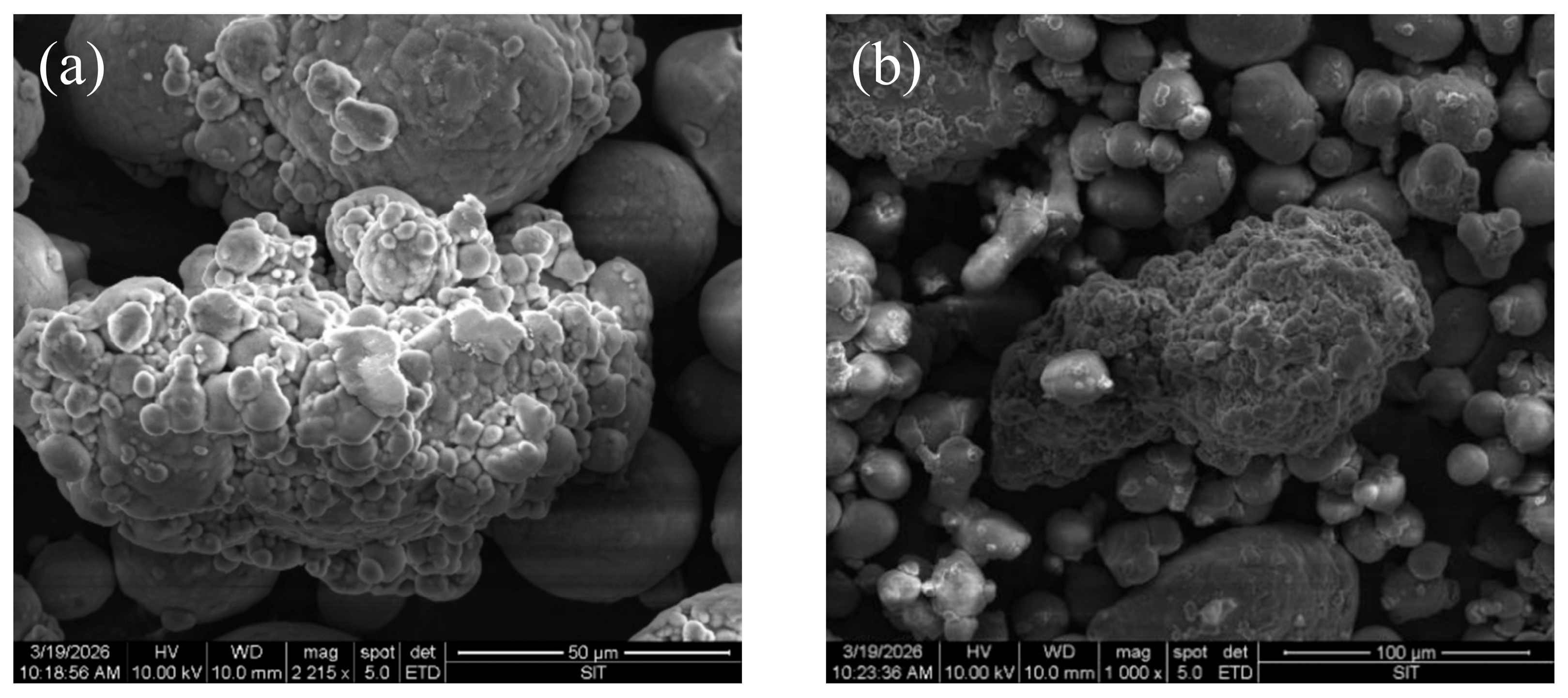
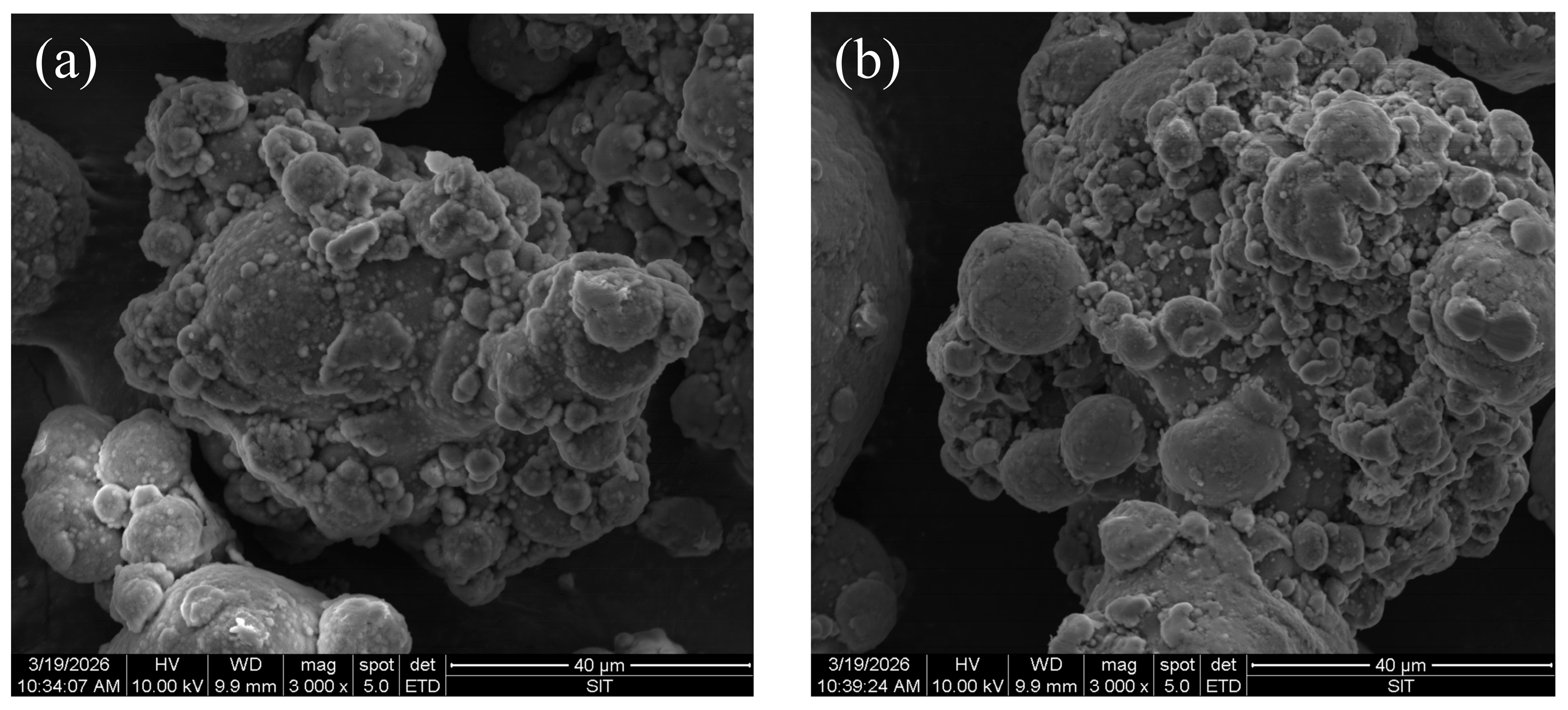
36]. SEM-EDS analysis was conducted on the products of aluminium powder reacting with water under different moisture contents. As shown in
Figure 6a, at a water content of 25%, the reaction products exhibited a loose structure with fine particles dispersed and adhering to the surface of the aluminium powder. Simultaneously, the oxygen mass fraction was 40.69%, indicating that the product layer was relatively thin. As depicted in
Figure 6b, at a water content of 50%, the products underwent significant agglomeration, forming dense block-like aggregates. The oxygen mass fraction rose to 47.16%, indicating that the product layer had significantly thickened and largely coated the aluminium core. The densification of the product layer at the high water content effectively blocked the diffusion path of water molecules to the unreacted aluminium core, which is consistent with the experimental results showing a significant reduction in heat release.
3.3. Effects of Particle Size
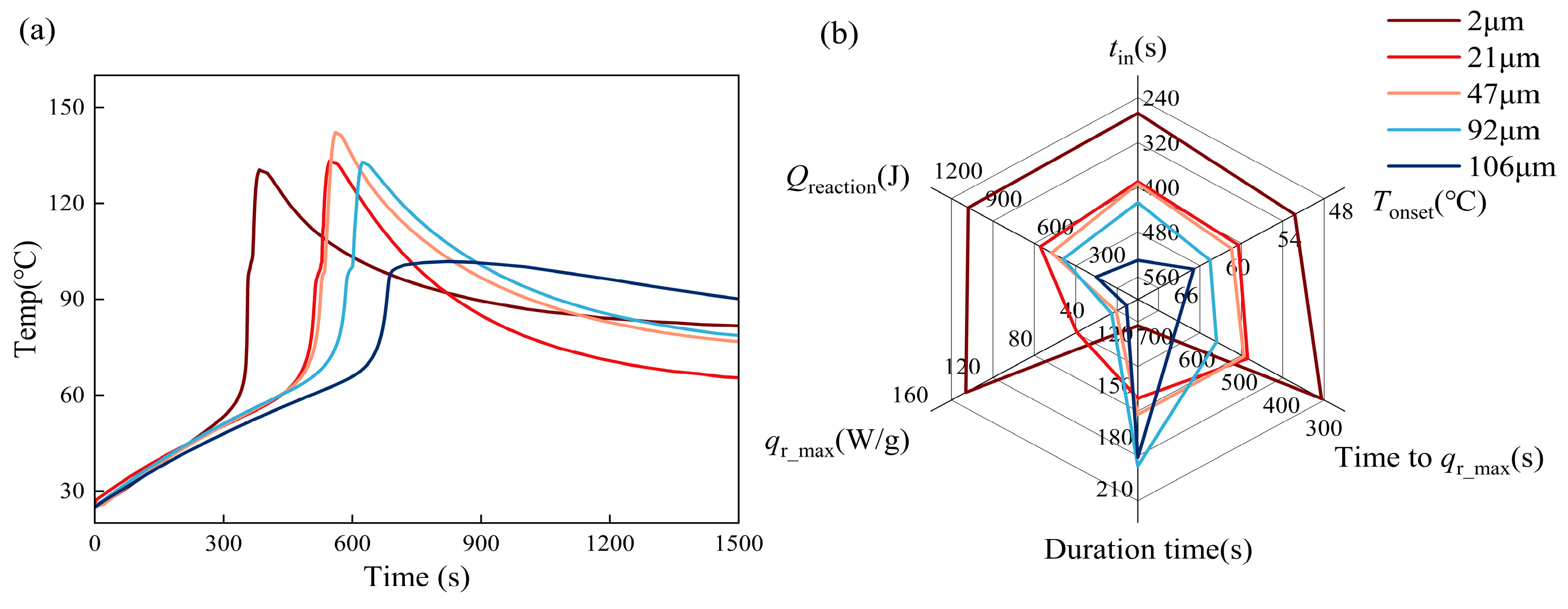
To investigate the reaction characteristics of aluminium powder with different particle sizes, experiments were conducted using aluminium powders with particle sizes of 2 μm, 21 μm, 47 μm, 92 μm and 106 μm, under conditions of 20% water content and a local heat source power of 2.5 W. The reaction parameters and thermal effect parameters were analysed.
Figure 7a shows the temperature rise of aluminium powders of different particle sizes upon contact with water, whilst
Figure 7b reveals the variation in
tin,
Tonset, and time to
qr-max, duration time,
qr-max and
Qreaction with particle size. The experimental results indicate that t
in increases significantly with increasing particle size. In this experiment, the induction time for 2 μm aluminium powder was 267 s, whereas that for 106 μm aluminium powder increased to 530 s. The induction stage primarily corresponds to the rupture of the oxide film and the formation of the reaction interface. On the one hand, fine aluminium powder particles have low thermal resistance and high heat transfer efficiency [
37]. On the other hand, the smaller the aluminium particle size, the greater the surface area in contact with water during the reaction [
18]. Consequently, the reaction rate during the induction phase is higher resulting in a significant reduction in
tin.
As the particle size of aluminium powder increases, the onset temperature of the reaction gradually rises. When the particle size is 2 μm, the
Tonset is 49.8 °C, whereas it rises to 61.5 °C when the particle size is 106 μm. This trend indicates that aluminium powder with a smaller particle size is more readily capable of initiating a reaction with water at lower temperatures. This phenomenon is closely related to the stability of the oxide film on the surface of aluminium particles. A reduction in particle size significantly increases the specific surface area, providing more reaction sites and resulting in a significant energy difference between surface atoms and internal atoms, thereby enhancing reactivity [
22,
38]. At the same time, the reduction in particle size decreases the thermal inertia of the aluminium powder particles, accelerating the heating and destruction of the oxide film [
39].
The effect of particle size on
qr_max is particularly pronounced.
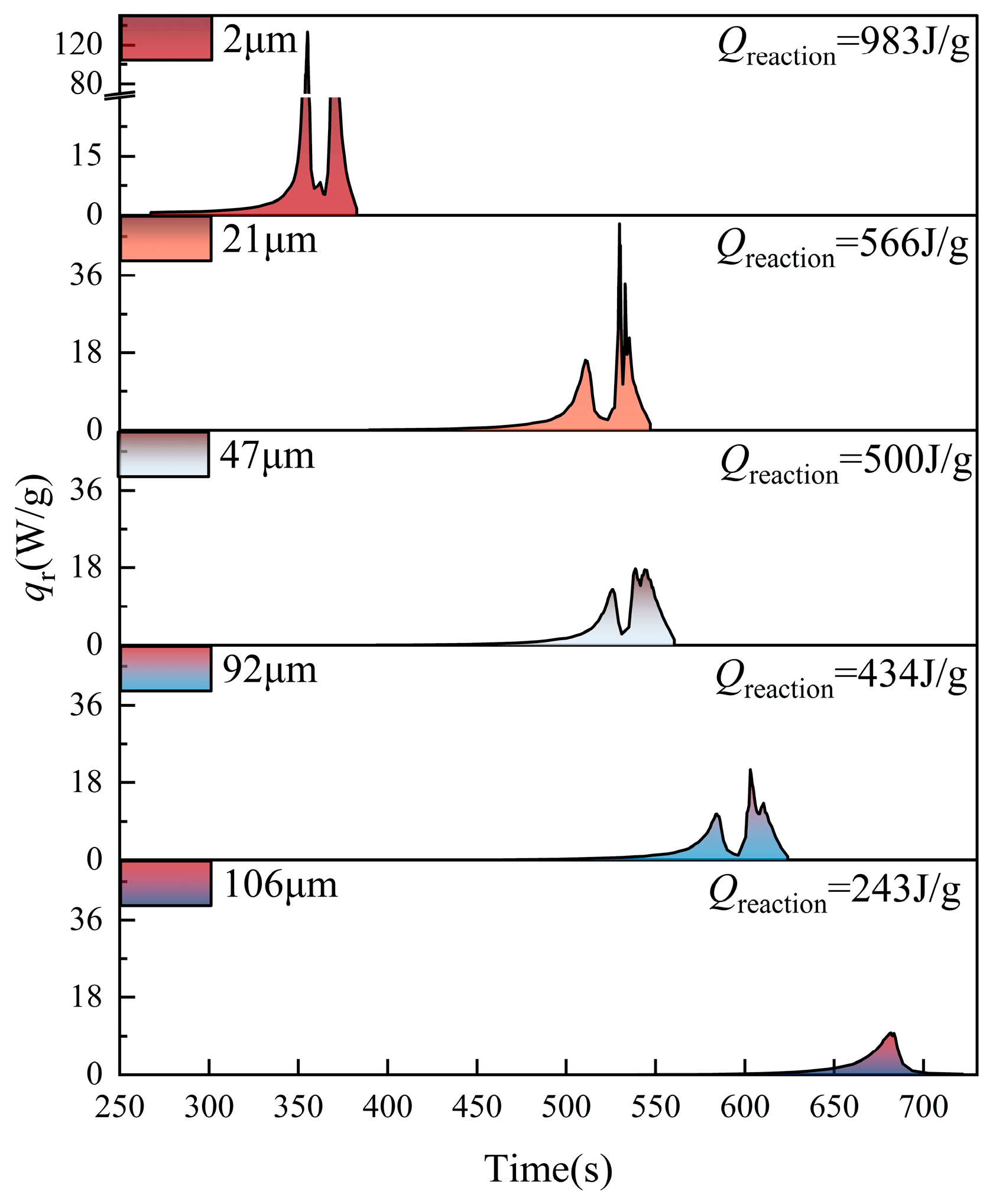
Figure 8 shows that the maximum heat release rate of aluminium powder with a particle size of 2 microns can reach 133.16 W/g, while it is only 9.76 W/g for powder with a particle size of 106 microns, which is about 1/14 of the former. As the particle size increases, the maximum heat release rate shows a significant downward trend. The reaction rate of metal particle hydrolysis is typically closely related to their specific surface area. Smaller aluminium powder particles provide a larger reaction interface, thereby significantly increasing the interfacial reaction rate. At the same time, small-particle sizes shorten the diffusion paths for heat and reaction products, facilitating the formation of a rapid autocatalytic process [
40]. Furthermore, the time to
qr_max also increases significantly with increasing particle size, rising from 355 s for 2 μm particles to 694 s for 106 μm particles. This result indicates that larger aluminium powder particles not only exhibit a slower reaction initiation but also a slower reaction acceleration phase. This characteristic also explains the phenomenon whereby the duration time increases with increasing particle size.
The
Qreaction values for aluminium powders of different particle sizes also show marked differences. The reaction heat for 2 μm aluminium powder is 983 J·g
−1; when the particle size increases to 106 μm, the heat generated by the aluminium powder upon contact with water is 243 J·g
−1, which is only one-quarter of that for the smaller particles. This phenomenon is primarily due to the higher reaction conversion rate of the smaller particles. As the reaction proceeds, the generated layer of aluminium hydroxide gradually covers the surface of the aluminium particles and hinders further reaction [
13]. When the particle size is larger, the dense product layer formed on its surface is more likely to completely encapsulate the aluminium core, effectively blocking the diffusion pathway for water molecules into the interior, causing the reaction to terminate prematurely and resulting in a significant reduction in the conversion rate [
41,
42].
The reaction of aluminium powder with water involves the rupture of the oxide film, interfacial heat transfer, and the generation and diffusion of hydrogen gas. In the early stages of the reaction, the oxide film on the surface of the aluminium particles ruptures under the influence of rising temperature or stress, thereby creating local reactive sites [
43]. As the reaction between aluminium powder and water is exothermic, the heat generated further promotes the rupture of the oxide film and accelerates the reaction, resulting in a self-catalysing exothermic process. Furthermore, the hydrogen gas produced during the reaction forms bubbles on the particle surface. These bubbles alter the mass transfer conditions at the reaction interface, thereby further influencing the reaction rate. Due to their higher specific surface area and thinner oxide film [
17] fine-particle-sized particles are more prone to forming the aforementioned autocatalytic reaction process, and consequently exhibit higher reaction activity and exothermic rates.
3.4. Impacts of Heat Sources
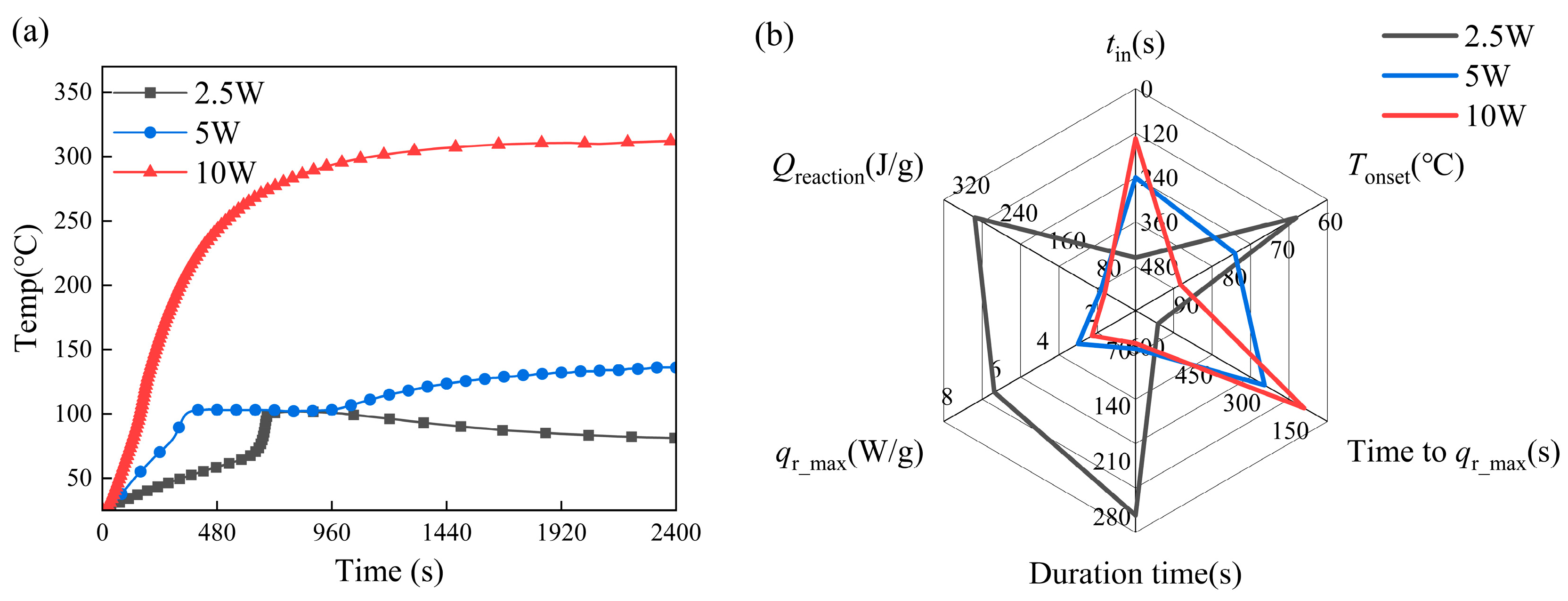
To systematically elucidate the regulatory mechanisms of heat source intensity on reaction kinetics, this study fixed the water content at 20% and the aluminium powder particle size at 106 μm, and conducted a comparative analysis of the initiation characteristics and exothermic behaviour of the aluminium powder’s reaction with water under three heat source powers of 2.5, 5.0 and 10.0 W. The results are shown in
Figure 9.
The temperature curve in
Figure 9a reveals the significant influence of the heat source power on the system’s temperature rise. When the heat source power was 2.5 W, the system exhibited a gradual temperature rise, with
tin lasting 530 s and
Tonset at 61.5 °C. As the power was increased to 10.0 W, the initial rate of temperature rise increased significantly, and
tin was drastically reduced to 135 s. However, contrary to the trend of decreasing t
in content,
Tonset rises monotonically with increasing power, reaching 84.6 °C at 10.0 W—an increase of 23.1 °C compared to the 2.5 W condition. The induction time of the aluminium powder–water reaction is influenced by ambient temperature, with the reaction rate exhibiting exponential growth with rising ambient temperature [
18,
32]. A high-power heat source causes a rapid rise in local temperature and, through heat transfer, leads to a rapid increase in ambient temperature. Compared to a low-power heat source, the reaction rate during the induction phase is accelerated, resulting in a significant reduction in
tin. At the same time, the increase in local heat source power increases the system’s heating rate and enhances thermal inertia. The accumulation of heat requires a higher temperature to meet the reaction activation energy requirement, causing
Tonset to shift towards higher temperatures [
15].
The evolution of thermal behaviour parameters further corroborates the regulatory role of heat source power on the reaction process. In
Figure 9b, the time to
qr_max decreases from 694 s at 2.5 W to 173 s at 10.0 W, whilst the duration time drops sharply from 192 s to 61 s, indicating that a high-power heat source not only accelerates the reaction but also concentrates the entire reaction process. Analysing the energy balance of a non-adiabatic reaction system, under the 2.5 W condition, the exothermic reaction and external heating form a positive feedback loop, allowing heat to accumulate effectively within the system and driving the reaction towards complete conversion. Under the 10.0 W condition, although the heat input is increased, the rapidly densifying product layer blocks the aluminium–water contact interface, causing the exothermic chemical process to be suppressed prematurely. Consequently, the system fails to fully utilise the chemical potential of the aluminium powder. This mechanism stands in stark contrast to the purely heat transfer-driven relationship observed in dry aluminium powder systems, where higher power leads to higher steady-state temperatures, highlighting the complex evolution of thermal behaviour once chemical reactions are introduced.
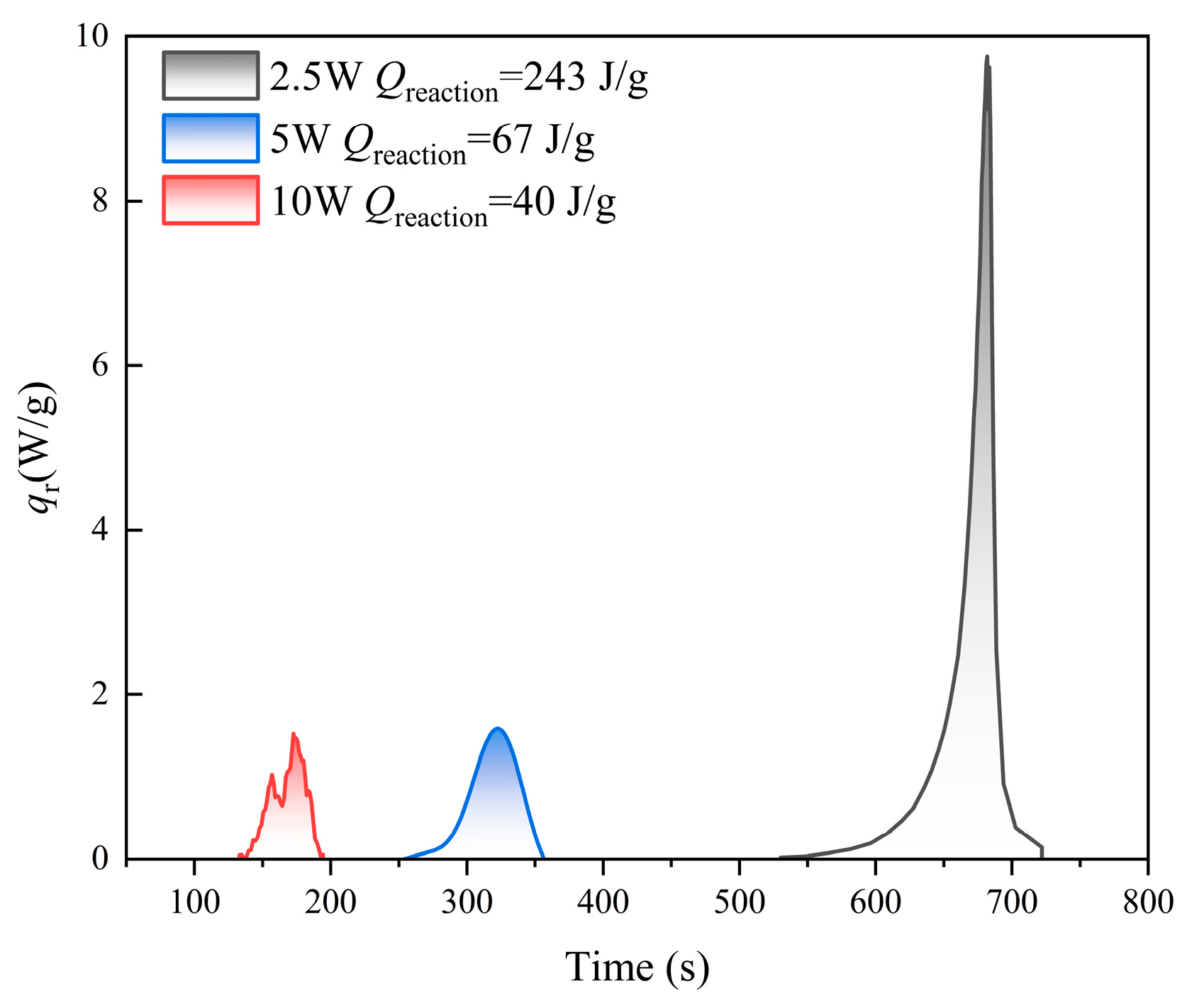
As shown in
Figure 10,
qr_max decreases monotonically with increasing heat source power, falling from 9.76 W/g at 2.5 W to 1.53 W/g at 10.0 W.
Qreaction also exhibits a significant downward trend, dropping sharply from 242.8 J·g
−1 to 39.6 J·g
−1. SEM-EDS analyses provide direct evidence that the 10 W products exhibit a compact, sintered morphology with oxygen content of merely 15.41% compared with 44.07% at 2.5 W, and aluminium content rises to 84.59% versus 55.93% under low power, as shown in
Figure 11. This indicates that a dense, sintered product layer encapsulates the core after minimal reaction. This power-dependent suppression differs fundamentally from the water-content effect in
Section 3.2. Under 2.5 W, the system stabilises at approximately 100 °C, producing a porous product layer that permits sustained water diffusion. Under 10 W, the rapid temperature rise to approximately 308 °C drives the product layer to undergo rapid densification and sintering, transforming it from a porous, permeable barrier into a diffusion-resistant shell. Concurrently, the reaction duration collapses from 192 s to 61 s, compressing the chemically controlled stage. Buryakovskaya et al. [
44] demonstrated that thermal treatment of aluminium at elevated temperatures promotes densification and thickening of the surface oxide layer, substantially impeding subsequent water penetration. The SEM-EDS observation that 10 W products exhibit a dense, sintered morphology with minimal oxygen signal and high residual aluminium content directly confirms that the high-power condition drives rapid product-layer densification, causing premature reaction termination.
These findings have important implications for industrial safety and risk prevention. Low-power local heat sources in the 2.5 W range, such as the surfaces of equipment heating up slowly or poorly insulated pipes, although they delay the initiation of the reaction, are more conducive to the reaction proceeding to completion, which may lead to the accumulation of large amounts of hydrogen and the risk of delayed explosions. Conversely, high-power heat sources of the 10.0 W class, such as electrical sparks or mechanical friction hotspots, although reducing Qreaction, trigger the reaction more rapidly, with tin being approximately 135 s. Moreover, a high Tonset implies that the reaction is triggered whilst the system is in a higher energy state, potentially causing a violent pressure surge. Consequently, in aluminium powder storage environments, differentiated monitoring and control strategies must be established for local heat sources of varying power levels, with particular attention paid to the risk of hydrogen accumulation under conditions of low-power, prolonged exposure.
3.5. Modification of the Thermal Behaviour Model
The thermal behaviour of a bed of aluminium powder under the influence of a local heat source constitutes a system in which non-adiabatic heat transfer is coupled with a chemical reaction. Based on the principle of energy conservation, the temperature evolution of the system can be described by a lumped parameter model [
45]. During the induction phase, the system satisfies Equation (5), whilst during the reaction phase it satisfies Equation (6). Integrating Equation (6) yields:
Non-linear regression calibration was performed based on the relative values of the total heat release per unit mass,
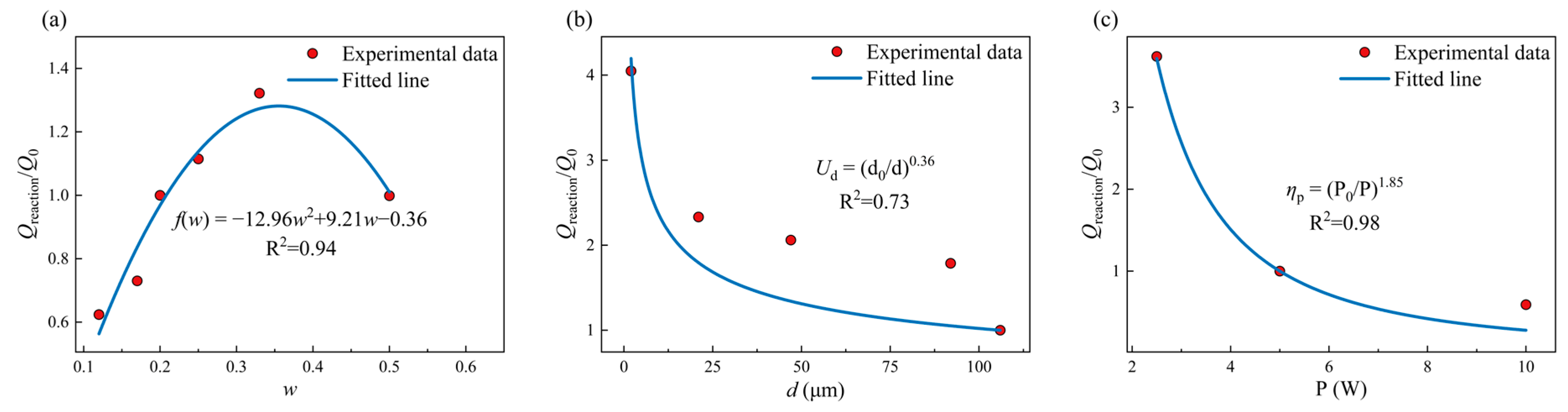
Qreaction, under various operating conditions, with aluminium powder particle size of 106 μm, water content of 20%, and power of 5 W taken as the reference conditions for normalisation. The experimental results presented earlier indicate that the mass fraction of water exerts a significant non-linear influence on the heat release from the reaction, exhibiting an inverted U-shaped profile. Based on the concept of multi-feature separation modelling [
46], a quadratic polynomial regression was first used to fit the moisture correction factor
f(
w) as shown in the following equation. The fitting results are illustrated in
Figure 12a.
in the equation,
w represents the mass fraction of water. The fitted peak is located at w = 0.36, with R
2 = 0.94, which is very close to the peak of
Qreaction in the experiment, which is at 33%. Taking
w = 20% as the reference operating condition, the reaction heat is denoted as
Q0, and heat of reaction under the reference operating conditions described below is also denoted as
Q0.
In Equation (3), the addition of water also affects the system’s heat capacity:
Water plays a dual role in governing the thermal behaviour of the aluminium–water system. At low and moderate water contents, water acts as a reaction medium and enhances contact at the solid–liquid interface, thereby exerting a promoting effect. At high water contents, excess water increases the system’s heat capacity, forms a liquid film that impedes mass transfer, and is accompanied by evaporative cooling, thereby exerting an inhibitory effect. These competing mechanisms collectively give rise to a non-monotonic water-control curve.
Particle size influences heat and mass transfer efficiency by modulating effective thermal conductivity and specific surface area. Based on the data in
Figure 8, a power-law model [
47] was used for fitting, as shown in
Figure 12b. The particle size correction factor
Ud obtained from the fitting is expressed as follows:
in the equation,
d represents the median diameter, in μm;
d0 is the reference particle size, taken as 106 μm. R
2 = 0.73. The relatively low R
2 reflects the complexity of particle size effects on the heat and mass transfer processes of aluminium powder in contact with water. Reducing particle size not only increases the
keff of accumulated aluminium powder [
4] but also increases the specific surface area and the number of active reaction sites [
22,
38]. Furthermore, differences in oxide film rupture behaviour and mass-transfer resistance may affect the reaction conversion efficiency [
40,
41,
42]. Therefore, when using a single power-law relationship to represent the particle-size effect, deviations may occur. Nevertheless, this power-law relationship captures the dominant trend: the reaction heat increases monotonically with decreasing particle size.
An increase in the heat source power
P did not enhance the reaction rate. On the contrary, it reduced it. The suppression effect is described by introducing the power influence factor
ηP, and a power law model is used for fitting, as shown in
Figure 12c. The fitted
ηP is expressed as follows:
in the equation, P
0 is the reference power, taken as 5 W. R
2 = 0.98, indicating a good fit. Under high-power conditions, the rate of temperature rise in the system is too fast, leading to rapid densification of the product layer. This transition from chemical control to diffusion control reduces the effective extent of the reaction.
Combining the above correction functions, the exothermic term of the reaction can be expressed as:
in the equation,
Qr,0 represents the heat of reaction under reference conditions, which is 67 J/g. Substituting Equations (8)–(12) into Equation (7) yields the multi-factor coupled correction model:
To verify the reliability of the established model, a comparative analysis was conducted between the total heat release predicted by the model and the experimentally measured values. The results indicate that the predicted values show good agreement with the experimental data, with an R2 of 0.92, demonstrating good overall predictive capability. The model can therefore be used for the quantitative prediction of heat release during aluminium powder–water reactions under various operating conditions.
To evaluate the predictive capability of the proposed coupled model and avoid potential circular validation, three additional experimental conditions, including 18% water content, 50 μm particle size, and 15 W heat source power, were reserved as an external validation dataset and excluded from all fitting procedures. The reaction heat predicted by Equation (15) was compared with the corresponding experimental values. As shown in
Table 1, the prediction errors were 7.4%, 30.1%, and 18.3%, respectively. Although a relatively larger deviation was observed for the particle-size validation condition, the overall average prediction error was 18.6%. These results indicate that the proposed coupled model possesses reasonable predictive capability under independent experimental conditions and is not merely a regression fit to the original calibration dataset.
Based on the coupled model of non-adiabatic heat transfer and aluminium–water reaction, this section introduces correction terms for water content, particle size and heat source power, constructing a coupled prediction model that captures the observed influence of operational parameters on reaction heat release. Through experimental data fitting, the nonlinear regulation effect of water, the power-law influence of particle size on the heat generation of aluminium powder upon water reaction, and the inhibitory mechanism of heat source power on reaction efficiency are quantified. This model not only enables quantitative prediction of the thermal behaviour of aluminium powder upon water reaction but also provides a theoretical basis for thermal safety assessment during industrial storage and transportation. The coupled model is phenomenological, correlating macroscopic heat release with operational parameters through empirical correction factors. Accordingly, the exponents appearing in Equations (12) and (13) should be interpreted as effective fitting parameters obtained from regression of the experimental dataset. It has been emphasised that the aluminium–water reaction is intrinsically temperature-dependent and generally follows Arrhenius-type behaviour. Although no explicit Arrhenius expression was incorporated into the present model, the temperature dependence of the reaction is indirectly embodied through the experimentally derived correction functions for particle size, water content, and heating power. These factors collectively determine the thermal evolution of the system, influence oxide-layer disruption and mass-transfer processes, and consequently affect the apparent reaction kinetics and heat-release behaviour observed experimentally.