The primary goal of this section is to provide a comprehensive overview of the various technologies available for ammonia production. It provides a systematic overview of both conventional and emerging approaches, focusing on their fundamental principles, feedstock requirements, energy consumption, and environmental impacts. Therefore, it can help to build a foundation for understanding the current technological landscape, identifying the limitations of traditional processes, and exploring alternative routes that align with sustainability and decarbonization goals.
3.1. Haber–Bosch Ammonia Synthesis
More than 96% of ammonia is produced through the Haber–Bosch process [
17]. This method was first invented in the early 20th century by Fritz Haber and Carl Bosch, who were German inventors. At first, ammonia production was mainly used for producing explosives during World War I. Its additional properties, particularly its role in improving agricultural productivity as a fertilizer and its function as a chemical intermediate in the chemical industry, have also attracted significant attention from researchers [
18]. Generally, during this process, ammonia is produced from hydrogen, which is usually provided from fossil fuel resources, and nitrogen supplied via air separation, whose reaction is shown in Equation (
1) [
19]. The required ratio of hydrogen and nitrogen is stoichiometrically 3:1, which is commonly used as the feed ratio [
19]. This reaction happens in the presence of metal-based catalysts, which are usually magnetite (Fe
3O
4) or Wustite (FeO).
Necessary pressure and temperature for this process are in the range of 15–25 MPa and 400–450 °C, respectively, because of the strong triple bond of nitrogen [
20]. The overall conversion of this process can reach 97% by recycling unreacted gases. Under conventional HB conditions, the single-pass conversion is typically on the order of 10–20%, whereas overall conversion can exceed 95% due to continuous NH
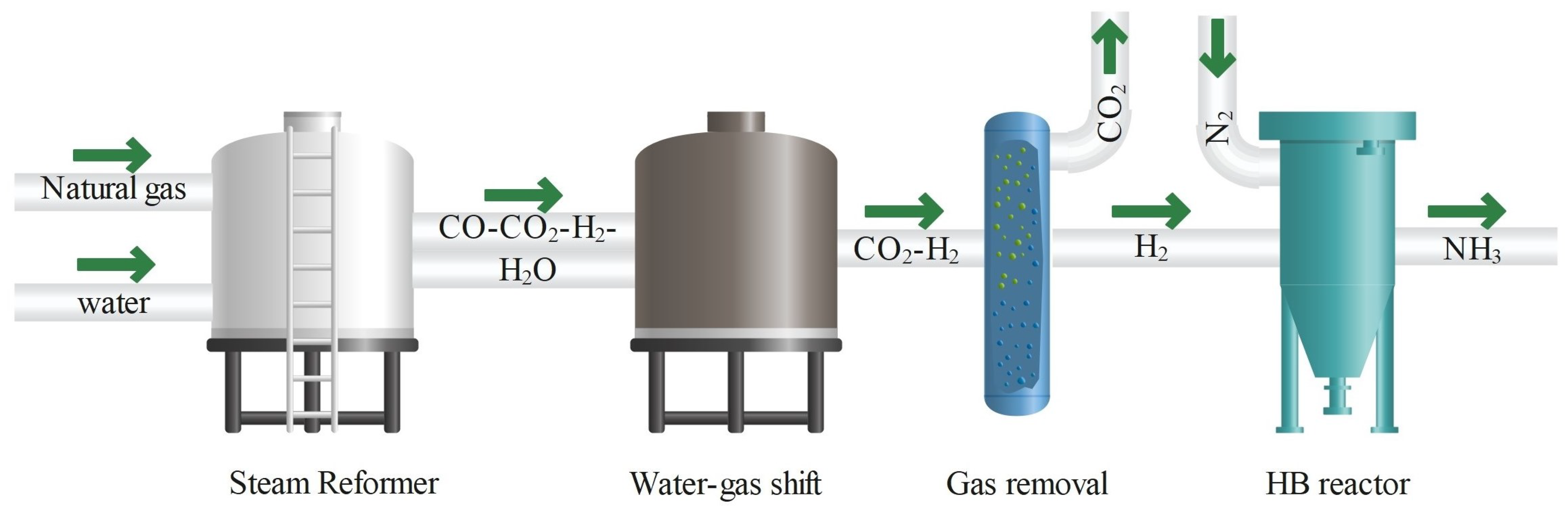
3 removal and recycle of unreacted gases. The general schematic of the HB process is depicted in
Figure 5.
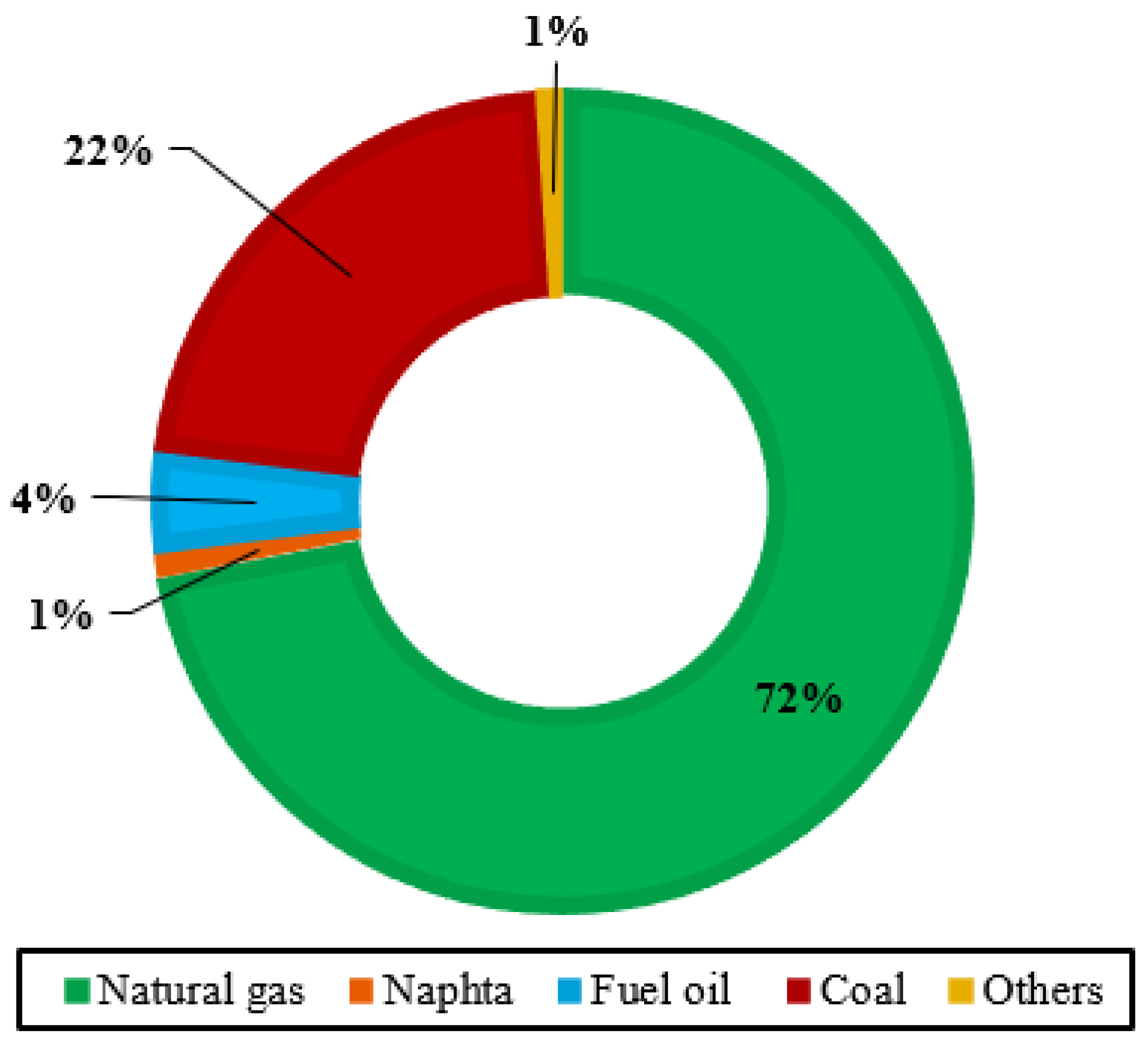
Reaction pathways and equipment used in this process differ by feedstock selection. The majority of worldwide ammonia is produced from natural gas, in which hydrogen is produced through steam methane reforming and water–gas shift reactions, illustrated in the following equations [
21]:
It is estimated that 3 to 5% of the world’s natural gas resources are allocated to the HB process, so CO
2 emissions from this process are significant, which are in the range of 1.6 to 2.86 tons of CO
2 per ton of ammonia production [
22], contributing to 1.4% of global CO
2 emissions [
23]. Therefore, replacing alternative resources for providing hydrogen are required. Another disadvantage of this process is its high energy consumption, which is approximately 60 GJ per ton of ammonia produced. The optimization efforts in the recent decade, such as implementing large centrifugal compressors, optimal heat integration, and efficient hydrogen recovery, can decrease the required input energy to the range of 27.4 to 31.8 GJ per ton of ammonia produced and increase the energy efficiency of the system to about 65% [
17]. Furthermore, other improvements on developing the synthetic catalyst for ammonia production have been performed. It was observed that Ru-based catalysts can be a promising alternative to iron-based catalysts because they can operate under atmospheric pressure at a temperature of 300 to 400 °C with a higher conversion rate [
24]. Despite this significant merit, ammonia produced from this process has a very low partial pressure, causing difficult condensation in the separation process. Although this issue can be solved by increasing the pressure to 2–3 MPa, overall capital cost is higher than the traditional HB approach [
17]. Therefore, less than 5% of the world’s ammonia production is allocated to the ammonia synthesis with Ru-based catalysts. Nitrogen can be partially converted, ranging from 25% to 35% in a single pass through the catalyst because the ammonia synthesis is restricted by thermodynamic equilibrium [
19]. Therefore, industrial-scale adiabatic ammonia reactors typically consist of three catalyst beds with cold gas injected between each stage to control temperature and prevent excessive heat buildup. This quench-cooling approach effectively removes heat between the catalyst layers to maintain optimal reaction conditions [
25].
As noted previously, improving sustainability and reducing CO
2 emissions may be possible by replacing fossil feedstocks with renewable resources to provide the required hydrogen [
26]. In this regard, biomass gasification and water electrolysis are discussed as promising technologies for this purpose. In power-to-ammonia, hydrogen is produced by water electrolysis fueled by renewable electricity [
27]. The required nitrogen is provided from air separated through pressure swing adsorption and/or cryogenic distillation [
28]. The first pilot plant was established at the West Central Research and Outreach Center at Minnesota, USA in 2013. The energy efficiency of this technology is assessed in the range of 50 to 60%, which is lower than the conventional HB processes because of higher energy consumption and energy losses in water electrolysis technology, such as atmospheric and high-pressure alkaline or proton exchange membrane (PEM) electrolysis employed for hydrogen production. It was shown that CO
2 emissions can be reduced from 1.5 to 0.38 tonnes of CO
2 per ton of ammonia produced when the required hydrogen is supplied through water electrolysis [
4]. Hill et al. [
17] concluded that CO
2 emissions can be reduced in conventional HB processes by 78% through supplying the energy required from renewable resources [
29]. Between various technologies used for the electrolyzer, solid-oxide electrolysis (SOE) at high temperature offers more promising integration with the ammonia synthesis process, compared with alkaline and PEM electrolysis, because of effective heat integration with ammonia synthesis and higher electrical efficiency [
30]. In this regard, an SOE cell with high operating temperature and energy efficiency above 70% is currently introduced for producing ammonia by Haldor Topsoe, where the required nitrogen is supplied through air separation at the cathode. This technology reduces power consumption compared to the conventional HB process.
Biomass can also be considered as the promising candidate for replacing fossil fuels because of its availability and life-cycle carbon neutrality [
31]. Practically, it is logical to site gasification plants close to biomass sources because of the high cost of feedstock or gas product transportation [
32]. Syngas, which mainly consists of H
2, CO, CO
2, and CH
4, is produced through biomass gasification. To increase the hydrogen content, the syngas is passed through the water–gas shift reactor. Then, acid gas removal and methanation processes are employed to obtain hydrogen with higher purity [
33]. Generally, the efficiency of the biomass-to-ammonia processes is less than 50% [
34]. Florez-Orrego et al. [
35] compared the conventional ammonia production process based on natural gas with biomass-based ammonia production. The results demonstrated that the biomass-based process had an energy efficiency of about 41.3%, while the energy efficiency of natural-gas-based ammonia production was 65.8%. Among various technologies employed for the gasification process, the entrained-flow gasifier has attracted more attention in the recent decade [
36] because of its higher reaction rate, more efficient biomass conversion with lower methane and CO
2, and no tar due to high working temperature and pressure. Also, a large air separation unit is required to provide the necessary oxygen used as the gasification agent, therefore also providing the nitrogen source for ammonia production. In this regard, the biomass-based production of ammonium nitrate fertilizer was investigated through life cycle assessment from cradle to gate [
37]. The results demonstrated that by using biomass as the main feedstock, the global warming potential can be decreased by about 30%. In terms of economic analysis, the study about biomass-based ammonia production showed that the cost of the proposed system is competitive with the current market level when including carbon tax, while it can reduce 65% of GHG emissions compared to natural-gas-based ammonia plants [
38].
These recent studies demonstrate that many endeavors are underway to make the renewable-based HB process feasible at a commercial scale. However, it still requires continuous effort on enhancing energy efficiency, especially the water electrolysis technologies, improving reliability, and being more cost-competitive with fossil-fuel-based systems for synthesizing green ammonia.
3.2. Electrochemical Ammonia Synthesis
To facilitate the ammonia synthesis process and overcome the energy-intensive and severe conditions of the HB process, several approaches have been developed to produce ammonia under mild conditions, including chemical looping, electrochemical, photochemical, photoelectrochemical, and plasma-assisted methods. Among these, electrochemical ammonia synthesis has attracted significant attention as a promising substitute for HB because it can operate under mild conditions, offers the potential for near-zero CO
2 emissions, and can convert renewable electricity into chemical energy [
39].
In electrochemical systems, the nitrogen reduction reaction (NRR) competes with the hydrogen evolution reaction (HER) at the cathode. For acidic and basic electrolytes, the global reactions are typically written as follows [
40]:
The NRR encounters two main challenges. First, nitrogen gas is very stable due to its strong triple bond and poor solubility in water, making it hard to activate both thermodynamically and kinetically [
41]. Additionally, NRR competes with HER, which is faster and more favorable because NRR requires six electrons and protons, whereas HER only needs two, making NRR much less selective and more energy-intensive [
22]. These issues limit its efficiency and industrial potential, driving ongoing research into better catalysts, cell designs, and improved selectivity [
42].
In electrochemical systems, nitrogen gas (N
2) is converted into ammonia through three basic steps: first, N
2 attaches to the surface of a catalyst; second, the strong triple bond in N
2 is weakened and broken gradually while hydrogen atoms are added; and third, the produced ammonia leaves the surface. Unlike the Haber–Bosch process, where N
2 first splits on the catalyst surface, electrochemical nitrogen reduction often adds hydrogen to N
2 step by step, forming N
2H
x intermediates, and the N–N bond weakens gradually as hydrogenation proceeds [
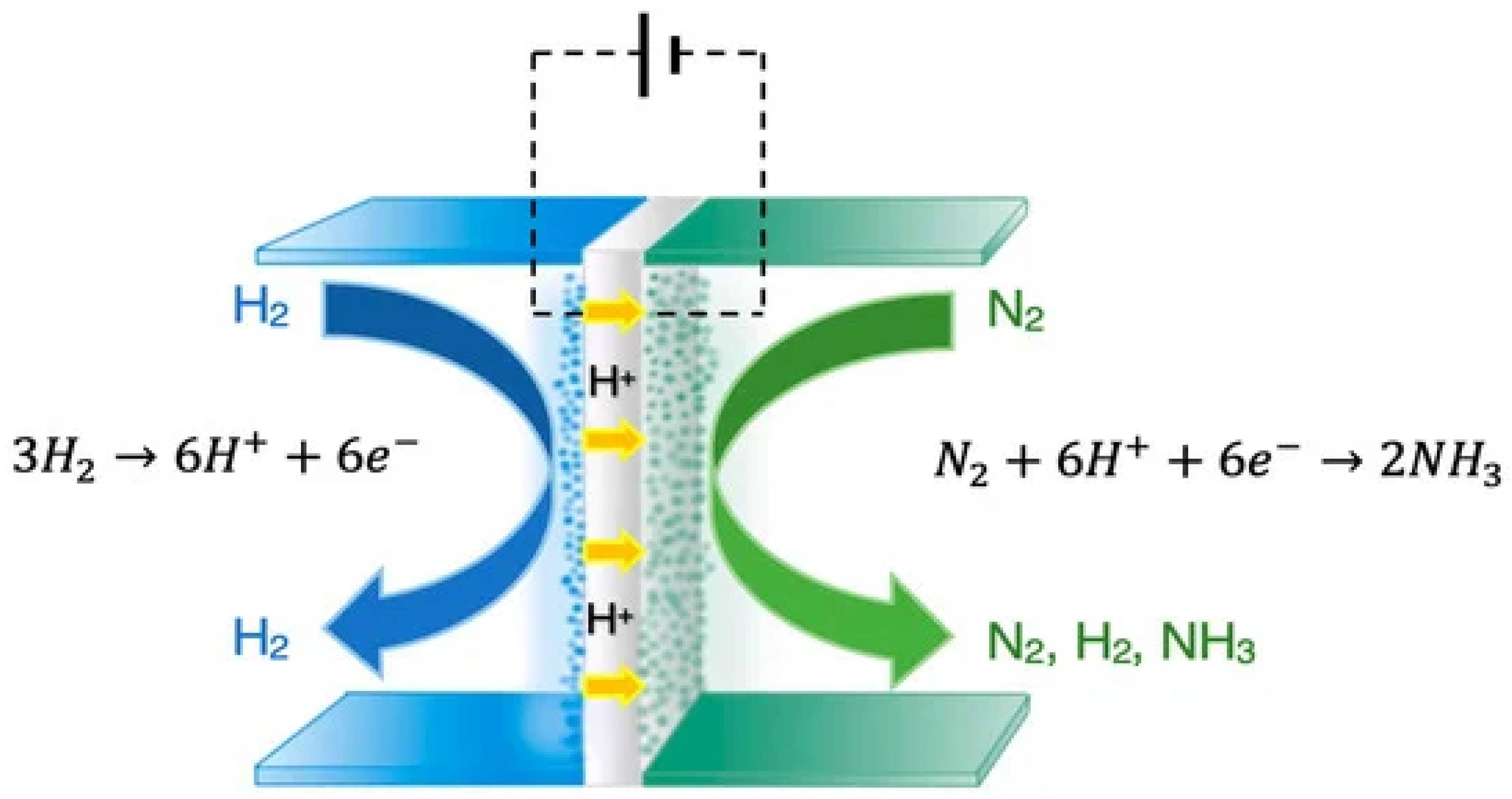
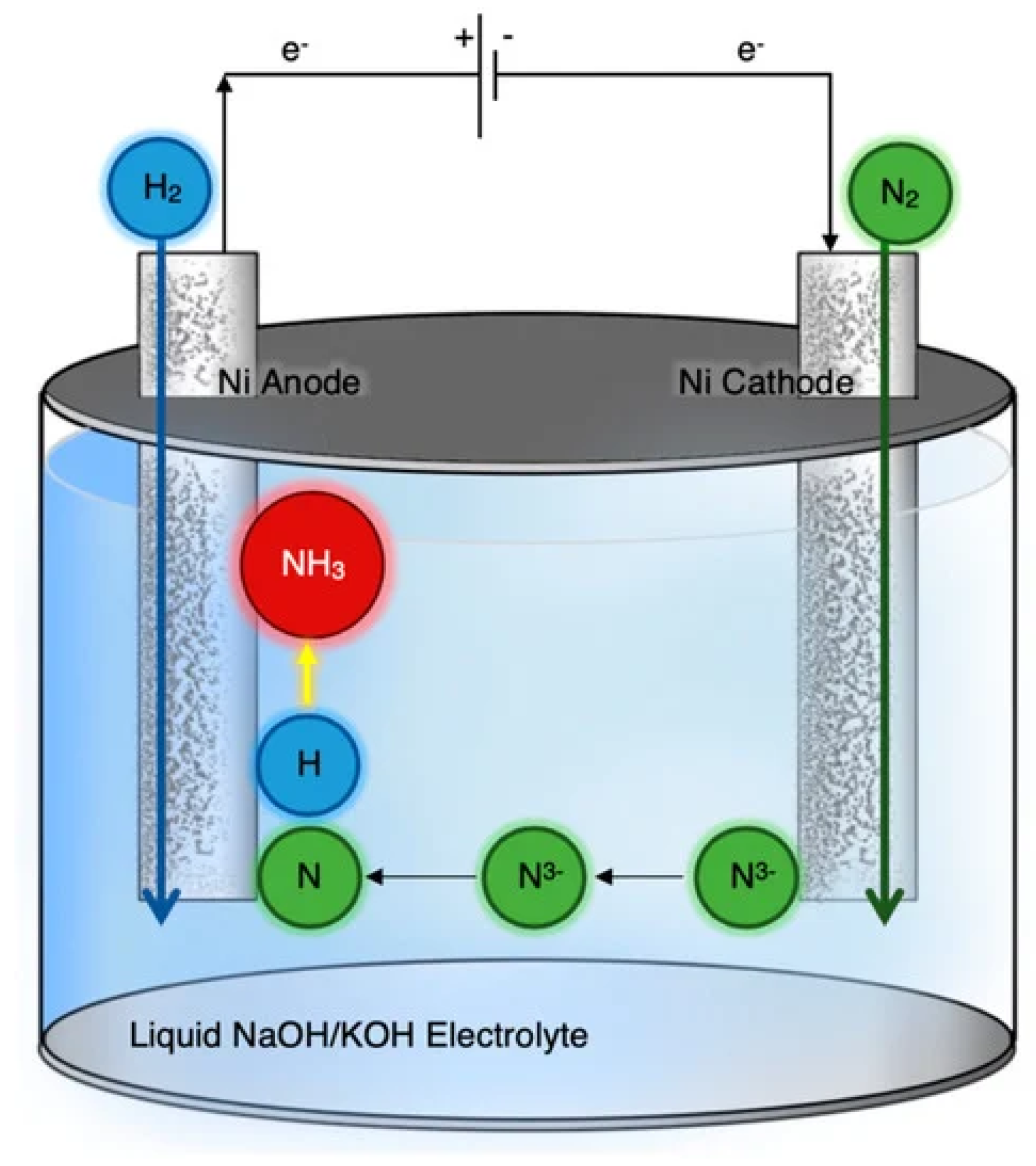
43]. The overall electrochemical model for ammonia synthesis is illustrated in
Figure 6. There are several types of associative pathways. In the distal pathway, hydrogen is first added to the nitrogen atom that is farthest from the catalyst [
40]. In the alternating pathway, hydrogen atoms are added one by one to each nitrogen in turn [
44]. The enzymatic pathway involves both nitrogen atoms being hydrogenated while the N
2 molecule is attached side-on to the catalyst [
44]. For most electrochemical systems, the hardest part is starting the reaction (activating the N
2 molecule). However, recent research has found that using special catalysts like cobalt clusters can make it easier to start the reaction by changing the slowest step from nitrogen activation to a quicker step involving proton addition [
45].
Several novel approaches do not require N
2 remaining adsorbed on a catalyst. In the Mars–van Krevelen (MvK) mechanism, nitrogen from inside a metal nitride material is hydrogenated to form ammonia, and then nitrogen gas from the air fills in the missing spots. This idea is still under study as several researchers are skeptical of its validity [
46,
47]. Another approach is the lithium-mediated process, where lithium metal reacts directly with nitrogen to form a compound (lithium nitride) that can easily turn into ammonia and lithium salt, which can be recycled to continue the reaction [
22]. A representative two-step sequence is [
48]:
Figure 6.
Schematic of electrochemical model for ammonia synthesis. Reproduced from [
49], under the Creative Commons CC BY 4.0 license.
Figure 6.
Schematic of electrochemical model for ammonia synthesis. Reproduced from [
49], under the Creative Commons CC BY 4.0 license.
3.2.1. Overview of Catalysts in Electrochemical Ammonia Production
Noble metals, such as gold, palladium, ruthenium, and rhodium, have been widely studied for their catalytic potential in NRR [
50]. These elements are known for their high stability and strong catalytic properties [
51]. However, their high cost and limited availability require strategies to maximize efficiency while minimizing material usage. To address this, researchers often work with noble metals in the form of nanostructures, single atoms, or alloys to improve surface area and atomic utilization. For example, nanoporous palladium hydride (np-PdH) was developed using a dealloying process of Al
80Pd
20. This material was shown to participate actively in NRR, with hydrogen atoms in the lattice structure playing a key role in electron transfer and intermediate adsorption. Similarly, modifying the crystal phase of palladium–copper alloys, from a face-centered cubic to a body-centered cubic structure, has led to enhanced nitrogen binding and greater ammonia yield [
52]. In these studies, improvements were closely linked to electronic structure tuning, particularly the upward shift of the d-band center, which increases the interaction between nitrogen molecules and the catalyst surface. These approaches highlight how subtle changes in material design can dramatically enhance performance.
Non-noble metals like molybdenum and iron have gained significant attention due to their lower cost and natural occurrence in nitrogen-fixing enzymes such as nitrogenases. These metals offer a biologically inspired approach to catalyst design. Molybdenum, for instance, has been incorporated into materials such as MoS
2, Mo
2C, and thin films, with structural modifications aimed at exposing more active sites [
53]. In pristine MoS
2, only edge-plane molybdenum atoms are catalytically active, while the basal planes are inactive due to sulfur coverage. To overcome this, researchers introduced cobalt atoms to generate sulfur vacancies, enabling more Mo atoms to participate in NRR [
54]. The doped material showed significantly lower energy barriers for nitrogen activation. A similar concept was applied using single iron atoms anchored onto the MoS
2 surface [
55]. These single-atom protrusions created strong localized electric fields that helped break the stable N
2 bond more easily. These approaches not only enhanced ammonia production but also demonstrated how they can effectively unlock the full potential of non-noble materials for nitrogen fixation.
Iron-based materials are among the most studied NRR catalysts due to their abundance and effectiveness. Fe
3O
4, FeOOH, and iron–nitrogen carbon complexes have all been explored [
51]. One of the most promising designs is a Janus-type Fe–SnO
2 catalyst, which simultaneously supports ammonia synthesis and nitrogen oxidation reactions [
56]. This dual functionality is enabled by combining lattice-doped Fe with Fe single atoms anchored to oxygen vacancies. Computational studies showed that the anchored Fe atoms were primarily responsible for NRR, while the lattice Fe improved conductivity and overall catalytic performance [
57]. Meanwhile, copper-based catalysts are less commonly used due to their lower nitrogen adsorption strength and tendency to promote side reactions [
58]. However, researchers have found ways to enhance copper’s activity by modifying its electronic structure. One strategy involves loading copper nanoparticles onto semiconducting nanostructures, which draw electrons from copper and create an electron-deficient state [
58]. This not only increases nitrogen molecule polarization but also reduces hydrogen evolution. In another case, single copper atoms supported on nitrogen-doped carbon showed promising results in both acidic and alkaline environments, demonstrating that even less reactive metals like copper can be improved with the right support and design [
59].
Rhenium has also emerged as a promising candidate for NRR, although it is less common than iron or molybdenum [
60]. Researchers have modified rhenium-based materials using dopants such as iron or manganese, or by introducing structural defects like selenium vacancies [
61]. These changes enhance the interaction between nitrogen molecules and the catalyst surface while also improving electrical conductivity. For example, doping rhenium disulfide with manganese led to significant charge transfer, creating strong metal–metal interactions and hybridized electronic states that facilitate nitrogen adsorption and reduction [
60]. In parallel, early transition metals like scandium, yttrium, and titanium have shown potential due to their strong affinity for nitrogen atoms [
62]. Single atoms of these metals, anchored onto nitrogen-doped carbon frameworks, have achieved notable performance in NRR [
63]. Titanium-based catalysts, especially TiO
2 and Ti
3C
2Tx (MXene), have also been extensively studied [
64]. Modifying TiO
2 by generating oxygen vacancies or doping with heteroatoms such as zirconium and iron has been shown to induce Ti
3+ states, which are active for NRR [
65]. With MXenes, strategies such as removing inactive surface groups or growing oxide layers have been used to increase the number of active edge sites, further enhancing NRR efficiency [
66].
In addition to transition metals, main group elements like antimony and phosphorus have been explored for NRR catalysis [
67]. For example, a composite material containing antimony phosphate and phosphorus-doped carbon demonstrated high ammonia production and good selectivity in neutral electrolytes; however, stability remained a challenge in acidic environments [
67]. Metal-free catalysts, such as doped carbon-based materials and covalent organic frameworks (COFs), are also gaining traction due to their low cost and the potential to reduce impacts associated with critical-metal extraction and refining by avoiding scarce or toxic metals [
67]. One notable example is fluorine-doped porous carbon derived from MOFs [
67]. Fluorine’s high electronegativity creates Lewis acid sites on nearby carbon atoms, which can effectively bind nitrogen molecules while repelling protons, thus suppressing hydrogen evolution. Similarly, doping carbon with chalcogen elements like sulfur, selenium, or tellurium alters the charge distribution and magnetic properties of carbon atoms, enhancing their interaction with nitrogen [
68]. Black phosphorus, due to its electronic structure similarity to nitrogen, has been engineered into few-layer nanosheets and quantum dots, both of which offer high surface area and strong N
2 binding. These results demonstrate that non-metal-based materials can compete with metals in catalytic performance when properly engineered [
69].
Despite the diversity of catalysts developed for electrochemical nitrogen reduction, most still fall short of the performance needed for practical applications. Even the best-performing systems show ammonia yield rates and Faradaic efficiencies far below commercial targets. Furthermore, most studies rely on single-point isotopic labeling for validation, which limits the reliability of the data. To advance the field, researchers are exploring integrated strategies, such as combining structural tuning and surface modifications to boost activity and selectivity. There is also a growing focus on tailoring the electronic structure through careful selection of elemental composition, as well as improving control over catalyst synthesis at the atomic level. In addition, properties like conductivity, long-term stability, and cost must be considered alongside intrinsic catalytic activity. Finally, better cell design, electrode architecture, and local environment control are crucial to unlocking the full potential of these catalysts.
3.2.2. Overview of Electrolytes in Electrochemical Ammonia Synthesis
In electrochemical ammonia synthesis, the selection of electrolyte plays a key role in influencing both the efficiency and selectivity of the reaction. Electrolytes not only affect ionic conductivity and the reaction environment, but also impact how effectively nitrogen molecules are activated and reduced on the catalyst surface. Typically, a suitable electrolyte is paired with an electrocatalyst-coated working electrode to facilitate nitrogen reduction under mild conditions by lowering the activation energy [
18]. A potentiostat is used to apply the desired voltage, allowing precise control of the electrochemical conditions while monitoring current and reaction time. Choosing the right electrolyte ensures compatibility with the catalyst and supports stable and selective ammonia production under the applied potential [
69].
Solid electrolytes are among the earliest materials explored for electrochemical ammonia synthesis and are capable of operating across a wide temperature range, from ambient temperature up to 800 °C. These systems typically use ceramic proton conductors that transfer protons from the anode to the cathode, where nitrogen is reduced to ammonia [
70]. One of the pioneering demonstrations was by Marnellos [
71], who used SrCe
0.95Yb
0.05O
3−δ as the proton-conducting material. At 750 °C and atmospheric pressure, the single-chamber cell achieved 78% hydrogen conversion to ammonia. However, the single-chamber design caused oxidation and reduced efficiency [
72]. To overcome this issue, dual-chamber cells were developed, which offer better control of the redox environment at each electrode [
73]. Despite improvements, solid electrolytes often suffer from low proton conductivity at moderate temperatures, requiring higher temperatures to reduce ohmic losses [
73]. This, however, raises the risk of ammonia decomposition. To mitigate this problem, water has been introduced as a proton donor, reducing the risk of catalyst poisoning from hydrogen gas impurities and enhancing system robustness [
70]. Advanced configurations using Pd or Ru electrocatalysts with proton-conducting ceramics and steam have achieved production rates up to 5.57 × 10
−3 g cm
−2 h
−1 at 650 °C [
74]. Researchers have also experimented with introducing low-melting-point carbonates salts of lithium (Li), sodium (Na), and potassium (K), into oxide matrices to form composite electrolytes that allow ammonia synthesis at lower temperatures (e.g., 400 °C) [
75]. Still, the electrolyte thickness plays a critical role in performance; thinner membranes improve conductivity and reduce energy losses [
76]. A thin-film design operating at 530 °C achieved a rate of 250.92
g cm
−2 h
−1 [
77], but structural integrity becomes a concern at very low thicknesses.
Molten salts offer a unique approach to ammonia synthesis by operating at intermediate temperatures (300–500 °C) and enabling alternative reaction mechanisms [
70]. A key innovation in this category is lithium-mediated nitrogen fixation [
78]. Lithium, due to its strong reducing power, reacts readily with nitrogen gas even at ambient conditions to form lithium nitride (Li
3N), which can subsequently be hydrolyzed to produce ammonia [
78]. Tsuneto et al. [
79] were the first to demonstrate this route electrochemically, achieving 59% Faradaic efficiency under 5 MPa nitrogen pressure. However, these systems often rely on non-aqueous electron donors to reduce Li
+ to metallic lithium, which complicates the process [
79]. Murakami et al. [
80] used a eutectic salt mixture (LiCl–KCl–CsCl) and directly fed nitride ions into the electrolyte to address pressure and electron donor limitations. The results indicated that ammonia production at atmospheric pressure and 400 °C, with rates up to 201.96
g cm
−2 h
−1 and efficiency of 27%, can be achieved. Methane and steam have also been explored as hydrogen sources [
80]. However, methane decomposition at lower temperatures (e.g., 400 °C) was inefficient, limiting ammonia synthesis [
80]. Pre-cracking methane or switching to steam has been shown to be more effective [
80]. For example, steam-fed systems using molten salts achieved ammonia yields as high as 1224
g cm
−2 h
−1 at 300 °C [
81]. A major challenge in this method is the corrosion of carbon anodes, which react with oxygen ions to form CO
2 [
81]. To solve this issue, non-consumable materials like boron-doped diamond have been used as stable anodes [
82]. Furthermore, McEnaney et al. [
83] proposed a Li-mediated cycle with H
2 and H
2O, combining LiOH electrolysis, nitridation, and hydrolysis to produce ammonia with up to 88.5% efficiency. In this process, the reaction between Li and N
2 formed Li
3N, which then reacted with H
2O to form NH
3 and LiOH, as shown in Equations (
8) and (
9). The cycle can then be completed by reducing LiOH back to Li metal [
83]. However, since lithium is molten at the required operating temperature (above 180 °C), effective collection strategies are needed. Kim et al. [
78] addressed this by using a nickel substrate to anchor lithium and simplify the process.
Figure 7 shows a schematic representation of a molten-salt electrochemical ammonia synthesis system.
Composite electrolytes combine multiple ionic conductors to enhance the mechanical stability, ionic conductivity, and overall performance of electrochemical ammonia synthesis systems [
84,
85]. These hybrid materials are designed to operate under high temperatures while resisting degradation and maintaining efficient ion transport [
86]. A notable example is the work by Amar et al. [
84], who developed a composite of LiAlO
2 and alkali metal carbonates (Li
2CO
3, Na
2CO
3, K
2CO
3) in a 1:1 weight ratio. This electrolyte, paired with a CoFe
2O
4 catalyst, facilitated ammonia synthesis from wet nitrogen and hydrogen at 400 °C. However, performance dropped significantly at 450 °C due to increased decomposition of ammonia, underscoring the importance of thermal balance. To improve performance, Amar et al. [
85] used a cerium-based composite (Ce
0.8Sm
0.2O
2−δ with 30% carbonates), which achieved better proton conductivity and reached a peak ammonia production rate of 0.33
g cm
−2 h
−1 at 450 °C. Their findings also confirmed that raising the temperature improved performance up to a point, beyond which decomposition again became dominant [
85]. In a separate study, Wang et al. [
86] developed a composite of Y-doped ceria and binary phosphates (Ca
3(PO
4)
2 and K
3PO
4 in an 80:20 ratio) and used it to synthesize ammonia from natural gas and nitrogen at 650 °C, achieving a rate of 0.426
g cm
−2 h
−1. However, their gas analysis revealed that much of the methane remained unreacted, suggesting a need for improved catalytic activation or pre-treatment of the hydrocarbon feedstock [
85].
Ammonia production at ambient temperature using aqueous electrolytes is gaining attention for its simplicity and cost-effectiveness [
70]. In these systems, water acts both as the solvent and the hydrogen source. A PEM separates the anode and cathode, enhancing ammonia yield by minimizing oxidation losses [
87]. The performance of these systems is highly dependent on the PEM properties, electrolyte pH, and the choice of electrocatalyst [
87]. These low-temperature processes show significant potential for scalable, energy-efficient NH
3 synthesis, especially when integrated with renewable energy sources [
70,
87].
3.3. Photocatalytic Ammonia Synthesis
Ammonia production via photocatalytic nitrogen fixation has emerged as a promising alternative to conventional processes, especially for its potential as a sustainable method of producing ammonia using water as the hydrogen source, which has minimal environmental impact [
40,
88]. In contrast to the electrocatalysis approach, which depends on external voltage and electrodes to drive reactions, photocatalysis utilizes semiconductors that are activated by light energy [
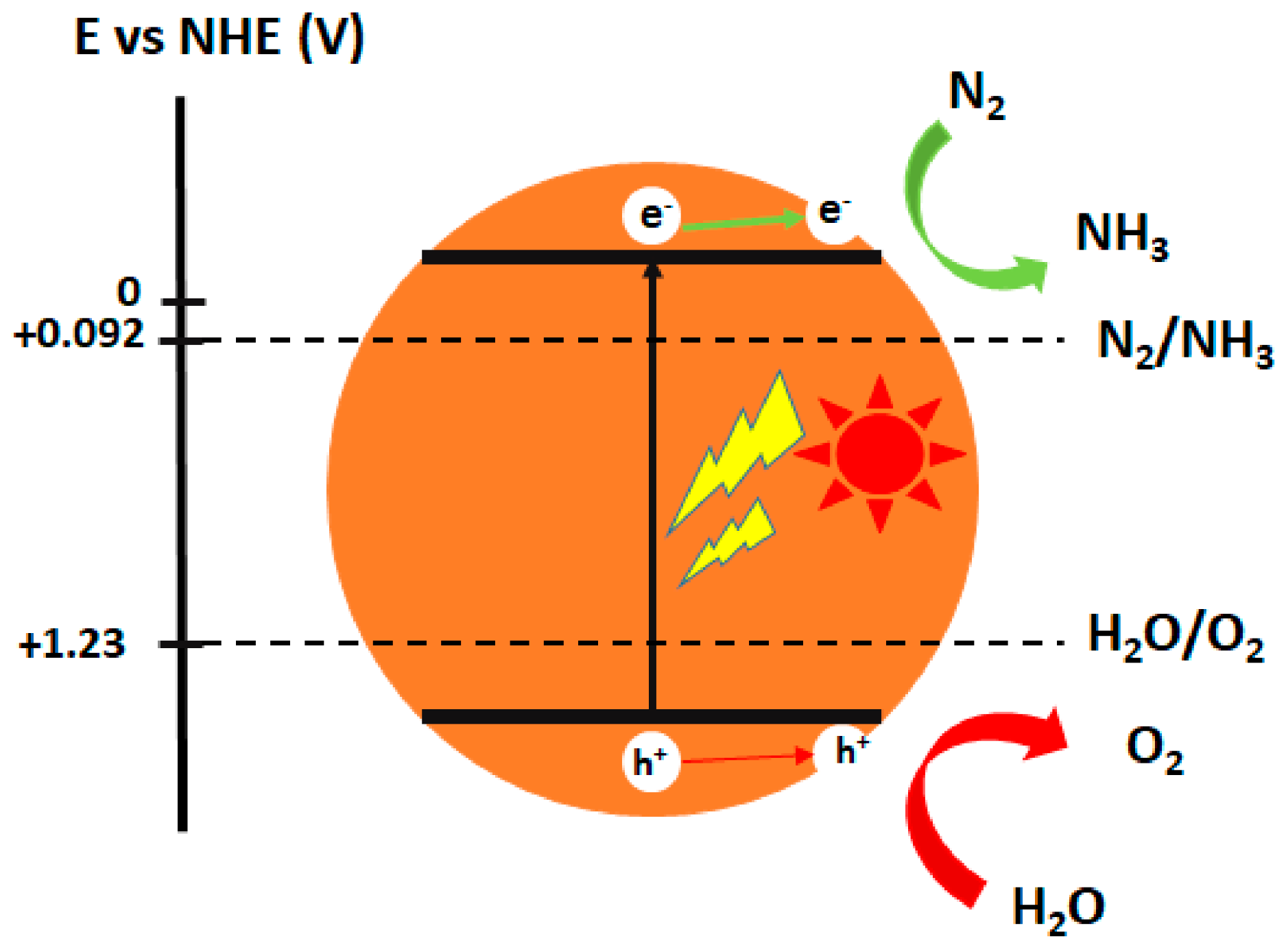
88]. When sunlight or ultraviolet light strikes the semiconductor, it absorbs photons, lifting electrons out of the valence band (VB) into the conduction band (CB) and leaving positively charged holes behind. This process is called charge-carrier separation [
89]. These photo-excited electrons play a central role in reducing nitrogen molecules (N
2), while the holes facilitate the oxidation of water, enabling the simultaneous occurrence of both processes to yield ammonia [
90]. The overall photocatalytic model for ammonia synthesis is demonstrated in
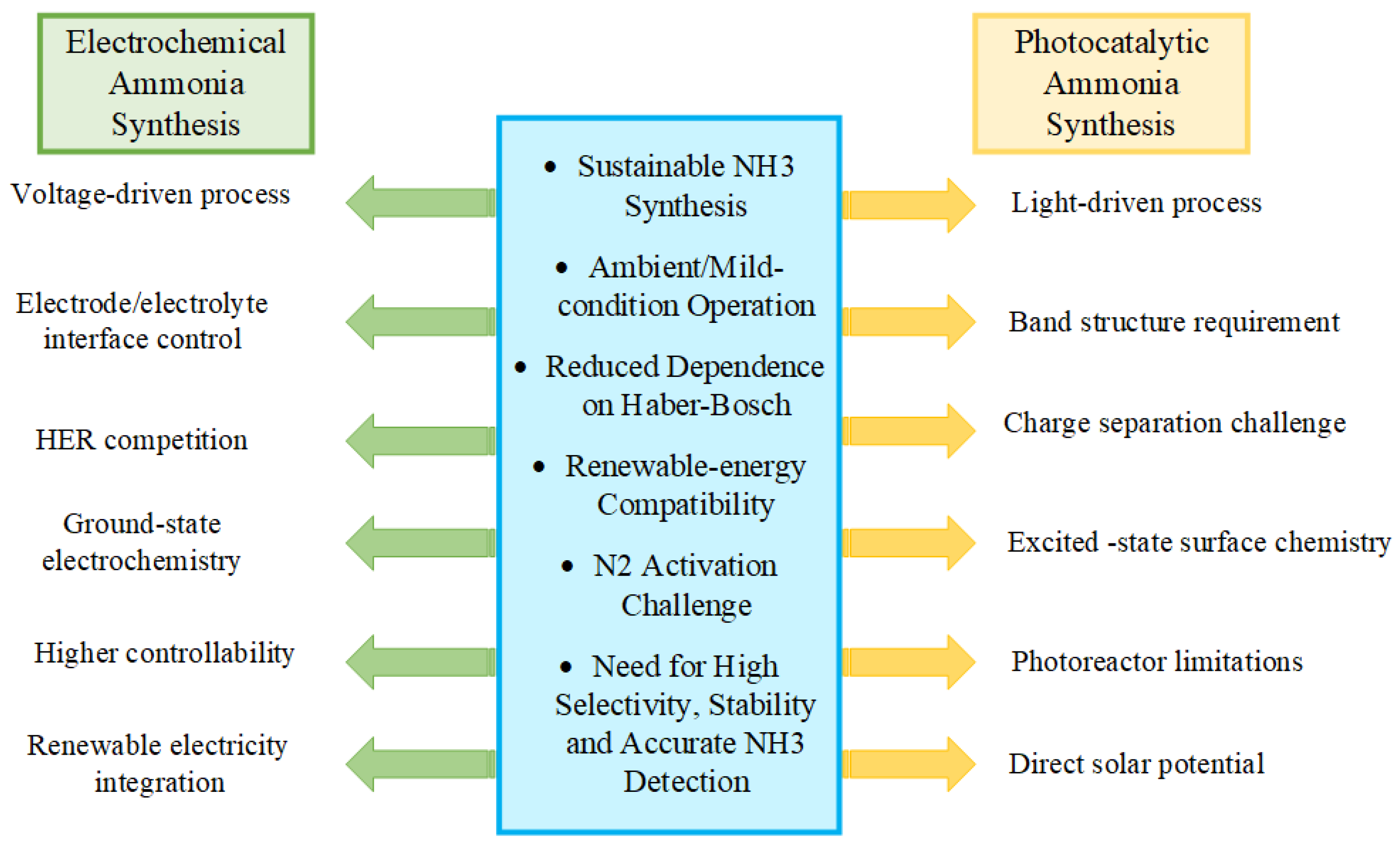
Figure 8. Also, the main similarities and differences between the electro and photocatalytic ammonia synthesis are summarized in
Figure 9. The main reactions involved in photocatalytic-based ammonia production can be expressed as follows [
91]:
One of the core challenges in this approach lies in the nature of nitrogen gas itself. Being nonpolar and highly stable, N
2 possesses a triple bond with a very high dissociation energy (941 kJ mol
−1), making it exceptionally resistant to activation [
93]. To weaken and eventually cleave this bond, electrons must be effectively transferred to nitrogen’s antibonding
orbitals [
94]. This electron transfer typically takes place at specific active sites on the photocatalyst surface, where nitrogen is adsorbed and undergoes successive protonation and reduction to form ammonia (Equation (
10)) [
95]. Therefore, the efficiency of ammonia synthesis largely depends on how well the catalyst facilitates charge carrier separation and transfer to nitrogen molecules [
96].
For best performance, the photocatalyst should combine a small band gap that captures visible photons with strong electron–hole separation to minimize recombination, while also offering plenty of active sites where nitrogen can adsorb and react [
97]. Titanium dioxide (TiO
2) has been one of the most studied materials due to its stability and cost-effectiveness [
98]. However, its wide band gap limits light absorption [
99]. To overcome this, strategies such as carbon and transition metal doping (e.g., Fe, Co, Mo, Ni) have been employed [
100]. For instance, carbon-doped TiO
2 nanosheets with porous structures have shown significant improvements in ammonia production under visible light [
99]. Similarly, Fe-doped catalysts have demonstrated enhanced charge separation, although with relatively modest conversion efficiency [
101]. The strong nitrogen fixation ability of iron-based catalysts is mainly attributed to the higher electron concentration at the active site, where the additional electrons in the d-orbitals play a key role in facilitating the reaction [
102].
Over the past decade, research into photocatalysts that outperform conventional metal-doped TiO
2 has expanded to a wider palette of semiconducting solids. Graphitic carbon nitride (g-C
3N
4), CdS, Ta
3N
5, BiVO
4, and, more recently, two-dimensional MXenes have all been evaluated as light harvesters for nitrogen reduction under ambient conditions [
103]. A representative study by Liu et al. [
103] illustrates this direction: when bulk and exfoliated g-C
3N
4 were impregnated with Ru and K, the resulting materials (Ru–K/B-g-C
3N
4 and Ru–K/E-g-C
3N
4) displayed markedly higher NH
3 formation rates than the parent carbon nitride, confirming the benefit of coupling well-dispersed noble-metal sites with a porous nitrogen-rich backbone. Utilizing sunlight for ammonia synthesis offers a sustainable alternative, but its success relies heavily on the development of well-designed and highly efficient photocatalysts. First, the electronic structure should enable absorption in the visible range (not only UV), because sunlight contains far more visible photons than UV; extending absorption into the visible therefore increases the usable solar photon flux and can substantially raise the achievable reaction rate under natural illumination. Second, once these photons are absorbed, electrons and holes must quickly separate and travel to the surface instead of recombining; only then can they participate in the redox chemistry that converts N
2 and water into NH
3. Third, the catalyst surface has to present an abundance of chemically receptive sites where nitrogen can anchor, accept electron density, and begin to relinquish its triple bond. Finally, the material must intrinsically discourage the competing hydrogen evolution reaction, ensuring that the photogenerated electrons preferentially reduce nitrogen rather than protons [
104].
Parallel to progress in inorganic semiconductors, metal–organic frameworks (MOFs) have emerged as a versatile platform for both photocatalytic and electrocatalytic nitrogen fixation [
90]. MOFs are crystalline lattices in which metal ions or clusters are bridged by multidentate organic linkers, generating large internal surface areas and highly ordered porosity [
105]. These structural features lead to many Lewis-acidic metal sites that can bind nitrogen, while the organic linkers can be adjusted to improve light absorption or electronic conductivity [
106]. Unsaturated metal nodes act as electrophilic sites that accept electron density from
-orbitals of adsorbed nitrogen; back-donation from the metal into the
orbitals of N
2 then weakens the formidable triple bond and initiates stepwise proton-coupled electron transfer to ammonia [
94]. Because the inorganic metal centers and organic linkers in MOFs are modular, their structure can be adjusted after synthesis, commonly through ligand functionalization, metal substitution, or combining with other active materials, to improve their catalytic performance [
96].
Initial demonstrations with pristine frameworks such as MIL-88(Fe), MIL-100(Fe), and MIL-101(Fe) confirmed that even unmodified MOFs possess measurable activity for N
2 reduction [
107]. Subsequent ligand modification has extended the light absorption range and introduced new pathways for charge transfer. For example, amino-functionalized NH
2-MIL-125(Ti) showed effective ammonia production under simulated sunlight at room temperature, while thiol-modified UiO-66(SH)
2 exhibited similar improvements due to enhanced visible light absorption and faster electron transfer between zirconium sites and sulfur-containing linkers [
108]. Moreover, heterojunctions formed by integrating MOFs with conductive carbon, metal sulfides, or other semiconductors accelerated interfacial charge separation, thereby suppressing electron–hole recombination and raising steady-state electron densities at the catalytic sites [
109].
Although photocatalytic MOFs show great promise, several challenges still limit their practical use. Their tiny pores can make it difficult for nitrogen gas to reach the active sites deep inside the material, which reduces overall efficiency. In addition, many MOFs have poor electrical conductivity, making it harder for photogenerated charges to move freely and take part in the nitrogen reduction process. Producing MOFs often involves complex methods that require high temperature, high pressure, and harmful solvents, which are not ideal for large-scale production. To address these problems, researchers are exploring ways to introduce larger pores, improve charge transport by combining MOFs with materials like graphene or MXenes, and carefully tune the structure to allow better movement of nitrogen and electrons. Making MOFs in well-designed shapes, such as spheres, hollow particles, or pellets, can also improve their strength and make them easier to use in reactors, but this requires low-cost methods that do not harm their catalytic ability.
In the future, replacing the traditional HB process will depend on finding photocatalysts and electrocatalysts that are not only highly efficient and long-lasting but also made from materials that are inexpensive and widely available. MOFs are especially promising because their structure and chemistry can be easily adjusted. However, turning successful lab experiments into real-world applications will require significant improvements in how we make MOFs at a large scale and how well they conduct electricity. Moving forward, it will be necessary to combine experiments with computer modeling to better understand how the reaction works and how to design materials that can use sunlight or renewable electricity to produce ammonia without carbon emissions.
3.4. Photo-Electrocatalytic Ammonia Synthesis
Photoelectrochemical (PEC) technology combines principles from both photocatalysis and electrochemistry to enable environmentally friendly chemical transformations with reduced energy requirements [
110]. This hybrid method is being explored for various sustainable applications such as splitting water [
110], converting carbon dioxide [
111], and capturing solar energy [
112]. One of its emerging applications is in nitrogen fixation, where nitrogen gas (N
2) is converted to ammonia under light-driven conditions. The PEC nitrogen reduction reaction (PEC-NRR) has drawn attention as a potential alternative to the traditional HB process, offering the possibility of decentralized ammonia production using sunlight and water [
113]. A typical PEC system designed for ammonia production includes several main components: a light-absorbing photocathode, an anode, an ion-conducting membrane (often a proton exchange membrane), a liquid electrolyte, and a nitrogen gas feed [
114]. A DC power source is also used to apply bias across the electrodes [
115]. During operation, the photocathode generates electron–hole pairs as electrons are excited from the valence band to the conduction band, leaving holes as electron vacancies within the semiconductor [
116]. These excited electrons migrate to the surface of the photocathode, where they can interact with nitrogen molecules from the gas feed [
117]. The holes remain as electron vacancies in the semiconductor and, driven by band bending and any applied bias, are transported within the solid to the oxidation site (typically the photoanode/oxidation catalyst interface), where they are consumed in the oxygen evolution reaction. This separation of charges is assisted by an internal electric field created at the semiconductor–electrolyte interface [
118]. The relevant reactions are defined in Equations (
10) and (
11).
Once electrons reach the photocathode surface, they engage in the reduction of nitrogen molecules. The conversion of N
2 to NH
3 follows one of two main mechanisms: the associative or dissociative pathway [
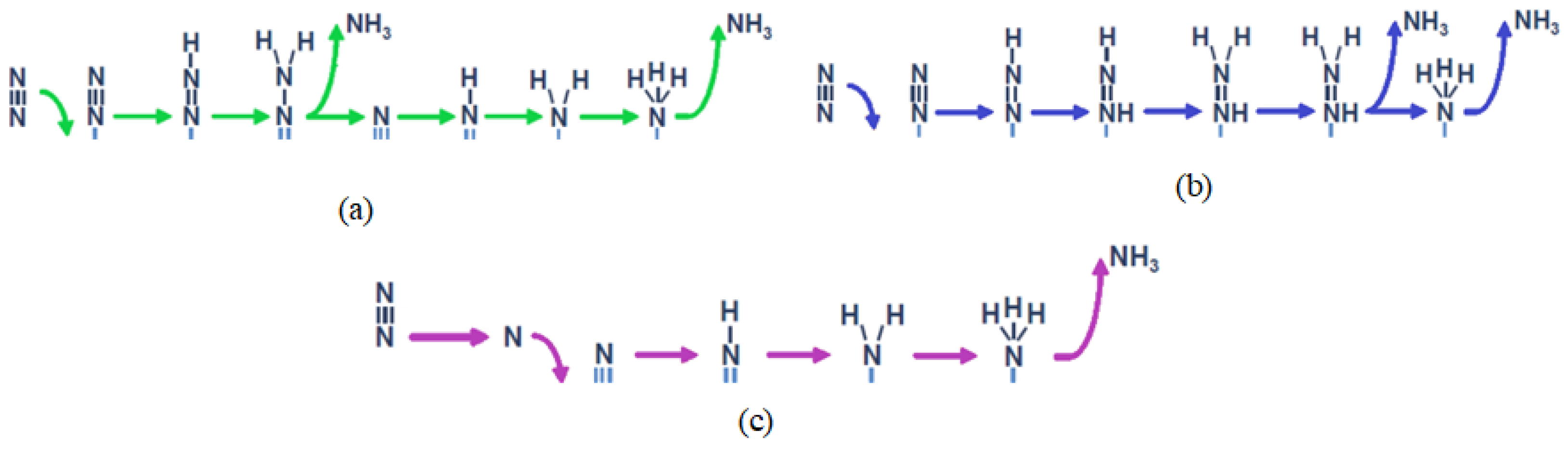
112]. In associative mechanisms, nitrogen molecules adsorb onto the photocathode and are hydrogenated step by step before the N≡N bond is completely broken. This can proceed via a distal path (where one nitrogen atom is fully hydrogenated before the second) or an alternating path (where hydrogen atoms are added alternately to each nitrogen atom) [
112]. In the dissociative mechanism, the N≡N bond is first cleaved, and the resulting nitrogen atoms are then separately hydrogenated to form ammonia [
119]. The differences between these two pathways are presented in
Figure 10. These pathways highlight the complexity of breaking the strong triple bond in nitrogen and the importance of designing suitable active sites.
Despite its promise, PEC-based ammonia production still faces critical limitations. One major challenge is the inherent difficulty of activating nitrogen molecules, due to their strong triple bond and low solubility in water, which slows the reaction kinetics [
120]. Another issue is competition with the HER, which can consume photogenerated electrons and reduce selectivity toward ammonia [
121]. Additionally, the photocathode materials used in PEC cells often suffer from poor visible-light absorption, fast charge-carrier recombination, and instability under illumination [
122]. Materials such as NiO, Cu
2O, and CuO have been studied due to their p-type semiconducting properties, but they typically exhibit limited efficiency due to issues like photocorrosion and low numbers of exposed catalytic sites [
112]. To overcome these challenges, researchers have been developing advanced photocathode materials with better light absorption, stability, and catalytic activity. One approach involves constructing heterojunctions using MOFs or doping existing materials [
123]. For example, coating Cu
2O with copper-based MOFs enhances ammonia production by creating more active sites and improving charge transfer [
124]. Similarly, incorporating Ag-doped Ni-MOFs onto Cu
2O surfaces improves both the yield and Faradaic efficiency (FE) due to better charge separation and additional catalytic centers [
125]. Other strategies include using semiconductors with engineered defects such as oxygen or nitrogen vacancies, which help in adsorbing and activating nitrogen molecules more effectively [
126].
Recent studies have also explored novel materials like black silicon and black phosphorus for PEC-NRR applications. Black silicon, with its nanostructured surface, traps more sunlight and suppresses unwanted hydrogen production, making it more selective for ammonia formation [
127]. When decorated with nanoparticles such as gold or silver, its performance further improves due to enhanced light absorption and catalytic activity through surface plasmon resonance (SPR) effects [
128]. On the other hand, black phosphorus offers abundant catalytic sites and favorable electronic properties, making it a strong candidate for nitrogen reduction [
112]. Combining photo- and electro-chemical forces, PEC technology offers a promising route for sustainable ammonia synthesis, but continued research is essential to optimize materials and design for real-world applications.
In conclusion, photoelectrochemical nitrogen reduction represents a promising route toward sustainable ammonia synthesis under ambient conditions. Unlike today’s industrial Haber–Bosch supply chain, where the carbon footprint is dominated by fossil-based hydrogen production (e.g., natural-gas reforming) and fossil energy used to provide heat and power, PEC-NRR uses sunlight to supply the driving energy, potentially lowering indirect CO
2 emissions when operated with low-carbon electricity and water as the proton source. To be viable for practical deployment, photocathode materials must satisfy several critical criteria. First, their conduction band edge must be more negative than the thermodynamic potential of nitrogen reduction (
), ensuring that photogenerated electrons possess sufficient energy to drive the N
2 to NH
3 conversion. Furthermore, efficient light absorption, particularly in the visible range, is necessary to generate an adequate population of charge carriers [
129]. Equally important is the material’s ability to suppress charge recombination and support rapid charge transport, ensuring that electrons reach the active sites for the nitrogen reduction reaction before energy losses occur [
130]. High catalytic activity and selectivity are also essential, given the inherent difficulty of N
2 activation and the competing hydrogen evolution reaction [
131]. Photocathodes must expose sufficient active sites for N
2 adsorption and activation, while minimizing HER to improve Faradaic efficiency. Long-term operational stability is another key factor, requiring materials that are resistant to photocorrosion and maintain strong adhesion to their substrates. Strategies to address these requirements include engineering heterojunctions to enhance charge separation, introducing co-catalysts to improve reaction kinetics, and constructing 3D nanostructured architectures to increase surface area and light harvesting [
132].
In addition to material design, efforts are being made to improve the reliability of NH
3 detection, as contamination or side reactions can produce signals that look like ammonia, even when real ammonia is not produced [
133]. Tandem PEC systems and bias-free configurations that operate solely on solar energy, referred to as unassisted PEC, are also under development to improve overall energy efficiency [
134]. Furthermore, PEC nitrate reduction is gaining attention as an alternative pathway with more favorable kinetics and the added benefit of addressing nitrate pollution. Overall, while PEC-NRR is still in its early stages, continued material innovation and system optimization hold strong potential to enable scalable green ammonia production.
3.5. Plasma-Assisted Ammonia Synthesis
Plasma-assisted ammonia synthesis, particularly through non-equilibrium low-temperature plasma, has emerged as an alternative route for ammonia production under comparatively mild operating conditions [
135]. In this approach, plasma provides energetic electrons and reactive species that can activate otherwise inert molecules such as nitrogen, thereby facilitating ammonia formation without requiring the severe temperatures and pressures characteristic of the conventional Haber–Bosch process [
136]. Low-temperature plasma contains a mixture of energetic electrons, ions, radicals, photons, and neutral particles, creating an active medium that can break molecular nitrogen’s strong triple bond [
136]. When powered by renewable energy sources such as wind or solar, plasma-assisted systems provide a carbon-neutral pathway for ammonia production [
137]. This makes the process not only energy-efficient but also compatible with decentralized and on-demand production, particularly suitable for small-scale applications where traditional methods fall short [
138]. A variety of plasma types, including dielectric barrier discharge (DBD), plasma jets, and gliding arc discharges, have been investigated to improve reaction efficiency and catalyst compatibility.
Plasma-assisted ammonia synthesis can proceed with or without the involvement of a catalyst. In the non-catalytic or plasma-only route, reactions take place solely in the gas phase [
139]. When a plasma discharge is applied to a mixture of nitrogen and hydrogen (or water), the energetic electrons in the plasma activate the N
2 and H
2 molecules by exciting or dissociating them into reactive species such as vibrationally or electronically excited N
2 (
), ionized nitrogen (
), atomic nitrogen (N), and corresponding hydrogen species like
and H atoms [
138]. These reactions can be expressed in Equations (
12)–(
17):
These reactive intermediates then undergo gas-phase reactions. For instance, nitrogen atoms or excited N
2 species can react with hydrogen atoms to form NH, which is subsequently hydrogenated to NH
2 and finally NH
3 [
140], which are described in Equations (
18)–(
22) [
141]. This entire process happens in the gas phase without the aid of a catalyst, and while feasible, it generally suffers from low efficiency, limited selectivity, and undesired side reactions, including NH
3 decomposition [
142].
In contrast, plasma catalytic pathways utilize a catalyst to enhance the efficiency and selectivity of ammonia synthesis [
139]. The plasma serves as an activation source, generating reactive nitrogen and hydrogen species that adsorb onto the catalyst surface [
143]. The synergy between the plasma and the catalyst significantly improves ammonia production by lowering energy barriers and stabilizing intermediate species [
144]. Typically, the plasma first activates N
2 and H
2 into reactive forms (N
*,
,
, etc.), and these species adsorb onto the catalyst surface, where stepwise hydrogenation occurs [
140]. The presence of the catalyst allows for more controlled reaction pathways and offers two main surface reaction mechanisms: the Eley–Rideal (E-R) and the Langmuir–Hinshelwood (L-H) mechanisms [
145]. In the E-R mechanism, a gas-phase reactive species directly reacts with an adsorbed species on the catalyst surface [
145]. In the L-H mechanism, both reactive species are adsorbed onto the catalyst surface before reacting to form intermediates like NH and NH
2 [
144]. These mechanisms can be described in Equations (
23)–(
29).
Further hydrogenation steps continue on the catalyst surface, where NH species convert to NH
2, and then to NH
3. NH radicals play a crucial role as intermediates, and their surface coverage correlates closely with final NH
3 yields [
142]. The hydrogenation of NH
2 to form NH
3 can proceed via either the E-R or L-H pathways, depending on the system pressure [
146]. However, competing reactions can occur, such as the decomposition of NH
3 under plasma conditions, which leads to the formation of NH
2 radicals and H or H
2, lowering overall ammonia yield [
142]. Therefore, achieving a balance between formation and decomposition steps is key to maximizing efficiency in plasma-assisted systems.
Additionally, the type of catalyst support also affects the reaction mechanism and performance [
138]. For instance, in the case of metal oxide supports like Al
2O
3 without any deposited metal catalysts, the reaction mechanism still involves surface and gas-phase species, but the absence of metal sites limits the activation and recombination rates of radicals [
138]. Moreover, such supports tend to possess strong acidic sites that hinder NH
3 desorption [
138]. As a result, NH
3 molecules may become trapped on the surface and further decompose under plasma exposure, decreasing overall NH
3 production efficiency. Thus, while plasma-only and metal oxide-supported systems are viable, incorporating effective metal catalysts (e.g., Ru, Ni) greatly enhances both selectivity and productivity [
138].
Plasma-assisted ammonia synthesis using non-thermal plasma (NTP) typically achieves energy efficiencies in the range of 1.53 to 1.83
/kWh, which remains far below the industrial target of 150–200
/kWh [
147]. Since improvement through plasma parameter adjustments alone is limited, recent research has increasingly focused on plasma catalytic systems. These systems combine plasma reactors with various catalysts such as tubular membrane structures [
148], Ru-based mesoporous catalysts [
149], supported microporous materials [
150], Ni/Al
2O
3, zeolite 5A, and mesoporous silica frameworks like SBA-15 and MCM-41 [
138,
151,
152,
153] to enhance both ammonia yield and energy efficiency. Mehta et al. [
154] demonstrated that vibrationally excited nitrogen generated in NTP can interact directly with catalyst surfaces, leading to reaction pathways that differ from those in thermal catalysis. A notable example is the study by Kim et al. [
155], who achieved an efficiency of 35.7
/kWh using a nanosecond pulsed packed bed reactor with a Ru-Mg/
-Al
2O
3 catalyst at 300 °C under atmospheric pressure and an N
2:H
2 ratio of 4:1.
In recent advancements toward sustainable ammonia production, plasma-assisted systems using nitrogen and water have emerged as a promising alternative to conventional N
2-H
2 processes [
156]. Water replaces hydrogen as the proton donor, offering multiple advantages such as eliminating the need for hydrogen purification or methane reforming, both of which are energy-intensive and costly [
157]. Although electrolysis can generate hydrogen from water, it still demands high electricity input. Conversely, directly utilizing water in plasma-driven systems is inherently safer and reduces logistical risks related to hydrogen storage and transport [
157]. Nonetheless, challenges like low ammonia yield, poor selectivity, and high energy consumption remain critical obstacles in scaling up these technologies. The chemistry of ammonia formation in such systems is driven by complex interactions between plasma-generated reactive species and water molecules [
158]. Electrons and UV and vacuum ultraviolet (VUV) photons initiate dissociation processes, breaking down water into H and OH radicals [
141], as shown in Equations (
30) and (
31) [
135].
These reactive intermediates then interact with nitrogen species to form ammonia, though side reactions can lead to by-products like NO
x [
158]. The nitrogen reduction reaction benefits from hydrogen radicals, while OH radicals tend to favor nitrogen oxidation, forming undesirable nitrogen oxides [
159]. Importantly, the reactivity of different nitrogen species, such as atomic nitrogen, ionized nitrogen, and excited molecular nitrogen, varies based on their lifetimes and activation states [
160]. Therefore, precise control over plasma properties is crucial to steering reactions toward ammonia rather than by-products.
Reactor design plays a critical role in determining the reaction pathways and energy efficiency of plasma-assisted N
2-H
2O systems. Three main configurations have been examined: gas interacting with an open liquid surface, gas-phase systems containing suspended liquid droplets, and systems based on submerged gas bubbles in a liquid medium. In gas–liquid configurations, the plasma forms and interacts at the liquid interface, and this category commonly includes reactor designs such as plasma jets and gliding arcs [
161]. Experiments demonstrate that introducing water vapor into nitrogen before plasma exposure enhances ammonia formation [
162]. Adding metals to the liquid phase further improves reaction rates by providing active sites or altering pH, with magnesium showing particularly strong catalytic behaviour [
163]. When water exists as dispersed droplets in the gaseous phase, DBD reactors are frequently used [
164]. These setups rely on aerosolized water reacting with excited nitrogen species [
164]. The reactor’s geometry, discharge power, and inclusion of catalytic materials such as Ru supported on MgO strongly impact the outcome [
164]. Water vapor typically outperforms droplets due to better interaction with plasma, but both forms are effective under the right thermal and flow conditions [
165]. Studies have found that temperature and vapor concentration play a decisive role in reaction selectivity and energy efficiency, emphasizing the importance of precise control processes [
165]. A less explored configuration involves injecting nitrogen gas into a liquid medium, forming bubbles that serve as plasma microreactors [
166]. These underwater discharges generate localized high-energy zones where nitrogen and water interact [
135]. Though this method achieves notable nitrogen fixation rates, the dominant products tend to be NO
x rather than ammonia [
167]. However, combining this process with downstream electrochemical reduction offers a viable route for selective NH
3 production [
167]. The conductivity of the liquid phase influences discharge stability, energy use, and product distribution [
166]. Further research into catalyst integration, reactor miniaturization, and mechanistic modeling is necessary to optimize these submerged-phase approaches for practical ammonia synthesis.
The performance of NTP and plasma catalytic systems can be significantly improved when combined with auxiliary techniques such as photocatalysis and electrocatalysis, facilitating more efficient power-to-chemical conversions [
168]. For instance, Abiev et al. [
168] demonstrated that incorporating photocatalysis in NTP-assisted dry reforming of methane (DRM) provides an effective pathway for transforming natural gas into value-added chemicals under mild conditions. In this regard, Mei et al. [
169] reported that coupling plasma with photocatalysis could boost CO
2 conversion and overall energy efficiency by up to 2.5 times in the DRM process. Likewise, Meng et al. [
170] observed notable conversion rates of 15% for methane and 48.6% for propane when employing plasma-assisted photocatalysis to synthesize gasoline-range hydrocarbons. In a separate study, a dual-function strategy involving plasma-driven N
2 oxidation and subsequent electrochemical reduction of NO
x for ammonia production was explored [
171]. These emerging approaches reveal that while plasma technologies hold promise for renewable chemical manufacturing, considerable gaps remain before they become industrially viable. Realizing the full potential of plasma-driven ammonia synthesis requires overcoming several fundamental and technical challenges. One of the main bottlenecks is the availability of robust and energy-efficient power supplies capable of generating stable plasma discharges under demanding operational conditions [
146]. Designing a universal plasma reactor compatible with integrated systems, such as those involving electric fields, photocatalysis, or electrocatalysis cells, is also essential [
146]. For commercial development, the literature has suggested that hybrid plasma–electrocatalytic systems should approach Faradaic efficiencies above 90% together with areal ammonia production rates above 10
−4 mol cm
−2 h
−1, where the rate is normalized to the active electrode area [
172]. Additionally, improving process selectivity, reducing equipment costs, and optimizing catalyst–plasma interactions are vital steps toward building scalable, high-performance power-to-chemical platforms.
To provide a clearer comparison of representative catalyst and material performance,
Table 1 summarizes selected quantitative indicators reported for electrochemical, photoelectrochemical, and plasma-assisted ammonia synthesis. Because the studies differ in reactor design, electrolyte, pressure, illumination, and normalization basis, the values should be interpreted as representative benchmarks rather than as a direct ranking.
As shown in
Table 1, direct comparison remains difficult because the reported metrics are not standardized across routes. Electrochemical and PEC studies commonly report NH
3 yield and Faradaic efficiency, whereas plasma-assisted systems more often report energy yield in g
NH3 kWh
−1. Overall, the highest laboratory values still do not remove the main scale-up barriers, including low absolute NH
3 productivity, limited durability, costly or complex materials, and incomplete system-level validation.
3.6. Chemical Looping Ammonia Synthesis (CLAS)
Chemical looping ammonia synthesis splits the overall Haber–Bosch chemistry into two sequential steps [
173]. In the first step, nitrogen from air reacts with a solid carrier to form a metal nitride, thereby storing activated nitrogen. In the second step, the solid is contacted with a hydrogen source (H
2 or H
2O) to produce ammonia and regenerate the metal carrier for the next cycle [
174]. Metal nitrides can serve as both nitrogen carriers and active (electro) catalysts under synthesis conditions [
13]. This approach is commonly labeled CLAS/CLAP/CLAG, all referring to the same concept, and systems are further differentiated by material properties into nitrogen-carrier (NC), oxygen-carrier, sulfur-carrier, carbon-carrier, and related classes. Adding metal hydrides can facilitate nitrogen reduction and hydrogen transfer, increasing ammonia formation rates. In chemical looping ammonia, nitrogen-carrier solids shuttle between a nitriding step and a hydrogenation step, allowing ammonia to be produced efficiently with reduced energy demand. Therefore, compared with Haber–Bosch, chemical looping may operate near atmospheric pressure and avoid large compressors, especially when paired with water electrolysis [
174]. This enables modular, distributed plants powered by renewable power. Recent reviews further emphasize that temporal decoupling alleviates N
2/H
2 competitive adsorption and helps relax scaling-relation limits, enabling milder operation [
175]. Remaining challenges include carrier stability, nitrogen capacity, and reaction kinetics [
176].
At its core, CLAS decouples the classic reaction (Equation (
1)) into two distinct reactions: (i) nitridation of a carrier and (ii) hydrogenation (or hydrolysis) of the nitride, which are defined in Equations (
32) and (
33), respectively.
This temporal and spatial separation allows independent optimization of nitrogen activation and ammonia release steps, avoiding the competitive adsorption of N
2 and H
2 that limits conventional catalysts [
177]. Recent reviews emphasize that decoupling nitridation and hydrogenation also helps circumvent the classic Brønsted-Evans-Polanyi scaling and the competitive N
2/H
2 adsorption that limit one-step catalysts, sharpening the theoretical case for CLAS under milder conditions [
178].
Material choice is critical. Candidate carriers span alkali/alkaline-earth nitrides (Li
3N, Mg
3N
2, Ca
2NH-CaH
2), transition-metal nitrides (e.g., Mn
6N
2.58/Mn
4N, CrN/Cr
2O
3) and composite nitride–hydride or nitride–imide systems [
179]. Recent work and reviews highlight imide–hydride composites and perovskite-type (oxy)nitride–hydride carriers with improved nitrogen uptake and hydrogenation kinetics [
175]. For example, incorporating Zn into a LiH–Li
2NH-mediated loop increased the NH
3 formation rate by about nineteen-fold at approximately 350 °C and reduced the apparent activation energy, attributed to the formation of LiZn
x intermetallics and LiZnN as auxiliary nitrogen carriers [
180]. Descriptors such as nitrogen-vacancy formation/mobility, lattice binding, and cyclic stability increasingly guide carrier discovery, supported by DFT screening [
175]. Computational and experimental studies in 2023–2024 identify vacancy formation energy and solid-state N/H diffusion as key predictors; Li-Mg-N-H and Ca-Mn-N-H composites are frequently cited as promising, cyclable systems [
175]. Studies also show that lattice strain and dopant incorporation (e.g., Zn, Al, Y) tune nitrogen mobility and hydrogenation rates, suggesting rational materials design strategies [
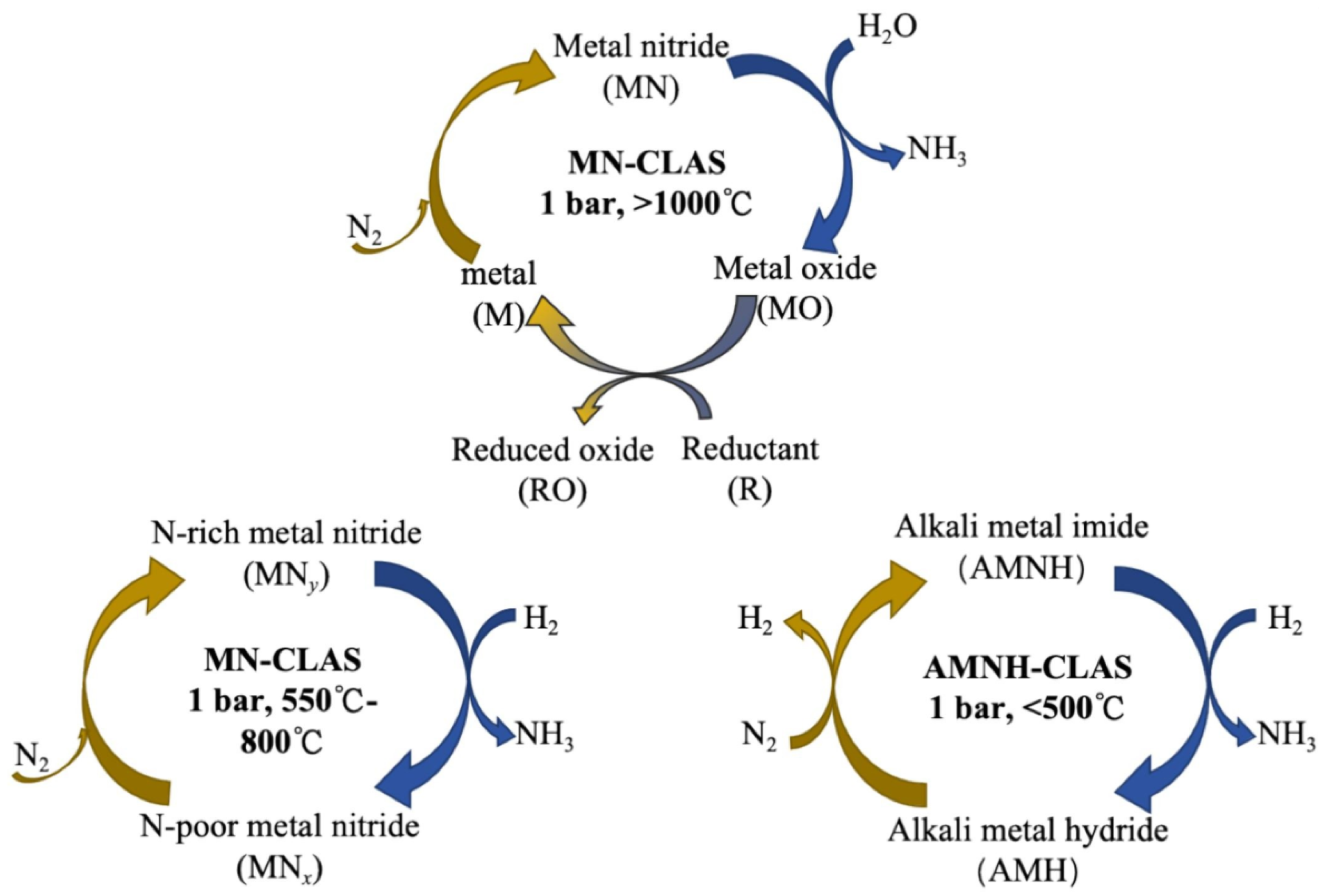
180]. The overall schematic of CLAS mediated by metal nitride and alkali metal is illustrated in
Figure 11.
Operating conditions for CLAS tend to be milder than Haber–Bosch: typical nitridation at 300–600 °C (often near 1 bar), followed by hydrogenation at 200–400 °C [
177]; the modular nature allows smaller, decentralized units and compatibility with intermittent renewable heat or H
2 [
179]. Recent analyses underline low-pressure operation and note that imide-type carriers can be faster yet more sensitive to CO
2/H
2O impurities [
181]. Thermodynamic modeling indicates that CLAS configured for distributed operation could reduce compression and high-pressure infrastructure, improving scalability of low-carbon ammonia deployment [
182]. However, continuous looping with integrated heat recovery, solids circulation, and long-term durability remains under development in laboratory settings [
182].
Despite its promise, CLAS faces several significant challenges. Carrier durability remains a major issue: repeated nitridation/hydrogenation cycles can induce sintering, phase segregation, and impurity reactions (CO
2/H
2O) forming carbonates/hydroxides, lowering N-uptake kinetics [
173,
181]. Nitrogen capacity and space–time yield remain below industrial targets [
183]. Heat management and reactor design pose obstacles: the cyclic nature requires careful thermal integration, switching valves, and robust solids-handling to avoid attrition and maintain throughput [
182]. In addition, although low-pressure operation is possible, many carriers still need elevated temperatures or activated nitrogen species to reach practical rates, narrowing energy-savings compared to conventional routes [
175,
177]. Recent analyses highlight impurity sensitivity (CO
2/H
2O) for imide-rich carriers and the need for upstream gas polishing and loop-internal mitigation strategies (drying, CO
2 scrubbing, sweep-gas management, periodic regeneration) [
181].
Innovation in recent work has sought to address these obstacles via advanced carrier design and reactor engineering [
173]. Approaches include nanostructured/supported composites and photo- or plasma-assisted looping to accelerate nitrogen activation at lower bulk temperatures [
184,
185]. From a process viewpoint, three-reactor chemical-looping (TRCL) architectures provide greater operational flexibility and simpler heat management and have been evaluated via Aspen-based flowsheeting [
186]. Coupling CLAS with electrolysis or biomass-derived H
2 enables self-sustaining green-ammonia systems [
177]. Techno-economic and process studies indicate hybrid processes can minimize compression duty and CapEx while maintaining selectivity [
187].
Overall, CLAS represents a promising pathway for sustainable, low-carbon ammonia production [
173]. By temporally separating N
2 activation and hydrogenation, it allows step-wise optimization, enabling lower-pressure synthesis [
182]. Ongoing priorities include carrier durability via interface/defect engineering, impurity tolerance, improved heat/mass transfer and solids handling, and integration with renewable heat/electricity [
175]. Together, these advances bring CLAS closer to enabling distributed, low-carbon ammonia production compatible with a renewable-based energy economy [
173].
3.7. Biological Ammonia Production
Biological ammonia synthesis emerges as a promising alternative, relying on nature-driven pathways that do not release harmful emissions. Multiple strategies fall under this umbrella, including biological nitrogen fixation (BNF), nitrate or nitrite reduction, hydrolysis of urea, and advanced microbial metabolic engineering [
188]. Among them, BNF and synthetic modification of microorganisms to enhance ammonia output have gained the most traction. Another innovative approach involves fermenting protein-rich biomass using ruminal bacteria, offering a complementary method of biologically generating ammonia [
189].
Biological ammonia-production routes are included in this review for completeness and as exploratory biohybrid concepts, not as near-term bulk ammonia-production technologies. At present, no continuous recoverable ammonia stream has been demonstrated at a practically relevant scale; therefore, their main value lies in understanding mild-condition nitrogen fixation, enzyme- or microbe-assisted pathways, and possible long-term biohybrid concepts.
At the heart of biological nitrogen fixation lie nitrogenase enzymes, which catalyze the conversion of inert atmospheric nitrogen into bioavailable ammonia [
190]. Unlike the Haber–Bosch process, this reaction occurs at ambient temperature and pressure, though it demands a high amount of adenosine triphosphate (ATP) [
191]. Nitrogenase is found in specific microbial groups such as
Rhizobia (which form symbiotic relationships with legumes) and free-living nitrogen-fixing bacteria like
Azotobacter and
Klebsiella [
192]. Efforts to replicate this biological machinery in synthetic systems have included expressing
Klebsiella nitrogenase subunits in
E. coli and yeast [
193]. One notable line of research involves manipulating
Bacillus subtilis through gene knockouts and overexpression to optimize ammonia production [
194]. For instance, deletion of the codY gene, an important transcriptional repressor, leads to increased production of branched-chain amino acids and enhances the conversion of proteins into ammonia [
194]. Additional removal of the BkdB gene, which is involved in fatty acid synthesis, further directs metabolic flux toward nitrogen-containing compounds [
195]. The expression of genes like LeuDH and two-keto acid decarboxylase helps accelerate the breakdown of amino acids, thereby boosting precursor availability. Using this engineered strain, protein biomass from
E. coli was successfully fermented, producing ammonia with a theoretical yield of 50% [
194]. A separate study explored a similar approach using engineered
E. coli, targeting genes associated with intracellular ammonia assimilation (glnA and gdhA) [
196]. These genes normally help the cell to absorb ammonia, but their deletion allowed ammonia to accumulate externally, resulting in a 47.8% yield (458 mg/L) [
197]. The researchers further evaluated the use of food processing residues, such as soy sauce cake and tomato peel, for ammonia generation [
198]. They discovered that high glucose concentrations suppressed ammonia synthesis. To overcome this, the glucose transport gene ptsG and associated phosphotransferase system were knocked out using PCR-based gene editing [
198]. The final strain successfully produced ammonia in a medium with both amino acids and glucose, achieving yields as high as 73% [
198].
Bioelectrocatalytic ammonia synthesis can be considered a hybrid extension of biological nitrogen fixation, in which an electrode supplies reducing equivalents to a biological catalyst, purified enzyme, or living microorganism. In these systems, the role of the electrochemical component is not necessarily to reduce N
2 directly on an inorganic catalyst, but to provide electrons, mediators, or electrochemically generated H
2 to support nitrogenase-driven N
2 fixation. Three representative configurations can be identified: (i) enzymatic bioelectrocatalysis, where purified nitrogenase or nitrogenase-related components are coupled to an electrode through direct or mediated electron transfer; (ii) microbial electrosynthesis, where electroactive or diazotrophic microorganisms receive reducing equivalents from a cathode and convert N
2 to
/
; and (iii) photo-bioelectrocatalytic systems, where light absorbers or photoelectrodes provide the driving force for electron delivery to biological nitrogen-fixation pathways. These configurations are summarized in
Table 2. Although these approaches are attractive because they combine mild biological catalysis with externally controllable electrical or solar energy input, they remain at proof-of-concept level because of low NH
3 titres, enzyme instability, inefficient electron transfer, ATP or energy-regeneration requirements, and difficult product recovery from dilute aqueous media.
In response to the problem of intracellular ammonia being absorbed by host cells, researchers have explored yeast-based systems to produce ammonia extracellularly [
199]. One such strategy involved yeast cell surface engineering (YCSE), in which ammonia-generating enzymes, like L-amino acid oxidase, are displayed directly on the yeast cell membrane [
199]. This was accomplished by attaching signal peptides to guide the enzyme to the cell surface. For example, a codon-optimized version of HcLAAO was inserted into the
Saccharomyces cerevisiae strain BY4741/sedlA using a plasmid (pULDl-HcLAAO) [
200]. The engineered yeast expressed up to 10
6 target proteins on its surface, acting as immobilized catalysts. This platform enables extracellular conversion of amino acids to ammonia without subjecting the microbial host to ammonia toxicity, thereby improving overall process efficiency [
200]. One promising approach utilizes soybean residues through the YCSE technique, where enzymes like ammonia lyases produce ammonia from glutamine without needing cofactors, unlike nitrogenase-based systems [
201]. This method achieved an efficiency of 83.2% and a titer of 3.34 g/L [
201]. However, its application is limited to glutamine. To address this, enzymes such as L-amino acid oxidase, which act on various amino acids, have been studied for broader applicability, though primarily on a lab scale [
202].
Ammonia recovery is also possible through microbial fuel cells (MFCs) in wastewater treatment plants [
203]. These systems rely on bacteria that oxidize ammonia while simultaneously producing electricity [
204]. Wastewater is introduced into an anaerobic chamber, where bacteria degrade organic matter and generate electrons. These electrons facilitate ammonia oxidation, leading to nitrogen gas formation and purified water [
204]. While innovative, this process still faces challenges in terms of scale and cost. Another route in wastewater treatment is ammonification, where nitrogen-containing compounds like food waste and human waste are converted to ammonia using anaerobic bacteria [
205]. The resulting ammonia is then transformed into nitrate and nitrite via nitrification. Although this method is well studied, its industrial application remains limited by high energy demands. Ruminant animals possess a specialized digestive organ called the rumen, which serves as a natural bioreactor for ammonia production, breaking down dietary proteins into microbial biomass and ammonia [
206]. However, excessive ammonia production driven by hyper-ammonia-producing bacteria (HABs) often exceeds microbial demand [
207]. These bacteria, including species like
Selenomonas ruminantium and
Peptostreptococcus elsdenii, metabolize amino acids into ammonia, with production levels reaching up to 40 mM under favorable conditions [
208]. Interestingly, hay-fed cattle show higher HAB activity due to the rumen’s more neutral pH compared to grain-fed animals [
195]. It is worth mentioning that HABs first break down proteins through protease secretion, producing peptides and amino acids [
209]. These hydrolysates are more bioavailable and support higher ammonia yields. Though some studies have investigated HAB fermentation with different protein sources like soy protein isolate or blood meal, more research is needed to compare hydrolyzed and non-hydrolyzed proteins. One study found that
Clostridium aminophilum combined with soy protein isolate yielded up to 7.23 mM ammonia [
210].
Protein hydrolysis is central to this process, as it improves substrate availability [
211]. Soybean proteins, primarily glycinin and conglycinin, must be broken down into peptides and amino acids through enzymatic or thermochemical methods [
212]. Proteases such as alcalase, pepsin, and flavourzyme have been shown to enhance hydrolysis under mild and eco-friendly conditions [
213]. The degree of hydrolysis depends on the protein form and the enzyme used [
195]. For instance, glycinin is more readily degraded than
-conglycinin by rumen microbes [
195]. To further improve protein breakdown, multi-enzyme combinations are used [
214]. These blends include endo- and exopeptidases that act at different points along the protein chain [
214]. Industrial enzymes like flavourzyme, derived from
Aspergillus oryzae, exhibit both activities [
215]. Studies show that combining enzymes increases the degree of hydrolysis and the functionality of the resulting hydrolysates [
195,
216]. For example, higher alcalase concentration in enzyme blends significantly boosted hydrolysis of potato pulp and poultry meal proteins [
216]. Several bacterial strains have demonstrated significant biological ammonia production potential [
195].
Clostridium aminophilum ferments amino acids like glutamine and serine, producing ammonia, acetate, and butyrate [
195].
Clostridium sticklandii utilizes pairs of amino acids via the Stickland reaction to generate ammonia, while
Peptostreptococcus anaerobius degrades peptones and amino acids into various organic acids and ammonia [
195]. Despite their promising activity, further research is needed to understand the genetics and improve conditions for large-scale ammonia biosynthesis using these microbes.
Parameters Influencing Biological Ammonia Production:
Biological ammonia production is influenced by several parameters, including pH, temperature, substrate type and concentration, and time, which are explained in this section.
To make the mechanistic comparison more quantitative,
Table 3 summarizes representative energetic and kinetic indicators for selected emerging ammonia-synthesis pathways. Since activation energies, turnover frequencies, and selectivity metrics are not reported in a uniform manner across the literature, the values should be interpreted as pathway-level benchmarks rather than directly equivalent performance rankings.
Table 3 shows that the emerging pathways are limited by different kinetic and selectivity bottlenecks. Direct electrochemical and PEC routes are mainly constrained by weak N
2 activation and competing HER. CLAS improves selectivity by separating nitridation and hydrogenation, but its performance depends strongly on carrier kinetics and cyclic stability. Plasma-assisted systems bypass part of the thermal activation barrier through reactive plasma species, but radical recombination, NH
3 decomposition, and low outlet concentration still limit efficiency. Biological systems operate under mild conditions, but the ATP and electron-supply requirements, together with dilute NH
3 recovery, make process-scale deployment difficult.
3.8. Nitrate/Nitrite-to-Ammonia Electrochemical Synthesis
Electrochemical nitrate-to-ammonia synthesis (electrochemical nitrate reduction reaction, eNO
3RR) converts dissolved nitrate (
) into ammonia (
) or ammonium (
) using electricity, so it can simultaneously remove nitrate from water and recover a useful product [
222,
223]. Electrochemical nitrite-to-ammonia synthesis (electrochemical nitrite reduction reaction,
RR) follows the same idea but starts from nitrite (
), which is often an intermediate formed during nitrate reduction [
223,
224]. In many systems, nitrate is first reduced to nitrite and then further hydrogenated through adsorbed N-O intermediates until NH
3/
is formed, while side pathways can instead produce N
2 or other nitrogen products [
222,
224]. Because these reactions occur in aqueous electrolytes and compete with hydrogen evolution, high selectivity depends on controlling how strongly the catalyst binds nitrate/nitrite intermediates relative to H adsorption [
223,
225].
The overall cathodic half-reaction for nitrate reduction to ammonium is commonly expressed in acidic media as Equation (
34).
which highlights that nitrate-to-ammonium conversion is an eight-electron process [
222,
223]. For nitrite, the analogous acidic half-reaction is defined in Equation (
35).
showing the lower electron requirement once the N-O bonds are partially reduced [
223,
224]. In alkaline media, the same stoichiometry is often written to emphasize water as the proton source, which can be defined in Equations (
36) and (
37).
This alkaline form is convenient for discussing pH effects because it explicitly treats H
2O as the proton source and produces OH
−, implying that nitrate/nitrite reduction can increase the local pH in the cathode interfacial region during operation [
222,
223]. In practice, the measured product distribution depends on the acid–base equilibrium between NH
3 and NH
4+ as well as the mass transport of nitrate/nitrite to the electrode surface [
223,
225].
Catalyst research has focused strongly on Cu-based materials because Cu can promote stepwise N-O bond hydrogenation while still allowing reasonably high NH
3 selectivity in many aqueous electrolytes [
223,
224]. Other catalyst families include transition metals (e.g., Ti), metal oxides/hydroxides (often with oxygen vacancies), and supported single-atom catalysts, each aiming to tune adsorption energies of key intermediates such as *NO
2, *NO, and *NH
x [
222,
226]. Recent mechanistic studies emphasize that controlling the *NO
2 stage is especially important because it can either continue toward NH
3 or divert toward undesired products depending on the surface chemistry [
223,
224]. Reactor-level designs (for example, structured electrodes and layered electrolyte concepts) have also been used to suppress the hydrogen evolution reaction and maintain high Faradaic efficiency at practical current densities [
223,
225].
Operating conditions strongly affect how fast ammonia is produced and how selectively it is formed, because nitrate/nitrite reduction depends on the solution pH, the applied voltage (or current density), the nitrate concentration, and mass transport conditions such as stirring/flow, electrode porosity, and diffusion distance [
222,
223].
High nitrate concentration often makes it easier to reach high current efficiency because nitrate competes more effectively against hydrogen evolution for active sites, while dilute streams place stronger demands on mass-transport engineering [
223,
225]. Energy consumption is commonly evaluated from the cell voltage and Faradaic efficiency and is frequently reported in kWh per kg NH
3 to link laboratory performance to process-scale expectations [
227]. For example, flow-electrolyzer demonstrations have reported low power consumption when nitrate reduction is paired with a favorable anodic reaction, illustrating that system-level choices (anode reaction, membrane, and ohmic losses) can dominate the total electricity demand [
224]. In wastewater-oriented systems that integrate nitrate removal with product recovery, reported energy consumption can be substantially higher when additional separations or resistive components are required, so reactor configuration and downstream handling must be considered alongside catalyst metrics [
227,
228].