Article

Multi-Criteria Optimization of Face Milling of Al7075 Hybrid Metal Matrix Composites Using TOPSIS and CODAS Under Hybrid MQL-Cryogenic CO2 Cooling

1
Dongying Municipal Bureau of Industry and Information Technology, Dongying 257000, China
2
School of Mechanical Engineering, Shandong University, Jinan 250061, China
3
Shandong IoT Association, Jinan 250013, China
4
Department of Mechanical Engineering, Saveetha School of Engineering, Saveetha Institute of Medical and Technical Sciences (SIMATS), Chennai 602105, India
*
Author to whom correspondence should be addressed.
Processes 2026, 14(12), 1947; https://doi.org/10.3390/pr14121947 (registering DOI)
Submission received: 17 April 2026 / Revised: 9 June 2026 / Accepted: 10 June 2026 / Published: 15 June 2026
(This article belongs to the Section Process Control, Modeling and Optimization)

Abstract

Face milling of aluminum 7075 hybrid metal matrix composites with 10 wt.% TiO2 and 3 wt.% graphite (HMMCs) are needed to improve performance and sustainability. This study focuses on optimizing the milling process for Al7075 HMMCs using the desirability approach and advanced multi-criteria decision-making (MCDM) methodologies, including the Technique for Order of Preference by Similarity to Ideal Solution (TOPSIS) and the Combined Distance-based Assessment (CODAS). Surface roughness (SR), cutting force (CF), carbon emissions (CE), and energy consumption (EC) were systematically evaluated and ranked using the L18 Taguchi Orthogonal Array. Minimum Quantity Lubrication (MQL) and cryogenic CO2 cooling techniques were used to achieve a superior surface finish and reduce friction at the tool-workpiece interface, thereby minimizing scratches and thermal damage. Desirability evaluation results showed the optimal machining conditions for milling of Al7075 (HMMCs) occurred at a cutting speed (Vc) of 200 m/min, a feed rate (f) of 0.02 mm/rev, and a depth of cut (ap) of 0.3 mm, proving the potential of integrating MCDM tools with effective cooling strategies. The desirability method favored a balanced compromise, while entropy-weighted TOPSIS/CODAS emphasized energy and carbon-related responses. Improvements of 6% in cutting force, 7% in surface roughness, and a 7% reduction in energy consumption, along with 8% lower carbon emissions, were achieved, demonstrating the effectiveness of hybrid cooling strategies in promoting eco-friendly and resource-efficient processes.

1. Introduction

Recent engineering applications in the composite industries have focused on aluminum-based metal matrix composites for their exceptional mechanical and tribological properties [1]. Al7075 aluminum alloy, widely used in the aerospace industry, has been employed as the matrix material with various reinforcements, including ceramic particles, to improve performance [2]. Ceramic materials such as silicon carbide (SiC), alumina (Al2O3), rice husk ash (RHA), TiB2, TiC, and zirconium silicate (ZrSiO4) were added as reinforcements to the aluminum matrix, improving the mechanical properties, such as improved stiffness, higher specific strength, and reduced coefficient of thermal expansion [3]. Preferred techniques, such as powder metallurgy (PM) and casting, were used to produce metal matrix composites (MMCs). PM yields composites with uneven reinforcement distribution, whereas casting yields more uniform, cost-effective solutions [4,5]. Ranjan et al. [6] reinforced aluminum metal matrix composites with different ceramic particles (SiC, Al2O3, RHA, ZrSiO4) to study wear resistance. Examinations of sliding distance and reinforcement percentage as a function of applied load were carried out using a pin-on-disk wear testing machine to study wear rate and friction. Significant results in wear behavior were achieved with a 6% reinforcement and a sliding velocity of 1.8 m/s. Deaquino-Lara et al. [7] examined the effects of graphite reinforcement on aluminum alloy 7075-graphite composites, aiming to improve mechanical properties and to achieve a fine microstructure. Hot extrusion and milling techniques were utilized to produce the composite. Results clearly showed that altering graphite content, particularly higher graphite content, improved hardness and strength while reducing ductility.
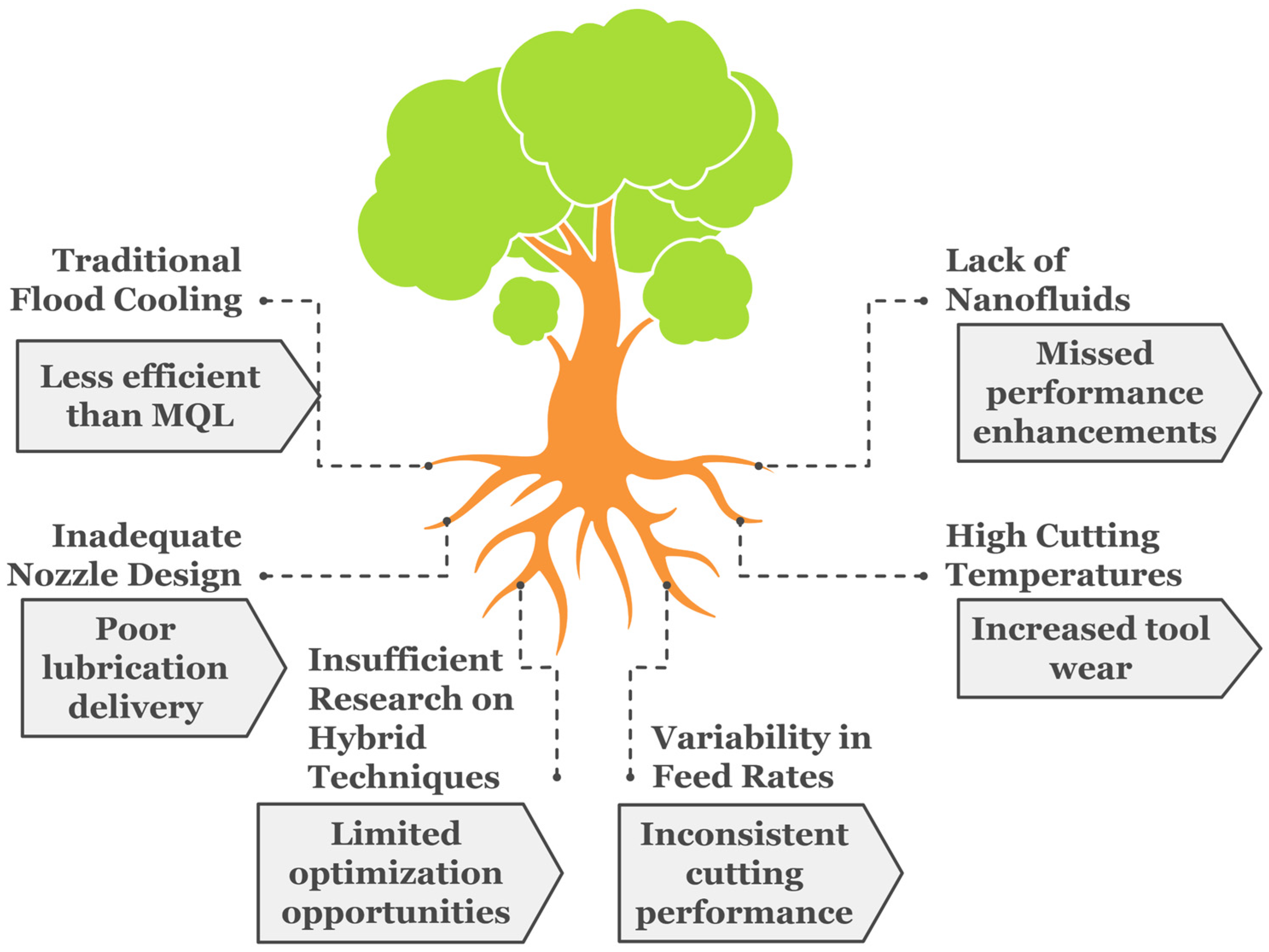
Most research has shown that reinforced aluminum-matrix composites result in higher strength and reduced plasticity [8], which required higher cutting forces and temperatures during machining [9]. Increased tool wear (TW) and reduced tool lifespan were observed as the hardness of reinforcing ceramics increased and as the adhesion between the workpiece and tool decreased [10]. Understanding these phenomena is necessary to optimize machining processes, such as face milling of Al7075 HMMCs. Kumar and Chauhan [11] milled an Al 7075 hybrid composite with 7 wt.% silicon carbide (SiC) and 3 wt.% graphite to explore the impact of cutting parameters on SR. Artificial neural networks (ANN) and response surface methodology (RSM) are mathematical models used to optimize the process for the Al 7075 hybrid composite with 3 wt.% graphite and 7 wt.% silicon carbide (SiC) produced better surface quality than 10 wt.% SiC. f was the key factor, while the graphite reinforcement enhanced machinability, and RSM was found to be the most accurate. Kannan et al. [12] explored dry and MQL machining techniques on a hybrid Al 7075 nanocomposite with 1 wt.% alumina and 0.5 wt.% hexagonal boron nitride reinforcements that can be used in aerospace and automotive applications. Varying f (0.1, 0.2, 0.3 mm/rev) significantly affected cutting performance, whereas MQL reduced TW, CF, and SR compared with dry machining, owing to improved lubrication provided by boron nitride. The cutting behavior in composite materials depends not only on bulk plasticity but also on the reinforcement’s hardness, morphology, size, distribution, volume fraction, and interfacial characteristics. Huang et al. [13] investigated the implementation of PCD tools in high-speed milling of SiCp/Al composites using varying SiC particle sizes (5, 10, 25, and 32 μm). Smaller diamond particles (5 μm) improved wear resistance, reduced flank wear, and minimized micro-chipping, resulting in lower CF and consistent SR. The TW results had a minimal impact on the SR after machining. Poor surface integrity, unpredictable chip evacuation, and significant thermal accumulation on the workpiece are observed in dry milling operations. Conversely, in flood cooling techniques, there are health concerns for the operator and the environment regarding the disposal of cutting lubricants, and elevated operating expenses are also a major concern. Hence, it is vital to understand the limitations of the various methods used to optimize the milling process, as shown in Figure 1.
Sustainable practices for aerospace alloys such as Al7075-T6 include MQL techniques rather than conventional flood cooling during machining. Incorporating MQL with nanofluids enhances SR, lowers TW, and reduces cutting temperatures compared with dry or flood cooling [14]. Nanoparticles such as TiO2, Fe2O3, ZnO, and Al2O3 incorporated into MQL fluids improved machining performance and enhanced surface integrity, reducing CF [15].
Roy et al. [16] performed MQL in machining, incorporating nanofluids, which have found applications not only in milling but also in grinding and turning. Improved surface quality, longer tool life, and more environmentally sustainable approaches were achieved by using MQL with nanofluids. Zainol and Yazid [17] investigated high-speed machining of Aluminum 7075-T6 under MQL environment. Su et al. [18] conducted Cryogenic Minimum Quantity Lubrication (CMQL) to effectively reduce temperatures during cutting and TW, especially for titanium alloys. For aluminum composites reinforced with TiB2 particles, abrasive wear primarily impacts carbide tools [9]. Sap [19] used liquid nitrogen (LN2) for cryogenic cooling to significantly reduce flank wear, SR, and cutting temperatures compared to dry and MQL methods. Hybrid cooling strategies combining LN2 and MQL also enhance tool life and surface integrity in titanium alloys [20]. According to Josyula and Narala [21], in Al-TiCp composites, LN2 cooling reduces friction and wear rates compared to dry conditions. Overall, cryogenic and hybrid cooling techniques improve machinability and surface quality in milling aluminum-based composites.
Several studies have employed the Taguchi method and RSM to optimize cutting parameters, including Vc, f, and ap [22]. Consistently, the feed rate has been identified as a dominant factor influencing SR [23]. Various papers have developed predictive models for surface roughness using techniques like RSM and multi-nonlinear regression [24]. Additionally, Kumar Ghadai et al. [25] found that the optimal cutting parameters for machining Al 1070 alloy are a speed of 255 rpm, a feed rate of 82 mm/min, and a depth of cut of 0.75 mm, as determined using multiple evaluation methods. This results in a material removal rate of 595.23 mm3/min and an average surface roughness of 13.79 µm. MCDM methods are compared, including TOPSIS [26], GRA, MOORA, WSM, WPM, WASPAS, EDAS, ARAS, and COPRAS.
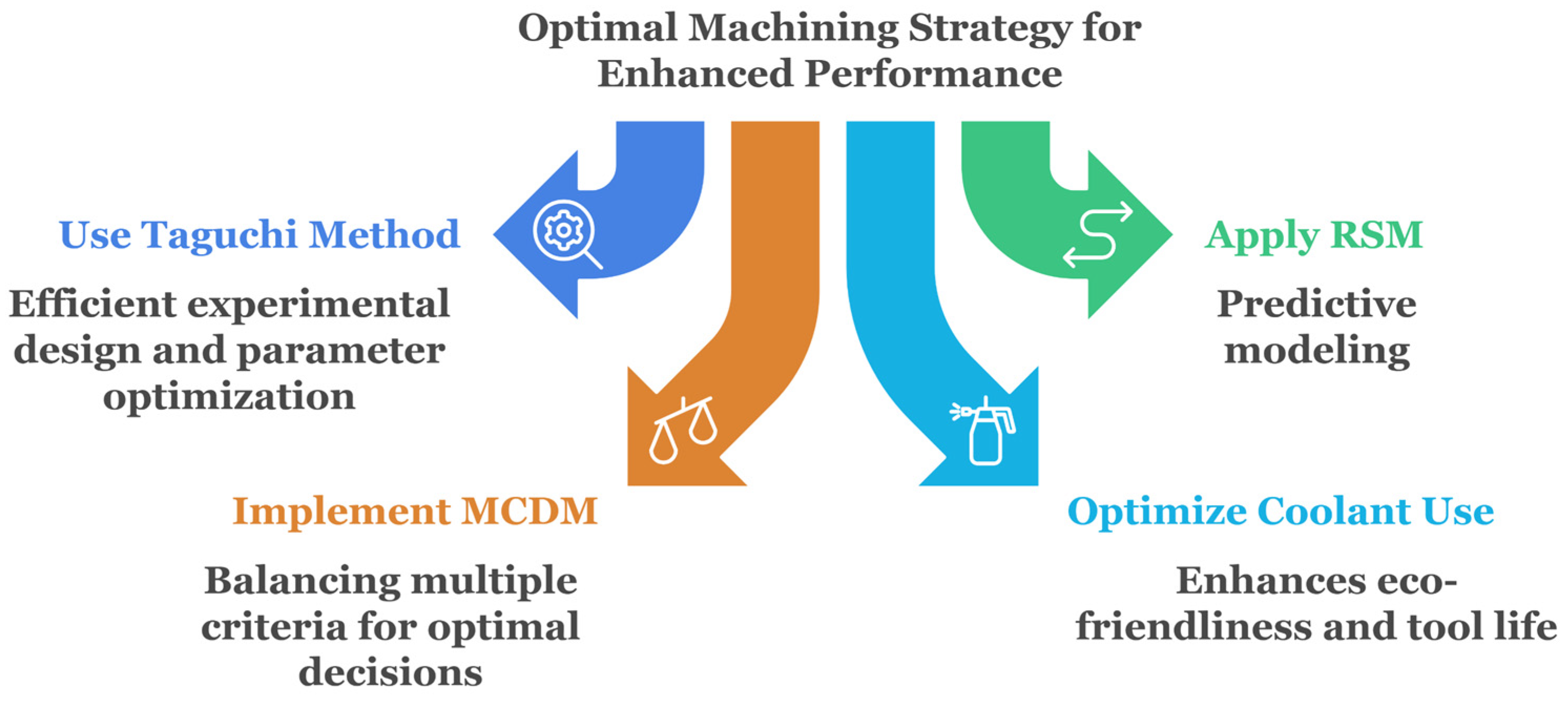
The optimal machining strategy, as determined by the Taguchi and MCDM methods, for enhanced performance is illustrated in Figure 2. The Taguchi method is often combined with these techniques to design experiments and optimize parameters [27]. Lukic et al. [28] evaluated thin-walled aluminum alloy Al7075 parts, and the output response SR was optimized using 14 MCDM methods.
Sivalingam et al. [29] carried out experiments on Inconel 718 using the atomized spray cutting fluid (ASCF) method to make the process eco-friendly. Optimization methods such as ARAS and CODAS were used to optimize the parameters used for turning Inconel 718 alloy. The study achieved reduced SR, reduced machining costs, and reduced power consumption, thereby automatically increasing tool life. The results showed that ASCF significantly improved machining performance compared with dry machining. Kalita et al. [30] employed milling experiments on 1100 aluminum alloy using Taguchi’s L8 experimental design. The effects of Vc, f, and ap on the material removal rate (MRR) and average SR were studied. Findings show that higher Vc and f improve the MRR but decrease Ra. Six MCDM techniques are employed to balance this trade-off to find optimal milling parameters. Results indicate optimal settings of 210 rpm, 40 mm/min, and 0.4 mm for MRR, and 170 rpm, 40 mm/min, and 0.4 mm for better surface quality. Kumar and Singh [31] applied TOPSIS, MOORA, and CRITIC methods to optimize green milling parameters for machining H21 steel, focusing on Vc, f, and ap. The optimal parameter settings were identified among Taguchi’s L27 orthogonal array. The results show that Vc is crucial for MRR and SR, whereas f significantly affects energy consumption. TOPSIS can optimize the cutting conditions, targeting to improve the surface quality, reduce CF, and minimize TW [32]. The f is often identified as the most influential parameter among the other parameters [33]. Gopal and Prakash [34] optimized machining parameters for milling magnesium hybrid MMC using GRA and TOPSIS. Their study identified that 5% reinforcement, a particle size of 10 µm, and specific conditions (8 mm tool diameter, 710 rpm, 20 mm/min feed, and 0.5 mm depth) minimized cutting force, cutting temperature, and SR. Another study shows that optimizing Al7075/ZrO2/Gr hybrid composites using TOPSIS and ANN enhances wear resistance and reduces friction, with a focus on friction performance rather than milling [35]. To improve face milling of aluminum alloys under MQL conditions, the Taguchi Orthogonal Array and TOPSIS are used to improve surface finish, increase material removal rate, reduce tool wear, and lower energy use [36].
Numerous studies have identified challenges in machining Al7075 hybrid metal matrix composites (HMMCs). These challenges include the complexity of selecting key milling parameters, such as cutting speed (Vc), depth of cut (ap), and feed rate (f), and the need to optimize these parameters to enhance productivity. Despite various theoretical and experimental efforts to improve the machinability and surface integrity of Al7075 HMMCs through different cooling techniques, it is essential to analyze Vc, ap, f, and cooling methods concurrently. While milling parameters, including cutting speed, feed rate, and depth of cut, have been extensively researched for aluminum-based composites, there is a lack of studies focusing specifically on Al7075 HMMCs reinforced with titanium dioxide (TiO2) and graphite under a hybrid Minimum Quantity Lubrication–carbon dioxide (MQL–CO2) cooling strategy. Additionally, limited work has compared the desirability analysis using entropy-weighted Technique for Order of Preference by Similarity to Ideal Solution (TOPSIS) and Compromise Decision Additive Solution (CODAS) with respect to energy- and carbon-related performance metrics.
This experimental investigation aims to mill Al7075 hybrid metal matrix composites (HMMCs) using Vc, ap, f, and cooling approaches, and analyze and improve the process by identifying the best parameters using the desirability method. In addition, the MCDM techniques TOPSIS and CODAS were used to identify optimal milling parameters for CF, SR, EC, and CE, thereby providing an integrated MCDM framework for selecting milling parameters for Al7075 HMMCs.

2. Materials and Methods

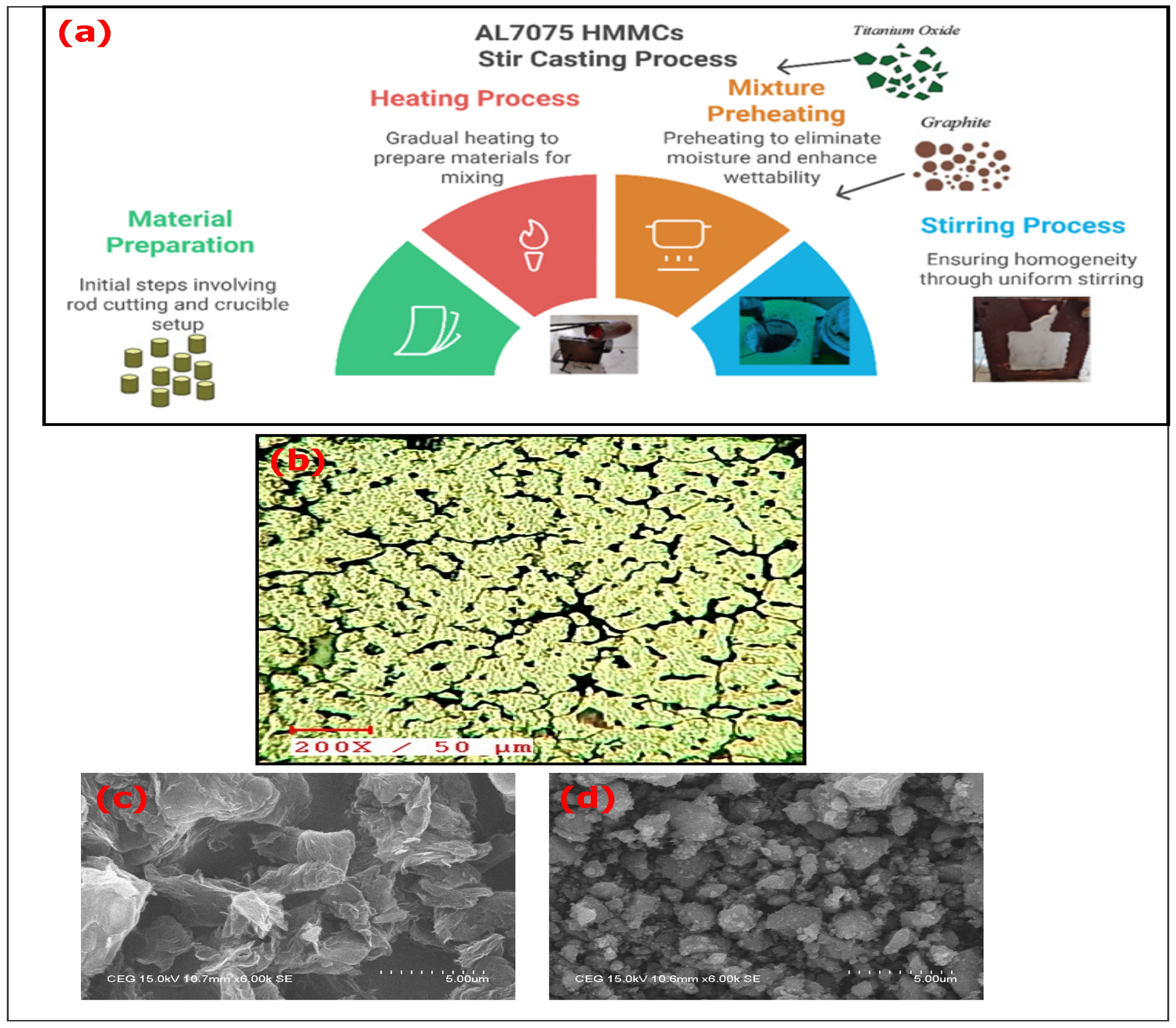
The casting procedure began with an aluminum AA7075 T6 alloy rod, 20 mm in diameter and 100 mm long. Initially, the rod was sectioned into smaller segments and subsequently introduced into a crucible. The titanium dioxide (TiO2) used had a purity of 99% and a particle size of 30 µm, while the graphite (Gr) had a purity of 99.9% and a particle size of 10 µm. A mixture of 10% TiO2 and 3% Gr was placed in a crucible and heated gradually at a controlled rate of 750 °C per unit of time. Moisture removal and enhanced wettability of the mixture were ensured before the main heating phase by preheating it at approximately 450 °C. To ensure adequate mixing and homogeneity, uniform stirring was performed at 500 rpm for 10 min. The weight percentage composition of this alloy reveals that its major components are Al balance (~84%), Mg 2.1%, TiO2 10%, Gr 3%, Si ≤ 0.4%, Mn ≤ 0.3%. The schematic representation of the stir-casting process and the microstructure of Al7075 HMMCs are depicted in Figure 3a–d.
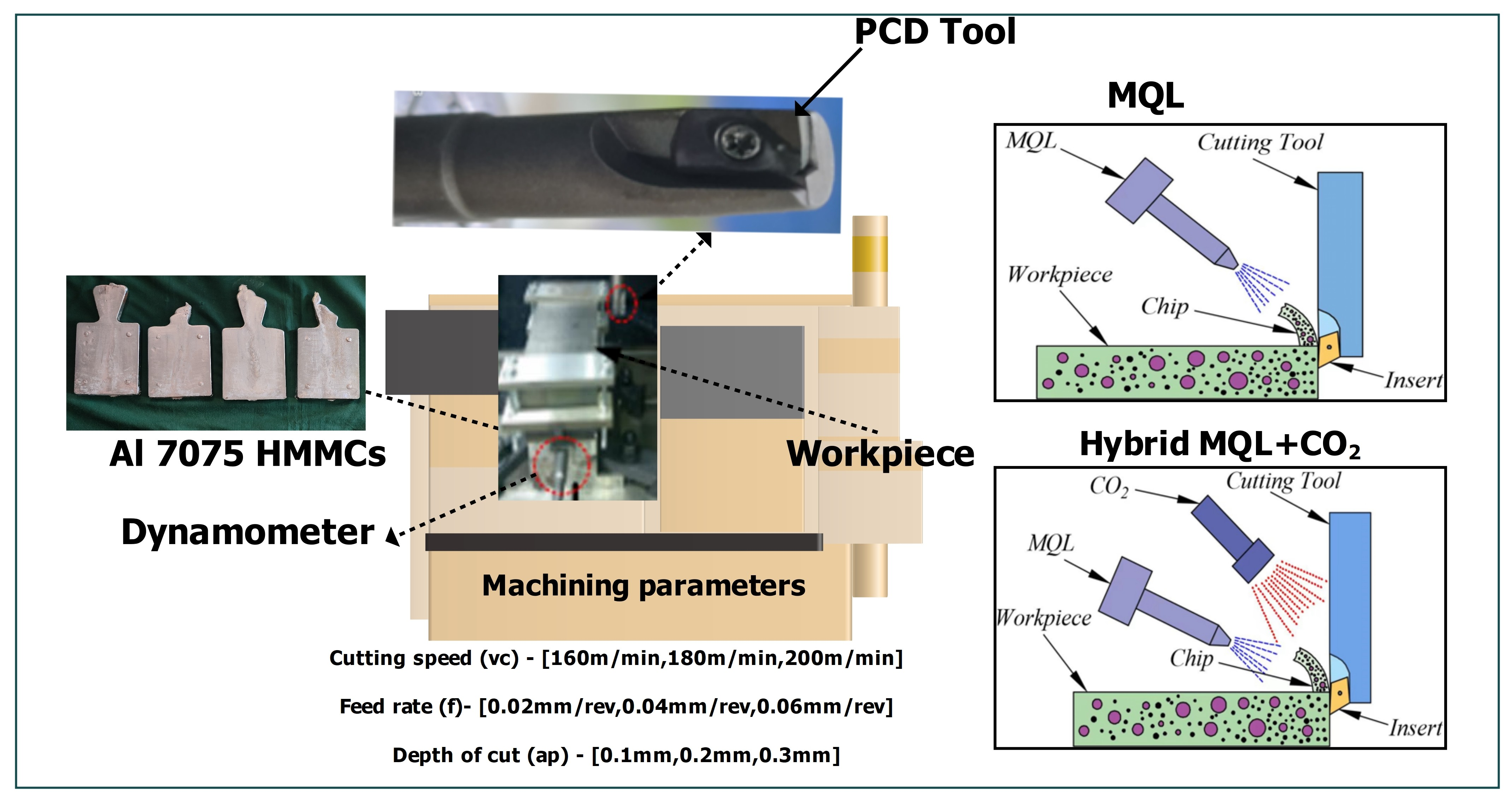
The material employed in this investigation was Al7075 hybrid metal matrix composites (HMMCs), characterized by dimensions of 150 × 100 × 10 mm3. Experimental trials were conducted on the YCM EV20 Machine (Yeong Chin Machinery Industries Co., Ltd., Zhangpu, China), which has a power rating of 20 kVA and can reach spindle speeds of up to 10,000 rpm. In the milling process, parallelogram-shaped cutters brazed with PCD inserts (APMT 1135 PDTR, PCD tool) (Zhuzhou Yifeng Tools Co., Ltd, Zhuzhou, China) were securely mounted in a BAP-07H tool holder to facilitate milling operations. A comprehensive literature review and industrial standards informed the selection of process parameters, including cutting speed (Vc), feed rate (f), depth of cut (ap), and cooling conditions, given their substantial influence on surface characteristics. Table 1 presents the experimental cutting parameters used for milling Al7075 HMMCs.
To enhance machining efficiency, MQL was implemented, delivering a finely atomized mist of vegetable oil (VO) mixed with air. The MQL setup included an oil reservoir that fed into a mixing chamber, where a flow control valve regulated the oil discharge. An air compressor delivered mist to the cutting area through the mixing chamber under controlled air pressure. Jet, featuring an exit diameter of 2 mm, was optimally located to maximize wettability at the shear zone, as illustrated in Figure 4. The cutting forces are measured utilizing a three-component piezoelectric Kistler dynamometer (model 9257B) (Kistler Innovative Technology China Ltd., Shanghai, China). The data collected from this measurement were subsequently processed using the Anzheng CRAS system. Surface roughness (Ra) was measured using a portable Taylor Hobson Surtronic S-128 (Duzhi Instruments (Shanghai) Co., Ltd., Shanghai, China) roughness tester with a cutoff length (λc) of 0.8 mm, evaluation length of 4.0 mm, and three measurements per sample taken at different locations perpendicular to the feed direction. The average value was reported. The instrument was calibrated before each measurement session in accordance with ISO 21920 [37]. In each experiment, a 150 mm cutting length was machined, and the cutting force, energy consumption, and carbon emissions were recorded.
Vegetable oil was supplied at a flow rate of 60 mL/h, and air mist at 4 bar. Furthermore, adopting cryogenic fluids in cutting operations presents substantial, sustainable advantages, including social, economic, and environmental. Specifically, cryogenic CO2 effectively absorbs and dissipates heat during the milling without leaving harmful residues. Table 2 presents the DOE and the experimental values used for the study. A = cutting speed (Vc), B = feed rate (f), C = depth of cut (ap), and D = cooling condition (1 = MQL, 2 = hybrid MQL–CO2).

3. Optimization and MCDM Techniques

3.1. Subsection

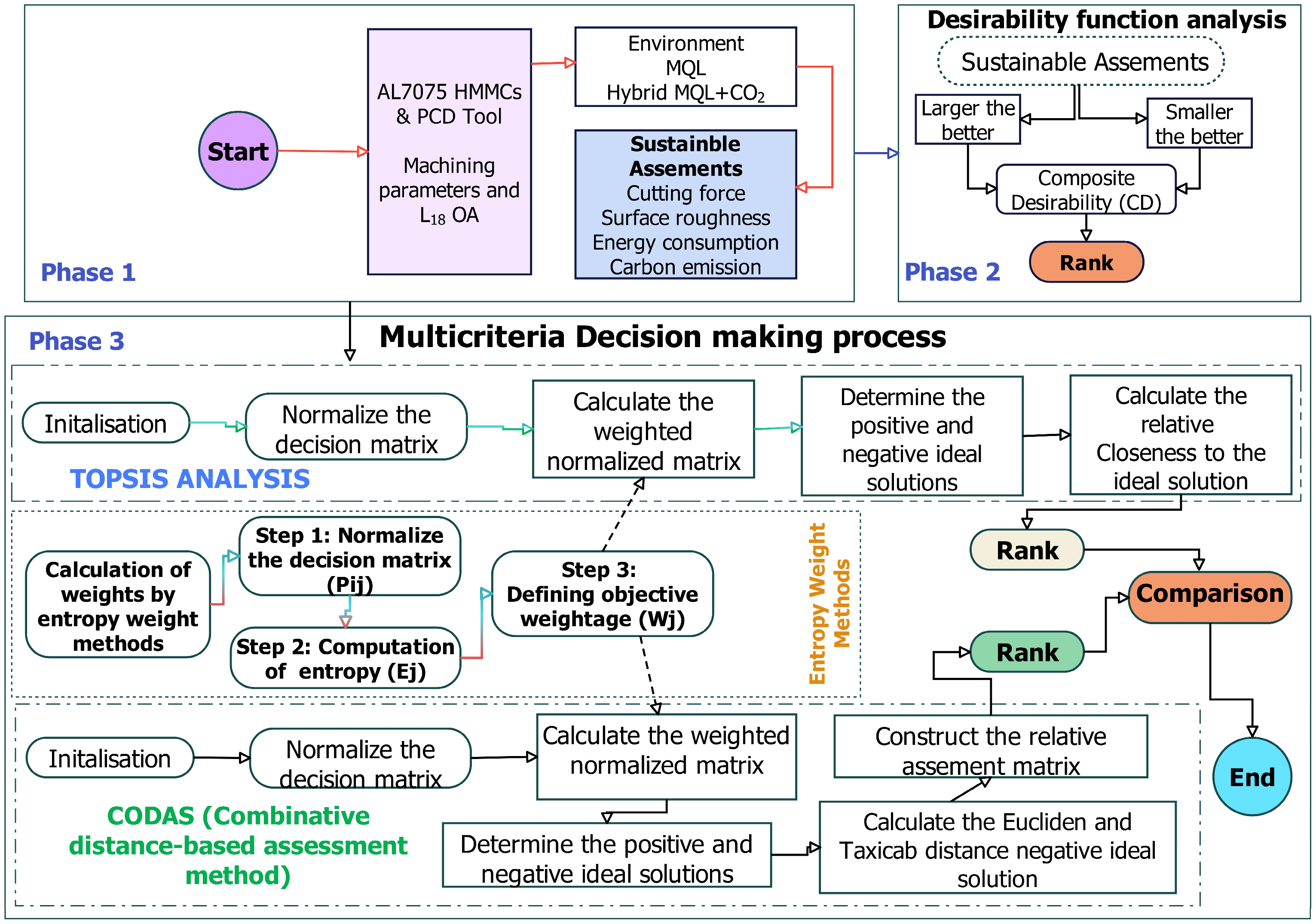
The desirability function analysis method combines several functions, each ranging from 0 to 1, to establish a standardized range. It converts each single-valued response, yi, into a unitless function score ranging from 0 to 1. Figure 5 shows the schematic flow chart of the desirability function analysis method.
(i) Smaller is better: In this case, the “yi” value should attain a very low value to be its most desirable value, corresponding to a desirability of 1. If yi exceeds the minimum acceptable value, the desirability (Di) drops to 0, meaning it is undesirable. The values of di, within the range 0 to 1, are defined by Equation (1).
D i = { 1 0 y i y m i n y max y min a , y m i n y i < y m i n y i y m i n y i > y m i n , a 0
(ii) Larger is better: Here, the aim is for yi to be greater than the most desirable value, again associated with a desirability of 1. If yi falls below the minimum acceptable value, the desirability becomes 0, indicating it is undesirable. The desirability values for this case are shown in Equation (2).
D i = { 1 0 y i y max y min y max b , y m i n y i < y m i n y i y m i n y i > y m i n , a 0
The overall desirability, composite desirability (CDi), is calculated using Equation (3). This calculation involves individual desirability indices d1, d2, d3, and so forth, each weighted by corresponding factors w1, w2, w3, etc.
C D i = D 1 w 1 × D 2 w 2 × D 3 w 3 × 1 k

3.2. Entropy Method (Shannon Entropy Method)

The Shannon entropy method is presented step by step below to determine the weightage of the decision criteria after the initial decision matrix is formulated.
Step 1: Normalization of the decision matrix based on the project outcome (POij).
P O i j = x i j i = 1 m x i j
Step 2: Computation of the entropy measure within the outcome
E M j = u i = 1 m P O i j × ln P O i j u = 1 ln ( m )
Step 3: Assessment of weights built on the concept of entropy
E W j = 1 E M j j = 1 n 1 E M j

3.3. TOPSIS

TOPSIS is a robust MCDM method that ranks alternatives based on their numerical distance from the positive and negative ideal solutions.
Step 1: Develop the initial decision matrix.
I D M = a i j n m = a 11 a 12 a 1 m a 21 a 21 a 1 m a n 1 a n 2 a n m
Step 2: Decision matrix—Normalization.
N D M i j = a i j j = 1 m a i j 2
Step 3: Apply weights to normalize the decision matrix.
W r i j = E W j × N D M i j
Step 4: Identify the positive and negative ideal solution points (′ and ″).
P + = W r i j + 1 , ................ W r n + n = max W r i j i I , min W r i j i I P = W r i j 1 , ................ W r n n = max W r i j i I , min W r i j i I
Step 5: Estimation of positive and negative absolute solutions.
D j + = i = 1 n W r i j W r i j + 2 , D j = i = 1 n W r i j W r i j 2
Step 6: Evaluation of the comparative closeness coefficient of all alternatives to the absolute solution.
P i * = D j D j + + D j
Step 7: Rank all the comparative closeness coefficients in descending order and select the highest as the optimal solution.

3.4. CODAS

The CODAS (Combinative Distance-based Assessment) methodology evaluates the desirability of alternatives by measuring their Euclidean distance to a designated negative ideal solution.
Stage 1: The initial decision matrix is established by
I D M = a i j n m = a 11 a 12 a 1 m a 21 a 21 a 1 m a n 1 a n 2 a n m
Stage 2: Normalization of the obtained decision matrix
N D M i j = a i j max a i j i f j B e n e f i c i a l min a i j a i j i f j N o n - B e n e f i c i a l
Stage 3: Apply weights to normalize the decision matrix
W r i j = E W j × N D M i j
Stage 4: Identification of the negative absolute solution points
n i s = n i s j 1 × m , n i s j = min i W r i j
Stage 5: Computation of the Taxicab and Euclidean distances of substitutes from the -ve absolute solution
E U i = j = 1 m W r i j n i s j 2 , T A i = j = 1 m W r i j n i s j
Stage 6: Assemble the obtained comparative assessment matrix
R m = h i k m n , h i k = E U i E k + ψ E U i E k × T A i T A k A s s u m e , ψ = 0.02
Stage 7: Calculation of the rank with the assessment score
A S i = k = 1 n h i k

3.5. Energy Consumption and Carbon Emission

Analyzing energy consumption in manufacturing equipment is important for understanding how efficiently electrical energy is used for tasks. In the machining industry, this analysis mainly depends on cutting conditions and machining time. EC (kJ) = cutting force × cutting velocity × machining time. CE [kg CO2] = EC × EF, where EF = [0.4228 kg CO2/kWh for the relevant electricity grid]
E C m i l l i n g = F c N × V c m min × T m t min 1000
CE [kg CO2] = EC × EF

4. Results and Discussion

This section explains the characteristics of individual desirability values that align with the chosen criteria, specifically those that minimize CF, SR, EC, and CE. The individual desirability values, specifically DCF, DSR, DEC, and DCE, are defined as individual desirability values for cutting force, surface roughness, energy consumption, and carbon emissions, respectively, and are derived using Equations (1) and (2). Subsequently, the composite desirability index (CDi) is calculated using Equation (3). As detailed in Table 3, each parameter is assigned an equal weight of 0.25. The highest CDi value attained is 0.967, corresponding to individual desirability values of 1 for DCF and DSR, and to desirability values of 0.967 for DEC and DCE.
D C F = { 1 0 y i 149 98 149 r , 98 y i < 98 y i 149 y i > 149 , s 0
D S R = { 1 0 y i 0.69 0.43 0.69 r , 0.43 y i < 0.43 y i 0.69 y i > 0.69 , s 0
D E C = { 1 0 y i 12.58 3.59 12.58 r , 3.59 y i < 3.59 y i 12.58 y i > 3.59 , s 0
D C E = { 1 0 y i 5.32 1.51 5.32 r , 1.51 y i < 1.51 y i 5.32 y i > 5.32 , s 0
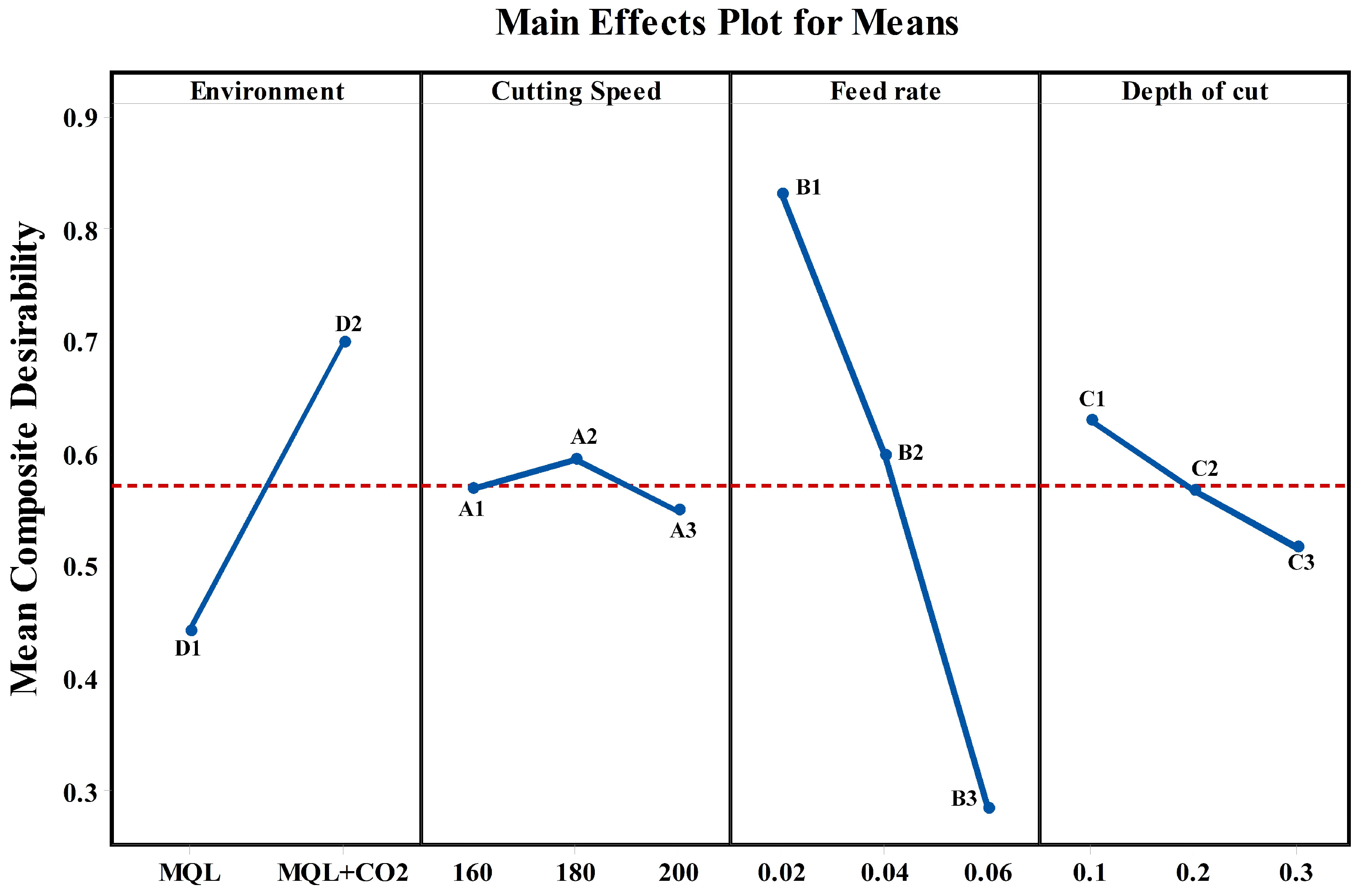
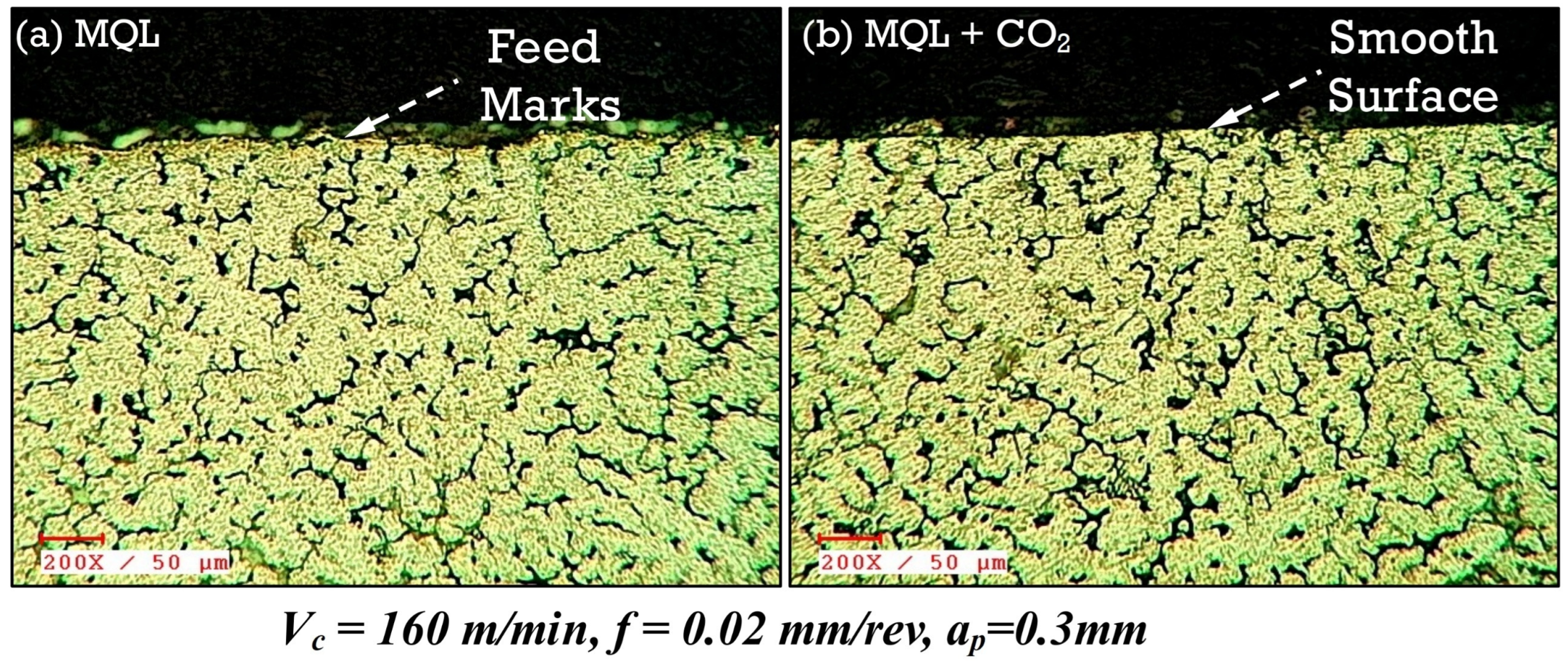
Figure 6 illustrates the mean composite desirability factor. The highest desirability was achieved with a Vc of 200 m/min, an f of 0.02 mm/rev, an ap of 0.3 mm, and a hybrid MQL + CO2 environment. These optimal conditions, labeled as A3B1C3D2, were further tested in a confirmation experiment. In the 16th experiment, the initial test settings (A3B1C3D2) had a slightly different depth of cut (0.3 mm), resulting in a desirability value of 0.967. By optimizing these factors through desirability analysis, we improved the settings to A2B1C2D2. Microstructure and cross-section of the machined surface under optimal machining conditions of CDi are shown in Figure 7. The reduction in the cutting force (CF) from 98 to 92 N, the SR from 0.43 to 0.4 μm, EC from 4.1 to 3.8, and the CE from 1.76 to 1.62. These changes led to improvements of 6%, 7%, 7%, and 8% in CF, SR, EC, and CE, respectively, as indicated in Table 4.
The desirability method used equal weights to ensure a neutral, unbiased compromise among the four responses. In contrast, TOPSIS and CODAS employed entropy-based weights to capture the relative information content of the response data. These varying weighting philosophies are anticipated to yield distinct optimal settings. In the initial phase of the analysis, we calculate the individual weight for each response variable using the entropy method, as described in Equations (4)–(6). The entropy-derived weights reveal a significant imbalance, with EC (0.454) and CE (0.493) dominating the decision-making framework while CF (0.023) and SR (0.028) contribute minimally. This distribution reflects the fundamental principle of entropy weighting: criteria with greater variability among alternatives carry more information and thus receive greater weight. In our L18 experimental design, energy consumption ranged from 3.59 to 12.58 kJ and carbon emissions from 1.515 to 5.32 kg-CO2, driven primarily by the effects of depth of cut and feed rate on machining time. In contrast, cutting force varied from 98 to 149 N and surface roughness from 0.43 to 0.69 μm, exhibiting much narrower ranges.
This entropy weight distribution has important implications: (1) It emphasizes that from a pure information-theoretic standpoint, the experimental design captured greater discrimination power in energy/carbon metrics than in force/roughness metrics. (2) It explains why TOPSIS and CODAS rankings differ substantially from equal-weighted desirability rankings. (3) For practitioners prioritizing surface quality and tool life (CF/SR), equal weighting (desirability approach) may be more appropriate. For sustainability-focused optimization (EC/CE), entropy-weighted MCDM provides physically meaningful rankings. (4) The strong correlation between EC and CE also contributes to their combined dominance, as both capture similar information about machining time and power consumption. Similar entropy weight patterns have been noted in previous MCDM studies of machining processes, in which energy and cost metrics exhibit wider ranges than force and roughness metrics. Upon reviewing the experimental results, particularly those detailed in Table 5, it is clear that experiment no. 10 has the highest relative closeness value, at 0.995. This value indicates that the experiment aligns most closely with the optimal solution, emphasizing its prominence as the most effective alternative among the evaluated options. Determining these weights and conducting subsequent analysis are critical for ensuring accurate and reliable decision-making, as they systematically quantify and evaluate the comparative importance and performance of all criteria within the given methodological framework.
The CODAS approach assesses the performance of each alternative by analyzing both taxicab and Euclidean distances, prioritizing the taxicab distance when the two are closely aligned. Performance values, normalized and weighted, are calculated for each criterion using various established Equations (13)–(15). The negative ideal solution is determined through specific calculations in Equation (16), while both taxicab and Euclidean distances from this solution are derived accordingly in Equation (17). The process concludes with the creation of a relative assessment matrix (Equation (18)), followed by the scoring of alternatives (Equation (19)), with the results presented in Table 6. In particular, experiment number 10 stands out with the maximum comparative assessment matrix (H) value of 5.935, thereby classifying it as the optimal process parameter within the CODAS framework. This experiment is also recognized as the superior parameter setting across various MCDM techniques, characterized by a hybrid operational environment with Vc = 160 m/min, f = 0.02 mm/rev, and ap = 0.3 mm. The associated performance metrics for cutting force, SR, energy consumption, and cutting efficiency are quantified at 116, 0.486, 3.59, and 1.515, respectively.
The differences in optimal parameter configurations between the desirability index and MCDM approaches arise from the intricate mathematical formulations involved, including entropy weighting, utility degrees, and relative assessment matrices. In the context of MCDM techniques, notable parameter adjustments include a Vc of 200 m/min and an ap set to 0.2 mm, while other measures, such as the hybrid environment and an f of 0.02 mm/rev, remain consistently controlled. The dry environment parameter configuration (A1B2C2D1) results in CF, SR, EC, and CE measurements of 122, 0.51, 4.1, and 2.2, respectively. Table 5 and Table 6 present the relative closeness values and assessment metrics for the Al7075 HMMCs, analyzed using both TOPSIS and CODAS. The data suggest that the experimental condition labeled as the 10th is optimal for both methods, owing to its configuration of high Vc, minimal f, and reduced ap in the hybrid environment. The TOPSIS and CODAS methods reflect the highest utility degree and relative assessment scores of 0.991 and 5.935, respectively. Moreover, Table 5 and Table 6 reveal that the conditions yielding the lowest performance for TOPSIS and CODAS were the 6th condition and another unspecified condition, with the CODAS and ARS methodologies. The lowest relative assessment values and utility were −2.233 and 0.066, respectively.
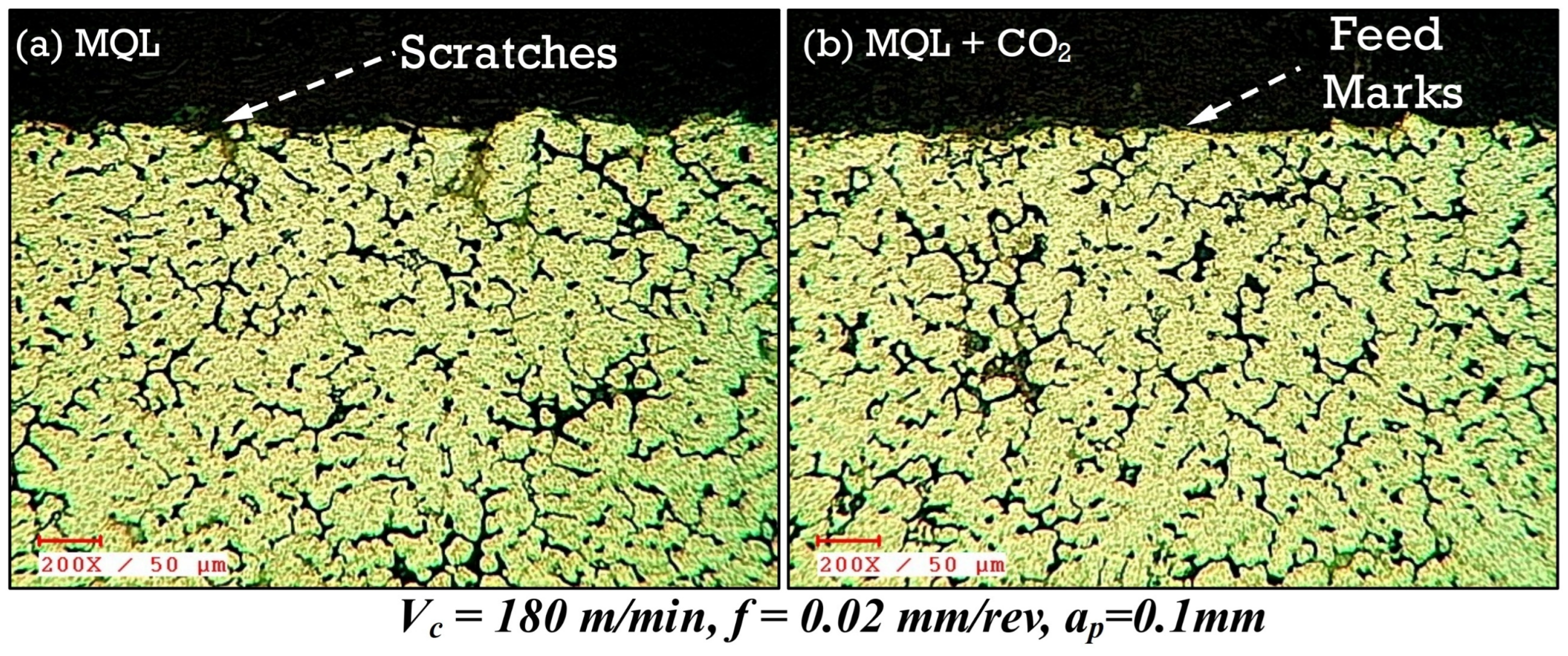
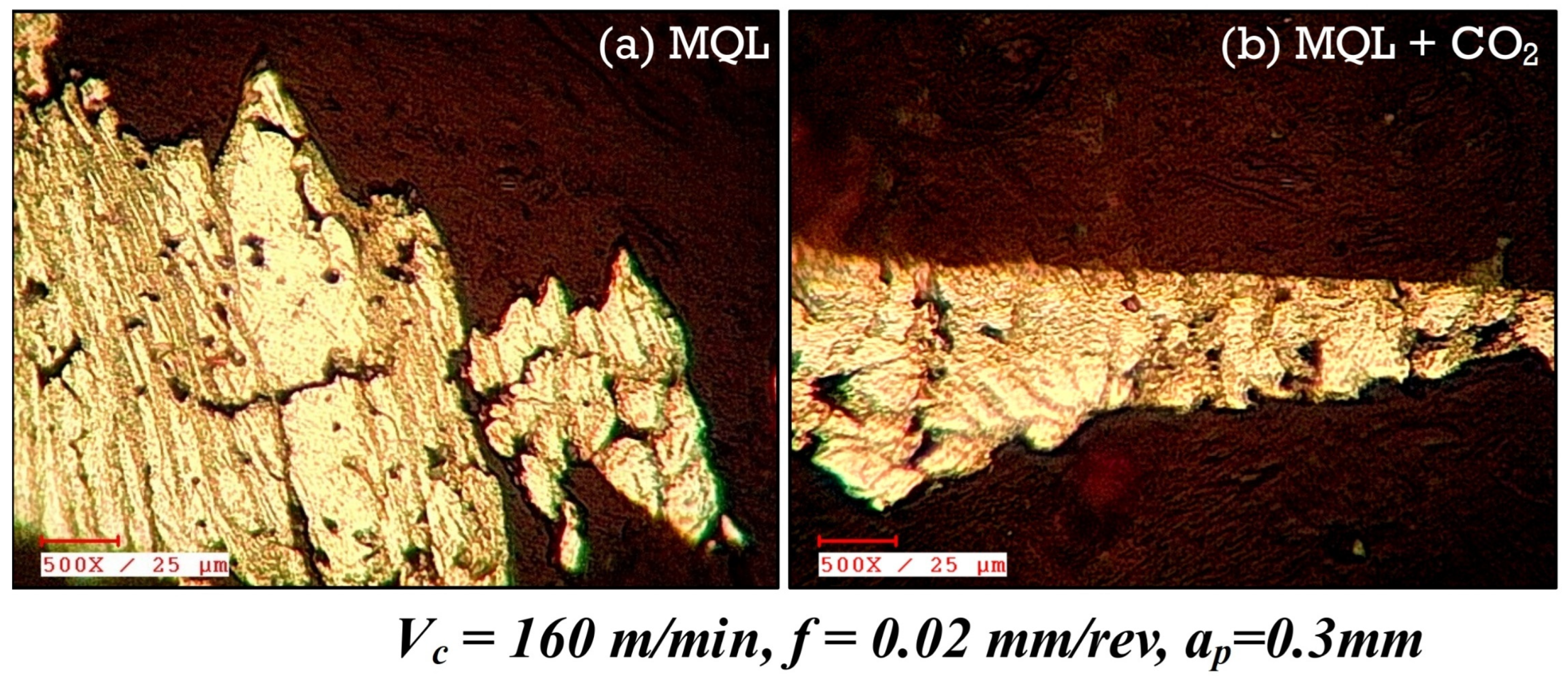
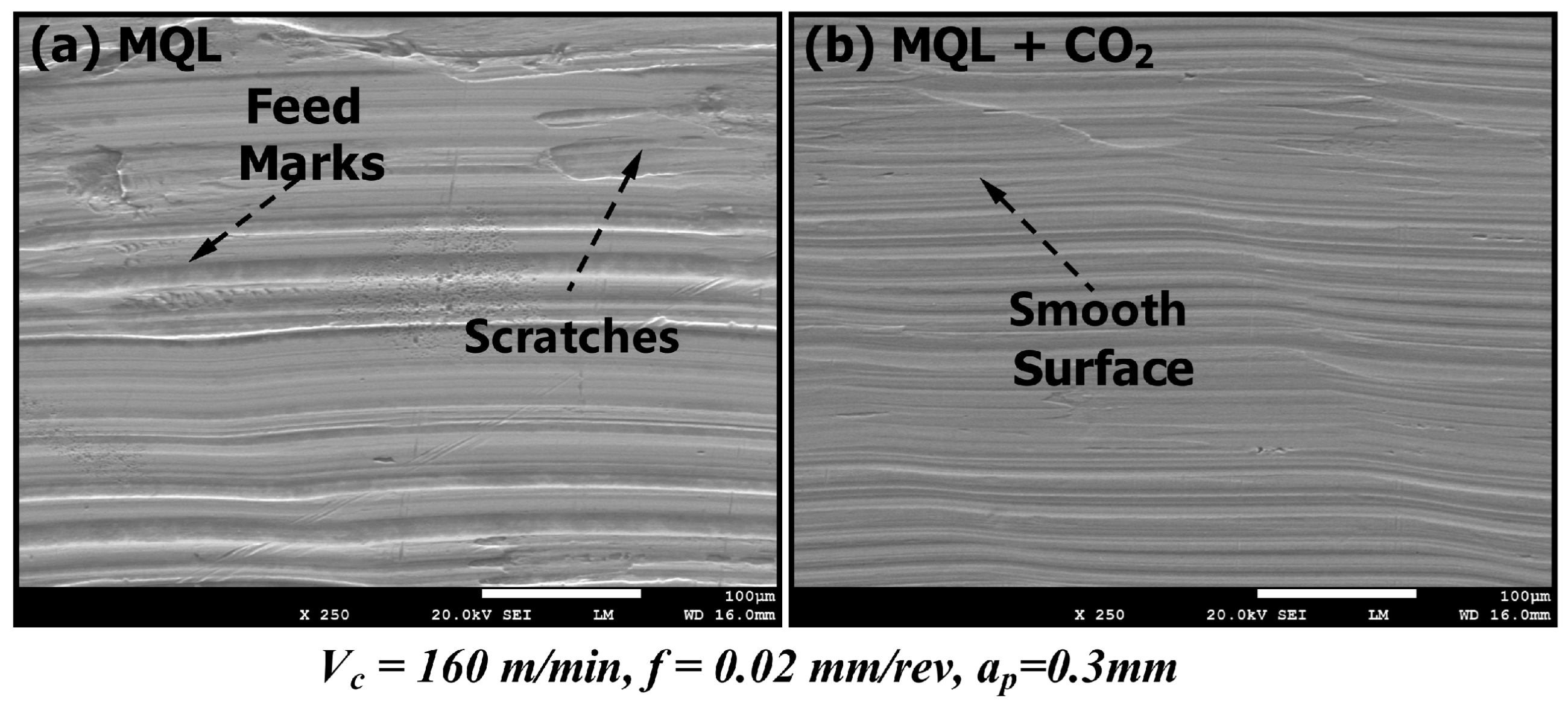
In milling operations using vegetable oil under MQL, the oil molecules form a lubricating layer that significantly reduces friction, thereby enhancing surface quality and minimizing feed marks. Meanwhile, the integration of cryogenic CO2 reduces burn marks and moderate feed marks through its effective cooling capabilities. When MQL is employed with cryogenic CO2, superior surface finishes are achieved due to the synergistic effects of cooling and lubrication, supported by CO2 and vegetable oil. Microstructural analyses of the chips generated in MQL and MQL + CO2 environments at a cutting Vc of 160 m/min and a f of 0.02 mm/rev demonstrate a pronounced decline in uneven surface formation, as shown in Figure 8. Specifically, under an MQL environment, the presence of vegetable oil forms a carbon chain film at the chip-tool interface, significantly reducing friction and producing chips with fewer scratches and minor serrations. Figure 9 shows that the MQL machine produces fewer feed marks and a scratch surface compared to the MQL + CO2 machining. Conversely, cutting with cryogenic cooling effectively dissipates heat and helps avoid burn marks. Using CO2 alone as the lubricant results in moderate scratching and better roughness than with MQL. Overall, the combined implementation of CO2 and MQL yields exemplary lubrication and cooling characteristics, with better chip and smoother surfaces, as shown in Figure 10.

5. Conclusions

This study provides a comprehensive analysis of Minimum Quantity Lubrication (MQL) and hybrid MQL techniques combined with CO2 lubrication, specifically applied to the machining of aluminum 7075 hybrid metal matrix composites (HMMCs). Composite desirability function analysis, TOPSIS, and CODAS methods were used to optimize machining processes and enhance their effectiveness.
  • The desirability approach indicates that Experiment 16 provides the optimal process parameters. The ideal conditions identified are a cutting speed (Vc) of 200 m/min, a feed rate (f) of 0.02 mm/rev, and a depth of cut (ap) of 0.3 mm, with the process carried out in a hybrid MQL and CO2 environment. These conditions result in improvements of 6% in cutting force (CF), 7% in surface roughness (SR), 7% in energy consumption (EC), and 8% in cutting efficiency (CE).
  • TOPSIS and CODAS MCDM results concluded that experiment 10th provides the best operating parameters for machining of Al7075 HMMCs, proving that these methods can provide a strong framework for evaluating and ranking machining alternatives, including the reliability and consistency of the MCDM.
  • This investigation also proved that discrepancies between the desirability index and MCDM approaches, but also acts as a suggestion for the necessity to integrate various decision-making tools for a better understanding of machines and their optimal machining conditions for focused results.
  • Combination of MQL and cryogenic CO2 cooling for machining Al7075 HMMCs not only significantly improved the surface finish but also reduced the friction successfully, minimizing the scratch formation and diminishing the burn marks.
  • Energy consumption studies and carbon emissions revealed that this approach can be adopted to attain sustainability for machining Al7075 HMMCs by the use of eco-friendly lubrication, and hybrid approaches for cooling can act as an alternative to traditional methods.
Future work should address the following points: (i) the limited parameter ranges tested; (ii) the specific tool and material system used; (iii) the lack of comprehensive life-cycle carbon accounting; (iv) the absence of replicated measurements for statistical validation; and (v) the necessity for broader validation across various composite systems.

Author Contributions

J.Y.: Conceptualization; Formal analysis; Resources; Writing—original draft preparation. Q.M.: Methodology; Writing—review and editing; Supervision. Y.Z.: Investigation; Data curation; Conceptualization. V.S.: Methodology, Writing—review and editing, Visualization. All authors have read and agreed to the published version of the manuscript.

Funding

This research received no external funding.

Data Availability Statement

The original contributions presented in this study are included in the article. Further inquiries can be directed to the corresponding author.

Conflicts of Interest

Author Jie Yang was employed by the Dongying Municipal Bureau of Industry and Information Technology. Author Youlei Zhao was employed by the Shandong IoT Association. The remaining authors declare that the research was conducted in the absence of any commercial or financial relationships that could be construed as a potential conflict of interest.

Abbreviations

The following abbreviations are used in this manuscript:
HMMCsHybrid Metal Matrix Composites
MMCsMetal Matrix Composites
PCDPolycrystalline Diamond
SRSurface Roughness
CFCutting Force
DCFIndividual Desirability for Cutting Force
DSRIndividual Desirability for Surface Roughness
DECIndividual Desirability for Energy Consumption
DCEIndividual Desirability for Carbon Emissions
ECEnergy Consumption
EFEmission Factor
CECarbon Emissions
TWTool Wear
RaArithmetic Average Surface Roughness
MRRMaterial Removal Rate
MQLMinimum Quantity Lubrication
CMQLCryogenic Minimum Quantity Lubrication
LN2Liquid Nitrogen
VOVegetable Oil
ASCFAtomized Spray Cutting Fluid
VcCutting Speed
fFeed Rate
apDepth of Cut
Al7075Aluminum Alloy 7075
TiO2Titanium Dioxide
GrGraphite
SiCSilicon Carbide
Al2O3Alumina/Aluminum Oxide
ZrSiO4Zirconium Silicate
TiB2Titanium Diboride
MCDMMulti-Criteria Decision-Making
TOPSISTechnique for Order of Preference by Similarity to Ideal Solution
CODASCombinative Distance-based Assessment
PM Powder Metallurgy
ARASAdditive Ratio Assessment
MOORAMulti-Objective Optimization by Ratio Analysis
WSMWeighted Sum Model
WPM Weighted Product Model
WASPASWeighted Aggregated Sum Product Assessment
EDASEvaluation based on Distance from Average Solution
COPRASComplex Proportional Assessment
CRITICCriteria Importance Through Intercriteria Correlation
ISO International Organization for Standardization
RSMResponse Surface Methodology
ANNArtificial Neural Networks
GRAGray Relational Analysis
DOEDesign of Experiments
OAOrthogonal Array
CDiComposite Desirability Index

References

  1. Govindaraju, H.K.; Kiran, M.D.; Yadhav, B.R.L. Wear behavior of aluminum metal matrix composites: A Taguchi approach. In ADVANCES in MECHANICAL DESIGN, MATERIALS and MANUFACTURE: Proceeding of the Second International Conference On Design, Materials and Manufacture (ICDEM 2019); AIP Publishing: Melville, NY, USA, 2020; Volume 2247, p. 40005. [Google Scholar] [CrossRef]
  2. Reddy, V.V.; Mandava, R.K.; Kumar, D.; Pachore, V.; Kumar, V.; Rama Koteswara Rao, V. Optimization of wear and frictional parameters using IWO and PSO algorithms. IOP Conf. Ser. Mater. Sci. Eng. 2021, 1136, 12075. [Google Scholar] [CrossRef]
  3. Abdizadeh, H.; Ashuri, M.; Moghadam, P.T.; Nouribahadory, A.; Baharvandi, H.R. Improvement in physical and mechanical properties of aluminum/zircon composites fabricated by powder metallurgy method. Mater. Des. 2011, 32, 4417–4423. [Google Scholar] [CrossRef]
  4. Kumar, R.; Dhiman, S. A study of sliding wear behaviors of Al-7075 alloy and Al-7075 hybrid composite by response surface methodology analysis. Mater. Des. 2013, 50, 351–359. [Google Scholar] [CrossRef]
  5. Subramanian, S.; Meiyanathan, M.; Ravichandran, M.; Sethusundaram, P. Tribological Behavior of AA7050-ZrSiO4 Composites Synthesized by Stir Casting Technique. Mech. Mech. Eng. 2019, 23, 198–201. [Google Scholar] [CrossRef]
  6. Ranjan, A.; Nagdeve, L.; Kumar, H.; Mishra, A. Tribological Performance of Aluminium Metal Matrix Hybrid Composites. MAPAN 2022, 37, 845–858. [Google Scholar] [CrossRef]
  7. Deaquino-Lara, R.; Estrada-Guel, I.; Hinojosa-Ruiz, G.; Flores-Campos, R.; Herrera-Ramírez, J.M.; Martínez-Sánchez, R. Synthesis of aluminum alloy 7075-graphite composites by milling processes and hot extrusion. J. Alloys Compd. 2011, 509, S284–S289. [Google Scholar] [CrossRef]
  8. Liao, Z.; Abdelhafeez, A.; Li, H.; Yang, Y.; Diaz, O.G.; Axinte, D. State-of-the-art of surface integrity in machining of metal matrix composites. Int. J. Mach. Tool. Manu. 2019, 143, 63–91. [Google Scholar] [CrossRef]
  9. Chen, J.; Yu, W.; Zuo, Z.; Li, Y.; Chen, D.; An, Q.; Geng, J.; Chen, M.; Wang, H. Effects of in-situ TiB2 particles on machinability and surface integrity in milling of TiB2/2024 and TiB2/7075 Al composites. Chin. J. Aeronaut. 2021, 34, 110–124. [Google Scholar] [CrossRef]
  10. Hakami, F.; Pramanik, A.; Basak, A.K. Tool wear and surface quality of metal matrix composites due to machining: A review. Proc. Inst. Mech. Eng. Part B J. Eng. Manuf. 2016, 231, 739–752. [Google Scholar] [CrossRef]
  11. Kumar, R.; Chauhan, S. Study on surface roughness measurement for turning of Al 7075/10/SiCp and Al 7075 hybrid composites by using response surface methodology (RSM) and artificial neural networking (ANN). Measurement 2015, 65, 166–180. [Google Scholar] [CrossRef]
  12. Kannan, C.; Ramanujam, R.; Balan, A.S.S. Machinability studies on Al 7075/BN/Al2O3 squeeze cast hybrid nanocomposite under different machining environments. Mater. Manuf. Process. 2017, 33, 587–595. [Google Scholar] [CrossRef]
  13. Huang, S.; Guo, L.; He, H.; Xu, L. Study on characteristics of SiCp/Al composites during high-speed milling with different particle size of PCD tools. Int. J. Adv. Manuf. Technol. 2018, 95, 2269–2279. [Google Scholar] [CrossRef]
  14. Kulkarni, H.B.; Nadakatti, M.M.; Kulkarni, S.C.; Kulkarni, R.M. Investigations on effect of nanofluid based minimum quantity lubrication technique for surface milling of Al7075-T6 aerospace alloy. Mater. Today Proc. 2020, 27, 251–256. [Google Scholar] [CrossRef]
  15. Saminathan, V. Effect of tri-hybridized metallic nano cutting fluids in end milling of AA7075 in minimum quantity lubrication environment. Proc. Inst. Mech. Eng. Part E J. Process Mech. Eng. 2021, 235, 1458–1468. [Google Scholar] [CrossRef]
  16. Roy, S.; Kumar, R.; Kumar Sahoo, A.; Kumar Das, R. A Brief Review on Effects of Conventional and Nano Particle Based Machining Fluid on Machining Performance of Minimum Quantity Lubrication Machining. Mater. Today Proc. 2019, 18, 5421–5431. [Google Scholar] [CrossRef]
  17. Zainol, A.; Yazid, M. Review of Development Towards Minimum Quantity Lubrication and High-Speed Machining of Aluminum 7075-T6. J. Adv. Manuf. Technol. 2018, 12, 129–142. [Google Scholar]
  18. Su, Y.; He, N.; Li, L. Effect of Cryogenic Minimum Quantity Lubrication (CMQL) on Cutting Temperature and Tool Wear in High-Speed End Milling of Titanium Alloys. Appl. Mech. Mater. 2010, 34–35, 1816–1821. [Google Scholar] [CrossRef]
  19. Şap, S. Understanding the Machinability and Energy Consumption of Al-Based Hybrid Composites under Sustainable Conditions. Lubricants 2023, 11, 111. [Google Scholar] [CrossRef]
  20. Gupta, M.K.; Niesłony, P.; Sarikaya, M.; Korkmaz, M.E.; Kuntoğlu, M.; Królczyk, G.M.; Jamil, M. Tool wear patterns and their promoting mechanisms in hybrid cooling assisted machining of titanium Ti-3Al-2.5V/grade 9 alloy. Tribol. Int. 2022, 174, 107773. [Google Scholar] [CrossRef]
  21. Josyula, S.; Narala, S. Experimental investigation on tribological behaviour of Al-TiCp composite under sliding wear conditions. Proc. Inst. Mech. Eng. Part J J. Eng. Tribol. 2015, 230, 919–929. [Google Scholar] [CrossRef]
  22. Prasanth, A.S.; Ramesh, R. Investigation of Surface Roughness and Tool Wear in End Milling of Al7075-SiC Co-continuous Composite. In Materials Design and Applications; Springer: Cham, Switzerland, 2017; pp. 315–327. [Google Scholar] [CrossRef]
  23. Rasagopal, P.; Senthilkumar, P.; Nallakumarasamy, G.; Magibalan, S. A study surface integrity of aluminum hybrid composites during milling operation. J. Mater. Res. Technol. 2020, 9, 4884–4893. [Google Scholar] [CrossRef]
  24. Kahraman, M.; Bilge, H.; Öztürk, S. Uncertainty analysis of milling parameters using Monte Carlo simulation, the Taguchi optimization method and data-driven modeling. Mater. Test. 2019, 61, 477–483. [Google Scholar] [CrossRef]
  25. Kumar Ghadai, R.; Chakraborty, S.; Kalita, K. On Solving Parametric Optimization Problem of an End Milling Process for Machining of Al 1070 using MCDM Techniques: A Comparative Analysis. Adv. Mater. Process. Technol. 2024, 10, 2421–2443. [Google Scholar] [CrossRef]
  26. Singh, A.; Shivakoti, I.; Mustafa, Z.; Phipon, R.; Sharma, A. TOPSIS based selection of optimal end milling process parameters. AIP Conf. Proc. 2020, 2273, 050071. [Google Scholar] [CrossRef]
  27. Hussain, M.A.; Prasad, K.K.; Jadhav, A.S.; Biradar, G. Parametric Optimization of CNC End Milling Process on Aluminium 6063 Alloy Using Grey Based Taguchi Method. Appl. Mech. Mater. 2017, 867, 148–156. [Google Scholar] [CrossRef]
  28. Lukic, D.; Cep, R.; Vukman, J.; Antic, A.; Djurdjev, M.; Milosevic, M. Multi-Criteria Selection of the Optimal Parameters for High-Speed Machining of Aluminum Alloy Al7075 Thin-Walled Parts. Metals 2020, 10, 1570. [Google Scholar] [CrossRef]
  29. Sivalingam, V.; Poogavanam, G.; Natarajan, Y.; Sun, J. Optimization of atomized spray cutting fluid eco-friendly turning of Inconel 718 alloy using ARAS and CODAS methods. Int. J. Adv. Manuf. Technol. 2022, 120, 4551–4564. [Google Scholar] [CrossRef]
  30. Kalita, K.; Madhu, S.; Ramachandran, M.; Chakraborty, S.; Ghadai, R.K. Experimental investigation and parametric optimization of a milling process using multi-criteria decision making methods: A comparative analysis. Int. J. Interact. Des. Manuf. 2023, 17, 453–467. [Google Scholar] [CrossRef]
  31. Kumar, S.; Singh, A. Optimization of CNC Green Milling Process Parameters: An Integrated MCDM Approach. In Advances in Forming, Machining and Automation, Lecture Notes in Mechanical Engineering; Springer: Singapore, 2023; pp. 353–367. [Google Scholar]
  32. Kumar, R.; Katyal, P.; Kumar, K.; Singh, V. Multiresponse optimization of end milling process parameters on ZE41A Mg alloy using Taguchi and TOPSIS approach. Mater. Today Proc. 2022, 56, 2497–2504. [Google Scholar] [CrossRef]
  33. Suneesh, E.; Sivapragash, M. Parameter optimisation to combine low energy consumption with high surface integrity in turning Mg/Al2O3 hybrid composites under dry and MQL conditions. J. Braz. Soc. Mech. Sci. 2019, 41, 89. [Google Scholar] [CrossRef]
  34. Gopal, P.M.; Soorya Prakash, K. Minimization of cutting force, temperature and surface roughness through GRA, TOPSIS and Taguchi techniques in end milling of Mg hybrid MMC. Measurement 2018, 116, 178–192. [Google Scholar] [CrossRef]
  35. Viswanathan, R.; Sivashankar, N.; Pandian, M.; Apparao, D.; Dinesh, T.; Thanigaivelan, R. Experimental Investigation of Wear Performance of Al7075/ZrO2/Gr Hybrid Metal Matrix Composites Using TOPSIS and ANN. Adv. Eng. Lett. 2025. 4, 210–220. [CrossRef]
  36. Ramanathan, S.; Sivasankar, K.; Jeyaseelan, A.C.; Rao, N.; Veeraragavan, V.; Sivabalasubramanian, S. Experimental analysis on machining of Al alloy in CNC machine under MQL conditions. In Biopolymer, Smart Materials and Engineering Materials; AIP Publishing: Melville, NY, USA, 2024; Volume 3042, p. 020046. [Google Scholar] [CrossRef]
  37. ISO 21920-2:2021; Geometrical Product Specifications (GPS)—Surface Texture: Profile Part 2: Terms, Definitions and Surface Texture Parameters. International Organization for Standardization: Geneva, Switzerland, 2021.
Figure 1. Unproductive cooling techniques in machining.
Processes 14 01947 g001
Figure 2. Various optimal machining strategies to improve performance.
Processes 14 01947 g002
Figure 3. Fabrication and characterization of Al7075 HMMCs: (a) picture depicts the stir casting of Al 7075 HMMCs. (b) Al7075 HMMCs Microstructure. (c) Graphite. (d) Titanium dioxide.
Processes 14 01947 g003
Figure 4. Graphic representation of the experimental setup.
Processes 14 01947 g004
Figure 5. Schematic view of Al 7075 HMMCs MCDM approach.
Processes 14 01947 g005
Figure 6. Mean CDi of Al 7075 HMMCs.
Processes 14 01947 g006
Figure 7. Optimum setting parameters of CDi.
Processes 14 01947 g007
Figure 8. Optimum parameter setting of the MCDM approach.
Processes 14 01947 g008
Figure 9. Machined surface damage was observed under optimal parameter settings of the MCDM approach with MQL and MQL + CO2 conditions.
Processes 14 01947 g009
Figure 10. Microstructure of the chip under MQL and hybrid MQL environments.
Processes 14 01947 g010
Table 1. Parameters used for machining Al7075 HMMCs.
S.No.ParametersLevels
1.Cutting speed160 m/min180 m/min200 m/min
2.Depth of cut0.1 mm0.2 mm0.3 mm
3.Feed rate0.02 mm/rev0.04 mm/rev0.06 mm/rev
4.CoolantVegetable oil
5.ConditionMQL, Hybrid CO2 + MQL
6.MQL systemKenco manufacture, 60 mL/h
7.CO22.5 bar, −56 °C
8.Nozzle angle60°
9.Nozzle distance50 mm Ø2 mm
10.Cutting insertAPMT 1135 PDTR, PCD tool
11Tool HolderBAP-07H Ø12 mm and L-170 mm
12Nose radius (mm)0.8 mm
13No of Cutting Edge1
14Clearance angle11°
15Rake anglehigh positive, axial + 15°, radial + 20°
Table 2. OA and experimental values.
S.No.Coded ValueCFSRECCE
ABCDNμmkJKg-CO2
111111210.513.951.6
212211400.616.022.5
313311490.6911.945.04
421111180.574.161.75
522211350.556.342.65
623311420.5912.585.31
731211150.494.531.91
832311300.556.72.82
933111260.5811.434.82
1011321160.483.591.51
1112121300.535.242.21
1213221220.503.781.59
1321121070.463.881.63
1422321250.484.161.75
1523121210.505.6182.39
163132980.434.171.76
1732121120.476.122.58
1833221150.5310.925.32
Table 3. Desirability index value.
S.No.CFSRECCEIndividual DesirabilityCDiRank
CFSRECCE
NμmkJKg-CO2NμmkJKg-CO2
11210.513.951.60.7410.8320.9800.9890.7735
21400.616.022.50.4200.5550.8540.8610.41414
31490.6911.945.040.0000.0000.2670.2710.00016
41180.574.161.750.7800.6790.9680.9690.7059
51350.556.342.650.5240.7340.8330.8380.51813
61420.5912.585.310.3700.6200.0000.0510.00016
71150.494.531.910.8160.8770.9460.9470.8014
81300.556.72.820.6100.7340.8090.8110.54212
91260.5811.434.820.6720.6500.3580.3620.23815
101160.483.591.510.8040.8861.0001.0000.8443
111300.535.242.210.6100.7650.9040.9040.61711
121220.503.781.590.7280.8370.9890.9900.7726
131070.463.881.630.9070.9240.9840.9850.9012
141250.484.161.750.6860.8810.9680.9690.7537
151210.505.612.390.7410.8480.8800.8780.69710
16980.434.171.761.0001.0000.9670.9670.9671
171120.476.122.580.8520.9160.8480.8490.7498
181150.5310.925.320.8160.7840.4300.0000.00016
Table 4. Response table for means.
Output ResponseUnitInitial OutputOptimal Settings% Improvement
A3B1C3D2A2B1C1D2
CFN98926
SRμm0.430.47
ECkJ4.13.87
CEKg-CO21.761.628
Table 5. The TOPSIS method for relative closeness value and rank.
TOPSIS
S.No.Normalize the Decision MatrixWeighted Normalize the Decision MatrixDj+DjPi*Rank
CFSRECCECFSRECCE
NμmkJKg-CO2NμmkJKg-CO2
10.2300.2250.1320.1240.0050.0060.0600.0610.0070.1930.9674
20.2660.2690.2010.1940.0060.0080.0910.0960.0530.1470.73511
30.2830.3040.3980.3910.0070.0090.1810.1930.1850.0140.07217
40.2240.2510.1390.1360.0050.0070.0630.0670.0130.1870.9376
50.2560.2420.2110.2050.0060.0070.0960.1010.0600.1390.69813
60.2700.2600.4200.4110.0060.0070.1910.2030.1990.0010.00718
70.2180.2160.1510.1480.0050.0060.0690.0730.0210.1790.8968
80.2470.2420.2230.2190.0060.0070.1010.1080.0690.1310.65614
90.2390.2560.3810.3730.0060.0070.1730.1840.1740.0260.13015
100.2200.2140.1200.1170.0050.0060.0540.0580.0010.1990.9951
110.2470.2370.1750.1710.0060.0070.0790.0850.0370.1630.8169
120.2320.2240.1260.1240.0050.0060.0570.0610.0040.1950.9782
130.2030.2060.1290.1260.0050.0060.0590.0620.0060.1930.9693
140.2370.2150.1390.1360.0050.0060.0630.0670.0130.1870.9375
150.2300.2220.1870.1850.0050.0060.0850.0910.0450.1540.77210
160.1860.1900.1390.1360.0040.0050.0630.0670.0130.1870.9367
170.2130.2080.2040.2000.0050.0060.0930.0990.0560.1440.71912
180.2180.2340.3640.4120.0050.0070.1650.2030.1830.0250.12116
Table 6. CODAS method for relative assessment score and rank.
CODAS
S.No.Normalized ValuesWeighted Normalized ValuesEUiTUiASiRank
CFSRECCECFSRECCE
NμmkJKg-CO2NμmkJKg-CO2
10.8100.8430.9090.9470.0190.0240.4130.4670.4320.6194.603
20.7000.7050.5960.6060.0160.0200.2710.2990.2120.303−0.0911
30.6580.6230.3010.3010.0150.0170.1370.1480.0100.015−2.2017
40.8310.7540.8630.8660.0190.0210.3920.4270.3880.5563.476
50.7260.7820.5660.5720.0170.0220.2570.2820.1910.275−0.4213
60.6900.7290.2850.2850.0160.0200.1300.1410.0030.004−2.2318
70.8520.8780.7920.7930.0200.0250.3600.3910.3400.4922.358
80.7540.7820.5360.5370.0170.0220.2430.2650.1690.245−0.7314
90.7780.7410.3140.3140.0180.0210.1430.1550.0200.034−2.1716
100.8450.8851.0001.0000.0190.0250.4540.4930.4790.6895.941
110.7540.7990.6850.6850.0170.0220.3110.3380.2680.3860.869
120.8030.8460.9500.9500.0180.0240.4310.4690.4460.6394.972
130.9160.9190.9250.9290.0210.0260.4200.4580.4310.6234.584
140.7840.8810.8630.8660.0180.0250.3920.4270.3880.5593.475
150.8100.8550.6390.6340.0190.0240.2900.3130.2350.3430.2910
161.0001.0000.8610.8610.0230.0280.3910.4240.3860.5643.447
170.8750.9110.5870.5870.0200.0260.2660.2890.2030.299−0.2512
180.8520.8110.3290.2850.0200.0230.1490.1400.0210.029−2.1415
Disclaimer/Publisher’s Note: The statements, opinions and data contained in all publications are solely those of the individual author(s) and contributor(s) and not of MDPI and/or the editor(s). MDPI and/or the editor(s) disclaim responsibility for any injury to people or property resulting from any ideas, methods, instructions or products referred to in the content.