1. Introduction
As a core technical method for the stimulation of unconventional oil and gas reservoirs and low-permeability reservoirs [
1,
2], the implementation effect of hydraulic fracturing directly depends on the ability of reservoir rocks to undergo effective fracturing and form complex fracture networks during the fracturing process, namely “fracability” [
3,
4,
5,
6]. Fracability controls fracture morphology, fracture network complexity, and SRV [
7,
8], thereby significantly affecting reservoir productivity. Porosity and permeability are critical parameters influencing the fracability of reservoirs. Higher porosity facilitates fluid storage, while higher permeability enhances the transmission of fracturing fluid through the formation, allowing for more efficient pressure propagation. Previous studies have shown that fracture and reservoir properties such as permeability are closely related to production performance. Therefore, fracability evaluation is of great importance for optimizing hydraulic fracturing and improving reservoir development efficiency [
9].
Scholars initially characterized fracability using the brittleness index, which provided a feasible approach for the quantitative evaluation of fracability [
10,
11]. Enderlin et al. [
12] argued that the brittleness and toughness of materials determine the fracturability of rocks, and simply characterized fracability using Young’s modulus and Poisson’s ratio. Chong [
13] introduced the brittleness index to characterize fracability and suggested that higher brittleness index indicates stronger fracability. However, field applications have shown that the above evaluation methods are subject to significant limitations and are only applicable to specific blocks. Moreover, contradictory results may even arise when different brittleness evaluation methods are applied in the same block [
14,
15,
16,
17]. Meanwhile, with the deepening of research, scholars worldwide have found that a single brittleness index is insufficient to characterize the fracturing stimulation potential of shale. In recent years, researchers have attempted to comprehensively evaluate shale fracability using two or more indicators [
18,
19]. Mullen, Jin et al. established different quantitative evaluation methods for fracability based on rock mechanics experiments and fracturing operation parameters [
20,
21,
22]. Wang et al. [
23] constructed a comprehensive fracability evaluation index by considering both rock brittleness and the development degree of natural fractures. The hydraulic fracturing process is also strongly influenced by the stress state of the reservoir and operational parameters. The maximum and minimum principal stresses, vertical stress, and injection pressure determine the direction, initiation, and propagation of hydraulic fractures. Fracture morphology and fracture complexity are highly dependent on these loading conditions. Iyare et al. [
24] further incorporated the influence of in situ stress characteristics and realized a fracability evaluation of different lithologies in the Naparima Hill Formation by combining a fracability index model. Peng et al. [
25] improved the model accuracy by introducing the horizontal stress difference coefficient into the fracability index model. Bai et al. [
26] proposed a fracability index by integrating multiple factors including rock brittleness, in situ stress, mineral composition and geological conditions. It can be concluded from the above studies that fracability evaluation has shifted from single-factor analysis to multi-factor comprehensive analysis. As an effective multi-criteria decision-making tool, the AHP has been widely used in fracability evaluation. Nie et al. [
27] adopted the AHP to determine the weight values of horizontal stress difference coefficient, static earth pressure coefficient, fracture toughness, hydrate saturation and vertical stress, and then established a fracability index model suitable for non-diagenetic geological materials. Fang et al. [
28] considered the influences of sedimentary structure, brittleness, mineral composition, fracture toughness and other factors on shale fracability, and proposed a new method for fracability evaluation based on the weight coefficient method.
Based on the AHP, fracability evaluation has gradually shown a research trend of multi-index and comprehensive analysis [
29,
30]. However, the existing research methods still have limitations. On the one hand, reservoir mechanical parameters, mineral composition and stress exhibit strong heterogeneity, making it difficult for current models to realize continuous and fine characterization of fracability throughout the reservoir. On the other hand, some evaluation methods rely heavily on subjectivity in determining index weights or fail to clarify the contribution of various influencing factors to fracture complexity, resulting in inconsistencies between evaluation results and field practice. Consequently, they cannot provide reasonable and accurate guidance for the optimization of hydraulic fracturing perforation parameters and operation technologies.
Taking the reservoir of the Kong 2 Member in the Cangdong Sag as the research object, this paper selects brittleness index, brittle mineral index, stress difference coefficient, minimum horizontal principal stress and porosity as key evaluation indicators based on multiple factors affecting reservoir fracability. These parameters characterize the mechanical behavior, mineral composition, in situ stress state and reservoir properties of rocks respectively, covering geological and rock-related factors comprehensively. On this basis, the three-dimensional discrete lattice method is introduced for numerical simulation to verify the reliability of the model and clarify the influence laws and contribution weights of each evaluation indicator on fracture complexity. Furthermore, combined with the AHP and the EWM, a continuous fracability mathematical model suitable for the target reservoir is constructed, and a grading evaluation standard for fracturing applicability is established. In addition, an SRV characterization method based on the envelope surface of microseismic calculation points is proposed to evaluate the hydraulic fracturing stimulation effect. The research results can provide scientific theoretical guidance for hydraulic fracturing operation design.
2. Fracability Evaluation Factors
Fracability is a comprehensive reflection of geological and reservoir characteristics, with numerous influencing factors [
31,
32,
33]. Considering the effects of brittleness index, brittle mineral index, stress difference coefficient, minimum horizontal principal stress and porosity on fracability, this paper establishes a continuous mathematical model of fracability for the target reservoir.
2.1. Calculation of Fracability Evaluation Factors
2.1.1. Brittleness Index
The brittleness index is the most important factor influencing fracability [
34] and is mainly quantitatively characterized by Young’s modulus and Poisson’s ratio. The larger the Young’s modulus, the smaller the Poisson’s ratio, the higher the brittleness index, and the better the fracability. At present, the brittleness index is commonly calculated using the model proposed by Rickman et al. [
35] (Equation (1)).
where
In is the brittleness index, dimensionless;
En,
E,
Emin and
Emax represent the normalized Young’s modulus, Young’s modulus, minimum Young’s modulus, and maximum Young’s modulus, respectively, GPa; and
μn,
μ,
μmin and
μmax represent the normalized Poisson’s ratio, Poisson’s ratio, minimum Poisson’s ratio, and maximum Poisson’s ratio, respectively, dimensionless.
2.1.2. Brittle Mineral Index
Reservoirs generally contain a certain amount of clay components, and differences in mineral composition can significantly affect reservoir fracability. Plastic mineral components such as clay are not conducive to the initiation and propagation of hydraulic fractures, whereas reservoirs with high contents of brittle minerals such as quartz, feldspar and calcite tend to form fractures more easily during hydraulic fracturing. The influence of clay content on hydraulic fracturing is characterized by the brittle mineral index Bw based on brittle mineral content proposed by Maende et al. [
36]:
where
wqtz,
wfeld and
wcal are the masses of quartz, feldspar and calcite in the hydrate reservoir components, respectively, kg; and
wtot is the total mass of all mineral components, kg.
2.1.3. Stress Difference Coefficient
The initiation and propagation of hydraulic fractures require overcoming the combined constraints of rock tensile strength and in situ stress. The direction of fracture propagation is perpendicular to the direction of the minimum principal stress. A larger in situ stress difference results in better fracturing performance. The influence of in situ stress difference on fracturing effect is expressed by the in situ stress difference coefficient
Kσ [
37]:
where
σ1 is the maximum principal stress, MPa; and
σ3 is the minimum principal stress, MPa.
2.2. Comparison of the Importance of Evaluation Parameters
Before conducting fracability analysis, numerical simulation is required to clarify the relative importance of each parameter, to provide a basis for determining the weights of fracability evaluation indicators. In this study, the three-dimensional discrete lattice method is used to analyze the controlling effects of brittleness index, porosity, minimum principal stress, stress difference coefficient and brittle mineral index on fracture complexity. Fracture complexity reflects the degree of branching, connectivity, spatial distribution, and propagation uniformity of hydraulic fractures within the reservoir [
38]. Higher fracture complexity generally indicates the formation of more interconnected fracture networks, larger stimulated reservoir volume, and more effective hydraulic communication pathways for hydrocarbon production. Therefore, fracture complexity is widely regarded as an important indicator for evaluating hydraulic fracturing effectiveness. In this study, the three-dimensional discrete lattice method is adopted to simulate hydraulic fracture initiation and propagation. During fluid injection, element failure occurs once the local stress state satisfies the failure criterion, thereby forming hydraulic fractures. Based on the simulated fracture geometry, fracture complexity is quantitatively characterized using both fracture fractal dimension and normalized fracture length. The fractal dimension reflects the spatial irregularity and branching degree of fracture networks, while fracture length characterizes the fracture propagation extent.
For the normalized fracture length, three fracture clusters are considered in the simulation. After obtaining the final fracture geometry, the length of each fracture cluster is first measured (denoted as
L1,
L2,
L3). The normalized length of each cluster is then calculated using a min–max normalization scheme:
where
Lmin and
Lmax represent the minimum and maximum fracture lengths among the three clusters, respectively. Finally, the normalized fracture length
Lnorm is defined as the average value of the three clusters:
The normalized fractal dimension and the normalized fracture length
Lnorm are weighed and summed at a ratio of 0.5:0.5 to obtain the fracture morphology complexity. Before conducting the compressibility analysis, it is necessary to determine the importance of each parameter through numerical simulation methods. In this study, the three-dimensional discrete lattice method was used to analyze the influence of different factors on the complexity of cracks. Firstly, the accuracy of the numerical model needs to be verified before conducting the numerical simulation. The simulation results of the three-dimensional discrete lattice method model in this paper were compared with those of the finite element method. The detailed model parameters are shown in
Table 1 [
39].
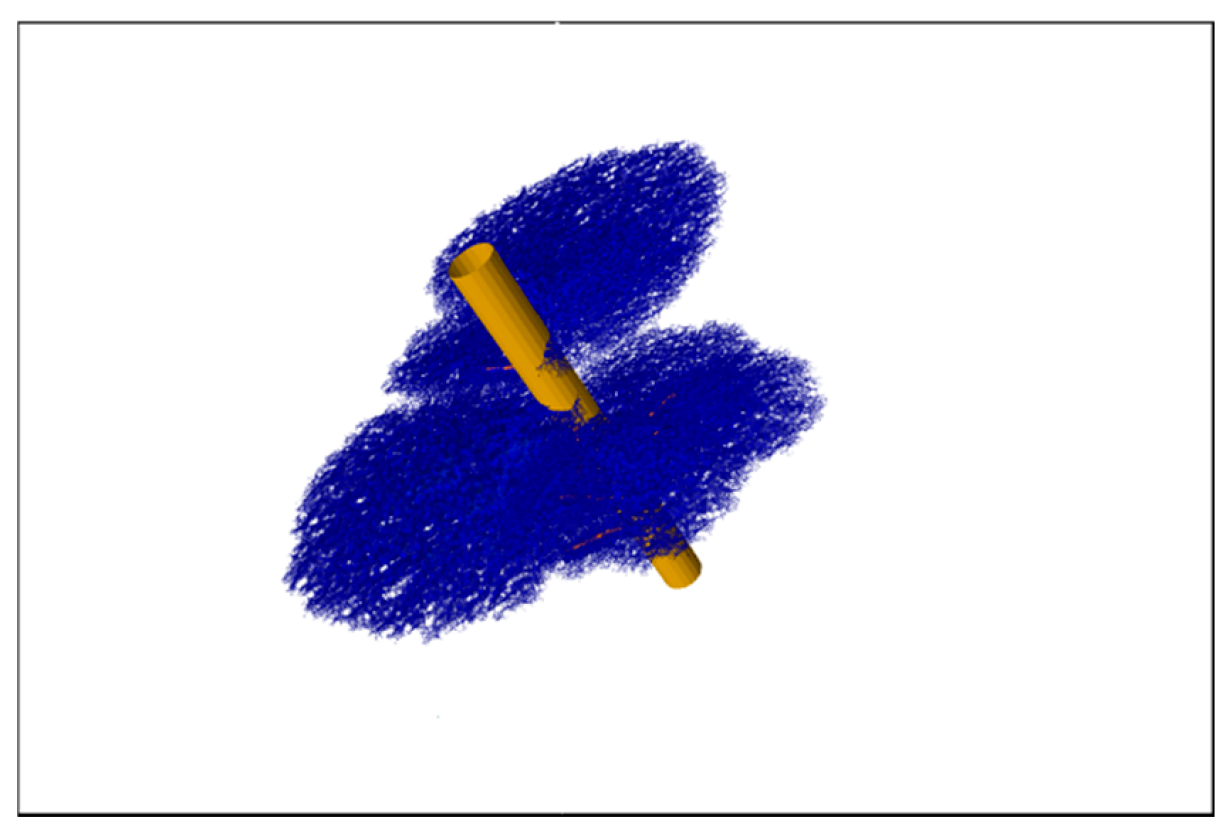
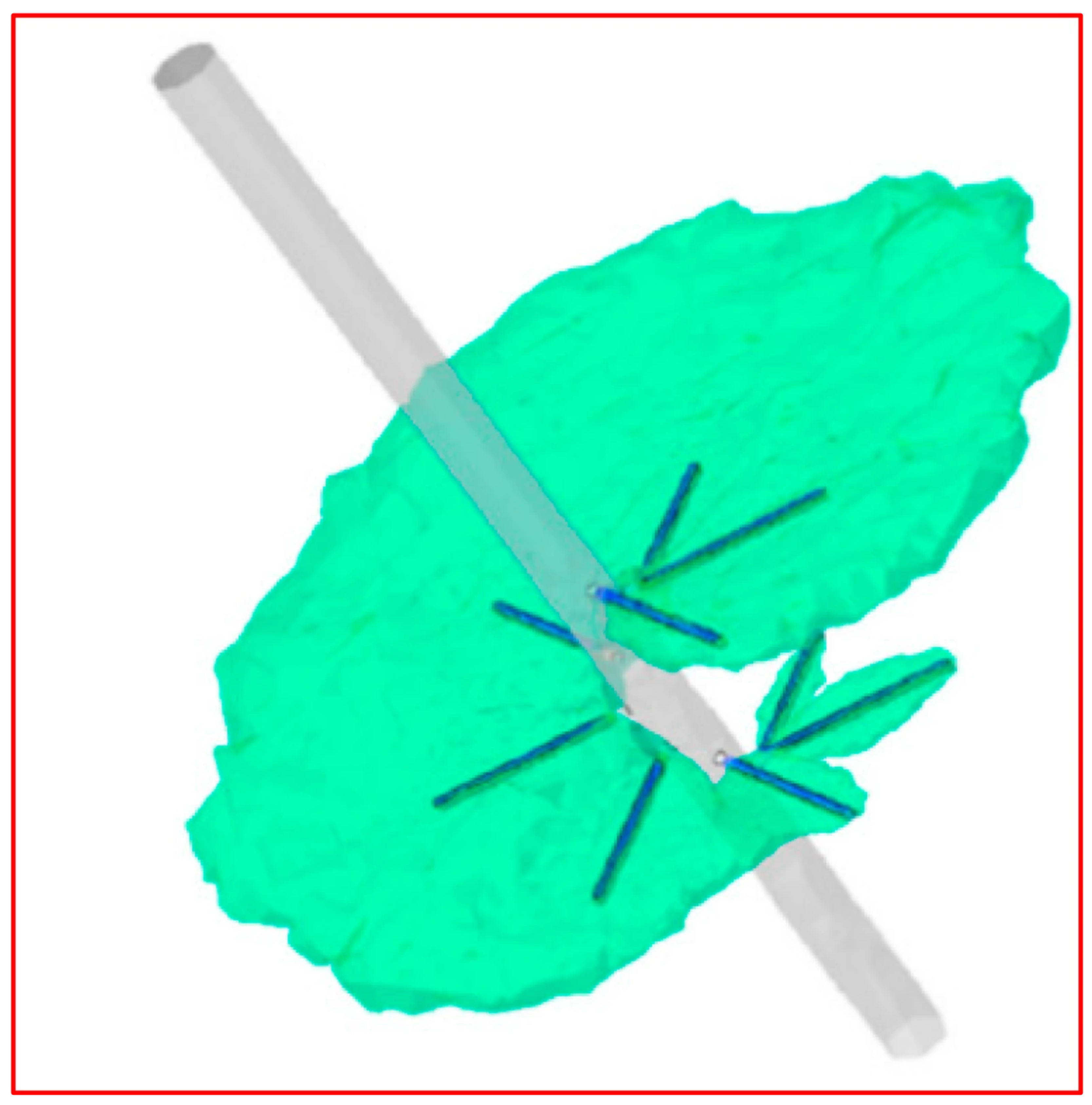
Figure 1 shows the three-dimensional discrete lattice method calculation results of this paper. By comparing them, it can be seen that the three-dimensional discrete lattice method spiral perforation model has produced the same spiral fracture pattern as the “life and death elements” of the finite element method (
Figure 2), confirming that the three-dimensional discrete lattice method can accurately describe the shape of the fractures.
The cluster spacing is 15 m, the pumping rate is 18 m
3/min, and the permeability is 1.46 mD. The remaining parameters are shown in
Table 2. Ten wells in the Kong 2 Member in the Cangdong Sag are selected. After normalizing the brittleness index, porosity, minimum principal stress, stress difference coefficient, and brittle mineral index of each well, numerical simulations are carried out with the normalized values of 0.1, 0.2, 0.3, 0.4, 0.5, 0.6, 0.7, 0.8, and 0.9 respectively. The simulation results are shown in
Table 3.
According to the simulation results, the fracture complexity increases gradually with the rise in the normalized parameters including brittleness parameter, porosity, minimum principal stress, stress difference coefficient and mineral composition. Compared with Case 1, the fracture complexity of Cases 2–9 increases by 0.02, 0.11, 0.18, 0.36, 0.47, 0.53, 0.66 and 0.72, respectively. By comparing the increasing amplitude of fracture complexity, it is found that the normalized parameter ranges from 0.2 to 0.8, constituting the main increasing interval of fracture complexity. Therefore, to clarify the importance of each parameter, simulation analysis is carried out for each parameter within the range of 0.2 to 0.8 to investigate their influences on fracture complexity. The simulation results are presented in
Table 4.
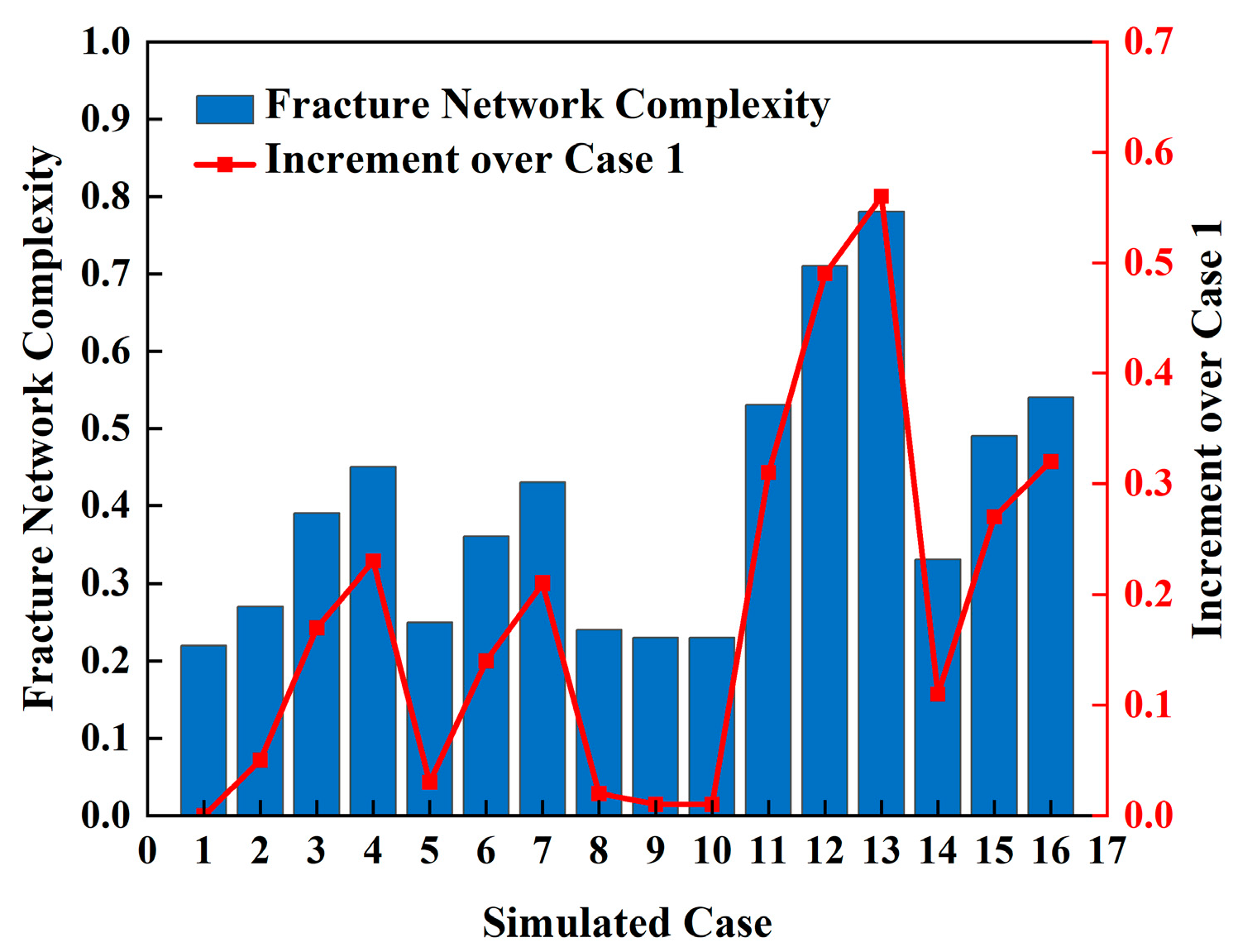
Compared with Case 1, each parameter was changed to 0.2, 0.4, 0.6 and 0.8 respectively, and the variation and increment of fracture complexity were observed. The fracture complexity and its increment are shown in
Figure 3. It can be seen from the numerical simulation results that fracture complexity increases with the rise in the brittleness index, minimum principal stress, stress difference coefficient and brittle mineral index. The increase in porosity has a slight effect on fracture complexity. The order of influence on complexity is as follows: brittleness index > brittle mineral index > minimum principal stress > stress difference coefficient > porosity. Although porosity influences fluid storage capacity and may indirectly affect pore pressure distribution, its contribution to fracture complexity in the studied reservoir is relatively limited. This is primarily because the porosity variation among the investigated samples is small. In contrast, brittleness and in situ stress conditions exert more direct controls on fracture initiation, propagation, and fracture network complexity.
2.3. Fracability Evaluation Model Based on AHP and EWM
The most critical issue in reservoir fracability evaluation is how to determine the weights of each evaluation parameter. Different weight values will significantly affect the results of fracability evaluation. Therefore, the AHP and the EWM are adopted to construct a reservoir fracability evaluation model by comprehensively considering five evaluation indexes: brittleness index, brittle mineral index, stress difference coefficient, minimum principal stress and porosity. A larger fracability index indicates that the reservoir is more suitable for hydraulic fracturing. The calculation formula of the fracability index is as follows [
37]:
where
IF is the fracability index;
Si is the standardized value of each evaluation parameter; and
Wi is the weight of each evaluation parameter.
2.3.1. Parameter Standardization
Each influencing factor has its own unit and dimension. Meanwhile, as evaluation indicators for fracability, the numerical magnitudes and effective ranges of different factors also vary. To conduct fracability evaluation, normalization processing is required for each indicator parameter. There are many normalization methods, and the difference transformation method is adopted here to standardize each indicator parameter.
In the normalization process using different transformations, parameters are divided into two categories: positive indicators and negative indicators. Larger values are preferred for positive indicators, whereas smaller values are better for negative indicators.
For negative indicators:
where
S is the standardized value of the parameter;
X is the original parameter value;
Xmax is the maximum value of the parameter; and
Xmin is the minimum value of the parameter. After normalization by difference transformation, the value of each indicator parameter ranges from 0 to 1, where 1 represents the optimal value and 0 represents the worst value.
2.3.2. Determination of Weights for Influencing Factors
The brittleness index, brittle mineral index, stress difference coefficient, minimum principal stress and porosity affect reservoir fracability in different ways respectively. Therefore, different parameters exert different degrees of influence on the fracability coefficient. To scientifically and accurately determine the influence magnitude of different parameters on fracability, the AHP is adopted to determine the weights of each influencing factor.
An important feature of the Analytic Hierarchy Process is that the relative importance levels of two alternatives are expressed in the form of pairwise importance ratios. For a given criterion, the alternatives under it are compared pairwise and graded according to their importance. The ratio of the importance of the i-th factor to that of the j-th factor is denoted accordingly. The importance levels and their corresponding scores are listed in
Table 5.
The relative importance of the evaluation indicators was determined according to their contributions to fracture initiation, fracture propagation, and stimulated reservoir volume development, as reported in previous fracability evaluation studies and hydraulic fracturing practices. The brittleness index is regarded as the primary factor affecting reservoir fracability, followed by the brittle mineral index, while porosity has the least influence. Accordingly, the comparison matrix of fracability evaluation parameters is obtained as shown in
Table 6.
After comparison of each indicator, the relative superiority or inferiority of each evaluation indicator is ranked, and the judgment matrix A of evaluation indicators is constructed accordingly.
where
A is the judgment matrix, and
aij is the quantitative value of the importance comparison between factor i and factor j.
The importance degree index
ri is defined as:
According to Equation (12), the importance indices of each fracability evaluation parameter can be further calculated, as shown in
Table 7.
Based on the importance degree index, each element of the judgment matrix (
Table 8) is calculated according to
Table 7, and the judgment matrix A
n×n is established.
Construct the antisymmetric matrix
Bn×n of matrix
An×n:
Determine the optimal transfer matrix
based on the antisymmetric matrix
Bn×n:
The optimal transfer matrix is obtained from Equation (15) and (16):
By solving the optimal transfer matrix
(
Table 9), its eigenvector C = (0.469, 0.2694, 0.1427, 0.0756, 0.0434) is obtained, which represents the reservoir fracability evaluation parameters. Using the AHP, the fuzzy weight of minimum principal stress (
σh) is 0.1427, stress difference coefficient (
Kσ) is 0.0756, porosity (
φ) is 0.0434, brittleness index (
IB) is 0.469, and brittle mineral index (
Bw) is 0.2694. To ensure the reliability of the AHP-derived weights, the consistency of the judgment matrix presented in
Table 5 was evaluated. The consistency ratio is calculated as consistency ratio = 0.027, which is below the commonly accepted threshold of 0.1. Modification of Fuzzy Weights Using the EWM.
The fuzzy weights obtained by the AHP have the disadvantage of strong subjectivity, as different people may adopt different scales when comparing pairwise factors. In response to this issue, this paper adopts the EWM to modify the fuzzy weights obtained from the AHP [
37]. Standardization formula:
Calculate the entropy value
Hi (i = 1, 2, …, n):
Calculate the initial weights
Wi based on the entropy values of each evaluation parameter:
Based on
Wi, the fuzzy weight
Ci is modified to obtain the final revised weight
λi of each evaluation parameter:
According to Equations (18)–(22), the entropy values (
Hi), initial weights (
Wi), fuzzy weights (
Ci) and revised weights (
λi) of each evaluation parameter can be obtained, as shown in
Table 10.
Finally, the revised weights of reservoir fracability evaluation indexes are obtained as follows: the minimum principal stress (
σh) is 0.1994, porosity (
φ) is 0.0467, brittle mineral index (
Bw) is 0.2986, stress difference coefficient (
Kσ) is 0.0993, and brittleness index (
IB) is 0.3559. The reservoir fracability index (
IF) is finally obtained as:
3. Fracturing Applicability Study
A simulation and optimization study on fracturing stimulation patterns and key process parameters is carried out using the three-dimensional discrete lattice method, and the fracturing applicability of reservoirs with different fracability is analyzed. The specific simulation schemes are shown in
Table 11. The values of Young’s modulus, Poisson’s ratio, maximum and minimum principal stresses, brittle mineral index and porosity are shown in
Table 12. The other simulation parameters are listed in
Table 13.
The fracture complexity obtained from numerical simulations of the 21 cases in
Table 12 is shown in
Table 13.
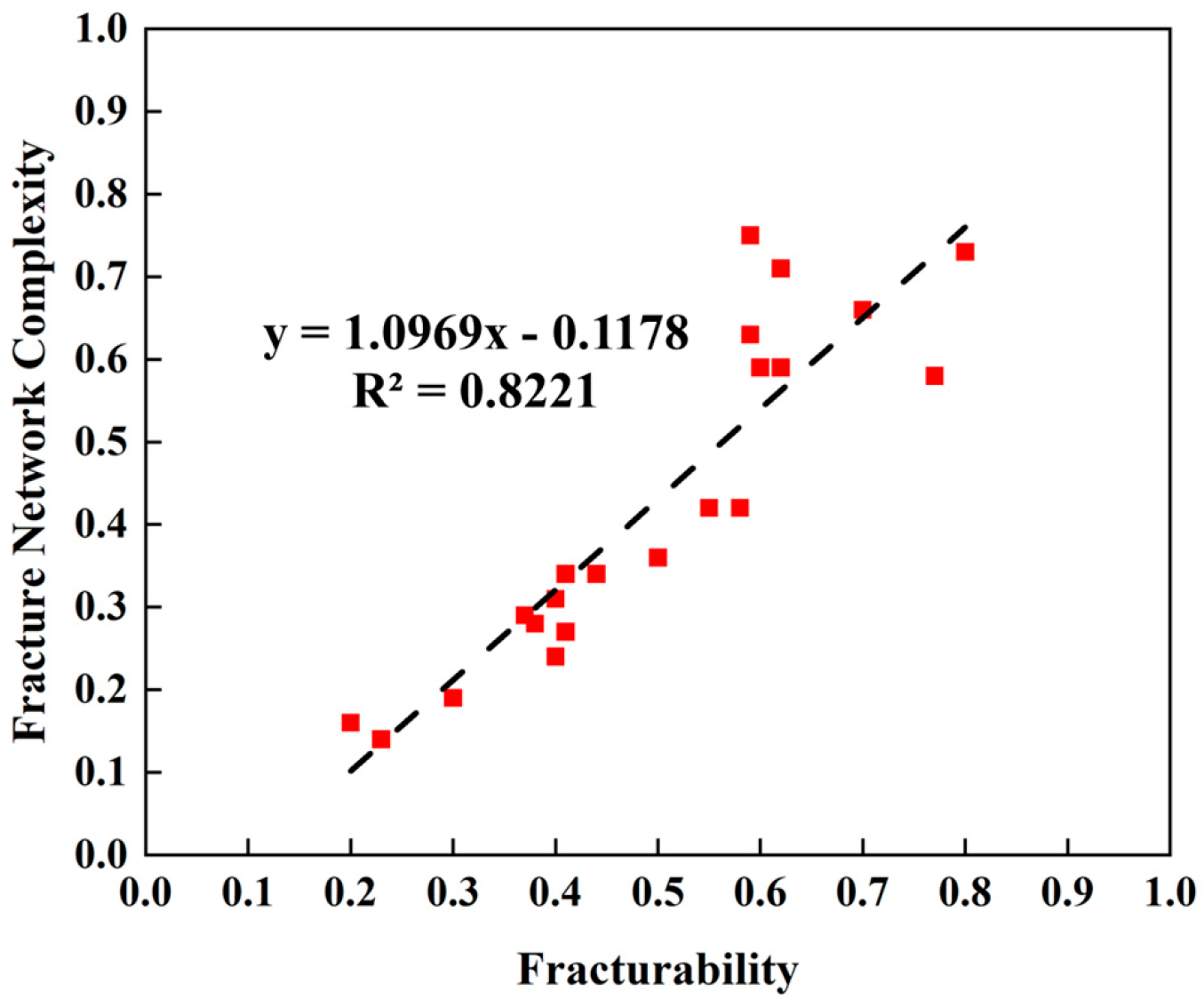
The relationship curve between the fracability index and fracture complexity was plotted (
Figure 4). Fitting analysis shows that the two satisfy the relationship
y = 1.0969
x − 0.1178 with a coefficient of determination
R2 = 0.8211. The cumulative deviation of fracability was calculated as the cumulative sum of the absolute differences between the true fracture complexity values (obtained from numerical simulations) and the fitted values derived from linear regression. The cumulative deviation amplifies deviations from the trend, thereby providing a more robust indicator for identifying critical thresholds at which fracture morphology undergoes fundamental changes. This approach is analogous to change-point detection in cumulative sum methods. The specific values are presented in
Table 14.
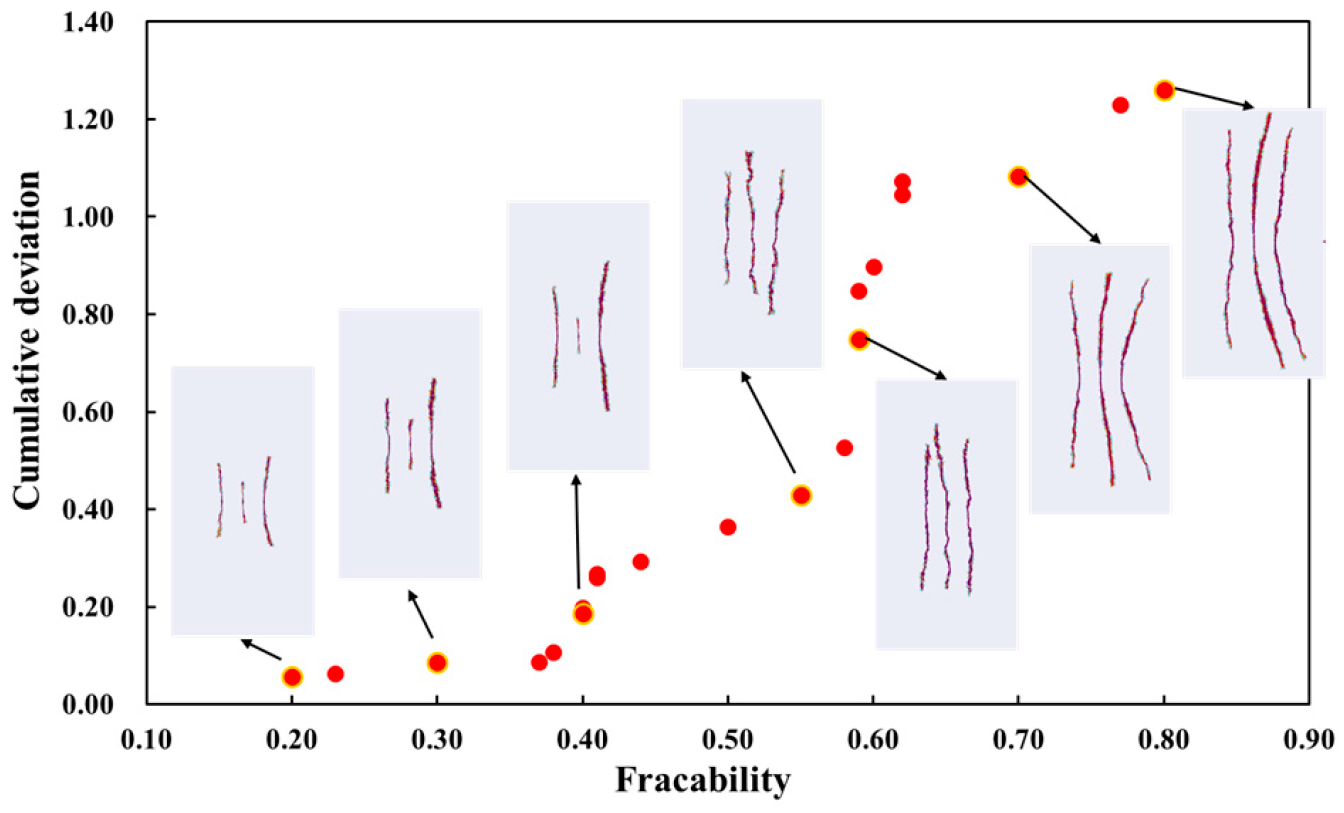
A sharp increase in cumulative deviation indicates that the true fracture complexity deviates from the fitted trend. Such deviation typically corresponds to a rapid change in the underlying fracture propagation. It can be seen from
Figure 5 that abrupt changes in cumulative deviation occur at fracability indices of 0.37 and 0.59. Red indicates fractures. This indicates that the fracture complexity increases significantly at these two points, and the fracture morphology also shows more sufficient fracture propagation. When the fracability index is less than 0.37, the fracture propagation length is short, so priority can be given to increasing fracture length. When the fracability index is between 0.37 and 0.59, fractures propagate unidirectionally along the maximum principal stress direction, with strong interference between fractures and difficult initiation of the middle clusters. Therefore, it is advisable to adjust cluster spacing and cluster count to achieve deep-penetrating long-fracture fracturing. When the fracability index exceeds 0.59, fracture complexity rises notably, with all clusters initiating and fractures propagating deep into the reservoir. For high-fracability reservoirs, in addition to further extending fracture length, measures such as adjusting pumping rate and cluster spacing should be adopted to promote communication between fractures, form a complex fracture network, and enhance fracture complexity.
4. Results
Ensuring uniform fracture initiation during reservoir stimulation by hydraulic fracturing can maximize the contact area with oil and gas reservoirs, which helps improve oil and gas recovery, allows more hydrocarbons to flow into the wellbore through fractures, reduces ineffective zones in the treatment area, and minimizes resource waste. However, in multi-stage clustered fracturing of horizontal wells, cluster spacing, stage spacing, stage length, and pumping rate affect the uniformity of fracture initiation and propagation. In horizontal well multi-stage clustered fracturing, cluster spacing is the distance between adjacent perforation clusters within one stage; cluster number is the number of clusters per stage; stage spacing is the distance between adjacent stages; stage length is the total length of a stage; and pumping rate is the fluid injection rate. These parameters control stress interference, fracture initiation uniformity, and ultimately the SRV (
Figure 6).
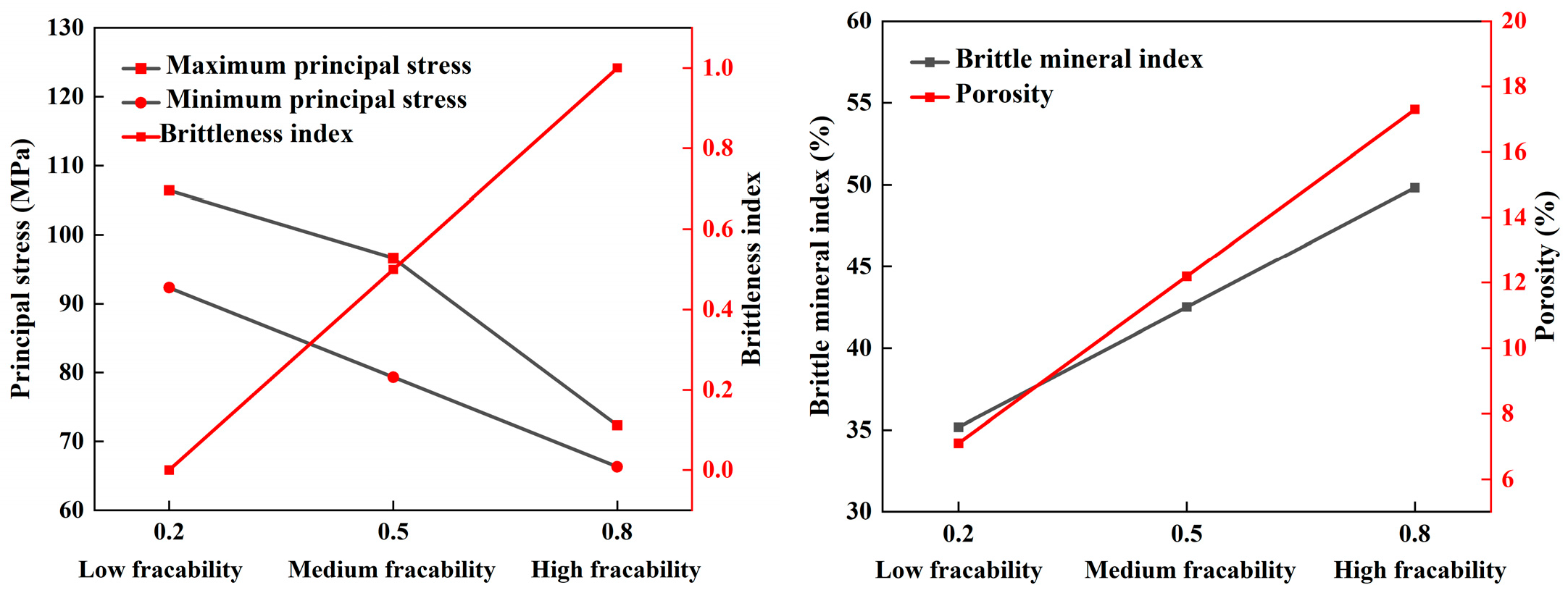
The relationships among fracability index, maximum principal stress, minimum principal stress, brittleness index, brittle mineral index, and porosity are shown in
Figure 6. The results show that reservoirs with higher fracability generally exhibit higher brittleness and brittle mineral content, accompanied by lower minimum principal stress and more favorable fracture propagation conditions. These figures provide a more intuitive understanding of the coupling relationships among reservoir mechanical properties, geological characteristics, and fracability evaluation.
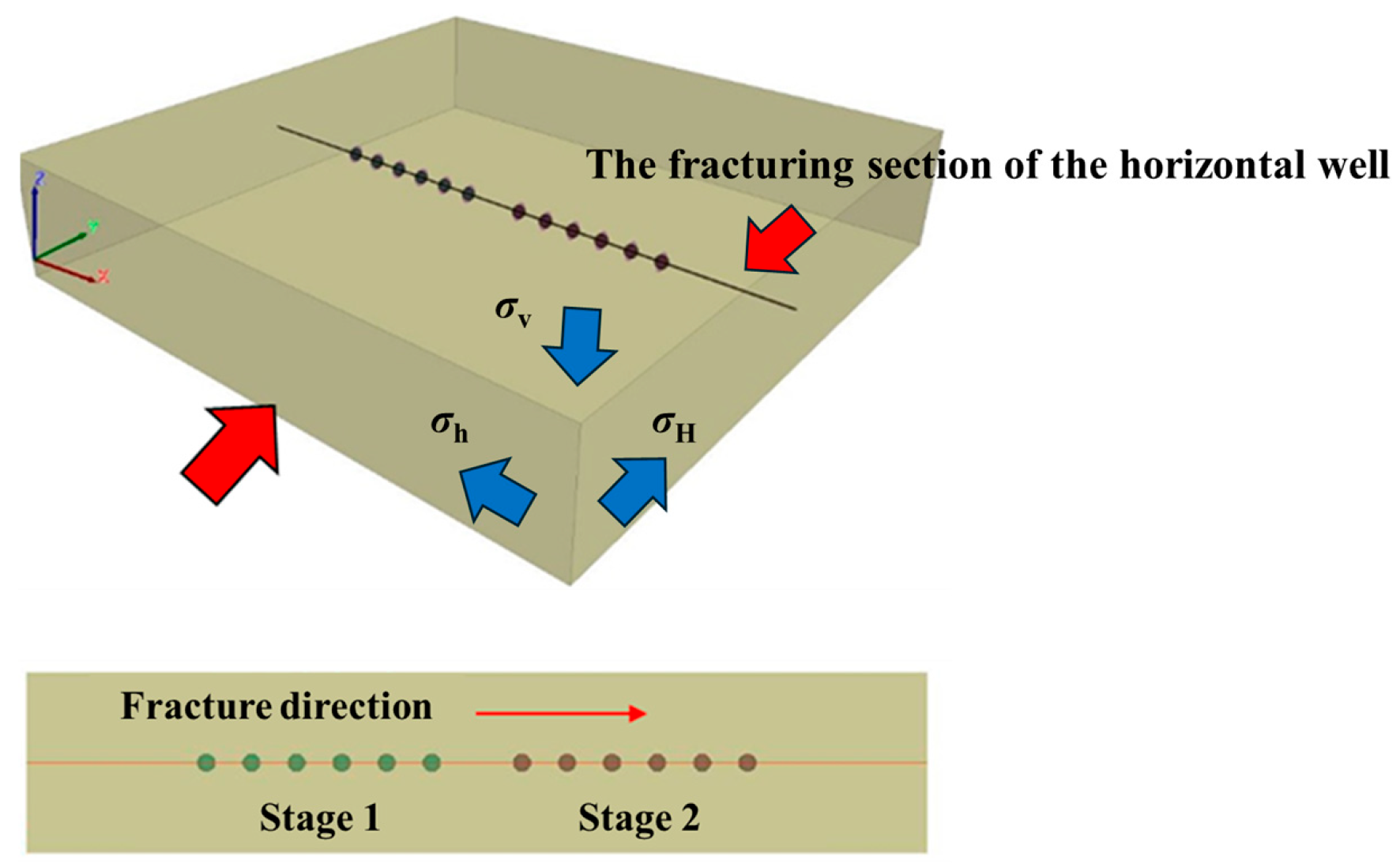
To analyze the influence of each factor on fracture initiation and propagation, a large-scale numerical model for hydraulic fracturing was established using the three-dimensional discrete lattice method, as shown in
Figure 7. The model is 200 m in length, 150 m in width, and 30 m in height. Other parameters are listed in
Table 15, where Case 1 represents a low fracability reservoir, Case 2 represents a medium fracability reservoir, and Case 3 represents a high fracability reservoir.
Hydraulic fracturing stimulated volume generally refers to the fracture volume created in oil and gas reservoirs through hydraulic fracturing technology. As one of the key indicators for evaluating hydraulic fracturing performance, it represents the total volume of the fracture propagation region. This volume usually consists of main fractures and complex network fractures, which affect reservoir permeability and hydrocarbon production. A larger stimulated volume generally means that more reservoir rock can contribute to oil and gas production.
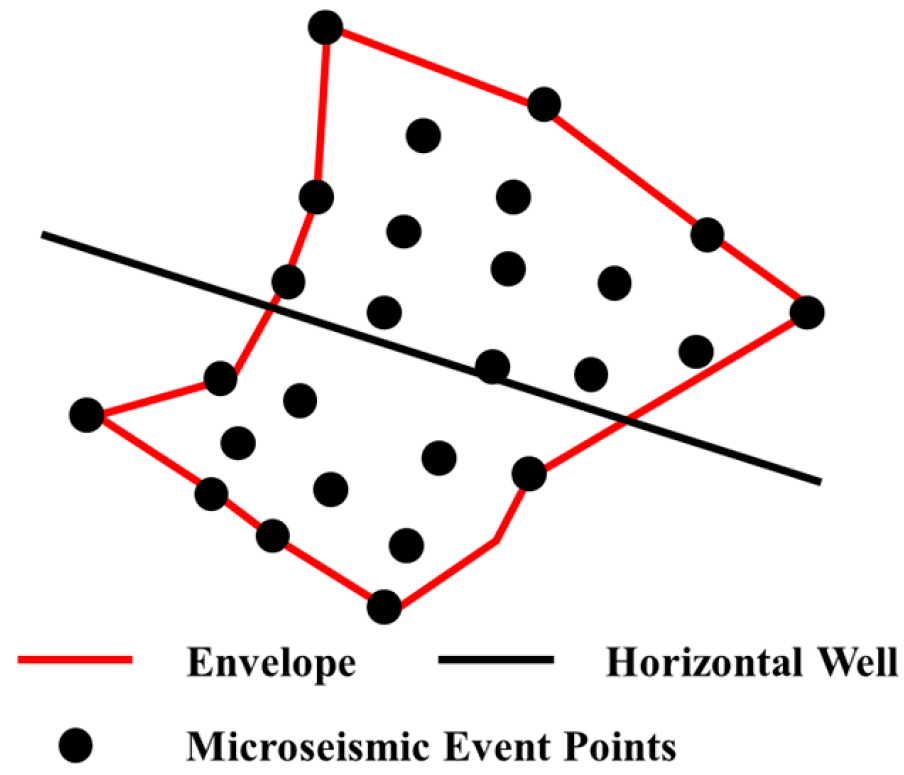
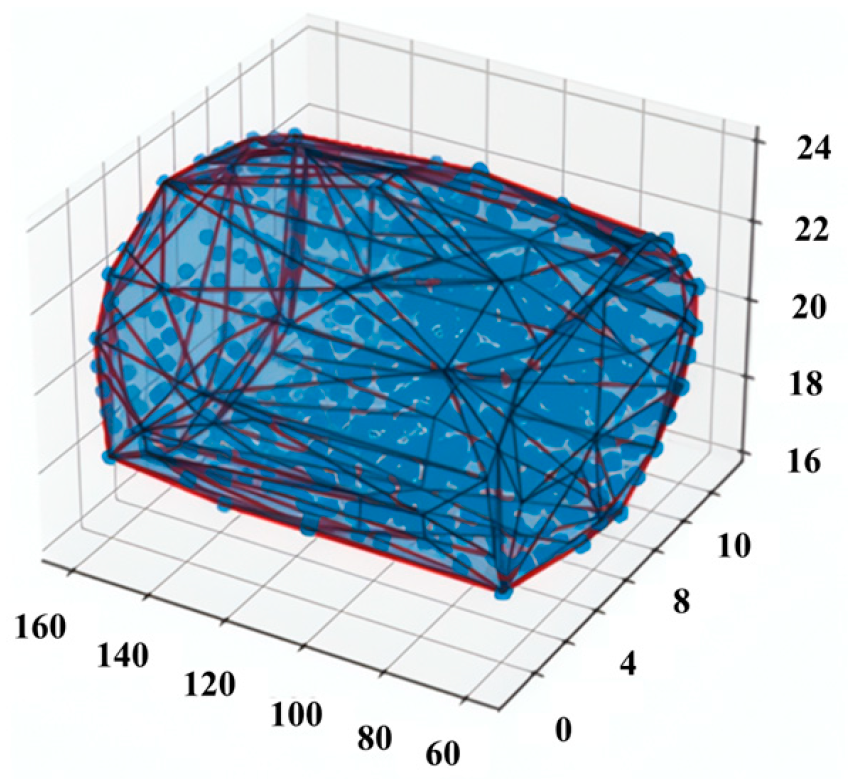
At present, there is no unified standard for the quantitative calculation of fracturing SRV, which is typically estimated using microseismic monitoring, pressure decay analysis, numerical simulation, or other methods to optimize fracturing design. In this study, we propose a novel method for quantitatively characterizing the SRV. The SRV was delineated using microseismic event points generated from numerical simulations. Only events exceeding a predefined relative energy threshold were included in order to exclude minor or noise-induced events. These selected points were then imported into MATLABR2024a, where an envelope surface representing the SRV was constructed using the convex hull method. The following outlines the specific steps of the procedure.
(1) A numerical model of multi-stage clustered hydraulic fracturing for horizontal wells in the target formation is established using the three-dimensional discrete lattice method, and the fracture propagation geometry and microseismic events are calculated (
Figure 8);
(2) The microseismic calculation points are exported, and a program is compiled using MATLAB to plot the envelope surface of the microseismic points. The volume enclosed by the envelope surface is defined as the fracturing stimulated volume (
Figure 9);
(3) The fracturing stimulated volume is calculated and exported.
4.1. Effect of Cluster Spacing on Fracture Propagation
The cluster spacing directly affects the distribution of the stress state in the reservoir, thereby further influencing the initiation and propagation of fractures. In this section, the stage spacing is set to 10 m, the number of perforation clusters is increased from four to seven, and the pumping rate is 18 m3/min. The fracture propagation patterns under different cluster numbers are calculated.
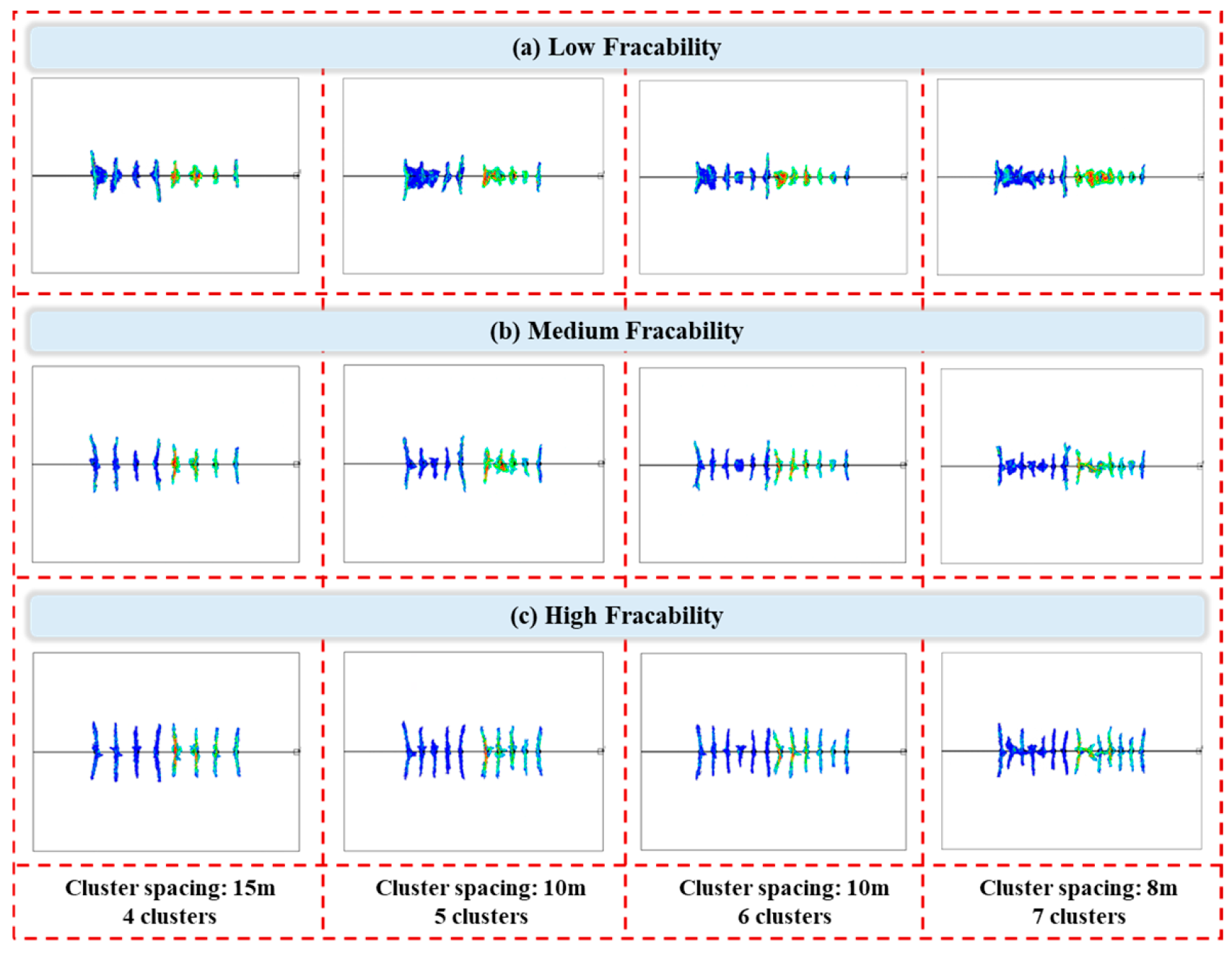
Based on comparative analysis of the simulation results (
Figure 10): For low-fracability reservoirs, fractures exhibit non-uniform propagation at a cluster spacing of 15 m with four clusters. Lateral propagation and interconnection of fractures occur at 10 m spacing with five clusters. However, at 10 m with six clusters and 8 m with seven clusters, initiation inhibition is observed in partial perforation clusters. This indicates that low-fracability reservoirs should adopt larger cluster spacing and fewer clusters to improve initiation efficiency and achieve uniform initiation and propagation of fractures in each cluster. For medium-fracability reservoirs, secondary branch fractures develop in addition to main fractures. Non-uniform initiation appears at 10 m spacing with five clusters. As cluster spacing decreases and cluster number increases, the impeded propagation of fractures in some perforation clusters becomes more significant. For high-fracability reservoirs, fracture branches develop sufficiently and fracture network complexity is greatly improved. Although non-uniform propagation exists at 10 m spacing with five clusters, no failed initiation of perforation clusters occurs as cluster spacing decreases and cluster number increases. Comprehensive analysis shows that higher reservoir fracability corresponds to better fracture initiation efficiency, fracture network complexity and propagation uniformity. Therefore, for high fracability reservoirs, increasing the number of perforation clusters and reducing cluster spacing can further enhance the stimulated reservoir volume and fracturing effectiveness.
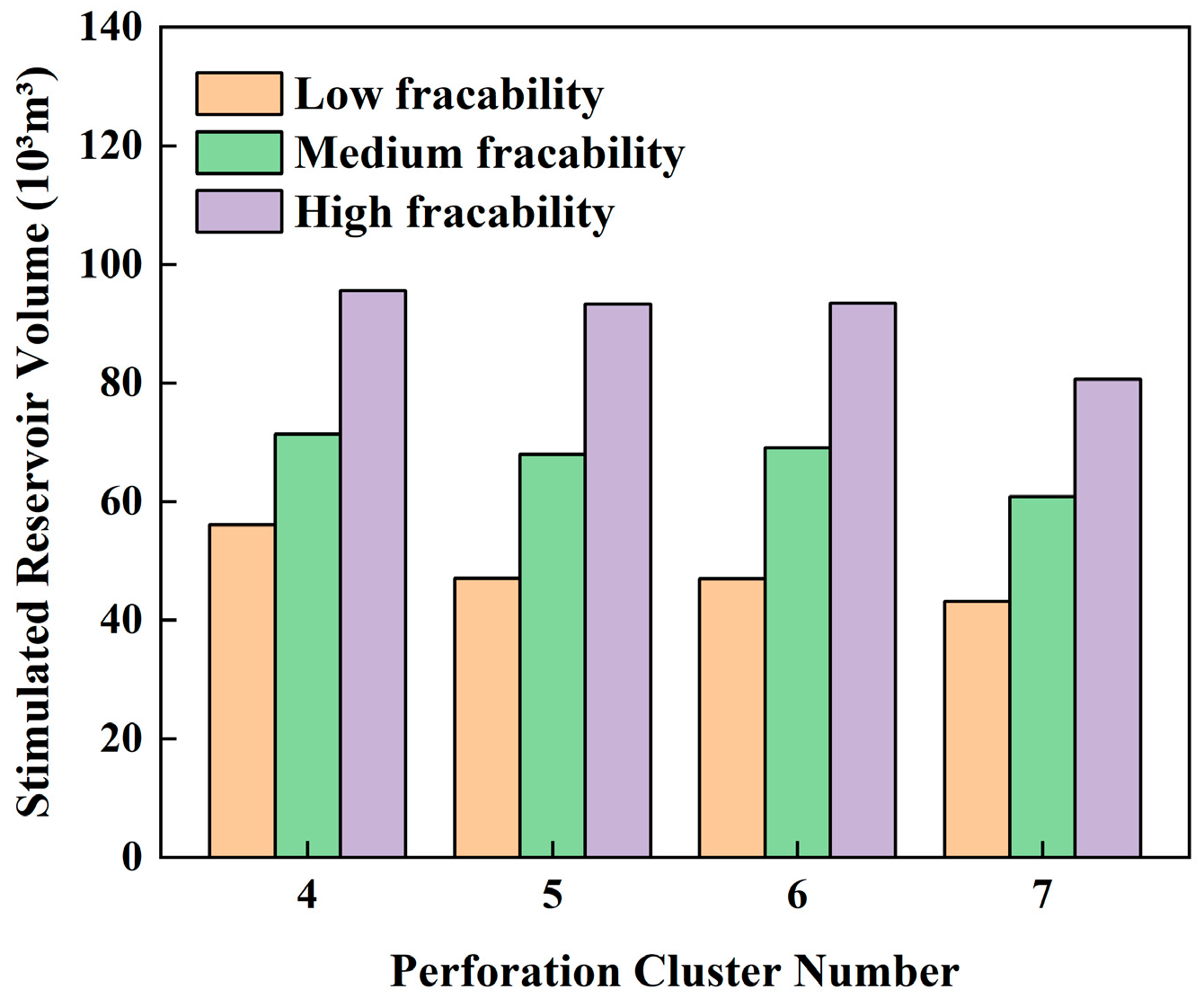
According to the sensitivity analysis of cluster spacing and cluster number (
Figure 11), the stimulated reservoir volume of low-fracability reservoirs shows an overall decreasing trend with an increase in the number of perforation clusters. The underlying mechanism is that low-fracability reservoirs are characterized by low Young’s modulus, high Poisson’s ratio and high minimum principal stress, making it difficult to form deep penetrating fractures. Fracture morphology mostly appears as short and wide fractures near the wellbore. An increase in the number of perforation clusters intensifies the inter-cluster stress interference effect, further aggravating non-uniform fracture initiation and restraining fracture propagation into the deep reservoir. Therefore, a fracturing model with many clusters and small cluster spacing is not conducive to achieving large volume stimulation in low-fracability reservoirs. It is recommended that the number of perforation clusters should not exceed four and the cluster spacing should not be less than 15 m during fracturing in such reservoirs. Medium- and high-fracability reservoirs have relatively high Young’s modulus, low Poisson’s ratio, reduced minimum principal stress and increased stress difference, which make fractures easier to initiate and propagate effectively into the deep reservoir, thereby improving the stimulated reservoir volume.
4.2. Effect of Stage Spacing on Fracture Propagation
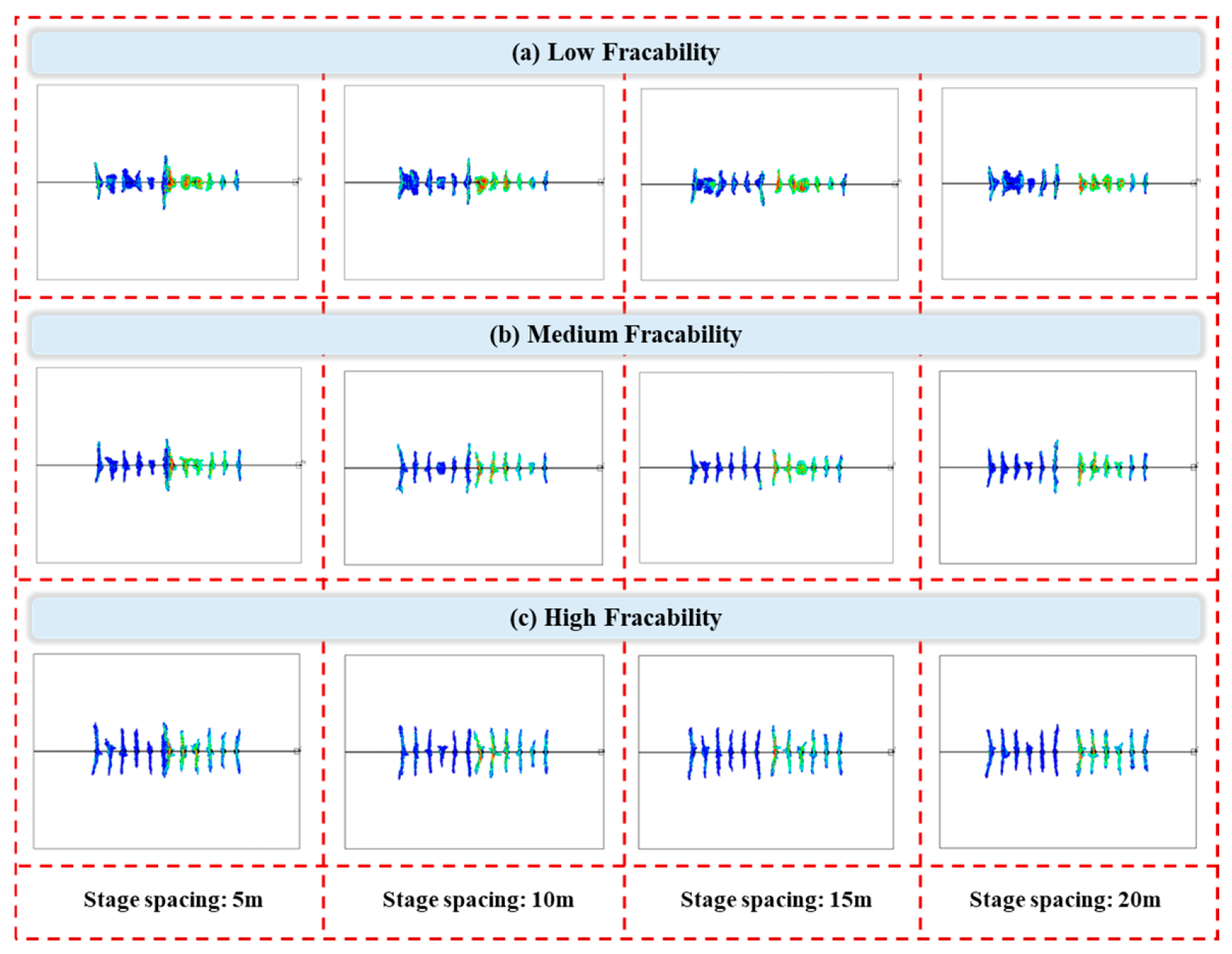
To investigate the influence of perforation stage spacing on fracture propagation, two fracturing stages are designed with six perforation clusters per stage and cluster spacing of 10 m. The stage spacing is set to 5 m, 10 m, 15 m and 20 m respectively, with a pumping rate of 18 m3/min, to simulate the fracture propagation morphology.
According to the numerical simulation results (
Figure 12), variation in perforation stage spacing directly governs the fracture propagation behavior of the first cluster in the second stage. All three fracturing schemes indicate that a reduction in stage spacing significantly disturbs the fracture geometry of perforation clusters in the second stage. When the stage spacing is less than 5 m, adjacent perforation clusters from different stages attract each other under stress interference, leading to fracture connection and coalescence into a single main fracture. When the stage spacing is no less than 10 m, although fractures in the first stage still exert certain influences on the initiation and propagation of fractures in the second stage, the two fracturing stages remain unconnected, and fracture propagation is relatively uniform.
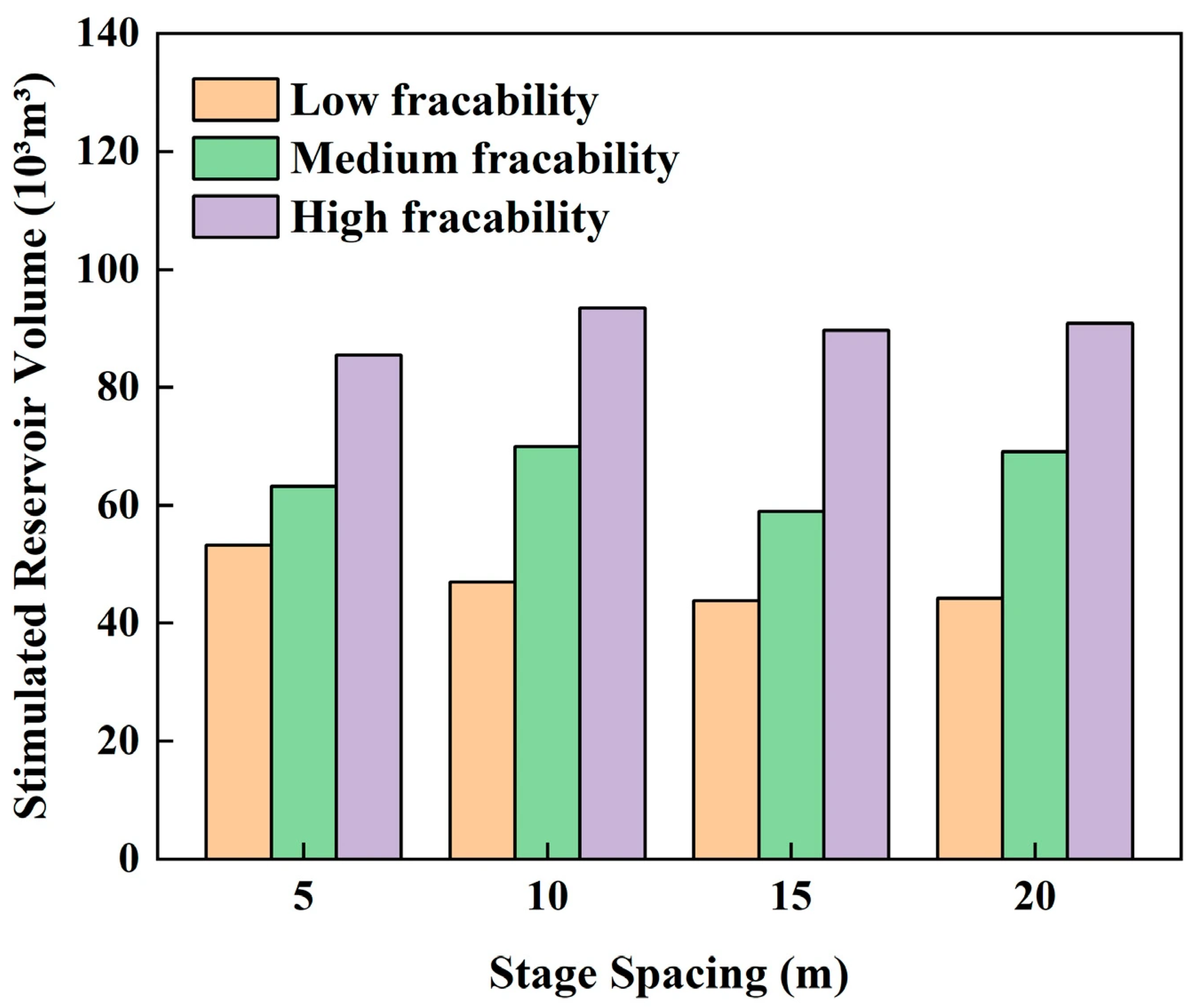
Figure 13 shows the stimulated reservoir volume for reservoirs with different fracability. For low-fracability reservoirs, the stimulated reservoir volume reaches a maximum of 53,291.65 m
3 at a stage spacing of 5 m. When the stage spacing is increased to 10 m, the stimulated volume decreases by 11.8%. Further increasing the stage spacing beyond 10 m results in little change in the stimulated reservoir volume. For medium- and high-fracability reservoirs, the maximum stimulated reservoir volumes are achieved at a stage spacing of 10 m, reaching 69,934.13 m
3 and 93,490.99 m
3 respectively. At a stage spacing of 5 m, the stimulated volumes decrease by 9.6% and 8.5% compared with the optimum value. At 15 m, the reductions are 15.7% and 4.1% respectively.
Therefore, a stage spacing of 5–10 m is recommended for low-fracability reservoirs, while a stage spacing of 10 m is optimal for medium- and high-fracability reservoirs.
4.3. Effect of Stage Length on Fracture Propagation
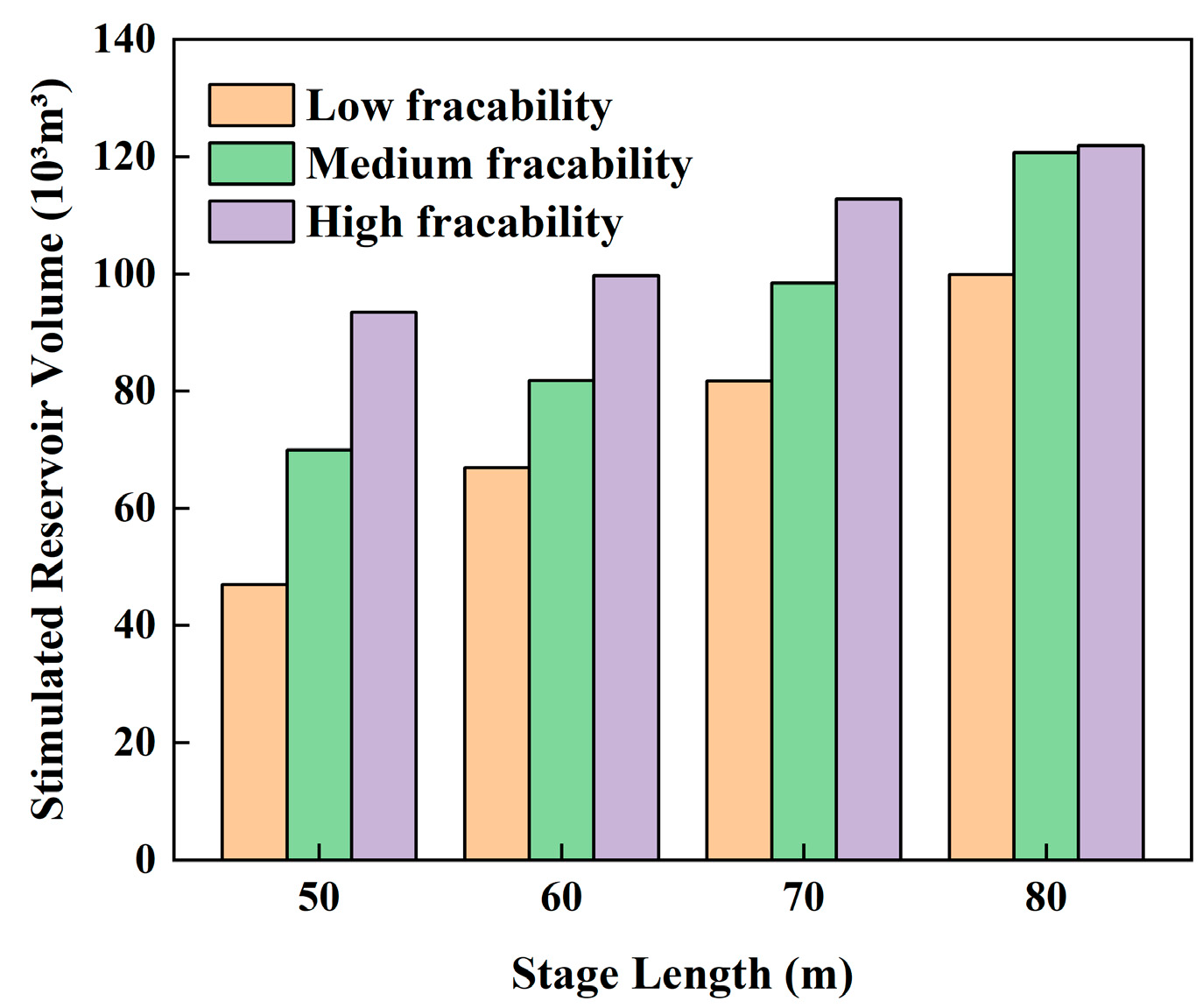
To investigate the influence of perforation stage length on fracture propagation, two fracturing stages are adopted with a cluster spacing of 10 m and a stage spacing of 10 m. The stage length is set to 50 m, 60 m, 70 m and 80 m respectively, with a pumping rate of 18 m
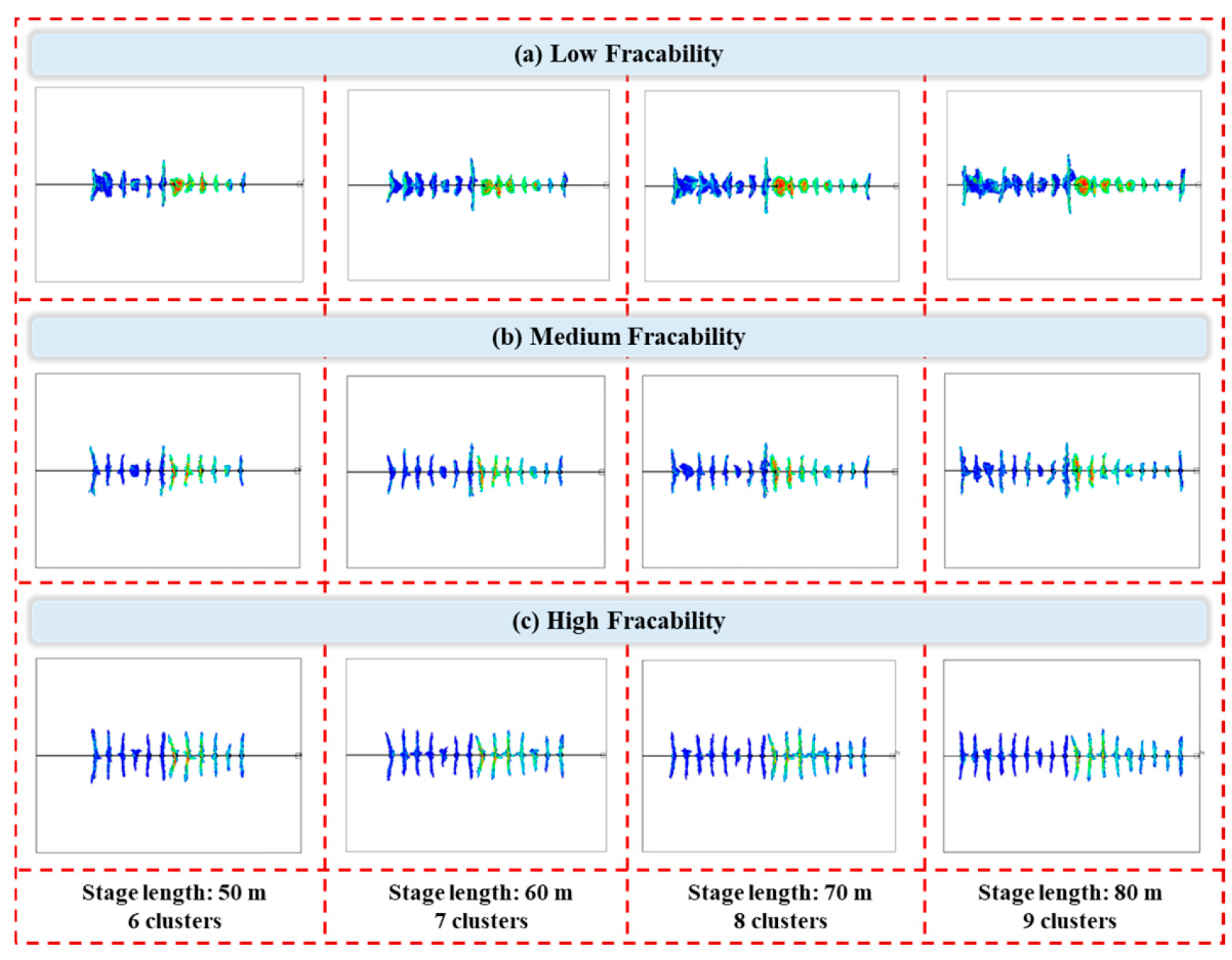
3/min, to simulate the effect of stage length on reservoir fracture propagation geometry (
Figure 14).
Figure 14.
Effect of stage length on fracture propagation in low-, medium- and high-fracability reservoirs.
Figure 14.
Effect of stage length on fracture propagation in low-, medium- and high-fracability reservoirs.
The stimulated reservoir volume increases with the increase in stage length (
Figure 15). As the stage length increases from 50 m to 80 m, the stimulated volume increases by 112.68%, 72.65% and 30.36% for low-, medium- and high-fracability reservoirs, respectively, with the largest growth observed in low-fracability reservoirs. For high-fracability reservoirs, the growth rate of stimulated volume first rises and then falls with increasing stage length, reaching the maximum increment within 60–70 m. Appropriately increasing the stage length can effectively improve the fracturing stimulation effect in medium- and low-fracability reservoirs.
4.4. Effect of Pumping Rate on Fracture Propagation
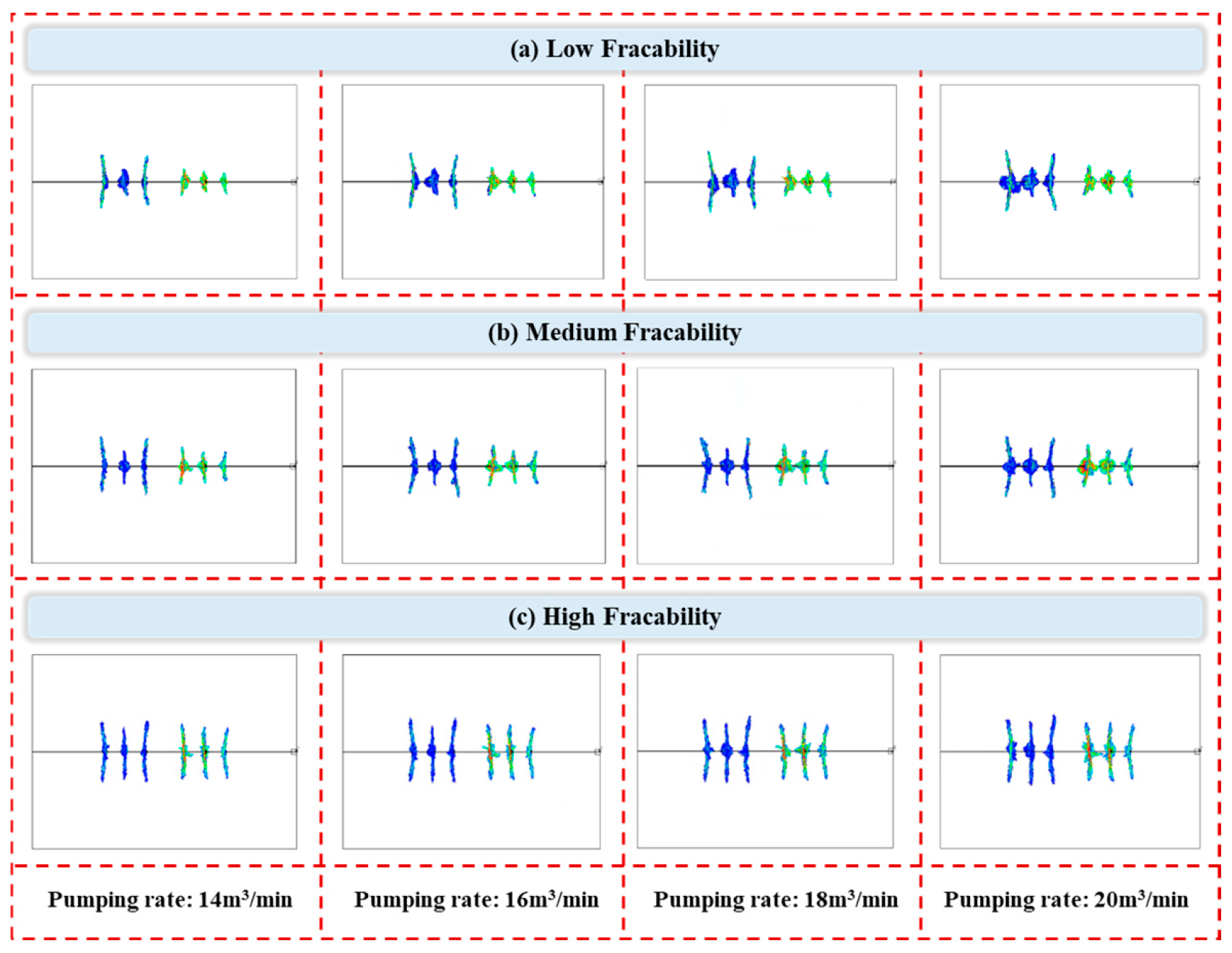
Pumping load and fluid pressure are vital controlling factors throughout hydraulic fracturing. Pumping rate acts as a key parameter governing fracture initiation, propagation and morphological evolution. Variations in pumping rate directly change fluid pressure: an increased pumping rate raises fluid pressure, which accelerates the onset of fractures. Meanwhile, elevated fluid pressure sustains stable fracture propagation, extends fracture length and widens fracture aperture, and further induces secondary fractures to form intricate fracture networks. To investigate their effects, numerical simulations were conducted at different injection rates of 14, 16, 18, and 20 m3/min, while keeping the stage spacing, cluster spacing, and number of clusters constant (10 m, 15 m, and three clusters per stage, respectively). In this study, the variation in pumping rate is used to represent changes in pumping load and corresponding fluid pressure within the fracture system.
Results indicate that increasing pumping load significantly enhances fracture initiation uniformity across all perforation clusters. Meanwhile, higher fluid pressure promotes fracture extension in both length and width directions, and facilitates the development of secondary branch fractures around the main fracture network (
Figure 16). This demonstrates that elevated fluid pressure improves fracture tip driving force and reduces resistance to fracture propagation, thereby increasing overall fracture complexity.
In low-fracability reservoirs, stronger lateral propagation and inter-cluster interaction are observed as pumping rate increases. At 20 m3/min, adjacent clusters tend to connect due to intensified stress interference induced by higher fluid pressure. In contrast, medium- and high-fracability reservoirs exhibit more stable fracture propagation, with enhanced fracture length and branching but without inter-cluster connection, indicating stronger resistance to stress interference.
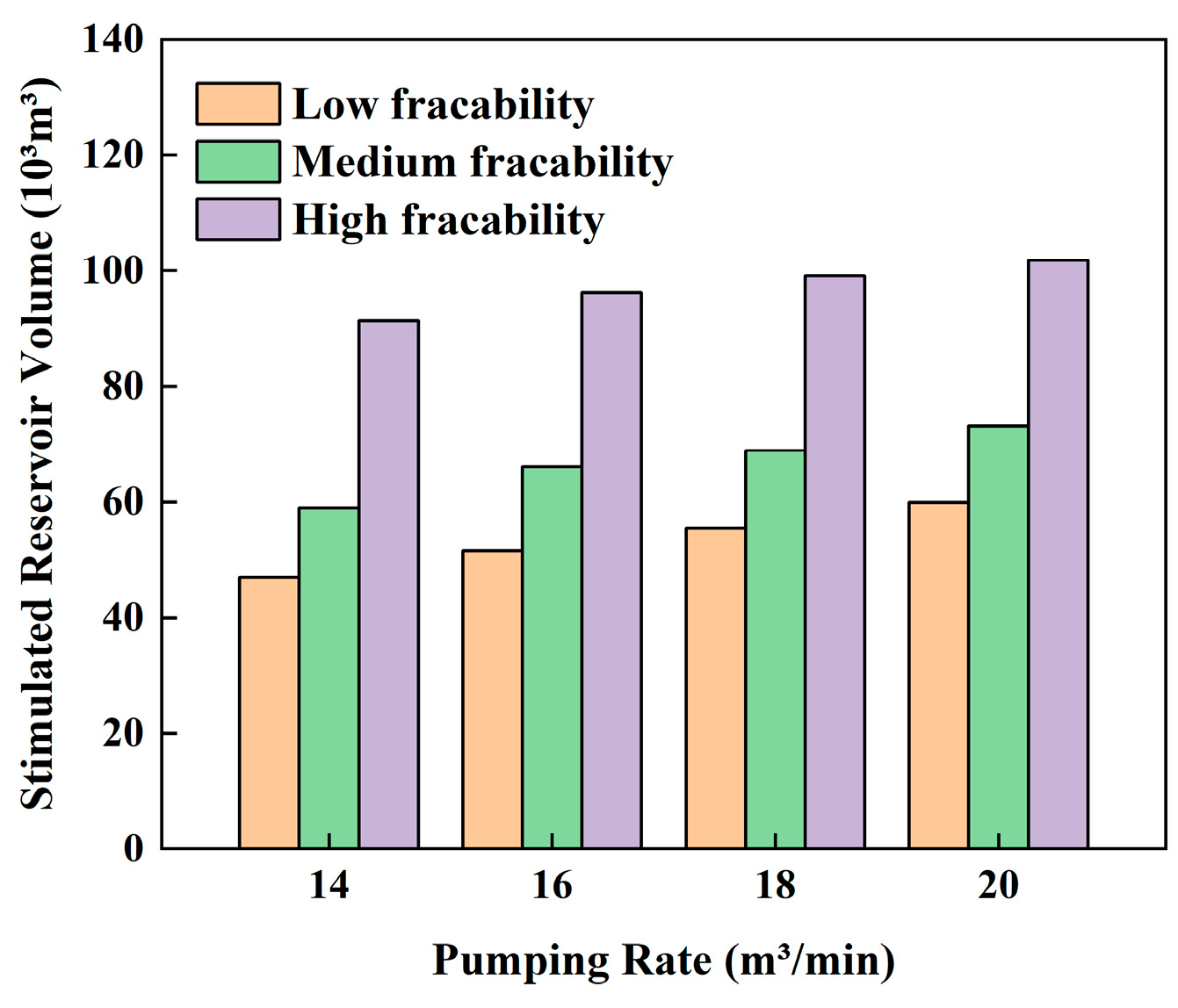
Comparison of stimulated reservoir volume under different pumping rates reveals (
Figure 17) that the stimulated volume increases continuously with rising pumping rate. At a pumping rate of 14 m
3/min, the stimulated volumes for low-, medium- and high-fracability reservoirs are 47,031.41 m
3, 58,975.42 m
3 and 91,326.60 m
3, respectively. When the pumping rate is increased to 20 m
3/min, the stimulated volumes reach 59,918.10 m
3, 73,184.08 m
3 and 101,762.34 m
3, corresponding to increases of 27.4%, 24.1% and 11.43%. With increasing reservoir fracability, the incremental amplitude of stimulated volume caused by elevated pumping rate gradually decreases, indicating that pumping rate exerts the most significant influence on low-fracability reservoirs. Considering economic efficiency and equipment capacity, a pumping rate of 20 m
3/min is recommended for hydraulic fracturing operations to achieve the optimal stimulated reservoir volume.
5. Discussion
This study establishes a fracability evaluation model and a classification standard for fracturing applicability by the AHP, EWM, and three-dimensional discrete lattice simulation. The framework targets the Kong 2 Member in the Cangdong Sag and resolves key drawbacks of conventional fracability evaluations, such as over-reliance on single brittleness metrics, subjective weighting, and poor consistency with field practice.
The weight distribution obtained from the AHP, EWM reveals that brittleness index (0.3559) and brittle mineral index (0.2986) are the dominant controls on fracability, followed by minimum horizontal principal stress (0.1994), stress difference coefficient (0.0993), and porosity (0.0467). This order aligns with core understandings from previous research on unconventional reservoirs, where rock brittleness and brittle mineral content (quartz, feldspar, calcite) govern the tendency for brittle failure and complex fracture generation [
12,
17]. In situ stress parameters, especially the minimum principal stress and stress differential, have this important influence on fracture initiation and propagation [
24]. Notably, porosity shows the weakest impact on fracture complexity, implying that pore-scale storage properties contribute far less to fracability than geomechanical and stress conditions. This finding refines earlier views of overemphasized petrophysical properties in fracability assessment [
33,
35] and highlights the primacy of geomechanical attributes in hydraulic fracturing effectiveness.
Simulation results identify 0.37 and 0.59 as critical thresholds where fracture complexity undergoes abrupt changes. Although identified by statistical breakpoint analysis, the two threshold values reflect intrinsic variations in rock mechanical properties. From a geomechanical viewpoint, these critical points correspond to evolving brittleness and stress sensitivity: rocks with a fracability index below 0.37 contain abundant clay and ductile constituents that hinder fracture expansion; intermediate values between 0.37 and 0.59 feature growing brittle minerals and activate pre-existing microfractures to boost fracture complexity; when the index exceeds roughly 0.59, high brittleness induces greatly complicated fracture networks.
The multi-indicator continuous fracability evaluation method and fracturing applicability classification established in this study effectively connect geological characterization with engineering design. Although the evaluation method was developed based on data from the Kong 2 Member of the Cangdong Sag, the evaluation framework is not restricted to this specific reservoir. The methodology integrates geological, petrophysical, and geomechanical parameters that are commonly available in unconventional reservoir characterization. Therefore, it can be extended to other shale oil, shale gas, or tight reservoirs with similar geological settings. For different formations or regions, the evaluation parameters, weighting coefficients, and classification criteria may require recalibration according to local reservoir characteristics. Moreover, the insights gained regarding fracture initiation, propagation, and complexity—particularly the influence of brittleness, natural fractures, and stress heterogeneity—may also provide useful guidance for other complex stimulation scenarios, such as enhanced geothermal systems (EGSs). Adapting the proposed framework to account for higher temperatures and fluid–rock interaction effects in such reservoirs could further broaden its applicability.
It should be noted that several limitations exist in the present study. First, the three-dimensional discrete lattice model assumes homogeneous reservoir mechanical and petrophysical properties, whereas natural reservoirs commonly exhibit heterogeneity in mineral composition, elastic properties, bedding structures, and stress conditions. Second, fluid–rock interaction processes are simplified, and complex mechanisms such as fluid leak-off, pore pressure diffusion, and geochemical interactions are not explicitly considered. These simplifications were adopted to analyze the effects of the key fracability-related parameters and establish a practical fracability evaluation framework. In addition, the relationship between fracability and fracture complexity yields an R2 value of 0.8211, indicating that a portion of the variability remains unexplained. This may be attributed to geological heterogeneity, measurement error, and other factors not included in the current model. Despite these limitations, the proposed method captures the overall trend between fracability and fracture complexity and provides useful guidance for reservoir evaluation and fracturing design. Future studies should incorporate reservoir heterogeneity, more comprehensive fluid–rock coupling mechanisms, and uncertainty analyses to further improve model accuracy and applicability.
6. Conclusions
This paper focuses on the fracability evaluation and hydraulic fracturing technology applicability of the Kong 2 Member in the Cangdong Sag. A fracability evaluation method, fracturing classification and an operation optimization scheme suitable for the target block have been established. The main conclusions are as follows:
(1) Brittleness index, brittle mineral index, minimum principal stress, stress difference coefficient and porosity are the key indicators controlling the reservoir fracability of evaluation wells in the Kong 2 Member in the Cangdong Sag exploration area. Brittleness index has the greatest influence on fracture complexity, followed by brittle mineral index, minimum horizontal principal stress and stress difference coefficient, while porosity exerts the least influence on fracture complexity.
(2) Based on the three-dimensional discrete lattice method, the influence laws of the parameters are clarified. The corrected weights of each index are obtained by coupling the AHP and EWM: brittleness index 0.3559, brittle mineral index 0.2986, minimum principal stress 0.1994, stress difference coefficient 0.0993, and porosity 0.0467. A continuous evaluation model of reservoir fracability is constructed to realize accurate quantitative characterization of reservoir fracability.
(3) Fracability indices of 0.37 and 0.59 are the critical mutation points of fracture complexity. On this basis, an optimized staged fracturing scheme is established: large cluster spacing, fewer clusters and small stage spacing are suitable for low-fracability reservoirs; for medium- and high-fracability reservoirs, cluster spacing can be reduced, cluster number increased, and high pumping rate adopted to form complex fracture networks and improve stimulated reservoir volume.
(4) A stimulated reservoir volume (SRV) characterization method based on the envelope surface of microseismic calculation points is proposed. The method provides an effective approach for evaluating hydraulic fracturing stimulation effectiveness and fracture propagation range in reservoirs with different fracability.