Article

Theoretical and Experimental Evaluation of Wheat Grain Separation in Airflow

by
Edvardas Vaiciukevičius
,
Kristina Lekavičienė
*,
Sidona Buragienė
and
Algirdas Jasinskas
Department of Agricultural Engineering and Safety, Agriculture Academy, Vytautas Magnus University, Studentu St. 15, LT-53362 Akademija, Lithuania
*
Author to whom correspondence should be addressed.
Processes 2026, 14(12), 1859; https://doi.org/10.3390/pr14121859 (registering DOI)
Submission received: 14 April 2026 / Revised: 1 June 2026 / Accepted: 2 June 2026 / Published: 8 June 2026
(This article belongs to the Section Particle Processes)

Abstract

Airflow is widely used in grain cleaning and sorting processes to separate grains according to their aerodynamic properties. However, separation efficiency depends on airflow parameters and grain physical characteristics. The aim of this study was to evaluate the movement and sorting of wheat grains under different airflow conditions and to compare the effects of vertical and horizontal airflows on grain separation efficiency. A theoretical analysis was conducted to investigate grain motion in laminar and turbulent airflows by determining grain displacement and displacement differences. Theoretical calculations were used to predict the displacement behavior and separation potential of grains with different critical velocities under various airflow conditions. To evaluate these predictions, laboratory experiments were conducted in a horizontal airflow sorting chamber at grain feed rates of 1 and 2 kg min−1. The experimentally observed grain distributions were then compared with the theoretical predictions, allowing comparison between predicted and experimentally observed grain movement patterns. The average critical velocity of wheat grains was found to be 10.35 m s−1 at 14.2% moisture content, while the floating coefficient was approximately 0.092. The theoretical analysis showed that displacement differences between grains with different aerodynamic properties ranged from 0.103 to 0.185 m within 1 s, depending on airflow conditions. Experimental results revealed a non-uniform distribution of grains within the sorting chamber, with the majority of grains collected in the first boxes. Increasing the grain feed rate reduced separation efficiency to approximately 55%, indicating a significant influence of grain flow intensity on the separation process. The results demonstrate that efficient grain sorting requires the optimization of both airflow parameters and grain feeding conditions. The findings of this study may contribute to the design and improvement of grain cleaning and sorting equipment.

1. Introduction

Wheat grain cleaning and sorting are essential operations in post-harvest processing because they directly influence grain quality, storage stability, and subsequent technological utilization [1,2,3,4]. Pneumatic separation systems are increasingly applied in grain processing due to their simpler construction, lower energy demand, and reduced mechanical damage compared with conventional sieve-based cleaning systems [5,6,7,8]. In pneumatic separators, particles are separated according to differences in aerodynamic properties, which determine their motion trajectories in airflow.
The motion of grains in airflow is governed by the interaction of gravitational, inertial, and aerodynamic drag forces. Consequently, separation efficiency strongly depends on airflow velocity, airflow direction, grain feeding conditions, and particle physical properties such as size, density, and shape [5,9,10,11]. Previous studies have demonstrated that the critical velocity of grains is one of the key parameters determining particle displacement and separation behavior in pneumatic systems [12,13,14]. Grains with lower critical velocity remain suspended for a longer time and travel further in the airflow, whereas grains with higher critical velocity settle more rapidly.
Different airflow configurations, including vertical, horizontal, and horizontal flows, are used in pneumatic grain separators [5,15]. Vertical airflow systems are commonly applied in industrial grain cleaning equipment because they efficiently remove light impurities and damaged grains [16,17]. However, increasing the grain feed rate in vertical channels often reduces separation efficiency due to thicker grain layers, intensified interparticle interactions, and airflow non-uniformity [13,17]. Furthermore, the enlargement of vertical separation chambers increases both equipment dimensions and energy consumption [13].
Horizontal and horizontal airflow systems provide different particle movement conditions because aerodynamic and gravitational forces act in different directions [5,18]. Under such conditions, particle trajectories are primarily controlled by the horizontal component of airflow velocity and by the aerodynamic response of grains [19]. Nevertheless, airflow non-uniformity, turbulence formation, and variations in grain orientation during motion complicate the prediction of actual separation behavior [20,21,22].
Although numerous studies have investigated aerodynamic grain properties and the effects of critical velocity, most research has focused either on individual airflow conditions or exclusively on empirical separation performance [12,17,23,24,25,26]. Limited attention has been paid to the mechanistic comparison of grain displacement dynamics in vertical and horizontal airflows, particularly with respect to particle trajectories, displacement differences, and airflow distribution within sorting chambers. Moreover, theoretical models of particle motion are rarely validated through experimental analysis of grain distribution under practical operating conditions.
Previous studies, including our earlier work on grain sorting in chambers of different constructions [3], mainly focused on the influence of sorting chamber geometry and technological operating parameters on grain separation efficiency. However, the displacement behavior of grains with different critical velocities, their displacement differences under different airflow regimes, and the relationship between theoretically predicted and experimentally observed grain trajectories remain insufficiently investigated. In addition, limited information is available regarding whether grains separated in vertical airflow can also be effectively separated under horizontal airflow conditions.
Therefore, this study presents a combined theoretical and experimental analysis of wheat grain separation under different airflow conditions by integrating particle motion modeling with laboratory-scale sorting experiments. Particular attention is paid to the influence of airflow direction and airflow regime on particle displacement dynamics, separation behavior, and grain distribution within the sorting chamber.
The aim of this study was to evaluate the movement and sorting behavior of wheat grains under different airflow conditions and to compare the effects of vertical and horizontal airflows on grain separation efficiency.

2. Materials and Methods

2.1. Theoretical Determination of Grain Displacement in Laminar and Turbulent Airflow

The determination of grain critical velocity provides the basis the theoretical analysis of the motion of grains with different aerodynamic properties in an airflow. Therefore, the theoretical study was initiated using experimentally determined critical velocity values (Section 2.2.1).
Airflow is widely used for grain cleaning and sorting processes. Grains with different aerodynamic properties acquire different velocities and displacements upon entering the airflow (Figure 1). After entering the airflow, grains possess an initial velocity vector vo, which forms an angle α with the horizontal axis. The airflow velocity vector U forms an angle β with the horizontal axis. In this study, a uniform airflow velocity was assumed to be uniform ( U = const).
The motion of a grain in airflow is complex. The absolute velocity V is composed of the airflow velocity U and the relative velocity V r with respect to the airflow. The relative velocity is expressed as:
V r   =   V U .
For small values of relative velocity, the drag force acting on the grain can be expressed as:
R   =   k ( V U )
According to Equation (1), the relative velocity is smaller than the absolute velocity when the directions of grain motion and airflow coincide.
By projecting Equation (2) onto the Cartesian coordinate system, the governing equations of grain motion are obtained:
R x   =   k V x U x ;   R y   =   k V y U y .
The differential equations describing grain motion along the Ox and Oy axes are as follows:
m d 2 x d t 2   =   k ( V x U x ) ;
m d 2 y d t 2 = m g k ( V y U y ) ,
After transformation, the equations can be expressed as:
d 2 x d t 2 + k o d x d t   =   k o U c o s β ;
d 2 d t 2 + k o d y d t = g + k o U s i n β ,
where k o —is the grain floating coefficient.
From Equation (6), the expressions for grain displacement and velocity along the horizontal axis can be obtained under the initial conditions x   =   0 ;   V x   =   v o c o s α :
x   =   1 k o v o c o s α U c o s β 1 e k o t + U c o s β t ;
V x = ( v o c o s α U c o s β ) e k o t ) + U c o s β .
By considering the floating coefficients of different grains, k o ( 1 ) and k o ( 2 ) , the displacement difference between the first and second grains along the horizontal axis x can be determined:
x = x 1 x 2 = ( v o c o s α o U c o s β ) 1 e k o 1 t k o ( 1 ) 1 e k o ( 2 ) t k o ( 2 )

2.2. Experimental Methods

Experiments on the sorting performance of wheat grains of the cultivar “Etana” were conducted in the laboratory of the Department of Agricultural Engineering and Safety at Vytautas Magnus University Agriculture Academy. The average moisture content of the wheat grains was 14.2 ± 0.84%. Grain moisture content was determined using the oven-drying method. Grain samples were dried in a drying oven for 24 h, after which the moisture content was calculated from the difference between the initial and final sample mass and expressed as a percentage.
During the experiments, the laboratory temperature was approximately 20 °C, and the average atmospheric pressure was about 1013 hPa.

2.2.1. Determination of Aerodynamic Properties of Wheat Grains

The aerodynamic properties of wheat grains were determined using a classifier, as described in a previous study [3]. A grain sample was fed into the device, and the aerodynamic distribution of grains was obtained by varying the airflow velocity and recording grain distribution according to velocity classes. Airflow velocity was measured using an airflow meter (“Testo 440”, Testo SE & Co. KGaA, Titisee-Neustadt, Germany). Each experiment was repeated three times. Based on the determined aerodynamic properties, the wheat grains were divided into critical velocity classes of 9.5, 10.5, and 11.5 m s−1. Grains with a critical velocity of 9.5 m s−1 were marked in brown, those with 10.5 m s−1 in green, and grains with 11.5 m s−1 were left unmarked. After marking, the critical velocity of each fraction was rechecked.
From each grain fraction, a random sample of 300 grains was selected. Grain length, width, and thickness were measured using an electronic caliper (Topex, GTX Poland Sp. z o.o. Sp. K., Warsaw, Poland) with a resolution of 0.01 mm. Individual grain dimensions were grouped into classes.
The number of classes depended on the sample size (the number of measured grains, n) and was calculated using Sturges’ formula [27].
k = 3.32 lg(n) + 1
where n—the number of grains in the sample (300 pcs.)
The value of k was rounded to the nearest integer. The class interval was calculated as follows [27]:
L = ( x m a x x m i n ) / k
where x m a x is the maximum grain dimension (mm), and x m i n is the minimum grain dimension (mm).

2.2.2. Determination of Wheat Grain Flow in a Constant Cross-Section Sorting Chamber

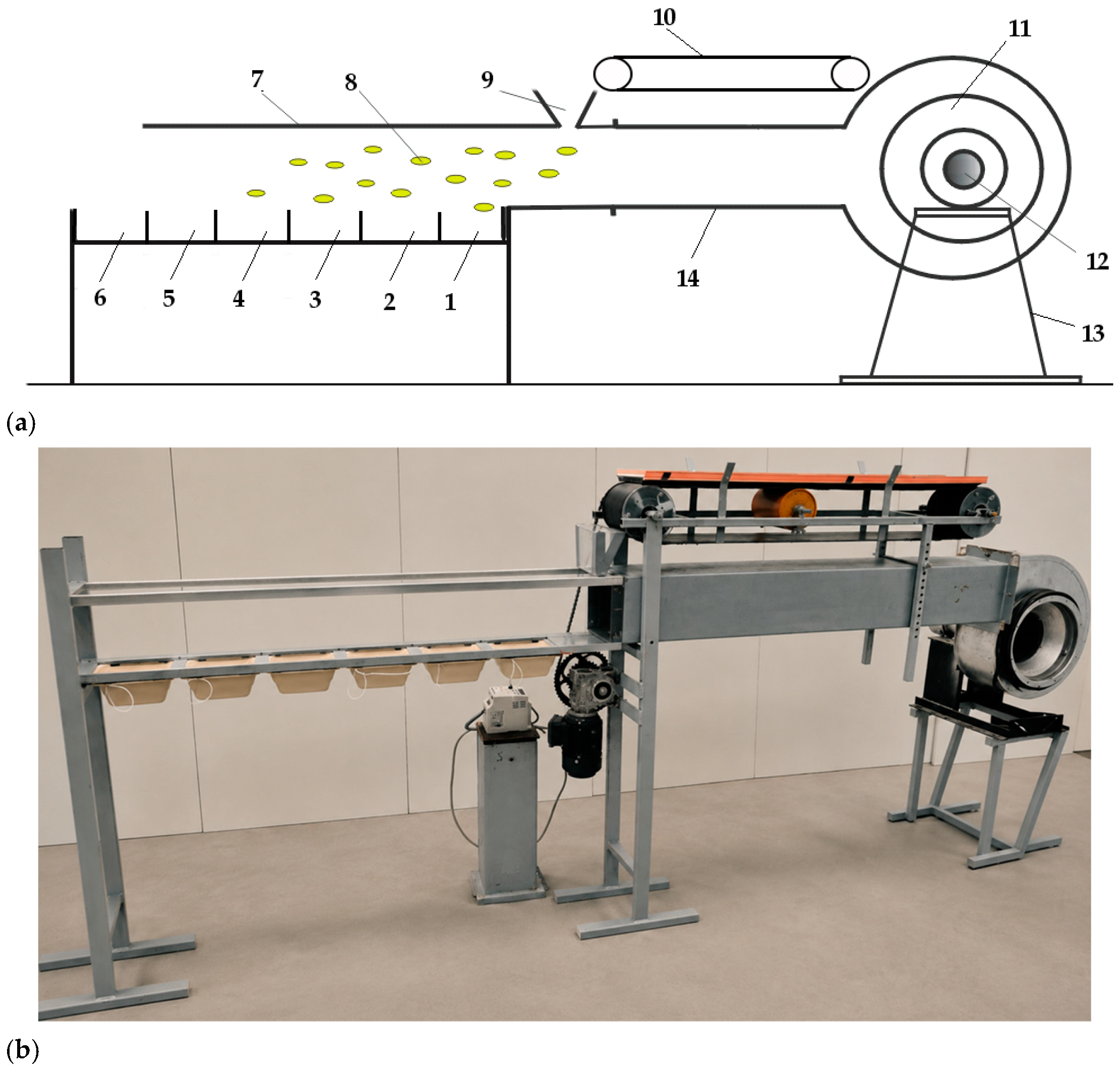
Laboratory experiments on wheat grain sorting were carried out using a grain sorting test rig (Figure 2a,b). The sorting chamber was made of transparent plexiglass.
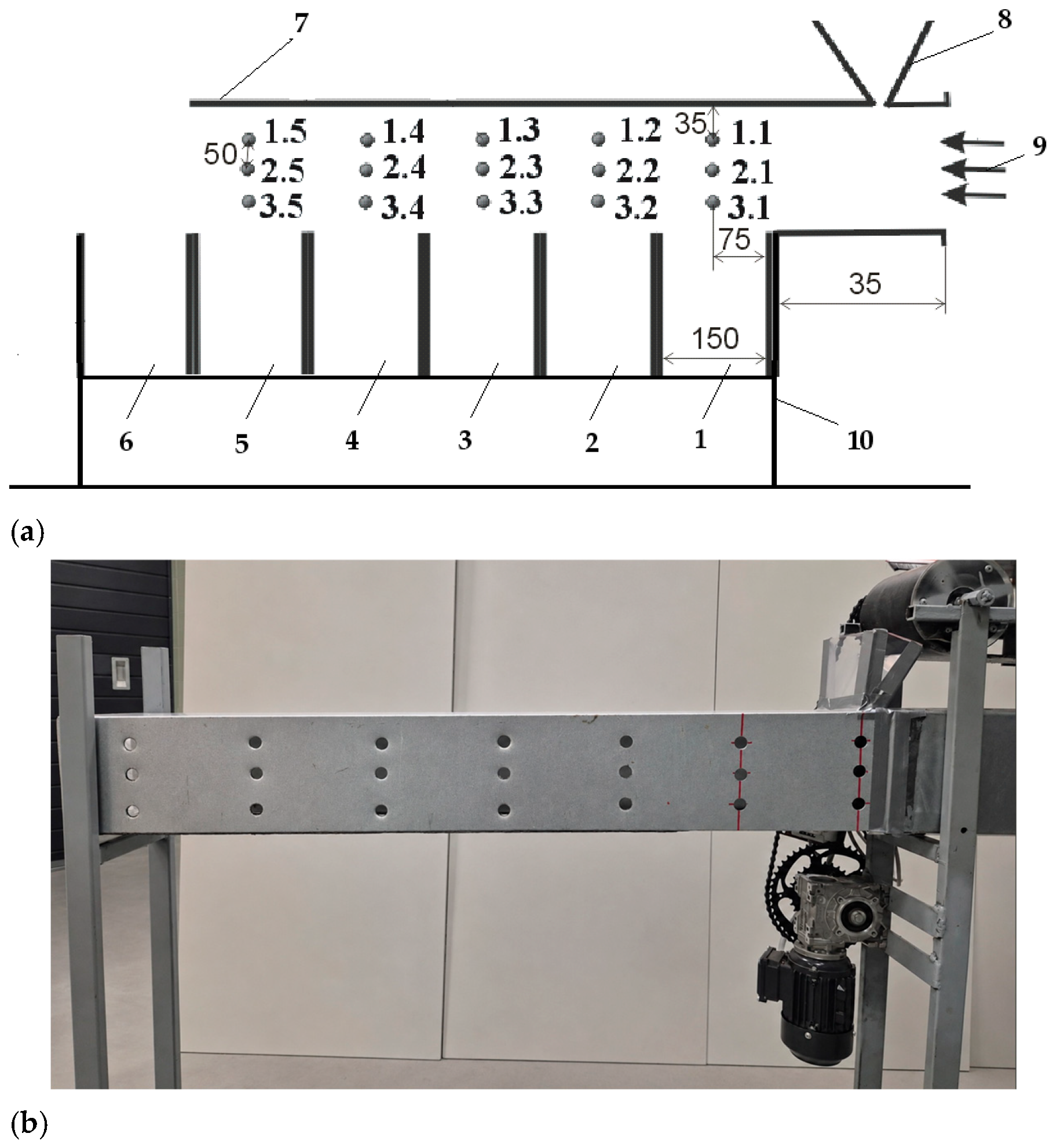
The dimensions of the sorting chamber were identical to those of the airflow equalization chamber (Figure 1). The height was 170 mm, the width was 170 mm, and the length was 1250 mm. At the top of each collection box (1–6), holes with a diameter of 17 mm were drilled at 150 mm intervals. These holes were used to insert airflow velocity sensors for airflow velocity measurements. The locations of airflow measurement points are shown in Figure 3a,b.
The airflow velocity in the sorting chamber was varied from 9.5 to 11.5 m s−1, corresponding to grain feed rates of 1 and 2 kg min−1. Airflow velocity was adjusted by changing the rotation speed of the electric motor using a frequency converter “Delta VFD-B” (Delta Electronics, Taoyuan, Taiwan) in the fan drive. Airflow velocity at different points in the chamber was measured using a digital data logger “Testo 440” with a measurement range of 0.1–40 m s−1. The air flow velocity at each point in the sorting chamber was measured in triplicate. The test results are presented as mean airflow velocity values.
Grains were weighed, and their distribution in the sorting chamber was determined. A “CAS SW-1” (CAS Corporation, Seoul, South Korea) balance was used to weigh the grains collected in the boxes, with a maximum capacity of 5 kg and an accuracy of 2 g.
The average mass of 1000 grains for the different critical velocity groups was determined using a high-precision measuring device “Elmor” (Elmor Angewandte Elektronik AG, Schwyz, Switzerland).

2.2.3. Determination of Grain Separation Efficiency

Grain separation efficiency indicates the percentage of grains successfully separated from the initial grain quantity. Grain separation efficiency is calculated according to the following formula:
µ = (b/b0) × 100
čia: µ—separation efficiency, %;
b—mass of separated grains of a certain critical velocity fraction in the box, g;
b0—total mass of grains of a certain critical velocity fraction in the sorted mixture, g.

2.2.4. Statistical Analysis

The experimental data were statistically analyzed using Microsoft Excel software. Differences among treatments were evaluated using one-way and two-way analysis of variance (ANOVA), depending on the experimental design. Statistical significance was determined at p < 0.05. Pairwise comparisons between treatment means were performed using the least significant difference (LSD) test at a 95% confidence level [28].

3. Results

3.1. Theoretical Analysis of Grain Displacement in Laminar and Turbulent Airflow

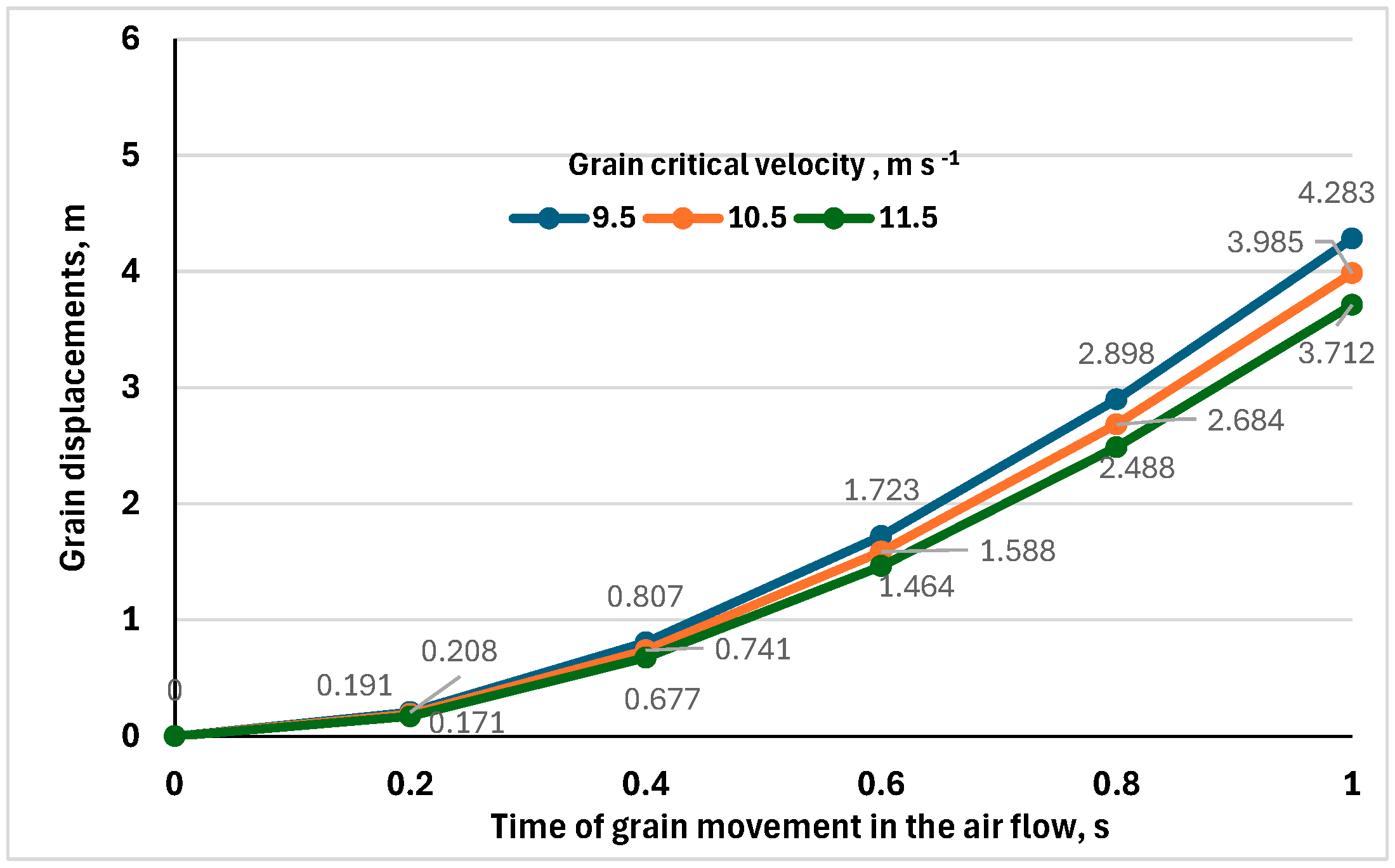
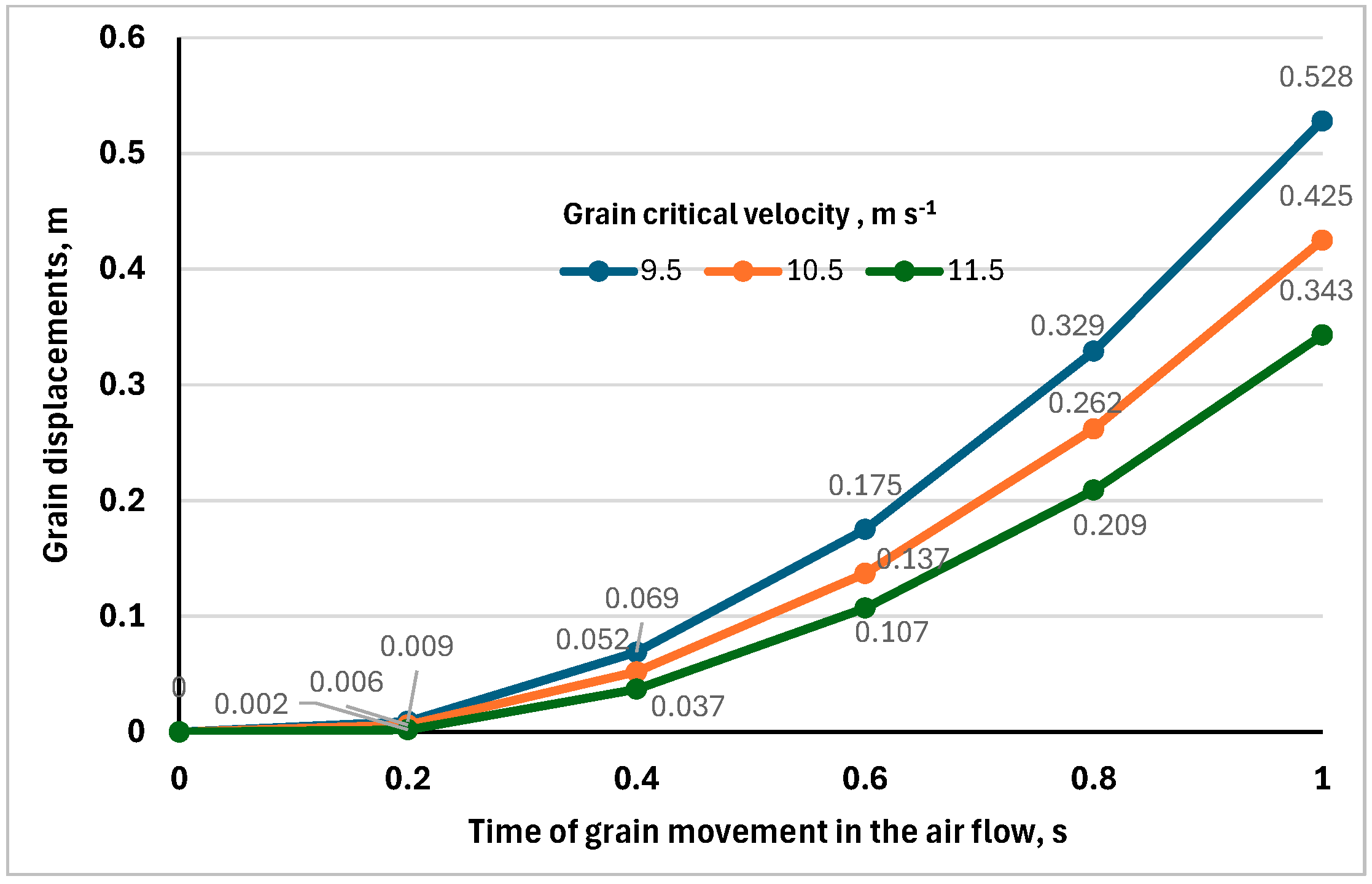
The critical velocity of grains provides the basis for the theoretical analysis of grain motion in airflow. Therefore, theoretical calculations were performed using experimentally determined critical velocity values (Section 3.2.1). Grain displacement was analyzed under laminar airflow conditions (Figure 4) and turbulent airflow conditions (Figure 5). It was determined that under turbulent airflow conditions, when U   =   11.5   m s−1, v 0   =   0.1   m s−1, α   =   5 , and β   =   0 , grains with a critical velocity of 11.5 m s−1 settled approximately 0.2 m closer than grains with a critical velocity of 9.5 m s−1. Grains with higher mass fell closer due to their higher critical velocity. The results show that airflow velocity has the strongest influence on the displacement of grains with different critical velocities along the Ox axis.
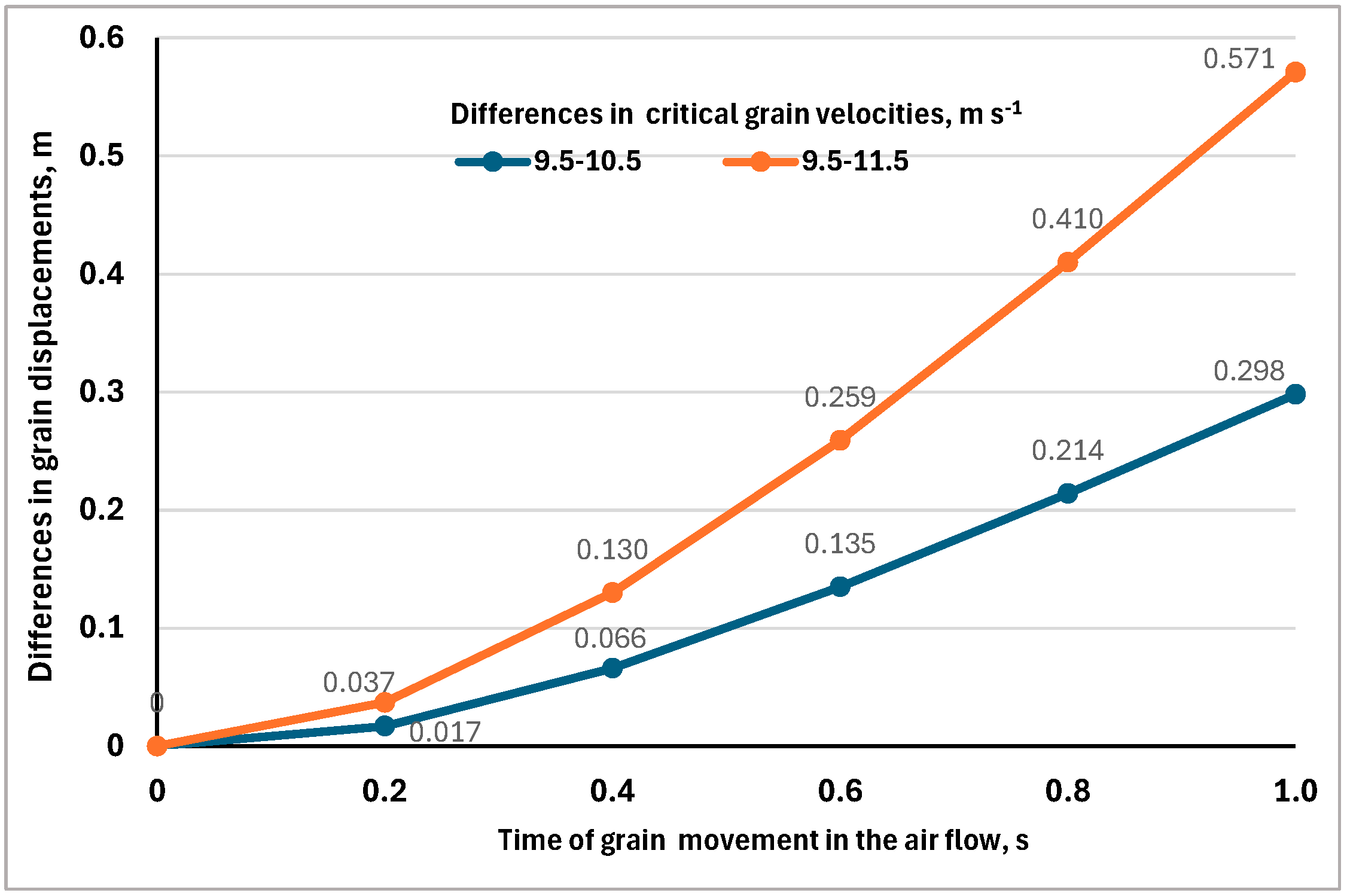
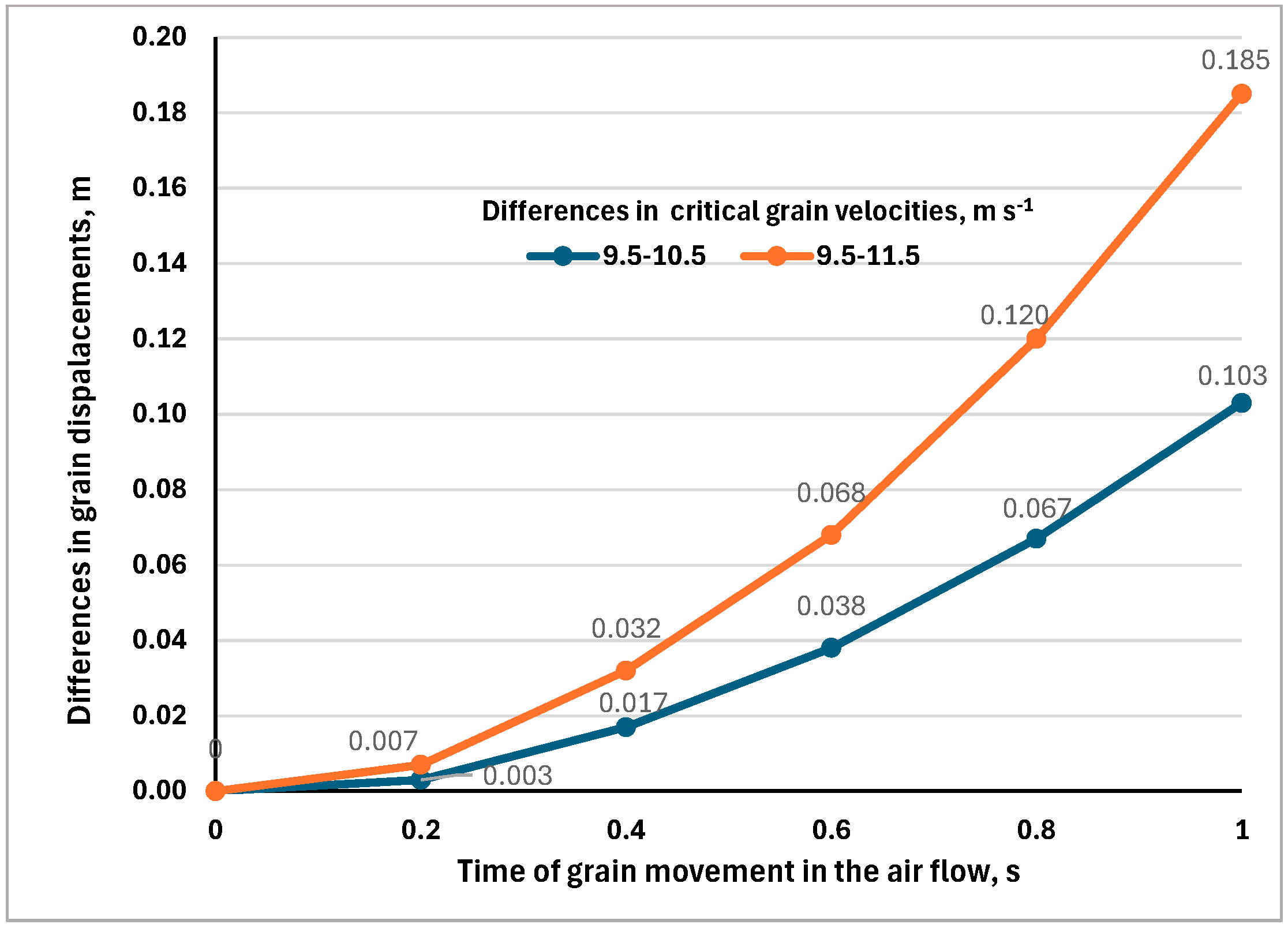
Two grains with different critical velocities can be separated when the displacement difference, Δx, between them is maximized (Figure 6 and Figure 7). This distance depends not only on the aerodynamic properties of the grains and the duration of motion, but also on the difference between the initial grain velocity v 0 and the airflow velocity U .
Under turbulent airflow conditions, it was observed that the displacement differences, Δx, between grains with different critical velocities were larger horizontal laminar airflow (Figure 6) than in turbulent airflow (Figure 7).
It was found that particle velocities along the Ox axis increase with increasing initial velocity. This behavior is also influenced by the airflow velocity. Grains with higher floating ability move faster in the airflow than less floating grains. After 1 s, they reach different positions in the sorting chamber. Based on these results, it can be concluded that grains can be separated into fractions. The differences in displacement of grains with different aerodynamic properties along the Ox axis are mainly influenced by the horizontal component of the airflow velocity vector, the initial particle velocity, and the angle of inclination.

3.2. Experimental Results

3.2.1. Aerodynamic Properties of Wheat Grains and Their Distribution by Critical Velocity

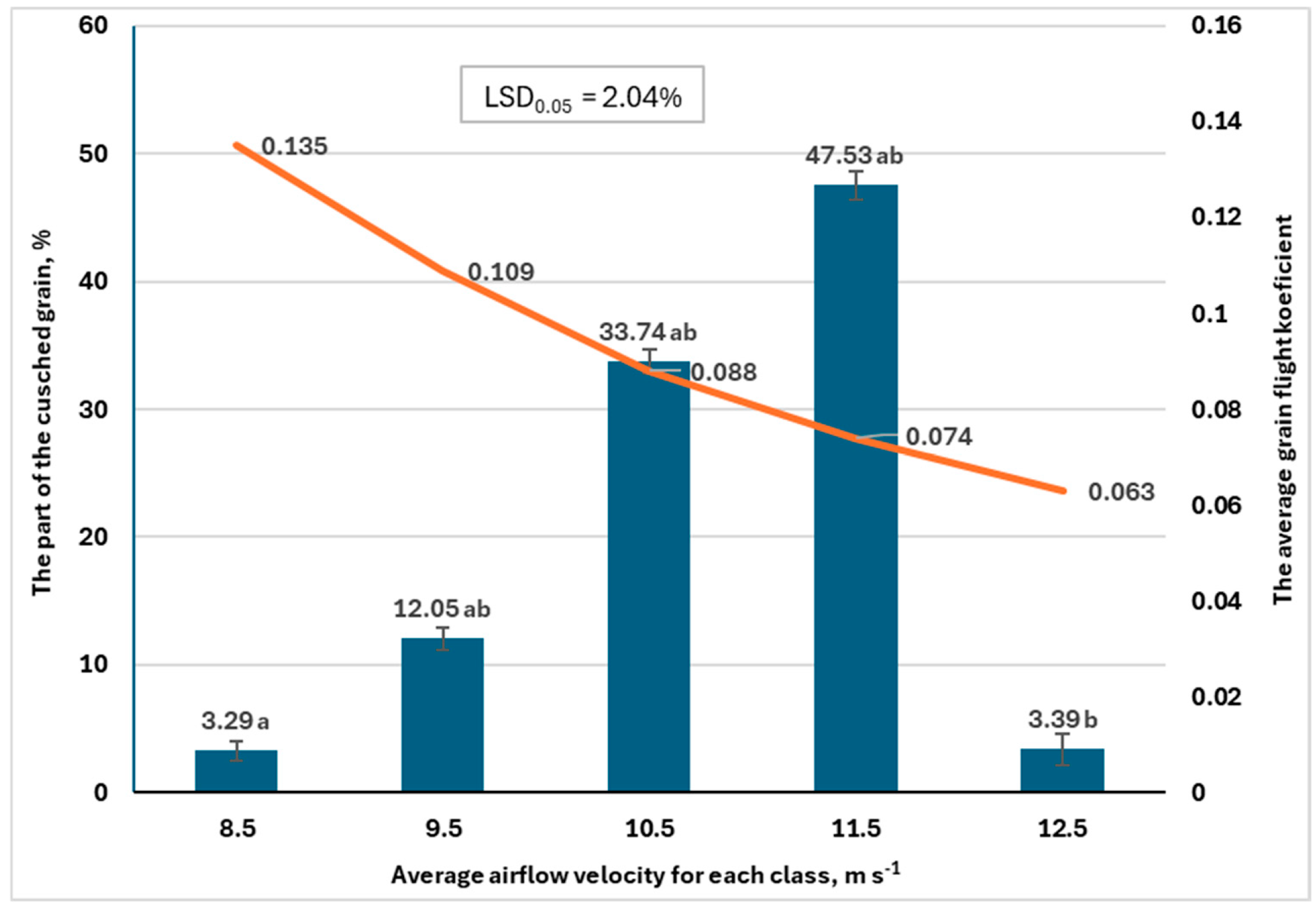
Grain critical velocity (Figure 8) was determined using a classifier in a vertical airflow. The main objective of this stage was to classify wheat grains into critical velocity groups and to separate grains with critical velocities of 9.5, 10.5, and 11.5 m s−1 in a vertical airflow. The classified grains were then supplied into a horizontal airflow to determine their displacement in the sorting chamber and to compare the results with theoretical predictions. The average critical velocity of wheat grains was found to be 10.35 m s−1, while the floating coefficient ranged from 0.135 to 0.063. As the floating coefficient increased, the airflow velocity required for grain separation decreased. The results showed that grains were mainly distributed among the critical velocity groups of 9.5, 10.5, and 11.5 m s−1 highest. The highest proportion of grains was observed in the 11.5 m s−1 critical velocity group (47.53%). ANOVA showed that grain distribution among the critical velocity groups differed significantly (F = 932.03, p = 8.2 × 10⁻¹³). Pairwise comparisons using the LSD0.05 test confirmed statistically significant differences between the grain fractions.
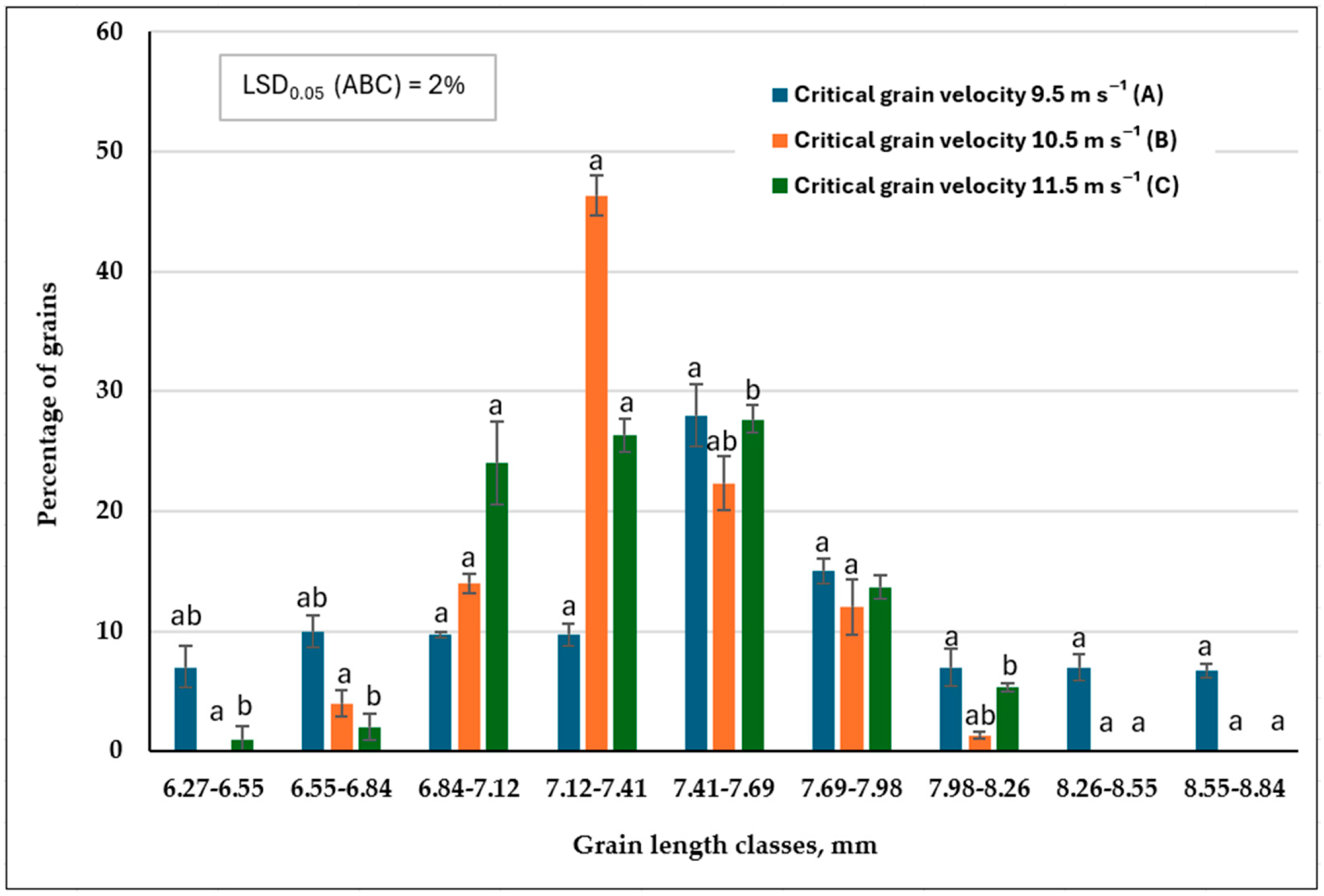
The dimensions of grains classified according to critical velocity (length, width, and thickness) were measured using an electronic caliper. The main objective of these measurements was to identify significant differences in grain size among different critical velocity groups. The following analysis examines grain dimensions, starting with length, followed by thickness, and width. The results showed that the highest proportion of grains belonged to the 10.5 m s−1 critical velocity group. Their length ranged from 7.12 to 7.41 mm (Figure 9), accounting for approximately 46.3% of the sample. ANOVA showed that grain length distribution among the critical velocity groups differed significantly depending on grain length class and its interaction with critical velocity (F = 608.76, p = 4.75 × 10−50; interaction: F = 118.94, p = 3.55 × 10−36). Pairwise comparisons using the LSD0.05 test confirmed statistically significant differences between grain fractions within individual length classes. When sorting grains in vertical airflow, separation based on length was limited. The reason why particles shorter than 6.27 mm and longer than 8.26–8.84 mm can be effectively separated is that an alternative method is needed for particles of other sizes. The remaining grains could be separated by trillers or using sieves in a pneumatic-mechanical system.
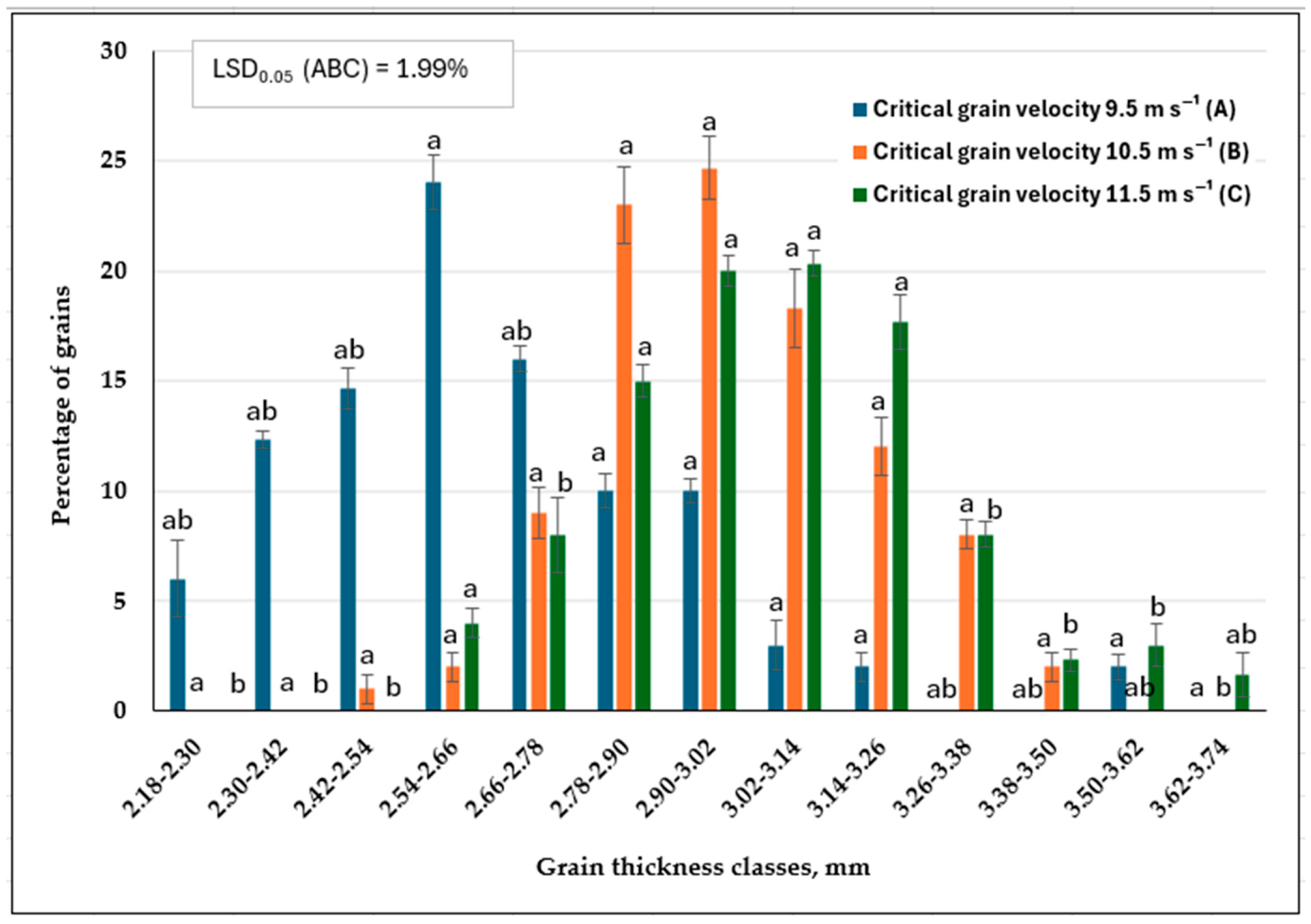
The analysis of grain thickness distribution revealed a clear relationship between grain size and critical velocity (Figure 10). Grains belonging to the 9.5 m s−1 critical velocity group were mainly concentrated in the smaller and medium size ranges. The highest proportion (~24%) was observed in the 2.54–2.66 mm thickness class. As the critical velocity increased to 10.5 m s−1, the distribution peak shifted towards larger grain sizes. The highest proportion (~24–25%) was recorded in the 2.90–3.02 mm interval. Grains belonging to the 11.5 m s−1 critical velocity group were predominantly distributed within larger size ranges, particularly in the 3.02–3.14 mm interval (~20%). A significant proportion was also observed in the 3.14–3.26 mm interval. ANOVA showed that the main effect of critical velocity group alone was not statistically significant (F = 0.512, p = 0.601), whereas grain thickness class significantly affected grain distribution (F = 213.83, p = 1.98 × 10−54). A statistically significant interaction between grain thickness class and critical velocity group was also observed (F = 97.07, p = 2.13 × 10−48). Pairwise comparisons using the LSD0.05 test confirmed statistically significant differences between grain fractions within individual thickness classes.
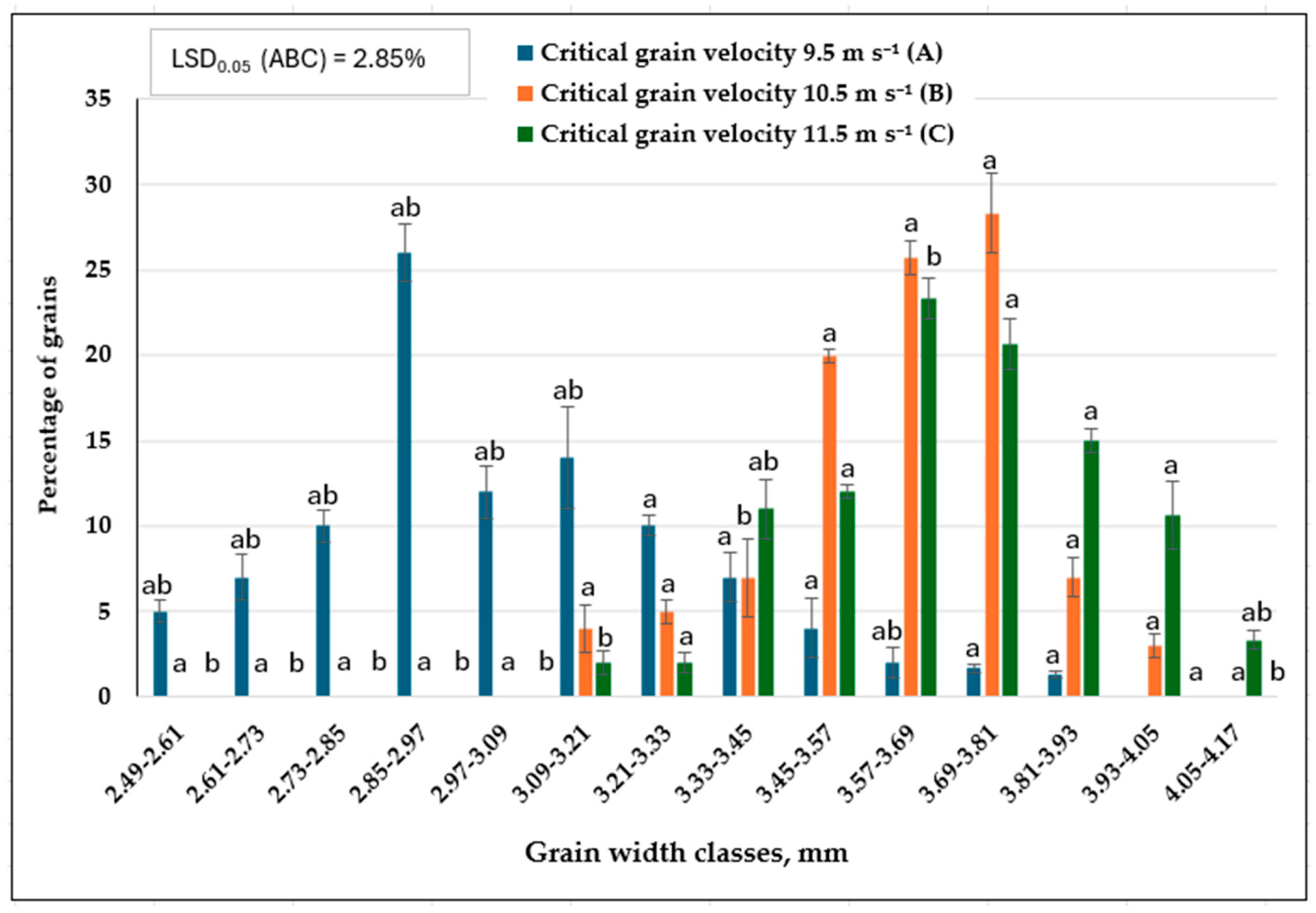
The results showed that grains with the lowest critical velocity (9.5 m s−1) were mainly concentrated in the narrower width range. The highest proportion (~26%) was observed in the 2.85–2.97 mm class (Figure 11). As the critical velocity increased to 10.5 m s−1, the distribution peak shifted toward larger grain widths. The highest proportion (~28%) was recorded in the 3.69–3.81 mm interval. Grains belonging to the 11.5 m s−1 critical velocity group were distributed within even wider size ranges. The highest proportions were observed in the 3.57–3.69 mm (~23%) and 3.69–3.81 mm (~21%) intervals. A considerable proportion was also present in the 3.81–3.93 mm interval. ANOVA showed that the main effect of critical velocity group alone was not statistically significant (F = 0.342, p = 0.711), whereas grain width class significantly affected grain distribution (F = 78.26, p = 3.31 × 10−41). A statistically significant interaction between grain width class and critical velocity group was also observed (F = 64.54, p = 5.93 × 10−45). Pairwise comparisons using the LSD0.05 test confirmed statistically significant differences between grain fractions within individual width classes.

3.2.2. Airflow Velocity Distribution in the Sorting Chamber

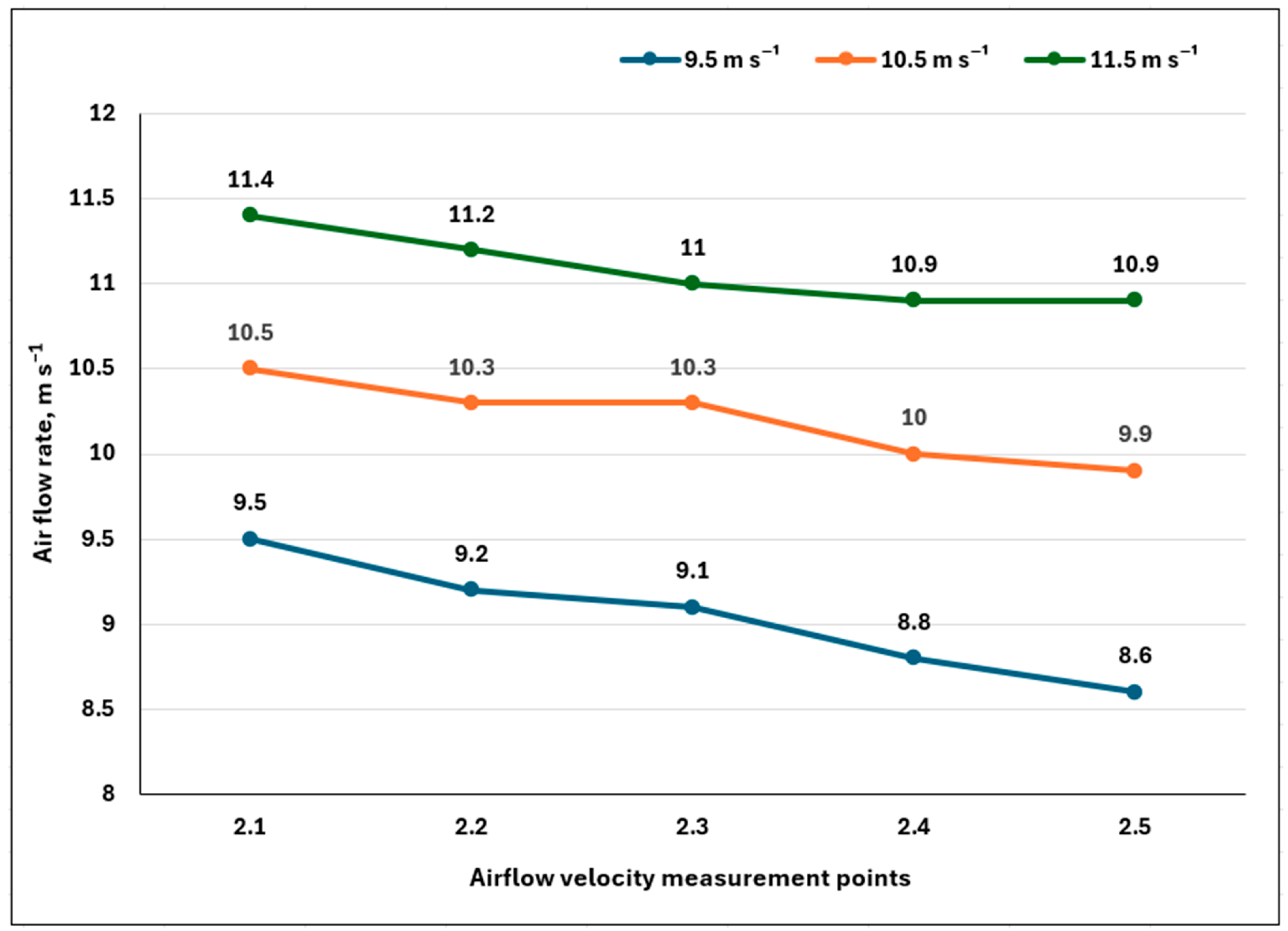
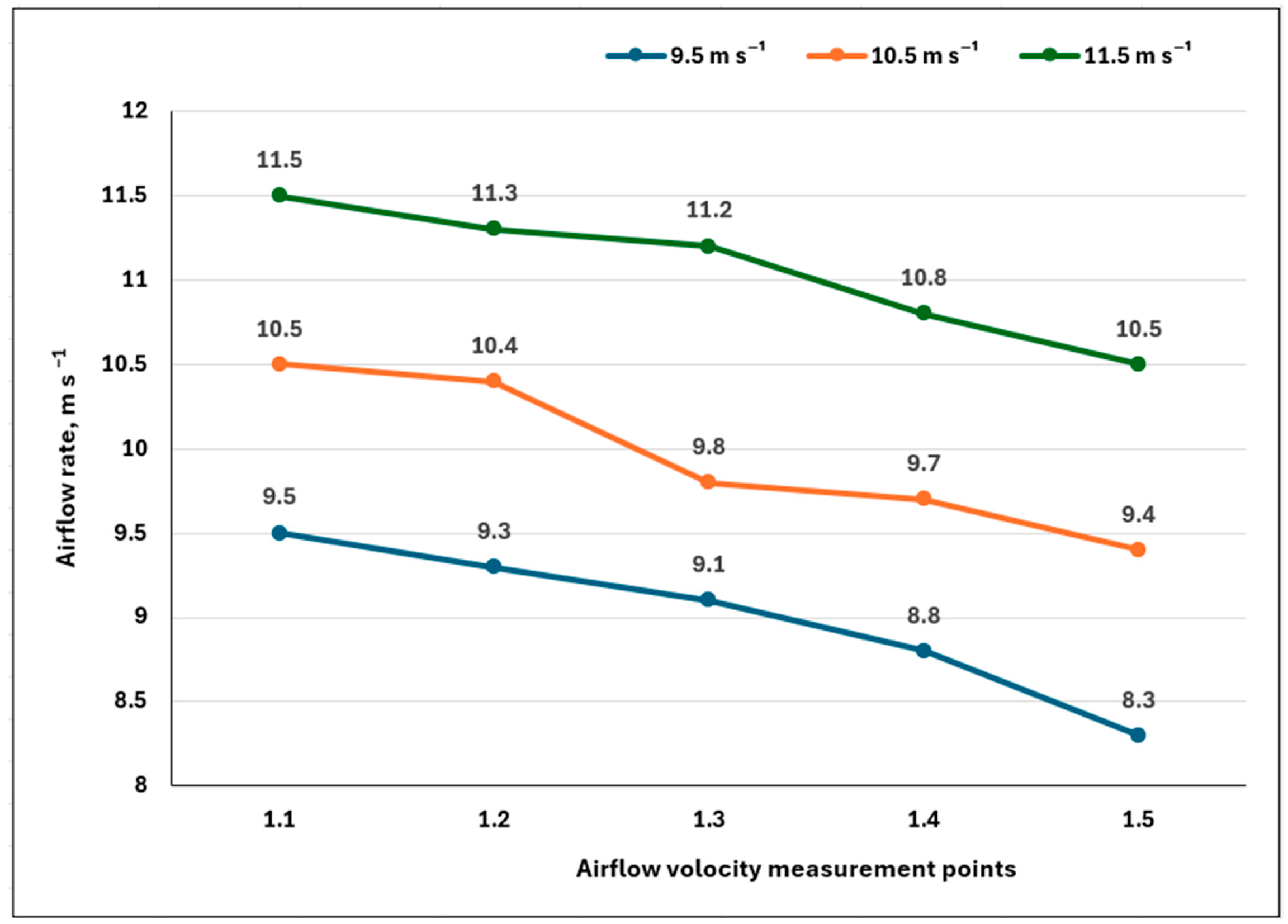
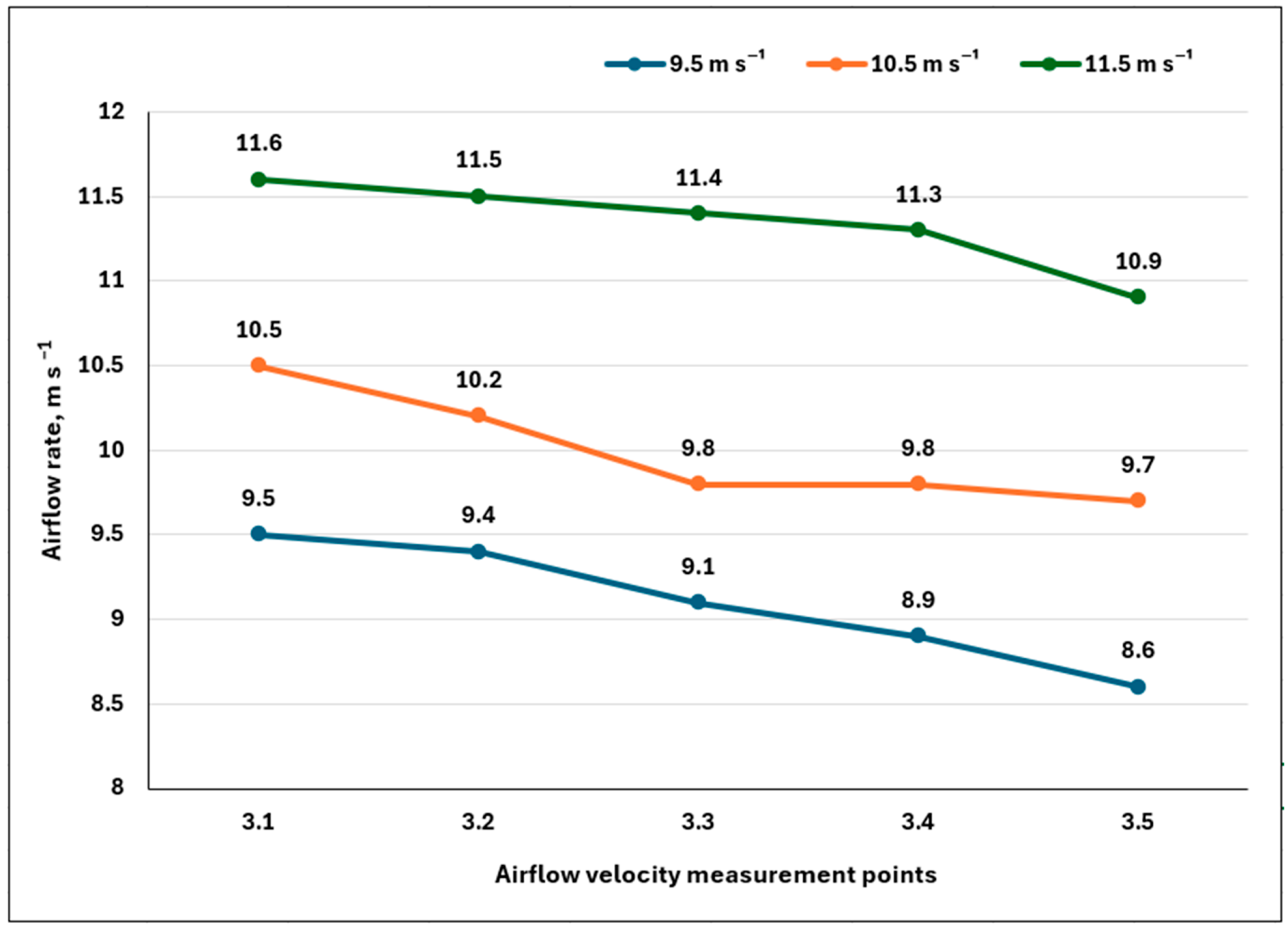
Theoretical analysis showed that airflow velocity has the greatest influence on the motion of grains with different aerodynamic properties and on their displacement differences. Therefore, it is essential to determine airflow velocities in the sorting chamber in both transverse and longitudinal directions. Based on the measurement scheme (Figure 2), airflow velocities were recorded at different points in the chamber. The results revealed a general trend of a slight decrease in airflow velocity along the longitudinal direction of the chamber, including the upper, middle, and lower regions (Figure 12, Figure 13 and Figure 14). The smallest variations in airflow velocity were observed in the upper part of the sorting chamber at higher airflow velocity (11.5 m s−1). Velocity fluctuations were influenced by vortices formed under turbulent airflow conditions, as well as by friction against the chamber walls.

3.2.3. Effect of Grain Flow Rate on Grain Displacement at Different Critical Velocities

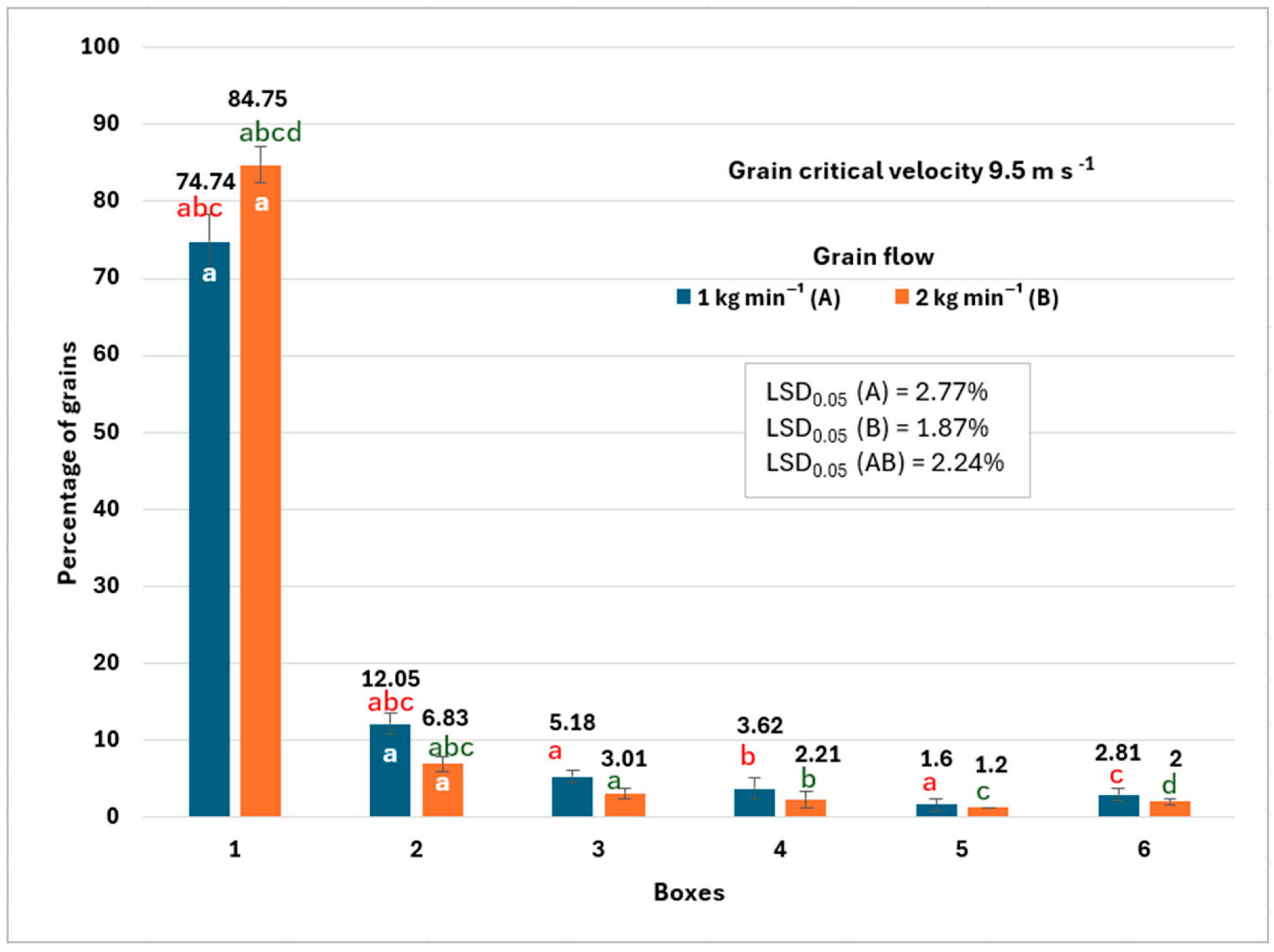
The results showed that when grain feed rate increased from 1 to 2 kg min−1 in an airflow of 9.5 m s−1, the highest proportion of grains was collected in the first box (Figure 15). Analysis of grain motion images revealed that at a feed rate of 1 kg min−1, grains collided less frequently and were less likely to deviate from their initial trajectories compared to a higher feed rate of 2 kg min−1. Increasing the grain feed rate led to a higher concentration of grains in the airflow. As a result, airflow through the void spaces between grains decreased, and airflow resistance increased. Consequently, a larger proportion of grains was collected in the second box. ANOVA showed that grain distribution was significantly affected by collection box position (F = 3271.73, p = 3.54 × 10⁻³³) and by the interaction between grain feed rate and collection box position (F = 22.96, p = 2 × 10⁻⁸). However, the main effect of grain feed rate alone was not statistically significant (F = 0.000329, p = 0.986). Pairwise comparisons using the LSD0.05 test confirmed statistically significant differences between grain distributions at different grain flow rates within individual collection boxes. Significant differences were observed between the first box and the remaining boxes, regardless of grain feed rate. In addition, grain feed rates of 1 and 2 kg min−1 resulted in statistically significant differences in the first and second boxes, confirming the influence of grain flow rate on grain distribution in the airflow.
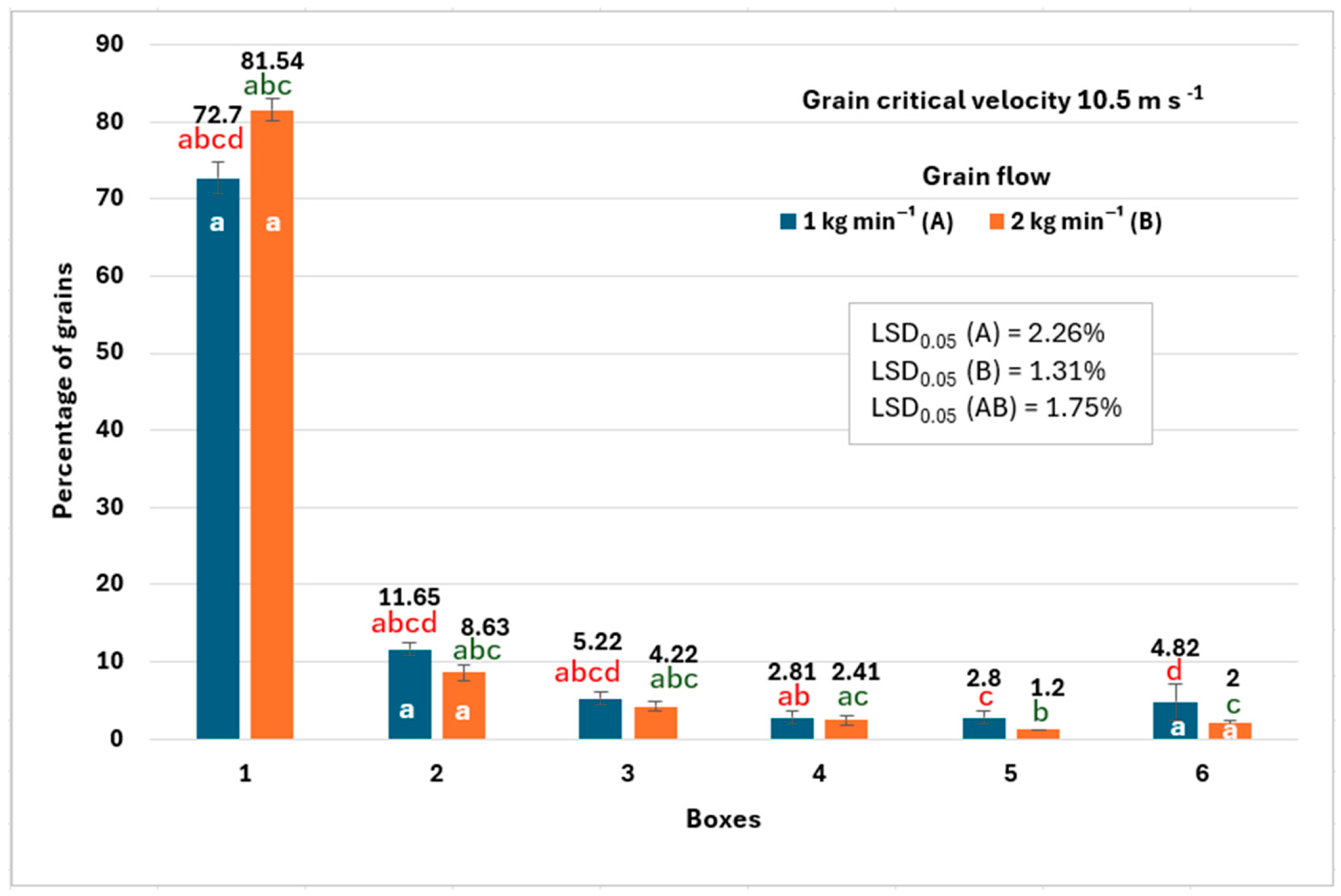
When the airflow velocity was increased to 10.5 m s−1 and grains with a critical velocity of 10.5 m s−1 were supplied at feed rates of 1 and 2 kg min−1, the grain distribution pattern among the boxes was similar to that observed at a critical velocity of 9.5 m s−1. The proportion of grains collected in the first two boxes decreased by approximately 4% (Figure 16). As fewer grains were collected in the first box, a larger proportion was carried into the subsequent boxes. ANOVA showed that grain distribution was significantly affected by collection box position (F = 4924.82, p = 2.63 × 10⁻³⁵) and by the interaction between grain feed rate and collection box position (F = 27.48, p = 3.4 × 10⁻⁹). However, the main effect of grain feed rate alone was not statistically significant (F = 1.01 × 10⁻¹¹, p = 0.999997). Pairwise comparisons using the LSD0.05 test confirmed statistically significant differences between grain distributions at different grain flow rates within individual collection boxes. The proportion of grains in the first box was significantly higher than in the other boxes, regardless of grain feed rate. In addition, different grain feed rates (1 and 2 kg min−1) had a statistically significant effect on grain distribution in the first and second boxes, where significant differences between feed rates were observed.
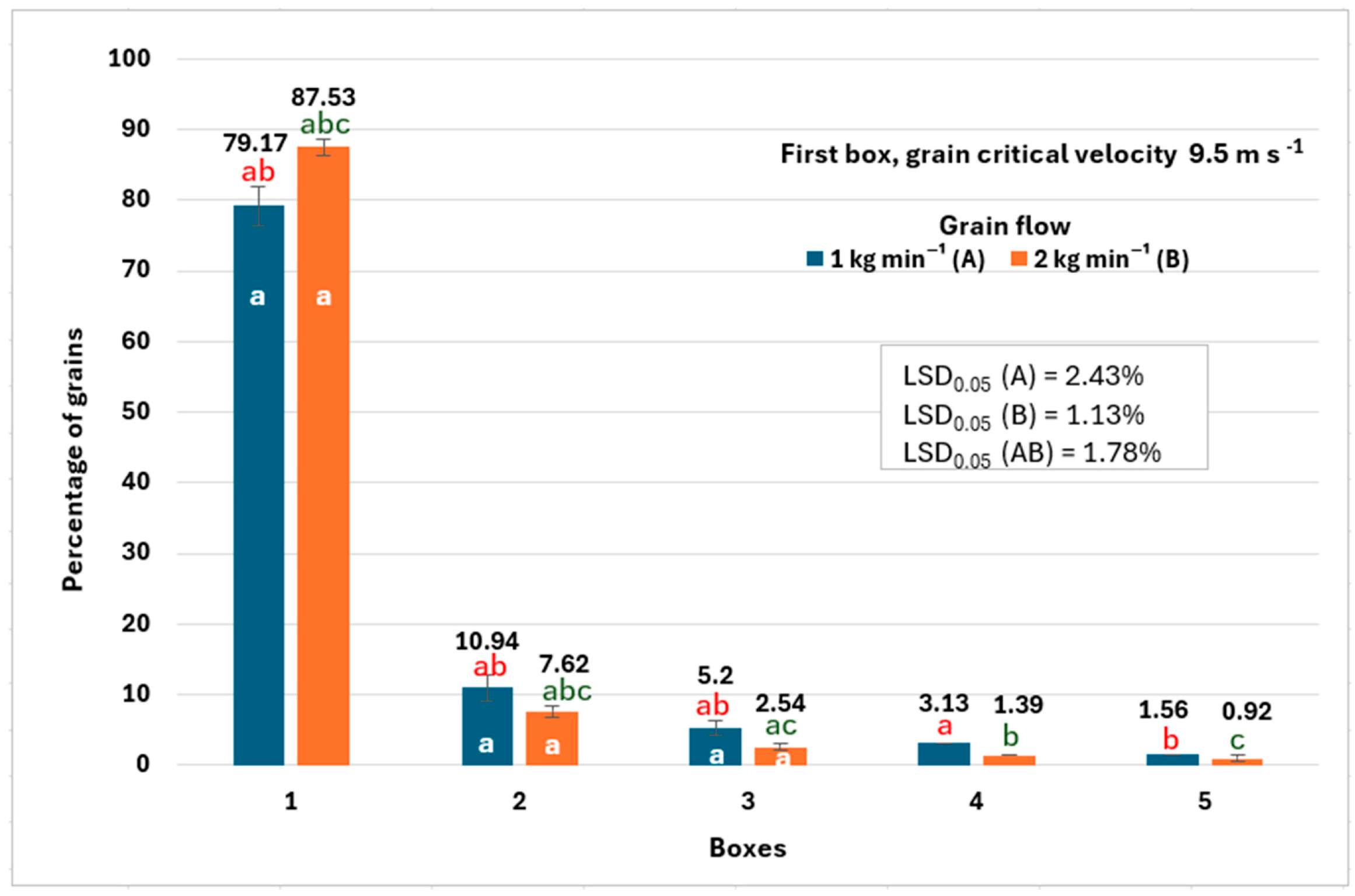
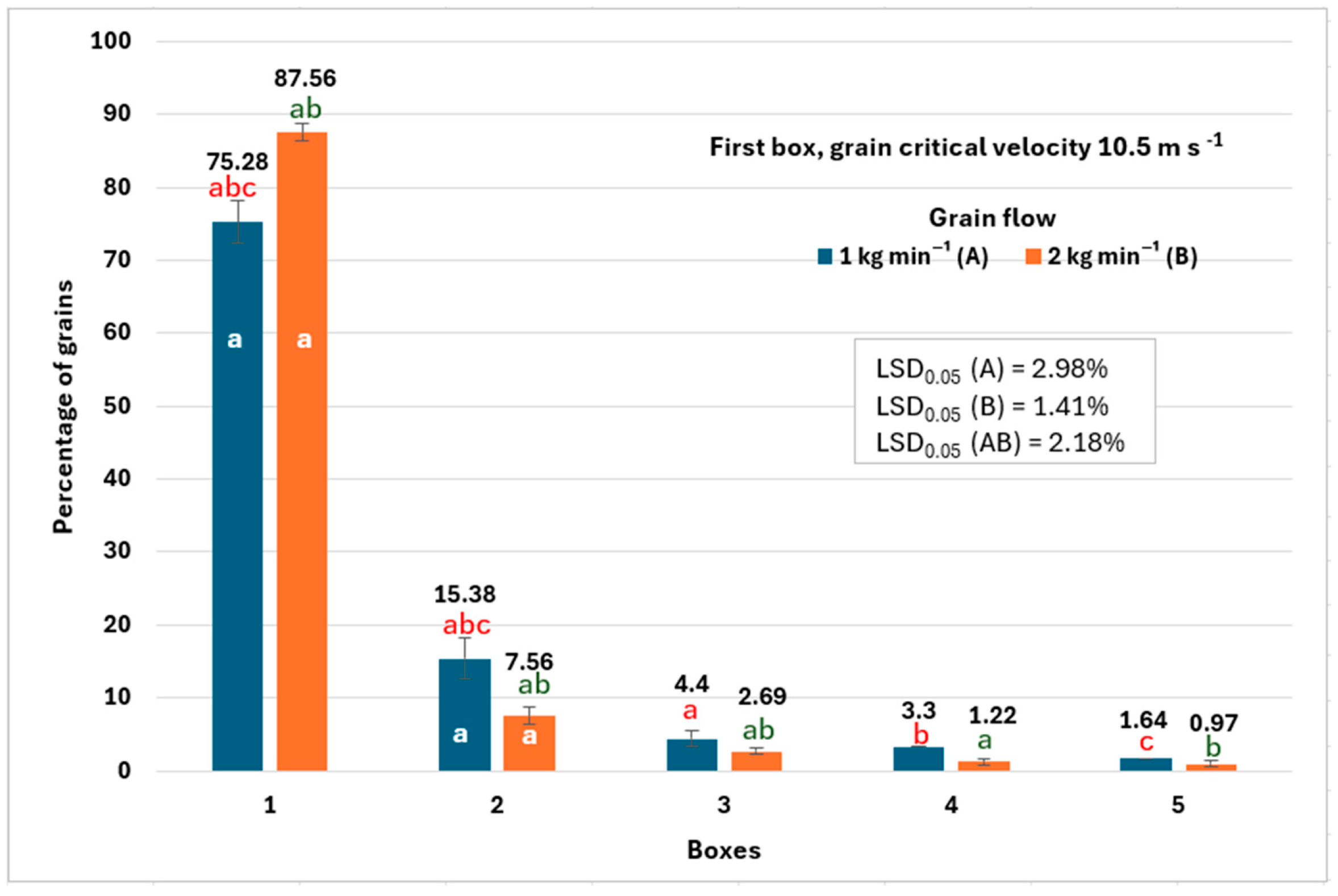
As grains move in the airflow, they change their orientation, which affects their aerodynamic drag. Therefore, it was important to determine whether grains that were previously collected in the first box (Figure 15 and Figure 16) would again be collected only in the first box when reintroduced into the airflow. The results showed that, at a critical velocity of 9.5 m s−1, 79.2% and 87.5% of grains were collected in the first box, while the remaining grains were distributed among the subsequent boxes (Figure 17). It was observed that the blowing distance of grains and their distribution among the boxes depend on the orientation of grains when entering the airflow, the number of rotations during motion, and the concentration of grains in the airflow. ANOVA showed that grain distribution was significantly affected by collection box position (F = 6985.30, p = 3.85 × 10⁻³¹) and by the interaction between grain feed rate and collection box position (F = 32.65, p = 1.65 × 10⁻⁸). However, the main effect of grain feed rate alone was not statistically significant (F = 0.0148, p = 0.904). Pairwise comparisons using the LSD0.05 test confirmed statistically significant differences between grain distributions at different grain flow rates within individual collection boxes. The proportion of grains collected in the first box was significantly higher than in the other boxes for both grain feed rates. In addition, grain feed rate had a statistically significant effect on the amount of grains collected in the first box.
When grains with a higher critical velocity (10.5 m s−1) that had been collected in the first box were reintroduced into the airflow, their redistribution (Figure 18) was similar to that observed at an airflow velocity of 9.5 m s−1. Approximately 25% of the grains (at a feed rate of 1 kg min−1) and 13% (at a feed rate of 2 kg min−1) were distributed into the subsequent boxes. ANOVA showed that grain distribution was significantly affected by collection box position (F = 4323.71, p = 4.65 × 10⁻²⁹) and by the interaction between grain feed rate and collection box position (F = 50.95, p = 3.28 × 10⁻¹⁰). However, the main effect of grain feed rate alone was not statistically significant (F = 0.0168, p = 0.898). Pairwise comparisons using the LSD0.05 test confirmed statistically significant differences between grain distributions at different grain flow rates within the same collection boxes.
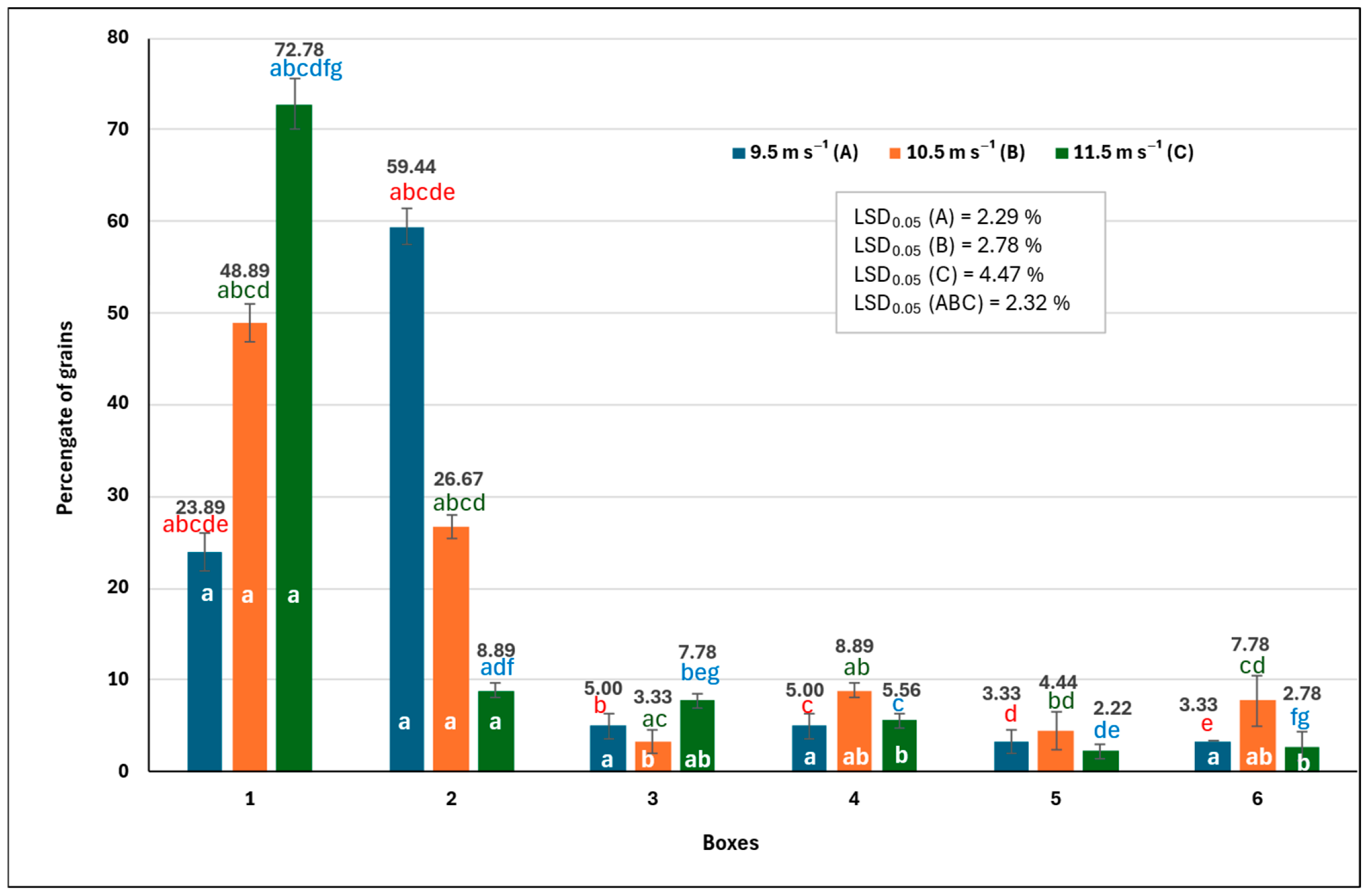
When grains with critical velocities of 9.5, 10.5, and 11.5 m s−1 were introduced into an airflow of 11.5 m s−1, separation in the first box was not achieved. Therefore, the motion of individual grains in the airflow was analyzed (Figure 19). The results showed that grains with different critical velocities were distributed across all boxes. As the critical velocity increased, a larger proportion of grains was collected in the first box. At 11.5 m s−1, as much as 72.8% of grains were collected in the first box, while the remaining grains were distributed among the subsequent boxes. ANOVA showed that grain distribution was significantly affected by collection box position (F = 1609.23, p = 1.97 × 10−57) and by the interaction between grain critical velocity and collection box position (F = 380.89, p = 2.52 × 10−46). Pairwise comparisons using the LSD0.05 test confirmed statistically significant differences between grain distributions within the collection boxes. Grains with different critical velocities (9.5, 10.5, and 11.5 m s−1) showed significant differences in their distribution in the first and second boxes. The highest values were observed for 11.5 m s−1 grains in the first box and for 9.5 m s−1 grains in the second box. In the subsequent boxes (3–6), differences between grain groups remained but decreased in magnitude. In some cases, these differences were not statistically significant. This indicates that the grain critical velocity had a significant influence on grain distribution during the initial phase of motion.
It was observed that grain acceleration at the initial section of the sorting chamber is strongly influenced by the orientation of grains when entering the airflow. This factor also affects their subsequent behavior in the airflow. In all cases, the majority of grains were collected in the first two boxes. The results showed that critical velocity had a significant effect on grain displacement in the initial section of the sorting chamber, particularly in the first and second boxes. Grains with different aerodynamic properties impacted the bottom of the first box at different locations and subsequently mixed. To further investigate this behavior, an organic glass strip was installed in place of the collection boxes, and the impact positions of individual grains were recorded. The results confirmed that grains with different aerodynamic properties exhibited different displacement distances within the chamber. Heavier grains with a critical velocity of 11.5 m s−1 fell closest to the inlet, while grains with a critical velocity of 9.5 m s−1 traveled further. The average differences in landing positions were approximately 0.08 and 0.14 m. These results indicate that narrower partitions should be installed in the sorting chamber to improve the separation of grains with different aerodynamic properties. The mass of grains also varied with critical velocity. As the critical velocity increased, the average mass of 1000 grains increased proportionally. The average mass of 1000 grains was 36.68 ± 0.18 g at 9.5 m s−1, 54.49 ± 0.13 g at 10.5 m s−1, and 58.32 ± 0.02 g at 11.5 m s−1.

4. Discussion

Different types of airflow are used for grain sorting, and their selection depends on technological requirements and equipment design parameters.
Previous studies indicate that airflow velocity in grain cleaning machines should be selected based on the critical velocity of grains [29,30]. Knowledge of critical velocity allows theoretical analysis of the motion of grains with different aerodynamic properties in airflow. Such analyses enable more accurate selection of technological parameters for grain separators used in cleaning and sorting processes [31,32]. The obtained average critical velocity of wheat grains (10.35 m s−1) and the variation in floating coefficient values indicate substantial differences in grain aerodynamic behavior. These differences are important because particles with lower floating coefficients require lower aerodynamic forces to remain suspended, resulting in longer residence times in the airflow and greater displacement distances. Similar relationships between aerodynamic properties, particle suspension, and displacement behavior were reported in previous pneumatic separation studies [10,17,32].
Theoretical analysis demonstrated that airflow velocity has the greatest influence on the dispersion of grains with different critical velocities along the Ox axis. This finding is consistent with a previous study [3]. It was also observed that displacement differences between such grains are larger in horizontal laminar airflow than in turbulent airflow, which agrees with an earlier result [33]. This behavior can be explained by the greater stability of laminar airflow, where particle trajectories are less affected by turbulent vortices and local airflow fluctuations [20,24,26]. Under turbulent conditions, irregular airflow structures increase random particle movement and reduce the predictability of grain trajectories, resulting in smaller displacement differences between grain fractions [16,33].
In horizontal or horizontal airflow, the horizontal component of airflow velocity plays a major role in determining grain trajectories. As a result, grains with different aerodynamic properties move along different paths [10,16,33]. Based on theoretical calculations, grains with critical velocities of 9.5, 10.5, and 11.5 m s−1 can be separated into distinct fractions. The obtained results indicate that grain separation efficiency depends not only on critical velocity itself, but also on the interaction between airflow direction and grain geometric characteristics. Unlike grain thickness and width, the relationship between grain length and critical velocity was less pronounced. This can be explained by the fact that grain thickness and width more strongly influence the projected surface area perpendicular to the airflow direction and therefore have a greater effect on aerodynamic drag force. Similar relationships between grain dimensions and aerodynamic behavior were observed in previous studies [5,19,21]. Although certain length ranges dominated within specific groups, grain length had a smaller effect on aerodynamic properties than other geometric parameters. Critical velocity was found to depend more strongly on transverse dimensions (thickness and width) than on length.
Laboratory experiments showed that, at an airflow velocity of 11.5 m s−1 and a grain feed rate of about 1 kg min−1, only 65–70% of grains could be separated. This indicates that separation efficiency is limited at higher grain feed rates. As the grain feed rate increased, the total number of grains collected in the first two boxes also increased. However, the separation of grains with different aerodynamic properties decreased to approximately 55%, indicating reduced efficiency. The reduction in separation efficiency at higher grain feed rates is mainly associated with increased grain concentration in the airflow [15,17,34]. Under these conditions, inter-particle collisions become more frequent, particle trajectories become unstable, and airflow penetration through the grain layer decreases, which reduces separation selectivity [13,22,32].
These results can be explained by the interaction time between grains and airflow, as well as by grain trajectories. Previous studies indicate that this interaction is generally longer in vertical airflow than in horizontal airflow, which may result in more efficient separation [10,17]. This is consistent with findings that vertical airflow is commonly used to remove light impurities and small grains [13,17,31,34]. Longer interaction time allows aerodynamic forces to act on grains for a greater duration, thereby increasing displacement differences between particles with different critical velocities. Similar observations regarding interaction time and separation efficiency have been reported in previous studies [10,17,31].
It is also reported that separation efficiency increases when grains are supplied into the airflow as a uniform, thin layer [15,32,34]. Therefore, higher feed rates can reduce separation accuracy. Differences between theoretical predictions and experimental results can be attributed to the complexity of real conditions. In practice, it is difficult to accurately account for grain orientation and position in the airflow, as grains enter the flow at different angles and orientations. Furthermore, particle rotation and repeated collisions modify the effective aerodynamic surface area during movement, leading to deviations from theoretical trajectories predicted under simplified conditions. Similar particle behavior during pneumatic transport has also been described in previous studies [16,24,25]. This is confirmed by experiments in which grains previously collected in the first box or individual grains with different aerodynamic properties were reintroduced into a horizontal sorting chamber with a constant cross-section.
The analysis of 1000-grain mass showed that grains with higher critical velocity had greater mass. Previous studies have also demonstrated a strong relationship between grain quality parameters and critical velocity. This confirms that grains and seeds can be effectively sorted based on mass and density [32]. Heavier grains require greater aerodynamic force to remain suspended in the airflow, which explains their higher critical velocity and shorter displacement distance in the sorting chamber [13,21,32]. However, increasing the size of the sorting chamber leads to higher energy consumption. Therefore, in practice, combined systems with sieve-based cleaning units are commonly used [11].

5. Conclusions

The study demonstrated that wheat grain separation in airflow strongly depends on grain aerodynamic properties, airflow regime, and grain feed conditions. The average critical velocity of wheat grains was 10.35 m s−1 at a moisture content of 14.2%, while the average floating coefficient was approximately 0.092, confirming substantial variability in grain aerodynamic behavior.
Theoretical and experimental analyses showed that airflow regime significantly influences grain displacement dynamics. Larger displacement differences between grain fractions were observed under horizontal laminar airflow conditions, whereas turbulent airflow reduced trajectory stability and separation predictability.
Experimental investigations confirmed that increasing grain feed rate reduced separation efficiency due to increased grain concentration, more frequent particle collisions, and reduced airflow penetration through the grain layer. Under higher grain feed rates, separation efficiency decreased to approximately 55%, indicating that material flow intensity is one of the main factors limiting sorting accuracy.
Grain critical velocity was closely related to grain physical properties, particularly grain mass and transverse dimensions. Grains with higher critical velocity exhibited greater mass and shorter displacement distances in the sorting chamber.
The obtained results demonstrate that efficient pneumatic grain sorting requires optimization of airflow conditions together with controlled grain feeding intensity to ensure stable particle trajectories and improved separation efficiency. Therefore, future pneumatic grain sorting systems should be designed to ensure stable airflow conditions and controlled grain feeding intensity, thereby improving particle trajectory stability, separation selectivity, and overall sorting efficiency.

Author Contributions

Conceptualization, E.V. and K.L.; methodology, E.V.; software, S.B.; validation, K.L. and A.J.; formal analysis, E.V., K.L. and A.J.; investigation, E.V. and K.L.; resources, E.V., K.L. and S.B.; data curation, E.V.; writing—original draft preparation, E.V. and K.L.; writing—review and editing, E.V., K.L. and A.J.; visualization, E.V., K.L. and S.B.; supervision, E.V.; project administration, K.L. and E.V.; funding acquisition, E.V., K.L. and S.B. All authors have read and agreed to the published version of the manuscript.

Funding

This research received no external funding.

Data Availability Statement

Data are contained within the article.

Conflicts of Interest

The authors declare no conflicts of interest.

References

  1. Chai, Y.; Pardey, P.G.; Silverstein, K.A.T. A century of increasing crop varietal diversity in US wheat. Agric. Sci. 2022, 119, e2210773119. [Google Scholar] [CrossRef]
  2. Ghosh, P.K.; Das, A.; Saxena, R.; Banerjee, K.; Kar, G.; Vijay, D. Trajectory of 75 Years of Indian Agriculture After Independence; Springer: Berlin/Heidelberg, Germany, 2023; 790p. [Google Scholar] [CrossRef]
  3. Vaiciukevičius, E.; Jasinskas, A.; Jotautienė, E.; Domeika, R.; Gerdauskaus, K.; Zinkevičienė, R.; Lekavičienė, K. Determination of Optimal Technological Parameters for Sorting Wheat Grains in Chambers of Different Constructions. Processes 2023, 11, 3441. [Google Scholar] [CrossRef]
  4. Stepanenko, S.; Volyk, D.; Kuzmych, A.; Melnyk, V. Theoretical study of Grain Particle Movement in Vibro-Aerodynamic Field. In Proceedings of the Engineering for Rural Development, Jelgava, Latvia, 21–23 May 2025. [Google Scholar] [CrossRef]
  5. Choszcz, J.; Reszczynski, P.S.; Kolankowska, E.; Konopka, S.; Lipinski, A. The Effect of Selected Factors on Separation Efficiency in a Pneumatic Conical Separator. Sustainability 2020, 12, 3051. [Google Scholar] [CrossRef]
  6. Konopka, S.; Choszcz, D.; Wierzbicki, K. Wpływ wilgotności mieszaniny na skuteczność procesu rozdziału gryki od zanieczyszczeń w obrotowym sicie szczelinowym (The effect of the moisture content of a seed mixture on the separation efficiency of buckwheat seeds and impurities in a rotary groove separator). Inżynieria Rol. 2000, 9, 119–125. [Google Scholar]
  7. Xiao, Y.; Wang, H.; Shao, X. 2D numerical modeling of grain-sorting processes and grain size distributions. J. Hydro-Environ. Res. 2014, 8, 452–458. [Google Scholar] [CrossRef]
  8. Panasiewicz, M.; Mazur, J.; Zawiślak, K.; Kulig, R.; Łysiak, G. The Process of Separation of Husked Soybean in Oblique Airflow. Sustainability 2020, 12, 7566. [Google Scholar] [CrossRef]
  9. Dong, H.; Zhang, B.; Jiang, T.; Zhang, Y.; Qu, J.; Chen, C.; Xiao, Y.; Ding, Y.; Xi, X. Design and Optimization of Rice Grain Screening System Based on DEM-CFD Coupled Rice Seed Testing Platform. Agronomy 2022, 12, 3069. [Google Scholar] [CrossRef]
  10. Stepanenko, S.; Kotov, B.; Kuzmych, A.; Shvydia, V.; Kalinichenko, R.; Kharchenko, S.; Shchur, T.; Kocira, S.; Kwaśniewski, D.; Dziki, D. To the Theory of Grain Motion in an Uneven Air Flow in a Vertical Pneumatic Separation Channel with an Annular Cross Section. Processes 2022, 10, 1929. [Google Scholar] [CrossRef]
  11. Kharchenko, S.; Borshch, Y.; Kovalyshyn, S.; Piven, M.; Abduev, M.; Miernik, A.; Popardowski, E.; Kiełbasa, P. Modeling of Aerodynamic Separation of Preliminarily Stratified Grain Mixture in Vertical Pneumatic Separation Duct. Appl. Sci. 2021, 11, 4383. [Google Scholar] [CrossRef]
  12. Panasiewicz, M.; Sobczak, P.; Mazur, J.; Zawiślak, K.; Andrejko, D. The technique and Analysis of the Process of Separation and Cleaning Grain Materials. J. Food Eng. 2012, 109, 603–608. [Google Scholar] [CrossRef]
  13. Stepanenko, S. Research pneumatic gravity separation grain materials. Mech. Agric. 2017, 63, 54–56. [Google Scholar]
  14. Yampilov, S.S. Technological and Technical Support of Resource-Energy-Saving Processes of Cleaning and Sorting of Grain and Seeds, 1st ed.; VSGTU Publishing House: Ulan-Ude, Russia, 2003; pp. 200–262. (In Russian) [Google Scholar]
  15. Bulgakov, V.; Nikolaenko, S.; Holovach, I.; Boris, A.; Kiurchev, S.; Ihnatiev, Y.; Olt, J. Theory of motion of grain mixture particle in the process of aspiration separation. Agron. Res. 2020, 18, 1177–1188. [Google Scholar] [CrossRef]
  16. Adamchuk, V.; Bulgakov, V.; Ivanovs, S.; Holovach, I.; Ihnatiev, Y. Theoretical study of pneumatic separation of grain mixtures in vortex flow. Eng. Rural Devel. 2021, 20, 657–664. [Google Scholar] [CrossRef]
  17. Kroulík, M.; Húla, J.; Rybka, A.; Honzík, I. Pneumatic conveying characteristics of seeds in a vertical ascending airstream. Res. Agric. Eng. 2016, 62, 56–63. [Google Scholar] [CrossRef]
  18. Srivastava, K.; Carroll, E.; Roger, G.; Rohrbach, P.; Buckmaster, R.D. Grain Harvesting. In Engineering Principles of Agricultural Machines, 2nd ed.; Chapter 12; Asabe: St. Joseph, MI, USA, 2006; pp. 403–435. [Google Scholar]
  19. Mokhtari Nahal, A.; Arabhosseini, A.; Kianmehr, M.H. Separation of shelled walnut particles using pneumatic method. Int. J. Agric. Biol. Eng. 2013, 6, 88–93. [Google Scholar]
  20. Kumar, S.; Singh, S.; Vishwakarma, R.K.; Singh, B.R. Evaluating the effects of some relevant parameters on physicomechanical and aerodynamic properties of sunflower seed. New Agric. 2019, 30, 1–8. [Google Scholar]
  21. Sokas, S.; Vaiciukevičius, E.; Jasinskas, A. Studies on the intensity of wheat grain sorting in air flow. In Proceedings of the Human and Nature Safety, Kaunas, Lithuania, 10–12 May 2023. [Google Scholar] [CrossRef]
  22. Badretdinov, I.; Mudarisov, S.; Tuktarov, M.; Dick, E.; Arslanbekova, S. Mathematical modelling of the grain material separation in the pneumatic system of the grain-cleaning machine. J. Appl. Eng. Sci. 2019, 17, 529–534. [Google Scholar] [CrossRef]
  23. Aliev, E.; Pryshliak, V.; Yaropud, V. Research of physical and mechanical properties of oilseed crops. Motrol. Comm. Mot. Energetics Agric. 2017, 19, 103–108. Available online: https://aliev.in.ua/doc/stat/2017/stat_11.pdf (accessed on 25 February 2026).
  24. Tang, H.; Xu, C.; Qi, X.; Wang, Z.; Wang, J.; Zhou, W.; Wang, Q.; Wang, J. Study on Periodic Pulsation Characteristics of Corn Grain in a Grain Cylinder during the Unloading Stage. Foods 2021, 10, 2314. [Google Scholar] [CrossRef]
  25. Sharma, A.; Thakur, A.; Saha, S.K.; Sharma, A.; Sharma, D.; Chaudhuri, P. Thermal-hydraulic characteristics of purge gas in a rectangular packed pebble bed of a fusion reactor using DEM-CFD and porous medium analyses. Fusion Eng. Des. 2020, 160, 111848. [Google Scholar] [CrossRef]
  26. Napolitano, E.S.; di Renzo, A.; di Maio, F.P. Coarse-grain DEM-CFD modelling of dense particle flow in Gas–Solid cyclone. Sep. Purif. Technol. 2022, 287, 120591. [Google Scholar] [CrossRef]
  27. Jasinskas, A.; Steponavičius, D.; Šarauskis, E.; Šniauka, P.; Vaiciukevičius, E.; Zinkevičius, R. Agricultural Machinery Laboratory Works; Lithuania Agricultural University: Akademija, Lithuania, 2010; Volume 110. [Google Scholar]
  28. Witte, R.S.; Witte, J.S. Statistics; John Wiley & Sons: Hoboken, NJ, USA, 2017; 480p, Available online: https://books.google.lt/books?id=KcxjDwAAQBAJ&printsec=frontcover&hl=lt&source=gbs_ge_summary_r&cad=0#v=onepage&q&f=false (accessed on 25 February 2026).
  29. Kılıckan, A.; Guner, M. Pneumatic Conveying Characteristics of Cotton Seeds. Biosyst. Eng. 2006, 95, 537–546. [Google Scholar] [CrossRef]
  30. Vaiciukevičius, E.; Domeika, R.; Šarauskis, E.; Jasinskas, A.; Jasevičius, P.; Romaneckas, K. Research of pea seed sorting in the sloping air flow. Actual Tasks Agric. Eng. 2020, 48, 229–236. [Google Scholar]
  31. Stepanenko, S.P.; Kotov, B.I. Theoretical research of separation process grain mixtures. Mach. Energ. 2019, 10, 137–143. [Google Scholar] [CrossRef]
  32. Bulgakov, V.; Kiurchev, S.; Ivanovs, S.; Olt, J. Experimental Substantiation of Parameters of Aspiration Separator of Sunflower Seeds. In Proceedings of the Engineering for Rural Development, Jelgava, Latvia, 20–22 May 2020. [Google Scholar] [CrossRef]
  33. Vaiciukevičius, E.; Šarauskis, E.; Jasinskas, A.; Sakalauskas, A.; Butkus, V.; Strakšas, A. Consistent patterns of detail movement in variable free air flow. J. Food Agric. Environ. 2010, 8, 370–374. [Google Scholar]
  34. Stepanenko, S.; Kotov, B.; Kuzmych, A.; Kalinichenko, R.; Hryshchenko, V. Research of the process of air separation of grain material in a vertical zigzag channel. J. Cent. Eur. Agric. 2023, 24, 225–235. [Google Scholar] [CrossRef]
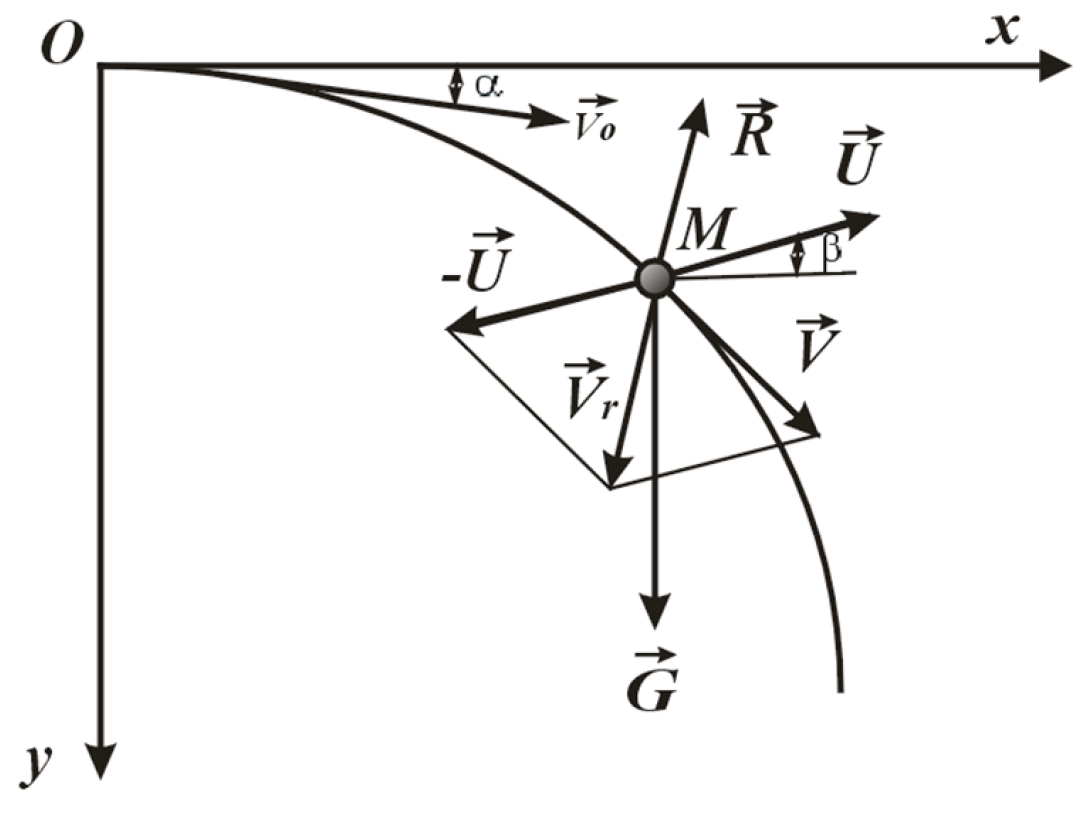
Figure 1. Scheme of grain motion in airflow: vo—initial grain velocity, ∝—angle between the initial grain velocity vector and airflow, β—angle between the airflow velocity vector U and the horizontal, V —absolute grain velocity, V r —relative grain velocity, G —gravitational force, R —drag force.
Processes 14 01859 g001
Figure 2. Schematic diagram (a), and general view (b) of the grain sorting rig: 1–6—collection boxes; 7—sorting chamber; 8—wheat grains; 9—grain hopper; 10—grain feeding conveyor; 11—fan; 12—electric motor; 13—frame; 14—airflow equalization duct.
Processes 14 01859 g002
Figure 3. Scheme (a), and general view (b) of airflow velocity measurement in the sorting chamber: 1–6—collection boxes; 7—sorting chamber; 8—grain hopper; 9—airflow direction; 10—frame; 1.1–3.5—airflow velocity measurement points.
Processes 14 01859 g003
Figure 4. Displacement of grains with different aerodynamic properties in laminar airflow.
Processes 14 01859 g004
Figure 5. Displacement of grains with different aerodynamic properties in turbulent airflow.
Processes 14 01859 g005
Figure 6. Displacement differences in grains with different aerodynamic properties in laminar airflow.
Processes 14 01859 g006
Figure 7. Displacement differences in grains with different aerodynamic properties in turbulent airflow.
Processes 14 01859 g007
Figure 8. Effect of vertical airflow velocity on the mass fraction distribution of grains and the floating coefficient. Common letters (a, b) denote a significant difference.
Processes 14 01859 g008
Figure 9. Length of wheat grains with different aerodynamic properties. Common letters (a, b) denote a significant difference between the same grain length classes.
Processes 14 01859 g009
Figure 10. Thickness of wheat grains with different aerodynamic properties. Common letters (a, b) denote a significant difference between the same grain thickness classes.
Processes 14 01859 g010
Figure 11. Width of wheat grains with different aerodynamic properties. Common letters (a, b) denote a significant difference between the same grain width classes.
Processes 14 01859 g011
Figure 12. Airflow velocity in the upper part of the chamber.
Processes 14 01859 g012
Figure 13. Airflow velocity in the middle part of the chamber.
Processes 14 01859 g013
Figure 14. Airflow velocity in the lower part of the chamber.
Processes 14 01859 g014
Figure 15. Effect of grain feed rate on grain displacement in a constant-volume sorting chamber at matching critical and airflow velocities (9.5 m s−1). Red letters indicate significant differences between boxes at 1 kg·min−1, green letters at 2 kg·min−1, and white letters between grain flow rates within the same box.
Processes 14 01859 g015
Figure 16. Effect of grain feed rate on grain displacement in a constant cross-section sorting chamber when critical velocity equals airflow velocity (10.5 m s −1). Red letters indicate significant differences between boxes at 1 kg·min−1, green letters at 2 kg·min−1, and white letters between grain flow rates within the same box.
Processes 14 01859 g016
Figure 17. Redistribution of grains previously collected in the first box in a constant cross-section sorting chamber at a critical velocity of 9.5 m s−1. Red letters indicate significant differences between boxes at 1 kg·min−1, green letters at 2 kg·min−1, and white letters between grain flow rates within the same box.
Processes 14 01859 g017
Figure 18. Redistribution of grains previously collected in the first box in a constant cross-section sorting chamber at a critical velocity of 10.5 m s−1. Red letters indicate significant differences between boxes at 1 kg·min−1, green letters at 2 kg·min−1, and white letters between grain flow rates within the same box.
Processes 14 01859 g018
Figure 19. Dispersion of individual grains introduced into the sorting chamber. Red letters indicate significant differences between boxes at 9.5 m·s−1, green letters at 10.5 m·s−1, blue letters at 11.5 m·s−1, and white letters between grain critical velocity within the same box.
Processes 14 01859 g019
Disclaimer/Publisher’s Note: The statements, opinions and data contained in all publications are solely those of the individual author(s) and contributor(s) and not of MDPI and/or the editor(s). MDPI and/or the editor(s) disclaim responsibility for any injury to people or property resulting from any ideas, methods, instructions or products referred to in the content.