1. Introduction
Buildings account for nearly half of global energy consumption, with approximately 40% of that consumption attributed to heating, ventilation, and air conditioning (HVAC) systems [
1]. Reducing building energy consumption is critical [
2]. Commercial buildings typically feature high foot traffic, diverse functions, a mix of open and enclosed spaces, stringent energy-efficiency and environmental requirements, and equipment-intensive layouts [
3]. Due to high occupancy and varied functional zones—such as in offices, meeting rooms, and retail spaces—each area requires distinct temperature control and air-quality specifications [
4]. Fan coil units combined with outdoor air systems have become a key solution in modern commercial buildings for enhancing comfort and air quality, thanks to their flexible temperature control and efficient air exchange. Localized temperature regulation via fan coil systems, coupled with continuous air replenishment from outdoor air systems, effectively addresses issues like poor indoor air circulation and uneven temperatures [
5].
Despite their significant advantages in improving comfort and air quality, fan-coil plus fresh-air systems also have drawbacks. Fan coil systems exhibit lower temperature control precision, making precise temperature regulation difficult, and often resulting in temperature variations across zones [
6]. Furthermore, energy-efficiency management for both fan-coil and fresh-air systems is often fragmented, resulting in energy waste during operation. This is particularly pronounced during periods of high demand fluctuations or when systems are not adjusted to actual conditions, often leading to excessive energy consumption [
7]. Therefore, improving control strategies is crucial.
To achieve green and energy-efficient development goals, scholars worldwide have investigated energy-saving control strategies for high-ceiling space air conditioning systems. PID control effectively manages single-variable linear steady-state systems [
8]. Cui [
9] noted that when fan coil units employ PID control, their operation no longer relies on manually selected fixed settings. Instead, they perform closed-loop automatic regulation based on feedback signals (e.g., indoor temperature deviation), enabling continuous, precise control of the output. Li et al. [
10] addressed indoor temperature control for air conditioning systems equipped with fan coil units (FCUs) by proposing a hybrid control system integrating a fractional-order PID indoor temperature controller (IT-FOPIDC) with a three-stage supply air volume controller (SAV-TPC). Simulation validation demonstrated superior control performance compared to conventional intelligent optimization algorithms. Lin, Brandt, and Saikalis [
11] developed a novel adaptive PID algorithm grounded in adaptive interaction theory. This algorithm achieves self-calibration by minimizing an error function, and its proposed PID self-tuning scheme demonstrates excellent performance in both linear and nonlinear systems. Chen [
12] developed an intelligent PID control strategy that integrated the bacterial foraging optimization algorithm and applied it to variable-air-volume air conditioning systems. Research results indicate that this method achieves reasonable indoor temperature tracking control. Liu and Dong [
13] designed a fuzzy adaptive PID controller for air conditioning systems, enabling precise regulation of room temperature through online parameter adjustment. Qiang, Cai, and Wang [
14] developed an automatic adjustment device based on PID design criteria to address the multivariable characteristics of air conditioning systems. While Yuan [
15] demonstrated strong performance in PID parameter tuning and design, their method showed strong model dependence and insufficient robustness. Wang, Shi, and Cai [
16] developed a high-performance auto-tuning device. This device identifies a second-order plus pure-delay model via two consecutive relay-feedback experiments and designs a PID controller based on phase-margin criteria.
MPC is considered a practical approach for HVAC system control. In specific integrated applications, the theoretical energy-savings potential is estimated at 70%, with experimentally verified building energy-efficiency improvements ranging from 20% to 50% [
17,
18]. Traditional model predictive control for fan coil unit (FCU) systems typically disregards the impact of outdoor air volume on indoor thermal environments, relying solely on FCUs to regulate indoor thermal parameters. Ma et al. [
19] proposed a dynamic passenger flow-based MPC strategy to mitigate system response delays caused by terminal passenger flow fluctuations. Compared with traditional feedback control, this strategy effectively adapts to variations in passenger flow, achieving 10% energy savings under winter conditions. Yang and Wan [
20] introduced a machine-learning-based real-time linearization (IL) MPC scheme for controlling the air conditioning system of a Singaporean hospital complex. Experimental results demonstrate that the IL-based MPC significantly enhances thermal comfort in office areas while reducing cooling energy consumption compared to the original thermostat. Taheri, Hosseini, and Razban [
21] provide a comprehensive update on MPC in HVAC systems, discussing key design aspects, including modeling and optimization, highlighting core features, and suggesting future research directions. Shao et al. [
22] proposed a cost-effective MPC algorithm for DX air conditioning systems. Although this method overcomes the high equipment and labor costs associated with traditional approaches and strikes a balance between thermal comfort and energy efficiency, it also has several drawbacks, including an excessive computational burden due to multi-input multi-output (MIMO) technology, poor scalability, the presence of single points of failure, and a lack of plug-and-play capability. Against the backdrop of advancing industrialization in building construction, this method no longer meets the control requirements of FCU systems [
23,
24]. Zhao, Shi, and Li [
25] developed an MPC-based model for short-term air conditioning load forecasting and system adjustment. The results show that in room air conditioning systems with significant time delays, MPC achieves 18.8% higher indoor temperature stability than PID control and 63.5% higher stability than the condenser return water boiler loop control, while also achieving operating conditions closest to the setpoint and minimal fluctuations.
Existing research typically focuses solely on regulating indoor thermal parameters by adjusting fan coil unit airflow and chilled-water flow rates [
26]. However, this one-dimensional control approach fails to address inherent limitations of fan coil systems—such as poor temperature control accuracy, strong dependence on steady-state operating conditions, and difficulty adapting to dynamic changes in internal and external loads [
6]—often resulting in uneven indoor temperatures that compromise thermal comfort. Furthermore, independent regulation of fan coil units overlooks the coupling effects between outdoor air systems and indoor environments: outdoor air volume and proportion not only directly determine indoor air quality (e.g., by diluting pollutants like carbon dioxide [
11]), but also alter indoor thermal load balance by introducing outdoor air with distinct temperature and humidity characteristics [
7]. This neglect of dynamic outdoor air regulation results in fragmented energy-efficiency management between fan coil units and outdoor air systems, frequently leading to excessive energy consumption during off-peak periods or inadequate ventilation during peak periods [
14]. Furthermore, existing research generally overlooks air-quality control (e.g., CO
2 concentration regulation). In this paper, commercial buildings located in tropical maritime climates—characterized by high temperatures, high humidity, intense solar radiation, and frequent meteorological disturbances—face challenges such as poor temperature control accuracy, overshoot during system startup, difficulties in coordinated control, and high operational energy consumption. To address these challenges, MPC can overcome these difficulties through predictive optimization, disturbance suppression, and multivariable coordinated control.
The main contributions of this study are clearly stated as follows:
- (1)
This solution addresses the issues faced by commercial buildings in tropical maritime climates, where the interaction between internal and external disturbances results in poor adaptability of traditional fan-coil-and-fresh-air system controls and a lack of coordinated control. These issues lead to low temperature control accuracy, delayed adjustments to air quality, and high operational energy consumption.
- (2)
This study solves the unclear selection of disturbance variables in MPC modeling for commercial buildings in tropical marine climates. Using the Random Forest algorithm, key influencing factors are identified: occupancy rate is determined as the primary internal disturbance, while outdoor dry-bulb temperature and solar radiation are identified as the main external disturbances, providing a basis for constructing the MPC prediction model.
The innovative aspects of this study are as follows:
- (1)
To address the above shortcomings and the lack of sufficient research on fan coil unit (FCU) systems with outdoor air handling units (OAUs), this study proposes an innovative integrated control framework for commercial buildings in tropical marine climates. The framework fully considers internal/external disturbances and the impact of outdoor air, incorporates the outdoor air system into the MPC architecture of the FCU, and develops a coordinated predictive control model for the FCU-OAU system. By investigating variations in indoor temperature, CO2 concentration, and system energy consumption across different fresh air ratios, the influence mechanism of outdoor air participation on the regulation of the thermal environment and indoor air quality in air conditioning systems is revealed.
- (2)
A Random Forest algorithm is adopted to conduct feature importance analysis, preliminarily exploring the effects of internal and external disturbances (e.g., outdoor temperature and humidity, solar radiation, wind speed, occupancy rate, and equipment heat gain) on the indoor thermal environment. Combined with MPC simulation results across different disturbance combinations, this study provides a basis for selecting disturbance variables, simplifying the model, and improving the MPC controller’s prediction accuracy under this working condition.
The remaining chapters of this paper are structured as follows:
Section 2 details the research methodology, including the design of the outdoor air control mode, the principles of PID and MPC, and an analysis of disturbance sensitivity. Based on this analysis, a TRNSYS building model and a state-space model for the HVAC zone MPC were established. Additionally, the model was simplified by identifying key factors influencing room temperature; these factors were subsequently incorporated as disturbance variables for the subsequent MPC design.
Section 3 compares the performance of PID and MPC under different outdoor air strategies in terms of temperature control performance and energy consumption. Finally,
Section 4 summarizes the research conclusions and provides recommendations for engineering applications.
2. Materials and Methods
2.1. Research Framework
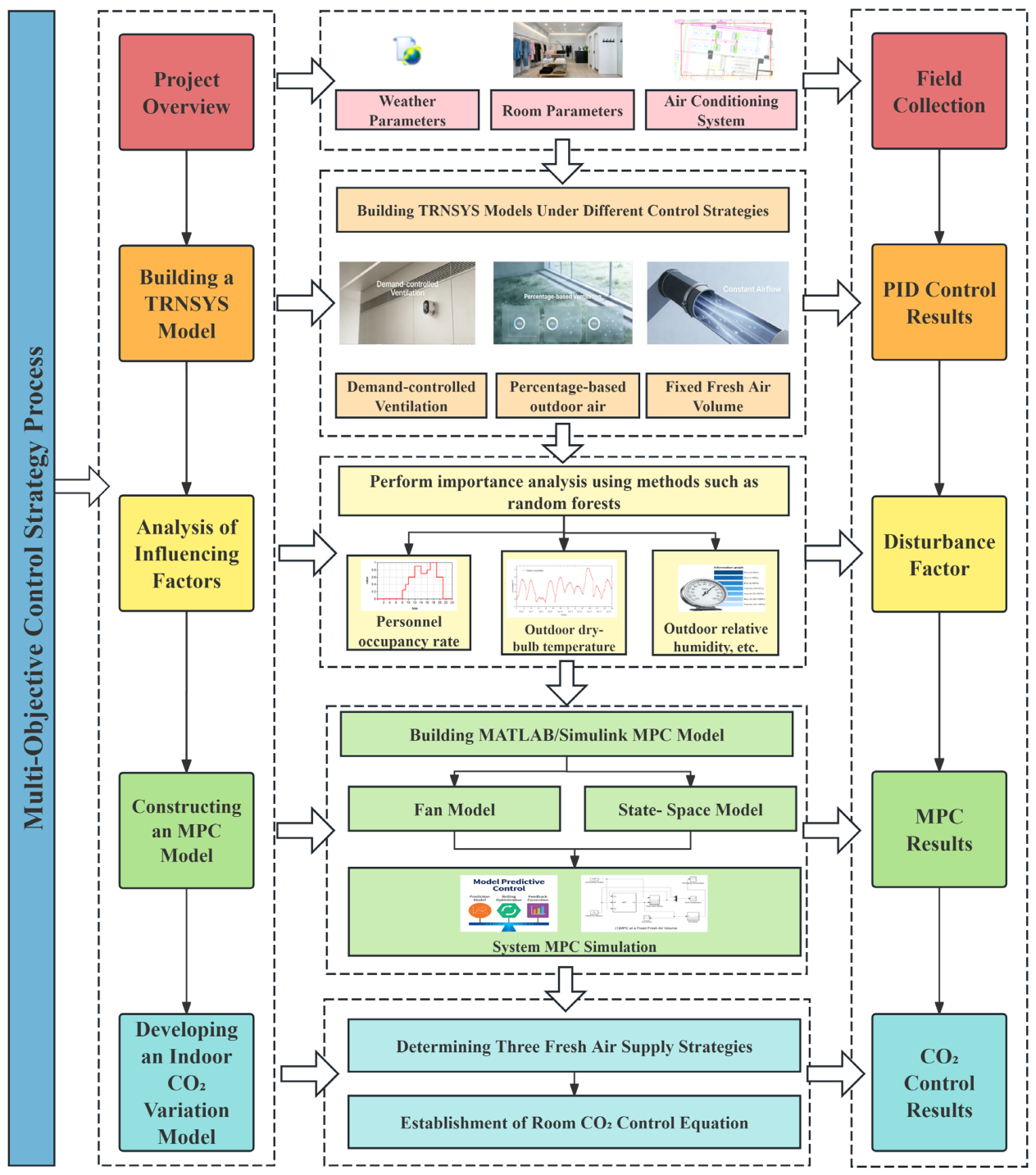
As shown in
Figure 1, the main research topics are as follows:
First, using the fan coil units and outdoor air system of a commercial building in Sanya as the research subject, three simulation models of composite PID control strategies for the air-conditioned system were constructed in TRNSYS 18: these correspond to fan coil unit operation models under proportional outdoor air supply, fixed outdoor air supply, and demand-based outdoor air supply conditions, respectively. Based on actual building engineering parameters and meteorological data files, an operational analysis of the TRNSYS model was conducted.
Subsequently, using the output data from the TRNSYS model, state-space model identification was performed for the air-conditioned zone in MATLAB (
https://ww2.mathworks.cn/products/matlab.html, accessed on 19 March 2026). Based on MPC principles and the characteristics of the fan coil units and outdoor air conditioning system, the state-space model of the air-conditioned zone was adopted as the control model, and the objective function and constraints were defined accordingly. Then, the primary factors affecting building loads under a tropical maritime climate were identified and used as disturbance variables for subsequent MPC simulations. Subsequently, MPC simulation models for three composite control strategies were constructed in MATLAB/Simulink (
https://www.mathworks.com/products/simulink.html, accessed on 19 March 2026): fan coil system models under proportional outdoor air supply, fixed outdoor air supply, and demand-based outdoor air supply. The control equations of the indoor CO
2 concentration dynamic model were then solved in MATLAB to obtain the trends in indoor CO
2 concentration under the three outdoor air supply ratios.
Finally, the simulation results for these three control strategies (as shown in
Table 1) were compared with the PID control model’s output to determine the optimal control strategy.
2.2. Dynamic Model of Indoor CO2 Concentration and Outdoor Air Supply Strategies
According to ASHRAE Standard 62.1-2022 [
27], the dynamic control equation for indoor CO
2 concentration can be derived as shown in Equation (1). As an internationally recognized model for air-quality standards, this equation provides a physically accurate description of the dynamic changes in indoor CO
2 concentrations over time, fully capturing the coupled effects of key factors, including human respiration, outdoor air dilution, outdoor background concentrations, and room volume.
denotes the indoor carbon dioxide concentration (ppm) at time t; denotes the rate of change in indoor carbon dioxide concentration over time (ppm/h); denotes the indoor carbon dioxide generation source term (per-person CO2 generation rate: 1.76 × 10⁻² m3/h); denotes the outdoor air volume of the ventilation system (m3/h); denotes the outdoor ambient carbon dioxide concentration (350 ppm); and denotes the room air volume (621.9 m3).
Under the three control strategies—fixed outdoor air flow rate, proportional outdoor air flow rate, and demand-based outdoor air flow rate—the rated outdoor air flow rate is set to 380 m3/h.
- (1)
Fixed Outdoor Air Ratio
In air-conditioned buildings, CO
2 is the primary pollutant generated by occupants and other sources. To ensure indoor air quality, outdoor air with lower CO
2 concentrations is supplied to the building. The outdoor air volume can be determined based on its ratio to the supply air volume, as shown in Equation (2). It is primarily suitable for small- to medium-sized air-conditioned areas where building loads fluctuate minimally and indoor occupancy remains relatively stable, such as the subject of this study; it is also suitable for simulation scenarios aimed at simplifying system control logic and focusing on the validation of control algorithms, facilitating a clear comparison of the performance differences among various optimization strategies under standard operating conditions.
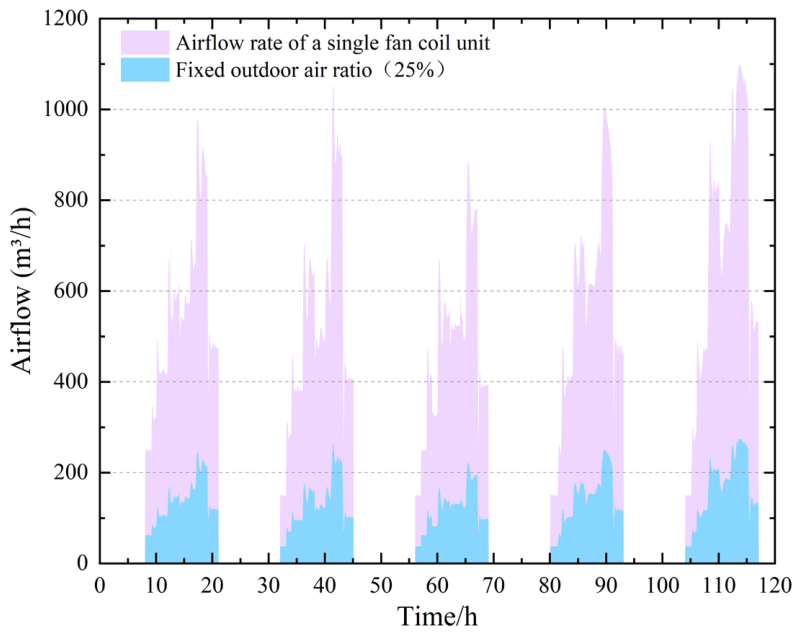
In this study, represents the outdoor air flow rate (m3/h), represents the real-time supply air flow rate of a single fan coil unit, and the outdoor air supply rate is set at 25% of the real-time supply air flow rate of a single fan coil unit.
- (2)
Fixed Outdoor Air Volume
The variable-frequency fan also controls indoor air temperature by adjusting the supply air volume. According to the architectural design specifications, the required outdoor air flow rate is determined by considering both occupant-related sources and zone-related sources, as shown in Equation (3):
represents the outdoor air supply rate per person required to dilute pollutants generated by occupants; is 20 m3/h per person. represents the outdoor air supply rate per unit area required to dilute pollutants generated within the building area; its value is 0. represents the design occupancy of the room; it is 19 people. represents the floor area; its value is 115.17 m2. The final calculated fixed outdoor air supply rate is 380 m3/h.
- (3)
Demand-controlled Ventilation
If an occupancy rate curve is available, the outdoor air supply rate will dynamically adjust with occupancy. This constitutes demand-controlled ventilation to prevent potential over- or under-ventilation. The required outdoor air supply for the area can be determined by Equation (4):
In the equation, represents the number of people in the area at time τ; the other parameters are the same as in the previous equation.
2.3. Principles of PID Control
As shown in
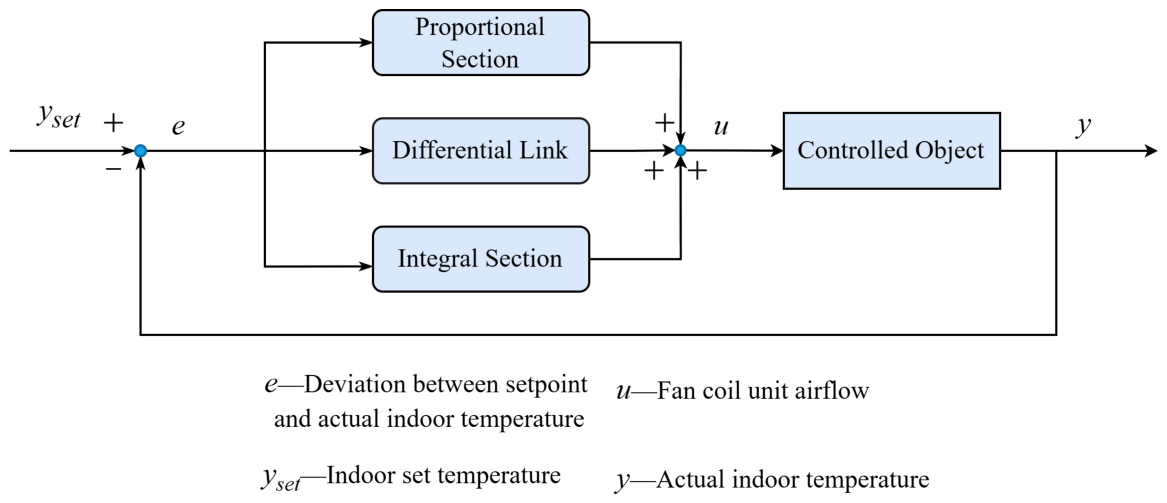
Figure 2, PID (Proportional–Integral–Derivative) control is a classic feedback control method widely used in industrial control systems. It continuously calculates the control error in real time and makes corresponding adjustments to bring the system output as close as possible to the predetermined target value. The PID controller modulates the control signal through three parameters—proportional, integral, and derivative—to achieve dynamic regulation of the system.
In air conditioning systems, PID control is commonly used to regulate room temperature, ensuring it remains stable near the set reference temperature. The primary advantage of PID controllers lies in their simplicity and efficiency, enabling adjustment based on actual system response without requiring precise mathematical models.
The control strategy of a PID controller is as follows:
For air conditioning systems, the output control signal
u(
k) of the PID controller is composed of the following three components as defined by Equation (5):
where:
u(k) is the controller output signal, controlling the air supply volume or other control inputs:
: Cumulative deviation sum from the initial time to the kth time;
= r(k) − y(k) represents the error at the current time step, r(k) denotes the given reference value (setpoint temperature), and y(k) indicates the system’s actual output at the current time step (current indoor temperature);
represent the proportional, integral, and derivative gain coefficients, respectively, and is the sampling interval.
2.4. Importance Analysis Based on Random Forests
Random Forest (RF) is an ensemble learning algorithm based on the ensemble approach to decision tree models. It employs two strategies—Bagging (Bootstrap Aggregating) and random feature selection—to construct robust classification and regression models. Its training process involves building multiple decision trees and then performing weighted voting or averaging across their predictions. Random Forest can be used not only for regression and classification problems, but also provides an effective tool for feature importance analysis.
Feature importance analysis is a notable feature of Random Forests; it evaluates the contribution of each feature by measuring its importance to the prediction outcome within the decision trees. There are two commonly used methods for assessing feature importance: node-purity-based and out-of-bag data-based methods. This paper adopts the former to evaluate the feature importance of the disturbance factors.
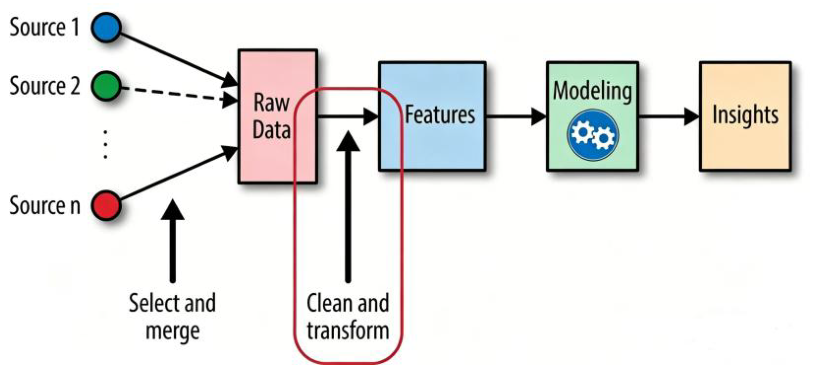
The specific steps are as follows in
Figure 3:
- (1)
Data Preparation Phase
Multi-source data collection (Source 1–n): Collect data from various channels, which in this paper includes air conditioning system operational data, meteorological data, building parameters, and so on. Then, filter out the required variables, align data from different sources, and merge them into a unified dataset.
- (2)
Data Preprocessing
This is the most critical step: cleaning the raw data (removing outliers and imputing missing values) and performing standardization/normalization to transform the unstructured raw data into feature data (Features) that can be directly used by the model.
- (3)
Modeling and Analysis Phase
The preprocessed and standardized input variables—such as temperature and relative humidity—are fed into the Random Forest model as feature engineering data. Through algorithm training, the model calculates, ranks, and validates feature importance, ultimately outputting research results such as the ranking of key influencing factors and the contribution of each variable.
2.5. Building Simulation in TRNSYS
As shown in
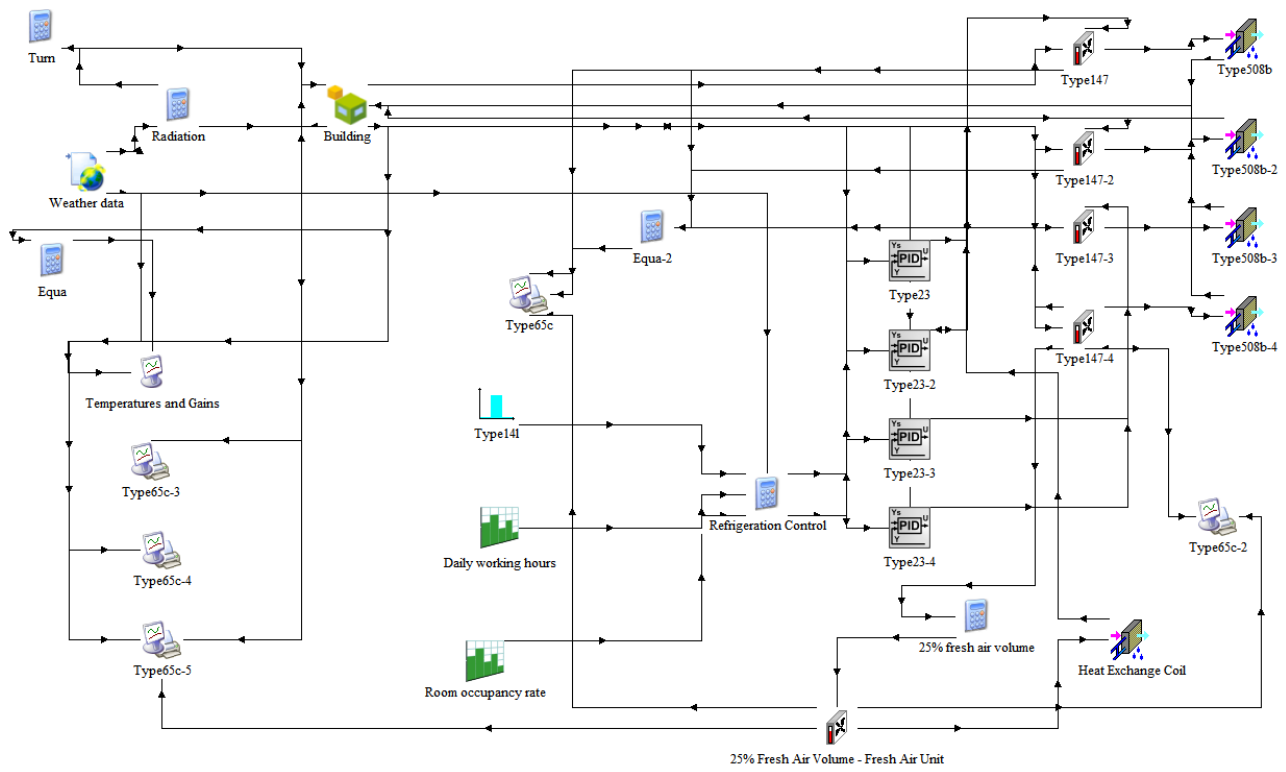
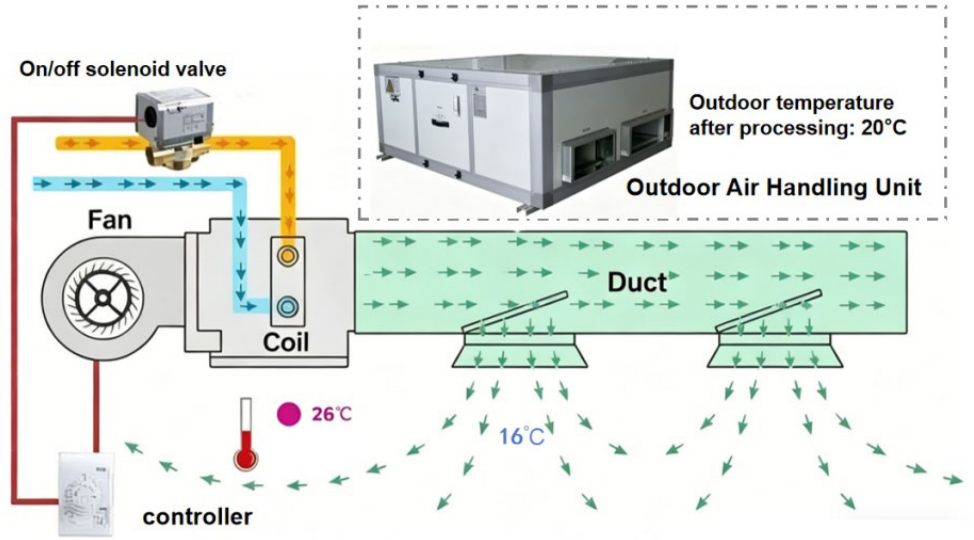
Figure 4, fan coil units have a simple structure, consisting primarily of a coil and a fan. The fan (controlled by PID or MPC) blows air over the coil, which cools or heats the air using circulating hot or cold water. As terminal units of an HVAC system, they are installed individually in each room. Each fan coil unit can be controlled independently; the required chilled or hot water is prepared by the heating and cooling source system and then delivered to the fan coil units via a piping network to meet the needs of specific rooms or zones. Outdoor air handling units filter the outdoor air and regulate its temperature and humidity, then deliver it directly into the indoor space through a separate outdoor air duct system.
The subject of this study is Room 2–10 in the Garden Building in Sanya City. The room measures approximately 115.17 m
2 and has a ceiling height of 5.4 m. The building’s exterior walls are reinforced concrete structures, with building envelope parameters set as shown in
Table 2. Indoor heat sources within the store include lighting, equipment, and occupants. For commercial buildings, heat dissipation from lighting equipment is designed based on lighting density; lighting density and equipment power density are set in accordance with the load calculation report.
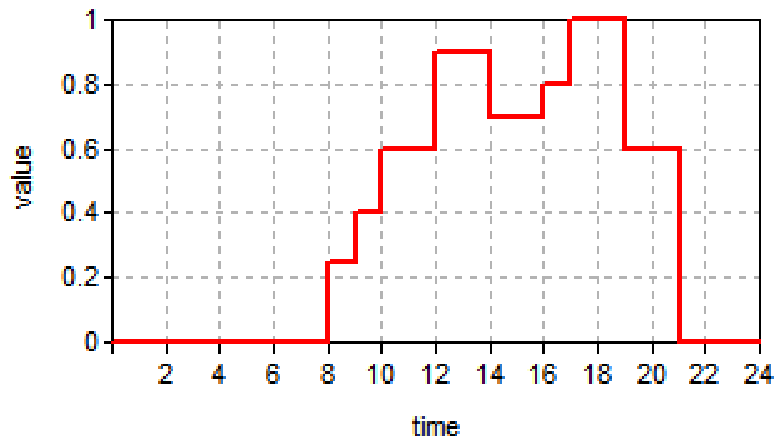
The rated occupancy is calculated from the per-capita floor area specified in the load calculation document. During operational hours, the number of occupants in the space fluctuates. Considering relevant standards [
28,
29] and typical occupancy rates for commercial buildings, the occupancy rate scenario for this study is illustrated in
Figure 5.
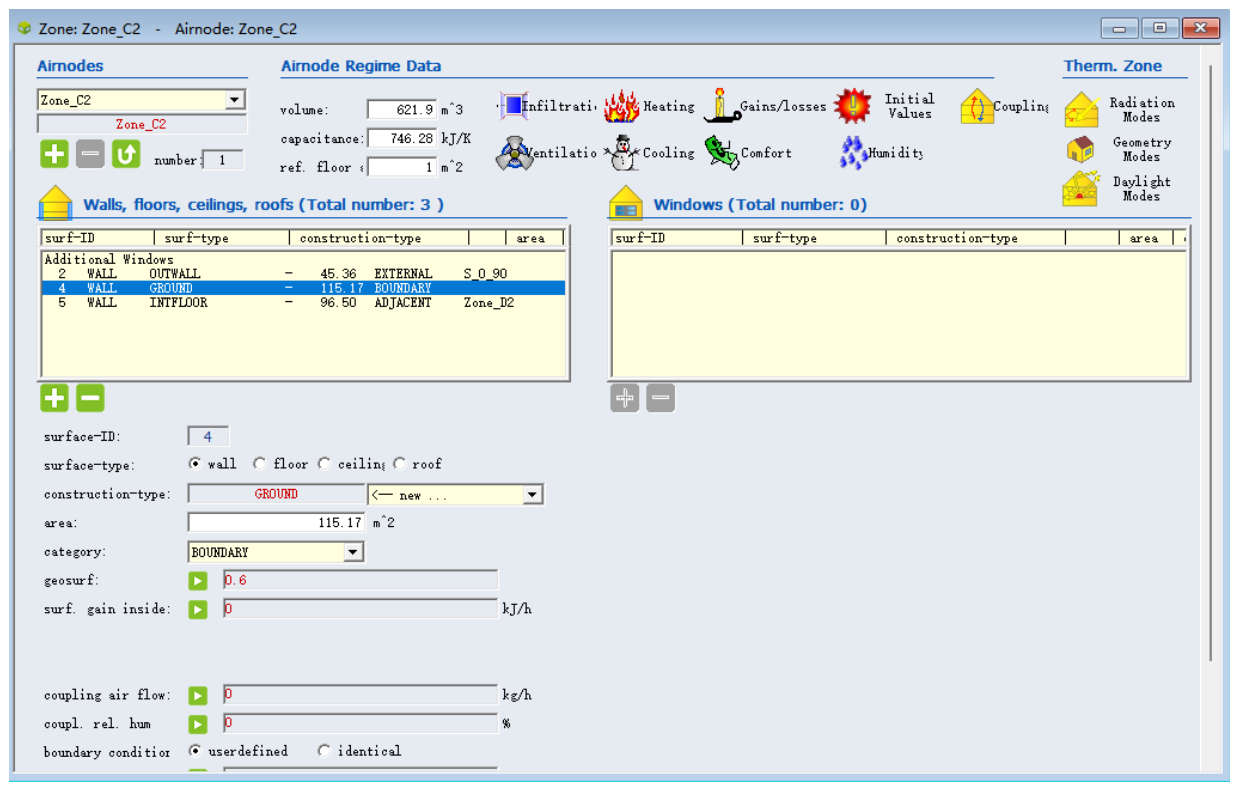
As shown in
Figure 6,
Figure 7 and
Figure 8, the building room model was first constructed in the TRNSYS software platform based on actual building parameters, including building structure type, thermal performance of the building envelope, room area, ceiling height, orientation, window-to-wall ratio, occupancy density, and internal equipment loads. Based on the established building model, HVAC and outdoor air system models are further developed to enable dynamic simulation and analysis of the building’s thermal environment and system operational characteristics. The room is equipped with four fan coil units (each with a rated power of 171 W, airflow of 1290 m
3/h, and supply air temperature of 16 °C), with chilled water supply and return temperatures ranging from 7 to 12 °C. After passing through the outdoor air handling unit, the outdoor air has a temperature of 20 °C and a relative humidity of 60%, with a maximum outdoor air supply rate of 500 m
3/h. After completing the system model, the corresponding control modules and result output modules were established. The control module is primarily used to implement equipment operating logic and adjust key parameters, with the Type 23 PID controller parameters
Kp/Ki/Kd set to–0.5/0.1/0.01 and the temperature setpoint at 26 °C. The resulting output module is used to record data such as indoor temperature, energy consumption, and equipment operating status, providing a basis for subsequent performance evaluation. The simulation time step was set to 3 min, with a total duration of 120 h and a convergence accuracy of 1 × 10
−4.
A comparison of the peak cooling load from the TRNSYS simulation (12,208 W) with the original design cooling load (12,638 W) revealed a relative error of 3.4%, which is below the 10% acceptance criterion. This indicates that the model is accurate and reliable and can be used for subsequent optimization studies.
2.6. Model Predictive Control Simulation Platform Development
2.6.1. Model Predictive Control Method
Model predictive control is a method capable of addressing constrained optimal control problems in discrete systems. It generally comprises three main components: the predictive model, rolling optimization, and feedback correction. Based on the system’s operational mechanism and the correspondence between selected input and output variables, a state-space model of the air-conditioned room is established as the control model.
2.6.2. State-Space Method
When establishing a mathematical model for an air conditioning system, the model and constraints should be determined based on the system’s operating mechanism and the conditions of the input and output variables of the selected model object, thereby constructing a predictive control model. This paper adopts the state-space model of the air-conditioned room as the predictive model. The general expression for the discrete-time state-space equation is given by Equation (6) and (7).
x(
k) represents the current state variable,
u(
k) denotes the control input variable,
y(
k) signifies the output variable,
d(
k) indicates the external disturbance variable, and
A,
B,
K,
C denote coefficient matrices.
Final Prediction Error (FPE):
is the number of samples; is the number of model parameters; is the model prediction residual; is the simulation output value; and is the model fitted value.
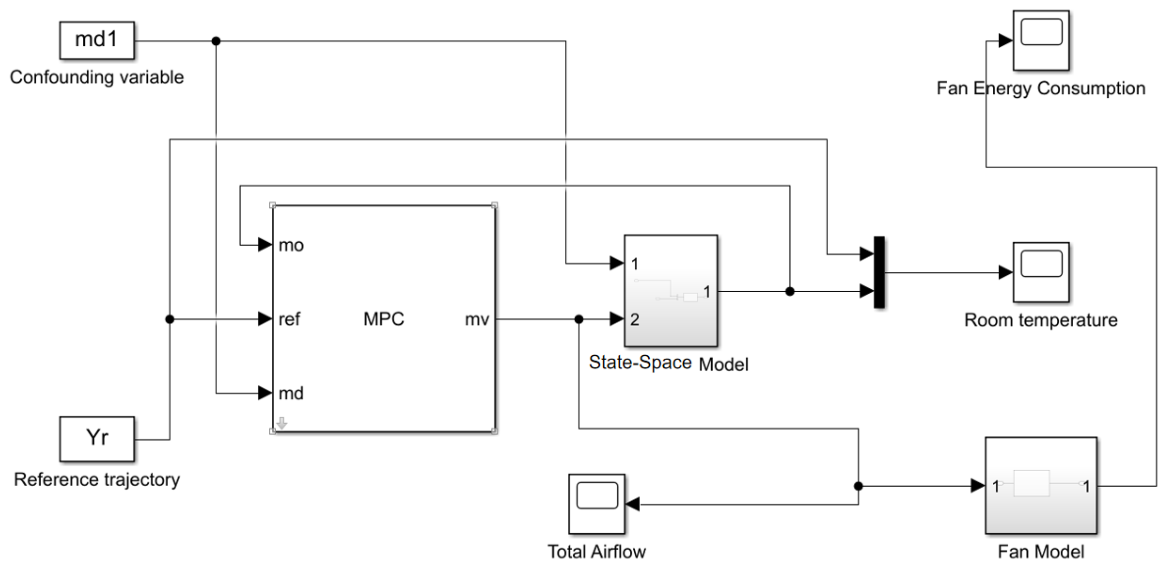
Applying MPC to the entire air-conditioned zone of a room requires establishing a state-space model for the zone, as shown in
Figure 9. The sampling time is 3 min, the prediction horizon is 30 min, and the control horizon is 10 min. The disturbance variables are the number of occupants and outdoor air volume, with the reference indoor temperature set at 26 °C. A fan simulation module is incorporated, and the fan model is used to calculate the fan’s operational energy consumption during the simulation period.
3. Results Analysis
3.1. Sensitive Analysis of Influencing Factors
As shown in
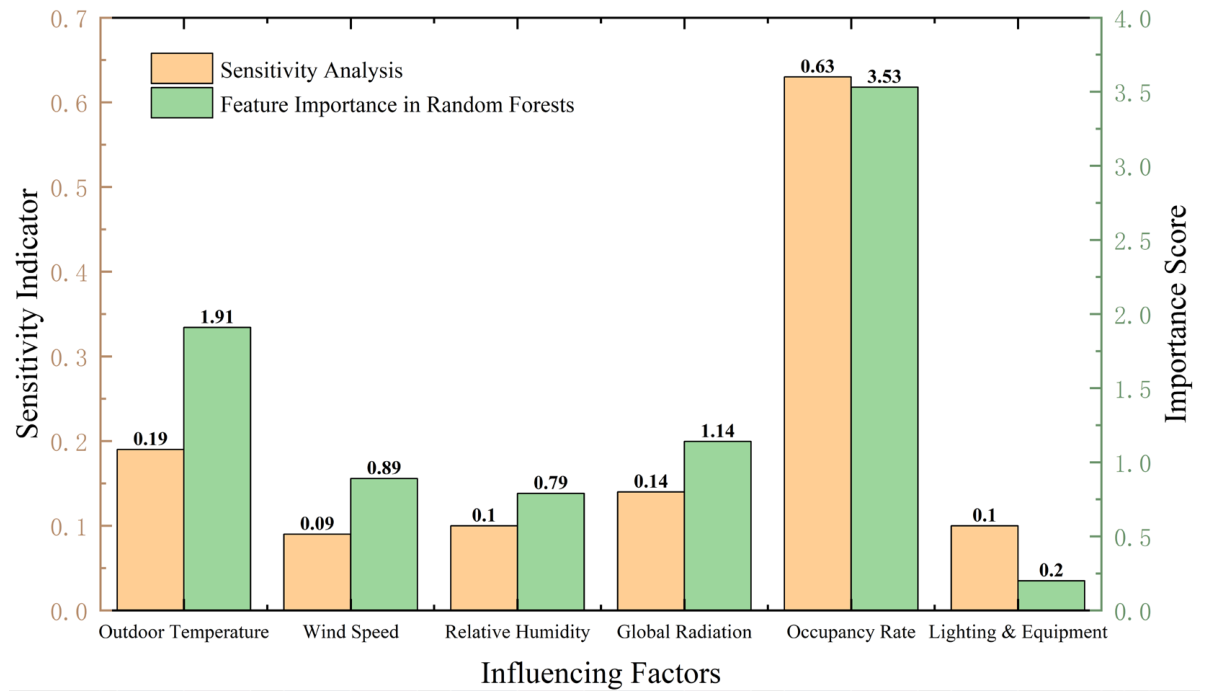
Figure 10, the sensitivity index for occupants is 0.63, and the Random Forest importance score is 3.53; both are significantly higher than those of other factors.
In addition to indoor occupants, the influence of outdoor temperature is also significant. Specifically, the sensitivity index for outdoor temperature is 0.19, and the Random Forest importance score is 1.91, indicating that external disturbances have a substantial impact on the indoor thermal environment. In contrast, the effects of wind speed, relative humidity, solar radiation, and lighting and equipment are relatively weaker. The sensitivity index for wind speed is 0.09, and the Random Forest importance score is 0.89; the sensitivity index for relative humidity is 0.10, with a Random Forest importance score of 0.79; the sensitivity index for solar radiation is 0.14, with a Random Forest importance score of 1.14; and the sensitivity index for lighting and equipment is 0.10, with a Random Forest importance score of 0.20, indicating that their contribution to indoor temperature changes is relatively limited in the context of this study.
Overall, the order of influence of each factor on indoor temperature is: occupants > outdoor temperature > solar radiation/wind speed/relative humidity > lighting and equipment. In this scenario, the disturbances affecting indoor temperature changes can be categorized into internal and external disturbances. Among internal disturbances, the human factor is the most prominent; among external disturbances, outdoor temperature has the most significant impact, while the effects of solar radiation, wind speed, and relative humidity are comparable. It is necessary to further screen for key disturbance variables through subsequent modeling to provide a basis for constructing the MPC prediction model.
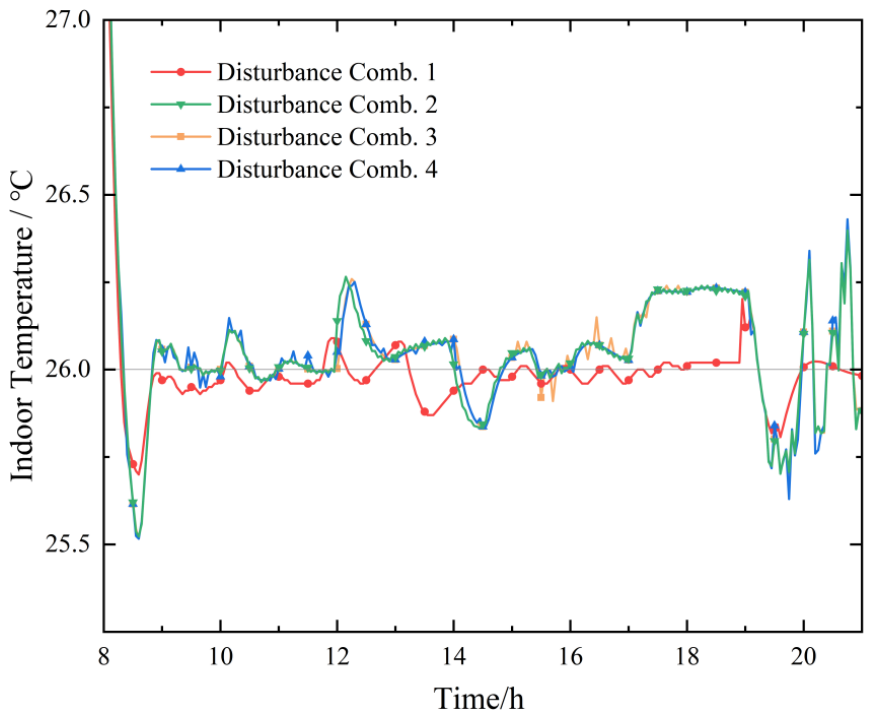
First, occupants will be treated as the primary internal disturbance factor, and outdoor dry-bulb temperature as the baseline external disturbance factor (
Table 3). Building on this foundation, disturbance factors such as solar radiation, relative humidity, wind speed, and lighting equipment will be gradually introduced to construct multiple disturbance combinations for comparative analysis.
As shown in
Figure 11, after introducing solar radiation, the amplitude of indoor temperature fluctuations increased significantly, indicating that it has a certain impact on the indoor thermal environment. After incorporating disturbance factors such as lighting, relative humidity, and wind speed, the trend in indoor temperature changes remained largely consistent, with minimal impact on the system response.
Taking into account the extent of the impact of each disturbance factor on system operation and the model complexity, it was ultimately determined that the number of occupants would serve as the internal disturbance variable, while outdoor dry-bulb temperature and solar radiation would serve as the primary external disturbance variables for the subsequent construction of the MPC prediction model.
3.2. State-Space Model for Air-Conditioned Rooms
Considering that system identification requires data encompassing a wide range of response scenarios, 2600 data sets from June 6 to June 15 were selected from the TRNSYS model operation data of the air conditioning system with three fresh air ratios for identification calculations. When the state-space model order was set to second-order, the model fit reached 97.14%. The parameters of the discrete state-space equation obtained through final model identification are shown in
Table 4.
Based on the energy-saving principle of fans, their energy consumption primarily correlates with the volume of air delivered. Utilizing the Model Identification Toolbox again, model identification was performed using data on air delivery volume and fan energy consumption. Using 2400 data sets, the transfer function for fan energy consumption was identified as shown in Equation (10). The model achieved an 89.94% fit, with a final prediction error (FPE) of 1.312 × 10
−4 and a mean squared error (MSE) of 1.378 × 10
−5.
is denoted as the fan energy consumption, where
s represents the fan airflow.
3.3. Analysis of Building Simulation Results
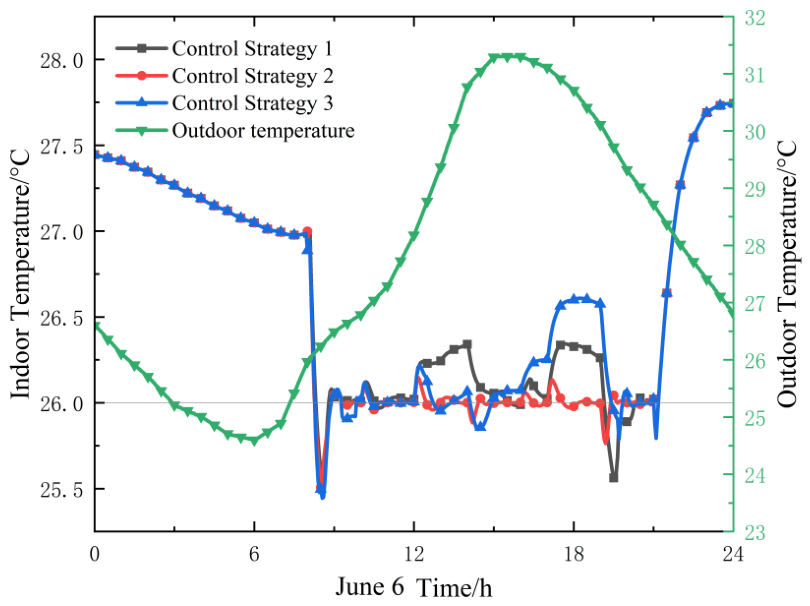
This study conducted continuous simulations of the building from June 6 to 10. To clearly illustrate the variation characteristics, representative simulation results from June 6 were selected for analysis. The indoor temperature outcomes under different fresh air ratios using the PID control strategy are shown in
Figure 12.
Figure 12, combined with
Figure 5, shows that Control Strategy 1 and Control Strategy 3 exhibit significant temperature fluctuations when indoor occupancy changes. Since the occupancy rate is the important factor affecting indoor heat load, Strategy 1’s rigid outdoor air supply cannot dynamically adapt to occupancy changes. Although Strategy 3 adjusts outdoor air volume based on supply air volume, the supply air volume is regulated solely by temperature difference error and has no direct correlation with occupancy levels. When occupancy fluctuates, the outdoor air input becomes mismatched with the actual thermal load, leading to the largest temperature fluctuations. In contrast, Control Strategy 2 dynamically adjusts the outdoor air volume based on occupancy rate, effectively mitigating temperature fluctuations from occupancy changes and maintaining stable indoor temperatures.
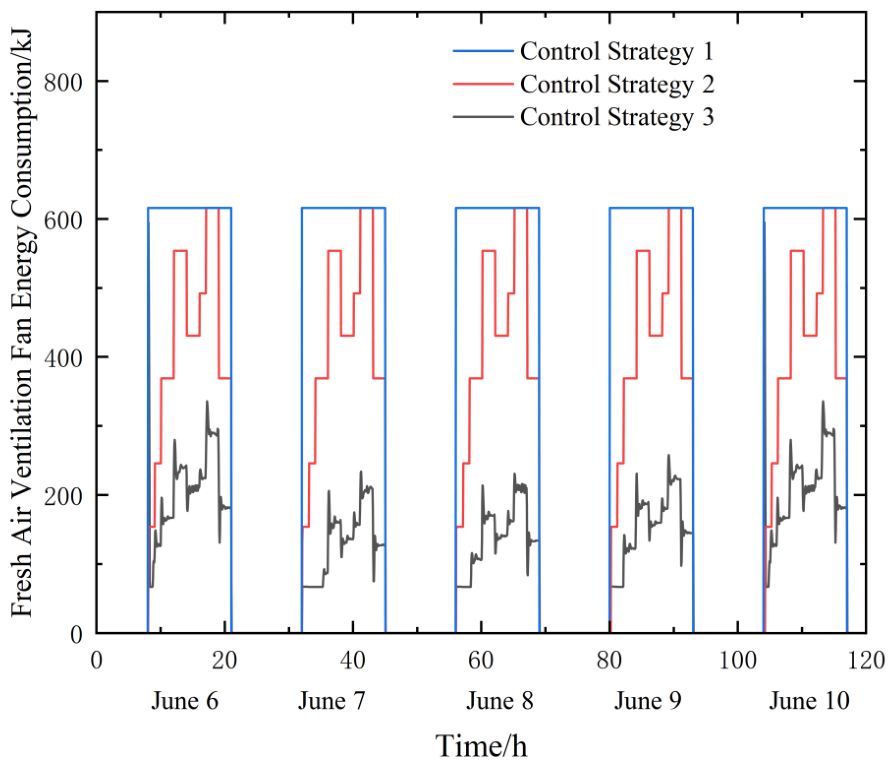
Figure 13 (outdoor air fan energy consumption) shows that the energy consumption of the outdoor air fan under Control Strategy 1 remains constant throughout. The energy consumption of the outdoor air fan under both Control Strategy 2 and Control Strategy 3 fluctuates dynamically with indoor occupancy density, and both strategies exhibit lower energy consumption levels than Control Strategy 1. Among these, Control Strategy 3 achieves the most optimal total energy consumption for the outdoor air fan.
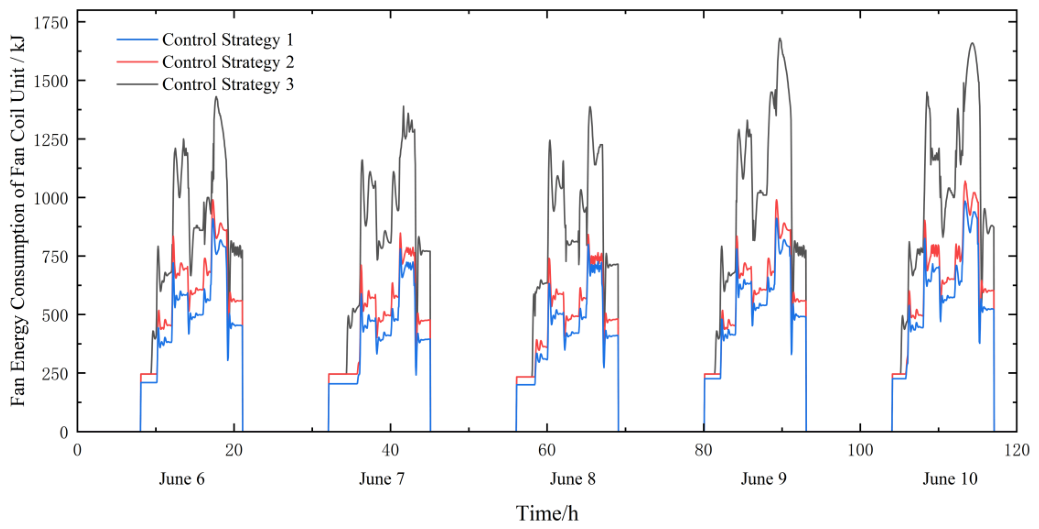
Figure 14 (coil fan energy consumption) reveals distinct patterns: Control Strategy 3 exhibits the highest coil fan energy consumption, Control Strategy 2 is intermediate, and Control Strategy 1 is the lowest. This phenomenon stems from the fact that under all three control strategies, the total indoor heat load remains constant. The outdoor air fan energy consumption and coil fan energy consumption exhibit a significant inverse relationship—the higher the proportion of load borne by the outdoor air fan, the less load the coil fan needs to compensate for, resulting in reduced energy consumption.
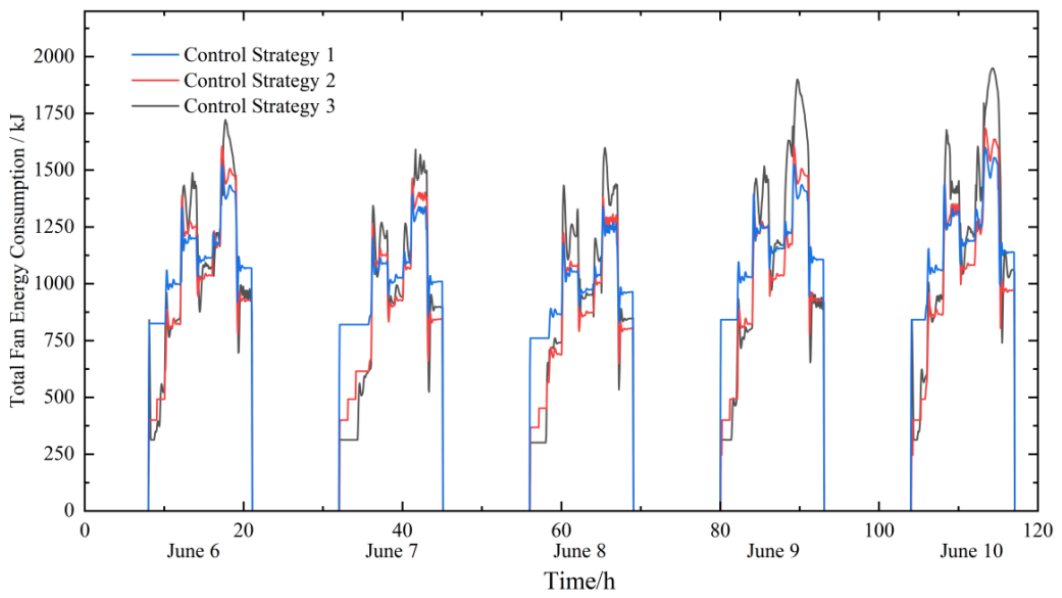
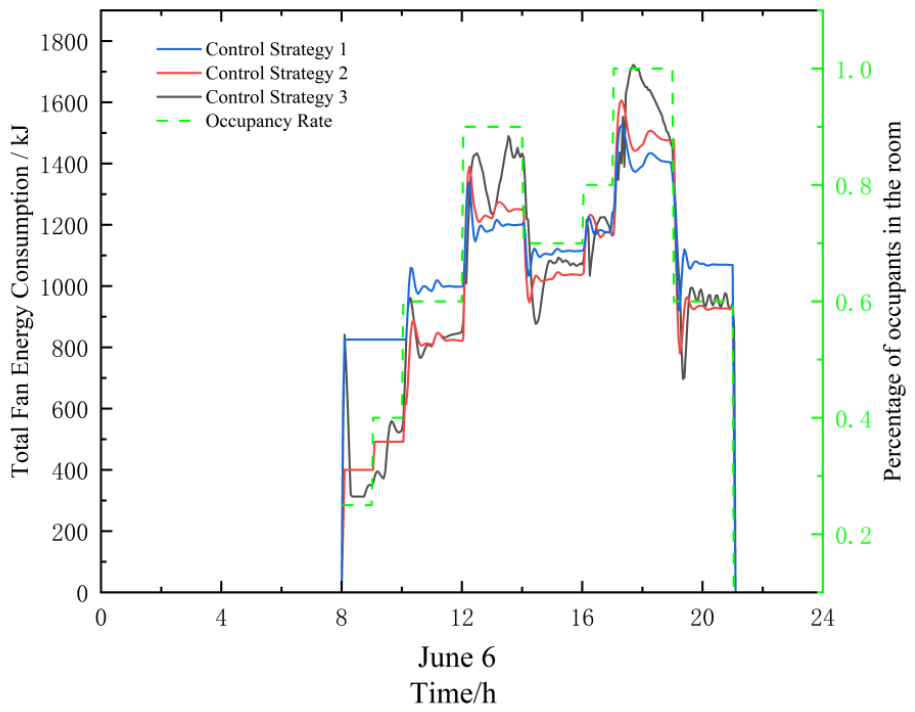
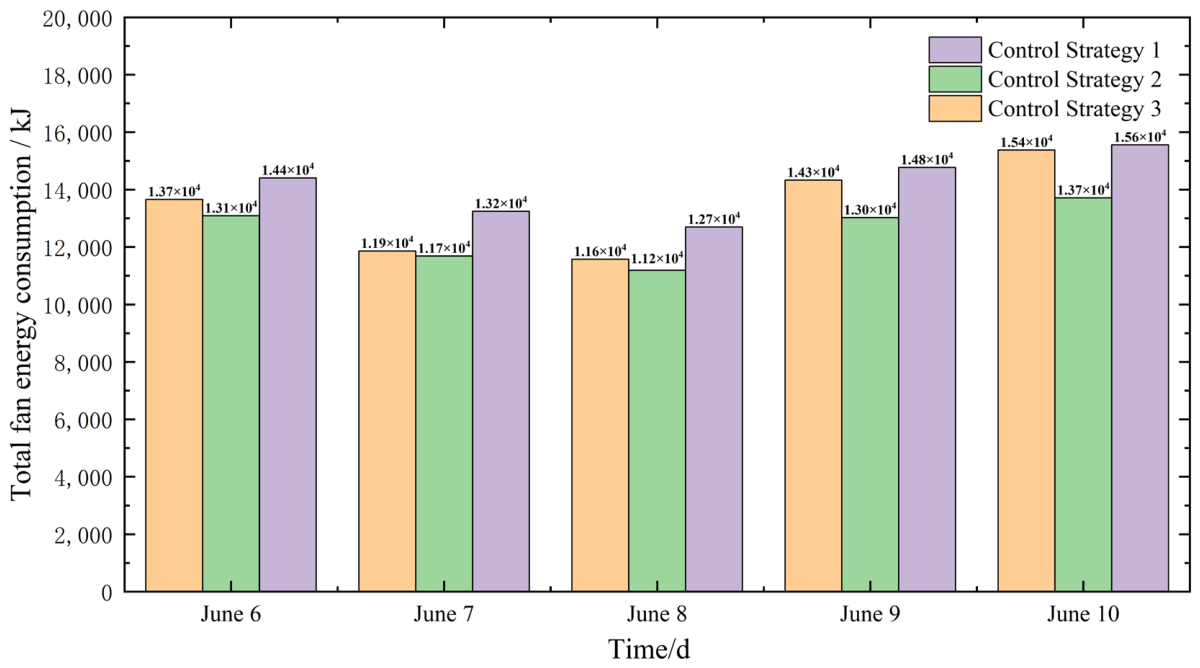
The total fan energy consumption equals the sum of the fan coil unit fan energy consumption and the outdoor air fan energy consumption. The total fan energy consumption under three fresh air ratios is shown in
Figure 15 and
Figure 16. The temporal trends in total fan energy consumption for the three control strategies exhibit a high degree of correlation with the indoor occupancy rate curve shown in
Figure 5:
During low occupancy periods (8:00–12:00 and 19:00–21:00 daily), Control Strategy 1’s total fan energy consumption exceeds that of the other two strategies, while Control Strategy 2 and Control Strategy 3 maintain essentially equivalent total fan energy consumption levels. During high occupancy periods (12:00–19:00 daily), Control Strategy 3 exhibits the highest total fan energy consumption, while the consumption levels of Control Strategies 1 and 2 converge.
The core reason for this discrepancy lies in the following: during low occupancy periods, the rigid outdoor air supply of Control Strategy 1 creates “inefficient energy consumption,” driving up total energy consumption. During high occupancy periods, Control Strategy 3’s mechanism linking outdoor air ratio to supply air volume reduces the complementary efficiency between outdoor air load and coil load, thereby increasing total energy consumption. Meanwhile, Control Strategy 1’s fixed outdoor air volume gradually demonstrates its “load-sharing effect” under high loads, narrowing the energy consumption gap with Control Strategy 2.
As shown in
Figure 17, the total energy consumption over five days was 70,657 kJ for Control Strategy 1, 66,787 kJ for Control Strategy 3, and 62,688 kJ for Control Strategy 2. It can be observed that, in terms of total fan energy consumption, Control Strategy 1 > Control Strategy 3 > Control Strategy 2.
3.4. MPC Simulation Results
3.4.1. Effectiveness of Room Temperature Control at Different Outdoor Air Volumes
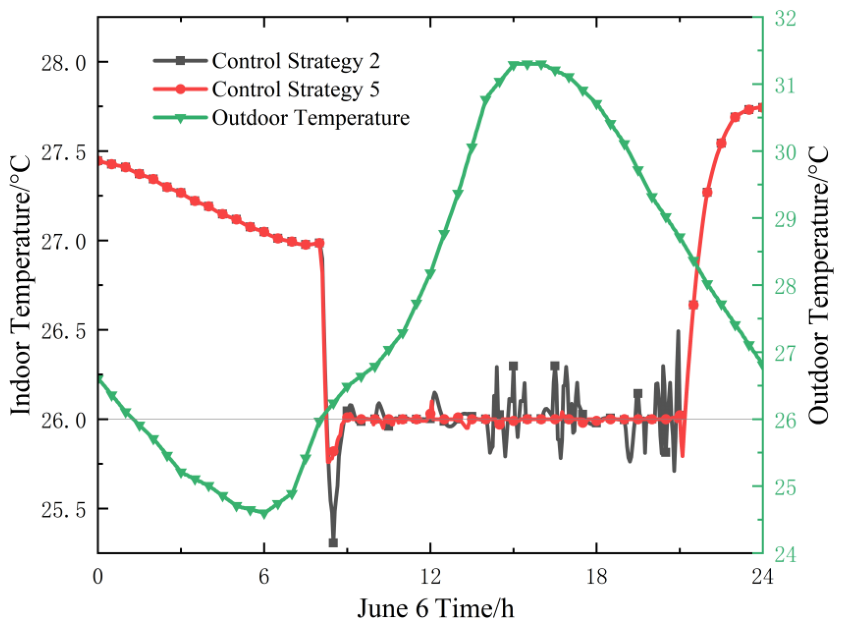
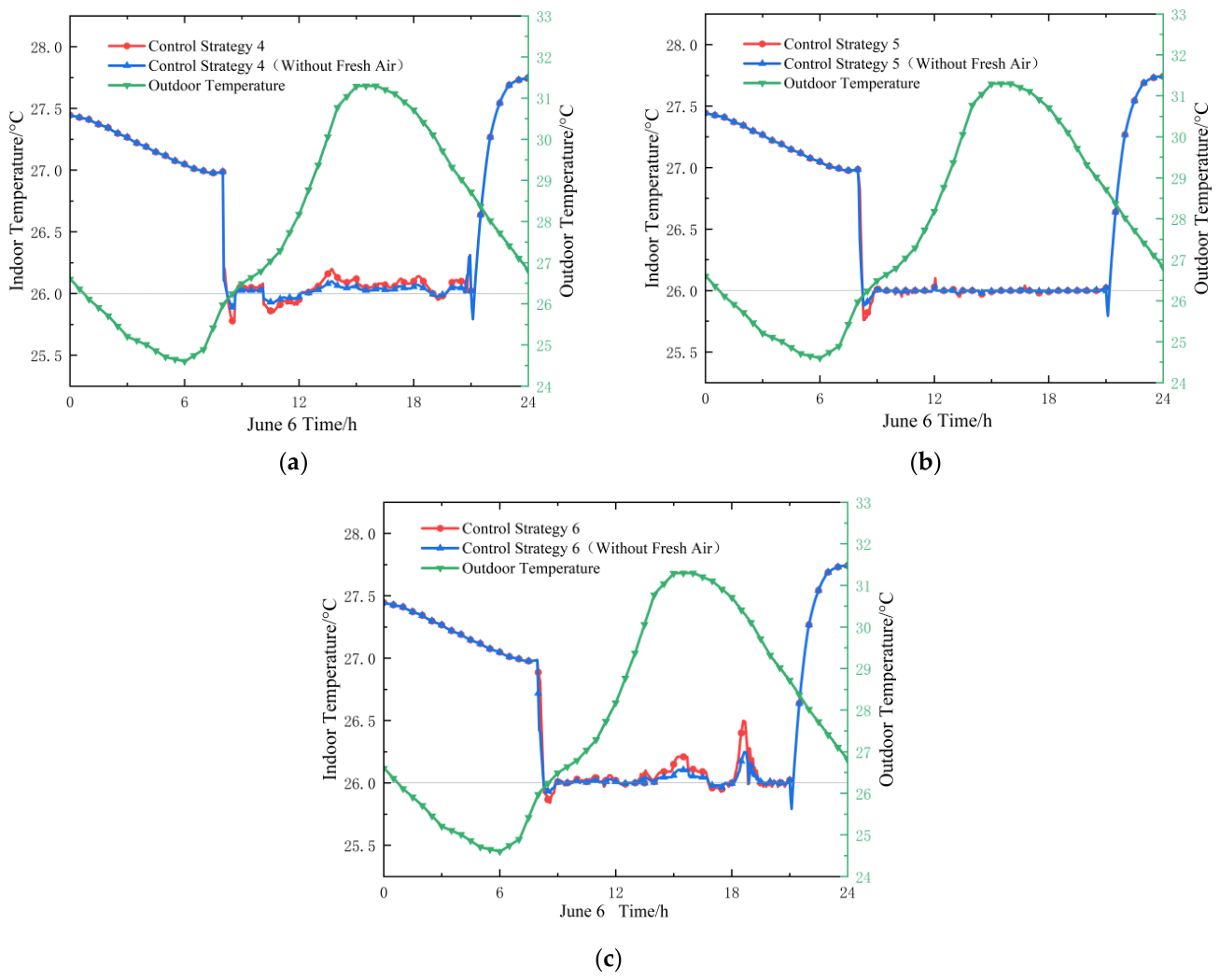
Figure 18,
Figure 19 and
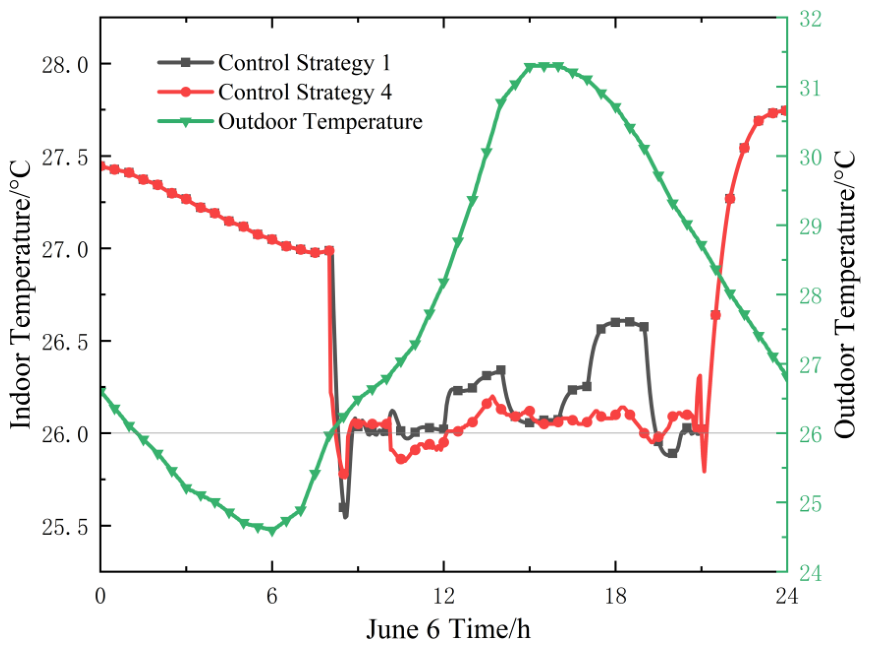
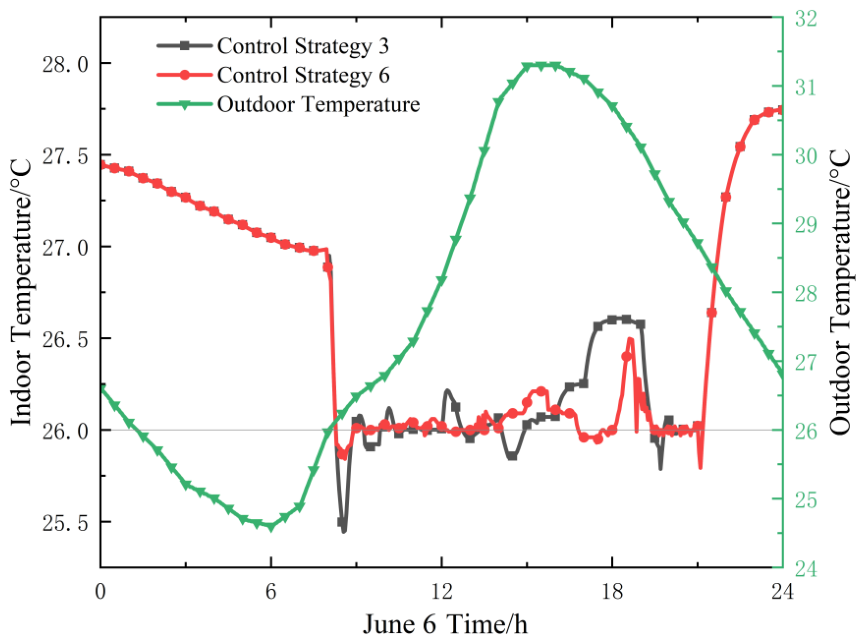
Figure 20 demonstrate that under three different fresh air ratios, MPC achieves superior room temperature control compared to PID control. Not only does it deliver higher temperature control accuracy and lower fluctuations during stable operation, but it also minimizes temperature overshoot relative to the target value during system startup. This approach prevents room temperatures from deviating beyond the comfort range during startup while reducing unnecessary energy consumption resulting from such deviations.
3.4.2. Effectiveness of Energy Consumption Control at Different Outdoor Air Volumes
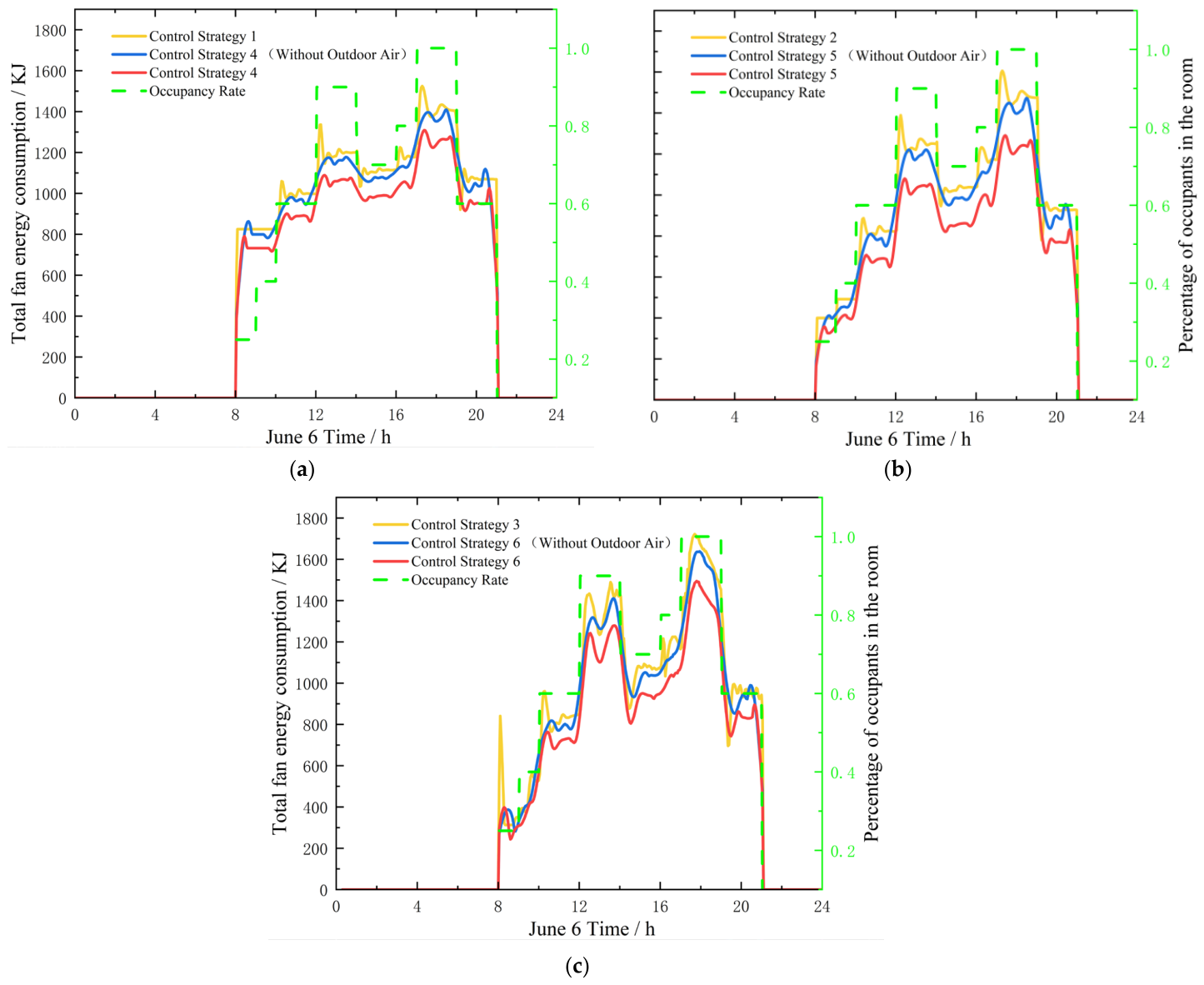
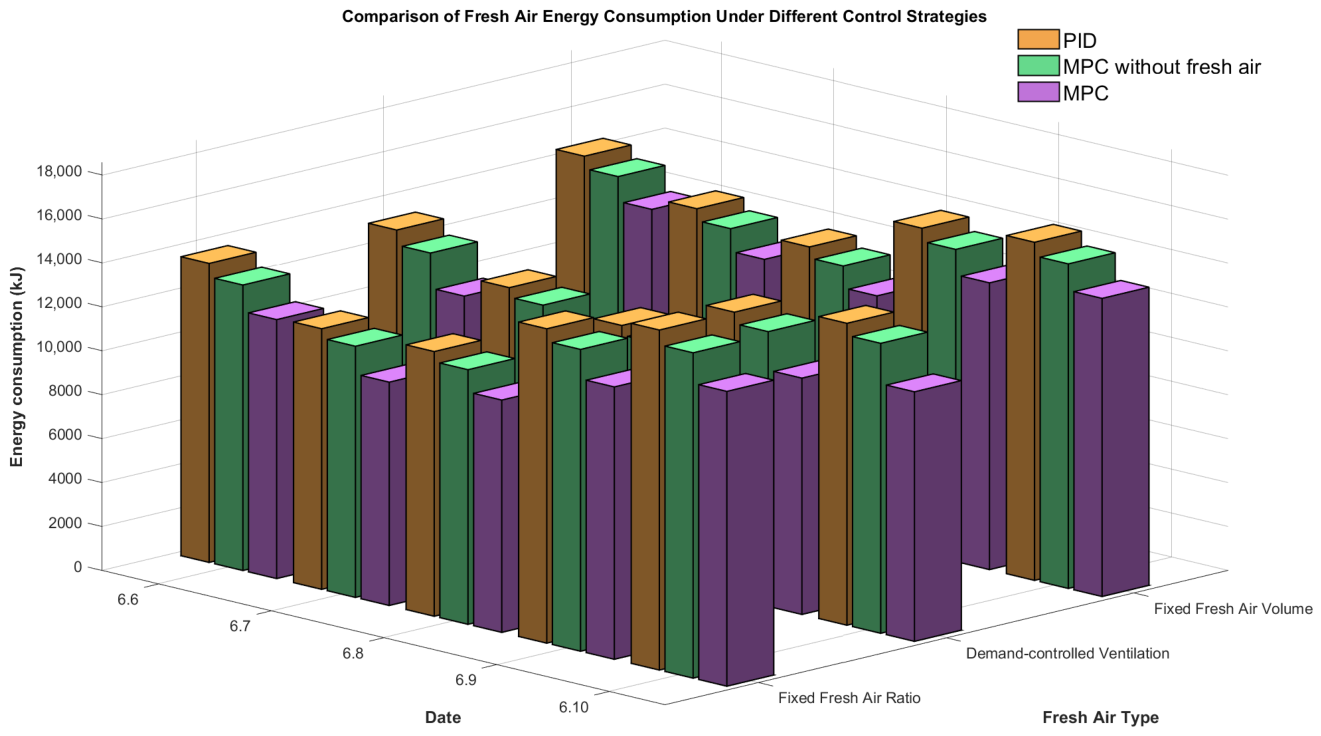
Figure 21 shows the comparison results of total fan energy consumption across MPC simulations with different fresh air ratios.
A comparative analysis of fan energy consumption between June 6 and June 10 reveals that the MPC simulation results show a significant decrease compared to the TRNSYS model outputs. Specifically, under three control scenarios—fixed outdoor air volume, demand-based outdoor air volume, and proportional outdoor air volume—the TRNSYS model outputs total fan energy consumption values of 7.07 × 10⁴ kJ, 6.27 × 10⁴ kJ, and 6.68 × 10⁴ kJ, respectively. The corresponding MPC simulation results were 6.28 × 10⁴ kJ, 5.21 × 10⁴ kJ, and 5.83 × 10⁴ kJ. Calculations show that adopting model predictive control reduced fan energy consumption by 11.19%, 16.89%, and 12.63% under the three scenarios, respectively. This demonstrates that the MPC strategy effectively lowers system operating energy consumption across different outdoor air control modes, with the most significant energy savings observed under the demand-based outdoor air volume scenario.
3.5. The Impact of Outdoor Air on MPC
3.5.1. The Impact of Outdoor Air on Indoor Air Temperature
- (1)
Temperature Performance:
Based on the preceding section and as shown in
Figure 22, during indoor temperature control from June 6 to 10, distinct performance differences emerged among the strategies: Traditional PID control exhibited significant temperature fluctuations, frequently deviating from the target temperature (26 °C) and showing poor dynamic stability. This stems from its reliance solely on real-time error feedback regulation and the lack of predictive optimization for operating conditions. MPC strategies demonstrated significantly superior performance. Among these, MPC without outdoor air showed the greatest temperature stability. By eliminating the outdoor air disturbance variable, its indoor temperature consistently fluctuated within a narrow band around the target (26 °C), showing the smallest deviation amplitude. MPC with outdoor air also outperformed PID but showed slightly more minor fluctuations in the temperature curve due to indirect effects from variations in the outdoor air condition, compared to the no-fresh-air group.
- (2)
Energy Consumption
As shown in
Figure 21 and
Figure 23, energy consumption results for different control strategies (PID, MPC without outdoor air, MPC with outdoor air) from June 6 to 10 show: Traditional PID control exhibited the highest energy consumption across all operating conditions, representing the greatest energy cost among the three strategies; within the MPC framework, MPC with outdoor air achieved the lowest energy consumption in most conditions, while MPC without outdoor air fell between PID and MPC with outdoor air.
3.5.2. Indoor CO2 Concentration Control Results
The initial parameters for the outdoor air system are set as follows: Time range: 8 to 21 h, with increments of 0.05 h (equivalent to 3 min). External CO2 concentration is assumed to be 350 ppm. Indoor volume V = 621.9 m3. Per-person CO2 generation rate: 4.9 × 10⁻⁶ m3/s. Initial indoor CO2 concentration: 1000 ppm.
Figure 24 shows the supply air volume for a fixed outdoor air ratio of 25%. The CO
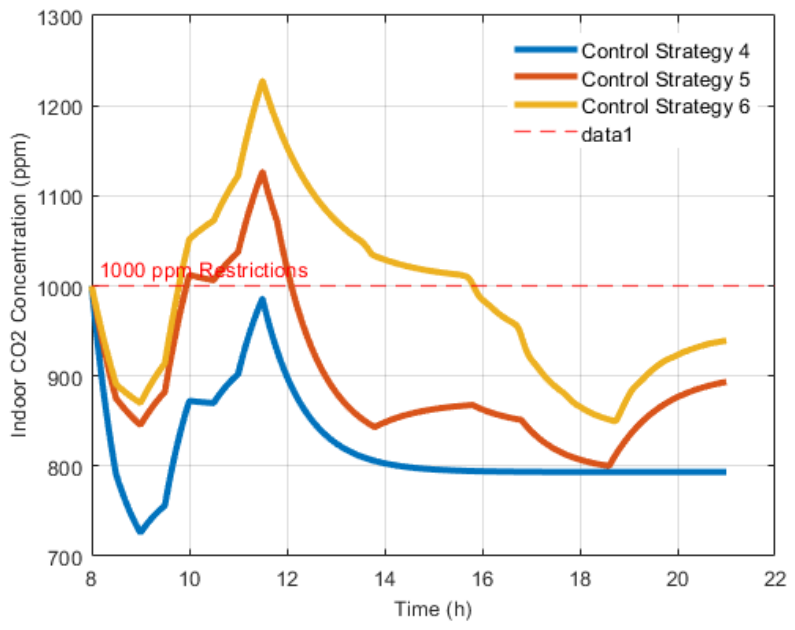
2 concentration statistics are shown in
Figure 25. Constant Outdoor Air Flow MPC (Strategy 4) operates at a constant outdoor air flow rate, strictly maintaining indoor CO
2 concentrations below 1000 ppm, with a maximum of only 993.4 ppm. This strategy delivers optimal air quality, but the total energy consumption of the fans remains high over the long term, resulting in the highest overall energy consumption; Occupancy-Based Outdoor Air Volume MPC (Strategy 5) adaptively adjusts outdoor air volume based on real-time occupancy fluctuations. While ensuring a maximum CO
2 concentration of 1122.5 ppm, an average of 896.1 ppm, and a non-compliance duration of only 16.9%, it significantly reduces unnecessary outdoor air supply and fan energy consumption, achieving a synergistic balance between air-quality compliance and optimal system energy efficiency. The Fixed Outdoor Air Ratio MPC (Strategy 6) allocates outdoor air based on supply air ratios. During low-load periods, it excessively reduces outdoor air supply, resulting in a maximum CO
2 concentration of 1213.5 ppm, an average of 1034.4 ppm, and a non-compliance duration of up to 47.5%. This strategy yields the poorest air quality, while energy consumption falls between the other two strategies. Ultimately, the MPC strategy based on outdoor air demand (Control Strategy 5) was proven to be the optimal control strategy, effectively balancing thermal comfort, air quality, and energy-efficient operation.