Article

Experimental Study of Propylene Glycol–Propanetriol Binary Droplets Impact on Heated Porous Surfaces

by
Yunjia Ma
,
Ying Zhang
,
Qi Zeng
,
Yi Li
,
Meng Xu
* and
Donghua Zou
*
School of Advanced Manufacturing, Nanchang University, Nanchang 330031, China
*
Authors to whom correspondence should be addressed.
Processes 2026, 14(10), 1557; https://doi.org/10.3390/pr14101557
Submission received: 9 April 2026 / Revised: 4 May 2026 / Accepted: 9 May 2026 / Published: 11 May 2026

Abstract

Droplets impacting heated porous surfaces trigger a complex process involving liquid and vapor penetration, as well as the growth and rupture of internal bubbles. In the current paper, four types of sintered porous substrates with different permeability and surface roughness are used. The droplet impact process on heated porous surfaces is visualized by high-speed photography and image processing algorithms. The boiling phase transition characteristics of propylene glycol–propanetriol binary droplets impact on different heating surfaces and the variation pattern of the number and diameter of secondary droplets splashed during the boiling process were investigated. The results show that the surface properties of the porous medium and the composition of the droplet solution have a large effect on the boiling state of the droplets as well as the number and diameter of the secondary droplets. An elevated proportion of propanetriol in solution makes it difficult for droplets to penetrate porous substrates, and it is more difficult for droplets on substrates with large pore size and roughness to undergo film boiling, with more secondary droplets erupting during boiling.

1. Introduction

Droplet infiltration and boiling when hitting high-temperature porous surfaces are common in industrial applications [1]. Many studies have been conducted on the process of droplet impact on a flat plate, but most surfaces in real industrial applications are rough or porous, such as spray cooling techniques [2] for porous surface structures [3,4], droplet impact on porous catalyst surfaces [5], inkjet printing [6,7], and fuel cells [8,9]. The impact of liquids on hot porous surfaces is often accompanied by complex heat transfer and hydrodynamic phenomena [10,11,12]. The precise control of droplets and the experimental prediction and theoretical analysis of droplet impact behavior are important to understand and optimize the physical or chemical processes required in the industry [13,14]. The main behaviors of droplets on porous surfaces are spreading, penetration, splashing, and suspension [15]. Understanding the droplet morphology and the splashing phenomenon on heated porous surfaces has practical guiding significance.
As the surface temperature of the substrate is lower than the saturation temperature of the liquid, the main mode of heat transfer within a droplet is heat conduction, the behavior of the droplet on the porous substrate is spread penetration, and no bubbles are generated inside the droplet [16,17]. When surface temperature begins to exceed saturation temperature of liquid, the drop boils on the heated wall, and small bubbles form inside the drop, which grow and merge [18,19]. When a liquid comes into contact with a surface that is hotter than the Leidenfrost point, it will produce the Leidenfrost phenomenon (LP) [20,21], a layer of gas film between the droplet and the solid surface will be produced, the liquid and the solid will not be in direct contact, and the heat transfer effect is reduced [22,23].
The droplet impact on impermeable surfaces has a significant difference with porous surfaces, the viscous dissipation of droplets after impact on porous surfaces is less than that on impermeable surfaces [24,25], the spreading rate of droplets on porous surfaces is usually less than that on impermeable surfaces, and the droplets have a higher Leidenfrost temperature point on porous surfaces, which is related to the porosity and roughness of porous surfaces [26,27]. Zhao et al. [28] studied the effects of the impact behavior of droplets on porous surfaces at different Weber numbers and wall temperatures. It was found that the diffusion process after the droplet hit the porous surface is mainly affected by viscous dissipation and substrate potential. When the effect of boiling at a lower temperature is not obvious, heat transfer and mass transfer have little effect on the predicted maximum diffusion ratio [29]. The composition of droplets is another important factor affecting droplet impact behavior. The physical properties of droplets with different compositions are different, such as boiling temperature and changes in surface tension, and have significant effects on the morphology of droplets after the impact [30]. Werner et al. [31] found that after adding surfactants to the liquid, the radius of diffusion of the impact droplet on the surface of the substrate is increased. Zhong et al. [16] found that in water–glycol droplets, with the gradual increase of ethanol concentration, the jet at the center of the droplet after impact on the superheated surface showed a tendency to first enhance and then weaken.
In the process of droplet impact penetration or boiling popping off, it is quite common that secondary atomization also occurs and secondary droplets are formed. The formation of secondary droplets is quite complex and the generation of secondary droplets is related to numerous factors such as surface tension, velocity, and surface properties of substrates [32,33,34]. Song et al. [35] investigated diesel and methanol drops breakup during impact with walls and performed analysis of secondary droplets; they found that liquid film levitation and its disintegration into secondary droplets depend on the vaporization of the wetted area of the spreading liquid film. Hamdan et al. [36] introduced a correction factor to revise the Sauter mean diameter of secondary droplets and employed 250 μm as the threshold to distinguish large secondary droplets from micro-sized atomized droplets. Chen et al. [37] conducted a visual investigation of secondary-droplet generation on an impermeable surface and formulated a predictive model for droplet edge breakup on a high-temperature wall. This model is primarily applicable to the prediction and analysis of secondary-droplet sizes produced by the specific mechanism of “droplet edge breakup” within the transition boiling and film boiling regimes. However, none of the above investigations has addressed the complex effects induced by porous media structures. Overall, current research and model development concerning droplet impact on high-temperature surfaces and the formation and dynamics of secondary droplets have predominantly focused on single, relatively smooth material surfaces. Studies on droplet impact behavior and the dynamics of secondary droplets under high-temperature porous media surface conditions remain notably scarce. Existing models are unable to accurately predict and describe the generation of secondary droplets on such surfaces, and the mechanism of secondary-droplet formation upon droplet impact on porous surfaces needs to be further investigated.
To address the above research gap, this study aims to systematically investigate the coupled effects of porous substrate structural properties and binary solution physical properties on the behavior of droplets impinging on heated surfaces. Unlike existing studies, which mostly focus on the impact behavior of single-component liquids on impermeable or single porous surfaces, the present work employs four types of sintered porous stainless steel substrates with different filtration accuracies and surface roughnesses, together with five propylene glycol–propanetriol binary mixture droplets of different mass ratios. The influences of substrate pore gradient and liquid composition on boiling morphology and secondary-droplet generation are systematically examined across a wide temperature range spanning nucleate boiling to the Leidenfrost phenomenon. Six typical states of droplet impact on heated porous surfaces are identified and classified; the number and size distribution of secondary droplets are quantitatively characterized; and the intrinsic correlations between surface pore size, roughness, propanetriol content, boiling regimes, and secondary atomization intensity are revealed. These findings provide a systematic parametric basis for developing predictive models of droplet impact on porous media surfaces.

2. Experimental Method

2.1. Preparation and Testing of Experimental Samples

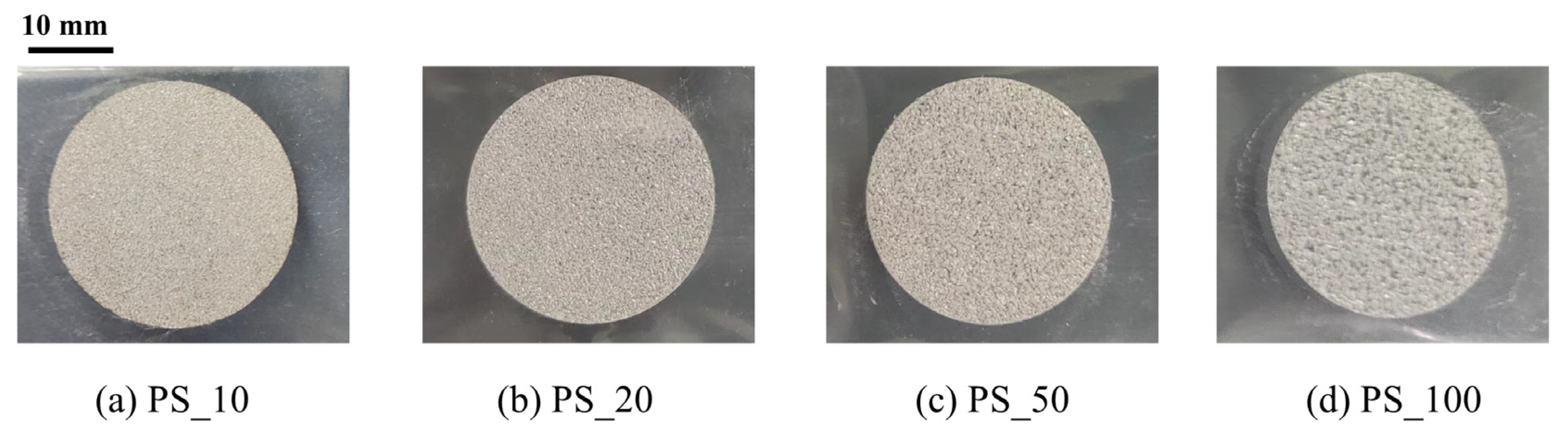
As shown in Figure 1, four circular porous metal substrates with a diameter of 30 mm and a thickness of 3.0 mm were used in the experiments. The material was stainless steel (SUS 316L) which was made by sintering stainless steel powder. The filter fineness of porous samples (PS) was 10 μm (PS_10), 20 μm (PS_20), 50 μm (PS_50), and 100 μm (PS_100).
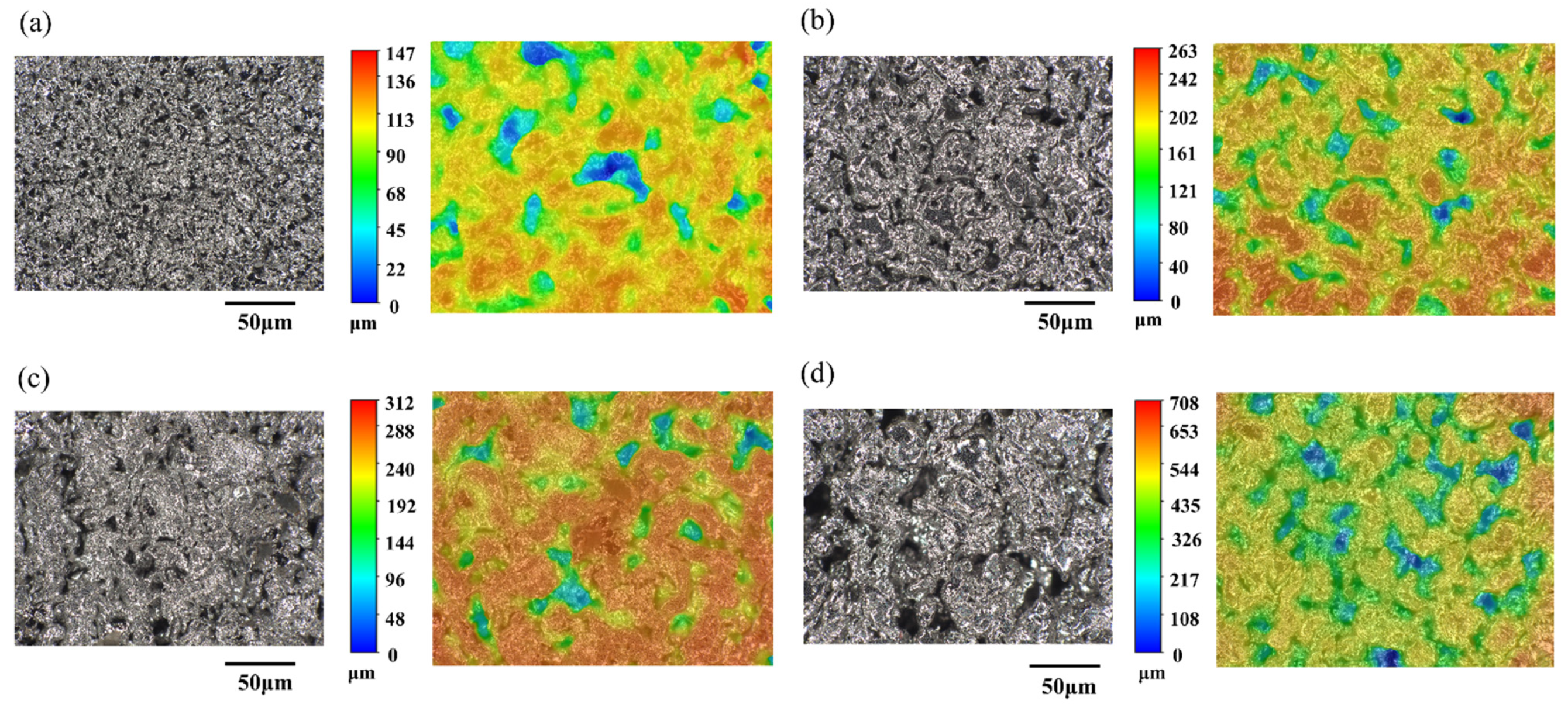
The surface roughness of the substrate was measured by scanning the three-dimensional profile of the substrate surface with a microscope (VHX-20000, Keyence, Osaka, Japan), and the average surface pore size of the substrate was counted. From Figure 2, it can be found that the measured roughness increases with the increase of substrate pore size. The porosity of the substrate was measured by a porosity meter (MAY-Entris120, Mayzum, Shenzhen, China) and averaged over three measurements. The various properties of the substrates are summarized in Table 1.
The liquid solutions used in this study were prepared by mixing propylene glycol (DOW, MI, USA) and propanetriol (Sinopharm, Beijing, China). The physical properties of the solutions are shown in Table 2. From the table, it can be observed that as the content of propanetriol increases, the density, surface tension, viscosity, bubble point temperature, and thermal conductivity of the solutions all increase accordingly.

2.2. Drop Generation and Imaging Set up

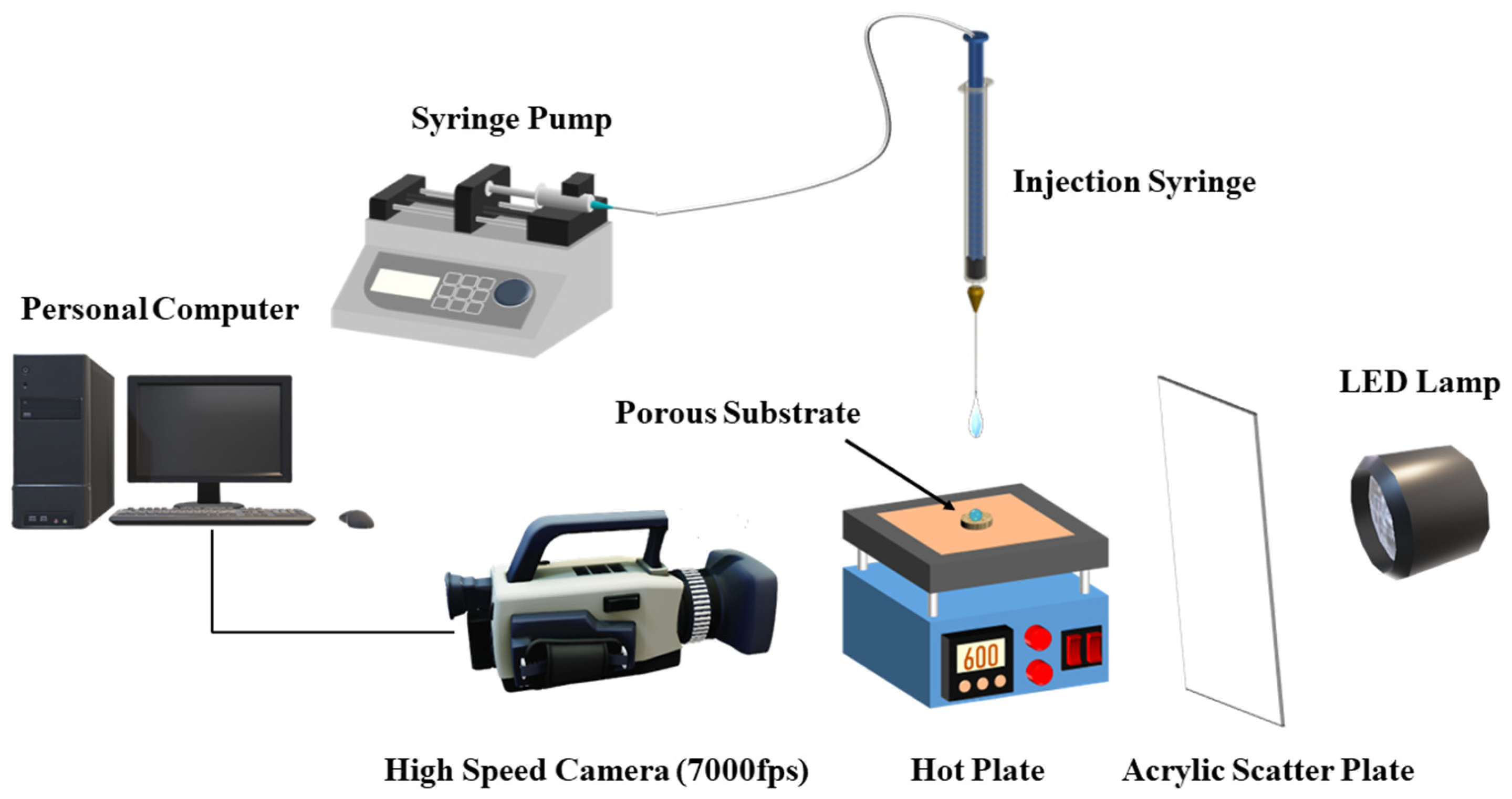
Figure 3 shows the experimental setup of this study to be used to observe and study the behavior of partial droplet impact on a hot porous medium. The impact experiments were conducted at 101.3 kPa and 25 °C. A high-speed camera (dimax.HS1, PCO, Munich, Germany) was used to record the droplet impact on the porous surface at 7000 frames/second, generating pictures with a picture resolution of 1000 × 1000 pixels. The porous substrate was placed on a 500 W high-temperature heating table (0–600 °C), The experiment was conducted after the high-temperature heating table reached the predetermined temperature and stabilized for 5 min. A syringe with a standard needle (23G) was used to drip to the liquid. The needle pipe was connected to the injection pump, and through the precision injection pump (TS-2A, Longer, Baoding, China) the needle produced 1.98 mm diameter droplets with a dropping rate of 0.9 m/s to the substrate. On the opposite side of the high-speed camera, 200 W high-frequency non-flash LED cold light was placed for lighting, and the substrate and the light source were placed between the even light plate to ensure that the 7000 frames/second high-speed photography in the picture was stable and not blurred. The substrate was replaced with a new one at the end of each experiment.
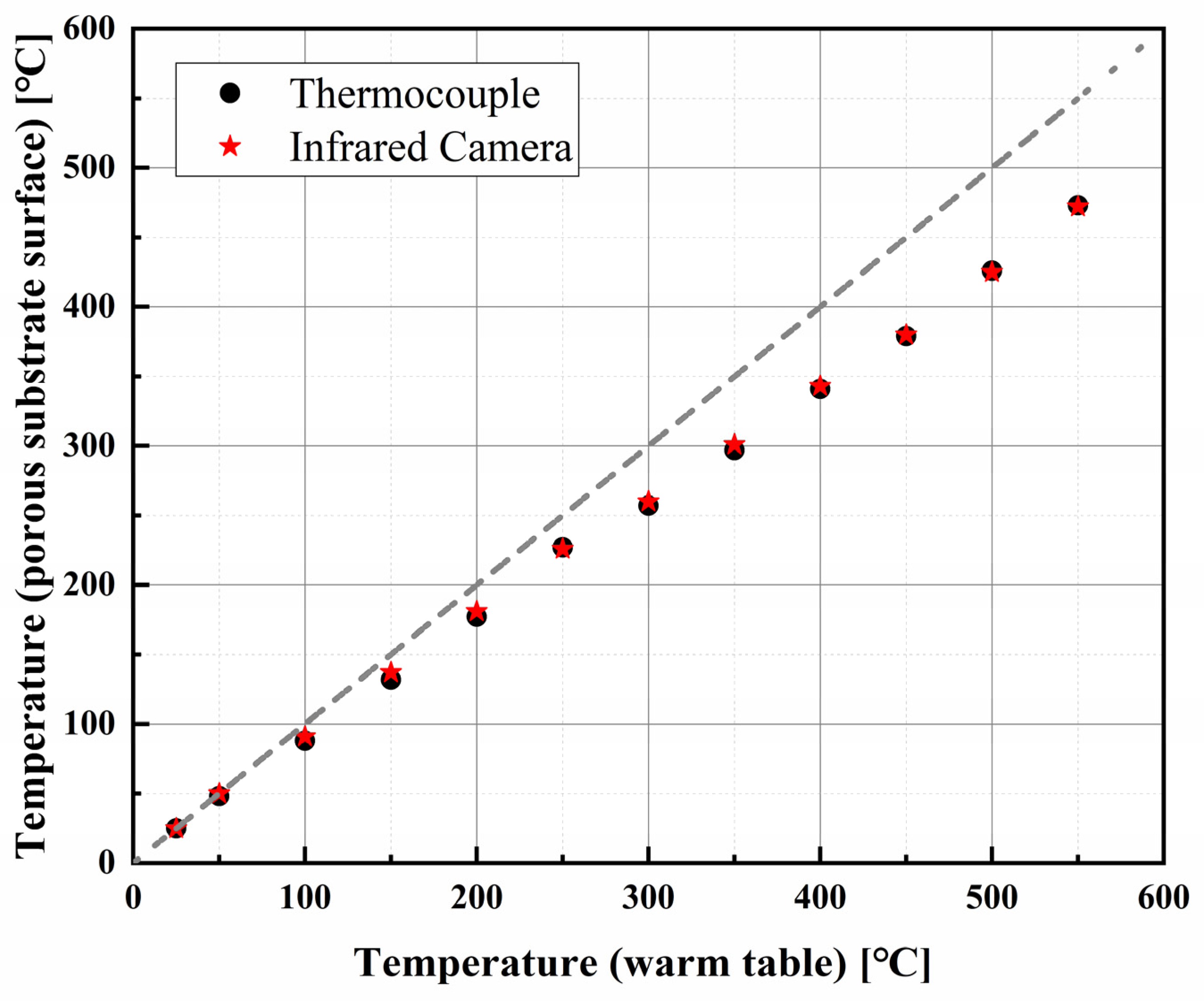
An infrared camera and a thermocouple were used to calibrate the temperature of the porous substrate surface. A type k thermocouple was placed on the substrate surface and the temperature of the thermocouple was read by a data acquisition instrument. An infrared temperature camera (T420, FLIR, Wilsonville, OR, USA) was placed directly above the substrate to record changes in the surface temperature of the substrate at a rate of 60 frames per second. The surface temperature of the heating table rises from 25 °C to 550 °C. Whenever the surface of the heating table reached the specified digital temperature and remained in thermal equilibrium for 5 min, the temperature of the thermocouple on the data collector and the temperature data recorded by the infrared camera were then recorded. It can be seen from Figure 4 that the difference between the temperature measured by the thermocouple and the temperature measured by the infrared camera was between −5 °C and +1 °C. The temperature on the surface of the porous substrate was lower than the temperature on the surface of the heating table due to heat loss. Although a temperature deviation of −5 °C to +1 °C exists between the infrared camera and the thermocouple, this deviation constitutes a relatively small proportion of the overall temperature range considered in this study (50–400 °C). The maximum relative deviation remains below 10%, and its influence on the determination of boiling states is therefore considered limited and acceptable. Repeatability experiments have shown that the deviation of experimental results caused by random errors (such as the diameter of the droplets, the temperature of the droplets, the uniformity of the heating surface temperature, and so on) is less than 5%.
In selecting the experimental temperature parameters, the design was guided by practical applications in fields such as thermal management, spray cooling, and fuel atomization. Shlegel et al. [38], in their investigation of secondary atomization enhancement of fuel/water emulsion fuels in internal combustion engines via impact on high-temperature surfaces, examined various combinations of six fuel components and surface temperatures, with the high-temperature surface set at 100, 200, and 300 °C, respectively. Zhang et al. [39], aiming to alleviate the thermal load in electromagnetic rail launch systems, proposed a hybrid strategy combining external spray cooling with internal channel cooling; their experiments were conducted under design conditions of 250 °C wall temperature and 10 °C coolant temperature. Xu et al. [40] studied droplet impact behavior and spray cooling mechanisms under sub-atmospheric pressure conditions, using a heated surface at 100 °C. Drawing on the above studies in spray cooling, fuel atomization, and related fields, the present study adopted a temperature range covering the typical operating temperatures of these application areas (50–400 °C) as the experimental conditions, while extending the upper temperature limit to facilitate observation of the full spectrum of phenomena when droplets impinge on high-temperature porous surfaces.

2.3. Image Processing

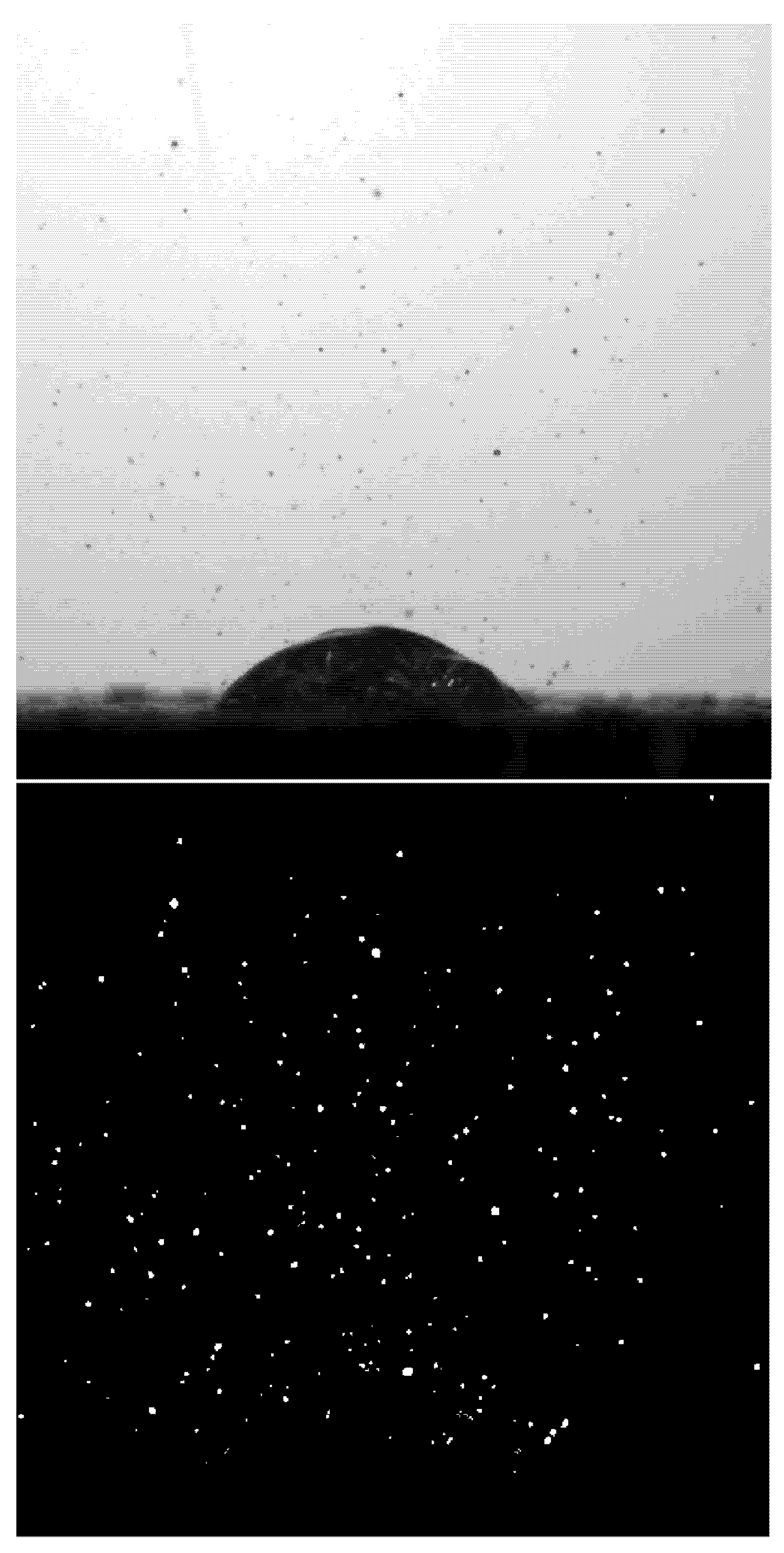
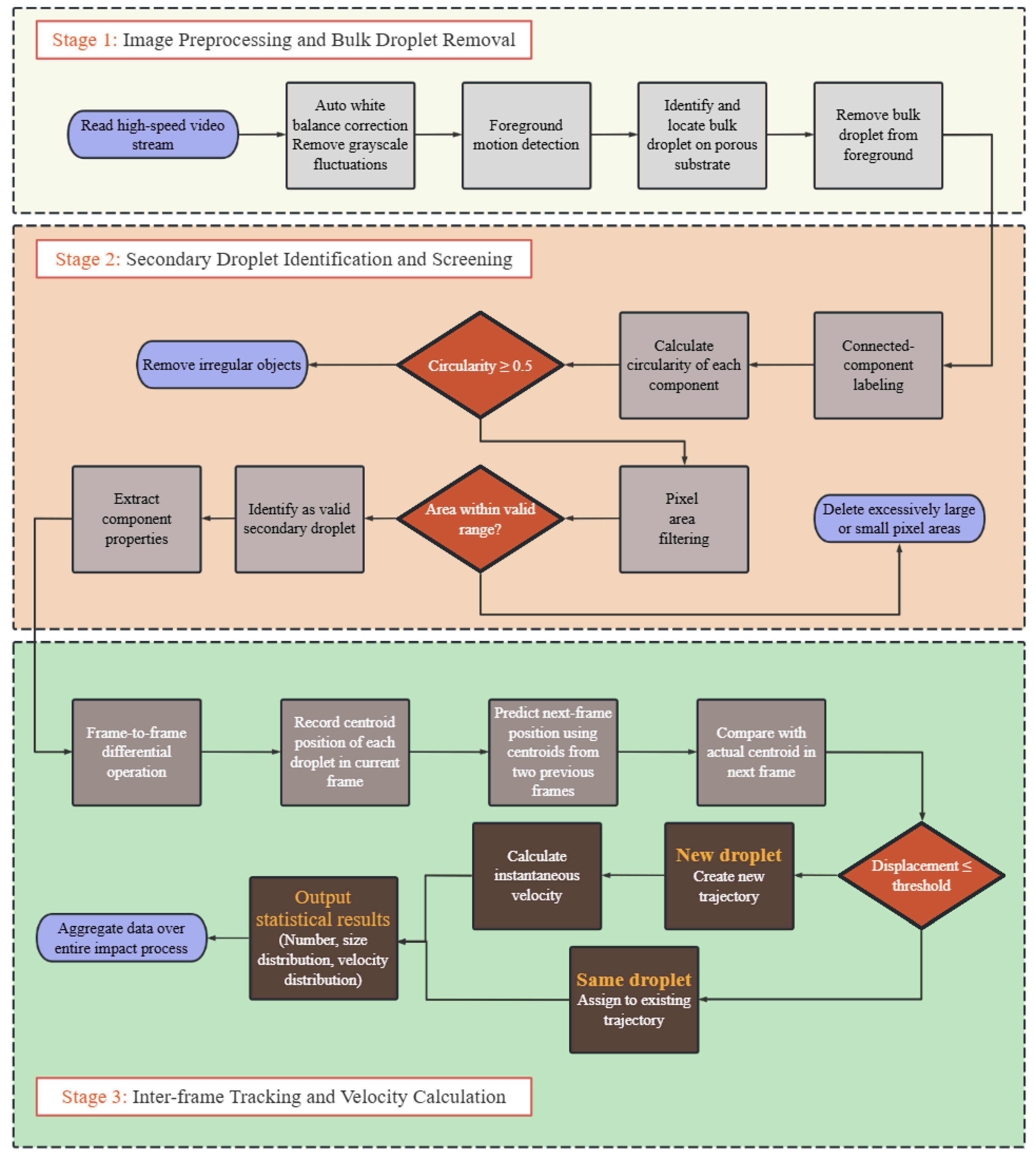
Processing programs were written specifically for the images to perform batch analysis and processing of the images. The area of the droplet in motion was obtained by the differential operation of two consecutive frames of images, marking the position of the center of mass of each frame droplet. The droplet position of the next moment was predicted by the position of the droplet center of mass in the first two frames, then compared with the position of the droplet center of mass in the next frame; if the difference between the droplet center of mass position and the predicted position was small, it was regarded as the same droplet. If not, it was regarded as a new droplet. The image processing program was able to capture the secondary droplets splashed during the impact and count the number, size, and speed of the secondary droplets splashed from the droplets. It is worth mentioning that there are inevitably some errors in the recognition of droplets during the processing of the program. Since the motion of secondary droplets is in three dimensions, and the high-speed camera mainly captures droplets near the plane of focus, droplets that are not in the focal plane may form shadows in the image and affect the recognition of the program. Another major reason is that the mist that sometimes comes out during the evaporation and boiling of the droplets also affects the program’s recognition of the secondary droplets. To reduce errors, the effect of shadows and fog on program recognition was reduced by adjusting the contrast and white balance of the image and by performing operations such as filtering. In addition, the ability to remove small or oversized pixel areas was added to the program, reducing program error recognition. The effect diagram of the program recognition is shown in Figure 5. To more clearly illustrate the image processing procedure described above, we present a detailed flowchart of the image processing mechanism employed in this study, as shown in Figure 6.

3. Results and Discussion

3.1. Evolution of Droplet Morphology During Impact

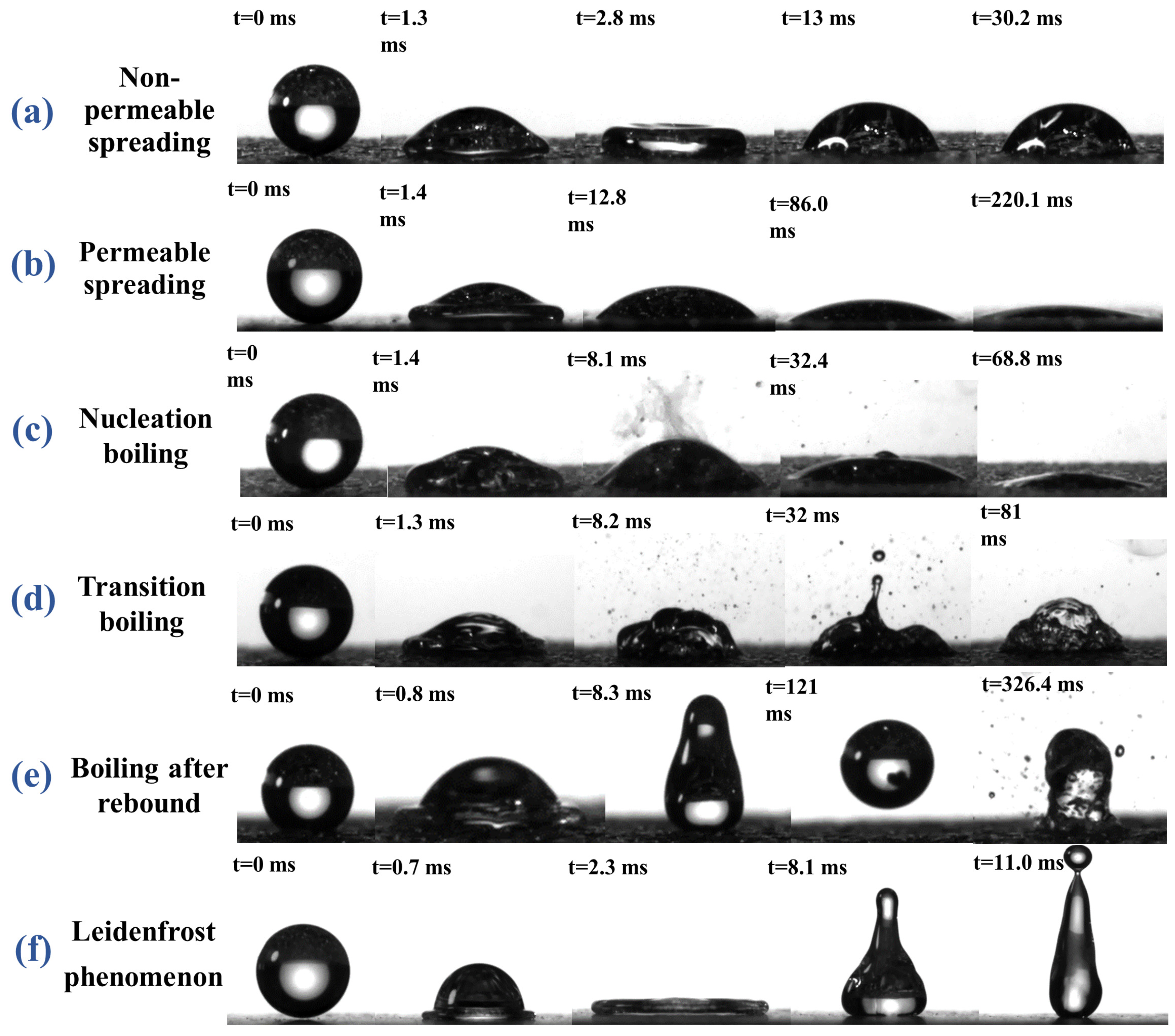
As shown in Figure 7, different mixing ratios of propylene glycol and propanetriol impact on high-temperature porous steel surface (PS_10) showed six different states, namely non-permeable spreading, permeable spreading, nucleation boiling, transition boiling, boiling after rebound, and LP. At a 100% concentration of propanetriol droplets at a heating table surface temperature of 50 °C, the droplets exhibited non-infiltration on the porous surface due to the high viscosity and molecular forces of propanetriol, as shown in Figure 7a. And Figure 7b shows that, the droplets of propylene glycol spread out and penetrated on the porous stainless steel at the same temperature, showing good wettability. Figure 7c shows that at Tw = 250°C and 50 wt% propanetriol droplets, the droplets also exhibit spreading and penetration after falling on the substrate surface. However, at this time, small bubbles are continuously generated inside the droplet and the droplet penetrates more rapidly. At this time, the droplet is in the nucleation boiling state. Figure 7d shows that at Tw = 300°C, the droplet is in a transition boiling state after impact, and the contact area between the droplet and the substrate surface is unstable. At this time, the bubble formation inside the droplet is very fast, and a large number of bubbles rupture on the free surface of the droplet and produce many small droplets splashing out. At Tw = 400°C, the droplet drops on the surface of the substrate first spread out and then retracted and bounced, the droplet bounced up to the air then shocked and fell, and finally attached to the substrate for violent transition boiling, as shown in Figure 7e. It is presumed that the vapor layer produced between the droplets and the substrate is not stable enough at the current temperature. When the droplet first falls droplet impact velocity is large, and the droplet and the substrate surface of the airflow layer are violently compressed to show a spring-like effect, coupled with the rapid generation of steam, making the droplet easy to bounce off the surface. When the droplet falls again, the impact velocity is smaller, and the vapor of the droplet and the substrate escapes more from the pores than enough to support the droplet rebound, so the droplet can be observed to attach to the surface of the substrate for violent transition boiling. Figure 7f shows the Leidenfrost effect of a droplet on the surface of a porous substrate, where the droplet bounces completely and ends up suspended on the surface of the substrate.
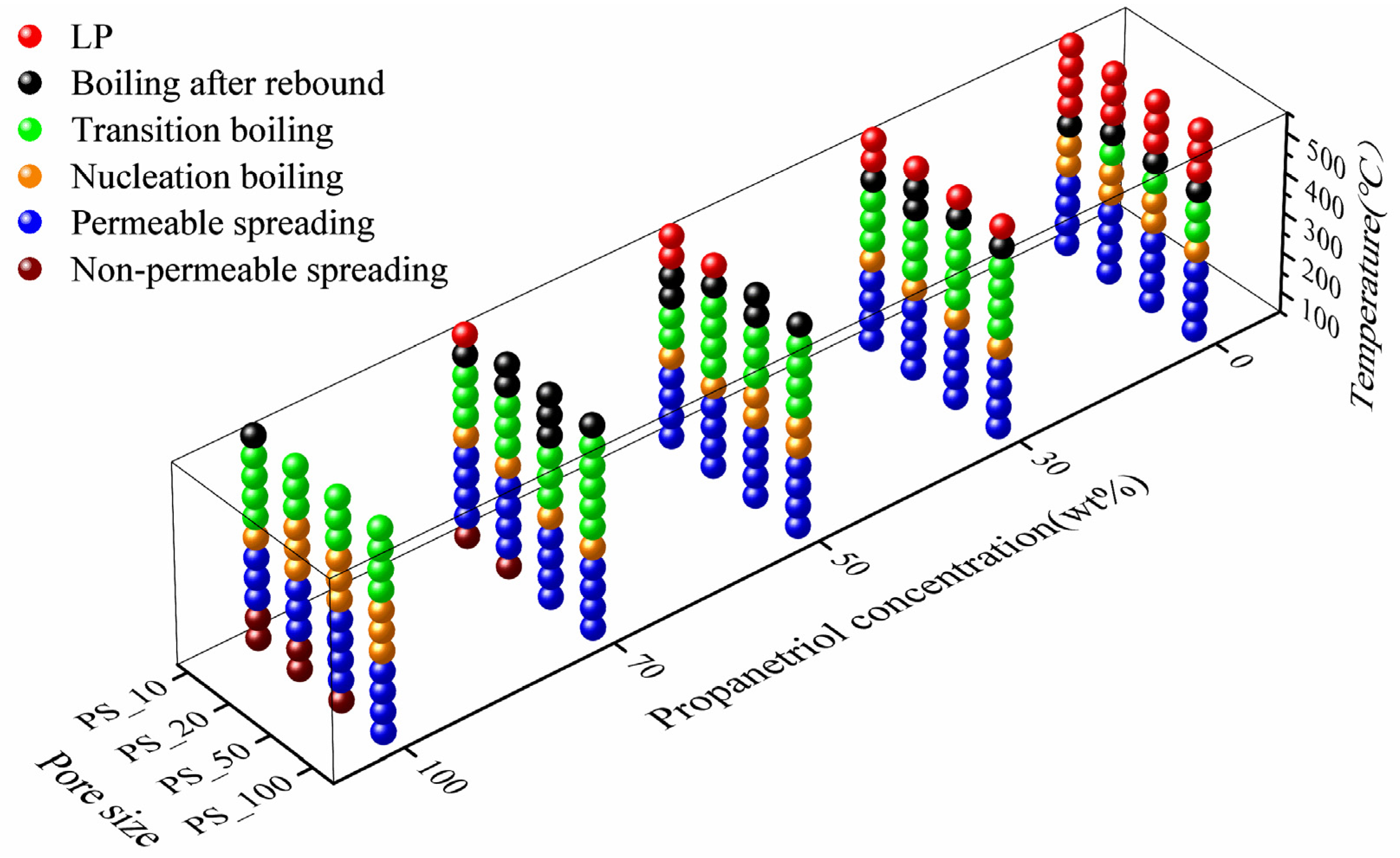
It is found that the boiling state of droplets is mainly determined by the surface temperature of the porous medium, and the time of complete penetration of droplets into the substrate before boiling decreases with the increase of the temperature of the substrate. The boiling of droplets is usually accompanied by the splashing of small droplets, especially when the droplets are in transition boiling, and a large number of secondary droplets are generated. The impact status of propylene glycol–propanetriol mixtures is shown in Figure 8.
To improve the reproducibility of the regime classification, image-based criteria were further defined for the six observed droplet behaviors, which were shown in Table 3. Non-permeable spreading refers to the case in which the droplet spreads on the low-temperature substrate but does not visibly penetrate into the pores within the observation period. Permeable spreading refers to the case in which the droplet spreads and is gradually absorbed by the porous substrate without obvious bubble formation. Nucleation boiling is identified when the droplet remains in contact with the substrate and a limited number of bubbles appear at the bottom or inside the droplet. Transition boiling is identified by unstable liquid–solid contact, rapid bubble generation, coalescence and rupture, and obvious secondary-droplet ejection. Boiling after rebound refers to the case in which the droplet rebounds once or several times after the initial impact and then contacts the substrate again with violent boiling. The Leidenfrost state is defined as the formation of a relatively stable vapor layer between the droplet and the substrate, where the droplet remains levitated or completely rebounds, and direct contact and secondary-droplet ejection are significantly reduced. Since the transition temperature depends on both liquid composition and porous substrate pore size, the classification thresholds in this study are regarded as operational criteria based on the high-speed images and the regime map in Figure 8 under the present experimental conditions.
From the viewpoint of the porous substrate, the formation of the Leidenfrost state depends on the competition between vapor generation beneath the droplet and vapor escape through the porous structure. Substrates with larger pores have higher estimated permeability, which facilitates vapor escape through the pores and makes it more difficult to maintain a continuous and stable vapor layer beneath the droplet. This explains why a higher wall temperature is required for the Leidenfrost state on substrates with larger pore sizes, as shown in Figure 8. In contrast, smaller pores correspond to a larger capillary-pressure index, which favors liquid imbibition into the porous structure and promotes permeable spreading or nucleation boiling at relatively low temperatures. Therefore, pore size affects not only liquid penetration but also the vapor-escape pathway and the Leidenfrost transition.
Judging from the ratio of binary droplets, the temperature of Leidenfrost of droplets increases with the increase of the content of propylene triol in the droplets. This is mainly related to the increase in the bubble point temperature of the solution. From the substrate variation, the Leidenfrost temperature is mainly influenced by the pore size of the porous surface, and the droplet state diagram shows that a higher surface temperature is required for the occurrence of Leidenfrost phenomenon for substrates with large pore scale. This is mainly due to the fact that the larger the pore size of the substrate the more vapor escapes from the pores, thus making it more difficult for the Leidenfrost phenomenon to occur. While pore size and roughness capture the primary trends, a complete interpretation of the boiling dynamics would require knowledge of permeability and effective thermal conductivity, which is a subject of our ongoing work.

3.2. The Number of Secondary Droplets During Boiling

This work focuses on the characterization of secondary droplets produced by collisions between droplets and hot surfaces. At low substrate surface temperatures, secondary droplets rarely occur during droplet impaction. When the substrate wall temperature is greater than the bubble point temperature of the liquid, bubbles begin to grow at the bottom of the droplet, and the growing bubbles will rupture at the free surface to produce tiny secondary droplets. In particular, the number of secondary droplets increases substantially when the droplet is in transition boiling. When in the LP state, a vapor layer is rapidly generated between the liquid and the porous surface upon droplet impact, and almost no secondary droplets are generated. Based on the above experimental images and image algorithm techniques, this work analyzed the effects of solution ratio, pore size, and surface temperature of porous materials on the generation of secondary droplets.
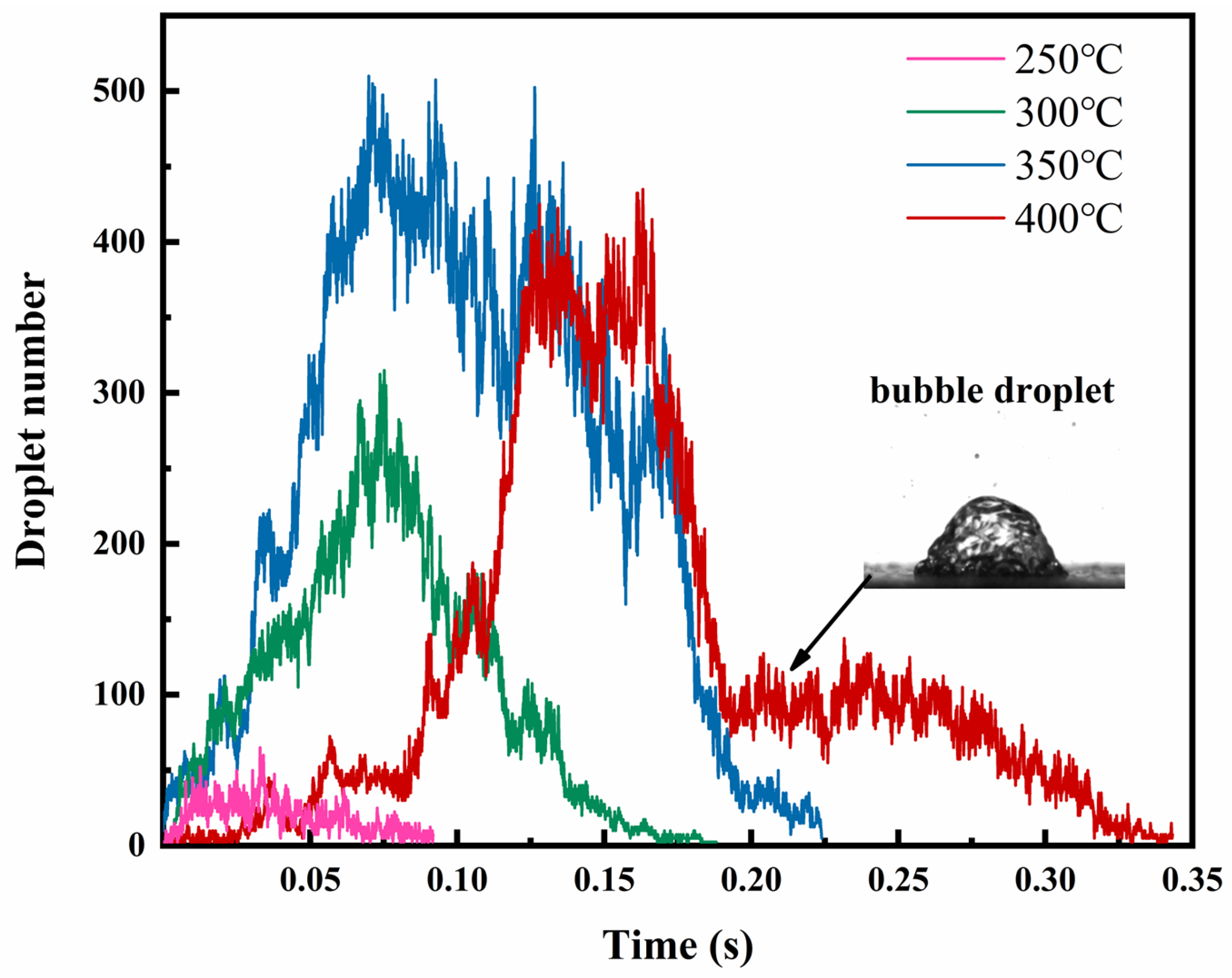
The number of secondary droplets splashed when the droplets are located in nucleation boiling, transition boiling, and boiling after rebound are compared in Figure 9. Nucleation boiling appears at Tw = 250°C, transition boiling appears at Tw = 300°C and 350°C, and boiling after rebound appears at Tw = 400 °C. The total number of secondary droplets first gradually increases and then decreases with time. According to the statistical droplet penetration time, the penetration time of droplets on the surface of the substrate first decreases with the increase of wall temperature, and the shortest extreme value of penetration time exists when it is in nucleation boiling or transition boiling. Thereafter, as the temperature increases, the large amount of vapor generated between the interfaces inhibits the penetration of the droplets, and the time of penetration gradually increases until it is in the LP state.
When the substrate surface temperature is 250 °C, the droplets are in the nucleated boiling state and there are only few secondary droplets in the process, and the droplet penetration time into the substrate is short. Droplets are in a transitional boiling state when the substrate surface temperature is 300 °C and 350 °C. Droplets boil more vigorously at Tw = 350 °C, and the number of secondary droplets is also higher. When the substrate temperature is 400 °C, the droplets are in boiling after rebound mode. The number of secondary droplets generated at the initial moment is small because the droplets are bounced into the air by the vapor without contacting the substrate. The number of secondary droplets produced is small because there are fewer bubbles generated inside the droplet at this time. In the time period from 0.15 s to 0.2 s, the number of secondary droplets decreases dramatically, and by viewing the images, it is found that the bubbles inside the droplets are gathered to form the bubble-like droplets as in Figure 9. Secondary droplets are mainly generated from the rupture of bubbles inside the droplet. At this point, the droplet looks like a hollow droplet with a large bubble forming inside. The contact area between the droplets and the substrate is also very small, the heat transfer worsens, so the droplets penetrate completely much longer than in previous cases. This is due to the dramatic reduction of secondary droplets as a result of the change from a large number of bubbles breaking from the free surface of the droplet to a large bubble accumulation inside the droplet.
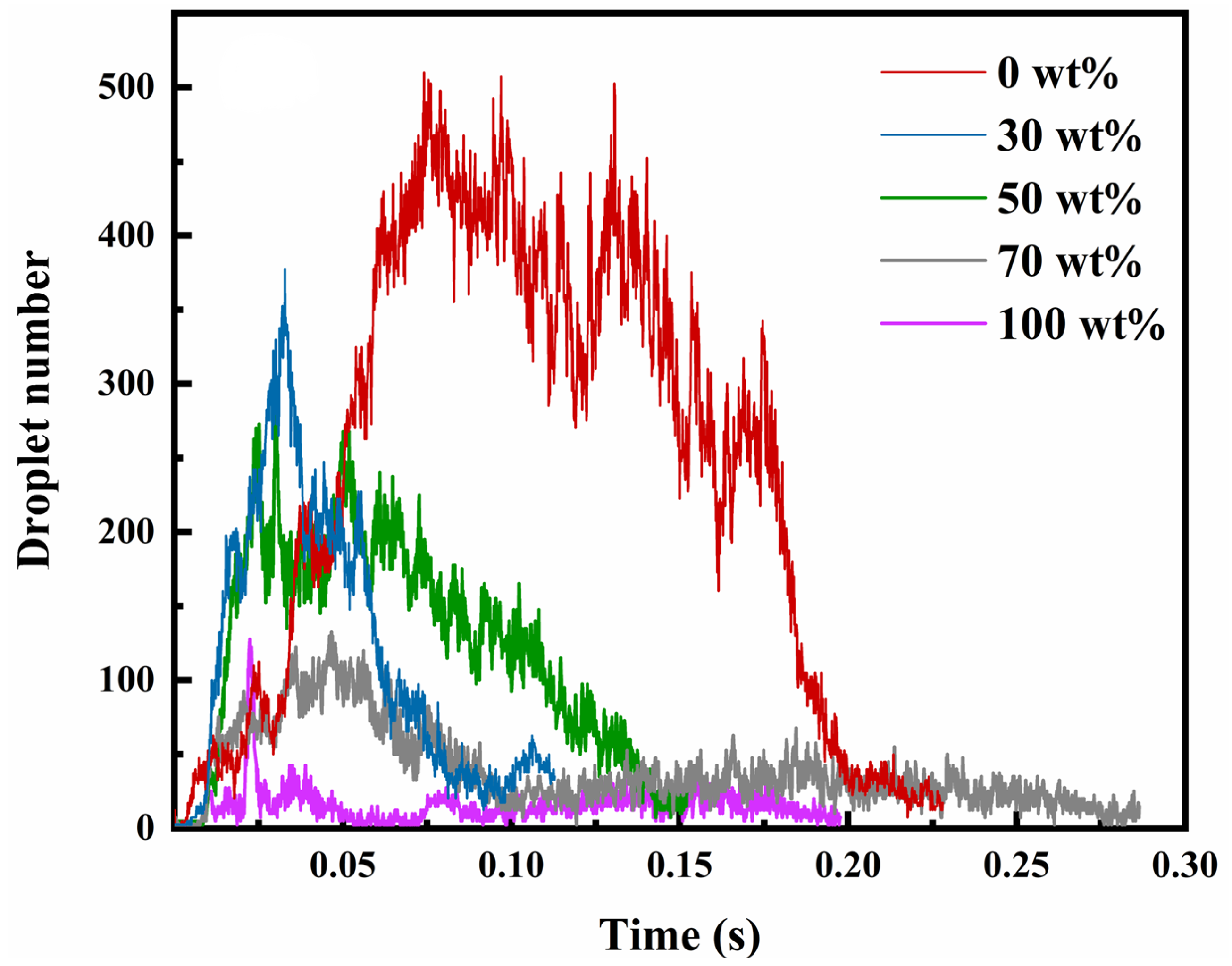
The effect of propanetriol concentration on the number of secondary droplets is illustrated in Figure 10. According to the change of the number of secondary droplets in Figure 10, it can be found that the peak of the number of secondary droplets splashes during the process of droplet boiling is decreasing with the increase of the content of propylene triol in the droplet solution. This is mainly related to the boiling state that the droplet is in. The higher the content of propanetriol in the droplet solution, the higher the bubble point temperature of the solution. The higher excess temperature (the difference between the current wall temperature and the bubble point temperature of the corresponding solution) means that the droplets boil more vigorously producing more bubbles. Only the droplets of 100 wt% propanetriol in the figure are in the nucleated boiling state and produce the least number of secondary droplets. The effect of liquid composition can be interpreted by considering the combined influence of bubble point temperature, viscosity, and surface tension. As the propanetriol concentration increases, the bubble point temperature, viscosity, and surface tension of the solution all increase. A higher bubble point temperature reduces the effective superheat at the same wall temperature. A higher viscosity suppresses droplet spreading, pore penetration, and liquid-jet formation after bubble rupture. A higher surface tension increases the energy required for free-surface rupture and secondary-droplet generation. Therefore, droplets with higher propanetriol concentration are less likely to penetrate the porous substrate, generate fewer secondary droplets, and require a higher wall temperature to reach the Leidenfrost state.
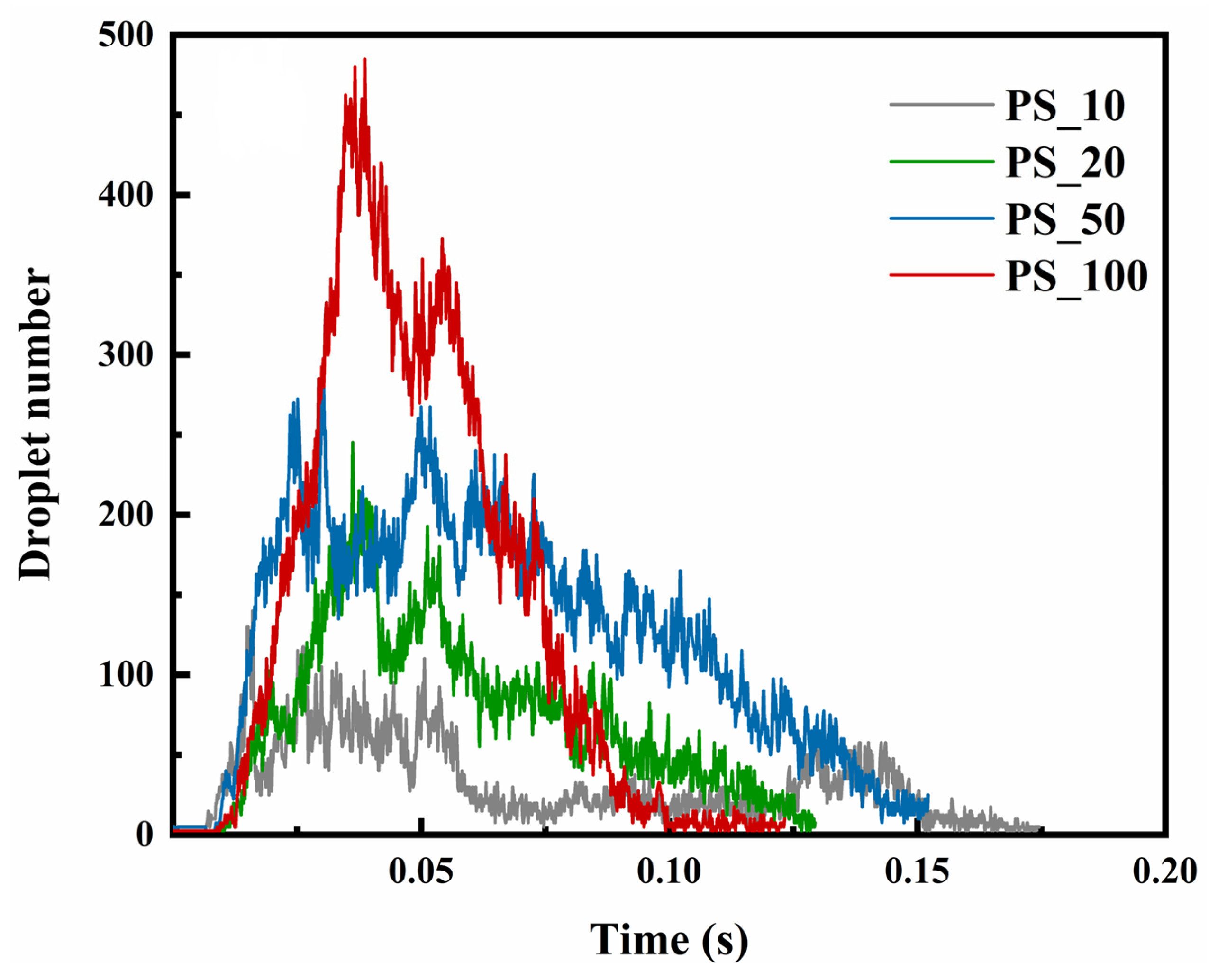
The effect of substrate pore scale on the number of secondary droplets is illustrated in Figure 11. The droplets with propanetriol concentration of 50 wt% at 350 °C are in the transition boiling state. It can be found that the peak number of secondary droplets splashes during droplet boiling gradually increases as the substrate pore scale increases. This is largely related to the surface roughness of the porous media, since it can be seen from Table 1 that the surface roughness of the substrate with larger pore scale is larger. The uneven surface can provide more cavitation cores for the droplets, and more bubbles will be produced during boiling, so the number of secondary droplets produced after the bubble burst will be increased.

3.3. The Diameter of Secondary Droplets During Boiling

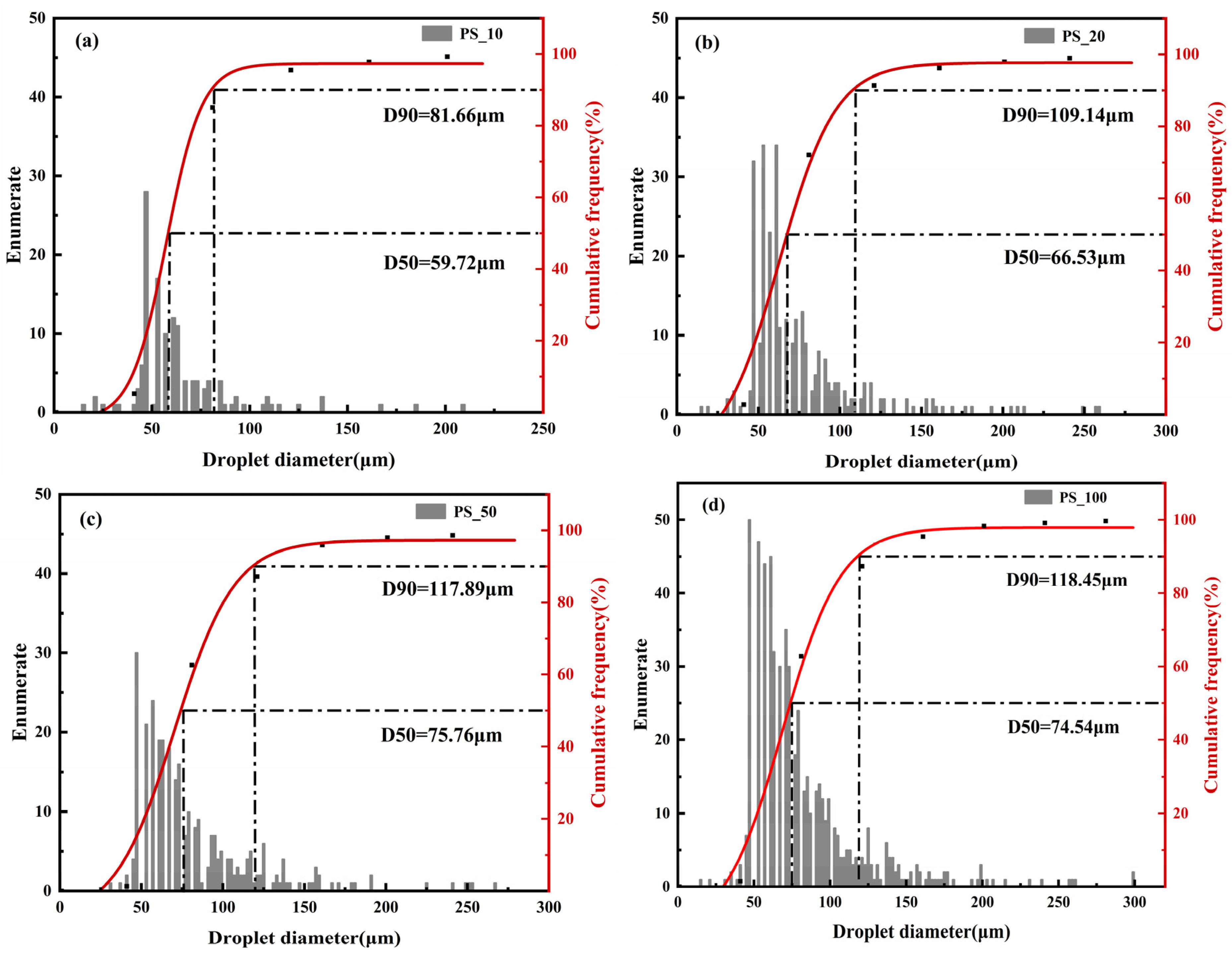
Through the analysis of the experimental results in the previous section, the secondary droplets mainly occur in the transition boiling as well as the boiling after rebound region. In the boiling state, bubbles are continuously generated in the contact area between the bottom of the liquid and the porous wall, and the bubbles grow upward under the action of buoyancy, and finally break through the surface of the droplet to escape; a large number of secondary droplets are generated in the process of bubble escape and breakage. In addition to the number of droplets, the particle size of the secondary droplets should also be taken into account. Using the transition boiling state as an example, the droplet diameter size when the secondary droplet is at its peak in each case in Figure 11 was counted by an image processing program (as shown in Figure 5).
The diameter of the secondary droplets during droplet boiling is mostly laid between 50 μm and 100 μm; the number of large or tiny droplets is small. From the variation of the secondary-droplet diameters produced on the four different substrates in Figure 12, it can be found that the values of the secondary-droplet diameters D50 and D90 increase with the increase of the substrate pore scale. It can be conjectured that this is mainly related to the surface roughness and surface aperture of the substrate. With increased surface roughness and surface aperture, the diameter of the secondary droplets bursting when the droplets are boiling is also greater.

4. Conclusions

In this study, the thermodynamic and kinetic behaviors of sintered porous stainless steel impacted by droplets of different concentration ratios of glycol–propanetriol binary were experimentally investigated. The changes of droplet behavior in different wall temperature and substrate were analyzed by visualization experiment tools, and the number and diameter size of secondary droplets during the boiling of droplets on the surface of a porous stainless steel substrate were analyzed using the user written image algorithm program. The following points were obtained after analyzing the experimental data.
(1)
Based on the behavior of droplets when hitting a hot porous surface, six states are classified: non-permeable spreading, permeable spreading, nucleation boiling, transition boiling, boiling after rebound, and Leidenfrost phenomenon. Each phenomenon was analyzed, especially the reasons for the occurrence of the boiling after rebound phenomenon. In terms of solution composition ratio, it is more difficult for droplets to penetrate into the porous substrate when the proportion of propanetriol in the solution is increased, and the Leidenfrost temperature of the droplet increases. In terms of substrates, higher wall temperatures are required for the Leidenfrost phenomenon to occur on substrate surfaces with large surface pore sizes.
(2)
According to the results of the image processing program statistics, the droplet in the transition boiling state erupts the most secondary droplets, and different composition ratios of porous substrate and droplets have a large effect on the number of secondary liquid splashes. At Tw = 350 °C, the greater the propylene glycol content in the solution ratios and the larger the pore scale of the substrate, the greater the peak in the number of secondary droplets during droplet boiling.
(3)
The diameters of the secondary droplets on different porous substrates were counted at the peak moment of droplet eruption when the droplets were in transition boiling (Tw = 350 °C). The diameter of the secondary droplets was found to be mostly distributed between 50 μm and 100 μm, accompanied by an increase in surface pore size and surface roughness, making it easier to erupt large diameter droplets during boiling.

5. Limitations and Future Outlook

This study has experimentally investigated the boiling behavior and secondary-droplet characteristics of propylene glycol–propanetriol binary droplets impinging on heated porous surfaces with different pore sizes and roughnesses. Although several meaningful results have been obtained, certain limitations remain, and corresponding future research directions are proposed accordingly.

5.1. Experimental Limitations

First, the experimental conditions in this study were designed to focus on the effects of surface properties and solution composition; therefore, a fixed droplet diameter and velocity were adopted across all cases, which excludes the influence of initial kinetic parameters. For practical applications, multiple influencing factors need to be considered in combination, and the effects of their complex interactions remain to be further investigated. Second, this study focuses solely on single-droplet impingement, whereas practical applications predominantly involve continuous sprays or droplet trains, which entail complex droplet–droplet, droplet–film, and droplet–vapor interactions that are not captured in the present experimental configuration. Third, to ensure experimental consistency, the porous substrate was replaced after each experiment to eliminate residual interference; consequently, the evolution of surface characteristics (e.g., pore clogging, roughness change, and wettability alteration) under repeated thermal cycling was not examined.

5.2. Outlook for Fuel Atomization and Spray Cooling Applications

The findings of this study hold potential value for technical fields involving droplet impingement on porous or rough surfaces. In fuel atomization, secondary-droplet generation directly influences fuel–air mixing quality, combustion efficiency, and pollutant emissions. The experiments show that porous surfaces with larger pore sizes and roughness promote secondary-droplet eruption during boiling. This finding offers new perspectives for designing tailored porous coatings for injector tips or combustion chamber walls, with the potential to enhance secondary atomization and micro-explosion effects, particularly for multi-component or emulsion fuels. In spray cooling for electronic thermal management, the coupling relationship between surface porosity and boiling regime transitions revealed in this study can provide a basis for optimizing porous heat dissipation structures. Tuning the secondary-droplet size distribution through surface engineering and coolant formulation may enable more precise control of evaporative cooling efficiency and spatial temperature uniformity. However, translating single-droplet insights into design guidelines for practical spray systems still requires further investigation under multiphase flow conditions closer to real applications, including multi-droplet impact, cross-flow effects, and continuous spray operation under varying duty cycles, flow rates, and ambient conditions.

5.3. Future Research Directions

Based on the above limitations and application prospects, future work is planned along the following directions:
(1)
Extending the parametric range of droplet Weber numbers and sizes, and conducting systematic parametric studies to establish dimensionless predictive correlations for secondary-droplet characteristics on porous surfaces;
(2)
Introducing more refined three-dimensional models to further investigate droplet motion states, thereby reducing out-of-plane measurement uncertainties in secondary-droplet tracking;
(3)
Performing long-term cyclic impact experiments to characterize the durability of porous substrates under repeated thermal loading, including the evolution of porosity, pore clogging, and surface wettability;
(4)
Extending from single-droplet studies to multi-droplet or continuous spray configurations, bridging the gap between droplet-scale fundamental physics and practical spray cooling or fuel injection systems.

Author Contributions

Conceptualization, M.X.; methodology, Y.M.; software, Q.Z.; validation, Y.L.; formal analysis, Q.Z. and D.Z.; investigation, Q.Z., Y.M. and Y.L.; resources, Y.Z.; data curation, Y.M.; writing—original draft preparation, Y.M.; writing—review and editing, M.X.; visualization, Y.L.; supervision, Y.Z. and D.Z.; project administration, M.X.; funding acquisition, Y.Z. All authors have read and agreed to the published version of the manuscript.

Funding

This work was supported by the National Natural Science Foundation of China (No.52166009, 12372246), the Jiangxi Provincial Natural Science Foundation (No.20242BAB26072) and the Jiangxi Province Key Laboratory of Light Alloy (No.2024SSY05031).

Data Availability Statement

The data presented in this study may be obtained from the corresponding author upon request.

Conflicts of Interest

The authors declare no conflicts of interest.

Nomenclature

cpspecific heat capacity, J·kg−1·K−1Abbreviations
dpsurface pore diameter, μmLPLeidenfrost phenomenon
Pporosity, %skskewness
Saroughness, μmkukurtosis
SskskewnessPSporous samples
Skukurtosis
Twheating surface temperature
Greek symbols
ρdensity, kg·m−3
λthermal conductivity, W·m−1·K−1

References

  1. Zhao, Y.; Wen, L.; Zhang, Y.; Liu, B.; Yang, H.; Deng, Q. Experimental and Numerical Study on Dynamic Characteristics of Droplet Impacting on a Hot Tailings Surface. Processes 2022, 10, 1766. [Google Scholar] [CrossRef]
  2. Gao, X.; Li, Y.; Xia, Y.; Li, H. A Review on Thermo-Fluidic Study of Droplet Impact in Spray Cooling. Heat. Transf. Res. 2025, 56, 53–91. [Google Scholar] [CrossRef]
  3. Kim, J.; You, S.; Choi, S.U. Evaporative spray cooling of plain and microporous coated surfaces. Int. J. Heat. Mass. Transf. 2004, 47, 3307–3315. [Google Scholar] [CrossRef]
  4. Cebo-Rudnicka, A.; Hadała, B. Investigation of the influence of including or omitting the oxide layer on the result of identifying the local boundary condition during water spray cooling. Coatings 2024, 14, 884. [Google Scholar] [CrossRef]
  5. Wardana, M.K.A.; Lim, O. A study effects of injection pressure and wall temperature on the mixing process of NOx and NH3 in Selective Catalytic Reduction system. J. Mechatron. Electr. Power Veh. Technol. 2020, 11, 45–54. [Google Scholar] [CrossRef]
  6. Hong, J.; Jin, Y.; Jin, Y.; Chen, J.; Li, Y.; Chen, J. Coalescence Dynamics of a Droplet Impacting on a Rectangular Pixel for Inkjet Printing. Langmuir 2022, 38, 15839–15847. [Google Scholar] [CrossRef]
  7. Daniel, R.C.; Berg, J.C. Spreading on and penetration into thin, permeable print media: Application to ink-jet printing. Adv. Colloid Interface Sci. 2006, 123, 439–469. [Google Scholar] [CrossRef] [PubMed]
  8. Liu, Y.; Luo, X.; Tu, Z.; Chan, S.H. Droplet dynamics in a proton exchange membrane fuel cell with ejector-based recirculation. Energy Fuels 2021, 35, 11533–11544. [Google Scholar] [CrossRef]
  9. Keshav, T.R.; Basu, S. Spreading of liquid droplets on proton exchange membrane of a direct alcohol fuel cell. Chem. Eng. Sci. 2007, 62, 7515–7522. [Google Scholar] [CrossRef]
  10. Zheng, E.; Wang, G.; Cui, Y.; Wang, L.; Xu, J. Evaporation heat transfer of single hydrous ethanol droplet impacting on a heated wall. Heat. Transf. Res. 2023, 54, 79–94. [Google Scholar] [CrossRef]
  11. Raj, K.; Raj, P.R.L. Investigation of Dynamic Characteristics of Liquid Methane Droplet Impact on a Heated Solid Surface. Heat. Transf. Res. 2025, 56, 49–67. [Google Scholar] [CrossRef]
  12. Wang, Y.; Yu, F.; Chen, H.; Tang, A.; Wu, M. Hybrid Experimental–Numerical Investigation of Droplet Impact Dynamics on Heated Spherical Surfaces. Processes 2026, 14, 487. [Google Scholar] [CrossRef]
  13. Liu, C.; Hu, J.; Zhen, G.; Chen, J.; Chen, H.; Huang, S.; Liu, Y. Droplet Interactions with Hot Surfaces: Boiling Modes, Leidenfrost Temperature, Dynamics, and Applications. Small 2025, 21, e2501592. [Google Scholar] [CrossRef] [PubMed]
  14. Li, B.; Lin, S.; Yang, M.; Cao, B. Droplet impact on heated solid surfaces: From experimental and numerical approaches to dynamic behavior. Appl. Therm. Eng. 2025, 279, 127687. [Google Scholar] [CrossRef]
  15. Zhao, X.; Zhang, H.; Xi, X.; Liu, F.; Zhang, B. Effect of unidirectional surface roughness on heat transfer performance of spray cooling. Exp. Heat. Transf. 2023, 36, 96–119. [Google Scholar] [CrossRef]
  16. Zhong, X.; Zhang, Y.; Hou, Y.; Feng, H.; Sun, L. Unique dynamics of water-ethanol binary droplets impacting onto a superheated surface with nanotubes. Int. J. Heat. Mass. Transf. 2021, 164, 120571. [Google Scholar] [CrossRef]
  17. Yu, Z.; Wang, F.; Fan, L.-S. Experimental and numerical studies of water droplet impact on a porous surface in the film-boiling regime. Ind. Eng. Chem. Res. 2008, 47, 9174–9182. [Google Scholar] [CrossRef]
  18. Liang, G.; Mudawar, I. Review of drop impact on heated walls. Int. J. Heat. Mass. Transf. 2017, 106, 103–126. [Google Scholar] [CrossRef]
  19. Hatakenaka, R.; Tagawa, Y. Drop impact onto a heated surface in a depressurized environment. Int. J. Heat. Mass. Transf. 2025, 247, 126959. [Google Scholar] [CrossRef]
  20. Cai, C.; Mudawar, I. Review of the dynamic Leidenfrost point temperature for droplet impact on a heated solid surface. Int. J. Heat. Mass. Transf. 2023, 217, 124639. [Google Scholar] [CrossRef]
  21. Zhou, Z.; Yan, F.; Zhang, G.; Wu, D.; Xu, H. A Study on the Dynamic Collision Behaviors of a Hydrous Ethanol Droplet on a Heated Surface. Processes 2023, 11, 1804. [Google Scholar] [CrossRef]
  22. Li, J.; Weisensee, P. Droplet impact and Leidenfrost dynamics on a heated post. Int. J. Heat. Mass. Transf. 2023, 201, 123581. [Google Scholar] [CrossRef]
  23. Wang, G.; McDonough, J.R.; Zivkovic, V.; Long, T.; Wang, S. From thermal energy to kinetic energy: Droplet motion triggered by the Leidenfrost effect. Adv. Mater. Interfaces 2021, 8, 2001249. [Google Scholar] [CrossRef]
  24. Zhang, F.; Tang, J.; Chen, G.; Chen, G. Dynamics of binary solution droplets of an ionic liquid and water impinging on a heated porous surface. Phys. Fluids 2022, 34, 087120. [Google Scholar] [CrossRef]
  25. Chandra, S.; Avedisian, C. Observations of droplet impingement on a ceramic porous surface. Int. J. Heat. Mass. Transf. 1992, 35, 2377–2388. [Google Scholar] [CrossRef]
  26. Kuhn, C.; Schweigert, D.; Kuntz, C.; Börnhorst, M. Single droplet impingement of urea water solution on heated porous surfaces. Int. J. Heat. Mass. Transf. 2021, 181, 121836. [Google Scholar] [CrossRef]
  27. Avedisian, C.; Koplik, J. Leidenfrost boiling of methanol droplets on hot porous/ceramic surfaces. Int. J. Heat. Mass. Transf. 1987, 30, 379–393. [Google Scholar] [CrossRef]
  28. Zhao, P.; Hargrave, G.K.; Versteeg, H.K.; Garner, C.P.; Reid, B.A.; Long, E.; Zhao, H. The dynamics of droplet impact on a heated porous surface. Chem. Eng. Sci. 2018, 190, 232–247. [Google Scholar] [CrossRef]
  29. Lipson, N.; Chandra, S. Cooling of porous metal surfaces by droplet impact. Int. J. Heat. Mass. Transf. 2020, 152, 119494. [Google Scholar] [CrossRef]
  30. Moghtadernejad, S.; Lee, C.; Jadidi, M. An introduction of droplet impact dynamics to engineering students. Fluids 2020, 5, 107. [Google Scholar] [CrossRef]
  31. Werner, S.R.; Jones, J.R.; Paterson, A.H.; Archer, R.H.; Pearce, D.L. Droplet impact and spreading: Droplet formulation effects. Chem. Eng. Sci. 2007, 62, 2336–2345. [Google Scholar] [CrossRef]
  32. Moreira, A.; Moita, A.S.; Cossali, E.; Marengo, M.; Santini, M. Secondary atomization of water and isooctane drops impinging on tilted heated surfaces. Exp. Fluids 2007, 43, 297–313. [Google Scholar] [CrossRef]
  33. Qiu, L.; Dubey, S.; Hoong Choo, F.; Duan, F. The statistical analysis of droplet train splashing after impinging on a superheated surface. J. Heat. Transf. 2017, 139, 052201. [Google Scholar] [CrossRef]
  34. Cossali, G.E.; Marengo, M.; Santini, M. Thermally induced secondary drop atomisation by single drop impact onto heated surfaces. Int. J. Heat. Fluid Flow 2008, 29, 167–177. [Google Scholar] [CrossRef]
  35. Song, E.; Yang, T.; Lu, L.; Liu, X.; Yao, C. High Weber number fuel drop breakup during impact with heated walls. Int. J. Heat. Mass. Transf. 2025, 253, 127532. [Google Scholar] [CrossRef]
  36. Hamdan, K.S.; Kim, D.-E.; Moon, S.-K. Droplets behavior impacting on a hot surface above the Leidenfrost temperature. Ann. Nucl. Energy 2015, 80, 338–347. [Google Scholar] [CrossRef]
  37. Chen, M.; Chen, D.; Liu, Y.; Liu, H.; Liu, H. Experimental study on the secondary droplet formation mechanism when droplet impacting on superheated surface. Int. J. Heat. Mass. Transf. 2022, 185, 122412. [Google Scholar] [CrossRef]
  38. Shlegel, N.; Klimenko, A.; Strizhak, P. Determination of integral characteristics of secondary atomization of fuel oil/water emulsion droplets. Fuel 2024, 372, 132218. [Google Scholar] [CrossRef]
  39. Zhang, Y.; Ma, S.; Wang, Y.; Xu, C.; Ma, H. Electromagnetic rail thermal management research on gas-liquid two-phase flow spray coupled channel cooling. Appl. Therm. Eng. 2025, 280, 128298. [Google Scholar] [CrossRef]
  40. Xu, R.; Wang, G.; Wang, C.; Zhang, Z.; Jiang, P. Investigation of the dynamic mechanisms of droplet impact and spray cooling on heated surfaces under sub-atmospheric pressure. Int. J. Heat. Mass. Transf. 2026, 259, 128341. [Google Scholar] [CrossRef]
Figure 1. Porous stainless steel with filter fineness of (a) 10 μm, (b) 20 μm, (c) 50 μm, and (d) 100 μm.
Processes 14 01557 g001
Figure 2. Microscopic images of porous steel surfaces and surface roughness images: (a) PS_10, (b) PS_20, (c) PS_50, and (d) PS_100.
Processes 14 01557 g002
Figure 3. Experimental setup.
Processes 14 01557 g003
Figure 4. Comparison of thermocouple temperature and infrared camera temperature.
Processes 14 01557 g004
Figure 5. Comparison of the original image and the image after recognition by the program.
Processes 14 01557 g005
Figure 6. Flowchart of the image processing mechanism.
Processes 14 01557 g006
Figure 7. Evolution of droplet morphology during impact on high-temperature porous steel surface (PS_10) with different concentration of propanetriol and heating surface temperature: (a) 100%, 50°C; (b) 0%, 50°C; (c) 50%, 250°C; (d) 50%, 300°C; (e) 50%, 400°C; (f) 0%, 400°C.
Processes 14 01557 g007
Figure 8. Droplet impact state on porous steel substrate with different pore scale, concentration of propanetriol and heating surface temperature.
Processes 14 01557 g008
Figure 9. Secondary-droplet statistics of propylene glycol droplets impact on the surface of PS_50 porous steel.
Processes 14 01557 g009
Figure 10. Effect of propanetriol concentration on the number of secondary droplets at Tw = 350 °C and pore size of 50 μm.
Processes 14 01557 g010
Figure 11. Effect of substrate pore scale on the number of secondary droplets at Tw = 350 °C and 50 wt% propanetriol concentration.
Processes 14 01557 g011
Figure 12. Particle size distribution of secondary droplets at Tw = 350 °C and 50 wt% propanetriol concentration, with different pore scale: (a) PS_10; (b) PS_20; (c) PS_50; (d) PS_100.
Processes 14 01557 g012
Table 1. Physical properties of the substrates.
316LPS_10PS_20PS_50PS_100
Density, ρ   (kg·m−3)7980
Heat capacity, c p   (J·kg−1·K−1)502
Heat conductivity, λ   (W·m−1·K−1)15
Porosity, P   (%) 36.935.337.138.7
Surface pore diameter, d p   (μm) 357890210
Roughness,   S a   (μm) 13.522.226.953.1
Skewness,   S s k −1.7−1.0−1.5−1.3
Kurtosis,   S k u 7.05.65.16.1
Table 2. Physical properties of the solution.
Propanetriol Concentration
(wt%)
Solution Density
(kg·m−3)
Surface Tension
(mN·m−1)
Viscosity
(mPa·s)
Bubble Point Temperature
(°C)
Specific Heat Capacity
(kJ·kmol−1·K−1)
0946.736.240.7186.5176.4
301029.341.590.5195.6178.0
501090.843.8162.3204.0179.2
701158.346.1304.8217.3180.5
1001273.049.7866.3284.0182.8
Table 3. Operational criteria for classifying droplet impact and boiling regimes on heated porous substrates.
RegimeImage-Based CriterionTypical Temperature Range in This Study
Non-permeable spreadingSpreading without obvious penetration; no bubblesLow (Tw), mainly 50 °C for high-propanetriol droplets
Permeable spreadingSpreading followed by penetration; no obvious bubblesLow (Tw), below bubble-point dominated boiling
Nucleation boilingStable contact; small bubbles appear inside/bottom of dropletAround 250 °C in representative cases
Transition boilingUnstable contact; rapid bubble rupture; many secondary dropletsAround 300–350 °C in representative cases
Boiling after reboundInitial rebound followed by renewed contact and violent boilingAround 400 °C in representative cases
Leidenfrost stateStable vapor layer; levitation or complete rebound; few secondary dropletsHigh (Tw), depending on solution and pore size
Disclaimer/Publisher’s Note: The statements, opinions and data contained in all publications are solely those of the individual author(s) and contributor(s) and not of MDPI and/or the editor(s). MDPI and/or the editor(s) disclaim responsibility for any injury to people or property resulting from any ideas, methods, instructions or products referred to in the content.