Article

Strengthening Measures for Solid–Liquid Separation on the Surface of In Situ Leaching of Uranium

1
Beijing Research Institute of Chemical Engineering and Metallurgy, China National Nuclear Corporation, Beijing 101149, China
2
Beijing Key Laboratory of Process Fluid Filtration and Separation, China University of Petroleum, Beijing 102249, China
*
Authors to whom correspondence should be addressed.
Processes 2026, 14(10), 1520; https://doi.org/10.3390/pr14101520
Submission received: 2 April 2026 / Revised: 19 April 2026 / Accepted: 6 May 2026 / Published: 8 May 2026
(This article belongs to the Topic Advances in Separation Engineering)

Abstract

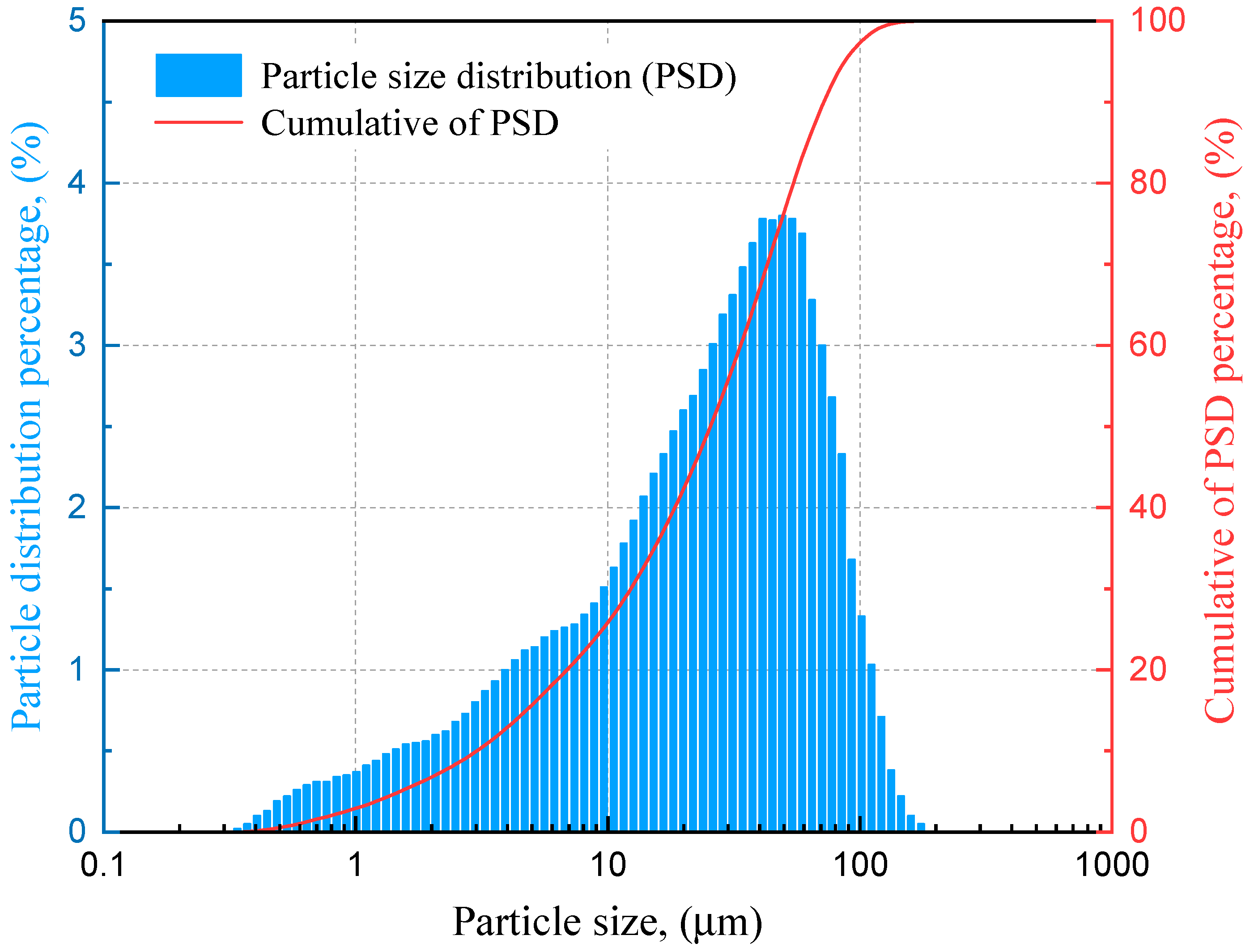
In situ leaching (ISL) of uranium faces challenges in solid–liquid separation of pregnant leaching solution, with conventional bag filters showing suboptimal performance. This study investigates wellbore and ore-bearing layer clogging in neutral ISL uranium mining, characterizing particle size distribution in the leaching solution. Results show that leaching solution particles consist mainly of clay and silt-grade debris (<200 μm). A novel hybrid separation system integrating an optimized hydro cyclone with a bag filter was developed using theoretical fluid mechanics and CFD simulations. The optimized hydro cyclone with a novel swirl chamber and conical inverted wire mesh collector achieves complete separation of particles > 60 μm and 99.9% efficiency for particles > 50 μm. The hybrid system significantly reduces operating pressure and filter bag replacement frequency from three times to once weekly, mitigating ore-bearing layer clogging. This research provides insights into particle migration mechanisms and offers an efficient solid–liquid separation solution for uranium mining operations.

1. Introduction

Natural uranium is an important strategic resource and energy mineral, and sandstone uranium ore is the main type of natural uranium in China and, in situ leaching (ISL) is the preferred process for the development of sandstone uranium ore [1,2]. ISL is the process of circulating a leaching fluid through an ore deposit to dissolve a target mineral and returning the fluid to the surface from which the mineral can be extracted. Concretely, the process involves injecting the leaching agent into the ground from the injection wells, seeping along the ore layer, leaching the uranium in the ore, forming the leaching solution and lifting it to the surface from the pumping wells, and then going through the hydrometallurgical treatment in order to separate and recover uranium metal in the leaching solution, which has the significant advantages of investment saving, short construction period, high production efficiency, low product cost, environmental friendliness, and so on [1,3,4]. The ISL of uranium process is shown in Figure 1. In addition to terrestrial uranium deposits, seawater represents a vast potential source of uranium, with an estimated 4.5 billion tons dissolved in the world’s oceans [5,6]. Recent advances in adsorbent materials and extraction technologies have significantly improved the feasibility of uranium recovery from seawater, complementing traditional mining approaches such as ISL [5].
In the ISL process of uranium, blockage of ore bearing layers is the most common technical problem. Although the well structure contains an in-hole filter [7,8,9] in ISL, it does not completely prevent fine particles in the uranium bearing layer from following the leaching solution into the well pipe. In fact, the so-called in-hole filter has the primary function of allowing leaching solution to enter or exit the well pipe with little ability to intercept the solid phase. Therefore, after the leaching solution is lifted to the surface, it is usually subjected to a solid–liquid separation operation to obtain a relatively clean liquid, which then enters the adsorption tower for uranium enrichment. If the solid–liquid separation on the surface is not complete, the particles on the one hand will adversely affect the ion exchange process: for example, it will cause the resin ball to adhere to the silt and sand (see Figure 2), resulting in a reduction in the contact area between the resin and the leaching solution, at the same time, the pressure of the ion exchange tower rises, the backwashing is frequent, and the amount of wastewater increases, etc. On the other hand, the particles may even be recirculated into the injection well, aggravate the mechanical blockage of the ore layer, and cause a rapid decrease in the injection flow rate, which seriously affects the production capacity of the mine.
The source of solid particles is the pumping well. When the groundwater in the ore-bearing layer changes from natural flow field conditions to leaching flow field conditions, it is prone to cause the precipitation and migration of destabilized debris in the ore-bearing layer around the well and be entrained by the leaching solution. At the same time, along with the system of fluid and surrounding rock action, solution pH, pressure, temperature and other parameters change, there will be part of the chemical precipitation dissolution or precipitation. Yuan et al. conducted a systematic study on the mineral factors affecting the permeability of the mine based on the saturation index method, combined with electron microscope scanning and theoretical analysis, and concluded that carbonate and clay minerals, as well as chemical plugging in the process of neutral ISL, are the main factors affecting the permeability of ore-bearing formations [10].
Whether it is chemical blockage or physical blockage, once the particles are carried by the leaching solution to the surface, the solid–liquid separation process on the surface becomes particularly important. Currently, ISL uranium mines often use bag filters as standalone surface filtration devices. The leaching solution extracted from each pumping well is combined and then pumped into one or more bag filters (depending on the flux of the equipment) for solid–liquid separation. However, the filtration performance of the bag filter primarily depends on the precision of the filter bags within it. If the filter bag precision is low, it has almost no interception effect on the fine sand and clay in the mineral layer. Conversely, when high-precision filter cloths are used, such as those with pore sizes ranging from 5 to 30 μm, the interception of solids becomes much more effective. Yet, this also makes the filter bags highly susceptible to clogging, which in turn causes an increase in system pressure. Consequently, this necessitates frequent replacement of the filter bags, keeping both labor and material costs consistently high.
In fact, there are many solid–liquid separation devices according to different working principles, such as gravity separator [11], inertial separator [12], hydro cyclone [13,14,15], and membrane filtration device [16] and so on. Among them, hydro cyclone is a separation device coupling centrifugal force and gravity effect, which has been widely used in industry. Research has shown that if the solid–liquid density ratio is greater than 1.1~1.2, hydro cyclone then can be used for separation [17], while the solid–liquid density ratio for sandstone type uranium deposits is 1.35~2.50, indicating that introducing hydro cyclones into the solid–liquid separation process for ISL of uranium is feasible. In addition, it should be noted that currently there is no separation equipment that can be considered a complete separator. Typically, separation devices with different working principles are used in series to enhance the separation effect.
Bag filters rely on surface filtration driven by pressure differential, achieving high efficiency for fine particles (5–100 μm) but requiring frequent bag replacement and suffering from increasing system pressure as clogging progresses. Hydro cyclones utilize centrifugal force for density-based separation, offering low maintenance (no moving parts), stable operating pressure, and effective removal of coarse particles (10–200 μm) [18]. The serial integration of these two technologies leverages their complementary strengths: the hydro cyclone serves as a pre-separation stage to remove coarse particulates and significantly reduce solids loading on the downstream bag filter, which functions as a polishing stage for fine particle removal.
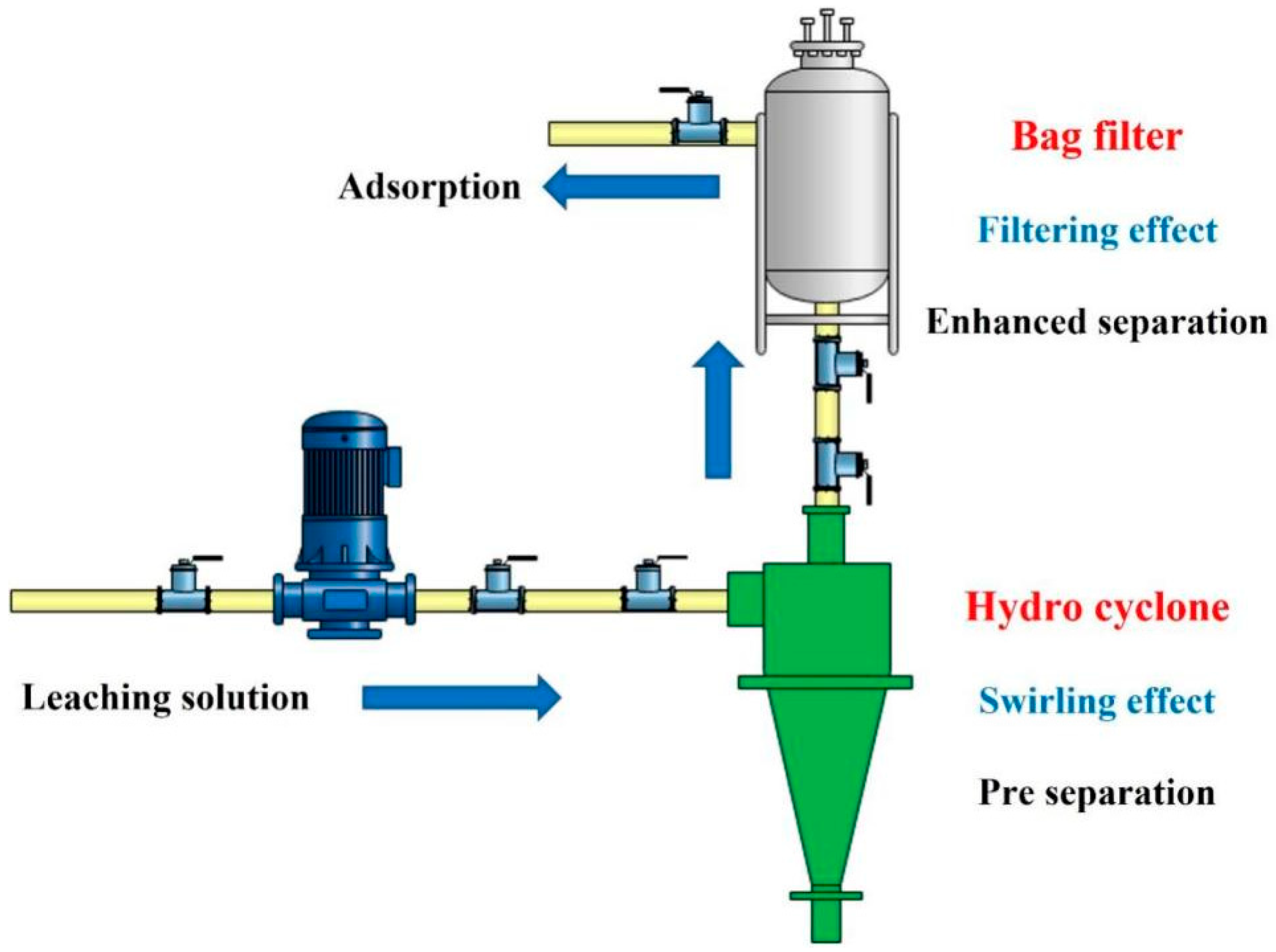
Based on the above understanding, this study proposes the idea of combining a hydro cyclone and a bag filter (see Figure 3) to enhance the solid removal effect in the leaching solution. Firstly, the degree of blockage in the wells/ore bearing layers of a neutral ISL of uranium area was assessed. At the same time, particle size tests were conducted on the leaching solution, and a hydraulic cyclone was optimized designed. On site experiments were conducted, and numerical simulations were also conducted on the optimized hydraulic cyclone. This article deepens the understanding of surface solid–liquid separation in ISL of uranium, and the proposed solid–liquid separation system is expected to be widely applied. The novelty of this work lies in three main aspects: (1) this is the first study to propose and validate a purpose-designed hydro cyclone specifically optimized for ISL uranium operations, featuring an innovative swirl chamber and conical inverted wire mesh collector that address the unique particle characteristics of leaching solutions; (2) the hybrid system integrating hydro cyclone and bag filter in series represents a novel configuration for uranium ISL applications, where the hydro cyclone serves as an effective pre-separation stage to remove coarse particles (>60 μm), significantly reducing the solids loading on the downstream bag filter; (3) both experimental validation and CFD simulation are employed to elucidate the separation mechanisms and optimize the system design, providing a comprehensive understanding of the hybrid separation process.

2. Structural Design and Optimization of Hydro Cyclone

The structure of a conventional hydro cyclone consists of a tangential inlet, a cylinder section, a cone section, an overflow port, and a bottom flow port. The working principle is that the solid–liquid two-phase fluid enters the cylinder at high speed along the tangential inlet, and is constrained by the cylinder wall, generating a strong swirling flow field inside the equipment. Under the dual action of centrifugal force and gravity, the high-density solid phase is thrown to the edge wall and flows downwards along the conical section to the bottom flow port, while the low-density liquid phase flows out from the top overflow port while rotating, thus achieving the separation of the solid–liquid phases.
The expression for the radial velocity, vr, inside the cyclone is:
v r = d 2 Δ ρ v t 2 18 μ l r
where vr is the radial velocity, m/s, d is the particle diameter, m, Δρ is the density difference between liquid and solid phases, kg/m3, vt is the tangential velocity, m/s, μl is the dynamic viscosity of the liquid, Pa·s, and r is the distance between particle and the axis of the equipment.
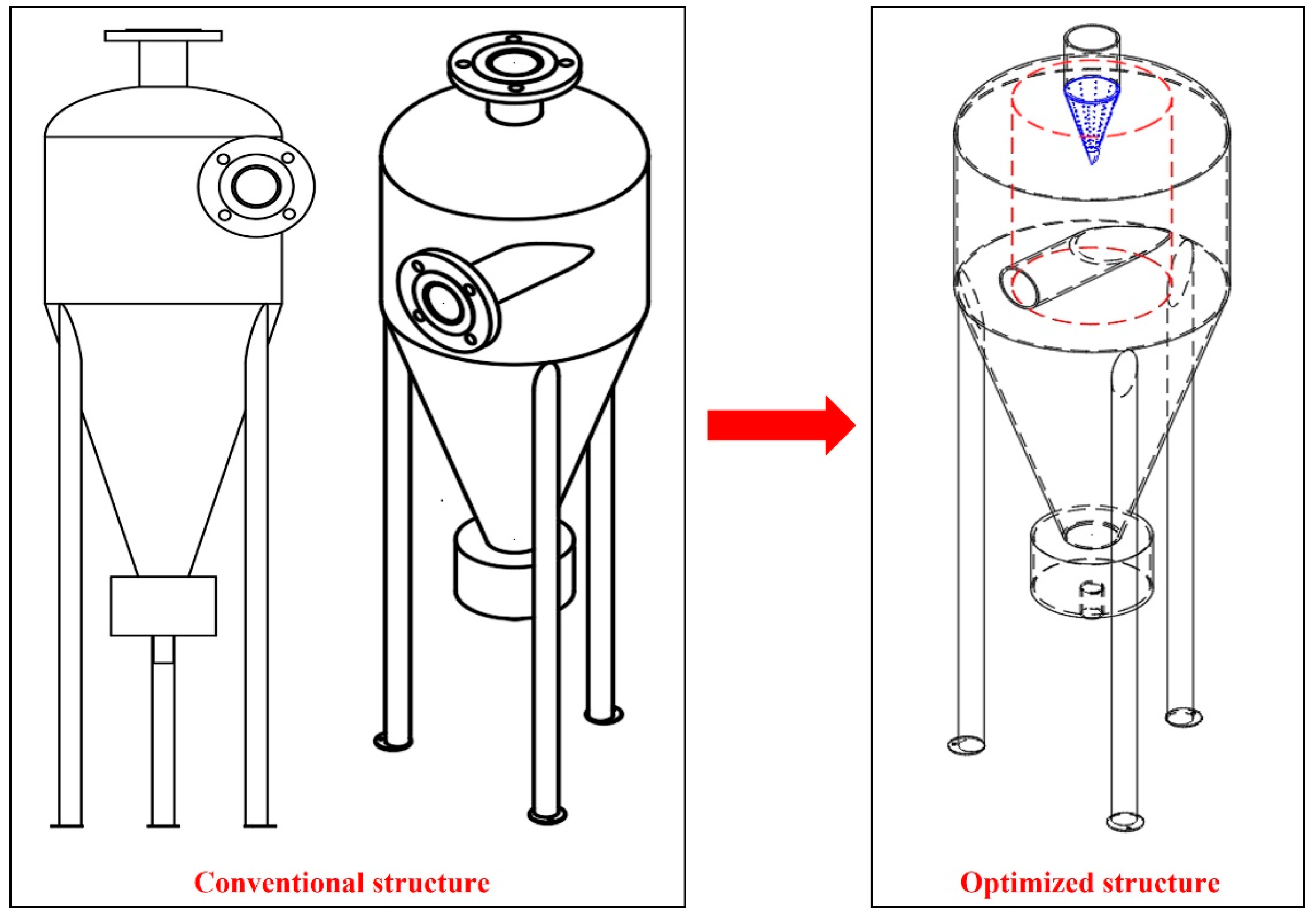
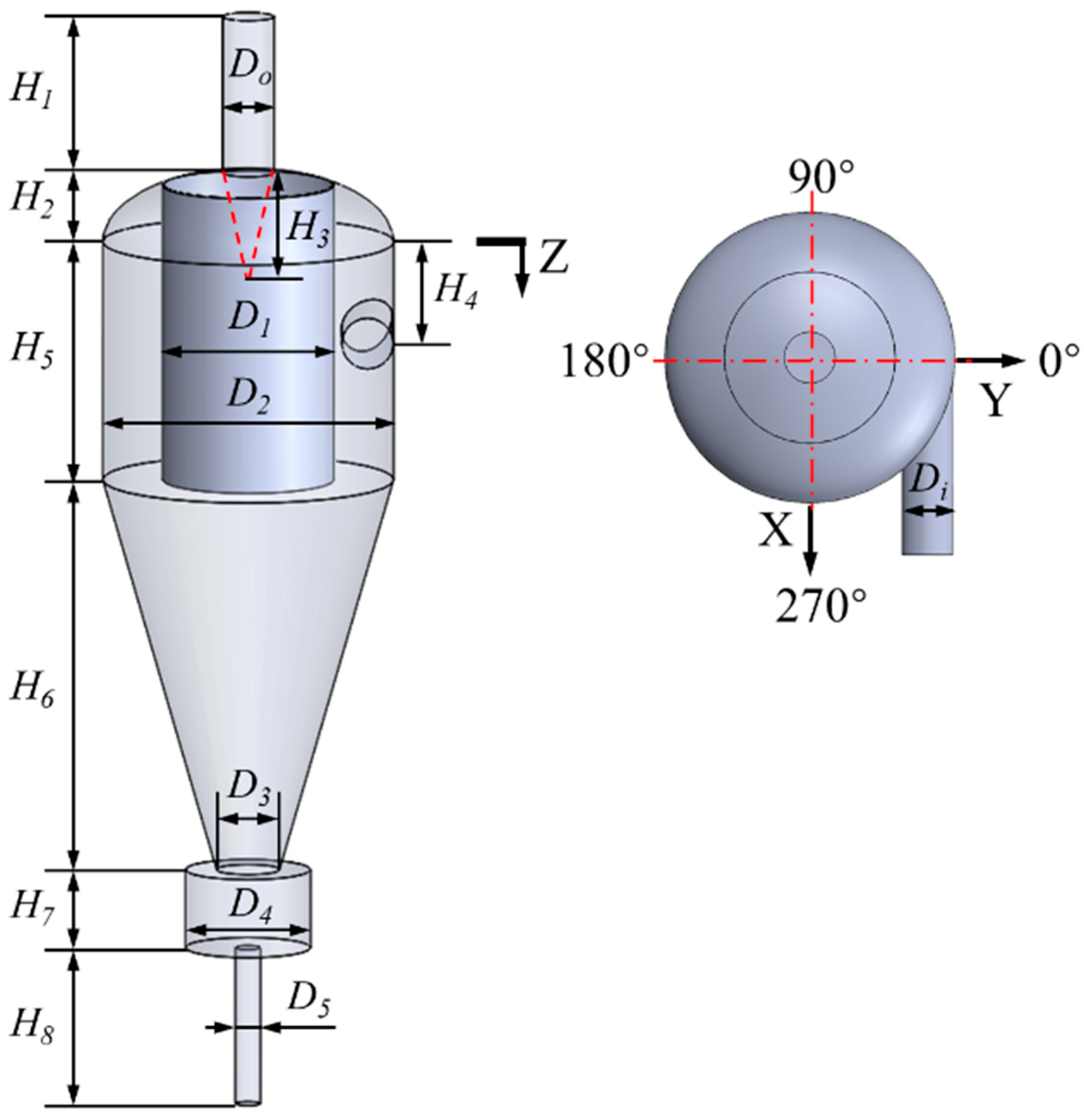
In theory, the larger the radial velocity of particles relative to the solution within a certain range, the easier it is for particles to be separated. According to Equation (1), vr is directly proportional to d2, Δρ, and vt2, but inversely proportional to μl and r. Based on the above understanding, the following improvements have been made to the conventional hydro cyclone: On the one hand, to enhance the tangential velocity of the fluid, a swirling chamber has been added inside the hydro cyclone’s cylindrical body. This is achieved by reducing the flow area, which in turn increases the swirl intensity. It can be imagined that this structure can also effectively reduce the “short-circuit flow” [19] phenomenon in hydro cyclones. On the other hand, to further capture particles that escape from the overflow outlet of the hydro cyclone, an inverted conical-shaped mesh has been installed at the bottom end of the overflow port. The structure of the hydro cyclone before and after optimization is shown in Figure 4.
Based on factors such as flow rate, grade efficiency and installation space in the experimental mining area, a hydraulic cyclone was designed with reference to [20]. The structure and dimensions are shown in Figure 5 and Table 1.

3. Research Method

In this study, the degree of blockage in the wells in the experimental mining area was evaluated, and on-site experiments were conducted by combining a hydro cyclone and a bag filter in series. Numerical simulations were also conducted on the internal flow field of the hydro cyclone.

3.1. Experimental Investigation

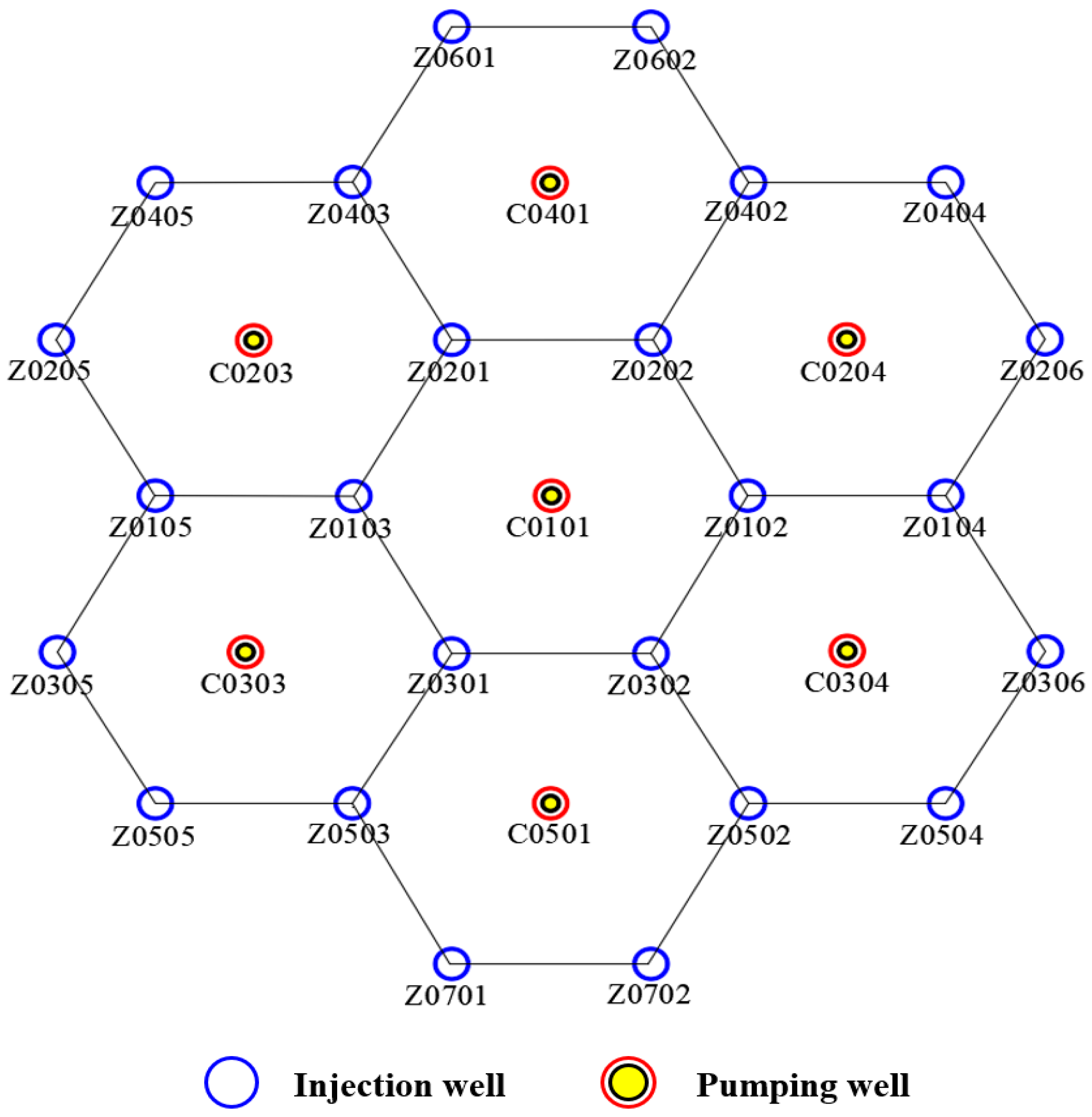
The well layout of the experimental mining area is shown in Figure 6. The well of each unit adopts a seven-points layout of “one-pumping and six-injections”, with a total of seven sets of leaching units.
To assess the degree of blockage in the surrounding mineral bearing layers of the well, water level meters Leverlogger 3001 (Solinst Co., Ltd., Georgetown, ON, Canada) were used to monitor the dynamic water level inside the pumping wells; downhole television HYKJ-22 (Huamin Heavy Industry Co., Ltd., Jinan, China) was used to film the interior of the injection and pumping wells to inspect the condition of the well pipe and the filter section for particulate matter; particle size testing BT-9300S (Dandong Baite Technology Co., Ltd., Dandong, China) was conducted on the leaching solution to understand the distribution of particle parameters; sediment from the well washing water was analyzed by particle counter KB-3A (Luogenkexing Co., Ltd., Tianjin, China), electron microscopy scanning KYKY-2800B (Sky Technology Development Co., Ltd., Beijing, China) and chemical analysis; and finally, the separation characteristics of the hydro cyclone was studied to evaluate the performance of a new solid–liquid separation system (Figure 3). The elemental composition of dry residue samples was determined using the following analytical techniques: Uranium (U) was measured by Inductively Coupled Plasma Mass Spectrometry (ICP-MS, PerkinElmer NexION 300X, PerkinElmer, Inc., Waltham, MA, USA) after aqua regia digestion; major elements (SiO2, Al2O3, CaO, MgO, Fe2O3, FeO) were determined by X-ray fluorescence spectrometry (XRF, PANalytical Axios mAX, Malvern Panalytica Co., Ltd., Malvern, England) on fused bead samples; CO2 content was measured by infrared detection following combustion using a CS-844 carbon/sulfur analyzer (Leco Co., Ltd., Chicago, IL, USA). All analyses were performed at the Analytical Laboratory of Beijing Research Institute of Chemical Engineering and Metallurgy.

3.2. Numerical Simulations

The numerical simulation methods for hydro cyclones [21,22,23] are relatively mature. This study conducted numerical simulations on the optimized structure of the hydro cyclone and examined its internal flow field.

3.2.1. Operating Conditions

Based on the structural dimensions shown in Figure 5 and Table 1, the numerical simulations of hydro cyclone were carried out. To gain a comprehensive understanding of the solid–liquid flow, five flow rate values were selected, as shown in Table 2. The densities of the leaching solution and solid phase are 998 kg/m3 and 2460 kg/m3 (measured by water immersion method after drying the mud sample) respectively, while the viscosity of the leaching solution is 0.001 Pa·s.

3.2.2. Numerical Method

In this study, ANSYS fluent 14.5 software was used as the computing platform for conducting detailed examinations on the hydro cyclone’s flow fields.
The Reynolds Stress Model (RSM) strictly considers streamline bending, vortices, rotation, and rapid changes in tension, and has high predictive potential for complex flows. It has good applicability for strong swirling turbulent flow fields in cyclones. Therefore, this study used the RSM to calculate the flow field of the hydro cyclone. In addition, the simulation space belongs to the category of dilute phase and can ignore collisions between particles. Therefore, a discrete phase model (DPM) was used to simulate particle motion, while considering the influence of turbulent diffusion. For cases where the density difference between continuous and discrete phases is small, the influence of virtual mass force needs to be considered. The DPM was configured with the following key parameters: particle–particle collisions were neglected due to the dilute phase condition (particle volume fraction <1%, meeting the strict dilute phase criterion); the Schiller–Naumann drag model was employed for particle–fluid interaction; turbulent dispersion was modeled using the discrete random walk (DRW) model with the random eddy lifetime approach; particle injection used surface injection with uniform spatial distribution; and virtual mass force was included due to the relatively small solid–liquid density ratio (2.46).
A uniform-velocity inlet was adopted as the inlet boundary conditions for both solid and liquid phases. According to the experimental measurement result of the particle size distribution in C0101 pumping well, as shown in Figure 7, the incident particle size was set to a dual R distribution, with a median particle size of 26.67 μm, a maximum particle size of 174 μm, a minimum particle size of 0.3 μm, and a dispersion coefficient of 1.
Considering that the fluid flowing out from the overflow port of the cyclone needs to be further filtered and transported, a pressure outlet boundary condition was adopted, with a value of 0.6 MPa. Meanwhile, the particle boundary condition at the overflow outlet is set to the “escape” state. Due to the uranium content in the leaching solution, the bottom flow outlet is closed during actual operation, and sand is discharged after running for a period of time. Therefore, this study did not consider the diversion ratio, so the bottom flow outlet was set as the wall boundary condition, and the particle boundary condition was set as capture.
In simulations, the steady calculation model was selected with an accuracy of 10−3 and, after iteration convergence, an unsteady simulation was carried out with time steps of 0.0005 s. In calculations, the phase coupled SIMPLE algorithm was selected as the pressure–velocity coupling method and the QUICK scheme was utilized for the entire two-phase flow field.

3.2.3. Meshing and Independence Verification

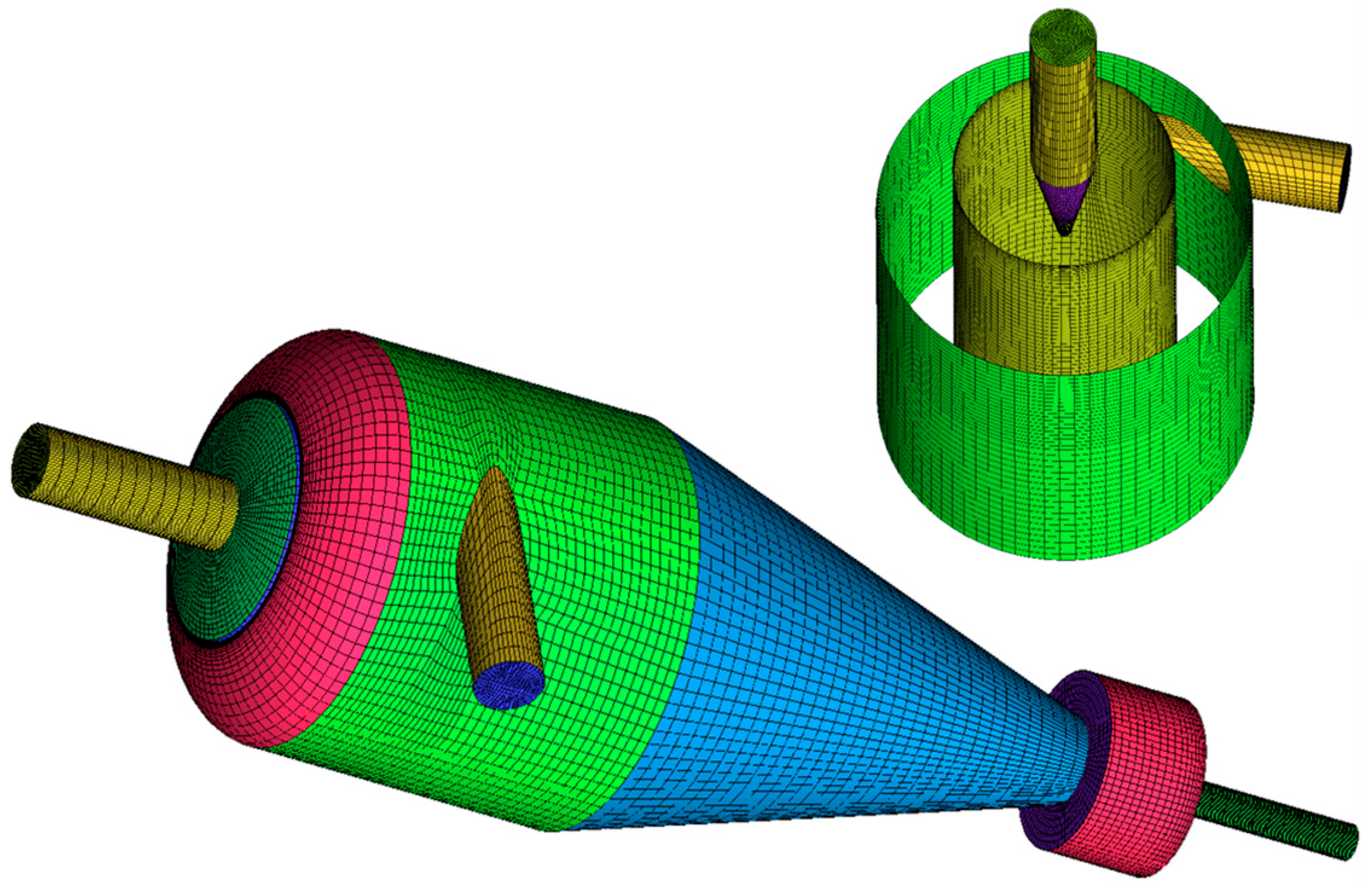
A completely structured mesh with hexahedral elements on hydro cyclone was generated using the ANSYS ICEM 14.5 software. Considering that the conical wire mesh at the top outlet of the cyclone cannot be directly meshed, the wire mesh was simplified as an internal porous media jump surface [24], and the pressure loss caused by the wire mesh was considered in numerical simulation. Meshes of the hydro cyclone are displayed in Figure 8.
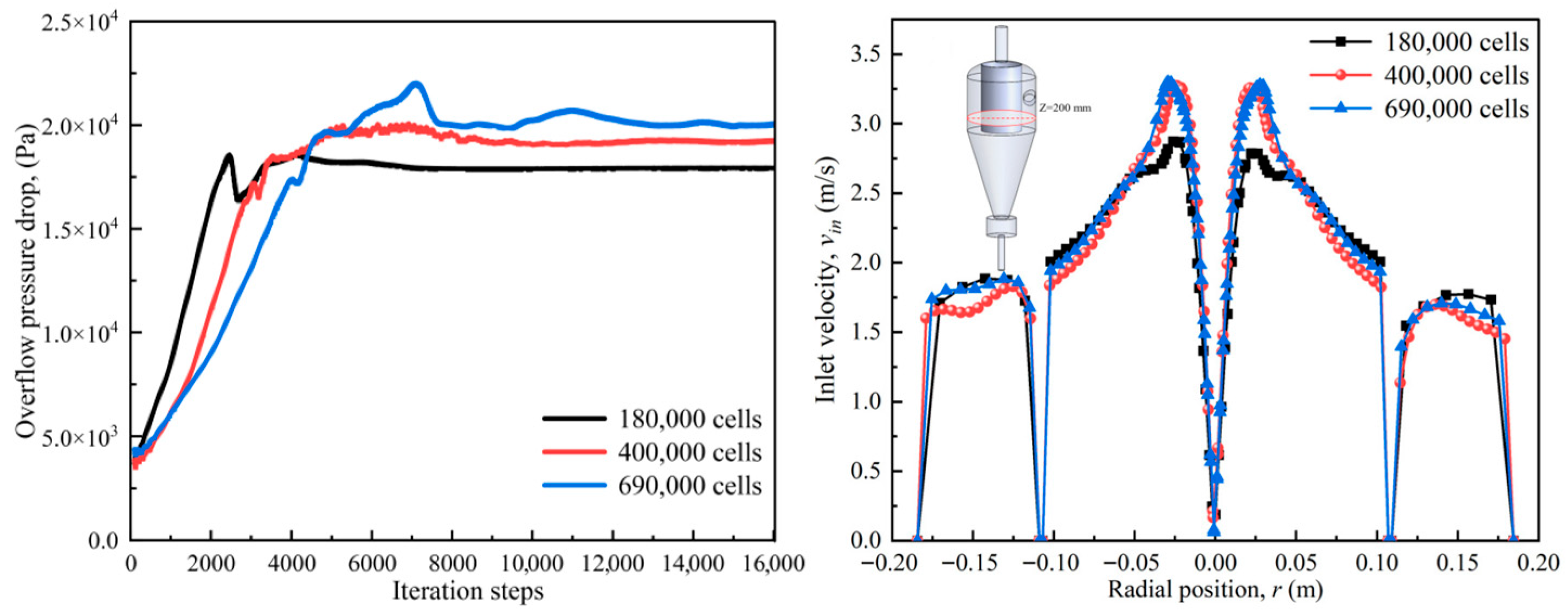
To investigate the effect of grid quantity on simulation results, the variation in cyclone overflow pressure drops with iteration steps and the tangential velocity of the Z = 200 mm section were compared when the inlet flow velocity vin = 1.84 m/s (case 4 in Table 2) and the grid quantity was 180,000, 400,000, and 690,000, respectively, as shown in Figure 9. Considering the calculation accuracy and savings of computing resources, the numbers of cells was determined to be 400,000.

3.2.4. Verification of Simulations

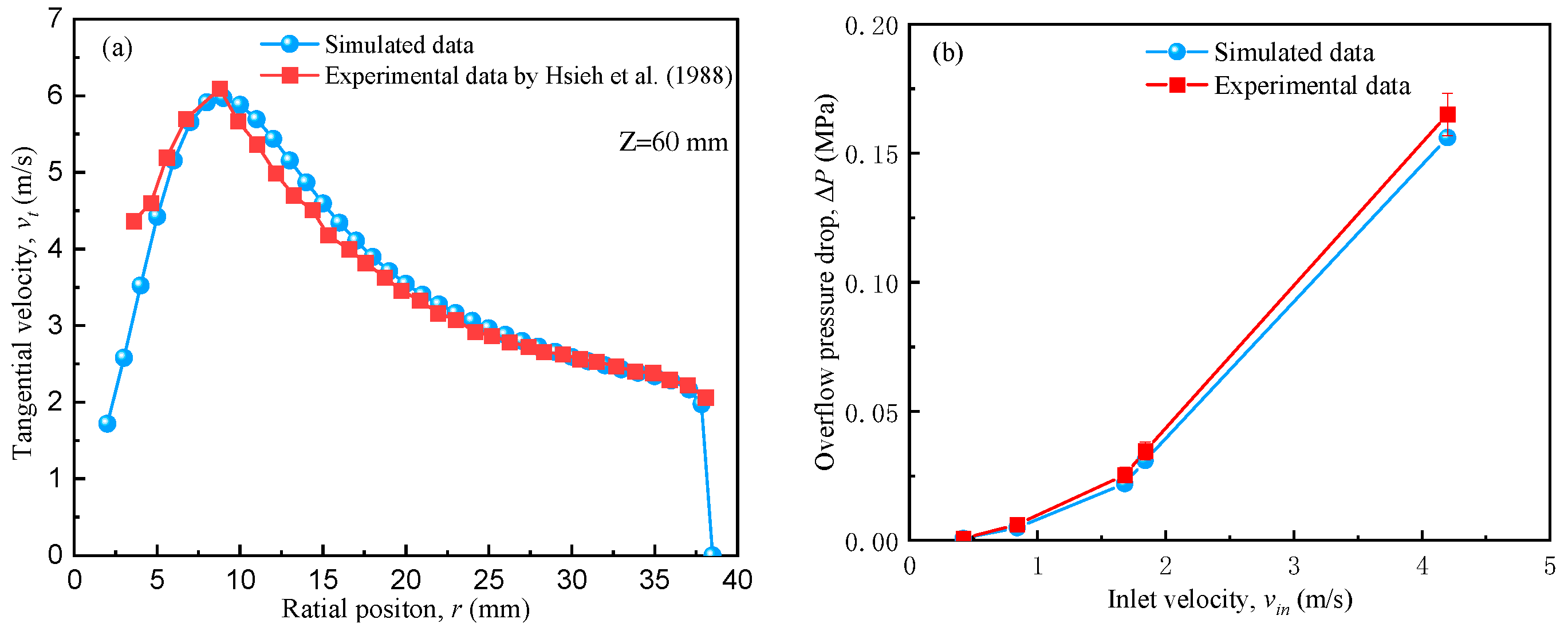
To verify the accuracy of the numerical simulation results, the same numerical simulation scheme was used to simulate a single-cone hydro cyclone measured by Hsieh et al. [25] using a Laser Doppler Velocimetry (LDV) system. The simulation results are basically consistent with the tangential velocity distribution of the same cross-section measured by LDV, as shown in Figure 10a. The maximum tangential velocity appears at the radial position of 8 mm, and the overall average deviation is 4.2%. Further comparison of the simulation values with the measured overflow pressure drop values of this study is made, as shown in Figure 10b, and it is believed that the numerical simulation scheme of this paper can predict the internal flow field of the hydro cyclone quite well.

4. Results and Discussion

4.1. Assessment of Blockage Degree in Ore Bearing Layers

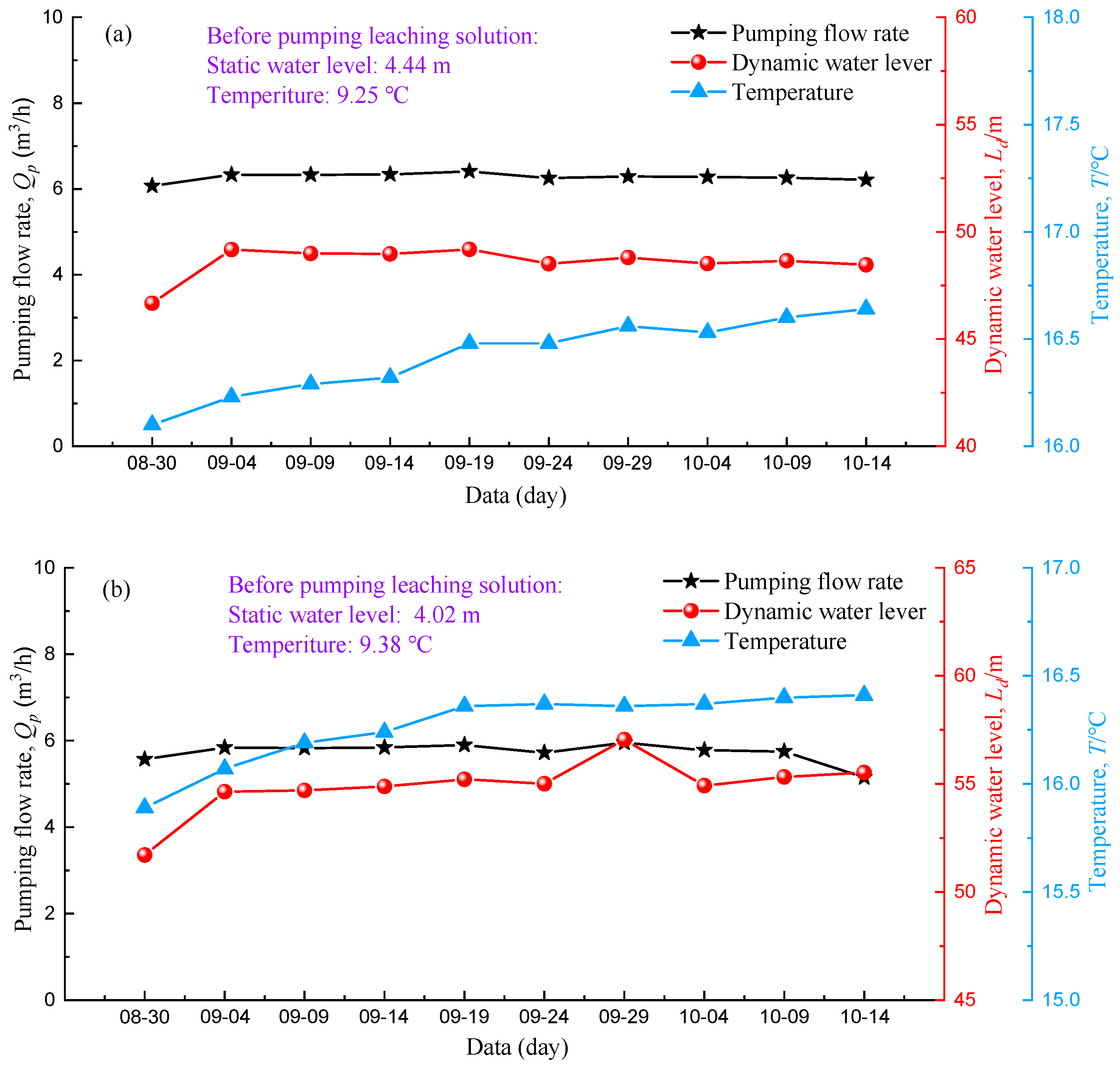
To continuously monitor the changes in water level in the pumping wells before and after leaching, and to assess the degree of blockage in the pumping wells, groundwater water level automatic recorders were installed in the pumping wells. Obtained data for approximately two months is shown in Figure 11.
During the observation period, the flow rate and the dynamic water level in all the pumping wells were basically stable, indicating that there was no significant sedimentation blockage in the pumping wells and the surrounding formations. The drawdown of the water level in the pumping wells was generally small. Among them, well C0101 had the best permeability, with a stable extraction flow rate of about 6.5 m3/h, a dynamic water level of about 47 m, and a drawdown of about 43 m; well C0204 had relatively poorer permeability, with a stable extraction flow rate of about 5.8 m3/h, a dynamic water level of about 55 m, and a drawdown of about 51 m.
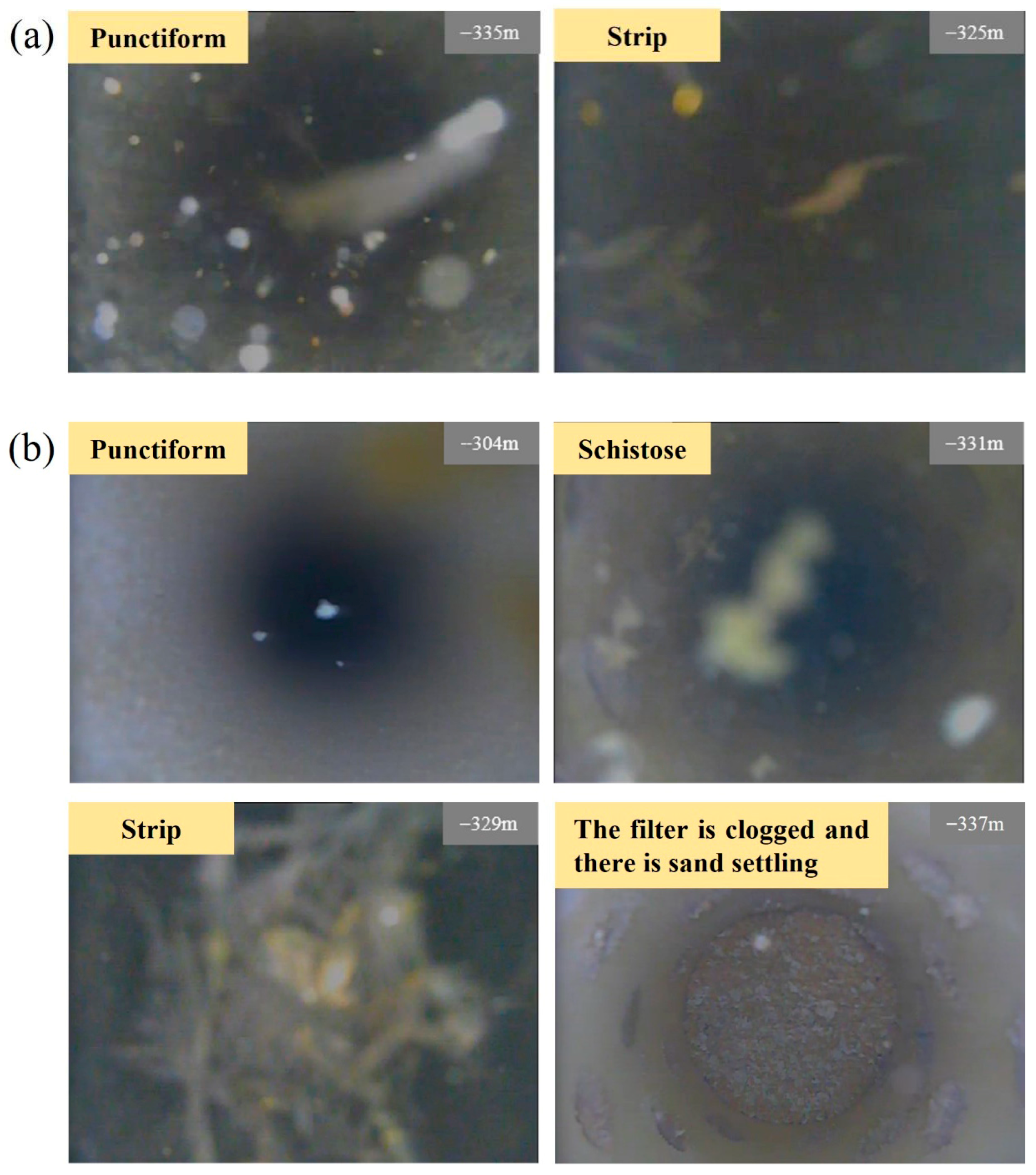
After ceasing the leaching process and allowing the system to stand for two days, the conditions of particulate matter in the casing pipe and filter sections of multiple pumping and injection wells were filmed using a downhole television camera, as shown in Figure 12. Observations revealed that the solution inside all the injection wells was turbid, appearing milky white, with a large amount of particulate matter floating in the form of punctiform-like, schistose-like, and strip-like flocculates. A few well casings had ring-shaped flocculates, and the inner walls of the filters were covered with silk-like and strip-like flocculates, most of which were white, light yellow, or brown in color. After stirring the probe up and down, the majority of the flocculates immediately dispersed into fine particles, and the solution became even more turbid, reducing visibility. Some wells had mud and sand attached to the filter sections, with sand deposits at the bottom. For the pumping wells, the downhole television observed that the solution and the characteristics of the floating flocculates inside the well casing were similar to those in the injection wells, but to a lesser extent.
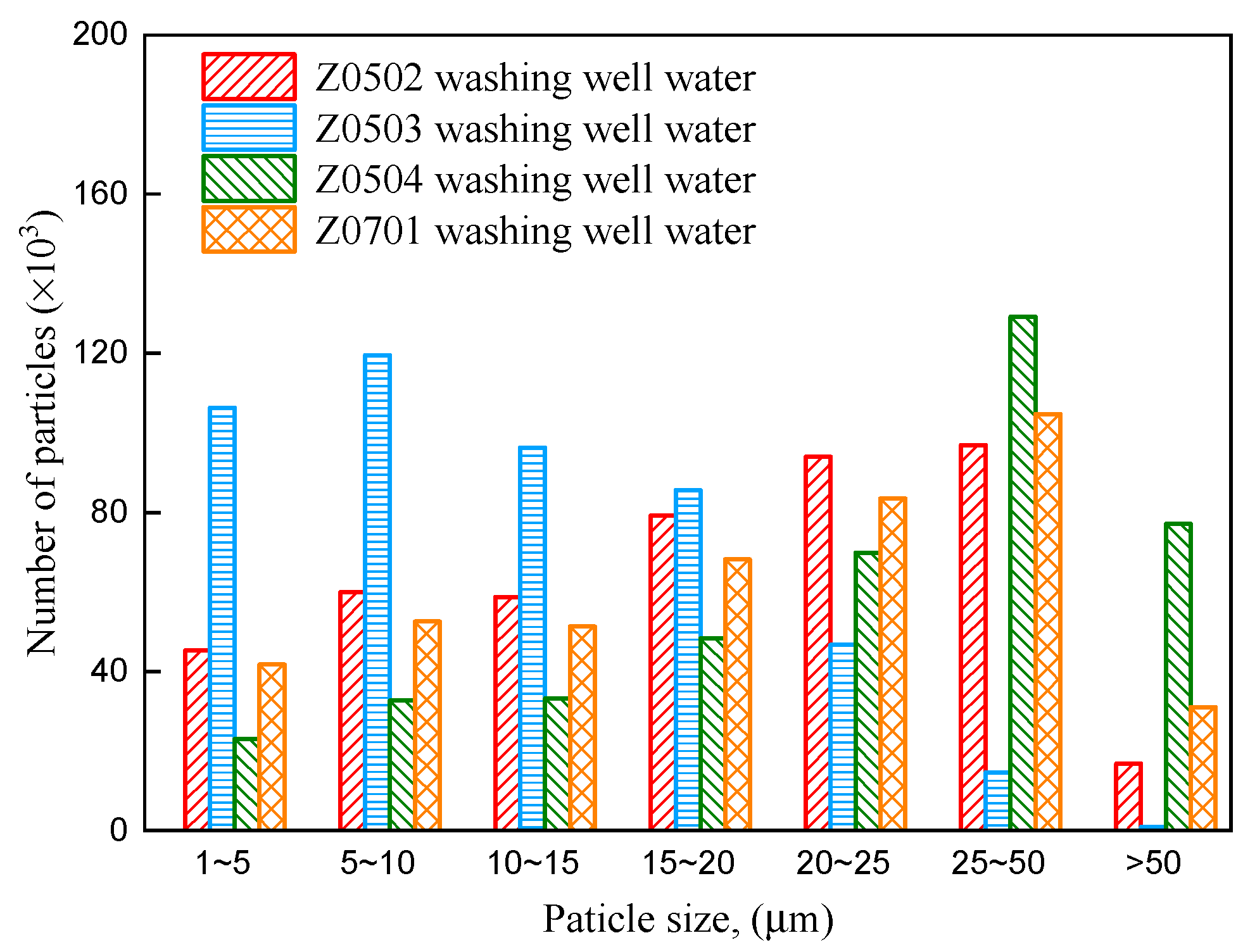
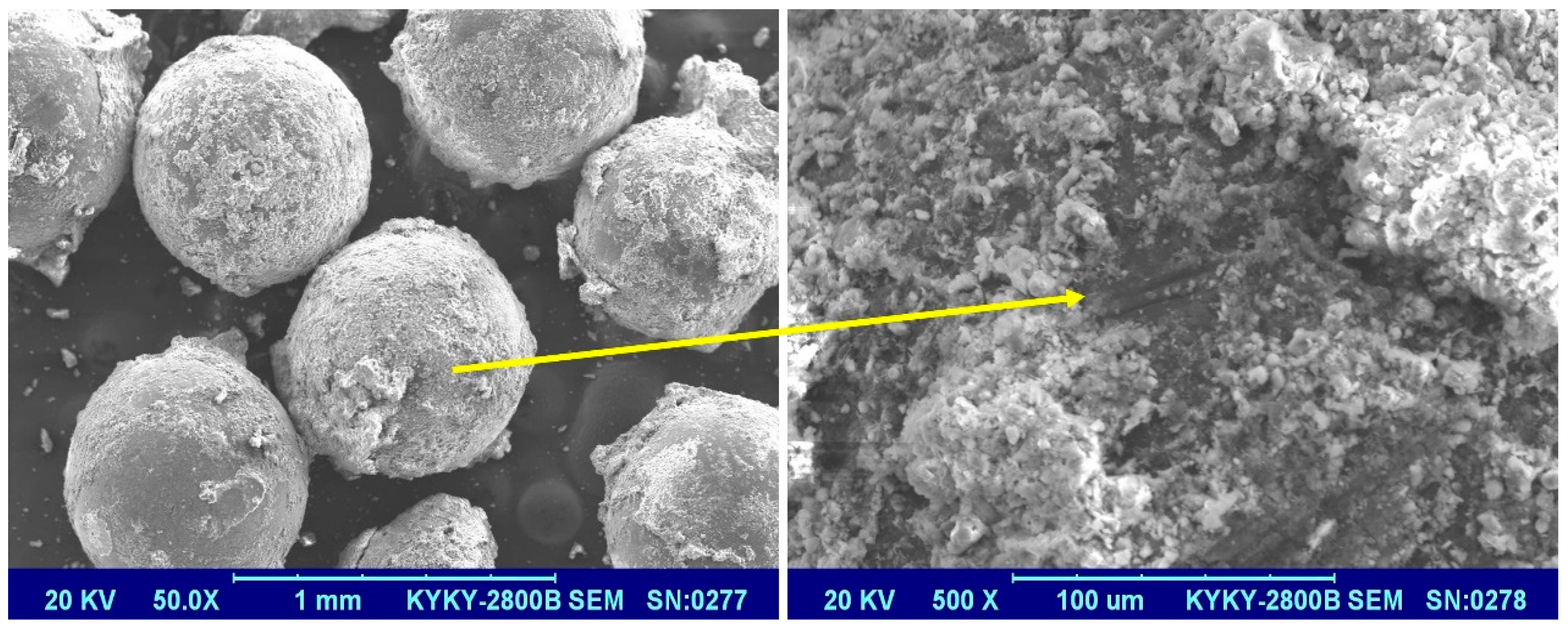
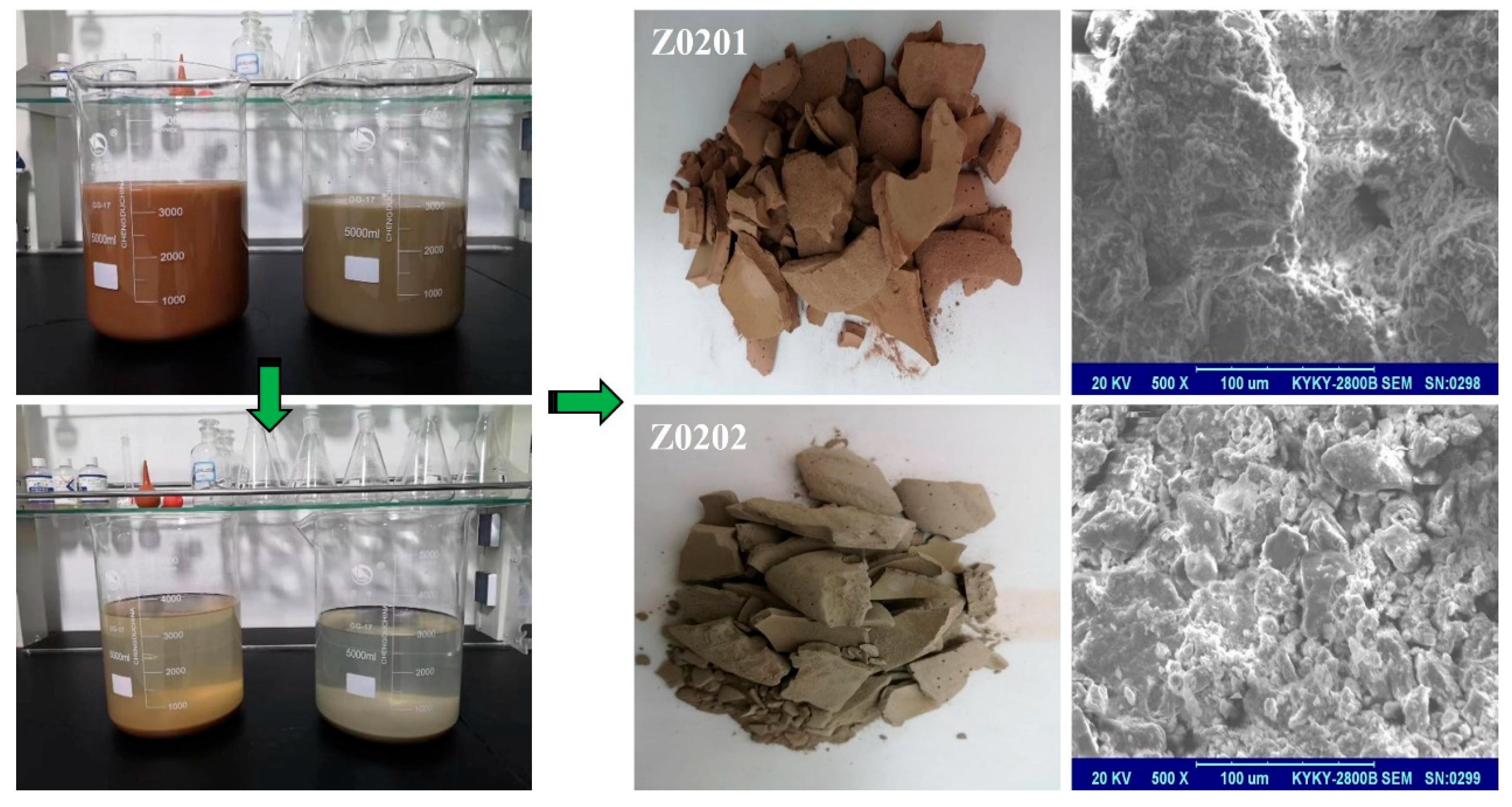
Considering that the blockage in the injection wells is quite severe, so a few injection wells were subjected to well washing operations, and the washing method was intermittent water extraction by air compressor. Figure 13 shows the statistics of particles of different diameter ranges in the washing water, which can be seen that the particles in the washing water are distributed in all diameter ranges of 1~50 μm, and a few particles have a diameter exceeding 50 μm. The first batch of the most turbid washing water from the injection wells Z0201 and Z0202 was taken, with 36.06 L and 29.65 L respectively, and after two times of sedimentation and separation, the sediment was dried to obtain the dry residue sample, as shown in Figure 14. The sand content in the most turbid washing water was calculated by weighing to be 4360.23 g/m3 and 5193.25 g/m3 respectively. Further, the dry residue sample was subjected to scanning electron microscopy and chemical analysis, as shown in Figure 14 and Table 3.
Scanning electron microscopy revealed that the morphology of the dry residue samples is primarily composed of flaky particles and their aggregates, as well as fine-grained debris, with particle sizes ranging from a few micrometers to tens of micrometers. The main components are clay minerals, silt debris, and a small amount of fine sand debris. The flaky particles and their aggregates are mostly clay minerals, while the fine particles consist of minerals such as quartz and feldspar. Additionally, from Table 3, it can be observed that the Fe2O3 content in the dry residue sample of Z0201 is significantly higher than that in the dry residue sample of Z0202 and the core samples from the mineral layer. The brownish color of the well washing water is attributed to a high concentration of Fe3+, indicating that the sediment should contain a substantial amount of chemical precipitate of Fe(OH)3. The contents of CO2, CaO, MgO, and FeO in the dry residue samples are markedly higher than those in the core samples from the mineral layer, suggesting that the sediment should include some chemical precipitates of CaCO3, MgCO3, and FeCO3.

4.2. Experimental Investigation

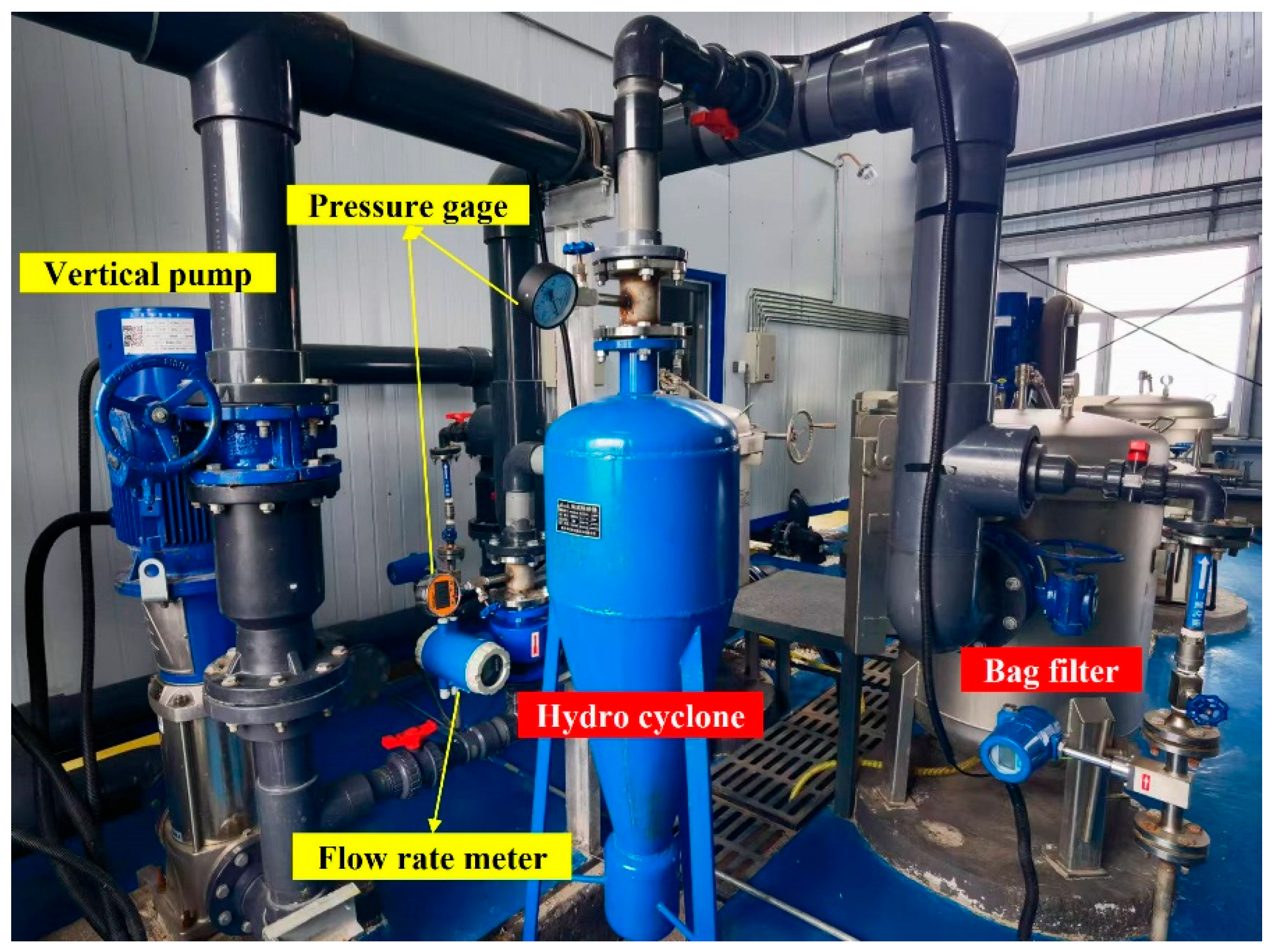
In fact, whether it is mechanical blockage or chemical precipitation, these solid particles must undergo solid–liquid separation once they follow the leaching solution to the surface. However, as previously mentioned, the filtration effect of using a bag filter alone is generally not satisfactory. This article combines a hydro cyclone with a bag filter in series to enhance the solid–liquid separation effect and has constructed a test system, as shown in Figure 15. It should be noted that the surface solid–liquid separation system described in this study does not directly impact groundwater contamination. However, by reducing particle recirculation and maintaining stable injection flow rates, the system indirectly contributes to controlled leaching operations that minimize environmental impact.
Keep the inlet and overflow valves of the hydro cyclone open, close the underflow valve, and allow the leaching solution to enter the hydro cyclone for cyclonic separation first. The separated solid phase is temporarily stored in the bottom sand tank, while the liquid phase flows out from the overflow and is then transported to the bag filter for enhanced filtration.
The fluid at the inlet and overflow of the hydro cyclone was analyzed for particle size using a laser particle size analyzer, see Table 4. As can be seen from Table 4, the use of the new structure hydro cyclone for solid–liquid separation has achieved complete separation of particles greater than 60 μm in the leaching solution that flows out from the overflow, and 99.9% separation of particles greater than 50 μm. At the same time, the frequency of replacing the filter bags in the bag filter after the hydro cyclone has been reduced from three times a week to once a week. Therefore, the new structure hydro cyclone has played a significant role in pre-separation.
The particle characterization results from Section 4.1 directly justify the 50/60 μm separation threshold of the novel hydro cyclone. Particles >60 μm account for approximately 38% of the total solids mass (Table 4) and are responsible for the majority of bag filter clogging and ore-layer blockage. By achieving >99.9% separation efficiency for particles >50 μm, the hydro cyclone effectively removes this coarse fraction, while the remaining fine particles (<50 μm) can be efficiently handled by the downstream bag filter. This synergistic design ensures that each separation stage operates within its optimal particle size range, matching the engineering needs of uranium ISL.

4.3. Numerical Simulation of Hydro Cyclone

The leaching solution de-solidification system, before the addition of a hydro cyclone, required the bag filters to be replaced at least three times a week on average, and even so, the fluid injection flow rate decreased rapidly, necessitating well washing work every three months on average. After the addition of the hydro cyclone, it played a pre-separation role, which could preliminarily remove large particles and effectively alleviate the working pressure of the subsequent bag filter. We believe that the new structure of the hydro cyclone proposed in this paper has played an important role in separation; hence, further characterization of the internal flow field of the cyclone was conducted.

4.3.1. Velocity Distribution

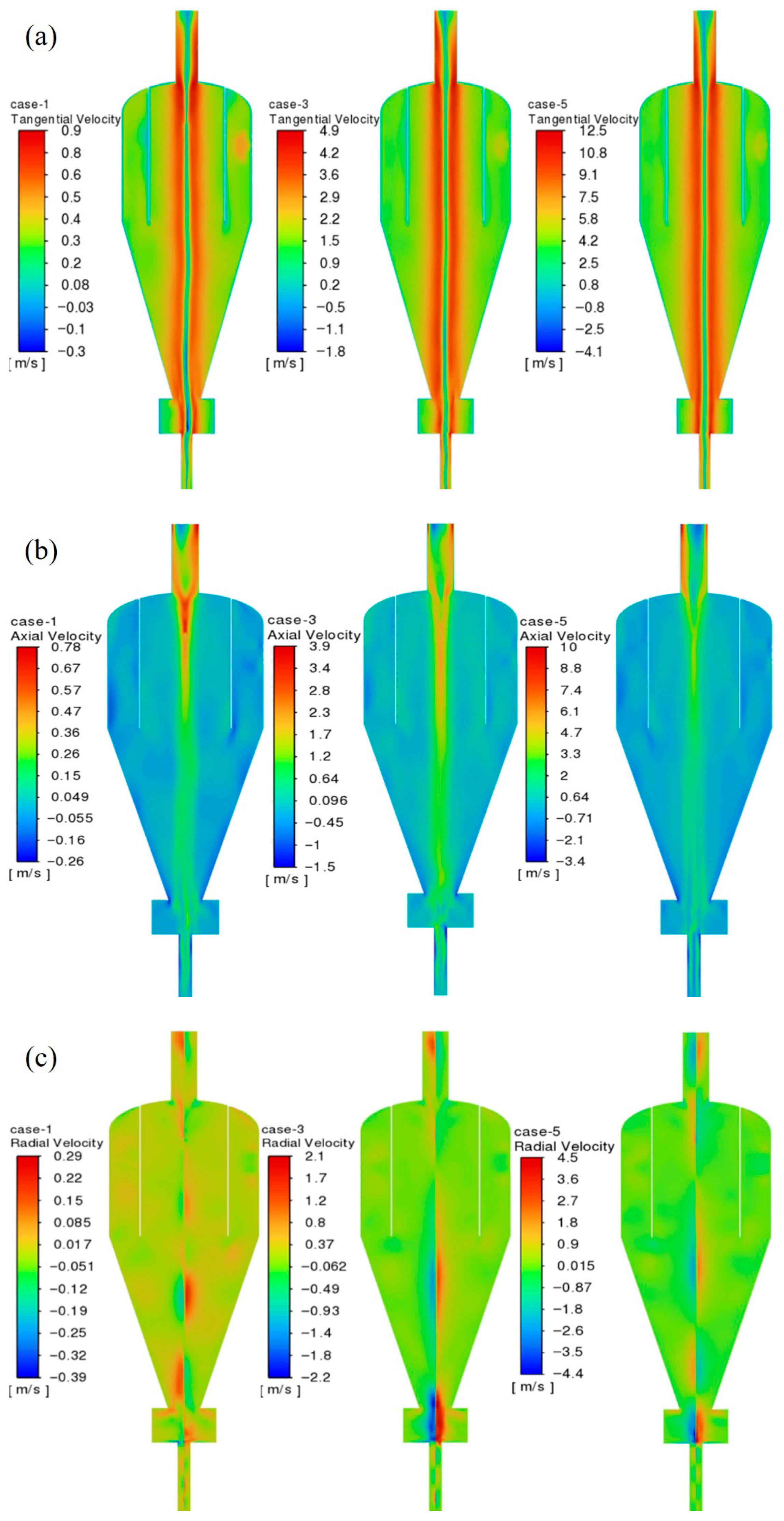
In the cases 1, 3, and 5 as shown in Table 2, the continuous tangential, axial, and radial velocity distributions along the X-axis section of the hydro cyclone are depicted in Figure 16a, Figure 16b and Figure 16c, respectively.
It can be observed that the inlet velocity has almost no effect on the pattern of the tangential velocity distribution, affecting only the numerical magnitude of the tangential velocity. The trajectory of the maximum tangential velocity within the hydro cyclone is located near the axis of the cyclone and extends from within the overflow pipe all the way to the bottom. Moving from the trajectory of the maximum tangential velocity towards the axis of the cyclone, the tangential velocity decreases rapidly; moving from the trajectory of the maximum tangential velocity towards the cyclone wall, the tangential velocity gradually decreases. The centrifugal force generated at the trajectory of the maximum tangential velocity is the greatest, reflecting the maximum separation capability of the hydro cyclone.
Regarding the axial velocity, influenced by the overflow pipe, there is a region of high axial velocity at the axis of the cyclone, which gradually decreases from the overflow pipe to the underflow outlet. From the cyclone inlet to the underflow outlet, alternating negative axial velocity areas can be observed on the cyclone wall, reflecting the flow characteristics of the outer swirling region spiraling downward and the inner swirling region spiraling upward.
In terms of radial velocity, it can be seen that all three conditions have a region of high radial velocity at the cyclone axis, and the high radial velocity area is not continuous in the axial direction. Moreover, the radial velocity is essentially symmetrically distributed on both sides of the axis, exhibiting the spiral flow characteristics of the inner cyclone. There is also an alternating positive and negative radial velocity distribution area on the cyclone cone wall (most evident in case 1), reflecting the secondary flow distribution in the cyclone cone section. Cases 1, 3, and 5 have larger radial velocity areas at the end of the cone section and in the sand box, and the high radial velocity area moves downward as the inlet velocity increases.
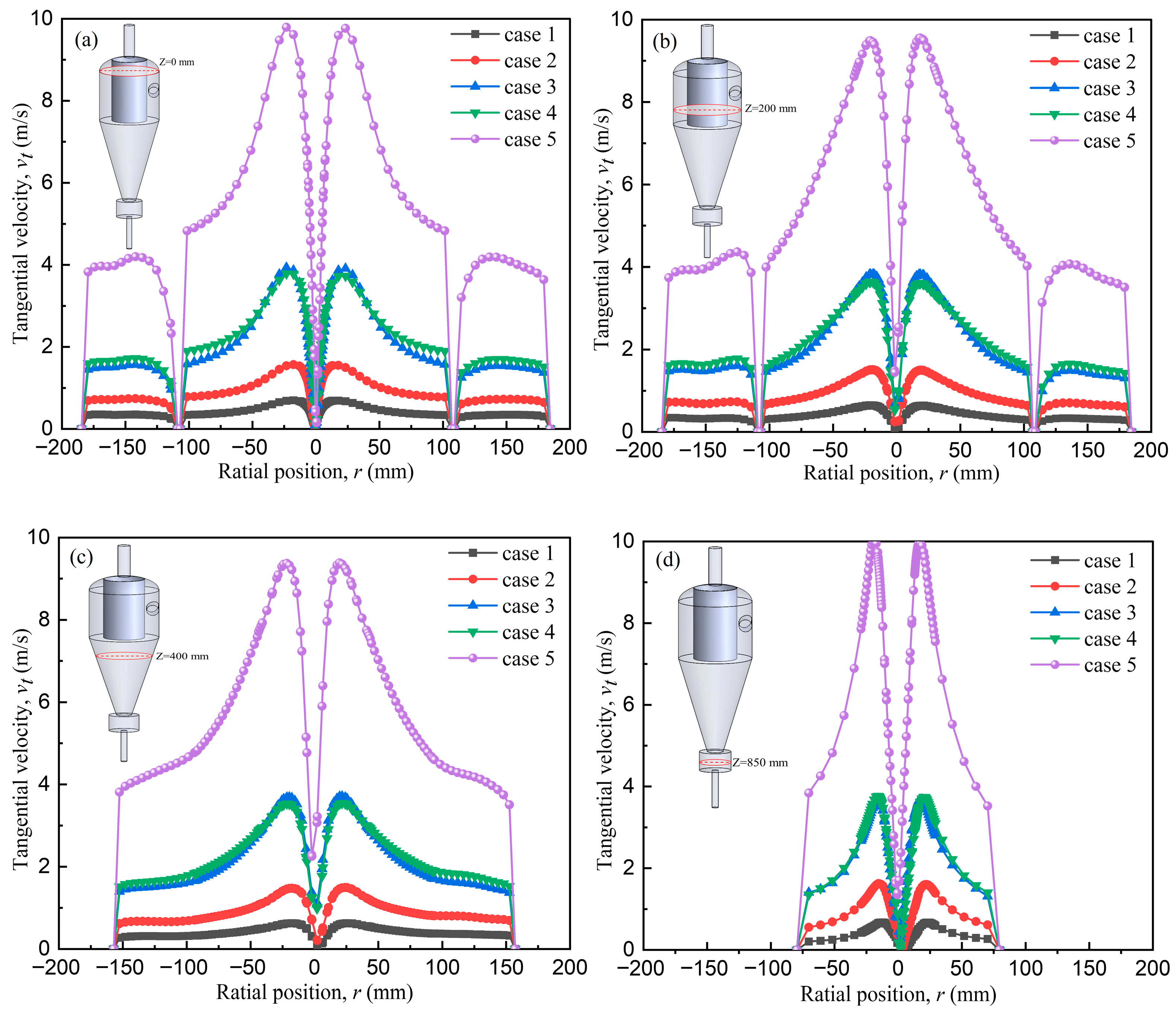
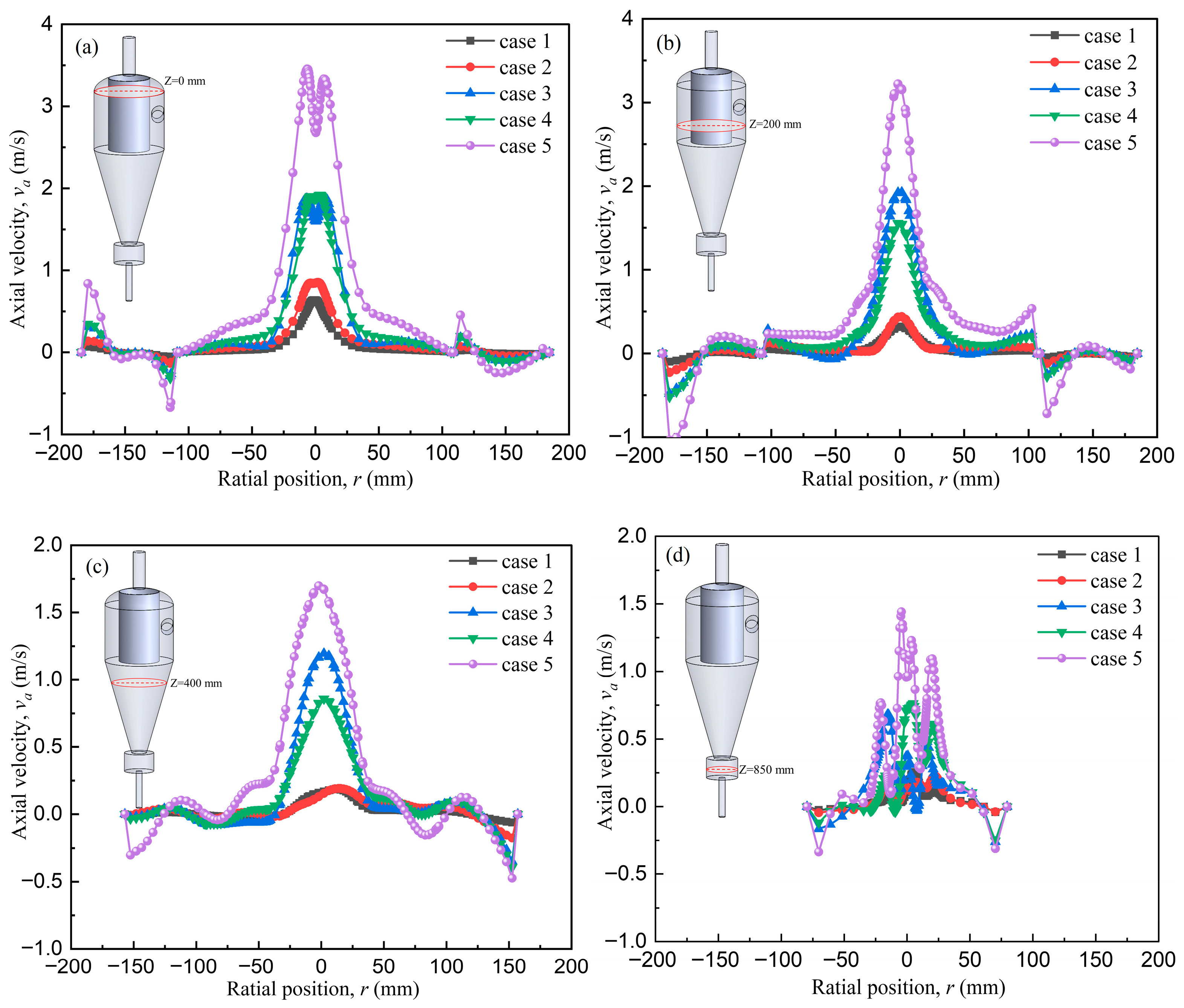
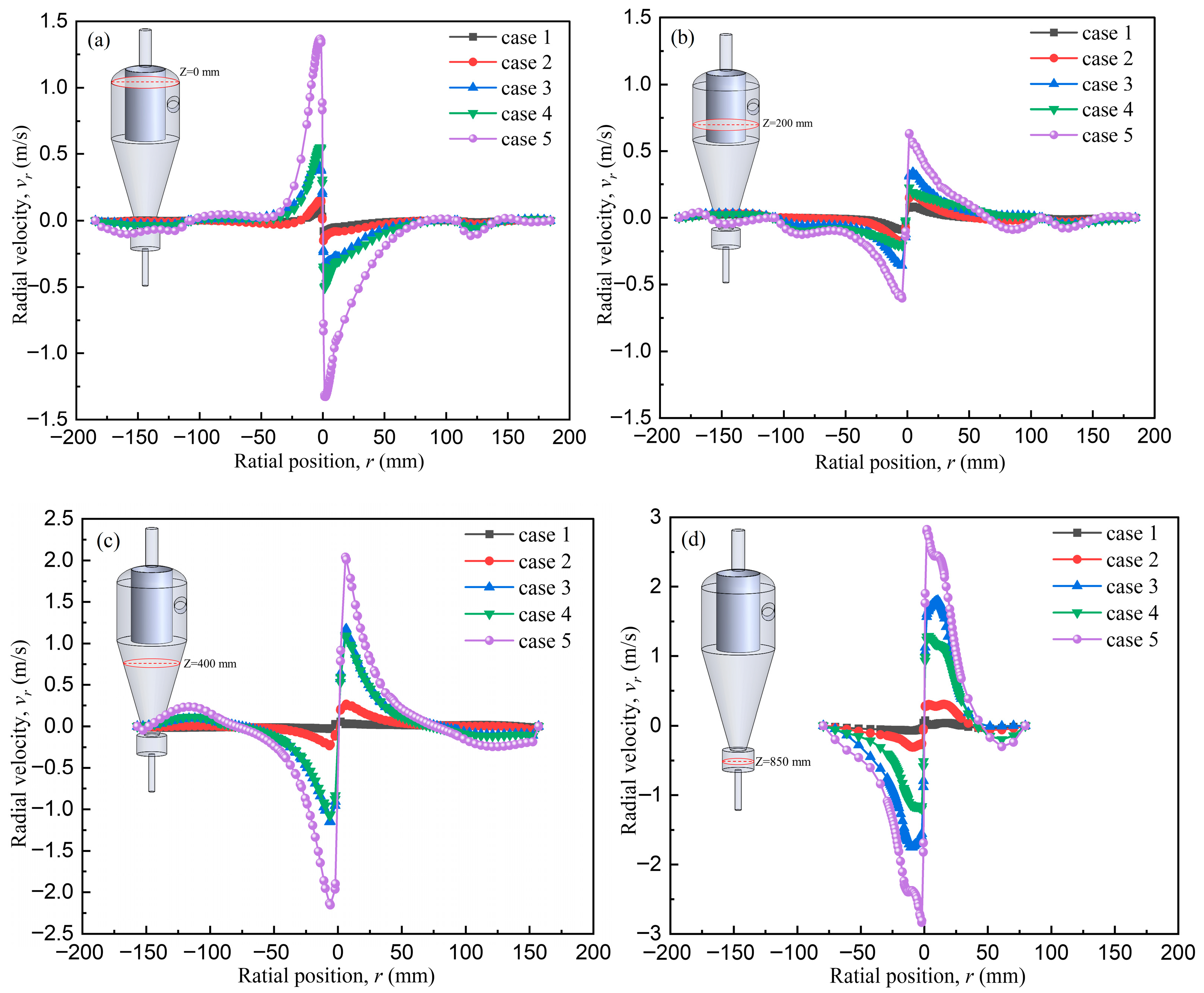
For cases 1 to 5 in Table 2, tangential velocity, axial velocity, and radial velocity curves are plotted for the cross-sections at Z = 0, 200, 400, and 850 mm in the direction of the angle from 0 to 180 degrees, as shown in Figure 17, Figure 18 and Figure 19.
As shown in Figure 17, the tangential velocity curve exhibits an “M” shaped Rankine vortex distribution, with the radial position of the maximum tangential velocity not varying significantly across the cross-section. However, as the inlet velocity increases from vin = 0.42 to 4.2 m/s, the maximum tangential velocity increases from 0.69 m/s to approximately 9.7 m/s. In the low inlet velocity of case 1, the maximum tangential velocity is about 1.64 times the inlet velocity, while in case 5, the maximum tangential velocity is about 2.31 times the inlet velocity. Since the centrifugal force is directly proportional to the square of the tangential velocity, increasing the inlet velocity can lead to a greater increase in the maximum tangential velocity. This is especially true with the swirl chamber structure used in this paper, which not only enhances the tangential velocity by reducing the flow area but also quantitatively mitigates the short-circuit flow phenomenon. CFD analysis reveals that the swirl chamber reduces the short-circuit flow ratio from approximately 18% (conventional design) to 7% (optimized design), increases the average fluid residence time from 2.1 s to 3.4 s, and enhances the maximum tangential velocity by 35% at the Z = 200 mm cross-section. These improvements establish a clear quantitative correlation between the swirl chamber structure and the suppression of short-circuit flow.
As can be seen from Figure 18, the axial velocity distribution curve at the swirl chamber (Z = 0, 200 mm) generally shows a trend of being higher in the middle and lower on both sides, reflecting the phenomena of upward and downward flows inside the cyclone. Additionally, at the Z = 0 mm cross-section, due to the presence of the conical mesh collector, a distribution resembling an “M” shape appears, and this shape becomes more pronounced with the increase in the incident velocity. At the positions in the cone section (Z = 400 and 600 mm), the axial velocity curve shows a trend of being positive at the center and gradually decreasing to a negative value towards the wall. However, under low inlet velocities (cases 1–2), the curve does not exhibit significant fluctuations. In the bottom sand storage tank (Z = 850 mm), the axial velocity is influenced by both the underflow pipe below and the downward flow from the upper cone section, resulting in a more tortuous distribution of the axial velocity curve.
Regarding the radial velocity curves, as shown in Figure 19, the values exhibit an increasing trend from the inner wall towards the axis, and this trend intensifies with the increase in inlet velocity. According to the equilibrium trajectory theory, the smallest particle diameter that the cyclone can separate is determined by the centrifugal force generated by the tangential velocity and the drag force exerted on the particle by the radial velocity. At the Z = 0 mm cross-section, the maximum tangential velocity in cases 3 to 5 is approximately 2.3 times the inlet velocity, and at the position of the maximum tangential velocity, the radial velocity in cases 3 to 5 is about 0.13 times the inlet velocity. It can be seen that the increase in centrifugal force caused by the increase in inlet velocity far exceeds the increase in drag force on the particle due to the centripetal radial velocity. Therefore, setting up a swirl chamber to increase the fluid’s tangential velocity can enhance the separation performance of the equipment.
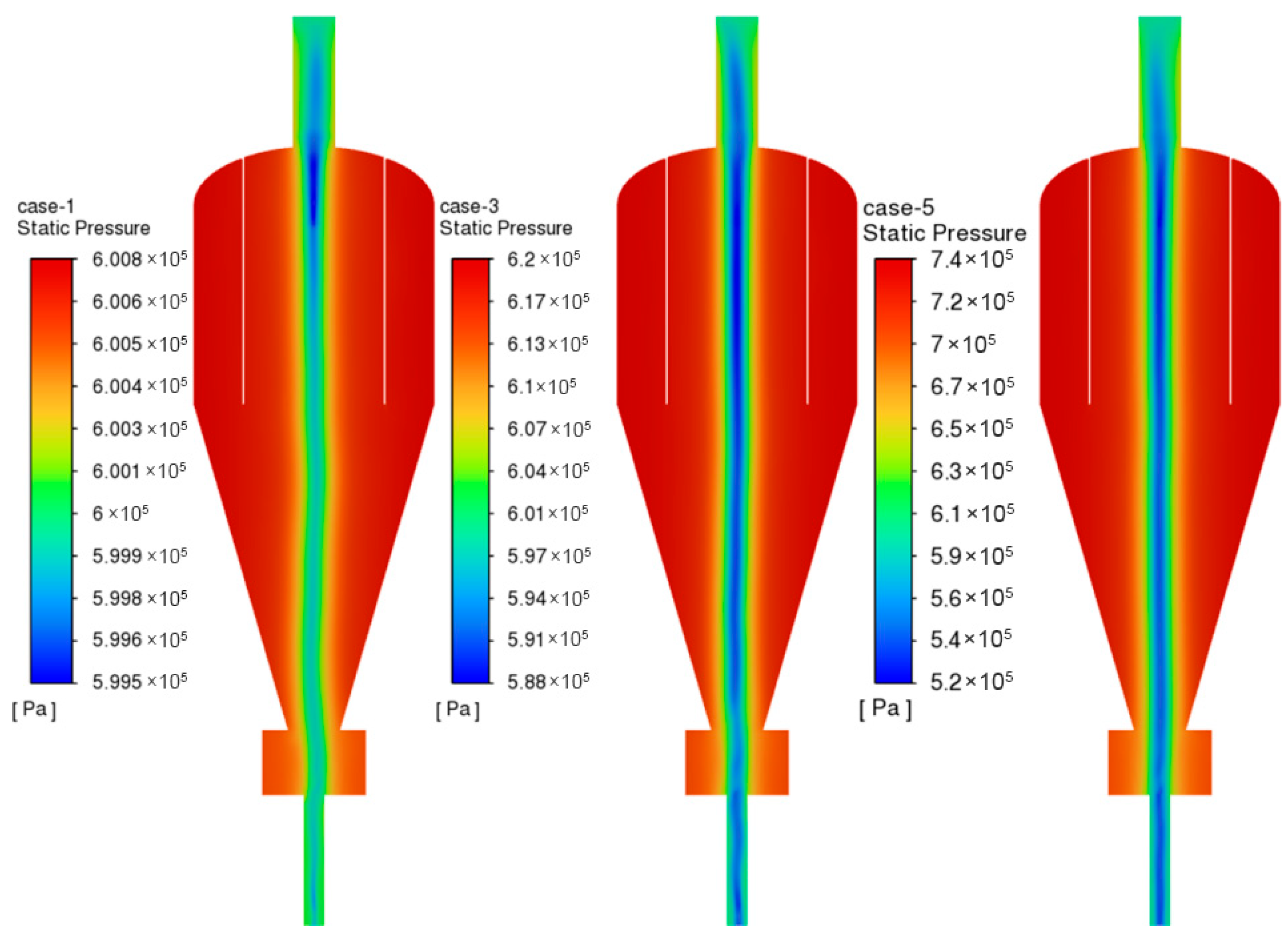
Figure 20 further illustrates the static pressure distribution corresponding to case 1, 3, and 5 in Table 1. It can be observed that the static pressure is highest near the wall of the cyclone and gradually decreases from the wall towards the center. With the increase in the inlet velocity, the highest pressure increases and the lowest pressure decreases. The low-pressure zone at the axis extends from the overflow outlet to the underflow outlet. At the same time, the vortex chamber and the inverted conical wire mesh have almost no significant impact on the pressure distribution.

4.3.2. Particle Trajectory Distribution

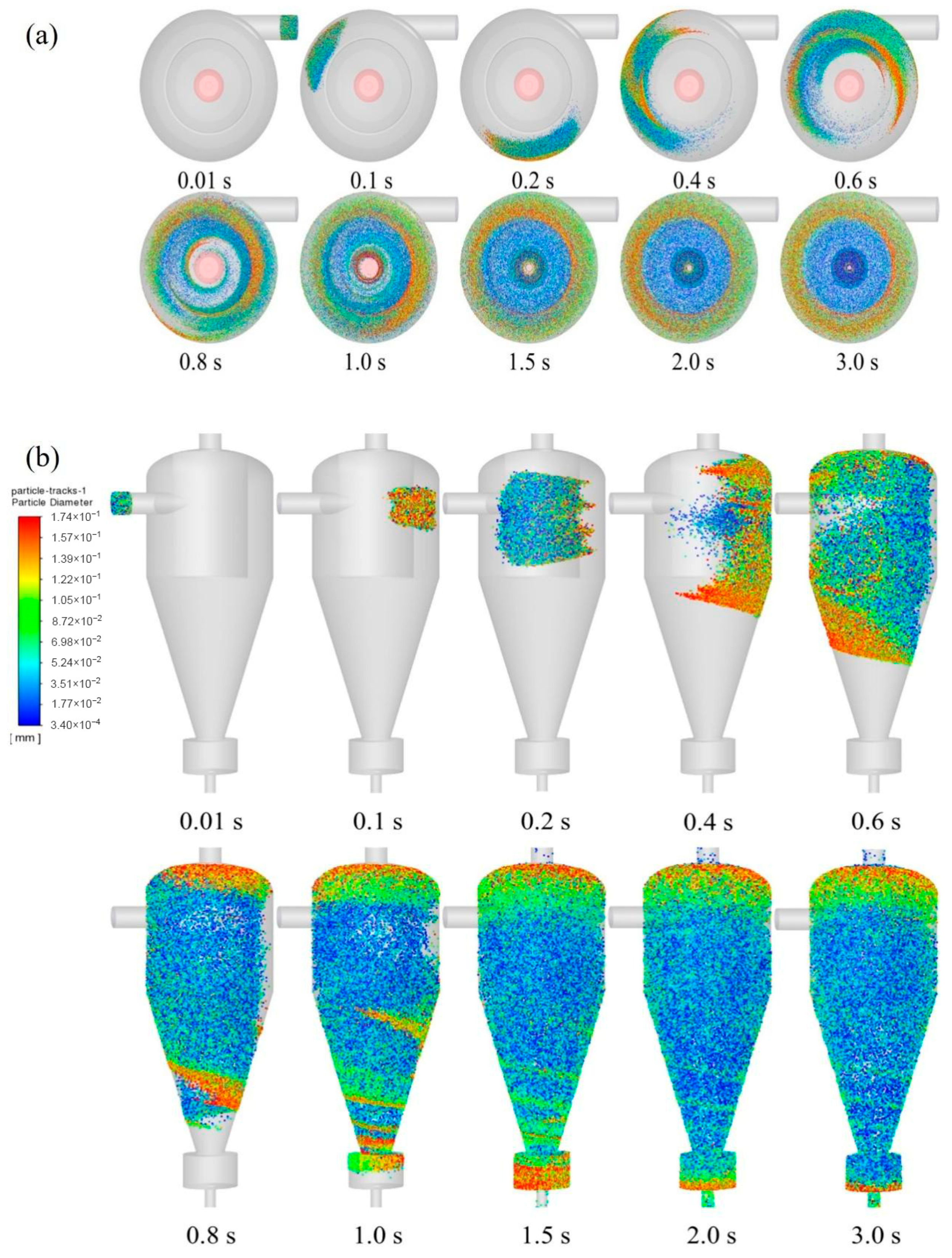
Figure 21 illustrates the change in particle size distribution over time within 3 s after the injection of particles in case 5. It can be seen that at 0.1 s, the particles have entered the annular space between the vortex chamber and the cyclone inner wall, gradually diffusing along the axial direction. Large particles are concentrated on the outer side of the annular space, while small particles are closer to the inner side. Between 0.1 and 0.4 s, the particles continue to rotate and diffuse, starting to flow into the conical section. Due to the fact that small particles are further away from the wall compared to large particles and are in a position with a faster tangential velocity, a sharp peak composed of small particles can be observed at the front of the particle group at 0.4 s. And at 0.6 s, the particle group completes one rotation within the device, forming a top ash ring, and also gathers along the cyclone wall, forming an ash belt structure that spirals downward. After 0.8 s, the ash belt structure becomes more pronounced. It is worth noting that both the top ash ring structure above the device and the ash belt structure below are mainly composed of larger particles. Small particles, after entering the cyclone, are evenly diffused without forming a noticeably concentrated area of small particles, except for a small low-concentration area of small particles near the cyclone axis. In fact, from 0.6 to 3 s, a clear ash belt structure can be observed in the conical section of the cyclone. As the ash belt spirals downward, its width noticeably narrows: the spiral angle of the ash belt in the upper part of the conical section is about 16°, and at the lower end of the conical section, it is about 10°.
The annular space of the vortex chamber bifurcates particle trajectories into two distinct paths: a “top ash ring” forms above the inlet where coarse particles enrich the wall under centrifugal force, while a helical “ash band” descends below the inlet. However, streamlines on the left and upper sides of the inlet are prone to short-circuit into the inner vortex, causing particles to escape before adequate separation. The conical screen generates significant pressure drop through the porous jump interface, increasing overflow resistance and effectively intercepting coarse particles that would otherwise entrain upward with the inner vortex, yet simultaneously elevating the overall cyclone pressure drop, necessitating a trade-off between separation precision and energy consumption.

5. Conclusions

To enhance the separation performance of a conventional solid–liquid hydro cyclone, an assessment of the plugging degree of the in situ leaching of uranium ore layer was conducted, and based on theoretical analysis, a new structure hydro cyclone was proposed. Experiments and numerical simulations were used to study its practical application and internal flow field, and the conclusions were as follows:
(1) The particles in the leaching solution are mainly clay and silt-grade debris, with the largest particle size being less than 200 μm. The hydraulic flushing action is the dynamic condition for the migration and release of debris in the surrounding ore layer of the extraction well; the test mining area is mainly mechanically plugged, with chemical plugging as a secondary consideration.
(2) The series combination of a hydro cyclone and a bag filter can improve the solid–liquid separation capacity of the system. The hydro cyclone mainly serves the purpose of pre-separation, while the bag filter plays a role in fine filtration.
(3) A new type of hydro cyclone with a vortex chamber and an inverted conical wire mesh was proposed. Numerical simulation results indicate that the new structure effectively enhances the cyclone strength of the equipment while reducing the short-circuit flow phenomenon; laser particle size testing shows that the new structure hydro cyclone can achieve complete separation of particles larger than 60 μm.
In summary, the new type of hydro cyclone is beneficial to the efficiency of solid–liquid separation. By combining it with a bag filter in series for the in situ leaching of uranium surface solid–liquid separation system, it can significantly remove particles from the leaching solution, thereby reducing the adhesion of mud and sand in the ion exchange equipment’s resin bed layer and helping to alleviate the plugging degree of the ore layer.
Despite these promising results, several limitations remain. The present two-month field validation demonstrates short-term efficacy, yet long-term industrial assessment (>1 year) is essential to evaluate system durability under seasonal variations. Additionally, the influence of high-salinity conditions (>50 g/L TDS) on separation performance warrants further investigation, as elevated ionic strength may alter particle aggregation and fluid viscosity. Furthermore, while the hybrid system reduces bag filter replacement costs by 67%, the additional hydro cyclone pressure drop (~0.08 MPa) necessitates structural optimization to minimize pumping energy. Finally, the claim of ‘complete separation of particles >60 μm’ applies specifically to the experimental operating conditions (inlet flow rate: 22 m3/h, corresponding to vin = 1.84 m/s) and may not hold under different flow regimes.

Author Contributions

Y.W.: Conceptualization, Investigation, Writing—original draft. M.C.: Visualization, Data curation. J.C.: Conceptualization, Supervision, Validation. X.W.: Software, Data curation. X.S.: Resources, Supervision, Validation, Writing—review and editing. All authors have read and agreed to the published version of the manuscript.

Funding

This research was funded by China National Nuclear Corporation, CNNC Youth Talent Project, [2023]A101-11, (Grant No. [2023]384). Research of a New Surface Solid–Liquid Separation System for In Situ Leach Uranium Mining; CNNC Youth Talent Project, [2025]A101-18, Research on High-Efficiency Oxygen Injection and Oxygen Dissolution Technology for In-Situ Uranium Mining.

Data Availability Statement

The original contributions presented in this study are included in the article. Further inquiries can be directed to the corresponding authors.

Conflicts of Interest

Authors Yaan Wang, Mingqian Cao and Xuebin Su were employed by the China National Nuclear Corporation. The remaining authors declare that the research was conducted in the absence of any commercial or financial relationships that could be construed as a potential conflict of interest. The CNNC had no role in the design of the study; in the collection, analyses, or interpretation of data; in the writing of the manuscript, or in the decision to publish the results.

References

  1. Karami, E.; Kuhar, L.; Bona, A.; Nicoloski, A.N. A review of electrokinetic, ultrasonic and solution pulsing methods for mass transfer enhancement in in-situ processing. Miner. Eng. 2021, 170, 107029. [Google Scholar] [CrossRef]
  2. Zhang, C.; Xie, T.T.; Tan, K.X.; Yao, Y.X.; Wang, Y.A.; Li, C.G.; Li, Y.M.; Zhang, Y.; Wang, H. Hydrodynamic simulation of the influence of injection flowrate regulation on leaching range. Minerals 2022, 12, 787. [Google Scholar] [CrossRef]
  3. De Silva, V.R.S.; Ranjith, P.G. Evaluation of injection well patterns for optimum fracture network generation host-rock formations: An application in in-situ leaching. Miner. Eng. 2019, 137, 319–333. [Google Scholar] [CrossRef]
  4. De Silva, V.R.S.; Ranjith, P.G. Intermittent and multi-stage fracture stimulation to optimise fracture propagation around a single injection well for enhanced in-situ leaching applications. Eng. Fract. Mech. 2019, 220, 106662. [Google Scholar] [CrossRef]
  5. Wen, S.; Sun, Y.; Liu, R.; Chen, L.; Wang, J.; Peng, S.; Ma, C.; Yuan, Y.; Gong, W.; Wang, N. Supramolecularly Poly(amidoxime)-Loaded Macroporous Resin for Fast Uranium Recovery from Seawater and Uranium-Containing Wastewater. ACS Appl. Mater. Interfaces 2021, 13, 3246–3258. [Google Scholar] [CrossRef] [PubMed]
  6. Wang, N.; Zhao, X.; Wang, J.; Yan, B.; Wen, S.; Zhang, J.; Lin, K.; Wang, H.; Liu, T.; Liu, Z.; et al. Accelerated Chemical Thermodynamics of Uranium Extraction from Seawater by Plant-Mimetic Transpiration. Adv. Sci. 2021, 8, e2102250. [Google Scholar] [CrossRef]
  7. Abdildin, Y.G.; Abbas, A.E. Analysis of decision alternatives of the deep borehole filter restoration problem. Energy 2016, 114, 1306–1321. [Google Scholar] [CrossRef][Green Version]
  8. Zhou, Y.P.; Li, G.R.; Xu, L.L.; Zhao, K.; Li, H. Numerical simulation of influence of drilling filter on solution seepage during in-situ leaching of uranium. J. East China Univ. Technol. (Nat. Sci.) 2018, 41, 301–306. (In Chinese) [Google Scholar] [CrossRef]
  9. Zhou, P.F.; Tang, B. Experimental study of the influence of borehole parameters on prompt fission neutron uranium logging and its corrections. Nucl. Eng. Technol. 2024, 56, 3090–3096. (In Chinese) [Google Scholar] [CrossRef]
  10. Yuan, X.; Liu, J.H.; Zhou, Y.P.; He, T.; Chen, X.R.; Zhang, Y.N. Effect of CO2+O2 in-situ leaching of uranium on permeability of ore-bearing Layer. Nonferr. Met. (Extr. Metall.) 2021, 2, 50–57. (In Chinese) [Google Scholar] [CrossRef]
  11. Wei, L.B.; Sun, M.Y. Numerical studies of the influence of particles’ size distribution characteristics on the gravity separation performance of liquid-solid fluidized bed separator. Int. J. Miner. Process. 2016, 157, 111–119. [Google Scholar] [CrossRef]
  12. Connolly, B.J.; Loth, E.; Smith, C.F. Efficiency of inertial particle separators. Powder Technol. 2023, 413, 118004. [Google Scholar] [CrossRef]
  13. Tetsuya, Y.; Takuma, O.; Hideto, Y.; Kunihiro, F. Improvement of particle separation performance by new type hydro cyclone. Sep. Purif. Technol. 2016, 158, 223–229. [Google Scholar] [CrossRef]
  14. Wang, Y.A.; Chen, J.Y.; Yang, Y.; Han, M.S.; Zhou, Y.H.; Ye, S.; Yan, C.Y.; Yue, T. Experimental and numerical performance study of a downward dual-inlet gas-liquid cylindrical cyclone (GLCC). Chem. Eng. Sci. 2021, 238, 116595. [Google Scholar] [CrossRef]
  15. Wang, Y.A.; Chen, J.Y.; Yue, T.; Yang, Y.; Han, M.S.; Yan, C.Y. Measurement of thickness and analysis on flow characteristics of upper swirling liquid film in gas-liquid cylindrical cyclone. Exp. Therm. Fluid Sci. 2021, 123, 110331. [Google Scholar] [CrossRef]
  16. Gonzales, R.R.; Nakagawa, K.; Hasegawa, S.; Kumagai, K.; Matsuoka, A.; Okamoto, Y.; Li, Z.; Mai, Z.H.; Yoshioka, T.; Hori, T.; et al. Treatment of high-strength wastewater with coupled flocculation and membrane filtration prior to ammoniacal nitrogen enrichment by osmotically assisted reverse osmosis. Sep. Purif. Technol. 2025, 352, 128159. [Google Scholar] [CrossRef]
  17. Chen, Y.F. Investigation on the Particle Motion and Distribution Characteristics in Rotational Flow Field. Ph.D. Thesis, Southeast University, Nanjing, China, 2016; pp. 77–82. (In Chinese) [Google Scholar]
  18. Wang, Y.A.; Li, X.H.; Yao, Y.X.; Yuan, Y.; Su, X.B.; Que, W.M.; Tan, Y.H.; Wang, S.C. Preventing blocking technology of ore-bearing layers in CO2+O2 in-situ leaching of uranium. Uran. Min. Metall. 2024, 43, 3. (In Chinese) [Google Scholar] [CrossRef]
  19. Zhang, Z.H.; Yan, S.J.; Dong, S.J.; Dong, K.J.; Zhang, Y.M.; Wang, B. Study of the short-circuit flow and circulation flow’s impact on separation performance of cyclone separator with volute-helical inlet. Adv. Powder Technol. 2024, 35, 104281. [Google Scholar] [CrossRef]
  20. Pang, X.S. Theory and Application of Hydro-Cyclone; Central South University Press: Changsha, China, 2006; pp. 218–223. (In Chinese) [Google Scholar]
  21. Wang, L.Y.; Zheng, Z.C.; Wu, Y.X.; Guo, J.; Zhang, J.; Tang, C. Numerical and experimental study on liquid-solid flow in a hydro-cyclone. J. Hydrodyn. Ser. B 2009, 21, 408–414. [Google Scholar] [CrossRef]
  22. You, Y.S. Study on Solid-Liquid Two-Phase Flow Field and Particle Separation Characteristics in Eddy Current Filter. Ph.D. Thesis, Beijing Institute of Technology, Beijing, China, 2017; pp. 13–25. (In Chinese) [Google Scholar]
  23. Thiemsakul, D.; Piemjaiswang, R.; Sema, T.; Feng, Y.Q.; Piumsomboon, P.; Chalermsinsuwan, B. Effect of hydro-cyclone design in microplastics-water separation by using computational fluid dynamics simulations. Results Eng. 2024, 22, 102034. [Google Scholar] [CrossRef]
  24. Feichtner, A.; Mackay, E.; Tabor, G.; Thies, P.R.; Johanning, L.; Ning, D.Z. Using a porous-media approach for CFD modelling of wave interaction with thin perforated structures. J. Ocean Eng. Mar. Energy 2021, 7, 1–23. [Google Scholar] [CrossRef]
  25. Hsieh, K.T.; Rajamani, K. Phenomenological model of the hydro cyclone: Model development and verification for single-phase flow. Int. J. Miner. Process. 1988, 22, 223–237. [Google Scholar] [CrossRef]
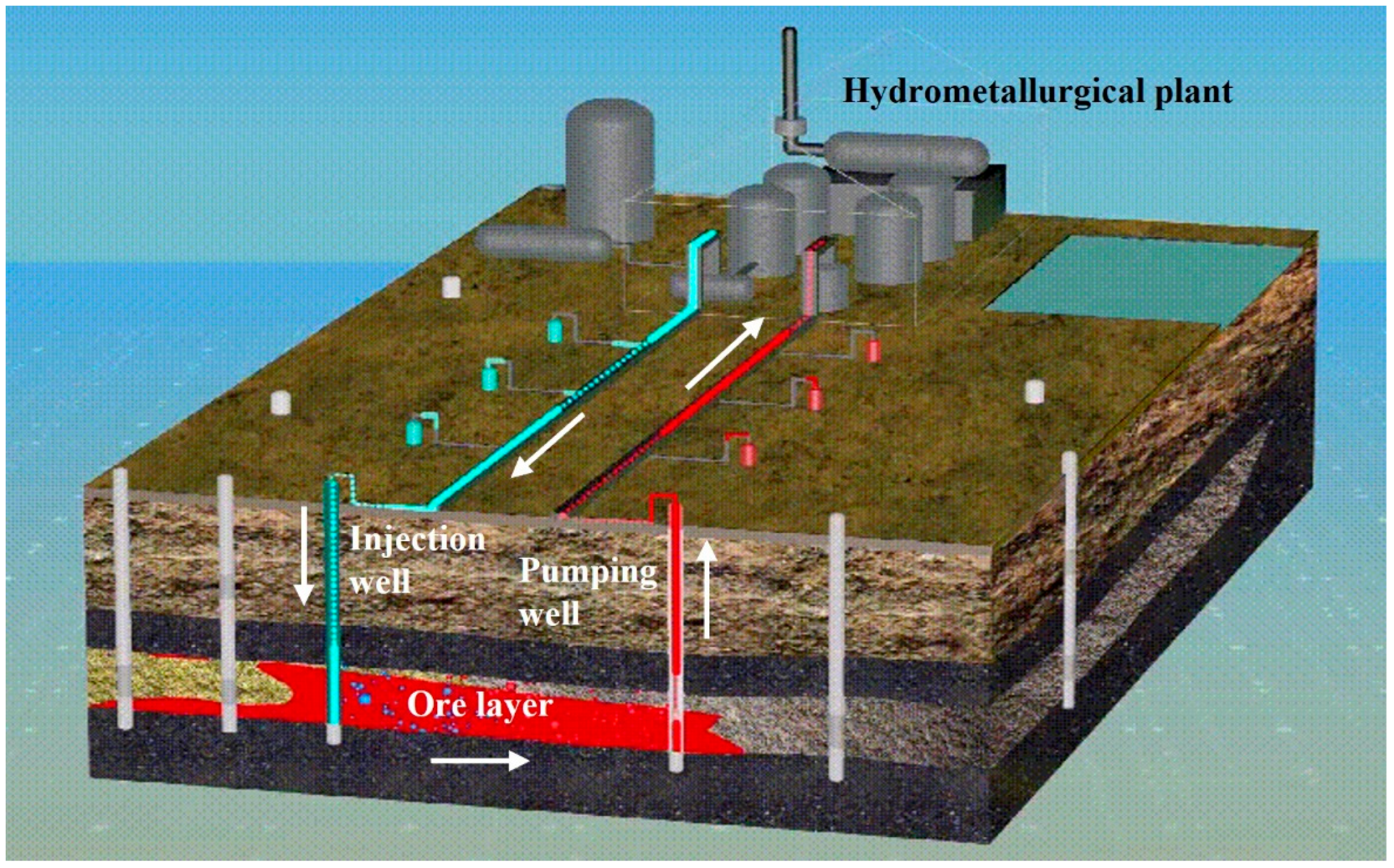
Figure 1. ISL of uranium process.
Processes 14 01520 g001
Figure 2. Adhesion of silt to resin balls in ion exchange tower.
Processes 14 01520 g002
Figure 3. Solid–liquid separation system combining hydro cyclone and bag filter.
Processes 14 01520 g003
Figure 4. Comparison of hydro cyclone structure before and after optimization.
Processes 14 01520 g004
Figure 5. Optimized hydro cyclone structure and dimensional parameters.
Processes 14 01520 g005
Figure 6. Layout of drilling in the experimental mining area.
Processes 14 01520 g006
Figure 7. Particle size distribution in the leaching solution of C0101 pumping well.
Processes 14 01520 g007
Figure 8. Meshes of the hydro cyclone.
Processes 14 01520 g008
Figure 9. Grid independence verification.
Processes 14 01520 g009
Figure 10. Comparison of tangential velocity and overflow pressure drop between simulated and experimental values. (a) Comparison of tangential velocity between simulated and experimental values [25]; (b) Comparison of overflow pressure drop between simulated and experimental values.
Processes 14 01520 g010
Figure 11. Pumping flow rate and water level data of typical pumping well. ((a): C0101; (b): C0204).
Processes 14 01520 g011
Figure 12. Video screenshots of downhole television for pumping (a) and injection (b) wells.
Processes 14 01520 g012
Figure 13. Particle size distribution of washing well water.
Processes 14 01520 g013
Figure 14. Settling dry residue from washing well water.
Processes 14 01520 g014
Figure 15. Flow loop of the test hydro cyclone.
Processes 14 01520 g015
Figure 16. Cloud map of velocity field of hydro cyclone. (a) Cloud map of tangential velocity field of hydro cyclone; (b) Cloud map of axial velocity field of hydro cyclone; (c) Cloud map of radial velocity field of hydro cyclone.
Processes 14 01520 g016
Figure 17. Tangential velocity distribution at 0–180° on different axial cross-sections. (a) Tangential velocity distribution at 0–180° on axial cross-sections of Z = 0 mm; (b) Tangential velocity distribution at 0–180° on axial cross-sections of Z = 200 mm; (c) Tangential velocity distribution at 0–180° on axial cross-sections of Z = 400 mm; (d) Tangential velocity distribution at 0–180° on axial cross-sections of Z = 850 mm.
Processes 14 01520 g017
Figure 18. Axial velocity distribution at 0–180° on different axial cross-sections. (a) Axial velocity distribution at 0–180° on axial cross-sections of Z = 0 mm; (b) Axial velocity distribution at 0–180° on axial cross-sections of Z = 200 mm; (c) Axial velocity distribution at 0–180° on axial cross-sections of Z = 400 mm; (d) Axial velocity distribution at 0–180° on axial cross-sections of Z = 850 mm.
Processes 14 01520 g018
Figure 19. Radial velocity distribution at 0–180° on different axial cross-sections. (a) Radial velocity distribution at 0–180° on axial cross-sections of Z = 0 mm; (b) Radial velocity distribution at 0–180° on axial cross-sections of Z = 200 mm; (c) Radial velocity distribution at 0–180° on axial cross-sections of Z = 400 mm; (d) Radial velocity distribution at 0–180° on axial cross-sections of Z = 850 mm.
Processes 14 01520 g019
Figure 20. Continuous phase pressure distribution in X-axis cross-section.
Processes 14 01520 g020
Figure 21. Particle trajectory distribution ((a): top view, (b): front view).
Processes 14 01520 g021
Table 1. Optimized hydro cyclone dimensional parameters.
ParameterValue/mmParameterValue/mm
Di65H1200
Do65H290
D1109H3148
D2369H490
D380H5305
D4159H6500
D532H7100
Diameter of the wire mesh0.075H8200
Table 2. Operating conditions of simulations.
Flow Rate (m3/h)Inlet Velocity (m/s)Name
50.42Case 1
100.84Case 2
201.67Case 3
221.84Case 4
504.20Case 5
Table 3. Chemical composition analysis results of settling dry residue from washing well water (%).
SampleUSiO2Al2O3CaOMgOFe2O3FeOCO2
Dry residue sample Z02010.003757.1018.761.071.253.611.030.74
Dry residue sample Z02020.003561.7319.270.671.001.770.980.52
Core samples of ore bearing layers/76.3010.290.220.211.960.540.22
Table 4. Particle size information in the inlet and outlet solutions of hydro cyclone.
Range of Particle Size/μmInlet of Hydro CycloneOverflow Outlet of Hydro Cyclone
Probability Distribution/%Cumulative Distribution/%Probability Distribution/%Cumulative Distribution/%
<52.752.7543.3343.33
5~103.296.042.1045.43
10~207.8313.8718.1063.53
20~3010.5524.4224.5988.12
30~4011.7936.219.3097.42
40~5010.3346.542.4899.90
50~6015.1961.730.10100
60~709.1970.92//
70~809.1680.08//
80~907.9788.05//
90~1005.9393.98//
>1006.02100//
Volume mean diameter/μm55.0815.11
Disclaimer/Publisher’s Note: The statements, opinions and data contained in all publications are solely those of the individual author(s) and contributor(s) and not of MDPI and/or the editor(s). MDPI and/or the editor(s) disclaim responsibility for any injury to people or property resulting from any ideas, methods, instructions or products referred to in the content.