Study on Combustion Simplification Mechanism and 3D Simulation of Ammonia/Diesel Dual-Fuel Engine

Abstract
1. Introduction
2. Materials and Methods
2.1. Development of Combustion Mechanisms
2.2. Correction of Combustion Mechanisms
2.2.1. Calculation of Ignition Delay
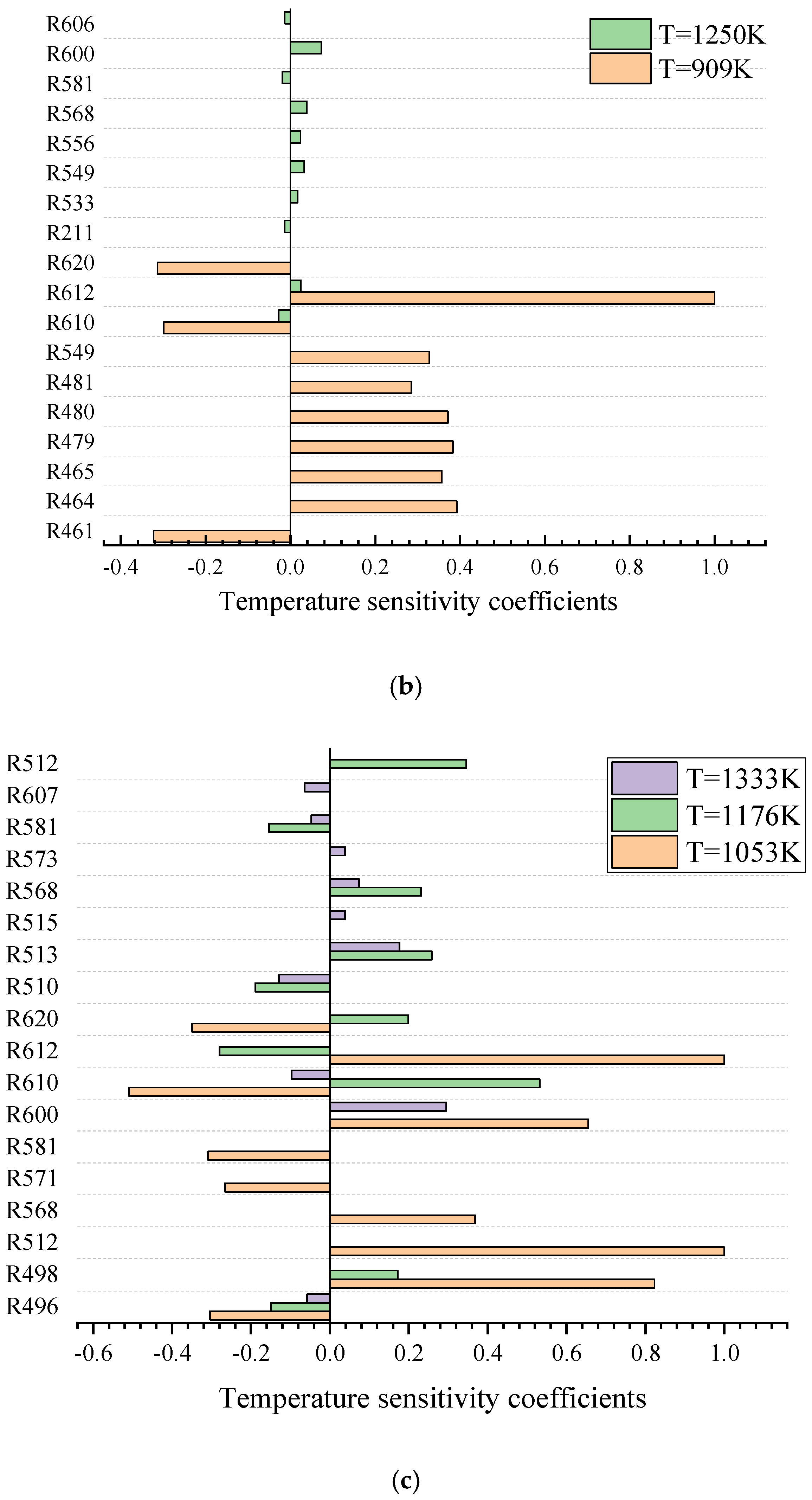
2.2.2. Calculation of Temperature Sensitivity
2.3. Verification of Combustion Mechanisms
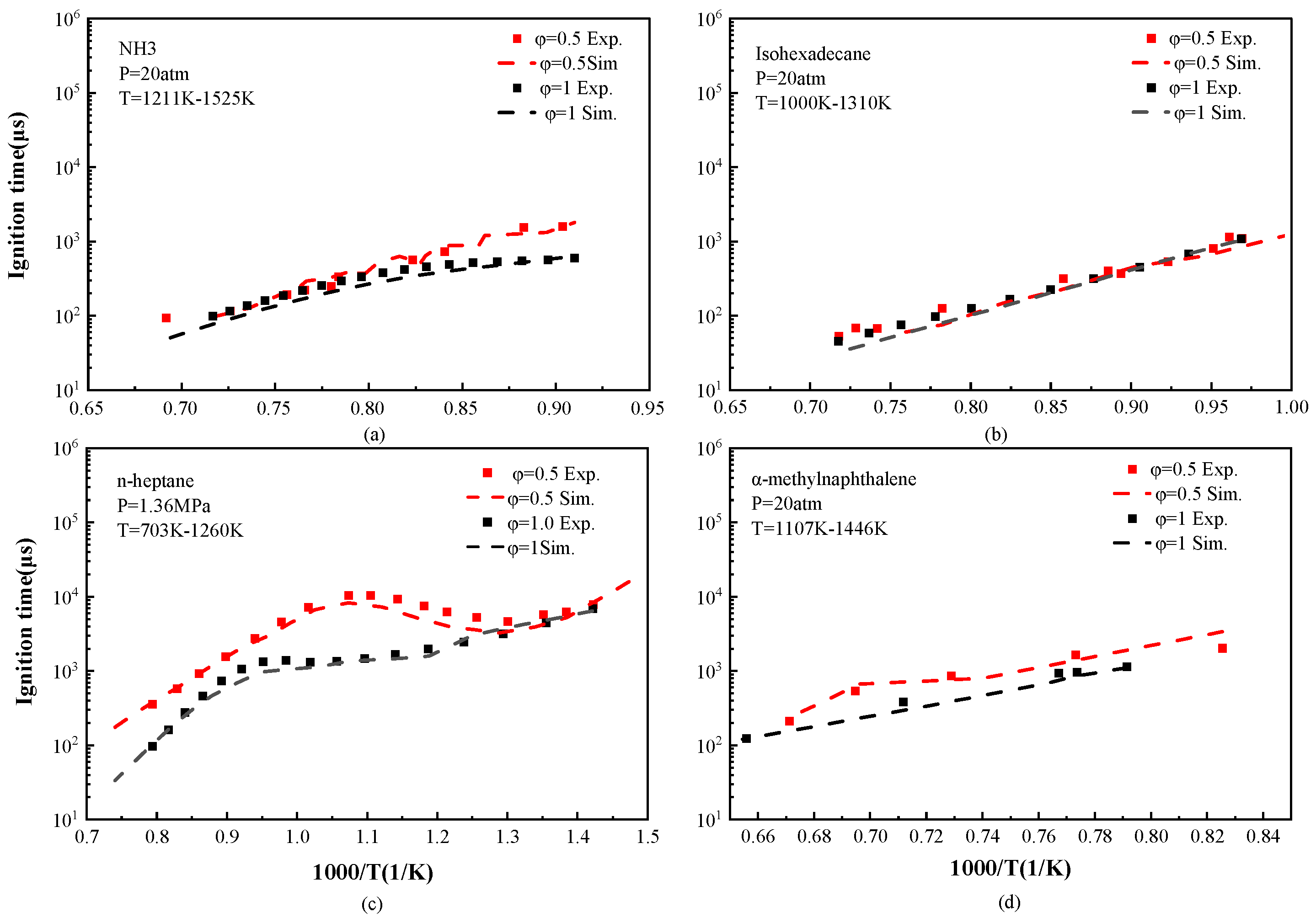
2.3.1. Ignition Delay Verification
2.3.2. Verification of Laminar Combustion Velocity
2.3.3. Verification of Ignition Delay for Different Blending Ratios of Ammonia–Diesel Mixtures
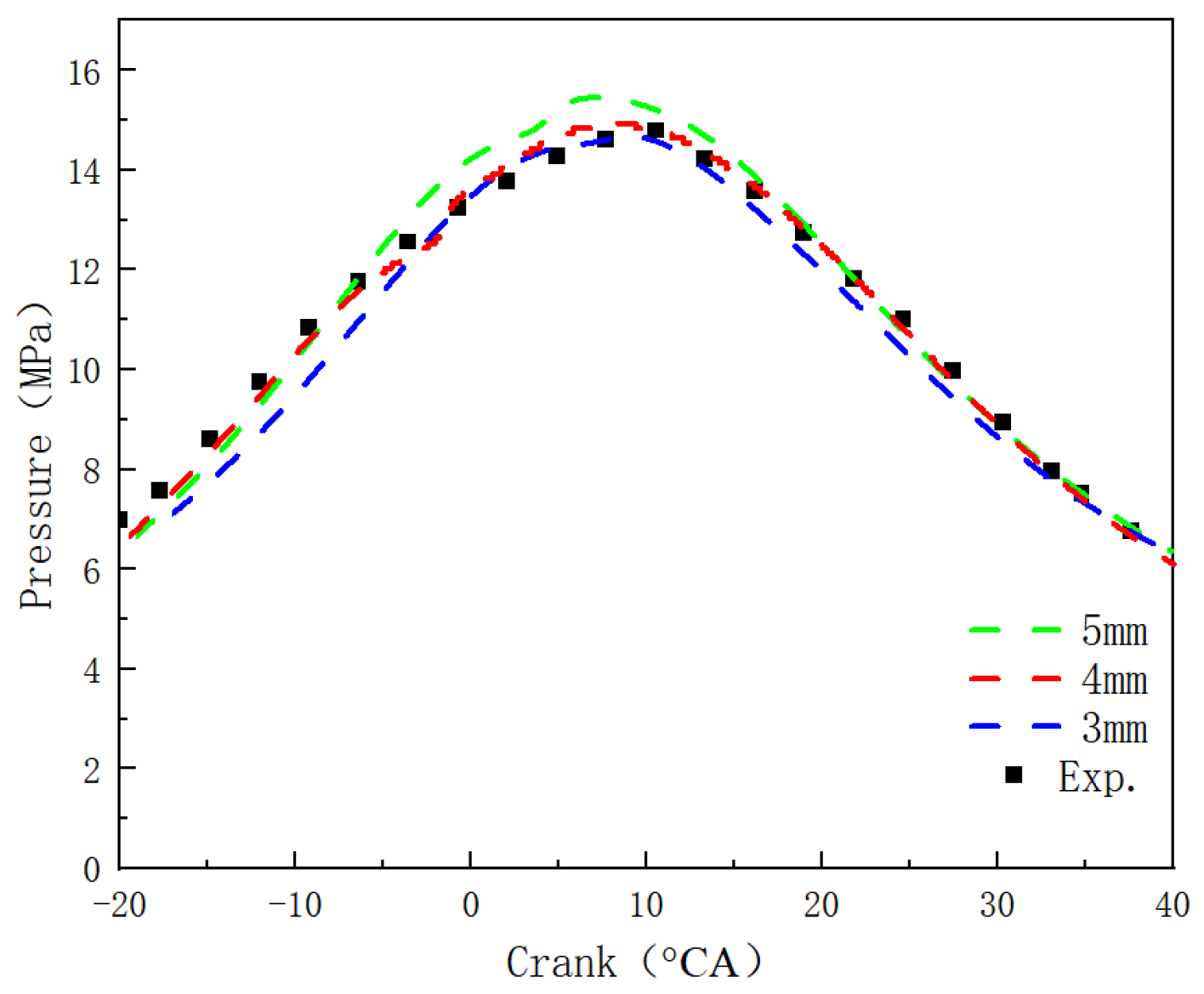
2.4. CFD Model Validation and Prediction
- (1)
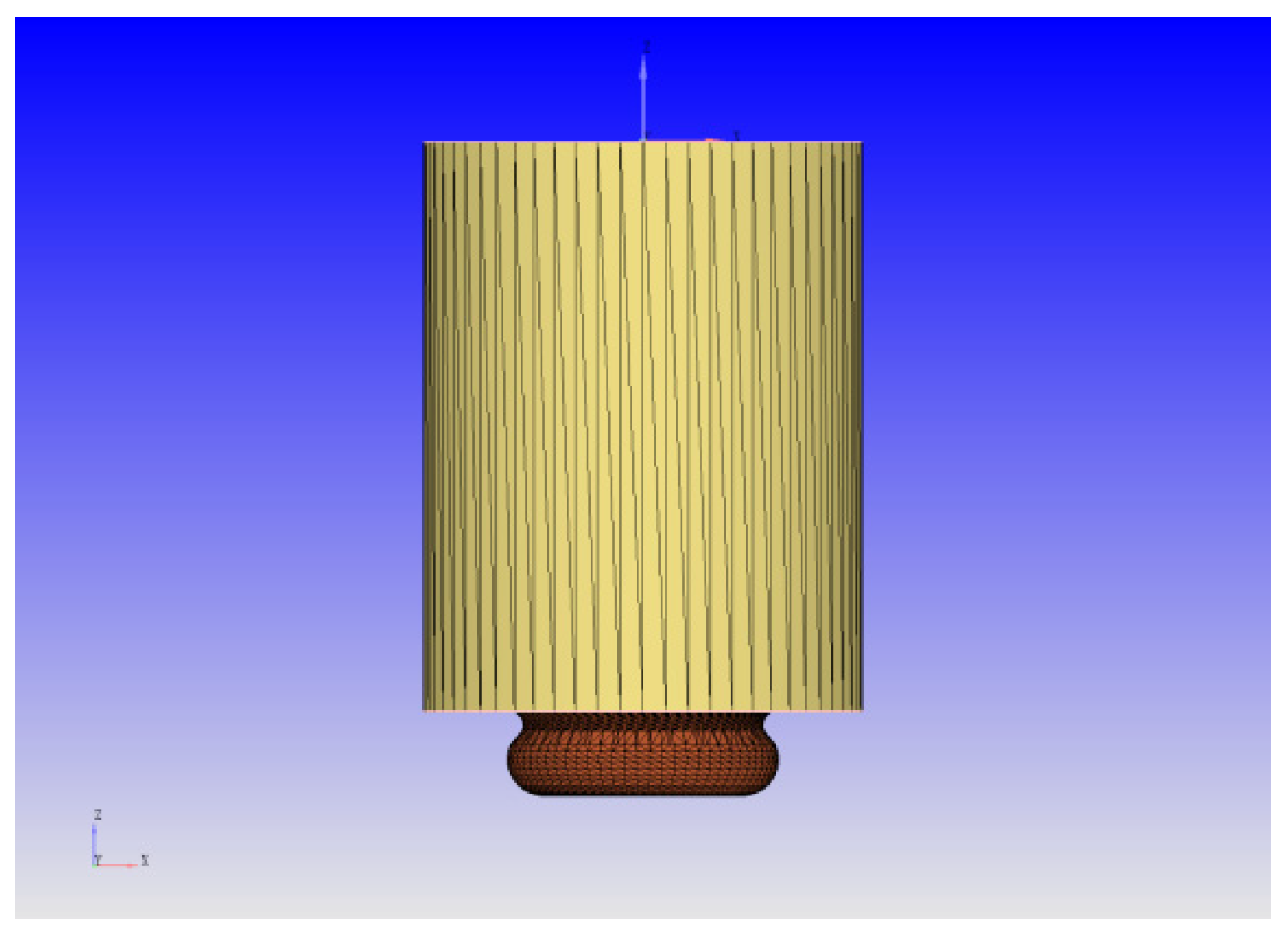
- In the 3D model, the cylinder head and valve structures were simplified into a single plane;
- (2)
- The 0 °CA was defined as the top dead center (TDC) of ignition. The computational time interval spans from the closing of the intake valve to the opening of the exhaust valve, studying the process from compression to expansion in the diesel engine. The corresponding crankshaft angle range is −150 °CA to 132 °CA.
3. Results
3.1. Analysis of Combustion Characteristics at Different Loads for Low-Ammonia Substitution Rates
3.2. Analysis of Combustion Characteristics Under Different Loads at Medium- and High-Ammonia Concentrations
3.3. Analysis of Emissions at Different Load Levels for the Low-Ammonia Replacement Rate
3.4. Emission Analysis for Medium-to-High Ammonia Substitution Rates
4. Conclusions
- (1)
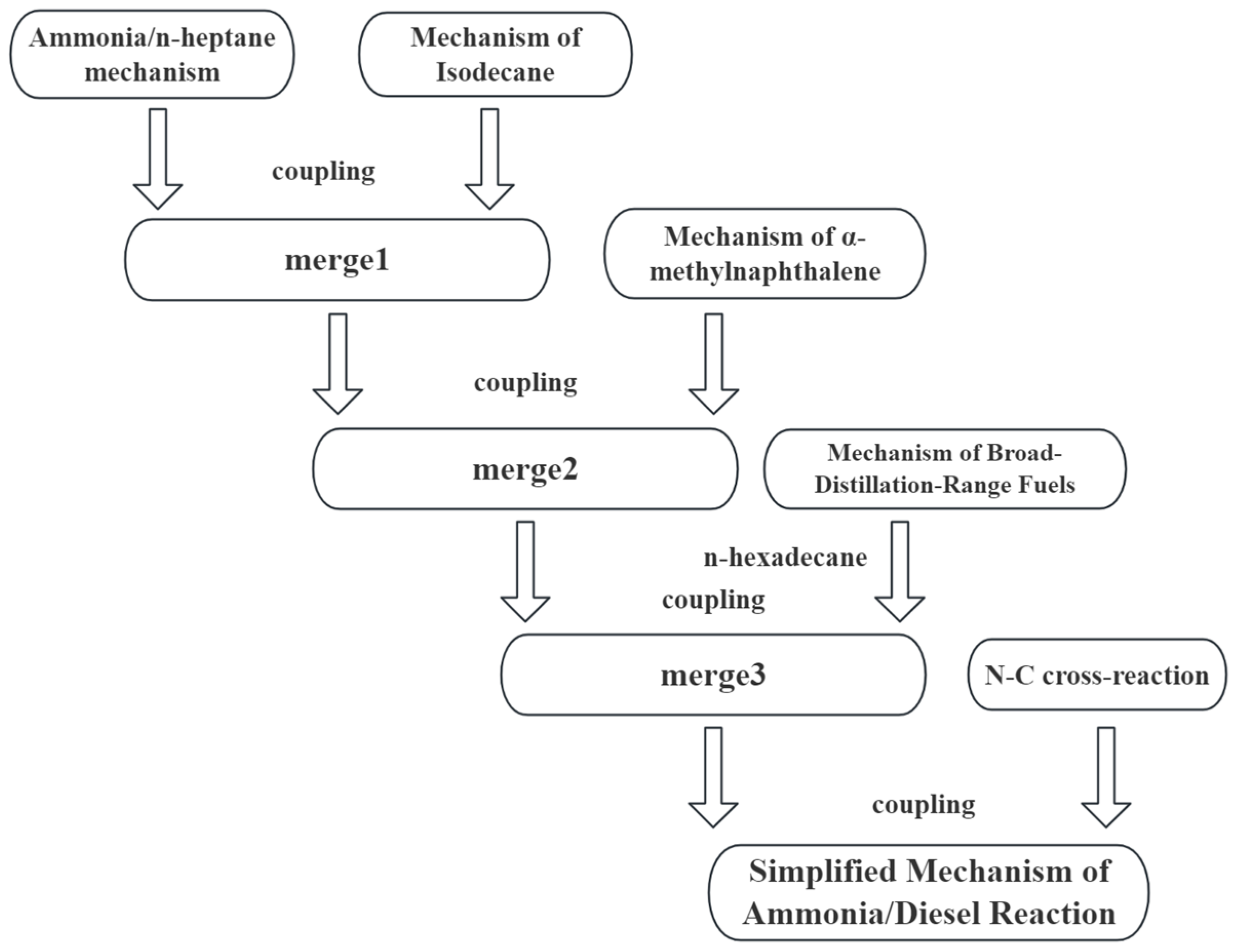
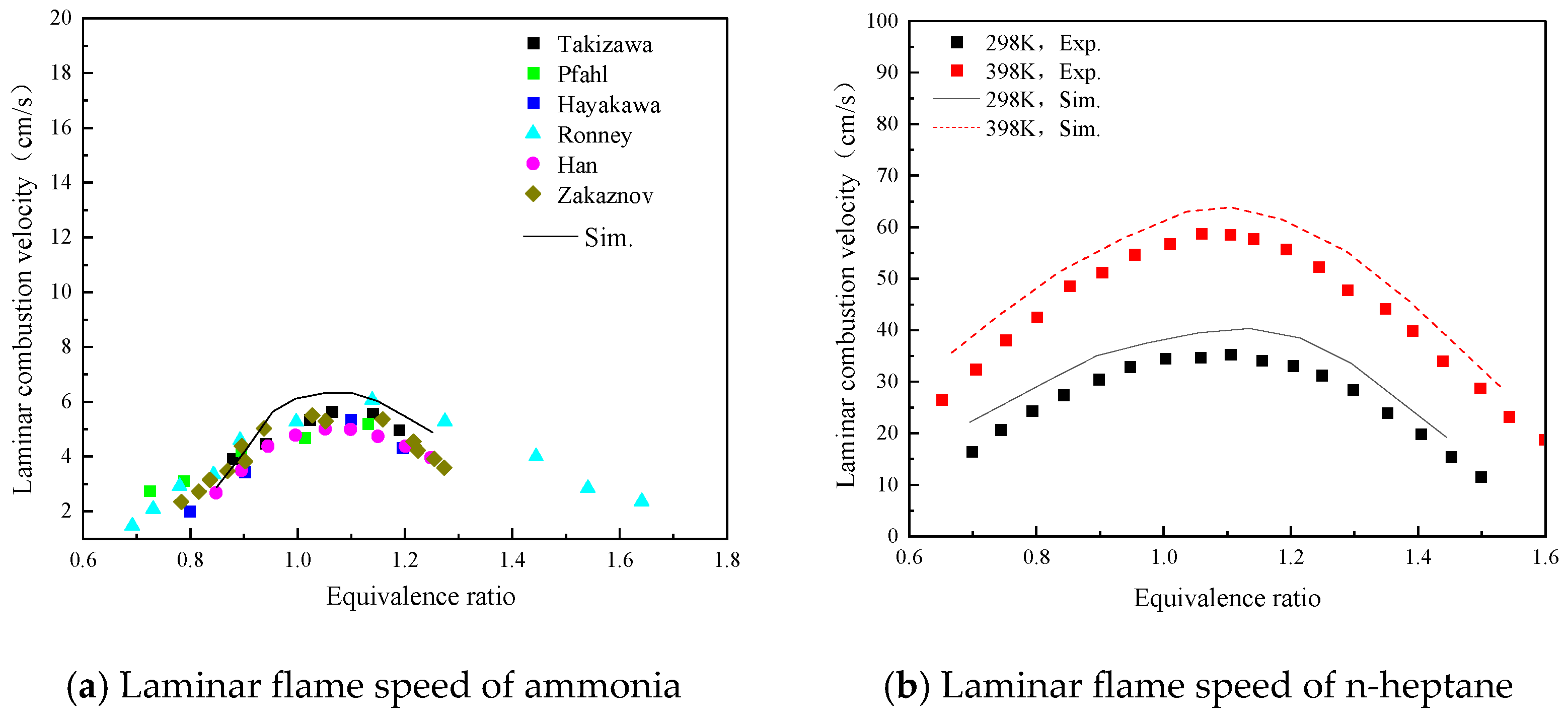
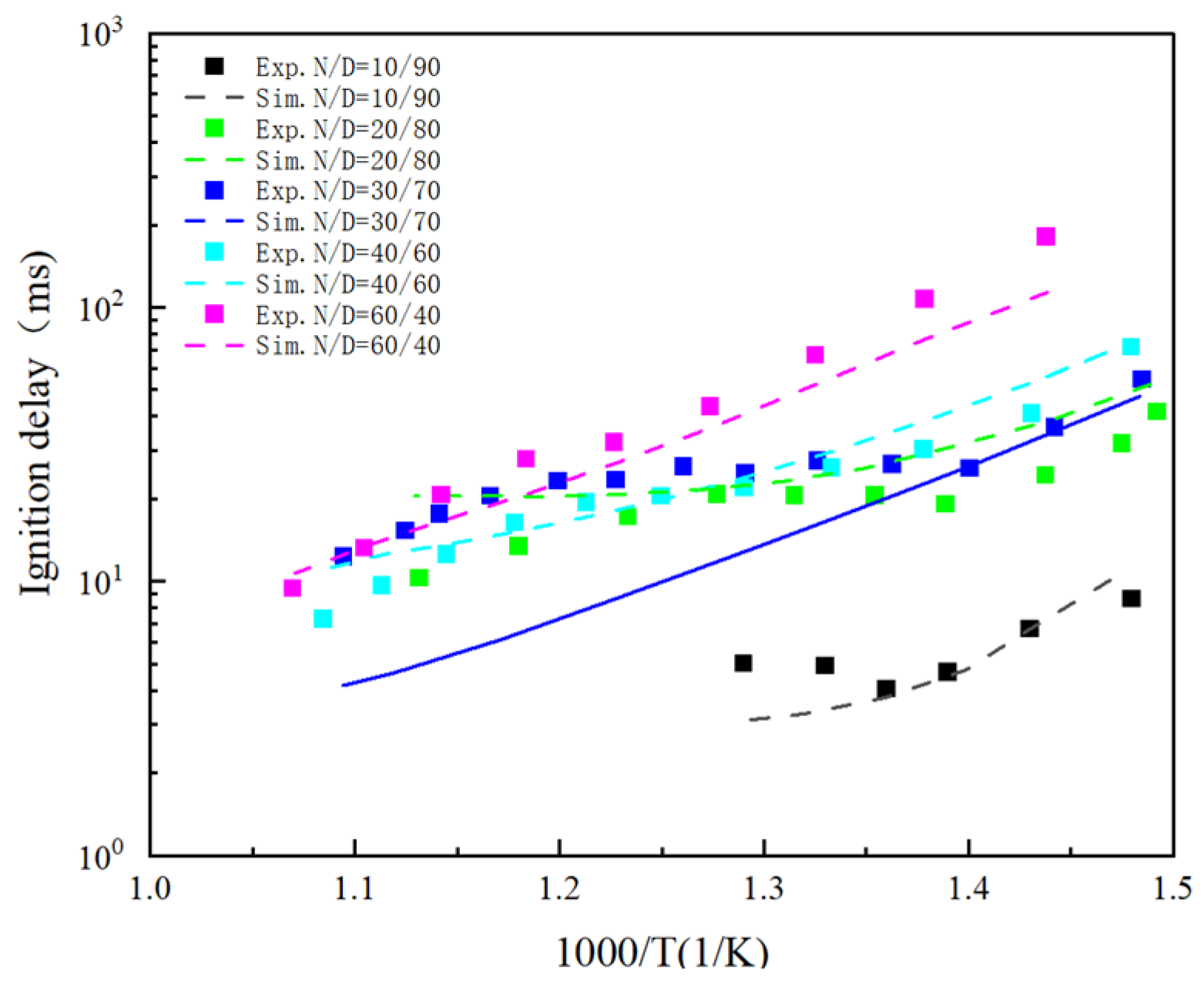
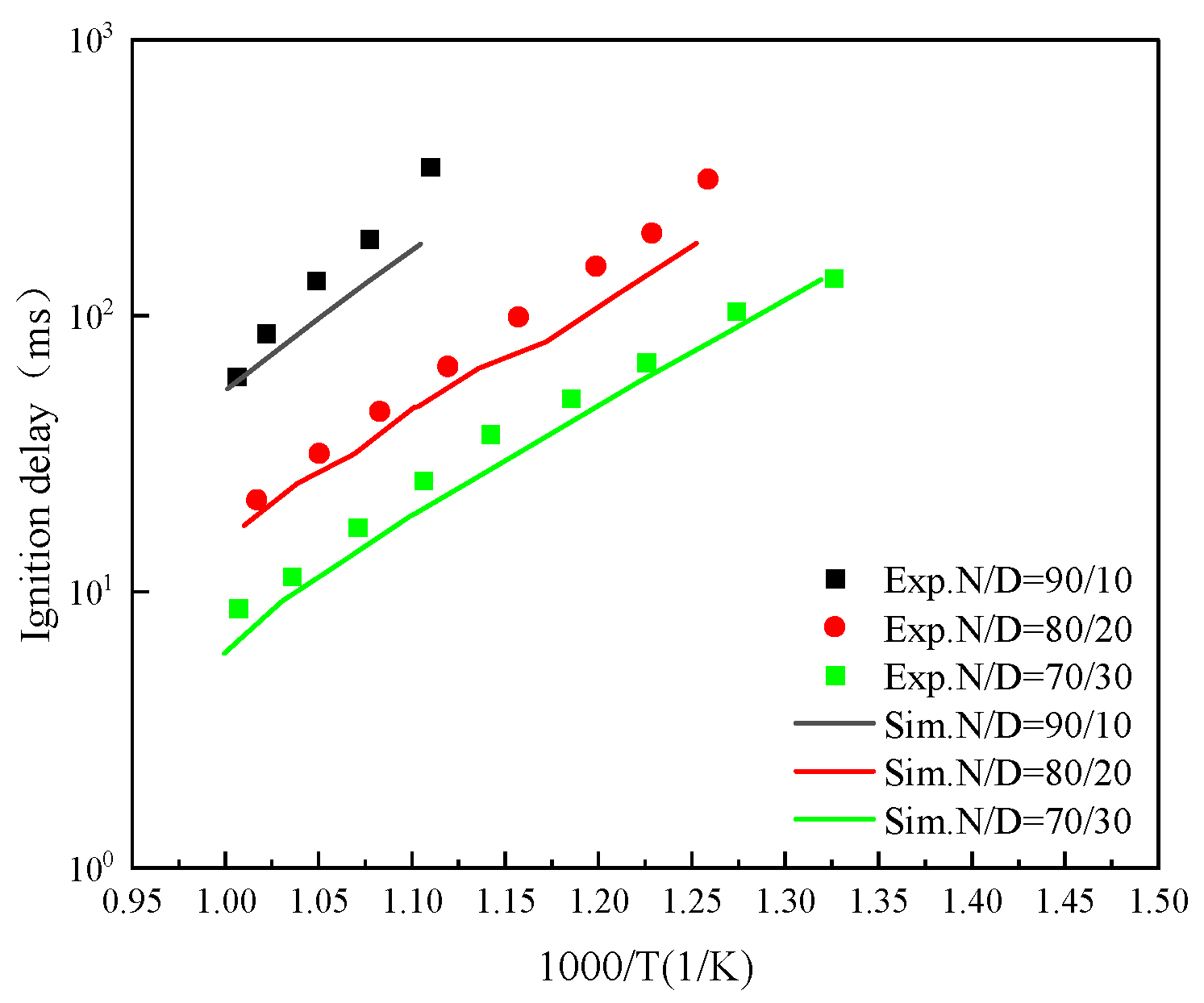
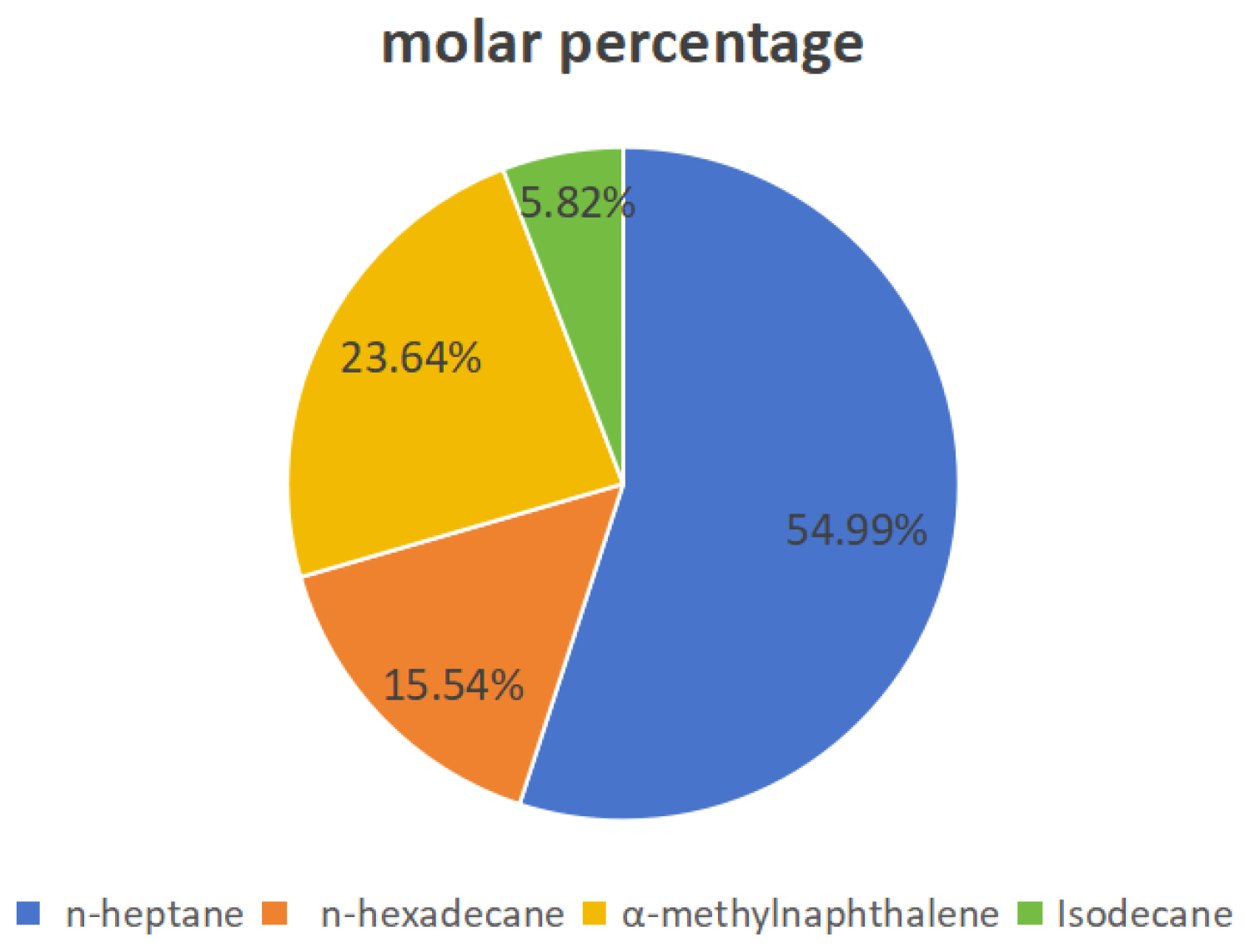
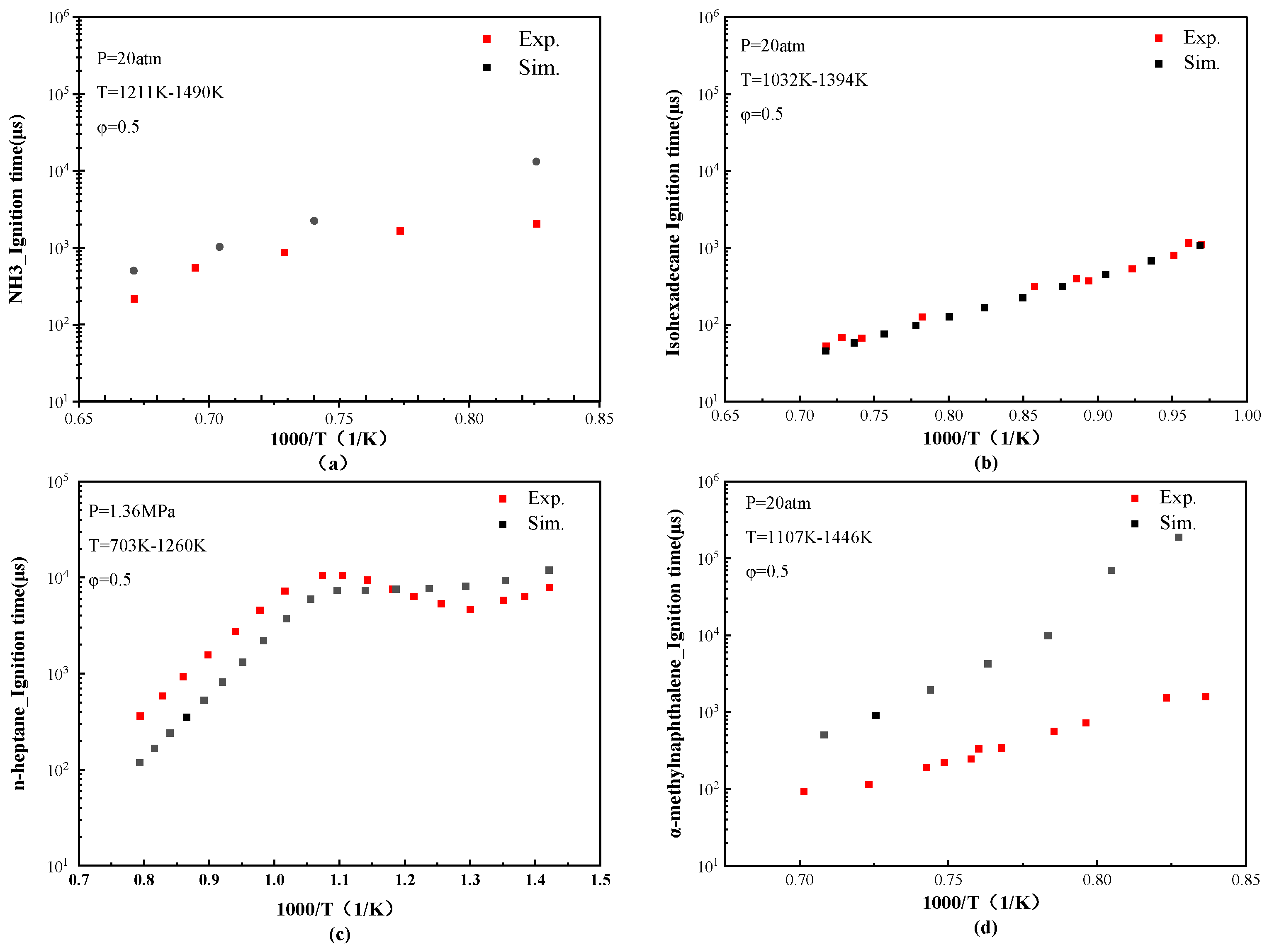
- Using decoupling methods and a modular construction strategy, a simplified ammonia/diesel mechanism comprising 212 species and 620 elementary reactions was developed, with n-heptane, n-hexadecane, isohexadecane, and α-methylnaphthalene as diesel surrogate components; its scale is approximately one-tenth that of a detailed mechanism. The mechanism was validated using published shock tube ignition delay data (φ = 0.5 and 1.0, 20 atm) and laminar burning velocity data (ammonia: φ = 0.7–1.6, 1 atm; n-heptane: φ = 0.6–1.6, 298 K and 398 K). The results show good agreement, indicating that the model can be reliably used for subsequent CFD simulations.
- (2)
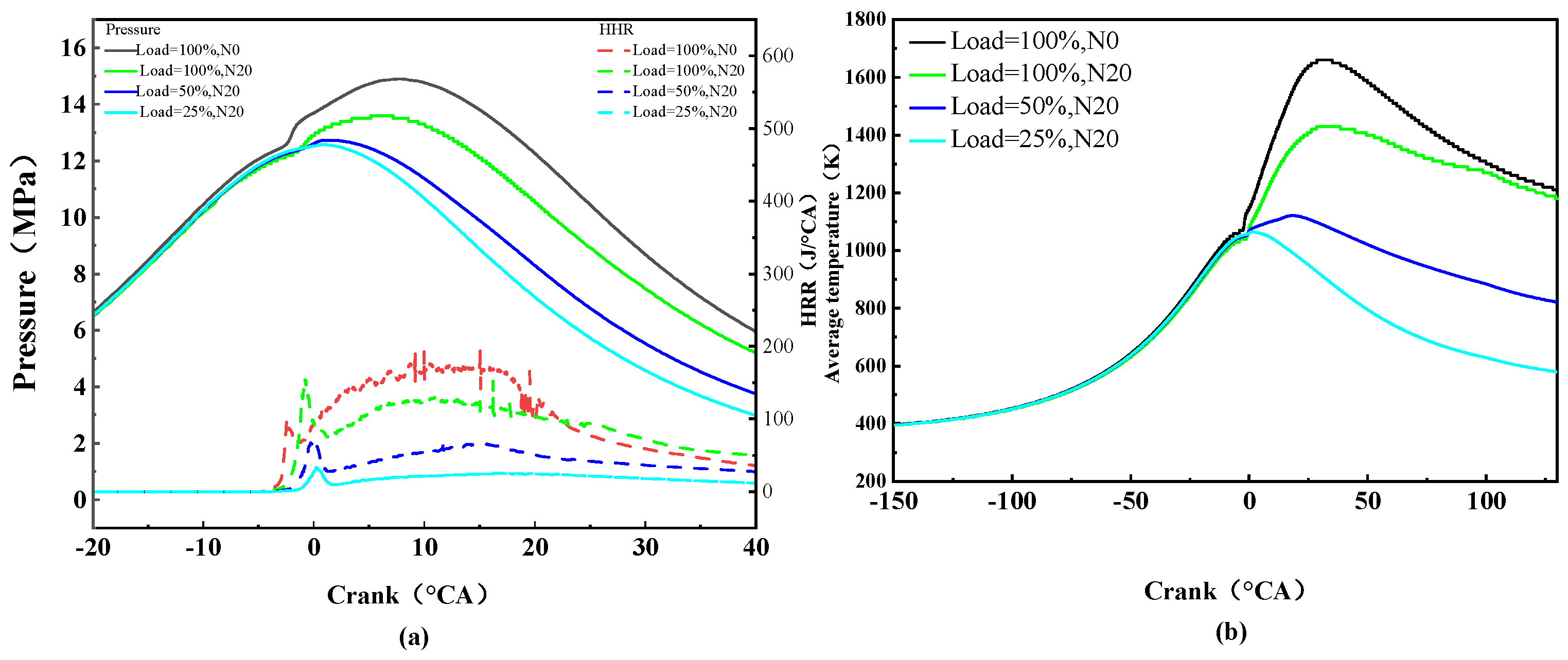
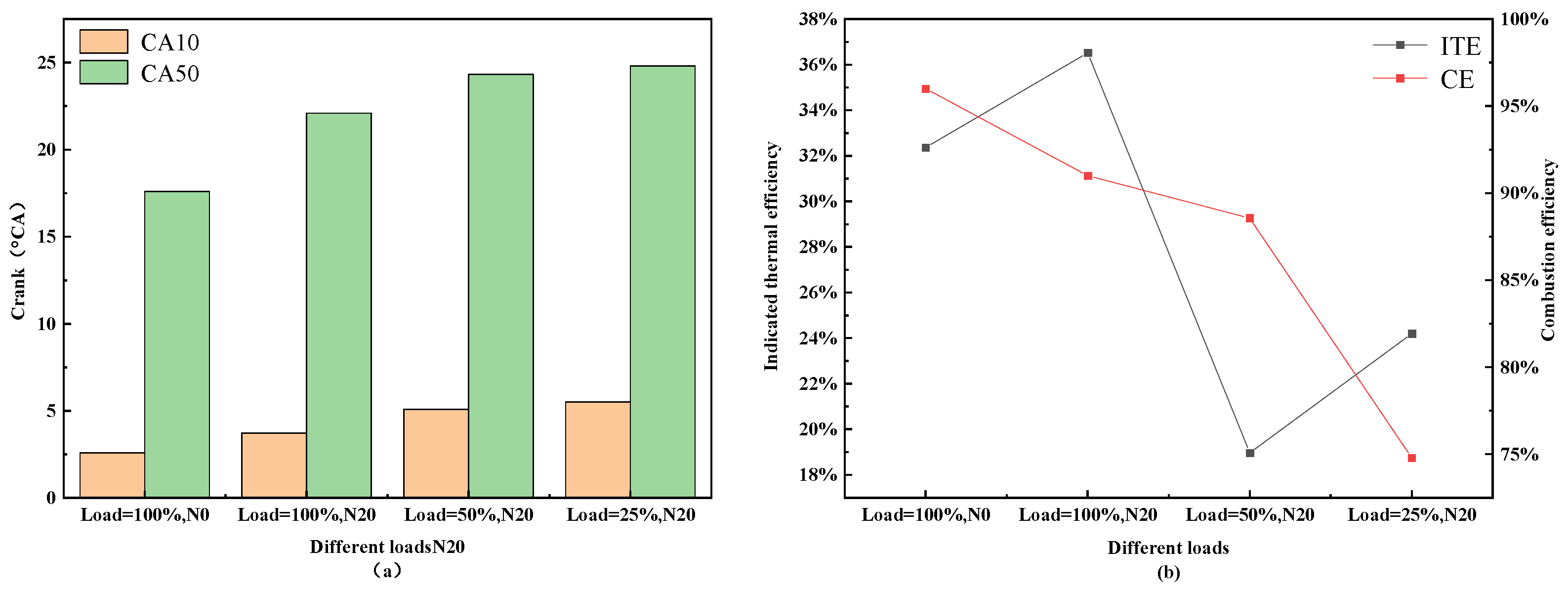
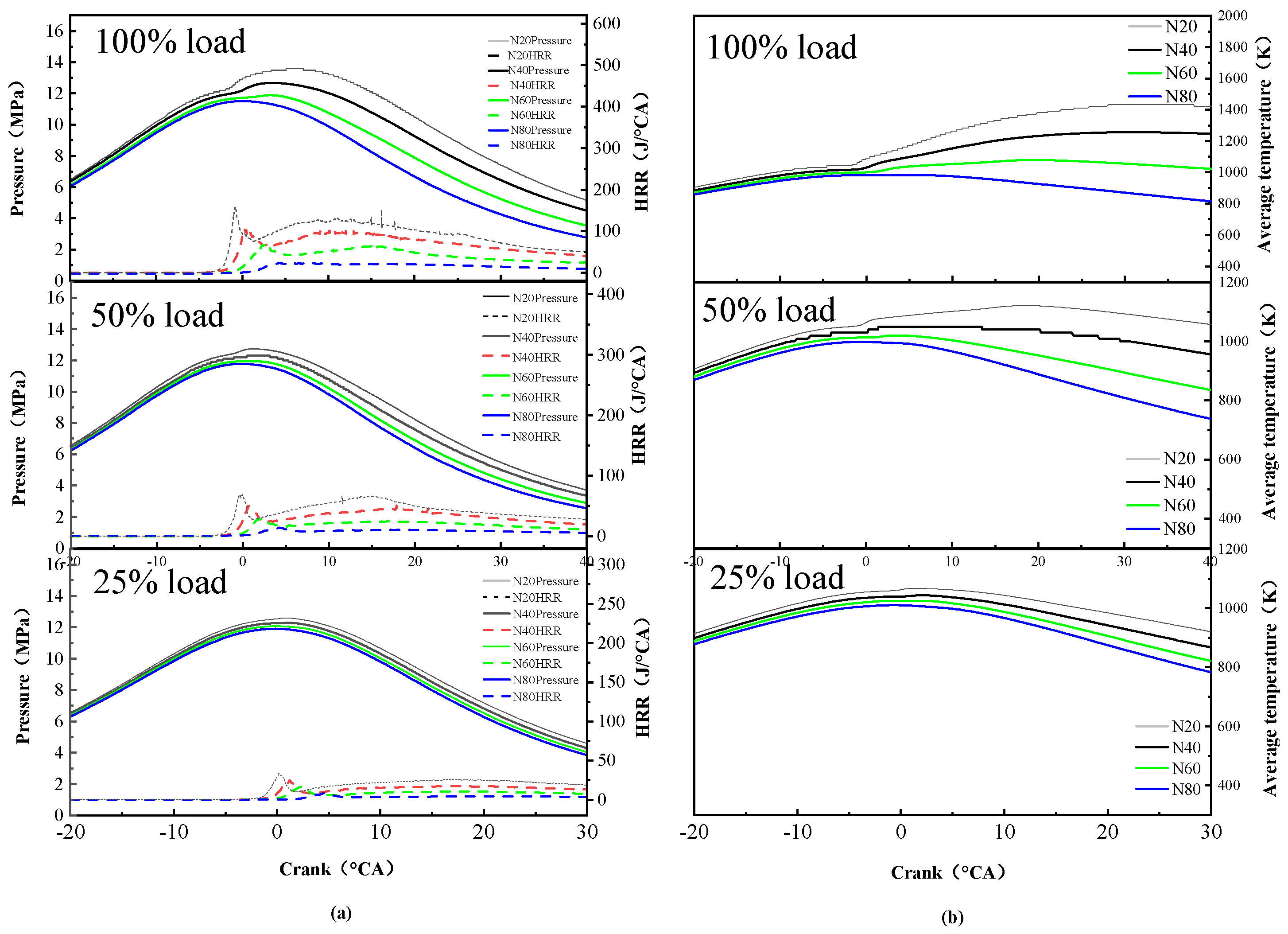
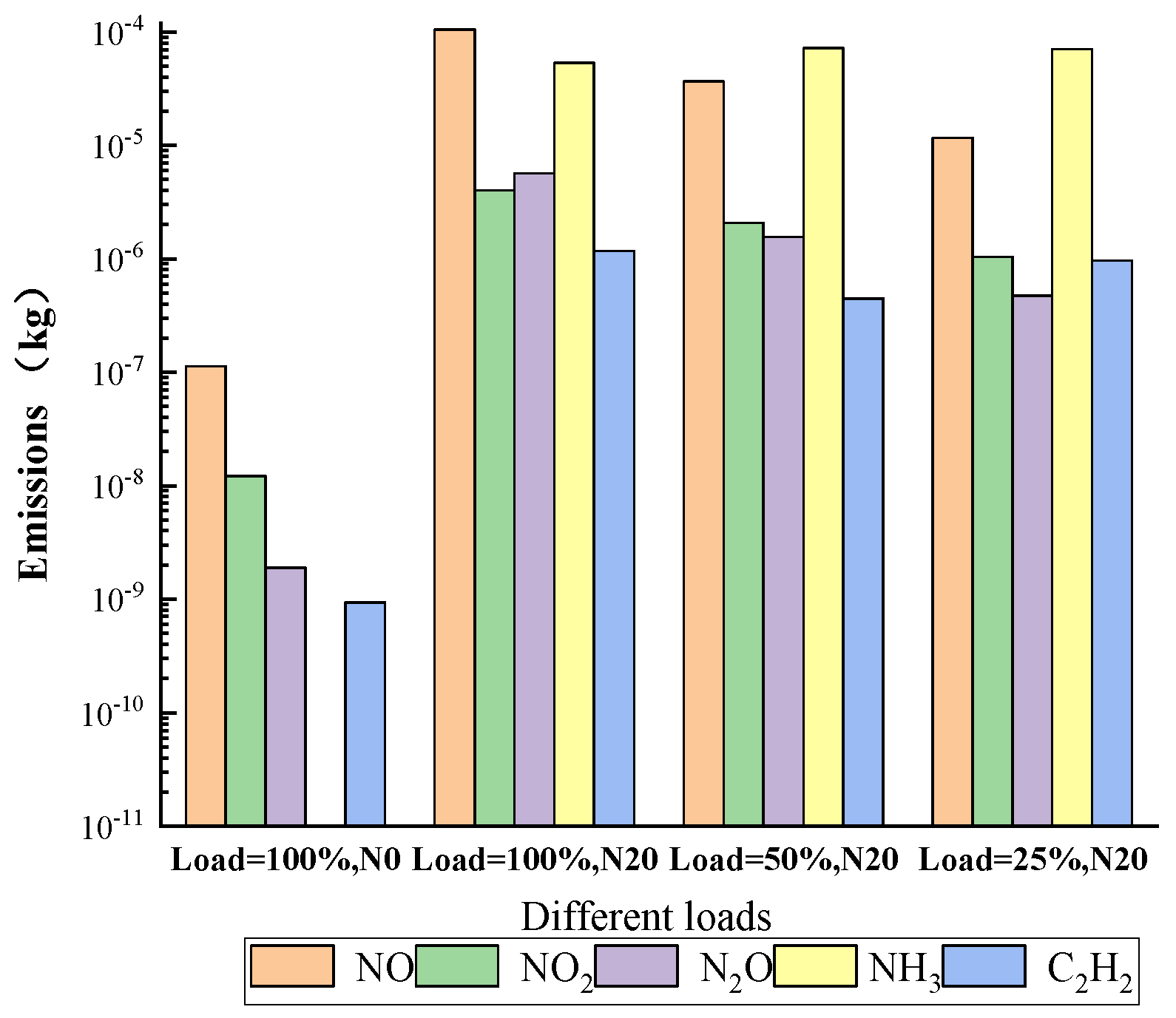
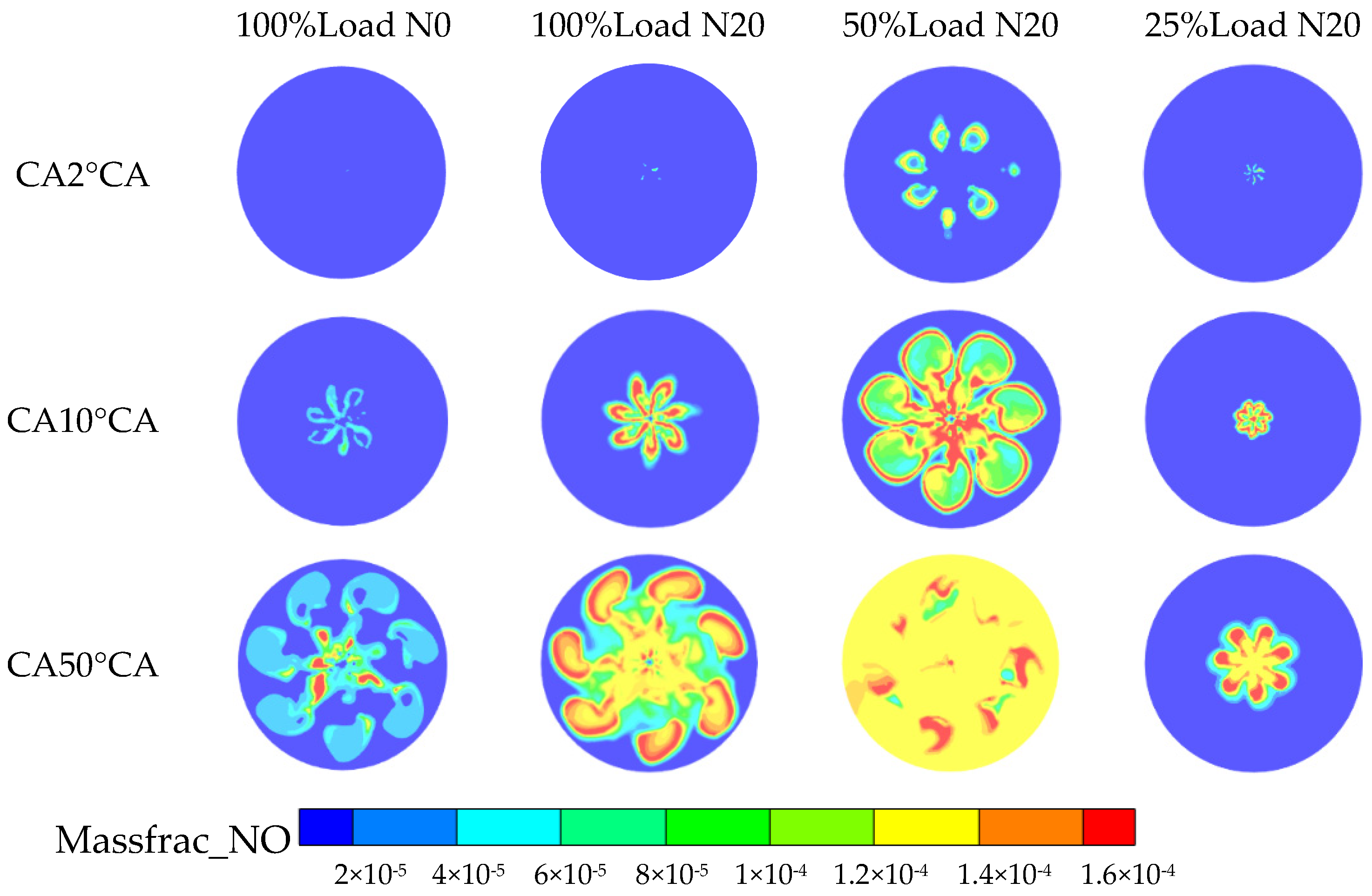
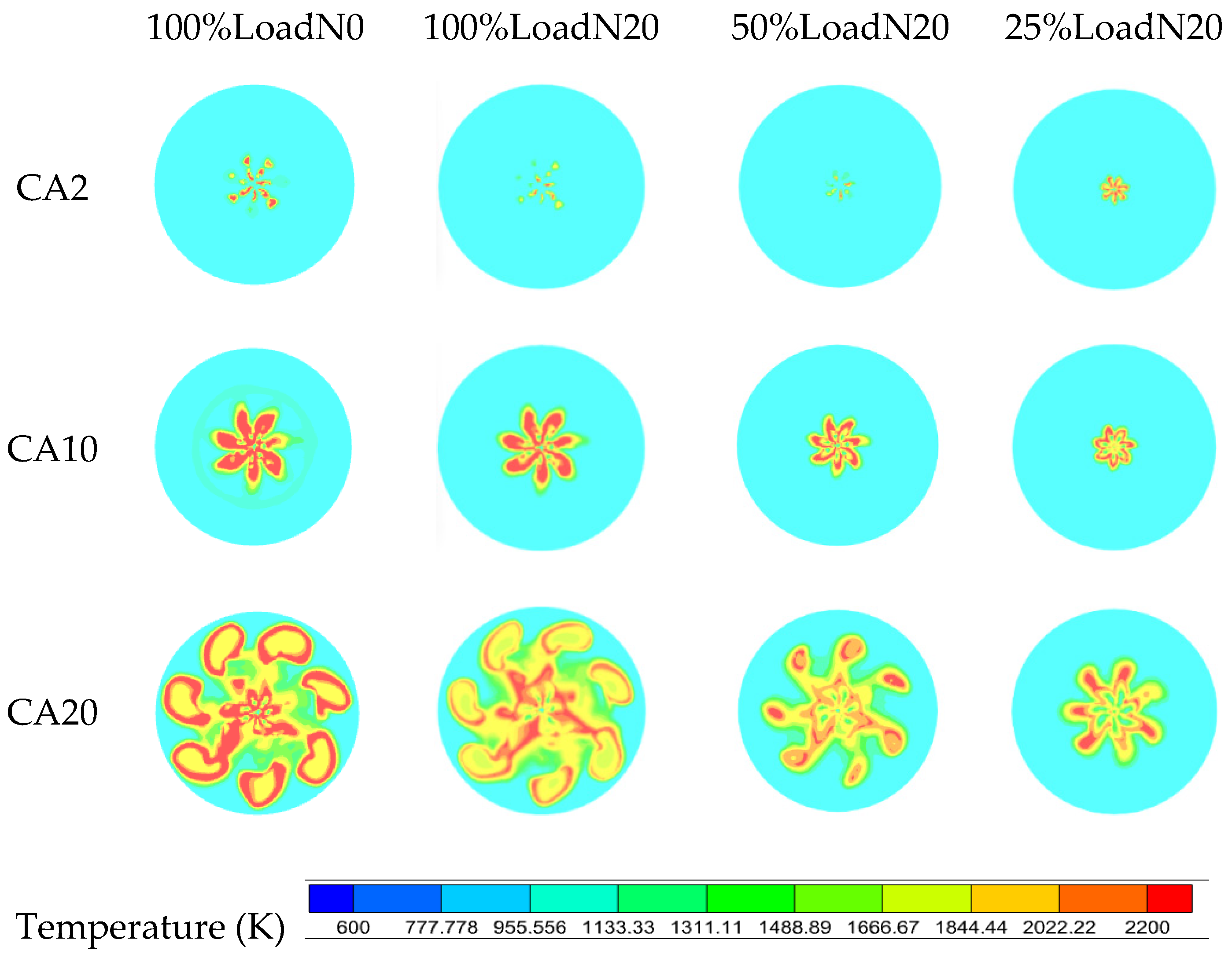
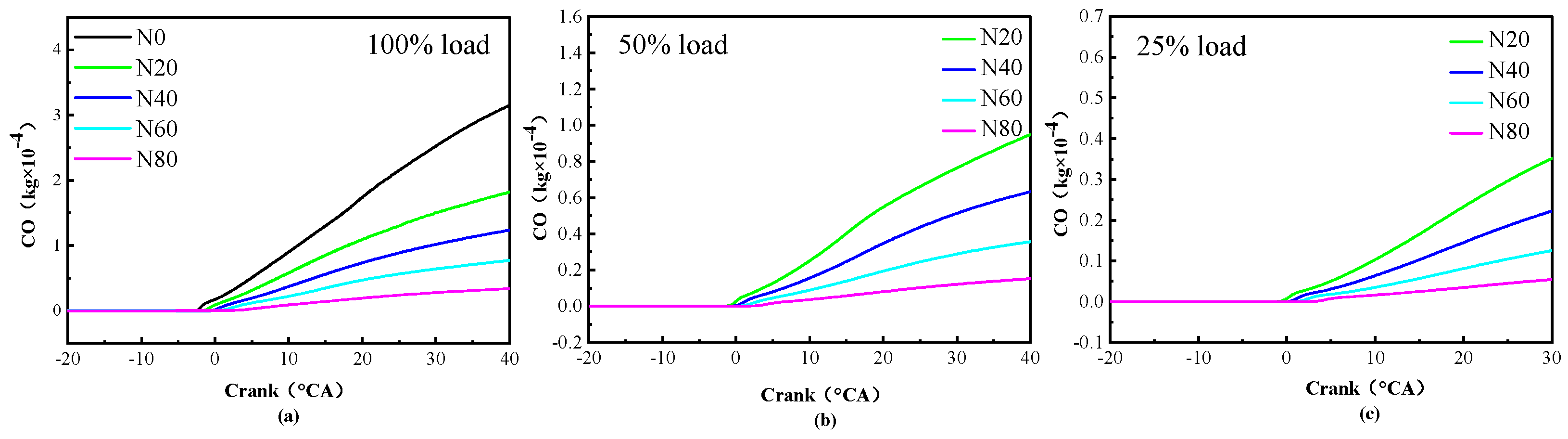
- At a low ammonia replacement rate (20%), as the load decreases, the peak cylinder pressure drops, the heat release rate decreases, and the heat release process is prolonged, resulting in a slower combustion rate. Compared to pure diesel, the crankshaft angles corresponding to CA10 and CA50 increase as the load decreases after ammonia blending; combustion efficiency decreases, and the indicated thermal efficiency follows a trend of first decreasing and then increasing. Regarding flame development, at low loads, the high-temperature zone is more concentrated and propagates more slowly; at full load, the flame front has essentially filled the combustion chamber. In terms of emissions, compared to pure diesel, all emissions increase. As the load decreases, nitrogen oxides gradually decrease, soot emissions first decrease and then increase, and unburned ammonia gradually increases. Load affects the ignition and combustion processes by altering the thermodynamic state within the cylinder.
- (3)
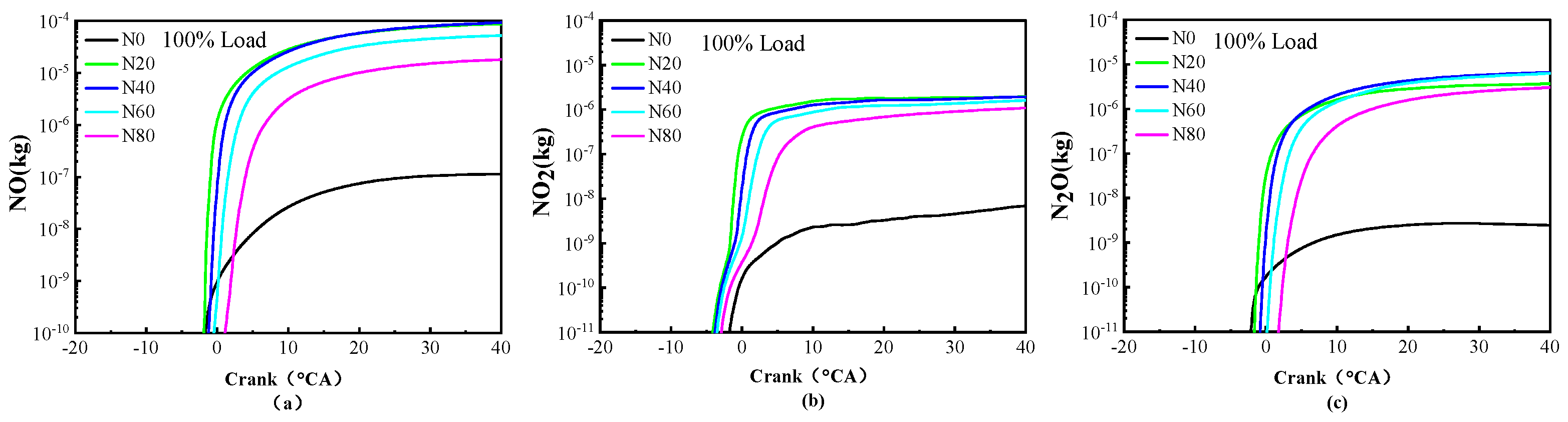
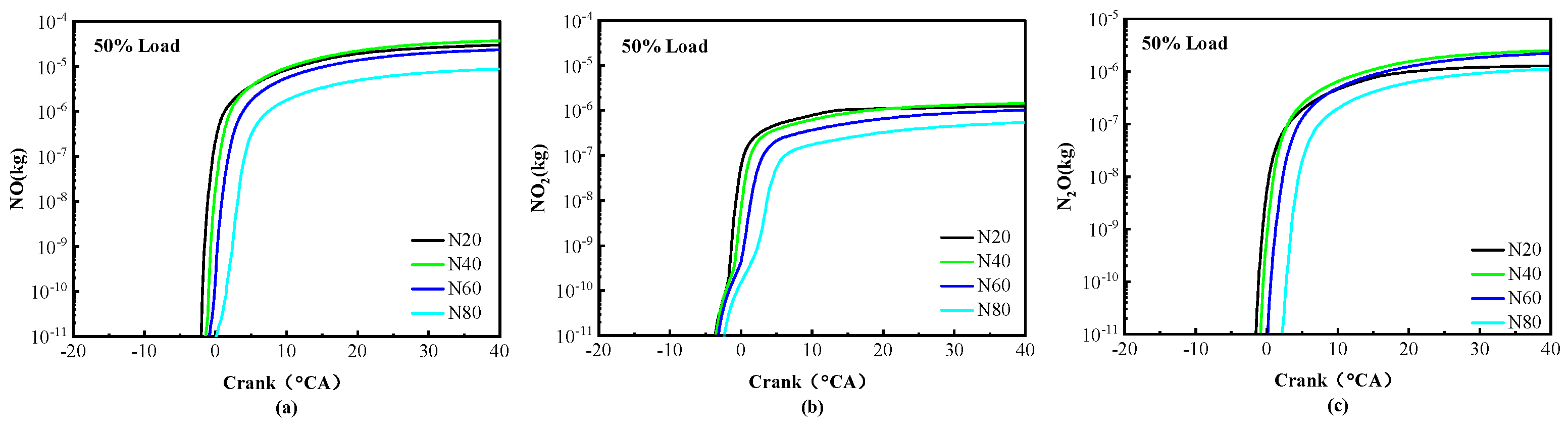
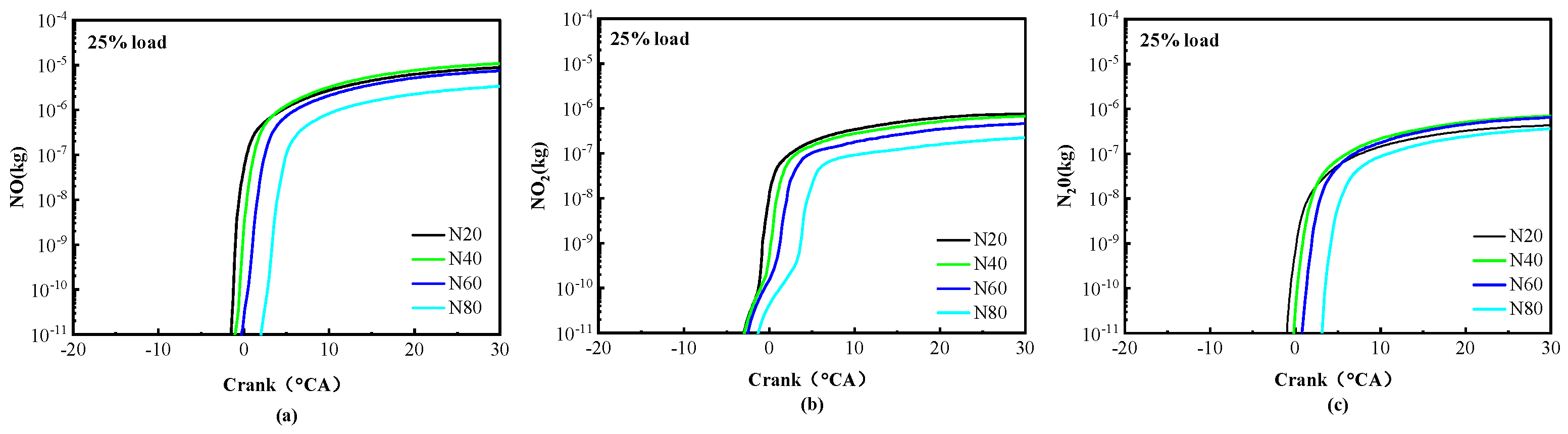
- At medium to high ammonia substitution rates, the influence of load on combustion characteristics weakens, and the ammonia substitution rate becomes the primary influencing factor. At medium to high loads, the heat release rate exhibits a “bimodal” pattern for ammonia substitution rates ranging from 20% to 60%; at low loads, all heat release rates follow a “unimodal” distribution. As the ammonia substitution rate increases, the peak cylinder pressure decreases, the average in-cylinder temperature drops, and the phase of the temperature peak advances at medium and low loads. NO, NO2, and N2O emissions follow a trend of first increasing and then decreasing with increasing ammonia substitution rate, peaking in the 40–60% range; CO2 emissions gradually decrease as the ammonia substitution rate rises.
- (4)
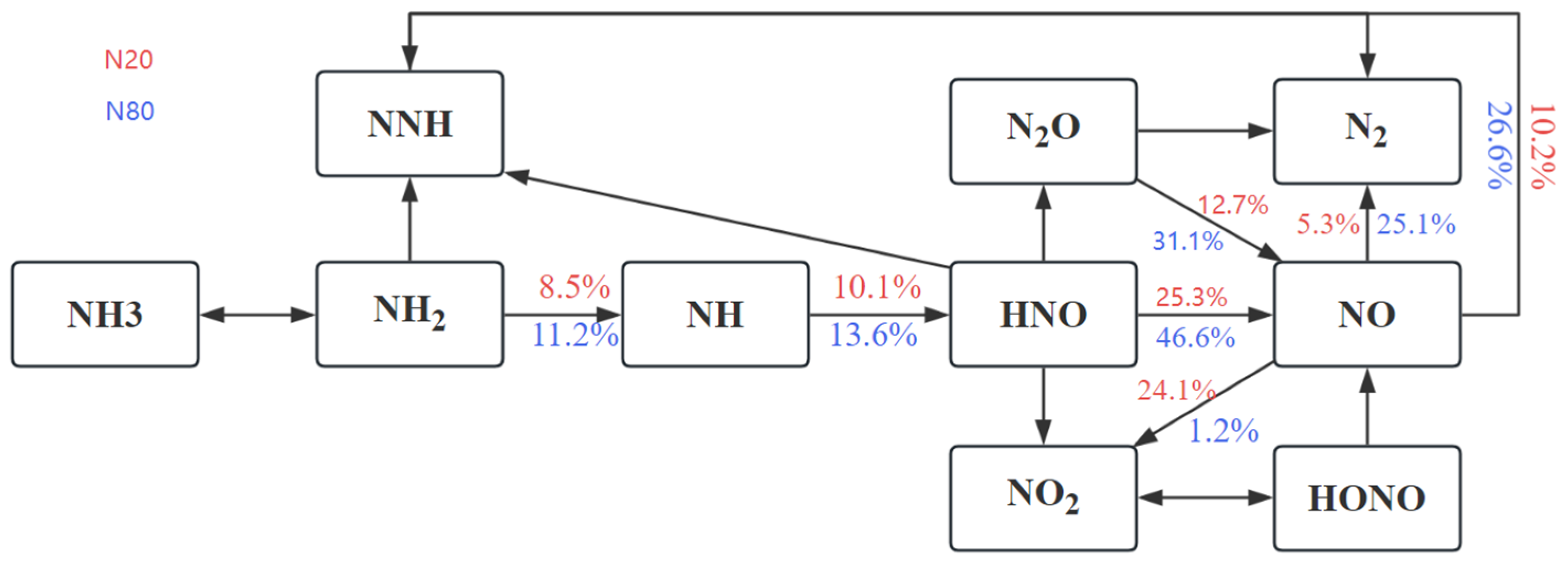
- Reaction pathway analysis at 1200 K and 1 atm reveals the mechanism behind the non-monotonic NOx trend with increasing ammonia substitution. At 20% ammonia, NO is mainly oxidized to NO2; at 80% ammonia, reduction pathways (NO→N2 and NO→NNH) become dominant, converting NO directly to harmless N2. This shift from oxidation-dominated to reduction-dominated NO consumption explains the observed rise-then-fall NOx emissions. The pathway results are consistent with CFD emission predictions, further confirming the mechanism’s reliability.
Author Contributions
Funding
Data Availability Statement
Conflicts of Interest
Abbreviations
| AER | Ammonia Energy Ratio |
| CFD | Computational Fluid Dynamics |
| CA | Crank Angle |
| HRR | Heat Release Rate |
| NH3 | Ammonia |
| NOx | Nitrogen Oxides |
| N2O | Nitrous Oxide |
| CO2 | Carbon Dioxide |
| ITE | Indicated Thermal Efficiency |
| CE | Combustion Efficiency |
| Nx | Ammonia blending ratio of x% (e.g., N0: pure diesel; N20: 20% ammonia + 80% diesel; N80: 80% ammonia + 20% diesel). |
References
- Mao, G.; Fu, R.; Mei, D.; Li, R.; Zhang, P. Kinetic modeling and optimization of ammonia/n-heptane combustion for HCCI engine applications. Int. J. Hydrogen Energy 2025, 187, 152107. [Google Scholar] [CrossRef]
- Cheng, Q.; Muhammad, A.; Kaario, O.; Ahmad, Z.; Larmi, M. Ammonia as a sustainable fuel: Review and novel strategies. Renew. Sustain. Energy Rev. 2025, 207, 114995. [Google Scholar] [CrossRef]
- Dai, L.; Gersen, S.; Glarborg, P.; Mokhov, A.; Levinsky, H. Autoignition studies of NH3/CH4 mixtures at highpressure. Combust. Flame 2020, 218, 19–26. [Google Scholar] [CrossRef]
- Okafor, E.C.; Naito, Y.; Colson, S.; Ichikawa, A.; Kudo, T.; Hayakawa, A.; Kobayashi, H. Experimental and numerical study of the laminarburning velocity of CH4–NH3–air premixed flames. Combust. Flame 2018, 187, 185–198. [Google Scholar] [CrossRef]
- Mei, B.; Zhang, X.; Ma, S.; Cui, M.; Guo, H.; Cao, Z.; Li, Y. Experimental and kinetic modeling investigation on the laminar flame propagation of ammonia under oxygen enrichment and elevated pressure conditions. Combust. Flame 2019, 210, 236–246. [Google Scholar] [CrossRef]
- Mendiara, T.; Glaborg, P. Ammonia chemistry in oxy-fuel combustion of methane. Combust. Flame 2009, 156, 1937–1949. [Google Scholar] [CrossRef]
- Bykov, V.; Stein, M.; Maas, U. Study of mechanism of ammonia decomposition and oxidation: From NOx reduction to ammonia auto-ignition problem. Proc. Combust. Inst. 2023, 39, 4267–4275. [Google Scholar] [CrossRef]
- Colson, S.; Hayakawa, A.; Kudo, T.; Kobayashi, H. Extinction characteristics of ammonia/air counterflow premixed flames at various pressures. J. Therm. Sci. Technol. 2016, 11, 16–00384. [Google Scholar] [CrossRef]
- Reiter, A.J.; Kong, S.C. Combustion and emissions characteristics of compression-ignition engine using dual ammonia-diesel fuel. Fuel 2011, 90, 87–97. [Google Scholar] [CrossRef]
- Brackmann, C.; Alekseev, V.A.; Zhou, B.; Nordström, E.; Bengtsson, P.E.; Li, Z.; Aldén, M.; Konnov, A.A. Structure of premixed ammonia + air flames at atmospheric pressure: Laser diagnostics and kinetic modeling. Combust. Flame 2016, 163, 370–381. [Google Scholar] [CrossRef]
- Chai, W.S.; Bao, Y.; Jin, P.; Tang, G.; Zhou, L. A review on ammonia, ammonia-hydrogen and ammonia-methane fuels. Renew. Sustianable Energy Rev. 2021, 147, 111254. [Google Scholar] [CrossRef]
- Song, Y.; Hashemi, H.; Christensen, J.M.; Zou, C.; Marshall, P.; Glarborg, P. Ammonia oxidation at high pressure and intermediate temperatures. Fuel 2016, 181, 358–365. [Google Scholar] [CrossRef]
- Hurault, F.; Fenard, Y.; Brequigny, P.; Moreau, B.; Haidous, Y.; Foucher, F. Experimental and numerical ignition delay times comparison for ammonia mechanisms at high pressure. Proc. Combust. Inst. 2024, 40, 105625. [Google Scholar] [CrossRef]
- Xu, L.; Chang, Y.; Treacy, M.; Zhou, Y.; Jia, M.; Bai, X.-S. A skeletal chemical kinetic mechanism for ammonia/n-heptane combustion. Fuel 2023, 331, 125830. [Google Scholar] [CrossRef]
- Wang, B.; Dong, S.; Jiang, Z.; Gao, W.; Wang, Z.; Li, J.; Yang, C.; Wang, Z.W.; Cheng, X. Development of a reduced chemical mechanism for ammonia/n-heptane blends. Fuel 2023, 338, 127358. [Google Scholar] [CrossRef]
- Wang, H.; Chang, Y.; Sun, K.; Jia, M.; Wang, T. Development of a reduced chemical kinetic mechanism for ammonia/diesel combustion over a wide range of ammonia energy ratios. Fuel 2025, 381, 133536. [Google Scholar] [CrossRef]
- Sun, W.; Lin, S.; Zhang, H.; Guo, L.; Zeng, W.; Zhu, G.; Jiang, M. A reduced combustion mechanism of ammonia/diesel optimized with multi-objective genetic algorithm. Def. Technol. 2024, 34, 187–34200. [Google Scholar] [CrossRef]
- Shang, Z.; Qiu, Y.; Zhang, Y.; Zhang, Y.; Turányi, T.; Xie, X.; Han, D.; Huang, Z. Development and validation of combustion kinetic mechanisms for Ammonia-Diesel Dual-Fuel engines. Fuel 2026, 407, 137344. [Google Scholar] [CrossRef]
- Cai, K.; Liu, Y.; Chen, Q.; Qi, Y.; Li, L.; Wang, Z. Experimental and Kinetic-Modeling Study of Ammonia/n-Heptane Combustion. SAE Int. J. Sustain. Transp. Energy Environ. Policy 2025, 6, 1–16. [Google Scholar] [CrossRef]
- Feng, J. Study on Chemical Reaction Kinetic Mechanism and Combustion Prediction of Diesel/Ammonia Dual Fuel. Ph.D. Thesis, Harbin Engineering University, Harbin, China, 2024. [Google Scholar]
- Yu, L.; Zhou, W.; Feng, Y.; Wang, W.; Zhu, J.; Qian, Y.; Lu, X. The effect of ammonia addition on the low-temperature autoignition of n-heptane: An experimental and modeling study. Combust. Flame 2020, 217, 4–11. [Google Scholar] [CrossRef]
- Dong, S.; Wang, B.; Jiang, Z.; Li, Y.; Gao, W.; Wang, Z.; Cheng, X.; Curran, H.J. An experimental and kinetic modeling study of ammonia/n-heptane blends. Combust. Flame 2022, 246, 112428. [Google Scholar] [CrossRef]
- Nadimi, E.; Przybyła, G.; Lewandowski, M.T.; Adamczyk, W. Effects of ammonia on combustion, emissions, and performance of the ammonia/diesel dual-fuel compression ignition engine. J. Energy Inst. 2023, 107, 101158. [Google Scholar] [CrossRef]
- Almanzalawy, M.; Nada, S.; Elfadl, A.S.; Hassan, H. Evaluating Ammonia-Diesel Blends in Engine Operations: Performance and Stability Impacts. J. Phys. Conf. Ser. 2024, 2857, 012014. [Google Scholar] [CrossRef]
- Hu, S.; Wang, J.; Cai, Y.; Zhu, N. Simulation of the Effects of Ammonia Substitution Rates on Combustion and Emission Performance of Diesel Engines. J. Automot. Saf. Energy Conserv. 2024, 15, 395–401. [Google Scholar] [CrossRef]
- Yang, J. Study on the Combustion Performance of Ammonia/Diesel Dual-Fuel Engines Under Medium and Low Loads. Master’s Thesis, Harbin Engineering University, Harbin, China, 2023. [Google Scholar]
- Wang, Y.; Wang, Y.; Zhu, Y.; Liu, Y. Effect of Ammonia Energy Substitution Ratio on Combustion and Emission Performance of Ammonia and Diesel Dual-Fuel Engine at Different Loads. J. Energy Eng. 2025, 151, 04025056. [Google Scholar] [CrossRef]
- Kim, D.; Martz, J.; Violi, A. A surrogate for emulating the physical and chemical properties of conventional jet fuel. Combust. Flame 2014, 161, 1489–1498. [Google Scholar] [CrossRef]
- Chang, Y.; Jia, M.; Niu, B.; Dong, X.; Wang, P. Reduction of large-scale chemical mechanisms using global sensitivity analysis on reaction class/sub-mechanism. Combust. Flame 2020, 212, 355–366. [Google Scholar] [CrossRef]
- Richards, K.J.; Senecal, P.K.; Pomraning, E. CONVERGE 3.4; Convergent Science: Madison, WI, USA, 2023. [Google Scholar]
- Qiu, L.; Cheng, X.; Wang, X.; Li, Z.; Li, Y.; Wang, Z.; Wu, H. Development of a Reduced n-Decane/α-Methylnaphthalene/Polycyclic Aromatic Hydrocarbon Mechanism and Its Application for Combustion and Soot Prediction. Energy Fuels 2016, 30, 10875–10885. [Google Scholar] [CrossRef]
- Ren, S.; Kokjohn, S.L.; Wang, Z.; Liu, H.; Wang, B.; Wang, J. A multi-component wide distillation fuel (covering gasoline, jet fuel and diesel fuel) mechanism for combustion and PAH prediction. Fuel 2017, 208, 447–468. [Google Scholar] [CrossRef]
- Wang, S.; Wang, Z.; Chen, C.; Elbaz, A.M.; Sun, Z.; Roberts, W.L. Applying heat flux method to laminar burning velocity measurements of NH3/CH4/air at elevated pressures and kinetic modeling study. Combust. Flame 2022, 236, 111788. [Google Scholar] [CrossRef]
- Shu, B.; Vallabhuni, S.K.; He, X.; Issayev, G.; Moshammer, K.; Farooq, A.; Fernandes, R.X. A shock tube and modeling study on the autoignition properties of ammonia at intermediate temperatures. Proc. Combust. Inst. 2019, 37, 205–211. [Google Scholar] [CrossRef]
- Dagaut, P.; Hadj-Ali, K. Chemical Kinetic Study of the Oxidation of Isocetane (2,2,4,4,6,8,8-Heptamethylnonane) in a Jet-stirred Reactor: Experimental and Modeling. Energy Fuels 2009, 23, 2389–2395. [Google Scholar] [CrossRef]
- Zhang, K.; Banyon, C.; Bugler, J.; Curran, H.J.; Rodriguez, A.; Herbinet, O.; Battin-Leclerc, F.; B’Chir, C.; Heufer, K.A. An updated experimental and kinetic modeling study of n-heptane oxidation. Combust. Flame 2016, 172, 116–135. [Google Scholar] [CrossRef]
- Wang, H.; Warner, S.J.; Oehlschlaeger, M.A.; Bounaceur, R.; Biet, J.; Glaude, P.A.; Battin-Leclerc, F. An experimental and kinetic modeling study of the autoignition of α-methylnaphthalene/air and α-methylnaphthalene/n-decane/air mixtures at elevated pressures. Combust. Flame 2010, 157, 1976–1988. [Google Scholar] [CrossRef]
- Kumar, K.; Mittal, G.; Sung, C.J.; Law, C.K. An experimental investigation of ethylene/O2/diluent mixtures: Laminar flamespeeds with preheat and ignition delays at high pressures. Combust. Flame 2008, 153, 343–354. [Google Scholar] [CrossRef]
- Pfahl, U.J.; Ross, M.C.; Shepherd, J.E.; Pasamehmetoglu, K.O.; Unal, C. Flammability limits, ignition energy, and flame speeds in H2-CH4-NH3-N2O-O2-N2 mixtures. Combust. Flame 2000, 123, 140–158. [Google Scholar] [CrossRef]
- Hayakawa, A.; Goto, T.; Mimoto, R.; Arakawa, Y.; Kudo, T.; Kobayashi, H. Laminar burning velocity and Markstein length of ammonia/air premixedflames at various pressures. Fuel 2015, 159, 98–106. [Google Scholar] [CrossRef]
- Takizawa, K.; Takahashi, A.; Tokuhashi, K.; Kondo, S.; Sekiya, A. Burning velocity measurements of nitrogen-containing compounds. J. Hazard. Mater. 2008, 155, 144–152. [Google Scholar] [CrossRef] [PubMed]
- Ronney, P.D. Effect of chemistry and transport properties on near-limit flames at microgravity. Combust. Sci. Technol. 1988, 59, 123–141. [Google Scholar] [CrossRef]
- Han, X.; Wang, Z.; Costa, M.; Sun, Z.; He, Y.; Cen, K. Experimental and kinetic modeling study of laminar burning velocities of NH3/air, NH3/H2/air, NH3/CO/air and NH3/CH4/air premixed flames. Combust. Flame 2019, 206, 214–226. [Google Scholar] [CrossRef]
- Zakaznov, V.F.; Kursheva, L.A.; Fedina, Z.I. Determination of normal flame velocity and critical diameter of flame extinction in ammonia-air mixture. Combust. Explos. Shock Waves 1978, 14, 710–713. [Google Scholar] [CrossRef]
- Feng, Y.; Zhu, J.; Mao, Y.; Raza, M.; Qian, Y.; Yu, L.; Lu, X. Low-temperature auto-ignition characteristics of NH3/diesel binary fuel: Ignition delay time measurement and kinetic analysis. Fuel 2020, 281, 118761. [Google Scholar] [CrossRef]
- Wang, H.; Yao, M.; Reitz, R. Development of a Reduced Primary Reference Fuel Mechanism for Internal Combustion Engine Combustion Simulations. Energy Fuels 2013, 27, 7843–7853. [Google Scholar] [CrossRef]
- Zhang, Y.; Zhou, W.; Liang, Y.; Yu, L.; Lu, X. An experimental and detailed kinetic modeling study of the auto-ignition of NH3/diesel mixtures: Part 1-NH3 substitution ratio from 20% to 90%. Combust. Flame 2023, 251, 112391. [Google Scholar] [CrossRef]
- Liu, E. Simulation Study on Combustion and Emission Characteristics of Ammonia/Diesel Dual-Fuel Engines. Master’s Thesis, Wuhan University of Science and Technology, Wuhan, China, 2023. [Google Scholar]
- Sun, J.; Zhao, N.; Zheng, H. A comprehensive review of ammonia combustion: Fundamental characteristics, chemical kinetics, and applications in energy systems. Fuel 2025, 394, 135135. [Google Scholar] [CrossRef]
- Mi, S.; Zhang, J.; Shi, Z.; Wu, H.; Zhao, W.; Qian, Y.; Lu, X. Optimization of direct-injection ammonia-diesel dual-fuel combustion under low load and higher ammonia energy ratios. Fuel 2024, 375, 132611. [Google Scholar] [CrossRef]
- Sehili, Y.; Loubar, K.; Tarabet, L.; Cerdoun, M.; Lacroix, C. Computational Investigation of the Influence of Combustion Chamber Characteristics on a Heavy-Duty Ammonia Diesel Dual Fuel Engine. Energies 2024, 17, 1231. [Google Scholar] [CrossRef]
- Wu, Q.; Liang, X.; Zhu, Z.; Cui, L.; Liu, T. Numerical Simulation Research on Combustion and Emission Characteristics of Diesel/Ammonia Dual-Fuel Low-Speed Marine Engine. Energies 2024, 17, 2960. [Google Scholar] [CrossRef]
- Xiao, H.; Ying, W.; Chen, A.; Chen, G.; Liu, Y.; Lyu, Z.; Qiao, Z.; Li, J.; Zhou, Z.; Deng, X. Study on the Impact of Ammonia–Diesel Dual-Fuel Combustion on Performance of a Medium-Speed Diesel Engine. J. Mar. Sci. Eng. 2024, 12, 806. [Google Scholar] [CrossRef]










| Property | Ammonia (NH3) | Diesel |
|---|---|---|
| Lower heating value (MJ/kg) | 18.8 | 43.4 |
| Auto-ignition temperature (K) | 930 | 527–558 |
| Laminar flame speed (cm/s) | 10 | 33 |
| Flammability limit (vol%) | 16–25 | 0.6–5.5 |
| Research octane number (RON) | 110 | N/A |
| Latent Heat of Vaporization, kJ/kg | 1370 | 270 |
| Mechanism | Species | Reactions | Construction Method | Diesel Components |
|---|---|---|---|---|
| Xu [14] | 69 | 389 | Decoupling + GA optimization | n-heptane |
| Wang B [15] | 74 | 495 | DRGEP | n-heptane |
| Wang [16] | 84 | 422 | Sensitivity analysis + rate constant optimization | n-heptane |
| Sun [17] | 227 | 937 | Multi-objective GA | 5-component |
| Shang [18] | 138 | 963 | Merging of existing mechanisms | n-heptane |
| Cai [19] | 162 | 755 | Sensitivity analysis | n-heptane |
| Jiang [20] | 90 | 400 | Modularization methods | 4 component |
| Yu [21] | 1376 | 6499 | Merging of existing mechanisms | n-heptane |
| Dong [22] | 2854 | 11,790 | New detailed | n-heptane |
| Property | Real Diesel | Diesel Surrogate |
|---|---|---|
| Cetane number | 40–55 | 52.09 |
| Aromatic hydrocarbon mass fraction | 20~30% | 23.64% |
| Lower heating value (MJ/kg) | 42.5~44.40 | 43.47 |
| Reaction No. | Elementary Reaction | Reaction No. | Elementary Reaction |
|---|---|---|---|
| R15 | NH2 + HO2 <=> H2NO + OH | R498 | hmn + HO2 <=> hmnr + H2O2 |
| R18 | NH2 + O2 <=> H2NO + O | R510 | ic4h8 <=> ic4h7 + H |
| R24 | NH2 + NO <=> N2 + H2O | R512 | ic4h8 + OH <=> ic4h7 + H2O |
| R25 | NH2 + NO <=> N2 + H2O | R513 | ic4h7 + HO2 <=> ic4h7o + OH |
| R26 | NH2 + NO <=> NNH + OH | R515 | ic3h5cho + OH <=> ic3h5co + H2O |
| R27 | NH2 + HONO <=> NH3 + NO2 | R533 | C3H5-A + HO2 <=> C3H5O + OH |
| R77 | H2NO + O2 <=> HNO + HO2 | R549 | C2H4 + OH <=> C2H3 + H2O |
| R78 | H2NO + NH2 <=> HNO + NH3 | R556 | C2H3 + O2 <=> CH2CHO + O |
| R142 | HNOH + NH2 <=> H2NN + H2O | R568 | CH3 + HO2 <=> CH3O + OH |
| R143 | 2NH2 (+M) <=> N2H4 (+M) | R571 | CH2O + OH <=> HCO + H2O |
| R211 | 2CH3 (+M) <=> C2H6 (+M) | R573 | CH2O + O <=> HCO + OH |
| R461 | C7H15O2-3 <=> C7H14-3 + HO2 | R581 | CH3 + HO2 <=> CH4 + O2 |
| R464 | C7H15O2-2 <=> C7H14OOH2-4 | R600 | H + O2 <=> O + OH |
| R465 | C7H15O2-3 <=> C7H14OOH3-5 | R606 | H + O2 (+M) <=> HO2 (+M) |
| R479 | C7H14OOH2-4O2 <=> NC7KET24 + OH | R607 | HO2 + O <=> OH + O2 |
| R480 | C7H14OOH3-5O2 <=> NC7KET35 + OH | R610 | HO2 + OH <=> H2O + O2 |
| R481 | C7H14OOH4-2O2 <=> NC7KET42 + OH | R612 | 2OH (+M) <=> H2O2 (+M) |
| R496 | hmn + H <=> hmnr + H2 | R620 | H2O2 + OH <=> H2O + HO2 |
| Reaction No. | Before | After | Reaction No. | Before | After |
|---|---|---|---|---|---|
| R481 | 1.25 × 10¹⁰ | 6.25 × 10¹¹ | R143 | 5.60 × 10¹⁴ | 2.80 × 10¹⁵ |
| R480 | 1.25 × 10¹⁰ | 6.25 × 10¹¹ | R26 | 4.29 × 10¹⁰ | 4.30 × 10¹¹ |
| R479 | 1.25 × 10¹⁰ | 6.25 × 10¹¹ | R77 | 2.30 × 10² | 1.18 × 10³ |
| R465 | 2.50 × 10¹⁰ | 3.00 × 10¹¹ | R512 | 3.4 × 10⁴ | 5.44 × 10⁶ |
| R464 | 2.50 × 10¹⁰ | 3.00 × 10¹¹ | R513 | 7.00 × 10¹² | 7.00 × 10¹² |
| R600 | 1.97 × 10¹⁴ | 3.07 × 10¹⁴ | R510 | Ea = 1.143 × 10⁵ | Ea = 1.093 × 10⁵ |
| R606 | 1.48 × 10¹² | 1.18 × 10¹² |
| Parameter | Value | Parameter | Value |
|---|---|---|---|
| Bore (mm) | 114 | Nozzle protrusion into cylinder (mm) | 3.5 |
| Stroke (mm) | 145 | Fuel supply advance angle (°CA) | 14 |
| Connecting rod length (mm) | 216 | Injection duration (°CA) | 31 |
| Fuel injection quantity per cycle (g) | 0.1365 | Number of nozzle holes/hole diameter (mm) | 7/0.25 |
| Initial pressure (bar) | 2.86 | Initial temperature(K) | 396 |
| Compression ratio | 16.6 | Kinetic energy (m2/s2) | 42.4 |
| Injected fuel temperature (K) | 350 |
| Model Type | Name |
|---|---|
| Turbulence model | RNG-k-ε |
| Droplet collision model | NTC collision model |
| Spray breakup model | KH-RT |
| Evaporation model | Frossling |
| Combustion model | SAGE |
| Heat transfer | O’Rourke and Amsden |
| Case | Engine Load | Engine Speed (rpm) | Ammonia Substitution Rate |
|---|---|---|---|
| Case1-12345 | 25% | 2200 | 0, 20%, 40%, 60%, 80% |
| Case2-1234 | 50% | 2200 | 20%, 40%, 60%, 80% |
| Case3-1234 | 100% | 2200 | 20%, 40%, 60%, 80% |
Disclaimer/Publisher’s Note: The statements, opinions and data contained in all publications are solely those of the individual author(s) and contributor(s) and not of MDPI and/or the editor(s). MDPI and/or the editor(s) disclaim responsibility for any injury to people or property resulting from any ideas, methods, instructions or products referred to in the content. |
© 2026 by the authors. Licensee MDPI, Basel, Switzerland. This article is an open access article distributed under the terms and conditions of the Creative Commons Attribution (CC BY) license.
Share and Cite
Lian, J.; Jiao, Y.; Rao, X.; Liu, X. Study on Combustion Simplification Mechanism and 3D Simulation of Ammonia/Diesel Dual-Fuel Engine. Processes 2026, 14, 1508. https://doi.org/10.3390/pr14101508
Lian J, Jiao Y, Rao X, Liu X. Study on Combustion Simplification Mechanism and 3D Simulation of Ammonia/Diesel Dual-Fuel Engine. Processes. 2026; 14(10):1508. https://doi.org/10.3390/pr14101508
Chicago/Turabian StyleLian, Jiaqi, Yunjing Jiao, Xianchao Rao, and Xinpeng Liu. 2026. "Study on Combustion Simplification Mechanism and 3D Simulation of Ammonia/Diesel Dual-Fuel Engine" Processes 14, no. 10: 1508. https://doi.org/10.3390/pr14101508
APA StyleLian, J., Jiao, Y., Rao, X., & Liu, X. (2026). Study on Combustion Simplification Mechanism and 3D Simulation of Ammonia/Diesel Dual-Fuel Engine. Processes, 14(10), 1508. https://doi.org/10.3390/pr14101508