Article

Experimental Investigation on Degree of Desaturation and Permeability Coefficient for Air-Injection-Desaturated Sandy Soil

1
State Key Laboratory of Precision Blasting, Hohai University, Nanjing 210024, China
2
School of Civil Engineering, Suzhou University of Science and Technology, Suzhou 215011, China
3
School of Smart Underground Space Research Center, Institute for Smart City of Chongqing University in Liyang, Liyang 213300, China
*
Author to whom correspondence should be addressed.
Processes 2026, 14(1), 80; https://doi.org/10.3390/pr14010080
Submission received: 18 November 2025 / Revised: 16 December 2025 / Accepted: 18 December 2025 / Published: 25 December 2025
(This article belongs to the Section Environmental and Green Processes)

Abstract

Soil permeability decreases with reduced saturation, making desaturation an effective strategy for seepage control. Air injection has emerged as a promising technique to induce desaturation in engineering applications that require rapid seepage prevention. Although this method has attracted considerable attention, its specific effects on soil saturation and permeability remain insufficiently understood. In this study, a modified conventional permeameter is used to examine the influence of air injection on the degree of saturation and permeability coefficient of sandy soil; simultaneously, the variation in air injection pressure during the gas injection process was monitored, and the influence of overburden pressure on the initial gas injection value was investigated. The findings reveal the following: (1) When other factors are the same, the increase in the air injection flow rate decreases the degree of saturation of sandy soil, and the air injection rate is 40 mL/min, which results in the degree of Fujian sand to achieve a maximum reduction to about 0.750; the increase in the relative density decreases the degree of saturation of sandy soil. (2) The decrease in the degree of sandy soil decreases the permeability coefficient of sandy soil; the desaturation effect of the air injection method varies for different sand samples, and the air injection method can reduce the permeability coefficient of Fujian sand by about 60% at most. (3) The change trend of air injection pressure is related to the gas migration process. Overburden pressure has a negligible influence on the initial value of air injection pressure; the initial pressure value of the air injection method is mainly related to hydrostatic pressure and is affected by the pore structure of the soil.

1. Introduction

The rise in the water level at the rear edge of a slope caused by precipitation infiltration is an important influencing factor for landslides [1,2,3,4,5,6]. The dynamic deformation of the slope body is significantly affected by changes in the groundwater level [7,8]. In excavations, changing the effective stress after dewatering to lower the groundwater level is one of the most important causes of [9]. Previous studies [9,10,11,12] have identified permeability as the primary internal factor governing the instability of slopes and excavations subjected to water-level fluctuations in geotechnical engineering. Determining how to control the permeability of soil to influence the water level is the key to the treatment of slope and excavation instability [11,12]. The main traditional methods for improving soil permeability include using impermeable materials or structures to block the seepage path, such as setting impermeable materials [13,14] like concrete, sheet piles, and HDPE membranes, or adopting structures [15,16,17] like diaphragm walls to completely block the seepage path in the soil; injecting cement slurry or other chemical slurries into the soil to fill pores in the soil, thereby reducing the permeability [18]; and rationally designing a drainage system, such as setting drainage ditches, drainage holes, or drainage tunnels, to reduce the erosion of the soil by groundwater and lower the permeability [15]. These traditional engineering measures either involve complex construction steps and high costs or have an impact on the surrounding environment and a limited application scope.
Research [19,20,21] has shown that soil permeability decreases rapidly as the degree of saturation declines. When the degree of saturation drops to a certain value, the permeability of the soil can even decrease to zero. The air injection method [22,23,24,25] is an engineering measure that injects compressed air into the soil to transform the saturated soil into unsaturated soil. The enclosed air injected into the soil by the air injection method can not only reduce the cross-sectional area of the water-passing channels in the soil but also block some channels. Eventually, it reduces the soil permeability to achieve the seepage-prevention effect and control the water level, which can meet the purpose of intercepting water in engineering. Therefore, the air injection method can be used to decrease soil permeability and address issues such as slope and excavation instability caused by seepage. The air injection method completely overcomes the limitations of the above traditional methods. It not only features simple construction steps, a low cost, and environmental friendliness but also has a wide application range.
Currently, research on using the air injection method to reduce soil permeability to address slope and excavation instability problems is mainly concentrated in China and is in the method-building stage, with few mentions in other countries. Du [24] determined the microscopic mechanism of soil air injection drainage and the macroscopic air injection drainage process through systematic theoretical analysis and derived the theoretical formula solutions for the upper and lower limits of air injection pressure. Through simplified models and formula derivations, Xie et al. [26] showed that the water-blocking effect of air injection depends on the length of the desaturated zone and the reduction in the permeability coefficient. Based on barrel model tests, Du et al. [27] found that successful air injection requires a pressure greater than the initial pore pressure yet below the threshold that would cause soil cracking. There is a preferential seepage situation during air injection, and air will preferentially flow through channels with less resistance. Liu et al. [28] conducted a comparative test of natural and air-injected infiltration based on a one-dimensional soil column ponding infiltration test and found that air injection can effectively reduce the advancing speed of the wetting front and the infiltration rate. Yu et al. [29] carried out a physical slope model and found that when other conditions are constant, increasing the air injection pressure within a certain range can increase the interception effect. When the air injection pressure exceeds this range, the effect will decrease because of the generated cracks, indicating that there is an optimal air injection pressure. Xie et al. [30] carried out a large-scale slope model test and found that air injection can be divided into two stages: the formation stage of the desaturated zone and the stable stage of the desaturated zone. The seepage resistance can continue after air injection stops. Du et al. [31] found, through numerical analysis, that the initial permeability coefficient and porosity of the soil have little influence on the seepage resistance effect. The seepage resistance effect is mainly related to the air injection pressure. The smaller the initial permeability coefficient of the soil, the greater the initial pressure, and the greater the required starting air injection pressure. Chen et al. [32] found, through the geotechnical numerical software Geo-studio, that the starting air pressure of air injection remains unchanged when the water level in the aquifer is constant while the thickness of the overlying unsaturated soil layer changes, which proves that the starting air pressure of air injection is related to the water level height rather than the thickness of the overlying unsaturated soil layer. Xie et al. [33] found, based on numerical simulation, that as the injected air pressure gradually increases, the influence range and degree of desaturation of the desaturated zone become higher. The two-phase flow in the desaturated zone gradually changes from water-flow-dominated to air-flow-dominated, and the seepage resistance effect of the desaturated zone is correspondingly improved. The desaturated zone approximately presents an ellipse in the two-dimensional plane. Liu et al. [34] explored the influence of air injection pressure and air injection depth on the seepage resistance effect based on a three-dimensional seepage model of a foundation pit simulated by Fluent.
The above studies mainly focused on the influence of factors such as air injection pressure and injection point depth on the anti-seepage effect, revealing that the air injection method can effectively reduce seepage flow and thereby indirectly demonstrate its efficacy in lowering the permeability of sandy soil; existing research on desaturation for seepage resistance lacks quantitative investigation into the effects on soil saturation and the permeability coefficient under varying conditions. Studies [21,32] on the anti-liquefaction performance of the air injection method have mainly centered on the injection pressure required for successful gas penetration into the soil, the influence on saturation in sands with different relative densities, and the desaturation effectiveness across various soil gradations. However, they did not consider the impact of different air injection pressures, i.e., injection rates, on soil saturation, and their focus remained on the influence of air injection desaturation on the liquefaction resistance of sandy soils. Therefore, this study specifically investigates the effects of air injection flow rate and relative density on both the saturation and permeability of air-injected sandy soil. Utilizing a modified conventional permeameter, air injection and seepage tests were conducted on sand specimens. The analysis integrates the influence of variations in injection rate and relative density on saturation and permeability coefficient while also exploring the effect of different overburden pressures on the initial air injection pressure. The research quantitatively delineates the specific impacts of the air injection method on soil saturation and the permeability coefficient, thereby laying a foundation for the future engineering application of air injection for seepage control.

2. Materials and Methods

2.1. Modified Test Devices

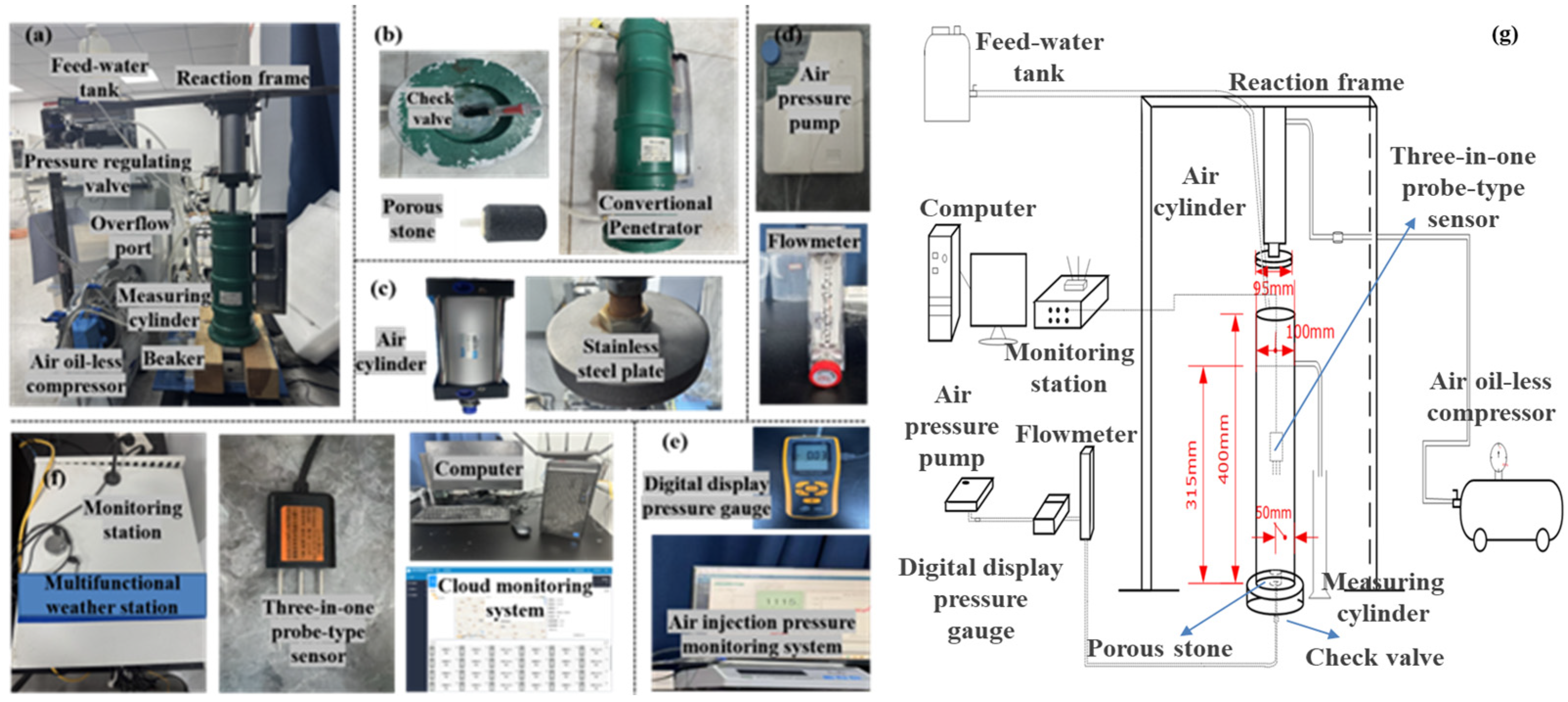
The actual situation of the whole test is shown in Figure 1a. The main test device is a modified conventional permeameter which was manufactured by Shangyu Exploration Instrument Factory, located in Shaoxing, China, as shown in Figure 1b. First, holes are drilled at the bottom of the permeameter. Secondly, we place the porous stone, which is used to refine the bubble size at the borehole of the permeameter, the porous stone was manufactured by Yingxike, located in Hefei, China; then, the porous stone is connected to a PU tube, and the other end of the PU tube is connected to a check valve to prevent water from flowing out through the PU tube in subsequent tests. Finally, the drilled holes are sealed to ensure air and water tightness. The diameter of the PU tube is 0.6 cm, and the porous stone has a diameter of 1 cm and a height of 2 cm. The inner diameter of the permeameter is 10 cm, and the height is 40 cm. The spacing between the piezometric tubes is 100 ± 0.44 mm, and the height of the overflow port is 31.5 cm. The porous stone is located at the centroid of the container bottom. The overflow port is always kept open, and a measuring cylinder is placed below the overflow port to collect the water displaced by the air during the air injection process. Due to the self-intake value of the porous stone, it will affect the subsequent measurement of injection pressure readings. Therefore, the self-intake value of the porous stone was determined by averaging the results from multiple experiments. Initially, the modified conventional permeameter was filled with water to a height of 31.5 cm, reaching the overflow port. Two comparative sets of experiments were conducted, each repeated three times. For the first set, conducted without the porous stone, the air pressure pump was activated, and the injection pressure was continuously adjusted until the flowmeter reading reached 5 mL/min. The corresponding pressure gauge readings recorded across the three repetitions were 3.21, 3.24, and 3.17 kPa. For the second set, which included the porous stone, the same procedure was followed, yielding recorded values of 6.19, 6.15, and 6.23 kPa. The average pressure for the first set was 3.21 kPa, while the average for the second set was 6.19 kPa. The difference between the two averages, 2.98 kPa, represents the self-intake value of the porous stone.
A small air pressure pump which was manufactured by HAILEA, located in Guangzhou, China is used to provide air pressure in the experiment, which is shown in Figure 1d. The air pressure output range of the air pressure pump is within 0–12 kPa, and its air flow output is stable. The inflation pressure required for different relative densities and different inflation flow rates can be achieved by adjusting the knob to ensure the successful injection of air for desaturation. The injection flow rate is measured by a flowmeter with a range of 0–60 mL/min. The air pressure pump and the flowmeter are connected by a PU tube. The value of the injection pressure is measured by a digital display pressure gauge with a range of ±35 kPa and an accuracy of ±0.01 kPa. The digital display pressure gauge, which is shown in Figure 1e, is connected to the computer via USB, and the inflation pressure monitoring system can record the whole-process data of pressure changes during the inflation process. The digital display pressure gauge is then connected to the flowmeter through a PU tube.
In the experiment, an air compressor which was manufactured by FengBao, located in Zhejiang, China was used to provide pressure for the soil sample, and the air cylinder, which is shown in Figure 1c, in combination with the reaction frame, provided different overburden pressures for the experiment, the air cylinder was manufactured by BLCH, located in leqing, China. This overburden pressure can prevent the soil structure from being damaged during the air injection process and simulate the influence of air injection at different effective stresses on the required air injection pressure. The working pressure of the air compressor ranges from 0 to 0.6 MPa, and the inner diameter of the air cylinder is 63 mm. The different magnitudes of the overburden pressure, P1, can be obtained through Equation (1):
F = S · P
Here, P1 represents the overburden pressure required in the experiment, S1 is the cross-sectional area of the specimen, and S2 is the cross-sectional area of the cylinder. In this experiment, P1 = 25, 50, 100 kPa, S1 = 78.5 cm2, and S2 = 31.16 cm2. The magnitude of the required cylinder, F1, is calculated by substituting P1 and S1 into Equation (1). Then, the calculated value of F1 is substituted into Equation (1) to inversely deduce the pressure value, P2, of the cylinder pressure regulating valve. By adjusting the value of the pressure-regulating valve to P2, overburden pressures of 25, 50, and 100 kPa, required in this experiment, are finally obtained.
Soil temperature, humidity, and resistivity were measured using a three-in-one probe-type sensor that was placed at the middle height of the soil sample, connected to a data logger, and combined with a computer-based and cloud-based monitoring system to record the changes in the saturation of the soil sample during the air injection process. These recorded values were then compared with the saturation calculated based on the drainage volume; all of these devices are shown in Figure 1f. A schematic diagram of the overall test instrument is shown in Figure 1g.
To explore the influence of sensors on the permeability coefficient of sand, a series of comparative tests of saturated permeability with and without sensors was carried out before the formal test. Three different types of sand samples were used, with each type subjected to two sets of comparative tests. In each test, the permeability coefficient was measured six times. For Fujian sand, the average permeability coefficients of the saturated sand measured without and with sensors were 4.87 × 10⁻² cm/s and 4.55 × 10⁻² cm/s, respectively; for calcareous sand, the corresponding values were 6.03 × 10⁻² cm/s and 5.84 × 10⁻² cm/s; for silica sand 7#, they were 2.98 × 10⁻³ cm/s and 2.75 × 10⁻³ cm/s. The results show that the error of the two methods is less than the experimental error of the constant head permeability test.

2.2. Materials

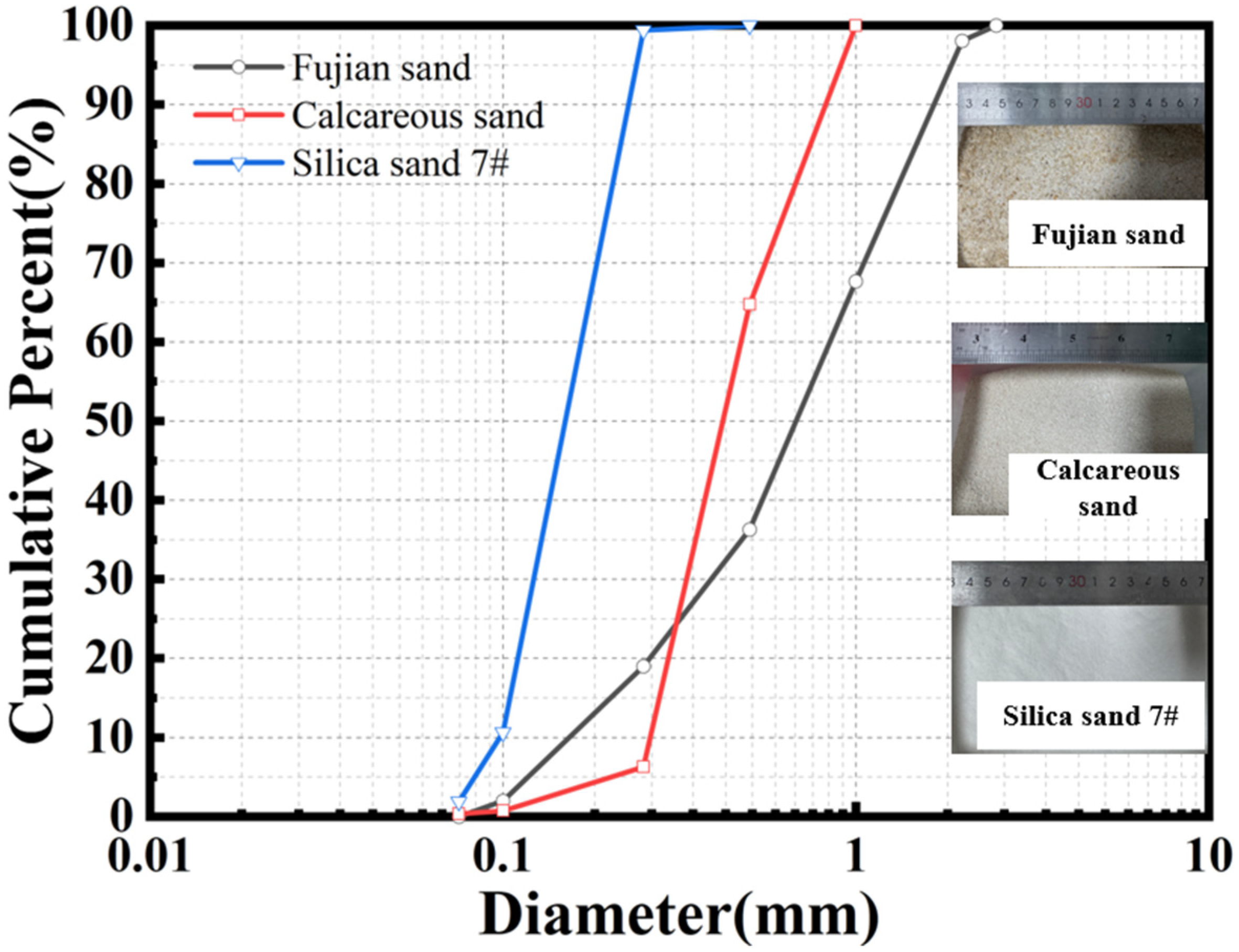
Fujian sand is used as the main research subject, while calcareous sand and silica sand 7# are added as supplementary experimental materials. A series of basic geotechnical tests was conducted following the Chinese Standard for Geotechnical Testing Methods (GB/T 50123-2019 [35]) to characterize the sand, including specific gravity, particle size analysis, and relative density tests. The particle size distribution curve is shown in Figure 2, and the measured physical properties are summarized in Table 1.

2.3. Sample Preparation and Test Conditions

The test sand samples are prepared by the sand raining method. Before sample preparation, the sand samples were dried, and deaired water was used to prepare the samples to obtain highly saturated specimens. Meanwhile, the samples were prepared in layers, with the height of each layer being approximately 2.5 cm to ensure the uniformity of sample preparation.
First, we add deaired water to the permeameter, and the height of the water surface is about 1 cm higher than the height of each layer of the sample. Then we use the funnel to load the sand sample into the cylinder and use the compaction hammer to compact the layer of the sample to the target height to obtain the sample with the corresponding relative density. We repeat the above steps until the sample preparation reaches 25 cm. After sample installation, overburden pressure is applied to the specimen through the air cylinder, and the specimen is left to stand for 24 h to complete saturation and consolidation.
Before the start of the air injection desaturation test, a permeability test is first conducted to obtain the permeability coefficient of the sand in a saturated condition. Subsequently, the air injection desaturation test is carried out. The air injection desaturation test lasts for 60 min, and air is injected into the specimens at different air injection flow rates. The successful injection of air into the saturated sand results in the gradual drainage of pore water, as the air displaces the water that originally occupied the pore spaces. The water drainage volume, Vw, during the test was recorded. As a result, the water phase saturation, Sw1, of the soil can be calculated based on the drainage volume, Vw, collected by the measuring cylinder. The calculated water phase saturation, Sw1, can be compared with and mutually verified against the water phase saturation, Sw2, converted from the humidity collected by the sensor. After the air injection test is completed, the permeability test is conducted again to obtain the permeability coefficient of the desaturated sand and the influence of permeability on the saturation of the sand.
This study investigated the influence of different working conditions on the saturation and corresponding permeability coefficient of sandy soil and measured the impact of different overburden pressure values (i.e., different effective stresses) on air injection pressure. The specific test conditions are presented in Table 2, with a total of 44 groups.

3. Experimental Results and Analysis

Based on the results of tests under different working conditions, the water phase saturation was obtained by two different methods. The summarized results are shown in the error bar chart of the water phase saturation values, Sw1 and Sw2, for Fujian sand, calcareous sand, and silica sand 7#—Dr = 50% and P = 100 kPa
An error bar chart of the water phase saturation, Sw1, calculated from the drainage volume and the water phase saturation, Sw2, converted from the humidity collected by the sensor for sand under different air injection flow rates and relative densities (Dr = 50%; overburden pressure, P = 100 kPa) is shown in Figure 3. It can be seen that the error between the Sw1 and Sw2 is small; the coefficient of variation is less than 2% for all cases, which indirectly proves that the data calculated from the drainage volume is reliable.
As shown in Table 3, when the relative density is 30%, 50%, and 70%, the saturation of sandy soil changes slightly with an increase in overburden pressure. These slight changes are within the range of test errors. Therefore, when other conditions are the same, the change in overburden pressure will have little impact on the air injection method.

3.1. Effect of Air Injection Flow Rate on Degree of Saturation

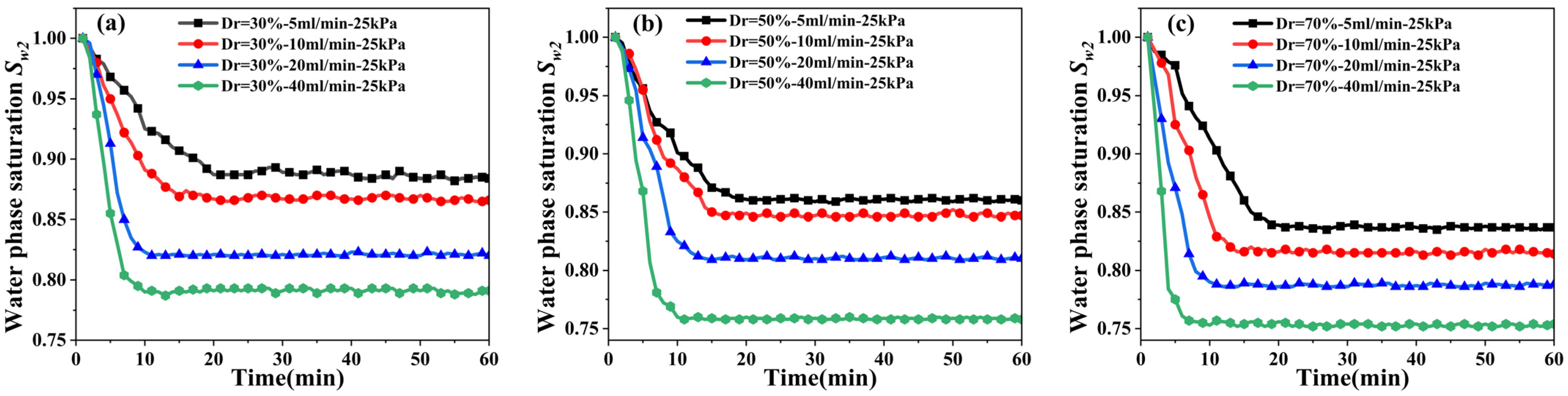
Figure 4 shows time history diagrams of the degree of saturation varying with the air injection time recorded by sensors for Fujian sand with different relative densities under different air injection flow rates. It can be seen that under the same conditions, the saturation degree decreases as the air injection flow rate increases.
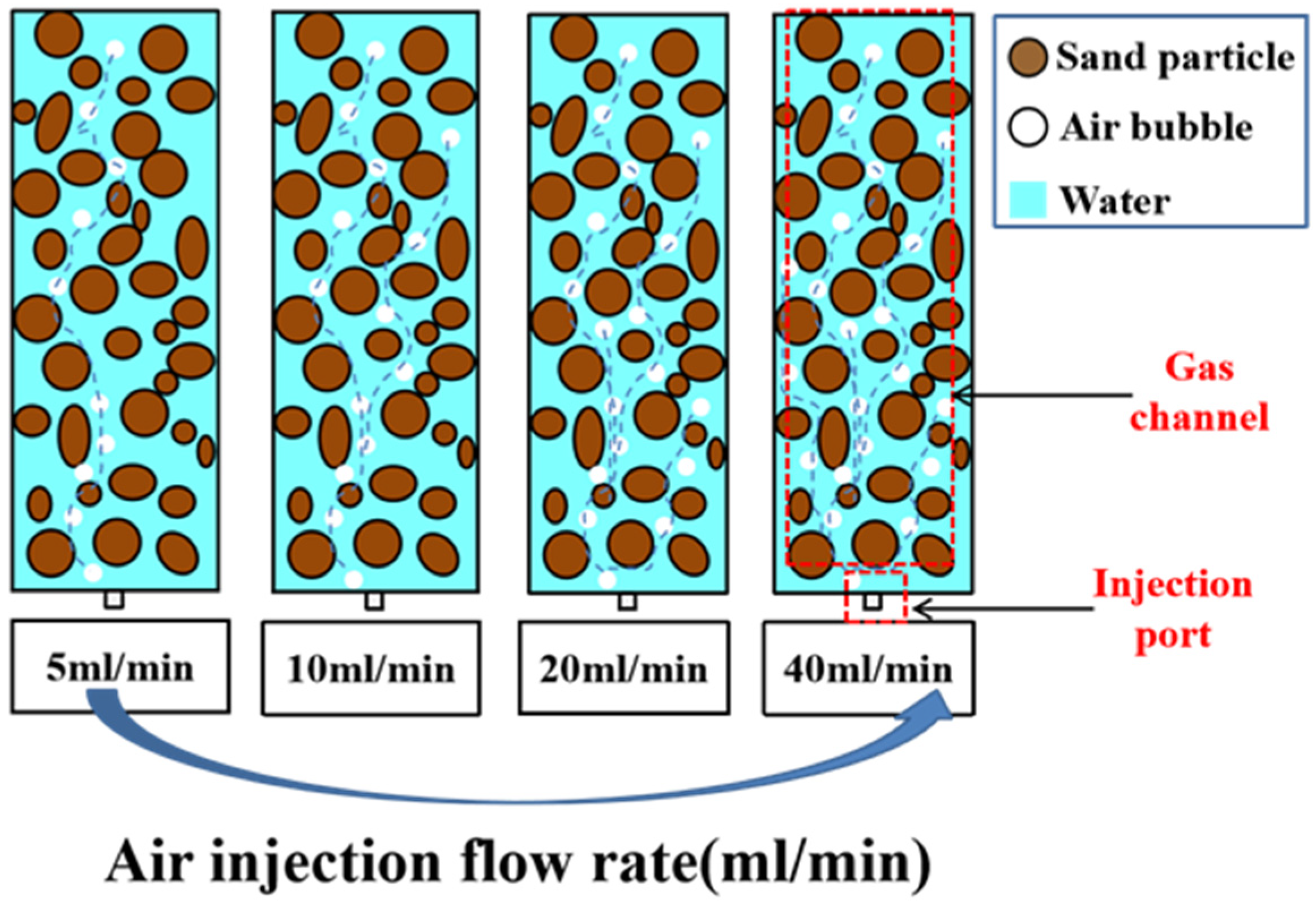
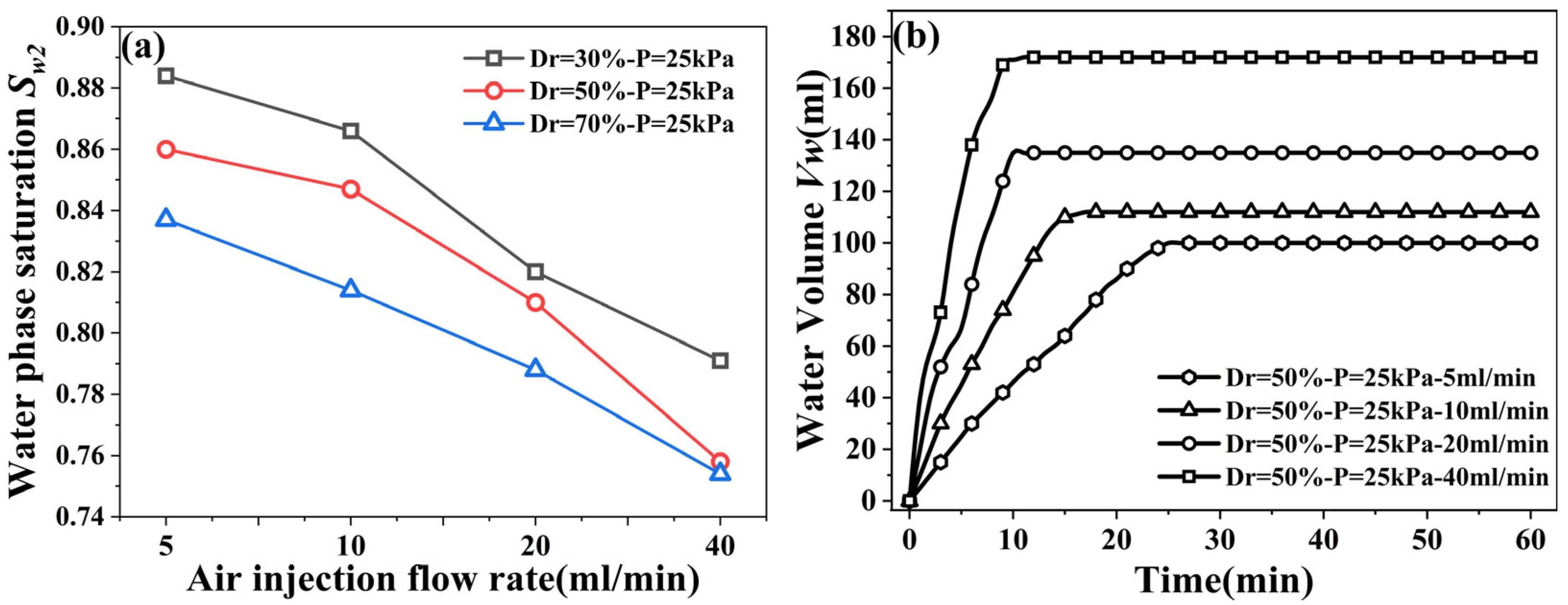
The final water phase saturation versus air injection rate for sandy soils of various densities at an overburden pressure of 25 kPa is plotted in Figure 5a; it can be seen that the lowest saturation of the sand after stabilization is negatively correlated with the air injection flow rate, which is consistent with previous studies [25,36,37]. This is because an increase in the air injection flow rate can increase the density of the air flow channels; expand the influence range of the air, resulting in more water drainage; and lower the saturation of the water phase. A time history diagram of the water drainage, varying with time for sand with a density of 50% and an overburden pressure of 25 kPa under different air injection flow rates, is shown in Figure 5b. Water drainage values corresponding to air injection flow rates of 5, 10, 20, and 40 mL/min are 100, 112, 135, and 172 mL, respectively. Moreover, the larger the air injection flow rate, the shorter the time for the water drainage to reach stability, and the faster the saturation of the sand decreases. Figure 6 is a microscopic schematic diagram of the air influence range under different air injection flow rates. Increasing the air injection flow rate expands the gas influence area and creates more gas channels. Meanwhile, the requirement for a higher air flow rate inherently produces a higher injection pressure to overcome the inherent resistance within the soil matrix. The higher pressure pushes the air into tiny pore spaces that it normally cannot enter with lower air injection pressure. Consequently, the air is forced to propagate from the primary pore channels into the finer, secondary pore networks, including narrower throats and semi-blocked pores that were previously inaccessible under lower pressure conditions. This process enhances the overall efficiency of the air injection within the soil’s complex pore structure. Finally, a greater volume of water is displaced by the gas, leading to reduced saturation of the sandy soil.

3.2. Effect of Relative Density on Degree of Saturation

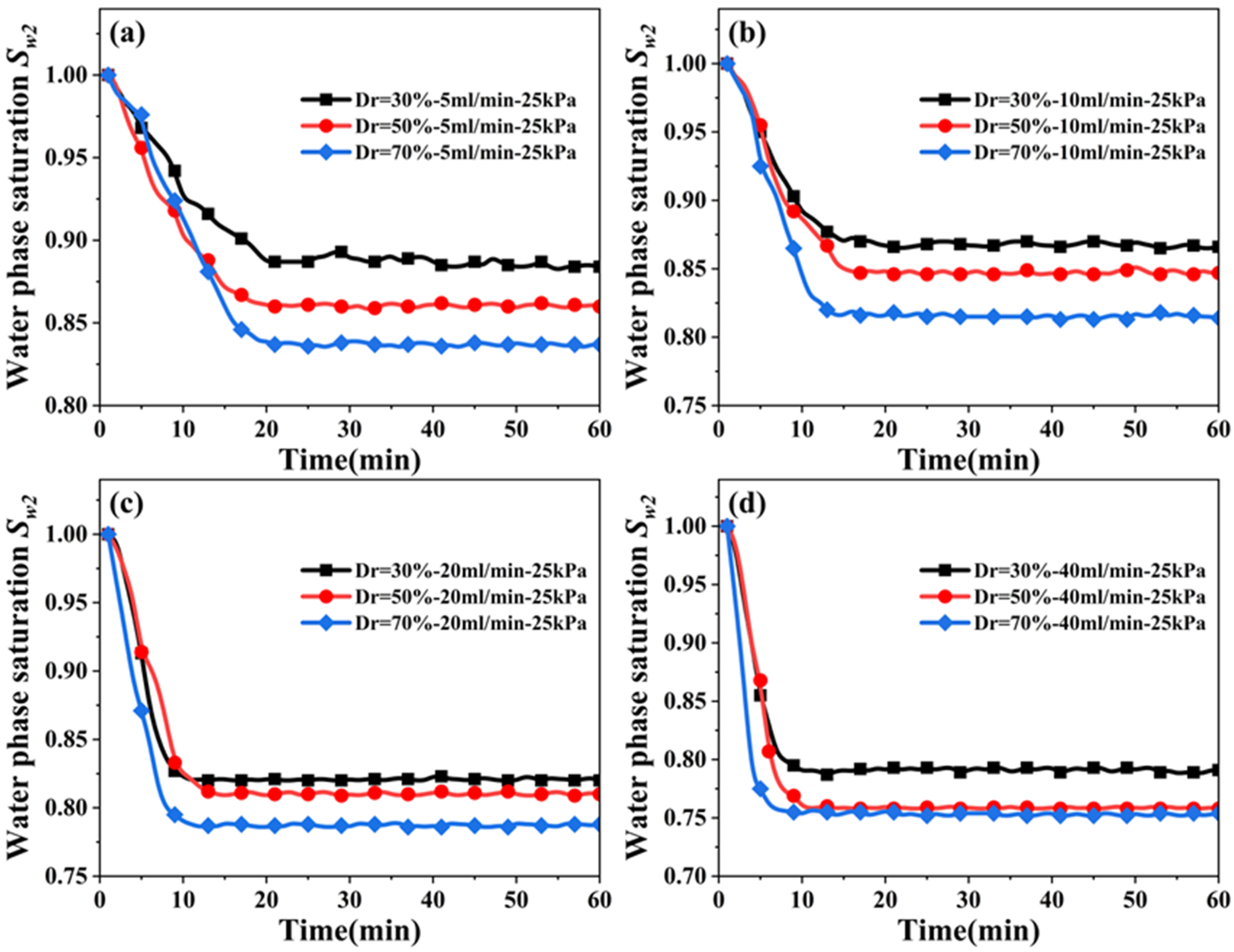
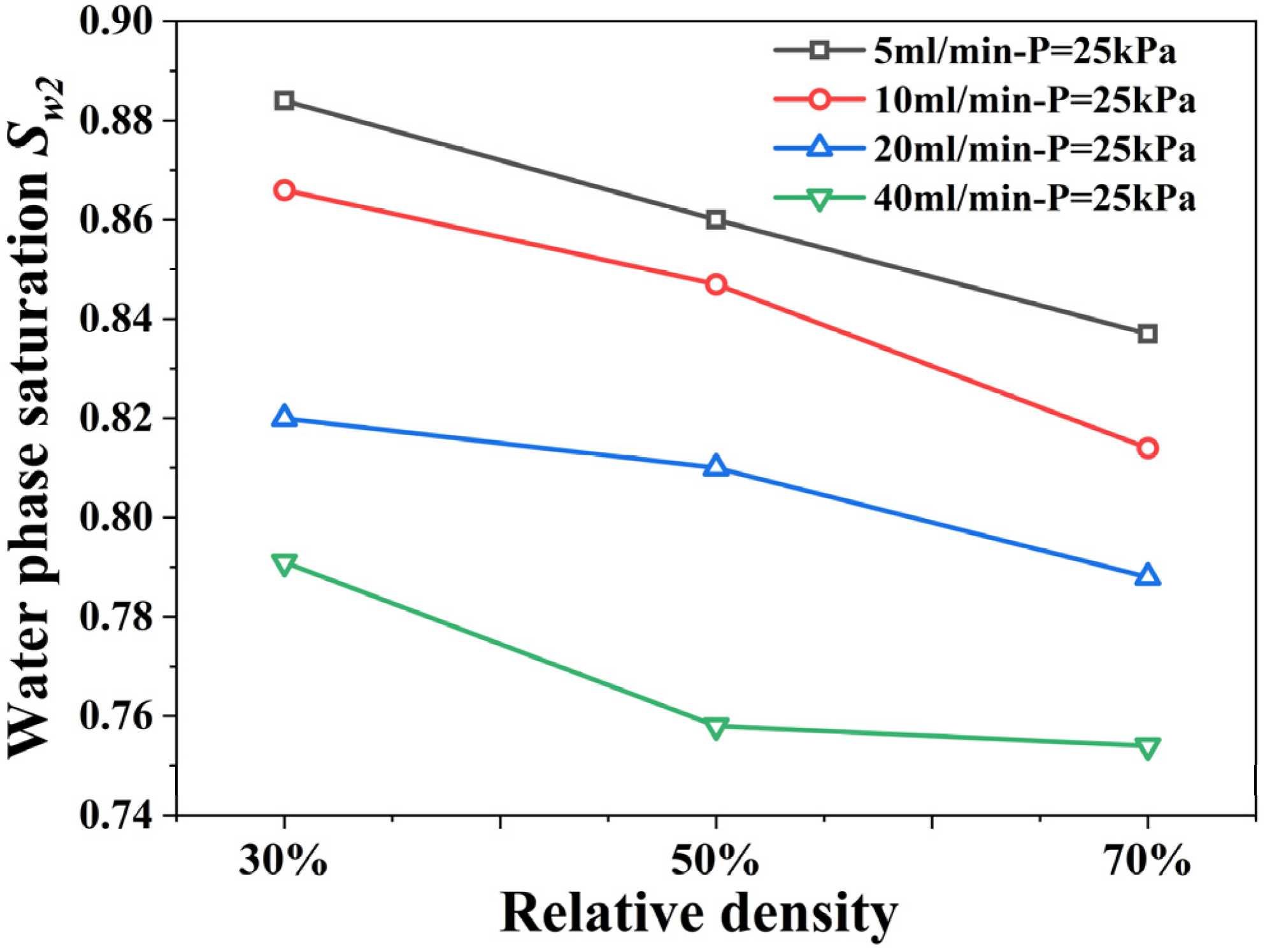
Air injection tests were conducted on sand with different relative densities to investigate the influence of relative density on the desaturation effect of sand. Figure 7 illustrates the variation in the degree of saturation with air injection time for Fujian sand at different relative densities, under constant overburden pressure and injection flow rate. The results indicate that higher relative density yields a lower achievable saturation degree, demonstrating a more effective desaturation process.
As can be seen from Figure 8, the lowest saturation of sand after stabilization is negatively correlated with the relative density of air injection. According to Sarajpoor [38] and Chen [23], this situation may occur because, as the relative density of sand increases, fine particles fill the pores between coarse particles, resulting in a decrease in the connectivity of the sand pore structure, a sharp increase in partial resistance inside the sand, and an increase in non-connected areas. At this time, the fluid will preferentially flow in the low-resistance areas and spread laterally, and it will stay and accumulate in the low-resistance areas. Therefore, the increase in non-connected areas and the increase in fluid flow resistance caused by the increase in relative density are helpful in improving the air injection desaturation effect.

3.3. Influence of Degree of Saturation on Permeability Coefficient

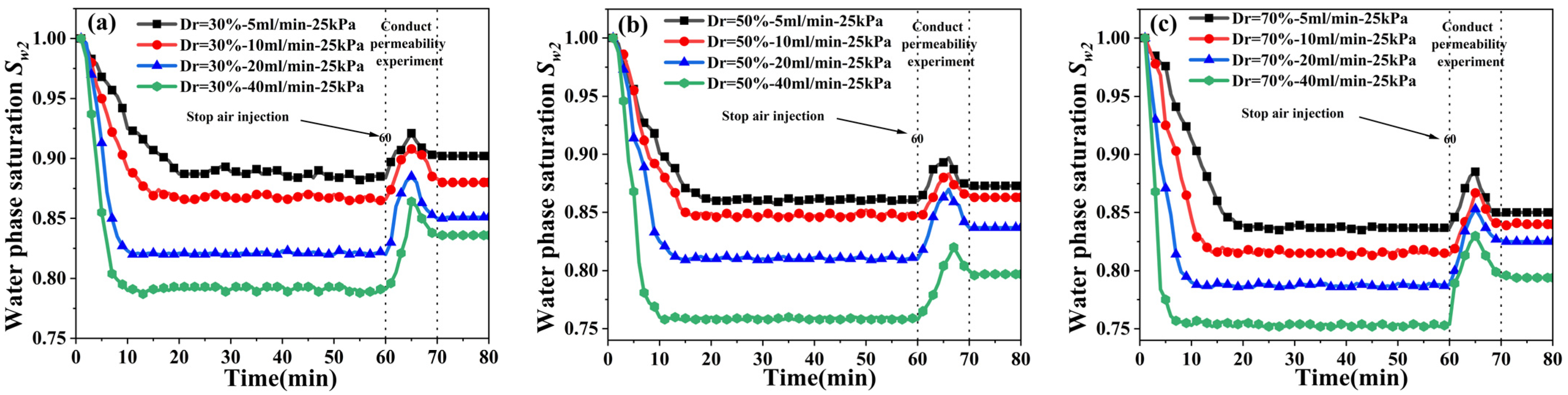
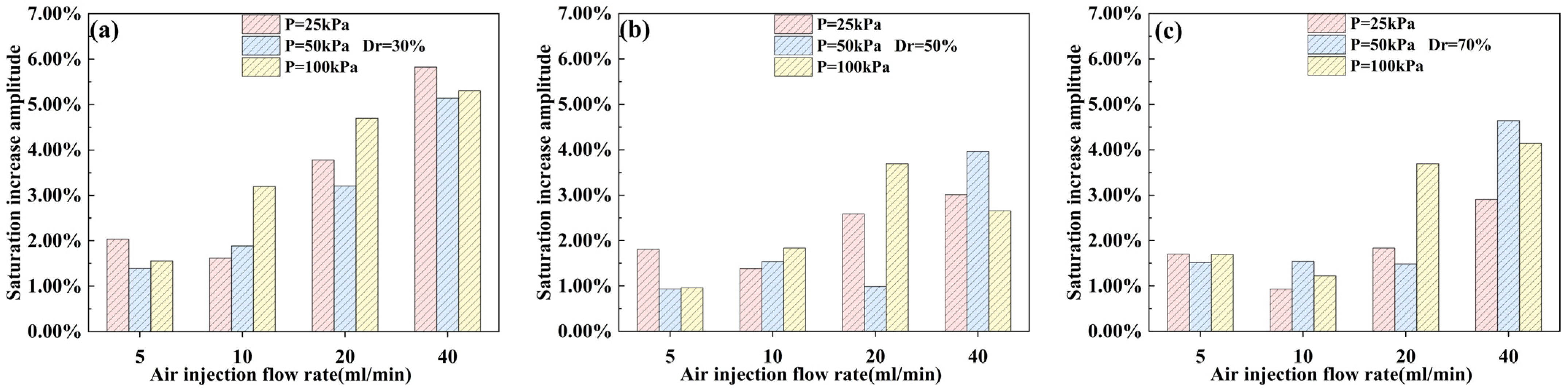
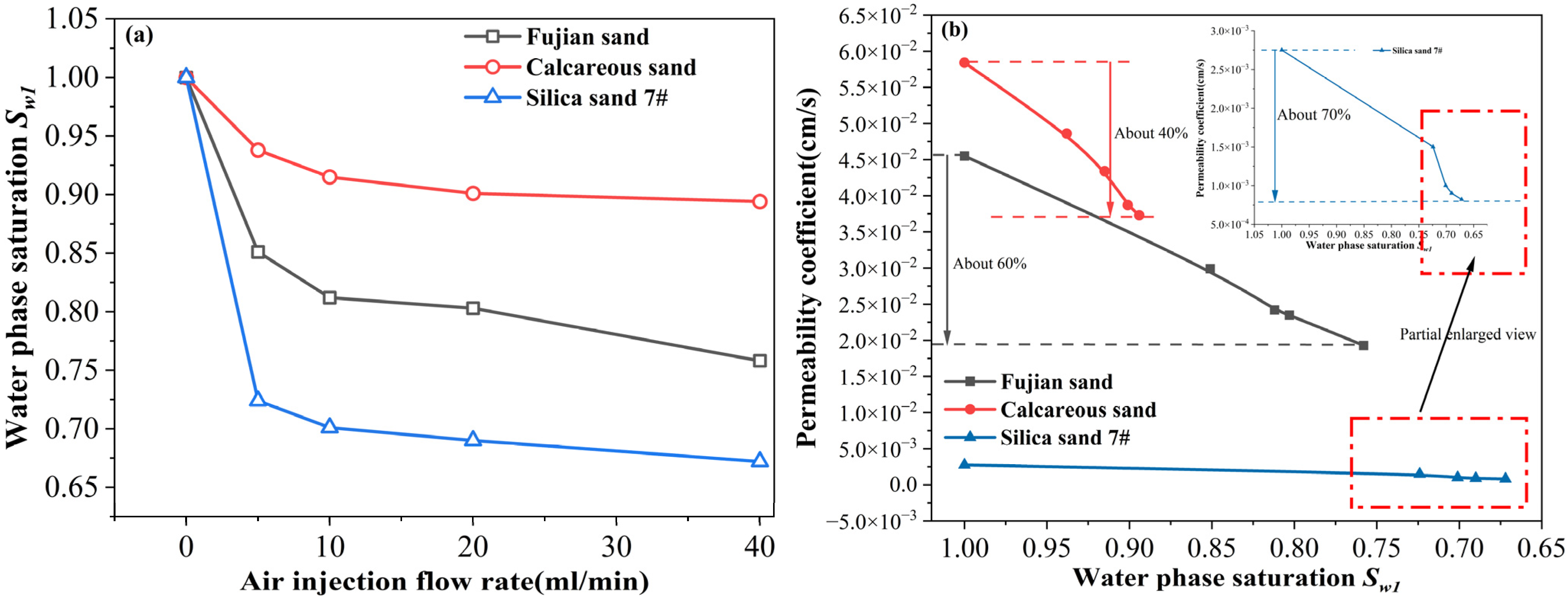
To investigate the influence of air injection for desaturation on the permeability coefficient of sand, a permeability test was conducted after the air injection desaturation test. Figure 9 shows a time history diagram of the saturation change in Fujian sand during the air injection desaturation process and the subsequent permeability test after the air injection stopped. It can be seen that during the permeability test, the saturation of sand increases to a certain extent and reaches a peak. When the permeability test ends, the saturation of sand decreases to a certain extent and finally remains stable. Figure 10 is a comparison diagram of the increase in saturation before and after the permeability test. The saturation of the sand slightly increases after the permeability test. This may be because during the permeation process, part of the water displaces some of the bubbles and re-occupies the pores previously occupied by the bubbles, resulting in a certain increase in the saturation of sand. However, the increased amplitude is not large, with the maximum amplitude not exceeding 6%.
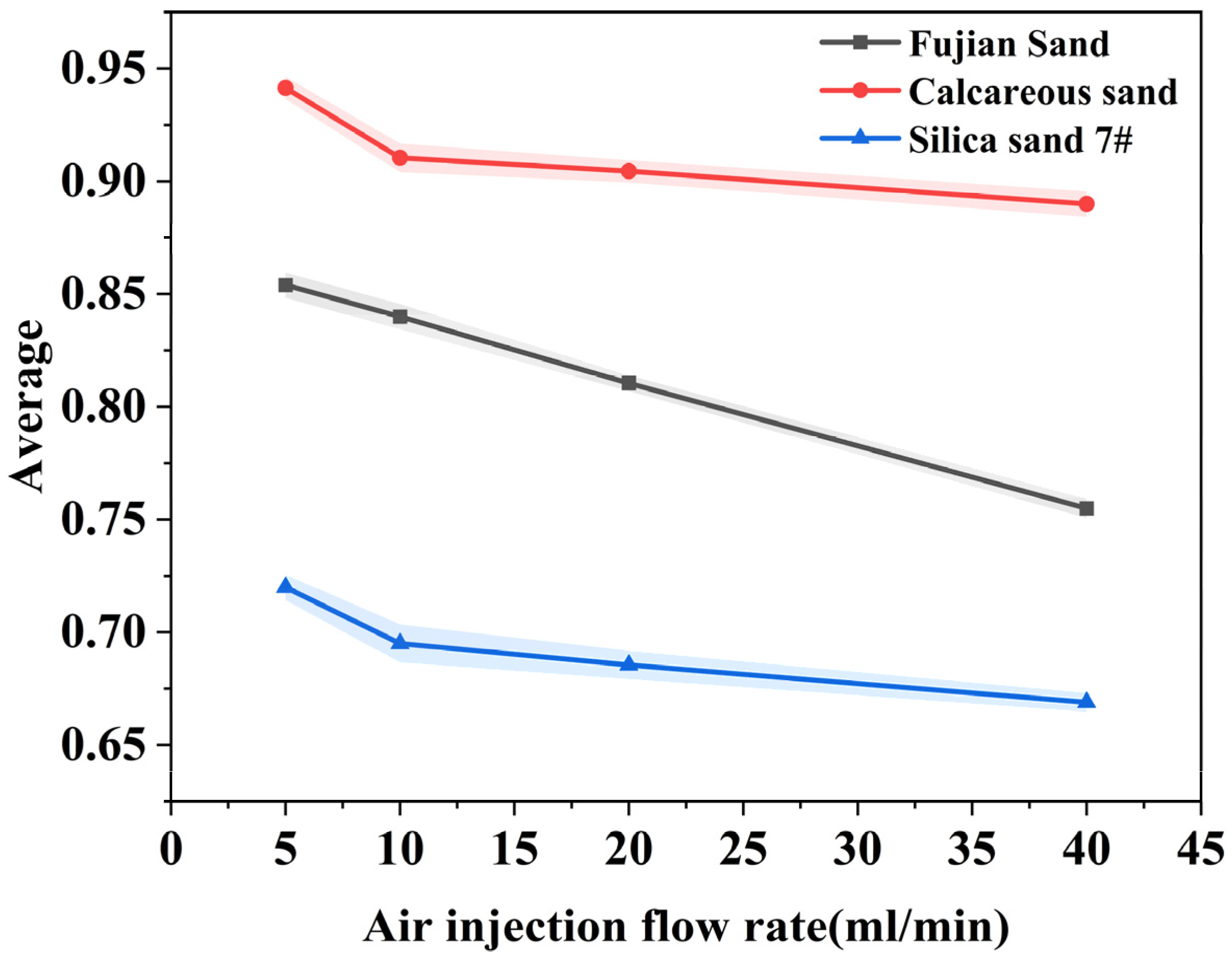
Figure 11 shows the changes in degree of saturation for the different sands during air injection and the subsequent permeability test. It can be observed that as the air injection flow rate increases, the saturation of the sandy soil continuously decreases, and the corresponding permeability also continuously decreases. This may be attributed to the combined effects of air entrapment dynamics and phase connectivity changes [39,40,41]. As saturation decreases, the reduction in the actual cross-section for water flow is exacerbated by the formation of trapped gas bubbles that block pore throats. Furthermore, the evolution of dynamic capillary pressure [42] during injection alters the interfacial tension forces, fragmenting the liquid phase into disconnected clusters and significantly increasing seepage resistance, ultimately resulting in a decrease in permeability. Taking a relative density of 50% and an overburden pressure of 100 kPa as an example, when the saturation values of the Fujian sand are 1, 0.851, 0.812, 0.803, and 0.758, the corresponding permeability coefficients are 0.0455, 0.0299, 0.0242, 0.0235, and 0.0193 cm/s, respectively. The permeability of the sandy soil is positively correlated with its degree of saturation; i.e., the lower the saturation of the sandy soil, the lower the permeability. Compared with the permeability of the Fujian sand without air injection, the maximum reduction in the permeability of the sandy soil after air injection desaturation is approximately 60%. Under different overburden pressure values, the saturated permeability of the Fujian sand is slightly different. For instance, at a relative density of 30%, the saturated permeability values corresponding to 25, 50, and 100 kPa are 0.0730, 0.0683, and 0.0680 cm/s, respectively; the coefficient of variation (CV) among the three is 4.02%. The errors are small and can be ignored, which also proves, indirectly, that the overburden pressure has almost no effect on the relative density of the sandy soil, and there is no need to consider the influence of the overburden pressure on the permeability of the desaturated sandy soil.
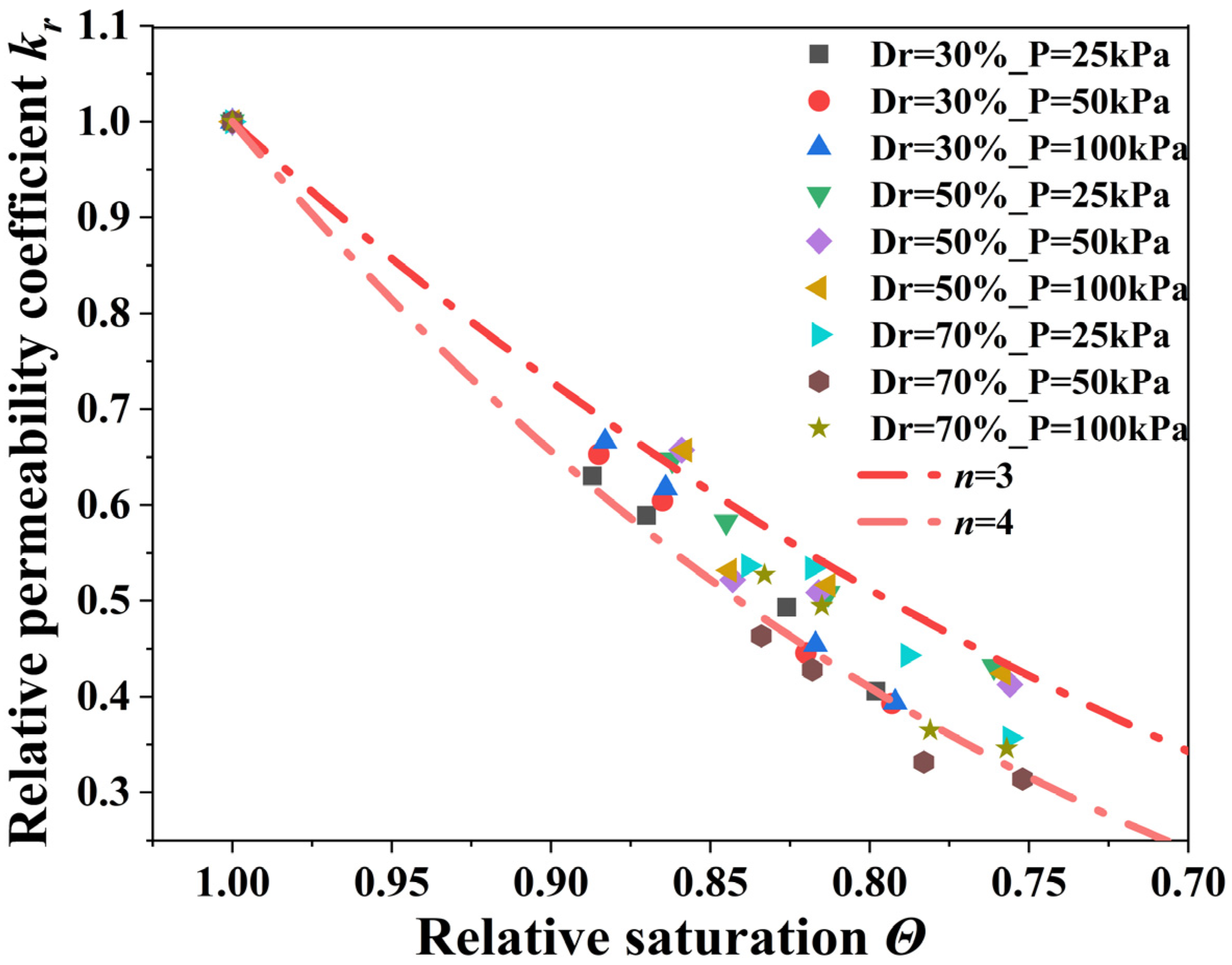
Figure 12 shows the relationship between the relative permeability coefficient and relative saturation under different working conditions. In 2006, Fredlund [43] proposed a general model for the relationship between the permeability coefficient and water content of unsaturated sand:
k r = k k s
  Θ = θ θ r θ s θ r , k r = Θ n                              
where k r is the relative permeability coefficient, which is the ratio of the unsaturated permeability coefficient, k, to the saturated permeability coefficient, k s . In addition,   n is the fitting parameter, and its value is generally between 3 [44] and 4 [45].   θ r is the residual volumetric water content, and Θ is the relative saturation. Under conditions considered “completely dry,” a trace amount of adsorbed water remains within the minute pores between sand grains and on particle surfaces due to capillary forces. Neglecting this residual water may lead to unrealistic negative values or distortions in model fittings, particularly in the low-saturation region [46,47]. According to the literature [48,49,50,51], the residual volumetric water content for sandy soils typically ranges from 1% to 5%.In this study, it is assumed that the residual volumetric water content of Fujian sand is 3%. It can be seen from Figure 12 that the data points of the relative permeability coefficient, k r , corresponding to the saturation obtained under different working conditions are basically distributed around the two curves of n = 3 and n = 4, which indicates that the permeability coefficient of sand after air injection and desaturation measured by the modified constant-head permeameter is reliable.

4. Influence of Overburden Pressure on Air Injection Pressure

To investigate the influence of different overburden pressures on the air injection pressure, different overburden pressures were applied through a cylinder to simulate air injection into soil at different depths. The effective stress of the sandy soil was changed to explore its influence on the air injection pressure. A digital pressure gauge was used to record the whole process of the change in air injection pressure with time during the experiment.
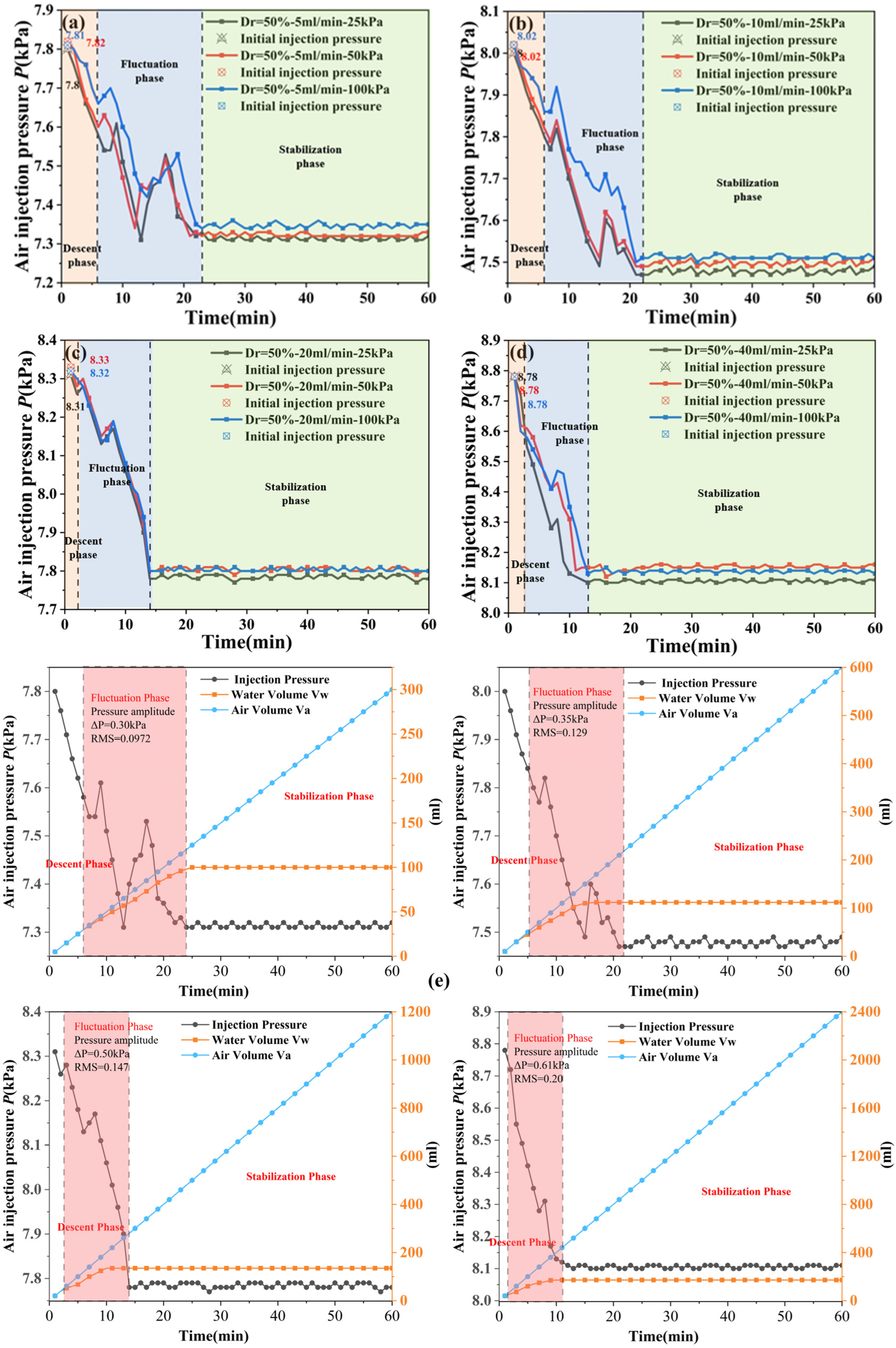
Figure 13 shows the curve of the air injection pressure changing with the air injection time for Fujian sand with a relative density of 50% under different overburden pressures. It can be seen that the air injection pressure first gradually decreases, then rebounds to a certain extent, shows a fluctuating trend within a certain stage, and remains stable in the final stage. This is consistent with the findings of Chen et al. [23] and Long et al. [52]. This situation is related to the migration process of the injected air.
Figure 13e shows the curves of gas injection pressure, drainage volume, and gas injection volume versus time under different air injection flow rates. Analysis was conducted for the test condition with a relative density of 50%, an overburden pressure of 25 kPa, and an air injection flow rate of 5 mL/min. Under this test condition, the standard deviation of the pressure fluctuations is 0.0972 kPa, with a maximum fluctuation amplitude of 0.3 kPa. It can be seen that when gas first enters the soil, it preferentially migrates through pathways with lower resistance, moving upward continuously while the gas pressure declines. During the descent stage, the drainage volume corresponds directly to the volume of gas injected. As the gas migrates further and begins to overflow from the soil surface, a portion of the injected gas may intrude into new pore spaces with higher resistance, forming additional drainage and venting pathways, which leads to pressure fluctuations. The brief pressure rise during this process corresponds to the gas front encountering narrower “pore throats,” requiring the accumulation of higher capillary pressure to advance. The magnitude of this pressure increase directly reflects the incremental capillary resistance imposed by such throats. The subsequent rapid pressure drop indicates that the throat has been breached, allowing the gas to successfully invade new pore spaces. In the fluctuation phase, the drainage volume is less than the gas injection volume, as some of the injected gas escapes through pre-existing low-resistance pathways without displacing water—only the gas that intrudes into new, higher-resistance pore spaces contributes to water displacement. Finally, the injected gas no longer occupies new pores within the soil sample but instead escapes through established pathways in the form of continuous air flow. The gas migration pattern reaches a steady state, and the gas pressure stabilizes accordingly. During this final stage, no further drainage occurs.
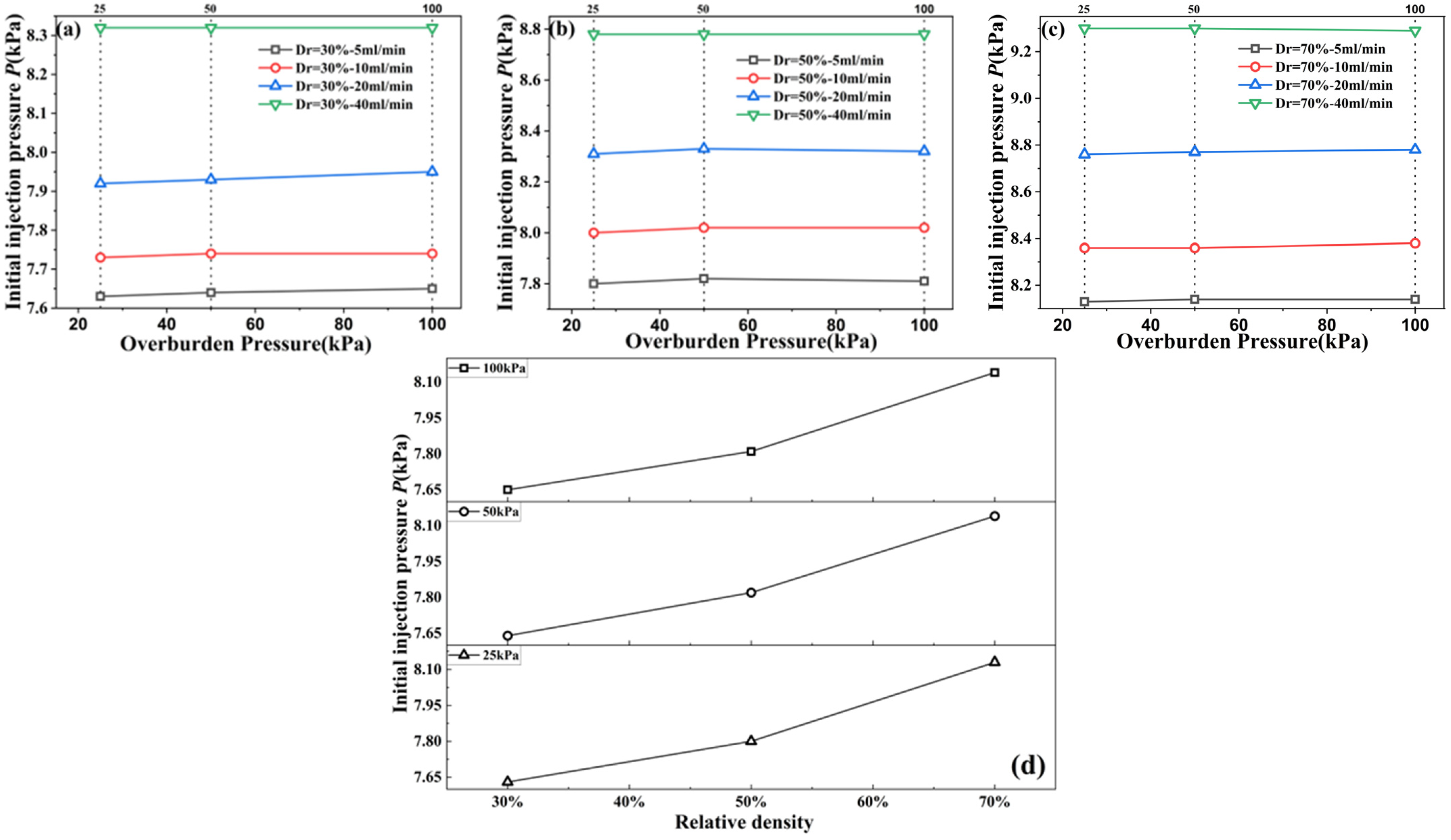
The initial air injection pressures corresponding to each working condition were sorted out based on the data recorded by the digital pressure gauge. Figure 14a–c are summary diagrams of the air injection pressures of sand under different overburden pressures and different air injection flow rates. It can be concluded that changing the overburden pressure has little or negligible effect on the air injection pressure of sand, and the air injection pressure basically remains unchanged. Taking the working condition with a relative density of 30% and an air injection flow rate of 5 mL/min as an example, in the experiment, after excluding the self-intake value of the porous stone (about 2.98 kPa, which was calculated by taking the average of multiple pre-experiments; here, 3 kPa is adopted), the actual air injection pressures of sand under different overburden pressure values were 4.63, 4.64, and 4.65 kPa. According to the theory of air injection desaturation [37], there is a breakthrough pressure, Pmin, in the soil. The breakthrough pressure is composed of the hydrostatic pressure, u, and the capillary resistance, Pcr. The hydrostatic pressure is only related to the height of water, and the capillary resistance is related to the pore structure of sand. According to the previous literature [24], the capillary resistance of sand is about 2 kPa; therefore, the capillary resistance of sand is assumed to be 2 kPa. The initial air injection pressure needs to be greater than the breakthrough pressure to successfully inject air into the soil. In this study, the water height was maintained at 31.5 cm, and its hydrostatic pressure, u, was about 3.09 kPa. As can be seen from Section 3.3, the influence of different overburden pressures on the relative density of sand can be ignored. Therefore, it is assumed that the pore structure of the soil does not change under different overburden pressures. The difference in the actual air injection pressure of sand after excluding the self-intake value of the porous stone is very small, and the overburden pressure has no effect on the initial air injection pressure of sand.
Figure 14d shows the initial air injection pressure values of sand corresponding to different relative densities when other conditions are the same, and the air injection flow rate is 5 mL/min. It can be seen that as the relative density increases, the initial air injection pressure also increases. This is because an increase in relative density leads to changes in the pore structure of sand. Fine particles fill the pores between coarse particles, resulting in more non-connected areas inside the soil and an increase in capillary resistance. To achieve the same air injection flow rate, the corresponding initial air injection pressure should also increase. Therefore, excluding the influence of different air injection flow rates, the initial air injection pressure of sand is mainly controlled by the hydrostatic pressure, u, and affected by the pore structure.

5. Conclusions

In this work, we conduct air injection tests and permeability tests using a modified conventional permeameter. The desirable new findings and summarized conclusions of this paper are as follows:
(1) Under the same relative density and overburden pressure, the desaturation of sand is negatively correlated with the air injection flow rate. Under the same air injection flow rate and overburden pressure, the desaturation of sand is positively correlated with the relative density. Increasing the relative density of sand and the air injection flow rate helps to improve the desaturation effect: Dr = 70%; overburden pressure, P = 25 kPa. An increase in the air injection rate from 5 mL/min to 40 mL/min results in a decrease in soil saturation from 0.85 to approximately 0.75. The air injection rate is 5 mL/min, and overburden pressure, P, is 25 kPa; an increase in the relative density from 30% to 70% results in a decrease in soil saturation from 0.89 to approximately 0.84.
(2) The permeability coefficient of sandy soil is positively correlated with its saturation degree. The lower the saturation degree of sandy soil, the lower its corresponding permeability coefficient. Taking the relative density of 30% as an example, compared with the permeability coefficient of non-air-injected Fujian sand, the maximum reduction in the permeability coefficient of air-injected and desaturated sandy soil is approximately 60%. Meanwhile, during the permeability test of sandy soil after air injection, the saturation degree will increase to a certain extent, but the maximum increase does not exceed 6%, which proves that the desaturation method by air injection has good stability.
(3) The desaturation effect of the air injection method varies for different types of sandy soils. Taking sand samples with a relative density of 50% and an overburden pressure of 100 kPa as an example, the air injection method achieves the best desaturation effect on silica sand 7# in this study, reducing its permeability coefficient by approximately 70%. However, its effectiveness on calcareous sand is less satisfactory, with the saturation level being reduced to around 40% at most.
(4) The magnitude of the initial air injection pressure solely depends on the hydrostatic pressure and the pore structure conditions of the soil itself. The overburden pressure (effective stress) has essentially no impact on the initial air injection pressure. The variation trend of the air injection pressure is related to the migration process of the injected air, and the trend generally shows three stages: decline, fluctuation, and stability.
(5) In this study, within an air injection flow rate range of 0 to 40 mL/min, the optimal air injection flow rate is 40 mL/min. Selecting a larger air injection flow rate is more conducive to obtaining the best desaturation effect and a lower permeability coefficient, which is beneficial for enhancing the seepage resistance effect of sandy soil.
However, the following are the shortcomings in this work. Due to limitations in the test devices, the sample height is only 25 cm, which is insufficient for studying gas migration patterns and may potentially lead to boundary effects. Moreover, in studying the pressure changes induced by gas migration, there is a lack of visual evidence. The future research should systematically investigate boundary effects through experiments with a series of sufficiently tall columns or via numerical simulations. These experiments would be ideally complemented by transparent soil models to provide visual evidence. The assumption of zero residual volumetric water content may introduce extrapolation uncertainty when predicting hydraulic behavior at low saturation levels near the residual state.

Author Contributions

M.Z.: methodology, visualization, and writing—original draft. Y.C.: conceptualization, methodology, writing—review and editing, project administration, and funding acquisition. C.Q.: conceptualization, formal analysis, and supervision. S.S.: conceptualization, formal analysis, and supervision. Q.W.: data curation, investigation, and visualization. All authors have read and agreed to the published version of the manuscript.

Funding

This research was funded by the National Natural Science Foundation of China (Grant No. 52179101).

Data Availability Statement

The data used and/or analyzed during the current study are available from the corresponding author upon reasonable request.

Conflicts of Interest

The authors declare no conflicts of interest.

References

  1. Fipps, G.; Skaggs, R.W.; Nieber, J.L. Drains as a Boundary Condition in Finite Elements. Water Resour. Res. 1986, 22, 1613–1621. [Google Scholar] [CrossRef]
  2. Leshchinsky, D.; Yu, H.S.; Salgado, R. Limit Analysis versus Limit Equilibrium for Slope Stability. J. Geotech. Geoenviron. Eng. 1998, 125, 914–918. [Google Scholar] [CrossRef]
  3. Alsubal, S.; Sapari, N.B.; Harahap, I.S. Numerical Simulation of Groundwater Rising Due to Rainfall at Far Field in Triggering Landslide. Int. J. Adv. Appl. Sci. 2018, 5, 76–86. [Google Scholar] [CrossRef]
  4. Yokoyama, K.; Egusa, T.; Ikka, T.; Yamashita, H.; Imaizumi, F. Effects of Shallow Groundwater on Deep Groundwater Dynamics in a Slow-Moving Landslide Site. Int. J. Eros. Control Eng. 2023, 16, 1–12. [Google Scholar] [CrossRef]
  5. Corominas, J.; Moya, J.; Ledesma, A.; Lloret, A.; Gili, J.A. Prediction of Ground Displacements and Velocities from Groundwater Level Changes at the Vallcebre Landslide (Eastern Pyrenees, Spain). Landslides 2005, 2, 83–96. [Google Scholar] [CrossRef]
  6. Zhou, C.; Yin, K.; Cao, Y.; Intrieri, E.; Ahmed, B.; Catani, F. Displacement Prediction of Step-like Landslide by Applying a Novel Kernel Extreme Learning Machine Method. Landslides 2018, 15, 2211–2225. [Google Scholar] [CrossRef]
  7. Liu, Y.; Qiu, H.; Yang, D.; Liu, Z.; Ma, S.; Pei, Y.; Zhang, J.; Tang, B. Deformation Responses of Landslides to Seasonal Rainfall Based on InSAR and Wavelet Analysis. Landslides 2022, 19, 199–210. [Google Scholar] [CrossRef]
  8. Berti, M.; Simoni, A. Groundwater and Ground Displacement Monitoring in the Source Area of the Montecchi Earthflow (Northern Apennines, Italy). Riv. Ital. Geotec. 2016, 50, 9–20. [Google Scholar]
  9. Zheng, G.; Li, Q.H.; Cheng, X.S.; Ha, D.; Shi, J.C.; Shi, X.R.; Lei, Y.W. Diaphragm Wall Deformation and Ground Settlement Caused by Dewatering before Excavation in Strata with Leaky Aquifers. Géotechnique 2024, 74, 1–17. [Google Scholar] [CrossRef]
  10. Kim, M.H.; Song, C.M. Prediction of the Soil Permeability Coefficient of Reservoirs Using a Deep Neural Network Based on a Dendrite Concept. Processes 2023, 11, 661. [Google Scholar] [CrossRef]
  11. Cho, S.E.; Lee, S.R. Instability of Unsaturated Soil Slopes Due to Infiltration. Comput. Geotech. 2001, 28, 185–208. [Google Scholar] [CrossRef]
  12. Rahardjo, H.; Santoso, V.A.; Leong, E.C.; Ng, Y.S.; Hua, C.J. Performance of Horizontal Drains in Residual Soil Slopes. Soils Found. 2011, 51, 437–447. [Google Scholar] [CrossRef]
  13. Rowe, R.K.; Sangam, H.P. Durability of HDPE Geomembranes. Geotext. Geomembr. 2002, 20, 77–95. [Google Scholar] [CrossRef]
  14. Wdowska, M.; Lipiński, M.; Nasiłowski, K.; Osiński, P. Shear Strength and Seepage Control of Soil Samples Used for Vertical Barrier Construction—A Comparative Study. Appl. Sci. 2025, 15, 9413. [Google Scholar] [CrossRef]
  15. Azizi, S.; Salmasi, F.; Abbaspour, A.; Arvanaghi, H. Weep Hole and Cut-off Effect in Decreasing of Uplift Pressure (Case Study: Yusefkand Mahabad Diversion Dam). J. Civ. Eng. Urban. 2012, 2, 97–101. [Google Scholar]
  16. Yu, X.; Kong, X.J.; Zou, D.G.; Zhou, Y.; Hu, Z.Q. Linear Elastic and Plastic-Damage Analyses of a Concrete Cut-off Wall Constructed in Deep Overburden. Comput. Geotech. 2015, 69, 462–473. [Google Scholar] [CrossRef]
  17. Qiu, T.; Zhang, J.Q.; Chen, X.S.; Xu, Z.Y.; Su, D.; Song, R.; Cui, T. Experimental Investigation and Mechanical Model for Assembled Joints of Prefabricated Two-Wall-in-One Diaphragm Walls. Eng. Struct. 2023, 275, 115285. [Google Scholar] [CrossRef]
  18. Zhu, W.; Long, Z.; He, L.; Ye, S.; Mao, Y. Hydro-Physical Properties and Durability Study of Cement Slurry Material Based on Loess. Sci. Rep. 2025, 15, 13198. [Google Scholar] [CrossRef] [PubMed]
  19. Xu, D.; Mermoud, A. Comparison of Models for Predicting Hydraulic Conductivity Functions from Soil Retention Data. J. Soil Water Conserv. 2001, 125–129. [Google Scholar] [CrossRef]
  20. Ye, W.M.; Wang, C.S.; Wang, Q.; Chen, B. Laboratory Tests on the Characteristics of Air-Permeation in Unsaturated Shanghai Soft Soil. J. Eng. Geol. 2009, 17, 244–248. [Google Scholar]
  21. Ye, W.M.; Qian, L.X.; Bai, Y.; Chen, B. Predicting Coefficient of Permeability from Soil-Water Characteristic Curve for Shanghai Soft Soil. Chin. J. Geotech. Eng. 2005, 27, 1262–1265. [Google Scholar] [CrossRef]
  22. Marulanda, C.; Culligan, P.J.; Germaine, J.T. Centrifuge modeling of air sparging—A study of air flow through saturated porous media. J. Hazard. Mater. 2000, 72, 179–215. [Google Scholar] [CrossRef]
  23. Chen, Y.M.; Qin, C.Z.; Sarajpoor, S.; Chen, R.Z.; Han, Y.; Wang, Z.J. The Influence of Sand Pore Structure on Air Migration During Air-Injected Desaturation Process. Buildings 2024, 14, 3730. [Google Scholar] [CrossRef]
  24. Du, L.L. Research of Intercepting Groundwater with Compressed Air for Landslide Treatment. Ph.D. Thesis, Zhejiang University, Hangzhou, China, 2014. [Google Scholar]
  25. Sepulveda-Cano, S.; Garcia-Aristizabal, E.F.; Vega-Posada, C.A. Numerical Study of a Desaturation Process by Air Injection in Sandy Soil. MATEC Web Conf. 2021, 337, 02004. [Google Scholar] [CrossRef]
  26. Xie, W.; Sun, H.Y.; Wei, Z.L.; Shang, Y.Q.; Yan, X. Influence of the Features of the Unsaturated Zone on the Air Injection Method in a Slope. Proc. Inst. Civ. Eng.-Geotech. Eng. 2020, 173, 115–124. [Google Scholar] [CrossRef]
  27. Du, L.L.; Sun, H.Y.; Shang, Y.Q. Air-Filled Drainage Method in Loose Accumulation Soil Slope. J. Jilin Univ. Sci. Ed. 2013, 43, 877–882. [Google Scholar] [CrossRef]
  28. Liu, C.D.; Sun, H.Y.; Kang, J.W.; Du, L.L. Experimental Investigation of Seepage Barrier Effect by Air-Inflation in Soil. J. Zhejiang Univ. Sci. 2014, 48, 236–241. [Google Scholar] [CrossRef]
  29. Yu, W.F. Simulation Study on Mechanism of Inflation Drainage Method in Slope. Master’s Thesis, Zhejiang University, Hangzhou, China, 2017. [Google Scholar]
  30. Xie, W.; Shang, Y.; Lü, Q.; Jiang, H.; Wei, Z. Experimental Study of Groundwater Level Variation in Soil Slope Using Air-Injection Method. Géotechnique Lett. 2018, 8, 144–148. [Google Scholar] [CrossRef]
  31. Du, L.L.; Sun, H.Y.; Shang, Y.Q.; Kang, J.W. Numerical Simulations of Water Intercepting and Drainage Associated with Air Filling for Landslide Treatment. Chin. J. Rock Mech. Eng. 2014, 33, 2628–2634. [Google Scholar] [CrossRef]
  32. Chen, Y.Z. Numerical Simulation of the Technology of Intercepting and Draining Water with Compressed Air for Landslide. Master’s Thesis, Zhejiang University, Hangzhou, China, 2018. [Google Scholar]
  33. Xie, W.; Shang, Y.Q.; Wu, G.; Wei, Z.L. Investigation of the Formation Process of a Low-Permeability Unsaturated Zone by Air Injection Method in a Slope. Eng. Geol. 2018, 245, 10–19. [Google Scholar] [CrossRef]
  34. Liu, W.X. Research on Anti Seepage of Foundation Pit Based on Inflatable Interception and Drainage Technology. Master’s Thesis, Shijiazhuang Tiedao University, Shijiazhuang, China, 2024. [Google Scholar]
  35. GB/T 50123-2019; Standard for Geotechnical Testing Method. China Planning Press: Beijing, China, 2019.
  36. Hu, L.M.; Wu, X.F.; Liu, Y.; Meegoda, J.N.; Gao, S.Y. Physical Modeling of Air Flow During Air Sparging Remediation. Environ. Sci. Technol. 2010, 44, 3883–3888. [Google Scholar] [CrossRef]
  37. Ben-Noah, I.; Friedman, S.P.; Berkowitz, B. Air Injection Into Water-Saturated Granular Media—A Dimensional Meta-Analysis. Water Resour. Res. 2022, 58, e2022WR032125. [Google Scholar] [CrossRef]
  38. Sarajpoor, S.; Chen, Y.M.; Han, Y.; Chen, R.Z.; Fu, Z.L.; Ma, K. Experimental Comparison of Air Entrapment Capacity in Sandy Soils for Liquefaction Mitigation: Evaluating Air Injection Method Efficiency in Soil Desaturation. Soil Dyn. Earthq. Eng. 2025, 190, 109166. [Google Scholar] [CrossRef]
  39. Singh, D.; Friis, H.A.; Jettestuen, E.; Helland, J.O. A Level Set Approach to Ostwald Ripening of Trapped Gas Bubbles in Porous Media. Transp. Porous Media 2022, 145, 441–474. [Google Scholar] [CrossRef]
  40. Sun, W.; Kong, D.; Li, Z.; Peng, Y.; Chen, Y.; Cheng, Y.P.; Zhu, B. Experimental Investigation into Gas Migration Mechanism in Submarine Sandy Sediments at Pore-Scale. Adv. Geo-Energy Res. 2025, 17, 30–42. [Google Scholar] [CrossRef]
  41. Gao, Y.; Georgiadis, A.; Brussee, N.; Coorn, A.; Van Der Linde, H.; Dietderich, J.; Alpak, F.O.; Eriksen, D.; Mooijer-van Den Heuvel, M.; Appel, M.; et al. Capillarity and Phase-Mobility of a Hydrocarbon Gas–Liquid System. Oil Gas Sci. Technol.-Rev. D’IFP Energ. Nouv. 2021, 76, 43. [Google Scholar] [CrossRef]
  42. Li, Y.; Liu, C.; Li, H.; Chen, S.; Lu, K.; Zhang, Q.; Luo, H. A Review on Measurement of the Dynamic Effect in Capillary Pressure. J. Pet. Sci. Eng. 2022, 208, 109672. [Google Scholar] [CrossRef]
  43. Fredlund, D.G. Unsaturated Soil Mechanics in Engineering Practice. J. Geotech. Geoenviron. Eng. 2006, 132, 286–321. [Google Scholar] [CrossRef]
  44. Irmay, S. On the Hydraulic Conductivity of Unsaturated Soils. Eos Trans. Am. Geophys. Union 1954, 35, 463–467. [Google Scholar] [CrossRef]
  45. Corey, A.T. Measurement of Water and Air Permeability in Unsaturated Soil. Soil Sci. Soc. Am. J. 1957, 21, 7–10. [Google Scholar] [CrossRef]
  46. Rong, W.; McCartney, J.S. Drained Seismic Compression of Unsaturated Sand. J. Geotech. Geoenviron. Eng. 2020, 146, 04020029. [Google Scholar] [CrossRef]
  47. Rong, W.; McCartney, J.S. Undrained Seismic Compression of Unsaturated Sand. J. Geotech. Geoenviron. Eng. 2021, 147, 04020145. [Google Scholar] [CrossRef]
  48. Bao, X.; Bao, Z.; Li, L.; Li, Y.; Chen, X.; Peng, P. Investigation of the Water-Retention Characteristics and Mechanical Behavior of Fibre-Reinforced Unsaturated Sand. Appl. Sci. 2022, 13, 11337. [Google Scholar] [CrossRef]
  49. Deng, N.D.; Wu, Y.K.; Hao, R.M.; Qiao, X.L.; Wang, S.X.; Si, X.N. A Calculation Model for Unsaturated Permeability and Soil–Water Characteristic Curve of Sandy Soils Considering Pore Distribution. Sci. Rep. 2025, 15, 41147. [Google Scholar] [CrossRef]
  50. Van Genuchten, M.T. A Closed-form Equation for Predicting the Hydraulic Conductivity of Unsaturated Soils. Soil Sci. Soc. Am. J. 1980, 44, 892–898. [Google Scholar] [CrossRef]
  51. Wang, X.Q.; Zhang, X.C.; Pei, X.J.; Ren, G.F. Effect of the Particle Size Composition and Dry Density on the Water Retention Characteristics of Remolded Loess. Minerals 2023, 12, 698. [Google Scholar] [CrossRef]
  52. Long, Y.; Wang, S.; Sun, W.; Kong, D.; Wang, L.; Zhu, B. Experimental Study on Mechanisms Governing Gas Migration in Saturated Sands and Resultant Soil Deformation. Chin. J. Geotech. Eng. 2025, 1–8. [Google Scholar] [CrossRef]
Figure 1. Test schematic. (a) Overall experimental setup; (b) Modified conventional permeameter; (c) Air cylinder; (d) Air injection equipment; (e) Air injection pressure monitoring device; (f) Soil saturation monitoring device; (g) Overall schematic diagram of the experimental setup.
Processes 14 00080 g001
Figure 2. Particle size distribution curve of different sands.
Processes 14 00080 g002
Figure 3. Error bar chart of water phase saturation values, Sw1 and Sw2, for Fujian sand, calcareous sand, silica sand 7#—Dr = 50% and P = 100 kPa.
Processes 14 00080 g003
Figure 4. Time history diagrams of water phase saturation changes under different air injection flow rates. (a) Dr = 30%, under different air injection flow rates; (b) Dr = 50%, under different air injection flow rates; (c) Dr = 70%, under different air injection flow rates.
Processes 14 00080 g004
Figure 5. Effect of air injection flow rate on water phase saturation and drainage volume. (a) Relationship diagram between water phase saturation after stabilization and air injection flow rate. (b) Time history diagram of drainage volume change.
Processes 14 00080 g005
Figure 6. Microscopic schematic diagram of the air influence range under different air injection flow rates.
Processes 14 00080 g006
Figure 7. Time history diagrams of sand saturation change under different degrees of relative density. (a) P = 25 kPa-5 mL/min; (b) P = 25 kPa-10 mL/min; (c) P = 25 kPa-20 mL/min; (d) P = 25 kPa-40 mL/min.
Processes 14 00080 g007
Figure 8. Relationship diagram between water phase saturation after stabilization and relative density.
Processes 14 00080 g008
Figure 9. Time history graph of the saturation changes in Fujian sand after air injection for desaturation. (a) Dr = 30%, under different air injection flow rates; (b) Dr = 50%, under different air injection flow rates; (c) Dr = 70%, under different air injection flow rates.
Processes 14 00080 g009
Figure 10. Diagram of the increased range of saturation of Fujian sand after the permeability test. (a) Dr = 30%, under different overburden pressures; (b) Dr = 50%, under different overburden pressures; (c) Dr = 100%, under different overburden pressures.
Processes 14 00080 g010
Figure 11. Curves of saturation and corresponding permeability coefficients for different sand samples under different air injection flow rates at 50% relative density and 100 kPa overburden pressure. (a) Saturation of different sands versus air injection flow rate; (b) Variation in permeability coefficient with saturation for different sands.
Processes 14 00080 g011
Figure 12. Relationship between relative permeability coefficient and relative saturation under different working conditions.
Processes 14 00080 g012
Figure 13. Air injection pressure time history diagrams under different overburden pressure values. (a) Dr = 50%, air injection flow rate 5 mL/min; (b) Dr = 50%, air injection flow rate 10 mL/min; (c) Dr = 50%, air injection flow rate 20 mL/min; (d) Dr = 50%, air injection flow rate 40 mL/min. (e) Dr = 50%, P = 25 kPa, changes in air injection pressure, drainage, and injection air volume during the air injection process.
Processes 14 00080 g013
Figure 14. Air injection pressure variation diagrams under different working conditions. (a) Dr = 30%, the air injection pressures of Fujian sand; (b) Dr = 50%, the air injection pressures of Fujian sand; (c) Dr = 100%, the air injection pressures of Fujian sand; (d) Air injection flow rates = 5 mL/min, the initial air injection pressure values of sand corresponding to different relative densities.
Processes 14 00080 g014
Table 1. Basic physical properties of Fujian sand, calcareous sand, and silica sand 7#.
Test SandSpecific Gravity GsMinimum Void Ratio eminMaximum Void Ratio emaxEffective Particle Size d10 (mm)Median Particle Size d50 (mm)Uniformity Coefficient
Cu
Curvature Coefficient Cc
Fujian sand2.650.3800.7020.1730.75.0121.072
Calcareous sand2.790.8301.1100.1850.4252.4400.940
Silica sand 7#2.640.5930.9720.1000.1501.7000.994
Table 2. Test conditions.
Test SandTest GroupsRelative Density
Dr (%)
Air Injection Flow Rate (mL/min)Overburden Pressure, P (kPa)
Fujian sandI305, 10, 20, 4025, 50, 100
II505, 10, 20, 40
III705, 10, 20, 40
Calcareous sandIV505, 10, 20, 40100
Silica sand 7#V505, 10, 20, 40100
Table 3. Summary table comparing water phase saturation under different working conditions.
Test IDRelative Density
Dr (%)
Air Injection Flow Rate
(mL/min)
Overburden Pressure
(kPa)
Water Phase Saturation
(Sw1)
Water Phase Saturation
(Sw2)
Coefficient of Variation
(CV)
I1-1305250.8870.8840.24%
500.8850.8830.16%
1000.8830.8800.24%
I1-210250.8700.8660.33%
500.8650.8620.25%%
1000.8640.8620.16%
I1-320250.8260.8200.52%
500.8200.8160.35%
1000.8170.8150.17%
I1-440250.7980.7950.27%
500.7930.7930.00%
1000.7920.7940.18%
II2-1505250.8620.8600.16%
500.8590.8560.25%
1000.8580.8520.50%
II2-210250.8450.8470.17%
500.8430.8460.25%
1000.8440.8420.16%
II2-320250.8130.8100.26%
500.8160.8090.61%
1000.8130.8080.44%
II2-440250.7610.7580.28%
500.7560.7590.28%
1000.7580.7560.19%
III3-1705250.8380.8340.34%
500.8340.8300.34%
1000.8330.8280.43%
III3-210250.8180.8140.35%
500.8180.8150.26%
1000.8150.8120.26%
III3-320250.7880.7880.00%
500.7830.7850.18%
1000.7810.7870.54%
III3-440250.7560.7540.19%
500.7520.7550.28%
1000.7570.7520.47%
IV4-15051000.9380.9450.53%
IV4-2100.9150.9060.70%
IV4-3200.9010.9080.55%
IV4-4400.8940.8860.64%
V5-15051000.7240.7160.79%
V5-2100.7010.6891.22%
V5-3200.6900.6810.93%
V5-4400.6720.6660.63%
Disclaimer/Publisher’s Note: The statements, opinions and data contained in all publications are solely those of the individual author(s) and contributor(s) and not of MDPI and/or the editor(s). MDPI and/or the editor(s) disclaim responsibility for any injury to people or property resulting from any ideas, methods, instructions or products referred to in the content.