
Article

Bioproduction of Gastrodin from Lignin-Based p-Hydroxybenzaldehyde Through the Biocatalysis by Coupling Glycosyltransferase UGTBL1-Δ60 and Carbonyl Reductase KPADH


1
School of Pharmacy & School of Biological and Food Engineering, Changzhou University, Changzhou 213164, China
2
State Key Laboratory of Biocatalysis and Enzyme Engineering, Hubei University, Wuhan 430062, China
*
Author to whom correspondence should be addressed.
Processes 2026, 14(1), 55; https://doi.org/10.3390/pr14010055
Submission received: 20 November 2025 / Revised: 18 December 2025 / Accepted: 19 December 2025 / Published: 23 December 2025
(This article belongs to the Special Issue (Chemo)biocatalytic Upgrading of Biobased Chemicals and Materials)

Abstract

Gastrodin is a bioactive component of traditional Chinese medicine, exhibiting anti-cancer, anti-inflammatory, antioxidant and neuroprotective properties. It has broad application prospects in health foods, pharmaceuticals and cosmetics. In recent years, the conversion of biomass-derived aldehydes into high-value-added chemicals has garnered widespread attention. In this study, gastrodin was biosynthesized via a dual-enzyme coupling system consisting of UGTBL1-Δ60 and KpADH. Specifically, lignin-derived p-hydroxybenzaldehyde was used as the substrate. First, the glycosylation of p-hydroxybenzaldehyde by UGTBL1-Δ60 yielded p-hydroxybenzaldehyde β-glucoside, generating the glycosylation reaction solution. Subsequently, bioreduction of the glycosylation product by KpADH produced gastrodin. Under the optimal reaction conditions (0.05 g/mL KpADH whole cells, 50 mM glucose, pH 7.5 and 30 °C) a gastrodin yield of 82.8% was achieved within 12 h. Moreover, both UGTBL1-Δ60 and KpADH retained high catalytic activity after multiple reaction cycles. This study establishes a green and efficient biocatalytic approach for gastrodin synthesis, and also provides new insights into the high-value utilization of lignin.

1. Introduction

With the acceleration of global industrialization, the consumption of non-renewable fossil resources such as petroleum continues to rise, exacerbating the imbalance between supply and demand. Simultaneously, the combustion of fossil fuels has precipitated a series of severe environmental challenges. Consequently, the development of sustainable alternatives to fossil fuels has emerged as a central issue within the global energy and materials sectors [1,2]. Lignocellulosic biomass, a potential petroleum-based substitute, can achieve high-value-added utilization. The chemical structure of lignocellulosic biomass is complex, primarily composed of three major components: lignin, cellulose, and hemicellulose [3]. In recent years, the conversion and utilization of biomass resources, particularly the efficient development of lignin, has garnered significant attention from both the scientific community and industry. Compared to the traditional approach of directly combusting biomass as fuel, the pathway of converting it into high-value-added chemicals within a short timeframe offers greater economic value and practical significance. Lignin can be converted into p-hydroxybenzaldehyde, vanillin, and syringaldehyde [4,5,6]. Biomass-derived aromatic aldehydes can be converted into a series of high-value-added products [7]. These aromatic aldehyde compounds are widely used as fine chemicals such as fragrances and medicines [8,9,10]. Specifically, the derivative transformation of aromatic aldehyde compounds has formed several mature high value-added pathways: for example, vanillin can introduce an amino group through amination reactions and be selectively transformed into vanillyamine [11], and p-hydroxybenzaldehyde can be glycosylated to convert it into p-hydroxybenzaldehyde β-glucoside [12]. The high-value application of lignin-based compounds still needs further development. As one of the key products in lignin conversion, the preparation technology for p-hydroxybenzaldehyde has reached a relatively mature stage. There have already been many reports in the literature on the production of p-hydroxybenzaldehyde from lignin. The p-hydroxybenzaldehyde can be derived from lignin depolymerization following the method reported in [13]. To achieve high-value utilization of lignin-derived products and expand their application pathways in the pharmaceutical sector, this study employs lignin-based p-hydroxybenzaldehyde as the starting material for the biosynthesis of gastrodin. The objective is to establish a novel green conversion pathway from renewable biomass resources to high-value pharmaceutical products.
Glycoside compounds are composed of sugar groups and aglycone parts, and are widely present in plants. Due to their diverse biological activities, they are extensively applied in the pharmaceutical, health supplements, and cosmetic industries [14,15]. Gastrodin is regarded as a drug active molecule and can be isolated from traditional Chinese herbal medicine Gastrodia elata [16]. Gastrodin has pharmacological activities such as anti-cancer, anti-inflammatory, antioxidant and neuroprotective properties [17]. In addition, it has been reported that gastrodin can also contribute to improving memory, reducing aging, lowering blood pressure and preventing bone degeneration [18,19]. Therefore, gastrodin is regarded as a lead compound with significant pharmaceutical application potential.
Previously, people usually obtained glycosides by extracting from plants or through chemical synthesis. The plant extraction method mainly involves using solvents of different polarities for extraction and obtaining products through the extraction process. Some studies have used ethanol to extract gastrodin from Gastrodia elata, and the extraction method is simple [20]. However, due to the long production time, low product yield, high resource consumption and limited available plant resources, extracting glycosides from plants is far from meeting human needs [21]. In the chemical synthesis of gastrodin, a highly practical four-step synthesis method of gastrodin was developed by using 5-O-acetyl-β-d-glucopyranose and p-cresol as the glycosyl donor and glycosyl acceptor, respectively, with a total yield of 58% [22]. This method is easy to operate and has a moderate overall yield, but it still requires cumbersome steps such as functional group protection and deprotection processes that increase production costs and limit scalability in industrial applications. In contrast, the biological synthesis of gastrodin is a better alternative compared with the above two methods. Biocatalytic glycoside synthesis constitutes an efficient and environmentally sustainable methodology for the generation of glycoside compounds [23,24,25]. However, during the catalytic process of glycosyltransferases, the active site cannot efficiently distinguish between hydroxyl groups at different positions within the p-hydroxybenzyl alcohol molecular structure. This results in the reaction exhibiting a ‘non-directional’ characteristic, not only transferring the glucose moiety to the target site to form gastrodin, but also extensively acting upon the 4-position hydroxyl group of the substrate molecule, yielding the by-product p-hydroxybenzyl alcohol-4-O-β-glucoside (Figure 1). During the catalysed synthesis of gastrodin from p-hydroxybenzyl alcohol by UGTBL1, a pronounced lack of regional selectivity is evident. This results in a low proportion of the target product, severely impacting the separation, purification, and yield of gastrodin [26]. Glycosyltransferase AsUGT producted 0.5 mM gastrodin within 24 h, and the substrate conversion rate was 25% [27]. Therefore, there is an urgent need to develop a biological method that can enhance the selectivity in glycosylation reactions.
Glycosyltransferases (UGT), key enzymes that catalyze glycosylation reactions in organisms, possess a high degree of reaction specificity. Their core function is to precisely transfer the active sugar groups in activated sugar donor molecules to specific hydroxyl groups in various sugar receptor molecules [28]. UGTBL1-Δ60 efficiently recognizes p-hydroxybenzaldehyde as a glycosyl acceptor, specifically catalyzing the transfer of the glucosyl group from the glycosyl donor to the phenolic hydroxyl site of p-hydroxybenzaldehyde. This enables the directed synthesis of p-hydroxybenzaldehyde β-glucoside, a key intermediate for gastrodin production, and the catalytic pathway and product structure have been validated via high-performance liquid chromatography (HPLC) [12] (Figure 1). The reductase has proved effective in the synthesis of bio-based alcohol compounds [29]. It may be utilized to reduce p-hydroxybenzaldehyde β-glucoside for the synthesis of gastrodin (Figure 1). Compared with the traditional chemical synthesis method, the biological synthesis of gastrodin has higher application potential. Building upon these advantages, this study established a dual-enzyme conjugation system utilizing the synergistic action of UGTBL1-Δ60 and various reductases for the directed biosynthesis of gastrodin. To maximize reduction reaction efficiency, a whole-cell catalytic system incorporating each reductase (recombinantly expressed in Escherichia coli host cells) was employed. The effects of parameters such as reaction temperature and cell loading capacity on the bioreduction of p-hydroxybenzaldehyde β-glucoside to gastrodin were deeply explored. In addition, in order to better evaluate the effect of the enzymes, glycosyltransferases and reductases were reused multiple times. This study developed a biological method for the synthesis of gastrodin by dual-enzyme coupling, effectively solving the selectivity problem in the process of synthesizing gastrodin from p-hydroxybenzyl alcohol, and also achieving high-value utilization of biomass.

2. Materials and Methods

2.1. Materials

p-hydroxybenzaldehyde, potassium dihydrogen phosphate, potassium hydrogen phosphate, glucose, isopropyl β-d-thiogalactoside, and gastrodin were obtained from Aladdin (Shanghai, China). Peptone and yeast extract, NaCl and other reagents were bought from Tansoole (Shanghai, China). Luria–Bertani (LB) solid medium composition: 1% tryptone, 0.5% yeast extract, 1% NaCl, 2% agar. LB liquid medium composition: 1% tryptone, 0.5% yeast extract, 1% NaCl. Terrific Broth (TB) medium composition: 1.2% tryptone, 2.4% yeast extract, 0.4% glycerol, 0.17 mol/L KH2PO4, 0.72 mol/L K2HPO4. Recombinant E. coli KpADH contains a reductase from Kluyveromyces polysporus [30]. Recombinant E. coli CCZU-K14 contains a reductase (CmCR) from Candida magnoliae [31]. E. coli HMFOMUT contains FAD-containing oxidase from Methylovorus sp. strain MP688 [32]. Recombinant E. coli KpADH, E. coli CCZU-K14 and E. coli HMFOMUT, and recombinant E. coli UGTBL1-Δ60 were all preserved at Changzhou University Green Biomanufacturing Laboratory.

2.2. Cultivation of Microbial Strains

UGTBL1-Δ60 glycosyltransferase was expressed in E. coli BL21 (DE3). Escherichia coli containing glycosyltransferase UGTBL1-Δ60 was inoculated onto LB solid medium containing 50 μg/mL kanamycin and cultured overnight in a 37 °C incubator. A single colony on the solid medium was taken and transferred to LB liquid medium containing 50 μg/mL kanamycin at 37 °C overnight. The obtained culture was transferred to a new LB liquid medium containing 50 μg/mL kanamycin, incubated at 37 °C until OD600 reached 0.6–0.8, and then the cells were transferred to a TB liquid medium containing 50 μg/mL kanamycin and culturing continued at 37 °C until OD600 reached 0.6–0.8. Protein expression was induced with 0.5 mM isopropyl β-D-thiogalactoside (IPTG) and the cells were incubated at 25 °C for 12–16 h. Recombinant E. coli UGTBL1-Δ60 were harvested by centrifugation at 8000 rpm (6720× g) for 3 min for later use.
The KpADH recombinant strain was inoculated onto LB agar medium containing 50 μg/mL kanamycin, and cultured at 37 °C overnight. Single colonies on LB agar were taken and incubated overnight in LB liquid medium containing 50 μg/mL kanamycin at 37 °C. The obtained culture was transferred to a new LB liquid medium containing 50 μg/mL kanamycin, incubated at 37 °C until OD600 reached 0.6–0.8, and then the cells were transferred to a TB liquid medium containing 50 μg/mL kanamycin and culturing continued at 37 °C until OD600 reached 0.6–0.8. The inducer 0.5 mM IPTG was added and incubated at 25 °C for 12–16 h to induce protein expression. After centrifugation at 8000 rpm (6720× g) for 3 min, the recombinant E. coli KpADH was resuspended for use. The culture methods of recombinant E. coli CCZU-K14 and recombinant E. coli HMFOMUT were the same as described above.

2.3. Glycosylation of p-Hydroxybenzaldehyde

In the reactor, p-hydroxybenzaldehyde was added to a final concentration of 2 mM, as the substrate, and 200 mM glucose and 0.025 g/mL glycosyltransferase UGTBL1-Δ60 bacterial suspension were added. After thorough mixing, the glycosylation reaction was carried out at 35 °C, pH 7.5, and 1000 rpm for 10 h. After the reaction was completed, the supernatant was taken by centrifugation and analyzed by HPLC to determine the yield of p-hydroxybenzaldehyde β-glucoside. The supernatant was retained as substrate for the subsequent reduction step.

2.4. Construction of the Reduction System

Whole-cell biocatalysis has become a promising technology for the production of many biofuels and value-added chemicals, and can replace the chemical catalysts currently in use [33]. The reduction reaction was performed in a reaction system containing 1 mL of glycosylation supernatant (p-hydroxybenzaldehyde β-glucoside concentration: 1.8 mM). Oscillation speed was maintained at 1000 rpm for reduction reactions. The glycosylation supernatant (containing p-hydroxybenzaldehyde β-glucoside) was used directly for the reduction reaction after centrifugation at 8000 rpm (6720× g) for 3 min to remove E. coli UGTBL1-Δ60 cells. To enhance the whole-cell catalytic efficiency of the reductase, the effects of reaction time, reaction temperatures within the range of 20–40 °C, KpADH loadings of 0.01–0.2 g/mL, and glucose concentrations of 10–80 mM were systematically evaluated. After the reaction was completed, an equal volume of methanol was added to the sample to terminate the reaction. Subsequently, the samples were centrifuged at 8000 rpm (6720× g) for 3 min. The supernatant was filtered using a syringe filter through a 0.22 μm organic nylon membrane and analyzed by HPLC. Error bars represent the standard deviation of three independent experiments.

2.5. Homologous Modeling and Molecular Docking Analysis

The 3D structure of p-hydroxybenzaldehyde β-glucoside was modeled in Discovery Studio 2019. Molecular docking simulations of p-hydroxybenzaldehyde β-glucoside with CmCR, HMFOMUT, and KpADH were conducted via the CDOCKER module integrated into Discovery Studio 2019. The enzyme–substrate interactions were analyzed based on two key aspects: intermolecular binding modes and interaction energy [34].

2.6. Analytical Methods

For the qualitative and quantitative detection of p-hydroxybenzaldehyde β-glucoside and gastrodin, a Thermo Fisher Vanquish Core HPLC system (Germering, Germany) coupled with an Athena C18-WP chromatographic column (specifications: 5 μm, 100 Å, 4.6 × 250 mm, supplied by ANPEL Laboratory Technologies (Shanghai) Inc. (Shanghai, China), was utilized. Detection was carried out at 220 nm. The chromatographic column temperature was fixed at 30 °C, and the flow velocity of the mobile phase was strictly regulated to 1 mL/min throughout the detection process. The elution was composed of acetonitrile (7%) and water (93%) with 0.1% phosphoric acid added.

3. Results and Discussion

3.1. Screening of Reductase

This study examined the ability of various reductases to reduce p-hydroxybenzaldehyde β-glucoside to gastrodin in order to identify strains with the highest catalytic activities. This study examined the reducing activity of strains CCZU-K14, HMFOMUT, and KpADH on p-hydroxybenzaldehyde β-glucoside. As shown in Figure 2, compared to other strains, KpADH exhibited the best catalytic effects and showed the best yield, at approximately 80%. Different enzymes exhibit different catalytic activities toward substrates [35]. This outcome aligns with the principle of specificity in enzyme-catalyzed reactions: differences in the spatial conformation of the active site and the composition of amino acid residues among distinct enzyme molecules result in varying binding capacities for specific substrates and differing efficiencies in reducing the activation energy of catalytic reactions. Consequently, they exhibit markedly distinct catalytic activities. Expression of the reductase from Kluyveromyces polysporus can better reduce p-hydroxybenzaldehyde β-glucoside to gastrodin. Therefore, E. coli KpADH was selected as the strain for subsequent reaction condition optimization.

3.2. Results of Molecular Docking of Different Enzymes with p-Hydroxybenzaldehyde β-Glucoside

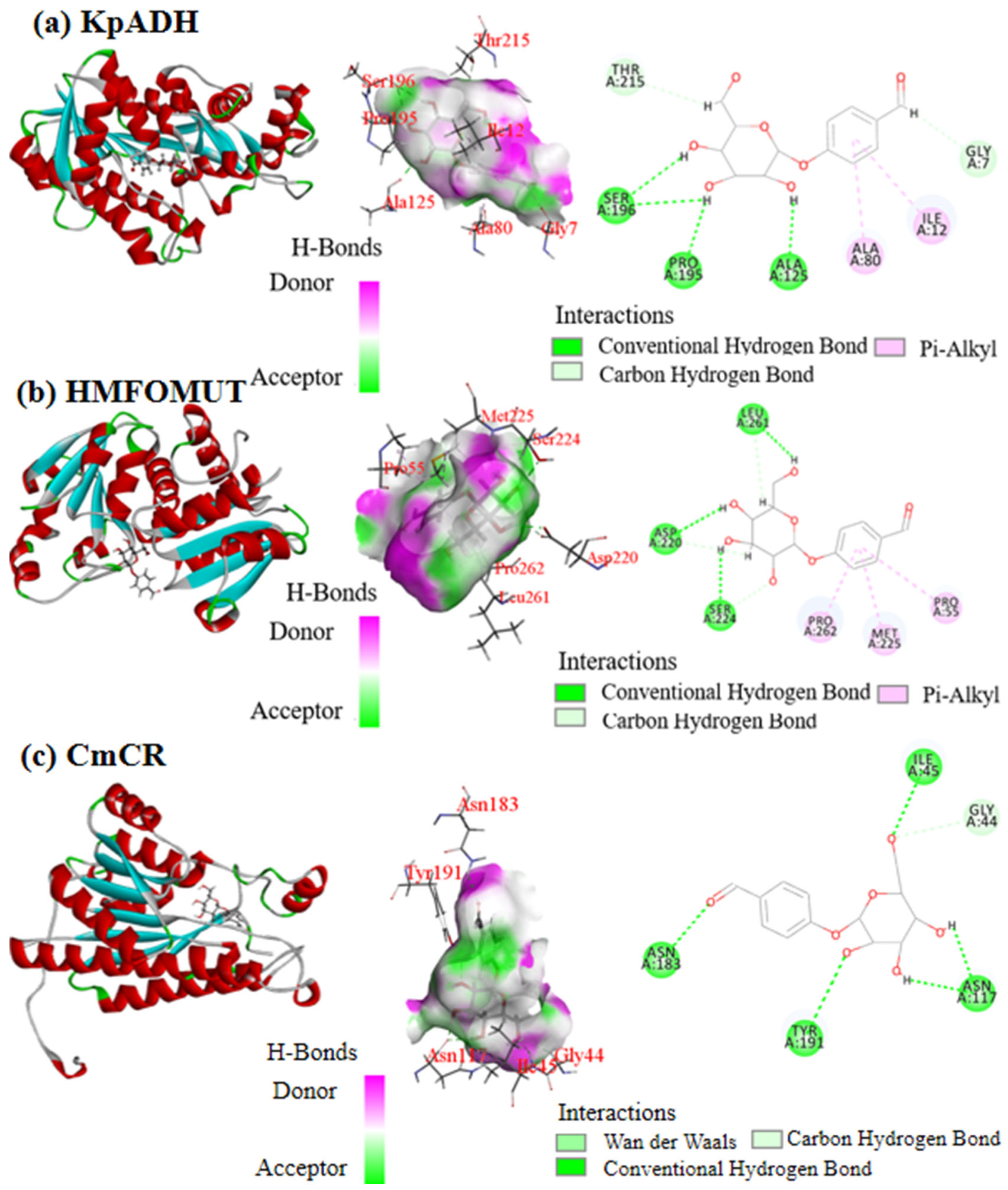
Molecular docking enables atomic-level simulation of the binding conformation of p-hydroxybenzaldehyde β-glucoside to enzyme active sites, revealing the distribution of key amino acid residues and binding interactions, including hydrogen bonds. The binding affinity of aldehydes from biomass to enzymes is rapidly evaluated by calculating the change in free energy. It is conducive to selecting suitable enzymes to reduce the cost of trial and error in experiments. When Discovery Studio is used for molecular docking (MD), “CDOCKER energy” is a reliable indicator of the strongest interaction between ligands and receptors. The lower the score, the stronger the affinity between the ligand and the receptor [36]. MD was used to verify the activity of enzymes from different sources in catalyzing the bioreduction of p-hydroxybenzaldehyde β-glucoside.
As depicted in Figure 3a, KpADH formed multiple specific interactions with p-hydroxybenzaldehyde β-glucoside. Hydrogen bonding was observed between the substrate and KpADH residues Ser196, Pro195, and Ala125, while carbon–hydrogen bonds were established with Thr215 and Gly7. Additional alkyl interactions stabilize the complex via hydrophobic contact with Ala80 and Ile12. Corresponding docking results (Table 1) showed the substrate binds to KpADH with a CDOCKER energy of −11.99 kcal/mol, indicating strong intermolecular affinity.
HMFOMUT exhibited a distinct interaction profile with the substrate (Figure 3b). Hydrogen bonding dominated the binding interface, involving residues Asp220, Ser224, and Leu261. Carbon–hydrogen bonds further stabilized the complex via contact with Asp220, Ser224, and Leu261. Additional alkyl interactions stabilized the complex via hydrophobic contacts with Pro55, Met225 and Pro262. The substrate–HMFOMUT complex had a CDOCKER energy of −6.77 kcal/mol (Table 1), notably higher than that of the KpADH complex.
CmCR formed the simplest interaction network with p-hydroxybenzaldehyde β-glucoside (Figure 3c). Only Gly44 participated in carbon–hydrogen bonds with the substrate, while hydrogen bonding was formed with Ile45, Asn117, Asn183 and Tyr191. Table 1 indicates a CDOCKER energy of −8.92 kcal/mol for the CmCR. Among the three reductases, KpADH exhibited the highest catalytic yield in actual experiments, indicating that the catalytic effect is not only determined by binding energy but also by other factors such as catalytic site activity and substrate accessibility.

3.3. Optimization of Reduction Reaction Conditions

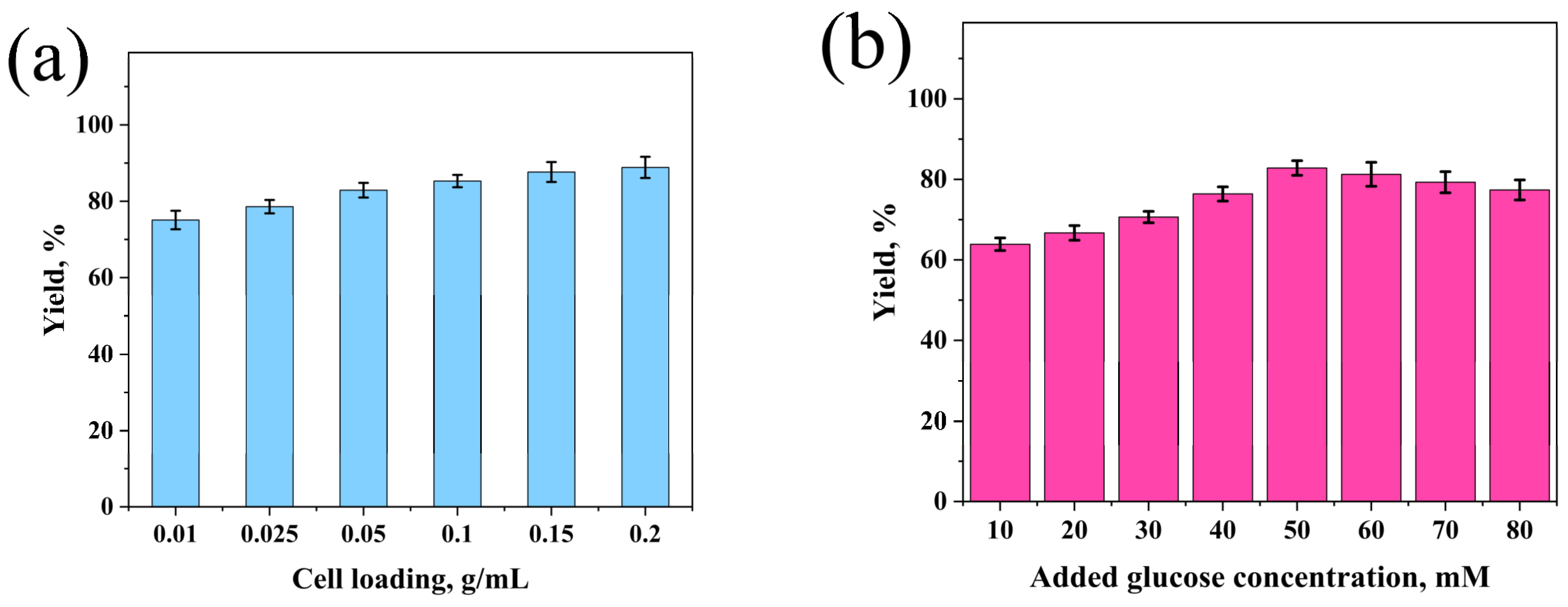
The cell loading shows a significant correlation with the catalytic activity of the substrate [37]. When the cell loading is at a low level, due to the insufficient number of active sites participating in the catalytic reaction per unit time, it will directly lead to a decrease in the substrate transformation rate and fail to maintain the metabolic flux required by the reaction system [38]. As our loading amount increased from 0.01 g/mL to 0.05 g/mL, the yield of biotransformation showed a significant improvement (Figure 4a). When the critical value of 0.05 g/mL was exceeded, the growth of activity entered a plateau period. At this point, each increase in loading capacity of 0.01 g/mL could only bring about a less than 5% improvement in yield. Compared with 0.05 g/mL cell loading, 0.2 g/mL cell loading increased the bacterial quantity by four times, but there was no significant improvement in yield. It might be because when the cell loading is too high, the reaction system becomes more viscous, affecting mass transfer efficiency between the substrate and the cells. Cell loading of 0.05 g/mL can offer better economic benefits. Meanwhile, statistical data analysis showed that there were significant differences among the groups with different cell loadings [F (5,12) = 31.788, p < 0.001] (Tables S1 and S2, in Supplementary Files). Therefore, 0.05 g/mL was selected as the optimal addition amount for the reaction.
Enzymes are significantly sensitive to temperature. Both excessively high and low temperatures can inhibit the activity of enzymes [39]. Only at the most suitable temperature can enzymes exert their maximum reactivity [40]. When the reaction temperature was 30 °C, the biocatalytic reaction activity was the highest (Figure S1, Supplementary Materials). Once an enzyme reaction deviates from the optimal temperature, whether the temperature rises or falls, it leads to a decrease in the enzyme activity of the reaction [41]. This might be because low temperatures inhibit the activity of enzymes, while high temperatures might cause enzymes to denature and lose activity, thereby reducing enzymes reactivity. At 30 °C, not only could high activity be achieved, but it was also within the stable temperature range of the enzymes, which will not cause denaturation or inactivation. It was suitable as a stable condition for long-term reactions. Meanwhile, statistical data analysis showed that there were significant differences among the groups with different temperatures [F (4,10) = 140.920, p < 0.001] (Tables S1 and S2, in Supplementary Files). Therefore, the optimal temperature for the reaction was 30 °C.
For the purpose of assessing how supplemented glucose modulates the biotransformation performance, the influence of the supplemented glucose (10–80 mM) on the reductive activity toward p-hydroxybenzaldehyde β-glucoside was systematically examined. As shown in Figure 4b, the effect of glucose loading on the yield of the reaction initially increased and then subsequently decreased within the range of 10–80 mM. It was found that the optimal amount of glucose for achieving maximum yield is 50 mM. The presence of glucose provided a crucial energy and material basis for the reaction system, effectively promoting the regeneration process of cofactors. As essential participants in enzymatic reactions, cofactors’ regeneration efficiency directly determines the catalytic activity of enzymes. Glucose participates in metabolic pathways to generate reduction equivalents, providing sufficient substrates for cofactor regeneration and thereby enhancing the yield of the overall reaction [42]. However, when the glucose concentration was relatively high, a decrease in yield was observed. An explanation for this trend is that the addition of co-substrate elevates the viscosity of the biological reaction matrix, which subsequently hinders mass transfer and molecular interactions, thereby diminishing reaction activity [43]. Meanwhile, the statistical data analysis showed that there were significant differences among the groups with different glucose concentrations [F (7,16) = 30.731, p < 0.001] (Tables S1 and S2, in Supplementary Files). After considering the biocatalytic activity and the amount of glucose, a biological reaction condition of supplementing with 50 mM was determined as the best choice.

3.4. The Impact of Bacterial Reuse on Gastrodin Yield

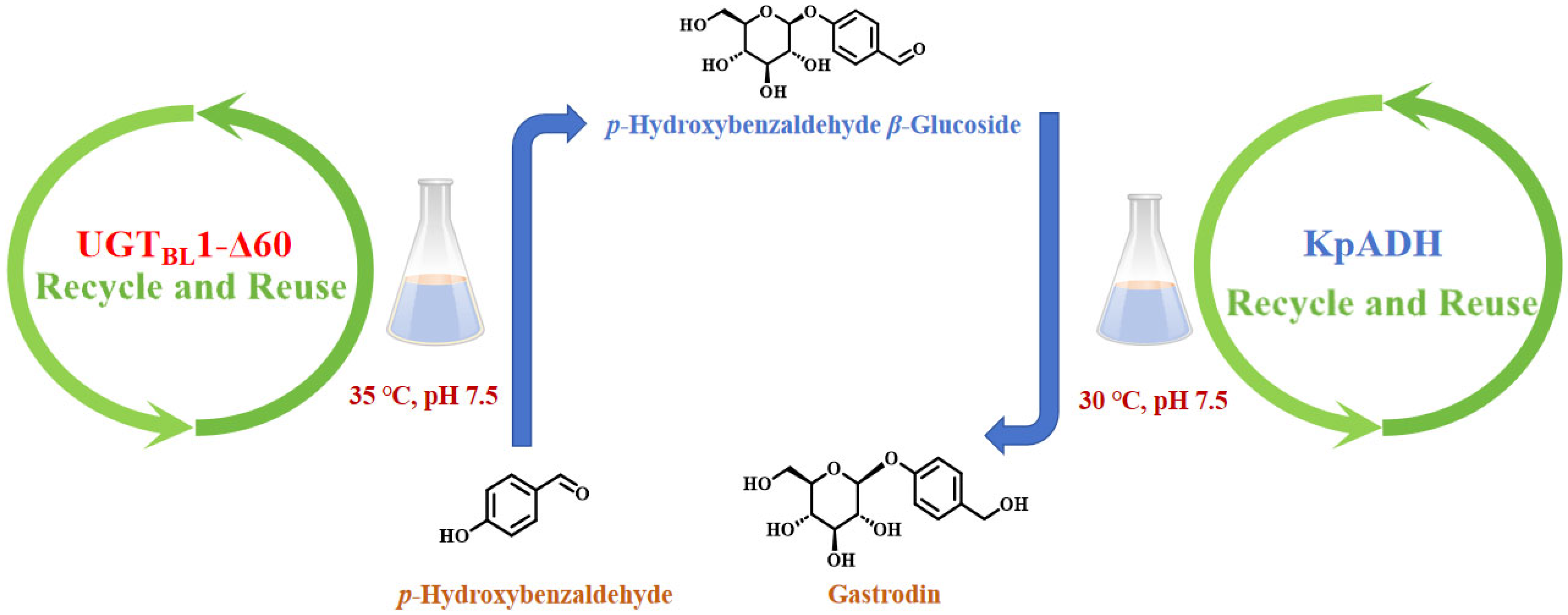
The reusability and stability of UGTBL1-Δ60 and KpADH were tested. After a batch of conversions were completed, the engineered bacteria could be separated by sedimentation through centrifugation, thereby enabling the recovery and reuse of intracellular glycosyltransferases UGTBL1-Δ60 and KpADH. After being reused for six batches under the best conditions, the effect is shown in Figure 5a,b. After the sixth batch, KpADH still maintained a yield of over 60%, and glycosyltransferase UGTBL1-Δ60 still maintained a yield of over 70%. Alcohol dehydrogenase KpADH and glycosyltransferase UGTBL1-Δ60 are intracellular enzymes, and engineered bacteria are natural immobilized carriers of these enzymes. López-Gallego’s group immobilized the engineered acyltransferase LovD9 from Aspergillus terreus (LovD-BuCh2) on controlled porous glass particles functionalized with Fe3+-catechol complexes (EziG1), which maintained over 60% product yield after five operational cycles [44]. The repeated batch transformation experiment of engineered bacteria indicates that the whole cells of engineered bacteria containing glycosyltransferase UGTBL1-Δ60 and the whole cells of engineered bacteria containing alcohol dehydrogenase KpADH had good stability and could be reused in small batches. Tang developed KmAKR&BmGDH@amino resin-PEI for the asymmetric reduction of tert-butyl 6-cyano-(5R)-hydroxy-3-oxohexanoate; the reactive activity of the immobilized enzymes remained at 80.7% after 10 cycles of reuse [45]. This was also one of the methods to reduce production costs during industrial-scale production. In industrial production, cells could also be immobilized to further facilitate the reuse of whole cells. In addition, due to the good reusability of glycosyltransferases UGTBL1-Δ60 and KpADH, it can be attempted to enhance the stability and reduce the costs of immobilized cells, providing a new idea for the process production of gastrodin.

3.5. The Reaction Process Curve of the Synthesis of Gastrodin Catalyzed by KpADH

To evaluate the biocatalytic activity of recombinant E. coli KpADH cells under optimal conditions, experiments were conducted using the following parameters The reaction process of KpADH catalyzing the reduction of p-hydroxybenzaldehyde β-glucoside to gastrodin was monitored in phosphate buffered saline (PBS) buffer with a pH of 7.5, a cell mass concentration of 0.05 g/mL, 30 °C, and supplementation of 50 mM glucose. As shown in Figure 6, the gastrodin yield increased positively with consumption of the substrate, and a 62.5% gastrodin yield was obtained after 2 h of reaction. The yield reached 82.8% after 12 h. Zhao obtained a 42.5% yield of gastrodin from coumaric acid using coenzyme-free biocatalytic E. coli (pET28a-TtAdo-BLPad) and glycosyltransferase UGT73B6FS cascades for 12 h [46]. In comparison, the cascade efficiency of recombinant E. coli KpADH and recombinant E. coli UGTBL1-Δ60 is higher, and provides a new idea for the high-value utilization of lignin derivatives.
Gastrodin, a natural bioactive compound of significant medicinal value, has demonstrated considerable potential in the treatment of neurological disorders, as well as in antioxidant and anti-inflammatory applications. Its efficient industrial synthesis remains a prominent research focus within the field of biomanufacturing [47,48]. Currently, within the conventional process for catalytically synthesizing gastrodin using p-hydroxybenzyl alcohol as substrate, two core issues persist: poor catalytic selectivity and low catalytic efficiency. The former readily leads to the formation of similar by-products within the reaction system, thereby increasing the difficulty and cost of subsequent separation and purification. The latter directly constrains the yield of the target product, ultimately hindering the large-scale production of gastrodin from meeting the pharmaceutical industry’s dual demands for purity and production capacity [49,50]. In this study, p-hydroxybenzaldehyde could be glycosylated under mild biological conditions to convert into p-hydroxybenzaldehyde β-glucoside, and bioreductated into gastrodin (Figure 7). This dual-enzyme coupling involved first glycosylation and then bioreduction, which was different from previous bioreduction methods (Figure 1). It did not produce gastrodin isomers (p-hydroxybenzyl alcohol-4-O-β-glucoside). From an industrial application perspective, converting biomass resources into high-value glycoside compounds represents a crucial direction for achieving high-value utilization of agricultural and forestry waste. Moving forward, alongside optimizing process parameters within existing reaction systems, there is a need to further develop production methods that are both cost-effective and environmentally friendly. Examples include constructing dual-enzyme co-expressing engineered strains through genetic engineering to simplify reaction workflows and reduce enzyme preparation costs, or developing novel immobilized enzyme carrier materials to enable enzyme reuse. This will further reduce the overall cost of industrial production and advance the industrial application of biosynthetic technologies for gastrodin and other high-value glycoside compounds.

4. Conclusions

Gastrodin was synthesized from p-hydroxybenzaldehyde under the catalysis of a dual-enzyme coupling of UGTBL1-Δ60 and carbonyl reductase KpADH. This study mainly focused on the use of KpADH to reduce the glycosylated intermediate (p-hydroxybenzaldehyde β-glucoside) to obtain gastrodin, with a selectivity of 100%. At 30 °C, the intermediate product glycoside could be converted into gastrodin within 12 h, with a yield of 82.8%. After six batches of UGTBL1-Δ60 and KpADH, both enzymes still maintained high activity. This experimental approach achieves high-value conversion of lignin-derived aldehydes while also providing a reference direction for the high-value utilization of biomass. In addition, this study provides a green, efficient, and highly selective biocatalytic method for the synthesis of gastrodin.

Supplementary Materials

The following supporting information can be downloaded at: https://www.mdpi.com/article/10.3390/pr14010055/s1, Figure S1. Effects of bioreduction temperature (20–40 °C) on the p-hydroxybenzaldehyde β-glucoside-reducing activity (pH 7.5, 0.05 g/mL KpADH loading, supplementation of 50 mM glucose, 12 h reaction). Table S1. Single factor ANOVA tests (cell loading, glucose concentration and temperature) for different conditions. Table S2. Significance analysis for different conditions.

Author Contributions

Conceptualization, methodology, and writing—original draft, B.F.; data curation, software, resources, and writing—original draft, J.X.; conceptualization, methodology, and investigation, C.M.; writing—review and editing and supervision, Y.-C.H. All authors have read and agreed to the published version of the manuscript.

Funding

This work is kindly supported by the National Natural Science Foundation of China (22208031) and the Frontier Technology Research and Development Plan of Jiangsu Province (BF2025080).

Data Availability Statement

Data are contained within the article.

Acknowledgments

The authors thank the Analysis and Testing Center (Changzhou University) for the analysis of HPLC and HRMS.

Conflicts of Interest

The authors declare no conflicts of interest.

References

  1. Wang, T.; Zhou, T.; Li, C.; Song, Q.; Zhang, M.; Yang, H. Development status and prospects of biomass energy in China. Energies 2024, 17, 4484. [Google Scholar] [CrossRef]
  2. Tshikovhi, A.; Motaung, T.E. Technologies and innovations for biomass energy production. Sustainability 2023, 15, 12121. [Google Scholar] [CrossRef]
  3. Zhang, J.; Cai, D.; Qin, Y.; Liu, D.; Zhao, X. High value-added monomer chemicals and functional bio-based materials derived from polymeric components of lignocellulose by organosolv fractionation. Biofuels Bioprod. Biorefining 2020, 14, 371–401. [Google Scholar] [CrossRef]
  4. Yang, Y.; Song, W.-Y.; Hur, H.-G.; Kim, T.-Y.; Ghatge, S. Thermoalkaliphilic laccase treatment for enhanced production of high-value benzaldehyde chemicals from lignin. Int. J. Biol. Macromol. 2019, 124, 200–208. [Google Scholar] [CrossRef]
  5. Dos Santos, R.J.; Vallejos, M.E.; Area, M.C.; Felissia, F.E. Kinetics of vanillin and vanillic acid production from pine Kraft lignin. Processes 2024, 12, 1472. [Google Scholar] [CrossRef]
  6. Penín, L.; Gigli, M.; Sabuzi, F.; Santos, V.; Galloni, P.; Conte, V.; Parajó, J.C.; Lange, H.; Crestini, C. Biomimetic vanadate and molybdate systems for oxidative upgrading of iono- and organosolv hard- and softwood lignins. Processes 2020, 8, 1161. [Google Scholar] [CrossRef]
  7. Qiang, H.; Wang, J.; Liu, H.; Zhu, Y. From vanillin to biobased aromatic polymers. Polym. Chem. 2023, 14, 4255–4274. [Google Scholar] [CrossRef]
  8. Bayer, T.; Becker, A.; Terholsen, H.; Kim, I.J.; Menyes, I.; Buchwald, S.; Balke, K.; Santala, S.; Almo, S.C.; Bornscheuer, U.T. LuxAB-based microbial cell factories for the sensing, manufacturing and transformation of industrial aldehydes. Catalysts 2021, 11, 953. [Google Scholar] [CrossRef]
  9. Santos, L.D.F.; Lautru, S.; Pernodet, J.-L. Genetic engineering approaches for the microbial production of vanillin. Biomolecules 2024, 14, 1413. [Google Scholar] [CrossRef]
  10. Al Nasr, I.S.; Koko, W.S.; Khan, T.A.; Schobert, R.; Biersack, B. Antiparasitic activities of acyl hydrazones from cinnamaldehydes and structurally related fragrances. Antibiotics 2024, 13, 1114. [Google Scholar] [CrossRef] [PubMed]
  11. Li, L.; Ma, C.; Chai, H.; He, Y.-C. Biological valorization of lignin-derived vanillin to vanillylamine by recombinant E. coli expressing ω-transaminase and alanine dehydrogenase in a petroleum ether-water system. Bioresour. Technol. 2023, 385, 129453. [Google Scholar] [CrossRef]
  12. Fan, B.; Fu, S.; Zhu, Y.; Tang, W.; He, Y. Efficient bioproduction of p-hydroxybenzaldehyde β-glucoside from p-hydroxybenzaldehyde by glycosyltransferase mutant UGTBL1-Δ60. Biology 2025, 14, 1358. [Google Scholar] [CrossRef] [PubMed]
  13. Sun, Q.; Fu, X.; Wang, P.; Li, K.; Wei, L.; Zhai, S.; An, Q. Selective production of p-hydroxybenzaldehyde in the oxidative depolymerization of alkali lignin catalyzed by copper-containing imidazolium-based ionic liquids. J. Mol. Liq. 2023, 385, 122378. [Google Scholar] [CrossRef]
  14. Peng, Z.; Wang, S.; Chen, G.; Cai, M.; Liu, R.; Deng, J.; Liu, J.; Zhang, T.; Tan, Q.; Hai, C. Gastrodin alleviates cerebral ischemic damage in mice by improving anti-oxidant and anti-inflammation activities and inhibiting apoptosis pathway. Neurochem. Res. 2015, 40, 661–673. [Google Scholar] [CrossRef] [PubMed]
  15. Zhuang, Y.; Yang, G.-Y.; Chen, X.; Liu, Q.; Zhang, X.; Deng, Z.; Feng, Y. Biosynthesis of plant-derived ginsenoside Rh2 in yeast via repurposing a key promiscuous microbial enzyme. Metab. Eng. 2017, 42, 25–32. [Google Scholar] [CrossRef]
  16. Xu, C.-B.; Guo, Q.-L.; Wang, Y.-N.; Lin, S.; Zhu, C.-G.; Shi, J.-G. Gastrodin derivatives from Gastrodia elata. Nat. Prod. Bioprospecting 2019, 9, 393–404. [Google Scholar] [CrossRef]
  17. Wang, Y.; Bai, M.; Wang, X.; Peng, Z.; Cai, C.; Xi, J.; Yan, C.; Luo, J.; Li, X. Gastrodin: A comprehensive pharmacological review. Naunyn-Schmiedeberg′s Arch. Pharmacol. 2024, 397, 3781–3802. [Google Scholar] [CrossRef]
  18. Xiao, G.; Tang, R.; Yang, N.; Chen, Y. Review on pharmacological effects of gastrodin. Arch. Pharmacal Res. 2023, 46, 744–770. [Google Scholar] [CrossRef] [PubMed]
  19. Wang, X.; Yang, W.; Lv, J.; Liao, X. Study on the uptake of Gastrodin in the liver. Heliyon 2024, 10, e36031. [Google Scholar] [CrossRef]
  20. Hu, M.; Yan, H.; Fu, Y.; Jiang, Y.; Yao, W.; Yu, S.; Zhang, L.; Wu, Q.; Ding, A.; Shan, M. Optimal extraction study of Gastrodin-type components from Gastrodia elata tubers by response surface design with integrated phytochemical and bioactivity evaluation. Molecules 2019, 24, 547. [Google Scholar] [CrossRef]
  21. Bassanini, I.; Kapešová, J.; Petrásková, L.; Pelantová, H.; Markošová, K.; Rebroš, M.; Valentová, K.; Kotik, M.; Káňová, K.; Bojarová, P.; et al. Glycosidase-catalyzed synthesis of glycosyl esters and phenolic glycosides of aromatic acids. Adv. Synth. Catal. 2019, 361, 2627–2637. [Google Scholar] [CrossRef]
  22. Li, Y.-W.; Ma, C.-L. Improved synthesis of gastrodin, a bioactive component of a traditional Chinese medicine. J. Serbian Chem. Soc. 2014, 79, 1205–1212. [Google Scholar] [CrossRef]
  23. Zhang, Z.; Wang, X.; Sha, X.; Qiao, G.; Niu, F.; Ming, H.; Cui, C. Biosynthesis of gastrodin via multi-module UDPG supply and site-directed mutagensis of glycosyltransferase in Escherichia coli. Mol. Catal. 2025, 578, 114953. [Google Scholar] [CrossRef]
  24. Xia, H.; Zhang, Z.; Ding, J.; Jiang, K.; Xue, F. A Glycosyltransferase from Arabidopsis thaliana enables the efficient enzymatic synthesis of Gastrodin. Catal. Lett. 2024, 154, 1558–1566. [Google Scholar] [CrossRef]
  25. Ge, L.; Xu, W.; Jia, R.; Xia, Y. Recombinant expression and characterization of an alkali-tolerant UDP-glycosyltransferase from Solanum lycopersicum and its biosynthesis of Gastrodin. J. Microbiol. Biotechnol. 2025, 35, e2410029. [Google Scholar] [CrossRef]
  26. Zhang, C.; Cai, Y.; Zhang, Z.; Zheng, N.; Zhou, H.; Su, Y.; Du, S.; Hussain, A.; Xia, X. Directed evolution of the UDP-glycosyltransferase UGTBL1 for highly regioselective and efficient biosynthesis of natural phenolic glycosides. J. Agric. Food Chem. 2024, 72, 1640–1650. [Google Scholar] [CrossRef] [PubMed]
  27. Yin, H.; Hu, T.; Zhuang, Y.; Liu, T. Metabolic engineering of Saccharomyces cerevisiae for high-level production of gastrodin from glucose. Microb. Cell Factories 2020, 19, 218. [Google Scholar] [CrossRef]
  28. Fan, B.; Dong, W.; Chen, T.; Chu, J.; He, B. Switching glycosyltransferase UGTBL1 regioselectivity toward polydatin synthesis using a semi-rational design. Org. Biomol. Chem. 2018, 16, 2464–2469. [Google Scholar] [CrossRef]
  29. Fan, B.; Lin, R.; Gu, X.; Cui, R.; Yang, R.; He, Y.-C. Synthesis of biobased alcohols from biomass-derived aldehydes through the biocatalysis with E. coli KPADH in deep eutectic solvent ChCl:Glycerol-water. Mol. Catal. 2025, 584, 115305. [Google Scholar] [CrossRef]
  30. Zhou, J.; Wang, Y.; Xu, G.; Wu, L.; Han, R.; Schwaneberg, U.; Rao, Y.; Zhao, Y.-L.; Zhou, J.; Ni, Y. Structural insight into enantioselective inversion of an alcohol dehydrogenase reveals a “Polar Gate” in stereorecognition of diaryl ketones. J. Am. Chem. Soc. 2018, 140, 12645–12654. [Google Scholar] [CrossRef]
  31. He, Y.-C.; Tao, Z.-C.; Zhang, X.; Yang, Z.-X.; Xu, J.-H. Highly efficient synthesis of ethyl (S)-4-chloro-3-hydroxybutanoate and its derivatives by a robust NADH-dependent reductase from E. coli CCZU-K14. Bioresour. Technol. 2014, 161, 461–464. [Google Scholar] [CrossRef]
  32. Wang, Z.-W.; Gong, C.-J.; He, Y.-C. Improved biosynthesis of 5-hydroxymethyl-2-furancarboxylic acid and furoic acid from biomass-derived furans with high substrate tolerance of recombinant Escherichia coli HMFOMUT whole-cells. Bioresour. Technol. 2020, 303, 122930. [Google Scholar] [CrossRef]
  33. Madavi, T.B.; Chauhan, S.; Keshri, A.; Alavilli, H.; Choi, K.-Y.; Pamidimarri, S.D.V.N. Whole-cell biocatalysis: Advancements toward the biosynthesis of fuels. Biofuels Bioprod. Biorefining 2022, 16, 859–876. [Google Scholar] [CrossRef]
  34. Zhang, J.; Gao, L.-X.; Chen, W.; Zhong, J.-J.; Qian, C.; Zhou, W.-W. Rational design of daunorubicin C-14 hydroxylase based on the understanding of its substrate-binding mechanism. Int. J. Mol. Sci. 2023, 24, 8337. [Google Scholar] [CrossRef]
  35. Liu, Y.; Pan, X.; Zhang, H.; Zhao, Z.; Teng, Z.; Rao, Z. Combinatorial protein engineering and transporter engineering for efficient synthesis of L-Carnosine in Escherichia coli. Bioresour. Technol. 2023, 387, 129628. [Google Scholar] [CrossRef]
  36. Simoben, C.V.; Ghazy, E.; Zeyen, P.; Darwish, S.; Schmidt, M.; Romier, C.; Robaa, D.; Sippl, W. Binding free energy (BFE) calculations and quantitative structure–activity relationship (QSAR) analysis of Schistosoma mansoni histone deacetylase 8 (smHDAC8) inhibitors. Molecules 2021, 26, 2584. [Google Scholar] [CrossRef] [PubMed]
  37. Yan, Y.; Bu, C.; Huang, X.; Ouyang, J. Efficient whole-cell biotransformation of furfural to furfuryl alcohol by Saccharomyces cerevisiae NL22. J. Chem. Technol. Biotechnol. 2019, 94, 3825–3831. [Google Scholar] [CrossRef]
  38. Yang, W.-Y.; Zhang, R.-X.; Zheng, X.-F.; Zhao, Z.-P.; Sang, L. Highly-efficient synthesis of 5-hydroxymethylfurfural from fructose in micropacked bed reactors: Multiphase transport, reaction optimization, and heterogeneous kinetic study. Chem. Eng. J. 2024, 497, 154863. [Google Scholar] [CrossRef]
  39. Arcus, V.L.; Mulholland, A.J. Temperature, dynamics, and enzyme-catalyzed reaction rates. Annu. Rev. Biophys. 2020, 49, 163–180. [Google Scholar] [CrossRef]
  40. Kabir, M.F.; Ju, L.-K. On optimization of enzymatic processes: Temperature effects on activity and long-term deactivation kinetics. Process Biochem. 2023, 130, 734–746. [Google Scholar] [CrossRef]
  41. McLeod, M.J.; Barwell, S.A.E.; Holyoak, T.; Thorne, R.E. A structural perspective on the temperature dependent activity of enzymes. Structure 2025, 33, 924–934.e2. [Google Scholar] [CrossRef]
  42. Xu, H.-X.; Li, X.-F.; Zhao, G.-L. Comparative proteomic analysis reveals the effect mechanisms of glucose on the biomass and phenolic glycoside esters synthesis activity of Candida parapsilosis ACCC 20221 whole-cell catalyst. J. Agric. Food Chem. 2024, 72, 20140–20152. [Google Scholar] [CrossRef]
  43. Zhang, S.; He, Y.-C.; Ma, C. Transformation of D-xylose into furfuryl alcohol via an efficient chemobiological approach in a benign deep eutectic solvent lactic acid:betaine-water reaction system. J. Mol. Liq. 2024, 410, 125576. [Google Scholar] [CrossRef]
  44. García-Marquina, G.; Langer, J.; Sánchez-Costa, M.; Jiménez-Osés, G.; López-Gallego, F. Immobilization and stabilization of an engineered acyltransferase for the continuous biosynthesis of Simvastatin in packed-bed reactors. ACS Sustain. Chem. Eng. 2022, 10, 9899–9910. [Google Scholar] [CrossRef]
  45. Tang, Z.; Oku, Y.; Matsuda, T. Application of immobilized enzymes in flow biocatalysis for efficient synthesis. Org. Process Res. Dev. 2024, 28, 1308–1326. [Google Scholar] [CrossRef]
  46. Zhao, M.; Hong, X.; Abdullah; Yao, R.; Xiao, Y. Rapid biosynthesis of phenolic glycosides and their derivatives from biomass-derived hydroxycinnamates. Green Chem. 2021, 23, 838–847. [Google Scholar] [CrossRef]
  47. Zhu, C.; Wang, S.; Ma, S.; Zhang, S.; Wang, Y.; Li, B.; Zhang, W.; Sun, Z. Gastrodin reduces Aβ brain levels in an Alzheimer′s disease mouse model by inhibiting P-glycoprotein ubiquitination. Phytomedicine 2024, 135, 156229. [Google Scholar] [CrossRef]
  48. Liu, Z.; Han, Z.; Bao, W.; Guo, Y.; Yuan, Y.; Cheng, J.; Zhang, J.; Hu, Y. Gastrodin attenuates cerebral ischemia–reperfusion injury by enhancing mitochondrial fusion and activating the AMPK-OPA1 signaling pathway. CNS Neurosci. Ther. 2025, 31, e70559. [Google Scholar] [CrossRef] [PubMed]
  49. Wu, Y.; Li, S.; Sun, B.; Guo, J.; Zheng, M.; Li, A. Enhancing Gastrodin production in Yarrowia lipolytica by metabolic engineering. ACS Synth. Biol. 2024, 13, 1332–1342. [Google Scholar] [CrossRef]
  50. Liu, H.; Tegl, G.; Nidetzky, B. Glycosyltransferase co-immobilization for natural product glycosylation: Cascade biosynthesis of the C-glucoside nothofagin with efficient reuse of enzymes. Adv. Synth. Catal. 2021, 363, 2157–2169. [Google Scholar] [CrossRef]
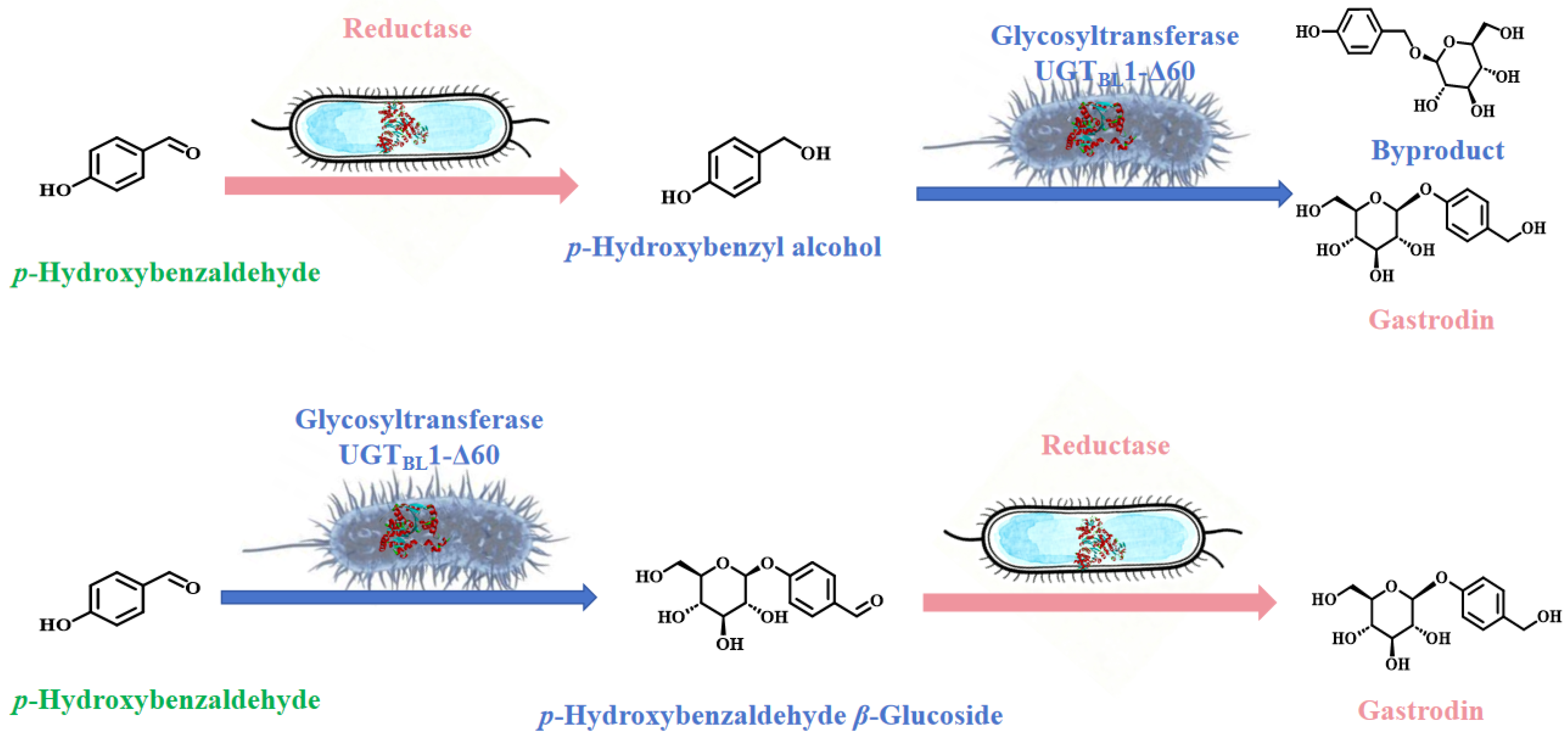
Figure 1. The biocatalytic pathway of glycosylation of p-hydroxybenzaldehyde and reduction to synthesize gastrodin.
Processes 14 00055 g001
Figure 2. Comparison of the reducing activity of p-hydroxybenzaldehyde β-glucoside by recombinant E. coli KpADH, recombinant E. coli CCZU-K14, and recombinant E. coli HMFOMUT. (pH 7.5, 30 °C, 0.025 g/mL of cell loading, supplementation of 50 mM glucose, 12 h reaction).
Processes 14 00055 g002
Figure 3. The molecular docking results of three enzymes, KpADH (a), HMFOMUT (b), and CmCR (c), with p-hydroxybenzaldehyde β-glucoside.
Processes 14 00055 g003
Figure 4. Effect of KpADH cell loading (0.01–0.2 g/mL) on p-hydroxybenzaldehyde β-glucoside-reducing activity (30 °C, pH 7.5, supplementation of 50 mM glucose, 12 h reaction) (a); Impact of glucose concentration (10–80 mM) on p-hydroxybenzaldehyde β-glucoside-reducing activity (30 °C, pH 7.5, 0.05 g/mL KpADH loading, 12 h reaction) (b).
Processes 14 00055 g004
Figure 5. UGTBL1-Δ60 batch reuse (35 °C, pH 7.5, 200 mM glucose, 0.025 g/mL UGTBL1-Δ60 cell loading) (a); E. coli KpADH batch reuse (30 °C, pH 7.5, 0.05 g/mL of KpADH loading, supplementation of 50 mM glucose, 12 h reaction) (b).
Processes 14 00055 g005
Figure 6. Time course of the reduction reaction of p-hydroxybenzaldehyde β-glucoside (30 °C, pH 7.5, 0.05 g/mL of KpADH loading, supplementation of 50 mM glucose).
Processes 14 00055 g006
Figure 7. The synthesis of gastrodin.
Processes 14 00055 g007
Table 1. Catalytic reduction and molecular docking results of p-hydroxybenzaldehyde β-glucoside.
BacteriaSubstrate StructureProduct StructureCDOCKER_Energy, kcal/mol
KpADH
(Recombinant E. coli KpADH)
Processes 14 00055 i001Processes 14 00055 i002−11.99
HMFOMUT
(Recombinant E. coli HMFOMUT)
−6.77
CmCR
(Recombinant E. coli CCZU-K14)
−8.92
Disclaimer/Publisher’s Note: The statements, opinions and data contained in all publications are solely those of the individual author(s) and contributor(s) and not of MDPI and/or the editor(s). MDPI and/or the editor(s) disclaim responsibility for any injury to people or property resulting from any ideas, methods, instructions or products referred to in the content.