Next Article in Journal
Machine Learning and Queuing Algorithm Integration for Real-Time Citrus Size Classification on an Industrial Sorting Machine
Previous Article in Journal
A Sustainable Aluminium-Based Electro-Fenton Process for Pharmaceutical Wastewater Treatment: Optimization, Kinetics, and Cost–Benefit Analysis
error_outline You can access the new MDPI.com website here. Explore and share your feedback with us.
 
 
Article

Ignition and Emission Study of an Ammonia–Coal Co-Firing Flame in a Lab-Scale Dual-Swirl Burner

1
State Key Laboratory of Clean Energy Utilization, Zhejiang University, Hangzhou 310027, China
2
Qingshanhu Energy Research Center, Zhejiang University, Hangzhou 311300, China
*
Author to whom correspondence should be addressed.
Processes 2026, 14(1), 163; https://doi.org/10.3390/pr14010163
Submission received: 27 November 2025 / Revised: 24 December 2025 / Accepted: 31 December 2025 / Published: 3 January 2026

Abstract

Ammonia–coal co-firing is emerging as a promising technological pathway to reduce carbon production during coal-fired power generation. However, the coupling effects of the ammonia energy ratio (ENH3) and equivalence ratio on the ignition mechanism and emission characteristics—particularly under staged injection conditions—remain insufficiently understood. This study investigates these characteristics in a laboratory-scale furnace. Spontaneous chemiluminescence imaging and flue gas analysis were employed to decouple the effects of aerodynamic interactions and chemical kinetics. The experimental results reveal that the ammonia injection strategy is the critical factor governing coal ignition performance. Compared to the premixed mode, staged injection—which establishes an independent, high-temperature ammonia flame zone—provides a superior thermal environment and circumvents oxygen competition between the fuels, thereby markedly promoting coal ignition. At an ENH3 of 50%, the staged configuration reduces the ignition delay time of coal volatiles by a striking 60.93%. Within the staged configuration, increasing either the co-firing ratio or the overall equivalence ratio further enhances coal ignition. Analysis of pollutant emissions elucidates that the formation of NO, N2O, and NH3 is intimately linked to the local combustion conditions of ammonia. An excessively lean local equivalence ratio leads to incomplete ammonia combustion, thereby increasing N2O and NH3 slip.

1. Introduction

Governments around the world are currently faced with the challenge and crisis of global warming driven by substantial greenhouse gas emissions. During the transition from fossil fuel-based energy into green energy system, coal-fired thermal power station still serve as adjustment and backup power sources balancing the discontinuous renewable energy like solar and wind power especially in developing countries [1,2]. However, the imperative to substantially reduce greenhouse gas emissions from this type of power stations become essential. Integrating thermal power with renewable energy sources represents a major strategy to address this challenge [3]. For instance, Gürel et al. [4] demonstrated that co-firing biomass with coal significantly enhances the combustion capability of coal. Ammonia, as a zero-carbon fuel, can be synthesized through entirely carbon-free processes utilizing renewable energy, thereby aligning perfectly with carbon dioxide reduction mandates. Possessing a high energy density and superior safety profile for transport and storage compared to hydrogen, ammonia is positioned as a more viable energy carrier, poised to supersede other hydrogen carriers and lower-density energy sources [5]. Recent comprehensive reviews by Mohi Ud Din et al. [6] and Wang et al. [7] have systematically summarized the current progress, highlighting that the feasibility of ammonia–coal co-firing has been proven.
Despite its promise, ammonia combustion faces a significant challenge: the introduction of fuel-bound nitrogen (fuel-N) can lead to higher NOx emissions per unit of energy released compared to conventional carbon-based fuels [8,9,10]. To mitigate this issue, various advanced combustion strategies have been explored and validated. Staged combustion, for instance, has demonstrated pronounced efficacy in reducing NOx from ammonia flames. Numerical simulations by Pan et al. [11] on air-staged combustion of premixed ammonia/methane fuels confirmed that this approach can ensure complete NH3 burnout while simultaneously minimizing NOx and CO emissions. Zha et al. [12] reported that enhancing the MILD (Moderate or Intense Low-oxygen Dilution) combustion regime decreases the ammonia oxidation rate while promoting its reduction reactions, leading to greater NO reduction by ammonia. Furthermore, Wang et al. [13], utilizing a custom single-swirl burner, demonstrated that increasing the swirl number in premixed ammonia/methane/air flames effectively reduces NO, NO2, and N2O emissions. These studies collectively affirm that NOx emissions from ammonia combustion can be effectively controlled through the implementation of appropriate combustion strategies.
The introduction of ammonia into coal combustion fundamentally alters the fuel blend’s composition and properties, thereby modifying its combustion characteristics, including ignition delay time [14,15,16], flame structure [17,18,19], combustion efficiency [20,21,22], and flame propagation speed [23]. Parameters such as the ammonia co-firing ratio, injection location, and equivalence ratio also exert considerable influence. Cui et al. [24] investigated the impact of the ammonia blending ratio on coal combustion, concluding that at temperatures of 1200 K and 1800 K, a higher ammonia ratio promotes coal ignition and enhances volatile combustion. In a separate study using an entrained-flow gasifier, Cui et al. [25] found that co-injecting ammonia with primary air is more favorable for NOx control, whereas injecting it with the outer secondary air enhances coal burnout. Xia et al. [26], employing a fan-stirred constant volume chamber, elucidated the effect of the ammonia-oxidizer equivalence ratio on the turbulent flame propagation of pulverized ammonia–coal mixtures.
A recent foundational study by Yu et al. [27] provided a comprehensive characterization of the ignition and combustion of three different coal types co-fired with ammonia in a dual-swirl burner, utilizing flame imaging and OH-PLIF to delineate the effects of Reynolds number, co-firing ratio, and co-firing mode. However, despite these advances, significant research gaps remain. First, most existing optical diagnostic studies on ammonia–coal co-firing have focused on simple jet flames or laminar flows, which cannot fully replicate the strong recirculation and turbulent mixing characteristics of industrial swirl burners. Second, while the basic flame morphology has been studied, the specific ignition dynamics of intermediate species—particularly the NH2* radical, which is critical for understanding ammonia oxidation pathways—have rarely been visualized in coal co-firing environments. Third, previous works often treat coal ignition as a singular event. There is a need to experimentally decouple the homogeneous ignition of volatiles from the heterogeneous ignition of char to understand how different ammonia injection strategies mechanistically alter these distinct processes.
To clarify the position of this study within the literature, Table 1 summarizes representative studies on ammonia–coal co-firing, demonstrating the specific gaps addressed by the current work.
Consequently, this study utilizes a custom-designed dual-swirl burner to investigate the ignition and emission characteristics of ammonia–coal co-firing under near-industrial turbulent conditions. Unlike previous studies, we employed a combination of CH*, NH2*, and char spontaneous chemiluminescence diagnostics to: (1) visualize the reaction zone of ammonia intermediates; (2) decouple the ignition delay of coal volatiles and char; and (3) systematically compare the mechanistic differences between staged and premixed injection modes.

2. Experimental Methodology

2.1. Experimental Apparatus and Diagnostic Systems

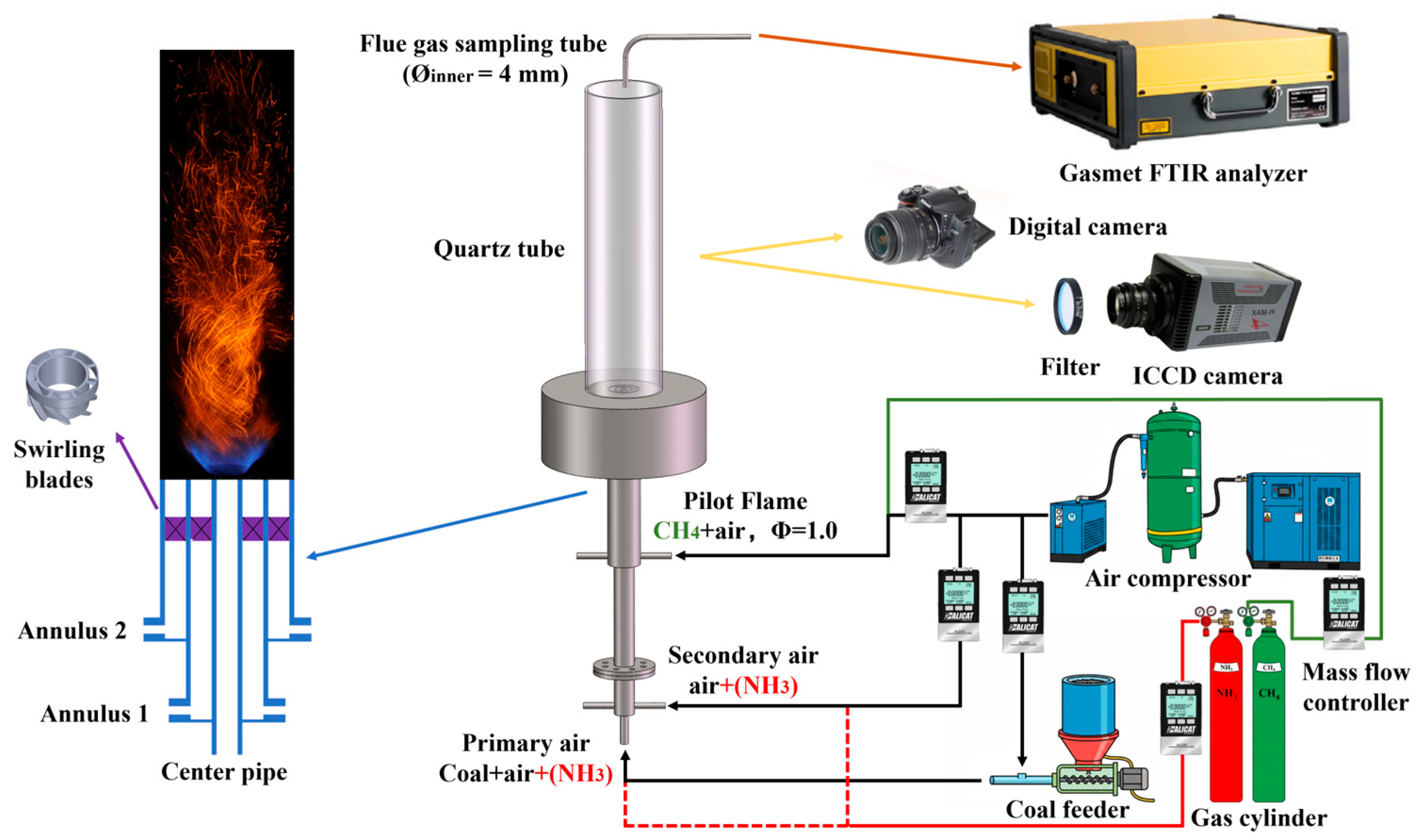
The experimental apparatus and diagnostic systems were established based on our previous work [27], with a schematic shown in Figure 1. The setup features a dual-swirl ammonia–coal burner composed of three concentric tubes and two axial swirlers, allowing for the independent injection of different gas streams. Compressed air was supplied by an air compressor, while gaseous fuels were provided from cylinders, with their flow rates precisely controlled by mass flow controllers. Pulverized coal was delivered by a loss-in-weight twin-screw micro-feeder, which ensured stable feeding rates ranging from 10 to 360 g/h.
To accommodate both premixed and staged ammonia co-firing modes, the innermost tube (center pipe) was designated for the supply of pulverized coal and primary air. The intermediate annulus was used for secondary air, and the outermost annulus supplied a pilot flame of premixed methane and air at a stoichiometric ratio (Φ = 1.0). Depending on the experimental condition, ammonia was introduced either through the center pipe (premixed mode) or the intermediate annulus (staged mode). To maintain a constant gas velocity of 20 m/s in the center pipe across all experiments, facilitating the calculation and comparison of ignition delay times, the primary air flow rate was adjusted accordingly in the premixed mode. Both axial swirlers have a blade angle of 45°. The geometric swirl number (SN) was calculated using Equation (1), where Di and Do are the inner and outer diameters of the swirler blades and α is the blade angle. The calculated swirl numbers for the inner and outer swirlers are 0.778 and 0.865, respectively [28].
S N = 2 3 1 ( D i / D o ) 3 1 ( D i / D o ) 2 tan α ,
A quartz tube with an inner diameter of 70 mm and a length of 300 mm was positioned atop the burner outlet, serving as the combustion chamber and providing optical access. The optical diagnostic suite includes a digital camera (Nikon D5000, Nikon Corp., Tokyo, Japan) and an intensified charge-coupled device (ICCD) camera (PI-MAX4: 1024i, Princeton Instruments, Trenton, NJ, USA). The Nikon D5000 was used to capture the global flame morphology and macroscopic ignition location. To prevent local saturation, exposure times were set to 1/30 s for pure gas-phase flames and 1/200 s for gas–solid two-phase flames. The ICCD camera was employed to record spontaneous chemiluminescence signals generated during combustion. By coupling the ICCD with narrow-bandpass filters, images of specific radical emissions can be isolated. For each experimental condition, a sequence of 200 flame spontaneous chemiluminescence images was captured.
The flue gas analysis system consisted of a Fourier Transform Infrared (FTIR) gas analyzer (DX4000, Gasmet Technologies Oy, Vantaa, Finland), complemented by a heated sampling probe and a pump. A sampling tube was placed at the center of the quartz tube exit. The extracted flue gas passed through the sampling tube and a moisture-removing filter before entering the heated probe, after which it was drawn by the pump into the FTIR analyzer. The sampling line was wrapped with heating tape to prevent ammonia from dissolving in condensate, ensuring data accuracy. Once the flame reached a steady state, flue gas data were recorded for a duration of 3 min at 5 s intervals for each case. The measured concentrations of NO, N2O, and NH3 were normalized to a 6% O2 basis using Equation (2), where Xreal and O2,real represent the actually measured mole fractions [29].
X 6 % O 2 = X real   21 6 21 O 2 , real ,

2.2. Coal Properties and Experimental Conditions

The experiments were conducted using a bituminous coal sourced from the Baiyinhua mine. Table 2 presents the proximate and ultimate analyses, which were determined by a professional agency adhering to the Chinese National Standards GB/T 212-2008 and GB/T 31391-2015. Prior to the experiments, the coal was sieved to a particle size range of 100–150 µm and dried in an oven at 105 °C for 8 h.
The operational conditions for the ammonia–coal co-firing experiments are detailed in Table 3. The thermal input of the methane pilot flame was held constant at a stoichiometric ratio of Φ = 1.0. Pulverized coal particles were transported by the primary air through the center pipe. Two co-firing strategies were investigated: premixed and staged. In the staged mode, ammonia was injected with the secondary air; in the premixed mode, ammonia was co-injected with the primary air and coal. The velocity of the gas stream in the center pipe was maintained at 20 m/s. The ammonia co-firing ratio (ENH3), defined as the ratio of the thermal input from ammonia to the total thermal input from ammonia and coal, was varied from 0% to 50% in increments (10%, 15%, 20%, 25%, 30%, 35%, 40%, 50%). The influence of the overall equivalence ratio (Φtotal) was also investigated. This parameter quantifies the global stoichiometry of the primary ammonia–coal co-firing system, calculated using the flow rates of ammonia, coal, primary air, and secondary air, thereby excluding the fuel (methane) and air supplied to the pilot flame. The experiments were conducted at Φtotal values of 0.95, 0.91, 0.87, 0.77, 0.71, 0.67, 0.63, and 0.59.

3. Results and Discussion

3.1. Flame Morphology and Ignition Definition

3.1.1. Gas-Phase Methane–Ammonia Flame Morphology

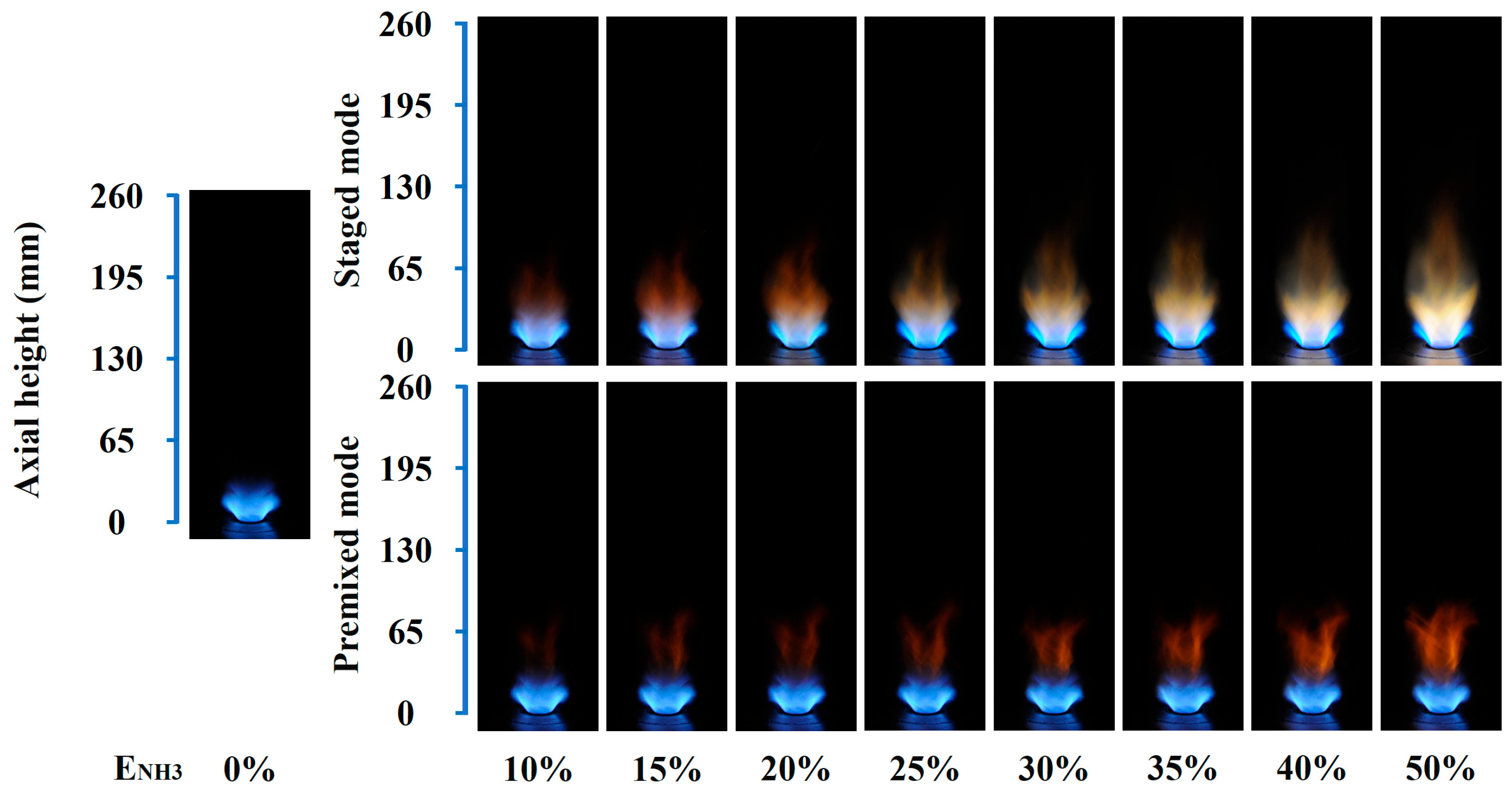
To establish a baseline thermal environment for coal ignition, the pure gas-phase methane–ammonia flames were first characterized in the absence of coal particles, as depicted in Figure 2. The blue flame, originating from methane combustion, is a swirl flame exhibiting a lobed structure uniformly distributed around the central axis, while the orange-red flame is generated by ammonia combustion; the flame fronts of the methane and ammonia are distinct and can be clearly differentiated. In the staged mode, ammonia is injected with the secondary air, and influenced by the primary air’s turbulence, its flame assumes a W-shape anchored at the secondary air exit. As the ammonia injection rate increases, this flame elongates, and when the blending ratio exceeds 30%, its lower flame front becomes wider than the methane flame. In the premixed mode, ammonia is injected with the primary air, resulting in a V-shaped flame with lower luminosity located at the interface between the primary and secondary air streams. Under this condition, the ammonia flame’s ignition point is consistently located downstream of the methane flame. As the ammonia injection rate increases, the flame’s luminosity is enhanced, while the concurrent rise in secondary air flow causes the air stream interface to expand outward, thereby increasing the overall flame width.
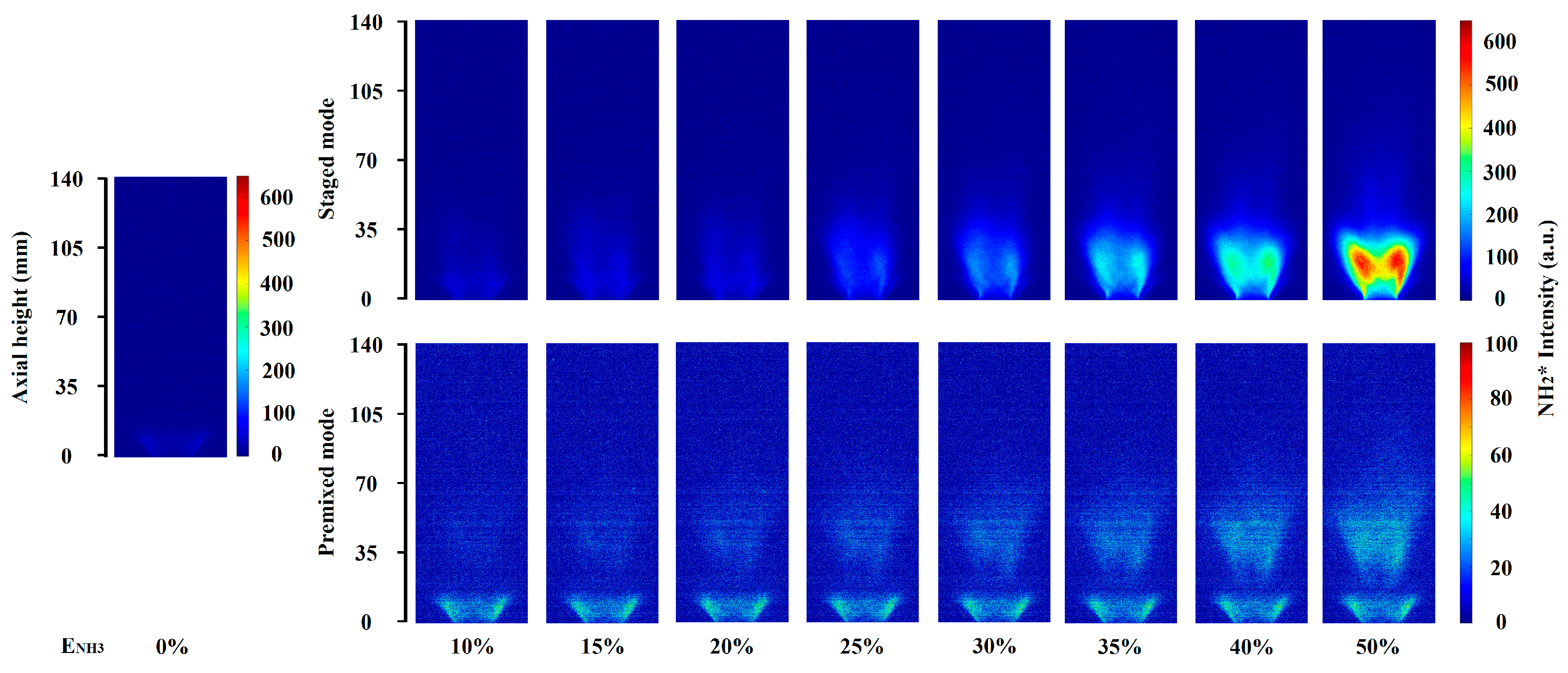
To further investigate the ignition location and combustion intensity of the ammonia flame, time-averaged spontaneous chemiluminescence images of NH2* radicals, a primary intermediate in ammonia oxidation, were captured using the ICCD camera equipped with a 630 nm filter. Figure 3 presents these NH2* images for both injection modes. The NH2* signal intensity in the staged mode is substantially greater than in the premixed mode. Moreover, as the ammonia co-firing ratio increases, the NH2* intensity in the staged mode rises rapidly, whereas it shows only a marginal increase in the premixed mode. A comparison of the spatial distribution of NH2* signals reveals that the ammonia ignition location is significantly more advanced (closer to the burner) in the staged mode. It is noteworthy that NH2* is not present in the methane pilot flame. However, consistent with challenges reported by previous researchers [30], the 630 nm filter used in this study, while transmitting NH2* luminescence, also allows background flame radiation within its bandwidth to pass. This explains the faint signal observed at the methane flame location in the premixed mode images in Figure 3. Collectively, these phenomena confirm that the staged injection mode is more conducive to ammonia combustion. Consequently, the subsequent investigation of the effect of the overall equivalence ratio (Φtotal) on ignition characteristics and flue gas emissions will focus exclusively on the patterns observed in the staged mode.

3.1.2. Ammonia–Coal Flame Morphology Under Various Conditions

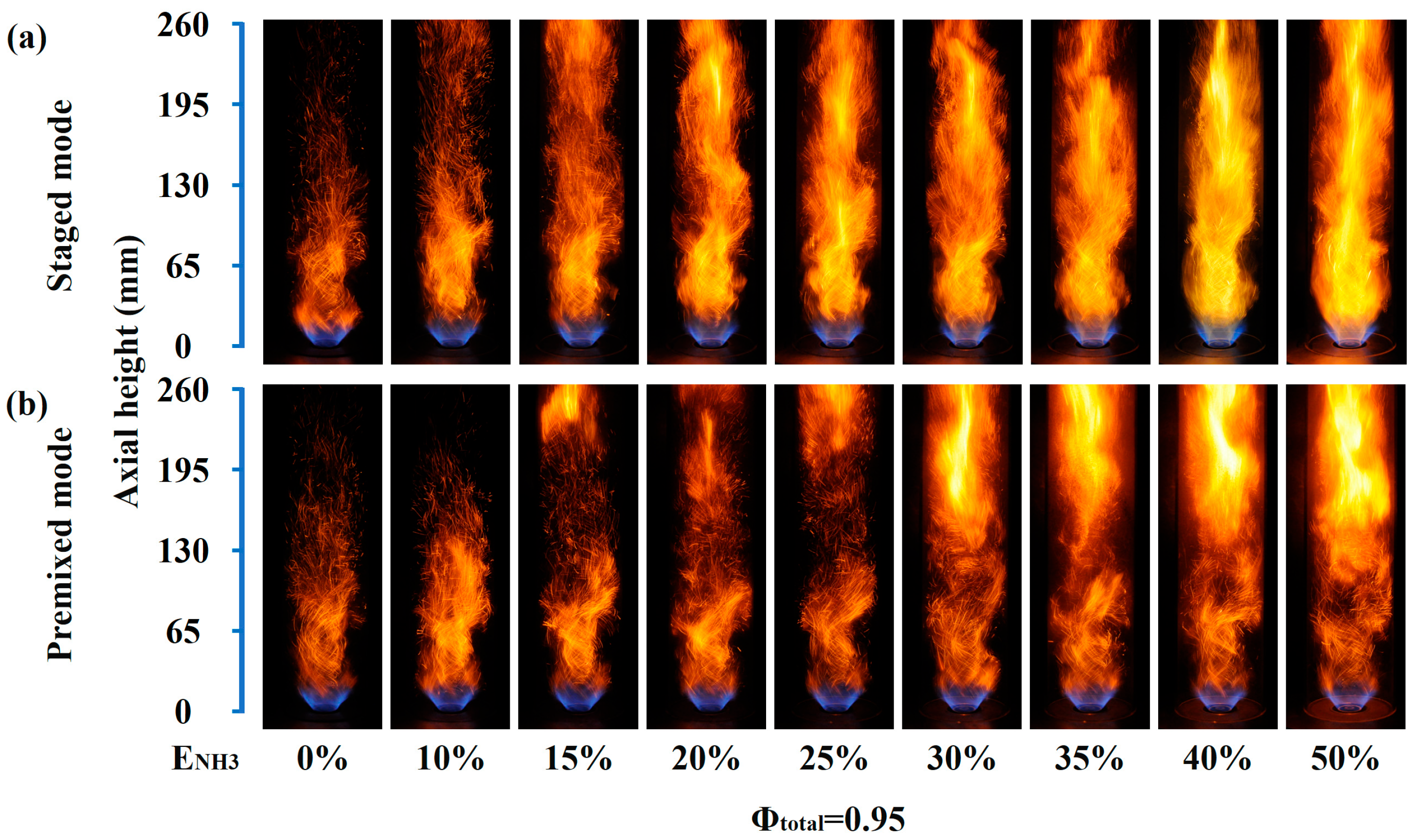
Figure 4 displays the ammonia–coal co-firing flames under varying ENH3 in staged and premixed modes, respectively. The injection of ammonia alters the upstream high-temperature flue gas environment, thereby influencing the ignition mode of the pulverized coal. As shown in Figure 4a, in the staged mode, ammonia is introduced with the secondary air. The high-temperature flue gas generated from its combustion effectively preheats and ignites the pulverized coal particles issuing from the primary air nozzle. This process forms a distinct two-stage flame structure: a weaker flame zone upstream, formed by the early devolatilization of coal, and a bright main flame zone downstream, formed by the concentrated ignition of a large quantity of pulverized coal. Varying ENH3 simultaneously affects both the upstream and downstream ignition processes. As ENH3 increases from 10% to 50%, the heat provided by the upstream ammonia flame rises significantly. This not only enhances the luminosity of the upstream coal flame but also causes the ignition point of the downstream main flame to shift noticeably upstream. This demonstrates the positive effect of the high-temperature flue gas environment from ammonia combustion on promoting earlier coal ignition. In contrast, the flame structure formed in the premixed mode is different, as depicted in Figure 4b. Because ammonia and pulverized coal are simultaneously injected through the primary air nozzle, the ammonia is introduced as a turbulent jet into a region with lower oxygen content in the primary air. This results in an unstable ammonia flame, which weakens the flue gas environment. Consequently, even with an increased ENH3, the early ignition of the coal remains inconspicuous, and the entire flame exhibits an overall delayed ignition characteristic compared to the staged mode.

3.1.3. Ignition Definition

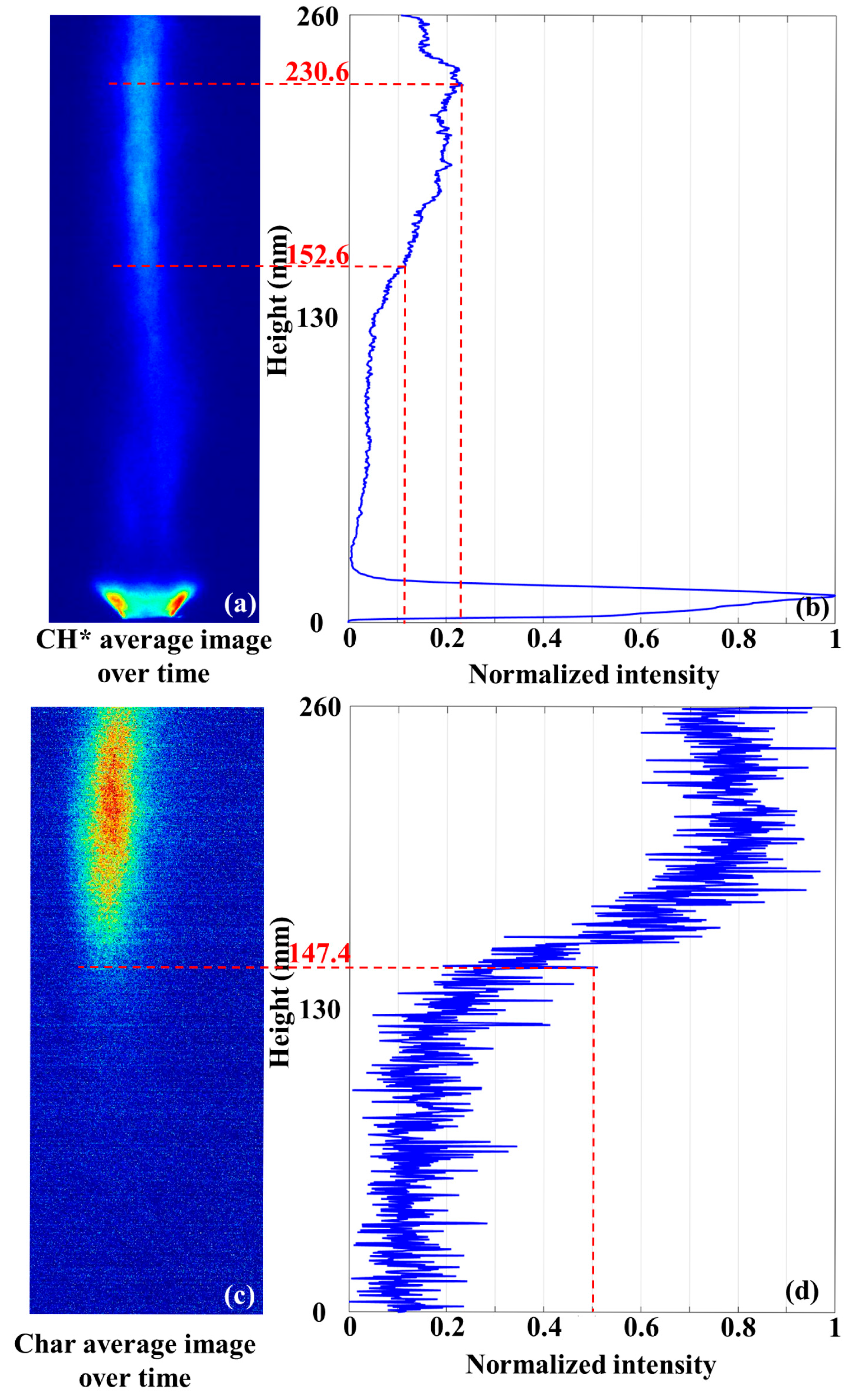
The preceding section provided a qualitative description of the ammonia–coal flame morphology under various conditions, offering an intuitive summary of the trends in ignition characteristics with changes in ENH3 and Φtotal. The subsequent analysis will provide a quantitative assessment of the combustion process based on chemiluminescence signals. In this work, the ICCD camera, in conjunction with bandpass filters, was used to capture spontaneous chemiluminescence images at 430 nm and 850 nm, corresponding to CH* and char signals, respectively. Using MATLAB R2024a, the captured images underwent a series of processing steps: matrix conversion, background signal subtraction, boundary extraction, rejection of low-luminosity images, matrix averaging, and signal normalization. Background noise was removed by subtracting a time-averaged baseline derived from ten consecutive background frames captured at the target wavelength. This mean noise profile was subtracted from the raw specific emission images at every pixel location to isolate the net flame signal. This procedure yielded time-averaged chemiluminescence images and corresponding axial profiles of normalized signal intensity.
To characterize the ignition of the pulverized coal flame, the ignition distance is defined as the distance from the burner exit to the point of ignition. Following the methodology of previous studies [31,32], a threshold of 0.5 is adopted as the ignition criterion to determine the ignition position which is close to that determined by the maximum change rate of normalized intensity. As illustrated in Figure 5b, the height of 152.6 mm corresponds to the ignition location of coal volatiles for that specific condition, while in Figure 5d, the height of 147.4 mm represents the ignition location of coal char.

3.2. Effect of Ammonia Co-Firing Ratio on Coal Particle Ignition

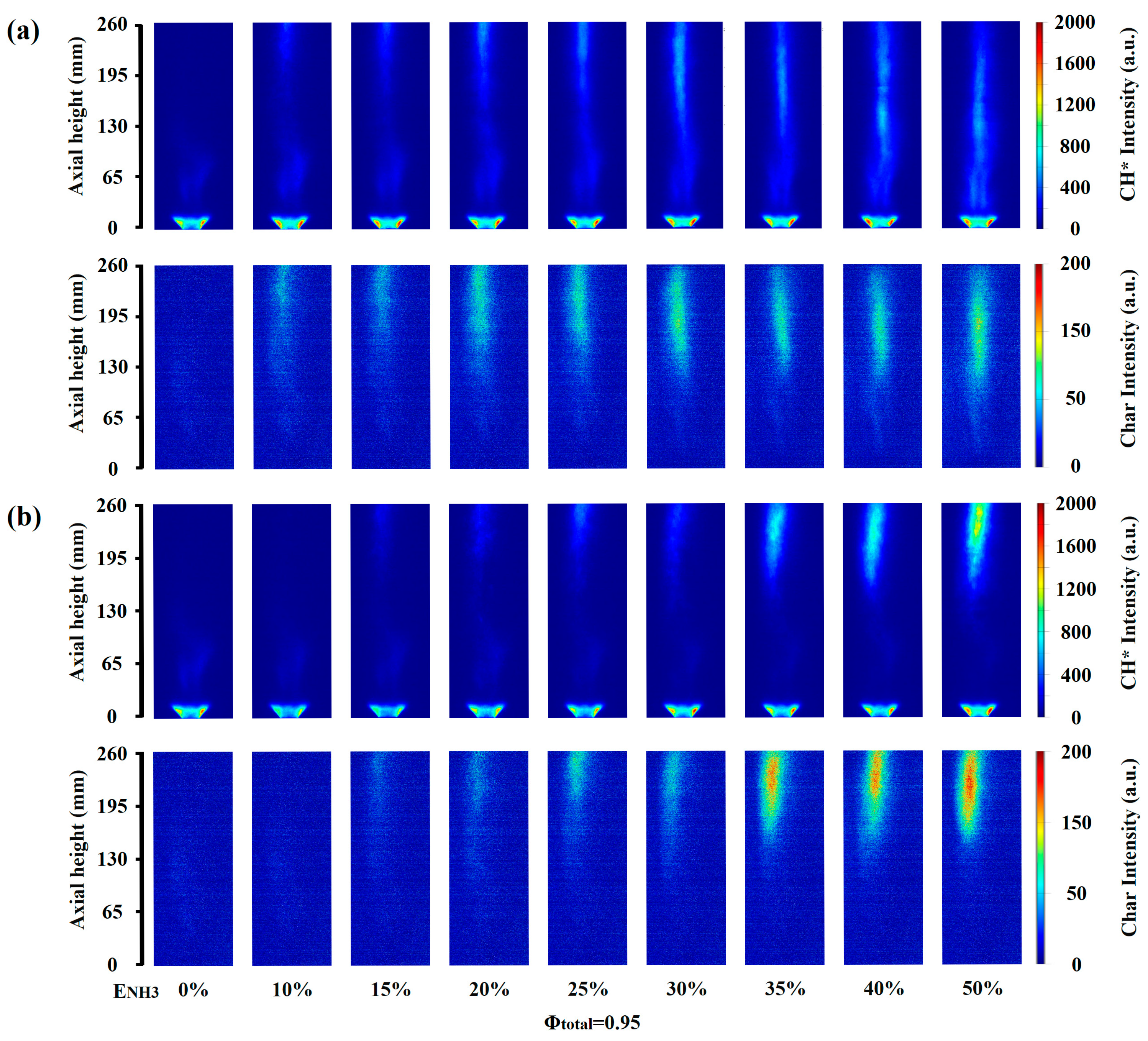
To further explore the influence of ENH3 on the homogeneous and heterogeneous ignition of coal in the staged mode, time-averaged chemiluminescence images of CH* and char are presented in Figure 6a, indicating volatile and char combustion, respectively. As established from the flame morphology analysis, coal ignition occurs primarily in two stages: the early ignition of a fraction of coal particles diffusing outward from the periphery of the primary air jet, and the subsequent group combustion of the coal particles downstream. Under the pure coal condition, a CH* signal is present only in a small region near the upstream hot gas zone and at the periphery of the primary jet, signifying that only these particles undergo homogeneous ignition. Char chemiluminescence is nearly undetectable under this condition. With the staged injection of ammonia, both CH* and char signals appear downstream, indicating that both volatiles and char from the downstream coal particles are ignited, and thus, both homogeneous and heterogeneous ignition occur. As ENH3 is progressively increased, the initial appearance of both CH* and char signals shifts continuously upstream, demonstrating that the ignition distances for both volatiles and char shorten with rising ENH3.
Figure 6b presents the time-averaged CH* and char chemiluminescence images for the premixed mode with varying ENH3. In this mode, the effect of ammonia on coal ignition can be understood through two competing pathways: (1) an increase in ENH3 leads to more intense ammonia combustion, providing more heat to promote coal ignition, and (2) since ammonia is introduced through the primary air, it competes with the coal particles for available oxygen, thereby delaying ignition. At low ENH3, a faint CH* signal is visible in the upstream hot gas region from a small number of coal particles. However, as ENH3 increases, this signal gradually disappears, indicating that the homogeneous reaction of coal in this upstream region is progressively suppressed. This suggests that pathway (2) is dominant in the upstream region. For the downstream ignition of the groups of coal, pathway (1) becomes dominant. As ENH3 increases, both CH* and char signals intensify, signifying that both homogeneous and heterogeneous reactions in this region are being enhanced.
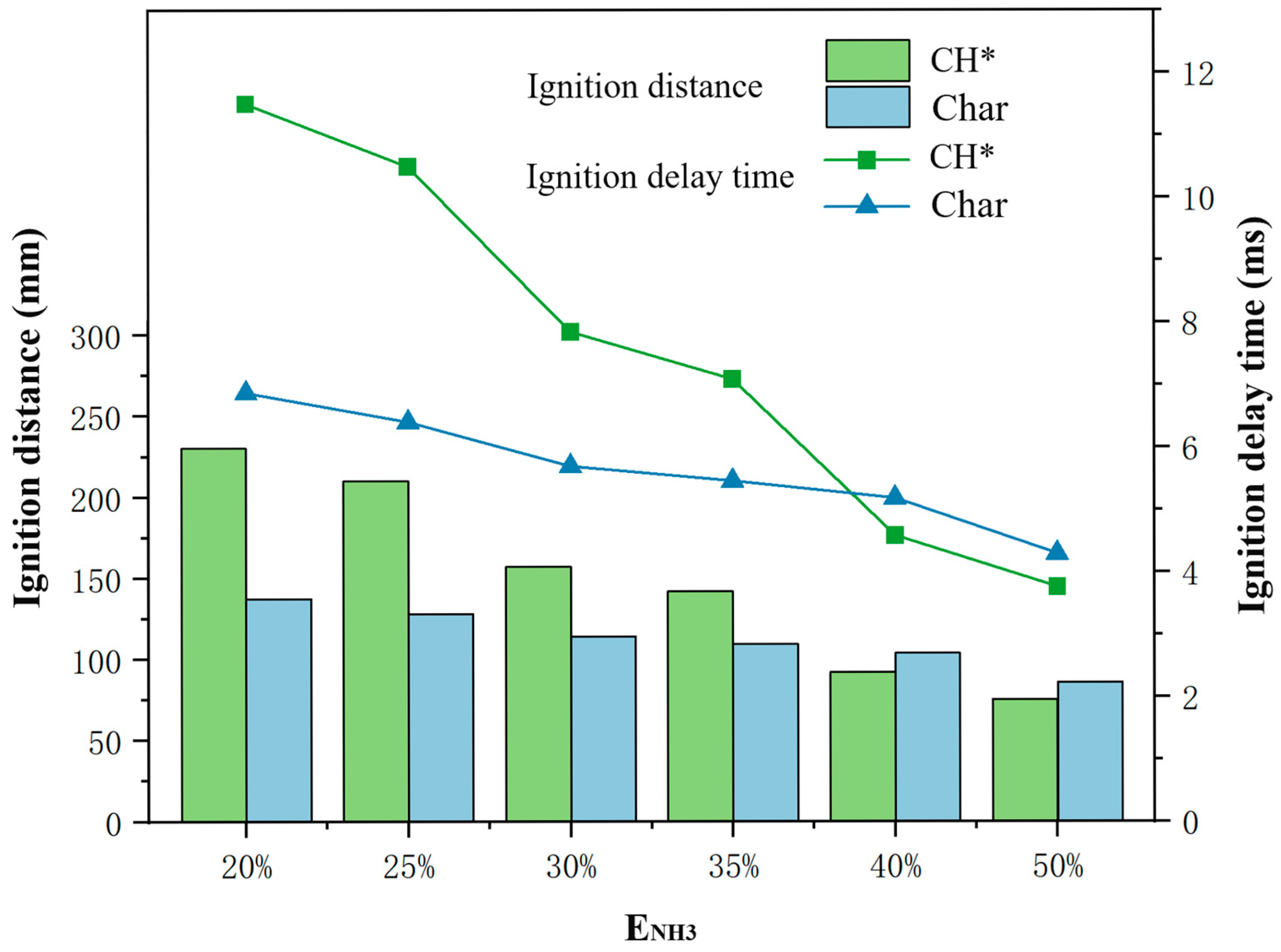
Figure 7 quantifies the coal ignition characteristics in the staged mode as a function of ENH3, derived from the processed chemiluminescence data. It should be noted that data for ignition distance are missing for ENH3 values between 0% and 15% due to the limited field of view of the camera (0–260 mm from the burner exit) and the incomplete combustion of downstream coal at low ENH3. As ENH3 increases, the ignition distances for both volatiles and char exhibit a decreasing trend. This is attributed to two factors: first, a higher ammonia co-firing ratio results in an ammonia flame that provides a higher-temperature flue gas environment, which shortens the coal particle heating time and allows them to reach the ignition stage earlier. Second, an increased ENH3 corresponds to a reduced coal feed rate in the primary air, which weakens particle clustering effects and facilitates their dispersion into the surrounding secondary air, allowing earlier contact with oxygen. These findings indicate that within the ENH3 range of 20–50%, the addition of ammonia promotes the advancement of both homogeneous and heterogeneous ignition. In the ENH3 range of 20–35%, heterogeneous ignition precedes homogeneous ignition. This can be explained by the onset of heterogeneous char combustion increasing the particle temperature, which, in turn, promotes the pyrolysis and release of volatiles, leading to homogeneous ignition once a sufficient concentration of volatiles has accumulated. Notably, for ENH3 greater than 35%, the homogeneous ignition distance becomes shorter than the heterogeneous one. This may be due to the CH* signal from the combustion of volatiles released by the preheated coal particles at the periphery of the upstream primary jet interfering with the accurate determination of the downstream homogeneous ignition distance.
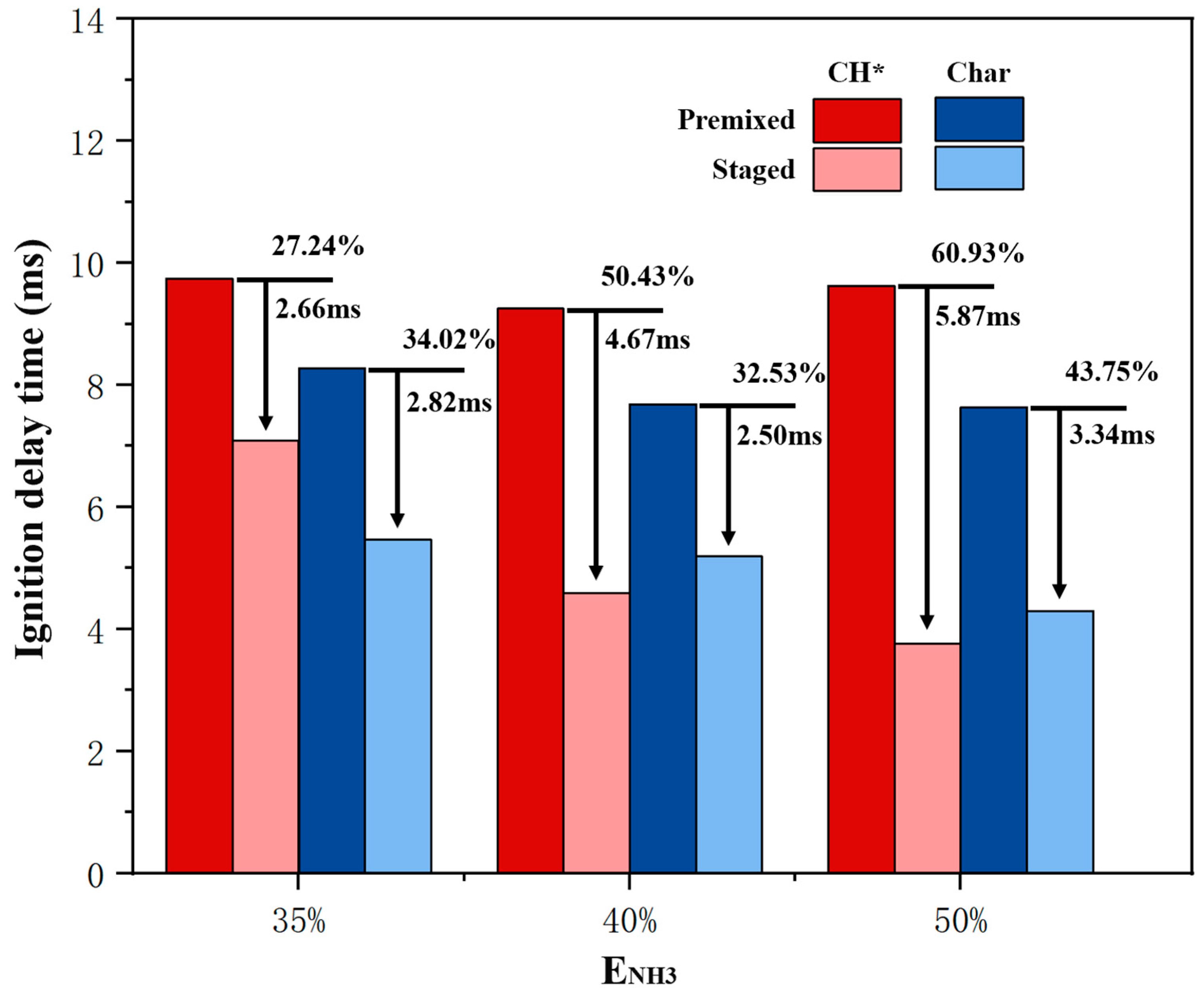
In the premixed mode, a distinct maximum flame intensity position was observable within the camera’s field of view only for ENH3 values between 35% and 50%. Figure 8 compares the coal ignition characteristics of the two co-firing modes to evaluate their respective ignition-promoting effects. As indicated by the arrows, at the same coal injection velocity, the staged mode exhibits a significantly stronger ignition-promoting effect than the premixed mode, drastically reducing both heterogeneous and homogeneous ignition delay times. Furthermore, as ENH3 increases, the ratio of ammonia energy input to the fixed methane pilot flame energy input rises, making the ignition-promoting advantage of the staged mode even more pronounced. At a 50% ammonia co-firing ratio, the staged mode can reduce the homogeneous ignition delay time by as much as 60.93%. These trends are consistent with the findings of Xu et al. [17] in a laminar Hencken burner, which indicated that ammonia addition significantly shortens the ignition delay of pulverized coal. Furthermore, similar variations in ignition delay were observed by Yu et al. [27] in a swirl burner.

3.3. Effect of Overall Equivalence Ratio on Coal Particle Ignition

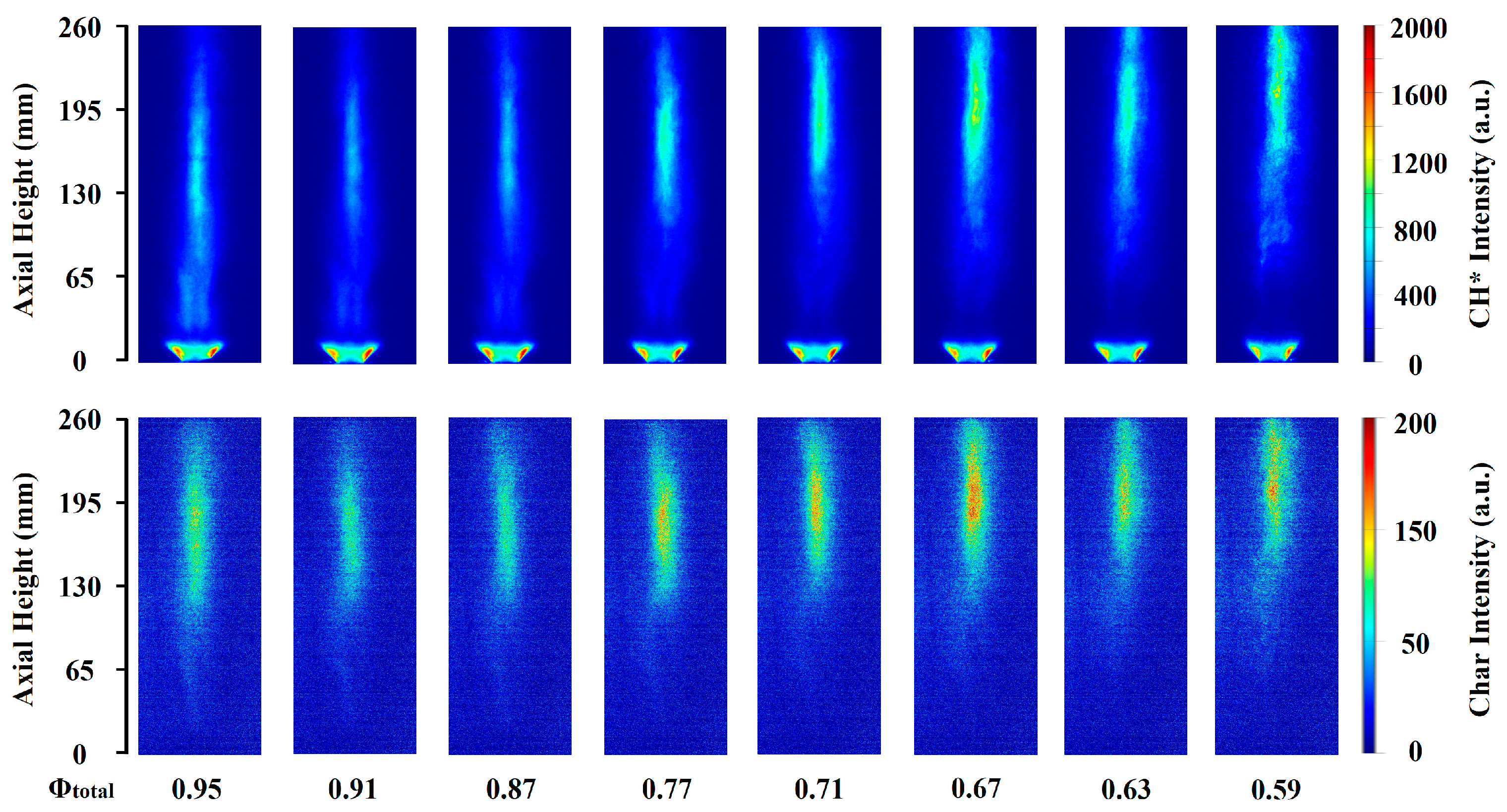
To further investigate the impact of varying the overall equivalence ratio (Φtotal) on the homogeneous and heterogeneous ignition of coal in the staged mode, time-averaged CH* and char chemiluminescence images are shown in Figure 9. As Φtotal decreases, several mechanisms may influence upstream coal ignition: (1) the increased secondary air flow enhances the swirl-induced recirculation, which could reduce the axial velocity of coal particles and advance ignition; (2) the ammonia flame becomes leaner as secondary air increases, moving towards incomplete combustion, which reduces the heat supplied for coal ignition and delays it; and (3) a larger volume of cold air absorbs heat from the ammonia and methane flames, lowering the overall flue gas temperature and thus delaying ignition. Furthermore, both factors (2) and (3) can be attributed to the reduction in the ambient flue gas temperature. The observation that the initial appearance of both upstream CH* and char signals shifts downstream as Φtotal decreases suggests that pathways (2) and (3) are dominant. Although a reduced equivalence ratio enhances the mixing between primary and secondary air, allowing downstream coal particles to enter an oxygen-rich environment earlier, this benefit is outweighed by the weakened high-temperature flue gas environment from the upstream flame. The reduced particle heating rate consequently leads to an increase in both homogeneous and heterogeneous ignition distances downstream. This observation is consistent with the conclusions of Liu et al. [32], who reported that the ignition delay of pulverized coal is heavily dependent on the ambient gas temperature.
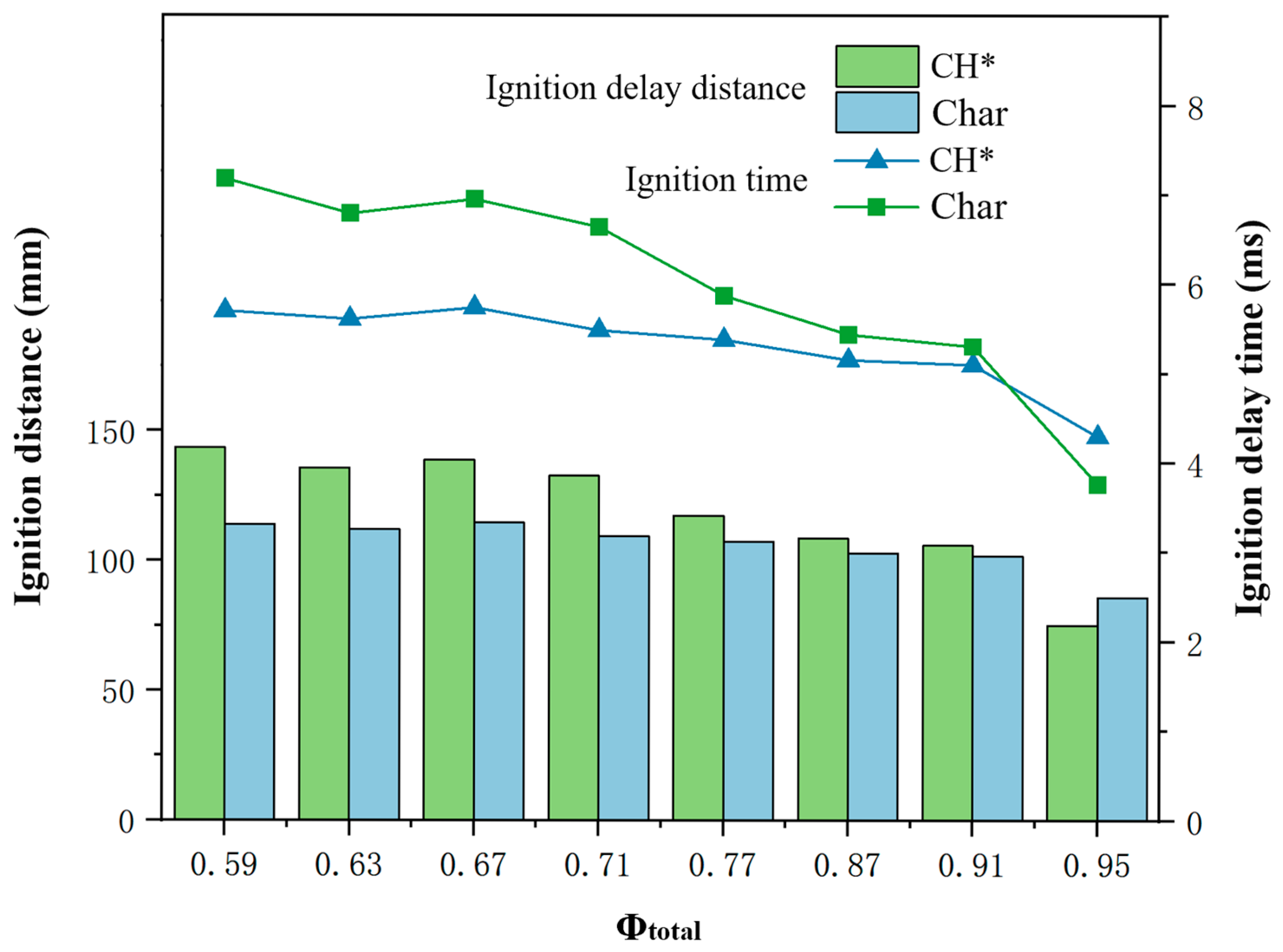
Figure 10 presents the coal ignition characteristics as a function of Φtotal in the staged mode. As the equivalence ratio decreases, the ignition distances for both volatiles and char show an increasing trend. This indicates that within the Φtotal range of 0.59–0.95, the addition of secondary air is detrimental to the advancement of both homogeneous and heterogeneous ignition. For Φtotal in the range of 0.59–0.91, heterogeneous ignition precedes homogeneous ignition. Only at Φtotal = 0.95 is heterogeneous ignition delayed relative to homogeneous ignition. This can be attributed to the fact that as Φtotal decreases, the increased secondary air flow hinders the early homogeneous ignition of coal particles at the periphery of the primary jet, thereby eliminating the interference from the upstream CH* signal mentioned previously.

3.4. Effects of Co-Firing Ratio and Equivalence Ratio on Flue Gas Emissions

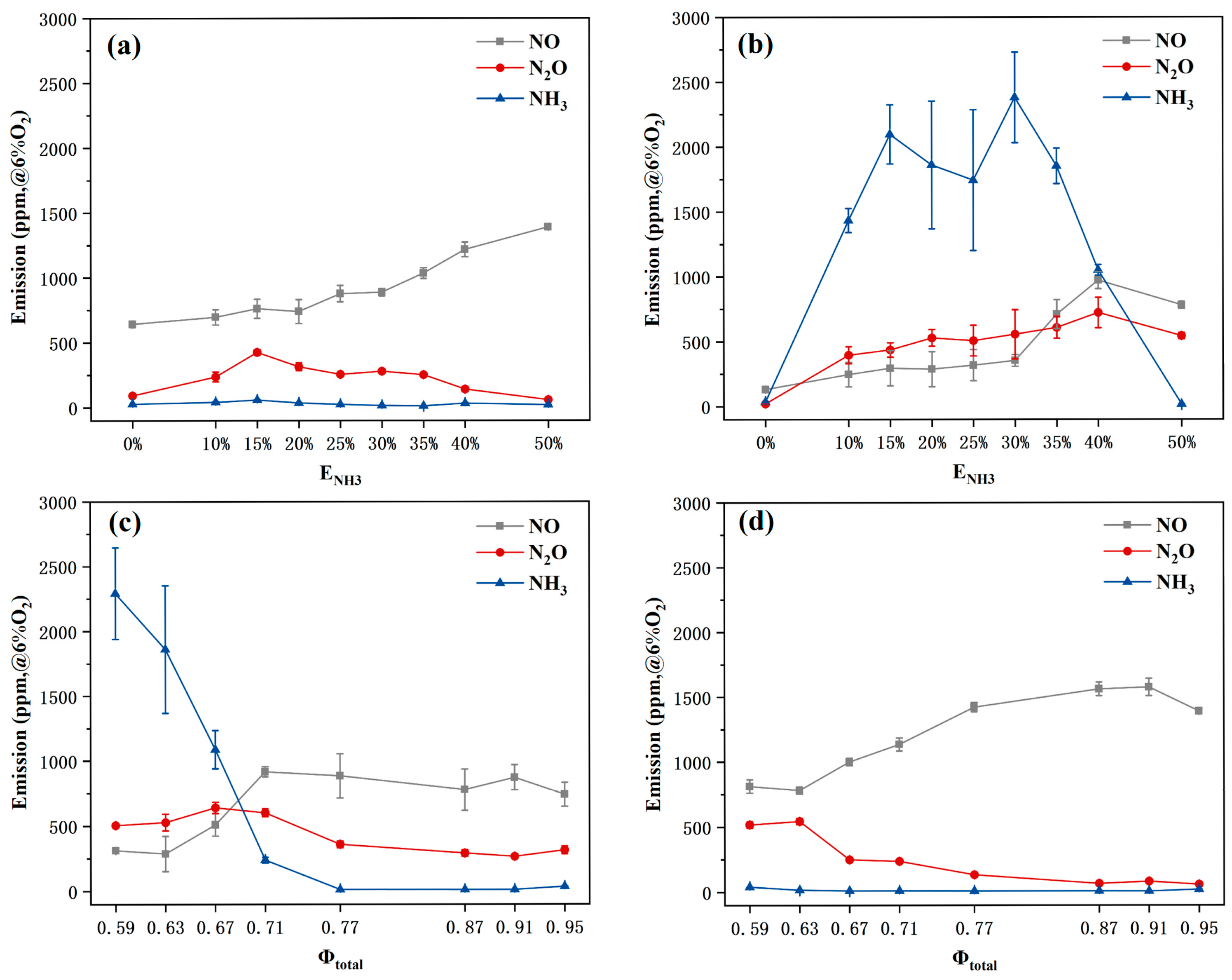
Figure 11 illustrates the effects of varying ENH3 and Φtotal on the concentrations of NO, N2O, and NH3 in the flue gas under the staged mode. In ammonia–coal co-firing, the formation and destruction of N2O in the initial or incomplete combustion zones of a high-temperature atmosphere proceed via the following reactions [33]:
NO   +   Char - N     N 2 O ,
N 2 O + O     N O + NO   or   N 2 +   O 2 ,
NCO + NO     N 2 O + CO ,
Since NO and N2O appear on both sides of reactions (3)–(5), incomplete combustion conditions that reduce NO formation can lead to an increase in N2O concentration. Based on this, the N2O level can serve as an indicator of the completeness of ammonia–coal combustion.
At Φtotal = 0.95, as the ammonia co-firing ratio increases, the additional nitrogen input leads to a rise in fuel-NOx, resulting in an overall increasing trend for NOx emissions. Concurrently, NH3 slip remains at a very low level, indicating complete ammonia combustion. However, it is noteworthy that for ENH3 < 15%, N2O increases with ENH3. This is because under pure coal conditions, a large fraction of the coal is not ignited, limiting NOx release. As ENH3 rises, a greater proportion of coal is ignited, but the heat from the ammonia flame is still insufficient for complete combustion, causing N2O to increase. For ENH3 > 15%, the ammonia flame intensifies, and coal combustion progresses towards completion, leading to a gradual decrease in N2O.
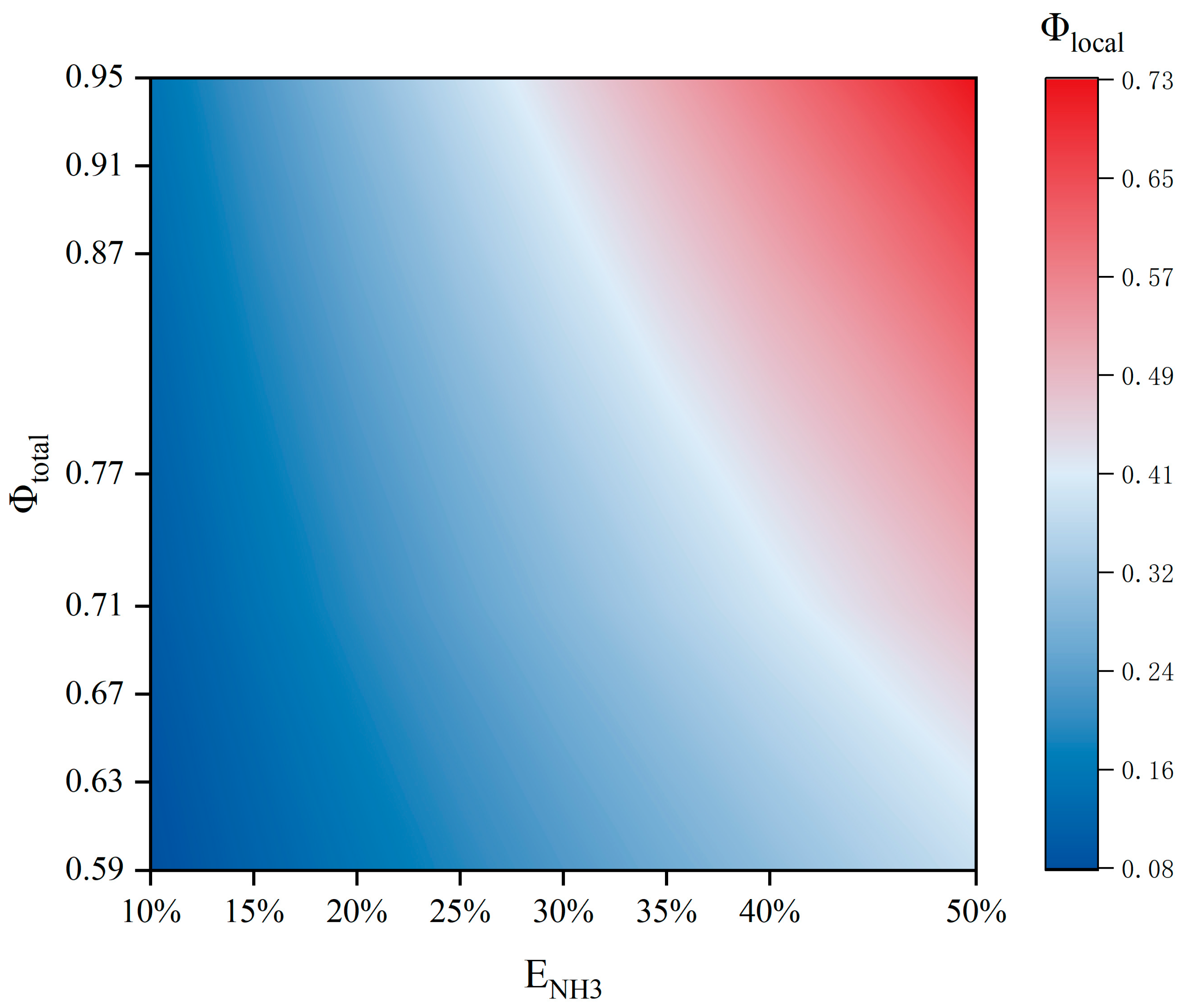
At Φtotal = 0.63, the NH3 slip experiences four distinct stages as ENH3 increases: (1) For ENH3 from 0–15%, the ammonia input is minimal. Since the majority of combustion air is supplied as secondary air, the local equivalence ratio (Φlocal), defined as the equivalence ratio calculated specifically within the ammonia-injected secondary air stream, is extremely low (see Figure 12), resulting in very lean conditions and incomplete combustion. Consequently, NH3 slip increases with ENH3. (2) In the range of ENH3 = 15–25%, although still locally lean, the increased heat from the ammonia flame initiates homogeneous combustion of some upstream coal particles, which, in turn, promotes ammonia combustion, causing NH3 slip to decrease. (3) For ENH3 = 25–30%, the coal feed rate decreases, reducing the promoting effect of the coal flame on ammonia combustion, and NH3 slip begins to rise again. (4) For ENH3 = 30–50%, although still lean, the increasing proportion of ammonia in the secondary air brings Φlocal closer to a stable combustion regime. At ENH3 = 50%, ammonia combustion is nearly complete, with NH3 slip below 100 ppm. At Φtotal = 0.59, both NO and N2O generally increase with ENH3 due to the combination of increased fuel-N input and lean ammonia combustion. Notably, in the ENH3 range of 40–50%, N2O drops sharply as the improved Φlocal shifts ammonia combustion towards completion. These observations indicate that under conditions where ammonia can burn completely, higher ENH3 leads to higher NOx emissions, and N2O levels are correlated with the completeness of combustion.
At ENH3 = 20%, when Φtotal is in the range of 0.71–0.95, the fuel input is constant, and NO levels remain similar. However, as Φtotal decreases, Φlocal also decreases, making the ammonia flame leaner and less stable, as evidenced by rising N2O and NH3 slip. When Φtotal drops into the 0.59–0.71 range, the further decrease in Φtotal makes it difficult for the ammonia flame to sustain itself, and coal ignition becomes more challenging. This leads to a sharp drop in fuel-NOx, accompanied by a dramatic increase in NH3 slip.
At ENH3 = 50%, compared to the 20% case, Φlocal is substantially higher, and combustion is markedly improved. Across the entire Φtotal range of 0.59–0.95, NH3 slip remains below 100 ppm. As Φtotal decreases, ammonia combustion becomes less complete, leading to a gradual decrease in NO concentration but an increase in N2O. These phenomena underscore the profound impact of Φlocal on ammonia combustion and slip. When Φlocal is too low, NH3 slip increases drastically.
Our observations are consistent with the conclusions of Ma et al. [34], they found that NO concentrations exhibited an increasing trend as the ammonia co-firing ratio rose within the equivalence ratio range of 0.8–1.1. Conversely, a declining trend in NO levels was observed as the equivalence ratio decreased from 1.1 to 0.8.

4. Conclusions

The combustion characteristics of ammonia–coal co-firing were investigated in a dual-swirl burner by varying the injection strategy, co-firing ratio (ENH3, 0–50%), and overall equivalence ratio (Φtotal, 0.59–0.95). The key conclusions are as follows:
(1) The ammonia injection strategy is the dominant factor for coal ignition. Staged injection (ammonia supplied with secondary air) significantly promotes coal ignition compared to the premixed mode, reducing the homogeneous ignition delay by up to 60.93% at a 50% co-firing ratio. This is achieved by creating a superior thermal flue gas environment for coal particles while effectively mitigating oxygen competition between the fuels in the near-burner region.
(2) In the superior staged mode, increasing either the ENH3 or Φtotal enhances coal ignition. Higher ENH3 promotes ignition through enhanced heat release from the ammonia flame. Higher Φtotal benefits ignition by reducing the cooling effect from excess secondary air, thereby maintaining a hotter overall environment. Optimal ignition occurred at Φtotal = 0.95 and ENH3 = 50%, yielding minimum homogeneous and heterogeneous delays of 3.76 ms and 4.3 ms, respectively.
(3) In the premixed mode, the impact of ENH3 on ignition reveals a spatial dichotomy. Upstream, oxygen competition between ammonia and coal suppresses early coal ignition. Downstream, where mixing is enhanced, the thermal effect of ammonia combustion becomes dominant and promotes ignition, highlighting the complexity of fuel-fuel interactions under premixed conditions.
(4) Pollutant emissions are strongly governed by the local stoichiometry of the ammonia flame. In the staged mode, ensuring ammonia combusts under a sufficiently high local equivalence ratio (Φlocal > 0.3) is critical. Overly lean local conditions trigger incomplete ammonia combustion, leading to a sharp increase in N2O and NH3 slip.
In summary, this study demonstrates that staged ammonia injection is a robust strategy for enhancing ignition performance in turbulent swirling co-firing systems. Current findings are based on laboratory-scale conditions; thus, future work will focus on validating these mechanisms under high-turbulence environments via CFD simulations and pilot-scale tests. regarding industrial integration, the revealed dominance of the local equivalence ratio suggests that retrofitting burners to optimize injection nozzle geometries for favorable local mixing is a critical strategy for flame stabilization.

Author Contributions

Conceptualization, Z.Y. and Z.W.; methodology, Y.L. and Z.Y.; software, Y.L.; validation, Y.L., Z.Y. and G.M.U.D.; formal analysis, Y.L.; investigation, Y.L.; resources, Z.W.; data curation, G.M.U.D.; writing—original draft preparation, Y.L.; writing—review and editing, S.W., Z.Y., W.W. and Z.W.; visualization, Y.L.; supervision, S.W., W.W., Y.H. and Z.W.; project administration, Z.W.; funding acquisition, S.W., W.W., Y.H. and Z.W. All authors have read and agreed to the published version of the manuscript.

Funding

This work was supported by the National Natural Science Foundation of China (U24B2068, 52125605), the Baima Lake Laboratory Joint Funds of the Zhejiang Provincial Natural Science Foundation of China (LBMHZ24E060001) and Capacity Building for the National Energy Technology R&D (experimental) center on Clean Coal Conversion (2024) (Grant No. GJNY-24-126).

Data Availability Statement

The original contributions presented in this study are included in the article. Further inquiries can be directed to the corresponding author.

Conflicts of Interest

The authors declare no conflicts of interest.

Abbreviations

The following abbreviations are used in this manuscript:
ENH3Ammonia co-firing ratio
ΦtotalOverall equivalence ratio
OH-PLIFPlanar Laser-Induced Fluorescence of OH radical
CFDComputational Fluid Dynamics
SNSwirl number
DDiameter
ICCDIntensified Charge-Coupled Device
XMole fraction of species
ΦlocalLocal equivalence ratio

References

  1. Elwardany, M.; Nassib, A.M.; Mohamed, H.A. Advancing Sustainable Thermal Power Generation: Insights from Recent Energy and Exergy Studies. Process Saf. Environ. Prot. 2024, 183, 617–644. [Google Scholar] [CrossRef]
  2. Fonseca, A.J.D.S.; Diniz, F.F.; Gehrke, C.S.; Nunes, A.M.M.; Santos Júnior, E.P.; Coelho Junior, L.M. Thermal Power Plants in the Energy Transition and Circular Economy: A Review. Sustain. Futures 2025, 10, 101302. [Google Scholar] [CrossRef]
  3. Aziz, M.; Juangsa, F.B.; Irhamna, A.R.; Irsyad, A.R.; Hariana, H.; Darmawan, A. Ammonia Utilization Technology for Thermal Power Generation: A Review. J. Energy Inst. 2023, 111, 101365. [Google Scholar] [CrossRef]
  4. Gürel, B.; Kurtuluş, K.; Yurdakul, S.; Karaca Dolgun, G.; Akman, R.; Önür, M.E.; Varol, M.; Keçebaş, A.; Gürbüz, H. Combustion of Chicken Manure and Turkish Lignite Mixtures in a Circulating Fluidized Bed. Renew. Sustain. Energy Rev. 2024, 189, 113960. [Google Scholar] [CrossRef]
  5. Valera-Medina, A.; Xiao, H.; Owen-Jones, M.; David, W.I.F.; Bowen, P.J. Ammonia for Power. Prog. Energy Combust. Sci. 2018, 69, 63–102. [Google Scholar] [CrossRef]
  6. Mohi Ud Din, G.; Yu, Z.; Lou, Y.; He, Y.; Weng, W.; Wang, Z. Ammonia Cofiring with Coal for a Sustainable Green Power Generation: Progress and Outlook. Energy Fuels 2025, 39, 12407–12428. [Google Scholar] [CrossRef]
  7. Wang, Q.; Hu, Z.; Shao, W.; Wang, Z.; Liu, H.; Li, X.; Cui, D. The Present Situation, Challenges, and Prospects of the Application of Ammonia–Coal Co-Firing Technology in Power Plant Boilers. J. Energy Inst. 2024, 113, 101531. [Google Scholar] [CrossRef]
  8. Saif, A.G.H.; Mokheimer, E.M.A. Comprehensive Review on Ammonia Combustion Technologies: Combustion Characteristics, Potential of Hydrogen/Methane Additions, and Emerging Applications. Int. J. Hydrogen Energy 2025, 148, 149672. [Google Scholar] [CrossRef]
  9. Liu, Q.; Song, G.; Liu, Z.; Li, Y.; Dai, H.; Duan, L. Effects of Ammonia Blending on NO Formation Characteristics in the Primary Combustion Zone of a Coal-Fired Boiler. Fuel 2026, 406, 137189. [Google Scholar] [CrossRef]
  10. Zhao, S.; Ma, J.; Li, D.; Zhu, Y.; Liu, L.; Sun, Z. Emission and Transformation of Various Pollutants during Coal-Ammonia Combustion in Fluidized Bed: CO/CO2/CxHy/NH3/NOx/SO2/Hg. J. Energy Inst. 2025, 123, 102257. [Google Scholar] [CrossRef]
  11. Pan, W.; Yao, N.; Chen, Y.; Kang, L. Numerical Investigation of NOx Emission Characteristics in Air-Staged Combustion System Fueled by Premixed Ammonia/Methane. J. Energy Inst. 2024, 117, 101857. [Google Scholar] [CrossRef]
  12. Zha, X.; Zhang, Z.; Zhao, Z.; Yang, L.; Mao, W.; Lai, G.; Luo, C.; Zhang, L. The Relationship between the Moderate or Intense Low Oxygen Dilution (MILD) Regime and NO Formation in the Co-Combustion of NH3 with Bituminous Coal. J. Energy Inst. 2025, 121, 102156. [Google Scholar] [CrossRef]
  13. Wang, G.; Guiberti, T.F.; Cardona, S.; Jimenez, C.A.; Roberts, W.L. Effects of Residence Time on the NOx Emissions of Premixed Ammonia-Methane-Air Swirling Flames at Elevated Pressure. Proc. Combust. Inst. 2023, 39, 4277–4288. [Google Scholar] [CrossRef]
  14. Yang, C.; Zhou, Y.; Chen, G.; Peng, A. An Observation of the Ignition Behavior of Pulverized Coal Particles during Co-Combustion with Ammonia under the Well-Controlled Co-Flow Conditions. Fuel 2025, 400, 135660. [Google Scholar] [CrossRef]
  15. Ma, P.; Huang, Q.; Wu, Z.; Lyu, J.; Li, S. Optical Diagnostics on Coal Ignition and Gas-Phase Combustion in Co-Firing Ammonia with Pulverized Coal on a Two-Stage Flat Flame Burner. Proc. Combust. Inst. 2023, 39, 3457–3466. [Google Scholar] [CrossRef]
  16. Chen, C.; Wang, Z.; He, Y.; Weng, W.; Cen, K. Ignition Characteristics of Single Coal Particles under Ammonia Co-Firing Conditions. Combust. Flame 2024, 263, 113385. [Google Scholar] [CrossRef]
  17. Xu, M.; Liu, X.; Xu, Y.; Zhang, A.; Xu, M. A Comparative Investigation on Flame Characteristics and Temperature Distribution in Ammonia and Hydrogen Co-Firing with Coal Combustion. Int. J. Hydrogen Energy 2025, 183, 151851. [Google Scholar] [CrossRef]
  18. Chae, T.; Sim, W.; Lee, J.W.; Yang, W.; Baek, S.; Park, K. An Experimental Study on Optimization of Ammonia Co-Firing in an 80kWth Pulverized Coal Combustion System. Fuel 2025, 380, 132740. [Google Scholar] [CrossRef]
  19. Wang, Y.; He, Y.; Weng, W.; Wang, Z. Numerical Simulation of Ammonia Combustion with Coal in a 135 MW Tangentially Fired Boiler. Fuel 2024, 370, 131831. [Google Scholar] [CrossRef]
  20. Chen, C.; Wang, Z.; Zhu, R.; Tan, J.; He, Y.; Cen, K. Co-Firing Characteristics and Fuel-N Transformation of Ammonia/Pulverized Coal Binary Fuel. Fuel 2023, 337, 126857. [Google Scholar] [CrossRef]
  21. Ling, J.L.J.; Lee, H.E.; Park, H.J.; Lee, S.H. Performance Assessment and Emission Implications of an Ammonia Co-Combustion Power System with Various Coal Ranks. Appl. Therm. Eng. 2025, 278, 127177. [Google Scholar] [CrossRef]
  22. Li, T.; Li, L.; Liu, C.; Liu, H.; Sun, G.; Ding, N.; Lu, D.; Duan, L. Investigating Combustion Efficiency and NOx Emission Reduction in Fluidized Bed Ammonia-Coal Co-Firing. Combust. Flame 2024, 270, 113735. [Google Scholar] [CrossRef]
  23. Hadi, K.; Ichimura, R.; Hashimoto, G.; Xia, Y.; Hashimoto, N.; Fujita, O. Effect of Fuel Ratio of Coal on the Turbulent Flame Speed of Ammonia/Coal Particle Cloud Co-Combustion at Atmospheric Pressure. Proc. Combust. Inst. 2021, 38, 4131–4139. [Google Scholar] [CrossRef]
  24. Cui, M.; Liang, X.; Di, Y.; Niu, F.; Wang, S. Study on the Effect of Ammonia Mixing Ratio on Process of Ammonia and Coal Co-Combustion. J. Energy Inst. 2025, 120, 102040. [Google Scholar] [CrossRef]
  25. Cui, B.; Wang, X.; Yu, S.; Zhang, K.; Zhang, Y.; Ruan, R.; Wang, X.; Tan, H. Assisting Denitrification and Strengthening Combustion by Using Ammonia/Coal Binary Fuel Gasification-Combustion: Effects of Injecting Position and Air Distribution. Energy 2024, 312, 133609. [Google Scholar] [CrossRef]
  26. Xia, Y.; Hadi, K.; Hashimoto, G.; Hashimoto, N.; Fujita, O. Effect of Ammonia/Oxygen/Nitrogen Equivalence Ratio on Spherical Turbulent Flame Propagation of Pulverized Coal/Ammonia Co-Combustion. Proc. Combust. Inst. 2021, 38, 4043–4052. [Google Scholar] [CrossRef]
  27. Yu, Z.; Chen, J.; He, Y.; Weng, W.; Liu, S.; Wang, Z. Ignition and Combustion Characteristics of Ammonia-Coal Co-Firing in a Tubular Dual Swirl Burner under Different Co-Firing Conditions. Fuel 2026, 404, 136224. [Google Scholar] [CrossRef]
  28. Vignat, G.; Durox, D.; Candel, S. The Suitability of Different Swirl Number Definitions for Describing Swirl Flows: Accurate, Common and (over-) Simplified Formulations. Prog. Energy Combust. Sci. 2022, 89, 100969. [Google Scholar] [CrossRef]
  29. Bennett, G.F. Air Pollution Control: A Design Approach, 3rd Edition: C. David Cooper and F.C. Alley (Eds.), Waveland Press, Prospect Heights, IL, 2002, 738 pp., US$ 74.95, ISBN 1-57766-218-0. J. Hazard. Mater. 2003, 96, 342–344. [Google Scholar] [CrossRef]
  30. Jiang, L.; Su, H. Experimental Study on Chemiluminescence Characteristics of Ammonia/Methane Partially Premixed Swirling Flames. J. Energy Inst. 2026, 124, 102336. [Google Scholar] [CrossRef]
  31. Xu, K.; Wu, Y.; Wang, Z.; Yang, Y.; Zhang, H. Experimental Study on Ignition Behavior of Pulverized Coal Particle Clouds in a Turbulent Jet. Fuel 2016, 167, 218–225. [Google Scholar] [CrossRef]
  32. Liu, Y.; Geier, M.; Molina, A.; Shaddix, C.R. Pulverized Coal Stream Ignition Delay under Conventional and Oxy-Fuel Combustion Conditions. Int. J. Greenh. Gas Control 2011, 5, S36–S46. [Google Scholar] [CrossRef]
  33. Jeon, M.; Lee, E.; Kim, M.; Jegal, H.; Park, S.; Chi, J.H.; Baek, S.; Lee, J.; Keel, S.-I. Nitric Oxide (NO) and Nitrous Oxide (N2O) Emissions during Selective Non-Catalytic Reduction and Selective Catalytic Reduction Processes in a Pulverized Coal/Ammonia Co-Fired Boiler. J. Environ. Chem. Eng. 2023, 11, 109398. [Google Scholar] [CrossRef]
  34. Ma, C.; Cui, B.; Du, Y.; Yu, Z.; Du, J.; Wang, Y. NOx Formation in Pulverized Coal Co-Firing with Ammonia and Hydrogen: Effects of Fuel Properties and Air-Staging. J. Energy Inst. 2026, 124, 102409. [Google Scholar] [CrossRef]
Figure 1. Schematic of the experimental apparatus.
Processes 14 00163 g001
Figure 2. Comparison of pure gas-phase methane–ammonia flame morphologies at different ammonia co-firing ratios.
Processes 14 00163 g002
Figure 3. Time-averaged NH2* spontaneous chemiluminescence images of pure gas-phase methane–ammonia flames at different ammonia co-firing ratios.
Processes 14 00163 g003
Figure 4. Ammonia–coal flame images with varying ENH3 in different modes: (a) staged mode; (b) premixed mode.
Processes 14 00163 g004
Figure 5. Determination of volatile and char ignition in an ammonia–coal co-firing flame. (a) CH* average image over time; (b) CH* normalized intensity; (c) Char average image over time; (d) Char normalized intensity.
Processes 14 00163 g005
Figure 6. Time-averaged CH* and char chemiluminescence images ammonia–coal flames with varying ENH3 in different modes: (a) staged mode; (b) premixed mode.
Processes 14 00163 g006
Figure 7. Coal ignition delay time as a function of ENH3 in staged mode.
Processes 14 00163 g007
Figure 8. Comparison of coal ignition characteristics versus ENH3 for premixed and staged modes.
Processes 14 00163 g008
Figure 9. Time-averaged CH* and char chemiluminescence images in staged ammonia–coal flames with varying Φtotal.
Processes 14 00163 g009
Figure 10. Coal ignition delay time as a function of Φtotal in staged mode.
Processes 14 00163 g010
Figure 11. Effects of varying ENH3 and Φlocal on flue gas concentrations of NO, N2O, and NH3: (a) Φtotal = 0.95; (b) Φtotal = 0.63; (c) ENH3 = 20%; (d) ENH3 = 50%.
Processes 14 00163 g011
Figure 12. Local equivalence ratio of ammonia in the secondary air as a function of ENH3 and Φtotal.
Processes 14 00163 g012
Table 1. Summary of representative experimental studies on ammonia–coal co-firing and the contributions of the current work.
ReferenceBurner ConfigurationKey Diagnostics/Focus
Yang et al. [14]Hencken Burner (Co-flow)Backlight illumination; flame morphology
Ma et al. [15]Two-Stage Flat Flame BurnerOH-PLIF; gas-phase reaction
Chen et al. [16]Hencken Burner (Single Particle)CH*/Char radiation; ignition delay
Xu et al. [17]Hencken Burner (Jet Flow)High-speed imaging; temperature distribution
Chae et al. [18]80 kWth Pulverized Coal FurnaceHeat transfer; NOx emissions; side-wall injection
Wang et al. [19]135 MW Tangentially Fired Boiler (CFD)Temperature field; NOx emission; injection modes
Chen et al. [20]Drop-Tube Furnace (6 kW)Exhaust gas analysis (Fuel-N path)
Ling et al. [21]1 GW Power Cycle Process SimulationSystem efficiency; thermodynamic performance
Li et al. [22]Fluidized Bed ReactorNO emissions; ammonia escape
Hadi et al. [23]Constant Volume Chamber (Fan-Stirred)Turbulent flame speed propagation
Cui et al. [24]Drop-Tube Furnace (Laminar)Flue gas analysis; macroscopic ignition
Cui et al. [25]Gasification-Combustion RigSNCR window; denitrification efficiency
Xia et al. [26]Constant Volume Chamber (Fan-Stirred)Schlieren imaging; turbulent flame speed
Yu et al. [27]Dual-Swirl BurnerOH-PLIF; flame imaging
This workDual-Swirl Burner (Turbulent)NH2*, CH* and char chemiluminescence; NOx emission and ammonia escape
Table 2. Proximate and ultimate analysis of the coal sample.
Proximate Analysis (wt%)Qnet,ad (MJ/kg)Ultimate Analysis (wt%)
Mad Aad Vad FCad Cad Had Oad Nad Sad
1.3434.1033.2831.2817.4743.983.2915.560.980.75
Table 3. Experimental conditions.
Operation ParametersUnitValue
Methane flow rateL/min3.44
Center pipe velocity (Vcenter)m/s20
Coal feeding rateg/h582.6/524.4/495/466.2/436.8/408/378.6/349.8/291.6
Ammonia co-firing ratio (ENH3)%0/10/15/20/25/30/35/40/50
Overall equivalence ratio (Φtotal) 0.95/0.91/0.87/0.77/0.71/0.67/0.63/0.59
Ammonia–coal co-firing mode Premixed/Staged
Disclaimer/Publisher’s Note: The statements, opinions and data contained in all publications are solely those of the individual author(s) and contributor(s) and not of MDPI and/or the editor(s). MDPI and/or the editor(s) disclaim responsibility for any injury to people or property resulting from any ideas, methods, instructions or products referred to in the content.