


Abstract
A major factor in worldwide ecological harm is the large quantity of municipal solid waste generated because of rapid industrialization and population growth. Nowadays, there are numerous mechanical, biological, and thermal waste treatment processes that can reduce the amount of landfilled waste. A variety of analytical tests are conducted to evaluate the potential risks that landfills pose to human health and the environment. Among these, laboratory leaching tests are commonly employed to assess the release of specific waste constituents that may become hazardous to the environment. Municipal solid waste (MSW) management poses significant environmental risks due to leachate contamination in bioreactor landfills, where acidic conditions (pH ≈ 5) can mobilize heavy metals. This study evaluates the reliability of leaching tests for biodried reject MSW from CWMC Marišćina, Croatia, by comparing standard EN 12457-1 and EN 12457-2 methods (L/S = 2 and 10 L/kg) with simulations of aerobic degradation using acetic acid (10 g/L) to maintain pH = 5 over 9 days. Waste composition analysis revealed plastics (35%), paper/cardboard (25%), metals (15%), and glass (10%) as dominant fractions. Although the majority of parameters determined through standard leaching tests remain below the maximum permissible limits for non-hazardous waste, simulations under acidic conditions demonstrated substantial increases in eluate concentrations between days 6 and 9: Hg (+1500%), As (+1322%), Pb (+1330%), Ni (+786%), and Cd (+267%), with TDS rising 33%. These results highlight the underestimation of risks by conventional tests, emphasizing the need for pH-dependent methods to predict in situ leachate behavior in MBO-treated waste and support improved EU landfill regulations for enhanced environmental protection.
1. Introduction
The development of the human population affects the growth of industrial processes and production, resulting in the generation of different types of waste that are not recycled but disposed of in various landfills. One of them is municipal solid waste (MSW), which is defined as the materials traditionally managed by municipalities and is categorized as useless and unwanted solids thrown out from human activities. As consumption behaviors change and technology advances, MSW is also changing, both in the quantity and the composition. The rapid growth in quantity of MSW poses significant environmental risk, particularly through leachate contamination in landfills, which can release heavy metals like Pb, Cd, Hg, As, and Cr into groundwater. One of the possible ways of treating MSW prior to disposal in the sanitary landfill is mechanical biological treatment (MBT). MBT, including biodrying, reduces landfill volumes by partially degrading organics and drying waste, producing a biodried reject stream suitable for bioreactor landfills. However, biodried MSW’s low moisture and high organic content delay degradation, potentially leading to intensified leachate generation under wetting conditions [1,2,3,4].
Based on estimates, there are currently over 700 MBT facilities in Europe, with a total annual treatment capacity of about 65 million tons [5].
Recent studies have reviewed leachate treatment and microbial ecology in MSW landfills, but they often focus on untreated or old landfills, overlooking biodried waste’s unique behavior under acidic conditions (pH ≈ 5) common in bioreactor phases [6]. This gap results in standard leaching tests (e.g., EN 12457-2) underestimating heavy metal mobility, as they fail to simulate real-world acidic and reductive environments. A stronger synthesis reveals the need for method comparisons to ensure reliable risk assessment for MBT-treated waste.
According to the legislation [7,8], waste that contains large quantities of organic components (i.e., biodried waste) can be deposited in the “sanitary landfill with predominant organic waste” subclass landfill (i.e., bioreactor landfill). The Croatian Landfill Ordinance prescribes basic limiting values of leachate parameters. Landfill leachate is a highly contaminated liquid generated from the decomposition and percolation of solid waste in landfills. It is considered a complex mixture, rich in sulfates, chlorides, organic matter, ammonia, and various metals. This liquid can be treated using biological methods to reduce its organic load and toxicity or through alternative processes such as chemical oxidation, flocculation, or reverse osmosis. The composition and concentration of organic matter in leachate are key factors that influence the effectiveness of any treatment approach [9]. The leachate from MSW has different properties and characteristics depending on the composition of waste, treatment process, quantity, and geographic location. Inadequate collection systems and treatment processes increase the risk that hazardous materials, which are commonly present in MSW leachate, are released into the environment.
While numerous studies address leachate from old or untreated landfills, the specific leaching behavior of biodried reject under the acidic and reductive conditions typical of the early bioreactor phase remains insufficiently investigated [10,11,12,13,14]. This study addresses this problem by analyzing leachate from biodried MSW at County Waste Management Center (CWMC), Marišćina, Croatia. Since poor leachate management can lead to groundwater pollution [15], a better understanding of the formation and behavior of eluates in landfills is needed. The main objectives of this study were threefold:
- (a)
- To confirm the landfilling compliance of the waste to landfill in accordance with the requirements for leaching parameters prescribed in the Landfill Ordinance [7].
- (b)
- To characterize the chemical composition of the leachate in the as-it-is state, immediately after the leachate was expelled from the biodried waste sample due to a compactive effort.
- (c)
- To compare 2 tests (L/S = 2 and 10) [16,17] with acidic simulations using acetic acid (10 g/L, pH = 5 over 9 days) to evaluate method reliability, quantifying heavy metal releases, and linking biodrying processes to leachate dynamics for improved regulatory compliance.
2. Materials and Methods
2.1. Location and Used Technology
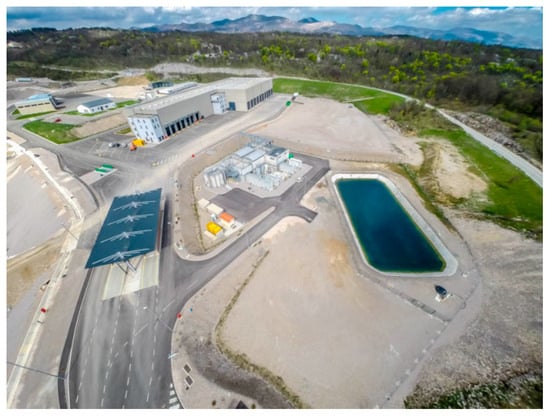
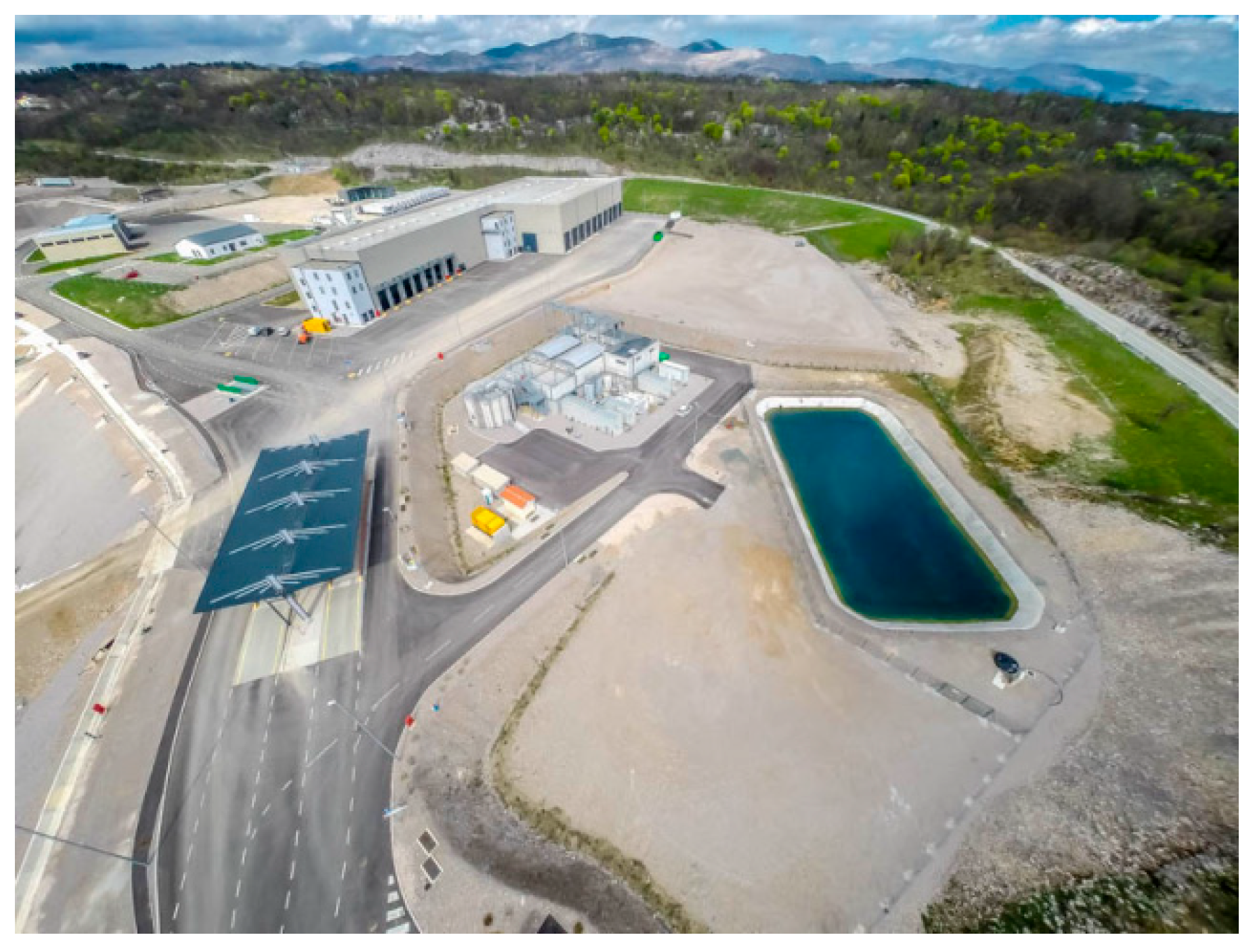
The biodried MSW reject waste samples were taken from the MBT plant Marišćina in Istria, Croatia, as shown in Figure 1. County Waste Management Center (CWMC) Marišćina is located in the vicinity of Rijeka, the largest port in Croatia. CWMC Marišćina, with a daily capacity of 350 tons, represents a modern structure consisting of an MBT plant, a wastewater treatment plant with membrane bioreactor technology, a bioreactor landfill (landfill with predominant organic waste) for the disposal of treated municipal and non-hazardous industrial waste, and six transfer stations [18].
Figure 1.
Marišćina Waste Management Center [19].
The plant primarily accepts mixed municipal waste, and the composition of waste material varies depending on the season (the tested material was taken during the winter season). The municipality practices separate collections of waste such as paper, plastic, and glass. The remainder from households is mixed municipal waste (MSW) that goes for further mechanical biological processing. The residual MSW is shredded (<200 mm) and subjected to a 10-day biodrying process under aerobic conditions. Biodrying partially degrades the easily biodegradable organic fraction, significantly reduces moisture content, stabilizes and hygienizes the material, and increases its caloric value. The dried material then undergoes mechanical separation into recyclable fractions (metals, certain plastics, and refuse-derived fuel) and an organically rich methanogenic reject fraction.
This methanogenic fraction has low initial moisture and limited readily degradable organics and is deposited in a bioreactor landfill which is officially classified as a sanitary landfill with predominant organic waste according to the Ordinance [7]. Intensive wetting and leachate recirculation in the bioreactor landfill accelerate anaerobic degradation and promote rapid mineralization and methane production. Initially, freshly deposited biodried reject generates minimal leachate and landfill gas, but the continuous wetting triggers intense acidogenic and methanogenic phases which result in significantly higher long-term leachate volumes and contaminant release compared to conventional landfilling of untreated MSW.
2.2. Waste Characterization Methodology
The physical composition was determined on a representative sample of biodried waste (circa 30 kg) obtained by the quartering method. The waste components were manually separated into plastics, textiles, glass, metals, paper/cardboard, wood, bones/skin, stones, ceramics, rubber, kitchen waste, and miscellaneous. The miscellaneous category was further divided into particle sizes larger than 2 mm and smaller than 2 mm.
To carry out the basic characterization of the waste samples, the following tests of their physical properties were performed: moisture content, physical composition, sieve analysis, determination of organic content, and determination of solid particle density.
The moisture content was determined according to ASTM D 2216 [20]. The samples were weighed, oven-dried, and reweighed. Due to the expected high organic content of the samples, the oven-drying temperature was reduced to 60 °C, as recommended by the standard.
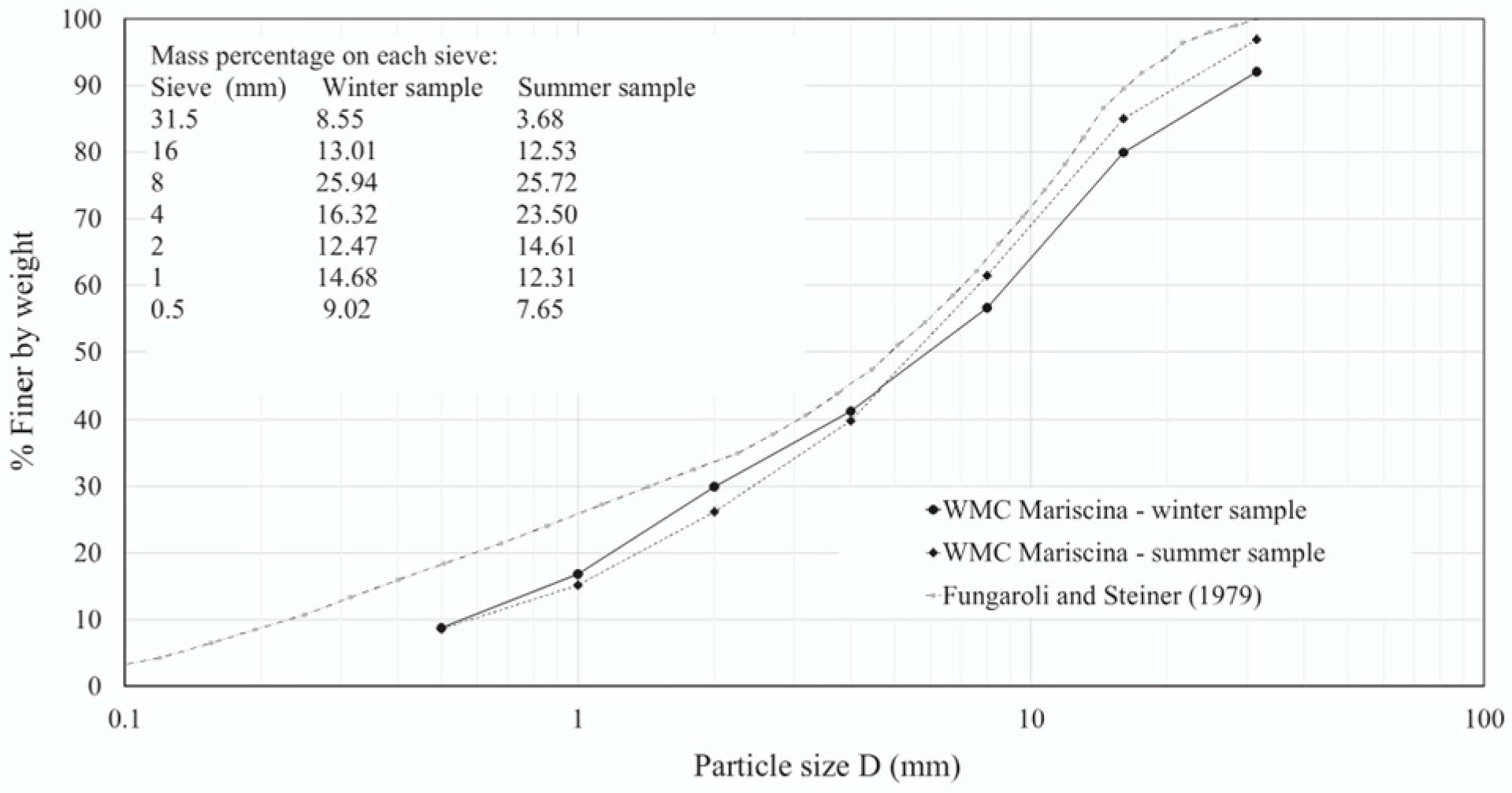
Sieving analysis was carried out according to ASTM D 422 [21]. The dried material was sieved through a series of sieves with different aperture sizes (from 31.5 to 0.5 mm) using a mechanical shaker. Based on the sieving results, the particle size distribution curve was plotted for further analysis.
The organic content of MBT MSW was determined according to the ASTM D 2974 standard [22], by heating a representative sample in a muffle furnace at a temperature of 440 °C.
For the purpose of determining the solid particle density, a modified gas pycnometer was used, in accordance with the ASTM D 5550 standard [23]. Details of the applied procedure can be found in [24].
2.3. Leachate Preparation Methods
For the chemical analyses, the leachate was obtained with three different methods.
2.3.1. Method 1
In Method 1, the leachate was prepared according to the HRN EN 12457-4:2005 standard [25], i.e., leaching was performed in a liquid/solid ratio of 10 L/kg. The standard refers to the procedure for testing waste disposed of in landfills to assess the release of contaminants into water. The test involves simulating the passage of water through a waste sample to determine the concentration of dissolved substances, such as heavy metals and other pollutants. This procedure helps to assess the risk of environmental contamination, especially groundwater, and is used to make decisions about the acceptability of waste for landfills. One kilogram of a representative sample previously crushed to the appropriate granulation was mixed with 10 L of distilled water and subjected to mechanical mixing for 24 h. After shaking, the mixture is separated by filtration using a membrane filter of appropriate permeability (0.45 µm). Clear filtrate was further chemically analyzed for parameters such as heavy metals. The leachate obtained with Method 1 was used to check the conformity of the tested waste with the requirements prescribed in the Ordinance [7].
2.3.2. Method 2
The leaching test was carried out according to the standard HRN EN 12457-1:2005 [16] and HRN EN 12457-2:2005 [17]. According to these standards, the sample was prepared by thorough mixing, spreading in an even layer on a clean surface, quartering by discarding two opposite quarters and recombining the remaining two, and repeating the process until the required subsample size was achieved. The waste was divided into duplicate samples for leaching tests at liquid-to-solid (L/S) ratios of 2 L/kg and 10 L/kg, with 100 g of waste weighed into a 1 L bottle in each case and distilled water added as the leaching solution (200 mL for L/S = 2 L/kg and 1000 mL for L/S = 10 L/kg). Leaching was performed at room temperature using two agitation methods applied in parallel: a mechanical mixer with end-over-end tumbling at 6 rpm for 24 h, and mechanical roller agitation at 10 rpm for 24 h. After 24 h of agitation, the leachates were separated by filtration through a 0.45 µm membrane filter, and the clear filtrates were subsequently analyzed for parameters including heavy metals. Combining methods, a total of 8 samples was analyzed.
2.3.3. Method 3
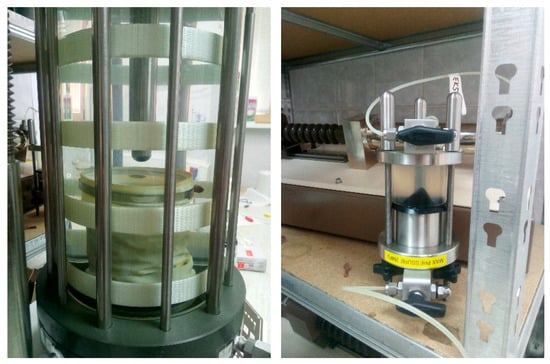
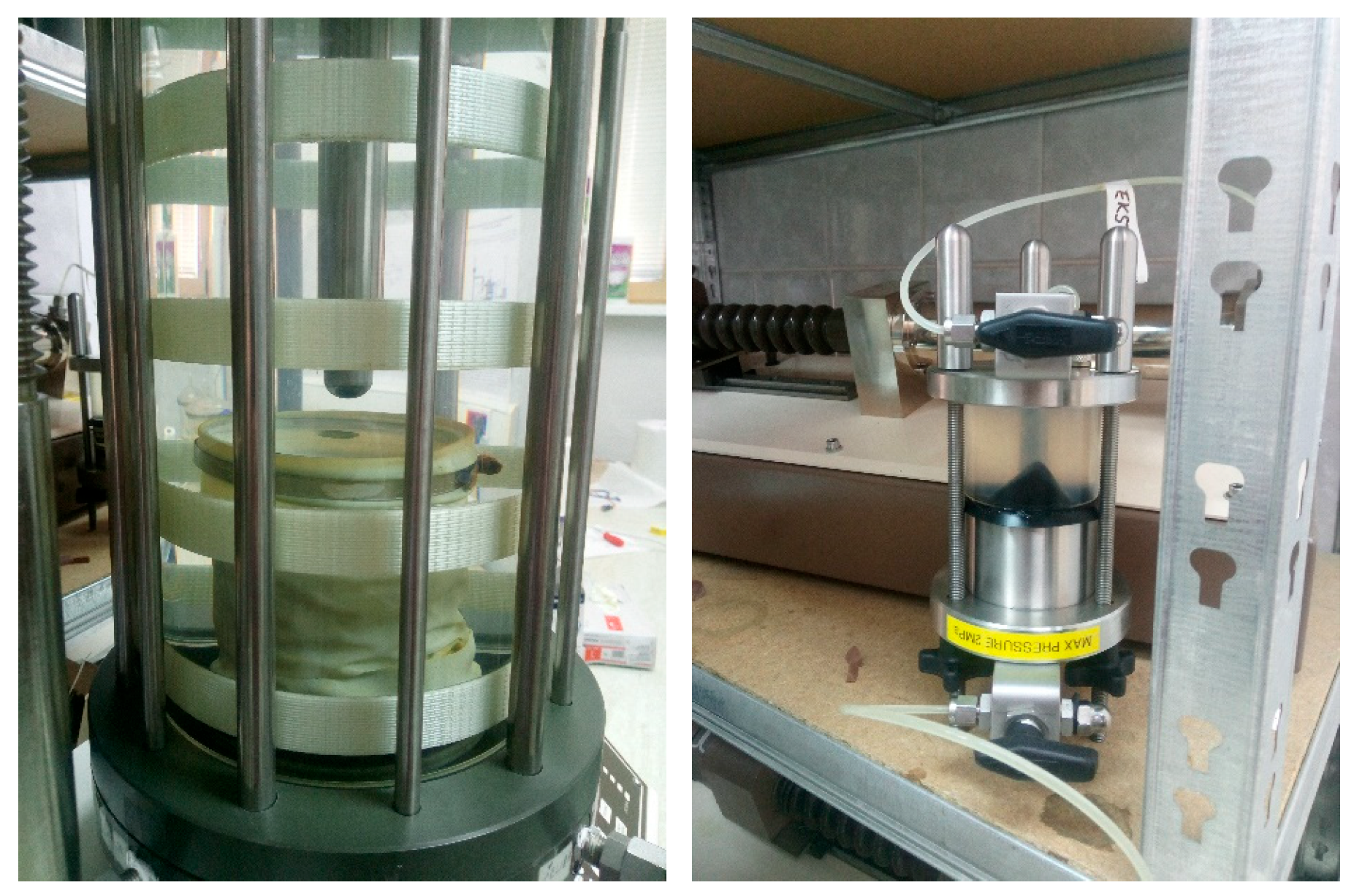
Leachate samples were obtained from the triaxial cell during testing of a fully saturated waste specimen. The specimen, with an initial dry mass of 0.2984 kg and dimensions of 10 cm in diameter and 10 cm in height, was saturated using a solution of deaerated water and acetic acid at a concentration of 10 g/L. Leachate samples for chemical analysis were collected during the consolidation phase on days 6 and 9. Figure 2 shows the specimen in the triaxial cell under isotropic cell pressure during consolidation, as well as the dedicated “toxic cell” used to collect the leachate expelled from the specimen in this phase. The leachate obtained using this method was analyzed for its chemical composition in its as-is state.
Figure 2.
Triaxial cell with installed sample (left), toxic cell (right).
2.4. Analytical Characterization Methods
On the leachate samples obtained with Method 1, the analysis of metal content was performed according to the norm HRN EN ISO 11885:2010 (As, Ba, Cd, Cr, Cu, Mo, Ni, Pb, Zn) [26], HRN EN ISO 12846:2012 (Hg) [27], and HRN EN ISO 15586:2003 (Sn, Se) [28]. Total dissolved solids (TDS) were analyzed according to HRN EN ISO 15216:2008 [29].
On the leachate samples obtained using Methods 2 and 3, an analysis of the metal content was performed using the atomic absorption spectrometer Perkin Elmer Analyst 800 (PerkinElmer, Inc., Shelton, CT, USA). Prior to analysis, samples were filtered using a 0.45 μm filter to obtain the dissolved fraction of the metals. Metals were analyzed under conditions fully compliant with the instructions and specifications listed in the Perkin Elmer Analyst 800 user manual [30]. Instrument preparation, as well as recording conditions, were set according to the recommended parameters for atomic absorption spectrometry (AAS). This includes proper calibration of the instrument using standard solutions with known concentrations of heavy metals, precise adjustment of flame and electrothermal atomization conditions, optimization of light source parameters, and adjustment of integration time and flame current, in order to achieve high sensitivity and measurement accuracy. Commercially purchased standard solutions of heavy metals are used to calibrate the instrument.
Total nitrogen (TN), total organic carbon (TOC), and dissolved organic carbon (DOC) in samples from Methods 2 and 3 were determined using the Shimadzu TOC/TN instrument (Shimadzu Corporation, Kyoto, Japan). After pre-treatment, the sample was injected into the cuvette, which was heated up to 720 °C. In the cuvette, the sample was converted to nitrogen monoxide, which, after dehumidification and cooling, was transferred by a stream of purified air (130 mL/min) to a chemiluminescent detector. The obtained signal was compared with the standard sample signal.
The determination of anions (Cl−, Br2, F−, SO42−, NO3−, PO43−) was carried out using a HACH DR 5000 UV/VIS spectrophotometer (Hach Lange GmbH, Düsseldorf, Germany) according to the standardized procedures [31].
pH values of the samples in Method 3 were checked using the Hach Sension 156 multimeter (Hach Lange GmbH, Düsseldorf, Germany). The same apparatus was used for measurement of salinity, electrical conductivity (EC), and total dissolved solids (TDS). The device was calibrated with certified standard solutions prior to use.
3. Results
3.1. Physical Characteristics of Waste
The average value of the as-received moisture content of the MBT waste was 10.13% with the organic matter content of 55.3% by mass.
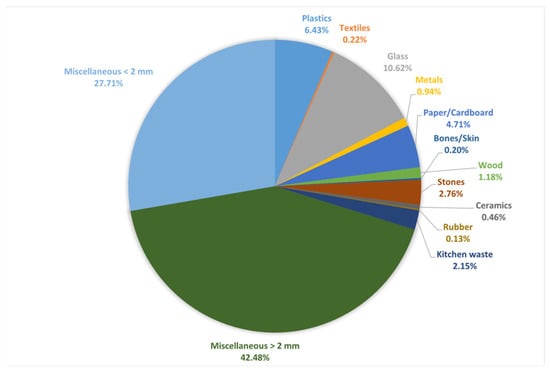
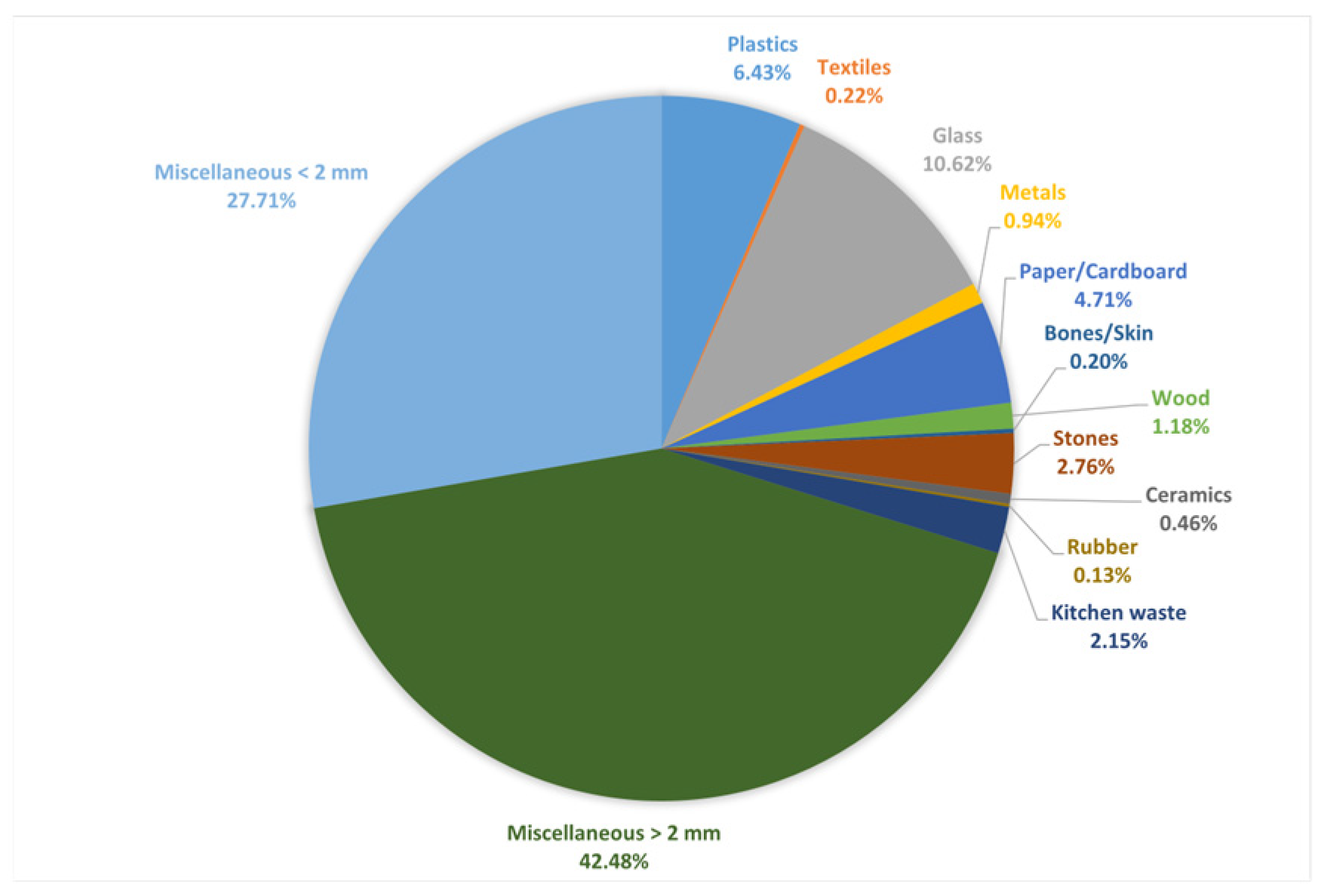
The mass percentage of individual components of the samples is presented in Figure 3. Due to an intensive treatment process, more than 70% of waste materials could not be identified; however, the major identifiable components of the rest of the material were plastics, paper/cardboard, metals, and glass.
Figure 3.
Mass percentages of MBT waste components [32].
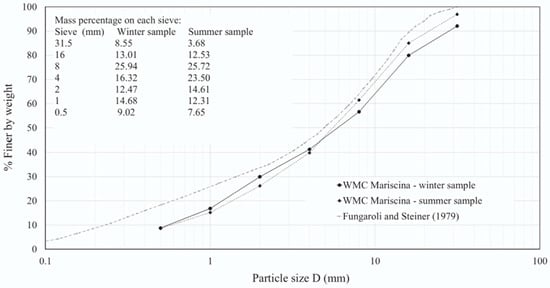
Unlike organic components, which are reduced in the forms of leachate and gas, these non-biodegradable components amass over the years. The particle size distribution curve, which was obtained with the results of the sieving analysis of the waste, showed that it can be considered as a coarse-grained and well-graded granular material (Figure 4) [32].
Figure 4.
Particle size distribution curves of tested waste material [32].
As mentioned earlier, the solid particle density was determined by means of gas pycnometry. The measured average value of the solid particle density of the MBT waste was 1.82 ± SD of 0.19 g/cm3.
3.2. Chemical Characteristics of Waste
Several parameters can be used to characterize landfill leachates, including pH, EC, turbidity, suspended solids, bacterial count, BOD, COD, TOC, BOD/COD ratio, ammonia nitrogen, sodium, and potassium analysis, ion chromatography, and elemental analysis [33]. In-depth knowledge of these parameters is helpful when designing and operating waste management facilities. The values of the measured physical-chemical parameters for the leachate sample obtained with Methods 1 and 2 are presented in Table 1.
Table 1.
Values of the leachate parameters measured (r-rollers, m-mixer) (values for samples U1-4 [34]).
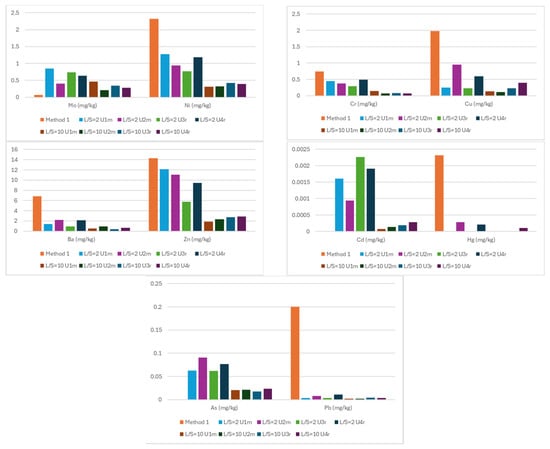
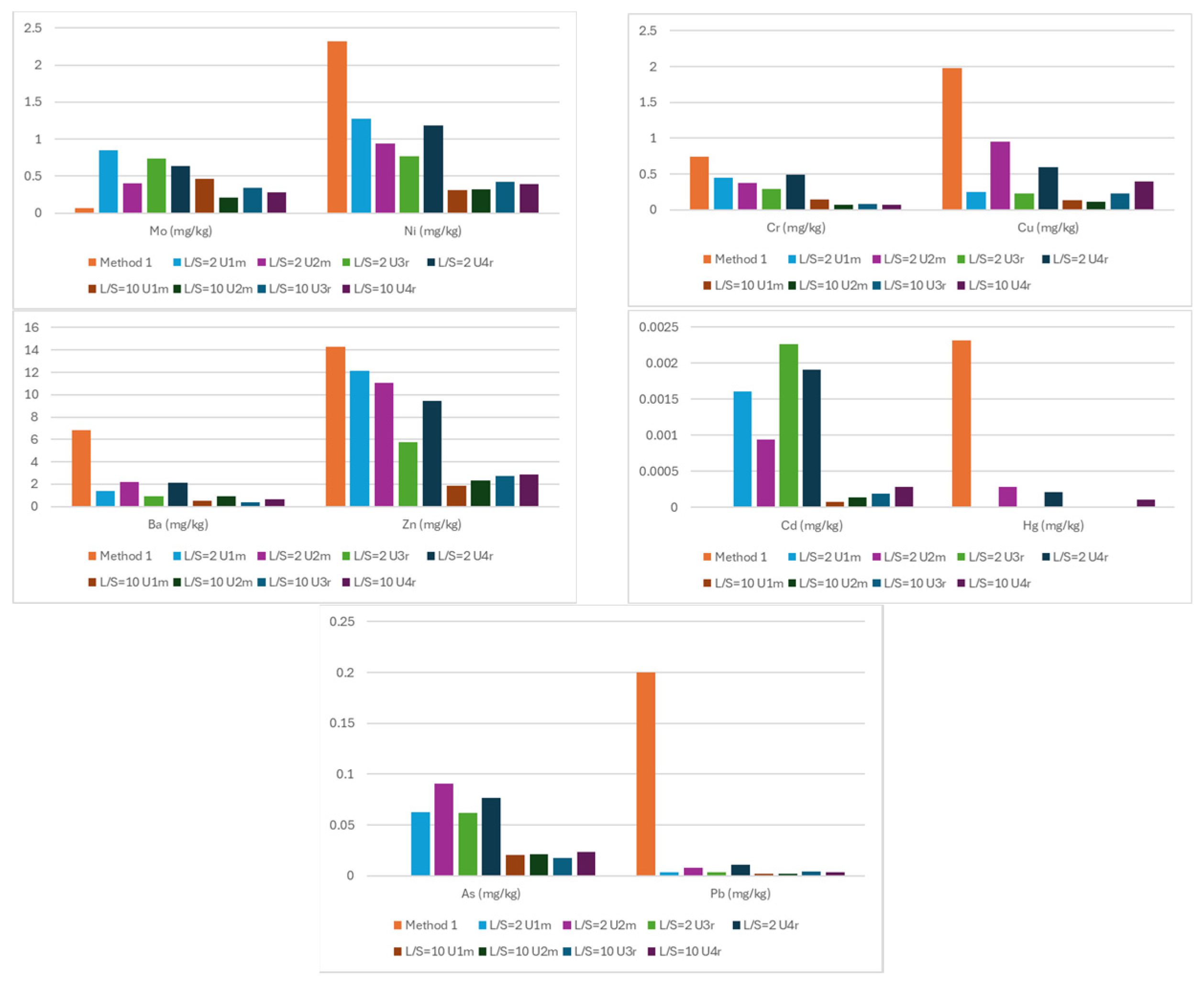
During the quartering, it was clearly visible that the waste did not have a uniform composition. Therefore, different methods were used to see whether the concentration of parameters varied due to the methodology or only due to the composition of the waste sample. The mechanical roller method produced slightly different values compared to the mechanical mixer method which means that the variations in parameter concentrations stem not only from waste composition but also from the testing procedure itself [34]. Metal concentrations obtained by Methods 1 and 2 are shown in Figure 5.
Figure 5.
Metal concentrations obtained by Methods 1 and 2.
However, statistical analysis of the results of individual methods shows a good correlation between the results obtained with the L/S = 2 and L/S = 10 methods, regardless of the sample mixing method, as can be seen in Table 2.
Table 2.
Correlation matrix for L/S = 2 and L/S = 10 methods.
Within Table 2, correlation is very high (0.97–1.00), showing excellent reproducibility across replicates. Within L/S = 10, correlation is even higher (0.99–1.00), indicating consistent results. Between L/S = 2 and L/S = 10, correlation is also strong, suggesting good comparability despite different ratios, and data from one method can reliably predict the other, though slight differences exist. The strong correlations imply that results from L/S = 2 and L/S = 10 are not only related but can be used interchangeably for many purposes.
The leachate from the waste material does not comply with the requirements outlined in the Ordinance [7]. While all measured parameters except for DOC are substantially below the prescribed limit values, the DOC concentration exceeds the allowable threshold. Consequently, the waste cannot be classified as non-hazardous.
Although these methods are usually used solely for the legislative purpose of determining whether a waste is suitable for disposal in a certain type of landfill, and not for any in-depth analysis of the origin and behavior of certain chemical elements in the eluate, the values obtained by these methods are interesting for showing the potential correlation of these elements, as can be seen in Table 3. The correlation matrix examines relationships among parameters like TDS, anions (Cl−, F−, SO42−), DOC, and heavy metals (As, Cd, Cr, Cu, Ba, Mo, Ni, Hg, Pb, Zn, Se) from Method 1 and Method 2 leaching tests (L/S = 2 and L/S = 10).
Table 3.
Correlation matrix for measured parameters.
The parameters can be divided into two main groups based on correlation strength. The anion group (Cl−, F−, SO42−, As, Cd, Mo, Se) shows mutual correlations often above 0.9, reflecting co-release during leaching from easily soluble inorganic sources. The heavy metal group (TDS, DOC, Cr, Cu, Ba, Ni, Hg, Pb, Zn) also has strong internal correlations (>0.9), tied to organic mobilization of metals.
The values of the measured chemical parameters obtained by method 3 are presented in Table 4. Based on previously conducted tests, aerobic conditions prevailed until approximately day 79 [35], and based on this, it was decided to take samples on days 6 and 9, i.e., from the beginning of aerobic processes in a representative waste sample.
Table 4.
Values of the measured chemical parameters.
The conditions found in an MSW landfill during infiltration by precipitation were simulated in a triaxial cell experiment involving acetic acid. The confining pressure applied to the waste sample simulated the flow of leachate through the landfill body, facilitating the release of specific chemical elements from the solid phase into the leachate. By comparison, most standard waste characterization methods achieve element extraction by mechanically agitating or tumbling the sample with water. This approach does not maintain the sample in a static condition, as occurs in an actual landfill, nor does it impose elevated mechanical or hydrostatic pressures comparable to the overburden stresses experienced by waste in deeper landfill layers.
Color is the first parameter observed when characterizing the leachate. Both observed samples were dark brown in color and had a distinctly unpleasant odor. The dark color is primarily due to the presence of dissolved organic matter in high concentration, particularly humic and fulvic acids which are products of organic waste decomposition [36,37]. The unpleasant odor results from volatile organic compounds (VOCs), ammonia, and sulfur-containing compounds.
A characteristic of young landfills is the low pH of the leachate [38,39]. In this experiment, pH was set to 5 ± 0.05 to simulate the pH conditions of young landfills. The achieved acidic conditions enhance metal solubility, leading to more dissolved ions and thus higher EC. High EC indicates pollution from salts, anions, and cations, which is amplified in young leachate. The choice of 10 g/L acetic acid provides the most representative simulation of acidification conditions in MBT waste, indicating biologically produced acids.
Electrical conductivity is a key physicochemical parameter influencing leachate properties and often correlates with other indicators like TDS, TSS, and chloride concentrations in municipal waste landfills. Leachate emissions from landfills, particularly those containing biowaste fractions, lead to increased EC in eluates, as observed in laboratory simulations where EC increased from 0.6 to 4.99 mS/cm with higher biowaste input [39]. High EC values in landfill leachates suggest the presence of dissolved salts and inorganic components. In the Kupferberg landfill study [40], elevated EC values in leachate samples confirmed high levels of salts or dissolved inorganic pollutants. The obtained measured EC values of 28 mS/cm and 37.2 mS/cm in the analyzed waste leachate (Table 4) suggest significant pollution from dissolved ions which are above typical laboratory ranges for different biowaste mixtures.
Total dissolved solids (TDS) in landfill leachate represent the total concentration of dissolved inorganic and organic substances. It serves as a strong indicator for salinity and overall ionic strength. Values of TDS often correlate with EC and influence leachate characterization in both operational and closed sites [38]. The obtained TDS values of 13,990 mg/L and 18,610 mg/L for days 6 and 9, respectively, indicate substantial inorganic dissolution. The values exceed typical ranges in standard leachate tests and suggest high leachability under the tested conditions. Elevated TDS levels, such as those observed in this test, correlate with unstabilized, biodegradable leachate phases, increasing risks of bioaccumulation and reduced water quality in the surrounding environment [39].
Dissolved Organic Carbon (DOC) in landfill leachate represents a key indicator of organic degradation pathways. Mohammadzadeh and Clark [41] in their study made distinctions between young and old waste areas, where older leachate shows higher DOC (>4770 mg/L), dominated by fulvic acids and fatty acids. Values obtained with Methods 1 and 2 vary from 2443 to 2675 mg/kg for L/S = 2 and from 9393 to 16,710 mg/kg for L/S = 10. In comparison, the values from Method 3 were significantly higher (25,400 mg/kg and 28,000 mg/kg), suggesting better extraction of organic matter under acidic conditions [38]. This approach likely promotes dissolution of humic and fulvic fractions, explains the elevated DOC in comparison to neutral leaching, and emphasizes the potential for significant environmental mobility [39]. TOC measures the total amount of both dissolved and particulate carbon bound in organic compounds, and as expected, the values obtained for TOC were even higher (32,800 mg/kg and 35,410 mg/kg).
Biochemical oxygen demand over 5 days (BOD5) in waste leachate measures the amount of dissolved oxygen required by microorganisms to biologically degrade the organic matter in the sample under aerobic conditions over 5 days. Young leachates have higher BOD5 (4000–40,000 mg/L or more), due to readily biodegradable organics like volatile fatty acids (VFAs). BOD5 went up from 575 mg/kg on day 6 to 1021 mg/L (day 9) which was a 78% increase in just a few days. A 9-day window is excellent for showing a fast initial rise in values.
Phosphates (PO43−) in landfill leachate eluates represent a key nutrient pollutant. Sources of phosphates are often detergents or food waste. High phosphate concentrations elevate eutrophication risks and lower the groundwater quality [38,42]. The obtained phosphate values were 134 mg/L and 233 mg/L, respectively, indicating significant leaching, likely enhanced by the acidic conditions (pH 5) in Method 3, far exceeding typical neutral leaching results.
Kjeldsen et al. [43] reviewed leachate composition from over 100 MSW landfills worldwide and categorized them by age. Sulphate concentrations in leachate typically range from 70 to 1750 mg/L in young leachate, decreasing to 10–500 mg/L in mature leachate as sulphates are reduced anaerobically to hydrogen sulfide (H2S) or precipitated. Sulphate concentrations obtained with Methods 1 and 2 vary from 580 to 900 mg/kg for L/S = 2 and from 1940 to 2120 mg/kg for L/S = 10. In comparison, the values from the novel acetic acid method were significantly higher (2000 mg/L and 3800 mg/L or 3424.93 mg/kg and 6678.62 mg/kg, respectively). Sulphates are highly soluble in acidic conditions. At pH 5, sulphates remain almost entirely dissolved, and no significant precipitation occurs.
Acetic acid leaching tests (pH 5) mimic organic acids from MSW decomposition in young acid-phase leachate which promotes maximum mobilization of soluble anions. Chlorides are highly soluble and mobile across all pH ranges. Chloride concentrations obtained with Methods 1 and 2 vary from 400 to 540 mg/kg for L/S = 2 and from 3510 to 3720 mg/kg for L/S = 10. In comparison, the values from Method 3 were higher (2000 mg/L and 3800 mg/L or 8391.09 mg/kg and 14,384.72 mg/kg, respectively). Chlorides originate mainly from food waste, plastics, and household products. Fluorides originate from fluorinated compounds (PTFE, pharmaceuticals) or minor sources like glass and electronics. Fluoride concentrations obtained with Methods 1 and 2 vary from 9.9 to 10.3 mg/kg for L/S = 2 and from 16.3 to 19 mg/kg for L/S = 10. In comparison, the values from Method 3 were significantly higher (95 mg/L and 117 mg/L or 162.68 mg/kg and 200.36 mg/kg, respectively). At pH 5, both chlorides and fluorides behave as highly soluble mobile anions which are fully released without significant precipitation or reduction, often yielding elevated concentrations compared to neutral conditions.
Heavy metals in landfill leachate pose substantial environmental and health hazards due to their persistence, bioaccumulation potential, and toxicity. They often originate from sources like batteries, electronics, paints, and industrial residues in municipal solid waste (MSW) [38,39,44]. Concentrations of heavy metals vary with waste composition, landfill age, climate, and management practices, and frequently exceed regulatory limits [41,45]. Monitoring heavy metals in the landfills can improve awareness and provide an early warning of groundwater contamination. Also, the possible environmental hazards that are a result of the disposal of waste on the soil cannot be ignored due to the long-term residence time of the heavy metals in soils [43]. For the purposes of this research, the concentrations of 11 heavy metals were analyzed in the leachate obtained from Method 3. According to [46], heavy metals commonly found in MSW are arsenic, boron, manganese, chromium, cobalt, nickel, zinc, cadmium, barium, and lead. The average concentrations of heavy metals, in most cases, fell within the ranges of the concentrations reported in the literature; however, some exceptions were anticipated [47,48,49,50]. Manganese and iron were found in the highest amounts compared to the other metals. Mercury and cadmium have the lowest detected values. The lead in the solid waste could be attributed to the discarded batteries, plastics, and pigments [43]. As can be seen in Figure 3, plastics comprise a significant portion of the observed waste material. Factors such as organic-rich waste and low pH increase the solubility and mobility of heavy metals [39,41]. As a general observation, one can state that the values of all parameters increase with time due to the release of additional particles and ions from the waste material. A decrease in the values for iron and chromium can be caused by coprecipitation.
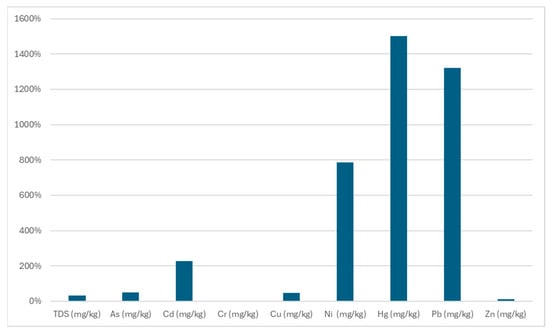
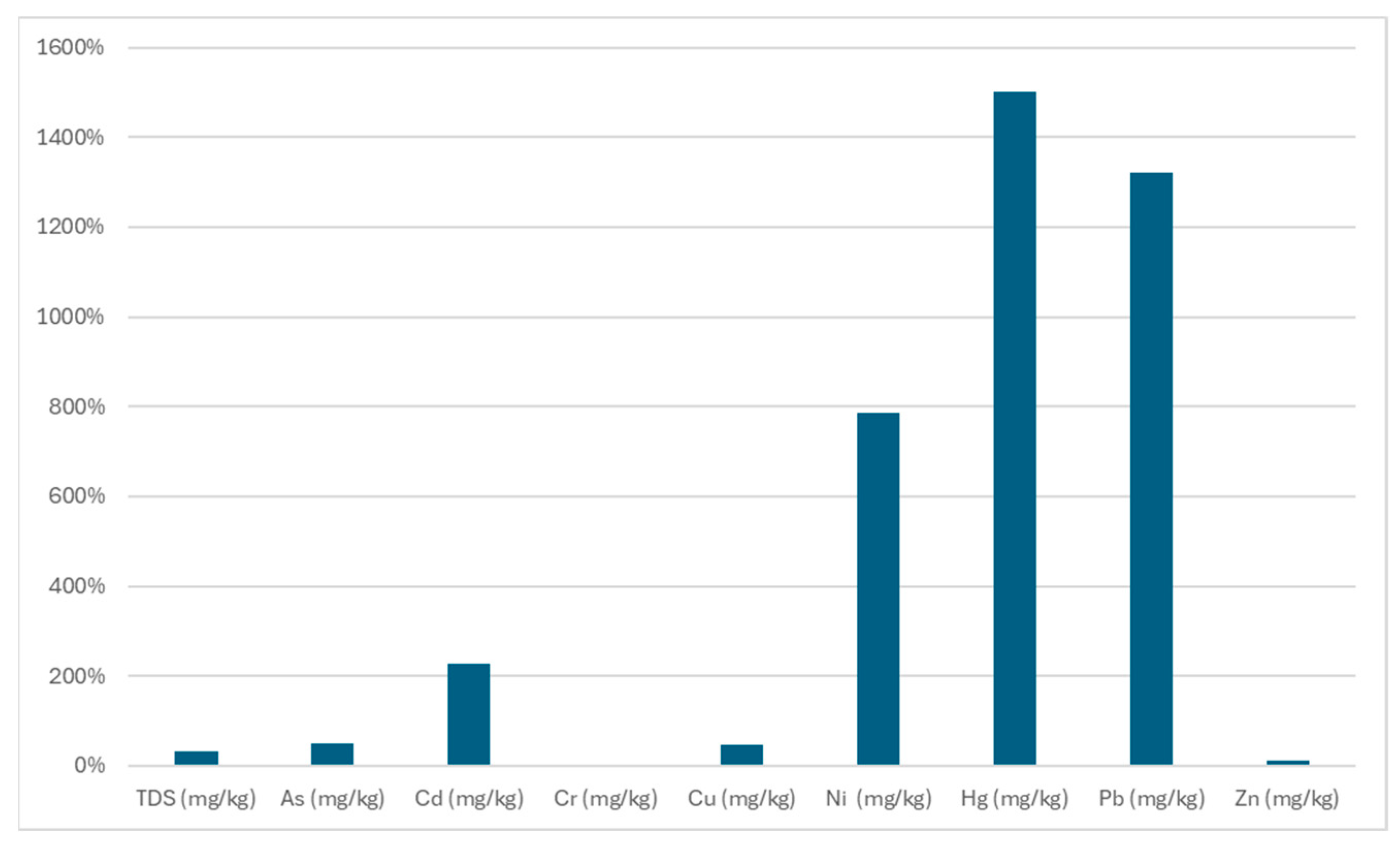
Comparing the metal concentrations obtained by Methods 1, 2, and 3, it is evident that the metal concentrations obtained by Method 3 are higher. This is consistent with the behavior of metals in an acidic medium since metal solubility is pH-dependent. During the 9-day test in Method 3, several metals showed significant increases in concentration from day 6 to day 9 (Figure 6). This pattern reflects kinetic effects, where initial rapid release from surface or exchangeable sites by day 6 is followed by slower dissolution from deeper matrix-bound phases, such as oxides, sulfides, or organic complexes, as the acid penetrates further over time.
Figure 6.
Increase in concentrations from day 6 to day 9.
Total dissolved solids rose by 33%, driven by cumulative salt and organic dissolution. Concentration of arsenic increased 49% through desorption from iron/manganese oxides, values of cadmium increased by 226% due to its high mobility in acid, and copper rose 46% via stable acetate complexation. Concentration of nickel increased by 786%, likely from resistant alloys or oxides, while concentration of mercury increased by 1500% possibly through organic desorption or methylation. Concentration of lead increased by 1322% possibly from the formation of acetate complexes [51].
4. Conclusions
Understanding the composition of the MSW and the possible effect it can have on the surrounding soils and groundwater is crucial in the planning and management of MSW landfills. Council Directive 1999/31/EC on the landfill of waste regulates all aspects of waste disposal in landfills, including environmental protection and the isolation of soil and groundwater pollution. The directive also requires the classification of waste according to the leaching potential of hazardous substances, i.e., the implementation of standardized leaching tests to determine whether the waste is inert, non-hazardous, or dangerous. With global waste volumes rising and improper disposal becoming more common, the environmental risks are growing, driving the development of an increasing number of leaching tests. This study aimed to assess the chemical and physical characteristics of biodried MSW from a waste management center in Marišćina using different leaching tests.
In this study, we addressed these requirements by evaluating biodried MSW from CWMC Marišćina through three leaching methods. The major identifiable components of the material were plastics, paper/cardboard, metals, and glass. Standard tests (Method 1 and 2) confirmed non-compliance for landfilling due to elevated DOC levels exceeding Ordinance thresholds, despite other parameters being below limits, highlighting the need for pre-treatment to classify the waste as non-hazardous. Characterization of leachate in its as-it-is state via Method 3 revealed high TDS (up to 18,610 mg/L), DOC (up to 28,000 mg/kg), and concentration of heavy metals which increase over time (6 and 9 days) attributed to acidic dissolution and organic decomposition. Comparisons showed that acidic simulations (Method 3) yielded substantially higher contaminant releases than neutral L/S = 2 and L/S = 10 tests (Methods 1 and 2), demonstrating underestimation by conventional methods. It also shows the connection between biodried waste’s low moisture to delayed but intensified leachate dynamics under wetting. These findings underscore the pH-dependent solubility of heavy metals, advocating for enhanced, acidic-condition leaching tests in EU regulations to improve risk assessment and regulatory compliance. With global waste volumes rising and improper disposal increasing, these results emphasize the development of more realistic leaching protocols to mitigate environmental risks.
Author Contributions
Conceptualization, I.P. and A.P.S.; methodology, D.D. and A.P.S.; validation, D.D. and A.P.S.; formal analysis, N.H.; investigation, N.H.; resources, N.H.; data curation, N.H.; writing—original draft preparation, D.D.; writing—review and editing, I.P. and A.P.S.; visualization, D.D.; supervision, I.P. and A.P.S.; project administration, I.P.; funding acquisition, I.P. All authors have read and agreed to the published version of the manuscript.
Funding
The financial support of the Croatian Science Foundation for the project “Testing and modelling of mechanical behavior of biodried waste as a Waste-to-Energy prerequisite” (UIP-05-2017-5157) is gratefully acknowledged. This work has been supported by the Virtulab project (KK.01.1.1.02.0022), co-funded by the European Regional Development Fund.
Data Availability Statement
The original contributions presented in this study are included in the article. Further inquiries can be directed to the corresponding author.
Conflicts of Interest
The authors declare no conflicts of interest.
References
- Baawain, M.; Al-Mamun, A.; Omidvarborna, H.; Al-Amri, W. Ultimate Composition Analysis of Municipal Solid Waste in Muscat. J. Clean. Prod. 2017, 148, 355–362. [Google Scholar] [CrossRef] [Scilit]
- Ozcan, H.K.; Guvenc, S.Y.; Guvenc, L.; Demir, G. Municipal Solid Waste Characterization According to Different Income Levels: A Case Study. Sustainability 2016, 8, 1044. [Google Scholar] [CrossRef] [Scilit]
- Naeem, M.; Asam, Z.-U.-Z.; Abbas, M.; Al-Muhtaseb, A.H.; Farid, M.; Haider, M.A.; Musharavati, F.; Rehan, M.; Khan, M.I.; Naqvi, M.; et al. Evaluating Heavy Metal Contamination from Leachate Percolation for Sustainable Remediation Strategies. J. Hazard. Mater. Adv. 2025, 17, 100582. [Google Scholar] [CrossRef] [Scilit]
- Tambone, F.; Scaglia, B.; Scotti, S.; Adani, F. Effects of Biodrying Process on Municipal Solid Waste Properties. Bioresour. Technol. 2011, 102, 7443–7450. [Google Scholar] [CrossRef] [Scilit]
- Karidis Arlene European Versus American Views on Thermal and MBT. Available online: https://www.waste360.com/waste-management-business/european-versus-american-views-on-thermal-and-mechanical-biological-treatments (accessed on 17 December 2025).
- Remmas, N.; Manfe, N.; Zerva, I.; Melidis, P.; Raga, R.; Ntougias, S. A Critical Review on the Microbial Ecology of Landfill Leachate Treatment Systems. Sustainability 2023, 15, 949. [Google Scholar] [CrossRef] [Scilit]
- Croatian Landfill Ordinance, Official Gazette 114/15, 103/18, 4/23. Available online: https://narodne-novine.nn.hr/clanci/sluzbeni/2023_01_4_68.html (accessed on 17 December 2025).
- Council Directive 1999/31/EC of 26 April 1999 on the Landfill of Waste. Off. J. Eur. Communities 1999, 182, 1–19.
- Abdel-Shafy, H.I.; Mansour, M.S.M. A Review on Polycyclic Aromatic Hydrocarbons: Source, Environmental Impact, Effect on Human Health and Remediation. Egypt. J. Pet. 2016, 25, 107–123. [Google Scholar] [CrossRef] [Scilit]
- Irto, A.; Crea, F.; Alessandrello, C.; De Stefano, C.; Somma, R.; Zaffino, G.; Zaccaro, S.; Papanikolaou, G.; Cigala, R.M. Landfill Leachate from Municipal Solid Waste: Multi-Technique Approach for Its Fine Characterization and Determination of the Thermodynamic and Sequestering Properties towards Some Toxic Metals. Sci. Total Environ. 2024, 917, 170311. [Google Scholar] [CrossRef] [Scilit]
- Jamrah, A.; AL-Zghoul, T.M.; Al-Qodah, Z. An Extensive Analysis of Combined Processes for Landfill Leachate Treatment. Water 2024, 16, 1640. [Google Scholar] [CrossRef] [Scilit]
- Aziz, H.A.; Ramli, S.F.; Hung, Y.-T. Physicochemical Technique in Municipal Solid Waste (MSW) Landfill Leachate Remediation: A Review. Water 2023, 15, 1249. [Google Scholar] [CrossRef] [Scilit]
- Kumar, R.N.; Sadaf, S.; Verma, M.; Chakraborty, S.; Kumari, S.; Polisetti, V.; Kallem, P.; Iqbal, J.; Banat, F. Old Landfill Leachate and Municipal Wastewater Co-Treatment by Sequencing Batch Reactor Combined with Coagulation–Flocculation Using Novel Flocculant. Sustainability 2023, 15, 8205. [Google Scholar] [CrossRef] [Scilit]
- Yusuf, A.A.; Jebboe, E.K.; Akiyode, O.O.; Asumana, C.; Nippae, A.; Powoe, M.T.; Sinneh, I.S.; Kesselly, H.F.; Sheriff, S.S.; Thompson-Williams, K.; et al. A Comprehensive Review of Waste Management Practices in Liberia: Challenges, Policy Gaps, Health Implications, and Strategic Solutions for Sustainable Development. Heliyon 2025, 11, e43678. [Google Scholar] [CrossRef] [Scilit]
- Abiriga, D.; Vestgarden, L.S.; Klempe, H. Groundwater Contamination from a Municipal Landfill: Effect of Age, Landfill Closure, and Season on Groundwater Chemistry. Sci. Total Environ. 2020, 737, 140307. [Google Scholar] [CrossRef] [Scilit]
- HRN EN 12457-1:2005; Characterization of Waste–Leaching–Compliance Test for Leaching of Granular Waste Materials and Sludges–Part 1: One Stage Batch Test at a Liquid to Solid Ratio of 2 L/Kg for Materials with High Solid Content and with Particle Size Below 4 Mm (Without or with Size Reduction) (EN 12457-1:2002). European Committee for Standardization: Brussels, Belgium, 2002.
- HRN EN 12457-2:2005; Characterization of Waste–Leaching–Compliance Test for Leaching of Granular Waste Materials and Sludges–Part 2: One Stage Batch Test at a Liquid to Solid Ratio of 10 L/Kg for Materials with Particle Size Below 4 Mm (Without or with Size Reduction) (EN 12457-2:2002). European Committee for Standardization: Brussels, Belgium, 2002.
- WMC Marišćina. Available online: https://www.fzoeu.hr/en/wmc-mariscina/7765 (accessed on 18 December 2025).
- Marišćina Waste Management Center. Available online: https://www.ekoplus.hr/Foto-12-4-2016.php (accessed on 18 December 2025).
- ASTM D2216-19; Standard Test Methods for Laboratory Determination of Water (Moisture) Content of Soil and Rock by Mass. ASTM International: West Conshohocken, PA, USA, 2019.
- ASTM D422-63(2007); Standard Test Method for Particle-Size Analysis of Soils. ASTM International: West Conshohocken, PA, USA, 2014.
- ASTM D2974-20e1; Standard Test Methods for Determining the Water (Moisture) Content, Ash Content, and Organic Material of Peat and Other Organic Soils. ASTM International: West Conshohocken, PA, USA, 2025.
- ASTM D5550-14; Standard Test Method for Specific Gravity of Soil Solids by Gas Pycnometer. ASTM International: West Conshohocken, PA, USA, 2023.
- Petrovic, I.; Kaniski, N.; Hrncic, N.; Bosilj, D. Variability in the Solid Particle Density and Its Influence on the Corresponding Void Ratio and Dry Density: A Case Study Conducted on the MBT Reject Waste Stream from the MBT Plant in Marišćina, Croatia. Appl. Sci. 2022, 12, 6136. [Google Scholar] [CrossRef] [Scilit]
- HRN EN 12457-4:2005; Characterization of Waste–Leaching–Compliance Test for Leaching of Granular Waste Materials and Sludges–Part 4: One Stage Batch Test at a Liquid to Solid Ratio of 10 L/Kg for Materials with Particle Size Below 10 Mm (Without or with Size Reduction) (EN 12457-4:2002). European Committee for Standardization: Brussels, Belgium, 2004.
- HRN EN ISO 11885:2010; Water Quality–Determination of Selected Elements by Inductively Coupled Plasma Optical Emission Spectrometry (ICP-OES) (ISO 11885:2007; EN ISO 11885:2009). European Committee for Standardization: Brussels, Belgium, 2010.
- HRN EN ISO 12846:2012; Water Quality–Determination of Mercury–Method Using Atomic Absorption Spectrometry (AAS) with and Without Enrichment. European Committee for Standardization: Brussels, Belgium, 2012.
- HRN ISO 15586:2003; Water Quality–Determination of Trace Elements by Atomic Absorption Spectrometry with Graphite Furnace. European Committee for Standardization: Brussels, Belgium, 2003.
- HRN EN 15216:2008; Characterization of Waste–Determination of Total Dissolved Solids (TDS) in Water and Eluates (EN 15216:2007). European Committee for Standardization: Brussels, Belgium, 2008.
- Analytical Methods for Atomic Absorption Spectrometry, 4th ed.; Perkin Elmer Instruments LLC: Shelton, CT, USA, 2000.
- DR 5000 Spectrophotometer Manual; Hach Company: Loveland, CO, USA, 2005.
- Petrovic, I.; Kaniski, N.; Hrncic, N.; Hip, I. Correlations between Field Capacity, Porosity, Solid Particle Density and Dry Density of a Mechanically and Biologically (Biodried) Treated Reject Waste Stream. Bioresour. Technol. Rep. 2022, 17, 100996. [Google Scholar] [CrossRef] [Scilit]
- Gotvajn, A.Ž.; Tišler, T.; Zagorc-Končan, J. Comparison of Different Treatment Strategies for Industrial Landfill Leachate. J. Hazard. Mater. 2009, 162, 1446–1456. [Google Scholar] [CrossRef] [Scilit] [PubMed]
- Mesarek, A. The Reliability of Waste Analysis by Conducting a Leaching Test. Master’s Thesis, Faculty of Geotechnical Engineering, University of Zagreb, Zagreb, Croatia, 2022. [Google Scholar]
- Petrović, I.; Kaniški, N.; Hrnčić, N.; Bosilj, D. Short- and Long-Term Compressibility Properties of Biologically (Biodried) and Mechanically Treated Municipal Solid Waste: A Case Study of BMT Plant in Marišćina, Croatia. Waste Biomass Valoriz. 2024, 15, 1615–1628. [Google Scholar] [CrossRef] [Scilit]
- Costa, C.; Pinedo, M.L.; Riascos, B.D. Presence of Humic Acids in Landfill Leachate and Treatment by Flocculation at Low PH to Reduce High Pollution of This Liquid. Sustainability 2025, 17, 481. [Google Scholar] [CrossRef] [Scilit]
- Ramli, S.F.; Aziz, H.A.; Omar, F.M.; Yusoff, M.S.; Halim, H.; Kamaruddin, M.A.; Ariffin, K.S.; Hung, Y.T. Reduction of Cod and Highly Coloured Mature Landfill Leachate by Tin Tetrachloride with Rubber Seed and Polyacrylamide. Water 2021, 13, 3062. [Google Scholar] [CrossRef] [Scilit]
- Wdowczyk, A.; Szymańska-Pulikowska, A. Analysis of the Possibility of Conducting a Comprehensive Assessment of Landfill Leachate Contamination Using Physicochemical Indicators and Toxicity Test. Ecotoxicol. Environ. Saf. 2021, 221, 112434. [Google Scholar] [CrossRef] [Scilit] [PubMed]
- Likando, N.M.; Dornack, C.; Hamutoko, J.T. Assessing the Physicochemical Parameters of Leachate from Biowaste Fractions in a Laboratory Setting, Using the Elusion Method. Environ. Earth Sci. 2023, 82, 610. [Google Scholar] [CrossRef] [Scilit]
- Likando, N.M.; Chipandwe, M.S. Statistical Investigation of Climate and Landfill Age Impacts on Kupferberg Landfill Leachate Composition: One-Way ANOVA Analysis. Discov. Water 2024, 4, 40. [Google Scholar] [CrossRef] [Scilit]
- Mohammadzadeh, H.; Clark, I. Degradation Pathways of Dissolved Carbon in Landfill Leachate Traced with Compound-Specific 13C Analysis of DOC. Isot. Environ. Health Stud. 2008, 44, 267–294. [Google Scholar] [CrossRef] [Scilit]
- Nickson, O.; Ukundimana, Z.; Wamyil, F.B.; Yusuf, A.A.; Pierre, M.J.; Kagabo, A.S.; Rizinde, T. Quantification and Characterization of Municipal Solid Waste at Aler Dumpsite, Lira City, Uganda: Assessing Pollution Levels and Health Risks. Clean. Waste Syst. 2024, 9, 100177. [Google Scholar] [CrossRef] [Scilit]
- Kjeldsen, P.; Barlaz, M.A.; Rooker, A.P.; Baun, A.; Ledin, A.; Christensen, T.H. Present and Long-Term Composition of MSW Landfill Leachate: A Review. Crit. Rev. Environ. Sci. Technol. 2002, 32, 297–336. [Google Scholar] [CrossRef] [Scilit]
- Essien, J.P.; Ikpe, D.I.; Inam, E.D.; Okon, A.O.; Ebong, G.A.; Benson, N.U. Occurrence and Spatial Distribution of Heavy Metals in Landfill Leachates and Impacted Freshwater Ecosystem: An Environmental and Human Health Threat. PLoS ONE 2022, 17, e0263279. [Google Scholar] [CrossRef] [Scilit]
- Hosseini Beinabaj, S.M.; Heydariyan, H.; Mohammad Aleii, H.; Hosseinzadeh, A. Concentration of Heavy Metals in Leachate, Soil, and Plants in Tehran’s Landfill: Investigation of the Effect of Landfill Age on the Intensity of Pollution. Heliyon 2023, 9, e13017. [Google Scholar] [CrossRef] [Scilit]
- Baun, A.; Ledin, A.; Reitzel, L.A.; Bjerg, P.L.; Christensen, T.H. Xenobiotic Organic Compounds in Leachates from Ten Danish MSW Landfills—Chemical Analysis and Toxicity Tests. Water Res. 2004, 38, 3845–3858. [Google Scholar] [CrossRef] [Scilit] [PubMed]
- Tchobanoglous, G.; Theisen, H.; Vigil, S. Integrated Solid Waste Management: Engineering Principles and Management Issues; McGraw-Hill Companies, Inc.: Columbus, OH, USA, 1993; ISBN 9780070632370.
- Kumar, S.; Dhar, H.; Nair, V.V.; Bhattacharyya, J.K.; Vaidya, A.N.; Akolkar, A.B. Characterization of Municipal Solid Waste in High-Altitude Sub-Tropical Regions. Environ. Technol. 2016, 37, 2627–2637. [Google Scholar] [CrossRef] [Scilit] [PubMed]
- Idehai, I.; Akujieze, C. Assessment of Some Physiochemical Impacts of Municipal Solid Waste (MSW) on Soils: A Case Study of Landfill Areas of Lagos, Nigeria. Br. J. Appl. Sci. Technol. 2014, 4, 4623–4642. [Google Scholar] [CrossRef] [Scilit]
- Quaghebeur, M.; Laenen, B.; Geysen, D.; Nielsen, P.; Pontikes, Y.; Van Gerven, T.; Spooren, J. Characterization of Landfilled Materials: Screening of the Enhanced Landfill Mining Potential. J. Clean. Prod. 2013, 55, 72–83. [Google Scholar] [CrossRef] [Scilit]
- Halim, C.E.; Scott, J.A.; Natawardaya, H.; Amal, R.; Beydoun, D.; Low, G. Comparison between Acetic Acid and Landfill Leachates for the Leaching of Ph(II), Cd(II), As(V), and Cr(VI) from Clementitious Wastes. Env. Sci. Technol. 2004, 38, 3977–3983. [Google Scholar] [CrossRef] [Scilit] [PubMed]

Disclaimer/Publisher’s Note: The statements, opinions and data contained in all publications are solely those of the individual author(s) and contributor(s) and not of MDPI and/or the editor(s). MDPI and/or the editor(s) disclaim responsibility for any injury to people or property resulting from any ideas, methods, instructions or products referred to in the content. |
© 2025 by the authors. Licensee MDPI, Basel, Switzerland. This article is an open access article distributed under the terms and conditions of the Creative Commons Attribution (CC BY) license.