Pomegranate Peel and Curly Dock Root Extracts for a Smart Use of Packaging


Abstract
1. Introduction
2. Materials and Methods
2.1. Plant Material and Extracts Used
2.2. Chemical Analyses of PPGE and RRCE
2.3. In Vitro Tests
2.4. In Vivo Tests
2.5. Color of the Homogenized Fruits
2.6. Statistical Analysis
3. Results and Discussion
3.1. Chemical Analyses of PPGE and RRCE
3.2. In Vitro Tests
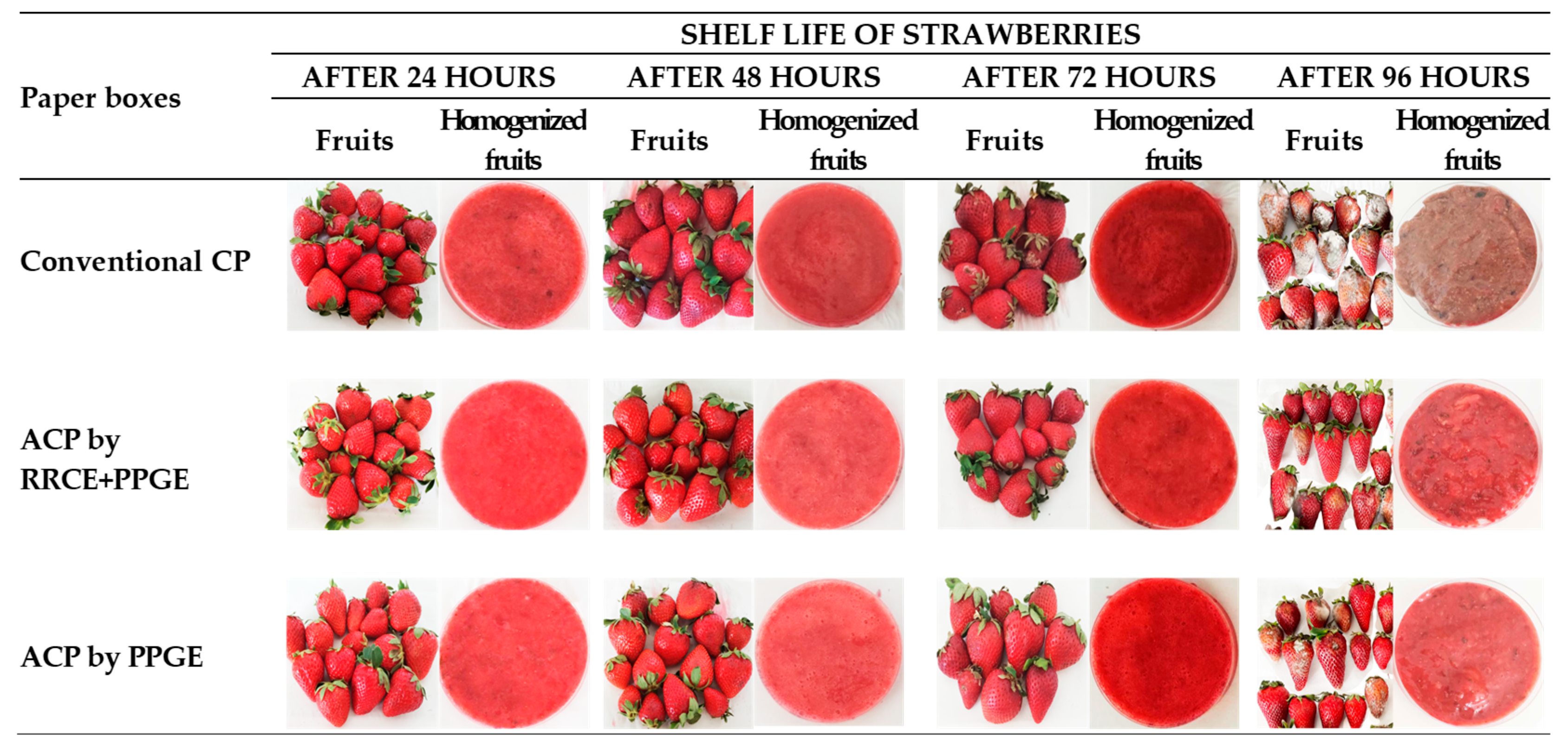
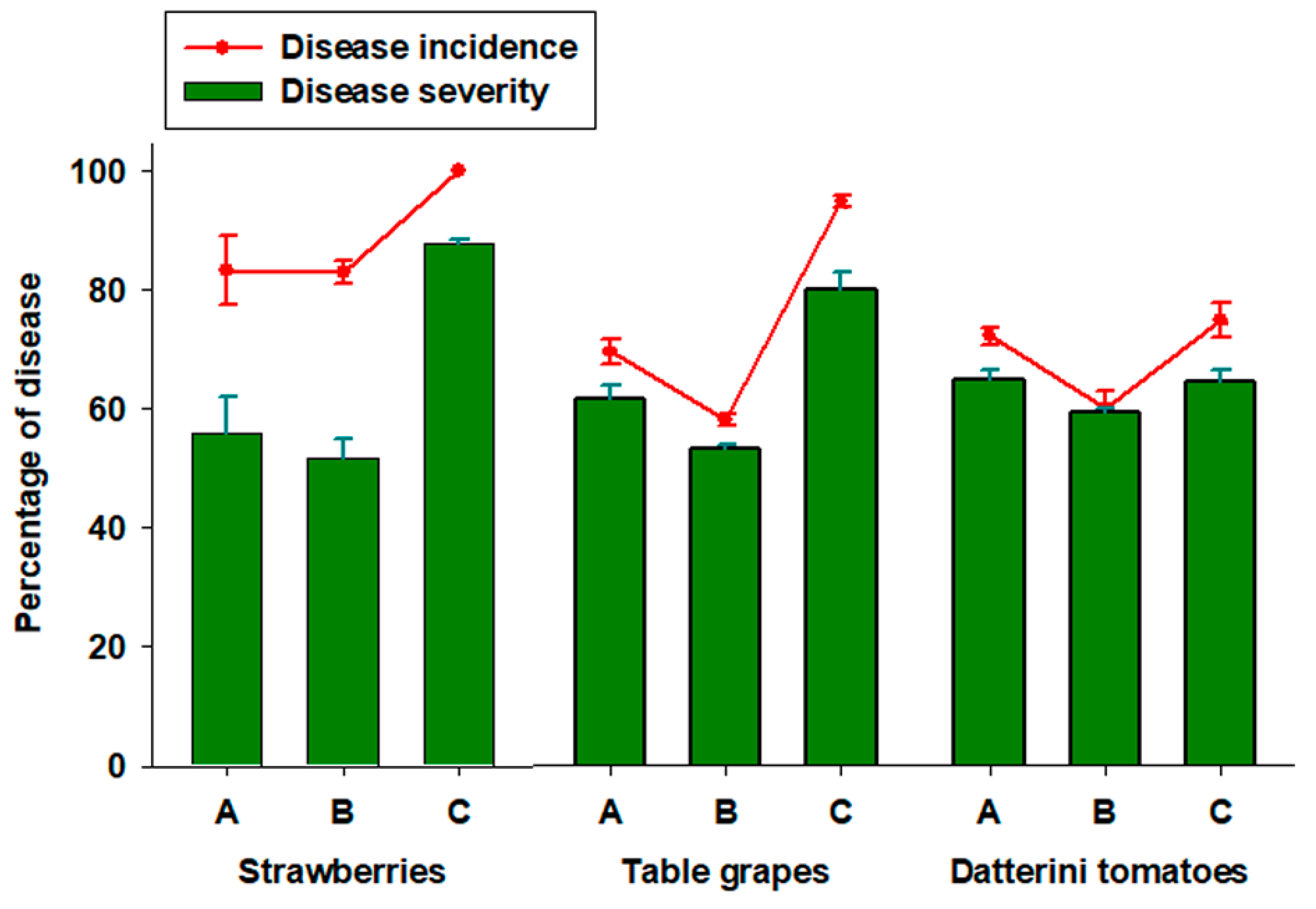
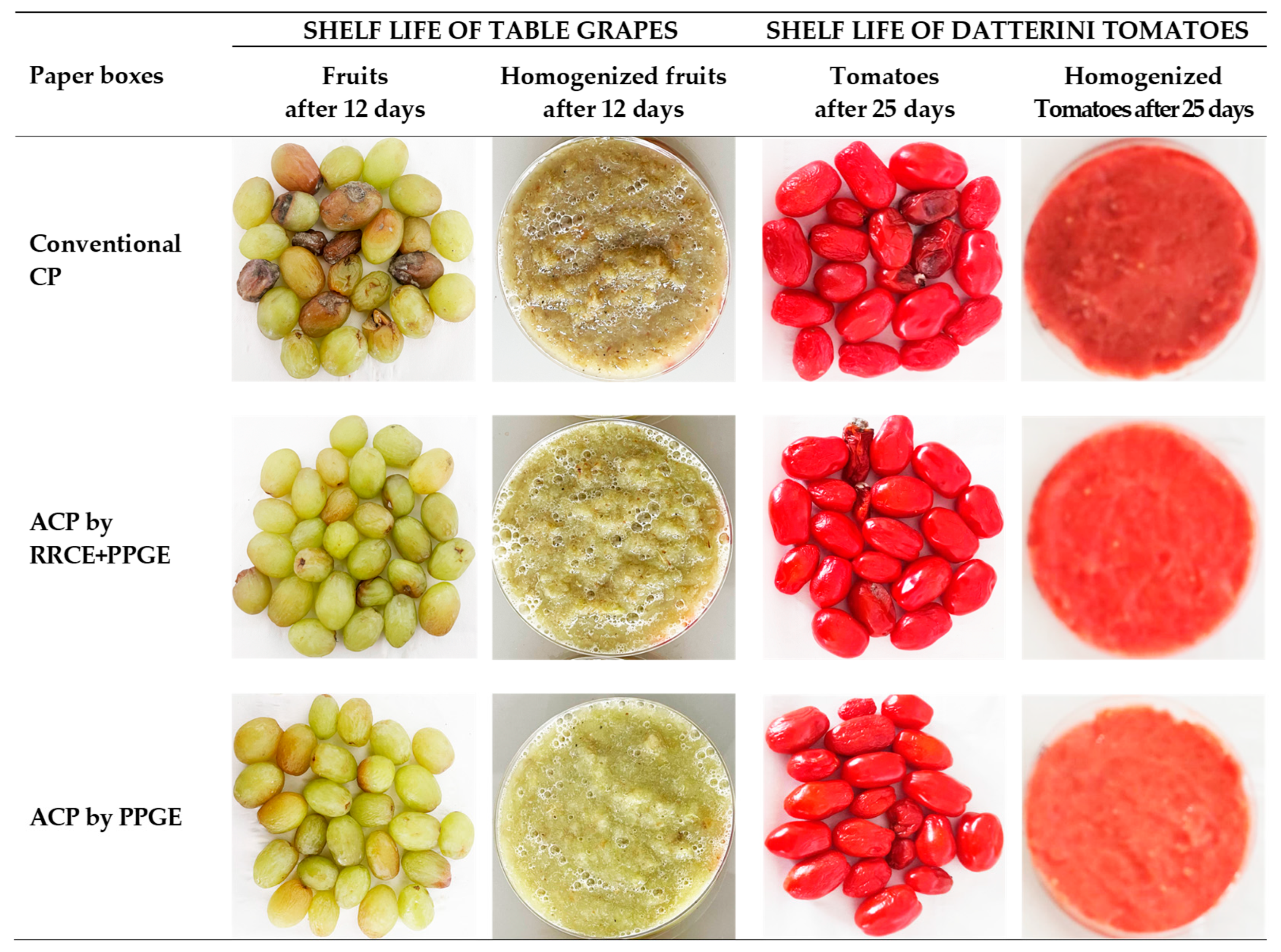
3.3. In Vivo Tests
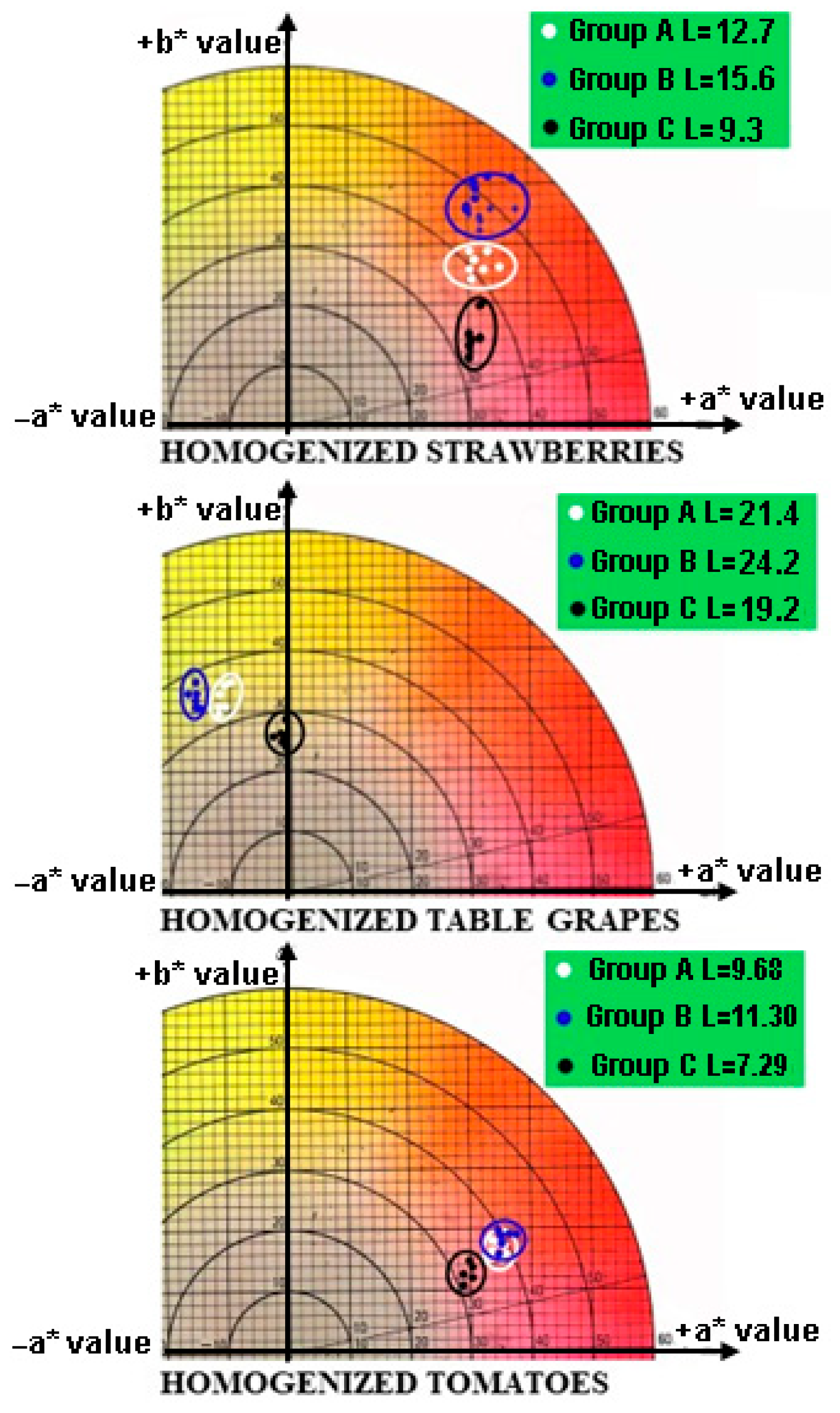
3.4. Colorimetric Parameters
4. Conclusions
Author Contributions
Funding
Data Availability Statement
Acknowledgments
Conflicts of Interest
References
- Kader, A.A. Postharvest biology and technology. In Postharvest Technology of Horticultural Crops; Kader, A.A., Ed.; University of California, Agriculture and Natural Resources: Davis, CA, USA, 2002; pp. 39–48. [Google Scholar]
- Merino, D.; Quilez-Molina, A.I.; Perotto, G.; Bassani, A.; Spigno, G.; Athanassiou, A. A second life for fruit and vegetable waste: A review on bioplastic films and coatings for potential food protection applications. Green Chem. 2022, 24, 4703–4727. [Google Scholar] [CrossRef] [Scilit]
- Priyadarshi, R.; Ghosh, T.; Purohit, S.D.; Prasannavenkadesan, V.; Rhim, J.-W. Lignin as a sustainable and functional material for active food packaging applications: A review. J. Clean. Prod. 2024, 469, 143151. [Google Scholar] [CrossRef] [Scilit]
- Wen, Y.H.; Tsou, C.H.; De Guzman, M.R.; Huang, D.; Yu, Y.Q.; Gao, C.; Zhang, X.M.; Du, J.; Zheng, Y.T.; Zhu, H.; et al. Antibacterial nanocomposite films of poly (vinyl alcohol) modified with zinc oxide-doped multiwalled carbon nanotubes as food packaging. Polym. Bull. 2022, 79, 3847–3866. [Google Scholar] [CrossRef] [Scilit]
- Zhao, X.; Xia, M.; Wei, X.; Xu, C.; Luo, Z.; Mao, L. Consolidated cold and modified atmosphere package system for fresh strawberry supply chains. LWT 2019, 109, 207–215. [Google Scholar] [CrossRef] [Scilit]
- Emamifar, A.; Ghaderi, Z.; Ghaderi, N. Effect of salep-based edible coating enriched with grape seed extract on postharvest shelf life of fresh strawberries. J. Food Saf. 2019, 39, e12710. [Google Scholar] [CrossRef] [Scilit]
- Fu, Y.; Dudley, E.G. Antimicrobial-coated films as food packaging: A review. Compr. Rev. Food Sci. Food Saf. 2021, 20, 3404–3437. [Google Scholar] [CrossRef] [Scilit]
- Massad-Ivanir, N.; Sand, A.; Nitzan, N.; Valderama, E.; Kurczewski, M.; Remde, H.; Wegenberger, A.; Shlosman, K.; Shemesh, R.; Störmer, A.; et al. Scalable production of antimicrobial food packaging films containing essential oil-loaded halloysite nanotubes. Food Packag. Shelf Life 2023, 37, 1–10. [Google Scholar] [CrossRef] [Scilit]
- Ratna; Aprilia, S.; Arahman, N.; Bilad, M.R.; Suhaimi, H.; Munawar, A.A.; Nasution, I.S. Bio-Nanocomposite based on edible gelatin film as active packaging from clarias gariepinus fish skin with the addition of cellulose nanocrystalline and nanopropolis. Polymers 2022, 14, 3738. [Google Scholar] [CrossRef] [Scilit]
- Muñoz-Almagro, N.; Herrero-Herranz, M.; Guri, S.; Corzo, N.; Montilla, A.; Villamiel, M. Application of sunflower pectin gels with low glycemic index in the coating of fresh strawberries stored in modi-fied atmospheres. J. Sci. Food Agric. 2021, 101, 5775–5783. [Google Scholar] [CrossRef] [Scilit]
- Iriani, E.S.; Permana, A.W.; Yuliani, S.; Kailaku, S.I.; Sulaiman, A.A. The effect of agricultural waste nanocellulose on the properties of bioplastic for fresh fruit packaging. IOP Conf. Ser. Earth Environ. Sci. 2019, 309, 012035. [Google Scholar] [CrossRef] [Scilit]
- Andrade, M.A.; Barbosa, C.H.; Cerqueira, M.A.; Azevedo, A.G.; Barros, C.; Machado, A.V.; Coelho, A.; Furtado, R.; Correia, C.B.; Saraiva, M.; et al. PLA films loaded with green tea and rosemary polyphenolic extracts as an active packaging for almond and beef. Food Packag. Shelf Life 2023, 36, 10. [Google Scholar] [CrossRef] [Scilit]
- Crisosto, C.H.; Michell, F.G. Postharvest handling systems: Small fruits. In Postharvest Technology of Horticultural Crops; Kader, A.A., Ed.; Center, UC Postharvest Technology: Davis, CA, USA, 2020; pp. 357–363. [Google Scholar]
- López-Gómez, A.; Ros-Chumillas, M.; Buendía-Moreno, L.; Martínez-Hernández, G.B. Active cardboard packaging with encapsulated essential oils for enhancing the shelf life of fruit and vegetables. Front. Nutr. 2020, 7, 559978. [Google Scholar] [CrossRef] [Scilit] [PubMed]
- Wei, Y.; Zhou, D.; Wang, Z.; Tu, S.; Shao, X.; Peng, J.; Pan, L.; Tu, K. Hot air treatment reduces postharvest decay and delays softening of cherry tomato by regulating gene expression and activities of cell wall- degrading enzymes. J. Sci. Food Agric. 2018, 98, 2105–2112. [Google Scholar] [CrossRef] [Scilit] [PubMed]
- López-Camelo, A.F.; Gómez, P.A. Comparison of color indexes for tomato ripening. Hortic. Bras. 2004, 22, 534–537. [Google Scholar] [CrossRef] [Scilit]
- Champa, H. Pre and post-harvest practices for quality improvement of table grapes (Vitis vinifera L.). J. Natl. Sci. Found. Sri Lanka 2015, 43, 3–9. [Google Scholar] [CrossRef] [Scilit]
- Elad, Y.; Vivier, M.; Fillinger, S. Botrytis, the good, the bad and the ugly. In Botrytis—The Fungus, the Pathogen and its Management in Agricultural Systems; Fillingers, S., Elad, Y., Vivier, M., Eds.; Springer: Berlin/Heidelberg, Germany, 2015; pp. 1–15. [Google Scholar]
- Higuchi, M.T.; de Aguiar, A.C.; Rodrigues, N.; Leles, N.R.; Ribeiro, L.T.M.; Bosso, B.E.C.; Yamashita, F.; Youssef, K.; Ruffo, R.S. Active Packaging Systems to Extend the Shelf Life of ‘Italia’ Table Grapes. Horticulturae 2024, 10, 214. [Google Scholar] [CrossRef] [Scilit]
- Priyadarshi, R.; Jayakumar, A.; Krebs de Souza, C.; Rhim, J.W.; Kim, J.T. Advances in strawberry postharvest preservation and packaging: A Comprehensive review. Compr. Rev. Food Sci. Food Saf. 2024, 23, e13417. [Google Scholar] [CrossRef] [Scilit]
- Ratna, R.; Aprilia, S.; Arahman, N.; Munawar, A.A. Effect of edible film gelatin nano-biocomposite packaging and storage temperature on the store quality of strawberries (Fragaria x ananassa var. duchesne). Future Foods 2023, 8, 100276. [Google Scholar] [CrossRef] [Scilit]
- Rongai, D.; Pulcini, P.; Pesce, B.; Milano, F. Antifungal activity of pomegranate peel extract against fusarium wilt of tomato. Eur. J. Plant Pathol. 2016, 147, 229–238. [Google Scholar] [CrossRef] [Scilit]
- Soleimanzadeh, A.; Mizani, S.; Mirzaei, G.; Bavarsad, E.T.; Farhoodi, M.; Esfanadiari, Z.; Rastami, M. Recent advances in characterizing the physical and functional properties of active packaging films containing pomegranate peel. Food Chem. 2024, 22, 101416. [Google Scholar] [CrossRef] [Scilit]
- Fischer, U.A.; Carle, R.; Kammerer, D.R. Identification and quantification of phenolic compounds from pomegranate (Punica granatum L.) peel, mesocarp, aril and differently produced juices by HPLC-DAD–ESI/MSn. Food Chem. 2011, 127, 807–821. [Google Scholar] [CrossRef] [Scilit] [PubMed]
- Bodbodak, S.; Shahabi, N.; Mohammadi, M.; Ghorbani, M.; Pezeshki, A. Development of a novel an-timicrobial electrospun nanofiber based on polylactic acid/hydroxypropyl methylcellulose con-taining pomegranate peel extract for active food packaging. Food Bioprocess Technol. 2021, 14, 2260–2272. [Google Scholar] [CrossRef] [Scilit]
- Kumar, N.; Daniloski, D.; Pratibha; Neeraj; D’Cunha, N.M.; Naumovski, N.; Trajkovska Petkoska, A. Pomegranate peel extract—A natural bioactive addition to novel active edible packaging. Food Res. Int. 2022, 156, 111378. [Google Scholar] [CrossRef] [Scilit] [PubMed]
- Bodana, V.; Swer, T.L.; Kumar, N.; Singh, A.; Samtiya, M.; Sari, T.P.; Babar, O.A. Development and characterization of pomegranate peel extract-functionalized jackfruit seed starch-based edible films and coatings for prolonging the shelf life of white grapes. Int. J. Biol. Macromol. 2024, 254, 127234. [Google Scholar] [CrossRef] [Scilit]
- Mandefro, S.B.; Jabasingh, A.S.; Tefera, Z.T.; Abebe, A.A. Rumex crispus L: Profiling and evaluation of the phytochemical properties, antioxidant potential, and antimicrobial activities of the root ex-tracts. Biomass Convers. Biorefinery 2024, 15, 7005–7020. [Google Scholar] [CrossRef] [Scilit]
- Bektašević, M.; Oraščanin, M.; Šertović, E. Biological activity and food potential of plants Rumex crispus L. and Rumex obtusifolius L.—A review. Technol. Acta 2022, 15, 61–67. [Google Scholar] [CrossRef]
- Park, Y. Sustainable dyeing of silk with curled dock (Rumex crispus) extract for trace element removal, ultraviolet protection, antimicrobial and anti-oxidant activity. Color. Technol. 2025, 1–9. [Google Scholar] [CrossRef] [Scilit]
- Singh, B.; Singh, J.P.; Kaur, A.; Singh, N. Phenolic compounds as beneficial phytochemicals in pomegranate (Punica granatum L.) peel: A review. Food Chem. 2018, 261, 75–86. [Google Scholar] [CrossRef] [Scilit]
- Rodriguez, S.; Kaur, K.; Sharma, M. Extraction methods and bioactive compounds from pomegranate peels: A comprehensive review for sustainable packaging applications. Food Biomacro. Mol. 2025, 2, 42–68. [Google Scholar] [CrossRef] [Scilit]
- Dey, D.; Debnath, S.; Hazra, S.; Ghosh, S.; Ray, R.; Hazra, B. Pomegranate Pericarp Extract Enhances the Antibacterial Activity of Ciprofloxacin Against Extended-Spectrum β-Lactamase (ESBL) and Metallo-β-Lactamase (MBL) Producing Gram-Negative Bacilli. Food Chem. Toxicol. 2020, 50, 4302–4309. [Google Scholar] [CrossRef] [Scilit]
- Lacivita, V.; Lordi, A.; Posati, T.; Zamboni, R.; Del Nobile, M.A.; Conte, A. Pomegranate Peel Powder: In Vitro Efficacy and Application to Contaminated Liquid Foods. Foods 2023, 12, 1173. [Google Scholar] [CrossRef] [Scilit] [PubMed]
- Rongai, D.; Sabatini, N.; Pulcini, P.; Di Marco, C.; Storchi, L.; Marrone, A. Effect of pomegranate peel extract on shelf life of strawberries: Computational chemistry approaches to assess antifungal mechanisms involved. J. Food Sci. Technol. 2018, 55, 2702–2711. [Google Scholar] [CrossRef] [Scilit] [PubMed]
- Ali, A.; Abrar, M.; Sultan, M.T.; Din, A.; Niaz, B. Post-harvest physicochemical changes in full ripe strawberries during cold storage. J. Anim. Plant Sci. 2011, 21, 38–41. Available online: https://thejaps.org.pk/docs/21(1)2011/POST-HARVEST.pdf (accessed on 24 December 2025).
- Ali, M.Q.; Ahmad, N.; Azhar, M.A.; Abdul Munaim, M.S.; Hussain, A.; Ali Mahdi, A. An overview: Exploring the potential of fruit and vegetable waste and by-products in food biodegradable packaging. Discov. Food 2024, 4, 130. [Google Scholar] [CrossRef] [Scilit]
- Utami, R.; Kawiji, K.; Atmaka, W.; Nurmaya, L.; Khasanah, L.U.; Manuhara, G.J. The effect of active paper packaging enriched with oleoresin from solid waste of pressed Curcuma xanthorrhiza Roxb. Placement methods on quality of refrigerated strawberry (Fragaria x ananassa). Caraka Tani J. Sustain. Agric. 2021, 36, 155–164. [Google Scholar] [CrossRef] [Scilit]
- Nadim, Z.; Ahmadi, E.; Sarikhani, H.; Amiri Chayjan, R. Effect of methylcellulose-based edible coating on strawberry fruit’s quality maintenance during storage. J. Food Process. Preserv. 2014, 39, 80–90. [Google Scholar] [CrossRef] [Scilit]
- Geransayeh, M.; Sepahvand, S.; Abdossi, V.; Nezhad, R.A. Effect of thymol treatment on decay, postharvest life and quality of strawberry (Fragaria ananassa) fruit cv. “Gaviota”. International. J. Agron. Agriculural Res. 2015, 6, 151–162. Available online: https://www.innspub.net/wp-content/uploads/2015/04/IJAAR-V6-No4-p151-162.pdf (accessed on 24 December 2025).
- Rusková, M.; Opálkova Šiškova, A.; Mosnáčkova, K.; Gago, C.; Guerreiro, A.; Bučkova, M.; Puškárová, A.; Pangallo, D.; Dulce Antunes, M. Biodegradable active packaging enriched with essential oils for enhancing the shelf life of strawberries. Antioxidants 2023, 12, 755. [Google Scholar] [CrossRef] [Scilit]
- Darwish, O.S.; Ali, M.R.; Khojah, E.; Samra, B.N.; Ramadan, K.M.A.; El-Mogy, M.M. Pre-Harvest appli-cation of salicylic acid, abscisic acid, and methyl jasmonate conserve bioactive compounds of strawberry fruits during refrigerated storage. Horticulturae 2021, 7, 568. [Google Scholar] [CrossRef] [Scilit]
- Bahmani, R.; Razavi, F.; Mortazavi, S.N.; Gohari, G.; Juárez-Maldonado, A. Evaluation of pro-line-coated chitosan nanoparticles on decay control and quality preservation of strawberry fruit (cv. Camarosa) during cold storage. Horticulturae 2022, 8, 648. [Google Scholar] [CrossRef] [Scilit]
- Taechutrakul, S.; Netpradit, S.; Tanprasert, K. Development of recycled paper-based ethylene scavenging packages for tomatoes. Acta Hortic. 2009, 837, 365–370. [Google Scholar] [CrossRef] [Scilit]
- García- García, I.; Toboada-Rodríguez, A.; López-Gomez, A.; Marín, F. Active packaging of cardboard to extend the shelf life of tomatoes. Food Bioprocess Technol. 2013, 6, 754–761. [Google Scholar] [CrossRef] [Scilit]



| Plant Material | pH | Acidity | TPC | EA | PC | ||
|---|---|---|---|---|---|---|---|
| PC (α + β) | PαC | PβC | |||||
| meq NaOH g−1 DW | mg GAE g−1 DW | mg g−1 DW | mg g−1 DW | mg g−1 DW | mg g−1 DW | ||
| PPGE | 4.12 b | 1.56 a | 444.5 a | 15.4 d | 218.6 c | 96.2 c | 122.4 c |
| RRCE | 4.38 a | 4.37 b | 84.2 b | ||||
| Treatment | Doses | Mycelia Growth | |||
|---|---|---|---|---|---|
| F. oxysporum | B. cinerea | ||||
| % | mm | mm | |||
| Untreated control | 50.0 | a | 50.0 | a | |
| RRCE | 1 | 41.0 | b | 27.2 | b |
| RRCE + PPGE | 1 | 17.0 | c | 17.9 | c |
| PPGE | 1 | 10.4 | d | 14.0 | d |
| Fungicide | 0.15 | 16.1 | c | 16.6 | c |
| F = 10.298 p < 0.005 | F = 60.415 p < 0.001 | ||||
Disclaimer/Publisher’s Note: The statements, opinions and data contained in all publications are solely those of the individual author(s) and contributor(s) and not of MDPI and/or the editor(s). MDPI and/or the editor(s) disclaim responsibility for any injury to people or property resulting from any ideas, methods, instructions or products referred to in the content. |
© 2025 by the authors. Licensee MDPI, Basel, Switzerland. This article is an open access article distributed under the terms and conditions of the Creative Commons Attribution (CC BY) license.
Share and Cite
Rongai, D.; Di Serio, M.G. Pomegranate Peel and Curly Dock Root Extracts for a Smart Use of Packaging. Processes 2026, 14, 106. https://doi.org/10.3390/pr14010106
Rongai D, Di Serio MG. Pomegranate Peel and Curly Dock Root Extracts for a Smart Use of Packaging. Processes. 2026; 14(1):106. https://doi.org/10.3390/pr14010106
Chicago/Turabian StyleRongai, Domenico, and Maria Gabriella Di Serio. 2026. "Pomegranate Peel and Curly Dock Root Extracts for a Smart Use of Packaging" Processes 14, no. 1: 106. https://doi.org/10.3390/pr14010106
APA StyleRongai, D., & Di Serio, M. G. (2026). Pomegranate Peel and Curly Dock Root Extracts for a Smart Use of Packaging. Processes, 14(1), 106. https://doi.org/10.3390/pr14010106