Article

Optimization of Triazine Desulfurization Injection Rate and Injection Process for the Xiangguosi Underground Gas Storage

1
Chongqing Xiangguo Temple Gas Storage Co., Ltd., Chongqing 401120, China
2
School of Safety Science and Management, Chongqing University of Science and Technology, Chongqing 401331, China
3
College of Petroleum and Natural Gas Engineering, Chongqing University of Science and Technology, Chongqing 401331, China
*
Authors to whom correspondence should be addressed.
Processes 2025, 13(12), 3910; https://doi.org/10.3390/pr13123910
Submission received: 23 September 2025 / Revised: 21 November 2025 / Accepted: 25 November 2025 / Published: 3 December 2025
(This article belongs to the Section Chemical Processes and Systems)

Abstract

Triazine solvent desulfurization is a highly efficient technology for removing hydrogen sulfide from natural gas. In this study, we used ASPEN HYSYS V11 with the Peng-Robinson (PR) equation to investigate the triazine consumption under different natural gas flow rates and hydrogen sulfide concentrations, as well as the sulfur capacity resulting from the reaction between triazine and H2S at varying solution concentrations. Additionally, CFD simulations were employed to optimize the injection process of the triazine solvent by examining four key factors: gas flow velocity, injection volume, injection angle, and injection method. The results indicate that the required triazine dosage follows an exponential model, with a margin of error within 10%. A triazine mass fraction between 0.4 and 0.6 was found to be optimal. Among the factors studied, gas flow velocity has the most significant influence on desulfurization efficiency, while the injection rate plays a secondary role. An injection angle of 45° proved most effective, and the use of dual vertical symmetric nozzles achieved more uniform mixing between the natural gas and triazine solvent.

1. Introduction

Based on the sulfur content in natural gas, desulfurization treatment scales can be categorized into three types: low potential sulfur content (typically defined as elemental sulfur below 0.2 t/d), medium potential sulfur content (0.2–30 t/d), and high potential sulfur content (above 30 t/d). In China, dry and wet desulfurization processes are primarily employed for natural gas with medium to low sulfur content [1,2,3]. Dry desulfurization usually involves the iron oxide solid desulfurization process, which requires periodic replacement of desulfurizers, leading to high investment and operating costs as well as operational complexity. Moreover, spent desulfurizers are prone to spontaneous combustion upon air exposure, complicating their recovery and treatment. Wet desulfurization mainly uses the liquid-phase redox method with complexed iron, yet such processes generally suffer from high power consumption, large equipment size, elevated operating costs, and stringent control requirements [4,5,6].
In recent years, a non-regenerable liquid desulfurization technology—triazine solvent desulfurization—has been adopted internationally for treating natural gas with low potential sulfur content (H2S below 0.2 t/d). Research on triazine-based sulfur removers began in the 1990s, and after over two decades of development, it has seen widespread industrial application in the United States and Canada [7,8,9]. Studies indicate that triazine sulfur removers offer high efficiency, low cost, ease of preparation, and antibacterial properties, thereby overcoming space and cost limitations in low-sulfur gas wells [10,11].
Triazine compounds represent a major category of chemicals used for H2S removal. The reaction is fundamentally a nucleophilic substitution: nitrogen atoms on the triazine ring, influenced by electronic effects, are attacked by HS(a dissociation product of H2S). This proceeds through three consecutive substitution steps, forming thiazine intermediates and ultimately trithiocyanuric acid, with the reaction rate decreasing stepwise [12,13]. The process is influenced by factors such as pH, temperature, reactant concentration and ratio, and the reaction medium. Currently, in situ spectroscopic techniques (e.g., Raman spectroscopy, NMR) and density functional theory (DFT) are widely used to investigate the triazine—H2S reaction mechanism from experimental and theoretical perspectives, respectively [14,15]. Ahmed [16] experimentally evaluated the oxidative desulfurization efficiency of triazine under ambient conditions and elucidated its reaction mechanism. Subramaniam [17] used CFD simulations to analyze the H2S removal efficiency of triazine at different locations in gas wells.
The confined mass transfer process in jet systems involves mass transfer between a gas (or fine droplet) jet and the surrounding medium within a confined space. The flow behavior in such systems is relatively complex: confinement by walls leads to a flow pattern distinct from that of a free jet [18,19]. Mass transfer efficiency is affected by factors including the jet Reynolds number, jet velocity, gas concentration, and the geometry of the confined space. Concentration and temperature differences between the jet and the surrounding medium drive mass and heat transfer, with these gradients influencing the direction and rate of transfer [20,21]. Besides experimental approaches, computational fluid dynamics (CFD) can be applied to numerically simulate the confined mass transfer process, solving the governing equations of fluid flow and mass transfer to obtain flow and concentration field distributions.
CFD-based quantitative analysis is a core methodology for characterizing physical processes—such as flow, mass transfer, and heat transfer—using computational fluid dynamics. It involves solving governing equations through mathematical models, supported by quantitative indicators and validation, to enable accurate analysis of complex physical phenomena. The methodology generally consists of four steps [22,23,24]: (1) Construct a 3D geometric model based on the actual scenario and discretize the computational domain using structured or unstructured grids, with grid quality assured through grid independence verification; (2) Select appropriate governing equations based on the physical process and complement them with suitable turbulence and mass transfer models to ensure model applicability; (3) Define boundary conditions (e.g., inlet, outlet, wall), solve the discretized equations using numerical methods such as the finite volume or finite element method, and set convergence criteria; (4) Extract relevant data (e.g., flow, concentration, and temperature fields) and perform quantitative characterization using defined metrics.
This study establishes an integrated research framework of “thermodynamic calculation–flow field optimization–field verification” by combining the PR equation with a CFD model. The approach significantly enhances droplet dispersion and mixing uniformity under confined mass transfer conditions and introduces a dual vertical symmetric tube injection process, offering a novel injection solution for desulfurization in low-sulfur gas storage facilities.

2. Triazine Solvent Wet Desulfurization Process

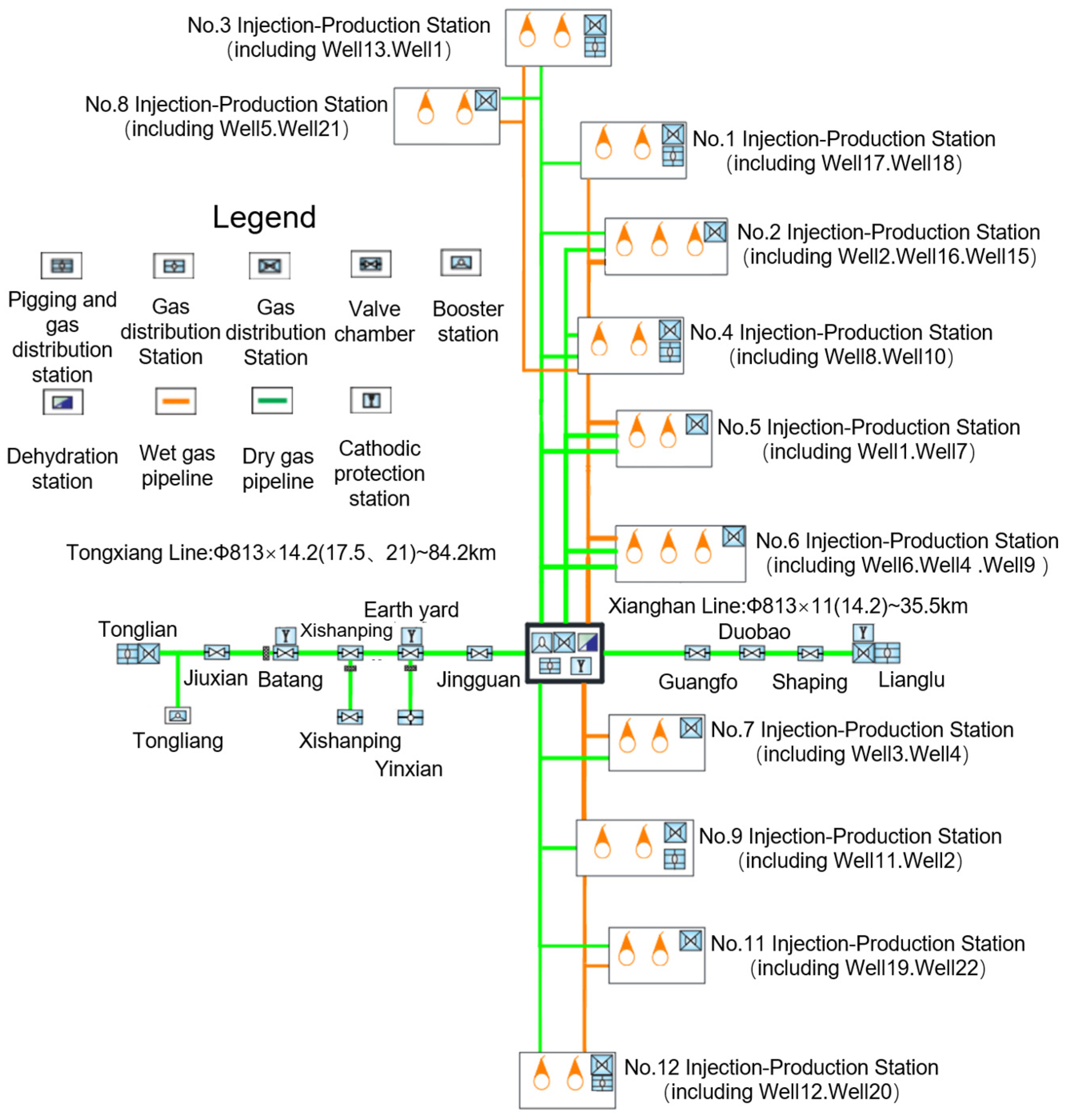
Xiangguosi Gas Storage, the first underground gas storage facility in southwest China, serves for seasonal peak shaving and emergency gas supply for the Zhongwei–Guiyang Pipeline and the Sichuan–Chongqing region. It has a designed storage capacity of 45 × 108 m3, a working gas volume of 26 × 108 m3, and a maximum daily gas production capacity of 3800 × 104 m3. The facility currently operates one gathering and injection station and eleven injection–production wells. It is equipped with four J-T valve dehydration units, one triethylene glycol dehydration unit, and wellhead skid-mounted devices that inject ethylene glycol to prevent freezing and blockage. A schematic of the pipeline network is shown in Figure 1.
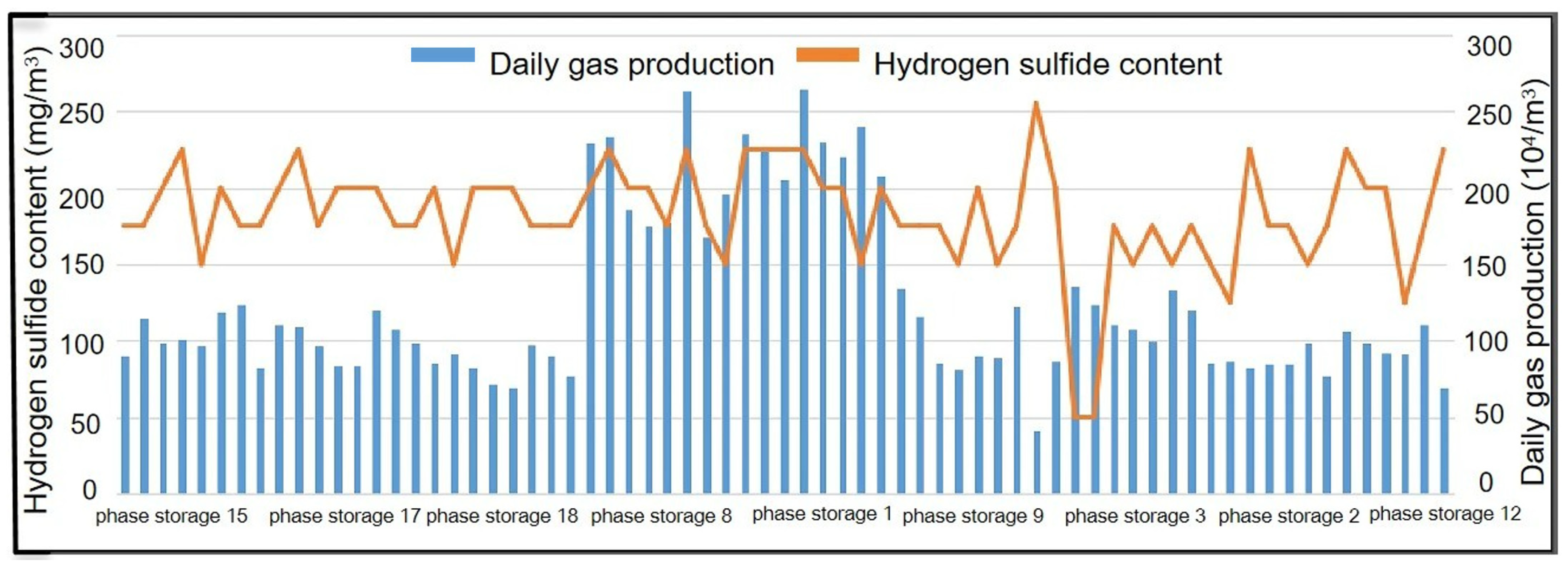
During the 9th and 10th gas production periods, the H2S content in the produced natural gas at Xiangguosi ranged from 5 mg/m3 to 10.8 mg/m3, classifying it as low potential sulfur content (below 0.2 t/d). A comparison of H2S content and daily output for selected wells is provided in Figure 2. As shown, the H2S levels measured across injection–production wells during the 10th production period exhibited irregular and fluctuating trends. For instance, when the daily output of Xiangchu 1 Well was 205 × 104 m3, H2S content measured 9 mg/m3; it dropped to 6 mg/m3 at 240 × 104 m3, and rose to 7 mg/m3 when production decreased to 134 × 104 m3. Currently, H2S content fluctuates frequently with changes in production rates, well switching, and pigging operations, showing no clear predictable pattern.
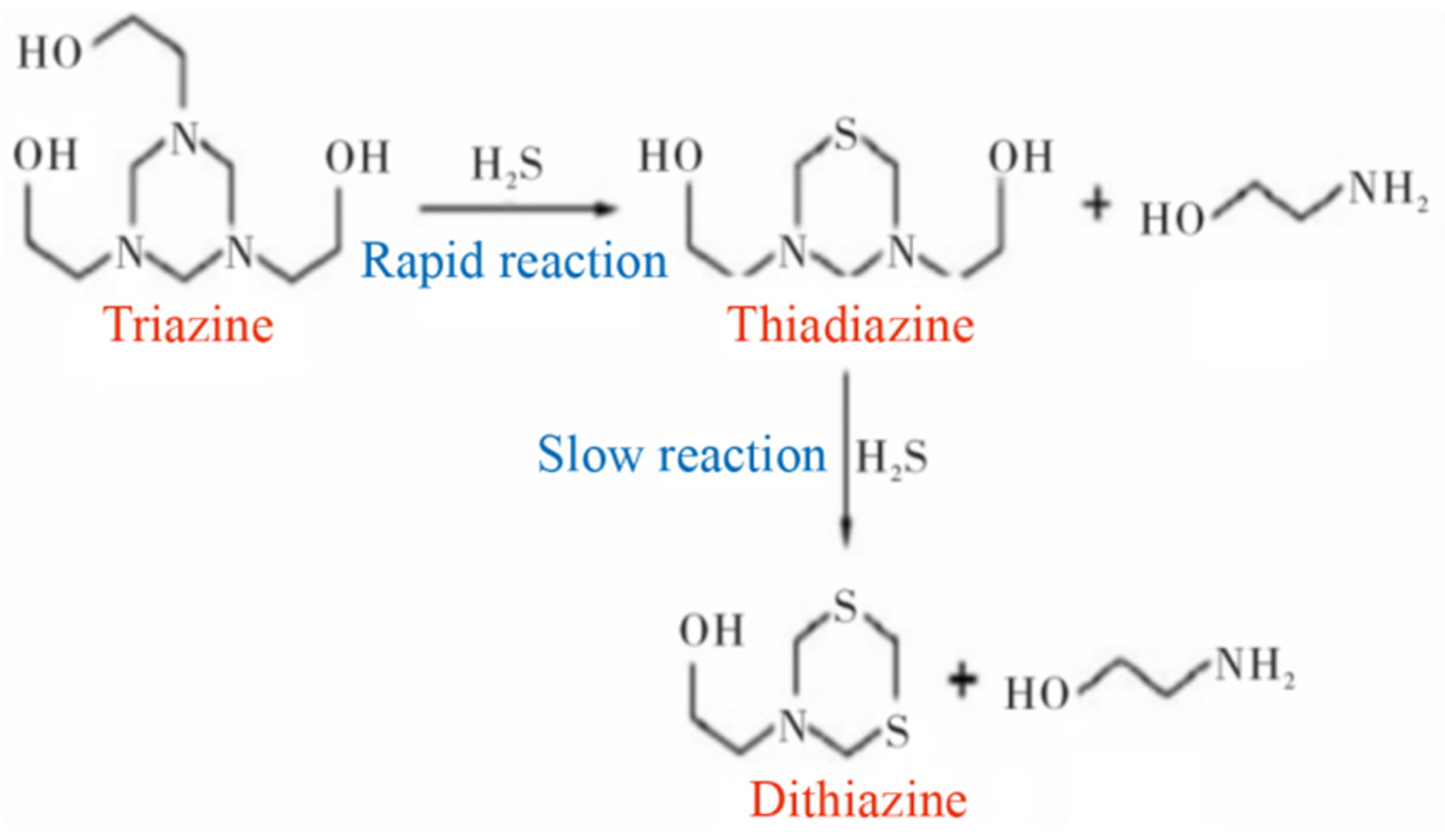
To mitigate H2S in the produced gas and ensure compliance with first-class gas quality standards, Xiangguosi Gas Storage employs a triazine-based wet desulfurization process. The triazine sulfur remover used is a high sulfur-capacity agent—a viscous, colorless to reddish-brown liquid at room temperature, soluble in water, with viscosity increasing at lower temperatures. It undergoes hydrolysis above 90 °C, has no pungent odor, and a pH between 7 and 11. Chemically, triazine is a cyclic amine that reacts rapidly with H2S to form thiodiazine, which slowly reacts with another H2S molecule to yield dithiazine. Theoretically, each mole of triazine can absorb up to 3 moles of H2S, though under practical conditions, typically only two nitrogen atoms in the ring participate in the reaction. The reaction process is illustrated in Figure 3.
Based on the wet desulfurization process implemented at the Xiangguosi underground gas storage and the physicochemical characteristics of the triazine-based sulfur scavenger, three critical challenges have been identified. First, the strongly alkaline nature of the triazine solution imparts corrosivity to metal pipelines, necessitating a quantitative assessment of its impact on pipeline integrity and operational safety. Second, the surface facilities at Xiangguosi handle multiple process fluids—including produced water, triethylene glycol (TEG), and ethylene glycol (MEG)—yet the interactions between these fluids and the triazine solvent remain insufficiently studied and require systematic investigation. Third, as the existing surface process already incorporates an antifreeze injection system, the compatibility and adaptability of the triazine solvent within this established setup must be thoroughly evaluated. In response, this research will address these three aspects to conduct a comprehensive adaptability analysis of the triazine solvent, while simultaneously evaluating its practical desulfurization performance under real operating conditions.

3. Analysis of the Desulfurization Effect of Triazine

3.1. Desulfurization Model Establishment

The Peng–Robinson (PR) equation of state, as shown in Equation (1), was selected as the thermodynamic model for the present simulation study.
p = R T v b a T v v + b + b ( v b )
In the equation, p denotes the system pressure (Pa), R is the universal gas constant (J·mol−1·K−1), T represents the system temperature (K), v is the molar volume of the medium (m3·mol−1), and a and b are dimensionless characteristic parameters.
Using HYSYS software (Beijing Huanzhong Ruicheng Technology Co., Ltd., Beijing, China), the produced-gas composition (Table 1) was entered, and the reaction between triazine and hydrogen sulfide was defined as a two-step conversion: first, triazine reacts with H2S to form thiadiazine and amine; second, thiadiazine reacts with additional H2S to yield dithiazine and amine. The physicochemical properties of triazine and related species are provided in Table 2.
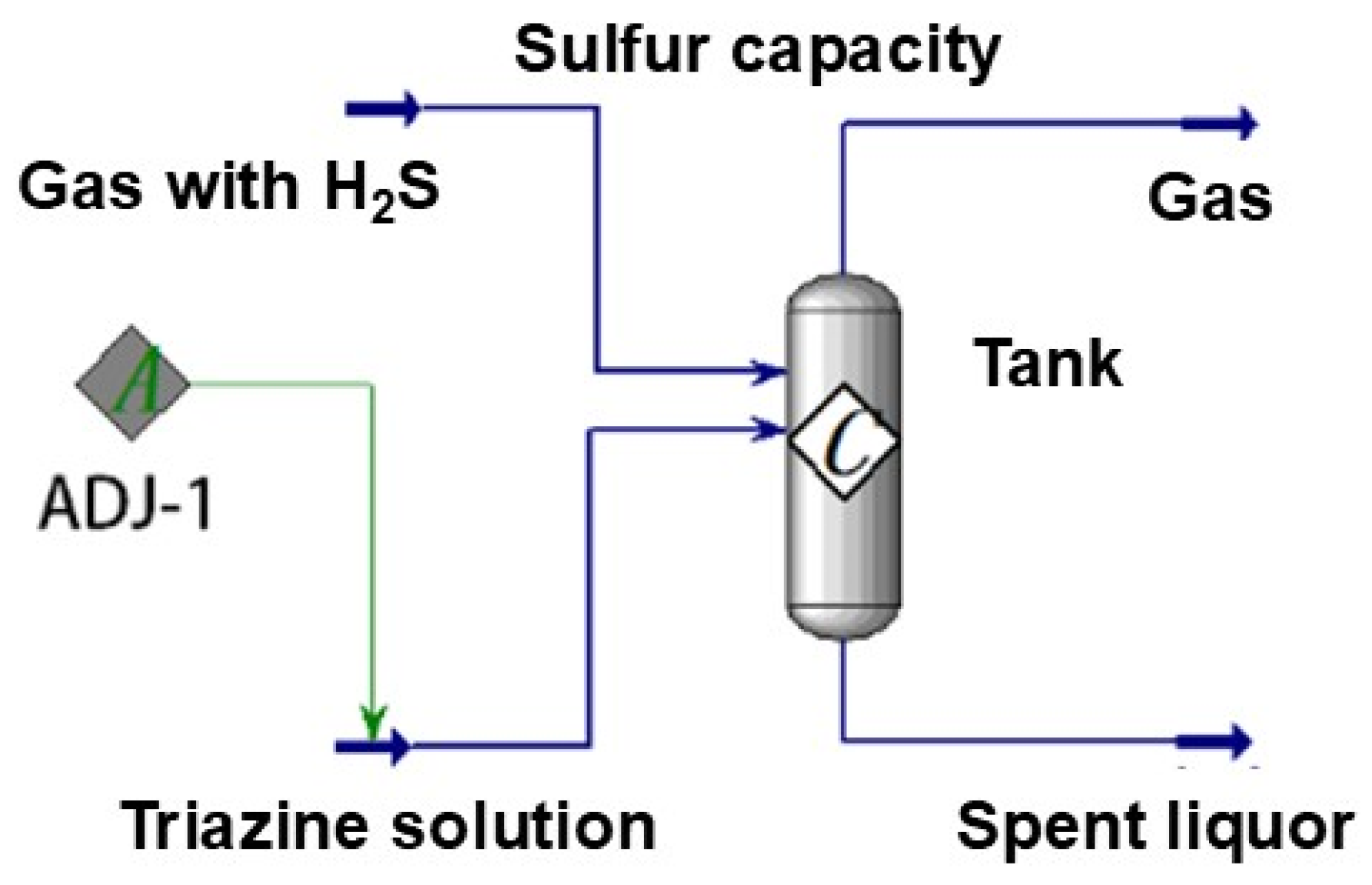
A triazine solution was prepared by mixing triazine and water at a mass fraction ratio of 45:55. The solution was then introduced into a conversion reactor to simulate the chemical reaction between triazine and hydrogen sulfide, as illustrated in Figure 4.
The simplified conversion reactor model in ASPEN HYSYS V11 does not account for potential mass transfer limitations that may occur under low-turbulence conditions or with large droplet sizes, such as during low pipeline flow rates or inadequate atomization. This omission could result in an overestimation of reaction efficiency when mass transfer controls the overall rate. Consequently, the current model is primarily valid for high-turbulence, fine-droplet environments similar to those in the Xiangguosi Underground Gas Storage pipeline. To extend its applicability, future work will integrate a mass transfer module with the reaction kinetics to develop a more robust multiphase reaction model.

3.2. Variation in Triazine Dosing Quantity

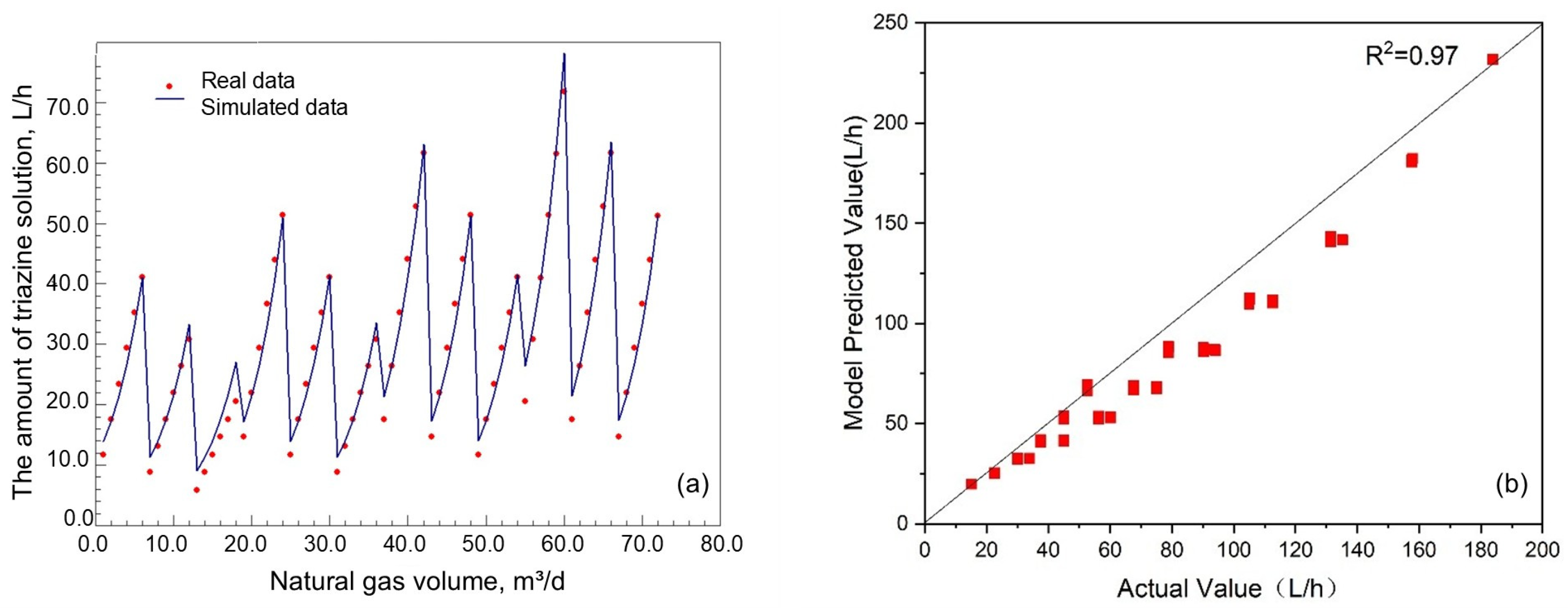
To analyze the variation law of the required triazine solution dosage under the condition of a given hydrogen sulfide content in purified gas, the gas volume was set to vary within the range of 10,000,000–35,000,000 cubic meters per day, the hydrogen sulfide content before purification was set to range from 7 to 10 mg/m3, and the hydrogen sulfide content after purification was set to range from 3 to 5 mg/m3. The calculated required injection volume of triazine solution is presented in Appendix A.
The calculated data were fitted using an exponential model, resulting in Fitting Formula (2).
y = exp a 1 Q + b 1 A + c 1 B + d 1
Wherein,
y —The required amount of triazine solution, L/h;
Q —Natural gas volume, 10,000 m3/day;
A —H2S content before purification, mg/m3;
B —H2S content after purification, mg/m3;
a 1 , b 1 , c 1 , d 1 —Constants, as shown in Nomenclature.
The comparison between the fitting curve and the calculated data is shown in Figure 5. The relative errors of the data are all within 10%, indicating that the fitting effect of Formula (2) is satisfactory.

3.3. Variation in Sulfur Capacity

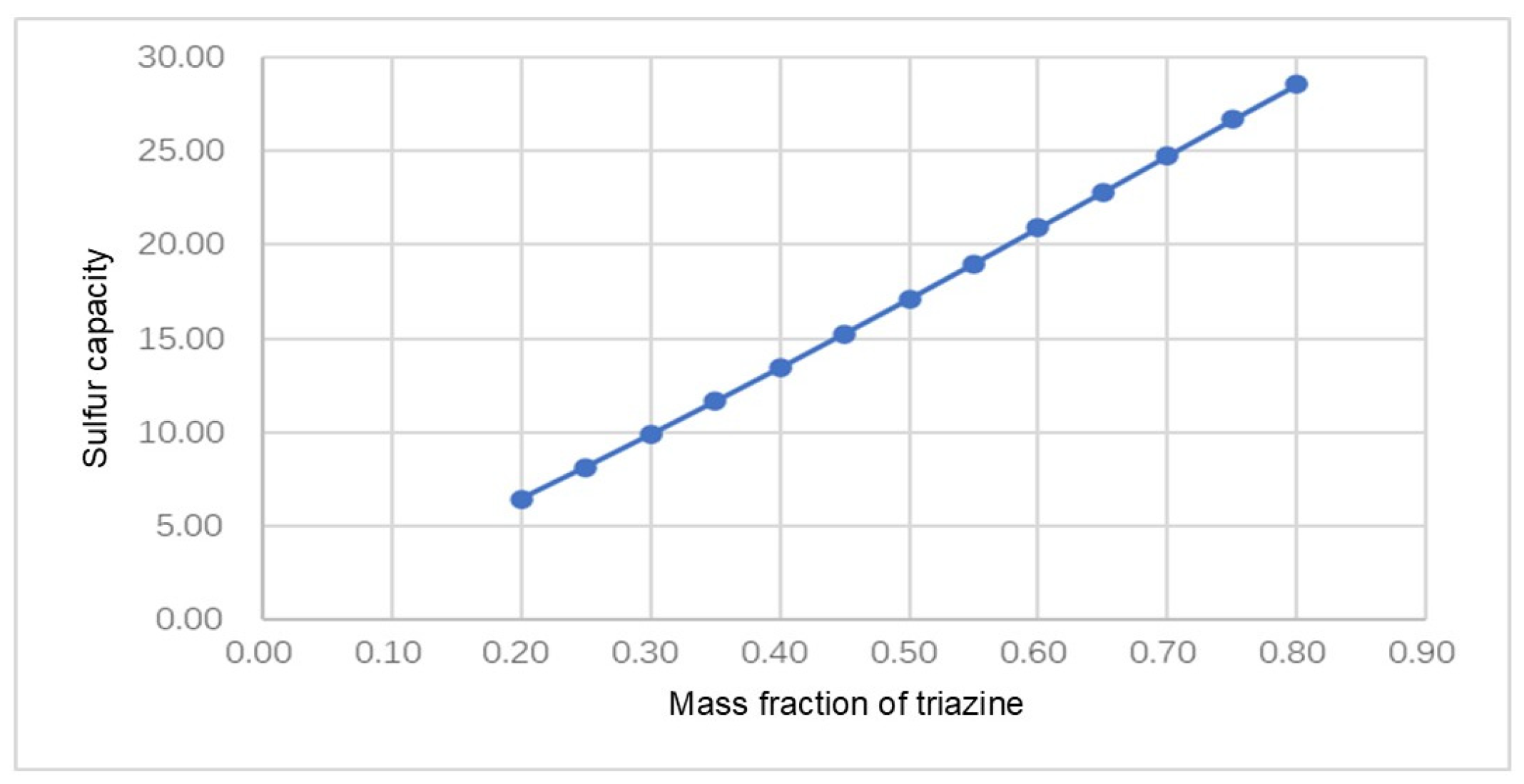
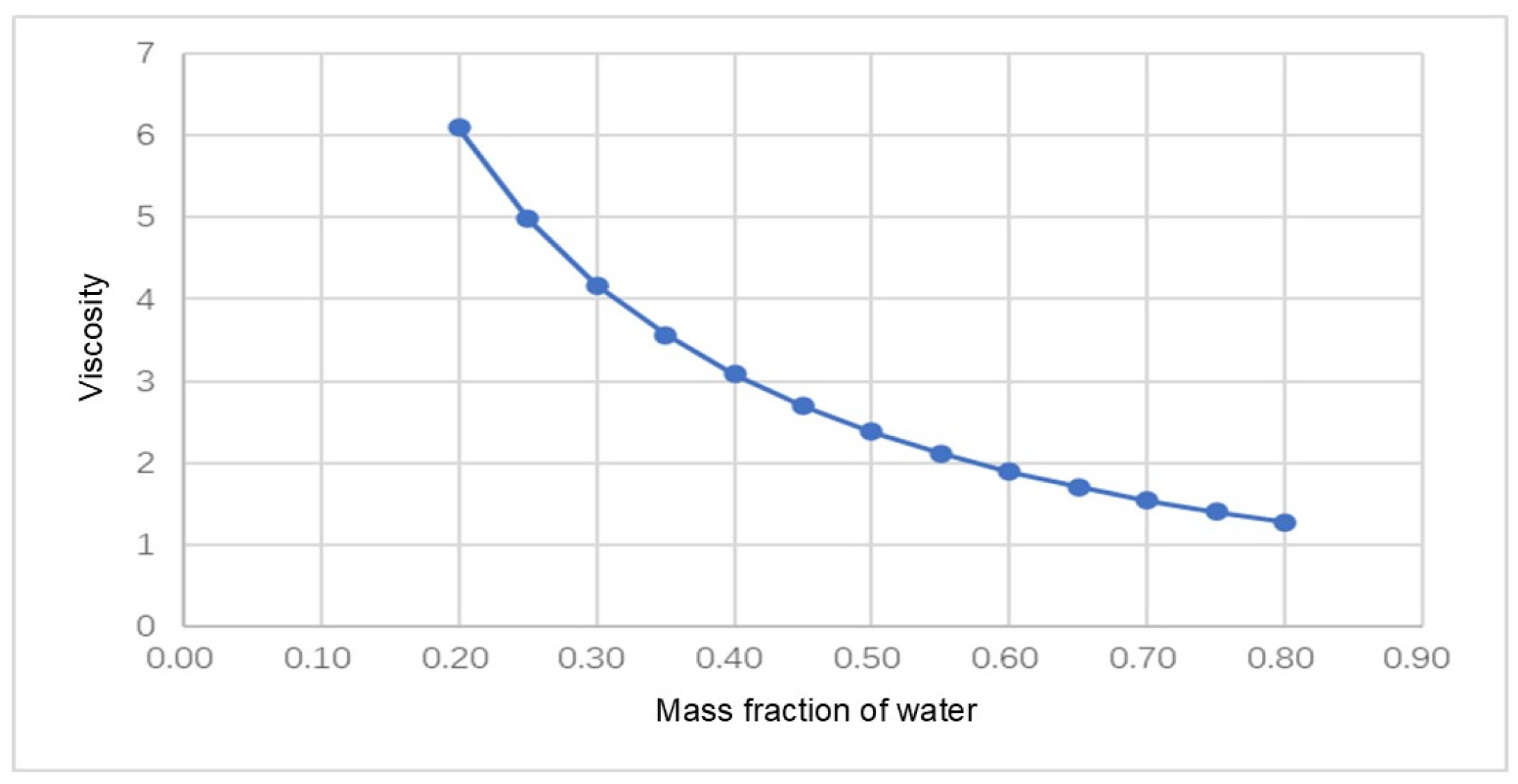
To further analyze the desulfurization effect of the triazine solution, the calculated variation of sulfur capacity from the reaction between triazine solutions of different concentrations and hydrogen sulfide is shown in Figure 6. Meanwhile, since the triazine solution is injected into the pipeline through a nozzle, the viscosity of the triazine solution will affect the injection effect and the flow state of the triazine solution in the pipeline. The calculated variation in solution viscosity under different triazine concentration conditions is shown in Figure 7.
The sulfur capacity increases linearly with the rise in the mass fraction of triazine in the triazine solution, while the viscosity decreases exponentially with the increase in the mass fraction of water.
The calculation data of triazine concentration and sulfur capacity were fitted to obtain a linear equation, as shown in Formula (3).
y = a 2 x + b 2
Wherein,
y —Sulfur capacity, %
x —triazine mass fraction
a 2 , b 2 —constant, a2 = 37.014; b2 = −1.229
For a fixed nozzle structure, liquid viscosity is the most critical parameter influencing atomization quality. Effective atomization in mechanical nozzles typically requires a fluid viscosity below 10 cp, with lower viscosities being more conducive to superior performance. The selected triazine concentration range of 0.4–0.6 wt% optimally balances sulfur capacity (≥8%) with viscosity (≤8 cp) [25]. This formulation thus satisfies the dual on-site engineering requirements of effective atomization and high desulfurization efficiency.

4. Optimization of Triazine Injection Process

4.1. Injection Model Establishment

① Continuity Equation
In a flow field, the difference between the mass inflow and outflow should be equal to the mass increase within the control volume, from which the continuity equation can be derived as follows:
t ρ m + ρ m v m = m
Wherein,
m —mass-averaged velocity;
ρ m —gas–liquid mixture density;
v m mass transfer.
ρ m and v m can be obtained through Equations (5) and (6), respectively.
ρ m = k = 1 3 a k ρ k
v m = k = 1 3 a k ρ k ρ m
Wherein,
a k , ρ k —volume fraction and density of phase k (where k = 1, 2, 3 represent the aqueous phase, oil phase, and gas phase, respectively)
② Momentum Equation
The conservation of momentum is a universal law followed by fluids, meaning that the time rate of change in the momentum of a system is equal to the sum of the external forces acting on it. Although gas and liquid form two phases, the conservation of momentum can be applied to each phase separately, and then the momentum equation is obtained by summing over all phases as follows:
t ρ m v m + ρ m v m v m = ρ + μ m v m + v m T + ρ m g + F + k = 1 3 a k ρ k v d r , k v d r , k
Wherein,
F —Body force
μ m —Viscosity of gas–liquid mixture
v d r , k —Drift velocity; v d r , k = v k v m , other symbols are the same as before
③ Energy Equation
Applying the first law of thermodynamics to a system yields the expression for the energy equation:
t k = 1 3 a k ρ k E k + k = 1 3 a k u k ρ k E k + ρ = k e f f T + S E
Wherein,
k e f f —Effective thermal conductivity;
S E —Volumetric heat source; in this system, since volumetric heat sources are not considered, we can set S E = 0 .
④ Slip Velocity Equation
Slip velocity refers to the velocity of the secondary phase relative to the primary phase, and its expression is as follows:
v q p = v p v q
The slip velocity and drift velocity have the following relationship:
u d r , p = u q p k = 1 3 a k ρ k ρ m u q k
Wherein,
v q p , v p , v q —Slip velocity, secondary phase velocity, primary phase velocity, the remaining symbols are the same as before.
⑤ Governing Equation for the Volume Fraction of the Secondary Phase
Based on the mass conservation equation of the secondary phase, its governing equation for the volume fraction can be derived as follows:
t a p ρ p + a p ρ p v m = a p ρ p v d r , p
Wherein,
a p , ρ p —denote the volume fraction and density of the secondary phase, respectively.
The computational model was solved using ANSYS FLUENT V2024 (Beijing Huanzhong Ruicheng Technology Co., Ltd., Beijing, China). A Discrete Phase Model (DPM) was employed, treating the triazine droplets as a dilute phase (volume fraction < 1%) to neglect inter-particle interactions. Two-way coupling was implemented to capture momentum exchange between the continuous gas phase and the discrete liquid droplets.
The velocity inlet boundary condition was specified with an inlet velocity of 15 m/s, consistent with field measurements, a turbulence intensity of 5% representative of pipeline flow, and a hydraulic diameter matching the pipeline’s inner diameter of 0.5 m. The outlet was configured as an outflow boundary to permit natural pressure development.
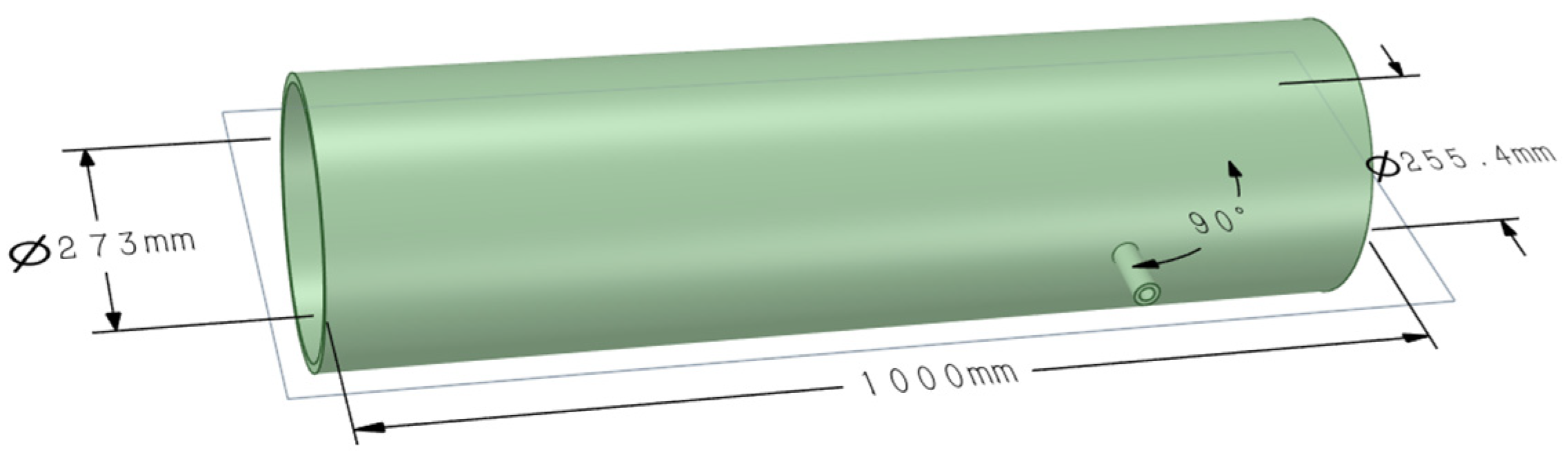
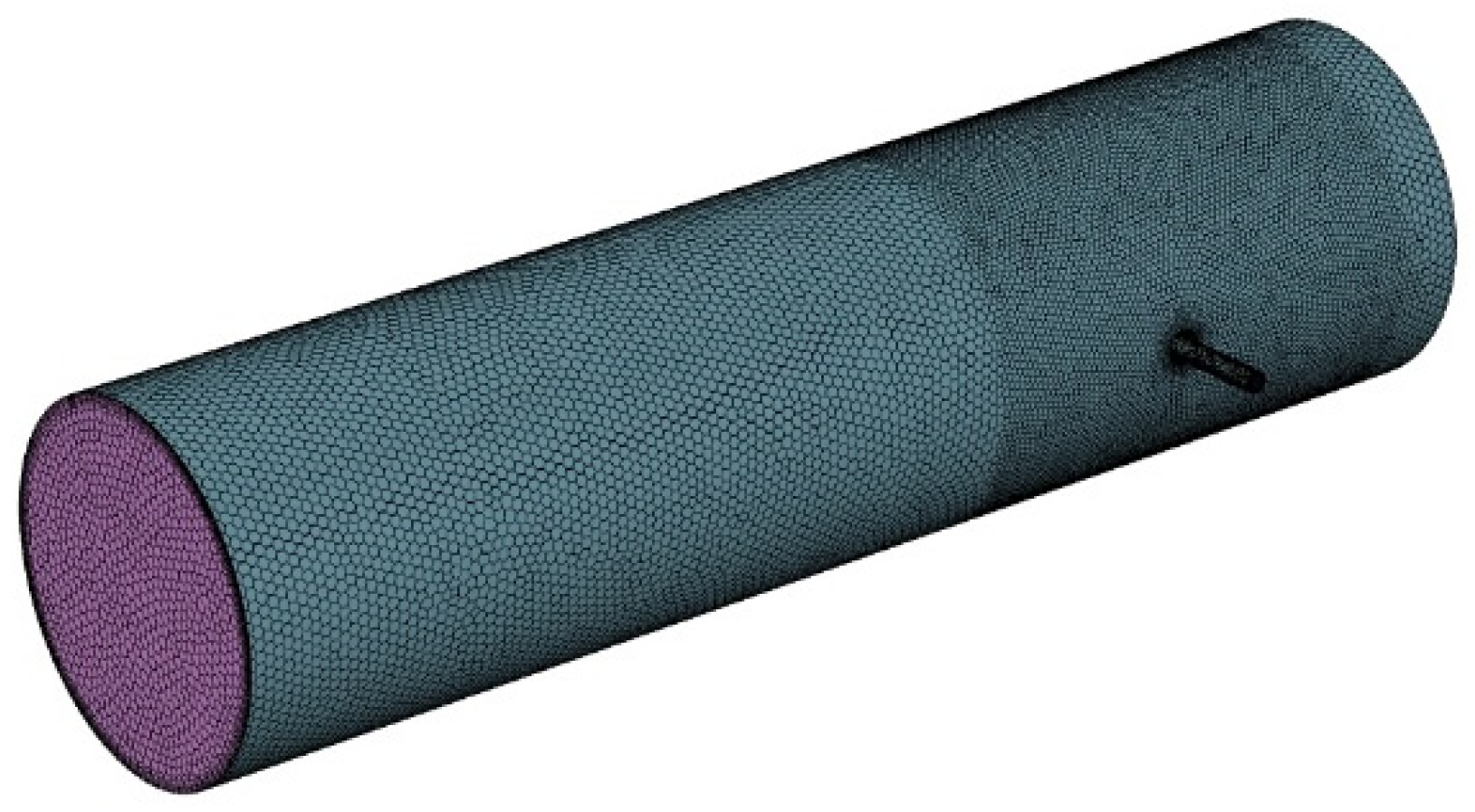
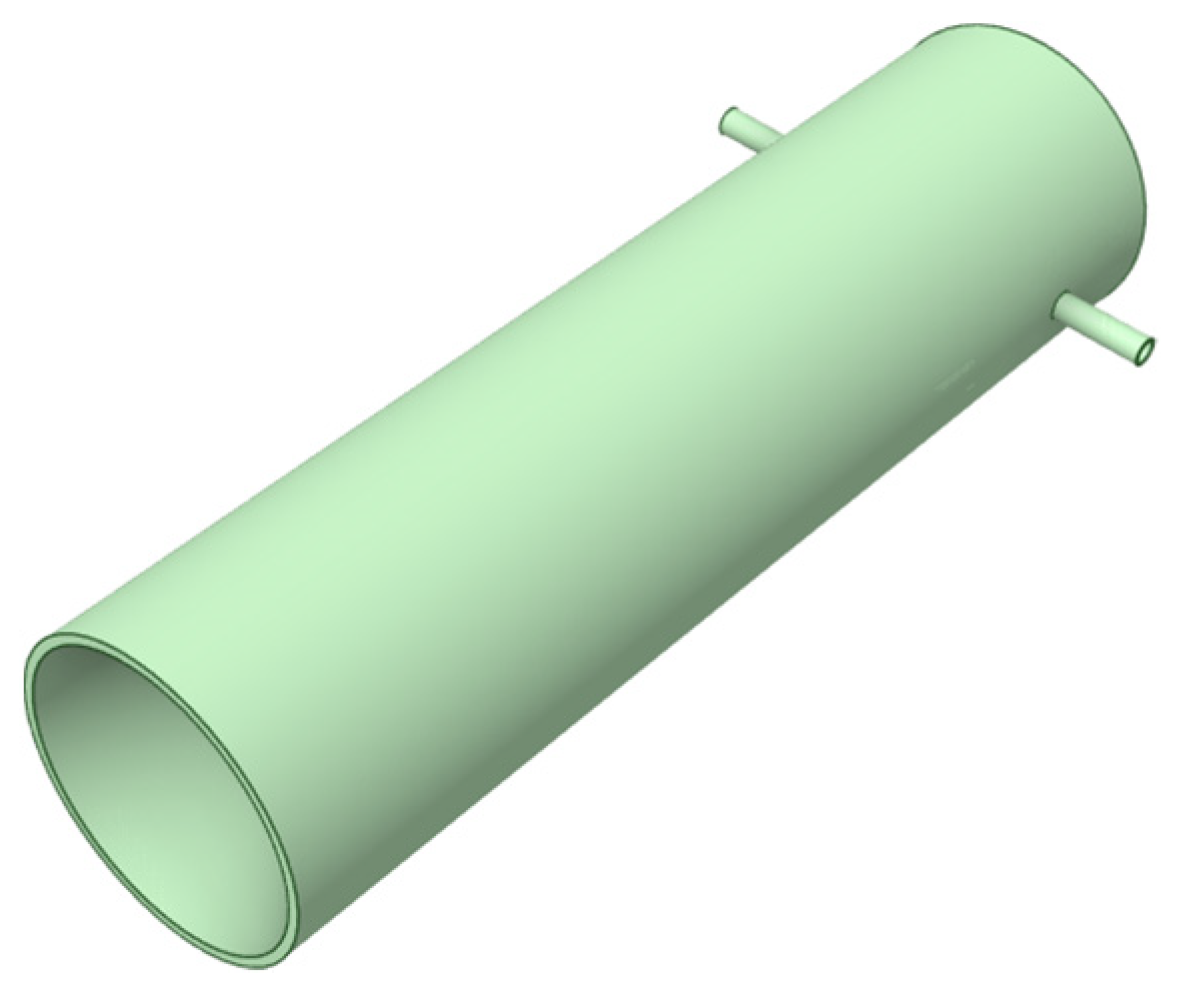
The geometric model and the resulting computational mesh are presented in Figure 8 and Figure 9, respectively.
The geometric model and mesh generation results are shown in Figure 8 and Figure 9, respectively. Four sets of structured grids were generated using ANSYS FLUENT V2024, with refinement in the nozzle jet region to capture the high-gradient flow field. The grid parameters are shown in Table 3.
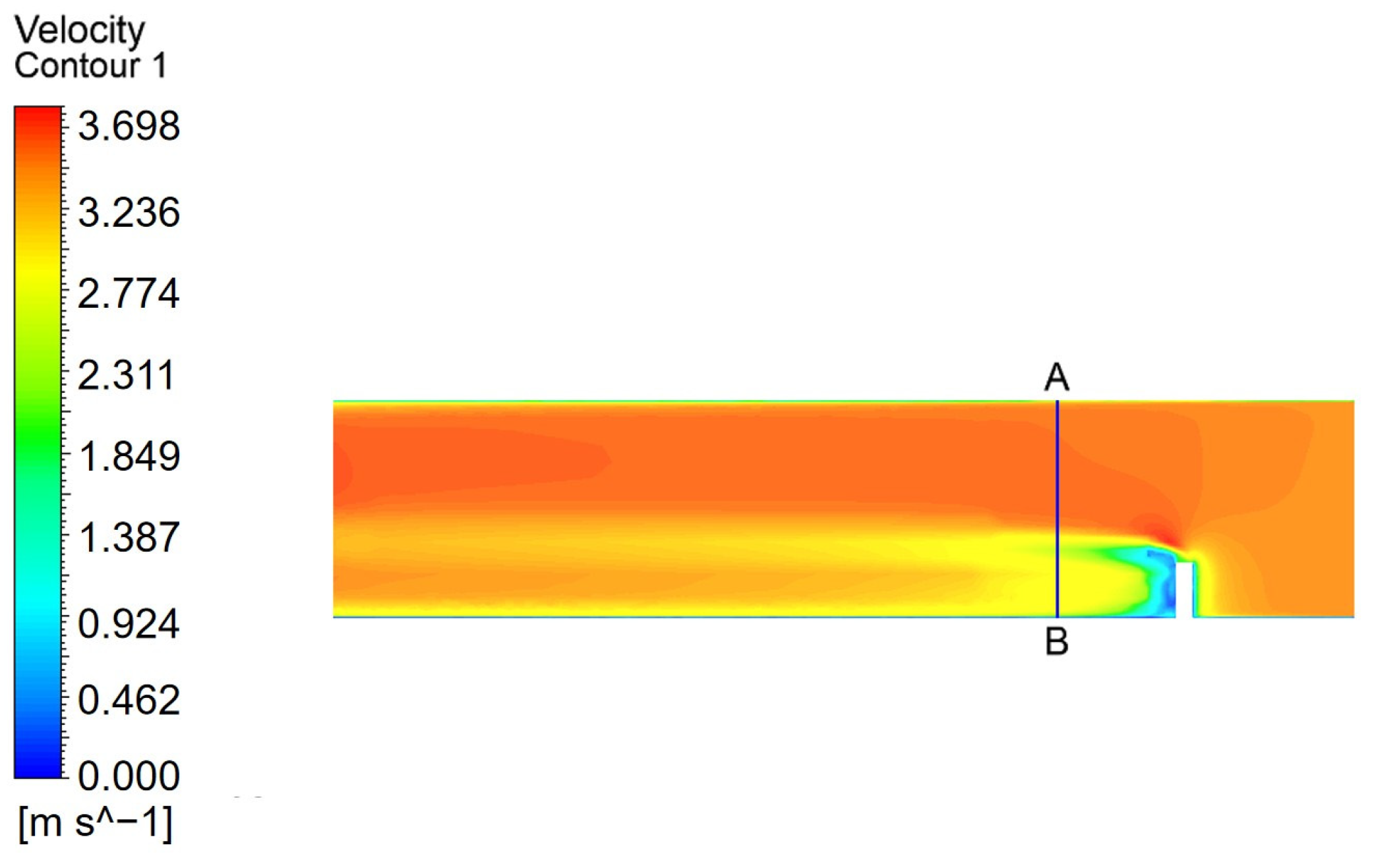
A straight-line AB was drawn at the position where the velocity changes in the flow domain, and the velocity distribution along this line was used as the convergence curve. The distance between line AB and the nozzle axis is 150 mm. The convergence curve of the velocity distribution within the watershed is shown in Figure 10.
The velocity distribution profiles along line AB were computed for different grid configurations. The results from the Fine Grid and Finest Grid schemes show nearly overlapping curves, indicating that further mesh refinement has a negligible influence on the velocity field. Therefore, the Fine Grid resolution was selected for all subsequent simulations to balance accuracy and computational efficiency.
Triazine-based H2S removal constitutes a gas–liquid mass transfer and reaction process, in which H2S diffusion from the gas phase to the droplet surface typically acts as the rate-limiting step. The primary goal of the CFD simulation is to optimize the injection strategy so as to maximize gas–liquid interfacial area—achieved by reducing the Sauter mean diameter (D32)—and to improve droplet distribution uniformity, thereby lowering mass transfer resistance. It should be noted, however, that the current CFD model does not incorporate the chemical reaction kinetics between triazine and H2S. Therefore, the “good mixing” indicated by small D32 and uniform dispersion in the CFD results represents a necessary, yet insufficient, condition for guaranteeing effective desulfurization.

4.2. Influence of Natural Gas Flow Rate

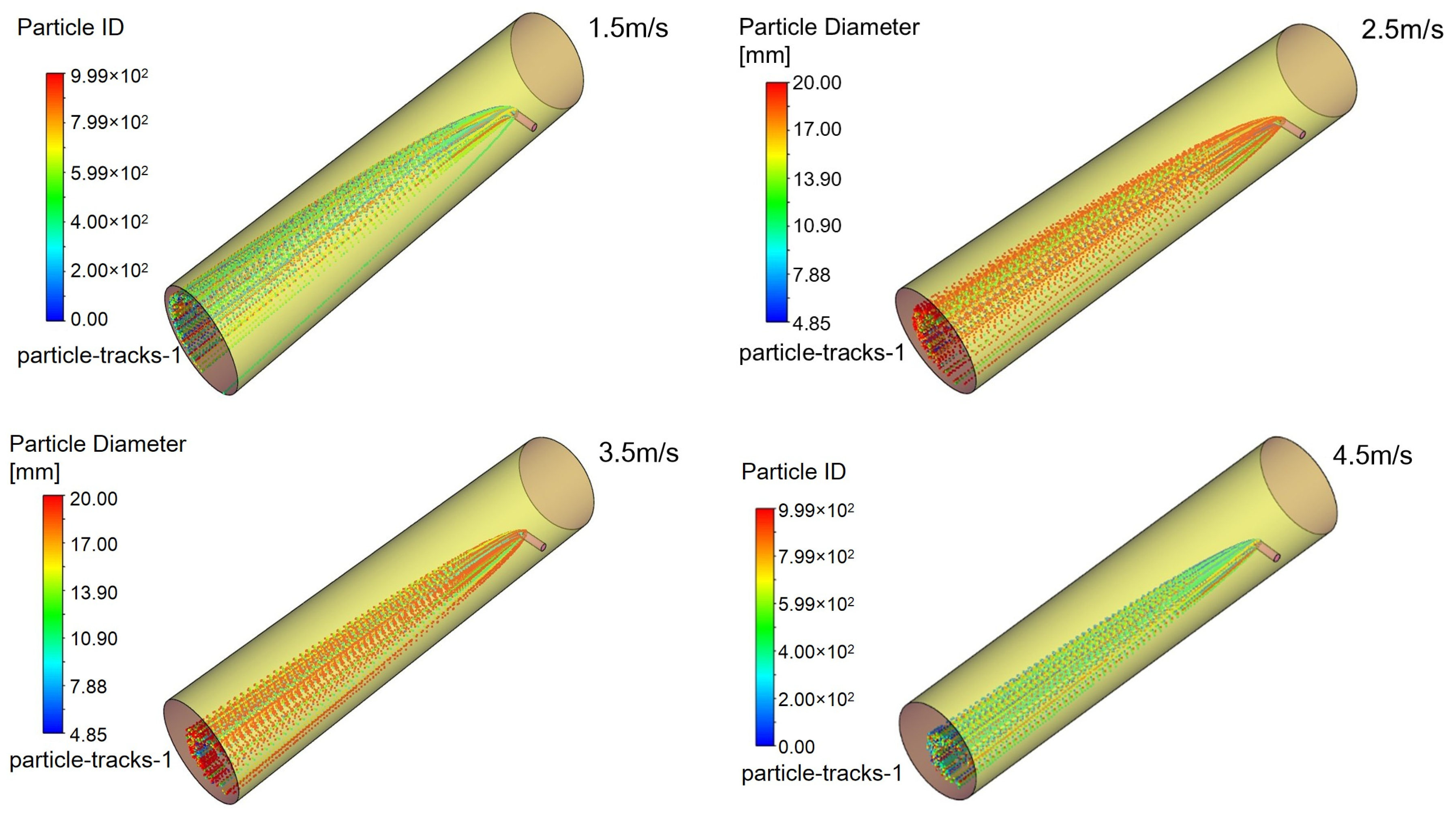
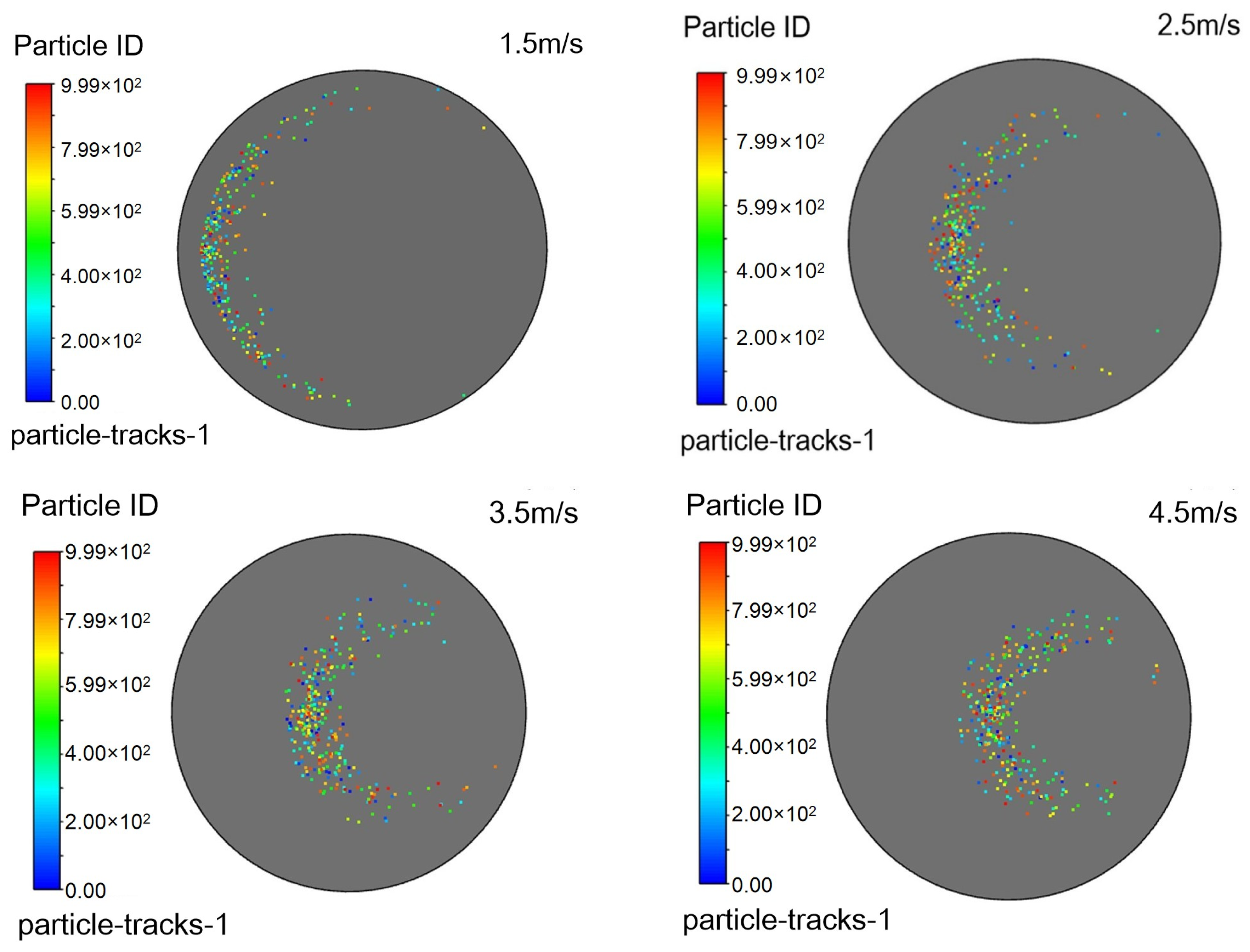
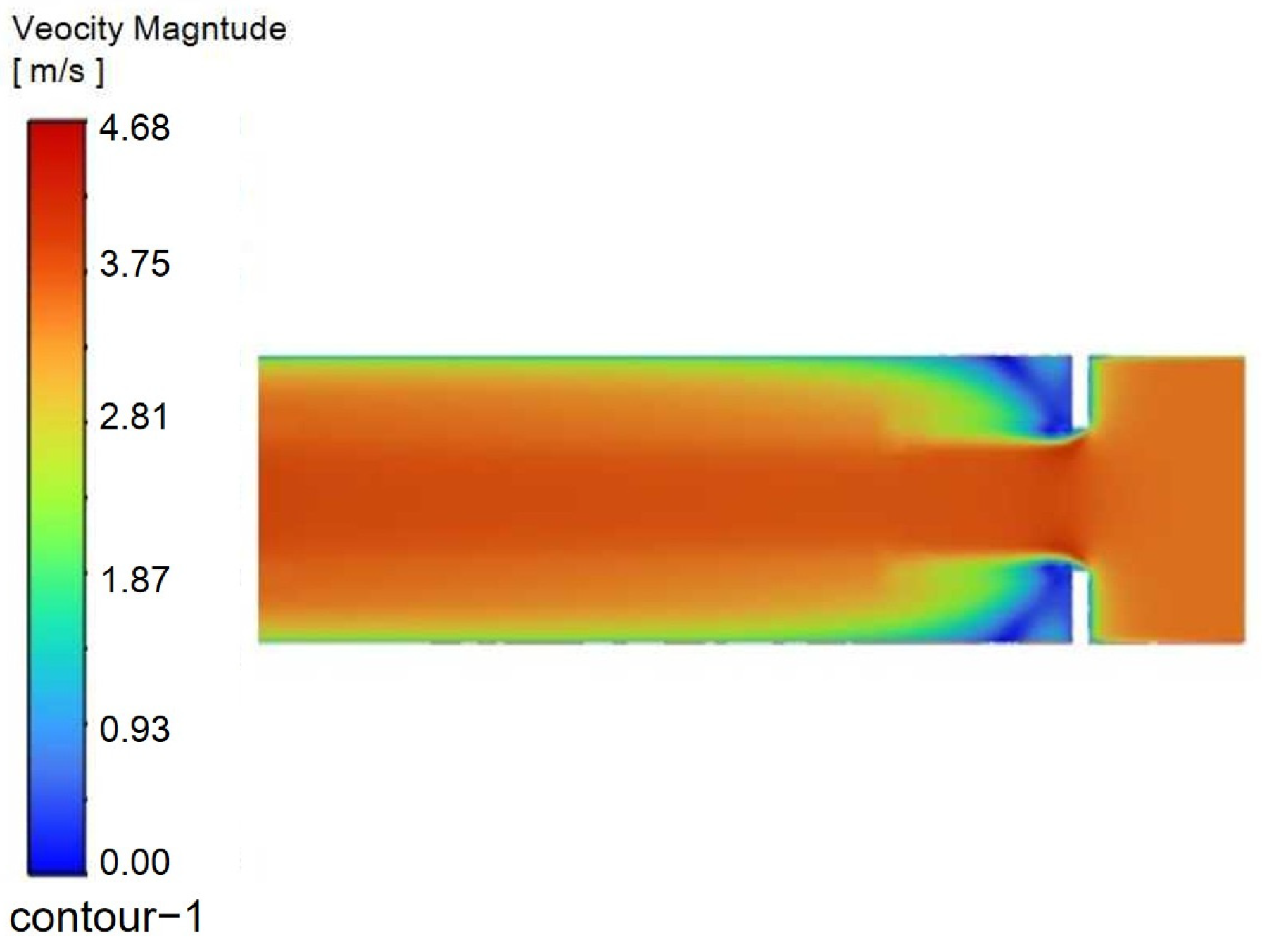
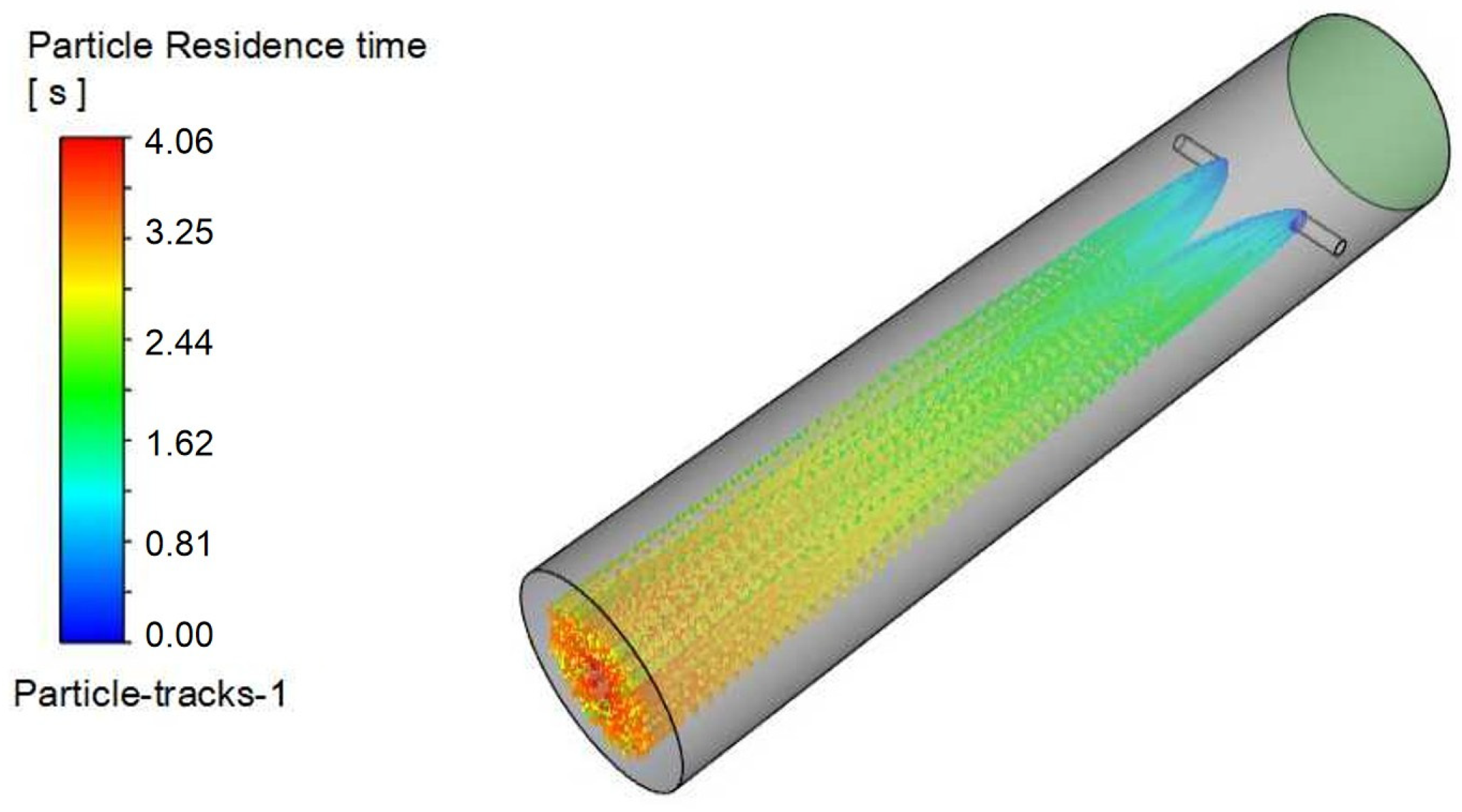
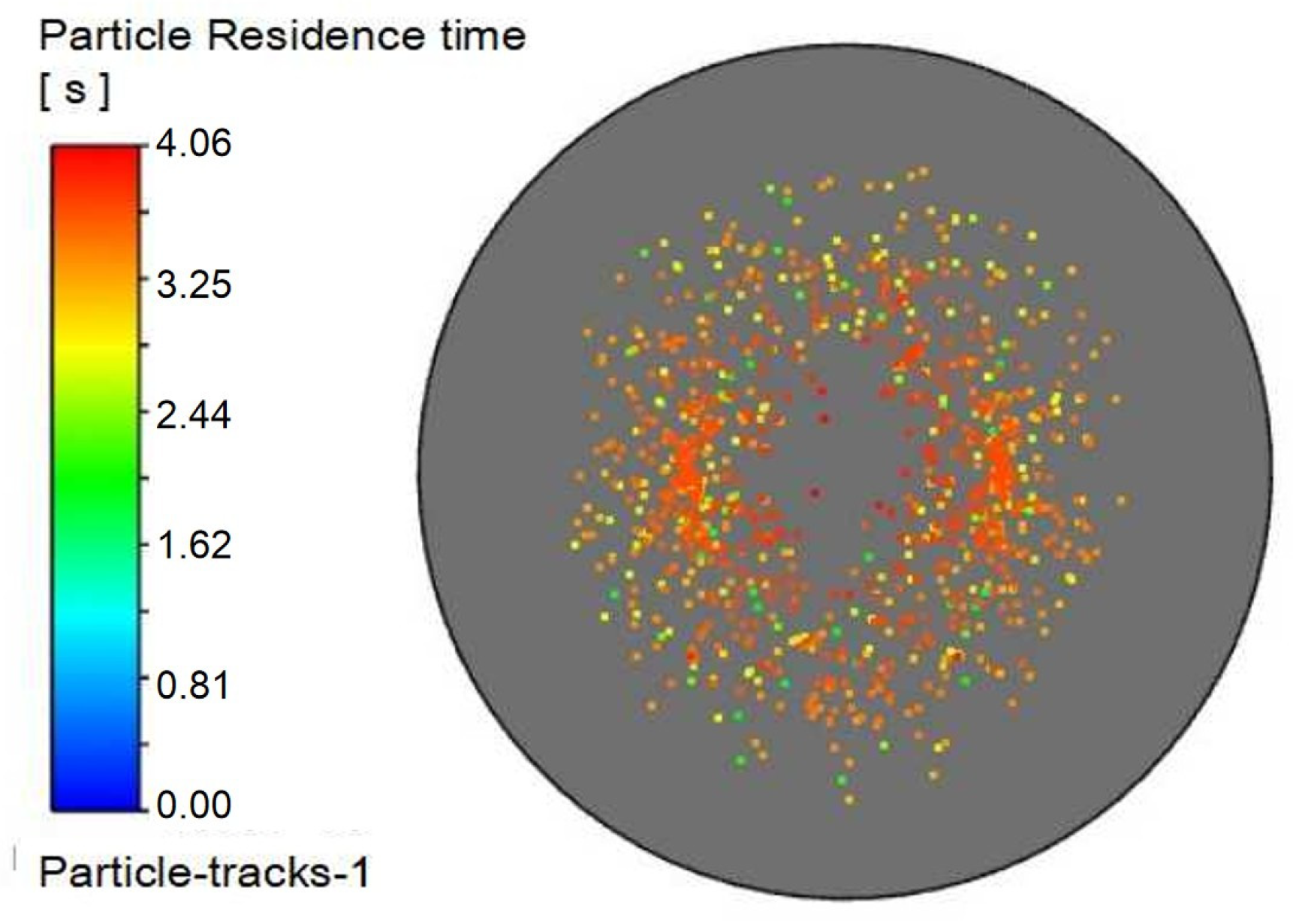
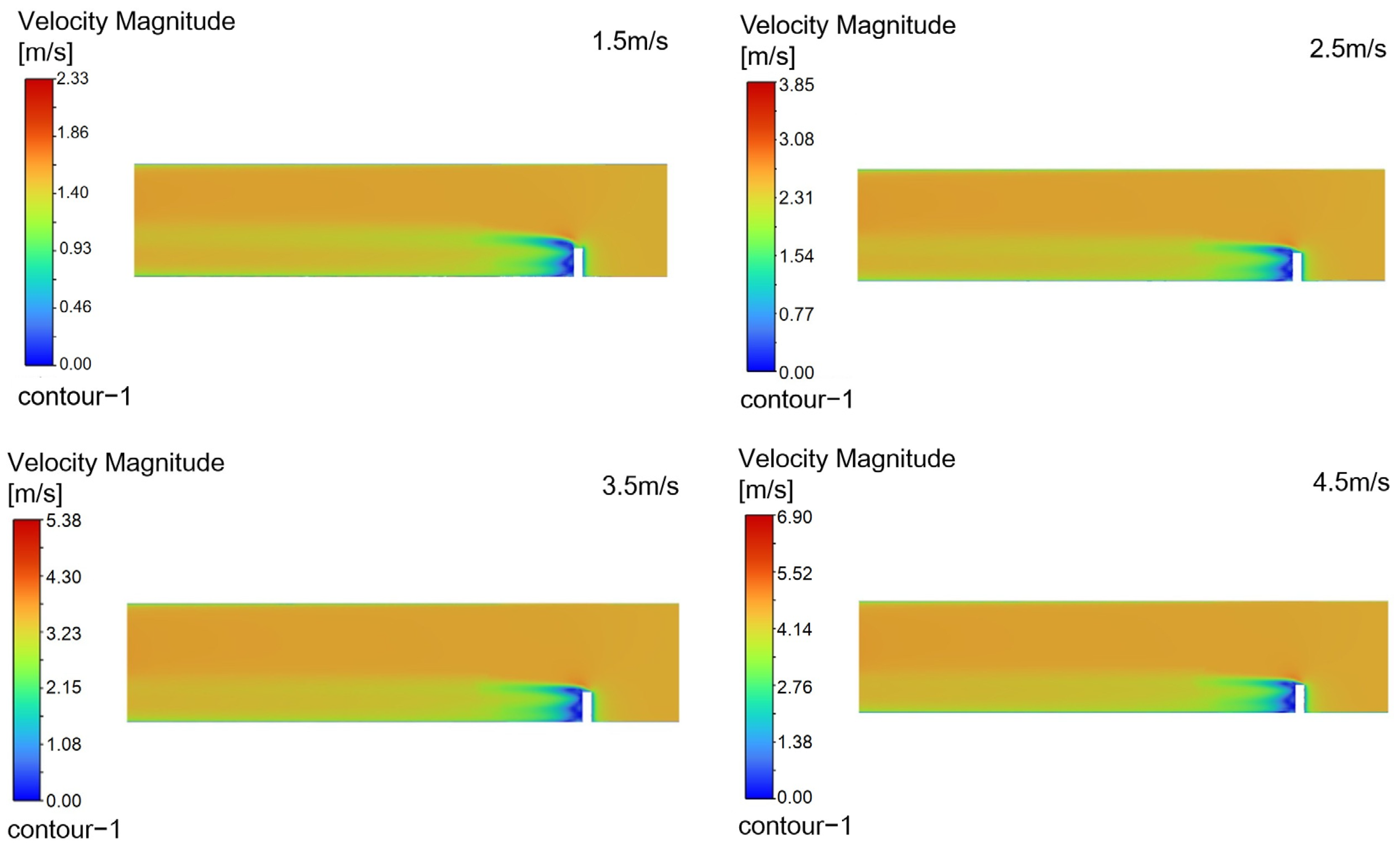
To isolate the influence of natural gas velocity on injection performance, the injection pipe was oriented at 90° to the main pipeline, with a fixed triazine solution injection rate of 18.25 L/h. Simulations were performed for main pipeline gas velocities of 1.5, 2.5, 3.5, and 4.5 m/s. The resulting velocity contours on the X-Z plane, triazine droplet trajectories, and outlet droplet distributions are presented in Figure 11, Figure 12 and Figure 13, respectively.
The simulation results showed in Table 4 demonstrate that increasing gas velocity progressively reduces the Sauter mean diameter of outlet droplets, confirming enhanced droplet dispersion at higher flow rates. At low gas velocities, insufficient shear force prevents effective breakup of the triazine solvent jet, resulting in larger droplets that maintain relatively straight trajectories due to their inherent inertia and consequently exhibit poor gas contact. As gas velocity increases, the amplified velocity differential between the high-speed gas and slower droplets significantly strengthens shear forces, promoting secondary breakup into finer droplets that increase gas–liquid interfacial area and naturally improve mixing uniformity.

4.3. Influence of Triazine Injection Rate

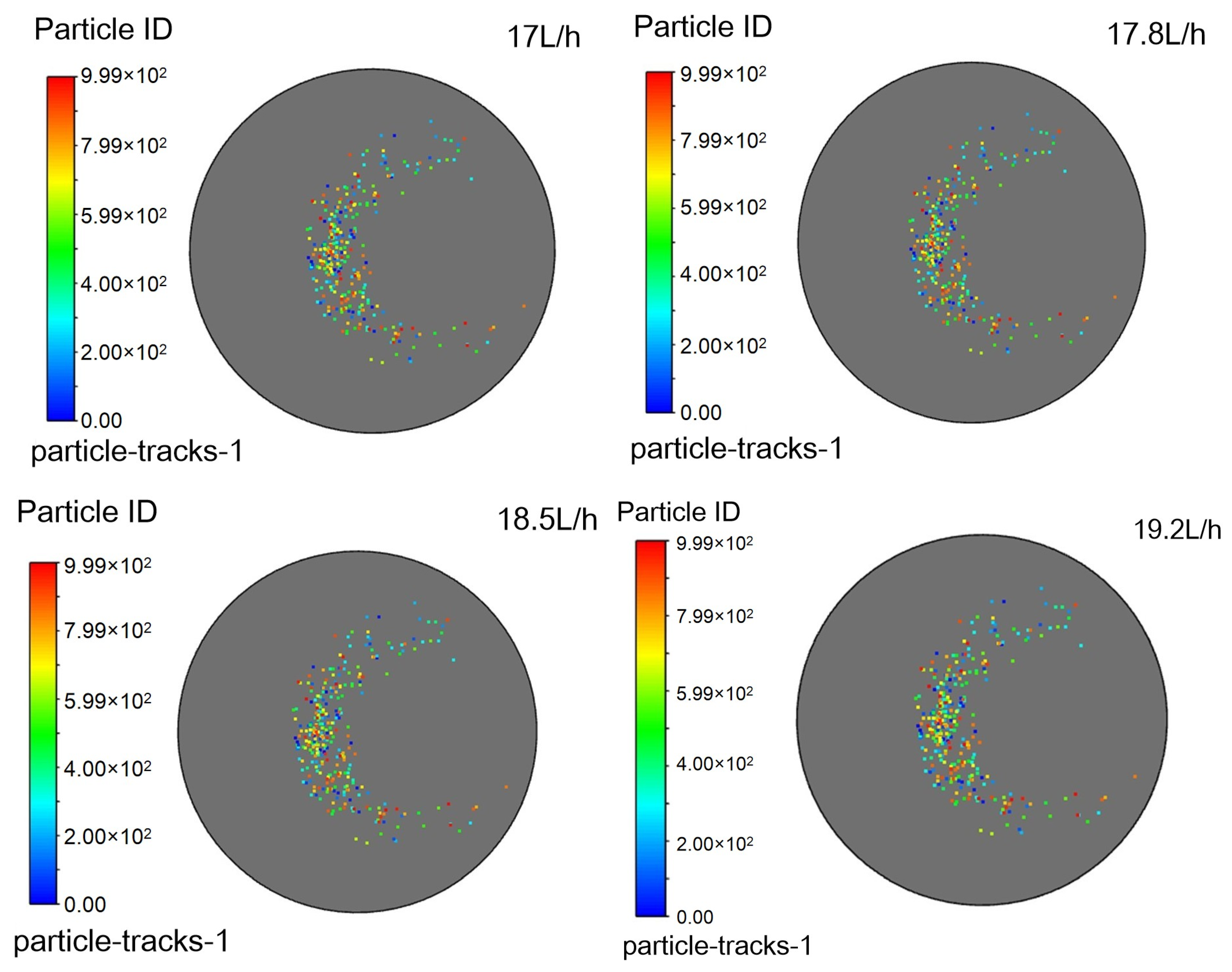
To analyze the influence of the mass flow rate of triazine solution injection on the injection effect, the natural gas flow velocity in the main pipeline was fixed at 3.5 m/s, and simulations of the injection process were conducted by varying the mass flow rate of injection. The range of triazine injection rates is 17 L/h to 19.2 L/h. The calculated droplet distributions at the outlet under different triazine injection rates are shown in Figure 14.
The results showed in Table 5 indicate that the Sauter mean diameter of outlet droplets remains essentially constant with increasing flow rate, demonstrating that droplet dispersion is largely unaffected by this parameter. At low injection rates, the liquid exists as dispersed small droplets with significant inter-droplet spacing, primarily governed by gas flow-driven diffusion. Since the tested variation in triazine solvent injection rate was relatively small (2.2 L/h), the resulting minor change in droplet population has a negligible impact on both the overall contact area and mixing uniformity.

4.4. Influence of Nozzle Angle

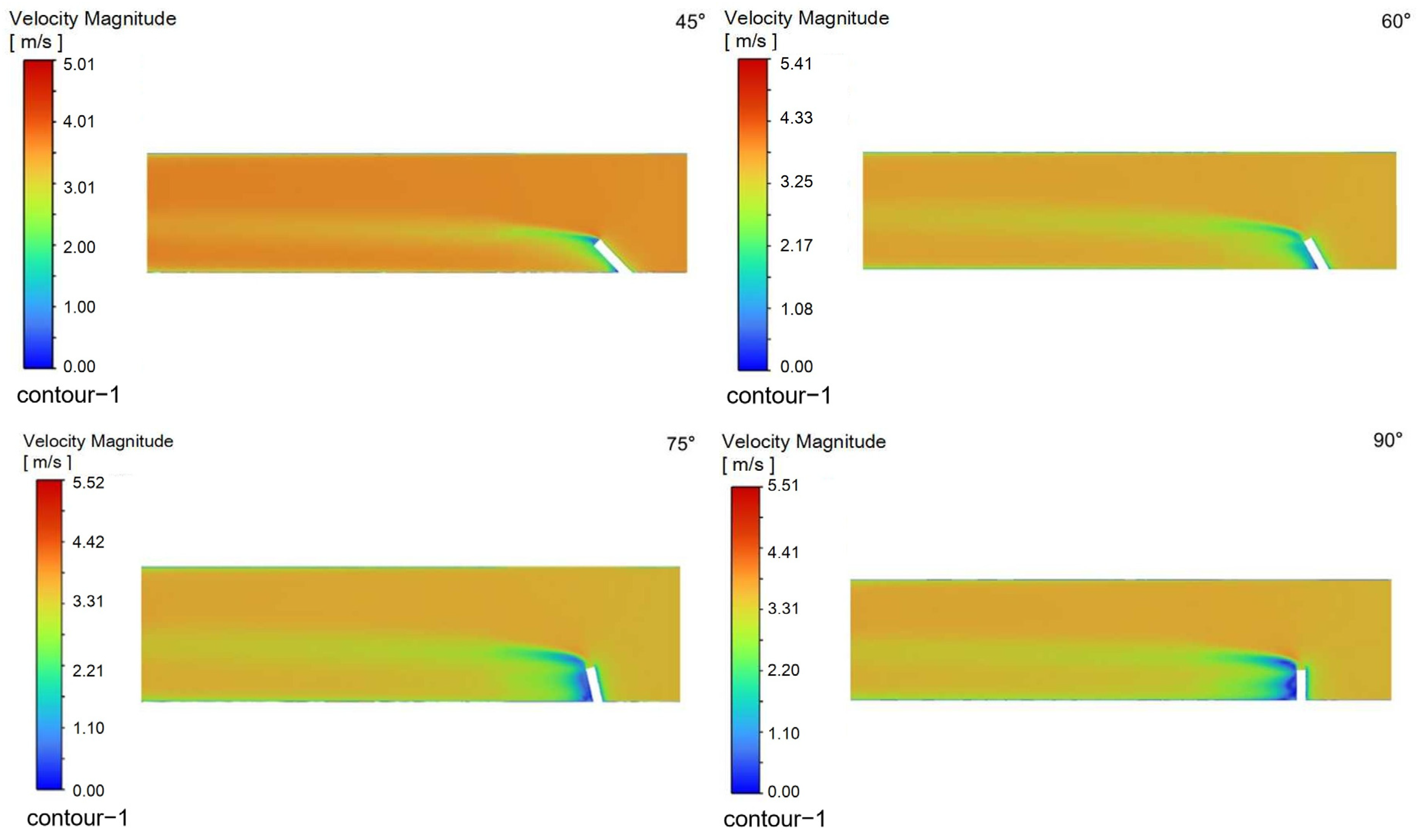
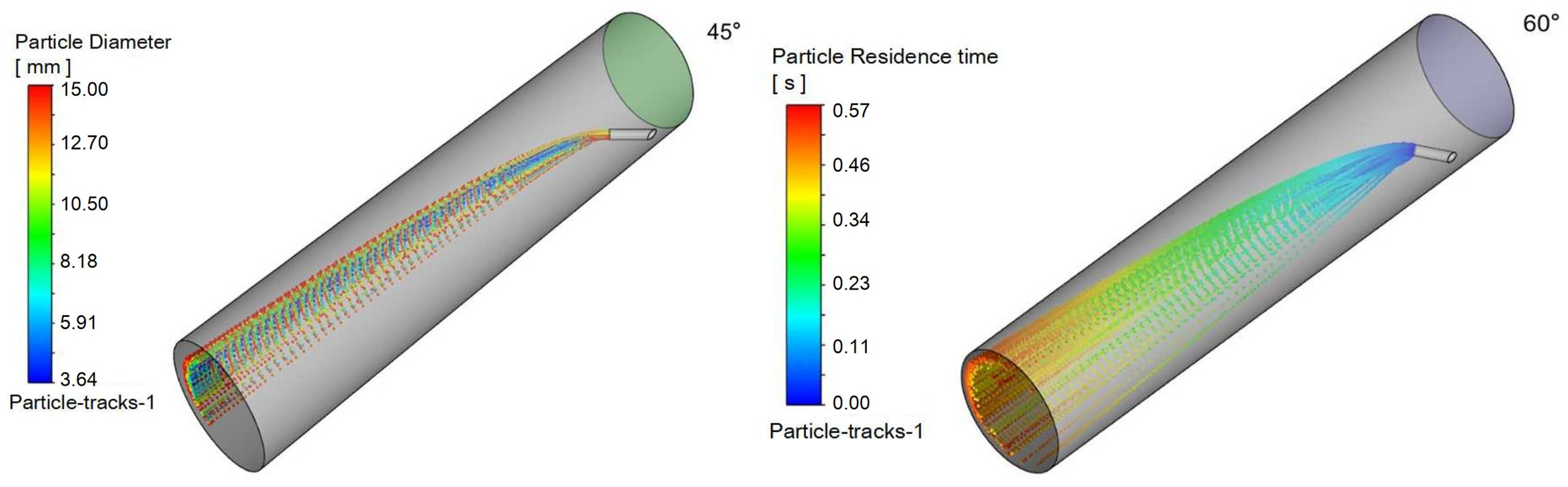
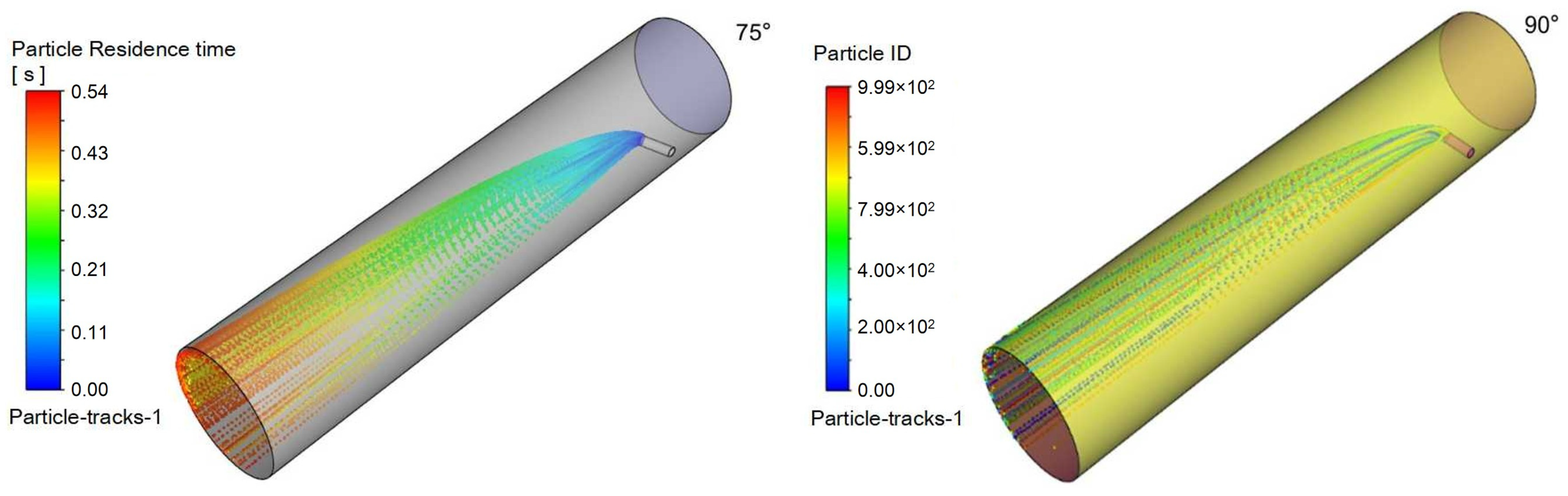
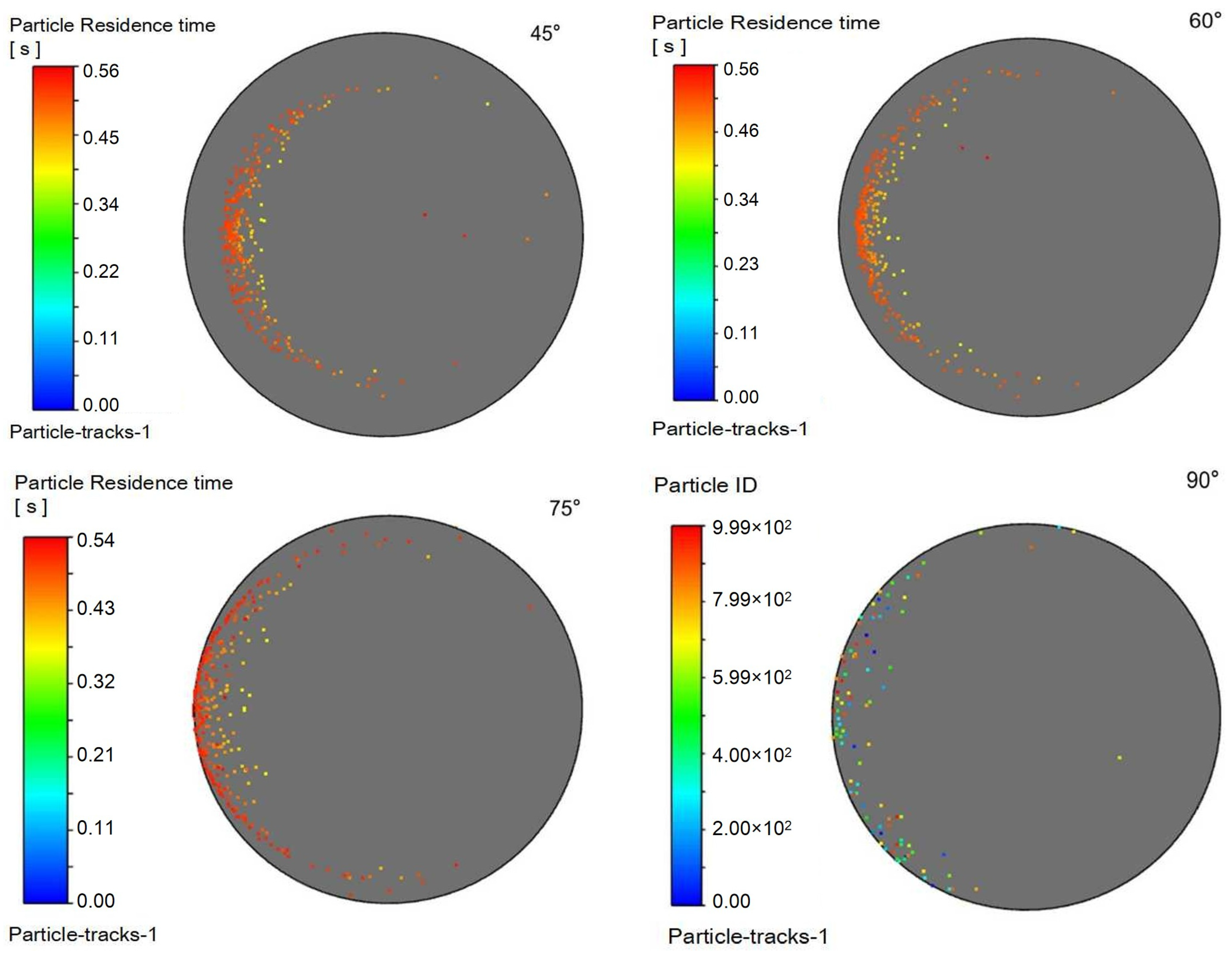
To evaluate the effect of injection orientation on process performance, simulations were conducted with a fixed natural gas velocity while varying the injection angle relative to the main pipeline. The injection pipe was oriented at 45°, 60°, 75°, and 90° to the main pipe axis, representing 15° increments. The resulting flow characteristics are presented in the following figures: Figure 15 shows velocity contours on the X-Z plane within the injection pipe, Figure 16 illustrates triazine droplet trajectories, and Figure 17 displays the corresponding outlet droplet distributions.
Turbulence is a highly complex three-dimensional, unsteady, and rotational irregular flow that enables intense mixing and diffusion of fluid microclusters in space. When droplets are injected into the pipeline at a certain angle, they disturb the fluid in the pipeline and generate turbulent vortices. These vortices can accelerate the mixing process between the desulfurizing agent and the surrounding gas, improving mixing efficiency.
When a jet flows in a pipeline, it gradually diffuses to the surroundings due to the pressure difference and mixing effect with the surrounding static fluid. The smaller the angle between the nozzle and the pipeline axis, the greater the velocity of the jet’s central axis, and the correspondingly smaller the diffusion range; while a larger angle may reduce the jet’s propulsive force, it expands the diffusion range, which helps to uniformly distribute droplets in the pipeline.
It can be observed in Table 6 that as the injection angle decreases, the Sauter mean diameter of outlet droplets decreases gradually, indicating that droplet dispersion improves with decreasing injection angle. The injection angle of 45° achieves better droplet dispersion (smaller D32) and larger gas–liquid interfacial area, which provides favorable precursor conditions for the mass transfer-reaction process.


4.5. Influence of Injection Method

To further improve the injection effect and the dispersion degree of droplet particles on the cross-section of the main pipeline, and considering the convenience of processing, a double 90° nozzle structure is proposed, as shown in Figure 18. The natural gas flow velocity in the main pipeline is still set to 3.5 m/s, and the injection flow rate of each of the two injection ports is half of the original flow rate, i.e., 9.125 L/h.
The calculated velocity contour maps on the X-Z section inside the double-pipe injection tube, the droplet trajectories of the triazine solution in the injection tube, and the droplet distributions at the outlet are shown in Figure 19, Figure 20 and Figure 21, respectively.
The dual-nozzle configuration yields a Sauter mean diameter (D32) of 0.0189588, significantly smaller than the single-nozzle value of 0.0190268, confirming superior droplet dispersion. This improvement stems from the symmetric flow field established by dual vertical nozzles, which enhances mutual droplet collision and shear effects in the pipeline’s central region. The balanced shear distribution prevents localized droplet accumulation—a limitation observed in single-nozzle systems—while expanding the liquid–gas contact area. Consequently, droplets experience more uniform aerodynamic forces across a broader spatial domain, mitigating trajectory concentration. These combined effects promote enhanced droplet fragmentation and dispersion, ultimately refining droplet size distribution and improving overall mixing uniformity.

5. Conclusions and Recommendations

This study employs ASPEN HYSYS V11 and ANSYS FLUENT V2024 to simulate the triazine desulfurization injection process at Xiangguosi Gas Storage. Simulations reveal that the sulfur capacity increases linearly with triazine mass fraction, while solution viscosity decreases exponentially with increasing water content. Under fixed nozzle conditions, liquid viscosity represents the most critical factor affecting atomization, with mechanical nozzles requiring viscosities below 10 cp for effective operation. However, considering both atomization and desulfurization requirements, the optimal triazine mass fraction ranges from 0.4 to 0.6.
Mixing efficiency between desulfurizer and natural gas improves with increasing gas velocity, while the injection rate must exceed a threshold value to significantly impact gas–liquid mixing. Angled injection creates jet diffusion effects, where larger angles enhance distribution uniformity but reduce penetration depth. The key innovation of this work lies in systematically analyzing droplet dispersion under various nozzle parameters and optimizing the injection structure. The proposed dual-tube injection configuration has been successfully implemented at Stations 1 and 9 of Xiangguosi Gas Storage, maintaining outlet H2S concentrations at 3–5 mg/m3 and ensuring safe, economical operation.
While this study focuses on injection optimization, it does not comprehensively address the influence of liquid-phase mass transfer on reaction kinetics. Future work will integrate mass transfer effects with reaction models to enhance prediction accuracy of the desulfurization process.
Author Contributions

Conceptualization, D.T.; Methodology, D.T. and Q.H.; Software, Q.H. and Y.T.; Validation, G.Y.; Formal analysis, G.Y.; Investigation, Y.Y.; Resources, S.Y.; Data curation, Y.Y. and H.H.; Writing—original draft, H.H.; Writing—review and editing, X.L.; Visualization, S.Y. and H.L.; Supervision, D.T. and X.L.; Project administration, H.H.; Funding acquisition, Y.Y. and H.H. All authors have read and agreed to the published version of the manuscript.

Funding

This work is financially supported by the State Key Research Development Program of China (Grant No. 2021YFC2800905-02); the National Natural Science Foundation of China (52302402); the Science and Technology Research Program of Chongqing Municipal Education Commission (Grant No.KJZD-M202501502); the Natural Science Basic Research Program of Shaanxi (Program No. 2023-JC-QN-0544); the Scientific Research Program Funded by Education Depart-ment of Shaanxi Provincial Government (Program No. 23JK06) and the National Major Special Project (2025ZD1406806).

Data Availability Statement

The original contributions presented in this study are included in the article. Further inquiries can be directed to the corresponding authors.

Conflicts of Interest

Authors De Tang, Guicheng Yu and Ying Yang were employed by the company Chongqing Xiangguo Temple Gas Storage Co., Ltd. The remaining authors declare that the research was conducted in the absence of any commercial or financial relationships that could be construed as a potential conflict of interest.

Nomenclature

Symbol NameMeaning and Unit
P the system pressure (Pa)
Rthe universal gas constant (J·mol−1·K−1)
T the system temperature (K)
v the molar volume of the medium (m3·mol−1)
y The required amount of triazine solution, (L/h)
Q Natural gas volume, 10,000 (m3/day)
A H2S content before purification, (mg/m3)
B H2S content after purification, (mg/m3)
a 1 , b 1 , c 1 , d 1 Constants, a 1 = 0.0011; b 1 = 0.5487; c 1 = −0.5367; d 1 = 3.3986
y Sulfur capacity, (%)
x triazine mass fraction
v m mass-averaged velocity
ρ m gas–liquid mixture density
m mass transfer
α k , ρ k volume fraction and density of phase k (where k = 1, 2, 3 represent the aqueous phase, oil phase, and gas phase, respectively)
F Body force
μ m Viscosity of gas–liquid mixture
v d r , k Drift velocity; v d r , k = v k v m , other symbols are the same as before
k e f f Effective thermal conductivity
S E Volumetric heat source; in this system, since volumetric heat sources are not considered, we can set S E = 0
v q p , v p , v q Slip velocity, secondary phase velocity, primary phase velocity, the remaining symbols are the same as before
a p , ρ p the volume fraction and density of the secondary phase, respectively

Appendix A

Table A1. Calculation results of triazine solution injection volume.
Throughput, 10,000 m3/dayH2S Before Purification, mg/m3H2S After Purification, mg/m3Required Triazine, L/h
10007330.05
15007345.06
20007360.08
25007375.11
30007390.14
350073105.14
10007422.53
15007433.79
20007445.06
25007456.32
30007467.58
35007478.85
10007515.03
15007522.53
20007530.05
25007537.56
30007545.06
35007552.58
10008337.56
15008356.32
20008375.11
25008393.88
300083112.67
350083131.43
10008430.05
15008445.06
20008460.08
25008475.11
30008490.14
350084105.14
10008522.53
15008533.79
20008545.06
25008556.32
30008567.74
35008578.92
10009345.06
15009367.58
20009390.14
250093112.79
300093135.19
350093157.88
10009437.56
15009456.29
20009475.11
25009493.88
300094112.79
350094131.43
10009530.03
15009545.06
20009560.08
25009575.11
30009590.34
350095105.14
100010352.58
150010378.90
2000103105.04
2500103131.43
3000103157.67
3500103183.81
100010445.06
150010467.58
200010490.27
2500104112.67
3000104135.32
3500104157.72
100010537.56
150010556.29
200010575.11
250010594.05
3000105112.72
3500105131.35

References

  1. Zhang, C.; Song, P.F.; Xiao, L.; Zhang, Y.Q.; Wang, X.K.; Hou, J.G.; Wang, X.L.; Lu, L. Research and development of on-site small skid-mounted natural gas to hydrogen generator in China. Int. J. Hydrogen Energy 2023, 48, 18601–18611. [Google Scholar] [CrossRef]
  2. Gou, L.; Ren, X.; Yang, Y.; Li, B.; Lv, R.; Li, S.; Li, K. Preparation and Performance Evaluation of Triazine Desulfurizer. In Proceedings of the 9th International Conference on Energy Engineering and Environmental Engineering (ICEEEE 2022), Sanya, China, 9–10 December 2022; Springer Science and Business Media Deutschland GmbH: Berlin, Germany, 2023; pp. 217–223. [Google Scholar] [CrossRef]
  3. Weng, X.Y. Effect of SO32− on Wet Flue Gas Desulfurization Technology. In Proceedings of the 6th International Conference on Machinery, Materials, Environment, Biotechnology and Computer (MMEBC), Tianjin, China, 11–12 June 2016; Volume 88, pp. 1385–1388, WOS:000390720000283. [Google Scholar]
  4. Marriott, R.A.; Pirzadeh, P.; Marrugo-Hernandez, J.J.; Raval, S. Hydrogen sulfide formation in oil and gas. Can. J. Chem. 2016, 94, 406–413. [Google Scholar] [CrossRef]
  5. Srivastava, V.C. An evaluation of desulfurization technologies for sulfur removal from liquid fuels. RSC Adv. 2012, 2, 759–783. [Google Scholar] [CrossRef]
  6. Boshagh, F.; Rahmani, M.; Rostami, K.; Yousefifar, M. Key Factors Affecting the Development of Oxidative Desulfurization of Liquid Fuels: A Critical Review. Energy Fuels 2022, 36, 98–132. [Google Scholar] [CrossRef]
  7. de Angelis, A. Natural gas removal of hydrogen sulphide and mercaptans. Appl. Catal. B Environ. 2012, 113, 37–42. [Google Scholar] [CrossRef]
  8. Ning, H.Y.; Tang, R.J.; Li, C.M.; Gu, X.L.; Gong, Z.J.; Zhu, C.Q.; Li, J.L.; Wang, K.J.; Yu, J. Recent advances in process and materials for dry desulfurization of industrial flue gas: An overview. Sep. Purif. Technol. 2025, 353, 128425. [Google Scholar] [CrossRef]
  9. Li, X.K.; Han, J.R.; Liu, Y.; Dou, Z.H.; Zhang, T.A. Summary of research progress on industrial flue gas desulfurization technology. Sep. Purif. Technol. 2022, 281, 119849. [Google Scholar] [CrossRef]
  10. Liu, M.Y.; Guo, L.P.; Jin, S.B.; Tan, B.E. Covalent triazine frameworks: Synthesis and applications. J. Mater. Chem. A 2019, 7, 5153–5172. [Google Scholar] [CrossRef]
  11. Madsen, H.T.; Jensen, C.V.; Sogaard, E.G. Triazine-based H2S Scavenging: Development of a Conceptual Model for the Understanding of Fouling Formation. Pet. Sci. Technol. 2014, 32, 2803–2806. [Google Scholar] [CrossRef]
  12. Wang, X.T.; Zheng, Y.J.; Shi, J.; Gong, X.Y.; Ji, Y.; Han, W.W.; Jiang, Y.; Austin, D.E.; Fang, X.; Zhang, Z.P. Elucidating the Reaction Mechanisms between Triazine and Hydrogen Sulfide with pH Variation Using Mass Spectrometry. Anal. Chem. 2018, 90, 11138–11145. [Google Scholar] [CrossRef]
  13. Wylde, J.J.; Taylor, G.N.; Sorbie, K.S.; Samaniego, W.N. Formation, Chemical Characterization, and Oxidative Dissolution of Amorphous Polymeric Dithiazine (apDTZ) during the Use of the H2S Scavenger Monoethanolamine-Triazine. Energy Fuels 2020, 34, 9923–9931. [Google Scholar] [CrossRef]
  14. Perrucci, A.; Skjolding, L.M.; Hückelkamp, S.F.; Hass, S.A.; Christensen, M.N.; Muff, J.; Maschietti, M. Hydrothermal oxidation of MEA-triazine spent and unspent H2S scavengers in continuous-flow reactor. J. Environ. Chem. Eng. 2025, 13, 118881. [Google Scholar] [CrossRef]
  15. Román, M.N.; Díaz, M.A.; Coll, D.S. Study of the Reaction Mechanism of Triazines and Associated Species for H2S Scavenging. Acs Omega 2023, 8, 12165–12172. [Google Scholar] [CrossRef]
  16. Ahmed, I.; Yu, K.; Puthiaraj, P.; Ahn, W.S. Metal-free oxidative desulfurization over a microporous triazine polymer catalyst under ambient conditions. Fuel Process. Technol. 2020, 207, 106469. [Google Scholar] [CrossRef]
  17. Subramaniam, R.; Yasa, S.; Bertrand, T.; Fontenot, B.; Dupuis, T.F.; Hernandez, R. Advanced simulation of H2S scavenging process with triazine at different depths of gas well. J. Nat. Gas Sci. Eng. 2018, 49, 417–427. [Google Scholar] [CrossRef]
  18. Xie, M.Q.; Freund, H. Rigorous design of multiphase reactors: Identification of optimal conditions for mass transfer limited reactions. Chem. Eng. Process. Process Intensif. 2018, 124, 174–185. [Google Scholar] [CrossRef]
  19. Al Taweel, A.M.; Azizi, F.; Sirijeerachai, G. Static mixers: Effective means for intensifying mass transfer limited reactions. Chem. Eng. Process. Process Intensif. 2013, 72, 51–62. [Google Scholar] [CrossRef]
  20. Tang, Y.Z.; Liu, Z.L.; Li, Y.X.; Zhao, F.; Fan, P.Y.; Chua, K.J. Mixing process of two streams within a steam ejector from the perspectives of mass, momentum and energy transfer. Appl. Therm. Eng. 2021, 185, 116358. [Google Scholar] [CrossRef]
  21. Tang, Y.Z.; Zhong, Z.L.; Liu, Z.L.; Lu, L.; Huang, Y.C.; Wen, C. Study on evolution law of non-equilibrium phase transition flow and performance improvement of steam ejector for MED-TVC desalination system. Energy 2025, 316, 134462. [Google Scholar] [CrossRef]
  22. Shen, T.; Lu, D.; Liu, Z.J.; Chen, R.D.; Gong, M.Q. Heat and mass transfer performance analysis of a vertical tubular ammonia/water bubble absorber based on CFD modeling. Appl. Therm. Eng. 2024, 252, 123622. [Google Scholar] [CrossRef]
  23. Grabowska, K.; Sosnowski, M.; Krzywanski, J.; Zylka, A.; Kulakowska, A.; Skrobek, D.; Dlugosz, J. Implementation of coupled CFD&DEM model for heat and mass transfer analysis in adsorption fluidized reactors. Appl. Therm. Eng. 2025, 278, 127301. [Google Scholar] [CrossRef]
  24. Ganguli, A.; Bhatt, V. CFD simulations to study bed characteristics in gas-Solid fluidized beds with binary mixtures of Geldart-B particles: A qualitative analysis. Front. Energy Res. 2023, 11, 1059503. [Google Scholar] [CrossRef]
  25. JB/T 14915-2024; Oil-Gas Injection Lubrication Device. China Machinery Industry Federation: Beijing, China, 2024.
Figure 1. Schematic diagram of the pipeline network of the Xiangguosi gas storage.
Processes 13 03910 g001
Figure 2. Comparison diagram of hydrogen sulfide content and daily production of some wells.
Processes 13 03910 g002
Figure 3. Reaction process of triazine with hydrogen sulfide.
Processes 13 03910 g003
Figure 4. Calculation model for the reaction between triazine solution and hydrogen sulfide.
Processes 13 03910 g004
Figure 5. Comparison between the fitting model and input data (a) Data (b) Parity plot.
Processes 13 03910 g005
Figure 6. Linear variation of sulfur capacity with triazine mass fraction.
Processes 13 03910 g006
Figure 7. Exponential decrease in triazine solution viscosity with water mass fraction.
Processes 13 03910 g007
Figure 8. Simulated geometric model of the injection device.
Processes 13 03910 g008
Figure 9. Simulates meshing of the injection device.
Processes 13 03910 g009
Figure 10. Convergence curve of velocity distribution within the watershed.
Processes 13 03910 g010
Figure 11. Droplet velocity cloud map on the X-Z profile.
Processes 13 03910 g011
Figure 12. The droplet trajectory of triazine solution in the injection tube.
Processes 13 03910 g012
Figure 13. Droplet distribution at the outlet under different droplet velocities.
Processes 13 03910 g013
Figure 14. Droplet distribution at the outlet under different flow rates.
Processes 13 03910 g014
Figure 15. The influence of injection angle on the velocity field.
Processes 13 03910 g015
Figure 16. The influence of injection angle on droplet migration.
Processes 13 03910 g016aProcesses 13 03910 g016b
Figure 17. The influence of injection angle on the droplet distribution at the outlet.
Processes 13 03910 g017
Figure 18. Schematic diagram of the double nozzle structure.
Processes 13 03910 g018
Figure 19. The velocity field under the double nozzle structure.
Processes 13 03910 g019
Figure 20. Droplet migration under the double nozzle structure.
Processes 13 03910 g020
Figure 21. The droplet distribution at the outlet under the double nozzle structure.
Processes 13 03910 g021
Table 1. Mole fraction of produced gas components.
ComponentMole Fraction, %ComponentMole Fraction, %
Methane96.974Hydrogen sulfide0.00
Ethane0.289Carbon dioxide1.41
Propane0.046Nitrogen1.09
Iso-butane0.000Helium0.159
n-Butane0.007Hydrogen0.025
Iso-pentane0.000Oxygen0.206
n-Pentane0.000Hexane and heavier components0.000
Hydrogen sulfide, g m−30.009Carbon dioxide, g m−326.222
Critical temperature, K191.6Critical pressure, MPa4.623
Higher heating value, MJ m−336.24Lower heating value, MJ m−332.64
True relative density0.5742Total sulfur, mg m−3
Water dew point, ℃Compressibility factor0.9981
Air content, 10−20.980
Table 2. Physicochemical properties of triazine, thiadiazine, and dithiazine [17].
SubstanceDensity, g cm−3Boiling Point, °CRefractive IndexFlash Point, °FVapor Pressure, mmHg
Triazine1.1269360.11.483>2002.1
Thiadiazine1.2 ± 0.1368.5 ± 421.556176.7 ± 27.91.9
Dithiazine1.011 ± 0.1260.71.501111.51.9
Table 3. Grid division scheme.
Grid SchemeTotal Number of CellsRefined Zone Grid SizeMinimum Grid Size
Coarse Grid97,85710 mm3.4 mm
Medium Grid226,6156 mm2.1 mm
Fine Grid793,4654 mm1.2 mm
Finest Grid1,086,2142 mm0.5 mm
Table 4. Sauter mean diameter of outlet droplets vs. velocity.
Velocity (m/s)Sauter Mean Diameter D32 (mm)
1.50.0196092
2.50.0190338
3.50.0190098
4.50.0188454
Table 5. Sauter diameter of outlet droplets vs. flow rate.
Flow Rate (L/h)Sauter Mean Diameter D32 (mm)
170.0190033
17.80.0190097
18.50.0190098
19.20.0190099
Table 6. Sauter mean diameter of outlet droplets vs. injection angle.
Injection Angle (°)Sauter Mean Diameter D32 (mm)
900.0190268
750.0190116
600.0189727
450.0188637
Disclaimer/Publisher’s Note: The statements, opinions and data contained in all publications are solely those of the individual author(s) and contributor(s) and not of MDPI and/or the editor(s). MDPI and/or the editor(s) disclaim responsibility for any injury to people or property resulting from any ideas, methods, instructions or products referred to in the content.