
A Stacking Ensemble Method Suitable for Small Sample Rock Fine Classification Tasks


Abstract
1. Introduction
2. Materials and Methods
2.1. Dataset
2.2. Multi-Scale Rock Image Feature Extraction Algorithm
2.2.1. Color Feature Extraction
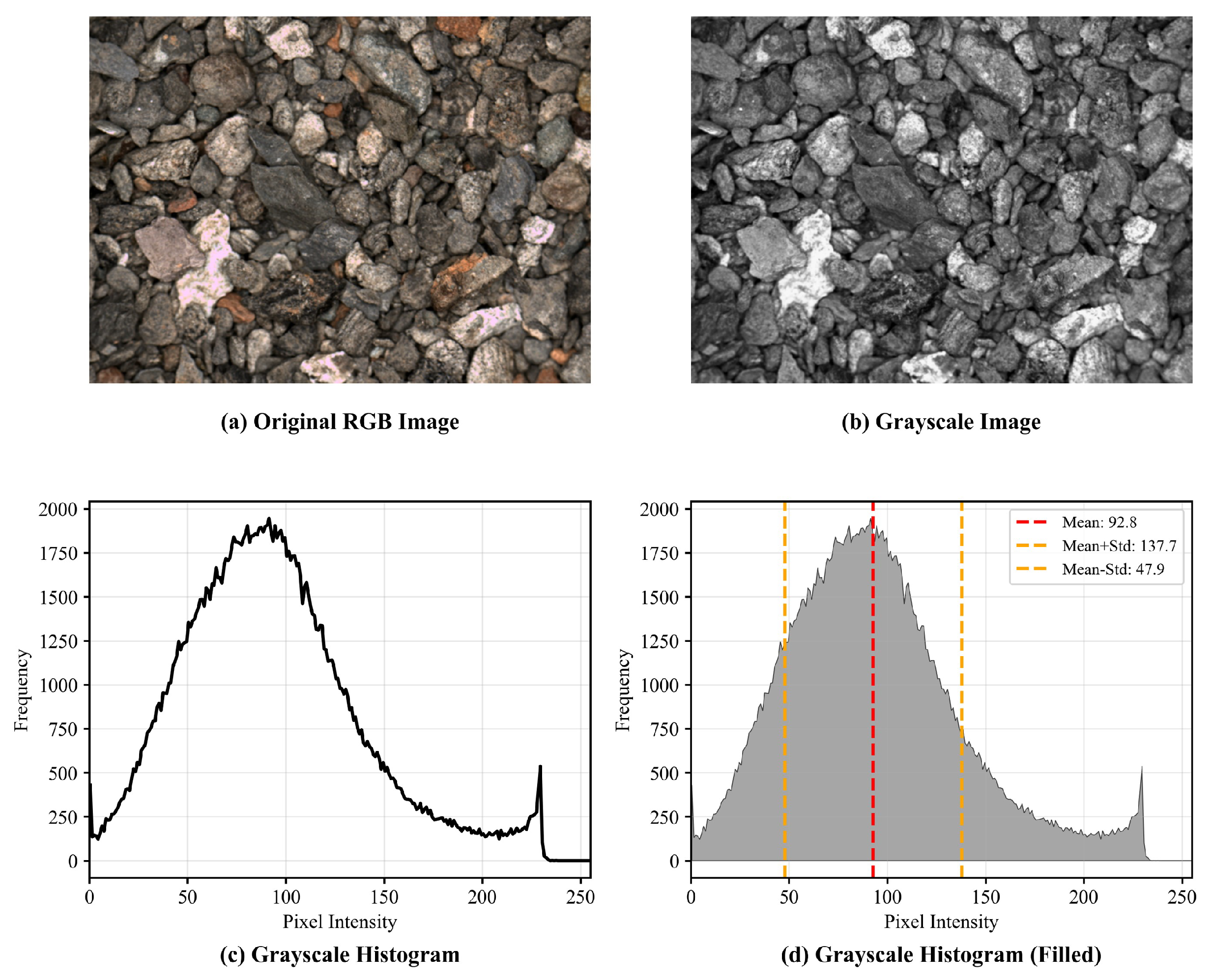
- Gray Histogram Feature Extraction
- 2.
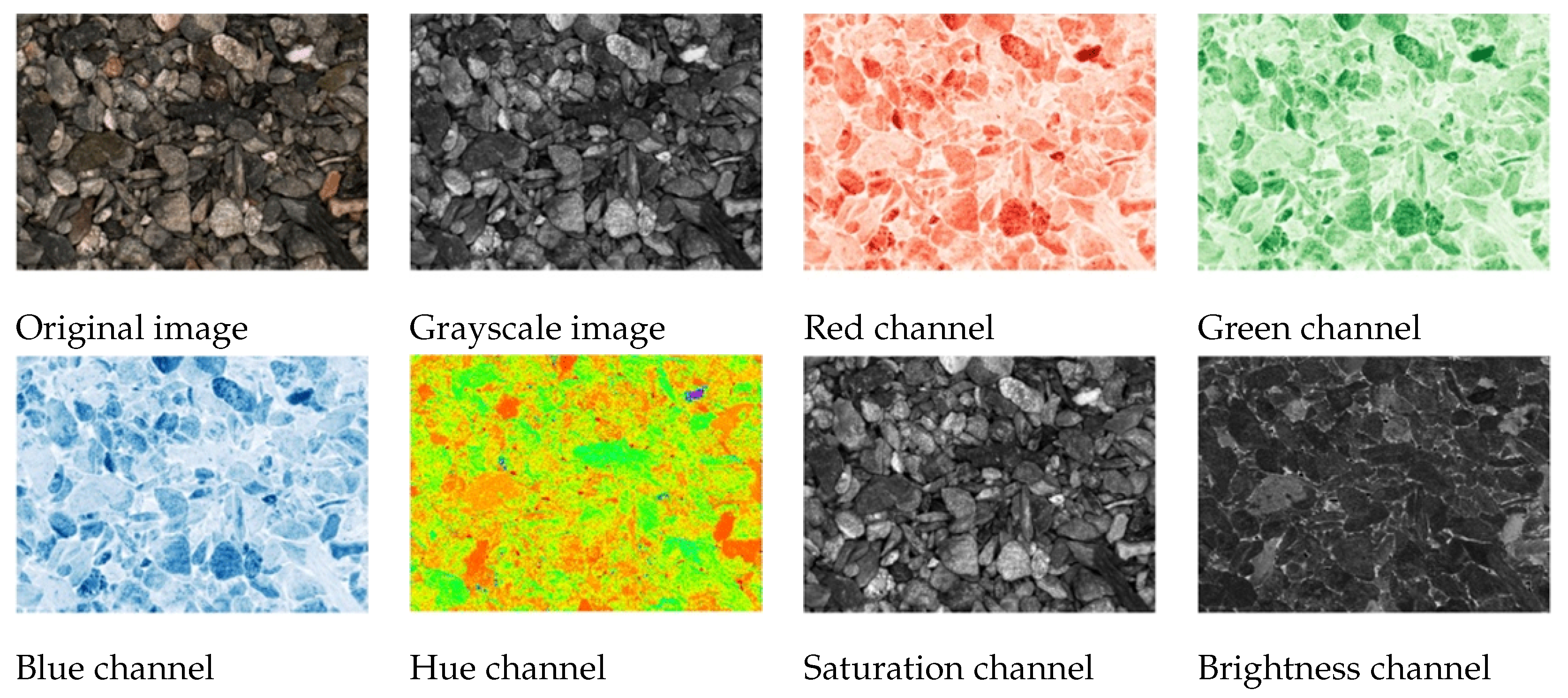
- RGB Channel Feature Extraction
- 3.
- HSV Channel Feature Extraction
2.2.2. Texture Feature Extraction
- (1)
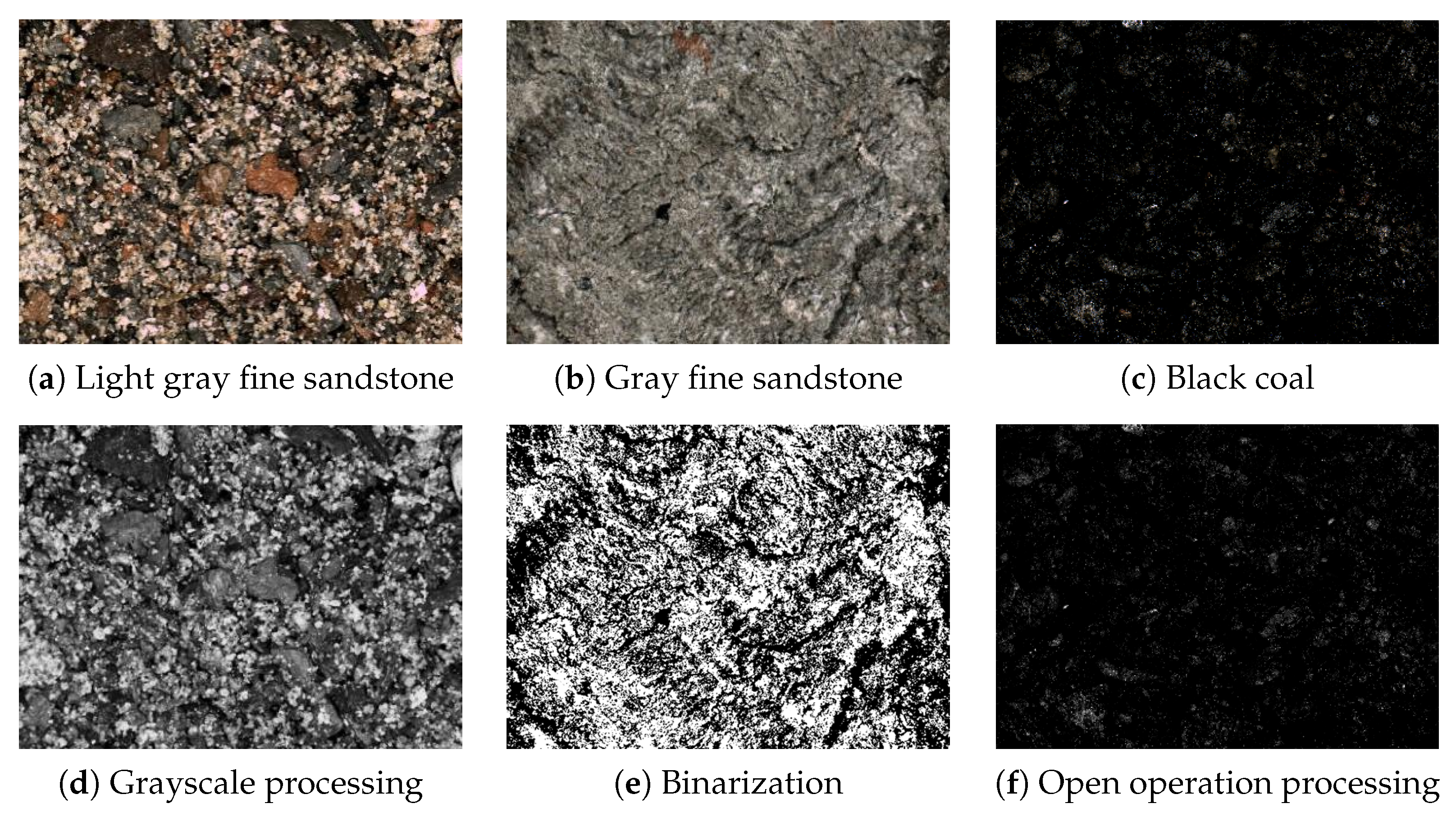
- Grayscale Conversion: Image texture arises from the regular distribution of grayscale values. Therefore, the average of the three RGB components is taken as the single-channel grayscale value, and the grayscale-converted image serves as the subject of study.
- (2)
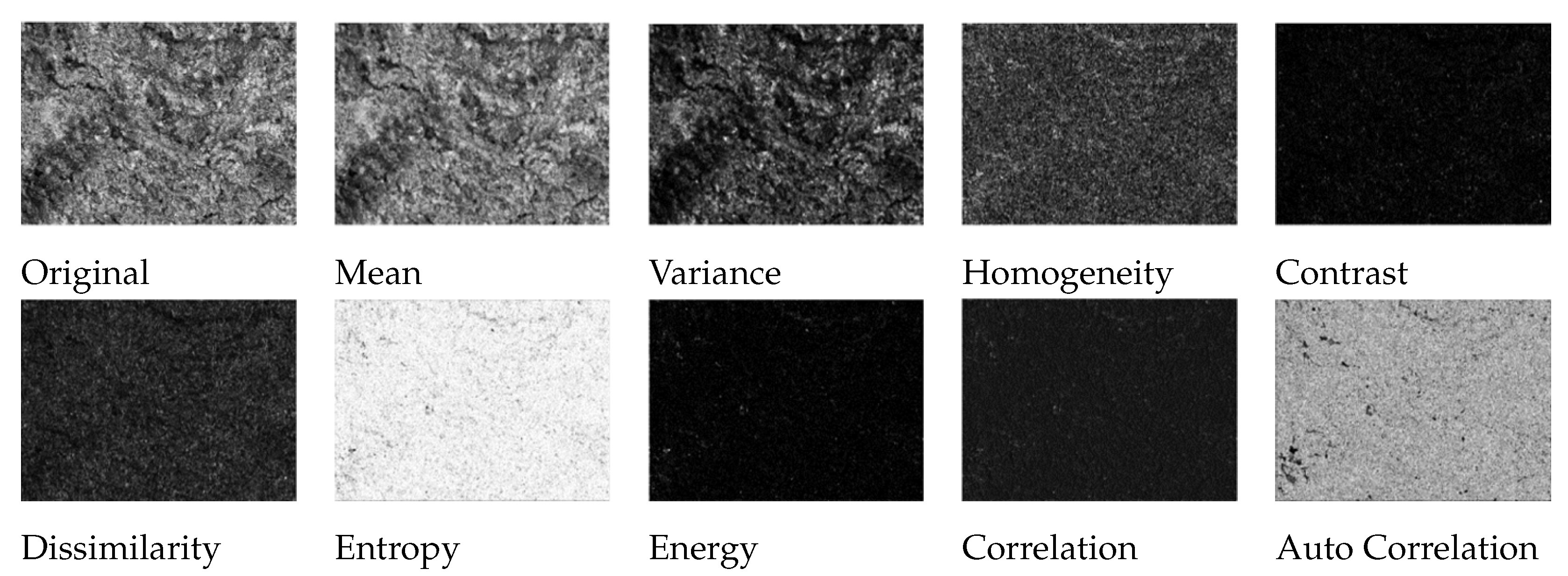
- Gray-level reduction: The number of gray levels and image size determine the computational load of the gray-level co-occurrence matrix. In practice, the gray level is set to 4.
- (3)
- Set sliding window: The sliding window in the grayscale co-occurrence matrix functions similarly to a convolution kernel in convolutional neural networks. It calculates the pixel value of a given point by taking the weighted average of surrounding pixel values, where the weights are determined by the distance between pixels.
- (4)
- Select stride: Choose 8 rings with radii of 1, 3, 5, 7, 9, 11, 13, and 15 pixels from the center point. The distance between each ring is one pixel. As the distance increases by one pixel, the accuracy of the grayscale co-occurrence matrix decreases.
- (5)
- Calculate Statistics: Nine features are statistically analyzed: variance, homogeneity, contrast, mean, correlation dissimilarity, angular second moment, entropy, energy, and autocorrelation [16]. The primary statistics are entropy, angular second moment, and autocorrelation.
2.2.3. Grain Size Feature Extraction
2.3. Correlation Analysis of Rock Image Features
2.4. Rock Image Feature Dimension Reduction Algorithm Model
2.5. Base Learners
2.6. Stacking Model
2.7. Parameter Optimization Algorithms
2.8. Stacking Model Based on Whale Optimization Algorithm
- (1)
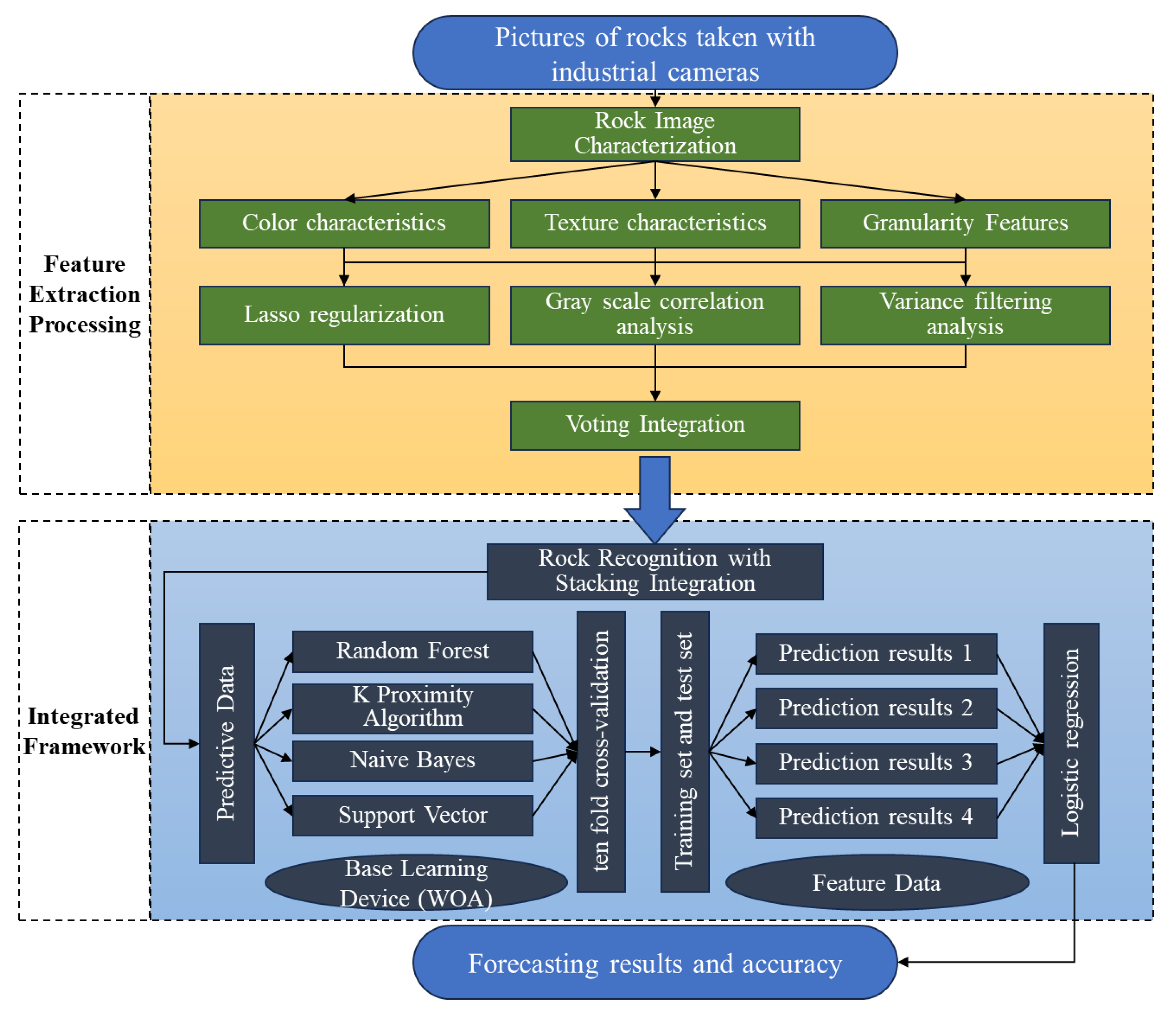
- Base Learner Selection: The first layer of training models forms the foundation of Stacking. The quality of submodels directly impacts Stacking accuracy. Therefore, four robust algorithmic models—RF, KNN, NBM, and SVM—are selected.
- (2)
- Concurrent Learning: Each of the four models (RF, KNN, NBM, SVM) undergoes 10-fold cross-validation. The Whale Optimization Algorithm (WOA) performs global optimization of key hyperparameters for these base learners, including maximum tree depth for RF, kernel type and penalty coefficient for SVM, to minimize overfitting.
- (3)
- Selection of Meta-Learners: The second layer fuses predictions from the first layer’s strong learners. Employing weak learners prevents overall model overfitting, with LR serving as the primary algorithm model.
- (4)
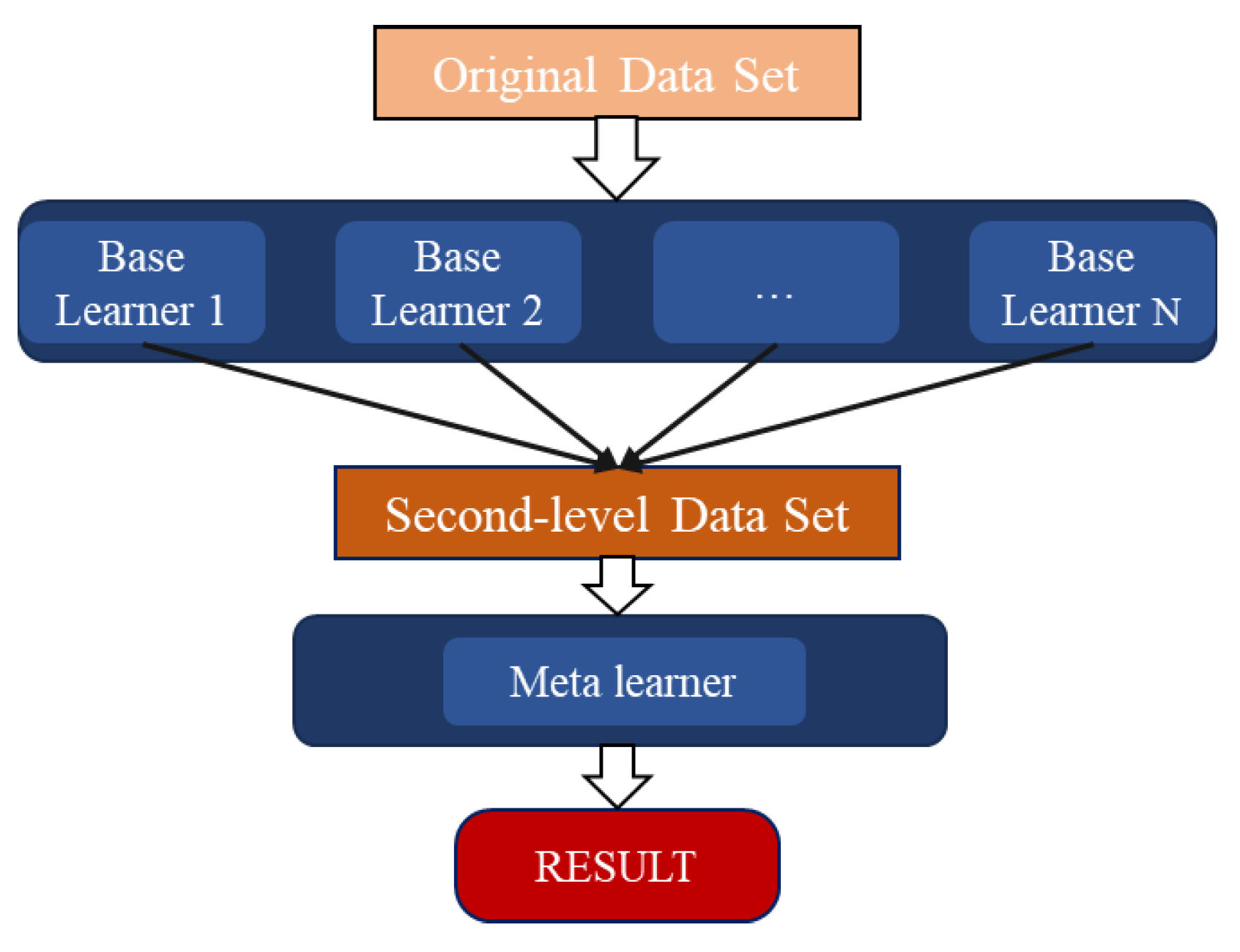
- Model Structure Determination: Based on the preceding steps, a two-layer algorithmic model is established. By integrating different algorithms into an ensemble network, the final rock intelligence recognition model structure is constructed using the Stacking ensemble method.
- (5)
- Derive Results: Use the training results from Step 2’s strong learners as input data for the meta-learner. Treat the rock categories in the original sample data as the output set. Train to obtain the weight assigned to each strong learner, then output the final prediction through a linear combination.
3. Experimental Simulation
3.1. Experimental Platform and Dataset Preprocessing
3.2. Multi-Dimensional Feature Extraction
3.2.1. Adding Color Features
3.2.2. Adding Texture Features
3.2.3. Adding Graininess Features
3.3. Feature Correlation Validation
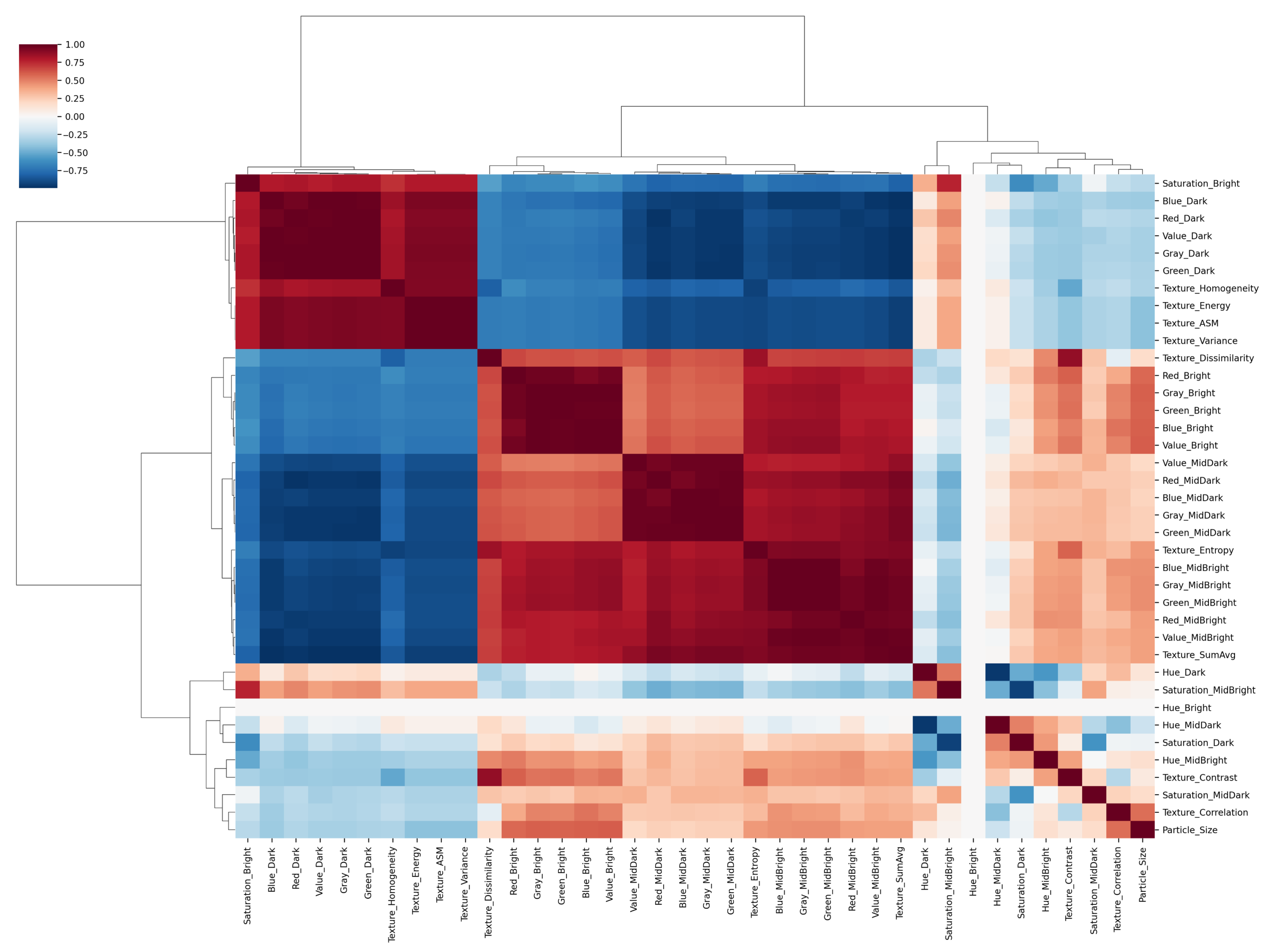
- We conducted a systematic correlation analysis on the final 10 selected features, calculating the average correlation between each feature and the others. The mean correlation among these 10 features was 0.3371, with a standard deviation of 0.1498. This maintains necessary discriminative information while effectively avoiding multicollinearity issues, ensuring the scientific rigor and validity of feature selection.
- Balanced Feature Types: Three color features (30%), six texture features (60%), and one grain size feature (10%). This distribution reflects the dominant role of texture features in rock classification while ensuring feature diversity.
- Distinct Clustering: The heatmap reveals features naturally grouping into three primary clusters corresponding to color, texture, and grain size features, validating the rationality of the feature extraction method.
3.4. Feature Dimension Reduction
3.5. Experimental Results and Analysis
3.6. Error and Analysis
3.7. Statistical Test
3.7.1. ANOVA Test Results
3.7.2. Tukey HSD Post-Hoc Test Results
4. Conclusions
- Multi-Dimensional Feature Extraction Framework
- 2.
- WOA-Optimized Stacking Ensemble Model
Author Contributions
Funding
Data Availability Statement
Conflicts of Interest
References
- Zhou, L.M.; Wang, Y.Q. Challenges and strategies of deep resource exploration in China. J. Cent. South Univ. 2022, 29, 1021–1032. [Google Scholar]
- Zhang, L. Research and Application of Deep Learning-Based Rock Identification. Ph.D. Thesis, Guangxi Minzu University, Nanning, China, 2024. [Google Scholar] [CrossRef]
- Han, X. Research on Intelligent Identification of Rock Lithology Based on YOLOv7 and Swin Transformer. Ph.D. Thesis, East China University of Technology, Nanchang, China, 2024. [Google Scholar] [CrossRef]
- Jiang, Y.; Li, H.; Yan, X.; Zhang, T.; Wei, X.; Meng, C.; Chen, Q. Identification and prospecting application of wide-field electromagnetic method to deep pluton: Take the Longkou–Tudui gold deposit in Jiaodong as an example. J. Cent. South Univ. Sci. Technol. 2025, 56, 966–978. [Google Scholar]
- Ma, Q.; Ma, S.; Lei, Y. Geological Characteristics of Qinghai Province and Experience in Collecting Typical Geological Specimens. Geol. Rev. 2024, 70, 2031–2040. [Google Scholar] [CrossRef]
- Xiong, M.; Chen, L.; Chen, X.; Ji, Y.; Wu, P.; Hu, Y.; Wang, G.; Peng, H. Characteristics, genetic mechanism of marine shale laminae and its significance of shale gas accumulation. J. Cent. South Univ. Sci. Technol. 2022, 53, 3490–3508. [Google Scholar] [CrossRef]
- Zhu, S.; Yang, W.; Hou, G.; Lu, B.; Wei, S. An intelligent classification and identification method for rock thin sections. Acta Mineral. Sin. 2020, 40, 106. [Google Scholar]
- Zhang, Y.; Li, G.; Feng, J.; Li, M.; Su, T.; Wang, K. A Microscopic Mechanical Modeling Method for Rocks Based on the Multi-Crystal Discrete Element Method and Its Applications. In Proceedings of the 33rd National Natural Gas Academic Conference (2023) (01 Geological Exploration), Wuhan, China, 20–22 September 2023; China Petroleum Society Natural Gas Professional Committee, Southwest Petroleum University: Chengdu, China, 2023; pp. 664–677. [Google Scholar] [CrossRef]
- Zhang, Y.; Li, R.; Xi, S.; Yao, J.; Huang, H.; Zhao, B.; Wu, X.; Yang, L. Sedimentary environments and organic matter enrichment mechanism of Ordovician Wulalike Formation shale, western Ordos Basin. J. Cent. South Univ. Sci. Technol. 2022, 53, 3401–3417. [Google Scholar] [CrossRef]
- Xiao, Q.; Yuan, H.; Chen, C.; Li, Y.; Chen, C.; Zhang, X.; Kuang, M.; Xu, T.; Ye, Z.; Wang, T. Genesis Analysis of the Maokou Formation Dolomite in the Northern Sichuan Region: Evidence from Petrology, In-situ Geochemistry, and Chronology. Nat. Gas Geosci. 2024, 35, 1160–1186. [Google Scholar]
- Wang, C.; Liu, L.; Li, Q.; Meng, L.; Liu, C.; Zhang, Y.; Wang, J.; Yu, X.; Yan, K. Geochemical characteristics and genesis analysis of rock sources of brine-type lithium-potassium minerals in the Jitai Basin, Jiangxi Province. J. Petrol. Mineral. 2020, 39, 65–84. [Google Scholar]
- Meng, C.; Xue, J. X-ray fluorescence spectroscopy-X-ray diffraction study on the mineralogical characteristics of Helan stone rock in Ningxia. Rock Miner. Test. 2018, 37, 50–55. [Google Scholar] [CrossRef]
- Peng, Y.; Xue, H.; Zhao, Y.; Lan, Y.; Pan, L.; Zhang, C. Analysis of Factors Affecting the Image Quality of Scanning Electron Microscope Images of Rock Samples. Chin. J. Test. 2020, 46, 156–160. [Google Scholar]
- International Society FOR Rock Mechanics. Suggested Methods for Rock Identification; ISRM: Lisbon, Portugal, 2019. [Google Scholar]
- Wu, F.Q.; Zhang, R. Environmental constraints in deep mining: Global practices and China’s solutions. Nat. Sustain. 2023, 6, 158–170. [Google Scholar]
- Zhang, Y.; Li, M.; Han, S. Automatic lithology recognition and classification method based on deep learning of rock image. Acta Petrol. Sin. 2018, 34, 333–342. [Google Scholar]
- Bai, L.; Wei, X.; Liu, Y.; Wu, C.; Chen, L. Identification of Thin Section Images Based on the VGG Model. Geol. Bull. China 2019, 38, 2053–2058. [Google Scholar]
- Xu, Z.; Ma, W.; Lin, P.; Shi, H.; Liu, T.; Pan, D. Intelligent Rock Type Recognition Based on Image Transfer Learning. J. Appl. Basic Eng. Sci. 2021, 29, 1075–1092. [Google Scholar] [CrossRef]
- Cheng, G.; Li, B.; Wan, X.; Yao, W.; Wei, X. A Study on Rock Thin Section Image Classification Based on the SqueezeNet Convolutional Neural Network. J. Mineral. Petrol. 2021, 41, 94–101. [Google Scholar] [CrossRef]
- Zhang, C.; Yi, Y.; Zhou, W.; Qin, W.; Liu, W. Small-Sample Rock Classification Based on Deep Learning and Data Augmentation Techniques. Sci. Technol. Eng. 2022, 22, 14786–14794. [Google Scholar]
- Tan, Y.; Tian, M.; Xu, D.; Sheng, G.; Ma, K.; Qiu, Q.; Pan, S. Research on Rock Image Classification and Recognition Based on Xception Network. Geogr. Geoinf. Sci. 2022, 38, 17–22. [Google Scholar]
- Yuan, S. Study on the Lithology Identification Method of Rock Image Based on Deep Learning. Master’s Thesis, Northeast Petroleum University, Daqing, China, 2023. [Google Scholar]
- Ren, S.; Hu, Y.; He, W.; Gao, X.; Wan, T. Deep Learning-Based Microscopic Image Recognition of Sandstone Components. Sci. Technol. Eng. 2024, 24, 3727–3736. [Google Scholar]
- Guo, J. Research and Application of Rock Lithology Identification Algorithms Based on Fine-Grained Image Classification. Ph.D. Thesis, Southwest Petroleum University, Chengdu, China, 2024. [Google Scholar] [CrossRef]
- Zhou, C.; Liu, W.; Wu, T.; Li, A.; Han, X. Classification of rock thin section images based on a hybrid expert model. J. Jilin Univ. Sci. Ed. 2024, 62, 905–914. [Google Scholar] [CrossRef]
- He, L.; Zhou, Y.; Zhang, C. Application of Deep Learning-Based Object Segmentation in Intelligent Rock Recognition. Bull. Mineral. Petrol. Geochem. 2025, 44, 525–541+452. [Google Scholar] [CrossRef]
- Li, M.; Fu, J.; Zhang, Y.; Liu, C. Intelligent recognition and analysis method for lithology classification by coupling rock image and hammering audio. J. Rock Mech. Eng. 2020, 39, 996–1004. [Google Scholar] [CrossRef]
- Fan, P. A Study on Cluster Analysis Based on Rock Image Features. Ph.D. Thesis, Xi’an Petroleum University, Xi’an, China, 2018. [Google Scholar]
- Liu, C.; Xu, Q.; Shi, B.; Gu, Y. Digital Image Recognition Methods and Applications for Rock Particles and Pore Systems. Chin. J. Geotech. Eng. 2018, 40, 925–931. [Google Scholar]
- Du, S.; Zhang, W.; Teng, Y.; Guo, Q. Analysis of Grain Size Characteristics in Clastic Sandstones of the Zhuhai Formation in the Baiyun Depression. J. Xi’an Univ. Arts Sci. Nat. Sci. Ed. 2022, 25, 116–121. [Google Scholar]
- Ye, H.; Gao, X.; Fu, N.; Wang, F.; Wang, J. Analysis of rock grain size and discussion of sedimentary environment in the Triassic strata of the Qumalai area, Qinghai Province. Gansu Geol. 2022, 31, 17–23. [Google Scholar]
- Xie, X.; Pan, C. Fractal characteristics of particle size distribution and shear strength of bulk rock in waste dump. Geotech. Mech. 2004, 25, 287–291. [Google Scholar] [CrossRef]
- Zhang, L.; Wei, X.; Lu, J.; Pan, J. Lasso regression: From interpretation to prediction. Adv. Psychol. Sci. 2020, 28, 1777–1791. [Google Scholar] [CrossRef]
- Zhang, D.; Liu, Y.; Zhang, W.; Shen, F.; Yang, J. Detection of fake reviews based on heterogeneous ensemble learning. J. Shandong Univ. Eng. Ed. 2020, 50, 1–9. [Google Scholar]
- Zheng, Y.; Wang, Z. Research on Credit Bond Default Early Warning Based on Multi-Objective Optimization Weighted Soft Voting Integration Algorithm. Mod. Electron. Technol. 2024, 47, 43–48. [Google Scholar] [CrossRef]
- Li, E.; Zhang, B.; Jia, B. A Two-Stage Multidimensional Classification Method Combining KNN Feature Enhancement and Mutual Information Feature Selection. Computer Engineering and Applications, pp. 1–14. Available online: http://kns.cnki.net/kcms/detail/11.2127.tp.20250225.1800.023.html (accessed on 23 May 2025).
- Ou, G.; He, Y.; Zhang, M.; Huang, Z.; Fournier-Viger, P. Risk Minimization Weighted NBM Classifier. Comput. Sci. 2025, 52, 137–151. [Google Scholar]
- Liu, D.; Sun, J.; Zhang, L.; Yang, Y.; Zhang, L.; Zhang, Z. Division method of tensile and shear crack and its application in sandstone rockburst precursor. J. Cent. South Univ. Sci. Technol. 2023, 54, 1153–1167. [Google Scholar] [CrossRef]
- Shi, J.; Zhang, J. Load forecasting method based on multi-model fusion Stacking integrated learning. Chin. J. Electr. Eng. 2019, 39, 4032–4042. [Google Scholar] [CrossRef]
- Lv, B.; Li, L.; Li, J.; Guo, T. Hidden target detection based on Gaussian pyramid and bilateral filtering. Sci. Technol. Eng. 2021, 21, 7649–7656. [Google Scholar]
- Lin, C.; Zhou, H.; Chen, W. Retinex image enhancement algorithm based on Gaussian pyramid transformation with bilateral filtering. Laser Optoelectron. Prog. 2020, 57, 209–215. [Google Scholar]
- Li, R.; Li, Y. Multi-scale feature identification of PCB bare board defects. China Test. 2024, 50, 181–190+200. [Google Scholar]
- Li, Z.; Cao, B.; Peng, D.; You, Q.; Miu, X.; Chen, Z. Inverse Inversion of Nuclear Accident Source Terms Based on Bayesian Neural Networks. Nucl. Electron. Detect. Technol. 2025, 45, 780–787. [Google Scholar] [CrossRef]
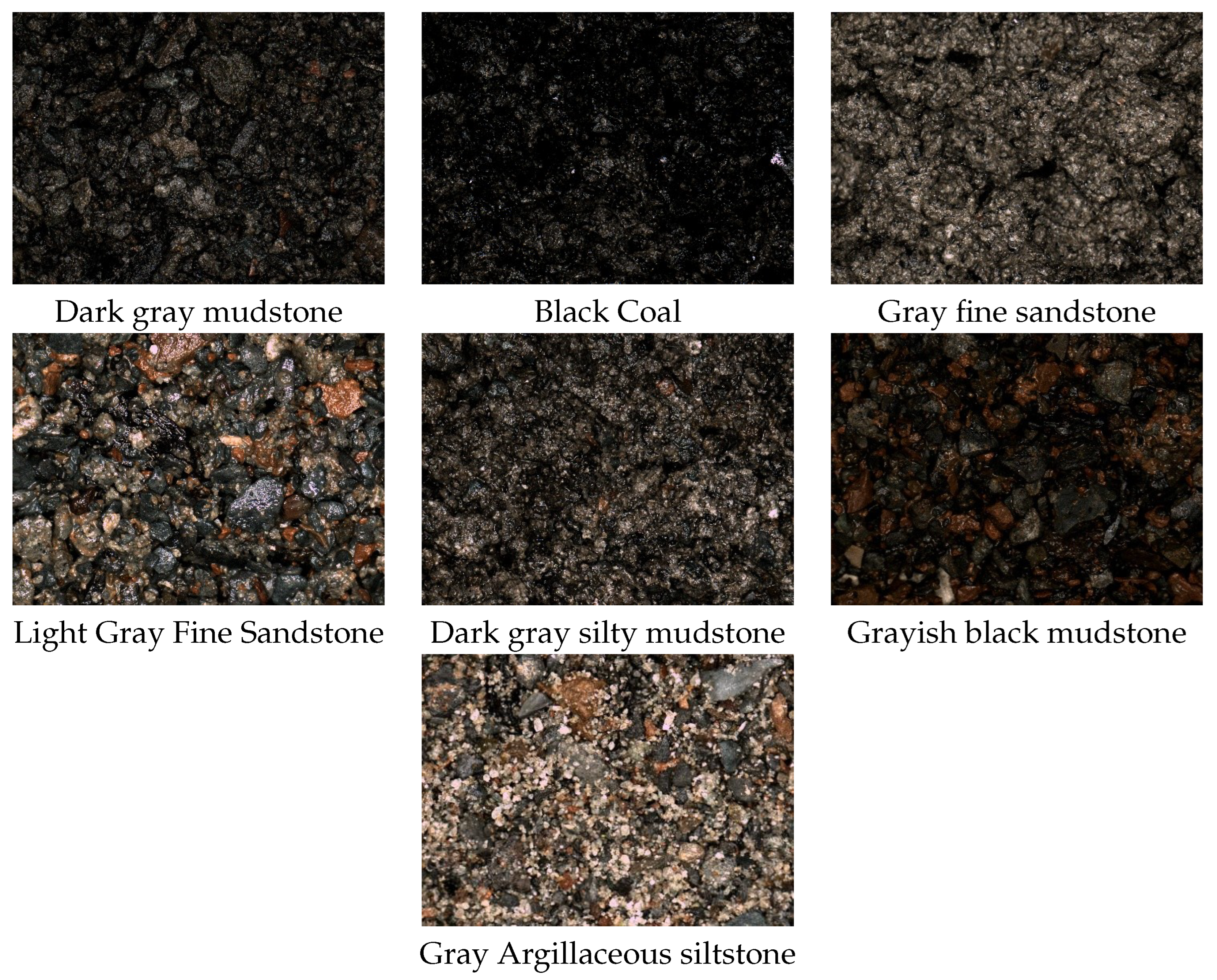

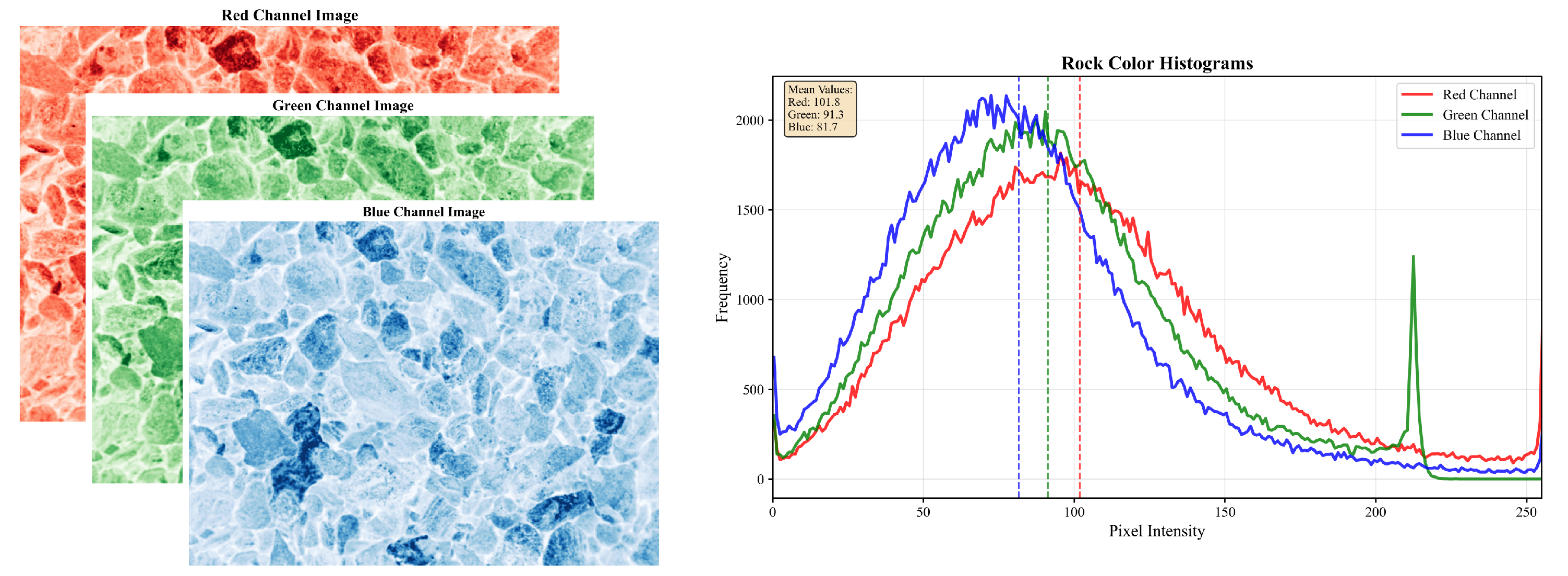

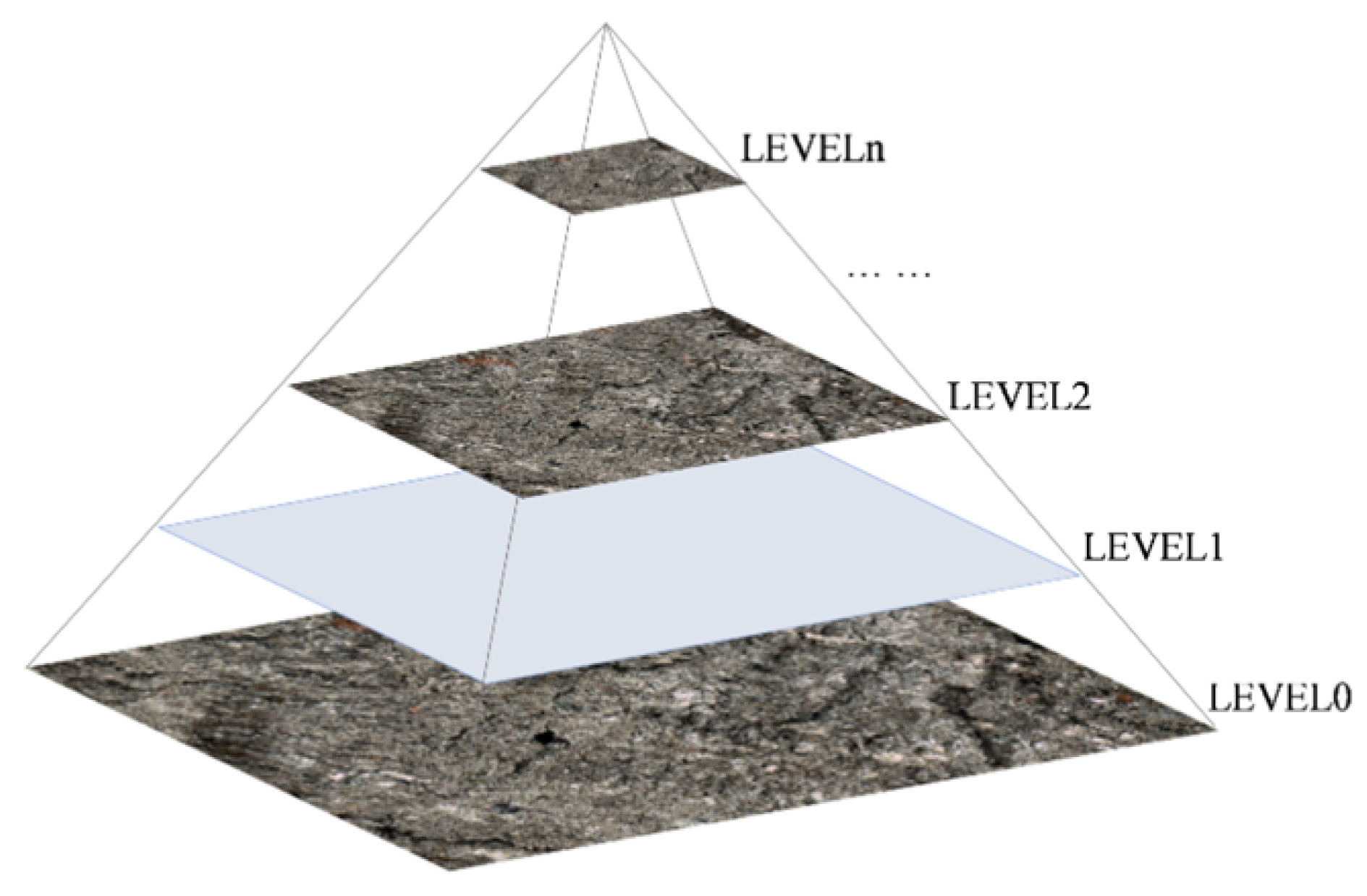



| References | Method | Experimental Cases | Model Output | Limitations |
|---|---|---|---|---|
| Zhang Ye et al. (2018) [16] | Deep learning transfer model based on Inception-v3 | 173 granite, 152 phyllite, and 246 breccia images | Training set classification accuracy exceeding 90%; test set accuracy after retraining above 85% | Limited to three rock types (granite, phyllite, breccia) with distinct features; insufficient category diversity |
| Bai Lin et al. (2019) [17] | Rock thin-section image classification method based on the VGG model | Trained 90,000 iterations on six rock thin-section image categories (e.g., andesite, dolomite; 1000 images per class) | Achieved 82% accuracy on the test set; successfully extracted features such as plagioclase in andesite and oolitic grains in oolitic limestone | Prone to misclassification of compositionally similar rocks and exhibits lower accuracy for highly heterogeneous samples |
| Xu Zhenhao et al. (2021) [18] | Improved YOLOv8 deep learning network (FS_YOLOv8) | Applied to instance segmentation of ground cracks in coal mining areas using UAV imagery | Enhanced mAP@0.5 and mAP@0.95 by 7.9% and 12.6%, respectively, achieving high precision and recall | Designed solely for ground crack segmentation in coal mining areas; limited applicability to broader geological targets |
| Cheng Guojian et al. (2021) [19] | SlimSqueeze lightweight convolutional neural network | 10,026 feldspathic sandstone images from an oilfield region in Ordos Basin | Maximum classification accuracy of 90.88%; model size only 4.78 MB | Requires 10,026 training images, indicating substantial data demand |
| Zhang Chaoqun et al. (2022) [20] | MyNet neural network model | Expanded 314 rock samples to 28,272 via data augmentation for small-sample classification | Achieved an overall accuracy of 75.6% | Overall accuracy remains improvable; generalization performance across more lithologies and complex environments remains uncertain |
| Tan Yongjian et al. (2022) [21] | Rock image classification method based on Xception network combined with transfer learning | Conducted classification on a ten-class rock dataset | Achieved an overall accuracy of 86% | Limited capability in distinguishing highly similar tuff subtypes, leading to suboptimal recognition results |
| Yuan Shuo (2023) [22] | 4 deep learning networks for rock image classification; improved ShuffleNetV2 (adding ECA attention, etc.) | A total of 4829 images of 5 types of rocks, with the test set accounting for 30% | The accuracy of the original ShuffleNetV2 was 91.08%, and the improved one reached 95.44% | MobileNetV2 had the lowest accuracy; the improved model did not clarify its adaptability to practical scenarios |
| Ren Shujie et al. (2024) [23] | Sandstone micro-component identification method based on the Faster R-CNN object detection algorithm | Identification of three components—quartz, feldspar, and lithic fragments—in sandstone thin sections under cross-polarized light | Achieved an average recognition accuracy of 89.28% | Dataset size is limited; generalization under non-cross-polarized conditions or across more sandstone types remains unverified |
| Guo Jingwei (2024) [24] | FPAE-Net and APBS-Net | Custom rock dataset and public fine-grained datasets (e.g., CUB-200-2011) | Achieved excellent classification accuracy across multiple datasets | FPAE-Net exhibits high memory consumption and complex architecture |
| Han Xinhao (2024) [3] | YOLOv7 integrated with an improved Swin Transformer | Self-constructed dataset of 1467 rock images from 20 lithological categories (including pyroxenite and komatiite) | Outperformed benchmark models such as Faster-RCNN, YOLOv4, and YOLOv5 | Model architecture remains complex and requires further simplification for field deployment |
| Zhou et al. (2024) [25] | Hybrid expert model | 11,370 rock thin-section images | Produced rock classification outcomes | Model performance heavily depends on large-scale rock image datasets for effective training |
| He Luhao et al. (2025) [26] | YOLOv8-seg model incorporating multiple loss functions (e.g., box_loss, seg_loss) | Trained on seven rock types including basalt and granite | Achieved high segmentation accuracy and strong recognition performance in real-world scenarios | Exhibits limited discriminative power for rocks with highly similar color and texture features (e.g., quartzite, marble) |
| Rock Type | Particle Size Range/mm |
|---|---|
| Coal | 0~50 |
| Mudstone | 0~0.0039 |
| Argillaceous Siltstone | 0.0039~0.0625 |
| Fine Sandstone | 0.0625~0.25 |
| Algorithm | Advantages | Disadvantages |
|---|---|---|
| RF | High robustness and generalization, no feature selection, fast training, parallel processing. | Poor model interpretation, possible similar decision trees, high memory consumption. |
| KNN | Suitable for dynamic updating of training data, insensitive to outliers, robust, no need for complex training process. | Slow prediction, complex parameter tuning, performance degradation with high dimensional data. |
| NBM | Extremely fast training, suitable for high dimensional data, performs well for small data sizes, low computational complexity. | Difficult to ensure feature independence, sensitive to input data distribution, weak generalization ability. |
| SVM | Suitable for handling high-dimensional and non-linear data with good generalization ability. | Sensitive to noise, difficult selection of kernel function and parameters, slow training on large-scale data, high memory usage. |
| Rock Type | Original Sample Size (Sheets) | Sample Size after Data Enhancement (Sheets) |
|---|---|---|
| Dark Gray Mudstone | 30 | 100 |
| Black Coal | 21 | 100 |
| Gray Fine Sandstone | 18 | 100 |
| Light Gray Fine Sandstone | 85 | 100 |
| Dark Gray Silty Mudstone | 40 | 100 |
| Grayish black mudstone | 75 | 100 |
| Gray Argillaceous Siltstone | 46 | 100 |
| Statistical Metric | Value |
|---|---|
| Maximum Average Correlation | 0.7410 |
| Minimum Average Correlation | 0.2149 |
| Mean of Average Correlation | 0.3371 |
| Standard Deviation of Average Correlation | 0.1498 |
| Intra-group Average Correlation for Color Features | 0.2661 |
| Intra-group average correlation for texture features | 0.3726 |
| Feature | Average Correlation | Feature | Average Correlation |
|---|---|---|---|
| Texture_SumAvg | 0.7410 | Texture_Entropy | 0.2562 |
| Texture_Contrast | 0.4557 | Texture_Dissimilarity | 0.2547 |
| Particle_Average_Granularity | 0.3370 | Gray_Bin1 | 0.2502 |
| Hue_Bright | 0.3333 | Texture_ASM | 0.2411 |
| Texture_Variance | 0.2869 | Red_Bright | 0.2149 |
| RF | KNN | NBM | SVM | Stacking | |
|---|---|---|---|---|---|
| Dark Gray Mudstone | 61.99% | 64.53% | 60.05% | 70.99% | 74.25% |
| Black Coal | 91.11% | 85.35% | 91.91% | 88.86% | 97.16% |
| Gray Fine Sandstone | 85.97% | 84.97% | 91.29% | 91.24% | 93.33% |
| Light Gray Fine Sandstone | 78.68% | 65.39% | 73.65% | 65.08% | 82.65% |
| Dark Gray Silty Mudstone | 74.86% | 80.02% | 73.15% | 77.62% | 81.21% |
| Grayish black mudstone | 85.23% | 79.67% | 82.63% | 82.06% | 87.16% |
| Gray Argillaceous Siltstone | 69.16% | 77.45% | 77.69% | 73.42% | 82.12% |
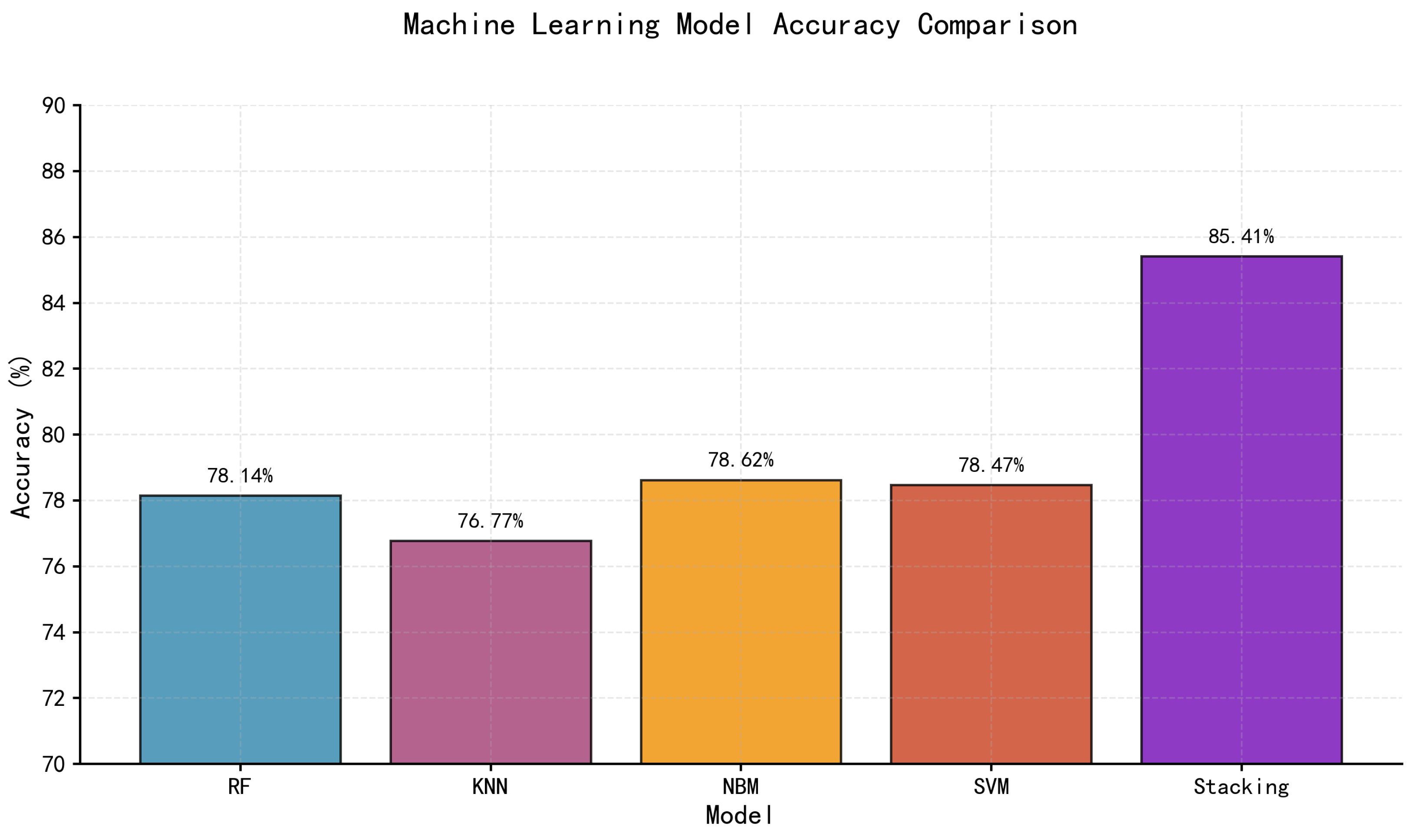
| Average | 78.14% | 76.77% | 78.62% | 78.47% | 85.41% |
| Model | Accuracy (%) | Precision (%) | Recall (%) | F1 (%) | Std. of F1 (%) |
|---|---|---|---|---|---|
| Stacking | 85.41 | 84.92 | 85.17 | 85.04 | 1.28 |
| NBM | 78.62 | 78.05 | 78.23 | 78.14 | 1.76 |
| SVM | 78.47 | 77.91 | 78.08 | 77.99 | 1.82 |
| RF | 78.14 | 77.36 | 77.52 | 77.44 | 1.85 |
| KNN | 76.77 | 75.92 | 76.11 | 76.01 | 2.14 |
| Rock Category | F1-Score (%) | Error Source Analysis |
|---|---|---|
| Dark Gray Mudstone | 73.52 | High similarity to dark gray silty mudstone |
| Black Coal | 96.52 | Distinct color/texture (low inter-class similarity) |
| Gray Fine Sandstone | 92.48 | Clear grain size features |
| Light Gray Fine Sandstone | 82.48 | Confusion with gray fine sandstone due to similar granularity and color |
| Dark Gray Silty Mudstone | 81.06 | Partial overlap with gray fine sandstone texture |
| Grayish black mudstone | 86.98 | Confusion with dark gray mudstone (similar color) |
| Gray Argillaceous Siltstone | 82.24 | Fine grain size leads to blurred texture features |
| Test Metric | F-Statistic | p-Value | Significance ( = 0.05) | Interpretation |
|---|---|---|---|---|
| F1 | 42.87 | <0.0001 | Significant | Model performance differences are not random |
| Model Pair | Mean Difference (F1) | 95% Confidence Interval | p-Value | Significance |
|---|---|---|---|---|
| Stacking vs. NBM | 6.84 | [5.42, 8.26] | <0.0001 | Significant |
| Stacking vs. SVM | 7.08 | [5.65, 8.51] | <0.0001 | Significant |
| Stacking vs. RF | 7.72 | [6.30, 9.14] | <0.0001 | Significant |
| Stacking vs. KNN | 9.10 | [7.67, 10.53] | <0.0001 | Significant |
| NBM vs. SVM | 0.24 | [−1.18, 1.66] | 0.893 | Not Significant |
Disclaimer/Publisher’s Note: The statements, opinions and data contained in all publications are solely those of the individual author(s) and contributor(s) and not of MDPI and/or the editor(s). MDPI and/or the editor(s) disclaim responsibility for any injury to people or property resulting from any ideas, methods, instructions or products referred to in the content. |
© 2025 by the authors. Licensee MDPI, Basel, Switzerland. This article is an open access article distributed under the terms and conditions of the Creative Commons Attribution (CC BY) license (https://creativecommons.org/licenses/by/4.0/).
Share and Cite
Yang, S.-C.; Yang, Z.; Chen, Z.-Y.; Zhang, Y.-B.; Dai, Y.-X.; Zhou, X. A Stacking Ensemble Method Suitable for Small Sample Rock Fine Classification Tasks. Processes 2025, 13, 3653. https://doi.org/10.3390/pr13113653
Yang S-C, Yang Z, Chen Z-Y, Zhang Y-B, Dai Y-X, Zhou X. A Stacking Ensemble Method Suitable for Small Sample Rock Fine Classification Tasks. Processes. 2025; 13(11):3653. https://doi.org/10.3390/pr13113653
Chicago/Turabian StyleYang, Shi-Chao, Zhen Yang, Zhi-Yuan Chen, Yan-Bo Zhang, Ya-Xun Dai, and Xu Zhou. 2025. "A Stacking Ensemble Method Suitable for Small Sample Rock Fine Classification Tasks" Processes 13, no. 11: 3653. https://doi.org/10.3390/pr13113653
APA StyleYang, S.-C., Yang, Z., Chen, Z.-Y., Zhang, Y.-B., Dai, Y.-X., & Zhou, X. (2025). A Stacking Ensemble Method Suitable for Small Sample Rock Fine Classification Tasks. Processes, 13(11), 3653. https://doi.org/10.3390/pr13113653