
Bifunctional N/S-Coordinated Thiadiazole–Triazine Porous Organic Polymer for Efficient Hg(II) Immobilization in Aqueous–Soil Systems


Abstract
1. Introduction
2. Materials and Methods
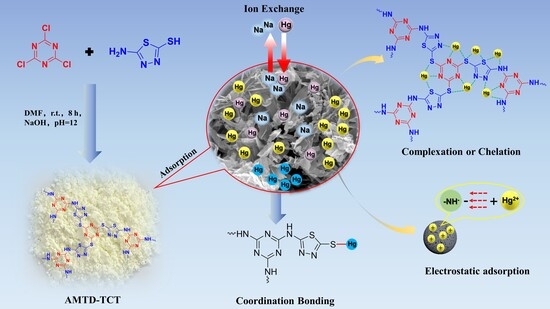
2.1. Synthesis of AMTD-TCT
2.2. Adsorption–Desorption Experiments
2.3. Measurements
2.4. Data Analysis
3. Results and Discussion
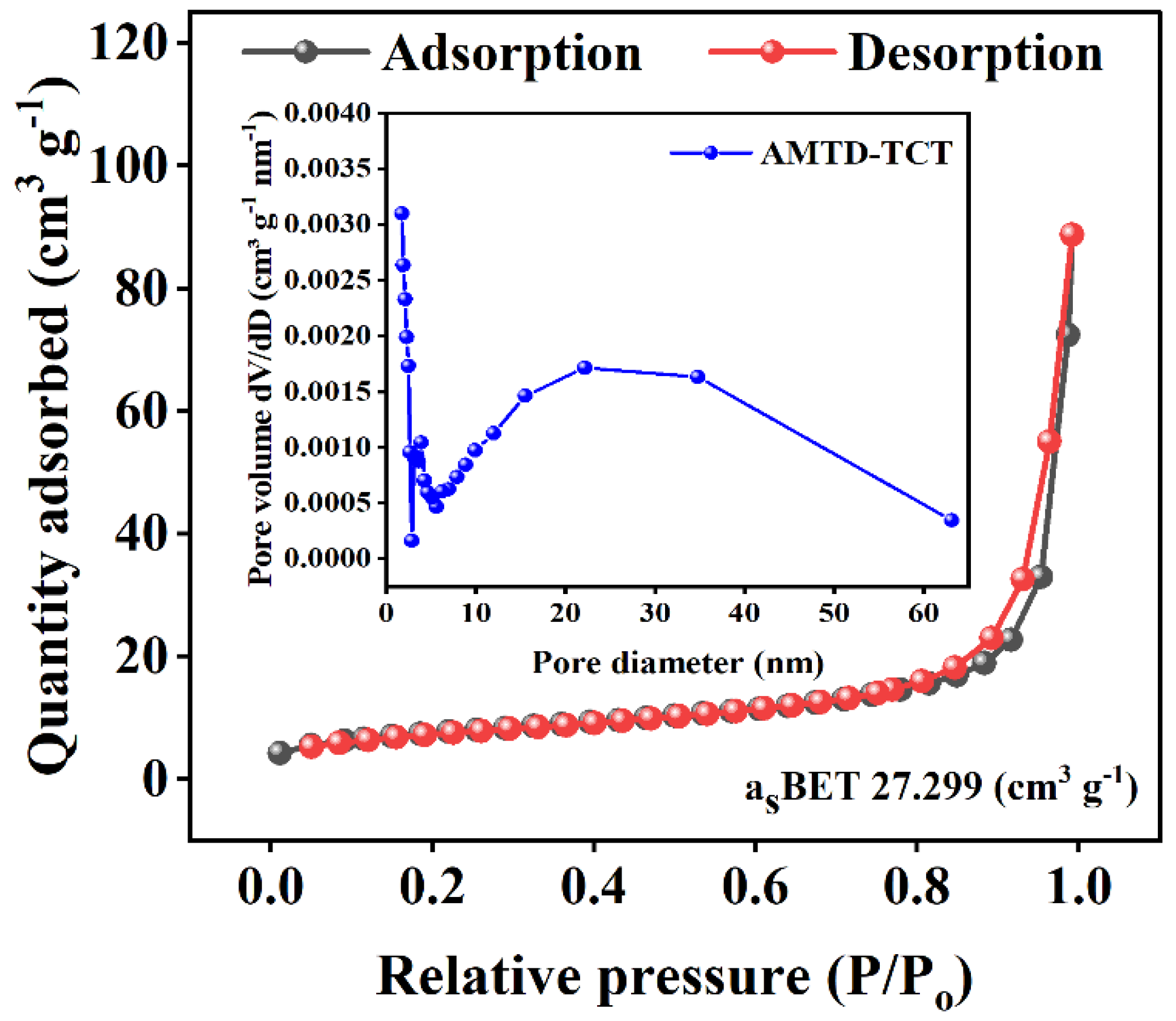
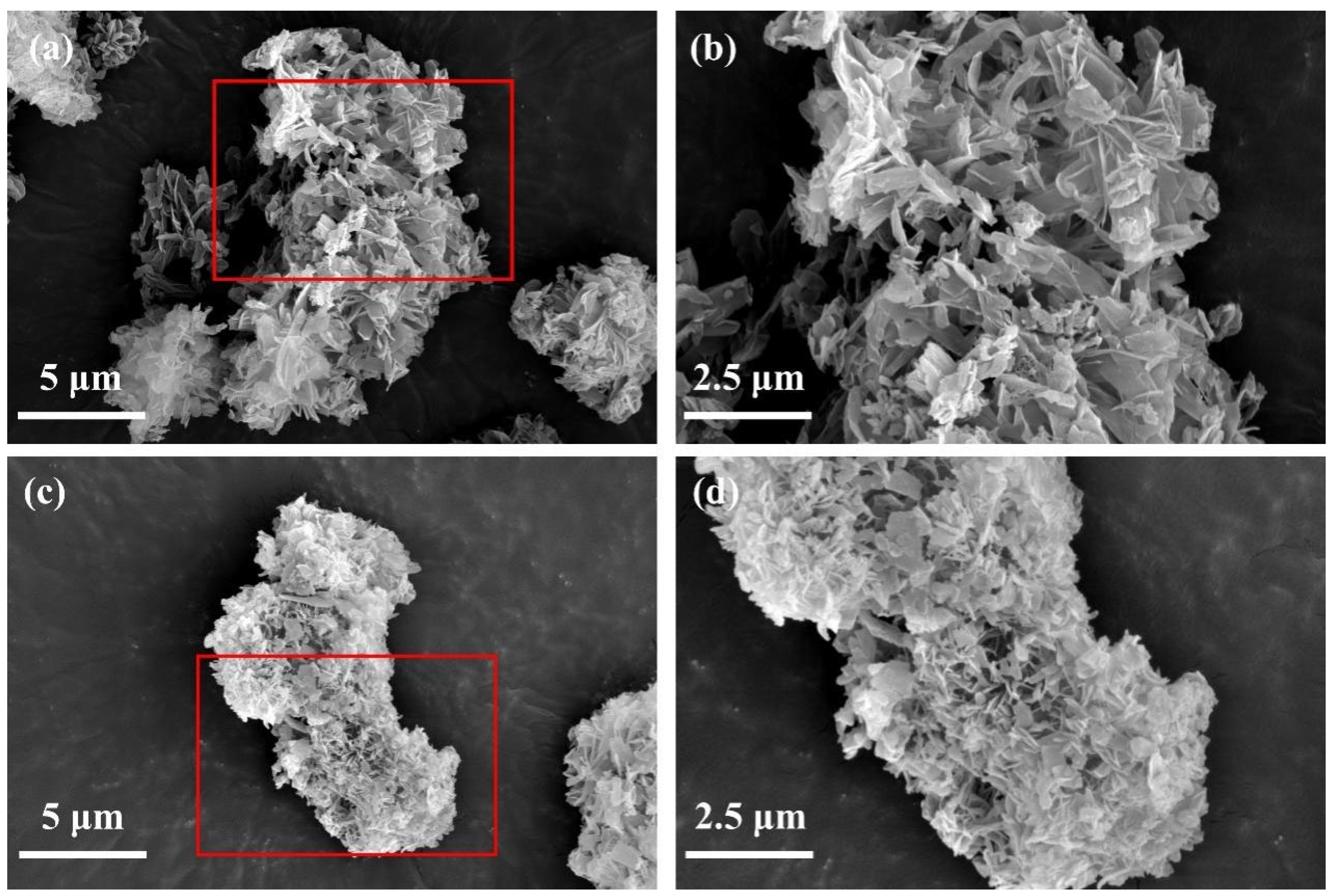
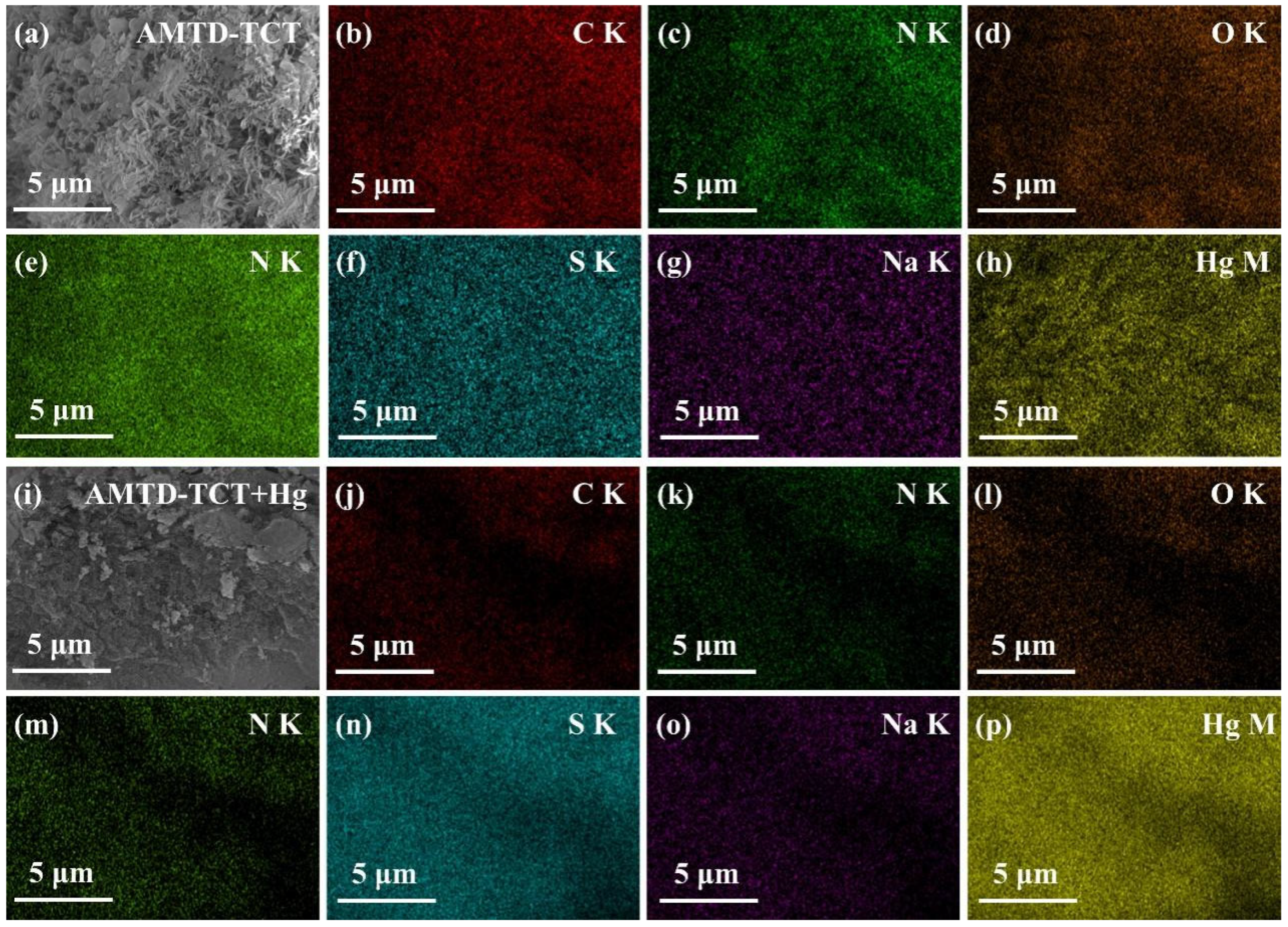
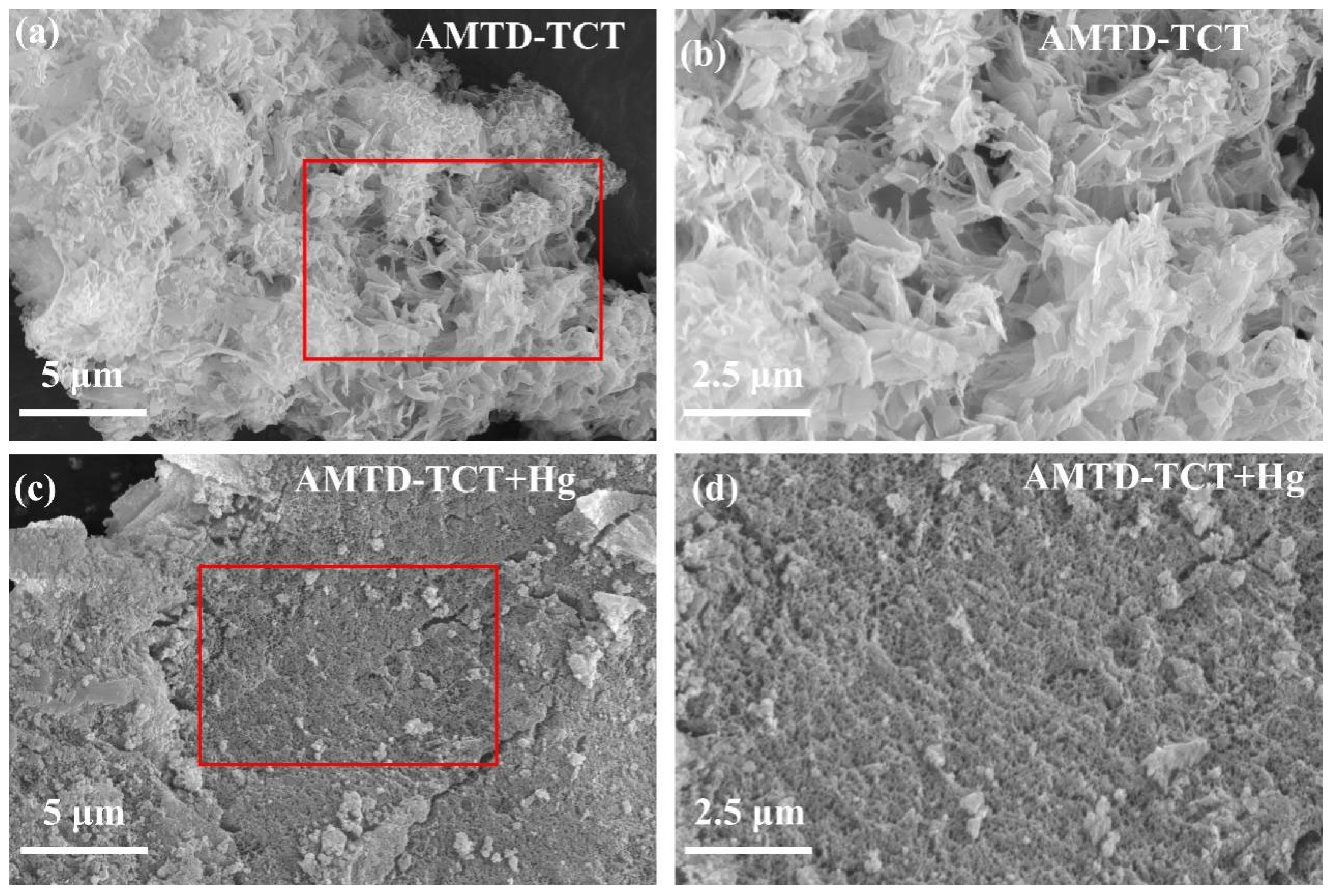
3.1. Microstructural Characterization of AMTD-TCT
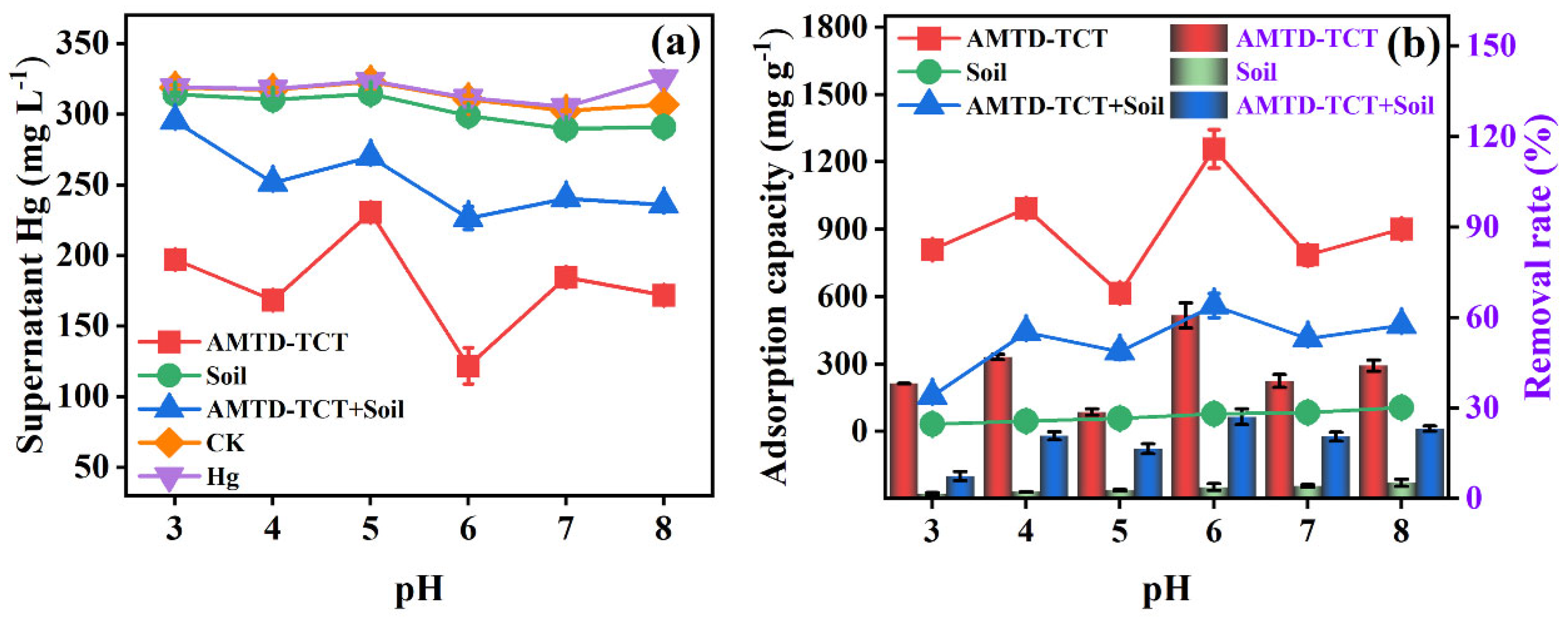
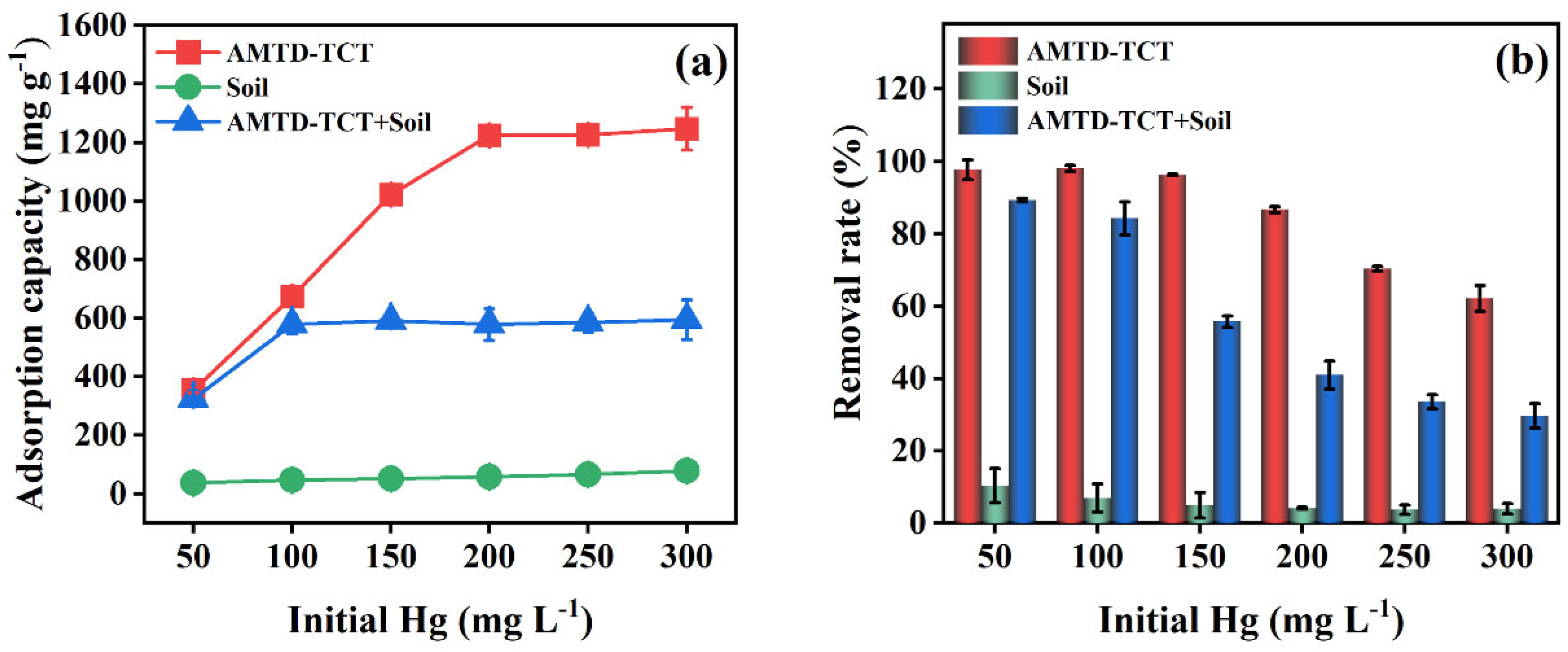
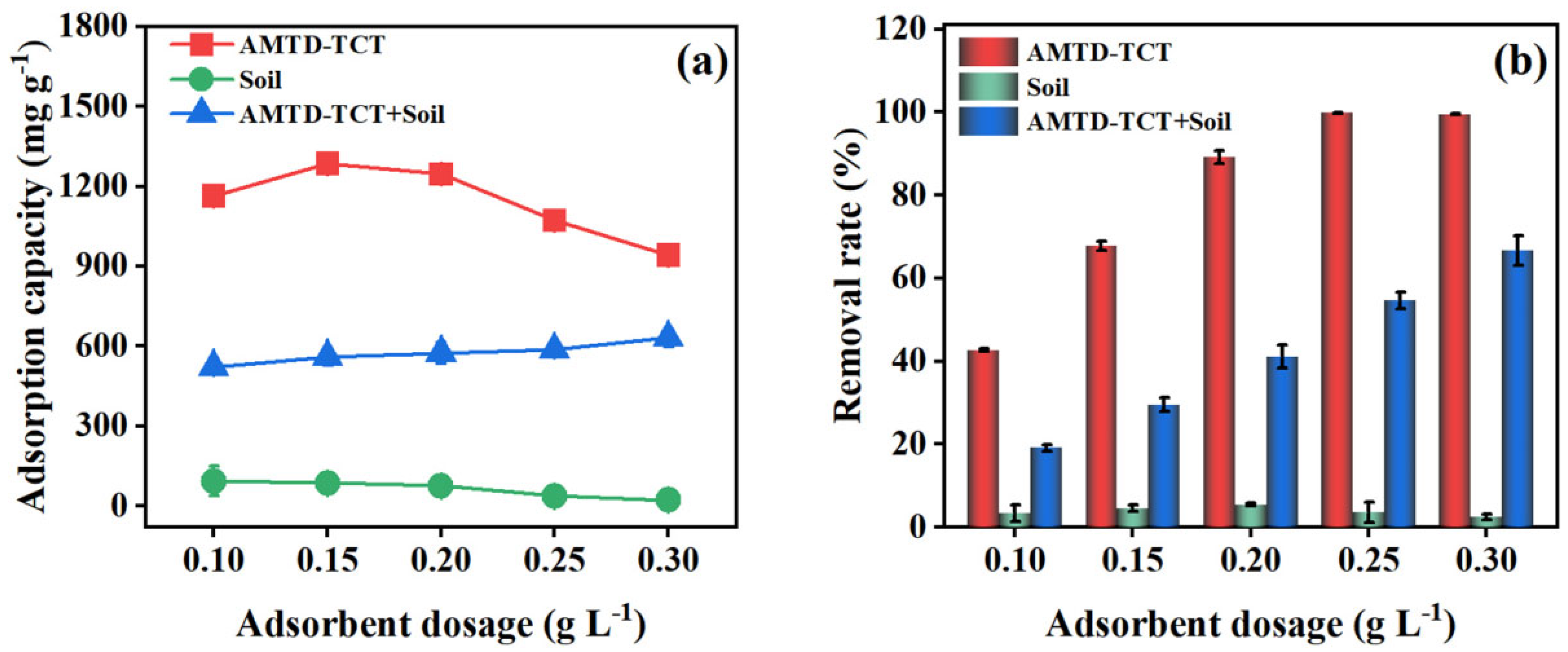
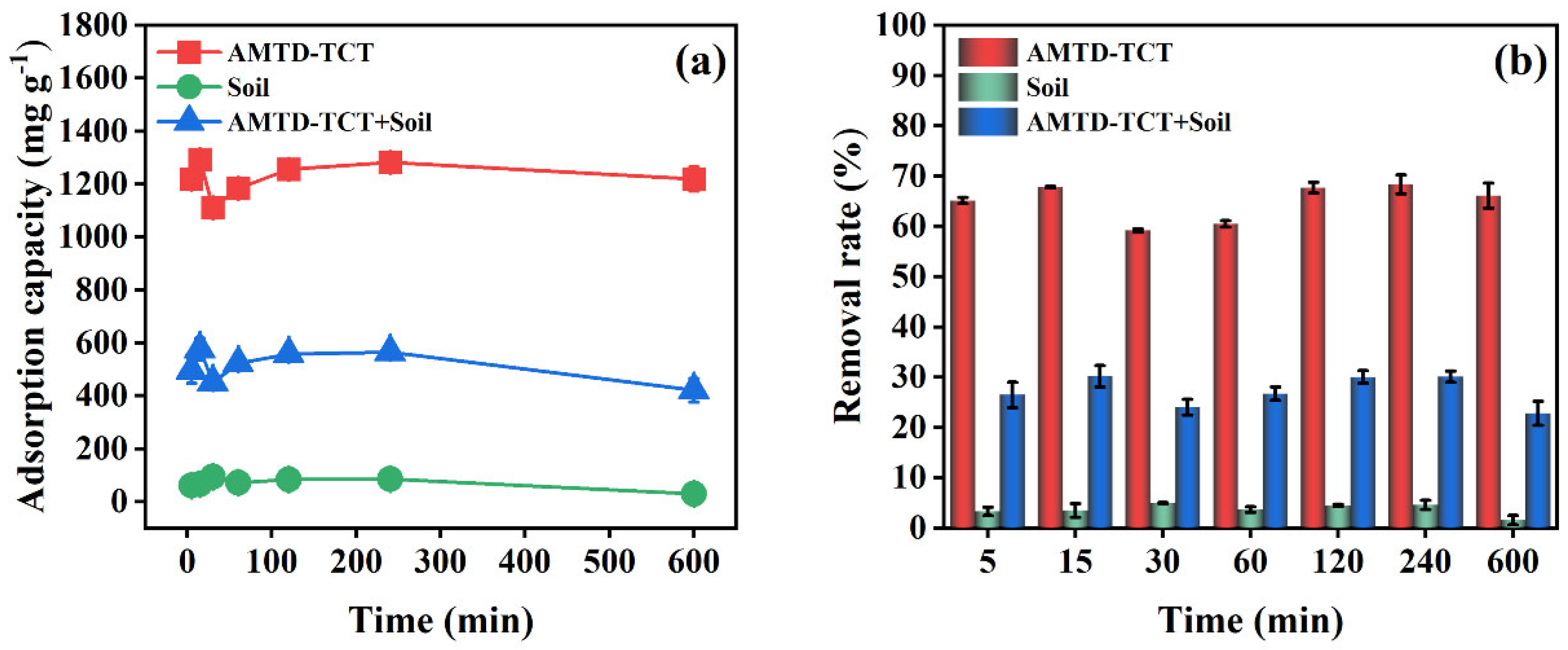
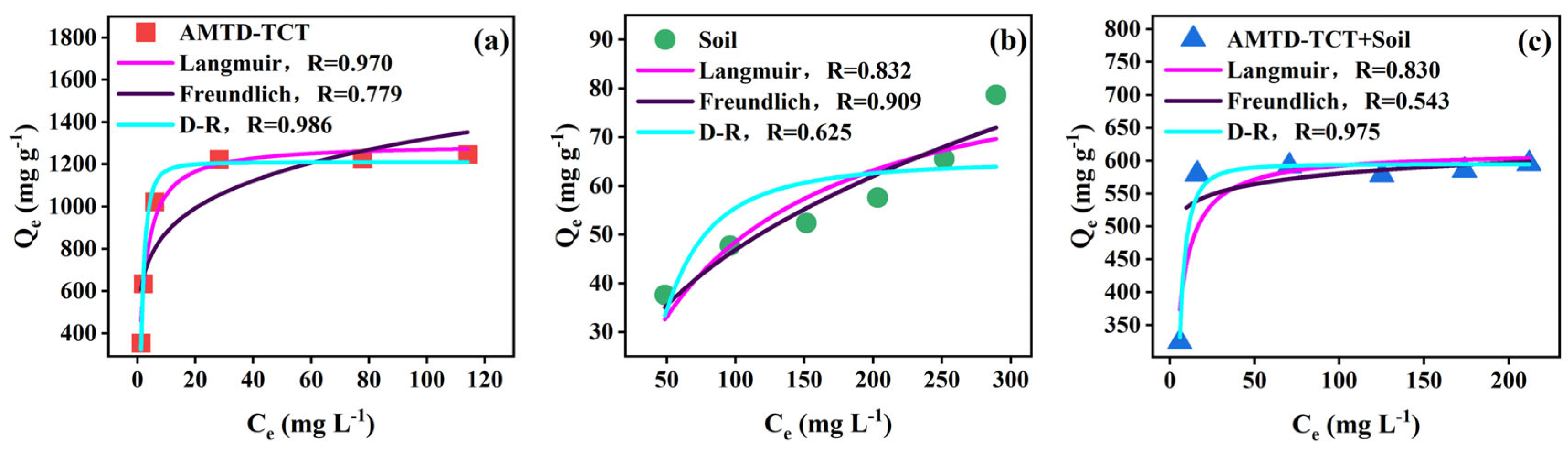
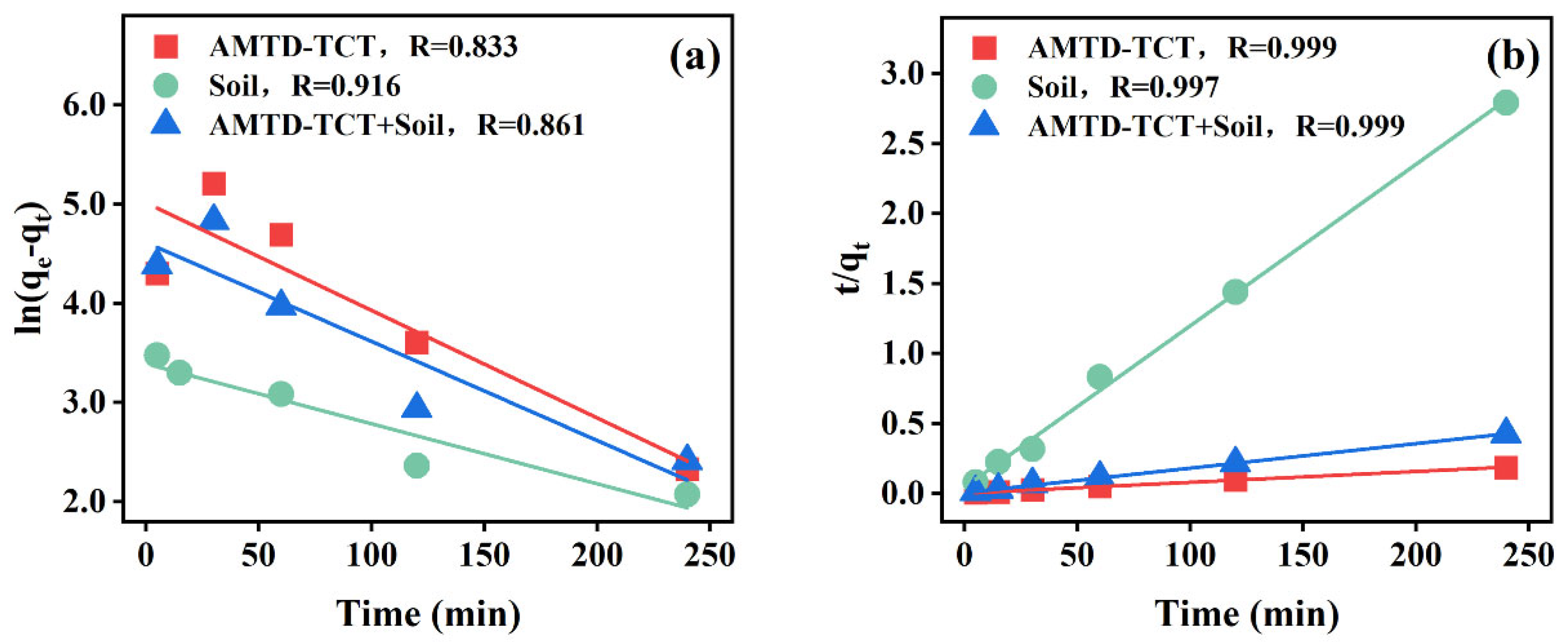
3.2. Influence Factors of Hg(II) on AMTD-TCT in Soil-Water System
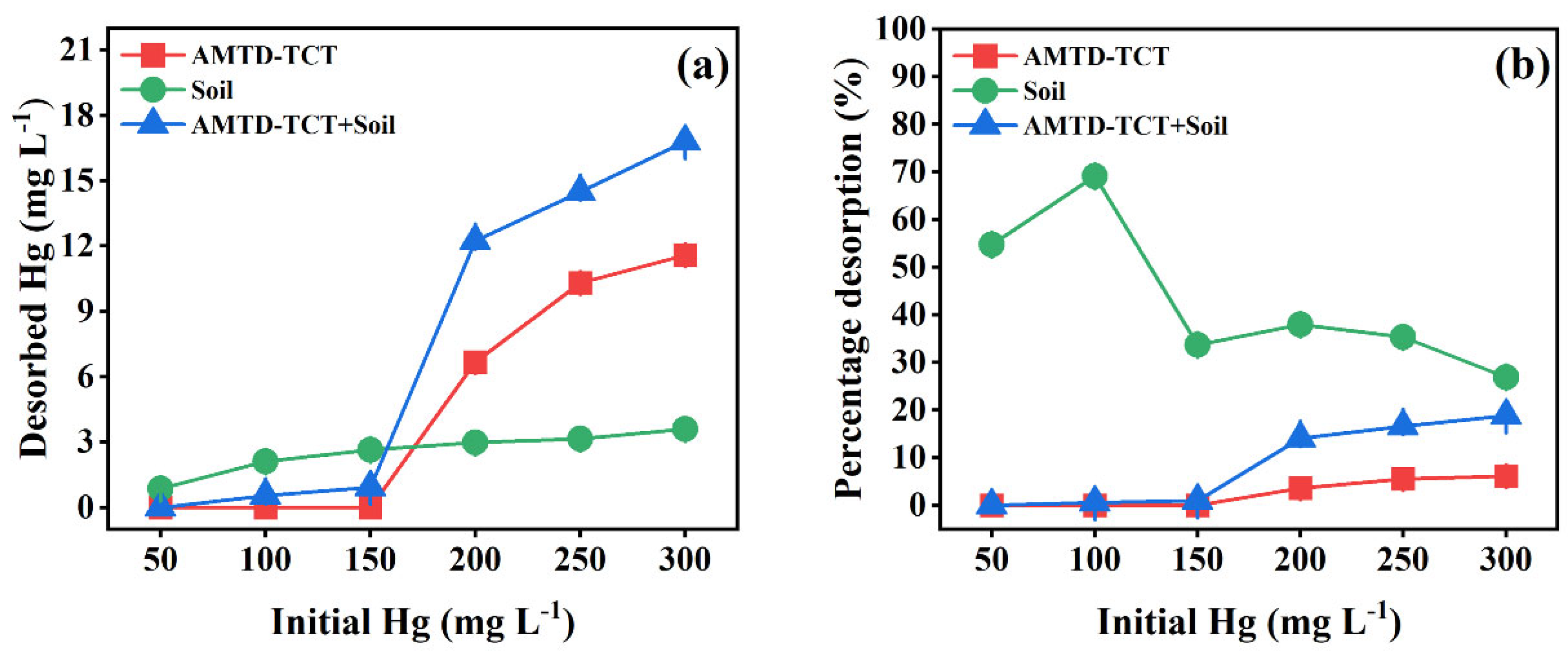
3.3. Desorption Characteristics of Hg(II) from AMTD-TCT
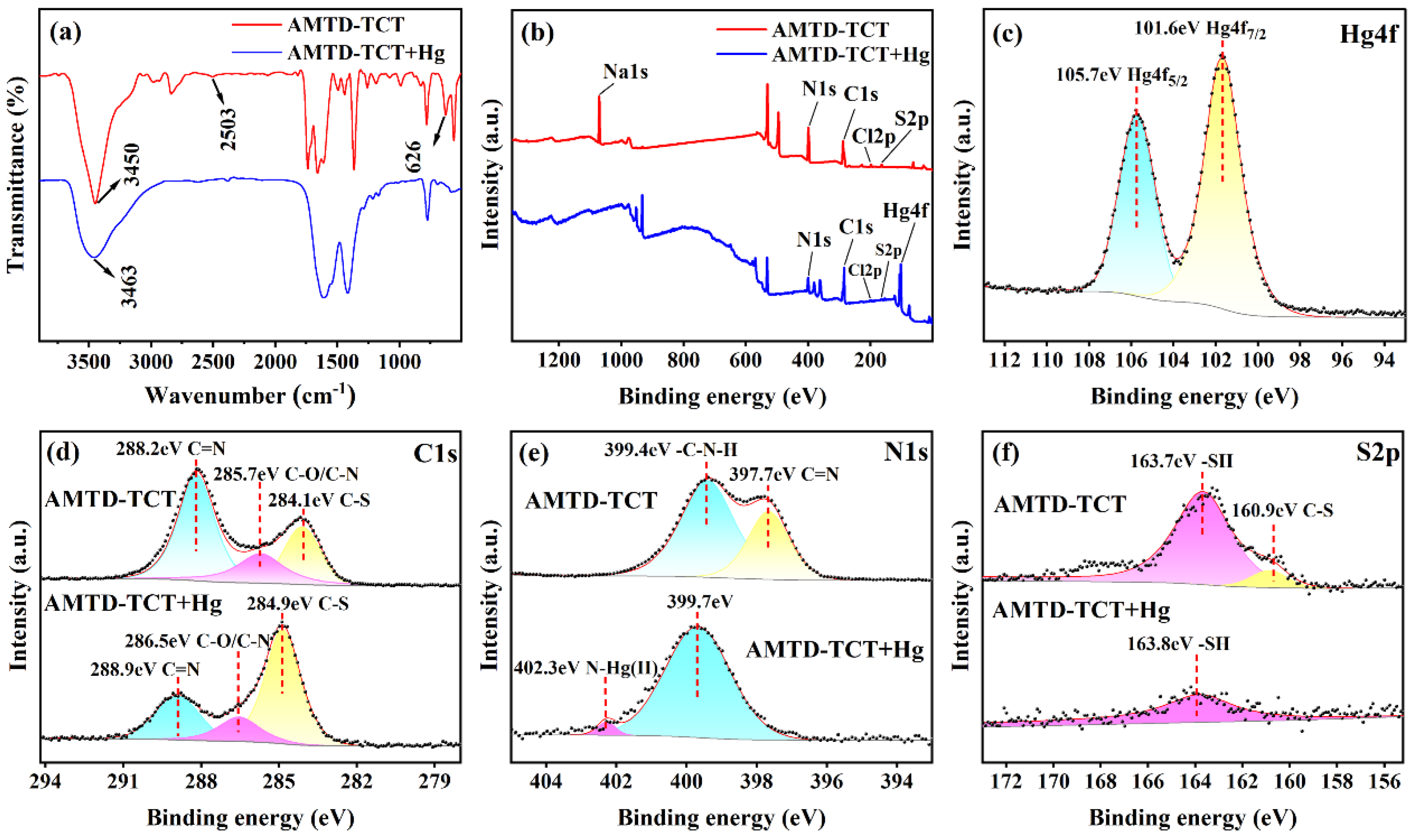
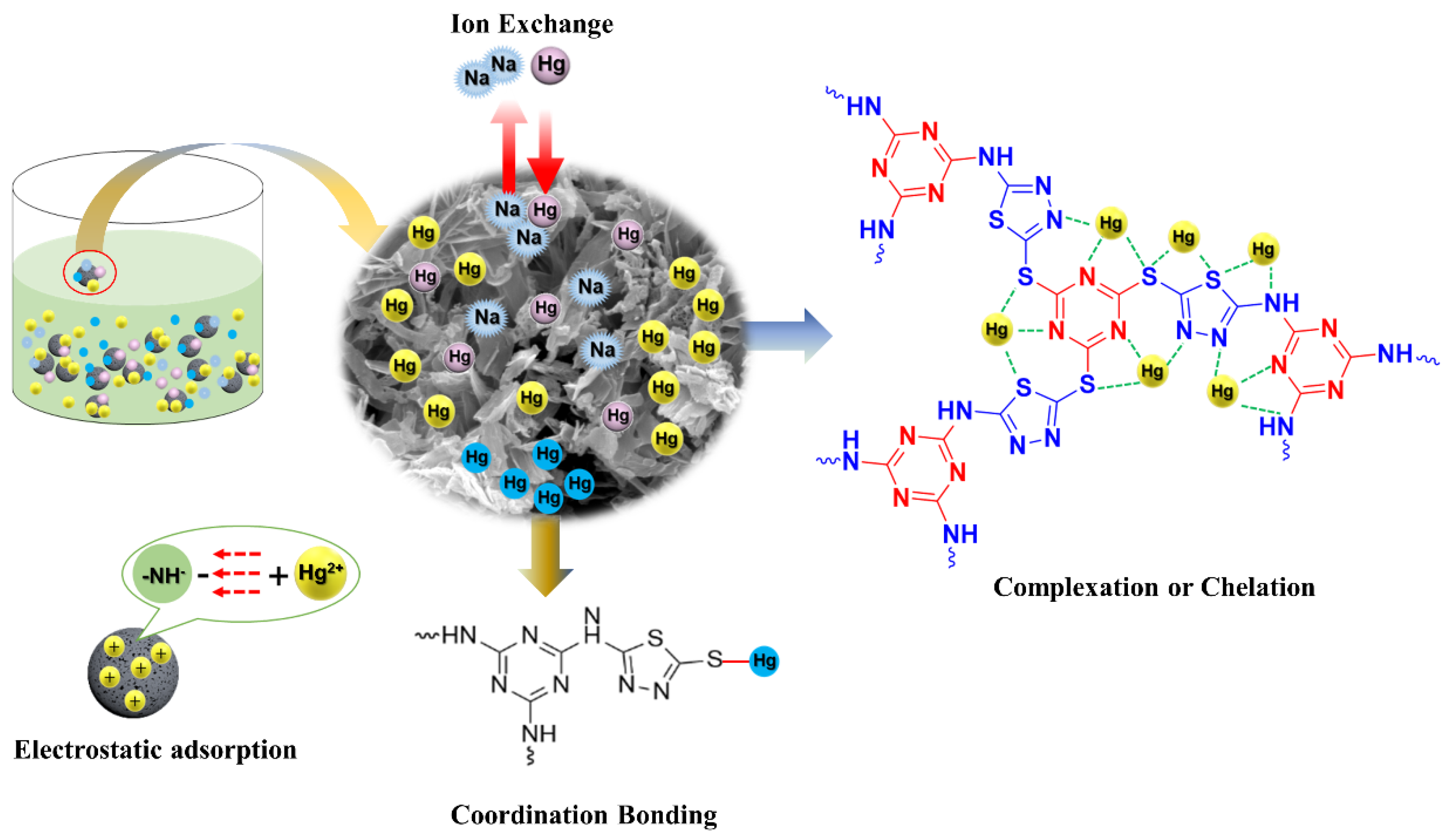
3.4. Adsorption Mechanisms
3.5. Environmental Implications
4. Conclusions
Supplementary Materials
Author Contributions
Funding
Data Availability Statement
Acknowledgments
Conflicts of Interest
References
- Raj, D.; Maiti, S.K. Sources, Toxicity, and Remediation of Mercury: An Essence Review. Environ. Monit. Assess. 2019, 191, 566. [Google Scholar] [CrossRef] [PubMed]
- Wu, Y.-S.; Osman, A.I.; Hosny, M.; Elgarahy, A.M.; Eltaweil, A.S.; Rooney, D.W.; Chen, Z.; Rahim, N.S.; Sekar, M.; Gopinath, S.C.B.; et al. The Toxicity of Mercury and Its Chemical Compounds: Molecular Mechanisms and Environmental and Human Health Implications: A Comprehensive Review. ACS Omega 2024, 9, 5100–5126. [Google Scholar] [CrossRef] [PubMed]
- Liu, Y.-R.; Johs, A.; Bi, L.; Lu, X.; Hu, H.-W.; Sun, D.; He, J.-Z.; Gu, B. Unraveling Microbial Communities Associated with Methylmercury Production in Paddy Soils. Environ. Sci. Technol. 2018, 52, 13110–13118. [Google Scholar] [CrossRef] [PubMed]
- Torrey, E.F.; Simmons, W. Mercury and Parkinson’s Disease: Promising Leads, but Research Is Needed. Park. Dis. 2023, 2023, 4709322. [Google Scholar] [CrossRef]
- Choi, J.; Bae, S.; Lim, H.; Lim, J.-A.; Lee, Y.-H.; Ha, M.; Kwon, H.-J. Mercury Exposure in Association with Decrease of Liver Function in Adults: A Longitudinal Study. J. Prev. Med. Public Health 2017, 50, 377–385. [Google Scholar] [CrossRef]
- Castriotta, L.; Rosolen, V.; Biggeri, A.; Ronfani, L.; Catelan, D.; Mariuz, M.; Bin, M.; Brumatti, L.V.; Horvat, M.; Barbone, F. The Role of Mercury, Selenium and the Se-Hg Antagonism on Cognitive Neurodevelopment: A 40-Month Follow-Up of the Italian Mother-Child PHIME Cohort. Int. J. Hyg. Environ. Health 2020, 230, 113604. [Google Scholar] [CrossRef]
- Grandjean, P.; Herz, K.T. Brain Development and Methylmercury: Underestimation of Neurotoxicity. Mt. Sinai J. Med. 2011, 78, 107–118. [Google Scholar] [CrossRef]
- Sweet, L.I.; Zelikoff, J.T. Toxicology and Immunotoxicology of Mercury: A Comparative Review in Fish and Humans. J. Toxicol. Environ. Health B Crit. Rev. 2001, 4, 161–205. [Google Scholar] [CrossRef]
- Batchelar, K.L.; Kidd, K.A.; Drevnick, P.E.; Munkittrick, K.R.; Burgess, N.M.; Roberts, A.P.; Smith, J.D. Evidence of Impaired Health in Yellow Perch (Perca flavescens) from a Biological Mercury Hotspot in Northeastern North America, Environ. Toxicol. Chem. 2013, 32, 627–637. [Google Scholar] [CrossRef]
- Crump, K.L.; Trudeau, V.L. Mercury-Induced Reproductive Impairment in Fish, Environ. Toxicol. Chem. 2009, 28, 895–907. [Google Scholar] [CrossRef]
- Wang, L.; Hou, D.; Cao, Y.; Ok, Y.S.; Tack, F.M.; Rinklebe, J.; O’Connor, D. Remediation of Mercury Contaminated Soil, Water, and Air: A Review of Emerging Materials and Innovative Technologies. Environ. Int. 2020, 134, 105281. [Google Scholar] [CrossRef] [PubMed]
- Al-Ghouti, M.A.; Da’aNa, D.; Abu-Dieyeh, M.; Khraisheh, M. Adsorptive Removal of Mercury from Water by Adsorbents Derived from Date Pits. Sci. Rep. 2019, 9, 15327. [Google Scholar] [CrossRef]
- He, F.; Gao, J.; Pierce, E.; Strong, P.J.; Wang, H.; Liang, L. In Situ Remediation Technologies for Mercury-Contaminated Soil. Environ. Sci. Pollut. Res. 2015, 22, 8124–8147. [Google Scholar] [CrossRef]
- Atia, A.A.; Donia, A.M.; Elwakeel, K.Z. Selective Separation of Mercury (II) Using a Synthetic Resin Containing Amine and Mercaptan as Chelating Groups. React. Funct. Polym. 2005, 65, 267–275. [Google Scholar] [CrossRef]
- Burtch, N.C.; Jasuja, H.; Walton, K.S. Water Stability and Adsorption in Metal–Organic Frameworks. Chem. Rev. 2014, 114, 10575–10612. [Google Scholar] [CrossRef] [PubMed]
- Wang, L.; Li, X.; Yang, B.; Xiao, K.; Duan, H.; Zhao, H. The Chemical Stability of Metal-Organic Frameworks in Water Treatments: Fundamentals, Effect of Water Matrix and Judging Methods. Chem. Eng. J. 2022, 450, 138215. [Google Scholar] [CrossRef]
- Zhang, W.; Chen, L.; Dai, S.; Zhao, C.; Ma, C.; Wei, L.; Zhu, M.; Chong, S.Y.; Yang, H.; Liu, L.; et al. Cooper, Reconstructed Covalent Organic Frameworks. Nature 2022, 604, 72–79. [Google Scholar] [CrossRef]
- Guo, J.; Jiang, D. Covalent Organic Frameworks for Heterogeneous Catalysis: Principle, Current Status, and Challenges. ACS Central Sci. 2020, 6, 869–879. [Google Scholar] [CrossRef] [PubMed]
- Gomez-Suarez, M.; Chen, Y.; Zhang, J. Porous Organic Polymers as a Promising Platform for Efficient Capture of Heavy Metal Pollutants in Wastewater. Polym. Chem. 2023, 14, 4000–4032. [Google Scholar] [CrossRef]
- Fajal, S.; Dutta, S.; Ghosh, S.K. Porous Organic Polymers (POPs) for Environmental Remediation. Mater. Horiz. 2023, 10, 4083–4138. [Google Scholar] [CrossRef]
- Li, Y.; He, Y.; Guo, F.; Zhang, S.; Liu, Y.; Lustig, W.P.; Bi, S.; Williams, L.J.; Hu, J.; Li, J. NanoPOP: Solution-Processable Fluorescent Porous Organic Polymer for Highly Sensitive, Selective, and Fast Naked Eye Detection of Mercury. ACS Appl. Mater. Interfaces 2019, 11, 27394–27401. [Google Scholar] [CrossRef]
- Chen, D.; Liu, C.; Tang, J.; Luo, L.; Yu, G. Fluorescent Porous Organic Polymers. Polym. Chem. 2019, 10, 1168–1181. [Google Scholar] [CrossRef]
- Patra, K.; Pal, H. Recent Advances in Porous Organic Polymers (POPs): The Emerging Sorbent Materials with Promises Towards Toxic and Radionuclides Metal Ions Separations. Mater. Today Sustain. 2024, 27, 100799. [Google Scholar] [CrossRef]
- Velempini, T.; Pillay, K. Sulphur Functionalized Materials for Hg (II) Adsorption: A Review. J. Environ. Chem. Eng. 2019, 7, 103350. [Google Scholar] [CrossRef]
- Wang, L.; Xiao, Q.; Zhang, D.; Kuang, W.; Huang, J.; Liu, Y.-N. Postfunctionalization of Porous Organic Polymers Based on Friedel–Crafts Acylation for CO2 and Hg2+ Capture. ACS Appl. Mater. Interfaces 2020, 12, 36652–36659. [Google Scholar] [CrossRef] [PubMed]
- Cheng, J.; Li, Y.; Li, L.; Lu, P.; Wang, Q.; He, C. Thiol-/Thioether-Functionalized Porous Organic Polymers for Simultaneous Removal of Mercury (II) Ion and Aromatic Pollutants in Water. New J. Chem. 2019, 43, 7683–7693. [Google Scholar] [CrossRef]
- Sang, Y.; Cao, Y.; Wang, L.; Yan, W.; Chen, T.; Huang, J.; Liu, Y.-N. N-Rich Porous Organic Polymers Based on Schiff Base Reaction for CO2 Capture and Mercury (II) Adsorption. J. Colloid Interface Sci. 2021, 587, 121–130. [Google Scholar] [CrossRef]
- Skyllberg, U.; Bloom, P.R.; Qian, J.; Lin, C.-M.; Bleam, W.F. Complexation of mercury (II) in soil organic matter: EXAFS evidence for linear two-coordination with reduced sulfur groups. Environ. Sci. Technol. 2006, 40, 4174–4180. [Google Scholar] [CrossRef]
- Rahaman, S.A.; Roy, B.; Mandal, S.; Bandyopadhyay, S. A Kamikaze Approach for Capturing Hg2+ Ions through the Formation of a One-Dimensional Metal–Organometallic Polymer. Inorg. Chem. 2016, 55, 1069–1075. [Google Scholar] [CrossRef]
- Wagner-Döbler, I.; von Canstein, H.; Li, Y.; Timmis, K.N.; Deckwer, W.-D. Removal of mercury from chemical wastewater by microorganisms in technical scale. Environ. Sci. Technol. 2000, 34, 4628–4634. [Google Scholar] [CrossRef]
- Gray, J.E.; Theodorakos, P.M.; Fey, D.L.; Krabbenhoft, D.P. Mercury concentrations and distribution in soil, water, mine waste leachates, and air in and around mercury mines in the Big Bend region, Texas, USA. Environ. Geochem. Health 2015, 37, 35–48. [Google Scholar] [CrossRef]
- Reash, R.J. Bioavailability of mercury in power plant wastewater and ambient river samples: Evidence that the regulation of total mercury is not appropriate. Integr. Environ. Assess. Manag. 2019, 15, 142–147. [Google Scholar] [CrossRef]
- Xu, H.; Qu, Z.; Huang, W.; Mei, J.; Chen, W.; Zhao, S.; Yan, N. Regenerable Ag/graphene sorbent for elemental mercury capture at ambient temperature. Colloids Surfaces A Physicochem. Eng. Asp. 2015, 476, 83–89. [Google Scholar] [CrossRef]
- Mohan, D.; Pittman, C.U., Jr. Activated carbons and low cost adsorbents for remediation of tri- and hexavalent chromium from water. J. Hazard. Mater. 2006, 137, 762–811. [Google Scholar] [CrossRef]
- Kennedy, A.; Croft, R.; Flint, L.; Arias-Paić, M. Stannous Chloride Reduction–Filtration for Hexavalent and Total Chromium Removal from Groundwater. AWWA Water Sci. 2020, 2, e1174. [Google Scholar] [CrossRef]
- Li, D.; Li, Y.; Wang, X. Study on the Simultaneous Reduction of Methylmercury by SnCl2 when Analyzing Inorganic Hg in Aqueous Samples. J. Environ. Sci. 2018, 68, 177–184. [Google Scholar] [CrossRef] [PubMed]
- Algieri, V.; Tursi, A.; Costanzo, P.; Maiuolo, L.; De Nino, A.; Nucera, A.; Castriota, M.; De Luca, O.; Papagno, M.; Caruso, T.; et al. Thiol-Functionalized Cellulose for Mercury Polluted Water Remediation: Synthesis and Study of the Adsorption Properties. Chemosphere 2024, 355, 141891. [Google Scholar] [CrossRef]
- Langmuir, I. The Adsorption of Gases on Plane Surfaces of Glass, Mica and Platinum. J. Am. Chem. Soc. 1918, 40, 1361–1403. [Google Scholar] [CrossRef]
- Zhu, K.; Gao, Y.; Tan, X.; Chen, C. Polyaniline-Modified Mg/Al Layered Double Hydroxide Composites and Their Application in Efficient Removal of Cr(VI). ACS Sustain. Chem. Eng. 2016, 4, 4361–4369. [Google Scholar] [CrossRef]
- Foo, K.Y.; Hameed, B.H. Insights into the Modeling of Adsorption Isotherm Systems. Chem. Eng. J. 2010, 156, 2–10. [Google Scholar] [CrossRef]
- Zhuang, S.; Chen, R.; Liu, Y.; Wang, J. Magnetic COFs for the Adsorptive Removal of Diclofenac and Sulfamethazine from Aqueous Solution: Adsorption Kinetics, Isotherms Study and DFT Calculation. J. Hazard. Mater. 2020, 385, 121596. [Google Scholar] [CrossRef] [PubMed]
- Chu, K.H.; Hashim, M.A.; Hayder, G.; Bollinger, J.-C. Comparative Evaluation of the Dubinin–Radushkevich Isotherm and Its Variants. Ind. Eng. Chem. Res. 2024, 63, 15002–15011. [Google Scholar] [CrossRef]
- Hutson, N.D.; Yang, R.T. Theoretical Basis for the Dubinin-Radushkevitch (DR) Adsorption Isotherm Equation. Adsorption 1997, 3, 189–195. [Google Scholar] [CrossRef]
- Ho, Y.S.; McKay, G. The Kinetics of Sorption of Basic Dyes from Aqueous Solution by Sphagnum Moss Peat. Can. J. Chem. Eng. 1998, 76, 822–827. [Google Scholar] [CrossRef]
- Sethiya, A.; Jangid, D.K.; Pradhan, J.; Agarwal, S. Role of Cyanuric Chloride in Organic Synthesis: A Concise Overview. J. Heterocycl. Chem. 2023, 60, 1495–1516. [Google Scholar] [CrossRef]
- Kubo, T.; Figg, C.A.; Swartz, J.L.; Brooks, W.L.A.; Sumerlin, B.S. Multifunctional Homopolymers: Postpolymerization Modification via Sequential Nucleophilic Aromatic Substitution. Macromolecules 2016, 49, 2077–2084. [Google Scholar] [CrossRef]
- Sharma, A.; El-Faham, A.; de la Torre, B.G.; Albericio, F. Exploring the Orthogonal Chemoselectivity of 2,4,6-Trichloro-1,3,5-Triazine (TCT) as a Trifunctional Linker with Different Nucleophiles: Rules of the Game. Front. Chem. 2018, 6, 516. [Google Scholar] [CrossRef]
- Vijayan, A.P.; Ramakrishnan, K.; Elambalassery, J.G. Triazine-Adenine Anchored Porous Organic Polymer: An Integrated Approach as a Fluorescent Sensor and Molecular Sieve for Mercury Ions. ACS Appl. Polym. Mater. 2024, 6, 3975–3984. [Google Scholar] [CrossRef]
- Prabhaharan, M.; Prabakaran, A.; Srinivasan, S.; Gunasekaran, S. Density Functional Theory Studies on Molecular Structure, Vibrational Spectra and Electronic Properties of Cyanuric Acid. Spectrochim. Acta Part A Mol. Biomol. Spectrosc. 2015, 138, 711–722. [Google Scholar] [CrossRef] [PubMed]
- Yan, Z.; Xue, W.-L.; Zeng, Z.-X.; Gu, M.-R. Kinetics of Cyanuric Chloride Hydrolysis in Aqueous Solution. Ind. Eng. Chem. Res. 2008, 47, 5318–5322. [Google Scholar] [CrossRef]
- Khezri, S.; Bahram, M.; Samadi, N. Hydrogen Bonding Recognition and Colorimetric Detection of Isoprenaline Using 2-Amino-5-Mercapto-1,3,4-Thiadiazol Functionalized Gold Nanoparticles. Spectrochim. Acta Part A Mol. Biomol. Spectrosc. 2018, 189, 522–527. [Google Scholar] [CrossRef] [PubMed]
- Tavares, D.S.; Lopes, C.B.; Daniel-Da-Silva, A.L.; Duarte, A.C.; Trindade, T.; Pereira, E. The Role of Operational Parameters on the Uptake of Mercury by Dithiocarbamate Functionalized Particles. Chem. Eng. J. 2014, 254, 559–570. [Google Scholar] [CrossRef]
- Andaç, M.; Mirel, S.; Şenel, S.; Say, R.; Ersöz, A.; Denizli, A. Ion-Imprinted Beads for Molecular Recognition Based Mercury Removal from Human Serum. Int. J. Biol. Macromol. 2007, 40, 159–166. [Google Scholar] [CrossRef]
- Ma, M.; Chen, R.; Feng, L. Efficient and Selective Removal of Mercury Ions from Aqueous Solution by 2,5-Dimercaptothiadiazole Covalently Grafted Chitosan Derivative. Int. J. Biol. Macromol. 2023, 251, 126272. [Google Scholar] [CrossRef]
- Feng, L.; Zeng, T.; Hou, H. Post-Functionalized Metal−Organic Framework for Effective and Selective Removal of Hg (II) in Aqueous Media. Microporous Mesoporous Mater. 2021, 328, 111479. [Google Scholar] [CrossRef]
- Chambrion, P.; Suzuki, T.; Zhang, Z.-G.; Kyotani, T.; Tomita, A. XPS of Nitrogen-Containing Functional Groups Formed During the C−NO Reaction. Energy Fuels 1997, 11, 681–685. [Google Scholar] [CrossRef]
- Deng, S.; Wu, S.; Han, X.; Xia, F.; Xu, X.; Zhang, L.; Jiang, Y.; Liu, Y.; Yang, Y. Microwave-Assisted Functionalization of PAN Fiber by 2-Amino-5-Mercapto-1,3,4-Thiadiazol with High Efficacy for Improved and Selective Removal of Hg2+ from Water. Chemosphere 2021, 284, 131308. [Google Scholar] [CrossRef]
- Thommes, M.; Kaneko, K.; Neimark, A.V.; Olivier, J.P.; Rodriguez-Reinoso, F.; Rouquerol, J.; Sing, K.S.W. Physisorption of Gases, with Special Reference to the Evaluation of Surface Area and Pore Size Distribution (IUPAC Technical Report). Pure Appl. Chem. 2015, 87, 1051–1069. [Google Scholar] [CrossRef]
- Zhang, C.; Ni, C.; Liu, Z.; Wu, G.; Qin, Y. Polyethyleneimine (PEI) and Chitosan (CS) Grafted with L-Cysteine Were Used as Effective Materials for Hg (II) Adsorption. Mater. Lett. 2023, 347, 134614. [Google Scholar] [CrossRef]
- Liu, Y.; Li, Q.; Cao, X.; Wang, Y.; Jiang, X.; Li, M.; Hua, M.; Zhang, Z. Removal of Uranium (VI) from Aqueous Solutions by CMK-3 and Its Polymer Composite. Appl. Surf. Sci. 2013, 285, 258–266. [Google Scholar] [CrossRef]
- Li, J.; Li, X.; Alsaedi, A.; Hayat, T.; Chen, C. Synthesis of Highly Porous Inorganic Adsorbents Derived from Metal-Organic Frameworks and Their Application in Efficient Elimination of Mercury (II). J. Colloid Interface Sci. 2018, 517, 61–71. [Google Scholar] [CrossRef]
- Wang, Q.; Zhu, S.; Xi, C.; Jiang, B.; Zhang, F. Adsorption and Removal of Mercury (II) by a Crosslinked Hyperbranched Polymer Modified via Sulfhydryl. ACS Omega 2022, 7, 12231–12241. [Google Scholar] [CrossRef] [PubMed]
- Ateia, M.; Helbling, D.E.; Dichtel, W.R. Best Practices for Evaluating New Materials as Adsorbents for Water Treatment. ACS Mater. Lett. 2020, 2, 1532–1544. [Google Scholar] [CrossRef]
- Majd, M.M.; Kordzadeh-Kermani, V.; Ghalandari, V.; Askari, A.; Sillanpää, M. Adsorption Isotherm Models: A Comprehensive and Systematic Review (2010−2020). Sci. Total Environ. 2022, 812, 151334. [Google Scholar] [CrossRef]
- Revellame, E.D.; Fortela, D.L.; Sharp, W.; Hernandez, R.; Zappi, M.E. Adsorption Kinetic Modeling Using Pseudo-First Order and Pseudo-Second Order Rate Laws: A Review. Clean. Eng. Technol. 2020, 1, 100032. [Google Scholar] [CrossRef]
- Liang, D.; Yu, F.; Xie, Q.; Chen, Q.; Liu, Y.; Zheng, Y.; Zhu, K.; Zhang, Z.; Liu, J.; Zhu, X.; et al. Volatile Organic Compounds Adsorption Capacities of Zeolite/Activated Carbon Composites Formed by Electrostatic Self-Assembly. ACS Appl. Mater. Interfaces 2023, 15, 38781–38794. [Google Scholar] [CrossRef]
- Li, X.; Zhou, H.; Wu, W.; Wei, S.; Xu, Y.; Kuang, Y. Studies of Heavy Metal Ion Adsorption on Chitosan/Sulfydryl-Functionalized Graphene Oxide Composites. J. Colloid Interface Sci. 2015, 448, 389–397. [Google Scholar] [CrossRef]
- Shan, C.; Ma, Z.; Tong, M.; Ni, J. Removal of Hg (II) by Poly (1-Vinylimidazole)-Grafted Fe3O4@SiO2 Magnetic Nanoparticles. Water Res. 2015, 69, 252–260. [Google Scholar] [CrossRef] [PubMed]
- Zhang, S.; Dang, J.; Lin, J.; Liu, M.; Zhang, M.; Chen, S. Selective Enrichment and Separation of Ag (I) from Electronic Waste Leachate by Chemically Modified Persimmon Tannin. J. Environ. Chem. Eng. 2021, 9, 104994. [Google Scholar] [CrossRef]
- Liang, W.; Li, M.; Zhang, Z.; Jiang, Y.; Awasthi, M.K.; Jiang, S.; Li, R. Decontamination of Hg (II) from Aqueous Solution Using Polyamine-Co-Thiourea Inarched Chitosan Gel Derivatives. Int. J. Biol. Macromol. 2018, 113, 106–115. [Google Scholar] [CrossRef]
- Eboigbe, E.O.; Veerasamy, N.; Odukoya, A.M.; Anene, N.C.; Sonke, J.E.; Sagisaka Méndez, S.; McLagan, D.S. Mercury Contamination in Staple Crops Impacted by Artisanal and Small-Scale Gold Mining (ASGM): Stable Hg Isotopes Demonstrate Dominance of Atmospheric Uptake Pathway for Hg in Crops. Biogeosciences 2025, 22, 5591–5605. [Google Scholar] [CrossRef]
- Wang, L.; Guo, J.; Xiang, X.; Sang, Y.; Huang, J. Melamine-Supported Porous Organic Polymers for Efficient CO2 Capture and Hg2+ Removal. Chem. Eng. J. 2020, 387, 124070. [Google Scholar] [CrossRef]
- Wang, Y.; Qu, R.; Mu, Y.; Sun, C.; Ji, C.; Zhang, Y.; An, K.; Jia, X.; Zhang, Y. Amino- and Thiol-Polysilsesquioxane Simultaneously Coating on Poly (p-Phenylenetherephthal Amide) Fibers: Bifunctional Adsorbents for Hg (II). Front. Chem. 2019, 7, 465. [Google Scholar] [CrossRef]
- Arshadi, M. Manganese Chloride Nanoparticles: A Practical Adsorbent for the Sequestration of Hg (II) Ions from Aqueous Solution. Chem. Eng. J. 2015, 259, 170–182. [Google Scholar] [CrossRef]
- Xu, D.; Wu, W.D.; Qi, H.J.; Yang, R.X.; Deng, W.Q. Sulfur Rich Microporous Polymer Enables Rapid and Efficient Removal of Mercury (II) from Water. Chemosphere 2018, 196, 174–181. [Google Scholar] [CrossRef]
- Gilmour, C.C.; Riedel, G.S.; Riedel, G.; Kwon, S.; Landis, R.; Brown, S.S.; Ghosh, U. Activated Carbon Mitigates Mercury and Methylmercury Bioavailability in Contaminated Sediments. Environ. Sci. Technol. 2013, 47, 13001–13010. [Google Scholar] [CrossRef]
- Romal, J.R.A.; DeBraske, E. Recoverable Critical Minerals from an Acid Mine Drainage in Southern Wisconsin: Insights on the Rare Earth Elements Recovery Using Purolite™ C160 Resin. J. Water Process Eng. 2025, 79, 108906. [Google Scholar] [CrossRef]
- Zhang, Y.; Zhang, L.; Liang, X.; Wang, Q.; Yin, X.; Pierce, E.M.; Gu, B. Competitive Exchange between Divalent Metal Ions [Cu (II), Zn (II), Ca (II)] and Hg (II) Bound to Thiols and Natural Organic Matter. J. Hazard. Mater. 2022, 424, 127388. [Google Scholar] [CrossRef] [PubMed]
- Liu, S.; Wang, X.; Guo, G.; Yan, Z. Status and Environmental Management of Soil Mercury Pollution in China: A Review. J. Environ. Manag. 2021, 277, 111442. [Google Scholar] [CrossRef] [PubMed]
- Fu, K.; Sun, J.; Lv, C.; Yu, D.; Luo, J. Macro-structuring Uniform Metal–Organic Framework-Based Beads for Superselective Removal of Hg(II) from Water: Performance and Modeling. ACS ES&T Eng. 2022, 2, 1544–1555. [Google Scholar] [CrossRef]
- Chen, Y.; Xiang, C.; Zhang, G.; Liu, H. Flow-Driven Deformable Filter Enables Ultimate As(III) Control by Enhancing the Mass Transport of the Adsorbate to Highly Dispersed Active Sites. ACS ES&T Water 2022, 3, 86–95. [Google Scholar] [CrossRef]
- Zhang, D.; Lee, D.-J.; Pan, X. Desorption of Hg (II) and Sb (V) on Extracellular Polymeric Substances: Effects of pH, EDTA, Ca (II) and Temperature Shocks. Bioresour. Technol. 2013, 128, 711–715. [Google Scholar] [CrossRef] [PubMed]
- Randall, P.; Chattopadhyay, S. Advances in Encapsulation Technologies for the Management of Mercury-Contaminated Hazardous Wastes. J. Hazard. Mater. 2004, 114, 211–223. [Google Scholar] [CrossRef] [PubMed]



| Material | T/(K) | pH | Polymer Dosage (g L−1) | SBET (m2 g−1) | qmax (mg g−1) | Ref. |
|---|---|---|---|---|---|---|
| PHTCZ-1-MA | 298 | - | 0.40 | 613 | 335 | [27] |
| TPE-TMC-2MA | 298 | - | 0.40 | 645 | 392 | [72] |
| PPTA-AM-70 | 298 | 5 | 0.40 | 6.57 | 273 | [73] |
| SA@MnNP | 298 | 6 | 16.67 | 79 | 299 | [74] |
| SMP | 298 | 1 | 0.33 | 517 | 595 | [75] |
| AMTD-TCT | 298 | 6 | 0.15 | 27.3 | 1258 | This work |
Disclaimer/Publisher’s Note: The statements, opinions and data contained in all publications are solely those of the individual author(s) and contributor(s) and not of MDPI and/or the editor(s). MDPI and/or the editor(s) disclaim responsibility for any injury to people or property resulting from any ideas, methods, instructions or products referred to in the content. |
© 2025 by the authors. Licensee MDPI, Basel, Switzerland. This article is an open access article distributed under the terms and conditions of the Creative Commons Attribution (CC BY) license (https://creativecommons.org/licenses/by/4.0/).
Share and Cite
Li, K.; Sun, R. Bifunctional N/S-Coordinated Thiadiazole–Triazine Porous Organic Polymer for Efficient Hg(II) Immobilization in Aqueous–Soil Systems. Processes 2025, 13, 3652. https://doi.org/10.3390/pr13113652
Li K, Sun R. Bifunctional N/S-Coordinated Thiadiazole–Triazine Porous Organic Polymer for Efficient Hg(II) Immobilization in Aqueous–Soil Systems. Processes. 2025; 13(11):3652. https://doi.org/10.3390/pr13113652
Chicago/Turabian StyleLi, Kai, and Rongguo Sun. 2025. "Bifunctional N/S-Coordinated Thiadiazole–Triazine Porous Organic Polymer for Efficient Hg(II) Immobilization in Aqueous–Soil Systems" Processes 13, no. 11: 3652. https://doi.org/10.3390/pr13113652
APA StyleLi, K., & Sun, R. (2025). Bifunctional N/S-Coordinated Thiadiazole–Triazine Porous Organic Polymer for Efficient Hg(II) Immobilization in Aqueous–Soil Systems. Processes, 13(11), 3652. https://doi.org/10.3390/pr13113652