Article

Process Design and Simulation of Biodimethyl Ether (Bio-DME) Production from Biomethane Derived from Agave sisalana Residues


by
Rozenilton de J. Rodrigues
1,
Carine T. Alves
1,2,3,
Alison B. Vitor
2,
Ednildo Andrade Torres
1,3 and
Felipe A. Torres
1,3,4,*
1
Industrial Engineering Postgraduation Program, Polytechnic School, Federal University of Bahia, Salvador 40210-630, Brazil
2
Energy Engineering Department, Center of Science and Technology in Energy and Sustainability, Federal University of Recôncavo of Bahia, Feira de Santana 44042-280, Brazil
3
Interdisciplinary Center in Energy and Environment, Federal University of Bahia, Salvador 40210-630, Brazil
4
Mechanical Systems Department, Center of Exact and Technological Sciences, Federal University of Recôncavo of Bahia, Cruz das Almas 44380-000, Brazil
*
Author to whom correspondence should be addressed.
Processes 2025, 13(11), 3451; https://doi.org/10.3390/pr13113451
Submission received: 19 September 2025 / Revised: 14 October 2025 / Accepted: 20 October 2025 / Published: 27 October 2025
(This article belongs to the Special Issue Biomass Pretreatment for Thermochemical Conversion)

Abstract

This study presents the design and simulation of an integrated pathway to produce Biodimethyl ether (Bio-DME) from biomethane derived from Agave sisalana residues, focusing on the downstream sections such as: (i) steam reforming of biogas and water-gas shift to generate syngas and (ii) indirect methanol synthesis followed by methanol dehydration to Bio-DME, including separation and recycle steps. The modeled scope excludes the anaerobic digestion stage. Benchmarking against the literature was used to validate model fidelity. The simulation delivered a single-pass methanol conversion of 81.8%, a Bio-DME reactor conversion of 44.6 mol%, and a Bio-DME yield/selectivity of ≈99 mol%; product purities reached ≈99.99 mol% Bio-DME at the first distillation column and ≈99.9 mol% MeOH in the recycle, indicating efficient separation. Compared to the literature, Bio-DME conversion in this study is slightly below the reported values (0.446 vs. 0.499, Δ = 0.053), while yield is very close to literature (0.99 vs. 0.9979, Δ = 0.0079). Incomplete methanol conversion emerges as the primary optimization lever, pointing to adjustments in operating conditions (T, p), recycle/purge strategy, and H2/CO control. Overall, the results confirm the technical feasibility of the simulated sections and support the development of a sisal-based, low-carbon Bio-DME route relevant to Northeast Brazil.

1. Introduction

The global energy scenario faces significant challenges due to the continuous growth in energy demand and the urgent need to reduce greenhouse gas emissions. Current estimates predict that fossil fuel reserves, such as oil, natural gas, and coal, will be depleted in approximately 40, 65, and 155 years, respectively [1,2]. In this context, Bio-DME (bio-based dimethyl ether) is a synthetic fuel produced from the anaerobic digestion or gasification of residual biomass [3,4].
Bio-DME and biomethane, as synthetic fuels, represent promising alternatives to support the energy transition through the utilization of high value-added residual biomass [1,5,6,7]. Agave sisalana is particularly well-suited to semi-arid regions, including the Brazilian Northeast, due to its low water requirements and adaptability to marginal soils. Moreover, sisal processing generates substantial fibrous residues that remain largely underutilized. Previous studies have quantified the biogas and biomethane potential of these residues [8], positioning local feedstock for decentralized Bio-DME production and for fostering a regional circular bioeconomy. The relevance of Agave sisalana lies not only in its resilience in semi-arid environments but also in its significant energy potential, as demonstrated by Soares and De Paula [8,9]. This work introduces a novel process for Bio-DME production and contributes to the literature by presenting an integrated simulation chain based on biomethane derived from Agave sisalana waste. Unlike previous studies that focused on the direct synthesis of DME from gasification or generic feedstocks, our approach evaluates a route based on the Agave sisalana chain, directly contributing to the valorization of regional biomass and reinforcing Northeast Brazil’s role in the energy transition. Furthermore, the process performance is compared with recent technical-economic and simulation studies [5,6,7].
Agricultural, forestry, agro-industrial, and urban waste can be converted into valuable energy resources, thereby reducing environmental impact and enhancing the value of discarded materials [6,7,10,11]. The production of Bio-DME from waste, through the gasification of digestate resulting from the anaerobic digestion of municipal solid waste, as presented by Giuliano [12], can be associated, for analysis purposes, with the study by Abdulrahman [13], who used natural gas with a high CO2 content as raw material, taking advantage of this contaminant for the synthesis of methanol (through methane reforming and the use of CO2 obtained by cryogenic separation). Both processes address the concept of transforming various wastes and other undesirable products into Bio-DME, demonstrating that it is possible to integrate different sources of raw materials into technical routes with potential technical viability.
The utilization of this waste, such as residual biomass from Agave sisalana, for biomethane production and subsequently for DME (dimethyl ether), is an innovative and sustainable strategy that does not compete with food production [1,7]. Furthermore, this approach contributes to the recovery of waste generated during the defibrillation of Agave sisalana in the sisal processing industry. It is possible to recover up to 1.034 MJ of energy per ton of this residual biomass in the form of biogas, which can reach up to 1.951 MJ/t when integrated into modern biorefineries [7].
The energy use of Agave sisalana biomass waste, combined with its physical and chemical characteristics (rich in sugars for biomethane production), makes Bio-DME a suitable gas to replace diesel in adapted compression ignition engines [12,13]. Its high cetane number (55–60) ensures good ignition quality, while its oxygen content (approximately 35% by mass) promotes more complete and cleaner combustion, significantly reducing particulate emissions [5,7,14]. These advantages are reinforced by the significant reductions in CO2 emissions and carbon footprint obtained in the study involving the production of Bio-DME from digestate, compared to fossil diesel, conducted by Styring [15]. The benefits of using Bio-DME contribute to the achievement of climate policy objectives, with a reduction potential of more than 60% if renewable energy is used throughout the process [15].
Given the need to harness the energy potential of Agave sisalana biomass waste for DME production, the use of simulation tools has become a widely adopted approach for investigating biomass conversion pathways and evaluating various process configurations. Previous studies, such as Parvez [16], have explored CO2 gasification routes and assessed their system-level impacts, while Phan [17] utilized Aspen Plus® to optimize hydrogen production from biogas streams. Building upon these methodological foundations, the present study implements an integrated process chain—comprising reforming → water-gas shift (WGS) → indirect methanol synthesis (using LPMEOH/Luyben [18] parameters) → specifically parameterized dehydration—was applied to biomethane derived from Agave sisalana. This approach enables direct comparison with recent techno-economic analyses and simulations [6,19] and identifies the subsystems most sensitive to the process optimization of the adopted methodological framework.
Recent advances in Bio-DME synthesis emphasize direct and indirect conversion routes. Direct synthesis, as discussed by Giuliano [7] and Fedeli [6], integrates methanol production and dehydration in a single reactor, which can reduce equipment costs and improve energy efficiency compared to the conventional indirect route, which uses consecutive reactors for methanol synthesis and dehydration [18]. Direct synthesis of DME from synthesis gas is a viable alternative to conventional methanol dehydration, facilitated by bifunctional catalysts that enhance efficiency and lower energy consumption [6,7]. However, indirect methods remain competitive due to their robustness and scalability. Steam reforming and water-gas shift processes for synthesis gas production are in line with conventional DME production methodologies, as demonstrated in studies by Giuliano [12] and Abdulrahman [13]. Ongoing research focuses on catalyst regeneration and deactivation strategies to enhance long-term viability [11].
The main objective of this study is to examine and evaluate the results obtained by computer simulation for the production of Bio-DME from Agave sisalana residual biomass in the following blocks: (i) steam reforming of biogas and water-gas shift for synthesis gas formation and (ii) indirect synthesis of methanol followed by methanol dehydration, including separation and recycling for the production of Bio-DME [5,6,7,19,20].
In summary, this study evaluates the technical feasibility of producing Bio-DME from biomethane derived from Agave sisalana. A commercial simulation tool was used to simulate an integrated process involving steam reforming, synthesis gas production, indirect methanol synthesis, methanol dehydration, and Bio-DME production. This allowed for the evaluation of conversion parameters, yield, and other optimization conditions. The simulated process is detailed in the following sections, emphasizing the innovation of local biomass integration and advanced process modeling. Section 2, Materials and Methods, describes the simulated process; Section 3, “Results and Discussion,” presents and analyzes the outcomes obtained using the Aspen Plus® version 14.0 tool; and Section 4 provides the conclusions and prospects for further studies on the topic.

2. Materials and Methods

The integrated process simulation for Bio-DME production conducted in this study was performed using Aspen Plus® version 14.0 [21]. This software was selected due to its robust capabilities in modeling complex chemical reactions and separation processes with high accuracy. The use of this simulator in this work reinforces the premise that simulation studies are crucial for assessing technical feasibility and identifying ideal conditions prior to the construction of pilot plants. Giuliano [12] used ChemCAD® software to simulate DME synthesis, focusing on the processes of water displacement and CO2 absorption in the synthesis gas composition and DME production. Abdulrahman [13] also used the open-source COCO® simulator to model natural gas purification, hydrogen production, methanol synthesis, and methanol conversion to DME.
The simulation parameters and equipment configurations were based on the validated methodologies reported by Phan and Luyben [17,18]. The model assumes steady-state operation and incorporates both stoichiometric and kinetic equations derived from peer-reviewed sources to accurately represent the physicochemical behavior of Agave sisalana-derived biomethane and associated syngas production.
In this simulation, it is assumed that Agave sisalana residues undergo mechanical size reduction and washing as a basic pretreatment, as well as liquid extraction through mechanical grinding, without chemical preconditioning, during the initial phase of biomethane production [22]. The reactor kinetics for steam reforming and methanol synthesis are based on data from the literature and were modeled based on pseudo-equilibrium conditions and assuming steady-state operation, according to Luyben and Phan [17,18]. Catalyst deactivation phenomena were not included in the model and are discussed as a limitation (see Section 4), considering that all catalytic beds operated at nominal activity during the simulation. This approach, common in process design simulations, does not reflect the effects of catalyst aging, which are relevant for industrial applications.
This process can occur in two main ways: the thermochemical process, via gasification, or the biochemical process, represented by anaerobic digestion from residual biomass [6,7], such as that of Agave sisalana, in this study. The main equipment and operating parameters for stages (i) and (ii) are presented in the Appendix A section (Appendix A.1. and Appendix A.2.) of this article.
The process comprises a sequence of interconnected stages, beginning with the production of biomethane through anaerobic digestion [6,7], which is then subjected to two linked stages:
(i)
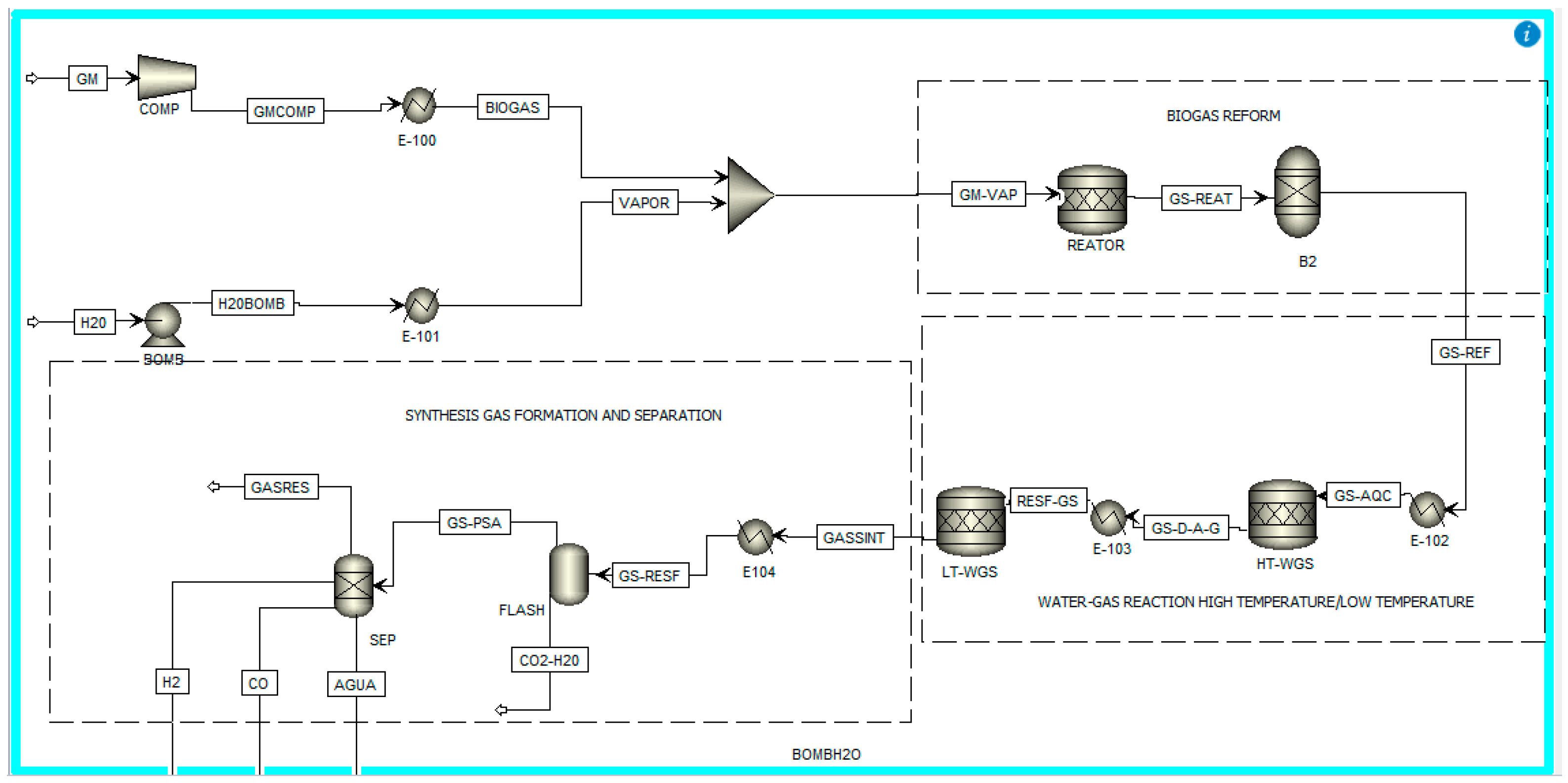
Steam reforming of biogas and water-gas shift to form a gaseous mixture (synthesis gas) [1,5,6], composed mainly of hydrogen (H2), carbon monoxide (CO), carbon dioxide (CO2), methane (CH4), and nitrogen (N2) in proportions that vary depending on the operating conditions and the type of biomass used [7,22]. The input data were carefully selected to reflect the actual operating conditions and characteristics of Agave sisalana biomass. The composition of the biogas, which serves as raw material for steam reforming, was obtained from studies of anaerobic digestion of Agave sisalana, with a gross biomethane yield of 54 NmL/L·d, as presented by Soares [8]. Figure 1 below shows the initial steps of the simulation.
Step (i) adopted parameters based on the literature, using data related to studies involving the use of liquid extracted from pressing Agave sisalana leaves (juice) to obtain biomethane, taking into account the study by Soares [8]. The adapted simulation model was based on the simulation of hydrogen production from biogas through the steam reforming stage of biomethane, limited to the synthesis gas production phase, using parameters and equations from the study by Phan [17].
The equations used for stoichiometry in the simulation in the step (i) are described below [7,17,23]:
Main Reaction (Steam Reforming): CH4 + H2O → CO + 3H2 ΔH > 0 (Endothermic)
Water-Gas Displacement Reaction: CO + H2O → CO2 + H2 ΔH < 0 (Exothermic)
(ii)
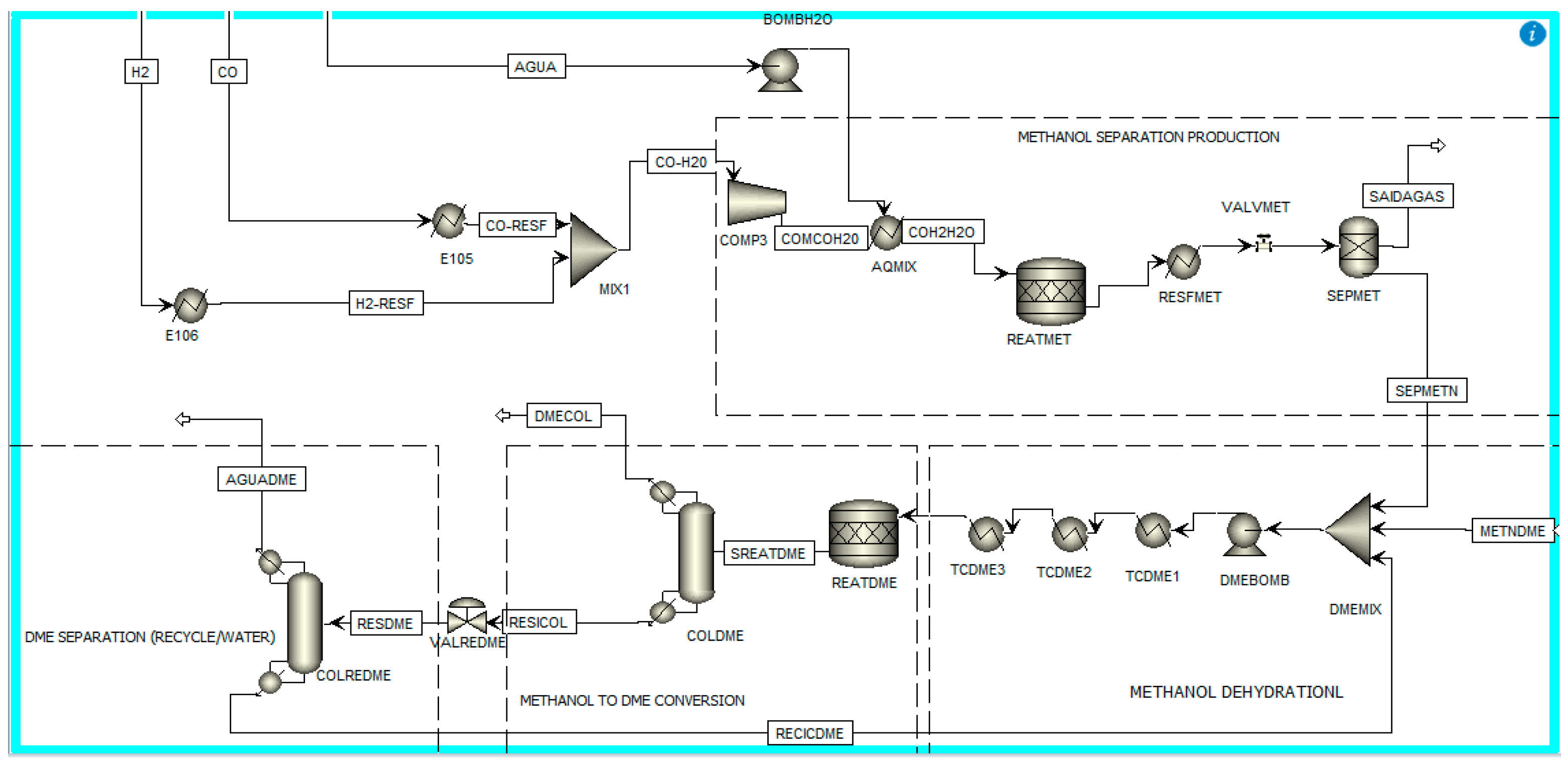
Indirect methanol synthesis followed by methanol dehydration, including separation and recycling for Bio-DME production. In this stage, Bio-DME production initially involves obtaining synthesis gas derived from anaerobic digestion [7]. This gas undergoes cleaning and conditioning processes, followed by methanol synthesis and, finally, methanol dehydration to form Bio-DME [6,7,20]. The LPMEOHTM (Liquid Phase Methanol) process is a promising technology for the sintering of methanol from synthesis gas, presenting better results [1,5,20]. Figure 2 below shows the simulation of the stage (ii):
The model used in step (ii) for the indirect synthesis of methanol and dehydration for Bio-DME [7,20] was based on the study by Luyben [18]. According to this study, Bio-DME production uses reforming synthesis gas, which is converted into methanol and subjected to a dehydration process [5,6], culminating in conversion to dimethyl ether [7,20]. The simulation used, in an adapted form, the parameters and statistics associated with the equations listed in Luyben’s work [15]. These parameters and statistics were used in this step to ensure the stoichiometry of the simulation, as described below [18]:
Main reaction (methanol formation): CO + 2H2 → CH3OH ΔH < 0 (Exothermic)
Main Reaction (Methanol Dehydration): 2CH3OH → CH3OCH3 + H2O ΔH < 0 (Exothermic)
Overall Simulation Reaction: 3CO + 3H2→CH3OCH3 + CO2 ΔH < 0 (Exothermic)
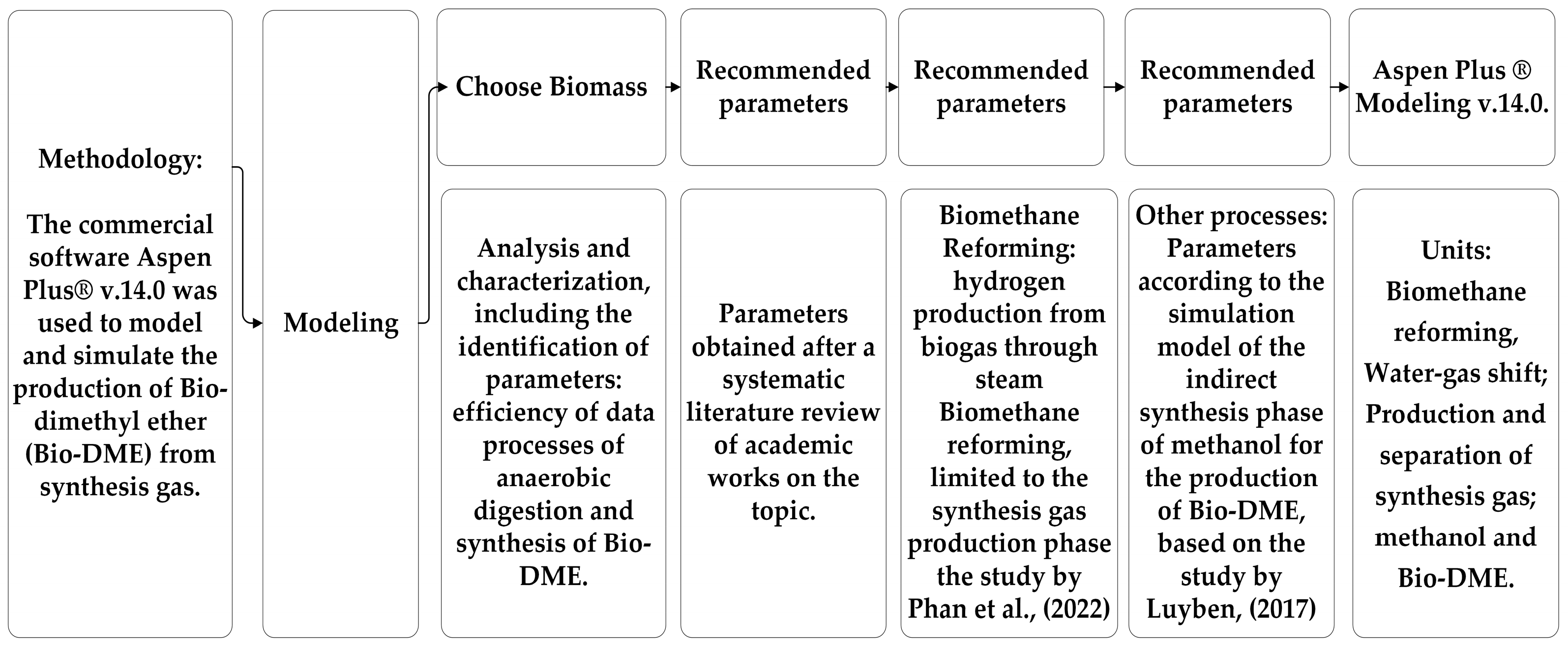
As shown in Figure 3, the modeling and construction of the process units were carried out with a commercial process simulation platform, used here to reproduce the production pathway of biomethane and Bio-DME from Agave sisalana residues. The workflow included the following steps: selection of biomass for analysis and characterization through a systematic review of the literature; simulation of the biomethane reforming stage, adapted from the model proposed by Phan [17] and, in subsequent stages, application of Bio-DME production parameters according to the study by Luyben [18].
The limitations inherent to the model will be addressed in the Section 3, Section 4 and Section 5. These include the high energy requirements associated with the steam reforming and non-optimized step, suboptimal methanol conversion efficiency, and the simplified reactor modelling, which does not fully capture catalyst deactivation dynamics or the formation of secondary byproducts. The identification of these limitations can be considered a lever for optimization, as presented in the literature. The adjustments identified in operating conditions, recycling strategies, and reagent proportion control reflect optimization approaches established in Bio DME synthesis processes [12,13].
Ensuring the reliability of data analysis is essential for the robustness and scientific validity of any study. However, in the present work, which is based on a unitary process simulation using Aspen Plus® version 14.0, replication was not performed through multiple simulations with varied input parameters. The scope of the analysis was limited to the study by Soares [8], which focused on methane production for the initial reforming stage.

3. Results

The initial simulation results focus on key discussions that initially involve the presentation of critical operating parameters that govern system performance and critically affect the significant influence on the efficiency and selectivity of Bio-DME synthesis. Evaluating these parameters enables the identification of bottlenecks, and their evaluation allows bottlenecks to be identified and the process bottlenecks and supports optimization efforts [17,18]. Table 1 presents the principal operating conditions, including temperature and pressure, which serve as the foundation for analyzing the core stages of the process: reforming, Bio-DME synthesis, and separation.
Although the simulation pathway (comprising reforming → water-gas shift (WGS) → methanol synthesis → methanol dehydration → DME production) has been previously explored in the context of other biomass sources, its application to Agave sisalana residues represents a novel contribution. This study distinguishes itself by integrating the specific physicochemical properties of biomethane derived from Agave sisalana waste into a comprehensive Aspen Plus® version 14.0 simulation. The results demonstrate that this underutilized feedstock, abundant in semi-arid regions, can achieve competitive conversion yields and process efficiencies when benchmarked against existing literature [11,19].

3.1. Simulation Results of Step (i) Steam Reforming of Biogas and Water-Gas Shift for Synthesis Gas Formation

3.1.1. Analysis of Conditions Step (i) Methane Reform

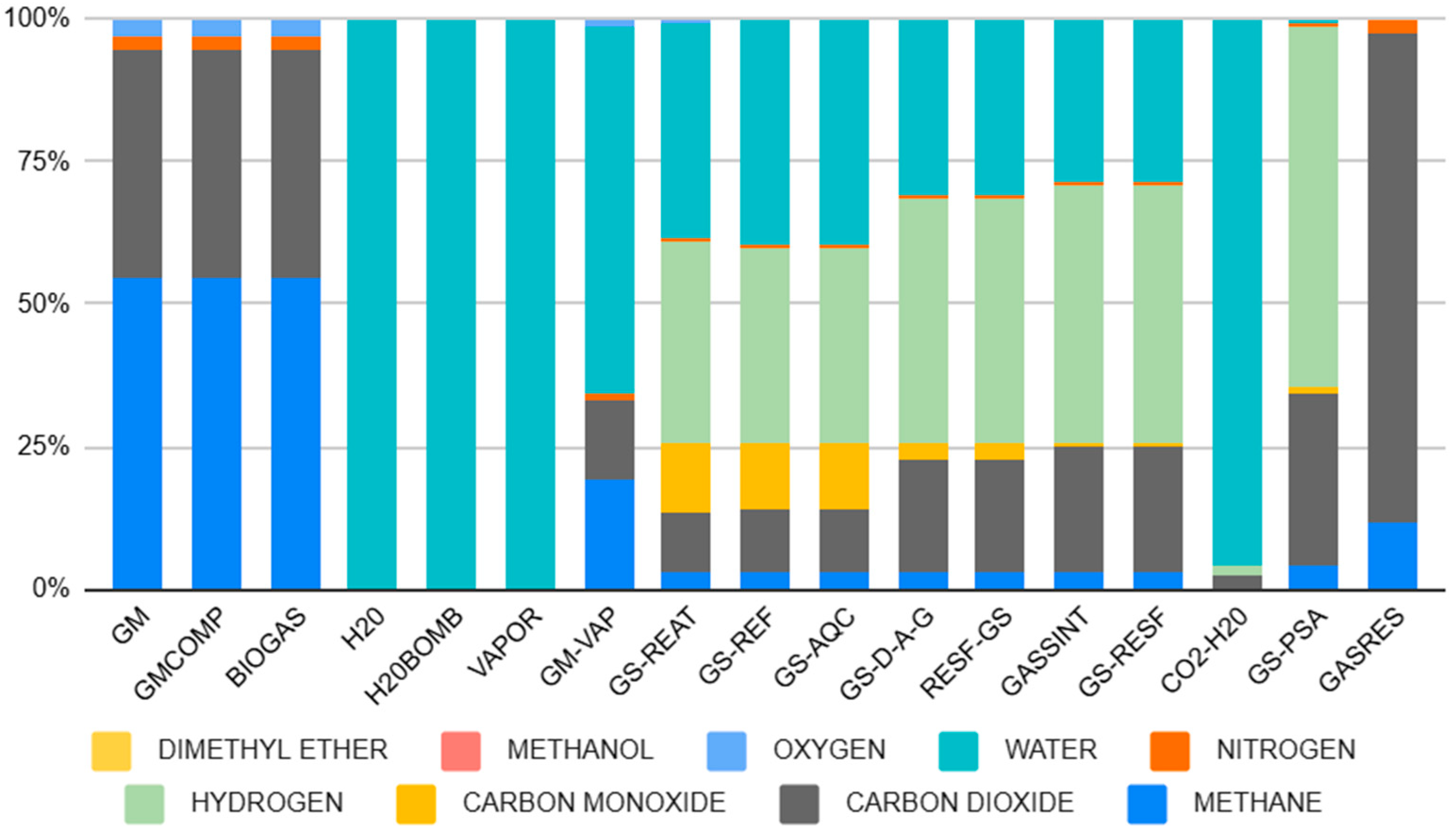
The results shown in below present the molar fractions of the stage (i), as shown in Figure 4. These data relating to the molar fractions of the biogas reforming phase demonstrate compliance with the existing literature on the subject in Phan’s study [17].
The model was adapted based on Phan’s study [17], which addresses hydrogen production from biogas, and the thermochemical reactions used are aligned with Peral’s descriptions [23]. This validation with the literature lends robustness to the simulation results, indicating that the reforming process can produce a synthesis gas with the appropriate composition to feed the Bio-DME production phase. The consistency of the operational data and results with scientific references reinforces the credibility of the simulated model and its applicability for the development of industrial processes.
Figure 4 shows the variations in the molar fractions of the compounds in each stream during the simulation of the stage (i):
During the steam reforming phase of biomethane for syngas production (CO and H2), a marked increase in the molar fraction of H2 is observed along the flow path, accompanied by the progressive consumption of CH4. CO formation occurs in lower proportions, consistent with the mechanisms of steam reforming and gas-water shift reactions. This behavior is strongly influenced by operating conditions: elevated temperatures (800–1000 °C) thermodynamically favor methane conversion, while lower pressures shift the reaction equilibrium toward enhanced H2 production. Consequently, temperature plays a critical role in promoting methane conversion and hydrogen yield, whereas pressure serves as a key parameter in modulating the selectivity between CO and H2. Notably, the final composition of the syngas in the GASSINT stream (45.1% H2, 22% CO2, 28.5% H2O) aligns well with values reported in the literature for steam reforming processes, supporting the validity of the simulation [5,6,7].
Analysis of the Indicators Step (i)
The indicator analysis for the step (i) is designed to quantify methane conversion, H2/CO ratio, and reactor operating conditions, parameters that are critical for validating reforming efficiency and ensuring an optimal syngas composition for subsequent Bio-DME synthesis.
For the output current of the reforming reactor (GASSINT):
  • Methane Conversion (XCH4):
CH4 in (GM-VAP): 0.7526 kmol/h
CH4 out (GASSINT): 0.1505 kmol/h
X C H 4 = C H 4 i n C H 4 o u t C H 4 i n × 100   0.7526 0.1505 0.7526 × 100 = 80 %
Methane conversion is high, indicating an efficient reforming reactor.
  • Ratio H2/CO in syngas (GS-REAT)
H2 = 1.8064 kmol/h
CO = 0.6021 kmol/h
R a t i o H 2 C O = 1.8064 0.6021 = 3.00   ( ideal 2 )
  • Reactor Operating Condition:
Reactor input current (GS-REAT): 909 °C and 16.32 kg/sqcm2
Molar ratio H2O/CH4 in the reactor feed:
  • -
    H2O: 2.5284 kmol/h
    -
    CH4: 0.7526 kmol/h
R a t i o H 2 O CH 4 = 2.5284 0.7526 = 3.36   ( i d e a l   ~ 2.0 3.0   High conversion )

3.1.2. Simulation Results of Step (ii), Indirect Synthesis of Methanol, Dehydration for Bio-DME Production

Step (ii) of the simulation addresses the indirect synthesis phase of methanol and its subsequent dehydration for the production of Bio-DME [6,7]. This model was developed based on the principles and data presented in the study by Luyben [18], which describes a conventional process of reaction, separation, and recycling of methanol/Bio-DME. The simulation adapted the parameters and statistics associated with the equations and operating conditions to optimize Bio-DME production from the synthesis gas generated in the step (i) of the simulation.
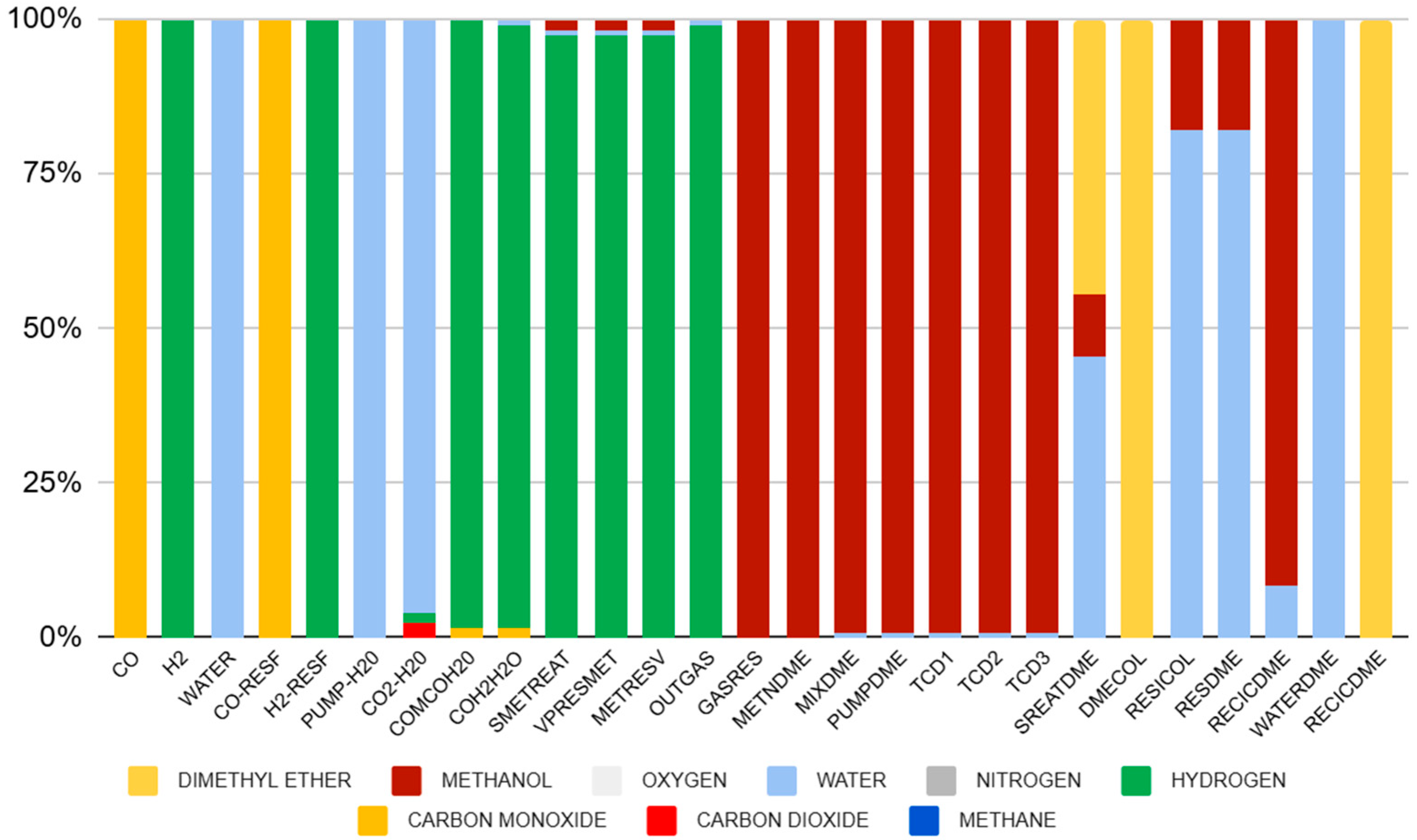
Figure 5 below shows the variations in the molar fractions of the compounds in each flow of the simulation involving step (ii) Noteworthy is the increase in water (H2O), approximately 0.84%, suggesting the reaction of methanol formation (CO + 2H2 → CH3OH) [6]; the SEPMETN stream indicates the formation of pure methanol (100%) after condensation, showing efficiency in liquid-vapor separation and the formation of Bio-DME at 44.6% in the SREATDME stream after methanol dehydration.
During the methanol dehydration stage for DME synthesis, the simulation data reveal a consistent increase in the molar fraction of DME along the reactor length, accompanied by progressive methanol consumption and the formation of water as a by-product, in accordance with the reaction stoichiometry. Due to the exothermic nature of this reaction, moderate operating temperatures (200–300 °C) [18] maximize yield. Thus, it is concluded that controlled temperatures are essential to maximize DME selectivity, while pressure acts as a determining parameter to improve both conversion and phase separation.
Analysis of the Indicators Step (ii)
The indicator analysis for step (ii) concentrates on methanol conversion and Bio-DME yield, offering critical insights into the efficiency of the indirect synthesis pathway. These results are fundamental for assessing the technical feasibility of the process and for benchmarking its performance against existing studies in the literature.
Bio-DME Synthesis Reactor Analysis.
  • CO conversion, we identified:
Main reaction (via methanol): 2CO + 4H2 → CH3OCH3 + H2O
Input (COH2H2O): CO = 0.0358 kmol/h
Output (SREATDME): CO = 0 kmol/h (residue = 0)
X C O = F C O i n F C O o u t F C O i n × 100   0.0358 0 0.0358 × 100 = 100 %
  • Methanol Reactor Dehydration Conversion:
Input Methanol (METNDME): 550 kmol/h
Output Methanol (SREATDME): 61.0781 kmol/h
X C H 3 O H = C H 3 OH in C H 3 OH out C H 3 OH in × 100   550 61.0781 550 × 100 = 88.9 %
The conversion of methanol is high, indicating an efficient dewatering reactor.
  • Bio-DME Yield from Methanol:
Reaction: 2CH3OH → CH3OCH3 + H2O
Bio-DME produced (SREATDME): 274.8515 kmol/h
Maximum theoretical yield/selectivity from 550 kmol/h
MeOH: 550/2 = 275 kmol/h
Real yield/selectivity = (274.8515/275) × 100% = 99.95% (high performance)
  • Bio-DME Conversion of Synthesis Reactor
Conversion DME = Molar fraction SREATDME = 0.4459 = 44.6   mol %
The Bio-DME synthesis step via methanol dehydration operates with high efficiency (high conversion and selectivity/yield).

3.2. Simulation Results of the Stage (ii) Comparison with Data from the Literature

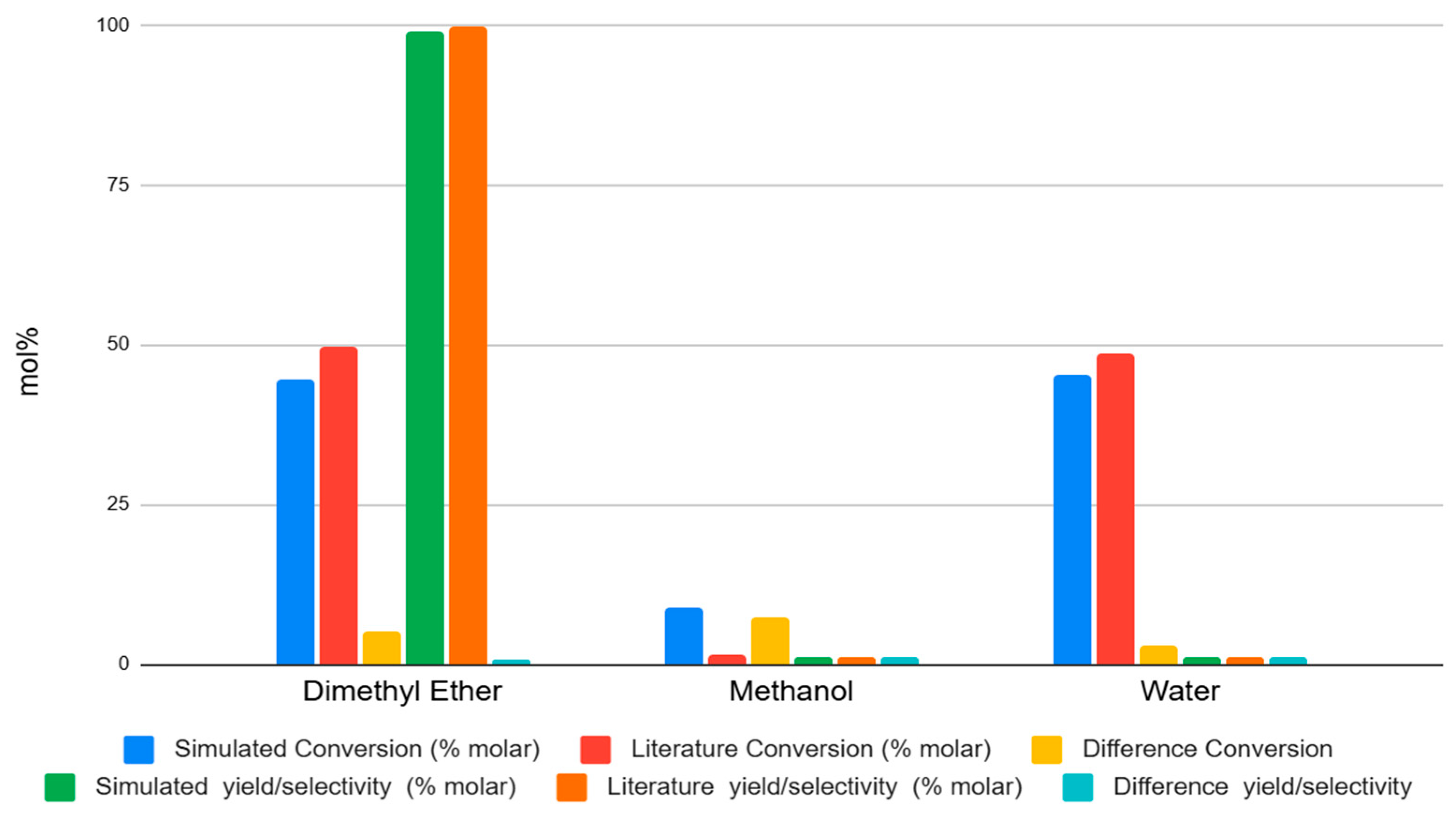
A comparative analysis between the simulation results and the data from Melo’s study [16] reveals significant insights into the performance of the process. According to Table 2 and Figure 6, the Bio-DME conversion in the simulation (0.446) is slightly lower than that obtained from the literature data (0.4990), according to Melo’s study [19], resulting in a difference of 0.053. This suggests that the Bio-DME conversion process may not be fully optimized in the simulation.
However, the simulated yield/selectivity (0.9900) is very close to the value in the literature (0.9979), with a minimum difference of 0.0079, indicating that the process is efficient in terms of producing the desired product, but there is still room for improvement in conversion.

4. Discussion

The simulation of the stage (i) of the steam biogas reforming phase was configured with specific operating parameters to optimize the production of syngas (CO and H2). Reforming at 909 °C and 16.3 kg/cm2 produced a syngas with 45.1% H2, 22% CO2, and 28.5% H2O, consistent with Phan [17] and Peral [23]. These values were selected based on reference studies and aim to maximize the conversion of biomethane under thermodynamically favorable conditions for the steam reforming reaction [17]. These conditions promoted efficient CH4 conversion, comparable to values in the literature (H2 ≈ 40–50%) [3,5]. The slightly higher H2O fraction suggests optimization potential in the H2O/CH4 ratio.
The key equipment involved in the stage (i) included heat exchangers (E-100, E-101, E-102, E-103), essential for preheating reagents and heat recovery; water-gas shift reactors (WGS), (HT-WGS and LT-WGS) to adjust the H2/CO ratio; a flash separator (FLASH) for phase separation; and a compressor (COMP) to increase the pressure of the syngas [24]. At this stage, the molar flow rate of the biogas inlet was 1 kmol/h, with the reformer inlet at 4 kmol/h and the outlet at 5 kmol/h, indicating the formation of gaseous products. The temperature of 38 °C and pressure of 15.70 kg/cm2 in the flash separator were crucial for the removal of unwanted components and the purification of the syngas [24].
The chemical reactions modeled in this phase focus on converting biomethane into syngas. The main reaction is the steam reforming of biomethane (Equation (1)), which is an endothermic reaction requiring high temperatures. Additionally, the water-gas shift reaction (Equation (2)) [7] was modeled, which was crucial for adjusting the hydrogen-to-carbon monoxide ratio in the syngas [24]. This exothermic reaction allows for the production of additional hydrogen from carbon monoxide. Accurate modeling of these reactions, based on thermodynamic and kinetic data, was essential for accurately predicting the composition of the syngas and optimizing operating conditions for subsequent process steps.
The energy efficiency of the steam reforming process is a critical aspect [24], given the highly endothermic nature of the main reaction. To mitigate energy consumption, the heat generated in exothermic stages, such as the water-gas shift reaction and product cooling, is recovered and utilized [24]. This thermal utilization contributes significantly to the sustainability and economic viability of the process.
Controlling the H2/CO ratio in the syngas is another crucial point, especially for Bio-DME production, where the ideal ratio is approximately 2 [5]. Simulation has shown that the process can adjust this ratio effectively. In addition, CO2 removal was essential to prevent contamination in Bio-DME synthesis and to meet environmental standards, making it an important factor in process optimization [18,23]. Based on the analysis of the parameters presented in Table 3 below, it can be concluded that the conditions presented maximize conversion and provide an ideal H2/CO ratio [6]. The excess steam is conservative but can be optimized to reduce energy consumption [24]. Table 3 below shows the best operating conditions for achieving greater efficiency in the steam reforming phase [24]. The identification of these parameters corroborates Giuliano’s work [12], who examined DME production from synthesis gas derived from digestate, performing a thermodynamic analysis to identify the ideal conditions for the process in order to maximize DME yield.
In Step (ii), methanol and Bio–DME synthesis conversion efficiencies reached ~89% for methanol and ~45% for DME, values within the expected range reported in similar biomass-to-DME studies [18,20]. The selectivity to DME indicates the catalyst and reactor configuration were effective, though CO2 accumulation may reduce efficiency if not managed by recycling or CO2 utilization strategies.
The key equipment in the initial phase of methanol formation, shown in Figure 2 of the Section 2, includes a mixer (MIX1) to combine the reactants, a compressor (COMP3) to raise the pressure, a pump (BOMBH2O) for fluid transport, a methanol reactor (REATMET) where the reaction occurs, heat exchangers (AQMIX, RESFMET) for thermal control, a methanol valve (VALVMET) for flow control, and a methanol separator (SEPMET) for purification [21].
Still in step (ii), the first phase focused on the synthesis of methanol from syngas (CO and H2), through the reaction involved in methanol formation (Equation (3)). After methanol synthesis, the second phase involved the dehydration of methanol to produce Bio-DME [5,6,7]. The reaction is represented by Equation (4). The overall reaction of the simulation, which encompasses both stages, is represented by Equation (5).
Key equipment used in the methanol dehydration phase, also shown in Figure 2 of the Section 2, includes a mixer (DMEMIX), a pump (DMEBOMB), heat exchangers (TCDME1, TCDME2, TCDME3) for temperature management, a DME reactor (REATDME) for dehydration, a Bio-DME separator (SEPMETN), and distillation columns (COLDME, COLREDME) for purifying the final product [6,21].
The simulation indicated a methanol conversion of 88.9%, a considerable value that still suggests the presence of unconverted methanol that could be recycled to optimize the process. The methanol conversion (METHA-01) in the simulation (0.098) is significantly higher than the value reported in the literature (0.015), differing by 0.075. This suggests that some methanol is not being efficiently converted into Bio-DME, resulting in a higher residual methanol concentration.
The conversion of water (H2O) in the simulation (0.456) is slightly lower than in the literature (0.486), but the yield is identical (0.01). This suggests that, while the dehydration process is effective, minor improvements could align the conversion with reference values, as detailed in studies by Melo [19] and Luyben [18]. The simulation resulted in a dimethyl ether (DME) conversion of 0.446 (44.6% molar) and a yield/selectivity of 0.99 (99%). The purity of Bio-DME in the first distillation column was 99.99 mol%, while the purity of the recycled methanol was 99.9 mol%. This indicates the process is highly efficient at separating and purifying the products.
The efficiency of the process is enhanced by the high selectivity of Bio-DME (approximately 99%), as reported in similar studies [19]. This is further supported by maximizing methane conversion during steam reforming and maintaining an optimal H2/CO ratio. Works by authors such as Giuliano [12] and Abdulrahman [13] highlight how the quality of synthesis gas and the control of H2/CO2/CO2 ratios directly impact the yield and environmental suitability of the process.
Economic viability is achieved through the integration of exothermic heat recovery, which reduces energy consumption and overall process costs [11,17]. Additionally, the systematic recycling of unconverted methanol minimizes feedstock losses and increases yield, thereby optimizing both conversion and energy utilization. These parameters were analyzed and validated through comparison with the works of Phan and Melo [17,19].

5. Conclusions

The results obtained in this study demonstrate substantial progress toward the proposed objectives. Bio-DME conversion exhibited yields and selectivities consistent with values reported in the specialized literature, indicating high overall process efficiency. During the reforming, methane conversion reached 80%, accompanied by favorable H2/CO and H2O/CH4 ratios. In the subsequent synthesis phase, complete CO conversion (100%) and high methanol production (88.9%) were achieved with a 44.6% molar fraction in the synthesis reactor. These findings confirm the technical robustness of the simulation model and its alignment with established scientific references. The utilization of Agave sisalana waste adds value to an agricultural by-product while mitigating the environmental impact associated with its disposal. This study underscores the practical and regional relevance of valorizing sisal waste in Northeast Brazil, offering a pathway toward low-carbon energy production based on locally available biomass. Bio-DME emerges as a promising alternative to fossil diesel, particularly for applications in regional transportation and agro-industrial machinery. This transition supports both the reduction of fossil fuel dependency and the advancement of the circular bioeconomy in the region.
Nonetheless, the study acknowledges certain limitations, notably the high temperature requirements during the reforming stage, which increase energy demand. Future research should focus on optimizing operating conditions and exploring innovative reactor designs to address these challenges.
In conclusion, the production of Bio-DME from Agave sisalana waste is technically feasible and presents a viable clean fuel alternative with reduced pollutant emissions. While specific aspects of the simulation could benefit from refinement, the study provides a solid foundation for the development of industrial-scale Bio-DME production facilities. The consistency between simulated parameters and literature data lends credibility to the model and supports its potential expansion, contributing to a sustainable energy transition.

Author Contributions

Conceptualization, R.d.J.R., C.T.A. and F.A.T.; methodology, R.d.J.R., C.T.A., A.B.V., and F.A.T.; software, R.d.J.R., C.T.A. and F.A.T.; validation, R.d.J.R., C.T.A. and F.A.T.; investigation, R.d.J.R., C.T.A. and F.A.T.; resources, R.d.J.R., C.T.A. and F.A.T.; writing—original draft preparation, R.d.J.R., C.T.A., A.B.V., and F.A.T.; writing—review and editing, C.T.A., F.A.T. and E.A.T.; visualization, R.d.J.R., C.T.A. and F.A.T.; supervision, C.T.A., F.A.T. and E.A.T.; project administration, C.T.A.; funding acquisition, C.T.A. All authors have read and agreed to the published version of the manuscript.

Funding

This research was funded by Conselho Nacional de Desenvolvimento Científico e Tecnológico (CNPq), grant number nº 405778/2022-8.

Data Availability Statement

The data presented in this study are available on request from the corresponding author due to the considerable time required for data processing by the author’s team.

Acknowledgments

The authors express their gratitude to the Fundação de Amparo à Pesquisa do Estado da Bahia, FAPESB (INCITERE nº PIE 0008/2022), Universidade Federal da Bahia, UFBA and Universidade Federal do Recôncavo da Bahia, UFRB, for providing all the necessary support for completing the work.

Conflicts of Interest

The authors declare no conflicts of interest. The funders had no role in the design of the study; in the collection, analyses, or interpretation of data; in the writing of the manuscript; or in the decision to publish the results.

Abbreviations

EMBRAPABrazilian Agricultural Research Corporation
LGPLiquefied Petroleum
LPMEOHTMLiquid Phase Methanol
UFBAFederal University of Bahia
UFRBFederal University of the Recôncavo of Bahia
WGS Water-Gas Shift

Appendix A

Appendix A.1

Table A1. Main parameters, equipment and variables of Step (i) Steam reforming of biogas and change from water-gas to formation of syngas.
Equipment
Heat Exchangers(E-100, E-101, E-102, E-103)
Water-Gas Displacement Reactors (HT-WGS, LT-WGS)
Flash Tab(FLASH)
Compressor (COMP)
Parameters
TemperaturePressureMolar Flow Rates
Biogas inlet909 °C16.32 kg/cm21 kmol/h
Input of the reformer 908.7 °C16.32 kg/cm24 kmol/h
Exit of the reformer 909 °C16.32 kg/cm25 kmol/h
Water-Gas Displacement Reactor (HT-WGS)350 °C16.32 kg/cm25 kmol/h
Water-Gas Displacement Reactor (LT-WGS)210 °C16.32 kg/cm25 kmol/h
Flash Separator38 °C15.70 kg/cm24 kmol/h

Appendix A.2

Table A2. Main parameters, equipment and variables of Step (ii), indirect synthesis of methanol, and dehydration for Bio-DME production.
Methanol Production Phase
Equipment
Mixer(MIX1)
Compressor(COMP3)
Water Pump(BOMBH2O)
Methanol reactor (REATMET)
Heat exchanger(AQMIX, RESFMET)
Methanol Valve (VALVMET)
Methanol Separator (SEPMET)
Parameters
PhaseTemperaturePressureMolar Flow Rates
Methanol reactor inlet250 °C50 kg/cm22 kmol/h
Methanol reactor output250 °C51 kg/cm22 kmol/h
Methanol Separator Inlet57 °C1 kg/cm2 2 kmol/h
Methanol Separator25 °C1 kg/cm2 2 kmol/h
Methanol dehydration phase
Equipment
Mixer(DMEMIX)
Bomb(DMEBOMB)
Heat exchanger(TCDME1, TCDME2, TCDME3)
Parameters
PhaseTemperaturePressureMolar Flow Rates
Mixer Inlet25 °C1 kg/cm2555 kmol/h
Mixer Inlet (Recycle)66 °C1 kg/cm267 kmol/h
Mixer Outlet29 °C1 kg/cm2622 kmol/h
Inlet Heat Exchanger30 °C1 kg/cm2622 kmol/h
Outlet Heat Exchanger250 °C10 kg/cm2622 kmol/h
Bio-DME Conversion and Separation
Equipment
Bio-DME Reactor(REATDME)
Bio-DME Separator (SEPMETN)
Bio-DME Column (COLDME)
Methanol Valve (VALVMET)
Bio-DME Column (COLREDME)
Parameters
PhaseTemperaturePressureMolar Flow Rates
Bio-DME Reactor Inlet250 °C10 kg/cm2622 kmol/h
Reactor Output Bio-DME350 °C10 kg/cm2622 kmol/h
Column Bio-DME 1350 °C10 kg/cm2622 kmol/h
Column Bio-DME 287 °C1 kg/cm2345 kmol/h

References

  1. Eichler, P.; Santos, F.; Toledo, M.; Zerbin, P.; Schmitz, G.; Alves, C.; Ries, L.; Gomes, F. Production of biometanol via lignocellulosic biomass gasification. Química Nova 2015, 38, 828–839. [Google Scholar] [CrossRef]
  2. Ritchie, H.; Rosado, P. Fossil Fuels. 2017. Available online: https://ourworldindata.org/fossil-fuels (accessed on 29 September 2025).
  3. Li, Y.; Chen, L.; Wang, T.; Ma, L.; Ding, M.; Zhang, X.; Yin, X. Demonstration of pilot-scale bio-dimethyl ether synthesis via oxygen- and steam-enriched gasification of wood chips. Energy Procedia 2015, 75, 202–207. [Google Scholar] [CrossRef]
  4. Azizi, Z.; Rezaeimanesh, M.; Tohidian, T.; Rahimpour, M.R. Dimethyl ether: A review of technologies and production challenges. Chem. Eng. Process. Process Intensif. 2014, 82, 150–172. [Google Scholar] [CrossRef]
  5. Baena-Moreno, F.M.; Gonzalez-Castaño, M.; Arellano-García, H.; Reina, T.R. Exploring profitability of bioeconomy paths: Dimethyl ether from biogas as case study. Energy 2021, 225, 120–230. [Google Scholar] [CrossRef]
  6. Fedeli, M.; Negri, F.; Manenti, F. Biogas to advanced biofuels: Tech-no-economic analysis of one-step dimethyl ether synthesis. J. Clean. Prod. 2022, 376, 134076. [Google Scholar] [CrossRef]
  7. Giuliano, A.; Catizzone, E. Modelling and environmental aspects of direct or indirect dimethyl ether synthesis using digestate as feedstock. Math. Model. Eng. Probl. 2021, 8, 780–786. [Google Scholar] [CrossRef]
  8. Soares, V.L.; Faber, M.d.O.; Monteiro, A.F.; Cammarota, M.C.; Ferreira-Leitão, V.S. Potential use of sisal juice as raw material for sequential biological production of hydrogen and methane. Braz. J. Chem. Eng. 2024, 41, 97–108. [Google Scholar] [CrossRef]
  9. de Paula, M.S.; Adarme, O.F.H.; Volpi, M.P.C.; Flores-Rodriguez, C.I.; Carazzolle, M.F.; Mockaitis, G.; Pereira, G.A. Unveiling the biogas potential of raw Agave leaf juice: Exploring a novel biomass source. Biomass Bioenergy 2025, 193, 107522. [Google Scholar] [CrossRef]
  10. López-Sosa, L.B.; Santibáñez-Rocha, G.A.; Morales-Máximo, M.; González-Carabes, R.; Rutiaga-Quiñones, J.G.; Bustamante, C.A.G.; Pintor-Ibarra, L.F.; Ramos, I.S.; Reyes, C.I.V.; del Carmen Rodríguez Magallón, M.; et al. Evaluation of the energy potential of agro-industrial waste. Virtual J. Chem. 2021, 14, 46–49. [Google Scholar]
  11. Vieira, F.; de Paula, M.; Volpi, M.P.; Adarme, O.F.H.; Ribas, T.; da Silva, J.; Carazzolle, M.F.; Pereira, G.; Mockaitis, G. Transforming Semi-Arid Waste into High-Yield Biogas: An Approach to Sustainable Energy. 2024. Available online: https://ssrn.com/abstract=5049618 (accessed on 19 September 2025). [CrossRef]
  12. Giuliano, A.; Catizzone, E.; Freda, C. Process Simulation and Environmental Aspects of Dimethyl Ether Production from Digestate-Derived Syngas. Int. J. Environ. Res. Public Health 2021, 18, 807. [Google Scholar] [CrossRef] [PubMed]
  13. Abdulrahman, A. Simulation and optimization of dimethyl ether (DME) synthesis processes using highly contaminated natural gas as feedstock. Processes 2025, 13, 1872. [Google Scholar] [CrossRef]
  14. IEA-AMF. DME from Biomass. Annex Reports. 2014. Available online: https://iea-amf.org/app/webroot/files/file/Annex%20Reports/AMF_Annex_14_dme_bio.pdf (accessed on 7 March 2025).
  15. Styring, P.; Sanderson, P.W.; Gell, I.; Skorikova, G.; Sánchez-Martínez, C.; Garcia-Garcia, G.; Sluijter, S.N. Carbon footprint of Power-to-X derived dimethyl ether using the sorption enhanced DME synthesis process. Front. Sustain. 2022, 3, 1057190. [Google Scholar] [CrossRef]
  16. Parvez, A.M.; Mujtaba, I.M.; Hall, P.; Lester, E.H.; Wu, T. Synthesis of bio-dimethyl ether based on carbon dioxide-enhanced gasification of biomass: Process simulation using Aspen Plus. Energy Technol. 2016, 4, 526–535. [Google Scholar] [CrossRef]
  17. Phan, T.S.; Minh, D.P.; Espitalier, F.; Nzihou, A.; Grouset, D. Hydrogen production from biogas: Process optimization using Aspen Plus®. Int. J. Hydrog Energy 2022, 47, 42027–42039. [Google Scholar] [CrossRef]
  18. Luyben, W.L. Design and Control of a Conventional Process for the Production of Dimethyl Ether. Ind. Eng. Chem. Res. 2017, 56, 4448–4459. [Google Scholar]
  19. de Melo, L.R.; Filho, R.M.; Efren, J.; Figueroa, J. Obtaining Dimethyl from Methanol: Simulation and Analysis of Product Processes; Associação Brasileira de Pesquisa e Desenvolvimento em Petróleo e Gás: Natal, Brazil, 2024. [Google Scholar] [CrossRef]
  20. Hankin, A.; Shah, N. Process exploration and assessment for the production of methanol and dimethyl ether from carbon dioxide and water. Sustain. Energy Fuels 2017, 1, 1541–1556. [Google Scholar] [CrossRef]
  21. Aspen Plus TM. Aspen Engineering Suite; Aspen Technology Inc.: Cambridge, MA, USA, 2025; Available online: http://www.aspentech.com (accessed on 20 July 2025).
  22. EMBRAPA. Biogas and Its Contributions to the Sustainable Development Goals. 2022. Available online: https://www.infoteca.cnptia.embrapa.br/infoteca/bitstream/doc/1149613/1/DOC-49-final-1.pdf (accessed on 22 May 2025).
  23. Peral, E.; Martín, M. Optimal Production of Dimethyl Ether from Switchgrass-Based Syngas via Direct Synthesis. Ind. Eng. Chem. Res. 2015, 54, 7465–7475. [Google Scholar] [CrossRef]
  24. Ju, F.; Chen, H.; Ding, X.; Yang, H.; Wang, X.; Zhang, S.; Dai, Z. Process simulation of single-step dimethyl ether production via biomass gasification. Biotechnol. Adv. 2009, 27, 599–605. [Google Scholar] [CrossRef] [PubMed]
Figure 1. Step (i) Steam reforming of the biogas and change from water-gas to the formation of the syngas.
Processes 13 03451 g001
Figure 2. Step (ii) Indirect synthesis of methanol, dehydration for Bio-DME production.
Processes 13 03451 g002
Figure 3. Schematic for modeling and simulation of biomethane and dimethyl ether production from residual biomass of Agave sisalana [17,18]. Source: Authors.
Processes 13 03451 g003
Figure 4. Graph of Molar Fractions. Step (i) Biogas Reforming Phase and Synthesis Gas Formation. Source: Authors.
Processes 13 03451 g004
Figure 5. Graph of Molar Fractions. Step (ii) Phase Formation and Dimethyl Ether Separation. Source: Authors.
Processes 13 03451 g005
Figure 6. Graph comparison of the values of the final components of the Simulation vs. Literature of the Bio-DME production process. Source: Authors.
Processes 13 03451 g006
Table 1. Critical operating parameters.
PhaseTemperaturePressure
Reform909 °C16.32 kg/cm2
Bio-DME overview250 °C50–51 kg/cm2
Separation43.8–160.4 °C1.03–10 kg/cm2
Table 2. Comparison of the data of the main final components obtained in the simulation (Bio-DME Production): Simulation vs. Literature.
ProductsPhaseSimulated Conversion (% Molar)Literature Conversion (% Molar)Difference ConversionSimulated Yield/Selectivity (% Molar)Literature Yield/Selectivity (% Molar)Difference Yield/SelectivityAuthor
Dimethyl EtherBio-DME Reactor Output44.5949.905.3199.0099.790.79[19]
MethanolBio-DME Reactor Output8.891.507.500.000.000.00[19]
Water Bio-DME Reactor Output45.5048.603.100.000.000.00[19]
Table 3. Optimal Operating Conditions for Refurbishment.
ParameterValue
Temperature909 °C
Pressure16.32 kgf/cm2 (~16 bar)
CH4 Conversion80.0%
H2/CO1.0
Disclaimer/Publisher’s Note: The statements, opinions and data contained in all publications are solely those of the individual author(s) and contributor(s) and not of MDPI and/or the editor(s). MDPI and/or the editor(s) disclaim responsibility for any injury to people or property resulting from any ideas, methods, instructions or products referred to in the content.